Why travel at all? The question cuts deeper than it first appears. We tell ourselves it is for freedom, discovery, and excitement. But what does that say about our lives when stationary?
This piece invites two literary voices into that question. Fernando Pessoa strips travel of its illusions and promises, and Italo Calvino looks for the fragments that still matter.
Pessoa and the monotony of the self
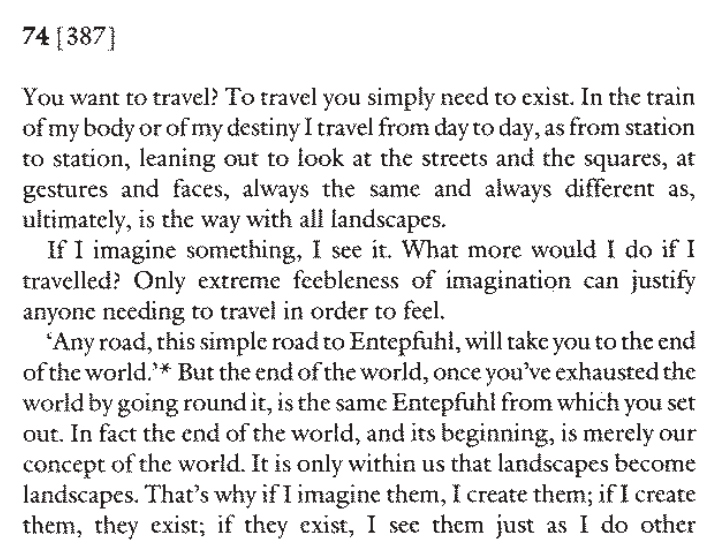
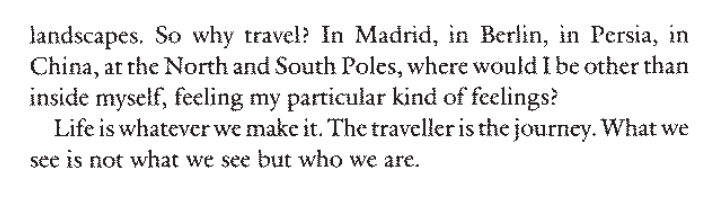
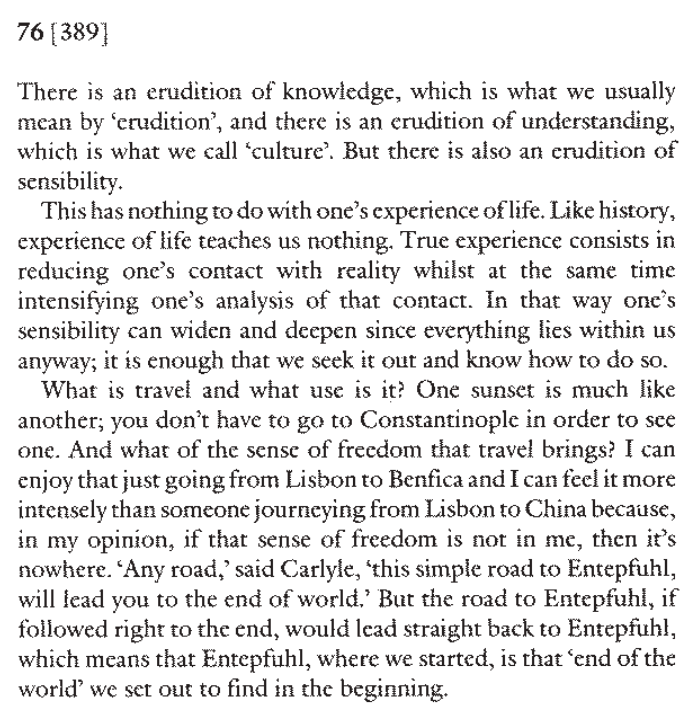
We are told, almost instinctively, that travel transforms us. That new coordinates equal new selves, and that stepping into another geography loosens the weight of who we are. Yet Fernando Pessoa, in The Book of Disquiet, unsettles this belief at its root. He insists that no matter how far we go, we never escape ourselves. The road to the “end of the world,” if followed all the way, only loops back to where we began.
This is not a minor doubt. It is a dismantling of the very premise of modern mobility. Pessoa names the secret we would rather ignore: the monotony of self persists across landscapes. A traveler who checks into every continent may simply check back into the same disquiet that never left. The problem, Pessoa reminds us, is not geography but interiority. You carry yourself across borders. You arrive, but you bring your insomnia with you.
"In Madrid, in Berlin, in Persia, in China, at the North and South Poles, where would I be other than inside myself, feeling my particular kind of feelings?"
Pessoa also hints at something more cutting, that perhaps the very desire to travel betrays a lack of imagination. If life feels unbearable without constant displacement, then maybe what is missing is not new scenery but the ability to live meaningfully in one’s own. To be bored enough to need a plane ticket is, in Pessoa’s terms, to be bored with oneself. It is to outsource wonder to geography. The impulse to escape may say less about the world’s limits than about the traveler’s failure to see what already lies before them.
"Only extreme feebleness of imagination can justify anyone needing to travel in order to feel."
For digital nomads, this is more than an abstract provocation. The Airbnb in Berlin can feel uncannily like the one in Bangkok. The coworking space in Medellín hums with the same MacBooks and Slack notifications as the one in Lisbon. Freedom risks becoming another pattern. An endless cycling of elsewhere can conceal the sameness we are too restless to name.
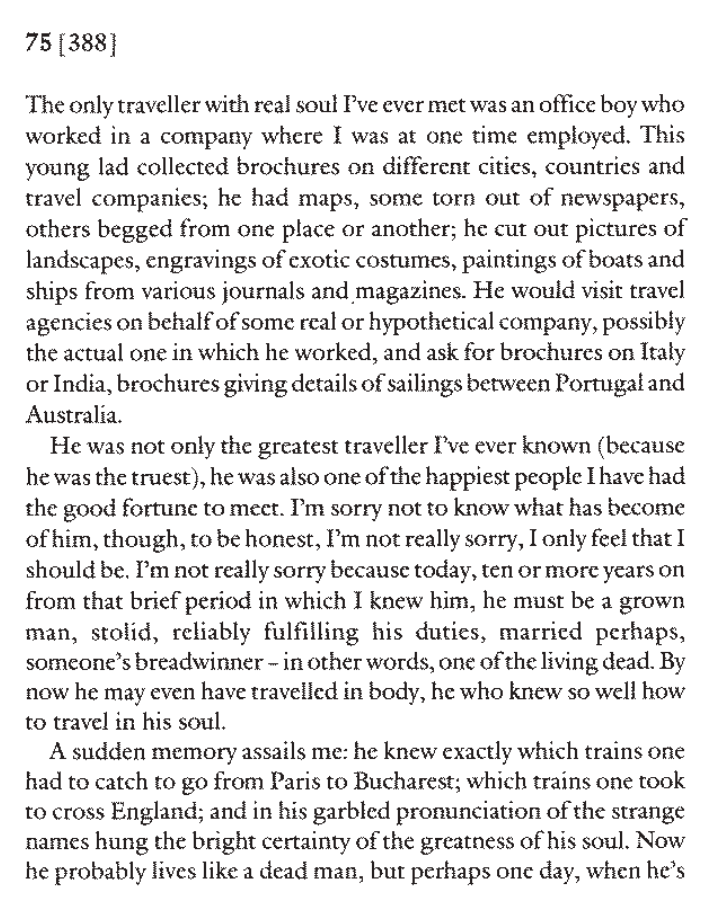
"True experience consists in reducing one's contact with reality whilst at the same time intensifying one's analysis of that contact... What is travel and what use is it? One sunset is much like another; you don't have to go to Constantinople in order to see one. And what of the sense of freedom that travel brings? I can enjoy that just going from Lisbon to Benfica and I can feel it more intensely than someone journeying from Lisbon to China because, in my opinion, if that sense of freedom is not in me, then it's nowhere."
Pessoa’s point is both devastating and liberating. If every road loops back to the self, then perhaps travel is futile. The idea of “finding yourself” abroad collapses, because you never left.
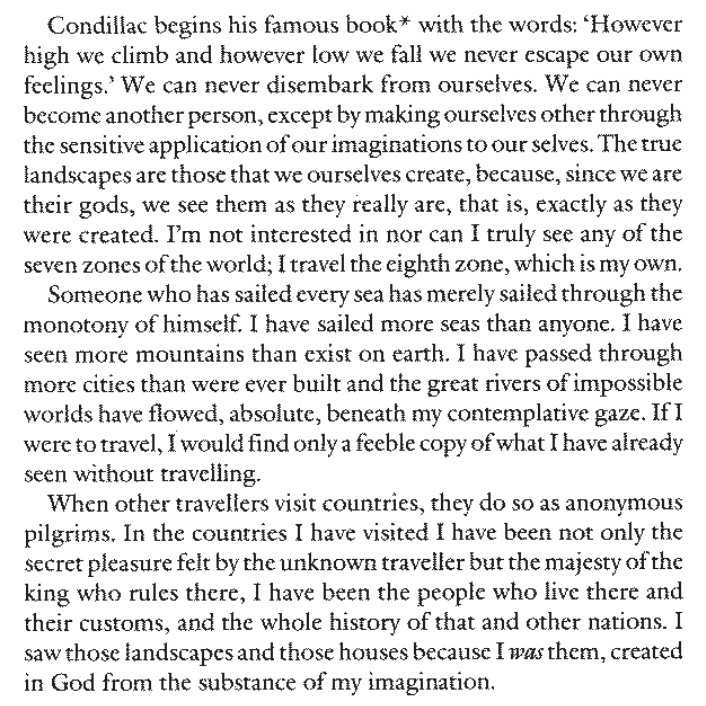
"Someone who has sailed every sea has merely sailed through the monotony of himself. I have sailed more seas than anyone. I have seen more mountains than exist on earth. I have passed through more cities than were ever built and the great rivers of impossible worlds have flowed, absolute, beneath my contemplative gaze. If I were to travel, I would find only a feeble copy of what I have already seen without traveling."
Pessoa’s suspicion presses harder the more we apply it to our own lives. Think of the endless cycle of “newness” in nomadic life. The next city, the next visa run, the next curated café. Behind the allure is repetition, almost ritualized. Pessoa would call it self-deception: the staging of freedom in order to conceal deep boredom.
And this is where the rigor of his thought matters. If movement is always accompanied by the self, then the philosophical task is not “where should I go next?” but “what do I carry that no movement can dislodge?” This is the kind of question that can collapse the whole scaffolding of nomadism-as-lifestyle.
Calvino and the inferno
If we cannot escape ourselves, then we must ask: what is travel for? What does it do, if not what it typically promises?
This is where Italo Calvino enters, offering a counterpoint but not a negation. In Invisible Cities, Marco Polo describes to Kublai Khan a thousand cities shimmering with difference. But we discover, in the end, that every city is in some way Venice. Movement does not abolish origin; it refracts it. To see another city is not to escape the sameness Pessoa dreads, but to recognize it differently, in fragments.
The “perfect city” is not found at the end of the itinerary. It is discontinuous in space and time. To journey is to collect pieces of a mosaic you will never finish, but which slowly reconfigures how you inhabit your own inferno, whatever that may be.
Pessoa says: every journey collapses back into sameness. Calvino says: sameness itself is the condition of meaning. Together, they expose the false hope of travel-as-escape or meaning-making, while opening a harder, subtler possibility: that travel is not about leaving yourself but about learning to live with yourself otherwise.
[Kublai Khan] said: "It is all useless, if the last landing place can only be the infernal city, and it is there that, in ever-narrowing circles, the current is drawing us."
And Polo said: "The inferno of the living is not something that will be; if there is one, it is what is already here, the inferno where we live every day, that we form by being together. There are two ways to escape suffering it. The first is easy for many: accept the inferno and become such a part of it that you can no longer see it. The second is risky and demands constant vigilance and apprehension: seek and learn to recognize who and what, in the midst of the inferno, are not inferno, then make them endure, give them space."
The limit of travel
Pessoa’s critique prevents us from indulging in illusions. Calvino’s vision prevents us from collapsing into despair. Between them lies a tension we cannot resolve, but perhaps can inhabit: that the sameness of self is both the limit of travel and the material with which it works.
For the nomad, this is not a rejection of movement, but a harder invitation to understand it otherwise.
Pessoa reminds us: all roads lead back to ourselves. Calvino reminds us: within those roads, scattered and discontinuous, there are fragments that matter. The traveler’s work is not to escape monotony, but to recognize how sameness can be inhabited differently.

Text from The Book of Disquiet.
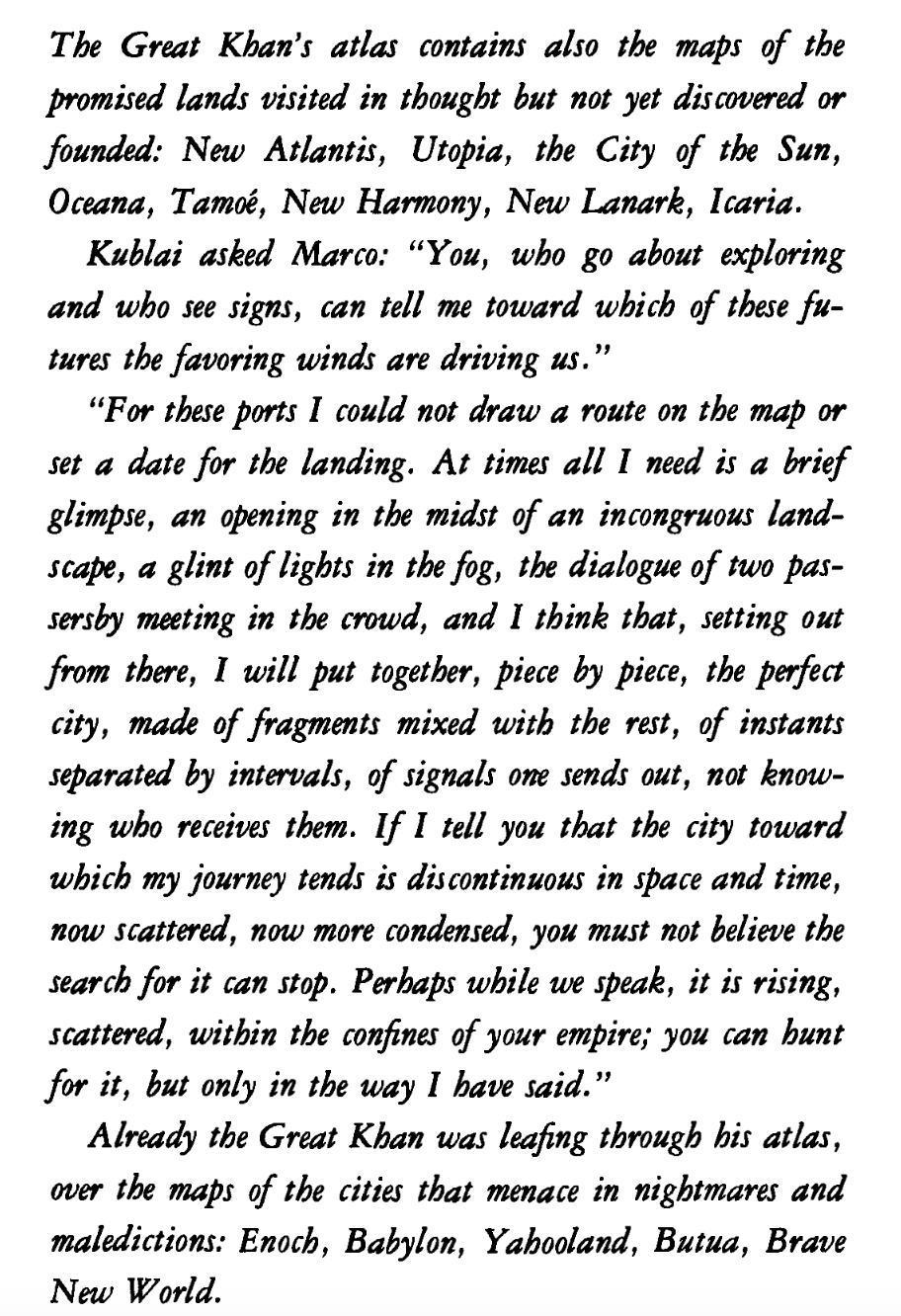
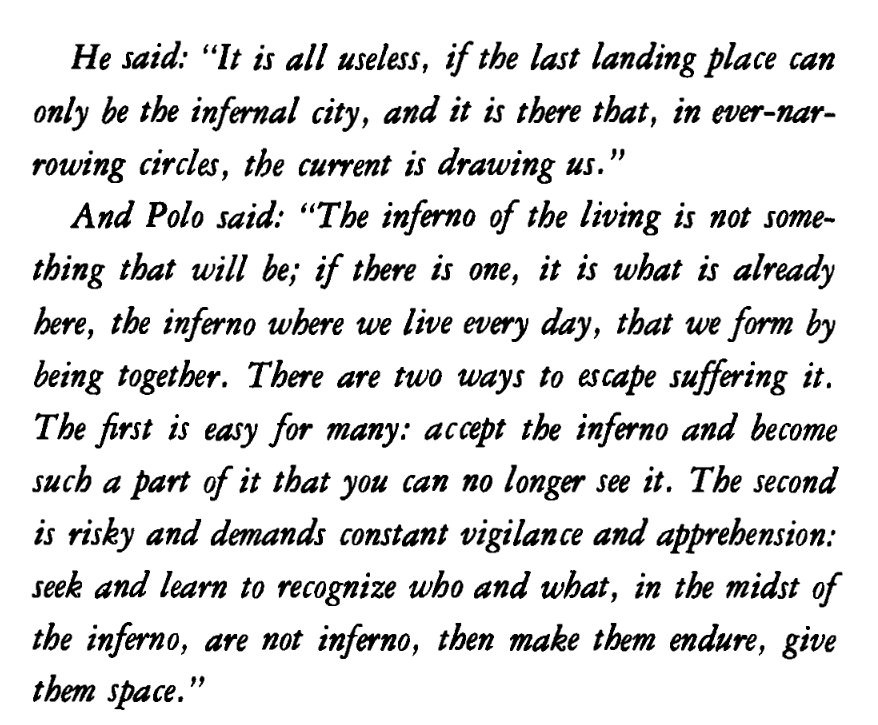
Text from Invisible Cities.

