
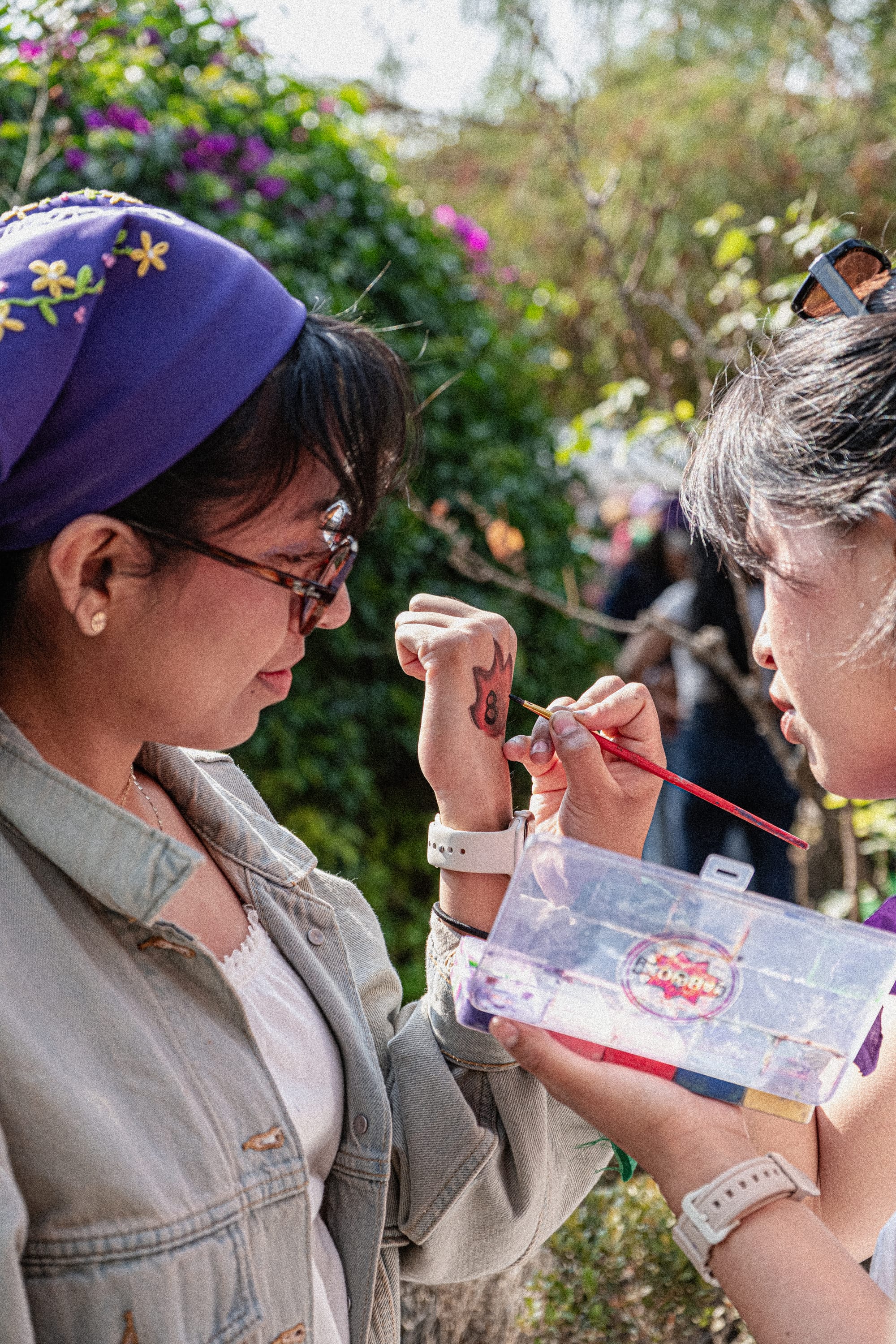
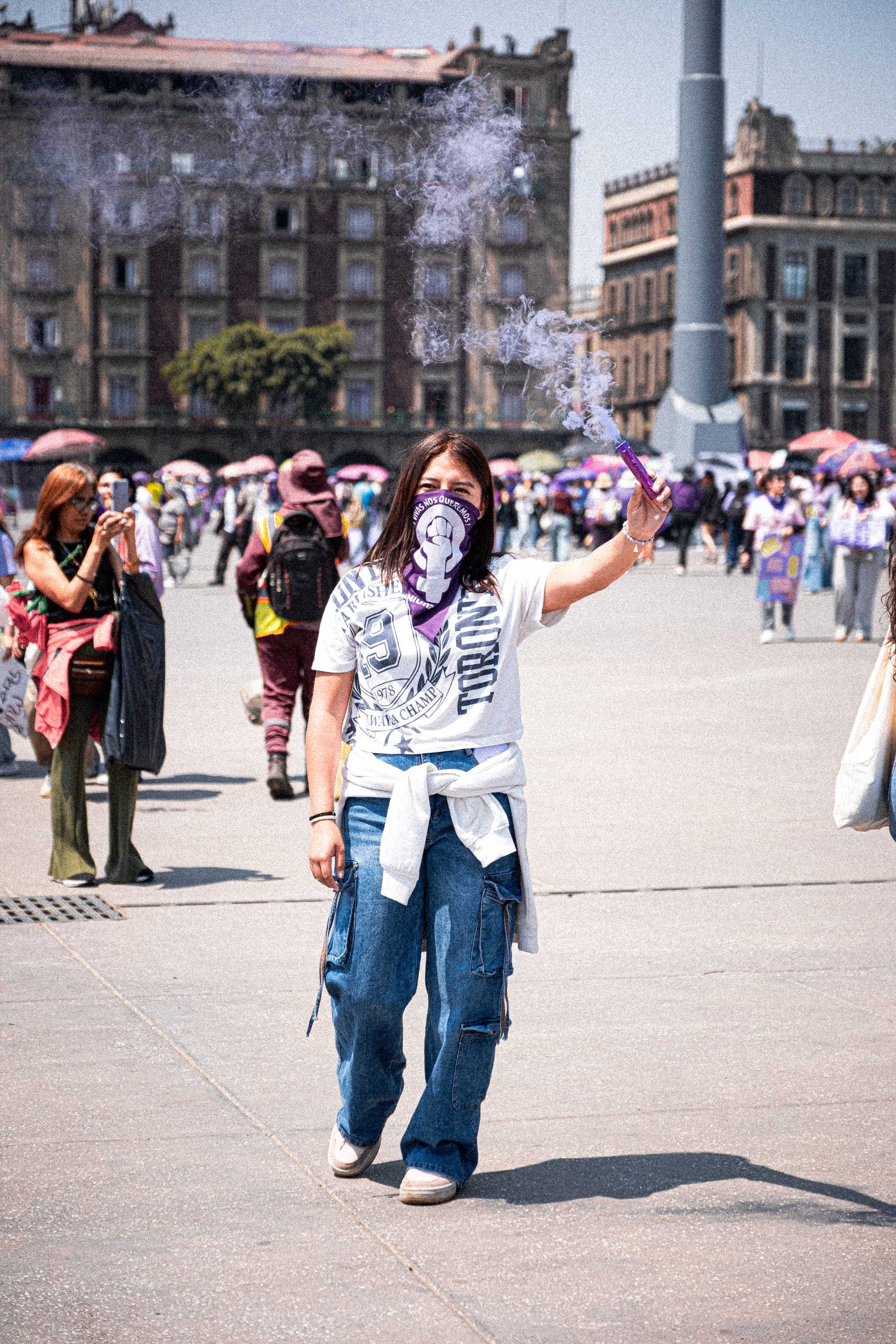
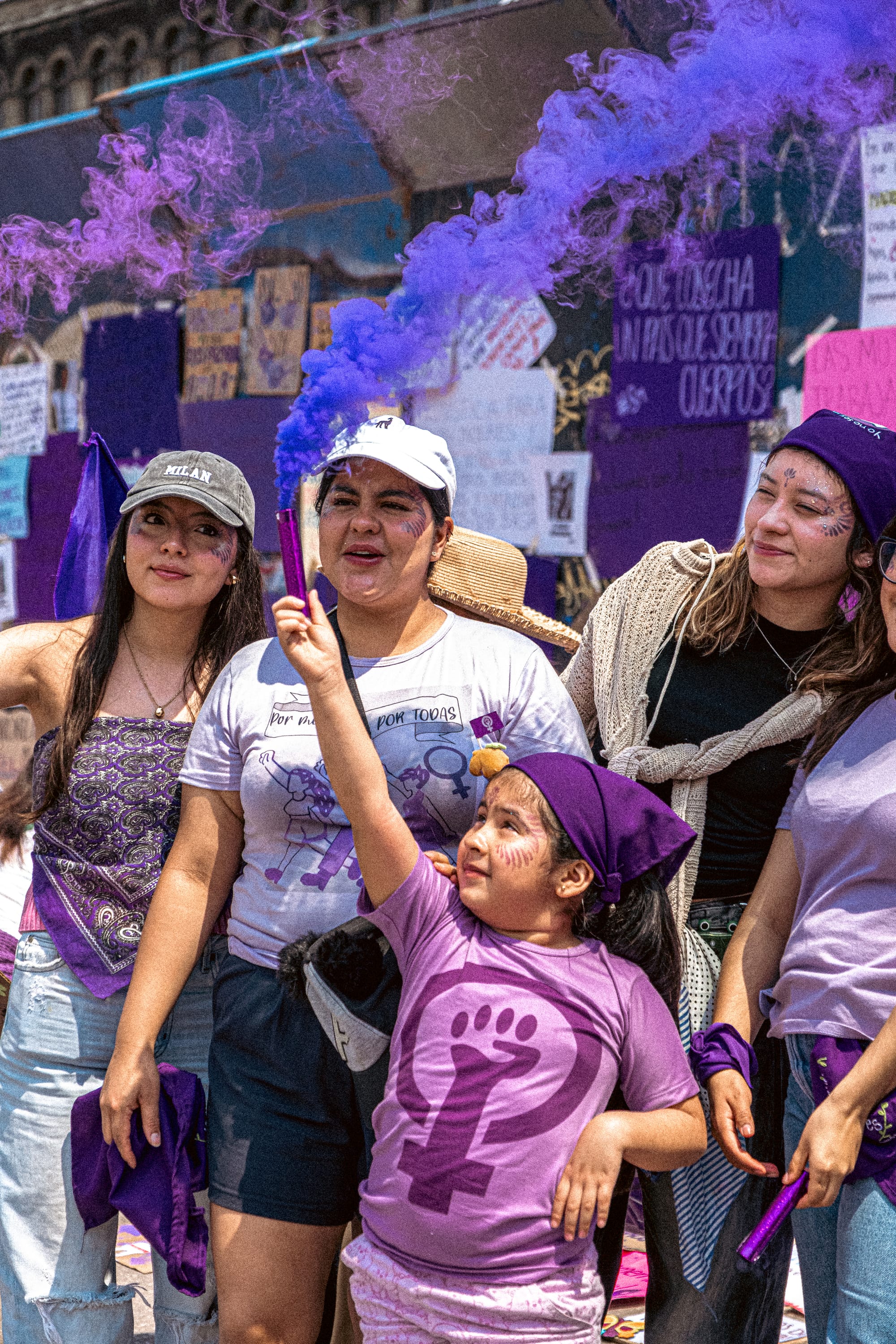
On March 8th, International Women’s Day, the streets of Mexico City transform. Purple banners appear across the historic center. Drums echo through wide avenues. Faces are painted with the feminist symbol and the words “ni una menos,” not one more.
But in Mexico, 8M is not a celebration.
It is a march of grief.
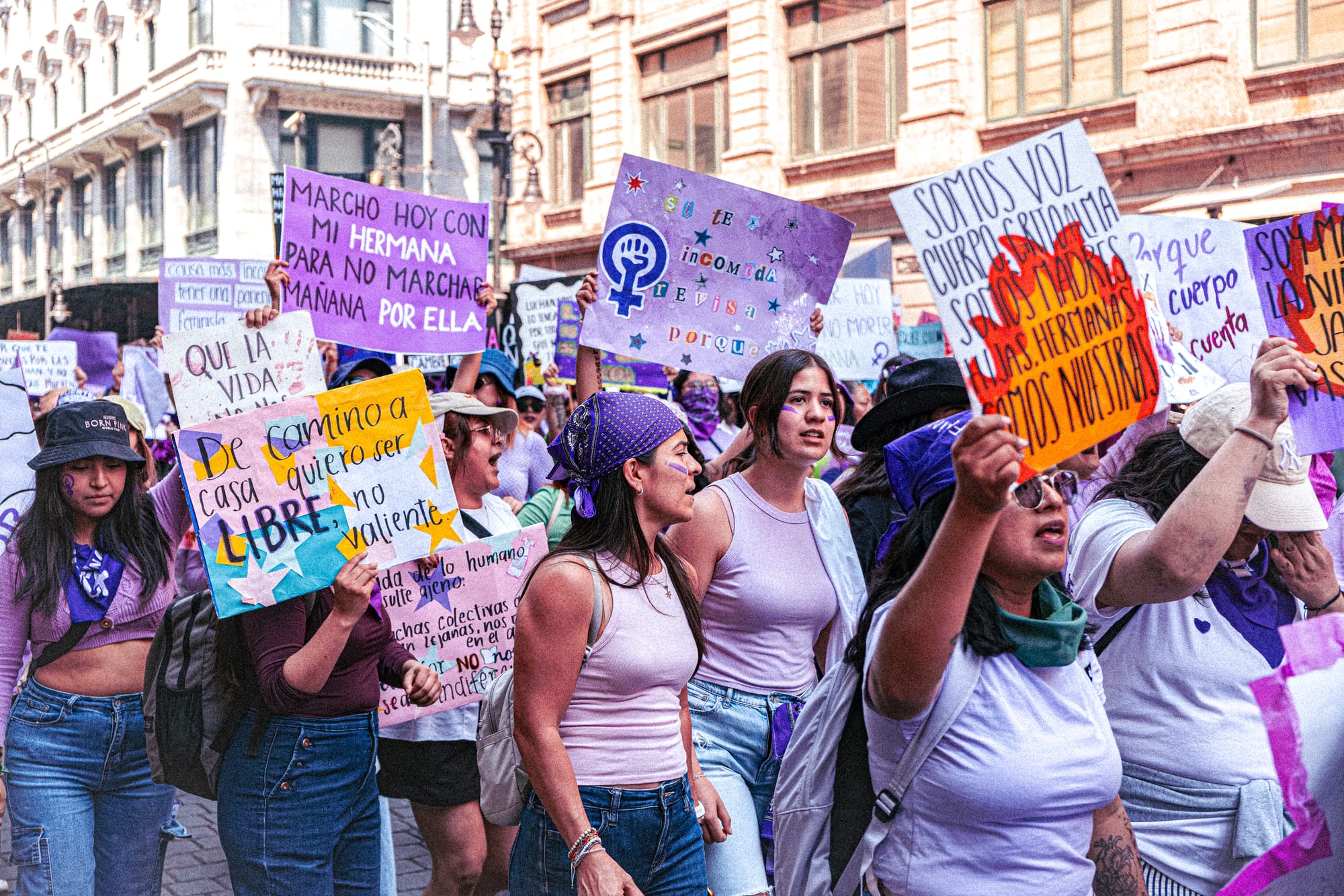
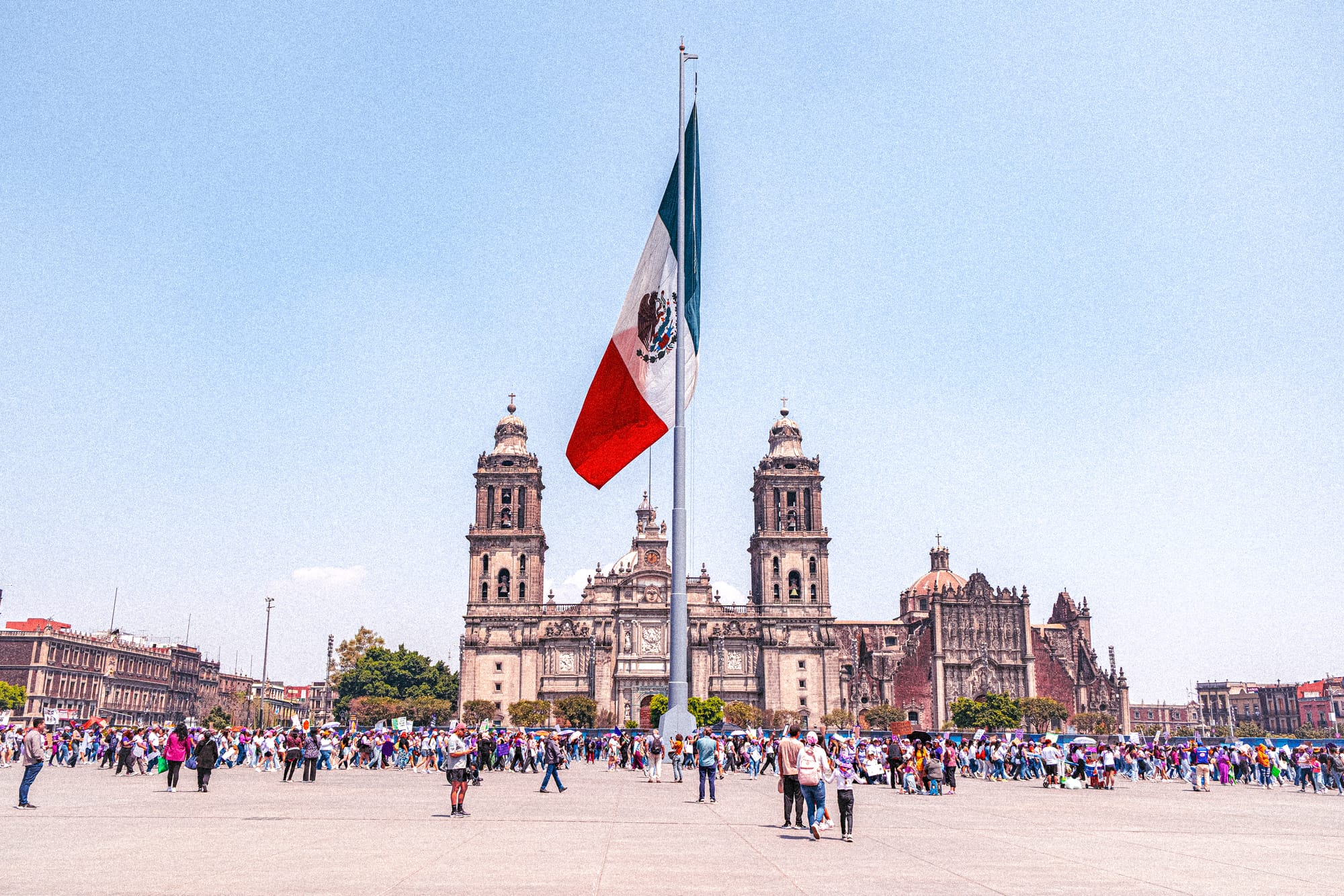
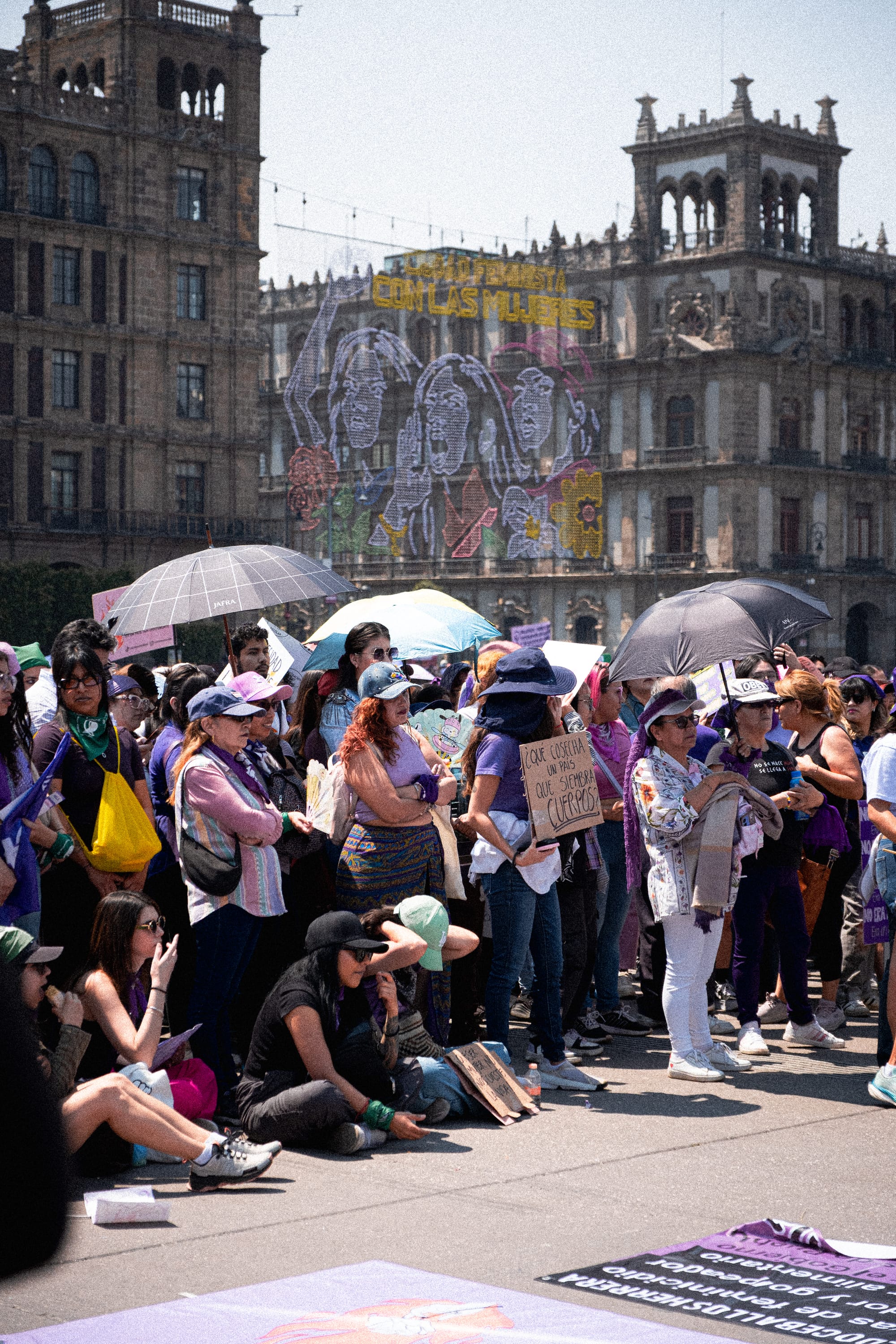
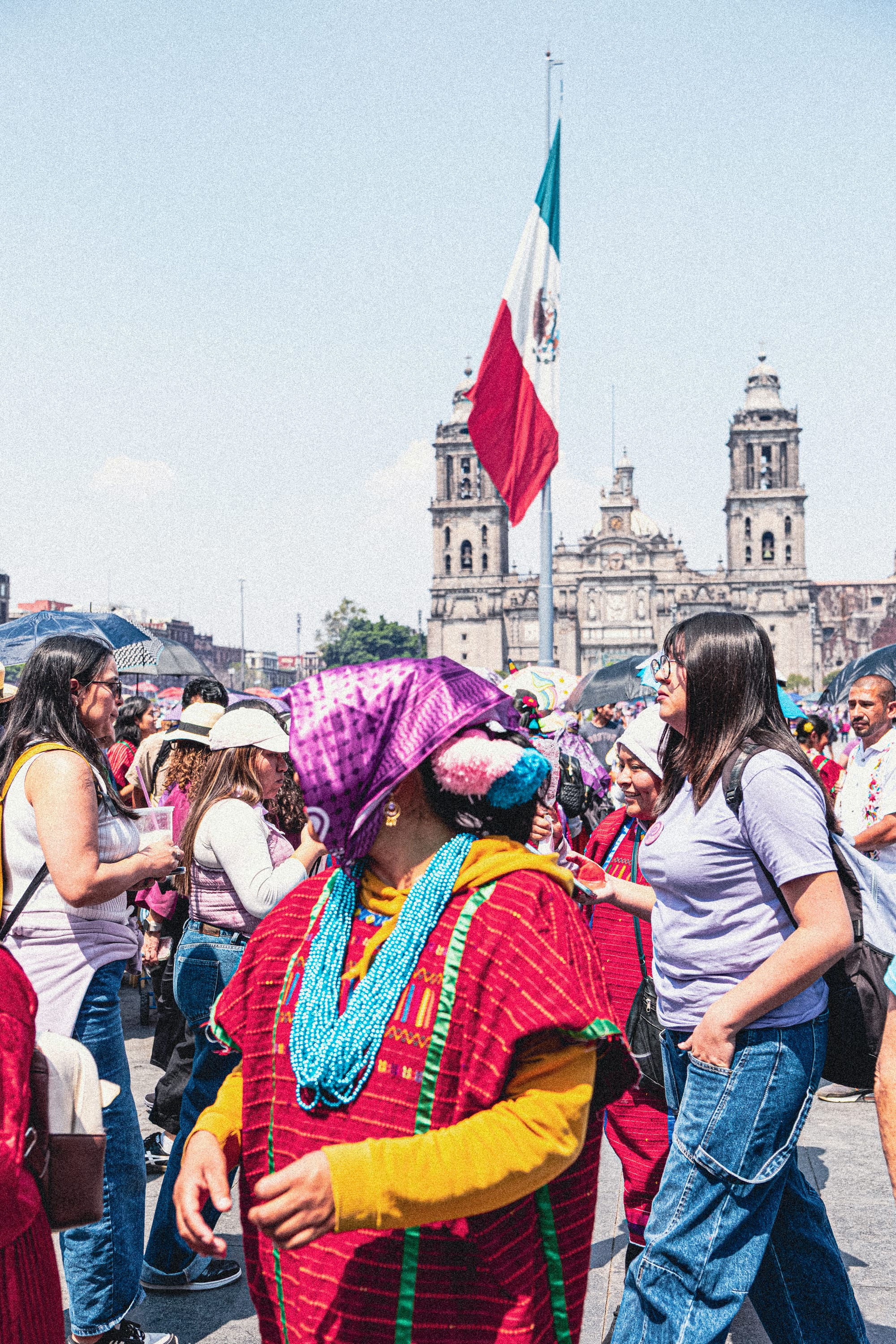
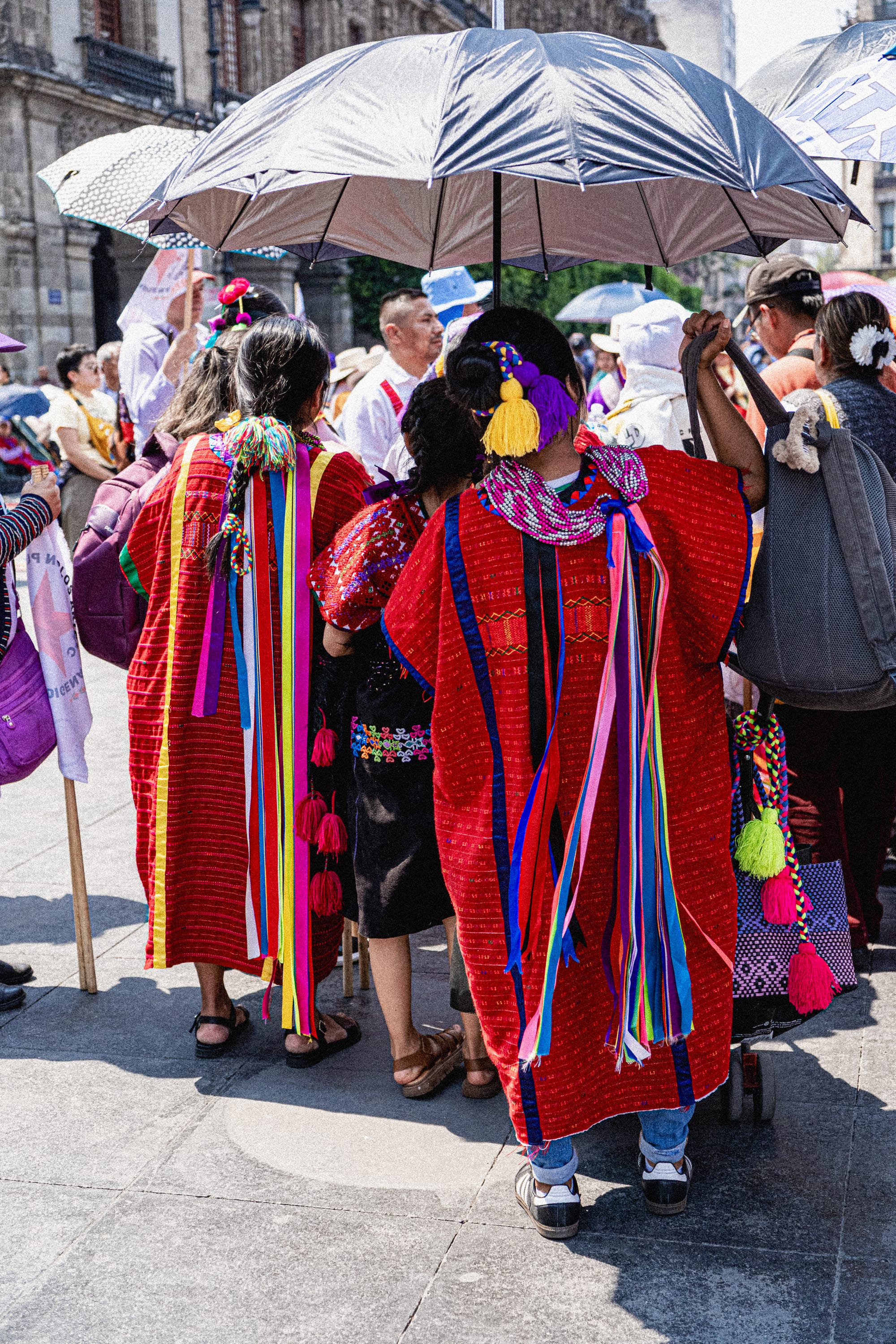
Each year, tens of thousands gather for the 8M march in Mexico City, one of the largest feminist protests in Latin America. Women, mothers, daughters, students, activists, and entire families take to the streets demanding justice for the victims of femicide in Mexico, a country where gender violence remains a daily reality.
According to official statistics from Mexico’s National Institute of Statistics and Geography (INEGI) and the federal Secretariat of the National Public Security System, around ten women are murdered every day in Mexico. Many of these killings are investigated as femicides, murders motivated by gender-based violence.
Civil society organizations have long warned about the scale of the crisis. Groups such as the Observatorio Ciudadano Nacional del Feminicidio track cases across the country and advocate for justice in situations where investigations stall or fail. International organizations including UN Women Mexico and Amnesty International have also documented the persistence of gender-based violence and the widespread impunity surrounding many cases.
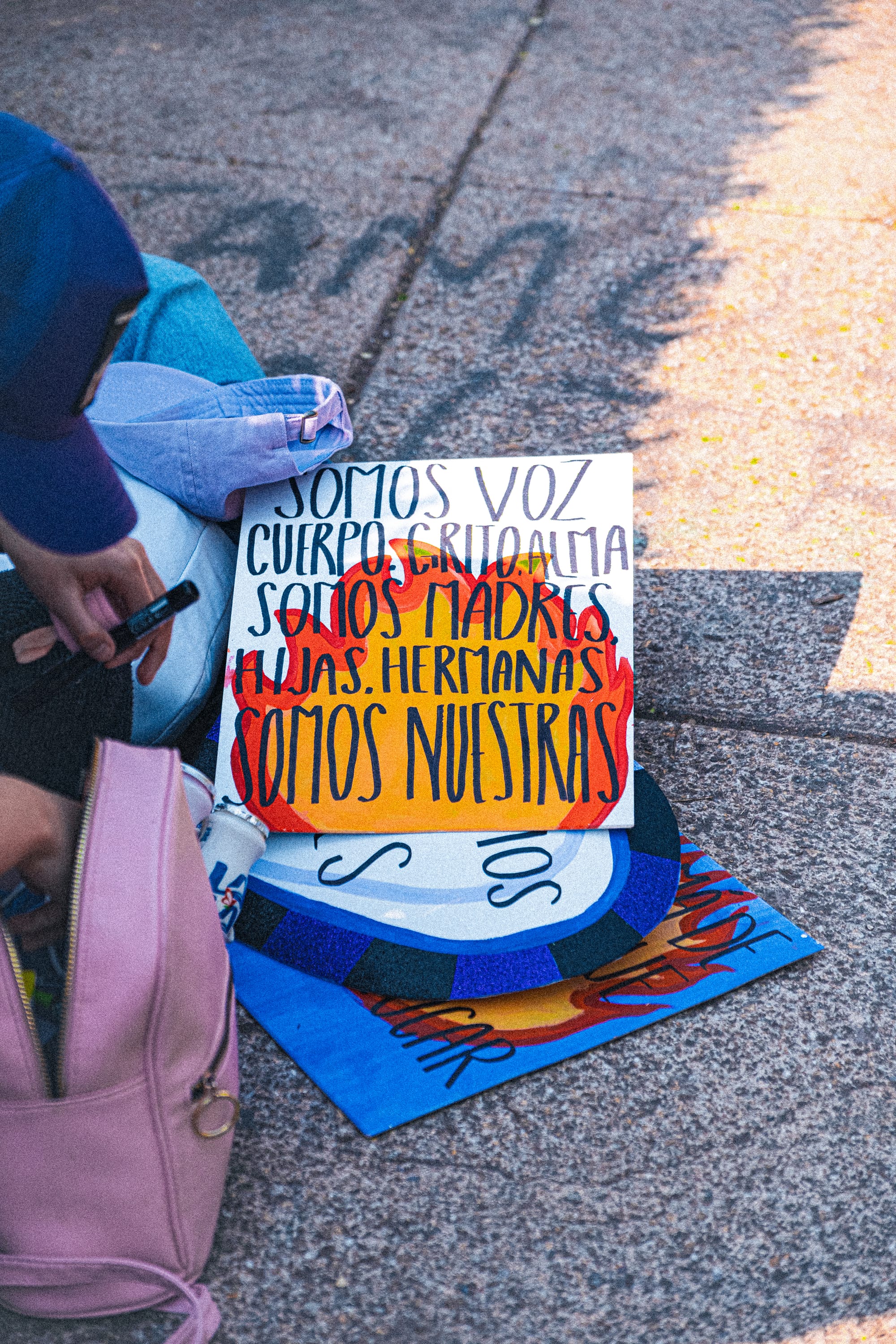
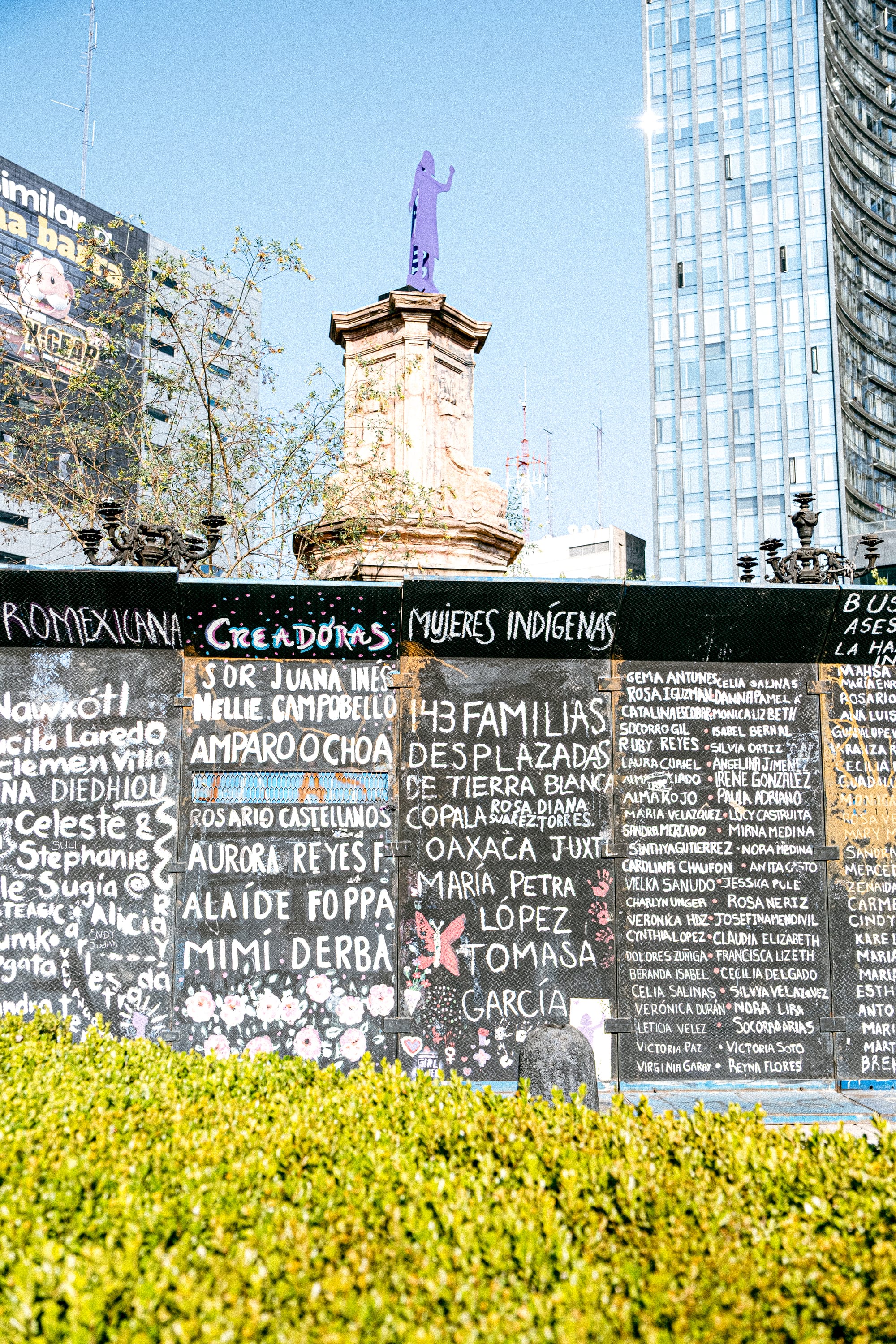
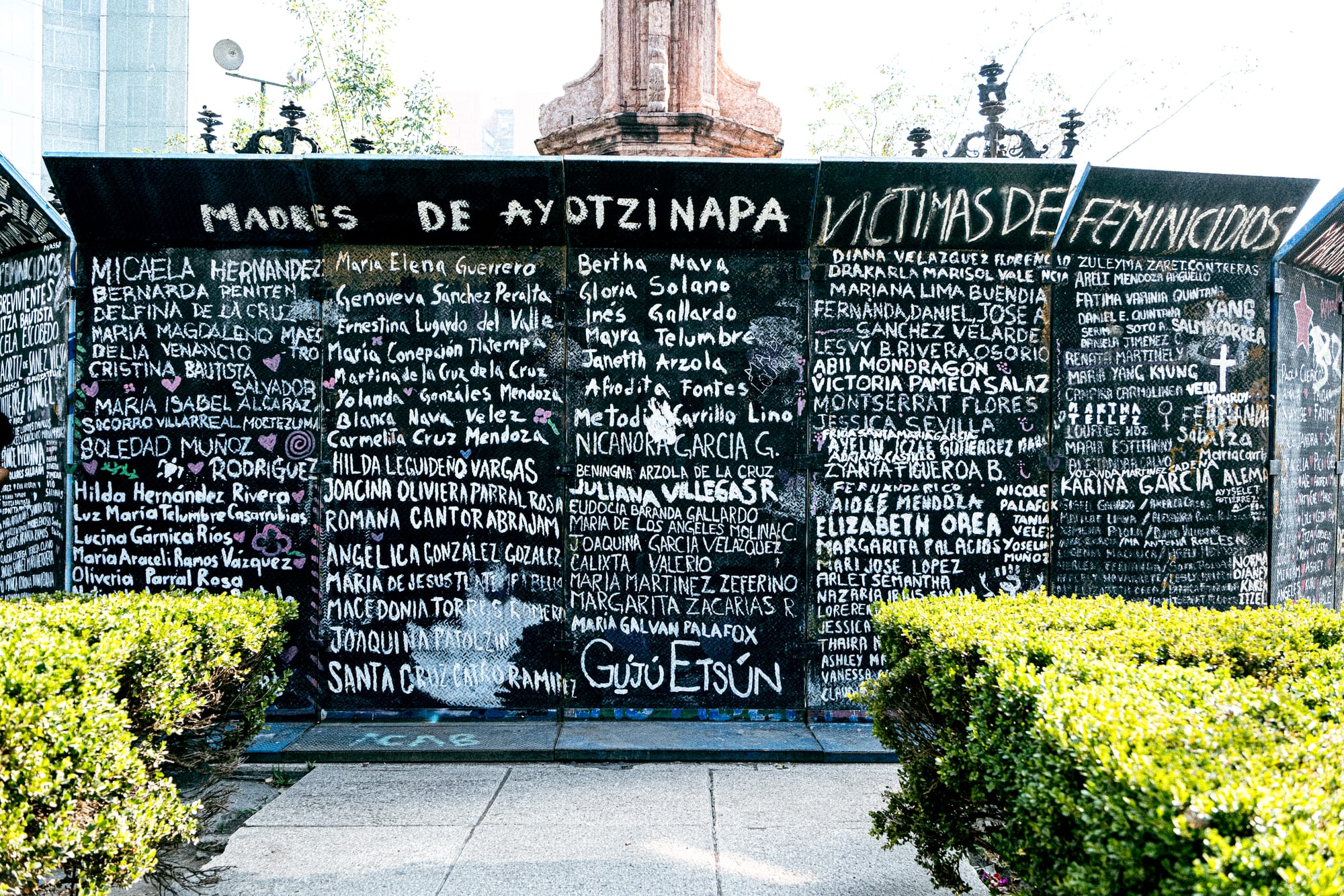
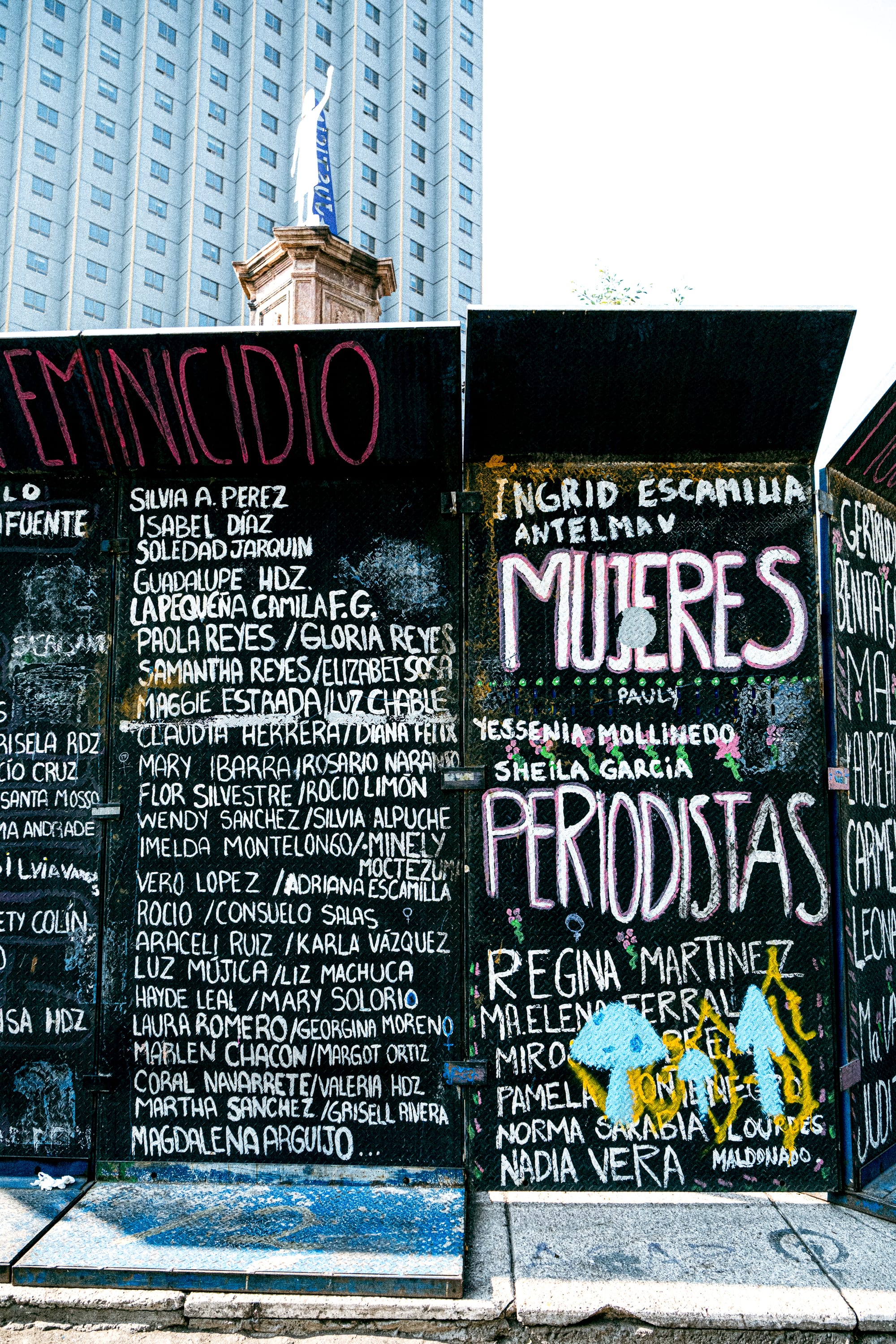
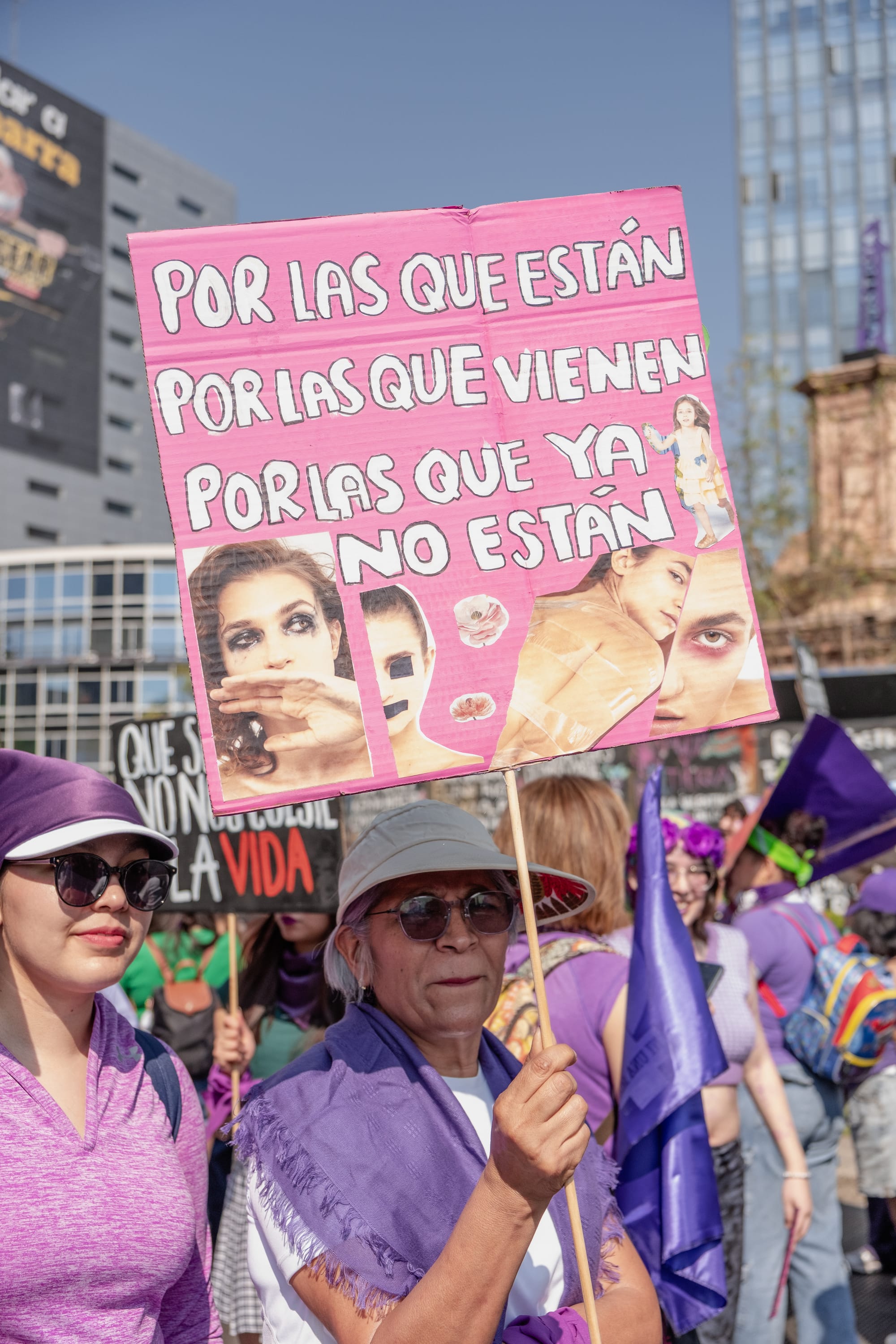
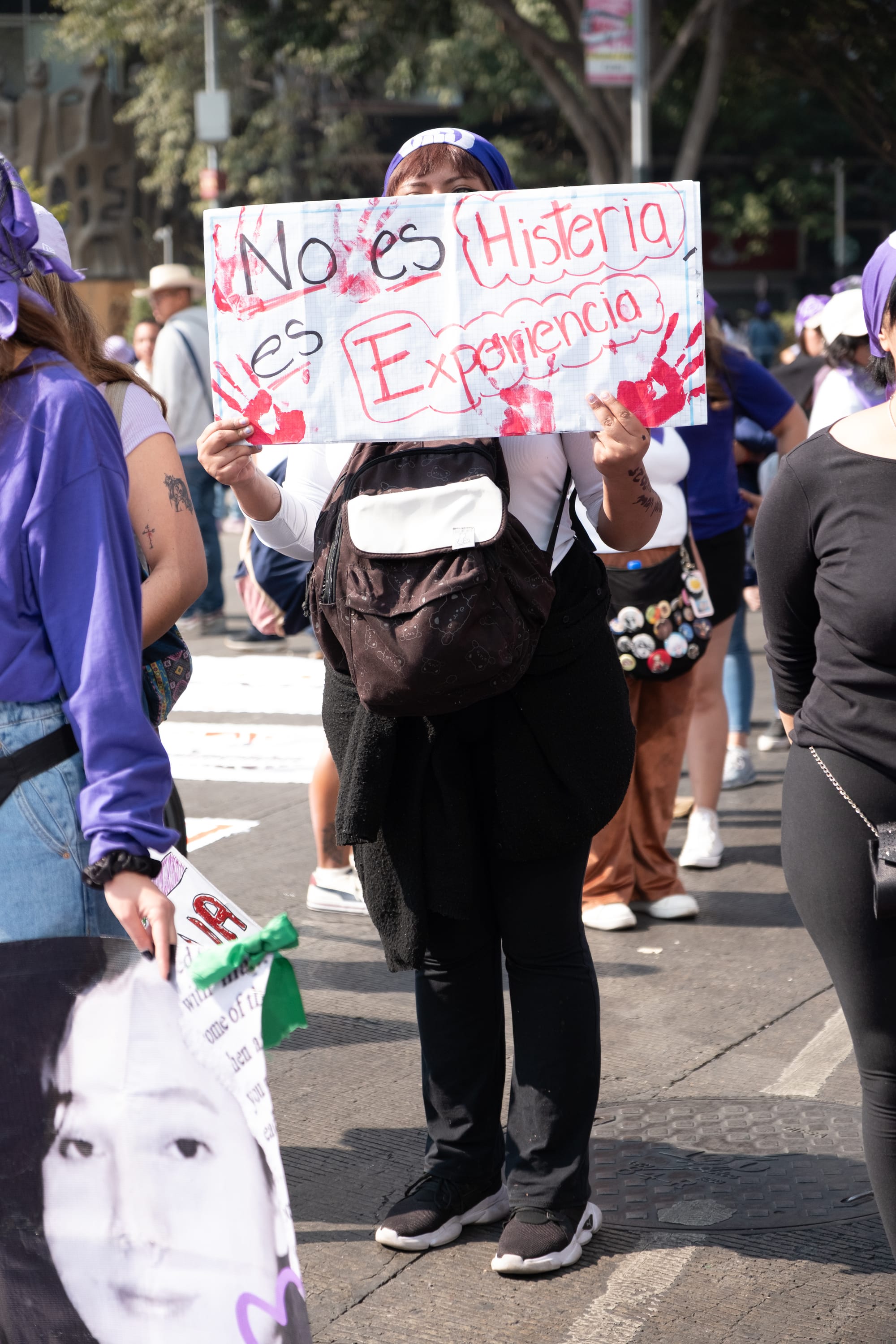
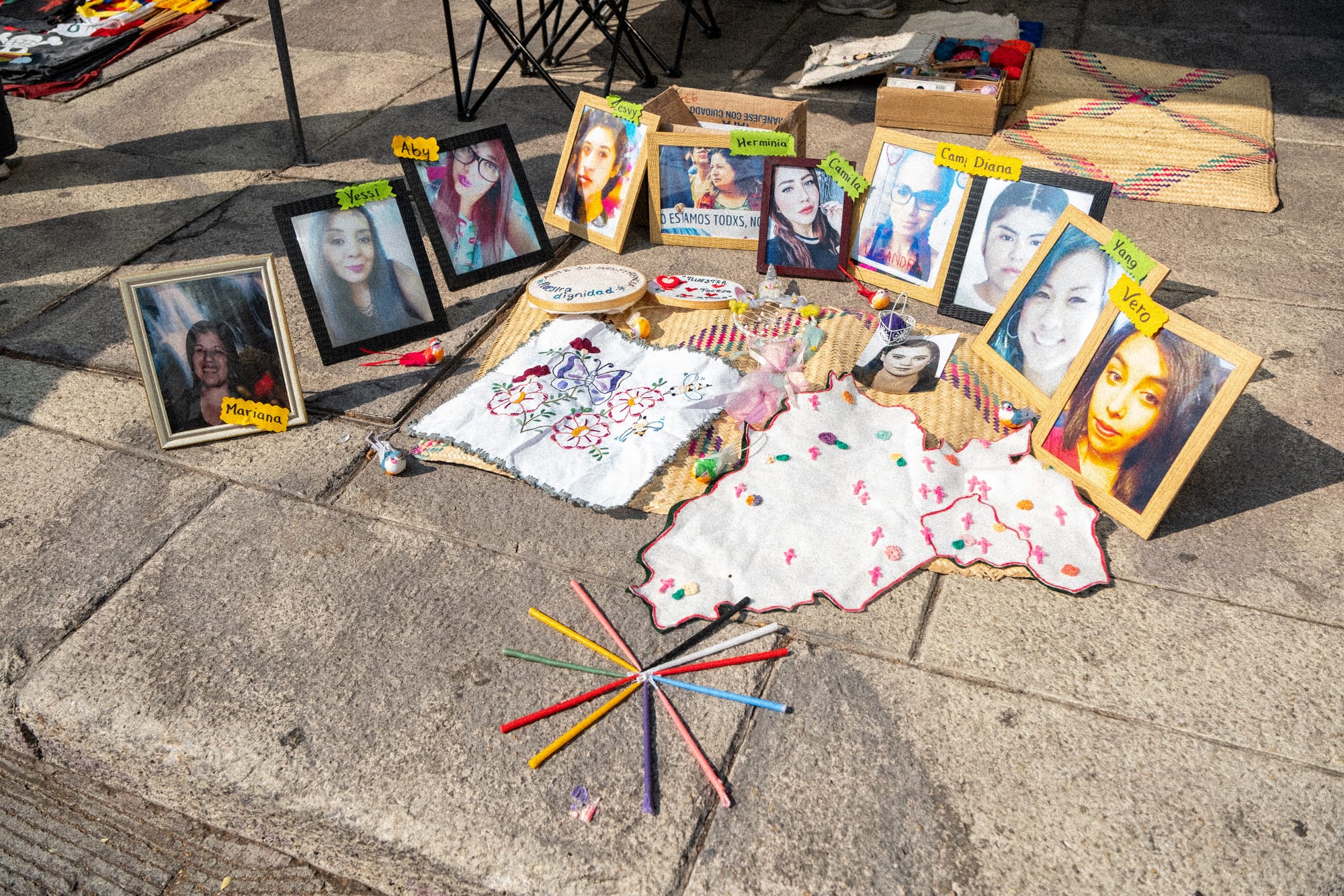
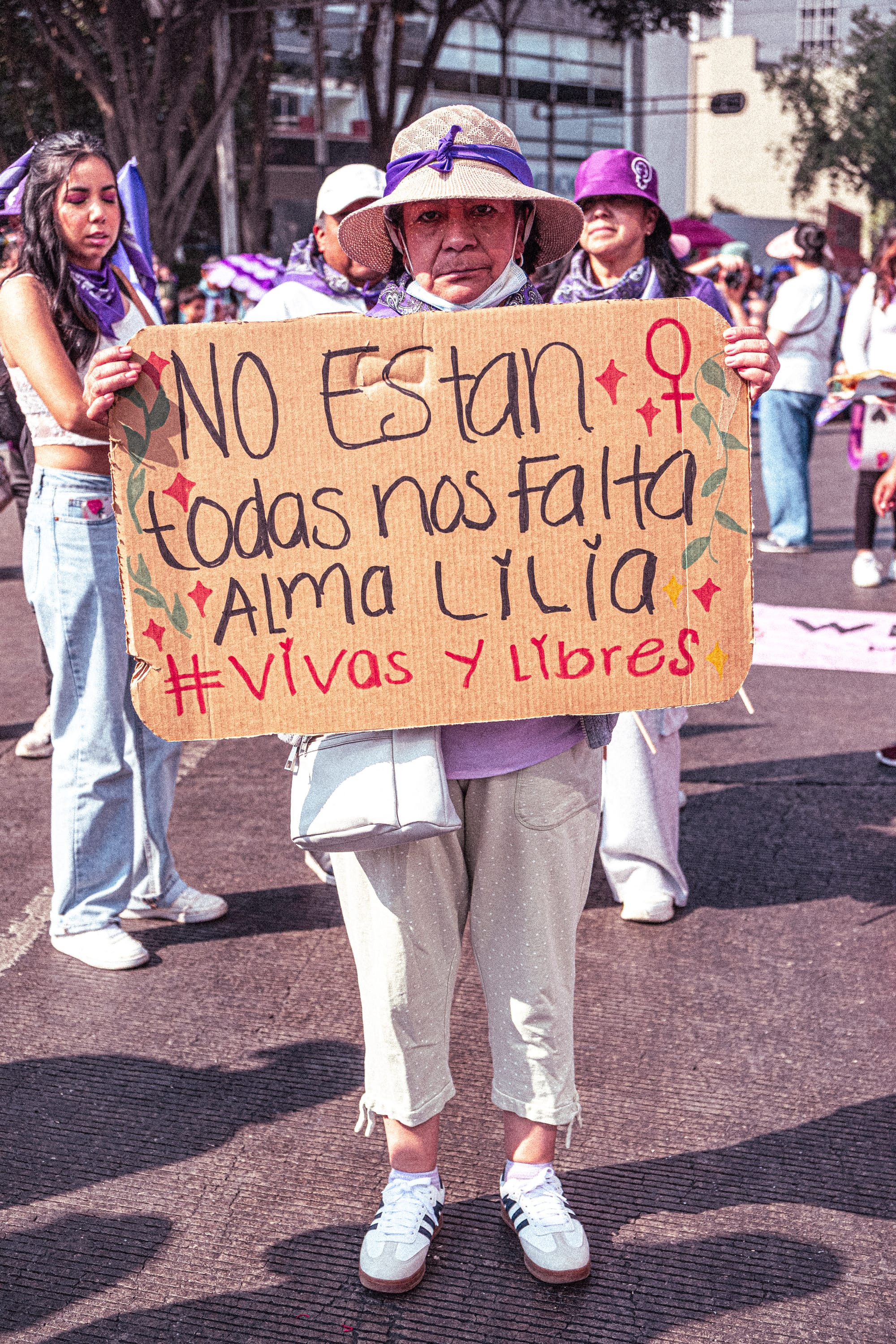
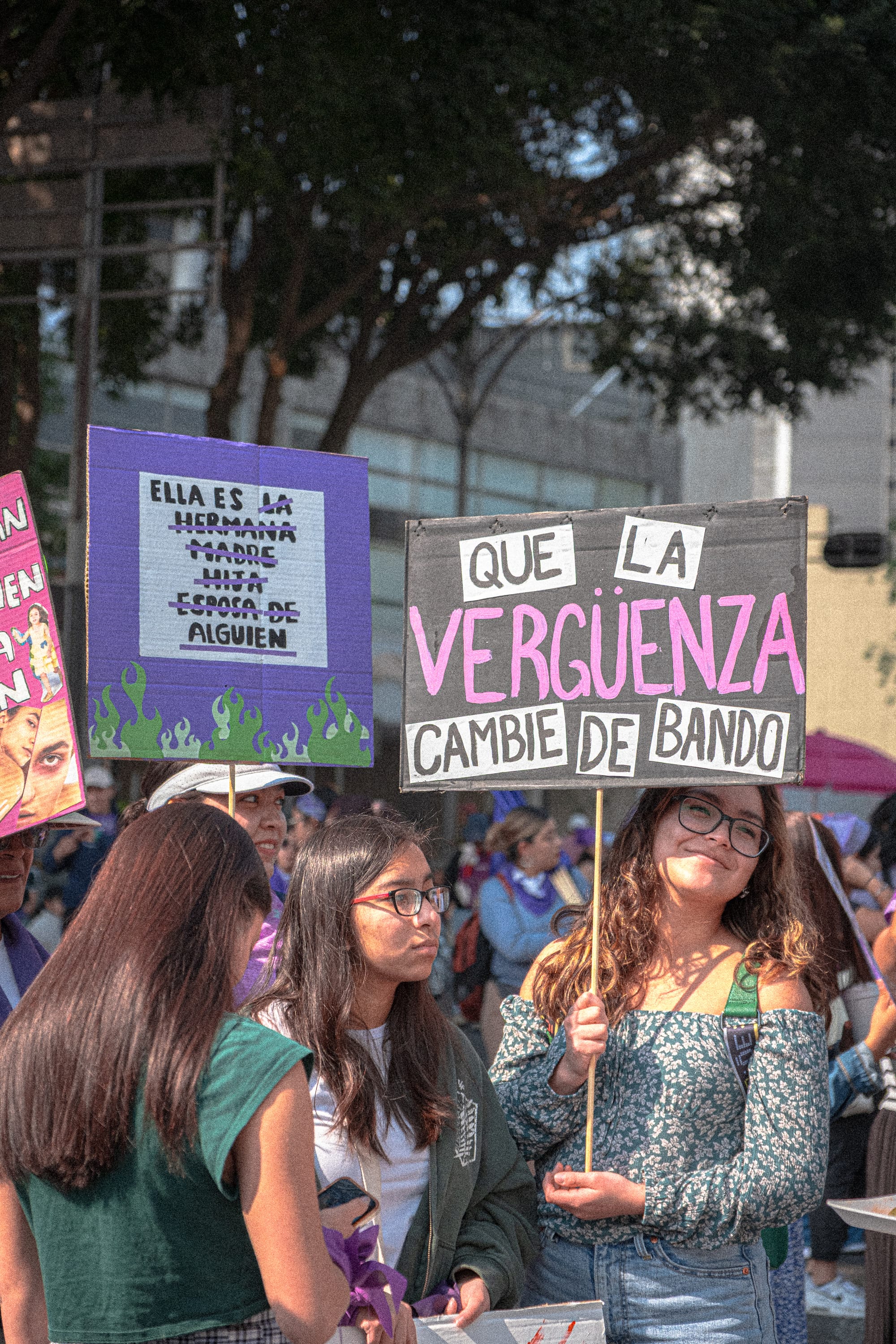
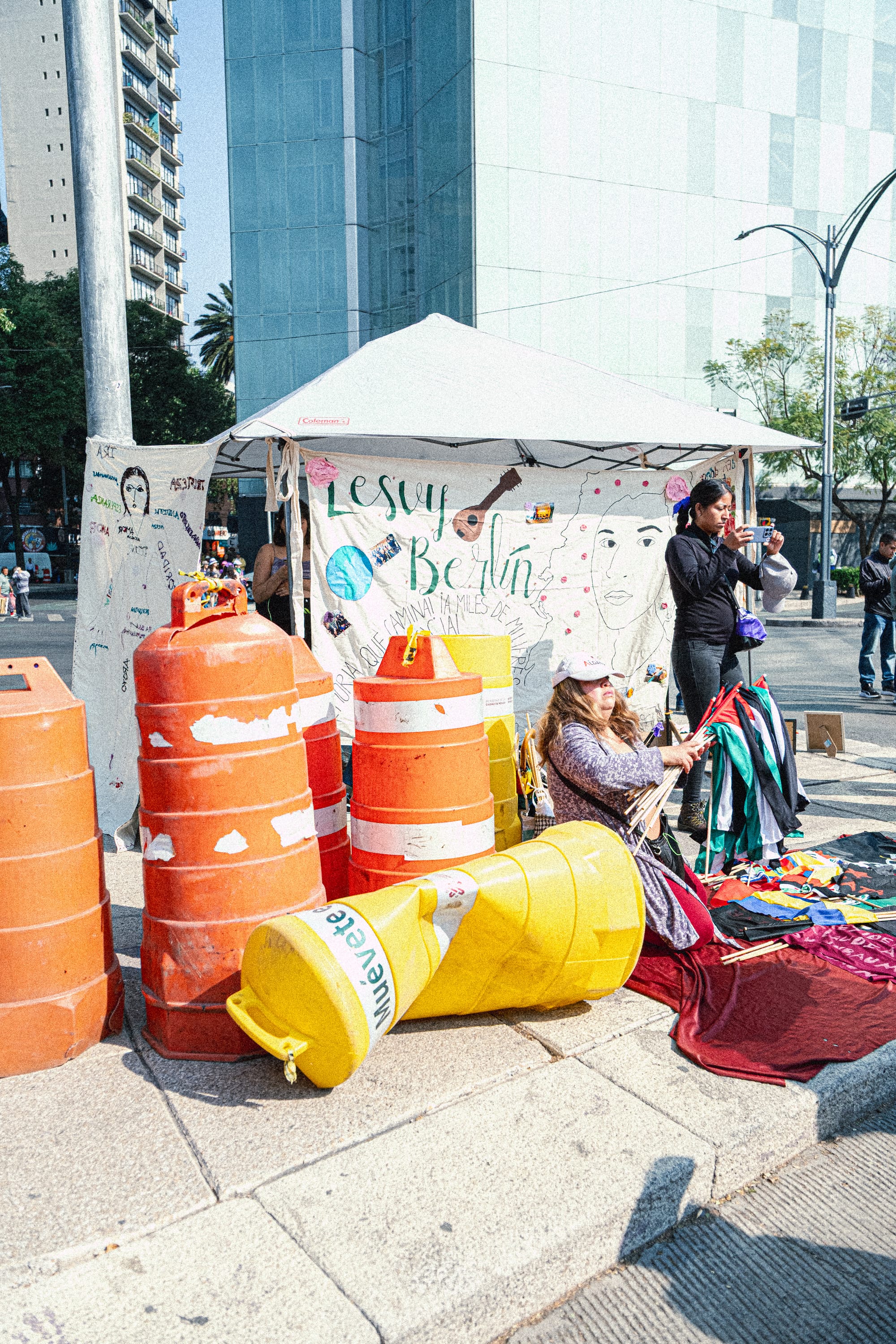
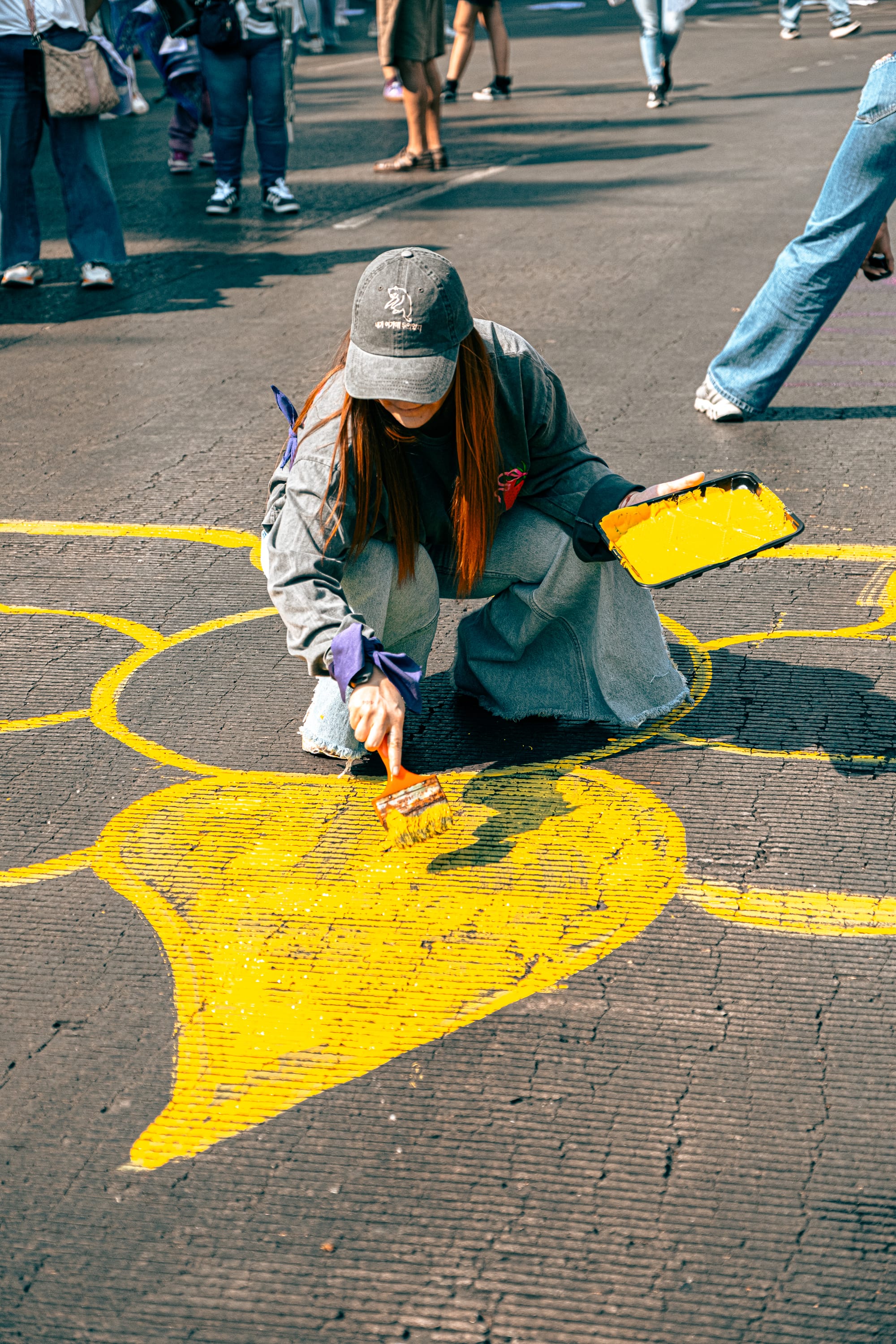
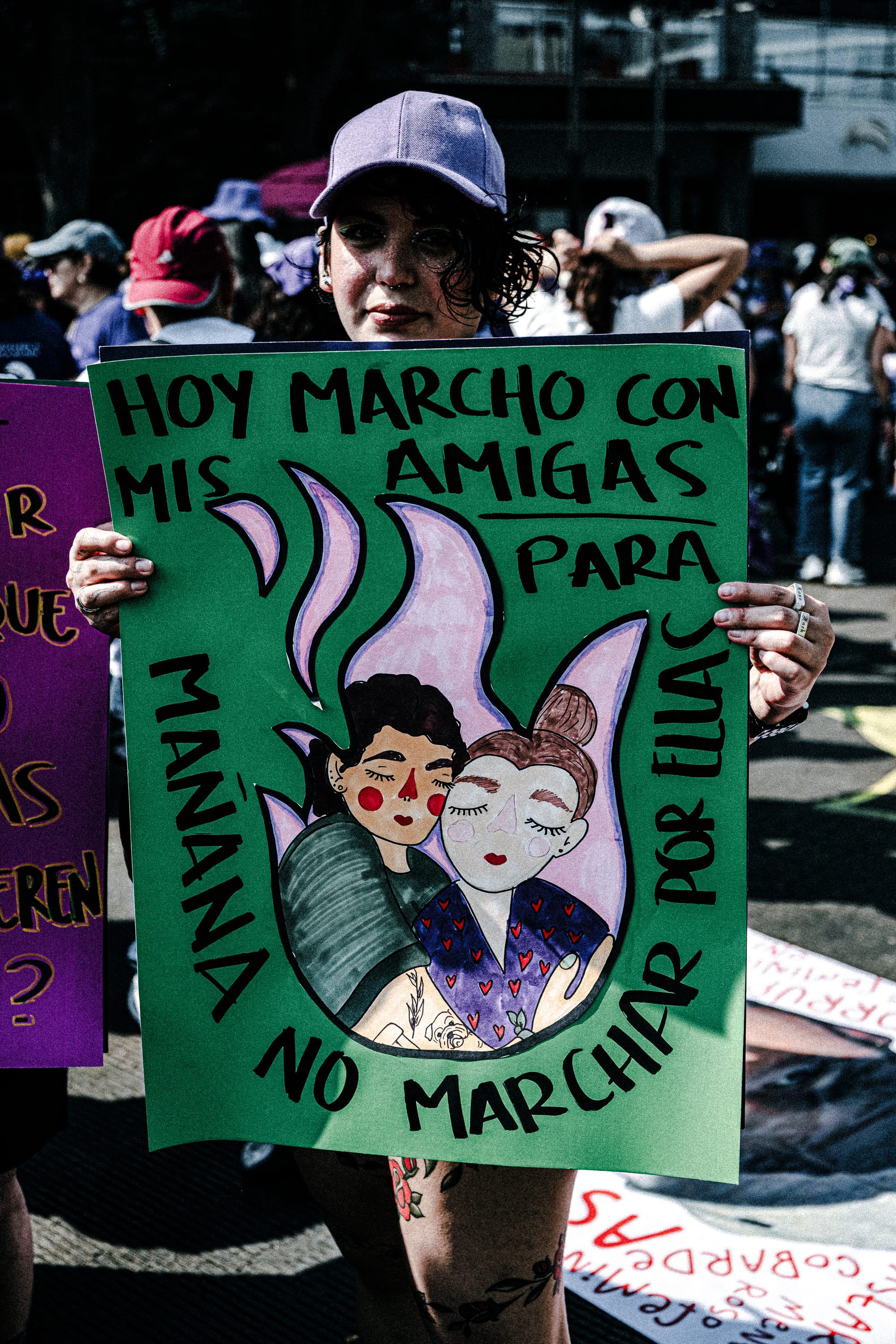
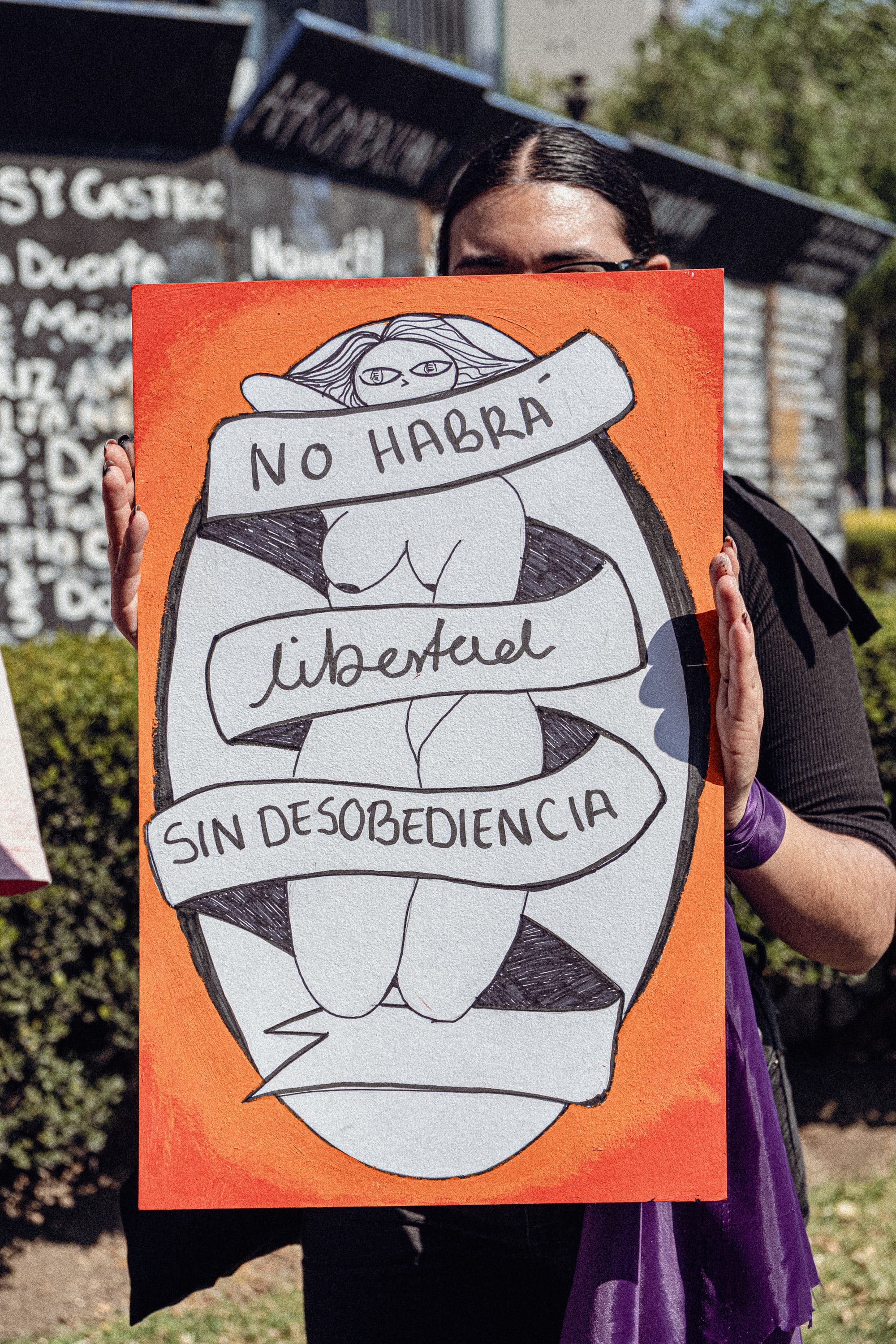
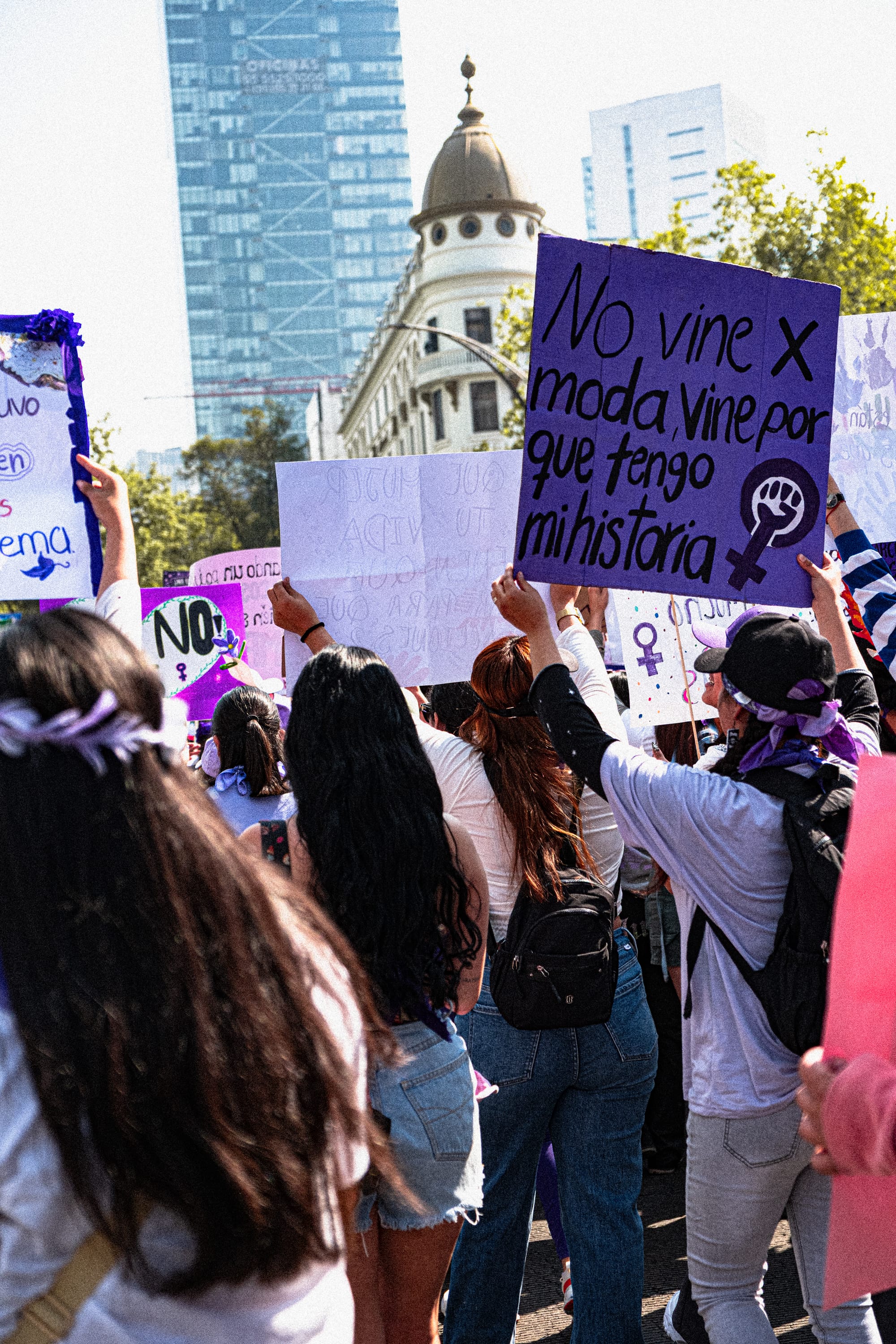
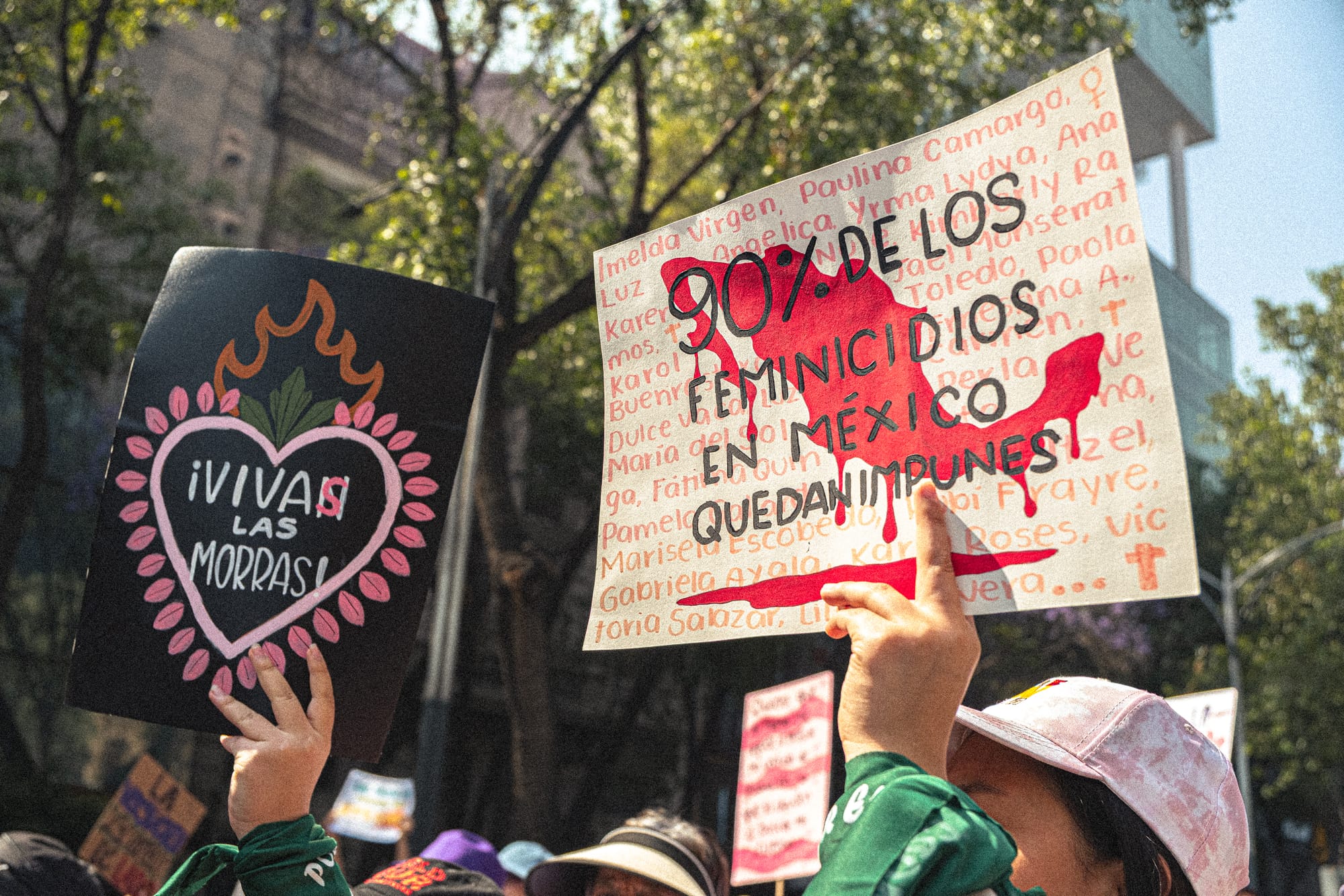
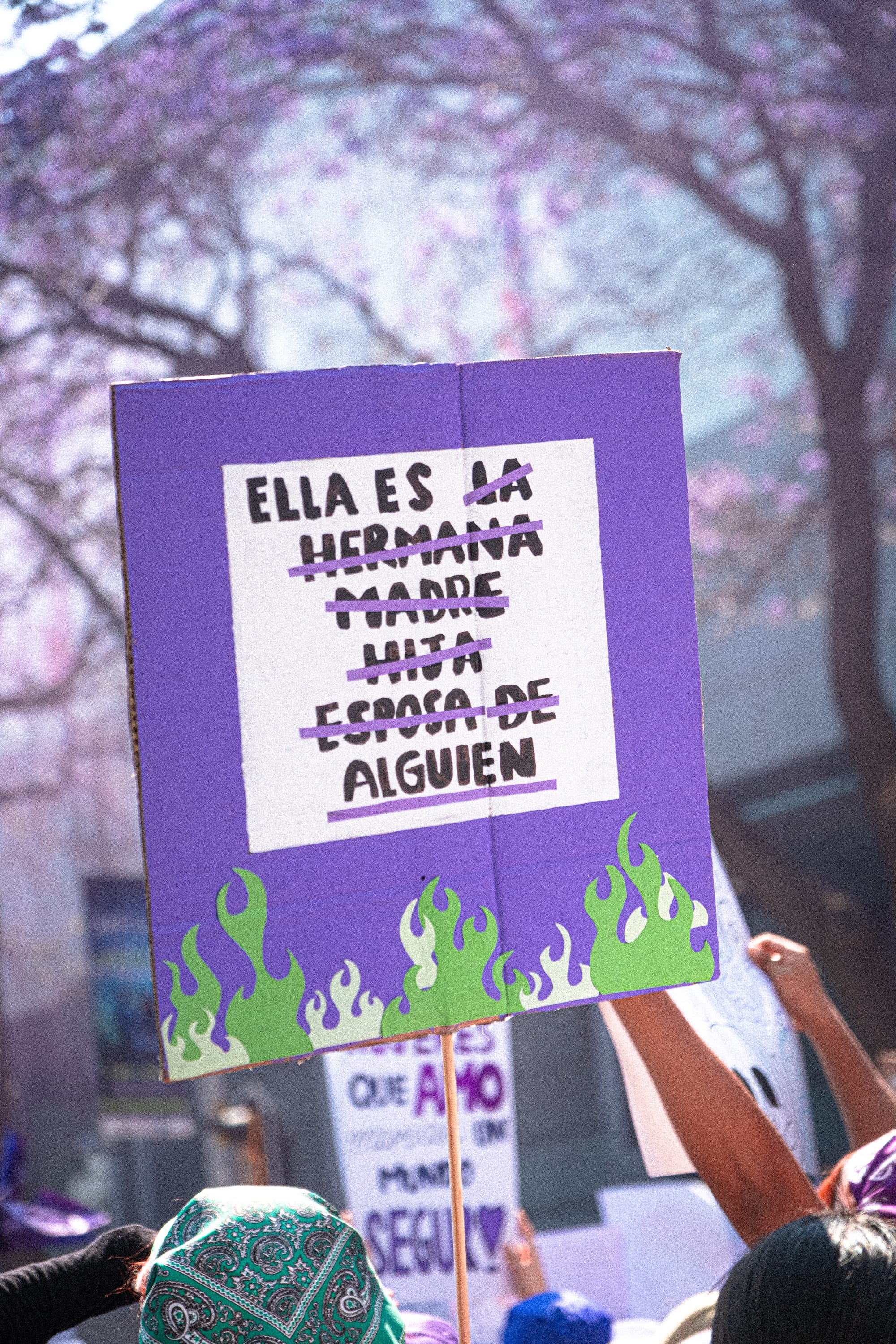
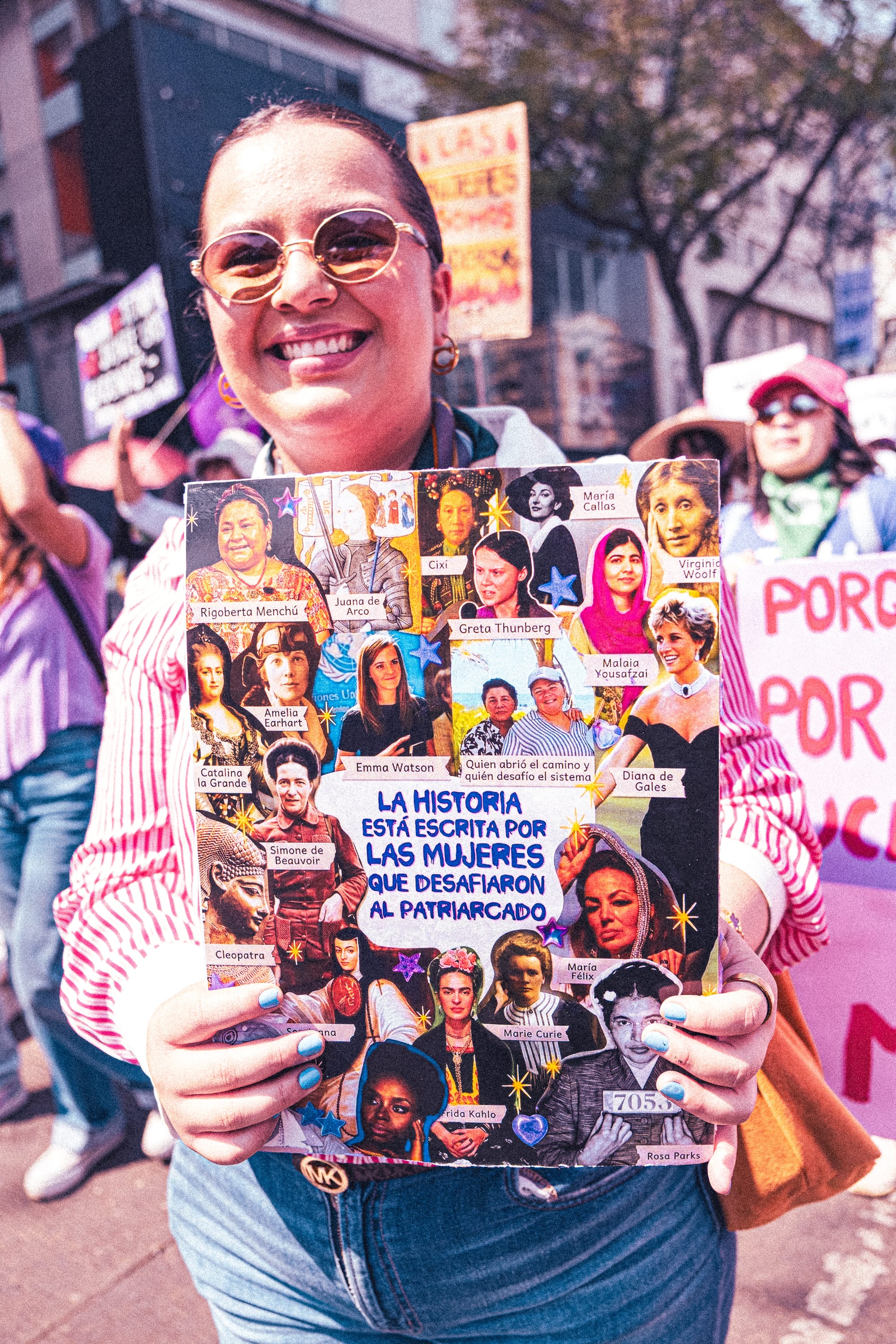
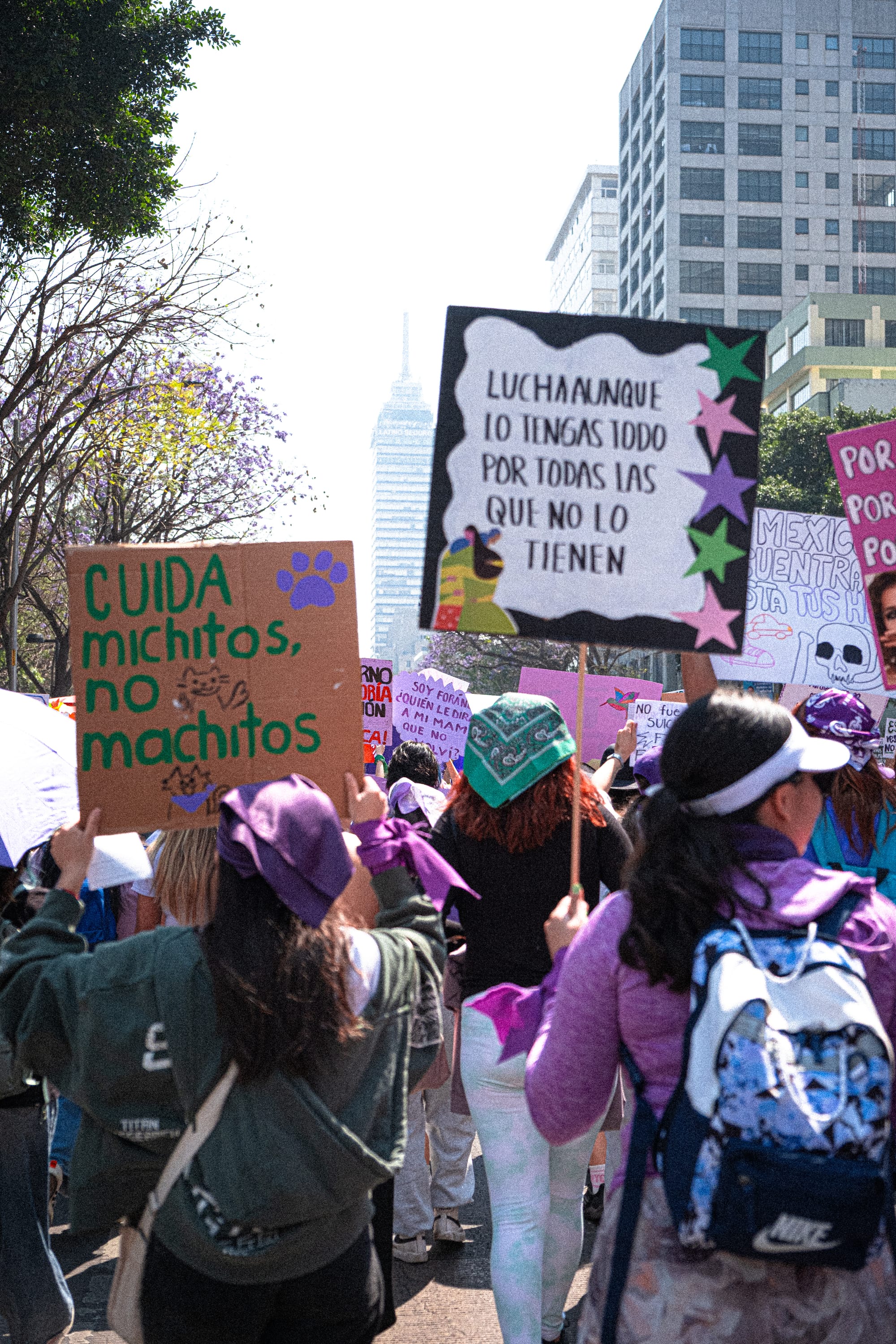
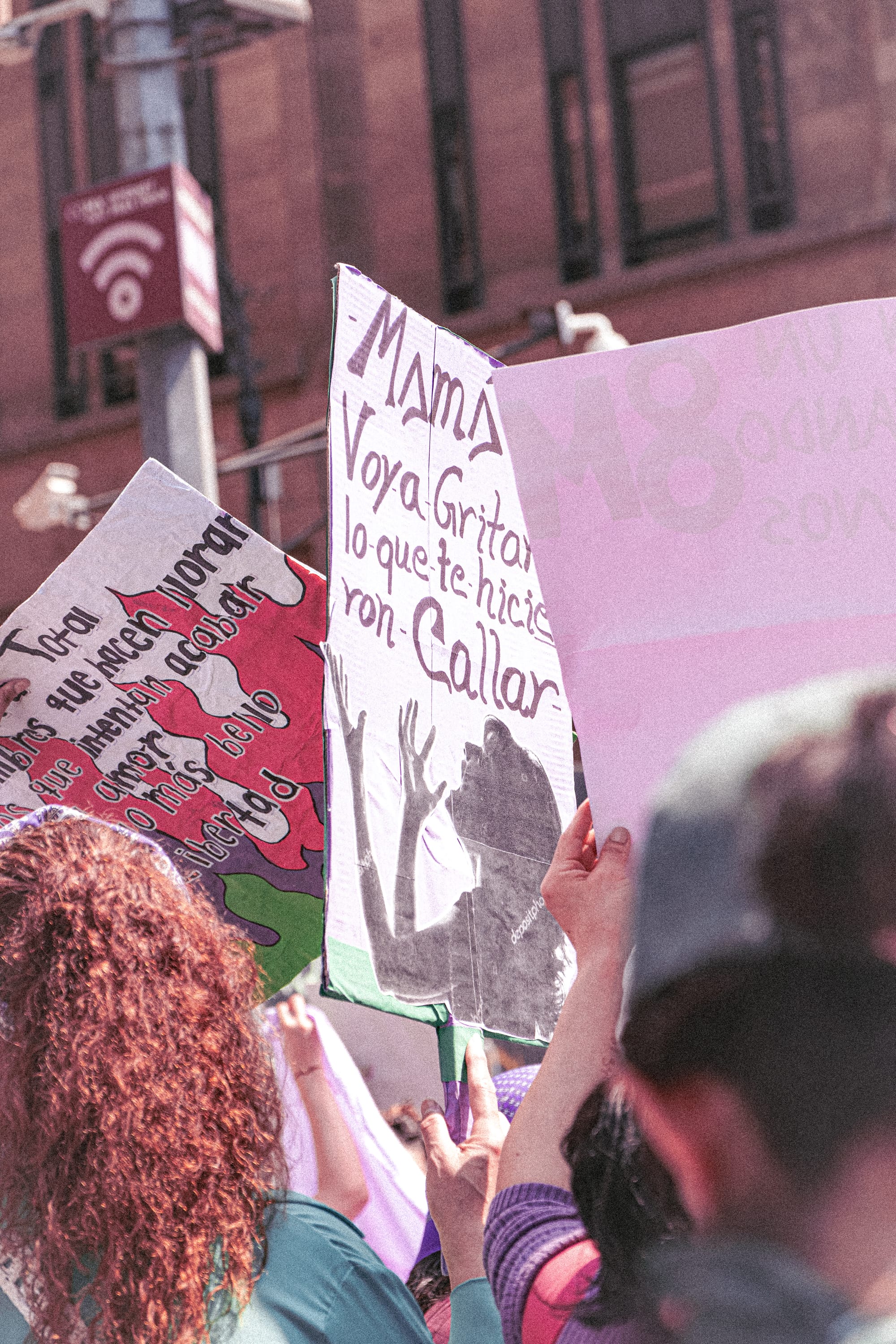
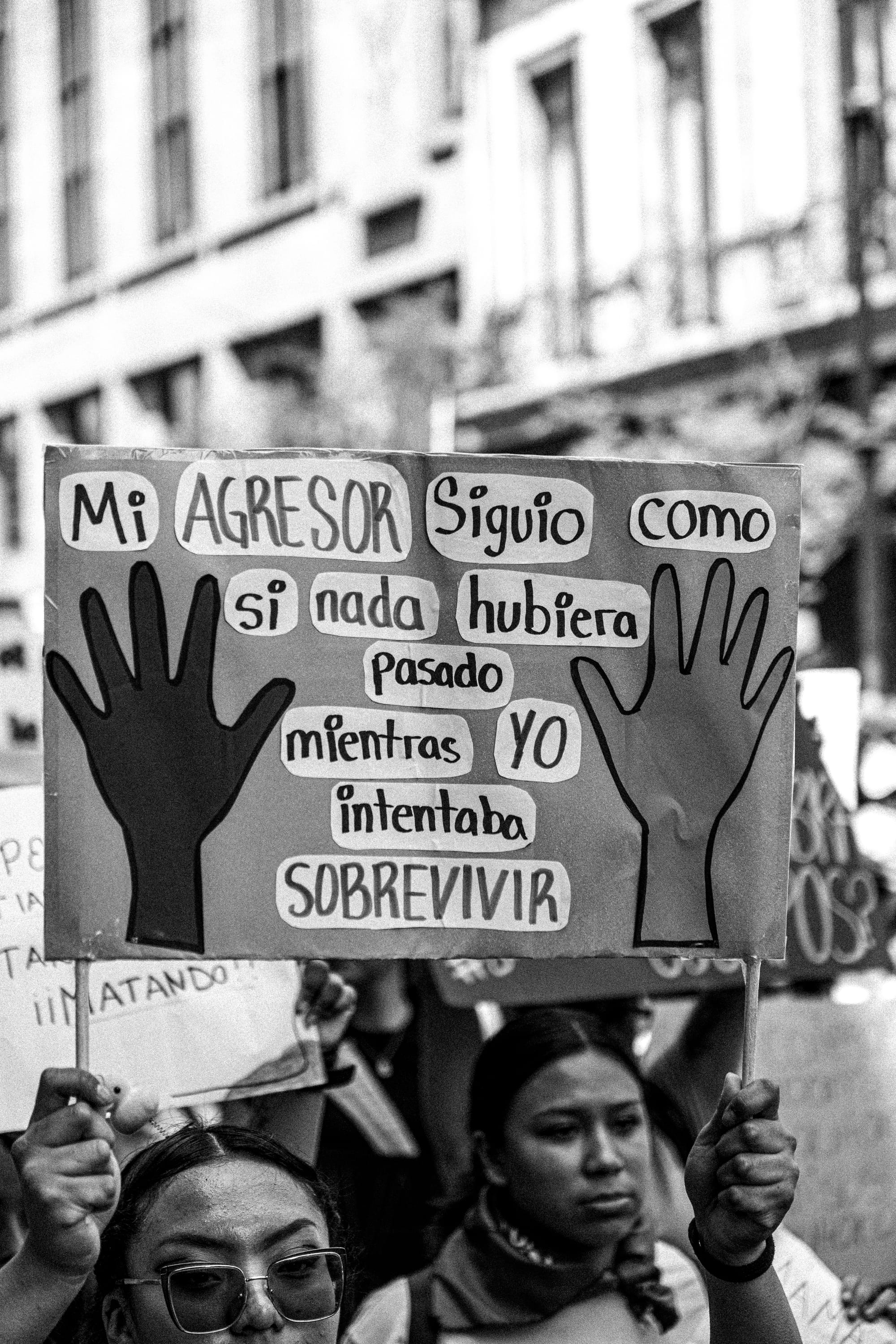
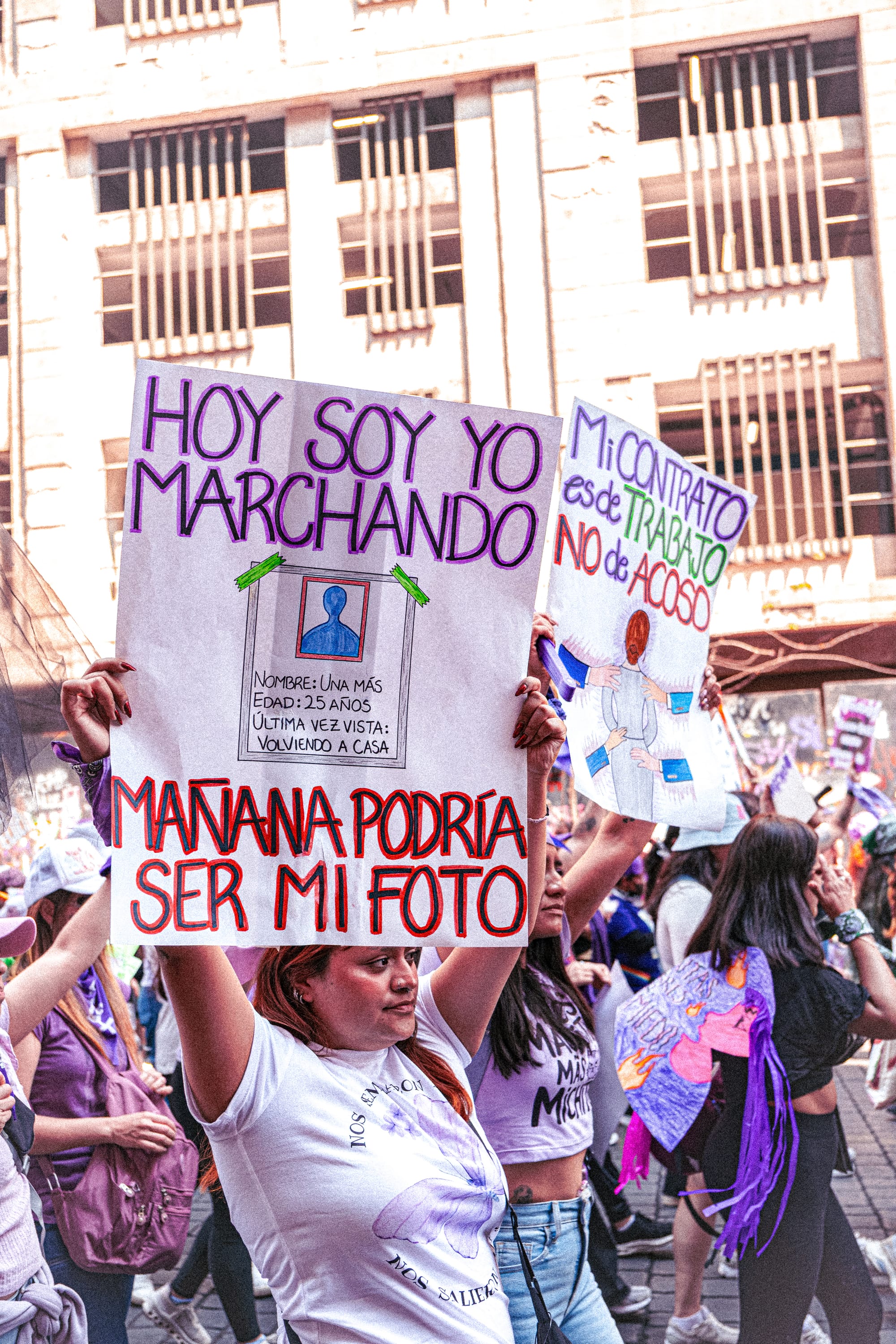
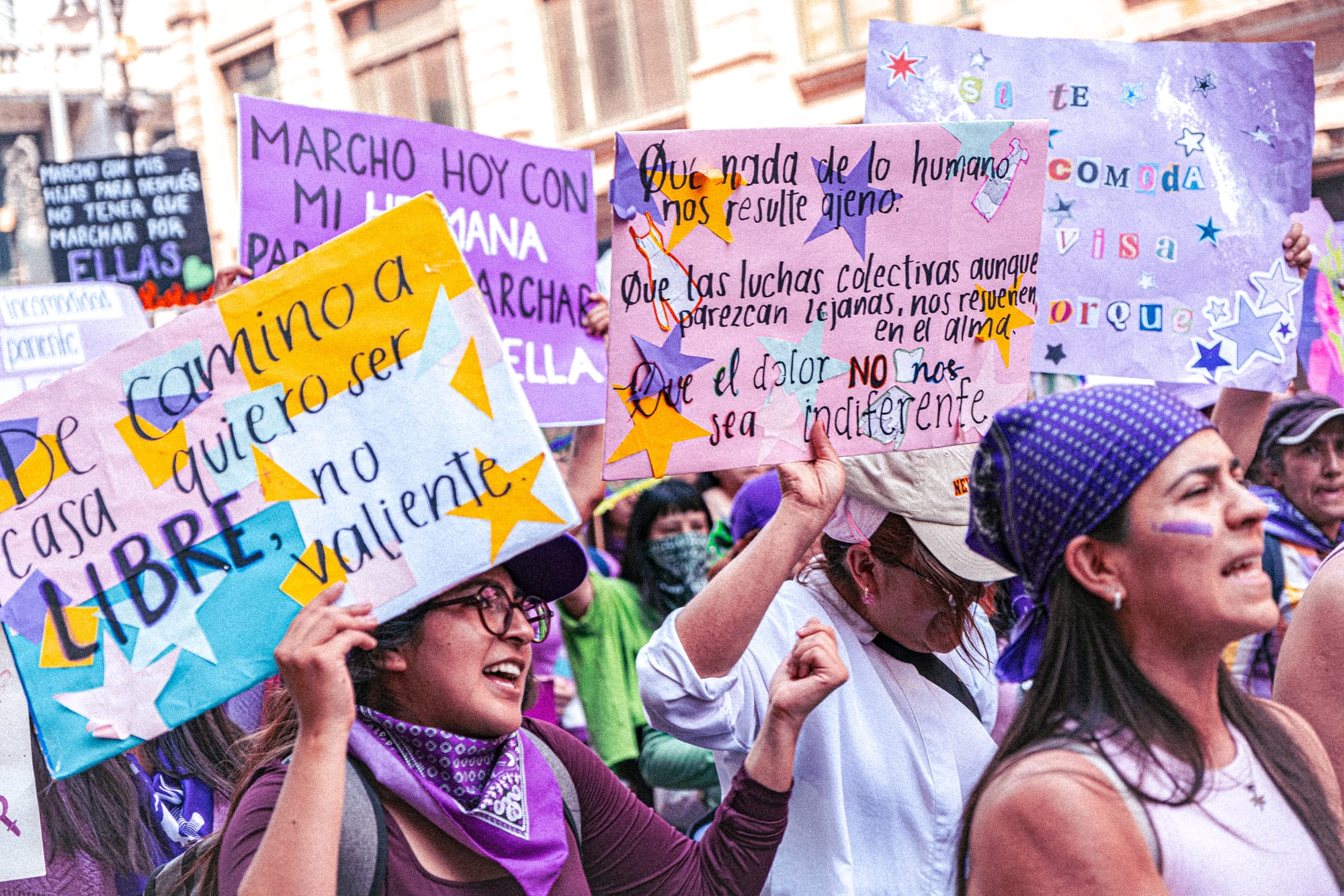
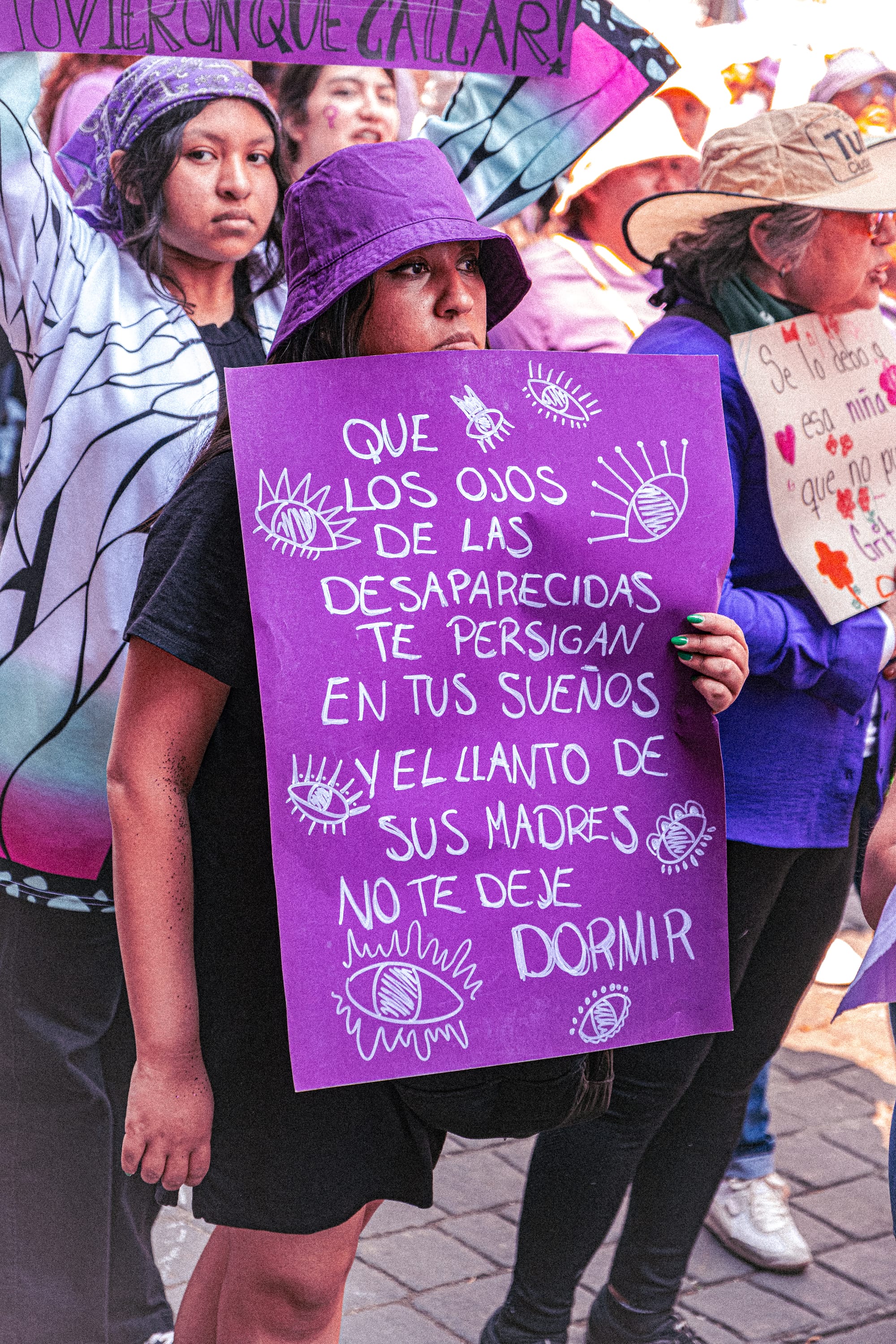
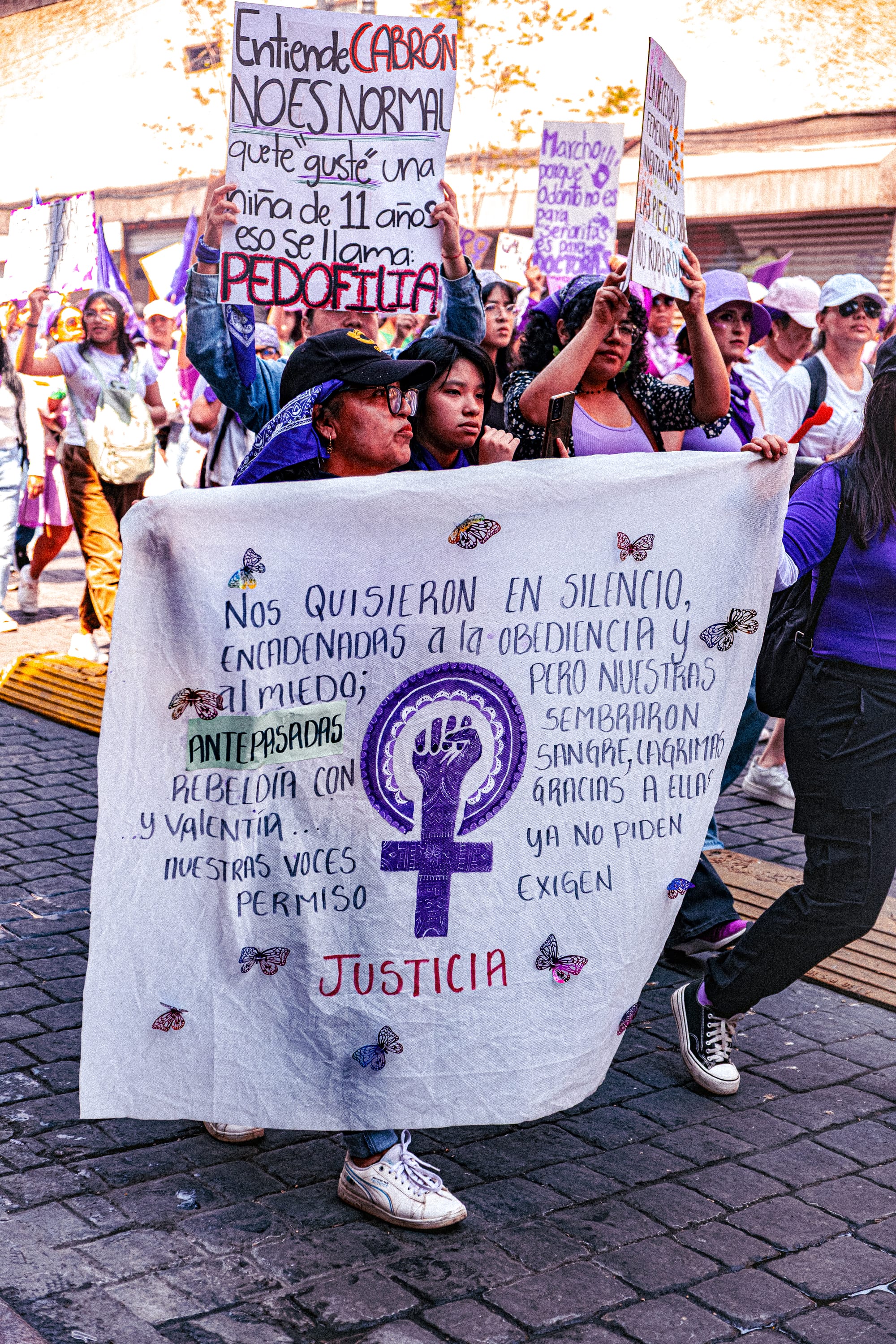
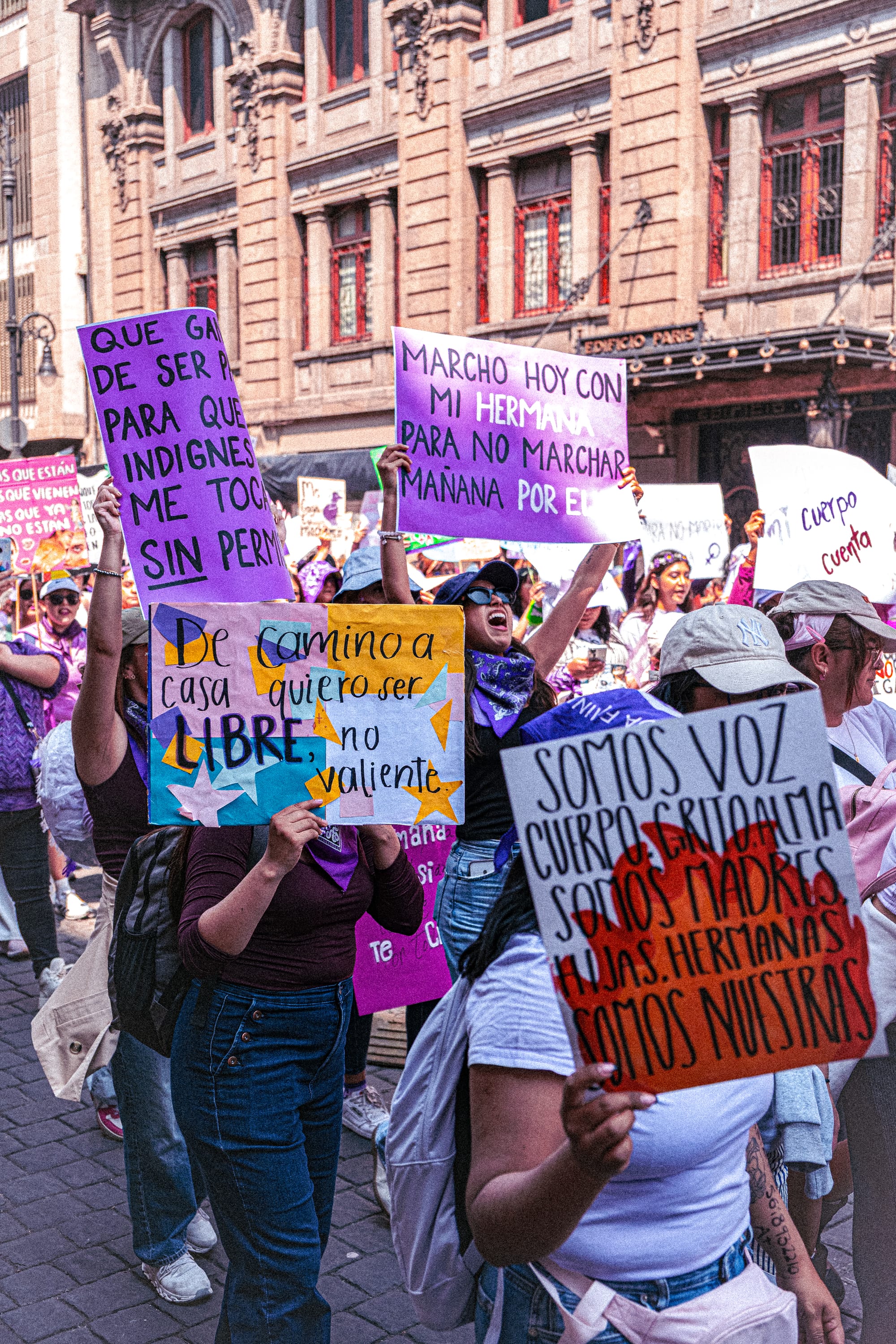
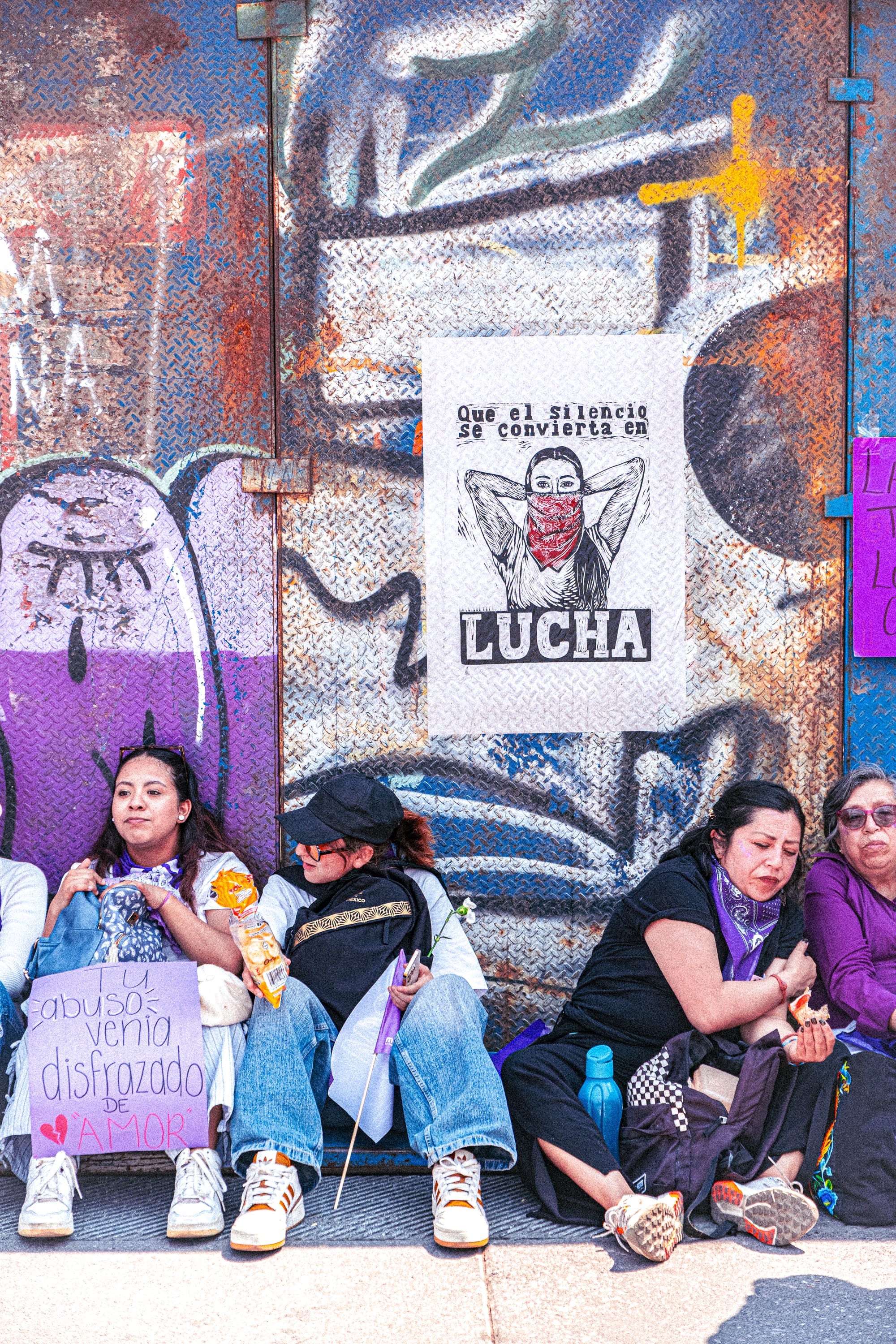
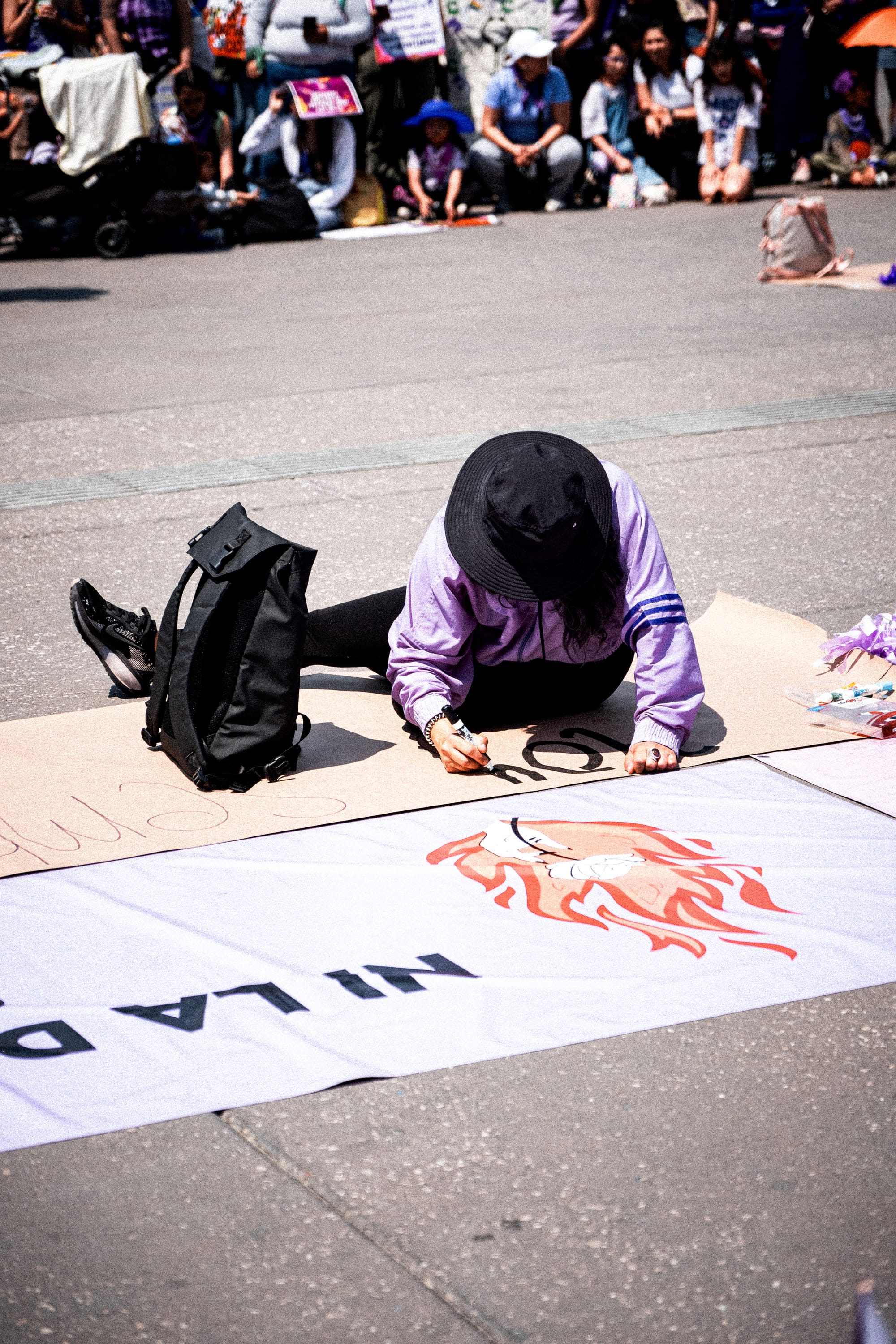
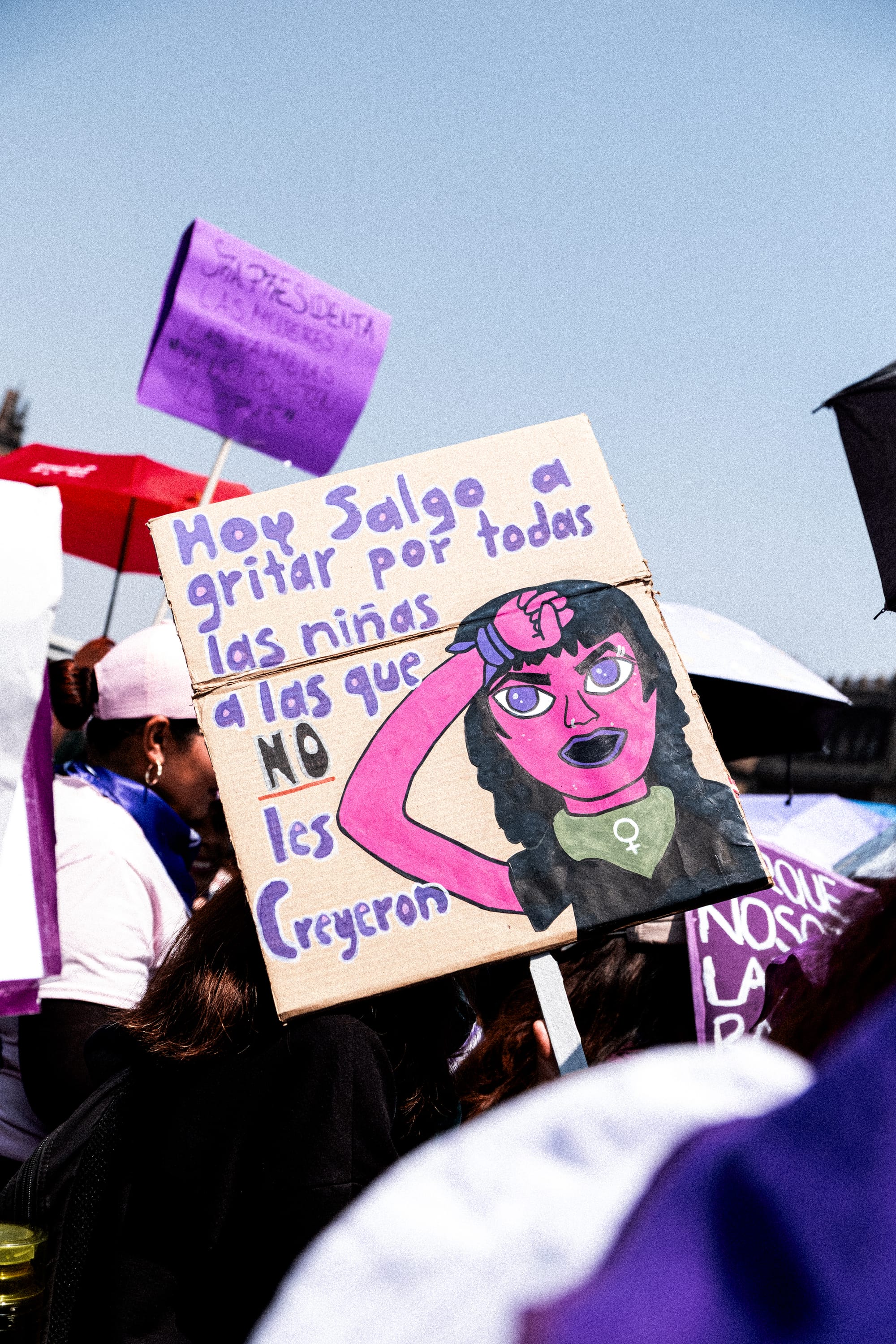
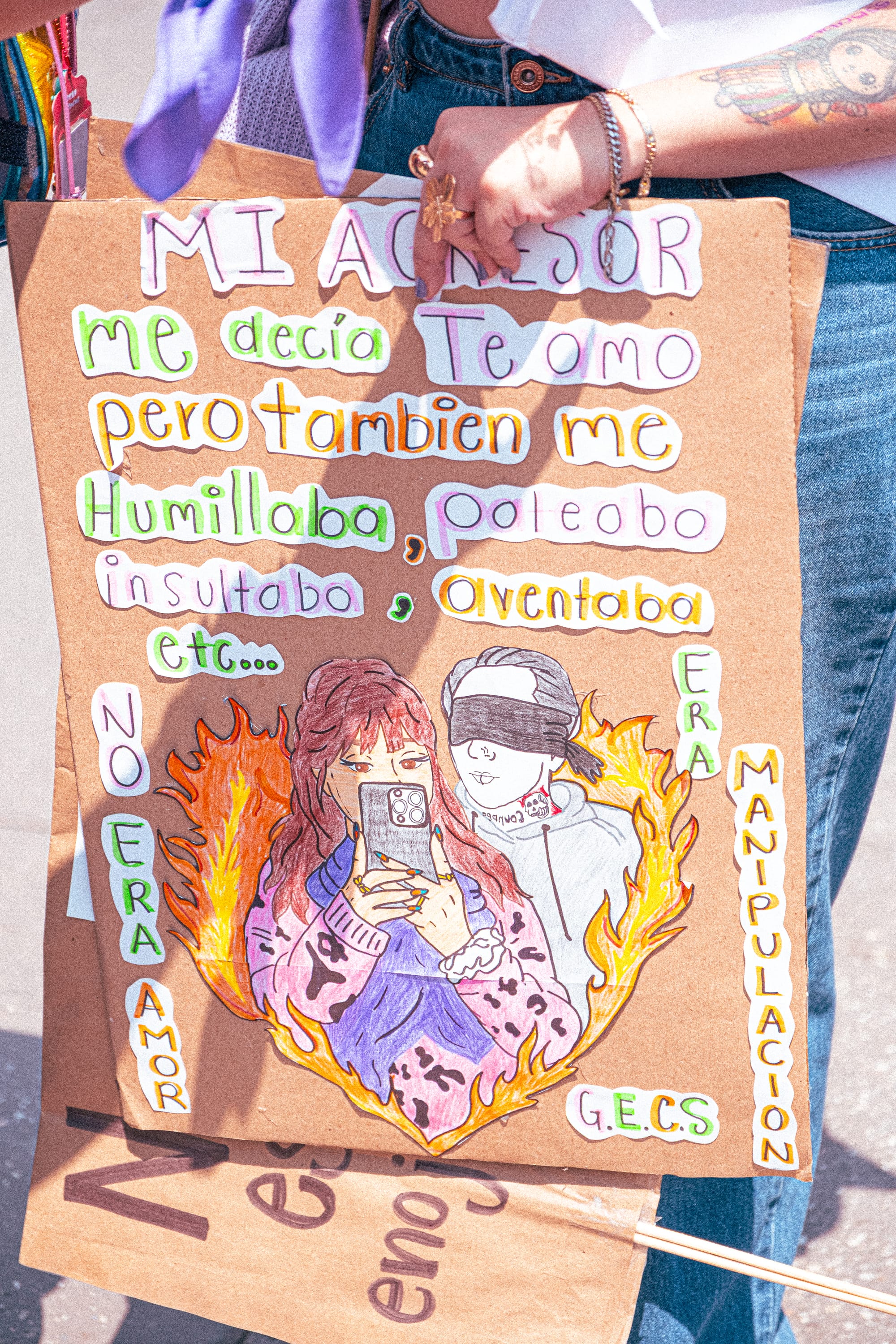
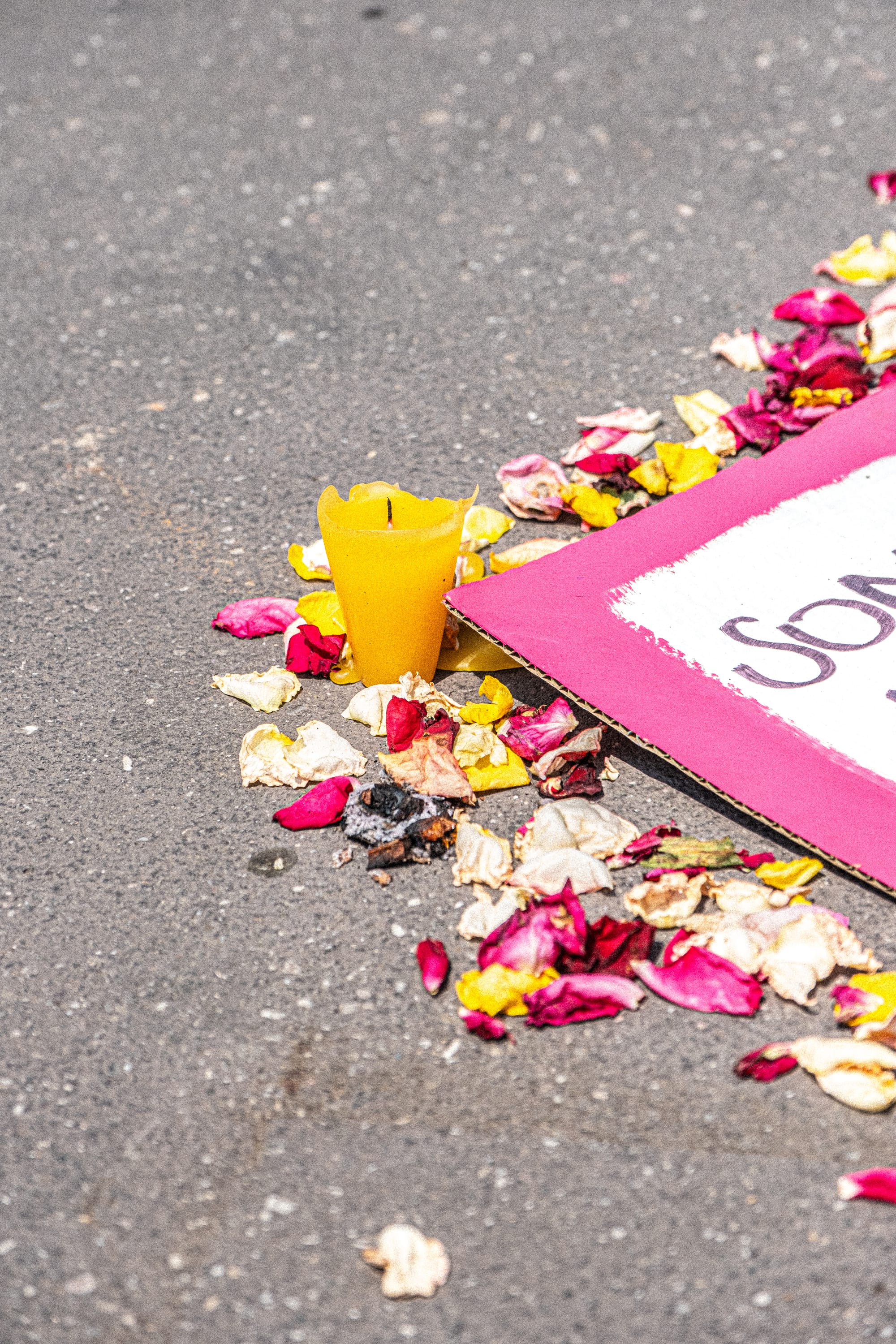
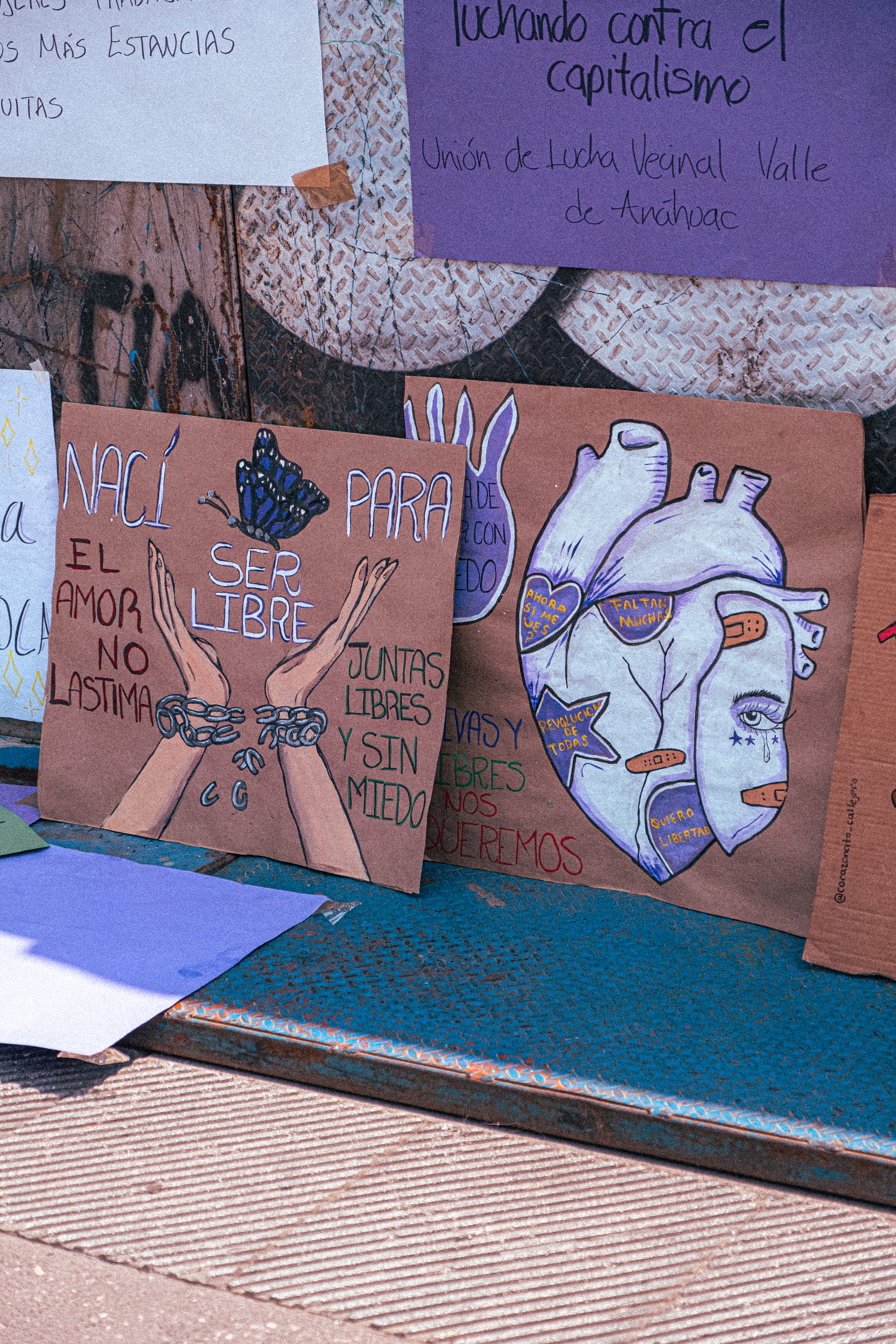
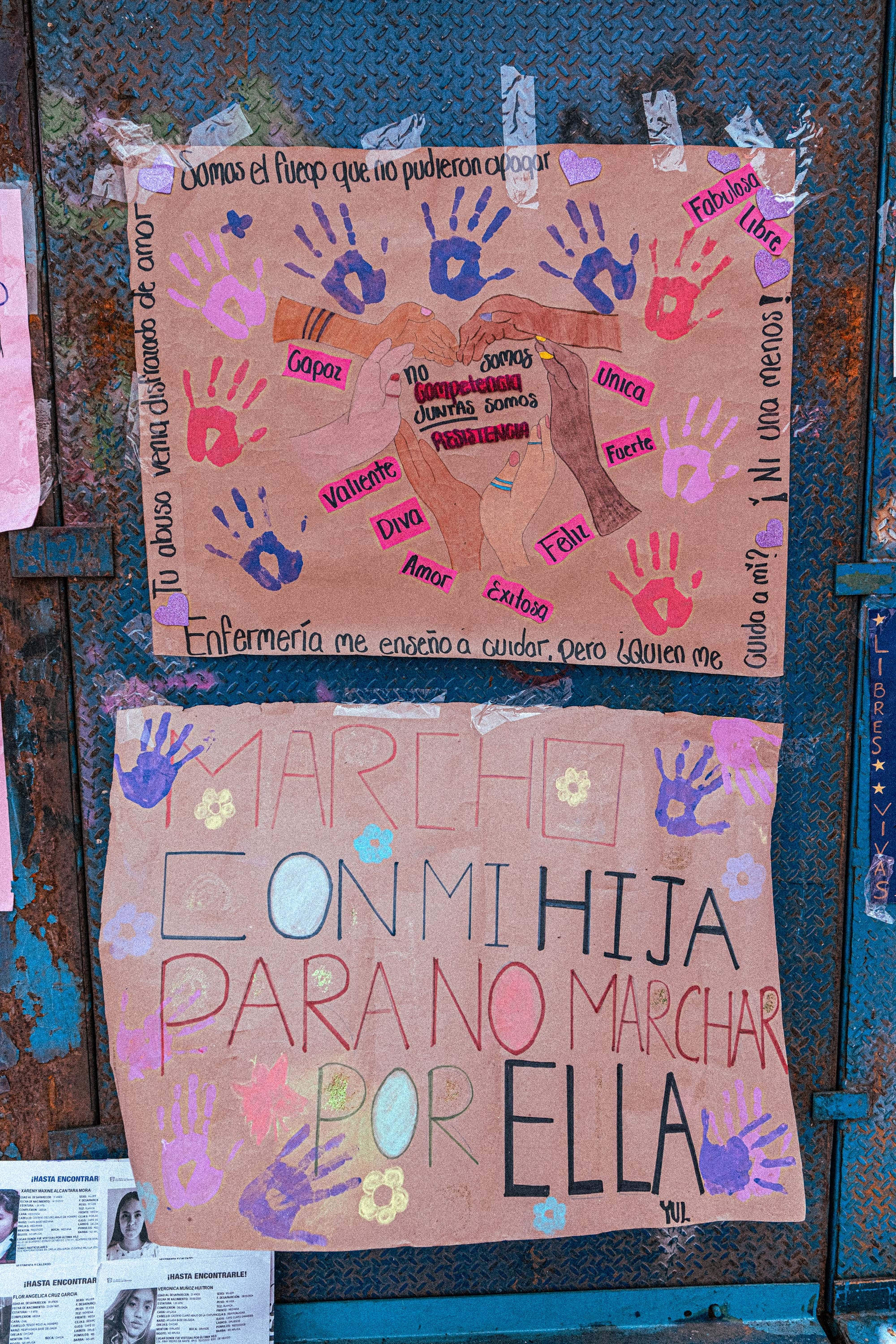
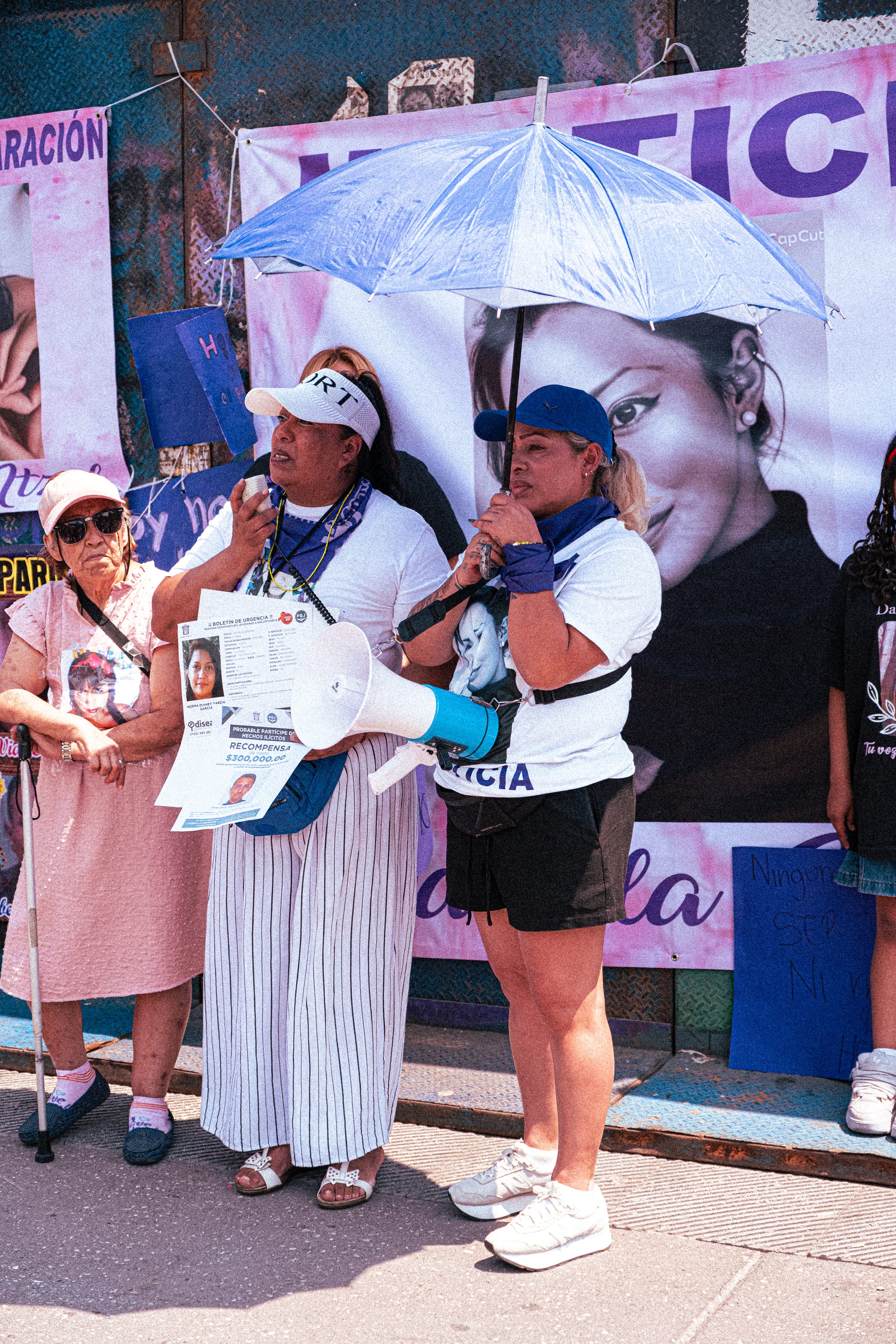
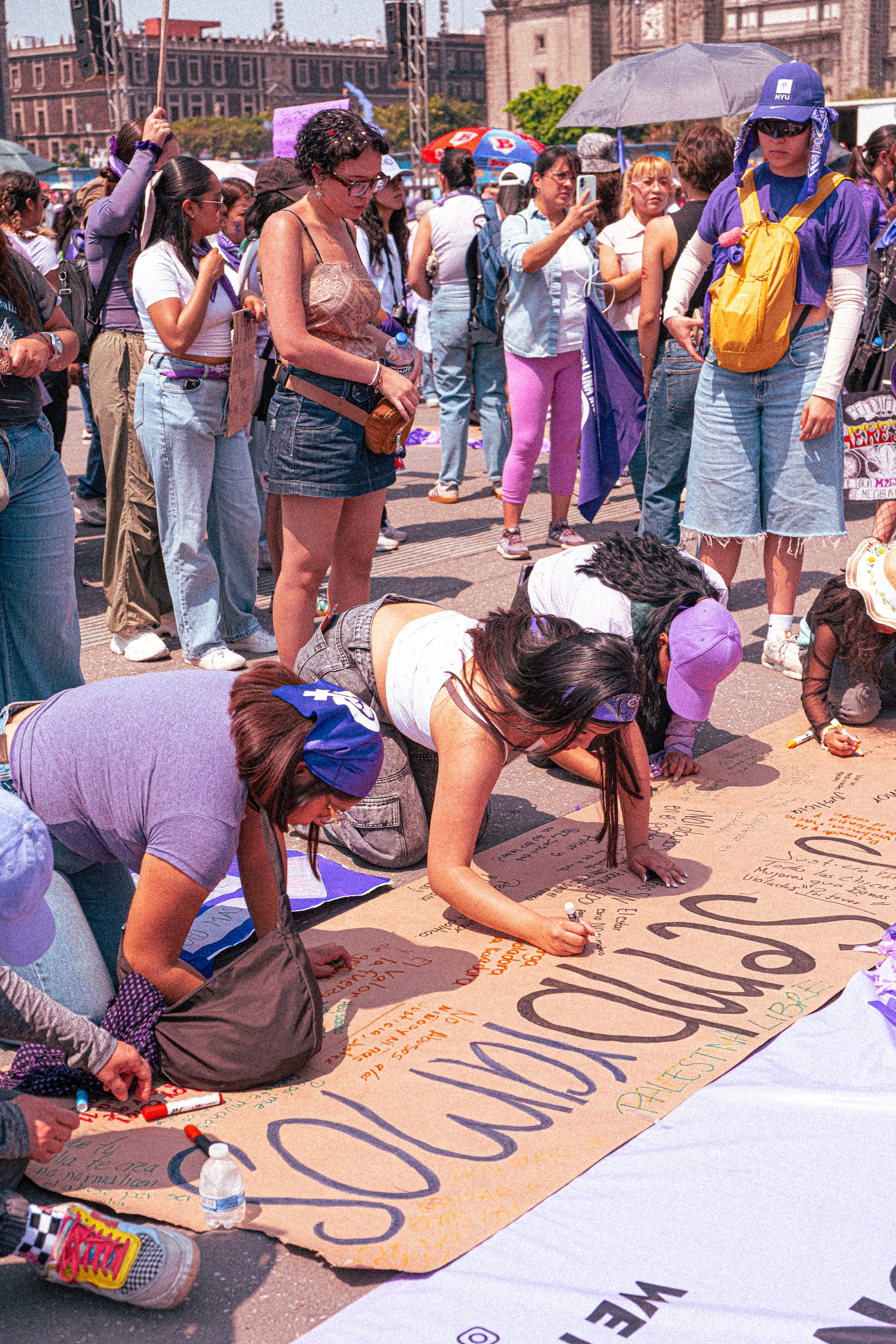
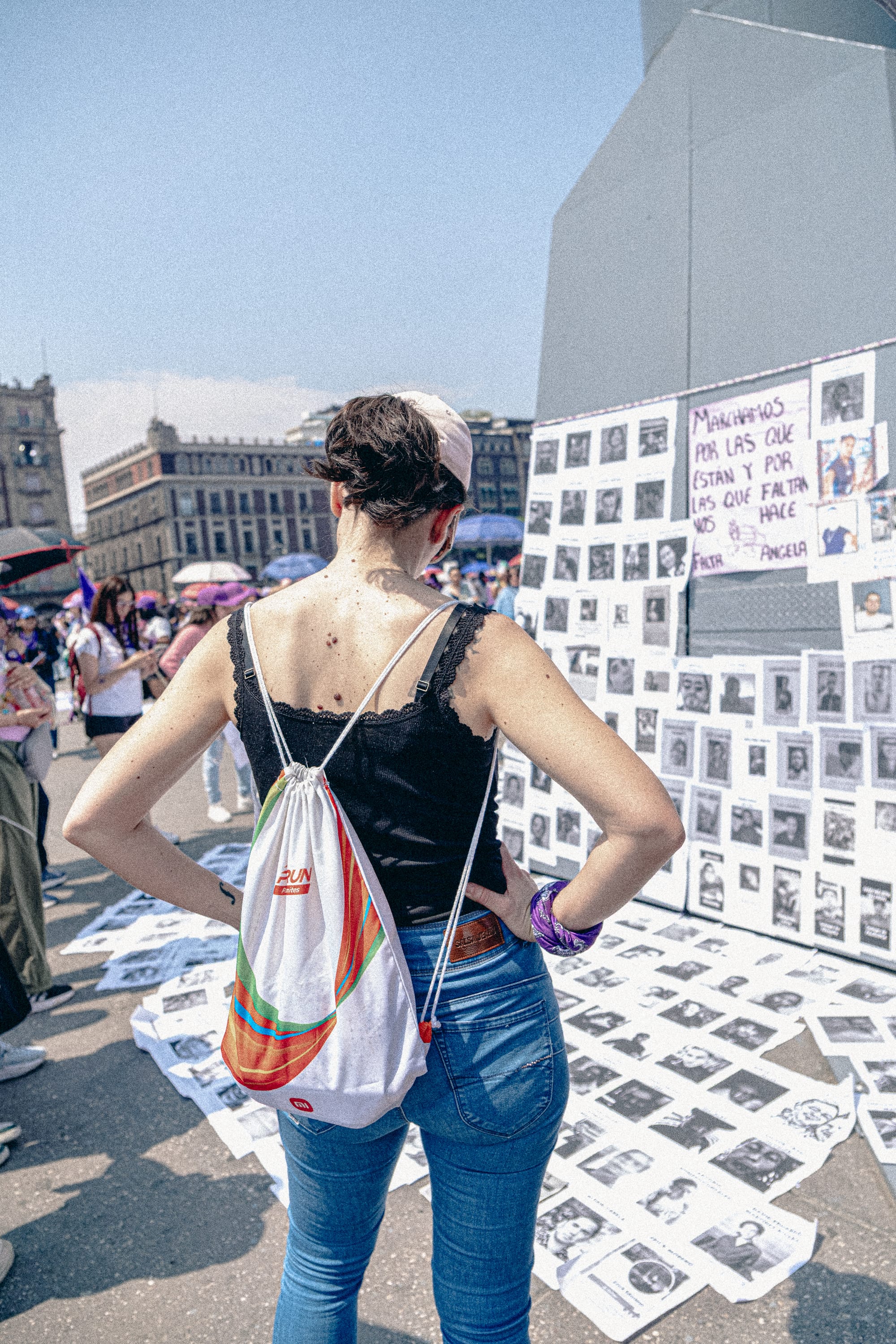
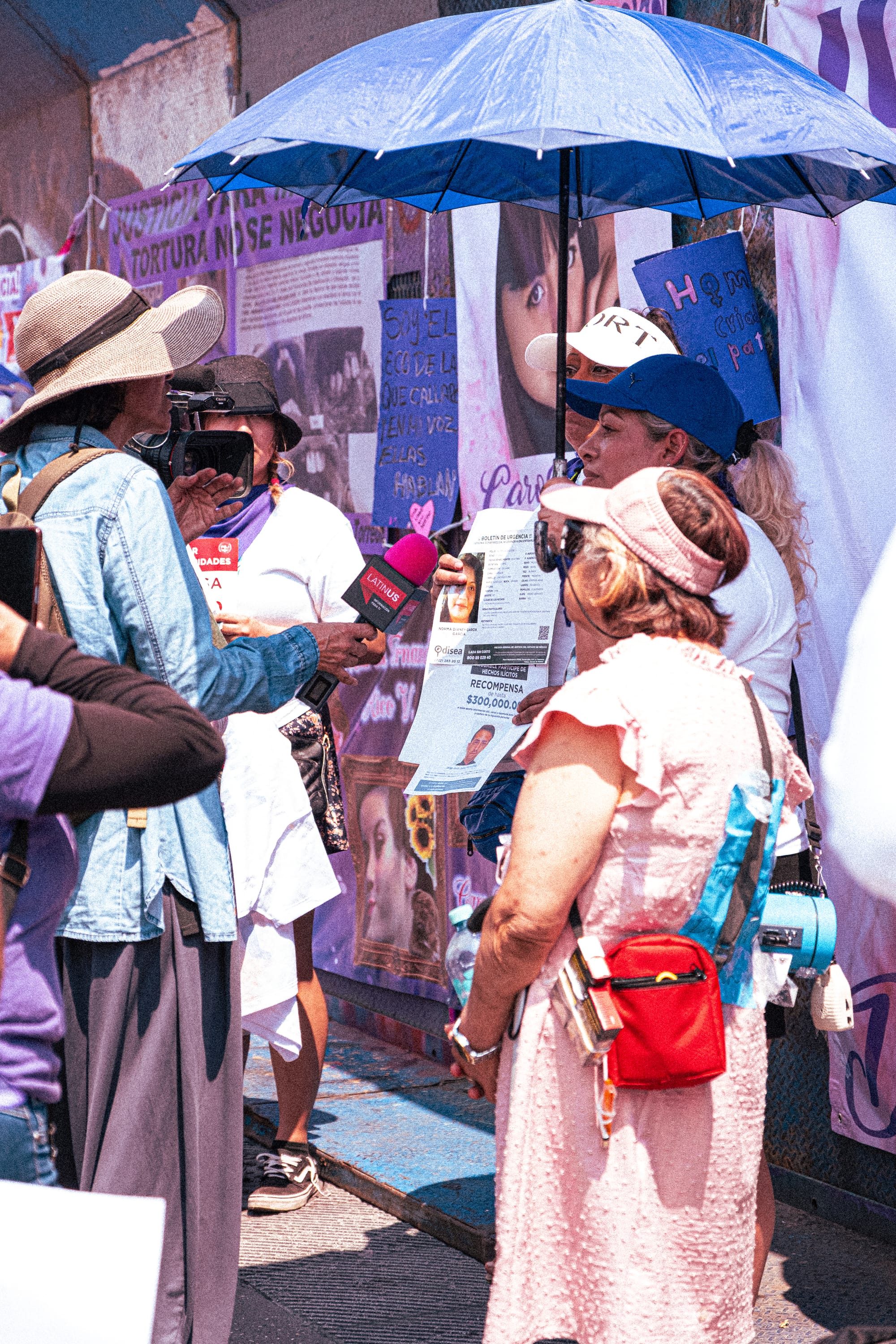
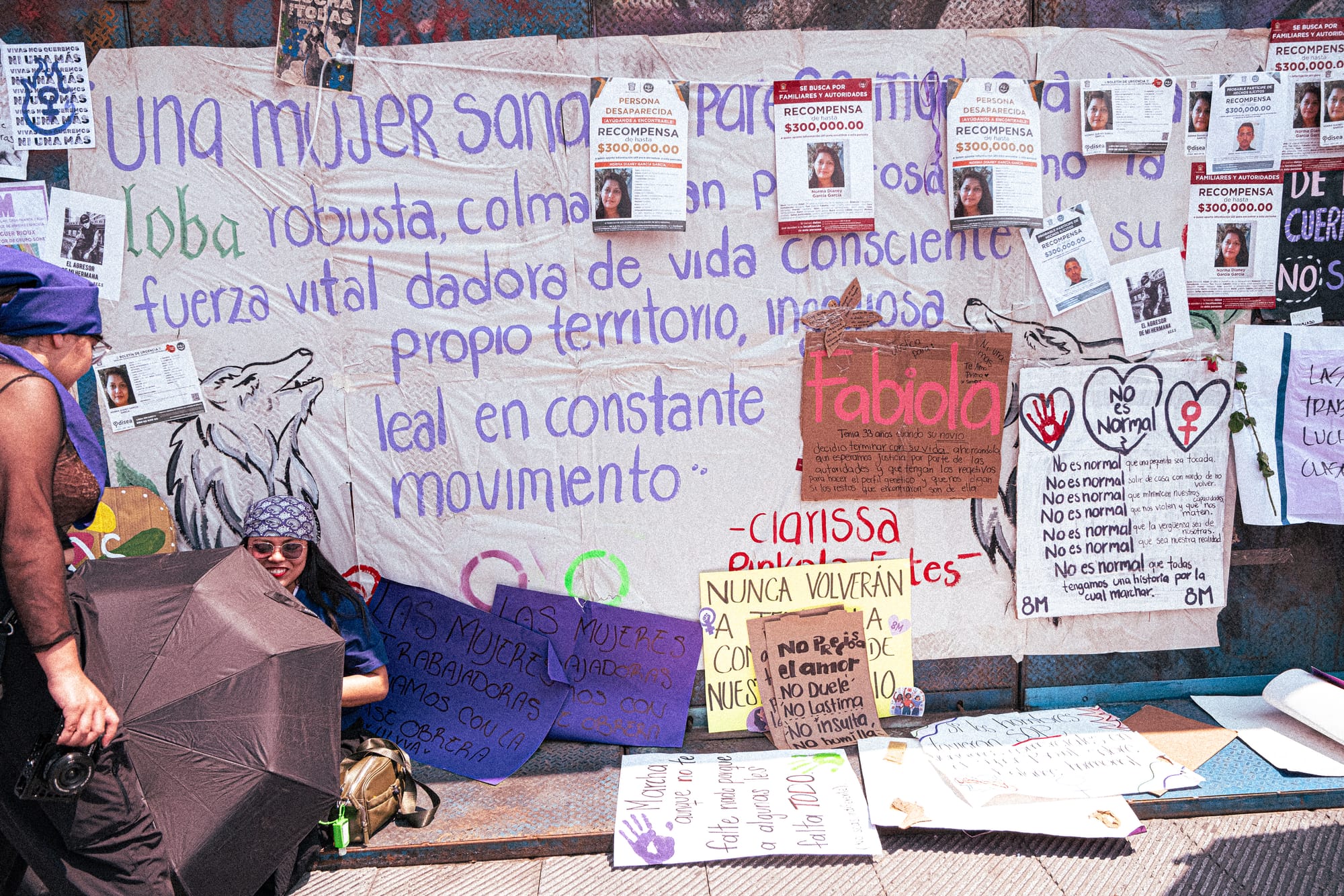
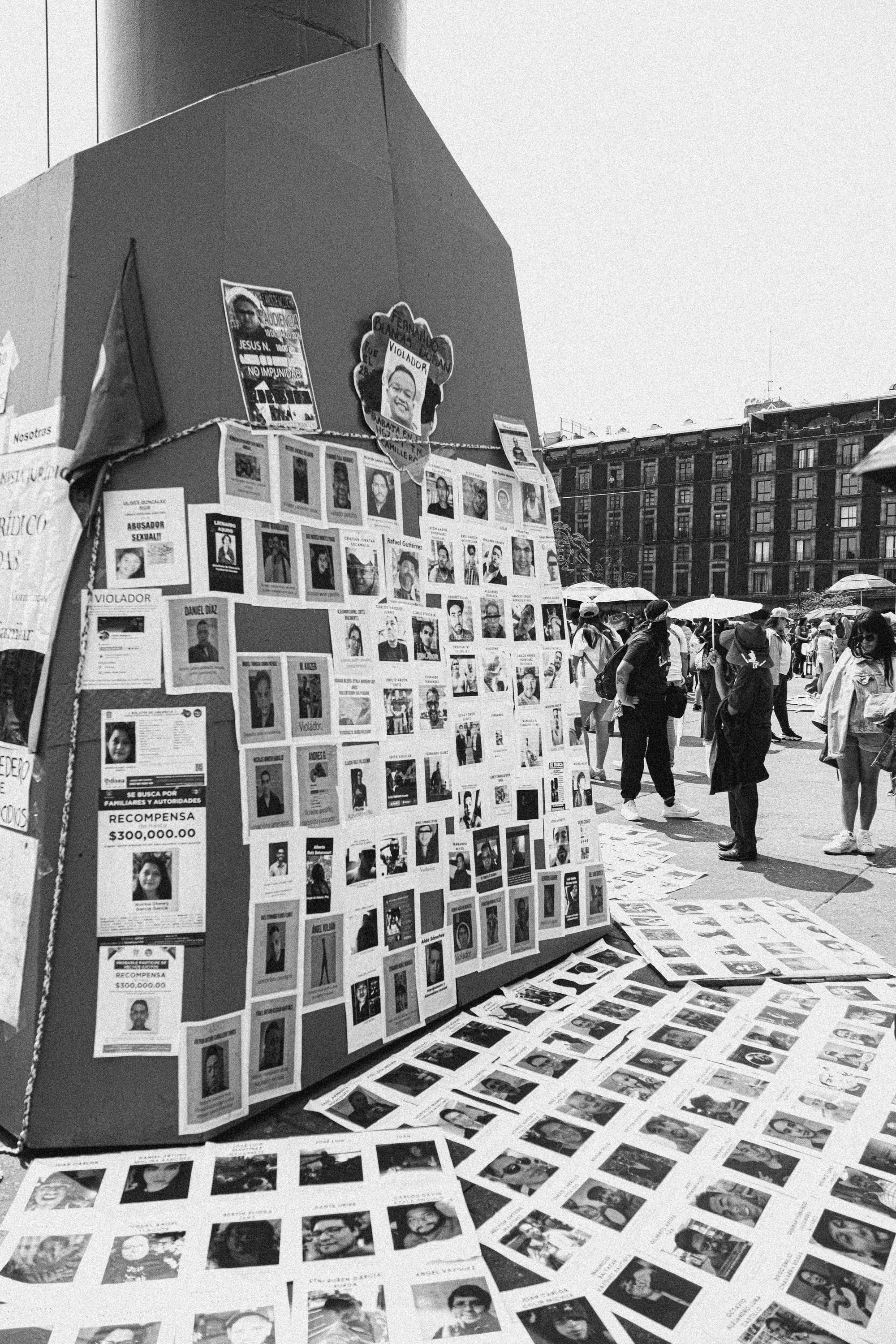
Names of victims are written on cardboard signs, banners, and sometimes on the pavement itself. Portraits of missing daughters are held high above the crowd. Mothers walk slowly at the front, carrying photographs of women whose cases remain unsolved.
This is why International Women’s Day in Mexico feels different.
Rather than flowers or corporate slogans about empowerment, the day centers on protest against gender violence in Mexico and on demanding accountability from institutions that too often fail the victims. The 8M feminist march in Mexico City is both a call for justice and a ritual of mourning, a public space where anger, grief, and solidarity move together through the streets.
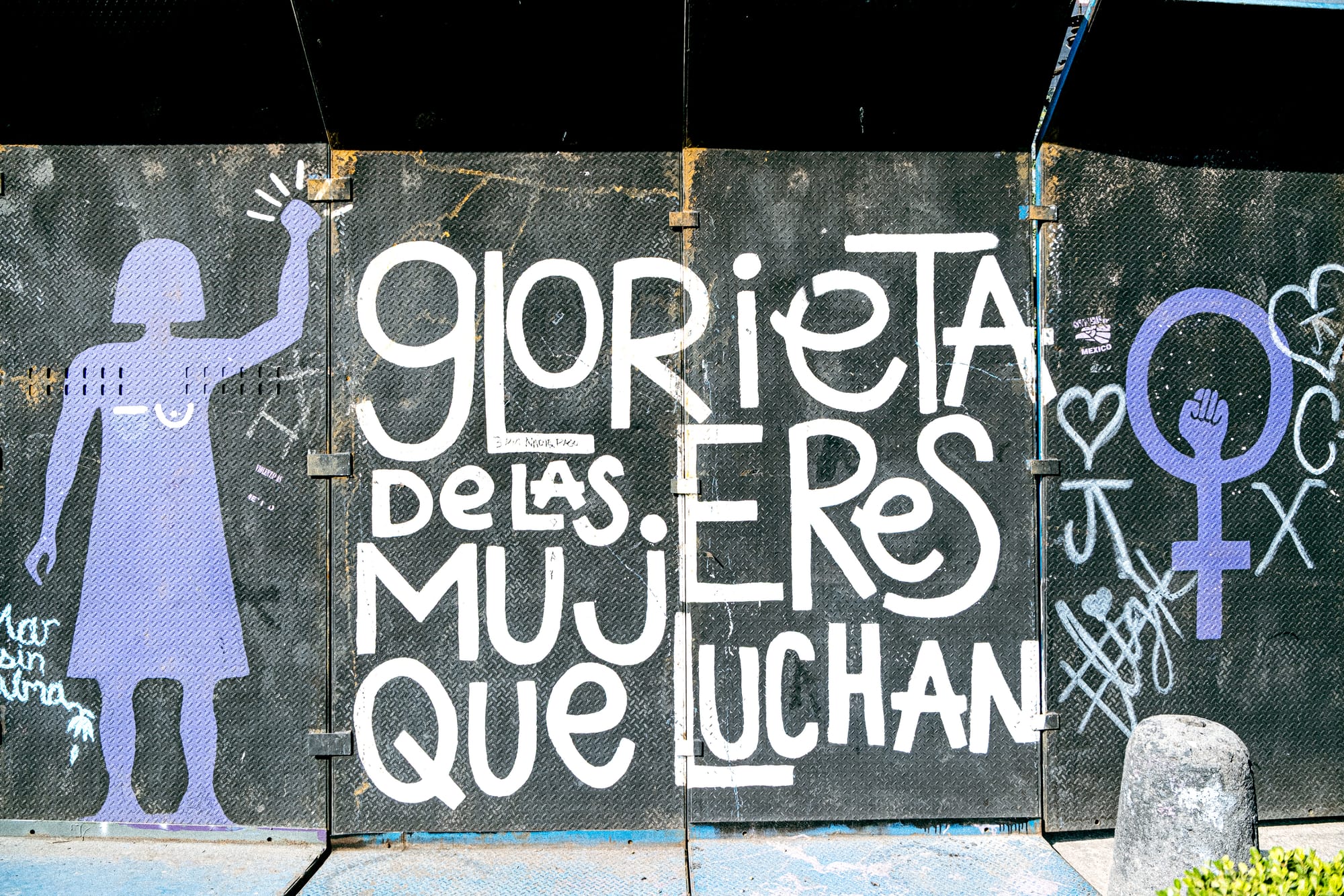
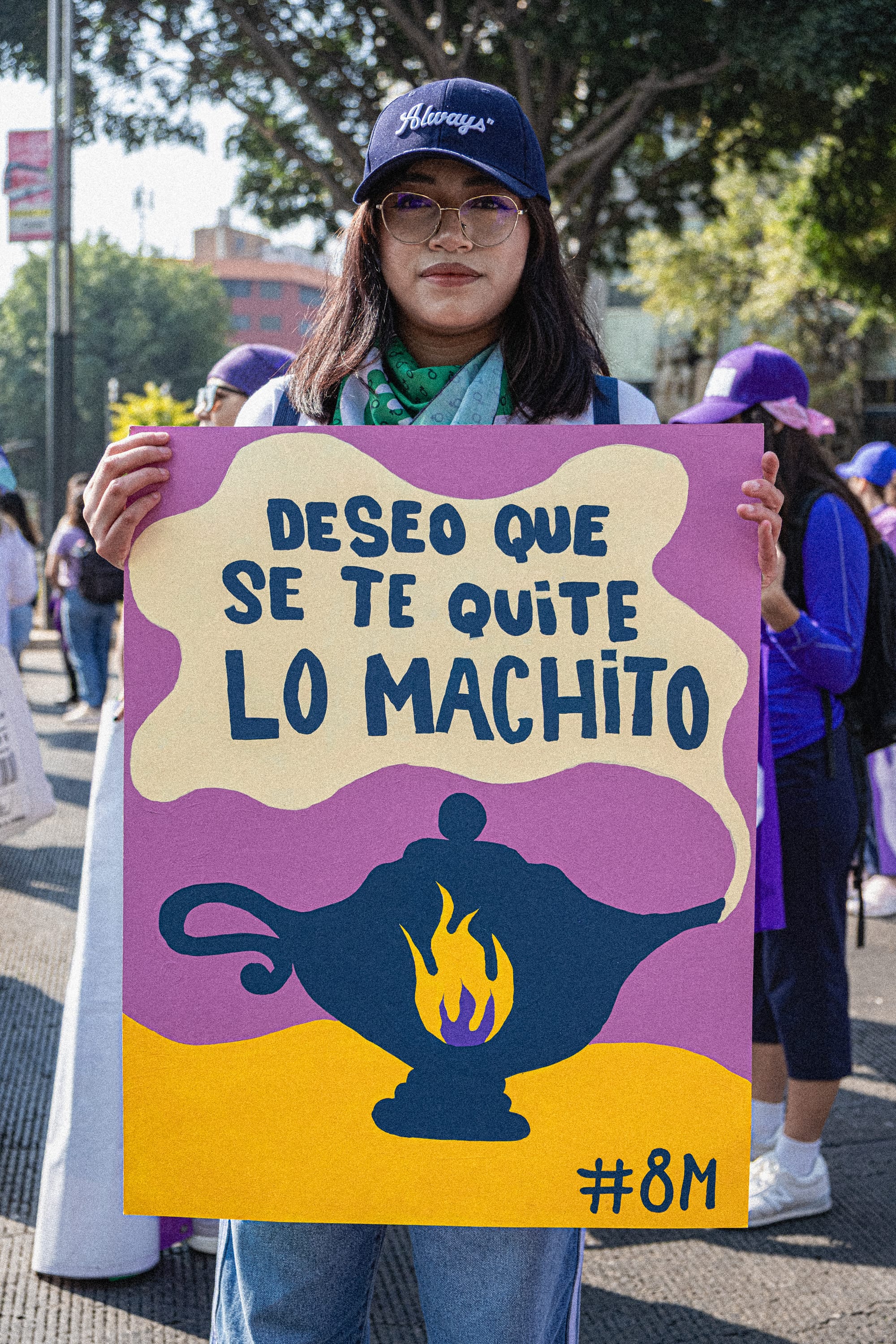
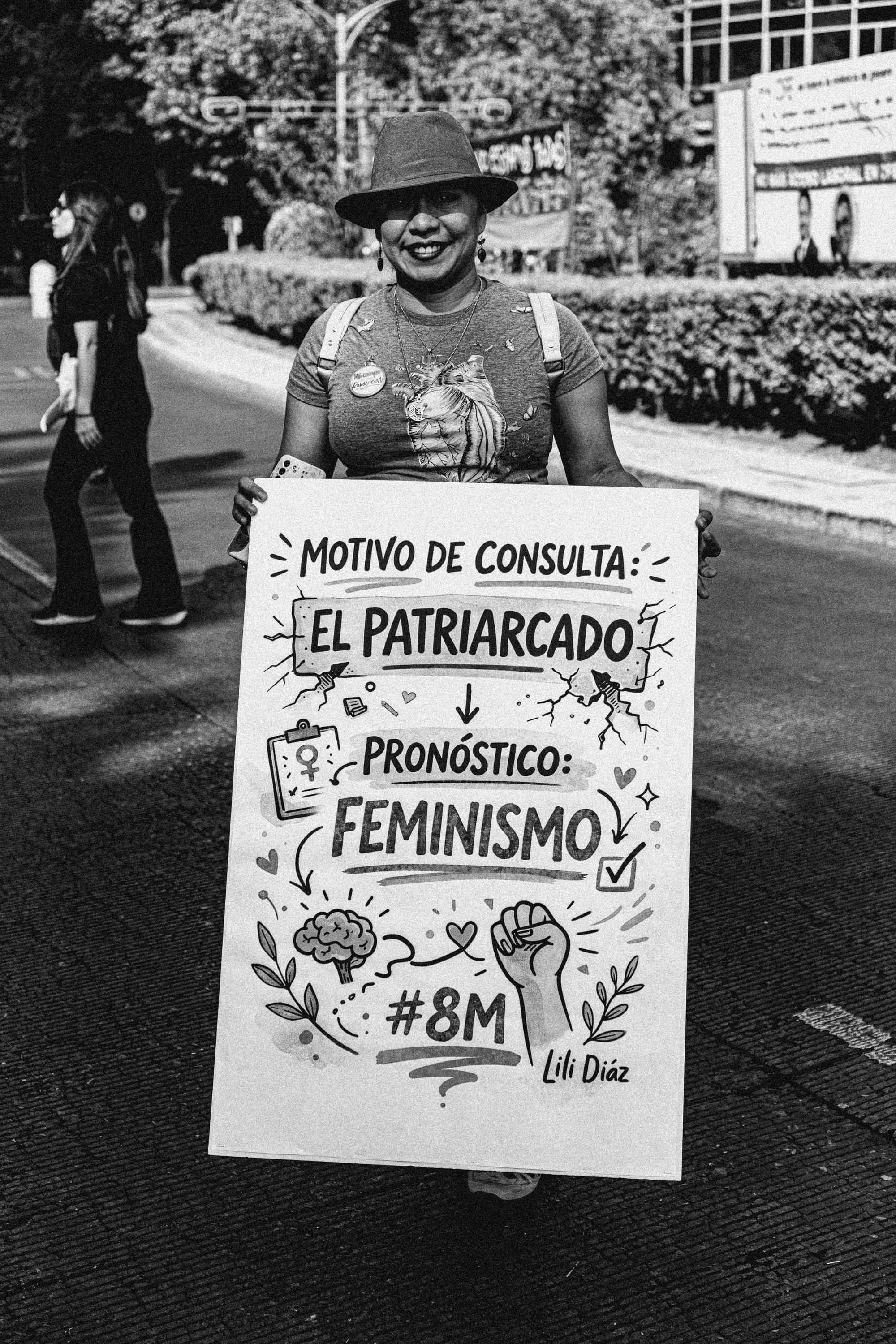
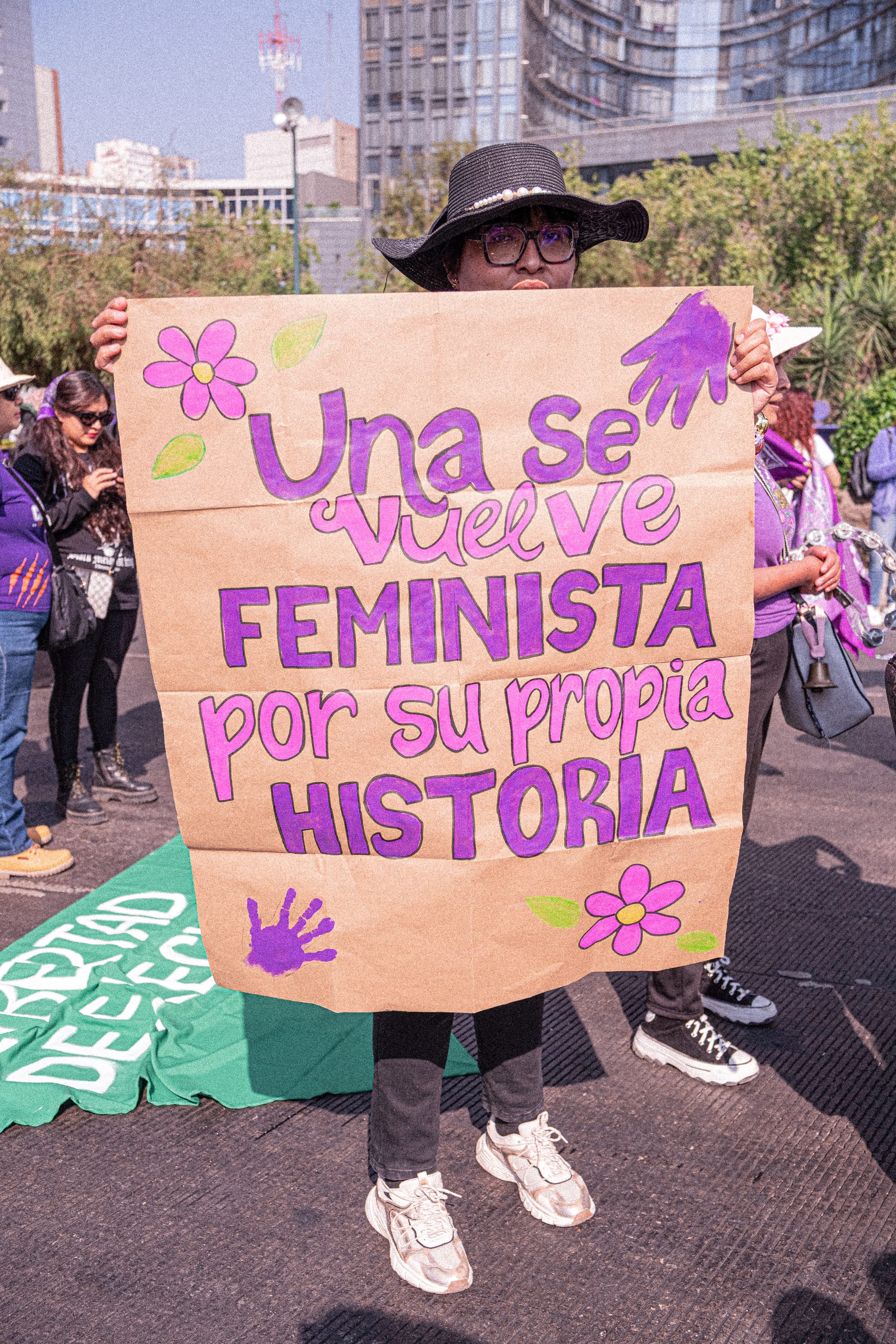
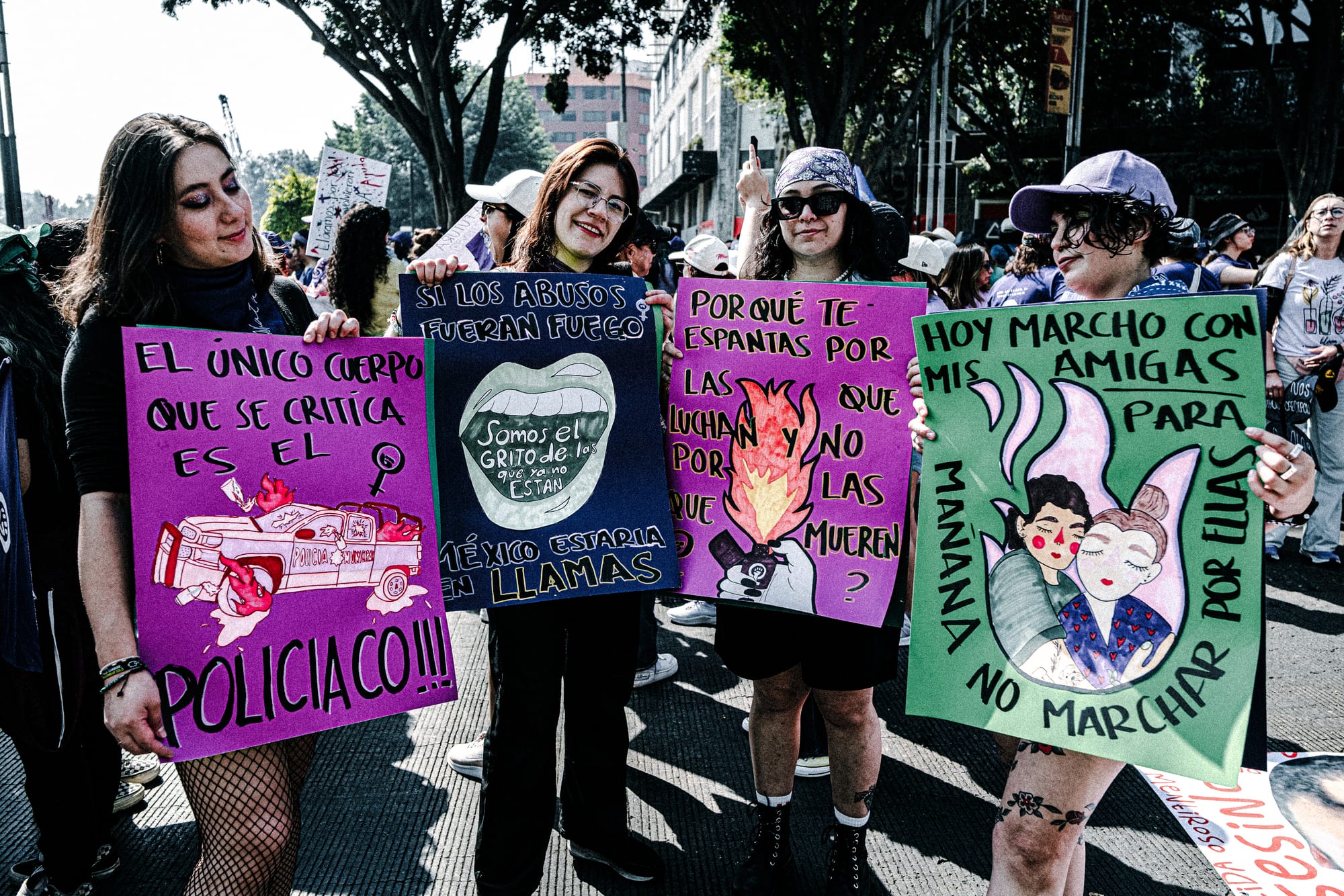
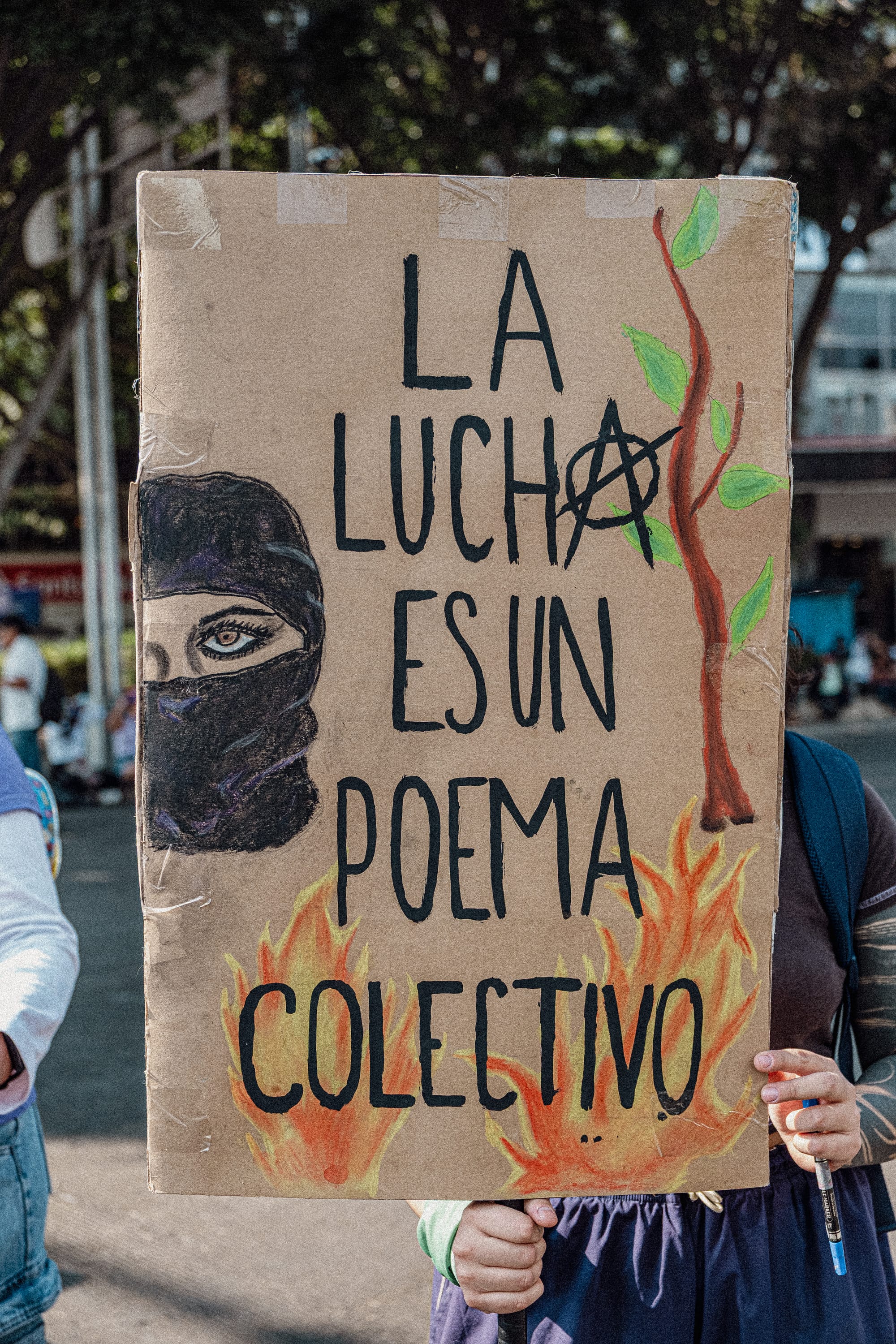
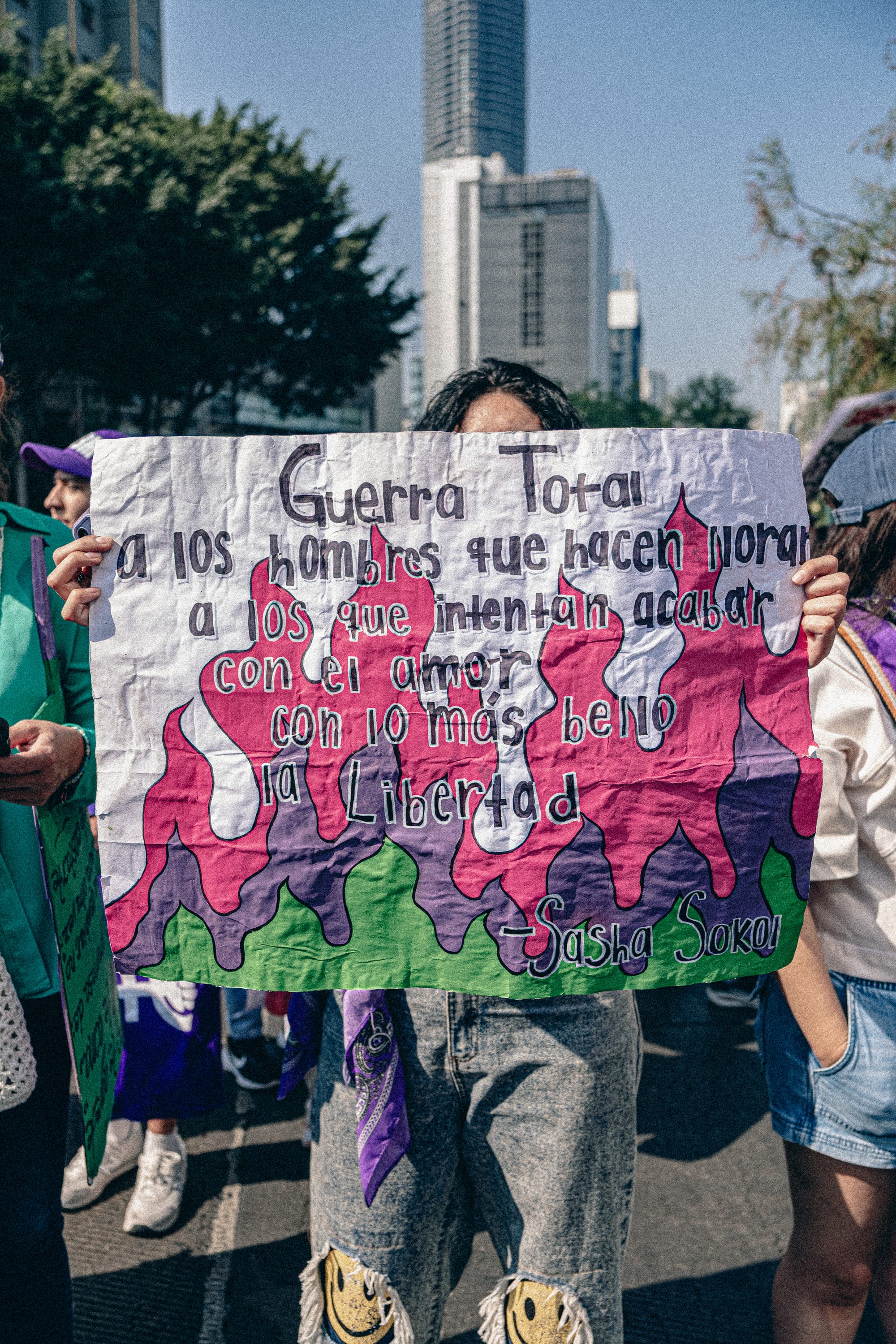
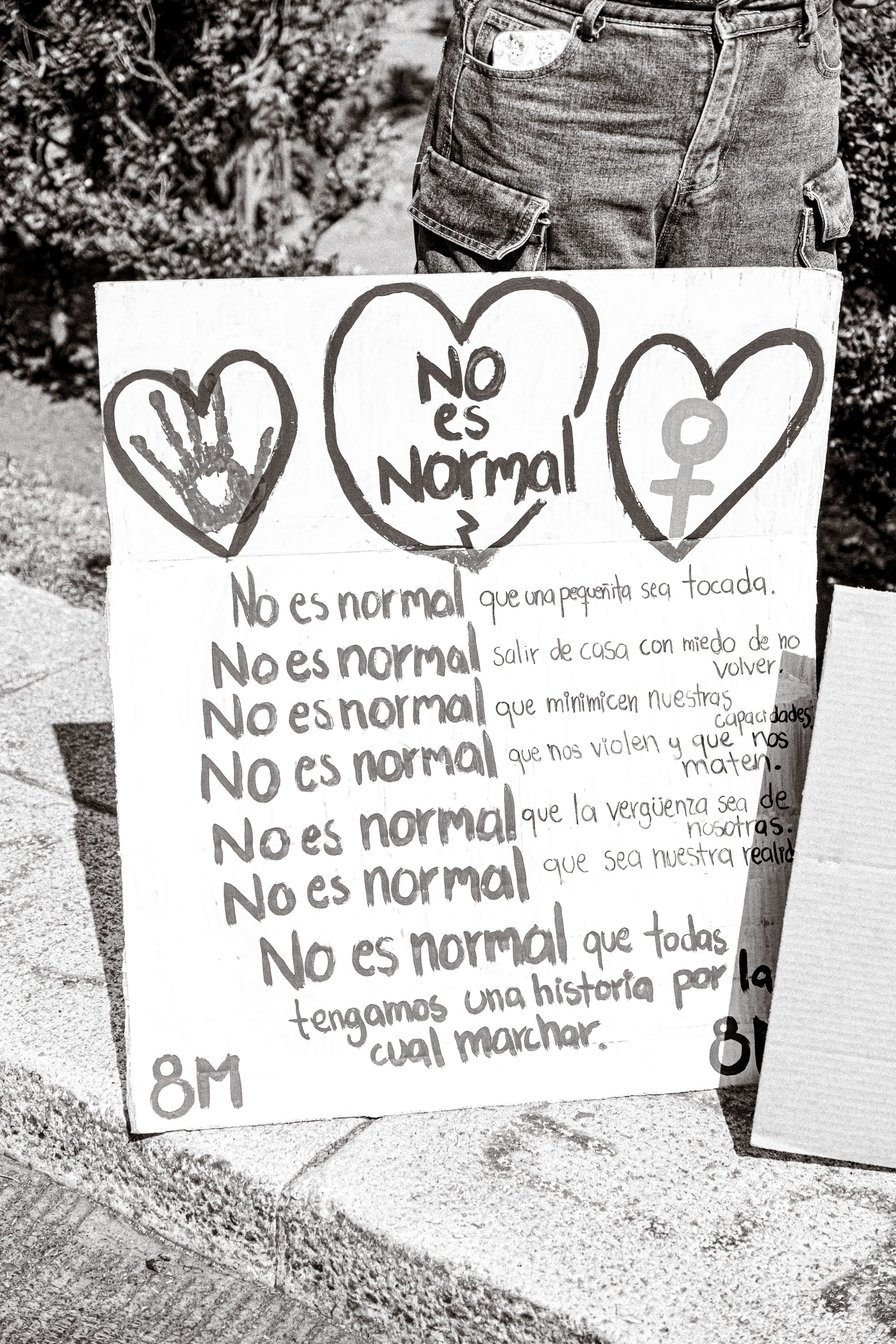
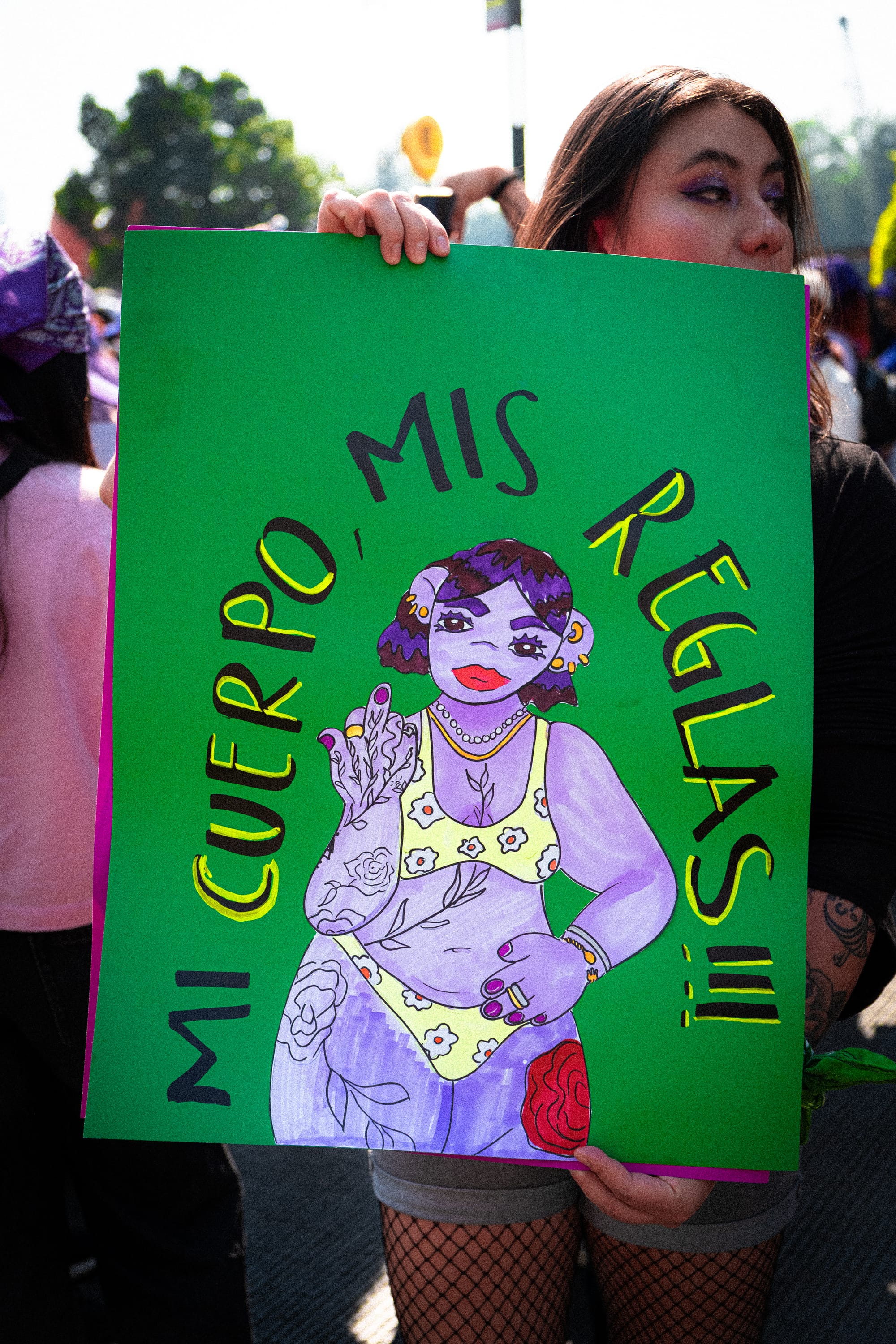
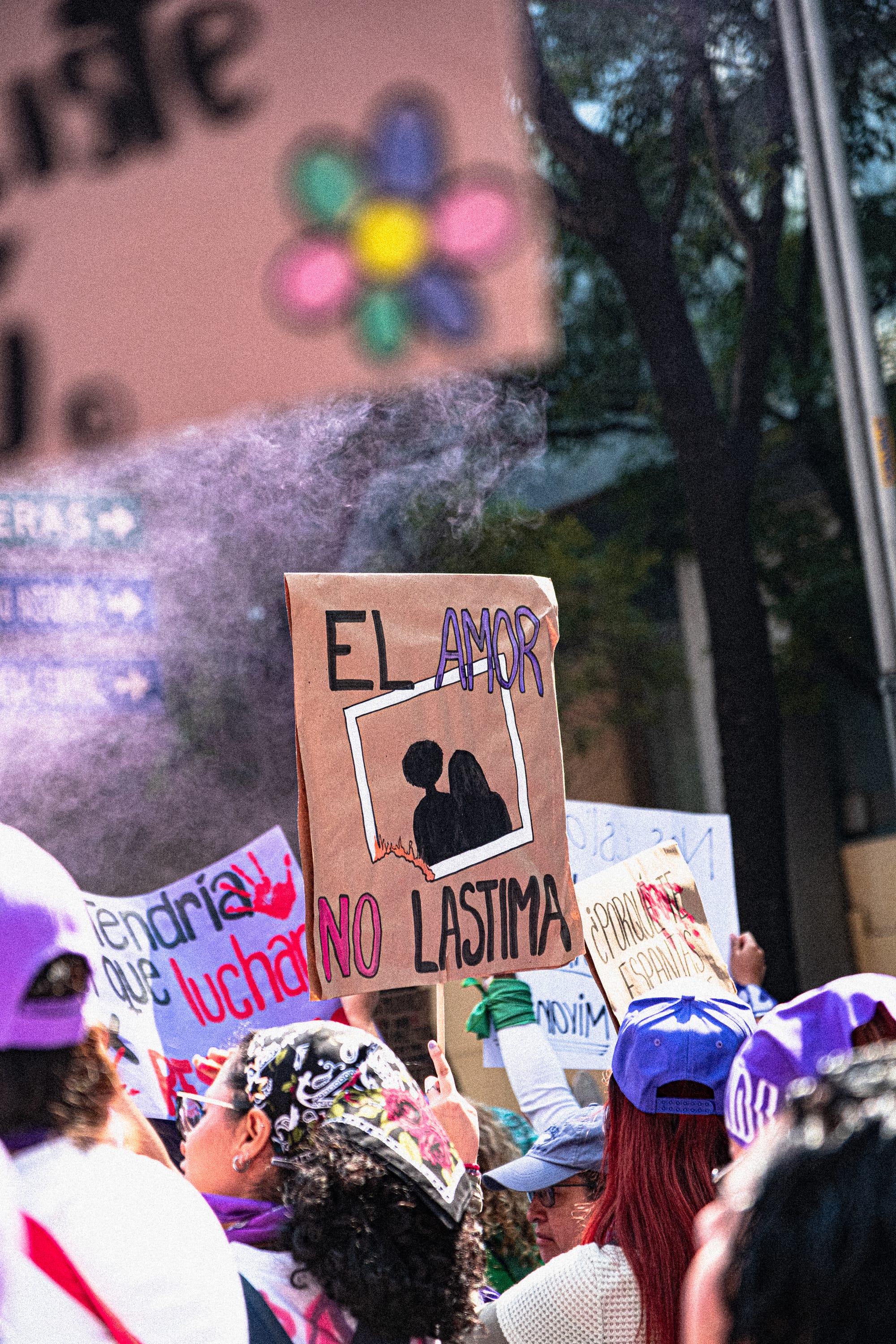
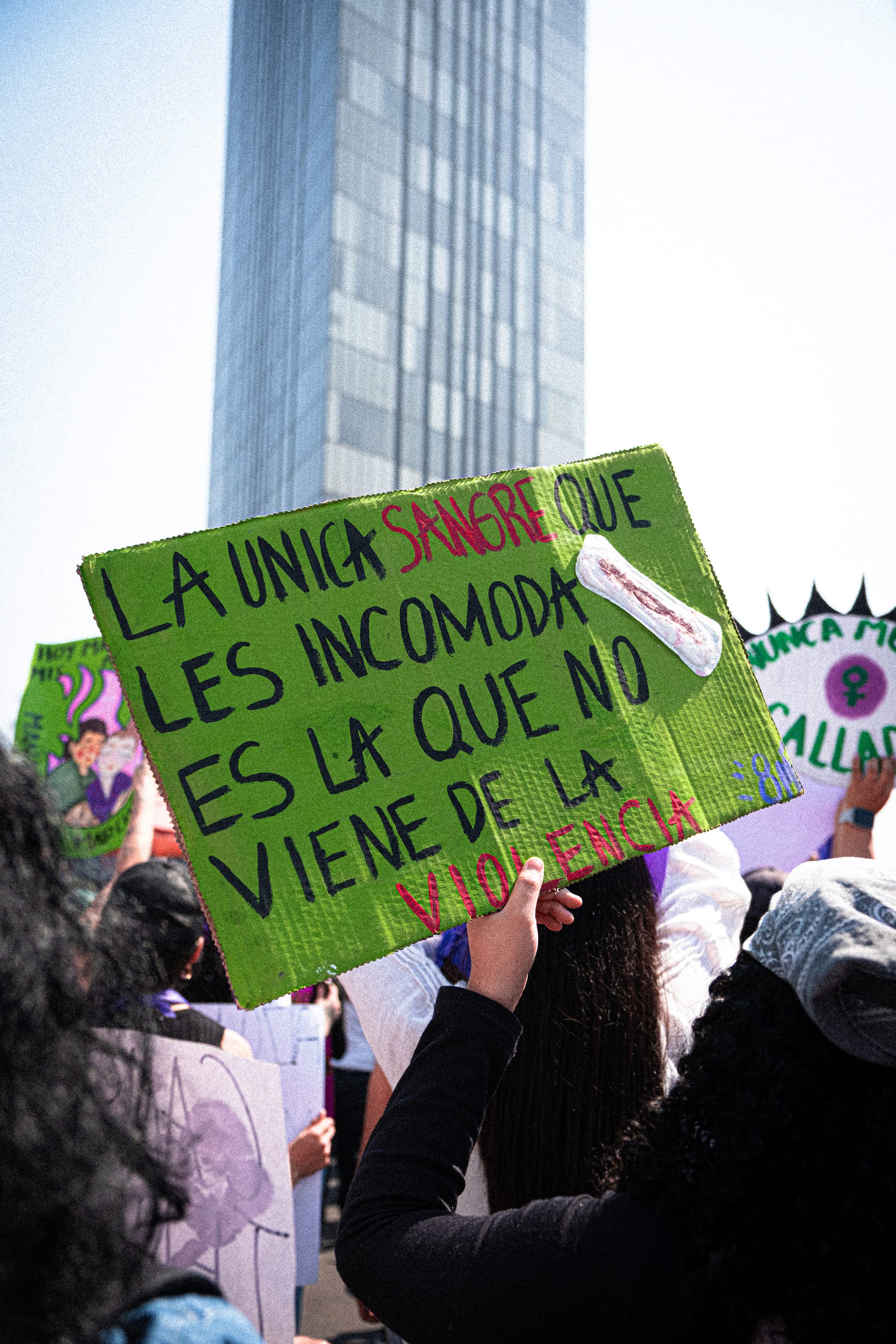
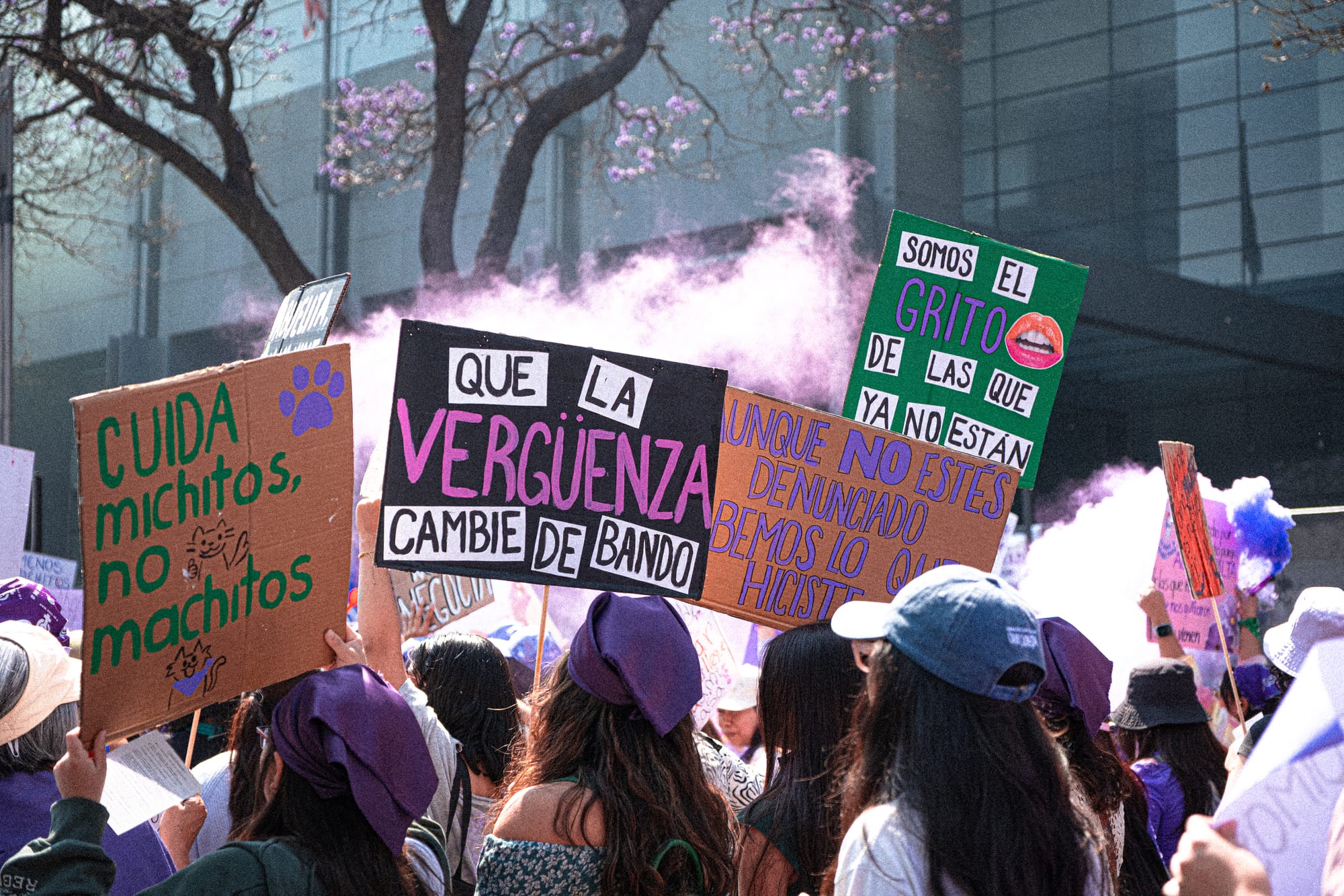
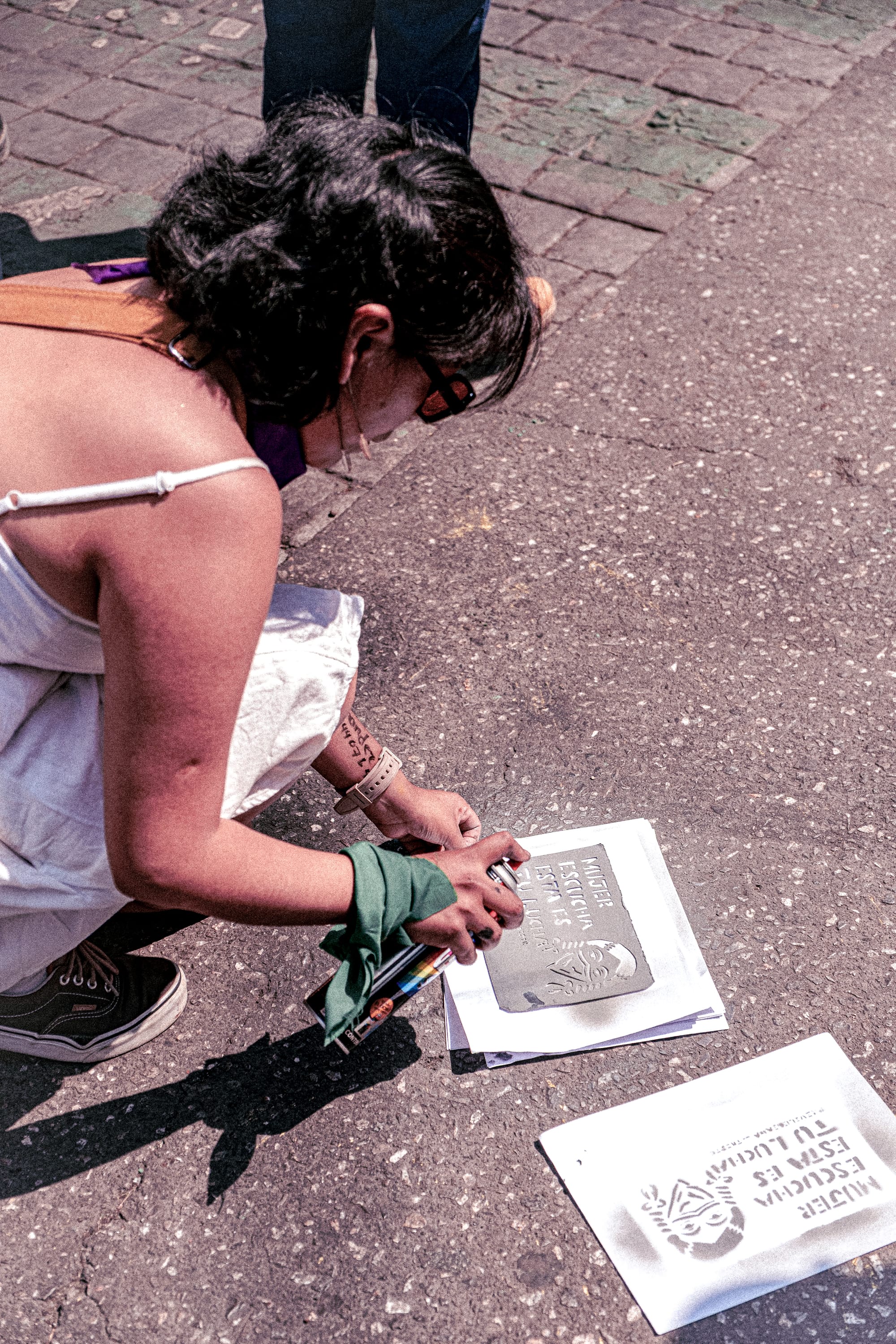
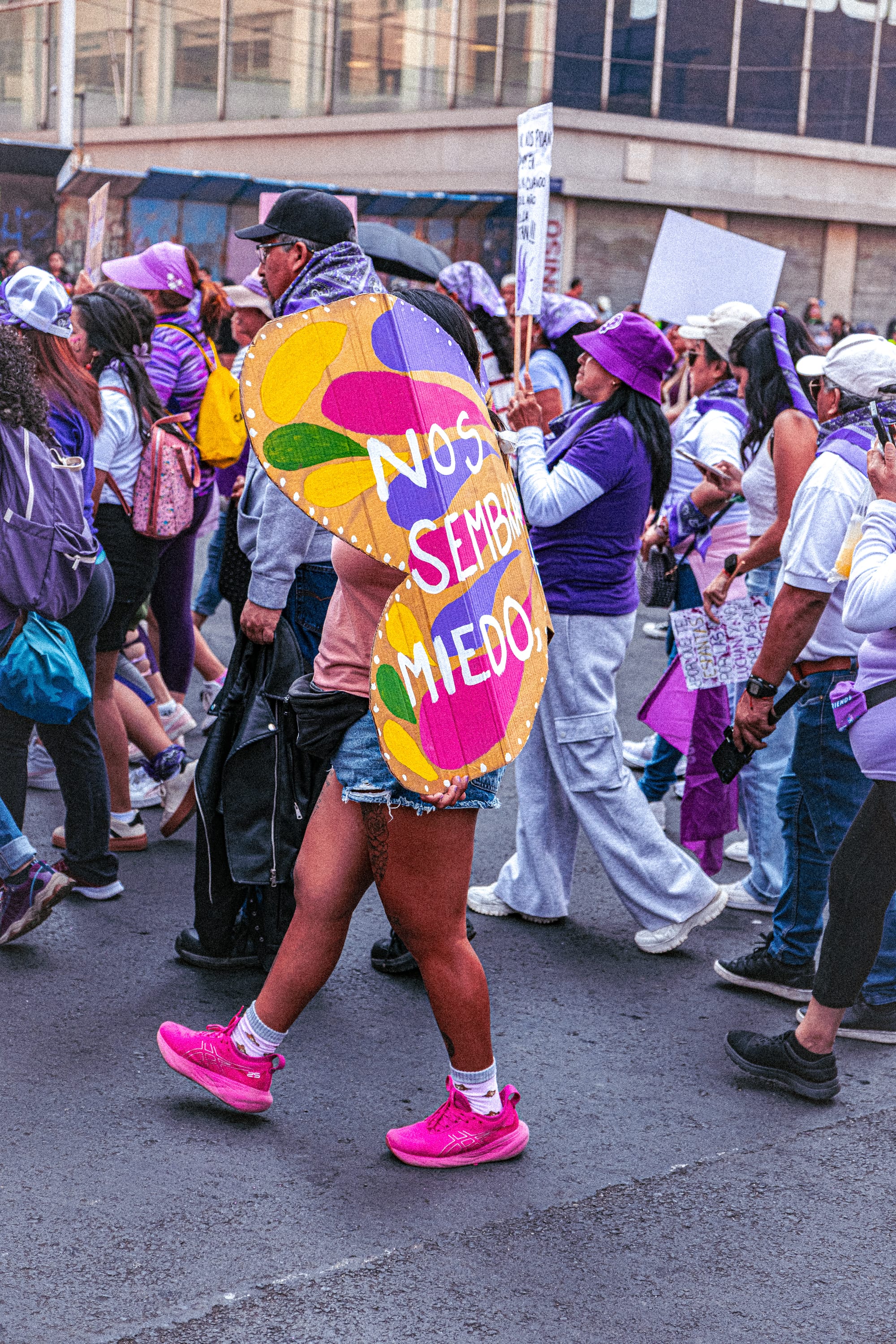
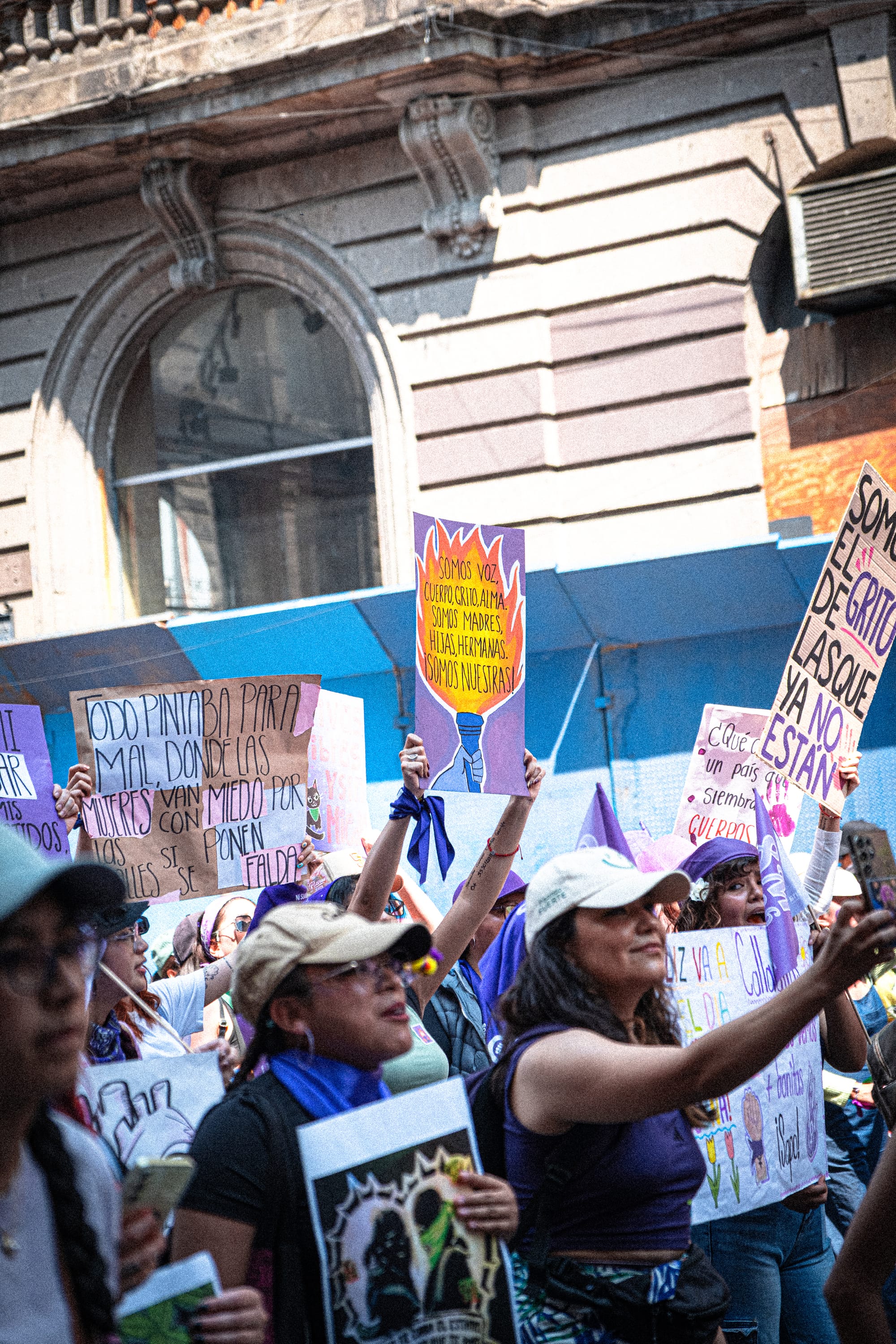
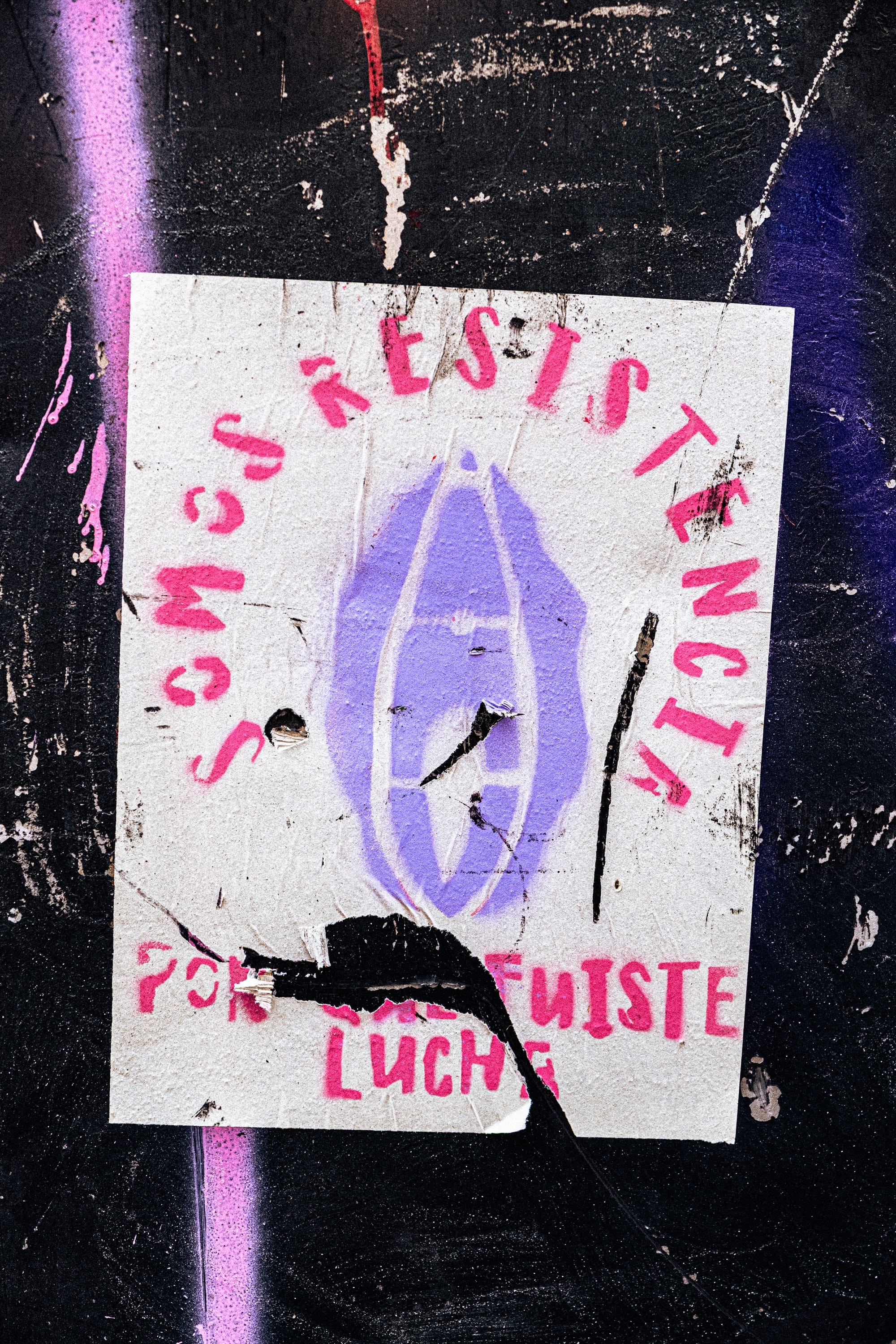
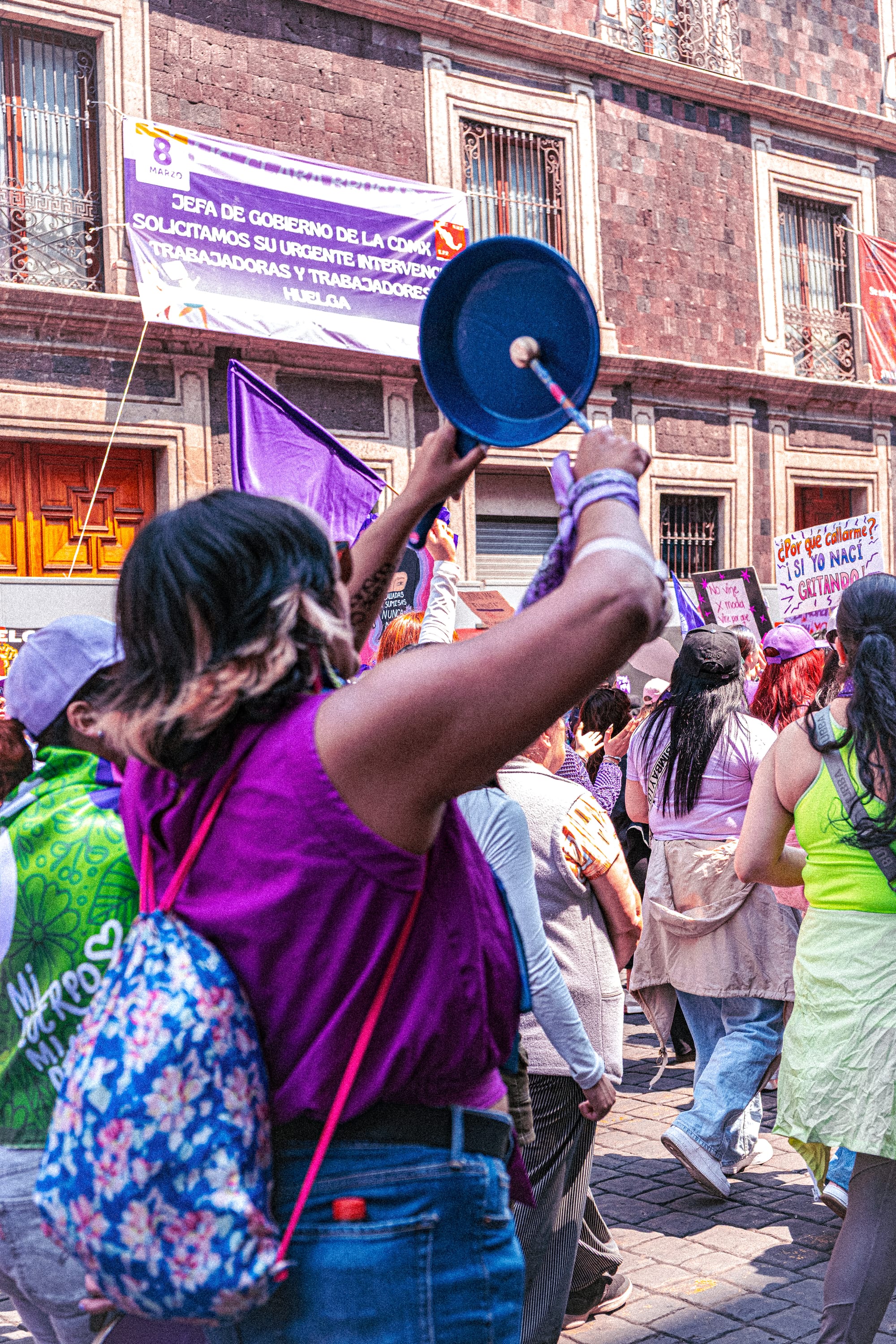
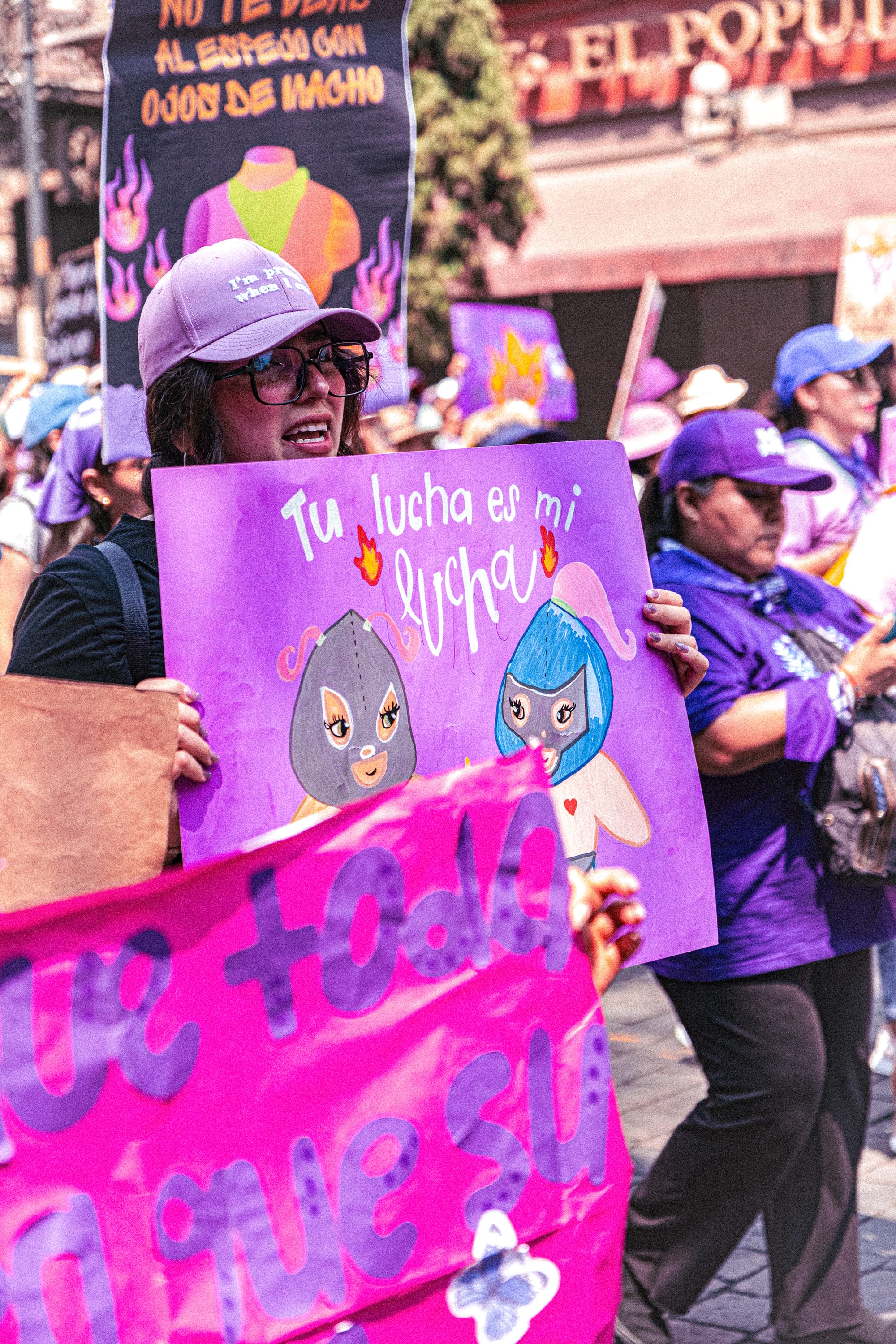
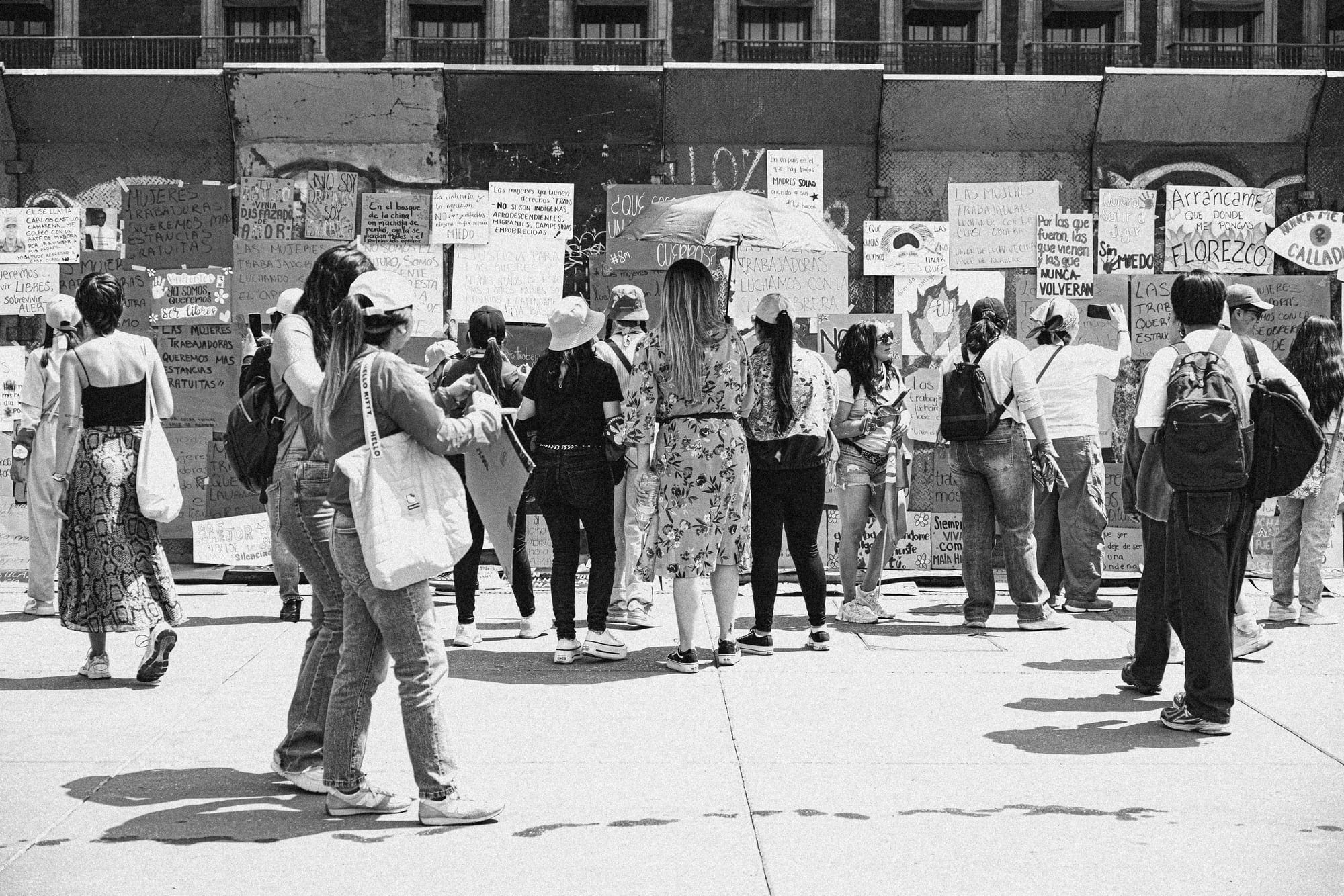
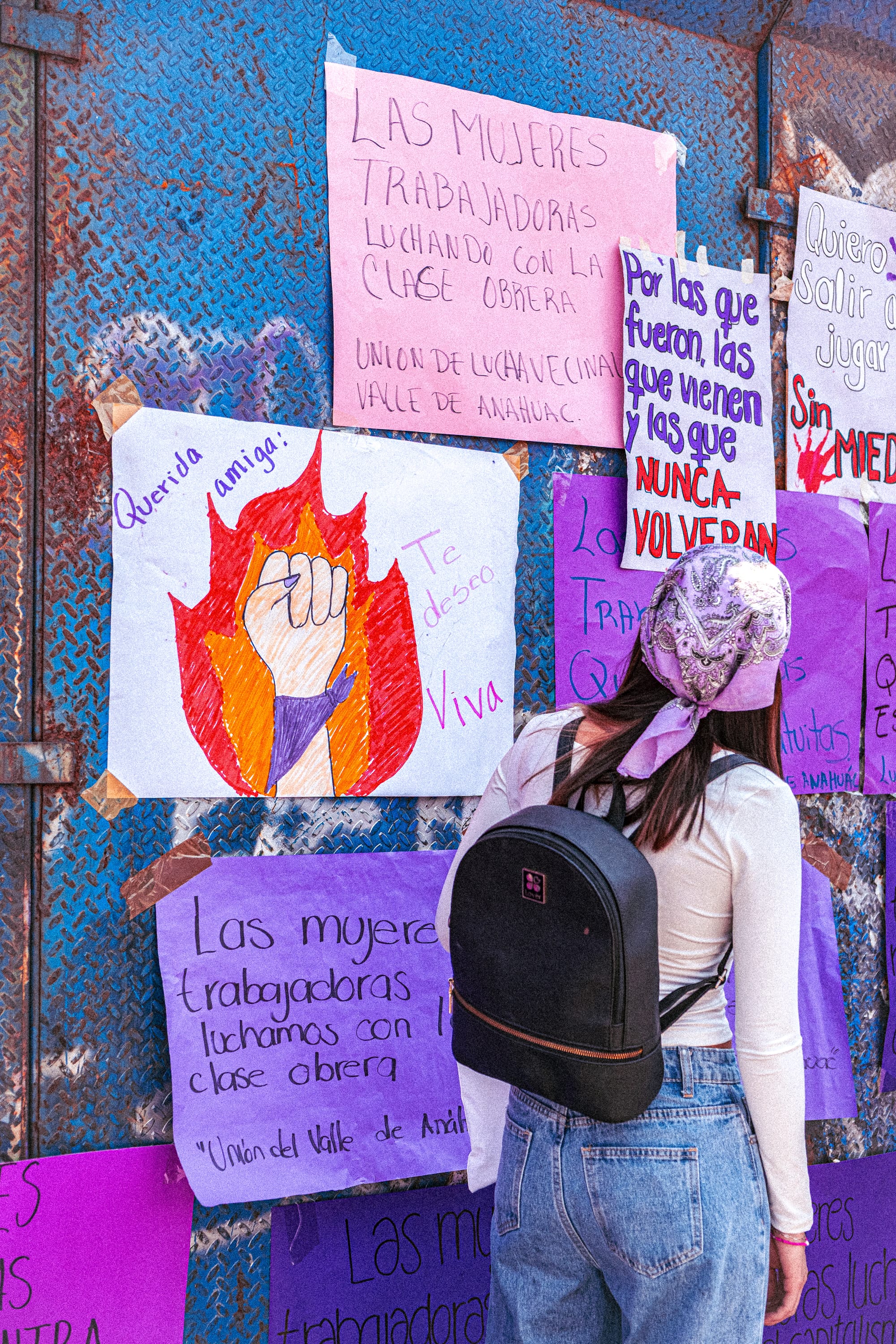
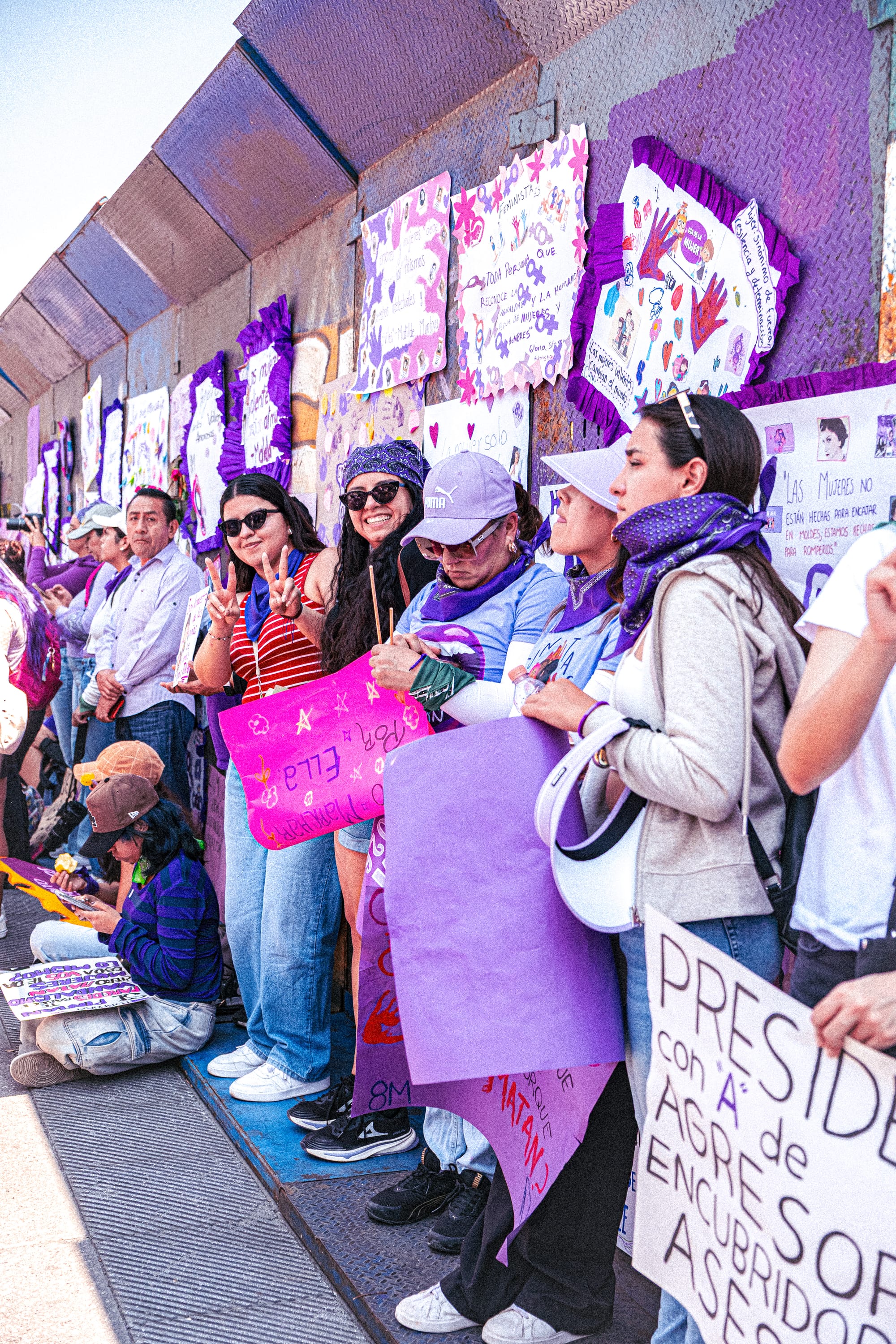
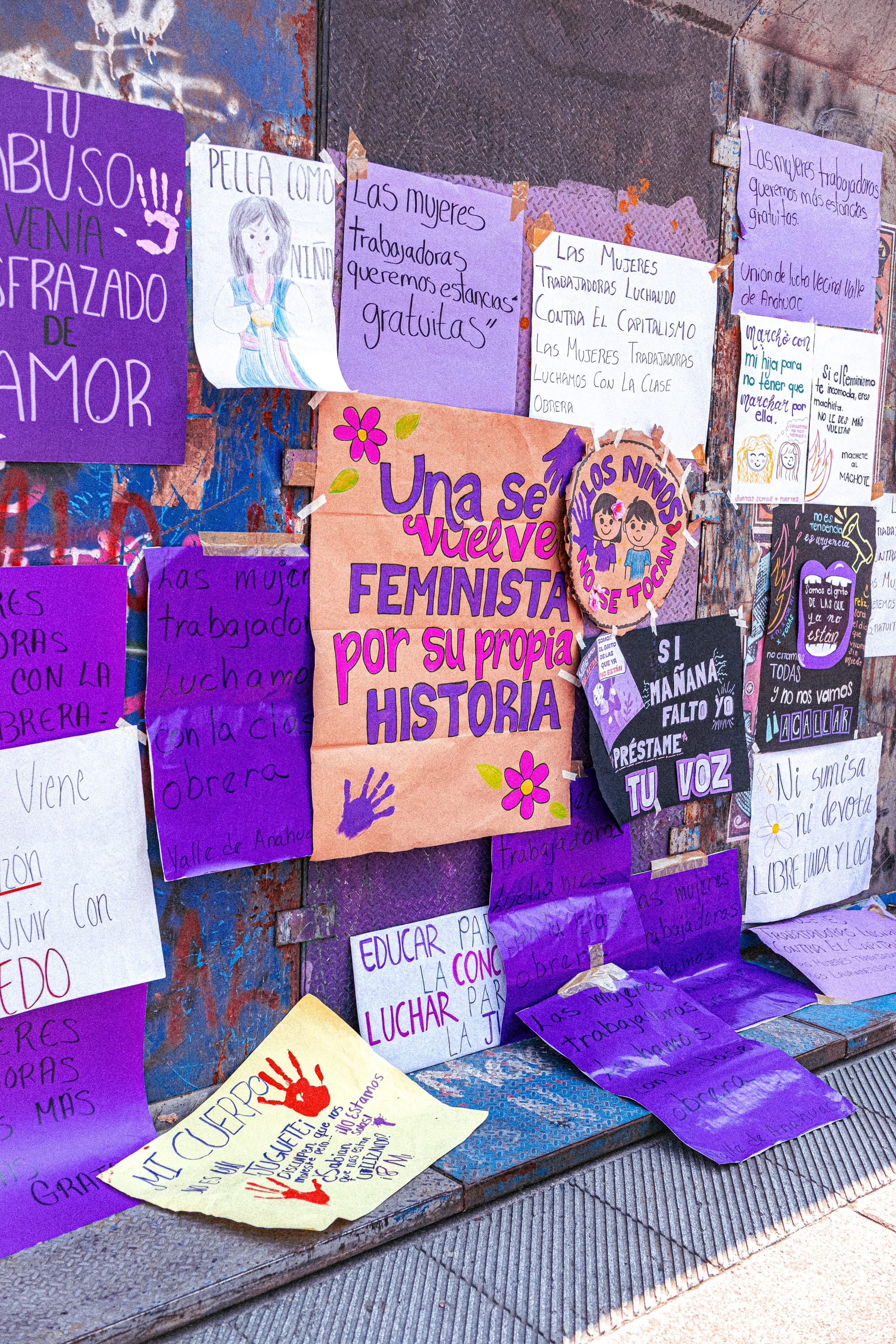
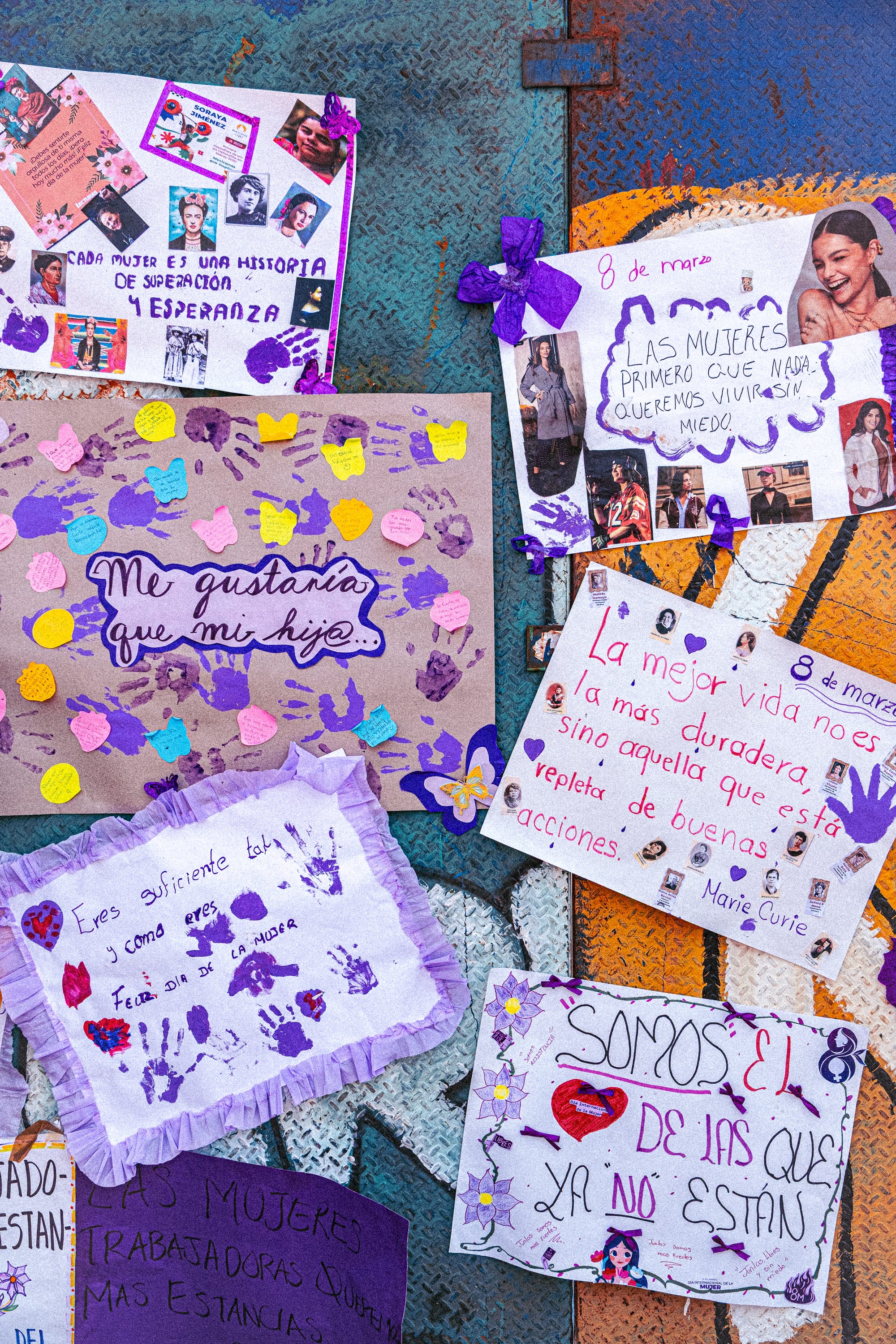
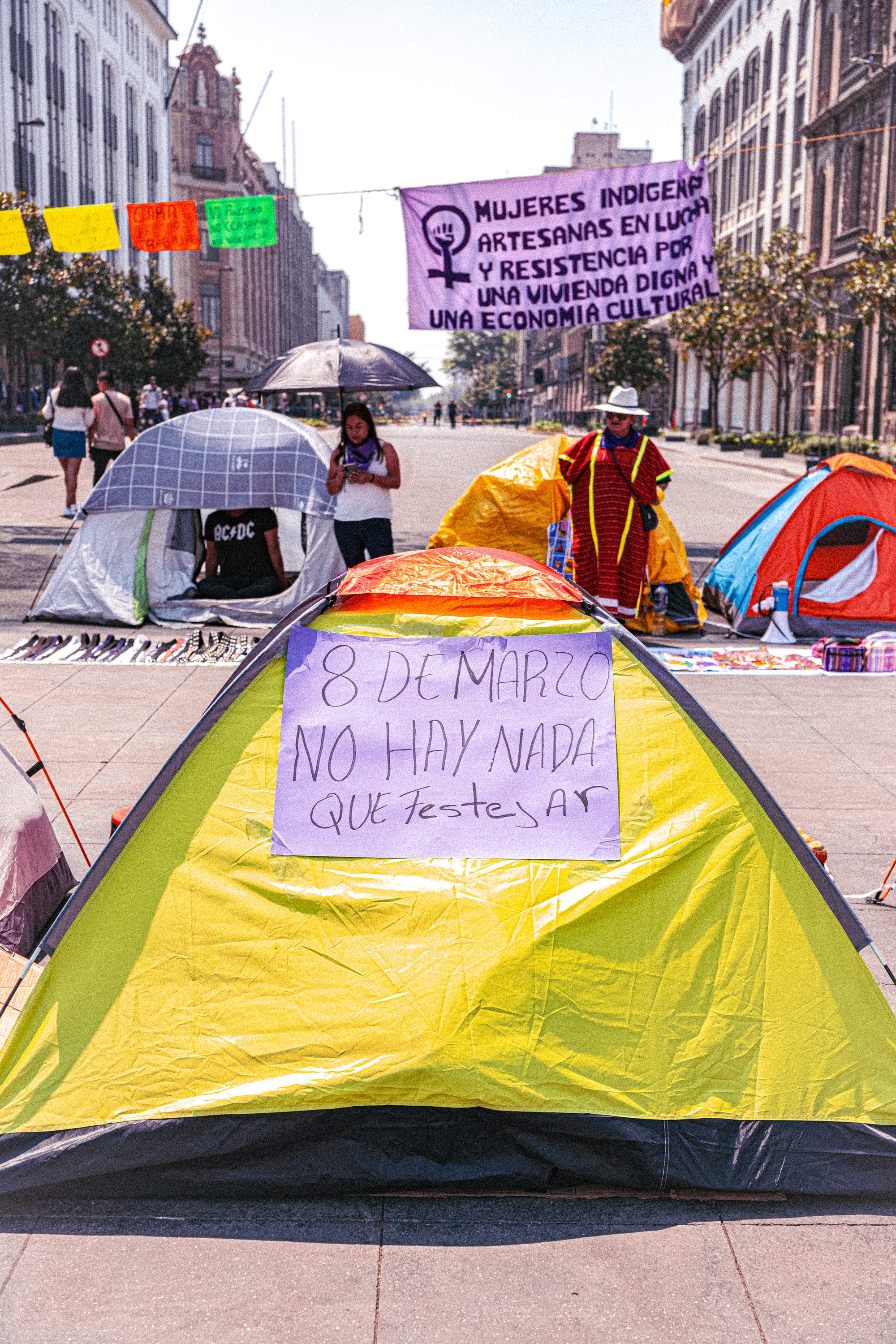
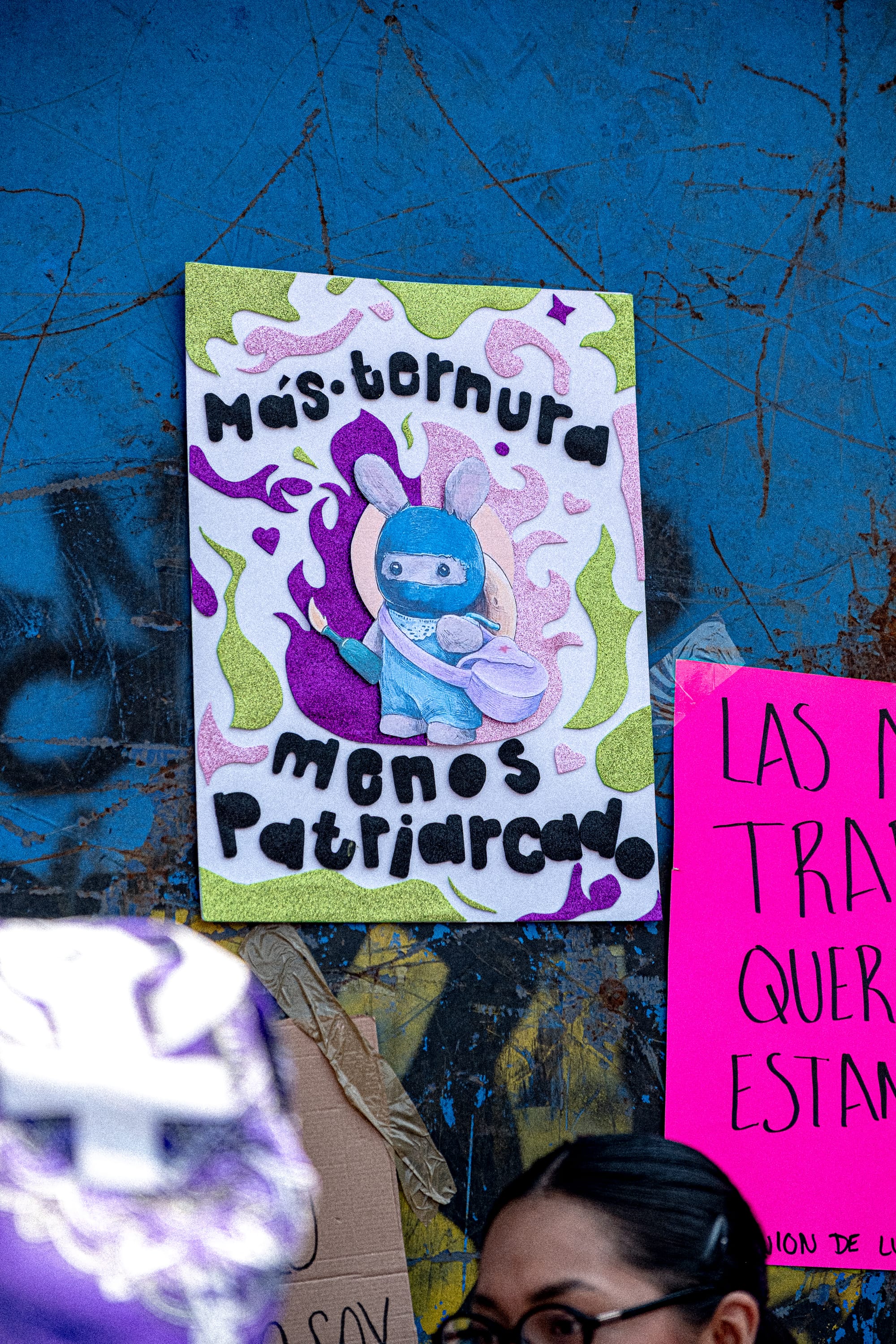
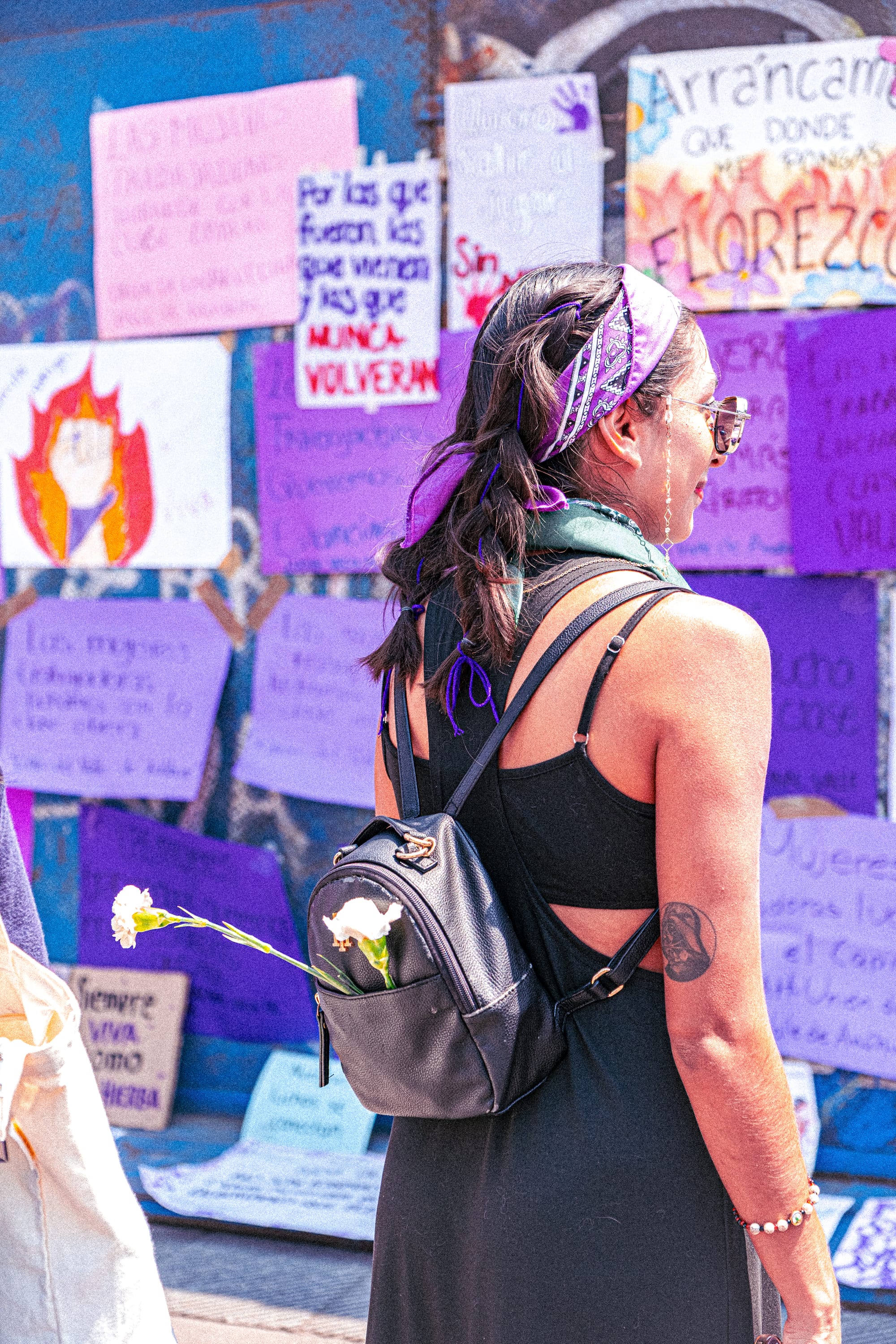
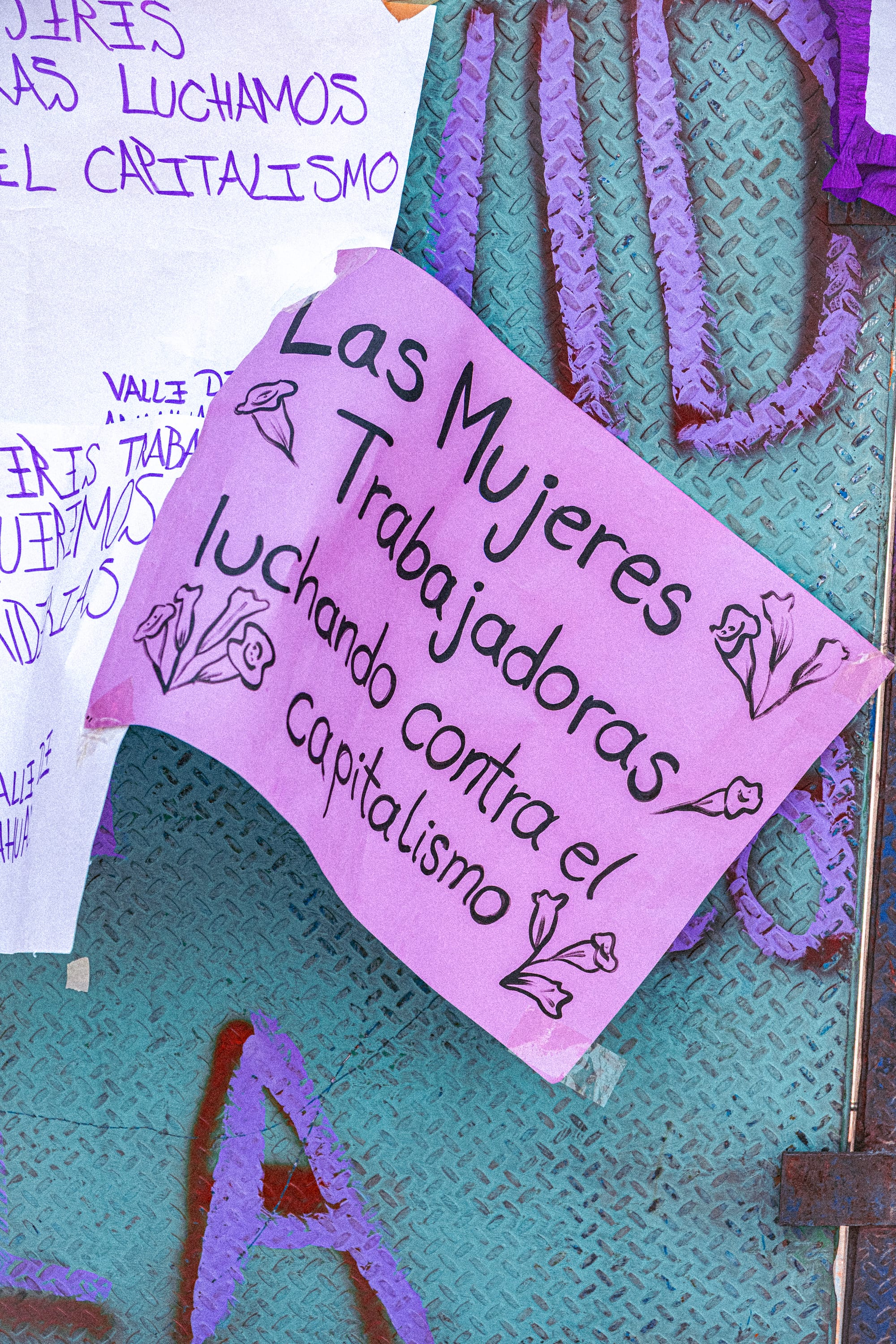
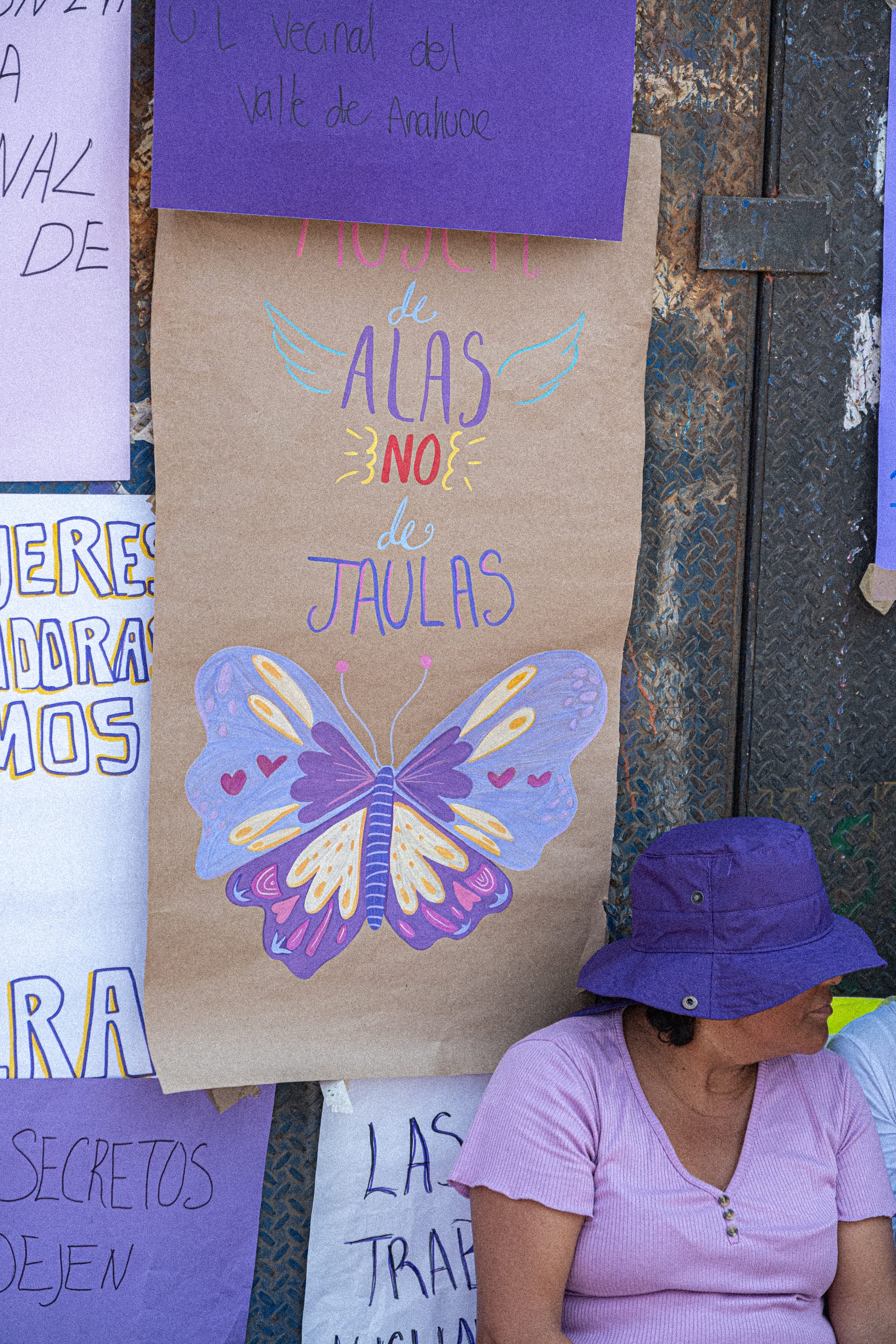
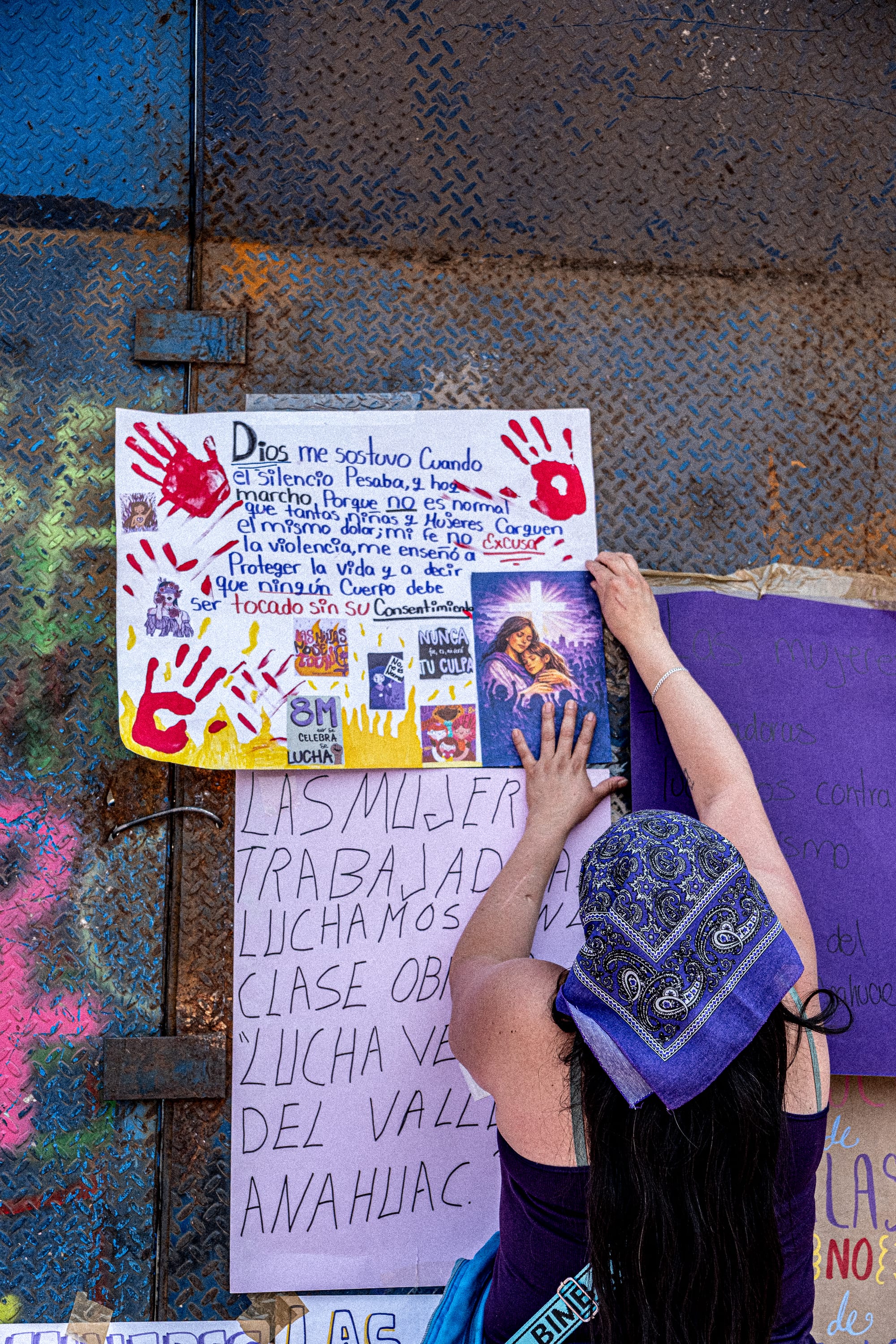
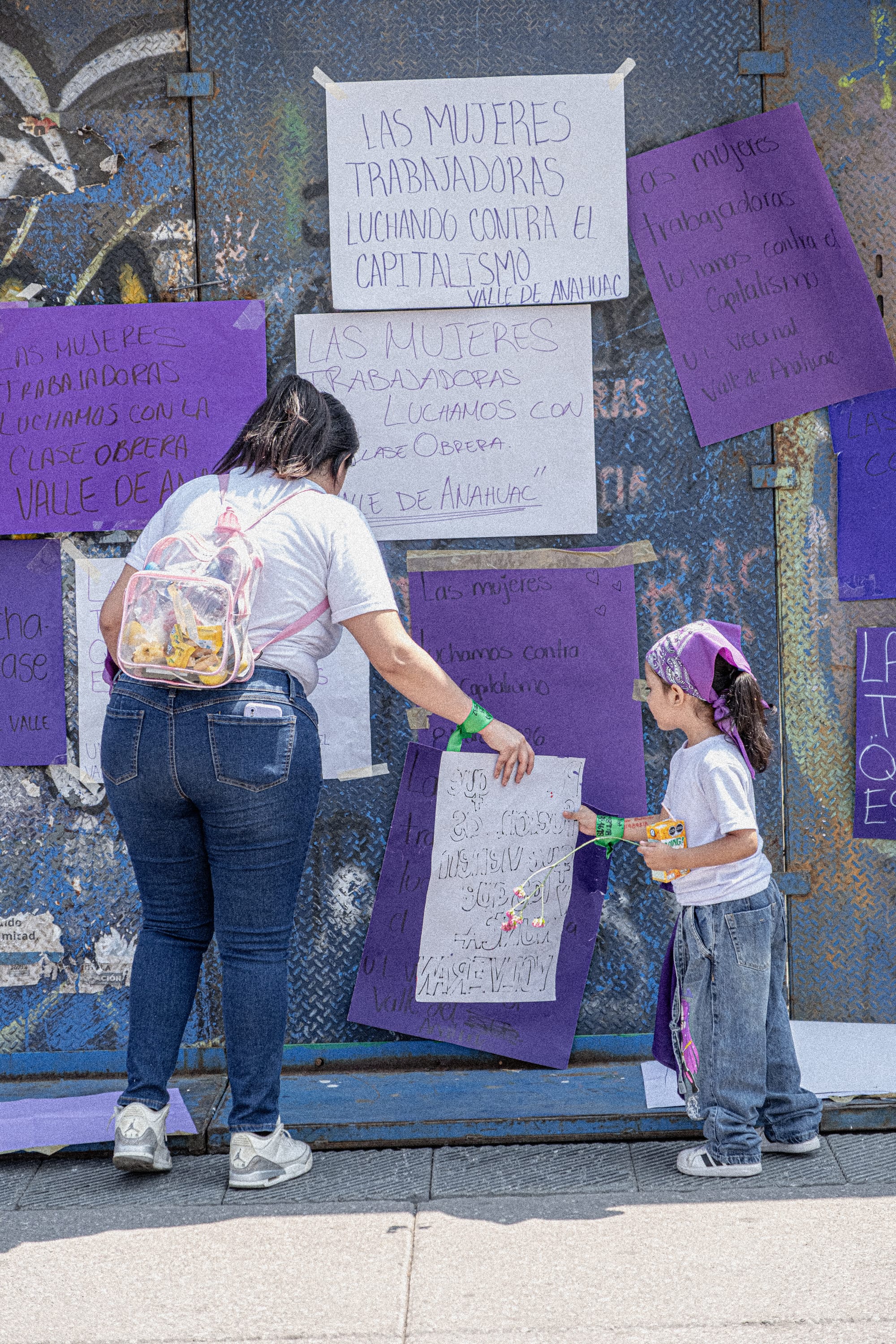
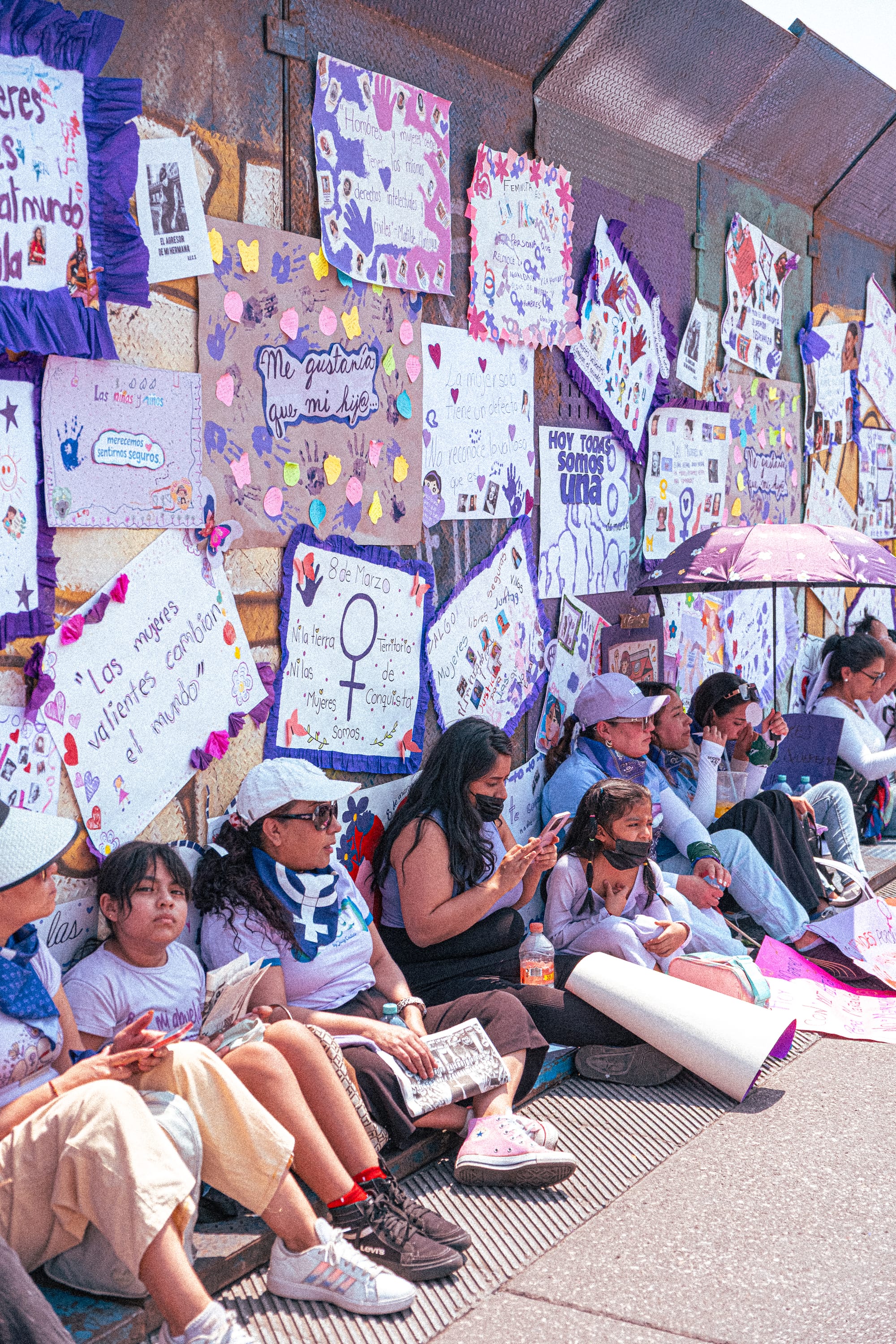
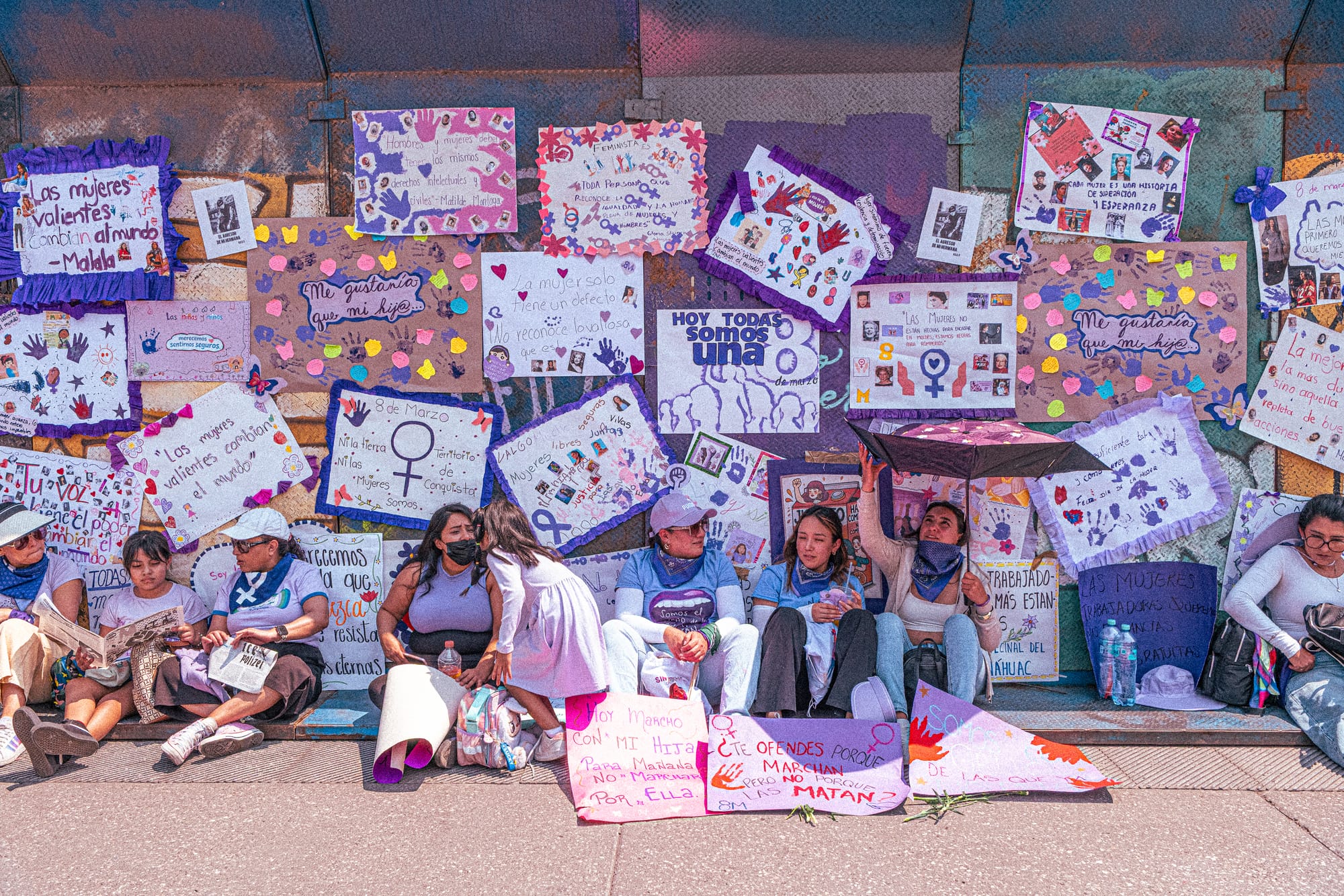
Along the route, the walls of government buildings become temporary canvases. Slogans appear in purple and green paint, colors associated with the feminist movement in Mexico and across Latin America. Some messages are raw, others poetic, but all carry the same urgency that women should be able to live without fear.
Critics sometimes focus on the graffiti or the broken windows. But to many of the women marching, these acts are expressions of rage accumulated over decades of systemic gender violence, disappearances, and impunity.
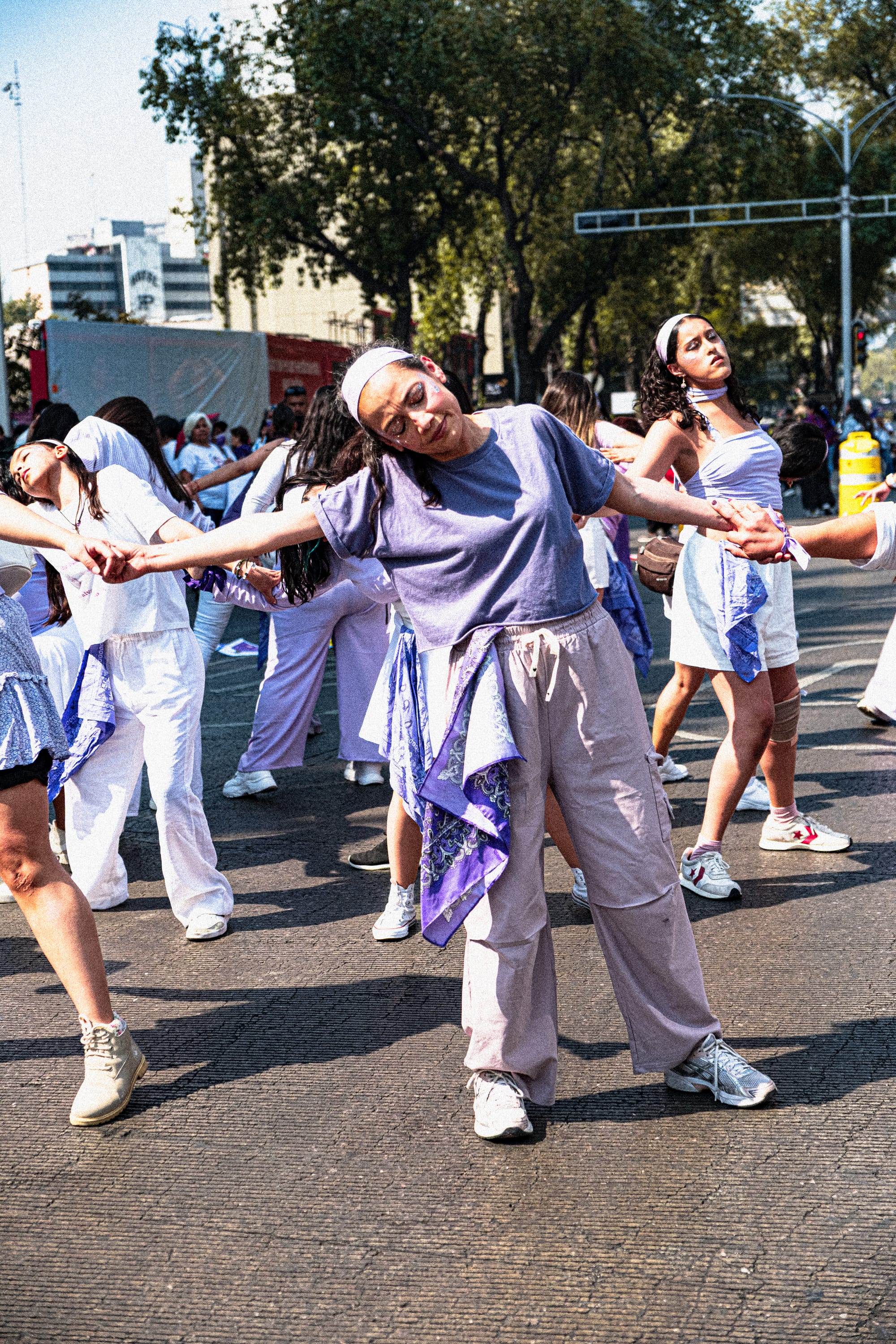
Photography struggles to capture this complexity. The 8M march in Mexico City is not just a protest. It is a landscape of emotions: defiance, exhaustion, solidarity, grief, and hope braided together.
For many participants, showing up is itself an act of resistance.
Behind every banner is a story.
Behind every chant is someone who should still be here.
And every year, on International Women’s Day in Mexico, the city becomes a place where those stories refuse to disappear.
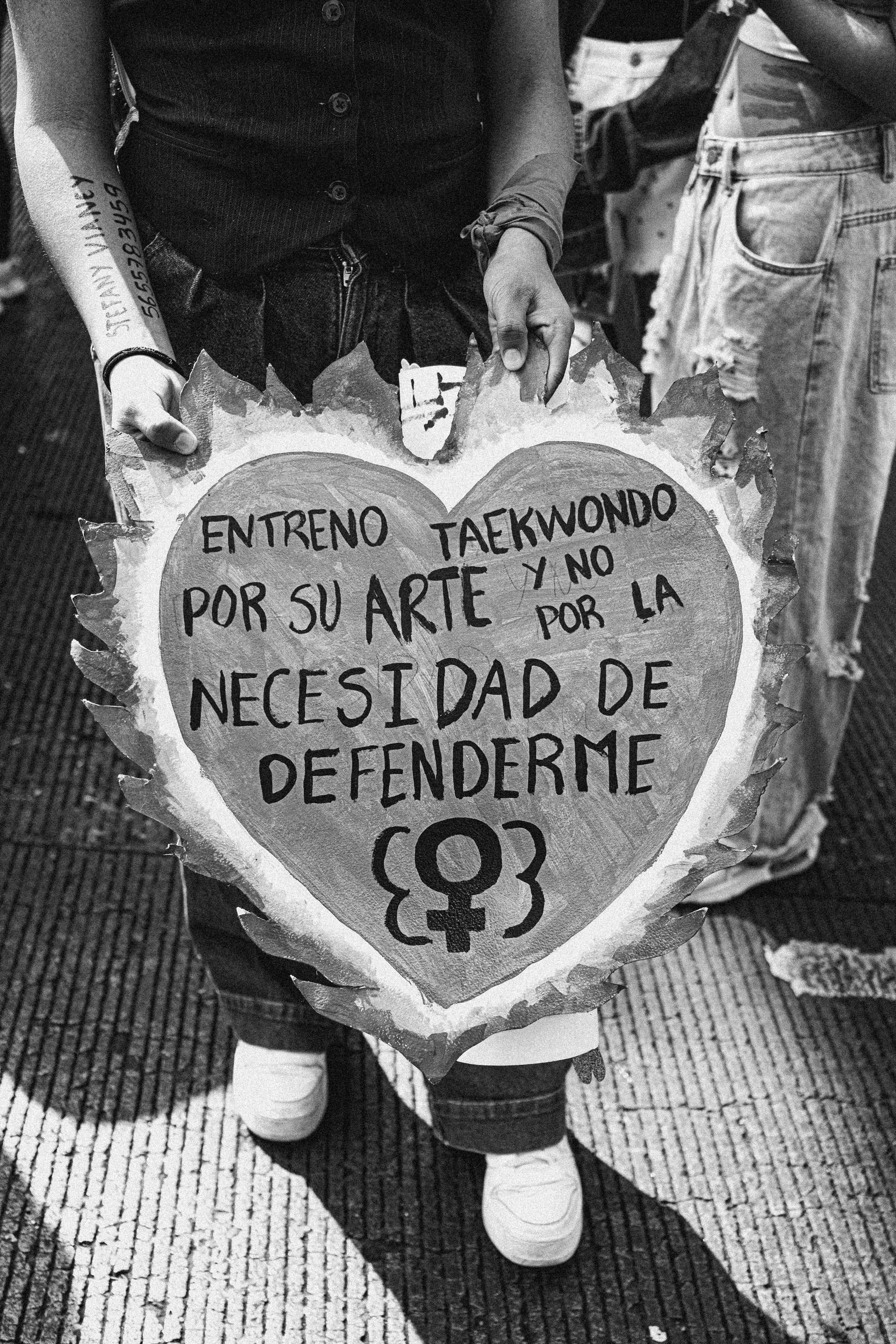
For me, joining the march as a woman felt intensely personal. At several points women stopped me and asked me to write my name in marker on their arms. It was a quiet but sobering gesture.
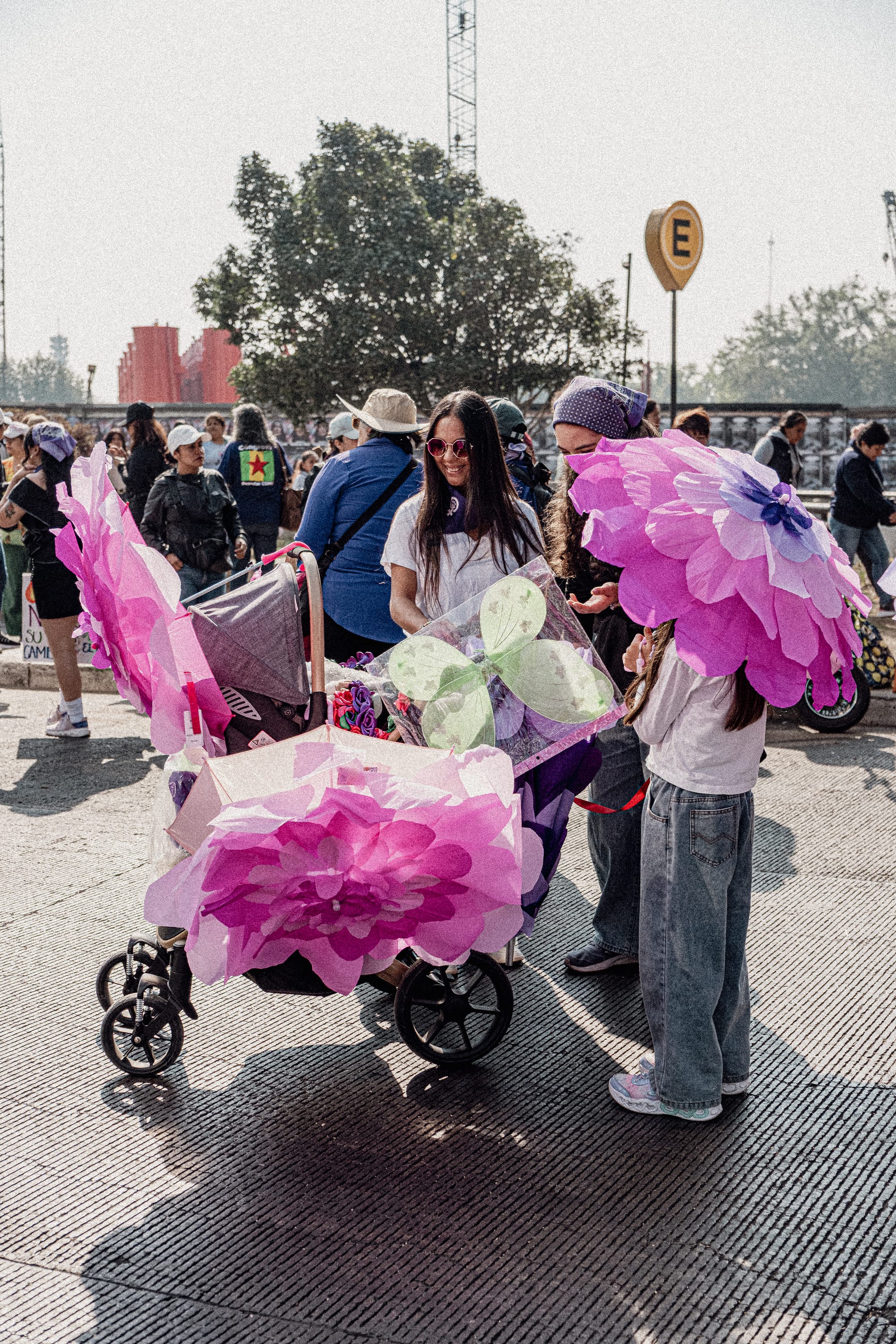
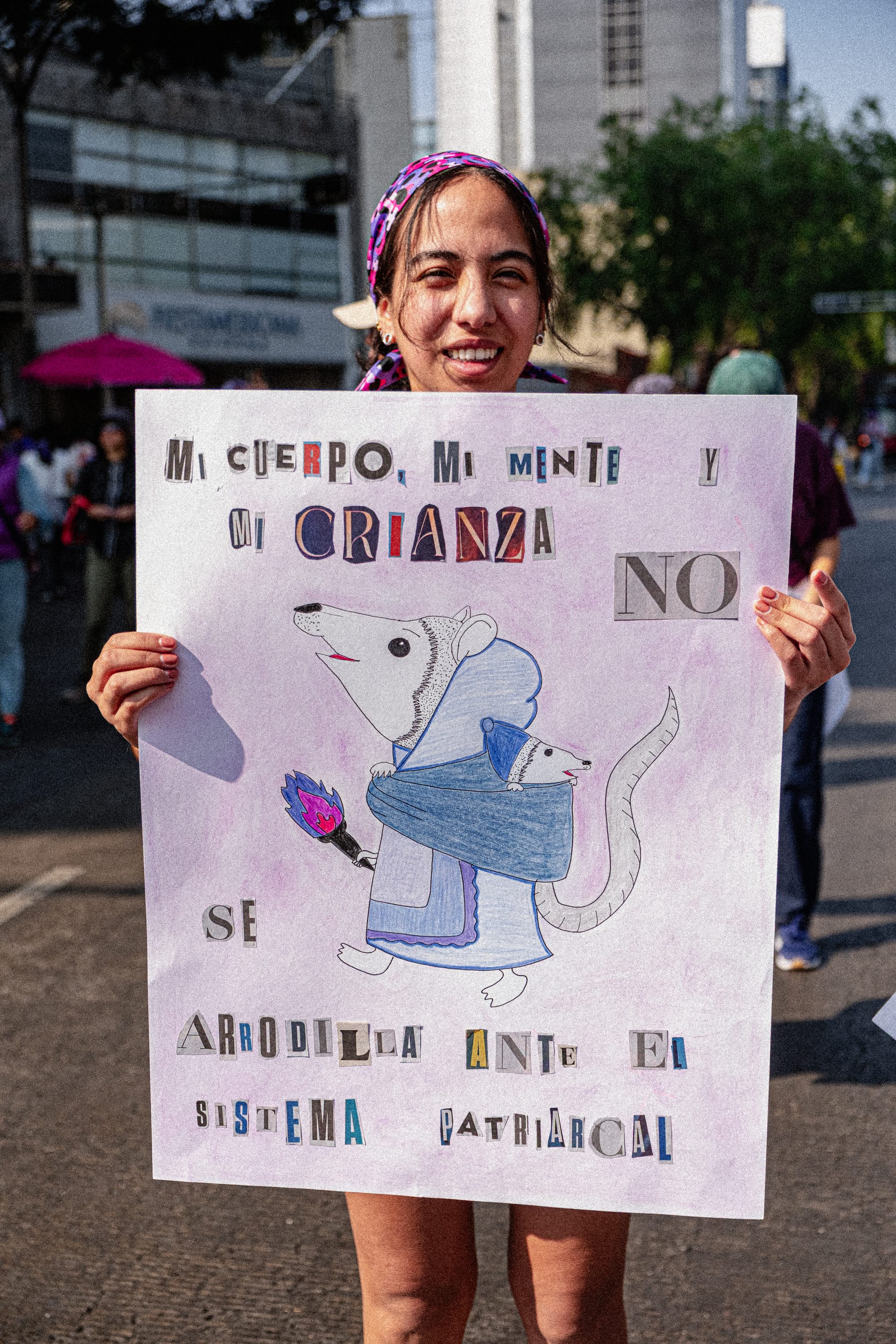
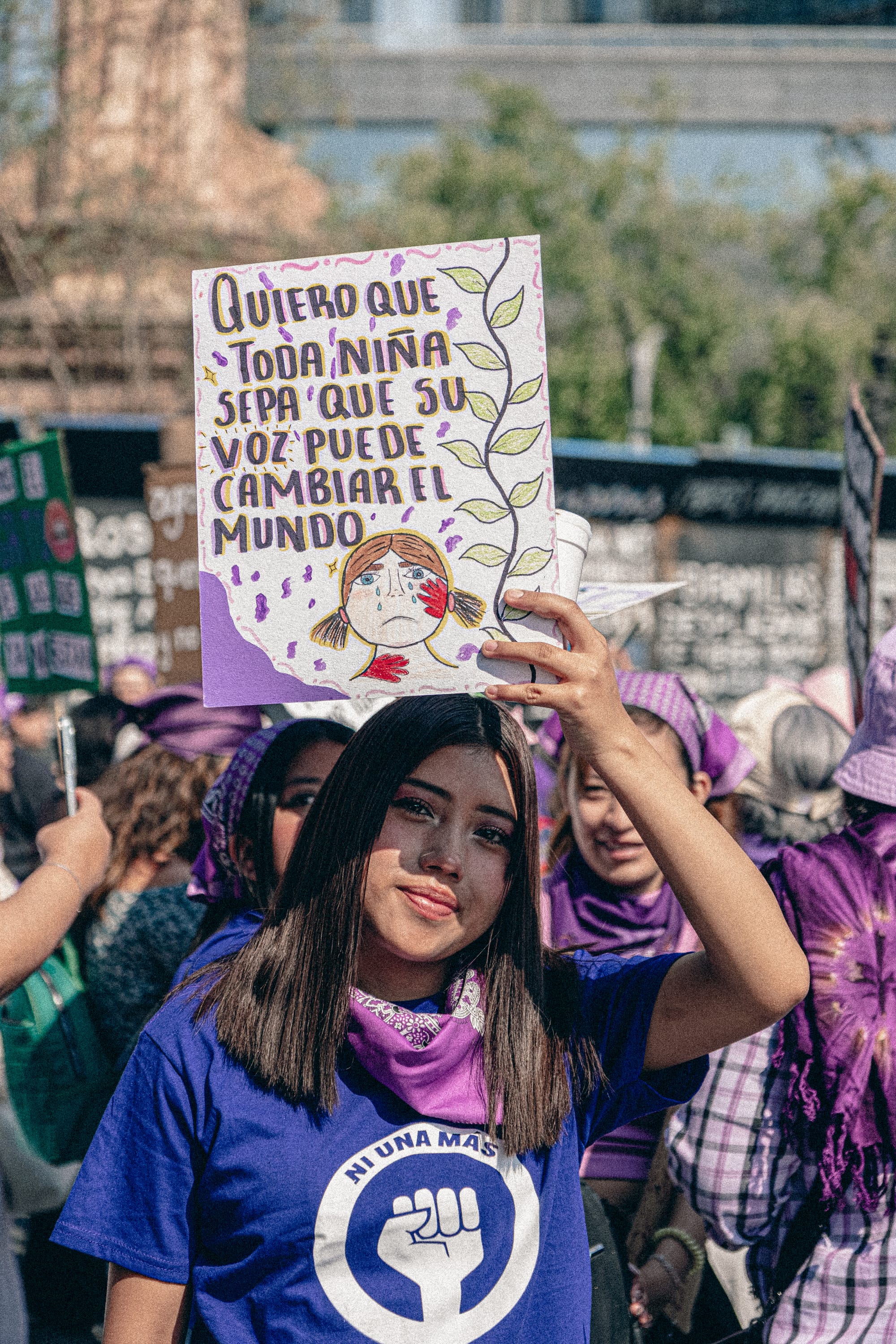
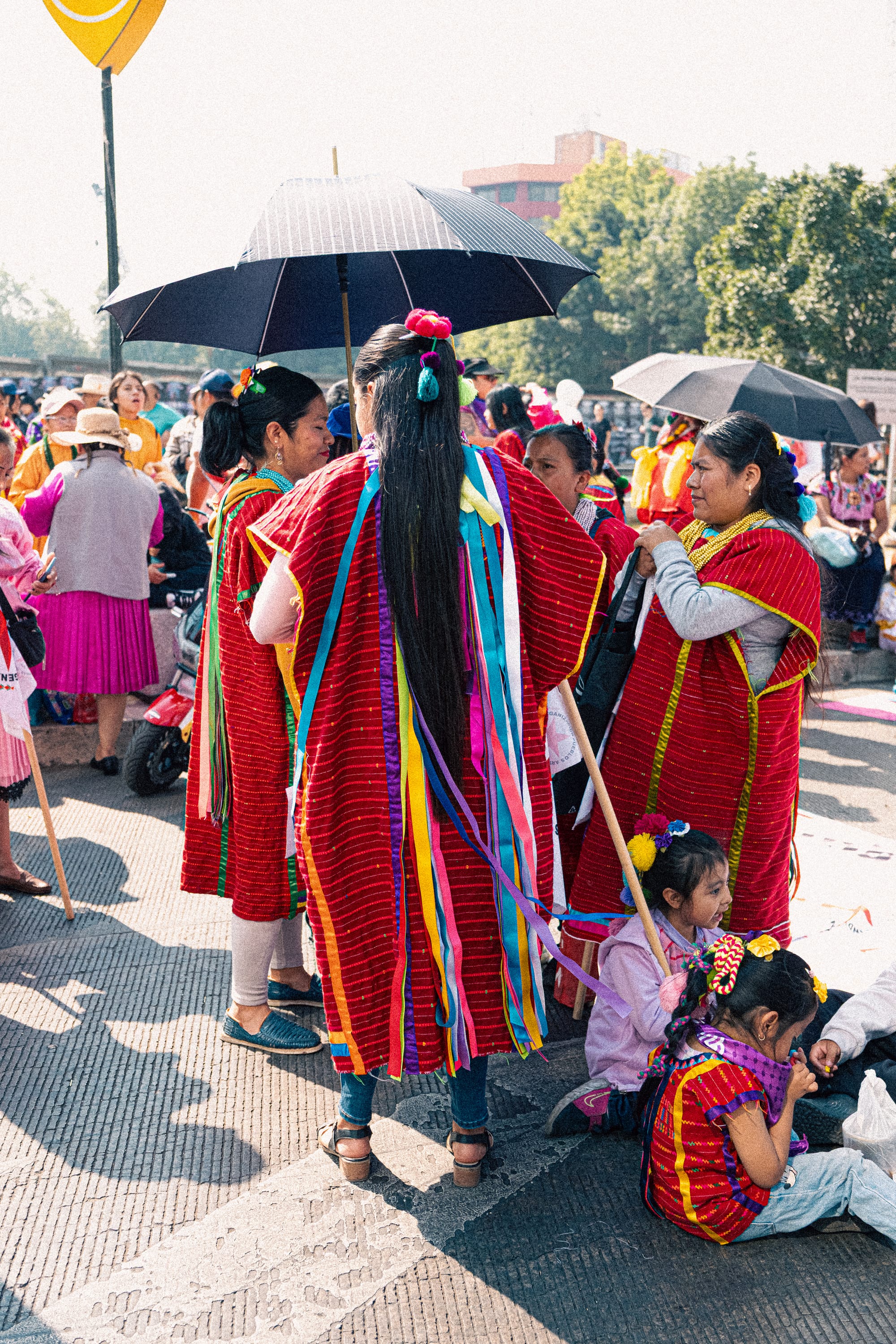
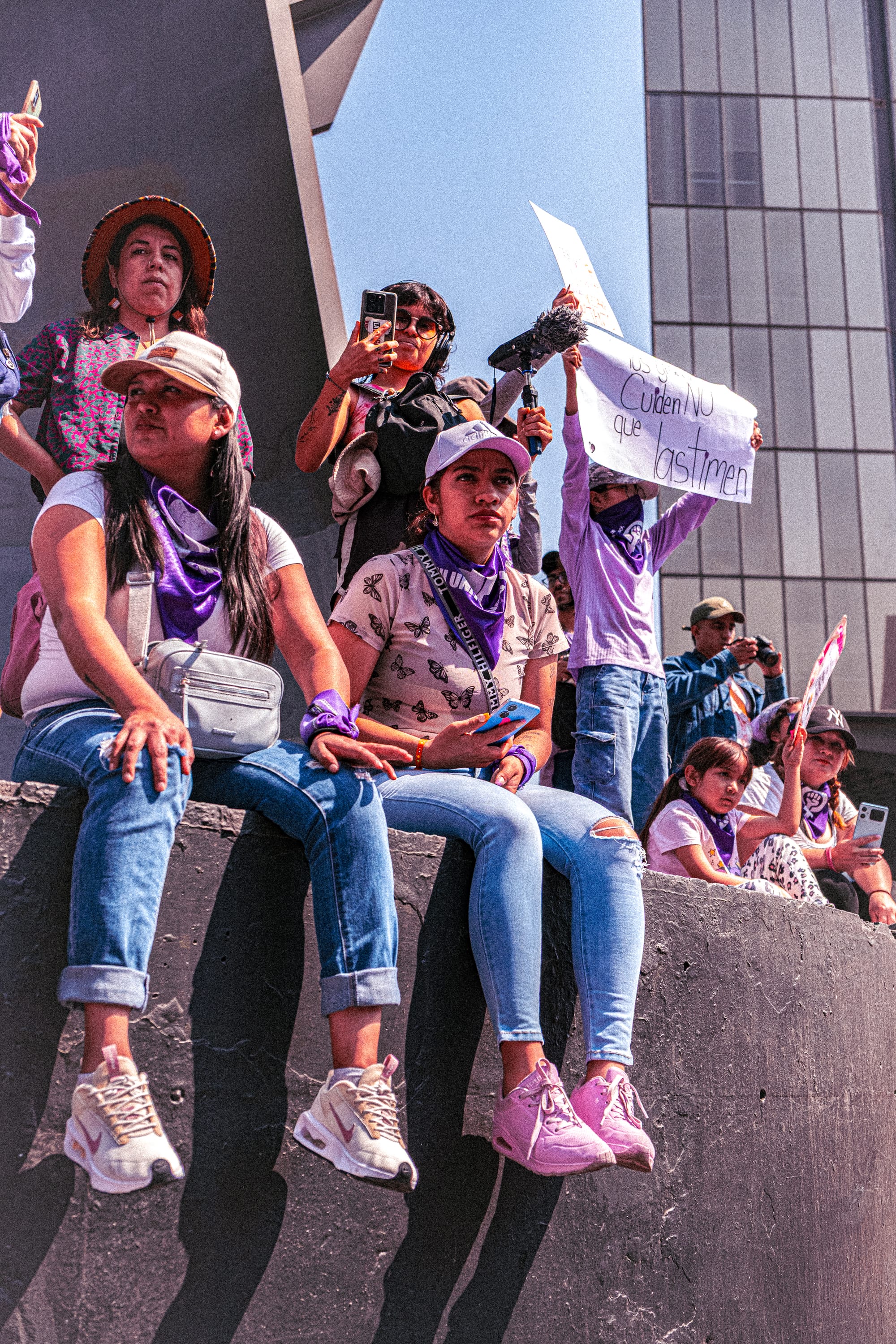
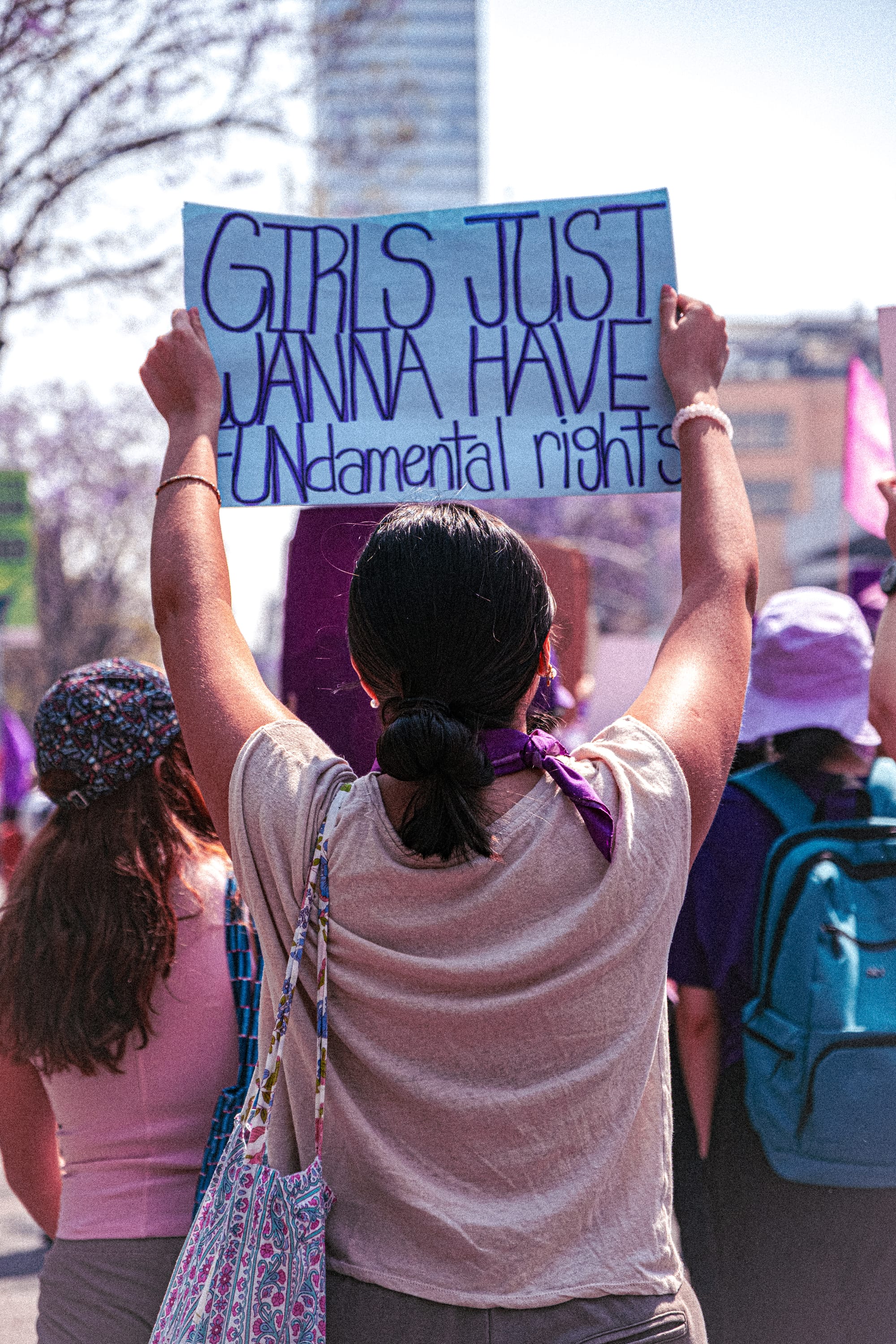
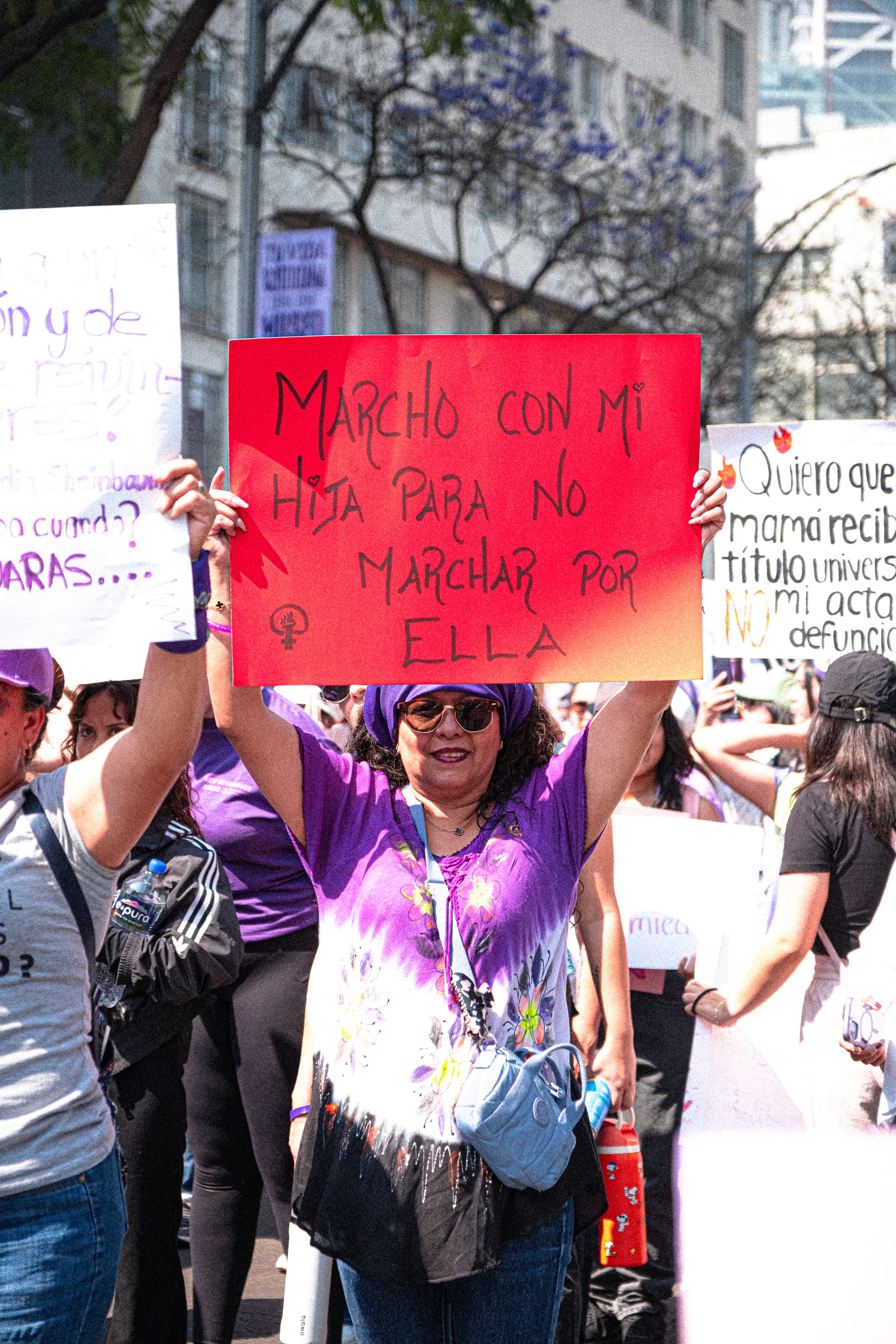
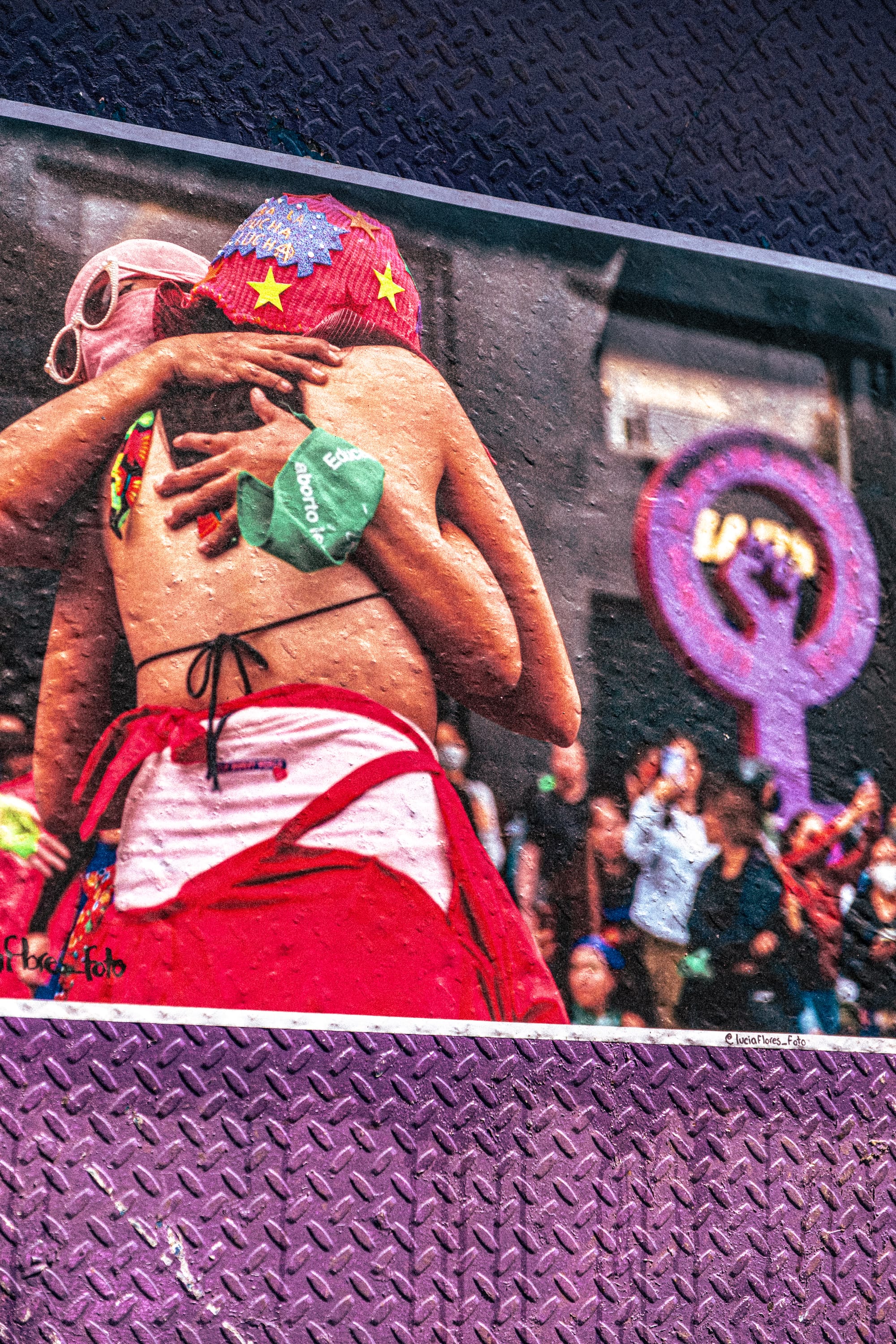
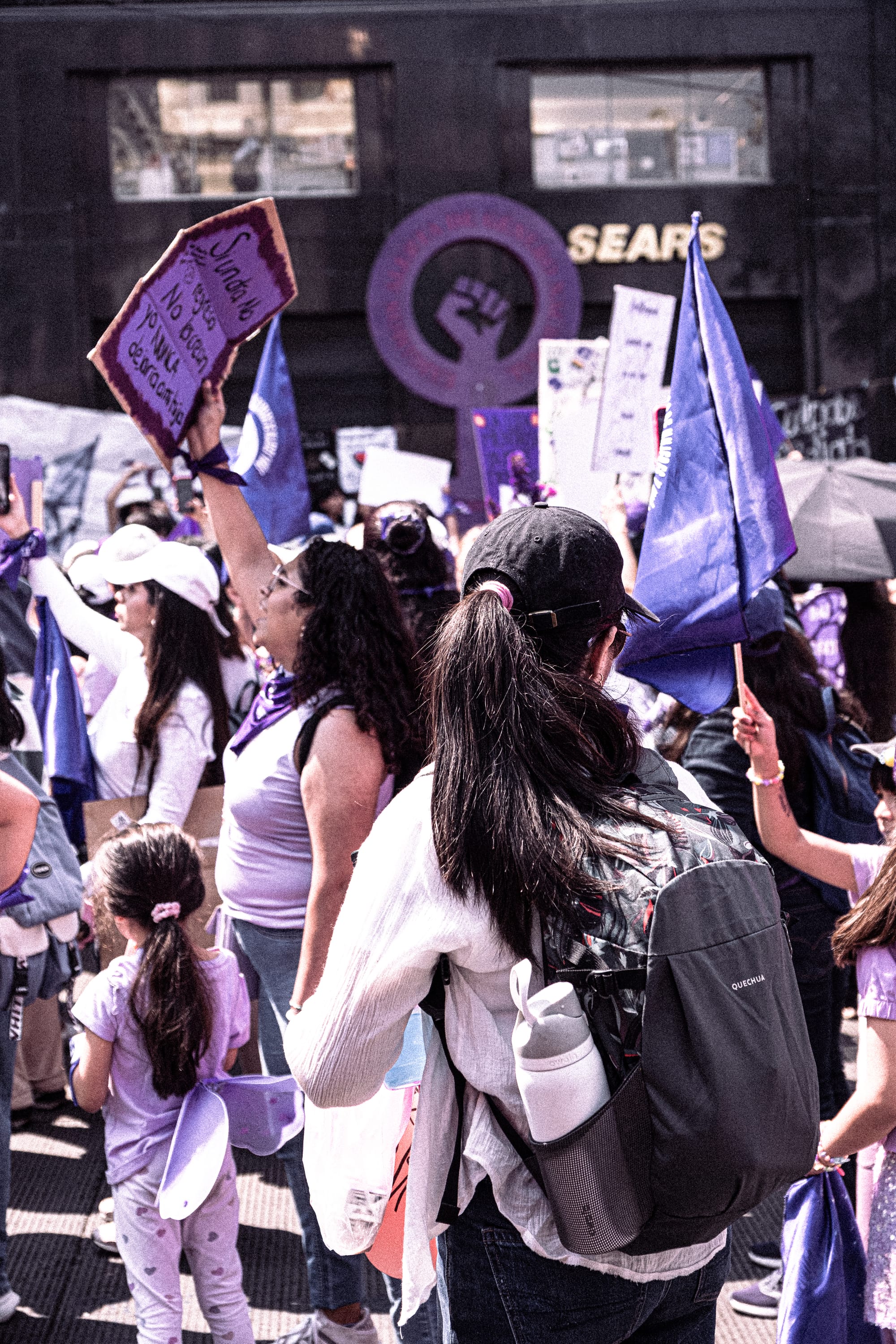
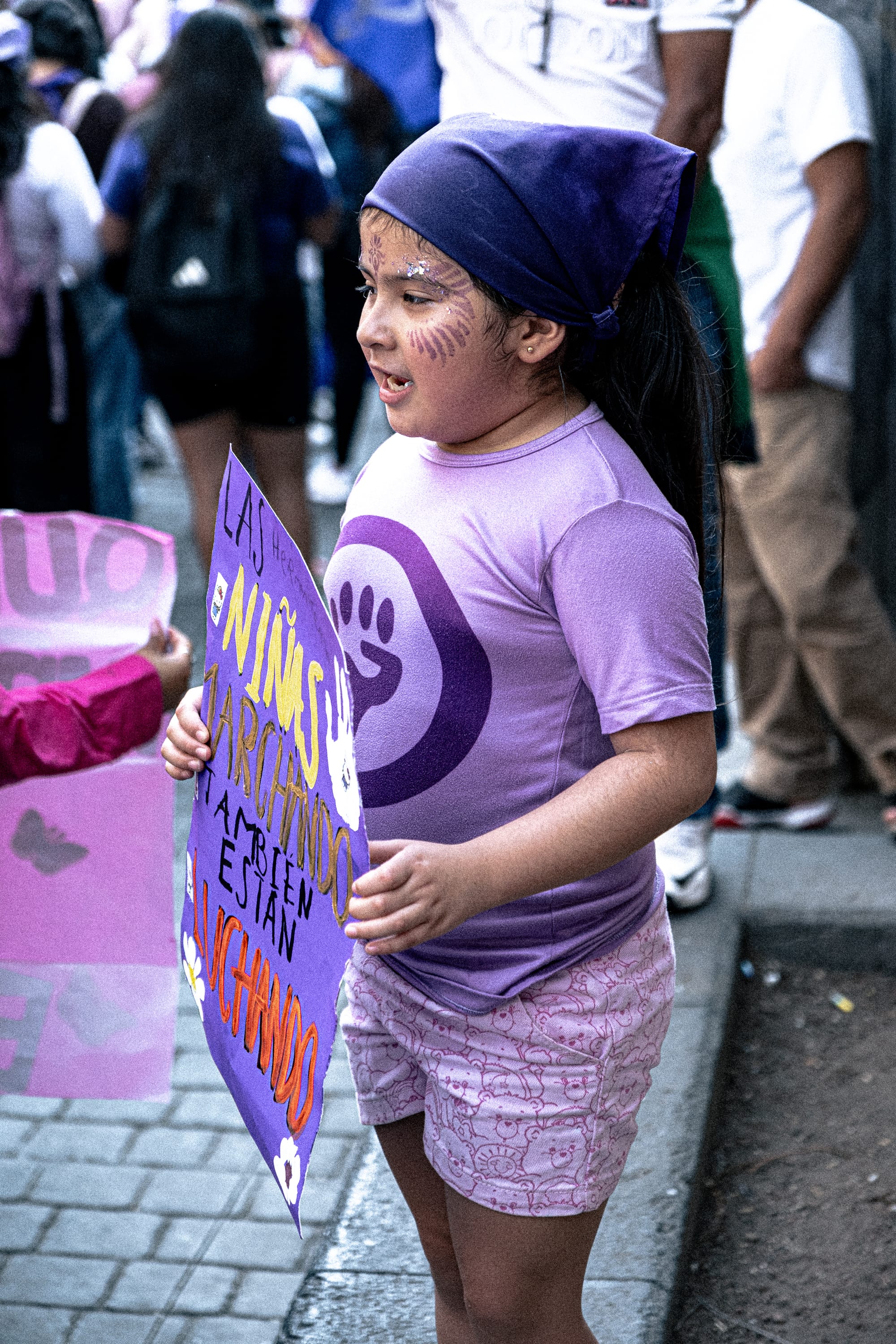
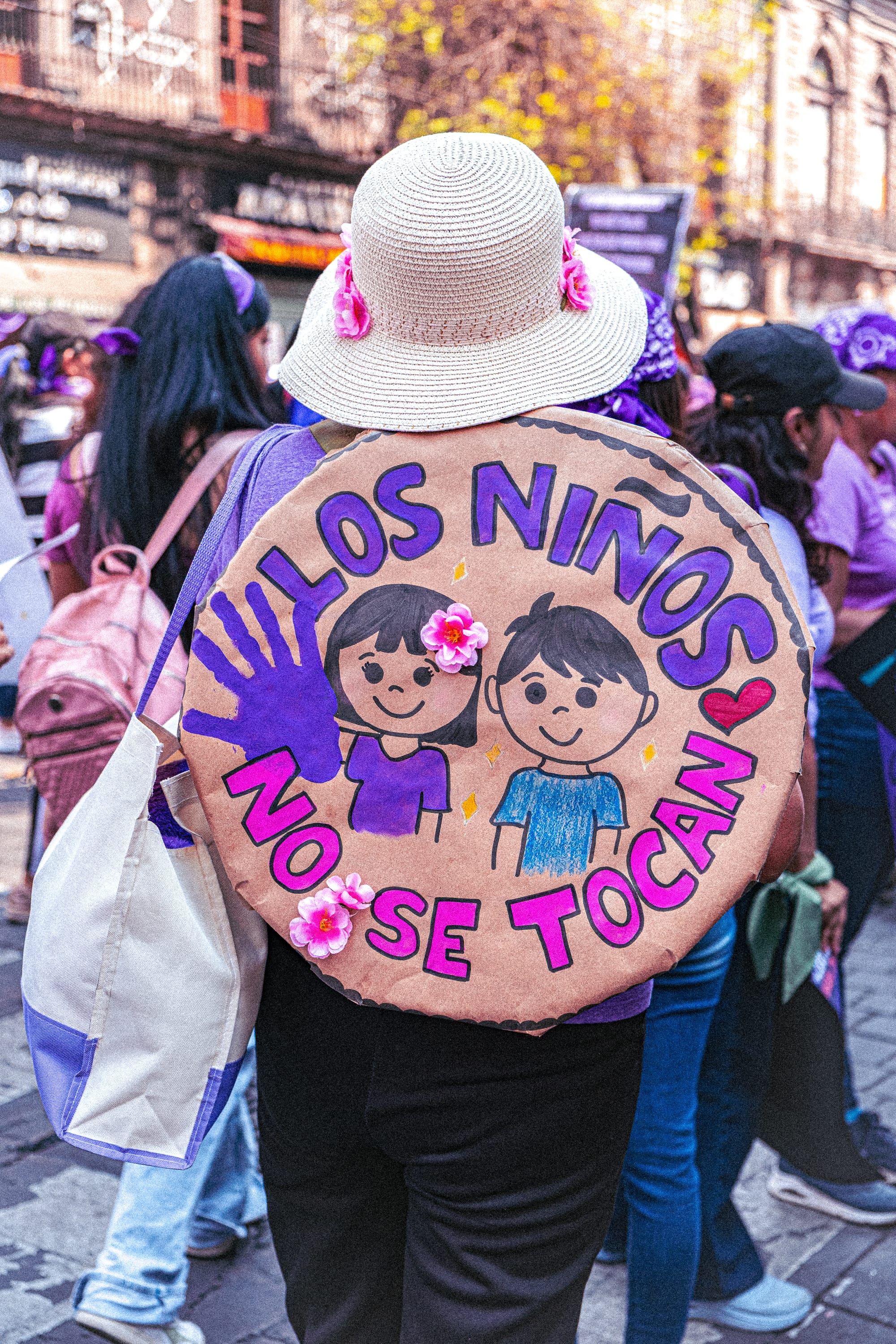
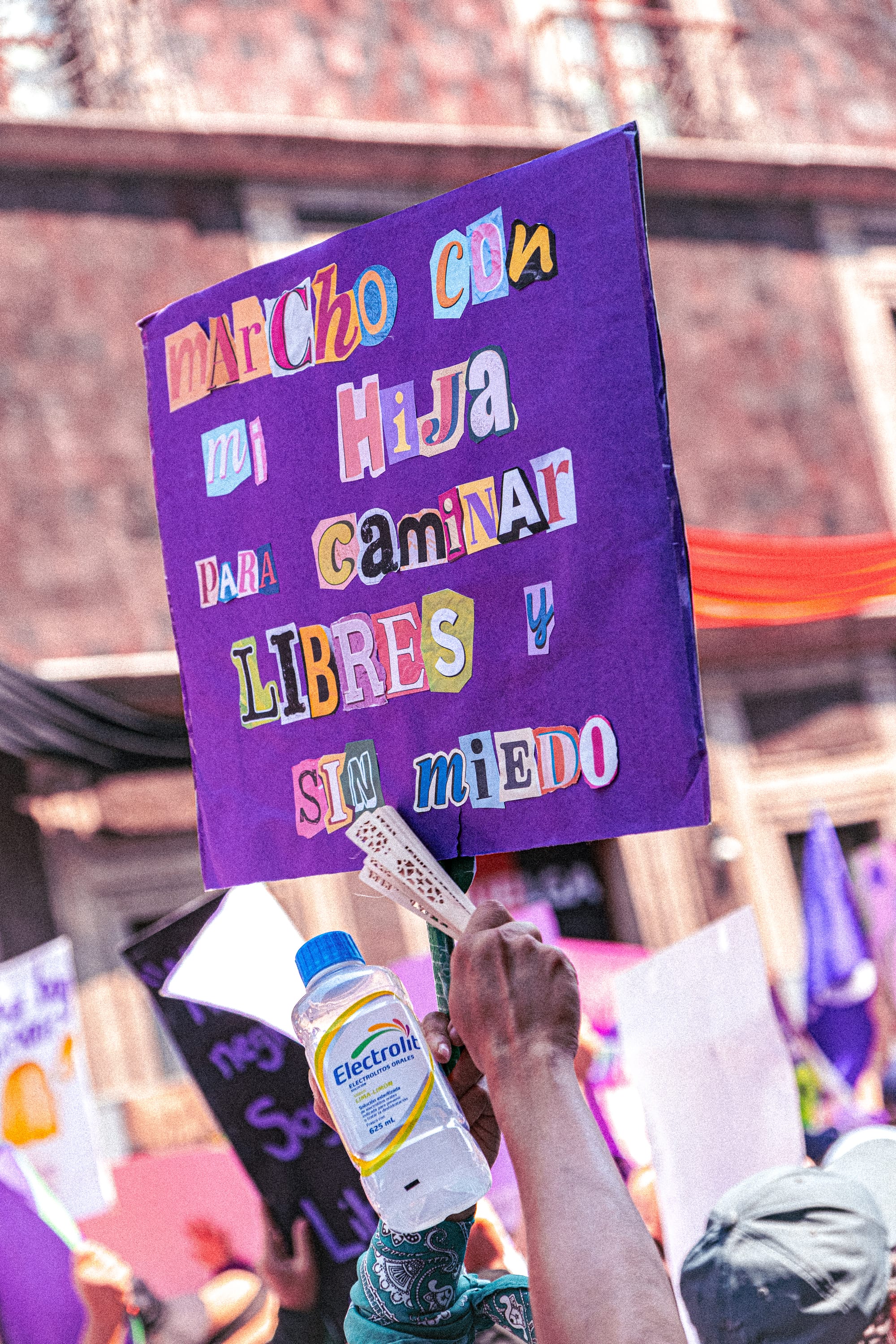
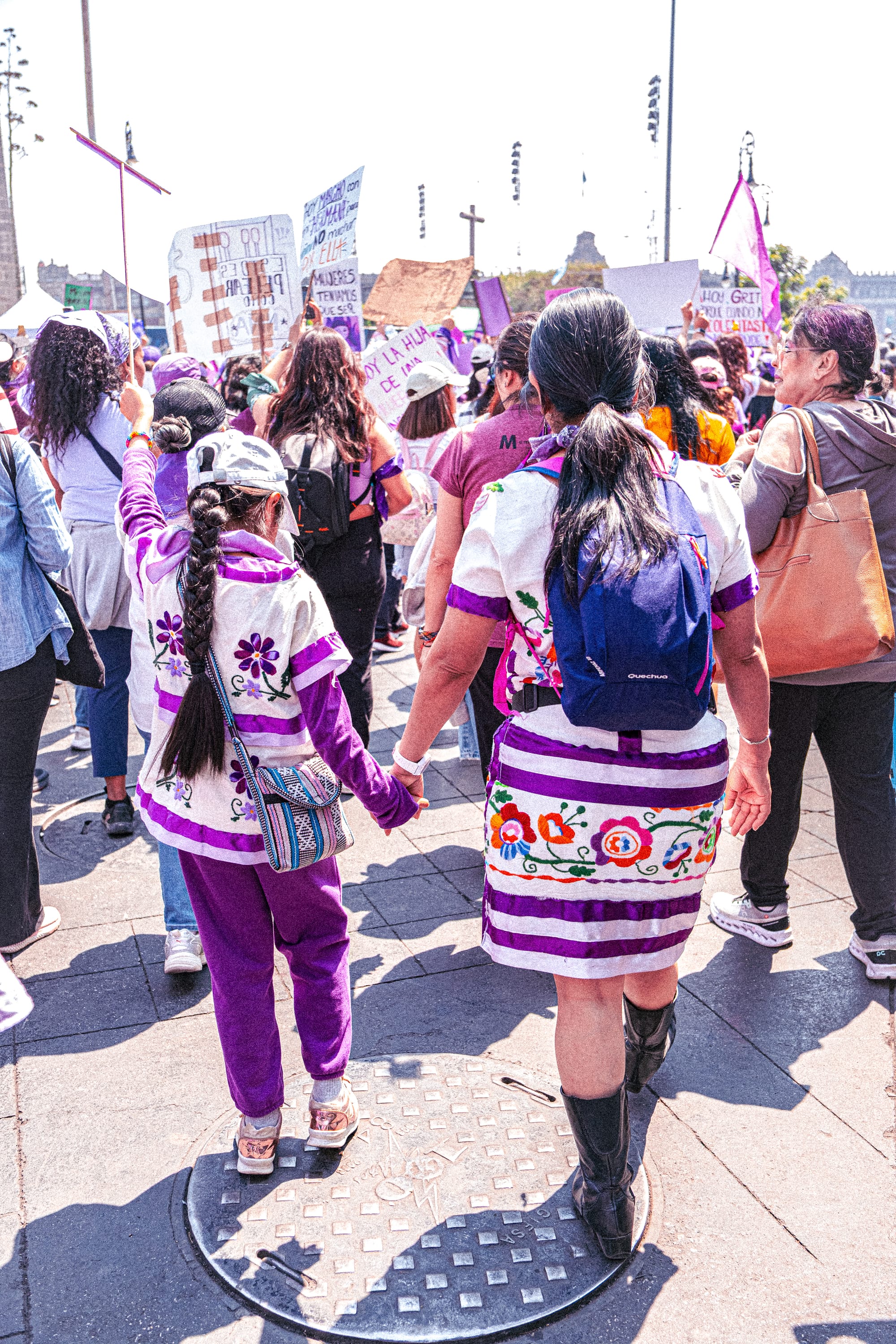
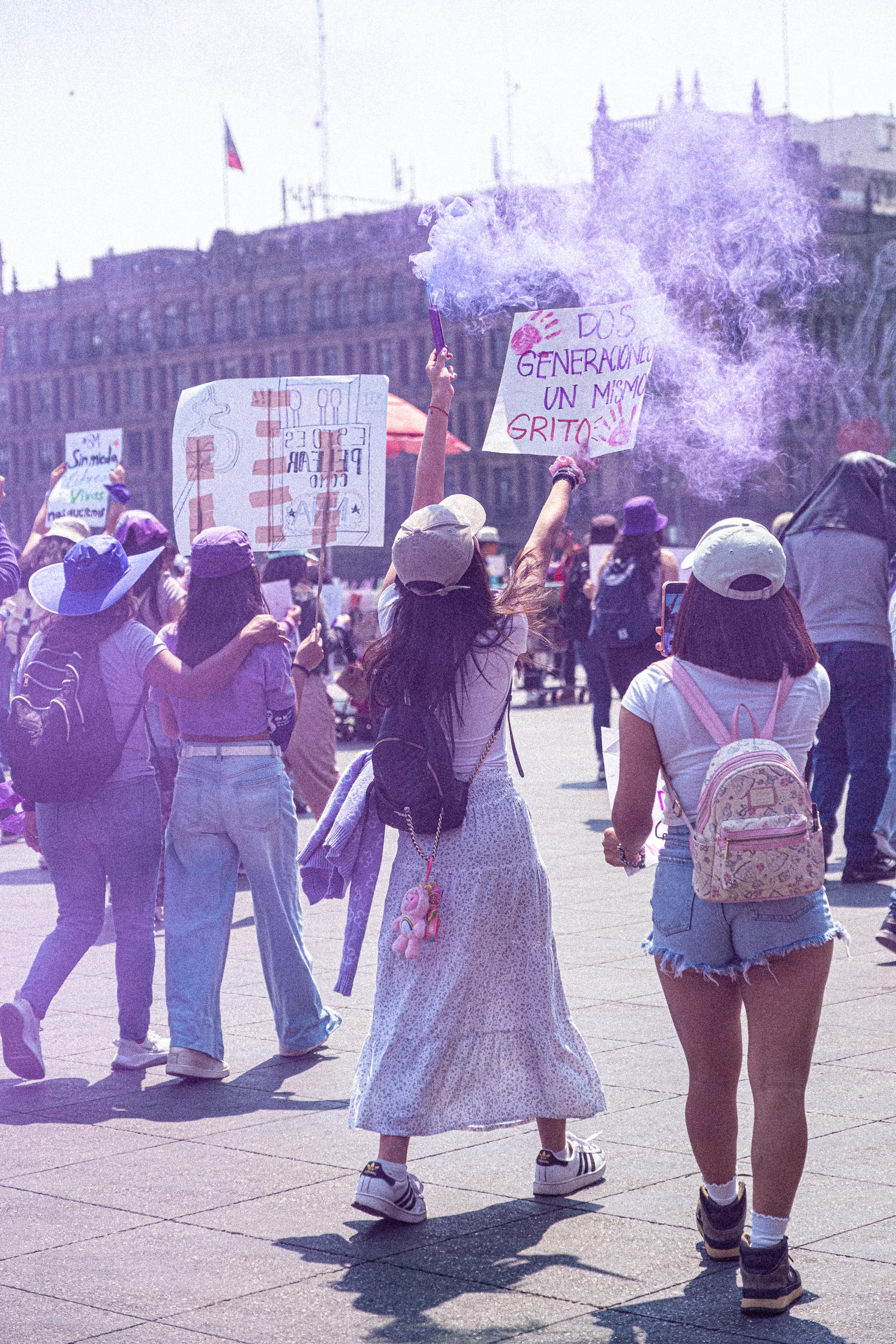
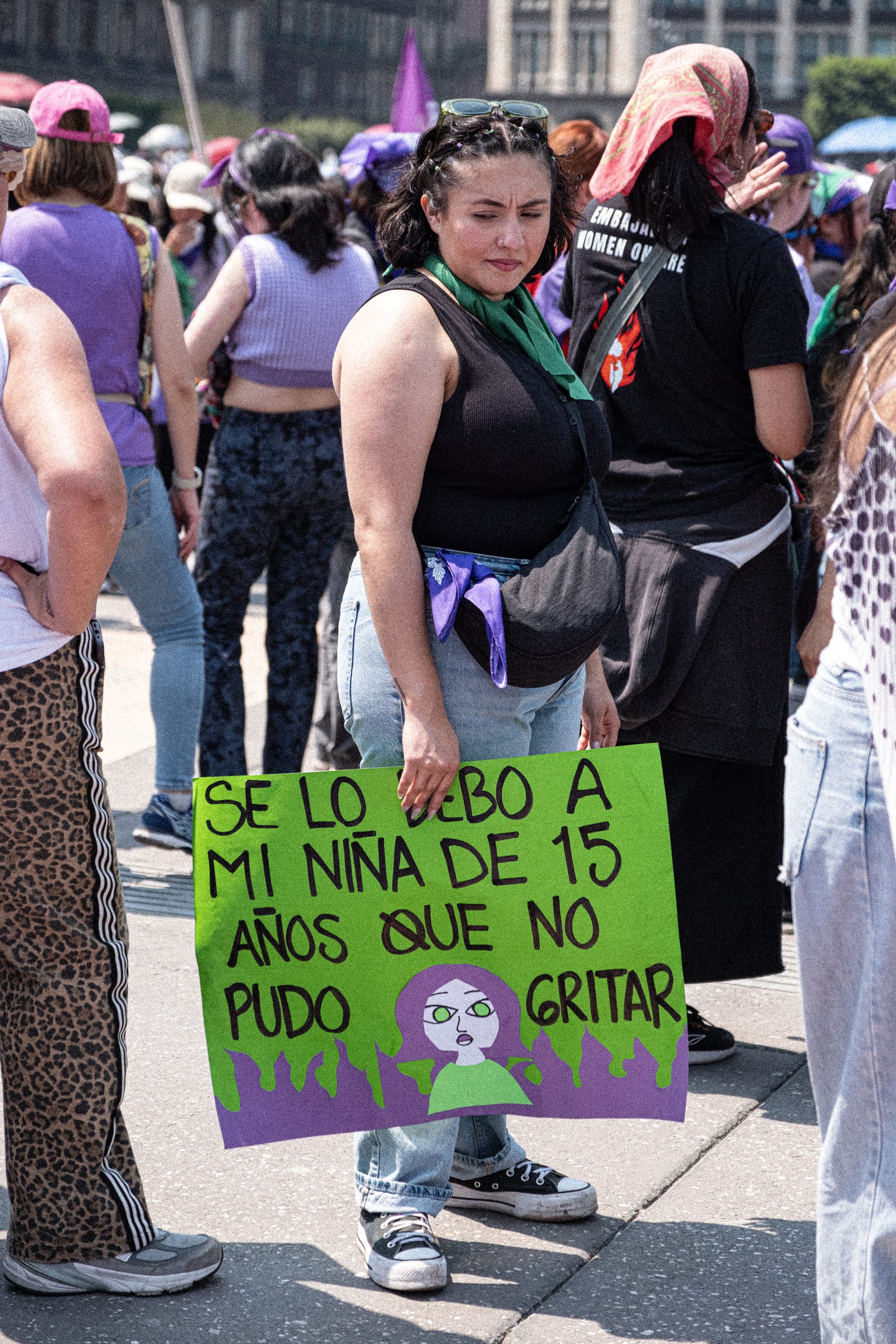
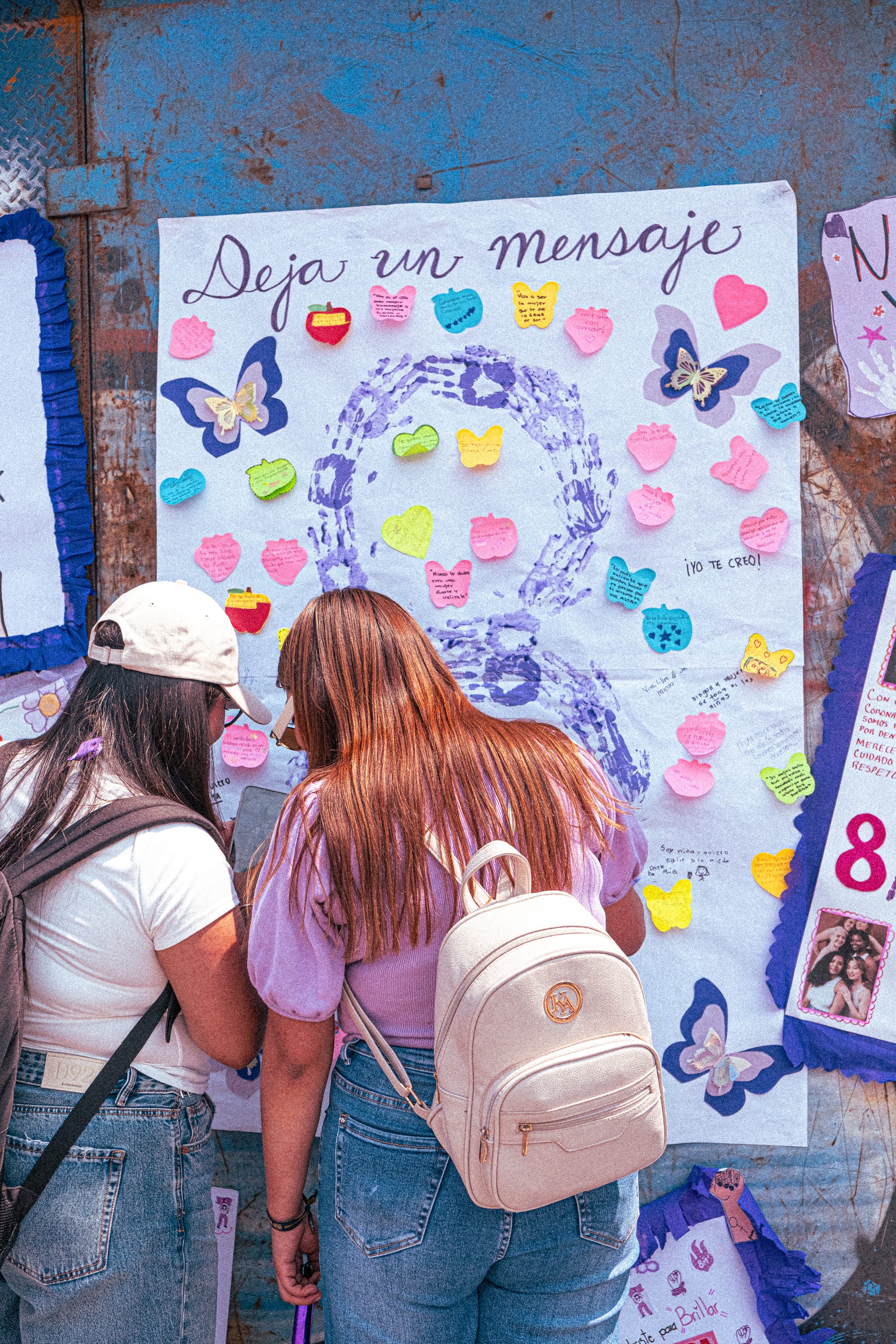
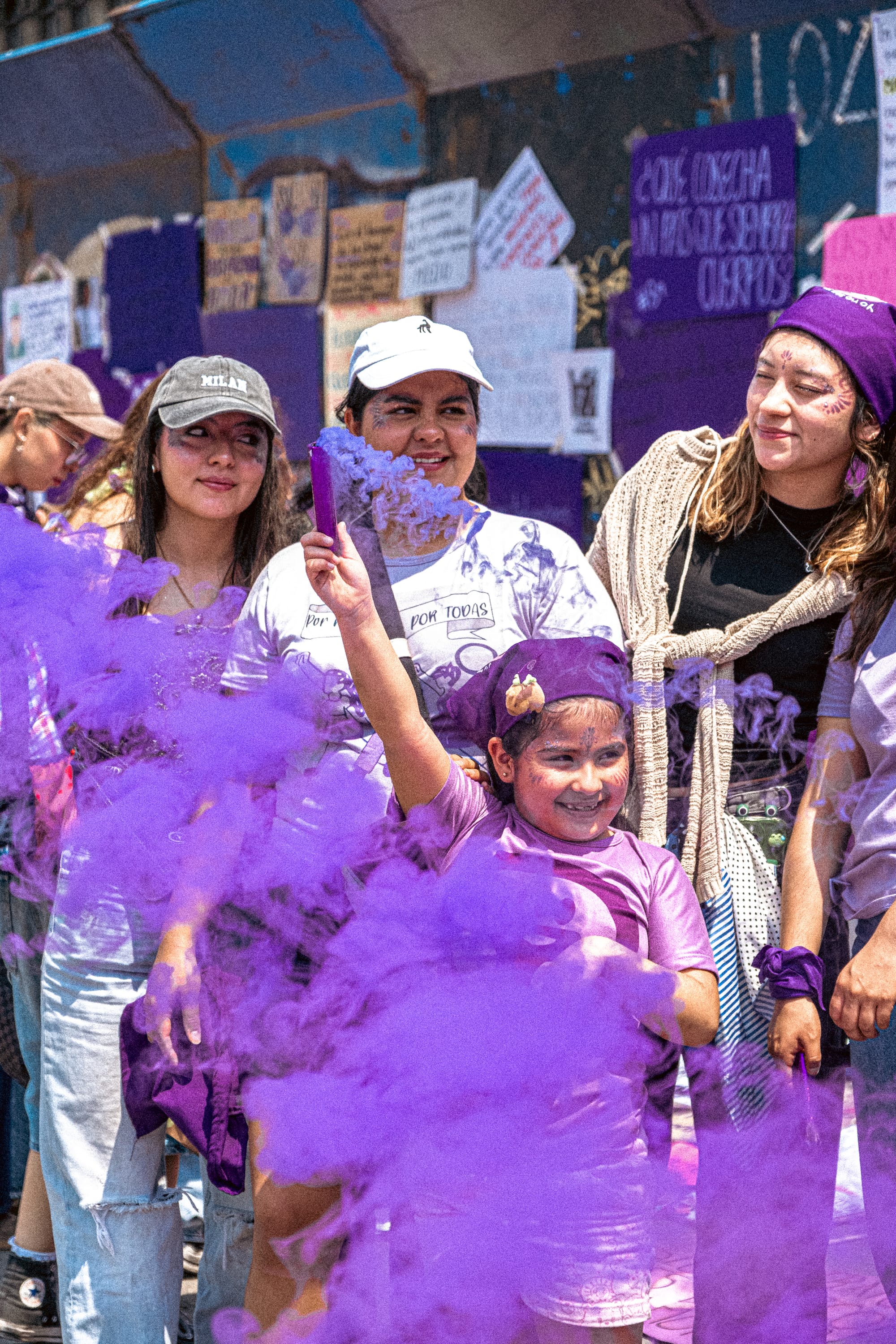
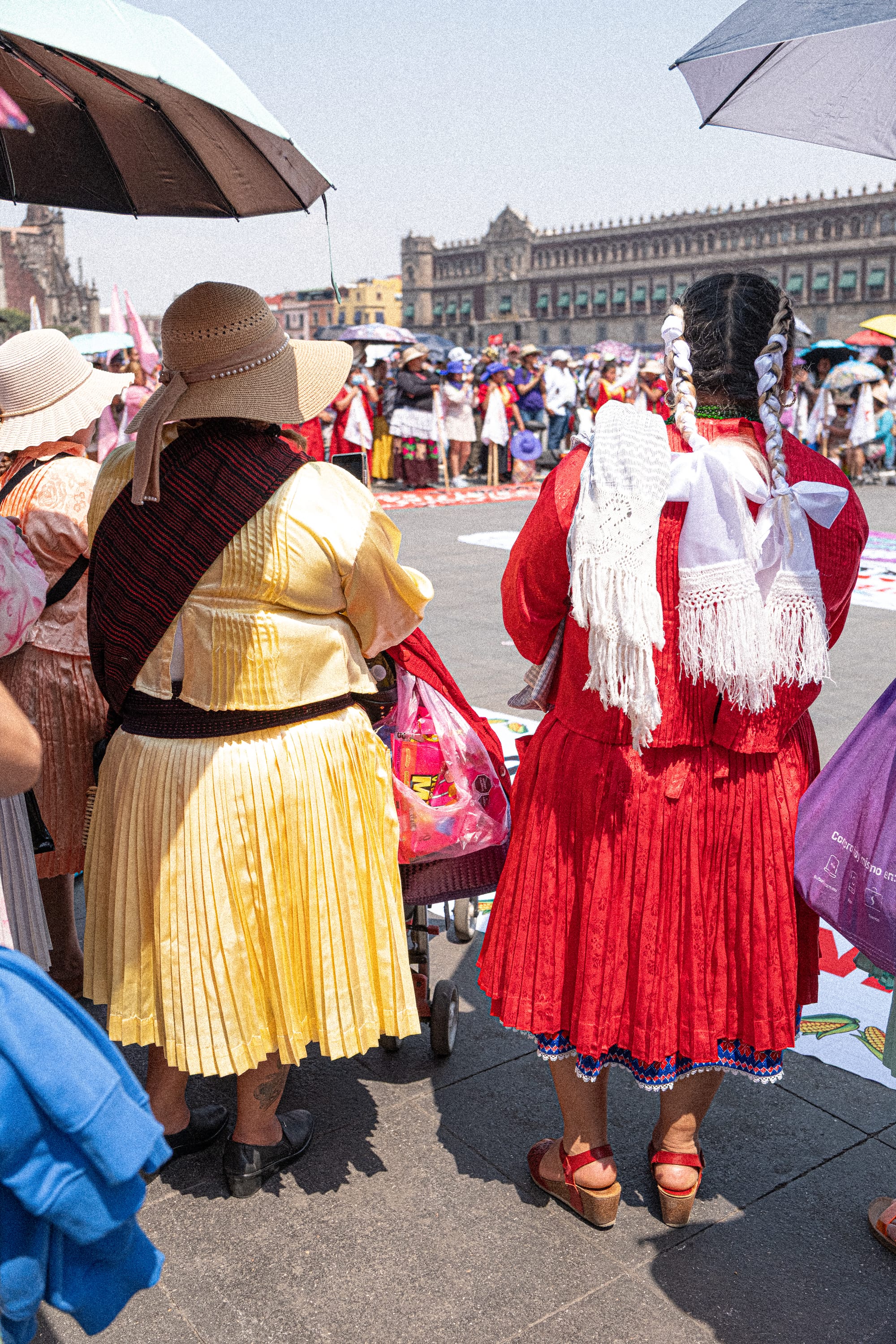
Mothers walked beside their young daughters. Girls perched on shoulders, looking out over a sea of purple. Small hands held signs almost too big for them.
And then there were the conversations.
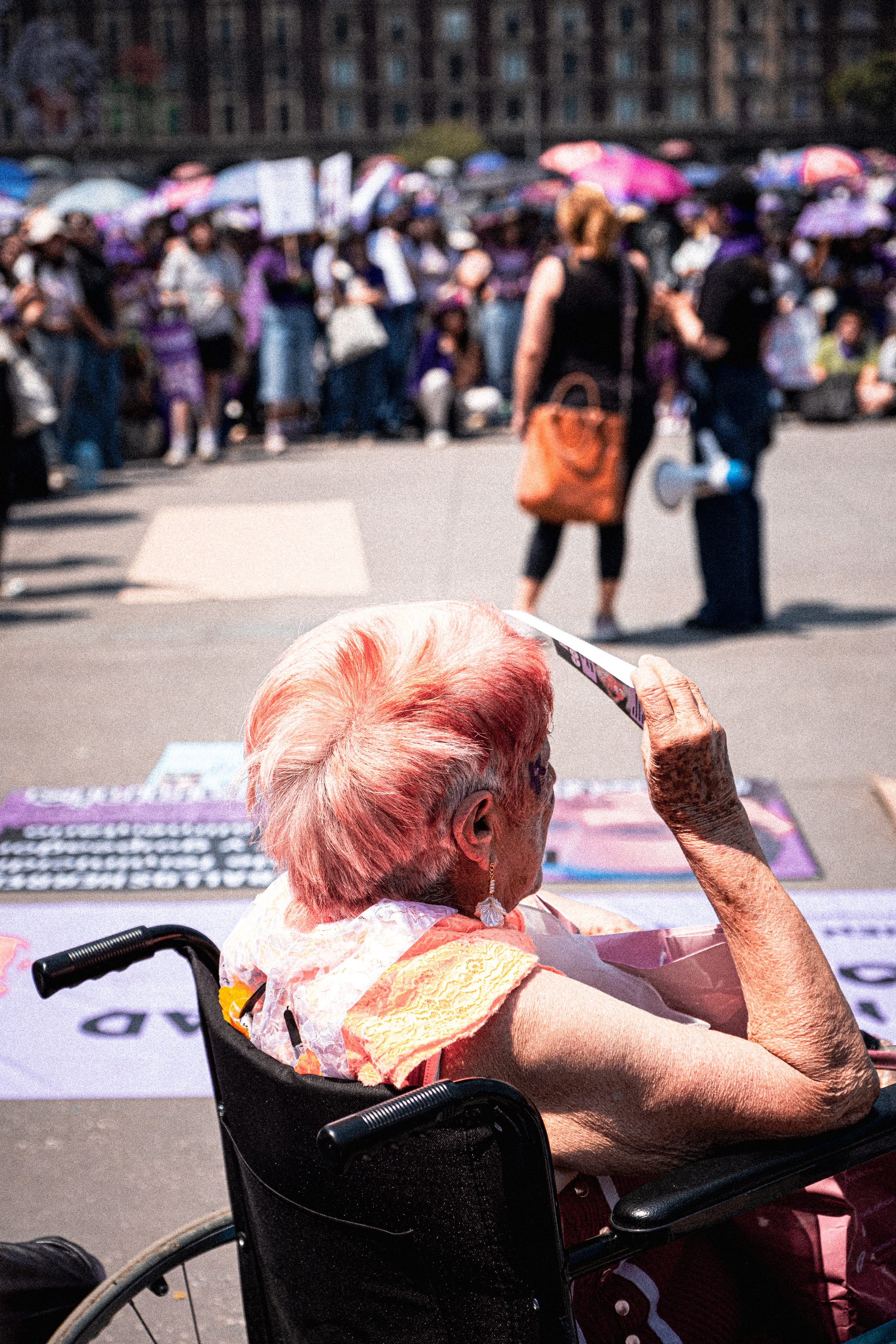
Mothers and grandmothers spoke openly to anyone who would listen, holding photographs of daughters and granddaughters taken by femicide. Some cried as they told their stories. Others spoke with a steadiness that felt almost harder to witness. Grief lived in the air that day, moving quietly through the crowd.
But grief was not the only thing present.
There was also something fierce.
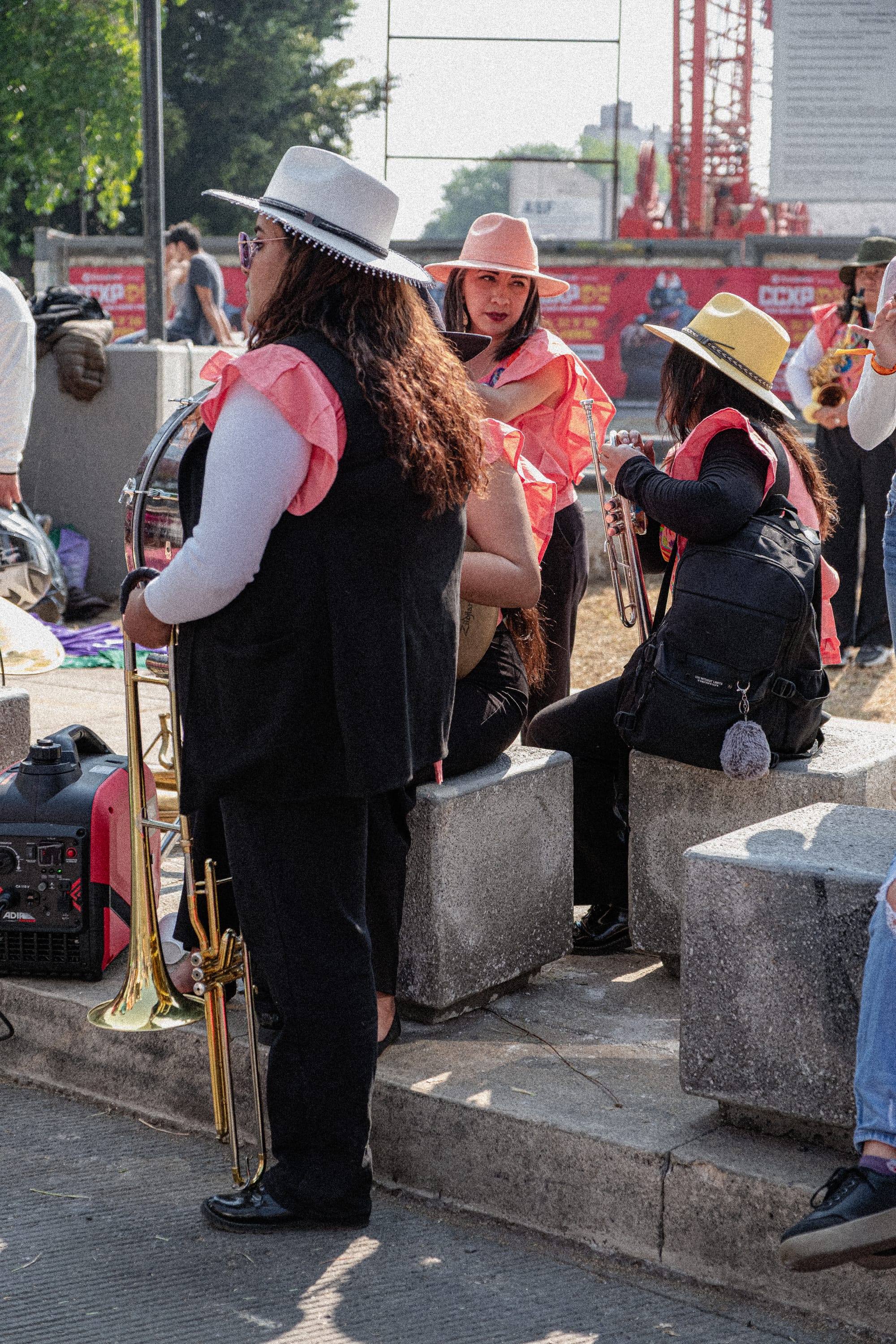
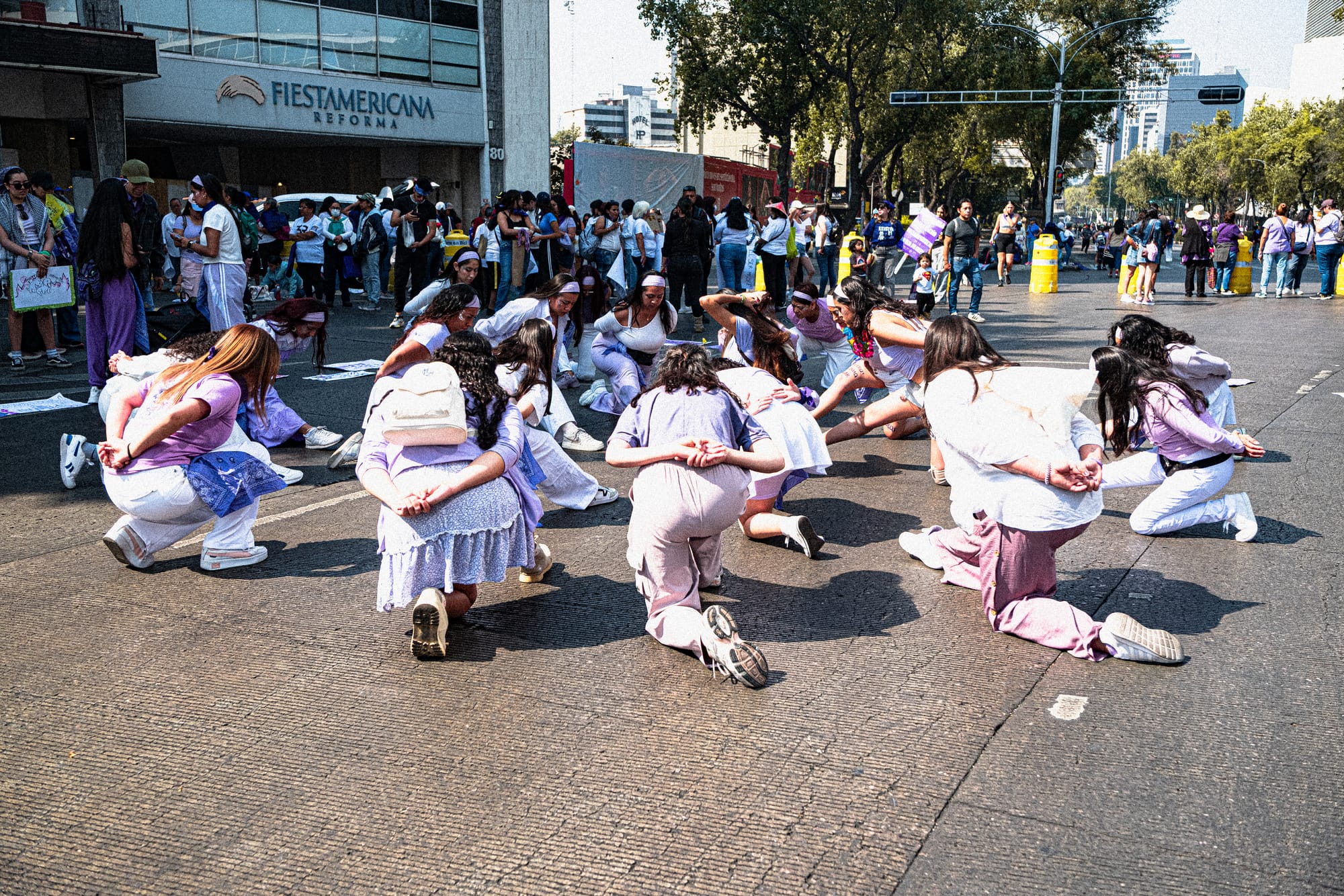
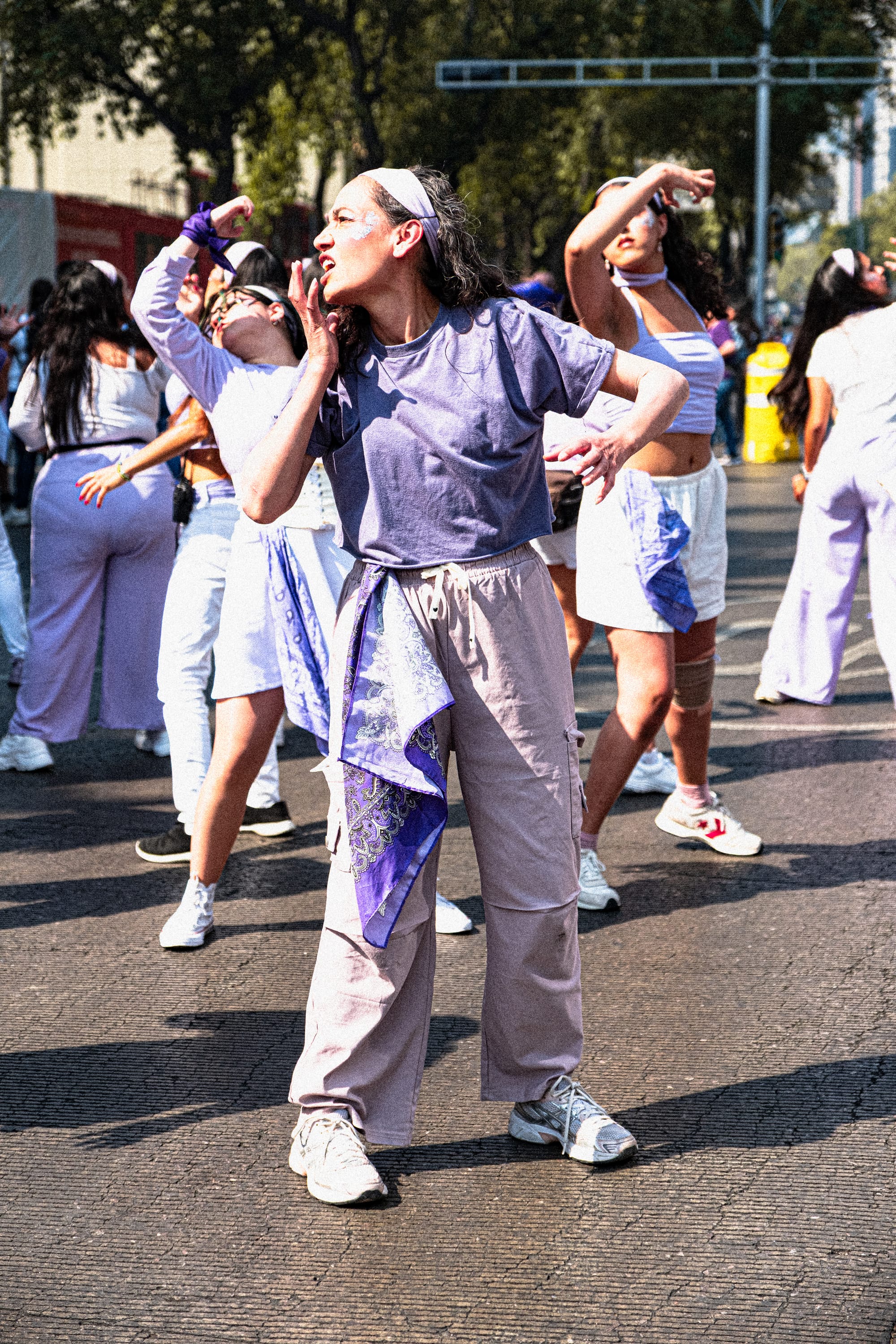
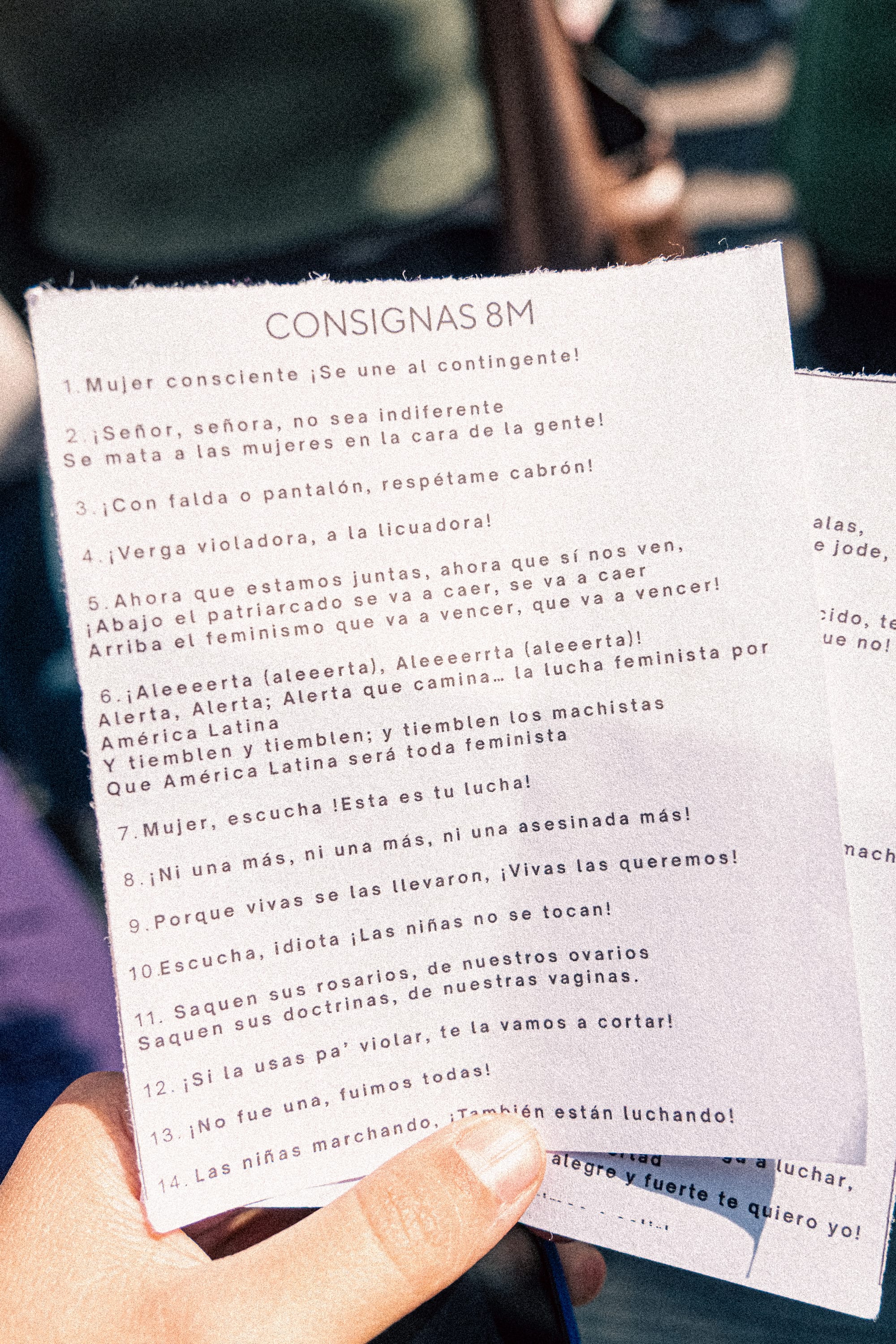
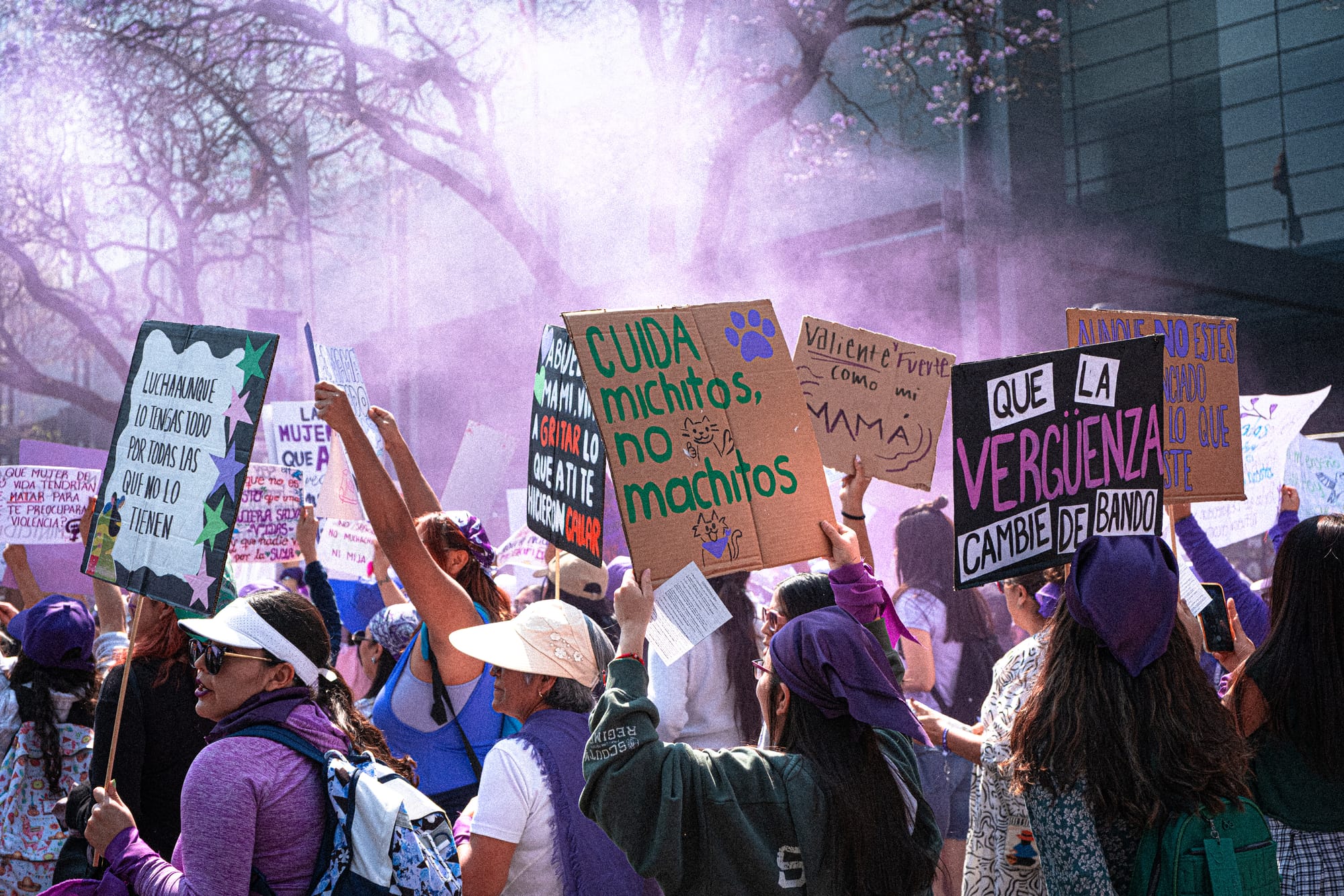
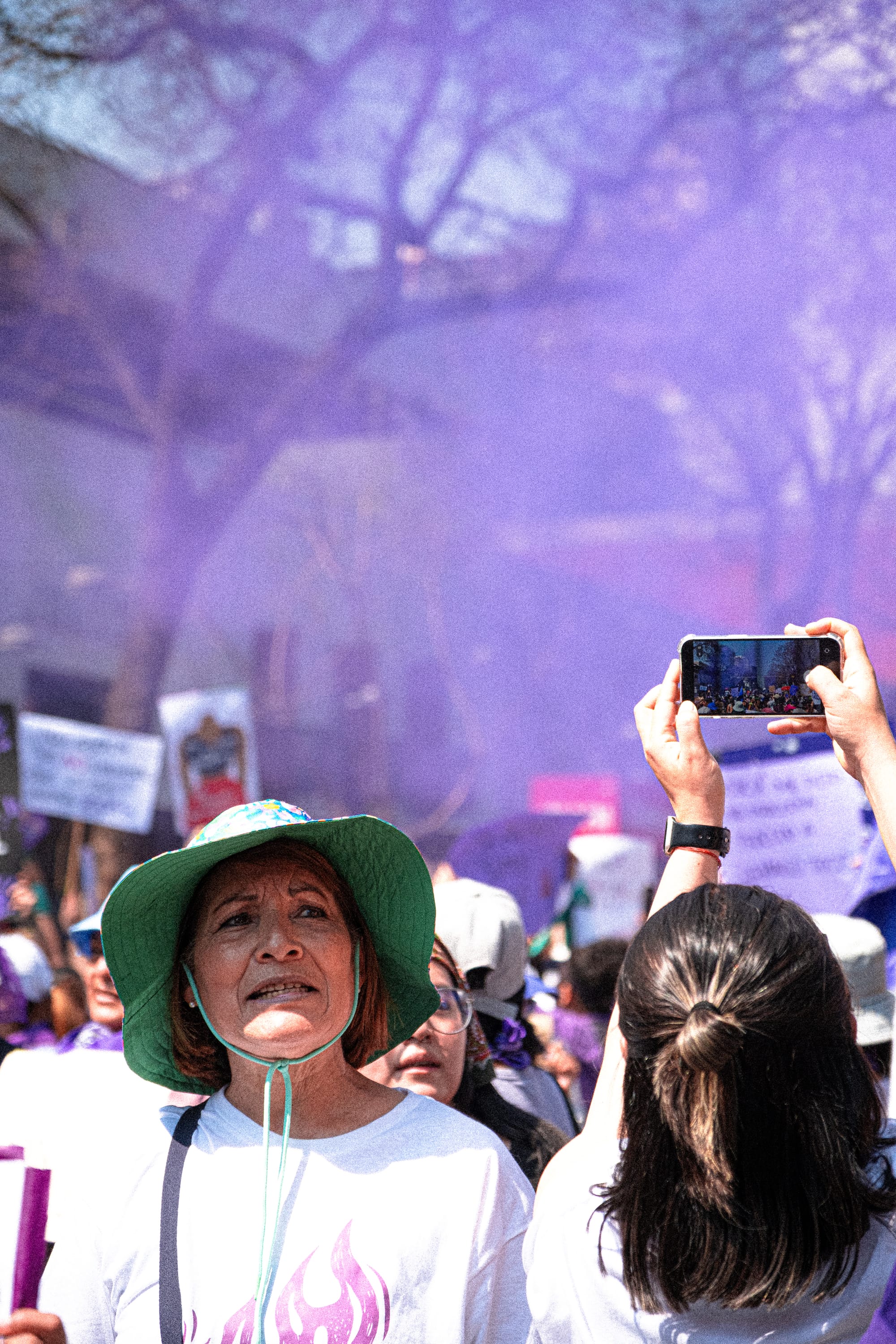
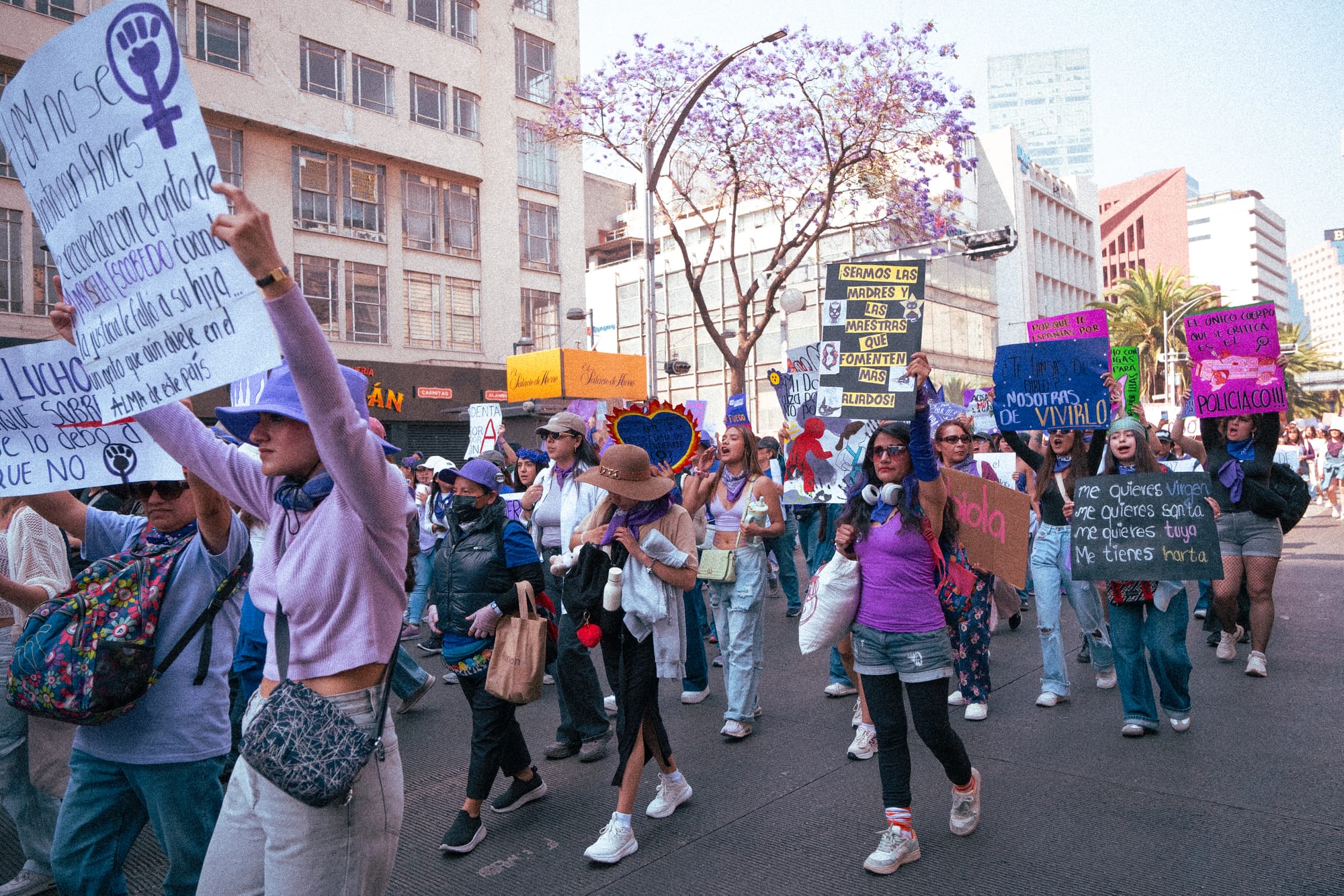
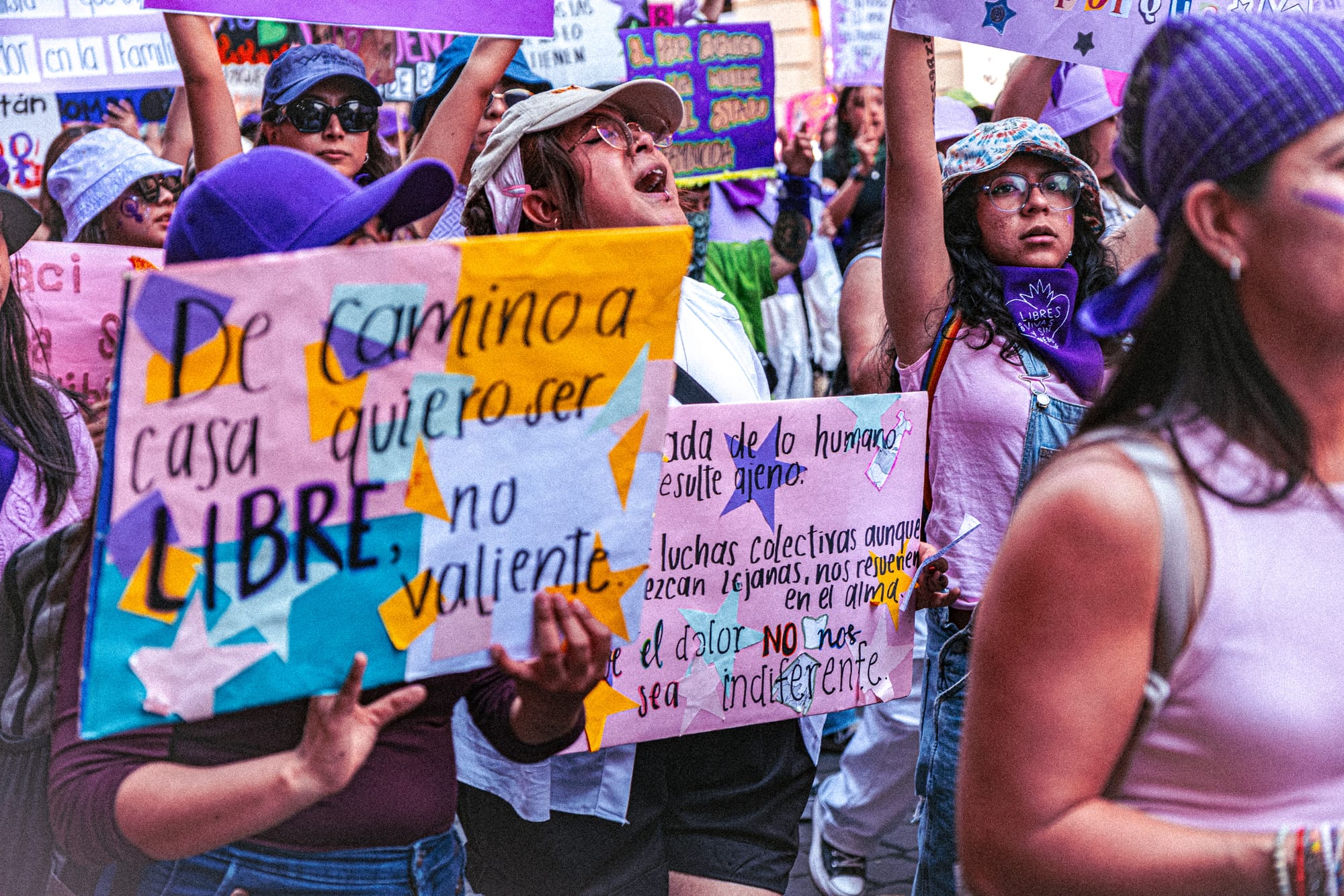
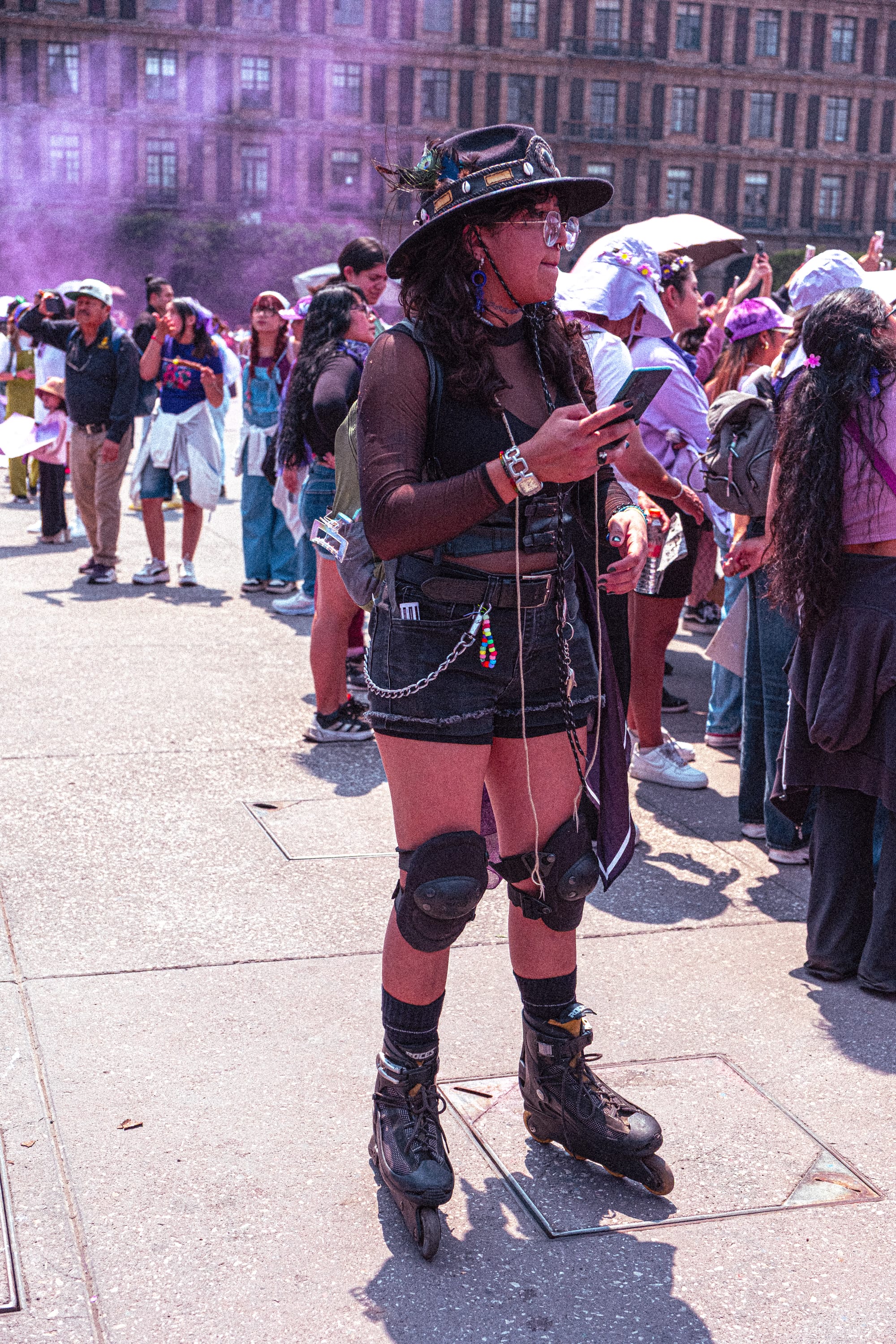
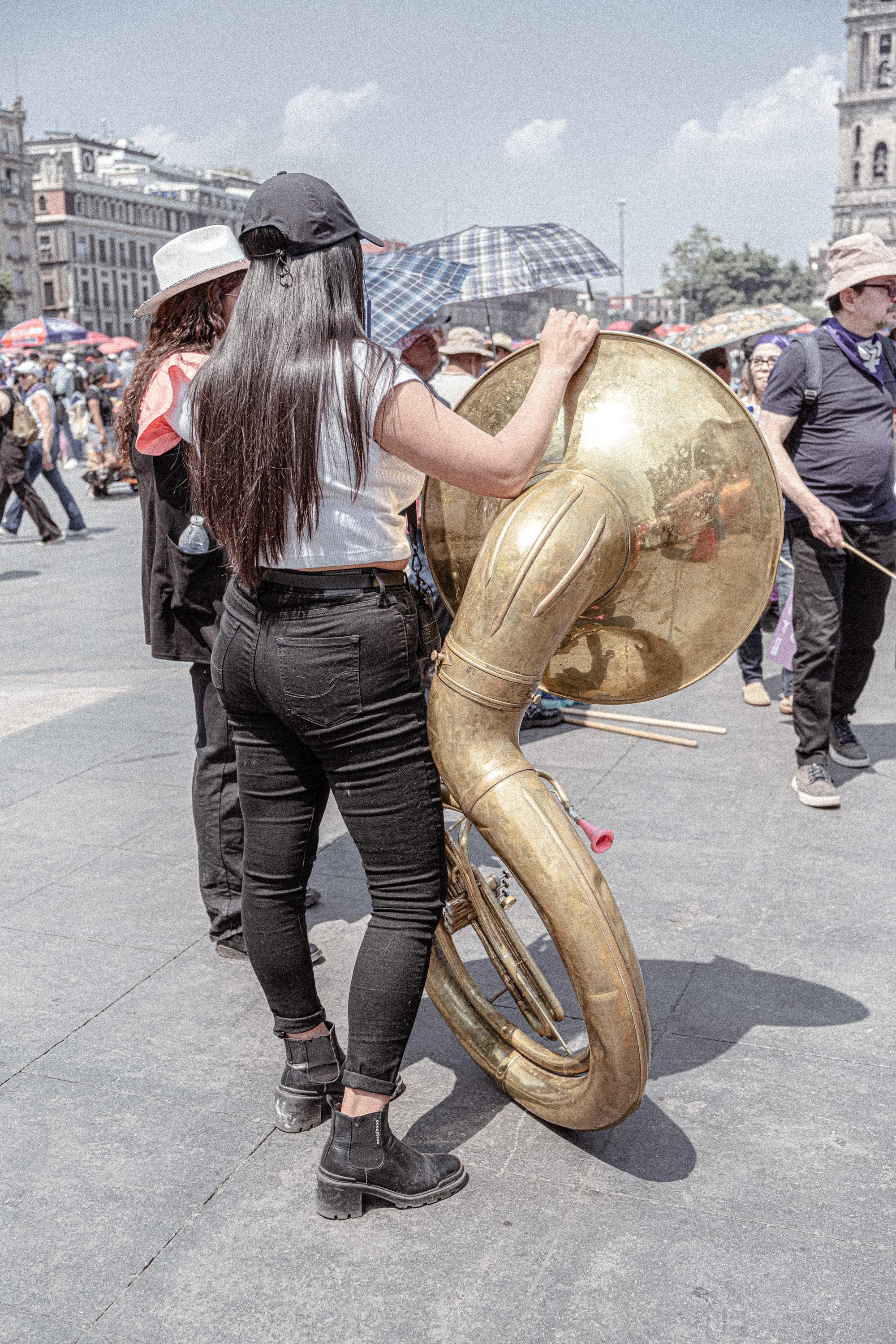
As the march moved through the city I felt a surge of energy rise inside me, something I can only describe as collective strength. Tens of thousands of women filling the streets together. Voices echoing between buildings. Drums beating somewhere ahead of us. For a moment it felt like the entire city was vibrating with the same demand.
Standing there among them, I felt a strange certainty settle into my body. A feeling that this energy belonged to us, and that nothing could take it away.
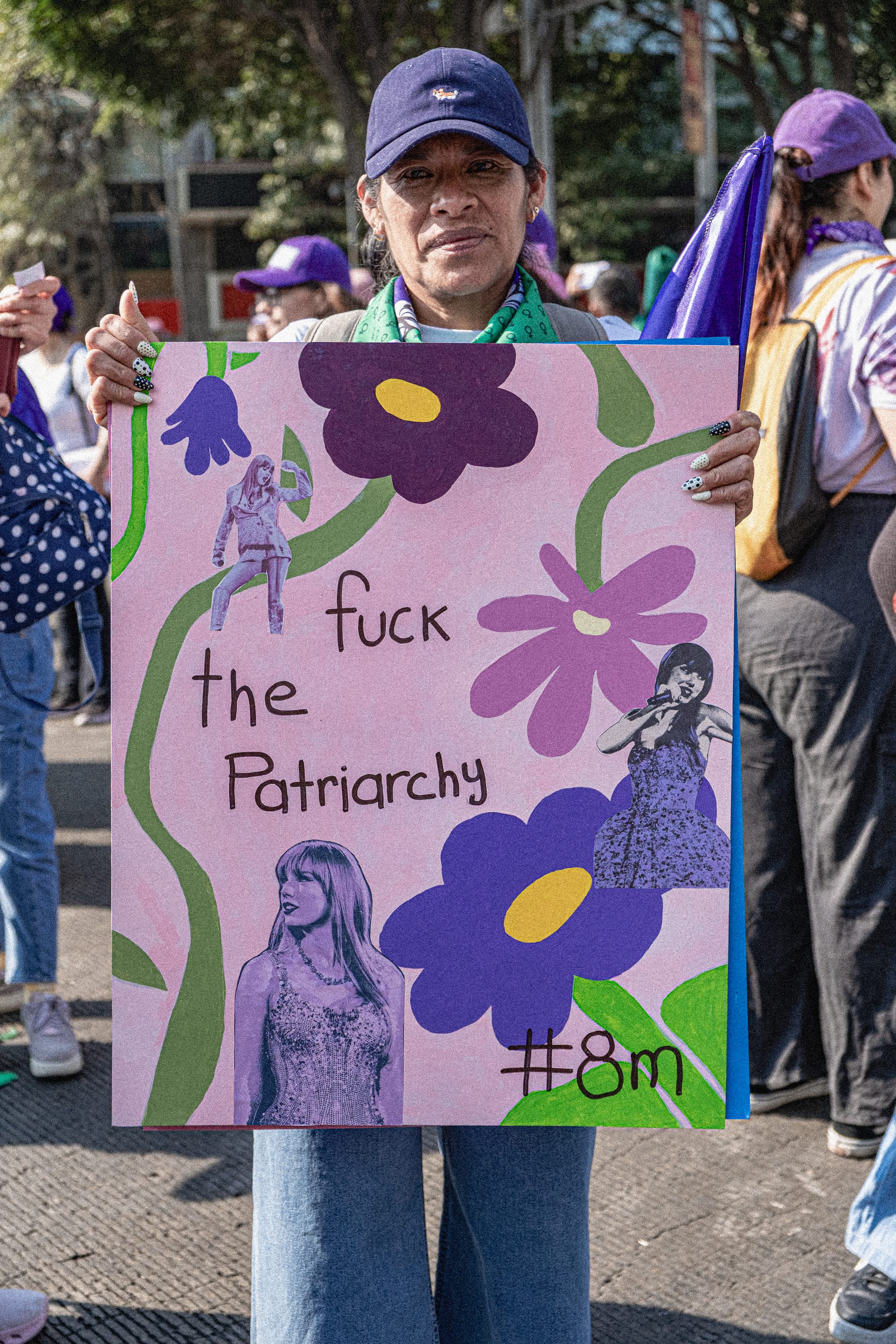
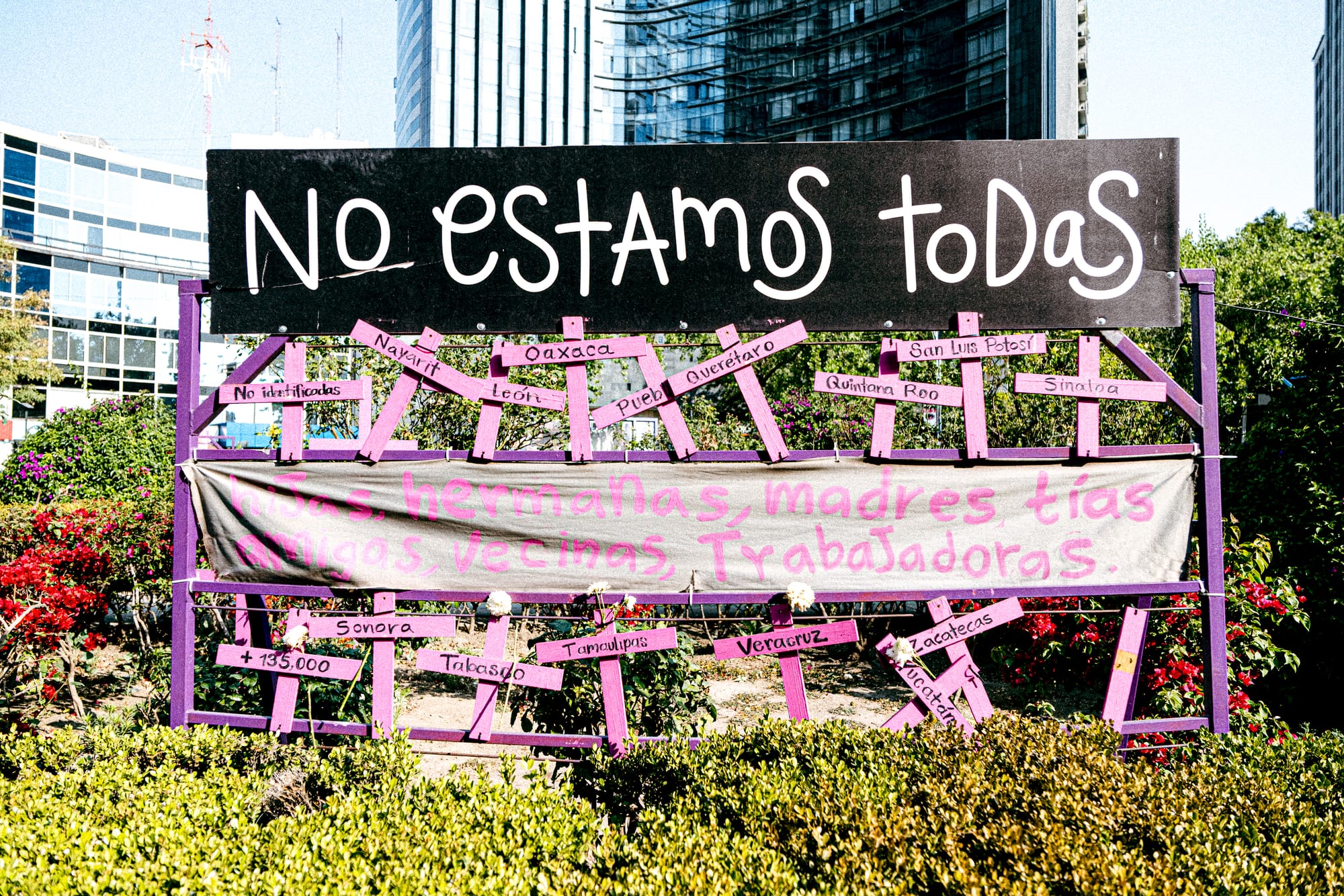
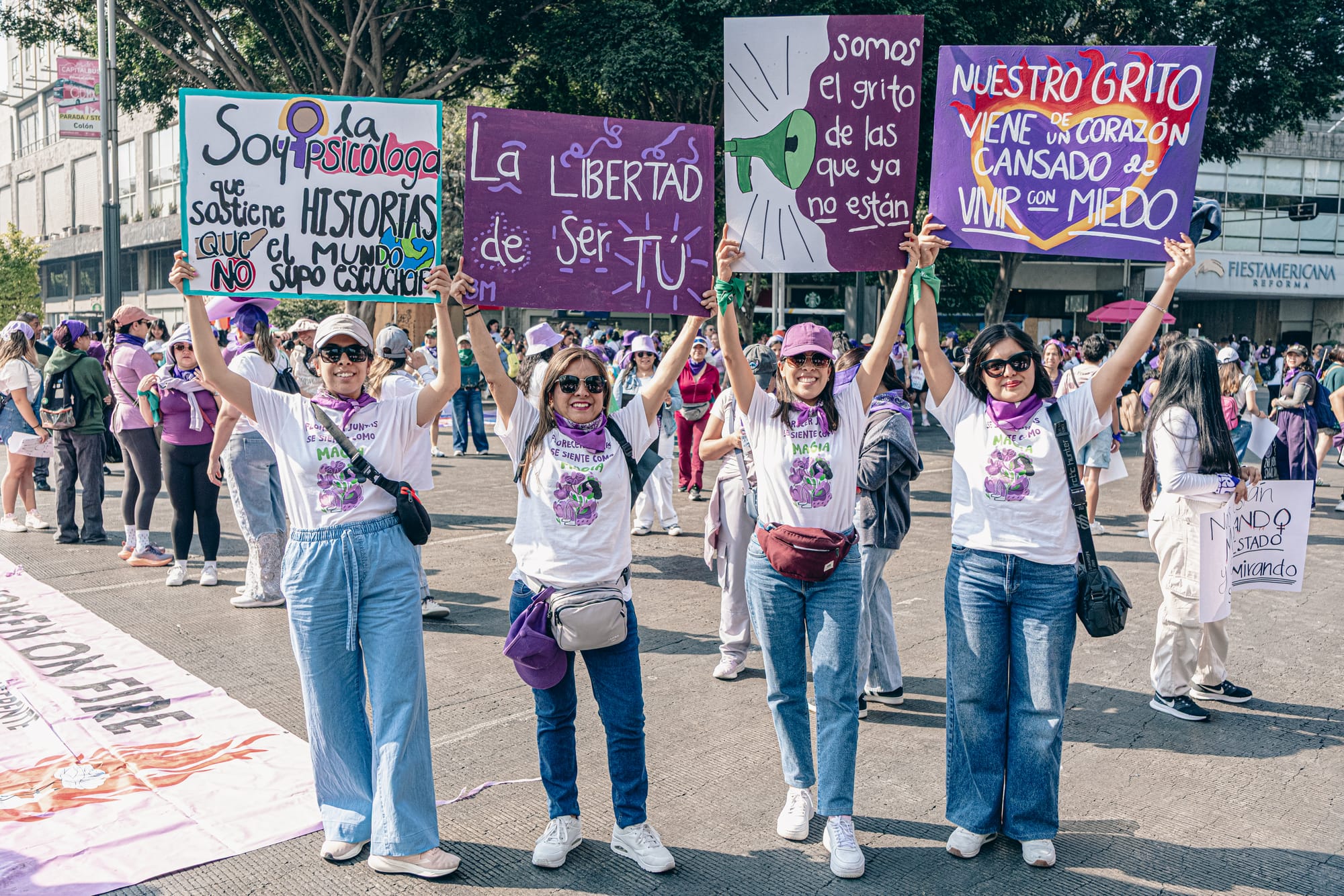
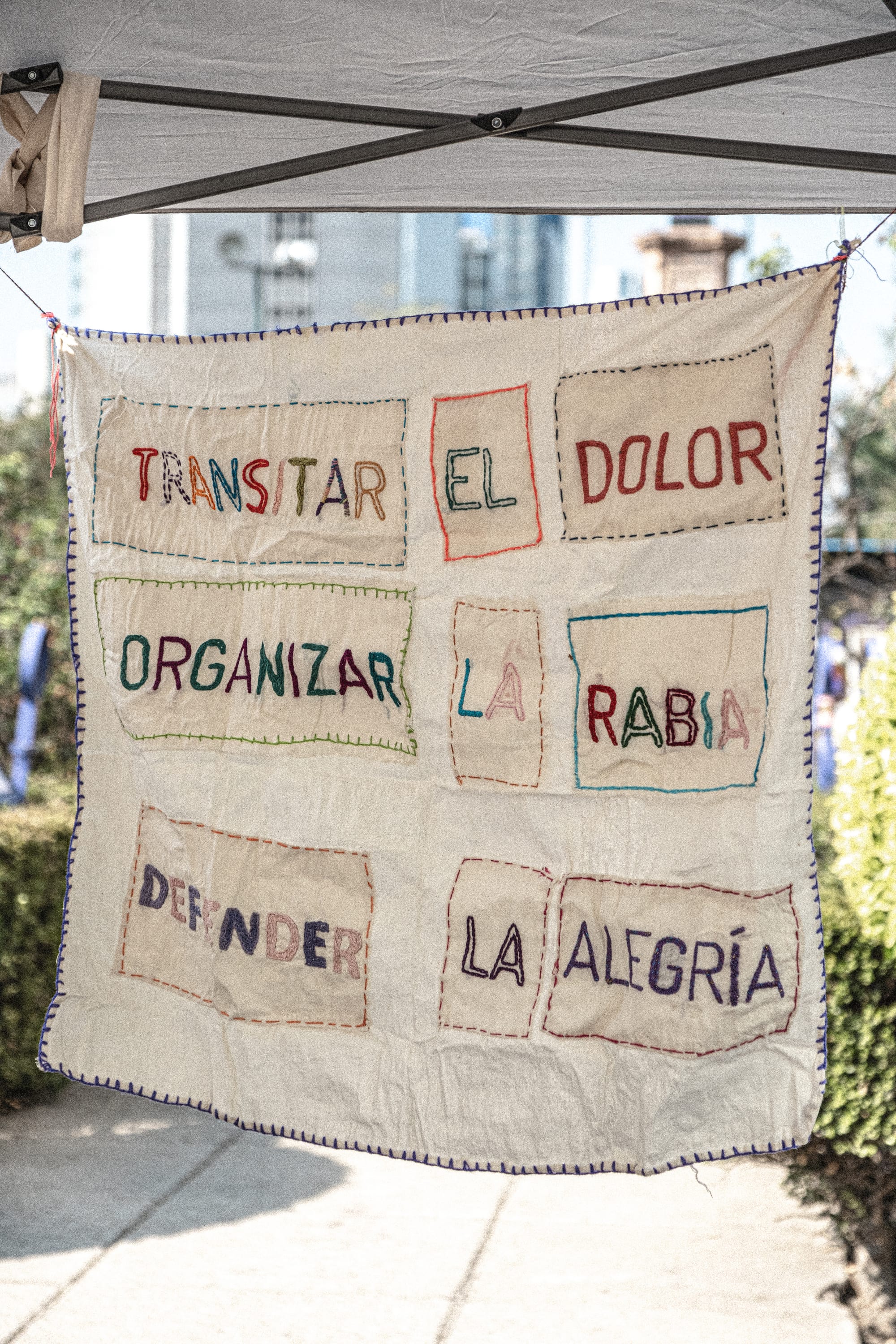
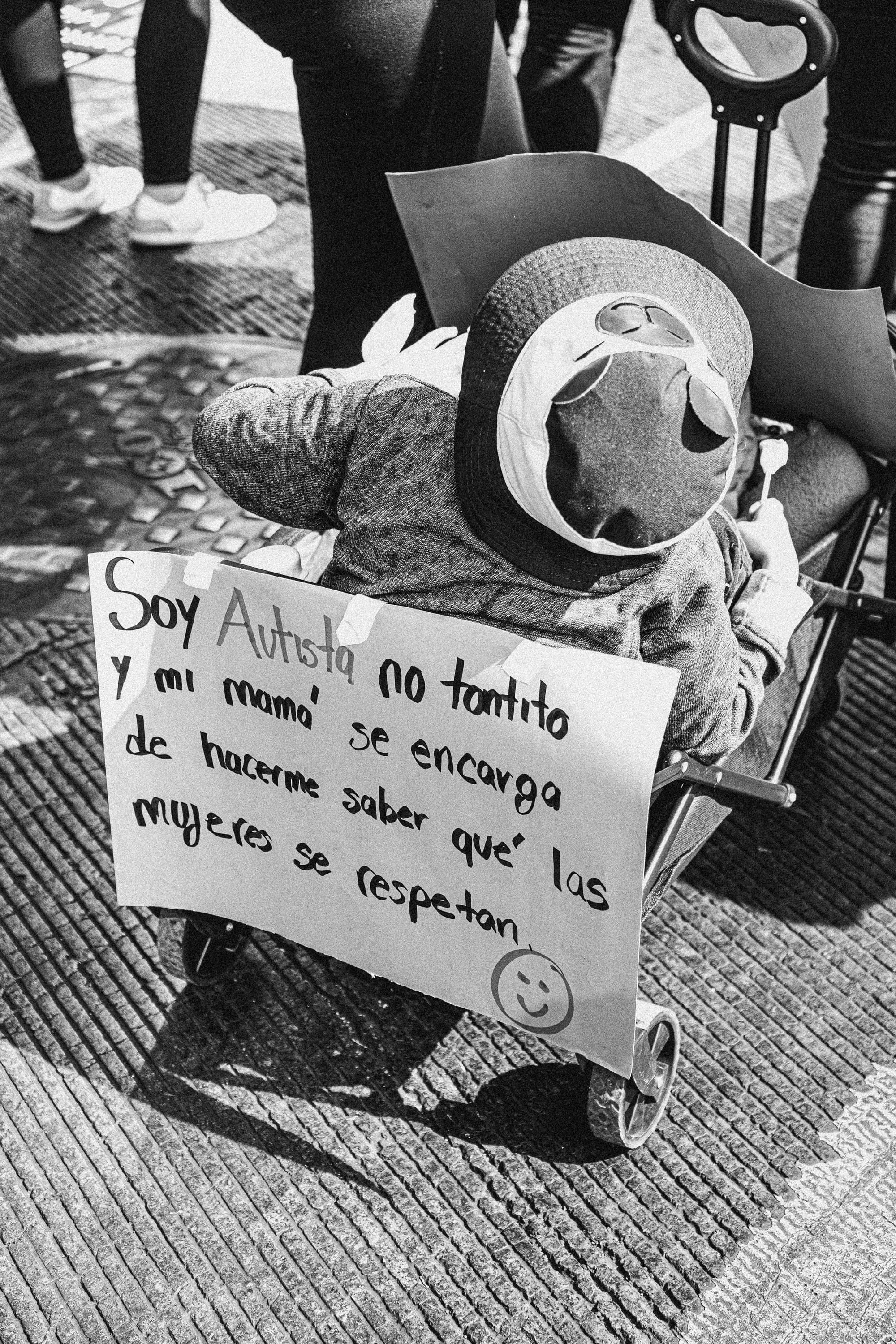
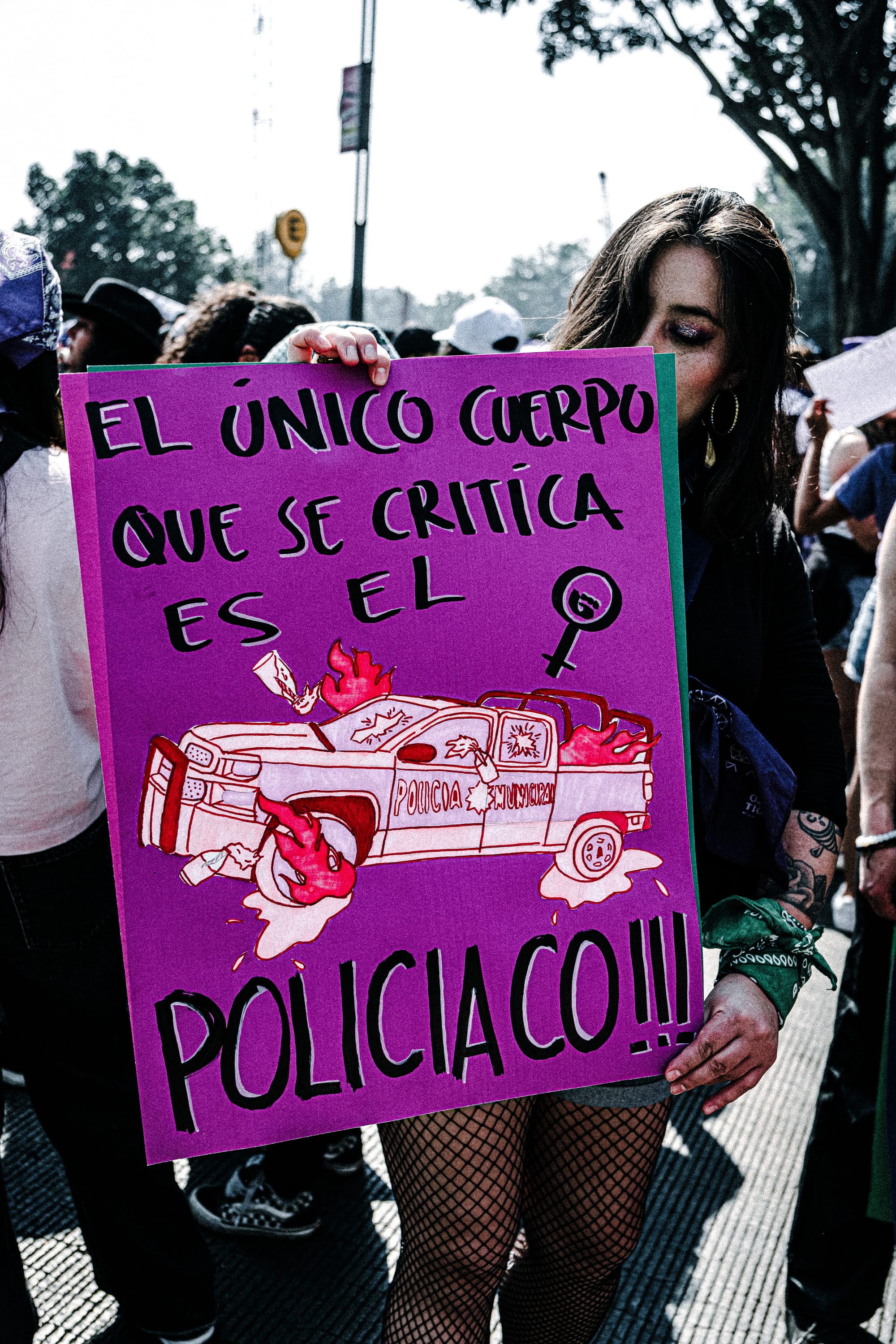
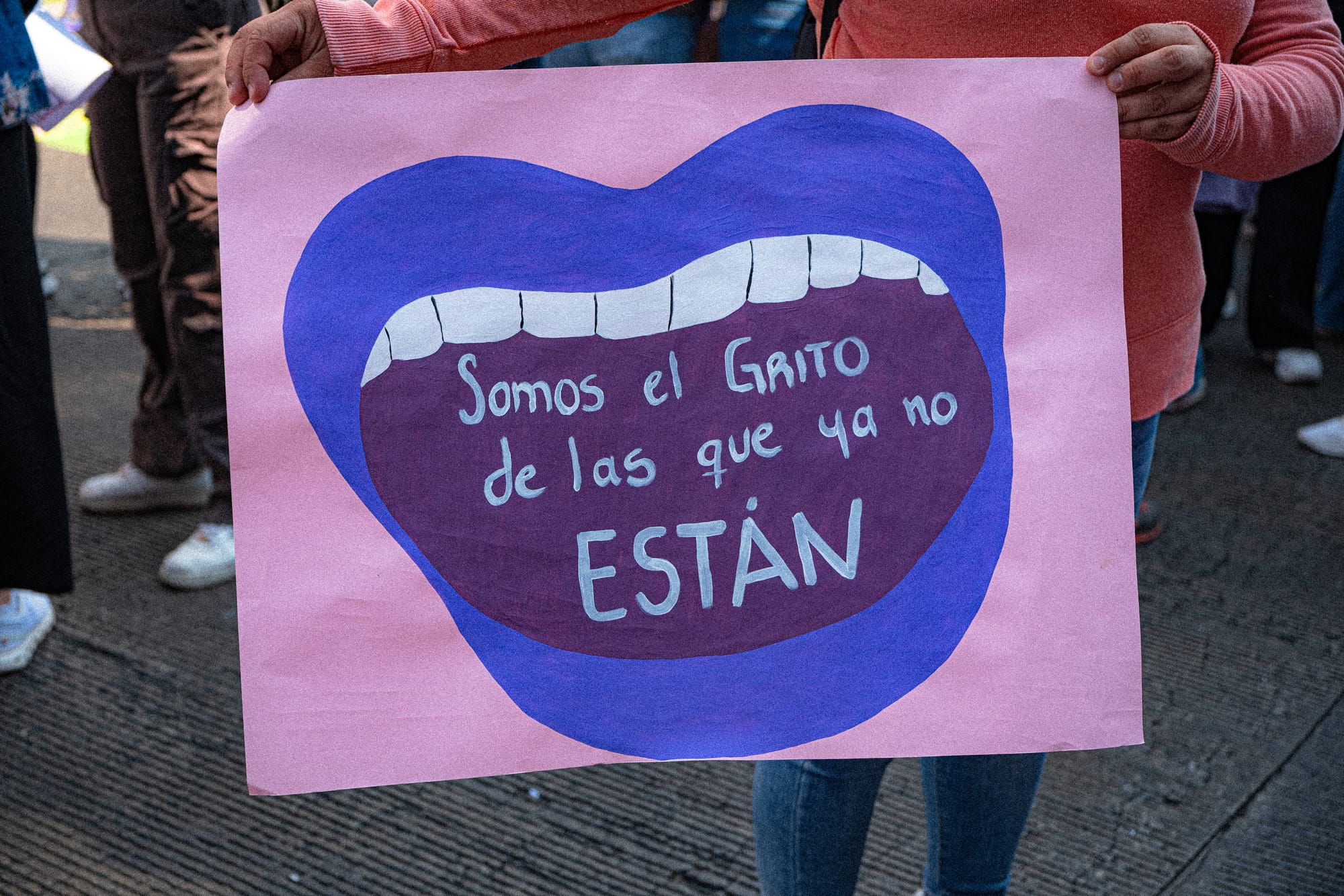
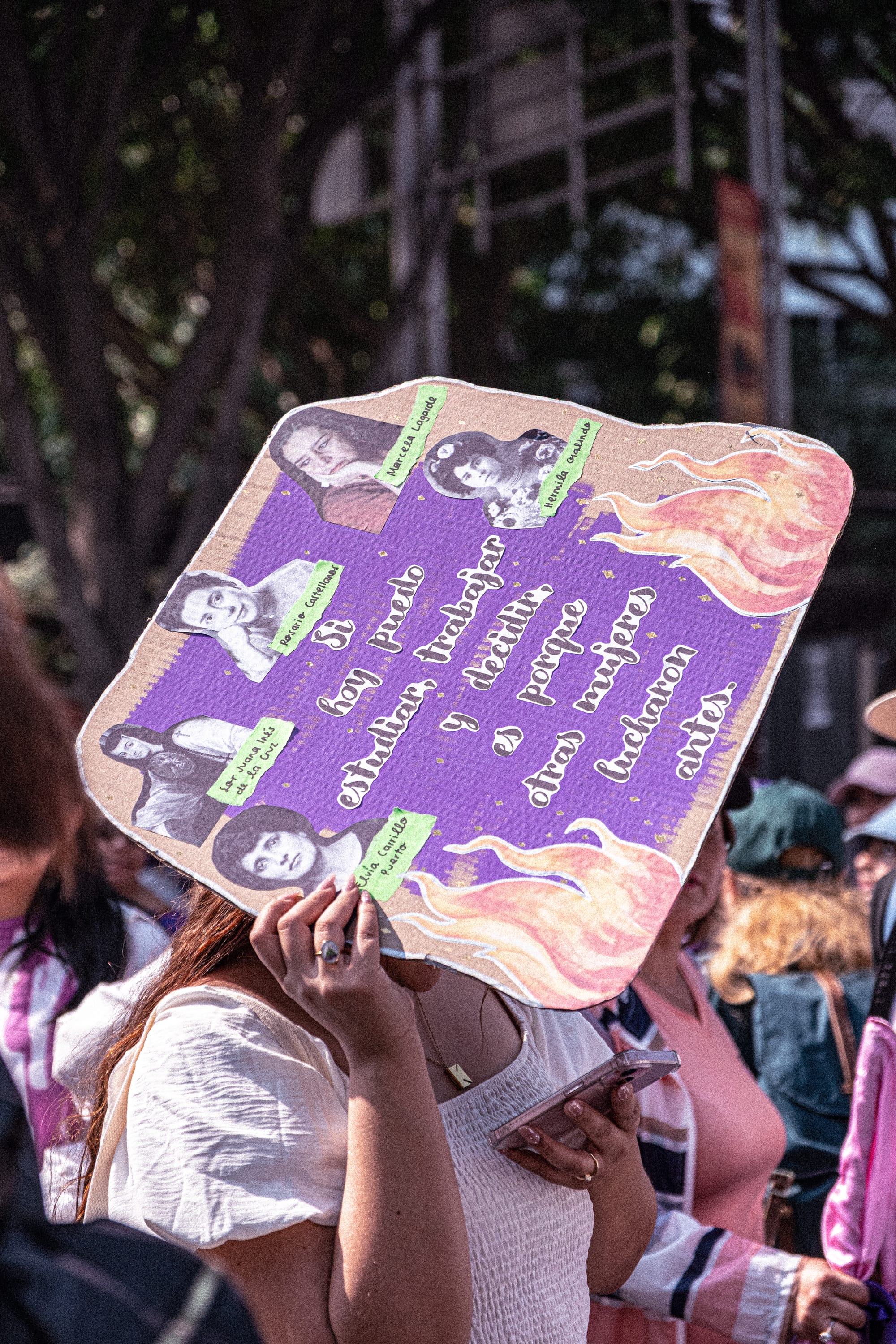
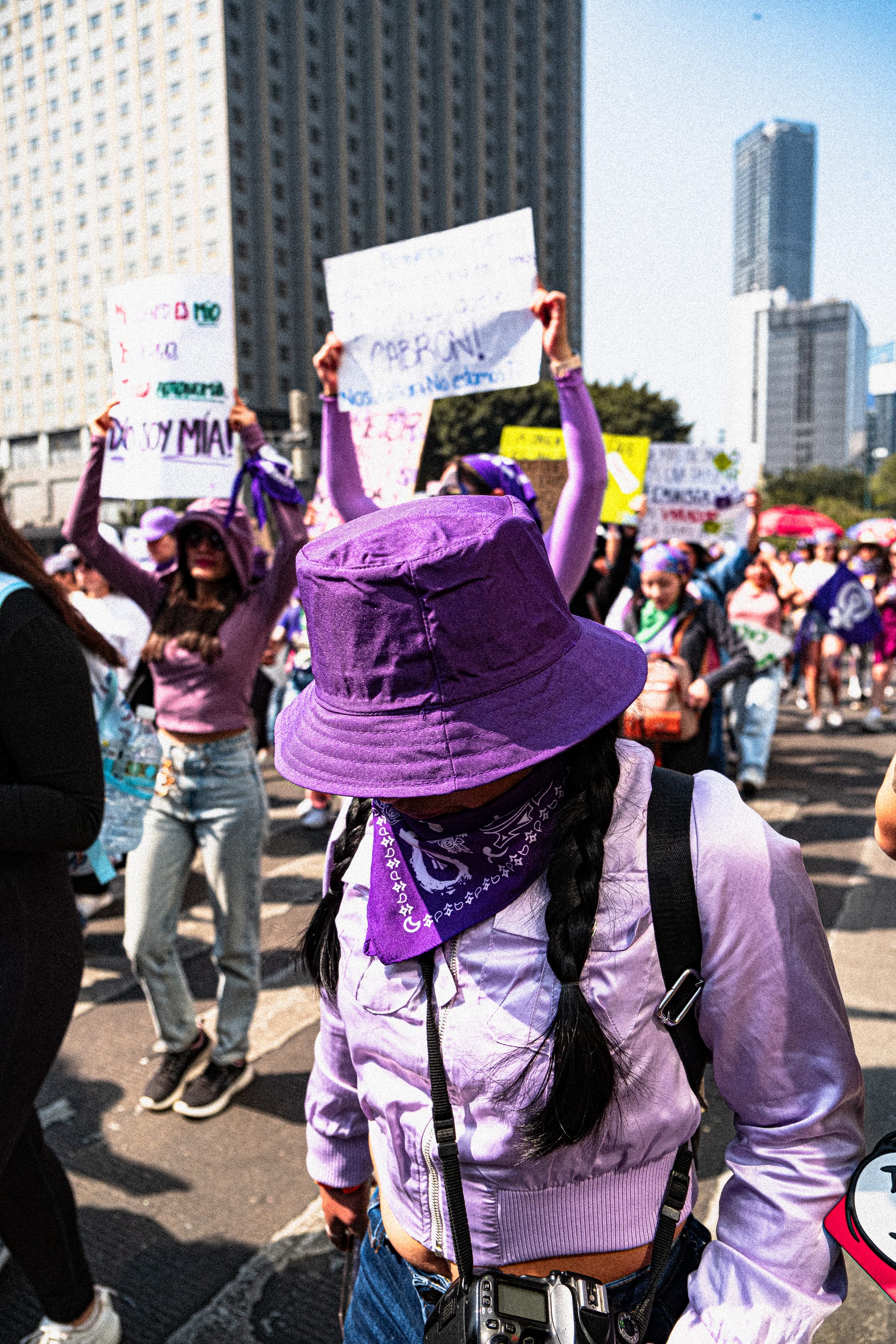
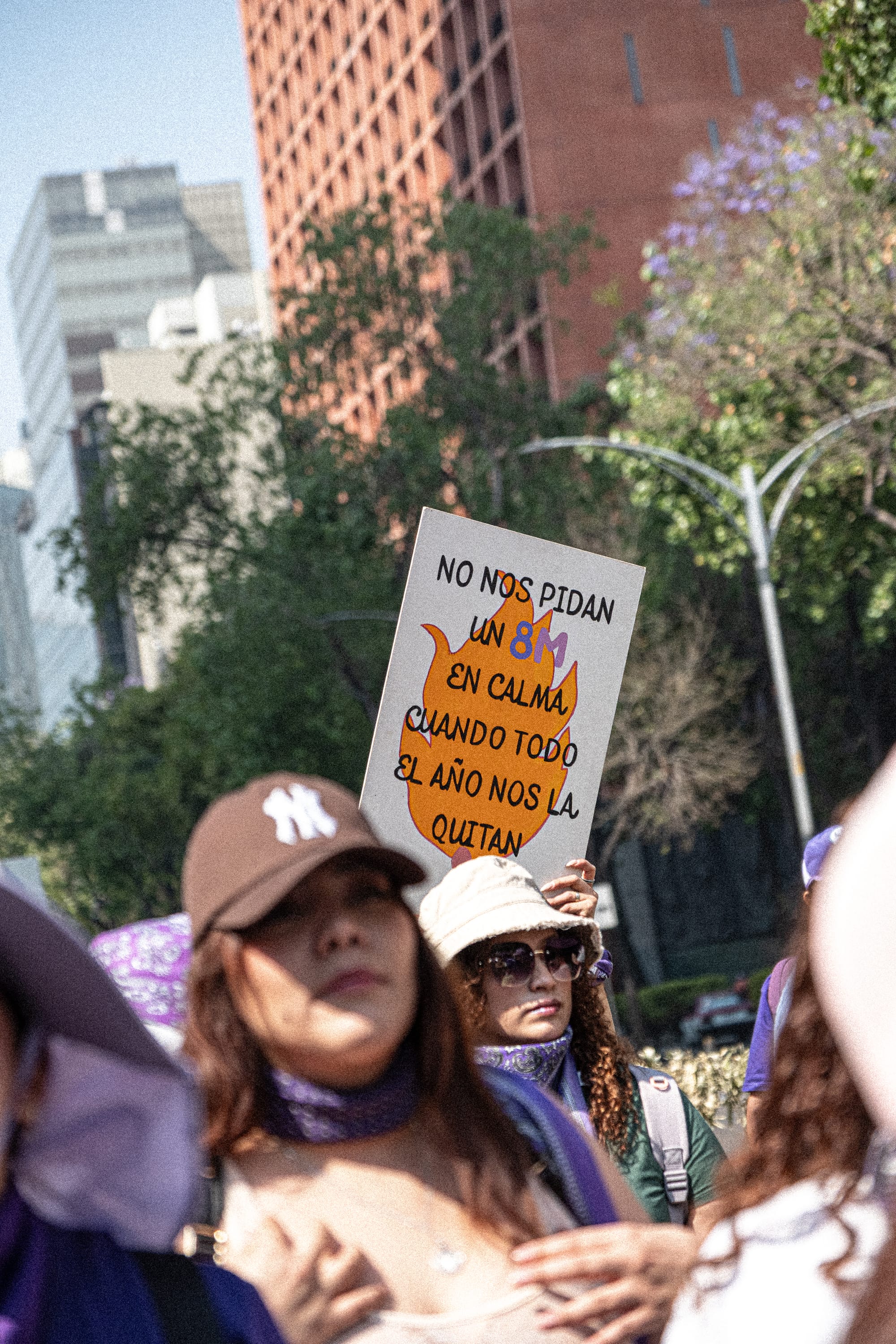
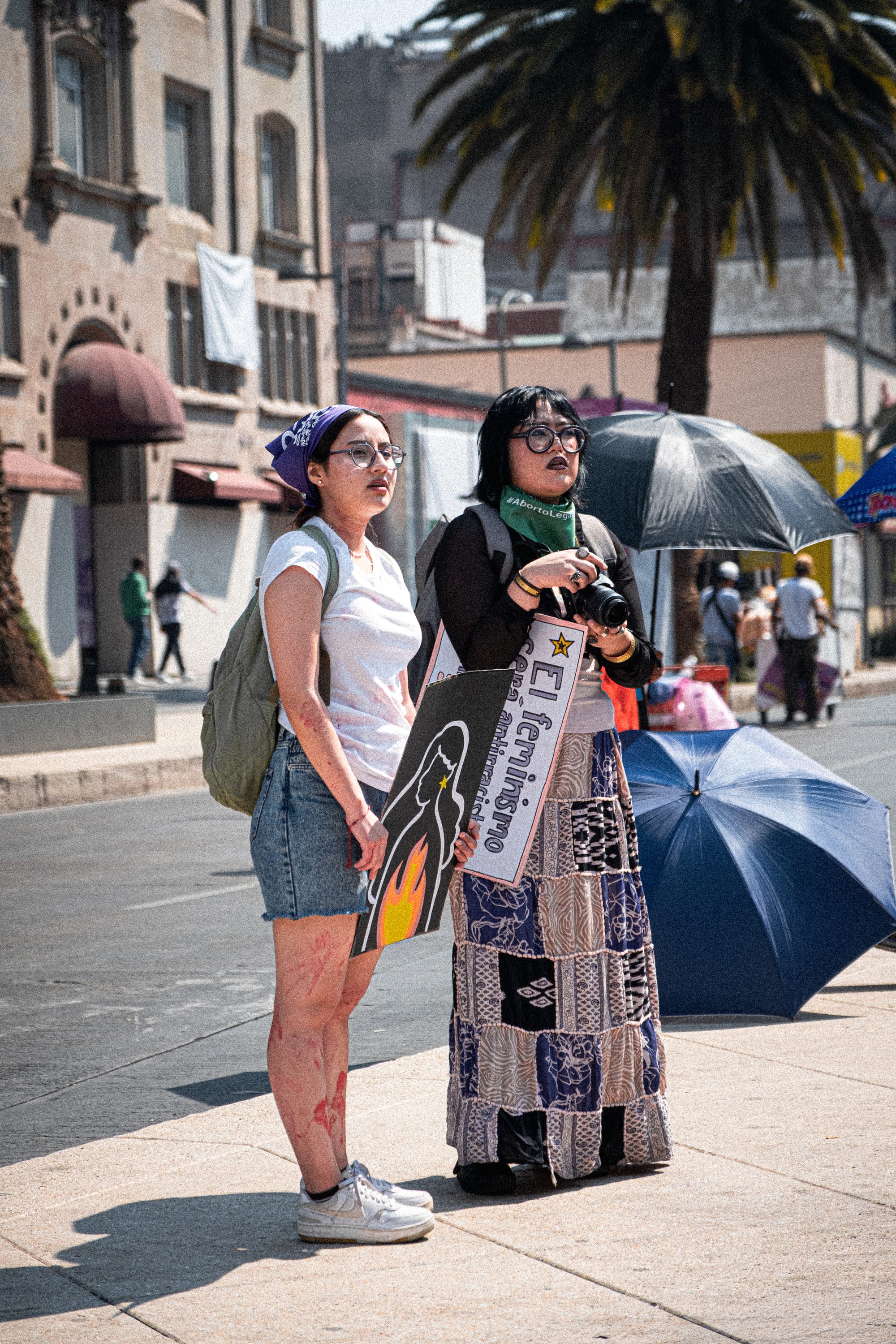
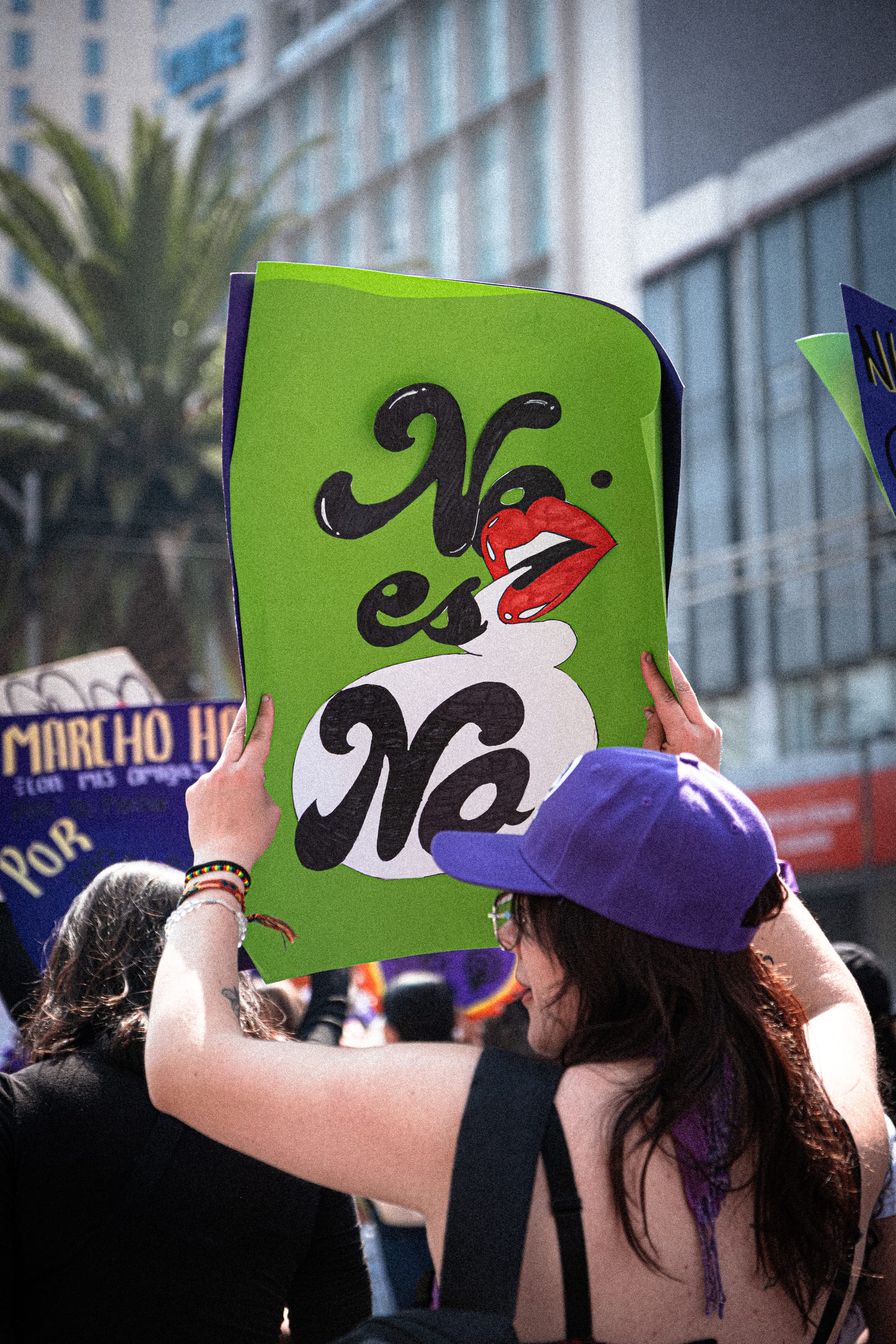
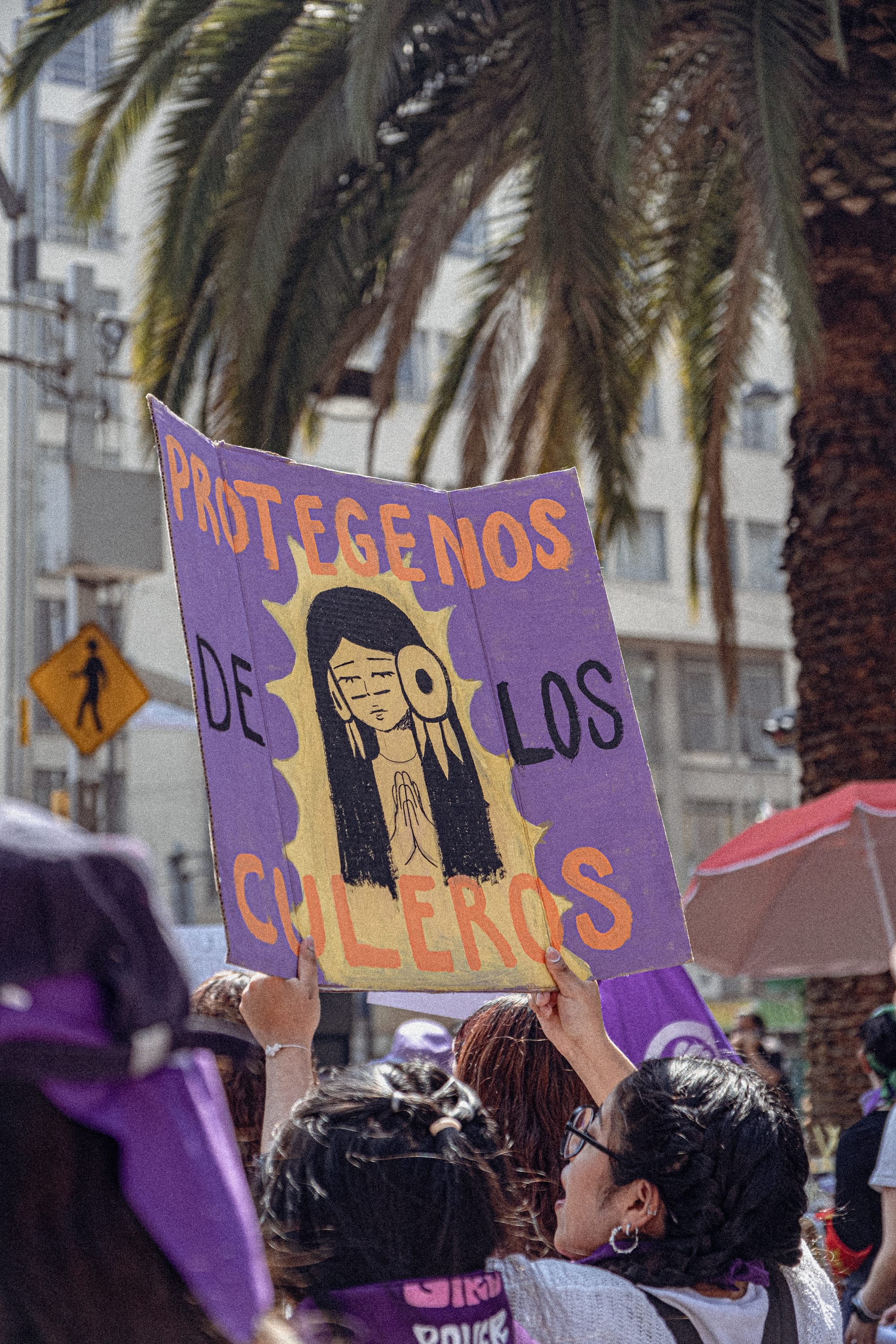
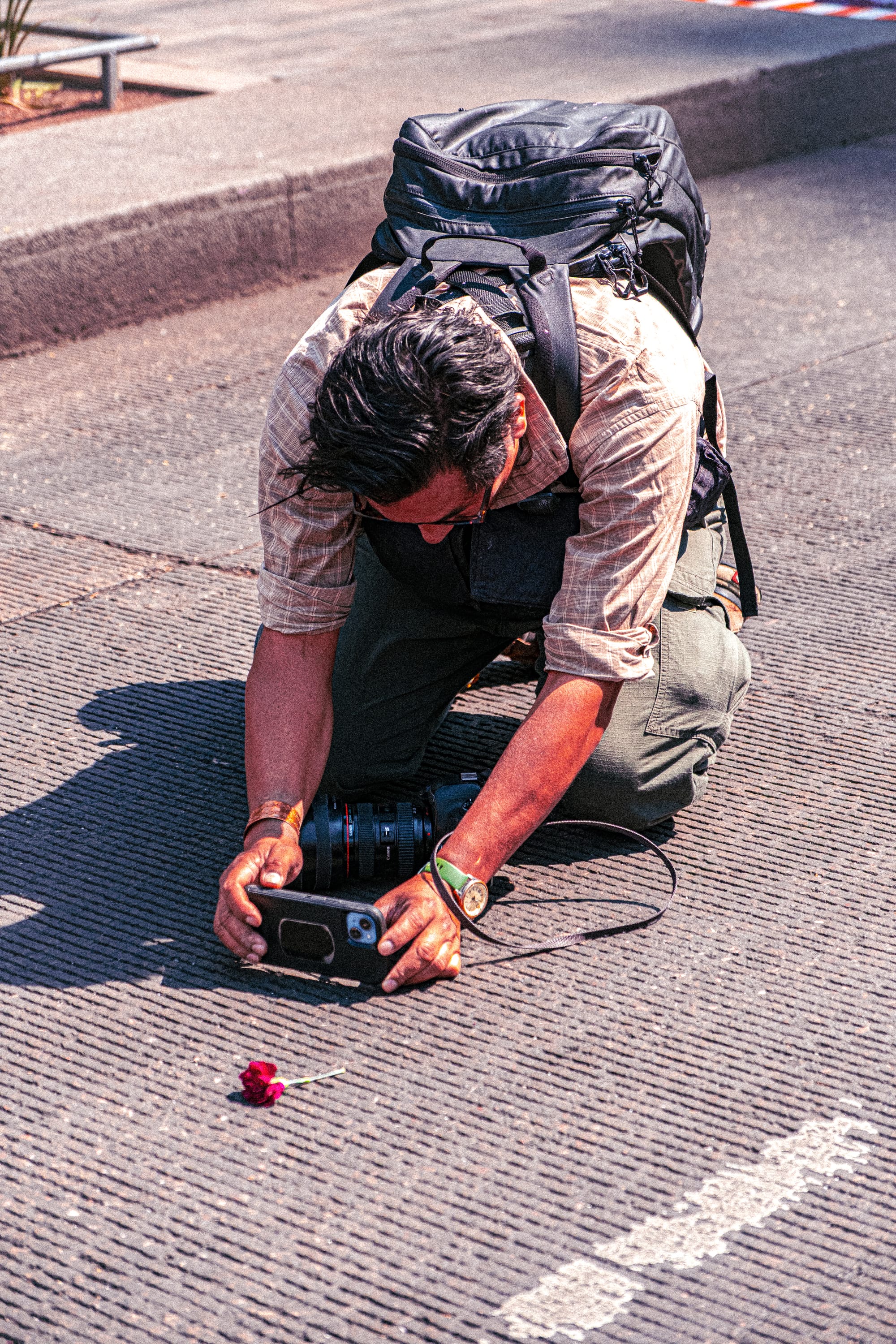
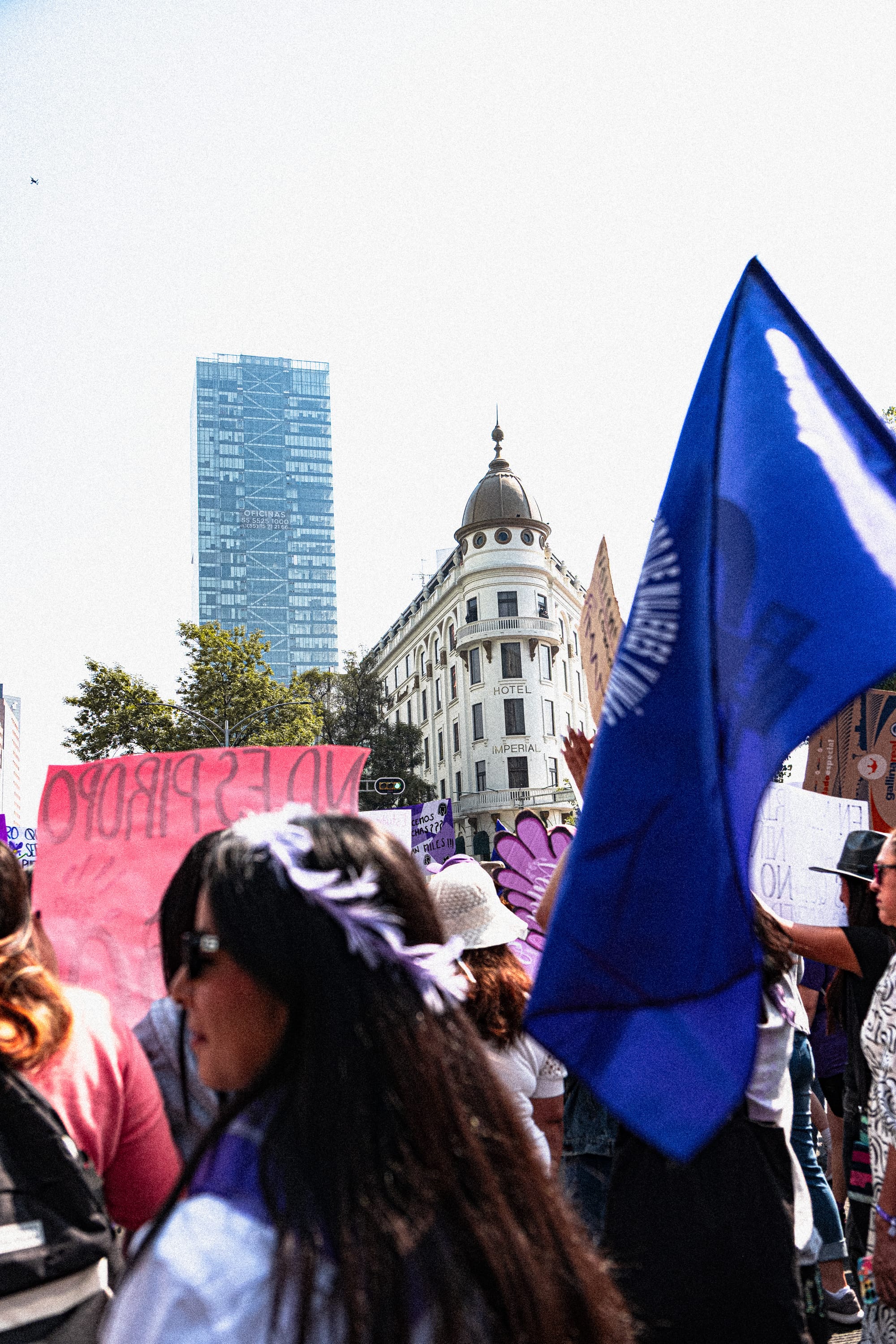
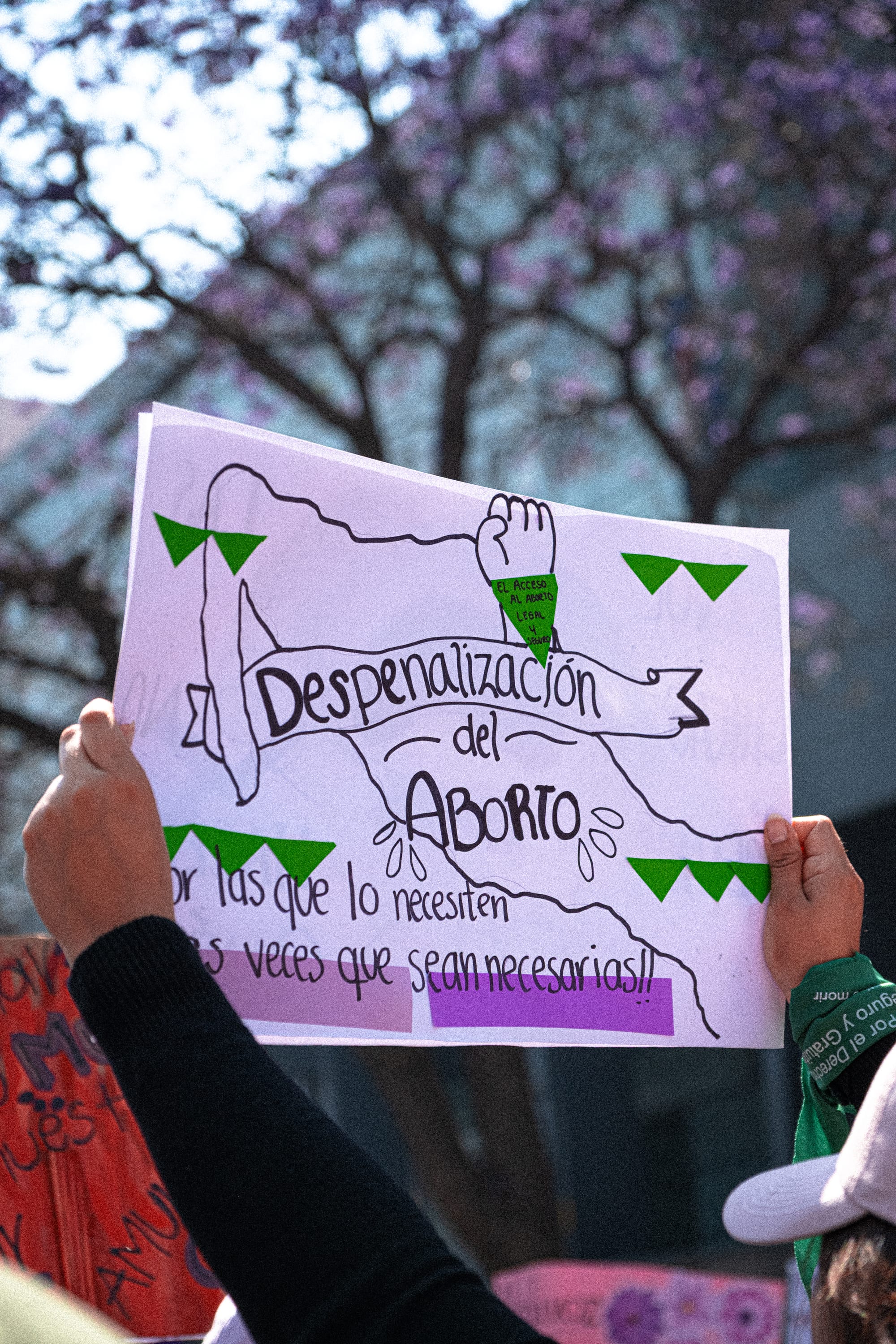
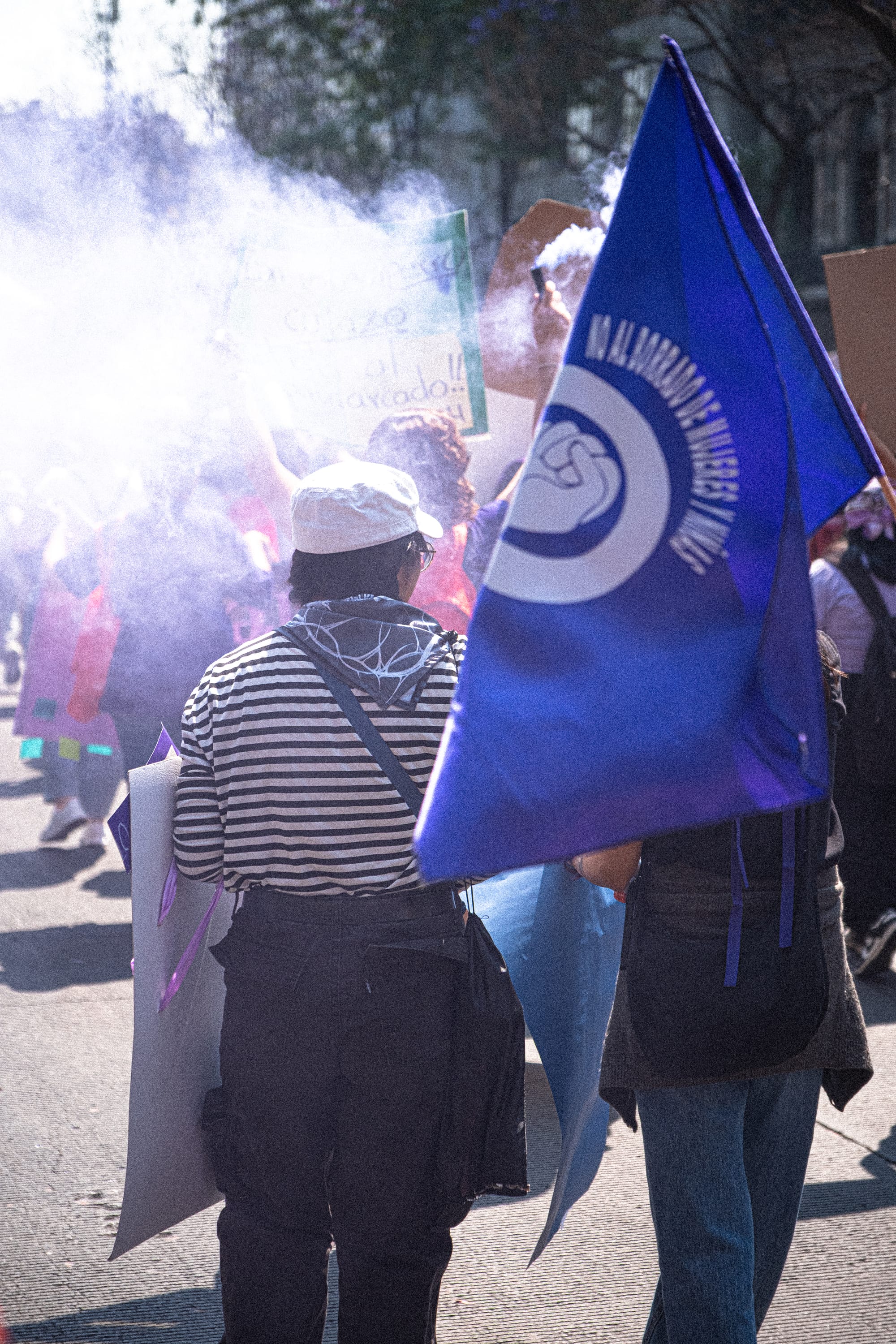
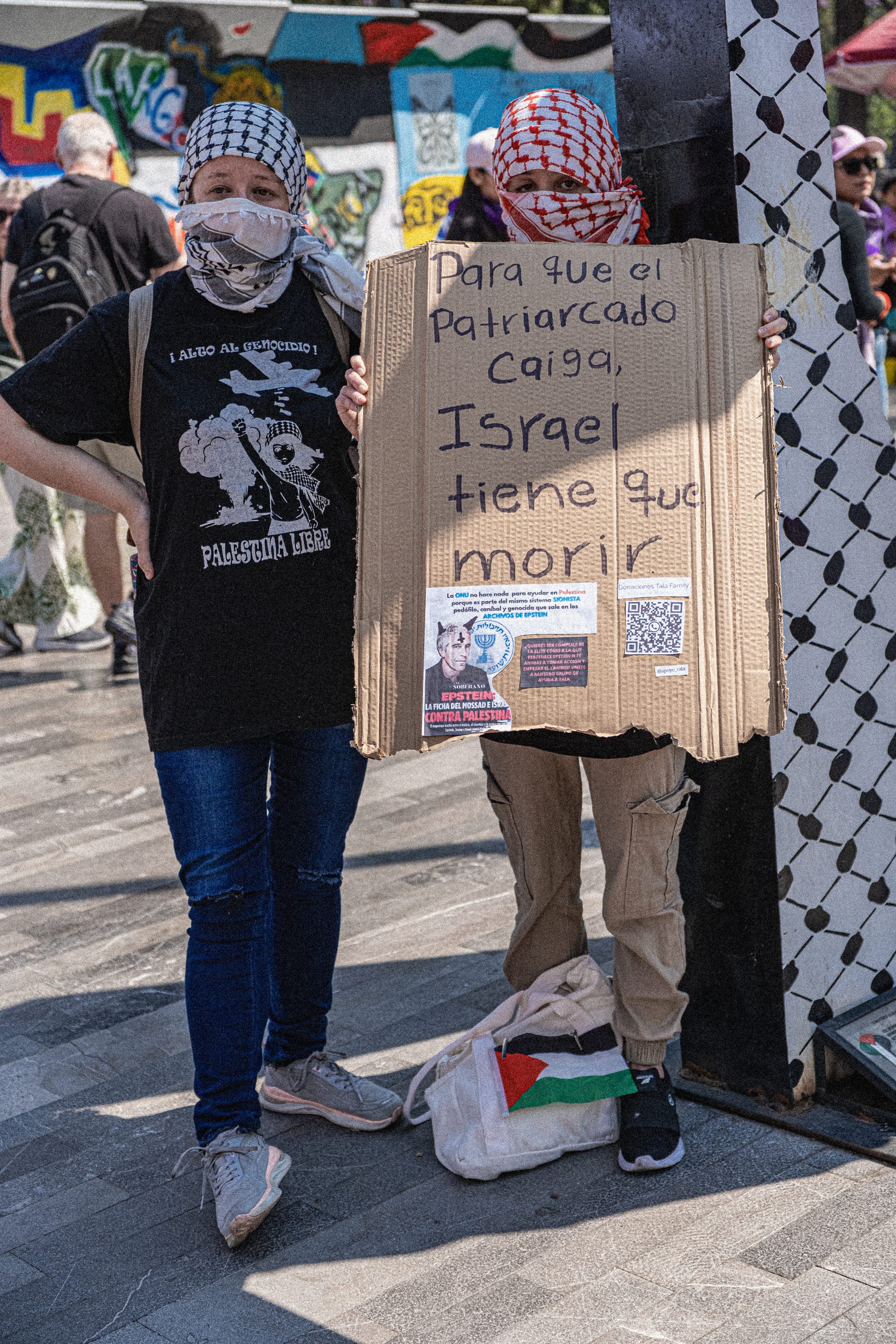
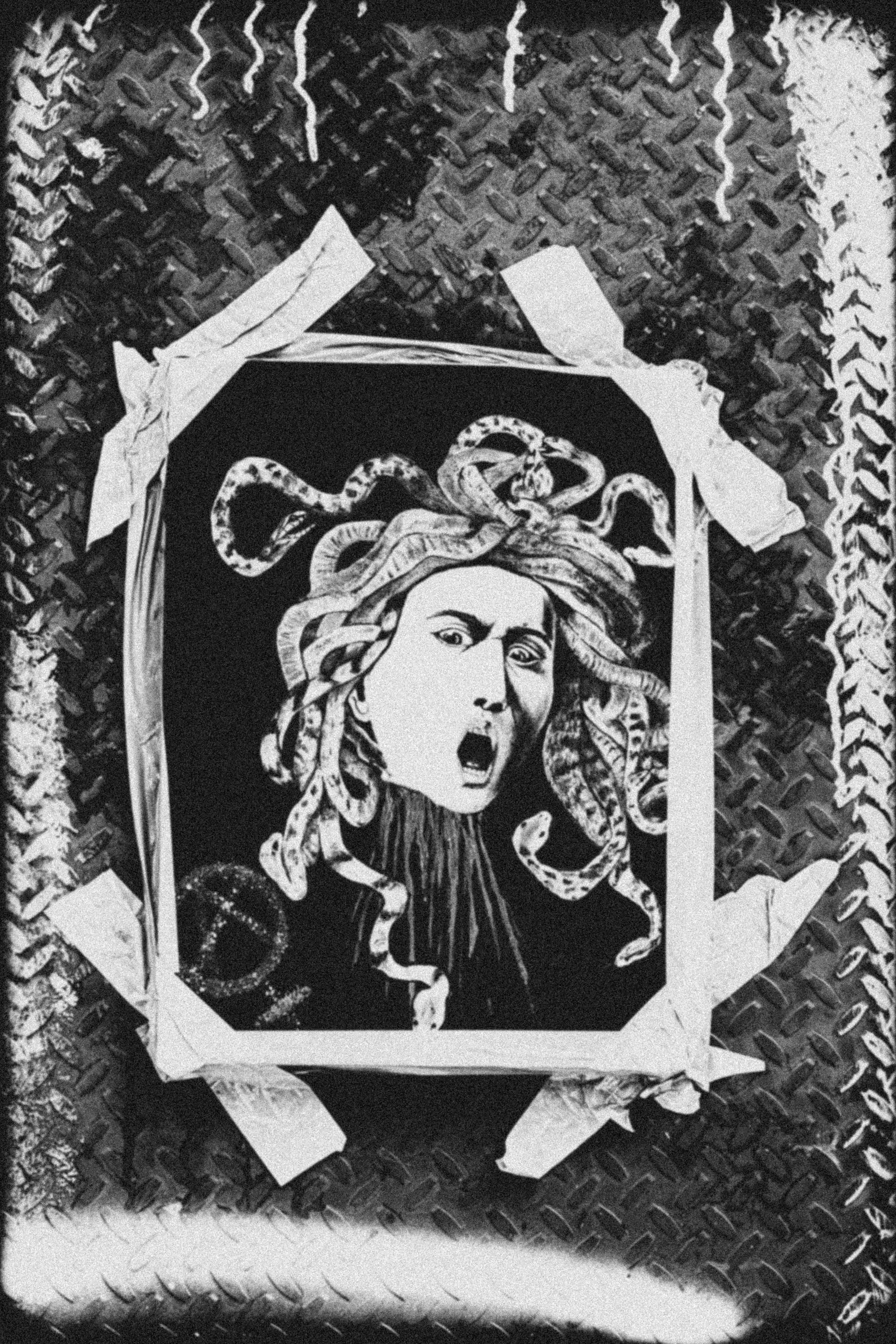
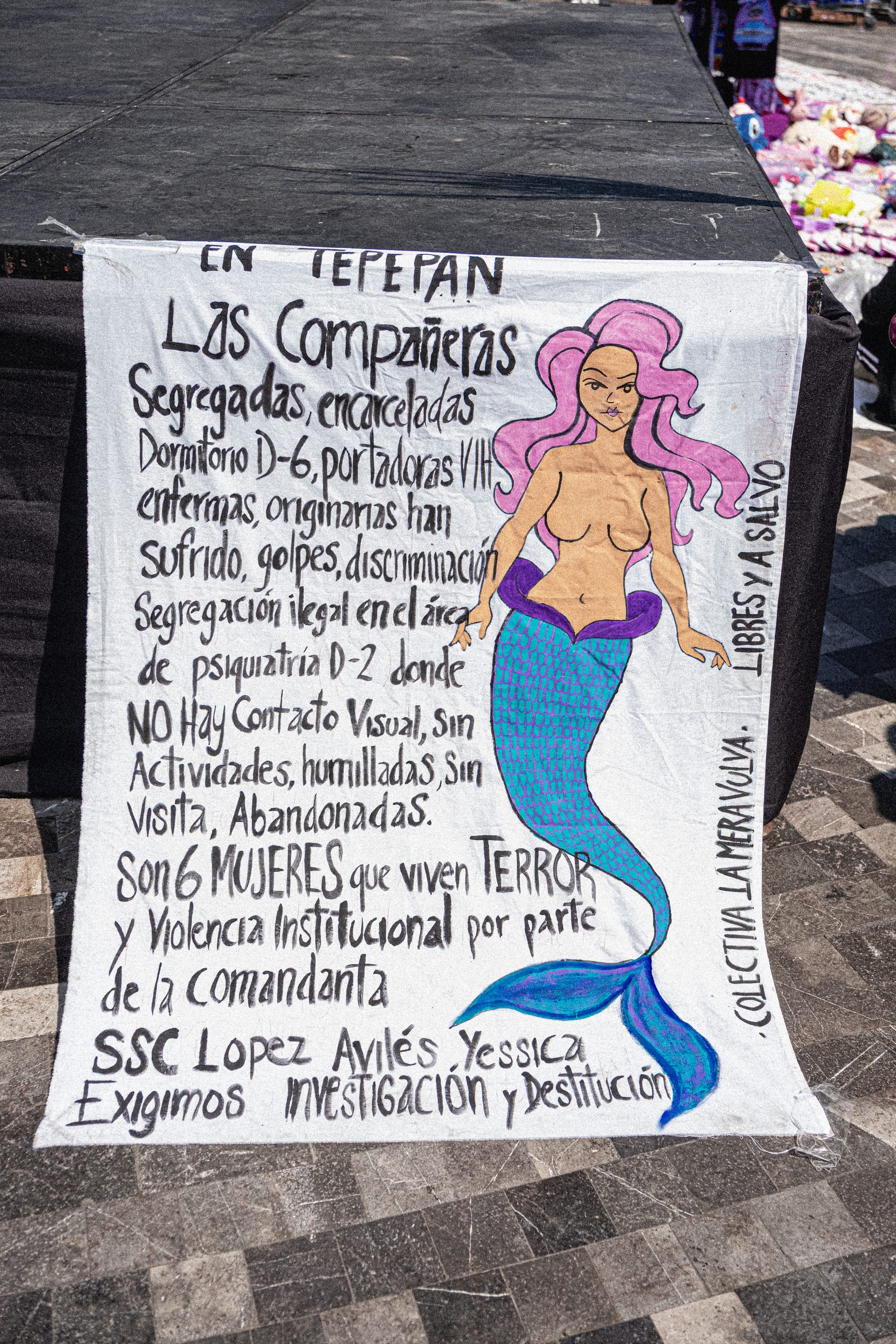
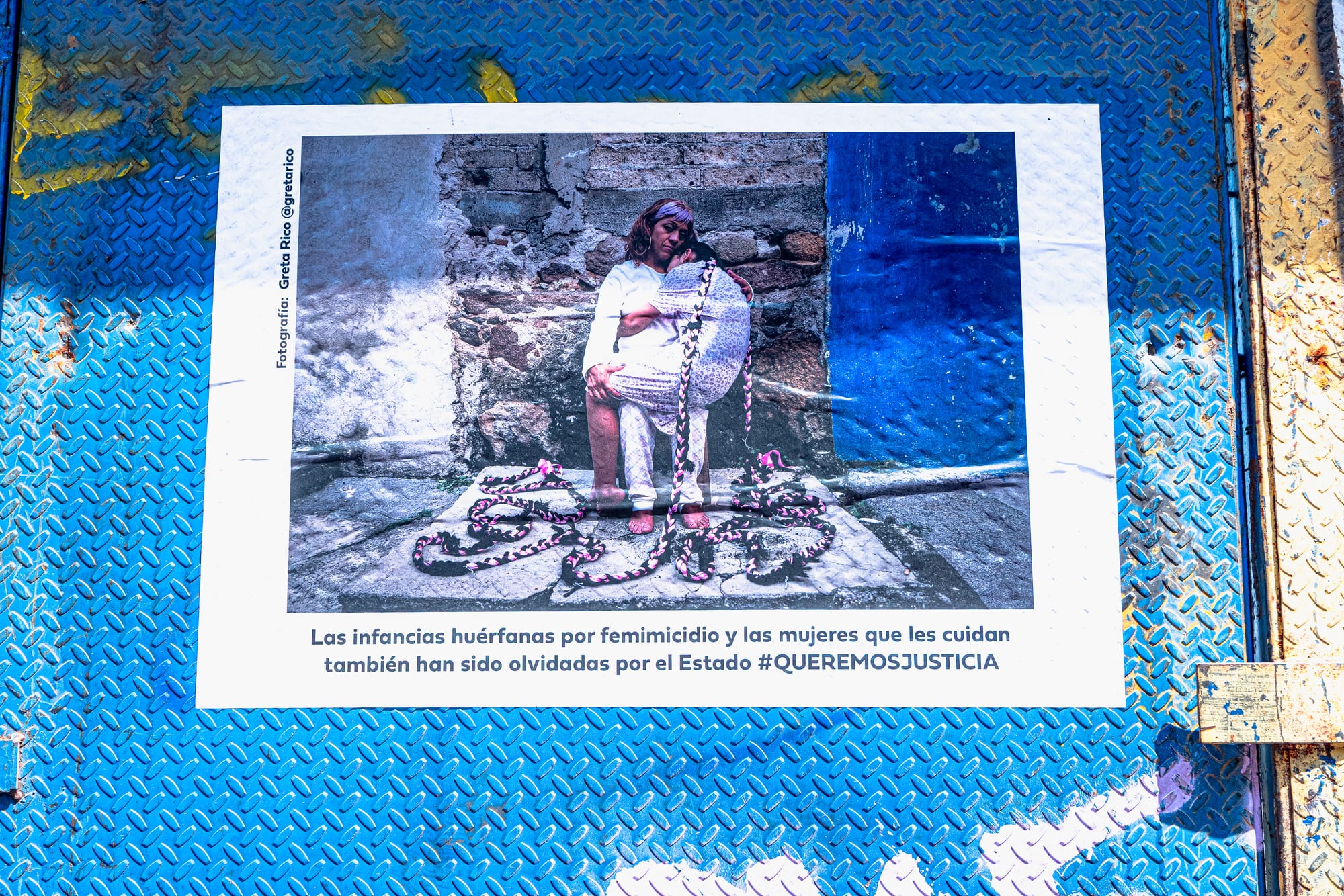
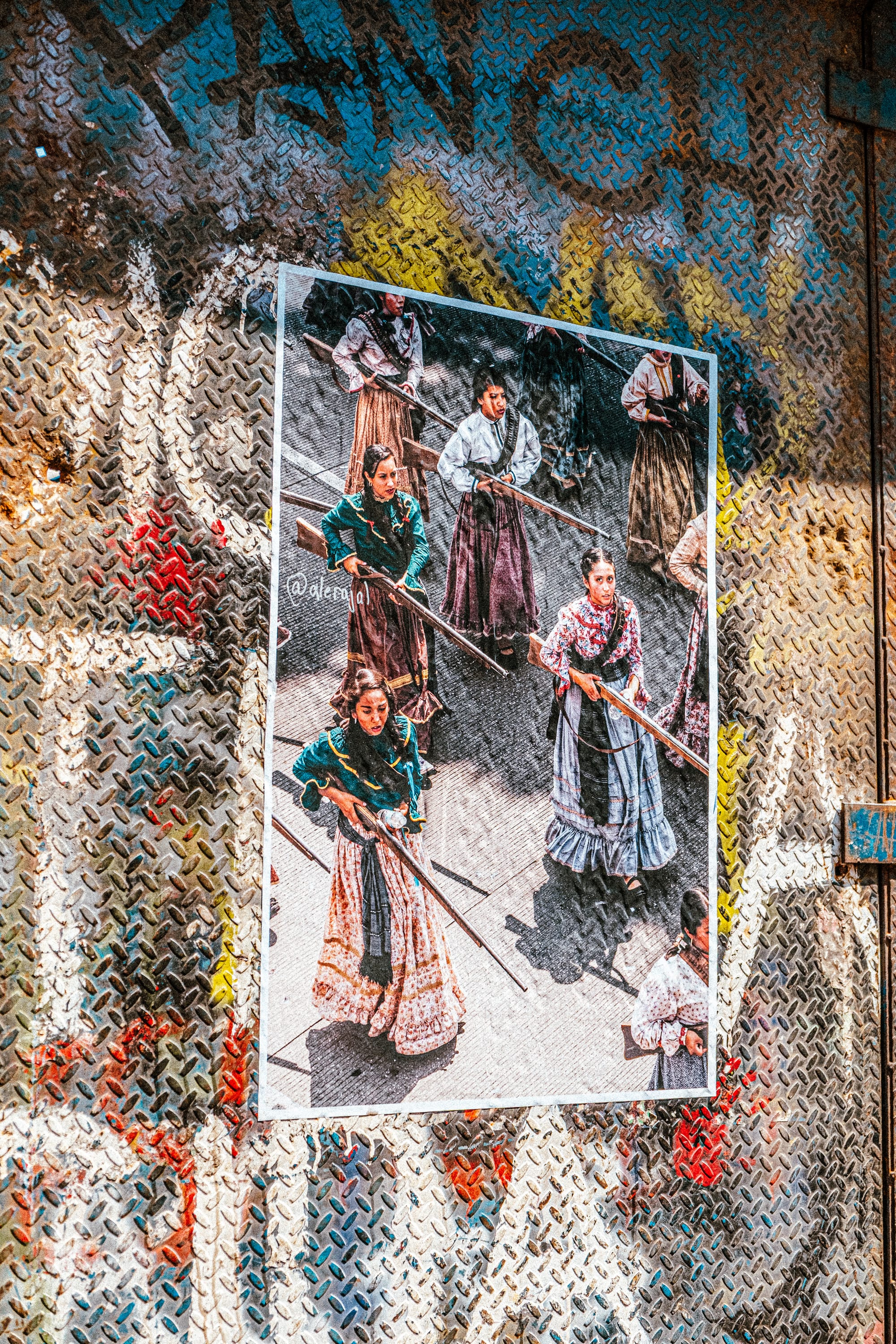
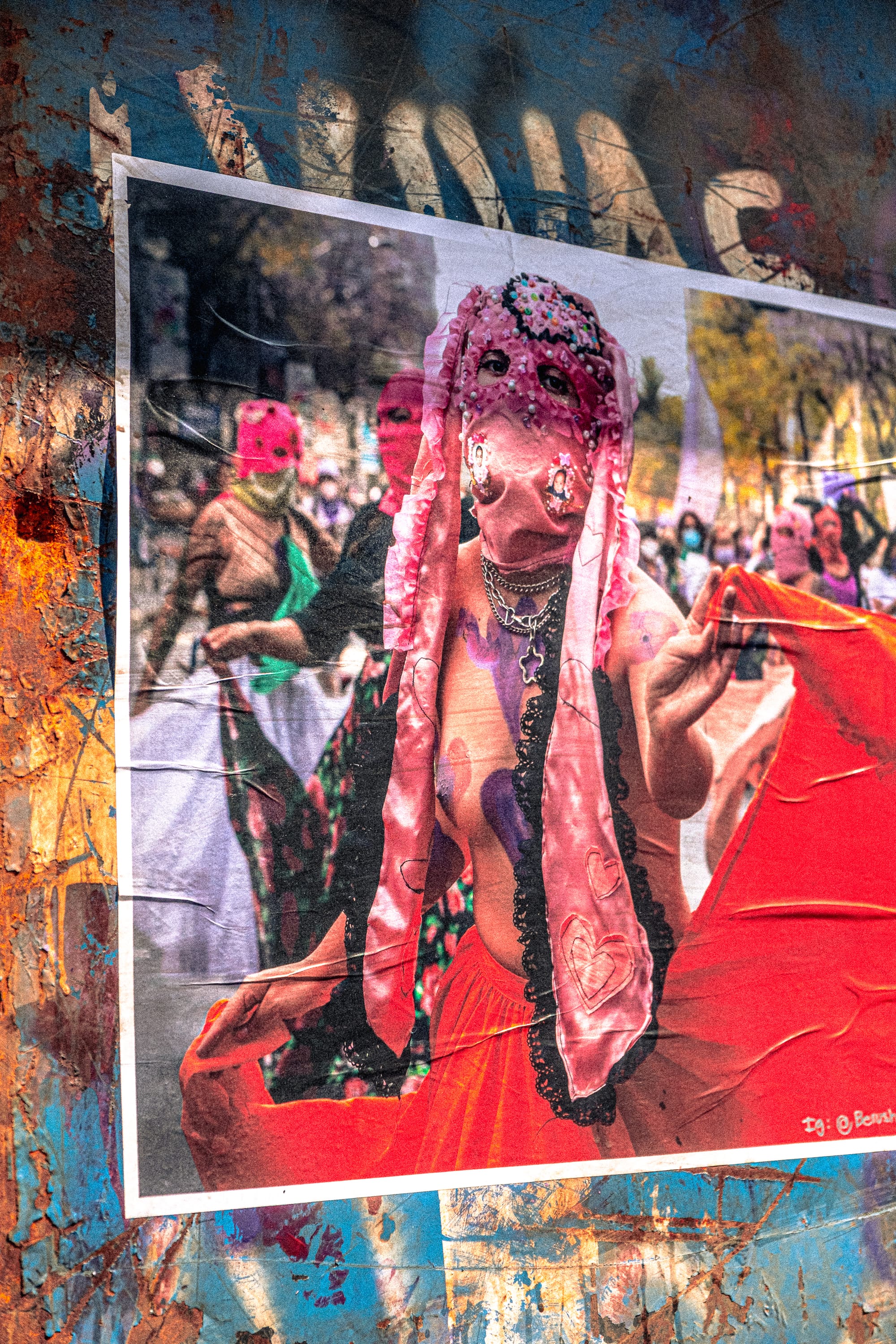
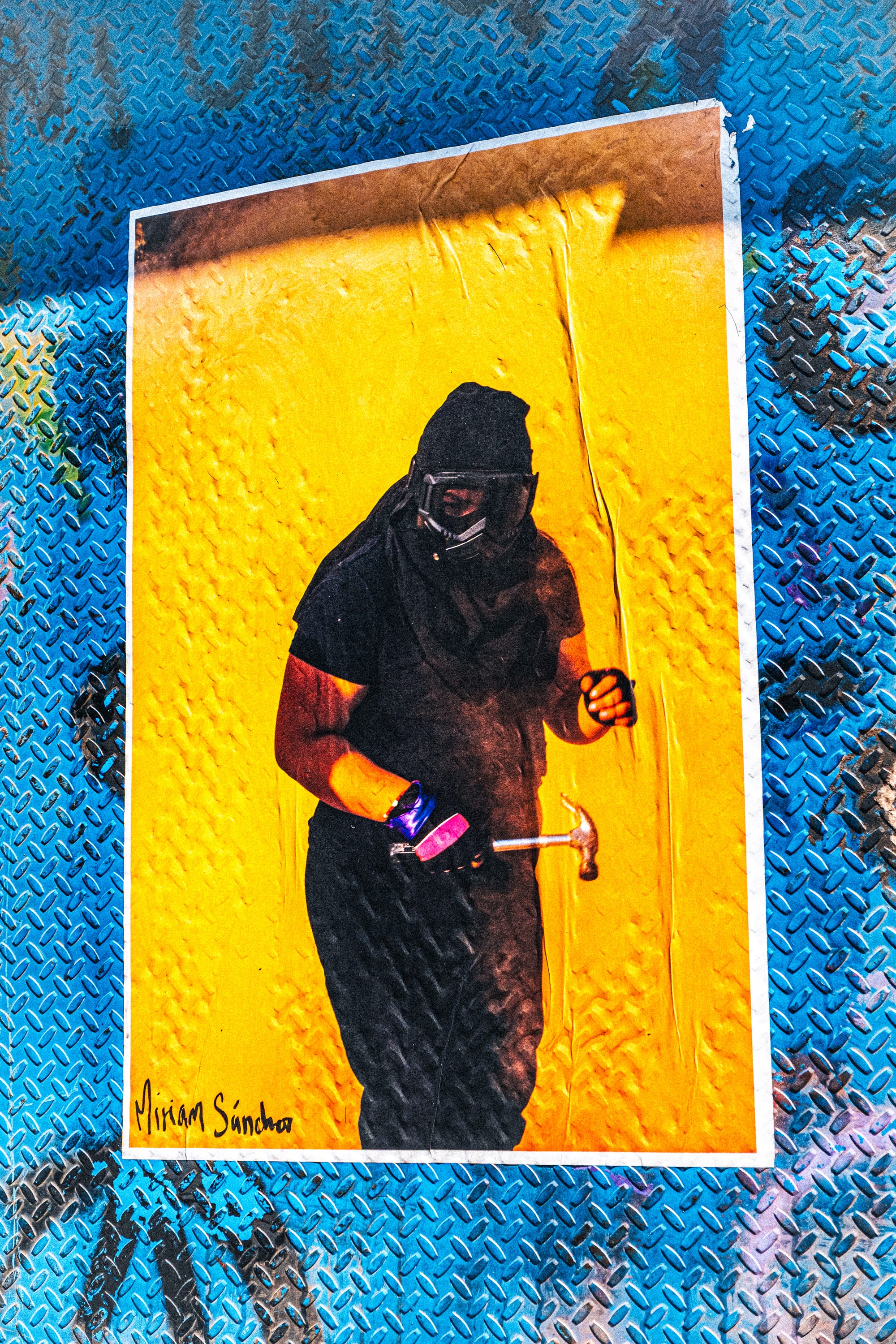
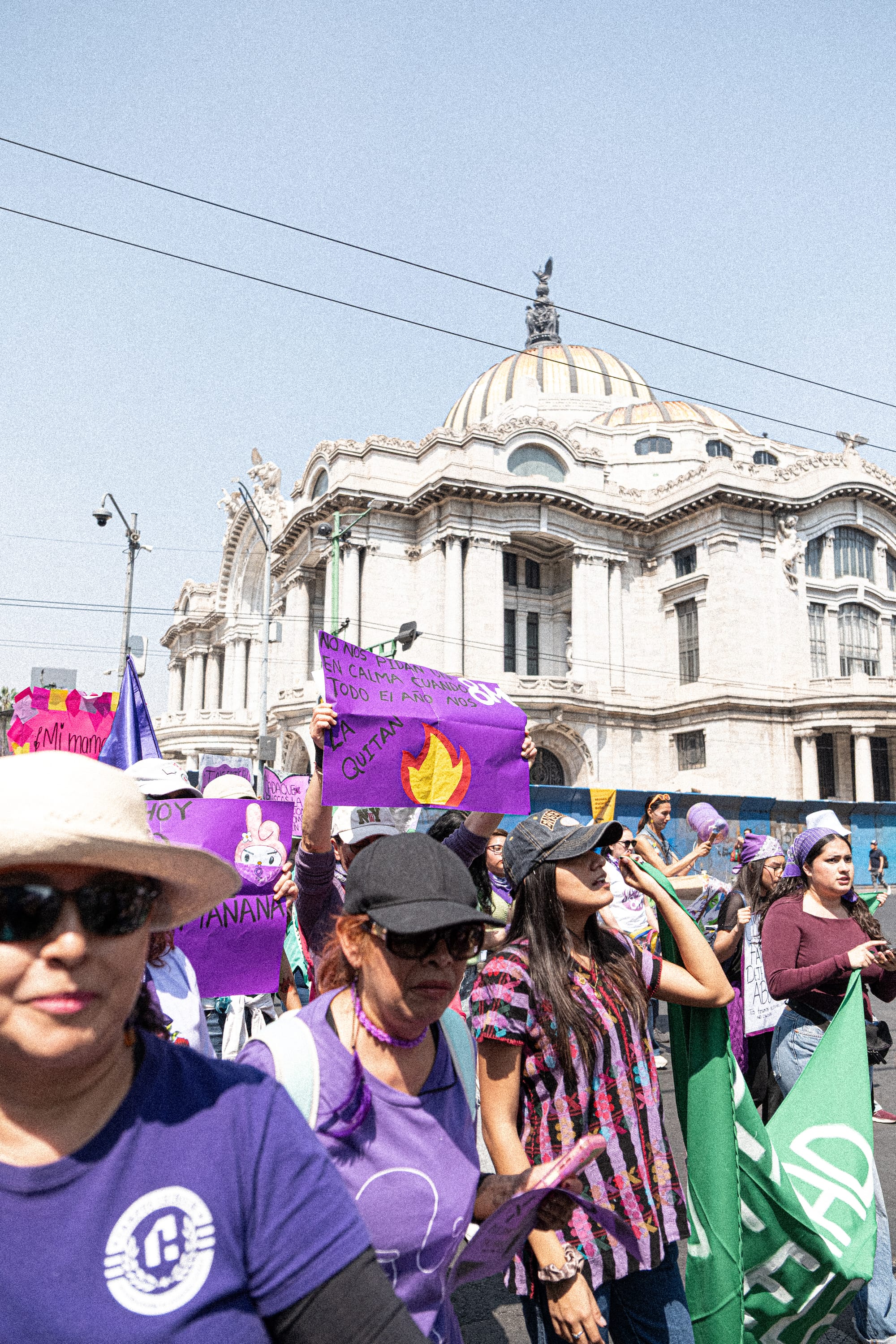
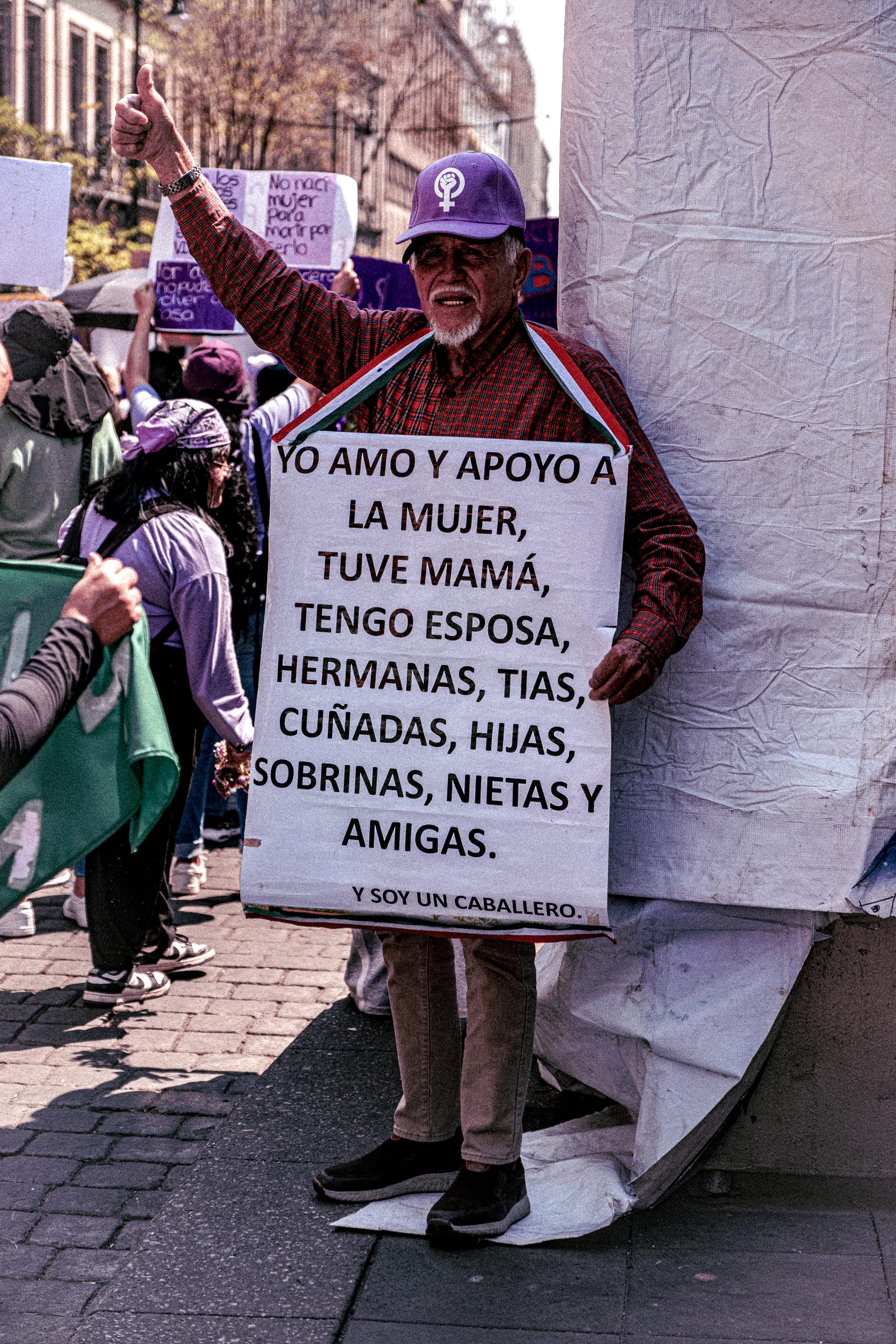
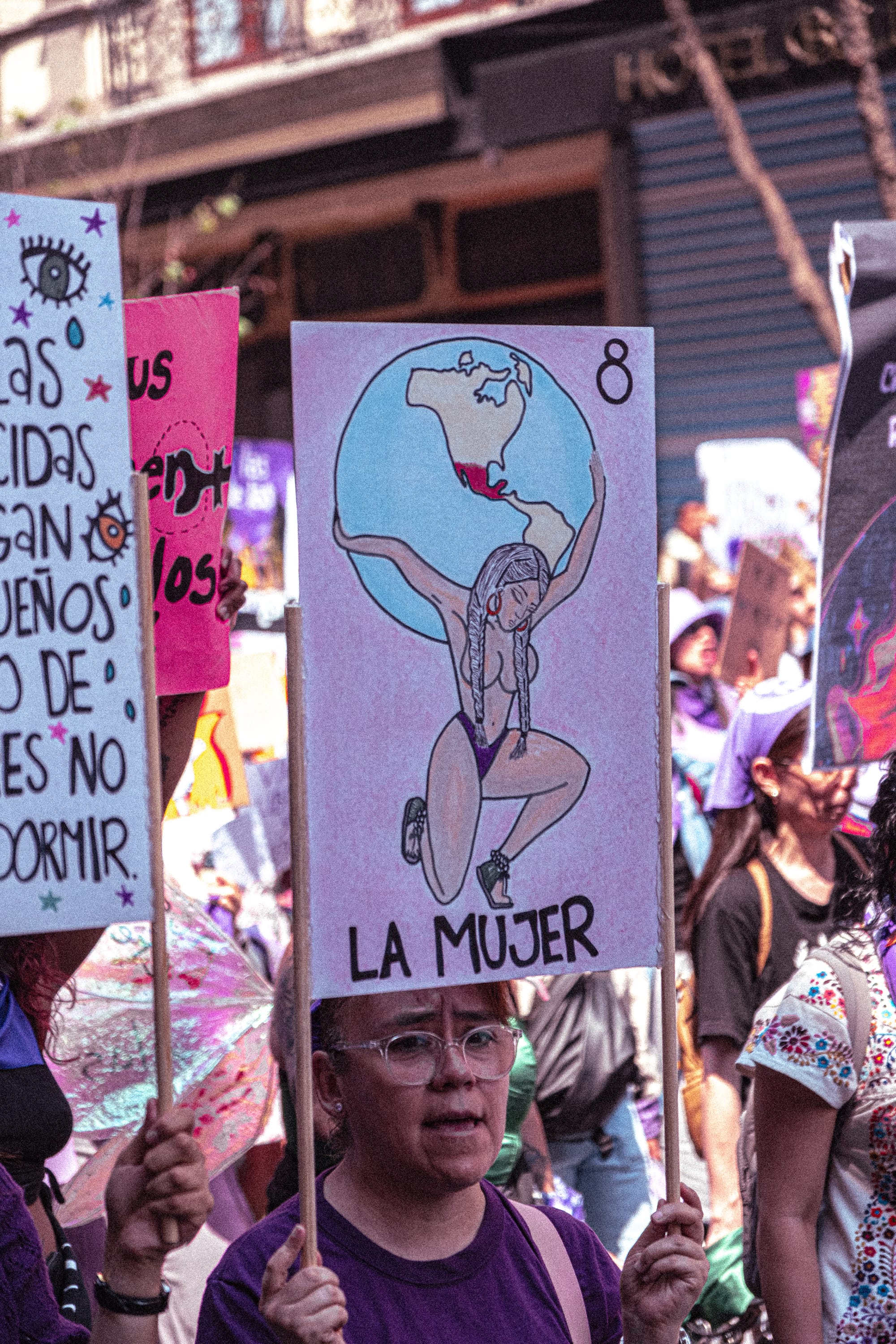
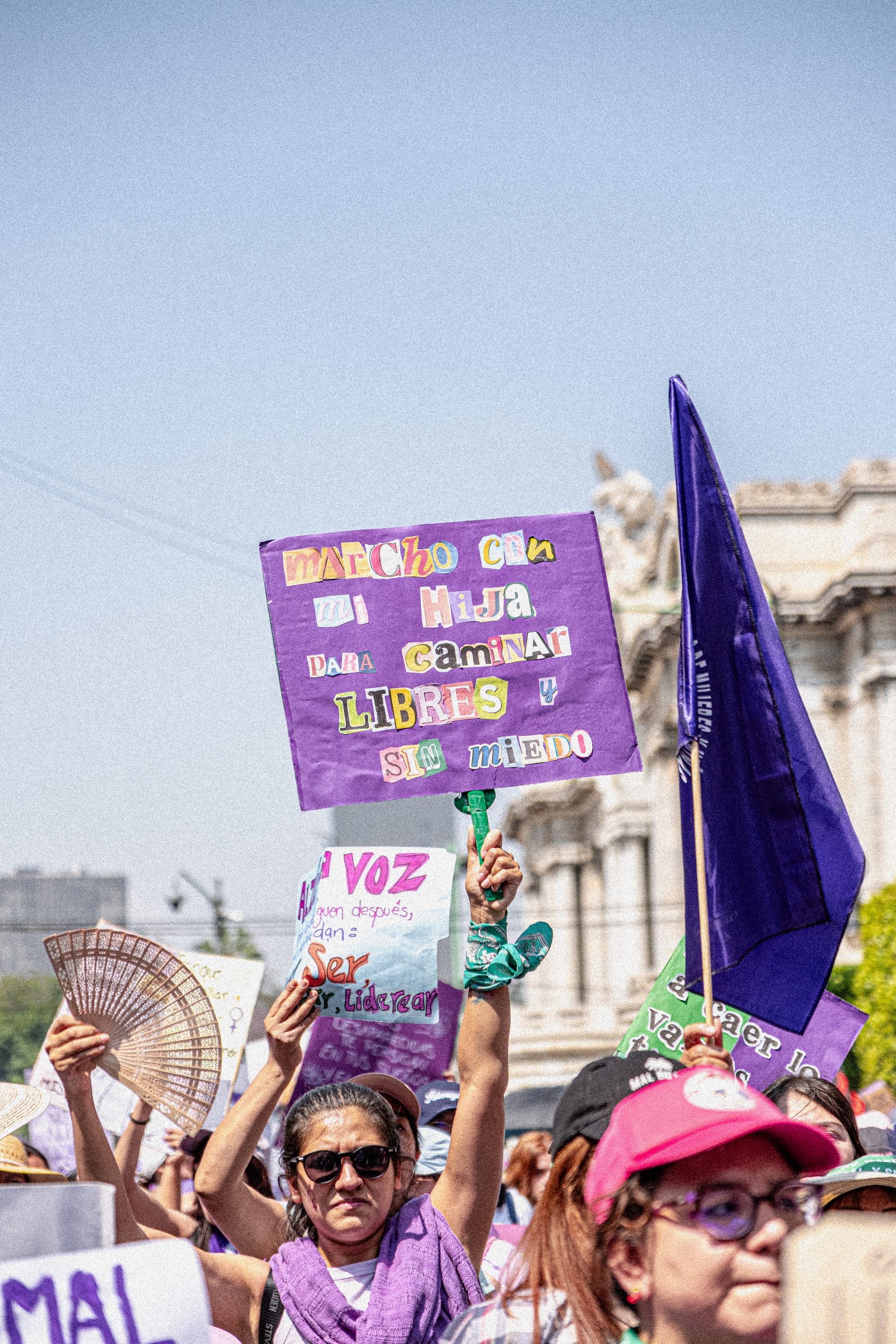
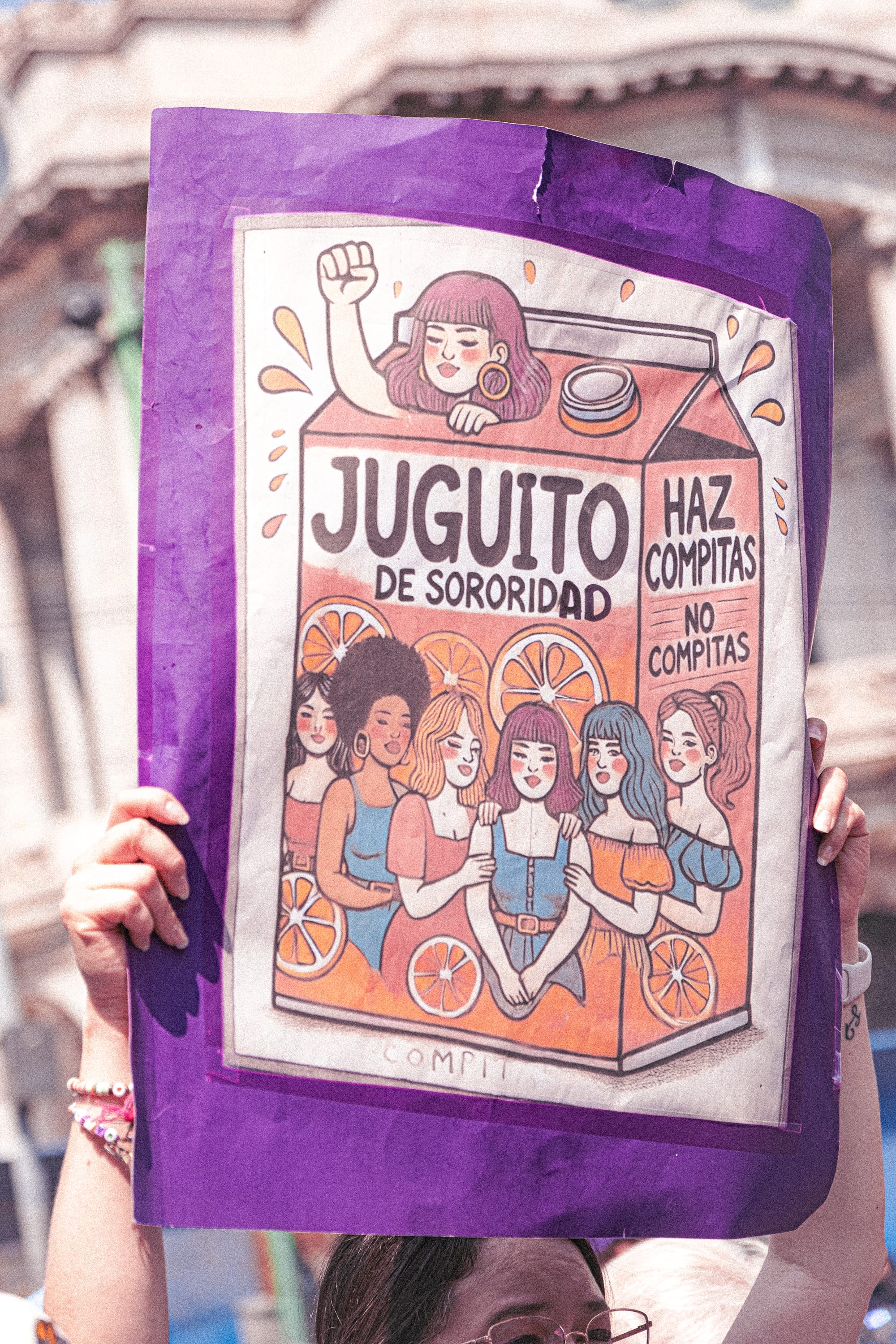
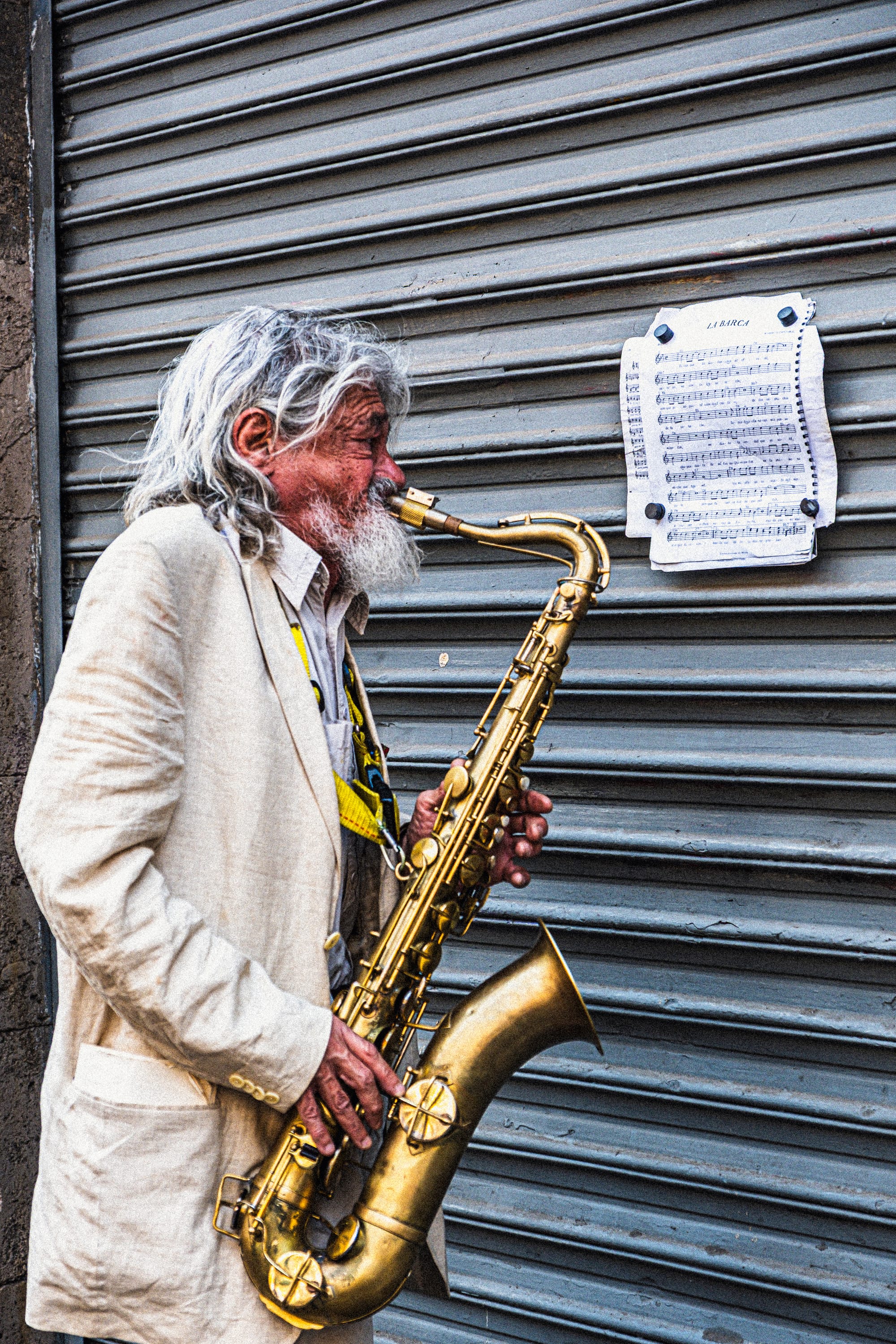
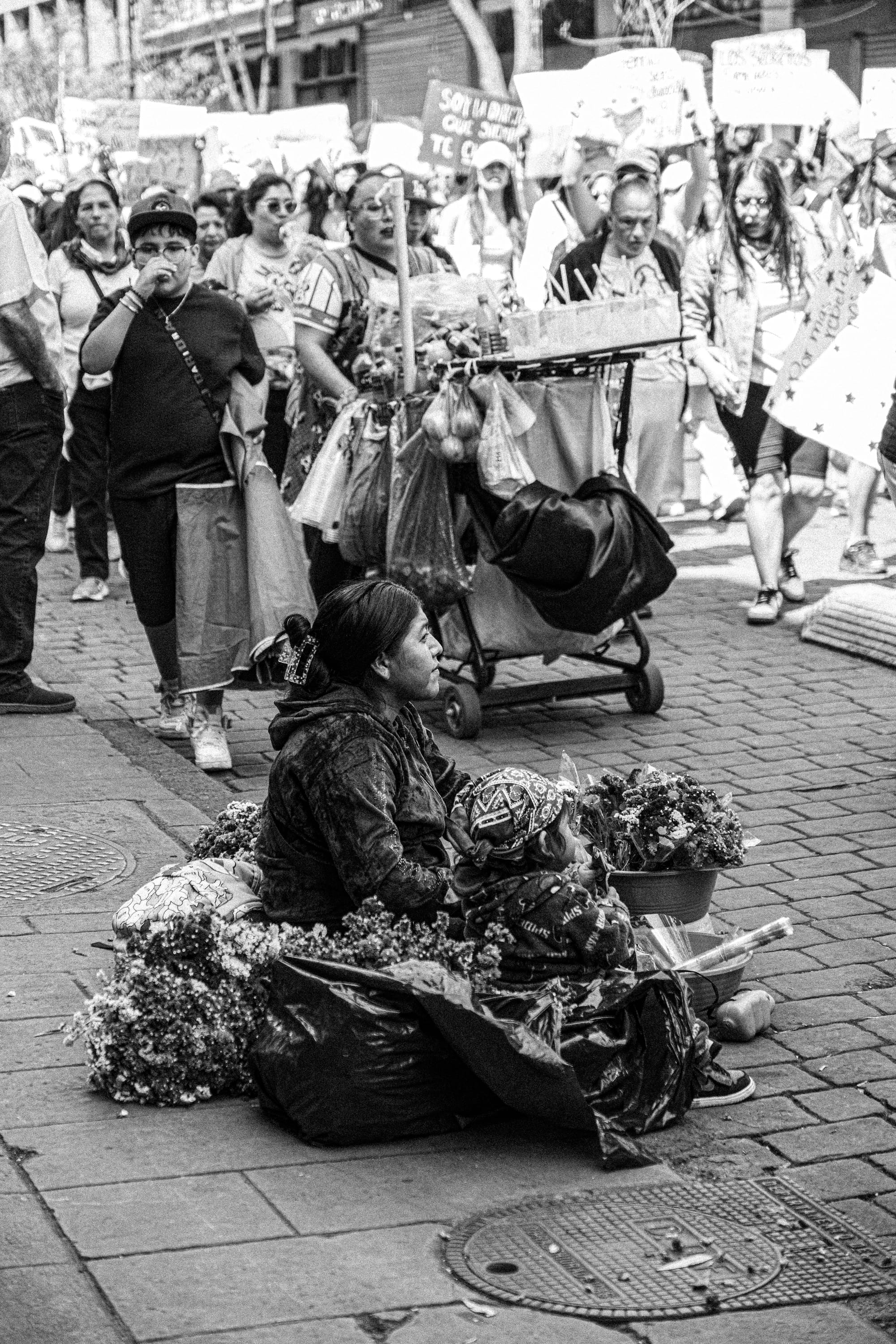
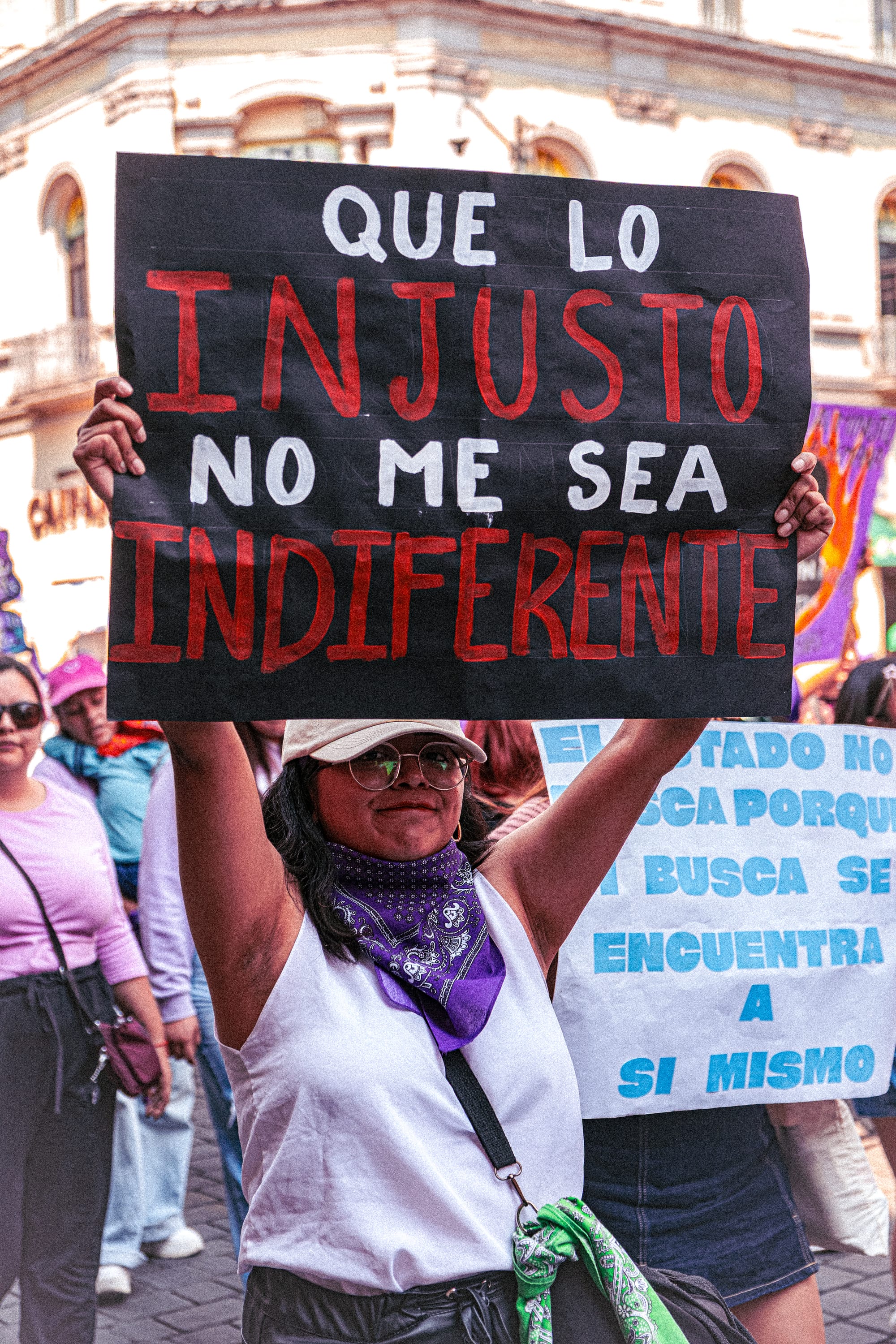
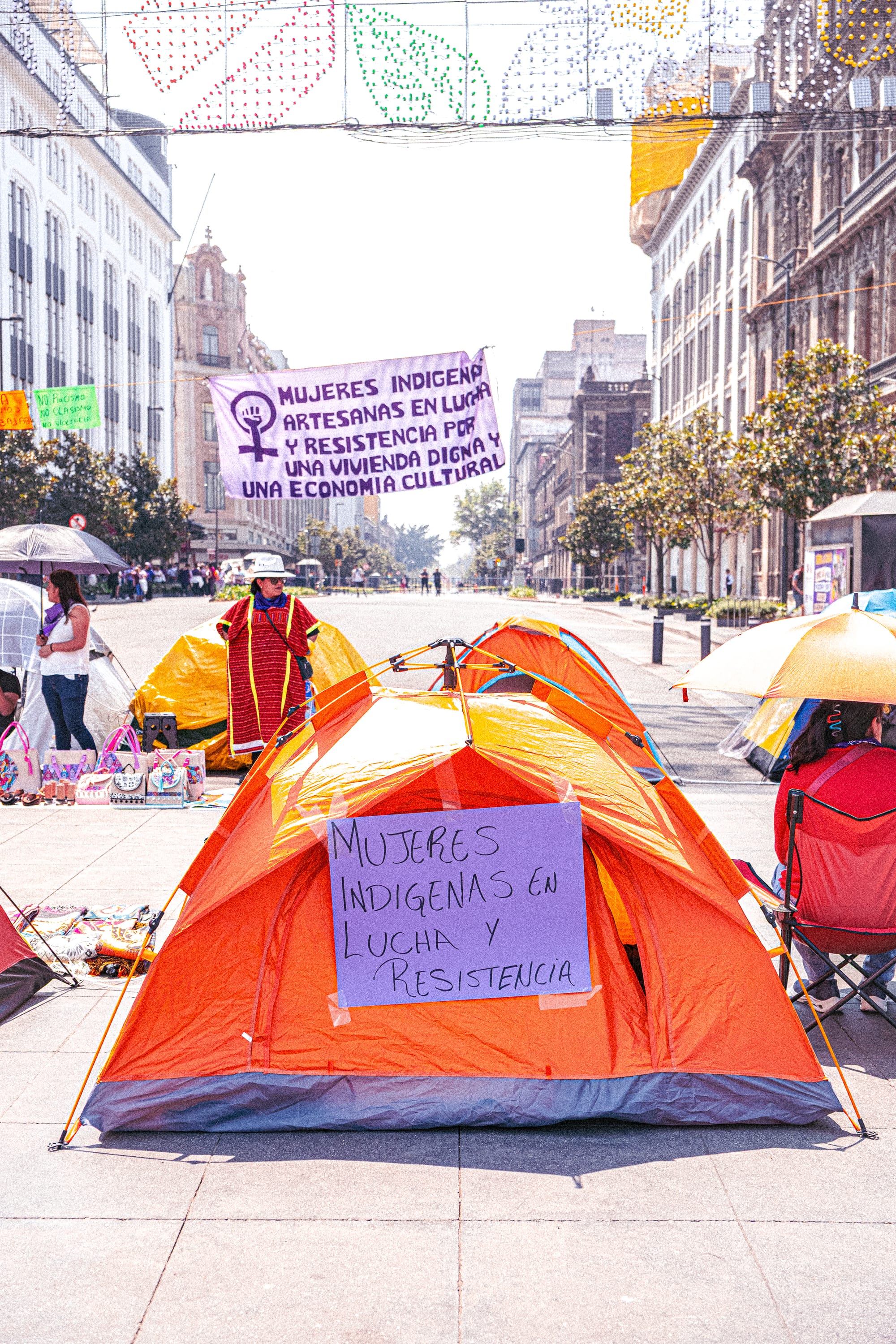
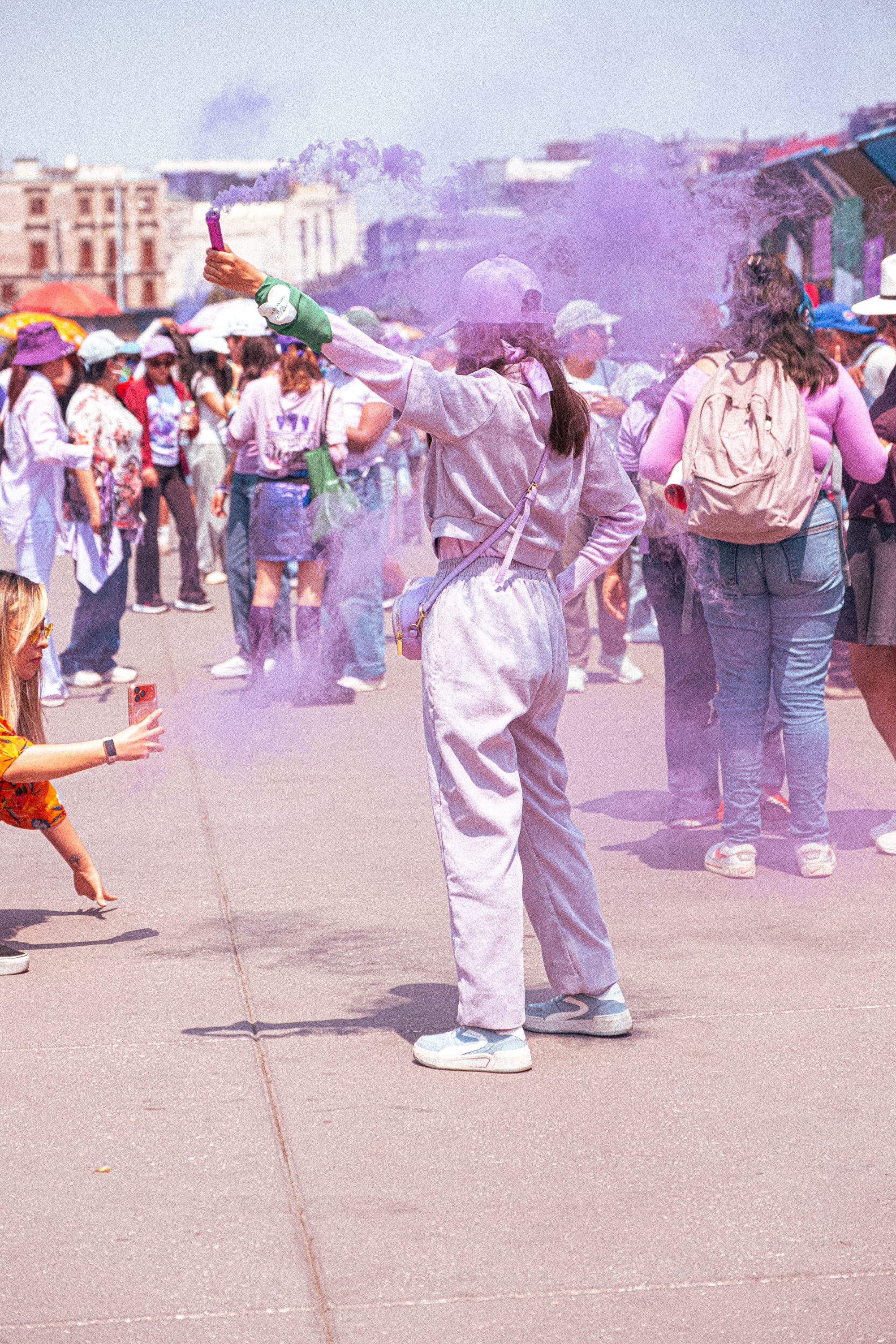
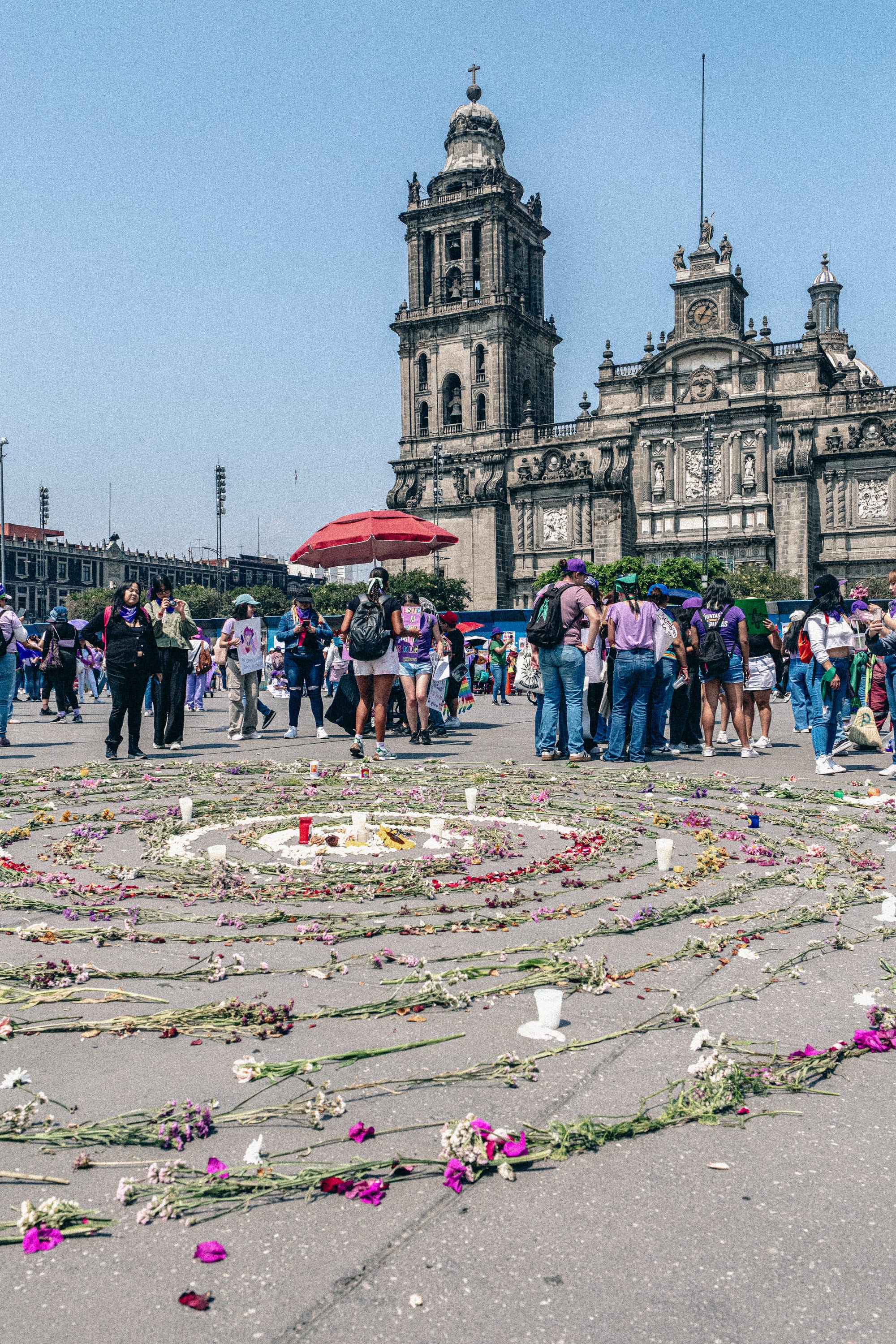
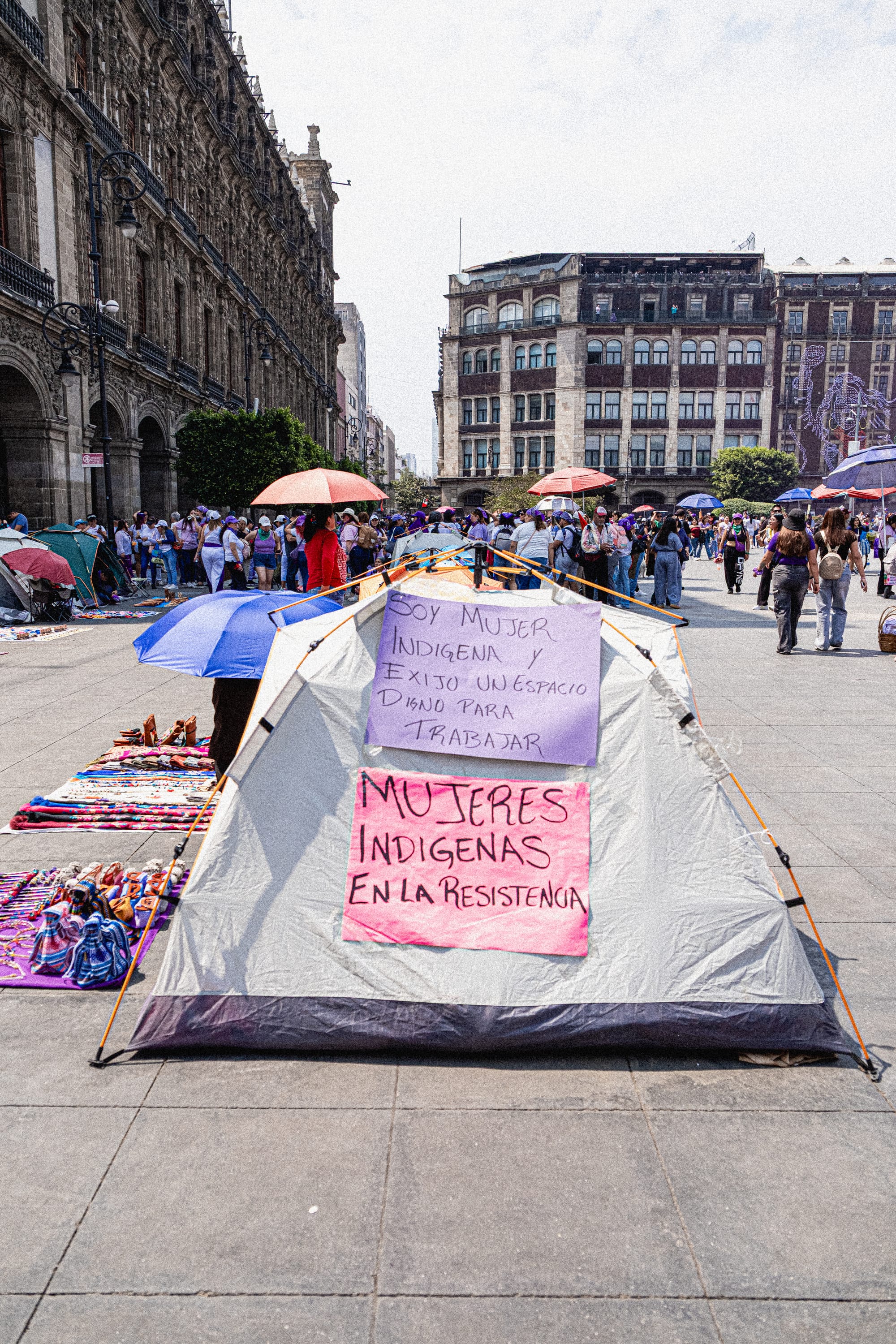
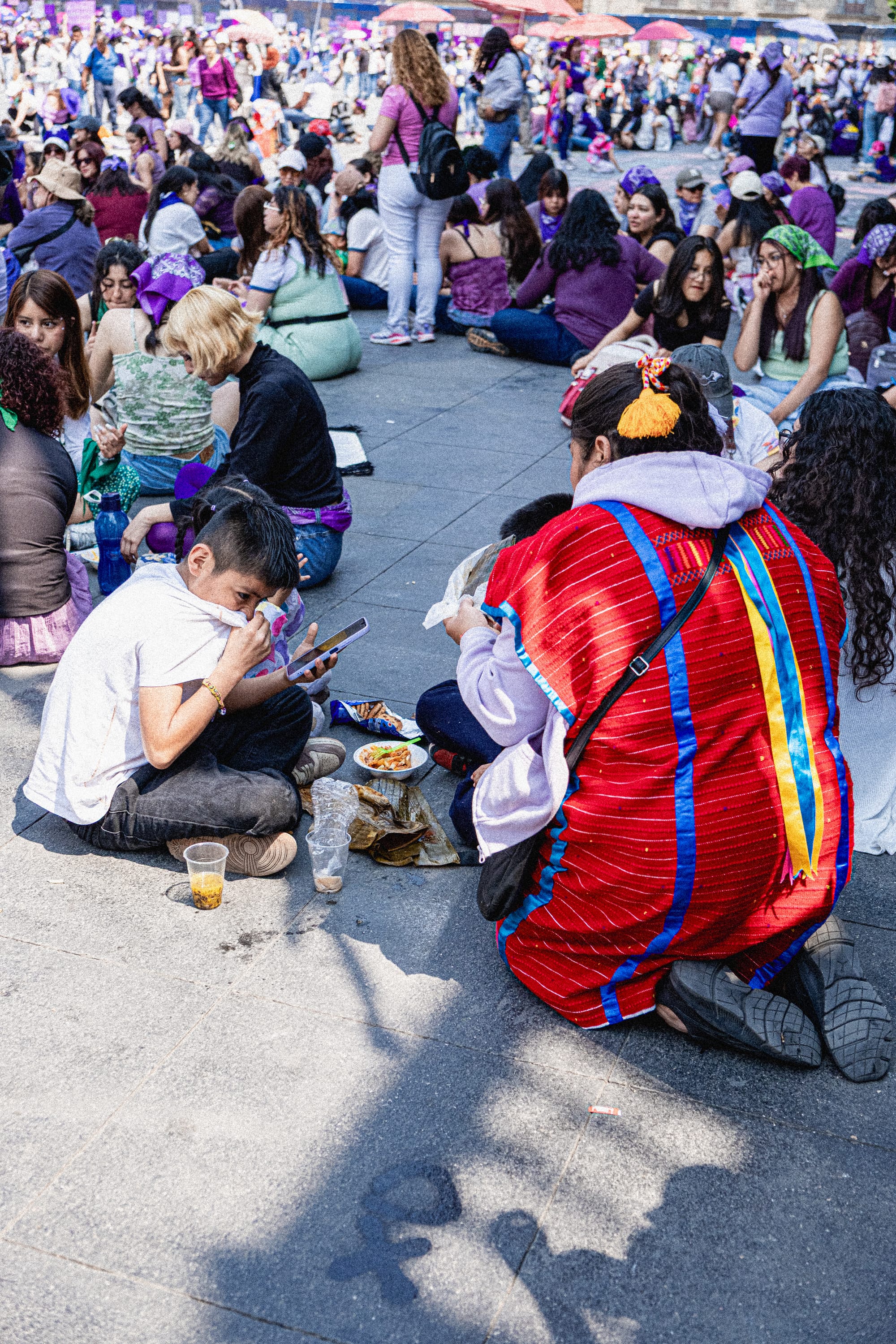
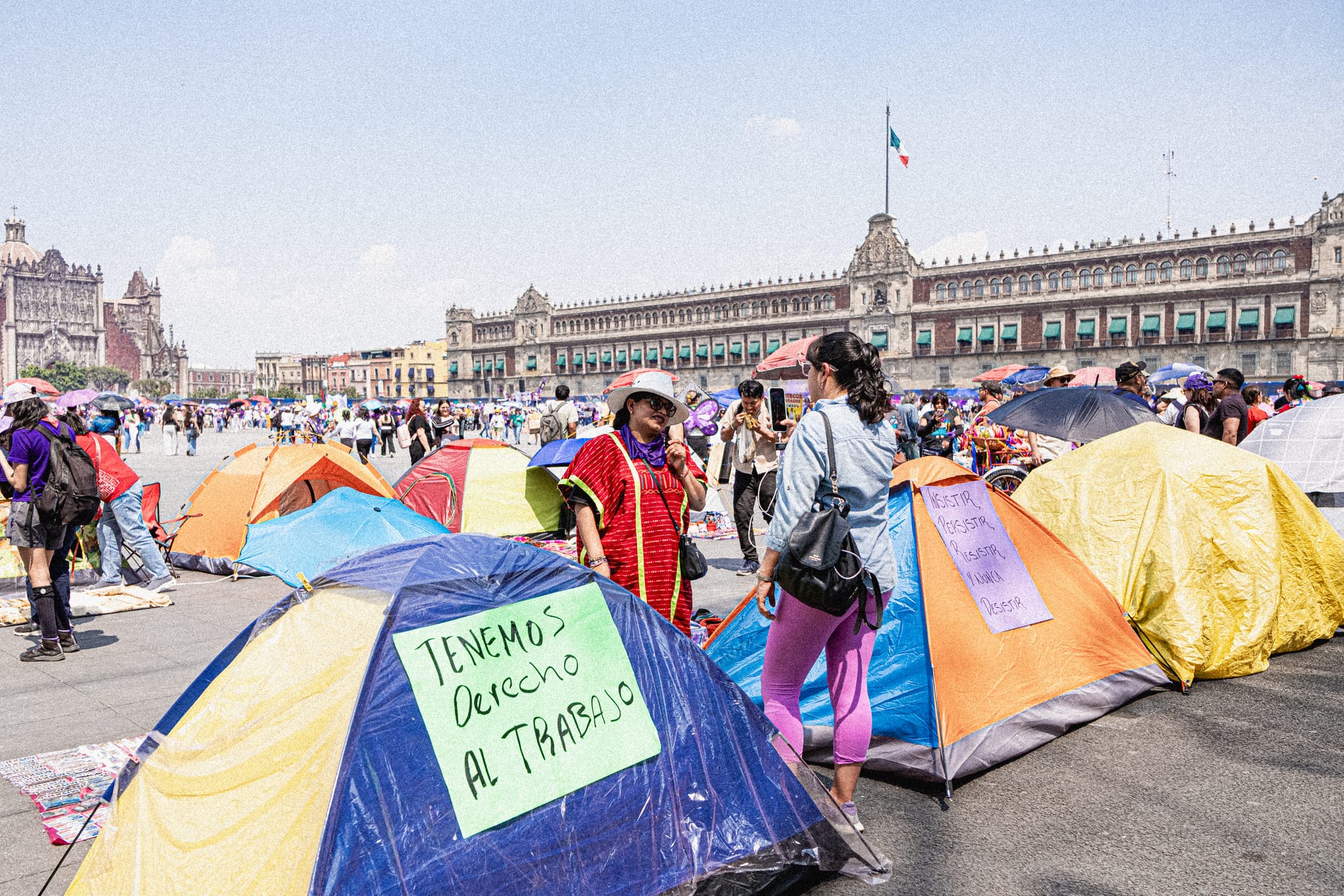
All photographs below are shot on my Fujifilm X-T5 paired with a XF16–55mm F2.8 R LM WR II lens. Together they document the atmosphere, movement, and emotion of the 2026 8M feminist march in Mexico City, and the ongoing struggle for justice in the face of femicide and gender-based violence.
FAQ about 8M in CDMX
What is the 8M march in Mexico City?
The 8M march is the annual feminist demonstration held on March 8th, International Women’s Day. Each year tens of thousands of women gather in Mexico City to protest gender-based violence, femicide, and systemic impunity.
International Women’s Day is celebrated globally, but in Mexico it has become primarily a day of protest and remembrance. Participants march to demand justice for victims and to bring visibility to a crisis that continues to affect women across the country.
The Mexico City demonstration is one of the largest feminist mobilizations in Latin America.
What does “8M” mean?
“8M” refers to March 8th (8 de Marzo), the date of International Women’s Day and the annual feminist protests held across Mexico.
Why do women protest on March 8th in Mexico?
The protests are driven largely by the ongoing crisis of femicide and violence against women. Government data indicates that roughly ten women are killed every day in Mexico, and many cases remain unresolved.
Families of victims, feminist organizations, and activists have spent years calling for stronger investigations, accountability, and structural reforms. March 8th has therefore become a moment when grief and protest meet in the streets.
For many participants, it is both a demand for justice and a public act of remembrance.
Is the 8M march in Mexico City safe?
The march is generally peaceful, though it can be emotionally intense. Large crowds gather in central parts of the city, and the atmosphere often includes chants, drums, murals, and symbolic acts of protest.
In some years tensions have occurred near government buildings, particularly when police attempt to block protesters. Many participants take simple precautions such as staying with friends, writing contact information on their arms, and remaining aware of their surroundings.
At the same time, the march is widely experienced as a space of solidarity where women look out for one another.
Can men attend the 8M demonstrations?
The demonstrations are women-led spaces. Many feminist groups encourage men to support the movement in ways that do not center themselves within the march.
This may include standing on the sidelines, assisting with logistics, documenting events, or attending other solidarity activities. The intention is to keep the focus on women’s voices and experiences.
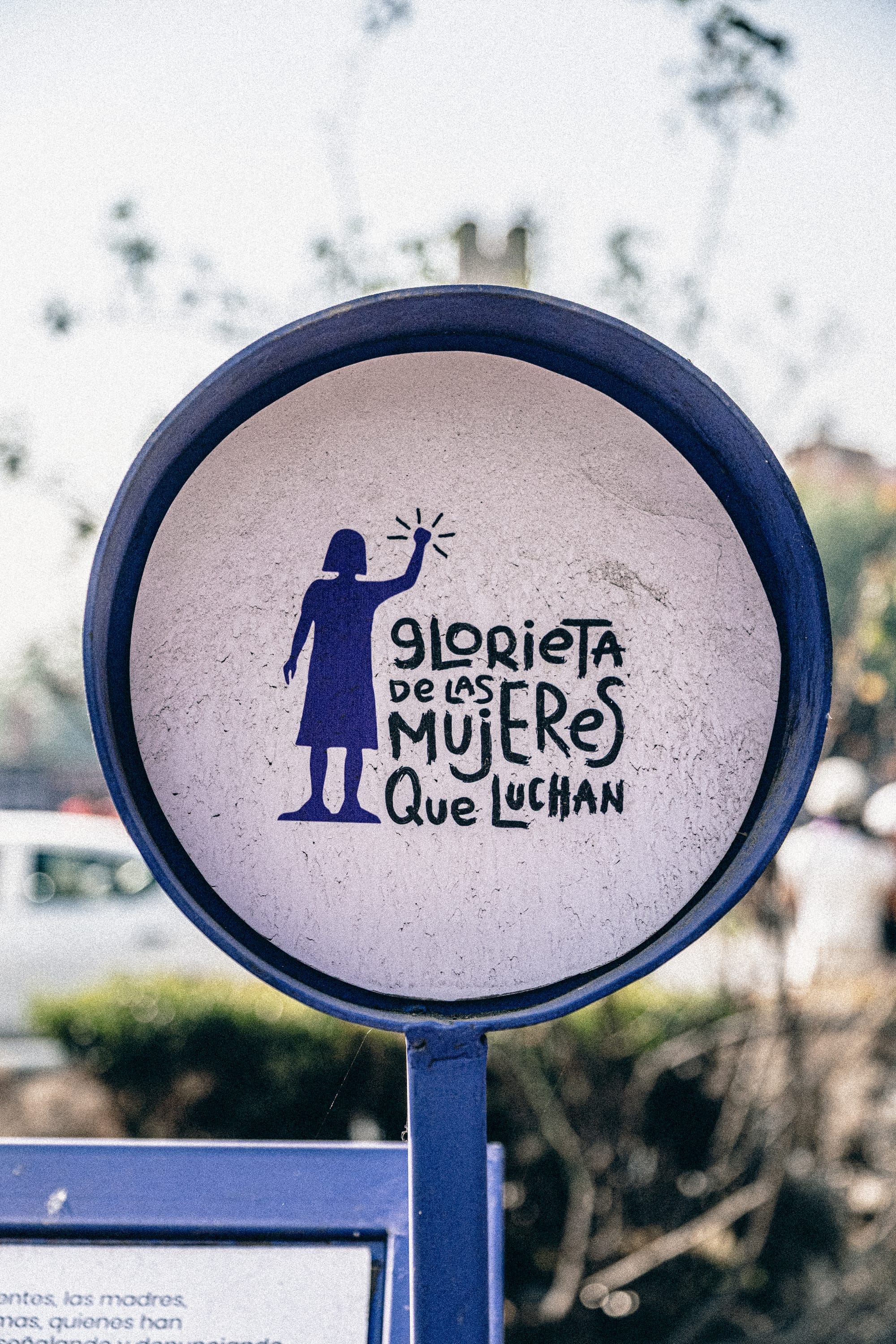
What is the Glorieta de las Mujeres que Luchan?
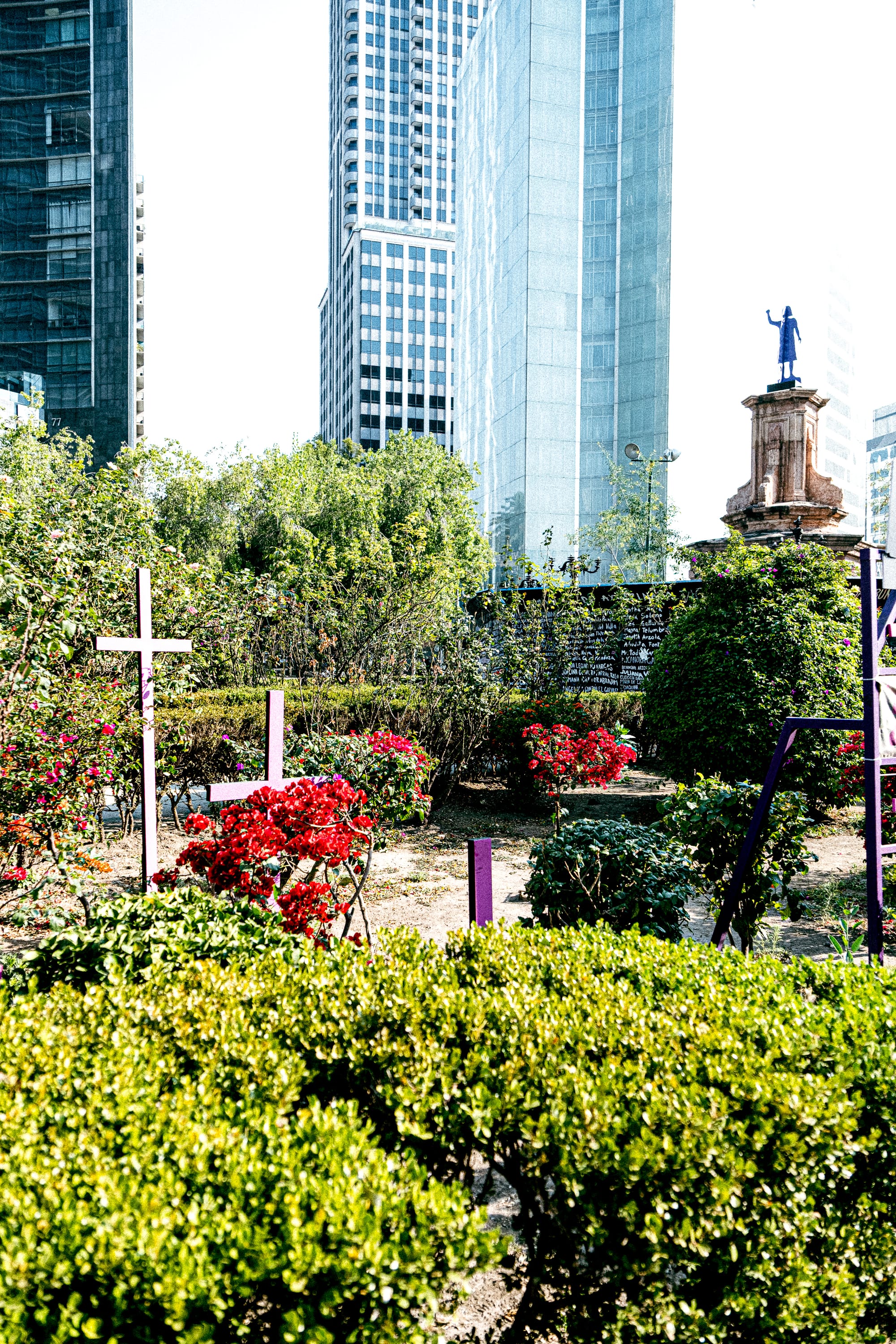
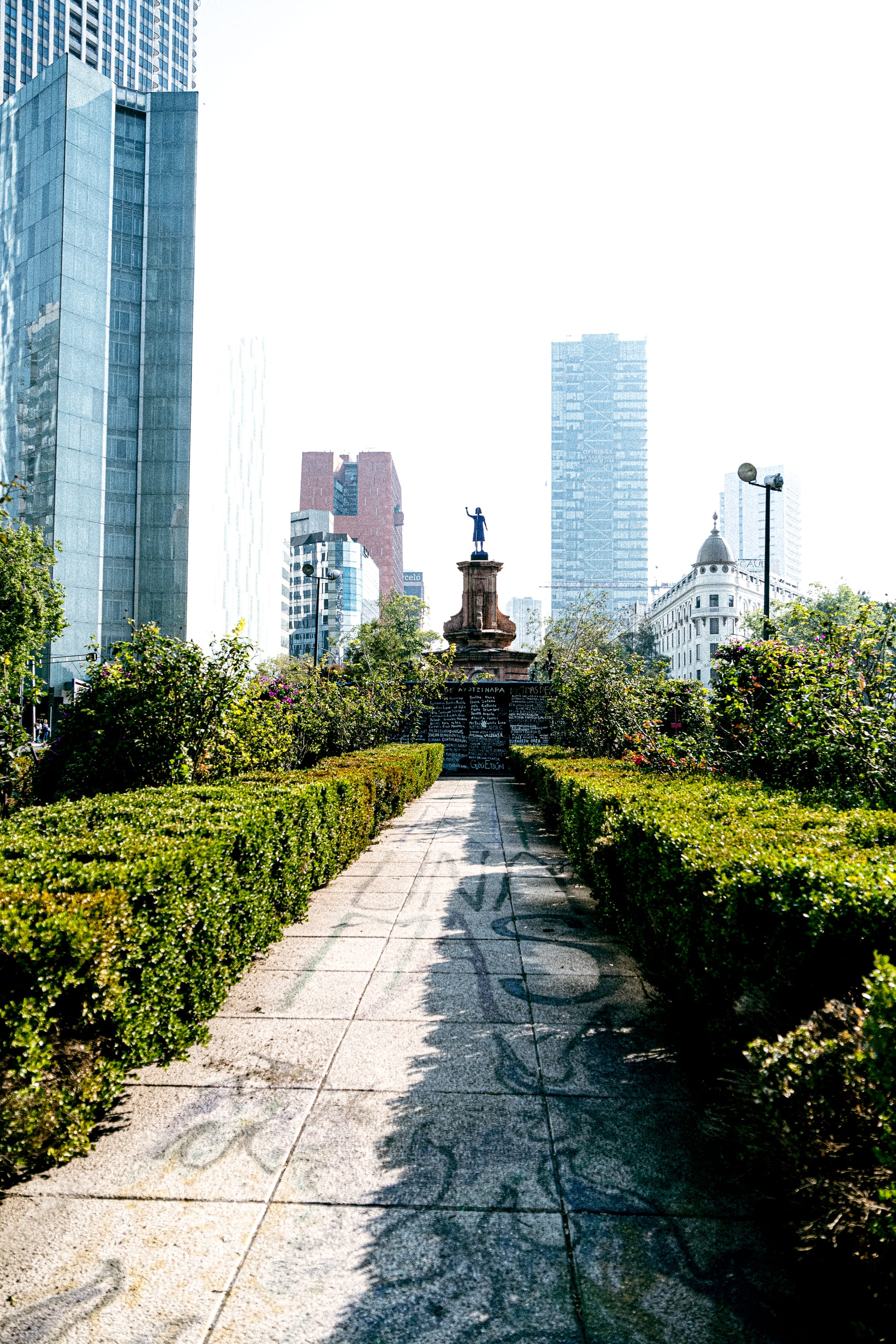
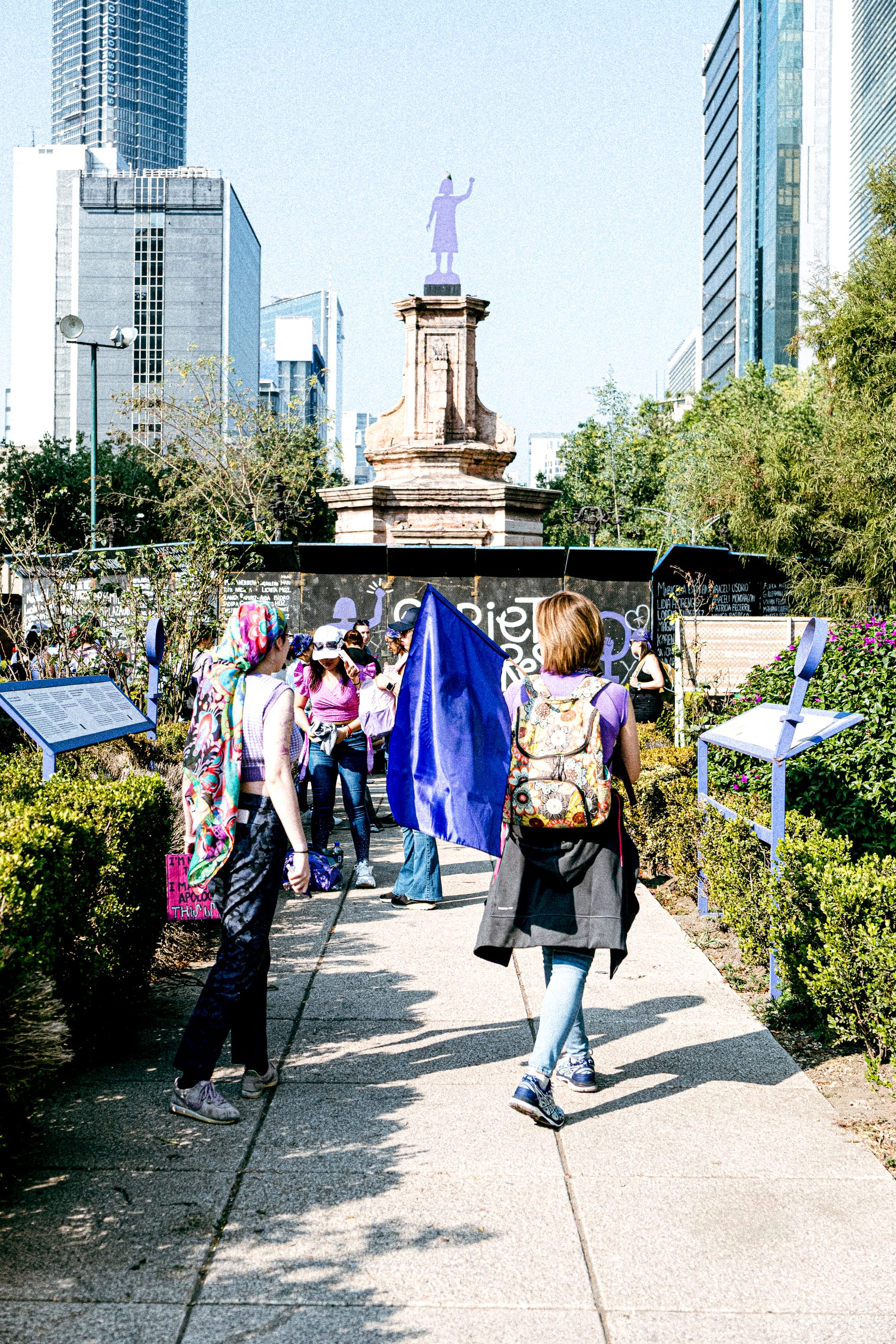
The Glorieta de las Mujeres que Luchan, located along Paseo de la Reforma, has become an important feminist landmark in Mexico City.
Originally the site of a statue of Christopher Columbus, the traffic circle was occupied by feminist activists in 2021. They installed a temporary monument honoring women who resist violence and injustice.
Today the site functions as a living memorial. It is frequently covered in photographs, messages, and names of missing women. During feminist demonstrations, including the 8M march, it often becomes a gathering point for remembrance and protest.
Why are purple and green used at 8M?
Purple has long been associated with women’s rights movements and International Women’s Day.
Green became widely recognized across Latin America through feminist campaigns for reproductive rights and abortion access. The color was popularized during protests in Argentina and quickly spread throughout the region.
During the 8M march, both colors appear everywhere in clothing, banners, face paint, and flags.
Why do protesters write names on signs?
Many signs carried during the march display the names of women who were victims of femicide or who remain missing.
Families and activists use these names to ensure that victims are remembered publicly. The march often includes moments where names are read aloud or displayed in large banners.
It is a way of insisting that these lives are not reduced to statistics.
Why do protesters sometimes paint monuments?
Graffiti and paint are often used as forms of protest directed toward institutions seen as responsible for inaction.
Government buildings, statues, and barricades sometimes become surfaces where slogans and names are written. While controversial, many participants see these acts as expressions of anger built up over years of ignored cases and unresolved violence.
For them, the damage done to monuments is minor compared to the violence that women continue to face.
Where does the 8M march in Mexico City take place?
The route usually begins at Glorieta de las Mujeres, an important feminist landmark, and passes through central parts of the city including Paseo de la Reforma, Avenida Juárez, and the Zócalo.
Why is 8M important?
For many participants the march is more than a protest. It is a collective moment of grief, solidarity, and visibility.
Families of victims walk alongside students, activists, mothers, daughters, and entire communities. Stories that are rarely heard in daily life are spoken openly in the streets.
In that sense, the march is both a demand for justice and a reminder that the struggle against gender violence is ongoing.
Further reading and resources
The 8M march in Mexico City is part of a broader feminist movement that includes grassroots collectives, families searching for justice, indigenous women’s organizations, and international human rights groups. The following resources provide deeper context for understanding the movement and the ongoing struggle against gender violence in Mexico.
Feminist organizations and collectives
Observatorio Ciudadano Nacional del Feminicidio (OCNF): A leading civil society organization documenting femicide cases across Mexico and advocating for justice and legal accountability.
Brujas del Mar: A feminist collective that helped organize nationwide women’s strikes and mobilizations against gender violence.
Red Nacional de Refugios: A national network of shelters that supports women and children fleeing domestic and gender-based violence.
Marea Verde México: Part of the Latin American “Green Wave” feminist movement advocating reproductive rights and bodily autonomy.
Indigenous women’s organizations
Coordinadora Nacional de Mujeres Indígenas (CONAMI): A national network of Indigenous women leaders working on issues including gender justice, territorial rights, and community autonomy.
Alianza de Mujeres Indígenas de Centroamérica y México (AMICAM): An alliance supporting Indigenous women’s leadership and advocacy across Mexico and Central America.
Mexican government and official data
Instituto Nacional de Estadística y Geografía (INEGI): Mexico’s national statistics agency. Provides data on homicide rates, gender violence, and the national survey on violence against women (ENDIREH).
Secretariado Ejecutivo del Sistema Nacional de Seguridad Pública (SESNSP): Publishes official crime statistics, including monthly reports on femicide investigations.
International organizations
UN Women Mexico: Research and policy initiatives focused on gender equality and violence against women.
Amnesty International Mexico: Reports and investigations on human rights issues, including femicide and gender violence.
Human Rights Watch Mexico: Coverage and analysis of human rights concerns, including violence against women and accountability gaps.
Get involved and support others
The energy of the 8M march is powerful, but the realities it speaks to exist every day of the year. If you or someone you know is experiencing gender-based violence in Mexico City, there are organizations, hotlines, and shelters that provide support, protection, and legal assistance.
Emergency help and hotlines
Línea Mujeres (Secretaría de las Mujeres CDMX): 24-hour support line for women in Mexico City experiencing violence. Provides psychological support, legal guidance, and referrals to shelters and services. Phone: 765 or 55 5658 1111.
Locatel – Mexico City assistance line: Offers information and referrals for legal and social support services. Phone: 55 5658 1111
Shelters and crisis support
Red Nacional de Refugios: A national network of shelters providing safe housing, legal assistance, and psychological care for women and children fleeing domestic violence.
Casa Gaviota: An organization that supports women experiencing violence with counseling, legal aid, and protection services.
These organizations operate confidential shelters and support systems designed to help women safely leave dangerous situations.
Legal support and advocacy
Observatorio Ciudadano Nacional del Feminicidio: Documents femicide cases and supports families seeking justice.
Centro de Derechos Humanos Fray Francisco de Vitoria: Provides legal advocacy and human rights support in cases involving violence and discrimination.
Show up, speak up, and support the movement
Support does not only come from institutions. It also comes from communities.
Showing up to marches like the 8M demonstration, supporting feminist organizations, sharing reliable information, and listening to survivors all help challenge the silence that allows violence to persist.
Solidarity can also mean checking in on friends, believing women when they speak about their experiences, and refusing to ignore the problem when it appears in everyday life.
El 8 de marzo, Día Internacional de la Mujer, las calles de la Ciudad de México se transforman. Banderas moradas aparecen por todo el centro histórico. Los tambores resuenan a lo largo de las amplias avenidas. Rostros pintados con el símbolo feminista y las palabras “Ni una menos.”
Pero en México, el 8M no es una celebración.
Es una marcha de duelo.
Cada año, decenas de miles de personas se reúnen para la marcha del 8M en la Ciudad de México, una de las protestas feministas más grandes de América Latina. Mujeres, madres, hijas, estudiantes, activistas y familias enteras salen a las calles exigiendo justicia para las víctimas de feminicidio en México, un país donde la violencia de género sigue siendo una realidad cotidiana.
Según estadísticas oficiales del Instituto Nacional de Estadística y Geografía (INEGI) y del Secretariado Ejecutivo del Sistema Nacional de Seguridad Pública, alrededor de diez mujeres son asesinadas cada día en México. Muchos de estos asesinatos se investigan como feminicidios, crímenes motivados por violencia de género.
Las organizaciones de la sociedad civil llevan años advirtiendo sobre la magnitud de esta crisis. Colectivos como el Observatorio Ciudadano Nacional del Feminicidio documentan casos en todo el país y luchan por justicia cuando las investigaciones se estancan o fracasan. Organismos internacionales como ONU Mujeres México y Amnistía Internacional también han documentado la persistencia de la violencia de género y la impunidad que rodea muchos de estos casos.
Los nombres de las víctimas aparecen escritos en carteles de cartón, en pancartas y, a veces, incluso sobre el pavimento. Retratos de hijas desaparecidas se levantan por encima de la multitud. Las madres caminan lentamente al frente, sosteniendo fotografías de mujeres cuyos casos siguen sin resolverse.
Por eso el Día Internacional de la Mujer en México se vive de manera distinta.
En lugar de flores o consignas corporativas sobre el empoderamiento, el día se centra en protestar contra la violencia de género en el país y exigir responsabilidad a instituciones que con demasiada frecuencia fallan a las víctimas. La marcha feminista del 8M en la Ciudad de México es al mismo tiempo un llamado a la justicia y un ritual de duelo, un espacio público donde la rabia, el dolor y la solidaridad avanzan juntos por las calles.
A lo largo de la ruta, los muros de edificios gubernamentales se convierten en lienzos temporales. Consignas aparecen pintadas en morado y verde, colores asociados con el movimiento feminista en México y en toda América Latina. Algunos mensajes son crudos, otros poéticos, pero todos comparten la misma urgencia: que las mujeres puedan vivir sin miedo.
Algunas críticas se centran en los grafitis o en las ventanas rotas. Pero para muchas de las mujeres que marchan, estos actos son expresiones de una rabia acumulada durante décadas de violencia de género, desapariciones e impunidad sistémica.
La fotografía intenta capturar esta complejidad, pero nunca logra abarcarla del todo. La marcha del 8M en la Ciudad de México no es solo una protesta. Es un paisaje de emociones: desafío, cansancio, solidaridad, duelo y esperanza entrelazados.
Para muchas participantes, simplemente estar presentes ya es un acto de resistencia.
Detrás de cada pancarta hay una historia.
Detrás de cada consigna hay alguien que debería seguir aquí.
Y cada año, en el Día Internacional de la Mujer en México, la ciudad se convierte en un lugar donde esas historias se niegan a desaparecer.
Para mí, unirme a la marcha como mujer fue algo profundamente personal. En varios momentos, mujeres se acercaron y me pidieron que escribiera mi nombre con marcador en sus brazos. Era un gesto silencioso, pero contundente.
Madres caminaban junto a sus hijas pequeñas. Niñas subidas en hombros observaban un mar de morado. Manos pequeñas sostenían carteles casi más grandes que ellas.
Y luego estaban las conversaciones.
Madres y abuelas hablaban abiertamente con cualquiera dispuesto a escuchar, sosteniendo fotografías de hijas y nietas arrebatadas por el feminicidio. Algunas lloraban mientras contaban sus historias. Otras hablaban con una serenidad que resultaba incluso más difícil de presenciar. Ese día el duelo flotaba en el aire, moviéndose silenciosamente entre la multitud.
Pero el duelo no era lo único presente.
También había algo feroz.
Mientras la marcha avanzaba por la ciudad, sentí cómo surgía dentro de mí una energía difícil de describir, algo que solo puedo llamar fuerza colectiva. Decenas de miles de mujeres llenando las calles juntas. Voces resonando entre los edificios. Tambores sonando en algún punto al frente. Por un momento parecía que toda la ciudad vibraba con la misma exigencia.
De pie entre ellas, sentí una certeza extraña instalarse en mi cuerpo. La sensación de que esa energía nos pertenecía, y que nada podría arrebatárnosla.

