
Mexican church architecture is often highly ornate and visually distinct, and San Cristóbal de las Casas offers a concentrated view of how that ornamentation shifts across time and place. Elaborate Baroque façades sit alongside later neo-Gothic structures, and heavily decorated exteriors contrast with churches whose impact comes less from detail than from position and visibility. Color, texture, symmetry, and surface decoration play a strong role, but so does setting: a church fronting a market feels very different from one reached by climbing a long staircase.
For anyone staying in San Cris for more than a day or two, we highly recommend spending a morning walking through town and visiting a handful of its churches. Below are the ones we found most notable, each offering a different perspective on the city’s layout, history, and everyday rhythms.
Iglesia de San Cristóbalito
Iglesia de San Cristóbalito sits at the top of Cerro de San Cristóbal, but the church itself is only part of the experience. What most people remember is the zigzagging staircase that leads up to it, cutting back and forth through a residential hillside neighborhood just east of the historic center.
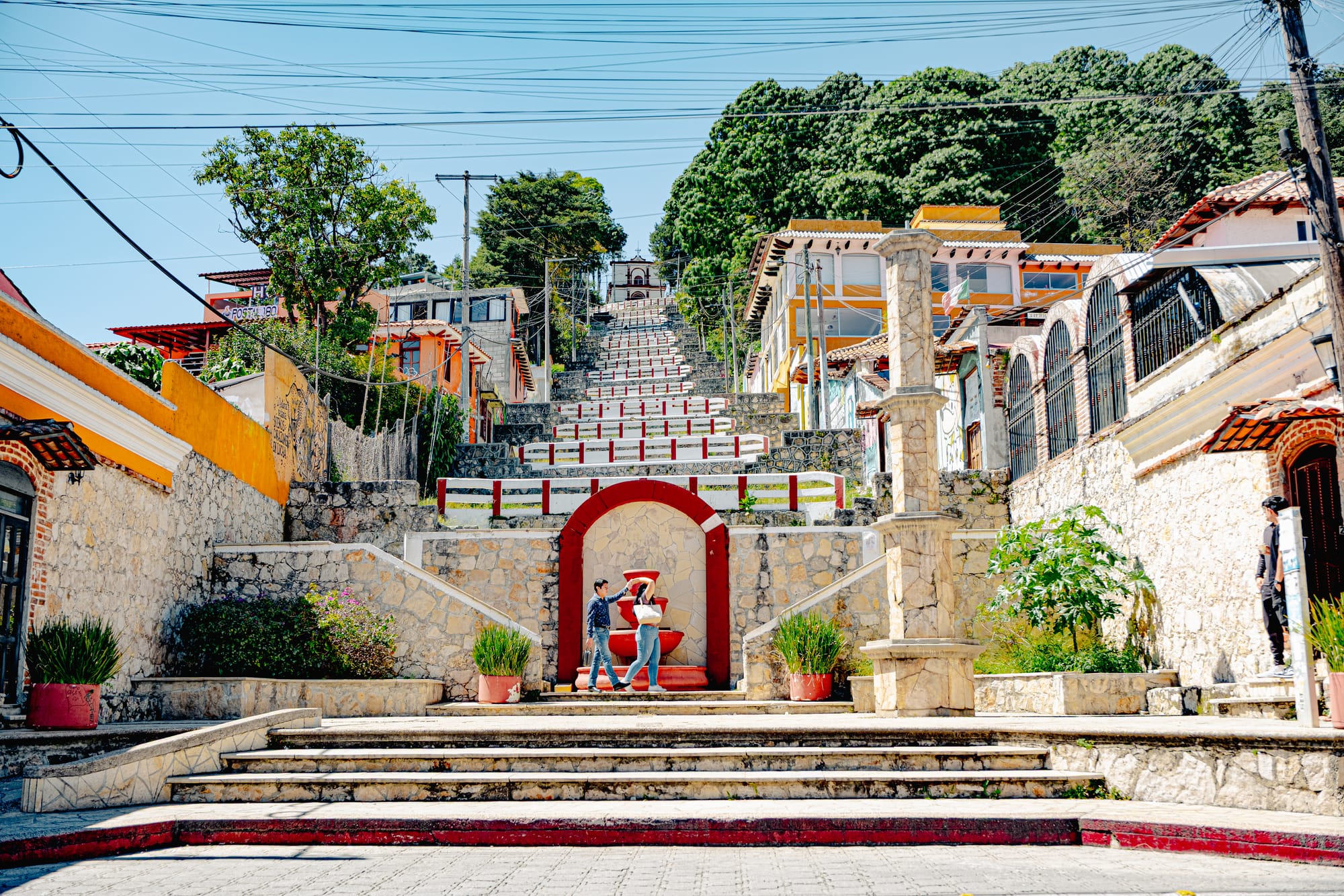
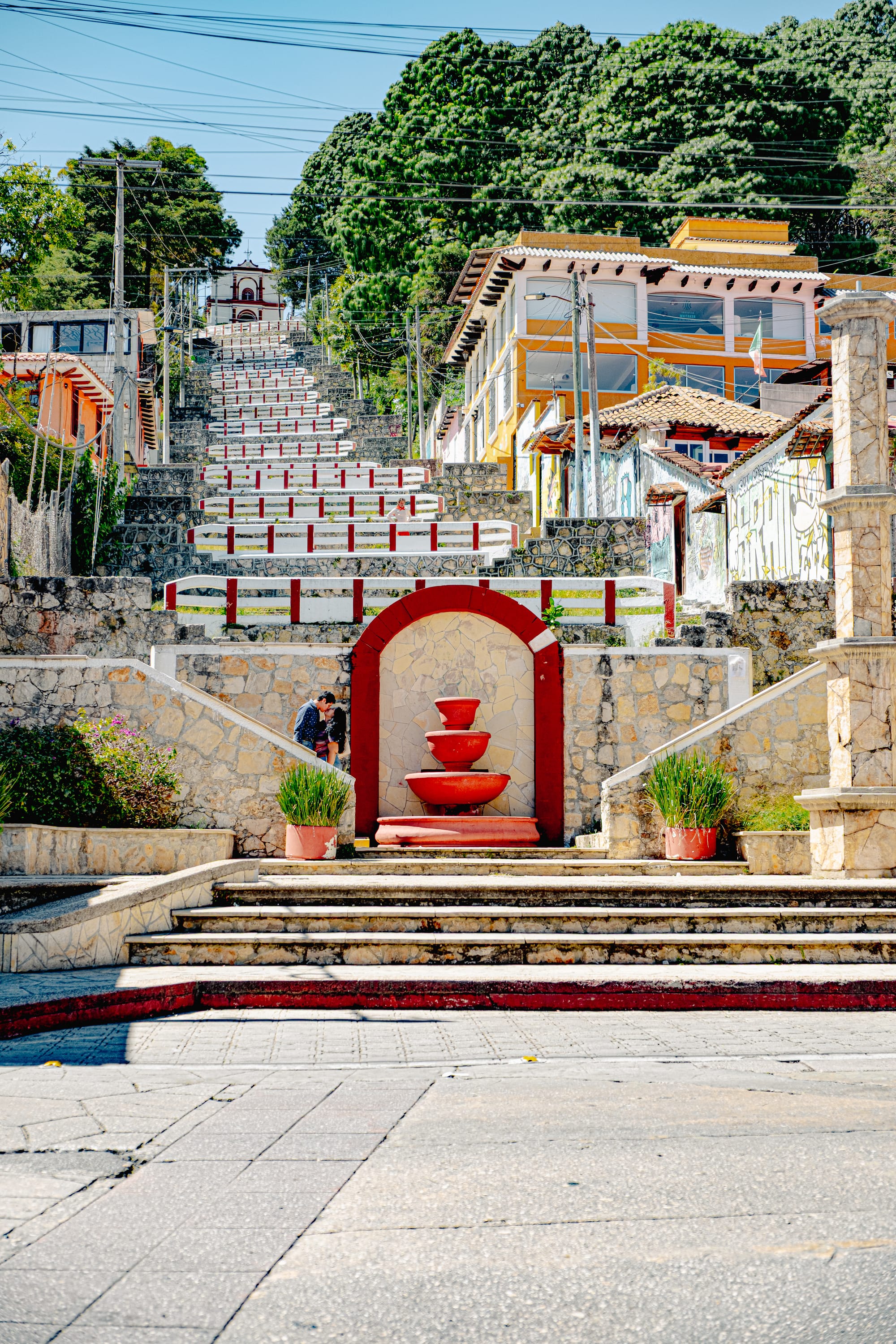
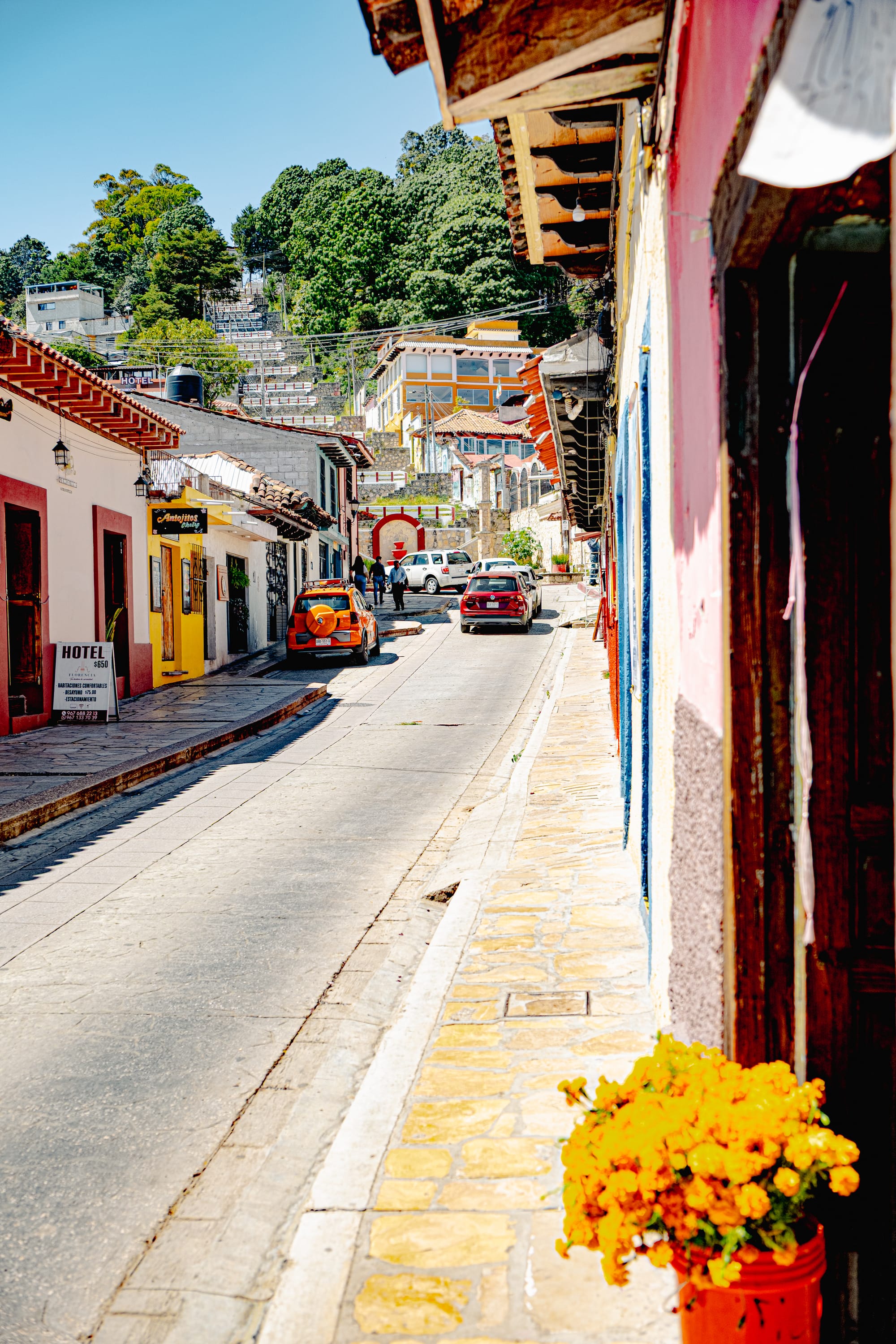
The zigzagging staircase leading up to Iglesia de San Cristóbalito
The climb begins at street level and unfolds gradually rather than in a single straight ascent. The staircase is wide and segmented, with landings that shift direction as it moves uphill. These turns break the climb into manageable sections and create a clear sense of progression. From the lower steps, the church is barely visible; it comes into view only toward the final stretch.
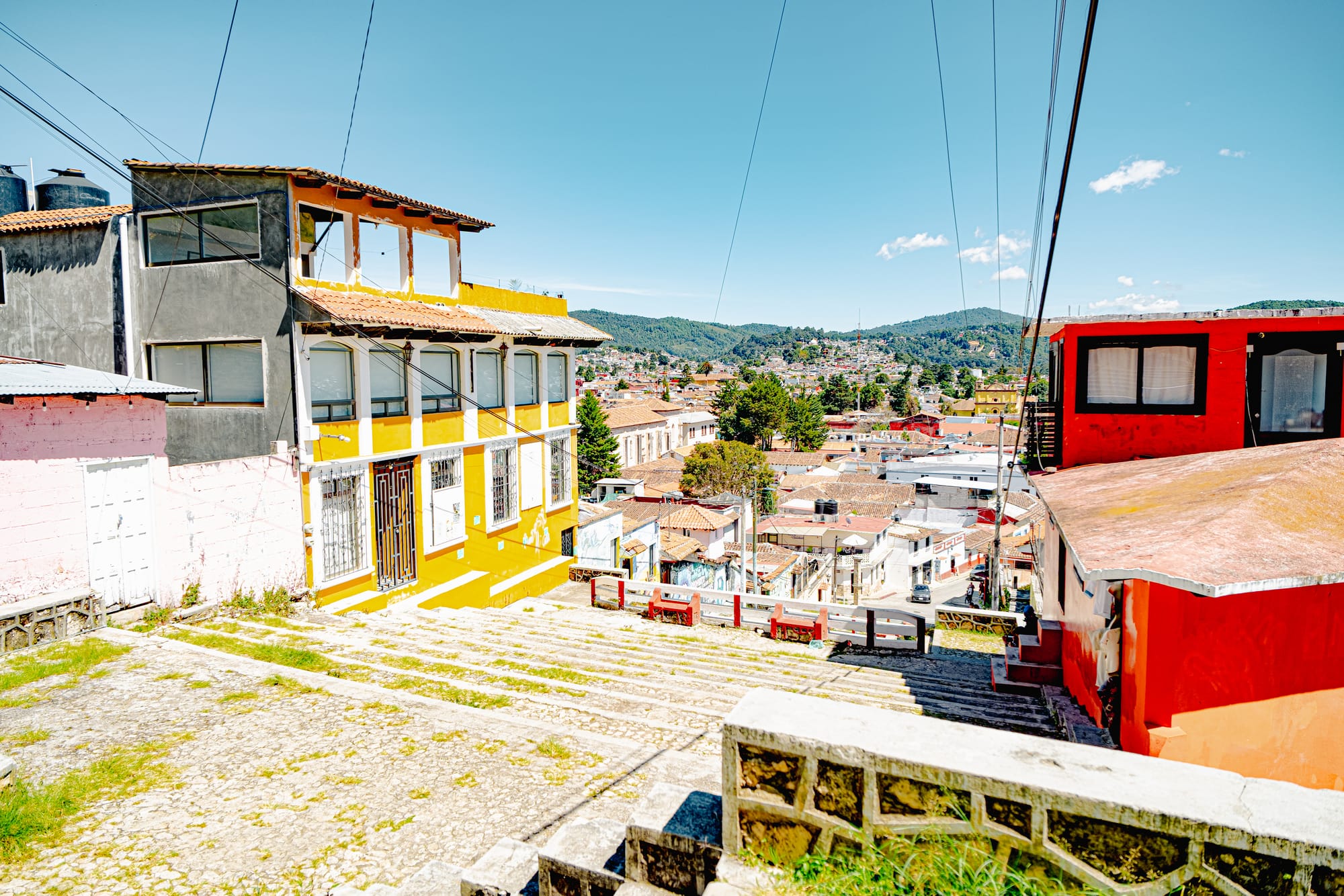
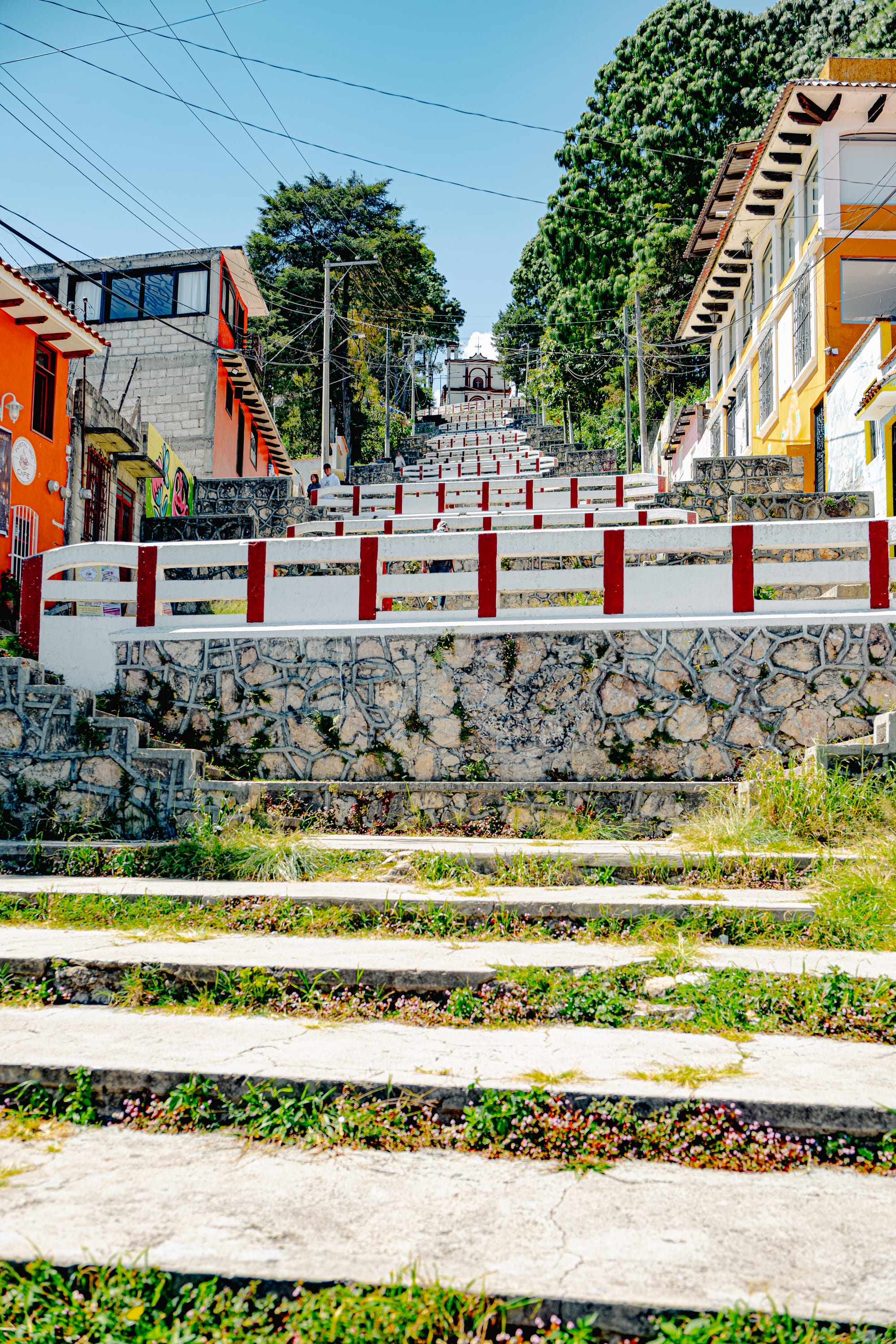
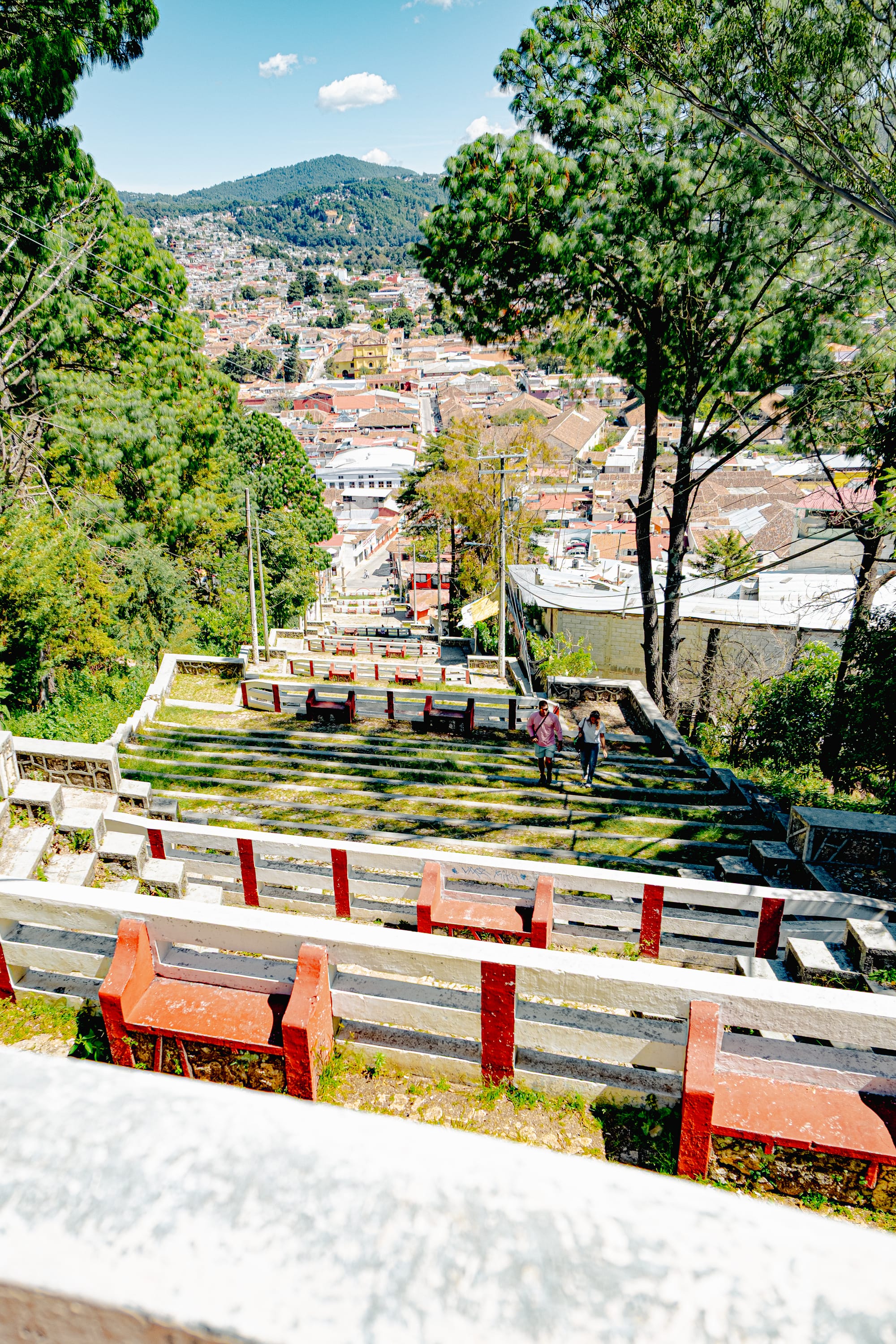
Looking up and back down the zigzagging staircase to Iglesia de San Cristóbalito
As you move upward, the surroundings change. Houses sit close to the steps, walls rise and fall alongside the path, and the city begins to open up behind you. The staircase functions as a pedestrian corridor through the neighborhood, used daily by residents heading up and down rather than only by visitors walking to the church.
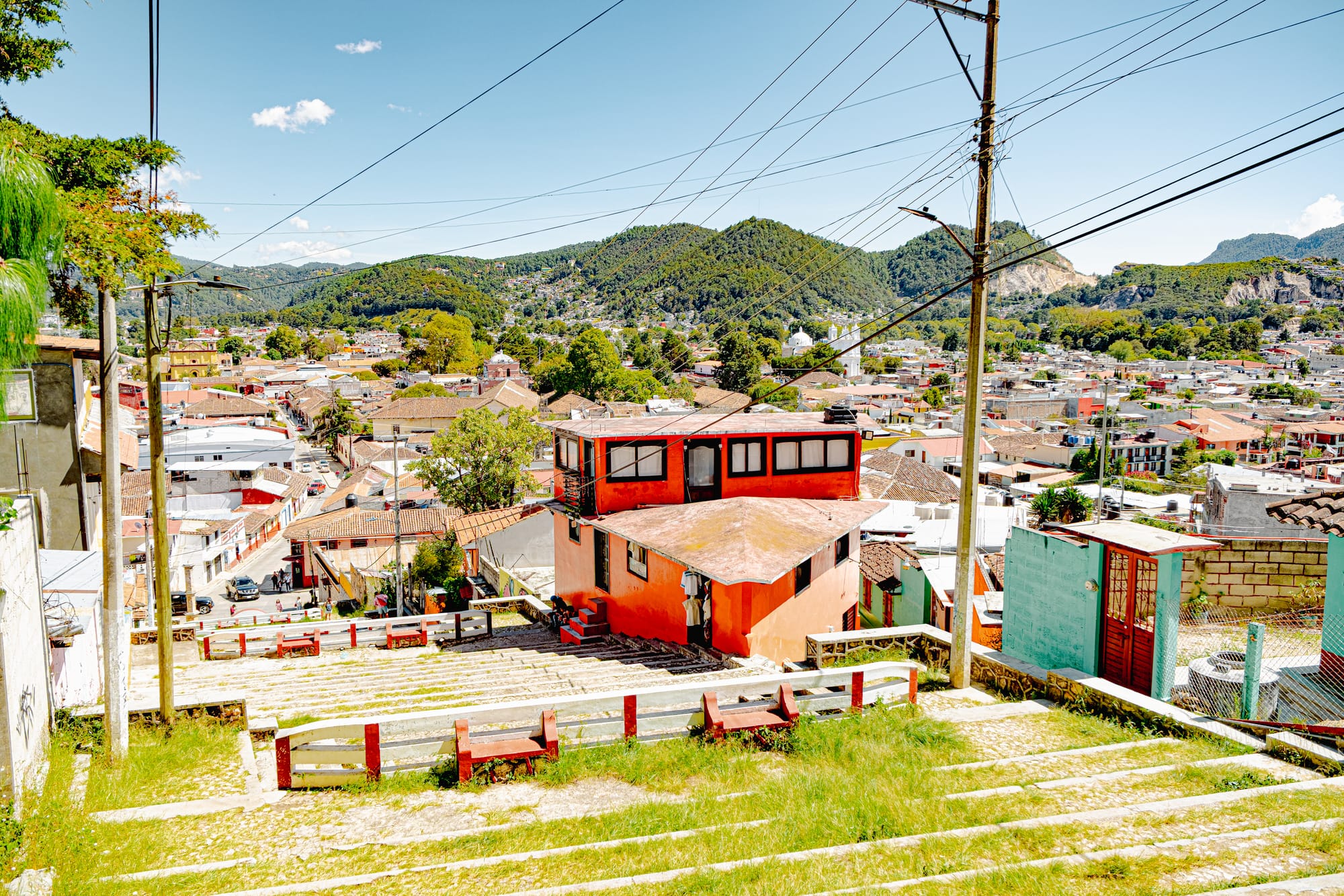
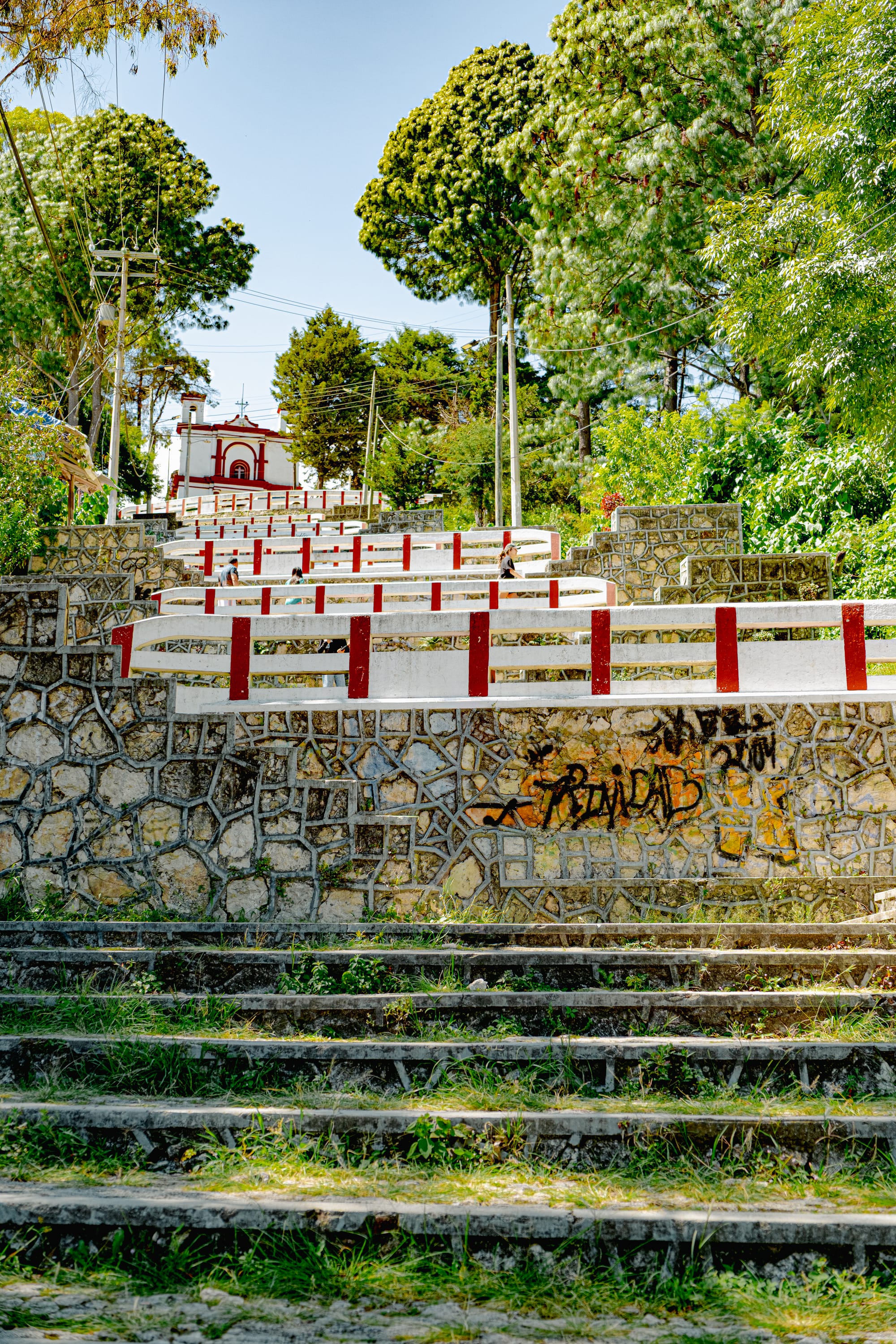
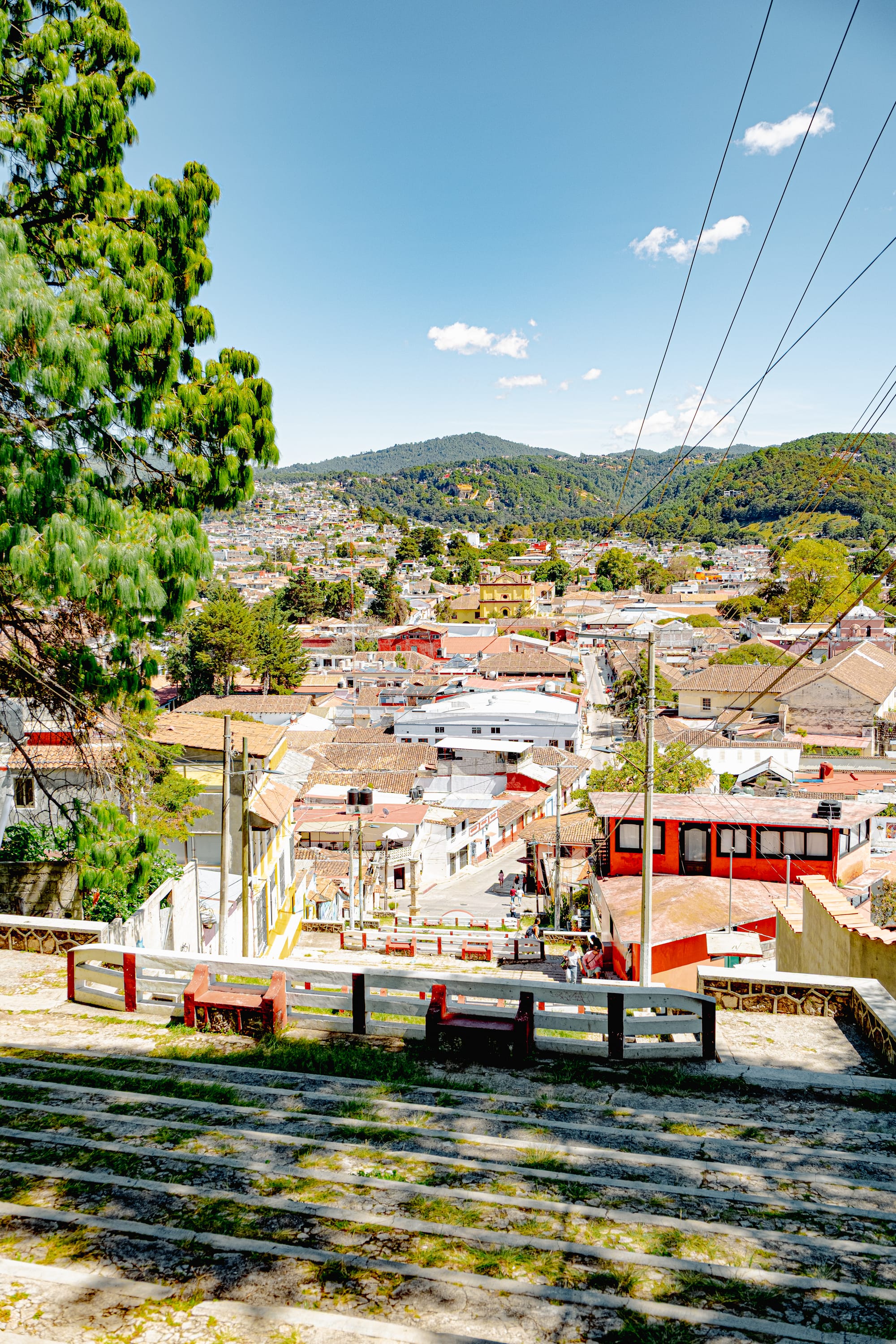
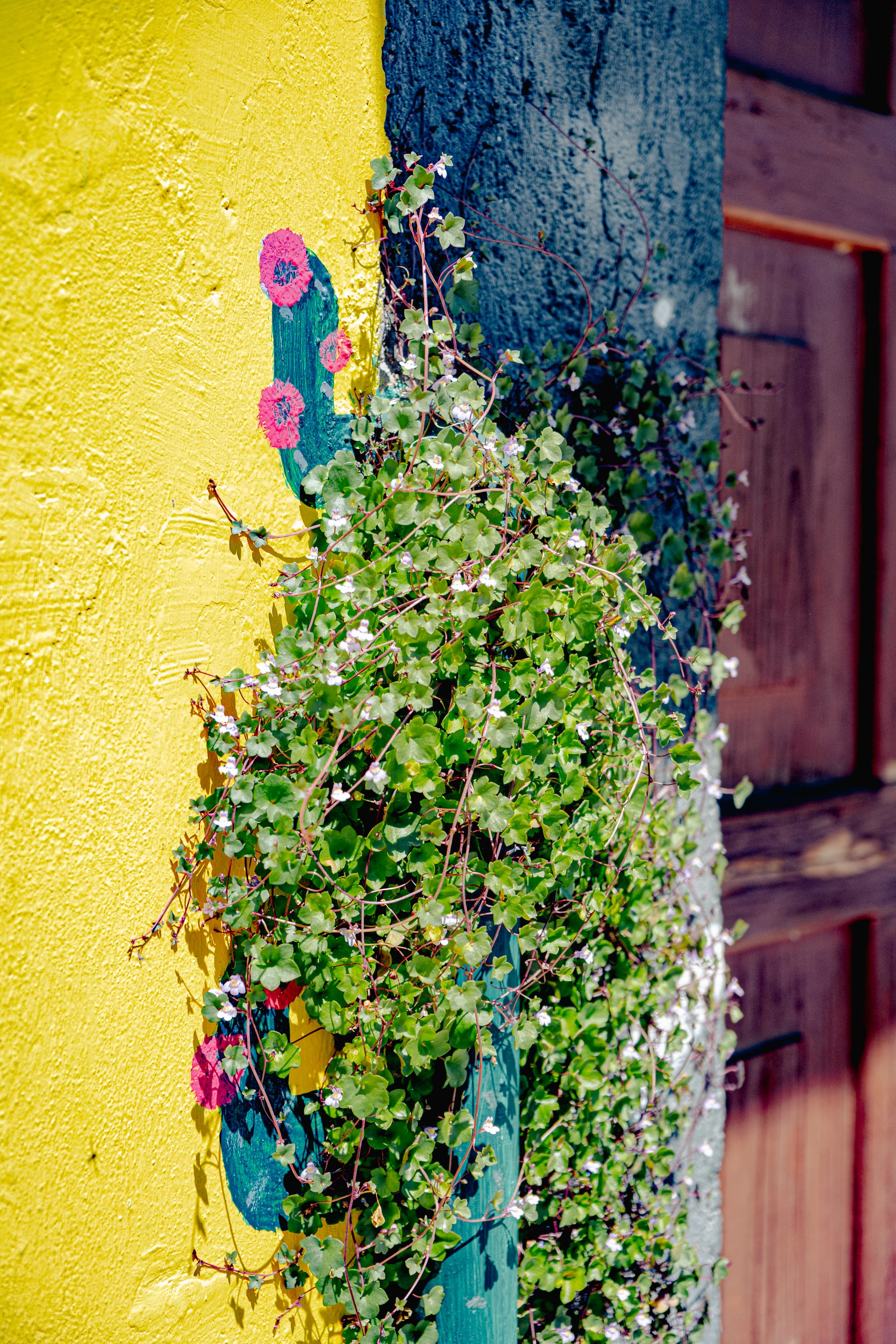
Details along the staircase climb
One of the most distinctive features of this route is the street art that lines the ascent. Murals appear on retaining walls, house façades, and small corner surfaces along the steps. The artwork ranges from political imagery and references to Indigenous identity to abstract figures, animals, and symbolic scenes. Some murals are carefully maintained; others show signs of age, layering, or partial repainting. Together, they give the climb a strong visual rhythm and make the approach feel active rather than purely functional.
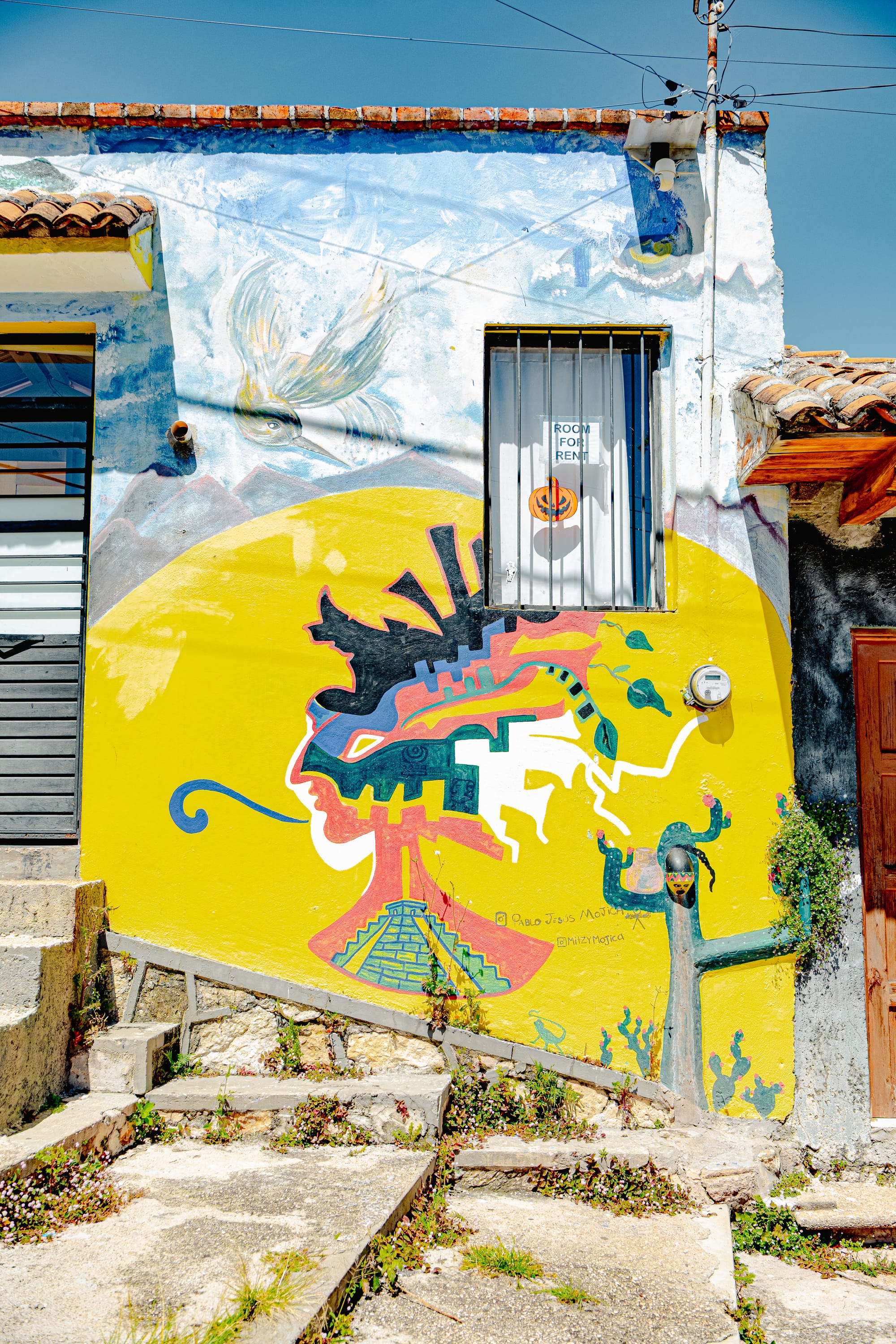
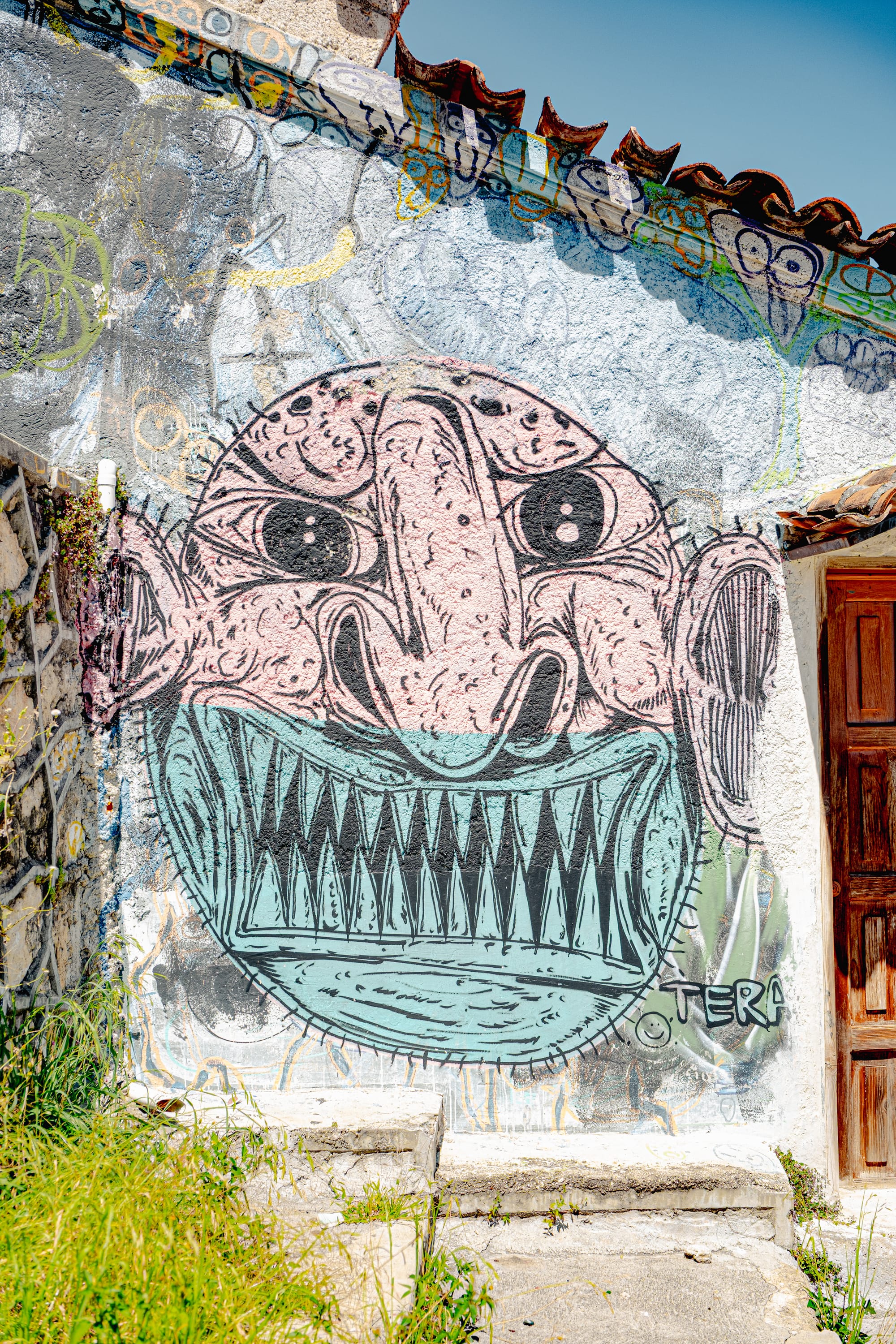
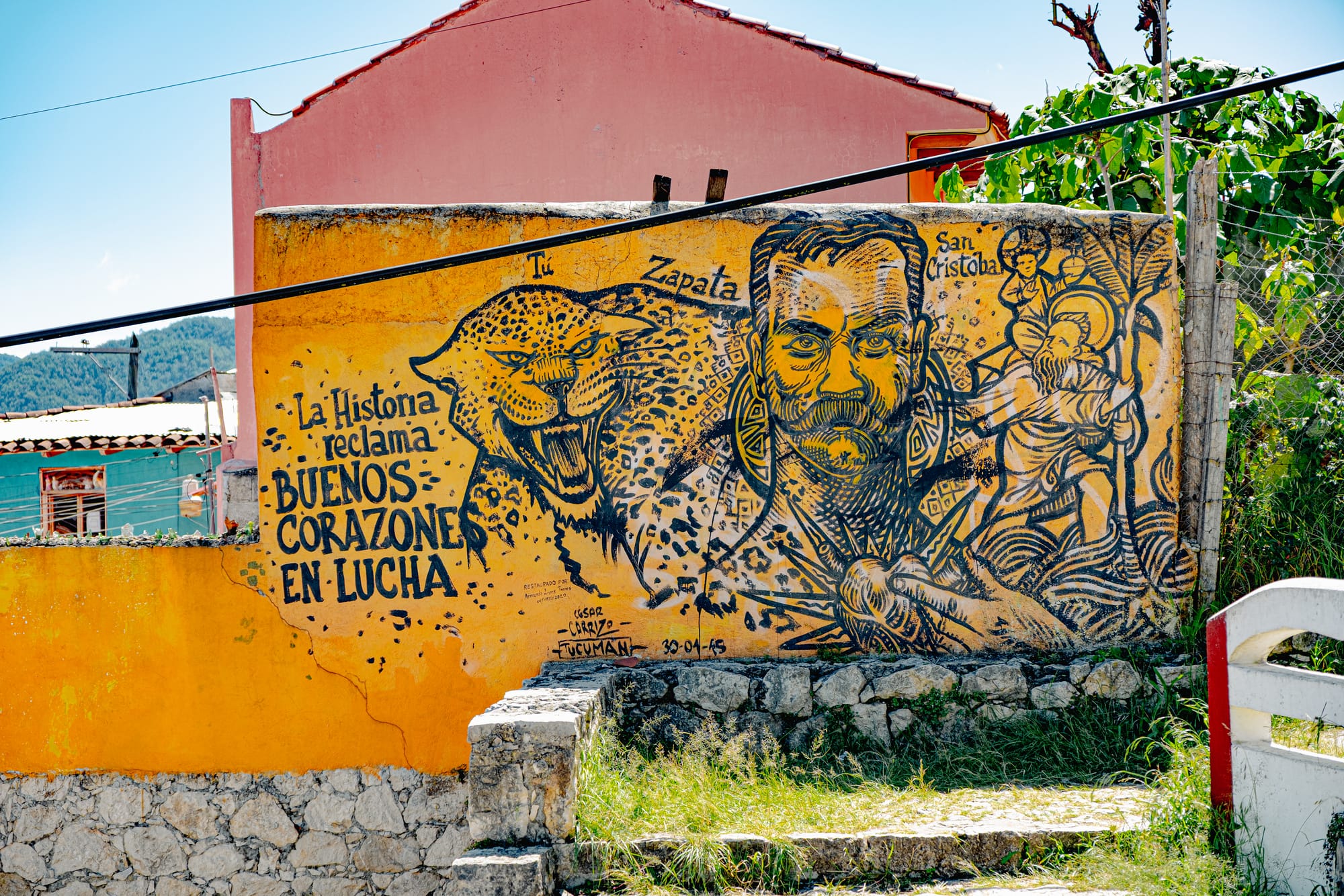
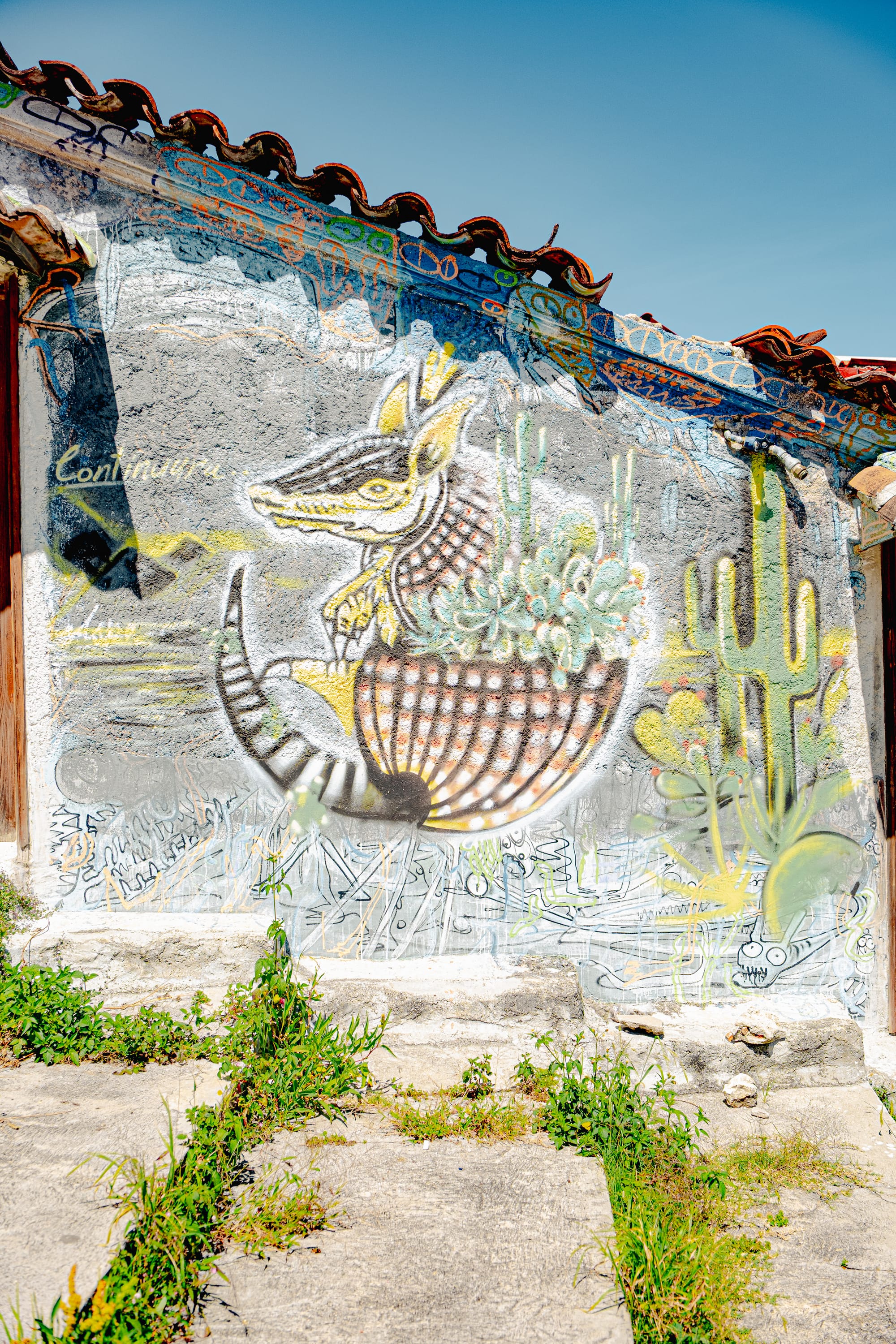
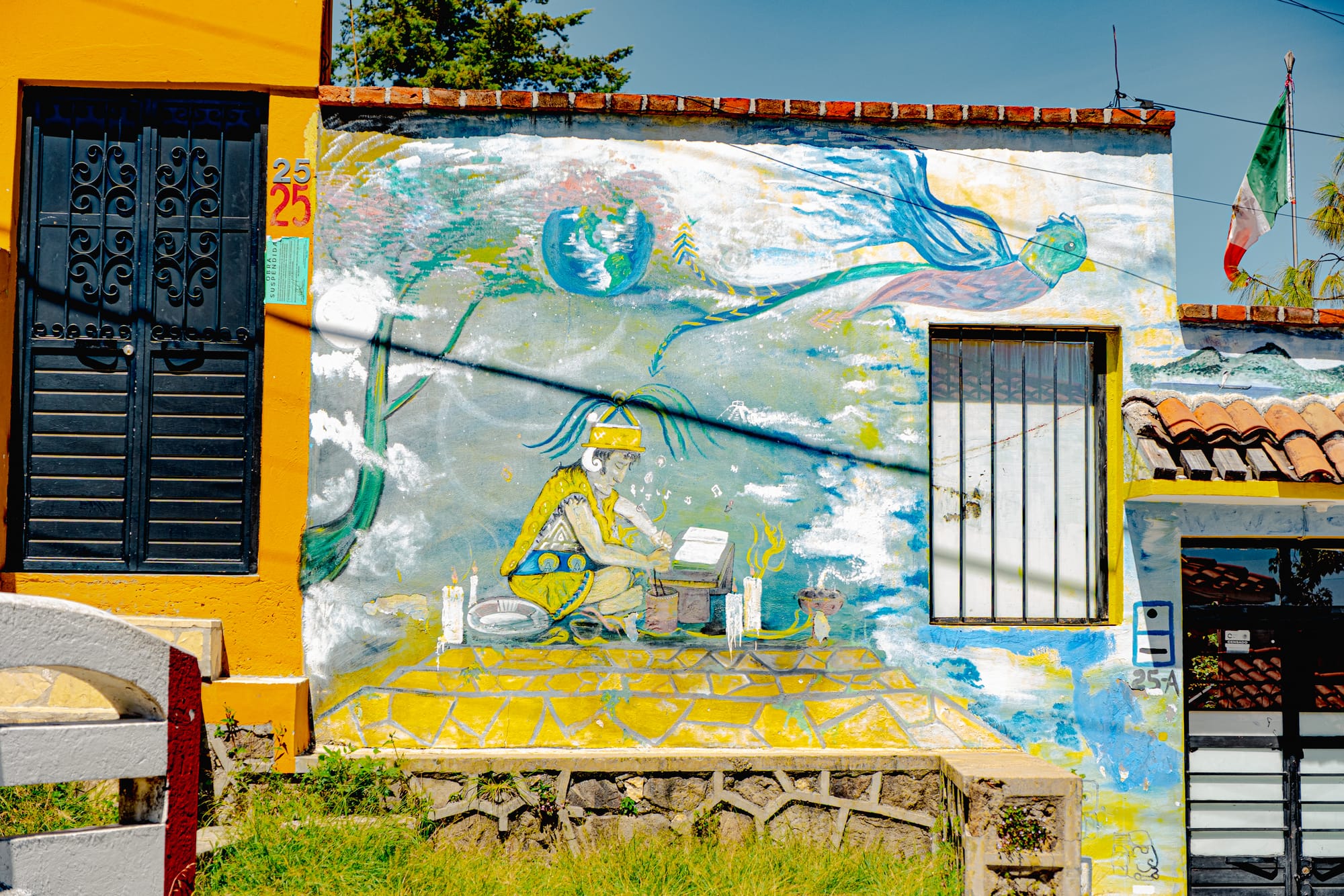
Interspersed with the murals are small details: potted plants, hand-painted steps, low walls where people stop to rest, and occasional views back toward the city. These pauses offer natural stopping points, both for catching your breath and for taking in the surroundings. The staircase is not hidden or enclosed; it remains open to the neighborhood at every stage.
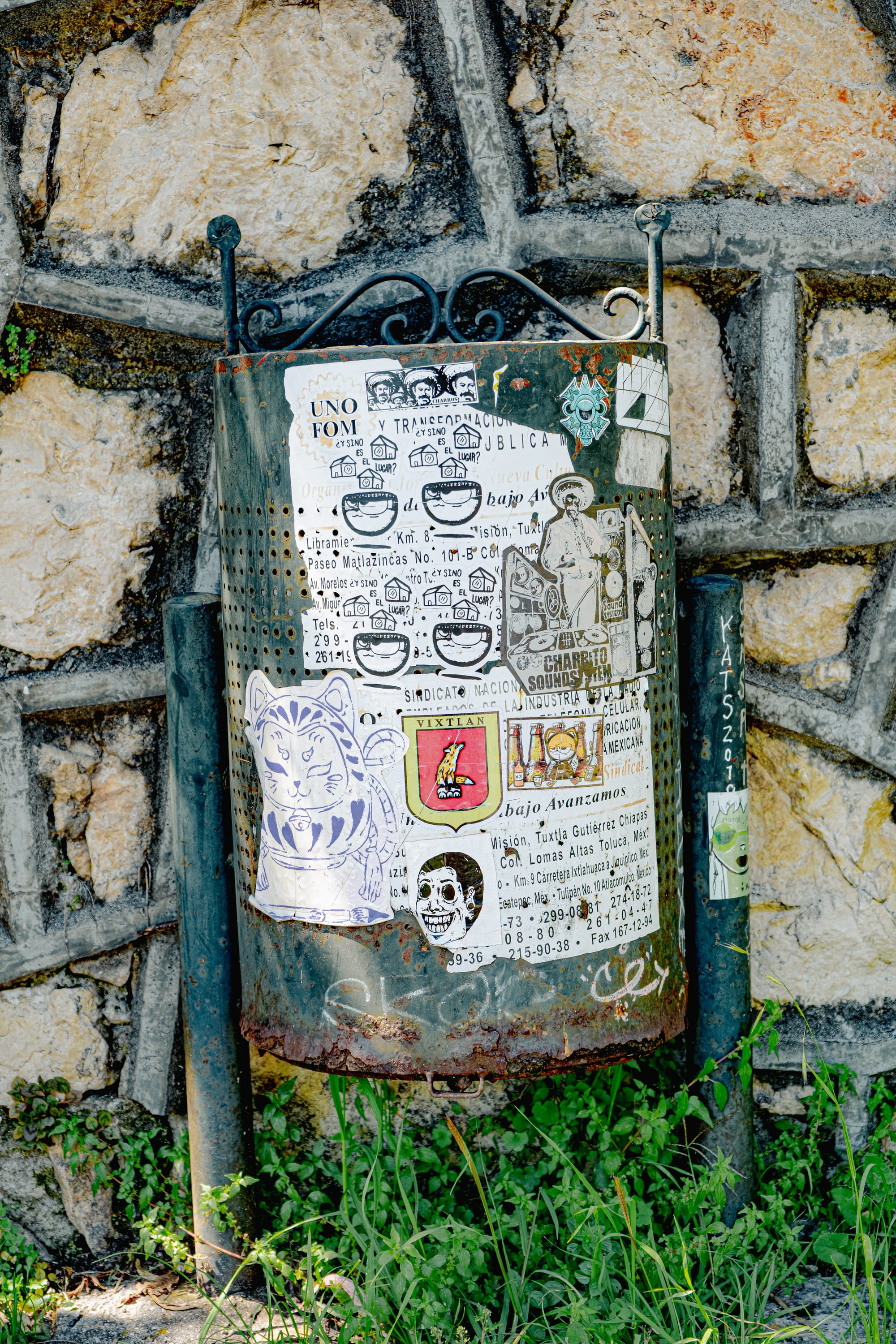
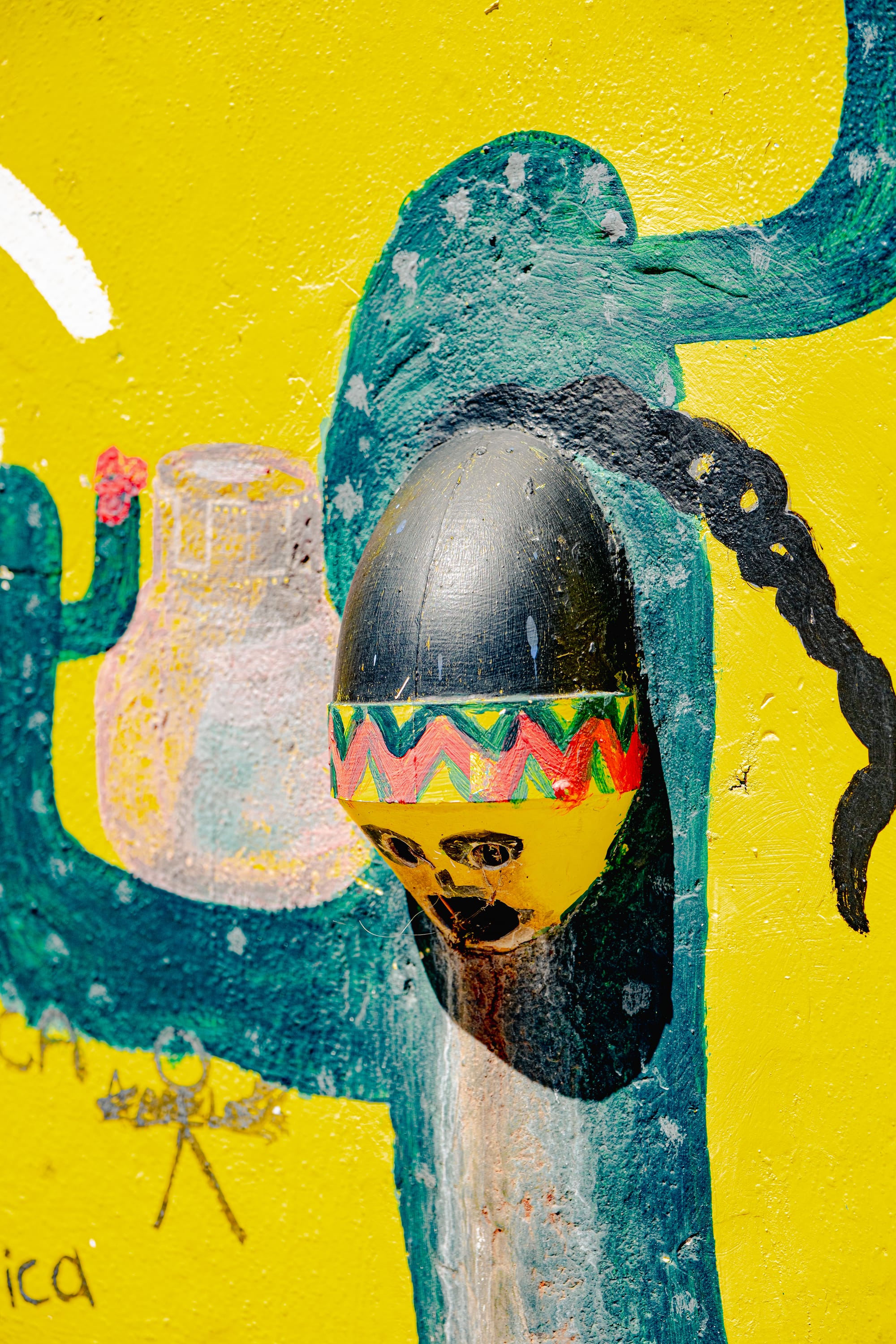
Posters, stickers, and painted figures line the route up to Iglesia de San Cristóbalito
At the top, the steps level out into a small open area in front of the church. From here, San Cristóbal de las Casas spreads out below, with rooftops, streets, and distant hills visible in multiple directions. This viewpoint is one of the main reasons people make the climb, often lingering longer here than inside the church itself.
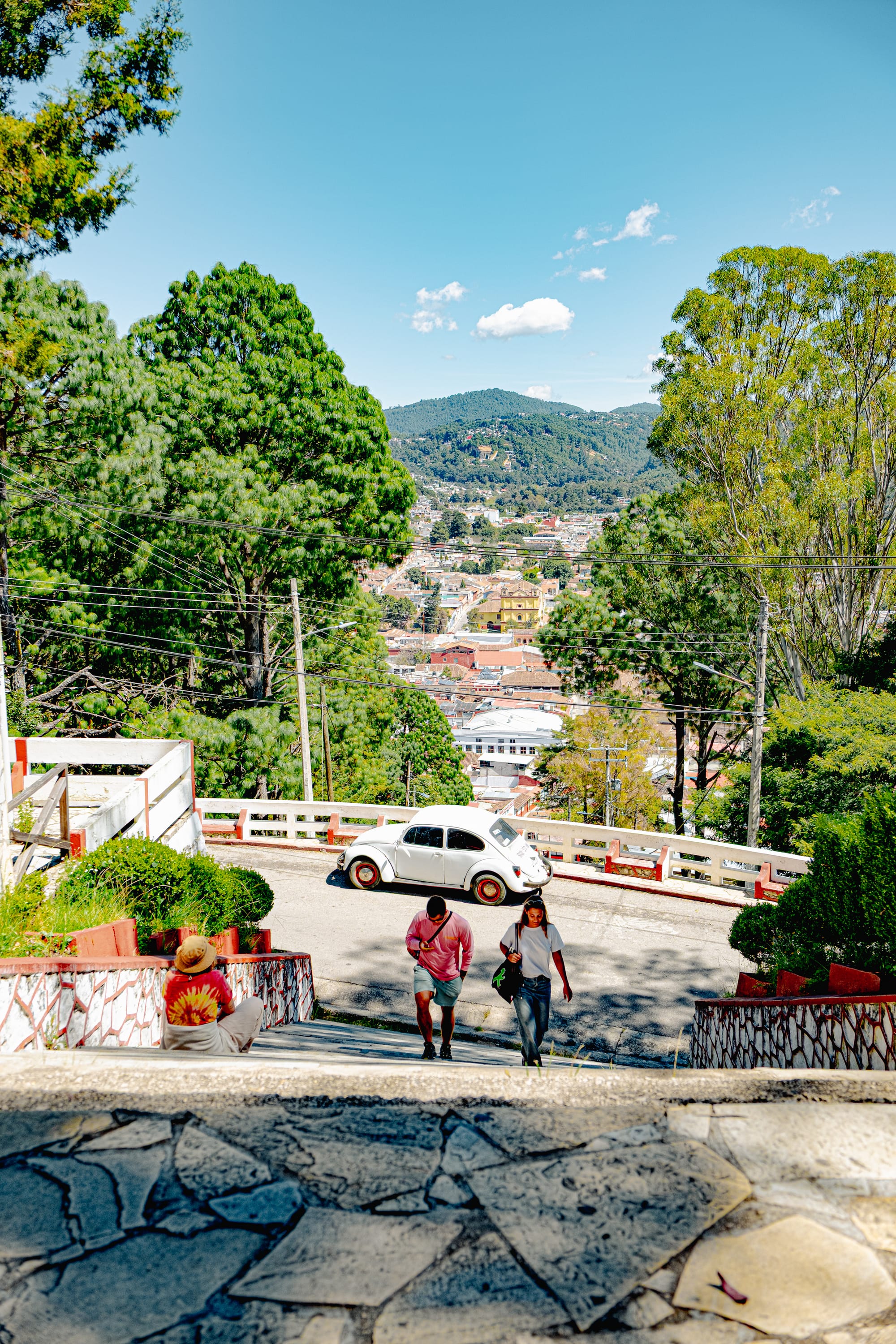
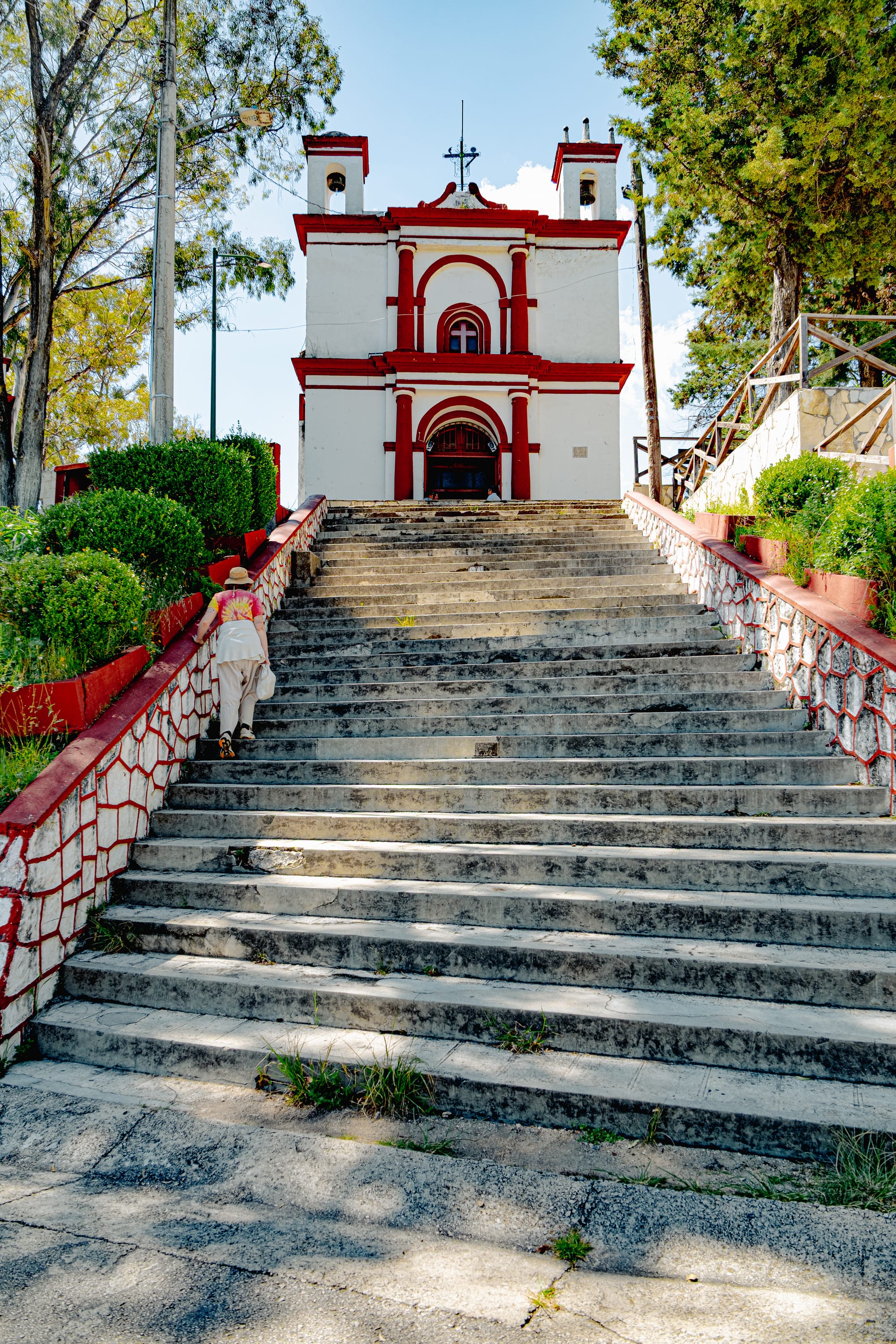
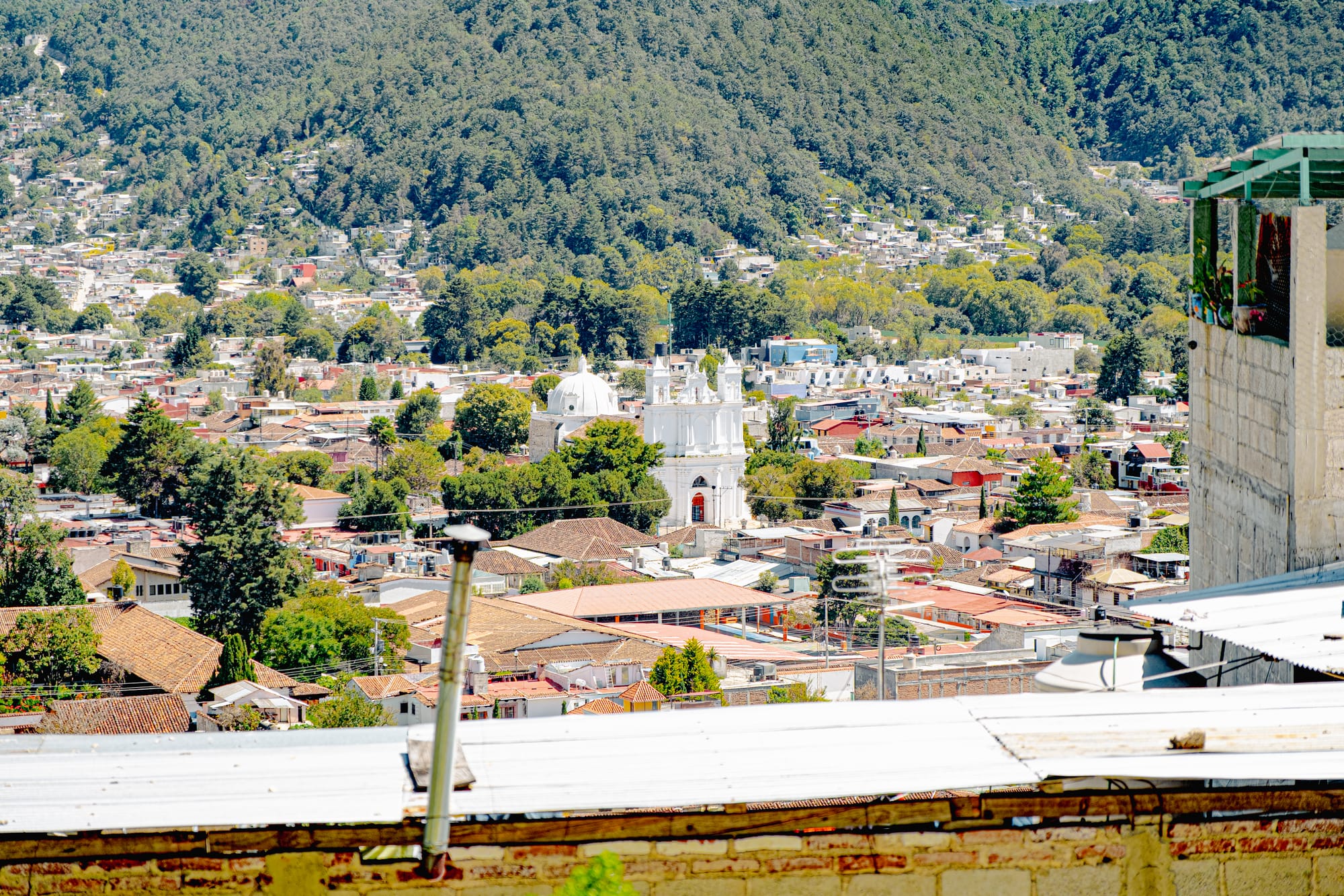
The church building is modest in scale and design. Its façade is simple, typically painted in yellow or ochre tones, with minimal decorative elements. The interior is equally restrained, consisting of a single nave and basic religious imagery, serving a local congregation rather than functioning as a major architectural landmark.
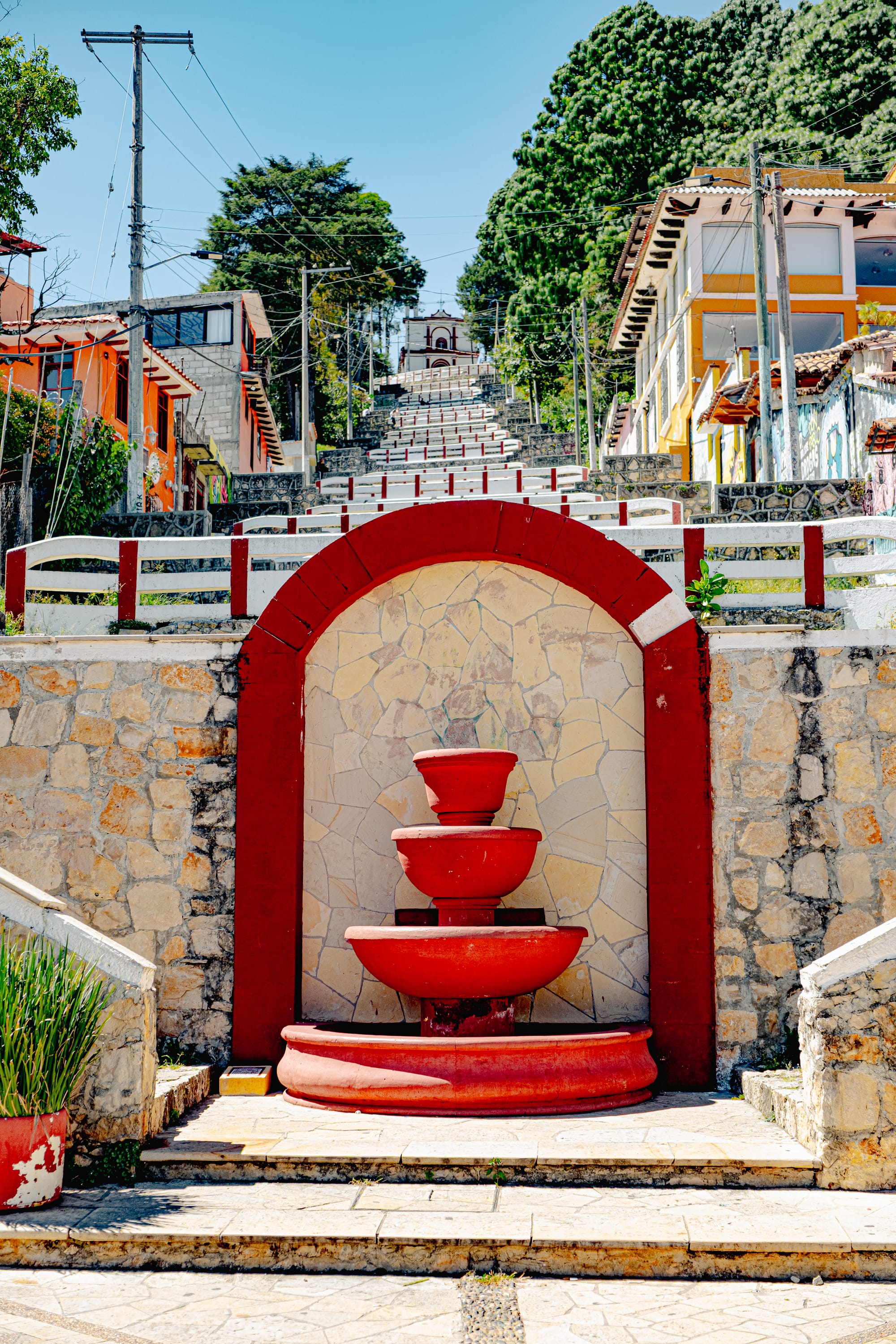
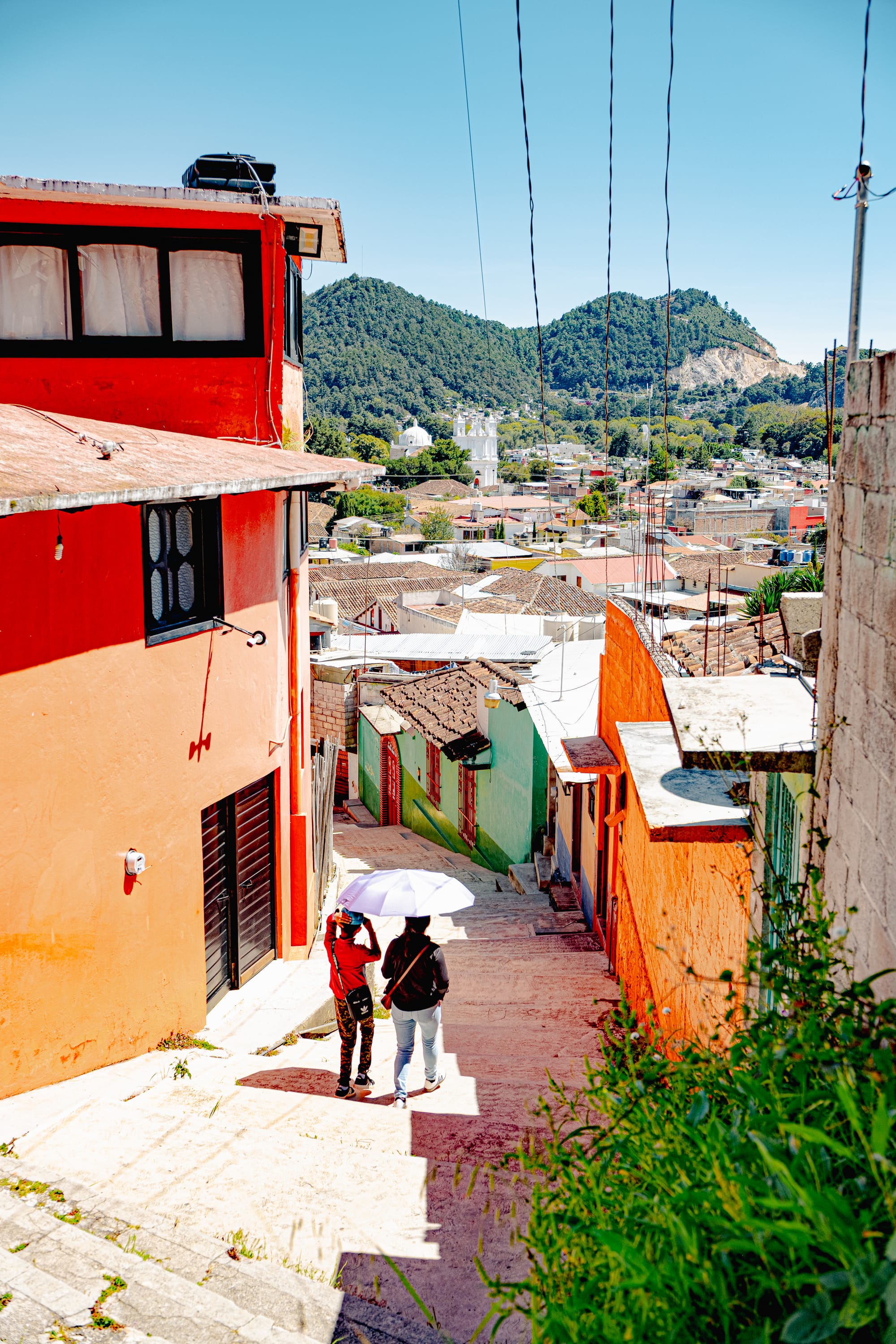
Along the zigzagging staircase to Iglesia de San Cristóbalito
At San Cristóbalito, the emphasis is less on the structure and more on the route that leads to it. The staircase, murals, and shifting views shape how the church is experienced, turning the climb into a gradual transition from the dense streets below to a quieter, elevated vantage point above the city.
Catedral de San Cristóbal Mártir
Catedral de San Cristóbal Mártir sits on the north side of Plaza 31 de Marzo, directly facing the city’s main square. Painted in a warm yellow with red detailing, it is one of the most recognizable buildings in San Cristóbal de las Casas and functions as a central reference point for both locals and visitors moving through the historic center.
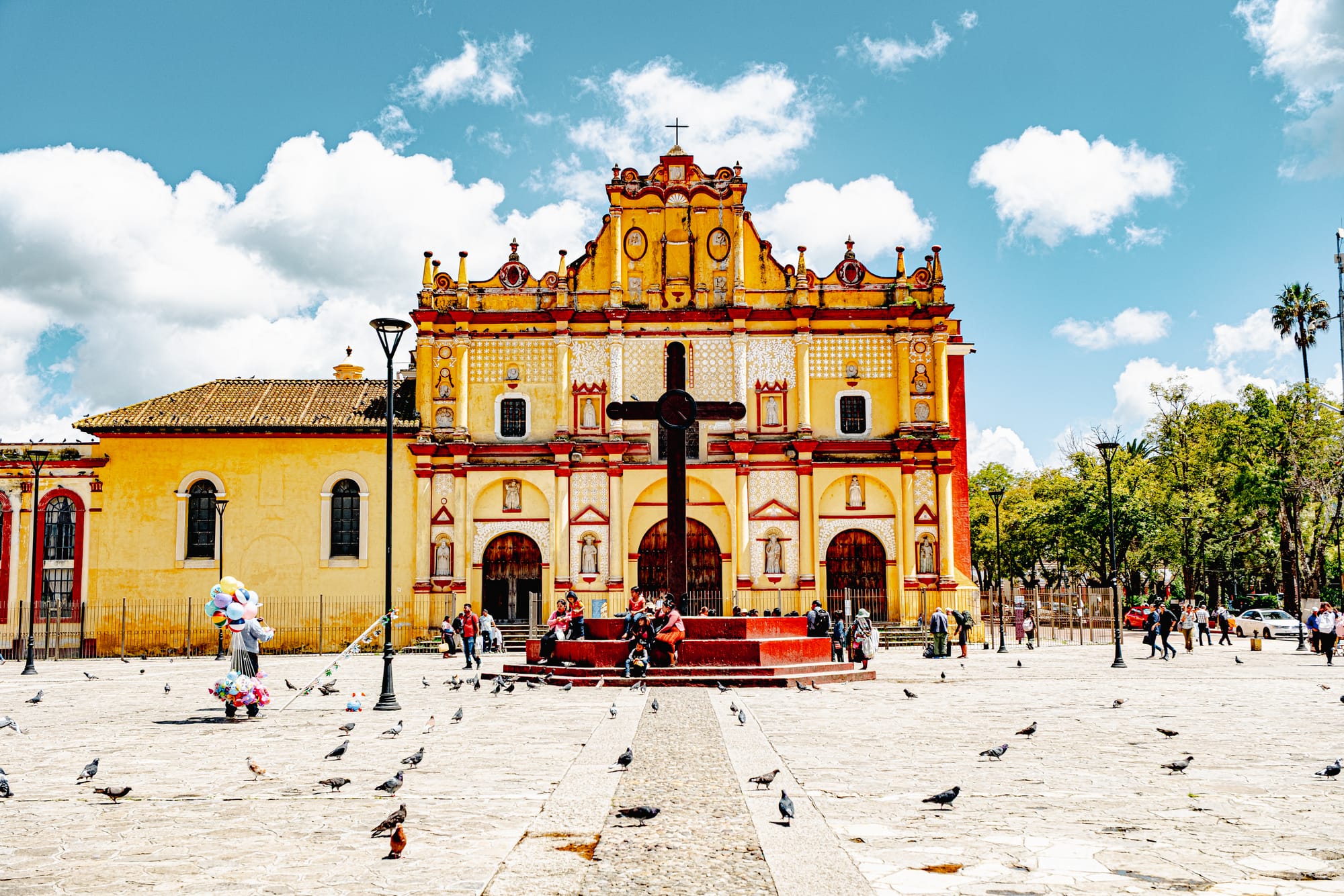
The cathedral was originally founded in the early 16th century, shortly after the Spanish establishment of the city. While elements of the original structure remain, the building as it appears today largely dates to the 17th century, with multiple restorations following damage caused by earthquakes—most notably in 1902 and 1975. As a result, the cathedral reflects a layered architectural history shaped as much by repair and adaptation as by initial design.
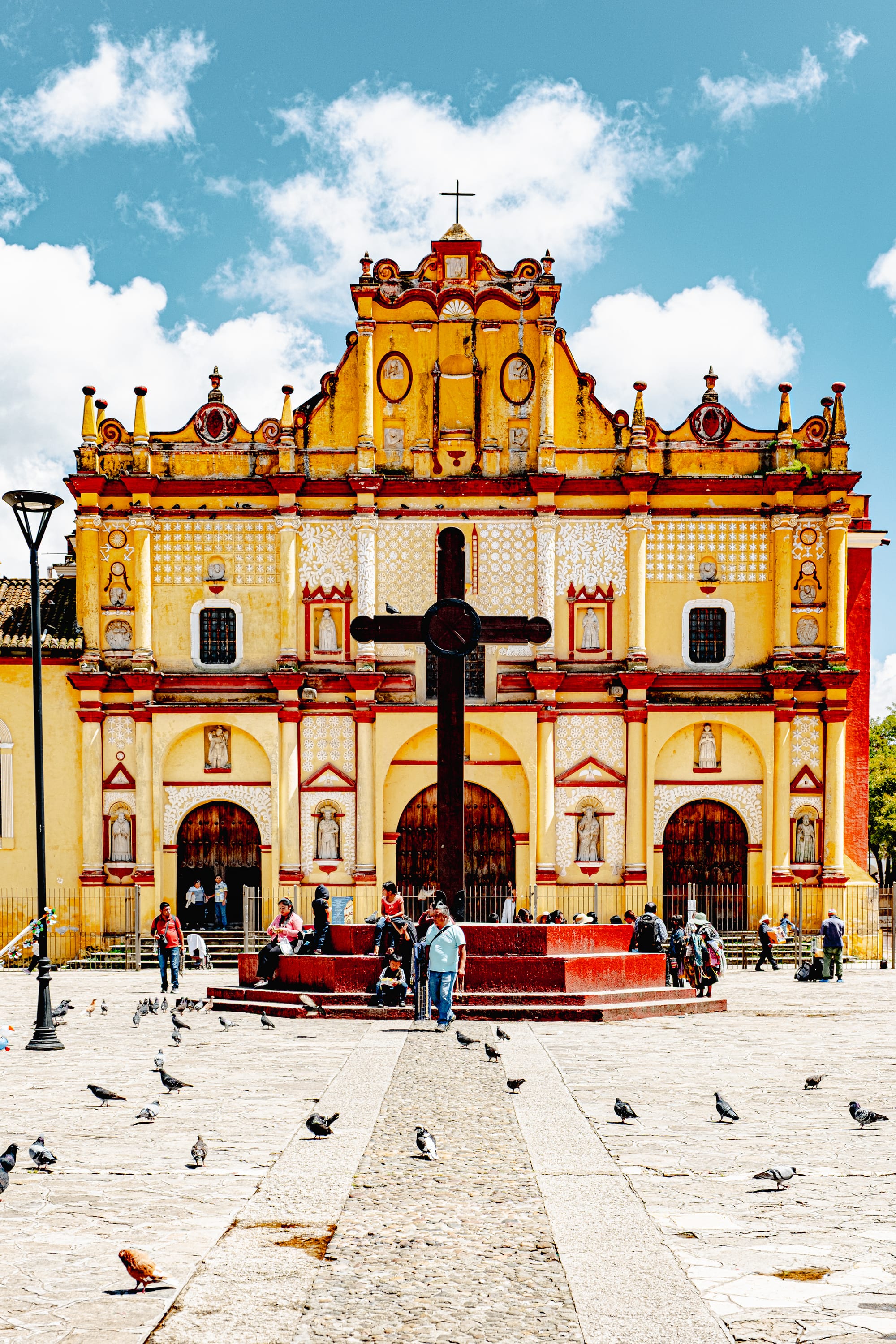
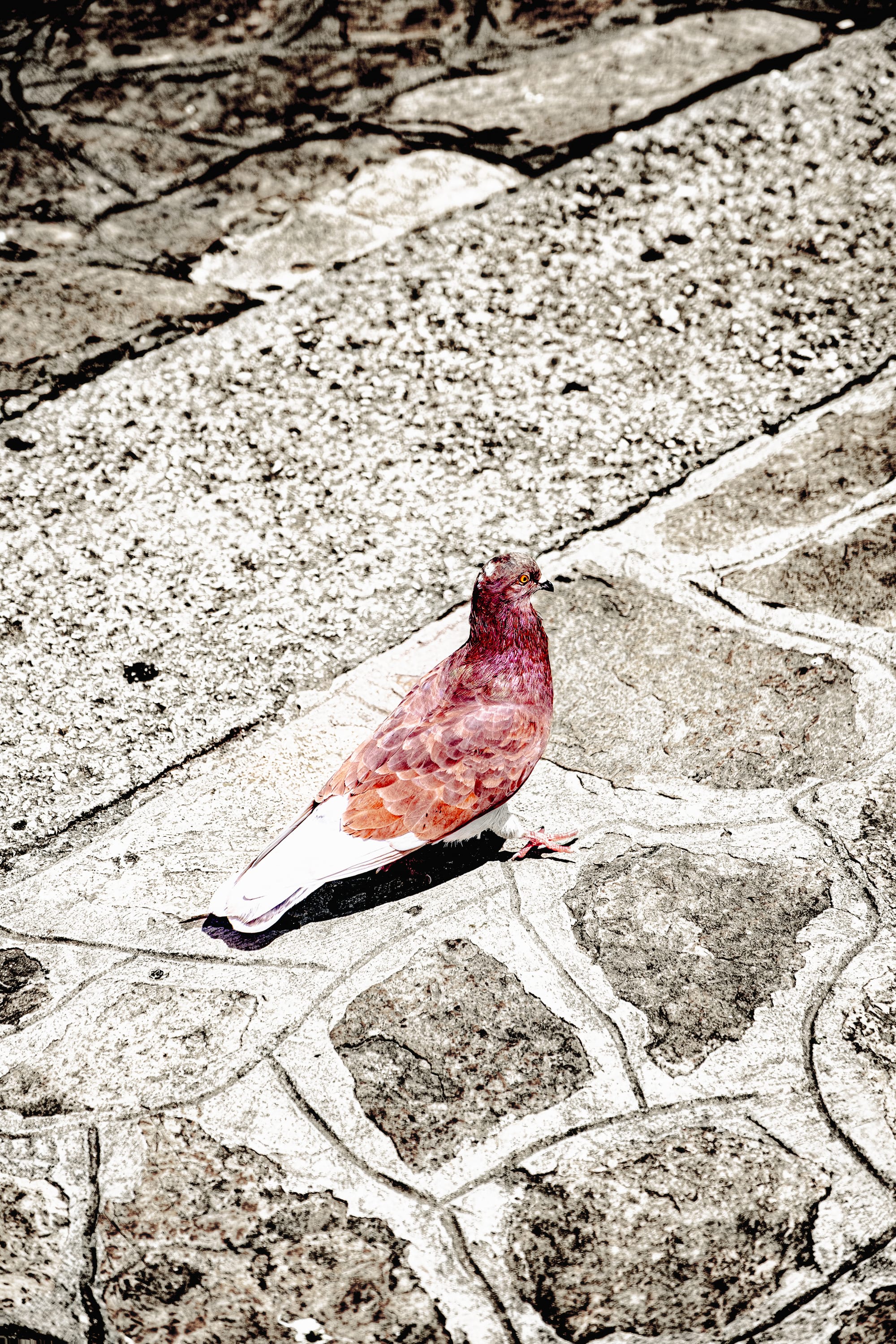
Pigeons dot the plaza outside Catedral de San Cristóbal Mártir
Architecturally, the cathedral is an example of Chiapas Baroque, a regional interpretation of Baroque style that tends to be more restrained than what is found in central Mexico. The façade is symmetrical and divided into horizontal sections, with niches containing saint figures, arched doorways, and decorative plasterwork. The ornamentation is present but not excessive, and the overall effect is solid and orderly rather than elaborate. The red trim outlining architectural elements contrasts with the yellow walls, making the structure visually prominent in the open plaza.
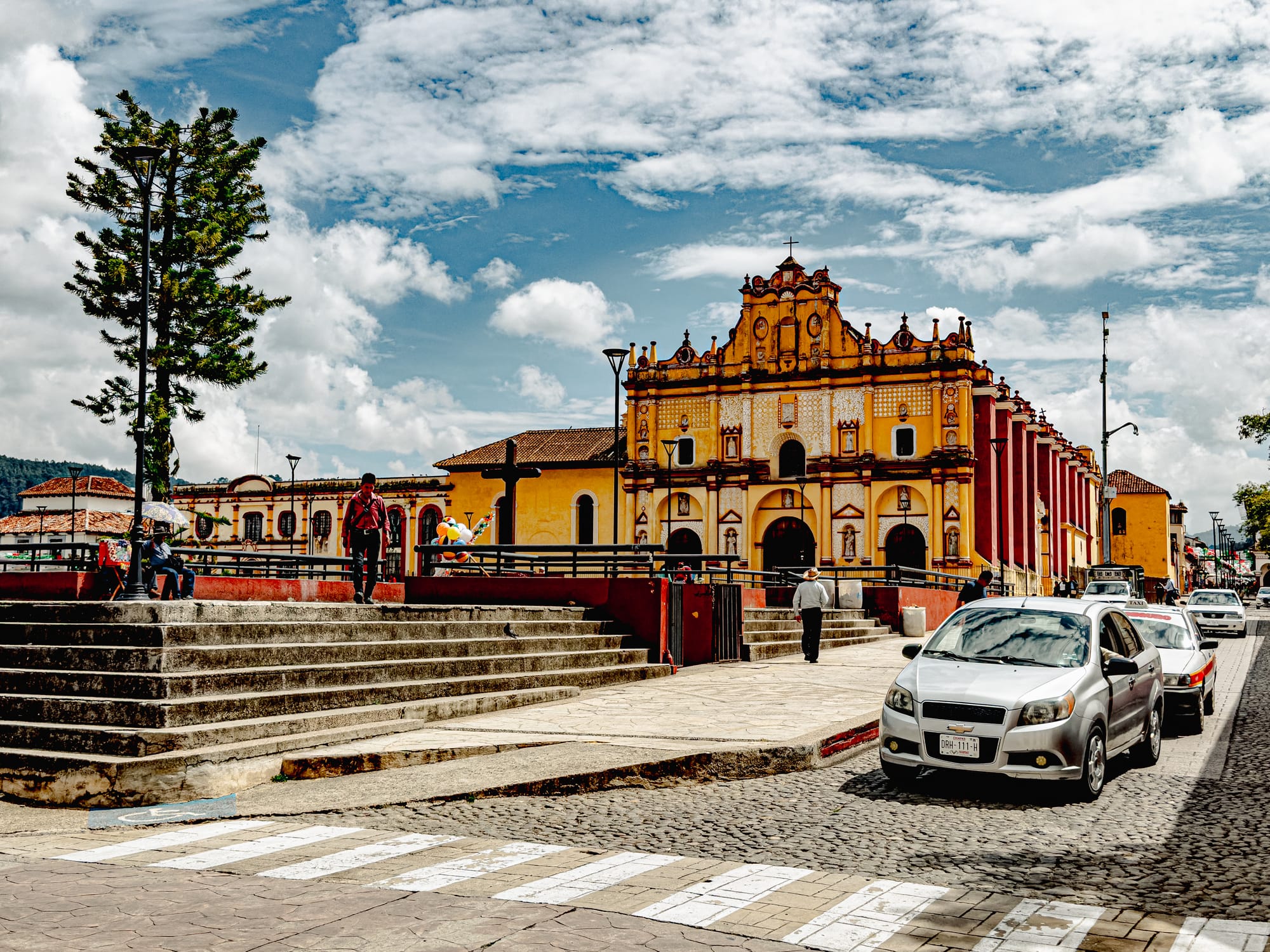
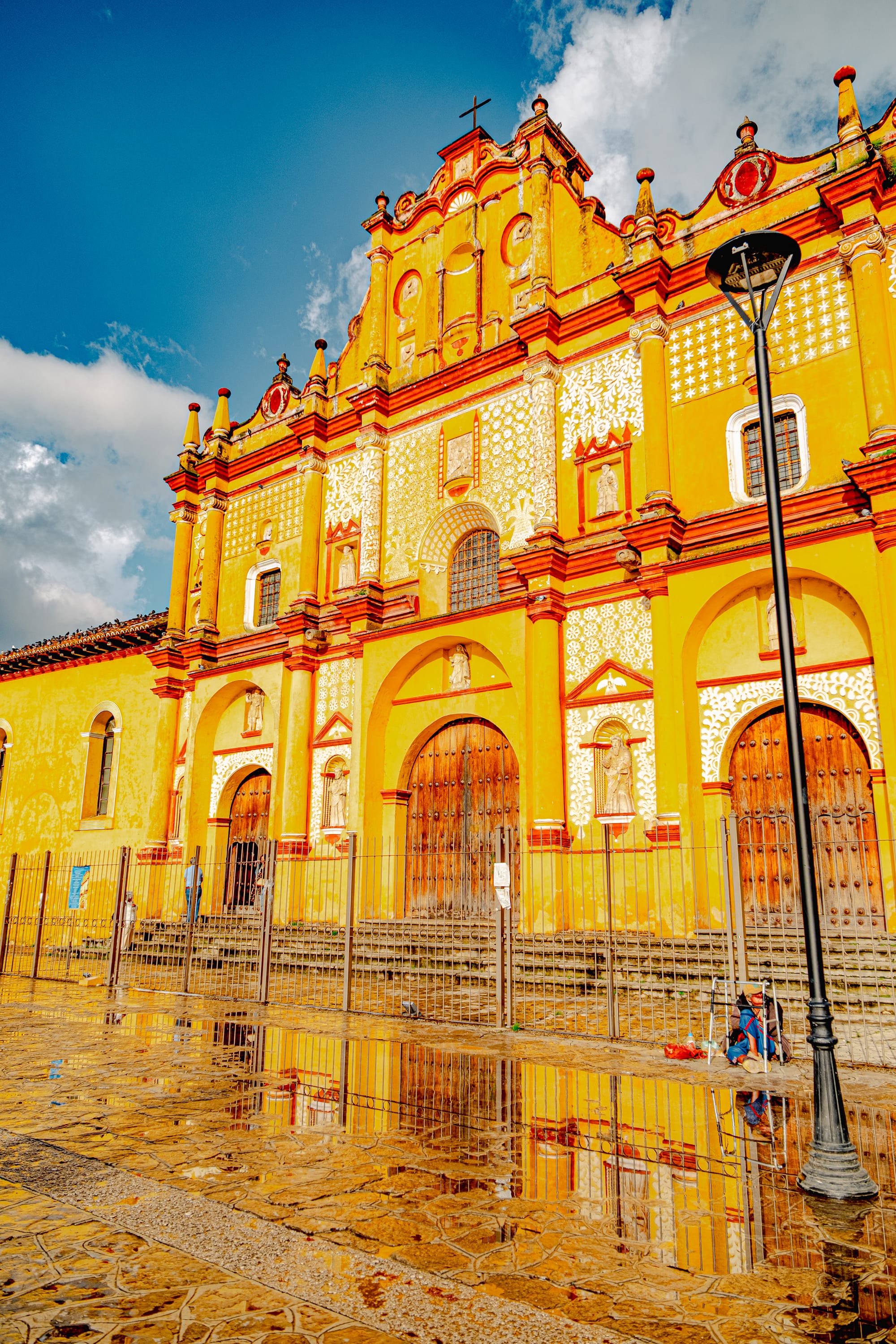
Catedral de San Cristóbal Mártir seen from street level and the plaza
In front of the cathedral stands a large wooden cross set in the plaza itself, separate from the building. This cross is a common gathering point and often appears in photographs of the square. The surrounding space is active throughout the day, with people resting on the low walls, street vendors selling balloons or snacks, and pigeons moving across the stone paving. The cathedral is not fenced off or elevated; it opens directly onto this public space and is closely integrated into everyday city life.
The cathedral is dedicated to Saint Christopher, the patron saint of travelers. This dedication is historically significant given San Cristóbal’s role as a regional hub and its long history of movement—religious, commercial, and political—through the Chiapas highlands. Today, the cathedral serves as the seat of the local diocese and remains an active place of worship.
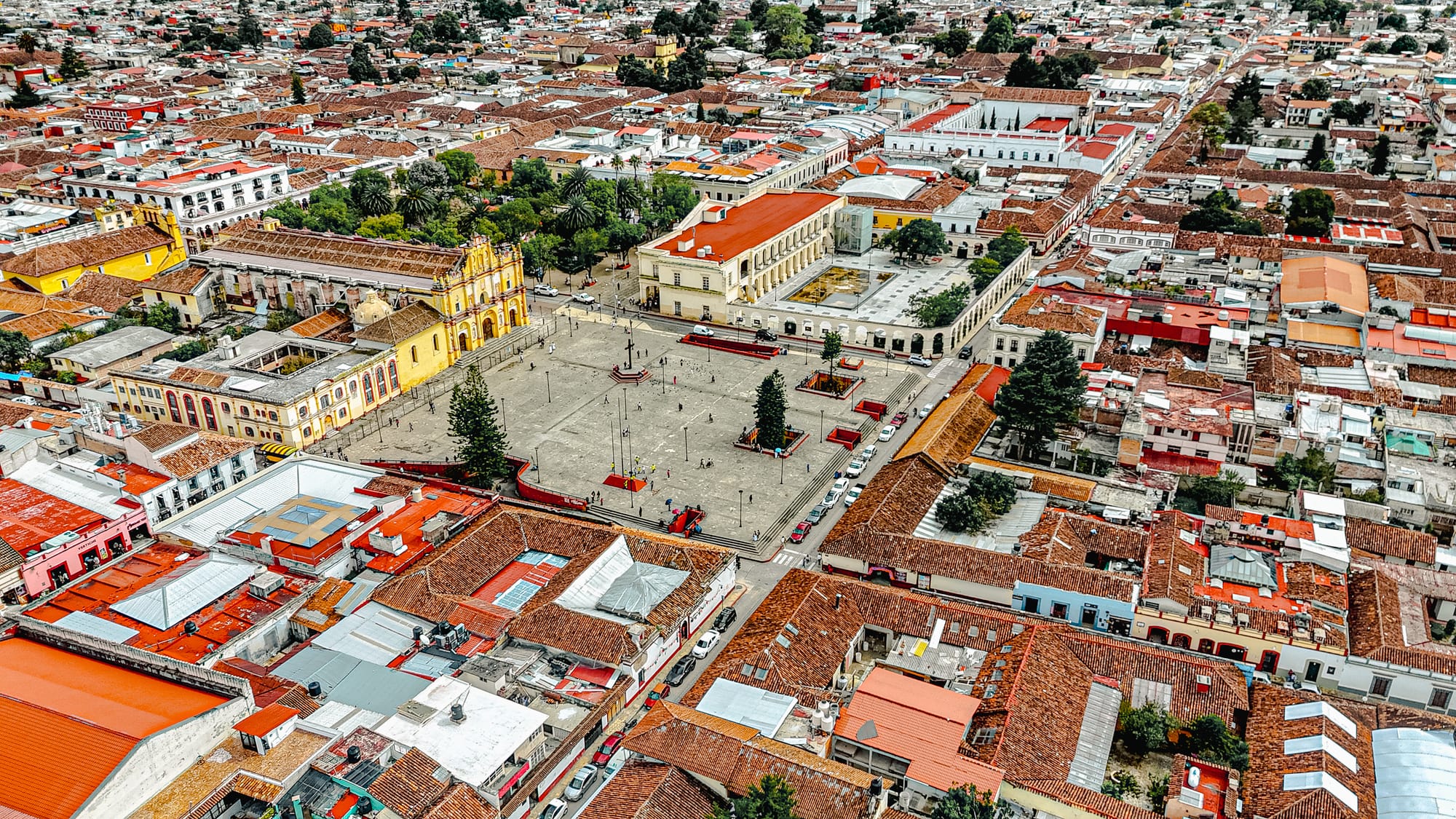
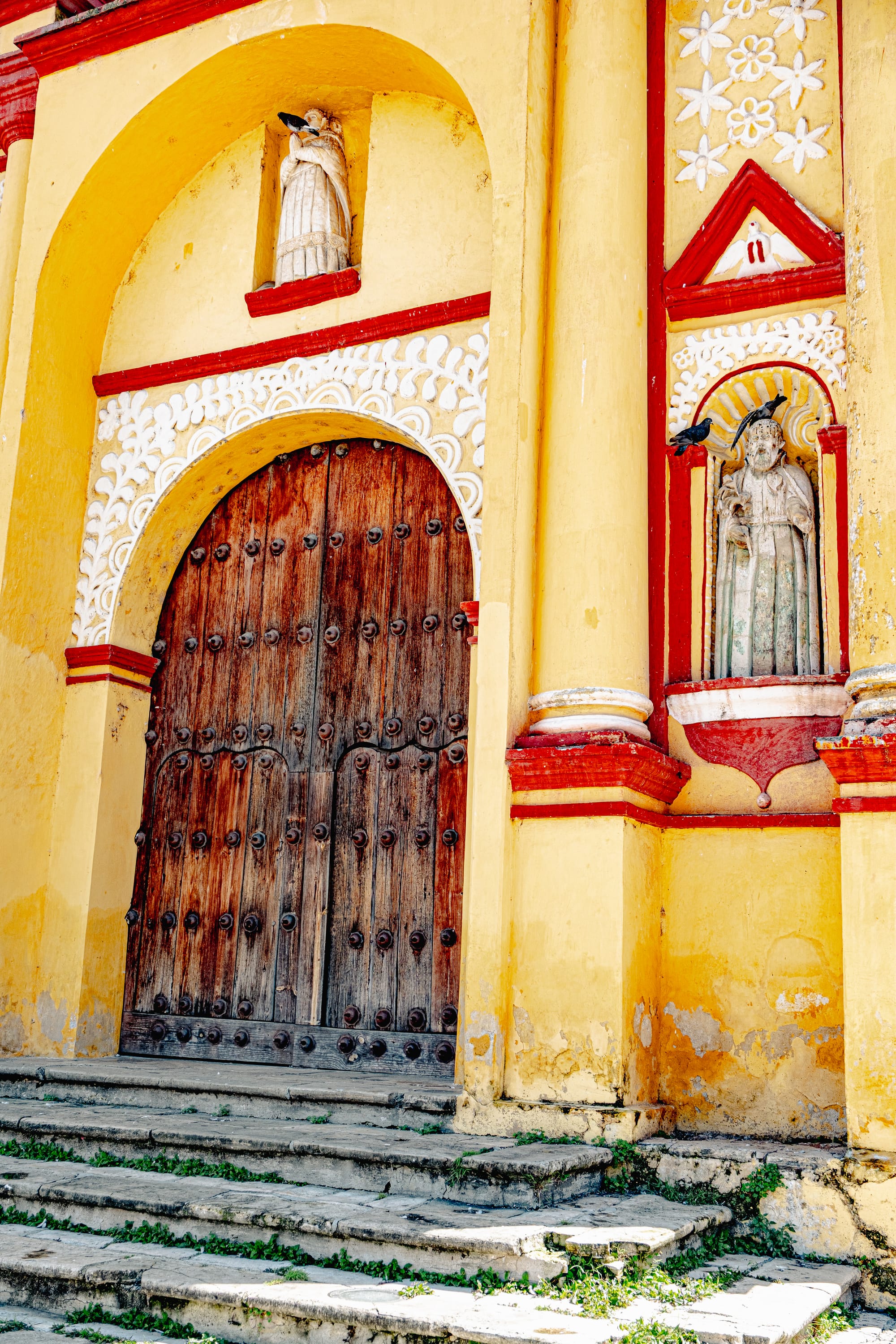
An aerial view and a close-up view
More than any single architectural feature, the cathedral’s significance comes from its position within the city. It is a place people pass by repeatedly—on the way to markets, cafes, protests, celebrations, and daily errands. While there are many churches in San Cristóbal de las Casas, Catedral de San Cristóbal Mártir remains the most central, both geographically and functionally, serving as a steady presence in a city shaped by constant change.
Templo de Santo Domingo de Guzmán
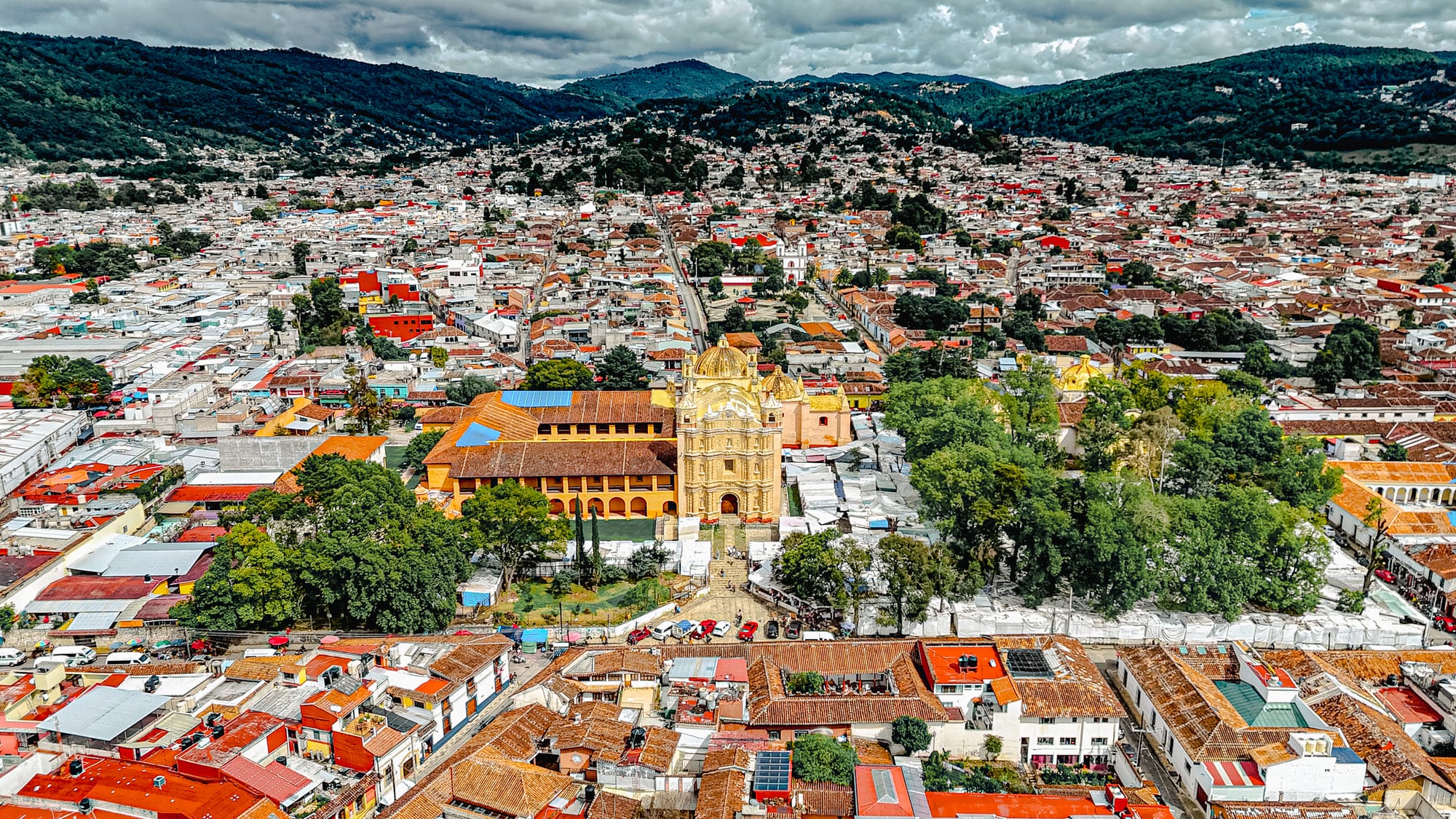
Templo de Santo Domingo de Guzmán is located a few blocks north of the main plaza, at the edge of what is now one of San Cristóbal de las Casas’ busiest public areas. Unlike the cathedral, which opens onto a broad civic square, Santo Domingo is approached through constant movement: vendors, parked cars, foot traffic, and the open-air market that fills the surrounding space throughout the day.
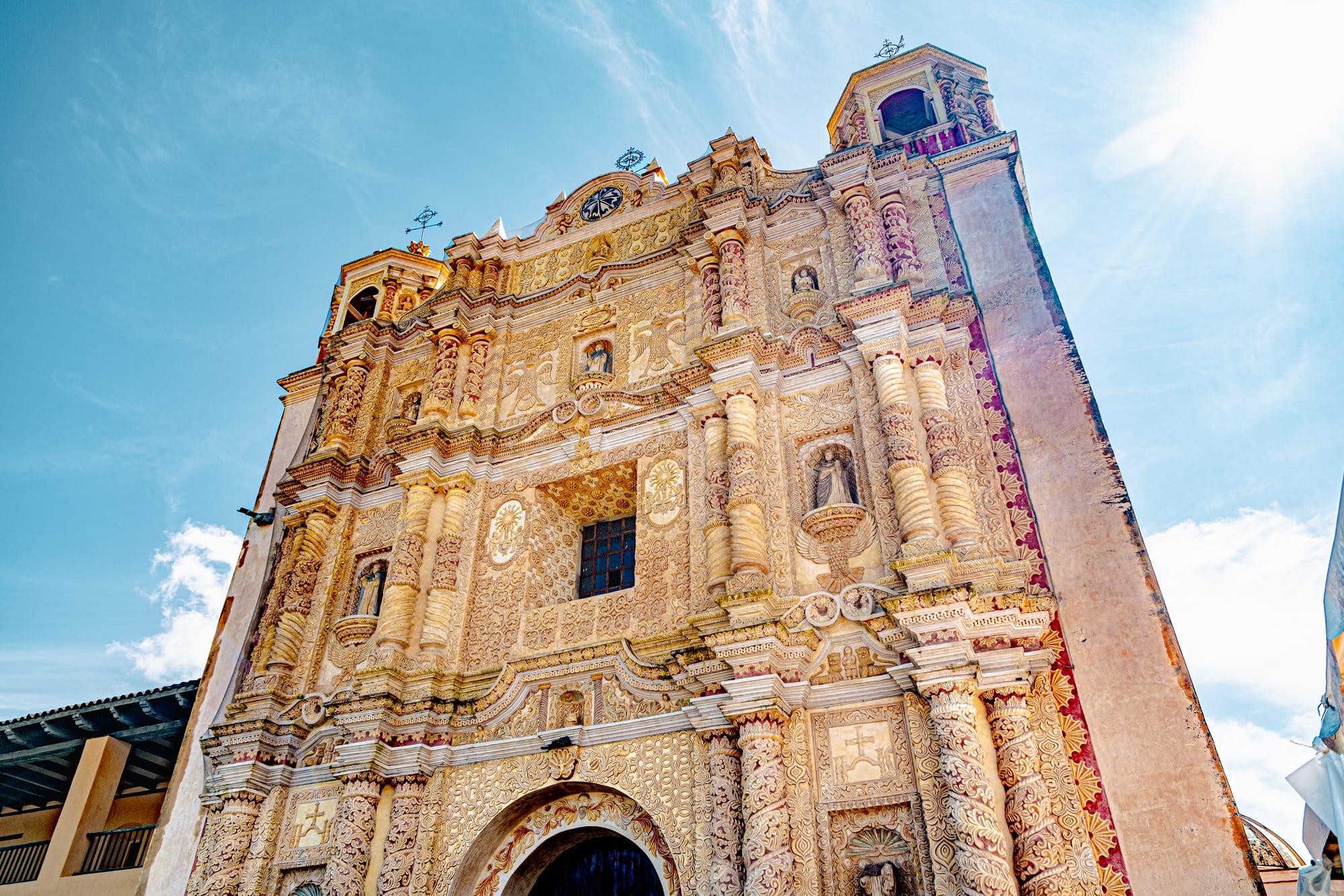
Construction of the church began in 1547 under the Dominican order, though the structure most visible today dates primarily to the late 17th century, when the elaborate façade was completed. The church is widely considered one of the most important examples of Baroque architecture in Chiapas, and it stands out immediately for the density and intricacy of its exterior decoration.
The façade is carved almost entirely in stucco, creating a textured surface filled with religious imagery. Saints stand in niches stacked across multiple levels, framed by twisted columns, floral patterns, and symbolic reliefs. Unlike the restrained design of the cathedral, Santo Domingo’s exterior is highly detailed and visually demanding, drawing attention to individual figures and motifs rather than to the building as a single form. The overall color palette—earthy cream and pale stone tones—allows the carvings themselves to dominate.
Two bell towers flank the façade, and a central clock sits above the main entrance. Electrical wires crossing the upper portion of the building are unavoidable and visible, a reminder that this is not a preserved monument separated from the city, but a working structure embedded in a living urban environment. The church rises directly from uneven cobblestone streets, with steps leading up from an area often crowded with stalls selling textiles, handicrafts, and local goods.
The market in front of Santo Domingo is one of the most active in San Cristóbal and is closely associated with Indigenous vendors from surrounding highland communities. This proximity creates a sharp visual and cultural contrast: the highly ornate colonial façade on one side, and the everyday commerce of local life unfolding directly in front of it. The church’s entrance is often partially obscured by stalls and people moving through the space, which changes how it is experienced compared to churches set back from daily activity.

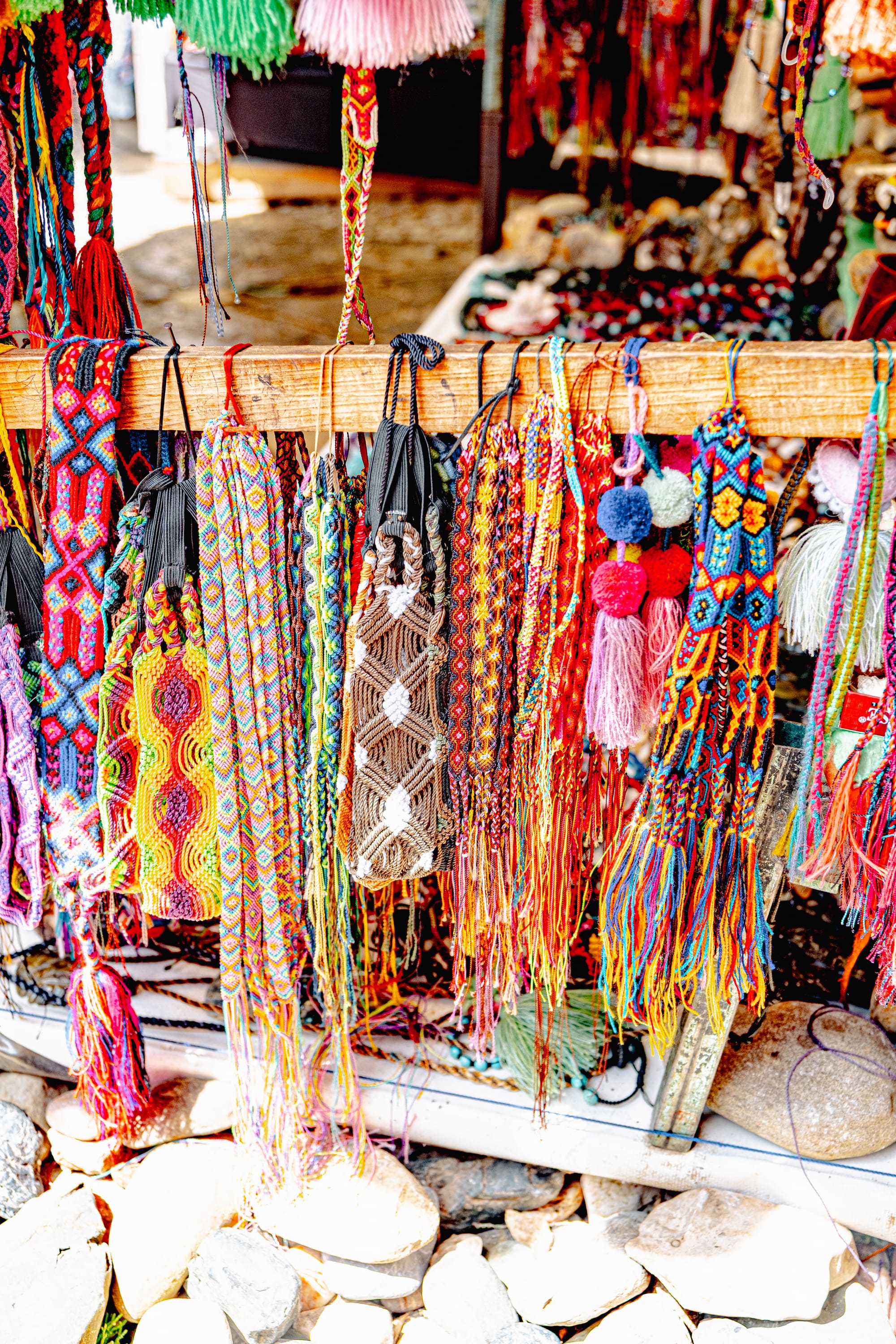


Scenes from the market surrounding Templo de Santo Domingo de Guzmán
Adjacent to Templo de Santo Domingo de Guzmán is the former Dominican convent, which today functions as a cultural and archaeological museum complex. Entered through a side access near the church, the space opens into a quiet interior courtyard surrounded by thick stone walls and covered walkways. The museum focuses on regional history and archaeology, offering context on Chiapas before and during the colonial period. The courtyard itself is one of the most appealing parts of the visit: calm, shaded, and noticeably removed from the noise of the market outside. Benches line the perimeter, plants fill the central space, and the contrast between the highly ornate church façade and the restrained, inward-facing convent architecture is clear. It’s an easy place to pause after visiting the church, and well worth stepping into even if only for a short walk through the courtyard.
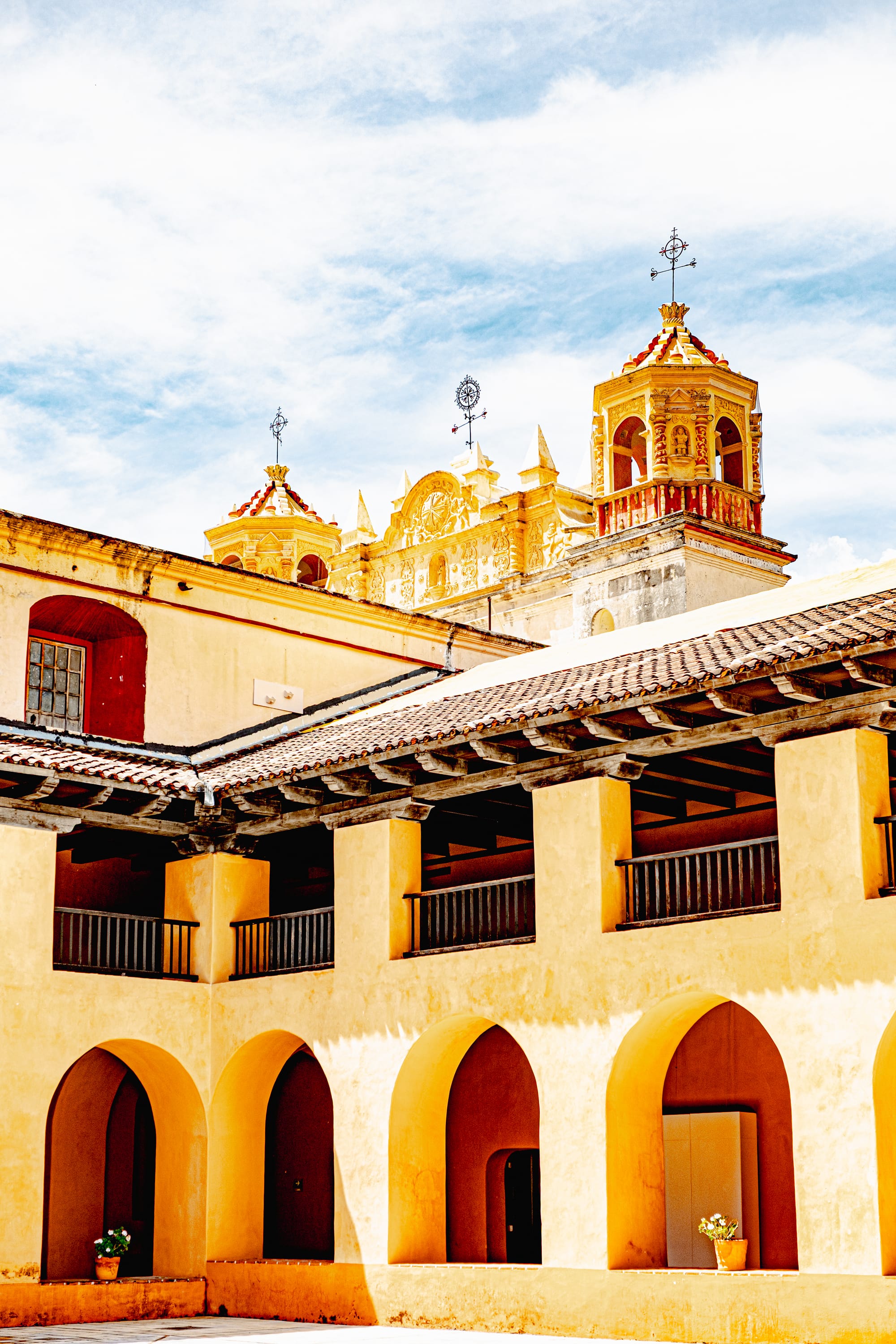
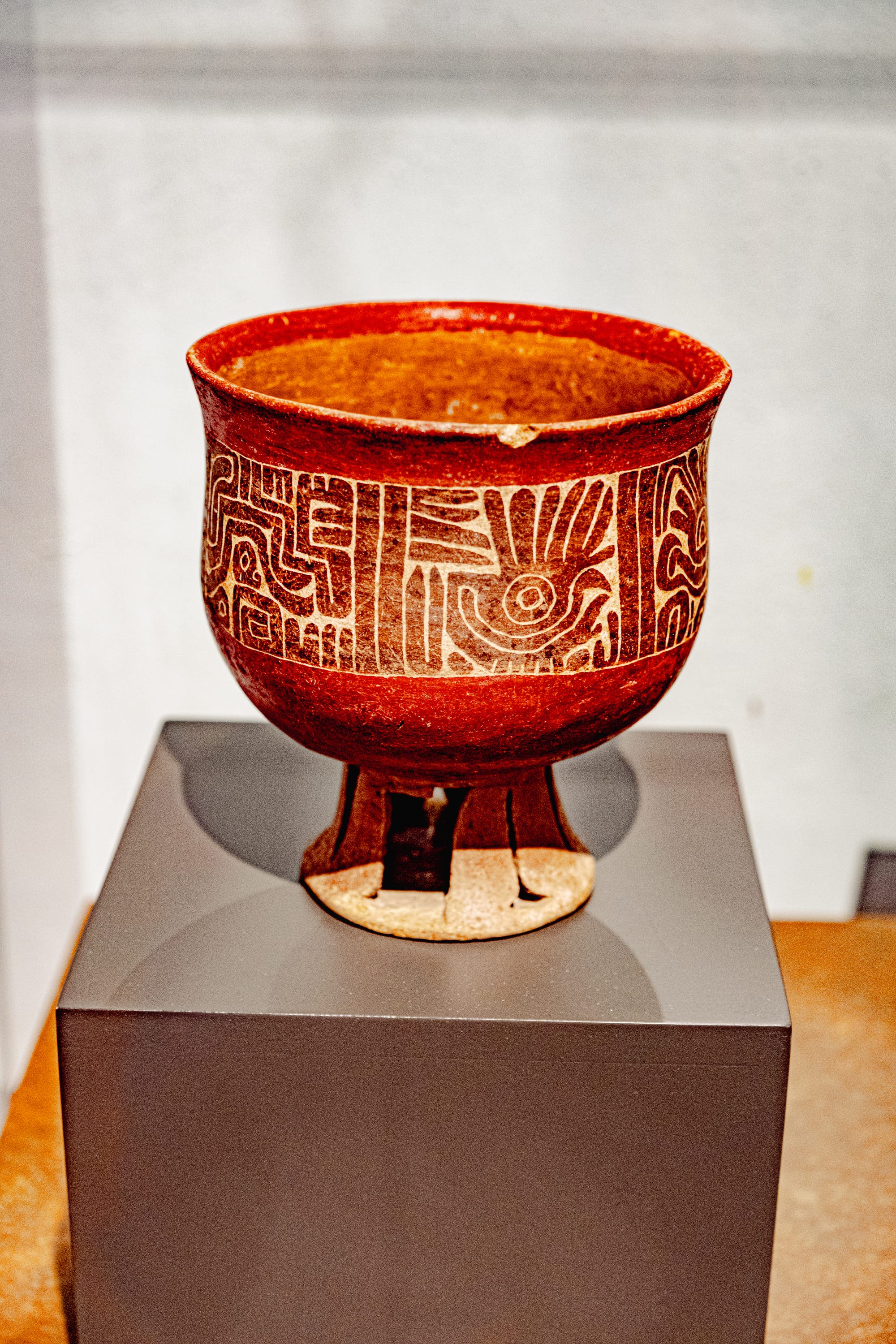
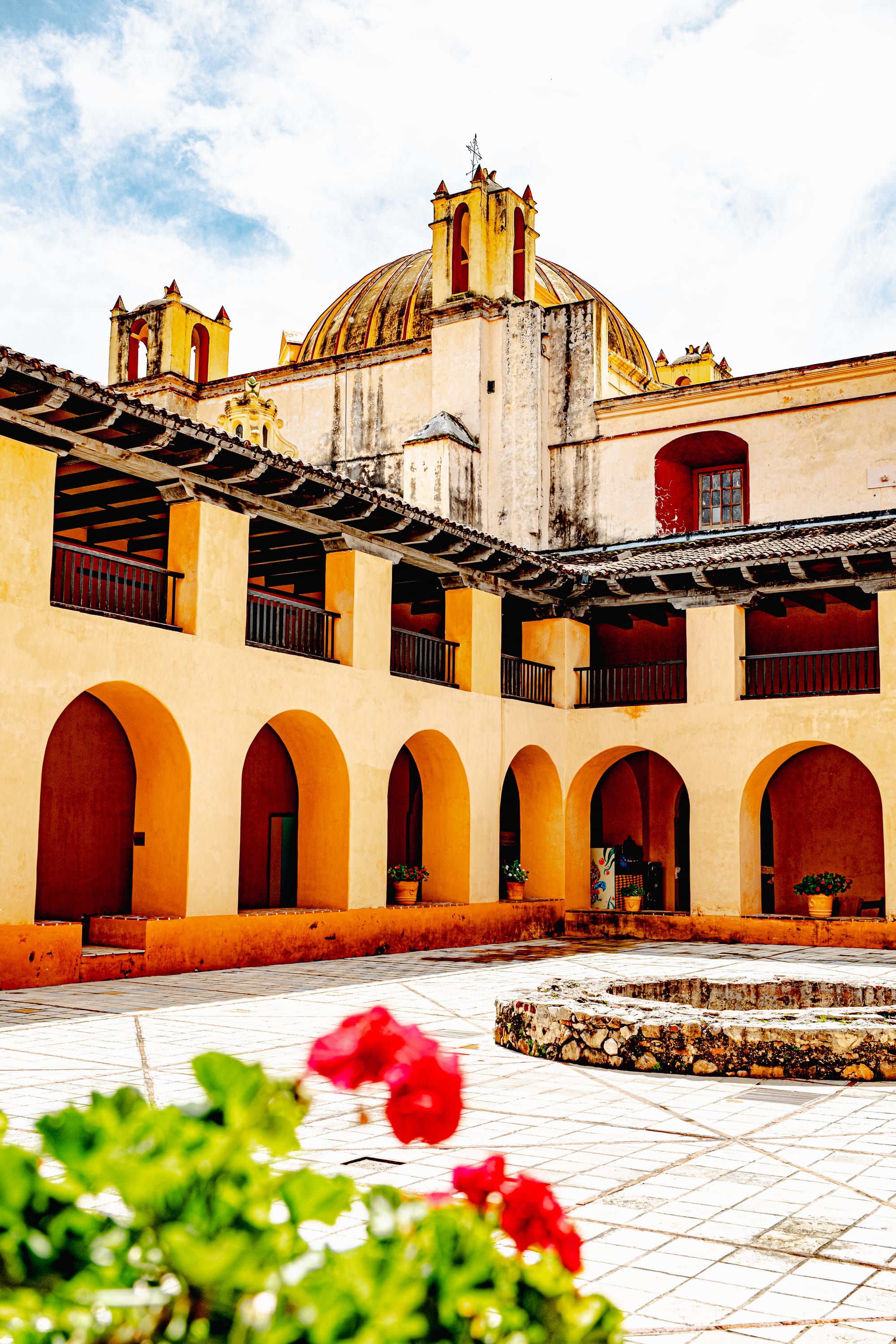
The archeological museum and courtyard
More than any single architectural detail, what defines Templo de Santo Domingo de Guzmán is its setting. It is not encountered in isolation or quiet; it is encountered amid traffic, conversation, bargaining, and movement. The church stands as one of the most visually elaborate structures in San Cristóbal de las Casas, yet it exists in constant negotiation with the city around it, framed as much by daily activity as by history.
Templo de Nuestra Señora de la Asunción
Templo de Nuestra Señora de la Asunción is located just a 2 minute walk away from Co404, slightly outside the main tourist core of San Cristóbal de las Casas. The church faces a small open plaza and is set back from the dense commercial activity of the historic center, giving it a quieter and more residential context compared to Santo Domingo or the cathedral.
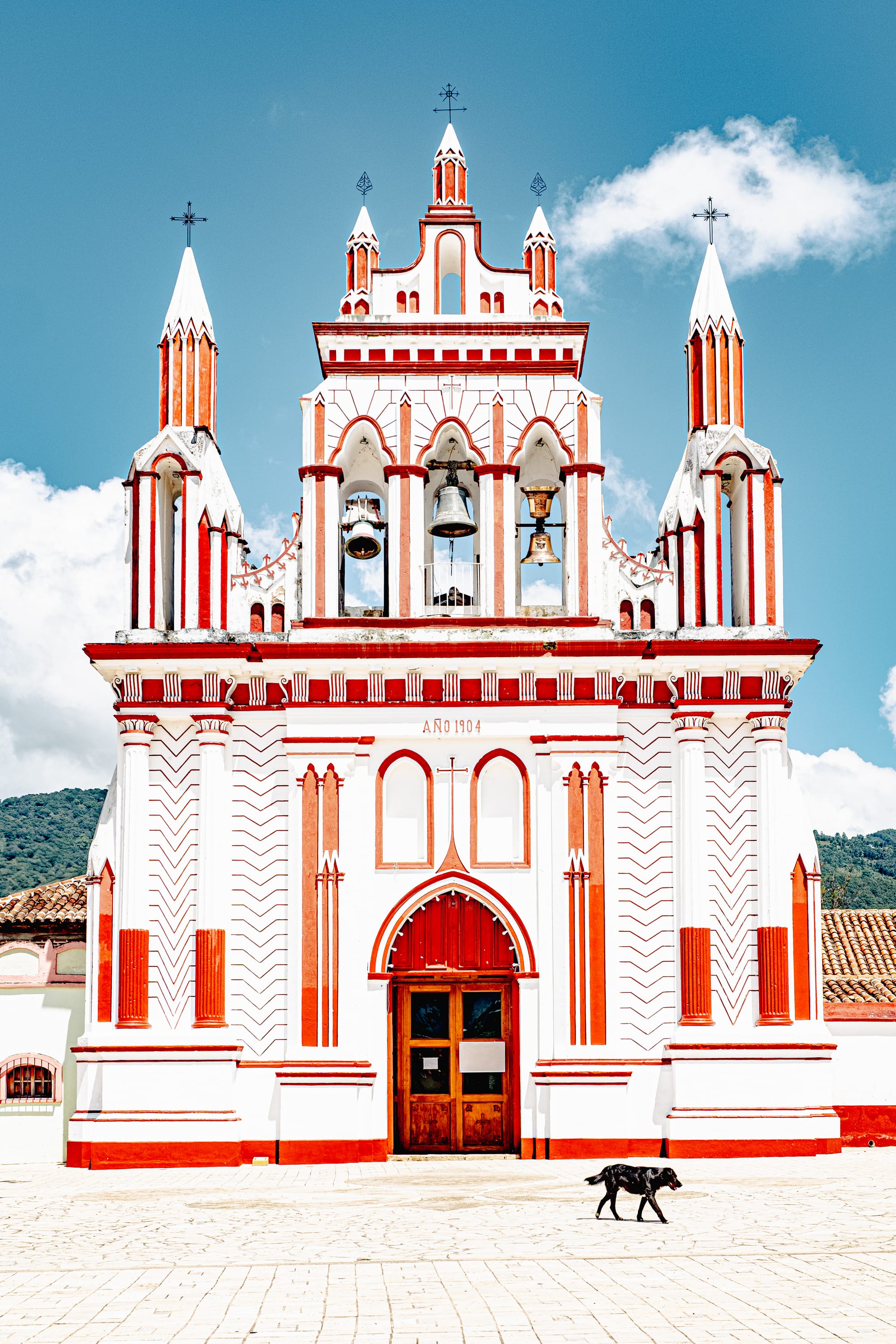
The church dates to the late 19th and early 20th century, with the year 1904 clearly inscribed on the façade. This places it well after the colonial period, and its architecture reflects that later moment in the city’s development. Unlike the Baroque churches built under Spanish colonial rule, this structure follows a neo-Gothic style, characterized by vertical emphasis, pointed arches, and a relatively clean, graphic use of form.
The façade is painted white with strong red detailing that outlines architectural features and creates a striking visual contrast. The design is symmetrical, with a central entrance framed by pointed arches and a tall upper section that houses an open bell structure. Several bells are visible from the exterior, suspended within arched openings above the main door. Slender spires rise from the upper façade and corners of the building, each topped with a metal cross.
Decoration on the exterior is restrained compared to earlier churches in the city. Rather than dense carvings or sculptural reliefs, the visual interest comes from repetition, proportion, and color contrast. The red trim highlights columns, arches, and vertical lines, giving the building a crisp and orderly appearance. The overall impression is clear and direct, without the visual complexity seen at Santo Domingo.
The plaza in front of the church is open and level, often used as a passageway by local residents rather than as a destination for visitors. It is common to see people crossing the space on foot, children playing nearby, or dogs resting in the shade. Traffic is limited, and the area generally feels calmer than the streets closer to the main market and central square.
The dedication to Our Lady of the Assumption places the church within a long Catholic tradition, but its architectural language reflects a period when San Cristóbal was expanding beyond its colonial core. Churches like this one were built to serve growing residential areas and new congregations, rather than to project colonial authority.
Templo de Nuestra Señora de la Asunción does not draw large crowds or feature prominently in most visitor itineraries, but it offers a useful counterpoint to the city’s more famous churches. It represents a later phase of religious construction in San Cristóbal de las Casas—one shaped by changing styles, expanding neighborhoods, and everyday local use rather than monumentality.
This church was our personal favorite.
Templo de Nuestra Señora de Guadalupe
Templo de Nuestra Señora de Guadalupe is located on Cerro de Guadalupe, a hill rising to the east of San Cristóbal de las Casas. The church is one of the city’s most visible landmarks due to its elevated position and is accessible by climbing a long, straight staircase that begins at the base of the hill. The ascent consists of several dozen steps and offers increasingly wide views over the city as you climb.
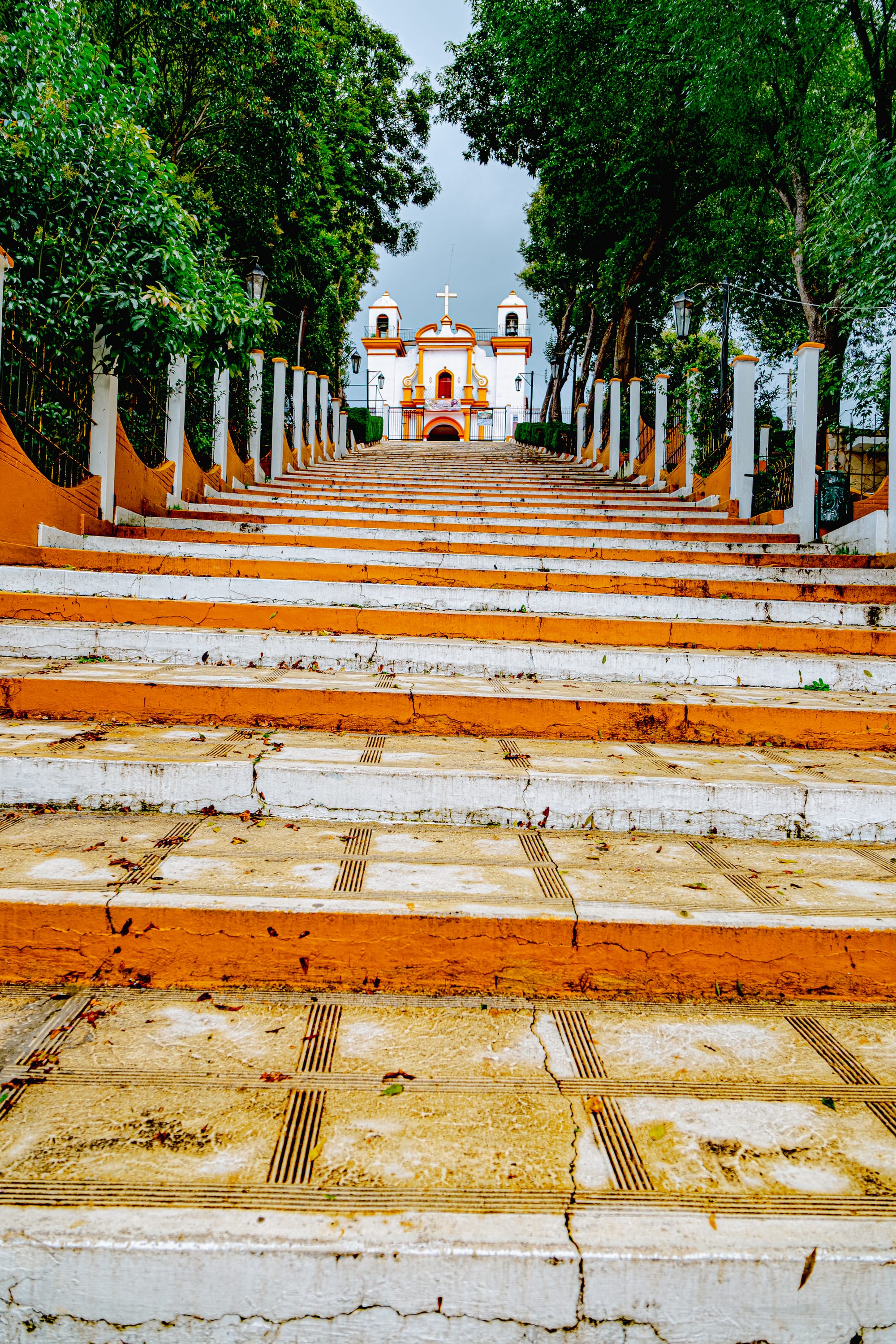
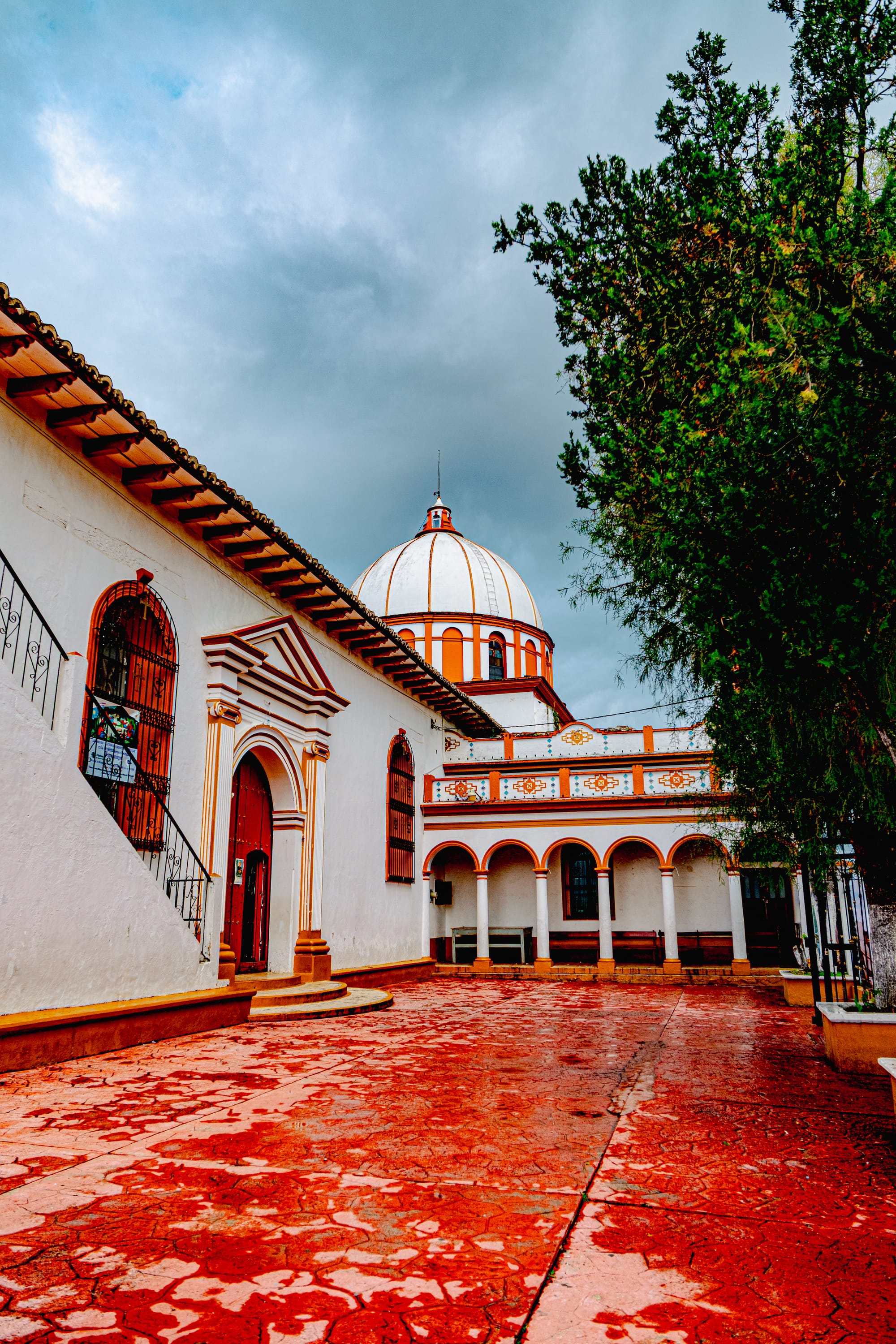
The staircase leading up to Templo de Nuestra Señora de Guadalupe
The church was constructed in the early 20th century, with most sources dating it to the first decades of the 1900s. Like Templo de Nuestra Señora de la Asunción, it belongs to a later phase of church construction in San Cristóbal, well after the colonial Baroque period. Its architectural style is neo-Gothic, evident in the pointed arches, vertical proportions, and symmetrical layout.
The building features a central entrance with pointed arches and a tall, narrow upper section. Two slender towers rise on either side, each topped with a cross. The design emphasizes height and verticality rather than surface ornamentation, and the decoration is minimal, relying instead on form and color contrast.
At the top of the staircase, a broad open terrace extends in front of the church. This space functions both as a gathering area and as a viewpoint. From here, much of San Cristóbal de las Casas is visible, including the historic center, surrounding neighborhoods, and the hills that enclose the valley. The terrace is often busy, particularly in the late afternoon, with visitors resting after the climb, families spending time together, and vendors selling snacks or drinks.
The church is dedicated to Our Lady of Guadalupe, one of the most important religious figures in Mexico. As a result, it plays a significant role during religious celebrations, particularly on December 12, when festivities honoring the Virgin of Guadalupe take place. On these occasions, the staircase and terrace can become crowded with worshippers making the ascent as part of devotional practices.
More than any other church in San Cristóbal de las Casas, Templo de Nuestra Señora de Guadalupe is defined by elevation. The physical act of climbing sets it apart from churches encountered at street level and shapes how it is experienced. While the building itself is relatively modest, its position above the city makes it one of the most recognizable religious sites in San Cristóbal and a common point of reference in the city’s landscape.
Seeing the city through its churches
Taken together, these churches offer a useful way to understand San Cristóbal de las Casas beyond its streets and cafés. They show how the city is organized spatially—from the dense historic center to hillside neighborhoods—and how religious architecture remains embedded in everyday movement rather than set apart from it.
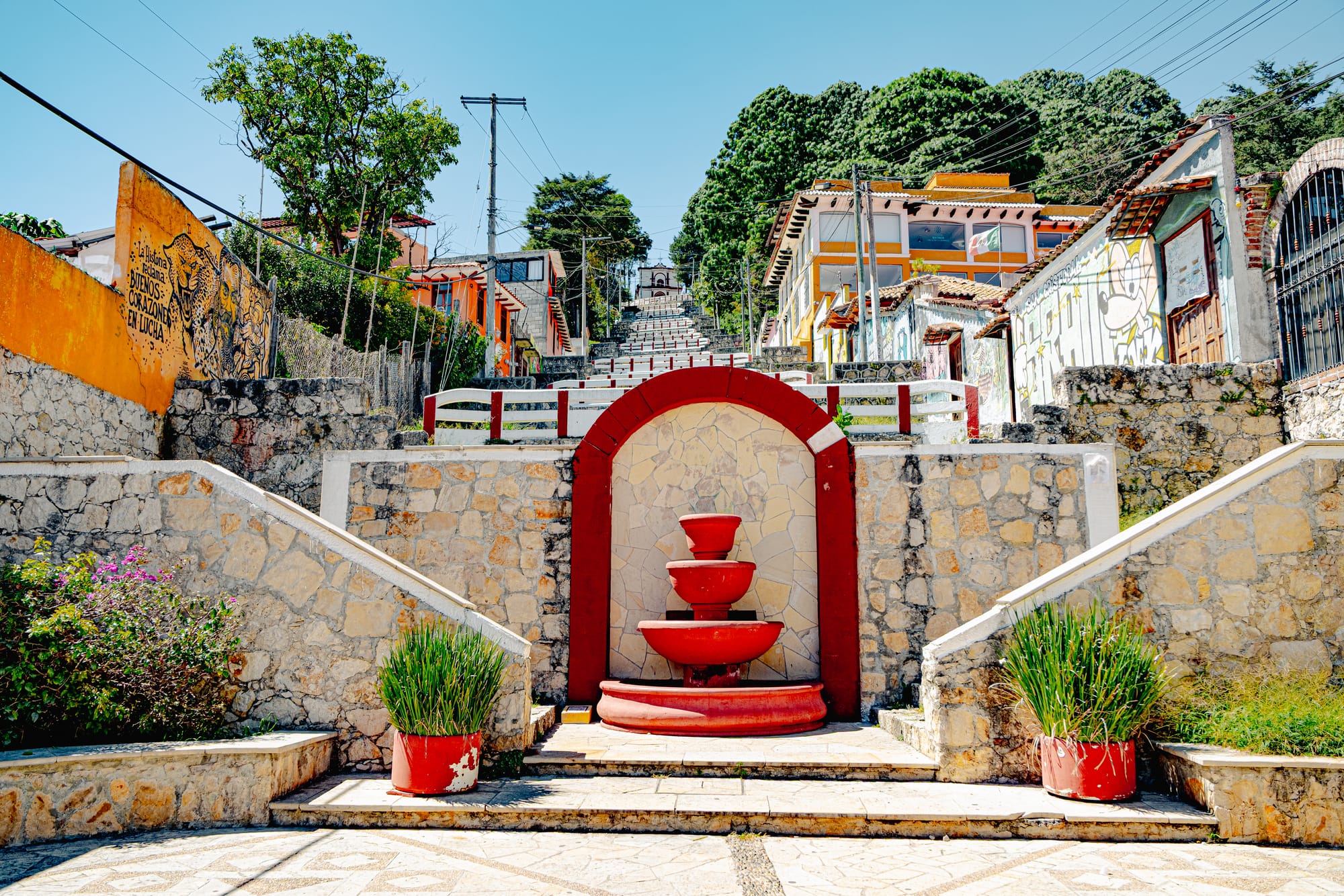
Some churches are encountered almost incidentally, fronting busy plazas or markets where daily life continues uninterrupted. Others require intention and physical effort, reached by staircases that pass through residential areas, street art, and viewpoints overlooking the city. The differences in approach matter, shaping how each place is experienced and remembered.
Architecturally, the range is equally clear. Baroque façades heavy with ornament sit alongside later neo-Gothic buildings defined by symmetry and color contrast. Some churches draw attention through detail and decoration, while others rely on elevation, visibility, or location to establish their presence. Together, they reflect different moments in San Cristóbal’s growth and different priorities in how religious spaces were built and placed.


