
We visited San Cristóbal’s Municipal Pantheon twice.
The first time was about a week before Día de Muertos, when the city was still easing into October's end. The second was on the morning of November 2nd—the day after the official Día de Muertos—but the cemetery was still very much alive.
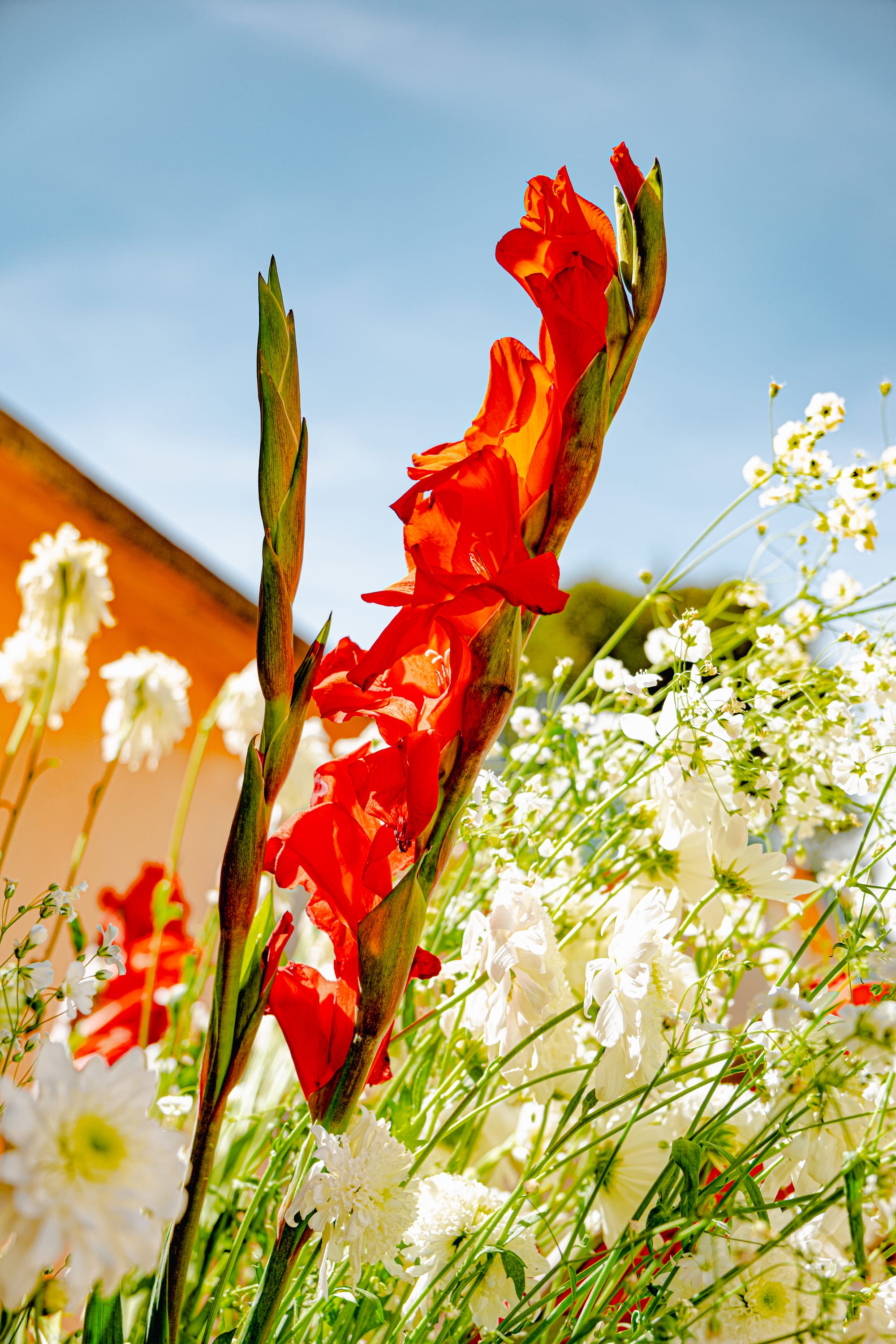
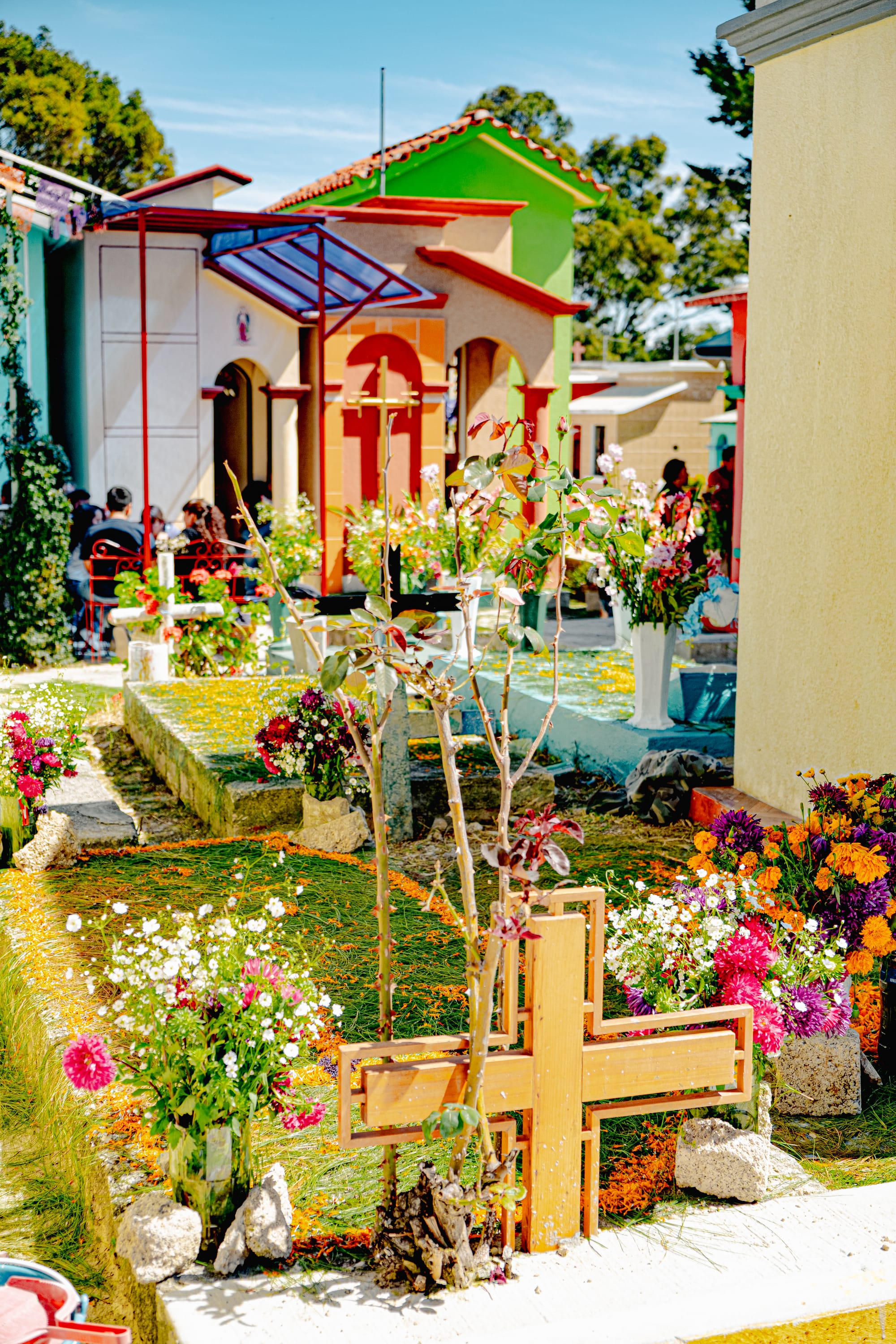
Flowers resting quietly among the graves
Seeing the Pantheon both before and after Día de Muertos offered a rare perspective. It revealed not just the peak of the celebration, but the quieter labor that surrounds it: the preparation, the anticipation, and the slow unwinding afterward. Together, those visits made it one of the most memorable and meaningful places we experienced during Day of the Dead in San Cristóbal de las Casas.
If Romerillo feels expansive and raw, and Zinacantán feels floral and elevated, the Municipal Pantheon feels something else entirely.
It feels like a town.
A cemetery that feels like a town
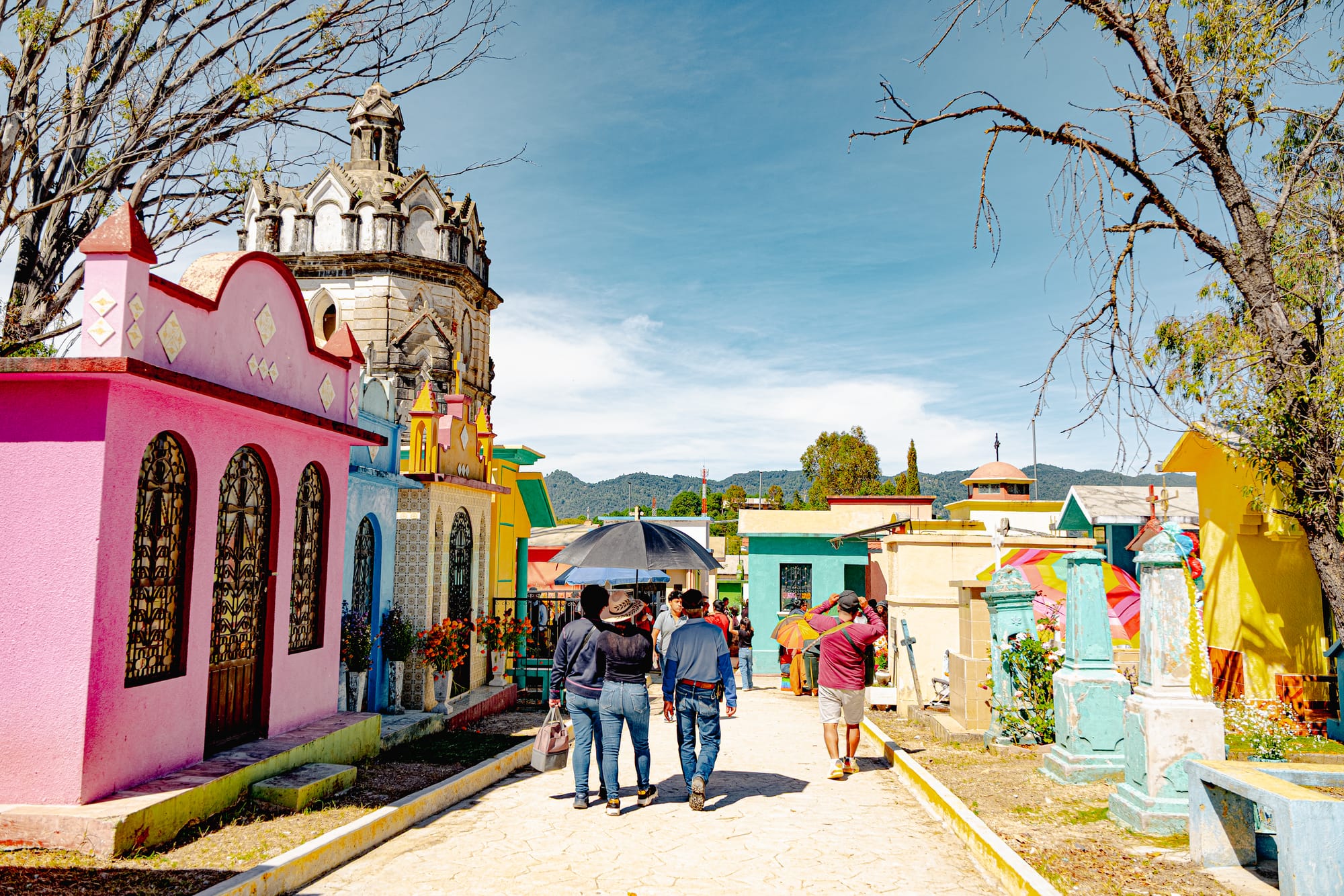
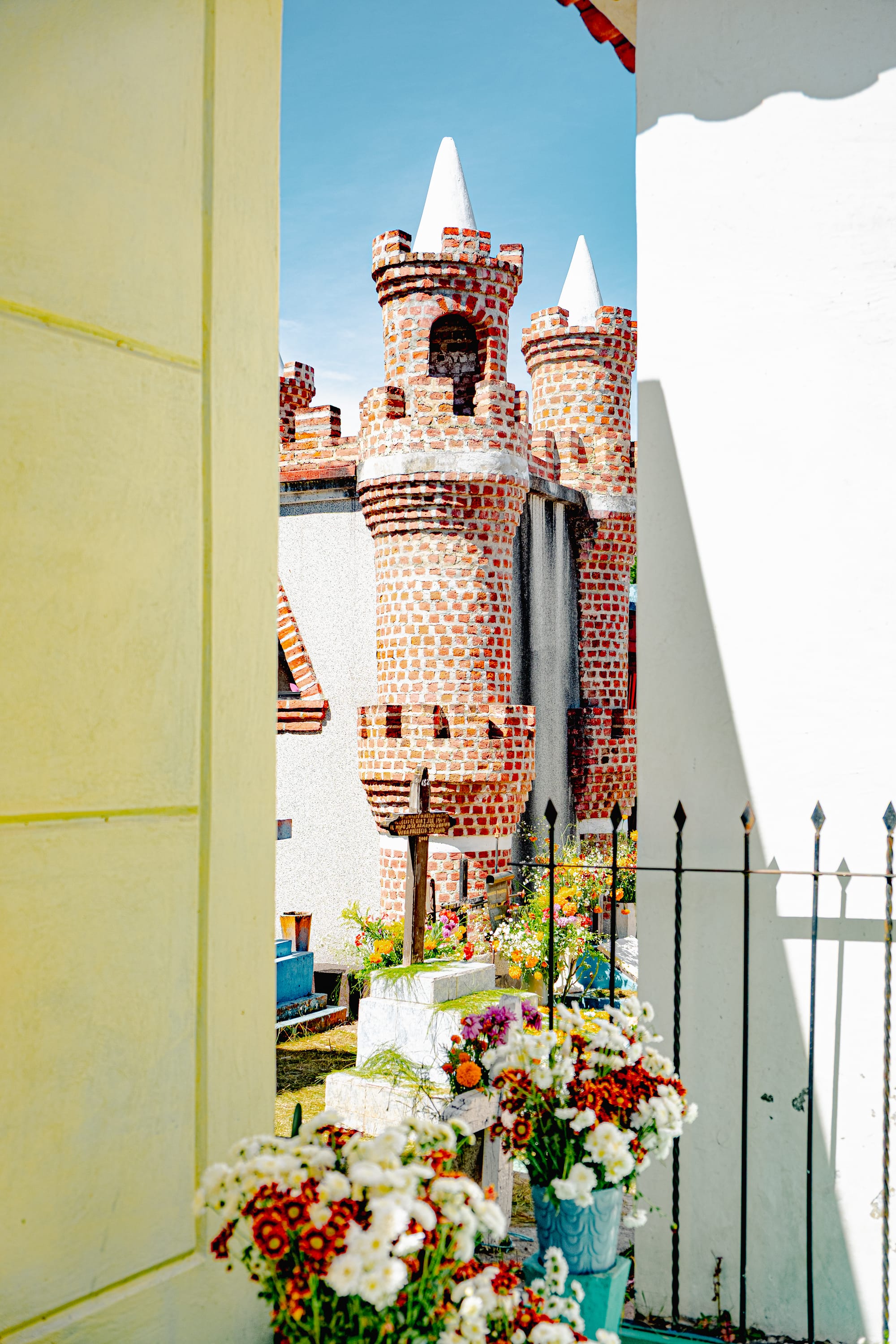
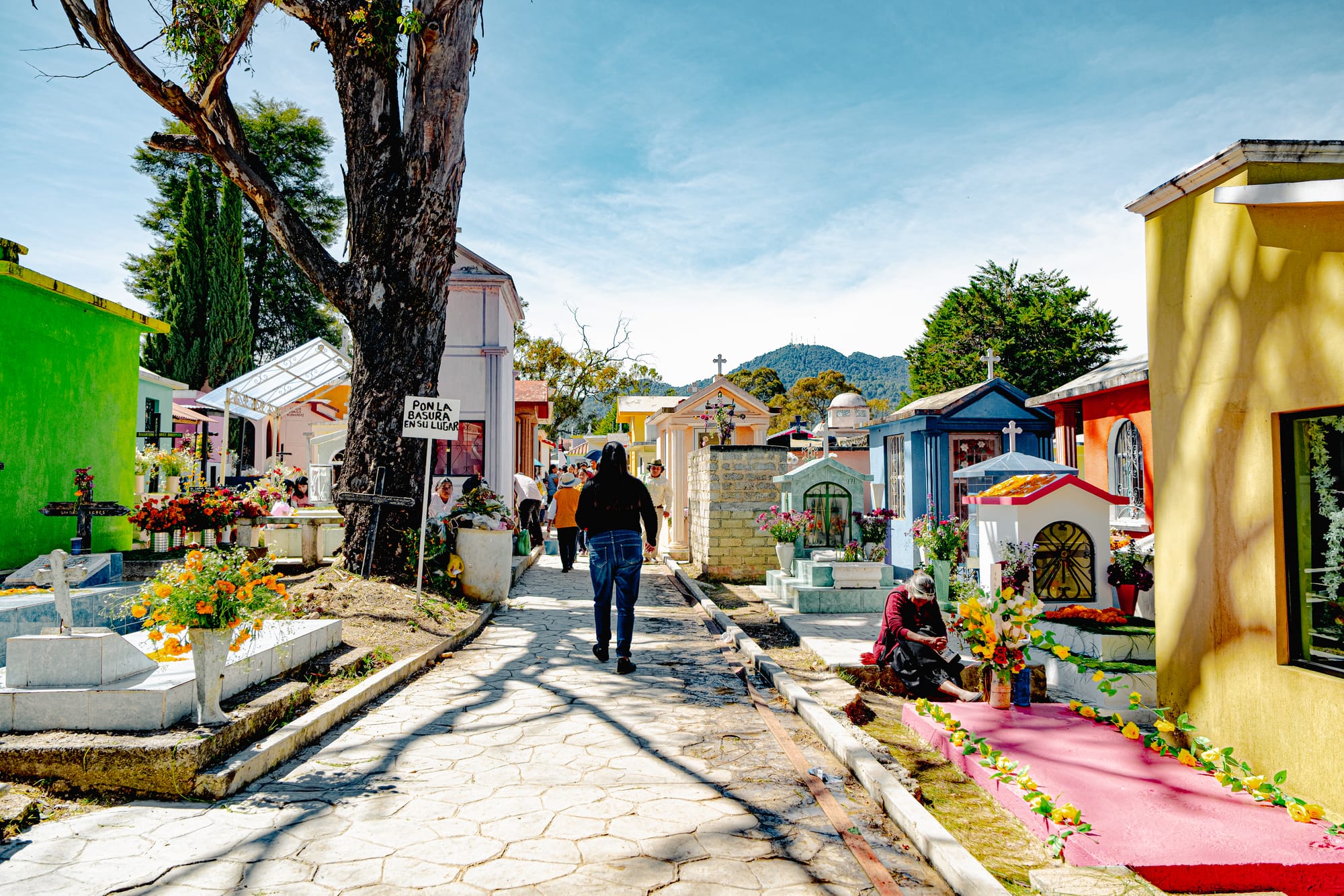
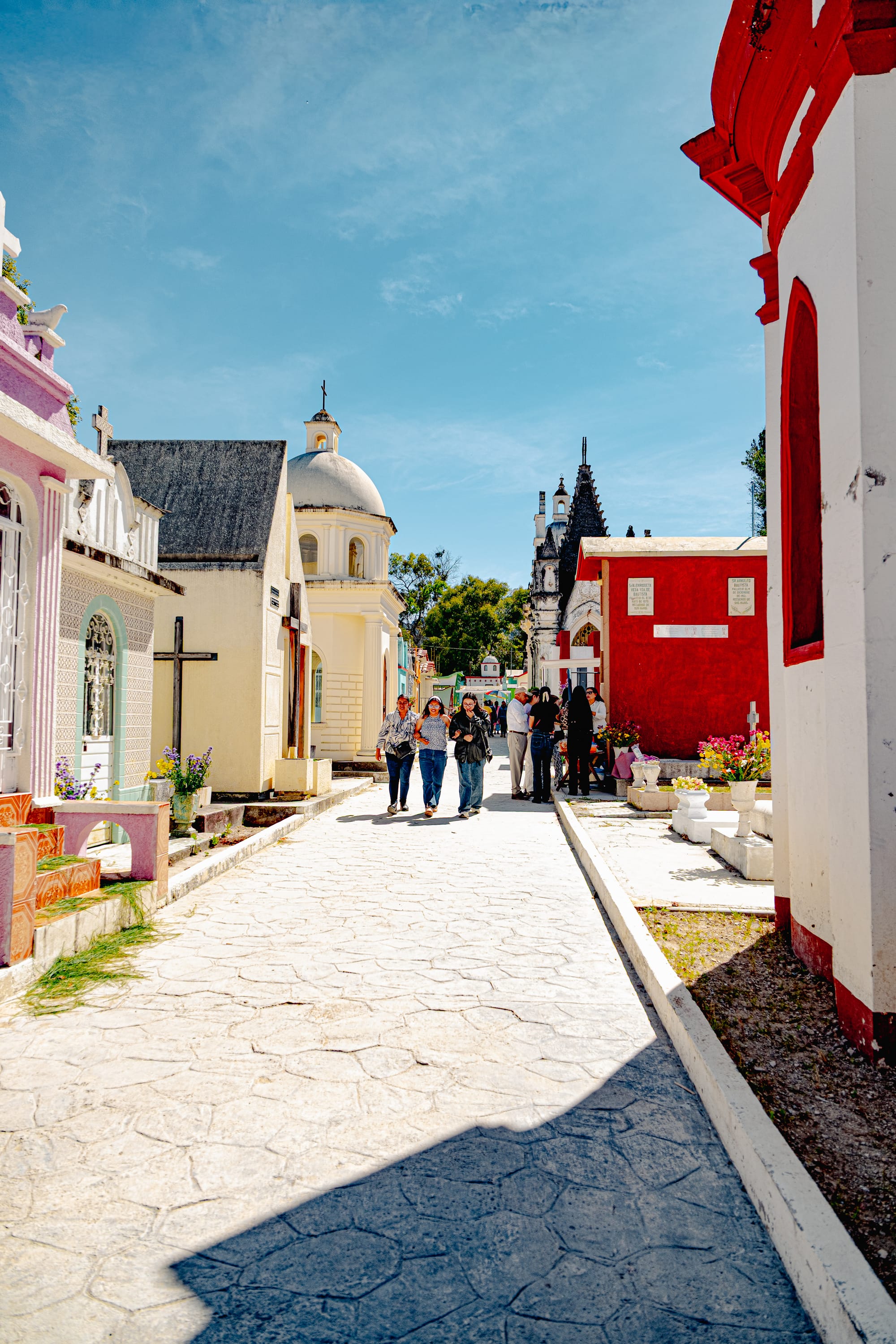
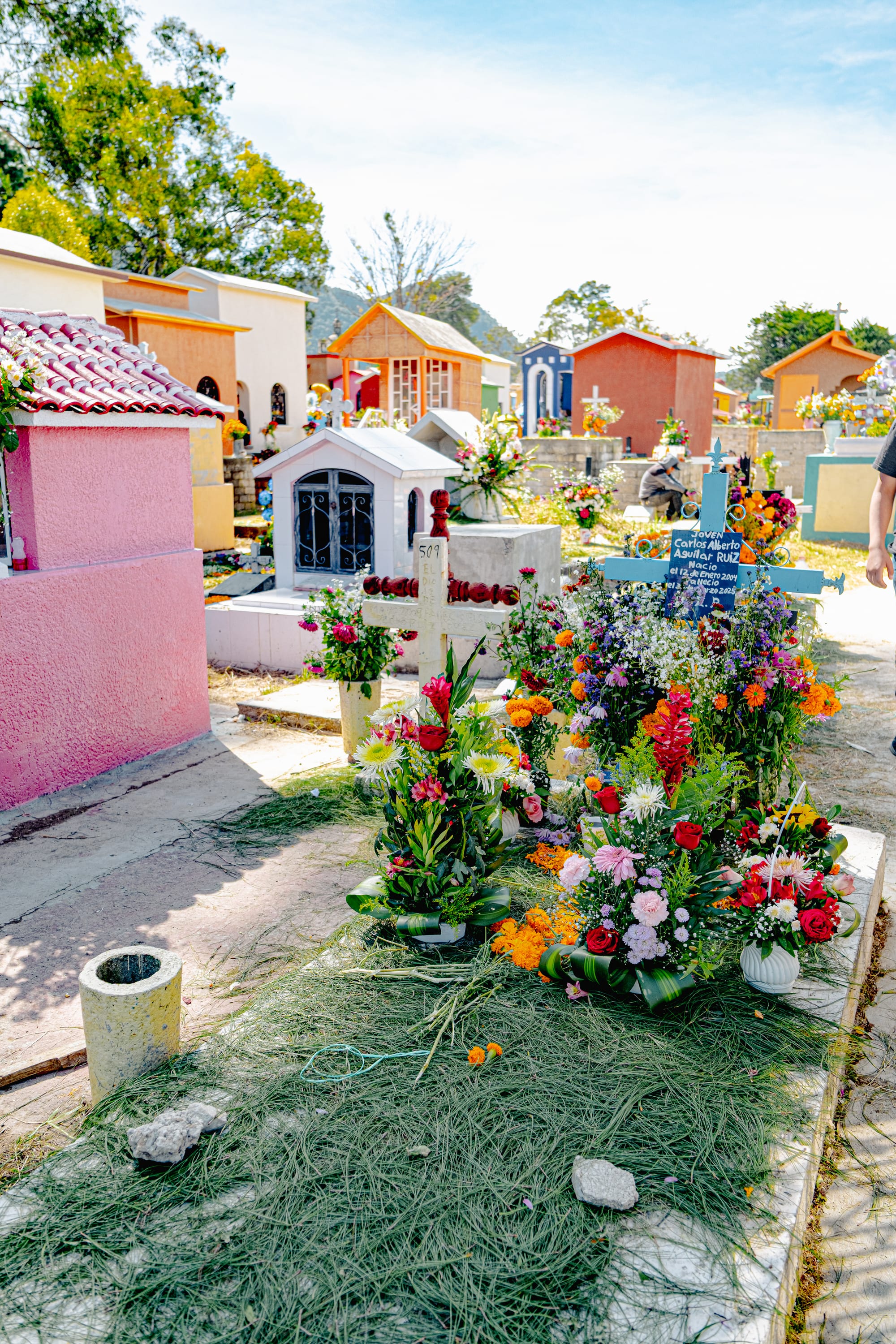
Unlike many cemeteries where graves lie flat in the ground, San Cristóbal’s Municipal Pantheon is built vertically and architecturally. Graves here are not just markers—they are structures.
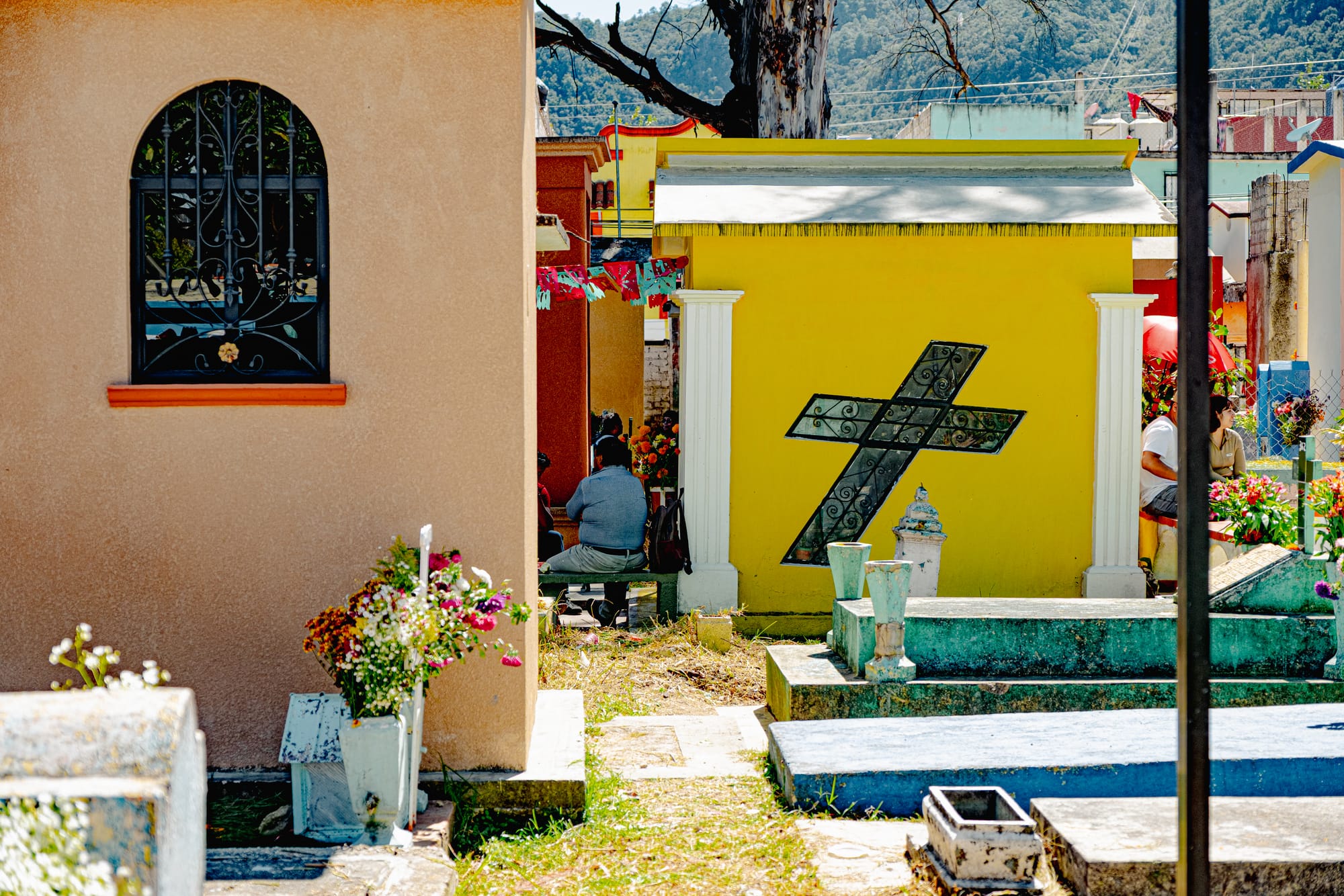
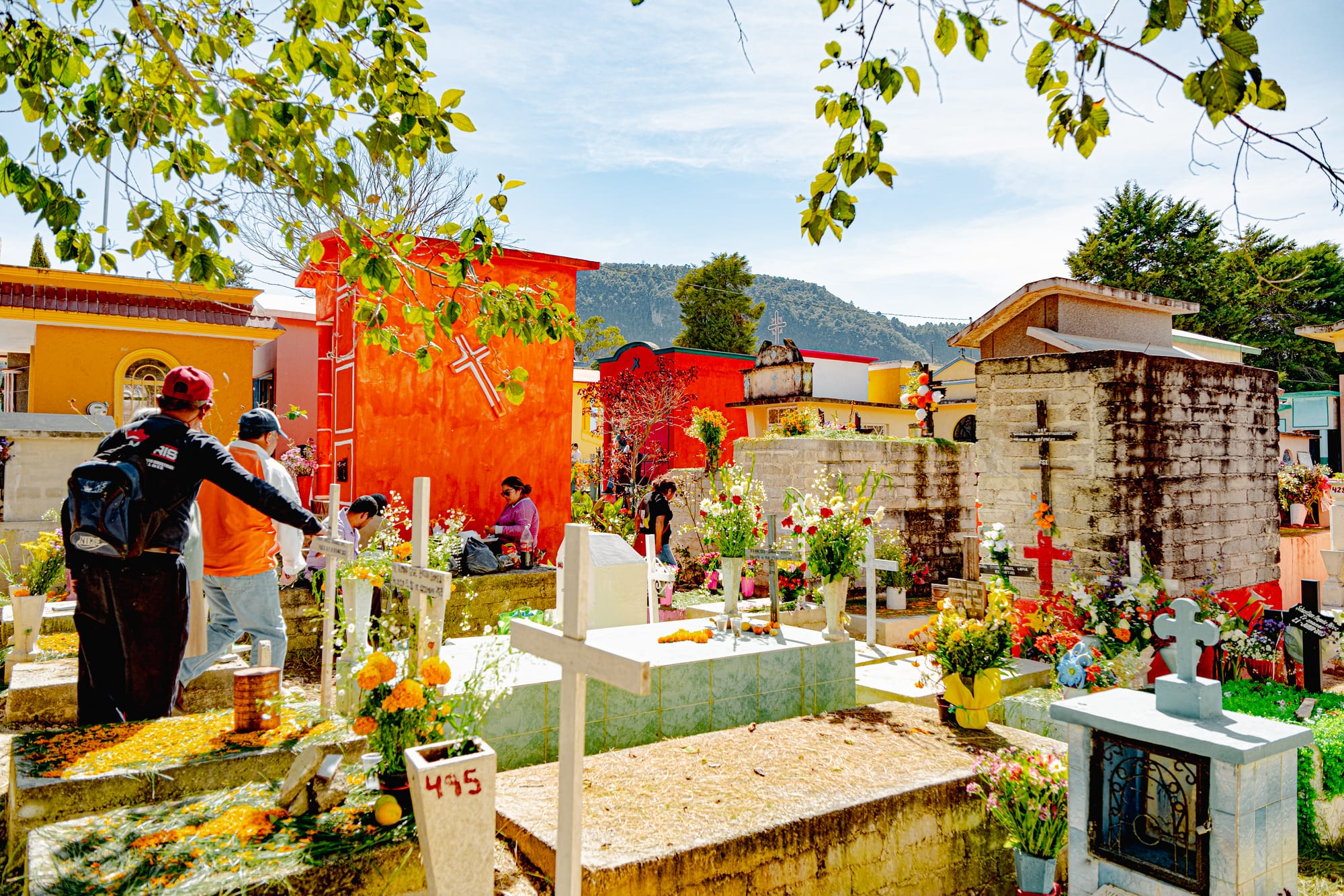
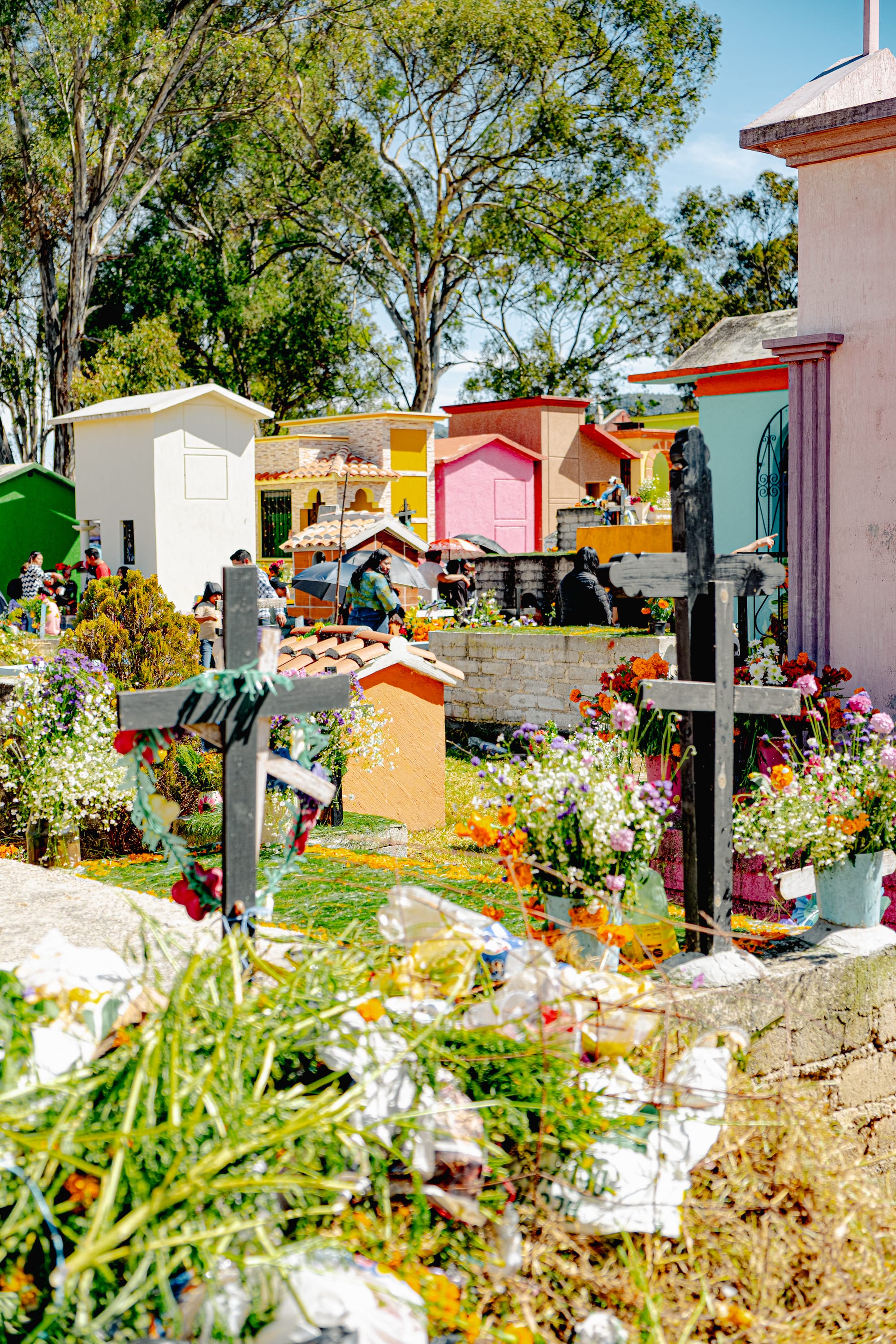
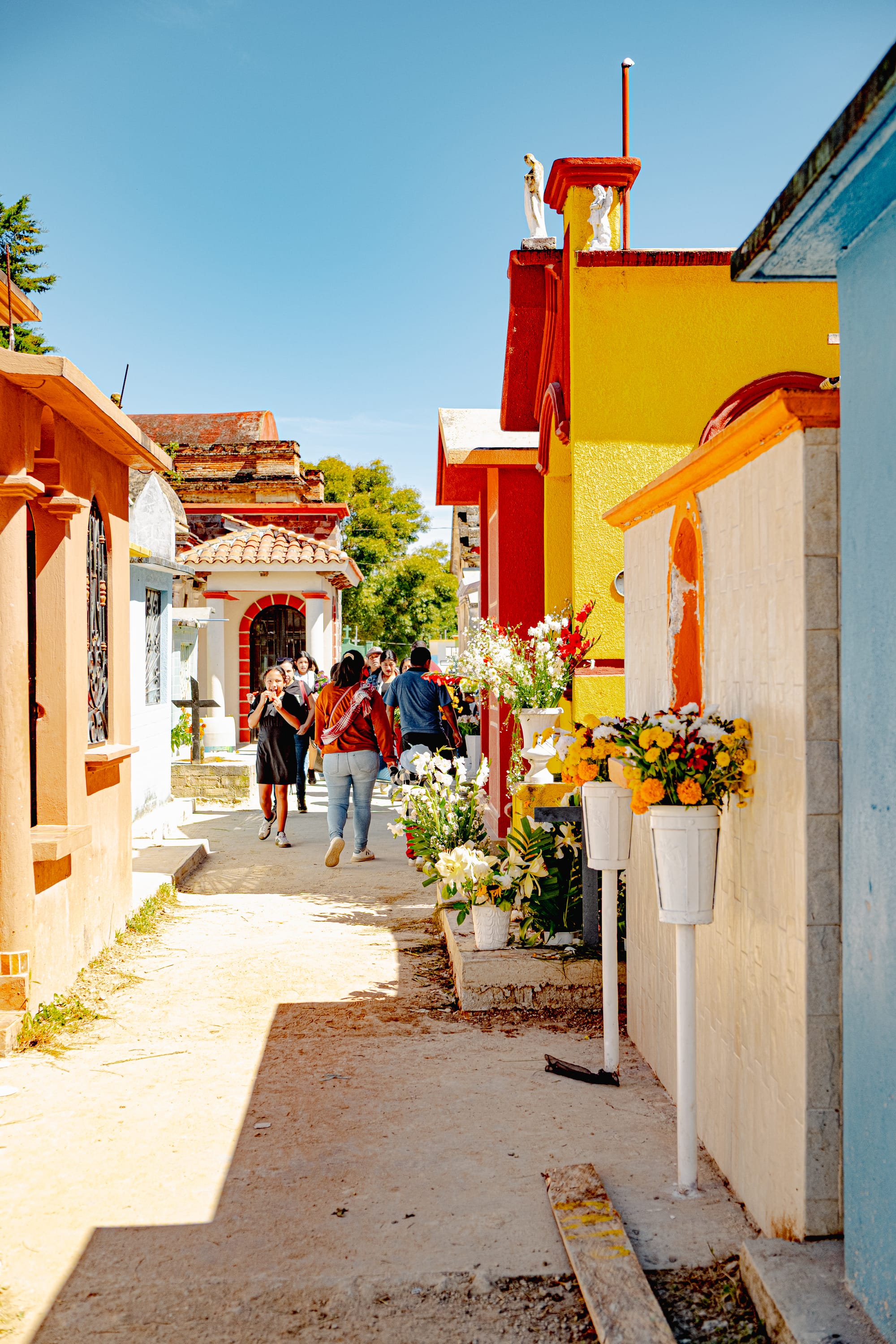
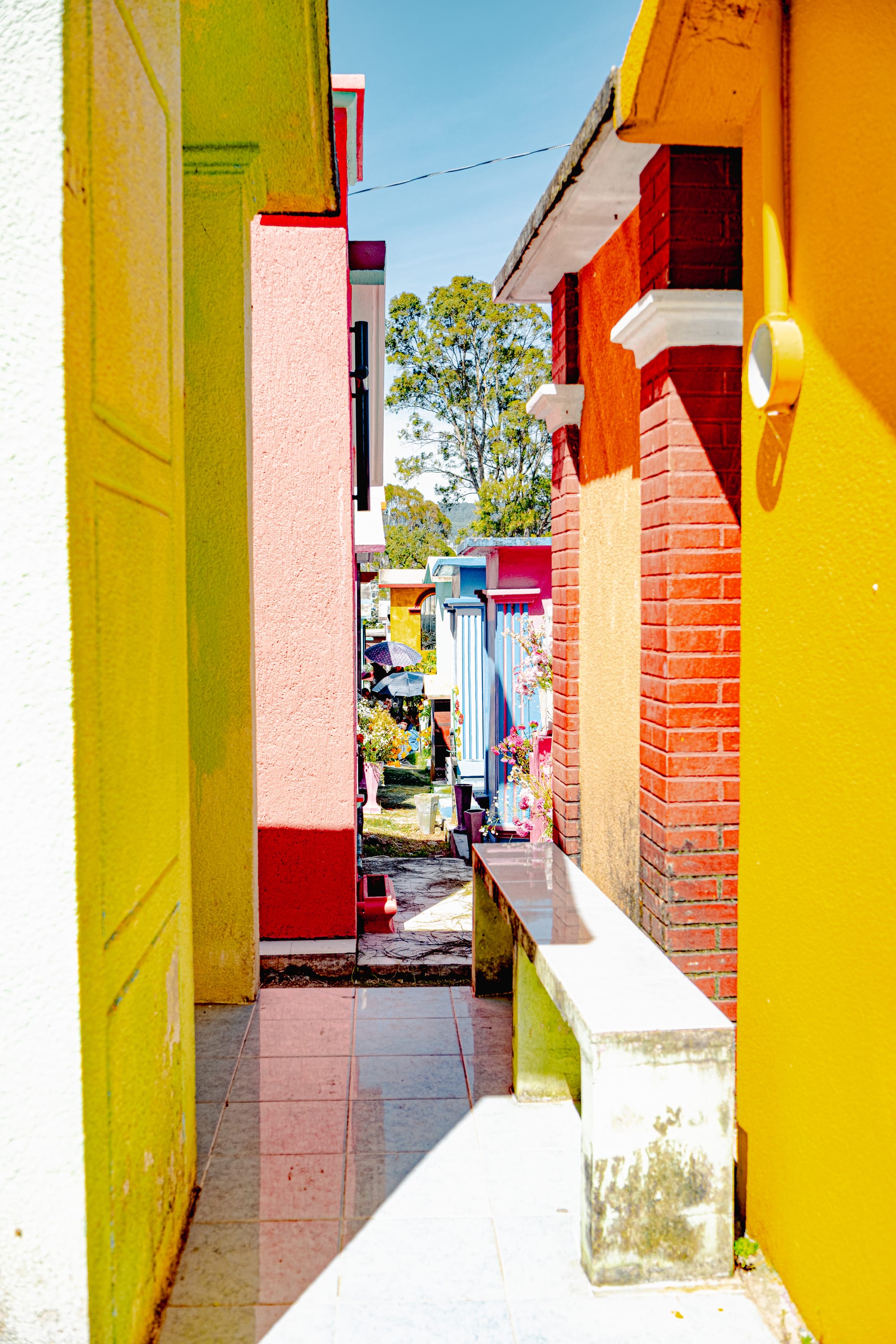
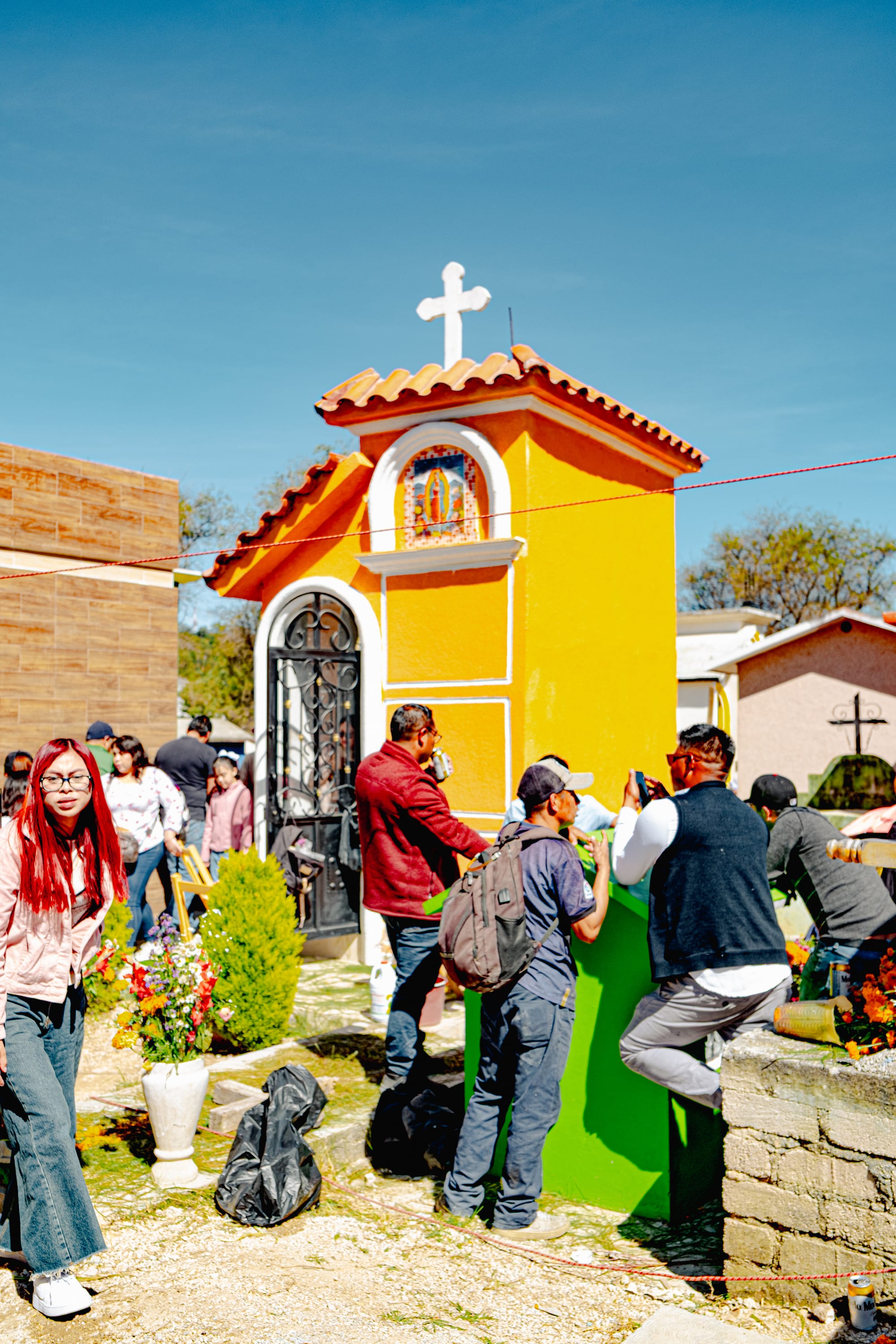
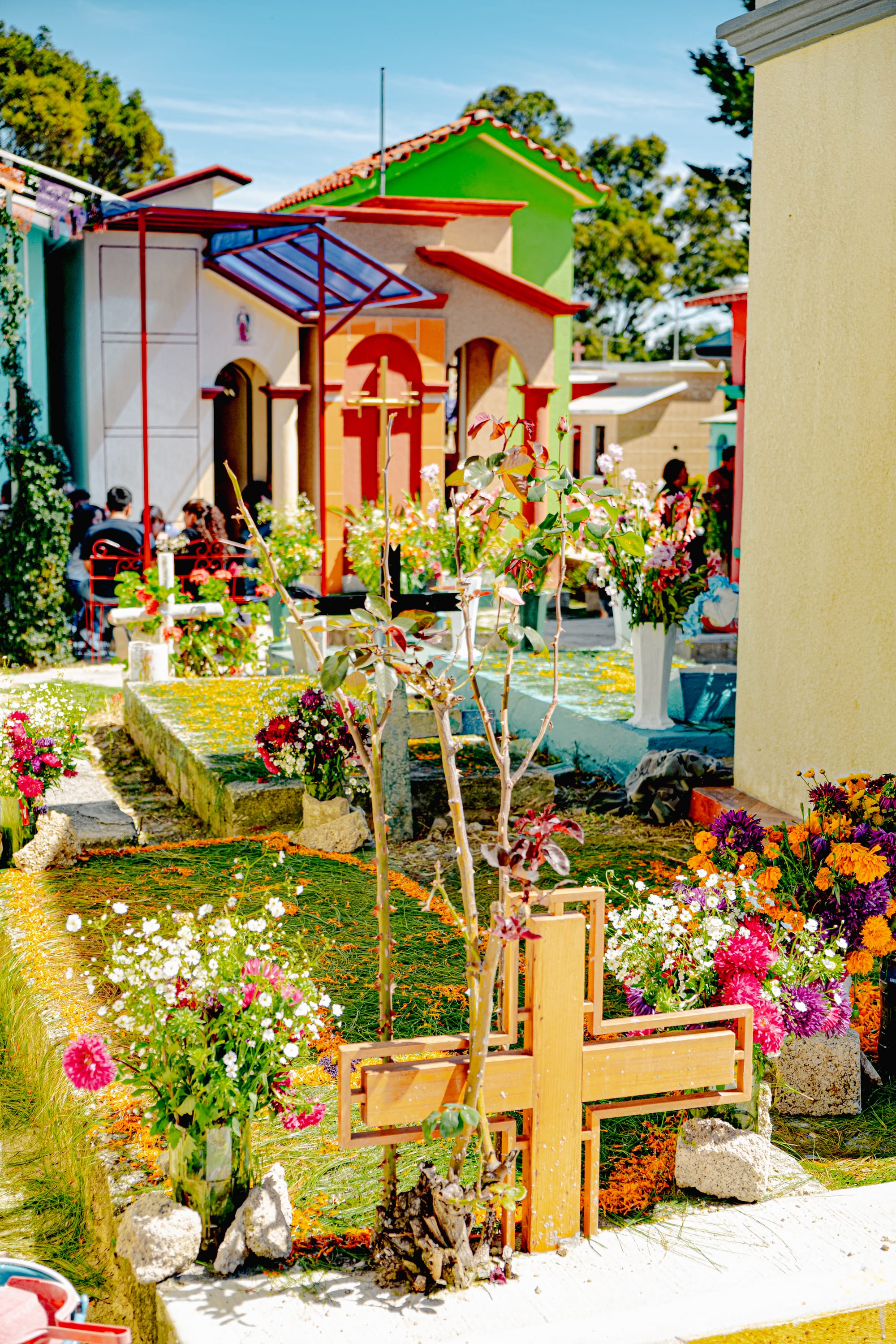
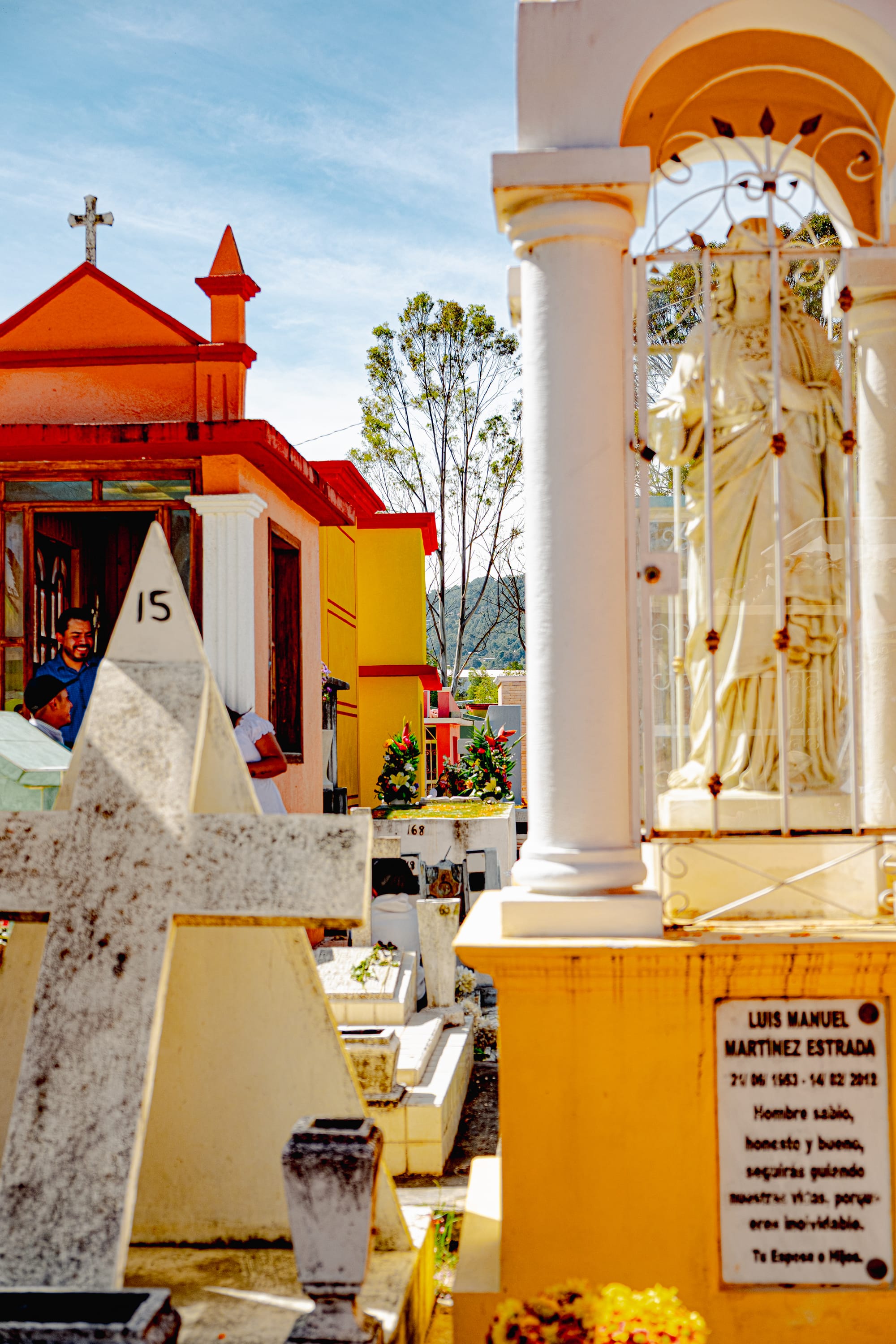
Small, brightly painted mausoleums line the cemetery’s internal streets. Some resemble miniature houses. Others look like chapels, complete with doors, windows, crosses, and decorative trim. Blues, yellows, pinks, greens—the color palette feels almost playful, especially under the highland sun.
Walking the cemetery streets like a small town
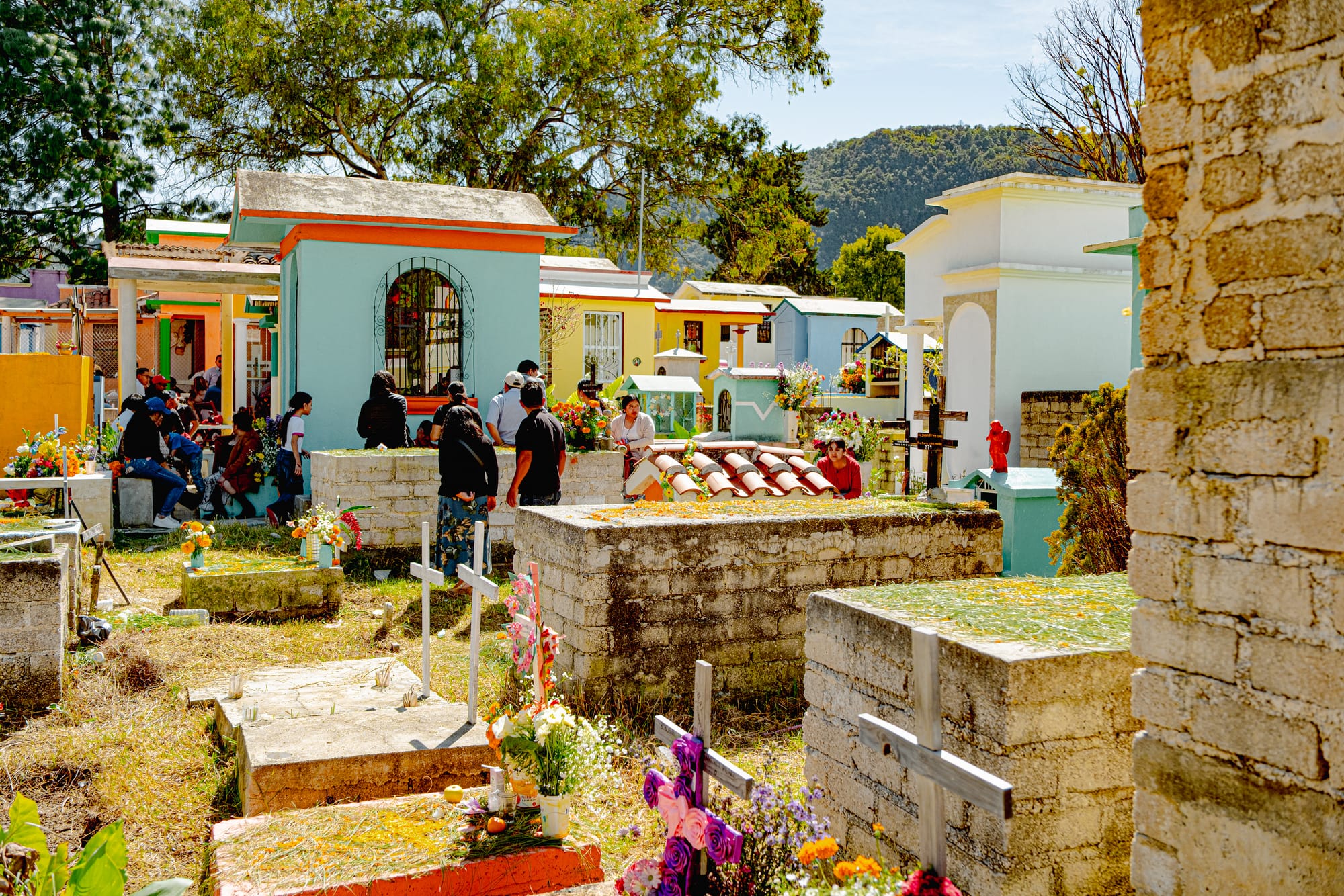
Walking through the Pantheon, it’s easy to forget you’re in a cemetery at all. The layout feels intentional and urban. There are pathways that resemble streets, corners where people pause to talk, shaded areas where families sit for hours at a time. Vendors pass through selling flowers and drinks. Musicians weave between graves.
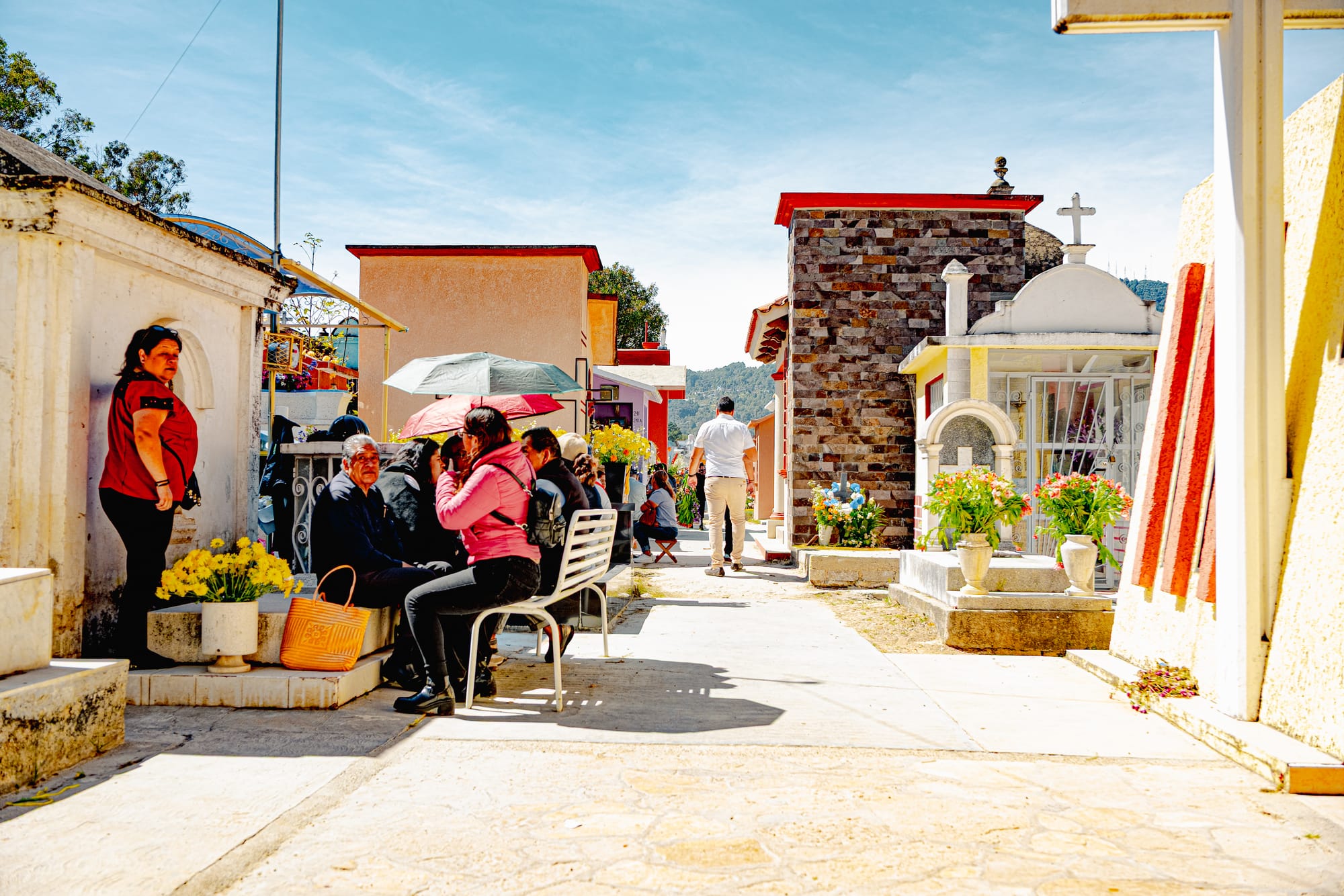
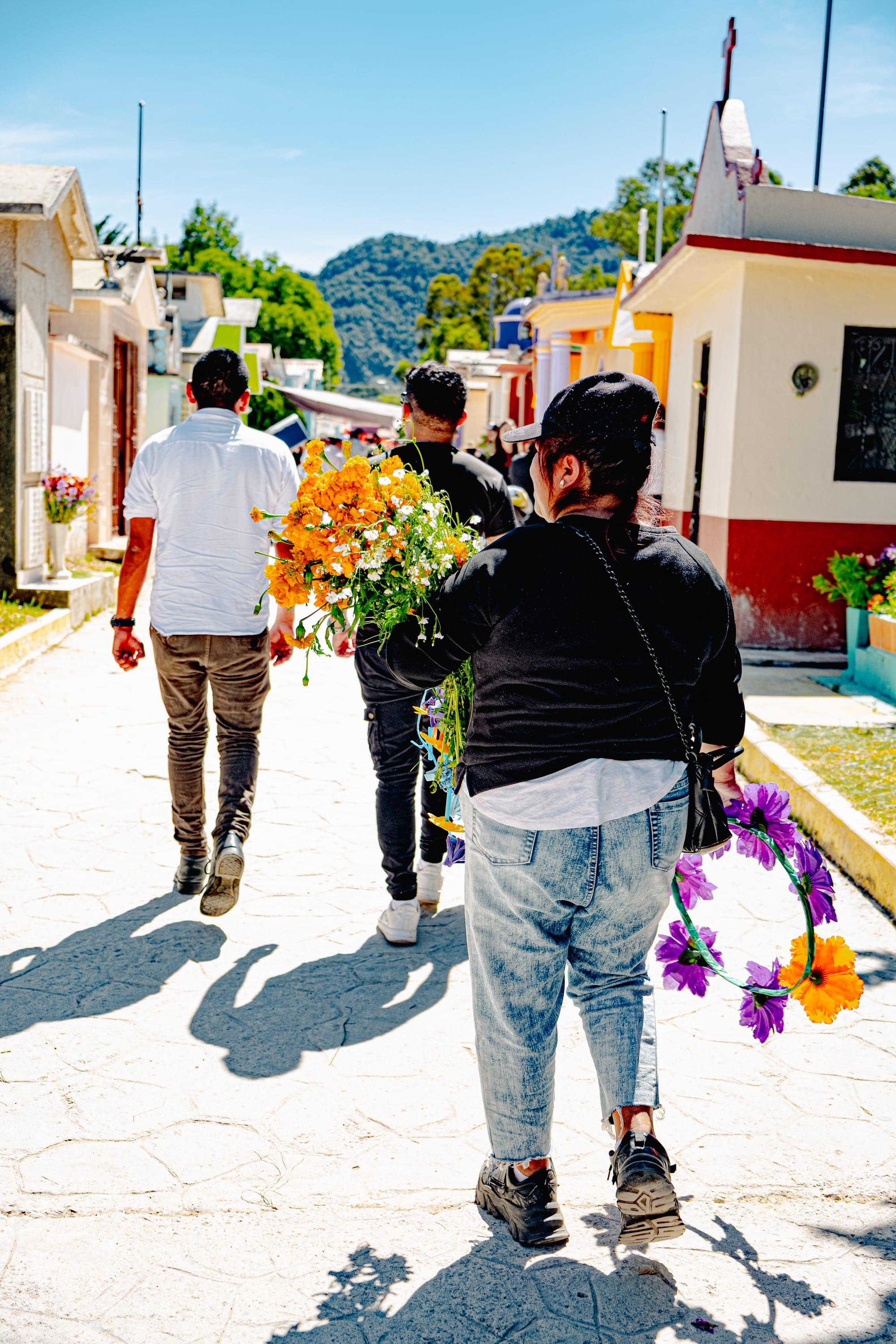
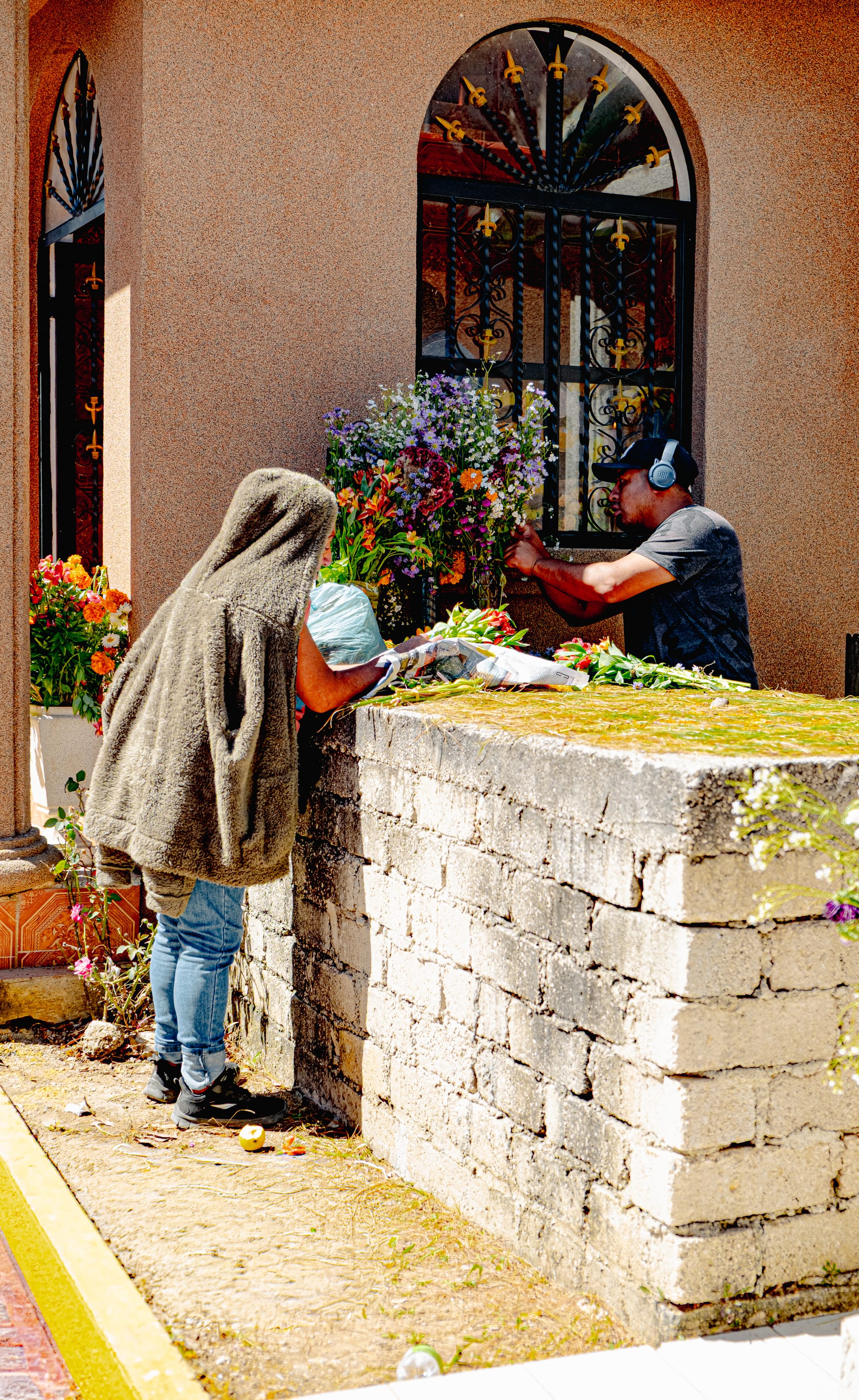
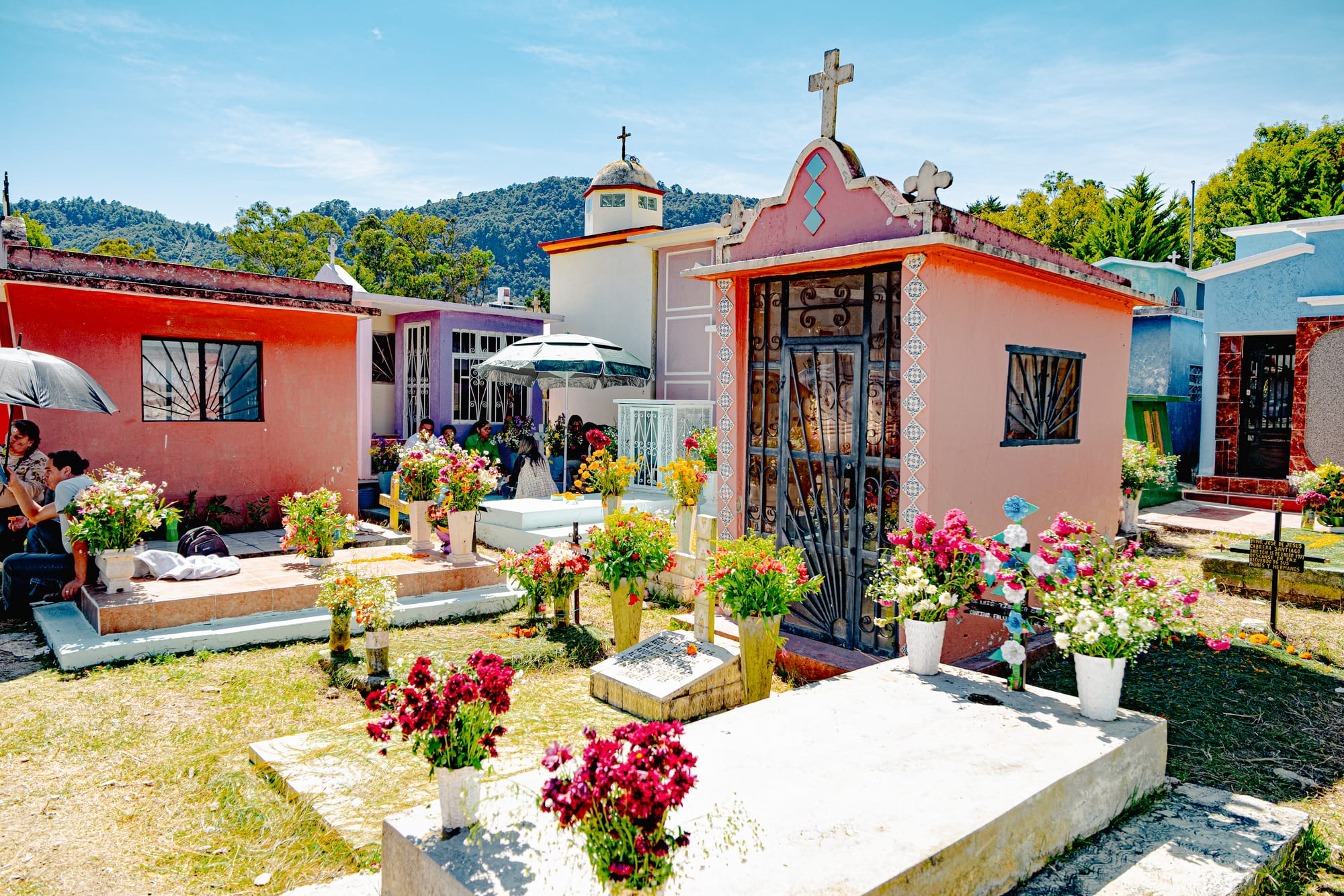
Families lingering among colorful mausoleums
This sense of enclosure is part of what makes the Municipal Pantheon distinct. Unlike Romerillo Cemetery, which sprawls across a hillside beside an amusement park, the Pantheon has clear boundaries. Walls define its edges. Gates mark its entrances. Once inside, you are fully within its world.
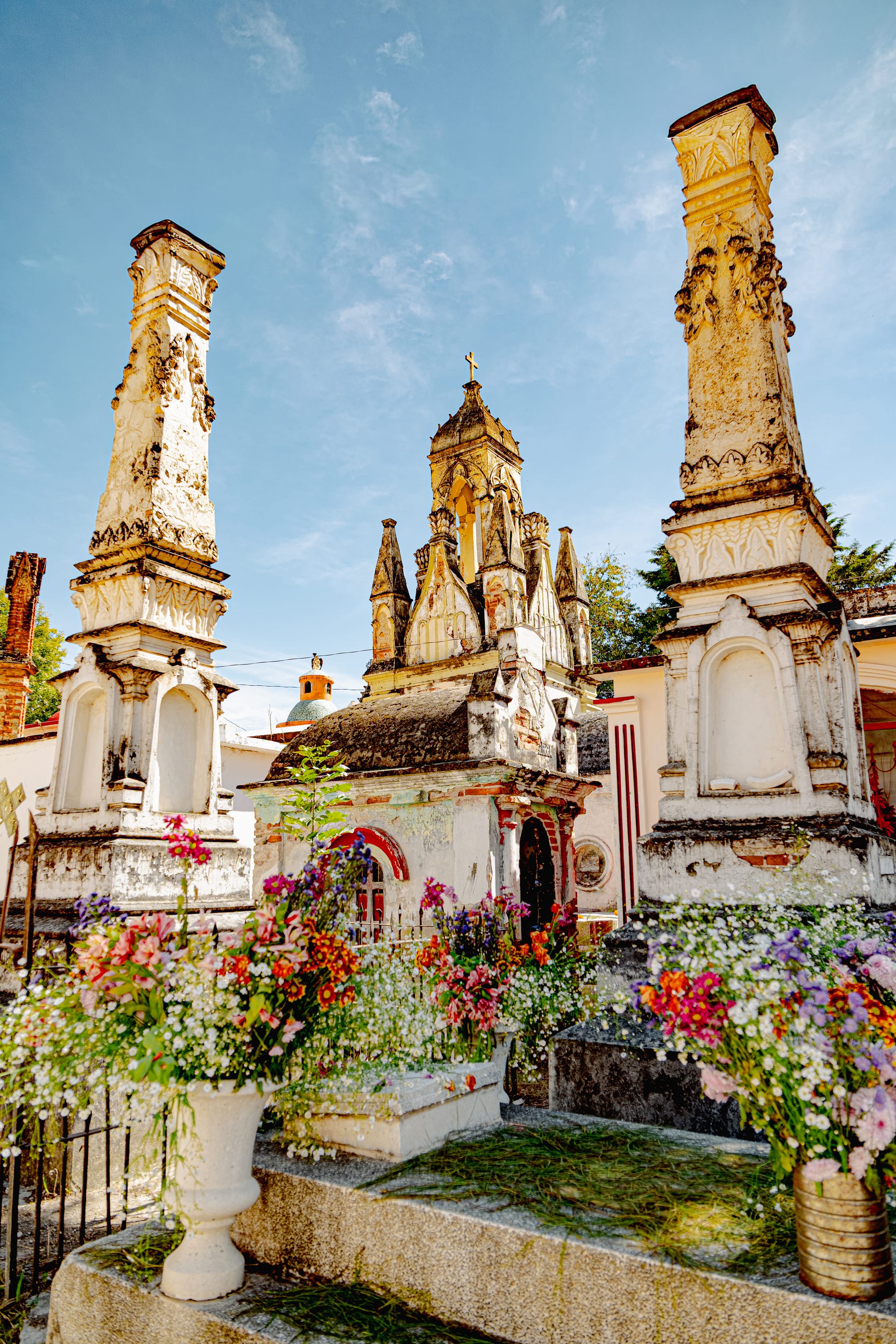
Old stone graves beside brightly tended family plots
That containment creates a different emotional register. More subdued than Romerillo, but no less alive.
Visiting before Día de Muertos
When we first visited the Municipal Pantheon in late October, the cemetery was already stirring.
Some graves were partially decorated. Others were still bare, waiting. Families moved slowly through the space, cleaning tombs, repainting walls, trimming grass, bringing in early flowers. You could sense a kind of collective readiness—a quiet acknowledgment that something important was approaching.
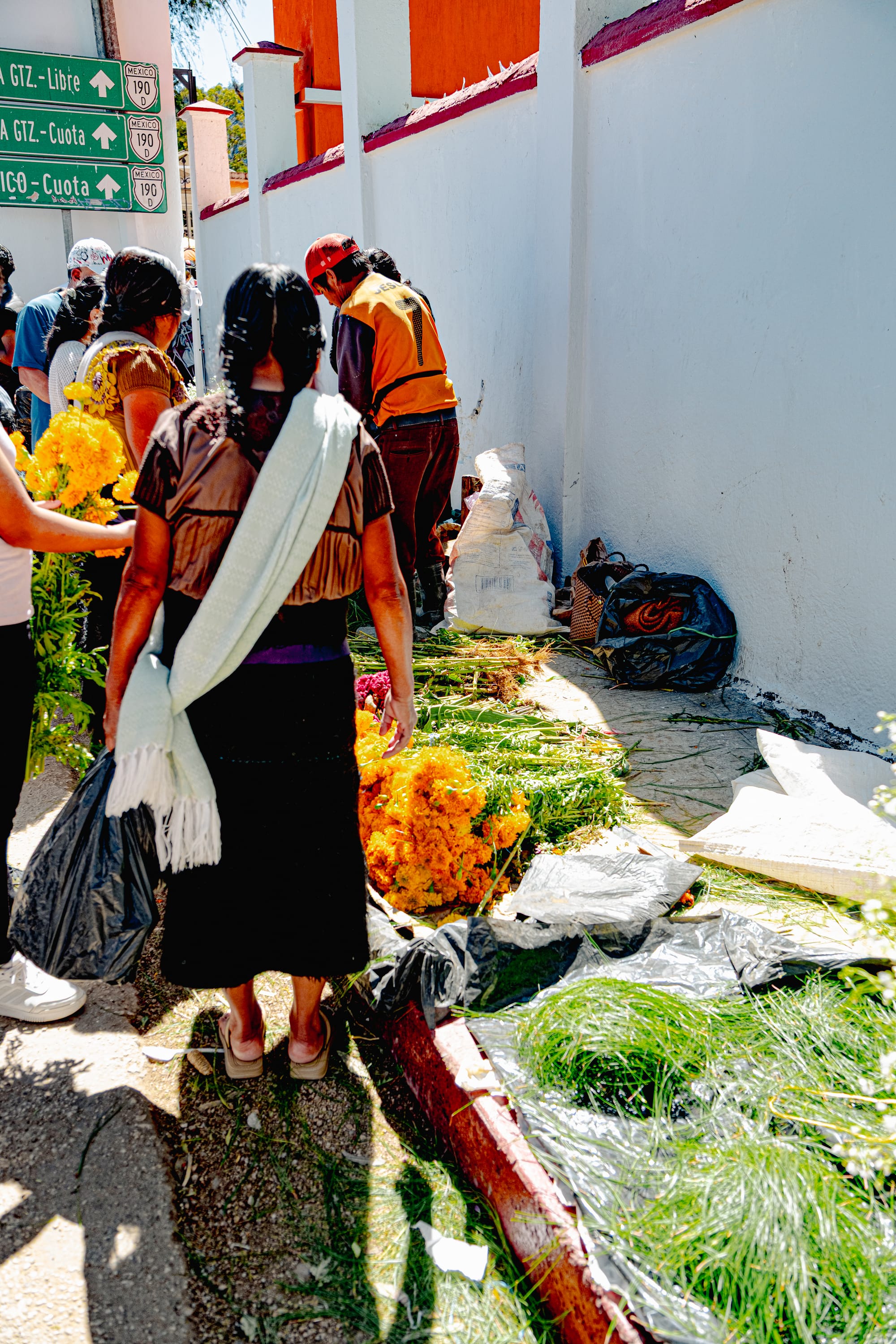
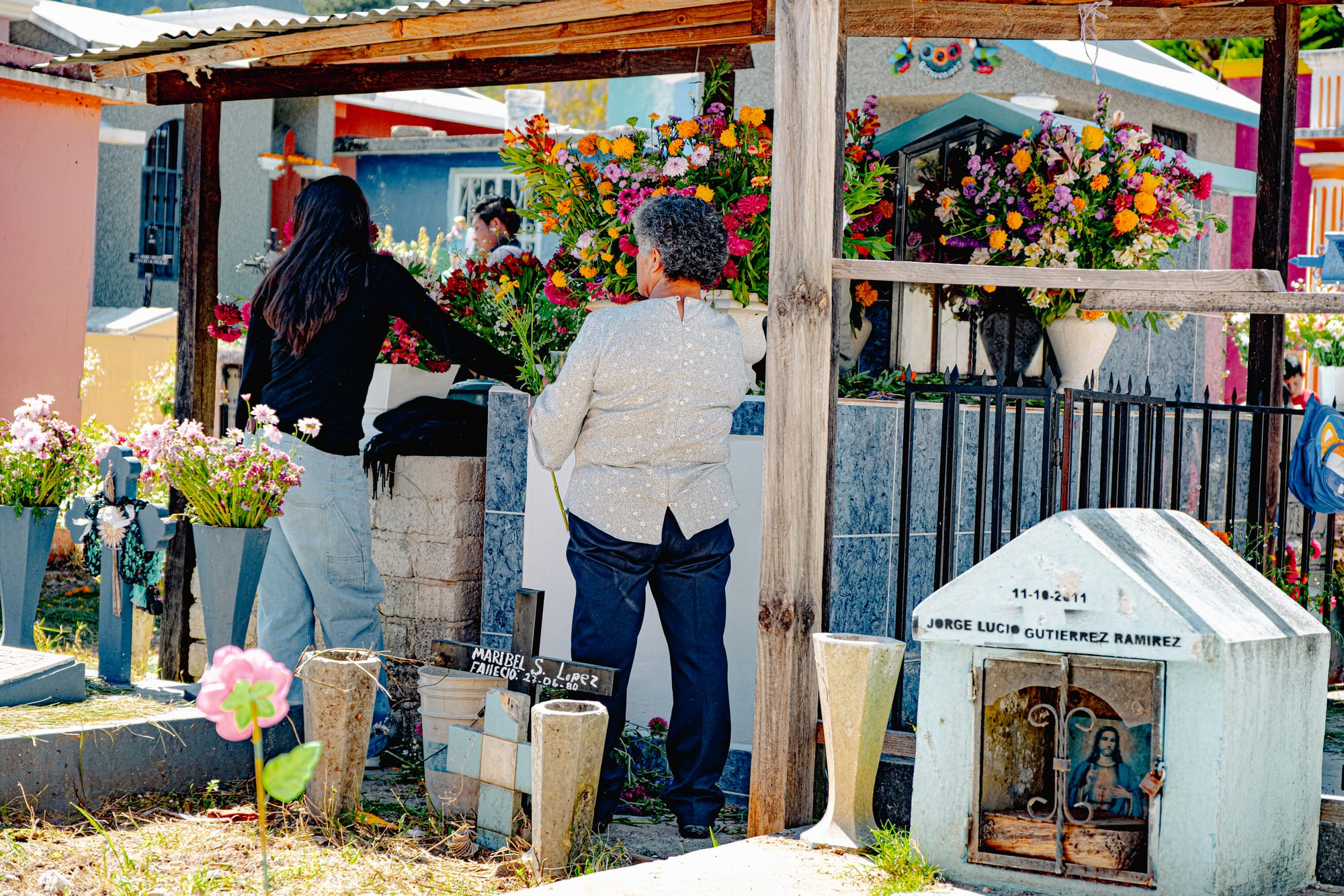
Careful arrangements passed between generations
This visit was especially revealing. Without the crowds, the Pantheon’s architecture stood out more clearly. The details of the mausoleums—carved edges, hand-painted lettering, aging plaster—felt intimate and personal. Each structure carried a distinct personality, shaped by family care over many years.
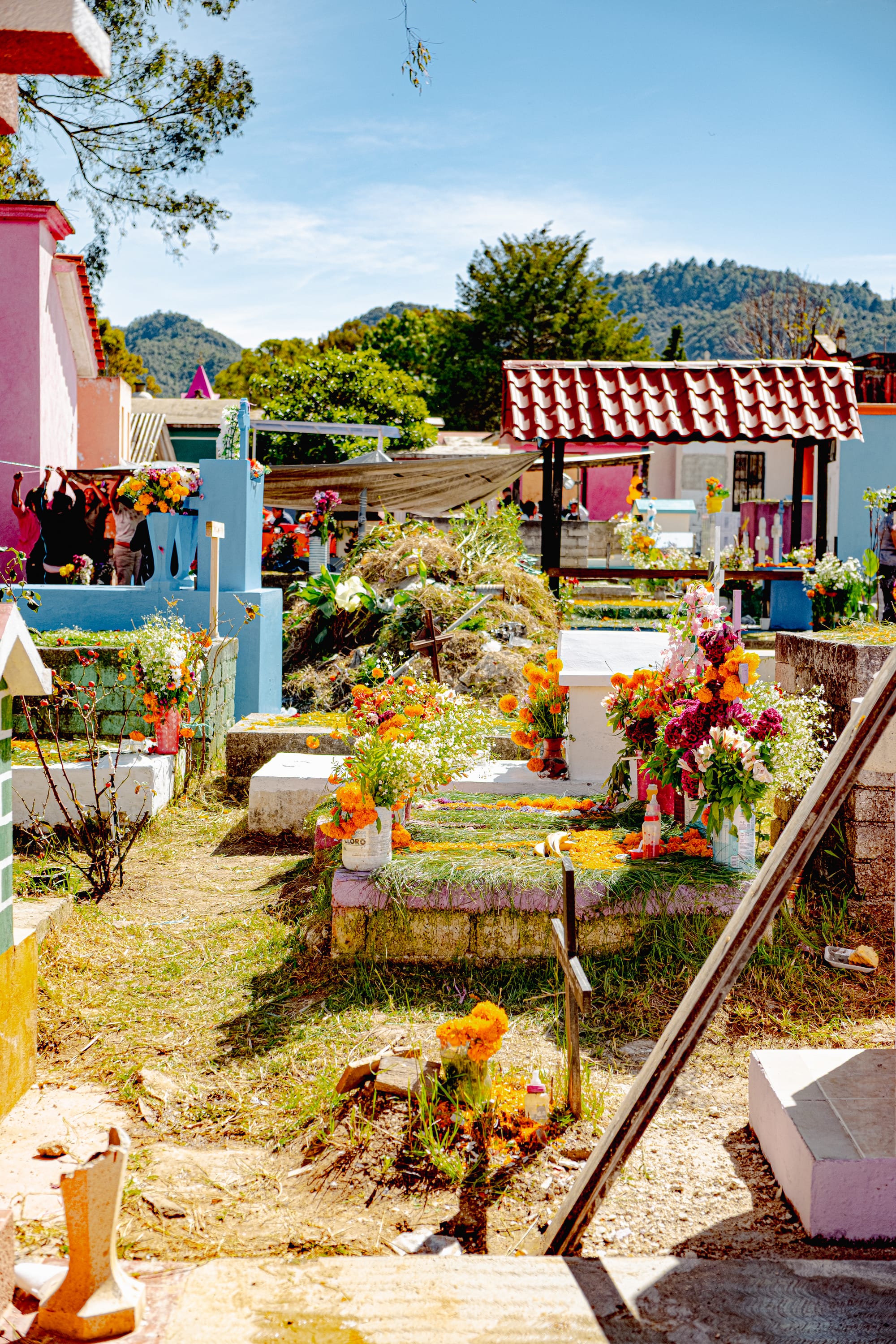
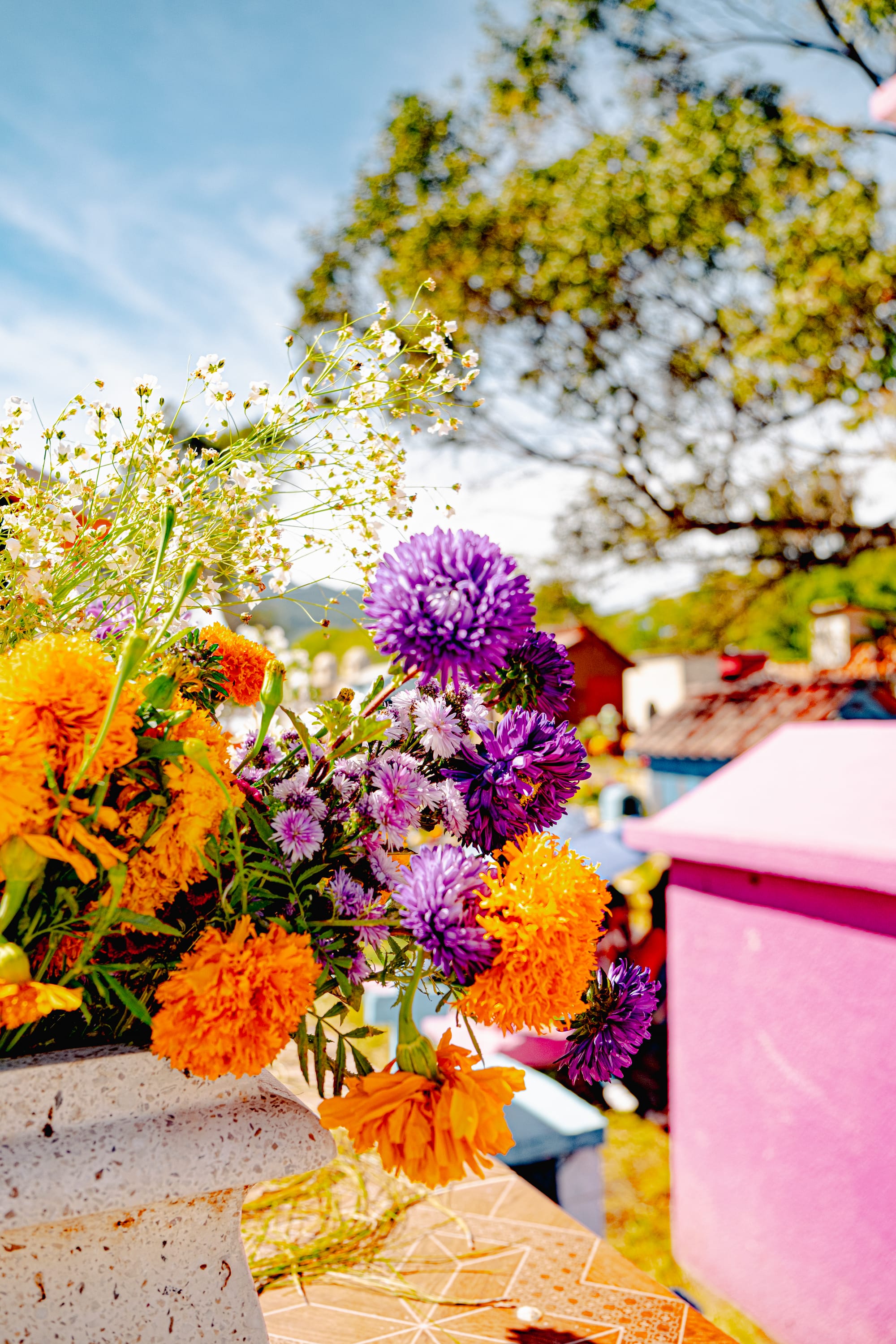
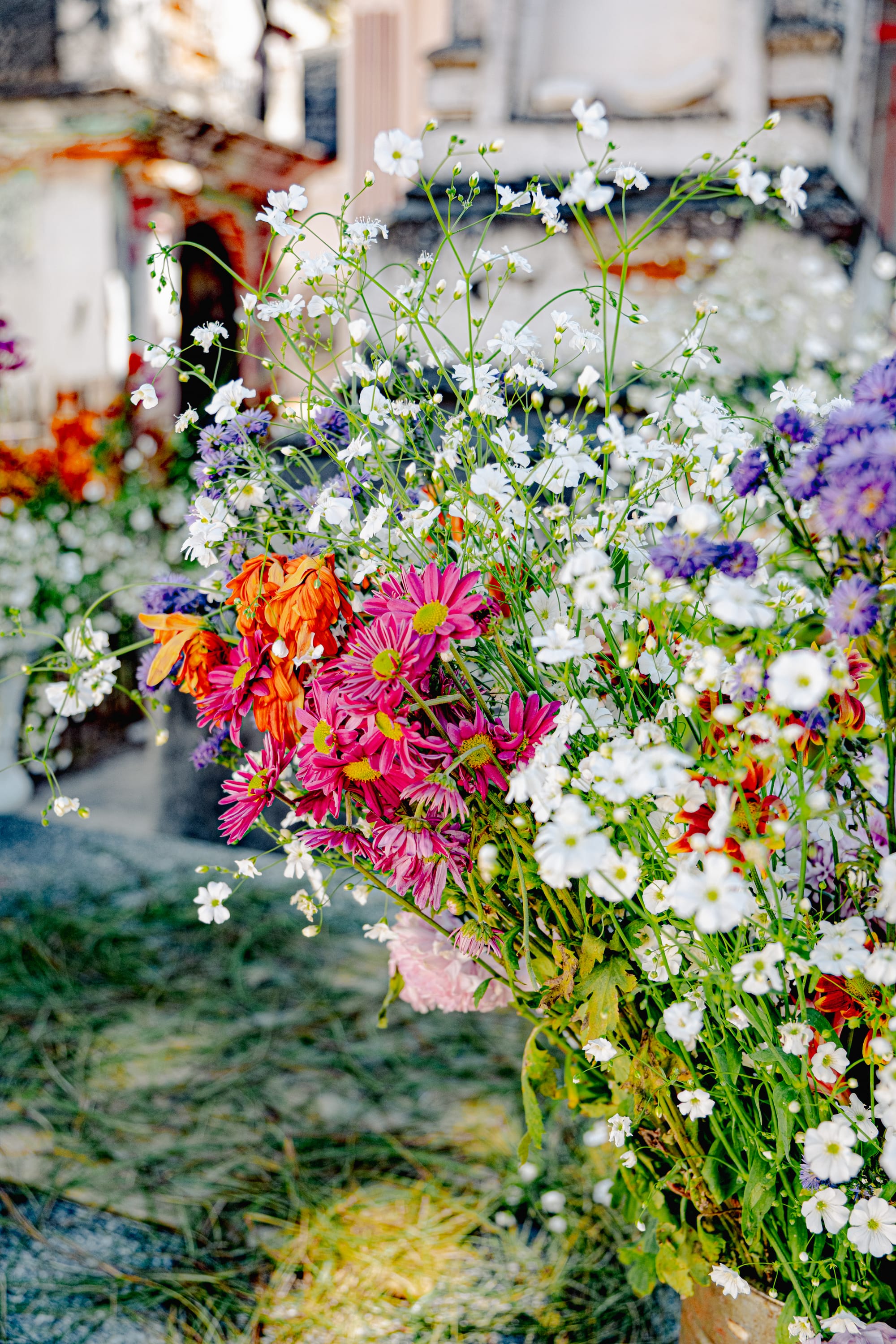
Fresh flowers marking graves across the cemetery
There was also an emotional tenderness to this pre-holiday moment. No music yet. No parades. Just preparation—slowly, and with care.
We wrote a full post on our initial visit prior to Day of the Dead—read it here.
The morning of November 2nd
Returning on the morning of November 2nd, we expected the energy to have possibly faded.
Instead, the Pantheon was full.
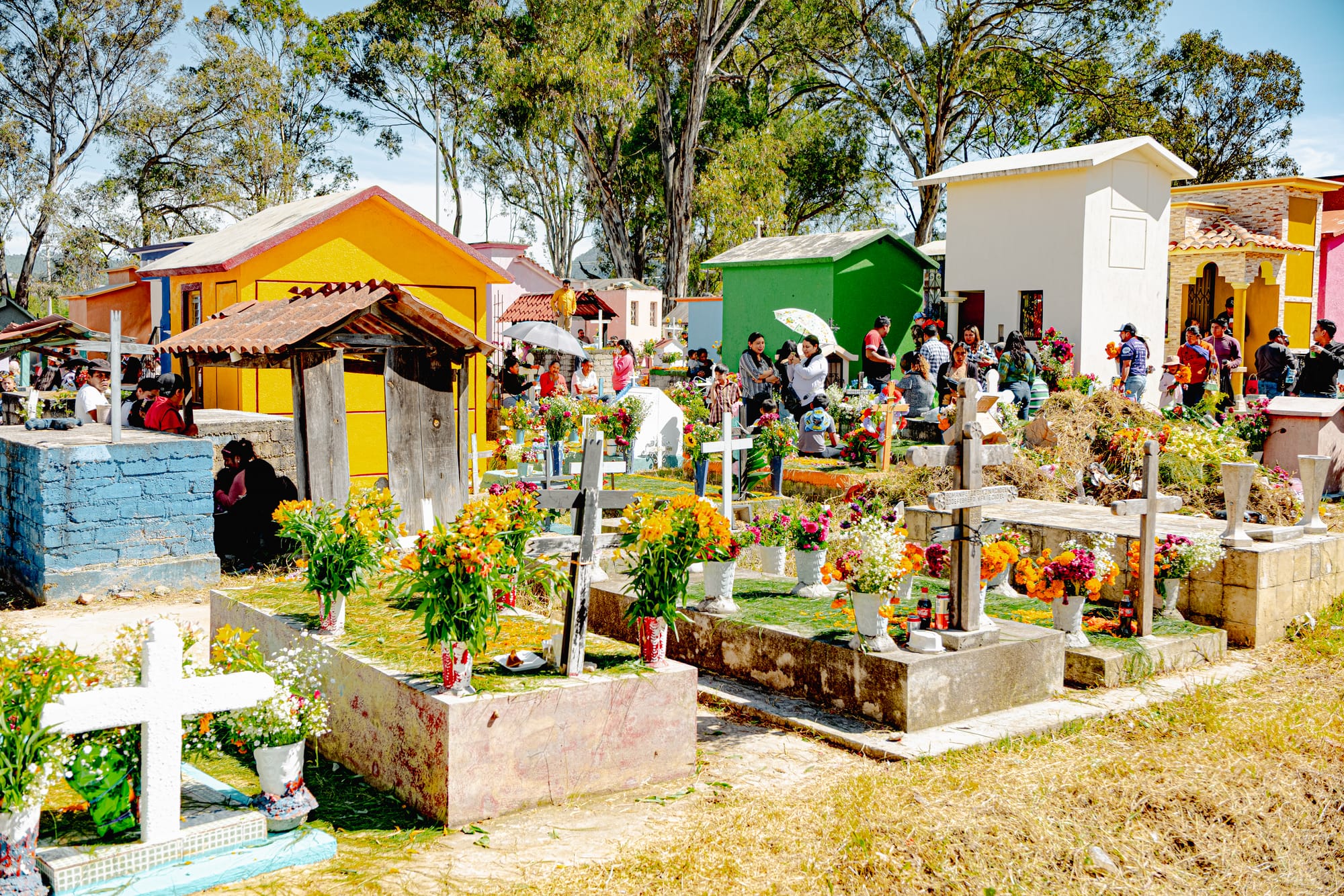
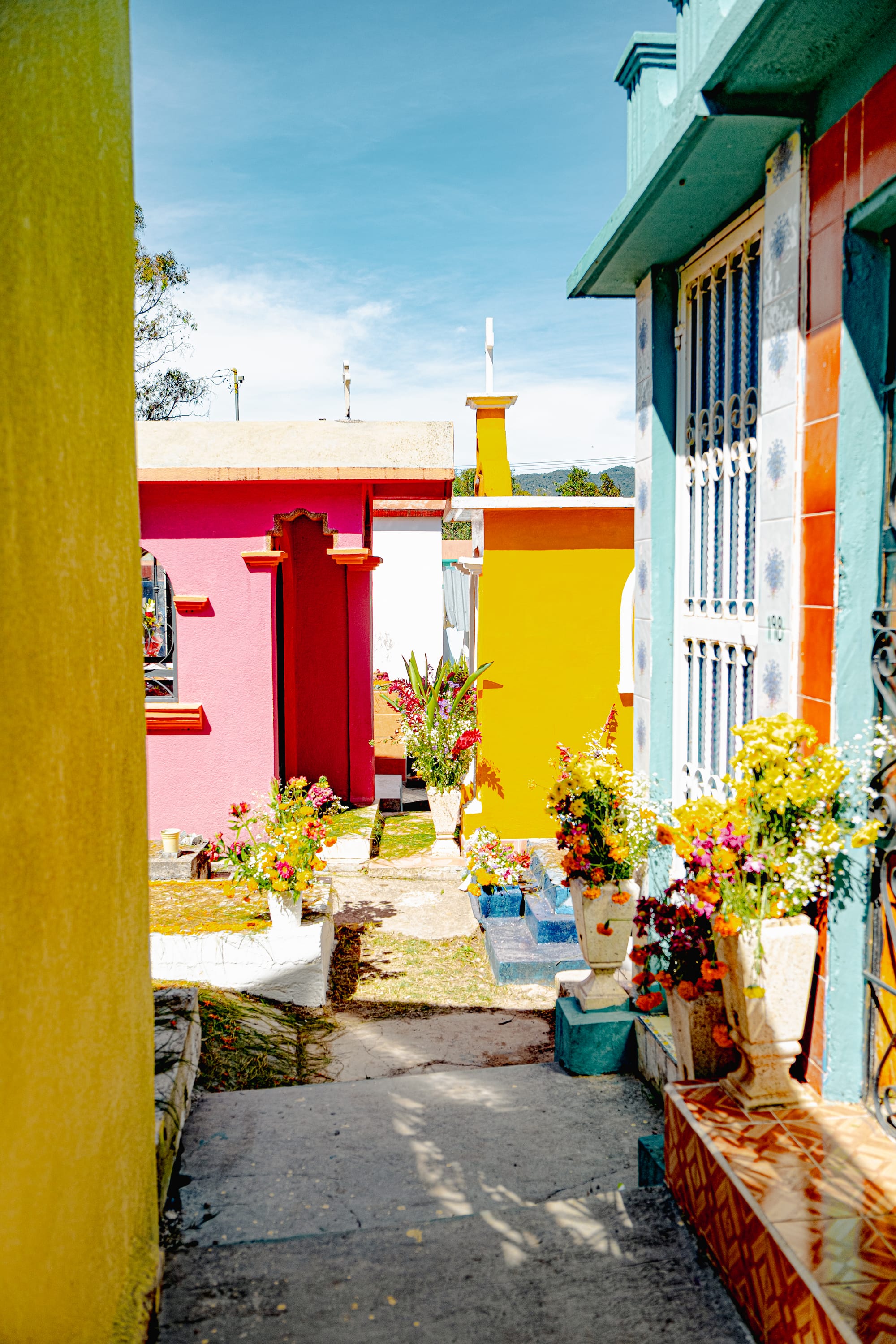
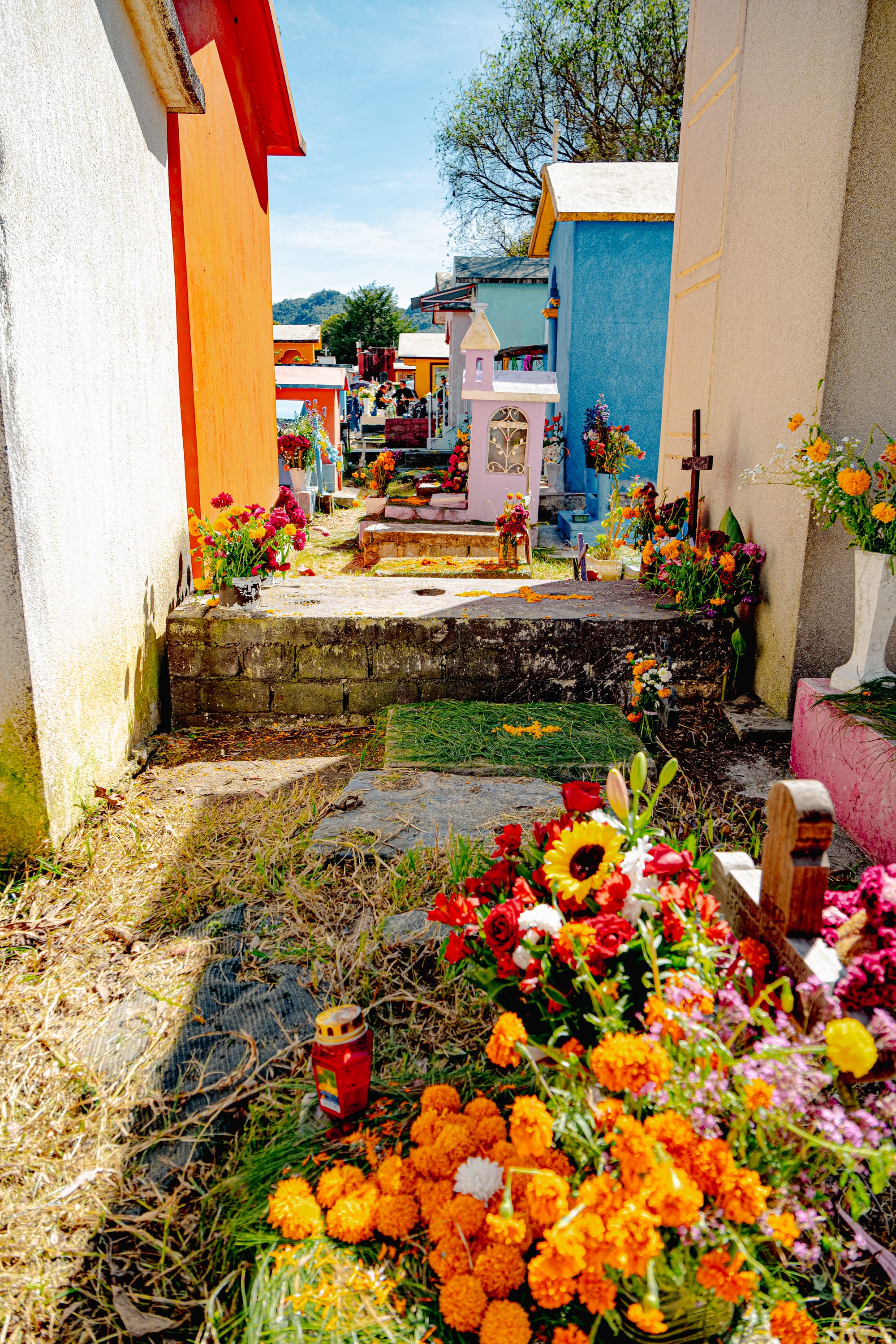
Colorful pathways between graves and family mausoleums
We were told that due to the day of the week on which Day of the Dead occurred, the portal between the living and the dead would still remain open for another day, before closing the following day.
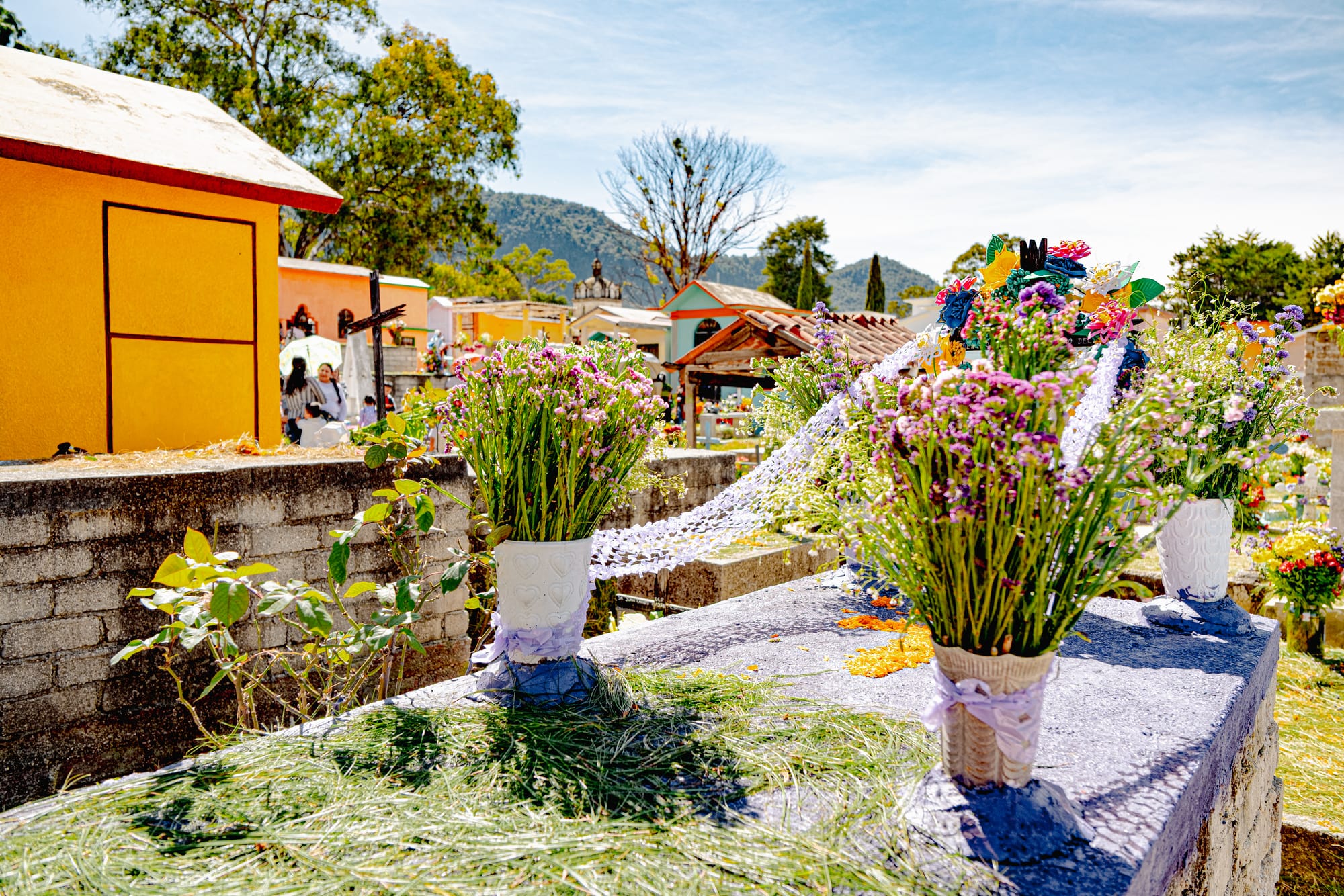
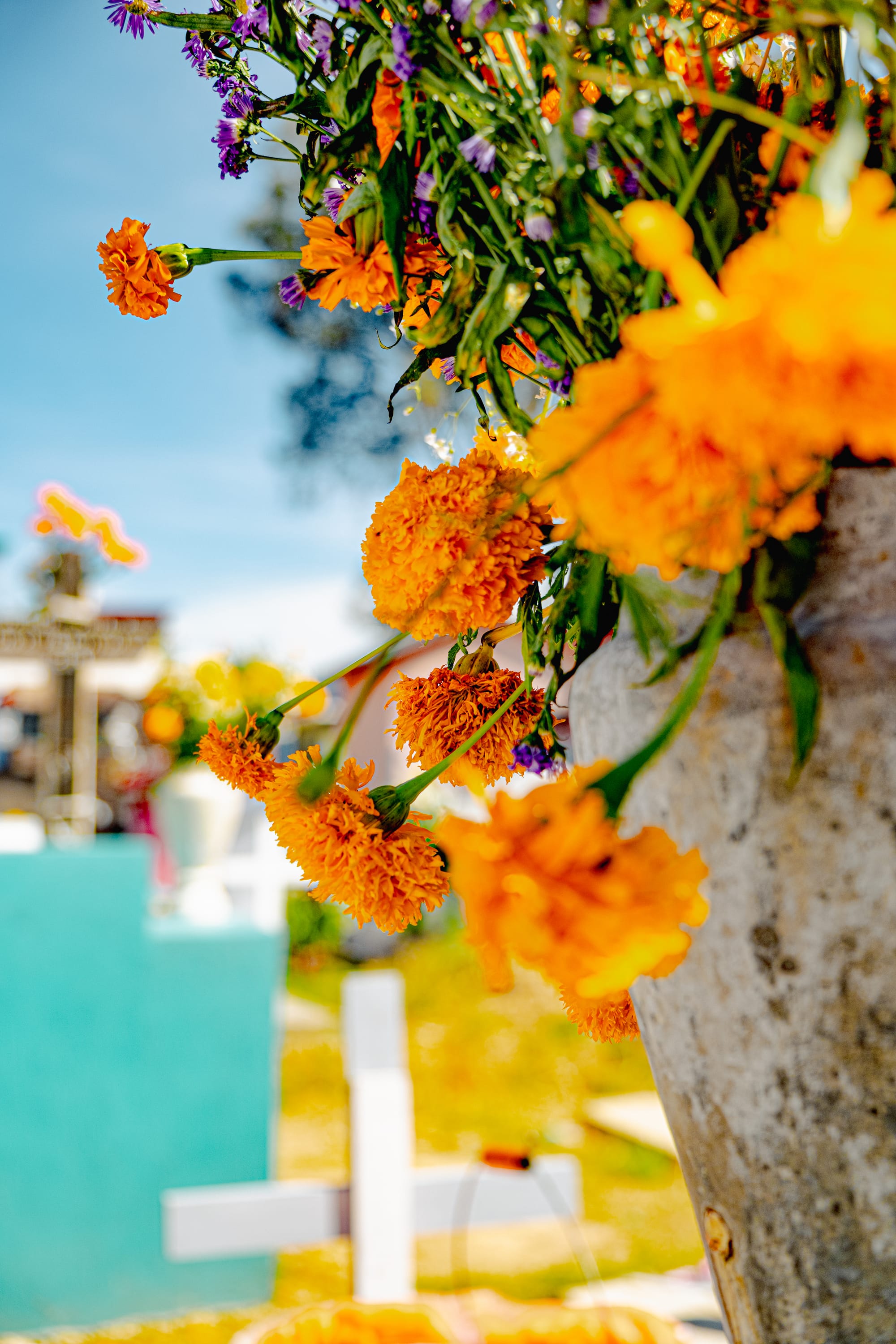
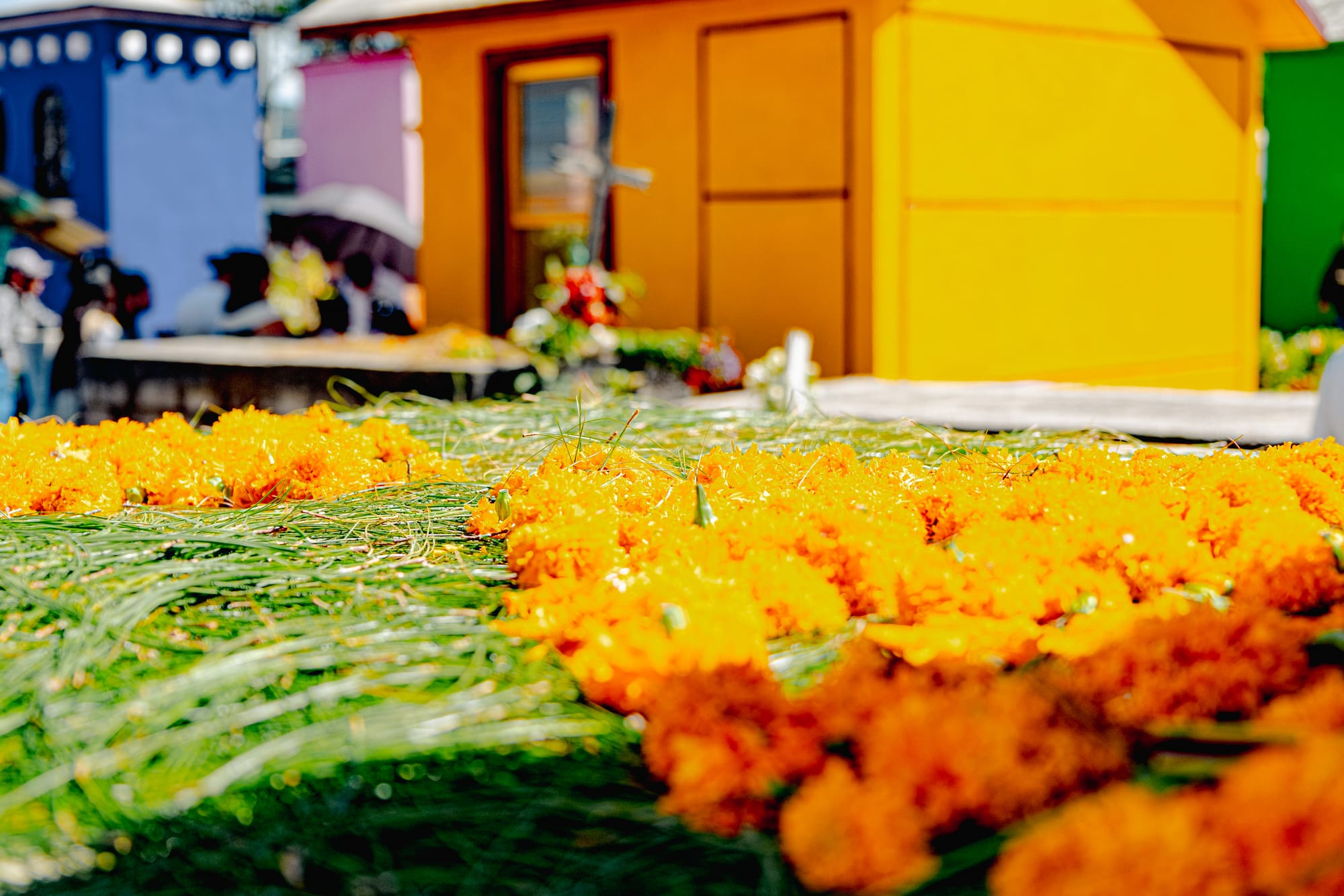
Marigolds and color brightening the cemetery paths
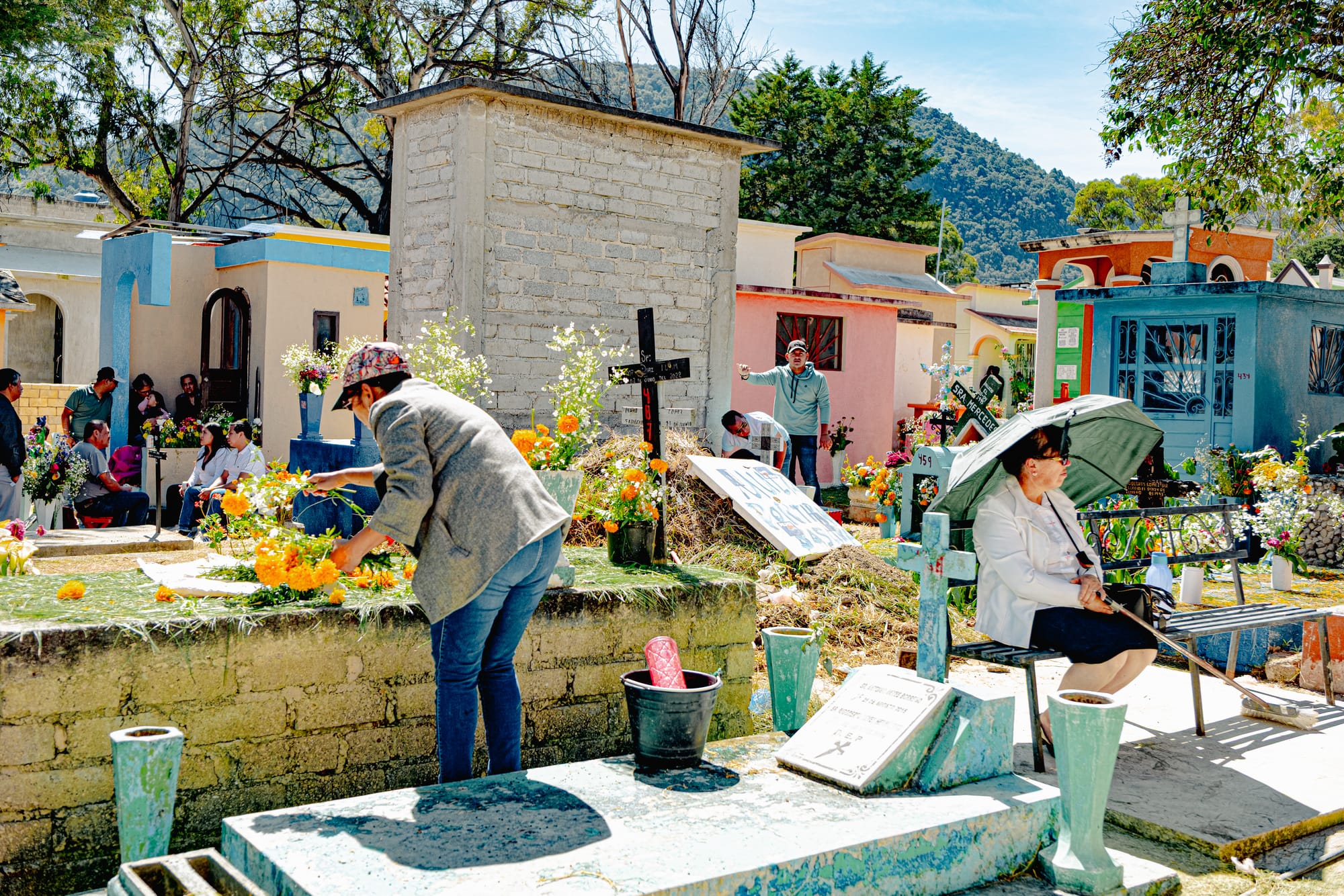
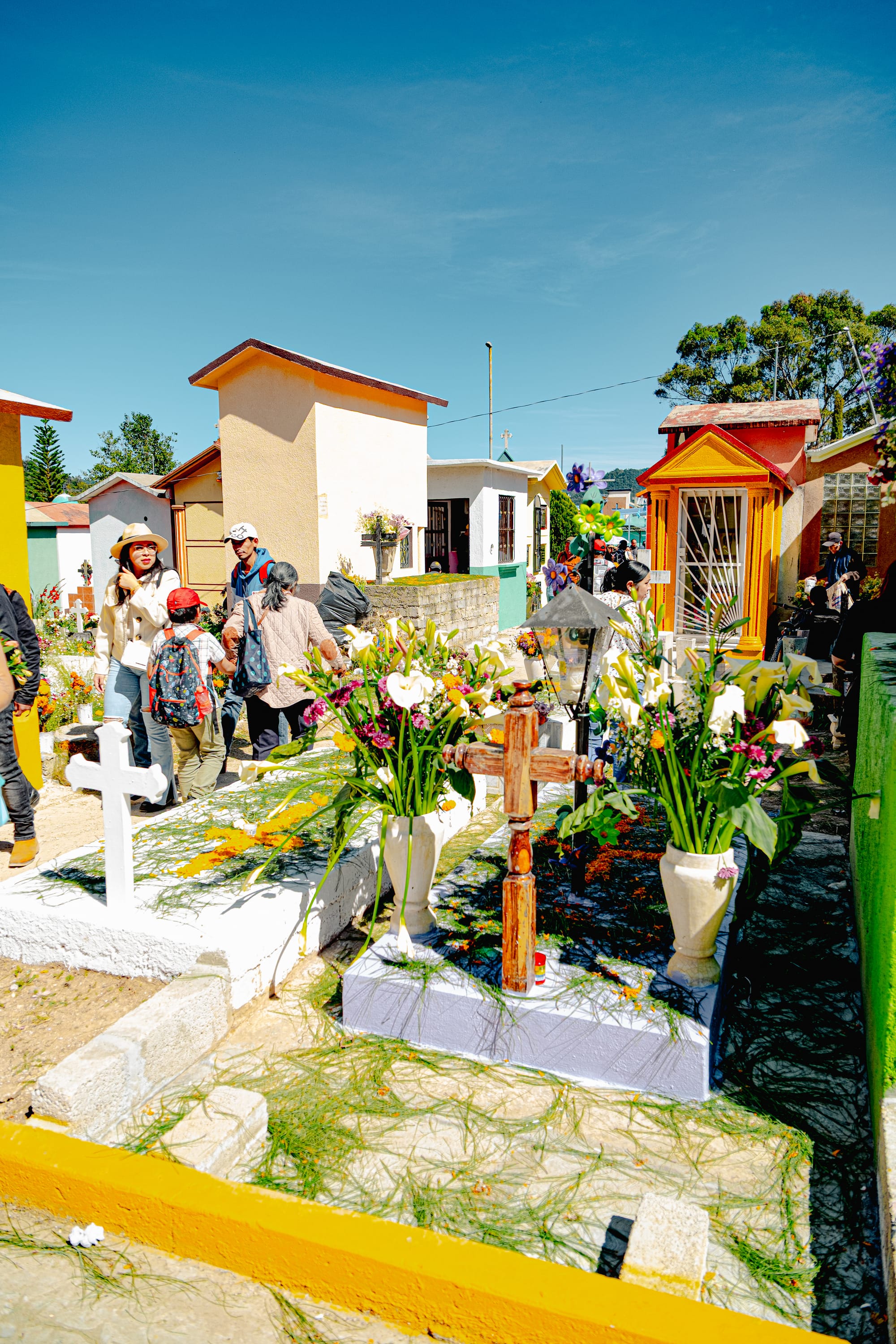
Families were everywhere—sitting on chairs beside graves, sharing food, talking, laughing, playing music. Some had clearly been there since early morning. Others looked as though they had never left. Flower arrangements were more elaborate now, carefully arranged and freshly tended.
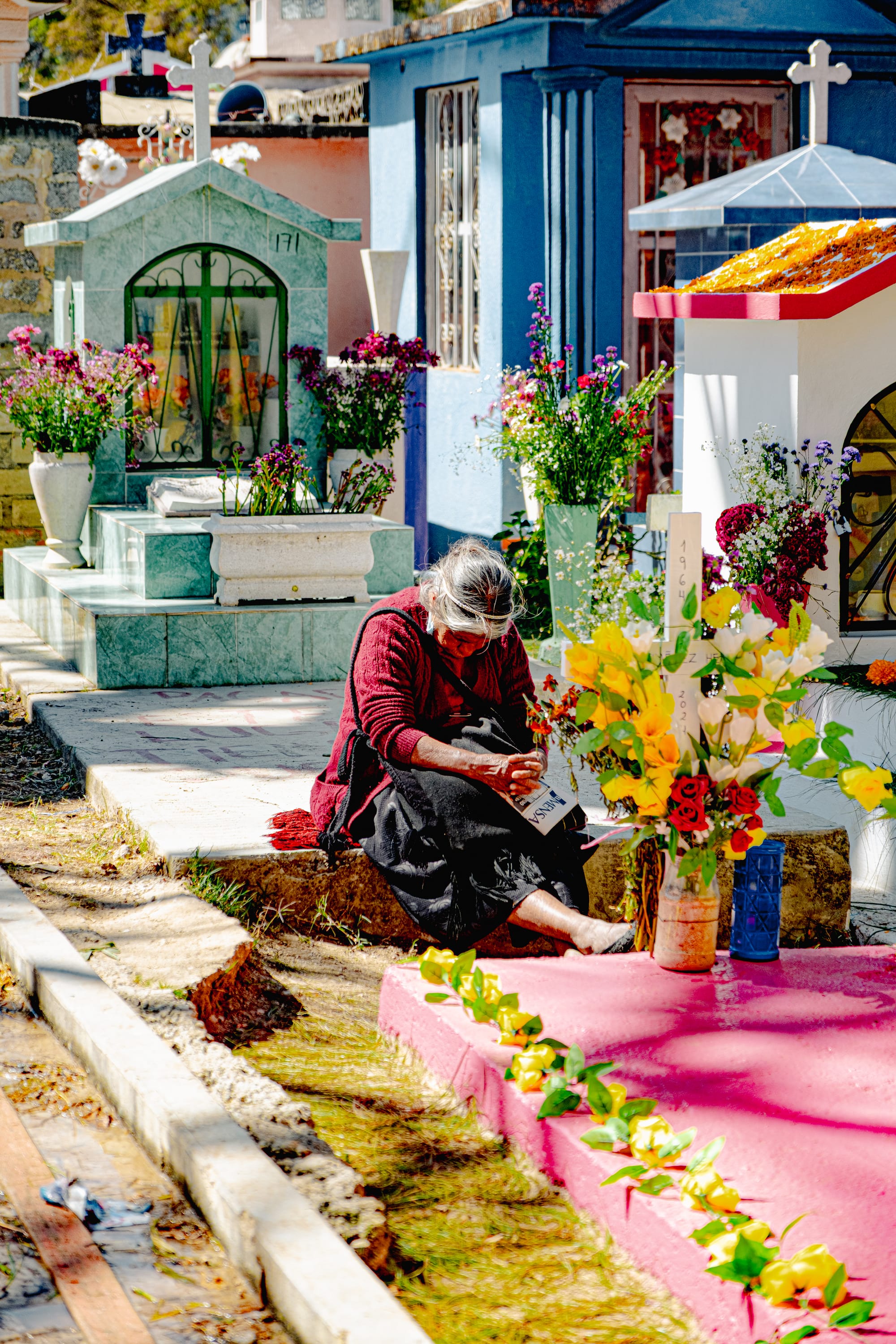
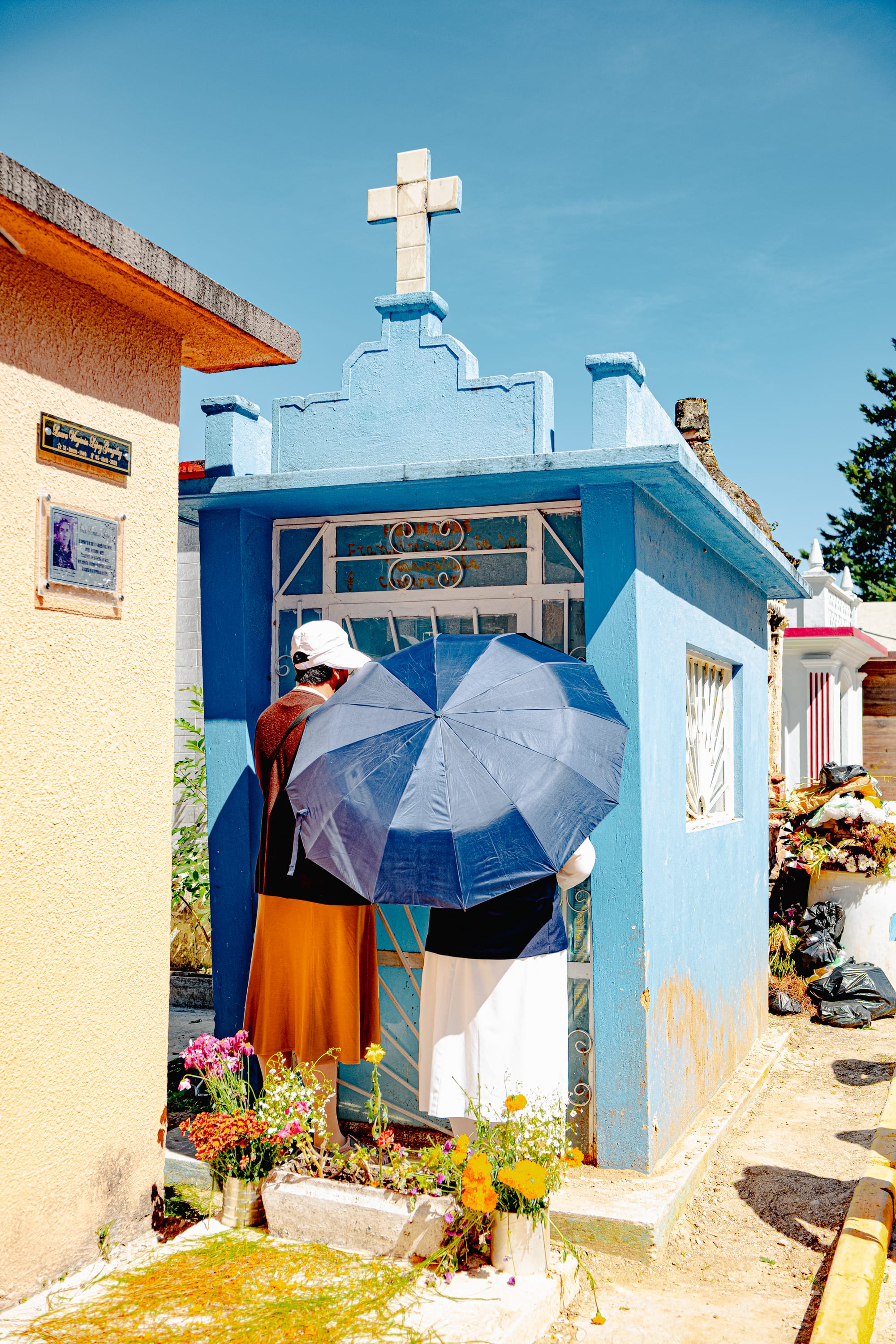
Small rituals of care beside painted mausoleums
What stood out most was the duration of presence. This wasn’t a brief visit to pay respects. People settled in. Chairs were unfolded. Children played between mausoleums. Conversations stretched on. Time loosened.
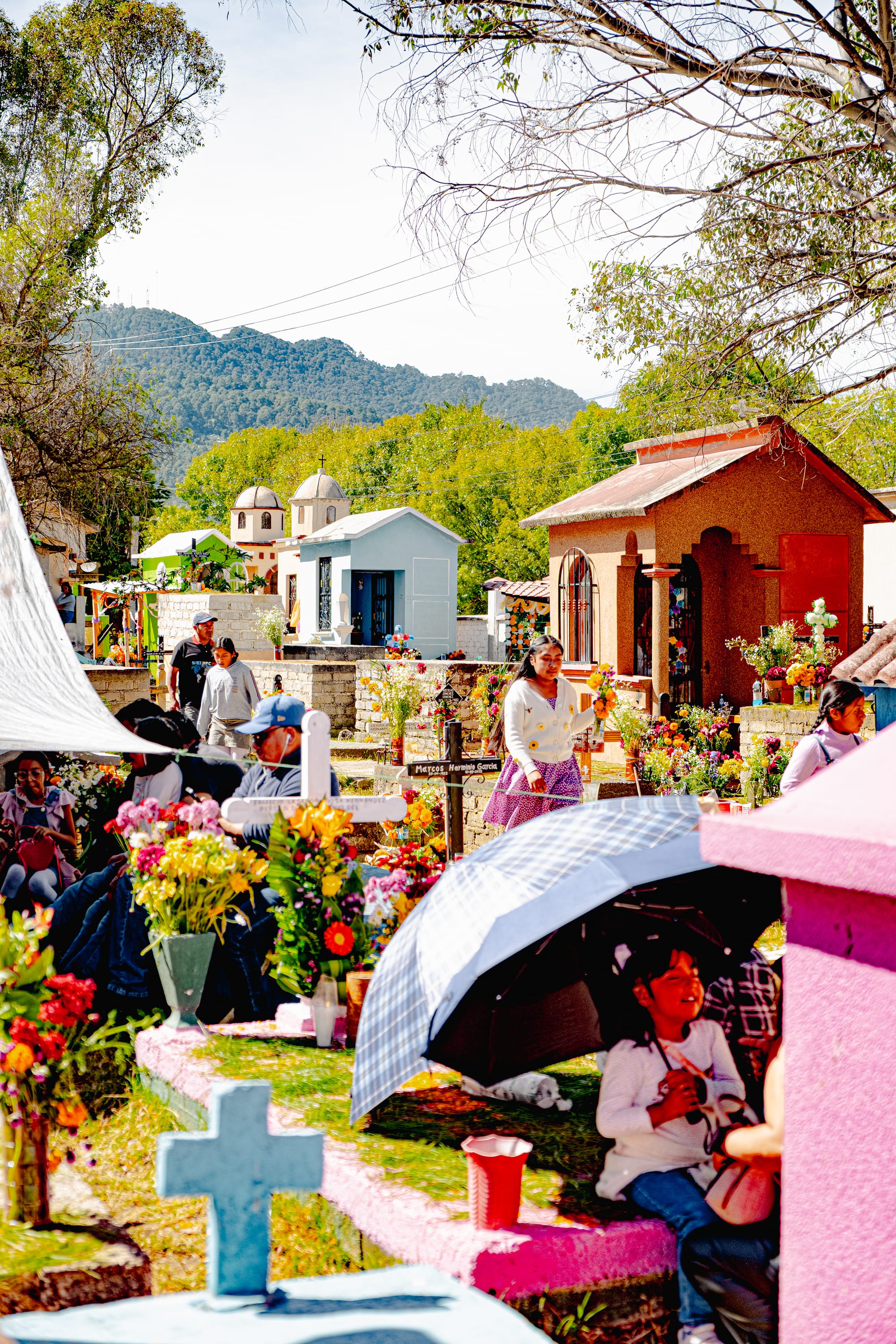
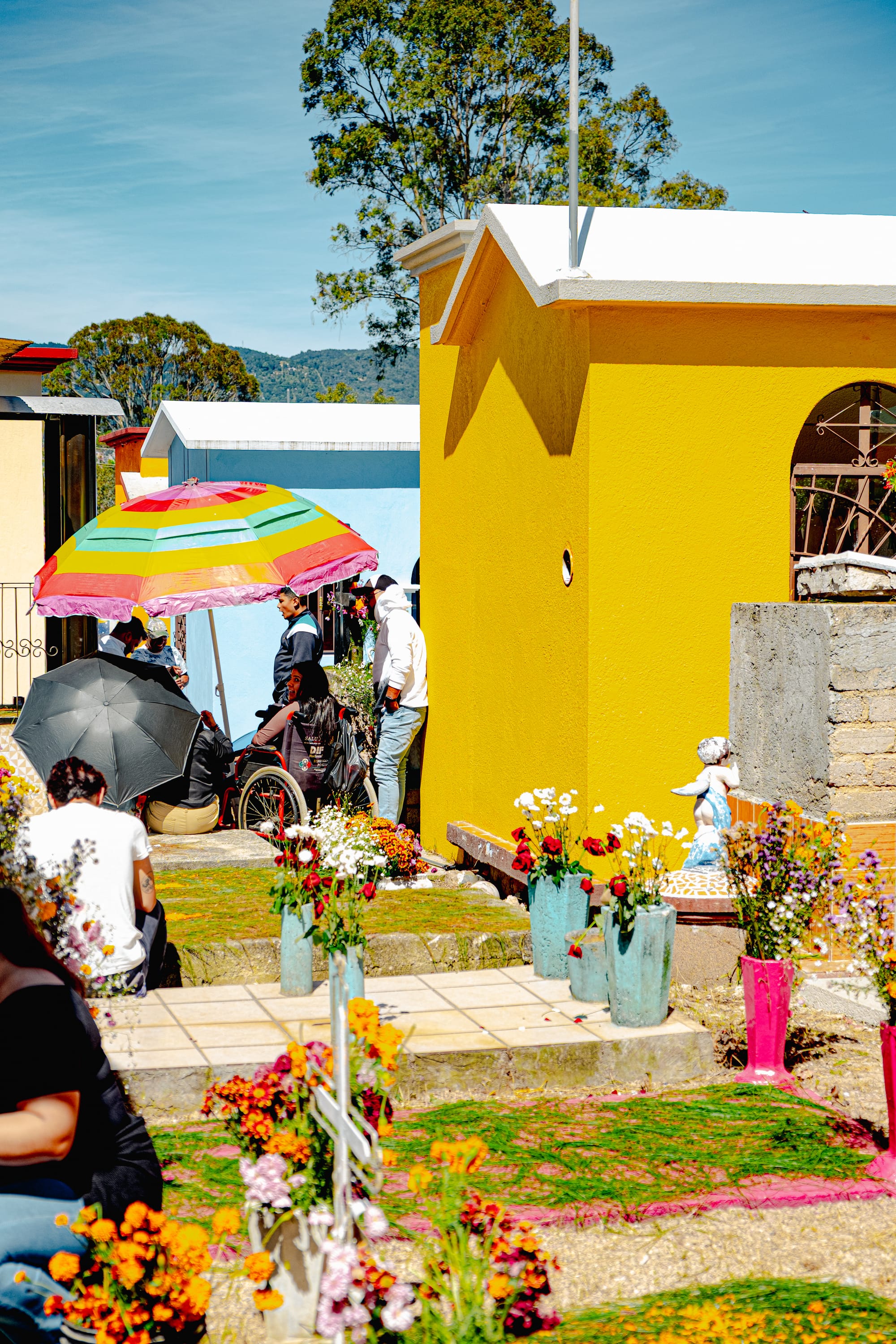
Families gathering, resting, and sharing time among the graves
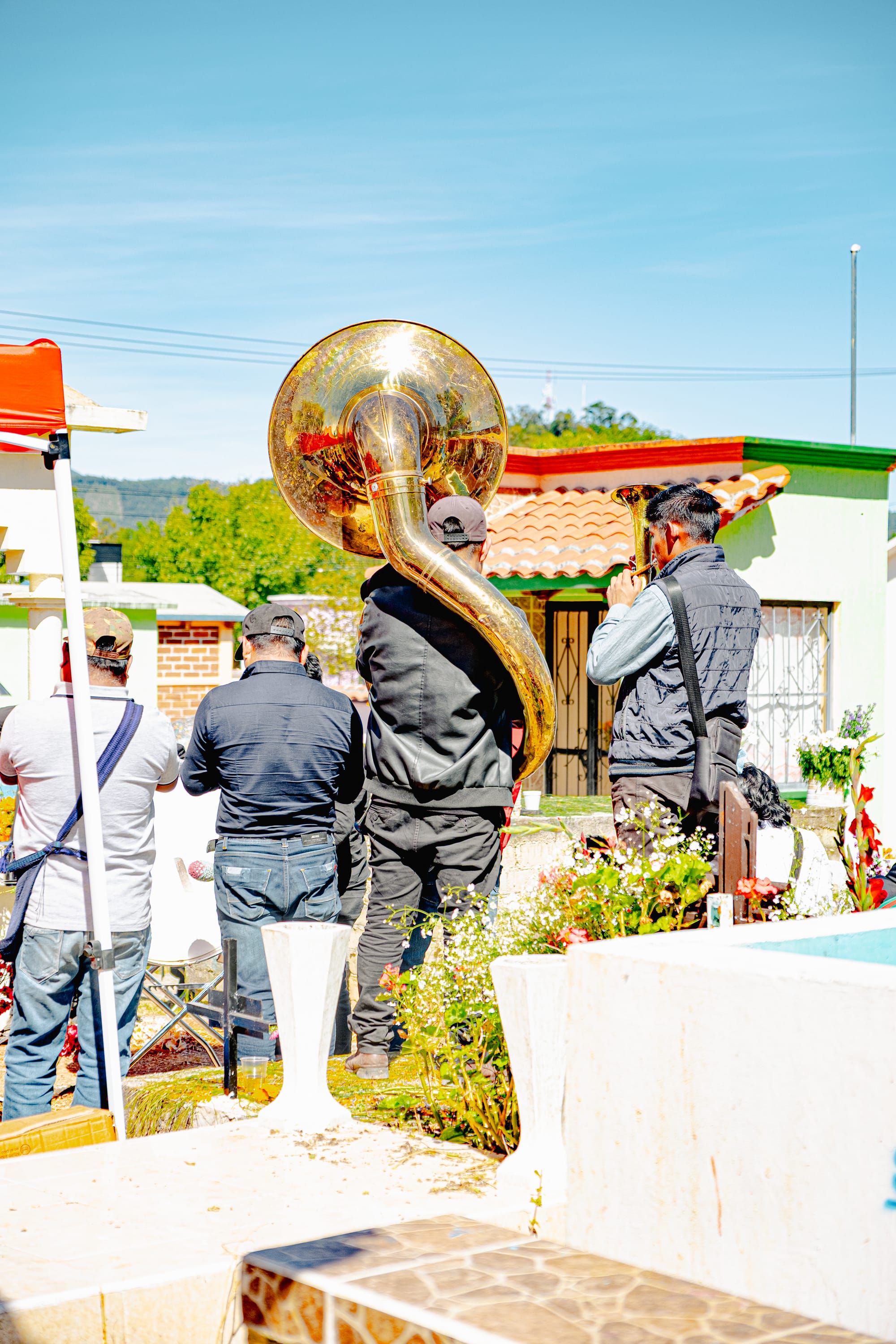
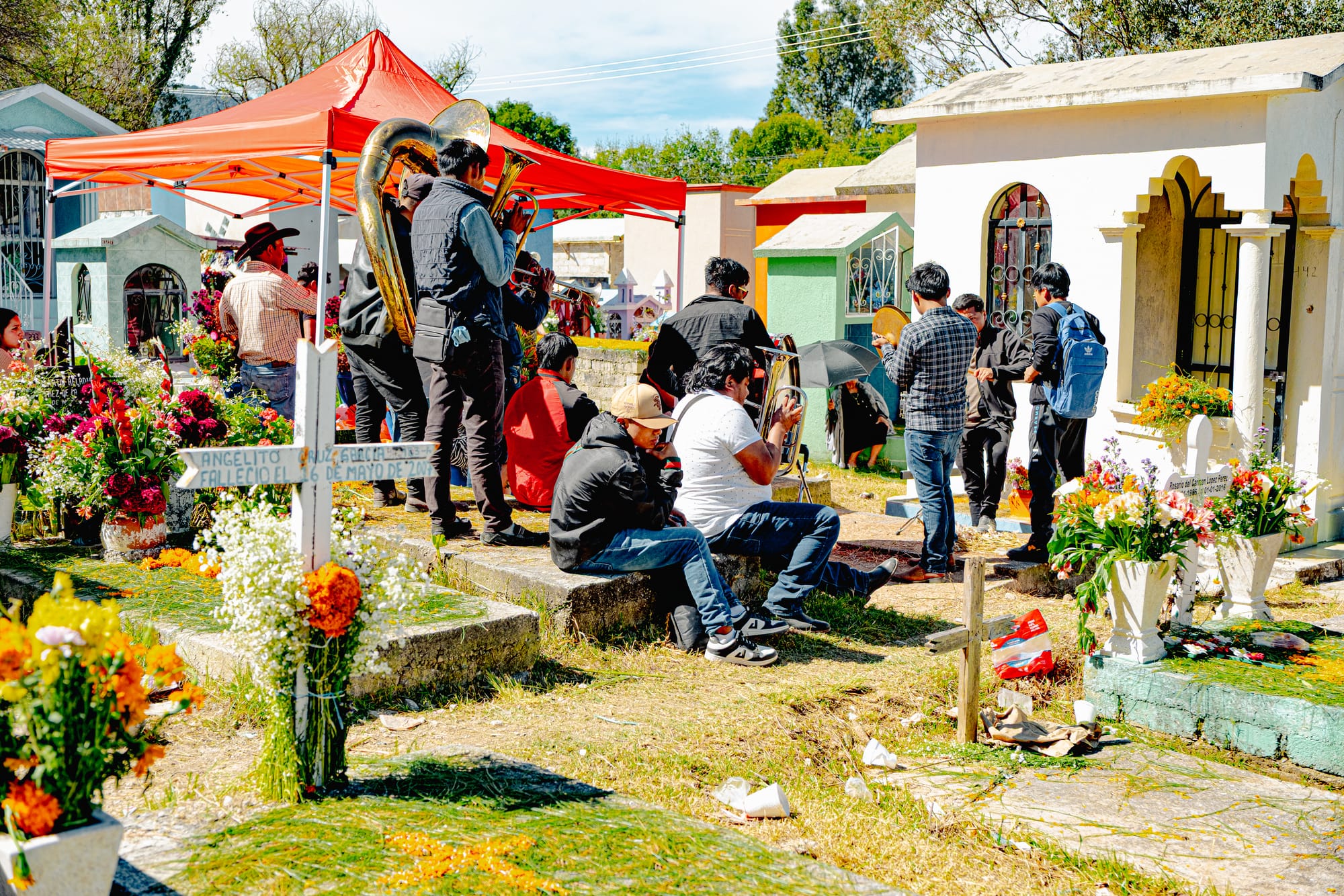
Musicians moved through the cemetery—brass instruments, drums, small bands—their sound echoing gently off the painted walls. The music didn’t dominate the space; it threaded through it.
This felt different from Zinacantán, where we encountered fewer people and a more contemplative stillness, despite the overwhelming beauty of the flowers. It also felt different from Romerillo, which carried a more intense, almost festival-like energy.
The Municipal Pantheon struck a balance.
It was lively, but not overwhelming. Social, but not chaotic. Public, yet deeply personal.
Architecture as continuity
One of the most compelling aspects of the Municipal Pantheon is how its architecture reinforces the central idea of Día de Muertos: that the dead remain part of the living world.
Here, the deceased are not buried invisibly beneath the earth. They are housed. Named. Visited. Their spaces are maintained like homes—repainted, repaired, decorated, returned to year after year.
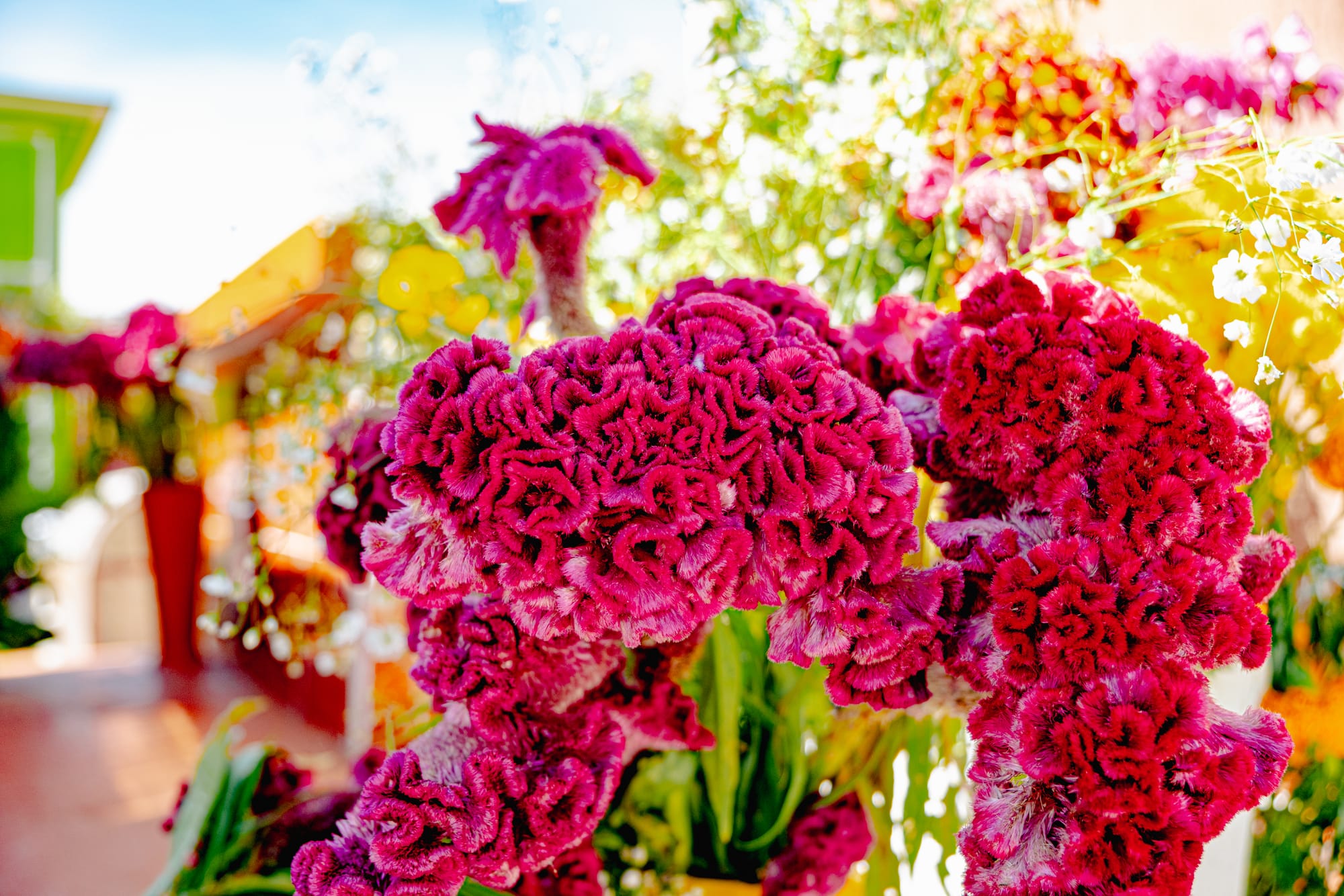
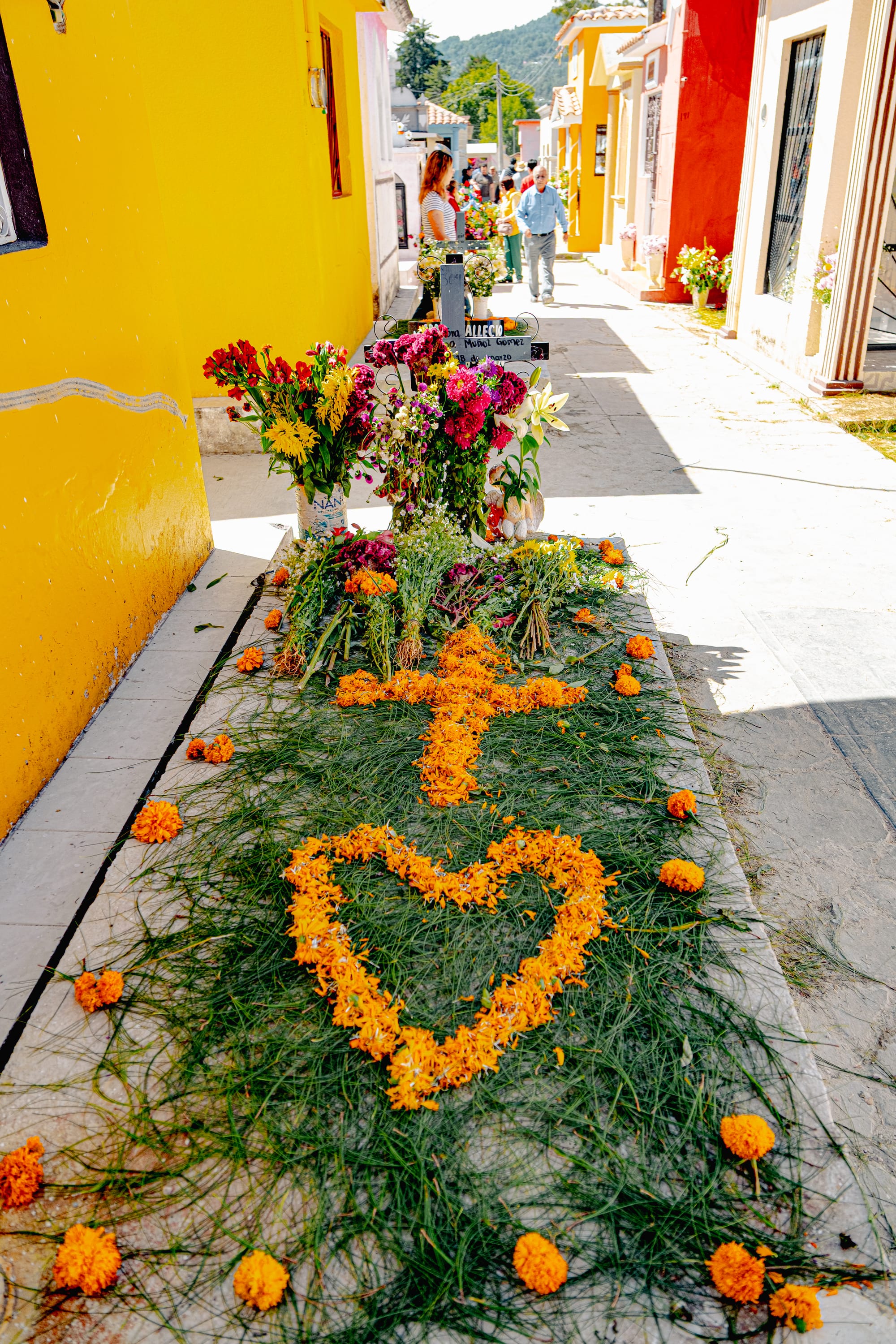
Marigold patterns marking pathways of remembrance
Many of the mausoleums resemble the surrounding buildings of San Cristóbal itself. The visual language of the cemetery mirrors the city outside its walls. In this way, death is not pushed to the margins—it is folded into the urban fabric.
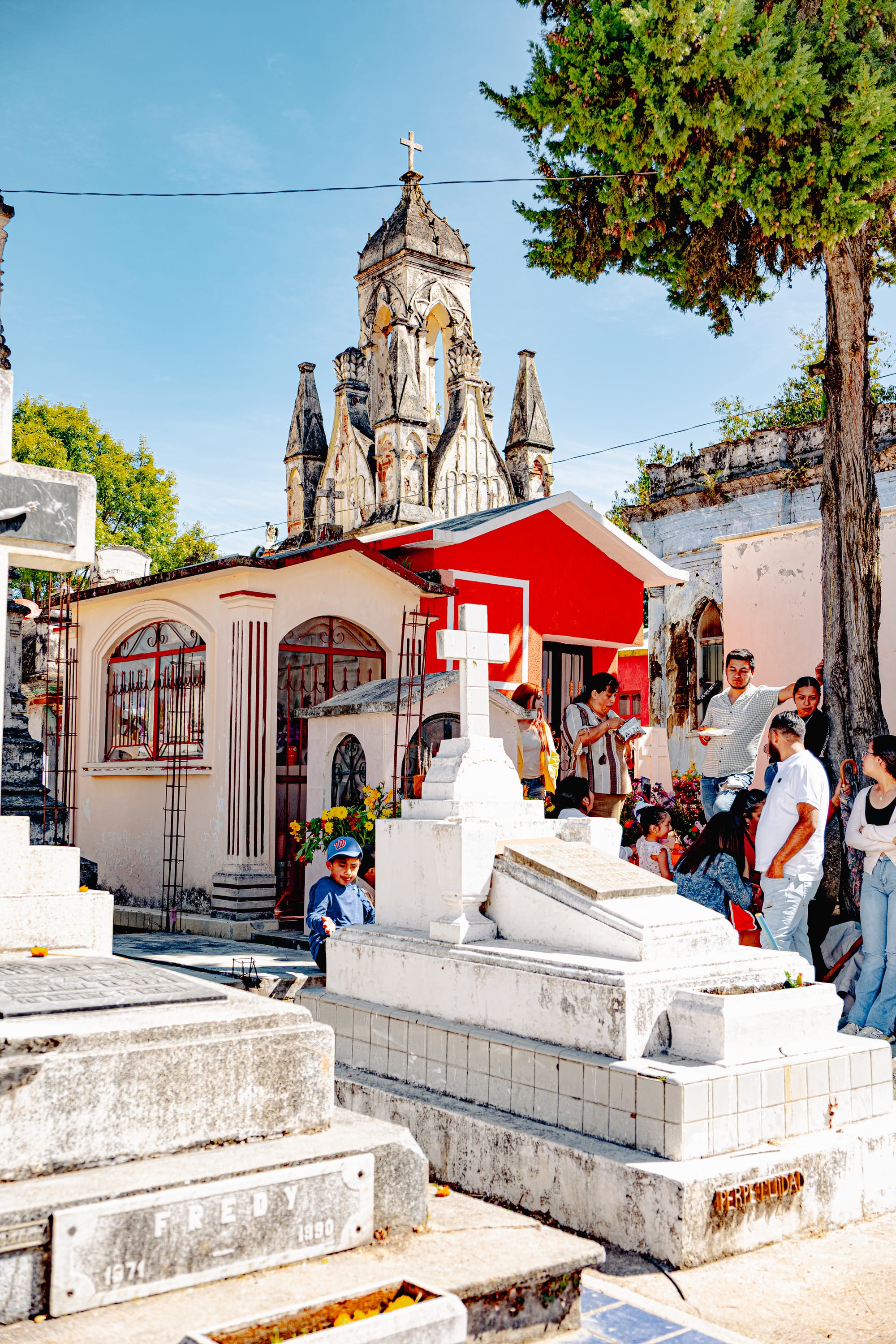
Family gatherings unfolding between graves and flower offerings
This architectural choice changes how you move through the space. You don’t look down at graves; you look around.
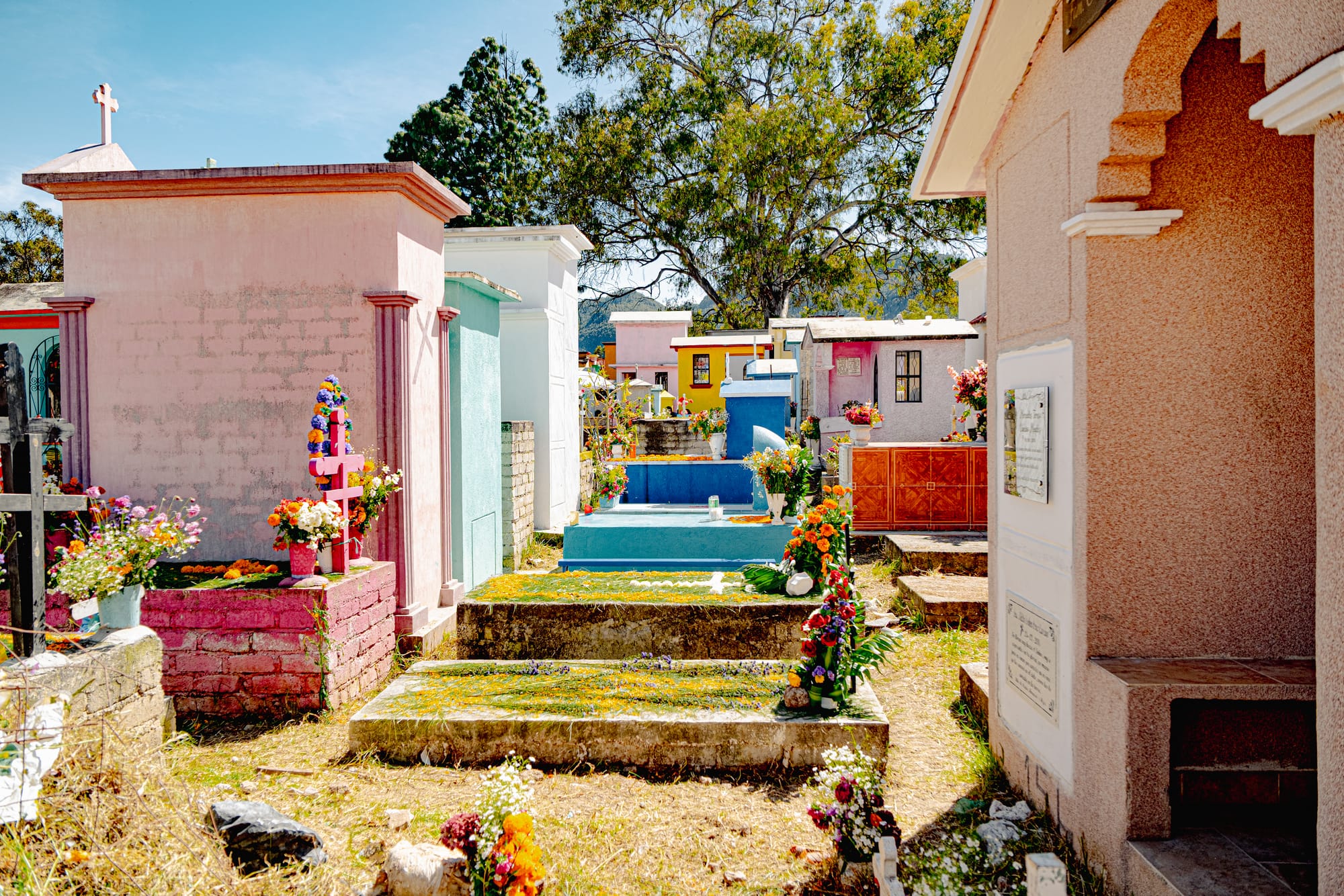
It subtly shifts the relationship between visitor and memory.
A deeply local rhythm
The Municipal Pantheon felt truly local. We didn’t encounter any obvious tour groups here. That may be because many Día de Muertos tours focus on Romerillo or Zinacantán Cemetery. Those sites are indeed spectacular too, but the Pantheon offers something equally important.
This cemetery reflects how Día de Muertos lives within the city itself.
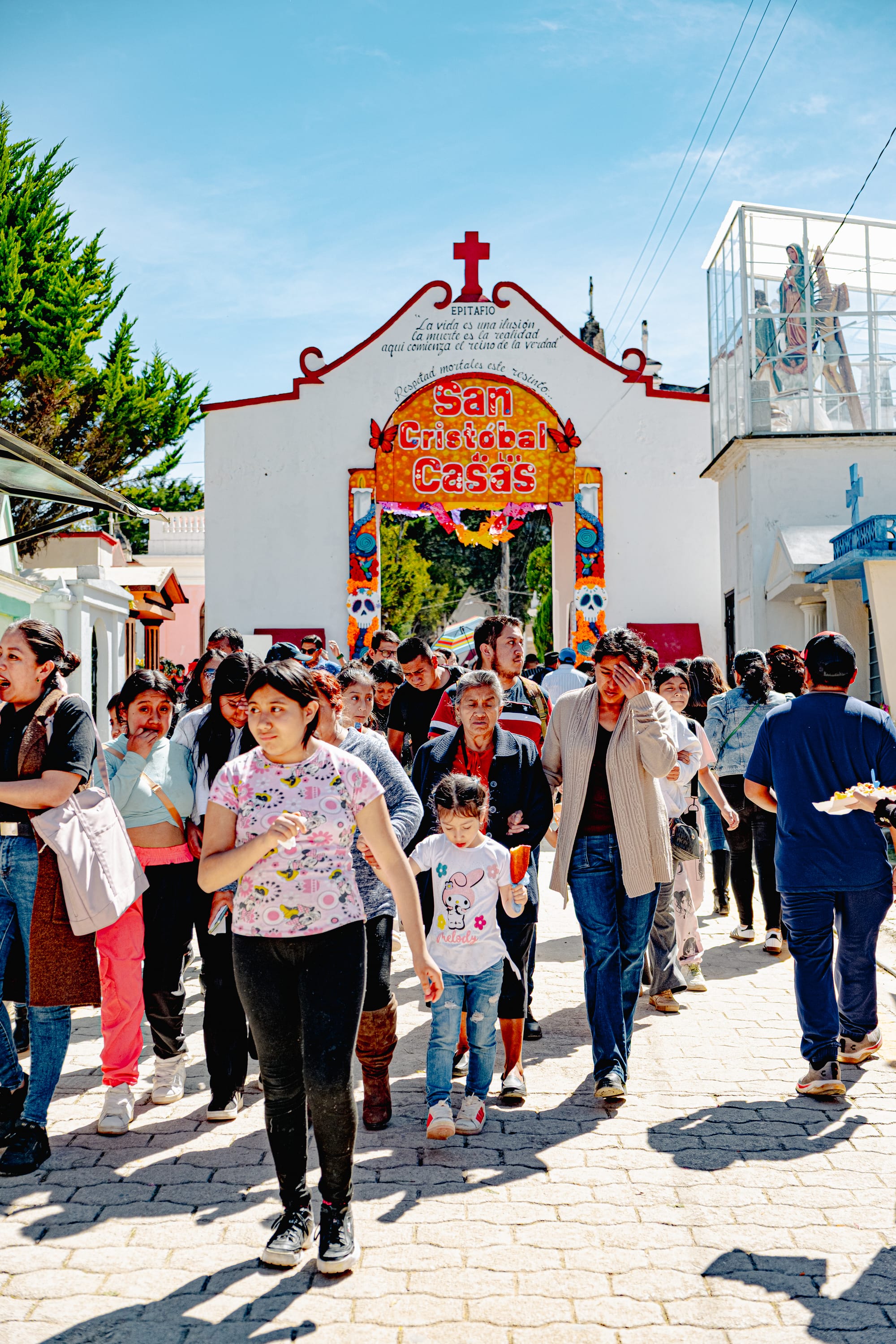
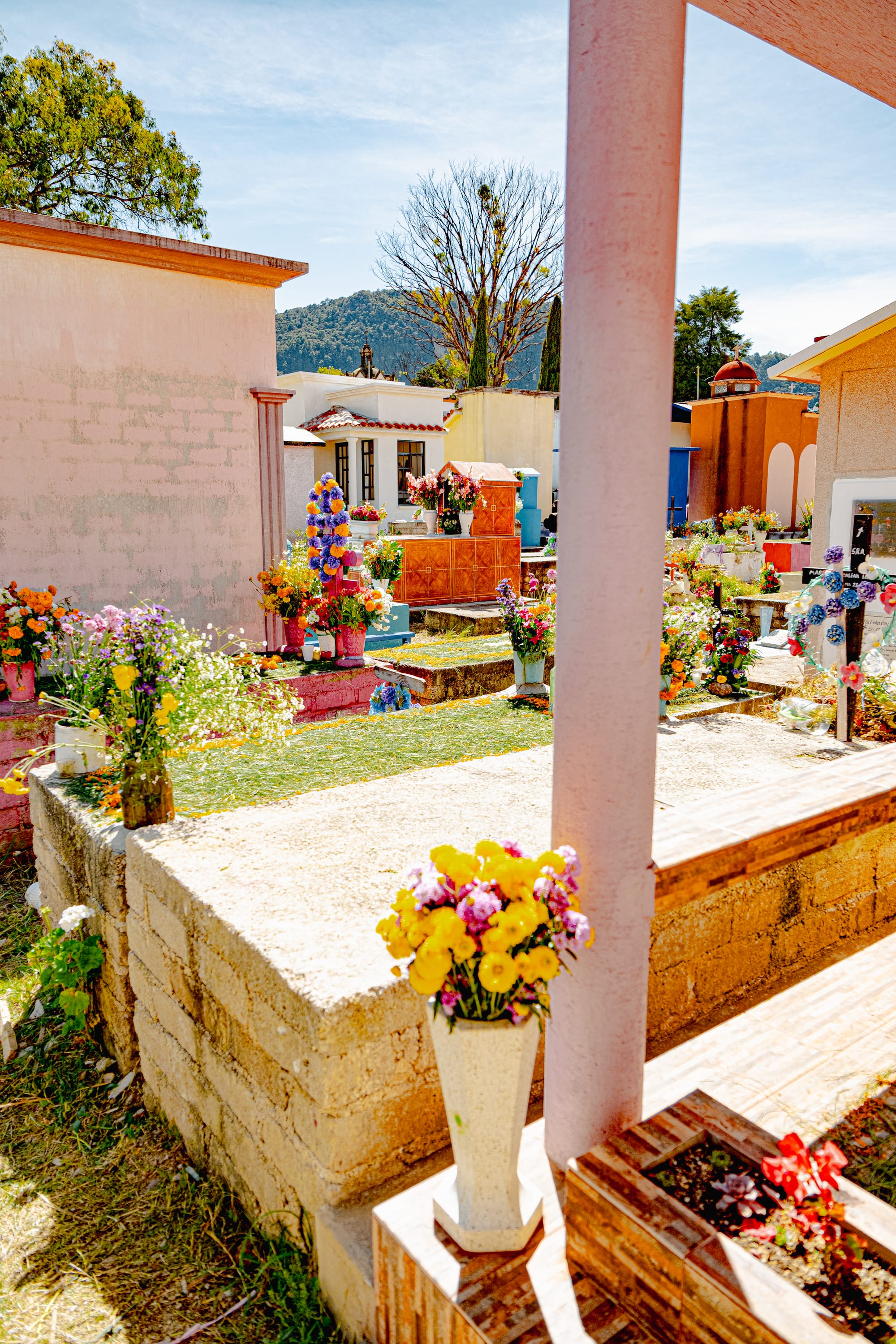
The Municipal Pantheon filling with families throughout the day
The people here frequent this cemetery. The rituals aren’t condensed into a single moment. They unfold slowly and organically, as part of everyday life.
Sound, movement, and care
Throughout the day, the Pantheon remained active.
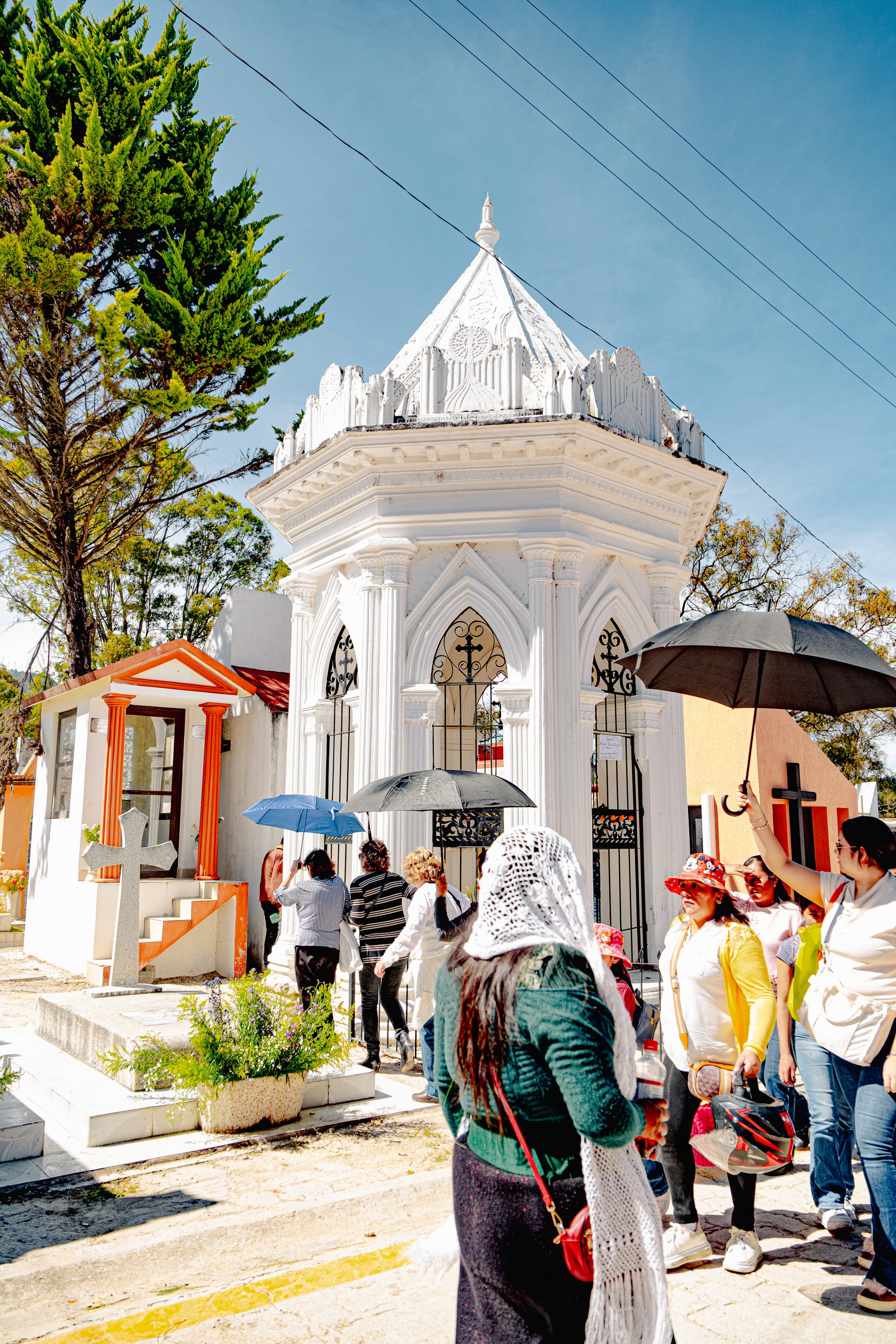
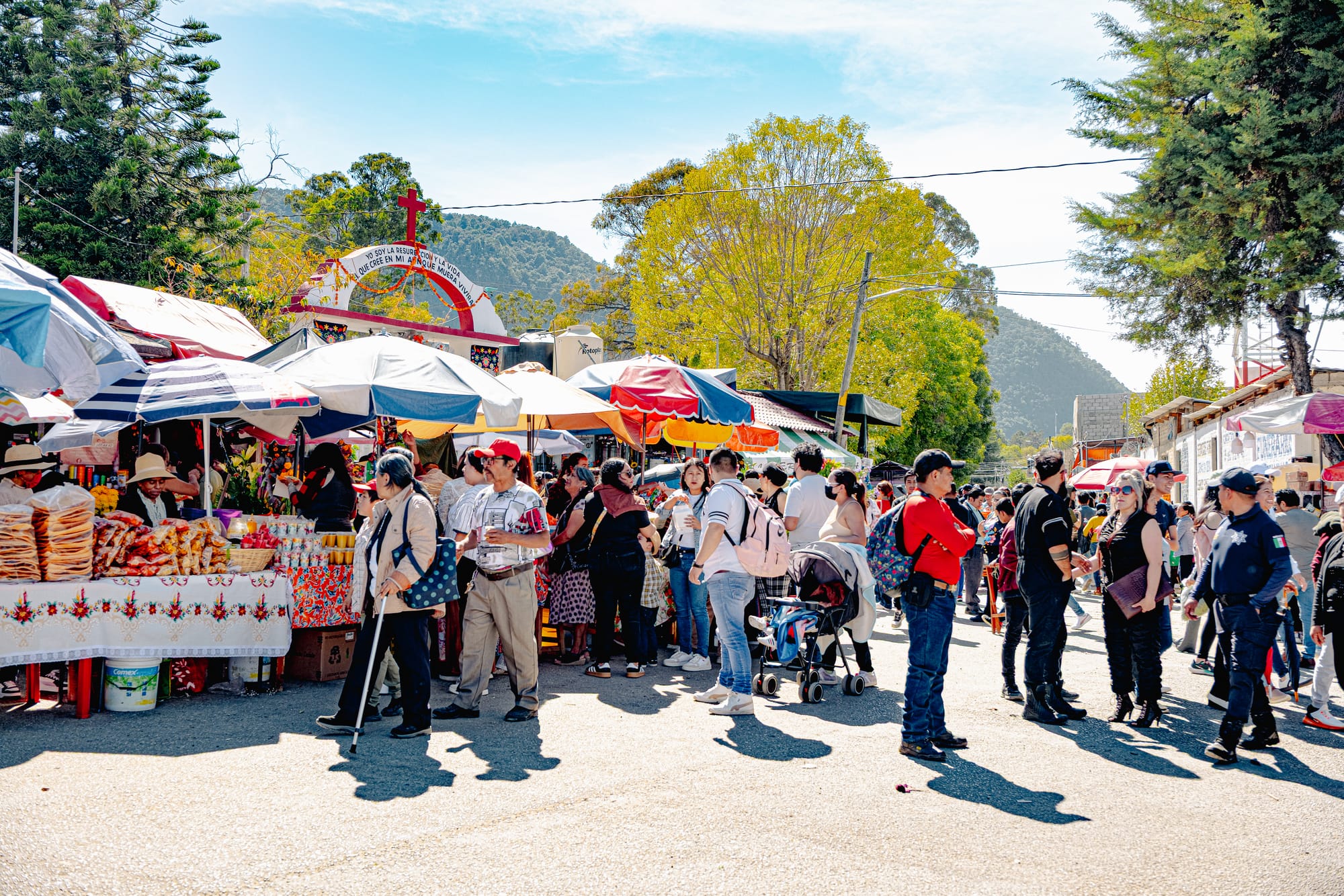
The Pantheon alive with movement, vendors, and visitors
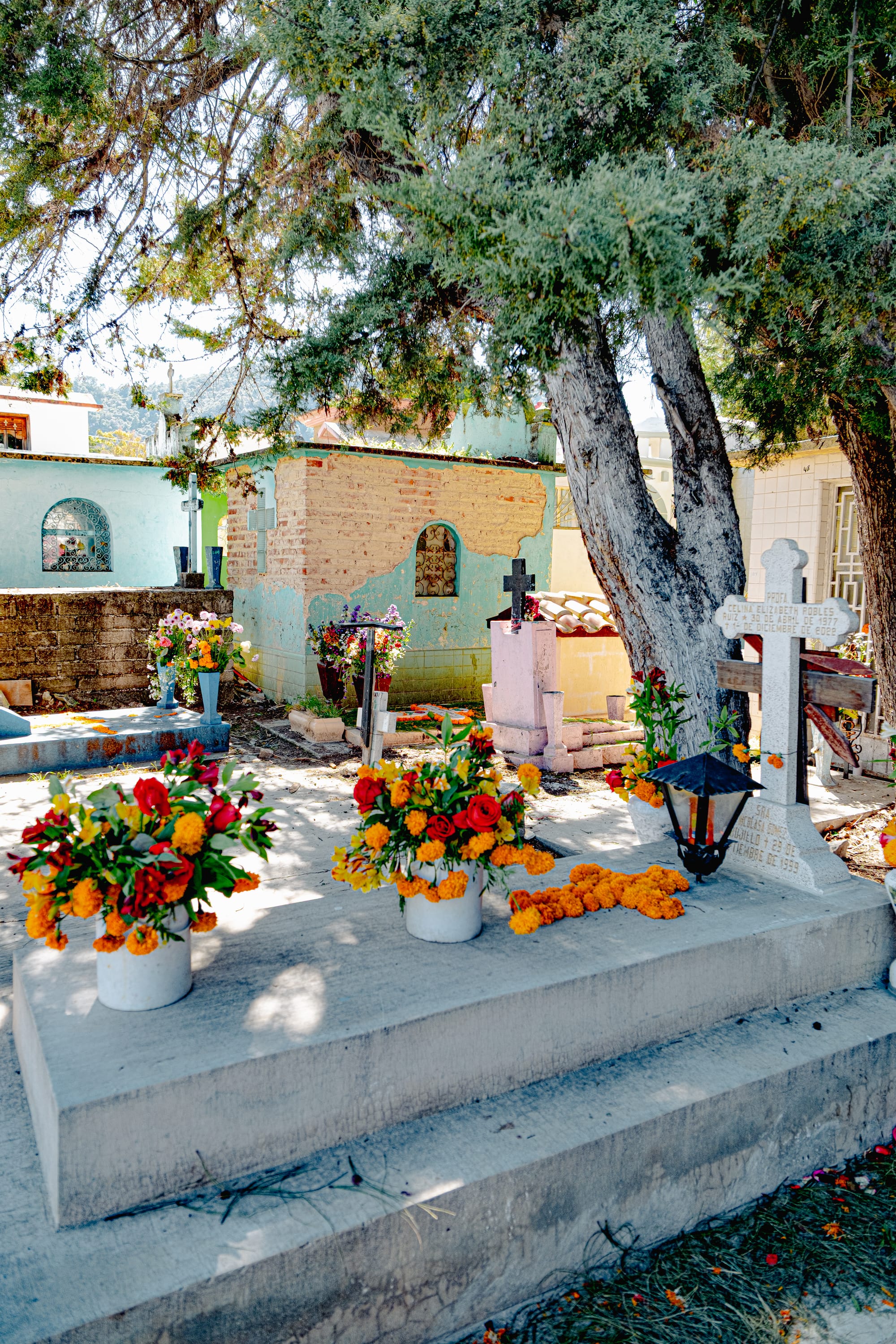
People arrived carrying flowers—armfuls of marigolds, mixed bouquets, carefully tied arrangements. Others brought food and drinks. Some spent hours meticulously arranging graves, adjusting petals, sweeping pine needles, repainting faded sections of stone.
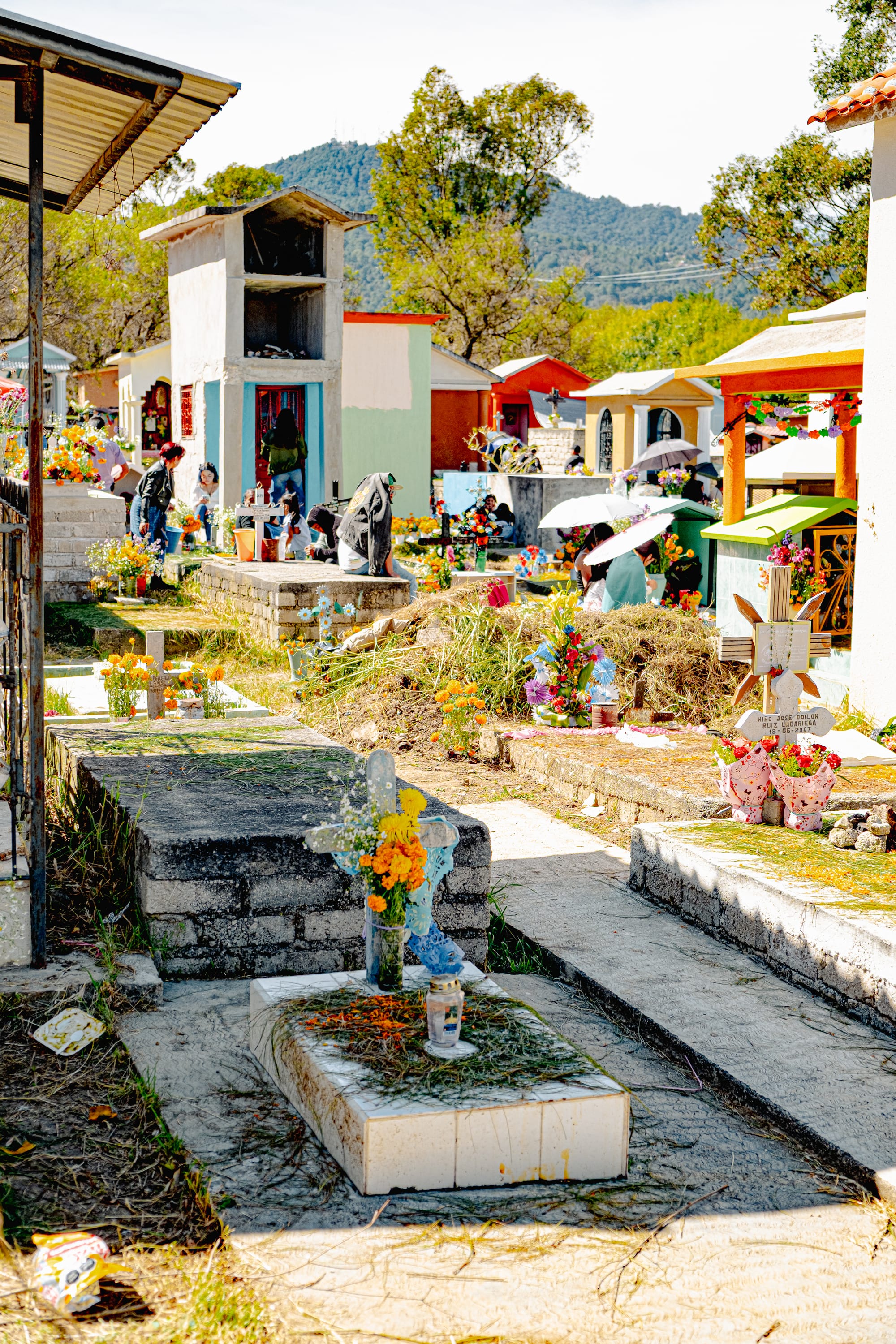
Music appeared and disappeared. At times, a brass band would gather near a cluster of mausoleums. At others, a single instrument carried through the space.
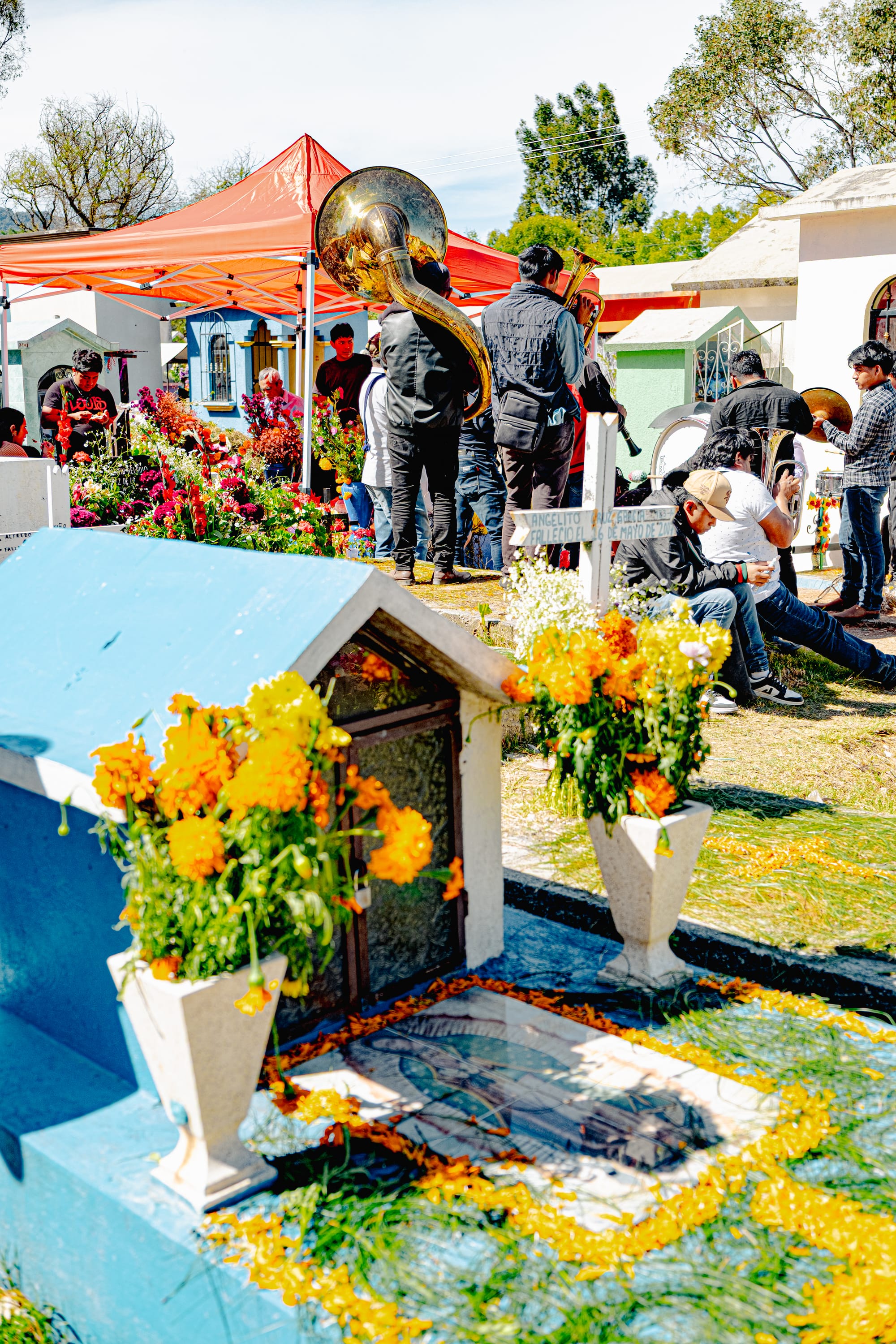
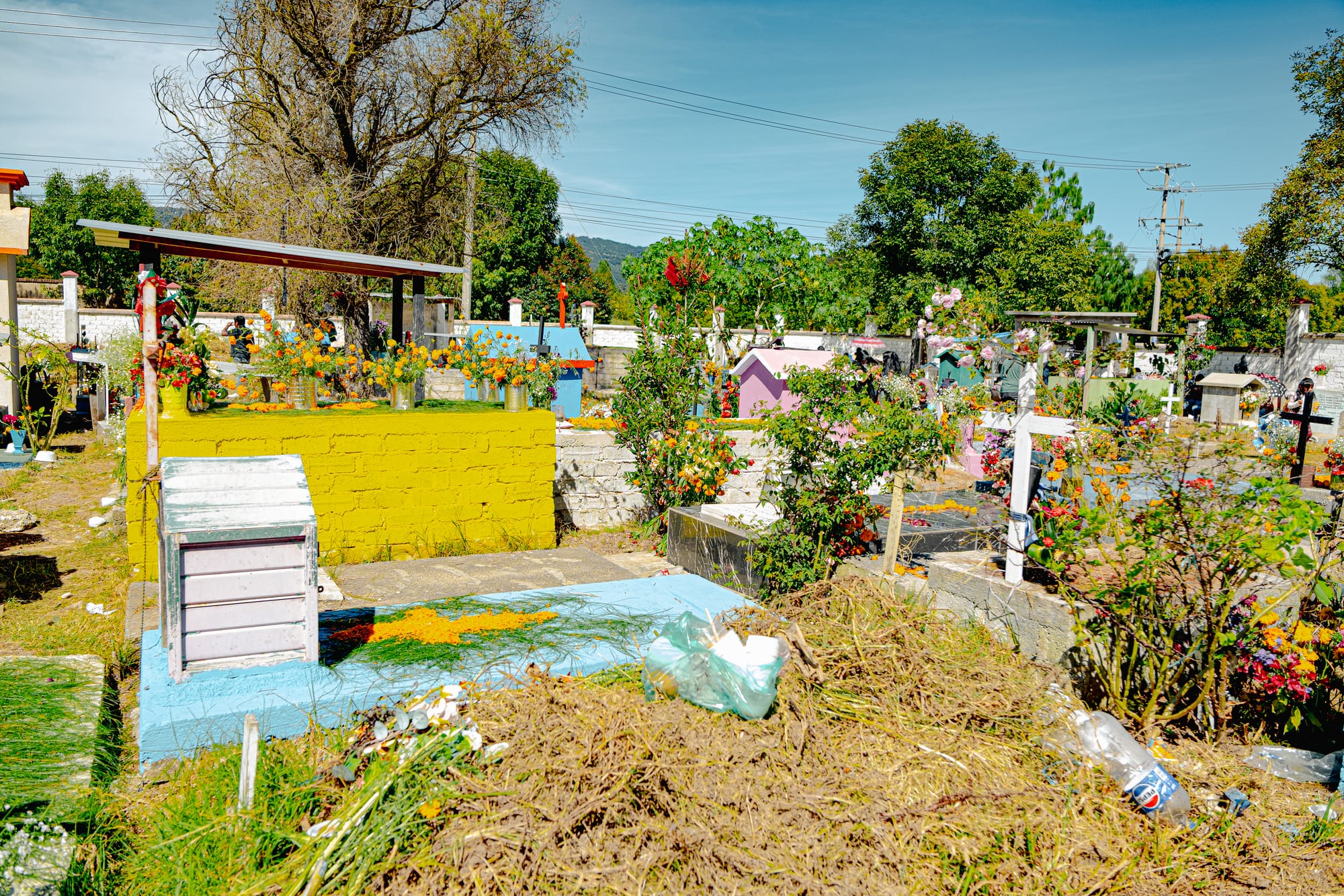
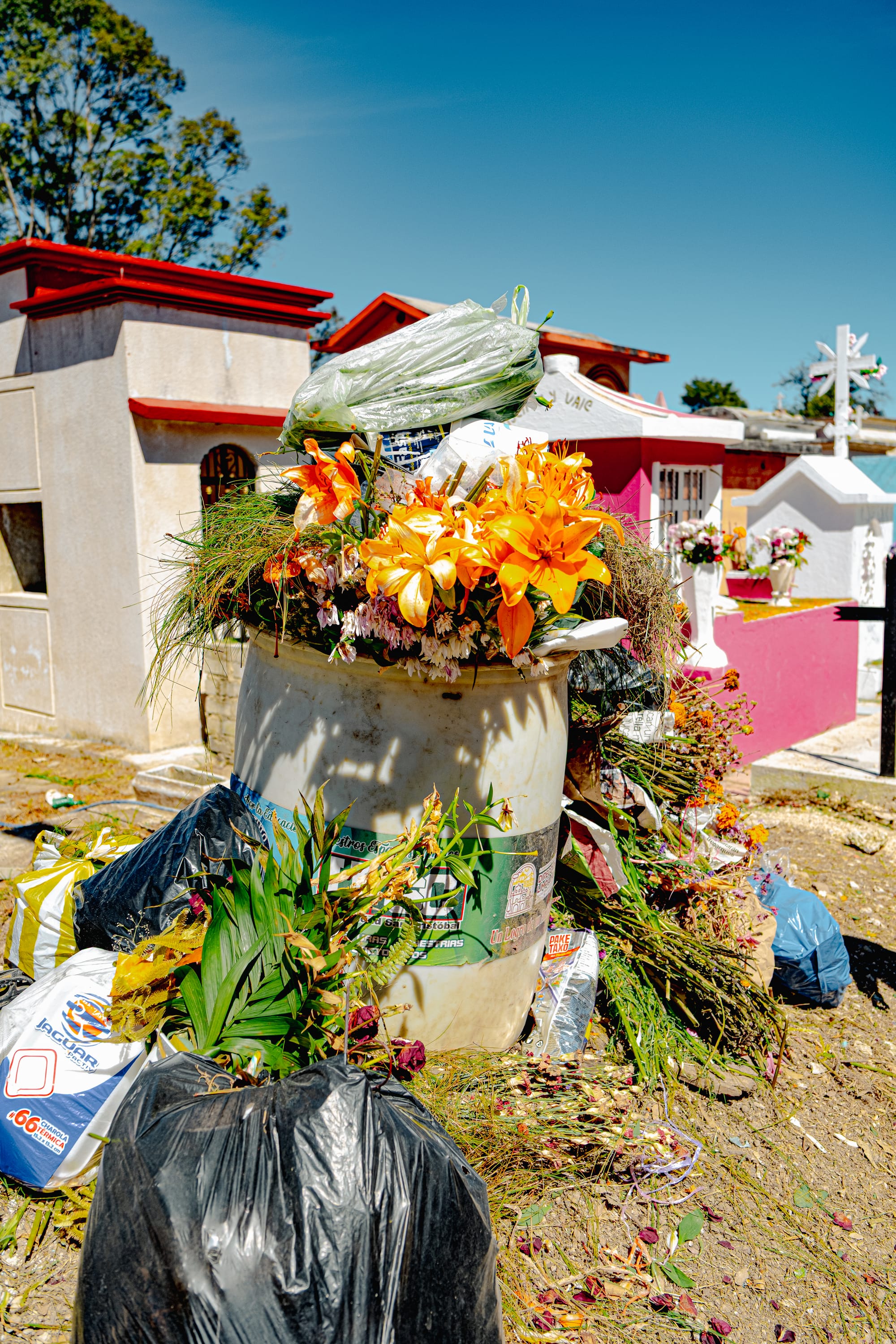
After the music fades, flowers and traces remain
Children wove between adults. Elders rested in chairs. Conversations unfolded at a measured pace.
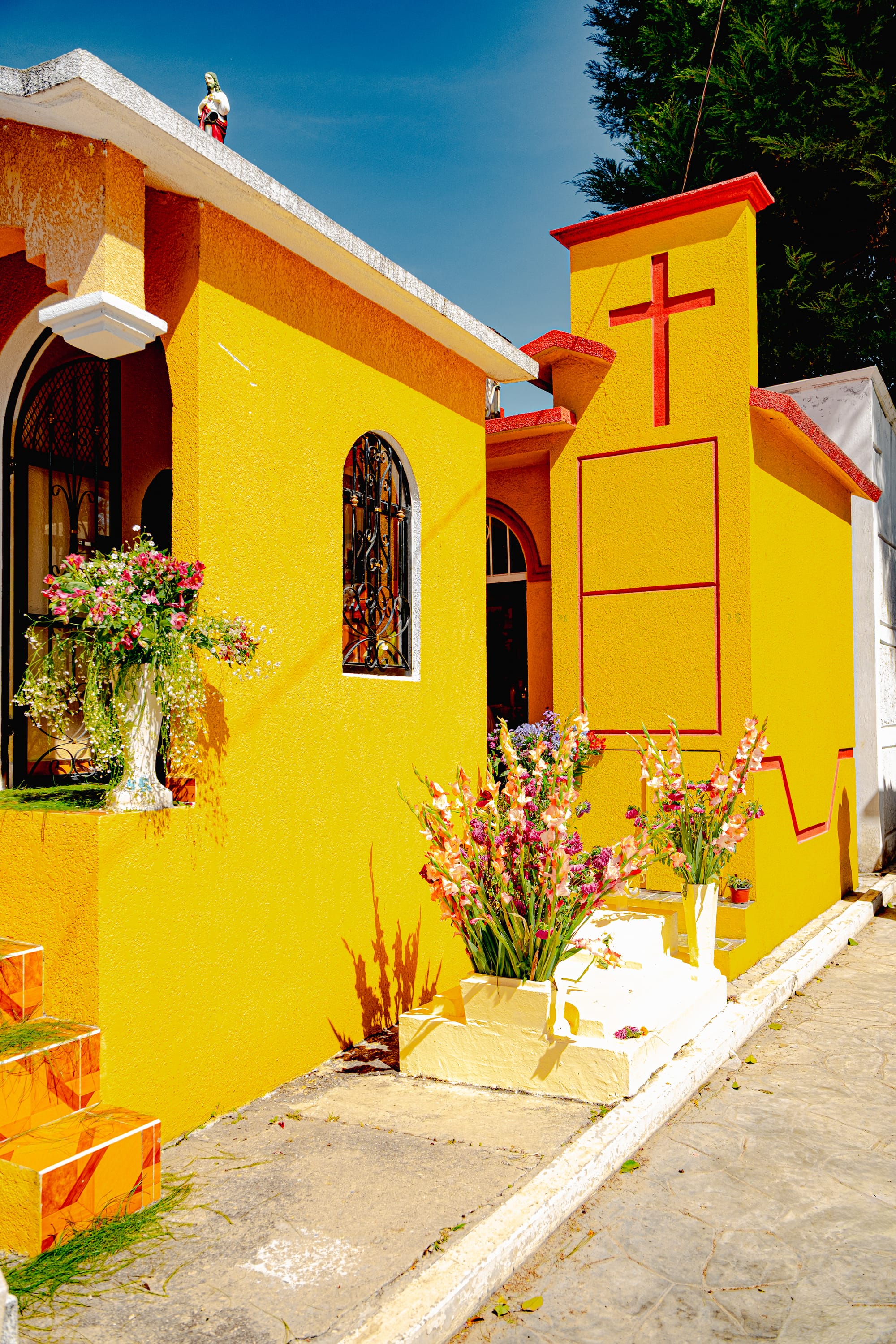
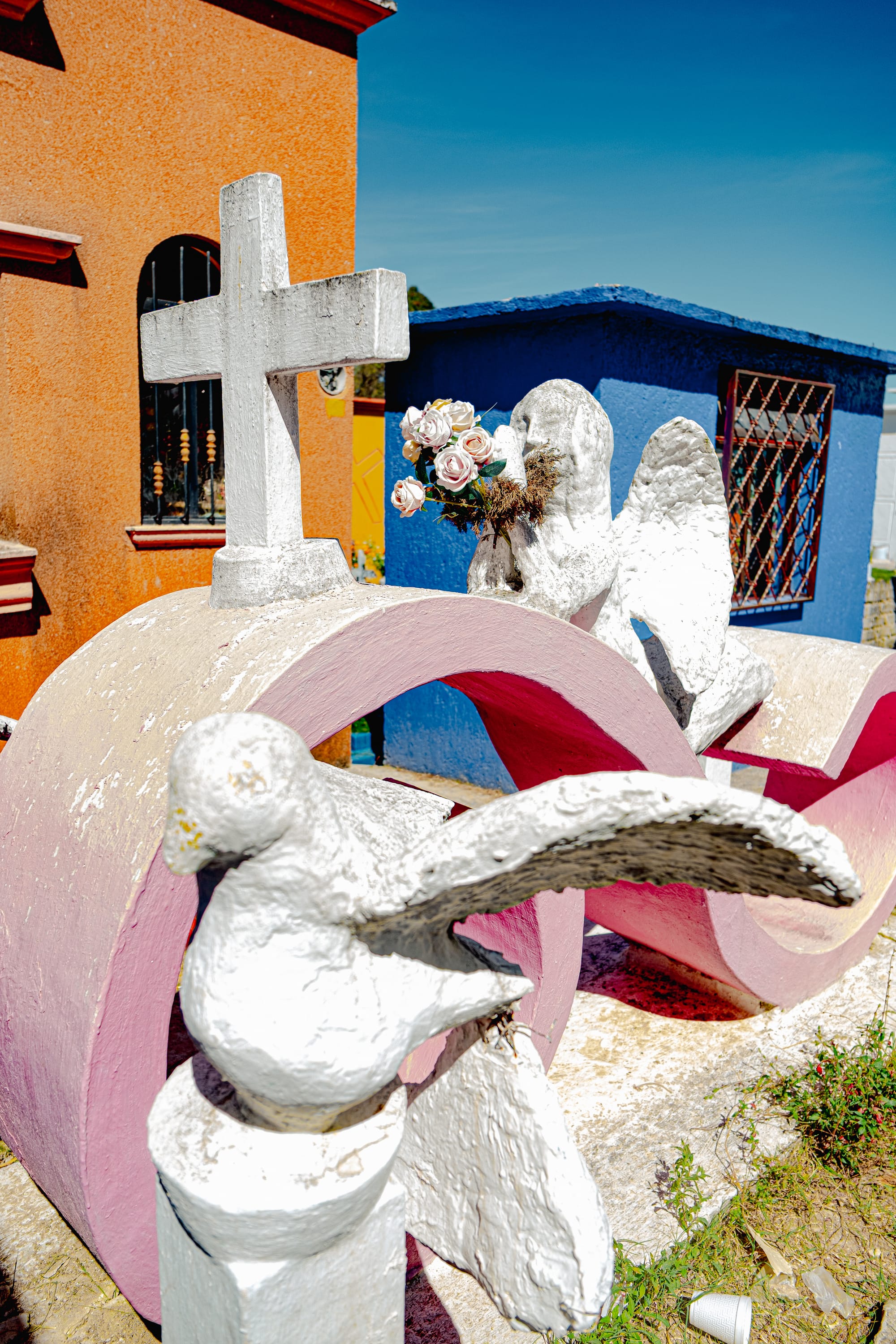
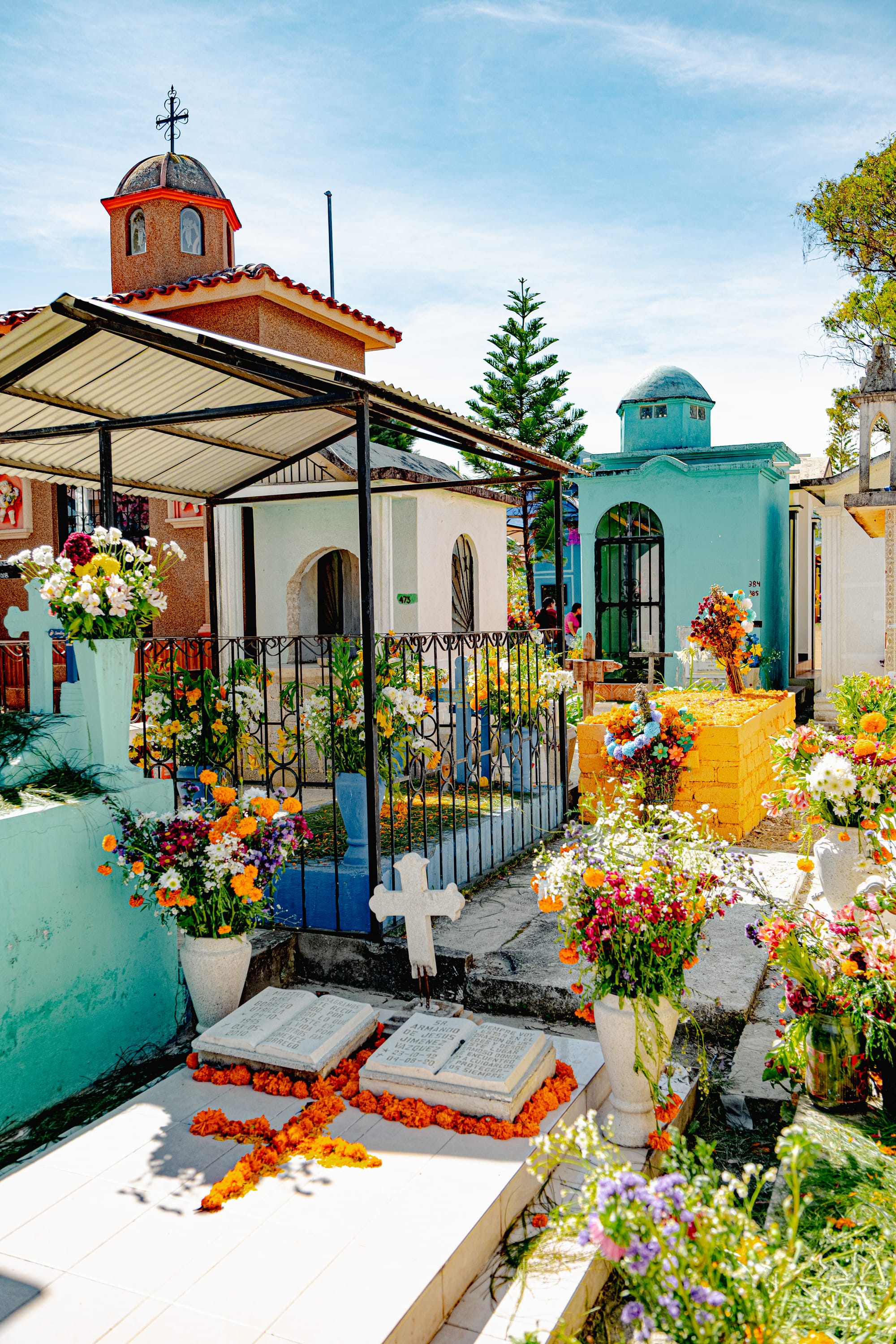
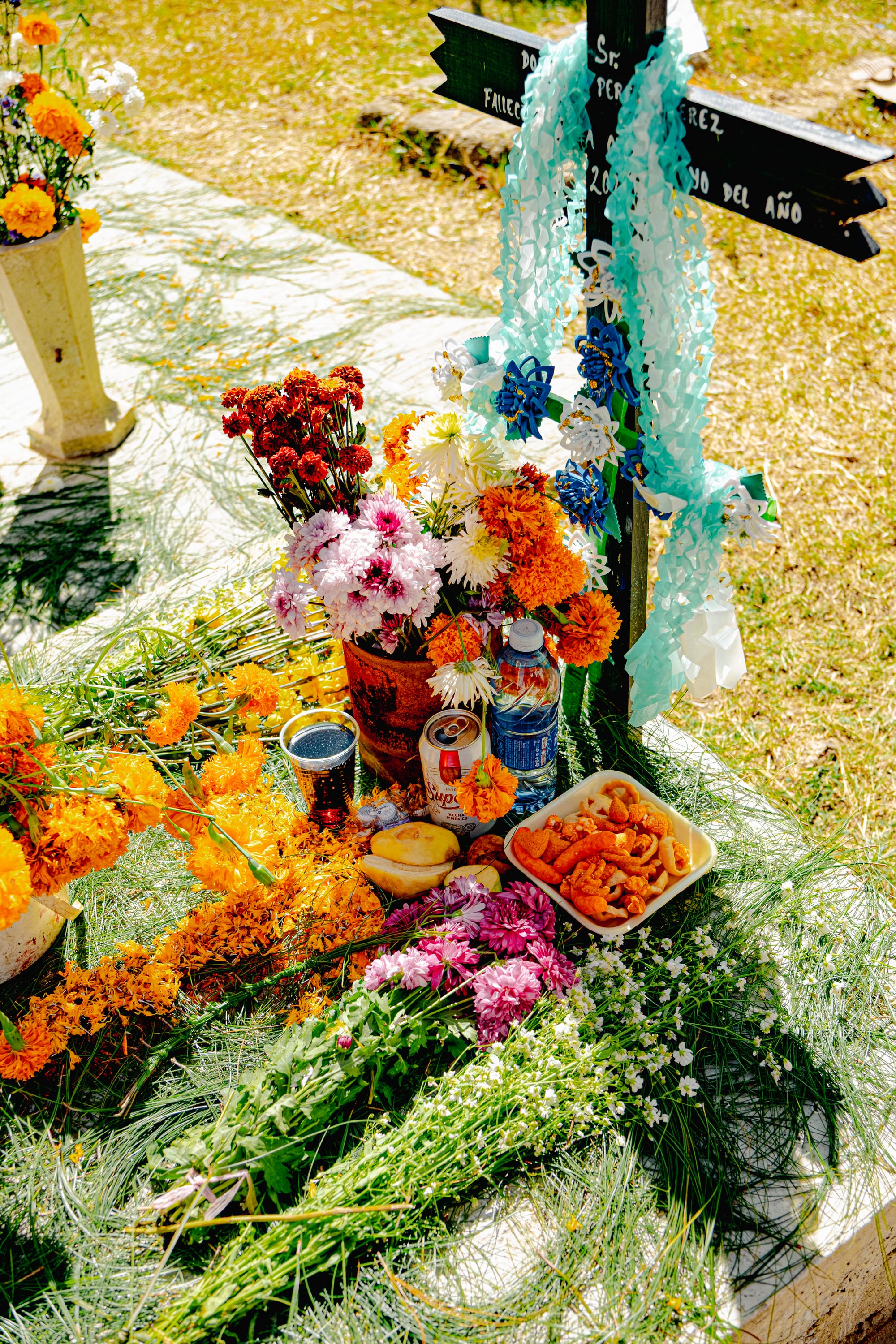
Food and flowers offered with care and intention
What struck us most was the absence of urgency. No one seemed in a rush to leave.
Why you shouldn’t skip the Municipal Pantheon
Many people visiting San Cristóbal for Día de Muertos never make it to the Municipal Pantheon. That’s a mistake.
If you’re in San Cristóbal during Day of the Dead, this cemetery offers a perspective you won’t find elsewhere. It shows how remembrance lives inside the city itself, not just on its outskirts. It reveals how architecture, community, and ritual intertwine over time.
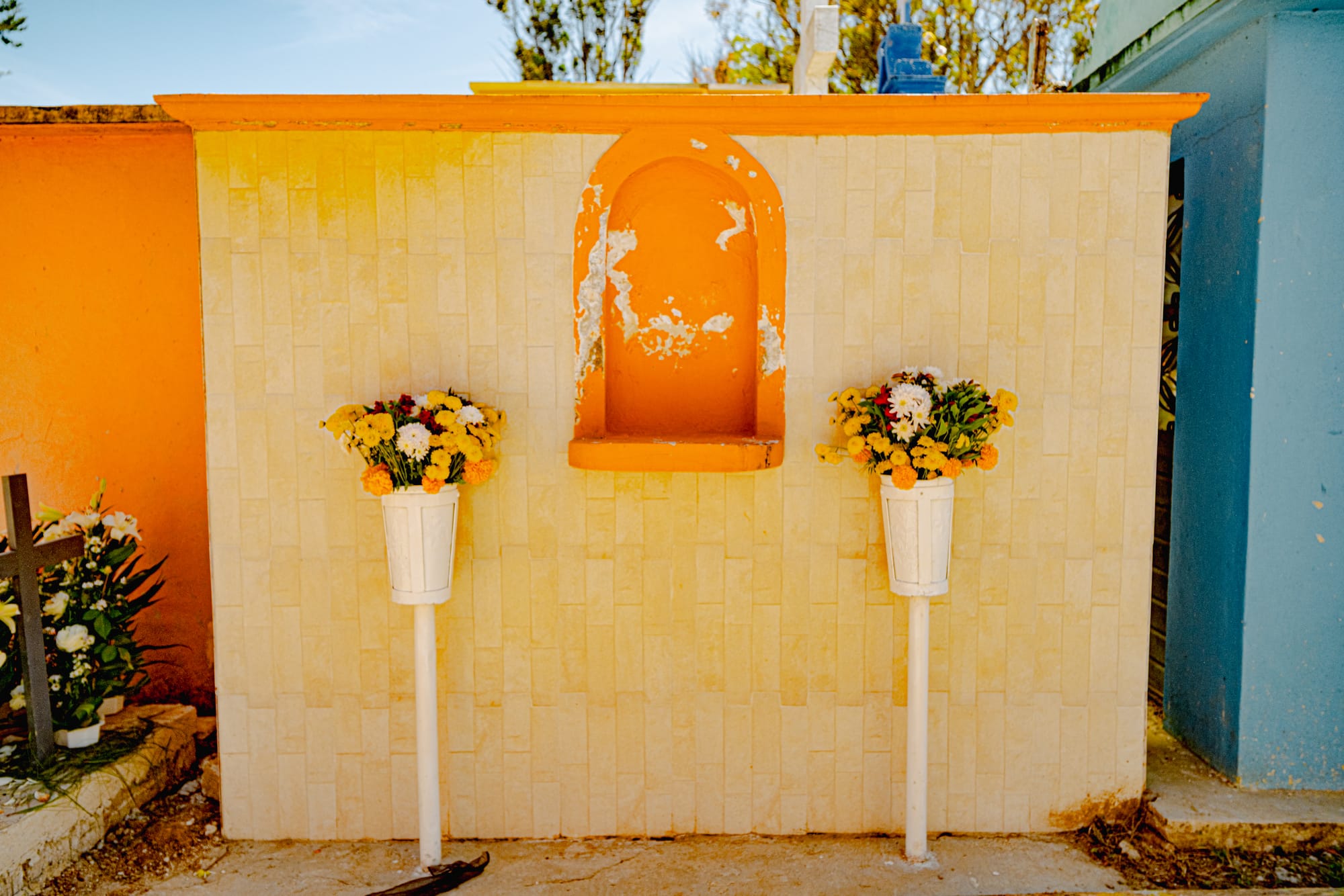
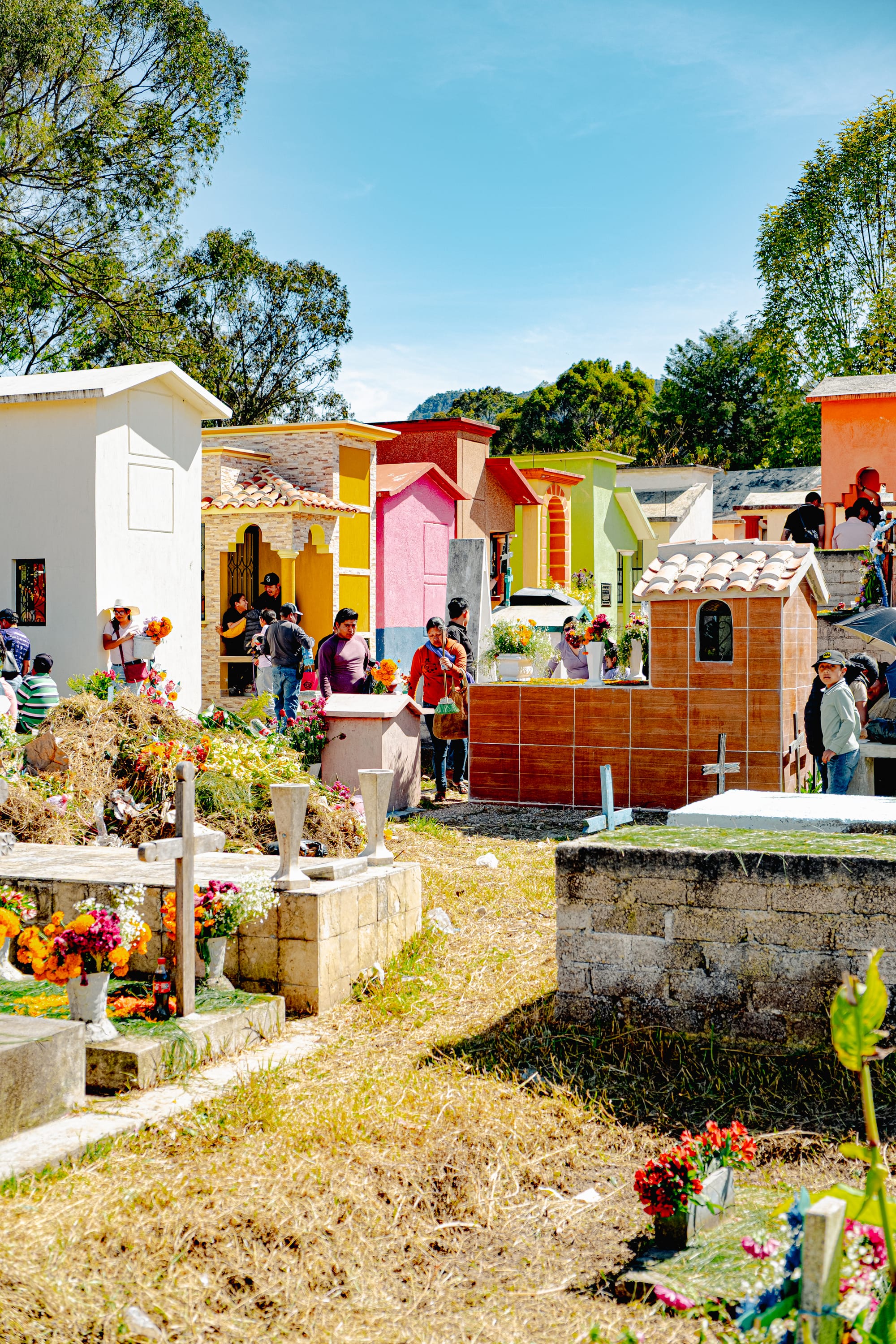
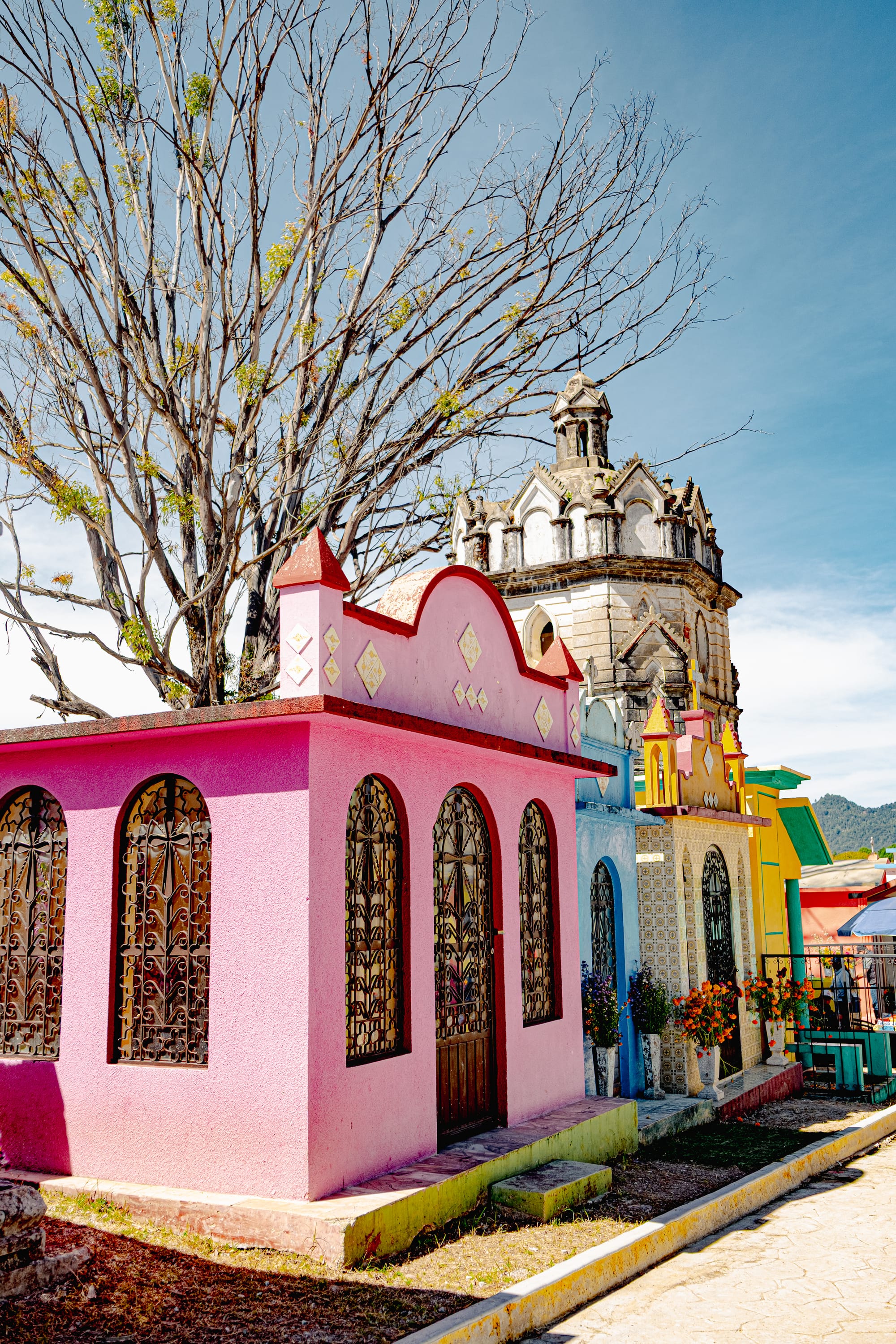
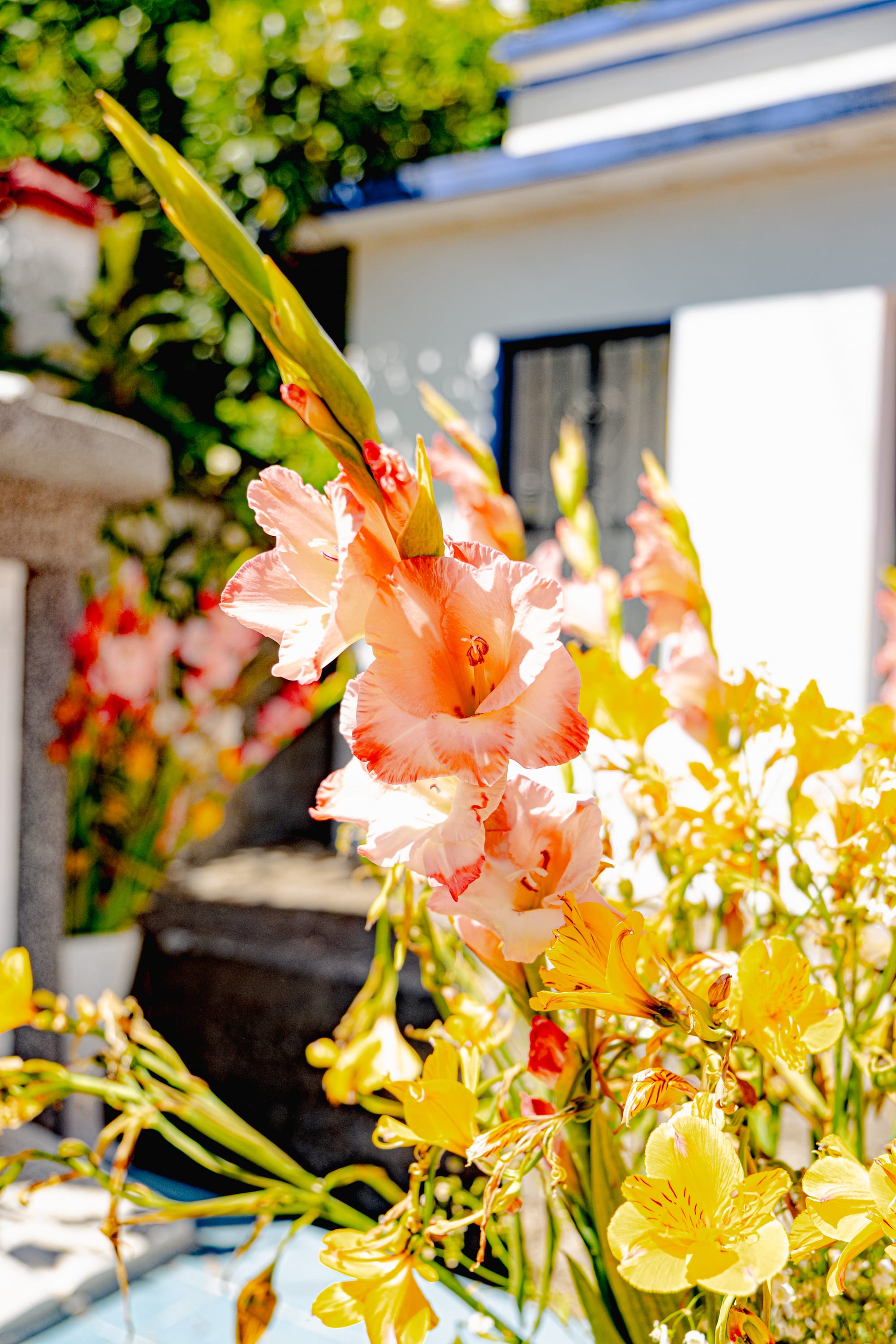
Bright mausoleums and flowers catching the midday light
For us, the Municipal Pantheon deepened our understanding of Día de Muertos as a living practice.
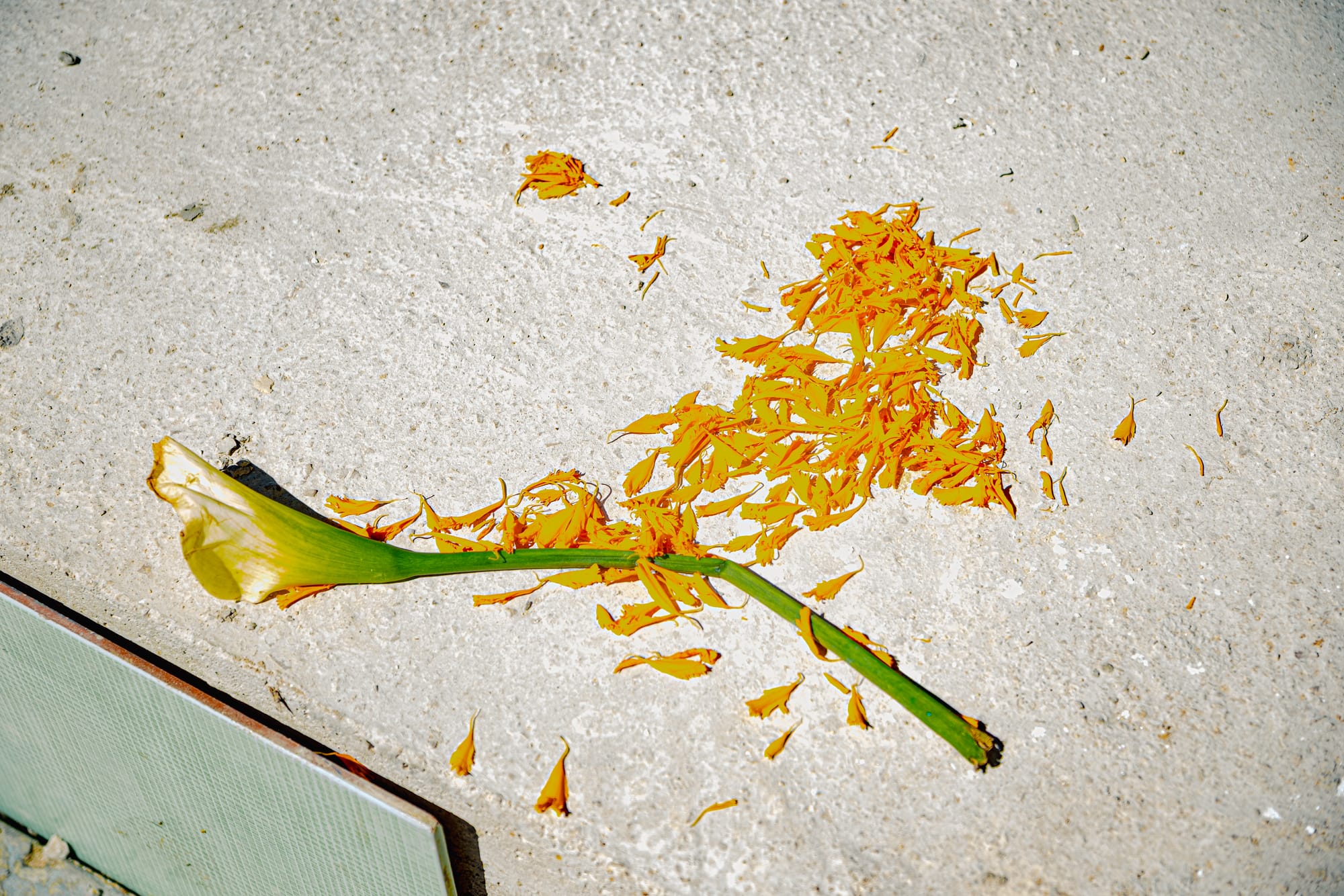
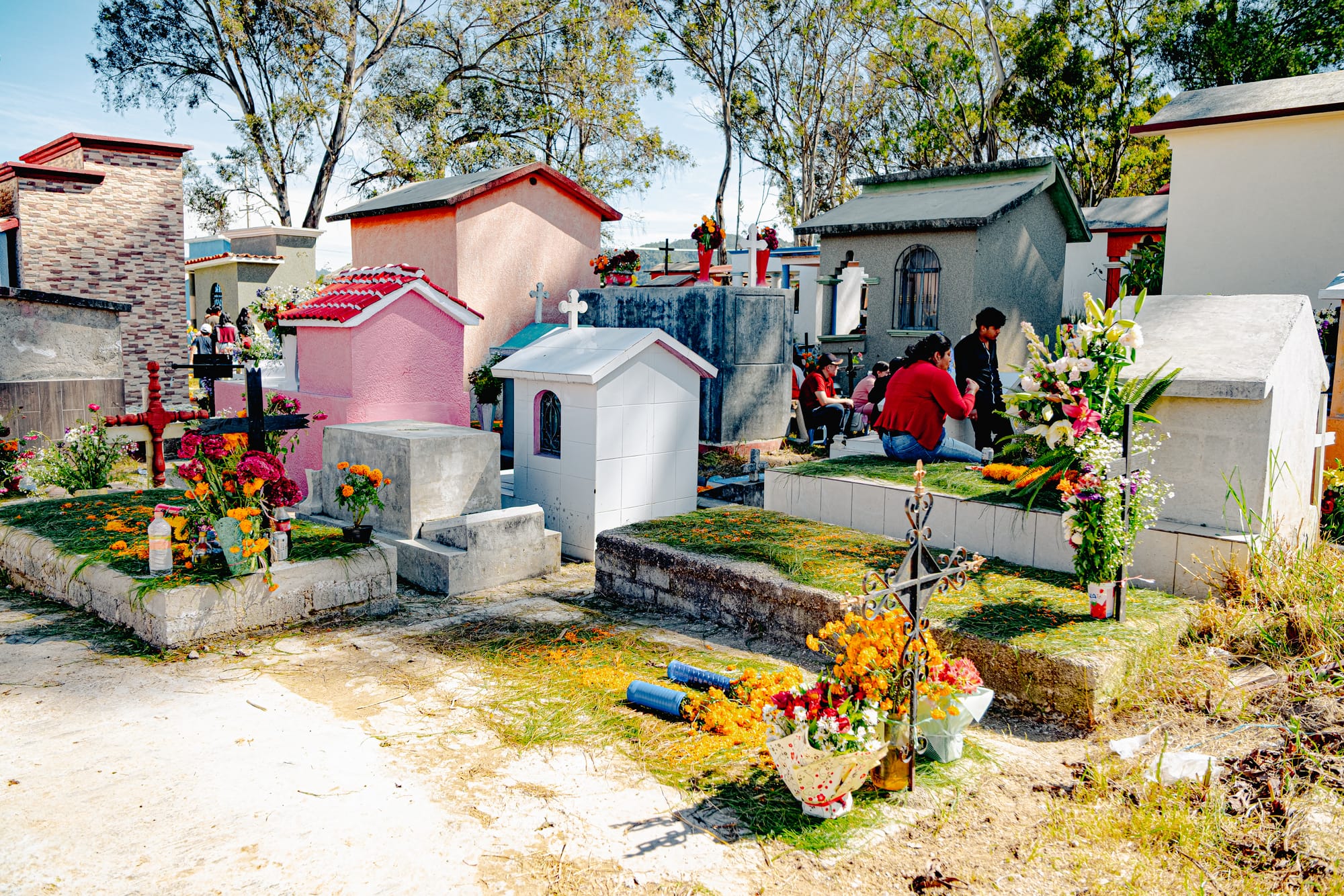
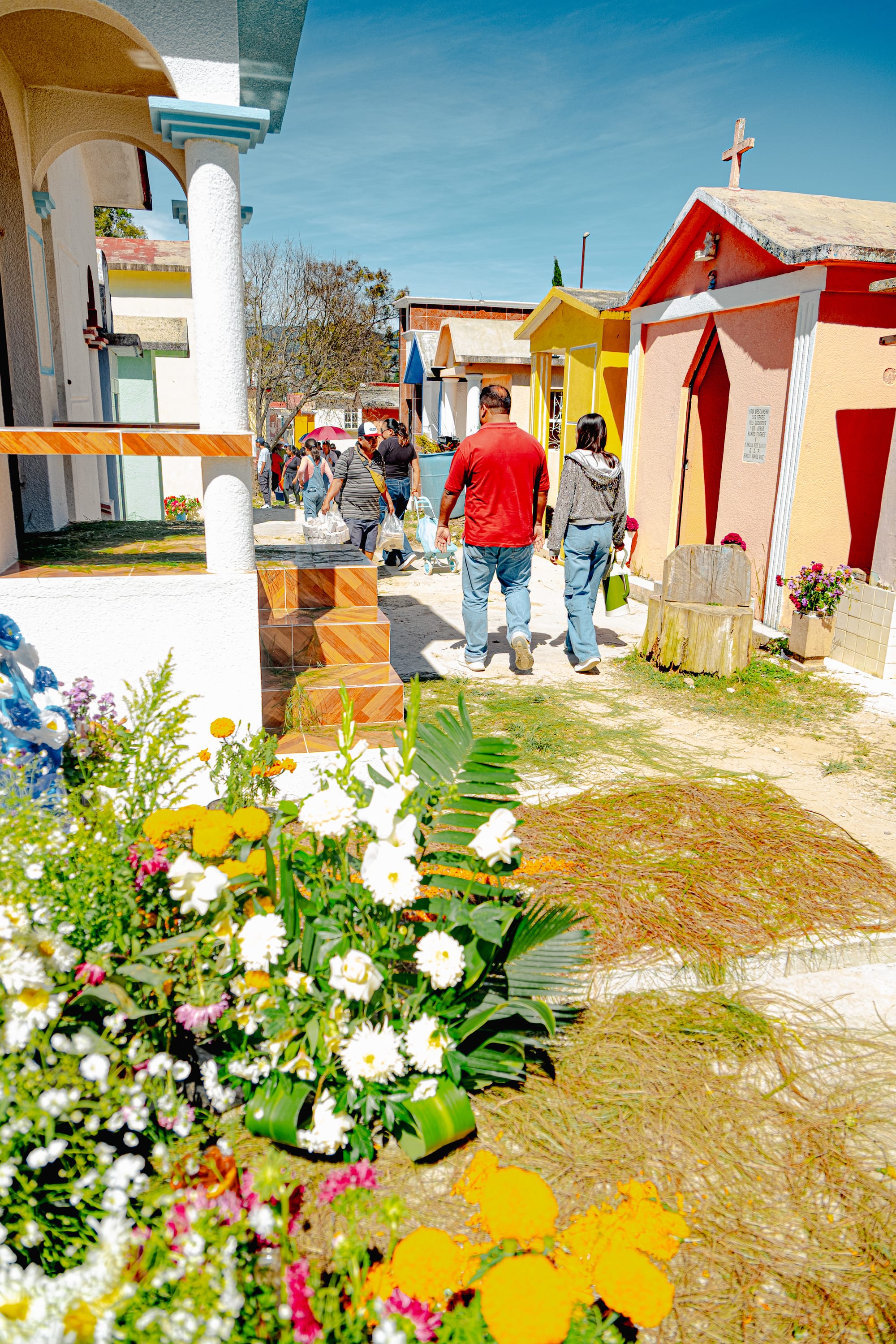
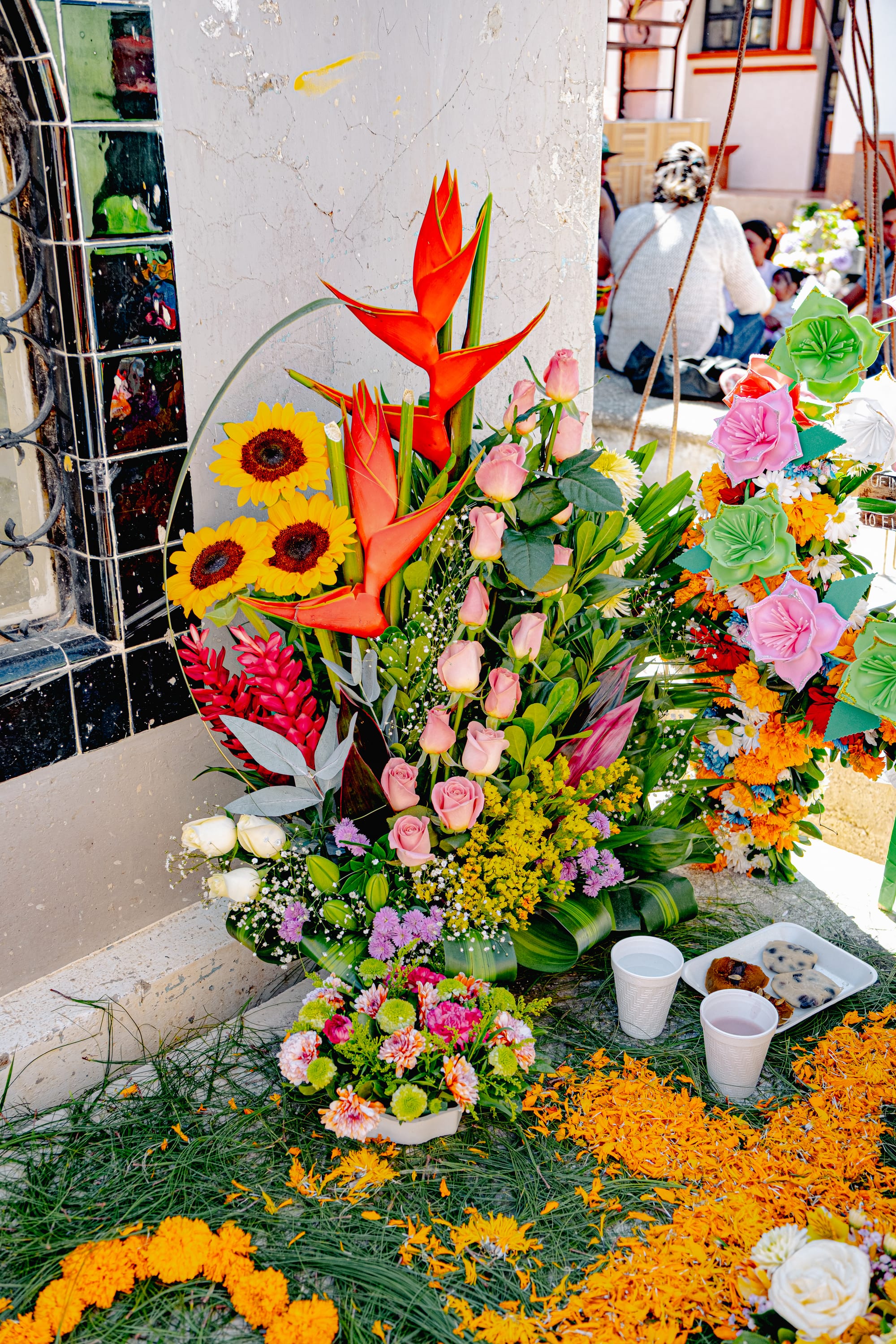
Offerings laid with care
If you’re only able to visit one cemetery, Romerillo may still be the most dramatic. But if you want to understand how Día de Muertos is woven into the daily life of San Cristóbal itself, don’t miss the Municipal Pantheon. It remains one of the quiet highlights of our time in San Cris.


