Skip to content

Day of the Dead at Romerillo Cemetery

Visiting Romerillo Cemetery during Día de Muertos offers an intensely local, communal experience just outside San Cristóbal de las Casas, where pine-covered graves, marigold-draped crosses, and live music transform the hillside into one of the most powerful Day of the Dead celebrations in Chiapas.

Cross-pollinate

Visiting Romerillo Cemetery on Día de Muertos is probably our single best travel experience to date.

We visited two other cemeteries for Day of the Dead celebrations in San Cristóbal de las Casas, Zinacantán and San Cristóbal’s Municipal Pantheon, but our visit to Romerillo Cemetery remains one of the most incredible things we've been privileged to witness.
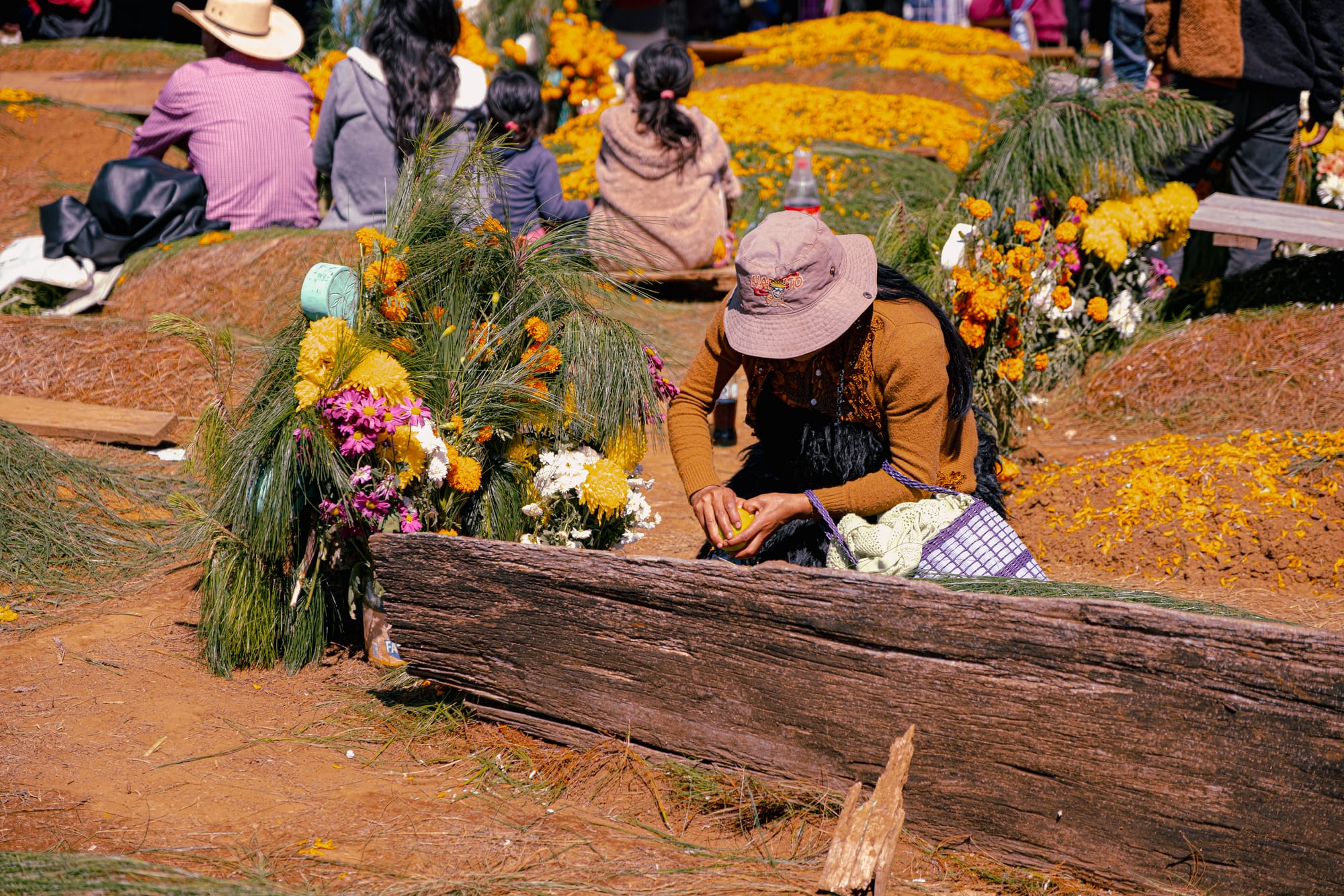
Día de Muertos at Romerillo Cemetery Chiapas, local woman tending a pine covered grave with marigolds and flowers, family sitting together at hillside cemetery, indigenous Day of the Dead traditions with offerings and careful grave maintenance near San Cristóbal de las Casas
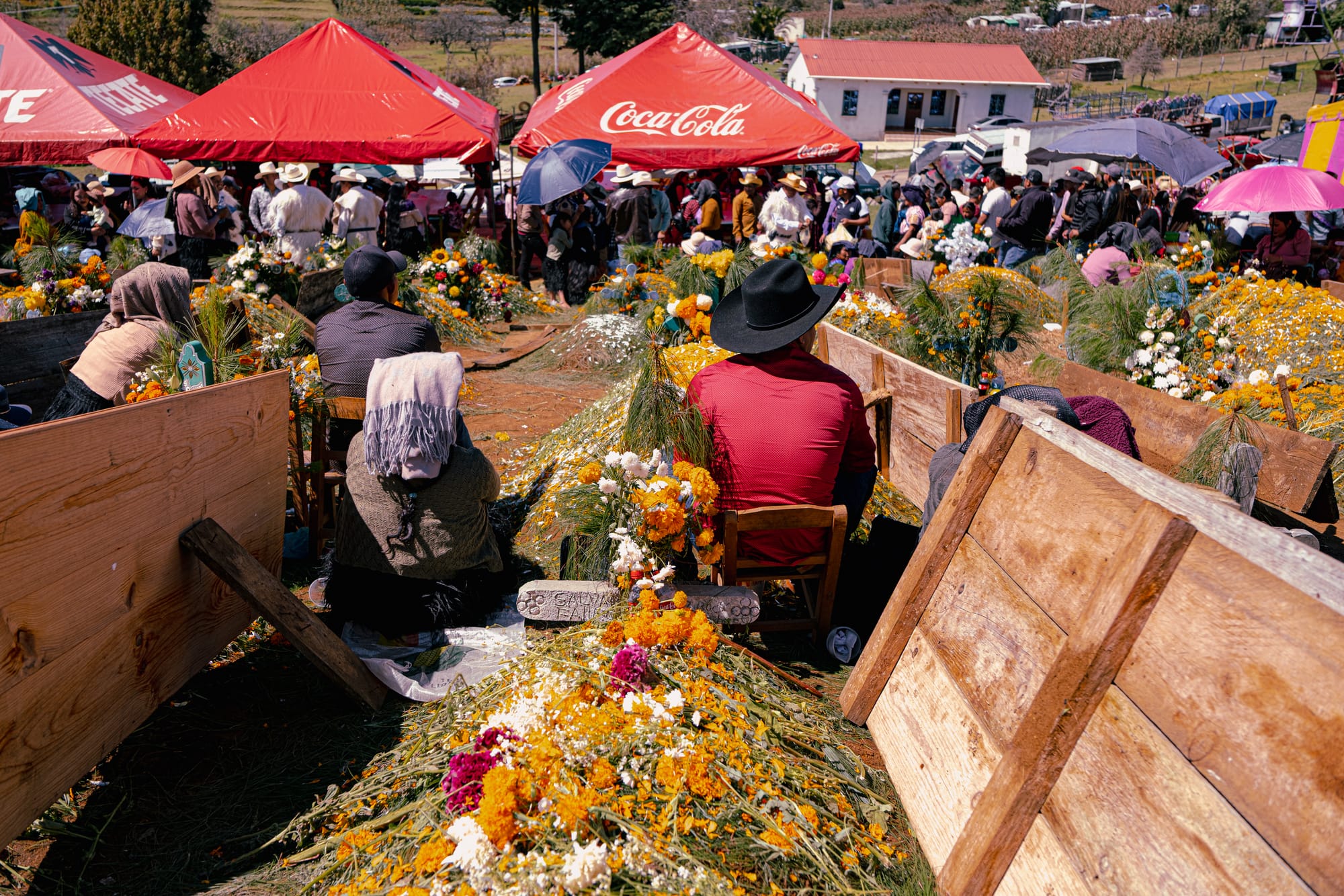
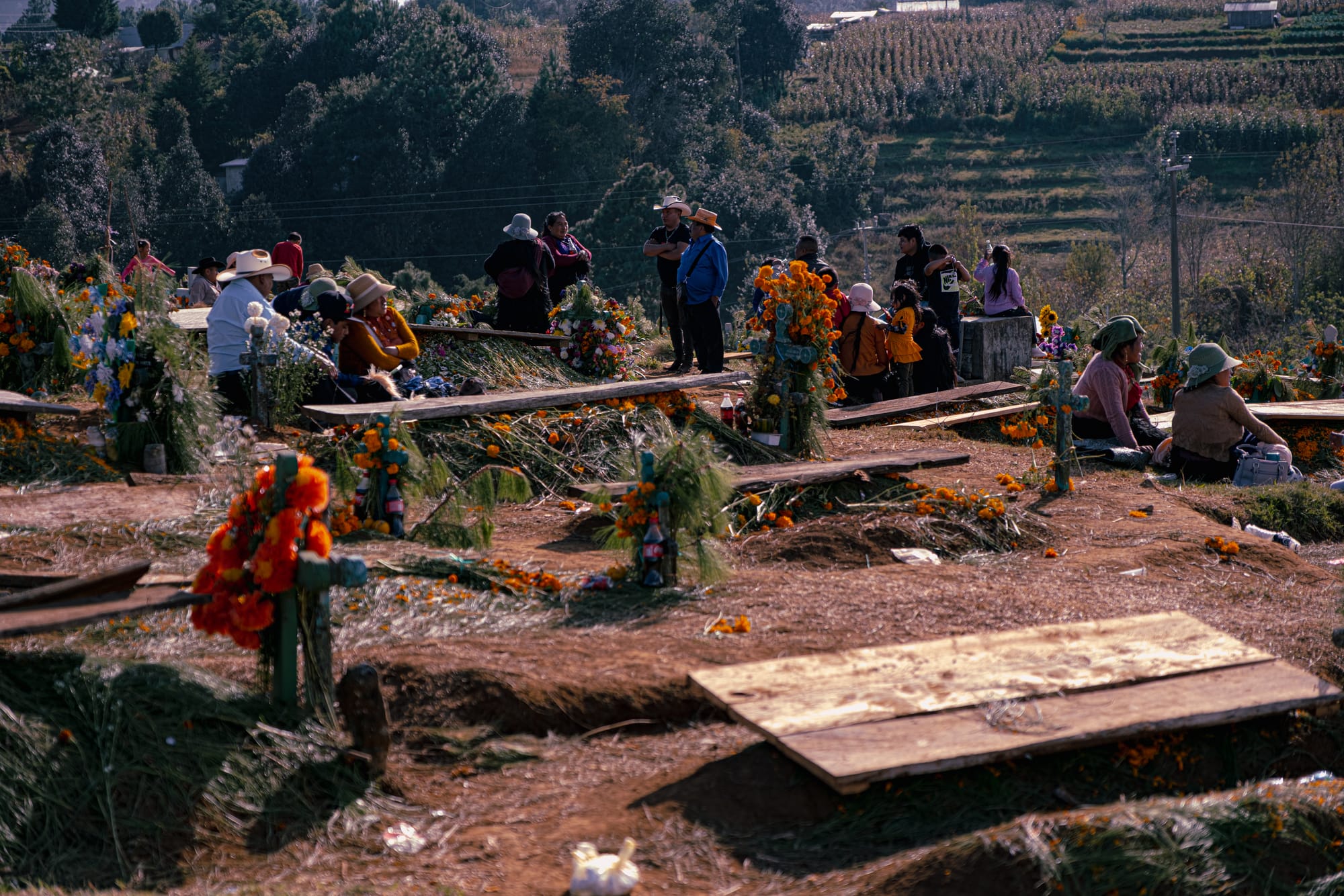
Día de Muertos at Romerillo Cemetery Chiapas, families sitting beside pine covered graves decorated with marigolds and flowers, crowded hillside cemetery with communal gathering, indigenous Day of the Dead celebration with offerings music and festival atmosphere near San Cristóbal de las Casas
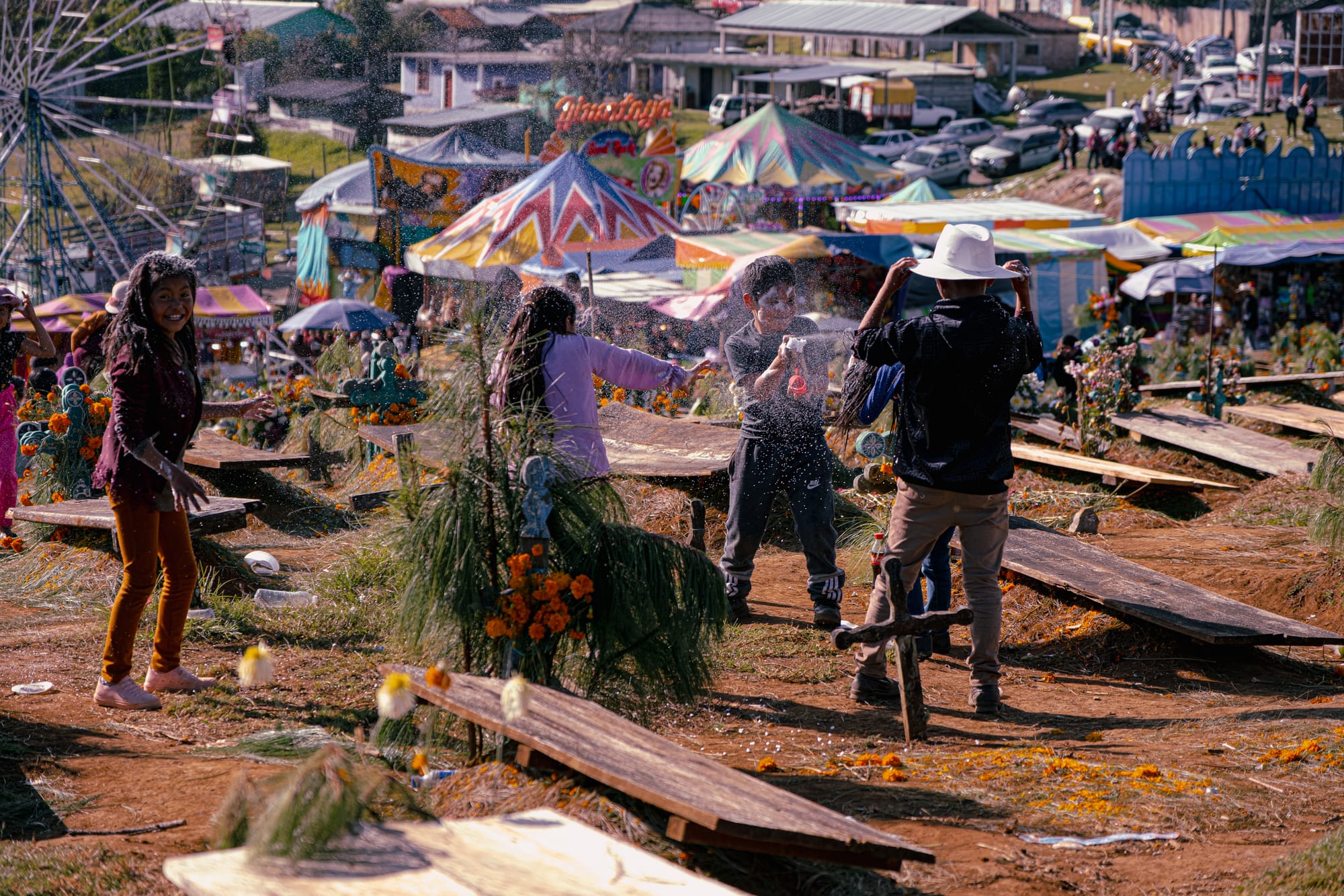
Día de Muertos at Romerillo Cemetery Chiapas, children playing and laughing among pine covered graves and marigold decorated tombs, amusement park rides visible beside the hilltop cemetery, local families celebrating Day of the Dead with joy music and community gathering near San Cristóbal de las Casas
Joy and play unfolding beside the graves

We try to be careful with superlatives in travel writing. Usually, they're shorthand for something visually striking or emotionally intense, and those qualities don’t always translate into the correct meaning. But Romerillo did something different. It didn’t just mesmerize us—it unsettled and expanded our understanding of what remembrance can look like.
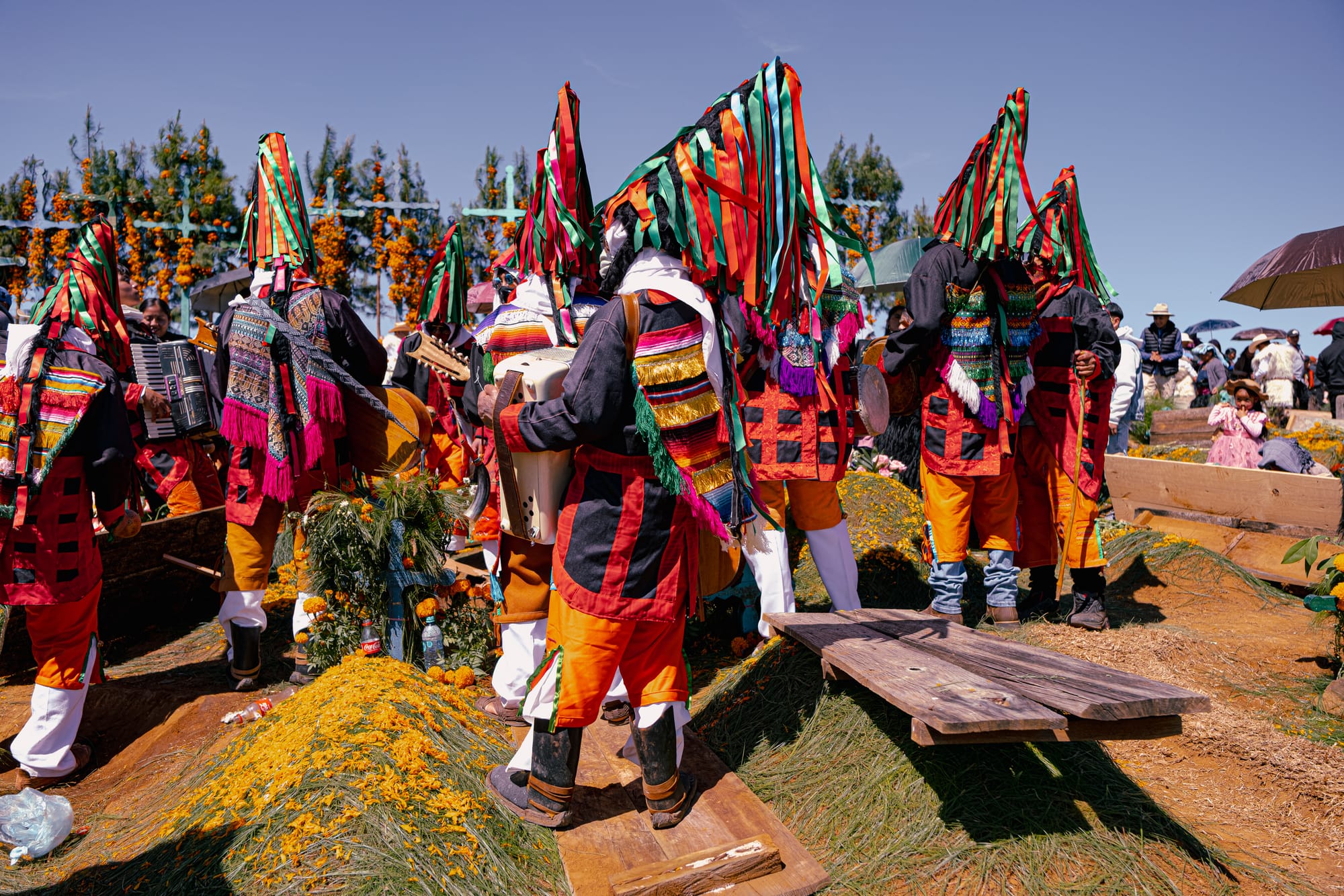
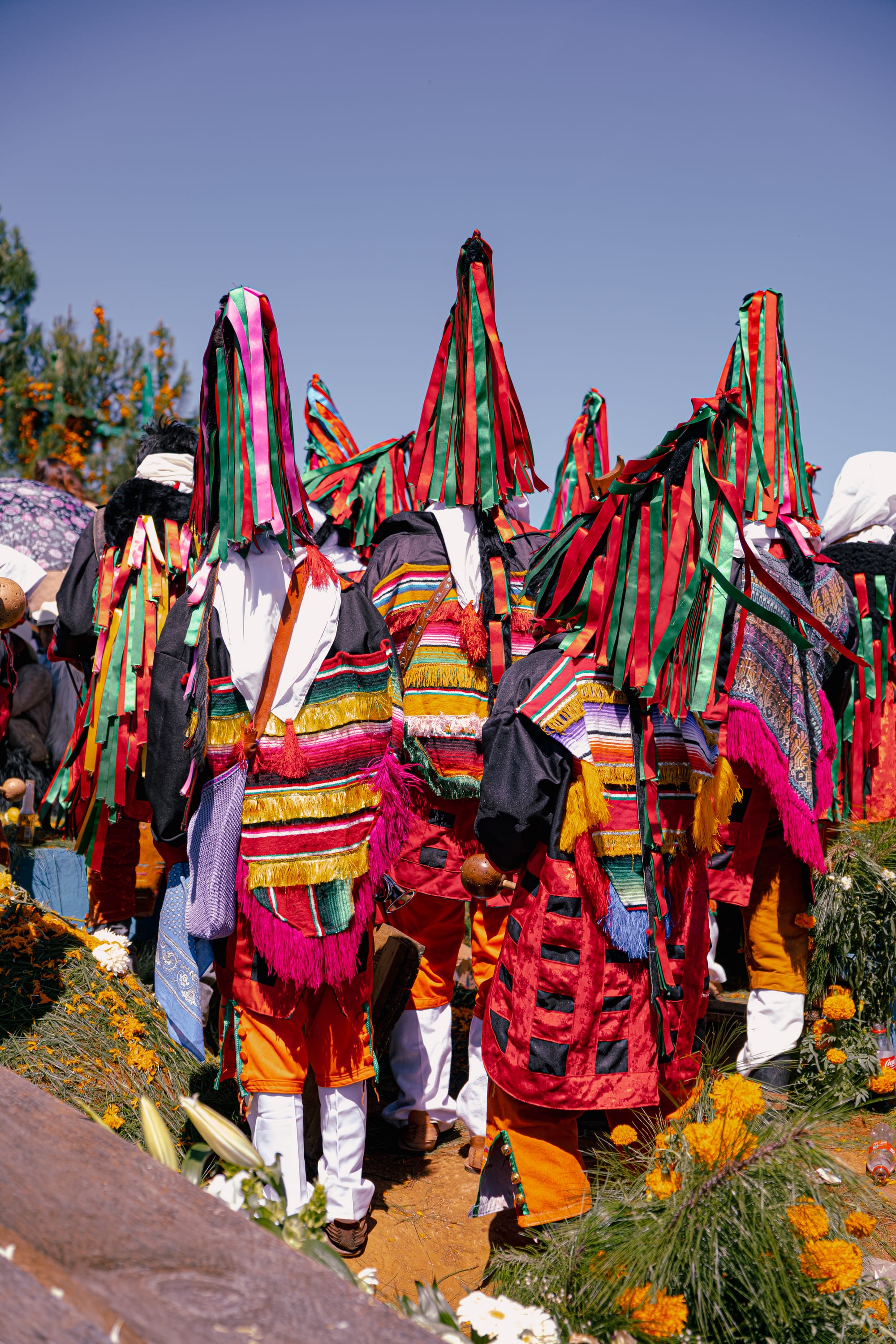
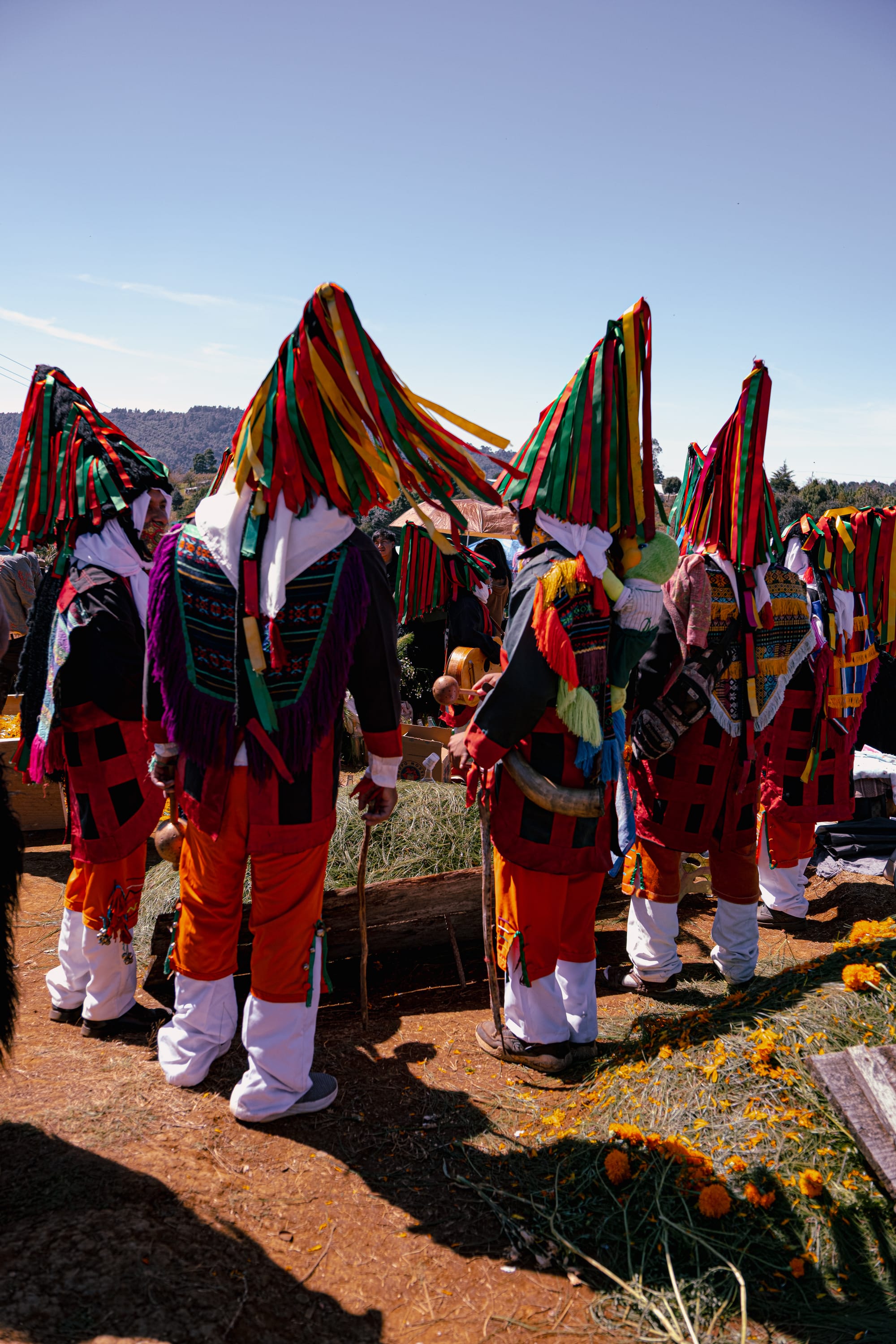
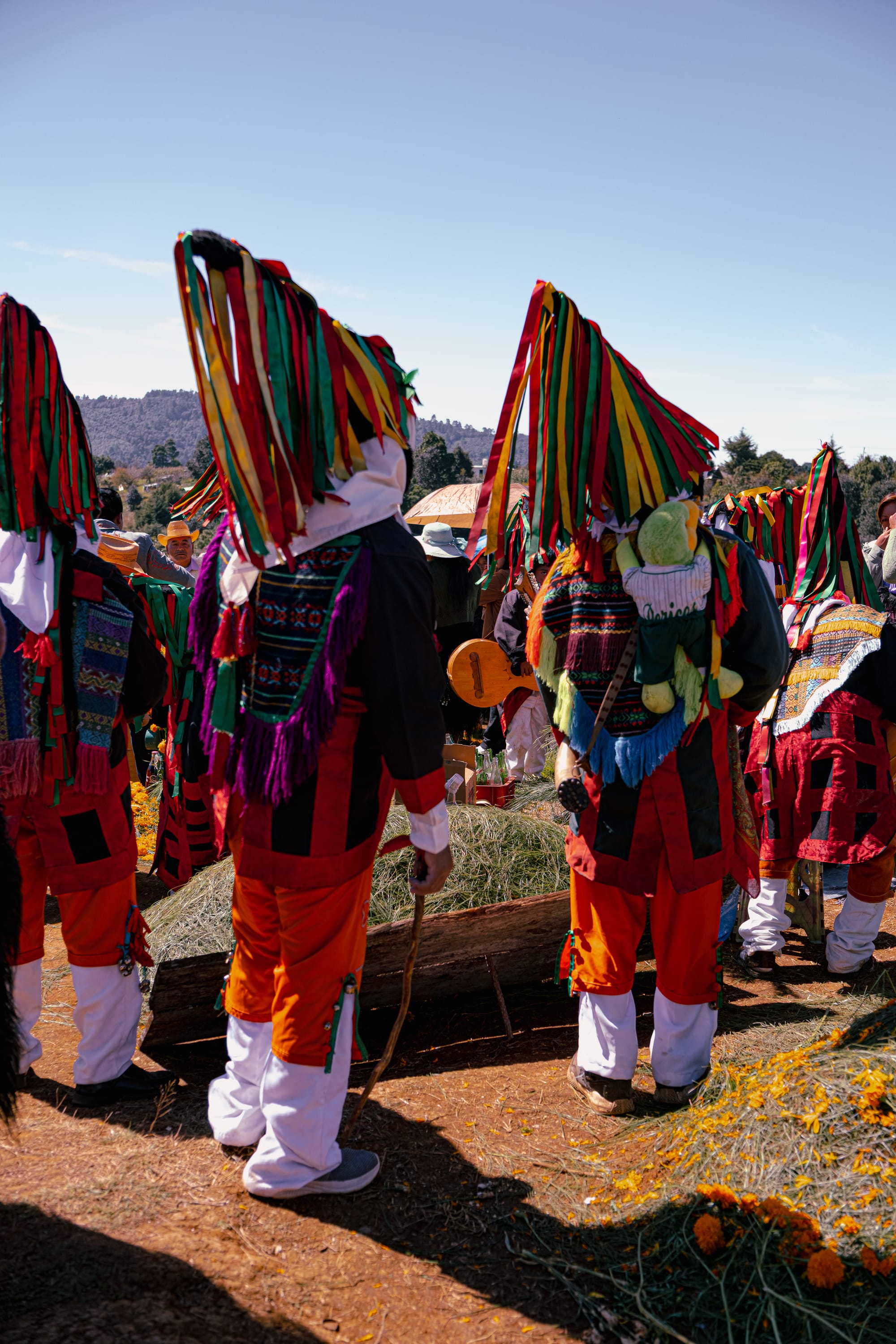
Día de Muertos at Romerillo Cemetery Chiapas, indigenous Tzotzil musicians wearing traditional ribbon headdresses and ceremonial clothing, live band playing accordion guitar and drums among pine covered graves, marigold decorated hillside cemetery with tall crosses, local Day of the Dead celebration near San Cristóbal de las Casas
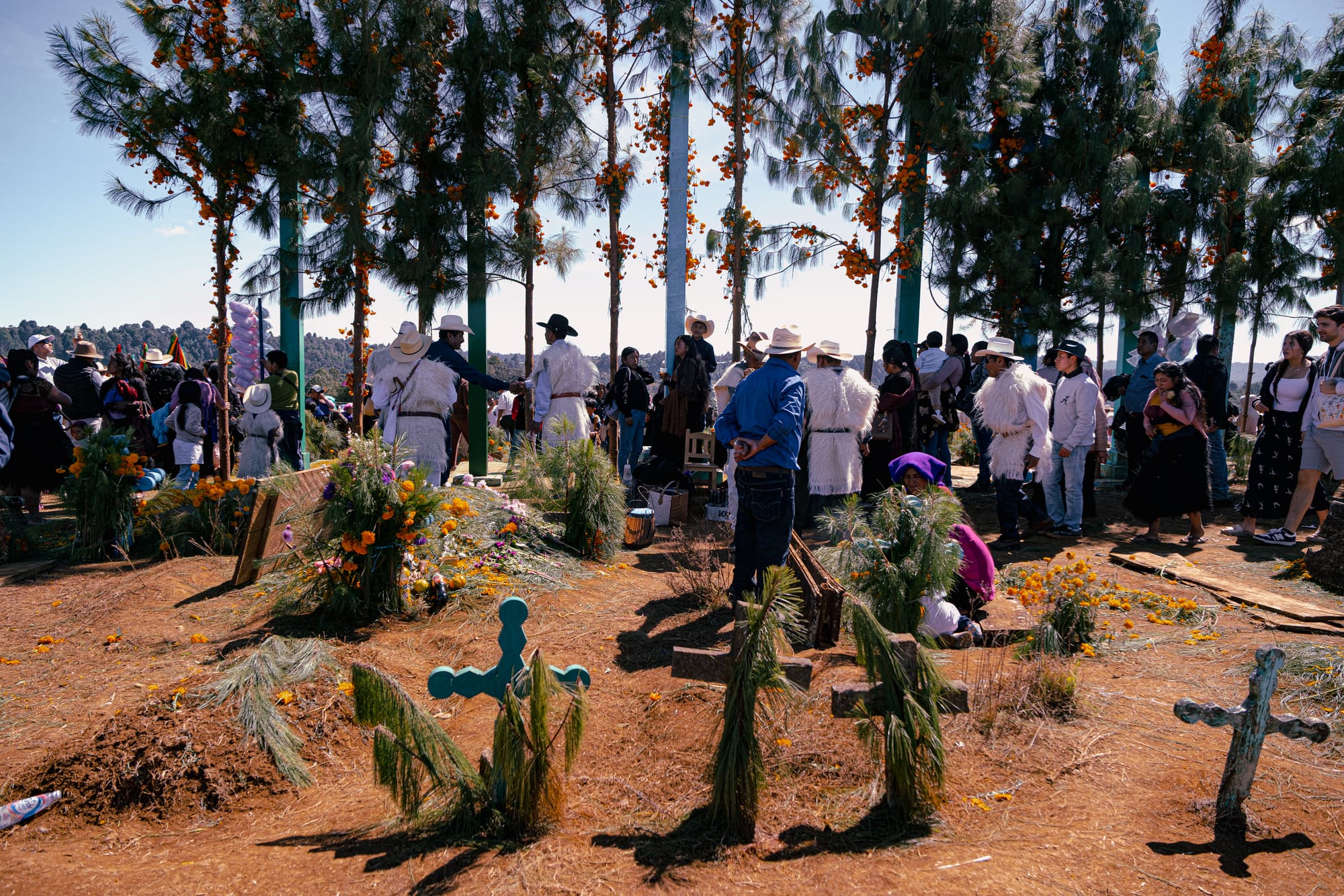
Día de Muertos at Romerillo Cemetery Chiapas, large communal gathering around pine covered graves and tall crosses, indigenous families wearing traditional wool clothing and ribbon headdresses, marigolds hanging from trees and scattered across the ground, crowded hilltop cemetery during Day of the Dead celebrations near San Cristóbal de las Casas
A gathering that feels both communal and ancestral

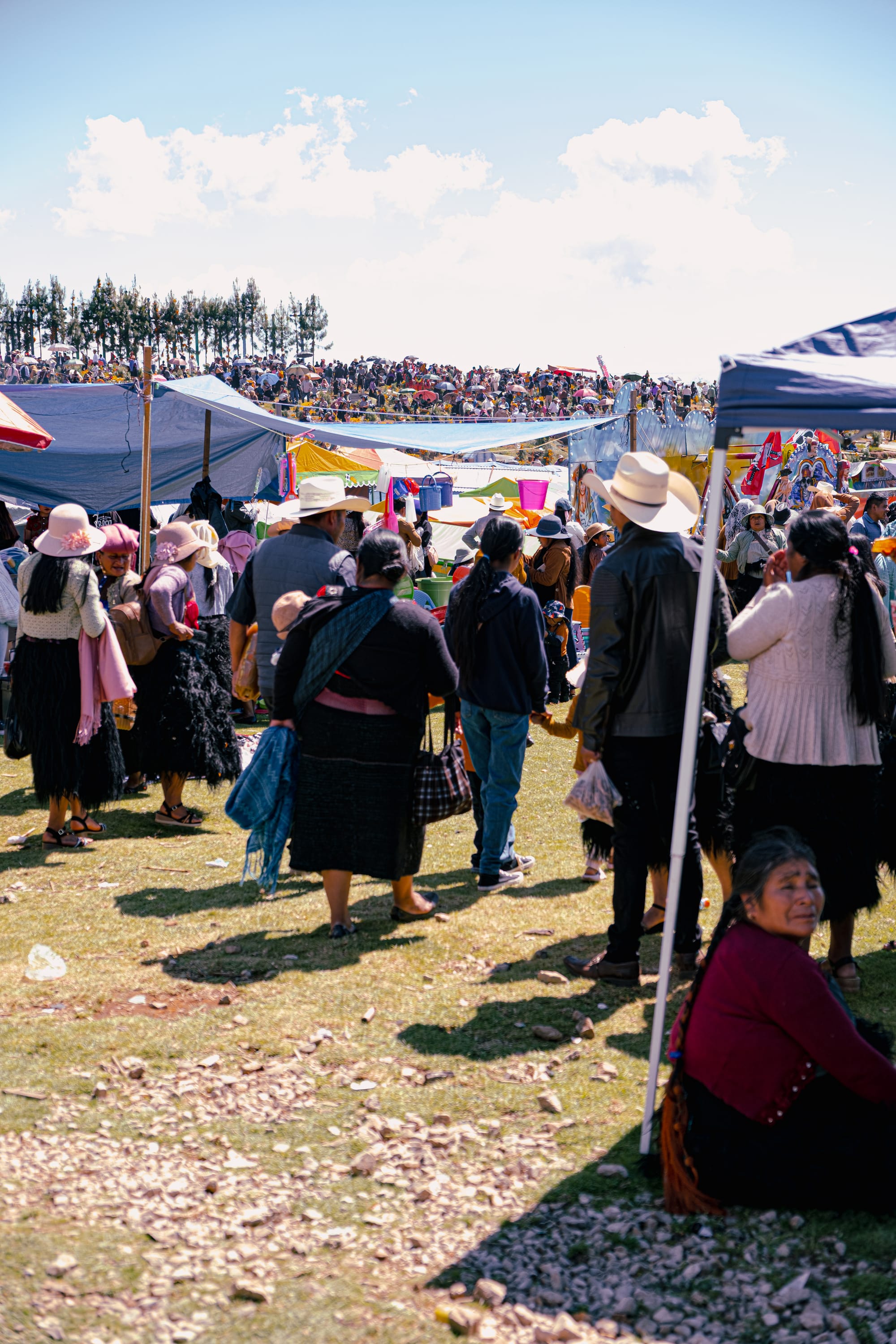
We visited on November 1st, and it felt like the cemetery had temporarily become its own universe. Dense, loud, crowded, and alive.
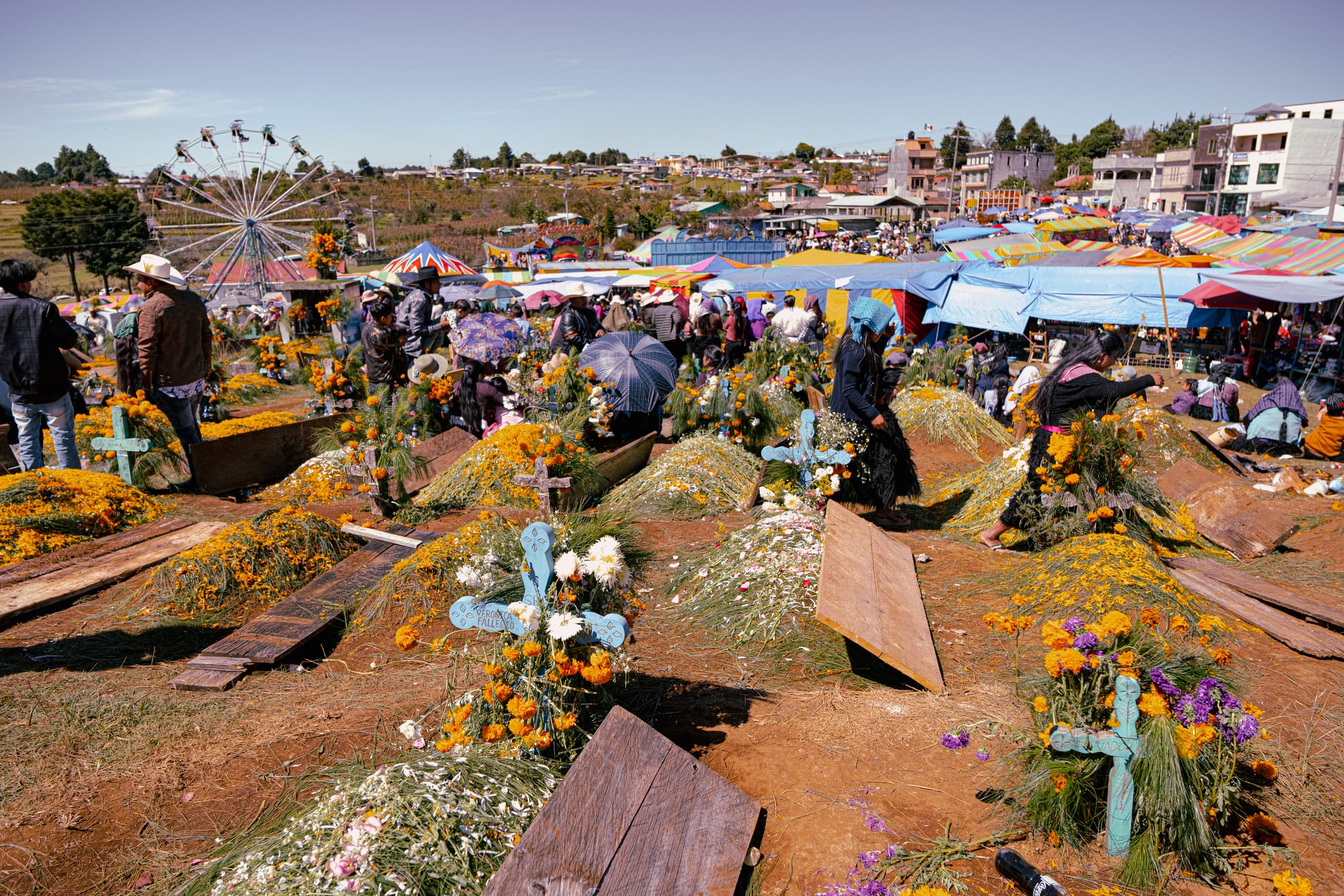
Día de Muertos at Romerillo Cemetery Chiapas, hillside cemetery covered in pine needles and marigolds with wooden crosses, families visiting graves during Day of the Dead celebrations, crowded local cemetery with festival tents and amusement park visible nearby, Romerillo Cemetery near San Cristóbal de las Casas traditional indigenous Day of the Dead scene

The following day, November 2nd, we returned and found it almost empty. The contrast was stark and clarifying. Whatever happens at Romerillo happens in a narrow window, and when it passes, the place exhales and returns to stillness.
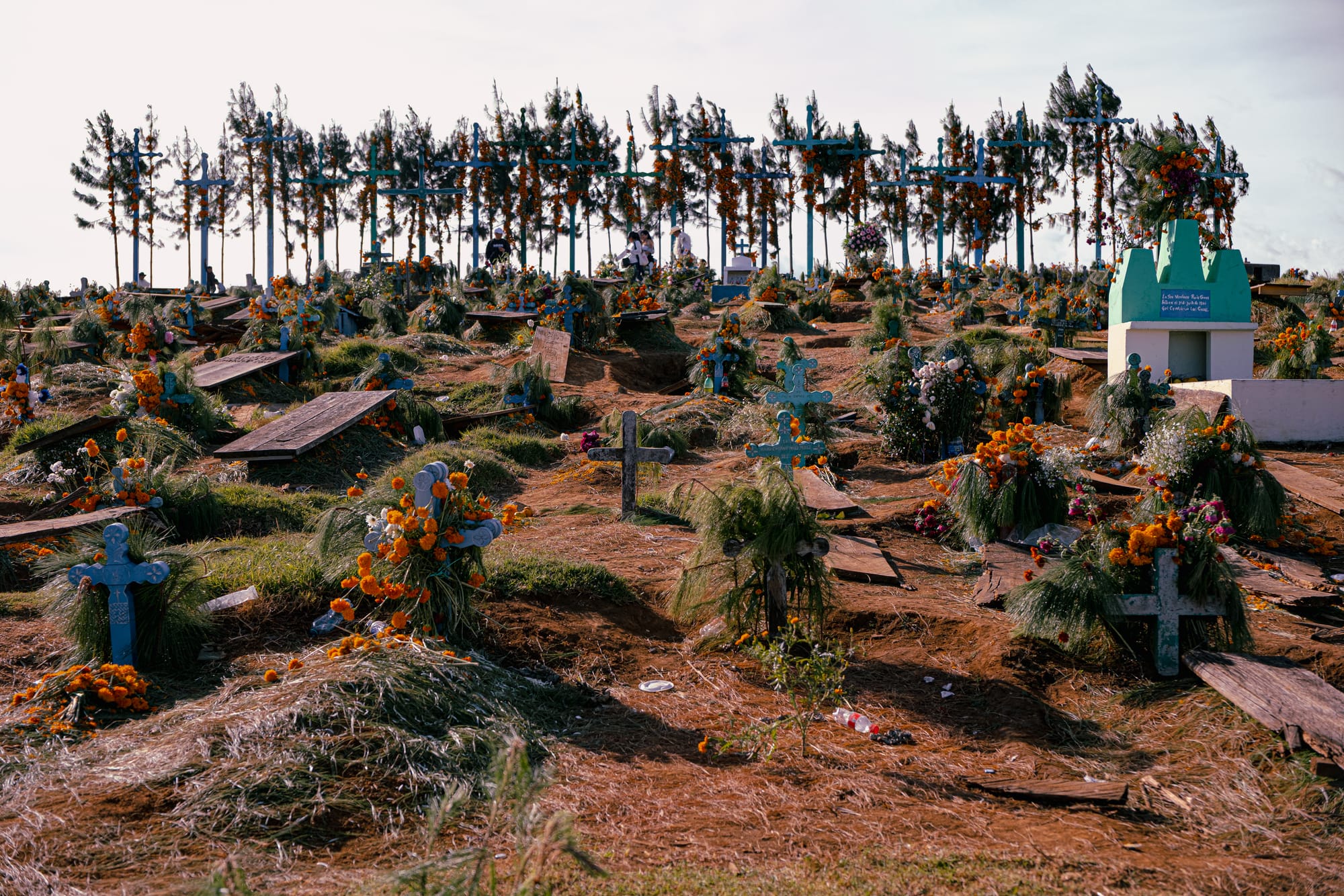
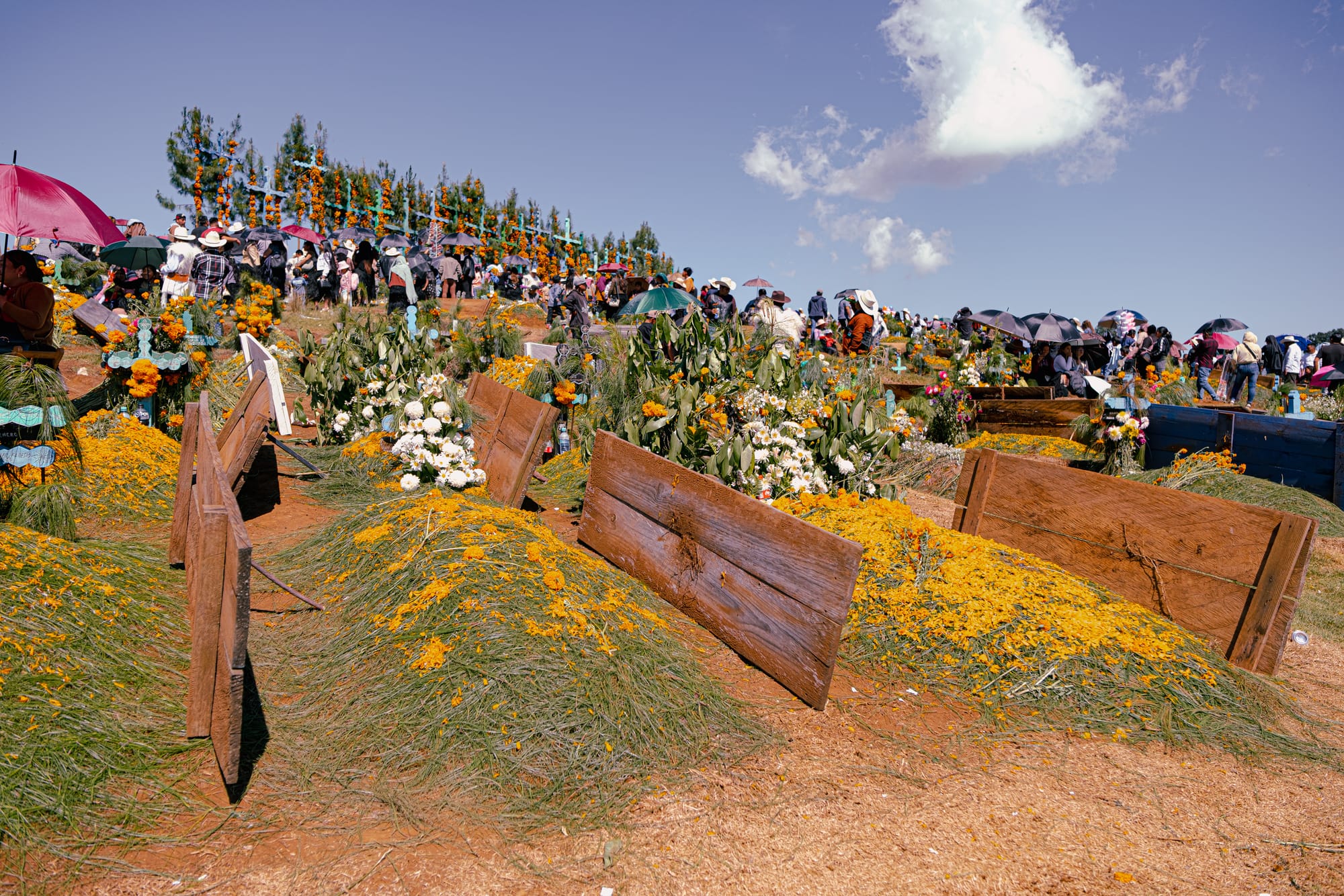
Día de Muertos at Romerillo Cemetery Chiapas, wide view of hilltop cemetery covered with pine needles marigolds and wooden crosses, tall crosses lining the ridge above the graves, indigenous Day of the Dead burial grounds with families and offerings near San Cristóbal de las Casas

If you’re in San Cristóbal de las Casas during Día de Muertos and you’re able to visit one cemetery outside the city, this is the one we would urge you not to miss.

The hill and the crosses

Romerillo Cemetery sits on a hill, and that elevation matters.
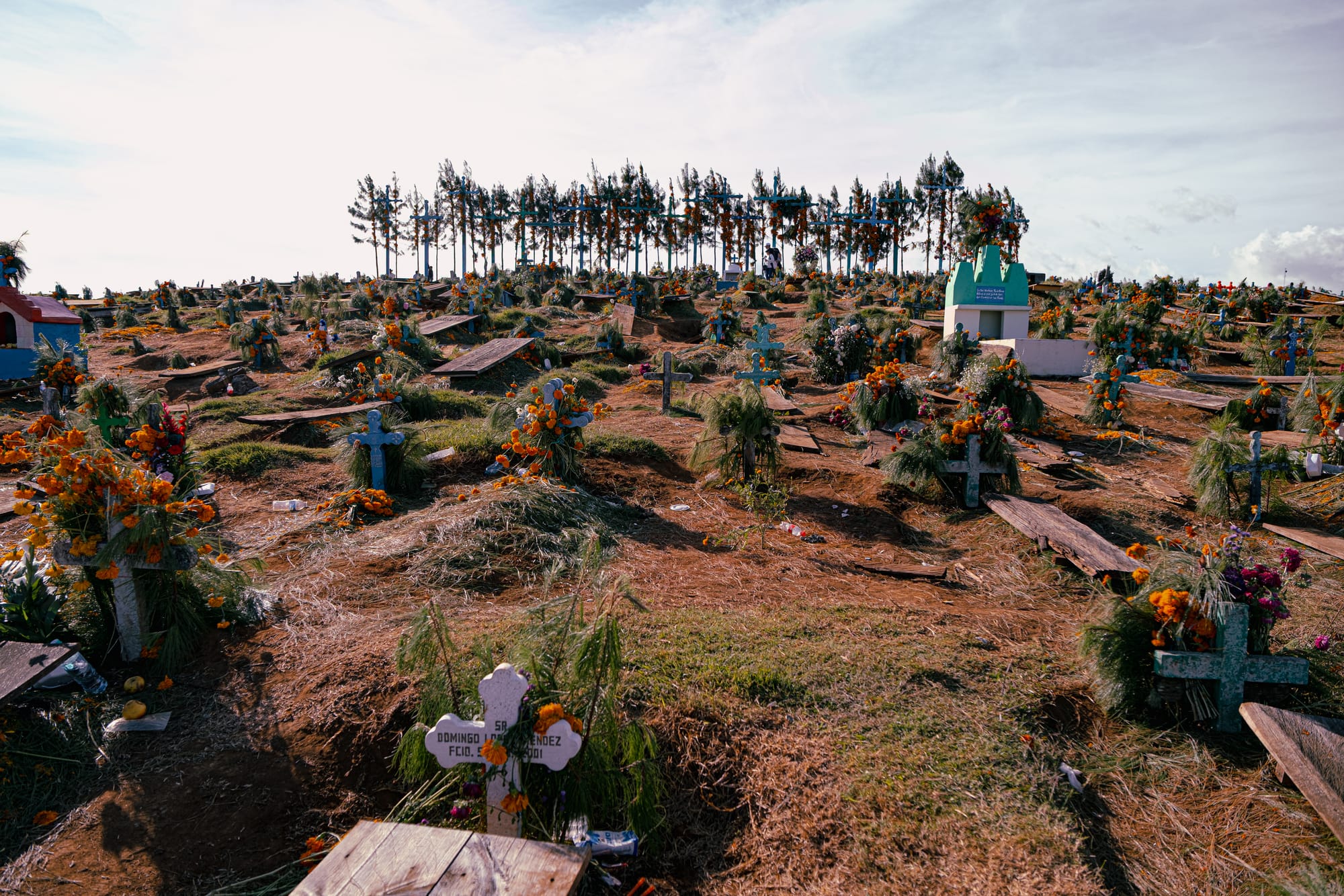
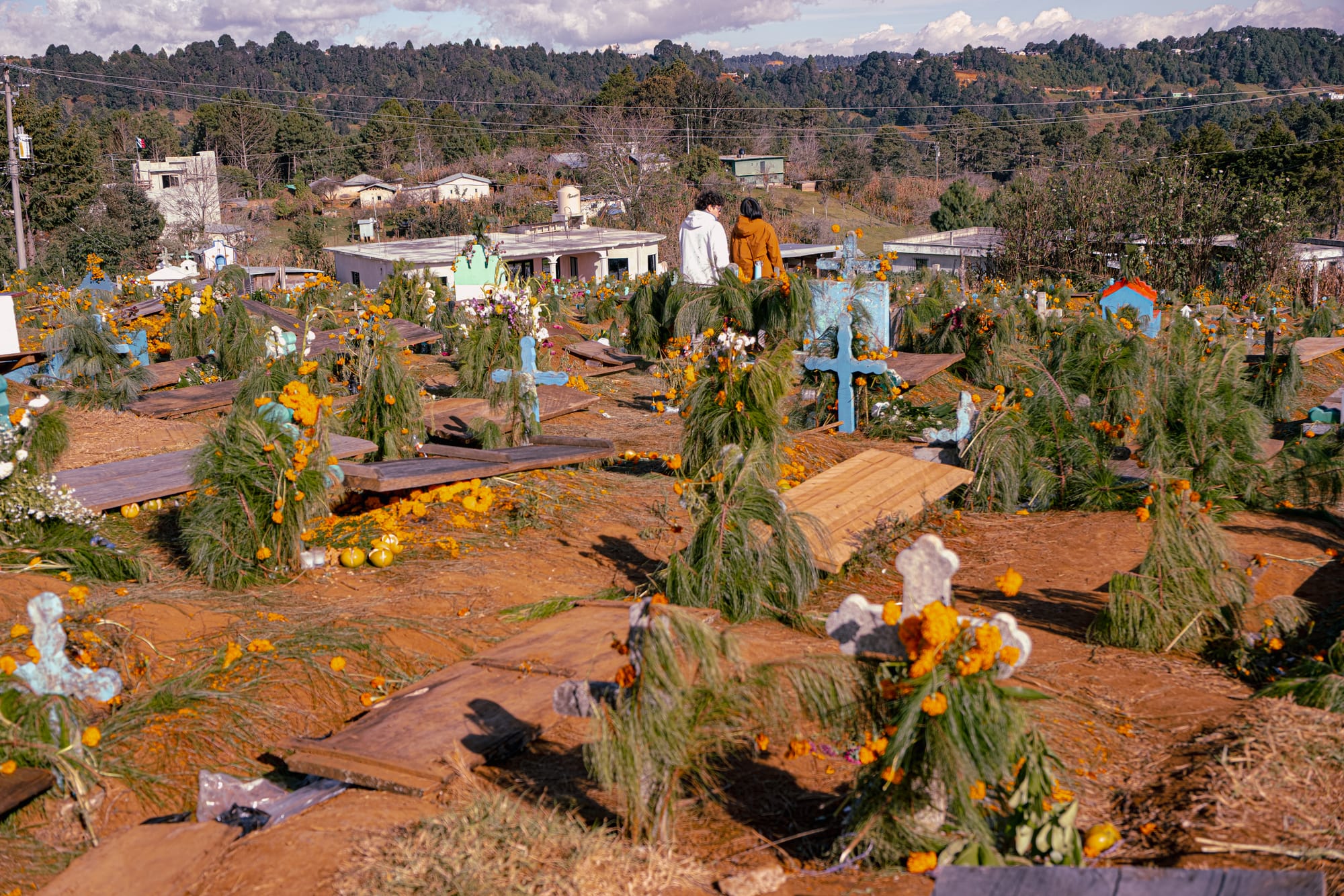
Día de Muertos at Romerillo Cemetery Chiapas, wide view of hilltop cemetery covered with pine needles and marigolds, wooden crosses marking graves across uneven ground, tall crosses lining the ridge in the background, indigenous Day of the Dead burial site near San Cristóbal de las Casas after the main celebrations
Romerillo's hilltop

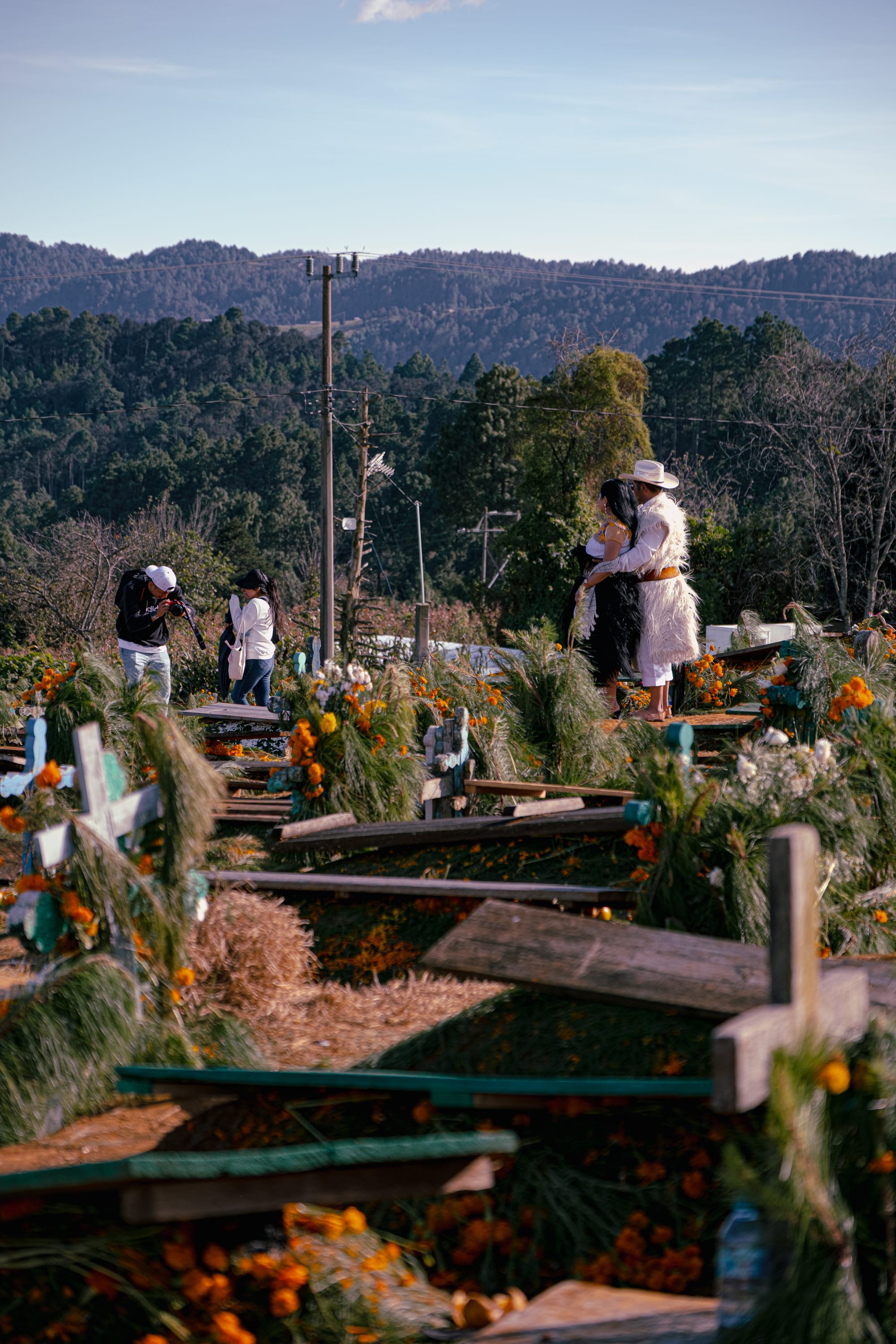
The climb up immediately changes the way you arrive. At the top, the cemetery opens into a wide, uneven space crowned by tall crosses that rise above the burial grounds. They’re visible from a distance and hard to ignore once you’re there. On Día de Muertos, they’re dressed with pine branches and flowers, tended and refreshed as the day goes on.
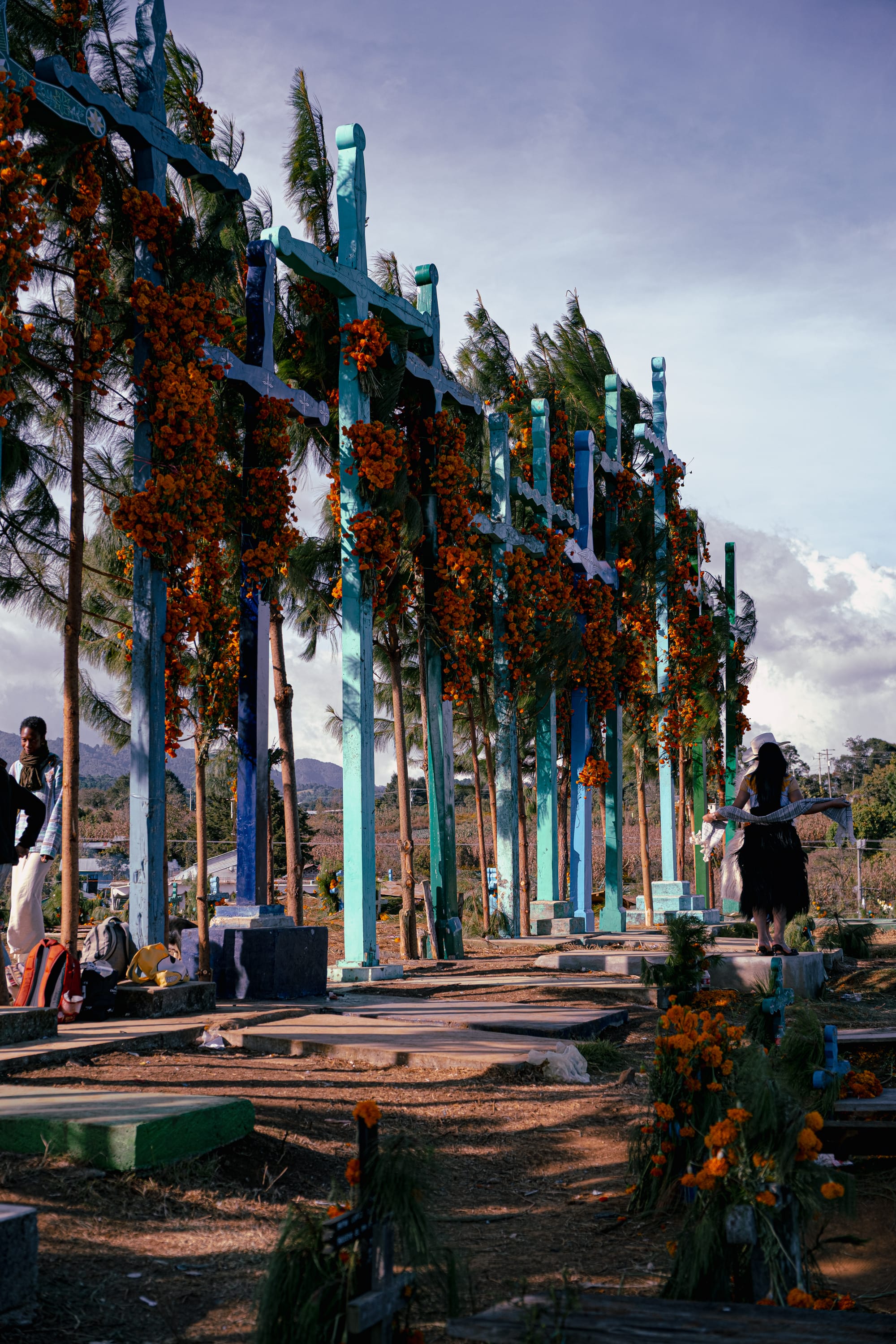
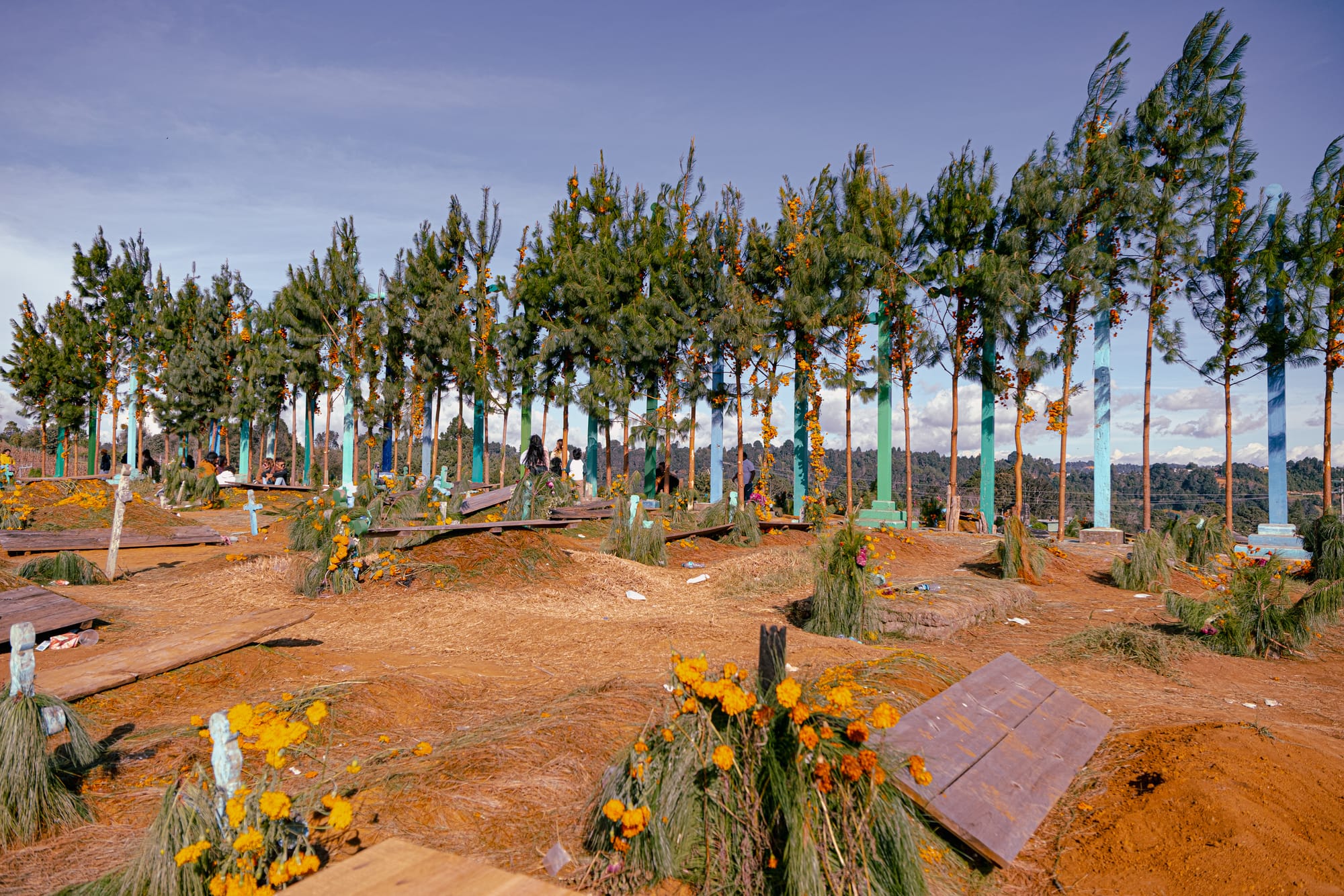
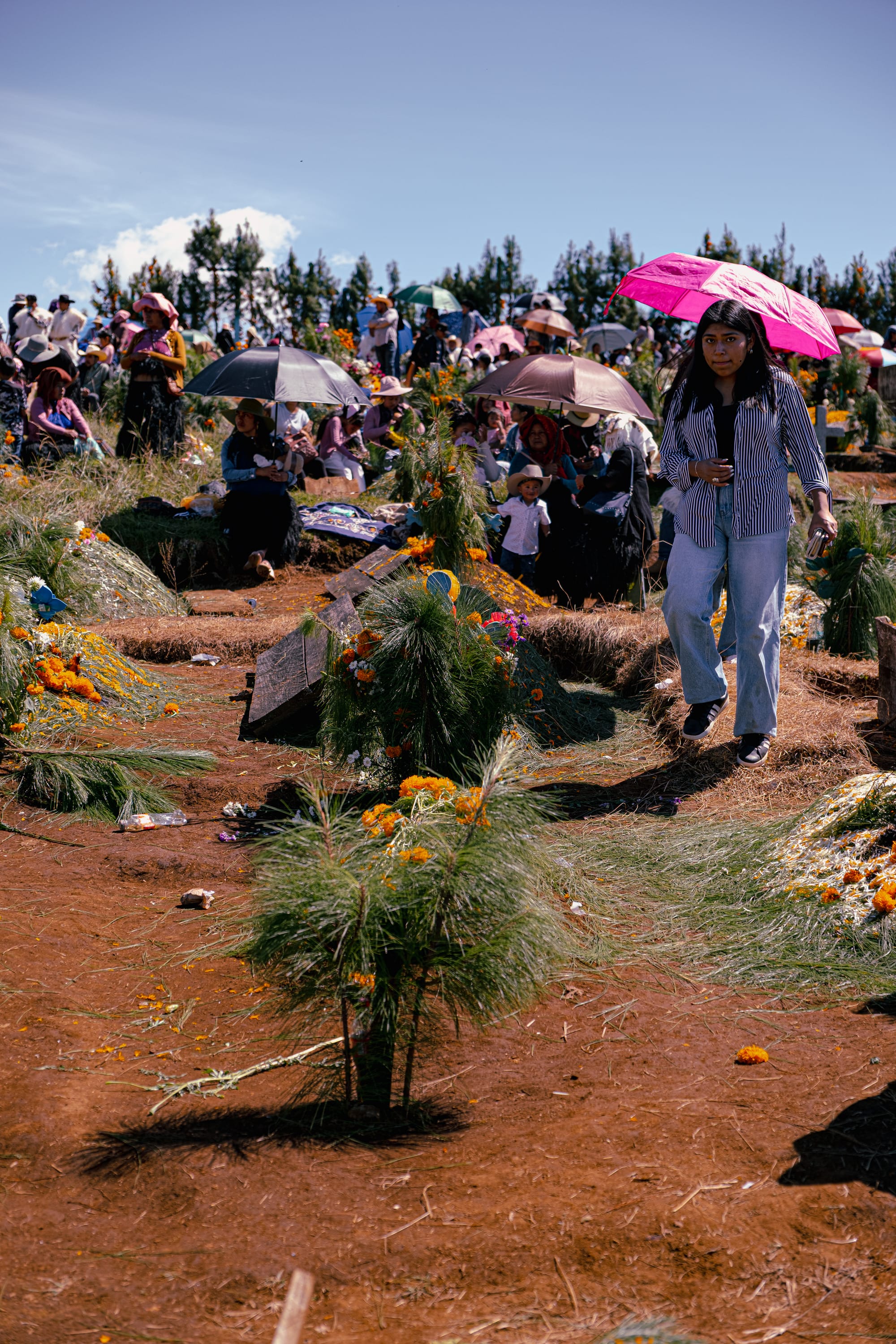
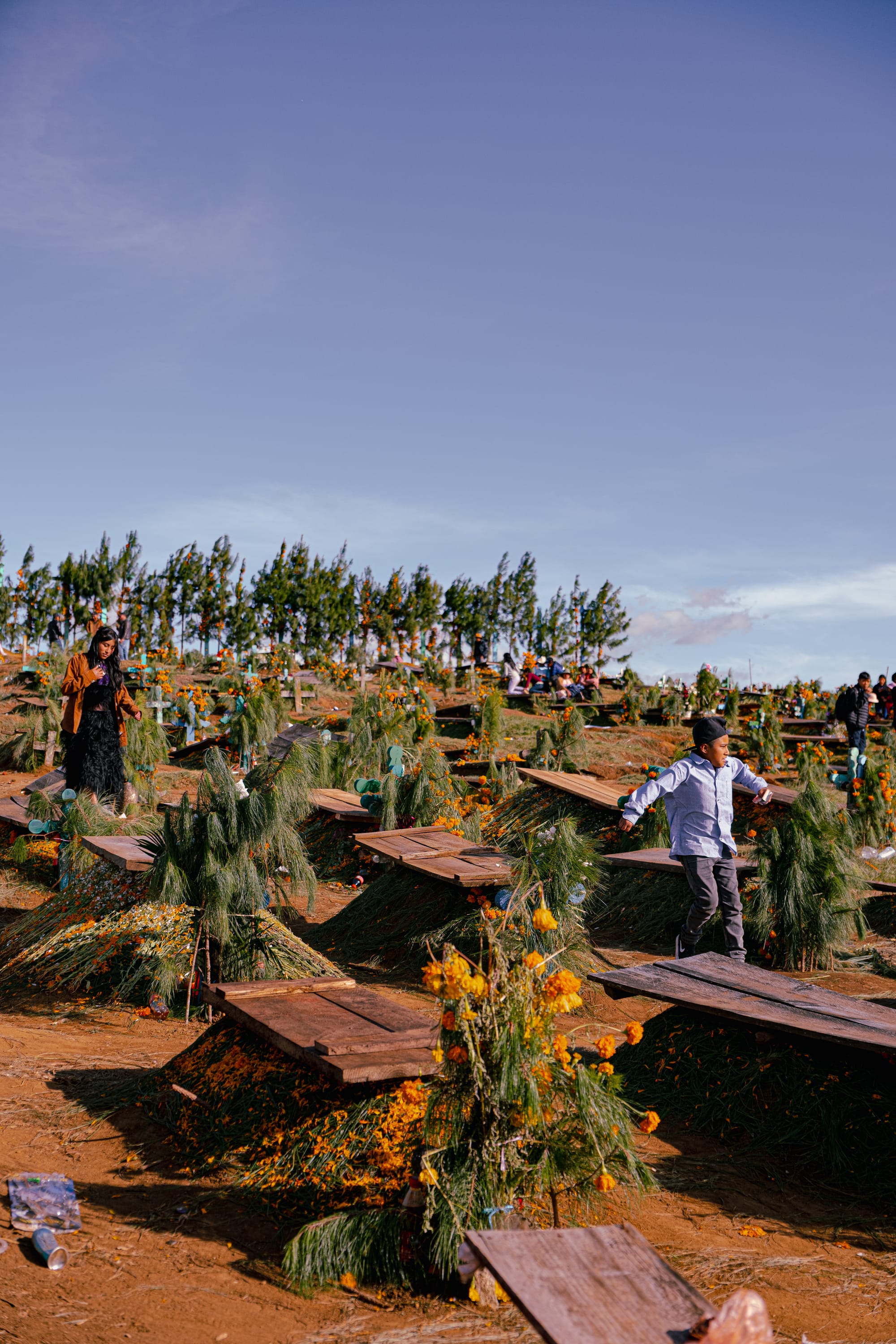
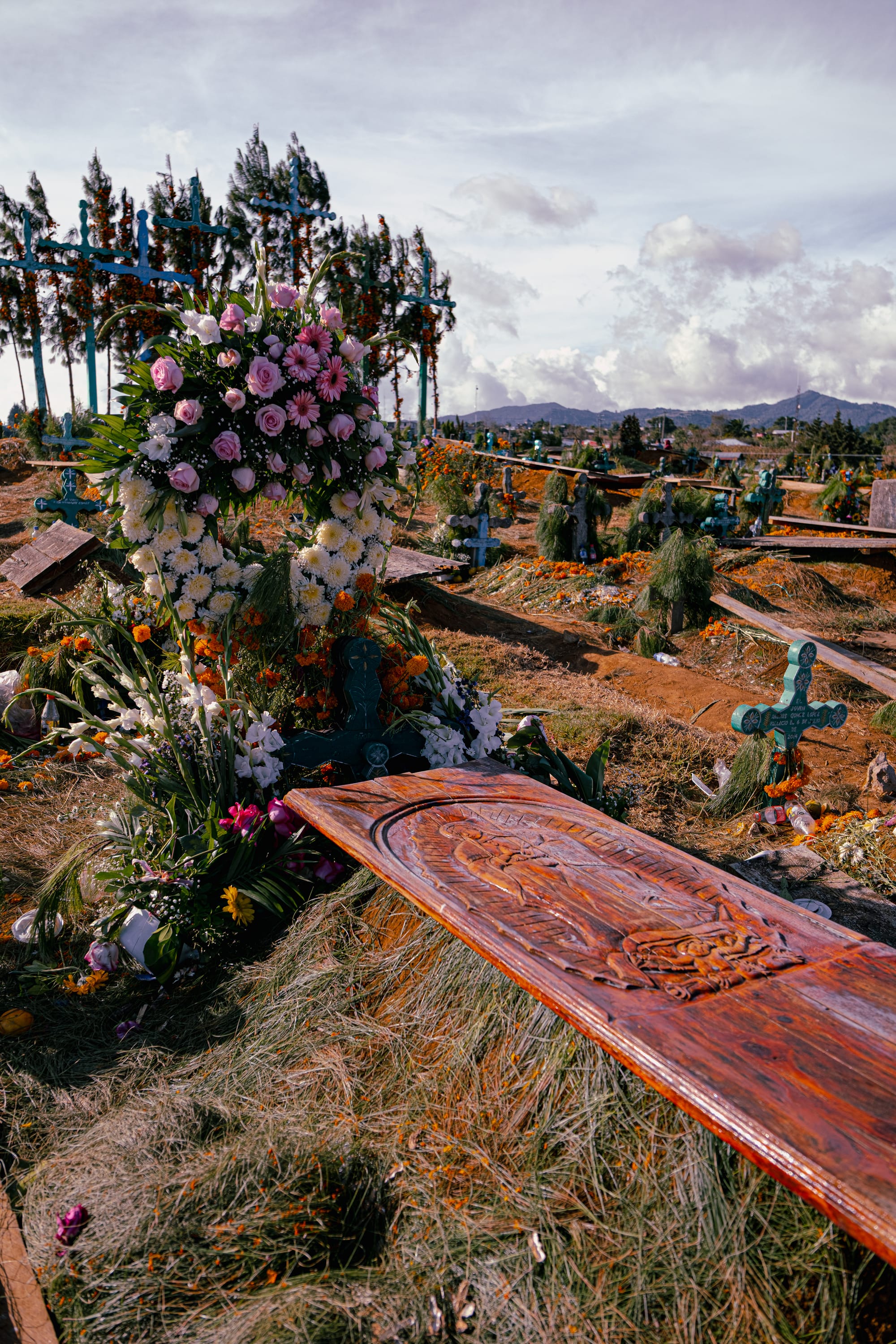
Pine is everywhere. Underfoot, across graves, tied to wood, layered in thick carpets that soften the ground. Walking through the cemetery feels different from walking through soil or grass—you’re constantly aware of texture, scent, and sound. Pine needles shift as people move. They cushion footsteps. They slow you down.
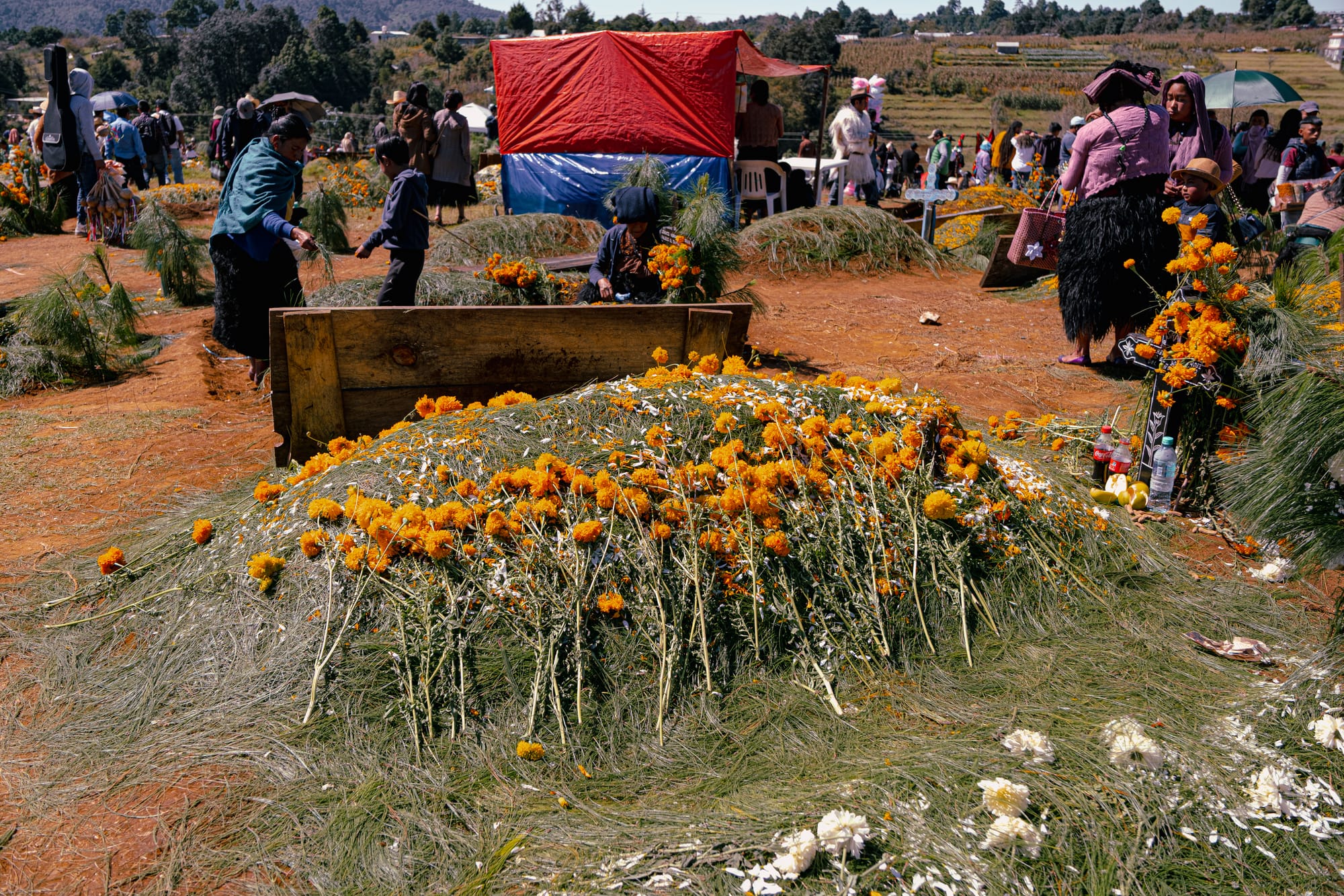
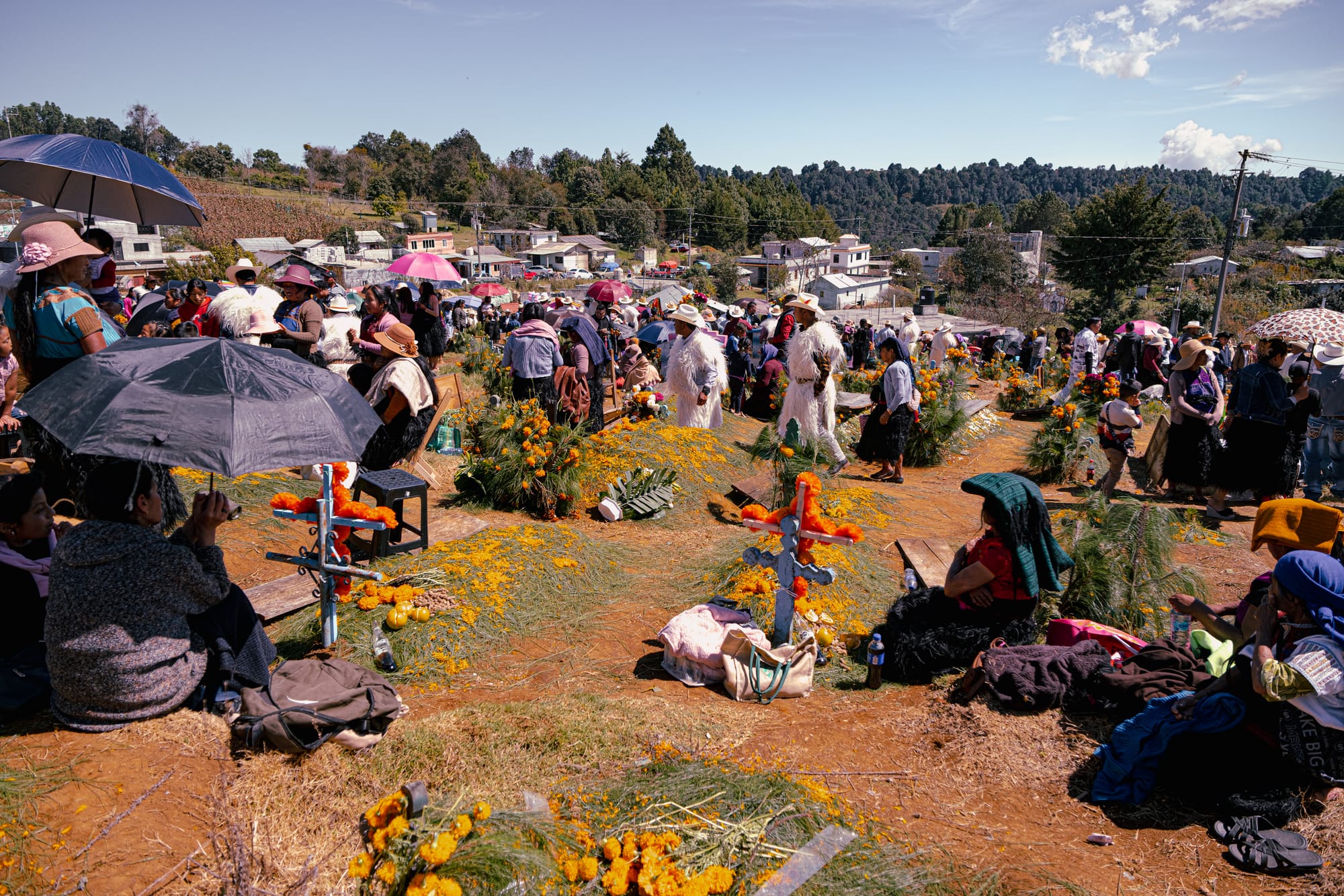
Romerillo Cemetery Day of the Dead celebration near San Cristóbal de las Casas, family arranging a pine-covered grave with marigolds and white flowers, communal graves decorated with pine needles, marigold petals, wooden grave markers, local Indigenous clothing, Oaxaca Chiapas Day of the Dead traditions, Romerillo hilltop cemetery with festival atmosphere, Día de Muertos Chiapas rural cemetery scene
Pine fills the air

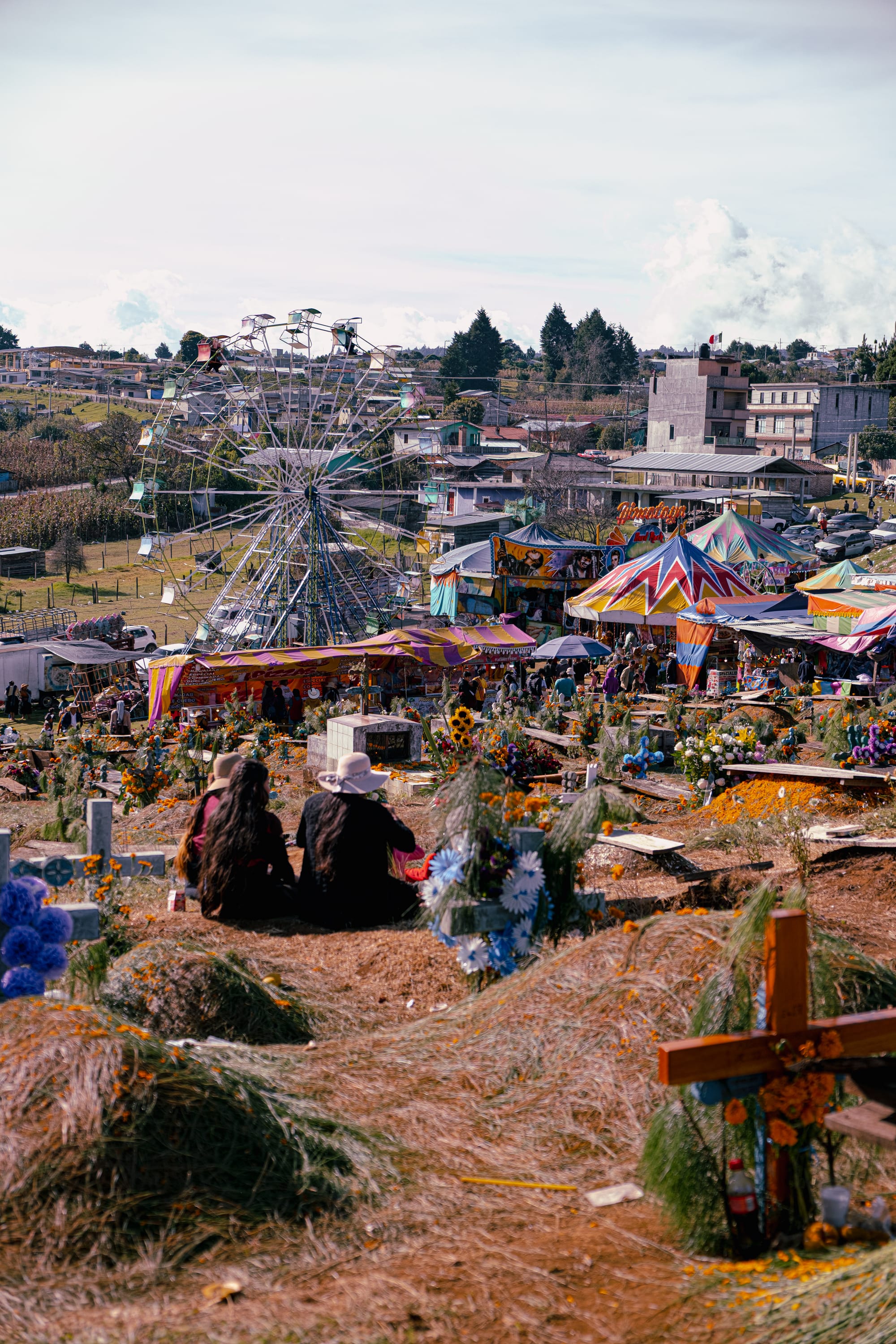
And then there’s the contrast that still feels surreal to write about: right at the base of the hill, beside the cemetery, is an amusement park. Bright rides. Fair-like structures. Movement and noise.
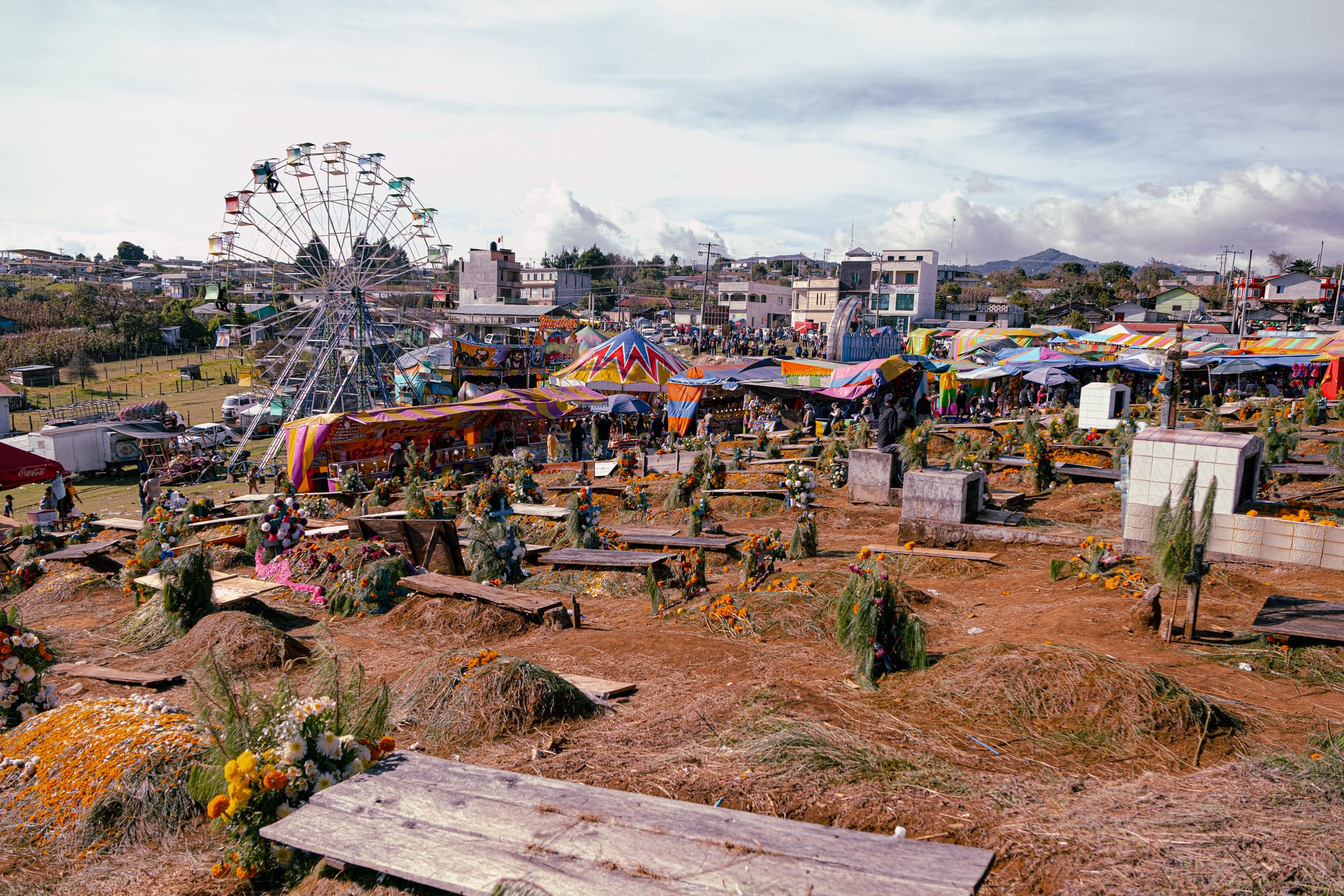
Día de Muertos at Romerillo Cemetery Chiapas, wide panoramic view of hilltop cemetery covered with pine needles and marigold decorated graves, families gathered among wooden crosses and shallow tombs, amusement park rides and colorful festival tents visible beside the cemetery, local indigenous Day of the Dead celebration near San Cristóbal de las Casas
Life and remembrance sharing the same hillside

The coexistence isn’t staged or symbolic—it’s simply how the place is arranged. Life and death sharing the same slope, without needing to be separated into different emotional categories.

A maze of graves

Romerillo doesn’t feel designed in the way many other cemeteries, such as the Municipal Pantheon, do.

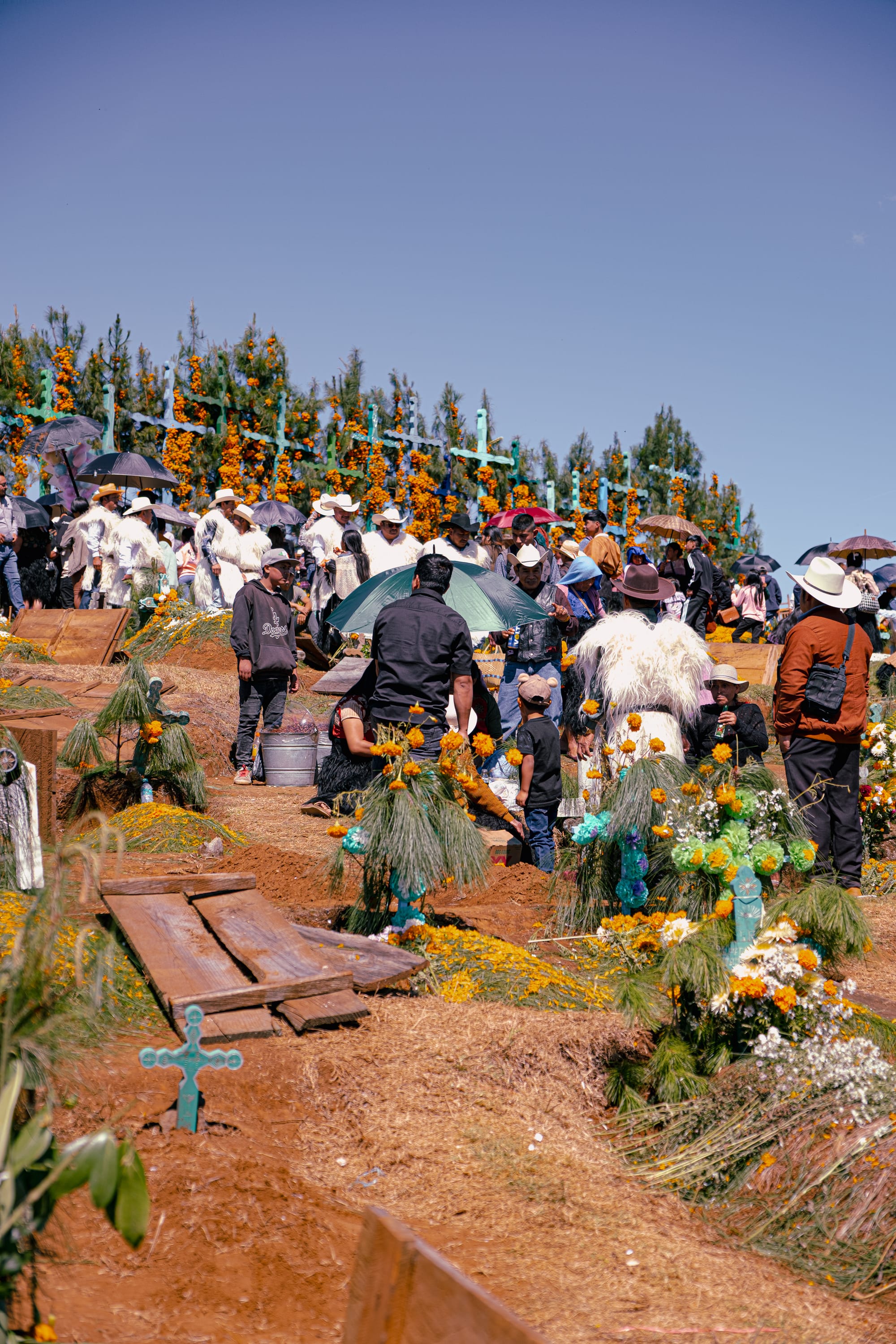
There are no neat rows, no clear paths, no architectural order guiding you through. Instead, the cemetery feels packed—dense with graves, markers, offerings, and people. You move carefully, adjusting your steps, reading the space as you go. At times it feels like a maze, not because it’s confusing, but because it requires attention to ensure you don't step in the wrong spot.
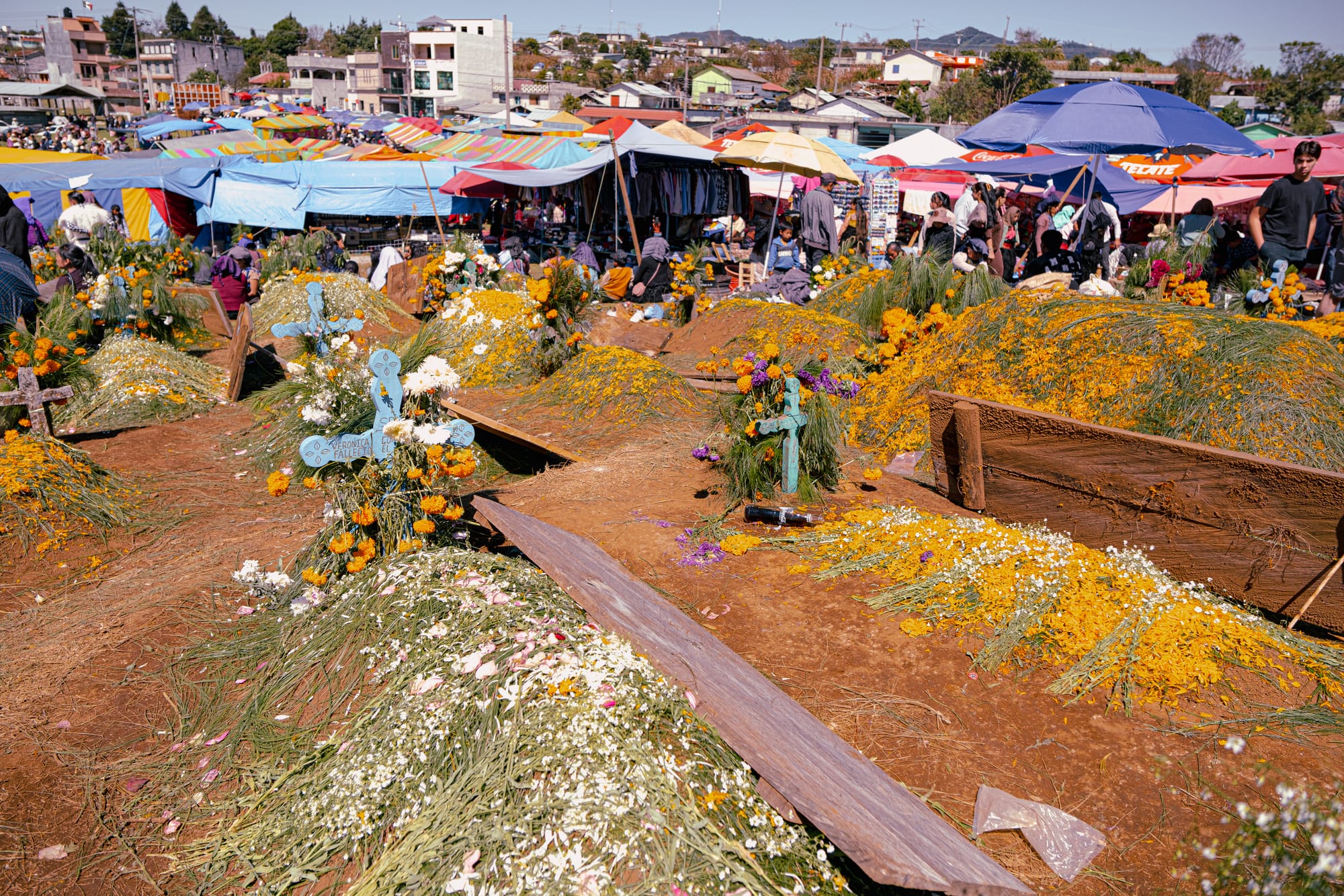
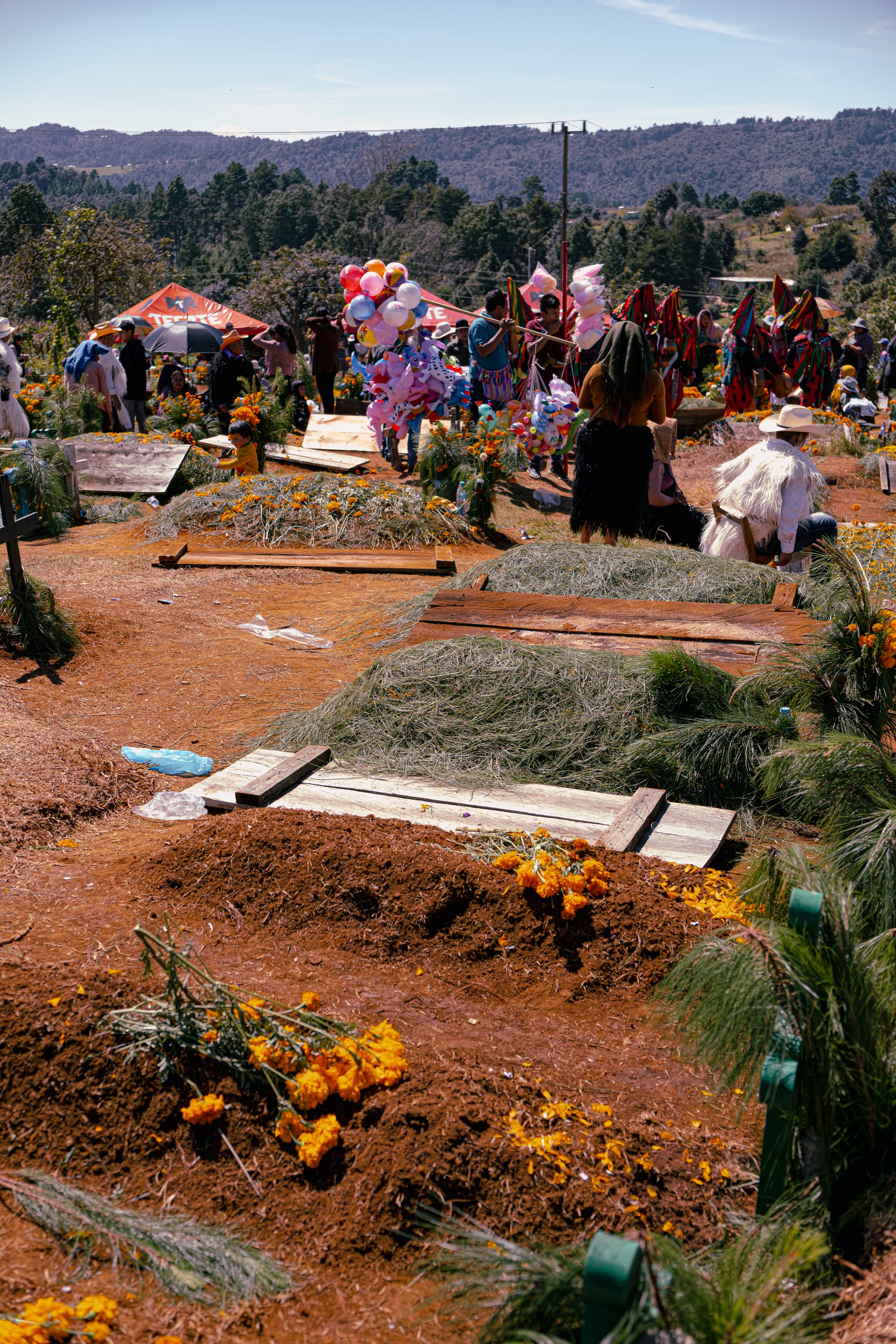
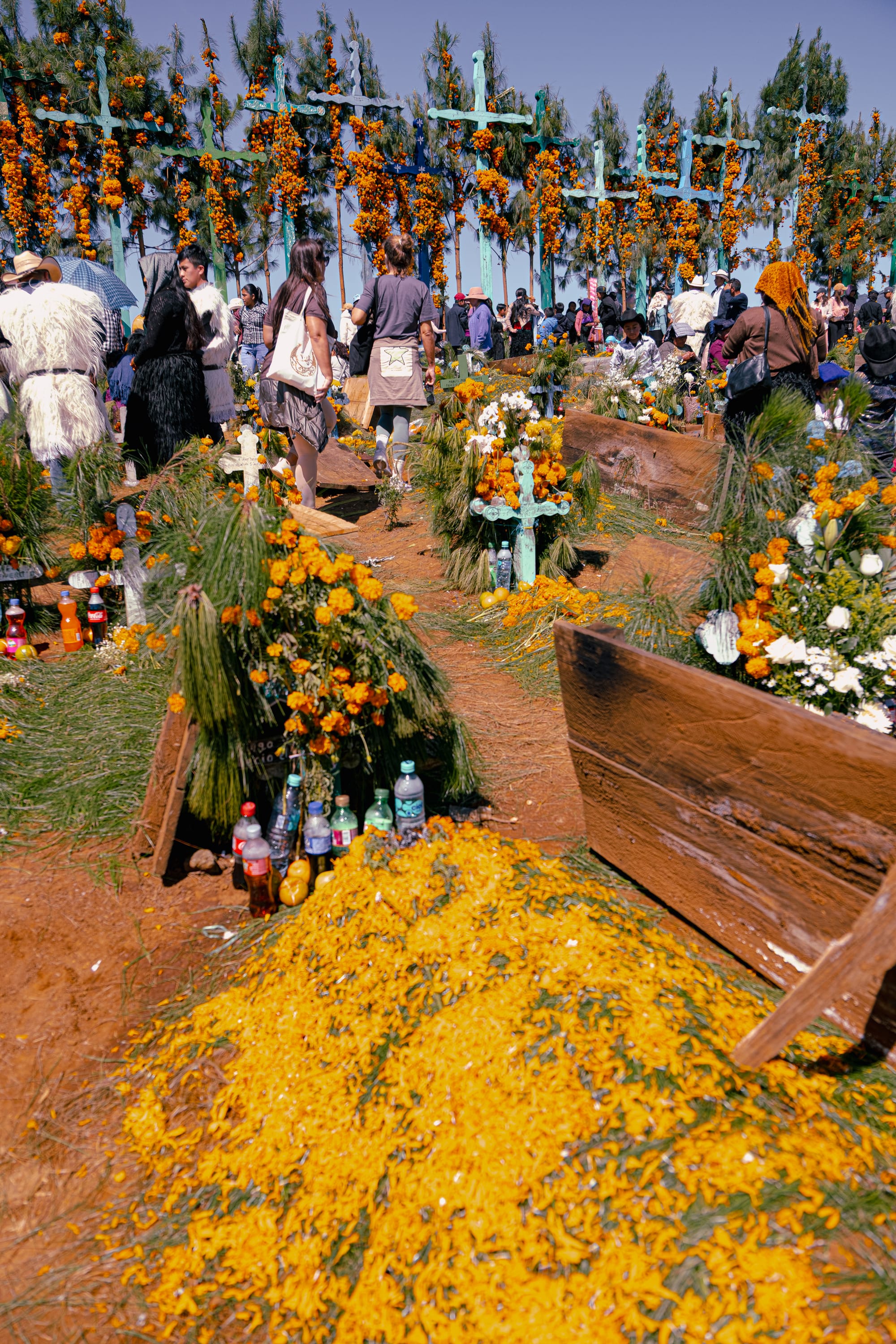
Día de Muertos at Romerillo Cemetery Chiapas, densely packed hilltop cemetery with pine covered graves and marigold decorated mounds, wooden crosses marking tombs across uneven ground, crowded indigenous Day of the Dead celebration with market tents and vendors visible beside the cemetery, Romerillo Cemetery near San Cristóbal de las Casas festival atmosphere
Día de Muertos at Romerillo Cemetery Chiapas, hilltop cemetery covered with pine branches and marigolds, simple wooden grave markers and crosses spread across uneven ground, families walking through the cemetery after main celebrations, indigenous Day of the Dead burial site near San Cristóbal de las Casas
Pine and marigolds settling back into the hillside

Most of the graves are shallow and raised, marked simply and closely packed together. There aren’t the house-like mausoleums or painted façades you see elsewhere. The focus here isn’t on permanent structures. It’s on what’s placed, replaced, and tended year after year.

Because of this density, you’re never far from someone else’s ritual. You might pause to look at one grave and realize you’re standing just inches from another family’s space. That closeness shapes the experience.

Clothing, texture, and unmistakable local presence

One of the strongest impressions we carried from Romerillo was how clearly local it felt.
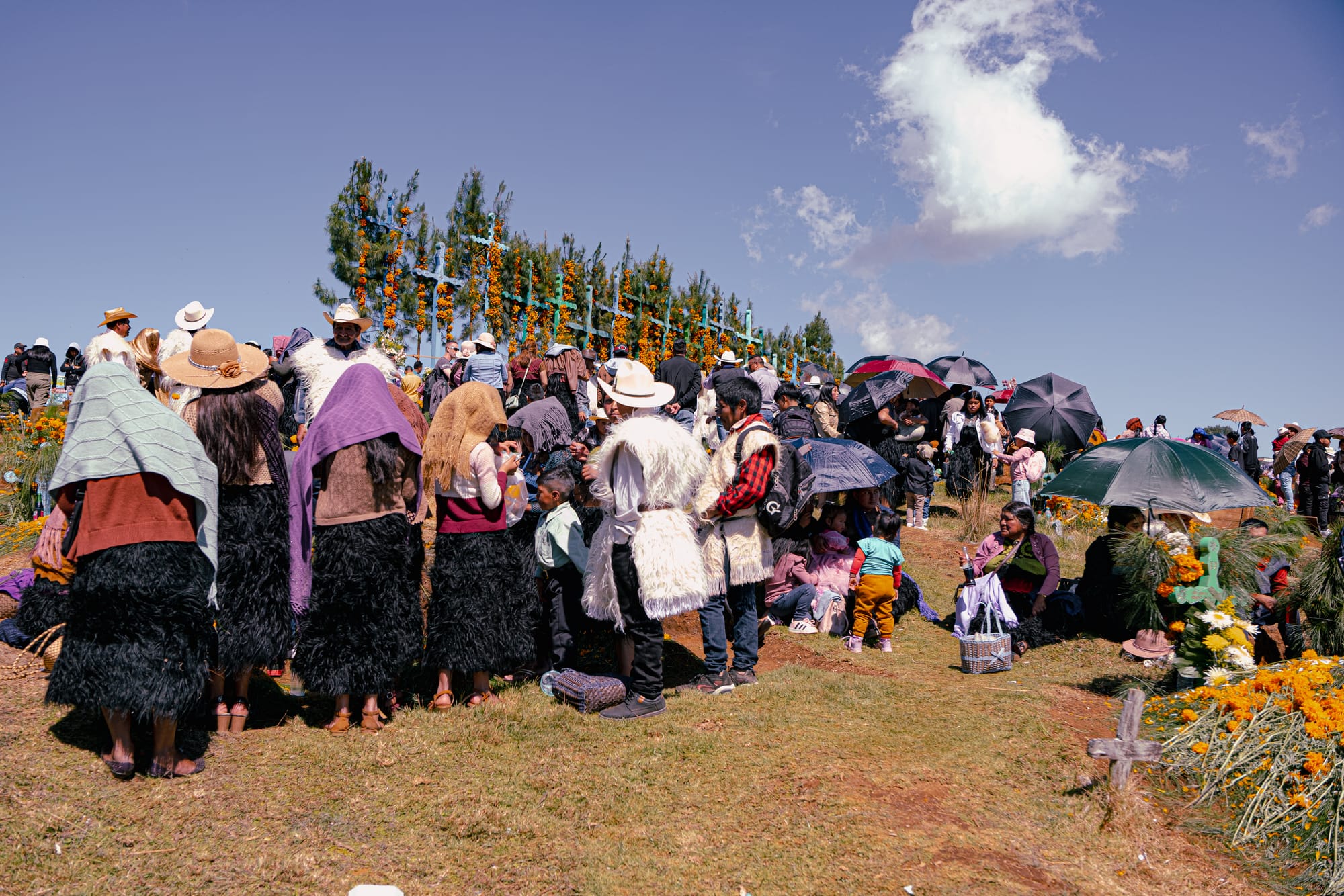
Romerillo Cemetery Day of the Dead San Cristobal de las Casas, hillside cemetery filled with pine needles marigolds and wooden grave markers, families gathered throughout the cemetery, traditional Indigenous clothing and local community presence, Day of the Dead celebration in Chiapas Mexico, Romerillo cemetery graves covered in pine and cempasúchil, communal atmosphere with markets and tents nearby
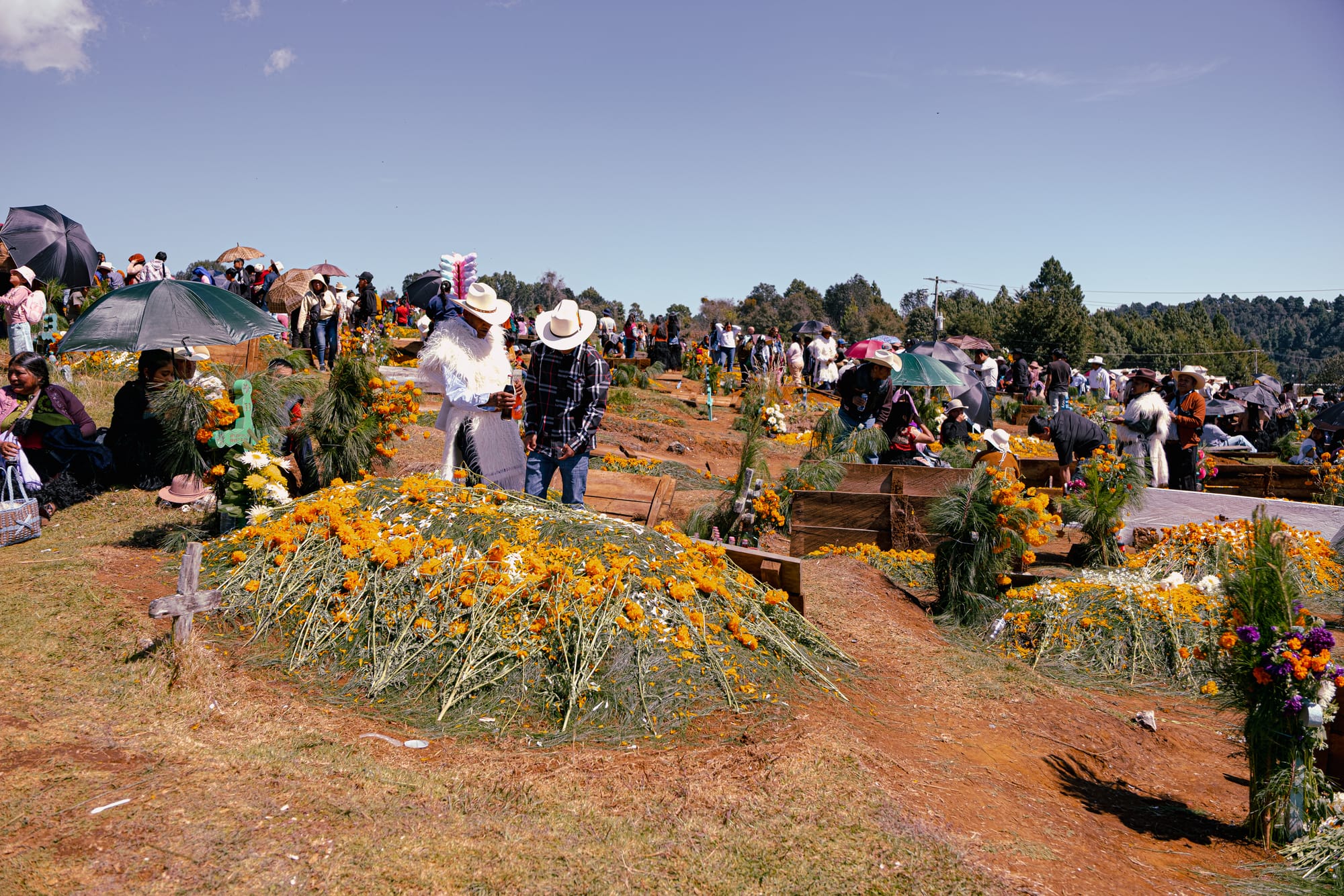
Día de Muertos at Romerillo Cemetery Chiapas, crowded hilltop cemetery with pine covered graves and marigold decorated mounds, families standing and sitting together around shallow tombs, people wearing hats and traditional Indigenous clothing, communal Day of the Dead celebration near San Cristóbal de las Casas with festival energy and local presence

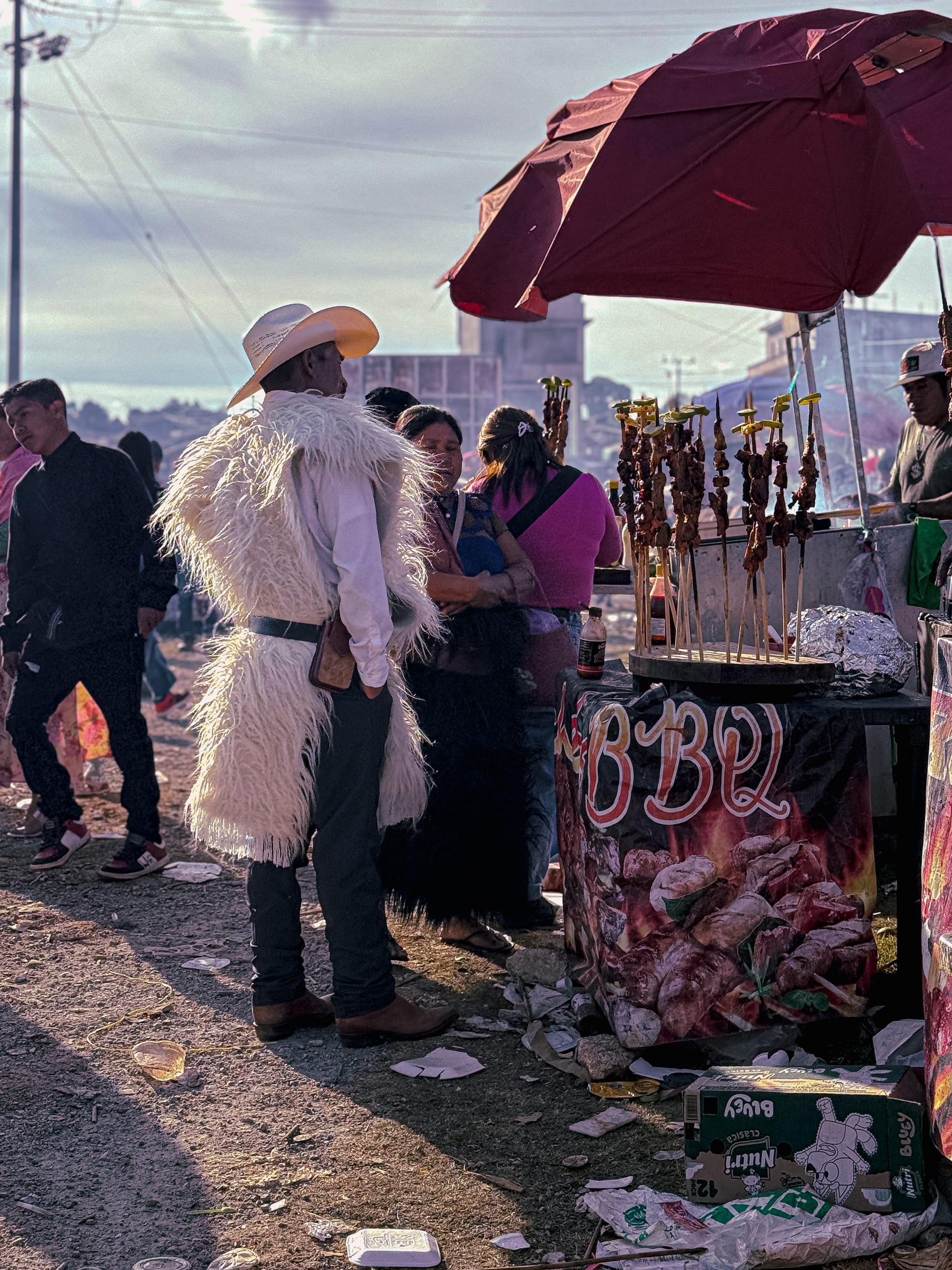
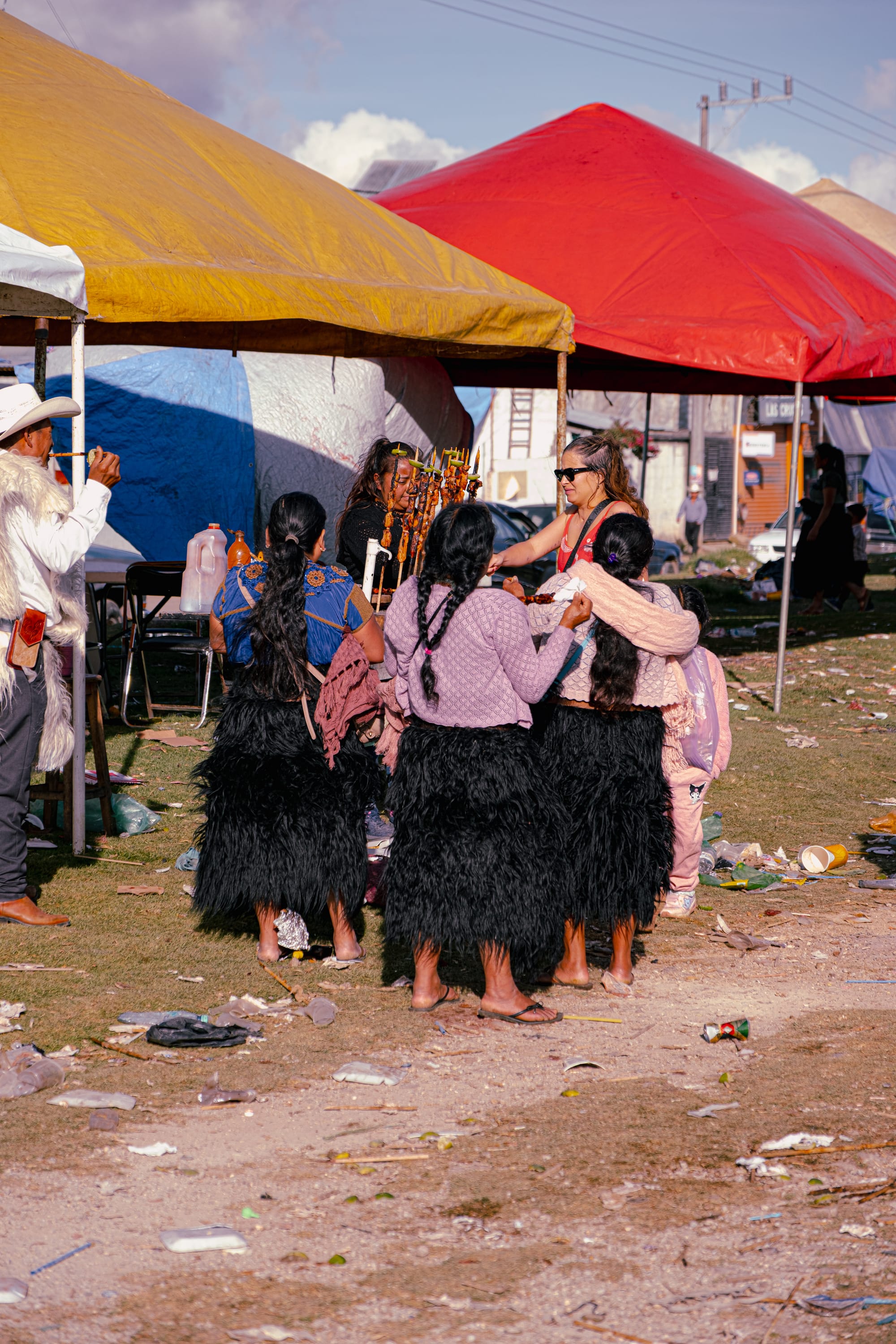
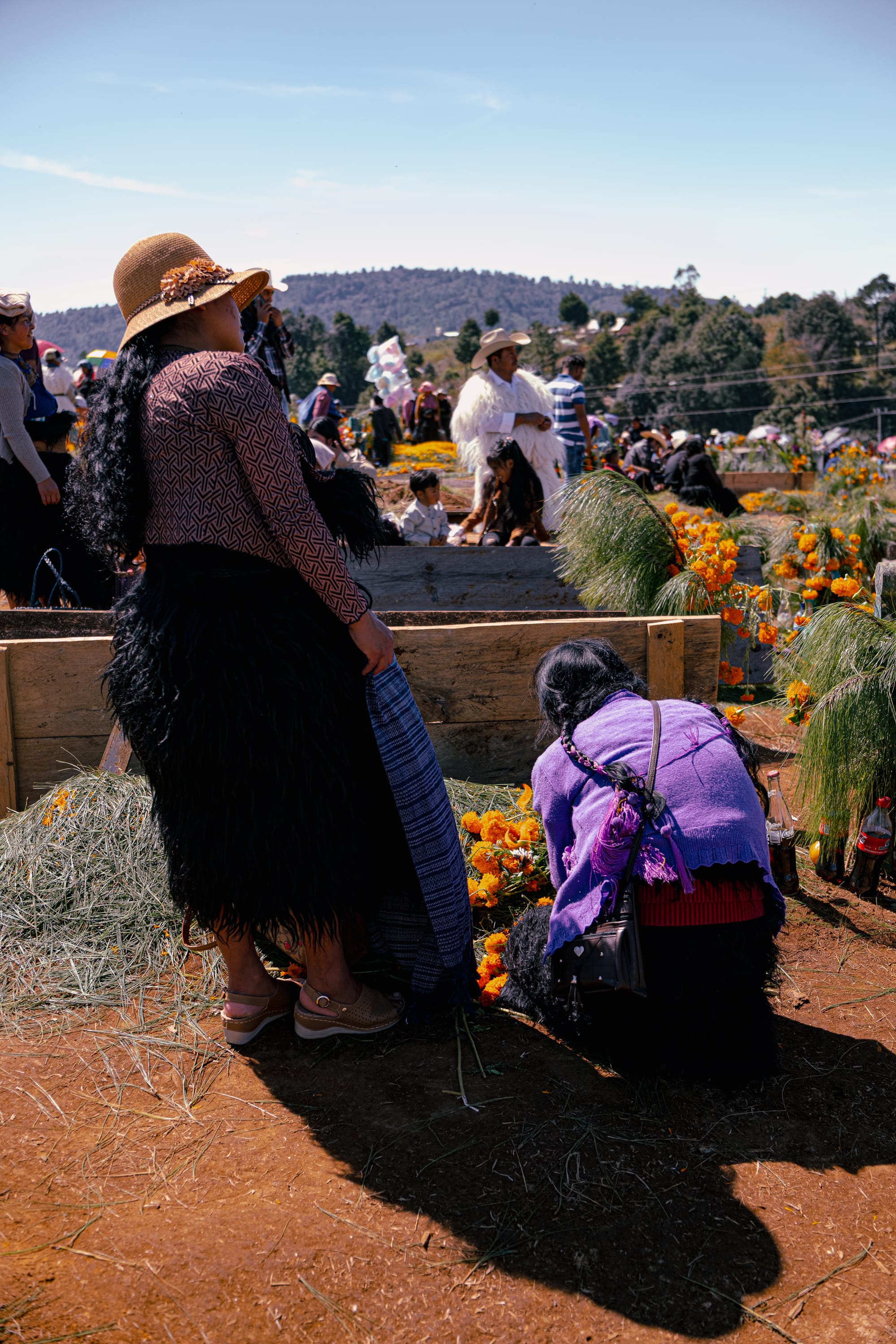
Many people were dressed in traditional Indigenous clothing—thick wool garments, often black or white, with a shaggy texture that stood out immediately.
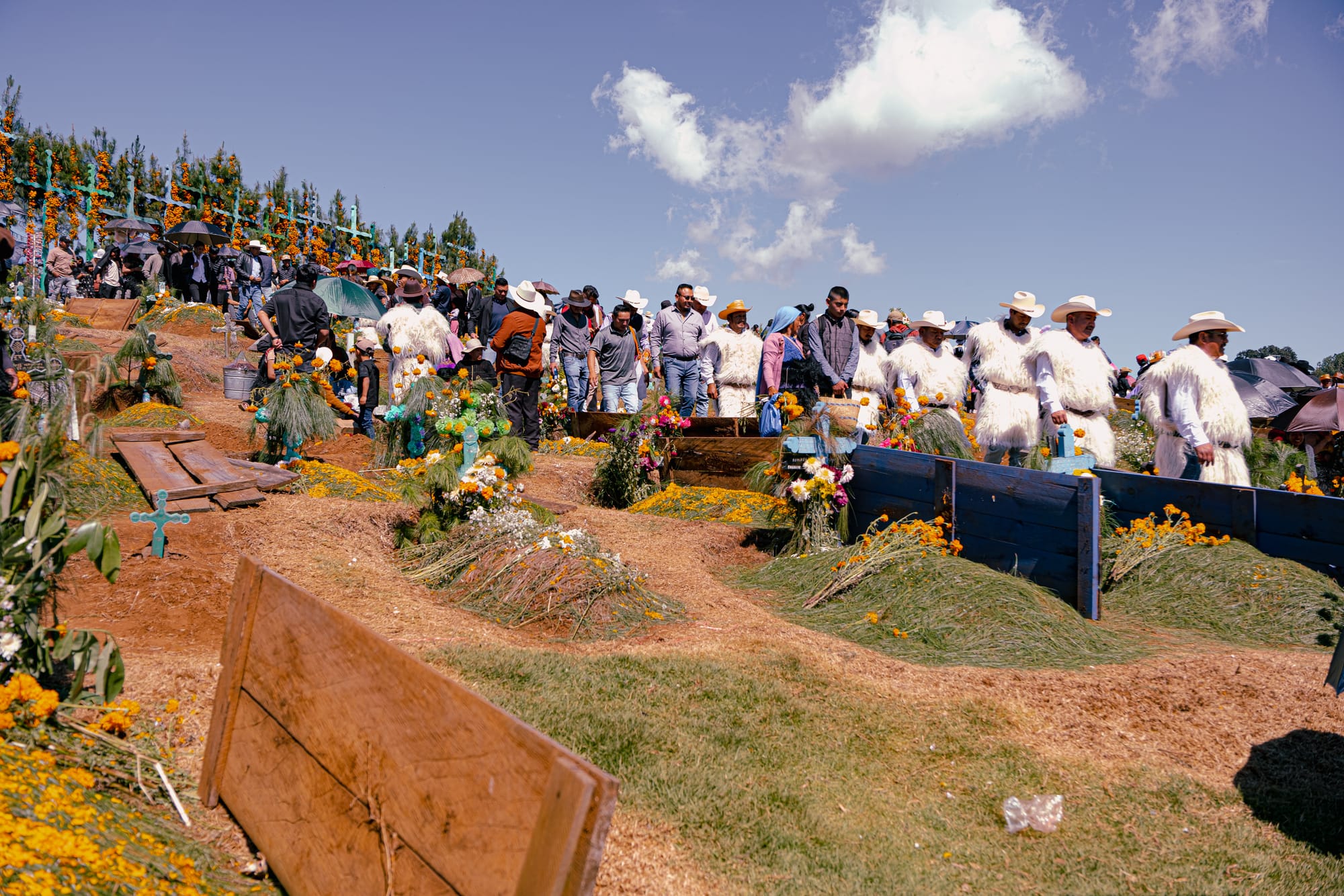
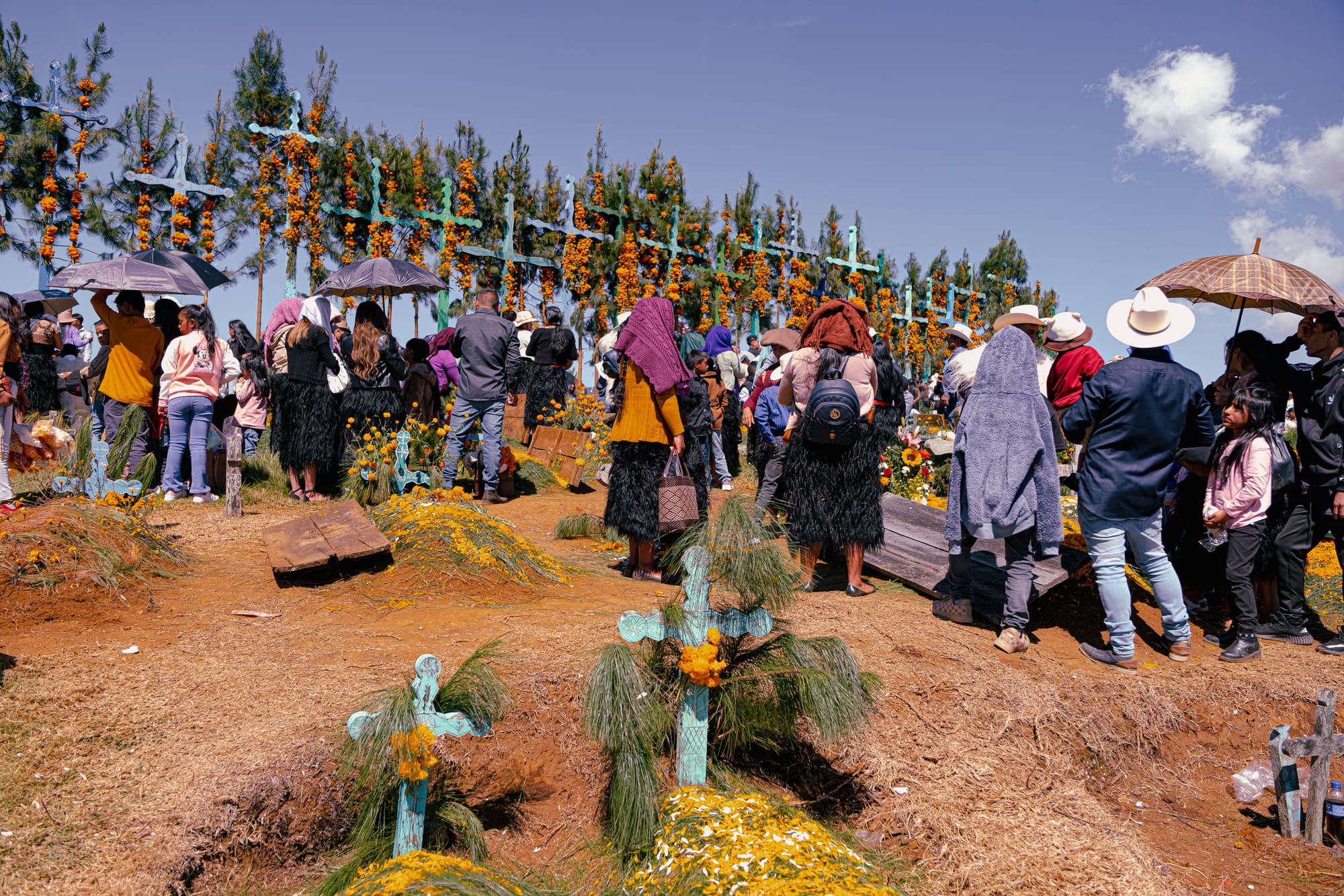
Día de Muertos at Romerillo Cemetery Chiapas, procession of indigenous men wearing white wool garments and traditional hats walking through pine covered graves, marigold decorated hilltop cemetery with tall crosses wrapped in flowers, communal Day of the Dead gathering with families and musicians near San Cristóbal de las Casas
Día de Muertos at Romerillo Cemetery Chiapas, large indigenous community gathered beneath tall crosses wrapped with marigolds and pine branches, families wearing traditional wool clothing and shawls standing among pine covered graves, crowded hilltop cemetery during Day of the Dead celebrations near San Cristóbal de las Casas

The presence of these garments gave the cemetery a visual coherence that went beyond flowers or decorations. It reinforced the sense that this was not a space temporarily animated for visitors, but a place where community traditions continue in full view.

Music that moves through the cemetery

Romerillo was loud, but not chaotic.

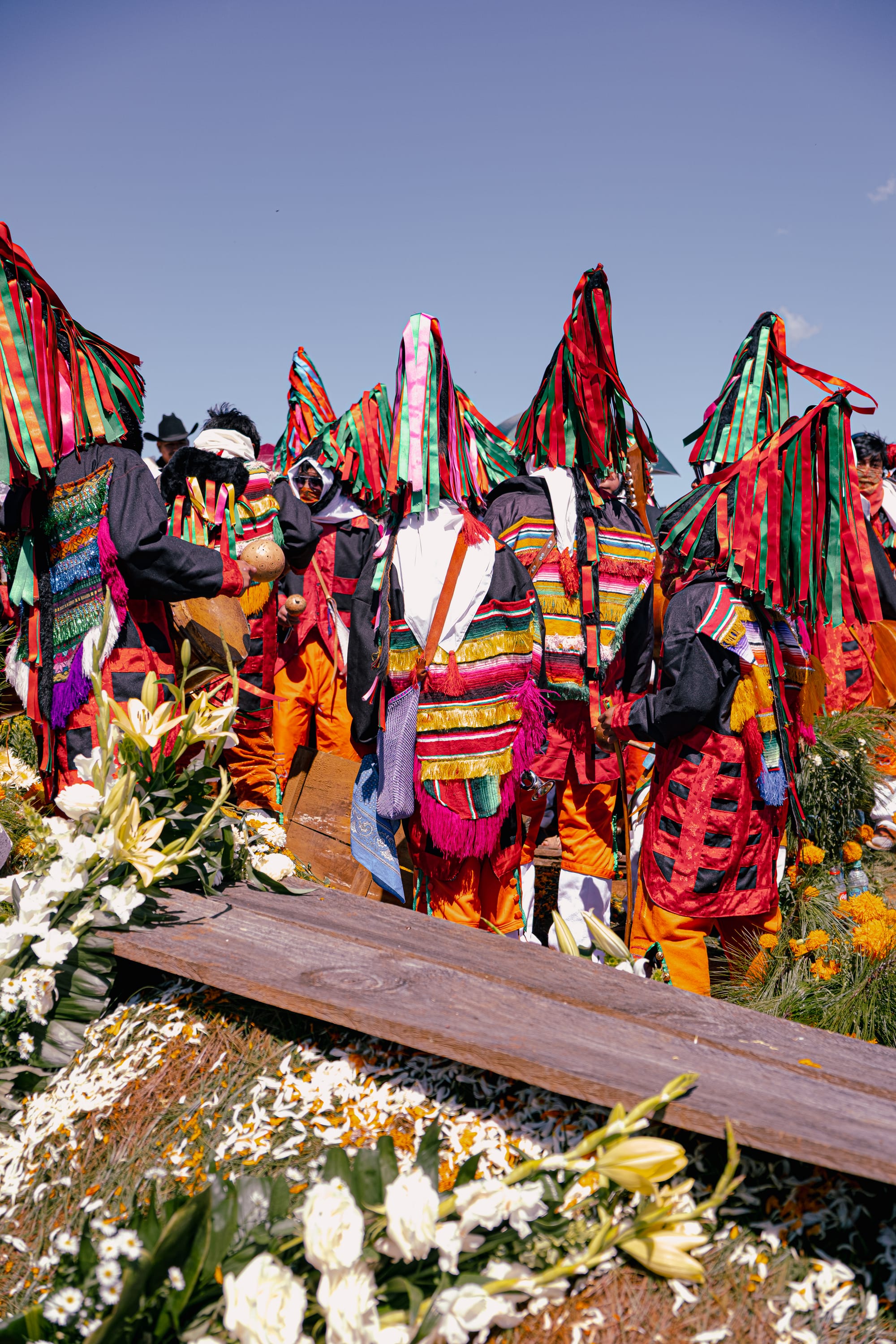
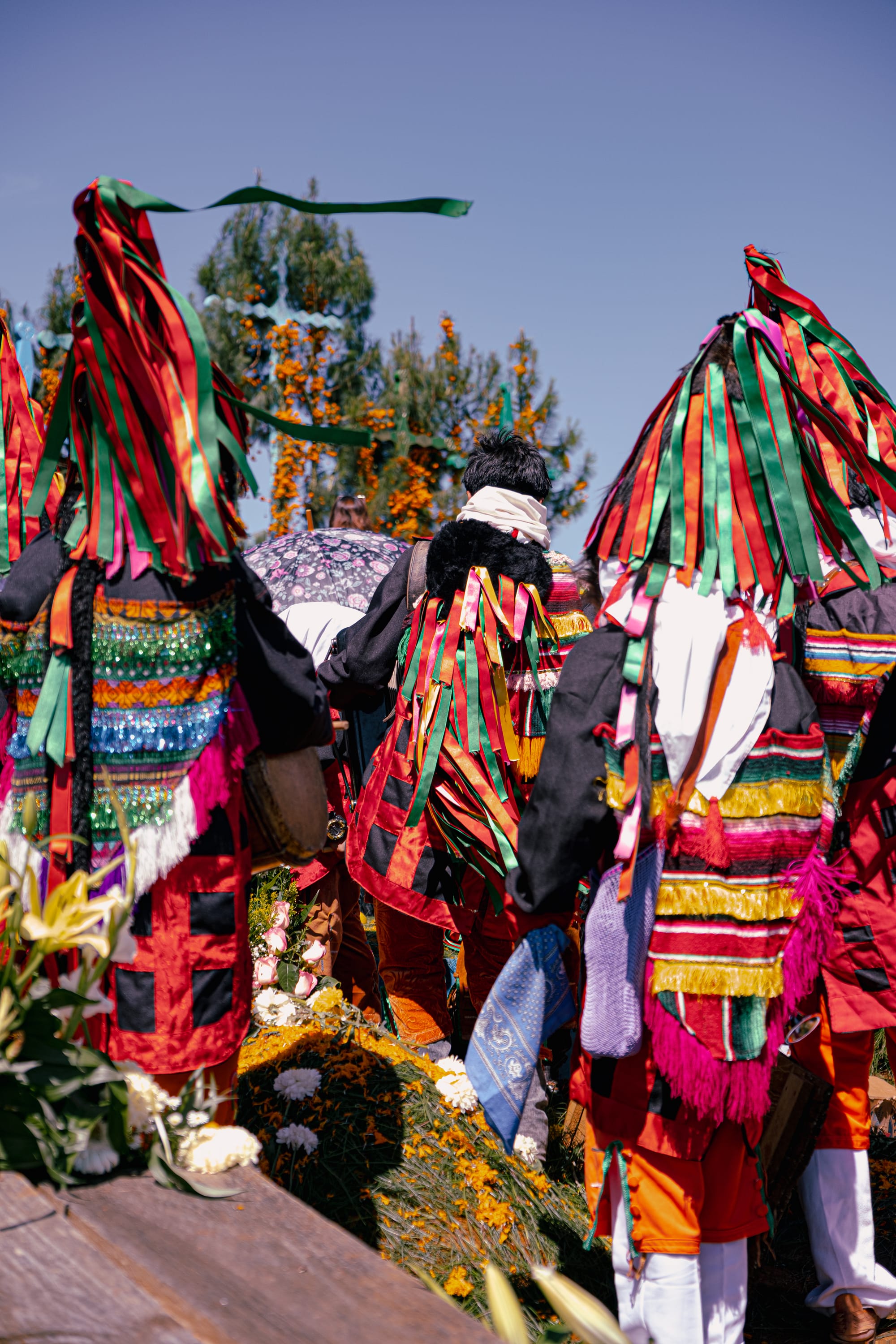
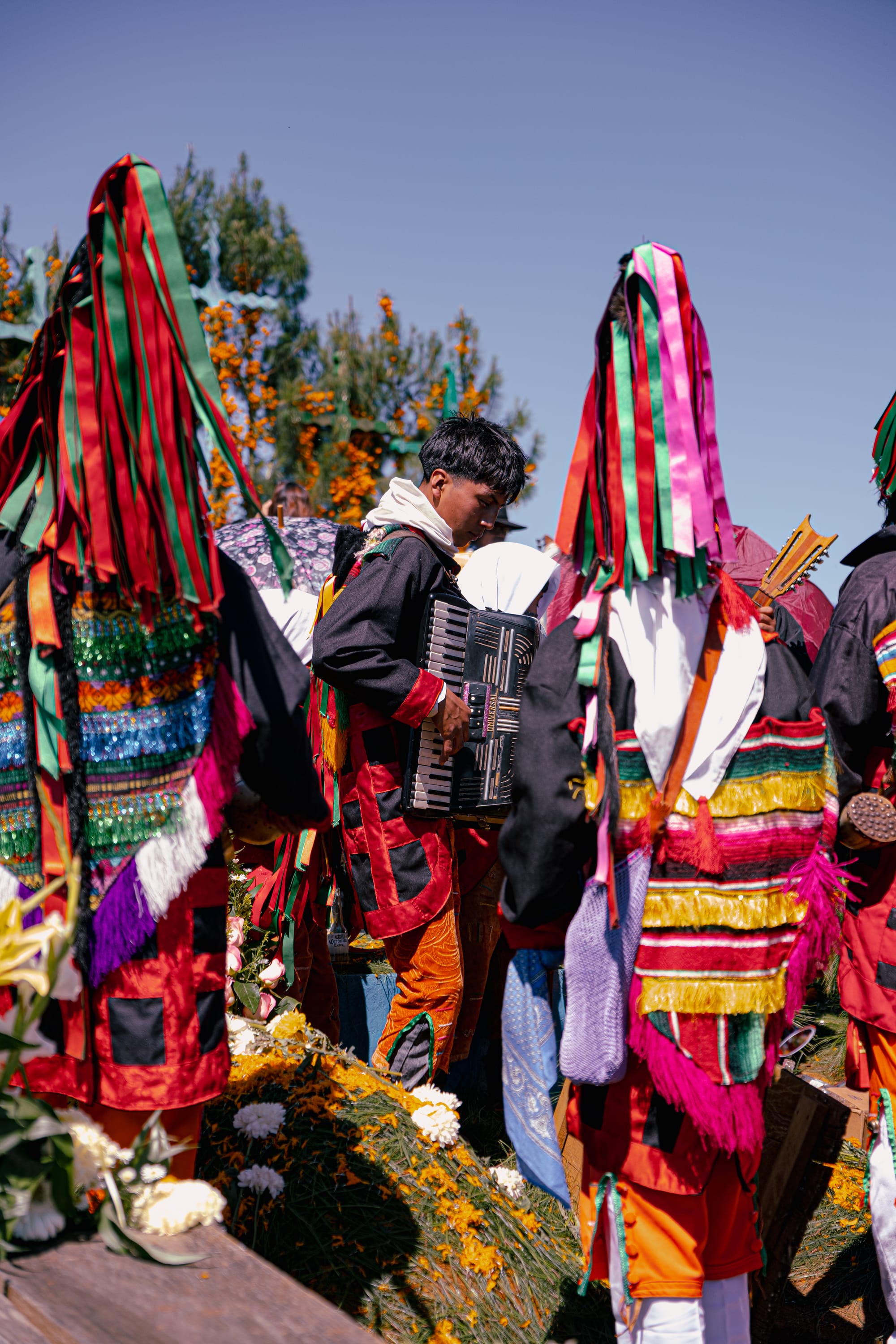
Music moved through the cemetery in waves. Groups of musicians traveled from grave to grave, playing for families who gathered around them. Brass instruments, drums, accordion, guitar—sometimes layered, sometimes solitary. The soundscape was constantly shifting.
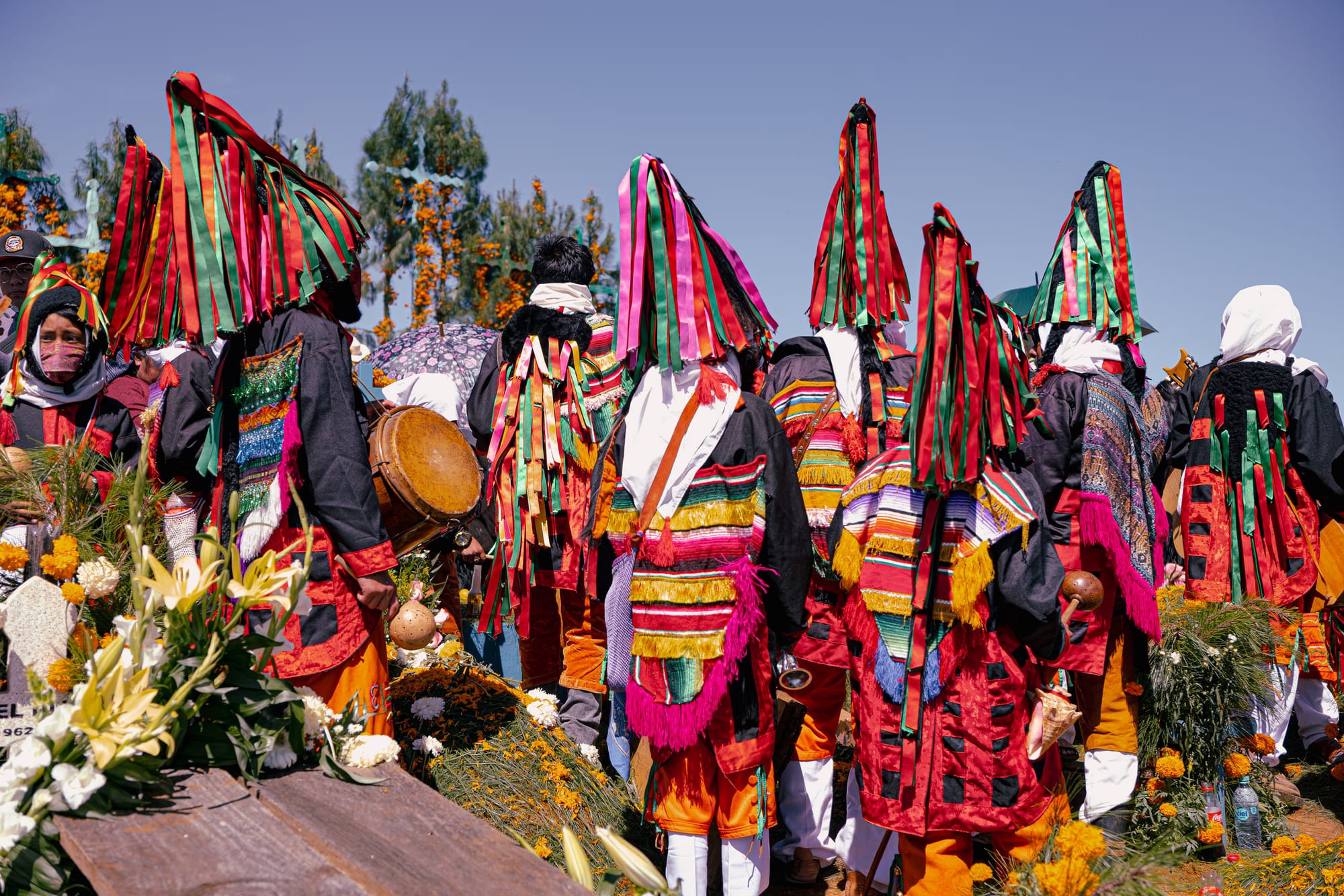
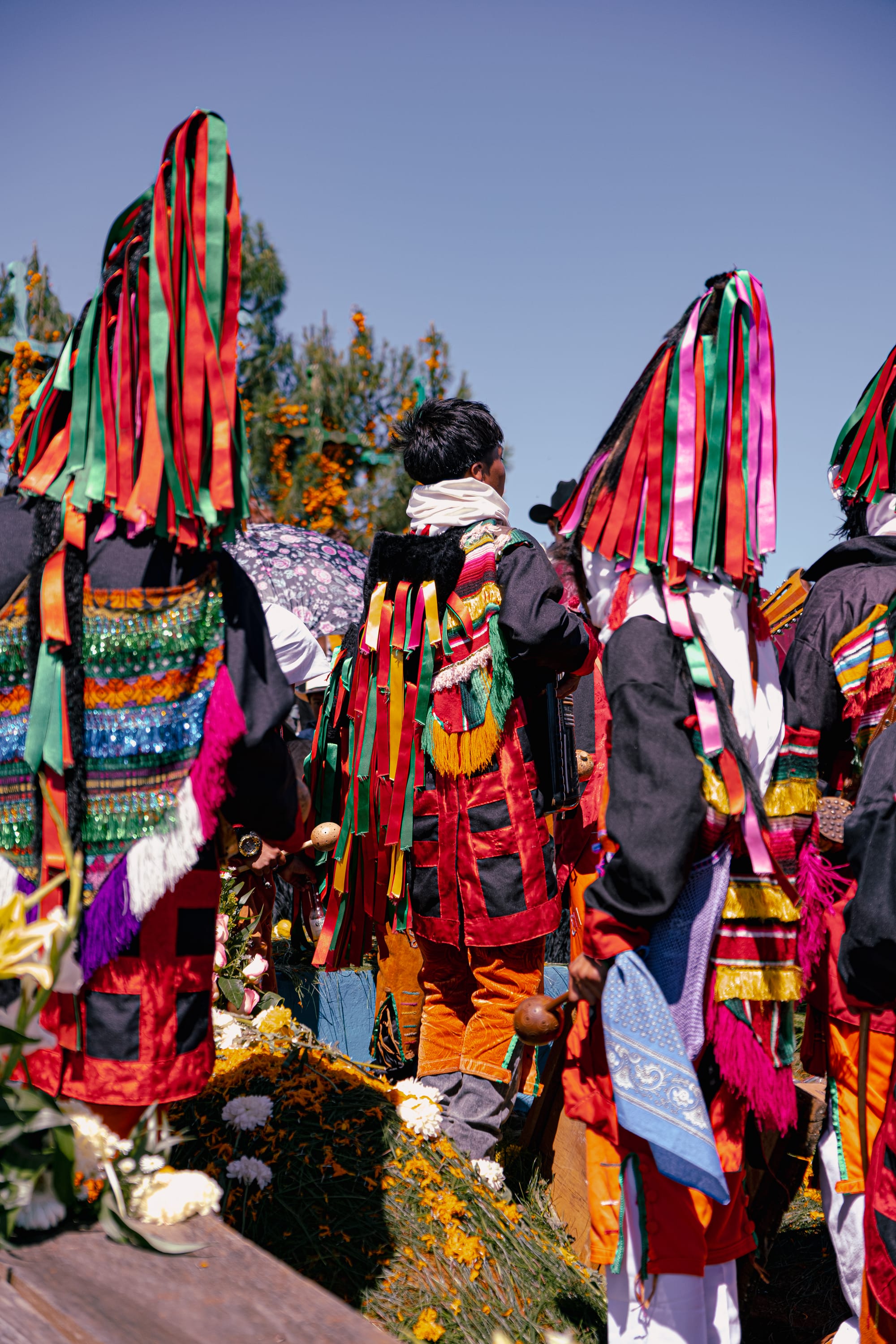
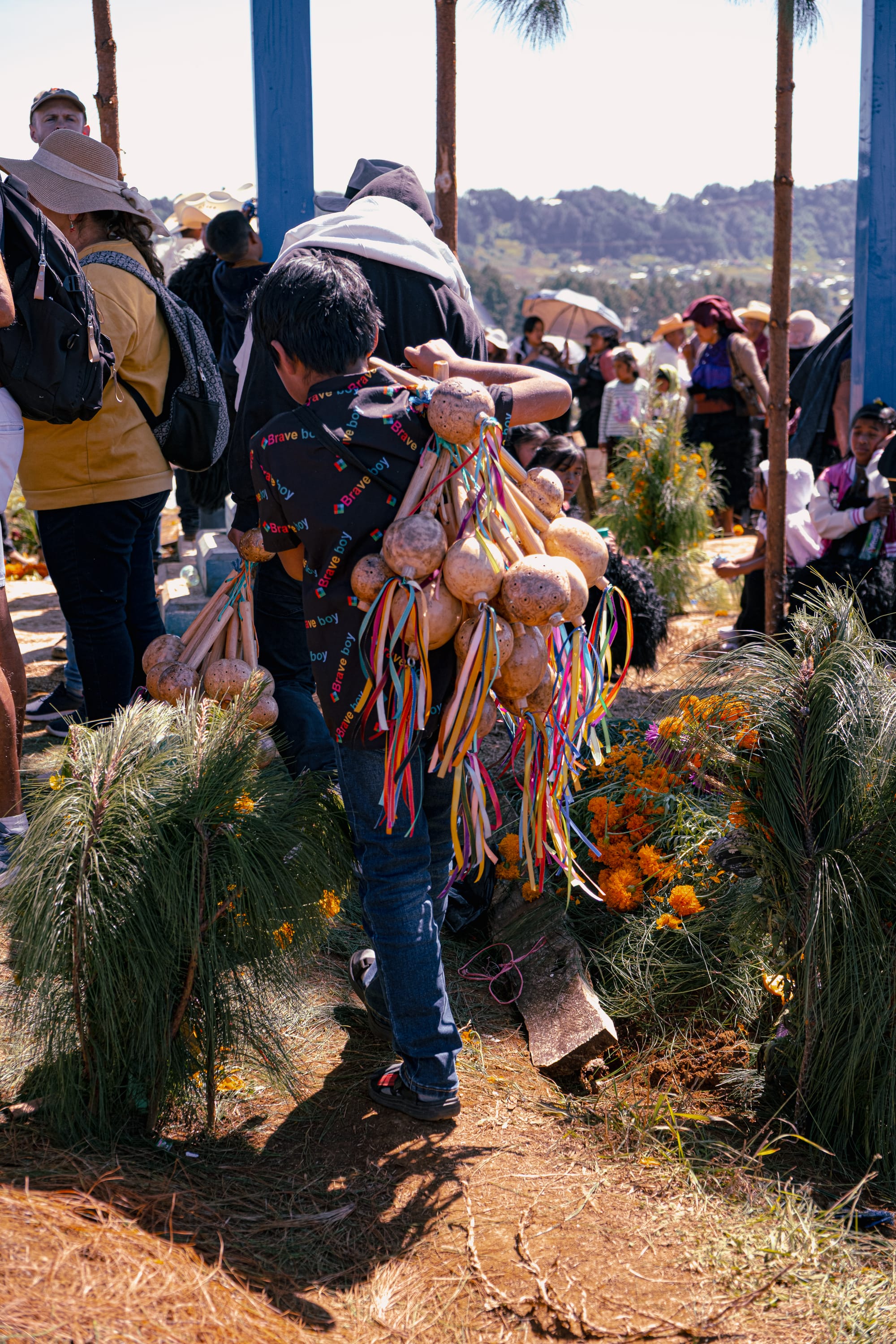
Día de Muertos at Romerillo Cemetery Chiapas, indigenous musicians wearing traditional Tzotzil clothing with long ribbon headdresses and woven garments, live band carrying drums guitar and rattles among pine covered graves, marigold decorated hilltop cemetery with tall crosses and dense community gathering near San Cristóbal de las Casas

What stood out was how integrated the music felt. There was no stage. No designated performance area. The musicians weren’t separate from the cemetery—they were part of it. Families approached them. Drinks were offered. Songs were played close to the ground, close to the graves.
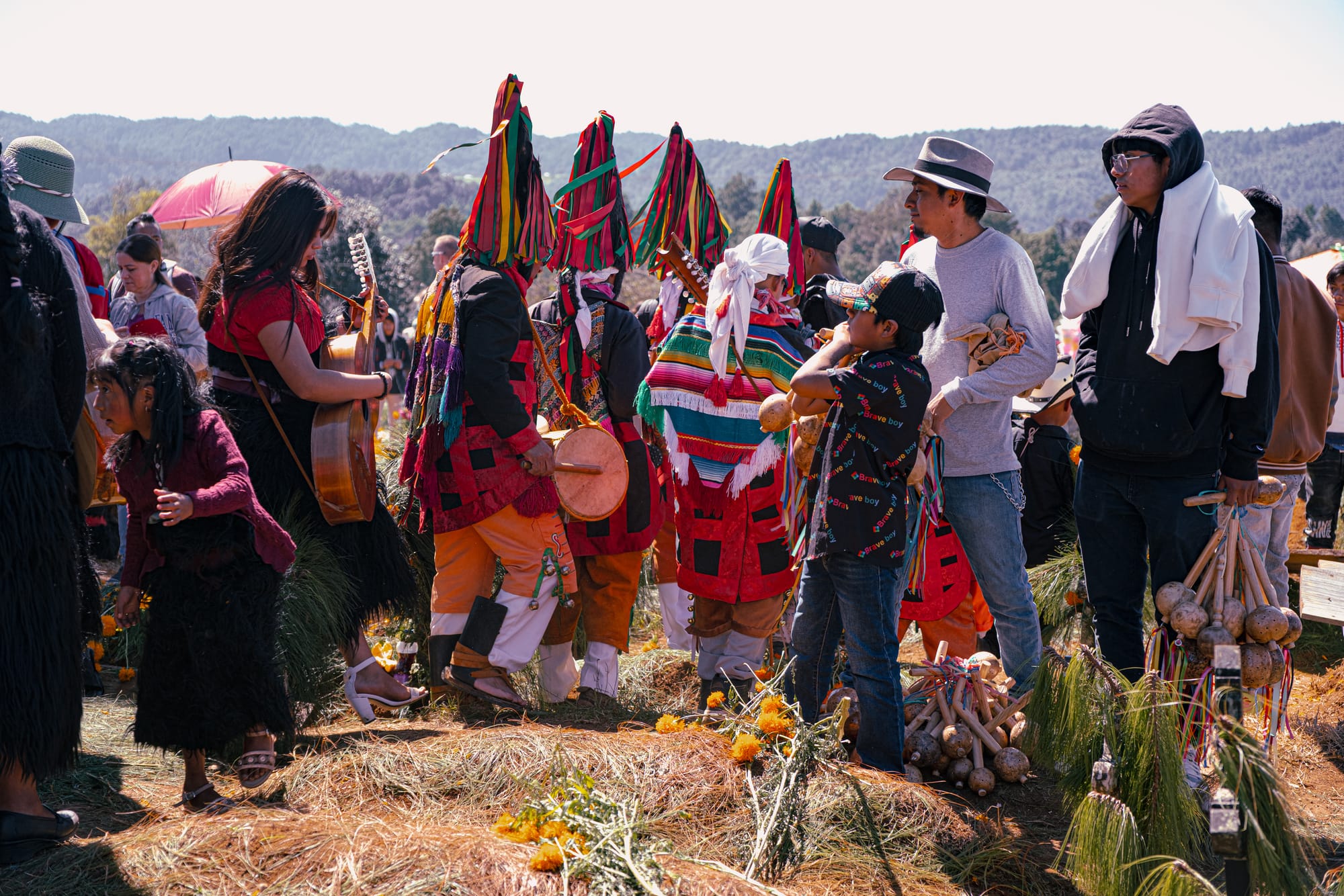
Día de Muertos at Romerillo Cemetery Chiapas, indigenous musicians and families gathered around pine covered graves, traditional ribbon headdresses and woven clothing worn during Day of the Dead, live music with guitar drums and rattles, marigolds and food offerings placed on hilltop graves near San Cristóbal de las Casas
Music, offerings, and families

At times, multiple groups played at once in different parts of the cemetery. The result wasn’t noise, but overlap. A sense of movement and flow, as if sound itself was circulating among the dead.
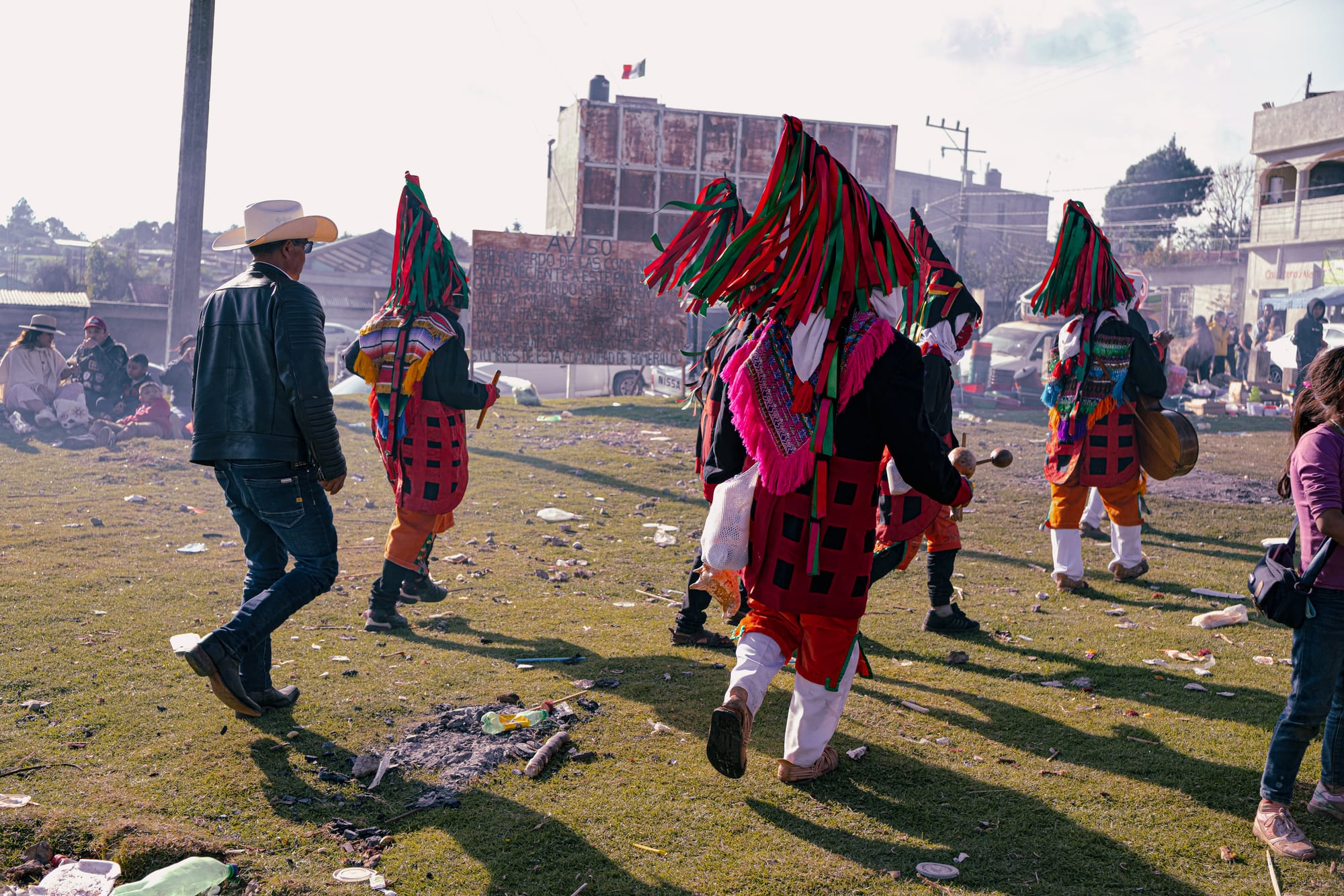
Día de Muertos at Romerillo Cemetery Chiapas, indigenous musicians in traditional ribbon headdresses and woven ceremonial clothing walking from the hilltop cemetery toward the surrounding fairgrounds, live music procession connecting graves and festival space, pine covered tombs and marigold offerings behind them, local Day of the Dead celebration near San Cristóbal de las Casas
The procession carrying the day beyond the graves

The effect was powerful. It reframed the cemetery not as a place of silence, but as a place where sound is allowed—where memory can be audible.

Flowers and offerings

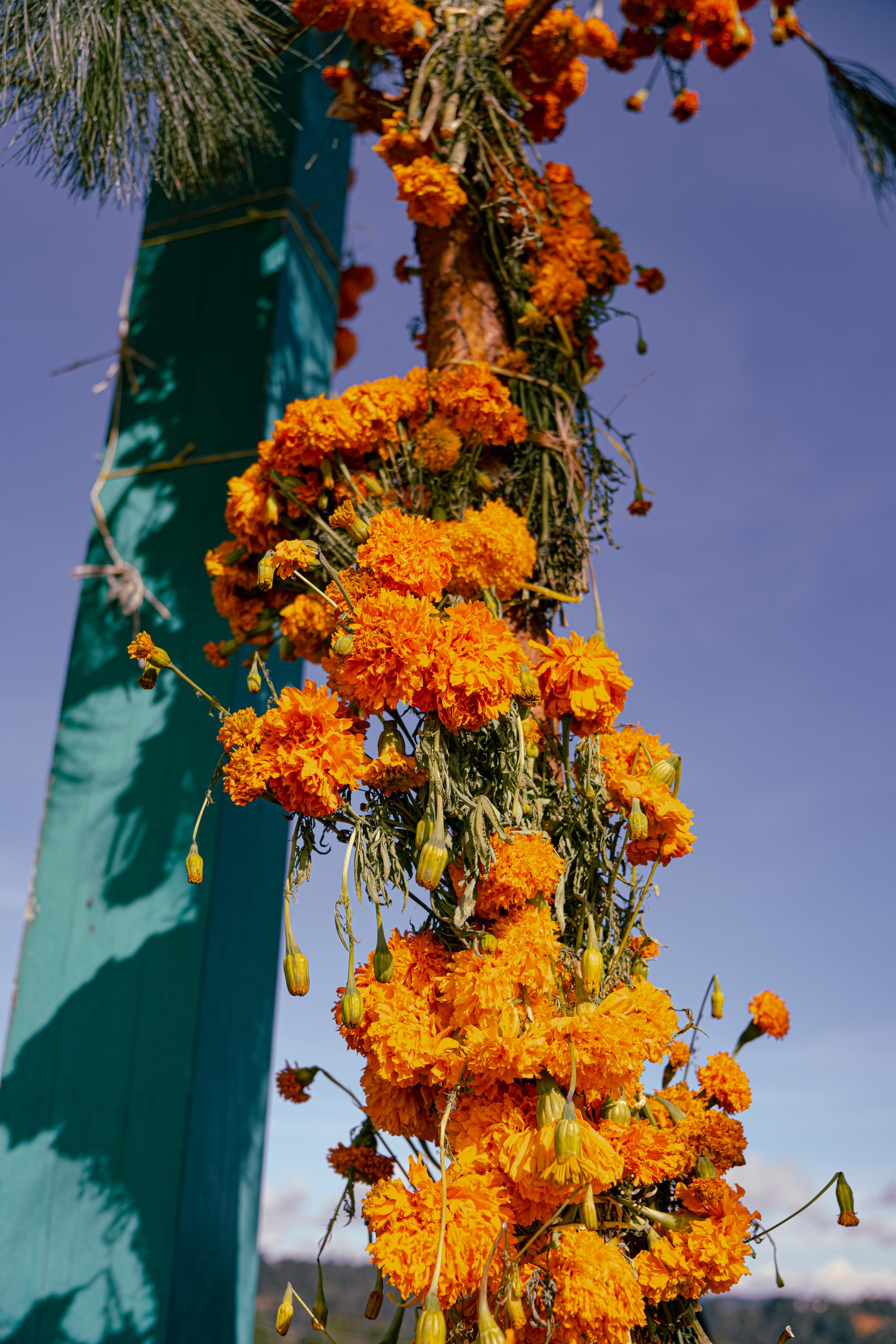
Visually, Romerillo is dominated by pine and marigolds.
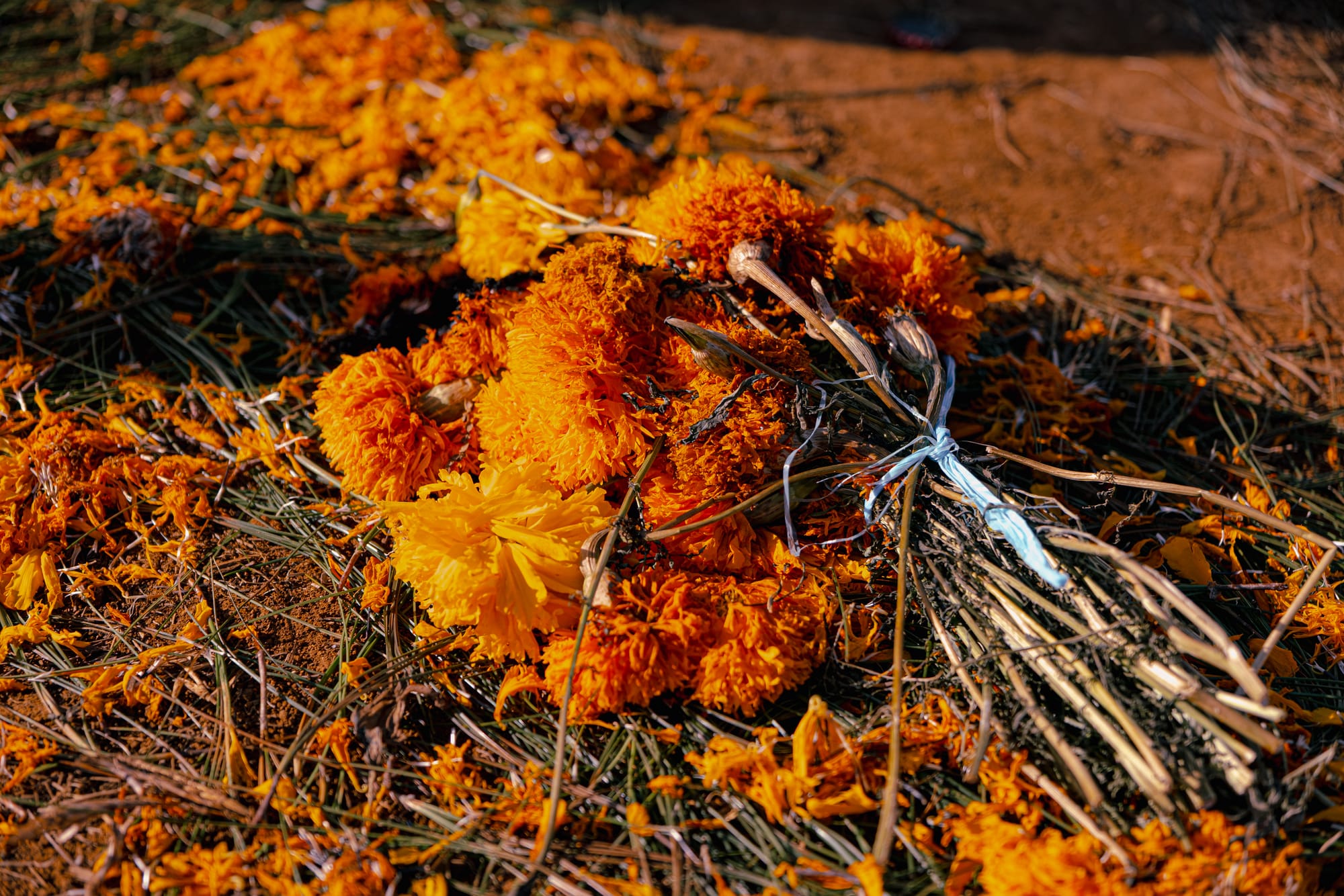
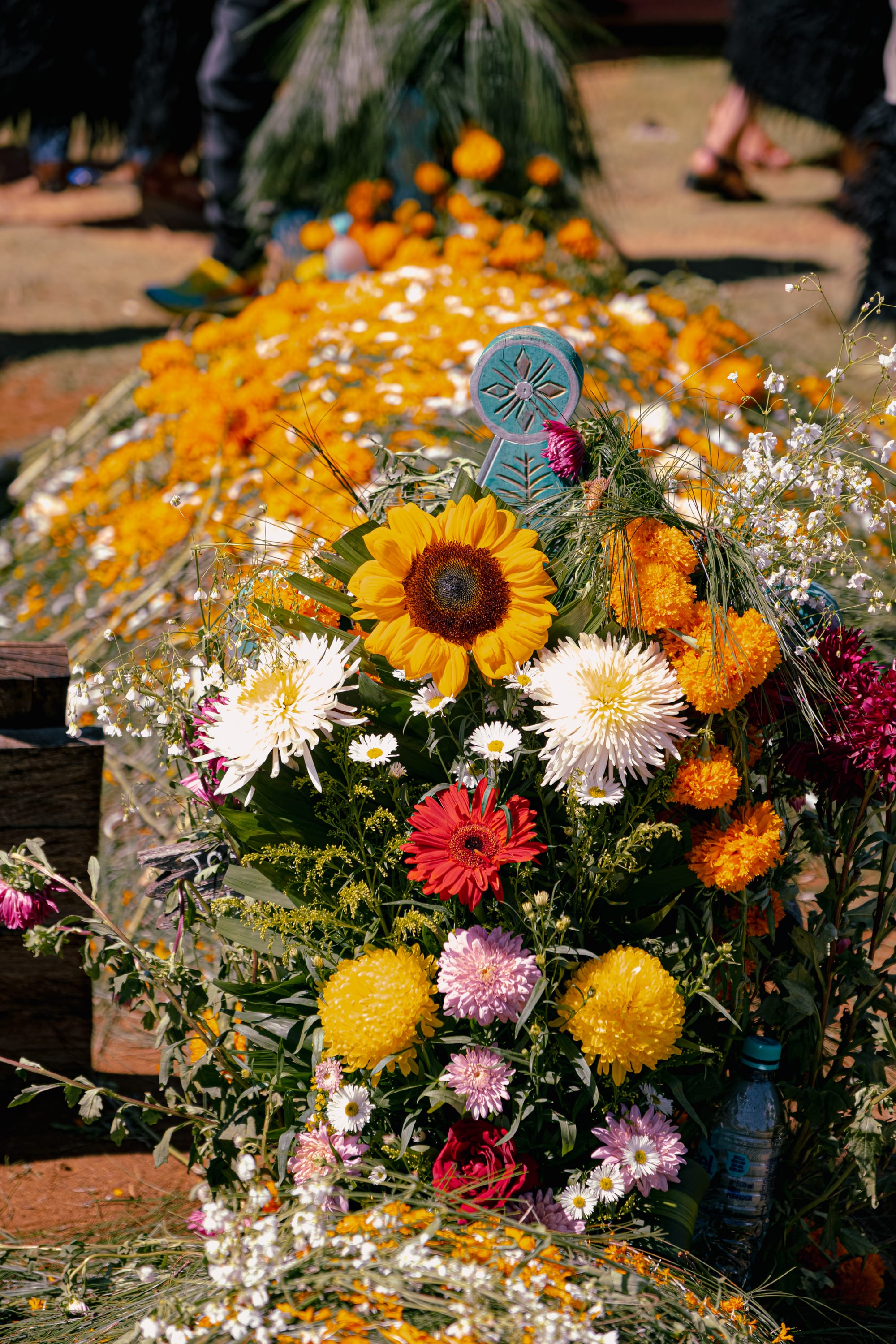
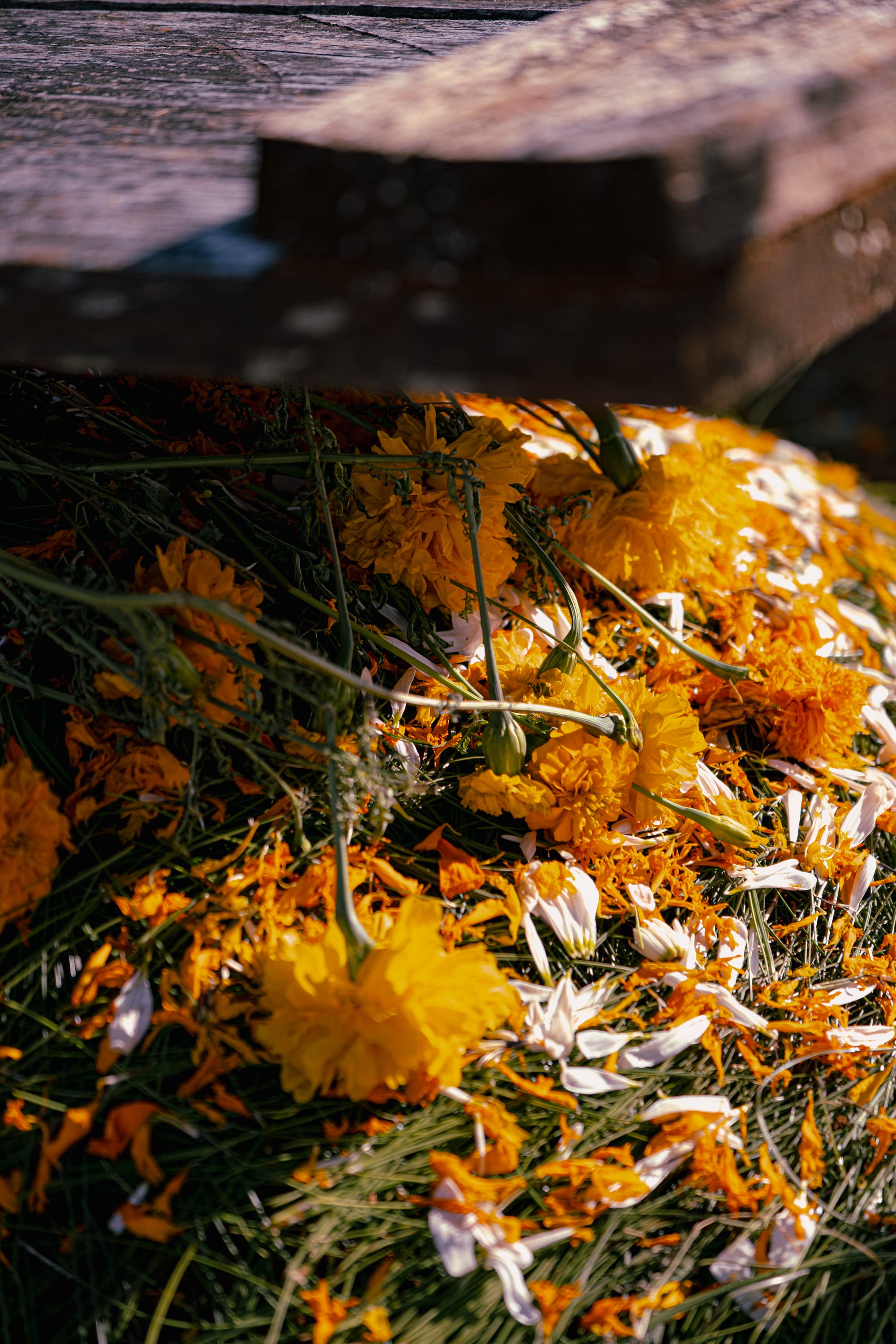
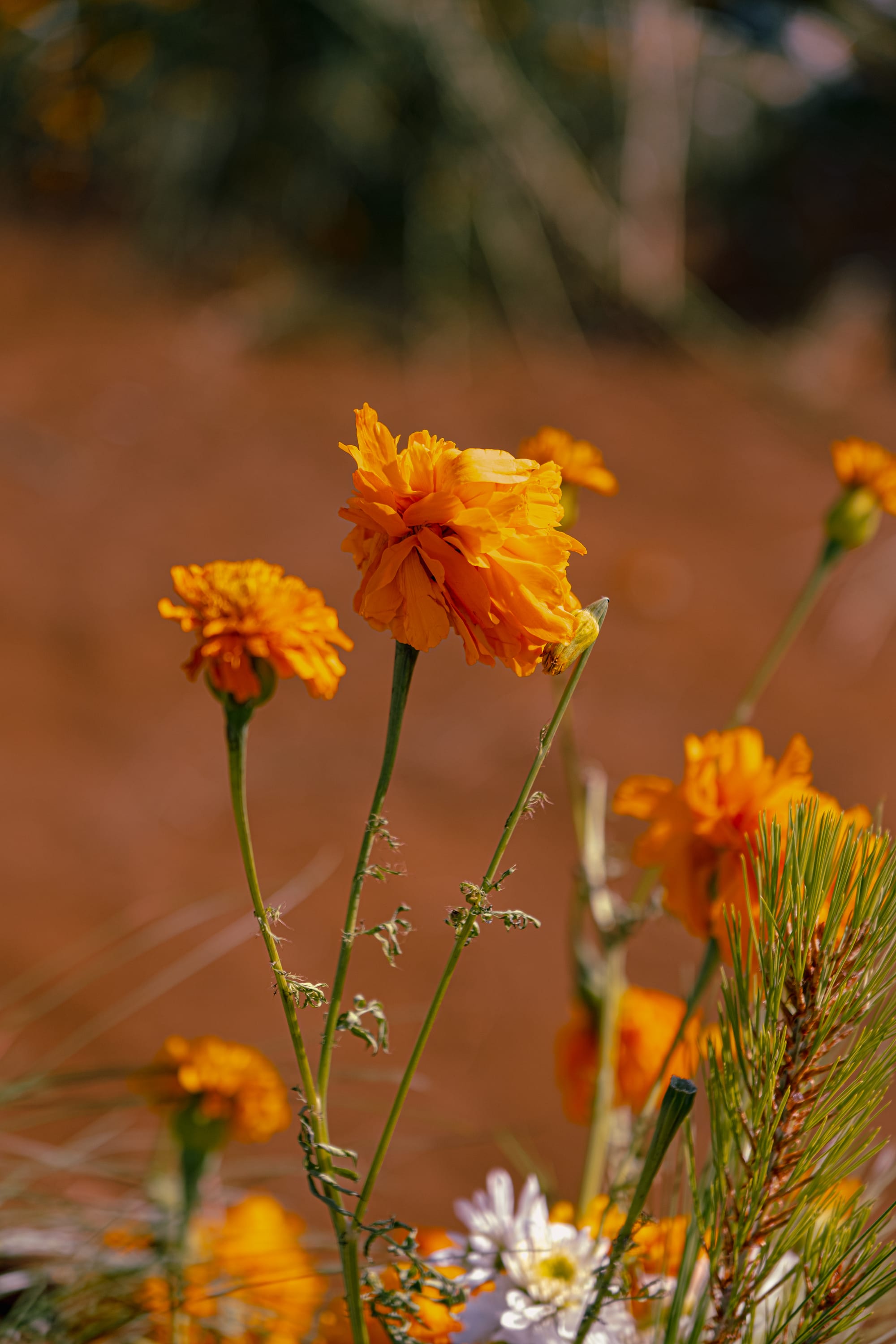
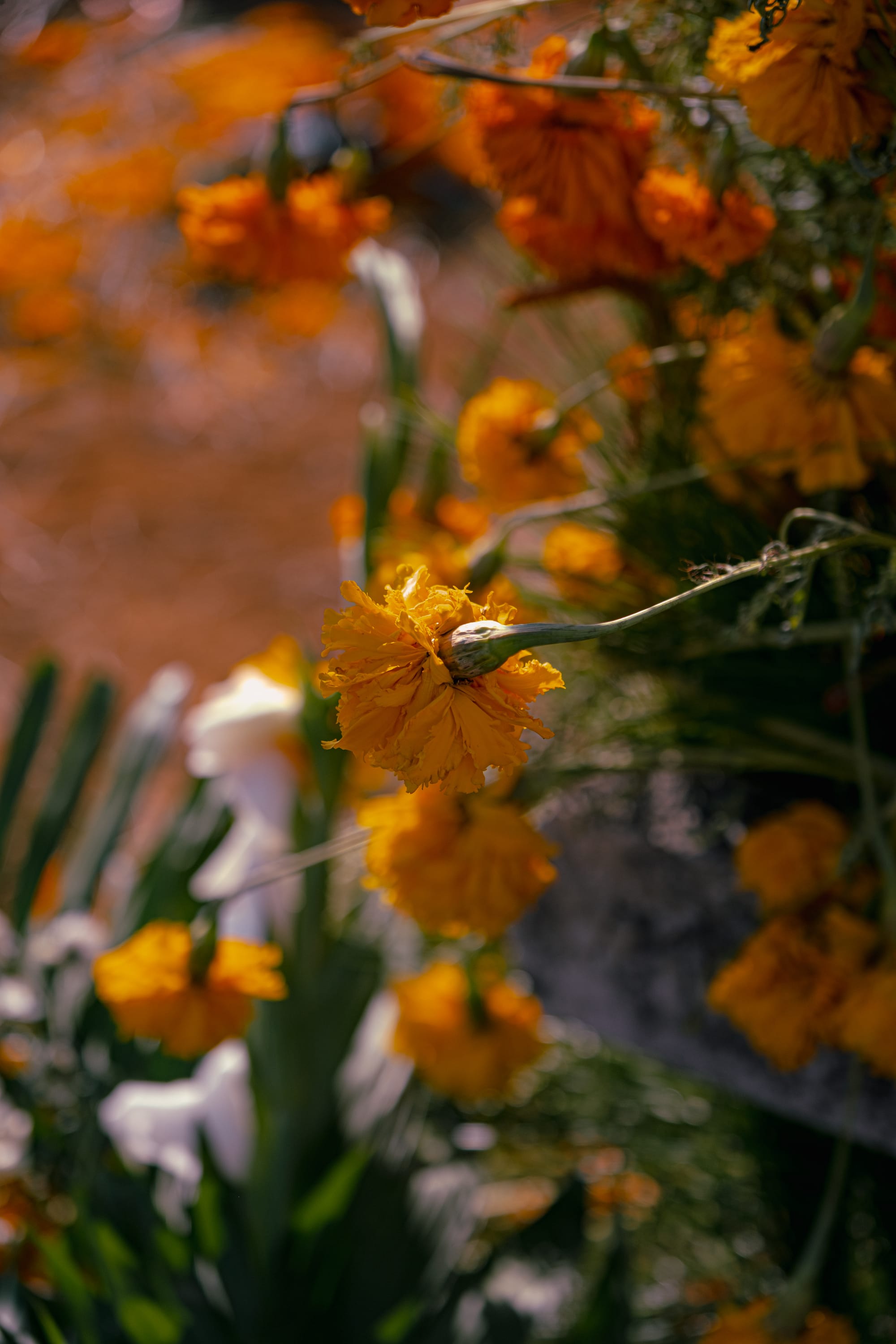
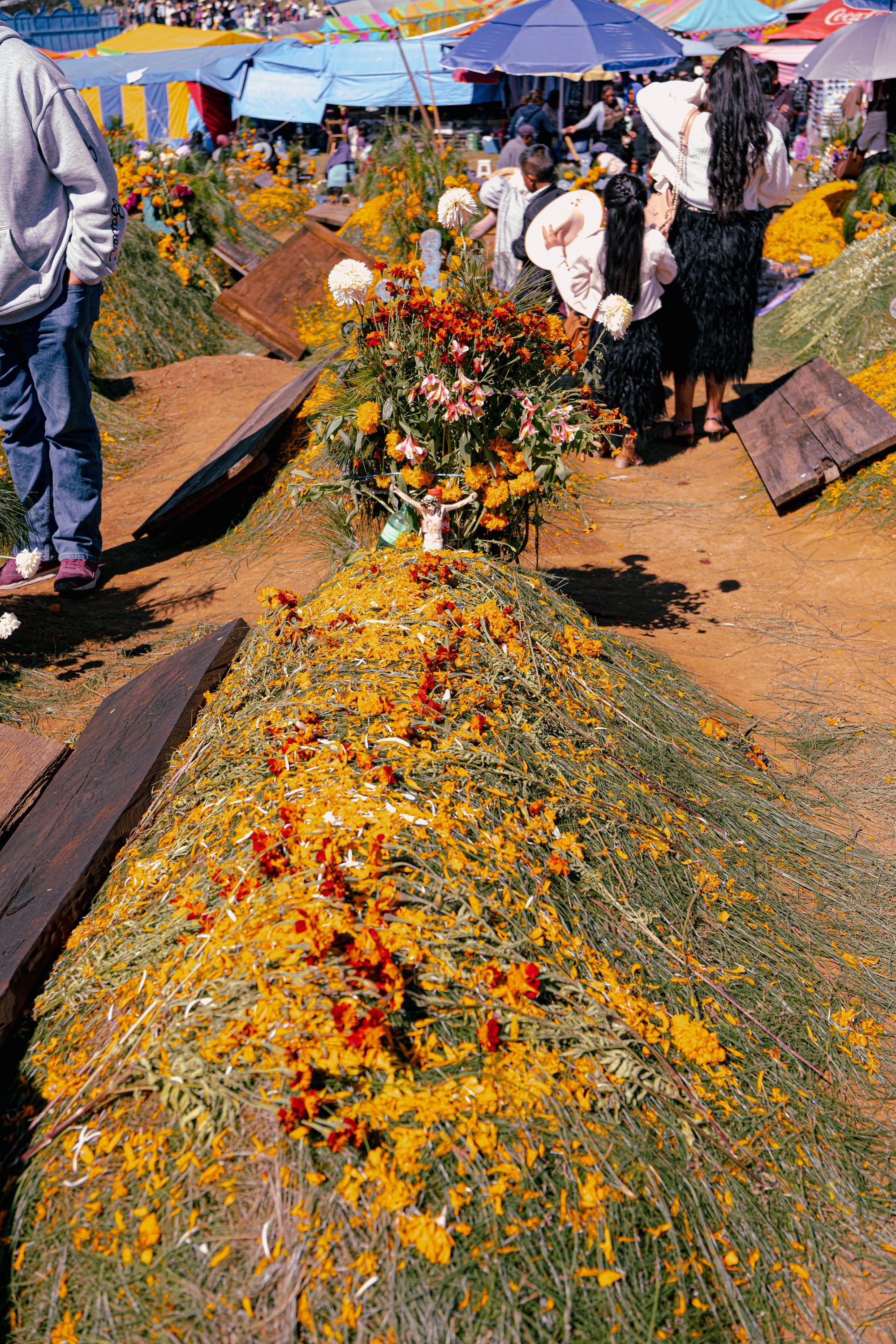
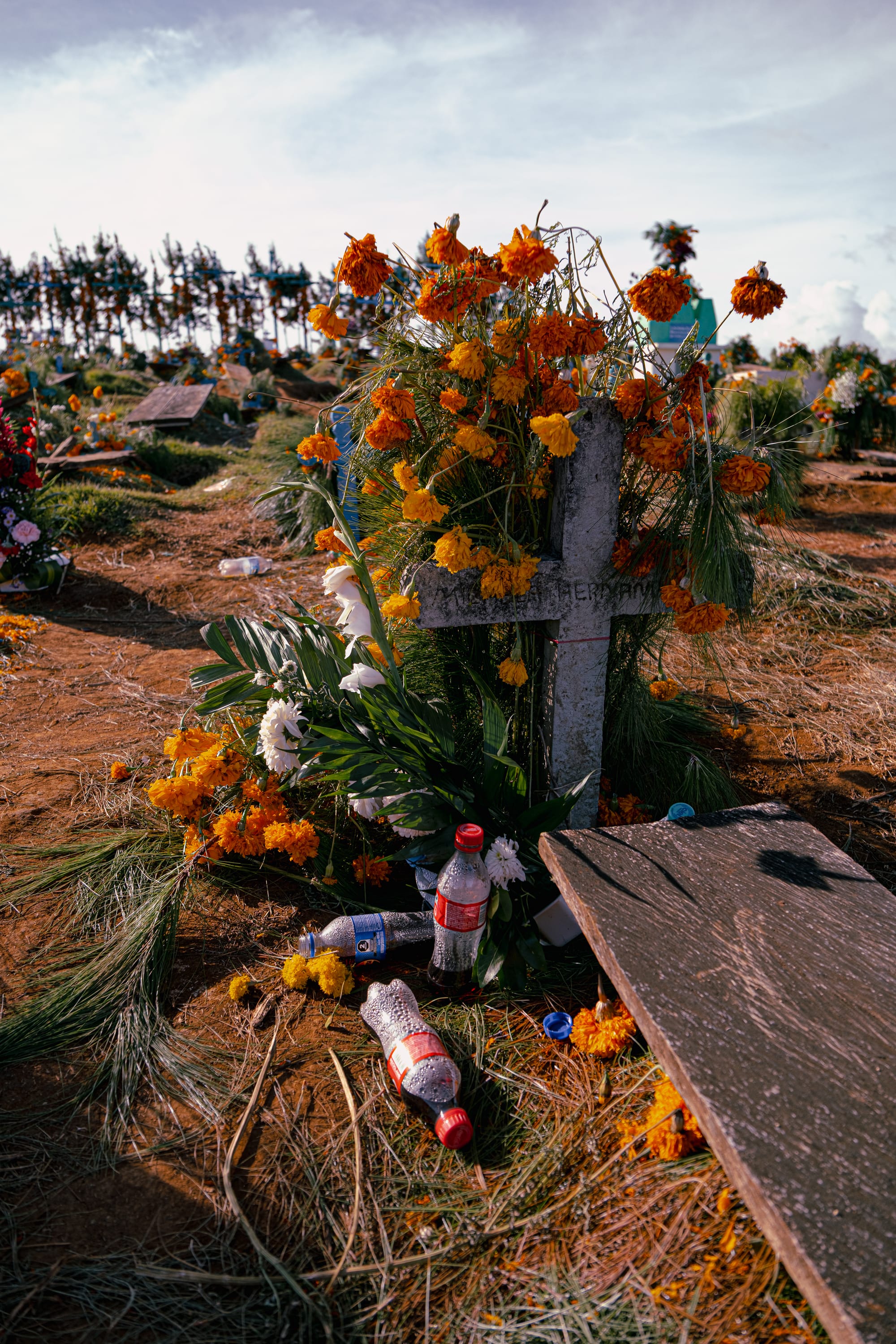
Día de Muertos at Romerillo Cemetery Chiapas, close up of cempasúchil marigold flowers tied with string and scattered over pine needles, fresh and fallen marigold petals covering a grave mound, traditional Day of the Dead offerings at a hilltop cemetery near San Cristóbal de las Casas

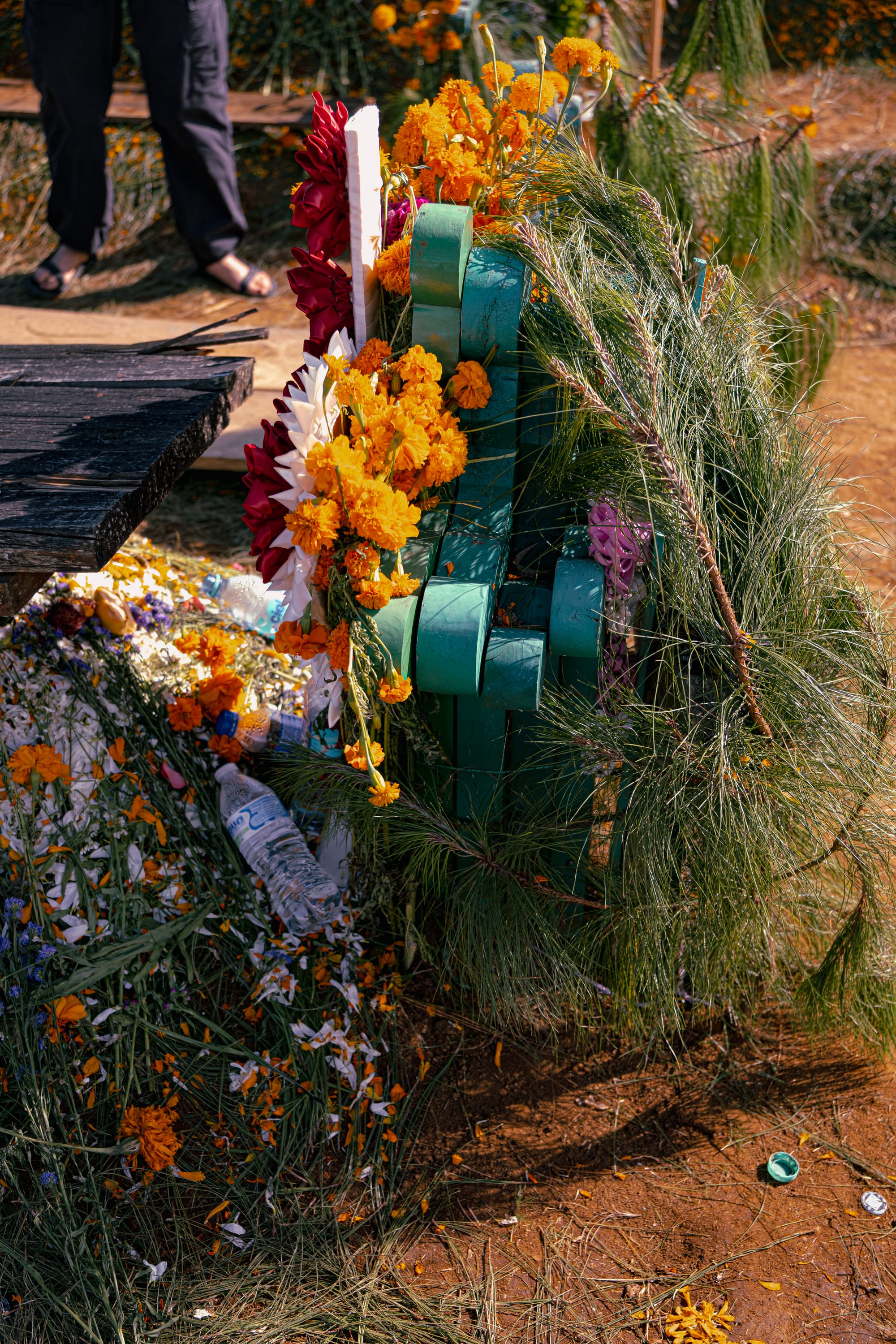
Pine needles cover graves in thick layers. Marigolds appear everywhere—woven into arrangements, tied to crosses, scattered across the ground. Other flowers appear too, but marigolds and pine form the backbone of the cemetery’s visual language.
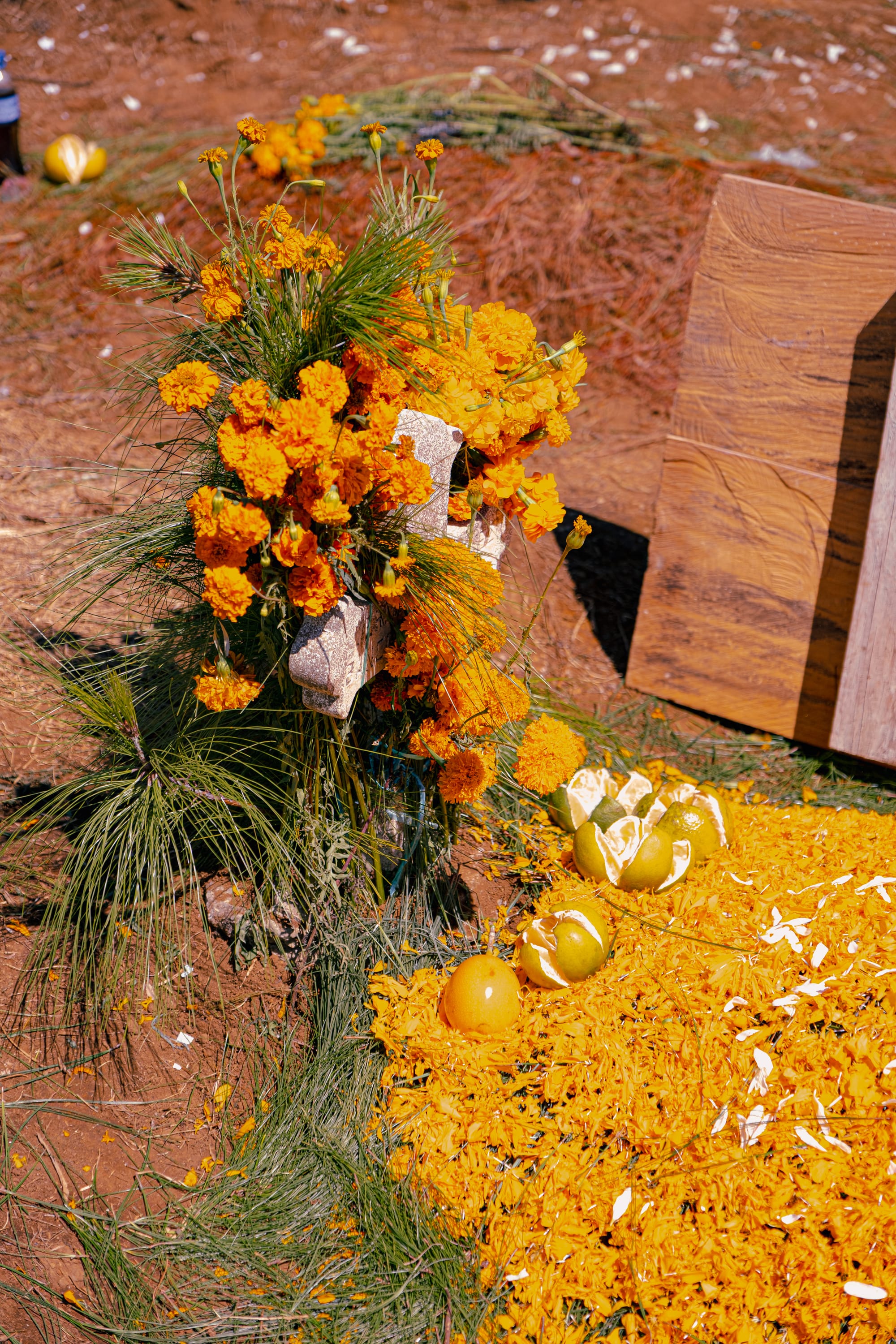
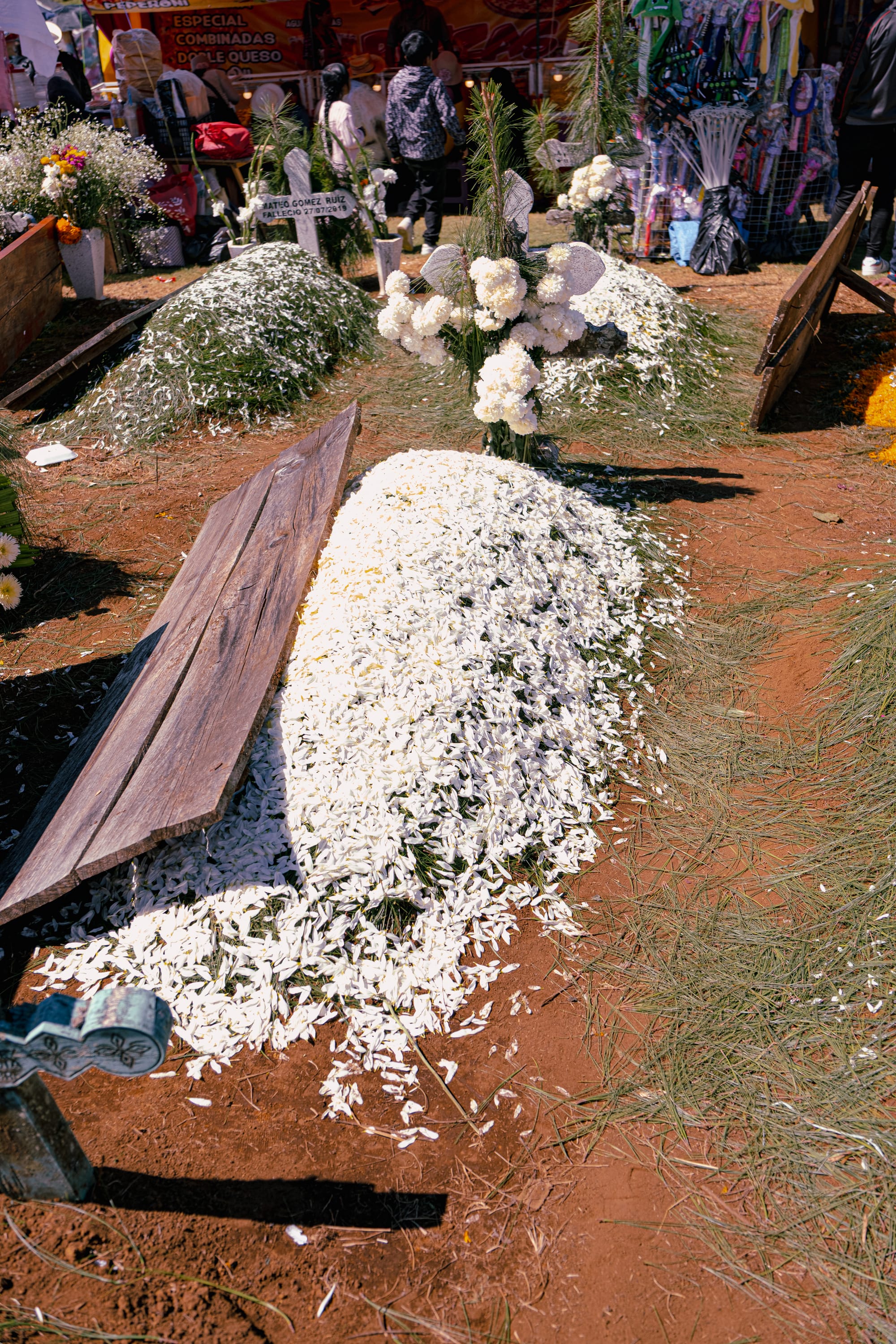
Offerings varied from grave to grave. Food placed directly on tombs. Bottles of soda. Candles. Personal objects. Nothing felt standardized or curated. Each grave reflected a family’s choices, habits, and relationships.
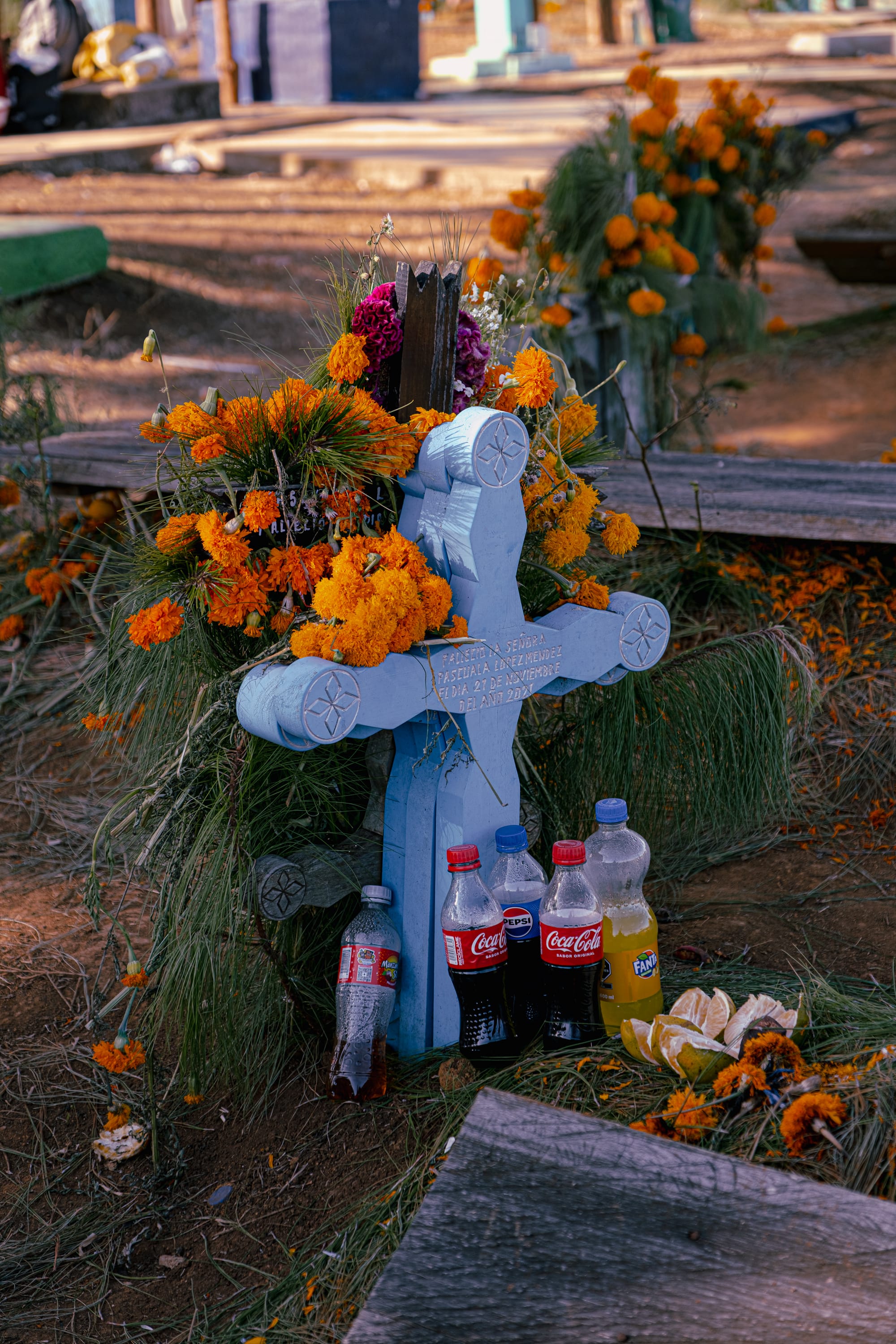
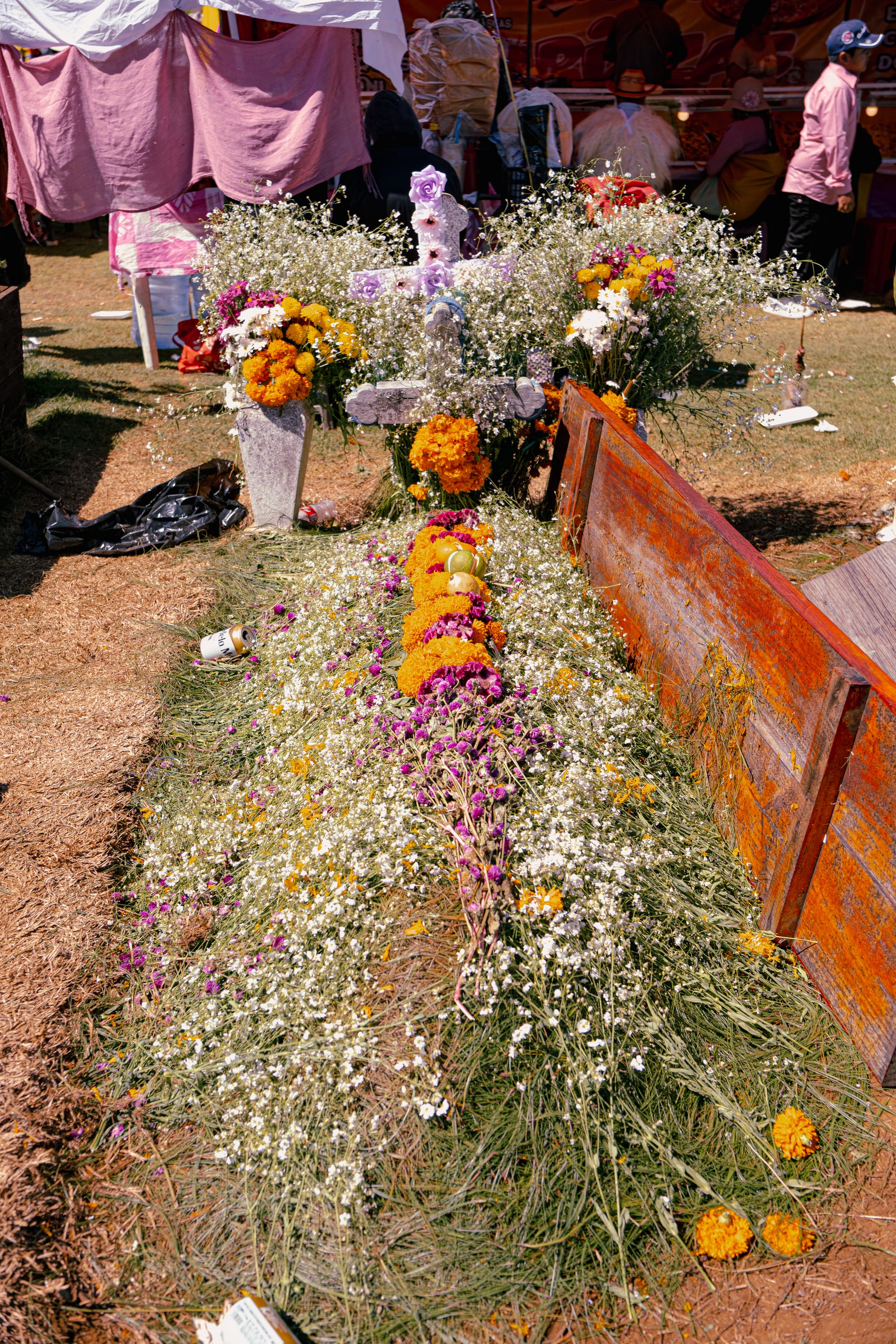
What struck us most wasn’t the offerings themselves, but the time spent around them. Families didn’t arrive, arrange, and leave. They settled in. They talked. They ate. Children moved freely through the space. People adjusted flowers, stepped back, adjusted again.
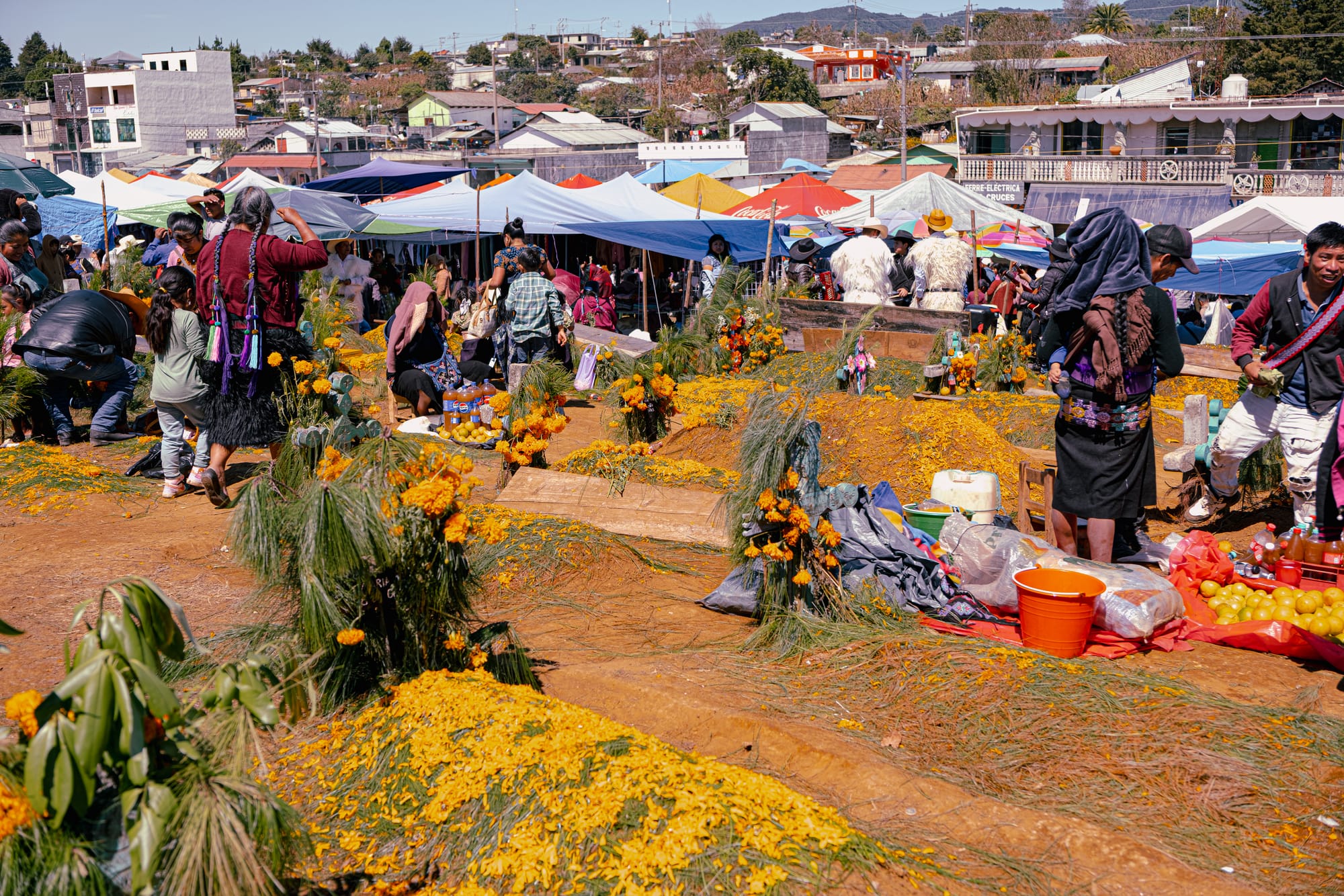
Día de Muertos at Romerillo Cemetery Chiapas, crowded hilltop cemetery filled with pine covered graves and marigold mounds, families arranging offerings and spending the day together, wooden crosses and shallow tombs packed closely, market tents and food stalls surrounding the cemetery, indigenous Day of the Dead celebration near San Cristóbal de las Casas
A dense gathering of care, color, and movement

There was care here, but not the kind that demands solemnity. It was attentive, repetitive, and unhurried.

Not sad, not careless

It’s tempting to describe Romerillo as joyful or celebratory, but those words don’t quite fit.

People were laughing and talking, yes. Music was playing. Food was shared. But the atmosphere wasn’t frivolous. There was an underlying steadiness to it—a sense that this was serious work being done, even if it didn’t look like mourning in the way many of us have been taught to recognize.
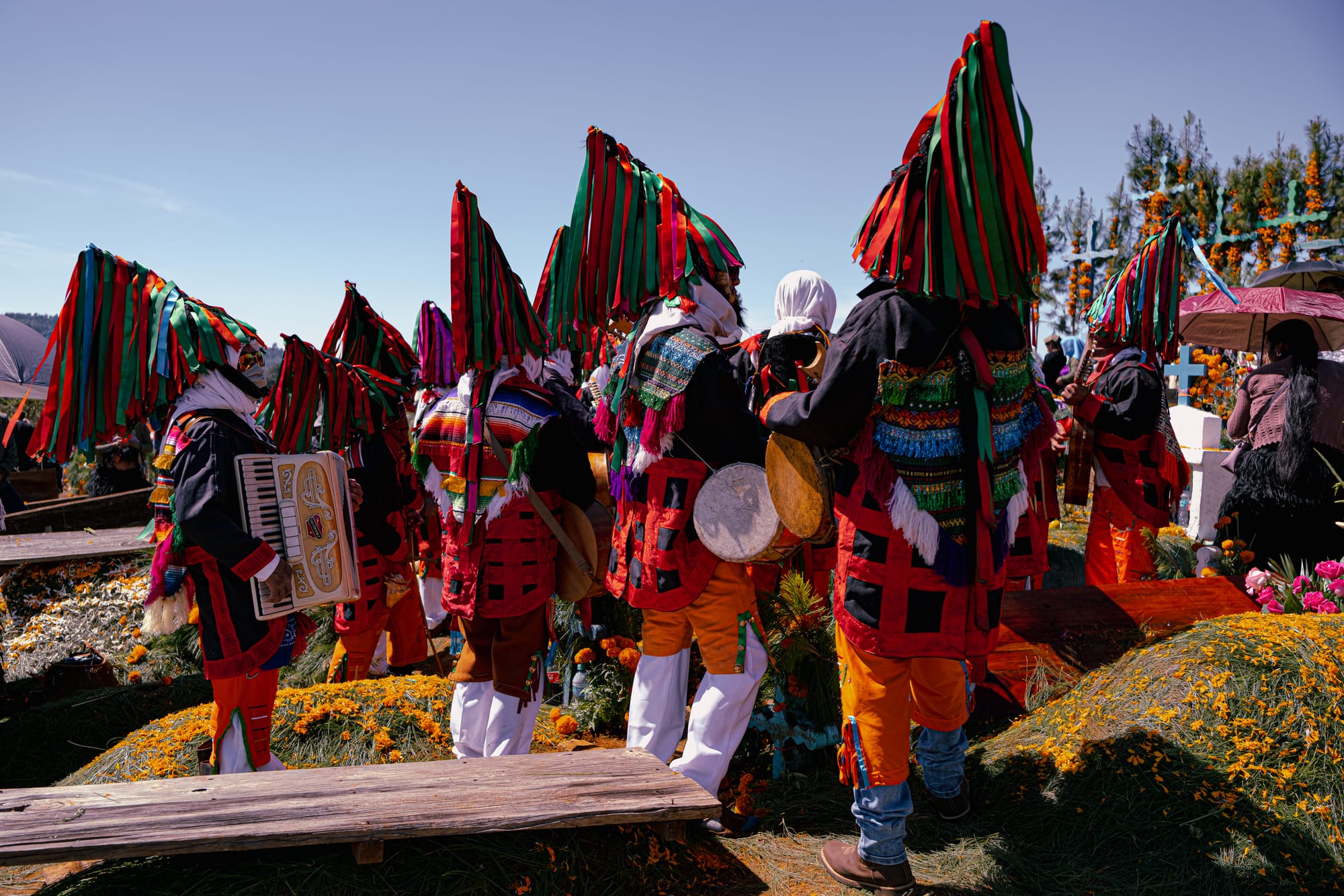
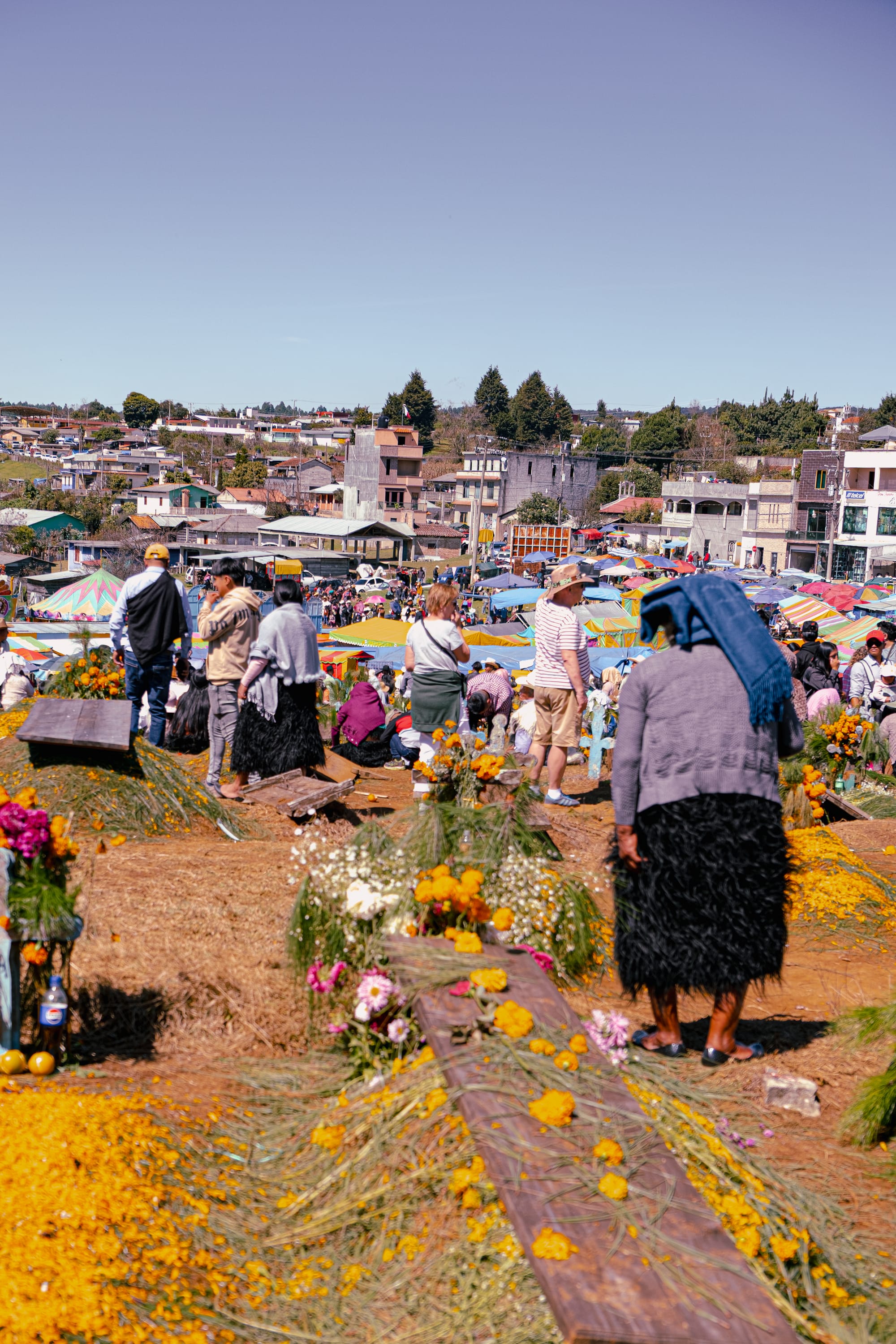
Día de Muertos at Romerillo Cemetery Chiapas, indigenous musicians wearing traditional ribbon headdresses and colorful woven clothing gathered among pine covered graves, live band with accordion drums and guitars playing during Day of the Dead celebration, marigold covered hilltop cemetery with wooden grave markers near San Cristóbal de las Casas

Romerillo showed us that grief doesn’t have to be heavy to be real, and that honoring the dead doesn’t require sadness to be the dominant emotion. What we witnessed was something more balanced: remembrance that makes room for connection, for presence, for being together.
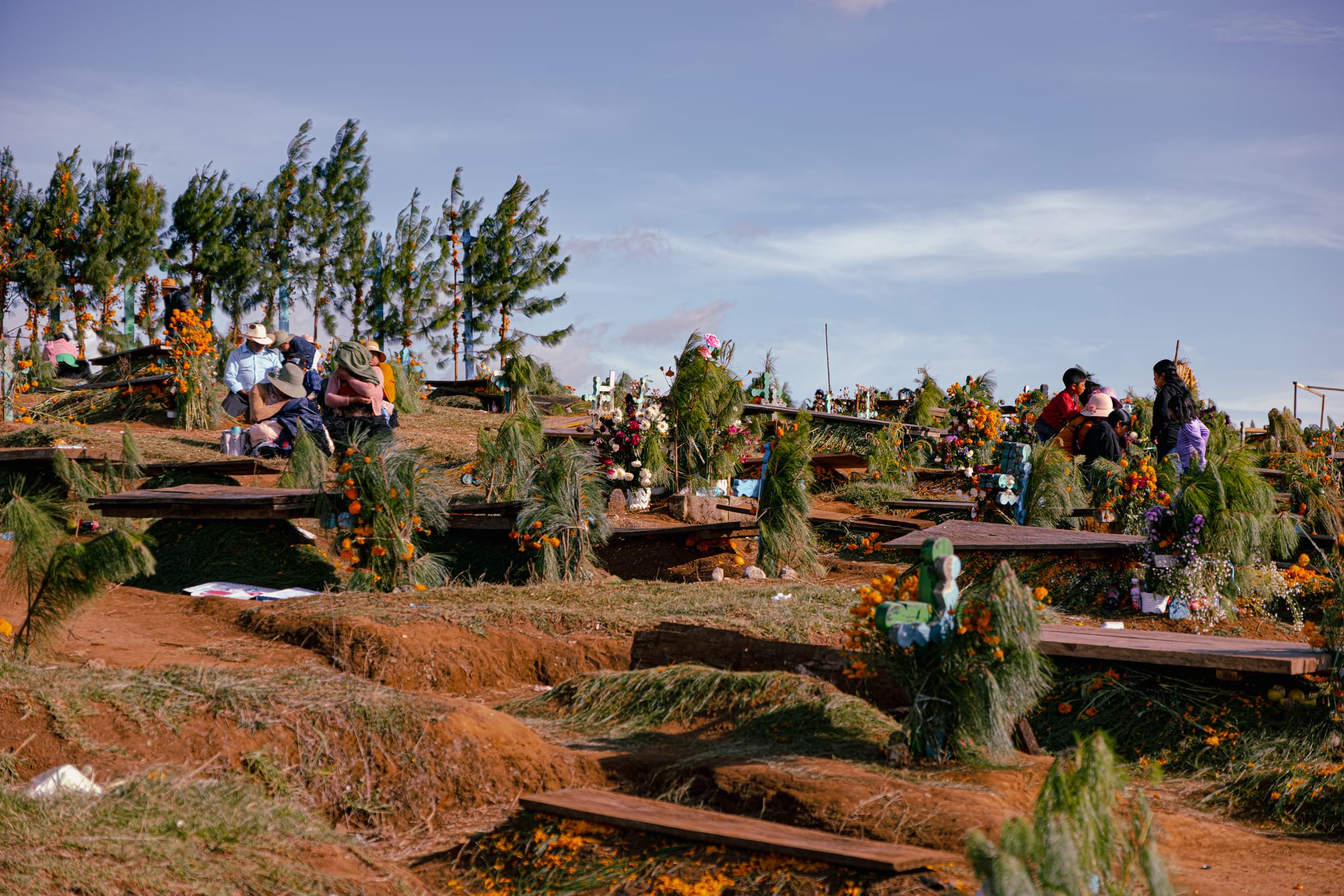
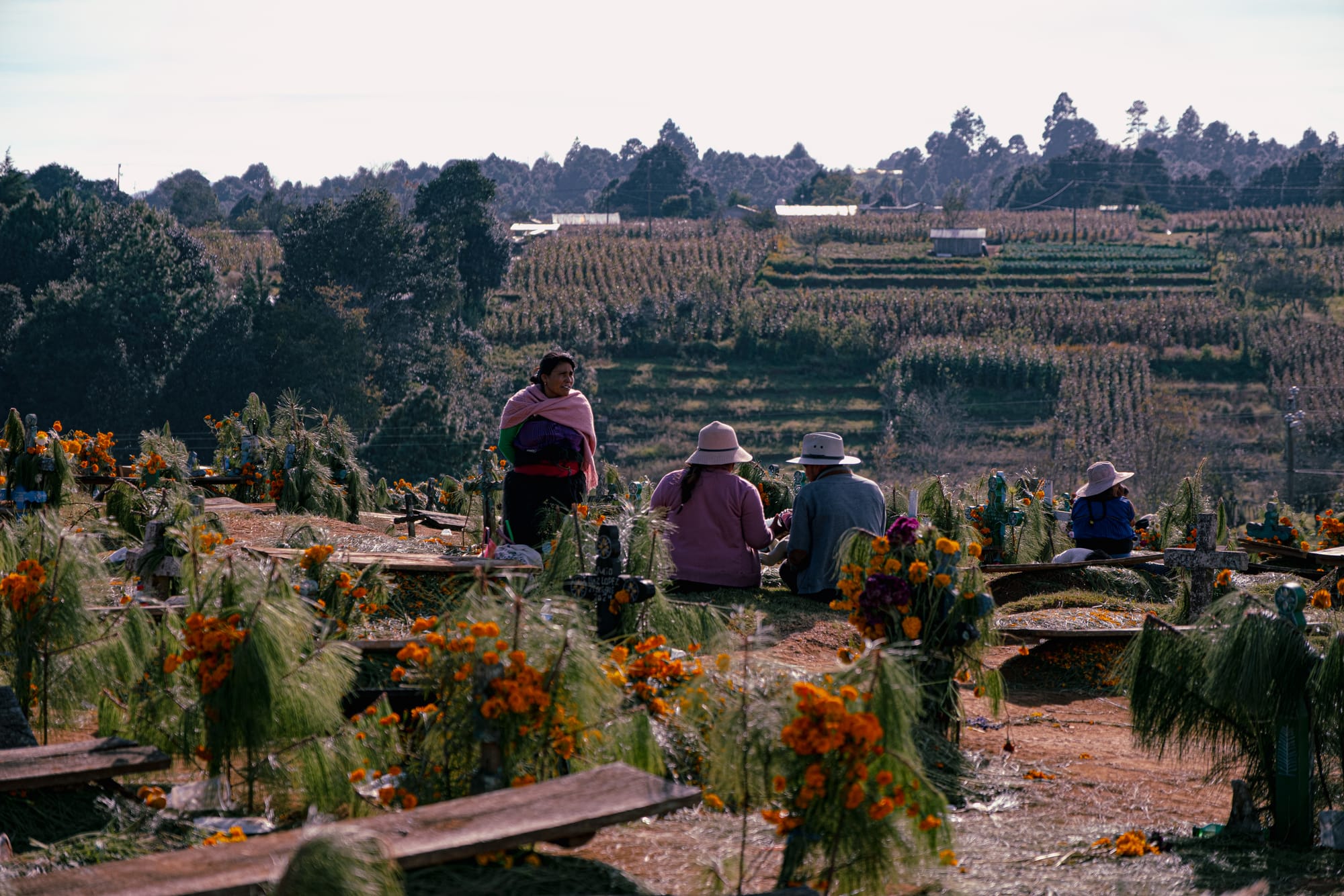
Día de Muertos at Romerillo Cemetery Chiapas, hilltop cemetery covered with pine branches and marigolds, families sitting and spending time beside simple wooden graves, shallow tombs arranged across uneven ground, indigenous Day of the Dead burial traditions with communal gathering near San Cristóbal de las Casas

For those of us raised in cultures where cemeteries are quiet, brief, and emotionally constrained spaces, this can be genuinely disorienting. It was for us. But it was also grounding.

Returning the next day

When we returned on November 2nd, the cemetery felt entirely different.
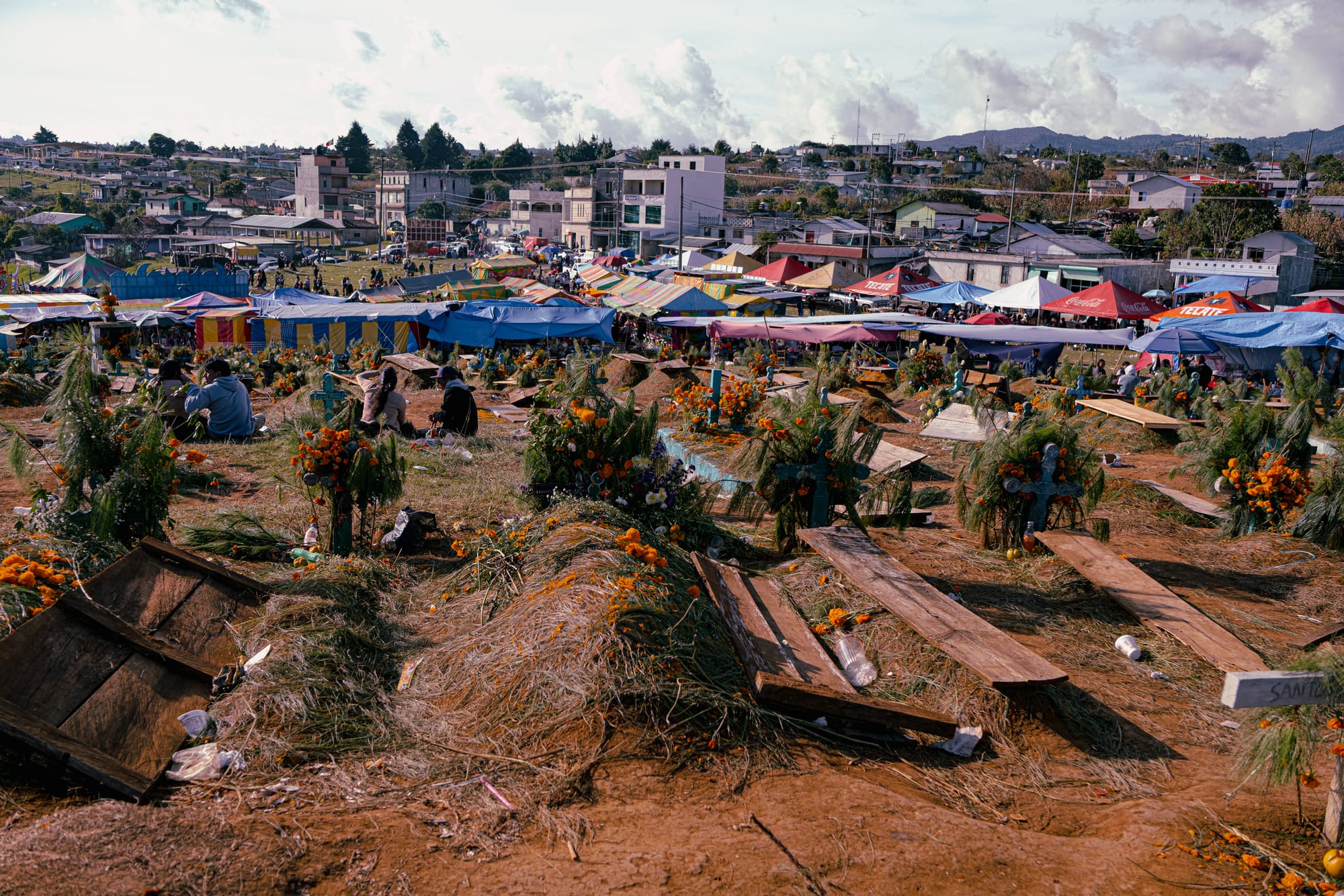
Día de Muertos at Romerillo Cemetery Chiapas, wide panoramic view of hilltop cemetery with pine covered graves and marigold decorated wooden crosses, families sitting among graves during Day of the Dead, market tents and festival stalls surrounding the cemetery, local indigenous burial traditions near San Cristóbal de las Casas

Most of the people were gone. The music had stopped. The density had thinned. Pine and flowers remained, but the human layer that had animated the space the day before had moved on.
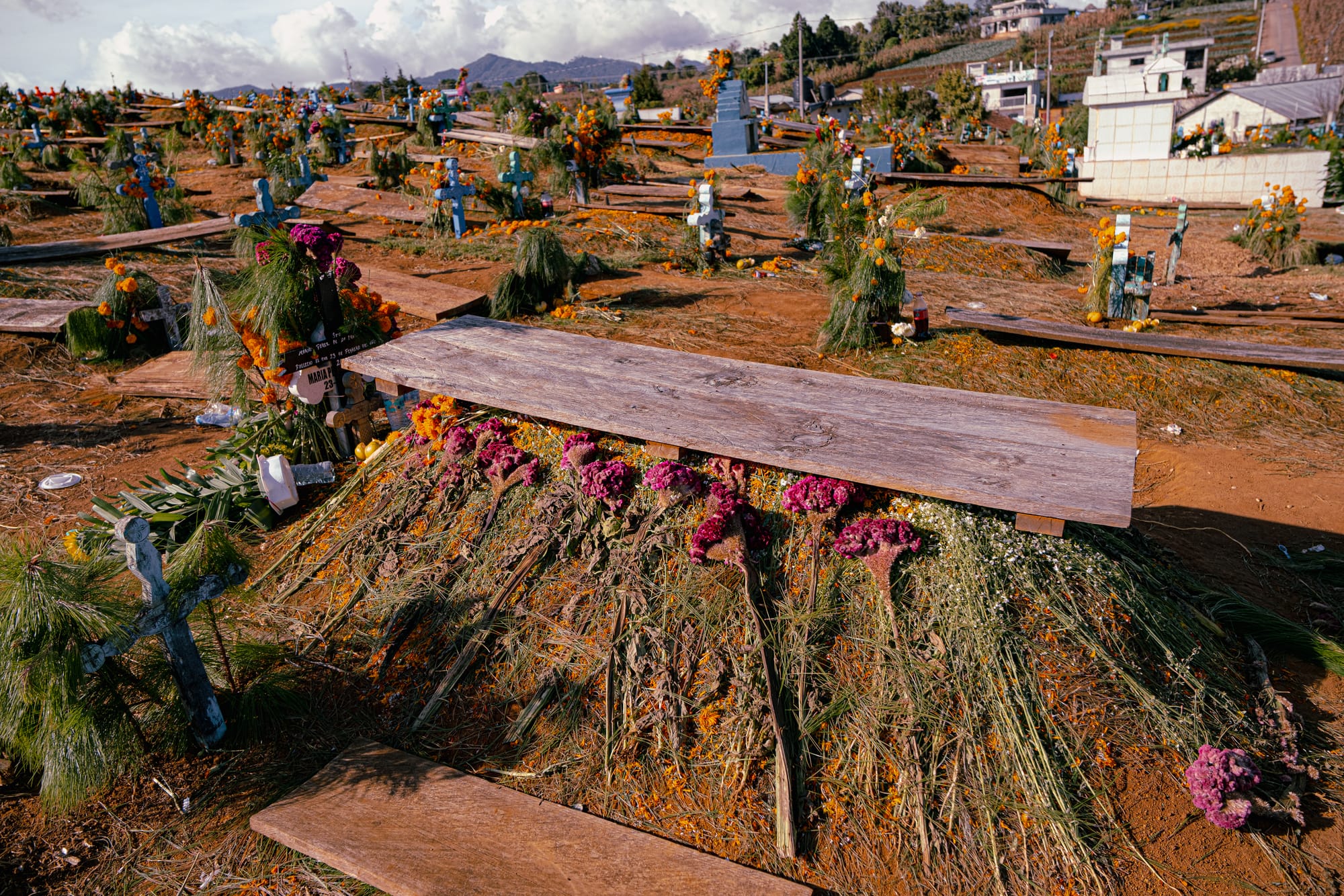
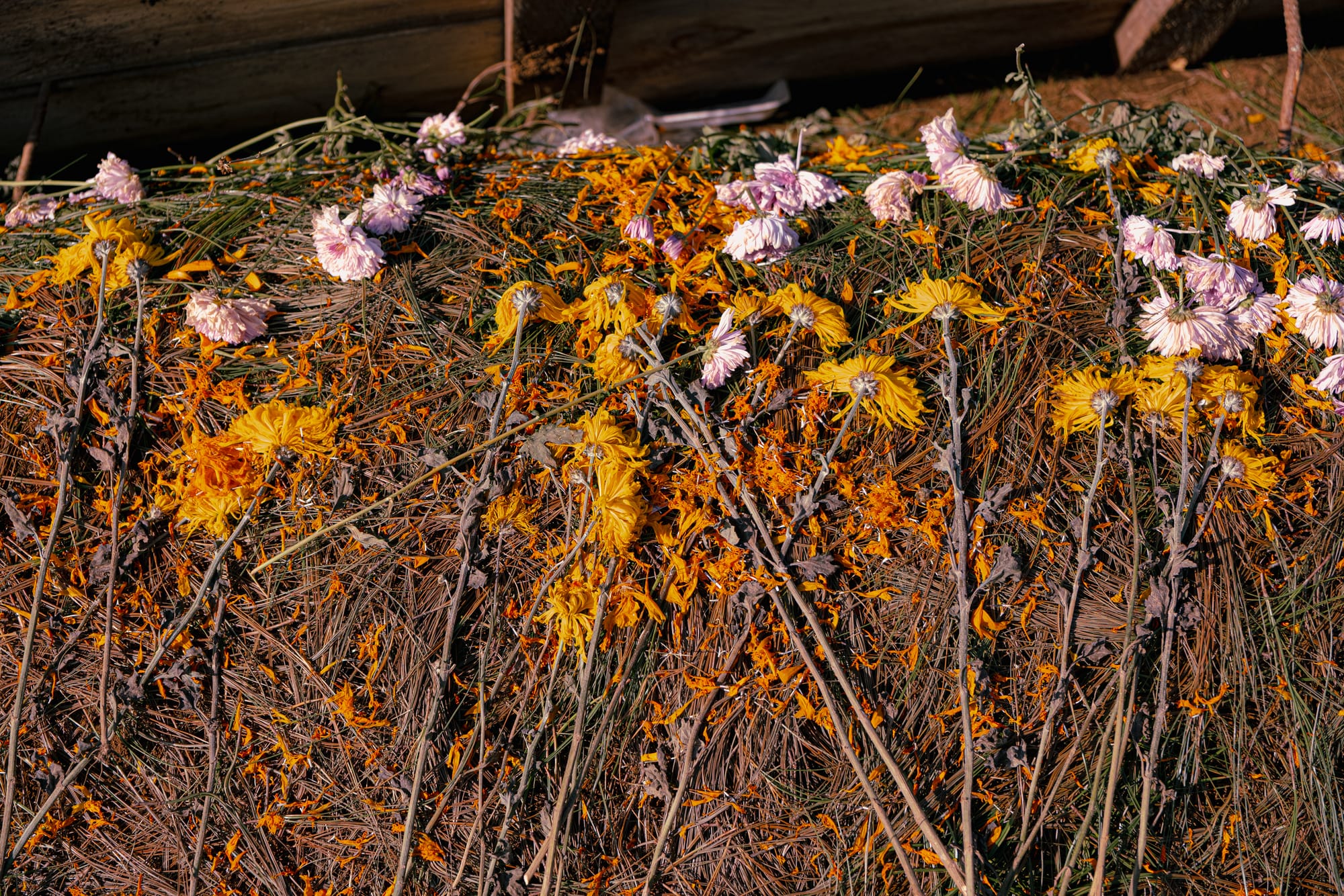
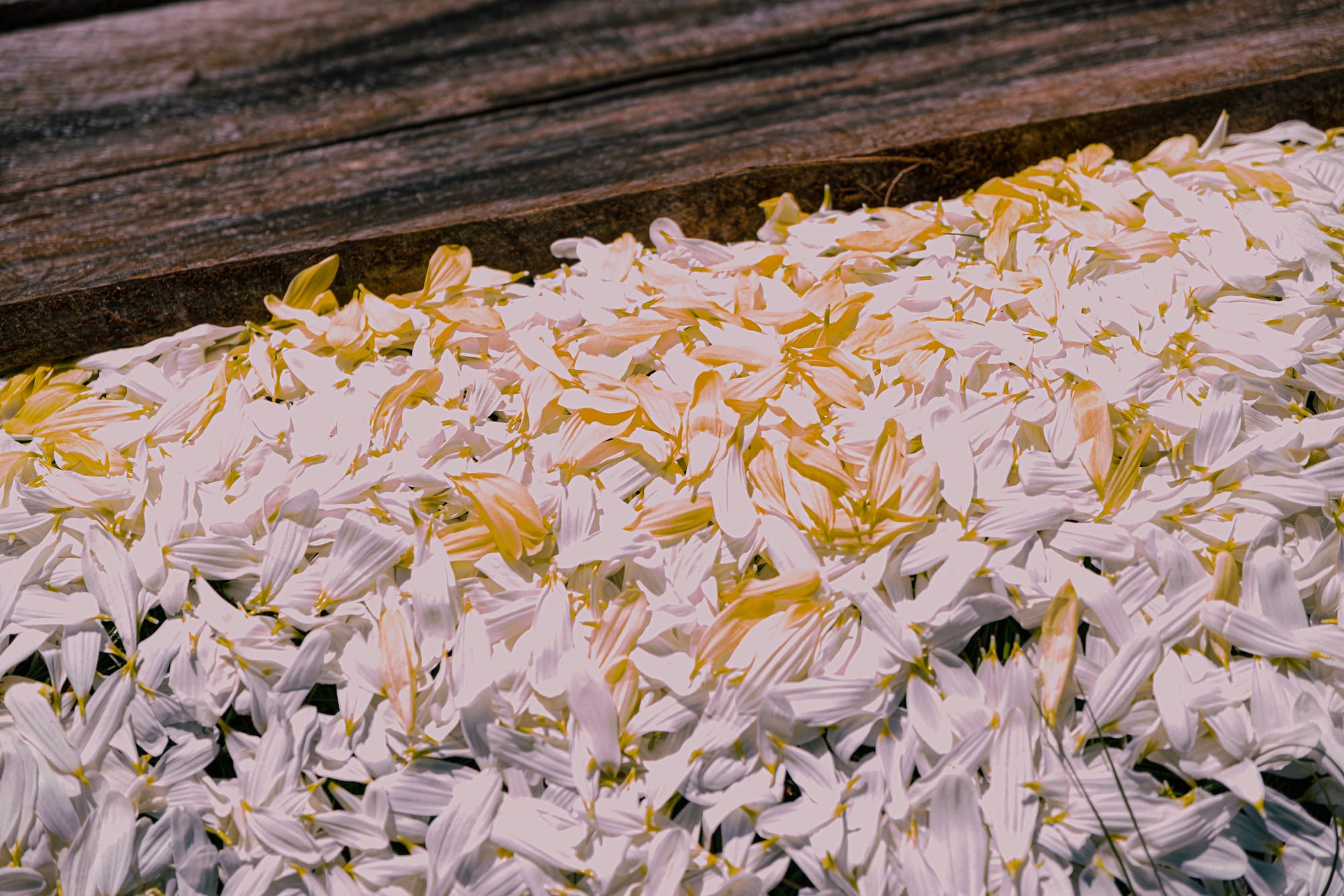
Día de Muertos at Romerillo Cemetery Chiapas, close view of pine covered grave with wooden boards and marigold petals, simple hilltop tomb decorated with flowers and offerings, indigenous Day of the Dead burial traditions using pine needles and cempasúchil, Romerillo Cemetery near San Cristóbal de las Casas after the main celebration
Día de Muertos at Romerillo Cemetery Chiapas, pine covered grave mound with wooden boards and scattered marigold petals, simple hilltop burial marked by flowers and pine needles, indigenous Day of the Dead traditions at Romerillo near San Cristóbal de las Casas
Día de Muertos at Romerillo Cemetery Chiapas, pine covered grave mound with wooden boards and scattered petals, simple hilltop burial marked by flowers and pine needles, indigenous Day of the Dead traditions at Romerillo near San Cristóbal de las Casas

That return visit mattered. It made clear that what we experienced wasn’t a constant condition of the place. It was a moment—one day, one rhythm, one collective act.

Challenging our assumptions about death

Romerillo offered a vision of death that wasn’t isolated from life, and of remembrance that wasn’t reduced to silence or sorrow. It showed us that tending to the dead can be a social act, a physical one, and even a sensory one—rooted in sound, texture, movement, and time.
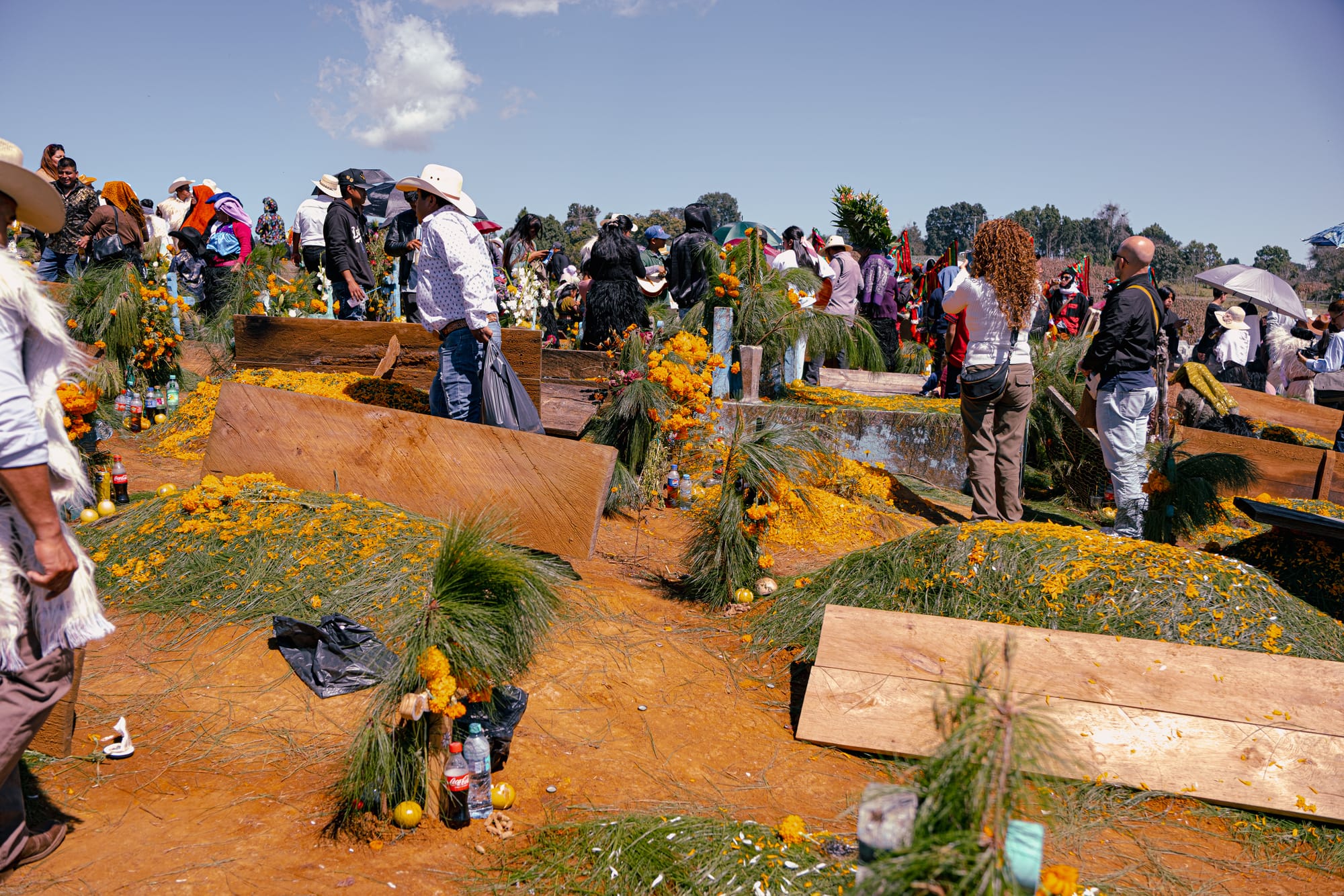
Families walking among the graves at Romerillo Cemetery on Day of the Dead
Day of the Dead at Romerillo Cemetery
An experience like no other

We don’t pretend to understand Romerillo after a single visit. But we do know that being there shifted something in us. It challenged assumptions we didn’t realize we were carrying. It expanded the range of what we thought was possible in a place meant for the dead.

And if travel has any real value beyond novelty, maybe it’s moments like this—when you encounter a way of being that quietly but firmly unsettles your defaults, and you leave changed, without needing to explain exactly how.

Día de Muertos at Romerillo Cemetery in Chiapas, indigenous musicians and dancers wearing traditional Tzotzil clothing with colorful ribbon headdresses and wool garments

Enjoyed this?

Consider pinning it.

It’s a small thing that helps keep us alive, sustainable, and growing.

We’re so grateful to be in your orbit.

Save to Pinterest
Cross-pollinate

For more musings, subscribe to our email newsletter.

Book your trip

By purchasing through our links, you support us at no additional cost to you. Thanks for your support.

Stay in the orbit

Updates, reflections, and curated inspiration, sent slowly.
No noise. No clickbait titles. Just thoughtful dispatches when there’s something worth sharing.

Unsubscribe anytime.