
We arrived at the cemetery in Zinacantán around midday on November 1st.
To get there, we first took a collectivo from San Cristóbal into town, then transferred to a tuk-tuk for the steep climb up the mountain to the cemetery itself. The ascent was slow and winding, pulling us steadily away from the center of town and into thinner air, until the cemetery finally came into view at the top of the hill.
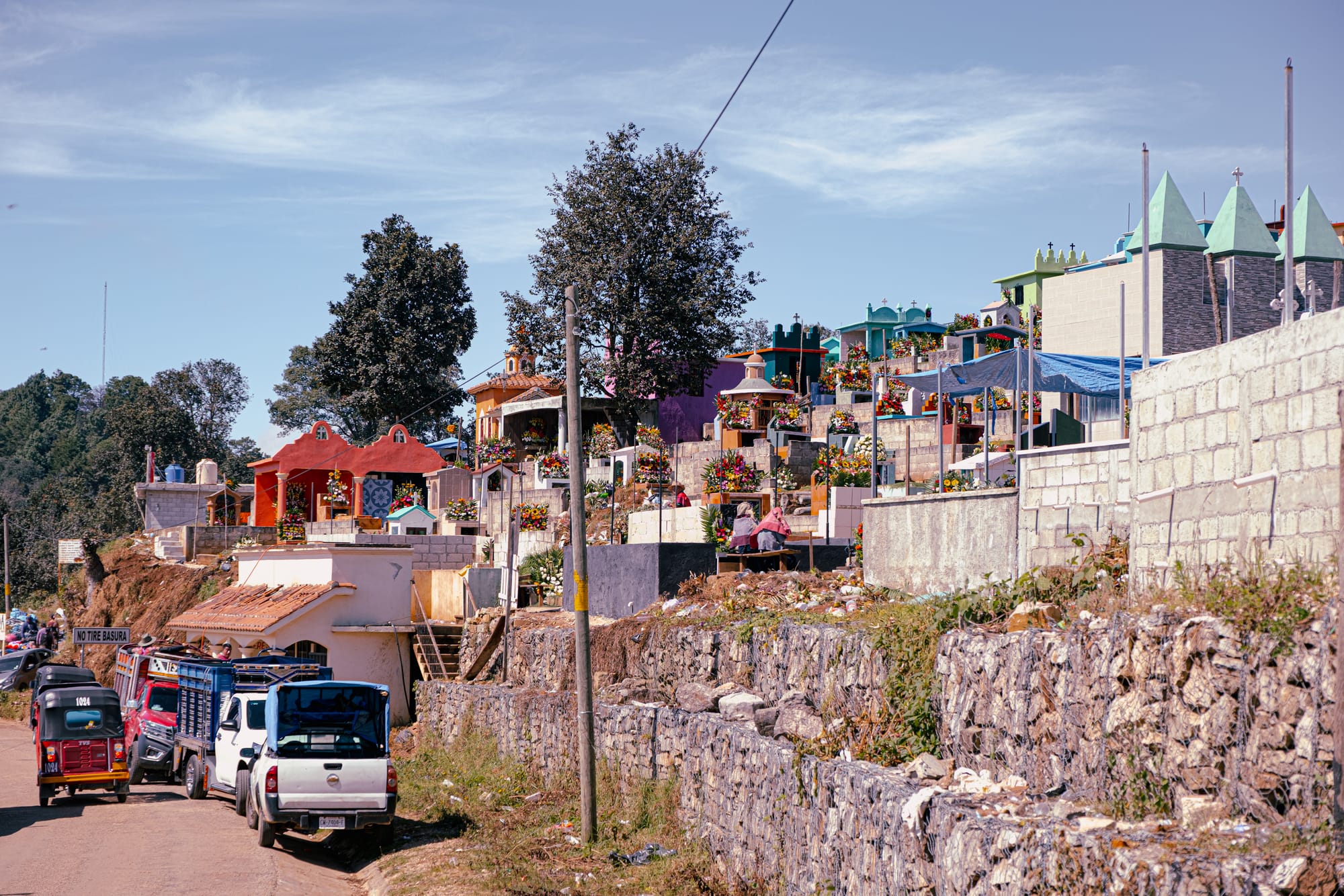
It was our second stop of the day. We had spent the morning at Romerillo Cemetery, a much louder and denser setting, and we carried some of that expectation with us as we made the drive up into the hills. Día de Muertos was already underway across the region. We assumed we’d find something similar here.
Instead, what we found was space.
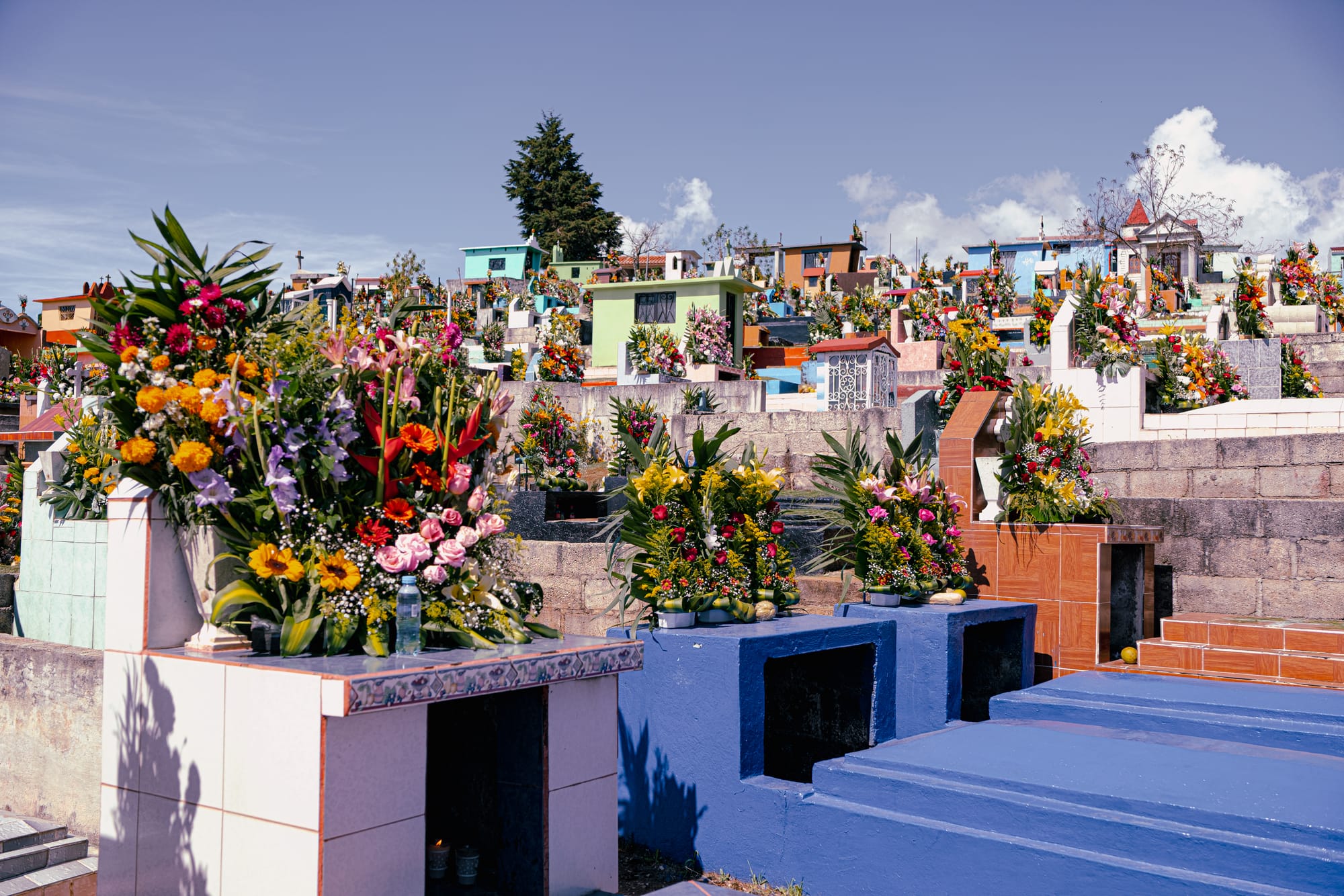
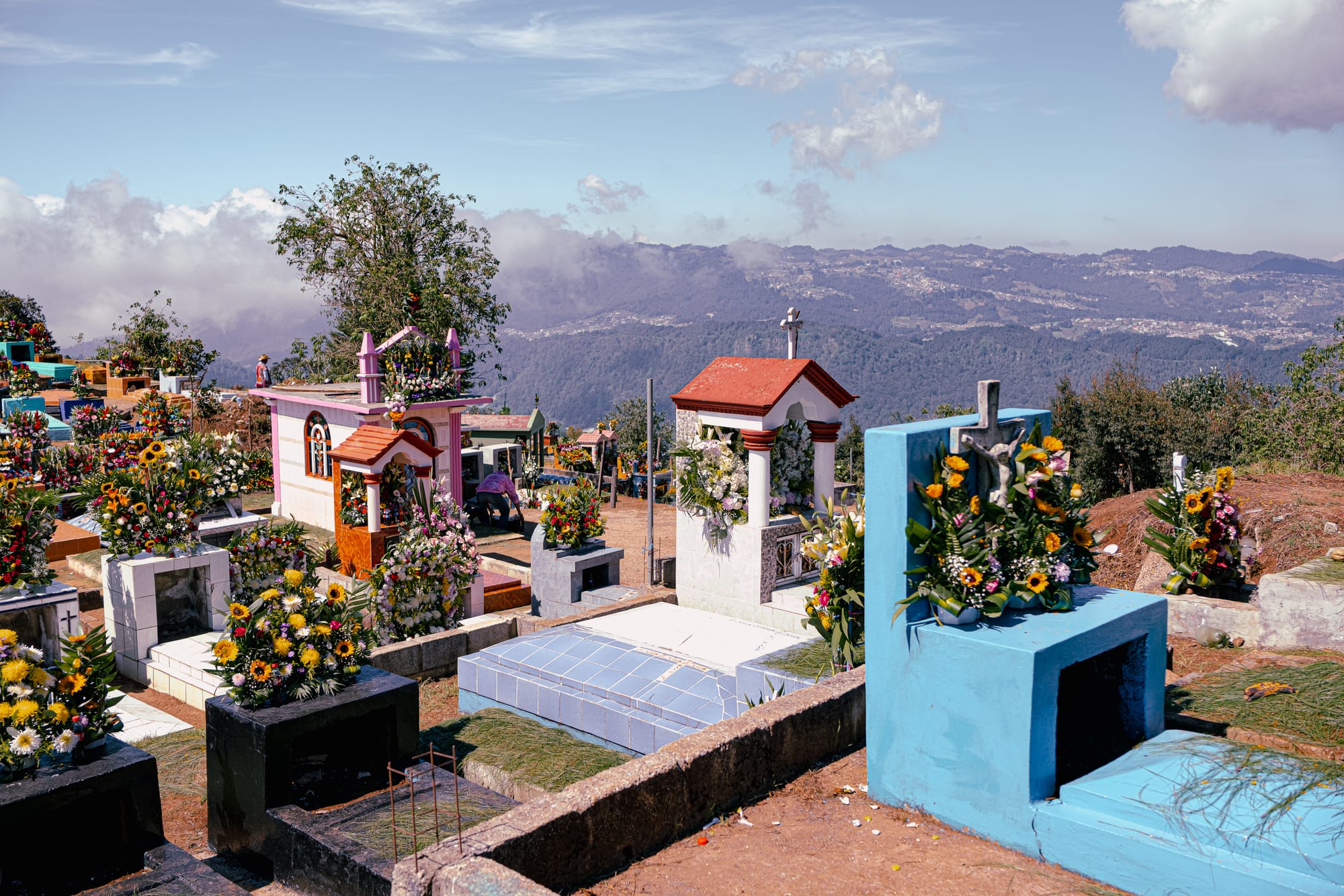
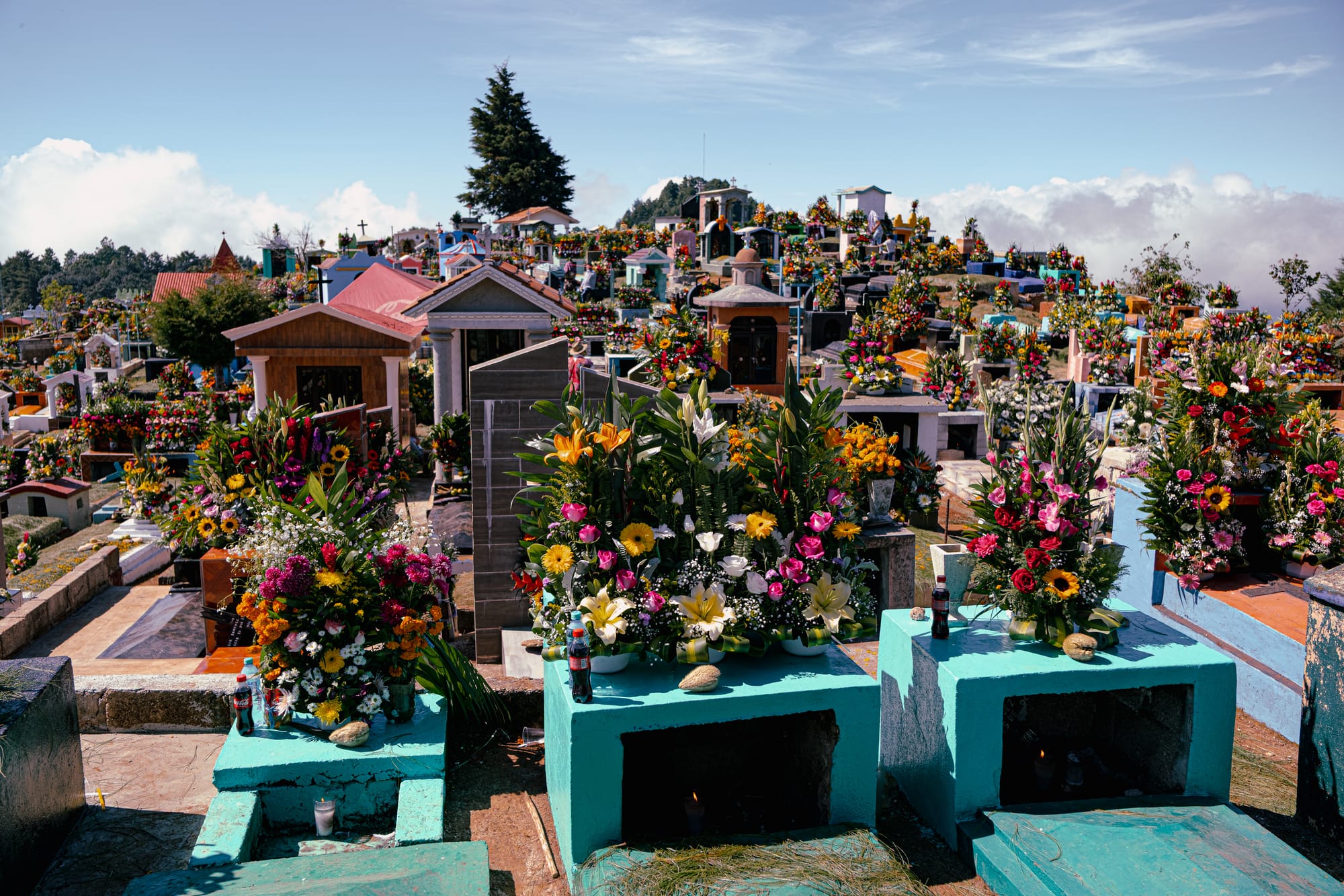
When the cemetery finally comes into view, it sits high on the landscape, spread across a sloping mountaintop with wide views over the surrounding valleys. From certain angles, the mountains feel close enough to frame the graves themselves.
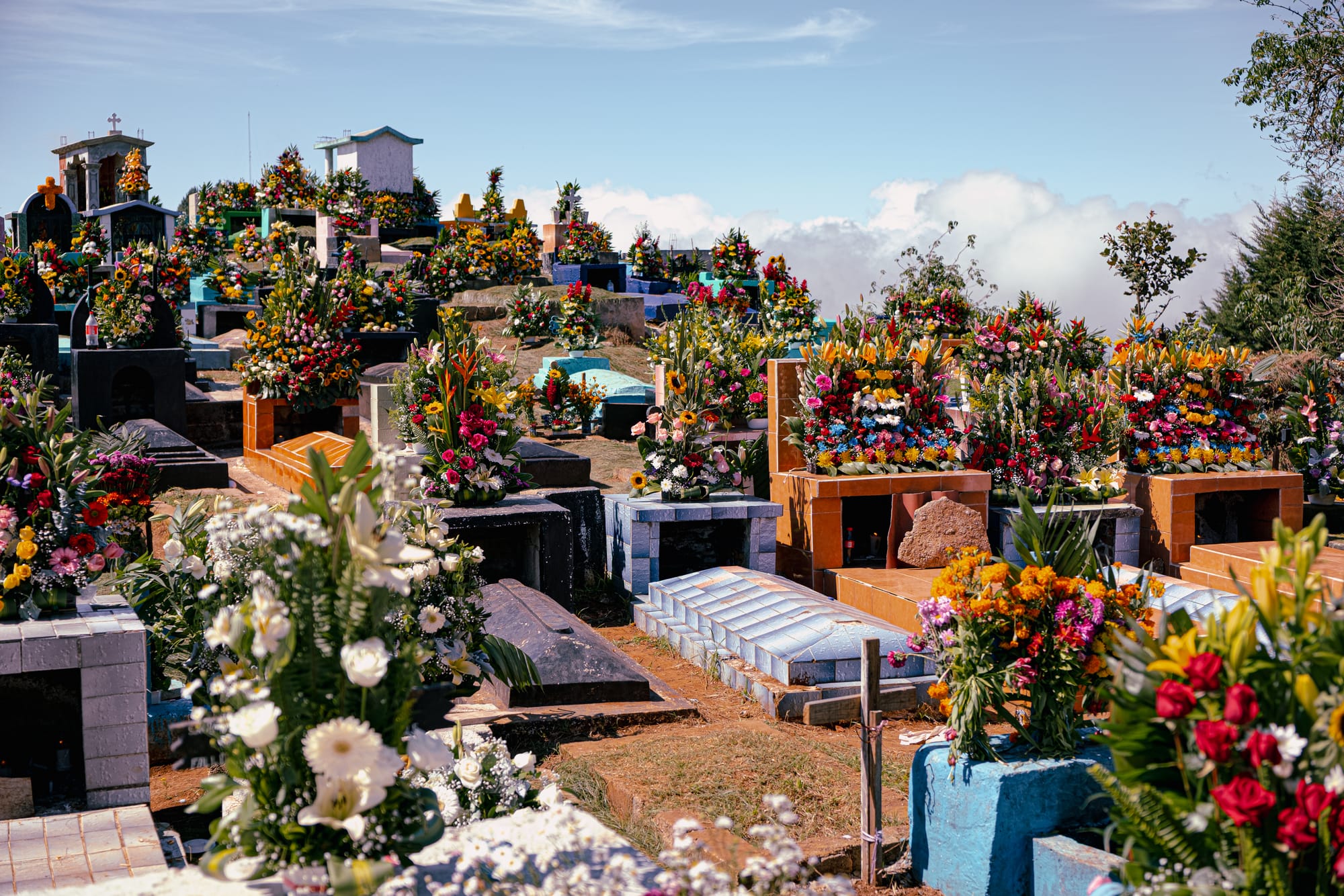
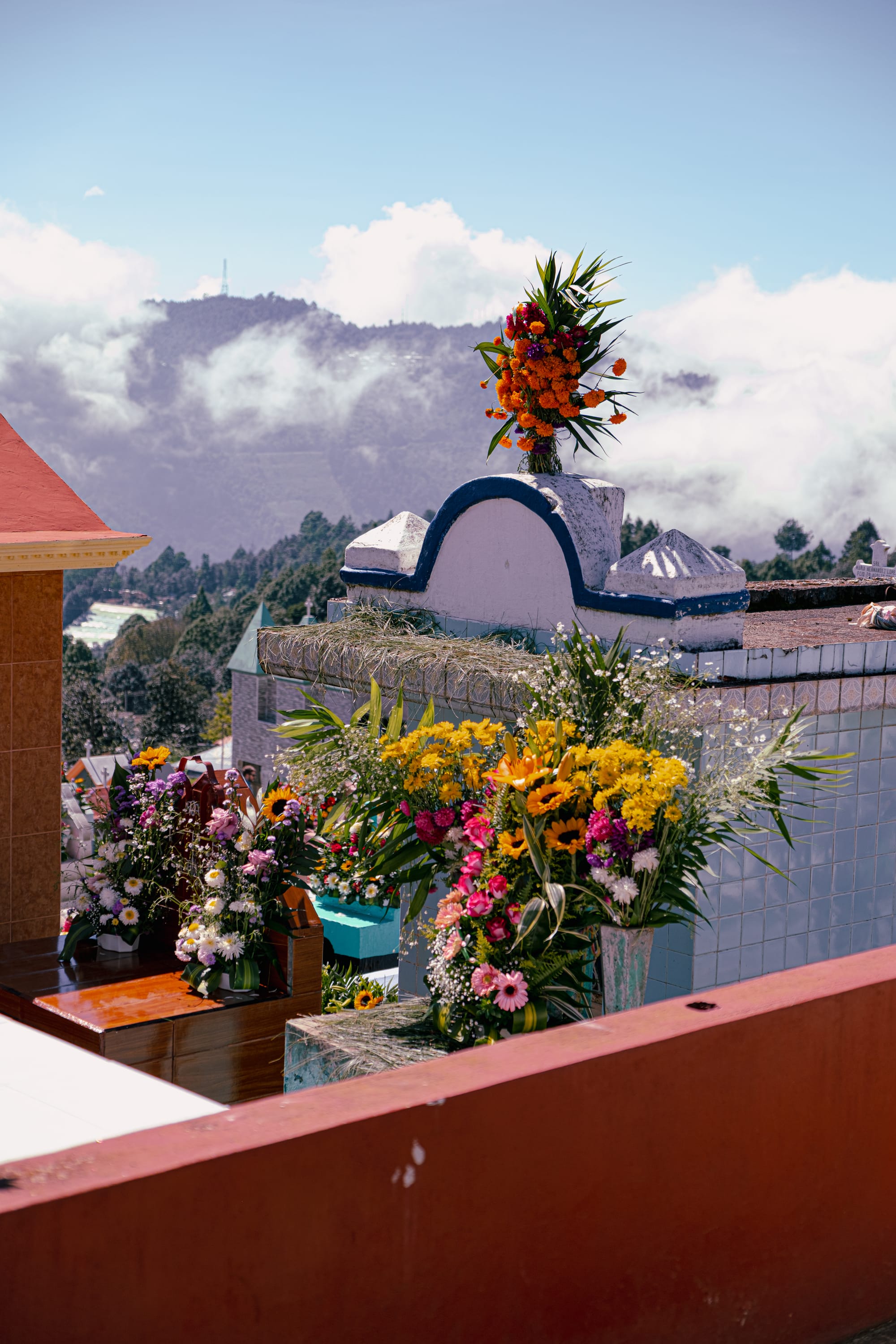
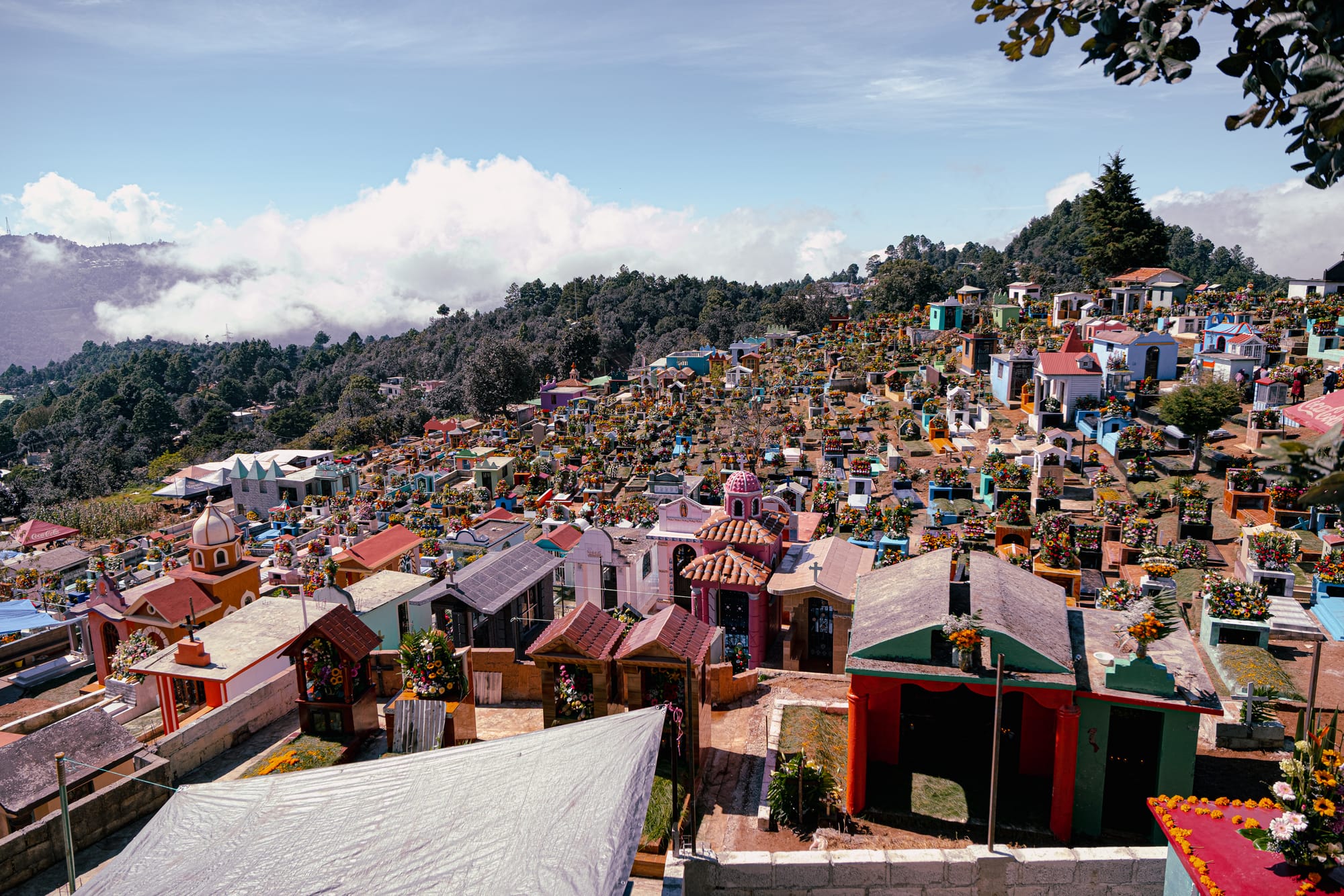
Looking out across a hillside of flowers and graves
The cemetery was open, decorated, and clearly active.
But it was quiet.
A cemetery shaped by flowers
We had already visited Zinacantán once before, alongside San Juan Chamula, simply to spend time in the towns themselves. That earlier visit gave us a sense of Zinacantán beyond Día de Muertos—the textile shops, the streets, and the pace of daily life—which made returning for the cemetery feel more contextual rather than incidental. This wasn’t our first encounter with the place, but it was a very different one.
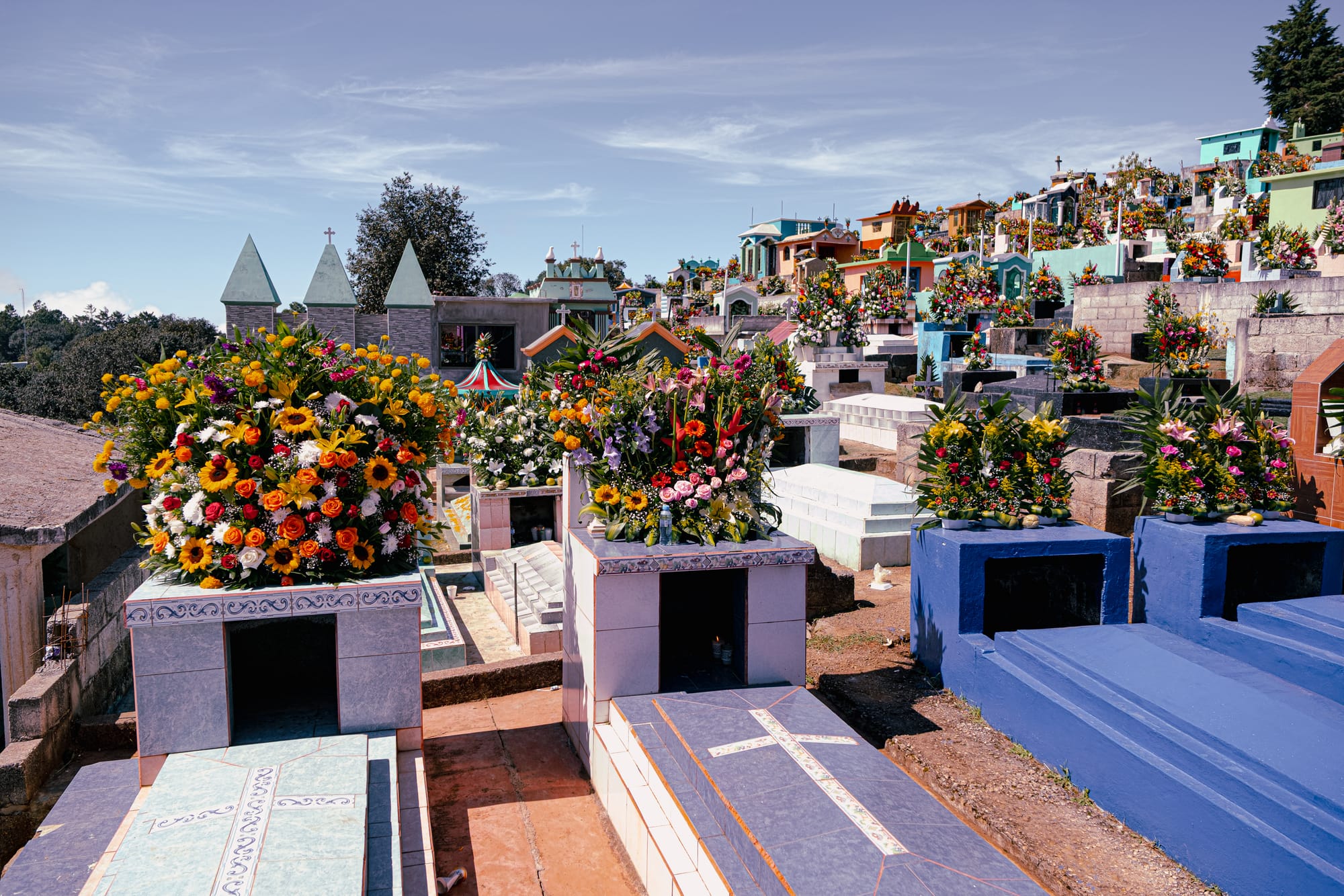
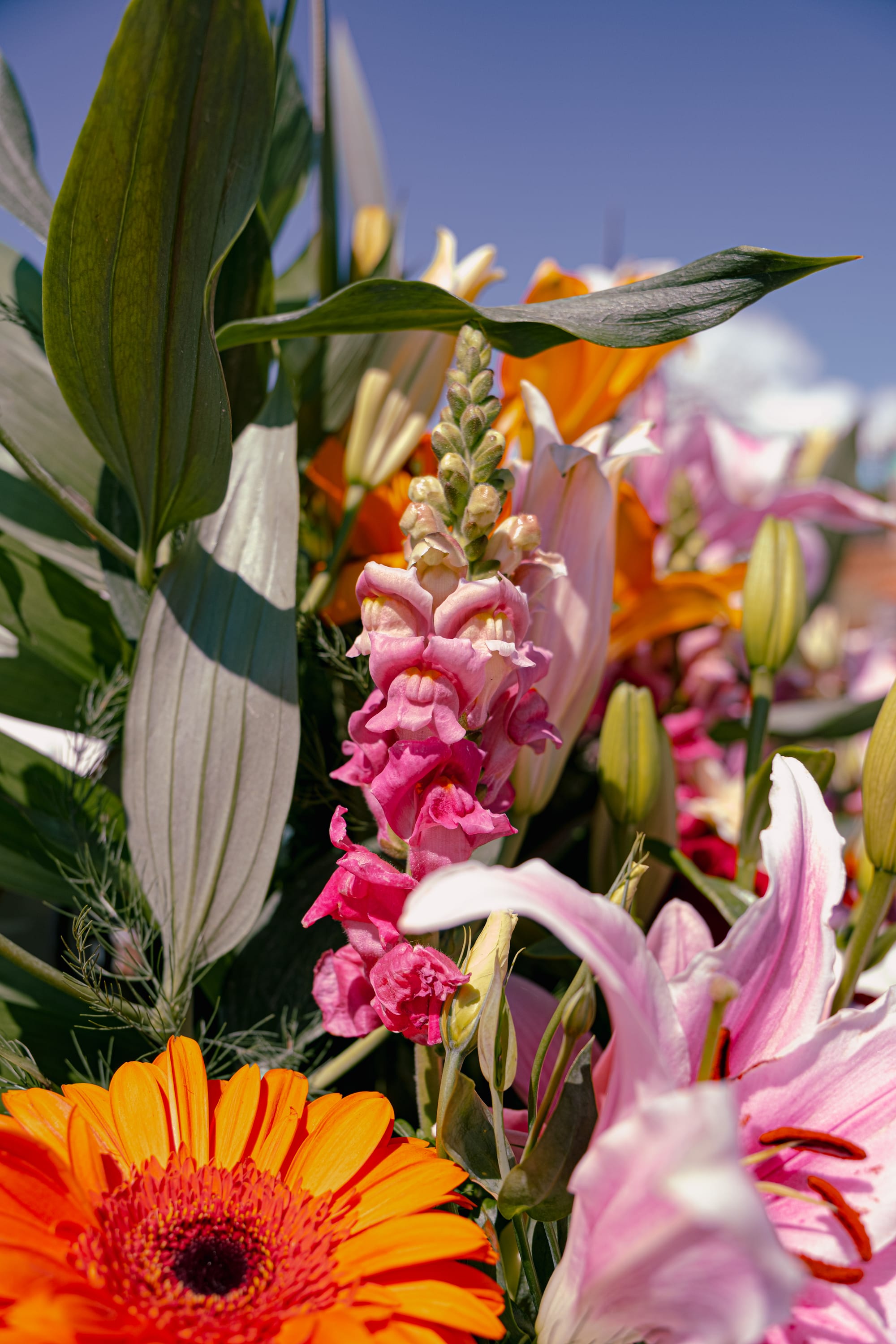
Zinacantán is known throughout the region for flower cultivation. This isn’t a footnote—it’s one of the town’s primary industries, and it shapes daily life here in visible, material ways. Many of the flowers sold in and around San Cristóbal de las Casas during Día de Muertos are grown in Zinacantán or its immediate surroundings.
That proximity matters when you step into the cemetery.
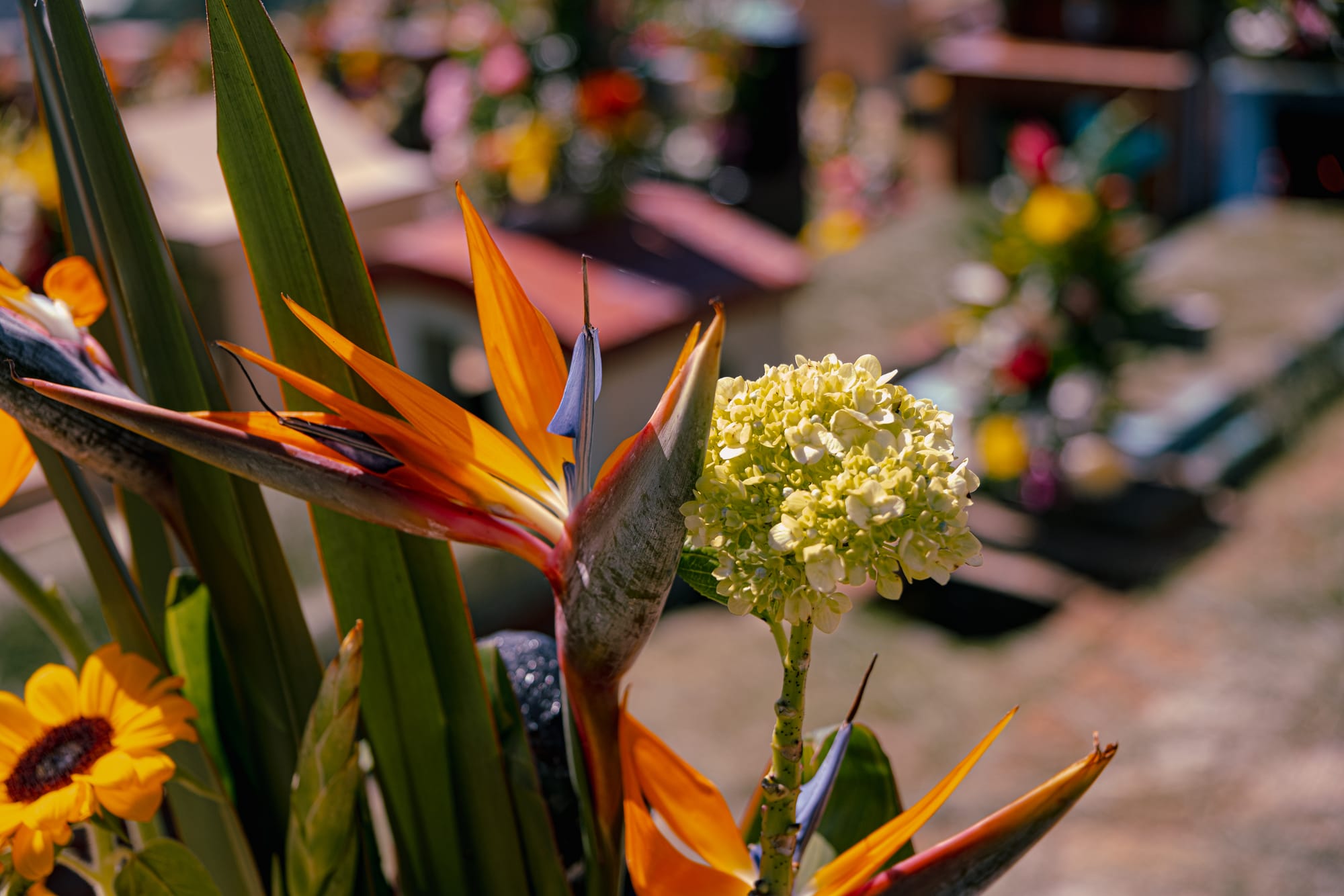
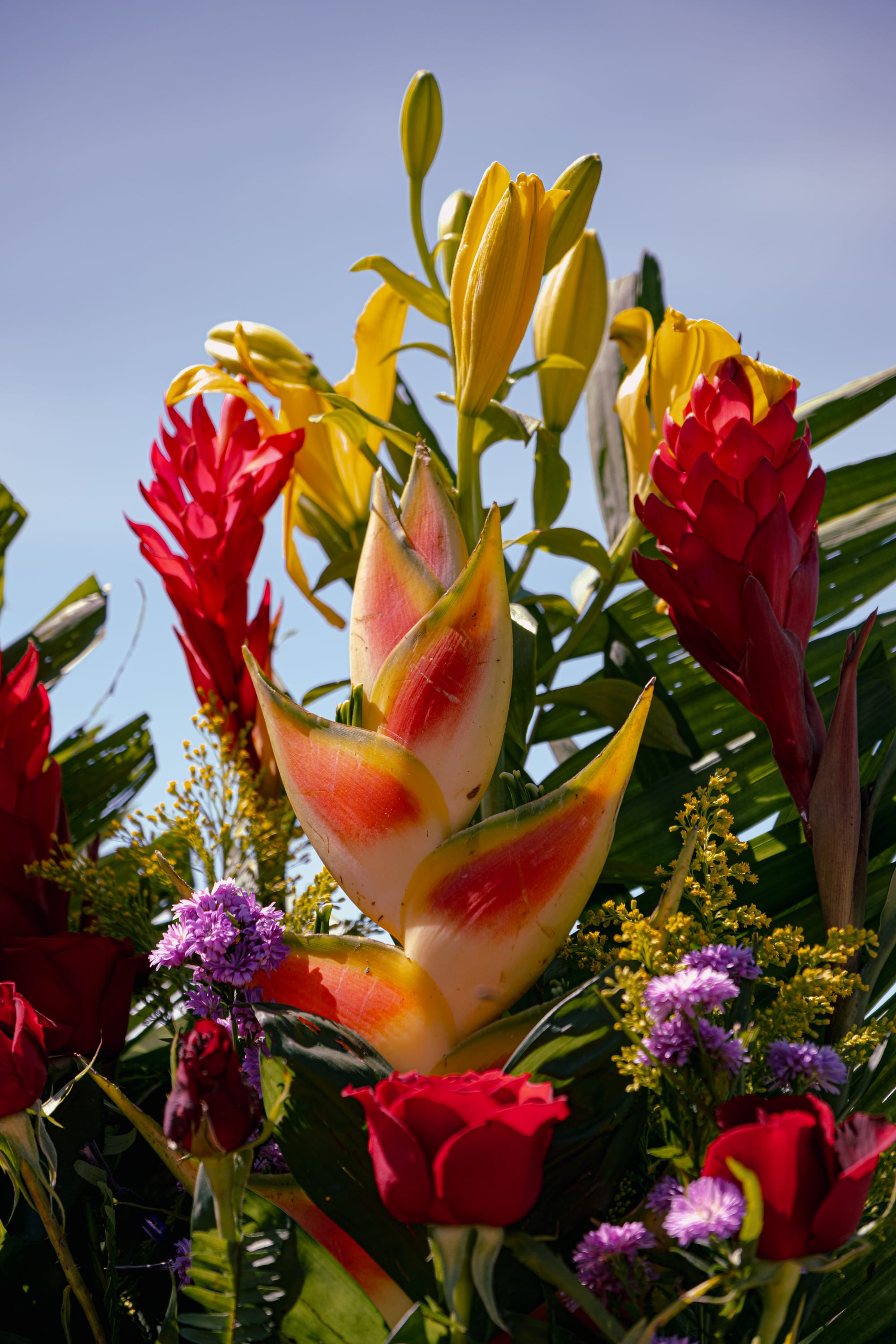
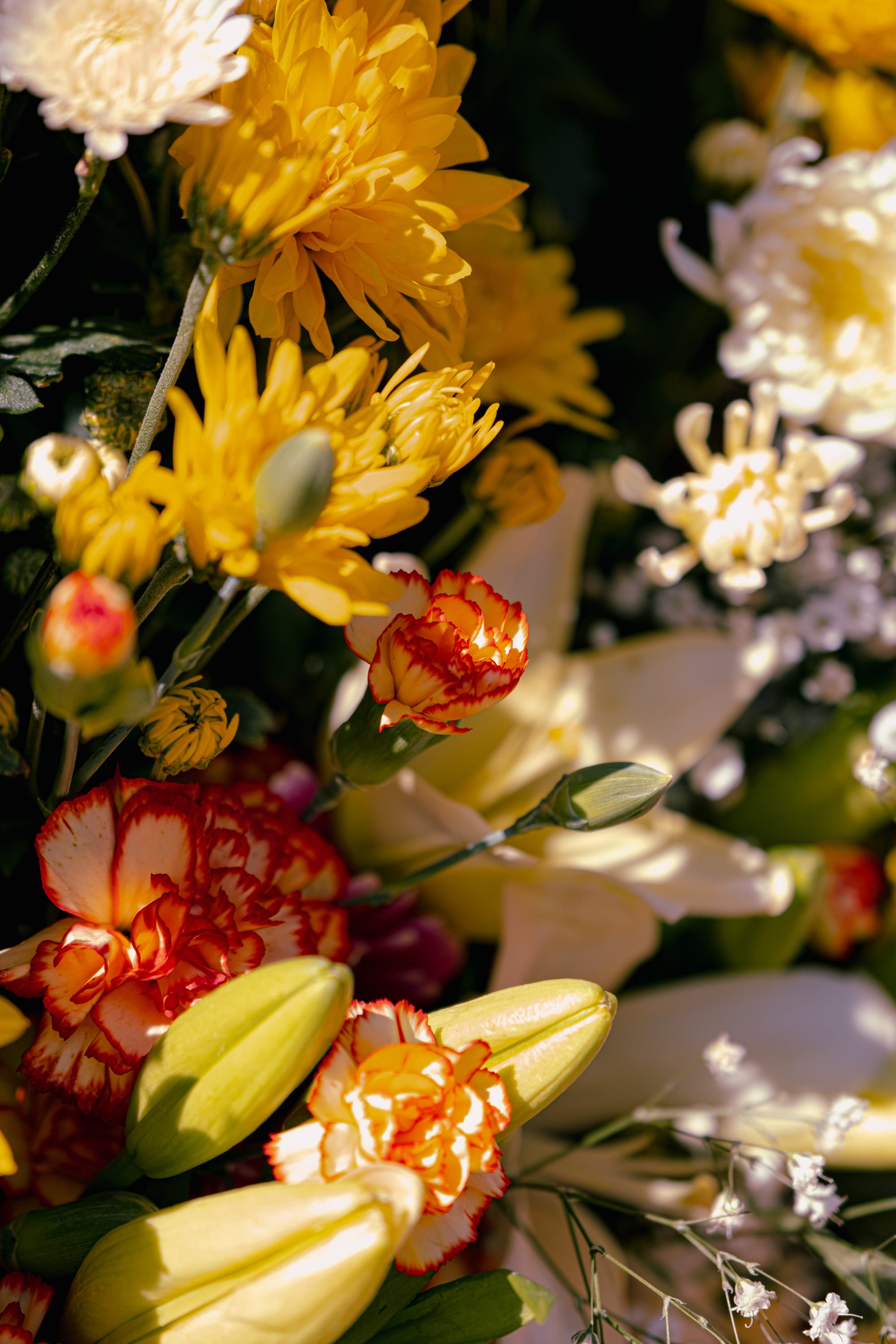
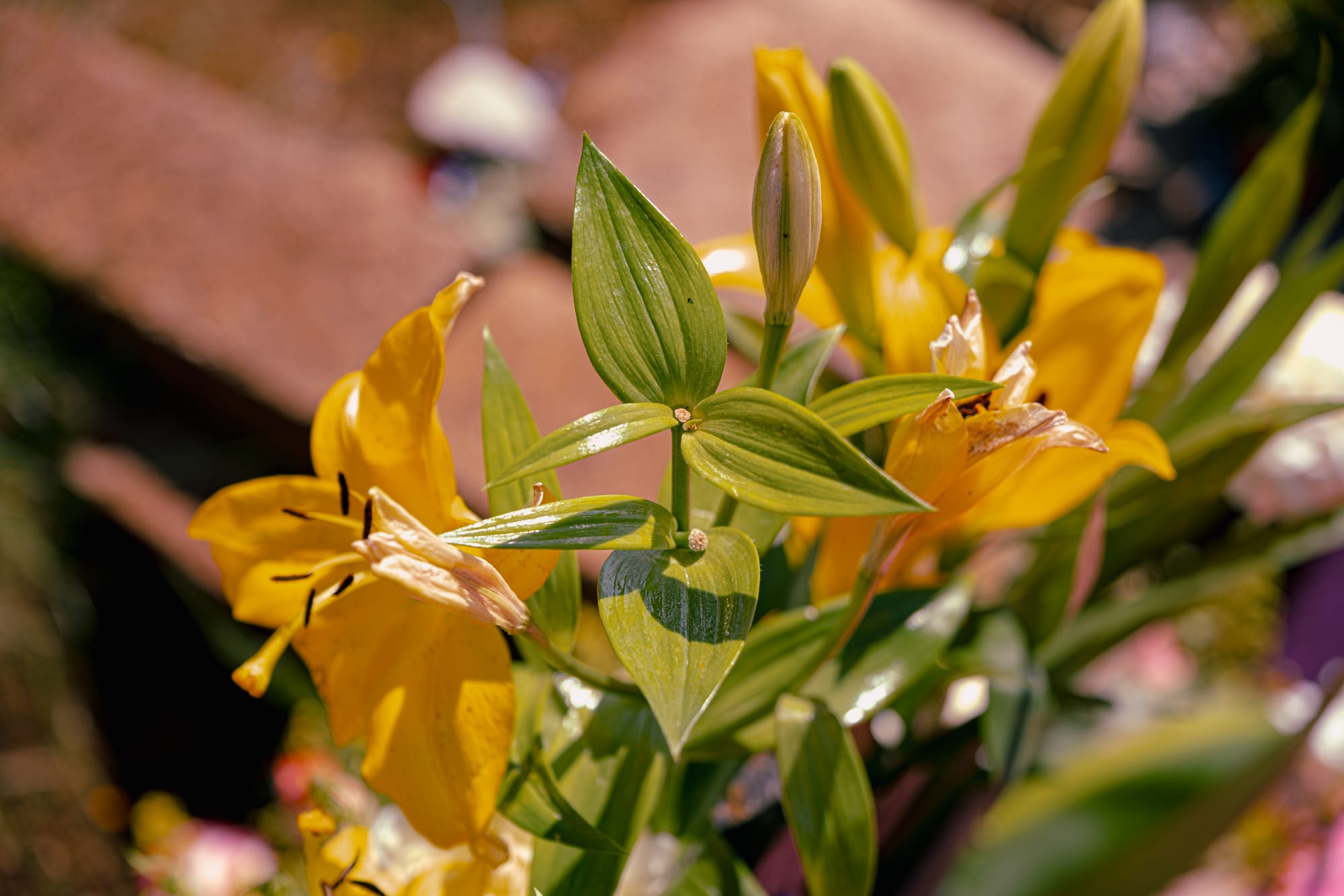
Layers of color shaped by hands and seasons
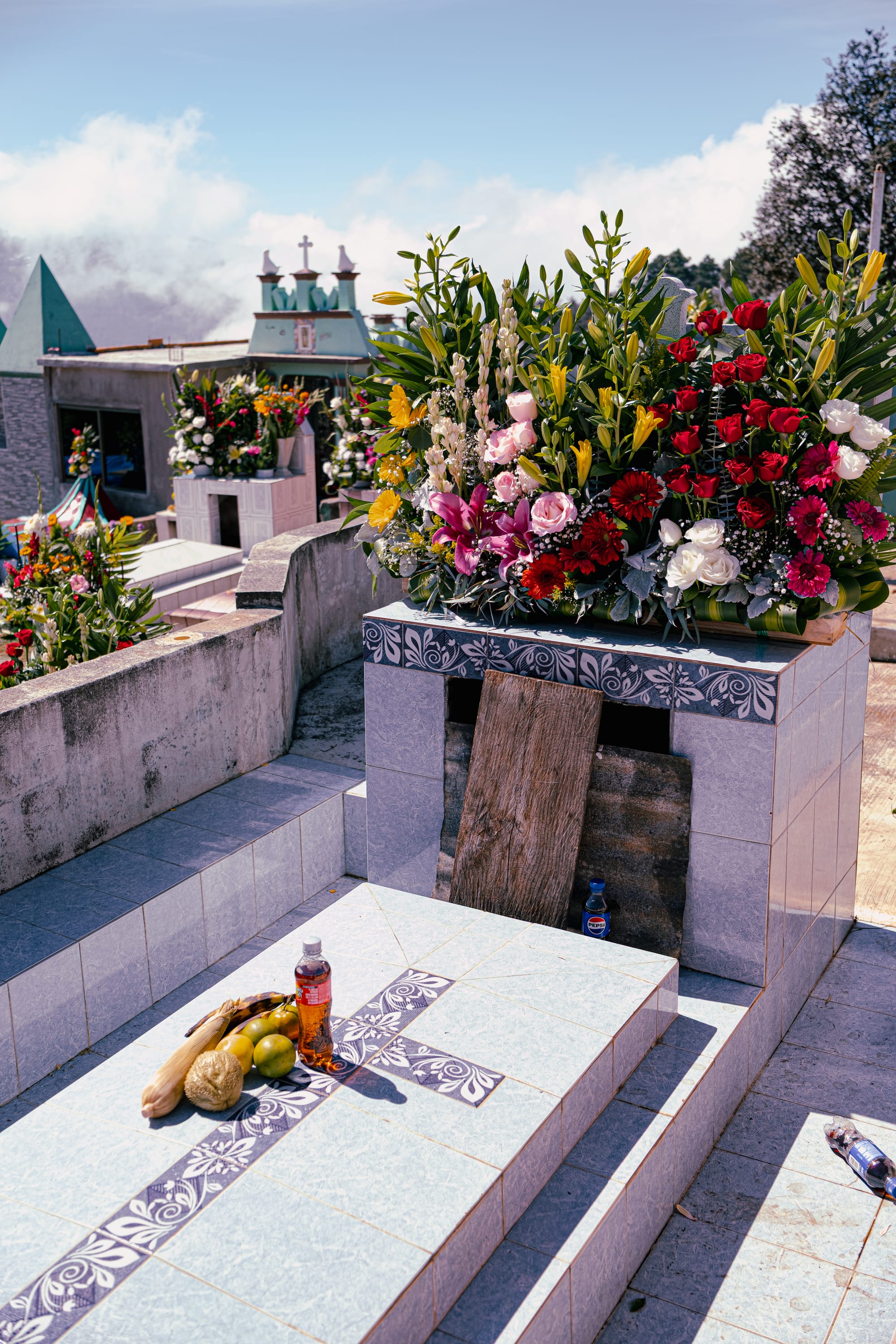
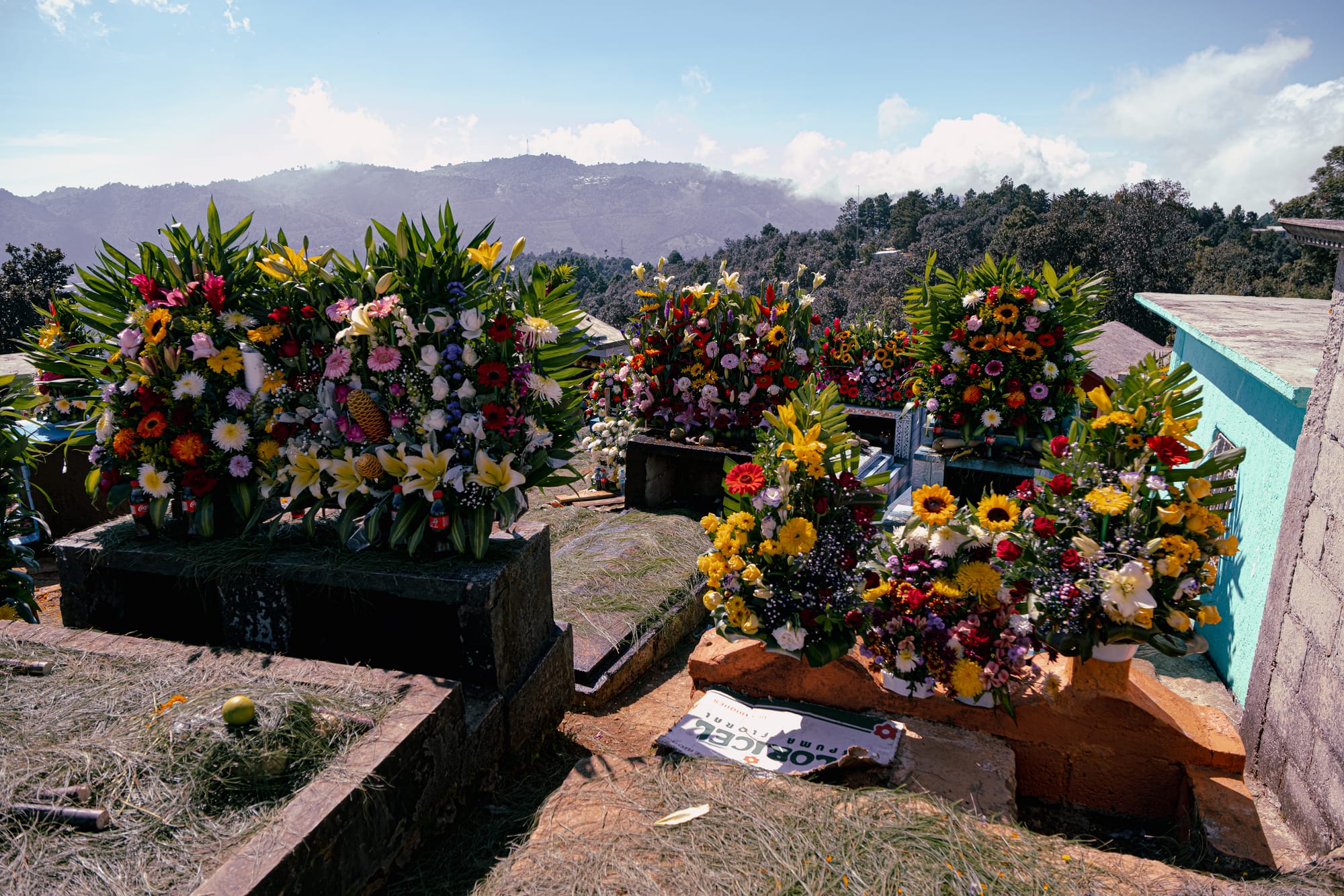
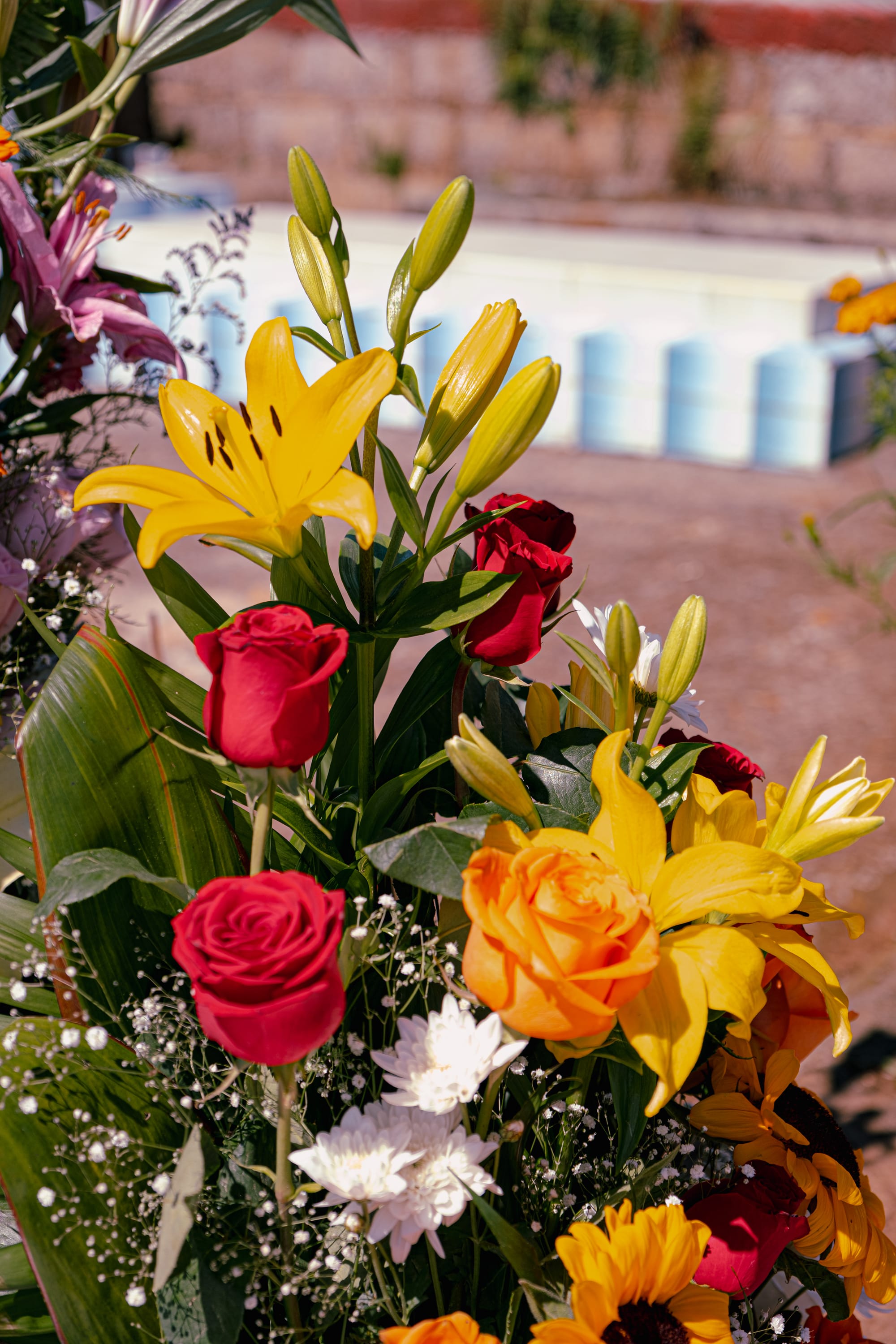
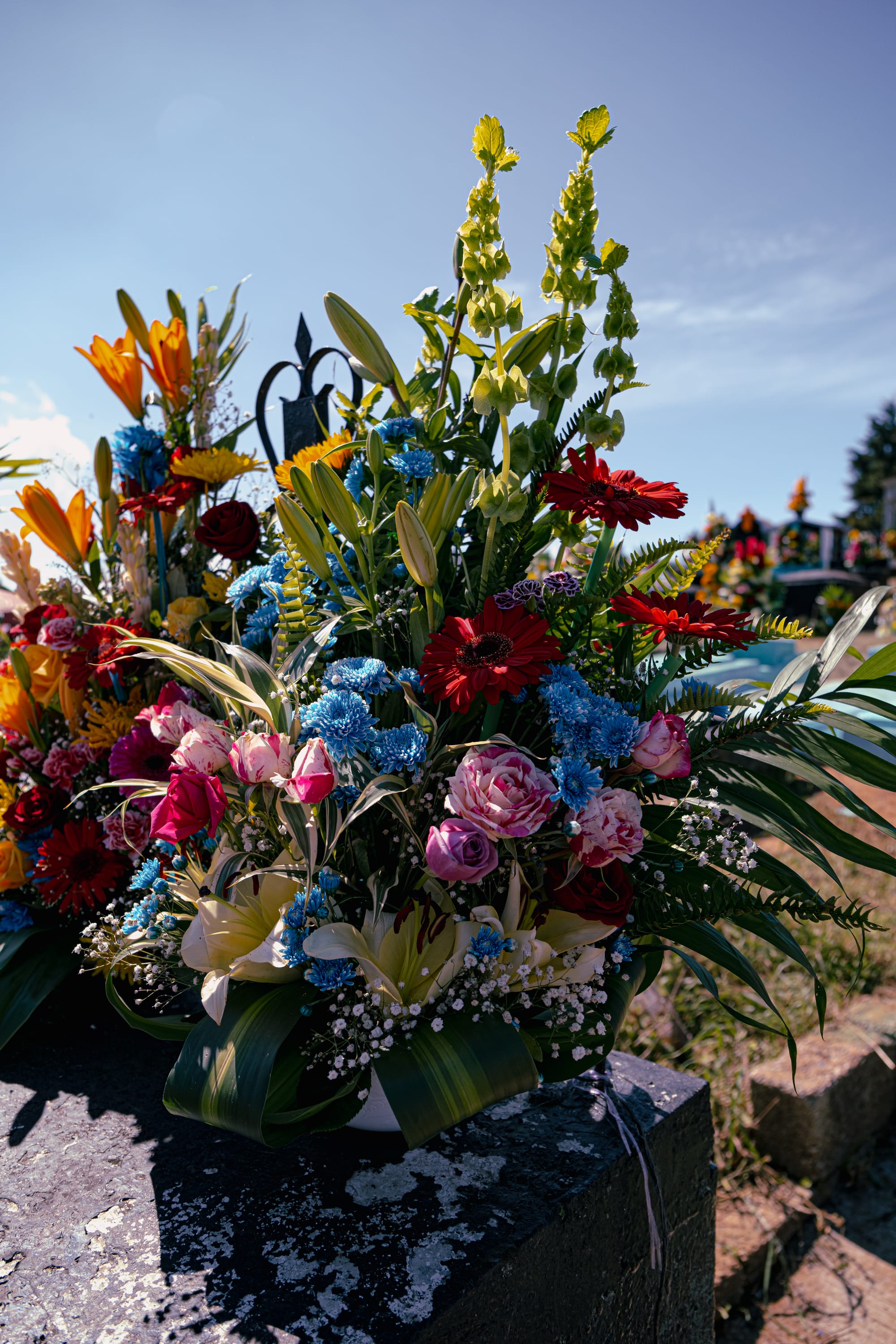
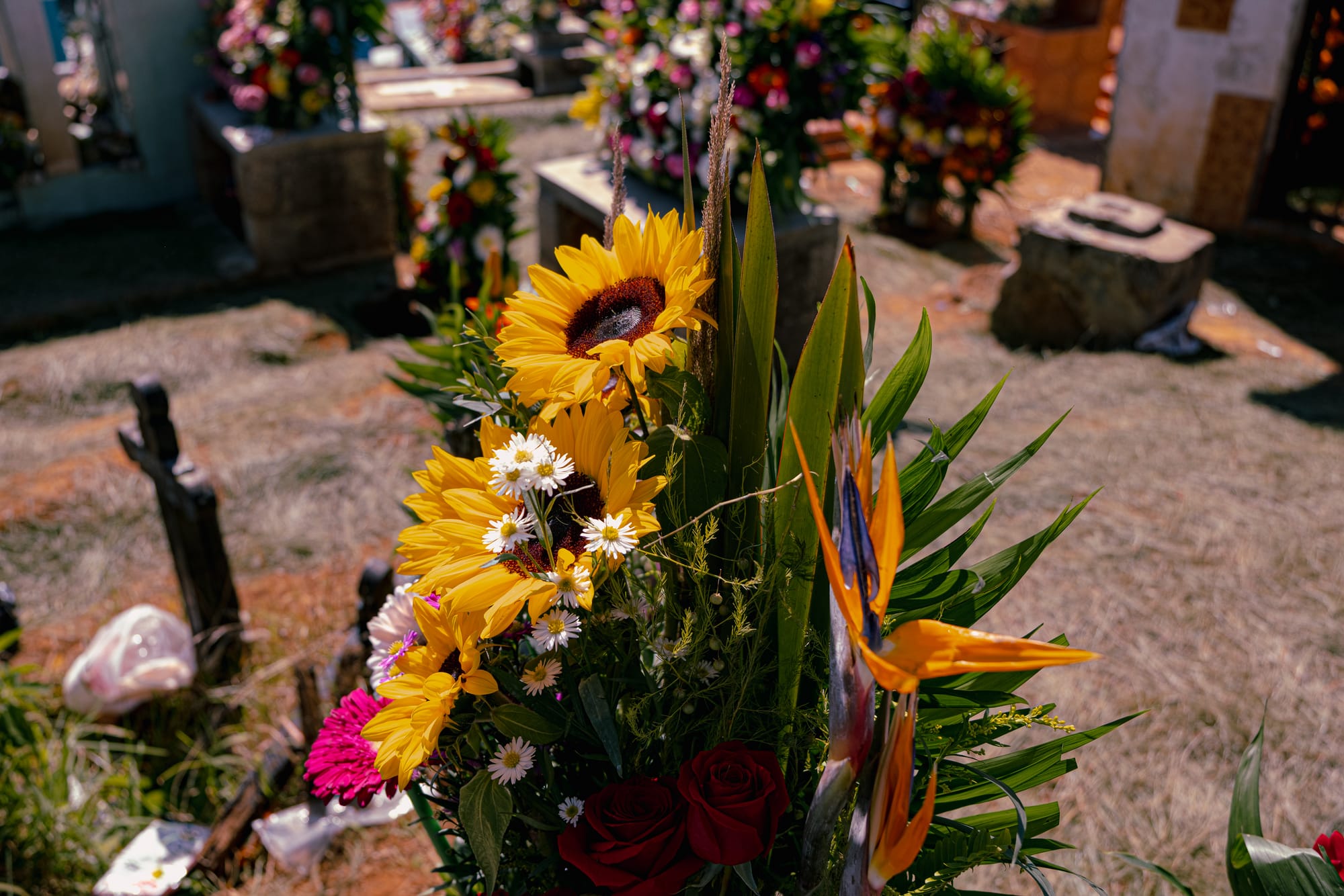
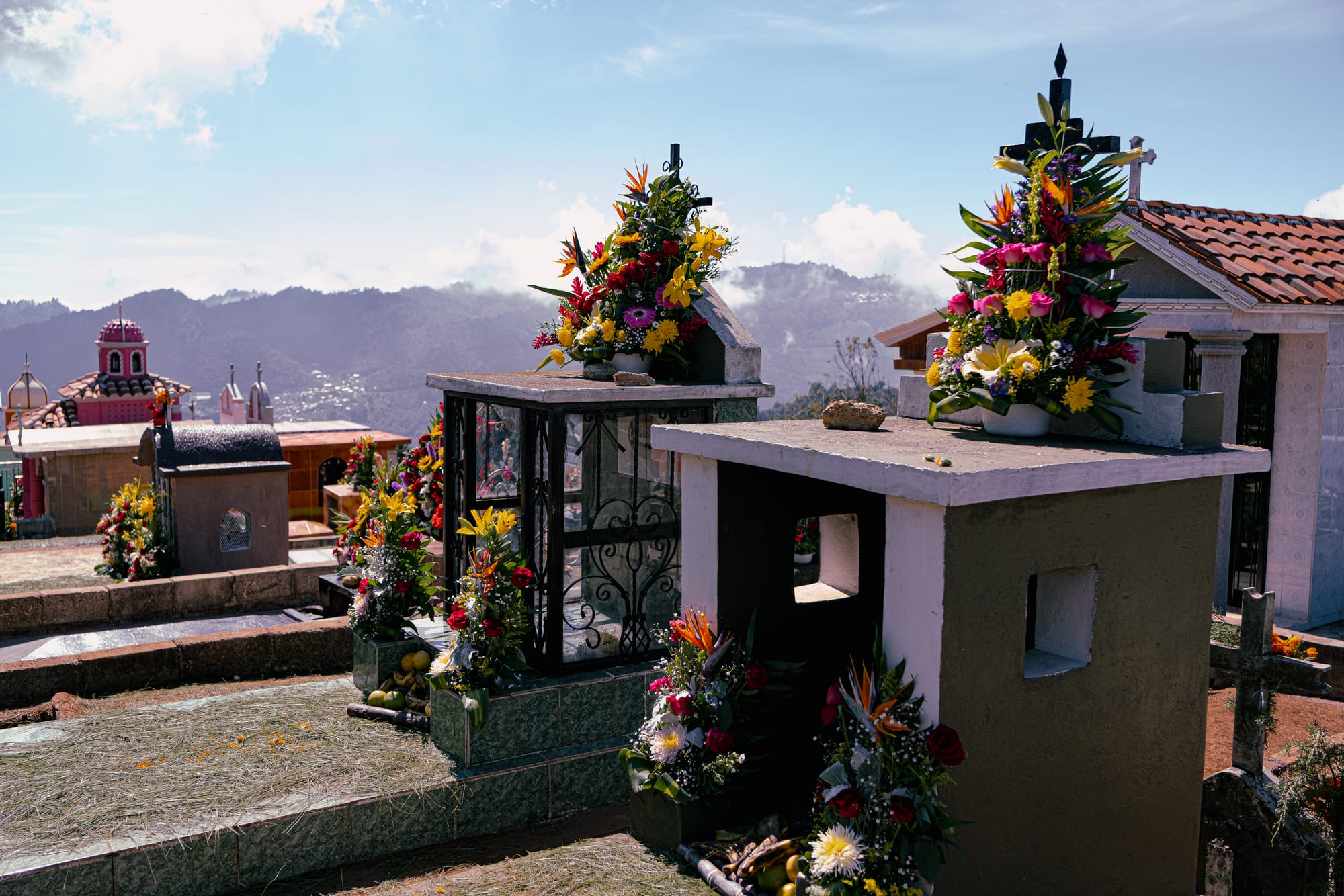
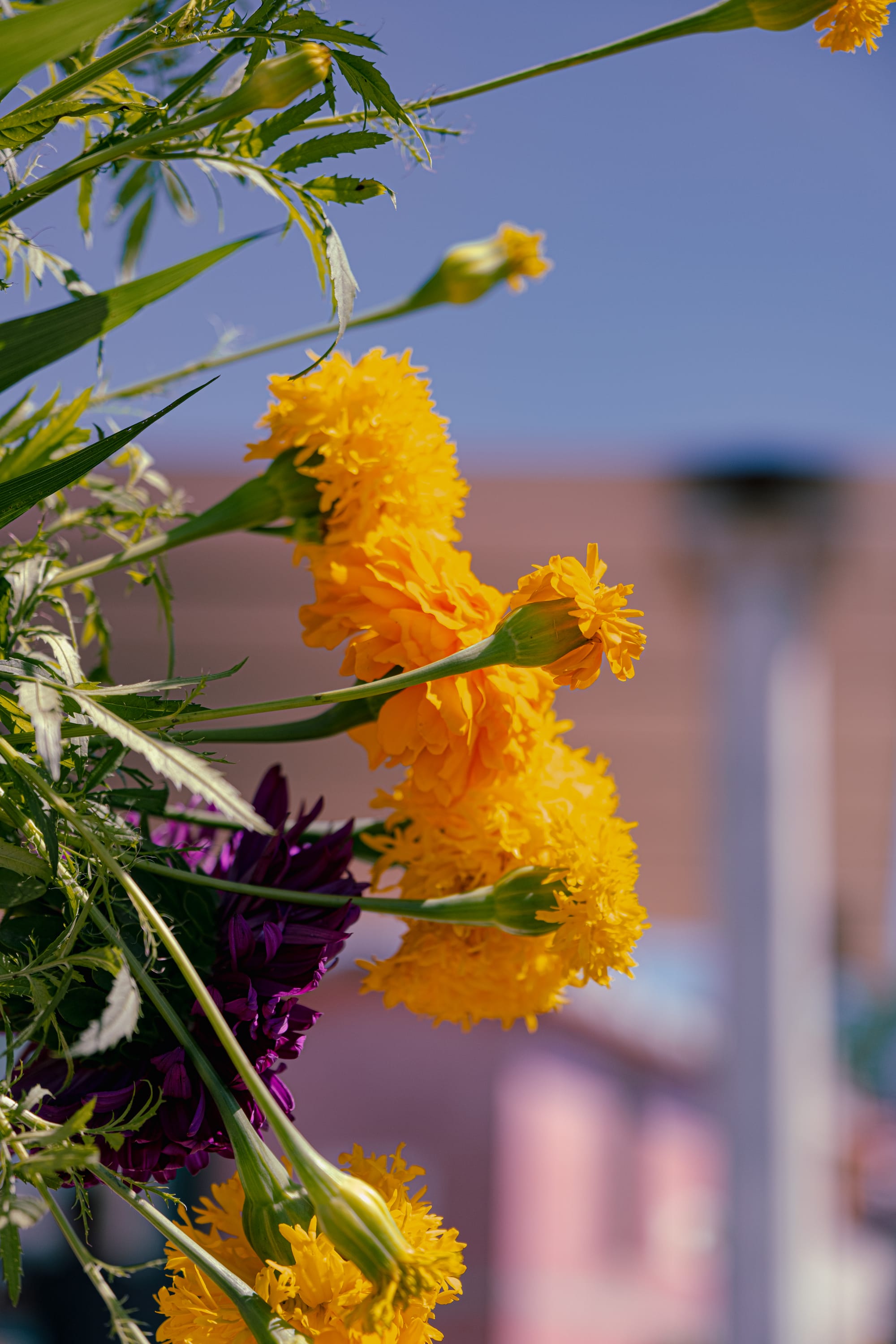
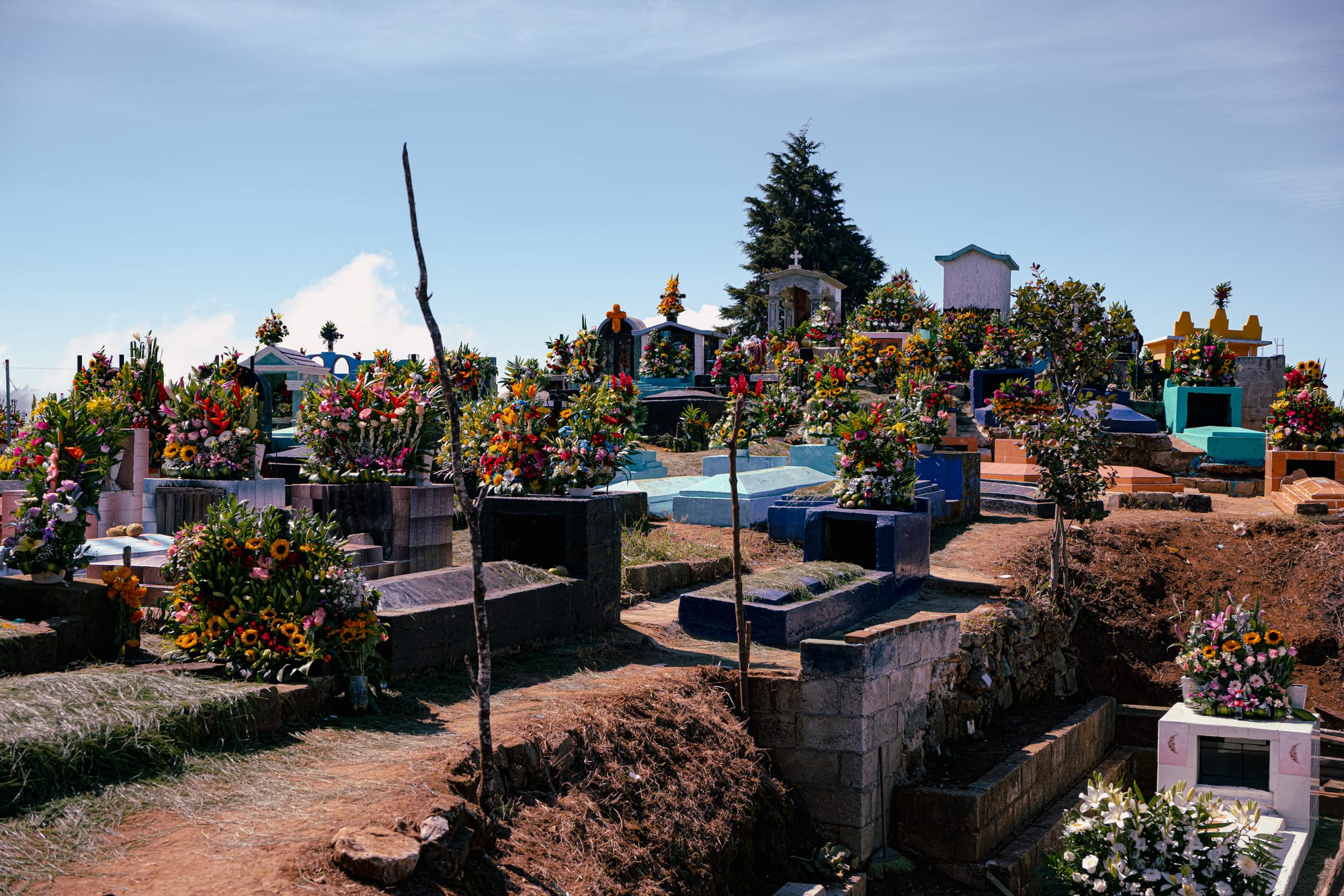
Here, flowers aren’t occasional accents or symbolic gestures. They are abundant, varied, and handled with familiarity. The arrangements we saw were larger and more intricate than anywhere else we visited—layered bouquets, carefully balanced color combinations, vases filled to capacity. Roses, marigolds, lilies, chrysanthemums, gladiolus, cockscomb, and more appeared together, often in combinations that felt deliberate rather than decorative.
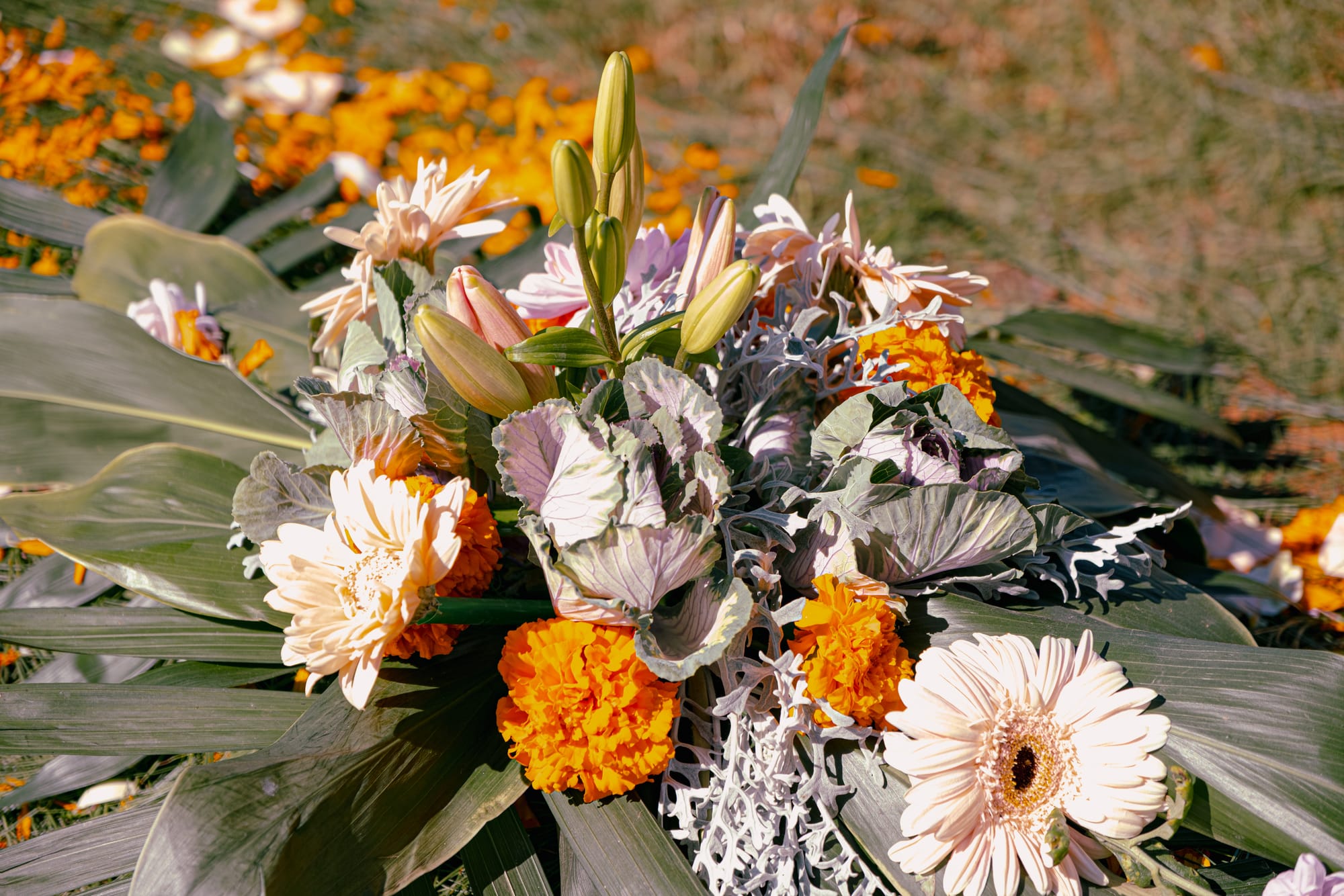
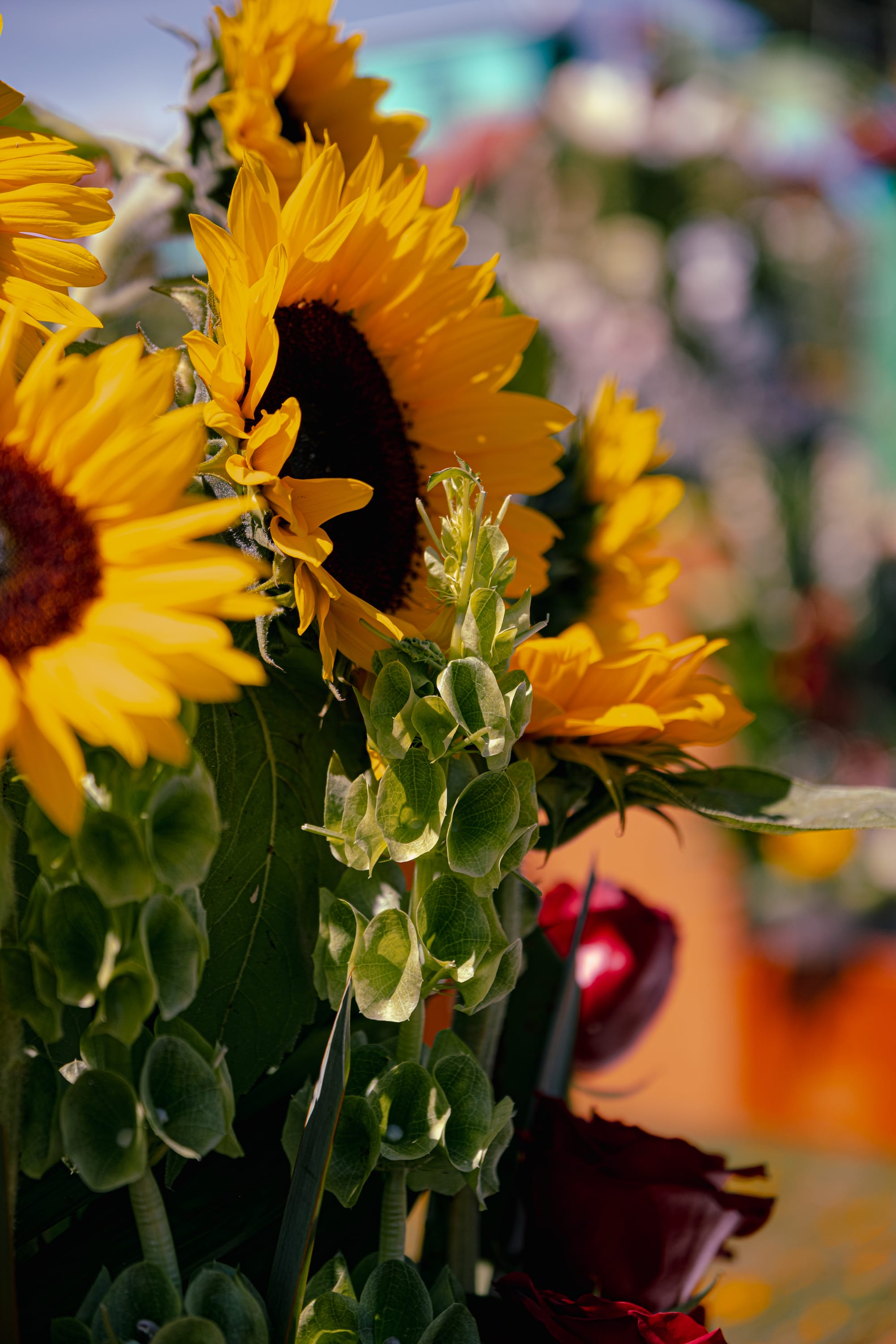
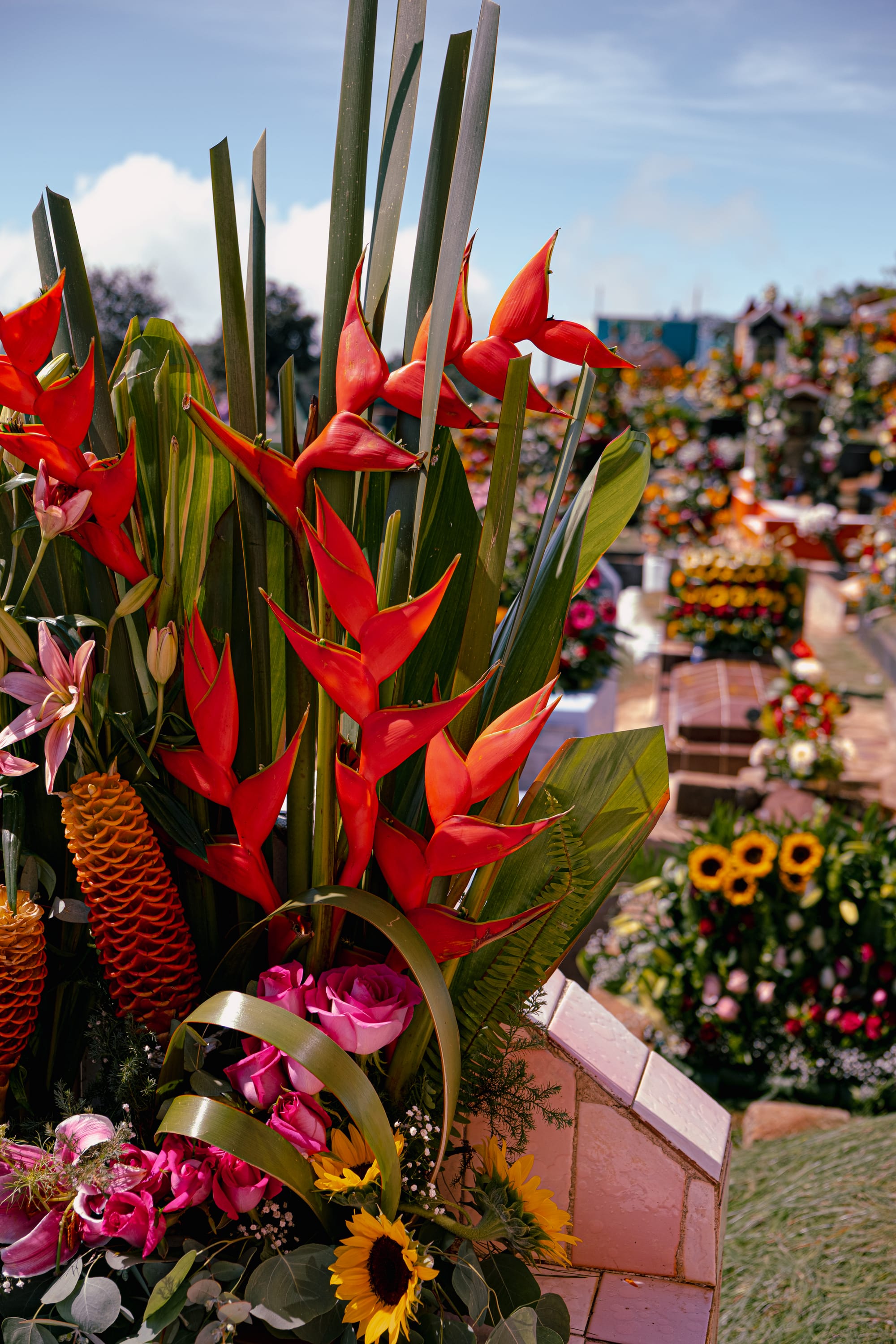
Sunflowers and tropical blooms anchoring the hillside
Some graves were almost entirely covered in flowers. Others featured tall arrangements positioned at the head and foot, creating a kind of visual rhythm as you moved through the space. Even without many people present, it was immediately clear that a great deal of work had gone into preparing this place.
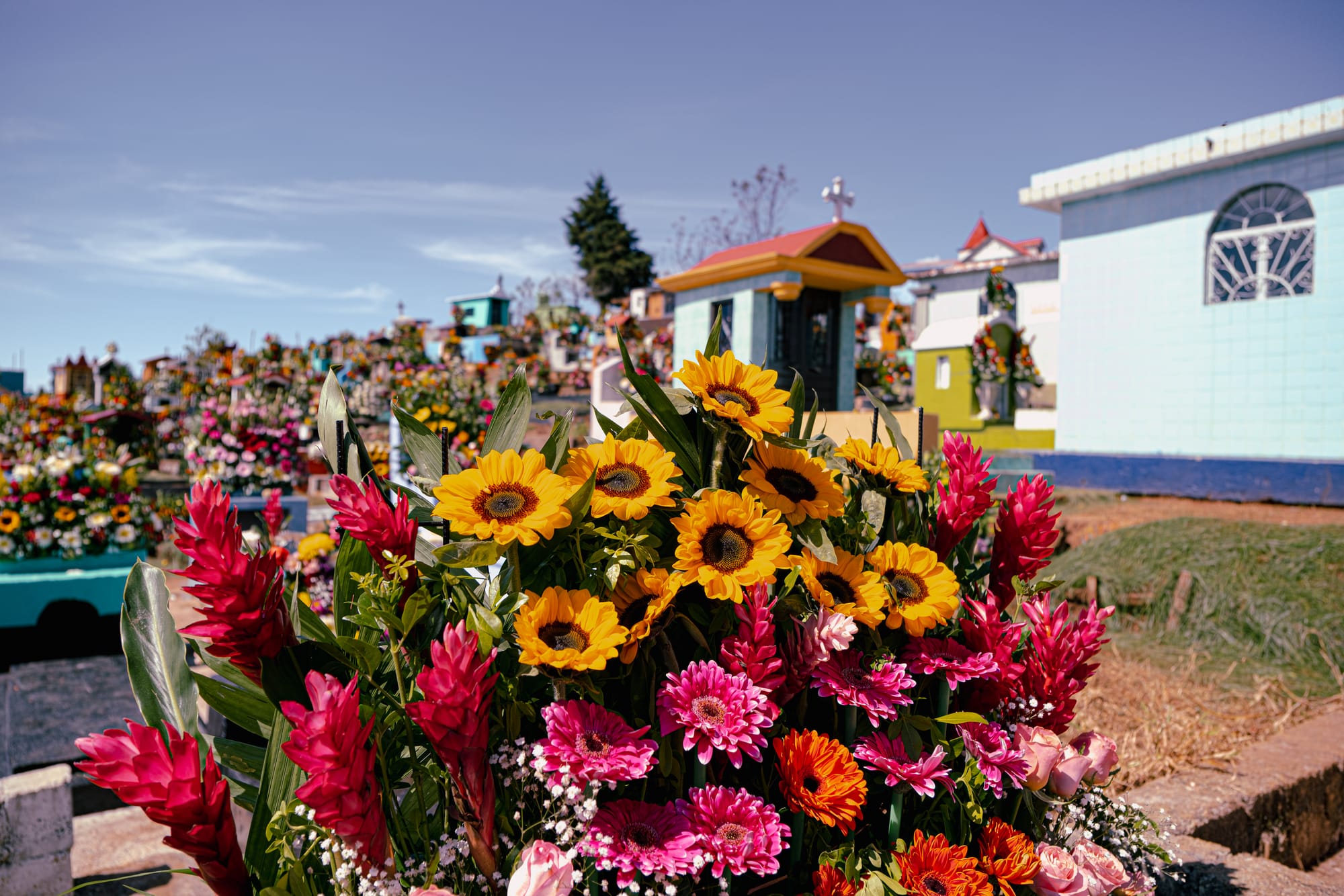
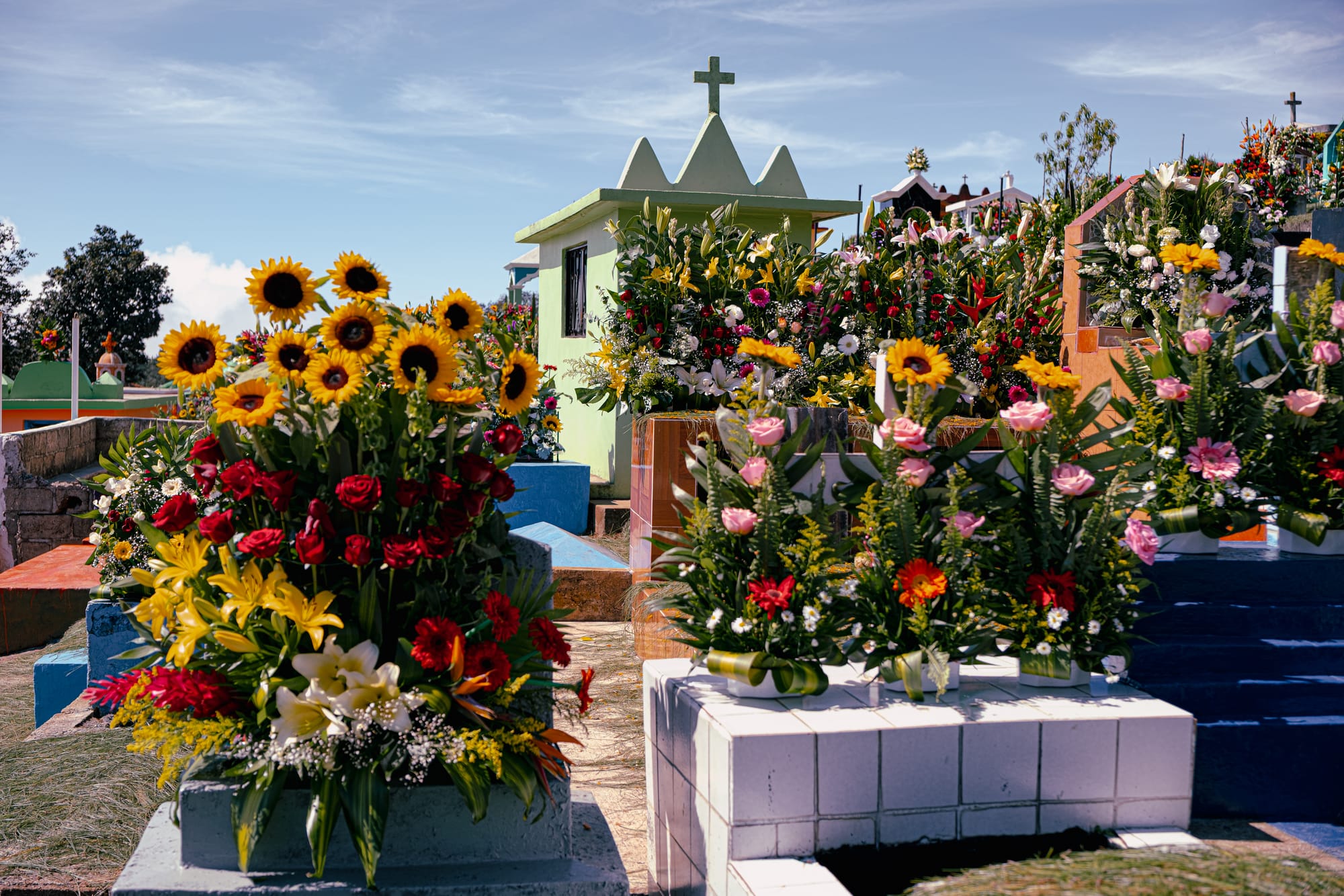
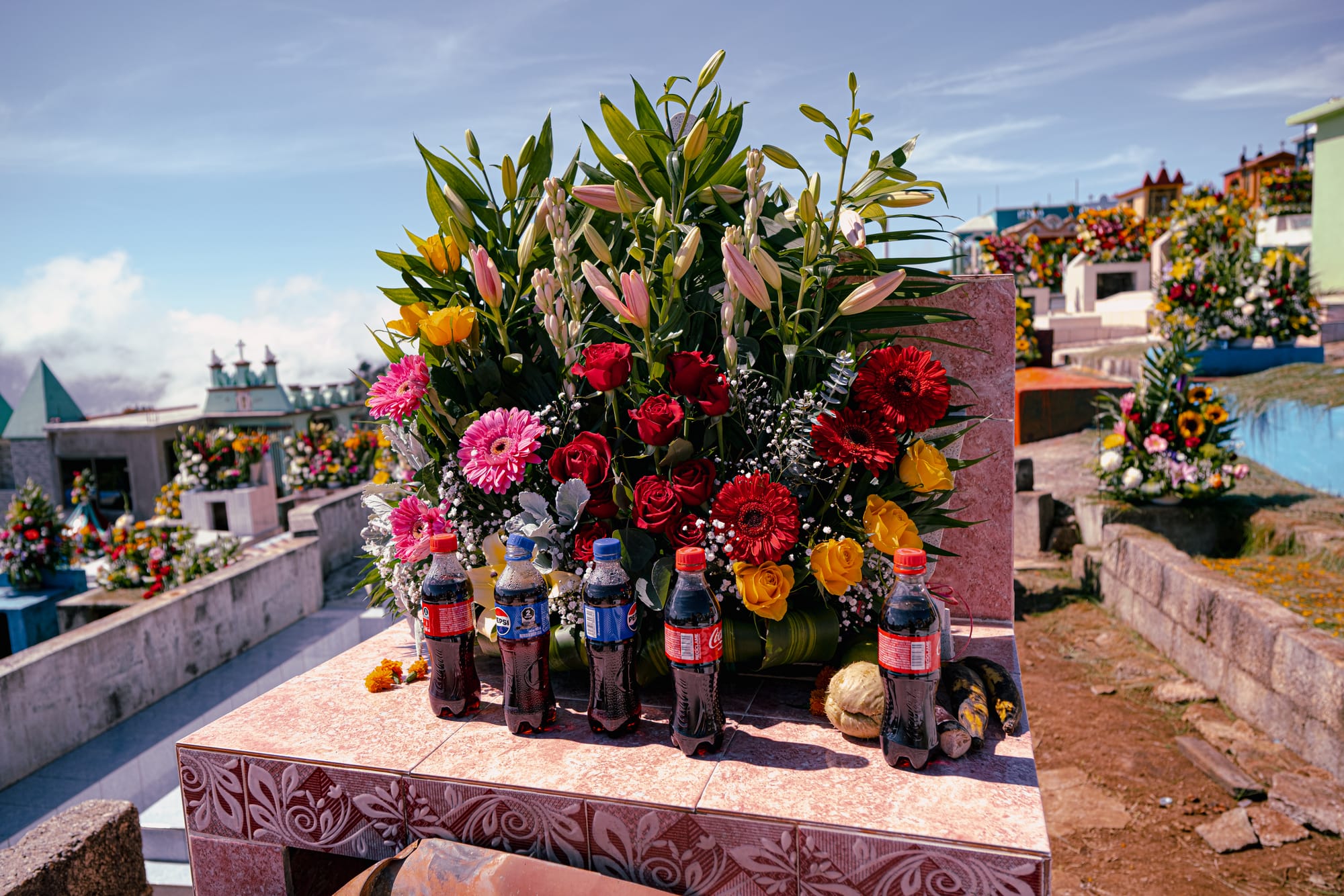
This cemetery doesn’t rely on movement or noise to feel alive. The labor is visible in the arrangements themselves.
The physical layout
Zinacantán Cemetery is built into the hillside, with graves arranged across multiple levels. Narrow paths connect terraces of tombs, and from many points you can see across the entire site—rows of graves stepping down the slope, each one marked by color and flowers.
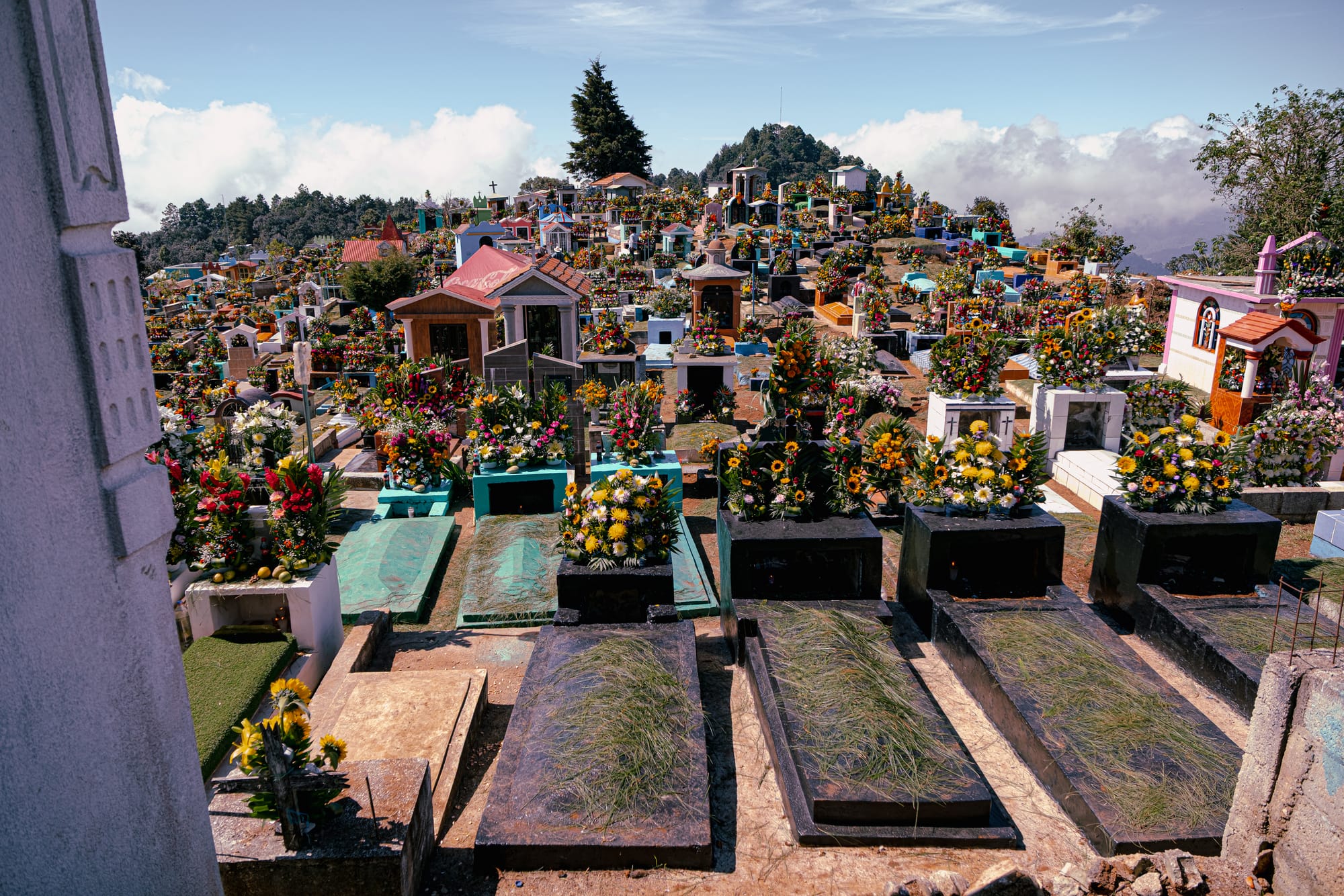
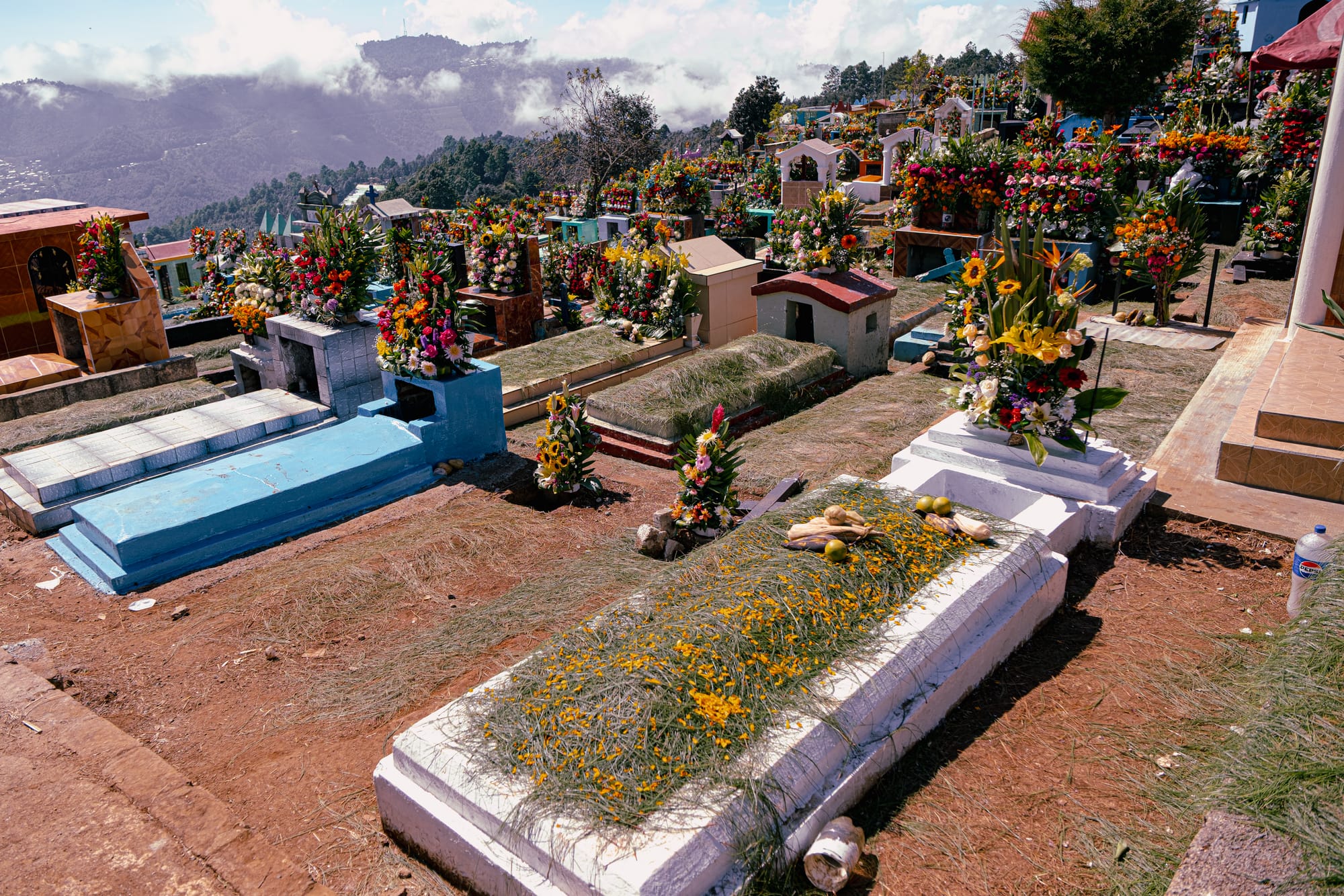
The structures here are more elaborate than those at Romerillo, but less so than those at San Cristóbal's Municipal Pantheon. Some graves are simple and low to the ground. Others are raised, tiled, or framed with concrete borders. A few include small architectural details—arched openings, painted crosses, decorative edges—but overall the emphasis feels less architectural and more spatial.
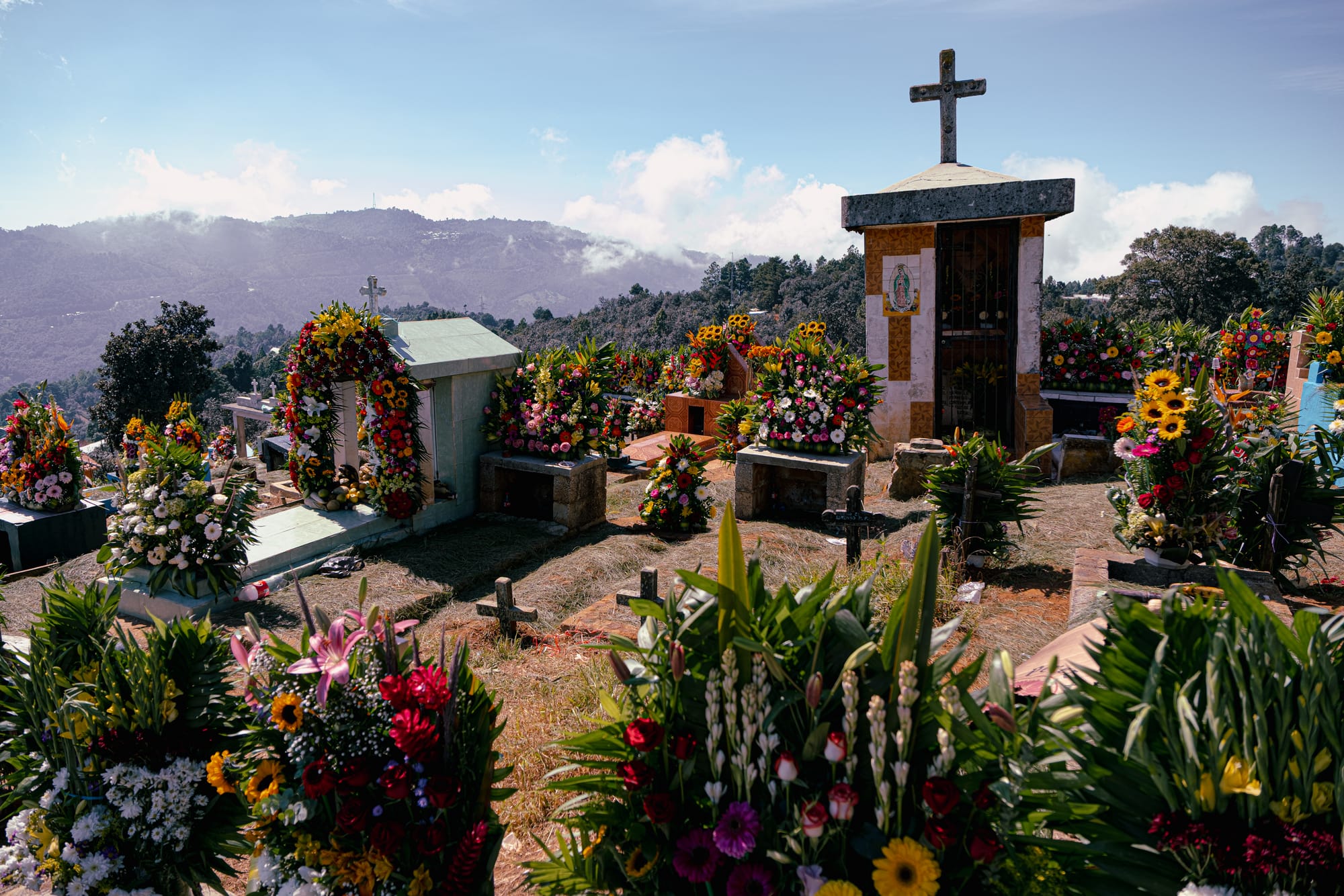
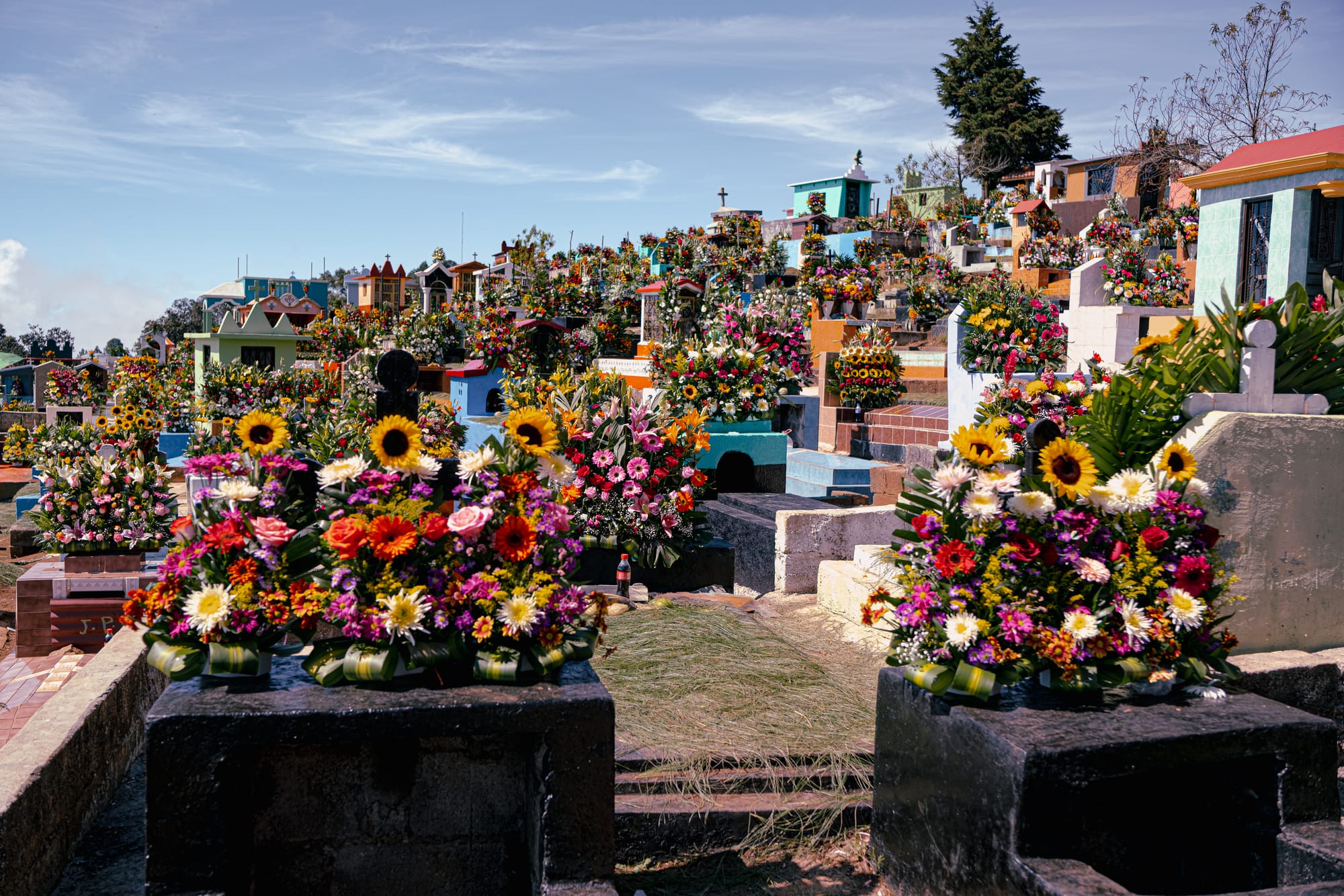
The setting does much of the work.
Standing near the upper levels, you can look out beyond the cemetery to the mountains and sky, then back down across the graves. The scale is expansive, and it slows your movement almost automatically. You pause to take in the view. You adjust your footing. You look up as often as you look down.
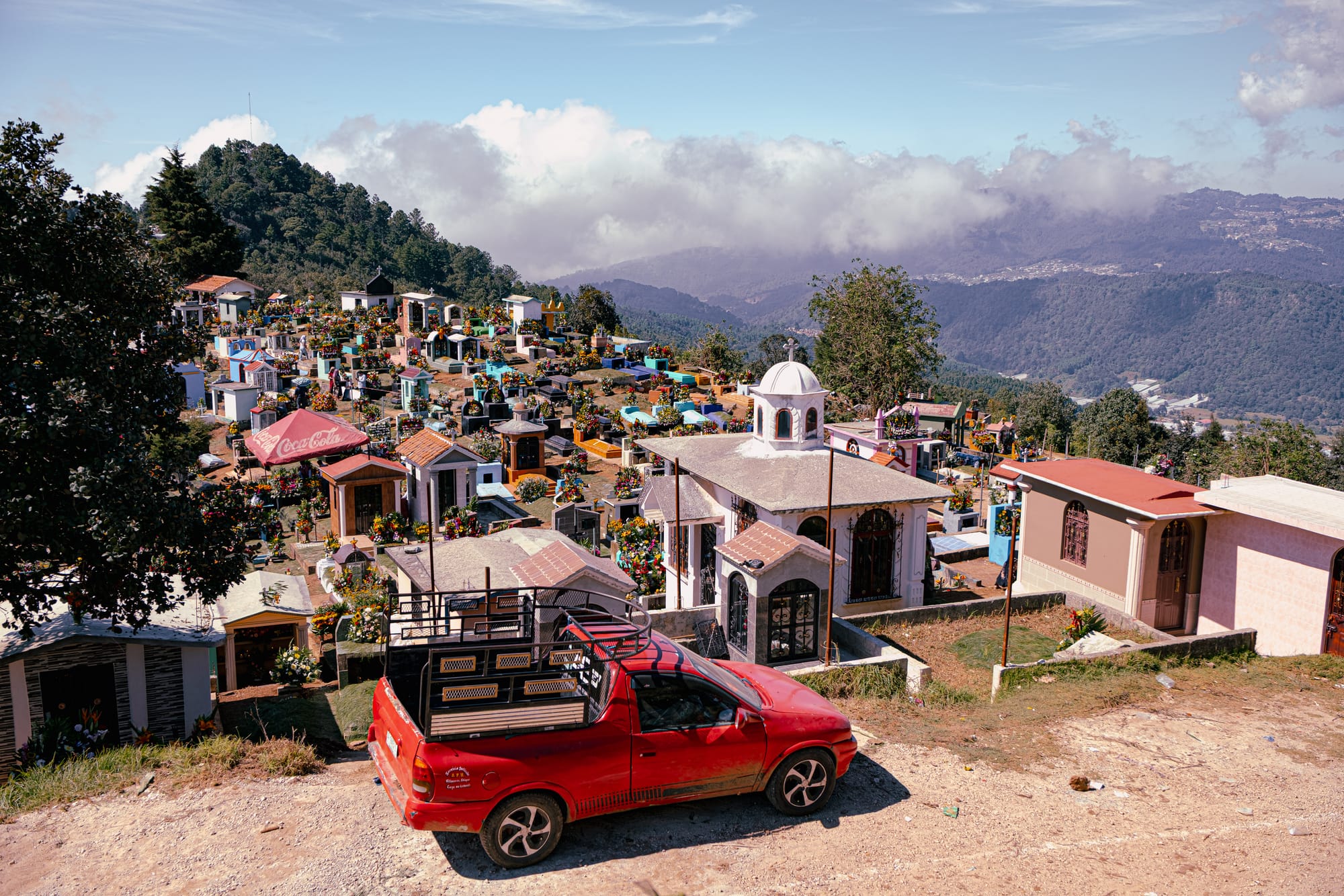
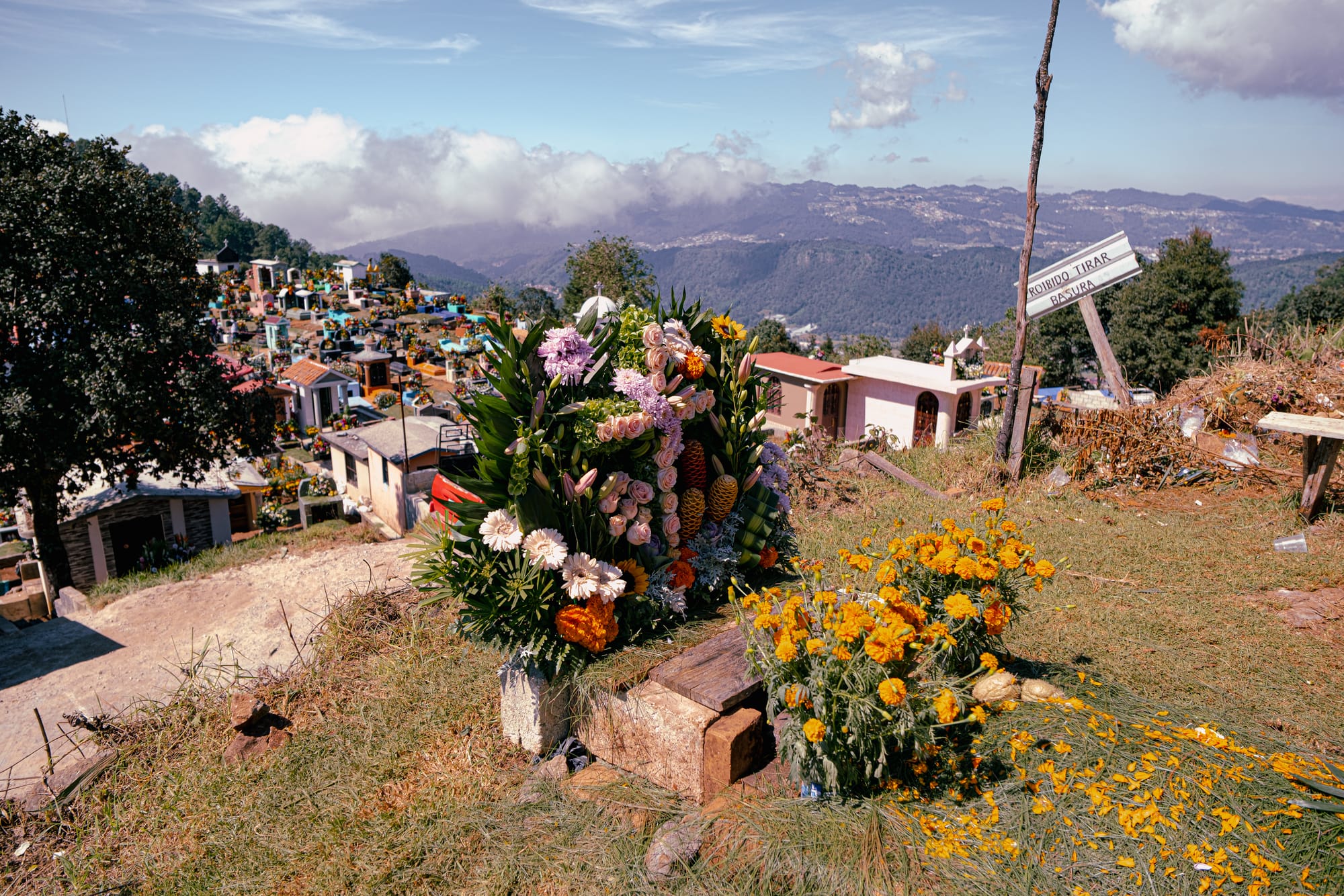
It’s a cemetery that makes you aware of where you are standing.
Midday on November 1st
Given the date and time, we expected more people.
Instead, we saw only a handful of families moving quietly through the cemetery. A few individuals adjusted flowers or straightened arrangements. Some paused briefly at specific graves. Others stood back, hands in pockets, looking on.
There were no bands playing when we arrived. No large gatherings. No one sitting for extended periods of time, at least while we were there.
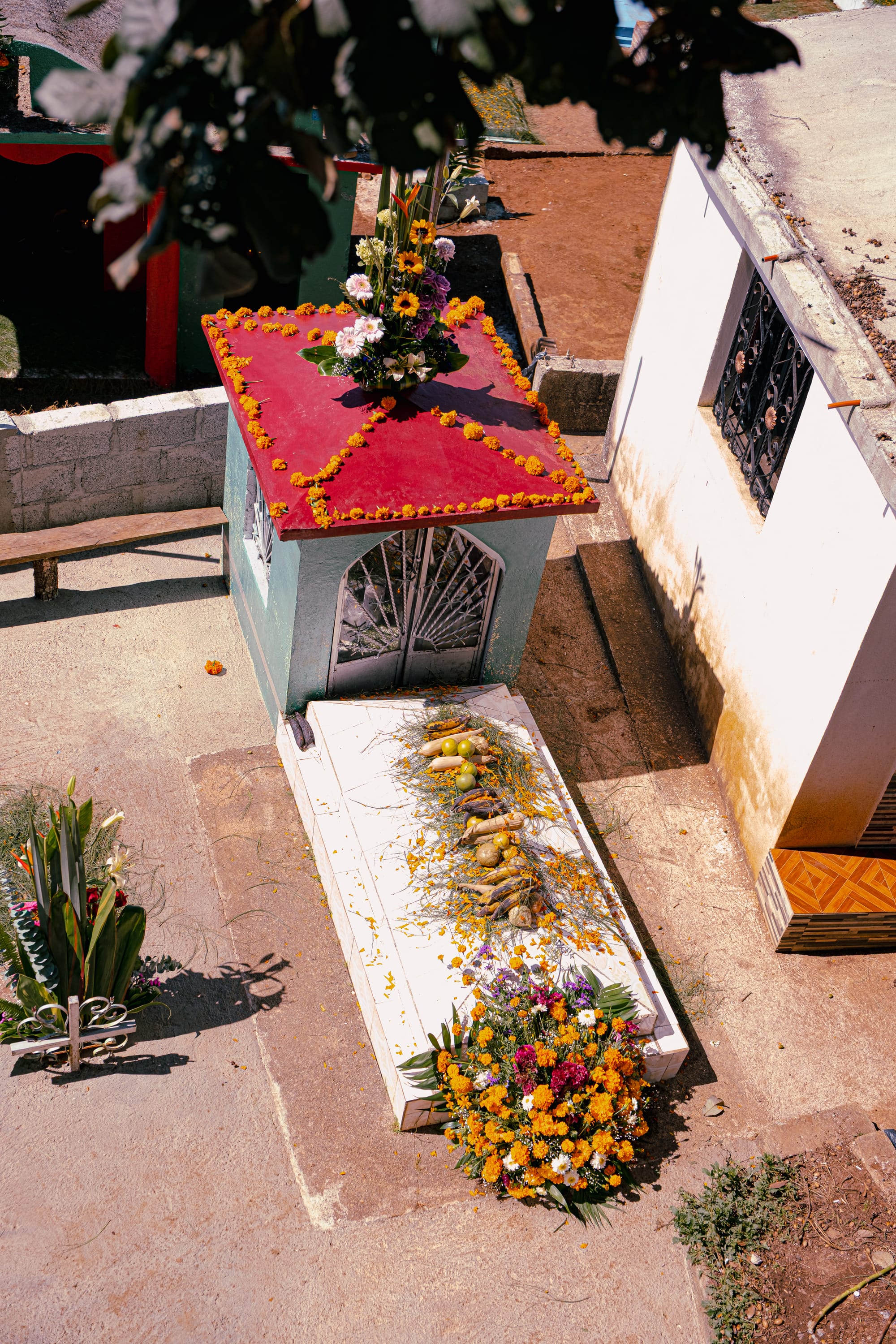
Marigolds framing graves from above
At first, this felt strange. Día de Muertos is often described, and experienced, as a social, time-intensive event. But here, at least in the middle of the day, the energy was restrained.
We don’t know whether this was due to timing, or whether Zinacantán observes the cemetery rituals earlier in the morning or later in the evening. It’s also possible that much of the day’s activity happens elsewhere—within homes, churches, or family spaces—and that the cemetery plays a quieter role.
Attention without urgency
Without crowds to navigate, we moved slowly.
The lack of people made it easier to notice details: how certain colors were repeated across multiple graves, suggesting shared preferences or local styles; how some arrangements leaned toward symmetry while others embraced abundance; how pine needles were laid down carefully beneath flowers, creating a soft, green base.
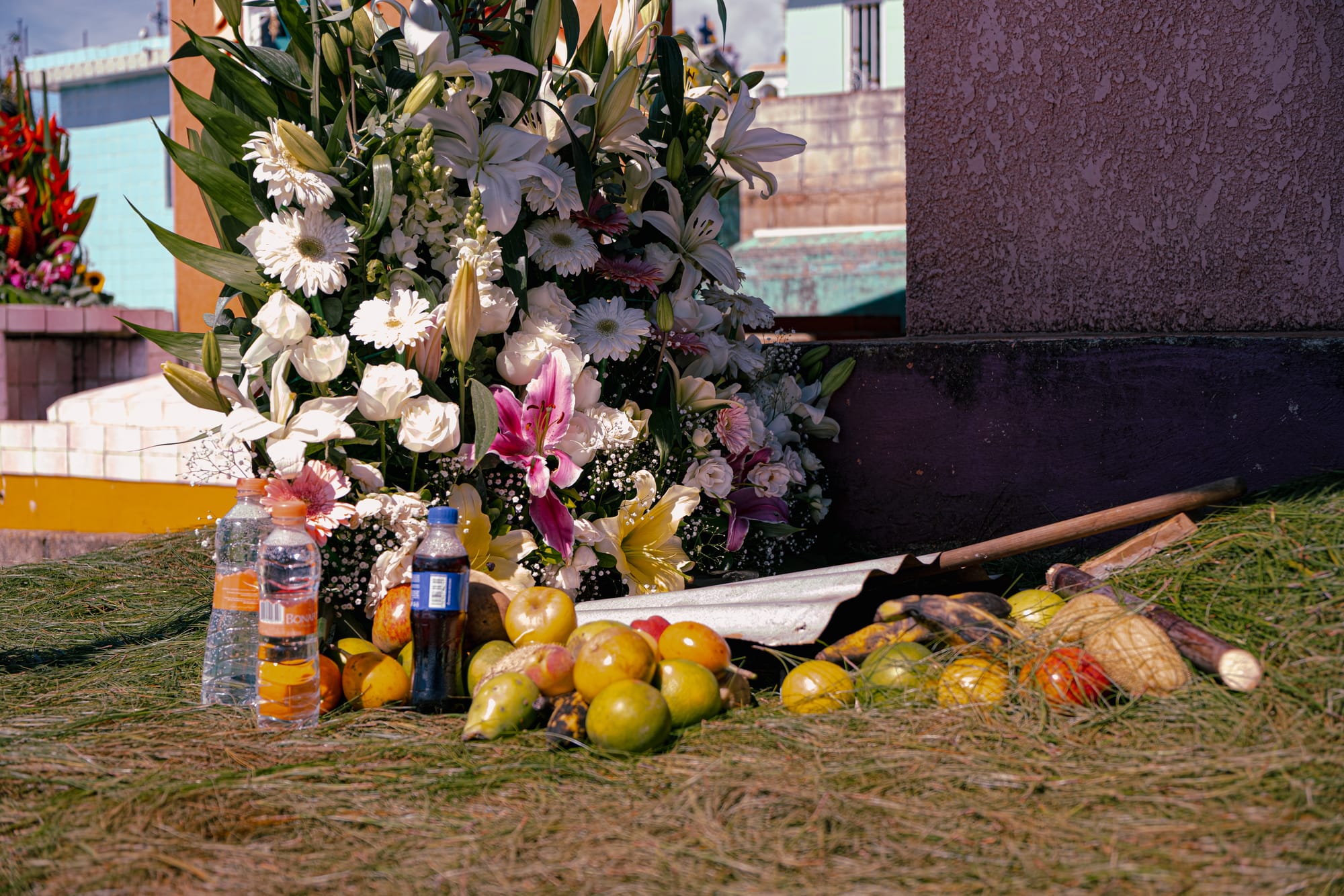
We noticed that many of the vases and containers were reused—plastic bottles, repurposed jars, and simple holders. The focus was clearly on the flowers themselves, not the vessels.
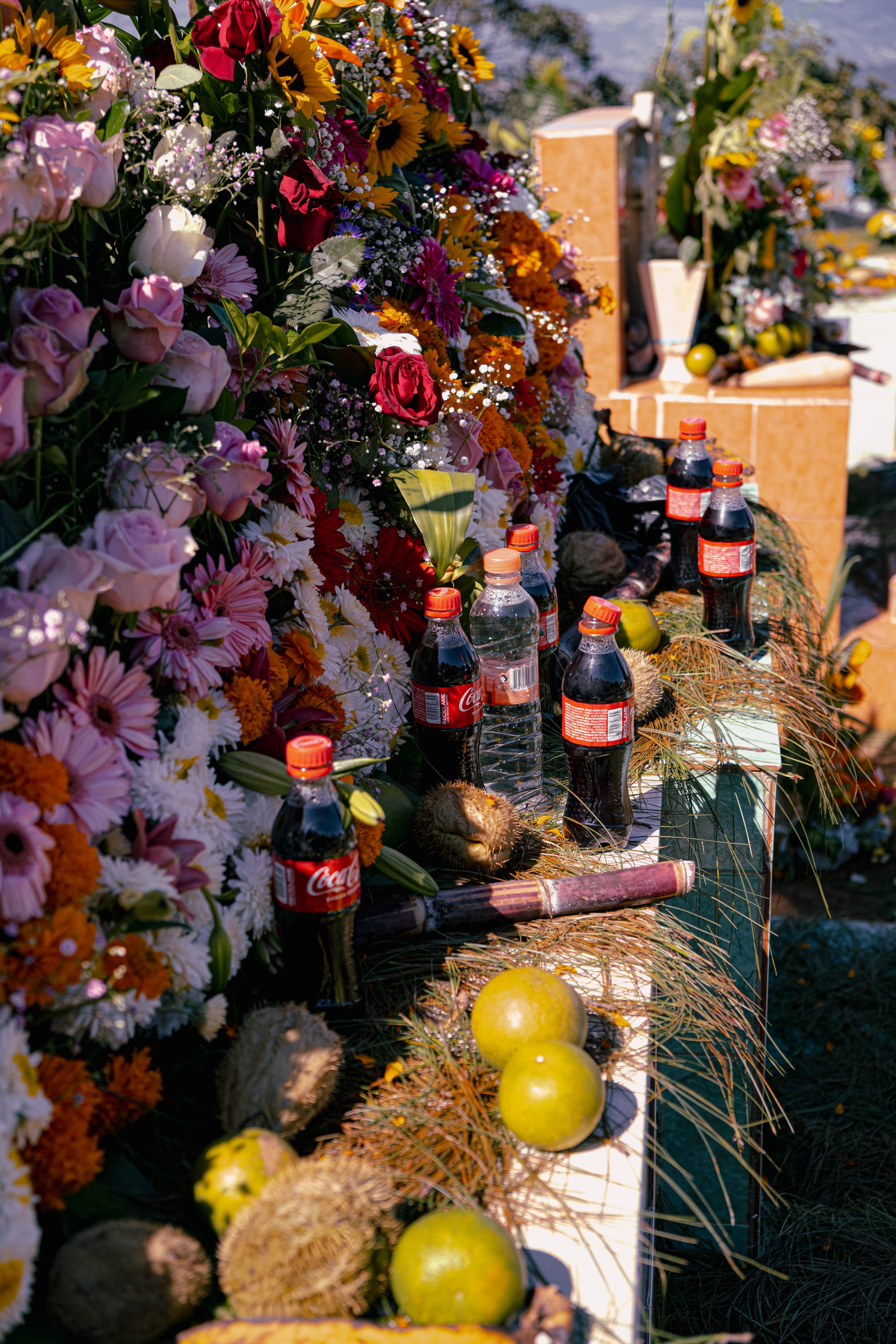
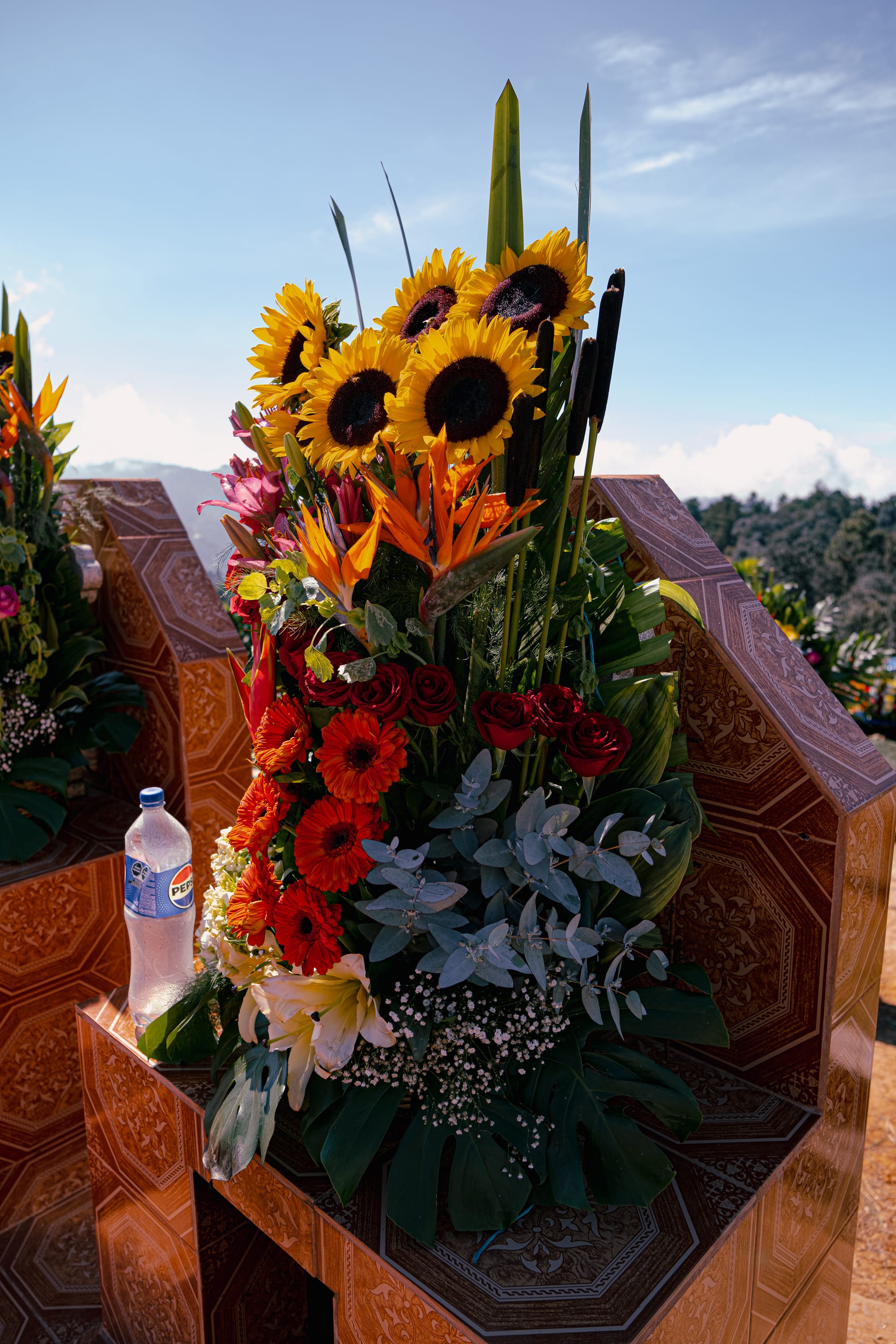
Offerings set out generously, color upon color
There was also a noticeable absence of cleanup while we were there. The arrangements felt freshly placed, not yet disturbed or trampled. Petals were intact. Pine needles still formed clear patterns. It gave the impression that this was a moment shortly after preparation, before the day had fully unfolded.
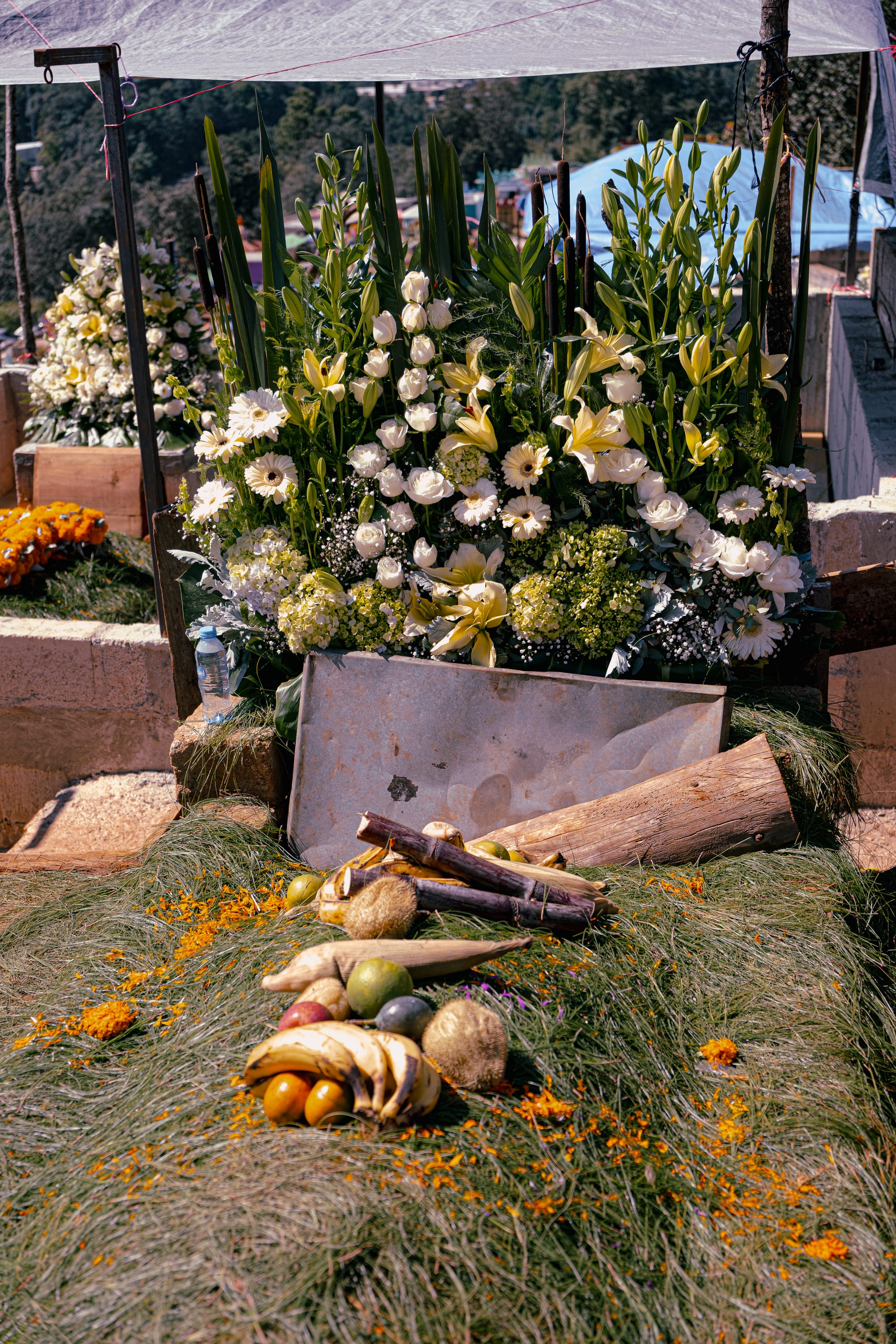
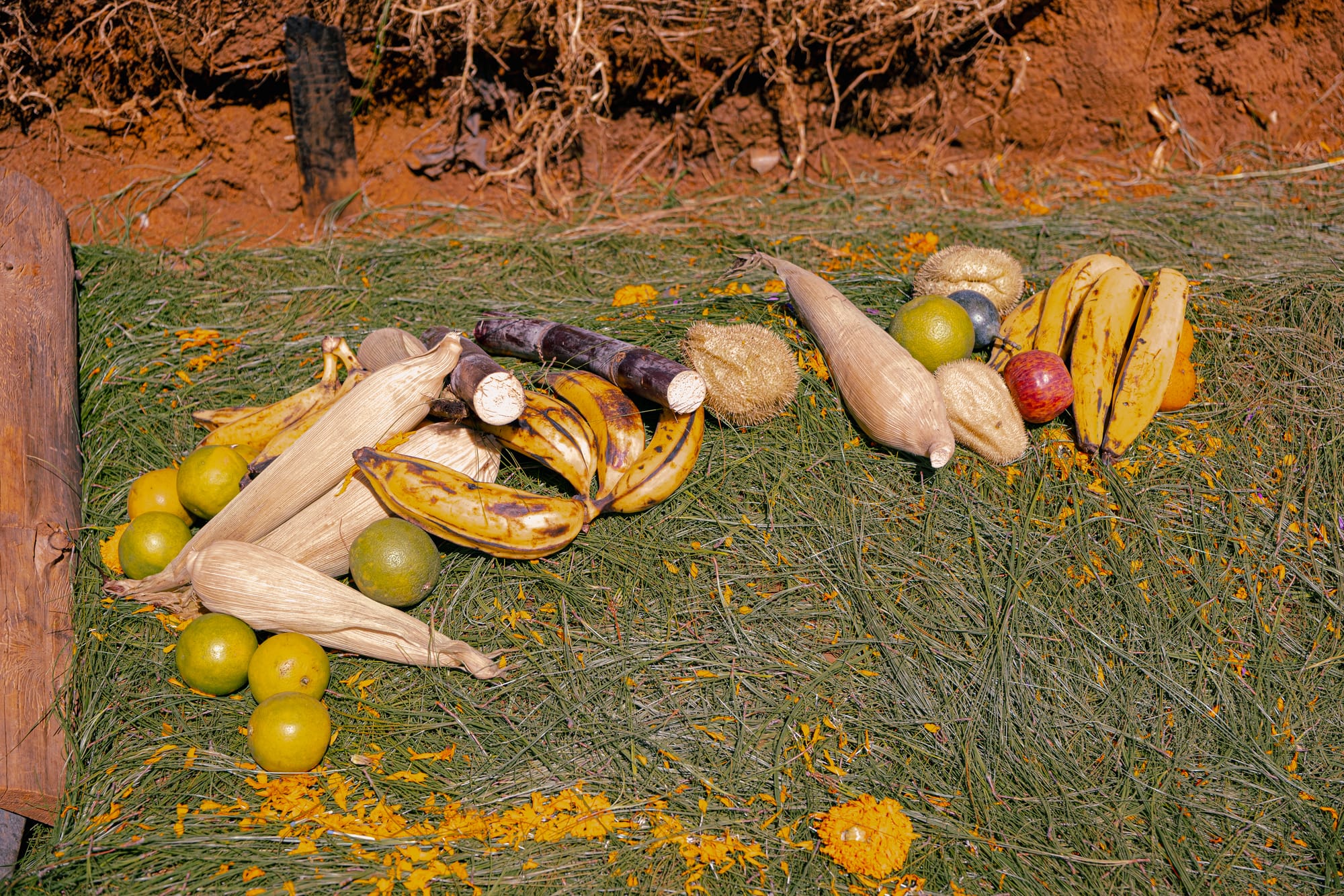
Food offerings resting quietly on pine needles
That timing made the cemetery feel suspended between effort and return.
Labor made visible
One of the most striking things about Zinacantán Cemetery is how clearly it reflects the labor behind Día de Muertos.
Flowers don’t appear here as abstractions or symbols. They appear as products of local work—grown, cut, transported, and arranged by people who understand their weight, fragility, and lifespan. You can see that understanding in how the arrangements are built.
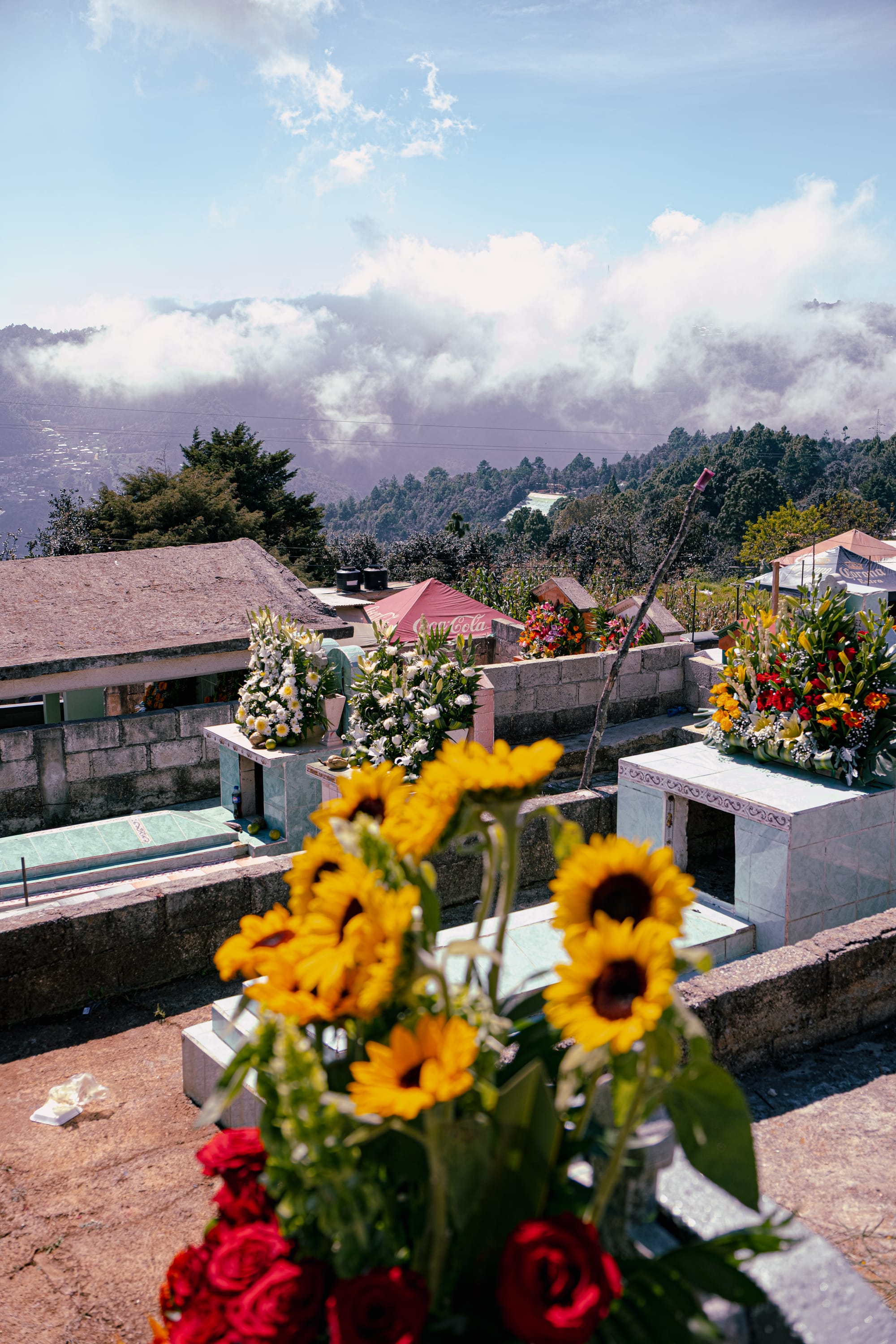
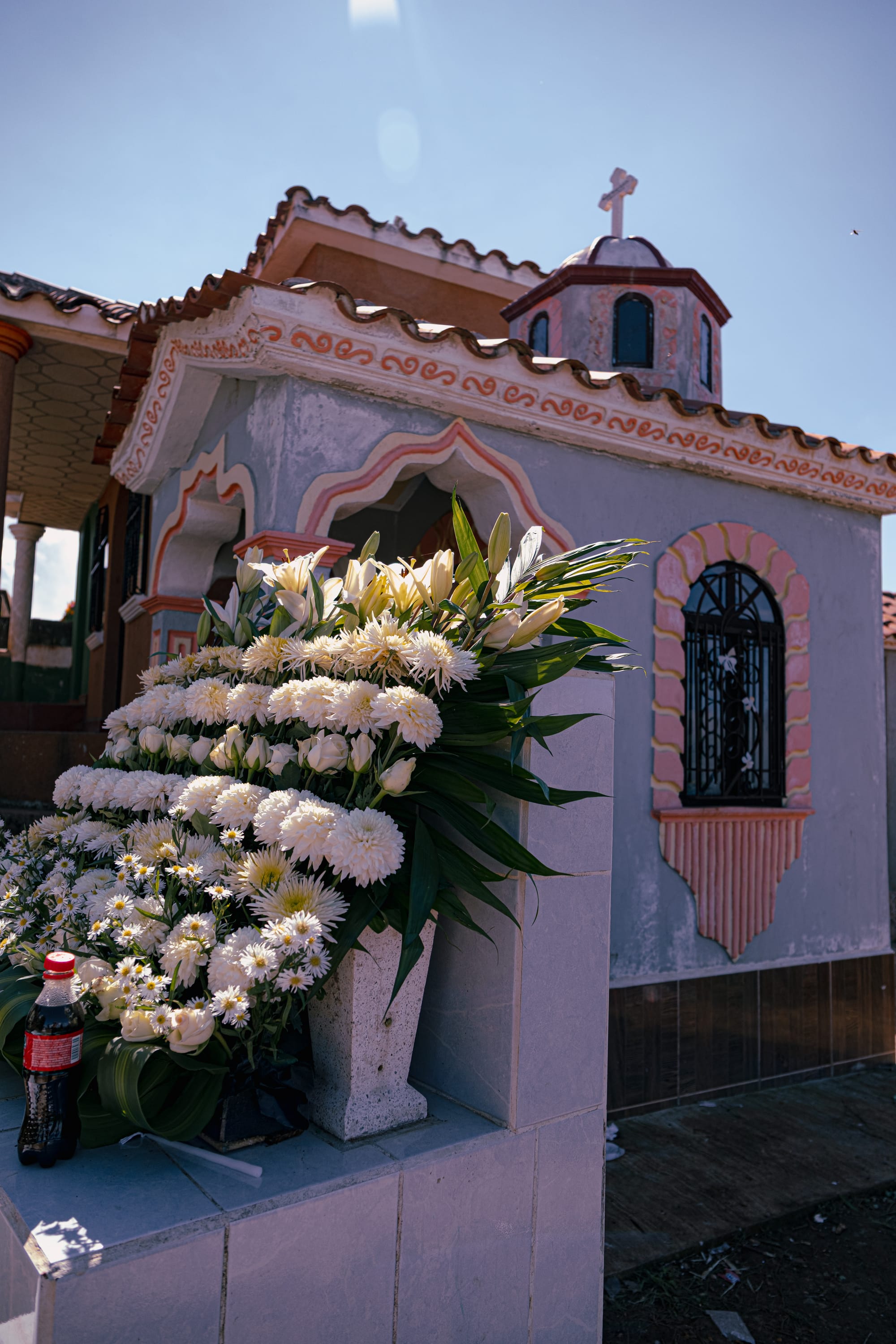
Quiet floral arrangements against sky and stone
The variety of flowers also speaks to access. This is not a place where a single flower dominates. Instead, you see range and experimentation. Different textures, heights, and densities coexist within the same grave.
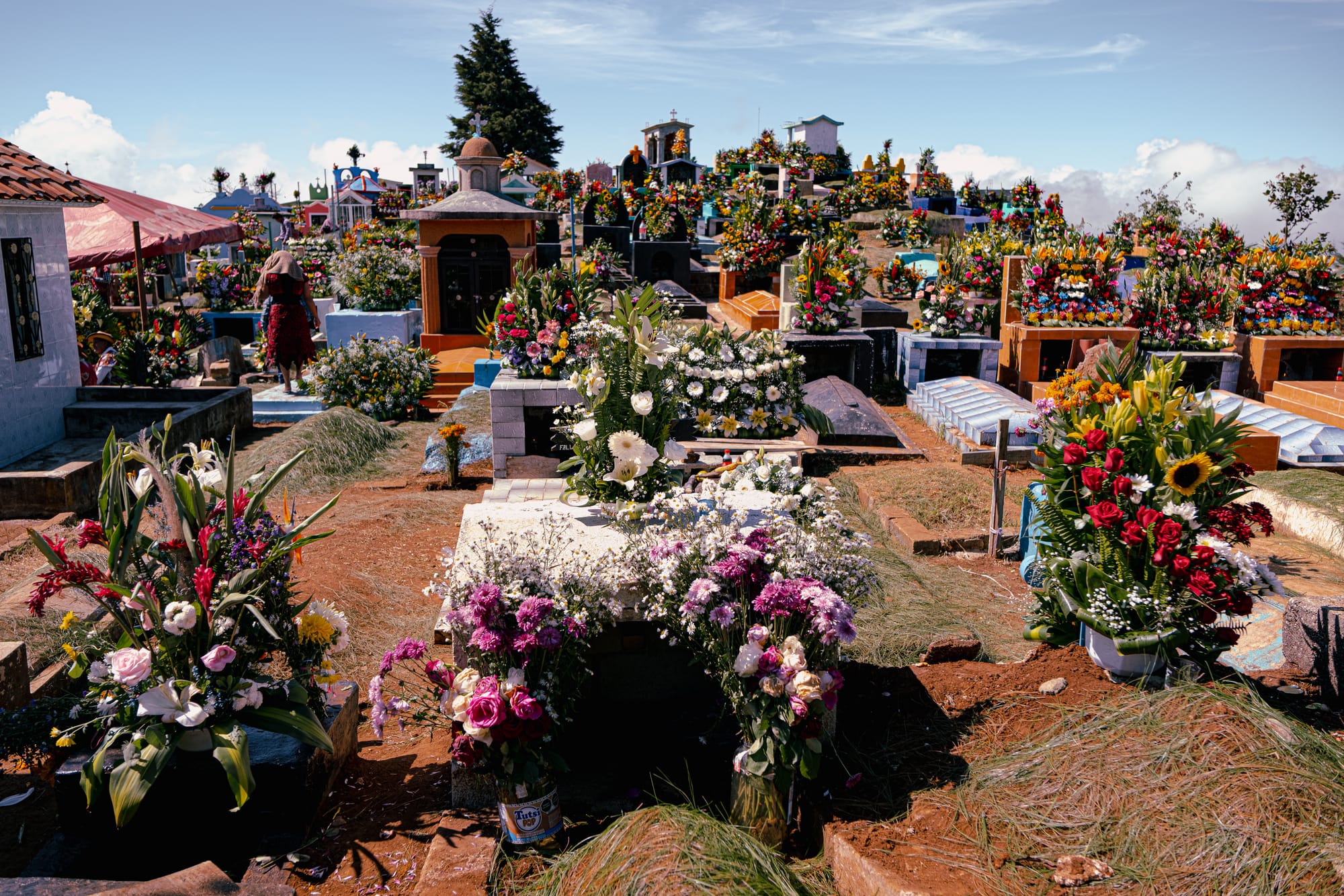
The result is not uniform beauty, but layered attention.
Quiet doesn’t mean empty
Although the cemetery felt quiet during our visit, it did not feel abandoned or inactive.
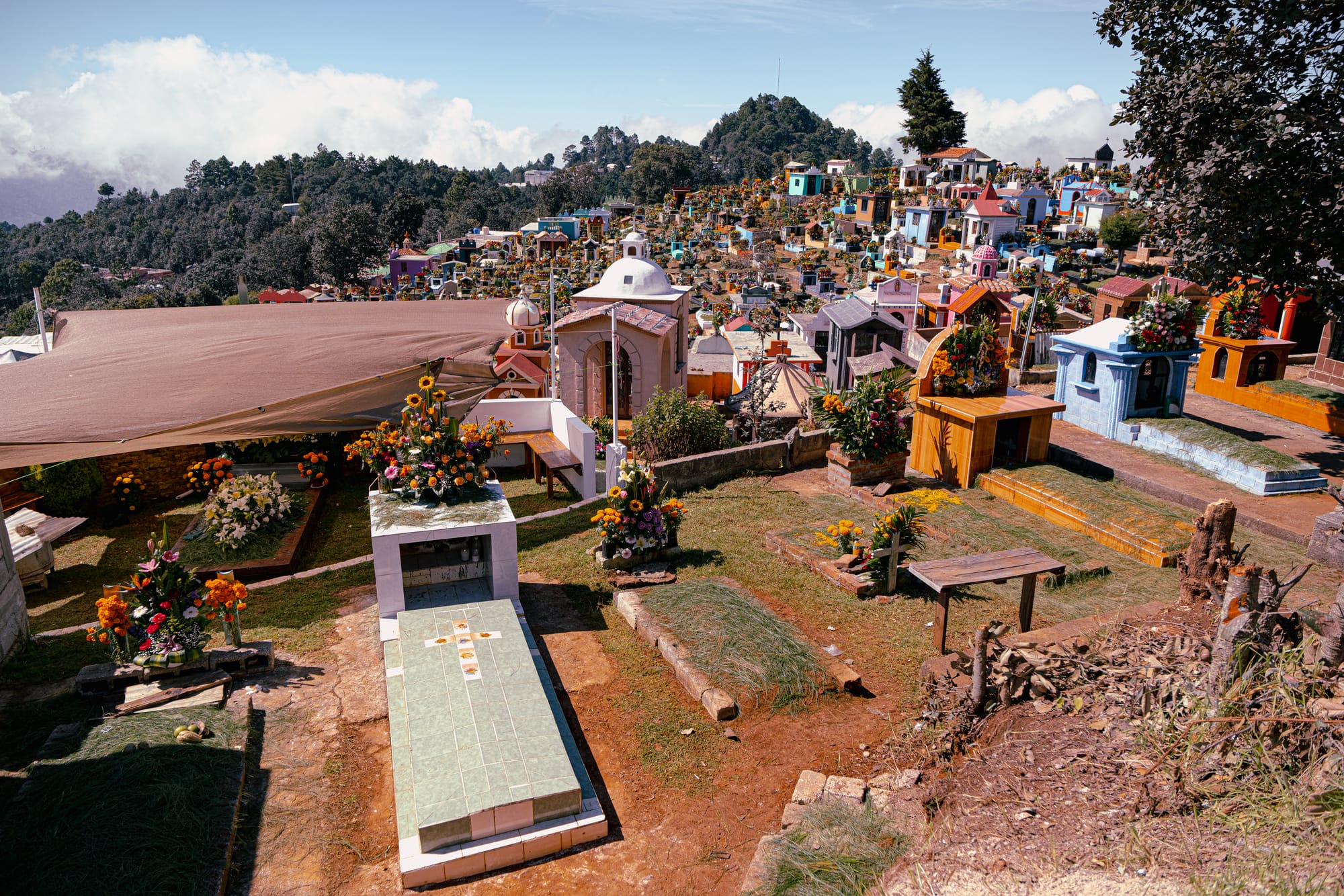
The signs of care were everywhere. Freshly swept paths. Carefully placed arrangements. Graves that had clearly been tended to recently. This wasn’t a neglected space waiting for an event—it was a space in use, just not loudly.
In that sense, Zinacantán challenged some of our assumptions about what Día de Muertos “should” look like. It suggested that remembrance doesn’t always need witnesses, and that not all forms of participation involve gathering.
Here, the emphasis seemed to be on preparation and placement rather than prolonged presence.
The role of setting
It’s hard to separate Zinacantán Cemetery from its physical context.
The altitude, the views, the openness—all of it contributes to how the space feels. Wind moves through the flowers. Light shifts quickly. Clouds gather and dissolve over the mountains.
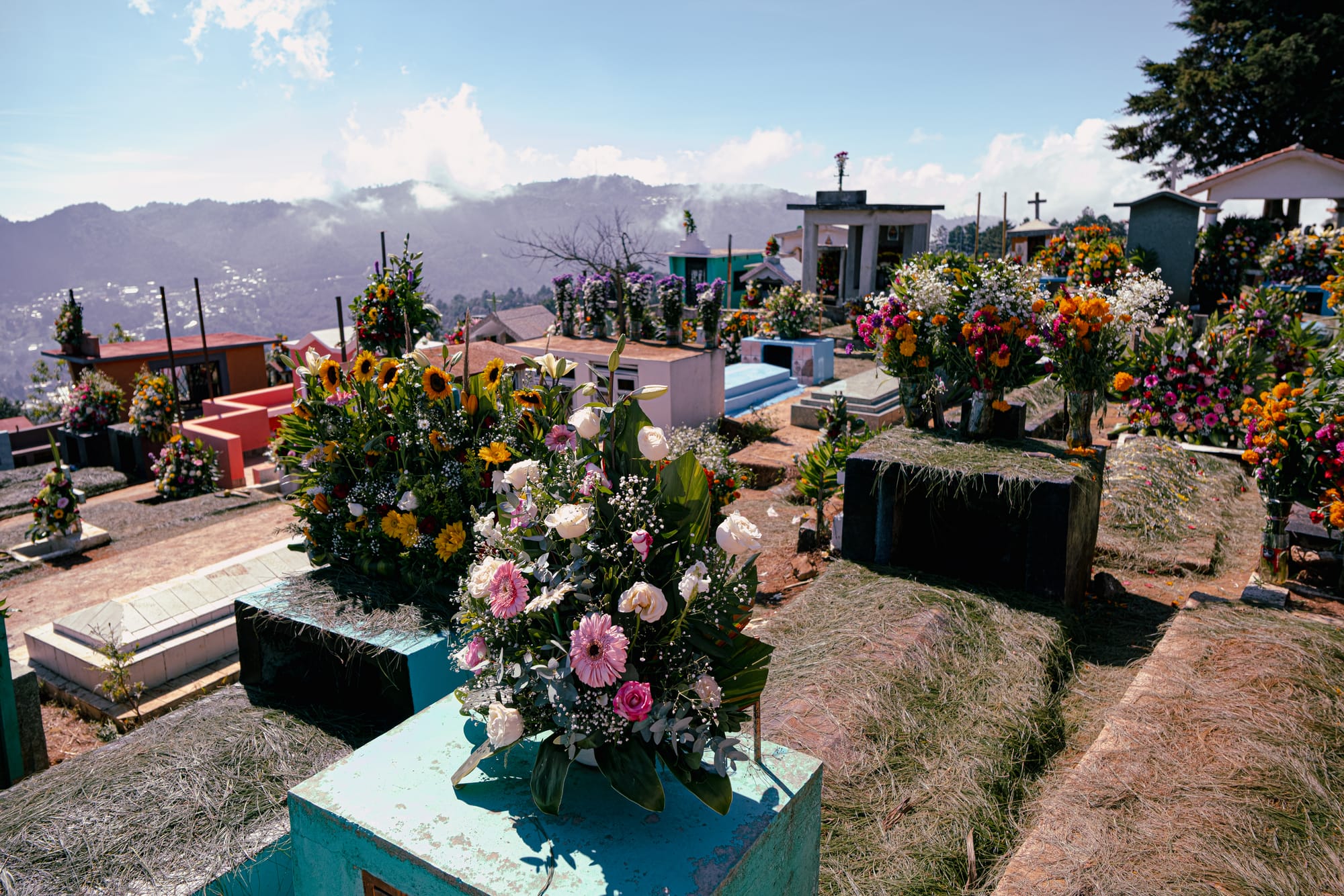
At times, the cemetery felt less like a destination and more like part of the landscape itself, a continuation of the hills rather than a space set apart from them.
That sense of continuity affects how you experience the graves. They don’t feel enclosed or compressed. They feel exposed—to weather, to time, to distance.
Why Zinacantán is worth a visit
Zinacantán Cemetery may not be the place people imagine when they think of Día de Muertos.
There is no obvious festival atmosphere here. No steady flow of people to observe. Nothing to gather around. If you arrive expecting constant movement or interaction, you may leave feeling uncertain.
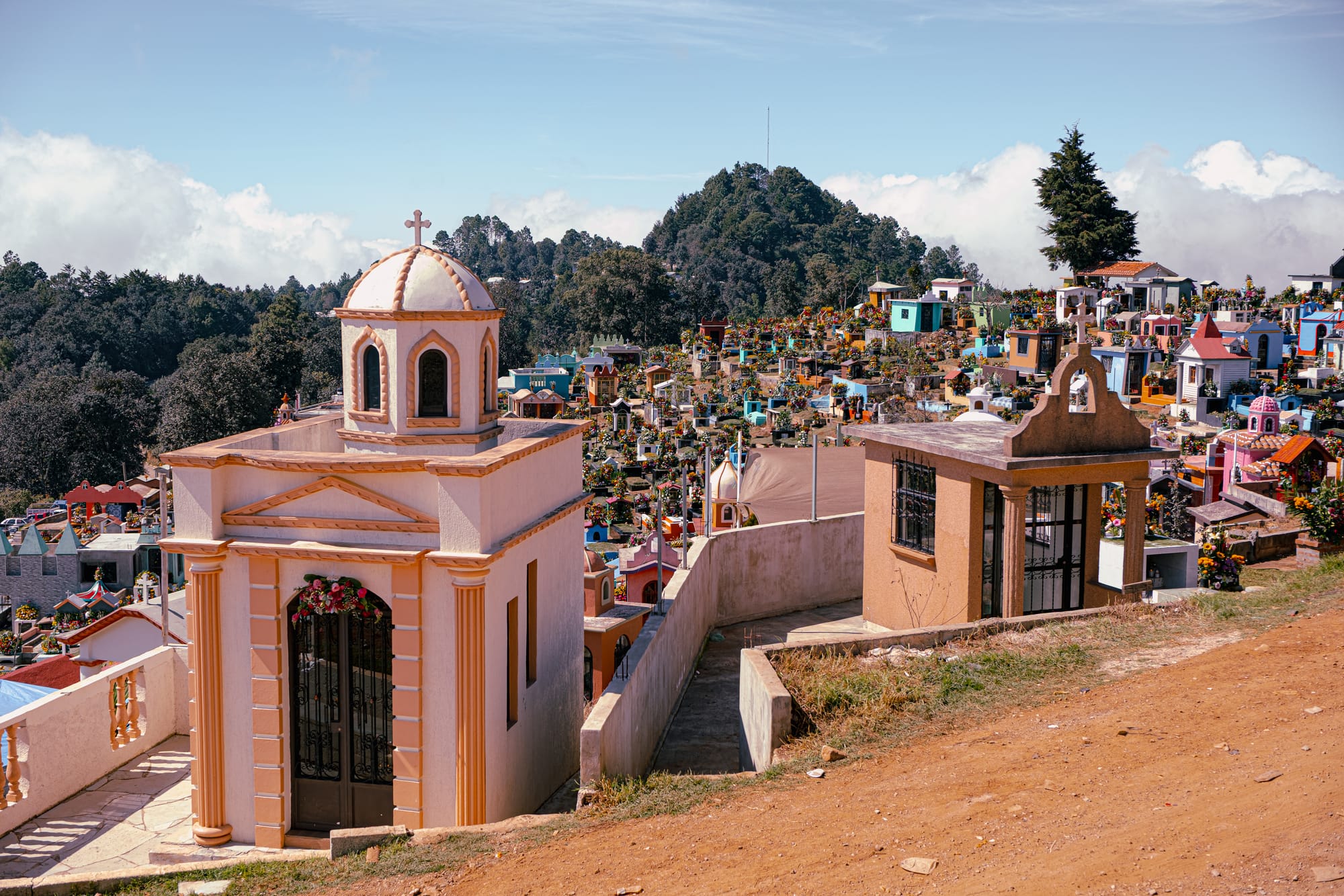
But if you arrive willing to slow down, to look closely, and to accept that participation can take quieter forms, this cemetery offers something distinct.
It shows how Día de Muertos can be expressed through work rather than gathering, through placement rather than presence, and through flowers rather than sound.
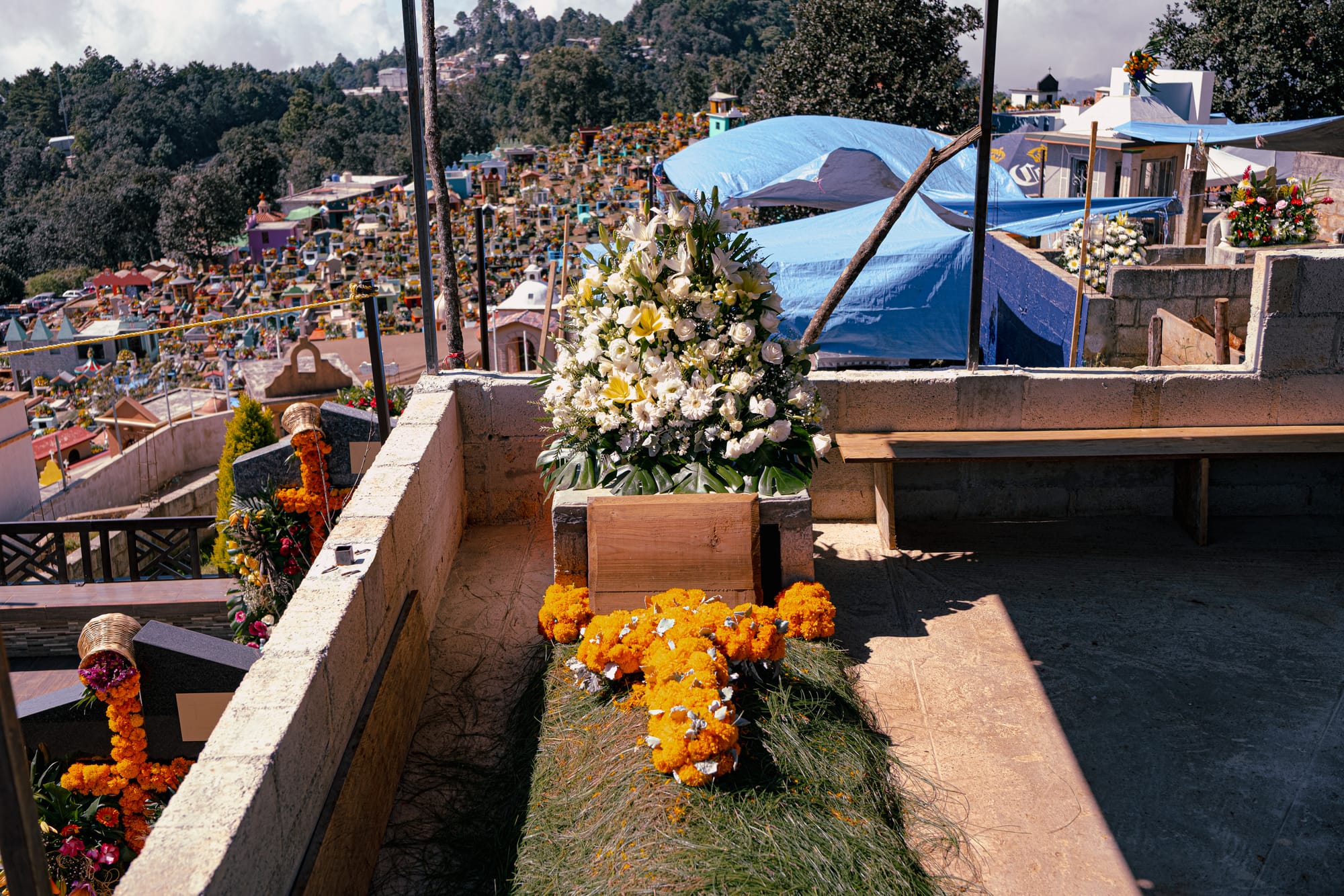
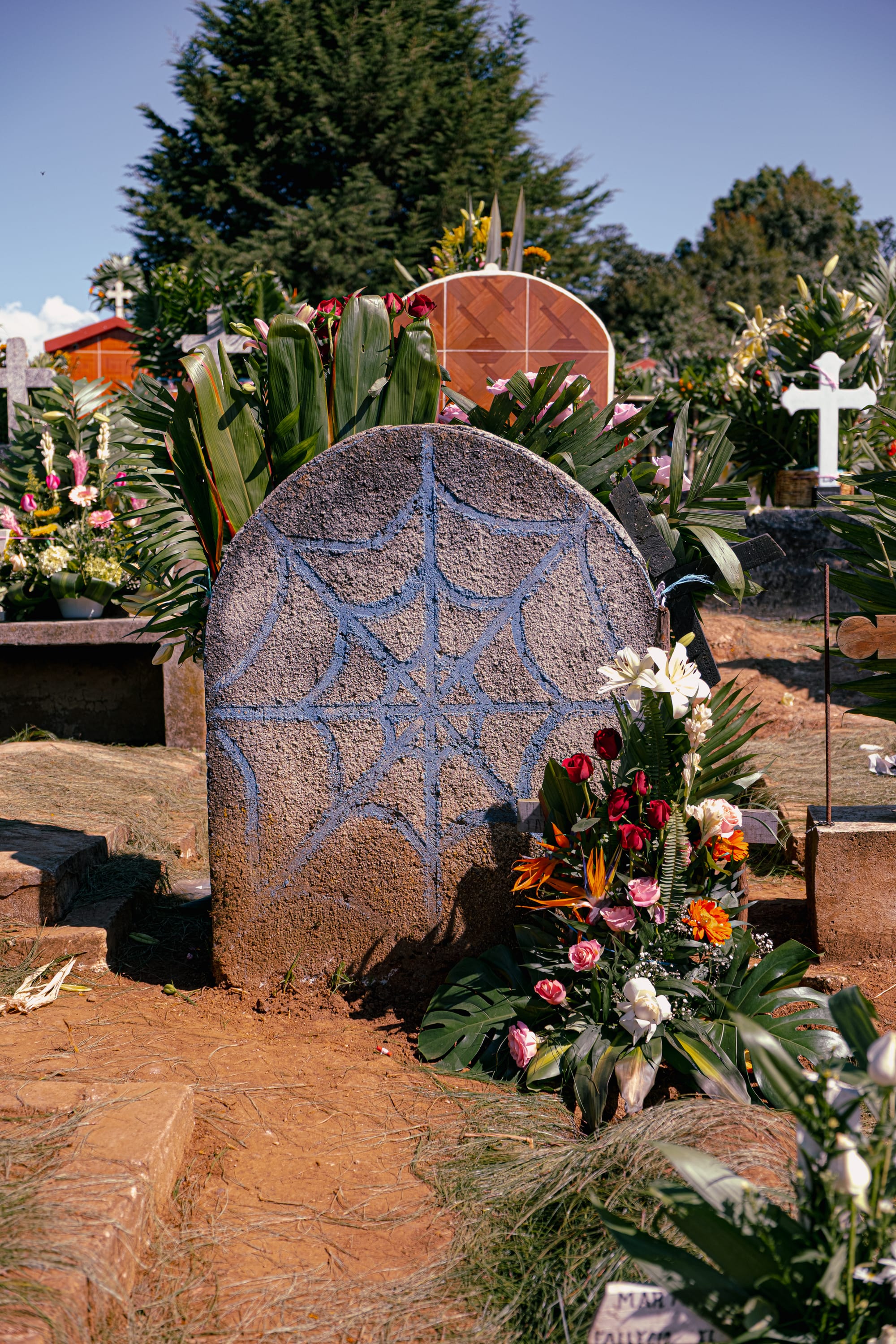
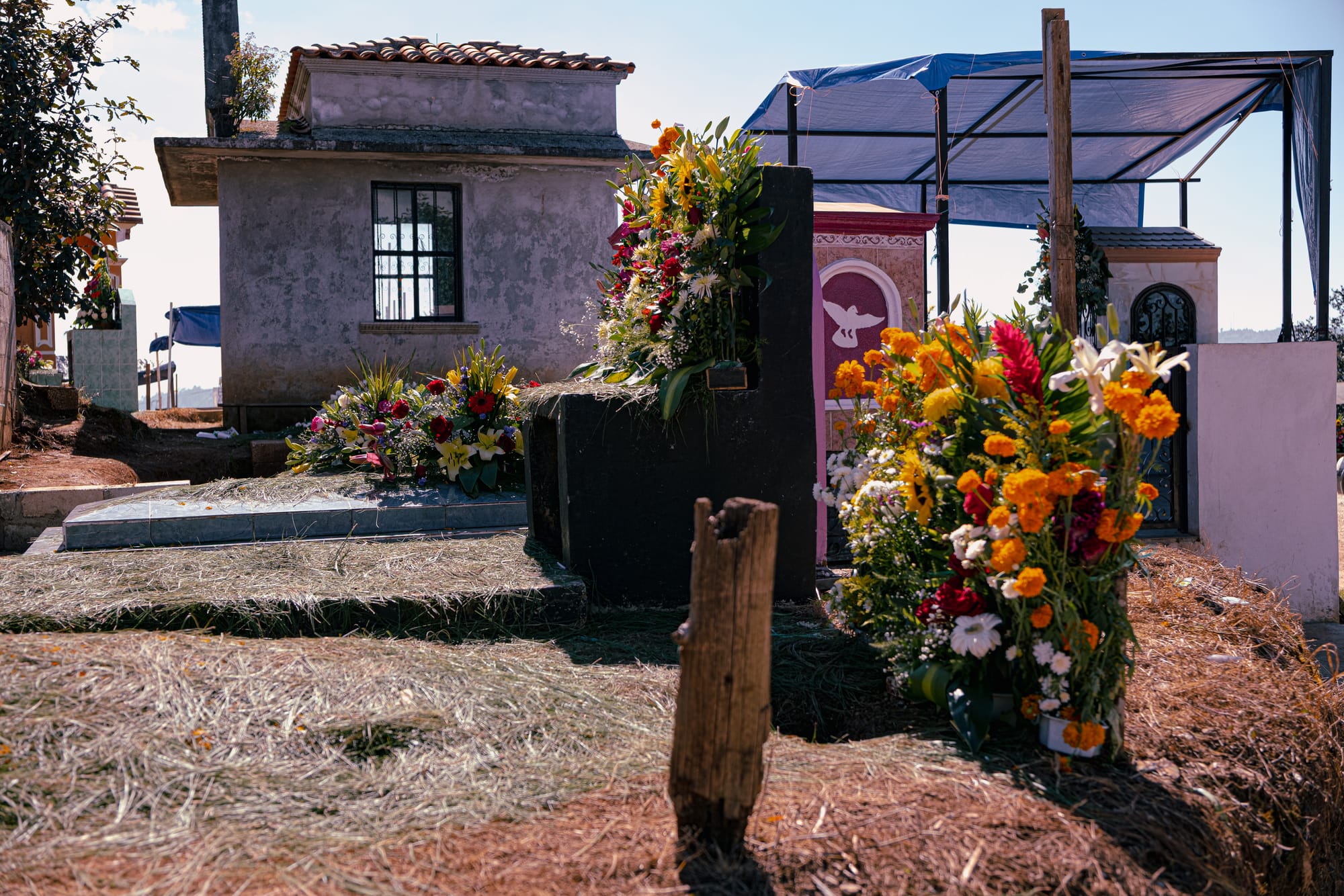
Quiet gravestones marked by flowers and time
For us, Zinacantán wasn’t memorable because of what happened there, but because of what didn’t.
The absence of crowds made room for other things to come forward: the density of the arrangements, the clarity of the setting, the relationship between land and ritual.
That said, our visit to Romerillo Cemetery still remains our top Day of the Dead experience, and probably our most special travel experience to date.


