
Hidden high in the Taurus Mountains just 30 kilometers northwest of Antalya, Termessos is one of Turkey’s most majestic and haunting archaeological sites. This ancient Pisidian city, carved into the mountainside at over 1,000 meters above sea level, feels like a secret world suspended between clouds and pine trees. UNESCO describes it as one of the best-preserved ancient cities in Turkey, and yet, unlike many ancient ruins, it remains almost untouched by tourism.
Termessos is currently on the UNESCO World Heritage Tentative List, and in 2025, the site’s first-ever archaeological excavation was announced, signaling renewed scholarly attention to a city that has remained unexcavated since its abandonment.
You won’t find souvenir stalls here. No tour buses or café queues. In fact, most tour companies skip Termessos entirely because there’s no on-site or nearby commercial infrastructure. But for those who make the journey, what awaits is a hike through silence, solitude, and the slow unraveling of a forgotten civilization, its bones still intact, its spirit humming beneath wind-blown trees.
History of Termessos: the Pisidian city Alexander couldn’t conquer
Termessos was built by the Pisidians, a fierce mountain-dwelling people who successfully resisted conquest by Alexander the Great. According to historical records, Alexander was so impressed by the city's fortified location and strategic defenses that he reportedly called it an ‘Eagle’s Nest’ and chose not to attempt an invasion. Later, the city became part of the Roman Empire, and many of the stone buildings visible today date from this period.
As you follow the path uphill, stone remnants emerge gradually from the undergrowth, first an arched gateway, then collapsed walls of a gymnasium, bathhouses with still-visible vaults, and a row of ornate sarcophagi strewn along the hillside.
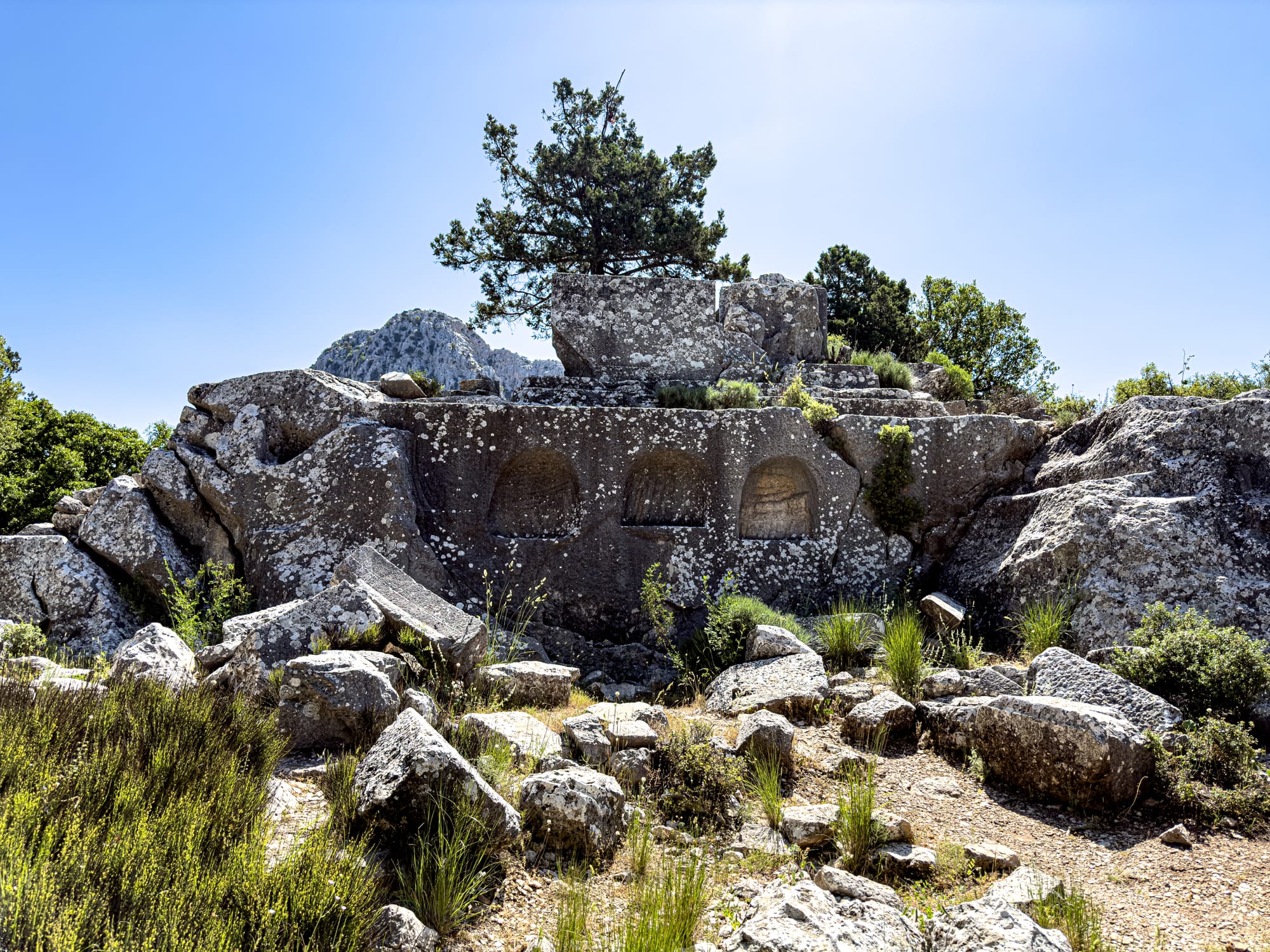
Among the most notable burials is the Tomb of Alcetas, a general under Alexander the Great who sought refuge in Termessos. His relief carving, a warrior on horseback, can still be seen on a rock face near the western necropolis.
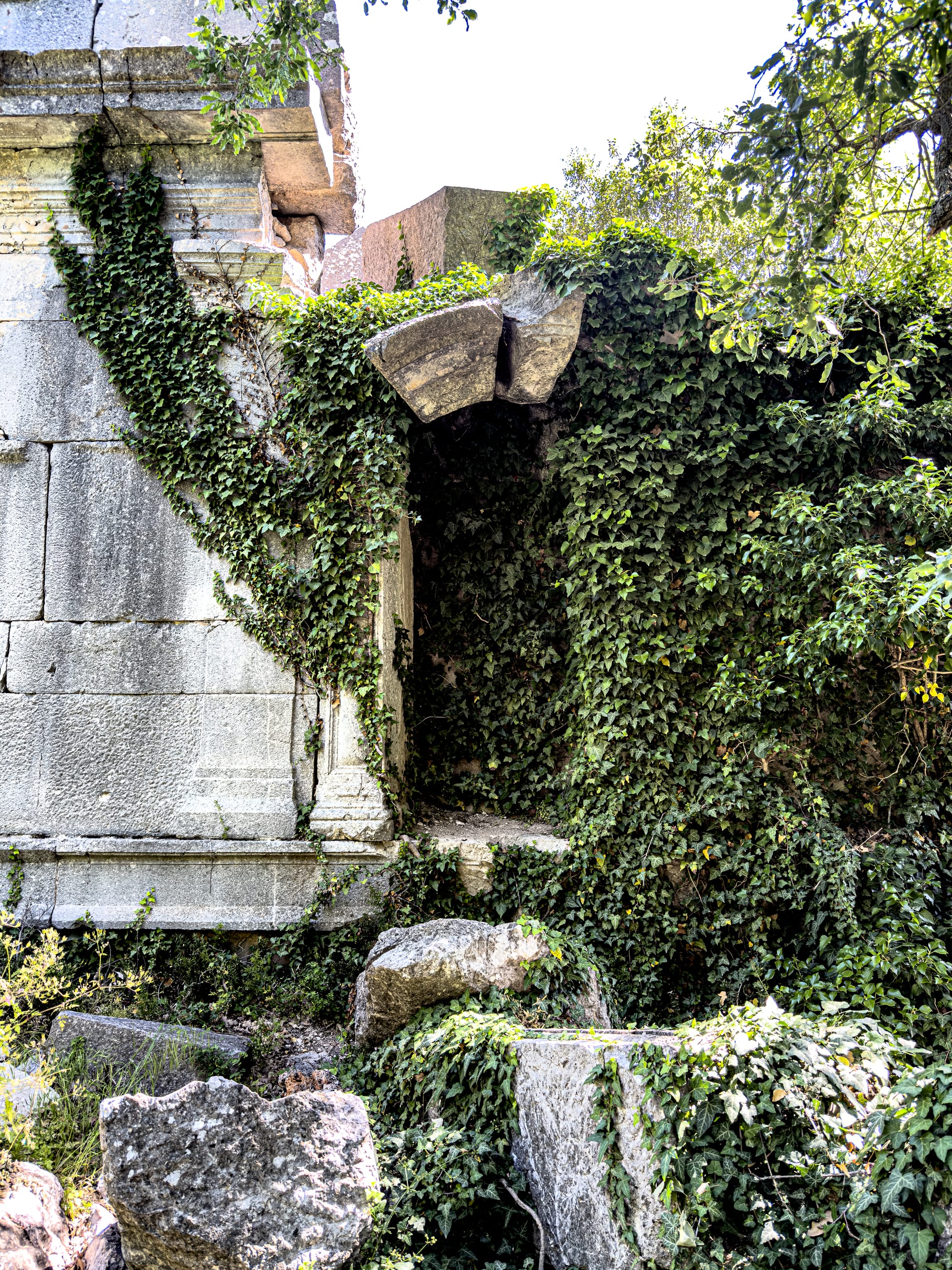
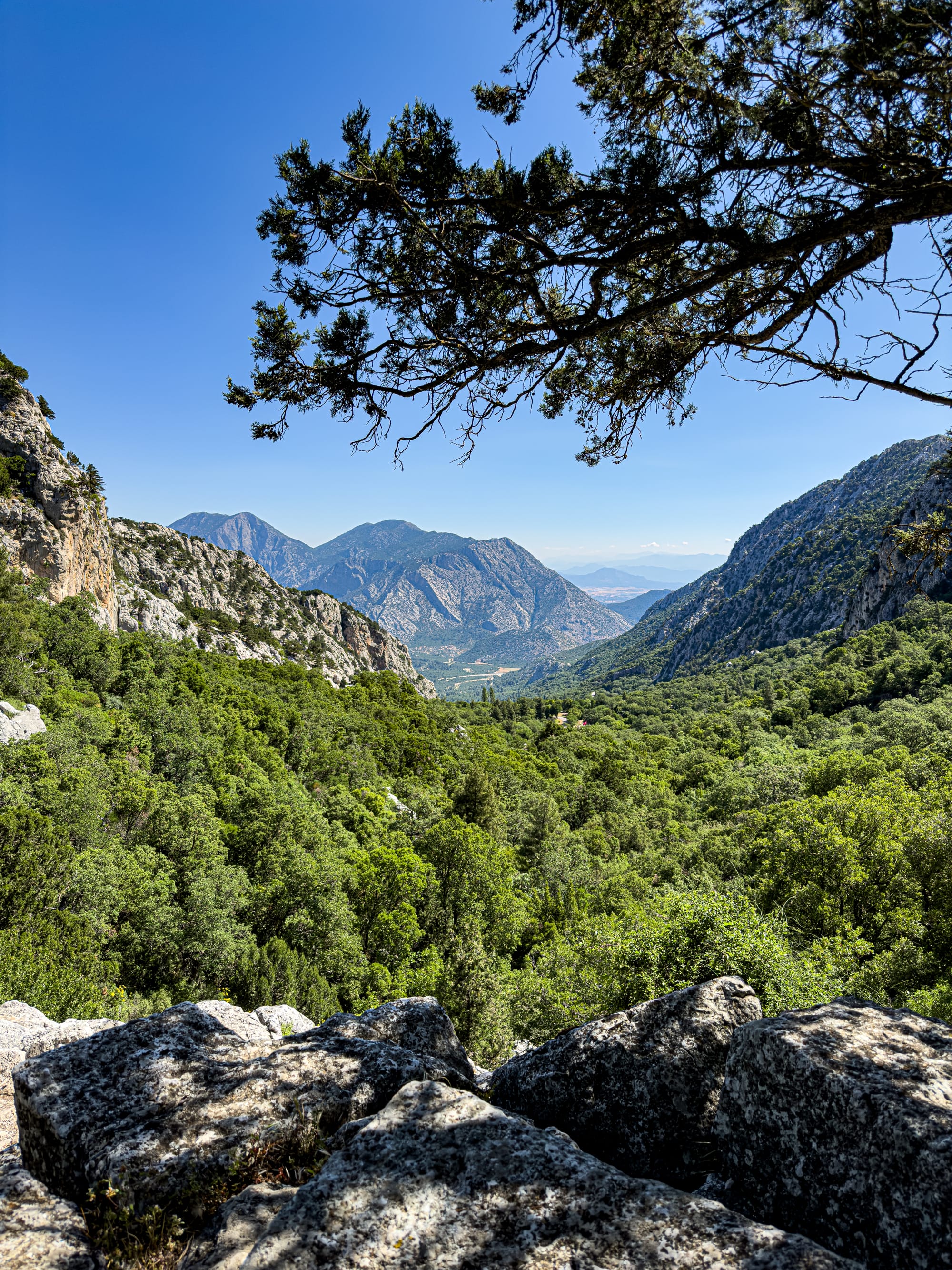
Quiet scenes from Termessos, perched in the mountains
Many of the tombs have gaping holes in their centers, evidence of centuries of grave robbery, when looters would break through the thick limestone lids to retrieve valuables.
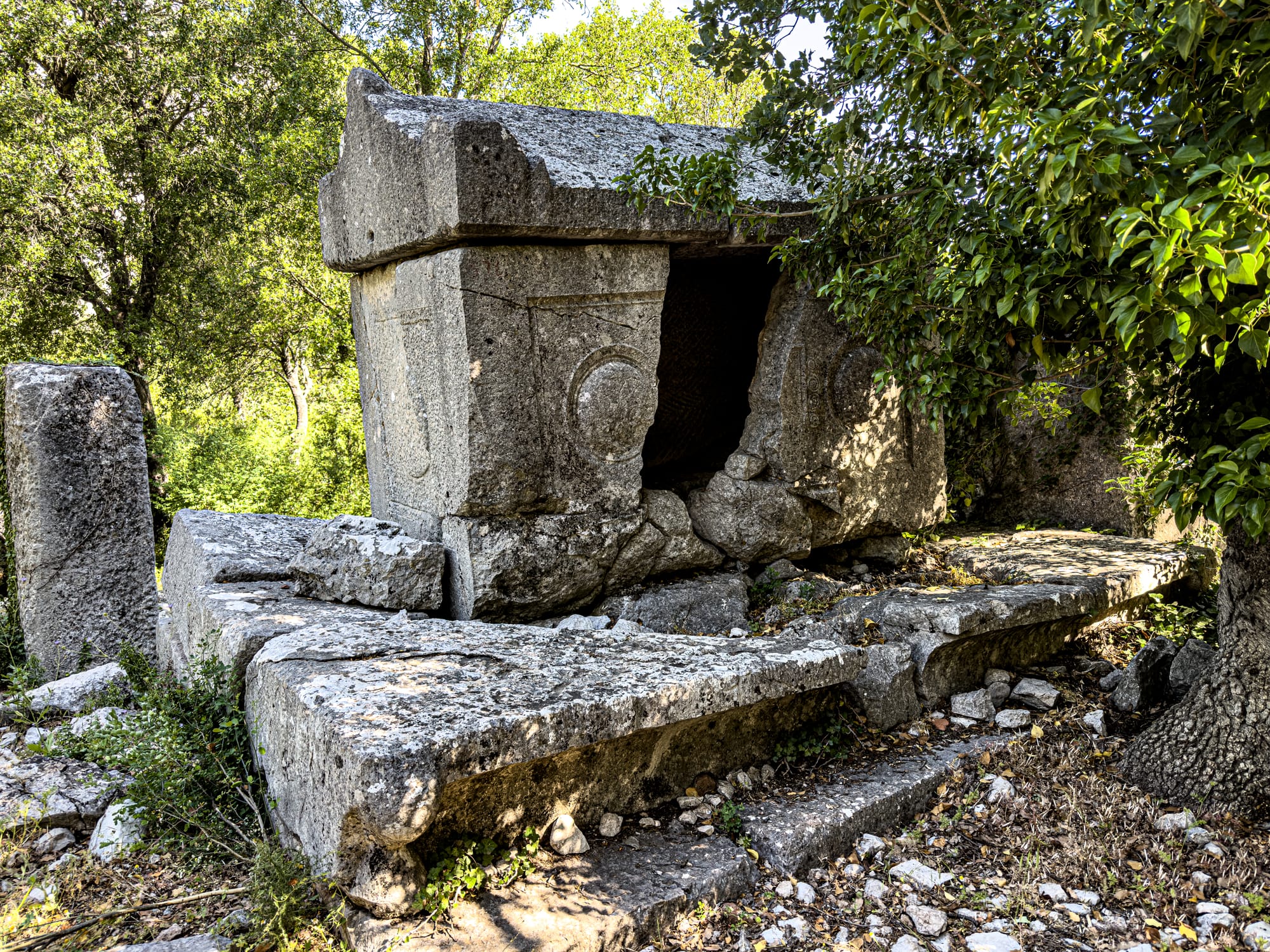
Still, much of Termessos remains remarkably well preserved. The stonework is enormous and elemental, thick with age and moss. Plants grow from between the joints. Lizards dart along warm slabs. And then, suddenly, the ground opens out into a sweeping stone amphitheater, carved directly into the slope of the mountain.
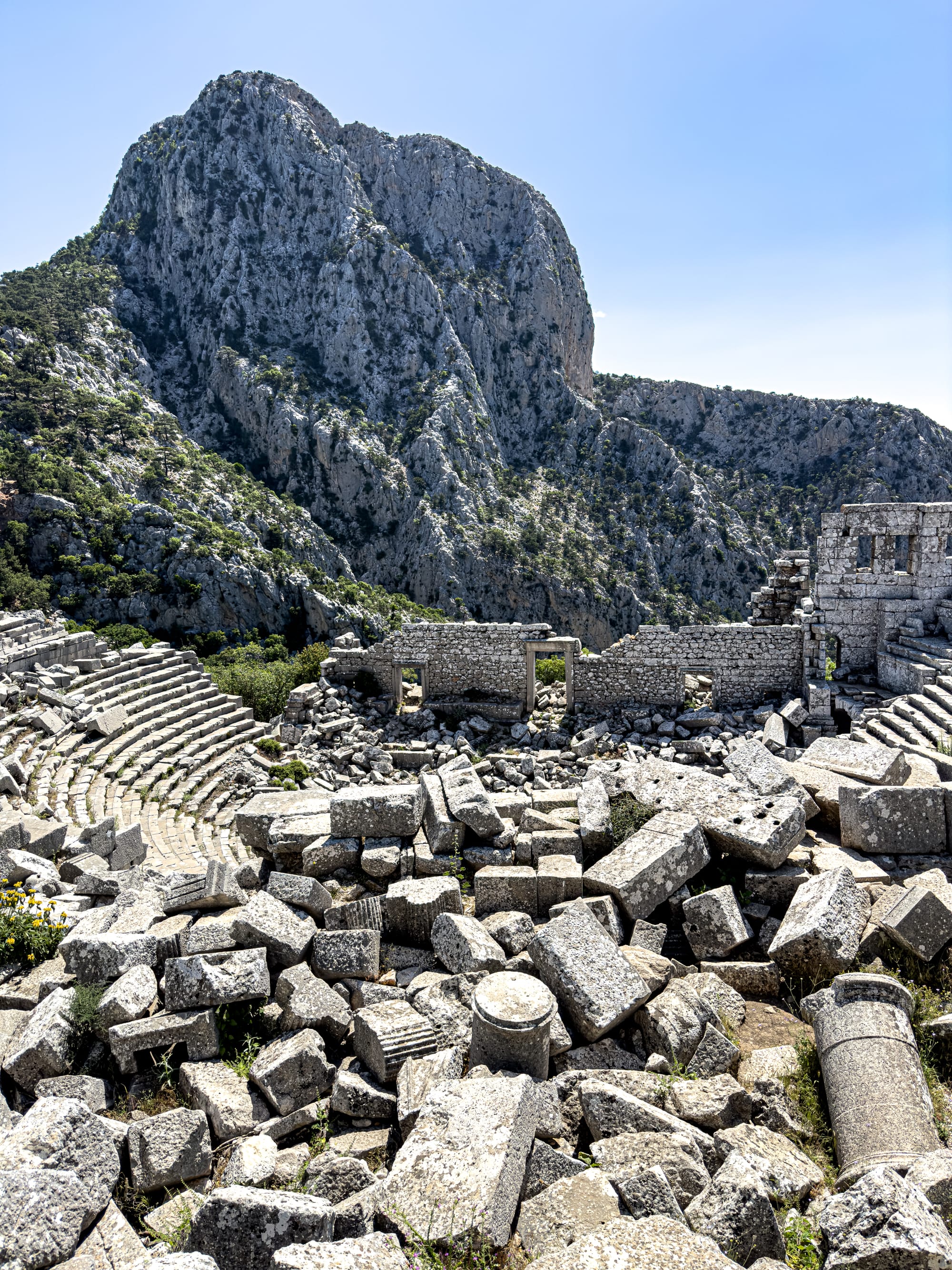
The amphitheater is a marvel: spacious, dramatic, and perched on a cliff edge with views that drop away into forested ravines and rise again into jagged peaks. On our visit, we had the entire space to ourselves. No voices, no other travelers, just the wind moving through cedar and pine, and the long echo of stillness. You don’t sit in that theater to watch a performance, you sit in it to feel the scale of time.
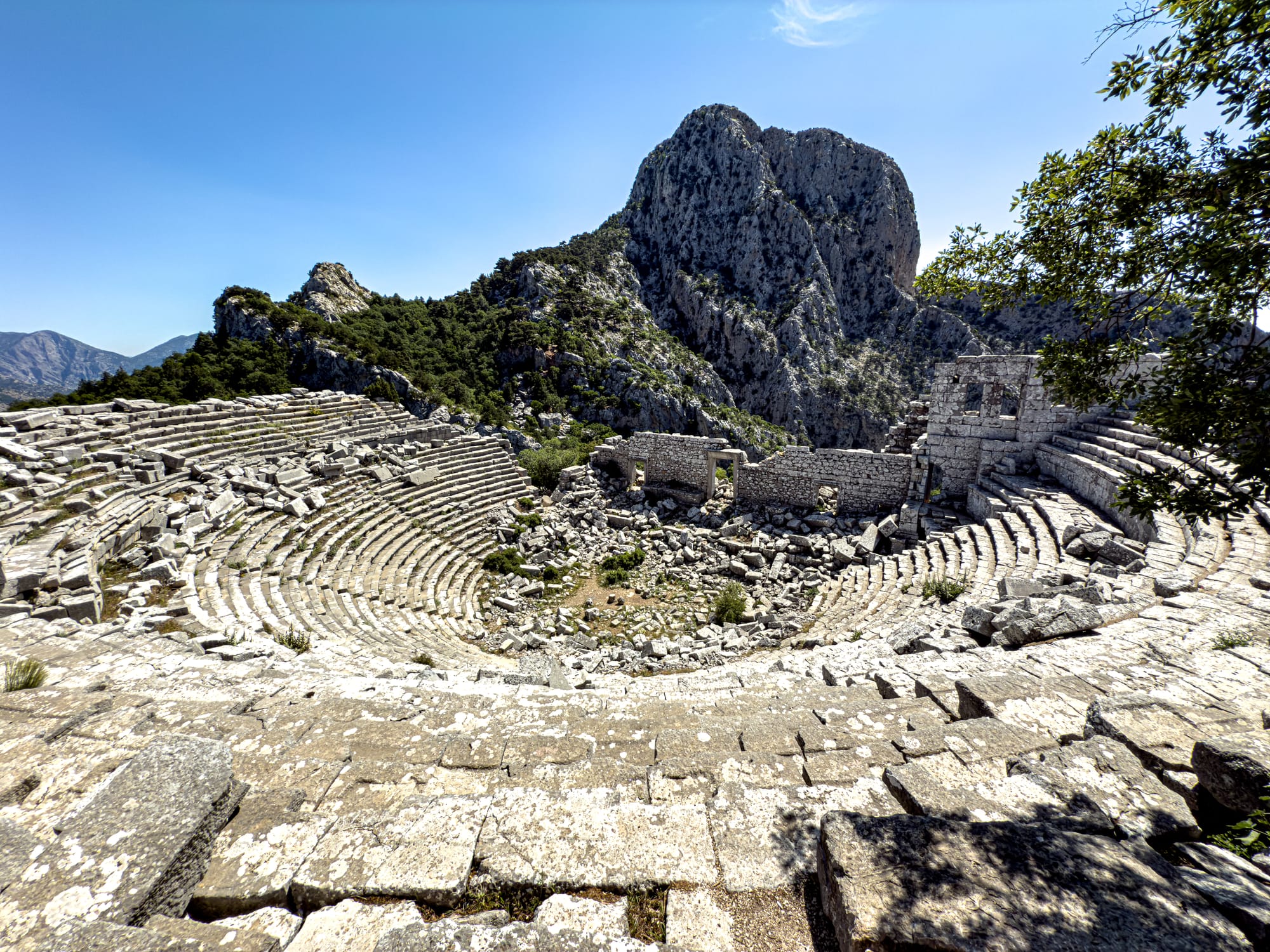
The hike through Termessos is not overly strenuous, though it does involve uneven steps, forested trails, and a few ascents. Our guide was incredibly thoughtful in pacing the walk. He stopped to interpret ruins, share history, and point out native herbs and wildlife.
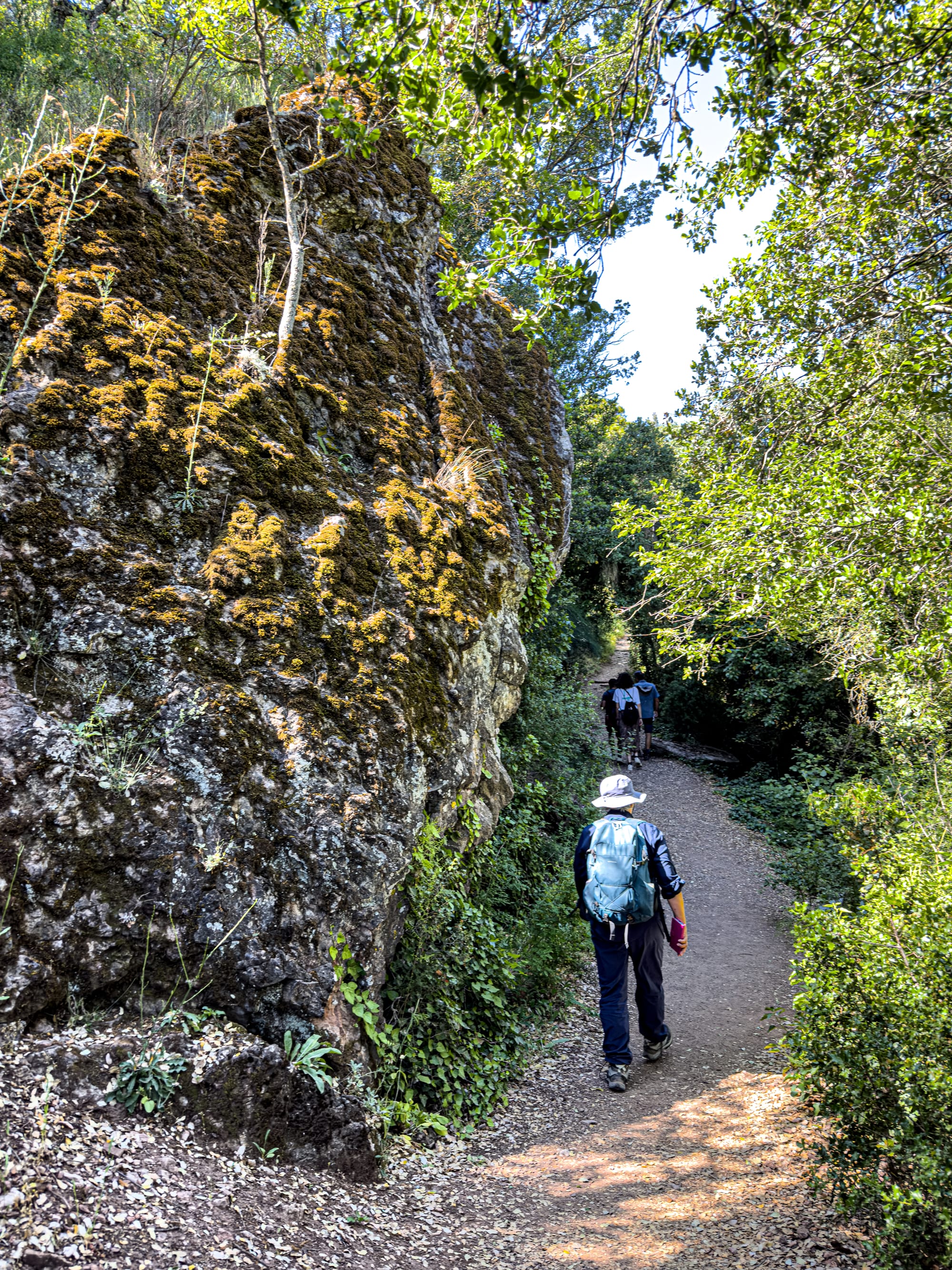
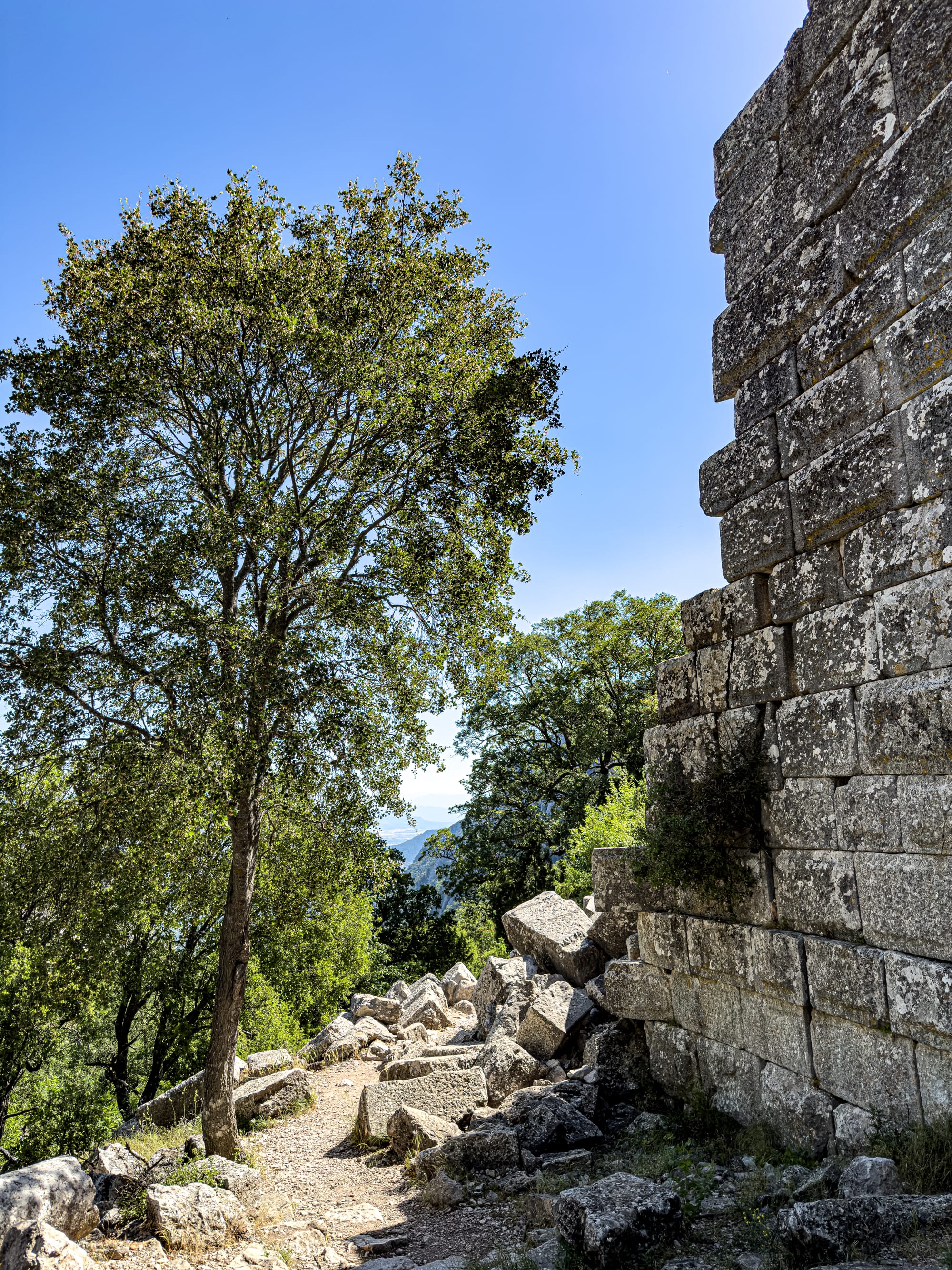
Shaded hiking trails lead past moss-covered boulders and sunlit ruins, offering changing views and quiet rest spots along the way
From ancient cisterns and temples to olive presses and arched storehouses, the layout of Termessos suggests a highly organized and fortified urban life, complete with schools, council buildings, and a vast necropolis.
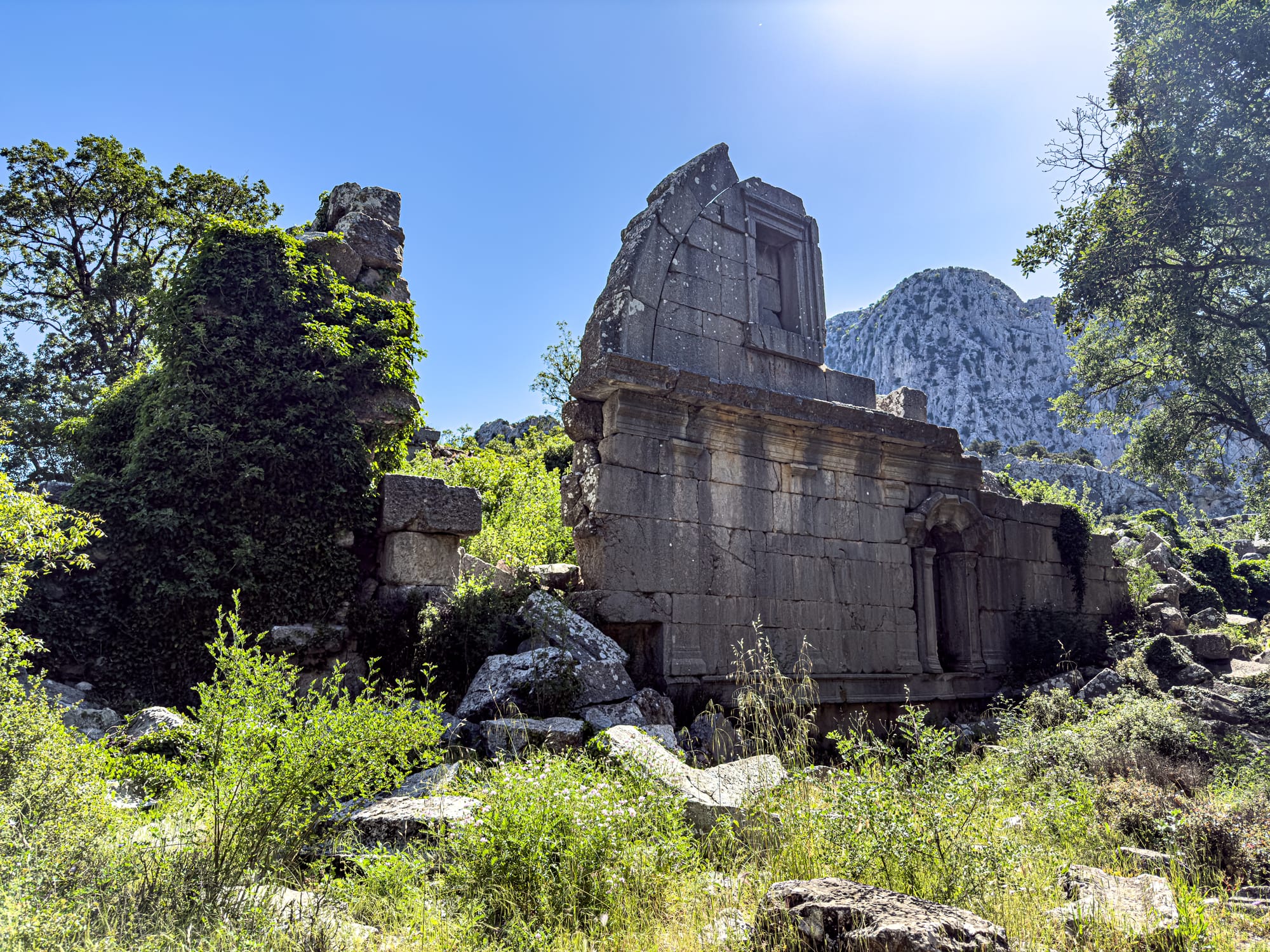
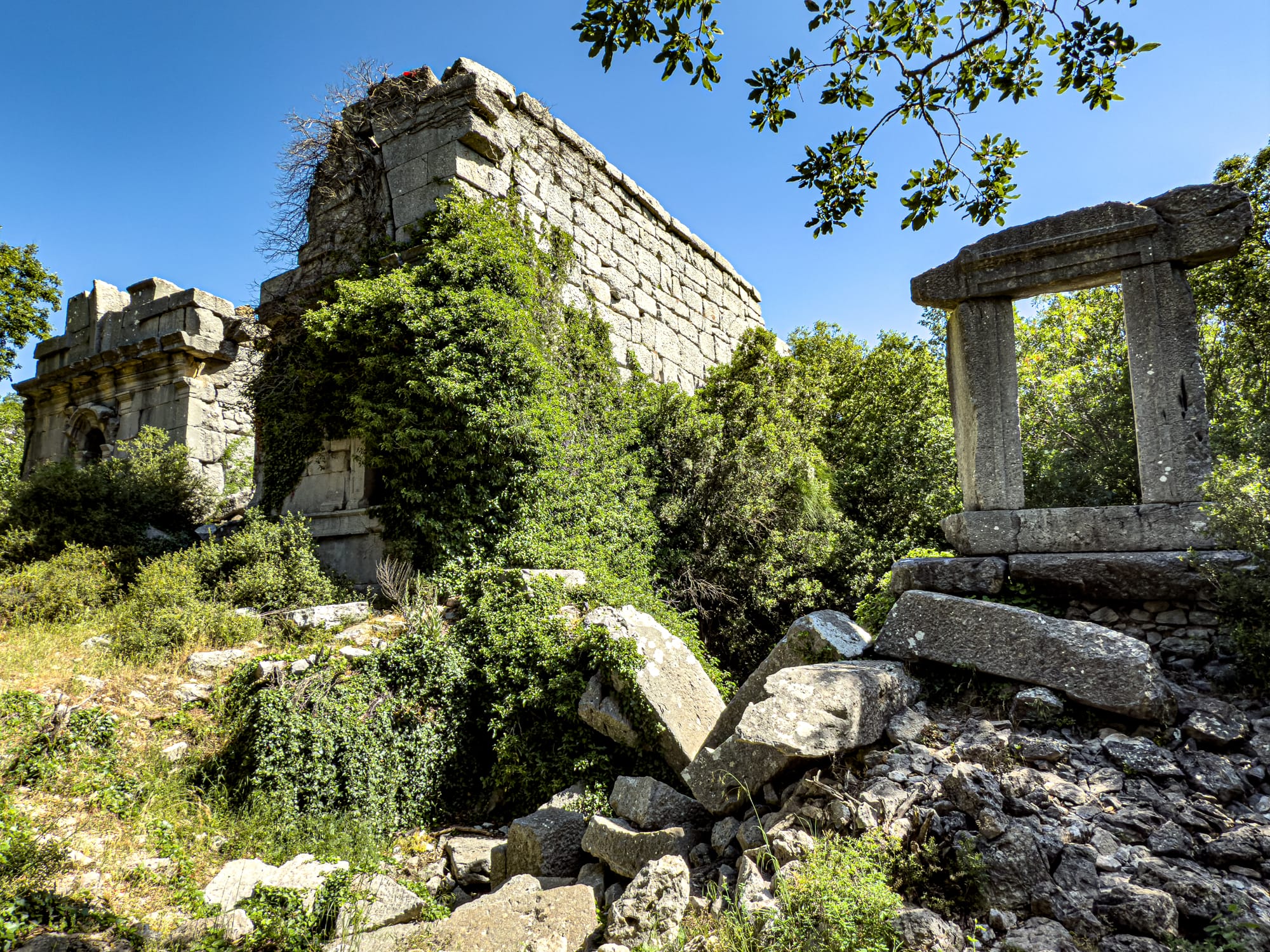
Scattered architectural remains from ancient tombs, temples, and civic buildings merge with the surrounding forest
Unlike many lowland ruins in Turkey, Termessos wasn’t restructured or buried by later settlements, so the bones of the city remain intact, scattered yet legible.
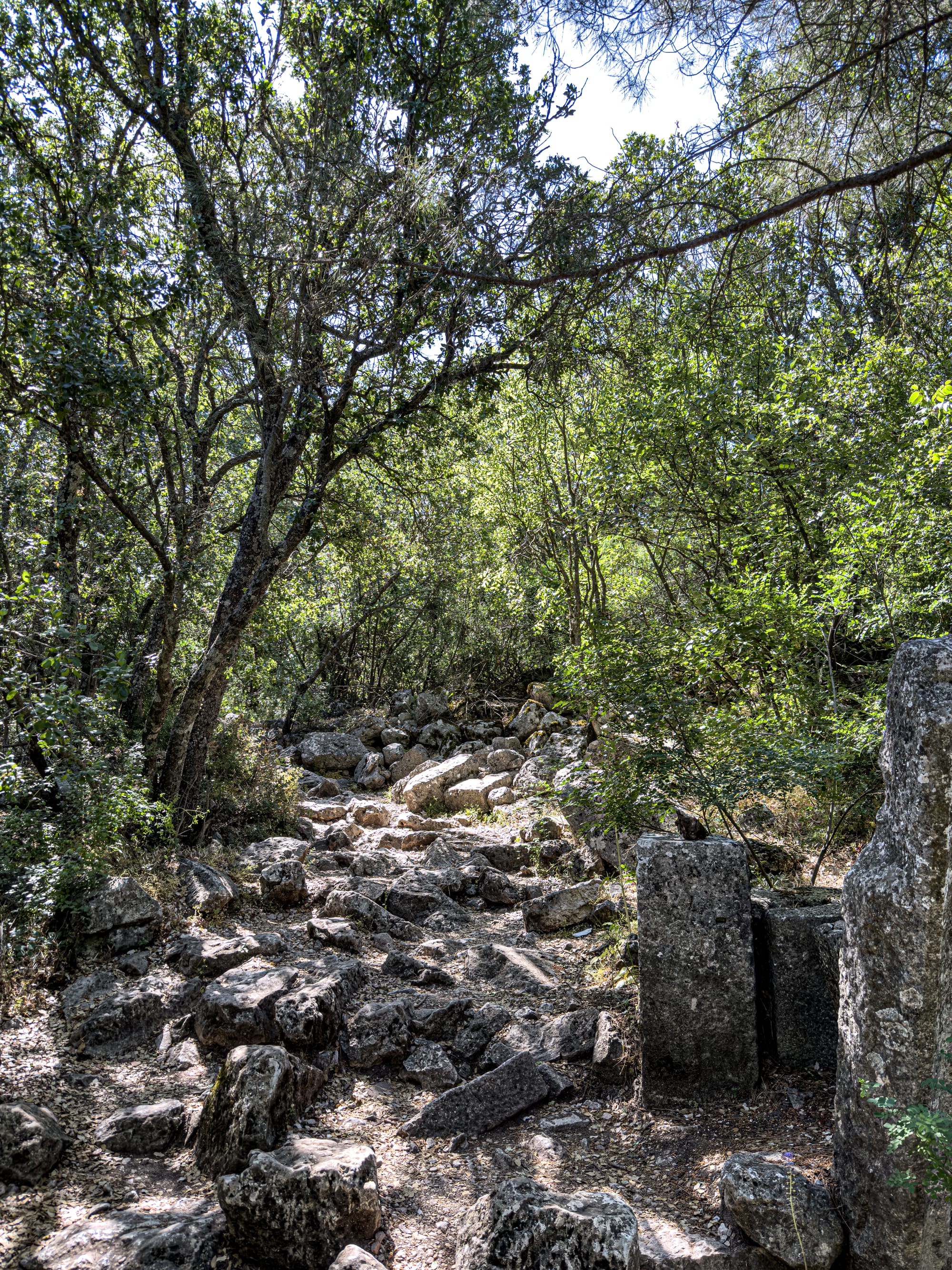
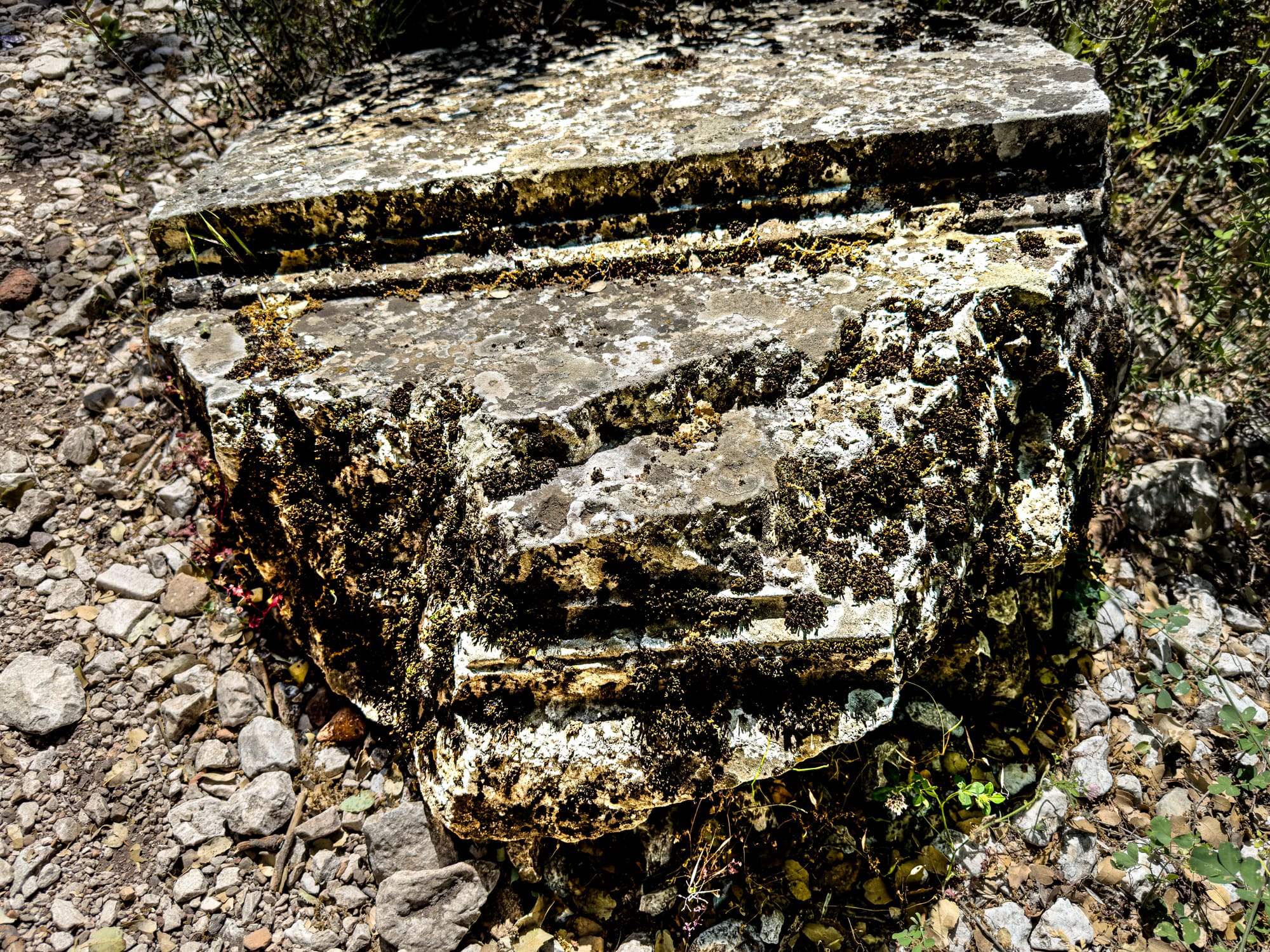
The forest trail to Termessos winds through rocky, uneven terrain, where fragments of ancient columns still rest
It is, in every sense, a mountain stronghold, a “Turkish Machu Picchu,” as it is sometimes called.
Güllük Mountain National Park: nature at Termessos
The beauty of Termessos lies not only in its ruins but also in its ecosystem. As you walk through pine-shaded paths and limestone clearings, you're immersed in one of the richest natural reserves in southwestern Turkey. Termessos is part of Güllük Mountain National Park, a protected area filled with endemic flora and fauna.
Bright pink crown vetch climbs over rocky outcrops in loose clusters. Nearby, red Anatolian poppies grow from between the cracks of ancient cistern walls, their petals delicate against the stone.
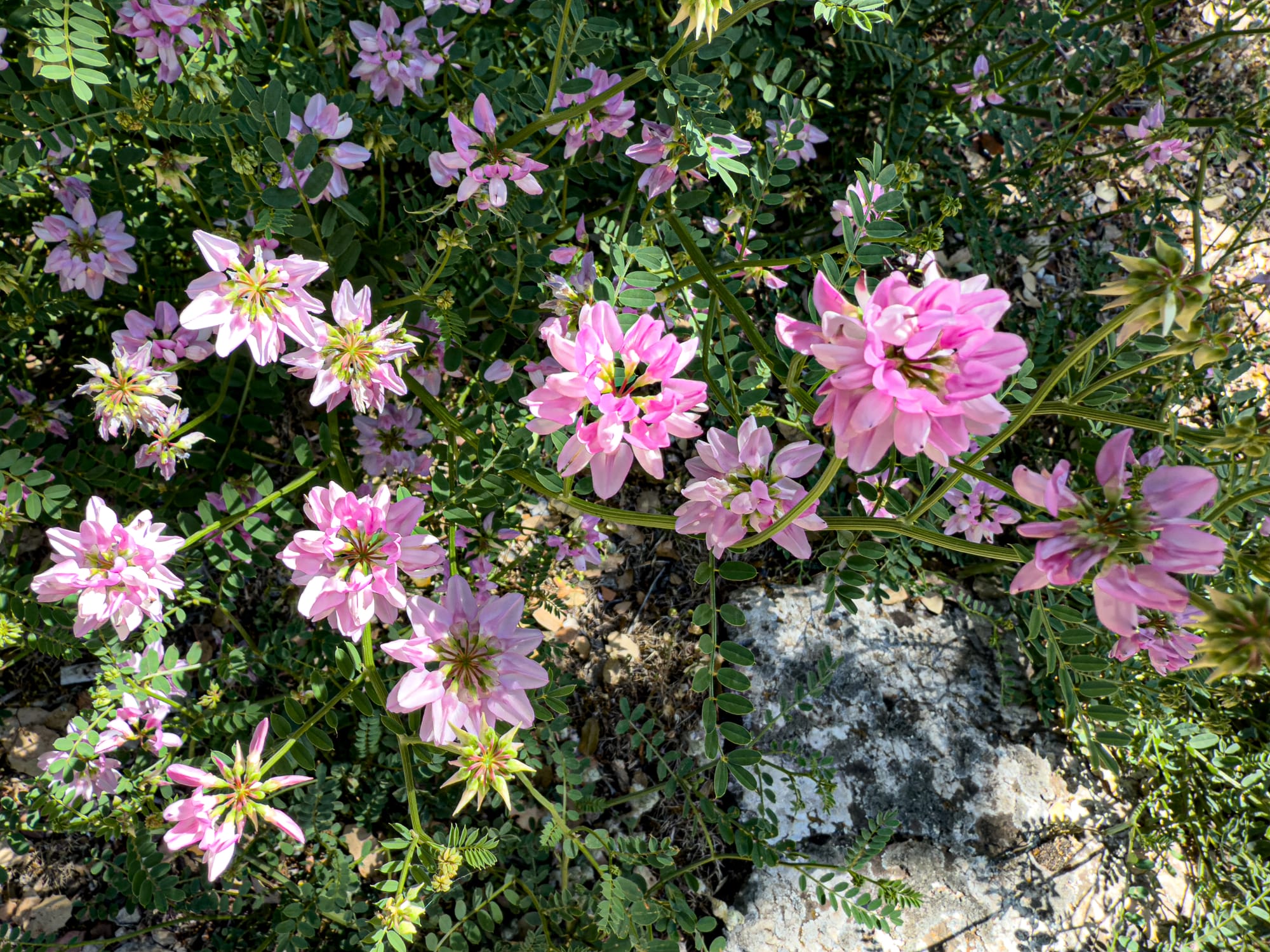
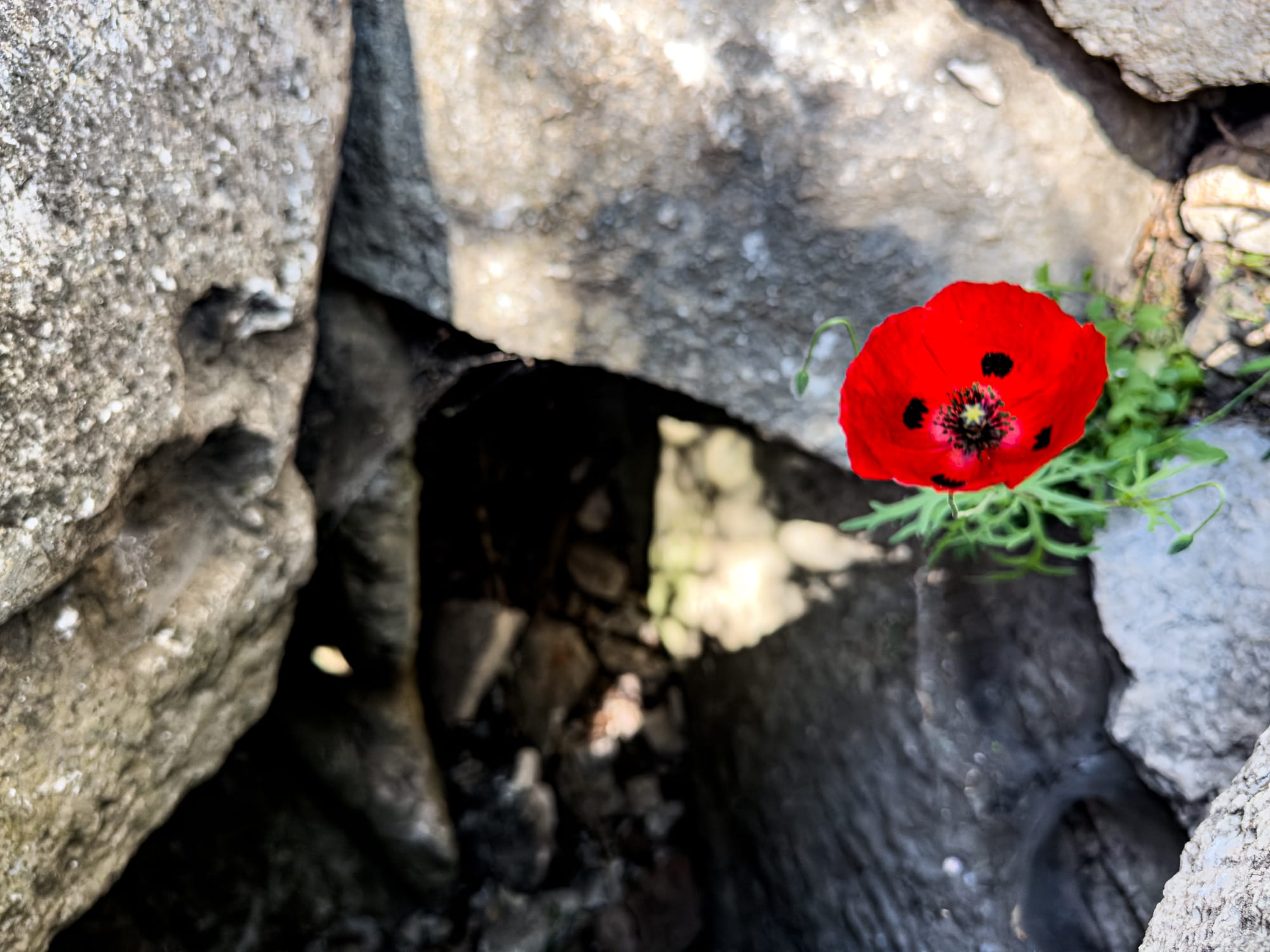
Delicate pink crown vetch and a lone red Anatolian poppy grow wild among the ancient stones
In shaded groves, clusters of yellow fennel bloom, releasing a soft sweetness into the dry air. You might also spot Jerusalem sage, a mountain shrub with thick stems and soft yellow flowers, thriving on open slopes.
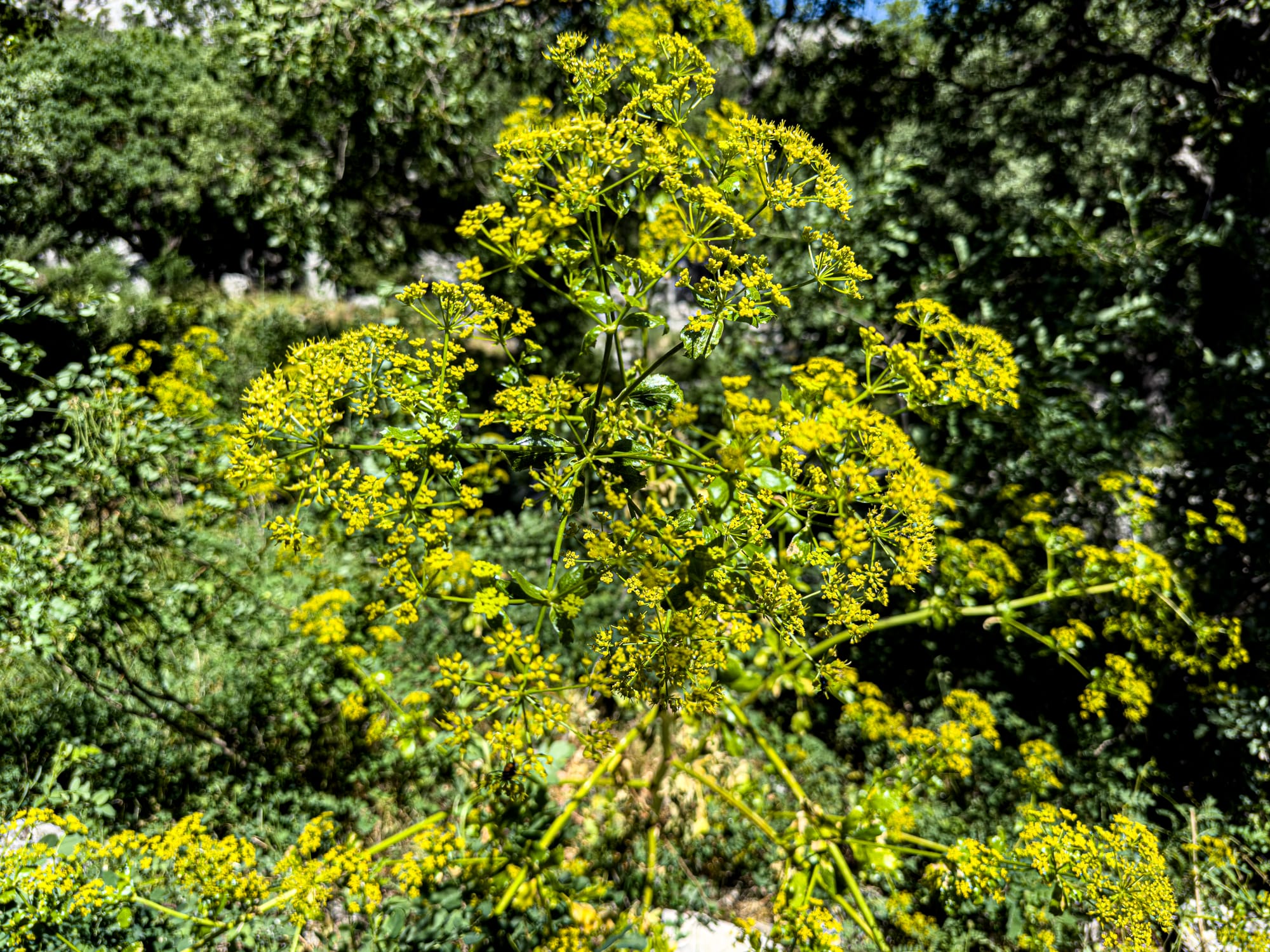
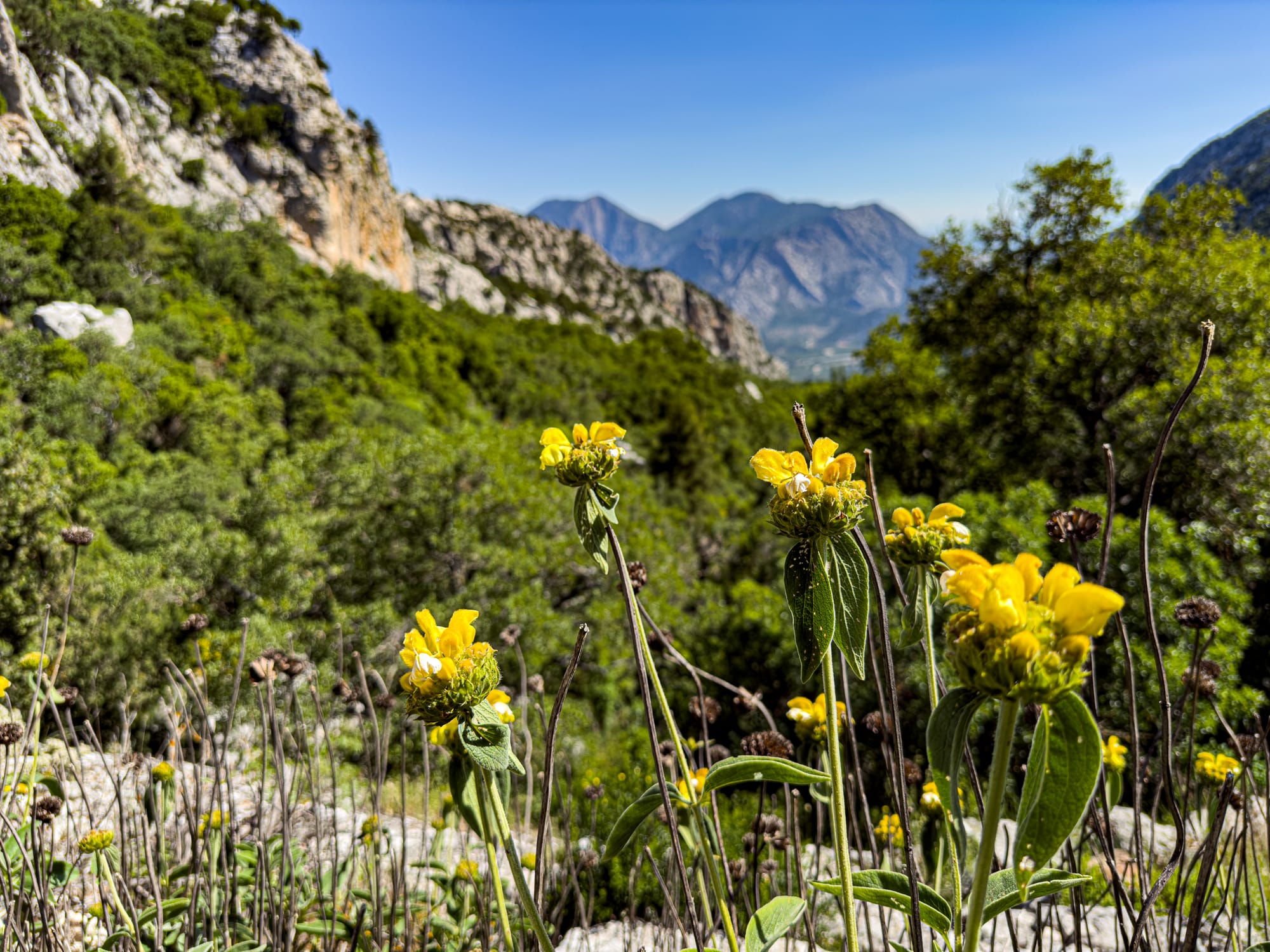
Golden fennel and Jerusalem sage thrive in Termessos’s rugged elevation
Throughout the hike, the scent of wild herbs, thyme, oregano, mint, rises with the breeze. Swallows dart overhead. Butterflies drift between moss-covered columns. And in the quiet, each breath seems to carry something older.
The Termessos hike: what to expect
Because Termessos lacks signage and formal paths, having a guide truly enhances the experience. Our guide was informed, generous with his time, and able to adjust the route and pace to suit our small group. With only three people on the trail that day, we never felt rushed or overwhelmed.
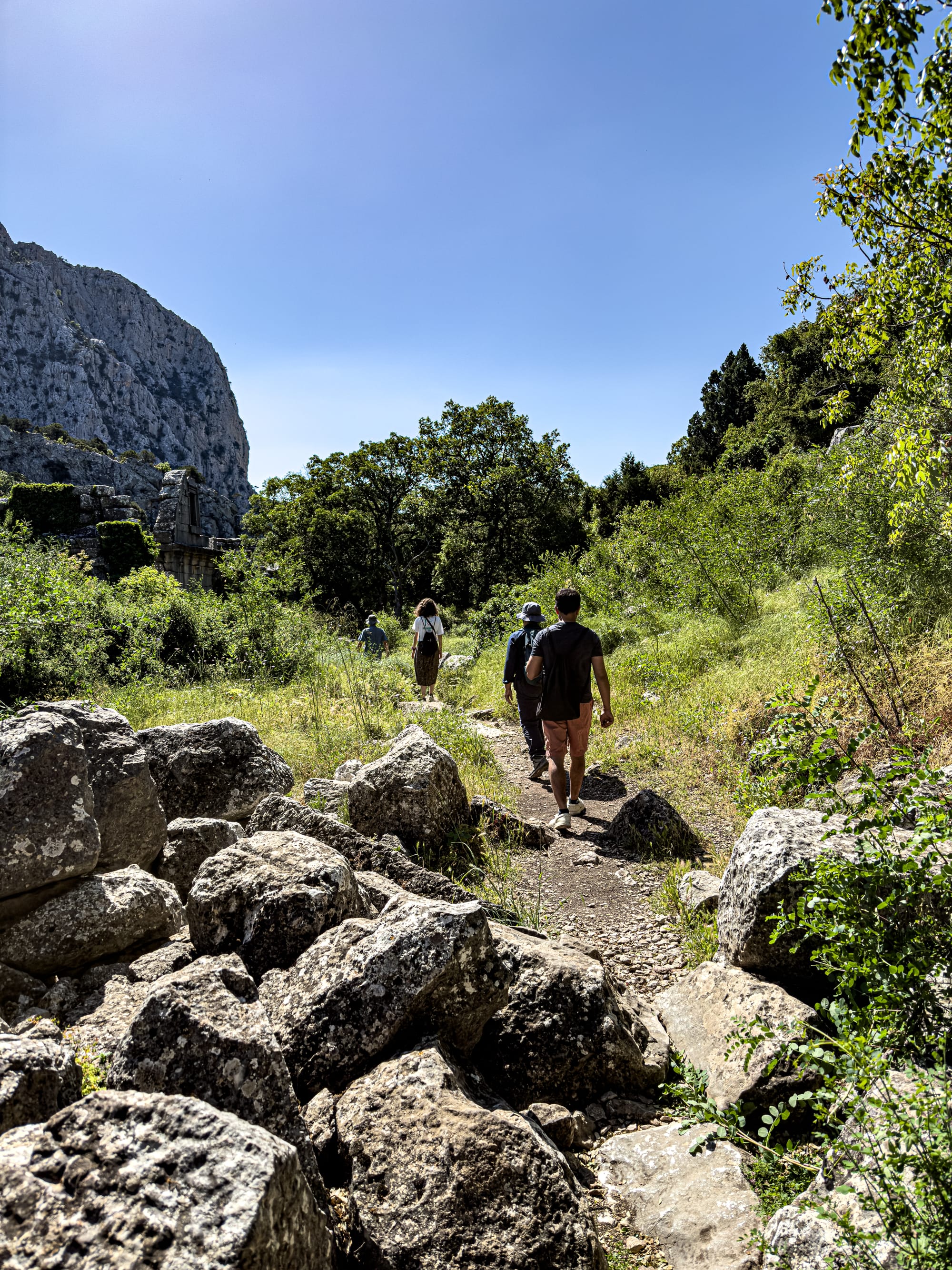
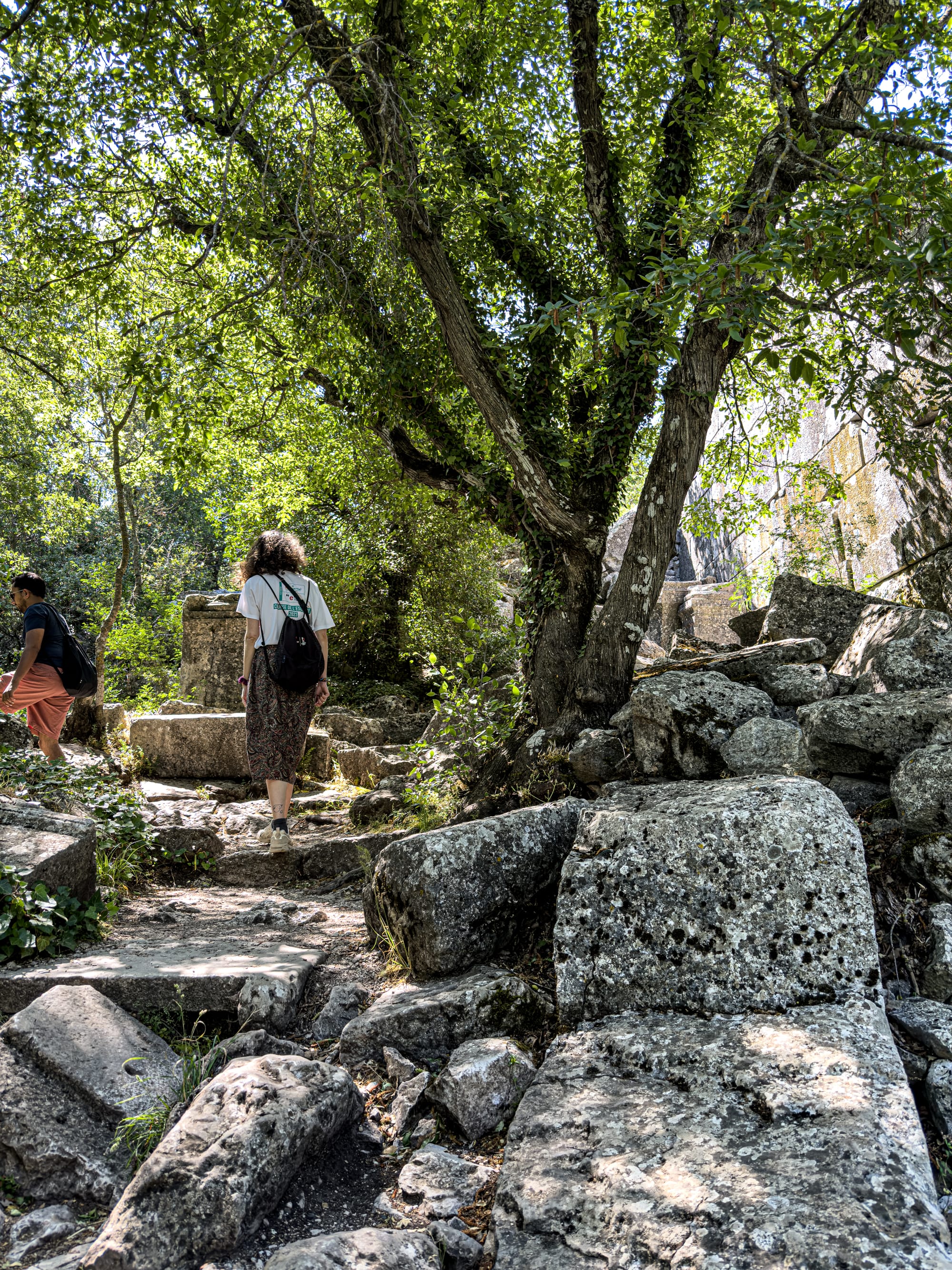
Winding through sunlit meadows and shaded ruins, the path through Termessos offers moments of quiet immersion
The hike started with us exploring some tombs, their walls softened by ivy and time. Some stood beneath massive trees, others cracked open to the sky. One was completely overtaken by vines, its lid displaced and tilted like a broken tooth. Each ruin told a story in silence.
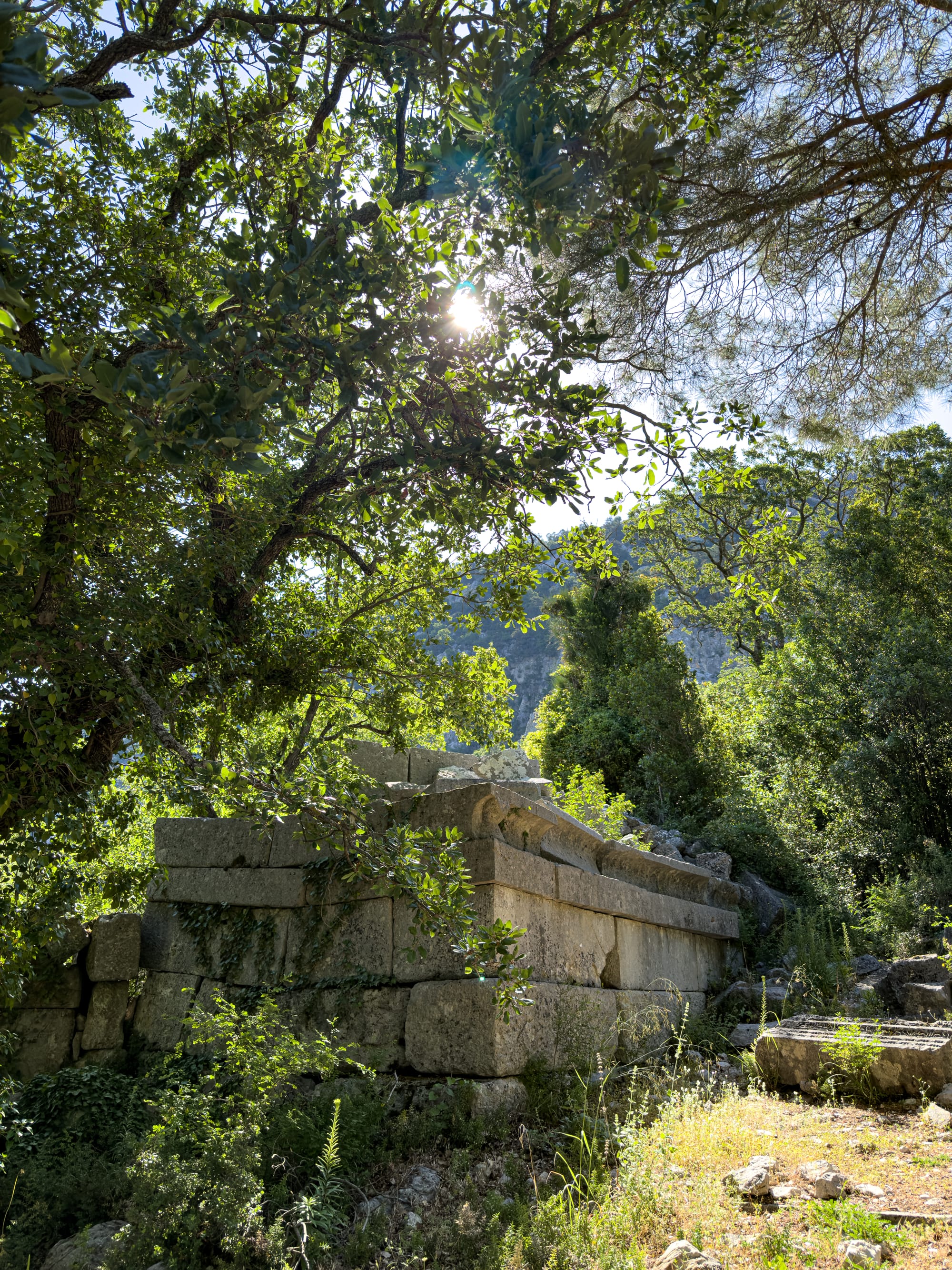
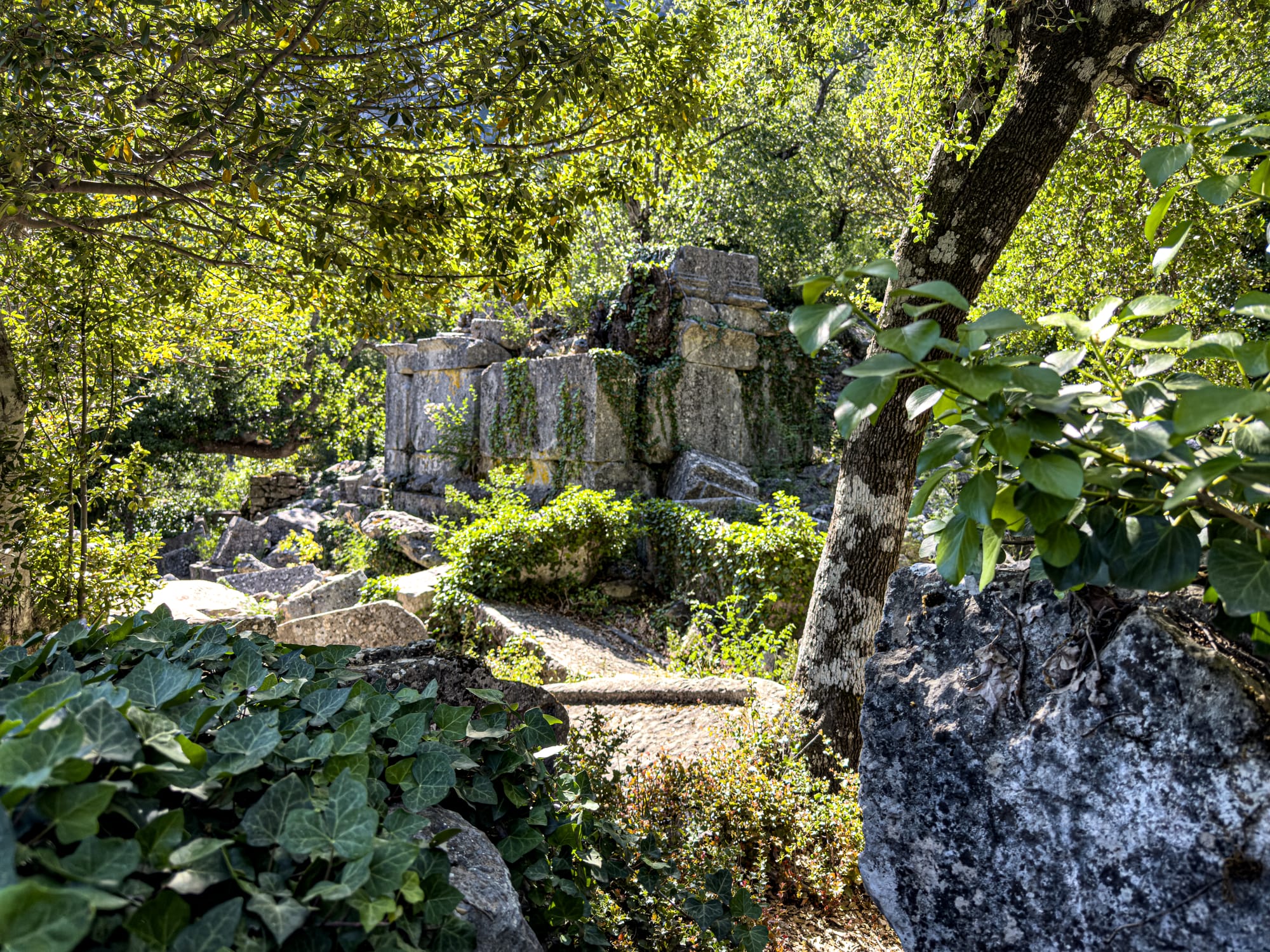
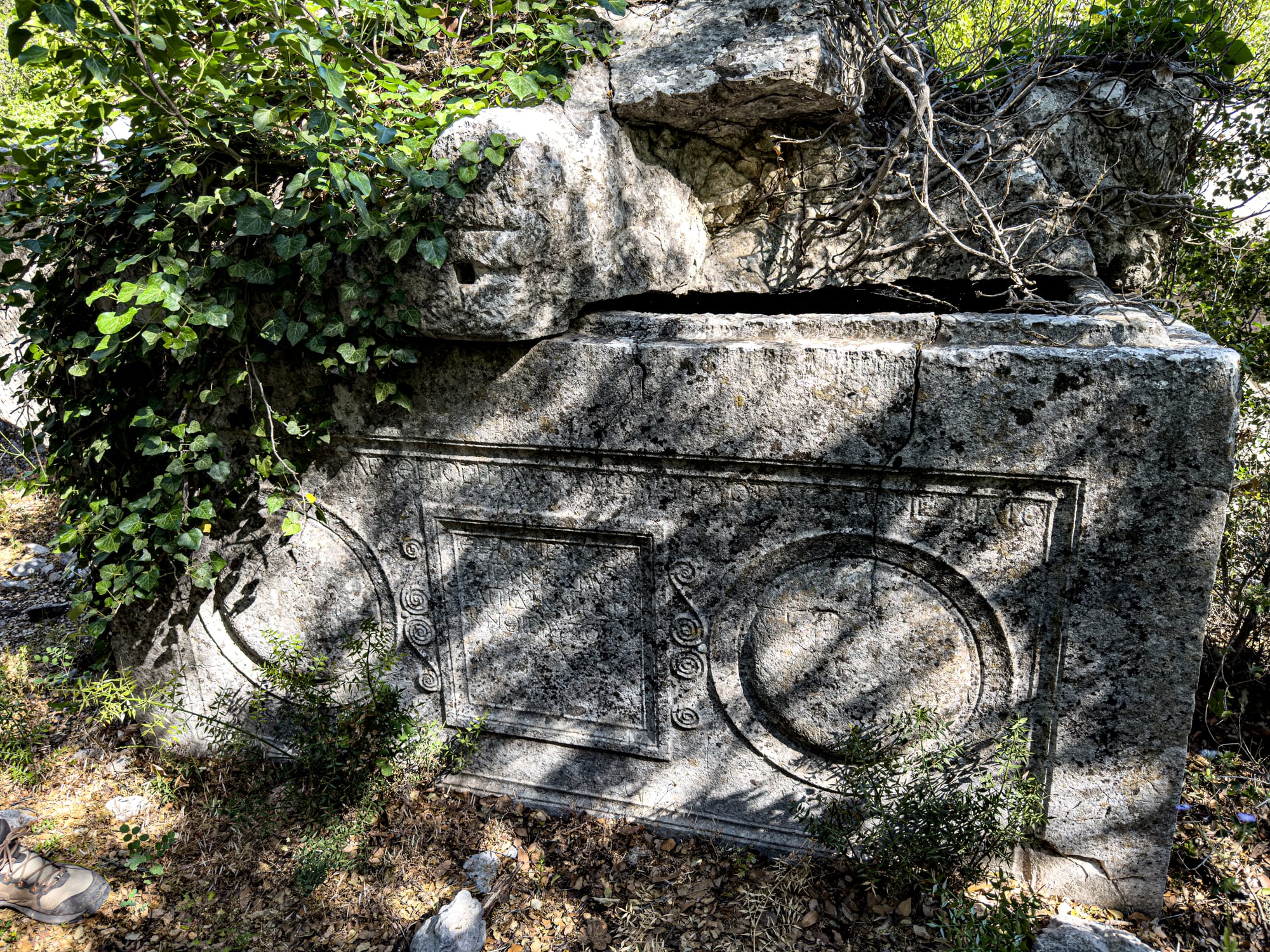
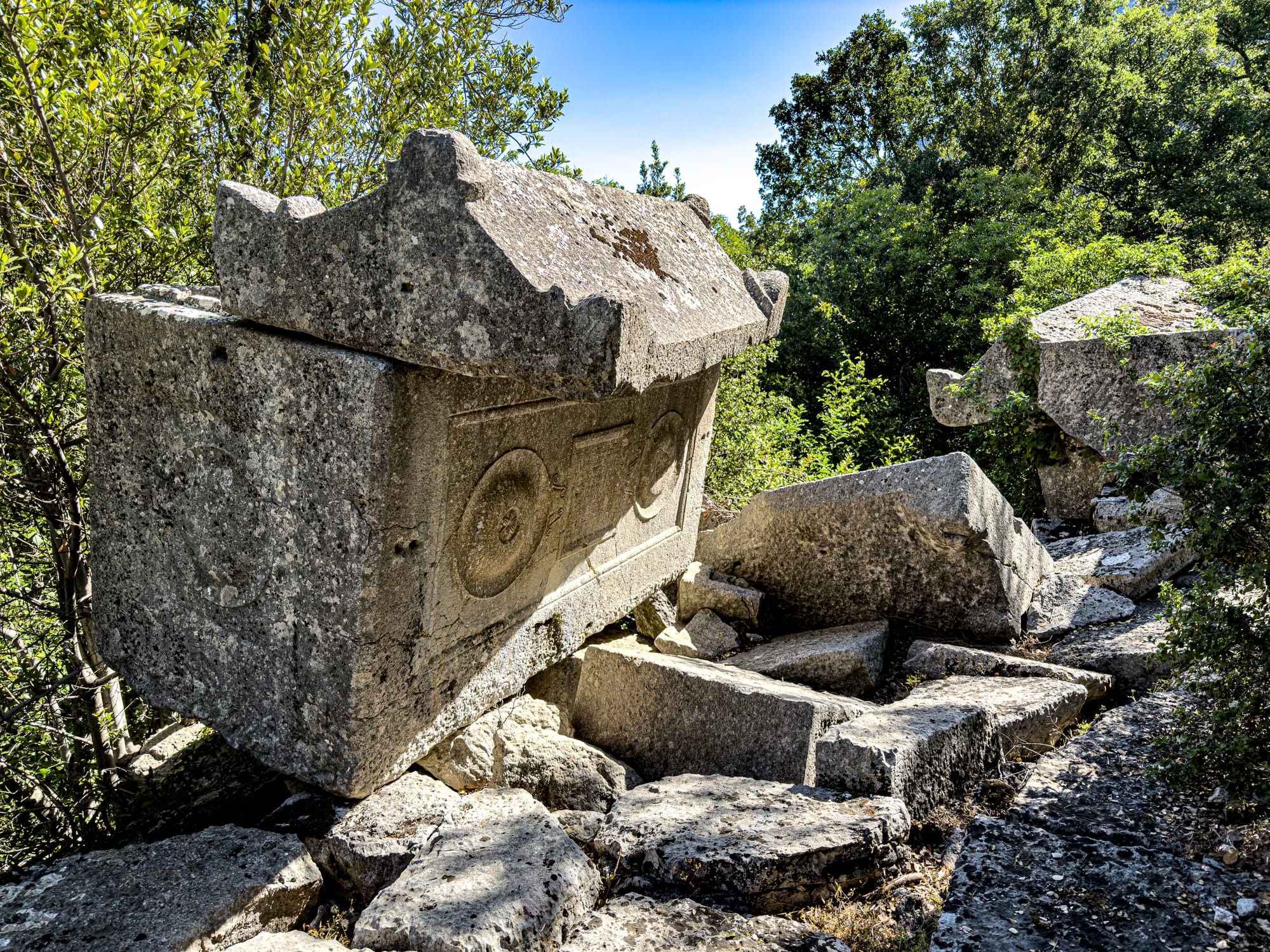
Tumbled sarcophagi and ivy-cloaked stones reveal the once-grand necropolis of Termessos
Then came a gradual incline through forested switchbacks, emerging onto ledges with views across the Antalya basin. At regular intervals, we stopped to examine stonework, discuss Pisidian customs, and peer into old water systems, some still partially intact.
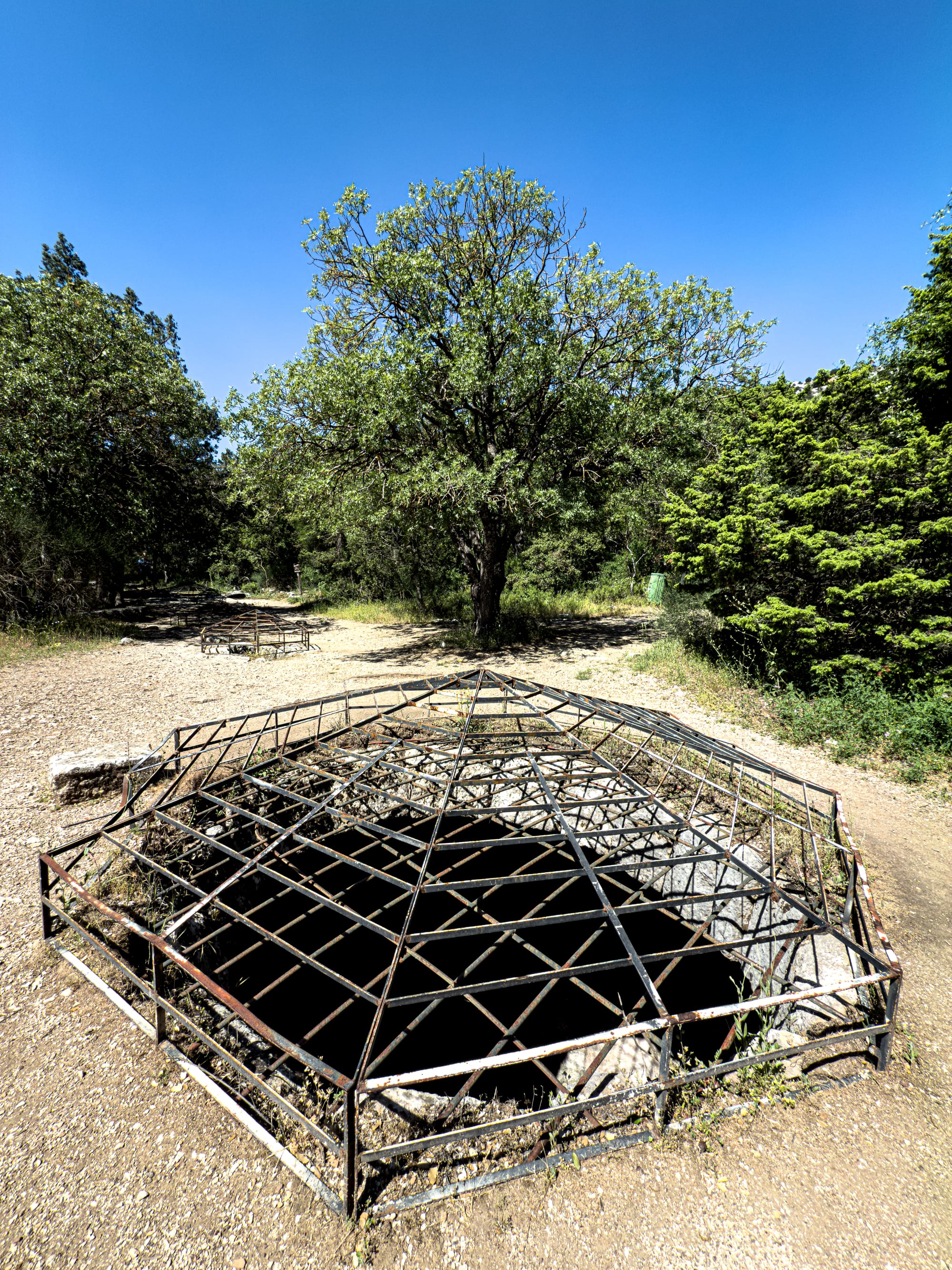
We saw where water would’ve been collected from rain channels and stored in large cisterns carved into the bedrock. Ingenious, sustainable engineering from a time when survival meant harmony with terrain.
The amphitheater stop was the highlight. The path opens suddenly to the structure, revealing stone seating curved in a near-perfect arc, facing a dramatic backdrop of vertical peaks.
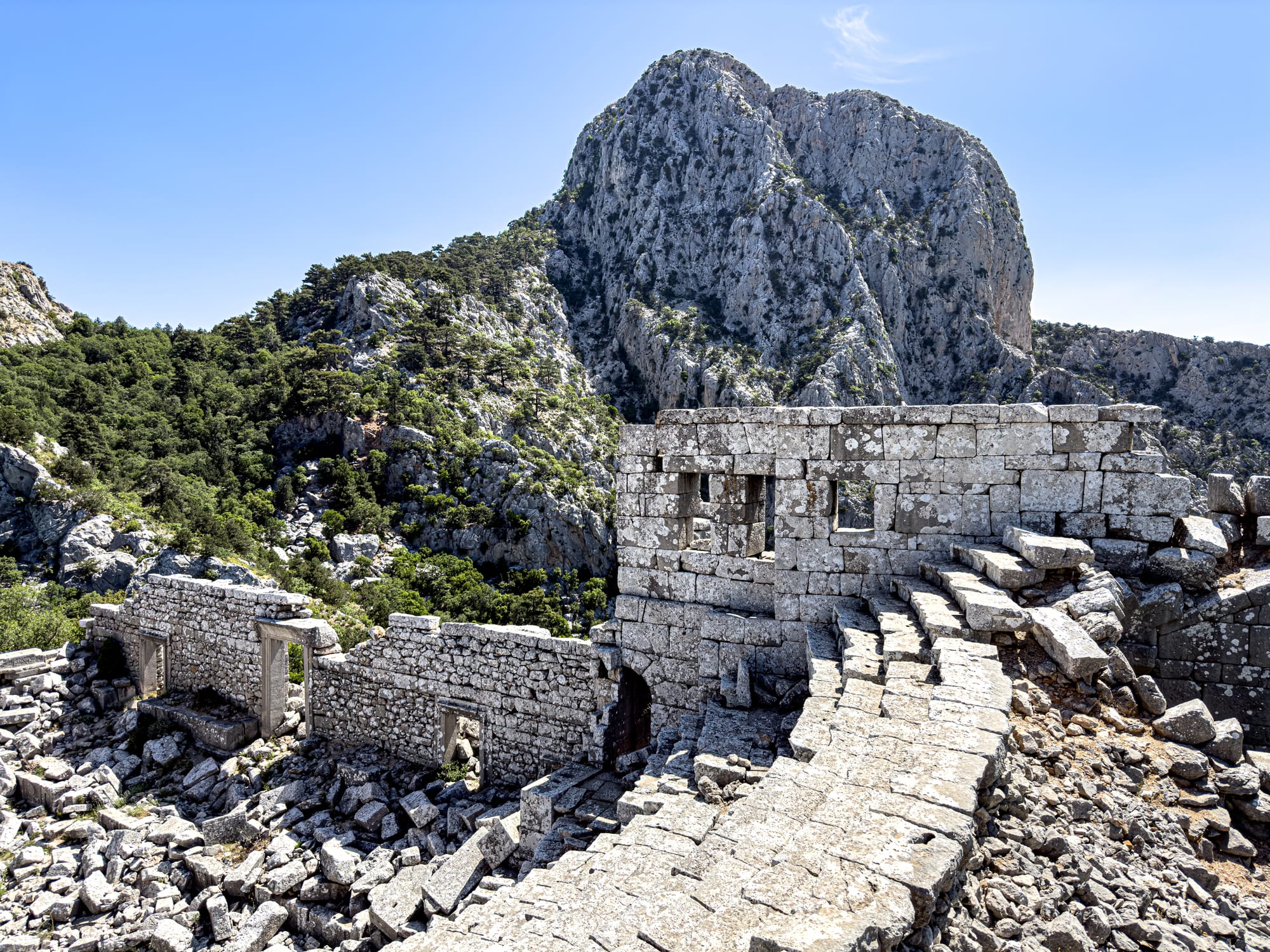
Even under the mid-morning sun, the silence in the theater was complete. No voices echoed but our own. It was a moment of awe that felt earned by the climb.
A landscape between worlds
Termessos is a quiet place. The fusion of stone and forest, ruin and bloom, makes it feel suspended in time, like something slowly being reclaimed, but still offering itself to be seen.
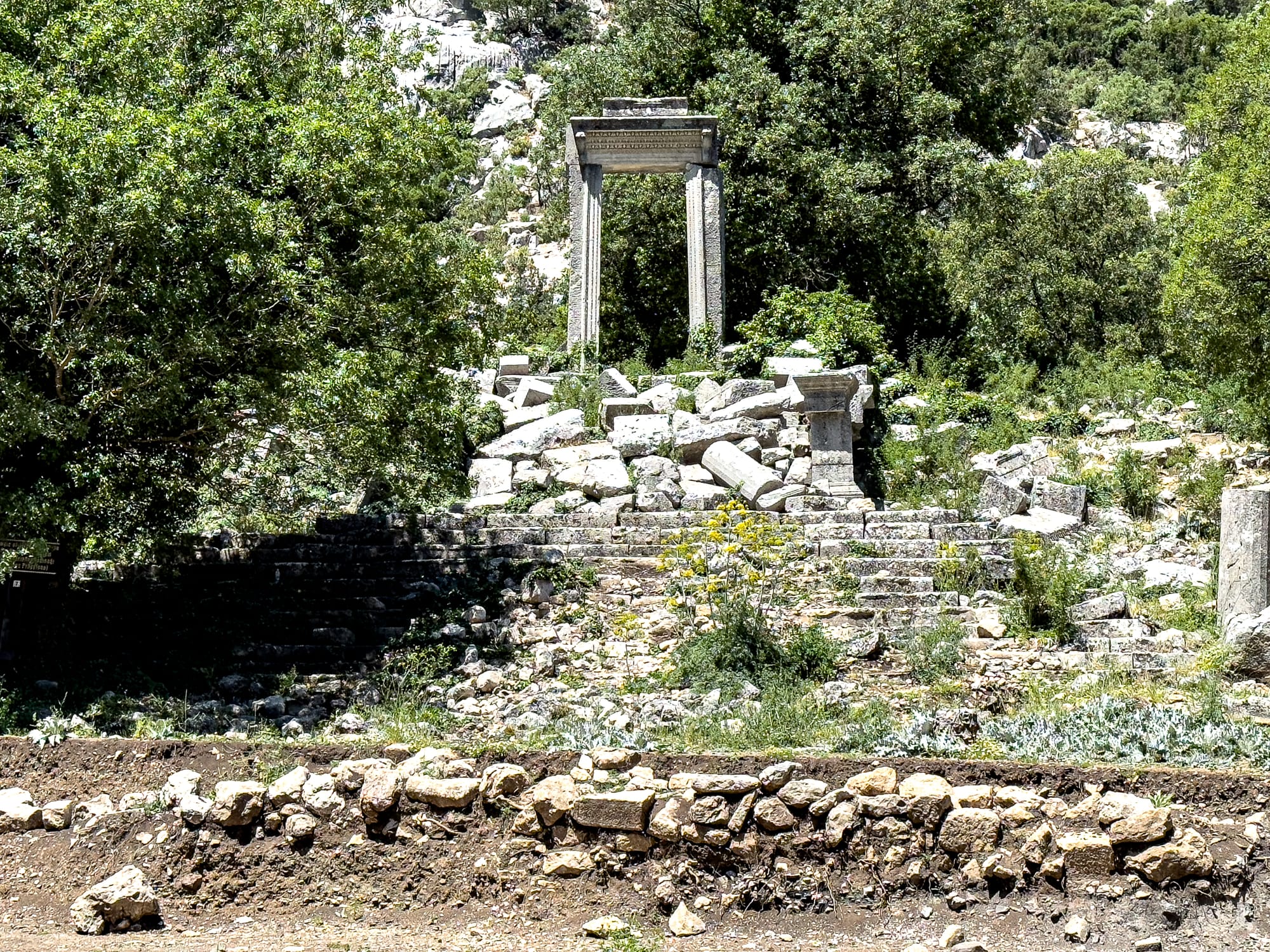
And it’s this balance, of reverence, wonder, and solitude, that defines the Termessos experience.
The hike to Termessos is available via this guided tour from Antalya. It includes transport, historical context, and flexible pacing.
It’s one of the rare ways to access and appreciate this remarkable ancient site, without the crowds, without the noise, and with everything you need to make the most of the journey.
Termessos visitor info
Termessos sits within Güllük Mountain National Park. There are two fees: a small national park entry fee paid at the park gate, and a site entrance fee paid at the ruins.
Entrance fee
The site entrance fee is approximately 100 TL (€3–4). Prices may change; check the official Turkish museum website for current rates. Cash may be required.
Opening hours
The national park gate opens at 8:30 a.m. From there, it’s a 9 km drive up a winding mountain road to the parking area where the hike begins.
The park closes in the late afternoon (typically 5:30 p.m. at the gate), though visitors must exit by 7:30 p.m. We encourage you to arrive early, both for cooler temperatures and for the quality of light and silence before other visitors arrive.
How to get to Termessos from Antalya
By car
Termessos is approximately 30–37 km northwest of Antalya city center, about 45 minutes by car via the Antalya-Korkuteli highway. At the Güllük Mountain National Park entrance, you’ll pay the park entry fee, then drive 9 km uphill to the parking area.
By guided tour
The most practical way to visit Termessos is with a guided tour from Antalya. The guided hiking tour we took includes pickup from Antalya, transport to the site, and a history-rich guided hike through the ruins. It’s a half-day experience, typically 4 hours total.
By public transport (limited)
There is no direct public transport to Termessos. You can take the Antalya-Korkuteli minibus and ask to be dropped at the Termessos crossroad, but from there it’s 8.5 km uphill to the parking area, either by taxi or on foot. A car or guided tour is strongly recommended.
Best time to visit Termessos
Spring (April–May) and autumn (September–October) offer the best conditions: mild temperatures, wildflowers in spring, golden light in autumn, and fewer visitors.
Summer visits are possible but the heat can be intense, especially on the exposed sections of the hike. Arriving at the 8:30 a.m. park opening is essential in summer.
Winter visits are quieter still, but the mountain road may be slippery and some paths can be muddy.
Regardless of season, Termessos sees very few visitors compared to other ancient sites in Turkey. On many days, you may have the amphitheater entirely to yourself.
Frequently asked questions about Termessos
Is Termessos worth visiting?
Yes. Termessos is one of the most atmospheric and well-preserved ancient sites in Turkey, and one of the least crowded. The combination of mountain hiking, a dramatic cliffside amphitheater, scattered sarcophagi, and near-total solitude makes it unlike any other ruin in the Antalya region.
How much does it cost to visit Termessos?
The site entrance fee is approximately 100 TL (€3–4), plus a small national park entry fee at the gate. Prices may change; check the official Turkish museum website for current rates.
How long does it take to visit Termessos?
Allow 3–4 hours total, including the hike from the parking area (20–30 minutes each way) and time to explore the amphitheater, necropolis, and surrounding ruins.
How difficult is the Termessos hike?
Moderate. The hike from the parking area to the main ruins involves uneven rocky paths with some steep sections. It’s not technically difficult, but sturdy shoes and a reasonable level of fitness are recommended. The site is not accessible for wheelchairs or visitors with significant mobility issues.
Can you visit Termessos without a guide?
Yes, but a guide significantly enhances the experience. There is very little on-site signage, no audio guide, and no English-language map. Without a guide, you’ll see the ruins but miss most of the historical context. Guided tours from Antalya are affordable and include transport.
Is Termessos a UNESCO World Heritage Site?
Termessos is currently on the UNESCO World Heritage Tentative List. It has not yet received full designation, though its first-ever archaeological excavation was announced in 2025, which may advance its candidacy.
Book the experience
Termessos is one of several remarkable ancient sites within reach of Antalya. For a very different kind of ruin, Perge offers a more accessible, lowland Roman city with colonnaded streets and a stadium. Myra is known for its dramatic rock-cut Lycian tombs, and Kekova’s sunken city lies partially submerged beneath the Mediterranean. For our full roundup, see our favorite day trips from Antalya.
For more on the region, see our digital nomad guide to Antalya, Turkey.


