I cross the bridge almost daily, moving between Colonia del Valle Norte and Roma Sur. The distance is short, but the crossing marks a shift not captured by meters. It is a transition between two arrangements of the city, two ways time is structured and spent.
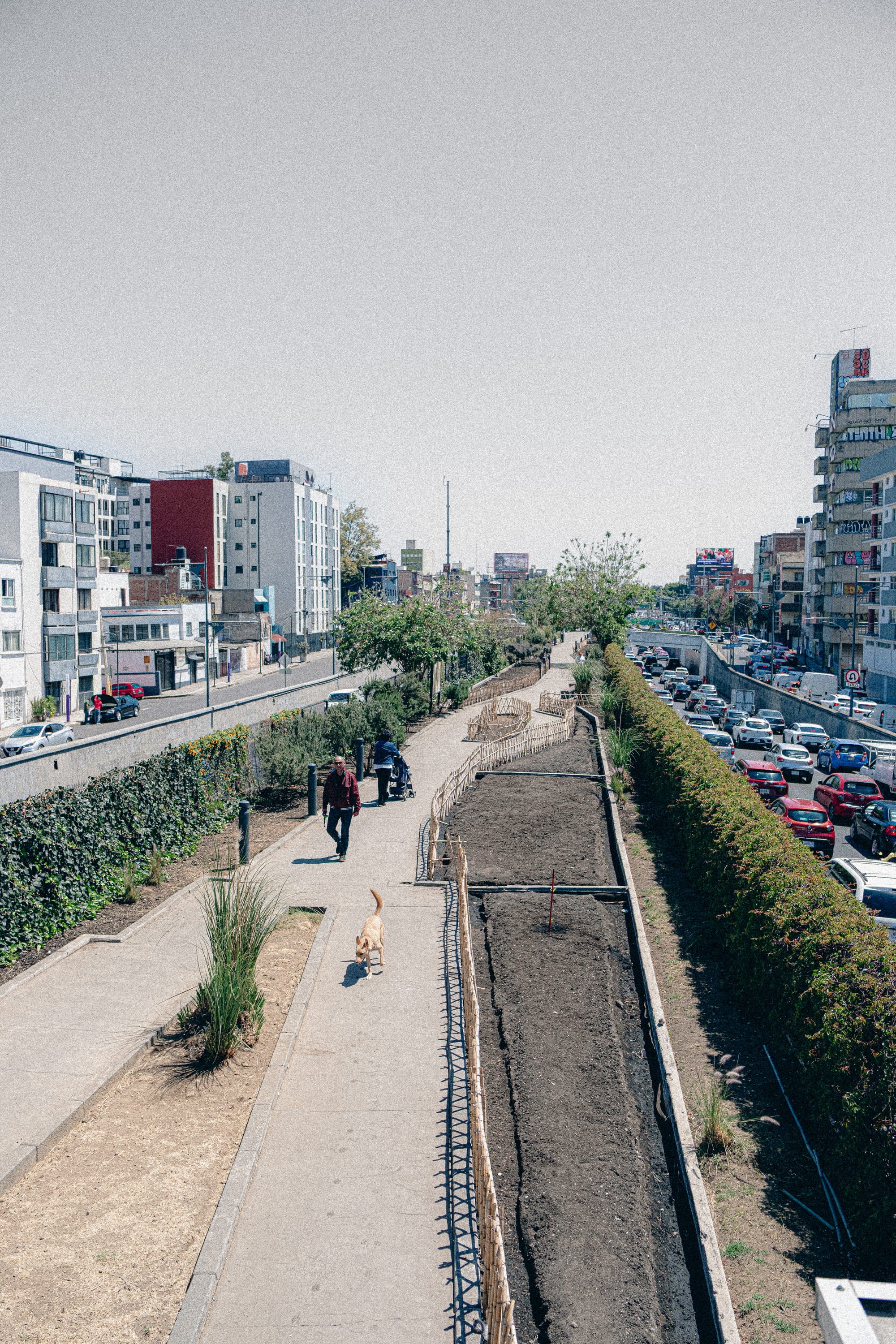
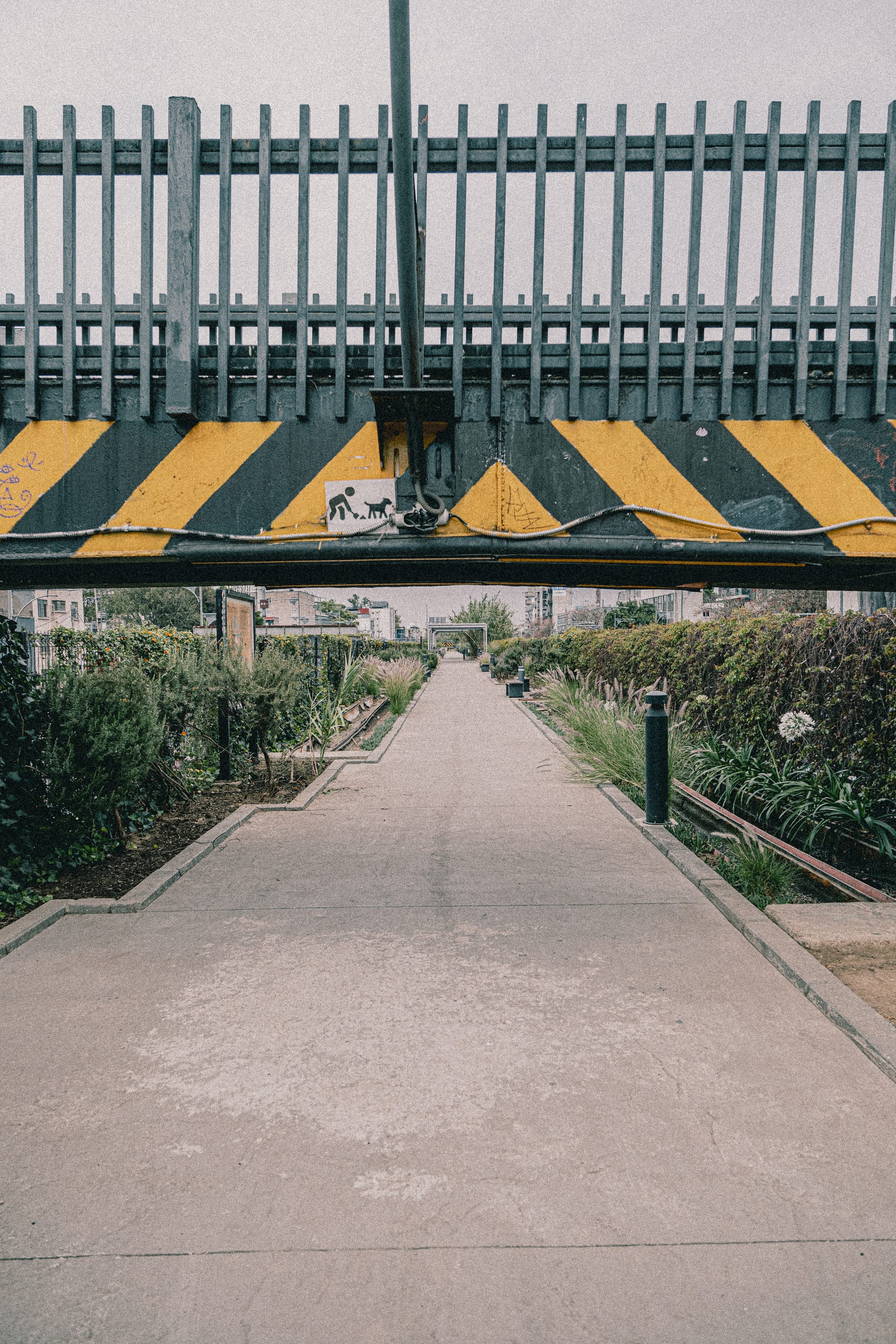
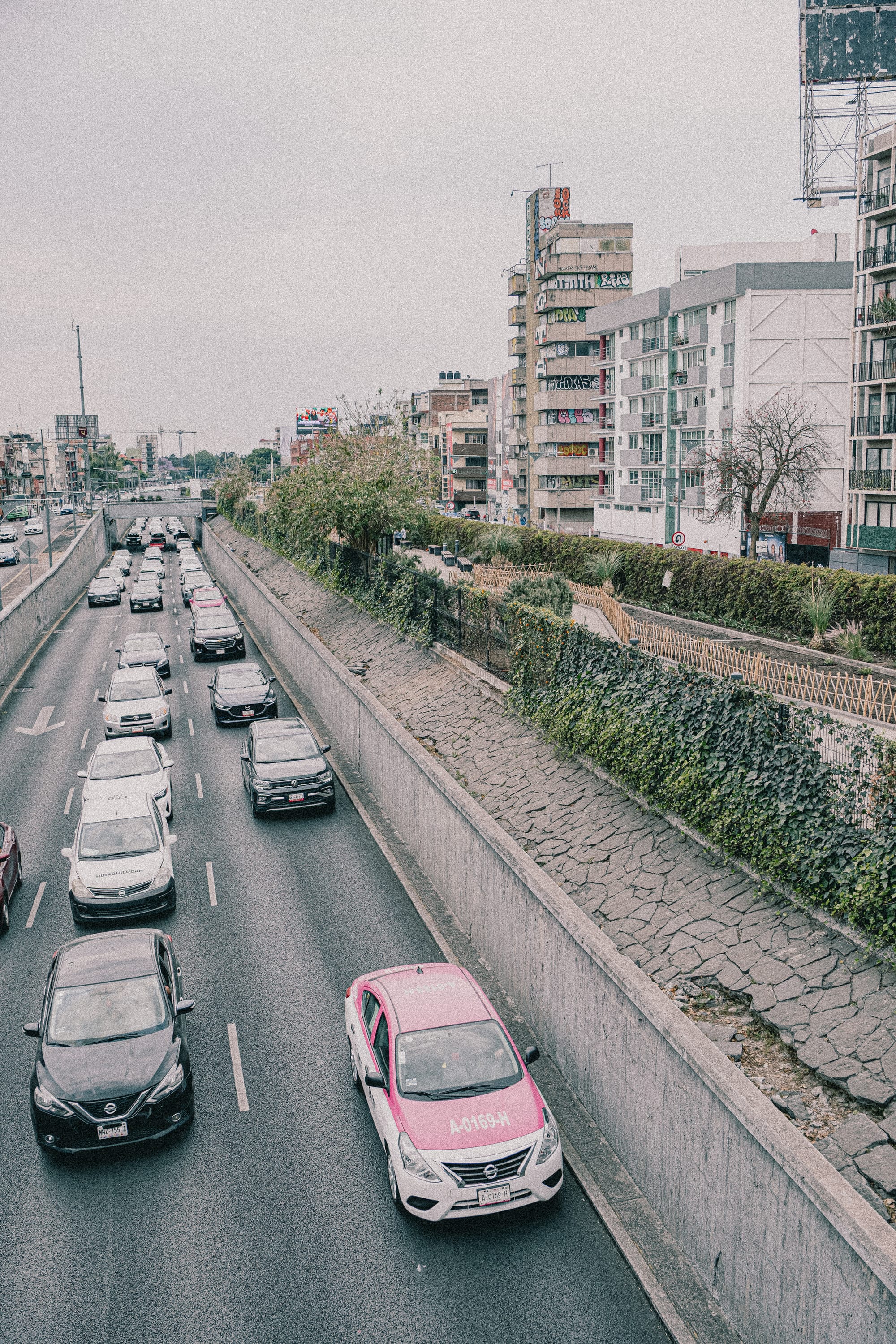
Below, traffic moves continuously along the Viaducto. The flow is organized and directional, structured by lanes, signals, and an expectation that movement should not stop. Above, the bridge enables passage across this system.
On one side is where I live: residential, quieter, oriented around domestic routines. On the other is a different configuration: cafés, laptops, a form of work that appears flexible, even as it relies on its own less visible infrastructures. The bridge connects these conditions without reconciling them.
Between them, set within the corridor of traffic rather than apart from it, there is a linear park.
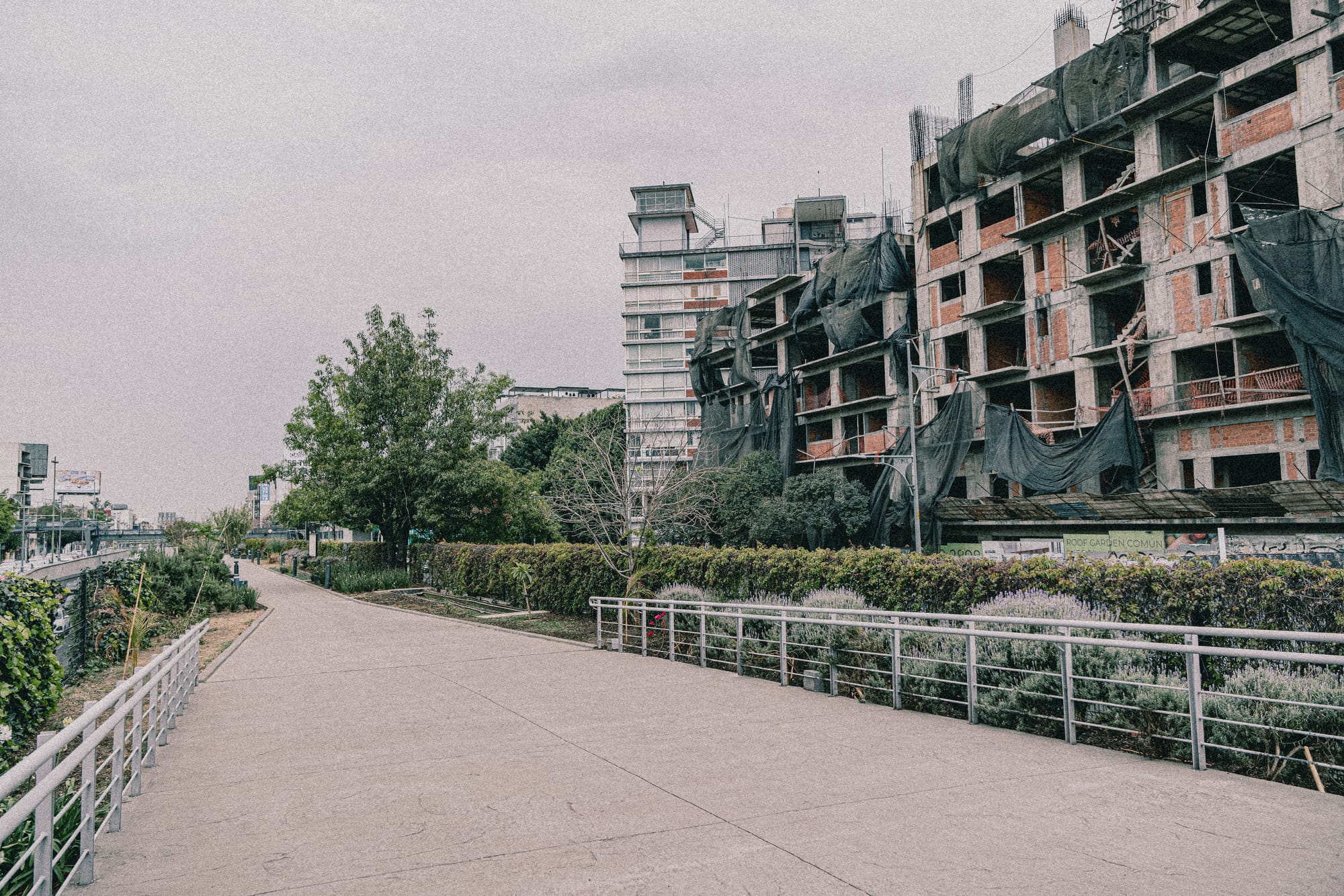
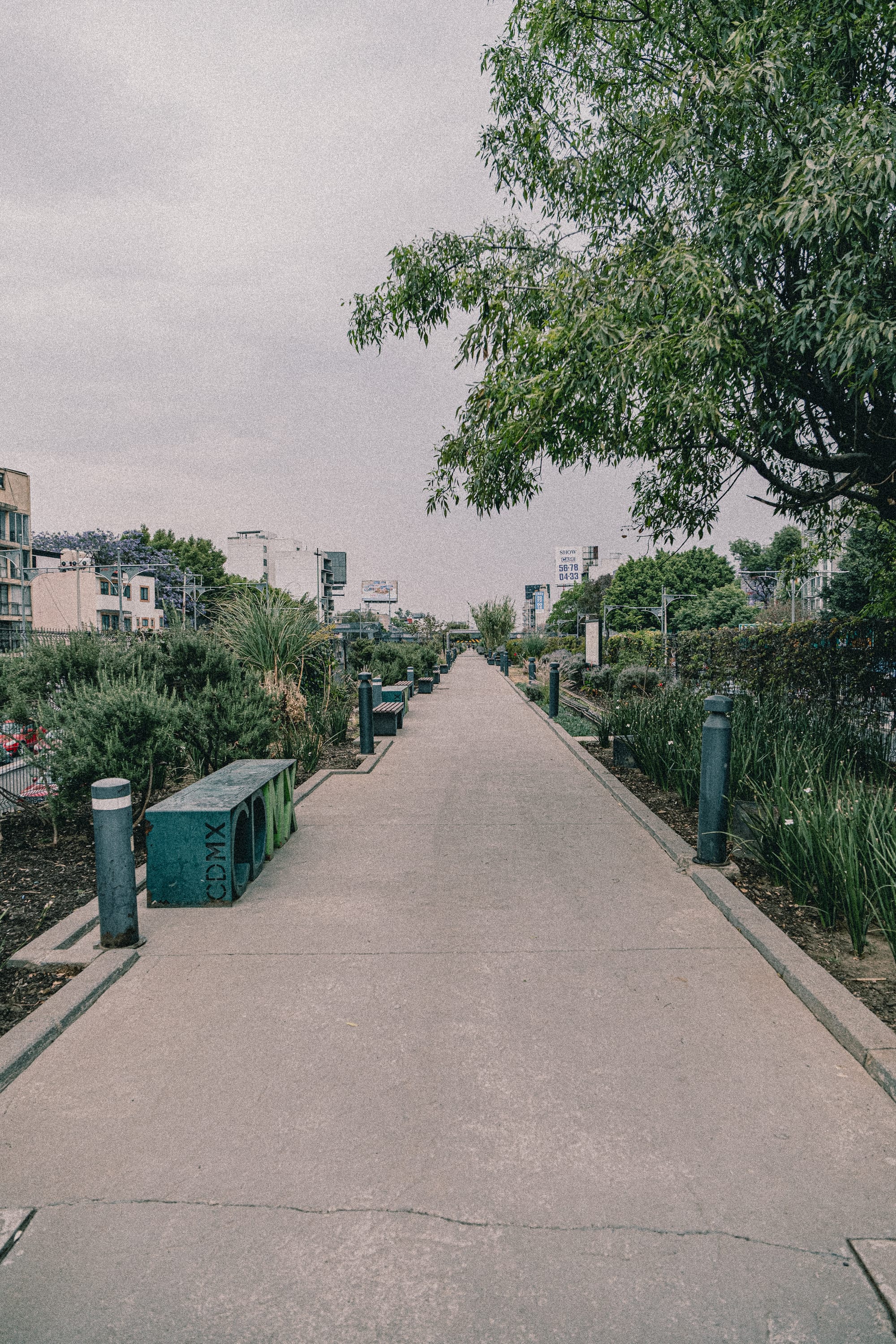
Parque Lineal Viaducto occupies the median of a major arterial road. It is not elevated, not enclosed, and not insulated from its surroundings. It is a narrow strip of planted ground running parallel to high-speed movement.
The first time I entered it, I expected what parks are generally assumed to provide, a degree of separation from the pressures of the city. A reduction of noise. A slower pace.
This space does not operate that way.
The traffic remains fully present. It does not recede into background noise but continues as a defining condition. The park does not interrupt the system it sits within, it is embedded in it. The experience is not withdrawal but proximity.
A useful comparison is The High Line in New York City. Built on a disused elevated railway, it extracts infrastructure from active use and reconfigures it as a landscape for leisure. The visitor is positioned above the street, looking out at the city from a controlled distance. What remains is a curated environment, movement historicized, friction reduced.
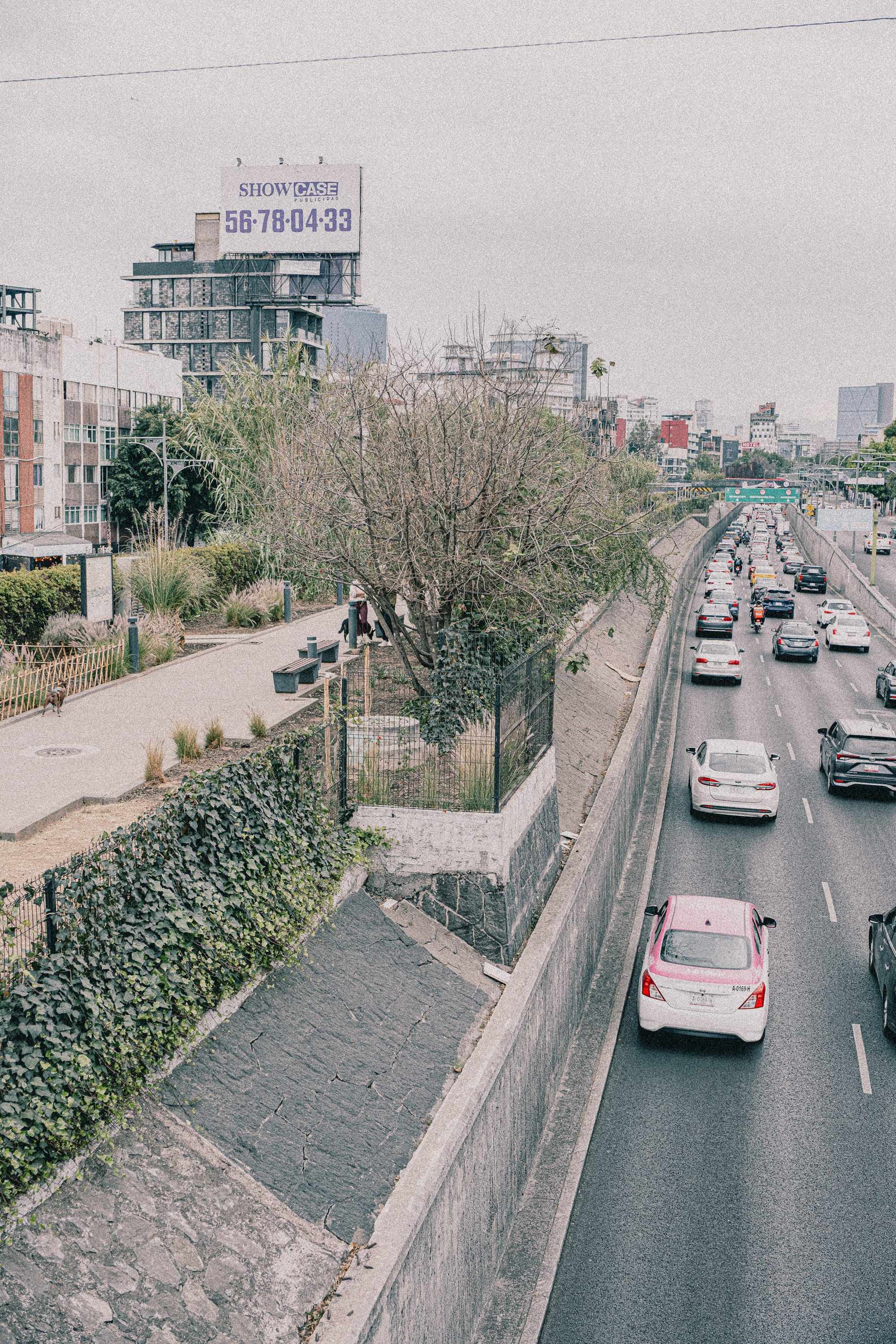
Parque Lineal Viaducto offers the opposite condition.
The road remains active. The flows of traffic continue at full intensity. The park does not replace or transform the infrastructure, it coexists with it. This is not a space created from obsolescence, but one inserted into an ongoing system.
The distinction is conceptual as much as spatial.
One model produces distance by removing infrastructure from use. The other maintains proximity by introducing a layer of amenity within it. One allows the city to be observed. The other requires that you remain inside it.
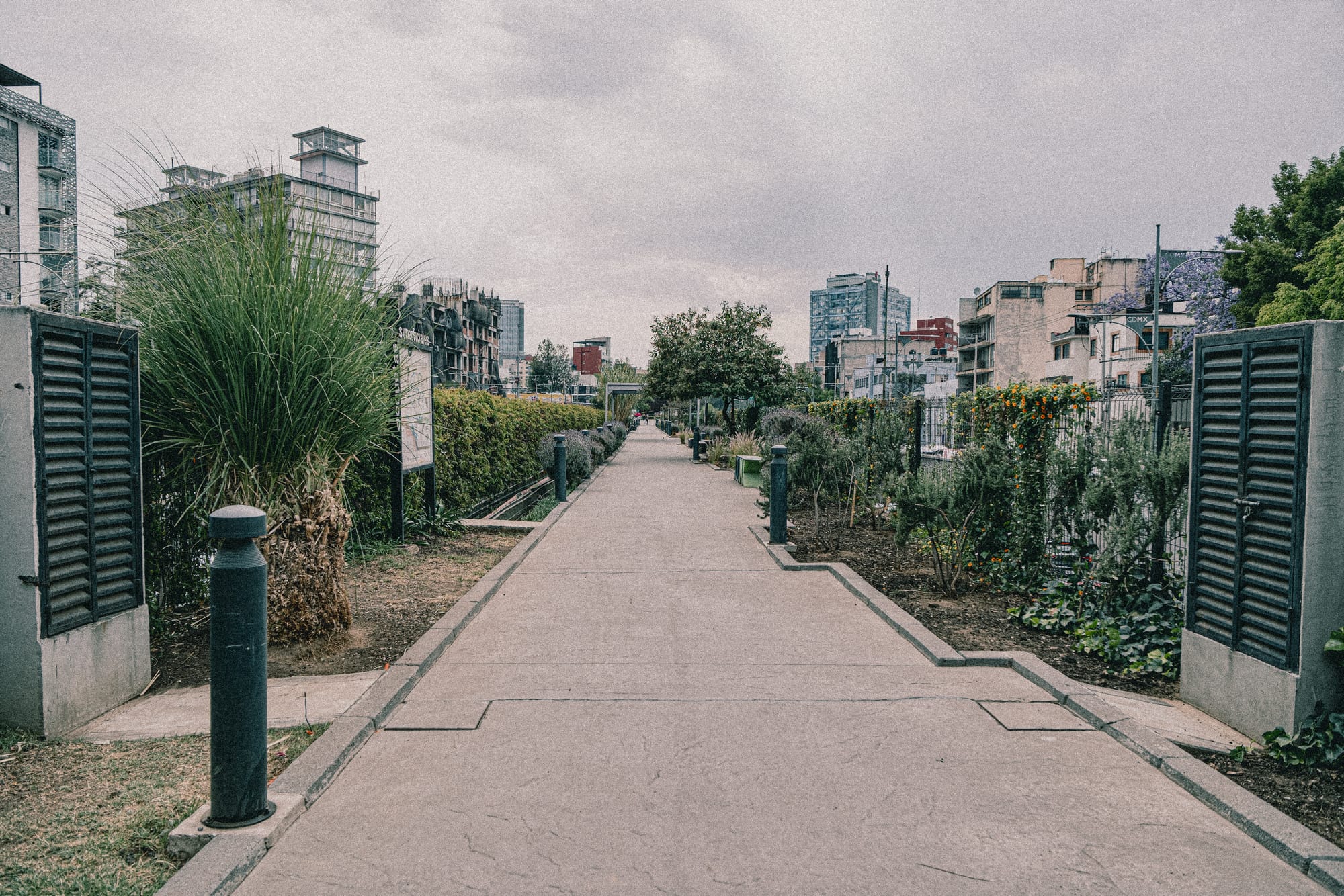
This is what makes the place compelling to photograph. Not because it is conventionally beautiful, but because it concentrates multiple conditions within a single frame. Standing in the center, the city does not resolve into a coherent image. It presents itself as juxtaposition.
On one side, buildings that appear suspended between completion and abandonment, exposed concrete, unfinished surfaces, signs of interrupted construction. On the other, more maintained facades, painted walls, balconies with plants extending outward. These conditions coexist without explanation.
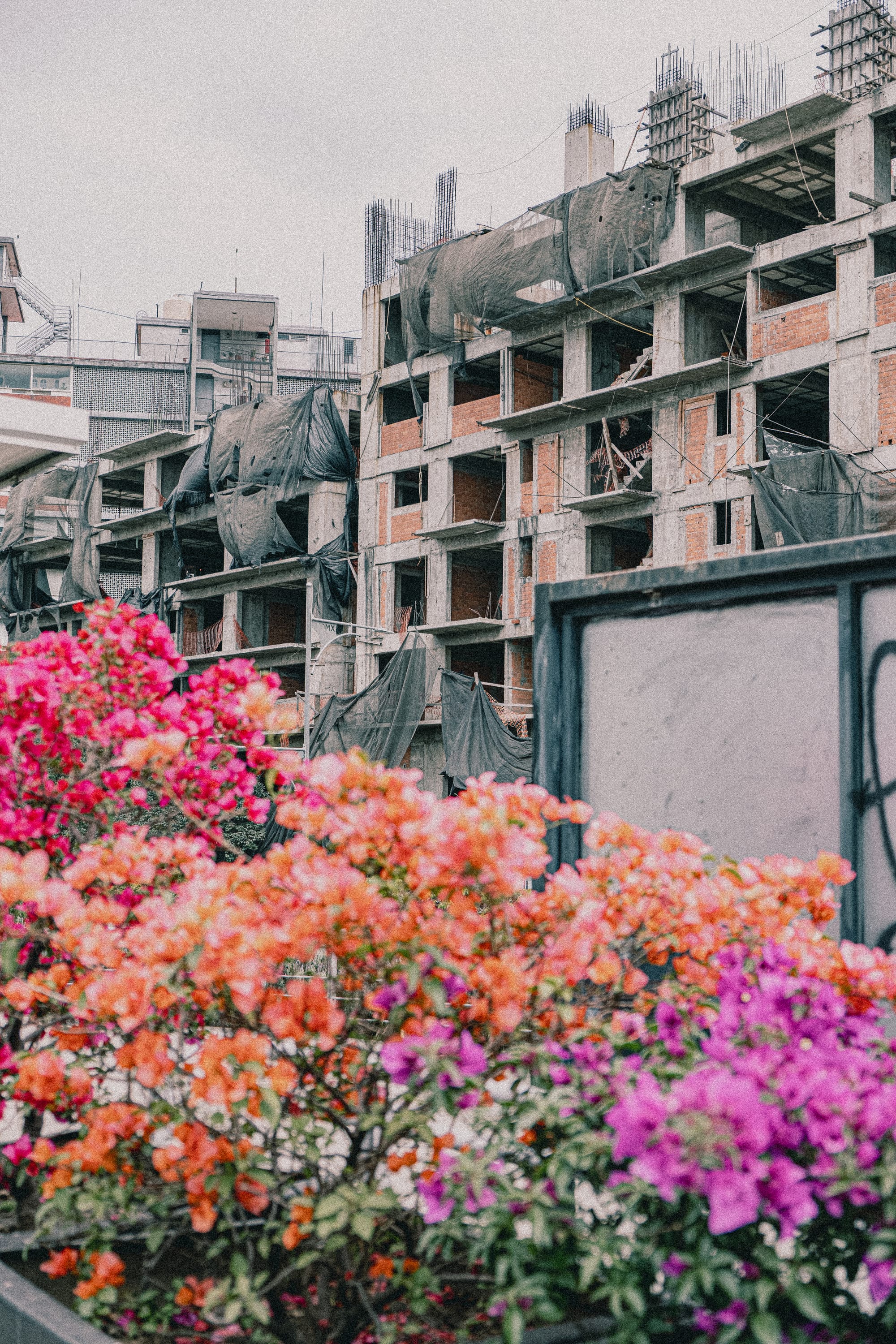
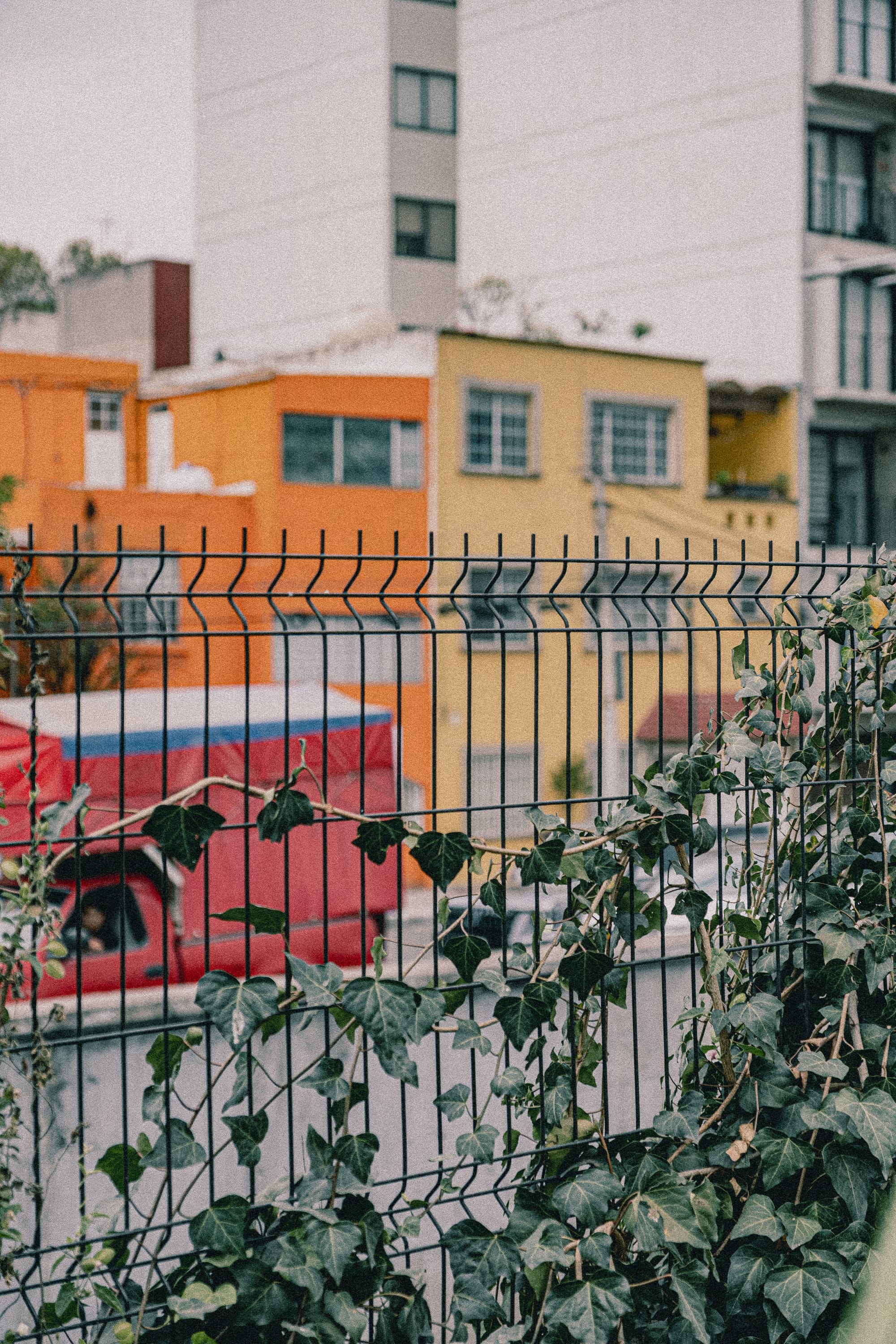
The park’s central position makes this contrast difficult to avoid. It functions as a line of observation that cuts through different urban textures without synthesizing them. The camera does not need to search for a subject, the subject is already structured by the space.
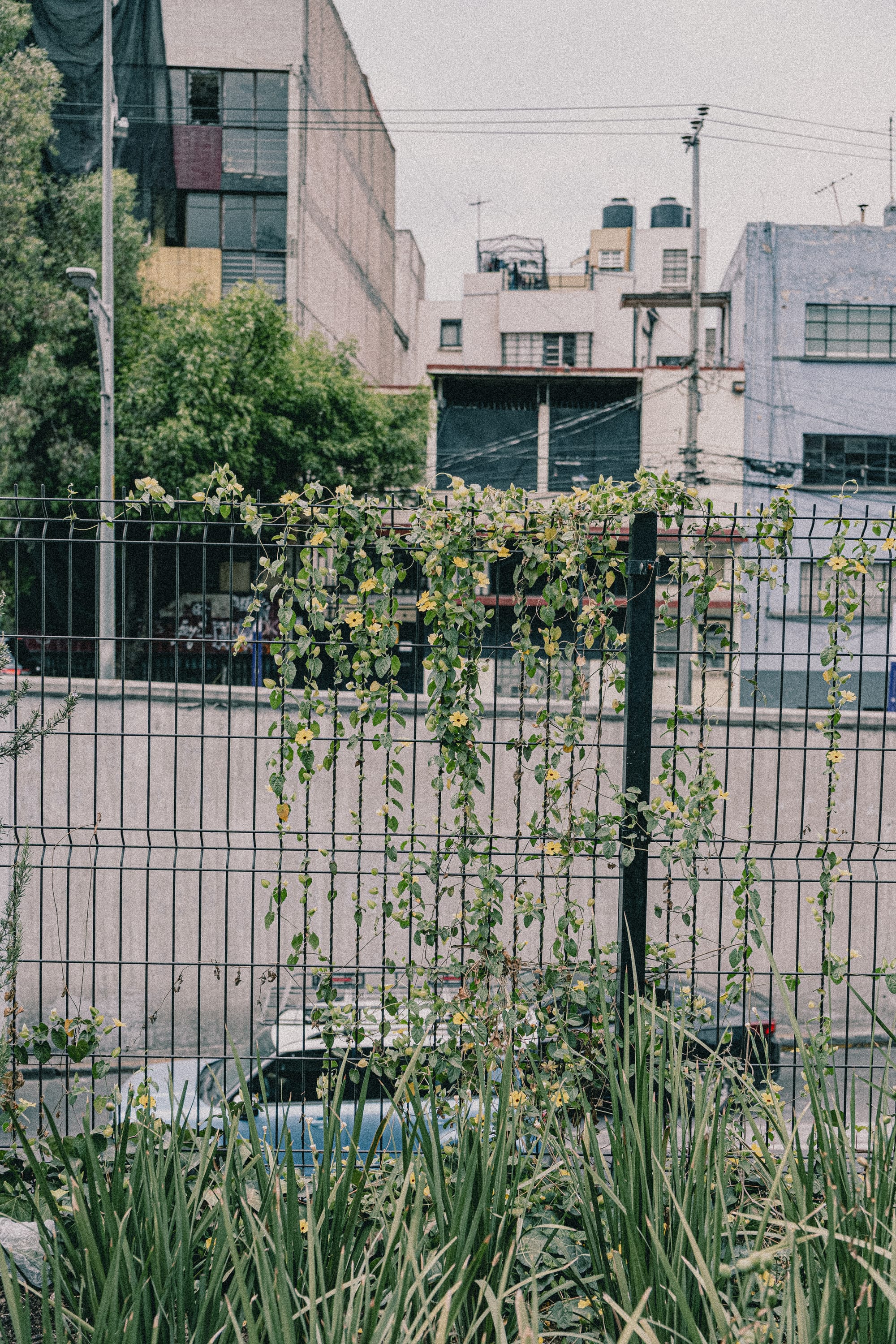
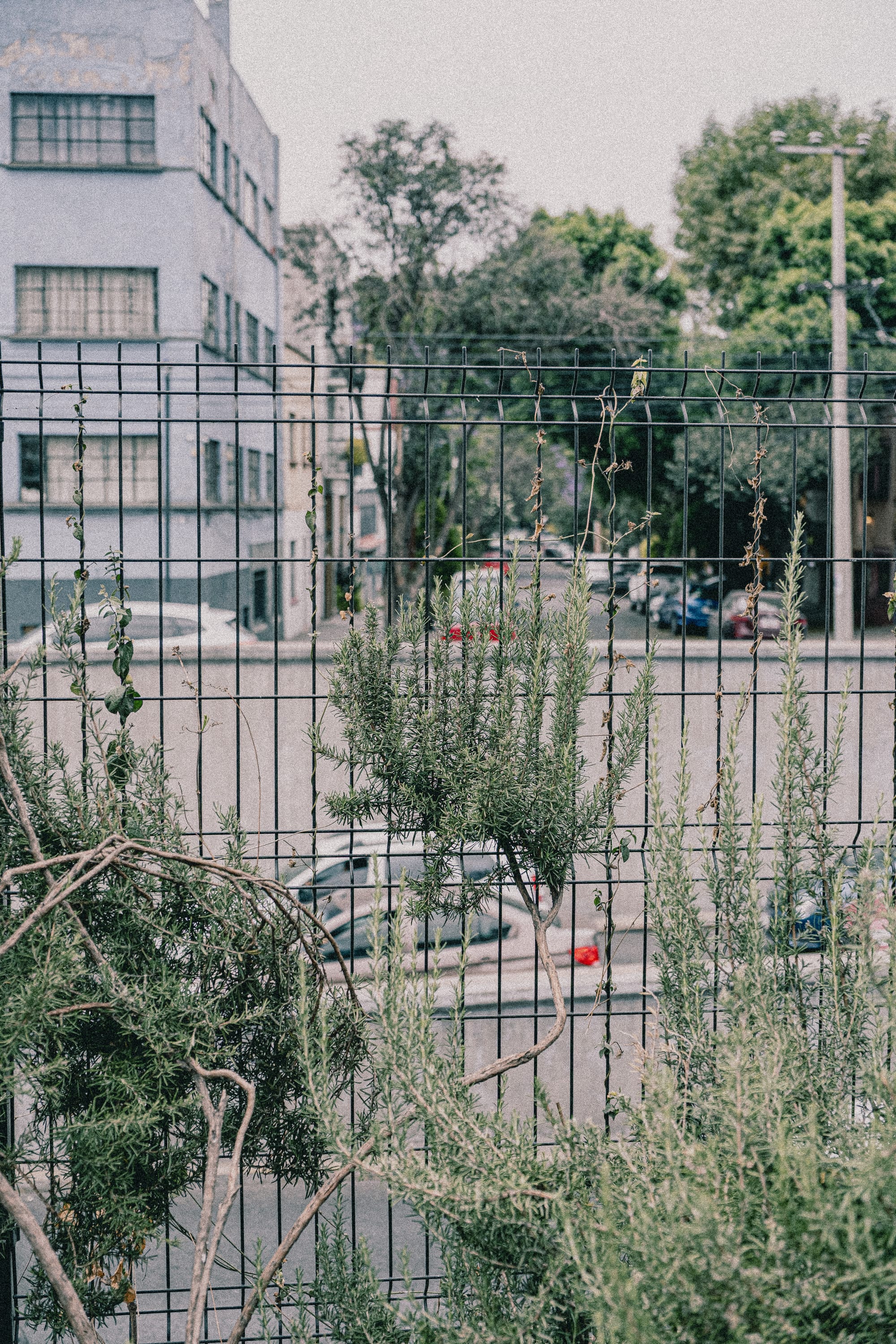
Along its length, fences separate the walkway from adjacent lanes and parcels. Their repetition reinforces the order imposed by the road, parallel lines, regulated intervals, controlled boundaries. Within and against these structures, plants grow.
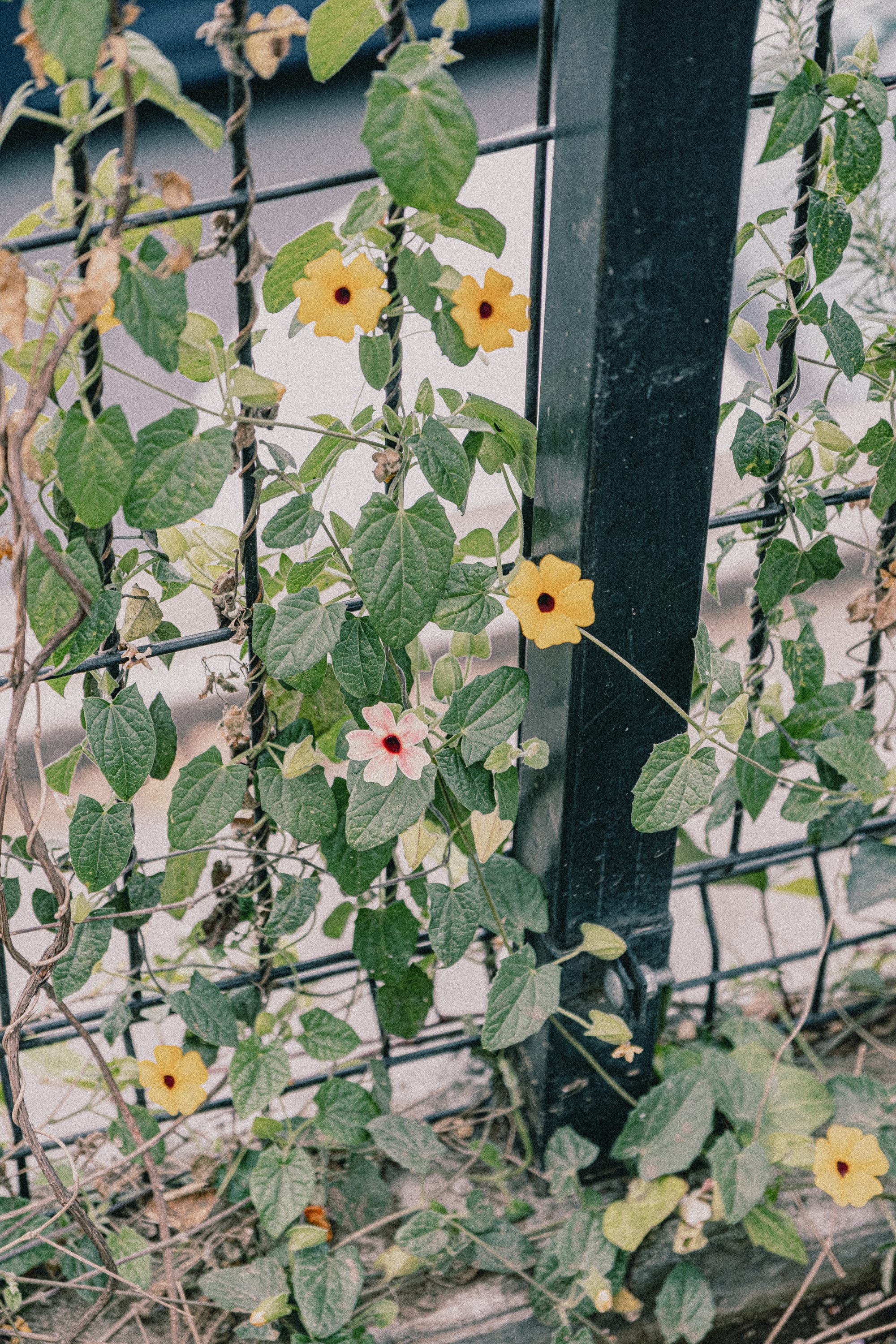
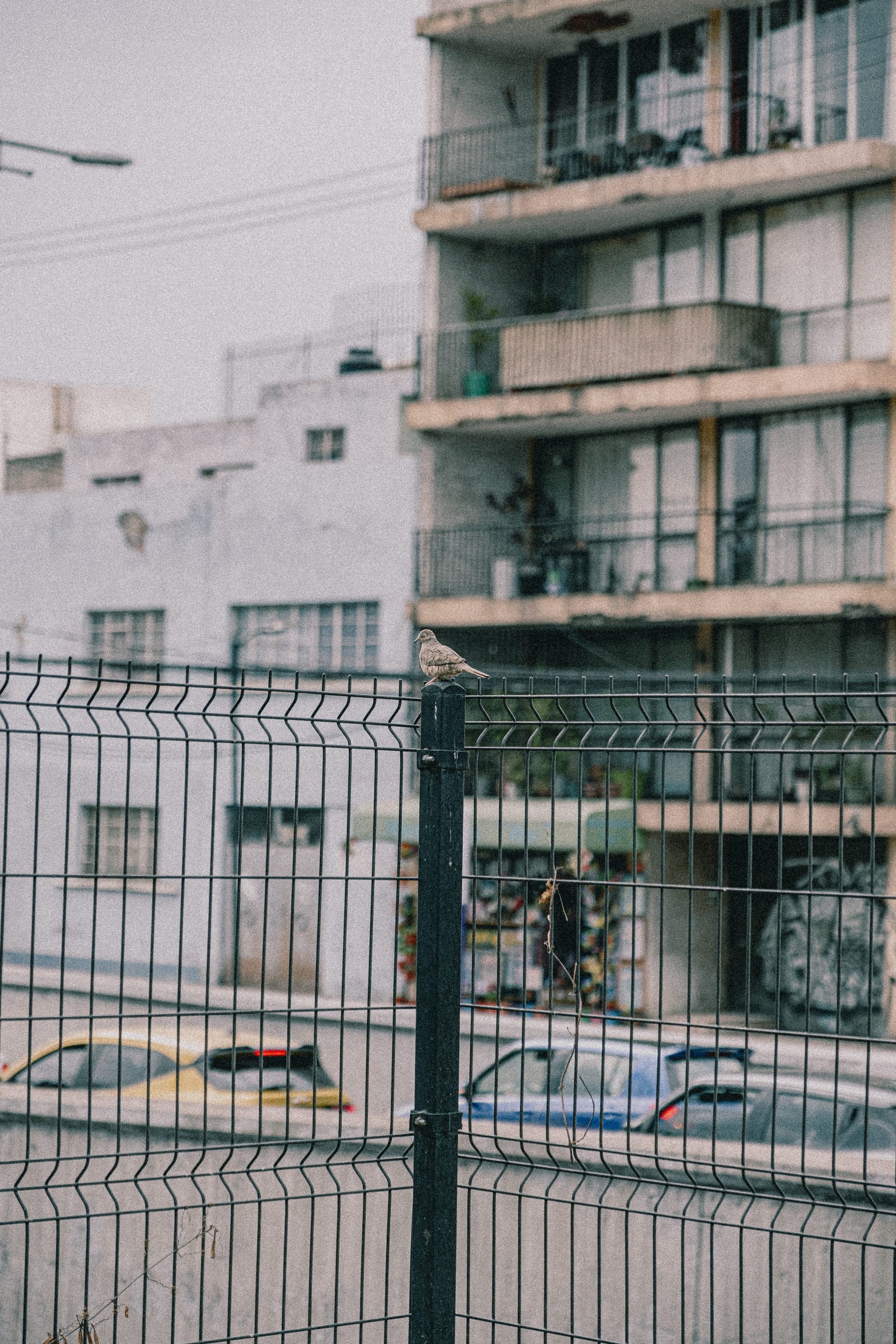
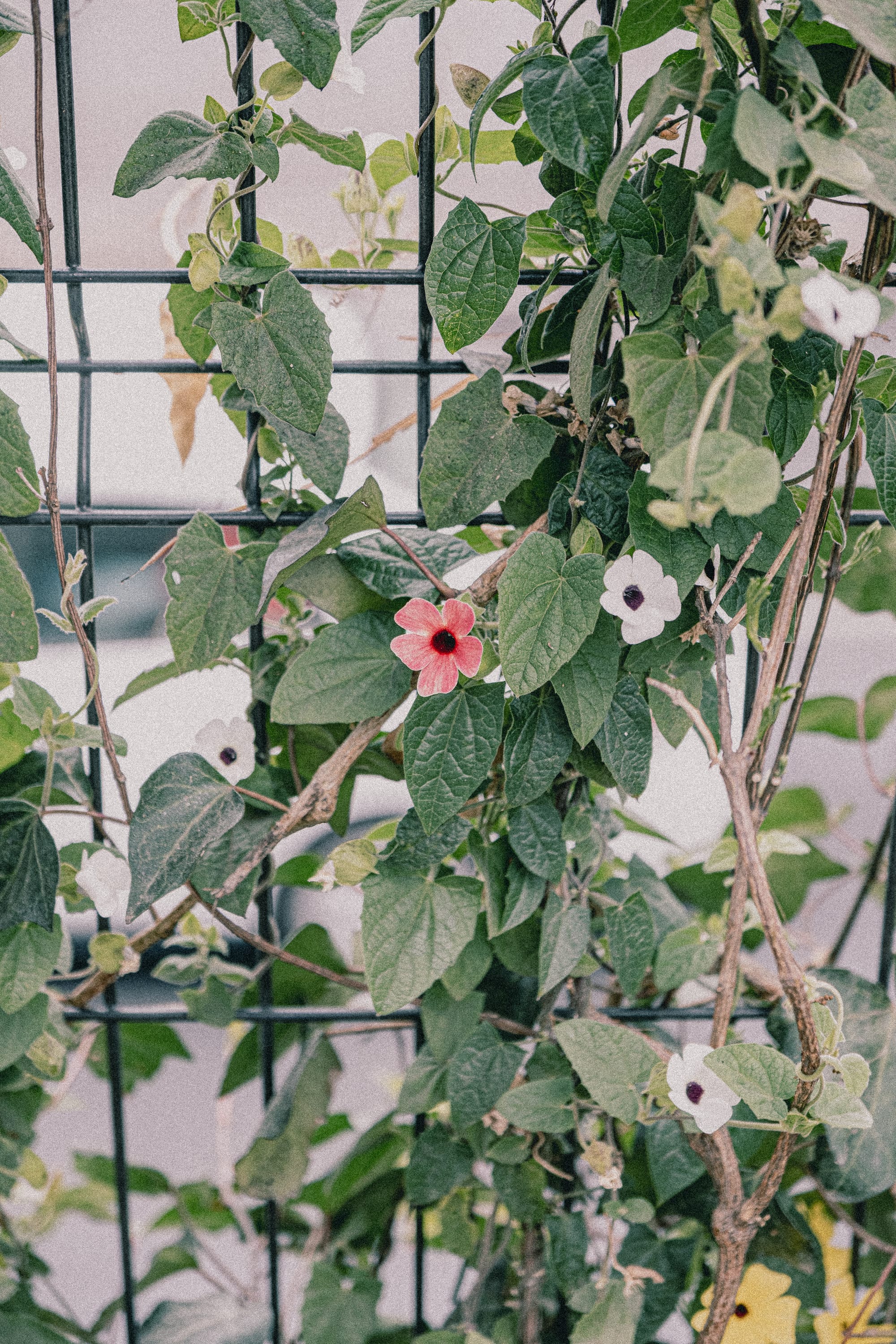
This growth is incremental and constrained. Vegetation occupies the margins available to it, adapting to the limits set by the surrounding infrastructure. It does not overturn the system. It persists within it.
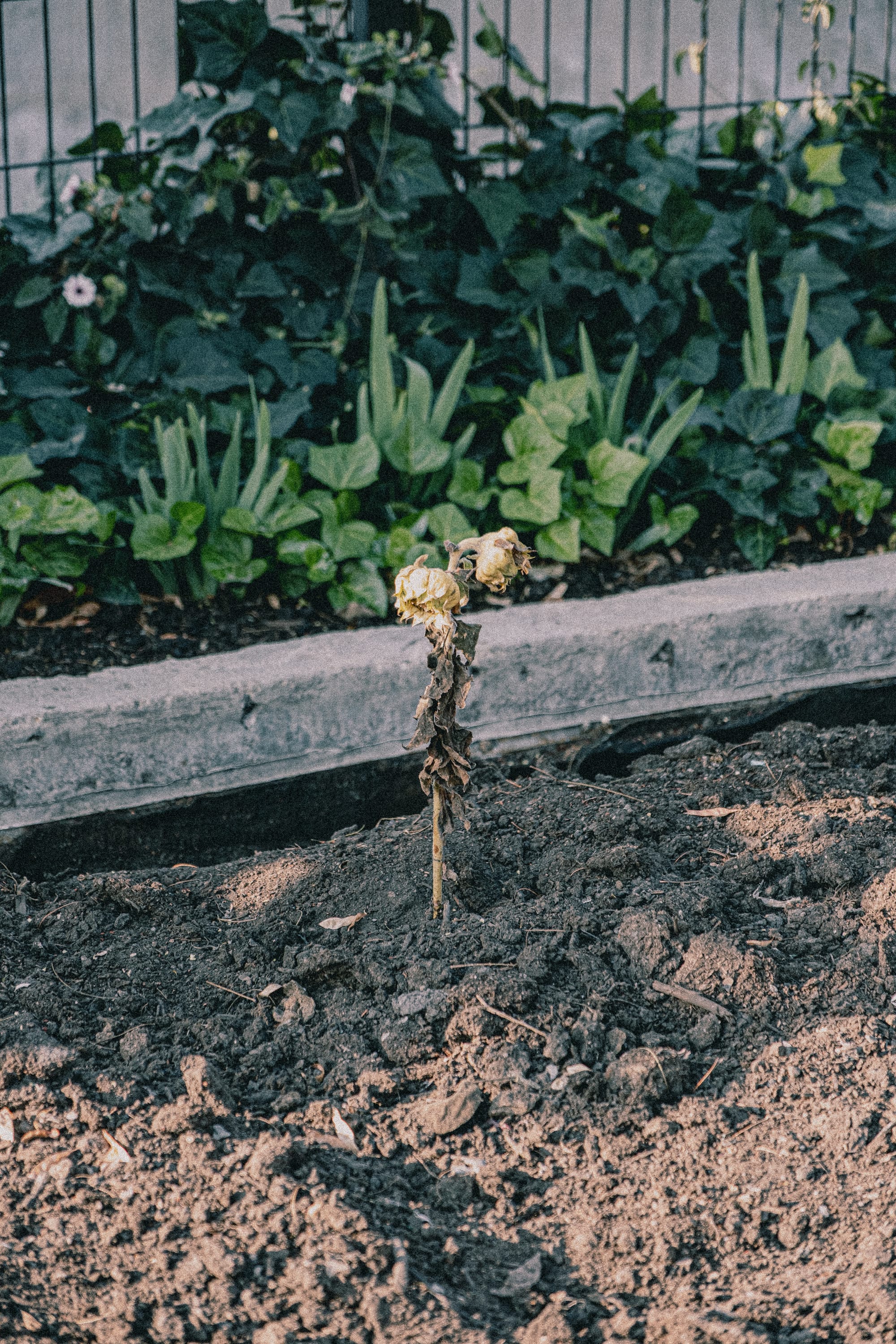
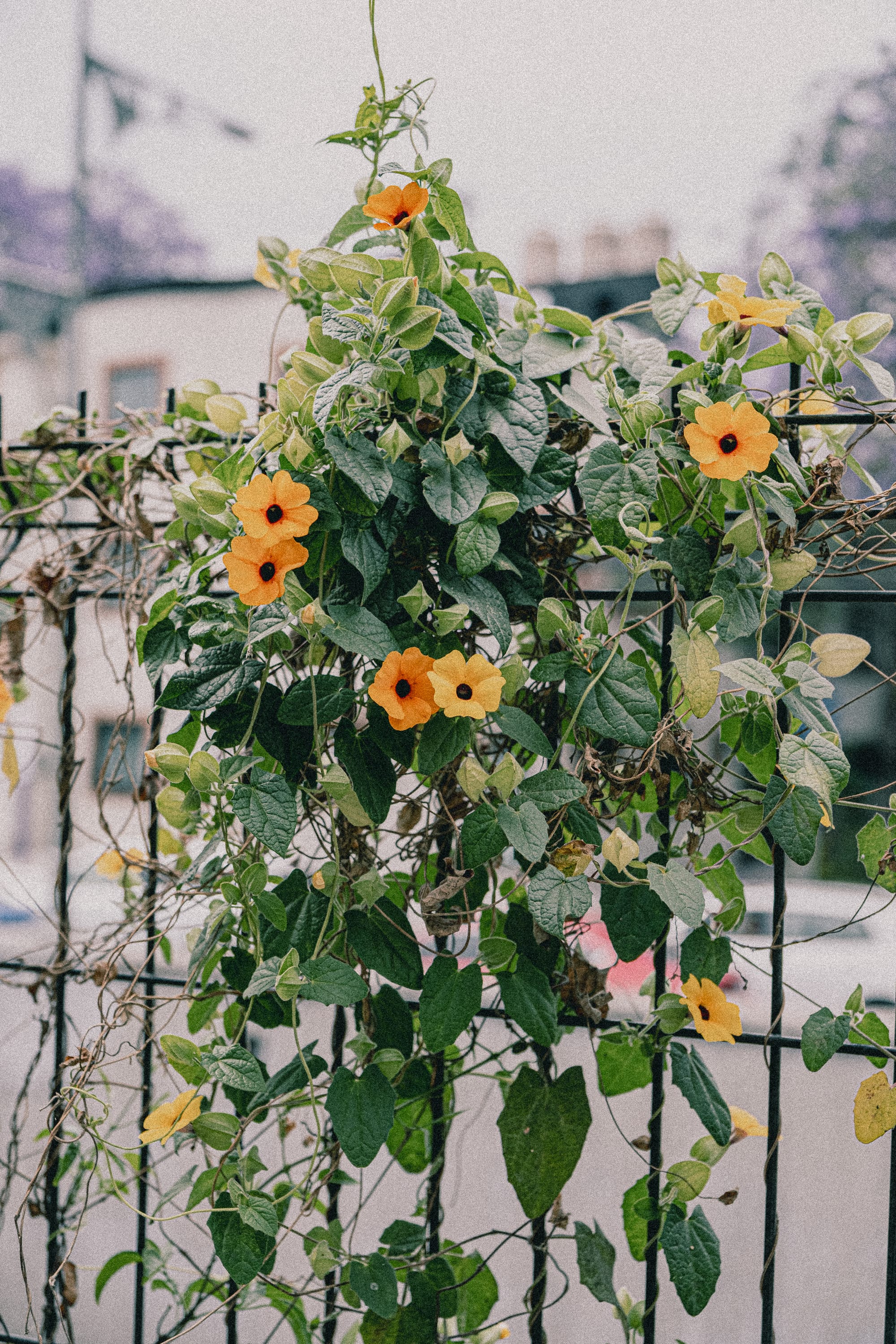
The presence of greenery could be read as evidence of improvement. Trees, shrubs, and pathways align with common strategies for making dense urban environments more livable. From this perspective, the park represents a positive intervention.
But the underlying system remains unchanged. The road continues to structure movement. Speed continues to organize experience. The park operates alongside these conditions rather than altering them.
The site carries another, less visible layer. The Viaducto follows the course of the former Río de la Piedad, which was channelized and gradually absorbed into the city’s drainage and road infrastructure during the twentieth century. What is now a traffic corridor was once a water system.
The park sits above this buried layer. A landscape over a roadway over a river. Each layer responding to a different set of priorities, none restoring what came before. The river is not reintroduced, its presence is legible only through knowledge of the site’s history.
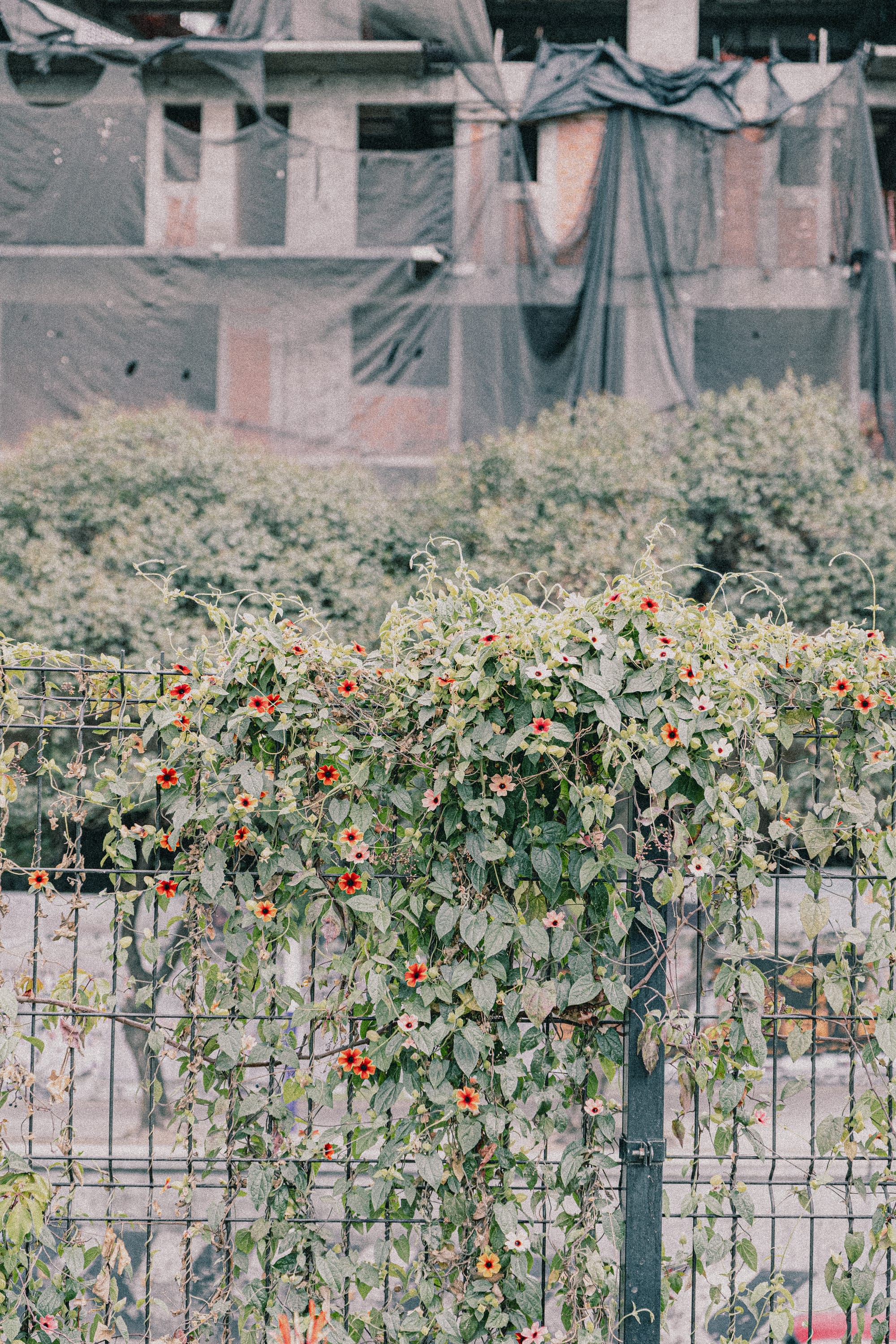
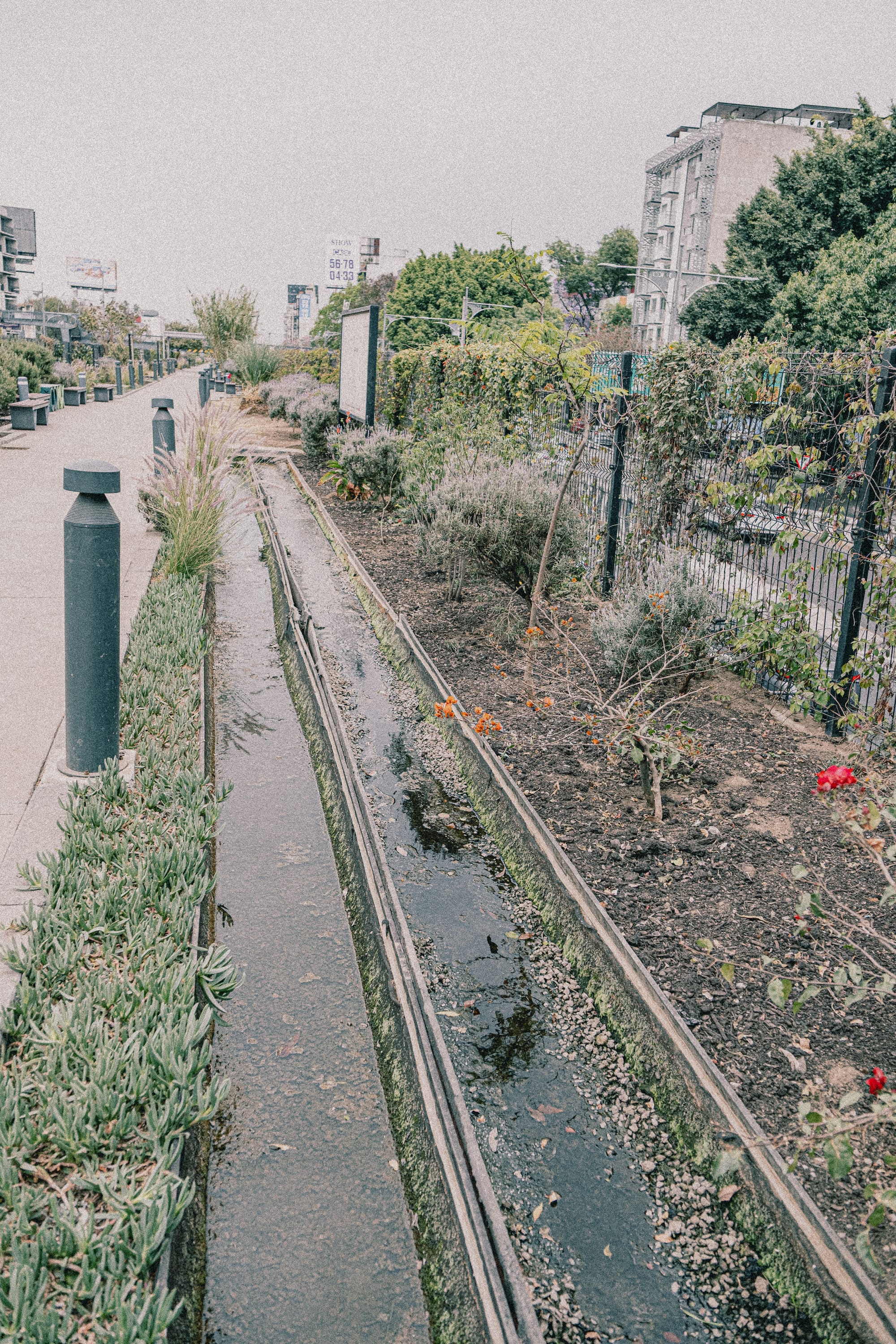
The addition of green space in this context can be understood as compensation. It introduces elements associated with ecological value, plants, soil, shade, without reconfiguring the infrastructure that replaced the original ecosystem.
This may be the only feasible form of intervention within existing constraints. But it is a specific kind of response, one that prioritizes accommodation over transformation.
Most days, I do not enter the park. I cross the bridge above it, moving efficiently between two points in the city. The space remains peripheral to my route, even as it sits directly beneath it.
Occasionally, I descend and walk its length. The experience is consistent, movement on either side, a narrow path in the center, no clear invitation to remain for long. It is a space designed to be passed through.
This functional ambiguity is part of what makes it easy to overlook.
It is neither a destination nor a void. It does not demand attention, and so it often does not receive it. Yet it reveals something about how contemporary cities are being adjusted. Rather than removing or fundamentally altering existing infrastructures, there is a tendency to layer additional elements onto them, introducing greenery, pedestrian pathways, and amenities that make these systems more tolerable.
The result is incremental modification. The city becomes more livable in certain respects, but the structures that shape access, inequality, and environmental impact remain largely intact.
Seen in this light, Parque Lineal Viaducto is not just a local intervention but an example of a broader pattern. It shows how urban environments can be recalibrated without being reconfigured.
And yet, this is not the whole of it.
Because the space is also, unmistakably, beautiful.
Not in spite of its conditions, but because of them. The starkness of the contrast, the simultaneity of movement and stillness, the way greenery holds its ground between lanes of speed, all of this produces a kind of clarity. The city is not softened into coherence. It is held together in tension.
From the center, the frame is already composed. Lines of traffic on either side, vertical grids of fencing, fragments of buildings that refuse to resolve into a single narrative. The image is not harmonious, but it is precise. It reveals how different urban conditions coexist without needing to be reconciled.
This is part of what draws me back to it, not only as a route but as a way of seeing. The park does not offer escape, but it does offer a vantage point. It makes visible the systems that usually remain background, and in doing so, it allows them to be read, even briefly, as form.
Crossing the bridge, what is visible is a strip of green between lanes of traffic. What is less visible is the condition it stages, a city that is not unified, not resolved, but held in place through layers that do not cancel each other out.
The question is not simply whether such spaces improve the city, but how they do so, and what they ask us to see in return.


