
Tucked along a narrow, tree-lined valley in the volcanic village of Furnas, Poça da Dona Beija is a quietly beloved thermal retreat. The pools are fed by iron-rich geothermal waters held at a consistent 39ºC (102ºF), gently heated by the same volcanic forces that shape the surrounding landscape.
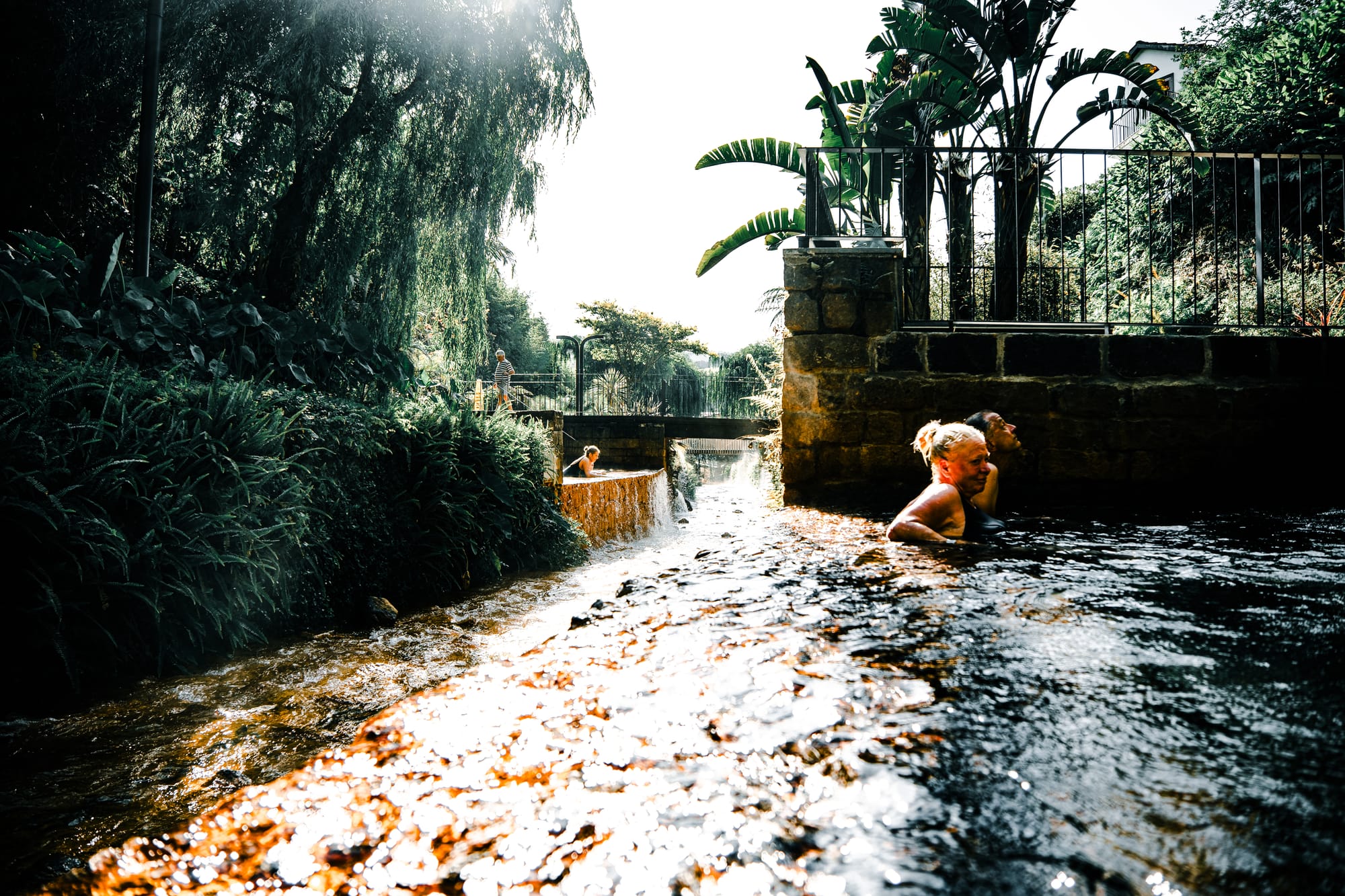
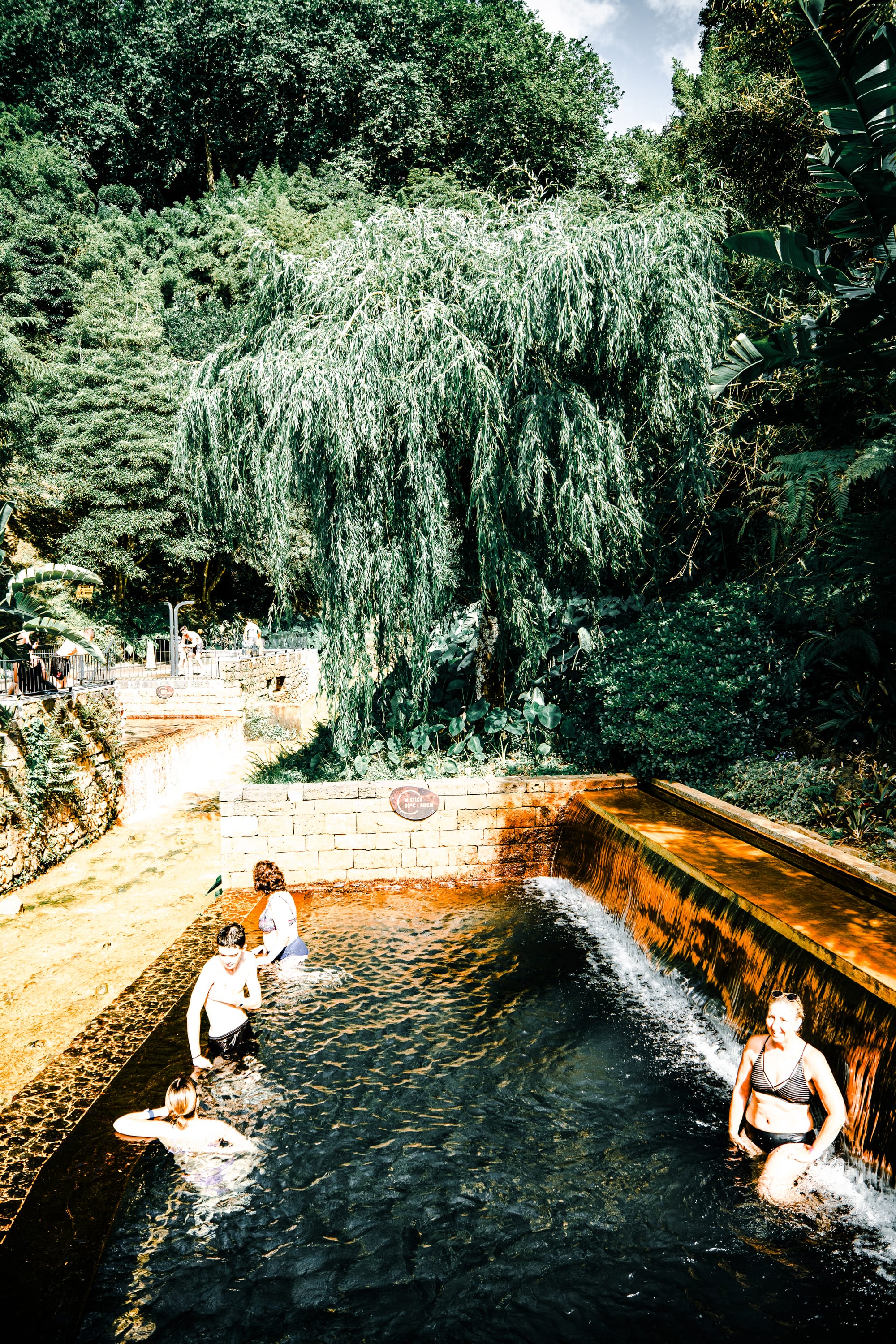
Visitors soaking in Poça da Dona Beija’s warm pools surrounded by dense tropical foliage
Framed by lush, tropical vegetation and flowing streams of ochre-orange water, the site feels like a cultivated pocket of warmth and rest, suspended in time.
What to expect at Poça da Dona Beija
Poça da Dona Beija is made up of five open-air pools, each built from carved stone and fed by steady flows of thermal spring water. The water glows a deep amber from its high iron content, its warmth enveloping you instantly on entry. The surfaces of the pools are smooth and slightly slippery with natural minerals; red sediment clings to the stone walls and gathers between the toes.
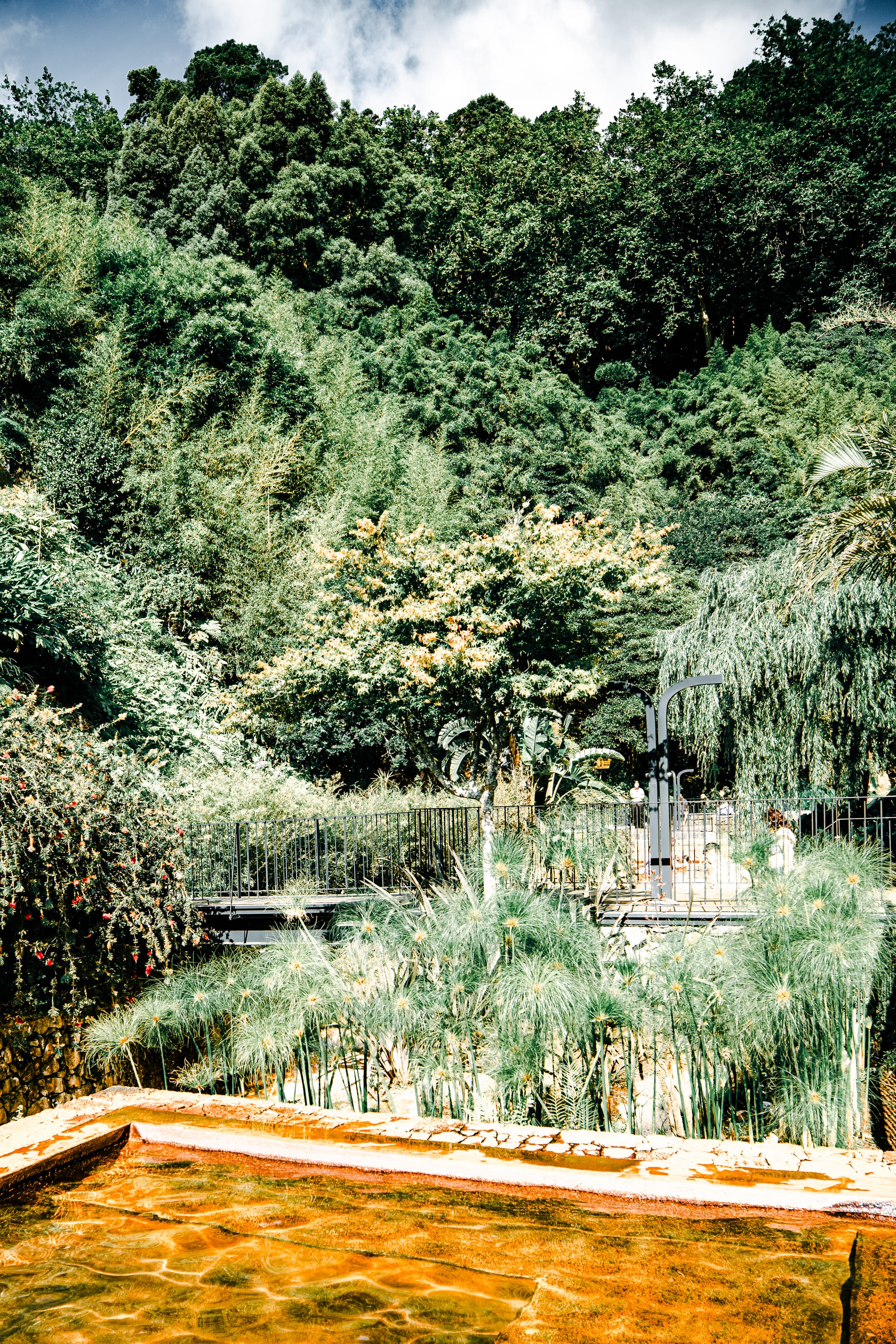
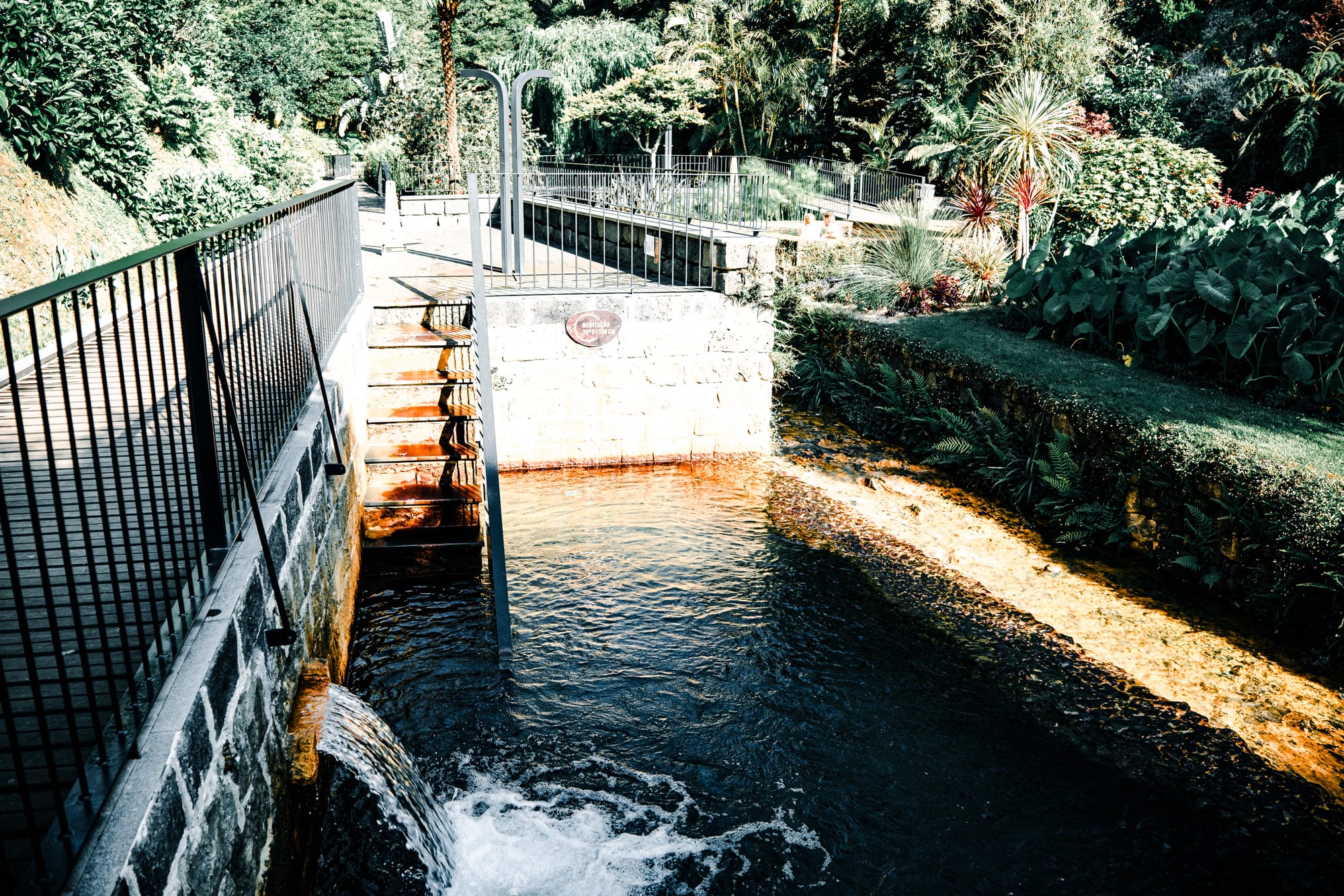
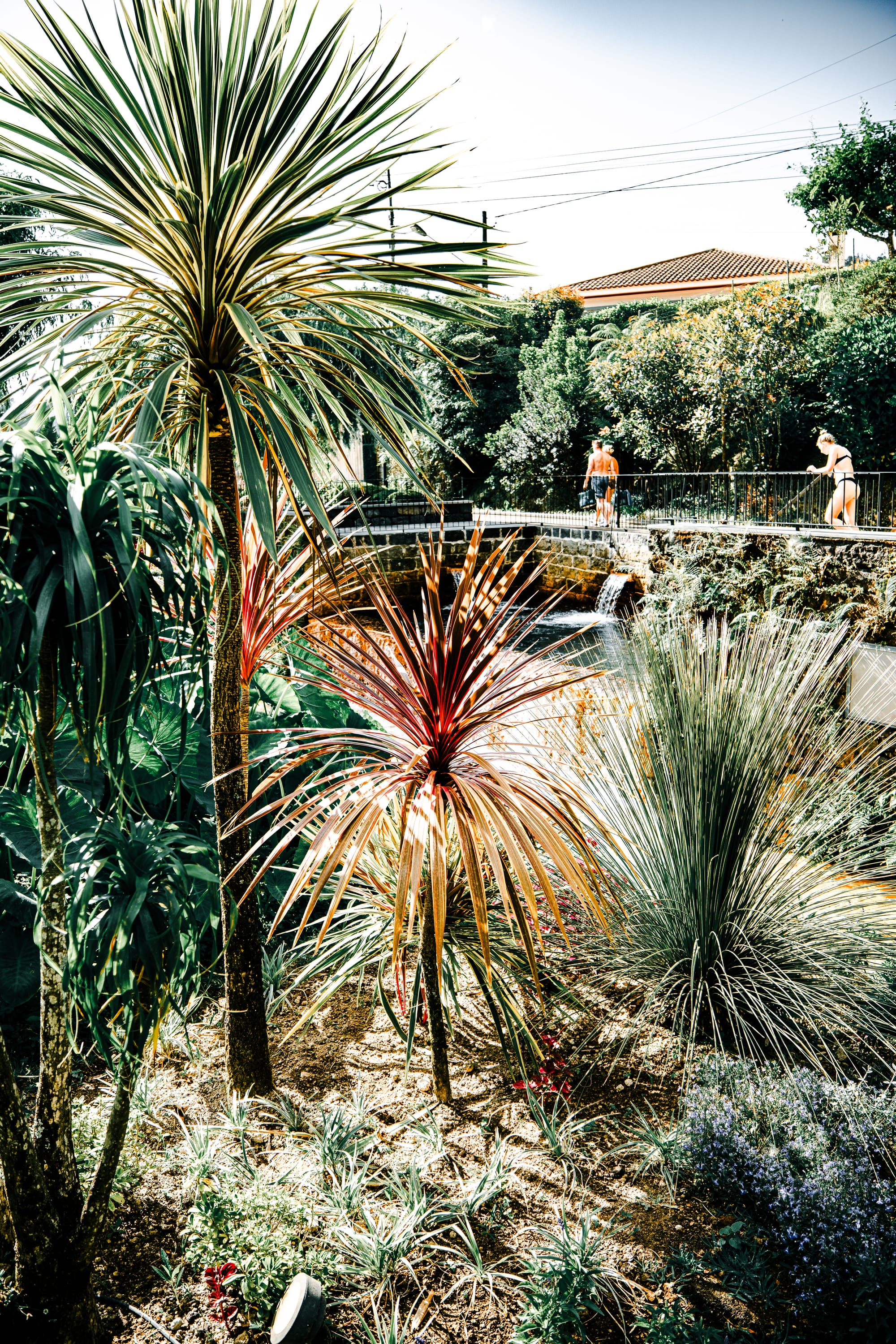
Golden waters, stone pools, and tropical plants at Poça da Dona Beija thermal springs
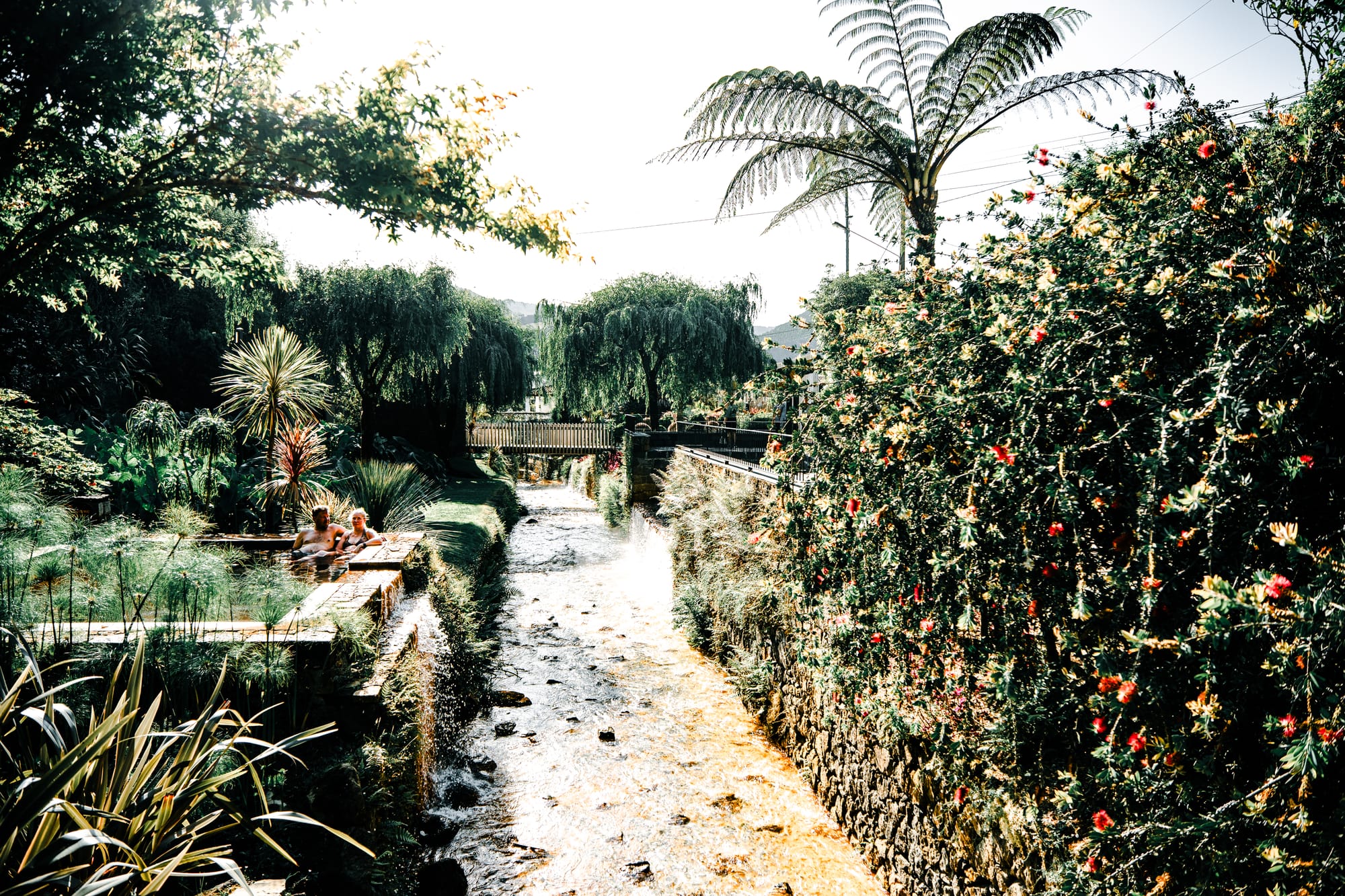
A stream of ochre-colored water snakes through the site, trickling past flower beds, moss-covered stairs, and tropical plants.
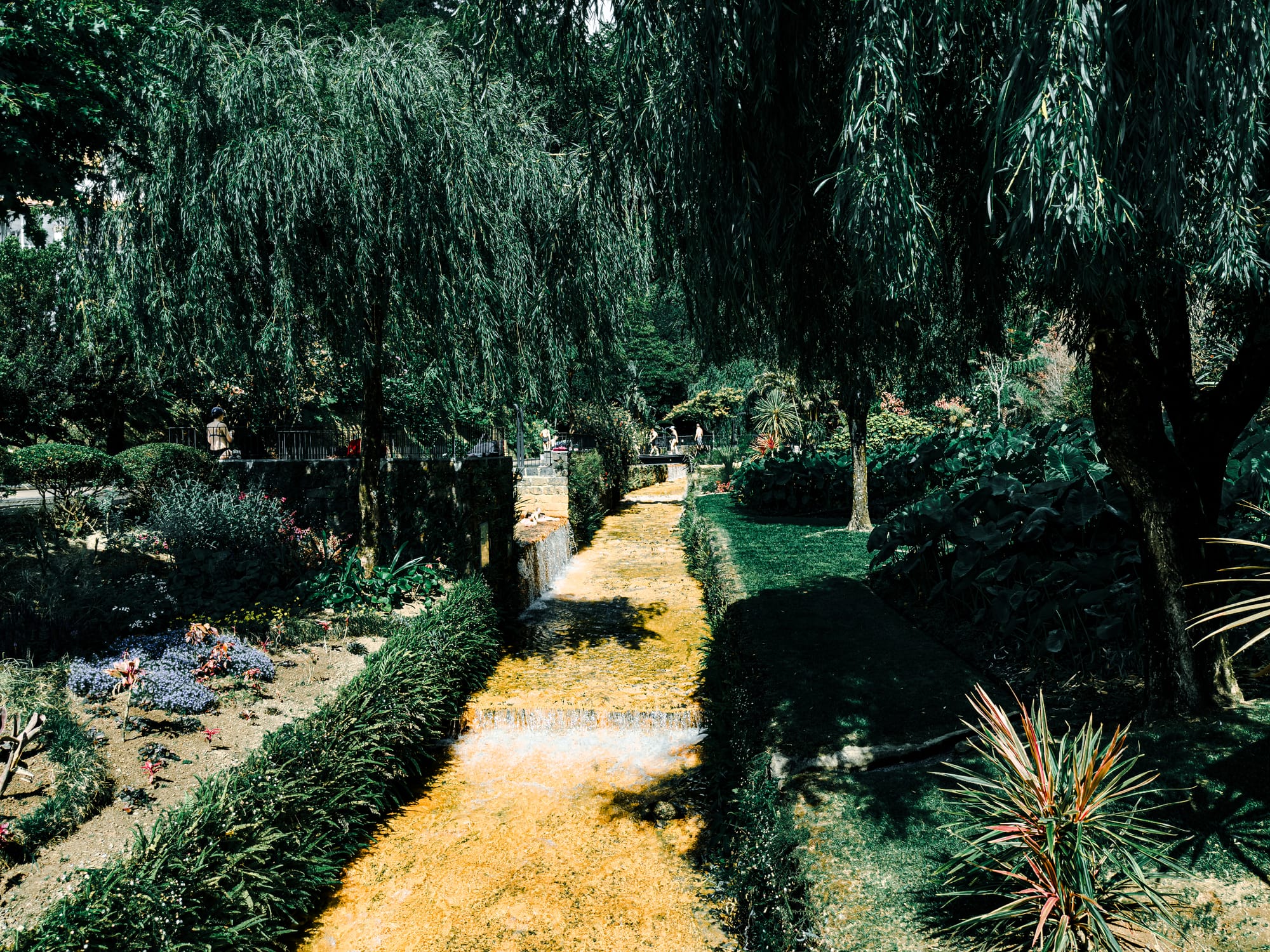
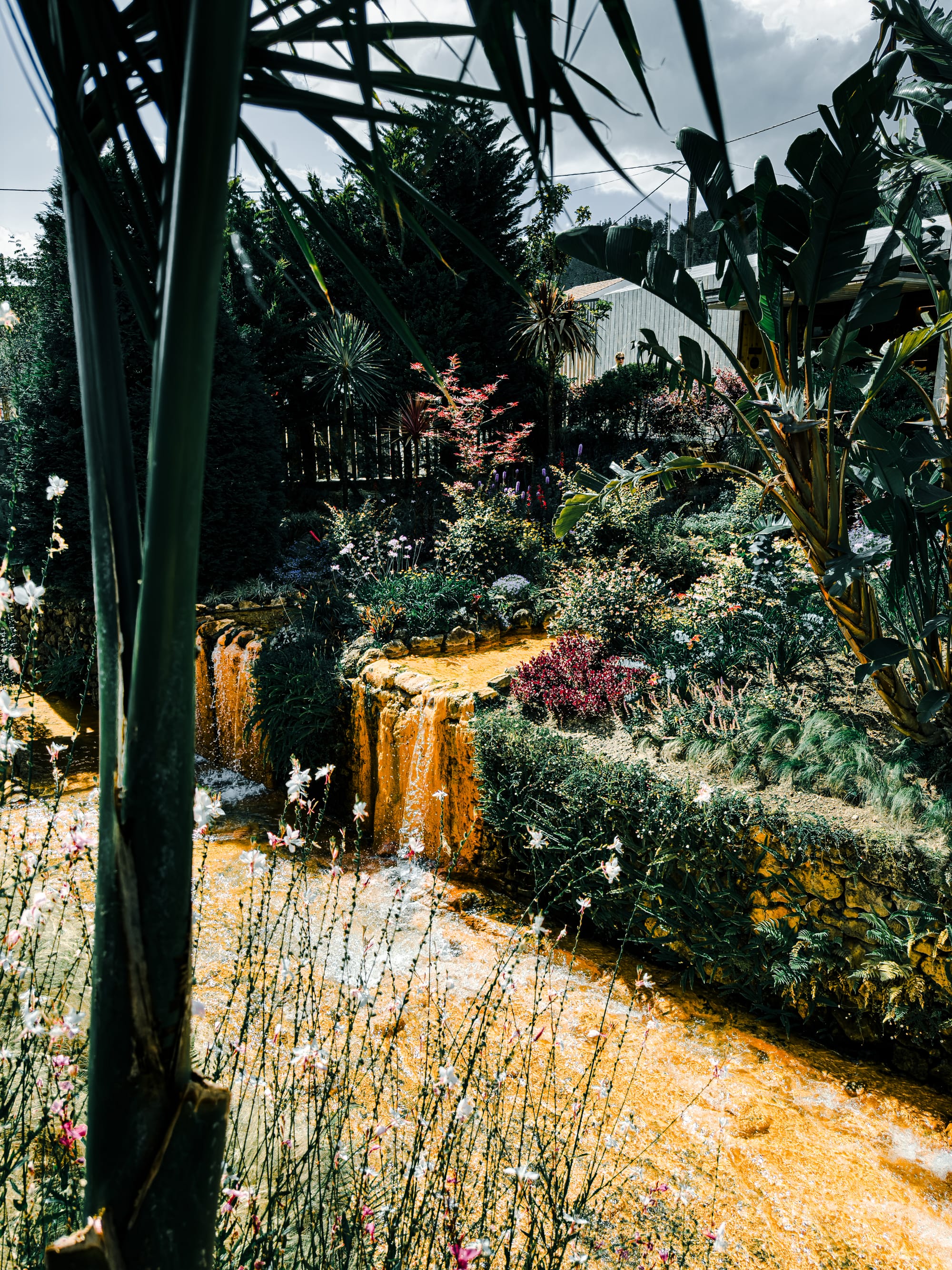
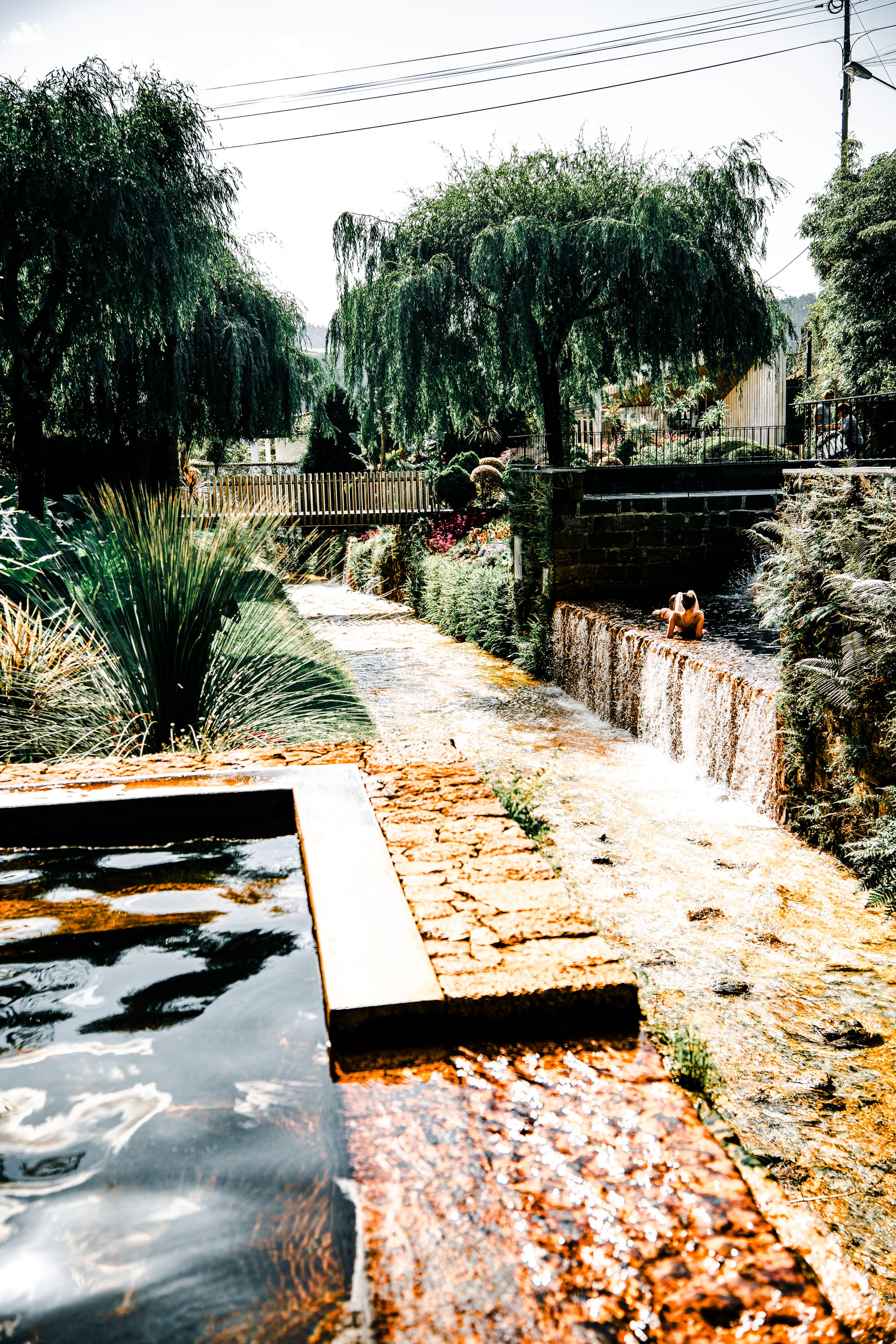
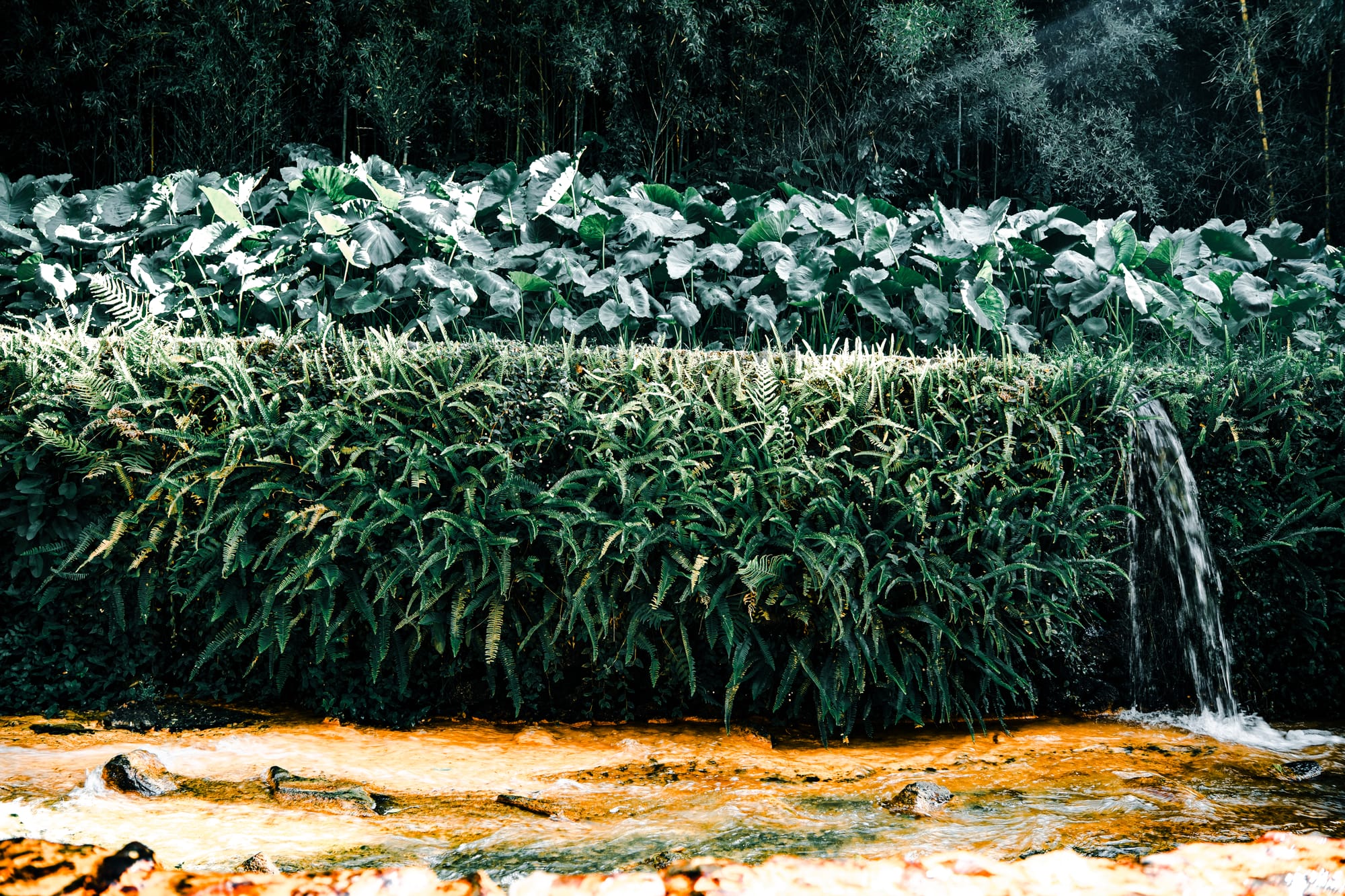
A mineral-rich stream flows through the center of Poça da Dona Beija’s gardens
The air is thick with the faint scent of minerals and warm earth, a hint of sulfur softened by the fragrance of ginger lilies and wet ferns. You can hear the constant rush of flowing water, the low murmur of voices, the gentle rustle of palm fronds overhead.
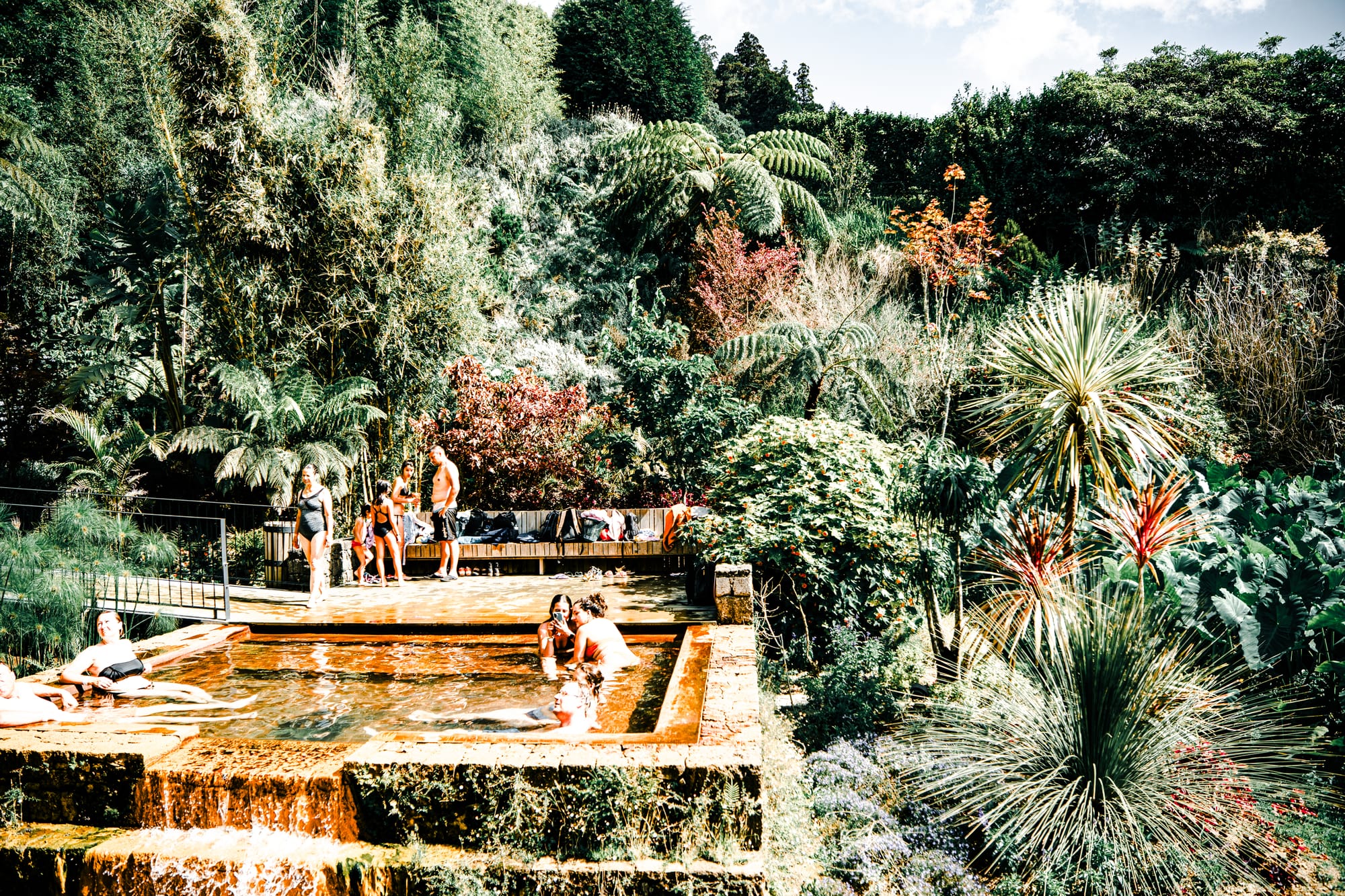
Each pool has a name and a mood.
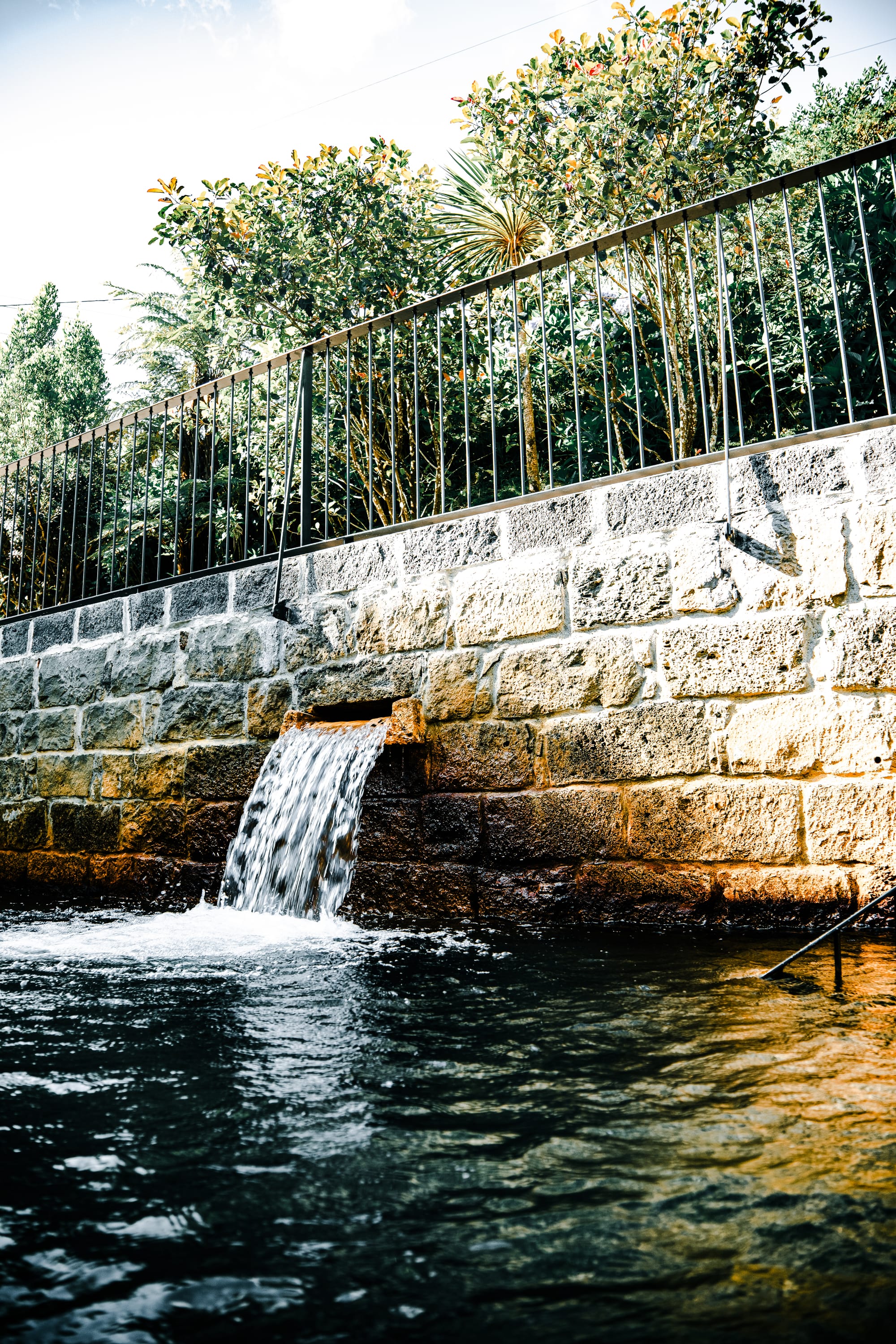
One of the most popular features is a shallow stone corridor that culminates in a long, horizontal waterfall. Visitors often sit behind it, letting the hotter water steam their face and chest, creating a makeshift sauna, quiet and immersive.
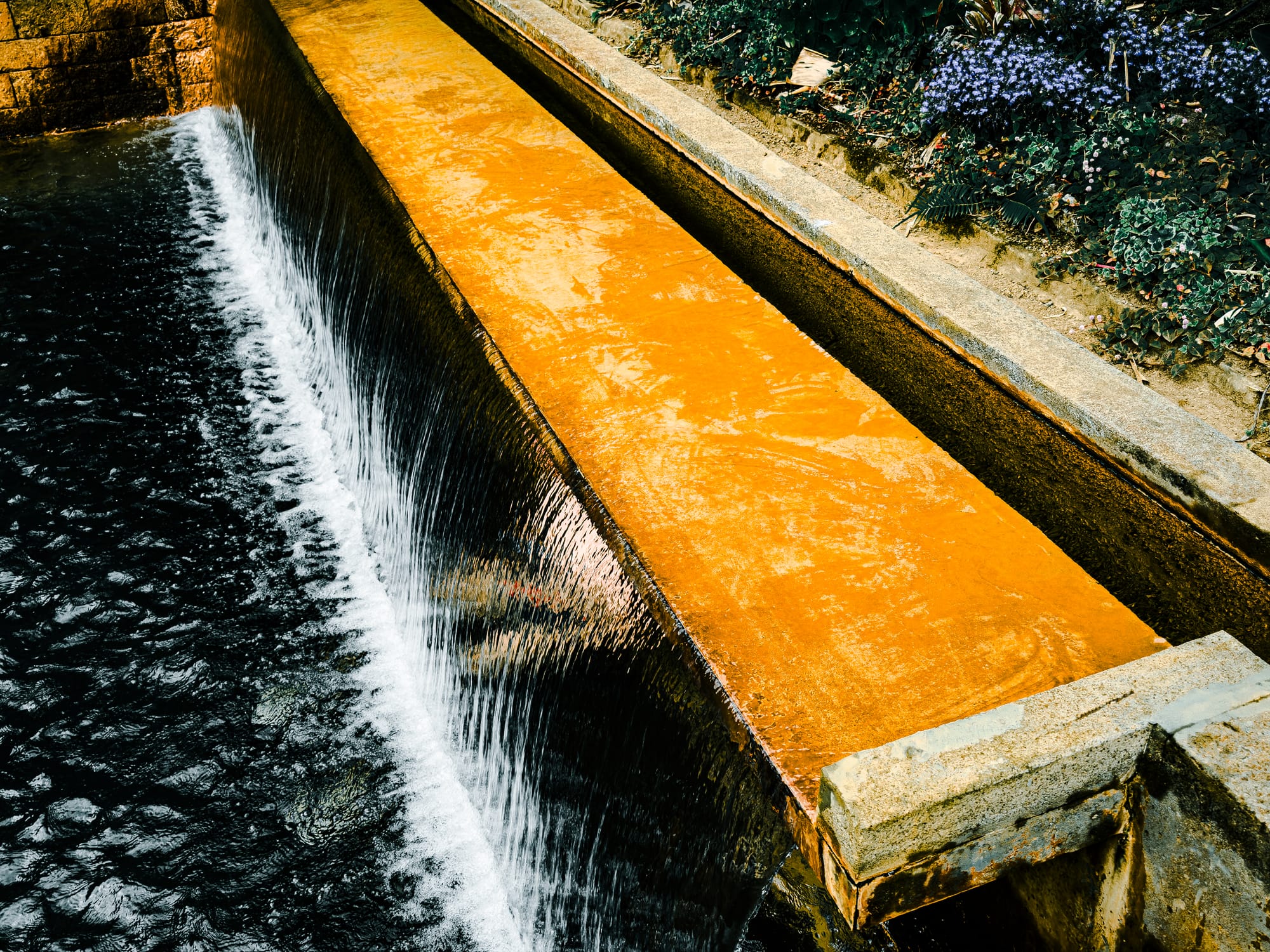
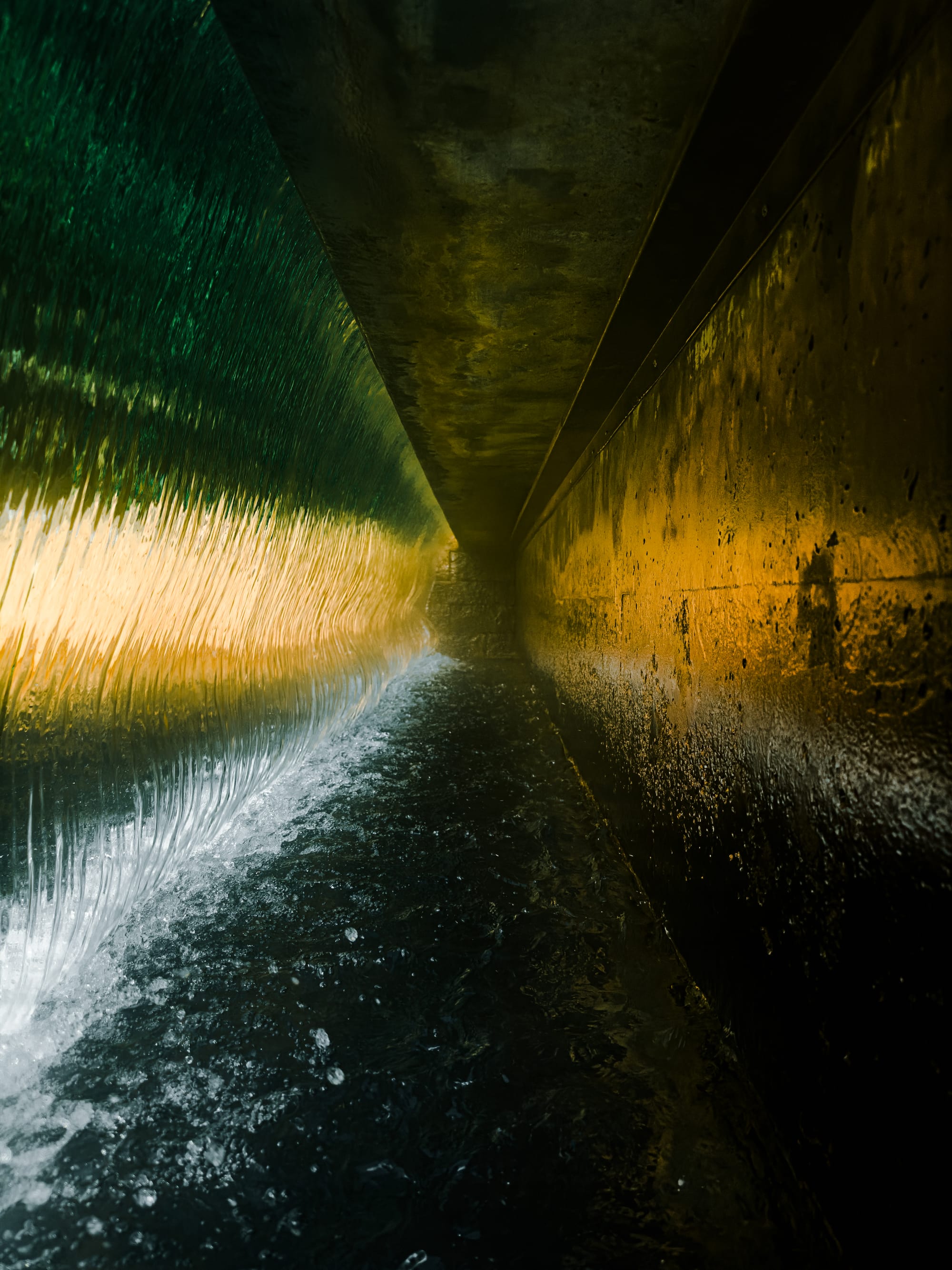
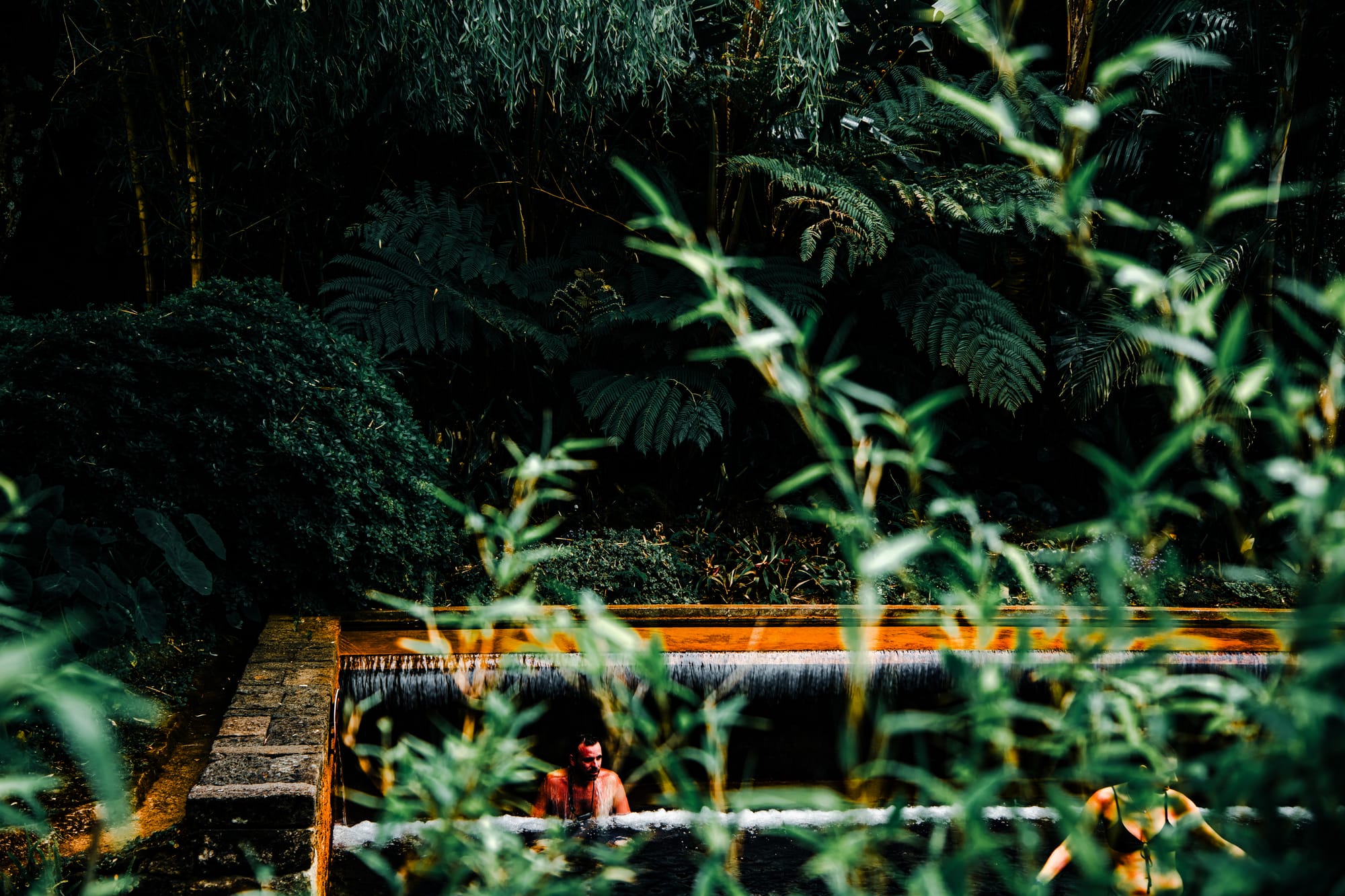
A long horizontal waterfall you can sit behind and steam
Though developed and widely visited, the space maintains a sense of calm thanks to its thoughtful layout and natural insulation. Walkways curve gently around trees and pools. Entry times are staggered to avoid crowding, and ambient lighting enhances the warmth of the space after dark.
A brief history
Before it was a developed spa, the site was known by locals as "Poça da Juventude," the spring of youth. It was a simple streamside soak, unregulated and used mostly by Furnas residents who knew the area well. In 2009, the space was redeveloped with community support and ecological care, preserving its intimate scale while improving accessibility and infrastructure.
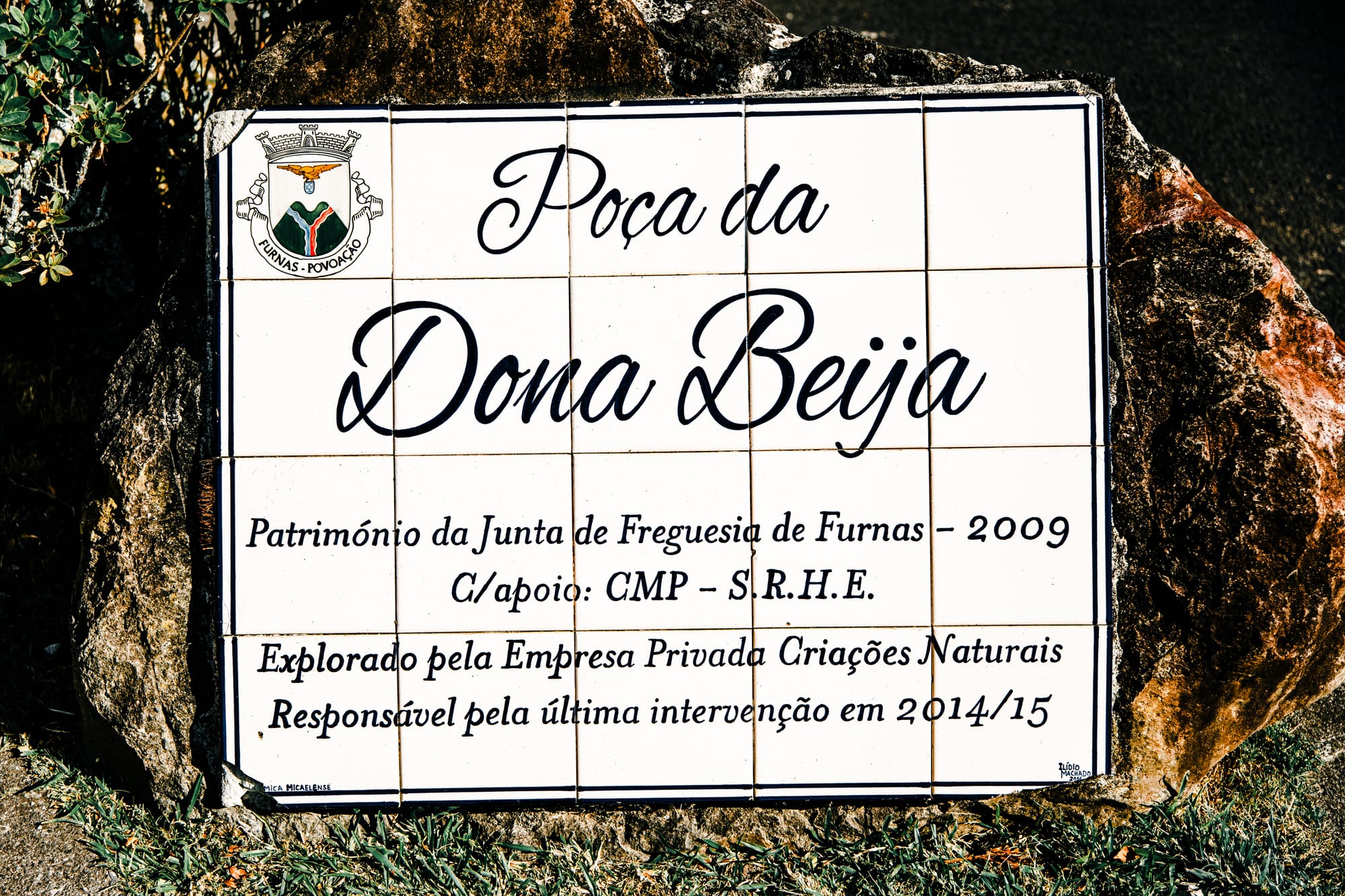
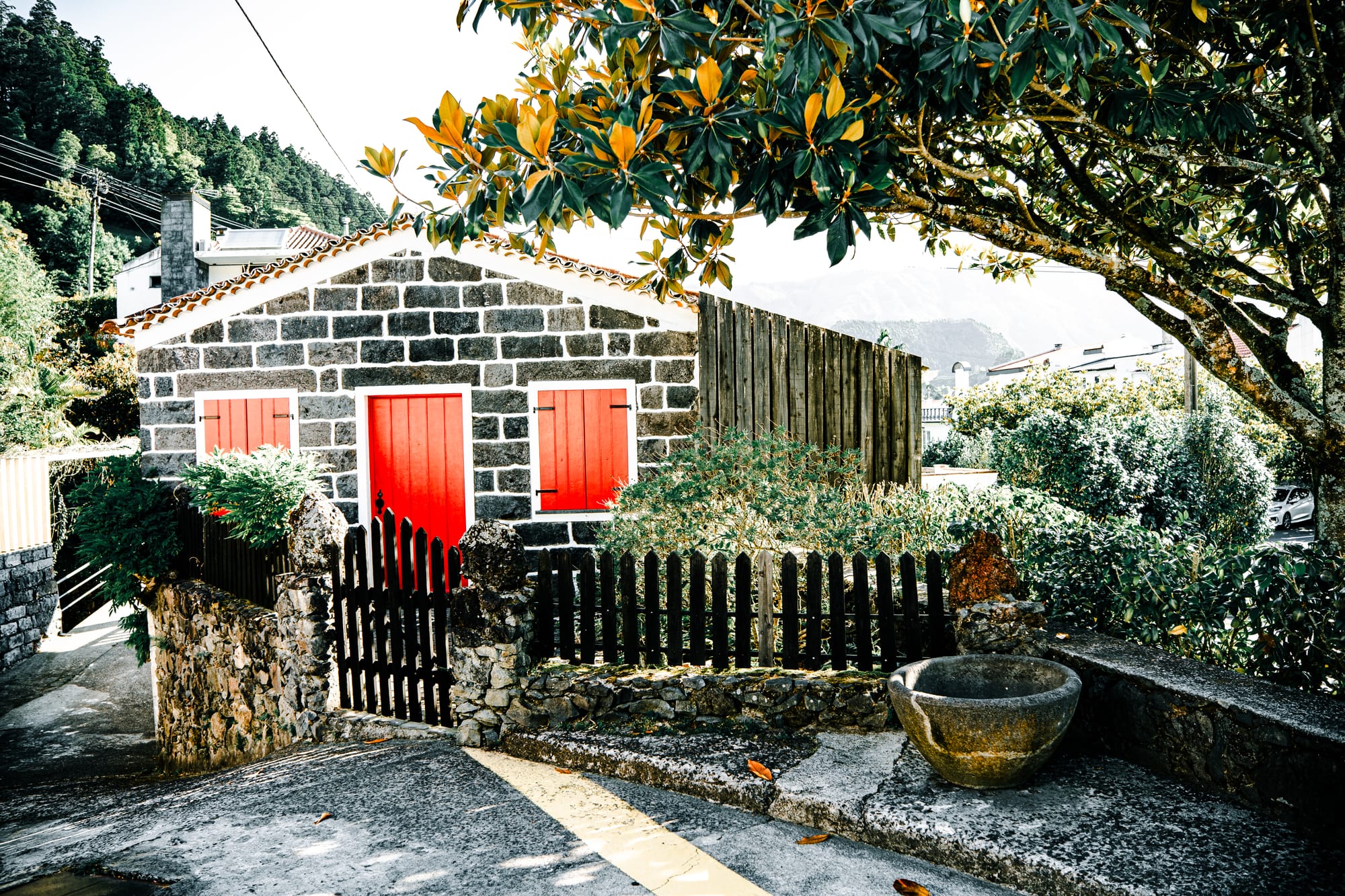
Entrance signage and a nearby basalt-stone house mark Poça da Dona Beija’s village setting
The name "Dona Beija" comes from a 19th-century cultural figure linked to themes of beauty, ritual, and healing. Whether myth, literary inspiration, or borrowed folklore, her association with these pools lends them a narrative of quiet rejuvenation.
Tips for visiting
Sessions are capped at 90 minutes, and staff are strict with timing. The best time to visit is either early in the morning, during the first session of the day, or later in the evening after sunset. Mornings tend to be quieter, with dappled light filtering through the bamboo groves. At night, the pools feel more cocooned: the air cools, the water glows gold under the lights, and steam rises in visible plumes.
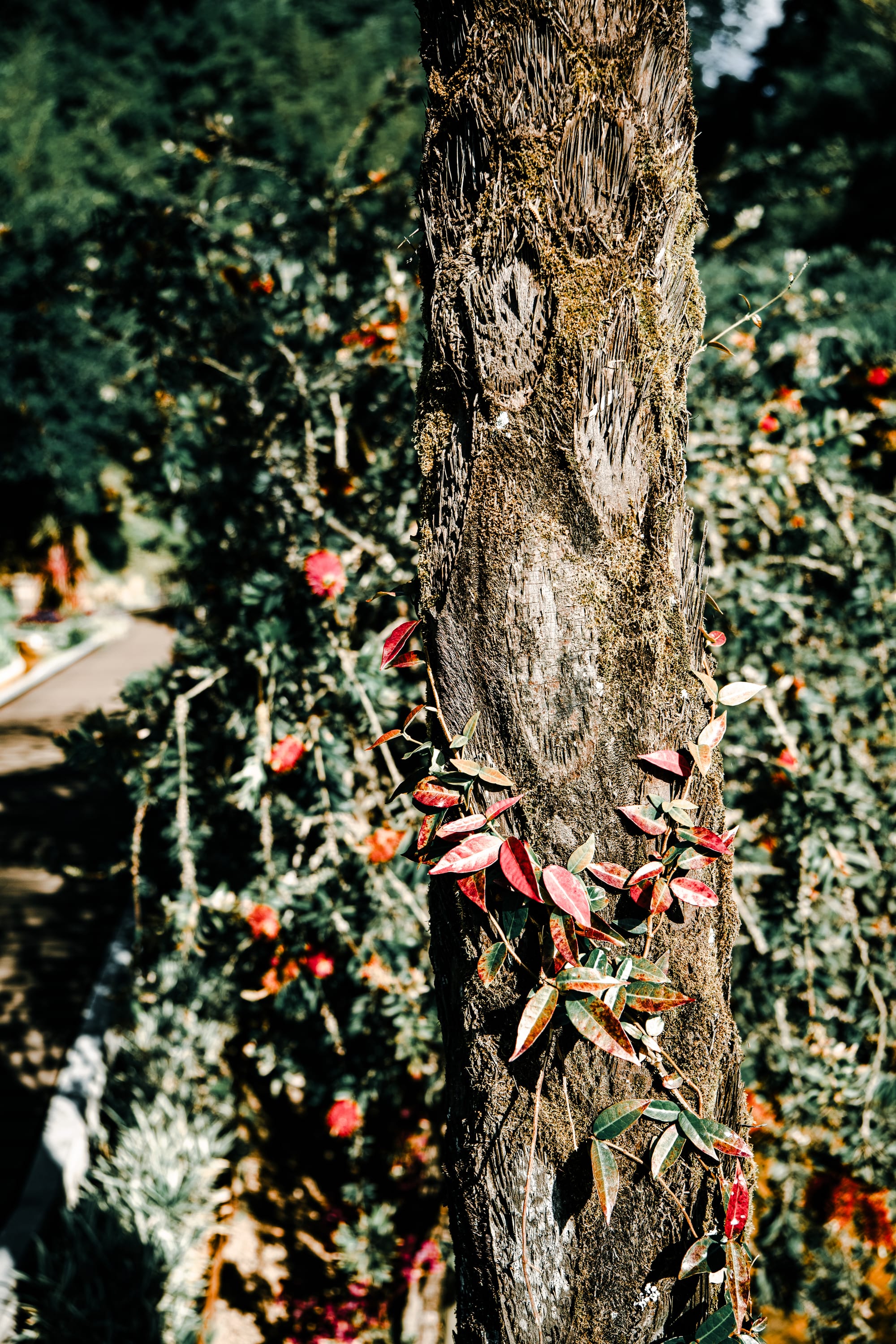
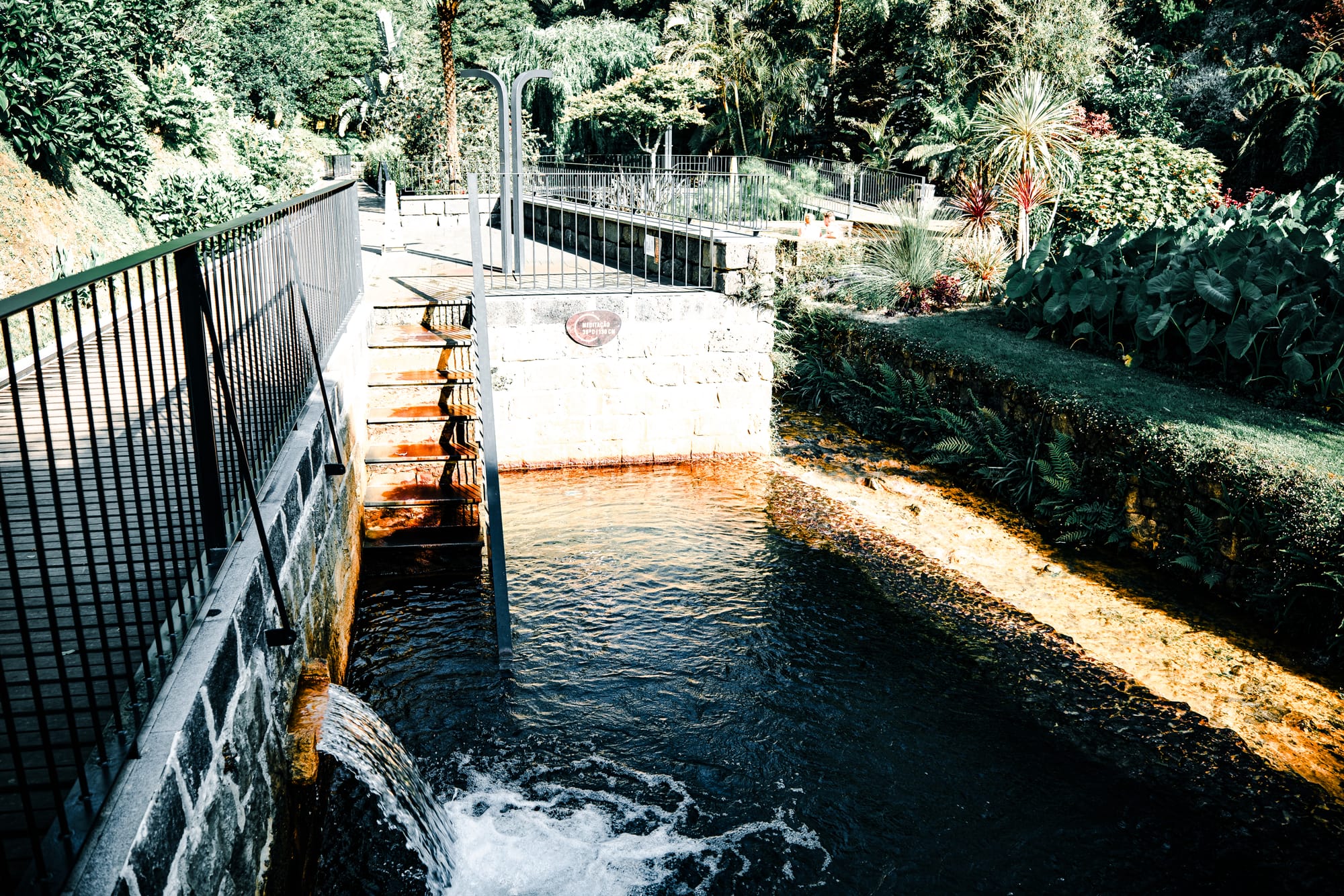
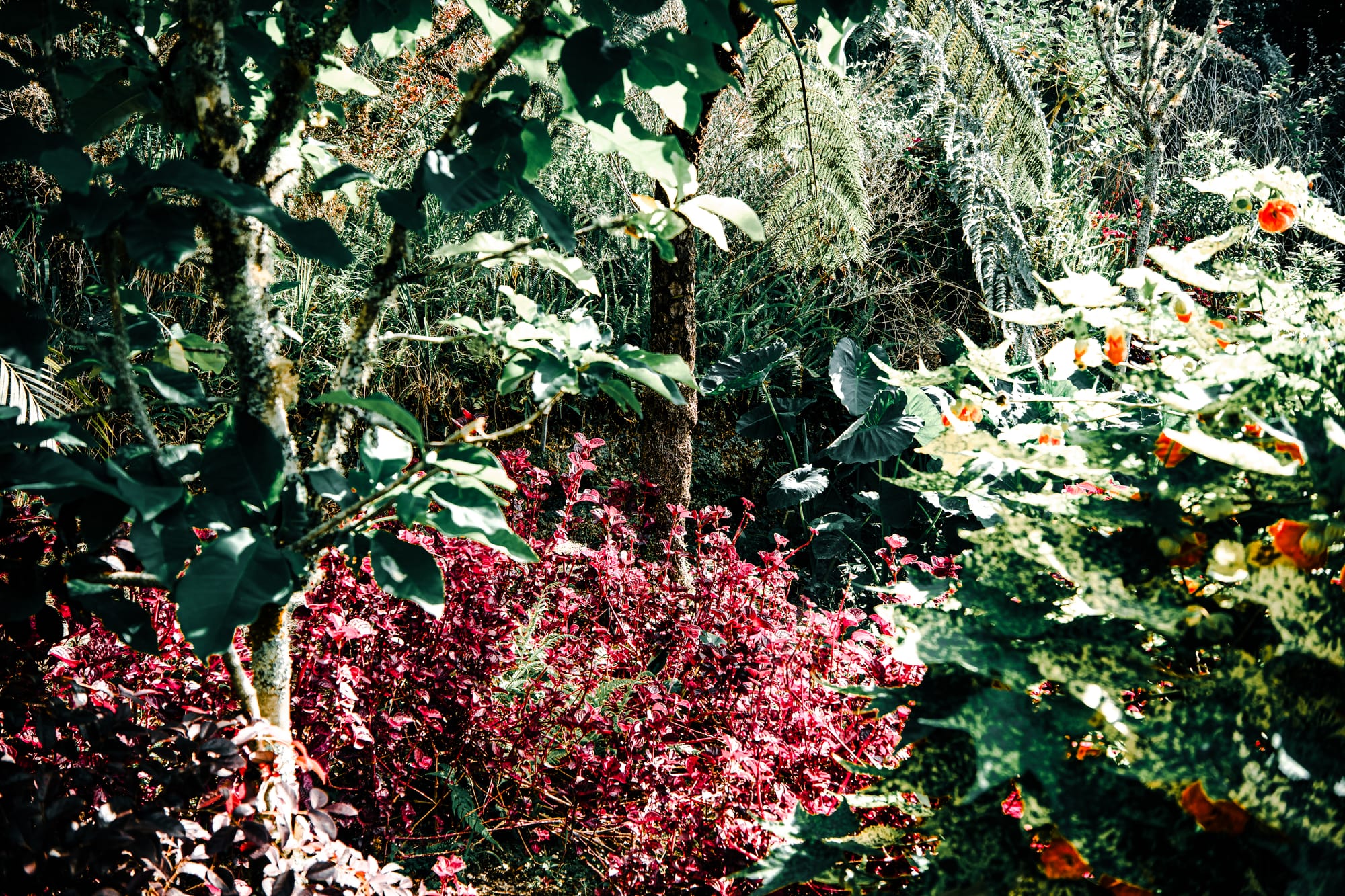
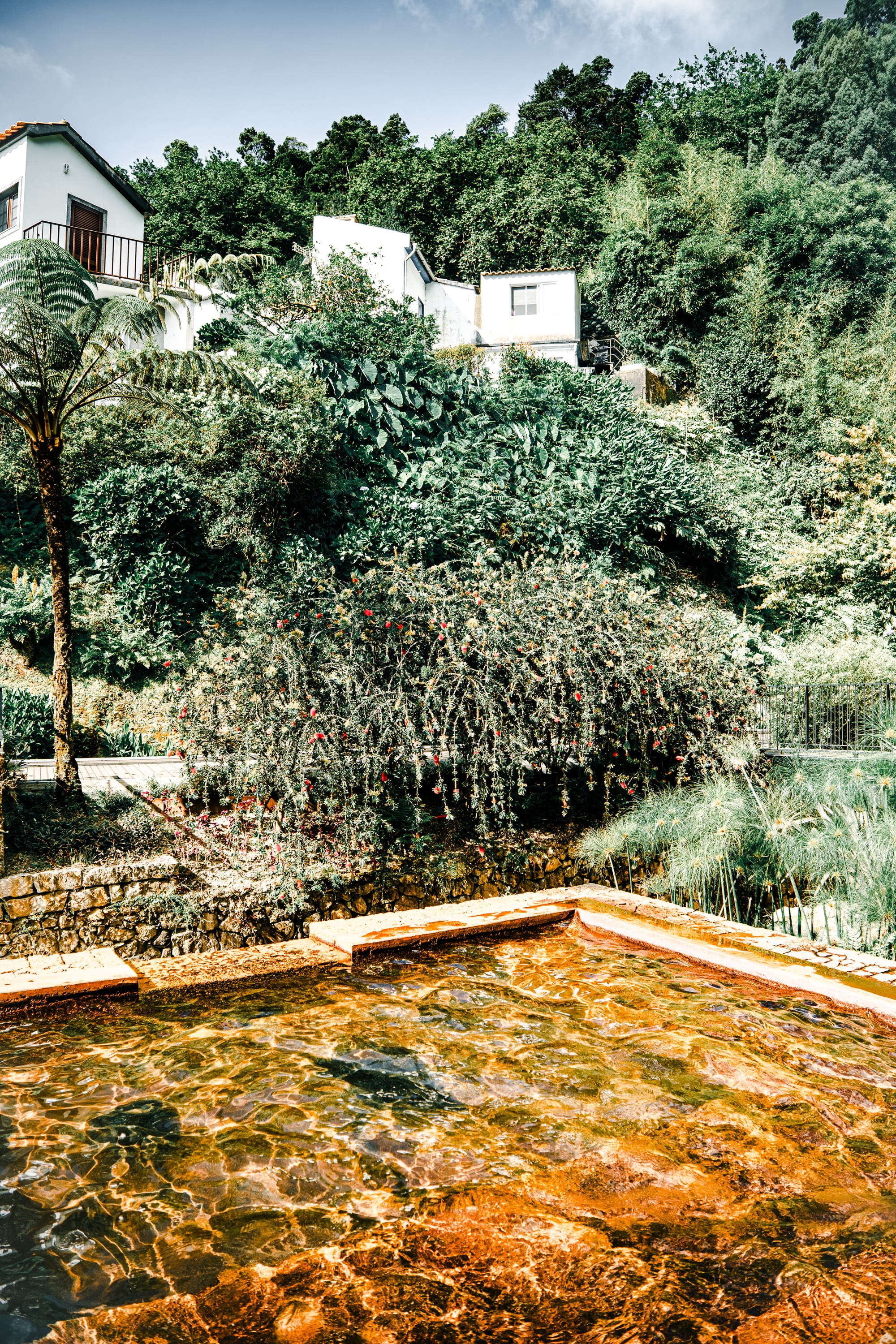
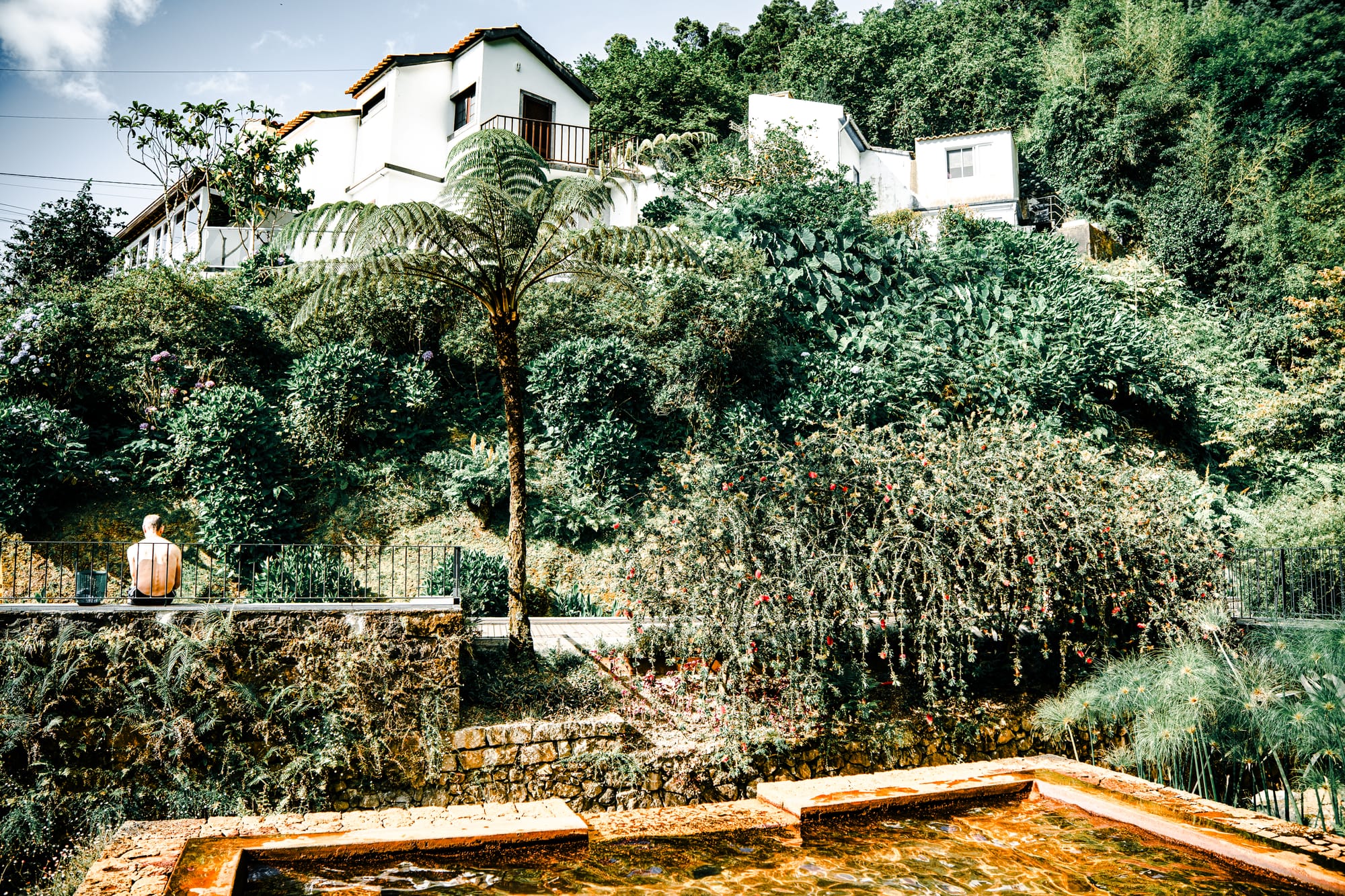
Plant-draped walls, blooming shrubs, and flowing waters surround Poça da Dona Beija’s pools
Bring water and hydrate regularly. The combination of heat, humidity, and minerals can make some visitors lightheaded. If your skin is sensitive, limit your time in the hottest pools.
You can apply the red clay sediment found in the stone walls as a natural facial mask. It spreads easily on damp skin and rinses off in the mineral-rich water, leaving the face flushed and soft.
A landscape of texture and bloom
What makes Poça da Dona Beija especially striking is not just the pools, but the environment that cradles them. Bottlebrush plants with crimson spikes lean over the pathways. White birds of paradise bloom in sculptural clusters, rare cousins to the orange variety, with pale petals and blue tongues. Bursts of chartreuse ferns and soft, sage-colored moss line the edges of walkways. Taro leaves, large and waxy, ripple in the breeze, their stems dipping into thermal streams.
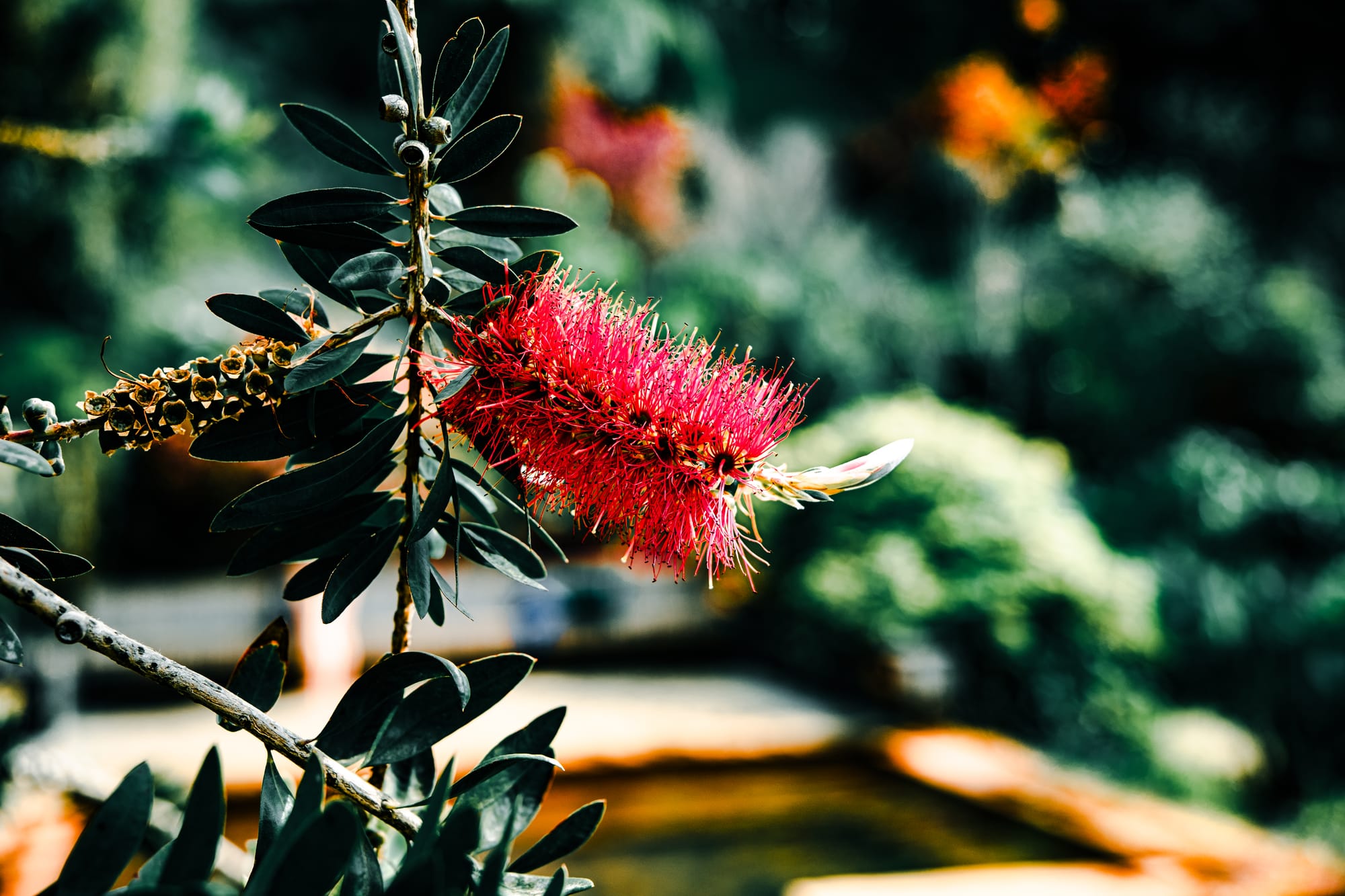
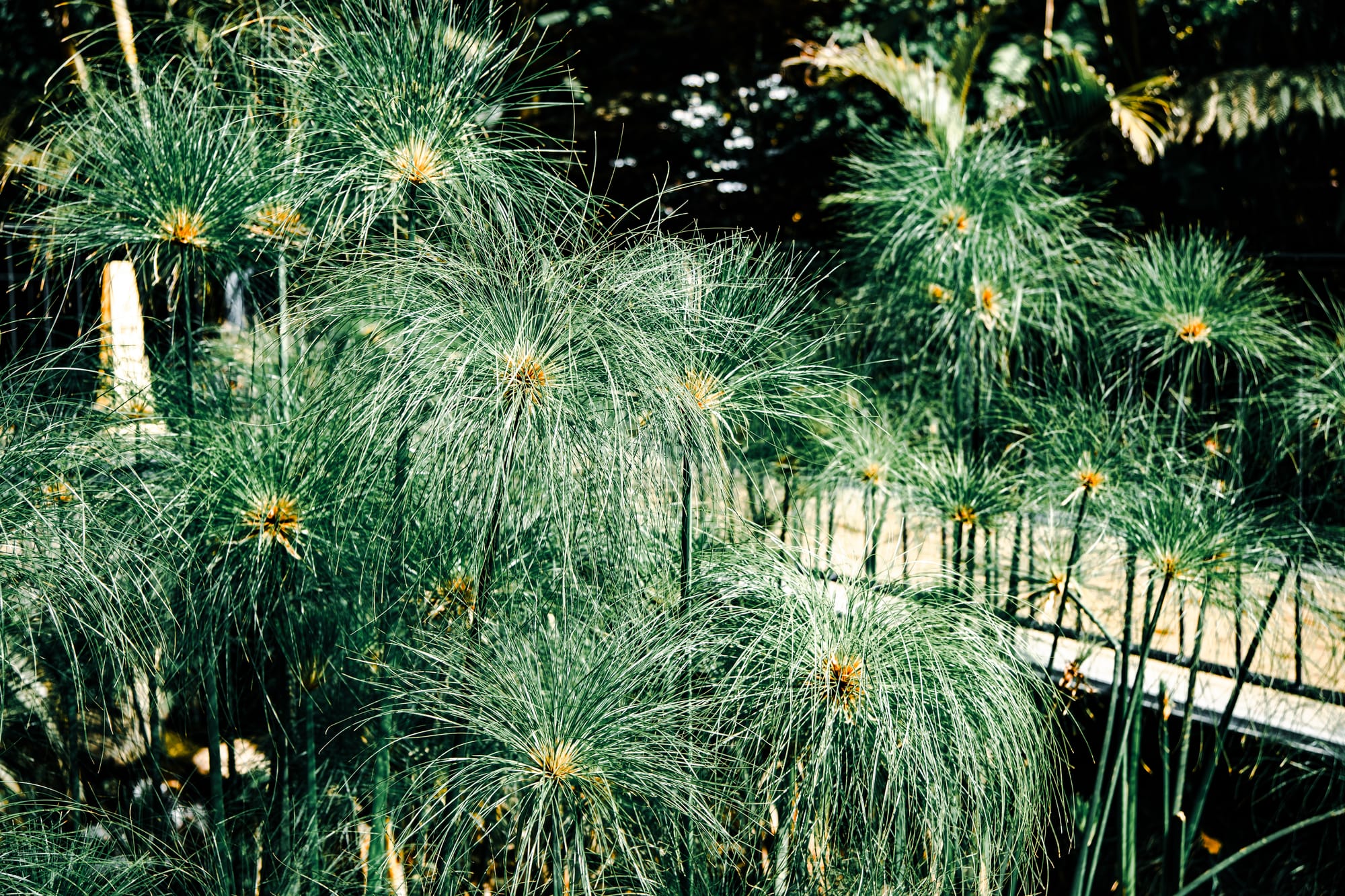

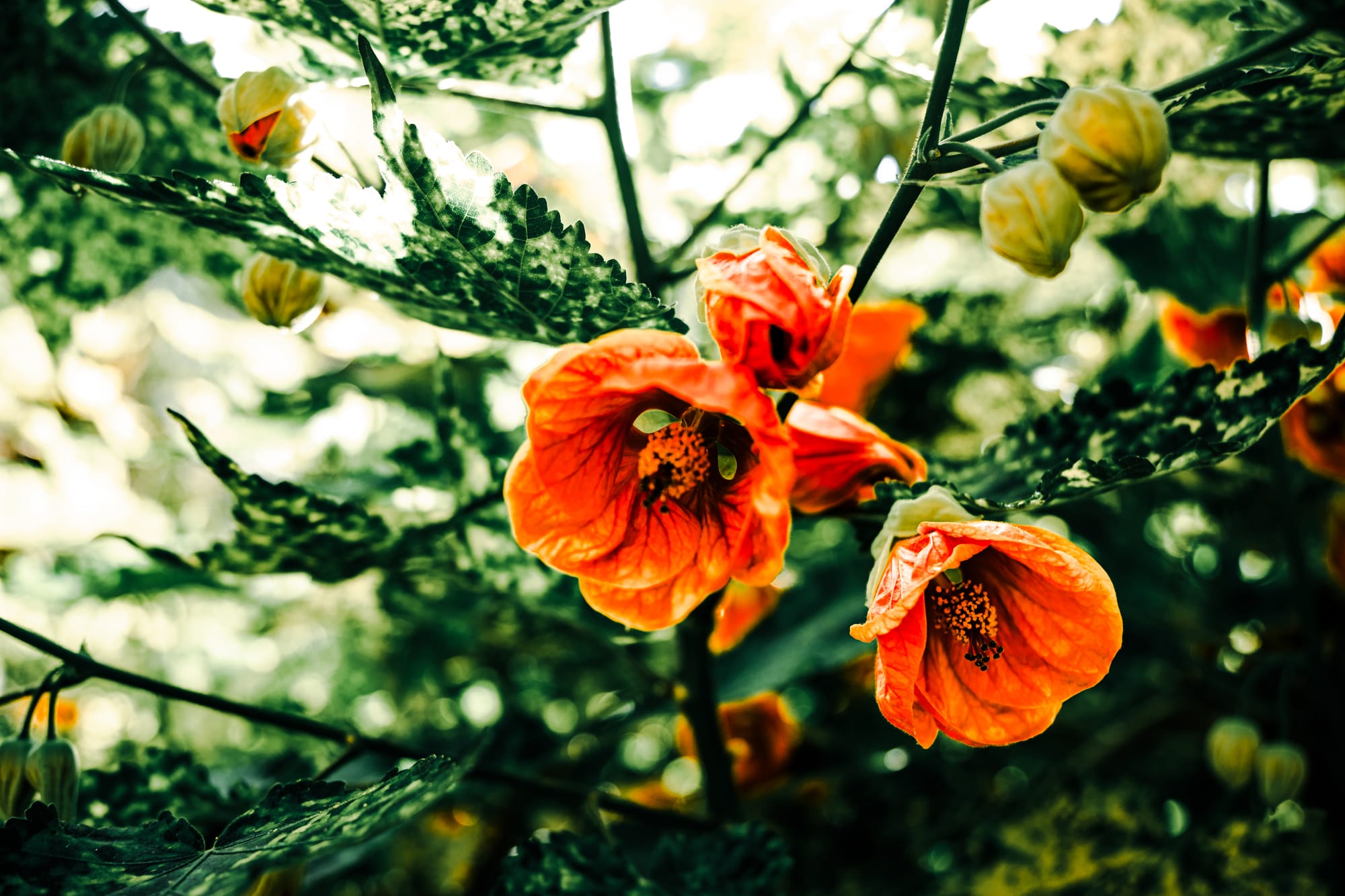
Flora at Poça da Dona Beija includes bottlebrush, papyrus, white birds of paradise, and poppies
Even the built elements echo the natural world: wooden walkways, volcanic stone paths, and bamboo privacy screens blend into the foliage.
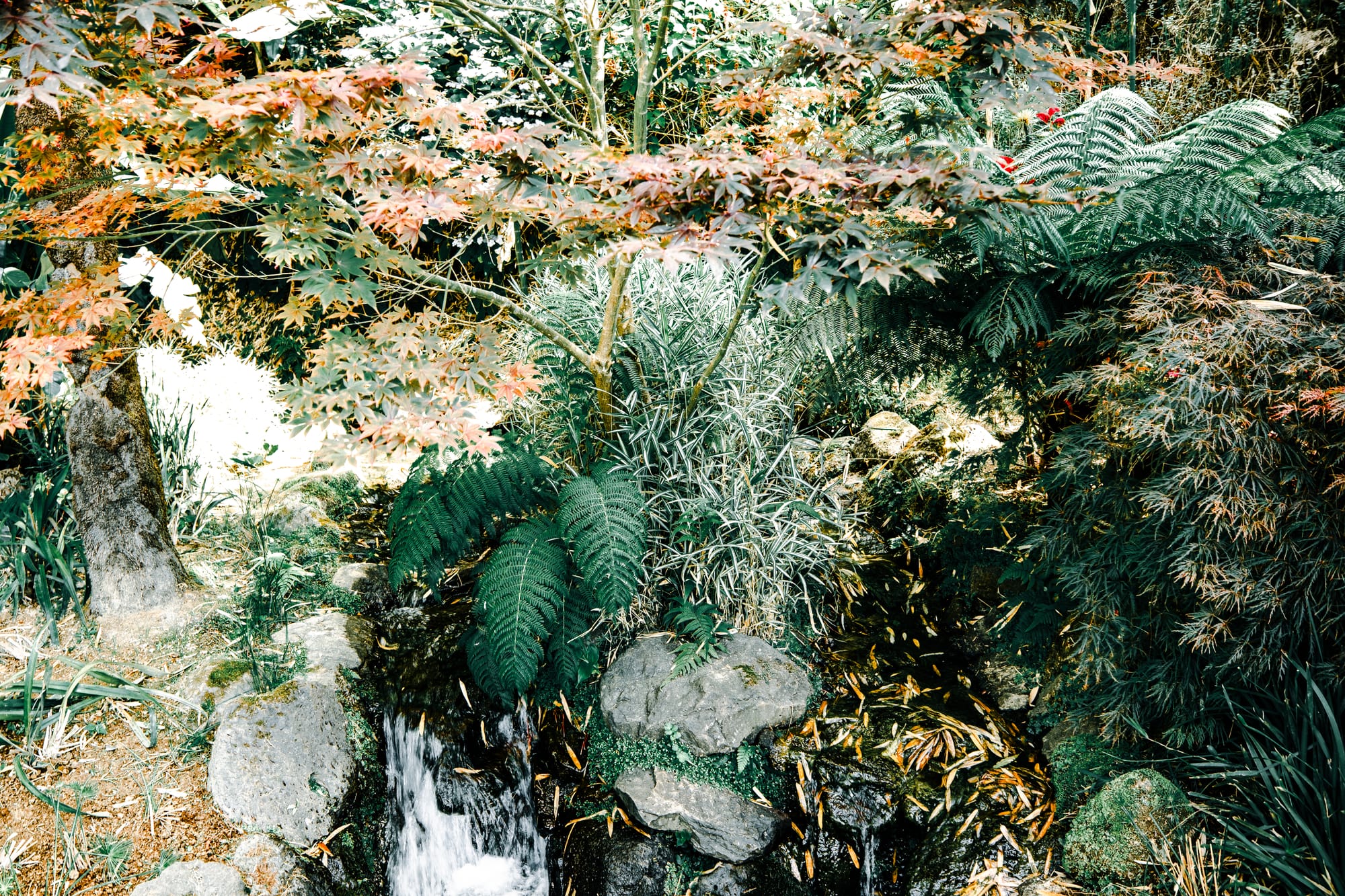
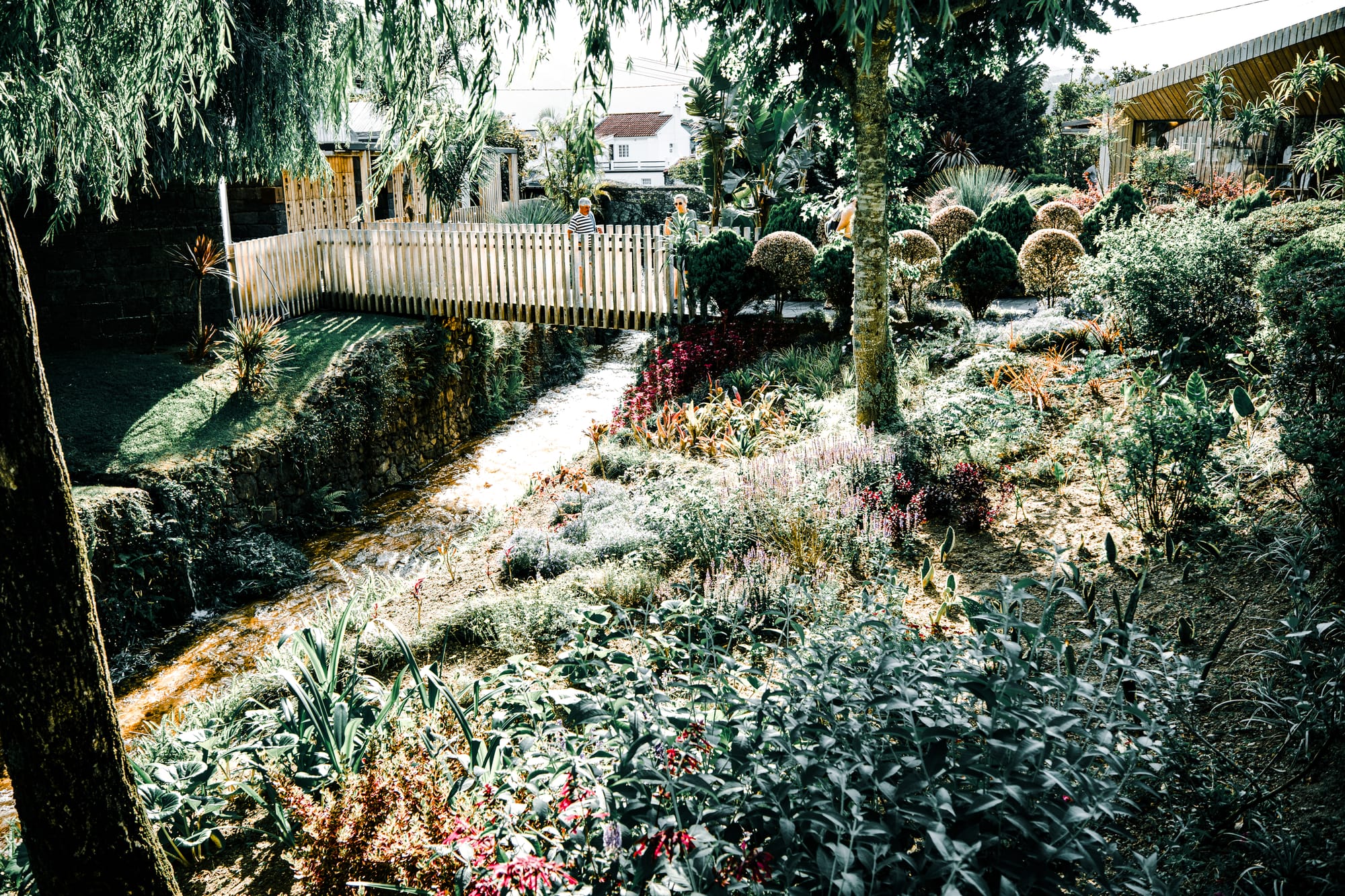
Quiet groves and garden beds border the streams and pools throughout the hot springs
From above, an aerial view reveals the entire complex.
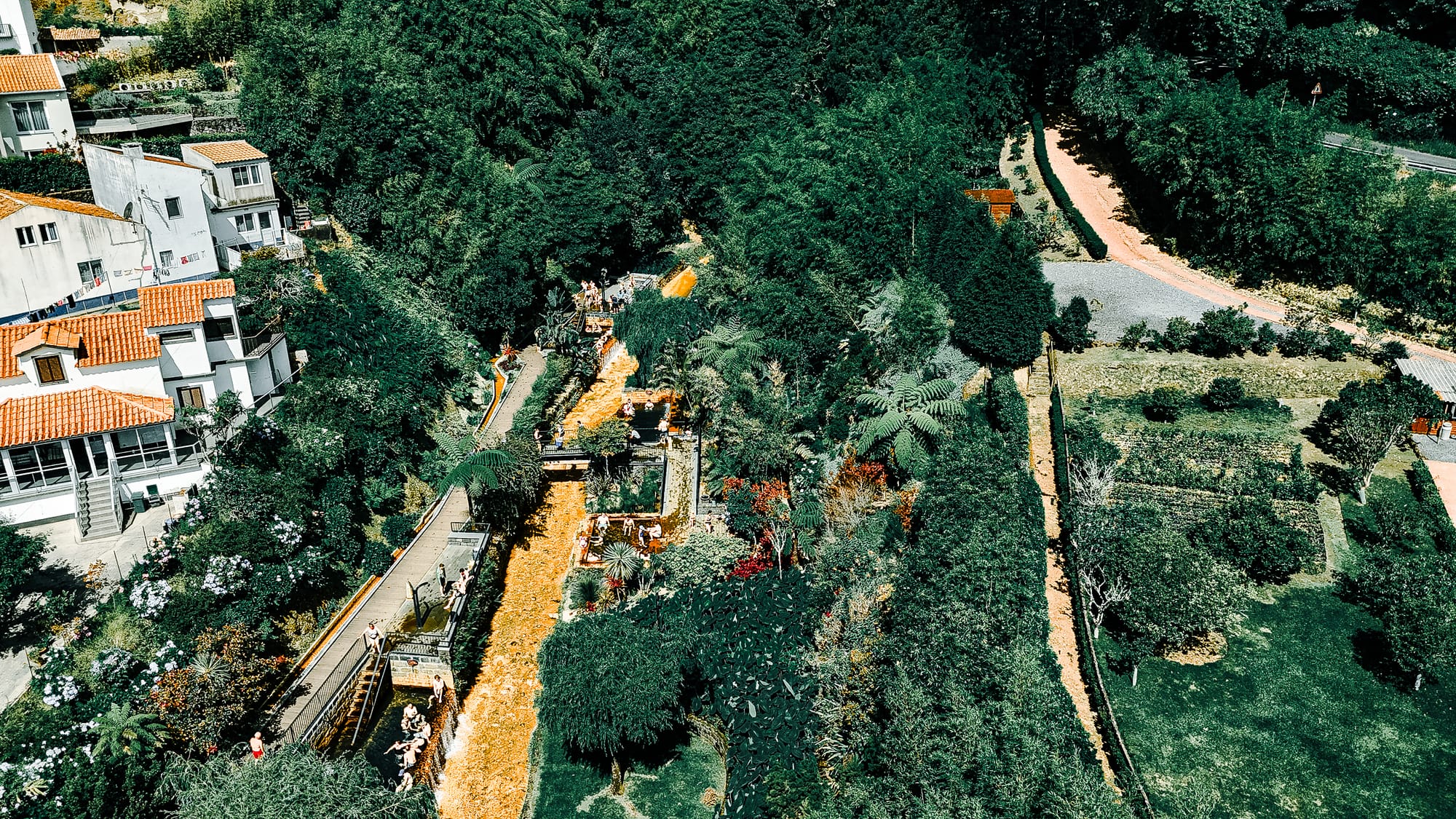
It appears as a network of burnt-orange veins running through a lush green valley.
Practical details
Poça da Dona Beija is open daily with scheduled entry times throughout the day. Reservations are recommended in advance, especially during weekends and high season. Each visit lasts 90 minutes, and sessions are strictly timed to preserve the calm atmosphere.
The facilities include on-site showers, clean changing rooms, lockers for your belongings, and a small boutique offering local products and bathing essentials.
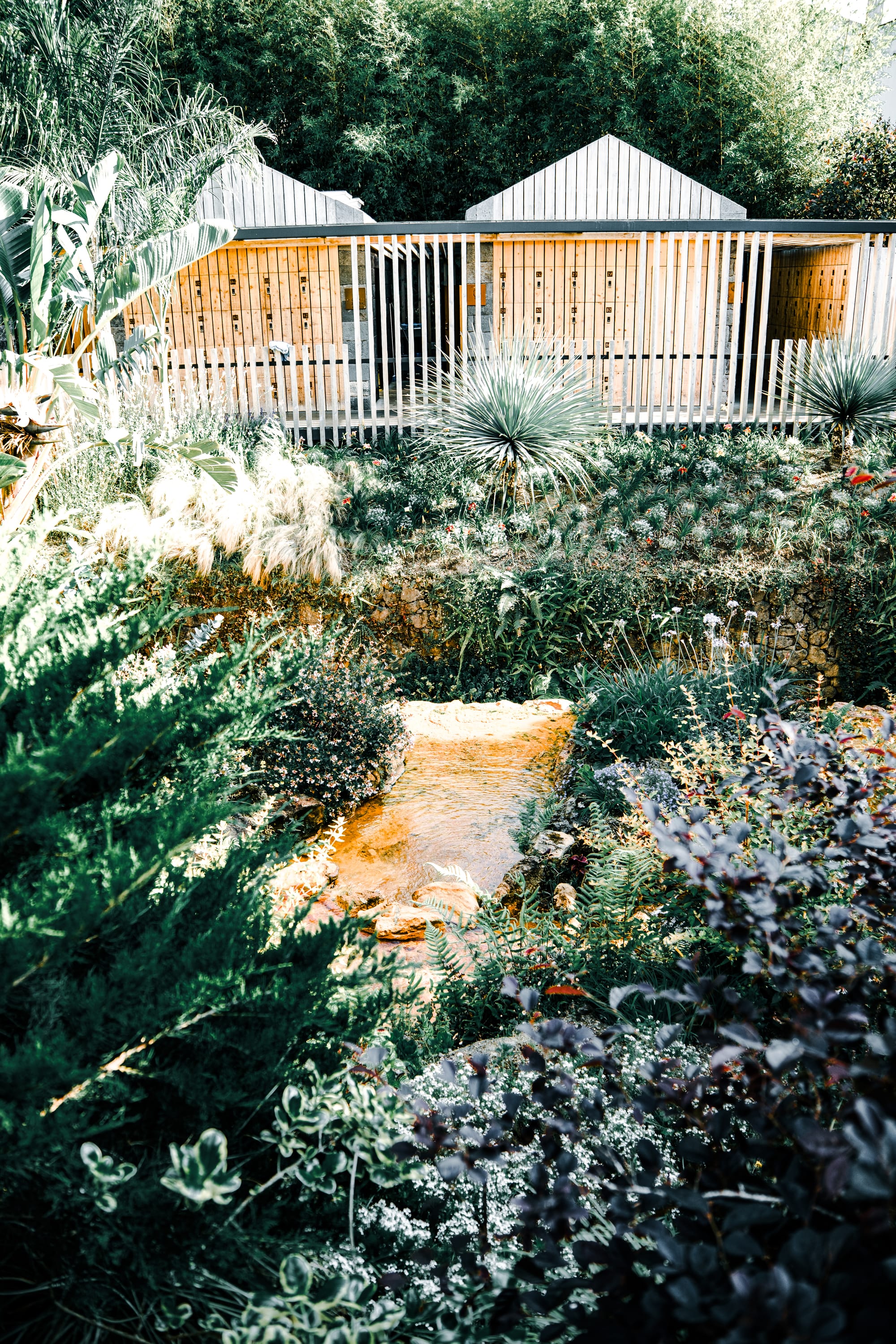
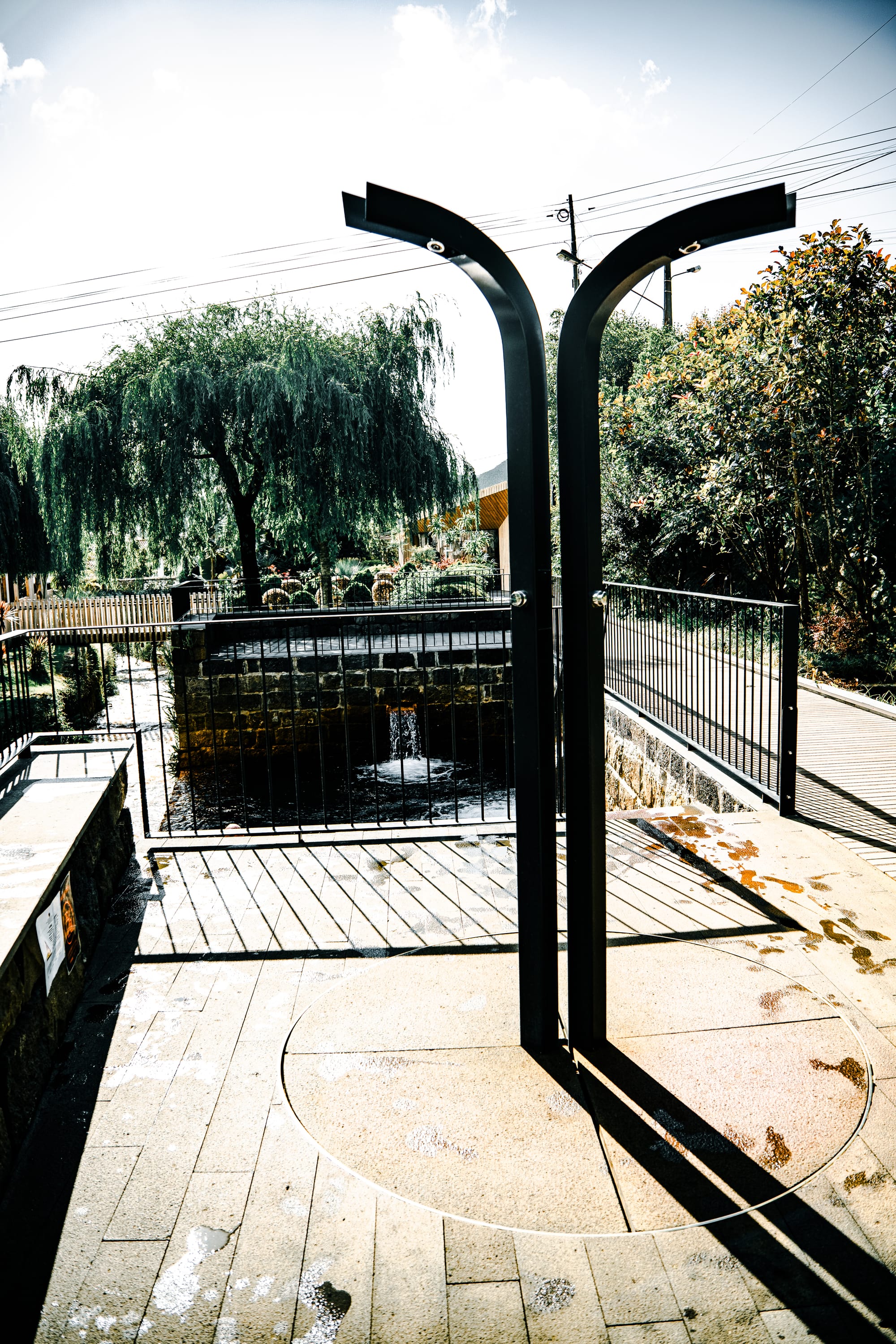
Changing rooms, showers, and tropical planting line the stream-fed entrance at Poça da Dona Beija
Most people come independently, but if you don’t have a car, there are day tours from Ponta Delgada and elsewhere on the island that include a stop at Poça da Dona Beija. Some also incorporate a guided walk around Furnas village and finish with a traditional dinner of cozido, a slow-cooked stew buried in the geothermal soil near the lakeside caldeiras.
Compared to Caldeira Velha, Poça da Dona Beija has a bit more of an upscale vibe, whereas Caldeira Velha is more integrated into its natural surroundings. We enjoyed both for different reasons.
Why it’s worth it
Poça da Dona Beija is one of the most popular thermal springs on the island, and for good reason. It balances design with natural texture, accessibility with serenity. The consistent temperature, the rich mineral content, and the garden-like atmosphere make it ideal for returning visitors as well as first-timers.
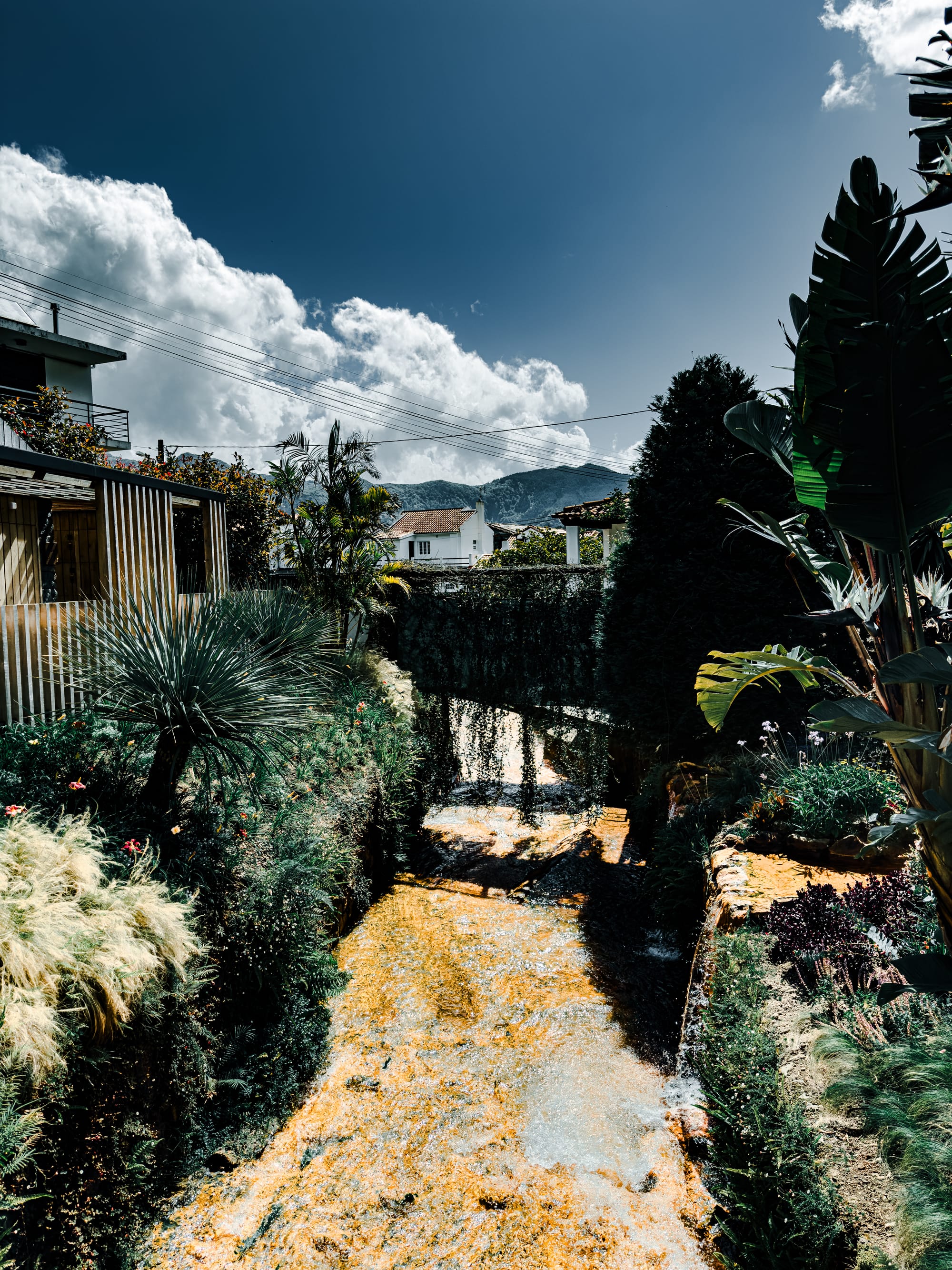

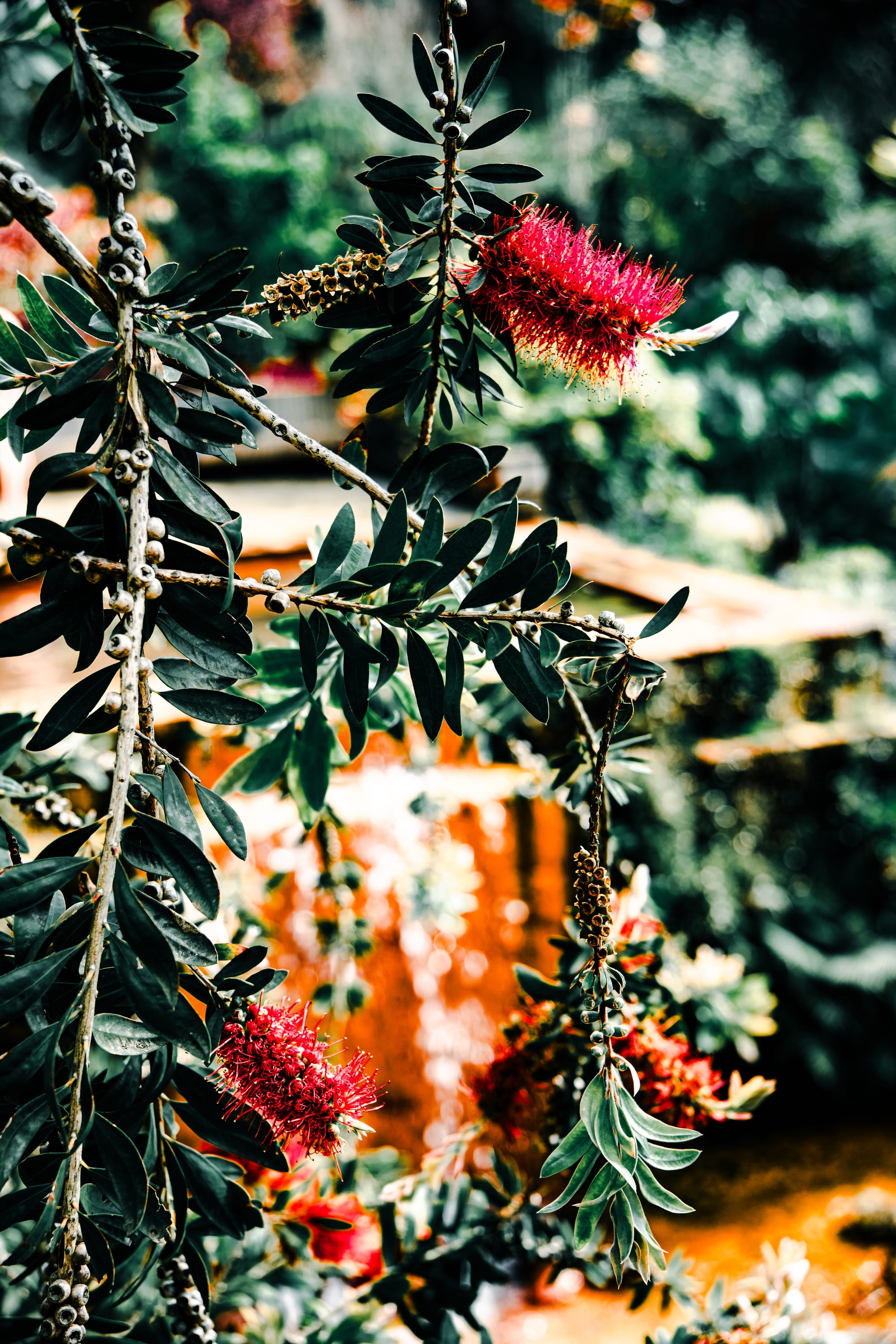
Hot spring runoff flows beside a riot of unusual tropical flora including white bird of paradise and bottlebrush blooms
It’s also unusually photogenic, not just because of its layout, but because of its detail: water flowing over mineral-stained stone, tropical flowers brushing your shoulders, low mist caught in early light. It is both a public place and a deeply personal one.
If you go, take your time. Let your fingertips trace the minerals in the walls. Lie back. Watch the steam lift into the canopy. And breathe.
Frequently asked questions about Poça da Dona Beija
Is Poça da Dona Beija worth visiting?
Yes, Poça da Dona Beija is one of the best hot springs in São Miguel, especially if you want to soak in several outdoor thermal pools surrounded by lush vegetation. The water is naturally heated by volcanic activity beneath Furnas and remains at approximately 39°C, or 102°F. It is also open into the evening, making it a particularly atmospheric place to visit after dark.
Do you need to book Poça da Dona Beija in advance?
Advance booking is highly recommended because entry is divided into timed sessions and availability can sell out, especially during summer, weekends and popular evening periods. Tickets are purchased for a specific date and entry time through the official booking website. Be certain of your plans before booking, as the official ticketing system states that purchased reservations cannot be cancelled, exchanged, or refunded.
How long can you stay at Poça da Dona Beija?
Each ticket allows you to use the Poça da Dona Beija thermal pools for 1 hour and 30 minutes. Arrive early enough to check in, change, and make the most of your allocated bathing time.
What are the Poça da Dona Beija opening hours?
Poça da Dona Beija is currently open every day from 8:30 a.m. until 11:00 p.m. Visitors must leave the pools by 10:30 p.m.
What minerals are in the water at Poça da Dona Beija?
Poça da Dona Beija is best known for its iron-rich, or ferruginous, thermal water. The iron gives the water and surrounding stone an orange or rusty-brown appearance.
Can the water at Poça da Dona Beija stain your swimsuit?
The iron-rich water can leave orange or brown discoloration on light fabrics. Wear an older or dark-colored swimsuit that you would not mind becoming stained. Avoid white or pale swimwear, and bring a dark towel rather than a white or light-colored one. It is also a good idea to rinse your swimsuit soon after your visit, although some discoloration may be permanent.
Are there changing rooms, showers, and lockers at Poça da Dona Beija?
Poça da Dona Beija has changing facilities and options for storing personal belongings. Some additional services, such as lockers, towel rental, or hot showers, may involve an extra charge.
Is Poça da Dona Beija better during the day or at night?
A daytime visit makes it easier to appreciate the tropical plants, stone pools and surrounding Furnas landscape. An evening visit is more atmospheric, with steam rising from the water and the pools illuminated after dark.
How does Poça da Dona Beija compare with Terra Nostra Park?
Poça da Dona Beija is primarily a thermal-bathing experience, with several relatively small outdoor pools and extended evening opening hours. It is a good choice when you want a dedicated soak or a nighttime hot springs experience.
Terra Nostra Park combines thermal bathing with an extensive botanical garden. Its main attraction is a large, iron-rich thermal pool, along with smaller thermal jacuzzis. Public opening hours are currently 10:30 a.m. to 4:30 p.m., and admission includes access to the garden as well as the thermal pools.
Many visitors include both in a Furnas itinerary because they offer very different experiences.
How does Poça da Dona Beija compare with Caldeira Velha?
Poça da Dona Beija is located in Furnas and consists of developed stone thermal pools with changing facilities and evening access. Its pools are known for their warm, iron-rich water.
Caldeira Velha is a protected Natural Monument near Ribeira Grande, on the slopes of the Fogo Volcano. It offers multiple thermal pools in a dense forest environment and is known for its natural waterfall setting.
Choose Poça da Dona Beija for a more spa-like soak. Choose Caldeira Velha for a rainforest atmosphere, a thermal waterfall, and a visit that can be combined with Lagoa do Fogo.
Which São Miguel hot spring is best: Poça da Dona Beija, Terra Nostra or Caldeira Velha?
The best São Miguel hot spring depends on the experience you want:
Poça da Dona Beija is best for a spa-like evening soak.
Terra Nostra Park is best for combining a thermal bath with one of the Azores’ most famous botanical gardens.
Caldeira Velha is best for a natural rainforest setting.
Travelers with enough time may want to visit all three, as each offers a distinctly different thermal-water experience.
Are there any other hot springs in São Miguel?
Yes. In addition to Poça da Dona Beija, Terra Nostra Park and Caldeira Velha, São Miguel has several other geothermal bathing experiences.
Ponta da Ferraria is especially unusual because geothermal water warms a natural swimming area beside the Atlantic Ocean. The temperature and safety of the experience depend on the tide and sea conditions.
You can also find thermal spas and smaller bathing facilities around Furnas and Ribeira Grande. Not every fumarole or geothermal spring is safe for bathing, so only enter designated swimming areas.
How do you get to Poça da Dona Beija?
Poça da Dona Beija is located at Lomba das Barracas in Furnas on the island of São Miguel. It is within Furnas village and is a short drive from attractions such as Terra Nostra Park, the Furnas fumaroles, and Lagoa das Furnas.
Driving is generally the easiest way to reach Furnas while exploring São Miguel.


