

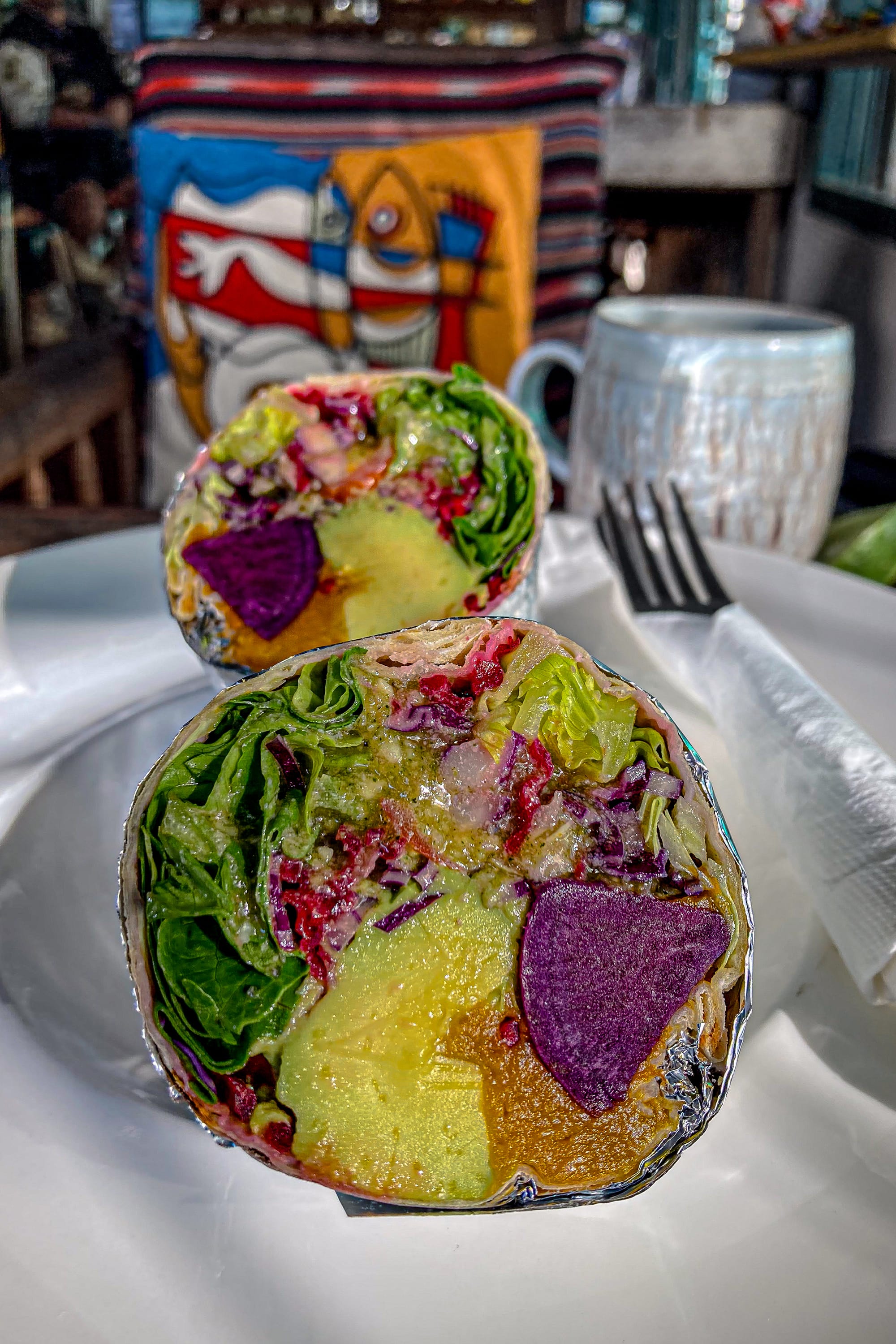



Traveling as a vegan
How to travel as a vegan
After nearly three years of traveling as vegans, we rarely arrive somewhere without first checking what the food landscape looks like. We use HappyCow to find fully vegan restaurants, Google Maps to save places across different neighborhoods, and local-language searches when the English-language results are thin.
A small amount of research changes the experience of eating vegan abroad considerably. In places with a strong vegan scene (like Mexico City or Chiang Mai), it mostly helps us decide where we actually want to eat. In more difficult destinations (like Bansko or Diani Beach), it can mean knowing where the nearest reliable meal is before a long travel day or late arrival.
Spotlight
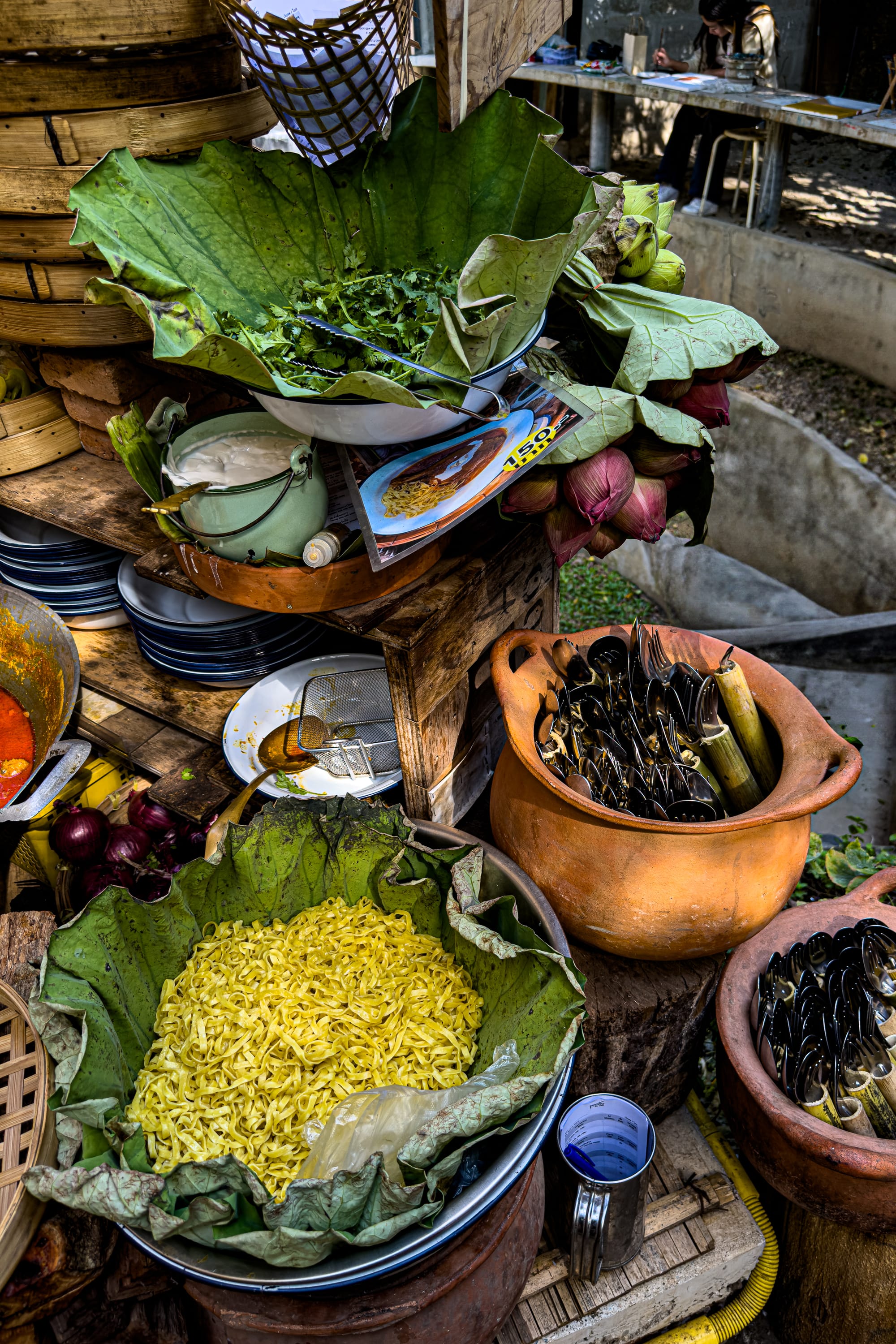
“Vietnamese cuisine is rich in herbs, most commonly including lemongrass, ginger, mint, Vietnamese mint, coriander, cinnamon, Thai basil, and lime. It naturally does not contain much dairy, which makes veganizing notable dishes much easier.”
Read onThe best cities for vegans
Southeast Asia is close to heaven for vegan travel. Thailand and Vietnam in particular combine huge vegan-friendly food scenes with cuisines already rich in rice, noodles, tofu, herbs, vegetables, coconut milk, and fermented ingredients. Think vegan khao soi, tofu pad kra pao, bánh mì chay, fresh spring rolls, or a steaming bowl of phở chay. HappyCow’s live data currently lists more vegan restaurants in Asia than in any other world region, with 3,526 compared with 2,821 in Europe and 2,300 in North America. It also lists around 3,500 vegan, vegetarian, and veg-friendly places in Thailand and 2,800 in Vietnam alone.
The best vegan travel destinations stretch far beyond Southeast Asia, though. HappyCow’s latest global ranking puts Berlin at #3, with 186 vegan venues and more than 2,100 community reviews, while Mexico City, one of our personal favorites, ranks #14. Bangkok comes in at #11, Lisbon #13, Seoul #15, Hanoi #18, Hội An #20, Osaka #21, Athens #22, Porto #24, and Montreal #25. What makes the best places to travel as a vegan stand out is not restaurant count alone. It is the mix of dedicated vegan restaurants, plant-based local food, international cuisines, affordability, density, and the simple pleasure of having enough choice.
A number of other nomad hotspots fall outside HappyCow’s global top 25 but still rank among the top 10 vegan-friendly cities within their own continents. In Africa, that includes Cape Town, Johannesburg, Cairo, and Nairobi. Across Asia, Da Nang, Chiang Mai, and Istanbul also stand out, while South America has an especially strong spread of options, including São Paulo, Medellín, Rio de Janeiro, Lima, Bogotá, Cusco, Santiago, and Buenos Aires. For long-term travelers and digital nomads, these cities are worth keeping on the radar, especially if access to vegan restaurants and plant-based food is part of how you choose where to spend more time.
The most vegan-friendly countries
Some of the best countries for vegans are places where plant-based eating already has deep cultural roots. In Thailand, jay food is tied to Buddhist and Chinese religious traditions. In Vietnam, chay food is closely associated with Buddhist practice, with meat-free dishes becoming especially common on the first and fifteenth days of the lunar month.
India is perhaps the clearest example of diet and belief overlapping. Pew Research Center found that 39% of Indian adults identify as vegetarian and 81% restrict meat in some form, with particularly high rates among Jains, Hindus, and Sikhs. For vegan travelers, that creates an enormous landscape of vegetarian food, although ghee, paneer, curd, and milk mean vegetarian does not automatically mean vegan. Dharamshala and McLeod Ganj in Himachal Pradesh are particularly interesting for longer stays, perhaps in a coliving like The Void. The large Tibetan Buddhist community has shaped a food scene where Indian and Tibetan traditions meet, with vegetable momos, thukpa, dals, and other dishes that can often be found or prepared vegan. It is also the kind of slower mountain base that has long attracted international travelers, making it especially relevant if you are traveling slowly or working remotely.
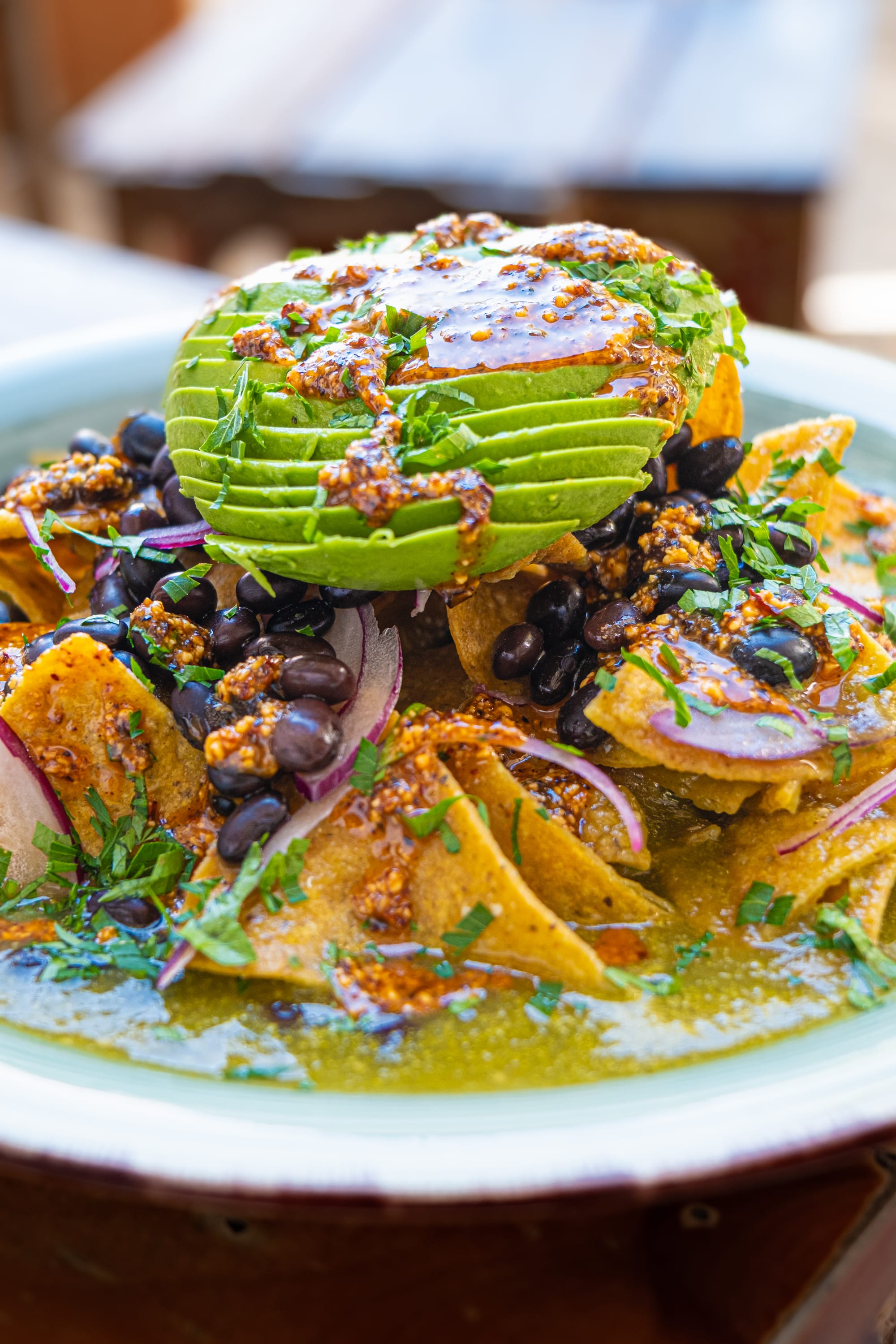
Germany and Mexico arrive at vegan-friendliness from very different directions. Berlin’s vegan scene grew alongside the city’s broader alternative and progressive culture, with the city’s tourism board describing it as a vegan capital as far back as 2016. Mexico, meanwhile, has a food culture built around ingredients that long predate modern veganism: corn, beans, squash, chiles, cacao, avocado, and countless regional preparations that are already plant-based or easily adapted. For us, that is part of what makes Mexico one of the best countries for vegan travel.
Is it hard to travel as a vegan?
In our experience, traveling as a vegan is rarely impossible, but some places are definitely harder than others. Bansko, Bulgaria and Diani Beach, Kenya were the two places where we felt the most friction. We could still find vegan food, but veganism itself did not always feel widely understood, which meant more checking, more explaining, and fewer easy choices.
In Bulgaria, Bansko had some vegan options, but the range was limited compared with most of the places we have traveled. Kenya was similar. Nairobi was noticeably easier, with more restaurants and better vegan awareness, while Diani Beach required much more planning. So if you are wondering whether it is hard to travel as a vegan, the answer really depends on where you are. In less vegan-friendly destinations, a little research goes a long way.
Vegan food on planes
Meeting other vegans while traveling
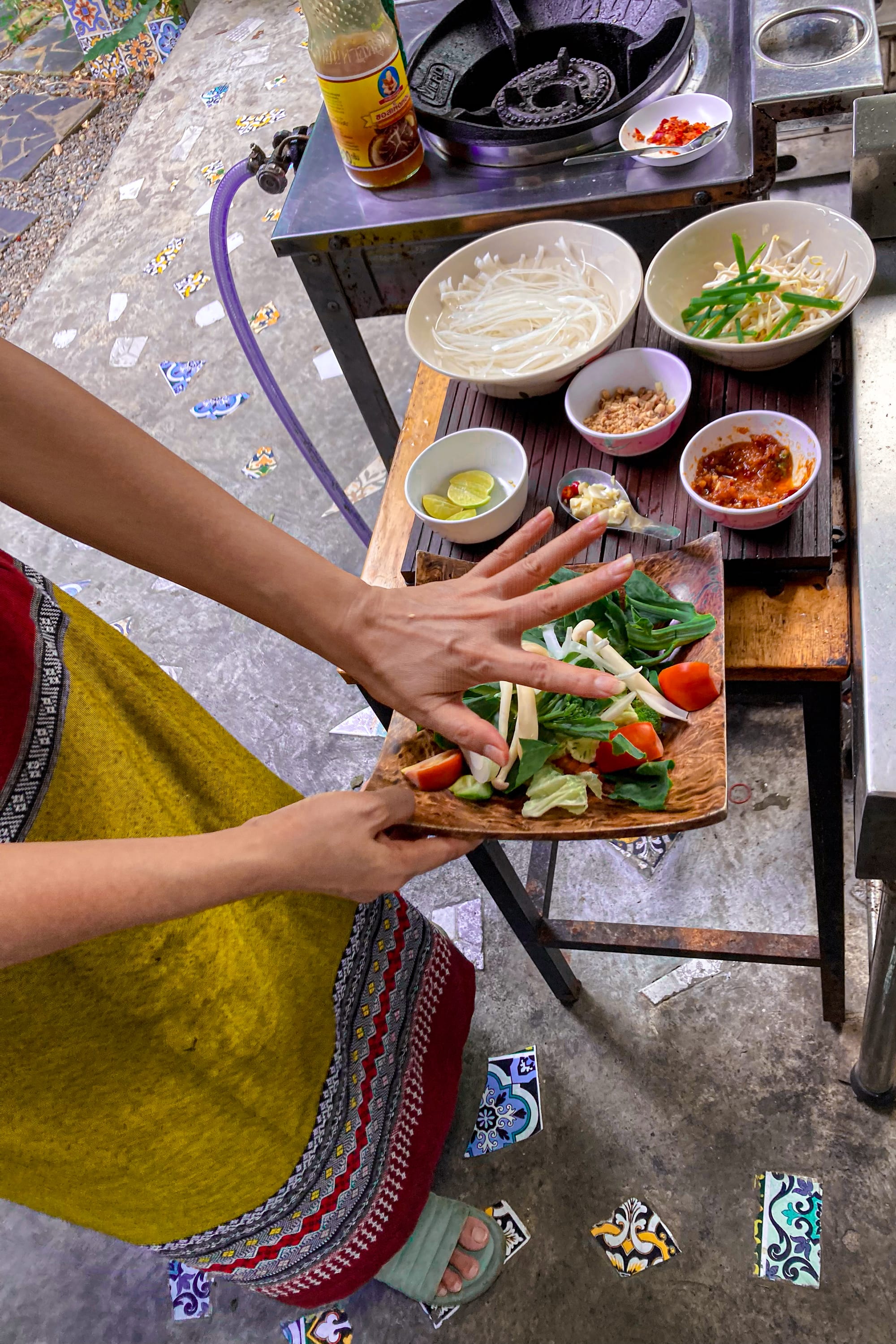
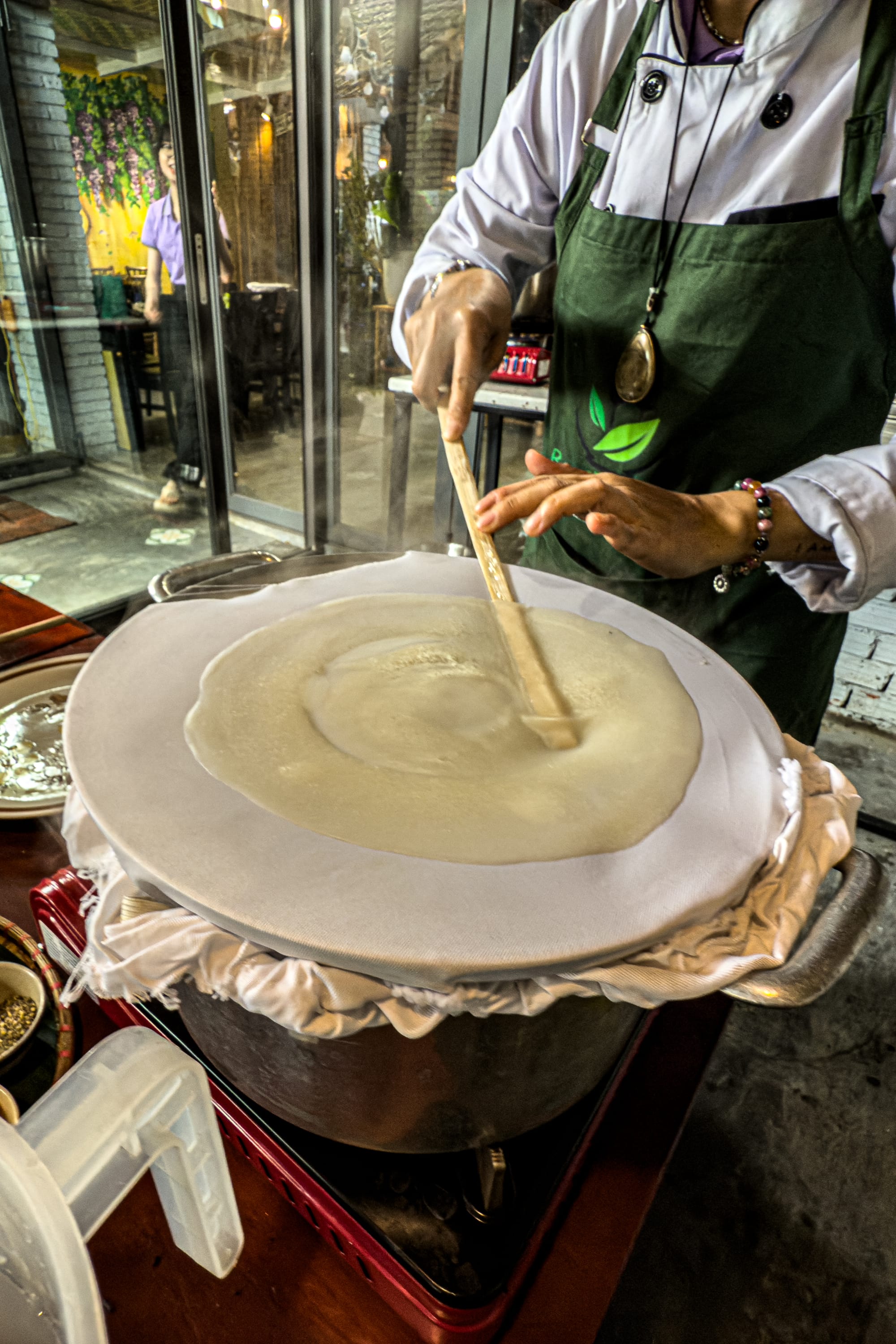
In bigger cities, we've found vegan meetups, supper clubs, cooking classes, food tours, and community events to be an easy way to meet people while also learning more about the local food culture. Vegan cooking classes have been some of our favorite travel experiences, from making fresh rice paper in Vietnam to cooking in homes and kitchens in Mexico and Turkey.
There are also more formal ways to find vegan community while traveling. Apps like Veggly are designed to connect nearby vegans and vegetarians for dating or friendship, while local Meetup groups, Facebook communities, vegan festivals, and plant-based retreats can all be useful if you are staying somewhere longer.
Vegan travel blogs
What are the best countries for vegans?
For vegan travelers, Thailand, Vietnam, Mexico, India, and Germany are among the best countries to visit. That is not necessarily because they have the largest vegan populations, but because they combine strong local food traditions, good vegan restaurant scenes, and places where finding plant-based food while traveling is relatively straightforward.
What are the best cities for vegans?
Anecdotally, we would put Berlin and Mexico City at the top. HappyCow’s latest global ranking is a little different, placing London #1, Paris #2, Berlin #3, Barcelona #4, and Tokyo #5 among the world’s most vegan-friendly cities. The ranking considers vegan venue numbers, ratings, review volume, and density rather than restaurant count alone.
Mexico City ranks #14 globally, but for us it remains one of the best cities for vegans because of the sheer variety of dedicated vegan restaurants, excellent Mexican food, and strong international dining scene.
Chiang Mai and Hội An are also notable.
What is the most vegan-friendly country in the world?
There is no single definitive answer, because different rankings measure different things. For vegan travel, Thailand is one of the strongest contenders thanks to its dense vegan scene, Buddhist jay food traditions, and the ease of finding plant-based meals in places like Bangkok and Chiang Mai.
India is another obvious contender because of its enormous vegetarian food culture, while Germany stands out for modern vegan infrastructure.
What are your best vegan travel tips?
Learn a few food words in the local language. Even knowing how to say vegan, milk, egg, fish, meat, butter, and lard can make it much easier to explain what you do and do not eat, especially in places where the word “vegan” is not widely understood.
It also helps to research how the country’s most common dishes are traditionally prepared. Knowing which animal products regularly appear in a cuisine gives you a much better sense of what to avoid, what questions to ask, and which dishes can usually be modified. Fish sauce, shrimp paste, ghee, butter, meat-based broth, and lard are all good examples of ingredients that may not be obvious from the menu.
How do you find vegan food while traveling?
We usually start with HappyCow, then cross-check Google Maps and search in the local language if the English results are limited. Looking for terms such as vegan, vegetarian, plant-based, or the local equivalent can surface places that never appear in English-language guides.
It also helps to look beyond dedicated vegan restaurants. Markets, traditional dishes, bakeries, street food, and mixed-menu restaurants often have excellent vegan options once you understand how the local cuisine is prepared. Saving a few reliable places before you arrive gives you a useful baseline, especially for late arrivals or travel days.
Which cuisines are easiest for vegans?
Thai, Vietnamese, Indian, Mexican, and parts of Middle Eastern and Mediterranean cuisine are often among the easiest for vegans to navigate. They already make heavy use of vegetables, legumes, rice, noodles, herbs, tofu, grains, and other plant-based staples, so there are usually plenty of dishes that are naturally vegan or can be adapted without much trouble.
The main thing is knowing where animal products tend to hide. Thai dishes may contain fish sauce or shrimp paste, Indian food often uses ghee or dairy, and Mexican dishes can sometimes be cooked with lard or meat-based stock. Familiarity with those patterns makes it much easier to order confidently.
What ingredients should vegans watch out for when traveling?
The main things to watch for are animal products that are used as seasonings, cooking fats, or bases rather than obvious ingredients. Depending on the cuisine, that might mean fish sauce, shrimp paste, meat-based broth, ghee, butter, lard, dairy, egg, or gelatin.
The useful habit is to learn which of these are common in the place you are visiting. A dish can look completely plant-based and still contain an animal product in the sauce, stock, or cooking oil, so a little local knowledge goes a long way.
What is the best app for finding vegan food while traveling?
For us, HappyCow is still the most useful vegan travel app. We use it to find fully vegan restaurants, vegetarian places, and restaurants with clearly marked vegan options, especially when arriving somewhere new.
Google Maps is useful alongside it, particularly for recent reviews and local-language searches, but HappyCow is usually our first stop because the listings are built specifically around vegan and vegetarian food rather than general restaurant discovery.
How do you request a vegan meal on a flight?
Most major airlines let you request a vegan meal in advance, usually under the special-meal code VGML. Add it to your booking as early as possible and check the airline’s deadline, which is often 24 to 48 hours before departure.
We would not rely on finding a suitable meal onboard without requesting one first. Even when an airline offers vegan food, availability can vary by route, airport, and cabin, so pre-ordering is usually the safest option.
Where can you find fully vegan hotels?
Fully vegan hotels are still relatively rare, but they now exist across destinations including Thailand, Bali, Sri Lanka, Japan, India, Greece, Italy, Costa Rica, and the UK. Thailand and Bali have particularly strong clusters, while Europe has several well-established plant-based hotels and resorts.
Why is Southeast Asia so good for vegan travel?
Southeast Asia is one of the easiest and most rewarding regions for vegan travel because many local cuisines already rely heavily on rice, noodles, tofu, vegetables, herbs, coconut milk, and fermented ingredients. Thailand’s jay food and Vietnam’s chay traditions are especially helpful, and cities like Bangkok, Chiang Mai, Hanoi, Hội An, and Da Nang have strong dedicated vegan scenes too.
The main thing to watch for is hidden animal products such as fish sauce, shrimp paste, egg, or meat-based broth. Once you know what is commonly used, eating vegan in Southeast Asia becomes much easier.
How can you meet other vegans while traveling?
In bigger cities, vegan meetups, supper clubs, cooking classes, food tours, festivals, and plant-based events can be an easy way to meet people while traveling. We especially like cooking classes because they combine the social side with actually learning something about the local cuisine.
Apps like Veggly can also help you connect with nearby vegans and vegetarians, whether for dating, friendship, or simply finding people with similar interests. For longer stays, local Meetup groups, Facebook communities, vegan retreats, and community events can make it much easier to find a social circle.
What are the best ways to experience local food as a vegan?
Look for dishes that are already part of the local food culture rather than only seeking out vegan versions of familiar international food. Markets, street stalls, traditional restaurants, and cooking classes can all be useful ways to understand how a cuisine actually works.
For us, cooking classes have been especially memorable because they create a direct connection to ingredients, techniques, and the people preparing the food. Learning to make fresh rice paper in Vietnam, salsa in Mexico, or vegan gözleme in Turkey gave us much more context than simply eating the finished dish.
Which city has the most vegan restaurants?
Among the cities in HappyCow’s latest global ranking, London has the highest number of fully vegan venues, with more than 200 listed. Berlin follows closely, with Paris, New York, and Tokyo also having especially large vegan restaurant scenes.
Restaurant count is only one measure, though. A city can be excellent for vegan travelers because of quality, density, local plant-based food, and how easy it is to find options across different neighborhoods, not just because it has the largest number of dedicated vegan restaurants.
Is HappyCow worth paying for?
For us, yes. We use HappyCow regularly while traveling because it makes it much easier to find fully vegan restaurants, vegetarian places, and restaurants with clearly marked vegan options in unfamiliar cities. It is especially useful when Google Maps results are vague or when you want recommendations from other vegan travelers rather than general diners.
How can vegans travel more sustainably?
Eating plant-based can reduce the food-related impact of a trip, but sustainable vegan travel goes beyond what is on the plate. Staying longer, flying less often, using public transport, supporting locally owned businesses, and choosing accommodation with responsible environmental practices can all make a bigger difference.
We also try to think about where money flows. Vegan travel can still be extractive if it relies on imported products, high-consumption resorts, or businesses disconnected from the local community. The more useful question is not only whether something is vegan, but whether the way we move, eat, and spend supports the place we are in.