


San Cristóbal de las Casas, in the Chiapas highlands of southern Mexico, has two good ways to do a cacao workshop: a private morning with Guillermo of Element Cacao on his land outside town, which is the one we did, or a bean-to-bar class at the Kakaw cacao museum in the center. With Guillermo, we roasted and shelled raw beans, ground them into paste, rolled vegan truffles with panela and cashew, and finished with a hot cacao drink. Book by messaging him, and agree the price first. Kakaw's workshop costs about MXN 250 and takes two to three hours.
Some places ease you in. Guillermo’s home on the outskirts of San Cristóbal de las Casas was one of them. The road out of town changed from cobblestone to dirt, and the noise of the center fell away. When we arrived, the first thing we noticed wasn’t the house itself but the land around it. Plants in every direction. Tall ones giving shade. Smaller ones curling close to the ground. A few flowering varieties we had never seen. It looked carefully tended rather than managed.
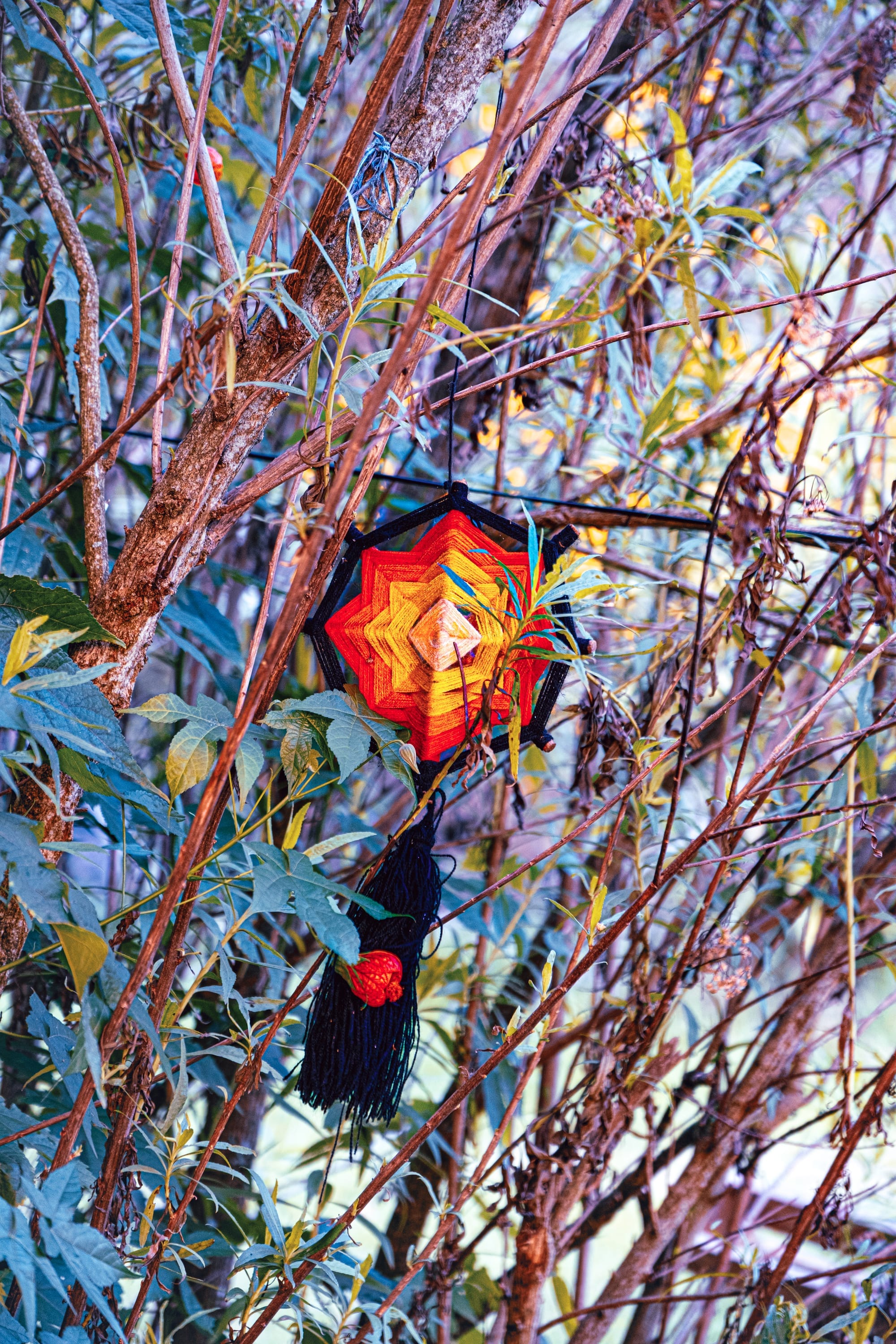
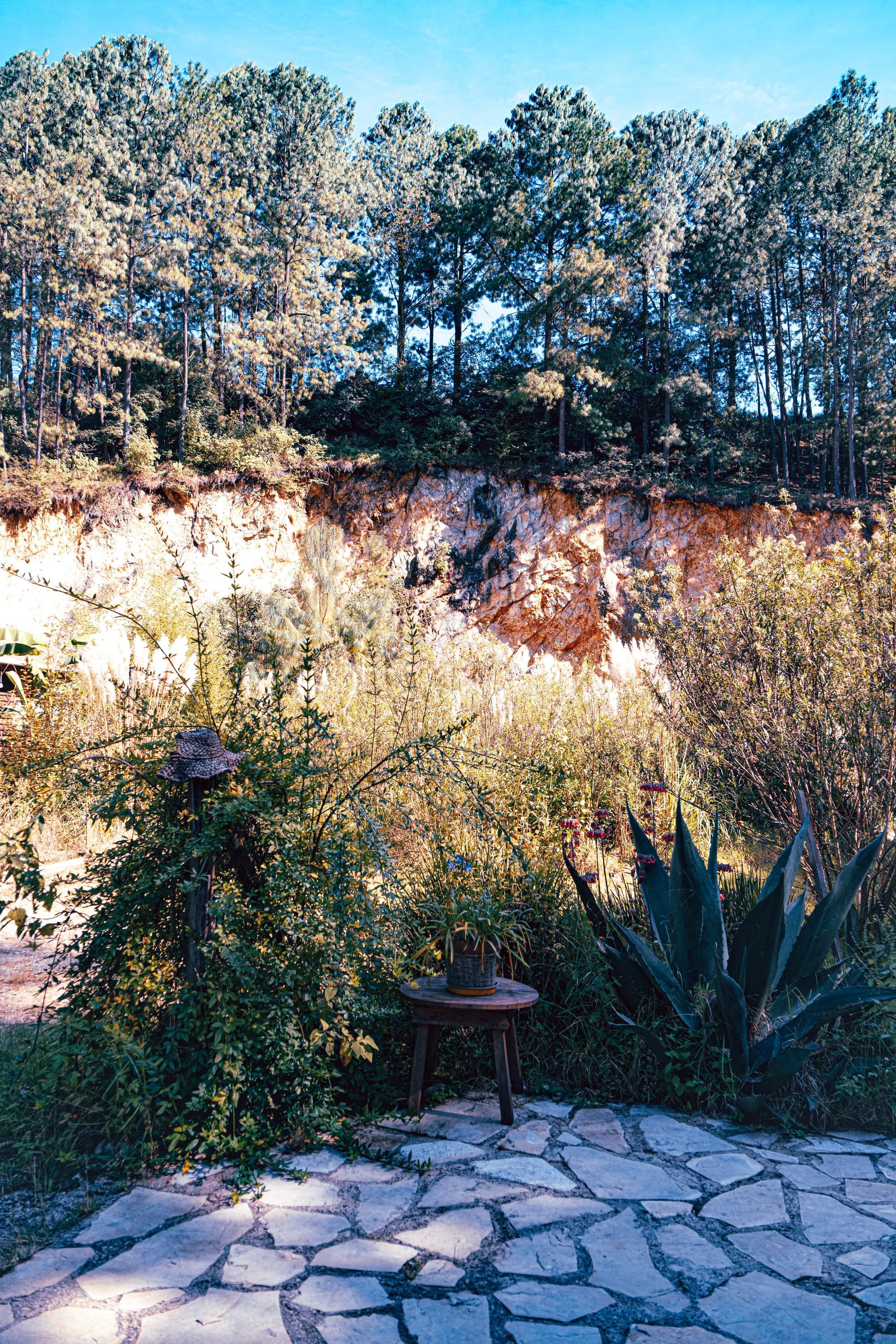
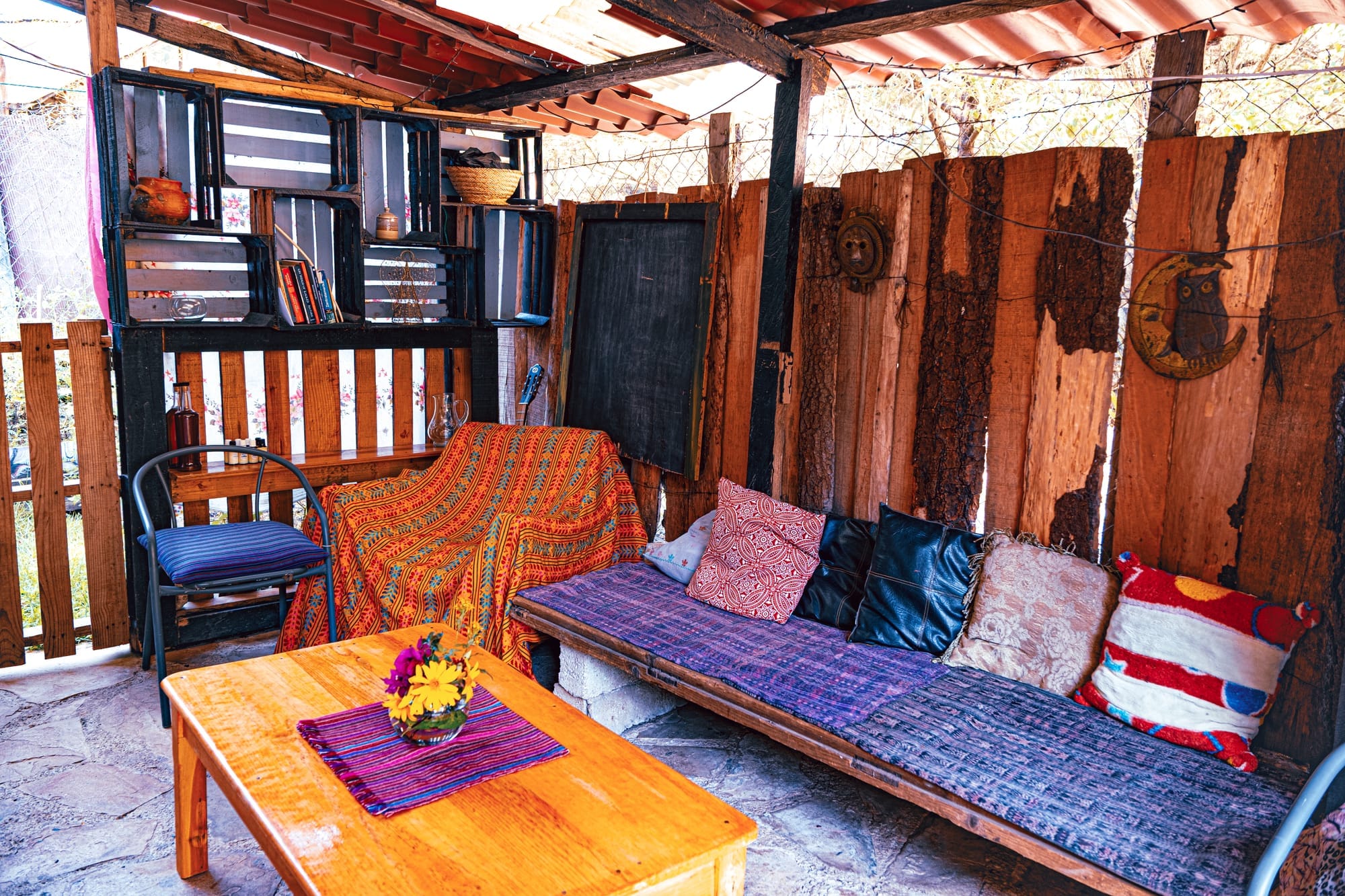
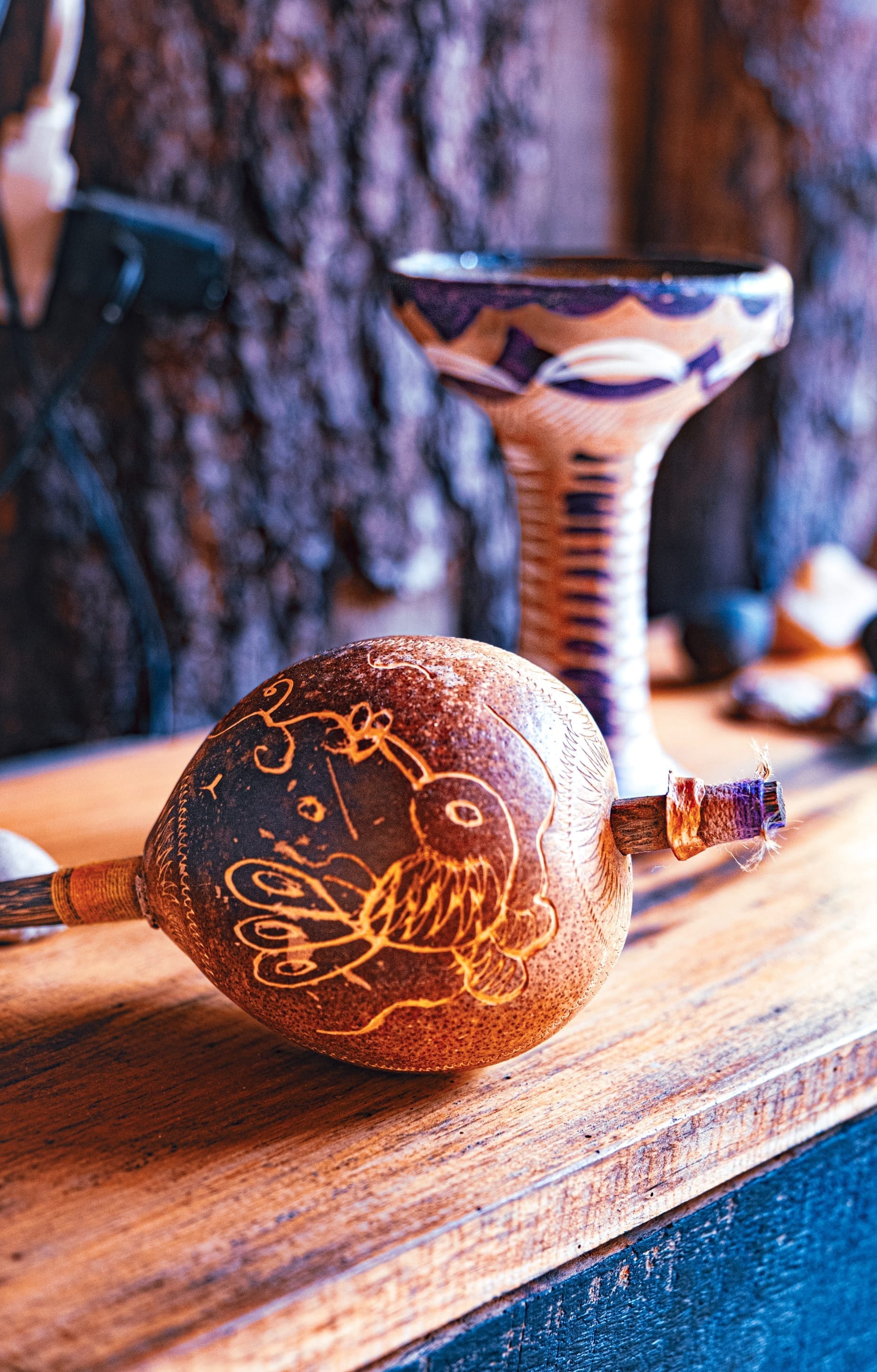
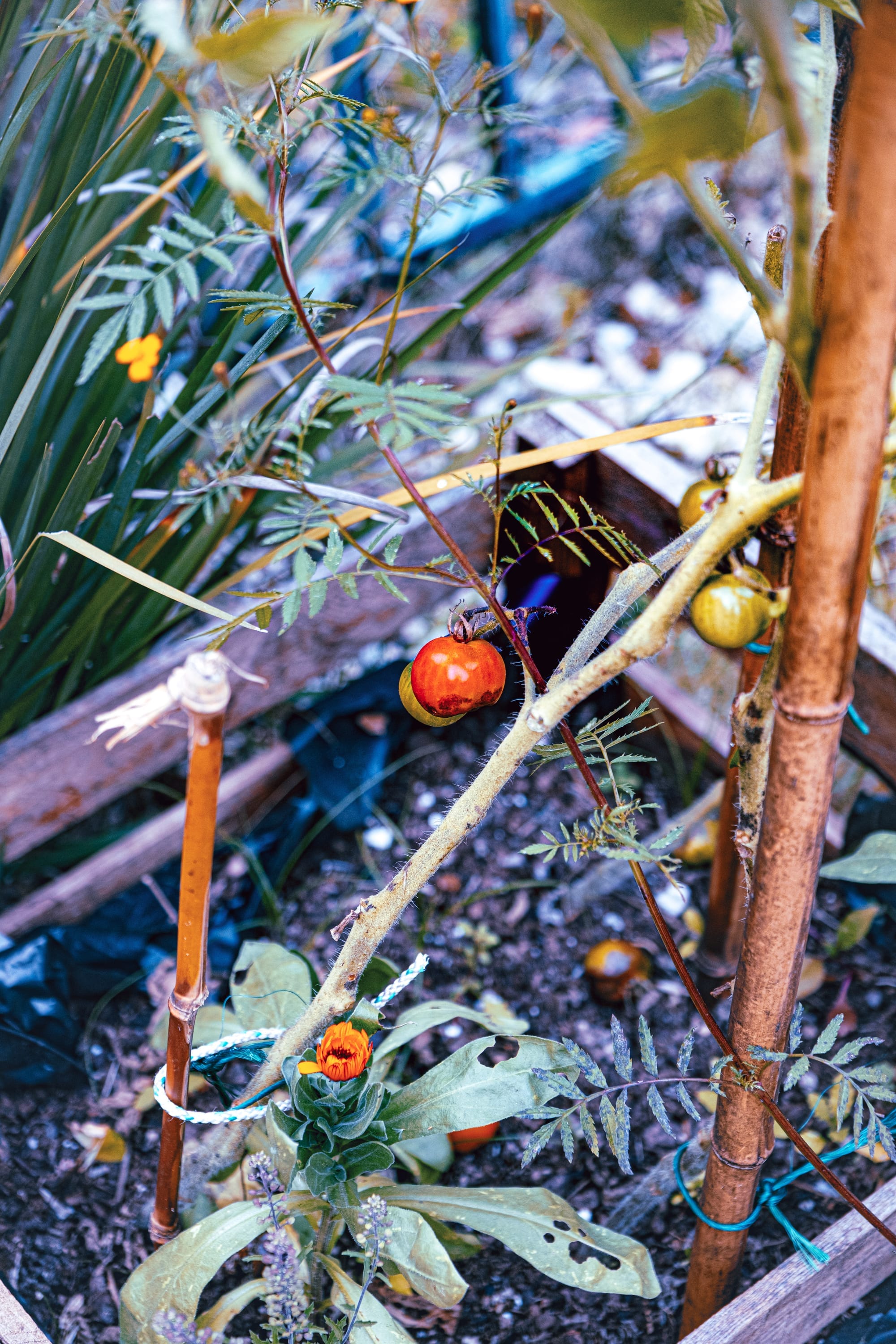
A small collection of details from the garden
Guillermo of Element Cacao is originally from France, but he has clearly been in Chiapas long enough for the place to shape him. He moved here because of cacao, and he stayed because he put down roots. He works directly with small scale cacao farmers in the region.
Cacao workshop in San Cristóbal at a glance
These are the practical details for the workshop we did with Guillermo. Prices aren't published, so treat the guide figures as rough and confirm them when you book. We compare this one with the others we loved in our guide to vegan cooking classes around the world.
Who runs it: Guillermo, the French chocolate maker behind Element Cacao. According to his site, he arrived in Mexico in 2021 and learned the craft volunteering on a cacao farm near Palenque before starting his vegan chocolate business in San Cristóbal.
How to book: message him through the Element Cacao contact page or his Instagram, and agree the date, the price, and directions to his home.
Price: the in-person workshop isn't priced online. His online courses were listed at about US$15 to US$25 in late 2026, and Kakaw's bean-to-bar class costs about MXN 250, which gives you a range to start from.
How long: ours took a morning, from roasting the beans to the final cup of cacao.
What you make: roasted and shelled cacao beans, fresh cacao paste, vegan truffles (cacao, panela, cashew paste, and vanilla), and a hot cacao drink. We took the truffles home.
Where: his home on the outskirts of San Cristóbal, where the cobbled streets turn into a dirt road. A taxi is the easiest way there; ask him for a map pin when you book.
Is it vegan? The truffles we made were vegan, and Element Cacao focuses on vegan chocolate. Mention it when you book so the drink is made without milk too.
| Detail | What to expect |
|---|---|
| Teacher | Guillermo, a French chocolate maker working in Chiapas since 2021 |
| Where | His home on the edge of San Cristóbal, by taxi |
| Booking | Element Cacao contact page or Instagram |
| Price | Not published for the in-person workshop |
| Length | A morning |
| You make | Roasted beans, cacao paste, vegan truffles, and a hot cacao drink |
| Vegan? | Yes, ask for the drink without milk |
| Details | |
|---|---|
| Who runs it | Guillermo of Element Cacao, in Mexico since 2021 |
| How to book | Element Cacao contact page or Instagram |
| Price | Not published; his online courses US$15 to US$40, Kakaw's class about MXN 250 (late 2026) |
| How long | A morning |
| What you make | Roasted cacao beans, cacao paste, vegan truffles, and hot cacao |
| Where | His home on the outskirts of town; a taxi is easiest |
| Is it vegan? | Yes; ask for the drink without milk |
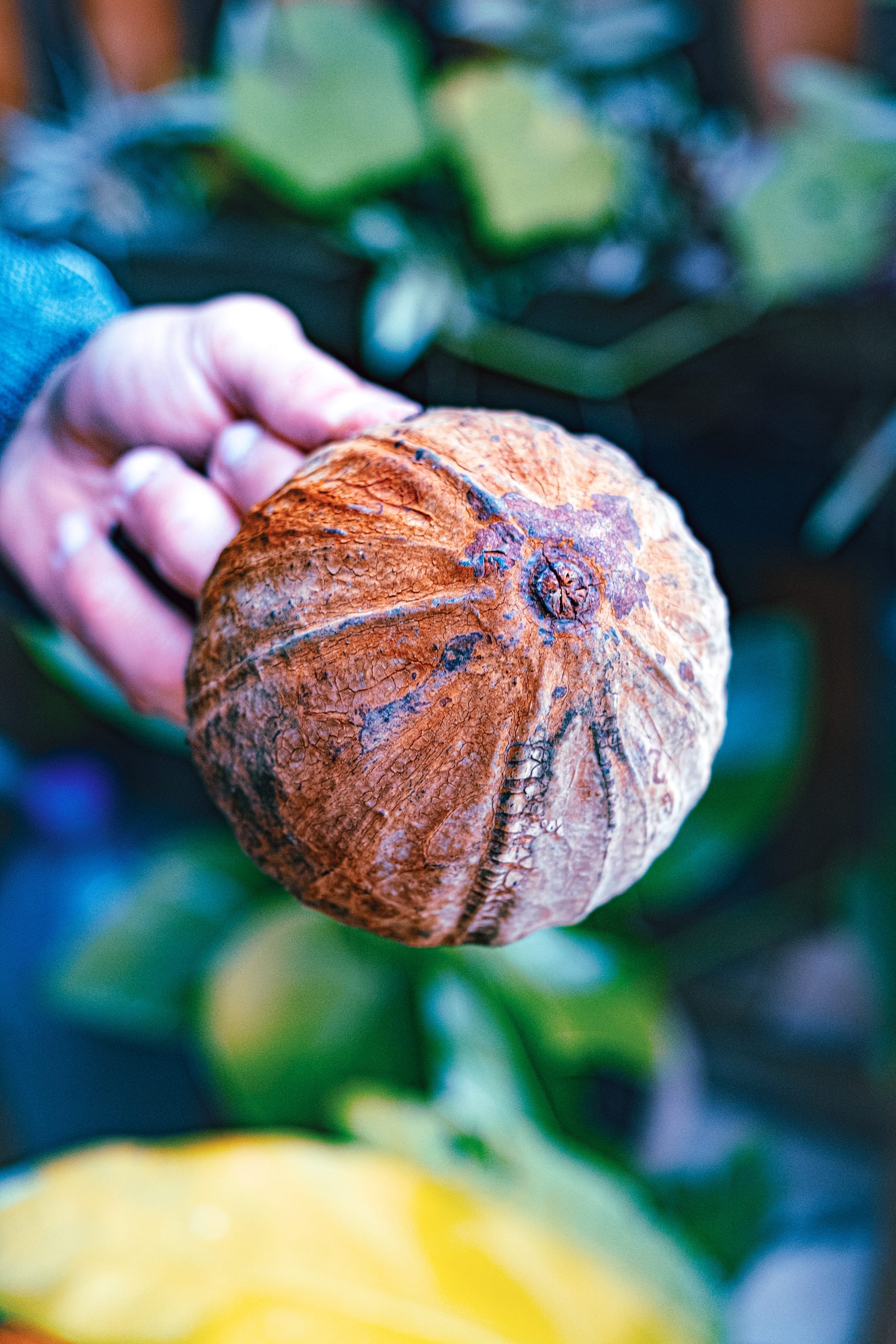
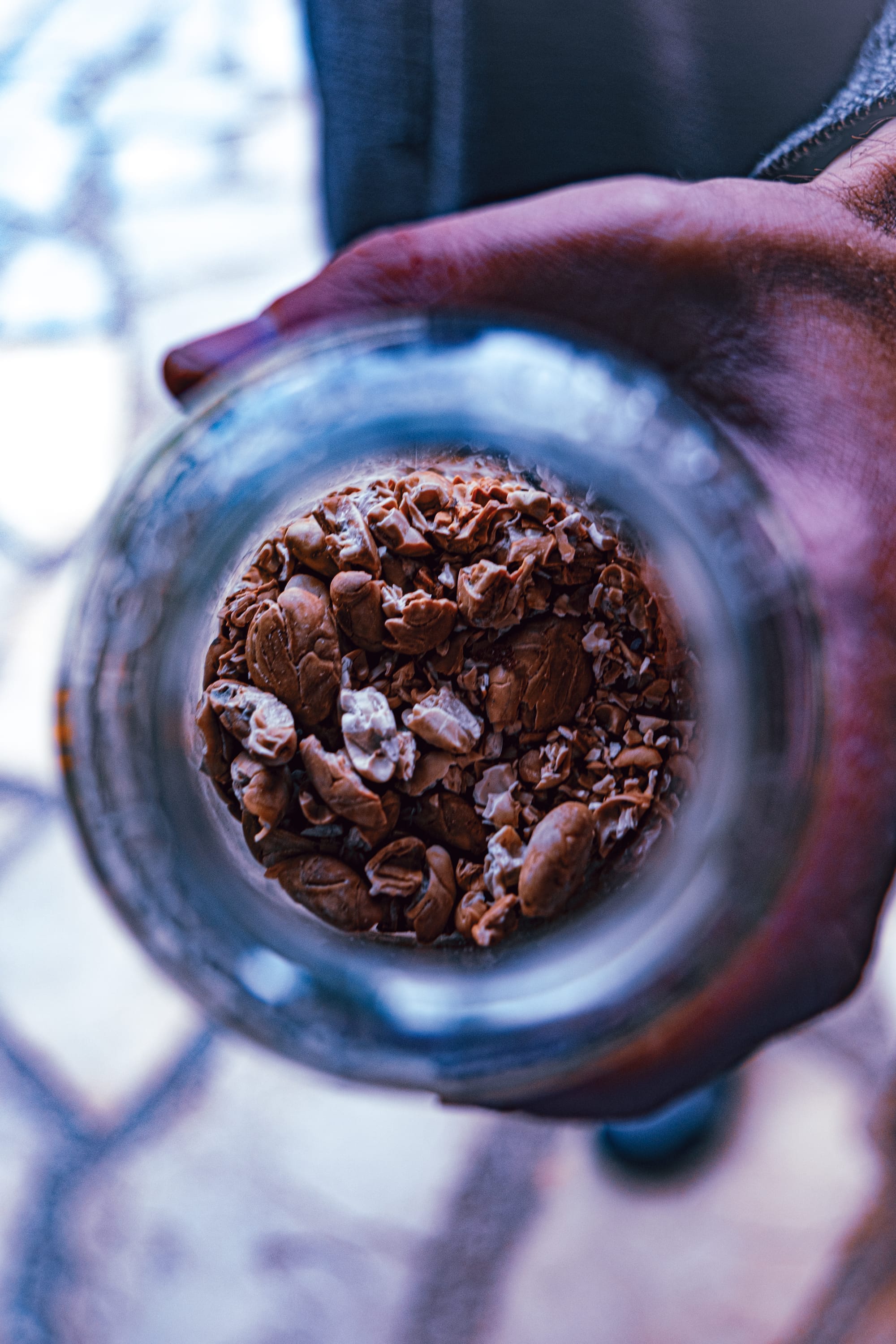
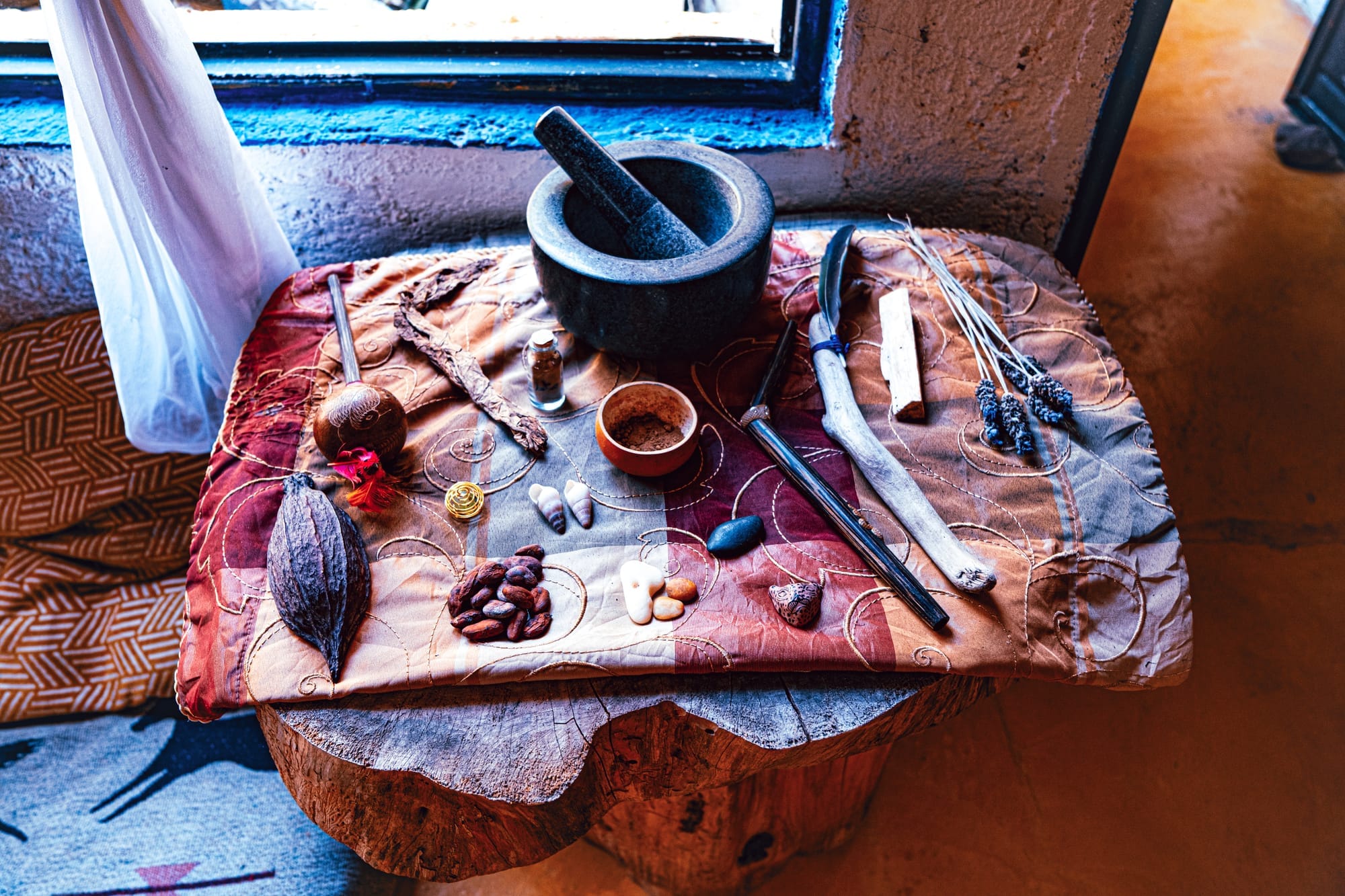
Early pieces of the process, held and shown before they become anything else
Inside the courtyard, it was calm, but not empty. Birds moved through the branches.
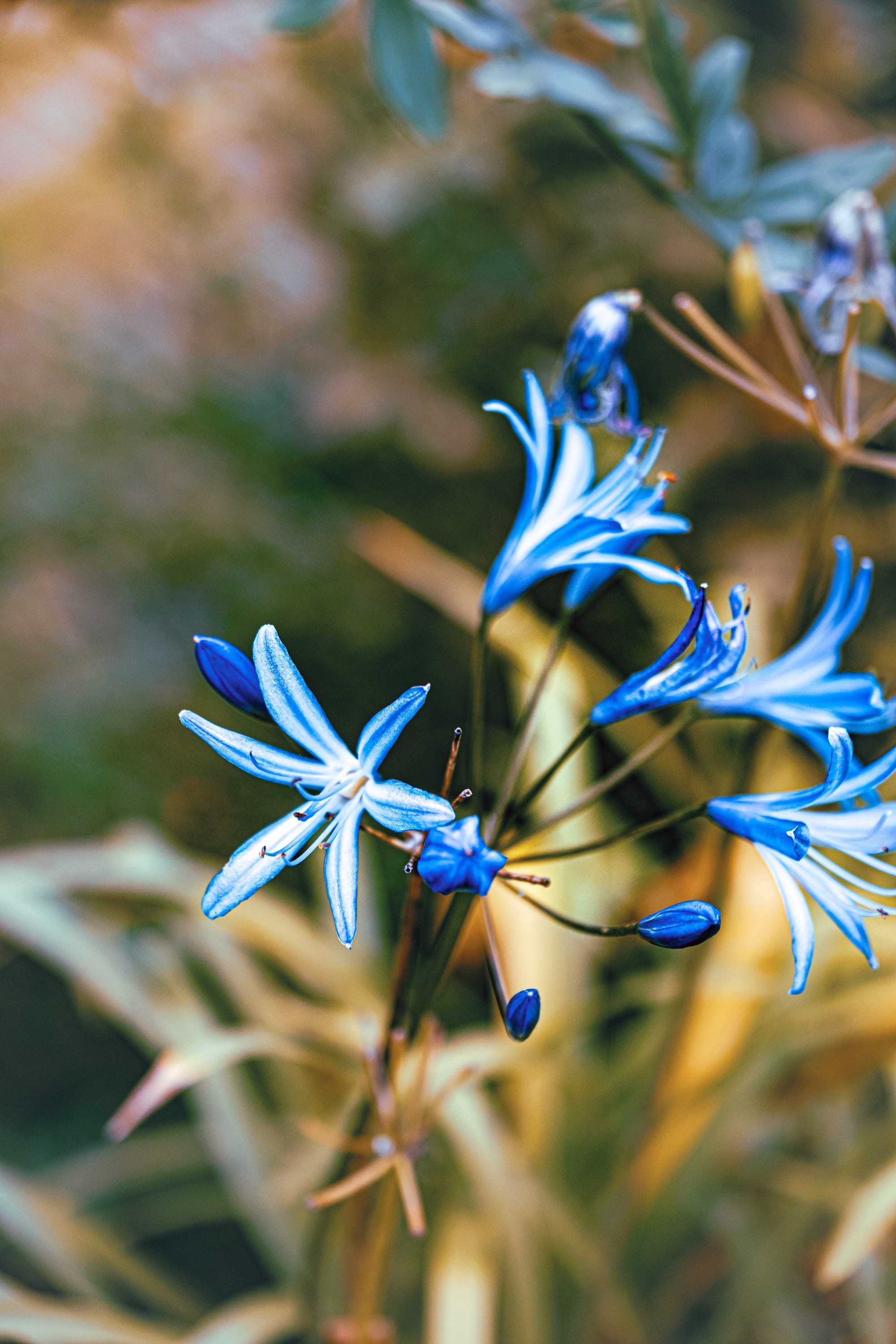
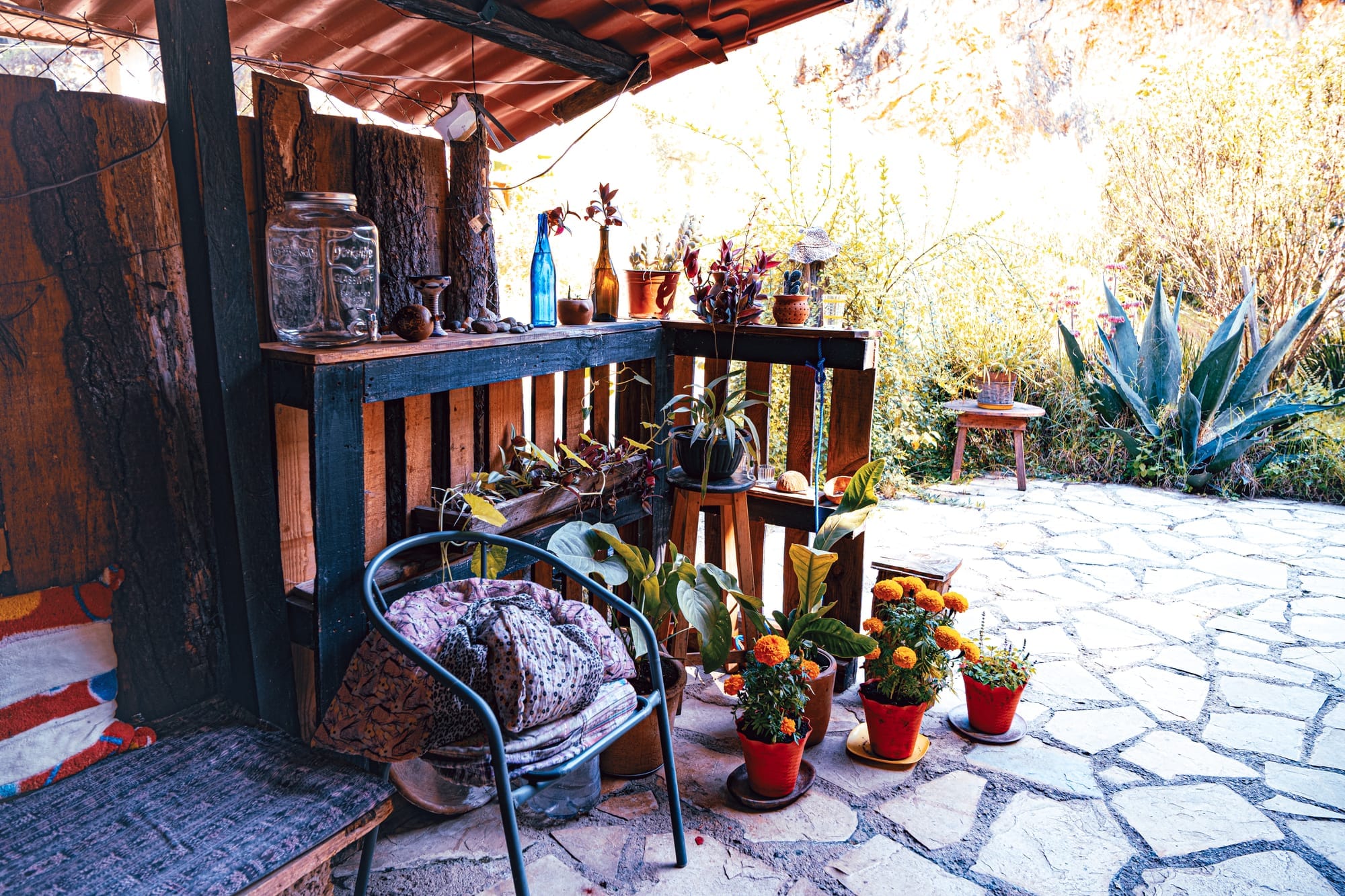
A small meeting point of flowers, shade, and things left to grow at their own pace
A simple wooden altar rested near the entrance.
A fire pit sat in the garden, along with a dome structure that, we later learned, is used for the temazcal ceremonies occasionally hosted on the land, always out of respect for local traditions.
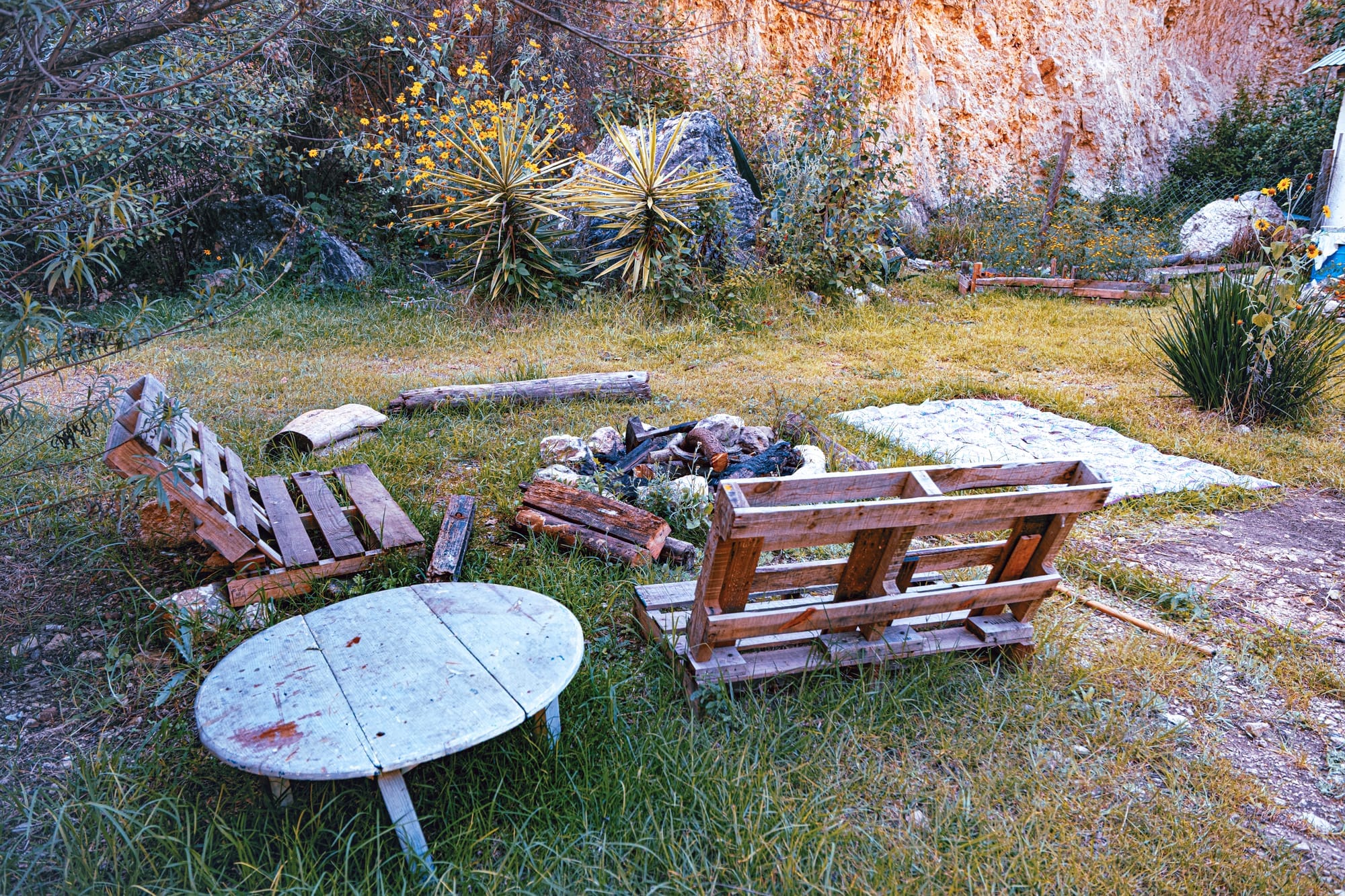
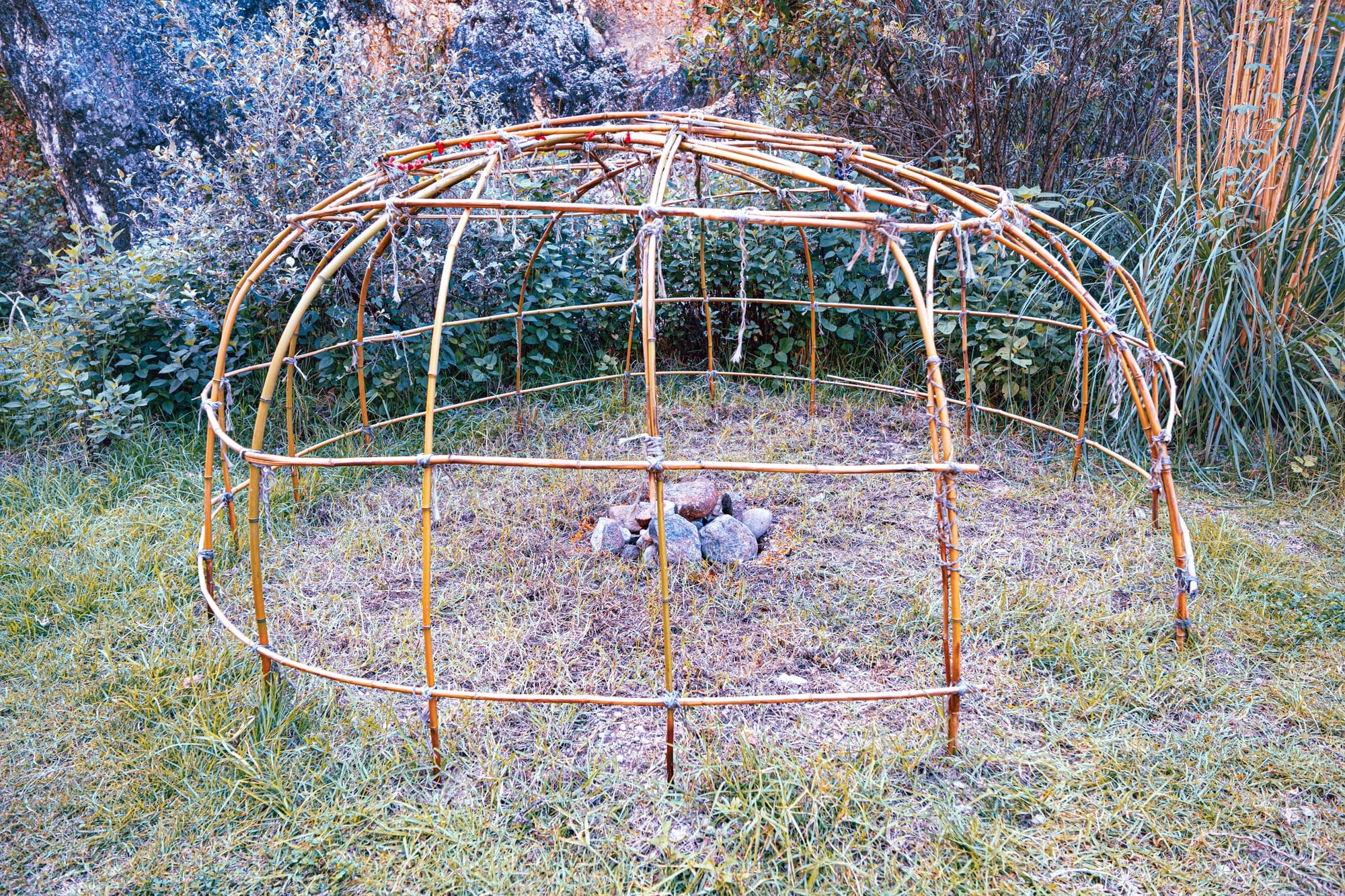
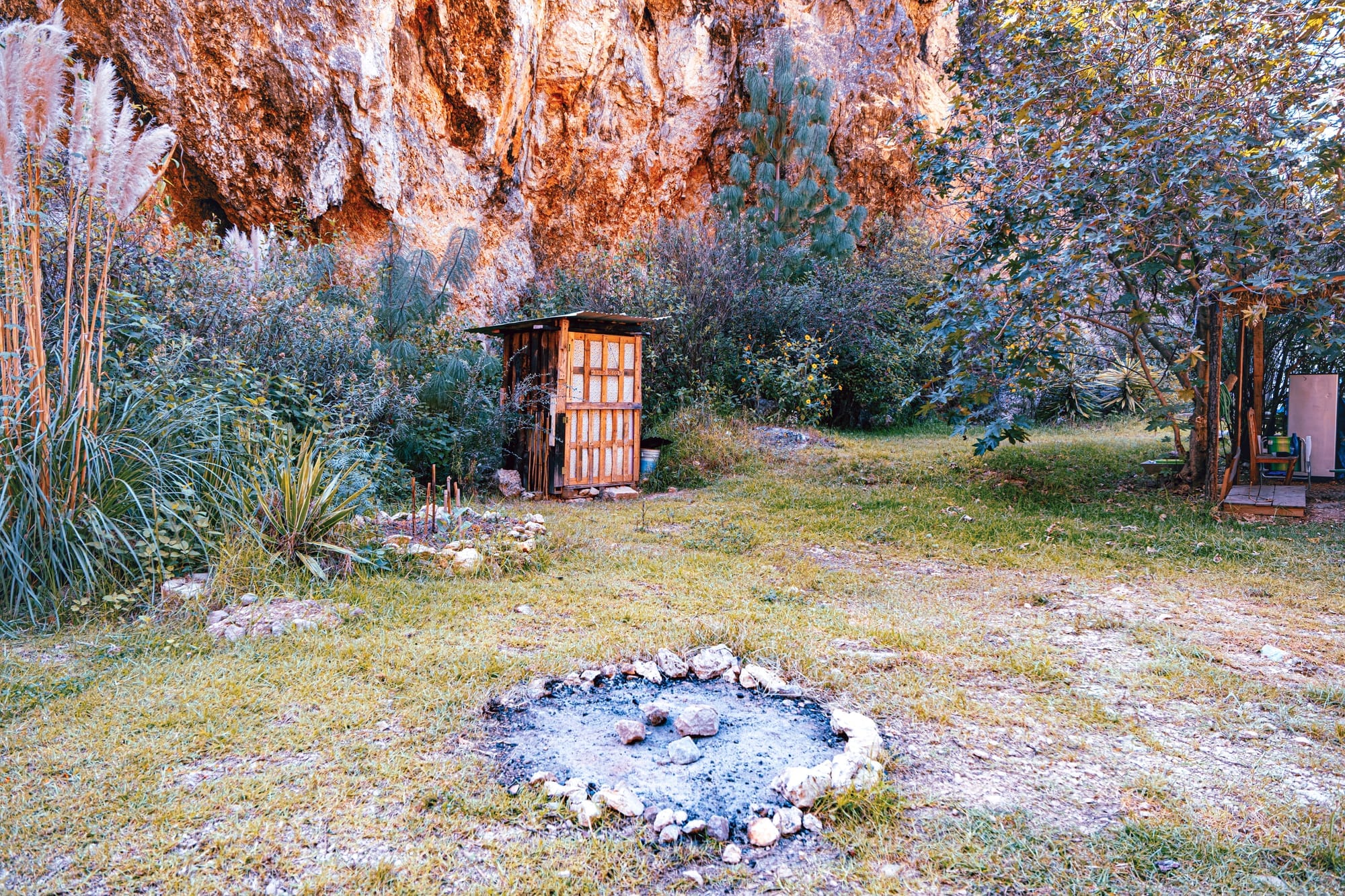
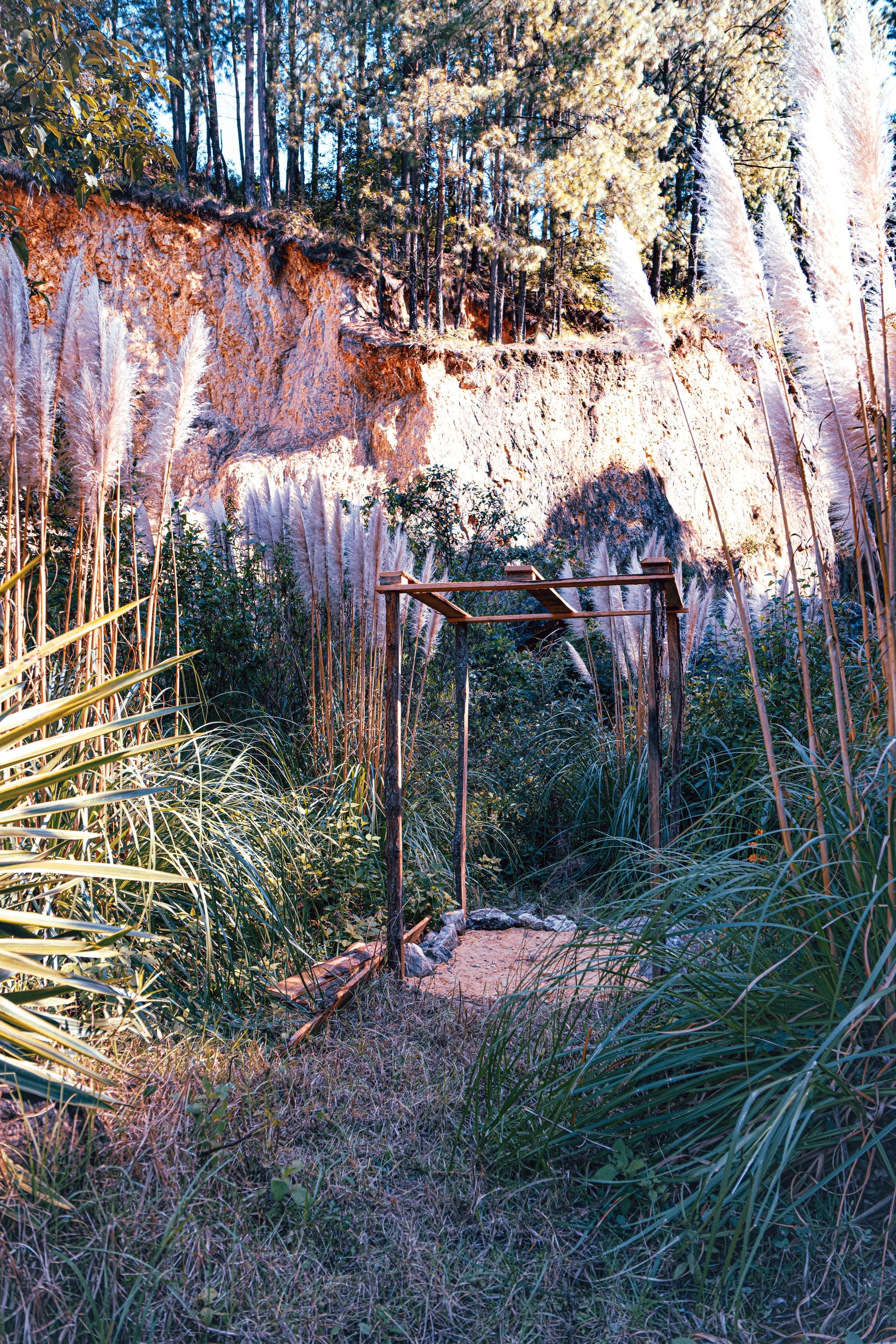
A stretch of land with fire circles, growing plants, and the beginnings of the temazcal structure
The house itself was modest and open, set up for practical use. The kitchen had the signs of someone who cooks often, with a few glass jars of brewed kombucha and sauerkraut on a small shelf.
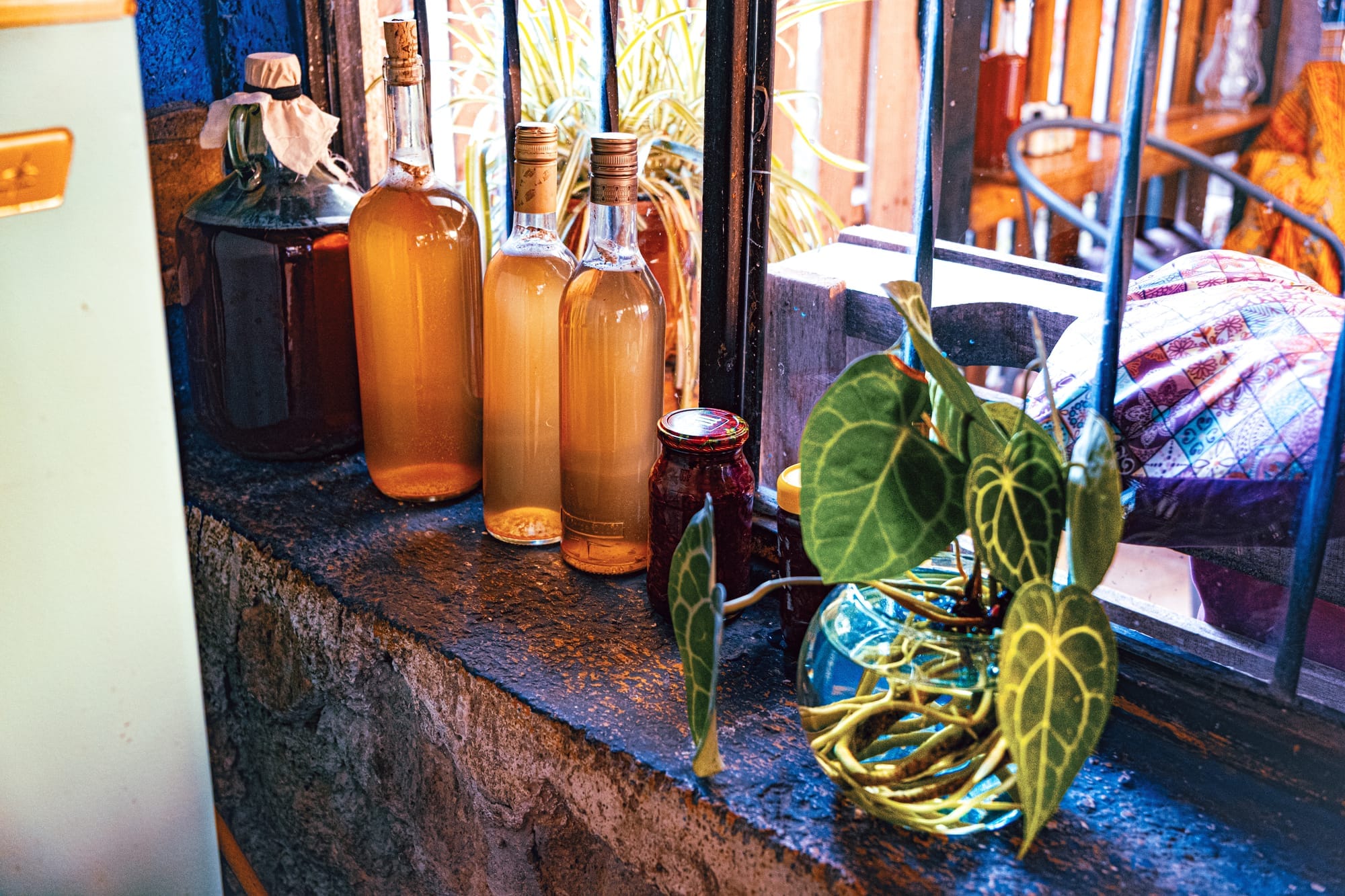
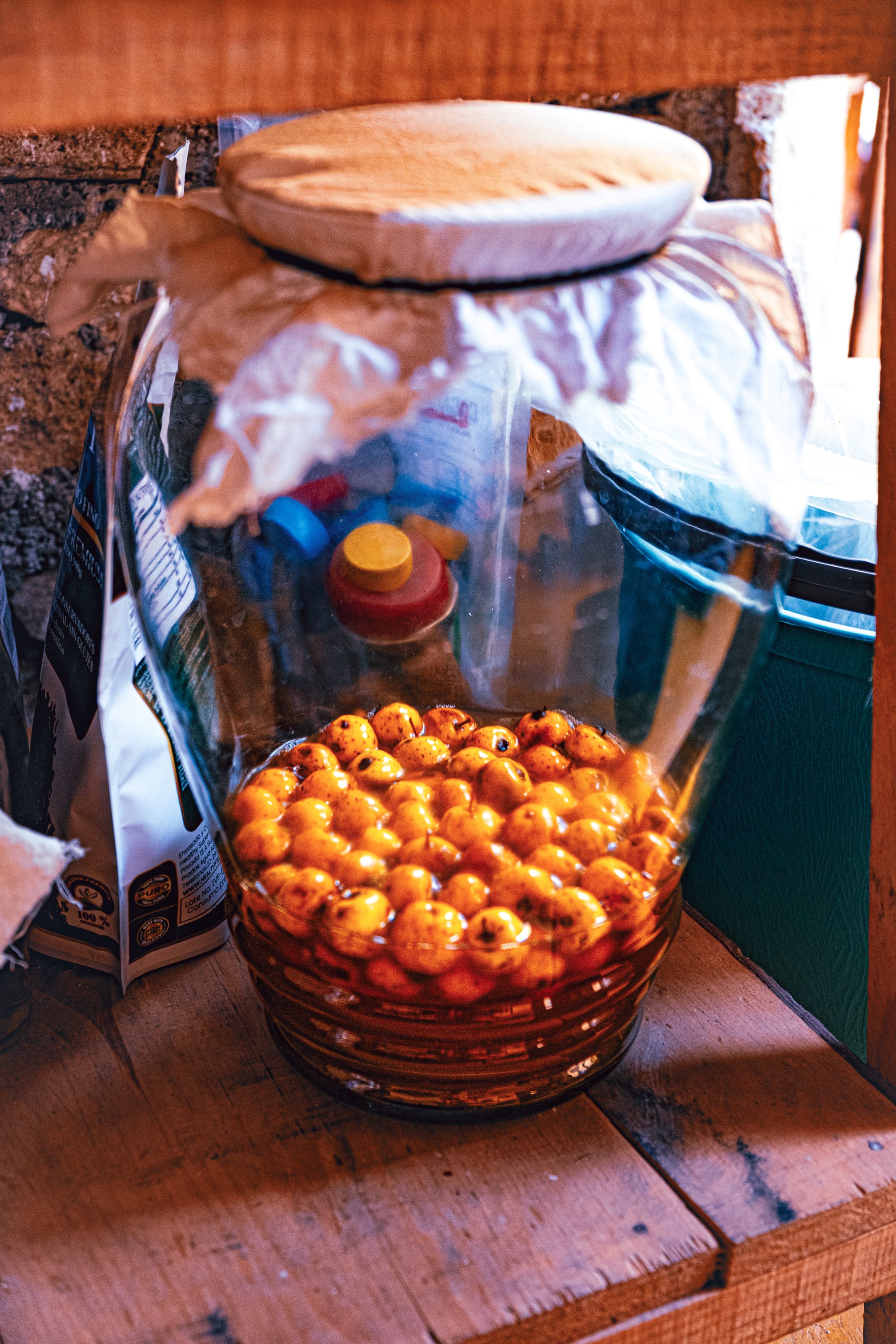
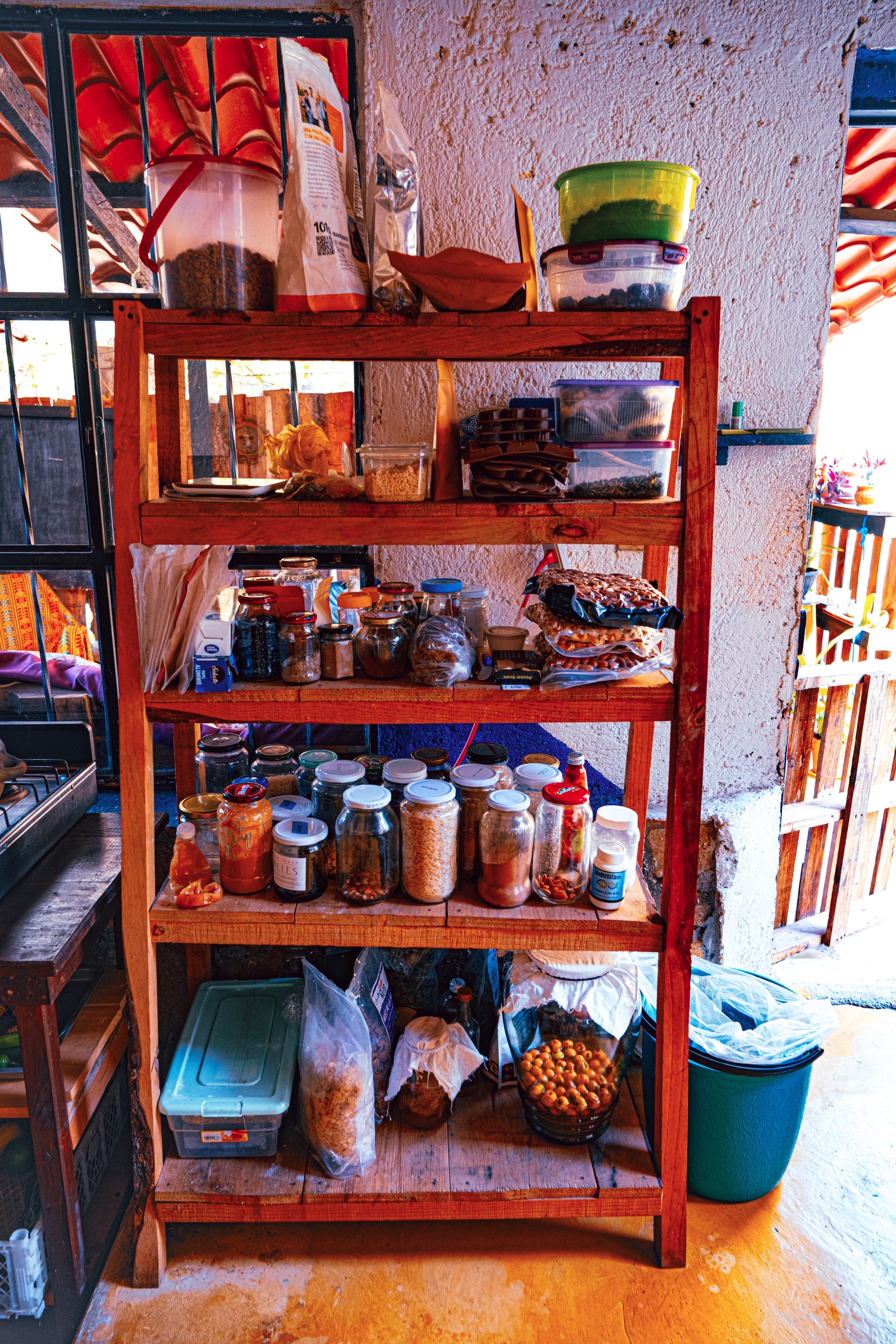
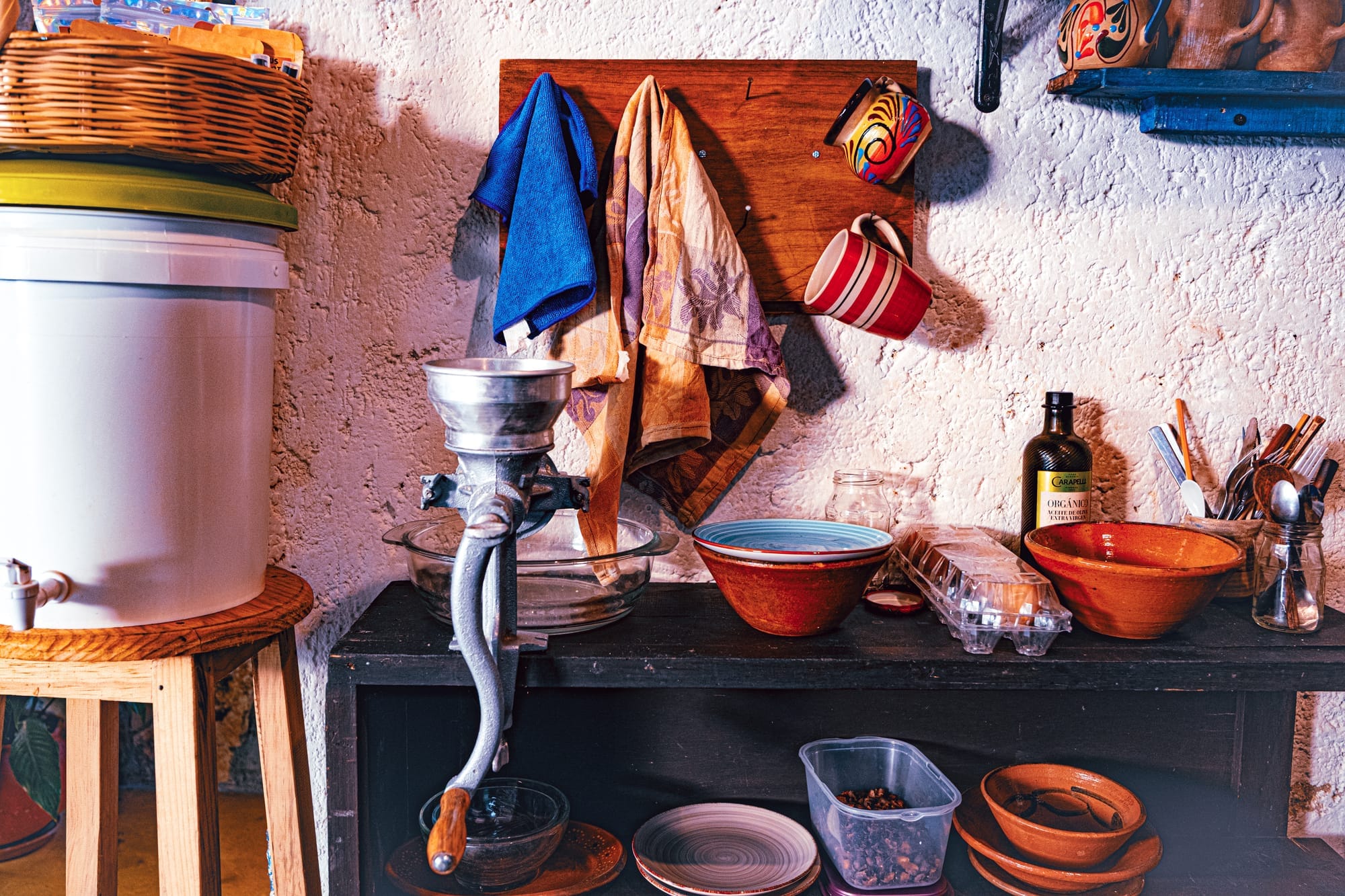
Small scenes from the kitchen, where jars, plants, and ongoing work fill the shelves
On the counter sat a basket of fresh cacao pods. They were a deep, warm color, and their softness contrasted with the dense seeds inside.
Working with cacao
The workshop began with a bowl of raw cacao beans. We gathered around the small stovetop where a skillet warmed over the flame. Guillermo poured the beans in and began stirring them with an easy, practiced motion.
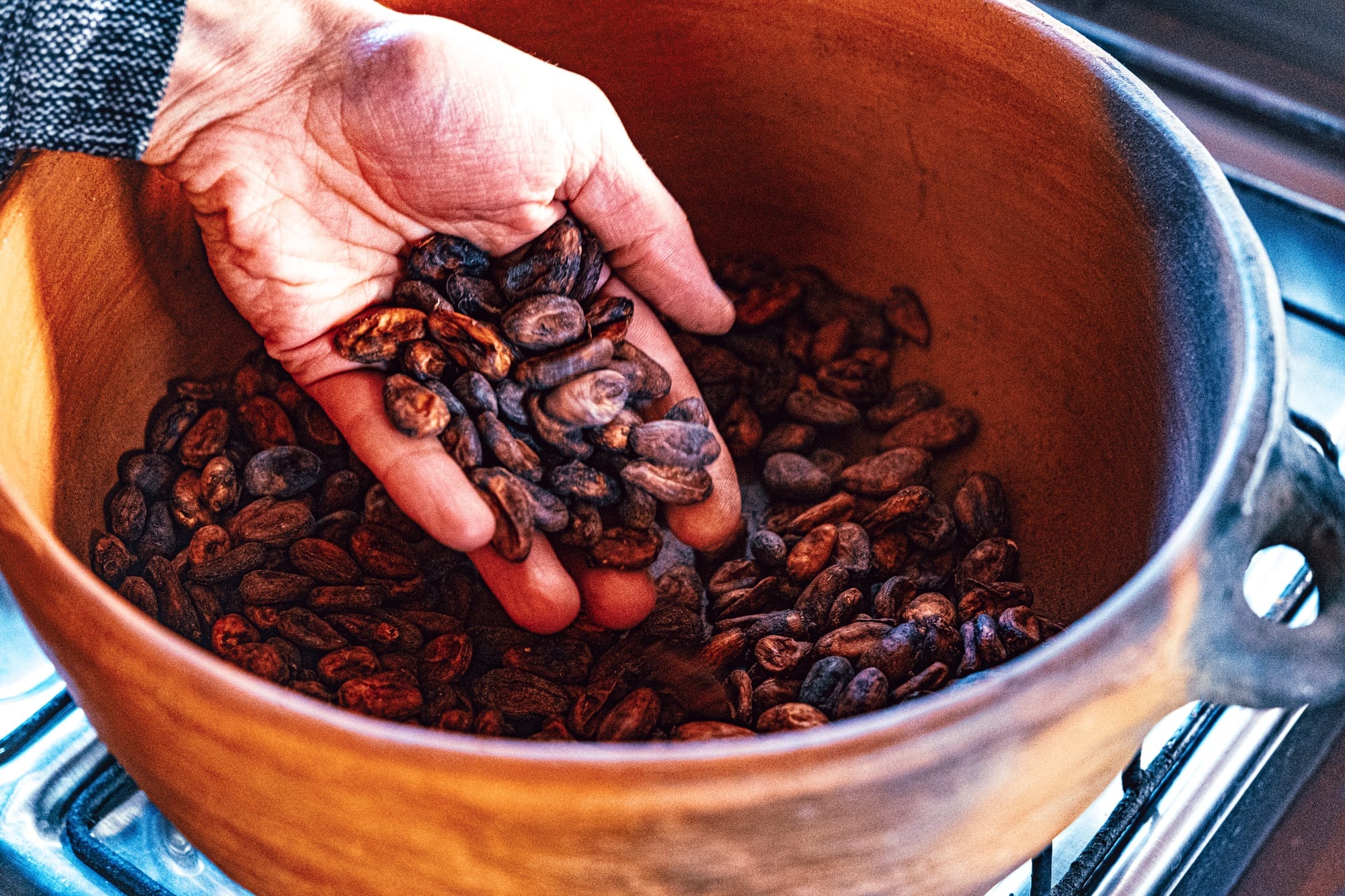
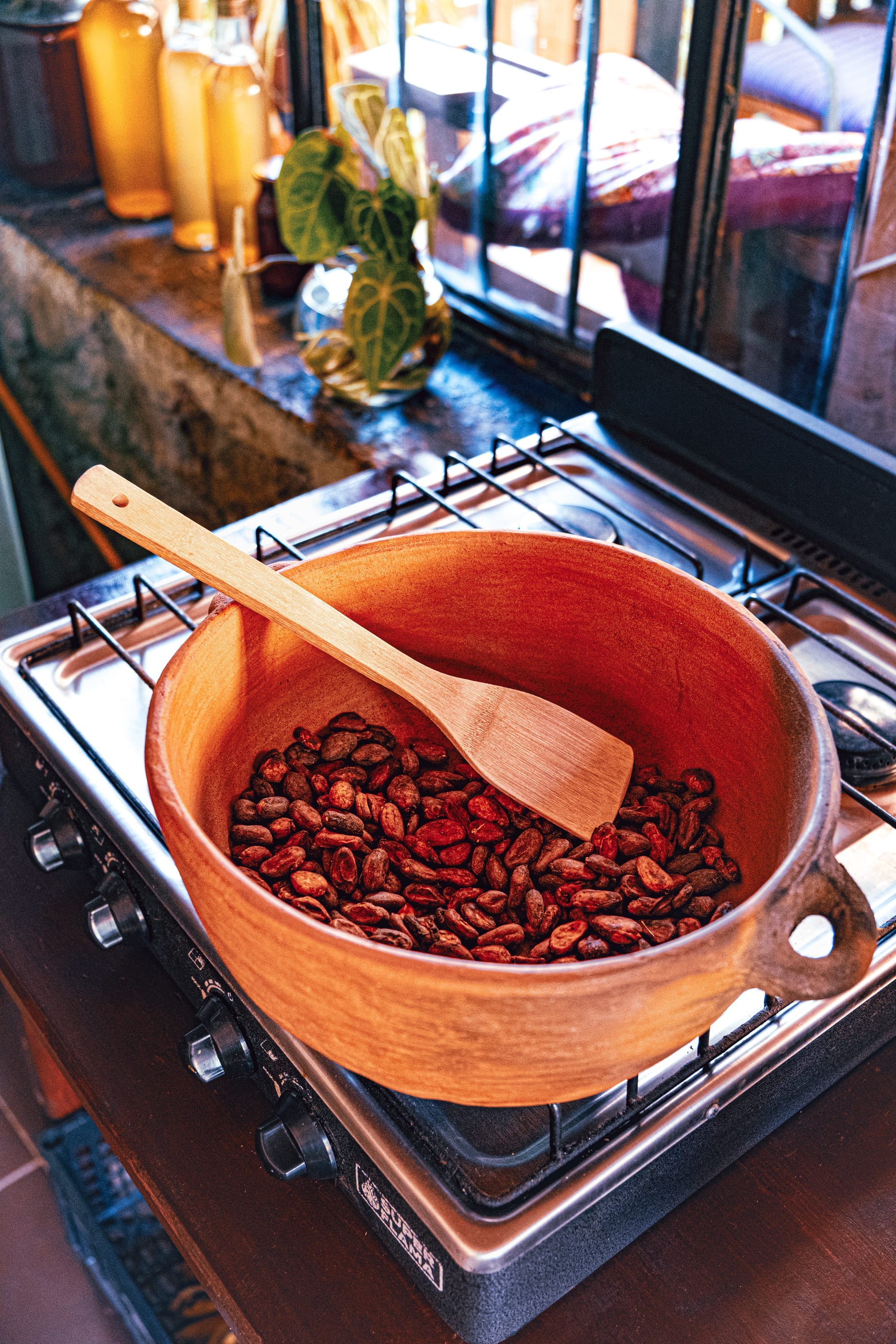
Roasting the first handfuls of cacao, warm and fragrant on the stove
He explained that roasting is what loosens the shells and releases the oils. The smell built up gradually.
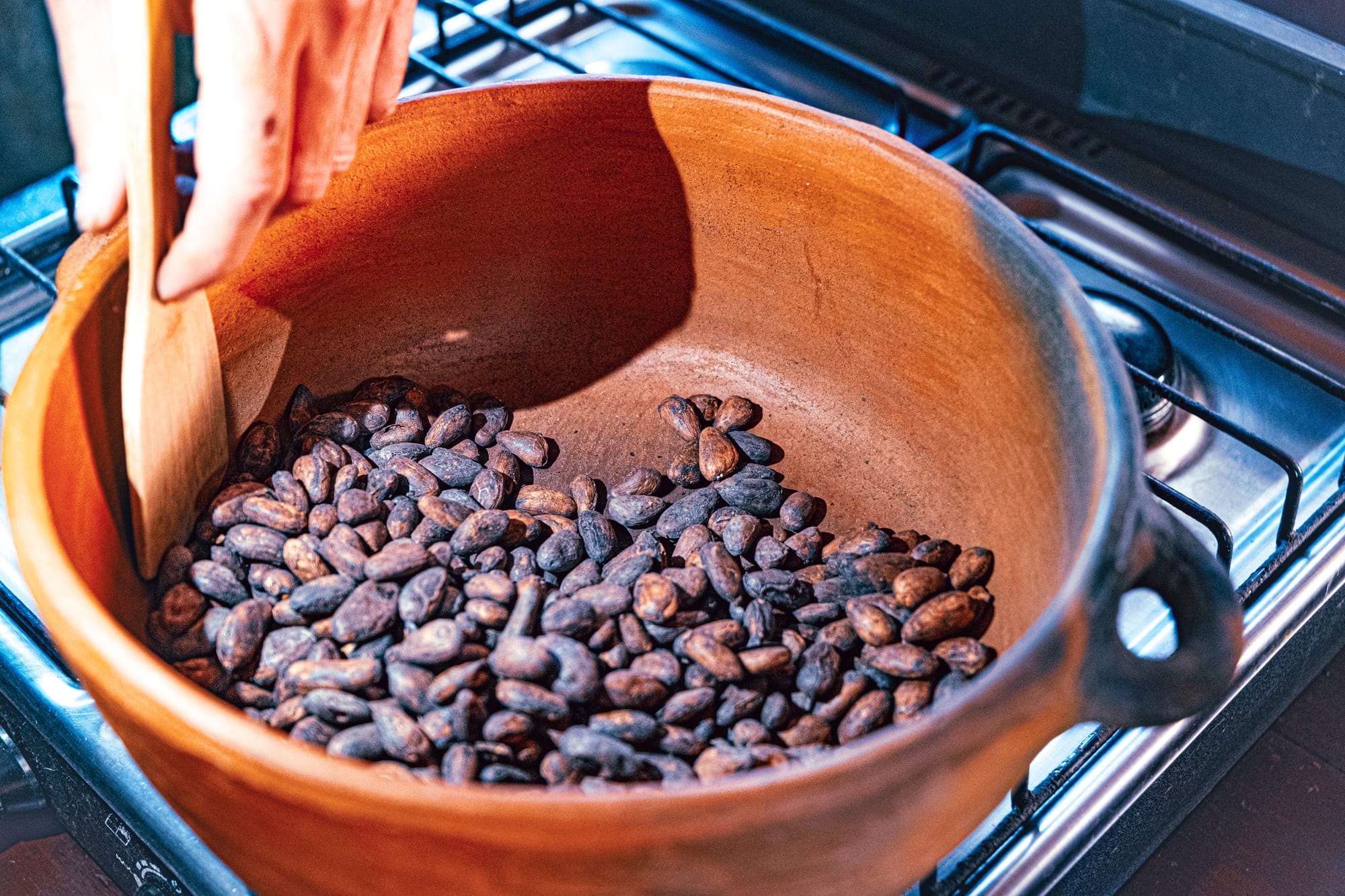
While the beans roasted, we chatted. He told us about the farmers in northern Chiapas who grow the cacao he buys each season, about the soil in their plots, and about how shade trees protect the cacao from too much sun. The way he talked about it made it clear he pays attention to every part of the process, not only the parts that reach his kitchen.
A short history of cacao in Chiapas
Guillermo's stories about the farmers he buys from make more sense once you know how far back cacao goes here. Chiapas has some of the earliest evidence of cacao use anywhere.
The first cacao drinkers
According to the history of chocolate, the Mokaya people on the Pacific coast of Chiapas were drinking bitter, frothy cacao by about 1900 BC. That's among the earliest evidence of cacao use in Mesoamerica. The tree itself, Theobroma cacao, was first domesticated much further south, in what is now Ecuador. The Maya later drank chocolate in ceremonies and used cacao beans as money.
The Soconusco article on Wikipedia places cacao and ballcourts in Mokaya culture about 4,000 years ago, in what is now the Mazatán area of the coast. Nearby Paso de la Amada has the oldest known Mesoamerican ballcourt, dated to about 1400 BC, so this stretch of coast was an early center of settled life as well as of cacao.
Soconusco, the Aztecs, and the Spanish
The coastal Soconusco region of Chiapas became the most famous cacao land in Mexico. The Aztec ruler Ahuitzotl conquered it in 1486, and the region paid tribute in cacao, along with cotton, feathers, and jaguar skins. Beans worked as currency too: in 1545, Spanish records say thirty beans bought a small rabbit. Soconusco cacao was so well known that Miguel de Cervantes, the author of Don Quixote, asked the Spanish king to make him its governor in the late 16th century.
The numbers give an idea of scale. When the Spanish arrived, about 1.5 million cacao trees were being tended in Soconusco, according to the history of chocolate, and Aztec traders carried loads of around 24,000 beans, weighing 23 to 27 kg, on their backs. The Spanish made Soconusco a province of its own in 1526. Chocolate itself reached the Spanish court in 1544, brought by Qʼeqchiʼ Maya nobles traveling with Dominican friars, and the first official cargo of cacao to Europe was recorded in 1585.
Coffee came much later. In 1890, about 450 German families settled in Soconusco, and between 1890 and 1910 their coffee plantations made the region Mexico's main coffee producer. Cacao has declined steadily since, but it's still grown there alongside coffee, mangos, and sesame.
Cacao in Chiapas today
Coffee took over as the main export crop, and cacao production in Soconusco has declined in recent decades. Cacao is still grown in several parts of the state, including Soconusco, the Mezcalapa area, and the Lacandon Jungle, according to Visit Chiapas. Guillermo buys from small farmers in northern Chiapas, who grow it under shade trees. You'll also see cacao in pozol, a fermented corn drink found across Chiapas and often mixed with cacao, which locals drink around midday.
San Cristóbal itself has its own chocolate stories. A popular local legend says a 17th-century bishop was poisoned after he tried to ban chocolate drinking during Mass, though Mexico News Daily notes the tale can't be verified.
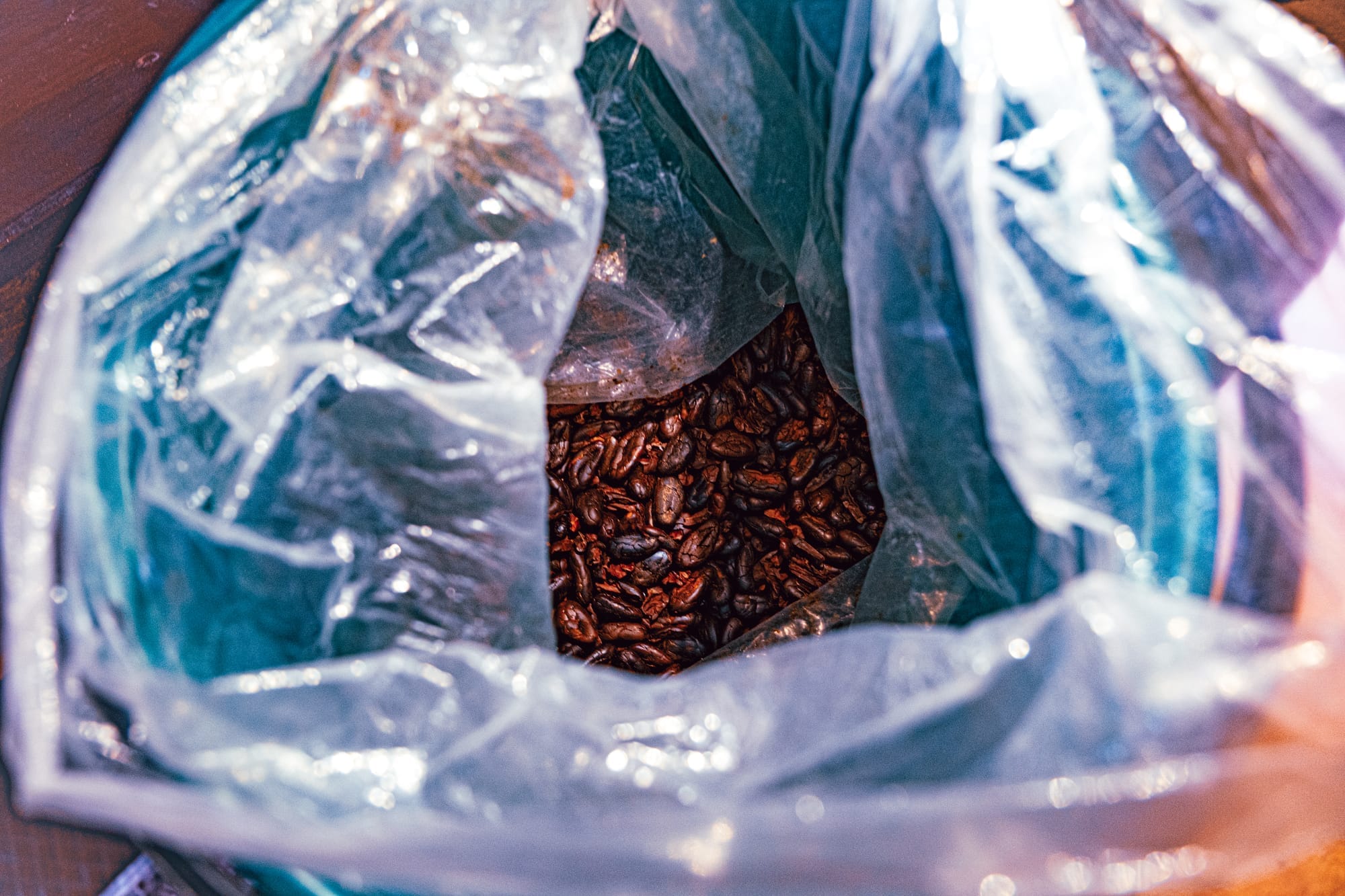
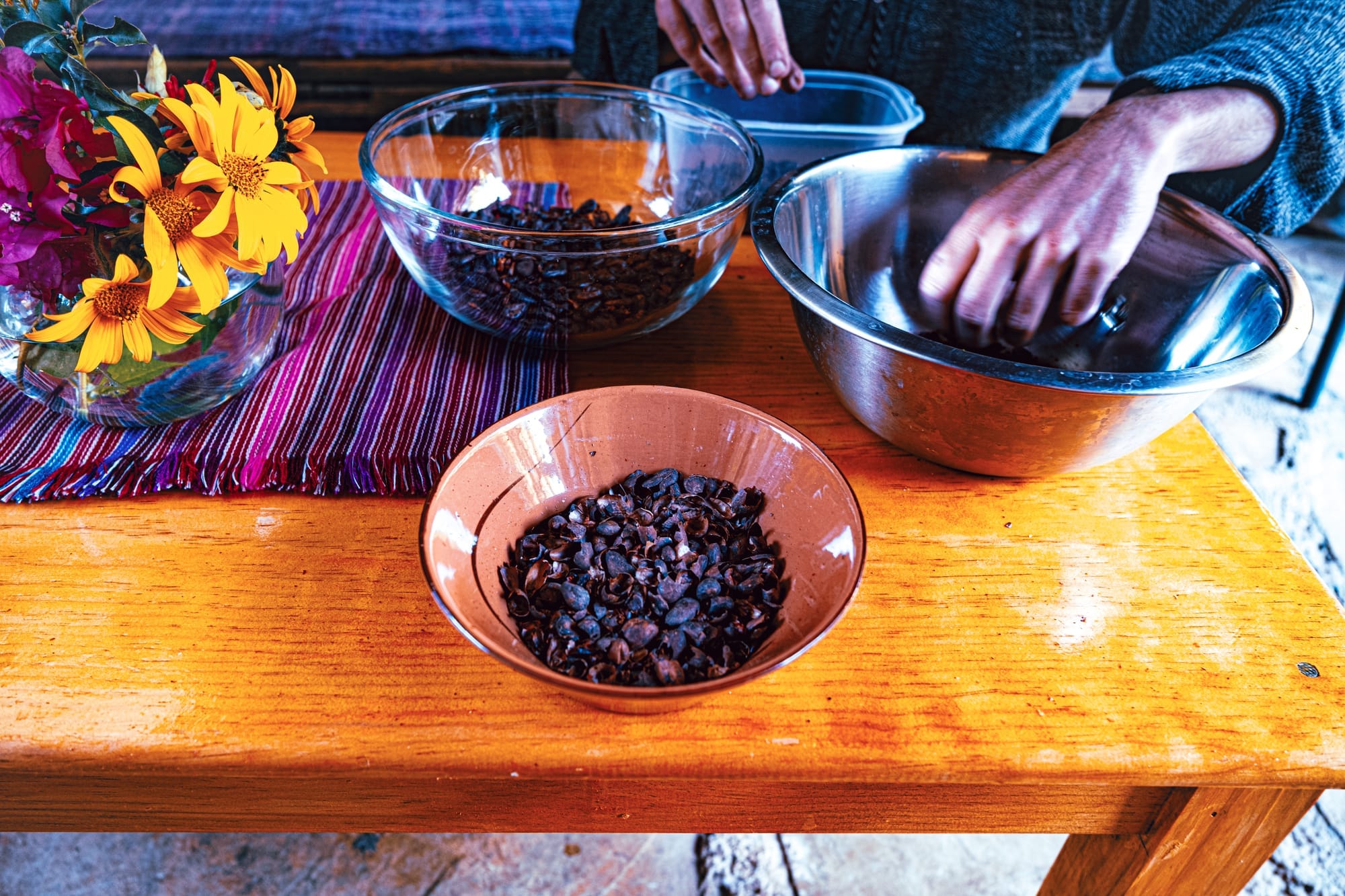
When the beans were ready, we moved to the table to begin removing the husks. The shells cracked easily between our fingers, revealing the deep purple brown seeds inside.
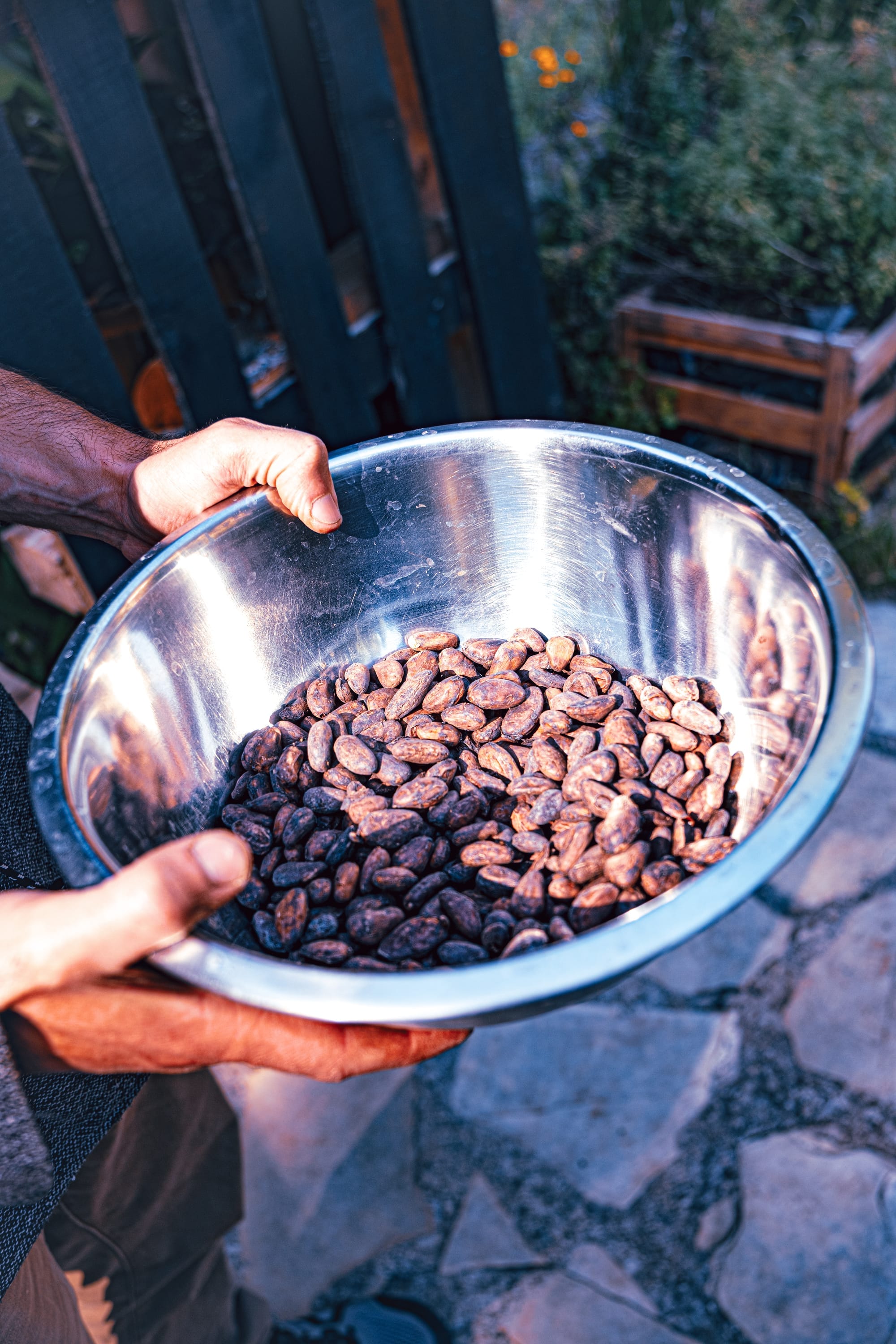
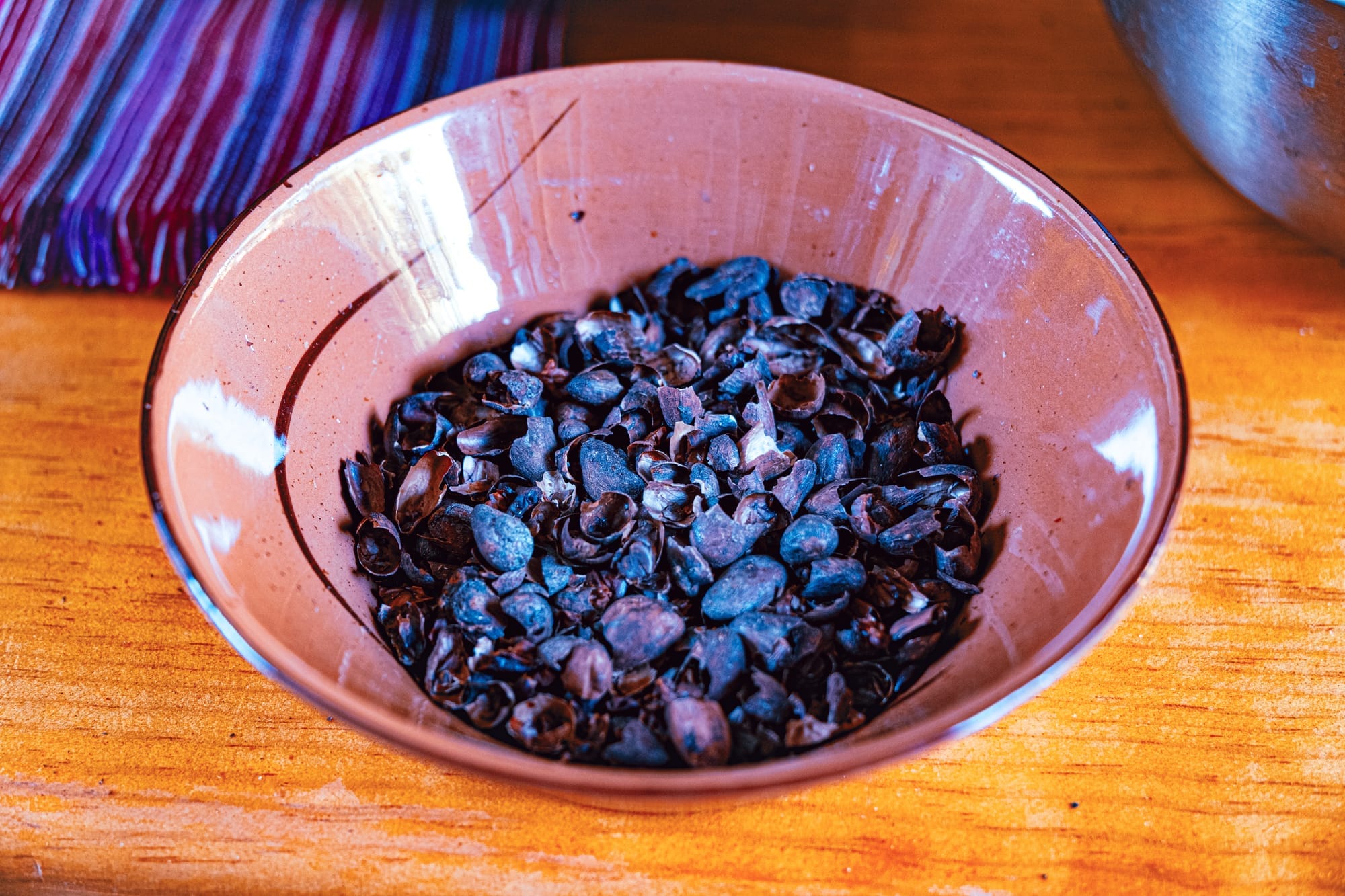
The deshelling process
The work was repetitive and oddly relaxing. Shell after shell, piling into a bowl. Hands working. Light moving across the table. It showed us how much handwork goes into cacao long before it turns into anything you’d recognize.
Once the beans were deshelled, we moved to the blender. Guillermo poured the cacao inside and secured the lid.
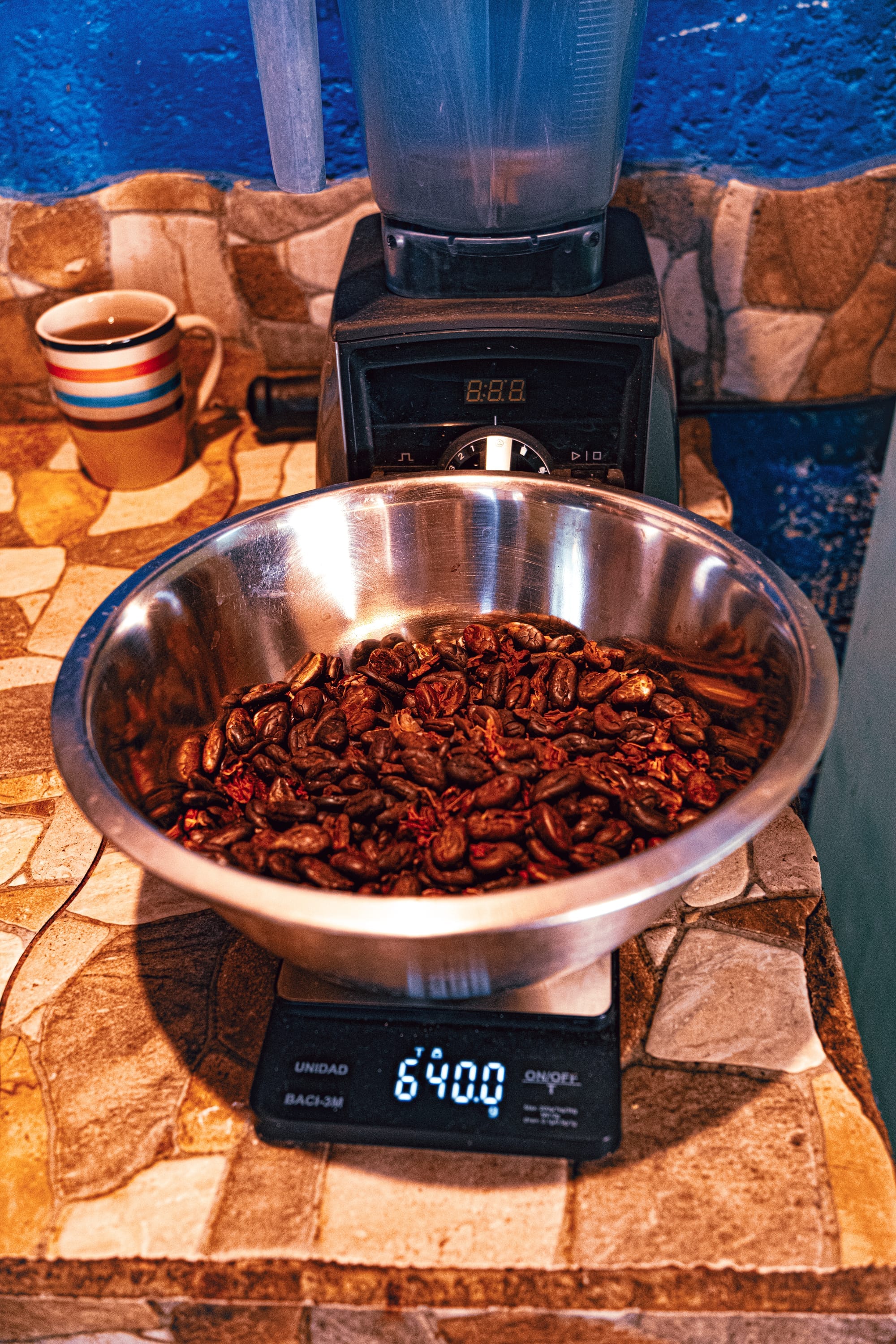
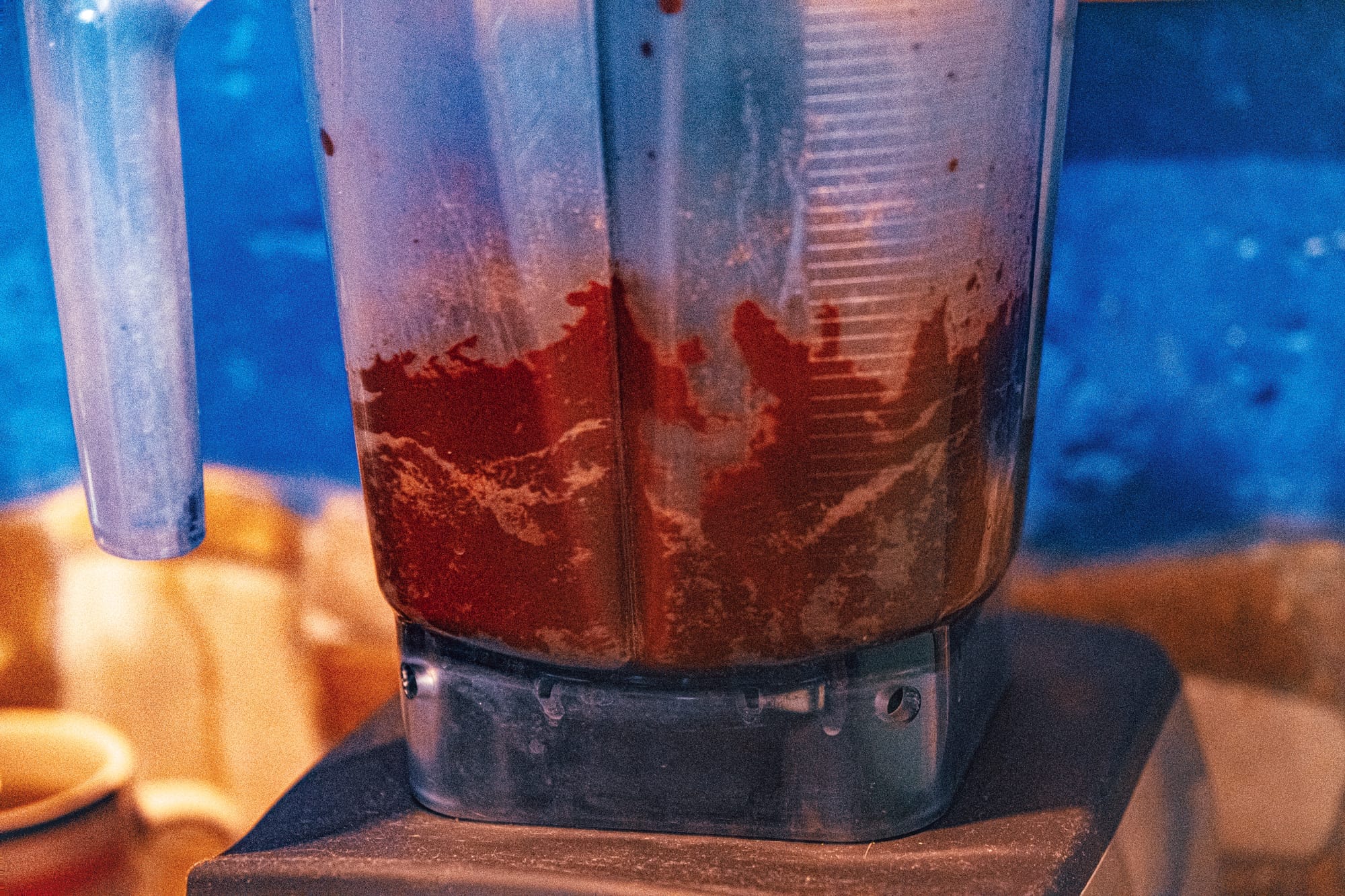
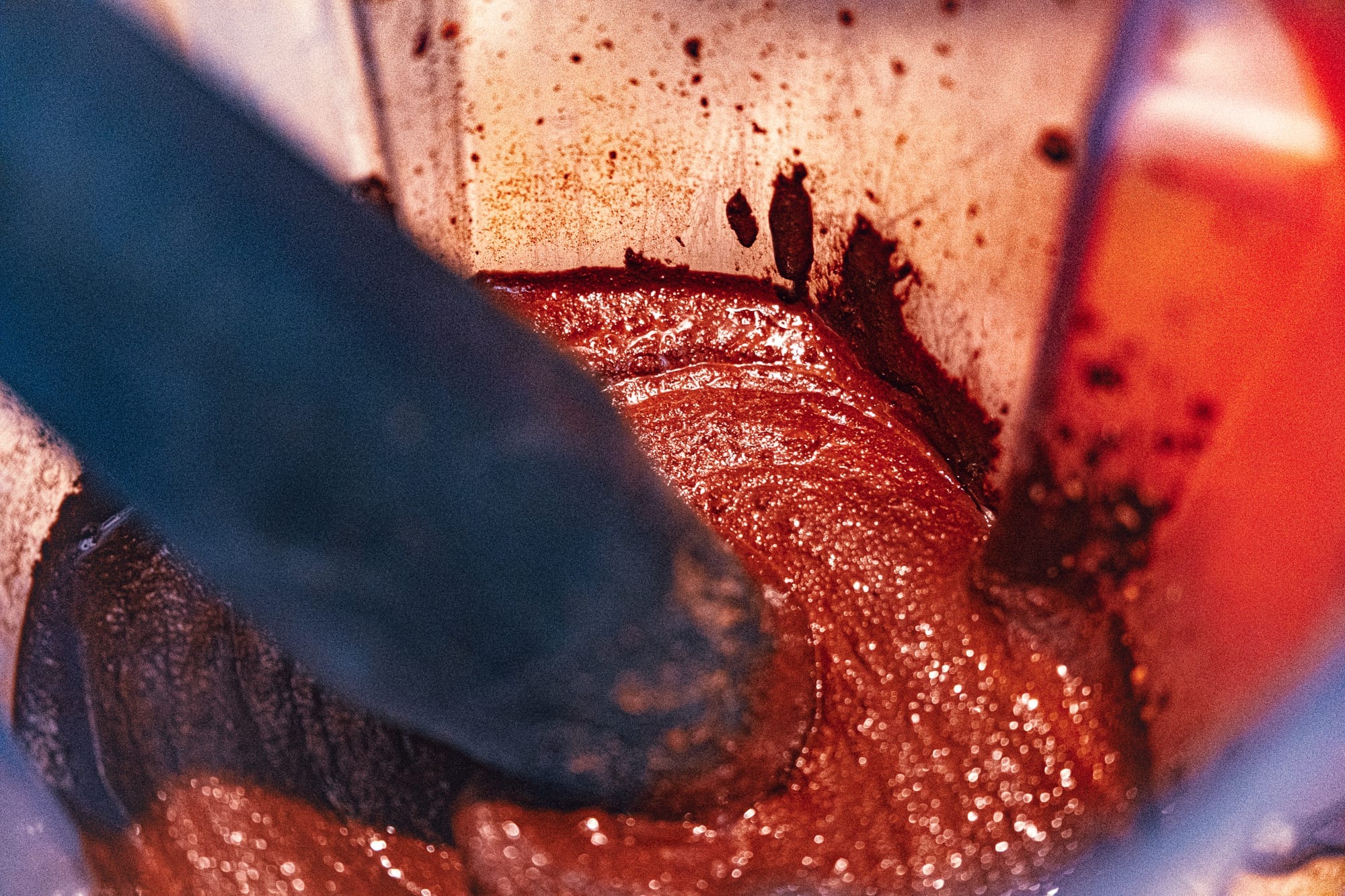
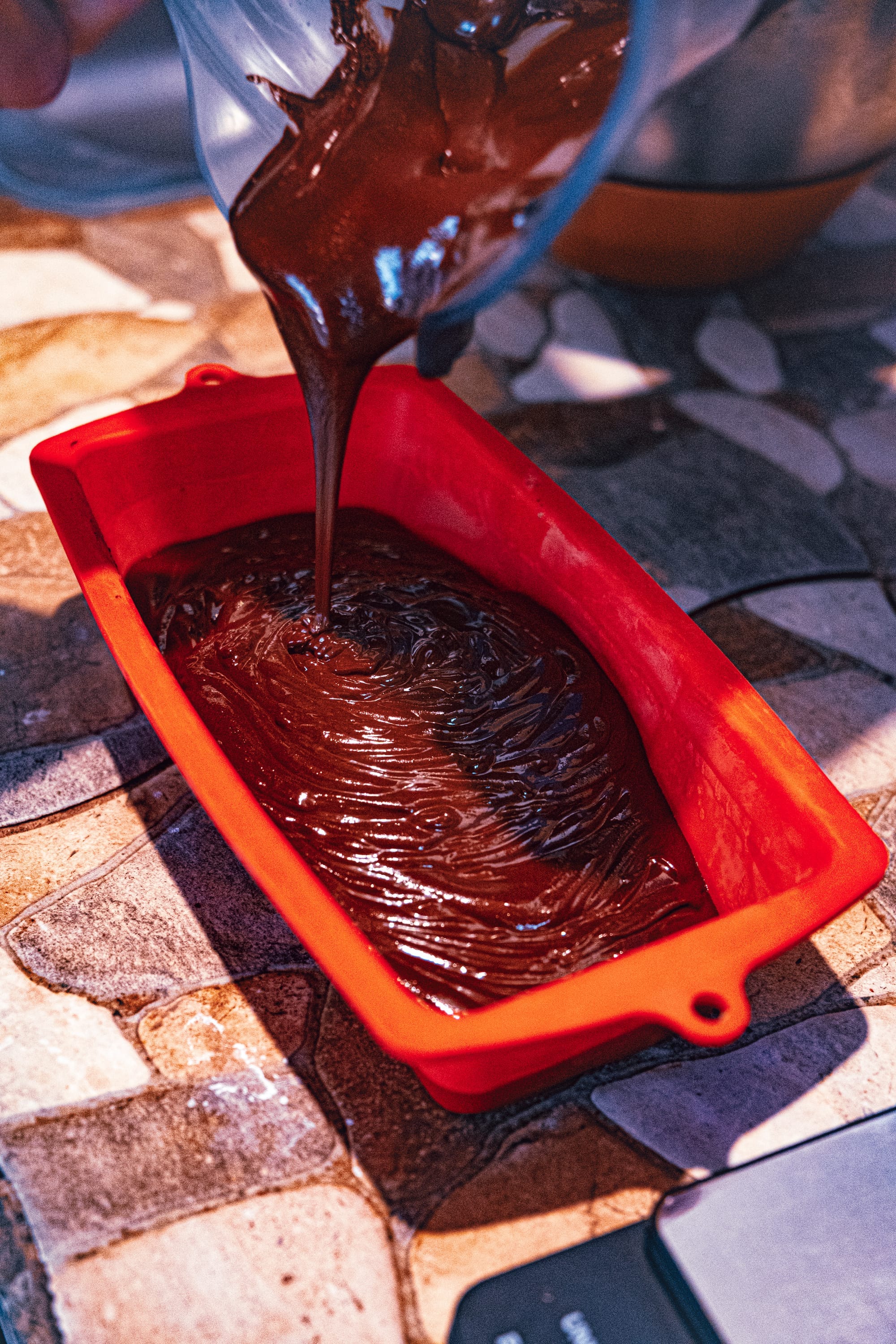
The moment when the beans turn into a paste, gathering into something dense and ready to shape
When the motor started, the beans broke down into a thick, warm paste. No water. No additives. Just cacao changing through heat and pressure. He stopped now and then to let us taste the paste at different stages, and each taste brought out a different side of the bean: bitter at first, then smoother, then more fragrant as the oils fully released.
Making cacao truffles
Once the paste was done, we got set up to make vegan cacao truffles. Guillermo put a bowl on the table and started adding the ingredients. First the warm cacao paste. Then panela, the raw cane sugar used all over the region, which gave a gentle sweetness that stayed close to the cane. Next came a thick cashew paste he had made earlier. And finally, a small vial of homemade vanilla extract. He opened it for us to smell. It was rich and floral, and unlike any store bought version we had tried.
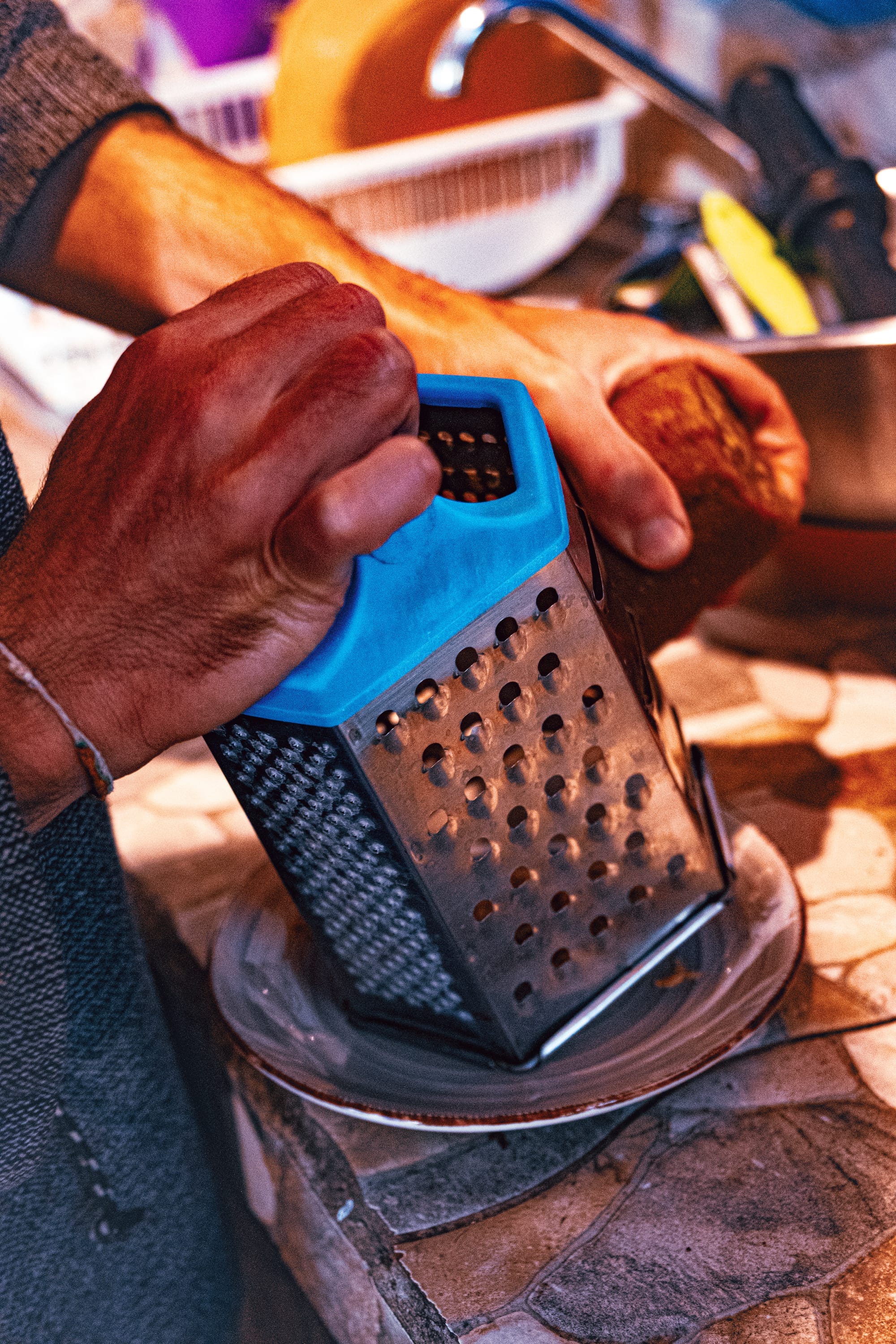
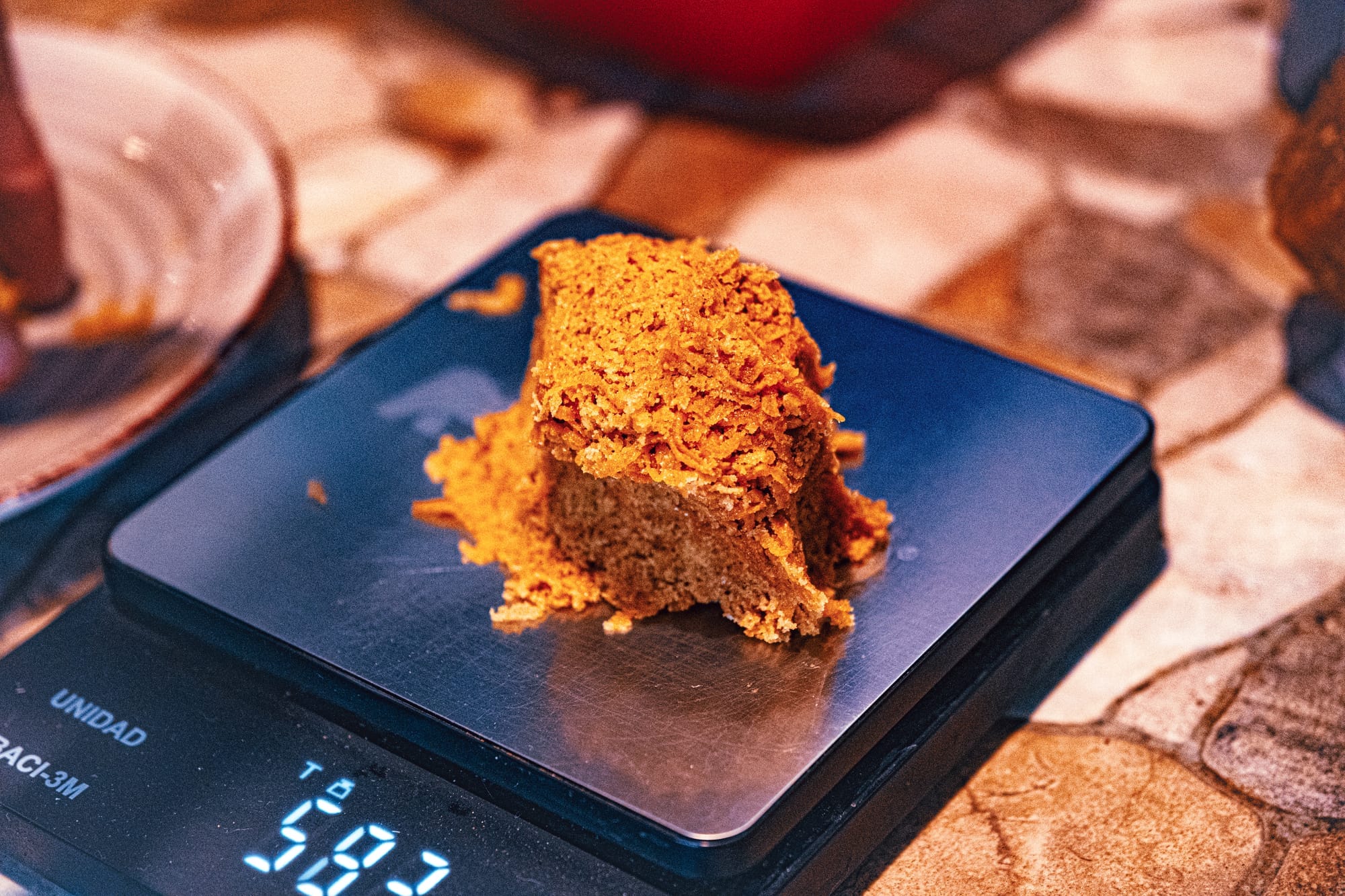
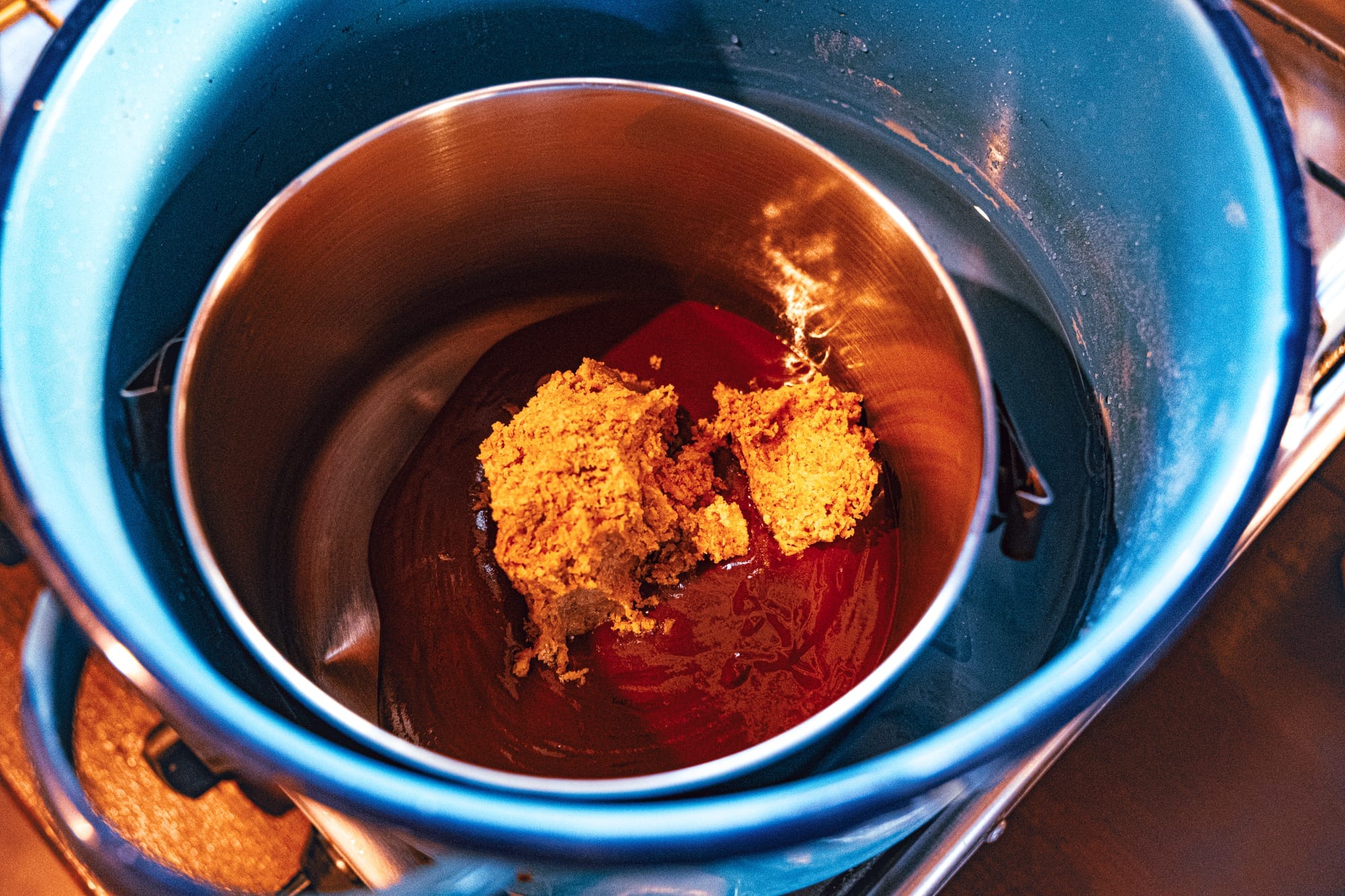
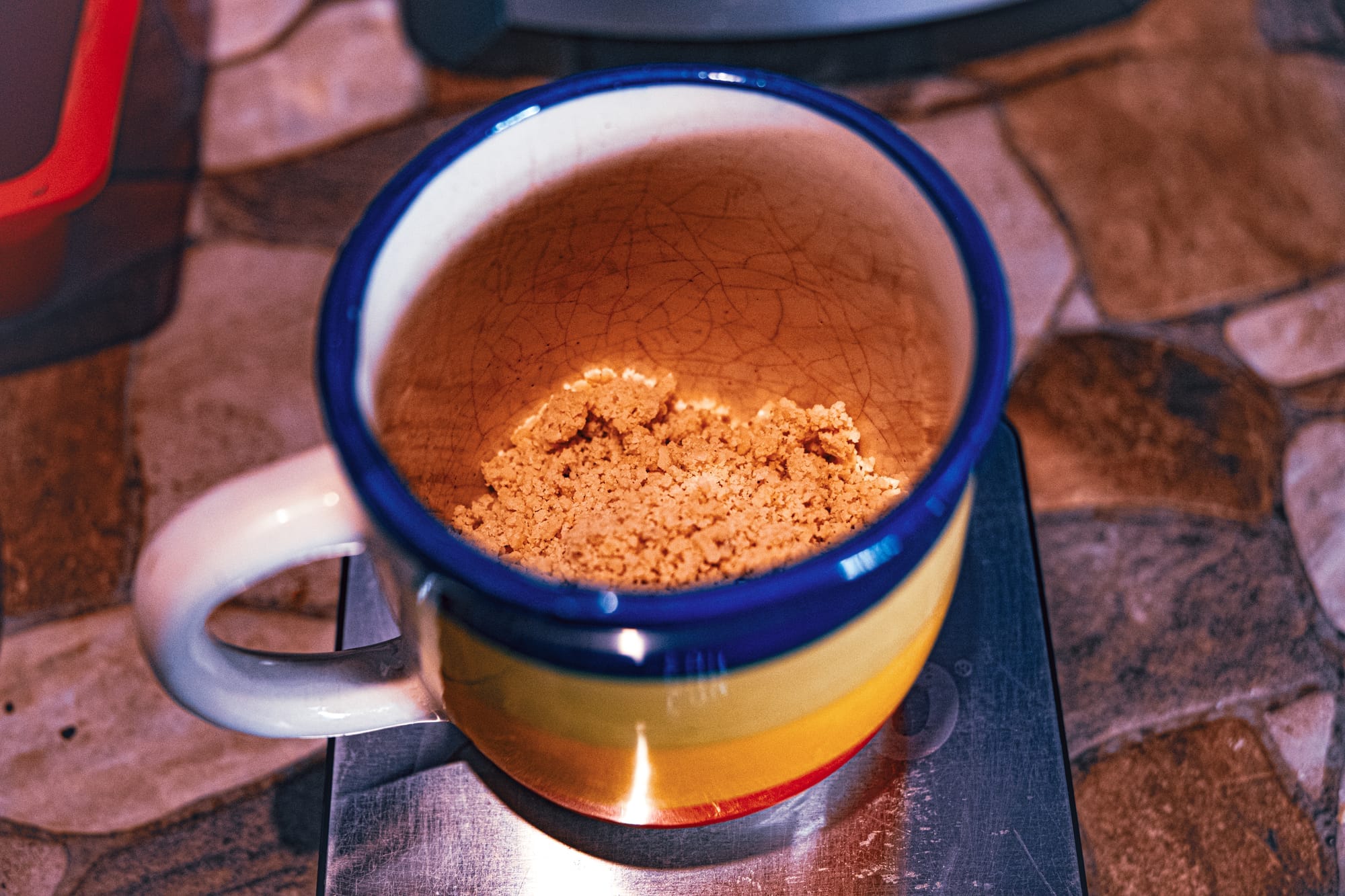
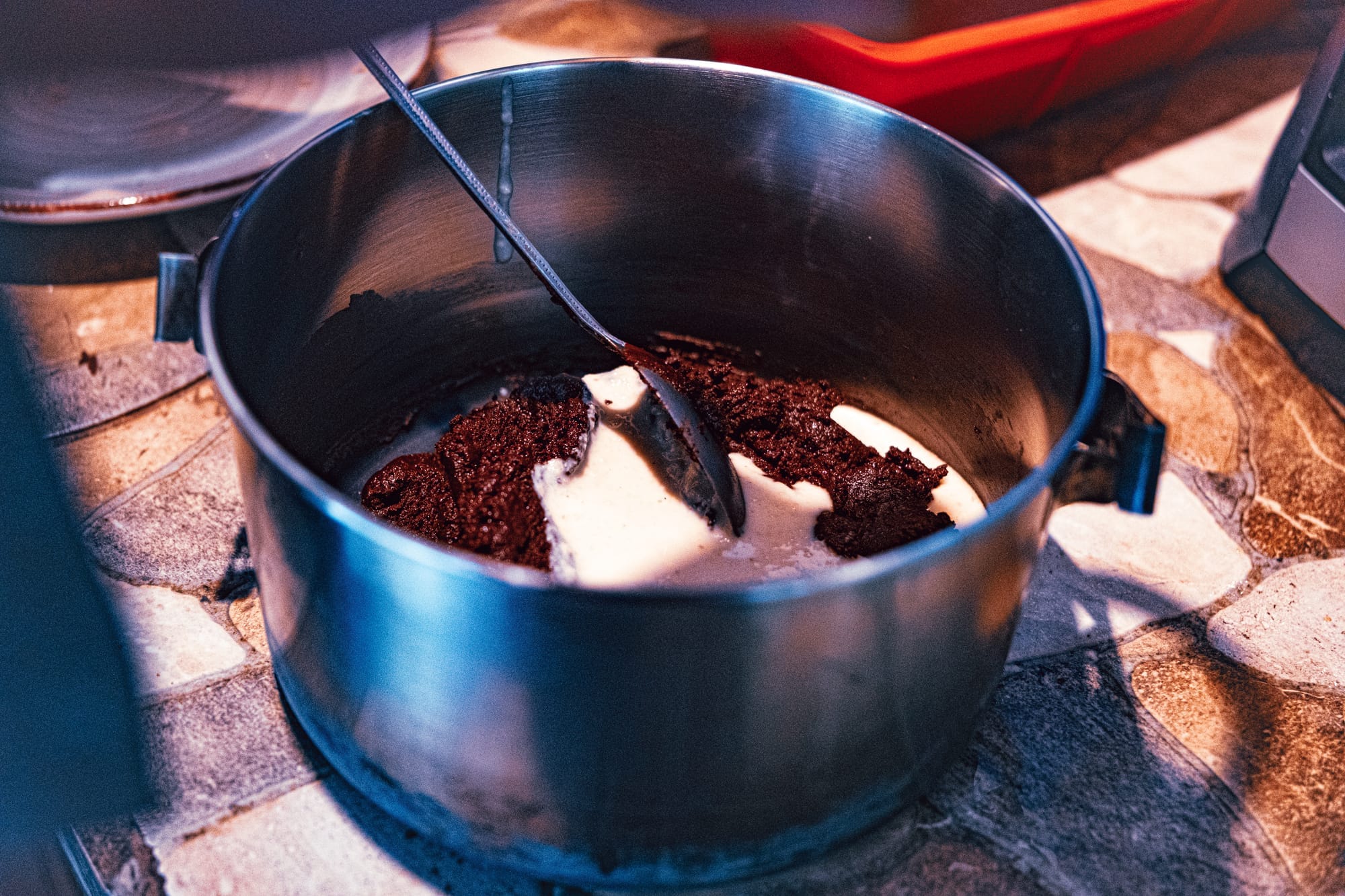
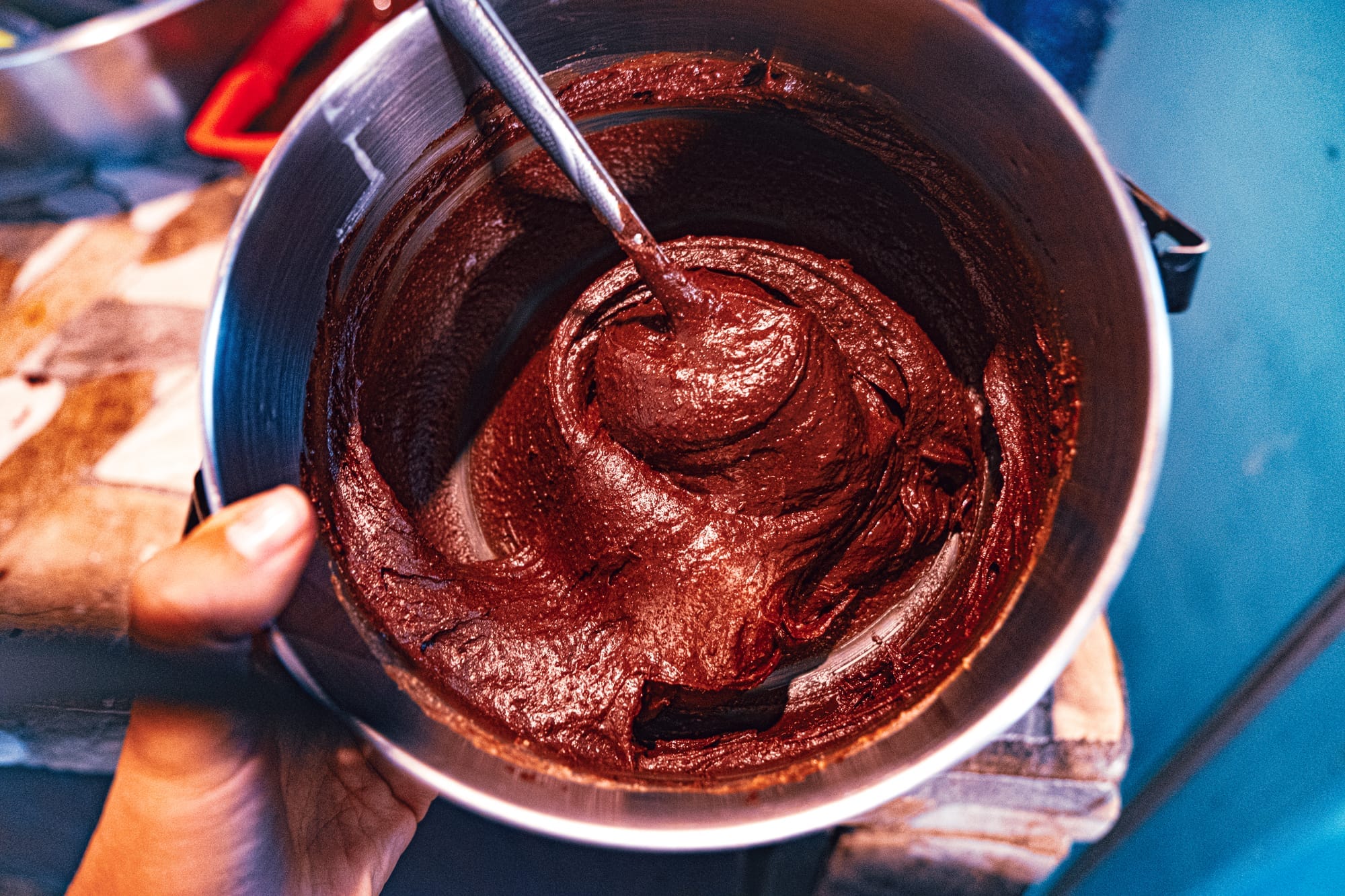
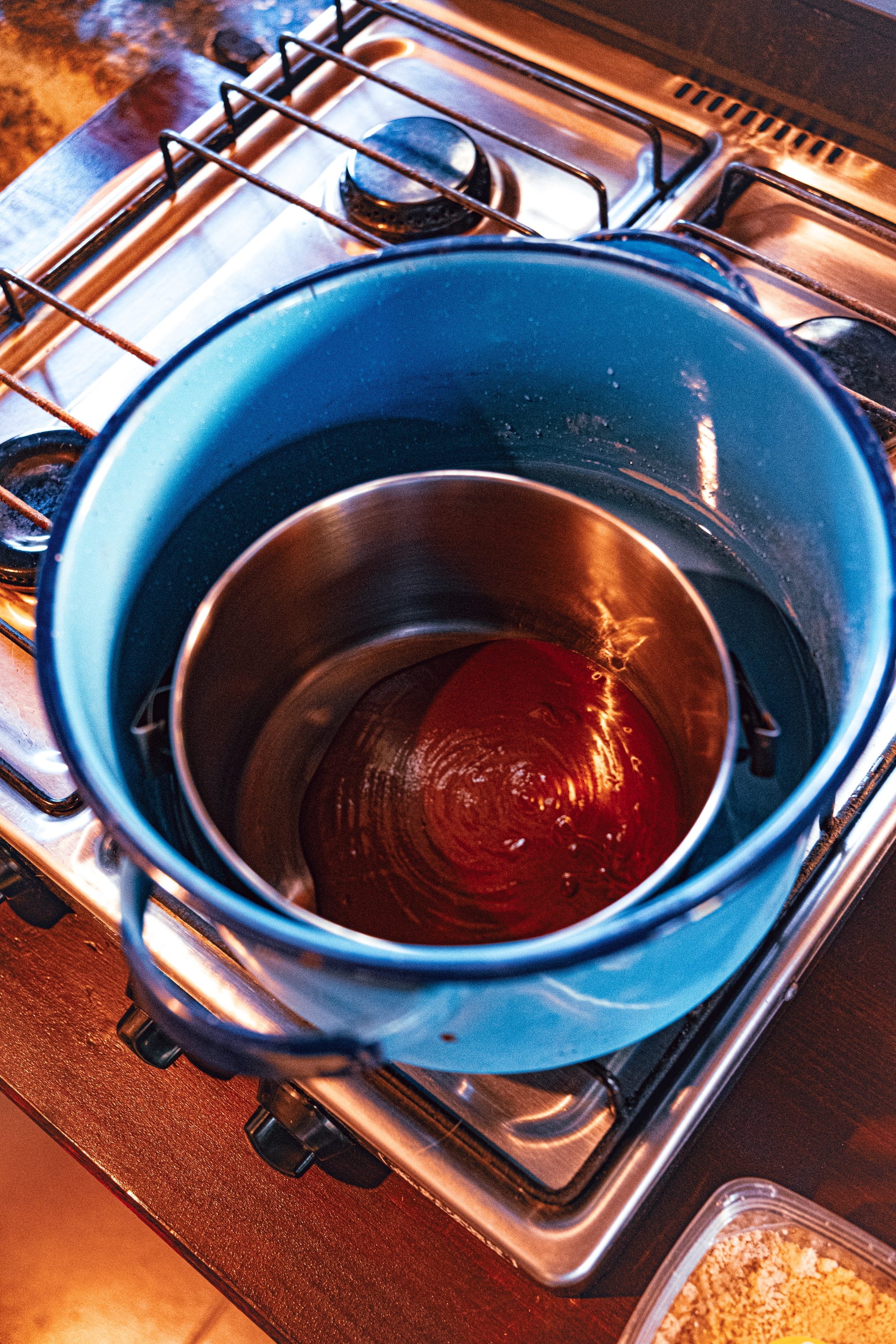
The truffle making process
We mixed everything by hand, taking our time. The cacao thickened as the ingredients came together, and soon it formed a dark, glossy dough that clung to the spoon. We took small portions and rolled them between our palms. The warmth of our hands softened the mixture and brought out the aroma. One by one, small truffles formed in our hands.
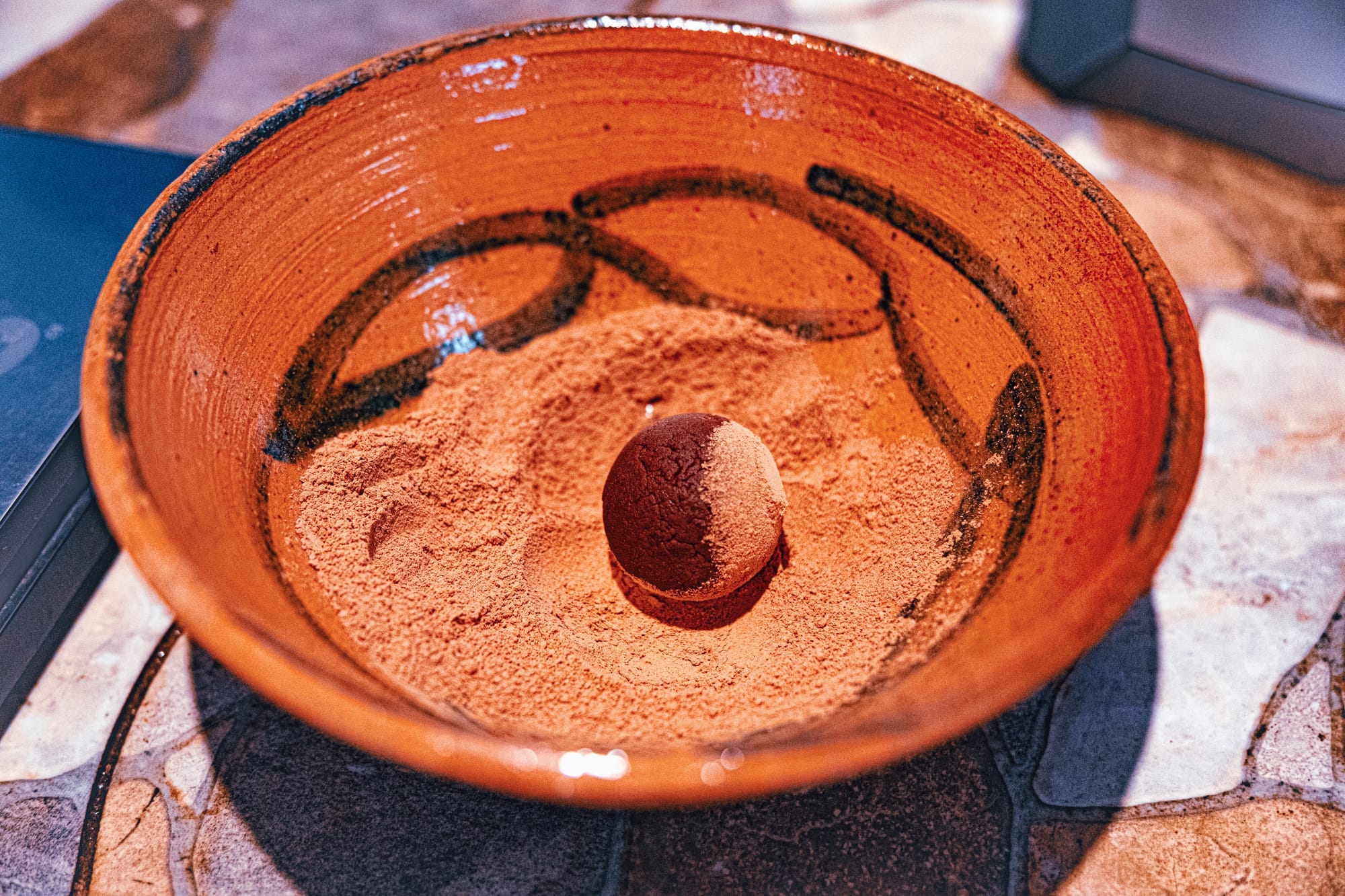
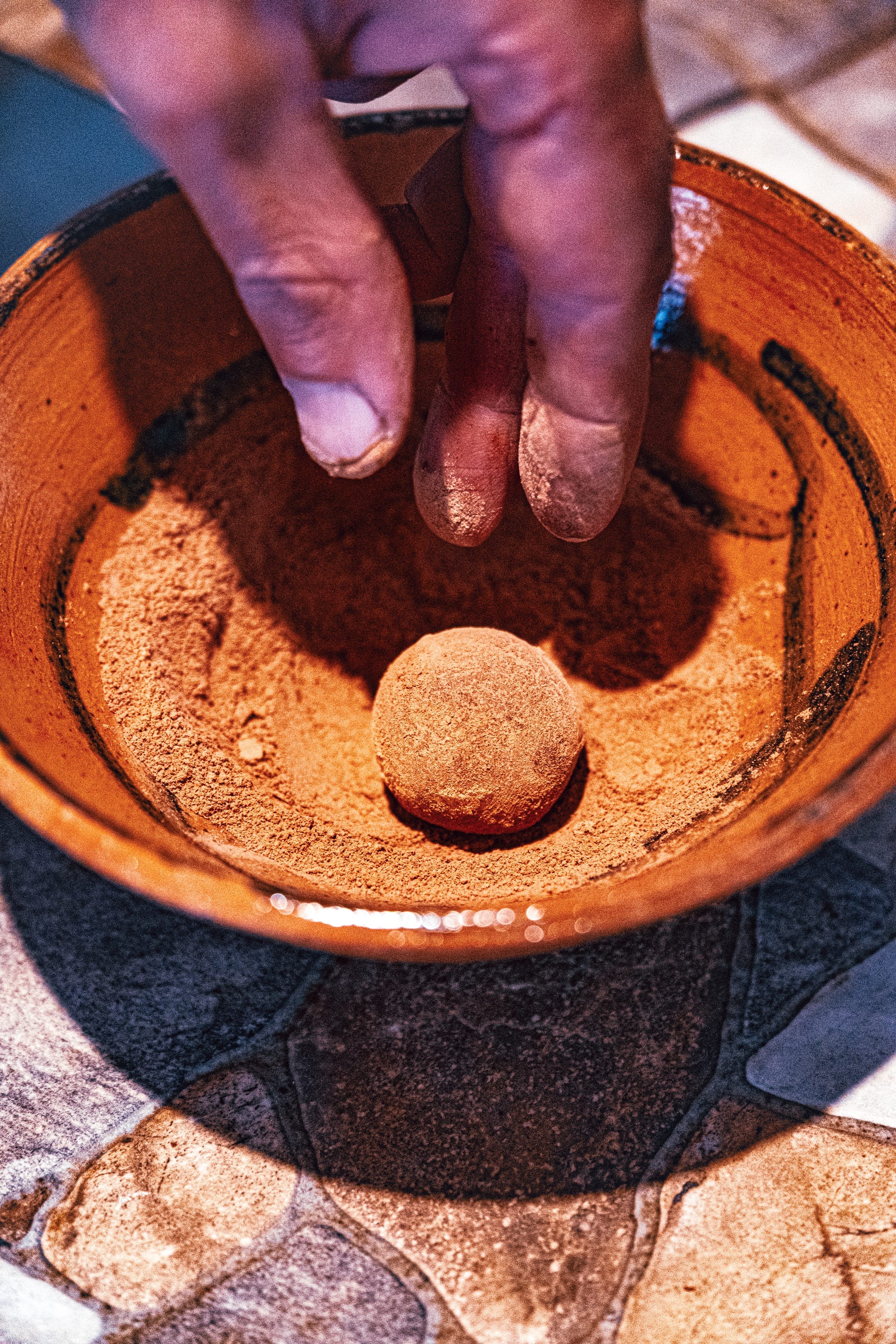
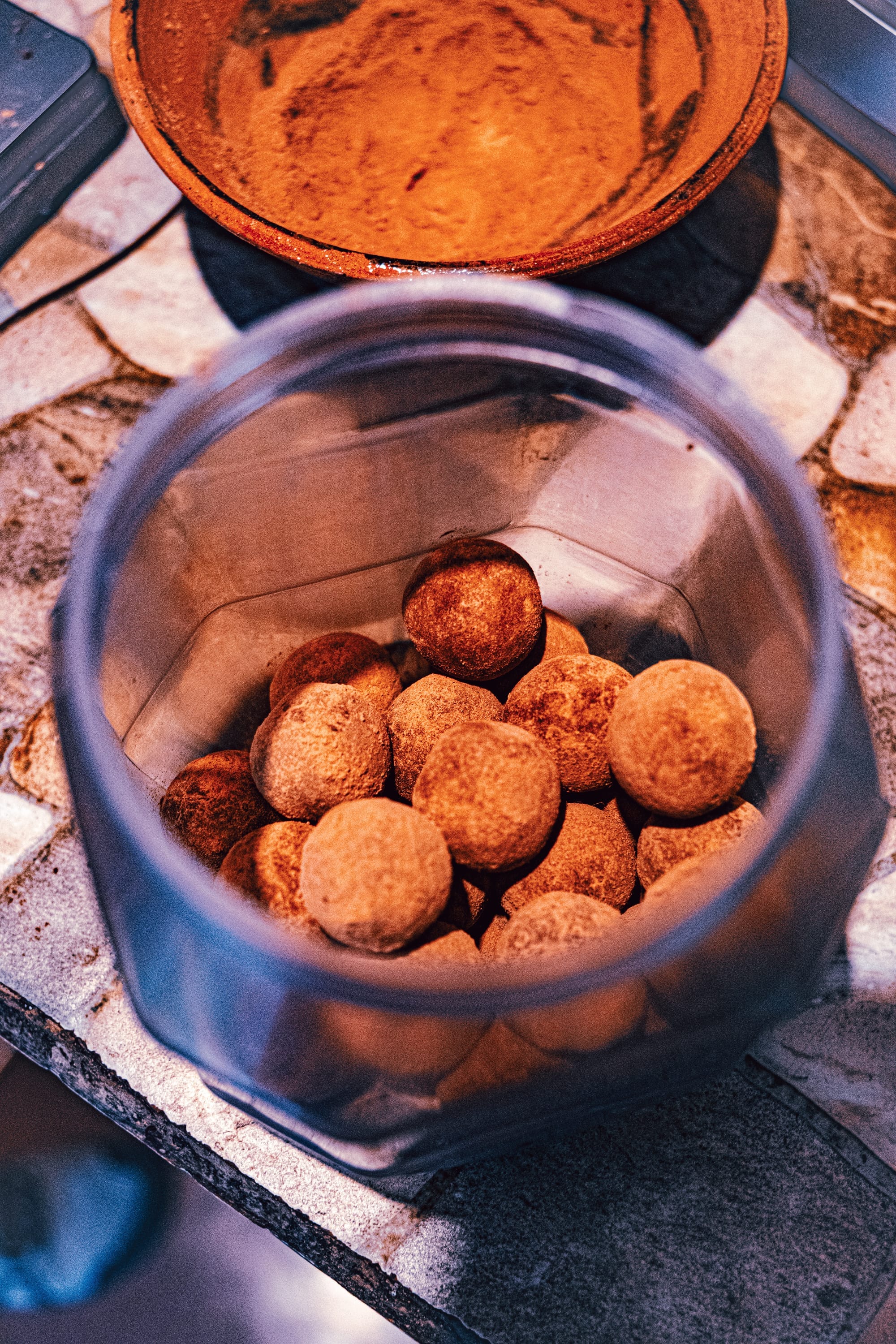
Rolling the truffles by hand, each one finding its place in the jar
Tasting them was a surprise. They were rich without being heavy, and deep in flavor. The panela added warmth rather than a sharp sweetness, and the vanilla came through in every bite.
Drinking cacao
Before we finished, Guillermo made a simple hot cacao drink with what was left of the cacao in the blender.
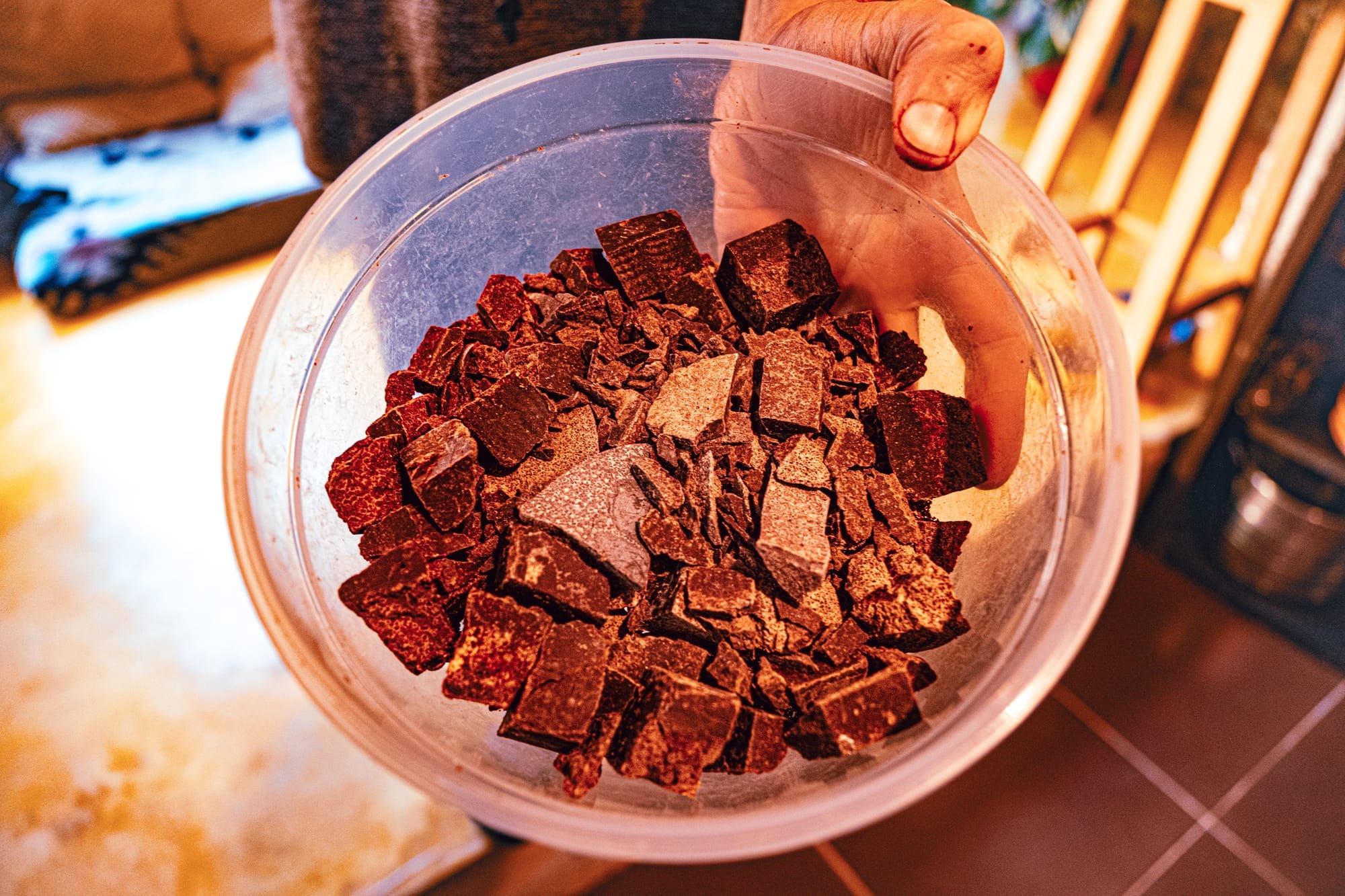
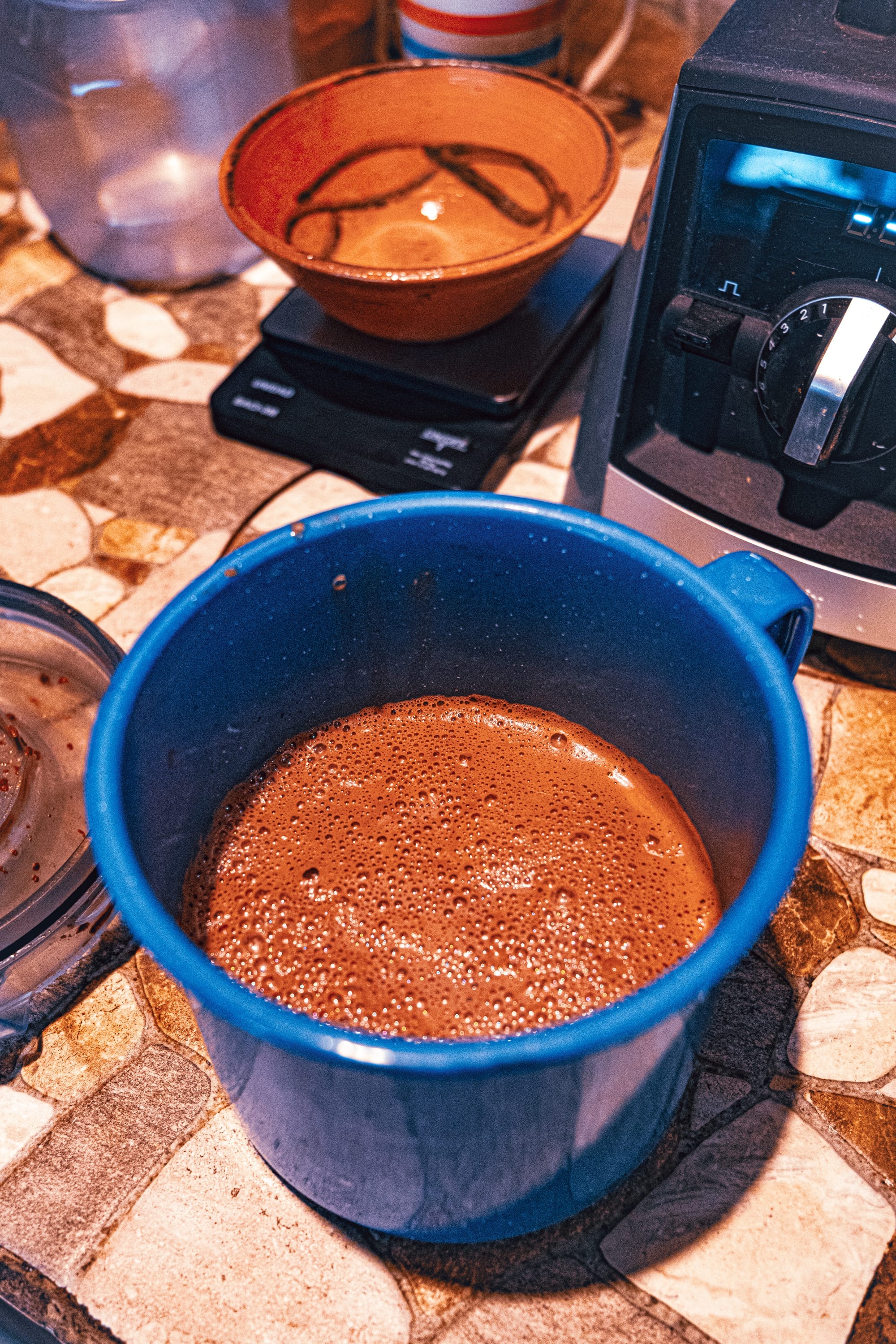
From chopped cacao to a warm drink shared at the end of the workshop
The drink was dark and comforting, and the warmth spread gradually. It tasted both ancient and very fresh.
The land around Guillermo’s home
The property was full of small details. We saw a number of beautiful flowers we had never seen before.
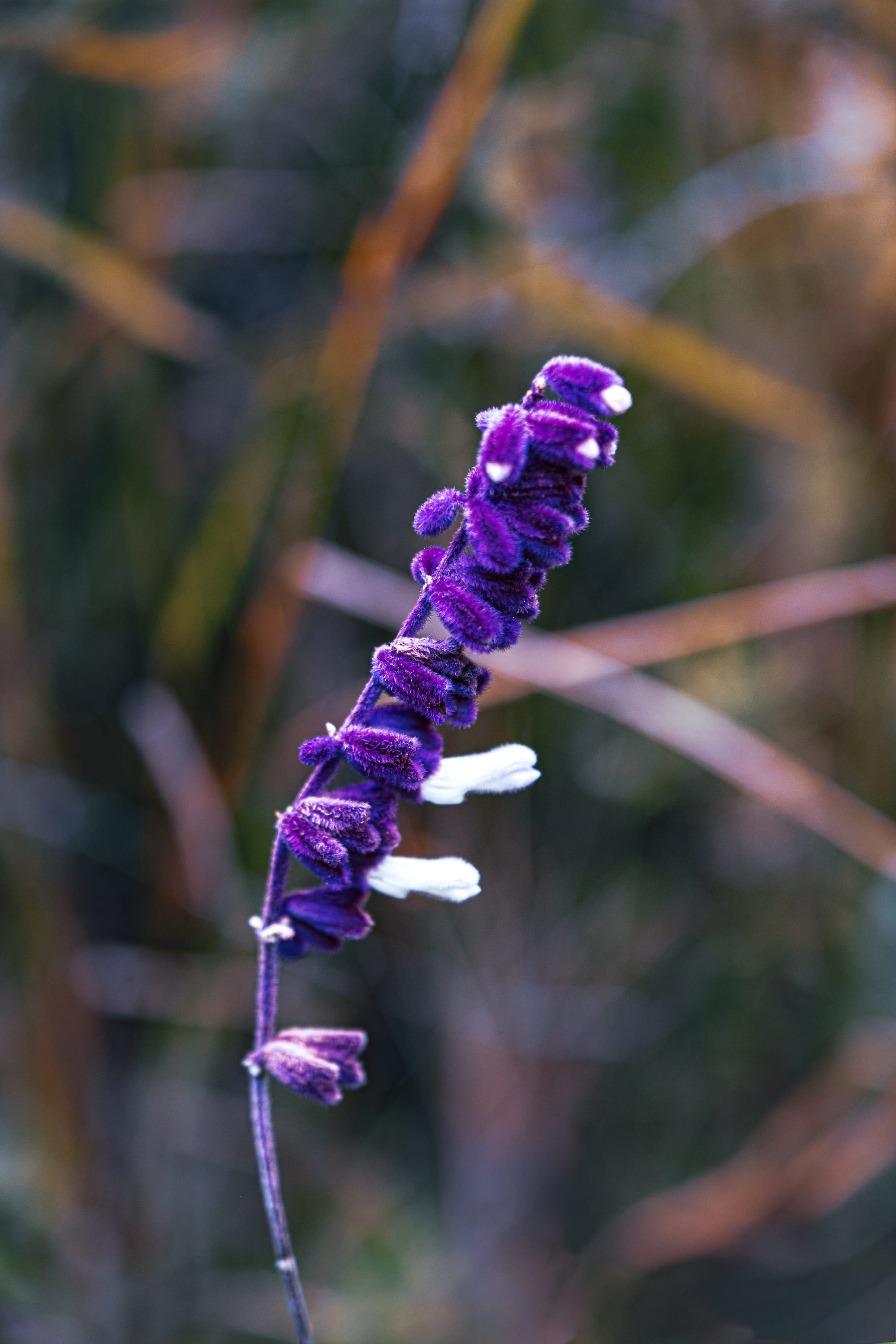
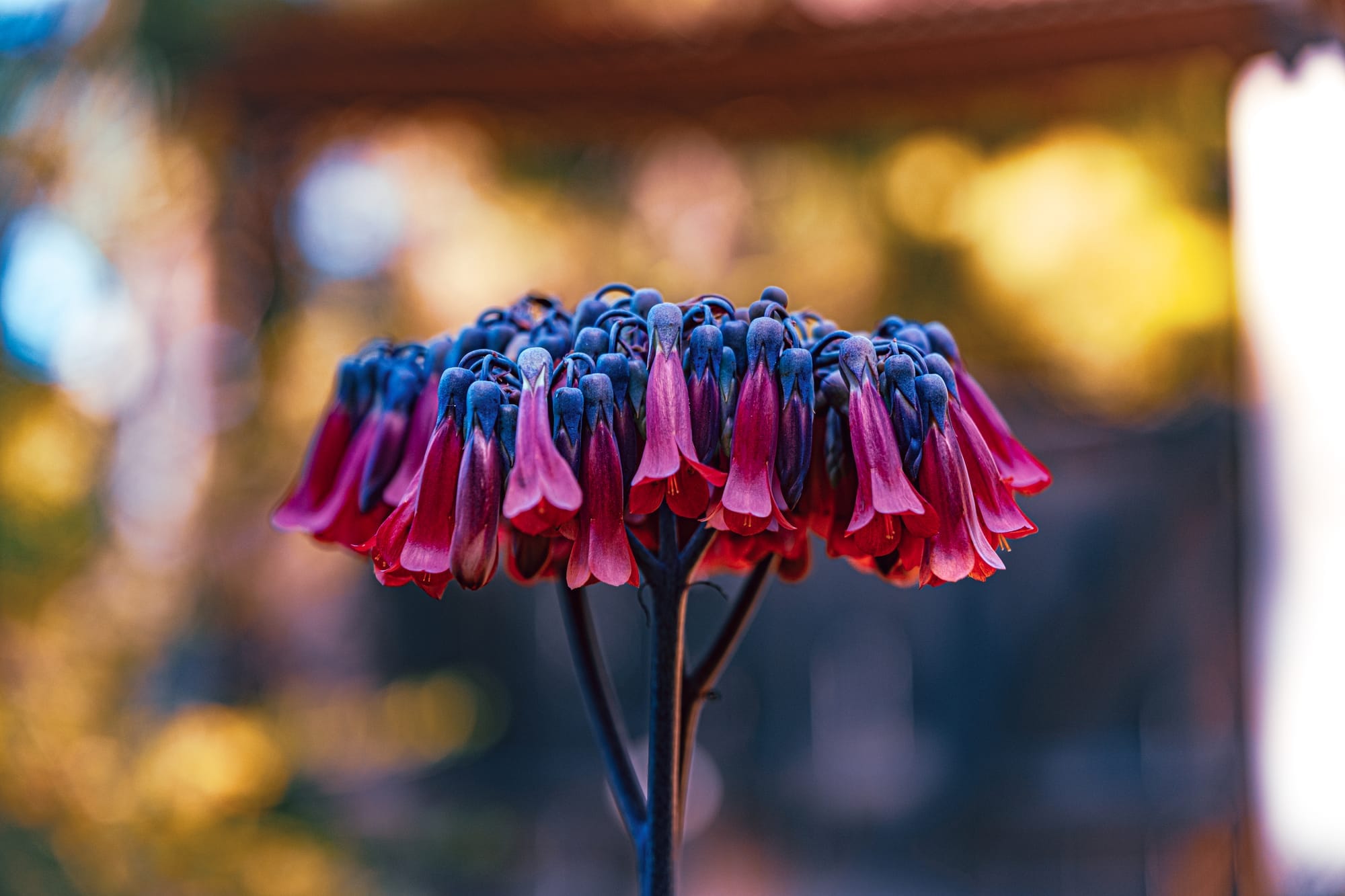
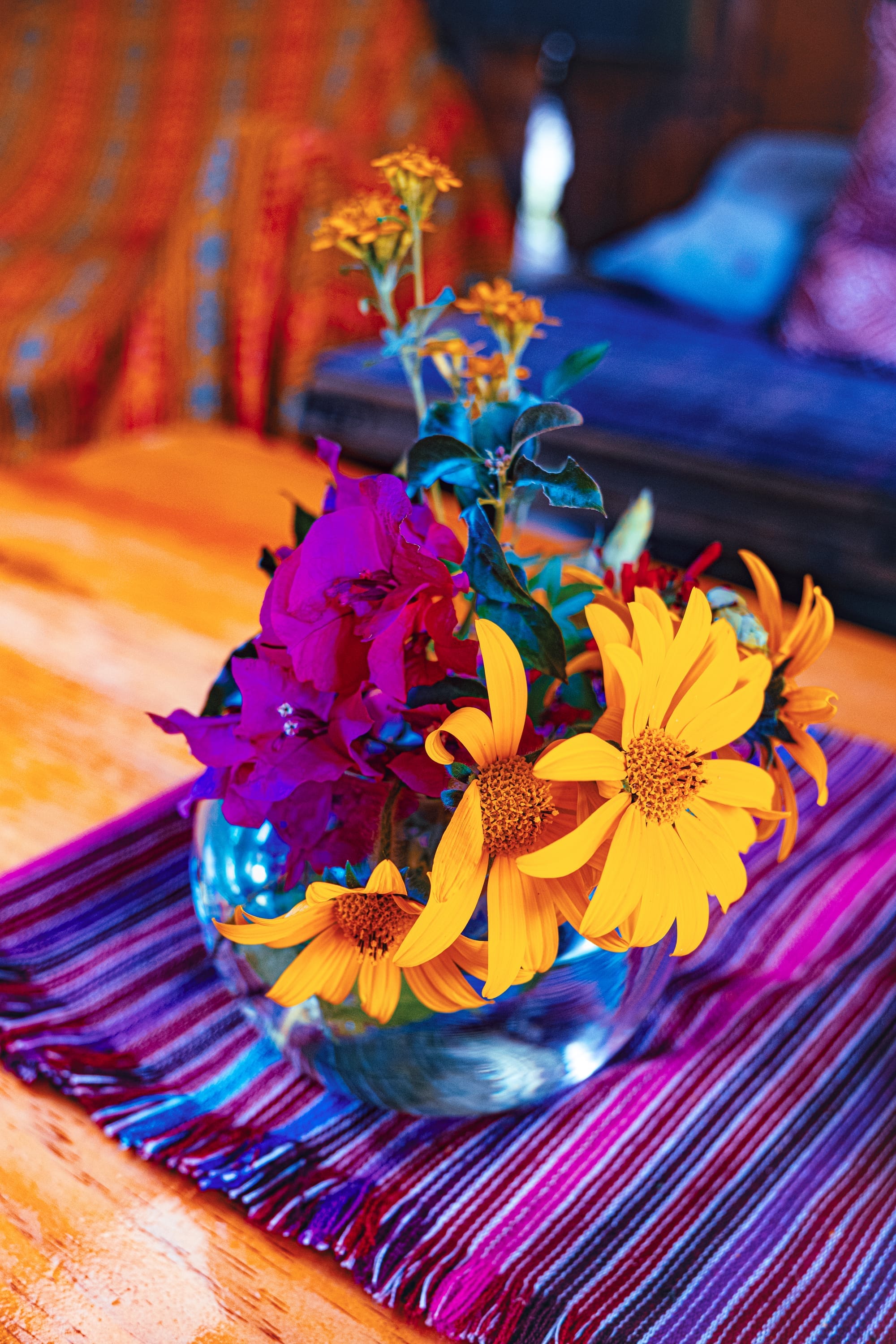
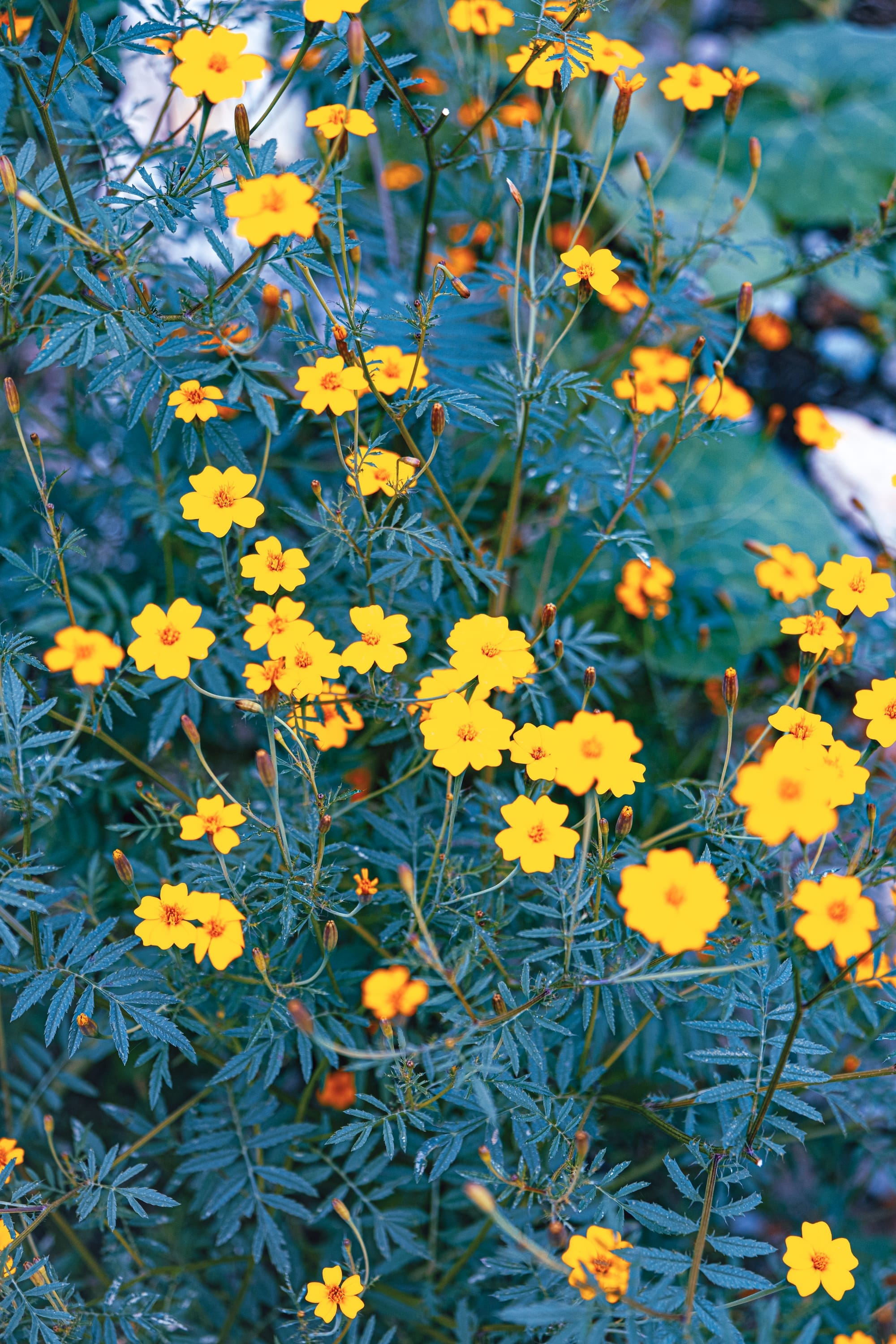
A few of the flowers growing around the property, each one adding its own color to the morning
Being on that land gave the workshop a setting you couldn’t recreate anywhere else. The garden was calm, but full of life.
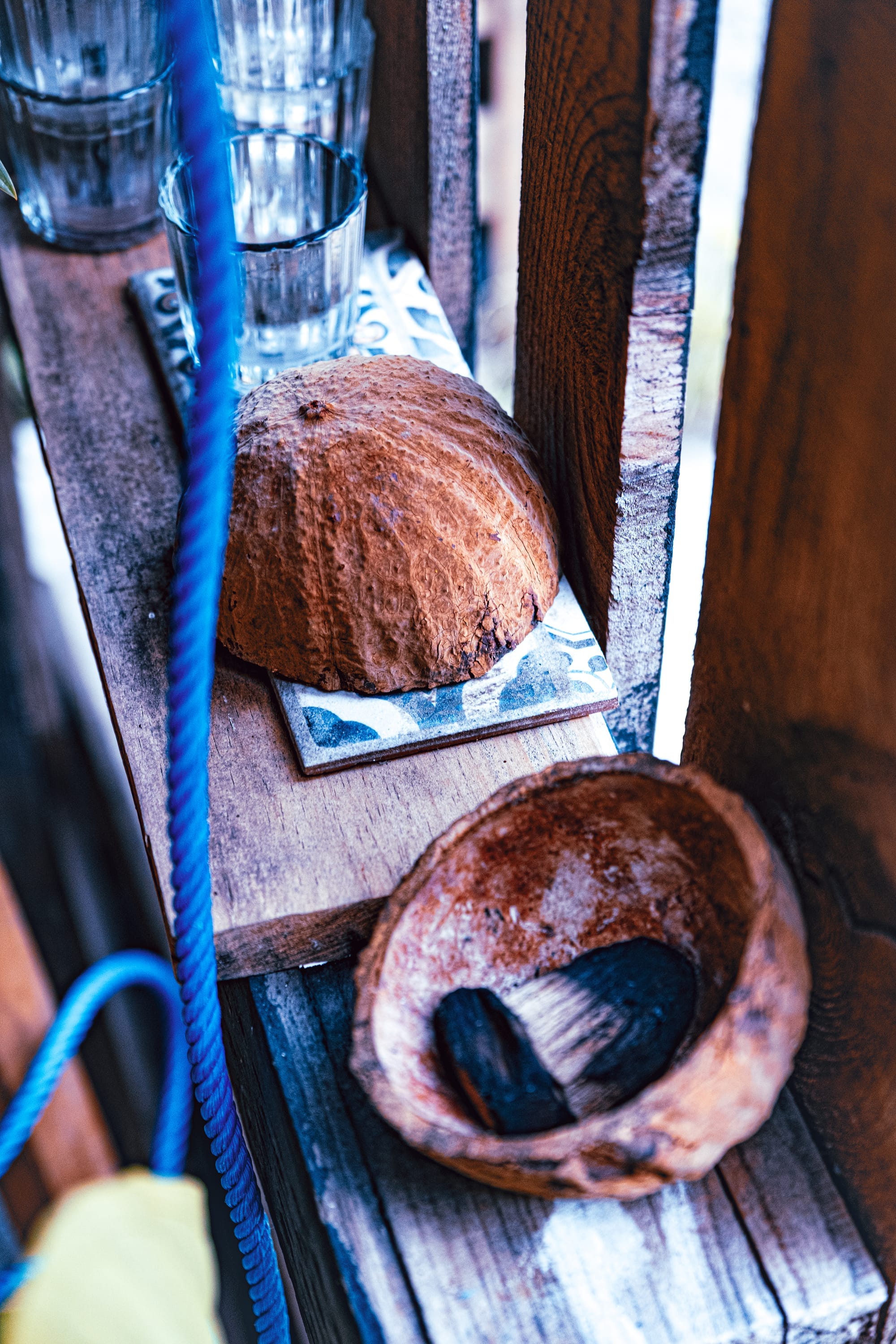
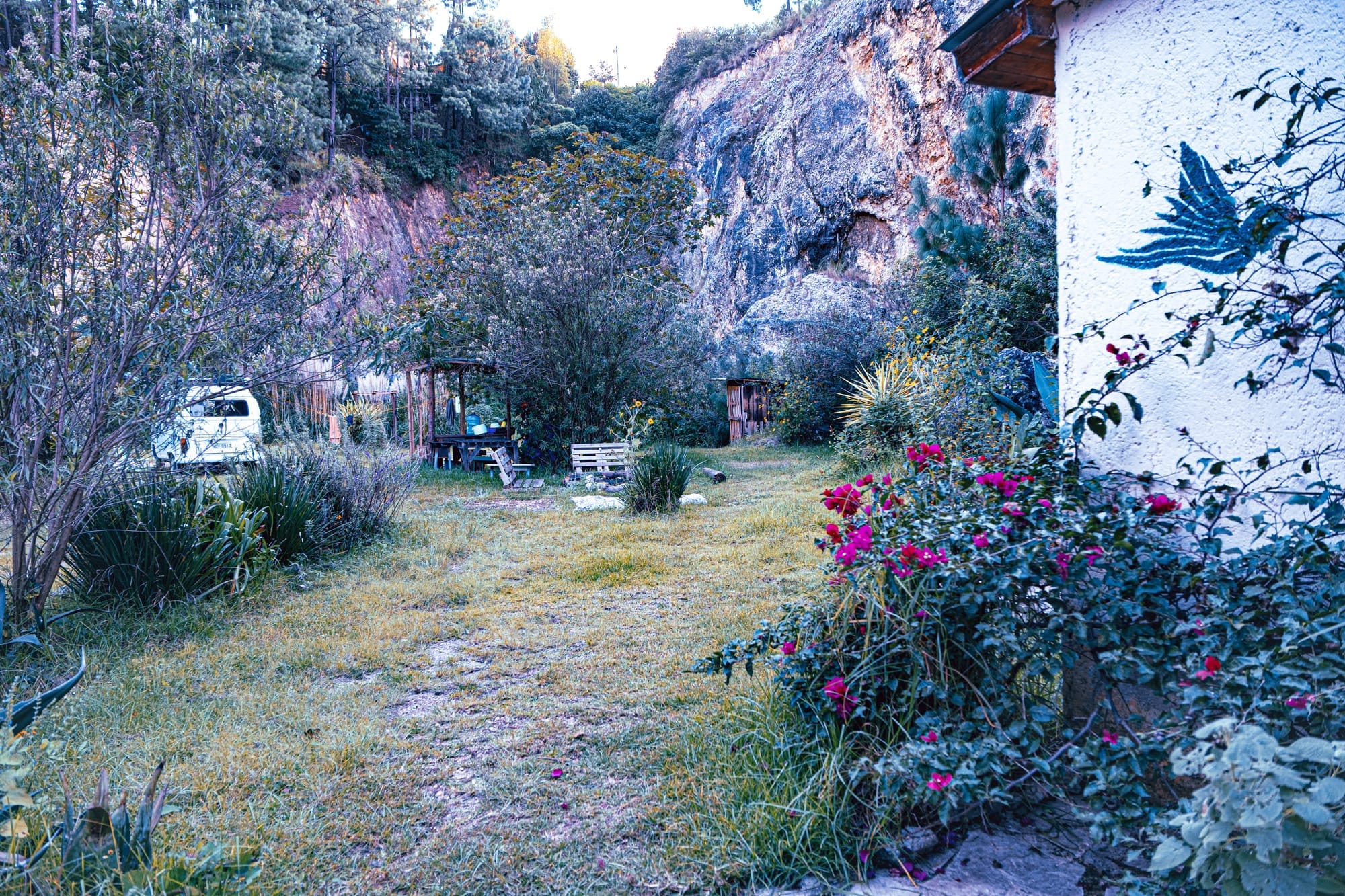
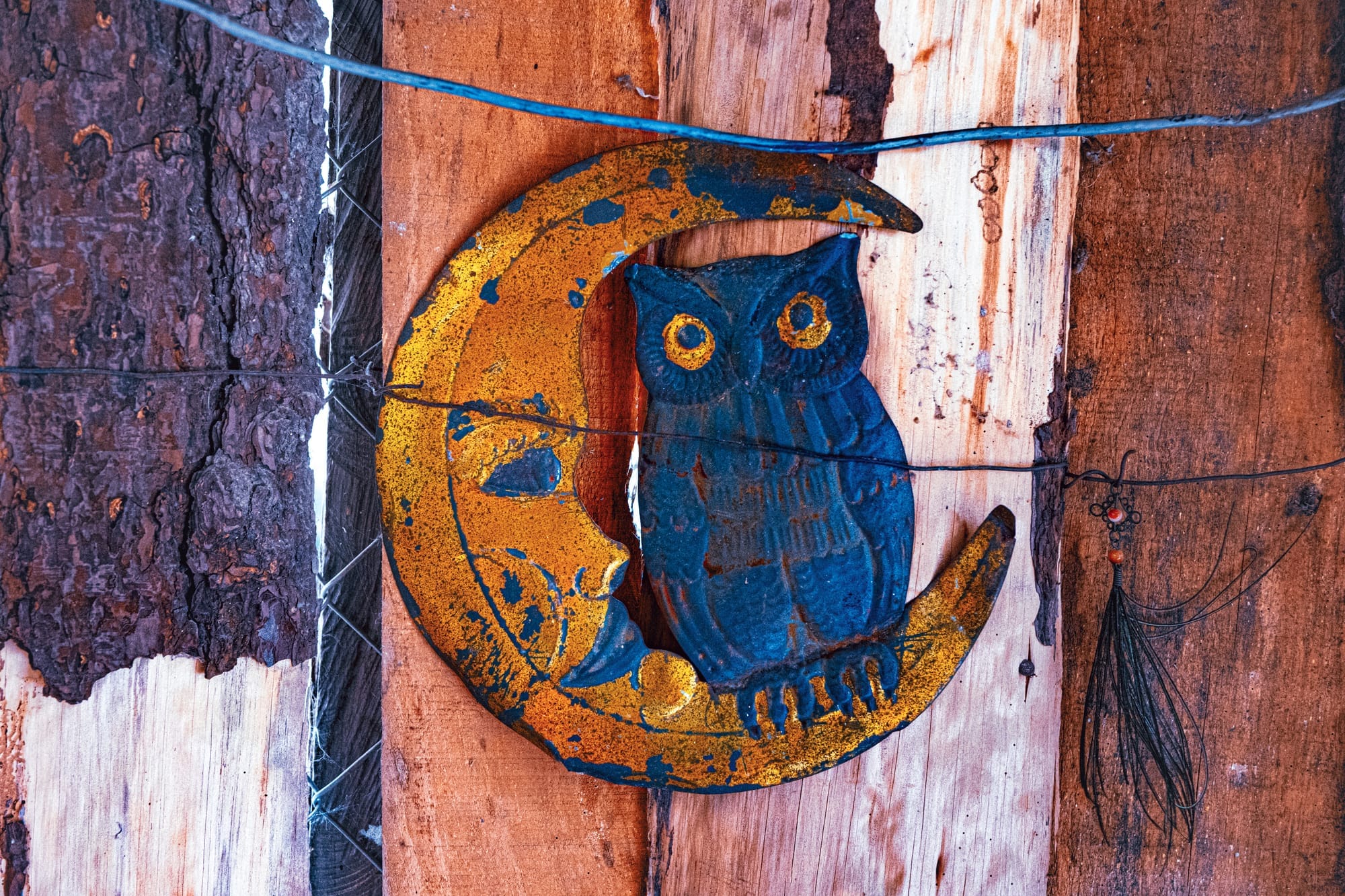
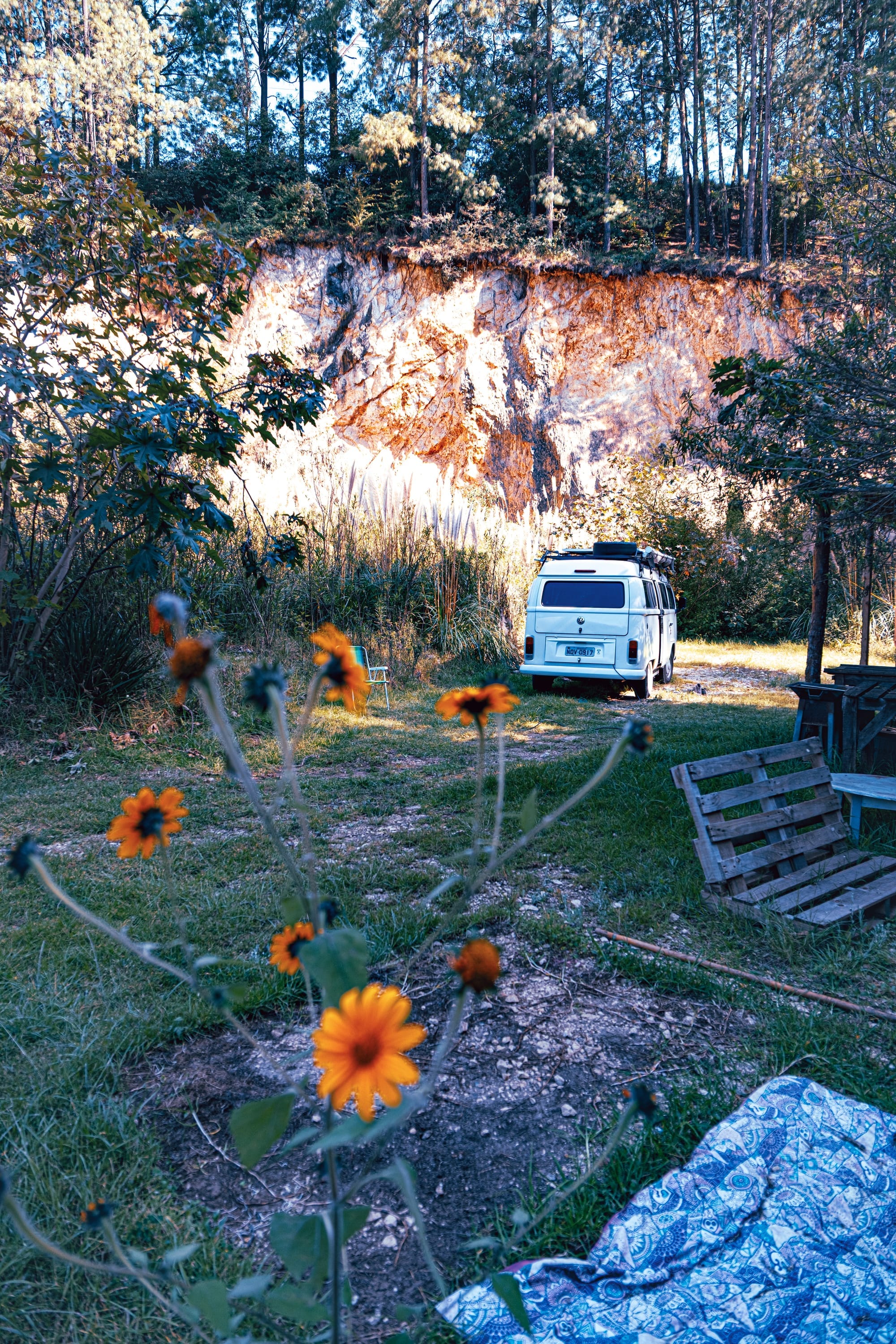
Details and small scenes from around the land
It made the experience feel connected to something bigger than the workshop itself.
Element Cacao
Element Cacao is Guillermo’s small scale brand. He sells his cacao in a few shops in San Cristóbal and directly from home. You can taste the care that goes into the whole chain: it’s smooth, fragrant, and full-bodied, and you can tell it hasn’t traveled far from the source. If you’re looking for something meaningful to bring back from Chiapas, it’s a thoughtful option.
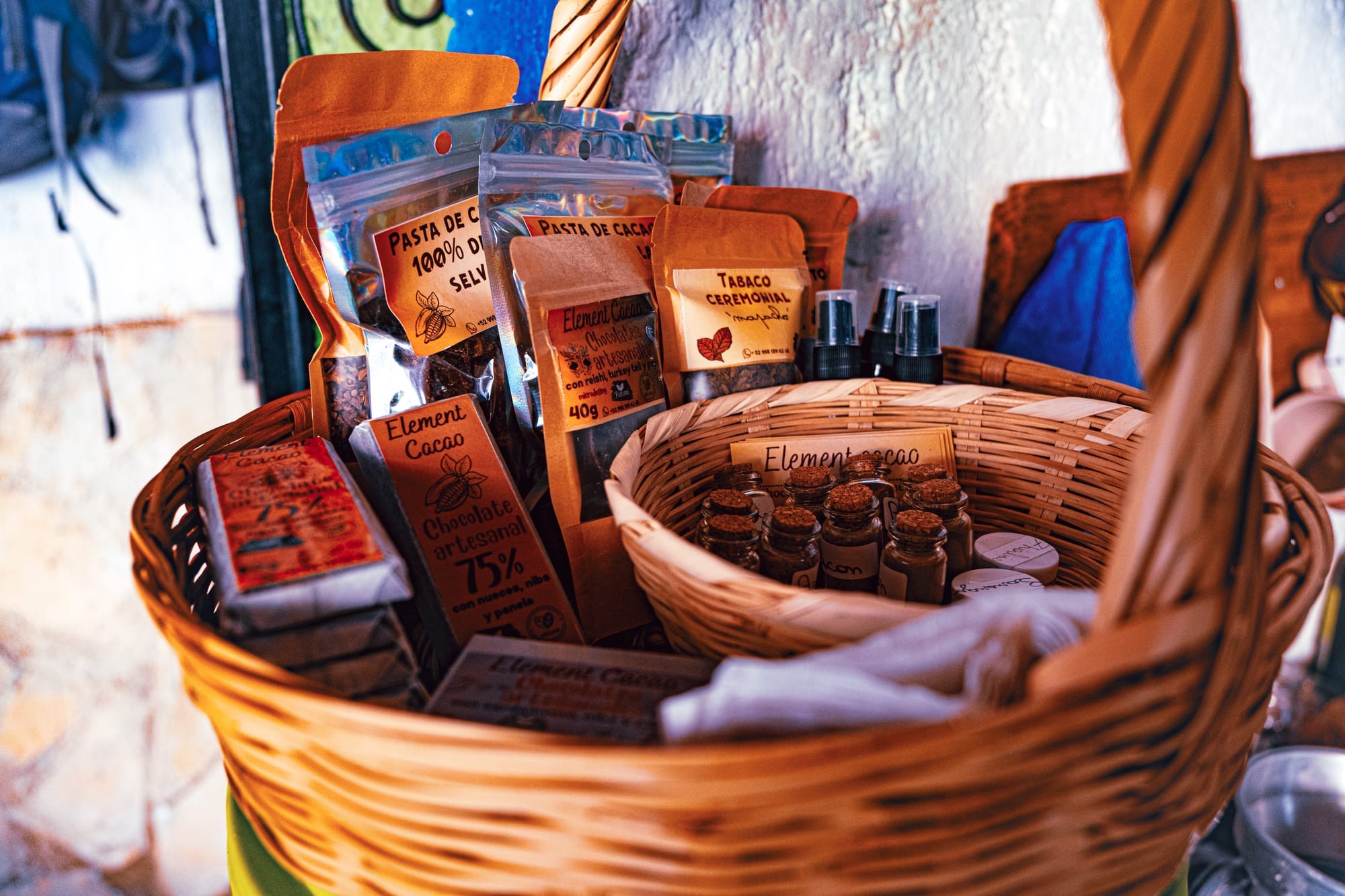
The workshop felt like spending a morning learning a craft from someone who has built his life around it. It was simple, down to earth, and focused on the plant.
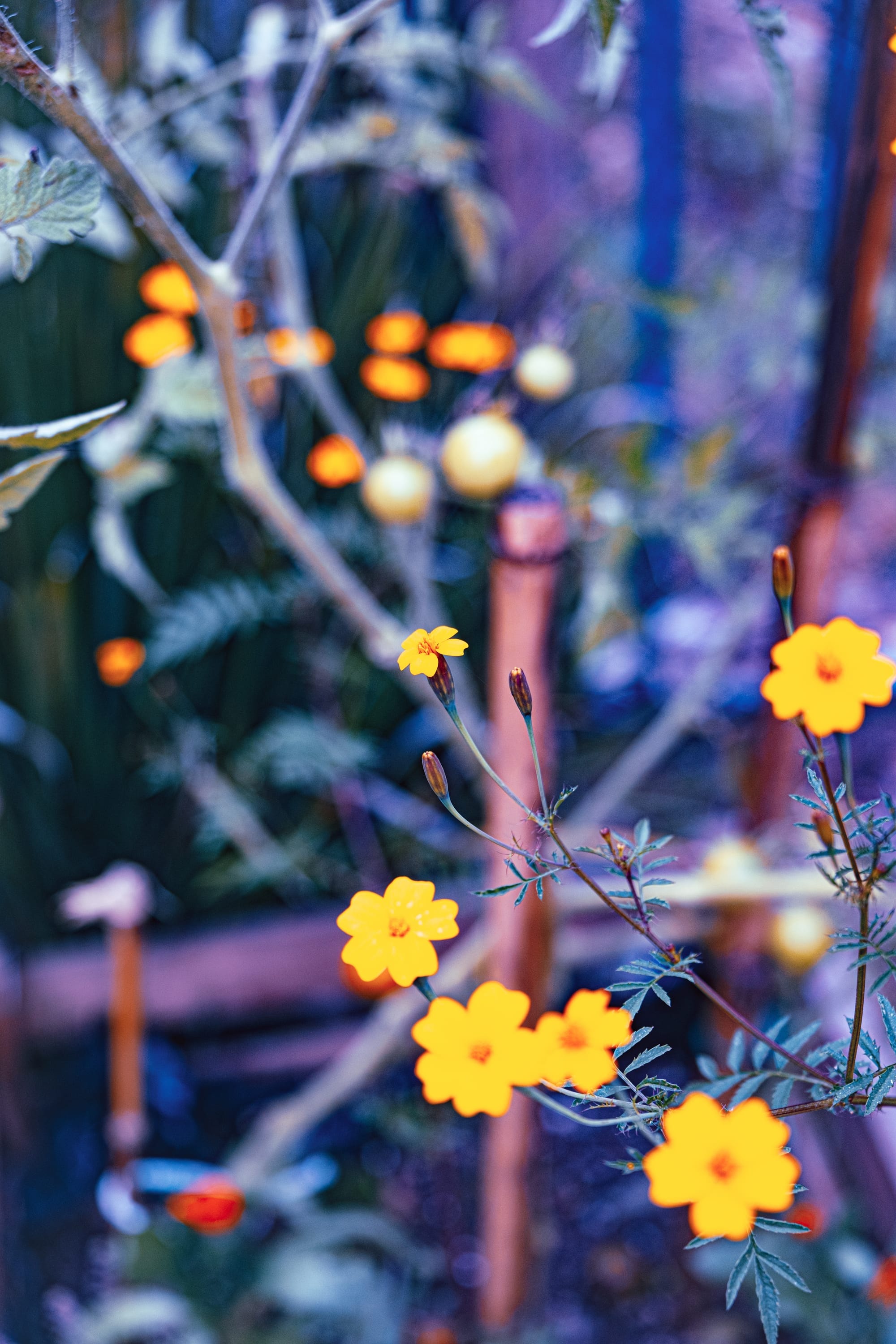
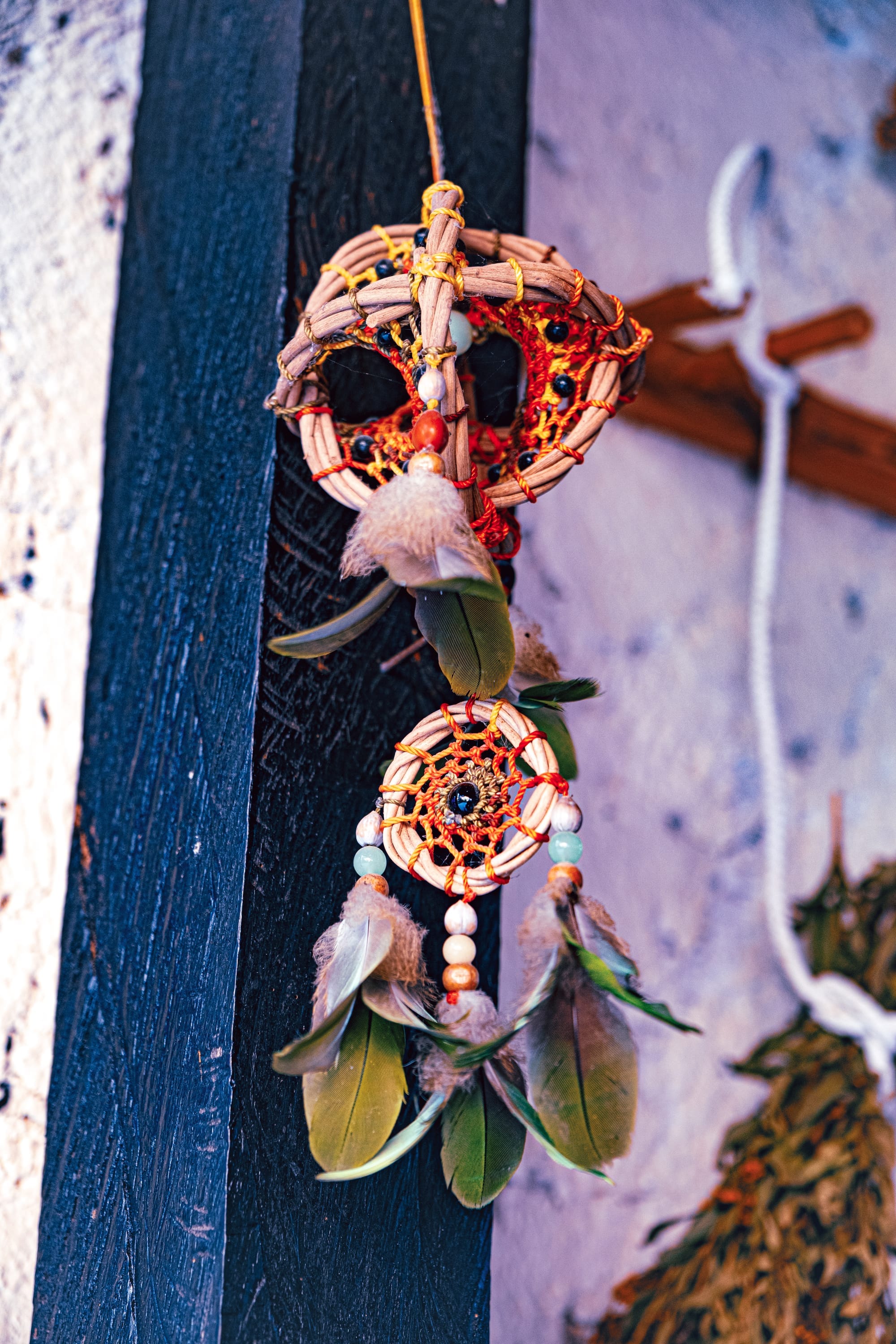
Small touches around the space, from bright flowers to handmade ornaments
When we left, we took home the truffles, along with the warmth of the land and a clear, happy memory of the morning.
Kakaw museum cacao workshop: the main alternative
If you can't get a spot with Guillermo, or you'd rather stay in the center, the Kakaw Museo del Cacao is the best-known cacao workshop in San Cristóbal. It's a small museum in a colonial house that covers cacao's history from pre-Columbian times, with a shop and café. We haven't done its workshop, so the details below come from its listings.
Visit + tasting (about 45 minutes): a guided museum tour and a tasting of chocolates with different cacao percentages. Listed from about MXN 75 in late 2026.
Visit + sensory tasting (about 1 hour 45 minutes): the tour plus a tasting of beans, nibs, and chocolates.
Bean-to-bar workshop (about 2 to 2 hours 45 minutes): you select, roast, peel, and grind beans, make a cacao drink, and take home your own chocolate bar. About MXN 250 a person.
Plantation workshops: Kakaw also runs tours and workshops on its own cacao plantation outside the city. Transport isn't included.
Visit Chiapas gives the address as Calle 1 de Marzo 16 in the historic center, but at least one listing shows a different street, so check the map before you go. It opens from about 11 am into the evening, and Sunday hours are shorter. Guided tours run in Spanish by default; book English or French at least a day ahead. Children under seven can't join the booked tours. Be careful with search results for the museum's old web address, which now leads to an unrelated site.
Guillermo or Kakaw: which cacao workshop to choose
Choose Guillermo if you want a small, private session, vegan truffles, and time to talk about where the beans come from. Choose Kakaw if you're short on time, want a fixed schedule in the center, or want the museum's history and tastings in the same visit. If you love chocolate, you could do both.
| Option | Where | Length | Price | Vegan? |
|---|---|---|---|---|
| Guillermo, Element Cacao (we did it) | His home outside town | A morning | Not published | Yes |
| Kakaw visit + tasting | Historic center | About 45 minutes | From about MXN 75 | Tastings can include milk chocolate |
| Kakaw visit + sensory tasting | Historic center | About 1 hour 45 minutes | Ask | Ask |
| Kakaw bean-to-bar workshop | Historic center | About 2 to 2 hours 45 minutes | About MXN 250 | Ask |
| Element Cacao online course (Essencia cacao) | Online | Self-paced | US$25, on sale at US$15 | Vegan recipes |
If you can't make it to San Cristóbal or want to keep practicing, Element Cacao also sells online courses. In late 2026, Essencia cacao covered working from the bean (roasting, shelling, and making paste) with vegan recipes, and Conexión cacao covered tempered chocolate, truffles, pralines, and vegan brownies. Each was listed at US$25, on sale at US$15. Sign-up goes through the same contact page as the workshop.
Where to buy and drink chocolate in San Cristóbal
Most cafés in town serve hot chocolate, from sweet styles to 100% cacao. A tip from Mexico News Daily: grains at the bottom of the cup are a good sign that it's made from real cacao rather than a packet mix. For bars to take home, Element Cacao sells from a few shops in town and from Guillermo's home. Otoch Chukwá and Jangala are two other local chocolate makers worth looking for. Ask about milk if you're vegan, because some cafés make hot chocolate with it.
Other chocolate makers and cacao tours (not tried)
We haven't visited these, so this is only what published sources say. According to Mexico News Daily, Otoch Chukwá describes itself as the city's first modern chocolatería and now makes eating chocolate as well as drinking chocolate, and Jangala: Cacao y Selva (formerly Alkymia) is a bean-to-bar maker that uses scientific methods in growing and processing. Fodor's lists Chocolatería Kakao Natura, which makes its chocolates on site, starting from grinding the cacao. If you want to see where cacao grows, Kakaw runs workshops on its plantation outside the city, and some agencies sell two-day cacao tours that combine Palenque and San Cristóbal with a chocolate-making workshop.
Buying cacao in San Cristóbal to take home
Chocolate is one of the easiest souvenirs from Chiapas: light, cheap compared with home, and made locally. A few things help you pick well and get it home in one piece.
- Bars for eating: check the label for milk powder or butter if you're vegan. Dark bars from local makers often have only cacao and sugar.
- Tablets for drinking: coarse-ground discs or bars made to whisk into hot water. Mexico News Daily explains that cacao here was traditionally ground on stone metates for drinking, which is why these feel grainy, and that local chocolate ranges from about half sugar to 80% to 100% cacao.
- Nibs and cacao paste: good for baking and smoothies. Paste is what we made in the workshop, before any sugar goes in.
- Raw beans and pods: fun to buy, but the most likely to cause trouble at customs (see below).
- Heat: San Cristóbal is cool, but Tuxtla Gutiérrez and Palenque are hot, so keep chocolate in your carry-on and out of luggage holds on lowland buses.
Customs rules depend on where you're flying. For the United States, US Customs and Border Protection says you must declare all agriculture-related products when you enter, and many products from Mexico are allowed. Finished chocolate is the simplest to bring, while raw beans may be inspected and can be refused if they carry pests. For anywhere else, check your own country's rules before you pack beans or pods.
How to get to San Cristóbal de las Casas
The nearest airport is near Tuxtla Gutiérrez, roughly an hour to an hour and a half away by shuttle or taxi, and buses run from Tuxtla, Palenque, and Oaxaca. Road blockades happen in Chiapas from time to time, so check the UK's travel advice for Mexico before long trips. If you're heading to Palenque, the area where Guillermo first worked with cacao, it's several hours' drive north.
For more food experiences, read about our vegan cooking class with Itzel, where we also tried her homemade cacao truffles, and Art Libreria's vegan cheese workshop. Our vegan San Cristóbal guide covers where to eat, our San Cristóbal guide covers the rest of the town, and our vegan travel page has more plant-based trips.
Whatever your plans, travel with insurance. Stomach bugs, a fall on a cobbled street, or a stolen phone can happen anywhere, and it's much easier to enjoy the trip when you know you're covered. We'd recommend SafetyWing Nomad Insurance. It covers medical emergencies abroad, you can buy it even after you've left home, and it renews every four weeks, so it works for a short trip or months on the road.
Where to stay in San Cristóbal de las Casas
San Cristóbal de las Casas is the base for this, with the most places to stay and eat. These are well-reviewed options, all rated 9 or more on Booking:
- Parador Margarita: a well-run, good-value hotel a few blocks from the center, rated 9.1 from over 1,400 reviews.
- Casa Carmen: a small guesthouse with a courtyard, rated 9.6.
- Casa Santa Lucía: a colonial-style boutique stay in the center, rated 9.5.
Frequently asked questions
Where can I do a cacao workshop in San Cristóbal?
The two main options are a private workshop with Guillermo of Element Cacao on the edge of town, which is what we did, and the bean-to-bar workshop at the Kakaw cacao museum in the historic center.
How much does a cacao workshop in San Cristóbal cost?
Kakaw's bean-to-bar workshop costs about MXN 250 a person, and its museum visit with tasting starts from about MXN 75 (late 2026 listings). Guillermo doesn't publish a price for his in-person workshop, so agree it when you book. Prices change, so check before you go.
How long does a cacao workshop take?
Ours with Guillermo took a morning. Kakaw's bean-to-bar workshop takes about two to two and three-quarter hours, and its tasting visit about 45 minutes.
Is the cacao workshop vegan?
Ours was. We made truffles with cacao, panela, cashew paste, and vanilla, and Element Cacao focuses on vegan chocolate. At Kakaw, the tastings can include milk and white chocolate, so ask before you book.
Is the Kakaw museum worth it?
It's a good, short option if you're in the center and want the history of cacao plus a tasting, and its workshop lets you make your own bar. If you want a small, hands-on session with vegan truffles, we'd choose Guillermo.
Where does cacao grow in Chiapas?
Mainly in the hot lowlands: the Soconusco region on the Pacific coast, the Mezcalapa area, and the Lacandon Jungle. San Cristóbal is in the cool highlands, so the cacao you'll use in a workshop comes from those regions.
Why is Chiapas important in the history of chocolate?
The Mokaya people on the Chiapas coast drank cacao by about 1900 BC, and the Soconusco region later paid cacao tribute to the Aztecs. See our history section above and the history of chocolate for more.
Can I buy Element Cacao chocolate to take home?
Yes. Guillermo sells it in a few shops in San Cristóbal and directly from his home.
Can I bring chocolate from Mexico into the United States?
Generally yes, but declare it. US Customs and Border Protection asks travelers to declare all agriculture-related products. Finished chocolate bars are the easiest; raw cacao beans or pods may be inspected and can be refused.
Does Element Cacao offer online cacao courses?
Yes. In late 2026, its site listed Essencia cacao (bean to paste, with vegan recipes) and Conexión cacao (tempered chocolate, truffles, pralines, and vegan brownies), each US$25, on sale at US$15. You sign up through the contact page.
Can I visit a cacao plantation from San Cristóbal?
Cacao grows in the hot lowlands, not around San Cristóbal. Kakaw runs workshops on its own plantation outside the city (transport not included), and some agencies sell two-day cacao tours that combine Palenque and San Cristóbal.
When did chocolate reach Europe?
The earliest record at the Spanish court is from 1544, when Qʼeqchiʼ Maya nobles brought it with Dominican friars, and the first official cargo of cacao to Europe was recorded in 1585.
What chocolate should I buy as a souvenir in San Cristóbal?
Dark bars and drinking-chocolate tablets from local makers travel well. Check labels for milk if you're vegan, and keep chocolate in your carry-on if you're heading to the hot lowlands.
Useful links: Element Cacao, Kakaw museum (Visit Chiapas), History of chocolate (Wikipedia), and Soconusco (Wikipedia).
More from San Cristóbal and Chiapas: the San Cristóbal markets, the Palenque ruins, San Cristóbal digital nomad guide, Sumidero Canyon, and our San Cristóbal guide.


