


San Cristóbal de las Casas, in the highlands of Chiapas in southern Mexico, makes more sense once you know two stories. The first is the Zapatista uprising of 1 January 1994, when an Indigenous rebel army took over the town hall here on the day NAFTA came into force. The second is water. A Coca-Cola bottling plant run by FEMSA draws water from wells on the edge of the city, while many neighborhoods go days or weeks without running water. You'll see both on the walls, in the shops, and in conversations. We spent a season living in San Cristóbal, and this is the background we wish we'd read before we arrived. We've kept it neutral and named a source for every figure. Where sources disagree, we give the range.
The Zapatistas and San Cristóbal at a glance
| Date | What happened | Source |
|---|---|---|
| 1 January 1994 | The EZLN rises up on the day NAFTA takes effect and takes several towns in Chiapas, San Cristóbal among them. | Wikipedia |
| 12 January 1994 | The government calls a ceasefire after about 12 days of fighting. | Wikipedia |
| 21 February 1994 | Peace talks open in San Cristóbal between the EZLN and government envoy Manuel Camacho, with Bishop Samuel Ruiz as mediator. | Wikipedia |
| 16 February 1996 | The EZLN and the federal government sign the San Andrés Accords on Indigenous rights in San Andrés Larráinzar. | Wikipedia |
| April 2001 | Congress passes an Indigenous rights law that differs from the accords. | Wikipedia, The New York Times |
| 9 August 2003 | The Zapatistas announce five caracoles, each with a Good Government Board (Junta de Buen Gobierno). | La Jornada (via the Chiapas Support Committee) |
| 2019 | Seven more caracoles open, making 12. | Wikipedia, EZLN |
| November 2023 | The EZLN replaces its autonomous municipalities and Good Government Boards with thousands of local autonomous governments. | EZLN, El País |
Who are the Zapatistas?
The Zapatista Army of National Liberation (Ejército Zapatista de Liberación Nacional, or EZLN) is a mostly Indigenous Maya movement from the Chiapas highlands and the Lacandon Jungle. It takes its name from Emiliano Zapata, a leader of the Mexican Revolution who fought for land for peasant farmers. Its demands were land, Indigenous rights, and self-government, and its best-known spokesman was Subcomandante Marcos. Its recent statements, including the 2023 announcements below, are signed by Subcomandante Moisés.
The movement chose its date with care. On 1 January 1994, the North American Free Trade Agreement came into force, and the EZLN presented its uprising as a rejection of it. Armed insurgents took the town halls in several towns, including San Cristóbal de las Casas, Altamirano, Las Margaritas, and Ocosingo, according to the Wikipedia summary of the uprising. The army pushed back, and the fighting lasted about 12 days until the government called a ceasefire on 12 January. Figures for the size of the EZLN and the death toll vary widely between the government, the rebels, and historians, so we haven't picked one.
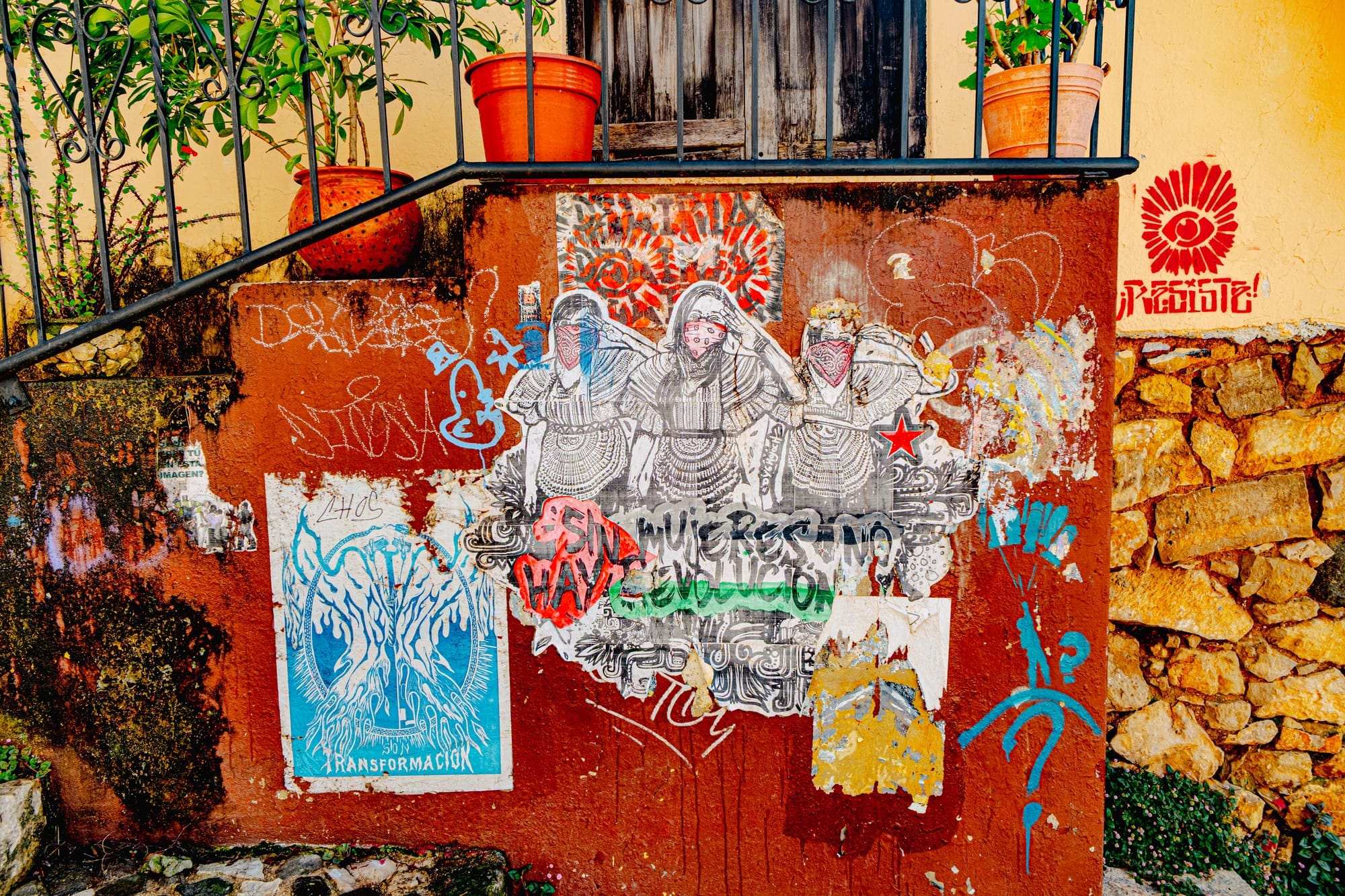
The San Andrés Accords
After the ceasefire, the EZLN and government envoy Manuel Camacho met for peace talks in San Cristóbal on 21 February 1994, with Bishop Samuel Ruiz of the local diocese as mediator. Two years later, on 16 February 1996, the EZLN and the federal government signed the San Andrés Accords in San Andrés Larráinzar, a highland town northwest of San Cristóbal. They covered recognition of Indigenous peoples, control of natural resources on Indigenous land, and community autonomy. The accords were never made law as signed. In April 2001, Congress passed a different Indigenous rights law that left recognition of autonomy to each state. Opponents have since brought nearly 300 constitutional challenges against it.
Caracoles and Good Government Boards
From then on, the Zapatistas built self-government without the state. On 9 August 2003, they announced five caracoles (the word means snail or seashell), each with a rotating Good Government Board, according to a La Jornada column republished by the Chiapas Support Committee. The five were Oventic, La Realidad, La Garrucha, Morelia, and Roberto Barrios. They ran their own schools, clinics, and justice, alongside a network of autonomous municipalities (MAREZ). Seven more caracoles were added in 2019, making 12.
What changed in 2023
In early November 2023, Subcomandante Moisés announced that the autonomous municipalities and the Good Government Boards would disappear. El País reported that his statement described the cities of Chiapas as being in "complete chaos" (our translation of the Spanish), with roadblocks, kidnappings, extortion, forced recruitment, and shootouts tied to fighting between criminal groups. A week later, the EZLN set out the new structure: a Local Autonomous Government (GAL) in every community with Zapatista members, thousands in all where there had been a few dozen autonomous municipalities. The GALs group into collectives (in the EZLN's words, where there used to be 12 boards, there would now be hundreds), and zone assemblies are based in the caracoles.
For visitors, the practical upshot is that the caracoles are not tourist sites. The Wikipedia page on Zapatista territories says they were closed to outsiders after the 2023 announcement. When we were in San Cristóbal, we hoped to visit Oventic, but it was closed to visitors. Don't turn up without an invitation or an event that is open to the public.
Where to learn about the Zapatistas in San Cristóbal
Instead of Oventic, we visited CIDECI-UniTierra, an Indigenous learning center on the edge of the city. It's a school, not a Zapatista village, but in 2019 the EZLN named it the seat of one of its new caracoles, Jacinto Canek, and it often hosts Zapatista events. When we went, it was open to respectful visitors during the day, and we walked through its workshops, gardens, and murals. Our post has the details.
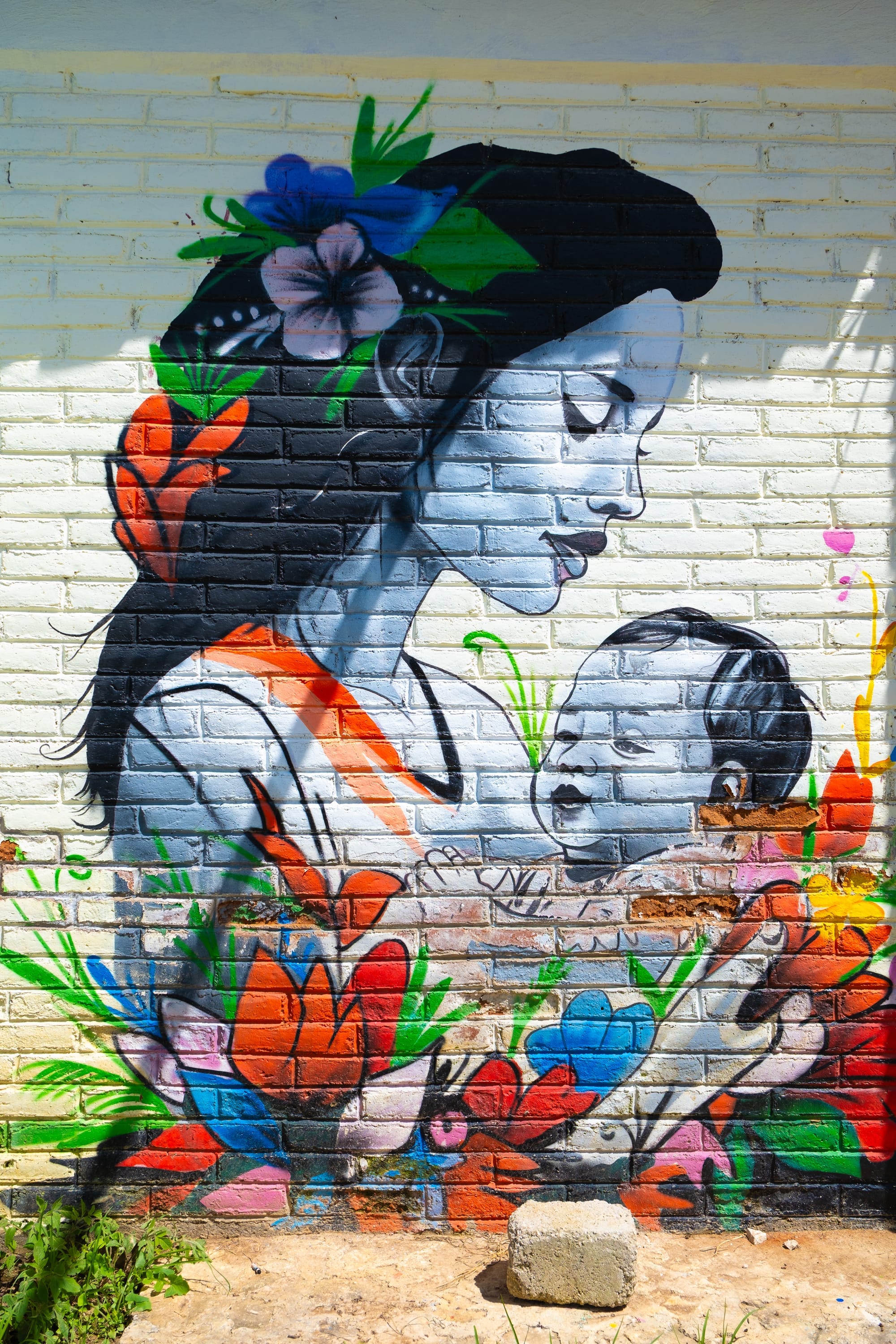
In town, the easiest place to see the movement's imagery is El Cerrillo's street art: EZLN lettering, masked women, corn, and slogans. Kinoki, a café with a small cinema, is a hub for film, art, and alternative culture in town. You'll also see Zapatista dolls, patches, and coffee on sale all over the center. Remember that opinions about the movement vary a lot in Chiapas. Not everyone here supports it, so listen more than you argue.
Coca-Cola and water in San Cristóbal
The second story is about water. San Cristóbal sits in a high valley (about 2,200 meters) in one of the rainiest states in Mexico, yet clean running water is a daily problem for many of the city's roughly 200,000 residents (population from Al Jazeera, January 2025). The Coca-Cola bottling plant has become the symbol of that problem, which is why you'll see angry cola bottles painted on walls across El Cerrillo.
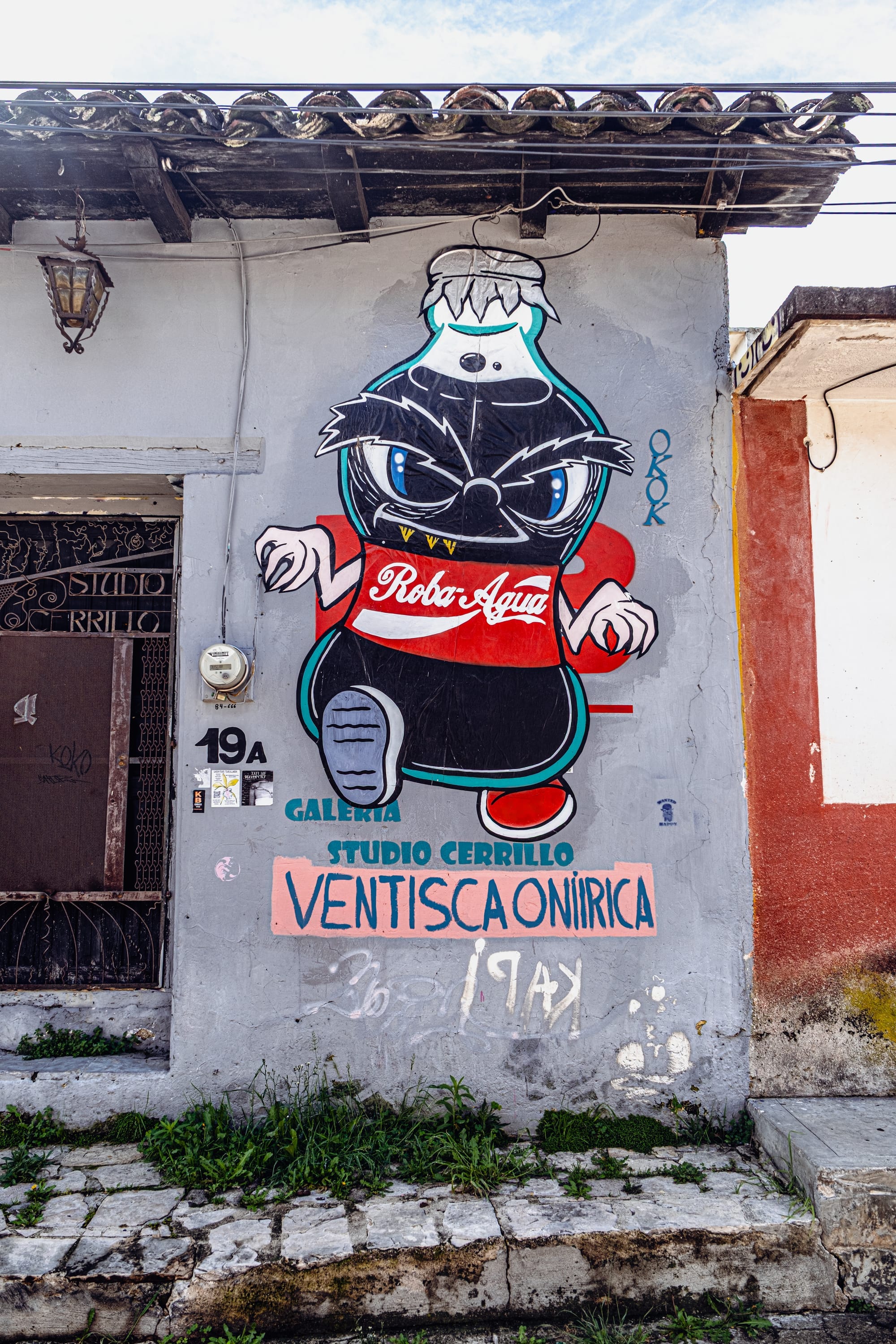
The FEMSA bottling plant
The plant on the outskirts of the city is run by FEMSA, the Mexican company that bottles and sells Coca-Cola in much of Latin America. Sources disagree on when it opened. Al Jazeera and a University of Michigan case study say 1994, the same year as NAFTA. Mexico News Daily says FEMSA has run the plant since 1984.
How much water does the plant take?
Reports give two figures, and neither source explains the gap:
| Figure | What it describes | Source |
|---|---|---|
| About 1.14 million liters a day (more than 300,000 US gallons) | Permits to extract water from the Huitepec volcano basin | Al Jazeera (Peter Yeung, January 2025); University of Michigan TAP case study (2026), citing Al Jazeera |
| Up to 481,982 cubic meters a year, about 1.32 million liters a day | Concessions held by FEMSA's regional subsidiary, Inmobiliaria del Golfo, for two wells about 180 meters deep | Mexico News Daily (Ann Deslandes, May 2025); protesters' statement published by SIPAZ (March 2024) |
So the honest answer is somewhere between about 1.14 and 1.32 million liters a day, as permitted volumes. We couldn't find published figures for how much the plant actually pumps. The wells matter too. The University of Michigan case study, citing The New York Times, says the plant's wells average about 130 meters deep, while the wells that supply residents reach about 25 meters at most, which leaves them easier to pollute. Al Jazeera reports, citing a 2017 report from environmental and civil rights groups, that FEMSA pays about 2,600 pesos (around 155 US dollars) for each water permit in Mexico.
Why San Cristóbal runs short of water
The plant is the most visible user, but it isn't the only cause. Mexico News Daily calls FEMSA "just one of a number of companies" drawing on the city's supply, and names hotels and mining as other heavy users. Raúl Rodríguez, president of Mexico's Water Advisory Council, told Al Jazeera that old pipes and networks and the city's rapid growth add to the shortages. The city has no wastewater treatment plant, according to the University of Michigan case study. Rodrigo Hess Poo of the Committee for Water in the Jovel Valley told Mexico News Daily that untreated sewage is the city's most serious problem.
What this looks like on the ground:
- A 23-year-old resident in the center told Al Jazeera he gets running water for three hours every two days, and sometimes waits a week.
- In May 2025, the municipal government began restoring water to more than 50 neighborhoods that had been without it for three weeks (Mexico News Daily).
- In a 2023 national survey cited by Al Jazeera, only 7 percent of Chiapas households said they trusted their tap water to drink.
Soft drinks and health in Chiapas
When tap water isn't safe, people buy bottled water or soda. Al Jazeera and Mexico News Daily both report a 2019 study by the National Autonomous University of Mexico (UNAM) that found Coca-Cola consumption in Chiapas of about 683.8 liters per person a year, or nearly 2 liters a day. We couldn't read the original study, so treat it as a reported figure. The New York Times reported a similar figure in 2018, more than 2 liters of soda a day, according to the University of Michigan case study. The same case study, citing a 2022 paper in Scientific Reports, says Chiapas has had the fastest annual rise in diabetes deaths of any Mexican state since 1990.
Soda also has a place in ritual life. In the church at San Juan Chamula, families drink Coca-Cola or other sodas during healing ceremonies, because burping is believed to release evil spirits from the body, as Wikipedia's page on the town sums it up. The University of Michigan case study links this partly to decades of marketing, including soft drink ads from the 1960s that used models in Tsotsil clothing.
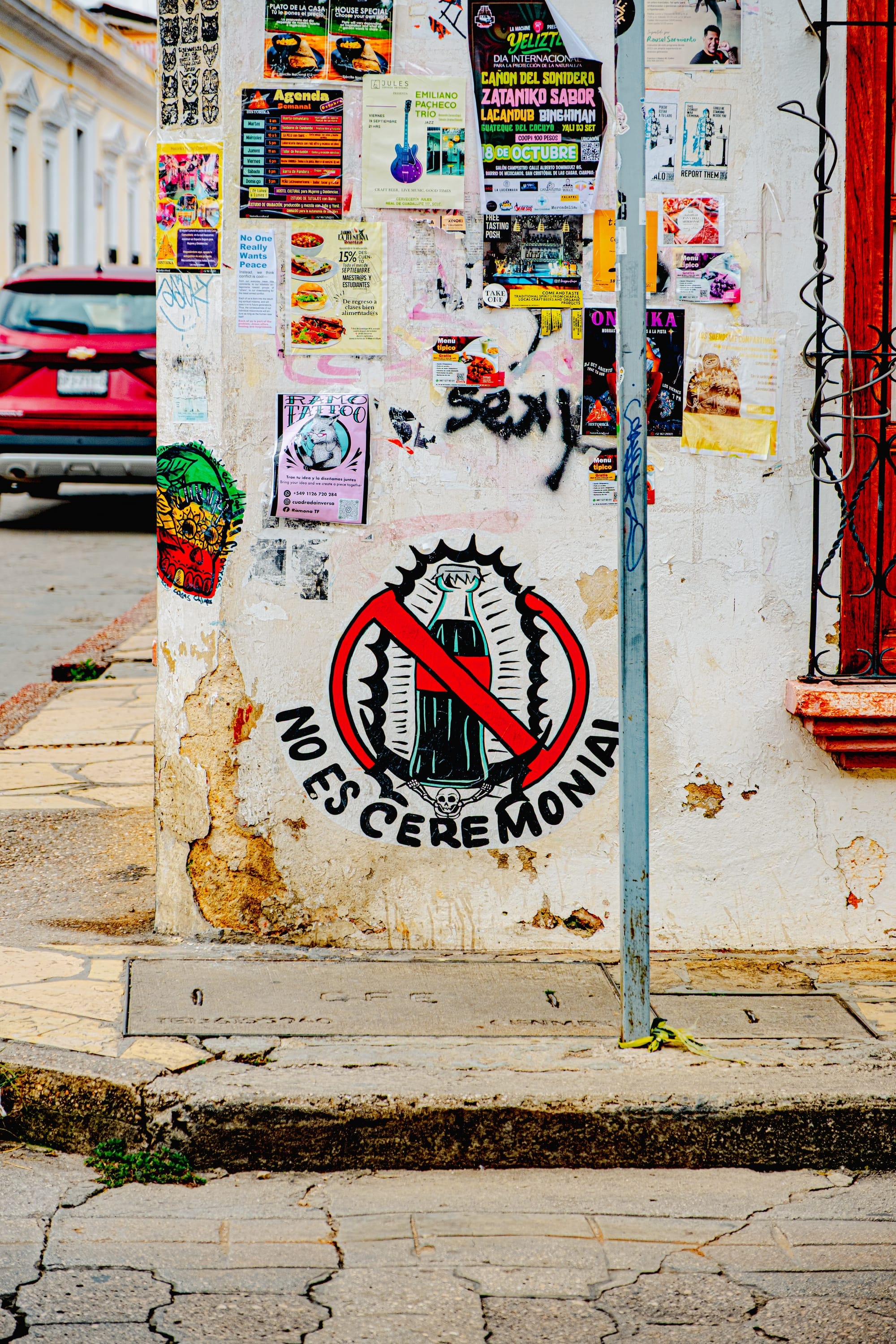
What FEMSA and Coca-Cola say
FEMSA says the plant supports about 1,600 jobs directly and some 15,000 more indirectly in Chiapas, and points to the reforestation, water recapture, and environmental education it pays for (Mexico News Daily). A Coca-Cola Mexico spokesperson told Al Jazeera that the company always follows local laws and has worked with local communities and NGOs on water access for nearly a decade. FEMSA did not reply to Al Jazeera's questions.
The protests
Residents and activists have campaigned against the concessions for years. On 18 March 2024, around World Water Day, protesters in San Cristóbal asked Mexico's National Water Commission (CONAGUA) to stop granting water concessions to large companies (SIPAZ). Mexico News Daily reports another protest in May 2024, and a petition led by the group Otros Mundos Chiapas to cancel FEMSA's concessions, with more than 24,000 signatures. In 2017, a UN Special Rapporteur on the right to safe drinking water urged Mexico to act on water and sanitation (University of Michigan case study).
Vicente Fox and Coca-Cola
You'll often hear that a former Coca-Cola boss became president of Mexico. That's partly true. Vicente Fox, president from 2000 to 2006, worked for the Coca-Cola Company from 1964 and ran Coca-Cola Mexico before resigning in 1979, more than 20 years before he took office (Wikipedia). Some reports describe him as a former FEMSA chief, but his biography names Coca-Cola Mexico, not FEMSA.
One local view: Art Librería
We interviewed Gerardo González Miranda, who runs Art Librería, a vegan restaurant and bookshop where the walls are covered in art about Coca-Cola and the Zapatistas. He blames the bottling plant for the city's water cuts. He also makes stronger claims: that fracking is happening around the plant, that Chamula's leaders take money from Coca-Cola, and that Fox's time as president was unconstitutional. Those are his views. We couldn't find public evidence for them. Read it for a passionate local perspective, not as a source of facts.
What this means for your visit
- Don't drink the tap water. Use bottled or filtered water, and refill large containers rather than buying lots of small bottles.
- Go easy on water. Short showers help when your neighborhood's supply is low.
- Don't go to a caracol uninvited. CIDECI-UniTierra welcomed respectful day visitors when we went, but check what's open before you go.
- Stay away from demonstrations. Marches are common, especially around Zapatista anniversaries and student protests, and the UK government's travel advice for Mexico says to avoid them.
- Ask before taking photos in Tsotsil and Tseltal towns, and never take them inside the Chamula church.
- Read the walls. A walk through El Cerrillo shows you both stories in an hour or two.
For everything else to see in the city, start with our list of things to do in San Cristóbal de las Casas, or browse more cultural travel.
Useful links: the Zapatista uprising on Wikipedia, Enlace Zapatista (the EZLN's own site), Al Jazeera on San Cristóbal's water, and Mexico News Daily on the water crisis.
FAQ
Is San Cristóbal de las Casas a Zapatista town?
No. The EZLN took the town hall on 1 January 1994 and peace talks were held here in 1994, but the city is governed by an ordinary municipal government. Zapatista communities are in the surrounding highlands and jungle. You'll see a lot of Zapatista art and merchandise in town, and opinions on the movement vary.
Can you visit a Zapatista caracol?
Not as a tourist. After the EZLN's November 2023 restructuring, the caracoles were reported closed to outsiders, and Oventic was closed when we were in San Cristóbal. CIDECI-UniTierra on the edge of the city is a good alternative for respectful visitors.
Is the Zapatista movement still active?
Yes. In November 2023 it replaced its autonomous municipalities and Good Government Boards with local autonomous governments in each community, citing violence between criminal groups in Chiapas.
How much water does the Coca-Cola plant in San Cristóbal use?
Its permits allow between about 1.14 million liters a day (Al Jazeera, University of Michigan) and about 1.32 million liters a day (Mexico News Daily, SIPAZ). We couldn't find figures for how much it actually extracts.
Why do people drink Coca-Cola in the Chamula church?
Soda is part of healing rituals in San Juan Chamula, because burping is believed to release bad spirits. Pox, a local sugarcane spirit, and candles are used too.
Is the tap water safe to drink in San Cristóbal?
No. Drink bottled or filtered water. A 2023 national survey cited by Al Jazeera found that only 7 percent of Chiapas households trusted their tap water.


