
San Cristóbal de las Casas is a small, walkable colonial city at about 2,200 meters in the highlands of Chiapas, in southern Mexico. The best things to do are walking the historic center and its churches, the markets, the murals of El Cerrillo, the Tsotsil Maya towns of Chamula and Zinacantán, and day trips to Sumidero Canyon, El Chiflón, Montebello Lakes, and the Palenque ruins. Give the city itself four or five days, and add a weekend if you want Palenque. November to April is the dry season, and late October into early November brings Day of the Dead. We arrived at the end of the rainy season, stayed through Día de Muertos, and most of this list comes from that time.
San Cristóbal de las Casas at a glance
How long: Four or five days for the city and nearby towns, plus a weekend for Palenque
Don't miss: The churches and center on foot, El Cerrillo's murals, the food market, Chamula, and Sumidero Canyon
Free: The churches, the markets, the street art, and the Day of the Dead cemeteries
Best time: November to April (dry), or late October for Day of the Dead
Getting there: Fly to Tuxtla Gutiérrez (TGZ), about 1.5 hours away by road
Getting around: On foot in town, cheap taxis, and colectivos or tours for day trips
Where to stay: The center for a short trip, Barrio de Mexicanos or El Cerrillo for longer stays
In the historic center
1. Walk the center and Real de Guadalupe
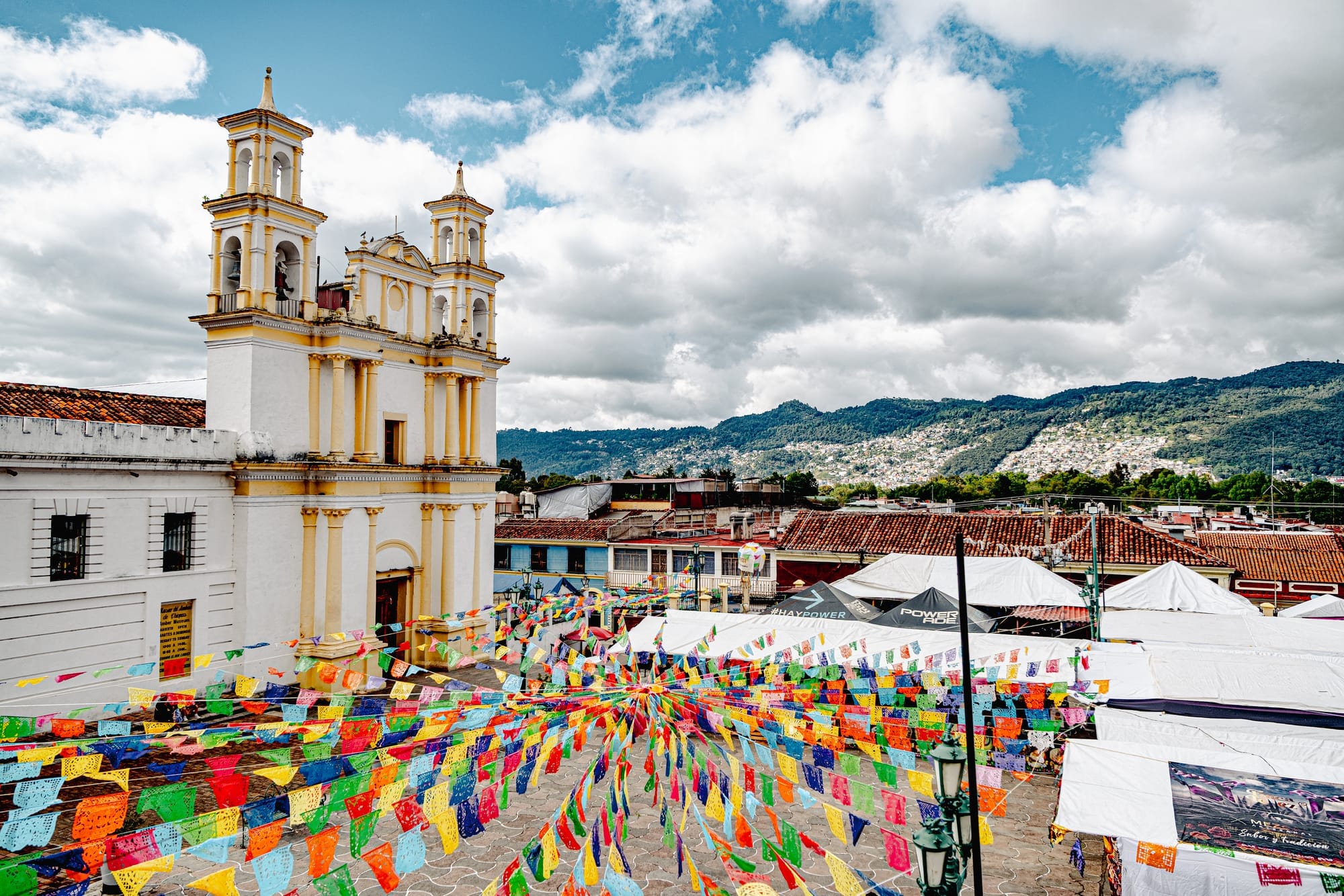
Start at the main plaza and the yellow cathedral, then follow the pedestrian streets. Real de Guadalupe runs east from the plaza toward the Guadalupe church, and Andador Eclesiástico runs north to Santo Domingo and south to the El Carmen arch. Every central neighborhood is within about 15 minutes' walk of the main square, so this is how you'll get around most days. Read more in our guide to living in San Cristóbal de las Casas.
2. See the best churches in a morning
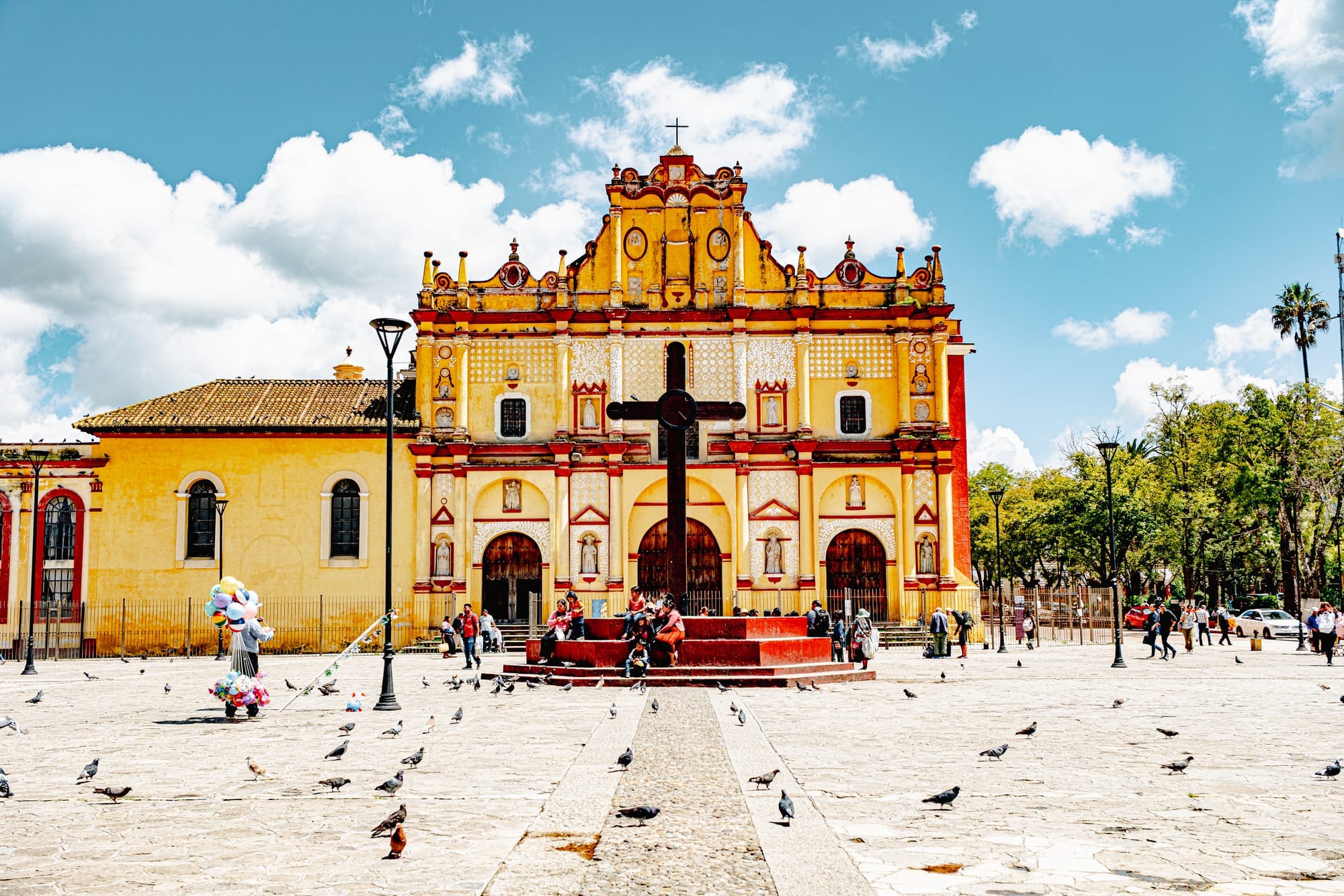
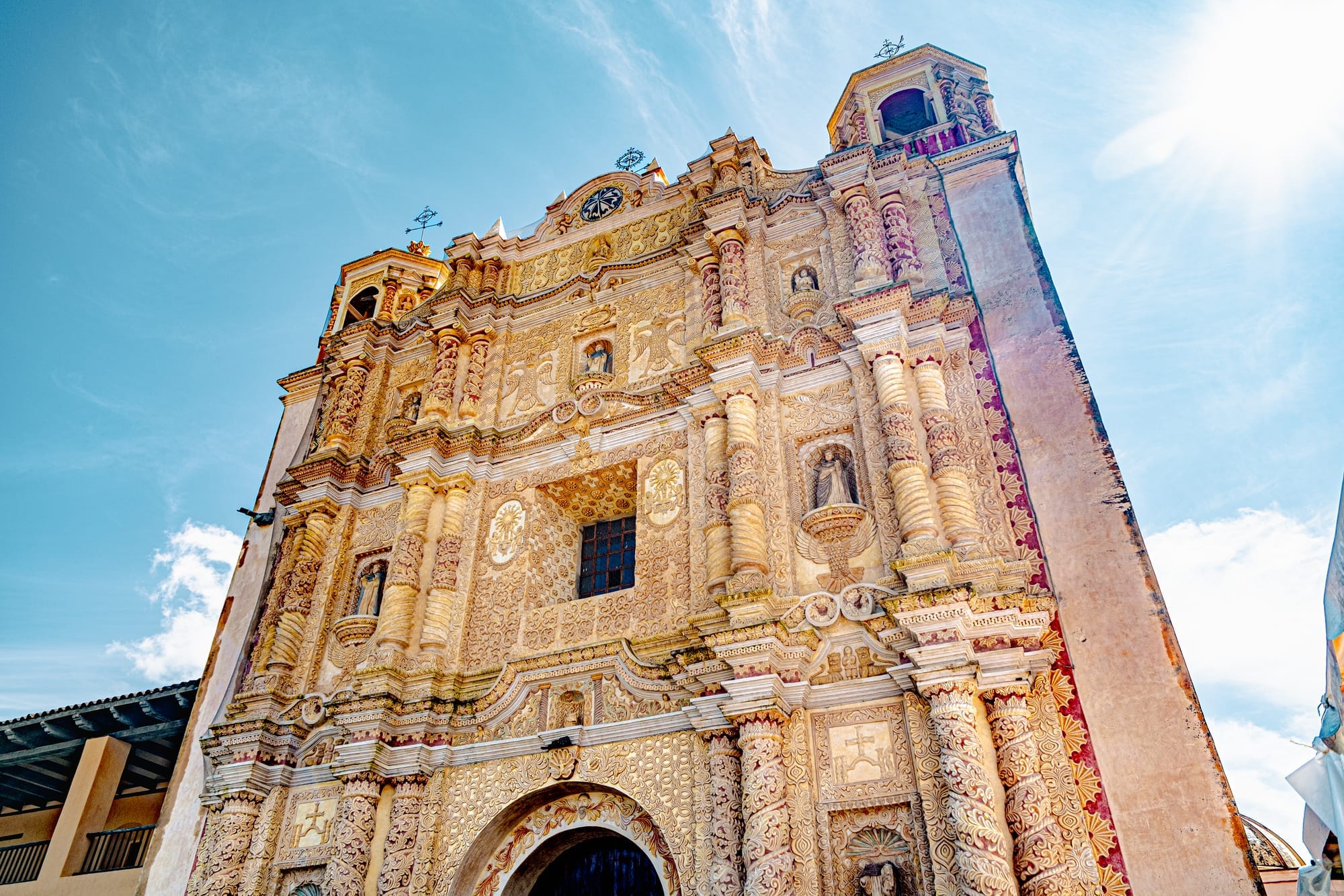
The city has dozens of churches, and you can see the best in one morning on foot. Santo Domingo's carved pink Baroque facade is the most ornate in town, the cathedral dates back to 1528, and La Caridad stands right beside Santo Domingo. Entry is free, and covered shoulders are a good idea. Our guide to the churches of San Cristóbal has a route and the dates for each.
3. Climb to Guadalupe and El Cerrito for the views
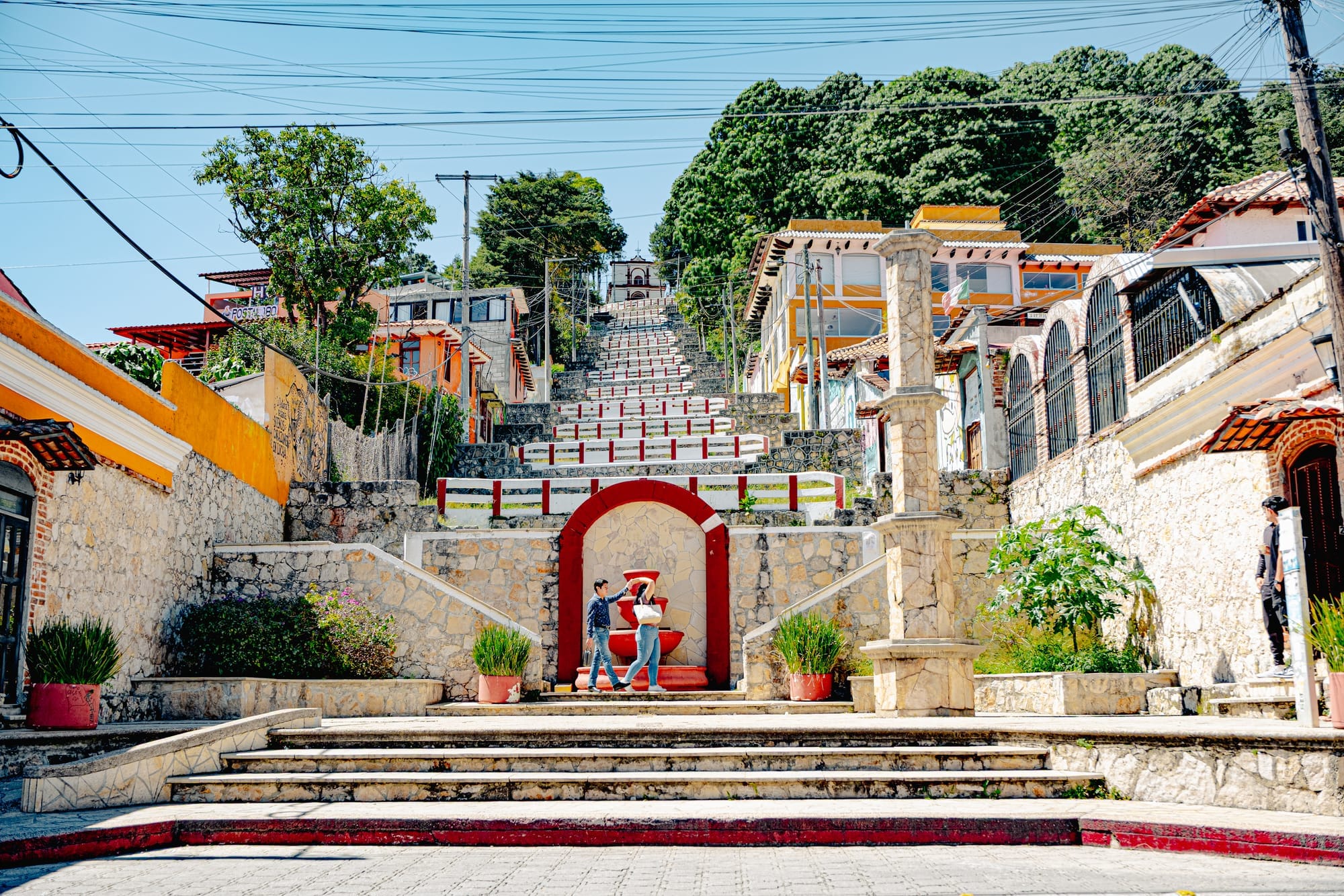
Two hilltop churches give you the best views over the red roofs. Templo de Guadalupe sits 79 steps up at the end of Real de Guadalupe, and Templo de San Cristóbal (El Cerrito) is at the top of a long zigzag staircase west of the center. Take your time: the altitude makes the stairs harder than they look.
4. Find the street art of El Cerrillo
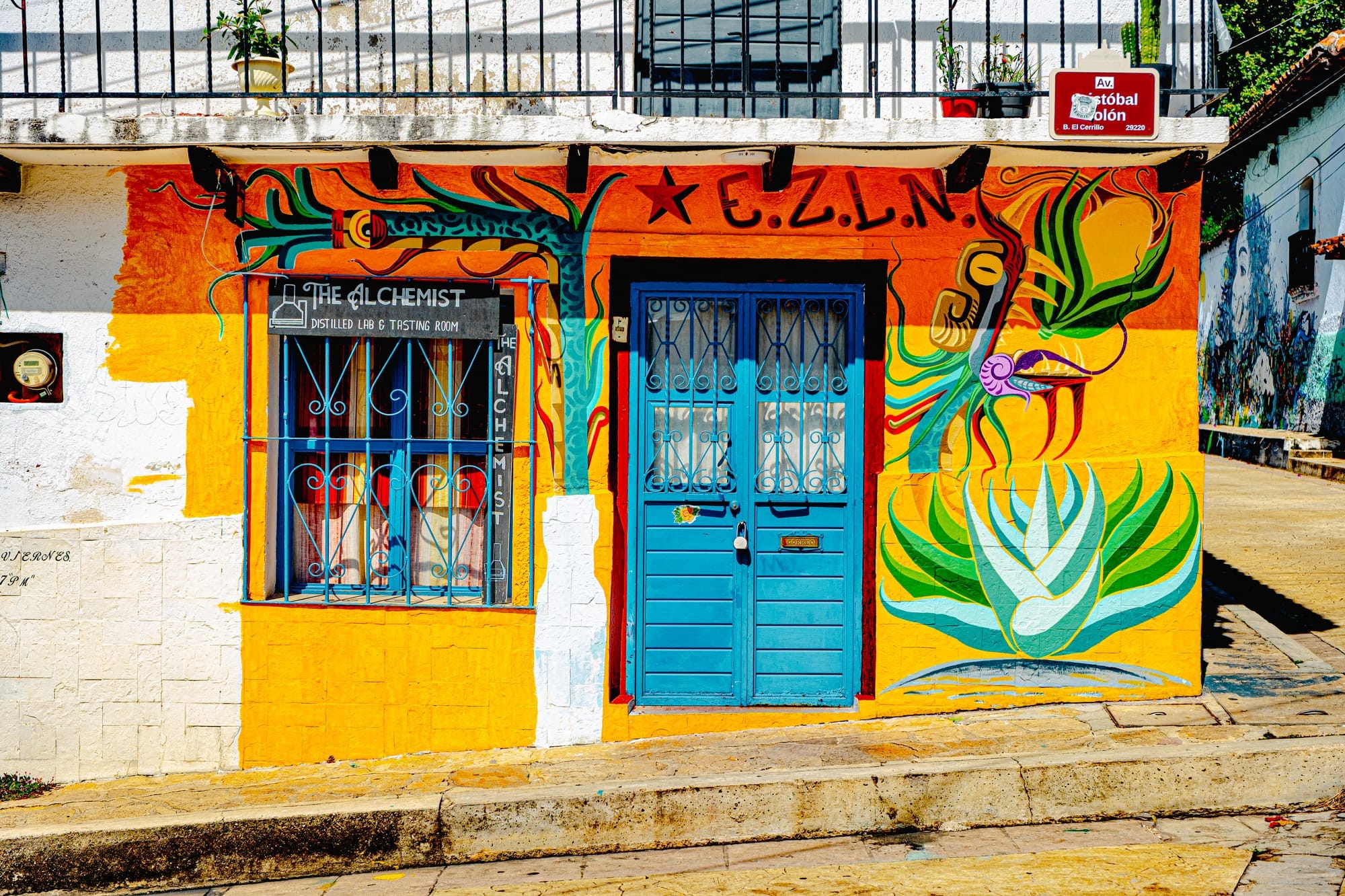
El Cerrillo, one of the oldest barrios in the city, is just behind Santo Domingo and has the best murals: Zapatista, Indigenous, feminist, and water-rights themes, with corn showing up again and again. It's free, and a self-guided walk takes one to two hours, ideally in the morning. We went to a sticker fest in the barrio and met the muralist Carlos Cea. See our El Cerrillo street art guide for where to look.
5. Shop the food market and the crafts market
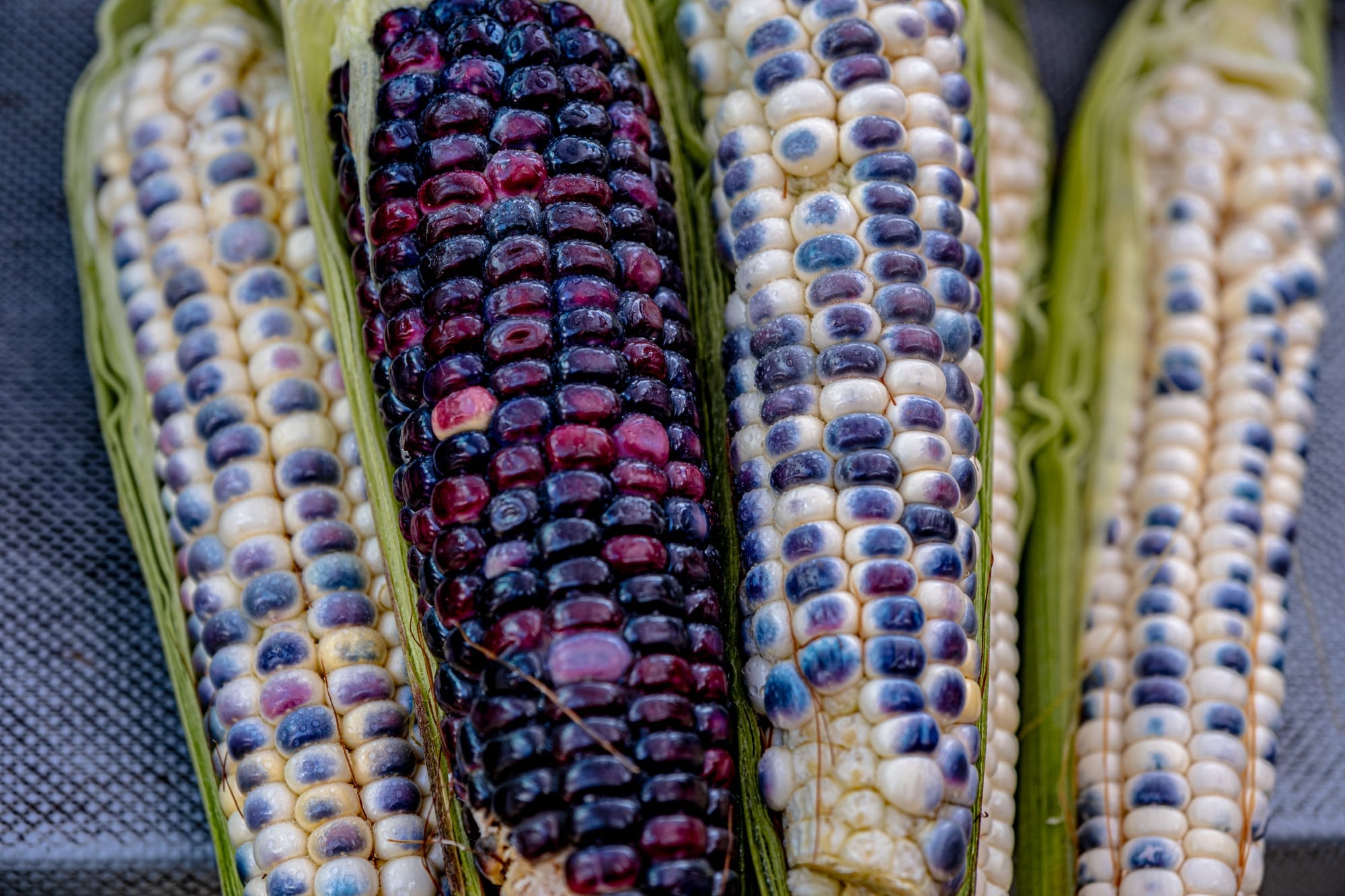
There are two main markets. The big food market (officially Mercado Municipal José Castillo Tielemans, though many people call it Santo Domingo Market) is about ten minutes' walk north of the cathedral and opens from about 7 am, so go in the morning for produce, corn, tamales, and pozol. The crafts market fills the area around Santo Domingo, so save it for the afternoon. Both are free. The food market is where we found our favorite vegan cornbread. More in our San Cristóbal market guide.
6. Eat your way through the vegan places
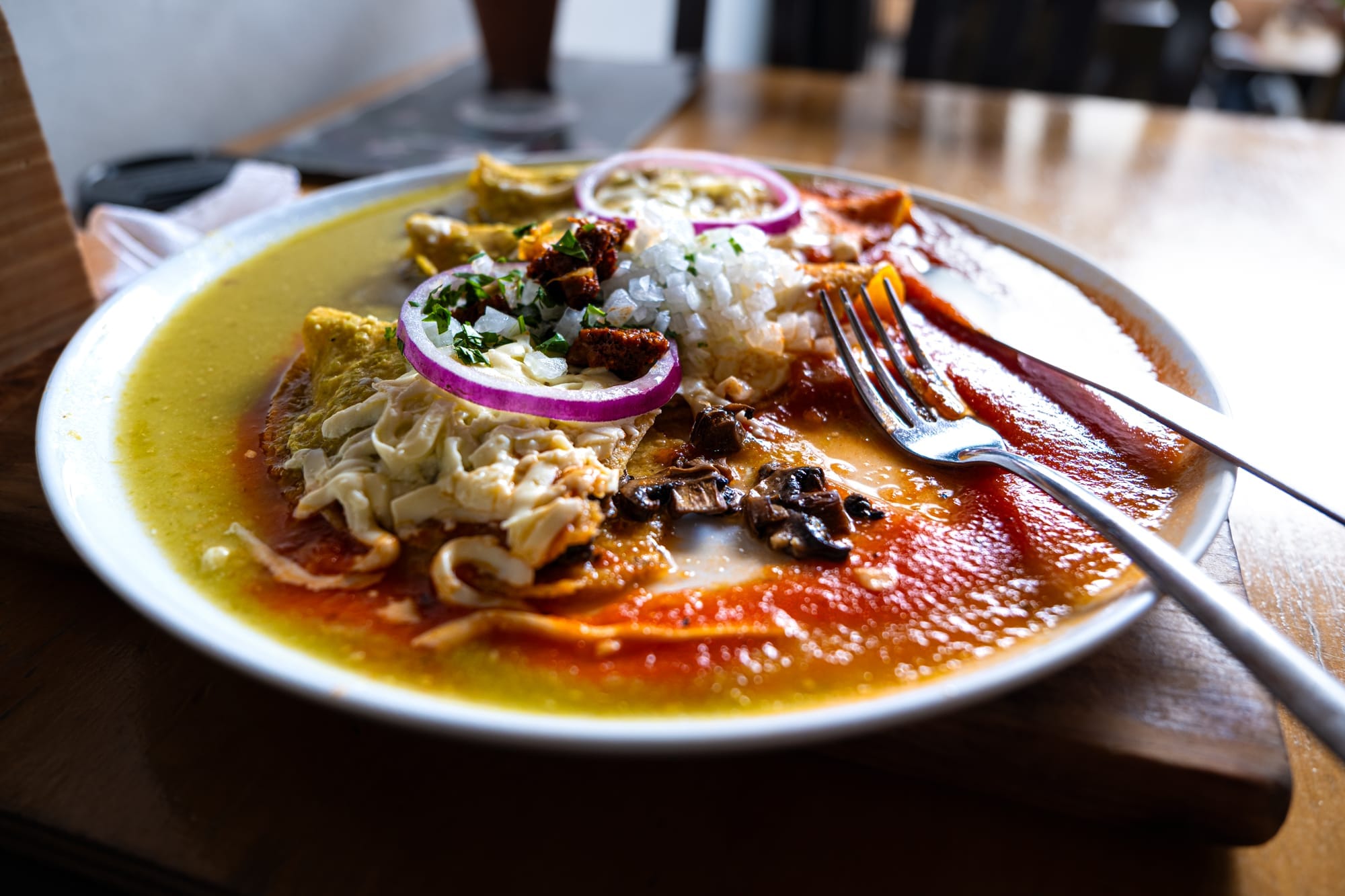
Eating vegan here is easier than you'd expect. Art Librería, Te Quiero Verde, and Inina are our favorite fully vegan places, a market tamal costs about 20 to 25 pesos, and most sit-down vegan meals cost about 100 to 200 pesos (2026, check locally). Our vegan San Cristóbal guide has addresses and hours, and there's more on our vegan travel page.
7. Visit the Moxviquil orchid reserve
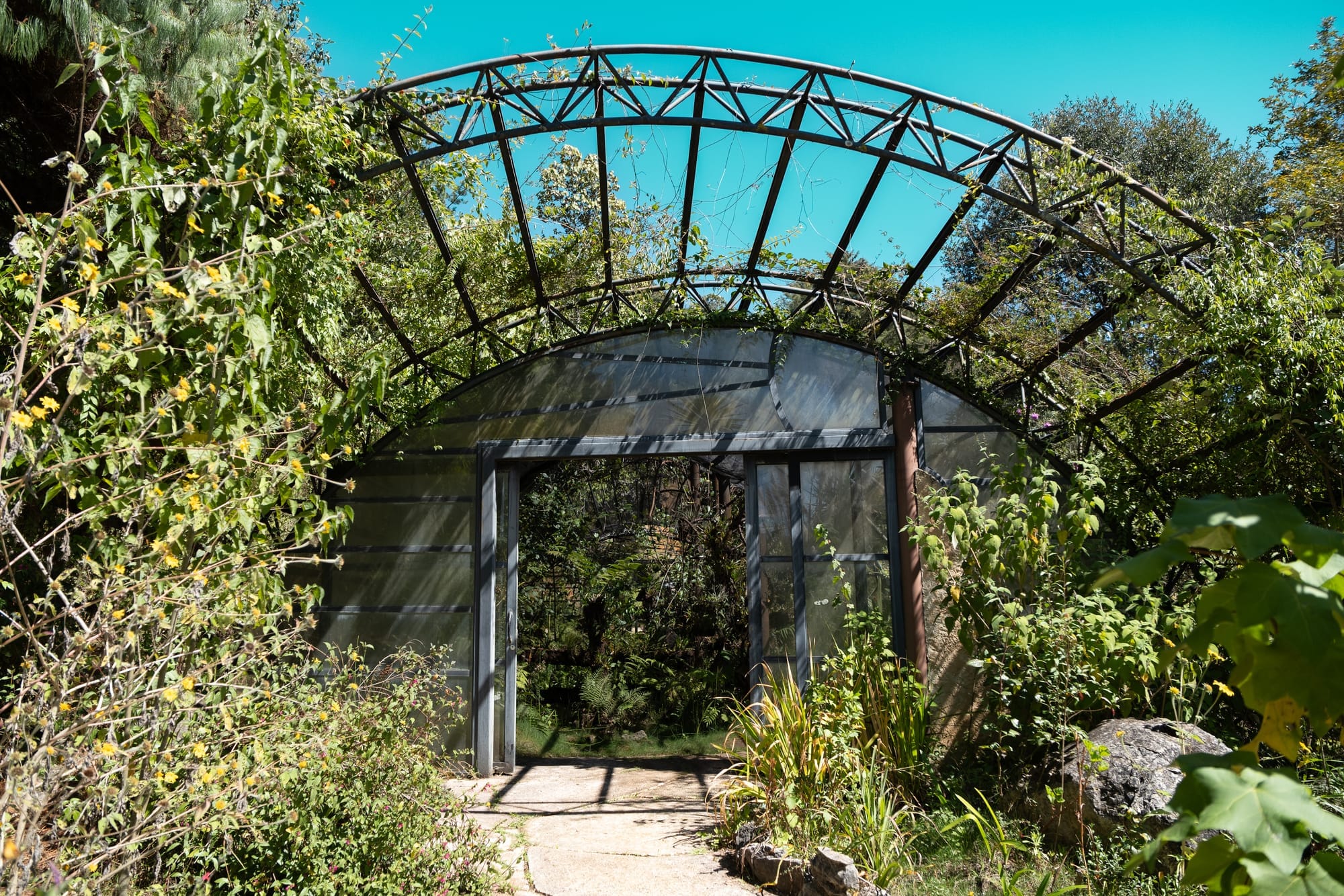
Orquídeas Moxviquil, on the northern edge of town, holds around 400 of the state's orchid species, rescued from logged and cleared forest, plus a trail up to the remains of a small Maya site. It's about a 30-minute walk or 10 minutes by taxi from the center. Entry was roughly 50 pesos for the garden or about 90 with the trail in recent reports, so check before you go. We liked arriving late morning. Read our Moxviquil guide.
Classes and workshops
8. Take a vegan cooking class with Itzel
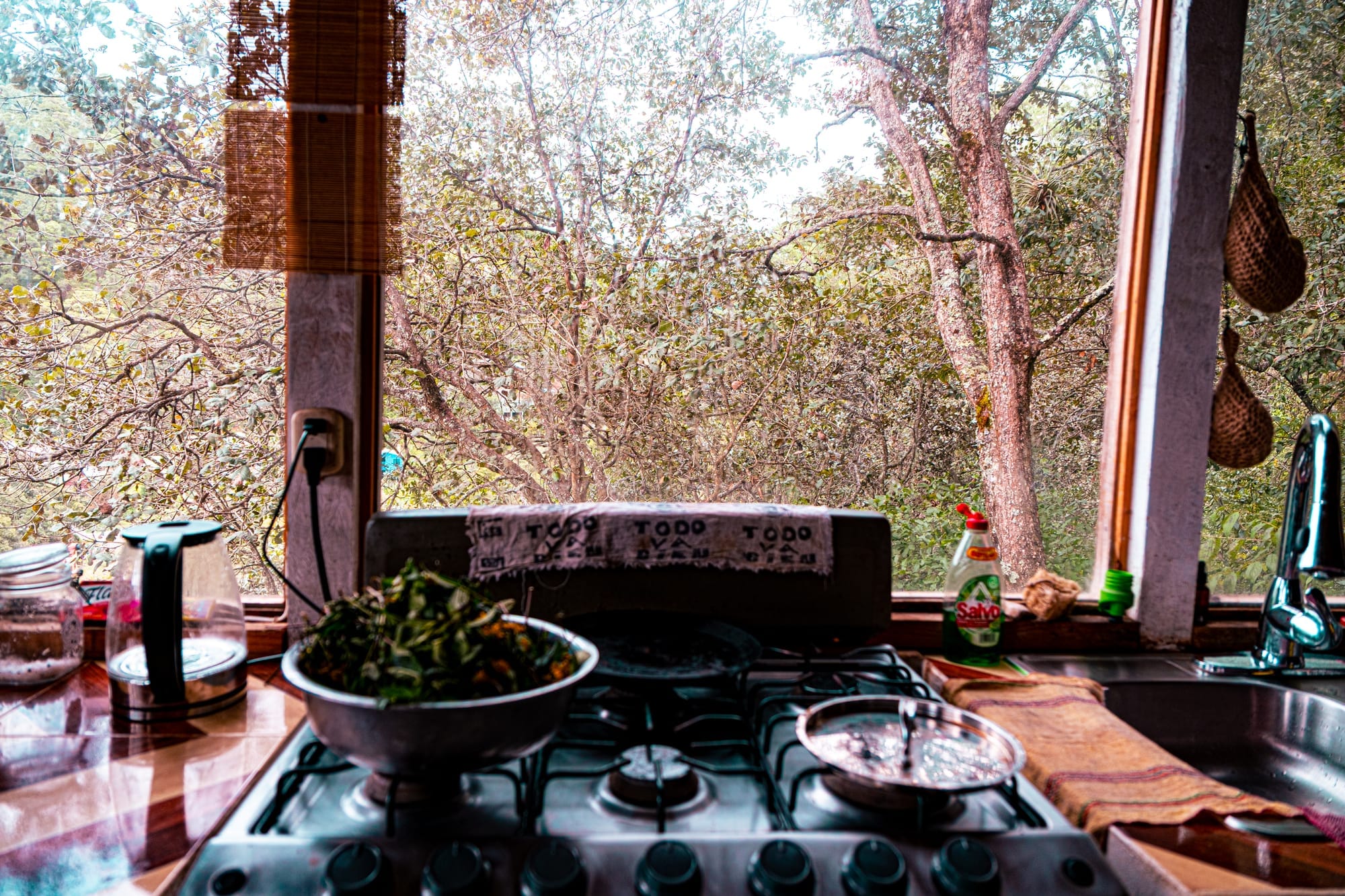
This was one of our favorite experiences in town. You meet for a cacao, shop for produce at the market, then walk up to Itzel's home above the city and cook a full vegan meal, including oyster mushroom mole, salsas, and hibiscus water. There's no fixed price online, so message her to book and agree the cost first. Full details in our post on the vegan cooking class in San Cristóbal.
9. Learn to make vegan cheese at Art Libreria
Gerardo, the founder of Art Libreria, teaches a vegan cheese workshop built around rajas con queso, with an almond cheese. There's no online booking, so ask him in person and agree the price and time. We'd eaten there many times before we signed up. Read about the Art Libreria vegan cooking class, and our interview with Gerardo.
10. Do a cacao workshop
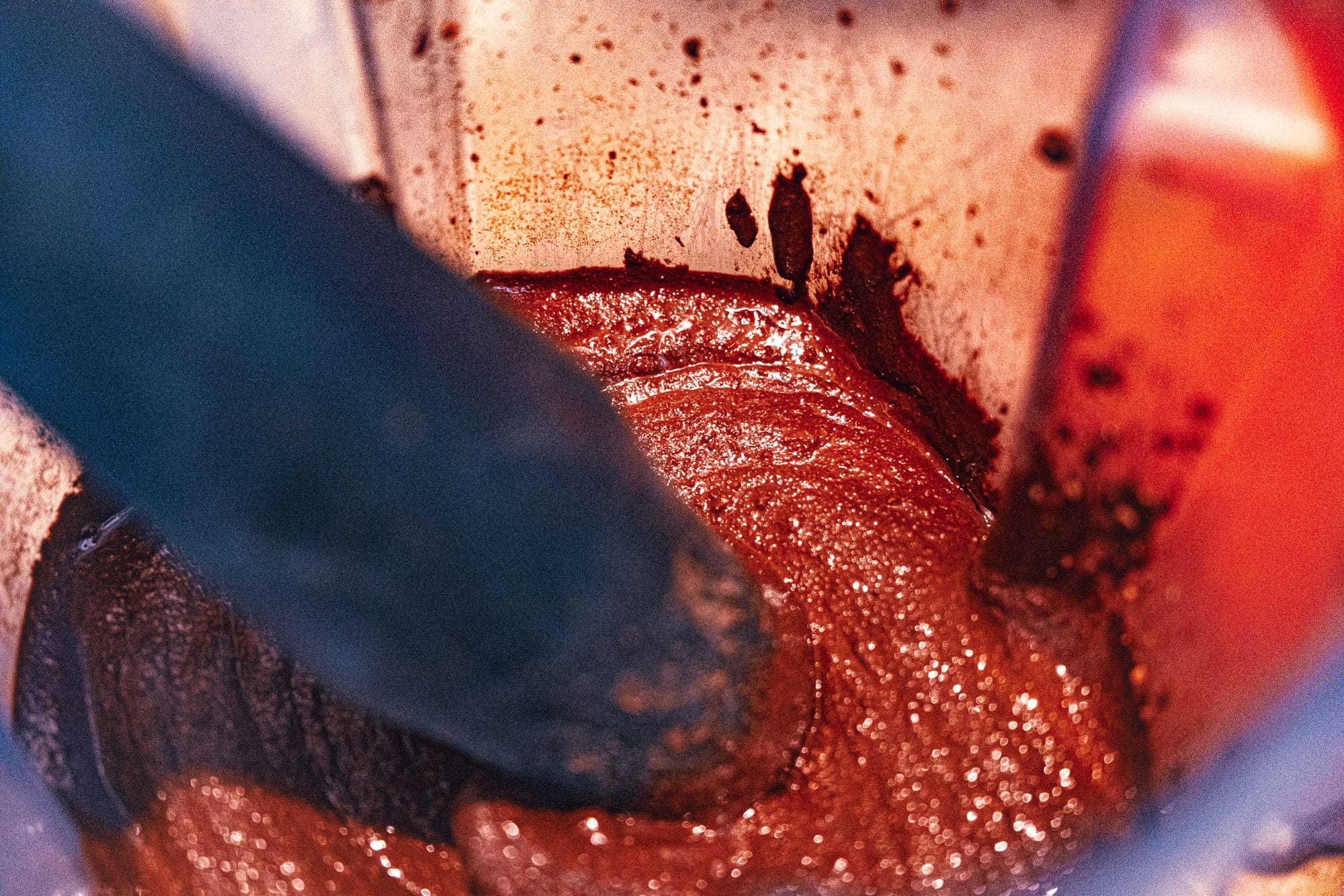
We spent a morning with Guillermo of Element Cacao on his land outside town, roasting and shelling raw beans, grinding them, and rolling vegan truffles. The Kakaw cacao museum in the center also runs a bean-to-bar class for about MXN 250 (check current prices). Both are in our cacao workshop guide.
Day of the Dead
11. Spend Día de Muertos in town
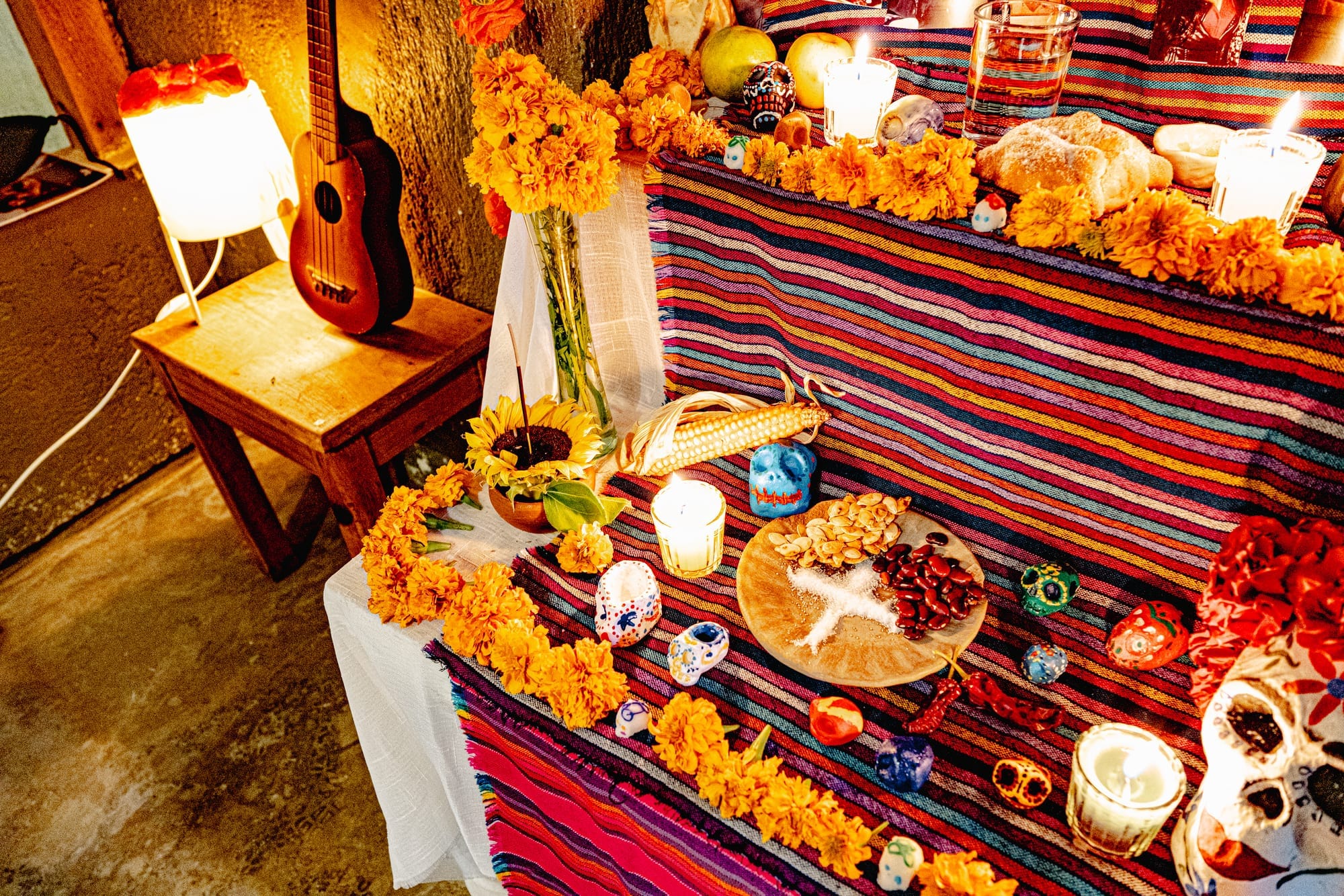
Day of the Dead runs mainly on November 1 and 2, with costumes from the evening of October 31. Expect marigolds everywhere, altars in homes and cafés, and a face-painted parade. Plan three or four days if you can. It's one of our most memorable travel experiences, and our Day of the Dead in San Cristóbal guide covers the dates and where to go.
12. Visit the Panteón Municipal
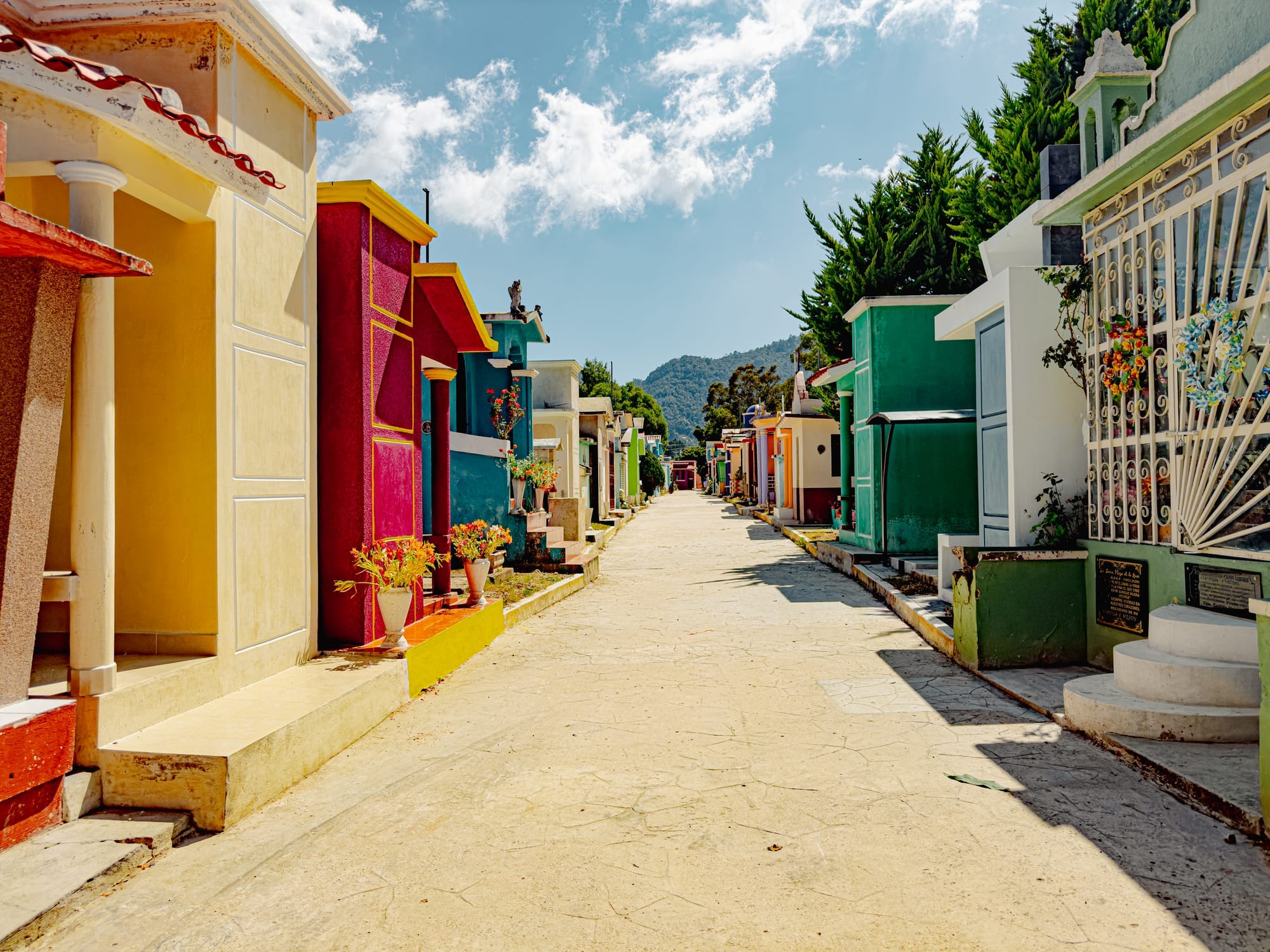
The city's main cemetery, in Barrio de Fátima, is a maze of painted mausoleums, open from about 7 am to 6 pm (2026, check around the holiday). The last week of October, when families repaint the tombs, is a good time to see it, and on November 1 and 2 families spend the whole day there. We went twice. Read our posts on the cemetery before Day of the Dead and on Day of the Dead.
13. Spend November 1 at Romerillo
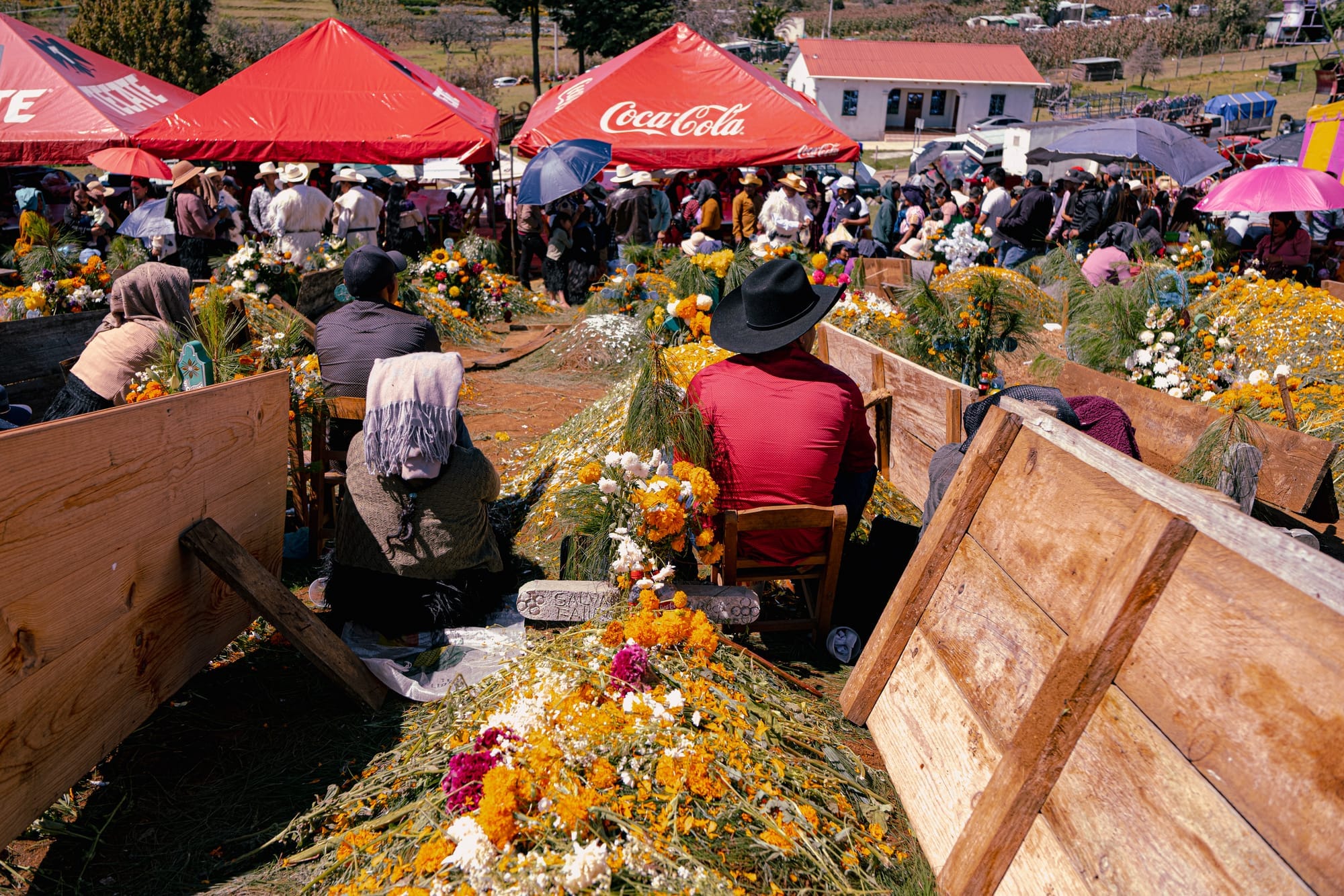
Romerillo, a Tsotsil Maya cemetery about 30 minutes by taxi from town, is known for its 22 tall crosses. On November 1, families remove the wooden planks over the graves, spread pine needles and marigolds, and share food and music. It's free. Visiting on Día de Muertos is probably our single best travel experience, but when we went back on November 2, it was almost empty. Read our Romerillo guide before you go, and visit with respect.
14. See the flowers at Zinacantán cemetery
Zinacantán's hilltop cemetery, about 20 minutes away, is the most flower-filled place to see Day of the Dead in the area. We arrived around midday on November 1 and found it calm, so go early if you want to see families at the graves. More in our Zinacantán Day of the Dead post.
Just outside town
15. Visit Chamula and Zinacantán
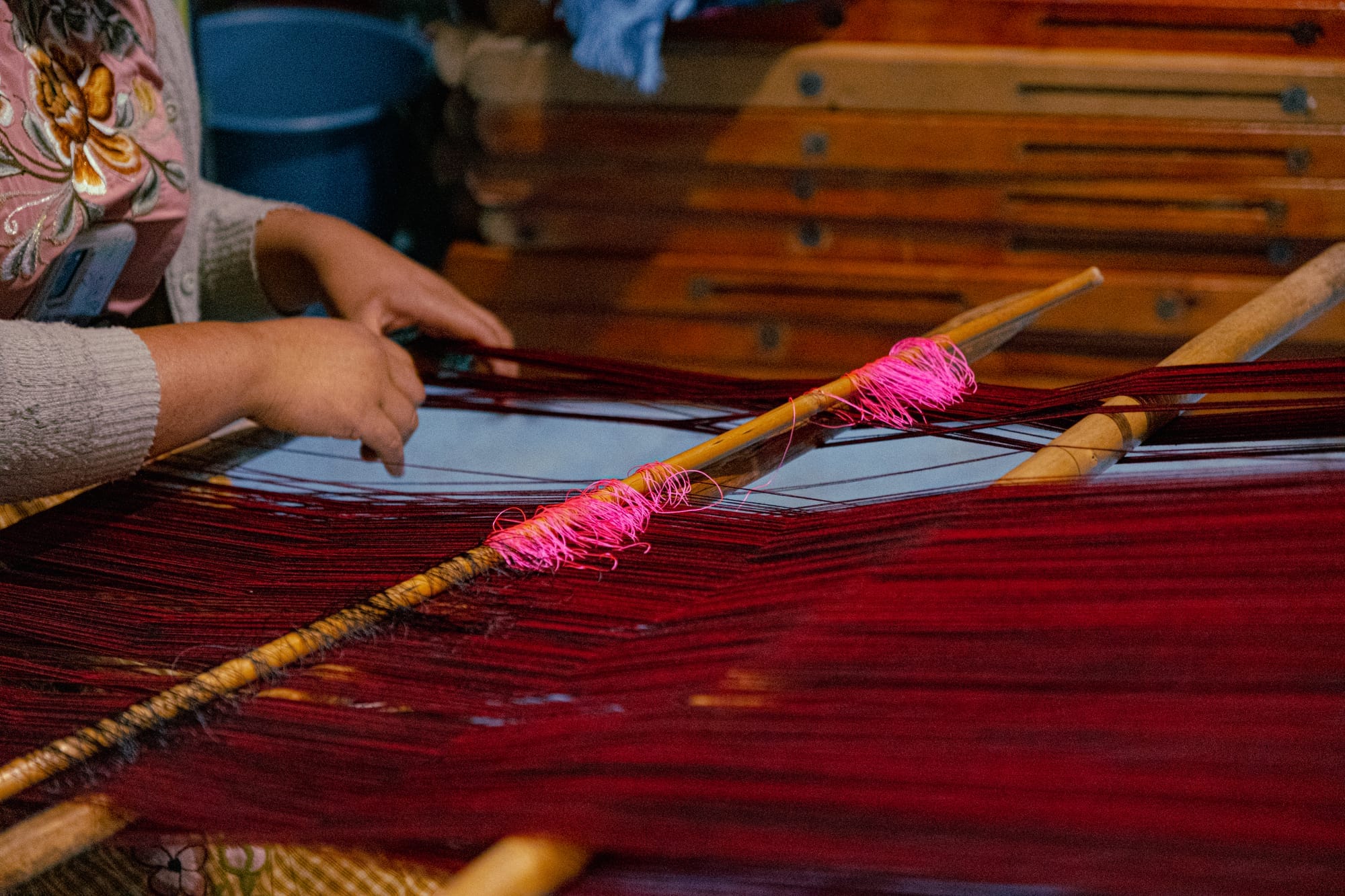
San Juan Chamula, about 10 km away, is famous for its church of San Juan Bautista, where pine needles cover the floor and families hold healing rituals by candlelight. Entry is about 30 to 35 pesos, and photos inside are strictly banned. Neighboring Zinacantán is known for flowers and weaving. A colectivo takes about 20 minutes, Sunday market day is the busiest, and a local guide gives you the context. Read our Chamula and Zinacantán guide.
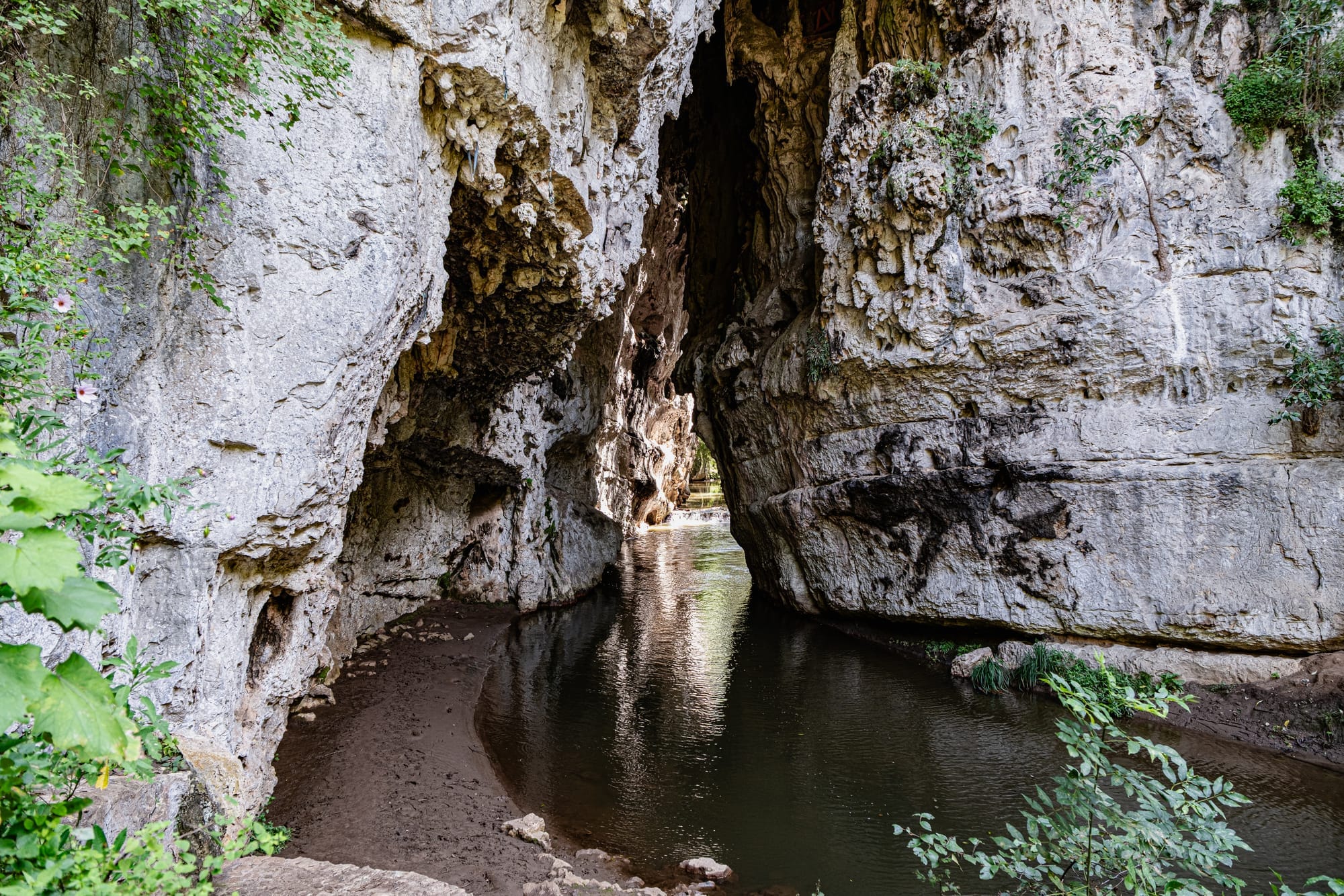
16. Walk under the arch at El Arcotete
El Arcotete is an eco-park about 4 to 6 km east of town, built around a limestone arch over a river, with caves and forest trails. It's about 20 minutes by colectivo or taxi, entry is a few dozen pesos, and two or three hours is enough. We went with friends from our coliving. See our El Arcotete guide.
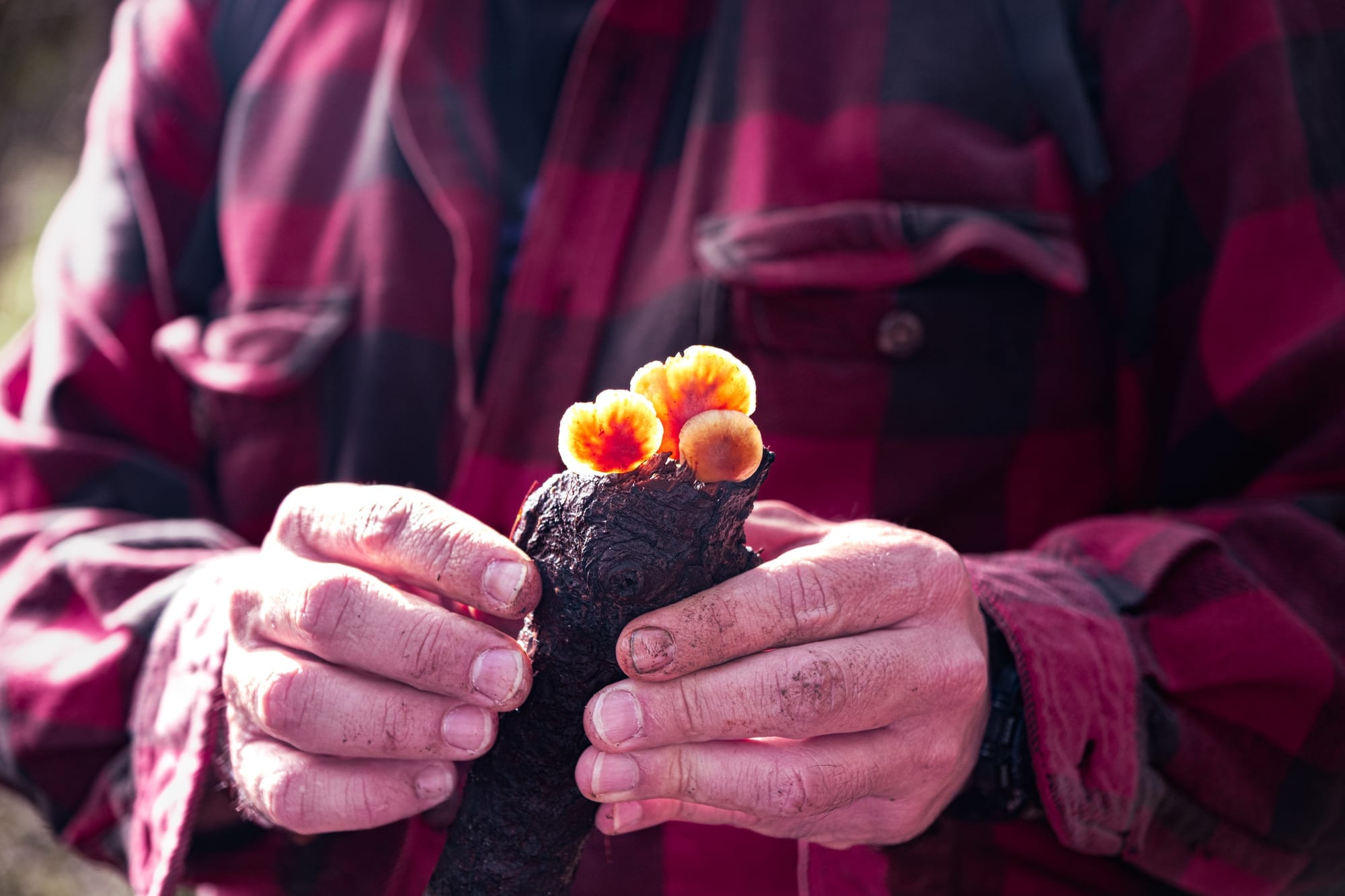
17. Go on a fungi hike
In the rainy season, roughly June to October, the pine and oak forests around town fill with mushrooms. We did a day trip with a mycologist, organized by the collective Pop-Up San Cris, with easy forest walking and a vegan lunch of the mushrooms he identified. Never eat a wild mushroom an expert hasn't checked. Read about our fungi hike, and find more walks on our hiking page.
18. Visit CIDECI-UniTierra
CIDECI-UniTierra is an autonomous educational center on the edge of town, closely tied to Zapatista thought. Our visit helped us understand how ideas about autonomy and education work in practice in Chiapas. Read about our visit to CIDECI first, and go with respect.
Day trips from San Cristóbal
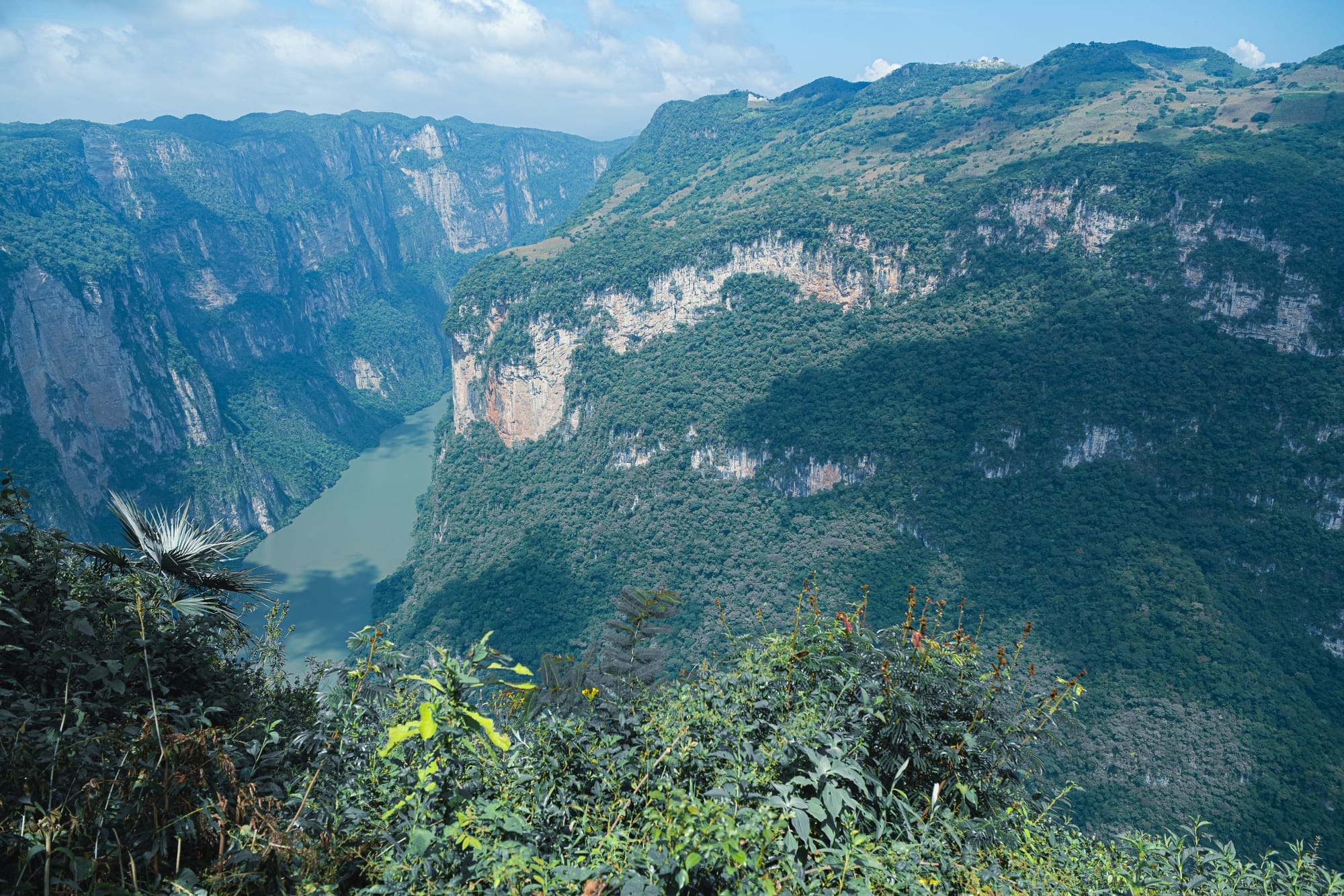
19. Sail Sumidero Canyon
Sumidero Canyon, about an hour away, has cliffs up to 1,000 meters high. You see it on a two-hour boat ride on the Grijalva River from Chiapa de Corzo, past crocodiles, spider monkeys, and the Christmas Tree waterfall. The boat costs about 400 to 460 pesos in 2026, plus a small park fee (check locally). With the rim viewpoints and Chiapa de Corzo, it fills a day. We did it as a day tour, and it's one of the best trips in Chiapas. Read our Sumidero Canyon guide.
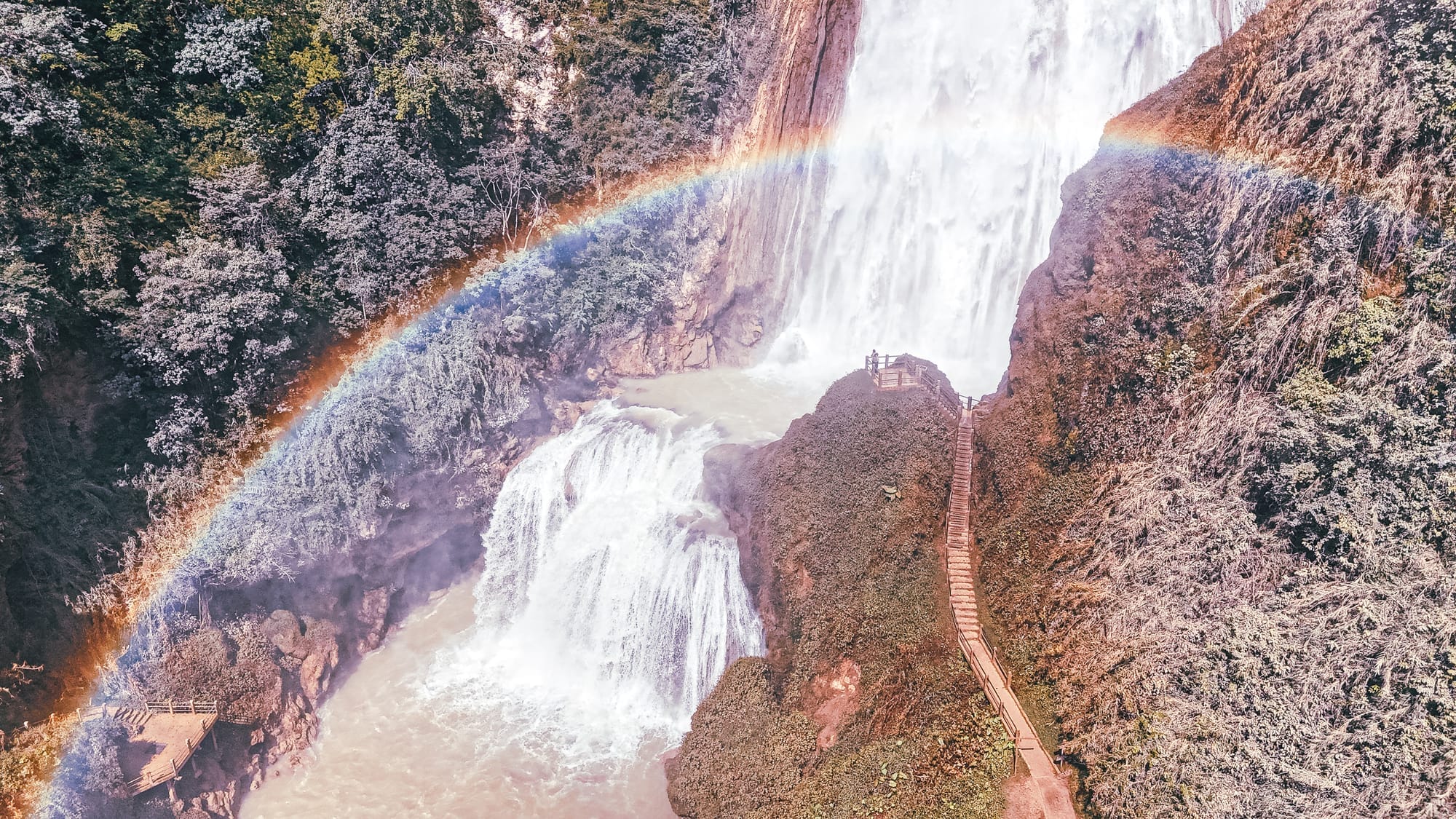
20. Swim at El Chiflón
El Chiflón is a chain of five waterfalls near Comitán, about 2.5 to 3 hours away. The tallest, Velo de Novia, drops about 120 meters, and a paved trail with plenty of stairs climbs about 1 km to it. Entry was around 50 to 80 pesos in recent reports, cash only. We spent several hours here and swam in the river. Read our El Chiflón guide.
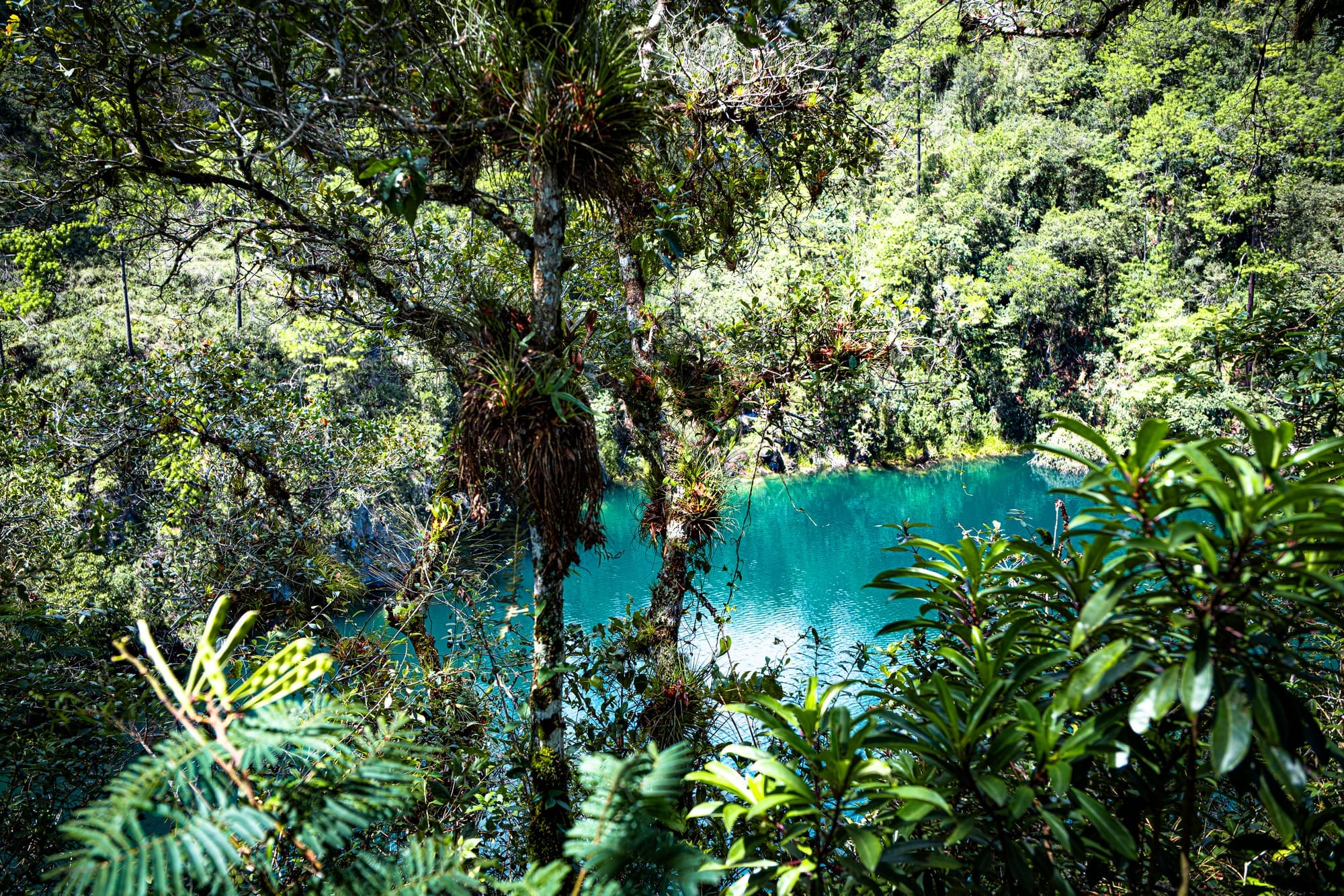
21. Spend a weekend at Montebello Lakes
Lagunas de Montebello is a national park of 59 lakes in pine forest on the Guatemala border, about three hours from town. Expect a small park fee plus community fees of roughly 25 to 50 pesos per site, and carry cash. One long day covers the main lakes, but we spent a weekend there with friends in lakeside cabins and were glad we did. Read our Montebello Lakes guide.
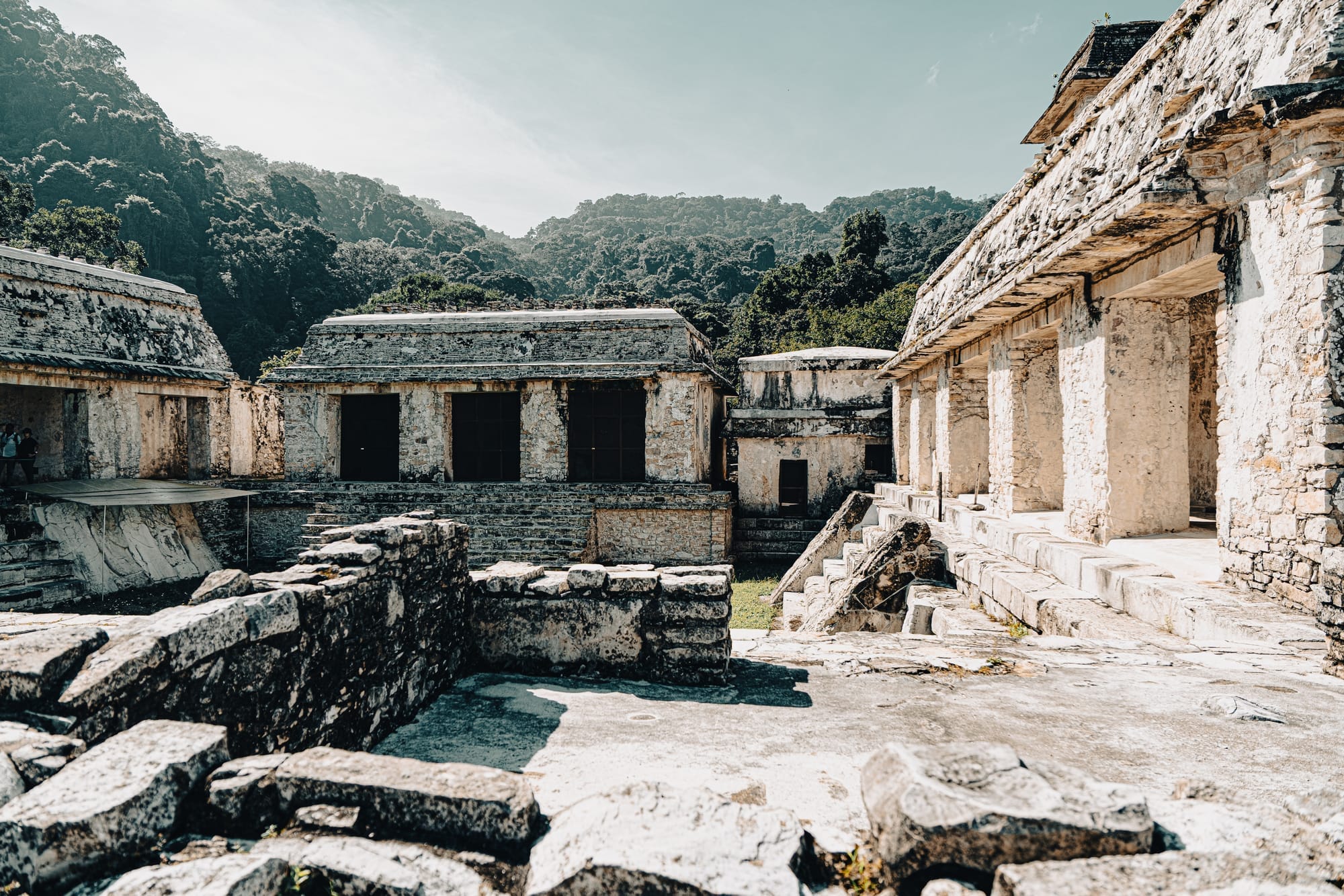
22. See the Palenque ruins
Palenque, a Classic Maya city in the rainforest of northern Chiapas and a UNESCO World Heritage Site, was the most memorable trip we made in Chiapas. It's five to six hours by road, so we'd make it a weekend. In 2026, foreign visitors pay about 210 MXN for the archaeological zone and about 215 MXN for the national park, and the site opens daily from 8 am to 5 pm (check the INAH page). Read our Palenque guide and our ancient ruins page.
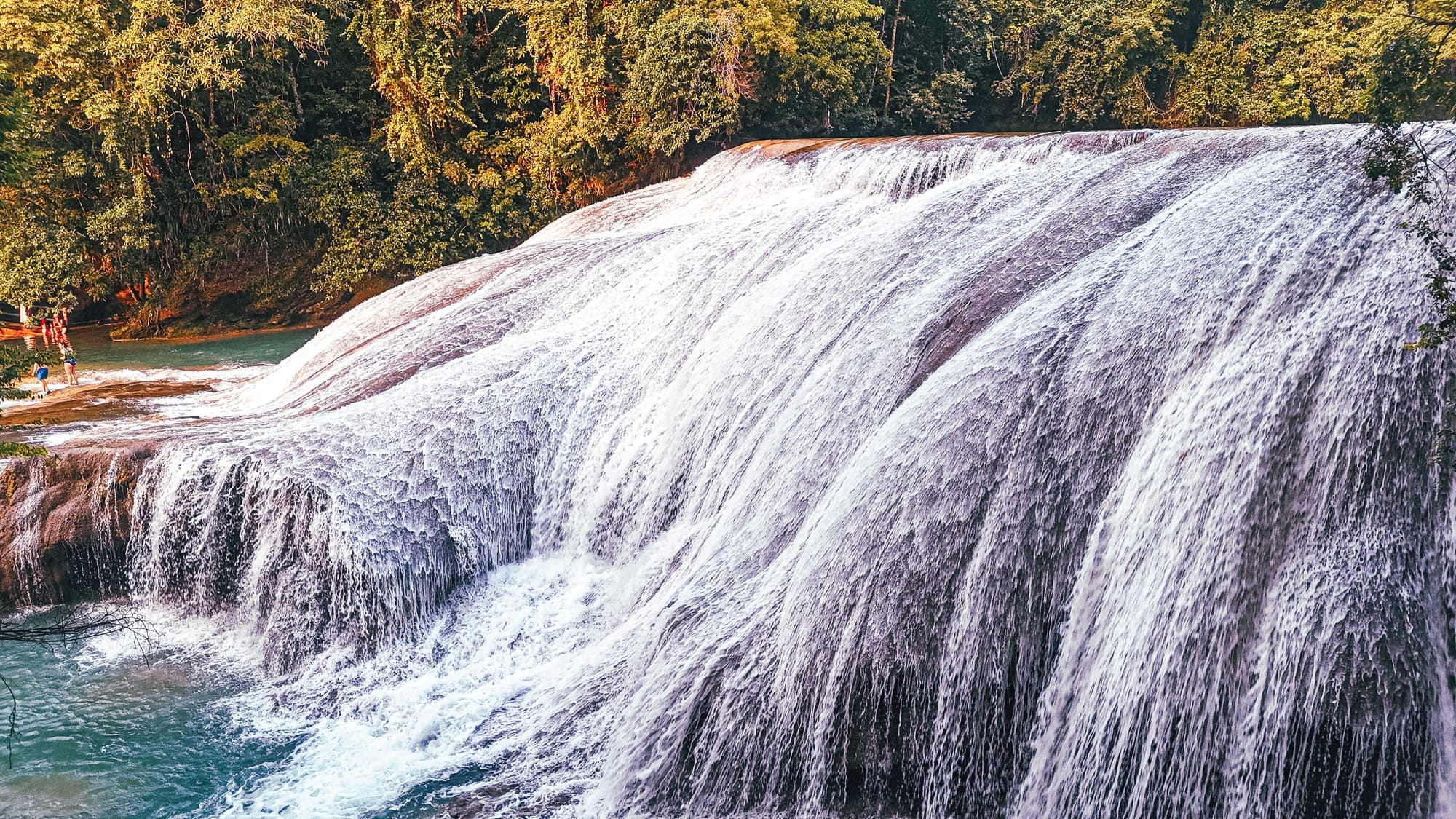
23. Swim at Roberto Barrios and Misol-Há
Two waterfalls near Palenque are worth fitting into that weekend. The Roberto Barrios waterfalls are our favorite in Chiapas: a chain of turquoise pools where you can swim, climb the rock shelves, and walk behind the falls, for about 20 to 30 pesos. Misol-Há is a single 35-meter fall about 20 km from Palenque, with a path into the cave behind the water. We stopped there on the drive with friends.
More things to do in San Cristóbal de las Casas
24. Tour Casa Na Bolom
Na Bolom was the home of the archaeologist Frans Blom and the photographer Gertrude Duby Blom, and it's now a museum and cultural center with a library, gardens, and a guesthouse. Recent listings give daily hours of about 9 am to 7 pm and entry of around 40 to 60 pesos, but these vary, so check before you go.
25. See the Amber Museum
Chiapas is known for its amber, and the Museo del Ámbar de Chiapas, in the former convent of La Merced, explains where it comes from and how it's worked. Recent listings say it's closed on Mondays and charges a small fee, so check the hours locally. It's a good way to learn what real amber looks like before you buy any in the markets.
26. Consider Agua Azul
Agua Azul is a series of wide blue limestone cascades about 64 to 69 km from Palenque, off Highway 199. Many day tours combine it with Misol-Há and the Palenque ruins. We didn't make it there, so we can't speak to it first-hand. Check current access and fees locally before you plan around it.
Tips for San Cristóbal de las Casas
Pack clothes you can add and take off. At about 2,200 meters, days can be warm and nights cold, and older buildings rarely have heating. Carry cash in small notes for markets, colectivos, and entry fees at waterfalls and villages. Taxis are cheap, but agree the fare first by asking "¿cuánto cuesta?". Ask before photographing people, and never take photos inside the church in Chamula. Mobile signal drops out in parts of town, so download offline maps, and a Telcel prepaid bundle from an OXXO shop is the easy option. For long day trips, leave early: Palenque, Montebello, and El Chiflón are all several hours away.
Where to stay in San Cristóbal de las Casas
For a short trip, stay in the historic center near the cathedral and Real de Guadalupe, where everything is walkable. For a longer stay, Barrio de Mexicanos and El Cerrillo are calmer and still close. We stayed at Co404, a coliving in Barrio de Mexicanos about 15 minutes' walk from the center, and liked it enough to extend. Our full guide to where to stay in San Cristóbal de las Casas compares the areas and the places we'd book.
Frequently asked questions
What is the number one thing to do in San Cristóbal de las Casas?
Walk the historic center: the cathedral, Santo Domingo, the markets, and the climb to the Guadalupe church. If you're there on November 1, the cemetery at Romerillo is the experience we'd put above everything else.
How many days do you need in San Cristóbal de las Casas?
Four or five days covers the city, Chamula and Zinacantán, and one or two day trips like Sumidero Canyon. Add a weekend for Palenque and its waterfalls.
What is there to do in San Cristóbal (qué hacer en San Cristóbal de las Casas)?
Churches, markets, murals, vegan food, cooking and cacao classes, the Moxviquil orchid reserve, Indigenous towns nearby, and day trips to canyons, waterfalls, lakes, and Maya ruins. The 26 ideas above are the ones we'd point a friend to.
When is the best time to visit San Cristóbal de las Casas?
November to April is dry, with sunny days and cold nights. Late October to early November brings Day of the Dead. May to October is the rainy season, when waterfalls are fullest and rain usually comes in the afternoon.
Can you visit Palenque as a day trip from San Cristóbal?
Day tours exist, but Palenque is five to six hours each way by road, so it's a very long day. We'd spend a night or two and add Misol-Há and Roberto Barrios.
What is free to do in San Cristóbal de las Casas?
The churches, both markets, the El Cerrillo murals, the hilltop viewpoints at Guadalupe and El Cerrito, and the Day of the Dead cemeteries are all free.
Can you take photos in the Chamula church?
No. Photos inside the church of San Juan Bautista are strictly banned, and you should ask before photographing anyone in Chamula or Zinacantán.
Is San Cristóbal de las Casas walkable?
Yes. It's compact, and every central neighborhood is within about 15 minutes' walk of the main square. Some streets, especially around Guadalupe and El Cerrito, are steep.
Useful links: Palenque on the UNESCO World Heritage List, INAH, Mexico's archaeology and history institute, Chiapas state tourism, and San Cristóbal de las Casas on Wikipedia.
More from San Cristóbal de las Casas: San Cristóbal de las Casas guide, digital nomad guide, living in San Cristóbal, Co404 coliving, vegan San Cristóbal, El Cerrillo street art, Day of the Dead, Palenque, Sumidero Canyon, and cultural travel.


