


The Panteón Municipal is San Cristóbal de las Casas' main cemetery: a walled maze of painted mausoleums in Barrio de Fátima, a long walk or short taxi ride from the center. It's open daily from about 7 am to 6 pm, there's nothing to book, and an hour or two is enough. The best time to see it is the last week of October, when families clean and repaint the tombs before Día de Muertos (November 1 and 2). We went a few days before the holiday and found it busy, colorful, and full of people looking after their family graves.
We visited the Municipal Pantheon of San Cristóbal de las Casas a few days before Day of the Dead. A friend of ours from Co404 was leaving town early and wanted to see if preparations had already started: if the first marigolds were out, if the candles had been placed, and if the living had started getting their offerings to the dead ready. So we went, not really knowing what to expect. What we found wasn't somber at all. It was incredibly colorful and lively.
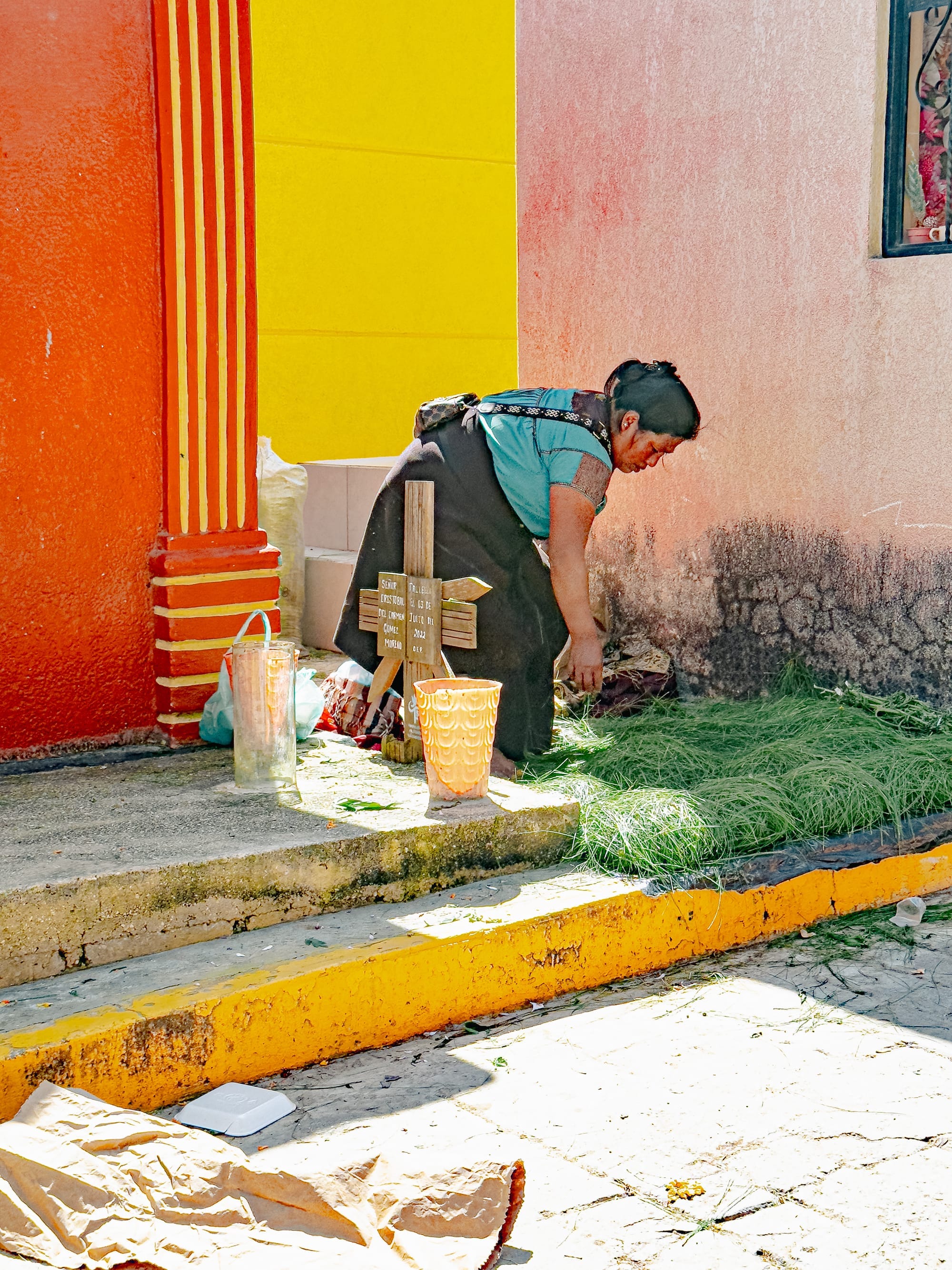
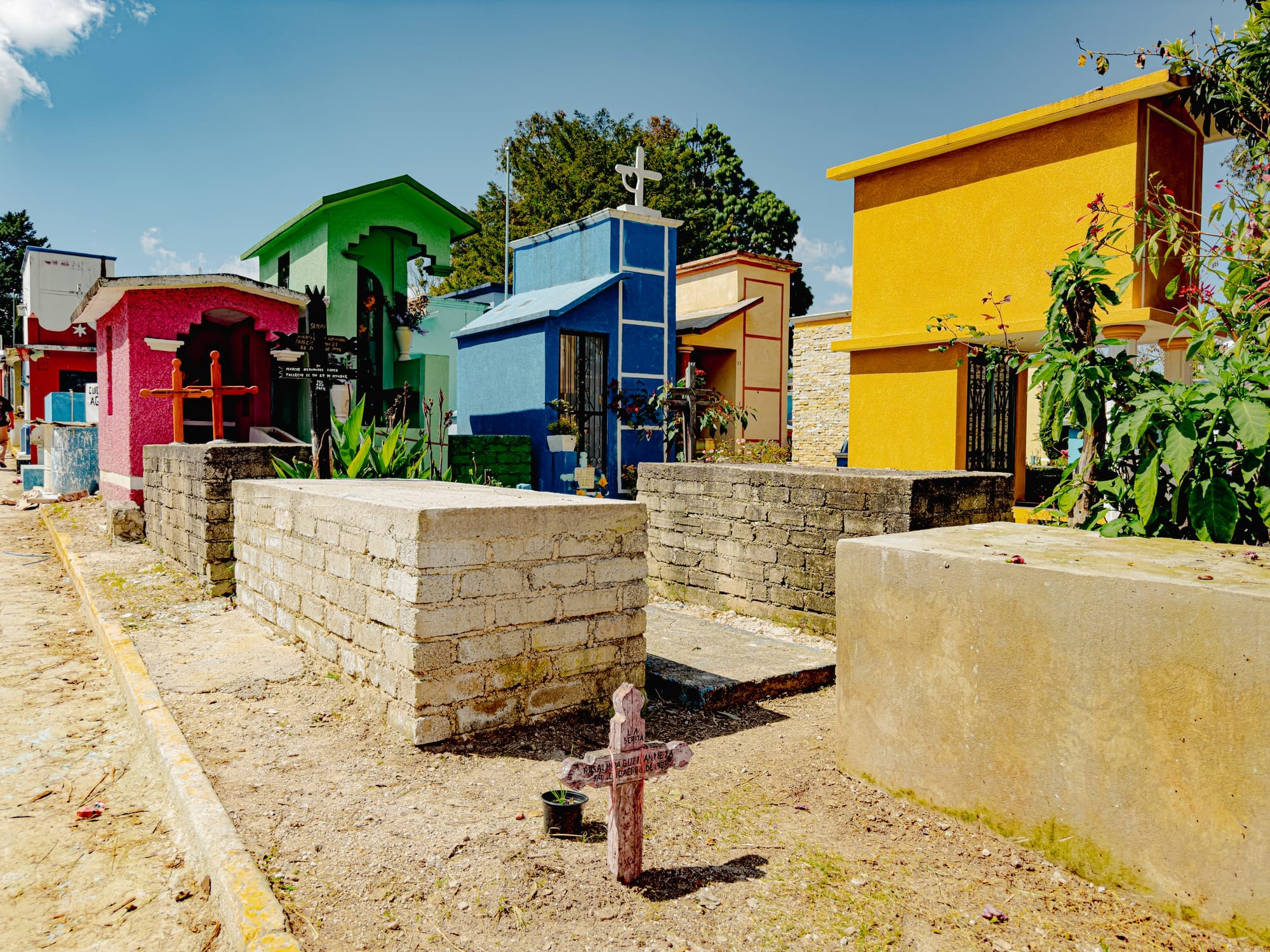
Families repaint and prepare colorful graves ahead of Day of the Dead
The cemetery, just outside the city center, felt more like a miniature town than a resting place: a maze of color and devotion, full of the sounds of life.
This post is about visiting the Panteón Municipal on an ordinary day, which is how most people will see it. If you're coming for November 1 and 2, our Day of the Dead at the Panteón Municipal guide covers what happens on each day, when to go, and how it compares with the village cemeteries.
Panteón Municipal San Cristóbal: what to know before you go
It's a working cemetery, not a tourist attraction, so there's no visitor center or signage in English. These are the basics, mostly from the local guide Descubre San Cris:
Where: Barrio de Fátima, San Cristóbal de las Casas, Chiapas. It's further from the center than it looks on the map, so many people take a taxi.
Opening hours: about 7 am to 6 pm (2026). Check locally around November 1 and 2.
Age: the cemetery dates back to the late 19th century, and some of the city's best-known families and public figures are buried here.
Time needed: one to two hours to walk the lanes.
Best time: the last week of October for preparations, or November 1 and 2 for Day of the Dead itself. On a normal weekday it's much emptier.
Weather: at 2,200 m, late-October afternoons are mild (about 21°C) but evenings get cold, so bring a jacket.
| Panteón Municipal San Cristóbal | Details (2026, check locally) |
|---|---|
| Location | Barrio de Fátima, about 2.5 km southwest of the zócalo |
| Opening hours | About 7 am to 6 pm daily |
| Cost | Free, no ticket |
| Time needed | 1 to 2 hours |
| Getting there | 30 to 40 minute walk or a short taxi ride |
| Best time | Weekday mornings for space; last week of October for preparations |
| Facilities | None for visitors; stalls outside the gates mainly around Day of the Dead |
| Details | |
|---|---|
| Where | Barrio de Fátima, further from the center than it looks |
| Hours | About 7 am to 6 pm (2026); check around November 1 and 2 |
| Age | Late 19th century |
| Time needed | One to two hours |
| Best time | Last week of October, or November 1 and 2 |
| Weather | About 2,200 m: late-October afternoons about 21°C, cold evenings |
A cemetery like a small village
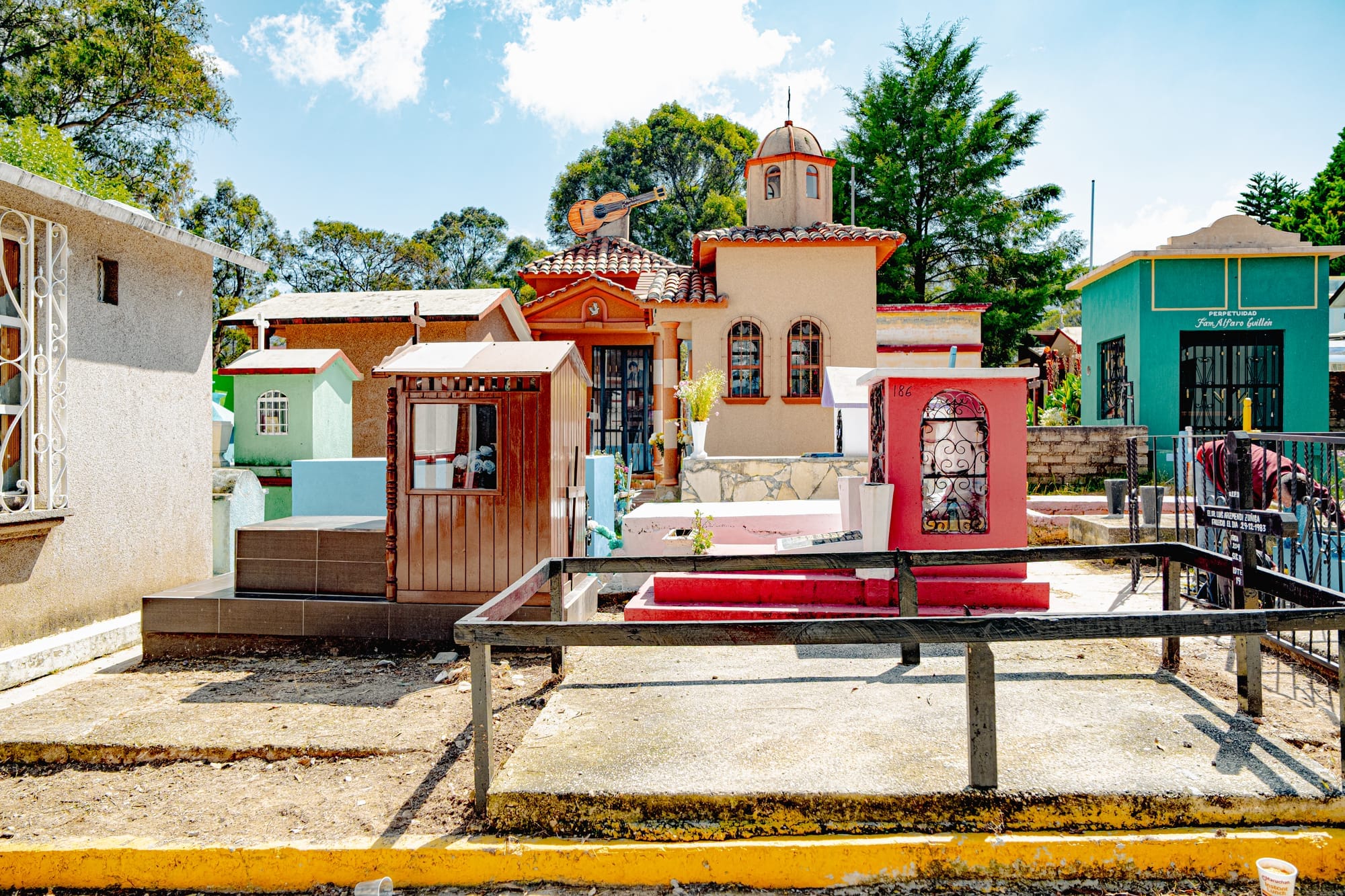
From the entrance, the Pantheon stretches into a maze of narrow lanes, each lined with structures that look like tiny houses, painted in bright pinks, yellows, greens, and blues. Your first impression isn't decay, but life.
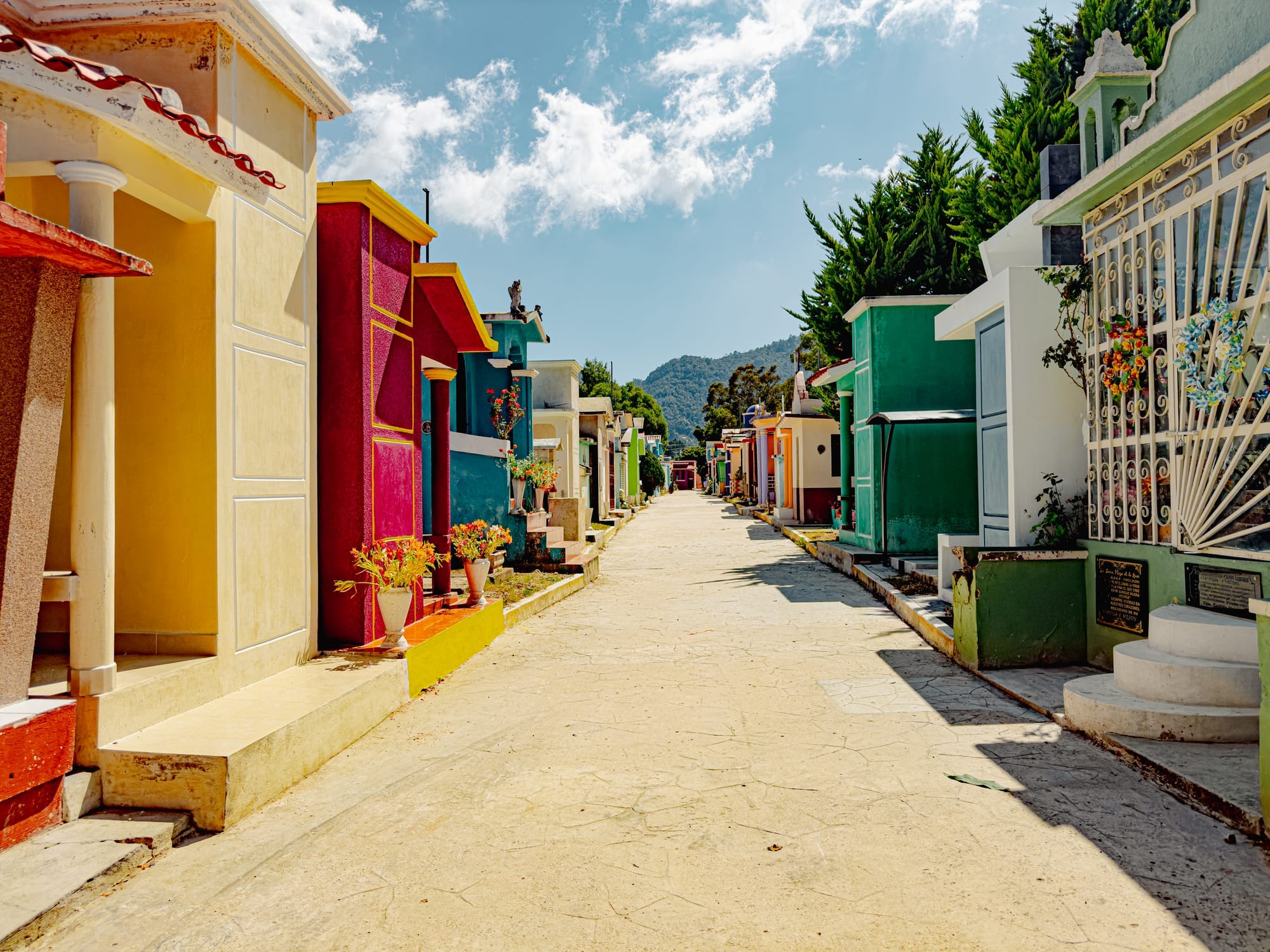
The tombs aren't anonymous slabs of stone. They're cared for, decorated, painted, and restored. Families don't only visit once a year. They come often, looking after these spaces with the same tenderness you'd give a home. It really felt like a neighborhood where the dead live on, a city within a city, still buzzing with energy.
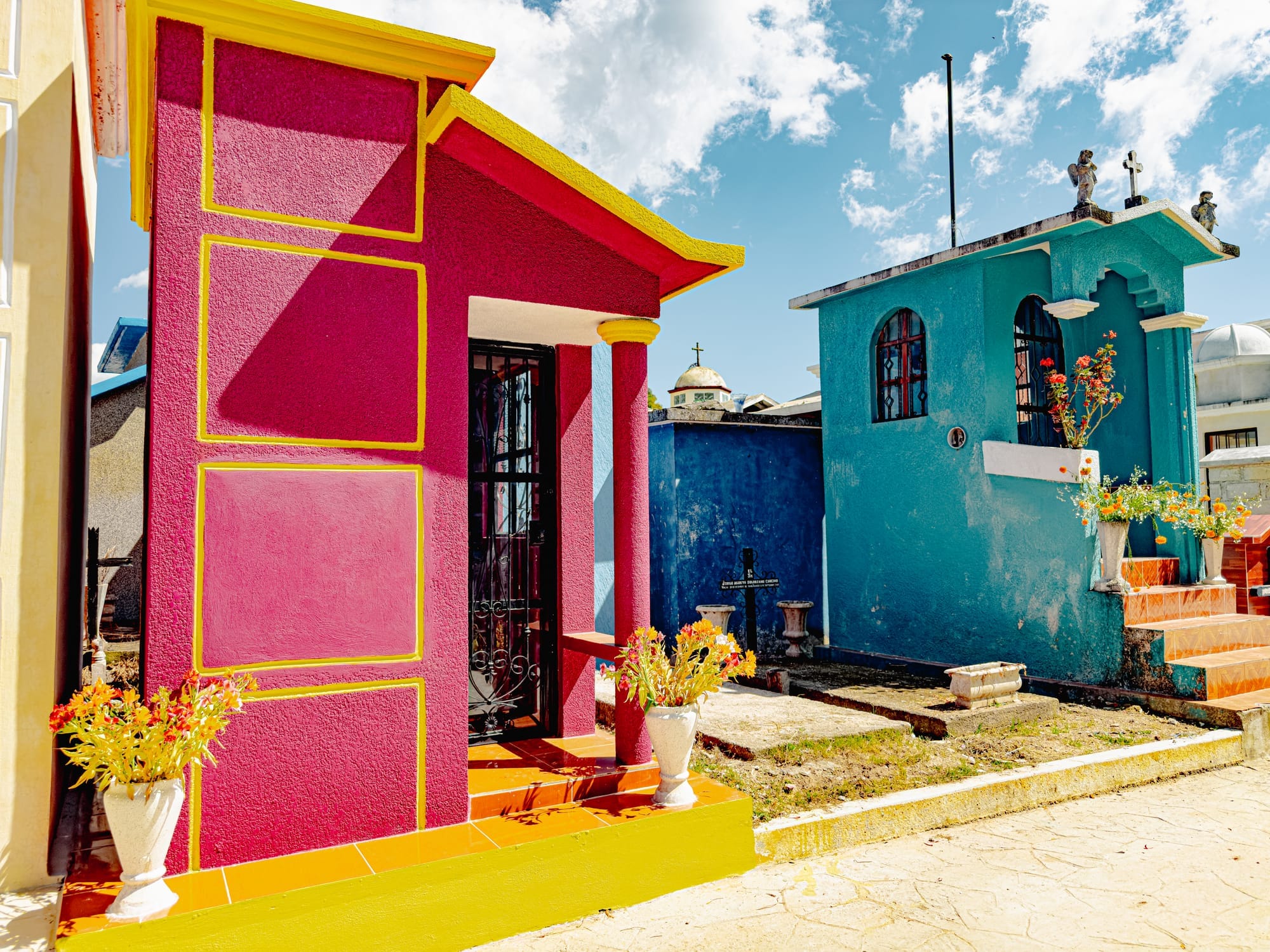
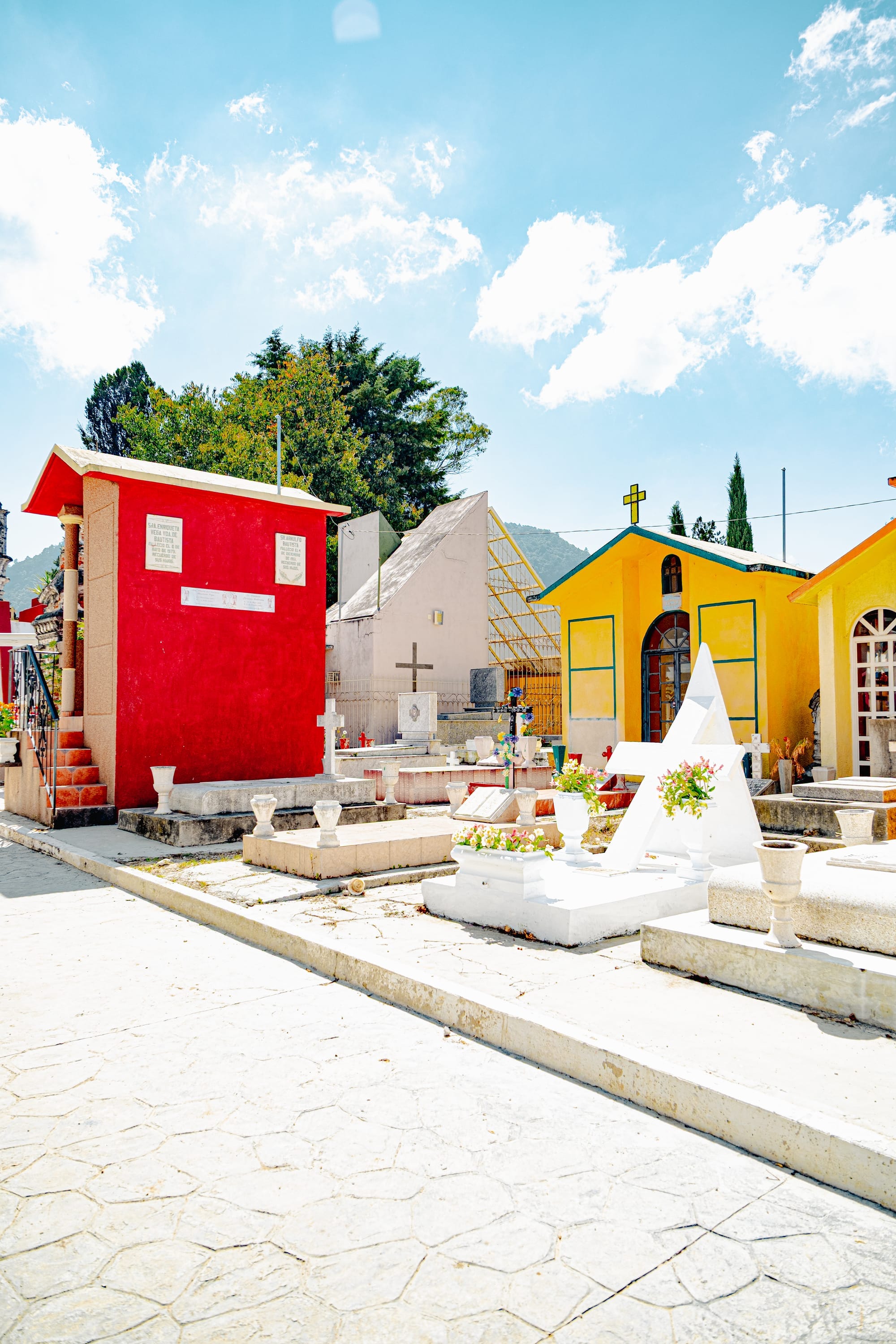
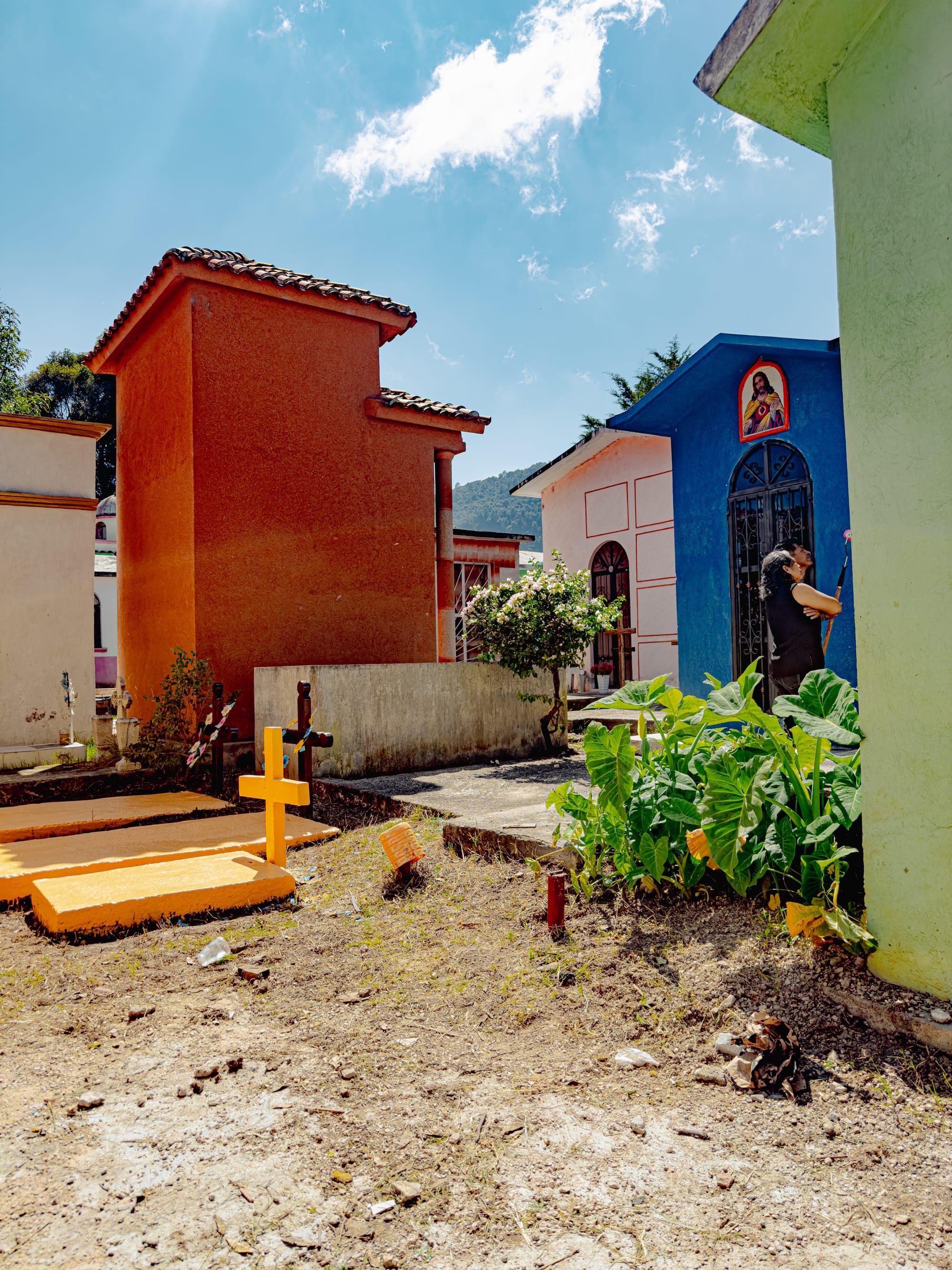
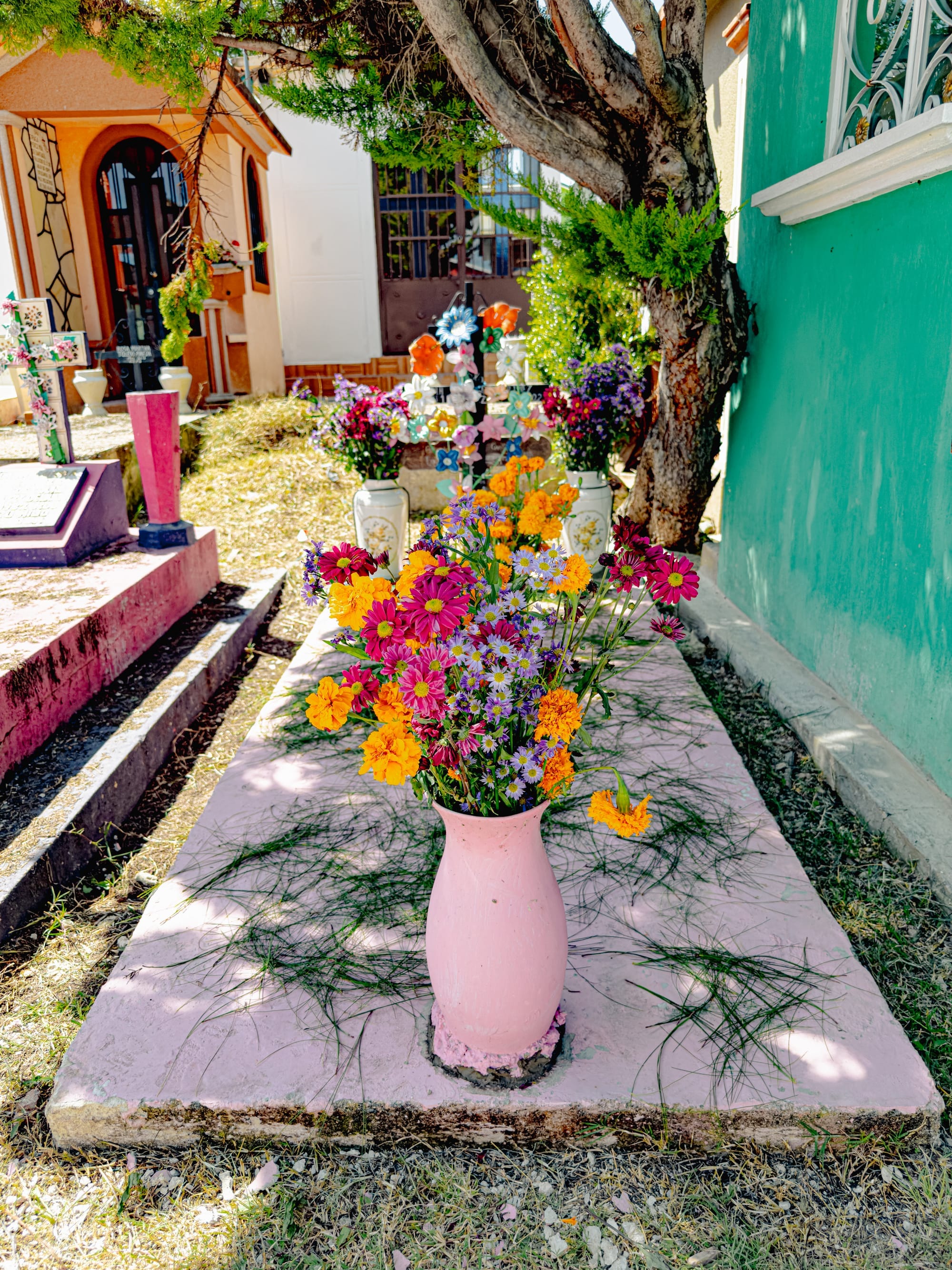
Brightly painted tombs in the Pantheon reflect Mexico’s joyful approach to remembrance
As we walked through, we saw dozens of people: families scrubbing headstones, repainting tomb walls, trimming plants, and setting out vases for the marigolds that would soon arrive by the truckload. Some were playing music; others chatted, laughed, and shared snacks in the shade of the mausoleums.
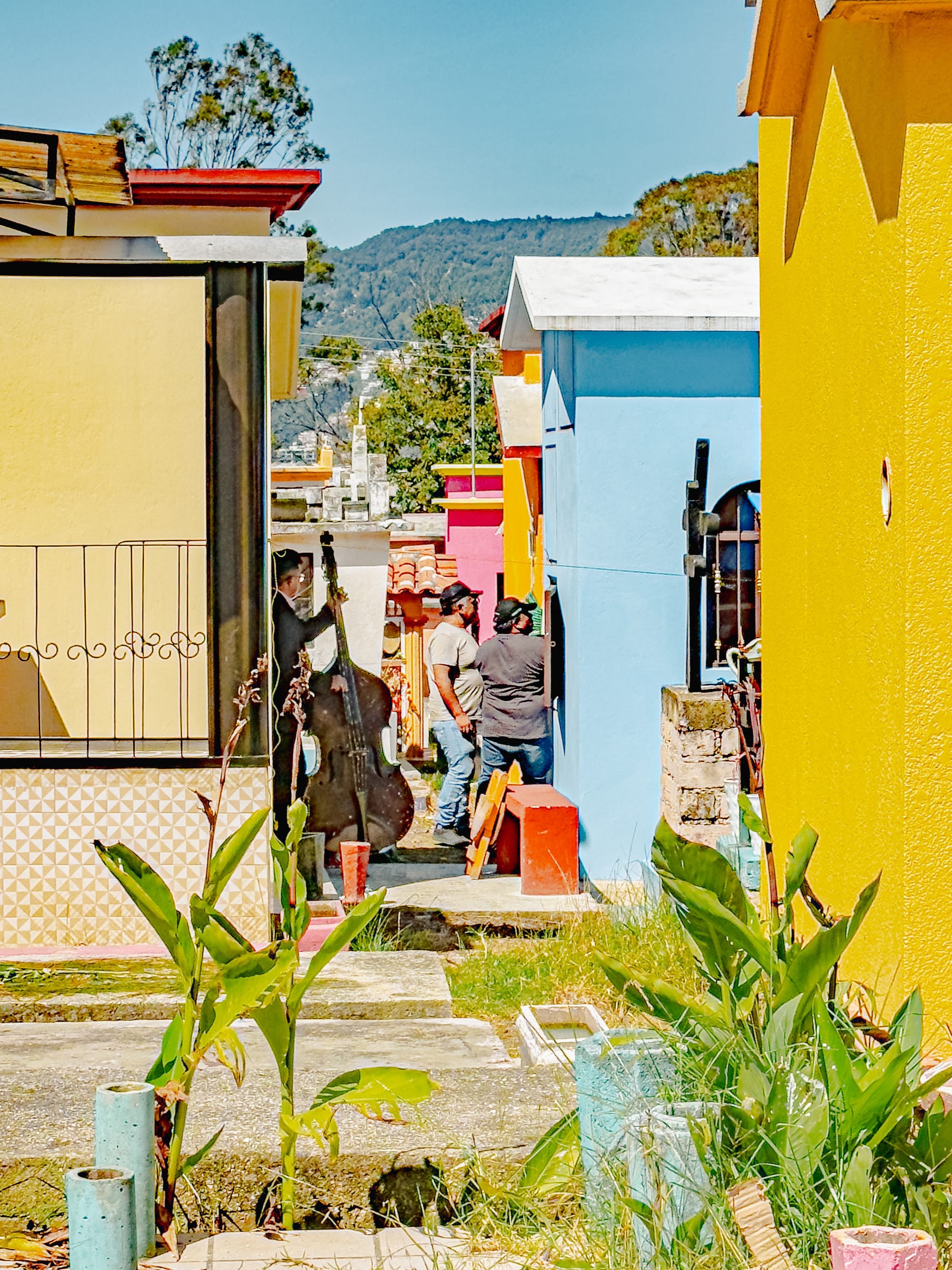
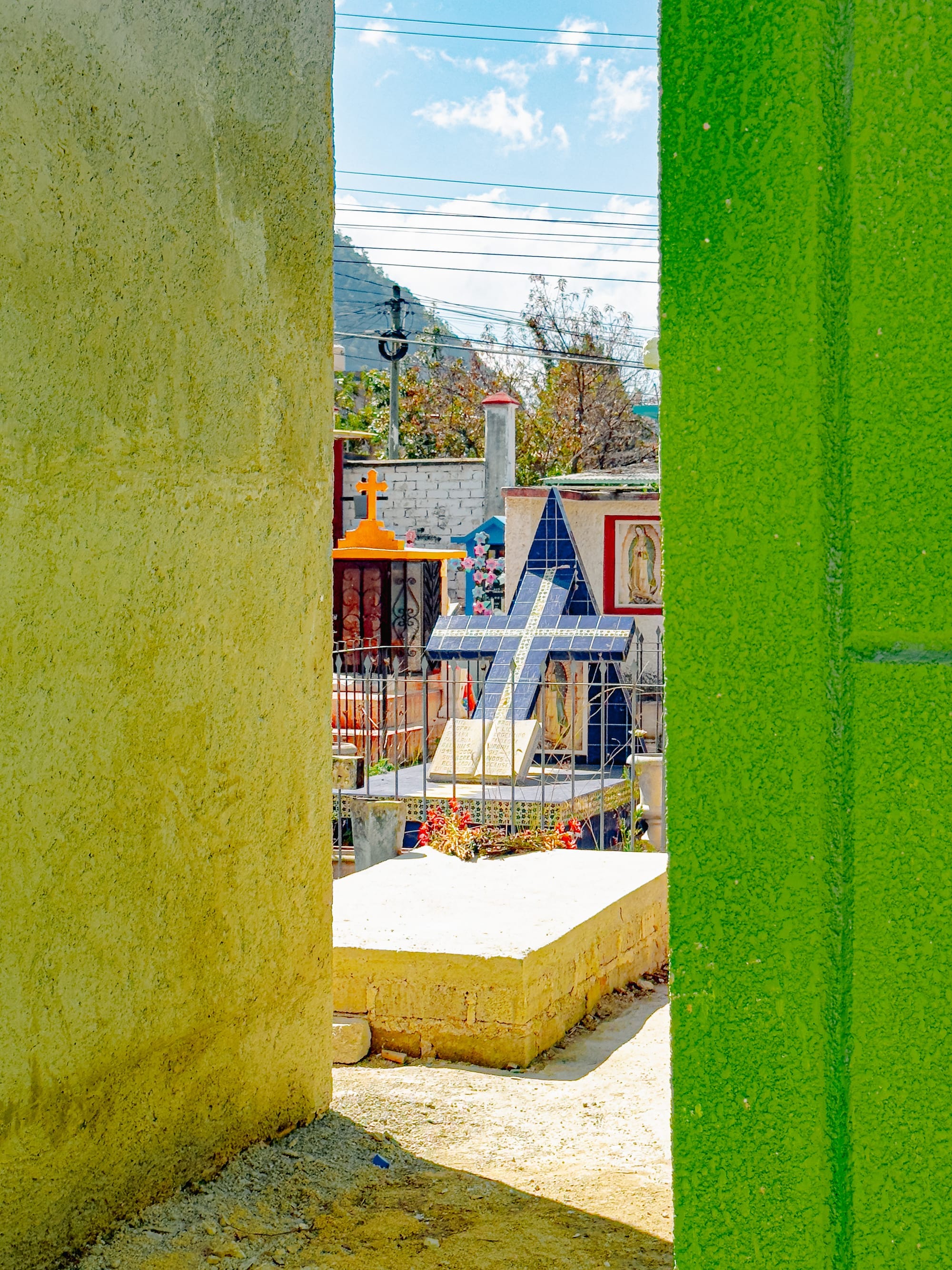
Musicians and families fill the Pantheon’s colorful alleys with sound and life
We passed a brass band tuning their instruments, getting ready to play for a nearby family. The sound of trumpets and drums carried through the alleys, mixing with the smell of fresh paint and wax. It was a real community event, as if remembering the dead was just another way of being together.
How Mexico celebrates death
In Mexico, the approach to death is famously different from that in many other cultures. Rather than a subject to avoid, death is part of life: acknowledged, honored, even laughed with. The Day of the Dead (Día de los Muertos) is more than a holiday. It's a worldview. Rooted in pre-Hispanic Indigenous beliefs, the celebration was later blended into Catholic traditions after Spanish colonization. Today, it mixes Indigenous and Christian beliefs: a time when the line between worlds thins, and the spirits of loved ones are welcomed back to share in the joys of the living.
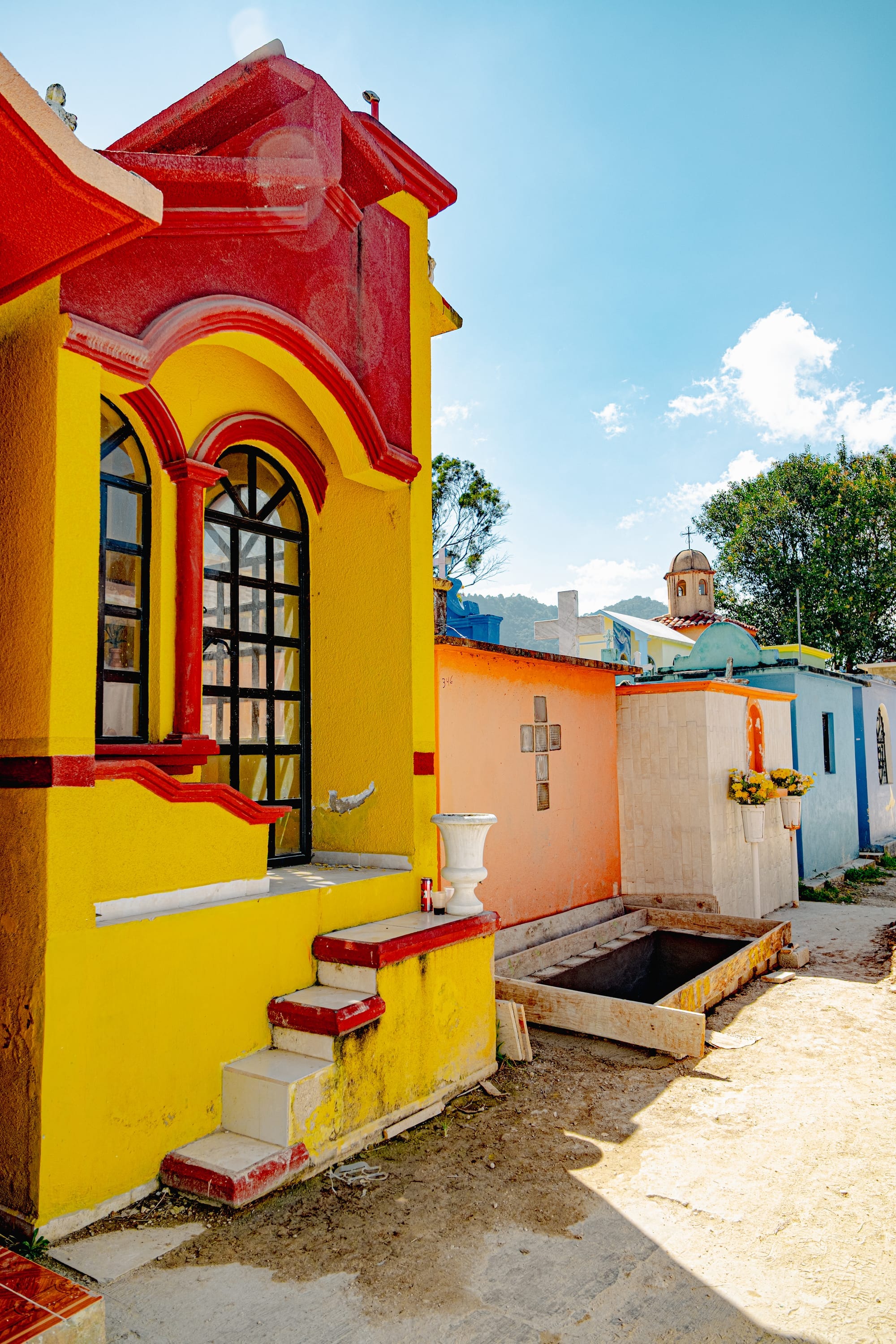
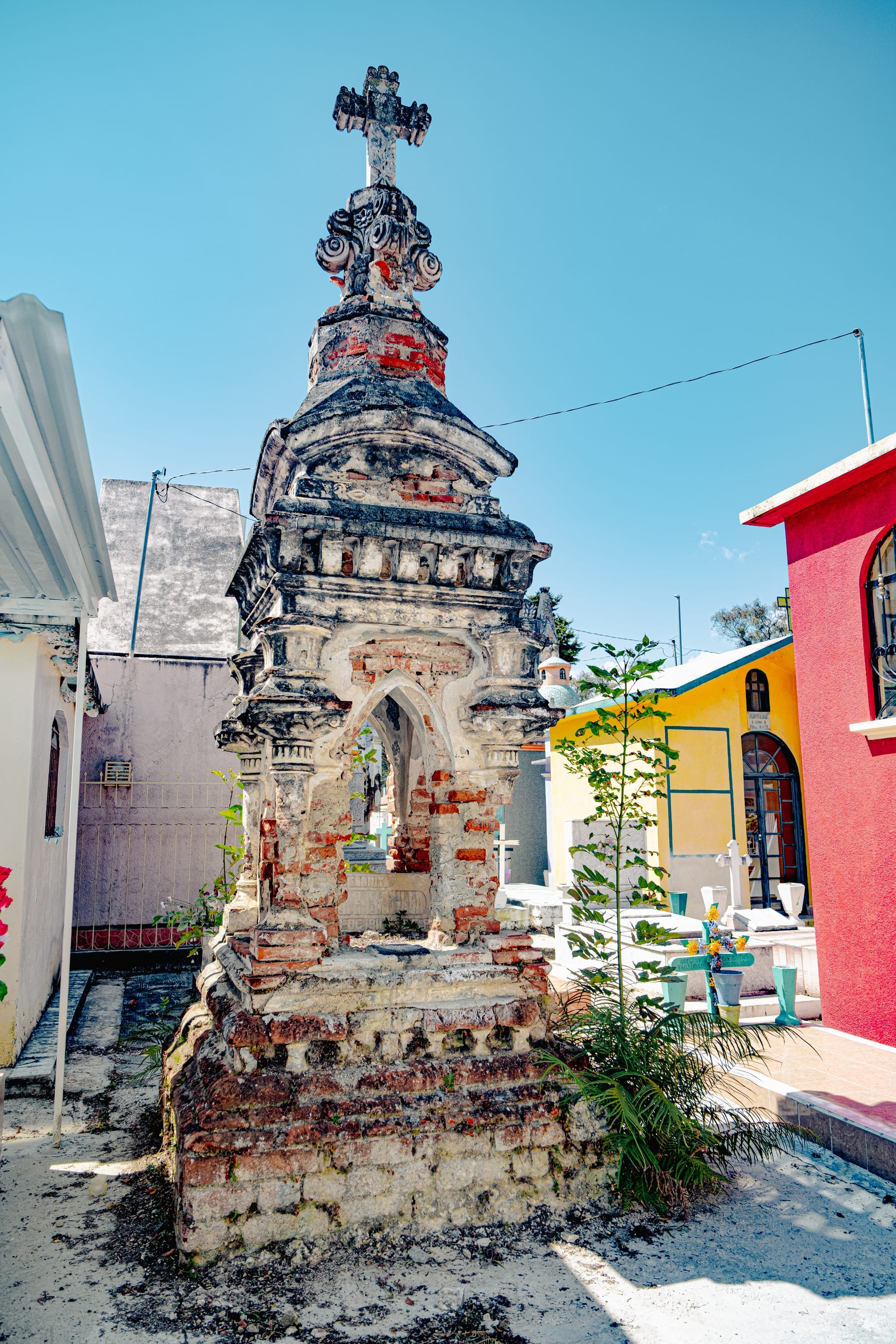
Old and new tombs stand side by side in San Cristóbal’s radiant Pantheon
In Chiapas, where Indigenous Maya cultures are still central to how people live, this connection runs even deeper. Here, death is seen as part of a cycle, not an end, just like planting and harvest, or dawn and dusk.
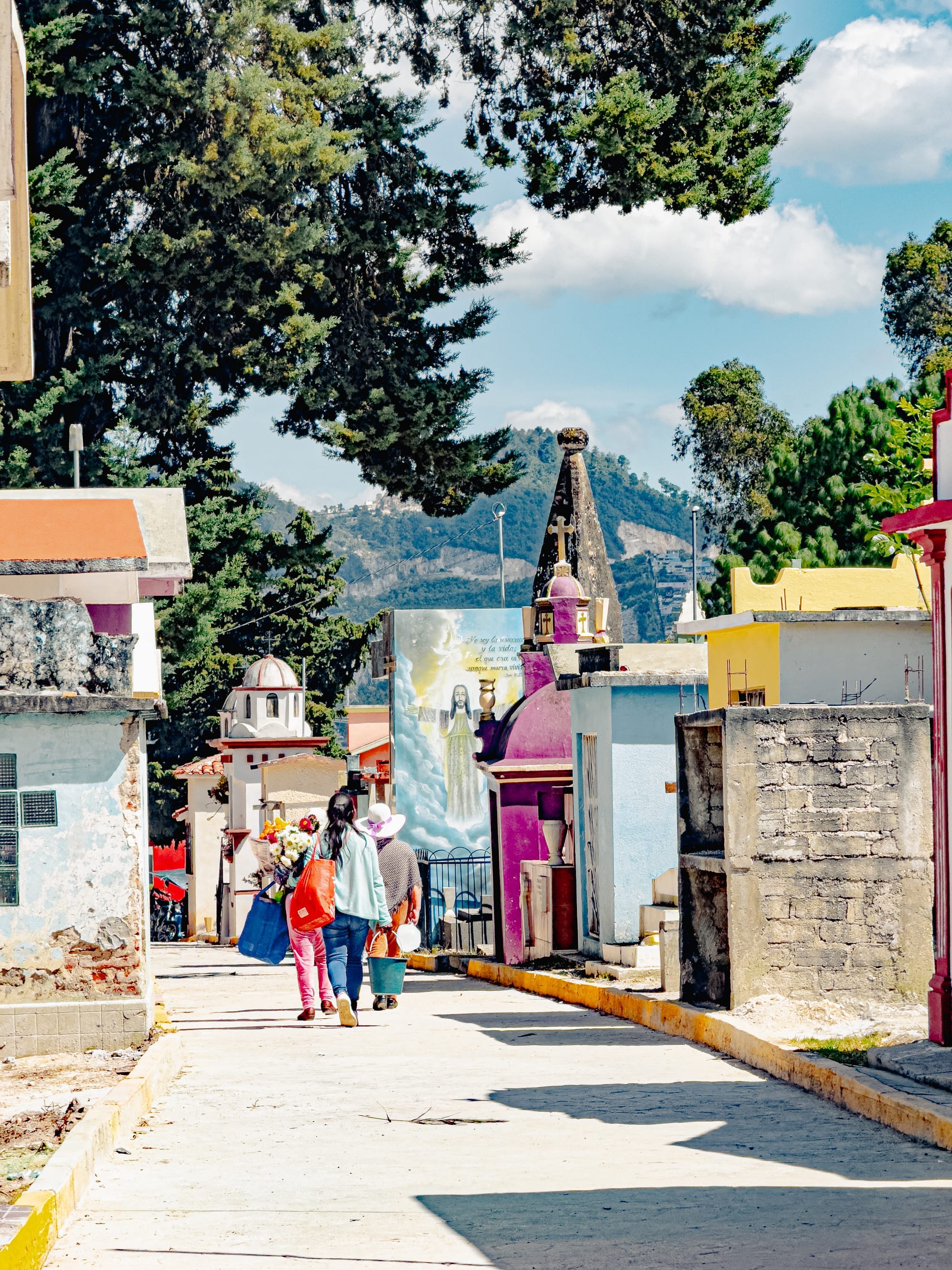
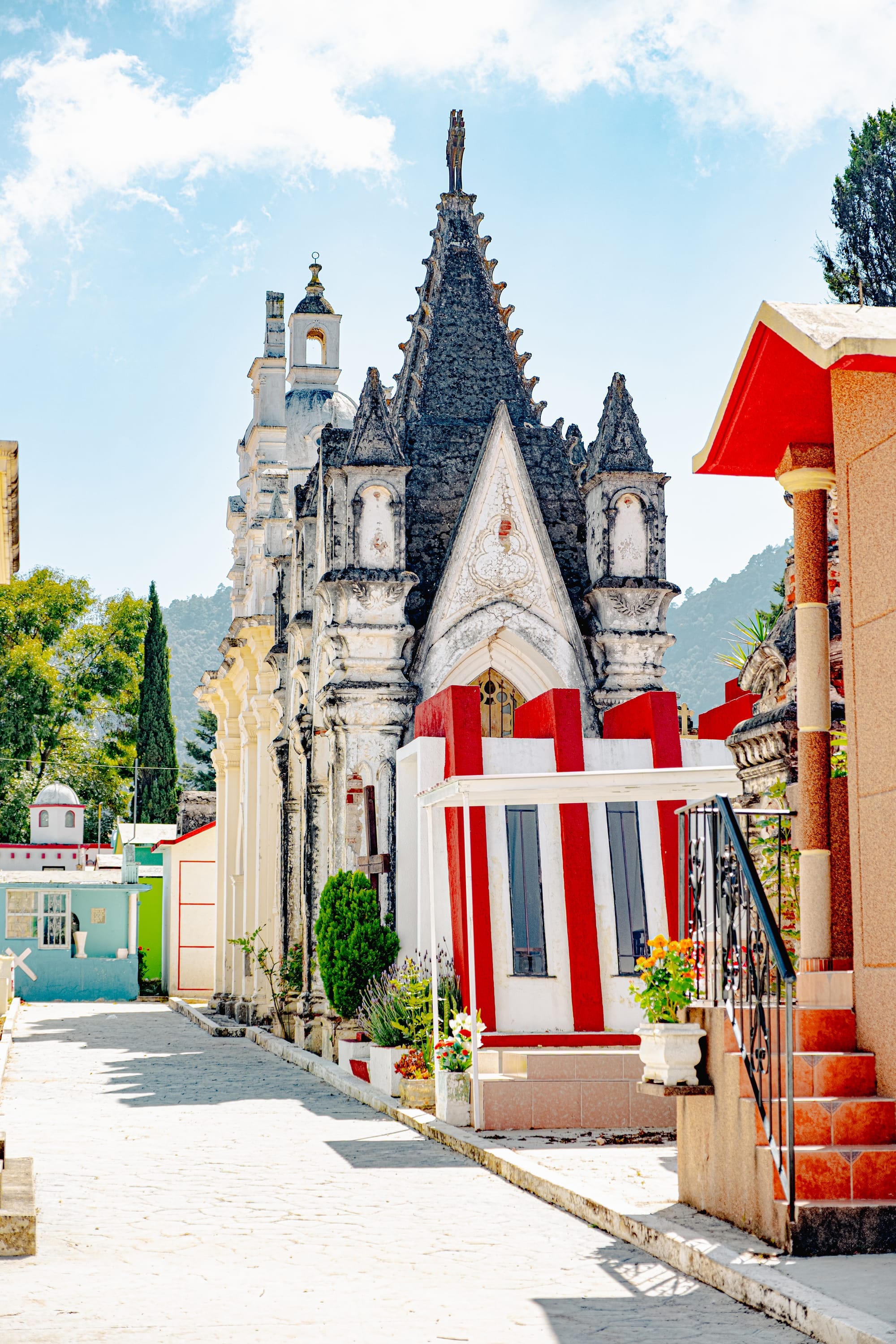
Families arrive with flowers as sunlight fills the Pantheon’s painted walkways
Many families in and around San Cristóbal still talk about death not as loss, but as a transition. The dead aren't gone. They're simply somewhere else: in the soil, in the wind, and in people's memories.
A cemetery that's running out of room
Part of why the Panteón looks so packed is that it is: plots sit wall to wall, with mausoleums squeezed into every space. In 2024 the local paper El Heraldo de Chiapas reported that the municipal cemetery was badly overcrowded and that San Cristóbal urgently needed new burial space.
The cemetery also serves people from nearby municipalities, not only the city, which adds to the crowds around Día de Muertos. With more than a century of burials in one walled space, it's easy to see how it turned into a town of its own.
Preparation for Day of the Dead
As we walked around the Pantheon, it became clear that preparation for Day of the Dead starts long before November 1st and 2nd. The days before are spent cleaning, painting, decorating, and planning, little by little. You could see all of this happening in the Pantheon. Buckets of paint leaned against walls; marigold petals were being sorted into woven baskets. Some families had already set up early altars (ofrendas), simple but meaningful: a photograph here, a candle there, a single plate of tamales resting beside a cross.
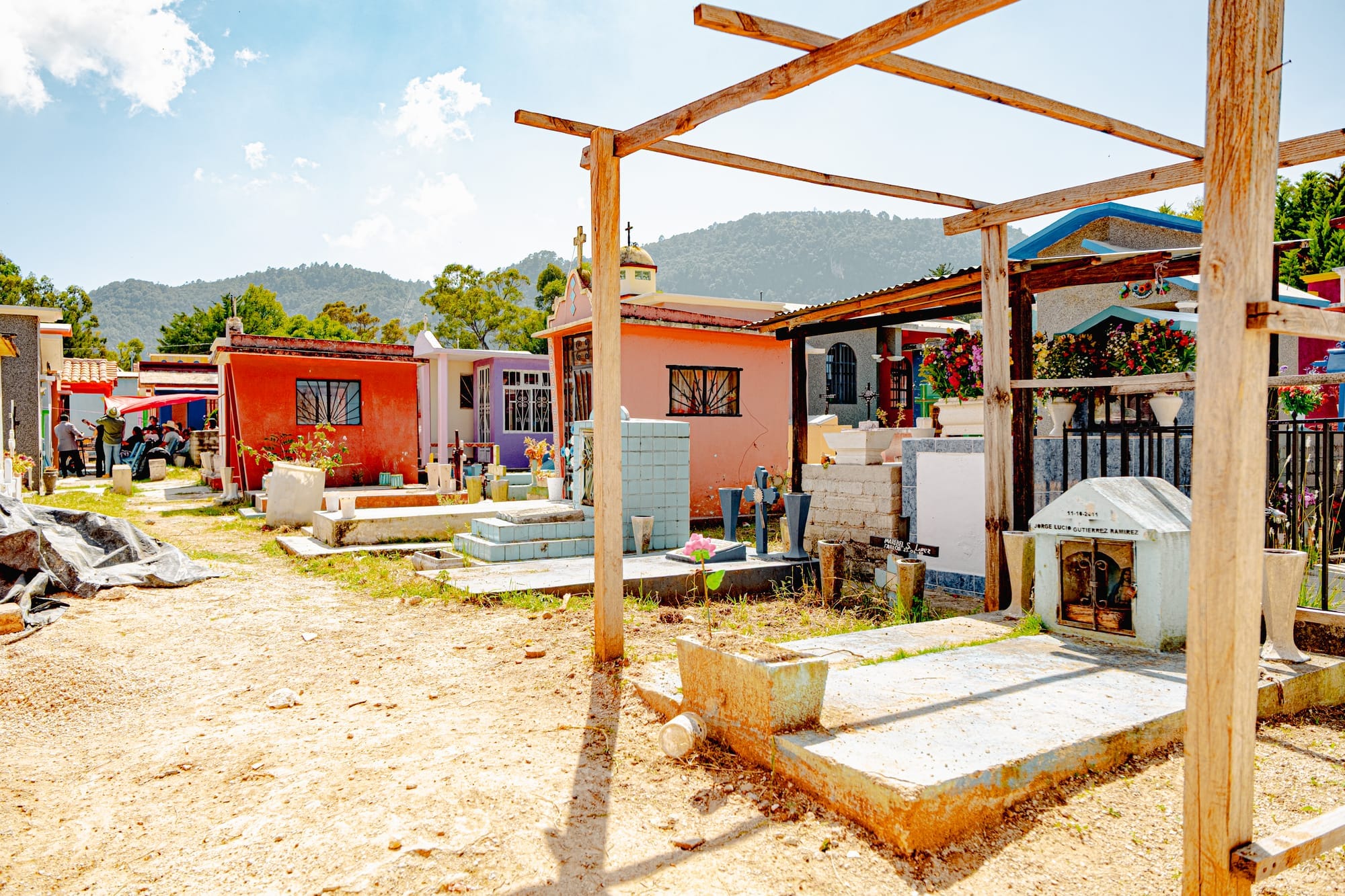
By the time the holiday arrives, these small touches grow into full offerings. Read our full post on our second visit during Día de Muertos.
On the first of November, the spirits of children who have died are said to return, and they're greeted with toys, sweets, and miniature food. On the second, adults follow, welcomed with the food and music they loved in life. Families gather around their graves, sharing meals, playing instruments, lighting candles, and talking late into the night. It isn't mourning. It's a reunion.
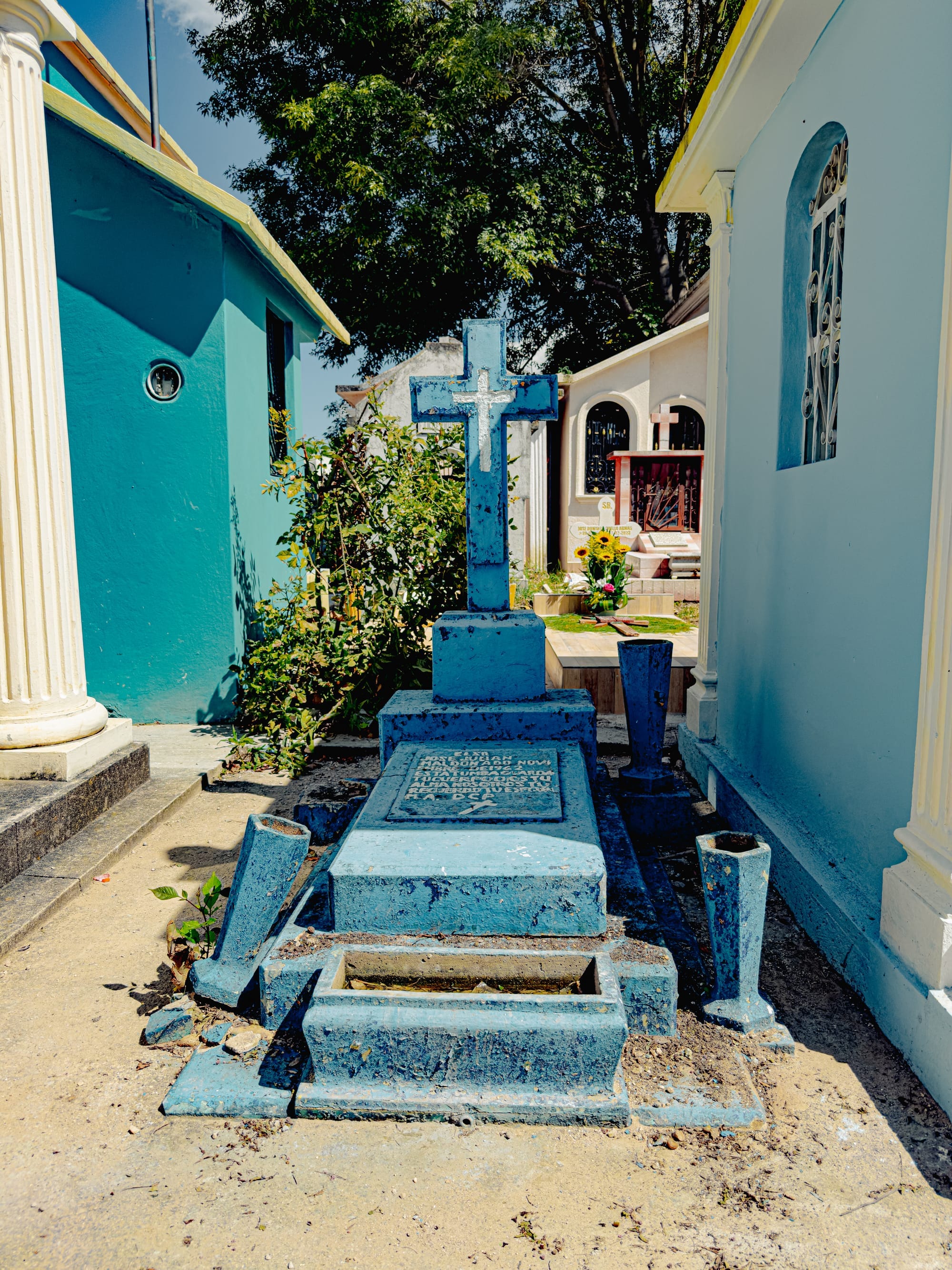
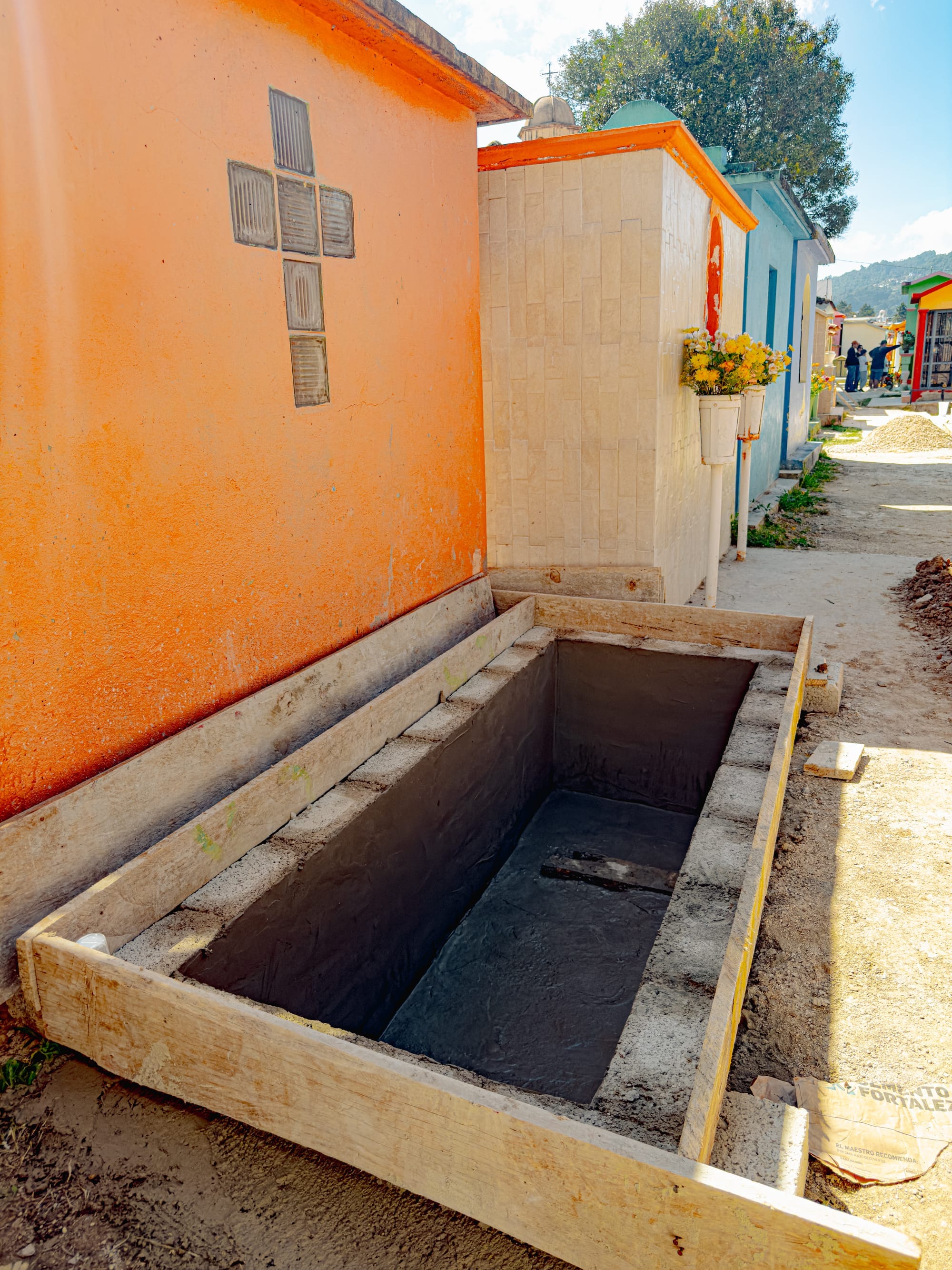
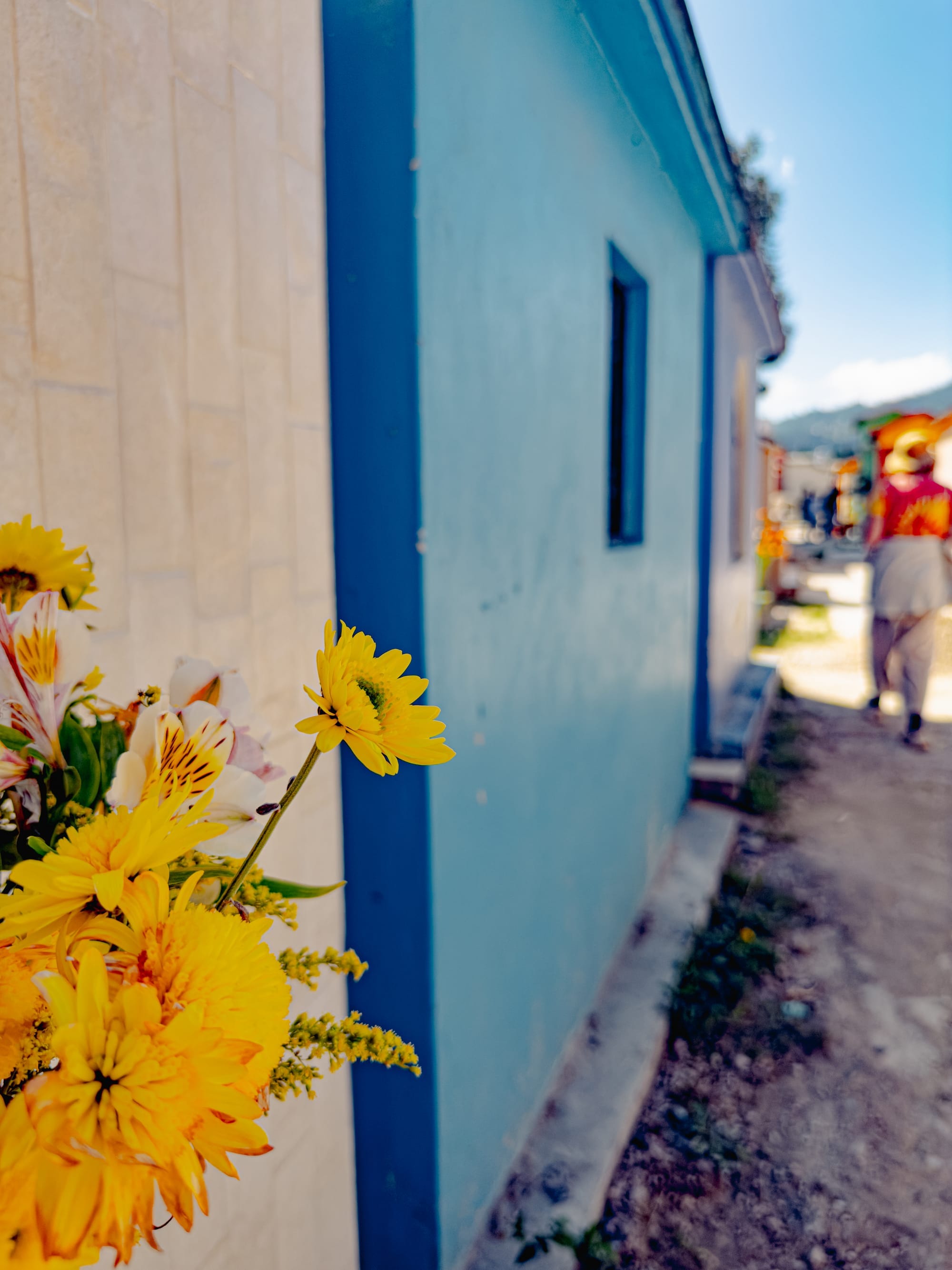
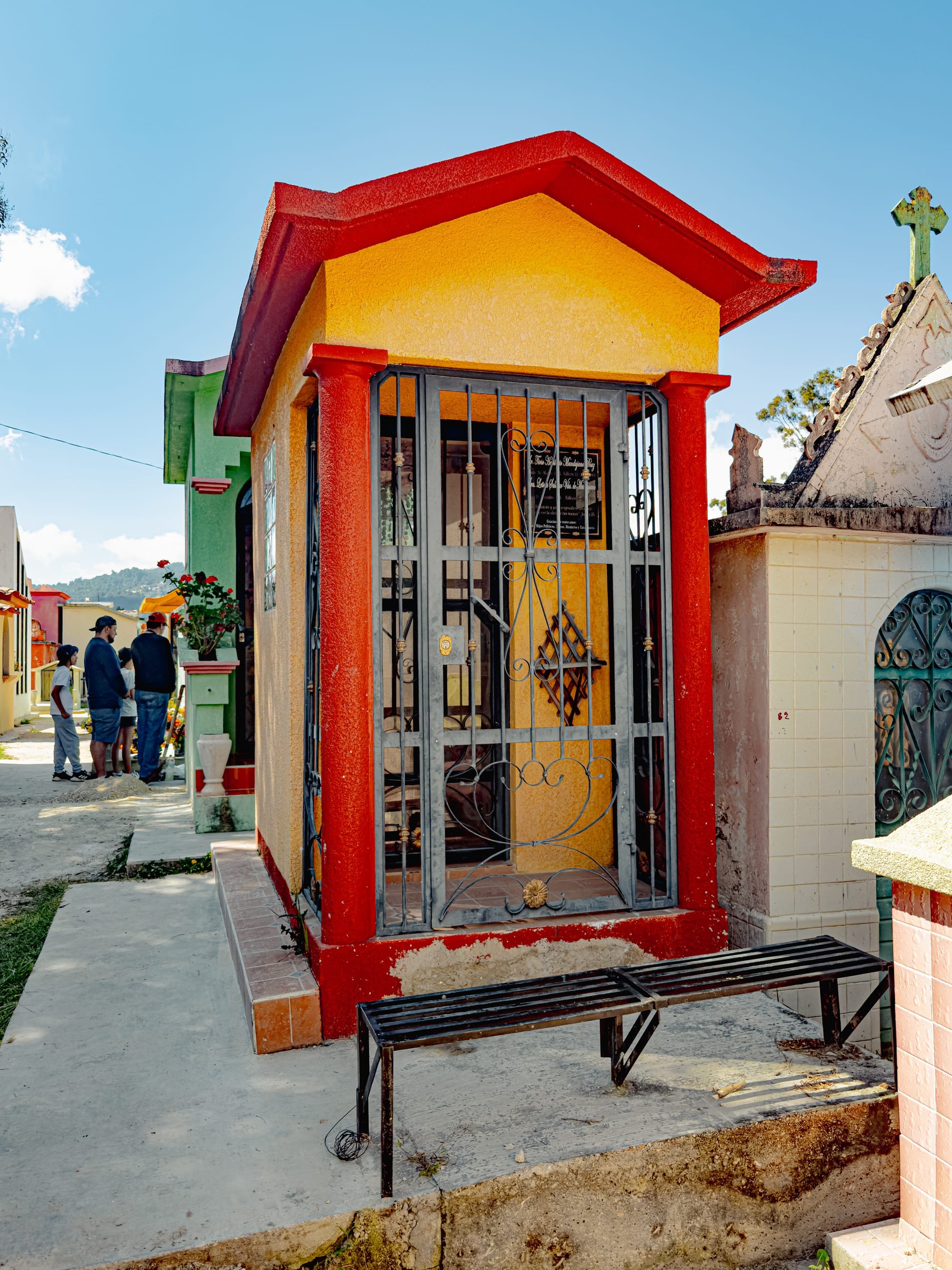
Fresh flowers and painted tombs await the coming Day of the Dead visitors
Even several days before, you could feel the excitement building in the Pantheon. Bright paint covered the walls like confetti, and artists were painting new murals on the cemetery's outer wall: colorful scenes of skulls decorated with marigolds, women with painted faces in the style of La Catrina, skeletons dancing, and candles glowing against indigo skies. It was art talking with death.
Colorful tombs and careful work
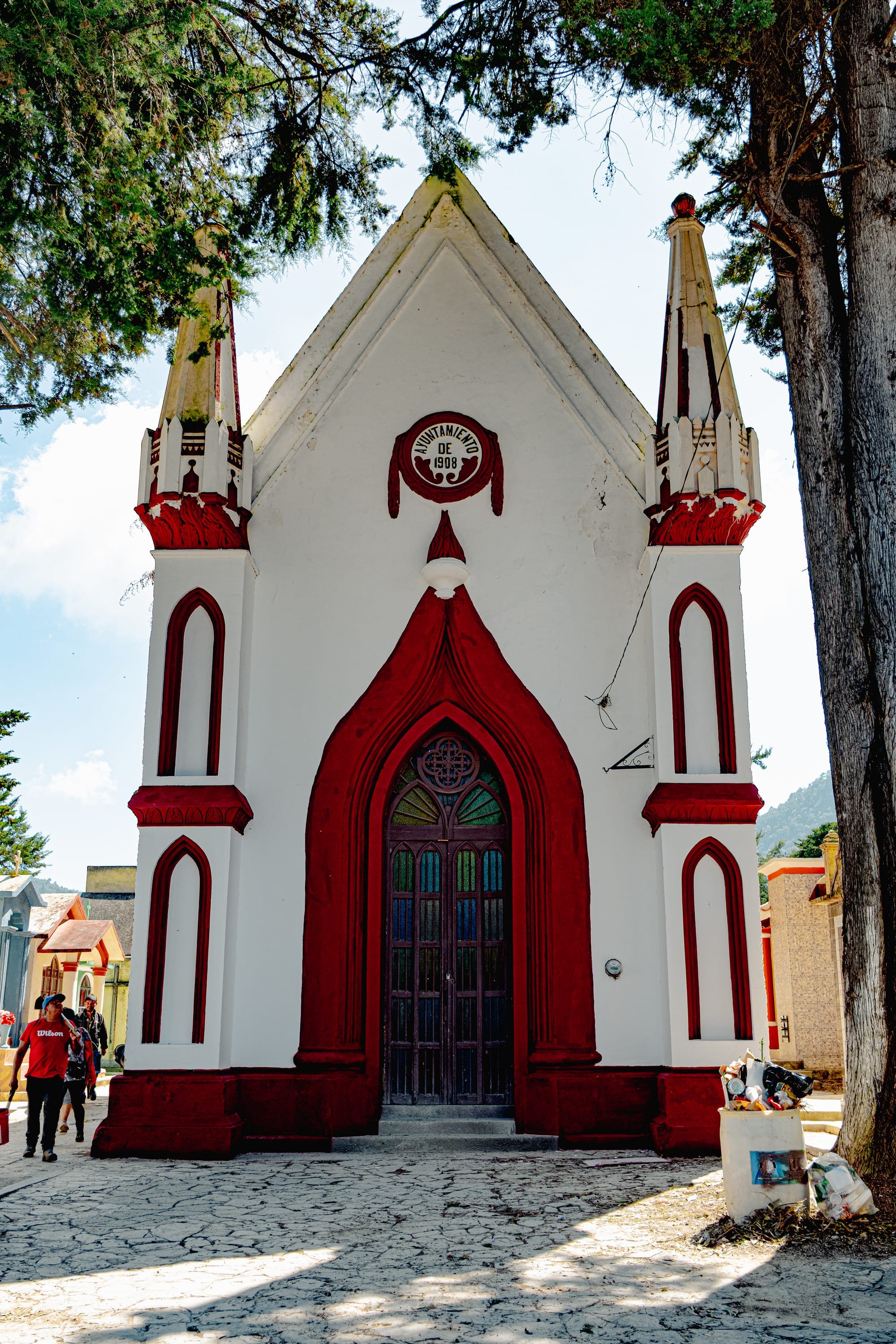
Inside, the Pantheon's architecture is extraordinary. Some tombs look like miniature Gothic cathedrals, their spires rising high over the plots next to them. Others are simple, square, and almost homely, painted bright orange, turquoise, or lime green. There are wrought-iron gates, tiled mosaics, and altars framed by marigold garlands. Walking among them feels less like a stroll through a graveyard and more like walking through an open-air gallery of memory and devotion.
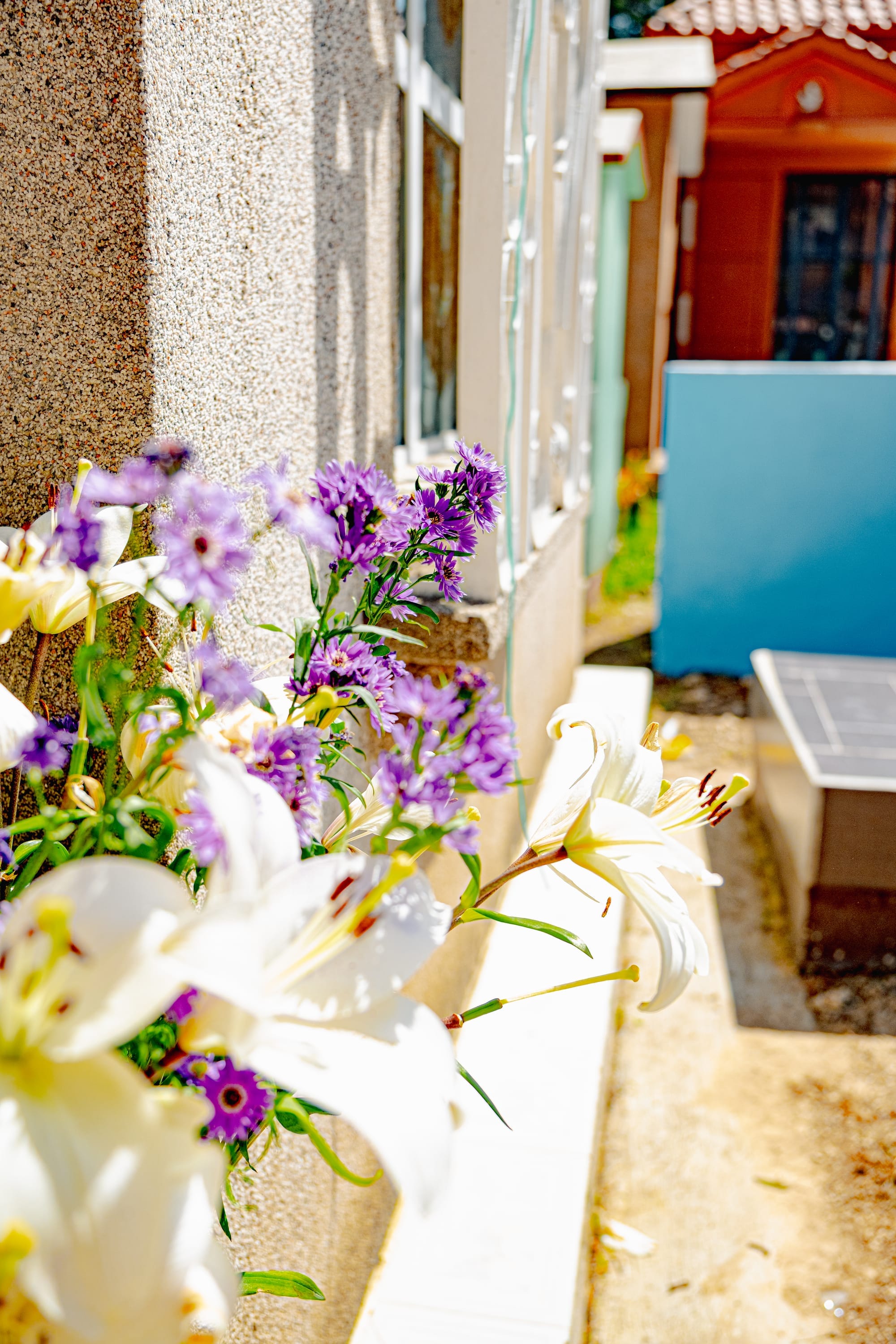
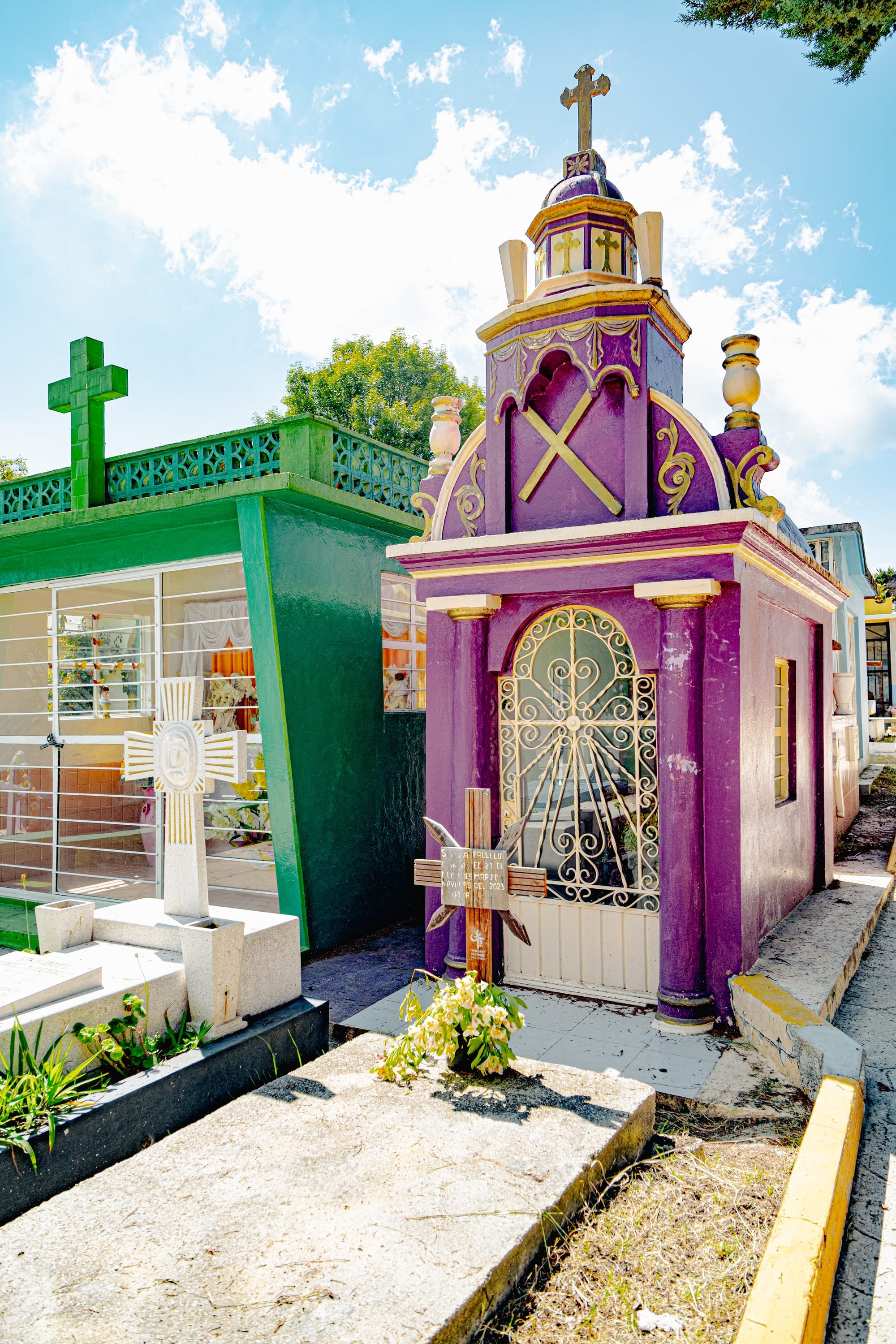
Lilies and marigolds brighten the Pantheon’s vivid tombs under the midday sun
The walls have been repainted again and again over the years. Color sits on top of color: lavender over blue, yellow over white. Even the decay is beautiful, with paint peeling in thin sheets and ivy creeping up from the base of tombs. And there are flowers everywhere. Marigolds (known locally as cempasúchil, the flower of the dead) spill from vases, their bright orange petals standing out against the cement. In Maya belief, their scent and color guide spirits back to the world of the living.
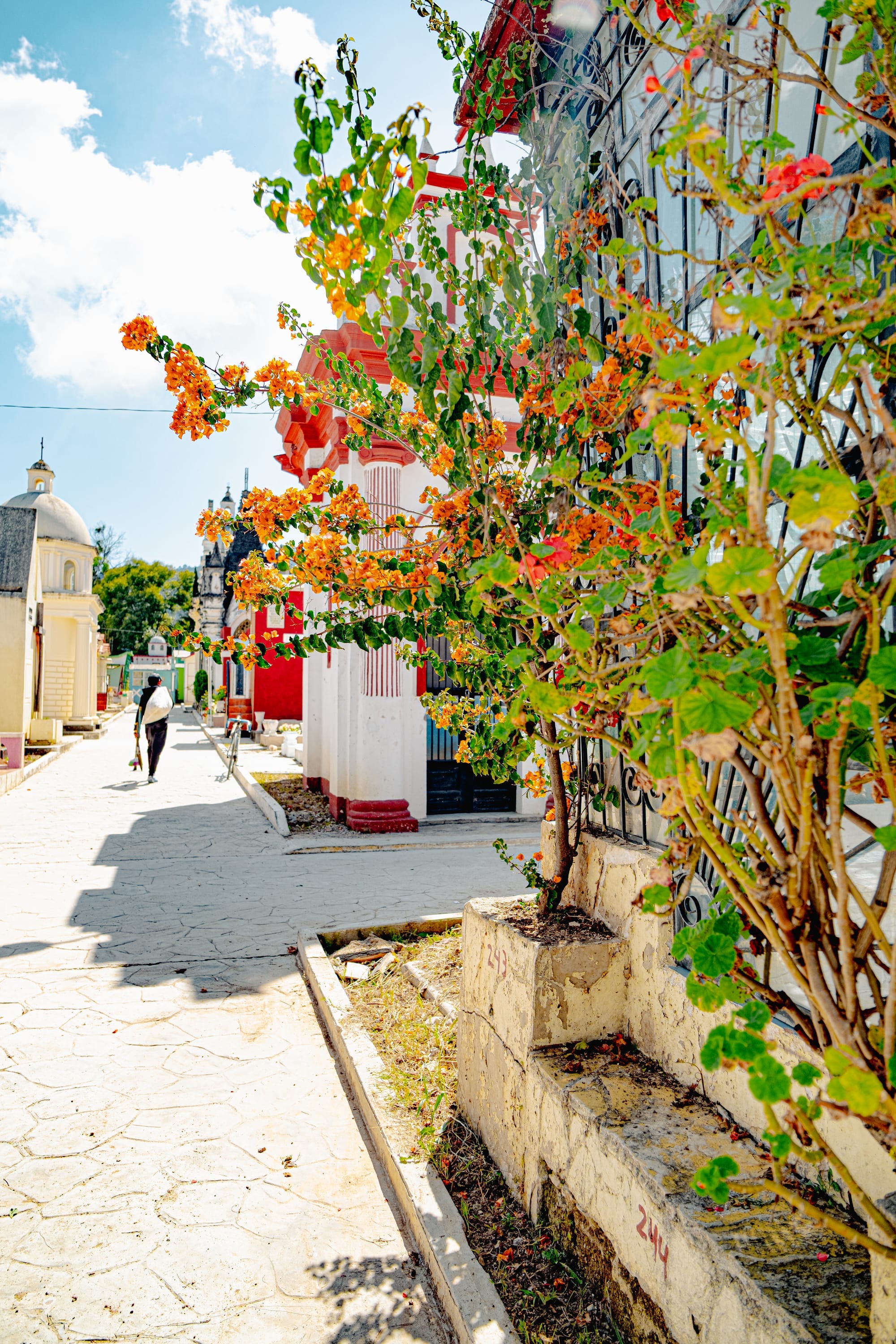
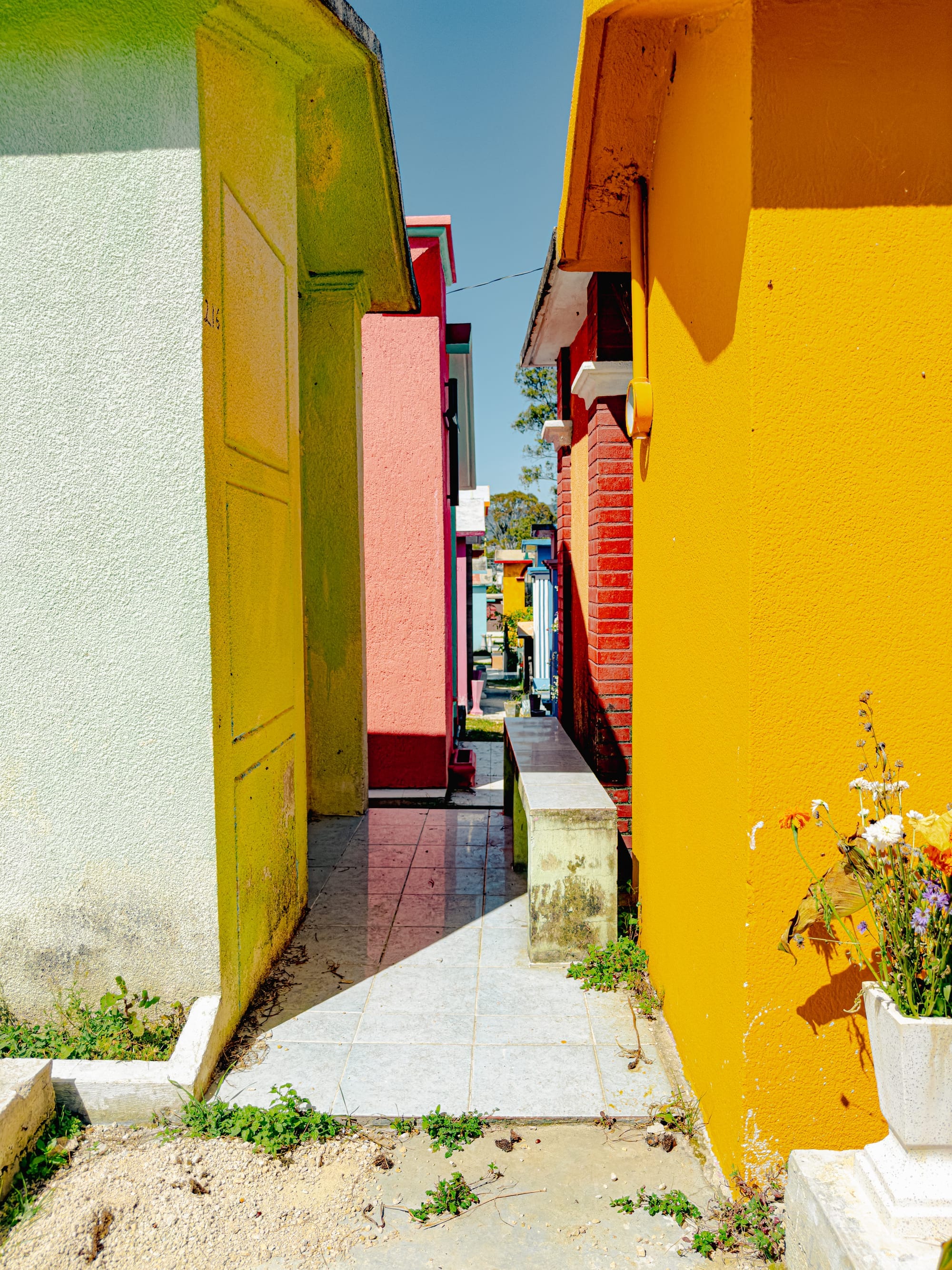
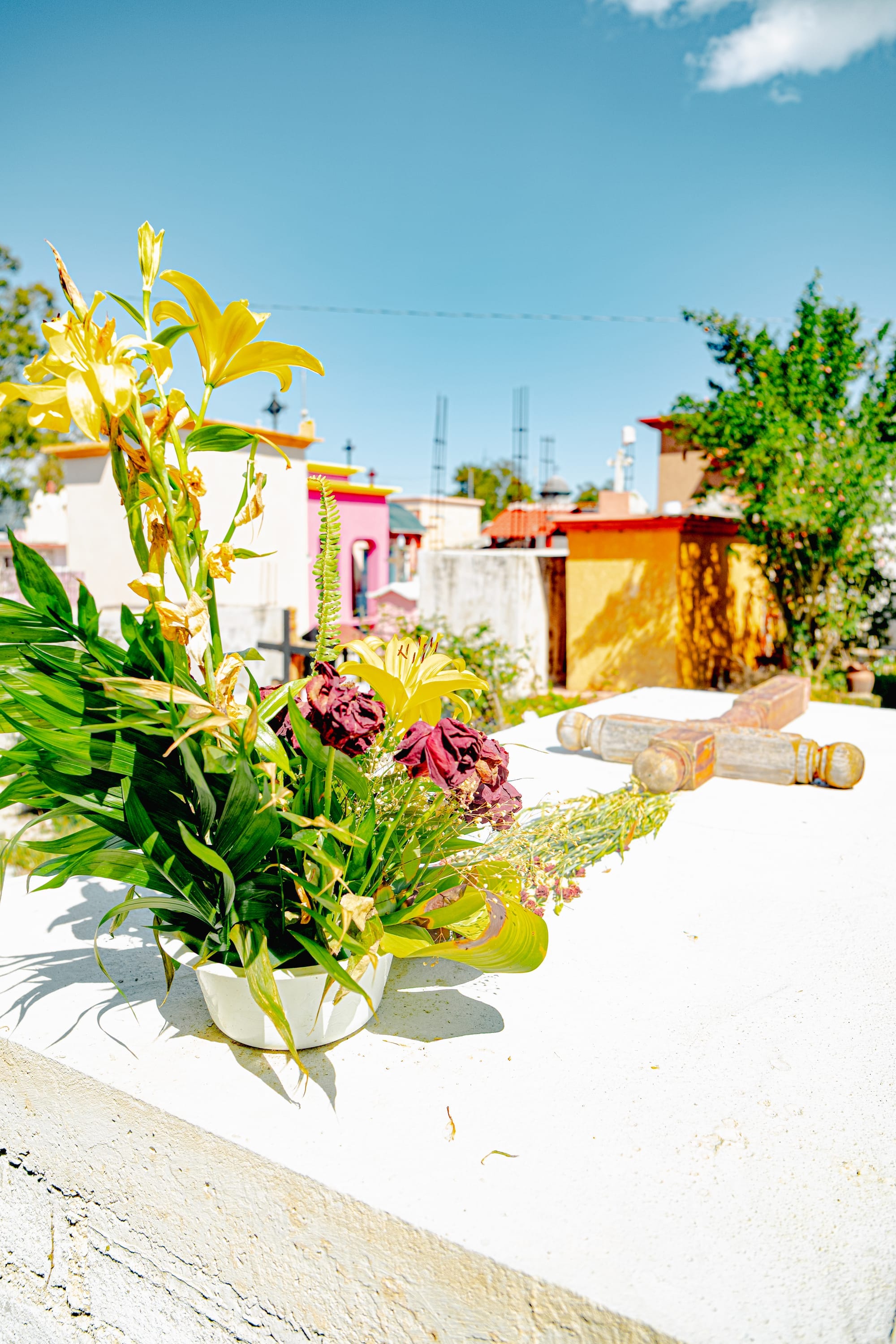
Sunlit corridors and fresh flowers animate the Pantheon’s kaleidoscope of color
Next to them, other flowers (purple bougainvillea, lilies, and chrysanthemums) added more color. Some graves had small trees growing beside them, giving shade and continuity. With so much color and life around, it was impossible to see death as absence. Everything seemed to be moving: paintbrushes sweeping, water sloshing, and laughter carrying through the air.
What the flowers and murals mean
Most of the color you see in late October has a purpose. The orange flower is cempasúchil, or Mexican marigold (Tagetes erecta), and families use its petals to mark a path that guides the souls home. UNESCO's description of the Indigenous festivity dedicated to the dead, which it added to its intangible heritage list in 2008, explains how petals, candles, and favorite dishes are laid out between the cemetery and the family home.
We cover the other flowers and offerings in our guide to Day of the Dead altars and flowers.
The elegant skeleton women in the murals outside are versions of La Catrina, first drawn by the engraver José Guadalupe Posada in the early 1900s as a joke about people who put on European airs. She's since become the best-known image of Day of the Dead.
Life alongside loss
We sat for a while near one of the larger mausoleums, watching a group of men play guitars and sing. Children ran between the graves, their voices high and bright. A woman nearby carefully repainted her family's tomb, dipping her brush into a can of pale pink. Her daughter handed her tools, while another child swept fallen petals into neat piles. They worked gently and without any hurry.
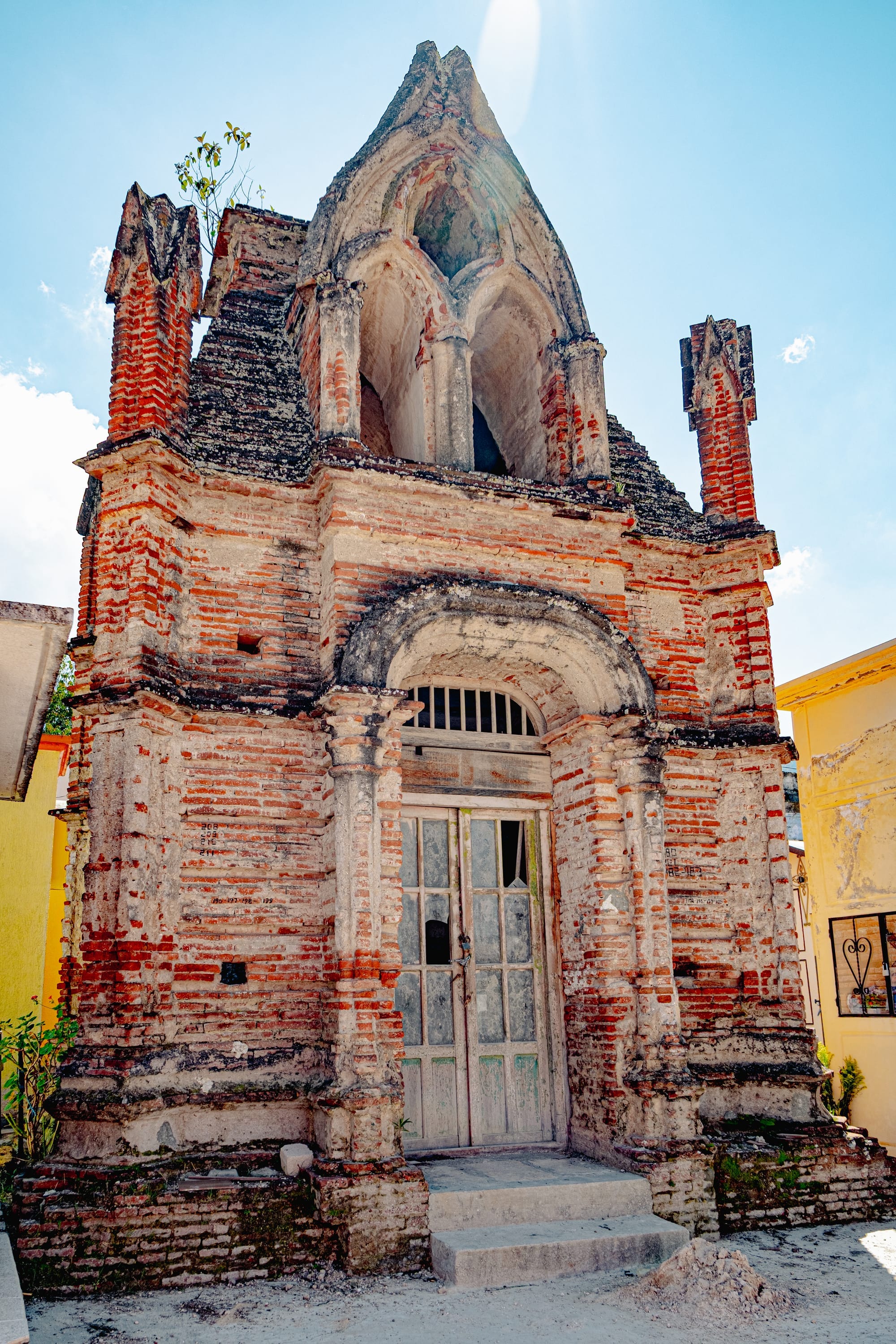
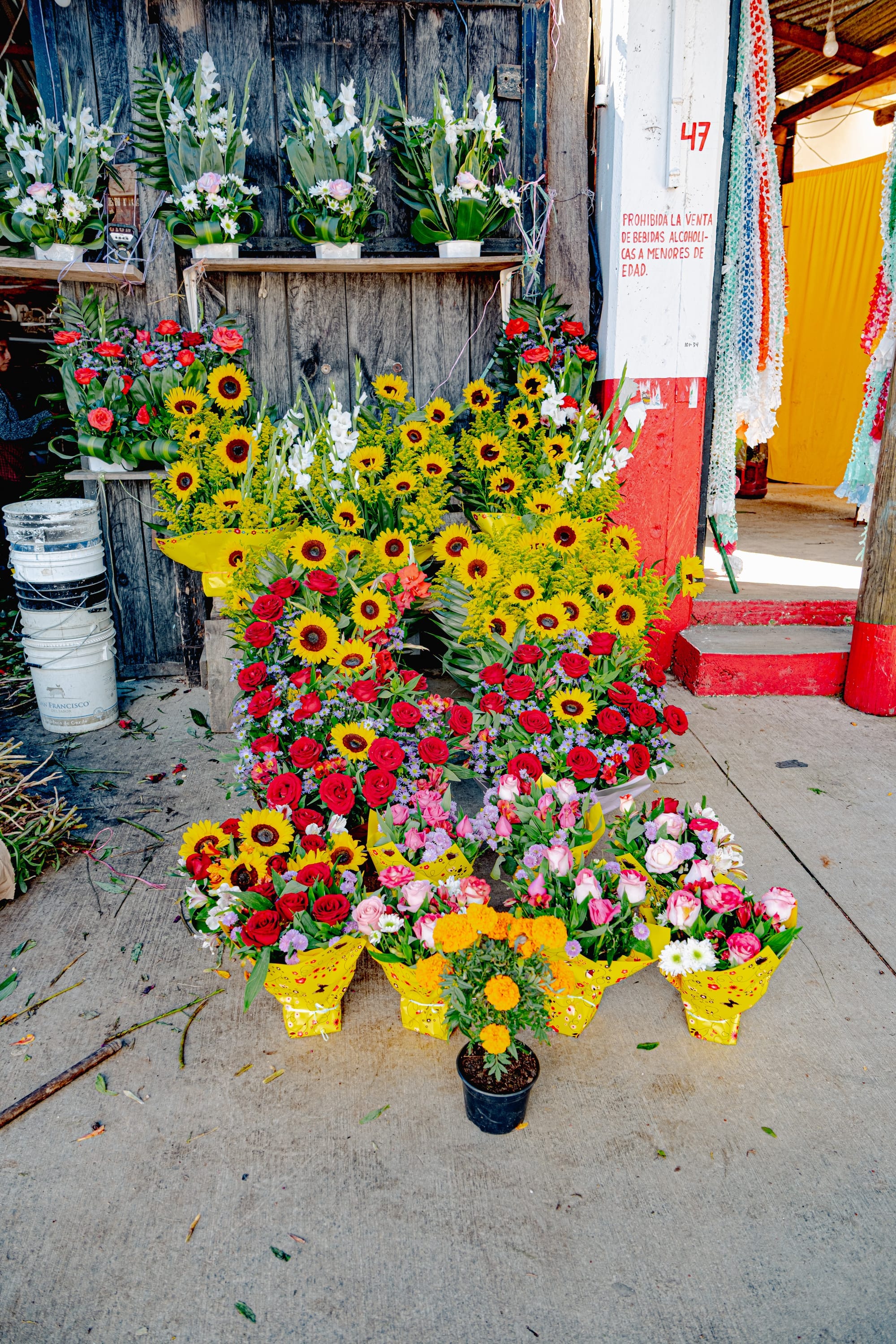
Historic brick mausoleums and bright florists frame life’s continuity in San Cristóbal
This care, so present and so visible, felt deeply human. It isn't about denying grief, but about turning it into something else. In many parts of the world, cemeteries are silent, lonely places that people rarely visit. Here, they're social spaces, an extension of the home, where death is part of ordinary living. That difference is what gives the Mexican approach to remembrance its warmth and resilience.
The murals outside
When we stepped outside the main gates, the Pantheon's outer walls came alive in another way, with murals celebrating the imagery and spirit of the Day of the Dead.
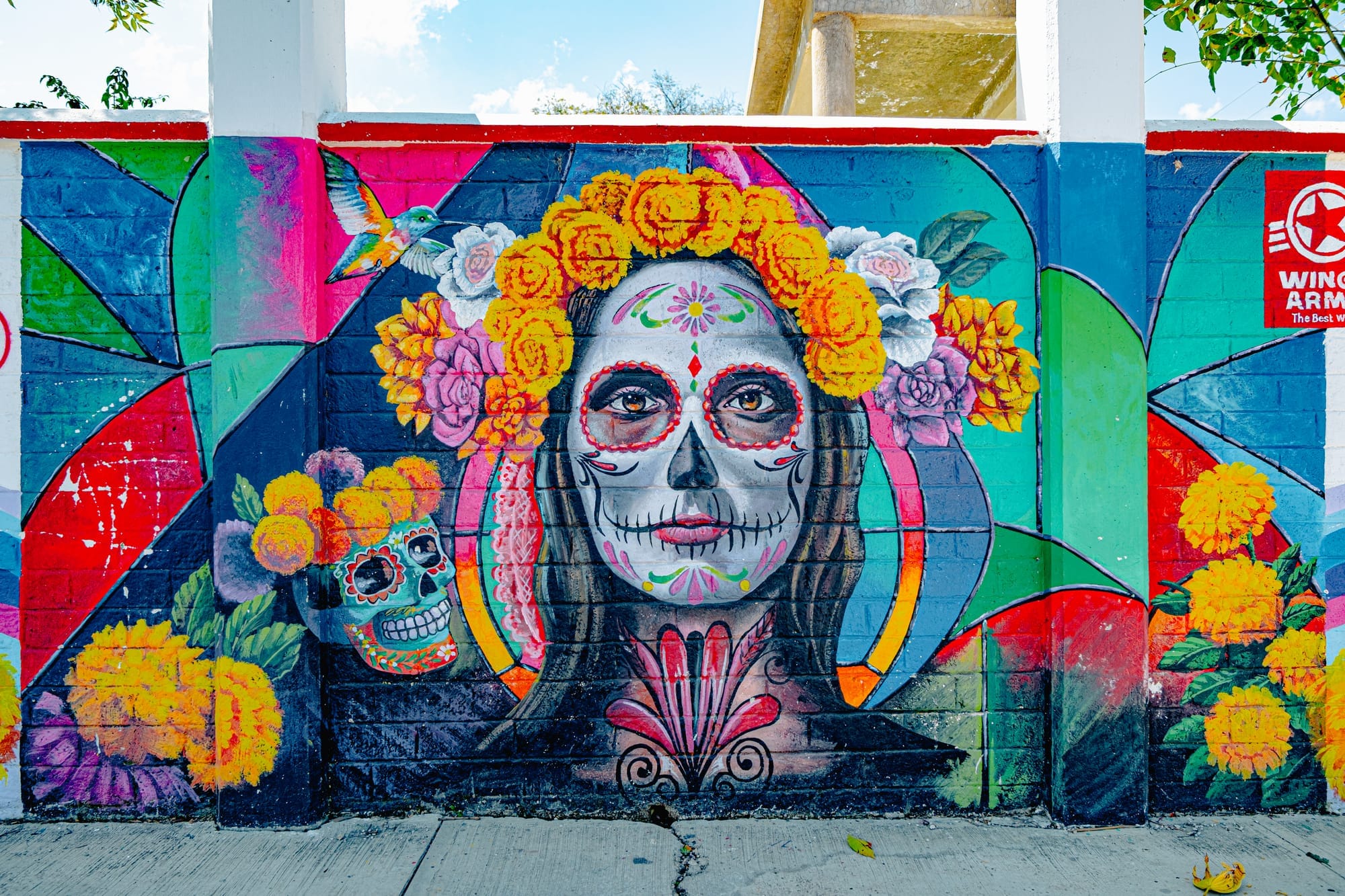
Artists had painted huge scenes full of color and movement: women in traditional dress holding candles, skeletons dancing, and faces painted as La Catrina surrounded by marigolds. Each mural told a story about continuity, transformation, humor, and humanity.
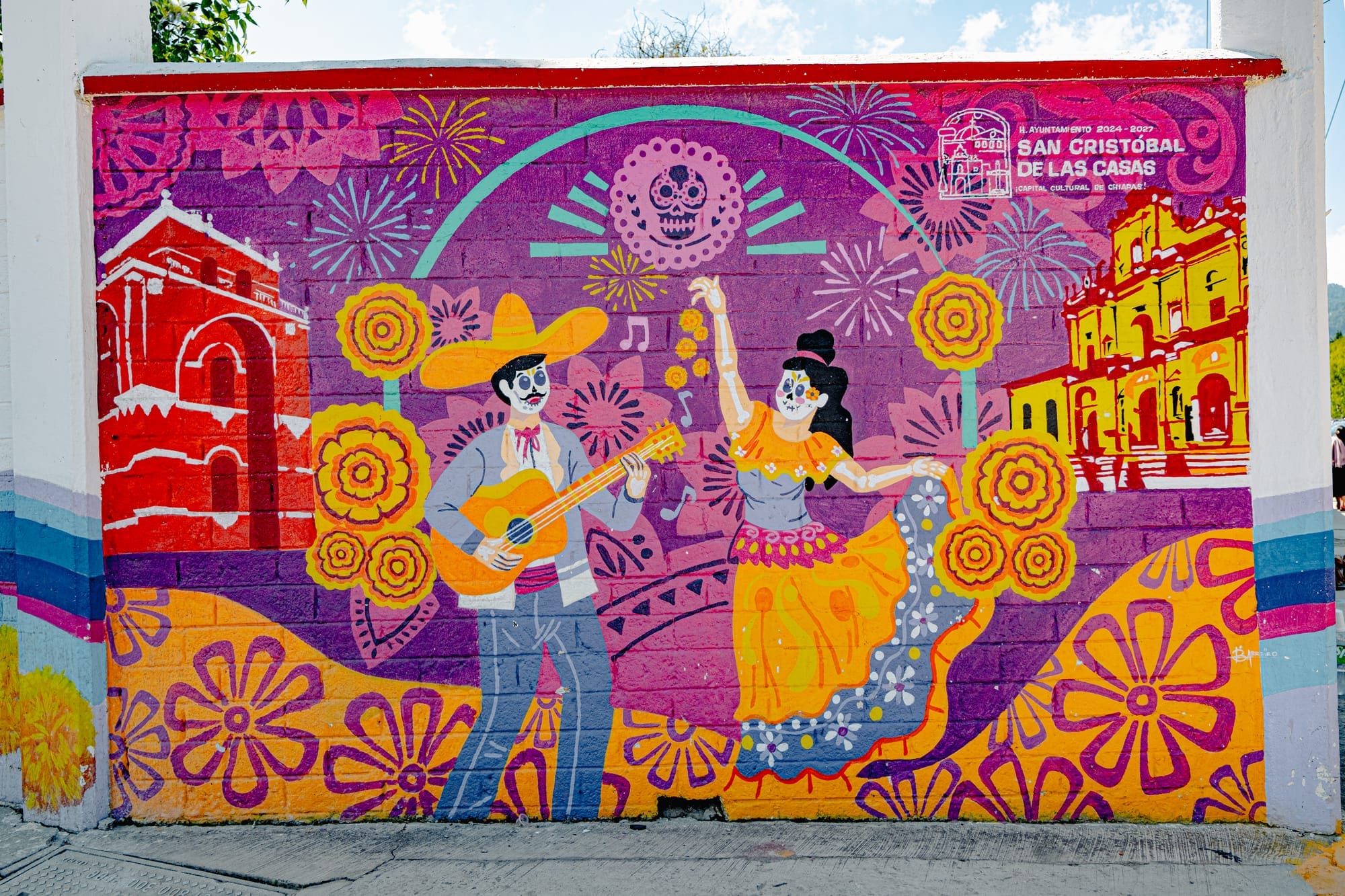
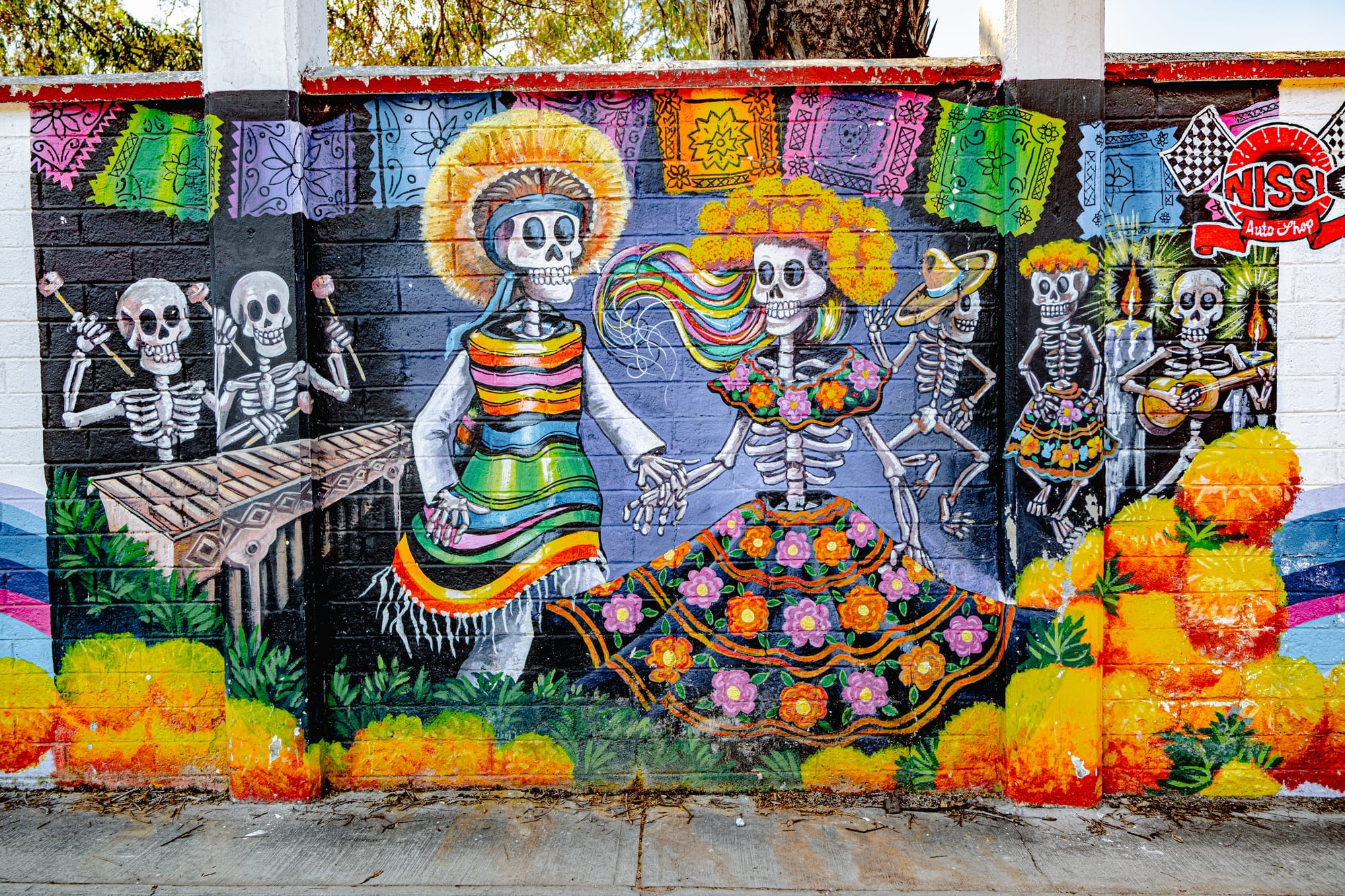
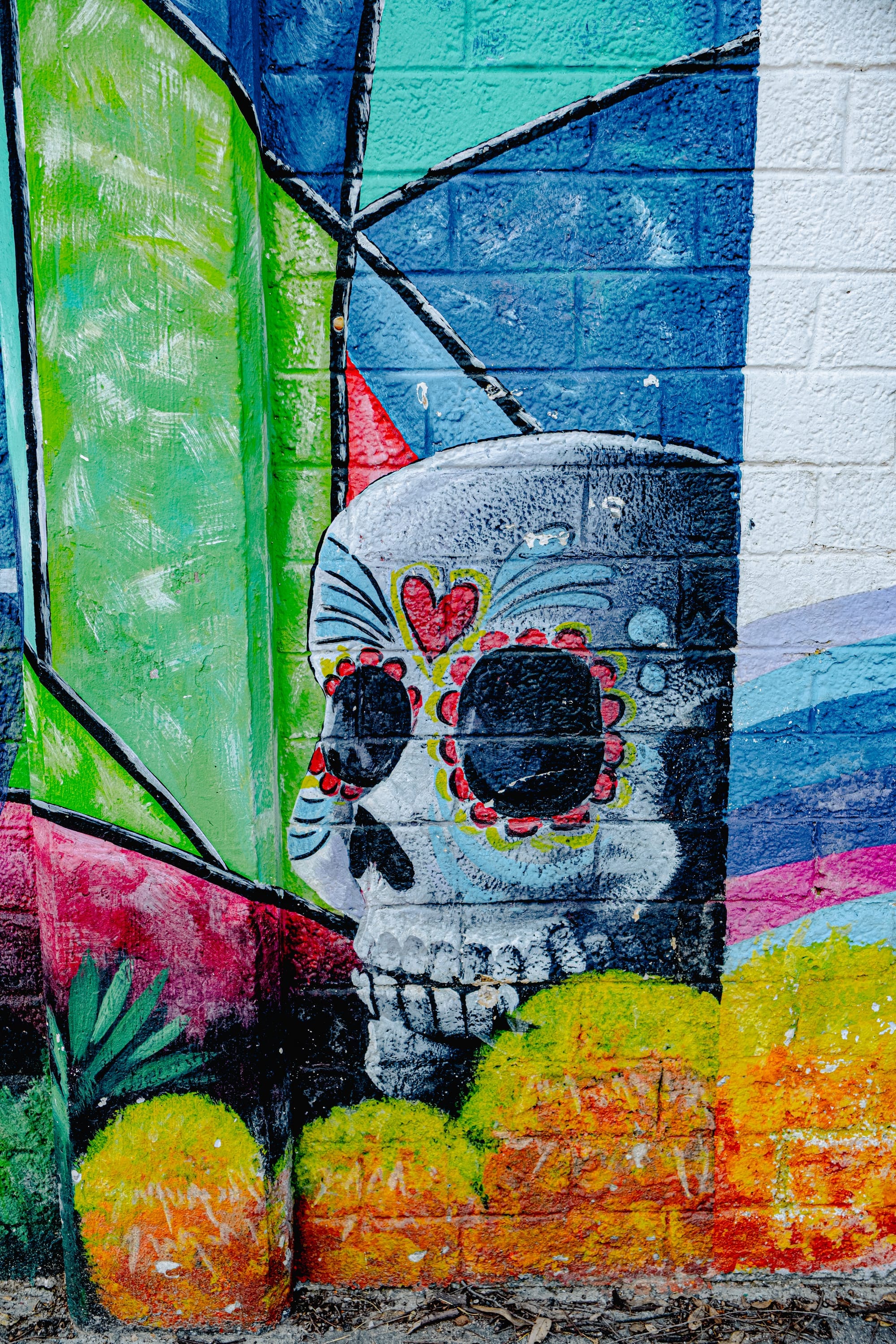
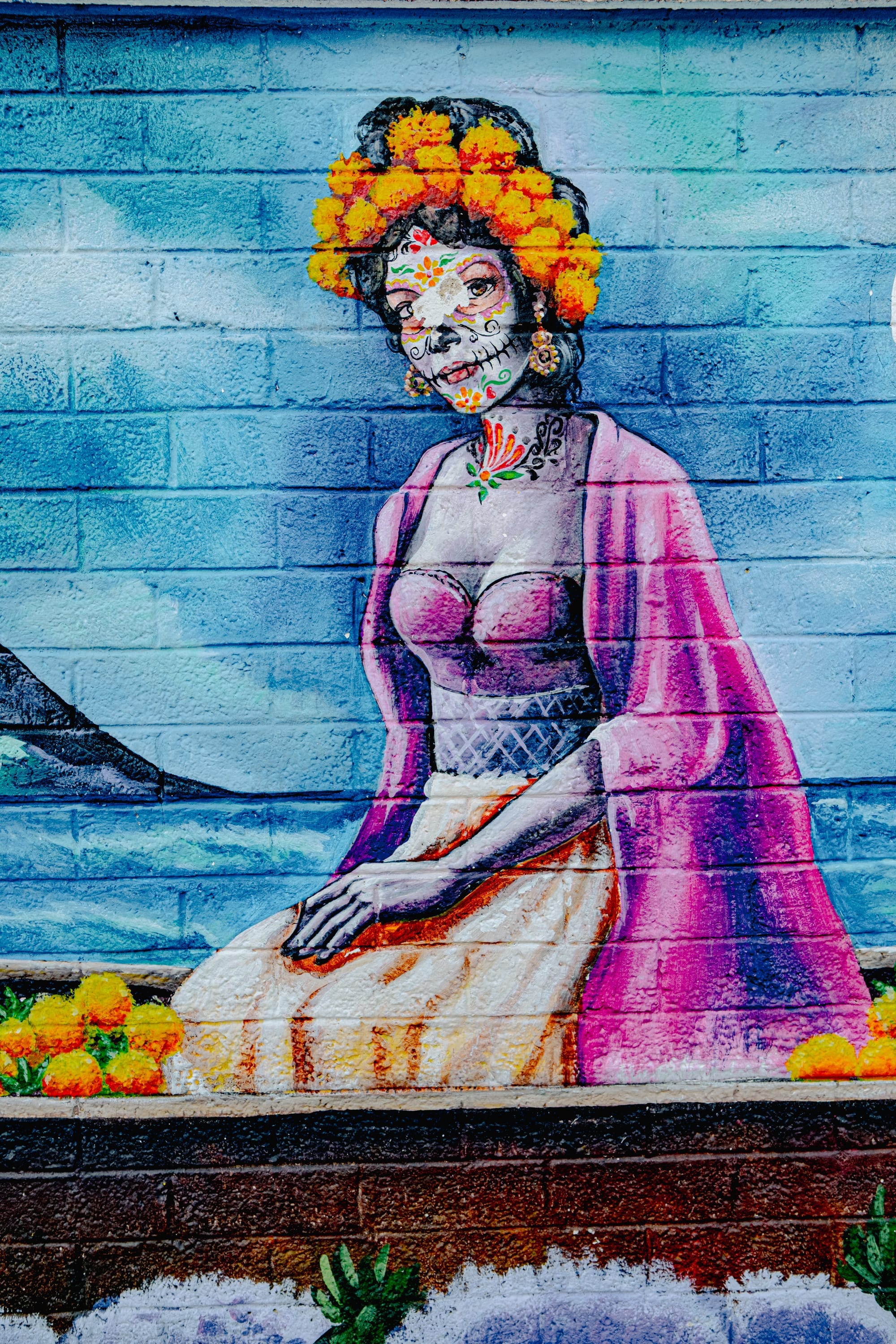
Murals of skulls and La Catrina celebrate beauty, remembrance, and transformation
These public artworks, made by local and visiting muralists, are both decoration and education. They show passersby that death isn't an end, but a passage: a crossing marked by beauty, not fear.
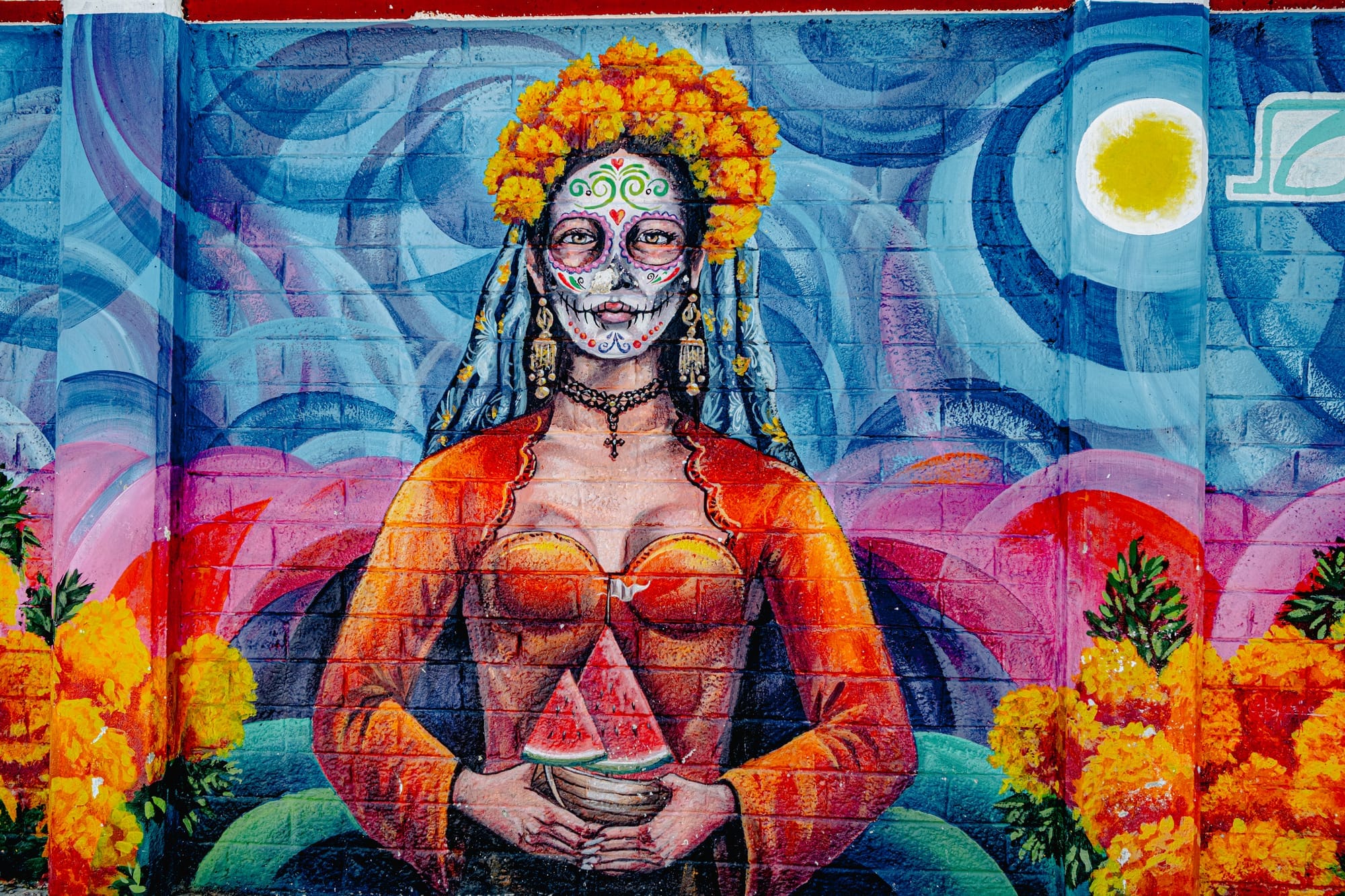
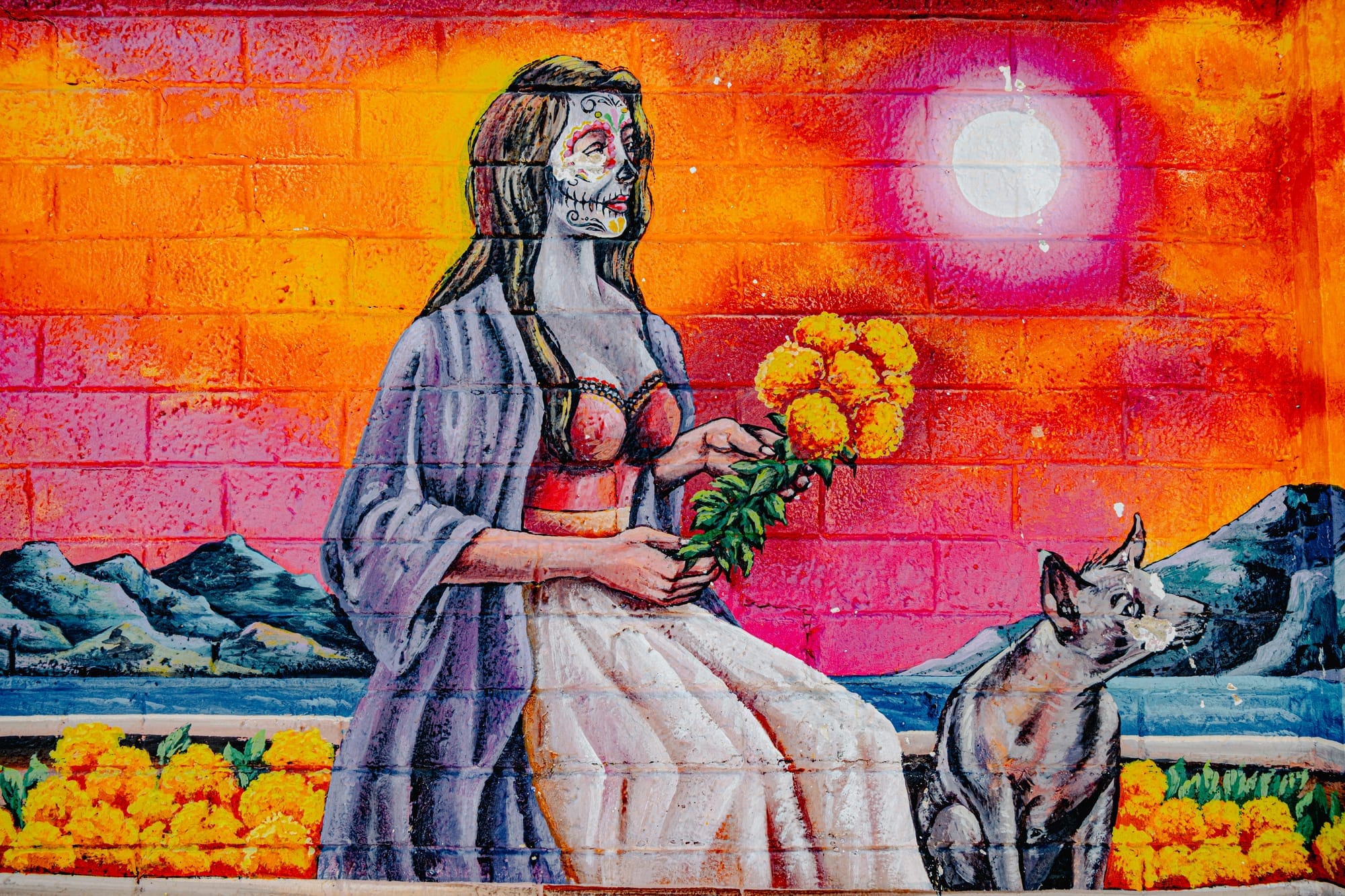
Some of the murals even included lines of poetry or bits of song lyrics, mixing words and images in celebration.
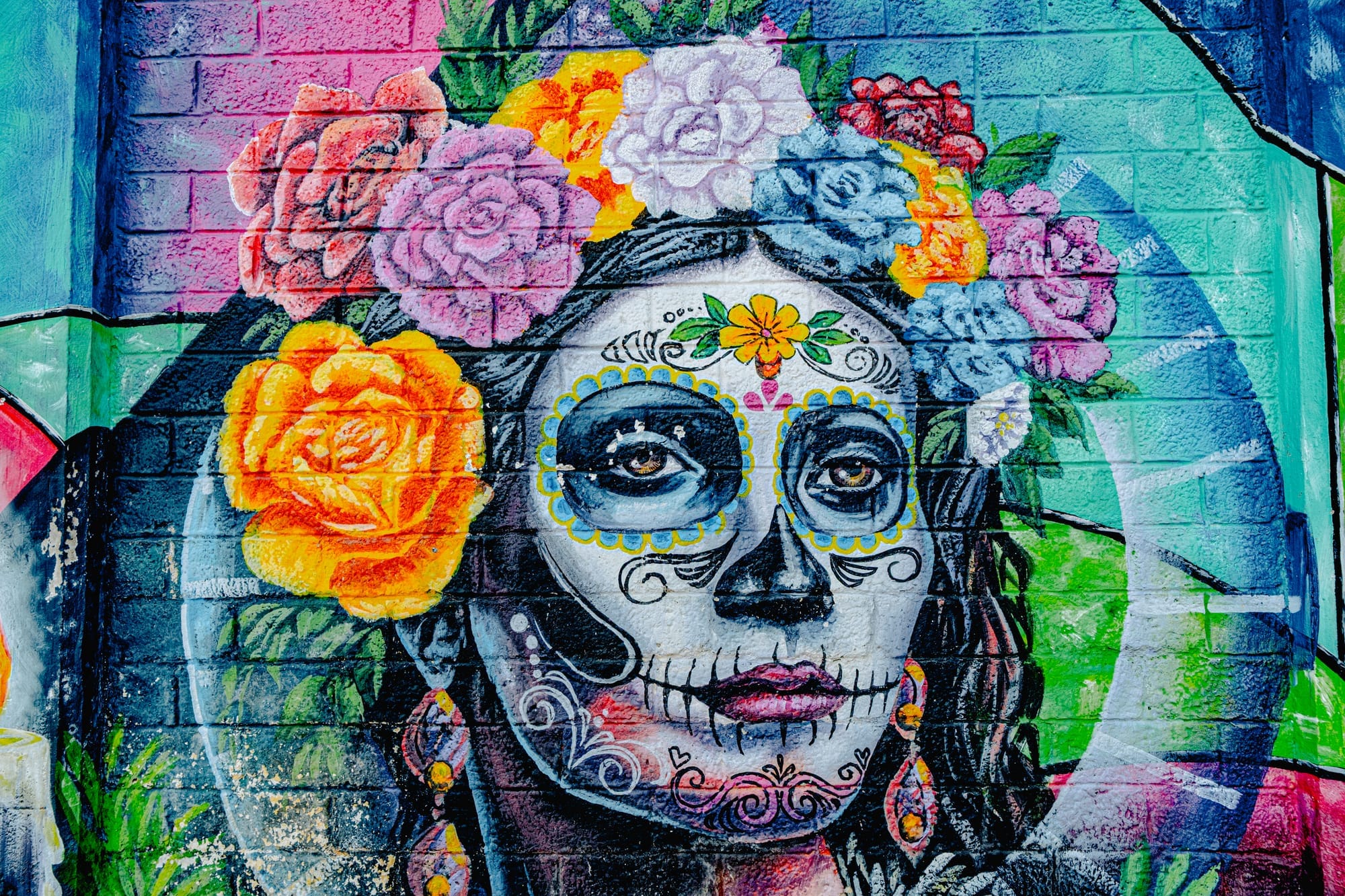
As with a lot of Mexico's art, there was no line between the sacred and the ordinary.
Visiting the Panteón Municipal respectfully
Families come here to look after their dead, and some are grieving a recent loss. Visitors are welcome, but it's worth keeping a few things in mind:
Ask before photographing people, and don't photograph anyone who is mourning. The painted mausoleums and murals are fine to photograph.
Keep to the lanes, and don't sit on, lean against, or step over tombs, flowers, or candles.
Keep your voice down and don't hover at the edge of a family's gathering.
If you want to support the families, buy flowers, drinks, or snacks from the vendors at the gates.
For the rest of the city, from churches to markets, see our San Cristóbal guide. For more experiences like this, see our cultural travel guide.
How to get to the Panteón Municipal in San Cristóbal
The cemetery is about 2 km southwest of the zócalo in a straight line, or roughly 2.5 km on the streets. On foot it takes 30 to 40 minutes, and the route runs through residential barrios rather than the tourist center, so save it in your map app before you go, as there are few signs.
A taxi is the easy option if you'd rather not walk both ways. San Cristóbal taxis don't run on meters, so agree on the fare first. Outside the Day of the Dead period it's normally easy to find a taxi back on the bigger streets nearby. Either way, aim to be out before about 6 pm, when the gates usually close.
Visiting the Panteón Municipal outside Day of the Dead
For most of the year the Panteón Municipal is a working cemetery with funerals, families visiting graves, and caretakers going about their jobs. You'll have the lanes largely to yourself on a weekday morning. Outside the festival weeks, Descubre San Cris notes that white and grey dominate the headstones and mausoleums, with black on crosses and details. The bright colors come back as families repaint before Día de Muertos.
There are a few other days when you'll see more families. In many parts of Mexico, cemeteries fill up on Mother's Day (May 10), and you may come across a funeral procession with a band at any time. If you do, step aside and let it pass, and put the camera away.
What to look for: tomb styles and family chapels
Walk the main lanes first, then the narrower side paths, where the older and more crowded plots are. These are the main types of tomb you'll see:
- Family mausoleums built like chapels: small buildings with iron doors, a cross on top, and sometimes a tiny altar inside, where generations of one family are buried together.
- House-style tombs: box-shaped tombs with roofs, windows, and doors, painted in the colors of the family's choosing, which give the cemetery its town-like look.
- Tall Gothic-style tombs: pointed spires and arches that rise above the plots around them.
- Older graves and sculptures: carved headstones, crosses, and statues from the cemetery's early decades (it dates from the late 19th century), many with hand-painted lettering.
- The murals on the outer wall: Day of the Dead scenes painted by local and visiting artists, which stay up after the holiday.
The cemetery also has notable graves of the city's well-known families and public figures, but there's no map or signage pointing them out, so treat it as a place to wander rather than a list to tick off.
Photography at the Panteón Municipal
The mausoleums, the painted lanes, and the murals are the subjects most photographers come for, and photos of them are generally fine. Morning light is softer and the lanes are emptier. A few rules keep it respectful:
- Don't photograph funerals, mourners, or families at a grave without a clear yes.
- Don't climb on tombs or walls for a better angle, and don't move flowers or candles.
- Leave the drone at home. Tripods are fine on an empty weekday, but not when families are around.
- Skip close-ups of names and inscriptions on individual graves if you plan to post photos online.
Is the Panteón Municipal safe to visit?
In daylight it's generally fine. It's a working municipal cemetery with families and staff around. On an empty weekday, some side lanes are deserted, so it's better to go with someone, keep your phone out of sight when you're not using it, and leave well before closing time. Don't visit after dark. For wider safety in Chiapas, including occasional roadblocks, check the UK government's regional advice.
The Panteón pairs well with an afternoon in town. See our list of things to do in San Cristóbal for what's nearby.
Reflections on death
As the afternoon sun began to dip, the colors of the Pantheon got deeper. Shadows stretched across the tombs, and the brass band faded into the distance. It was impossible not to be moved by how alive it all was, and by how care, culture, and spirituality came together here. There was respect, yes, but not solemnity. There was music, laughter, and the smell of freshly fried churros from a nearby vendor. Death, here, was something everyone took part in. It belonged to everyone.
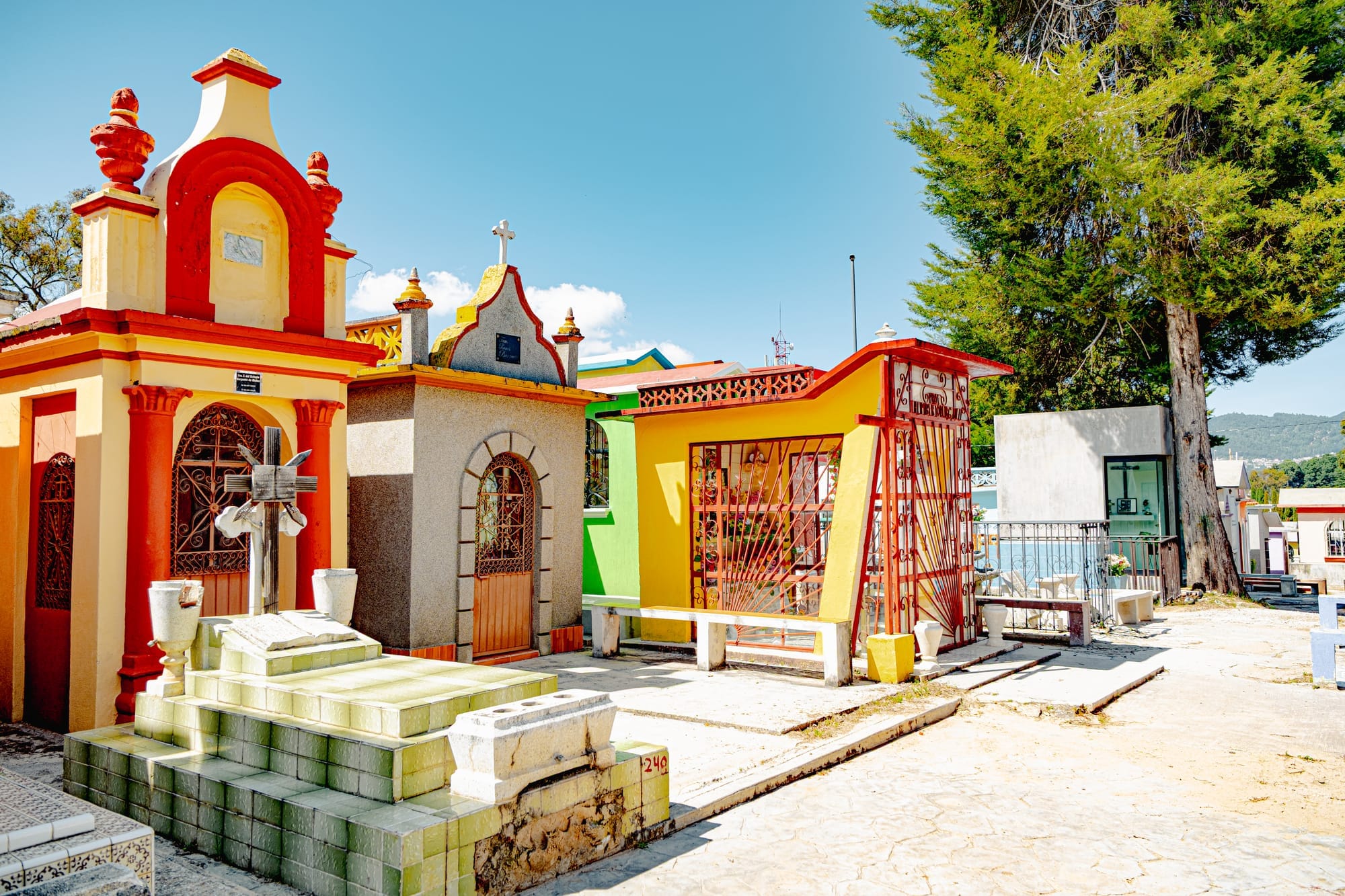
In San Cristóbal, and across Mexico, death isn't hidden behind closed doors or wrapped in euphemism. It's part of community life. Visiting a place like the Municipal Pantheon before Day of the Dead lets you see that at work: how remembering is a form of celebration, how grief can be shared, and how color itself becomes a way of keeping the dead close.
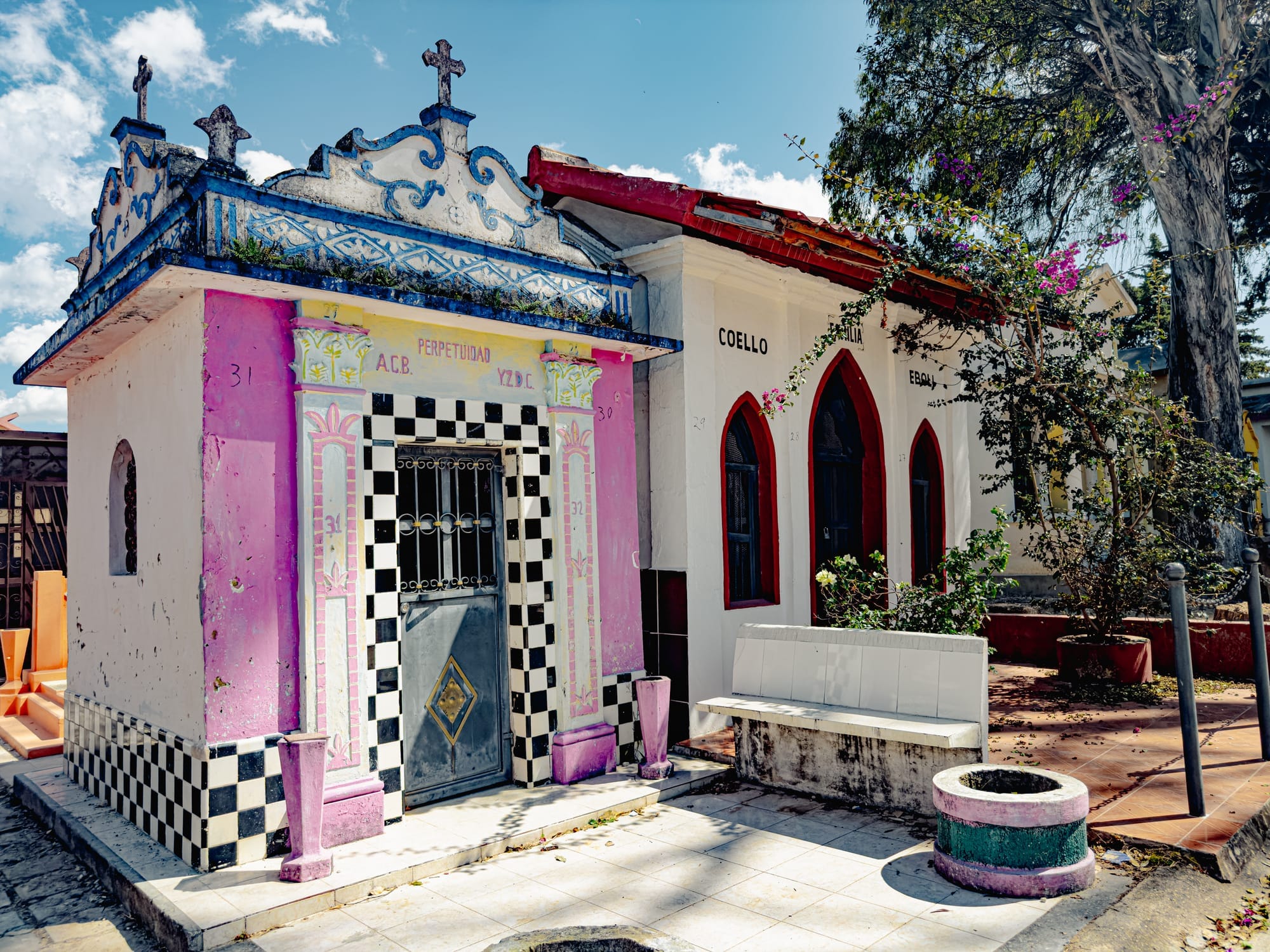
We left the cemetery as the sky turned pale gold. People were still working, still painting, and still laughing. The walls glowed in the late light: orange and violet, green and pink.
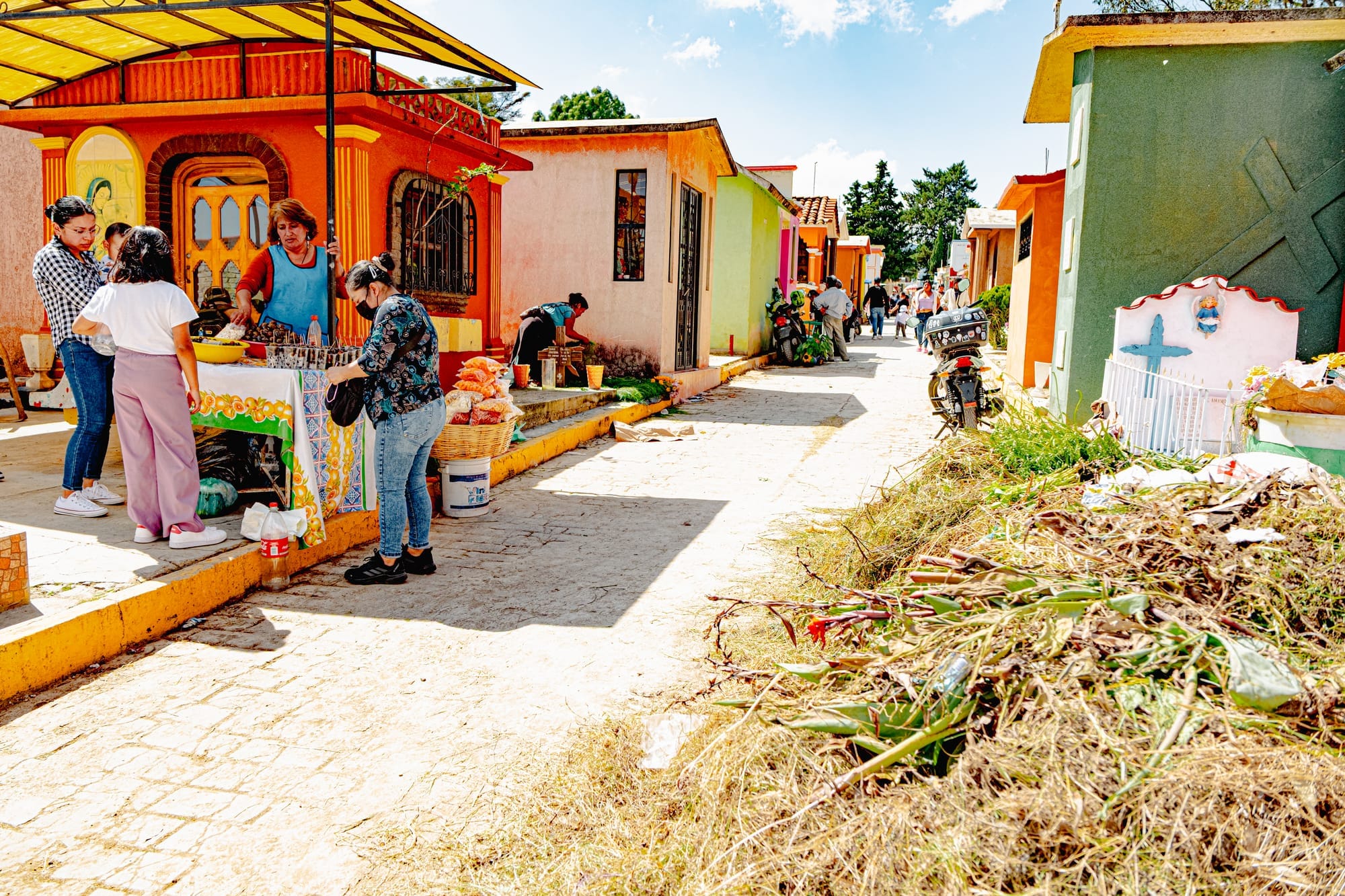
It was a fitting picture of what Day of the Dead stands for: the line between the living and the dead isn't a wall, but a window, bright and open, framed in marigolds.
Whatever your plans, travel with insurance. Stomach bugs, a fall on a cobbled street, or a stolen phone can happen anywhere, and it's much easier to enjoy the trip when you know you're covered. We'd recommend SafetyWing Nomad Insurance. It covers medical emergencies abroad, you can buy it even after you've left home, and it renews every four weeks, so it works for a short trip or months on the road.
Where to stay in San Cristóbal de las Casas
San Cristóbal de las Casas is the base for this, with the most places to stay and eat. These are well-reviewed options, all rated 9 or more on Booking:
- Parador Margarita: a well-run, good-value hotel a few blocks from the center, rated 9.1 from over 1,400 reviews.
- Casa Carmen: a small guesthouse with a courtyard, rated 9.6.
- Casa Santa Lucía: a colonial-style boutique stay in the center, rated 9.5.
Frequently asked questions
Where is the Panteón Municipal in San Cristóbal de las Casas?
It's in Barrio de Fátima, outside the historic center. Most visitors take a taxi, as the walk is longer than it looks.
What are the Panteón Municipal San Cristóbal opening hours?
About 7 am to 6 pm every day (2026). Around November 1 and 2 families stay for most of the day, so check locally if you plan to visit late.
When is the best time to visit the Panteón Municipal?
The last week of October, when families clean, repaint, and decorate the tombs, or November 1 and 2 for Día de Muertos itself. Outside these dates it's much emptier.
How old is the Panteón Municipal in San Cristóbal?
It dates back to the late 19th century, and it holds the graves of many of the city's well-known families and public figures. It's now so full that the local press has called for a new municipal cemetery.
Can you take photos in the Panteón Municipal?
Photos of the mausoleums and the murals outside are generally fine. Ask before photographing people, and don't photograph families who are mourning.
Is the Panteón Municipal different from Romerillo and Zinacantán?
Yes. The Panteón Municipal is the city's cemetery, full of painted, house-like mausoleums. Romerillo and Zinacantán are Tsotsil Maya village cemeteries outside town, with earth graves, crosses, and pine needles, and their own rules on photography.
Is there an entrance fee for the Panteón Municipal San Cristóbal?
No. It's a public municipal cemetery, free to enter, with no ticket or booking. Bring small bills if you want to buy something from the vendors at the gates around Day of the Dead.
Is the Panteón Municipal worth visiting outside Day of the Dead?
Yes, if you're interested in architecture, photography, or how the city remembers its dead. On a normal weekday it's much emptier, and the house-like mausoleums are easier to see. If you can, the last week of October is the best compromise.
How far is the Panteón Municipal from the center of San Cristóbal?
About 2.5 km by road, southwest of the zócalo. That's a 30 to 40 minute walk or a short taxi ride. Agree on the taxi fare before you get in.
Can you visit the Panteón Municipal at night?
No. It normally closes at about 6 pm (2026), and we'd recommend leaving before dark anyway, as the walk back runs through residential streets.
Are there guided tours of the Panteón Municipal?
There are no regular tours. Day of the Dead tours from San Cristóbal usually focus on Romerillo and Zinacantán, so the Panteón is easiest to visit on your own.
Useful links: Panteón Municipal (Descubre San Cris), UNESCO: Indigenous festivity dedicated to the dead, Cempasúchil, Tagetes erecta (Wikipedia), and La Calavera Catrina (Wikipedia).
More from San Cristóbal and Chiapas: Day of the Dead in Zinacantán, Day of the Dead at Romerillo, Chamula and Zinacantán, the churches of San Cristóbal, the San Cristóbal markets, and our San Cristóbal guide.


