


Day of the Dead in San Cristóbal de las Casas, in the highlands of Chiapas in southern Mexico, takes place mainly on November 1 and 2, with costumes and trick-or-treating from the evening of October 31. In town you'll find marigolds everywhere, altars in homes and cafés, and a face-painted parade. The biggest rituals happen in the cemeteries: the Municipal Pantheon in the city, and the Tsotsil Maya cemeteries of Romerillo and Zinacantán in the hills nearby. Plan three or four days and spend November 1 at Romerillo. We spent the days around Día de Muertos in San Cristóbal, and they're among our most memorable travel experiences.
Of everything we've done on our travels, few experiences have stayed with us as much as Día de Muertos.
That isn't because it looked striking, though it often does. It's because it showed us a very different relationship with death than the one we grew up with. Experiencing Day of the Dead in San Cristóbal de las Casas, where it's known for being especially spiritual, moved us deeply.
This post covers how Día de Muertos played out in the town itself: the altars, the streets, the time we shared with others, and the evening parade that filled the city with color and movement. We also visited three very different cemeteries during the celebrations: Romerillo, Zinacantán, and San Cristóbal’s Municipal Pantheon. Each one honored the dead in its own way. Those visits deserve their own space, so we've written about them separately.
Day of the Dead in San Cristóbal de las Casas at a glance
Here are the practical basics first. Exact events change from year to year, so check local listings when you arrive.
Dates: November 1 and 2 are the main days. Families clean and decorate graves on October 31, and that night the town fills with costumes and trick-or-treaters.
Who is remembered when: across Mexico, November 1 is usually for children who have died and November 2 for adults. In the Tsotsil villages around San Cristóbal, November 1 is the big cemetery day.
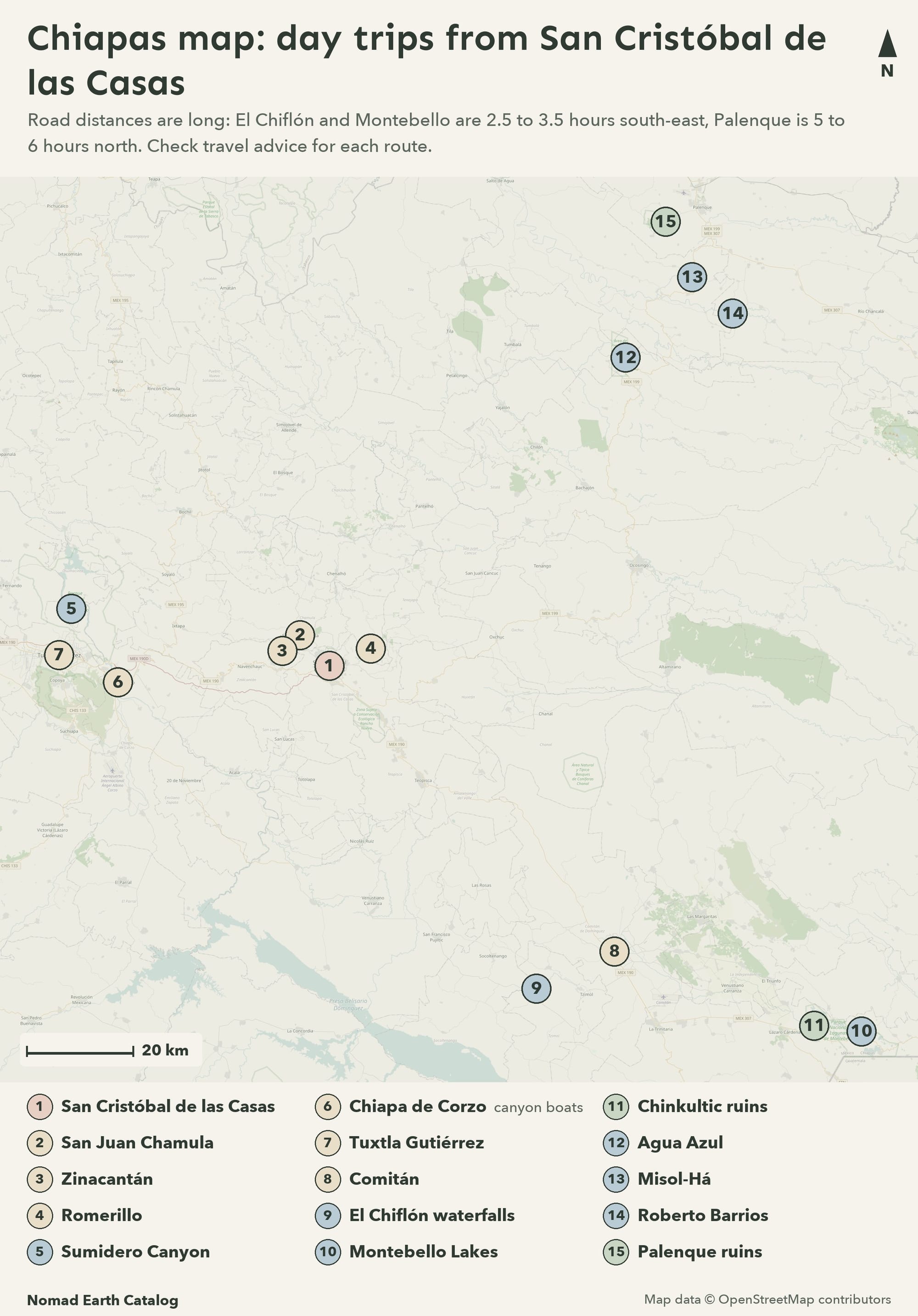
Where it happens: altars in homes, cafés, and the main plaza; an evening parade; the Municipal Pantheon in the city; and the village cemeteries of Romerillo (about 30 minutes by car) and Zinacantán (about 20 minutes).
Cost: the town, the parade, and the cemeteries are free. You only pay for taxis, colectivos, or a guided tour.
How long: three or four days lets you see the altars, the parade, and two or three cemeteries without rushing.
Weather: San Cristóbal sits at about 2,200 m, so early November days are mild and nights are cold. Bring a warm jacket and shoes with good grip.
Book early: this is one of the busiest weeks of the year in town, so reserve your stay well ahead.
| Details | |
|---|---|
| October 31 | Families clean and decorate graves; costumes and trick-or-treaters at night |
| November 1 | Children remembered; the big cemetery day in Tsotsil villages |
| November 2 | Adults remembered |
| Where | Altars, the parade, the Municipal Pantheon, Romerillo (30 min), and Zinacantán (20 min) |
| Cost | Free; pay only for transport or a tour |
| How long | Three or four days |
| Weather | About 2,200 m: mild days, cold nights |
| Book early | One of the busiest weeks of the year |
What Día de Muertos means in Chiapas
Día de Muertos (also called Día de los Muertos, or Day of the Dead) is often seen from afar as one single, uniform celebration. In reality, it's a mix of regional practices that stretches across Mexico, shaped by Indigenous beliefs, colonial history, and each community's relationship to death, land, and ancestry.
At its heart, Día de Muertos isn't a celebration of death. It's a ritual of keeping a relationship with it.
Long before Spanish colonization, many Indigenous cultures in what is now Mexico saw life and death as a cycle. Among Maya-descended communities (especially relevant in Chiapas), death wasn't seen as a final break. It was a transition within a continuous moral and spiritual world. The dead stayed present: as ancestors, guides, and witnesses.
When Catholicism arrived, these pre-Hispanic beliefs didn't disappear. They blended with the Christian calendar, most notably All Saints’ Day (November 1st) and All Souls’ Day (November 2nd), and that blend became what we now know as Día de Muertos. But the mix was never complete. In many regions, especially in southern Mexico, Indigenous ways of thinking still lead.
In Chiapas, Día de Muertos tends to be spiritual and centered on family. The focus is less on spectacle and more on continuity: tending graves, preparing food for both the living and the dead, and lighting candles to show that someone is present. Altars (ofrendas) aren't decorative centerpieces so much as temporary homes, places where memory, food, and prayer come together.
Marigolds, believed to guide spirits with their color and scent, are everywhere. Food is made with care. It's symbolic, but it's also real food, meant to be shared between the living and the dead. Life takes a pause. Homes and cemeteries are where most of the ritual happens, while public spaces take part in their own low-key way.
In places like San Cristóbal de las Casas, where Indigenous Tsotsil and Tseltal traditions live alongside colonial architecture and modern life, Día de Muertos is both personal and shared. It's about keeping things going: bonds, names, obligations, and care across generations.
Seeing Día de Muertos here helped us understand it as a practice rather than an event. The dead aren't gone. They're simply somewhere else, and for a few days each year, they're invited close again.
What goes on a Day of the Dead altar in Chiapas
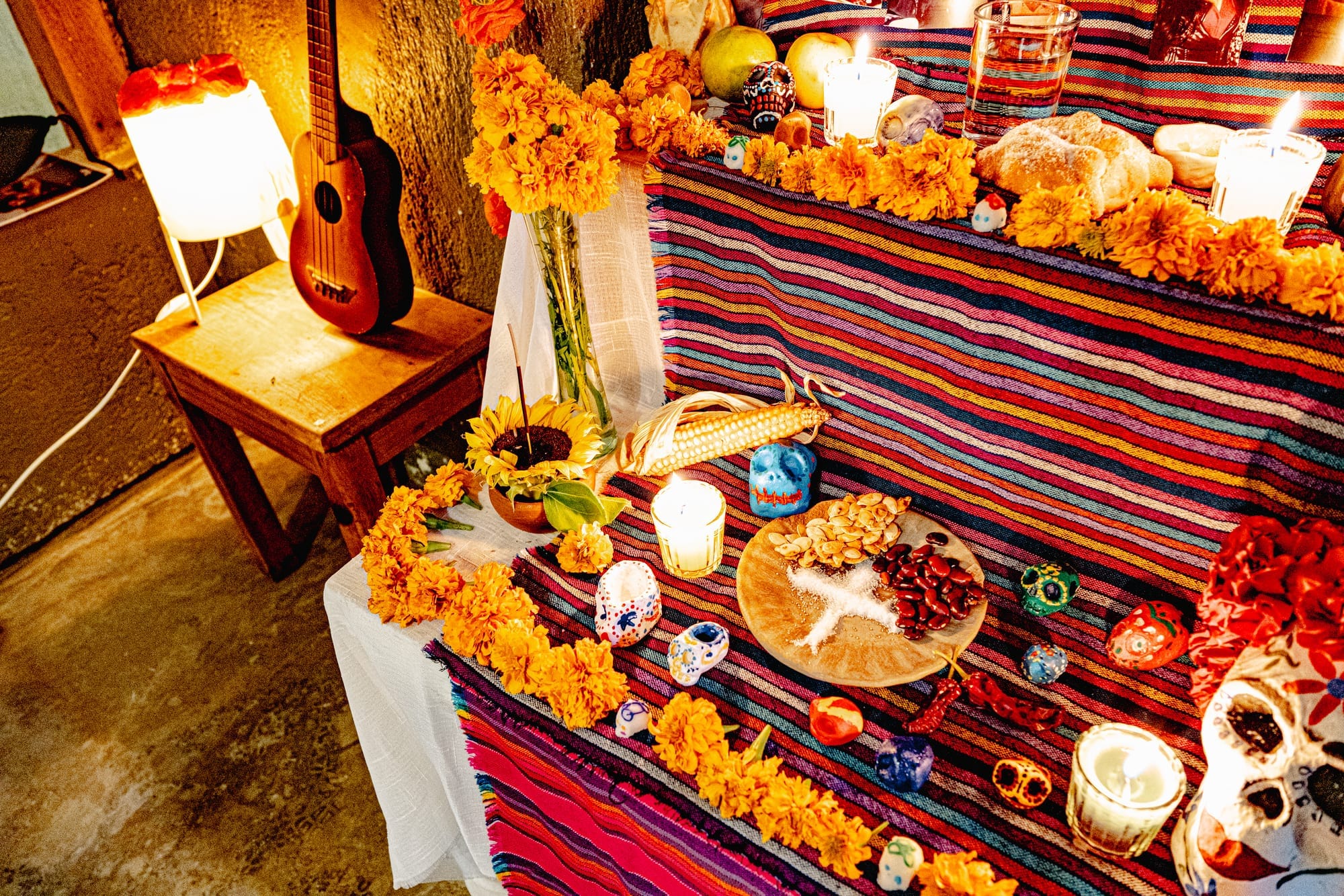
An ofrenda usually holds photos of the people being remembered, candles, copal incense, marigolds (cempasúchil, from the Nahuatl for "twenty flowers"), salt, water, and the food and drinks they liked. In the Chiapas highlands you'll also see pine needles spread under the offerings, fruit, Coca-Cola, and pox, a strong local liquor made from sugarcane and corn. Families also bring offerings to the graves, and in the villages that's where most of the celebration happens.
For what each item on an ofrenda means, see our guide to Day of the Dead altars and flowers.
In 2008 UNESCO added the Indigenous festivity dedicated to the dead to its list of the Intangible Cultural Heritage of Humanity, as practiced by Mexico's Indigenous communities. The Day of the Dead entry on Wikipedia is a good overview of how the Catholic and pre-Hispanic traditions came together.
Co404 celebrations
One of the most meaningful Día de Muertos experiences we had in San Cristóbal didn't happen in a public square. It happened at home.
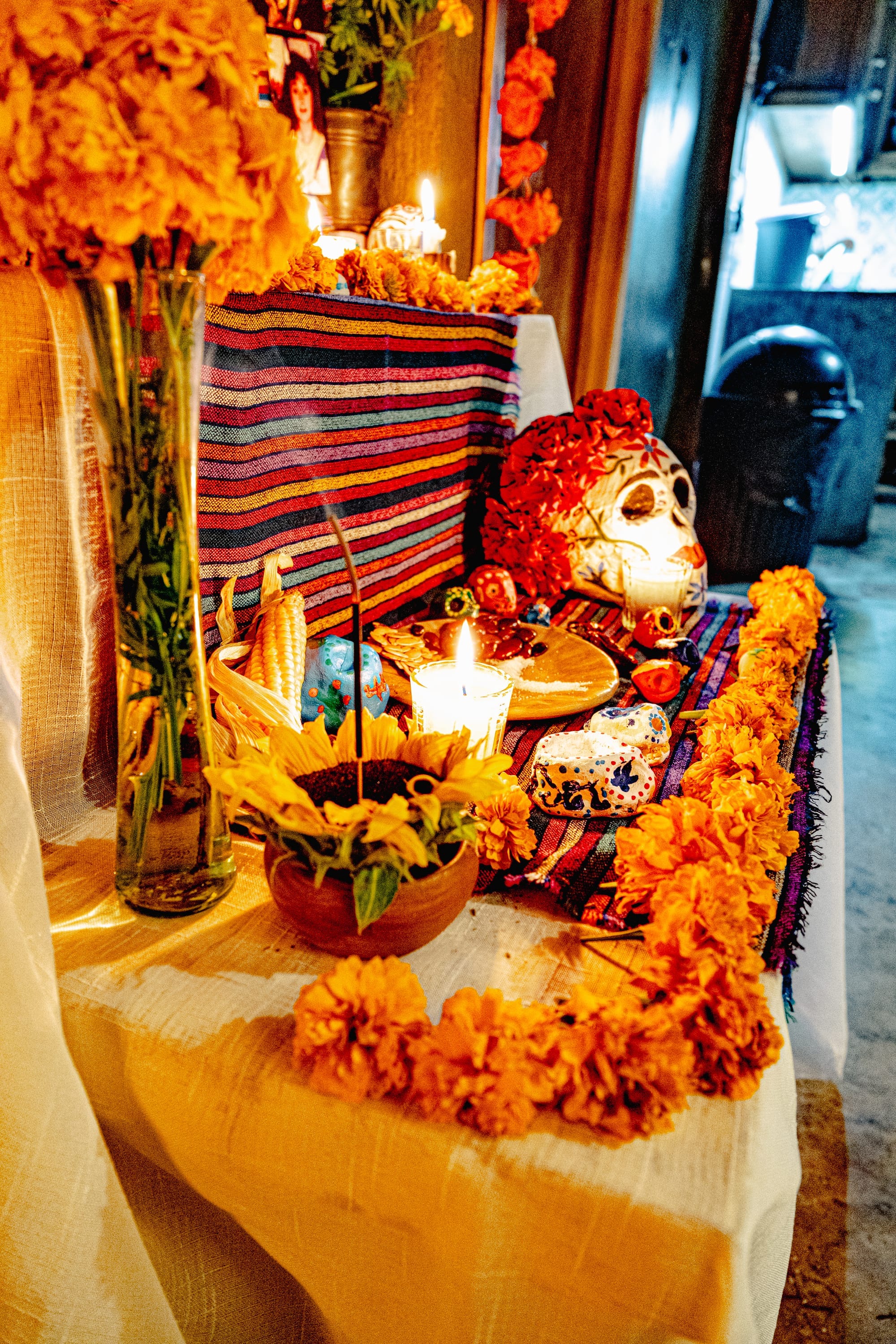
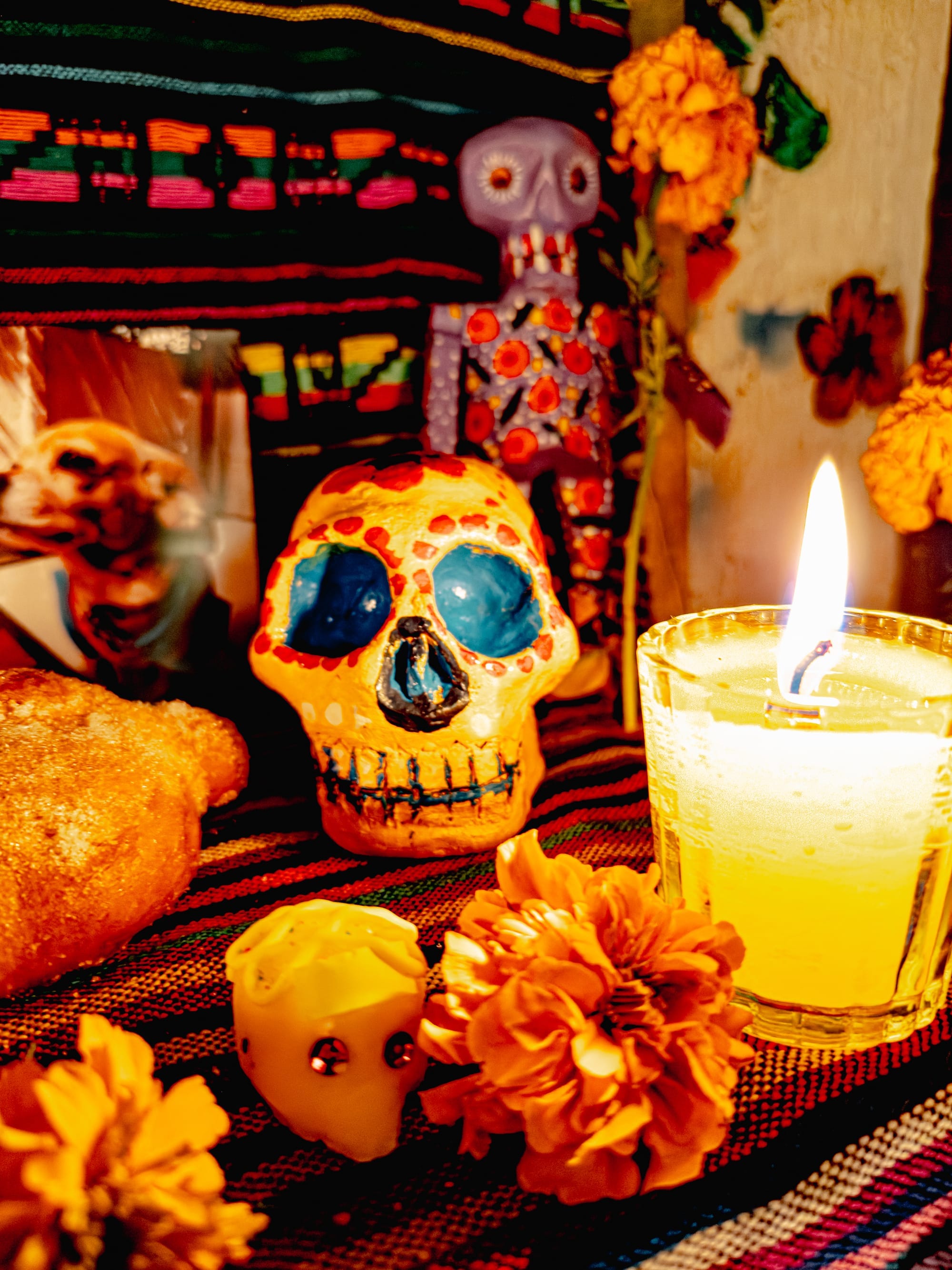
A shared ofrenda created together at Co404
At Co404, our digital nomad coliving space, the days before Day of the Dead were about preparation rather than a packed program. The idea wasn't to recreate the tradition perfectly, but to take part in it respectfully, with openness and care.
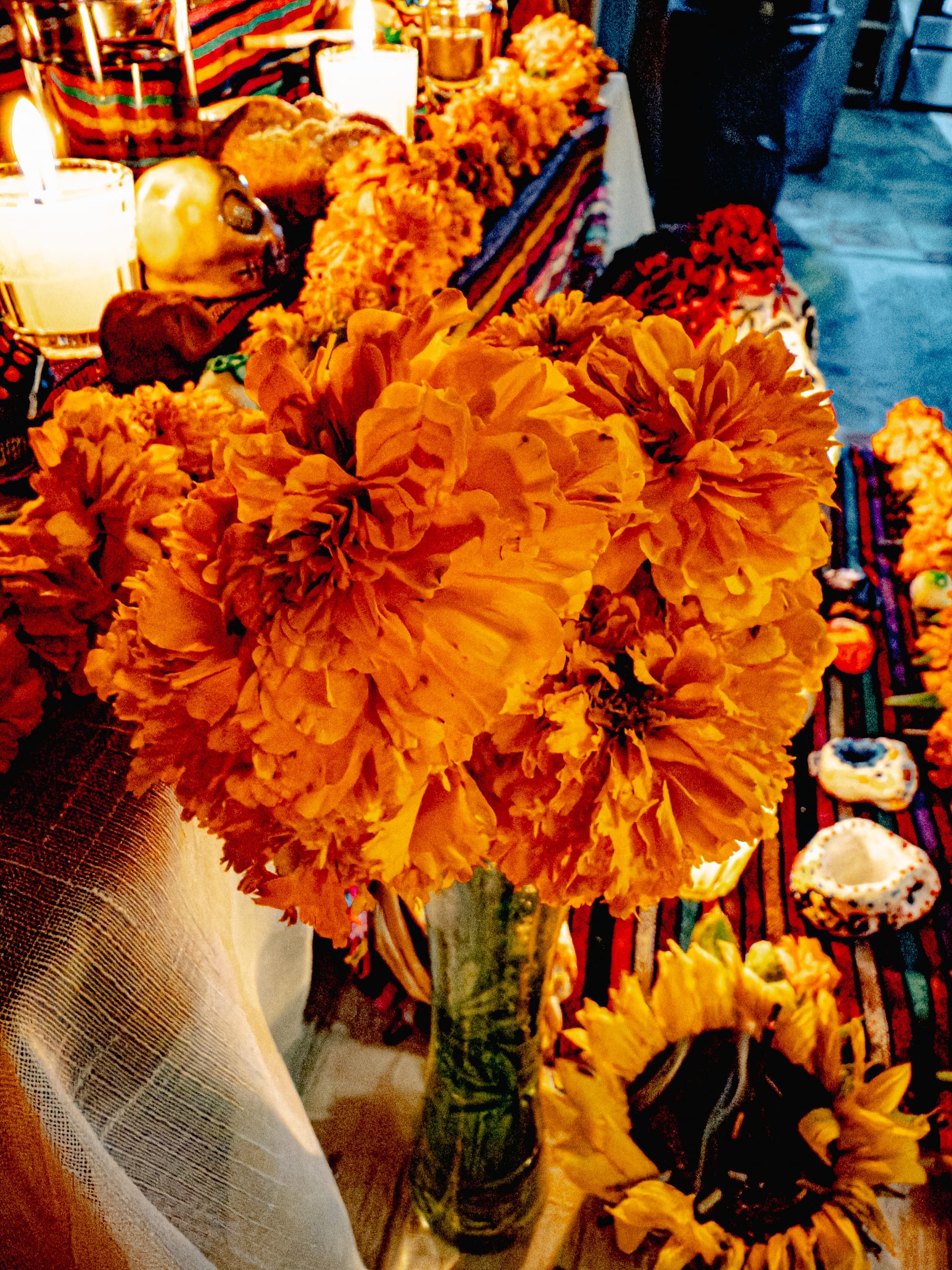
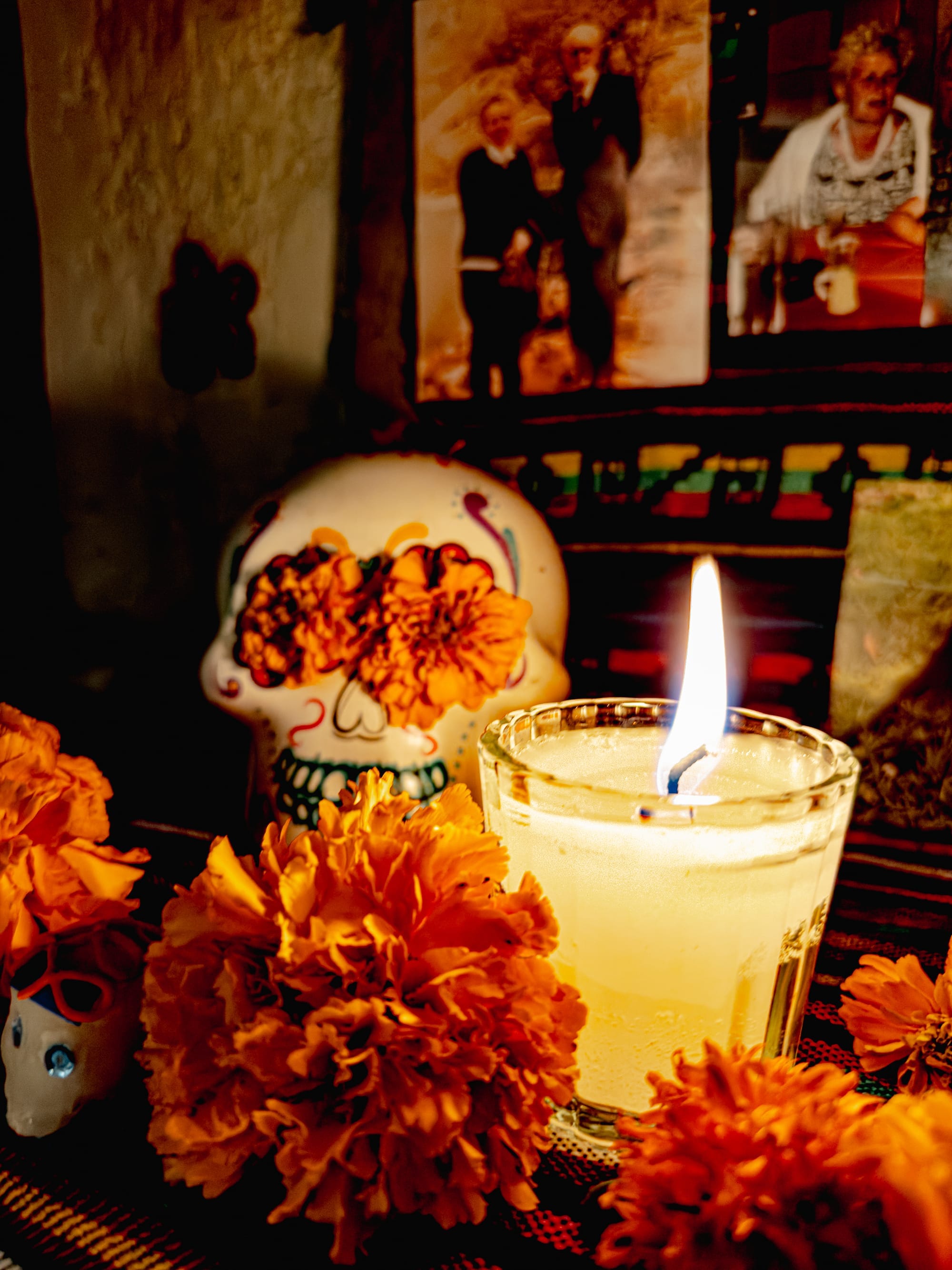
Marigolds and candlelight
The first activity took place several days before Día de Muertos. As a group, we made clay skulls by hand, shaping each one carefully (and imperfectly) before setting them aside to dry. Later, we painted them, some of us carefully and some of us playfully. It was a calm, shared way to ease into the days ahead.
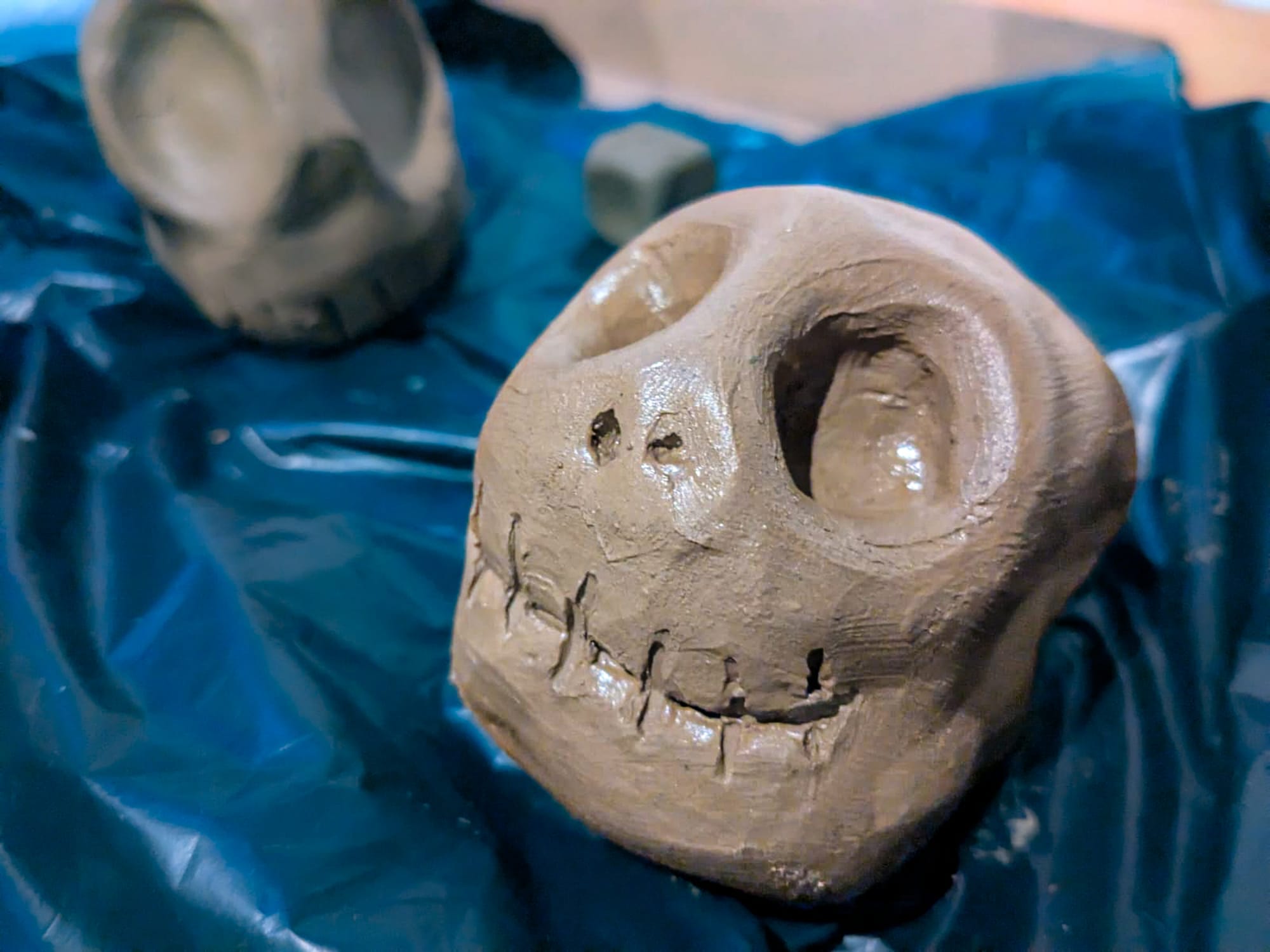
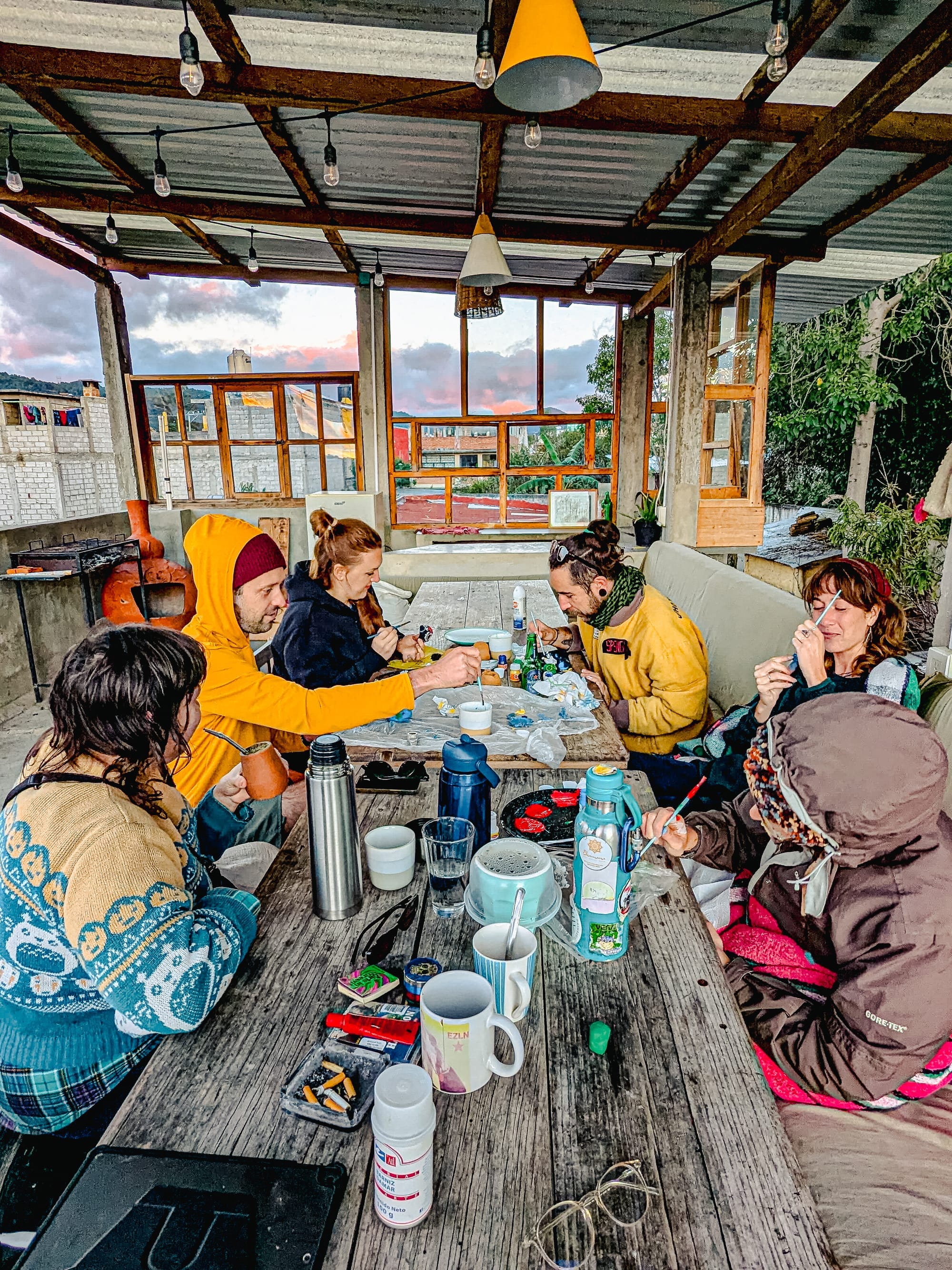
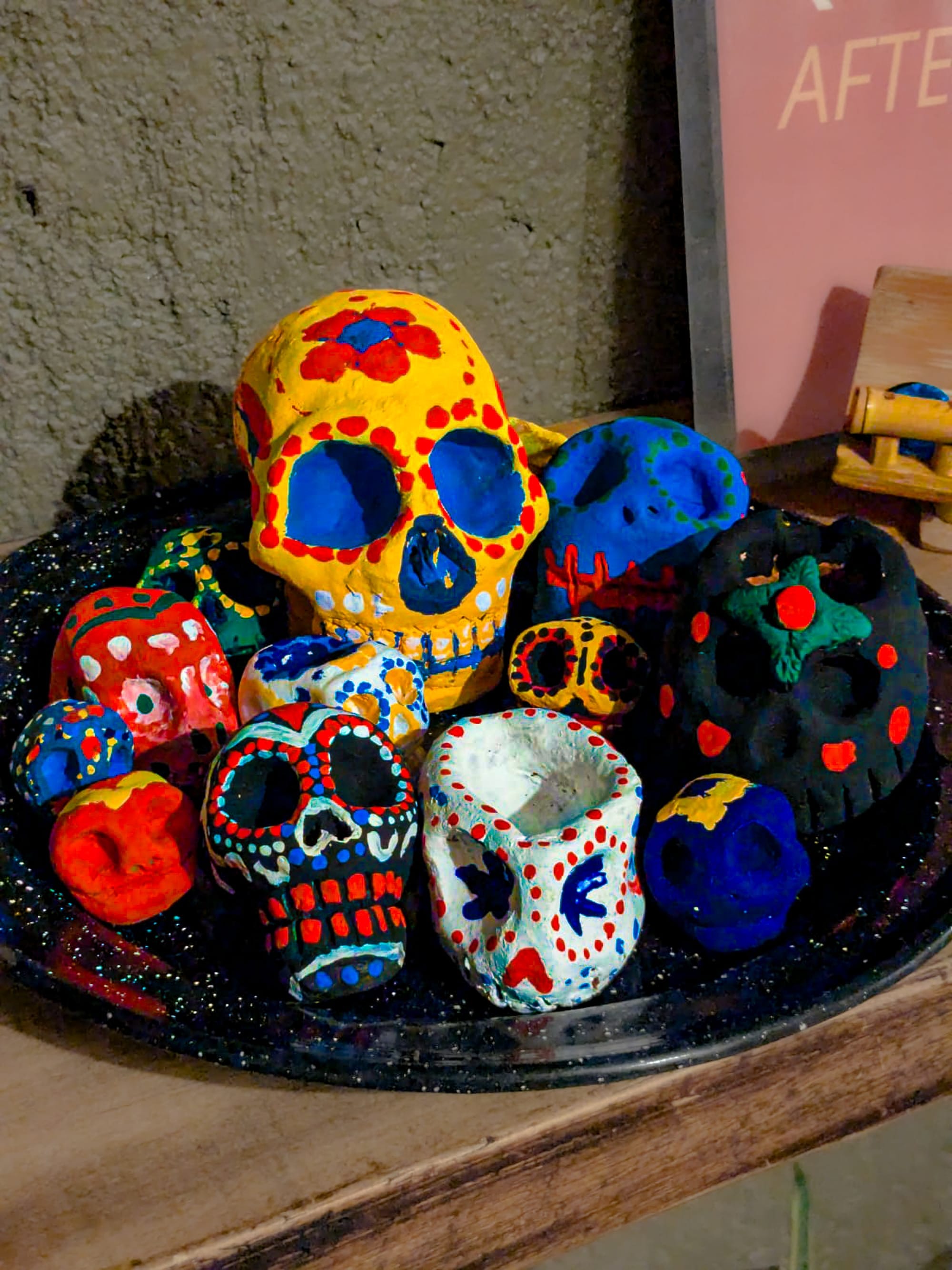
Painting clay skulls together ahead of Día de Muertos
Using the skulls, we then built an ofrenda, an altar to honor loved ones who have died. People brought photos, handwritten notes, small objects, flowers, food, and memories. Some offerings were deeply personal. Others were symbolic. Some honored grandparents or parents; others were for friends, ancestors, or people who are still with us in smaller ways.
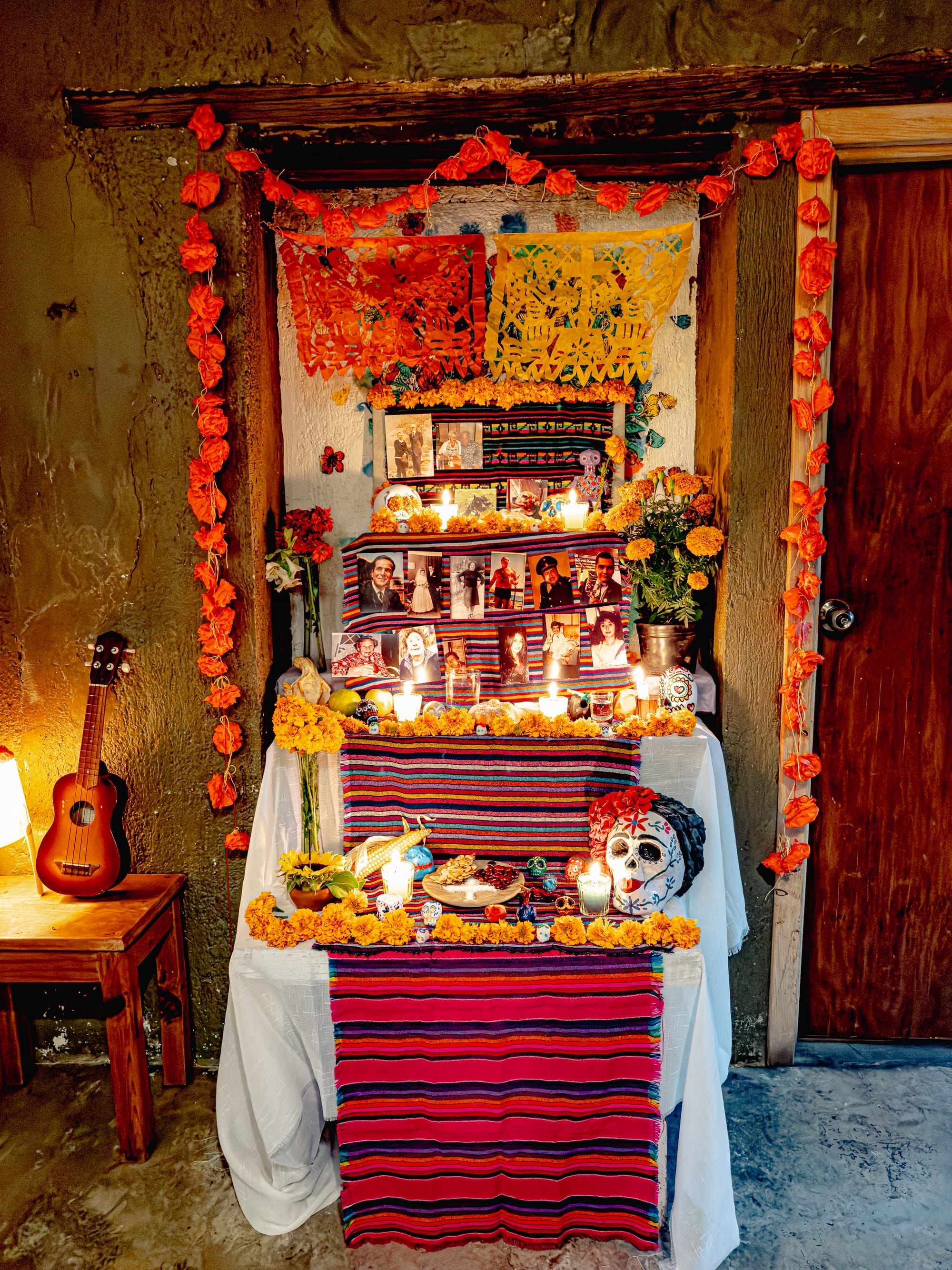
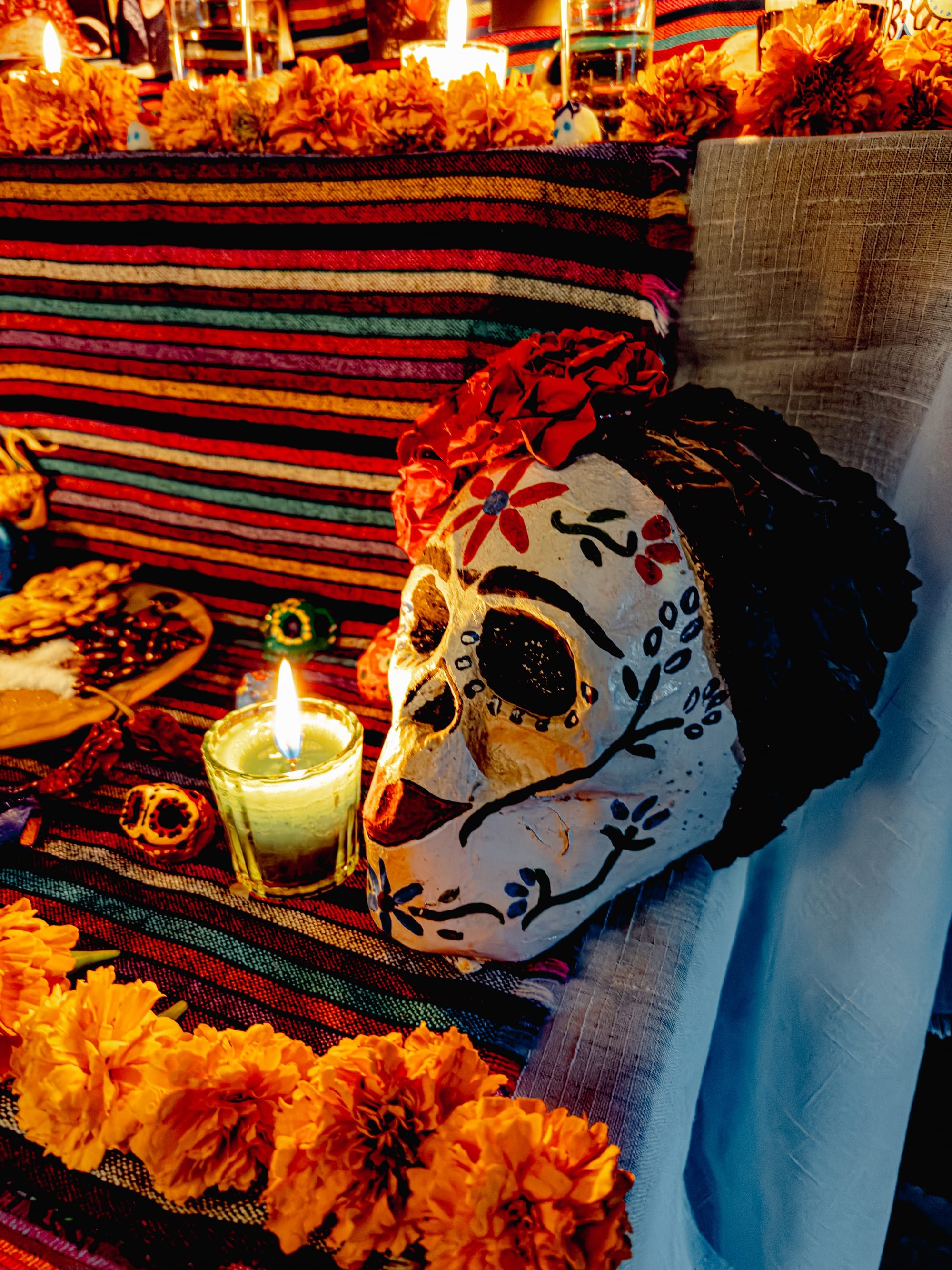
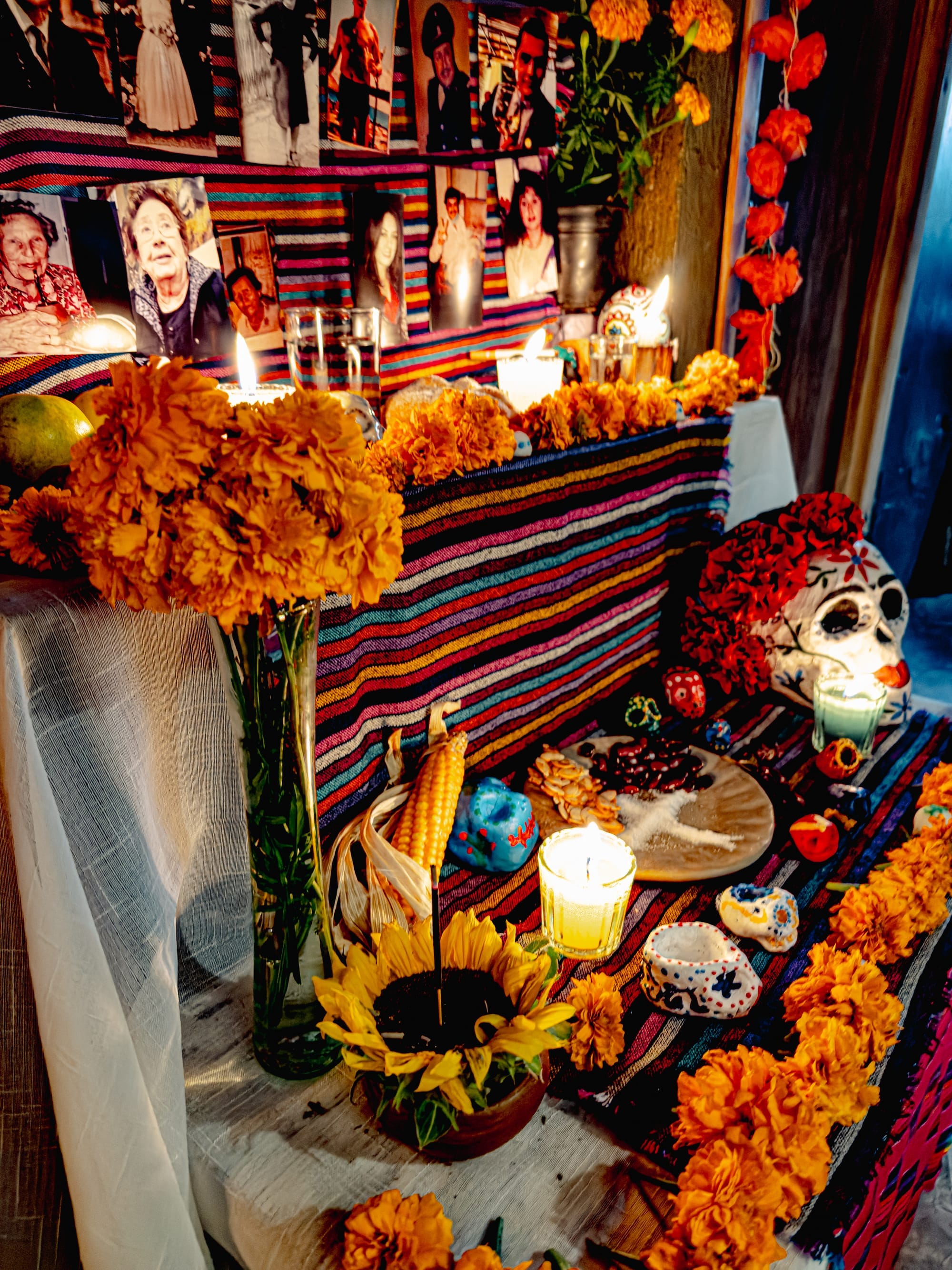
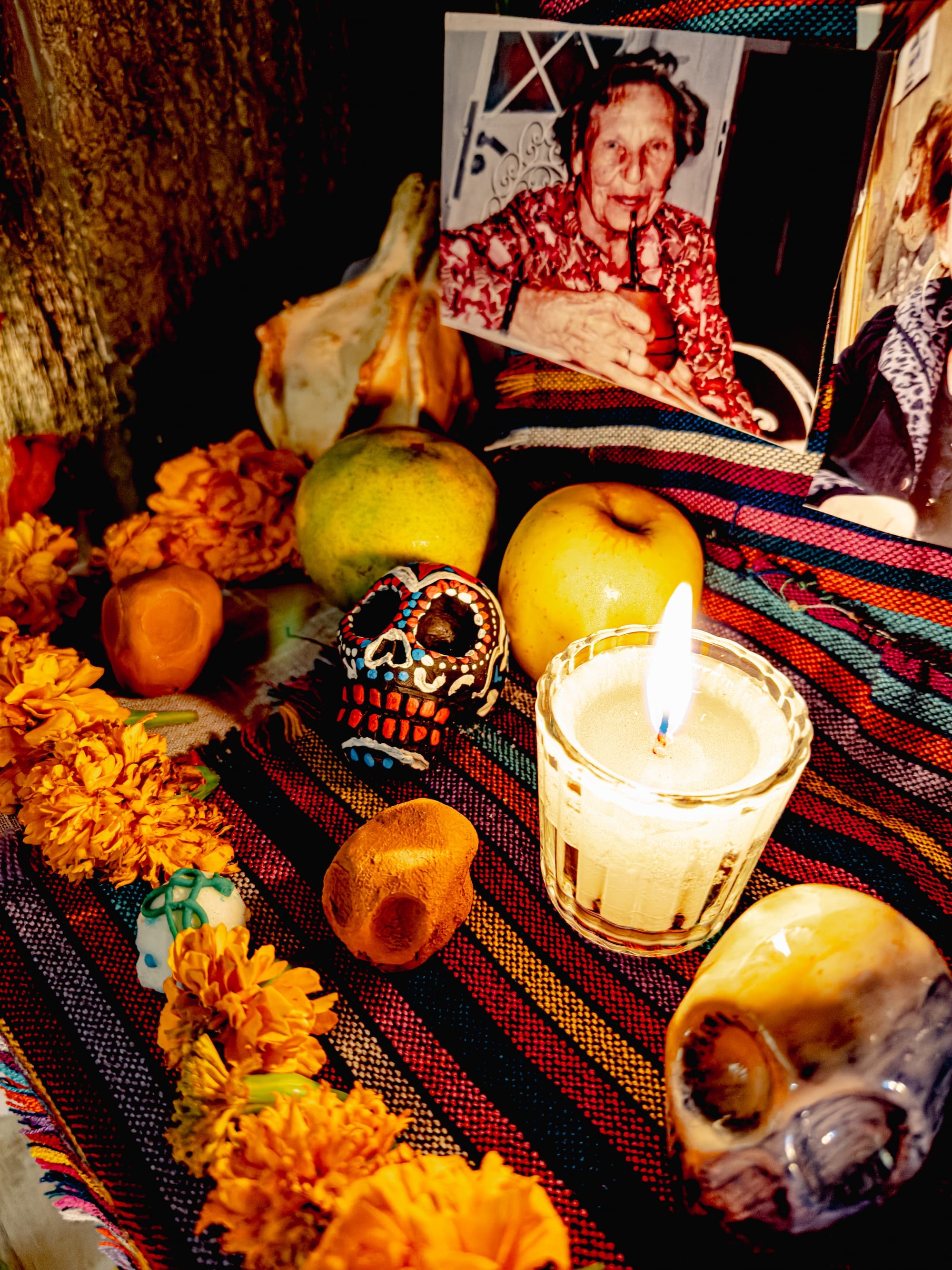
Photographs and offerings arranged in remembrance
The altar grew bit by bit, built by many hands and many stories.
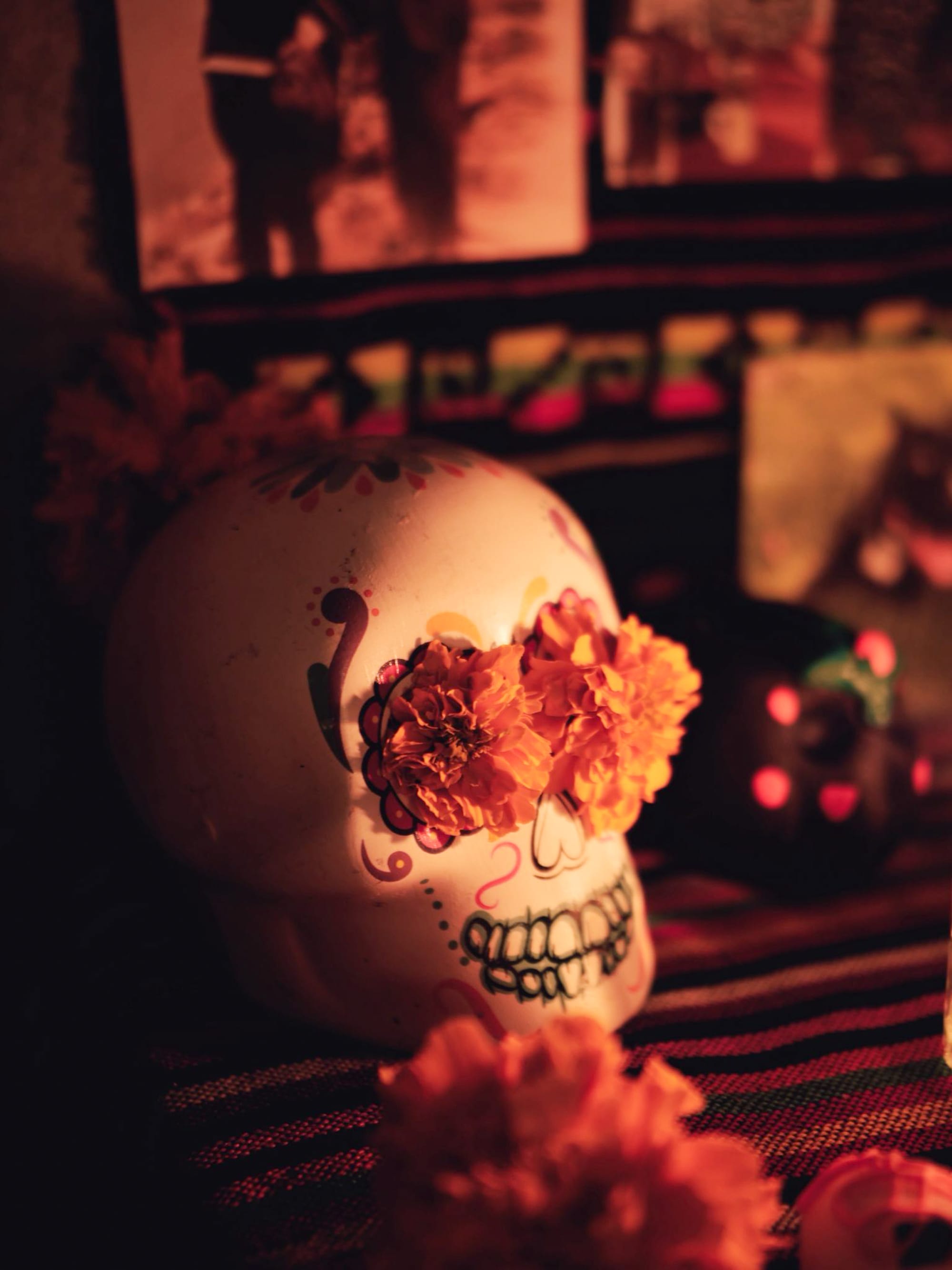
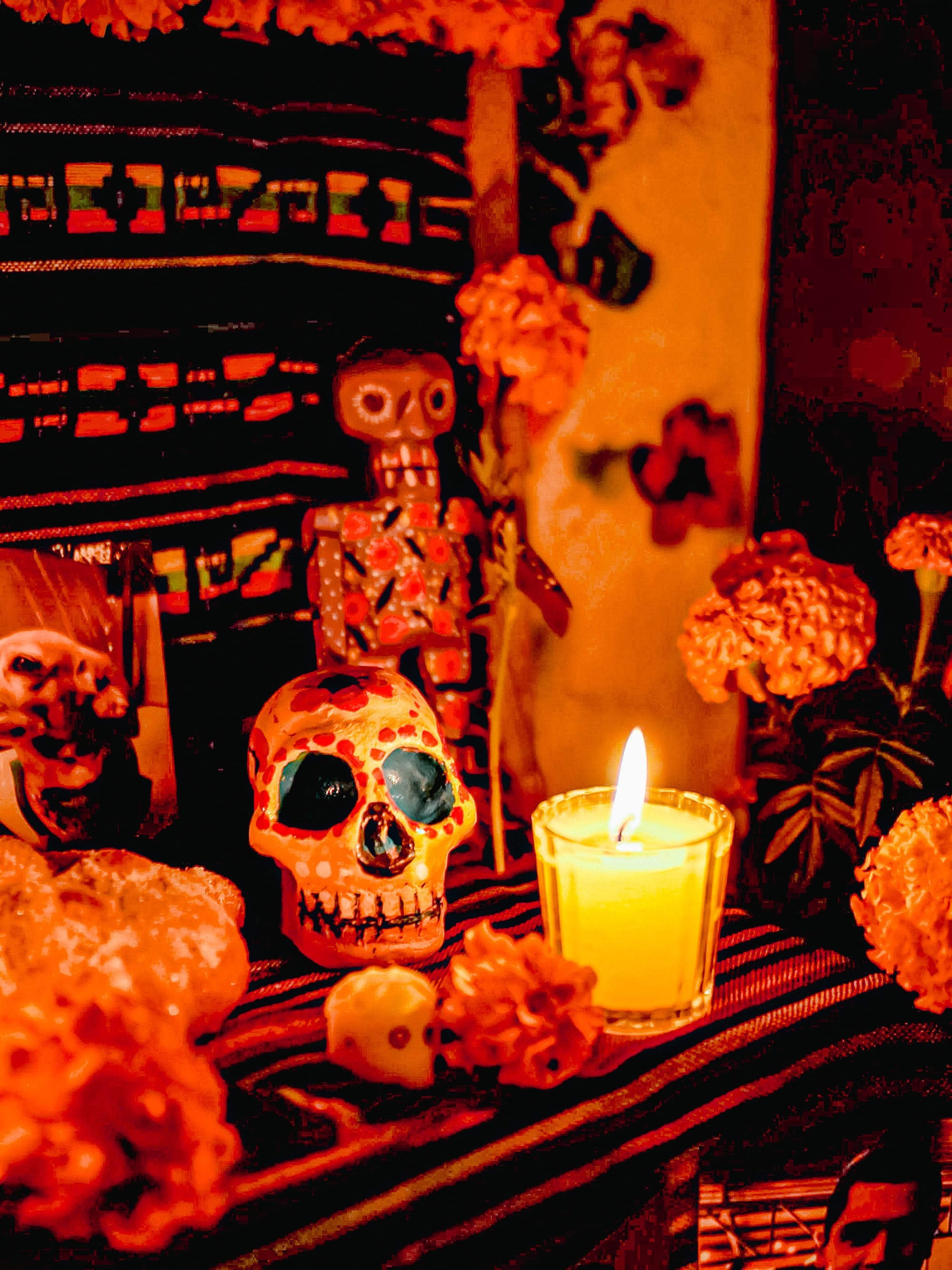
Skulls, flowers, and candlelight on the ofrenda
Another evening, we watched the film Coco together, which got us all thinking about memory, family, and how hard we have to work to keep names alive.
Our coliving manager, Santi, later told us something that stuck with us: Día de Muertos in San Cristóbal is often more spiritual and inward than in other parts of Mexico. There's less focus on big displays and more on prayer, remembrance, and being present. We can't say if that's true everywhere, but it was true of how our house marked the days.
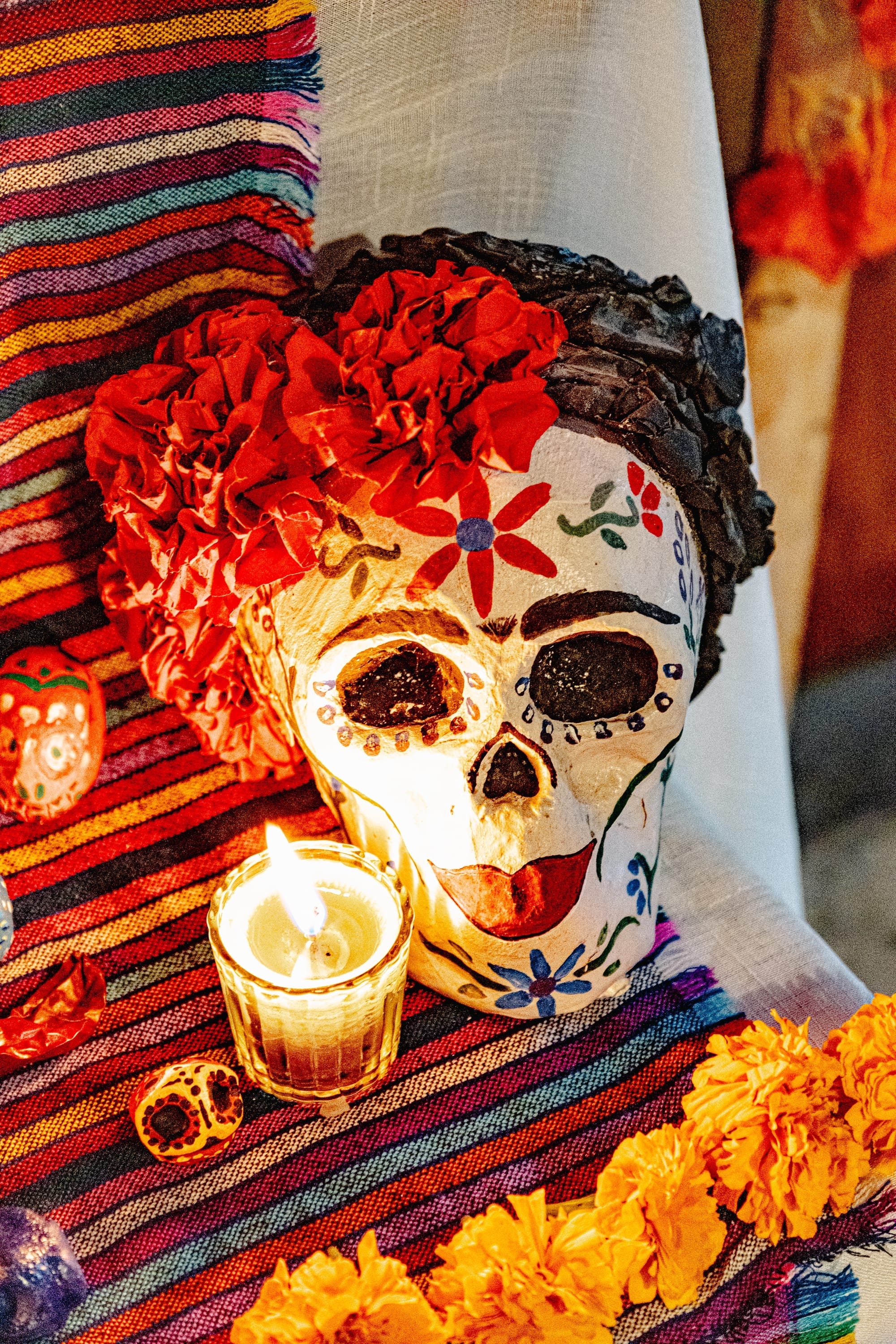
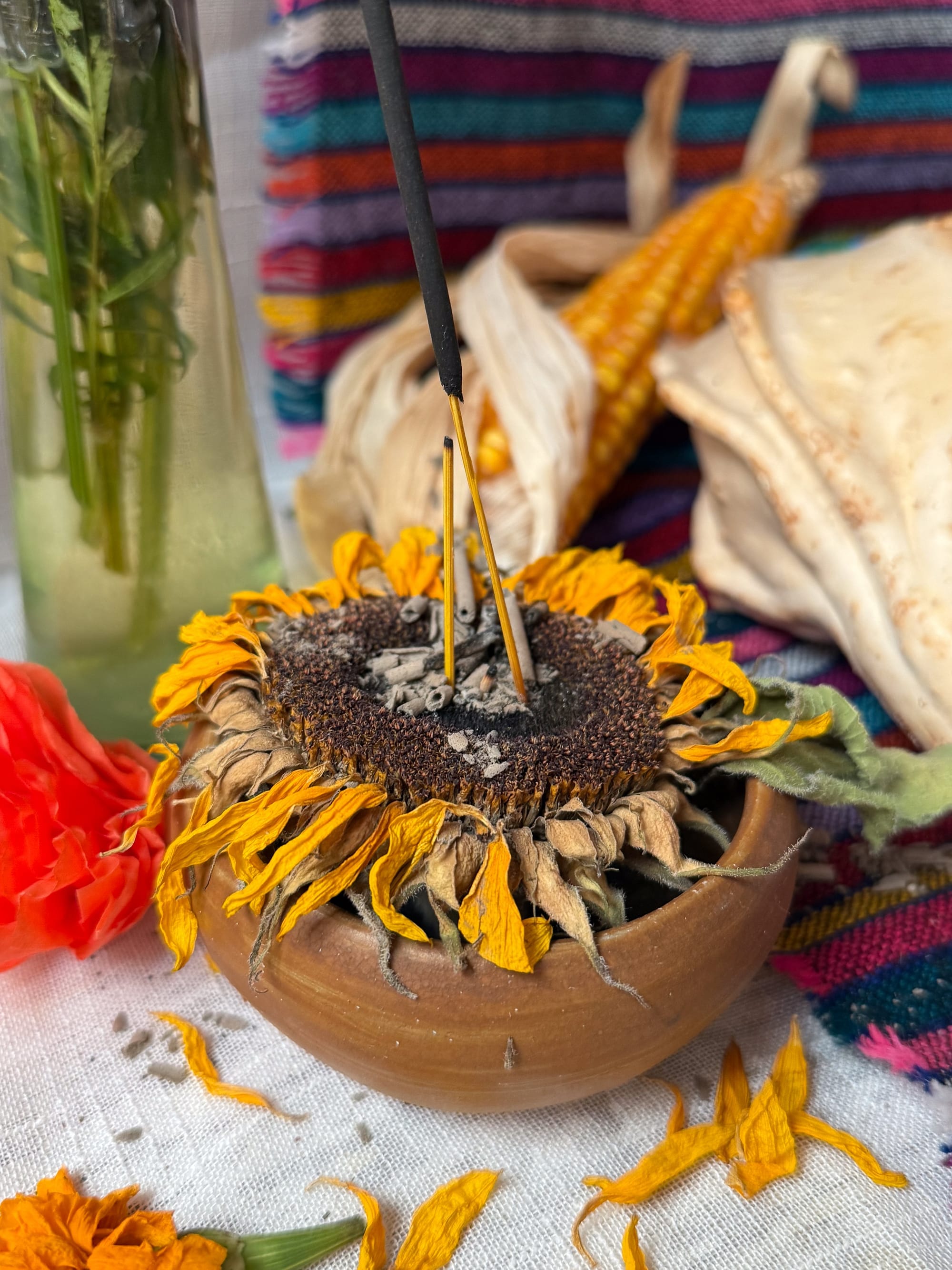
Handmade details honoring memory and presence
On the morning of November 2nd, after the official Day of the Dead had passed, we got together again, this time for a long brunch. We shared food and swapped stories. The altar stayed nearby, at the center of the room.
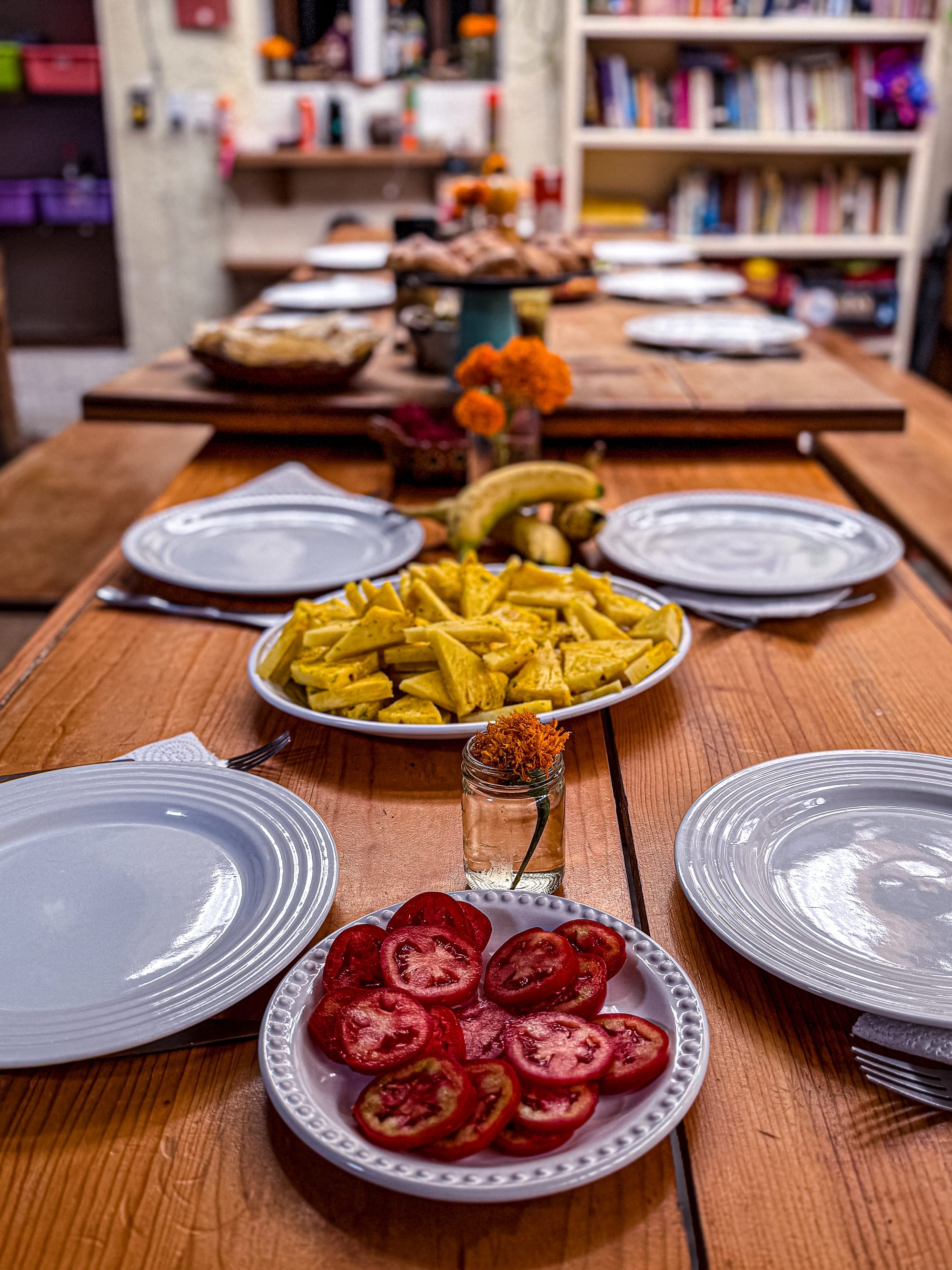
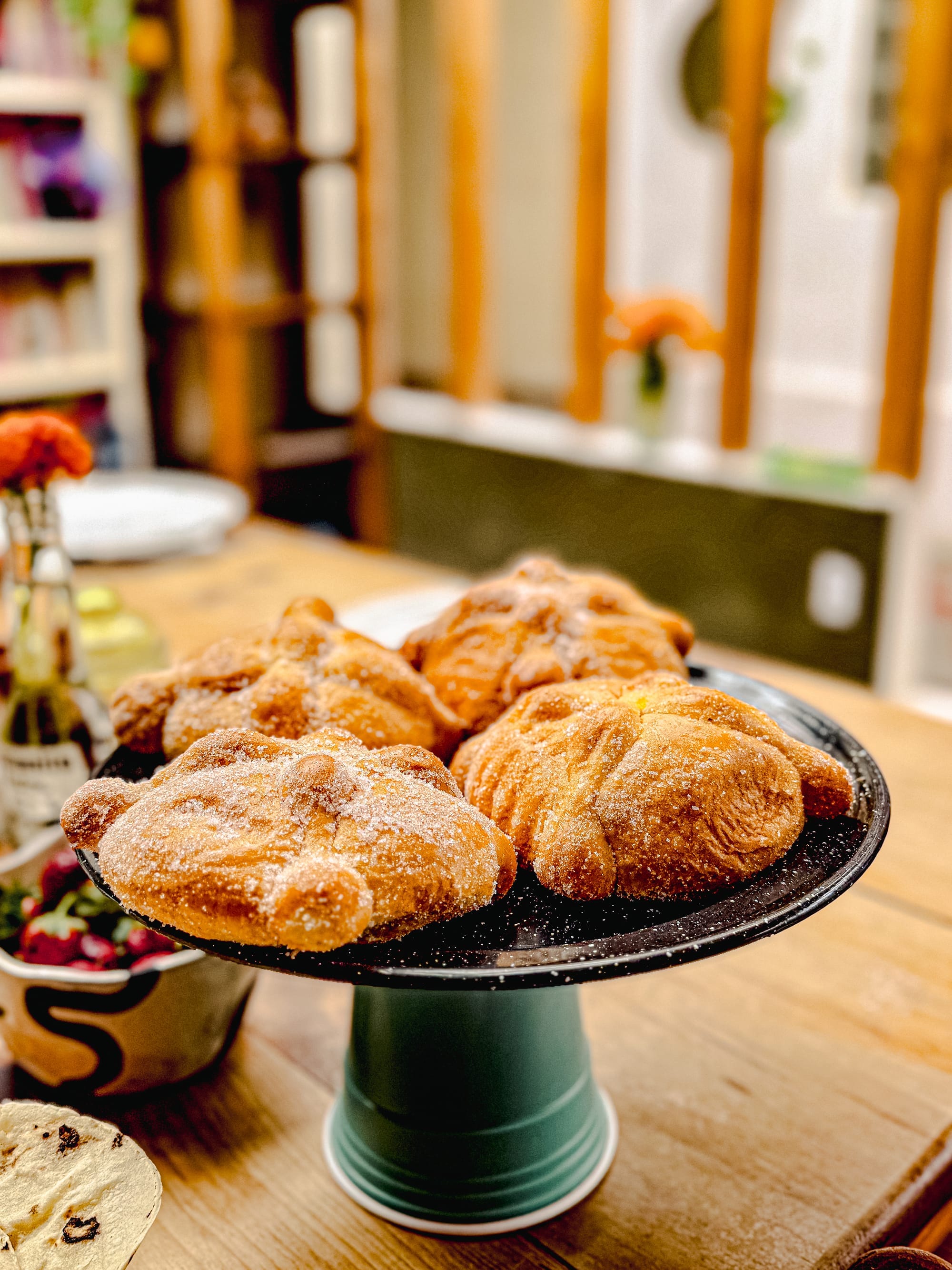
Sharing food together after Día de Muertos
Nothing really ended. It just carried on.
The city, decorated
Walking through San Cristóbal during Día de Muertos felt like walking through one big altar.
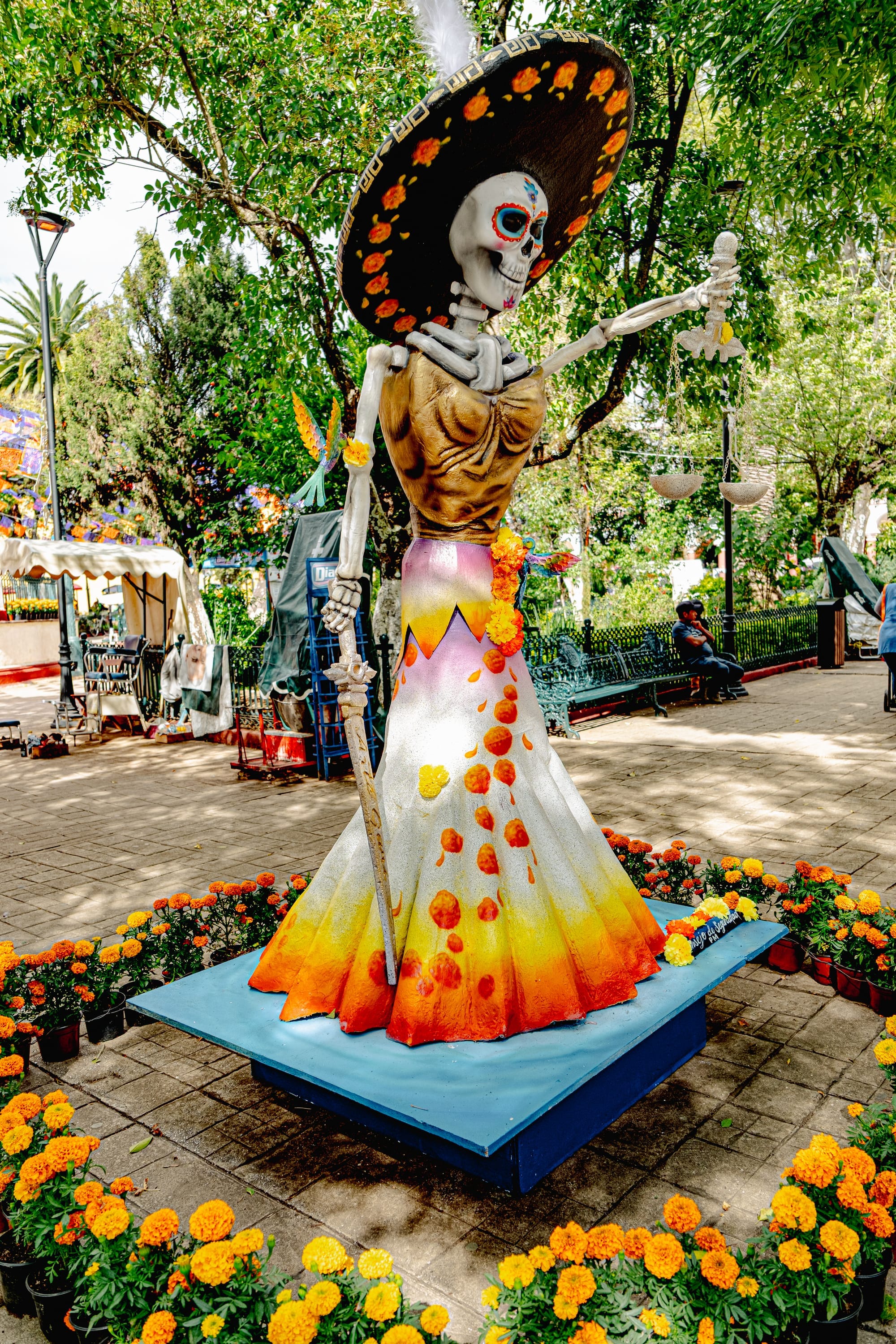
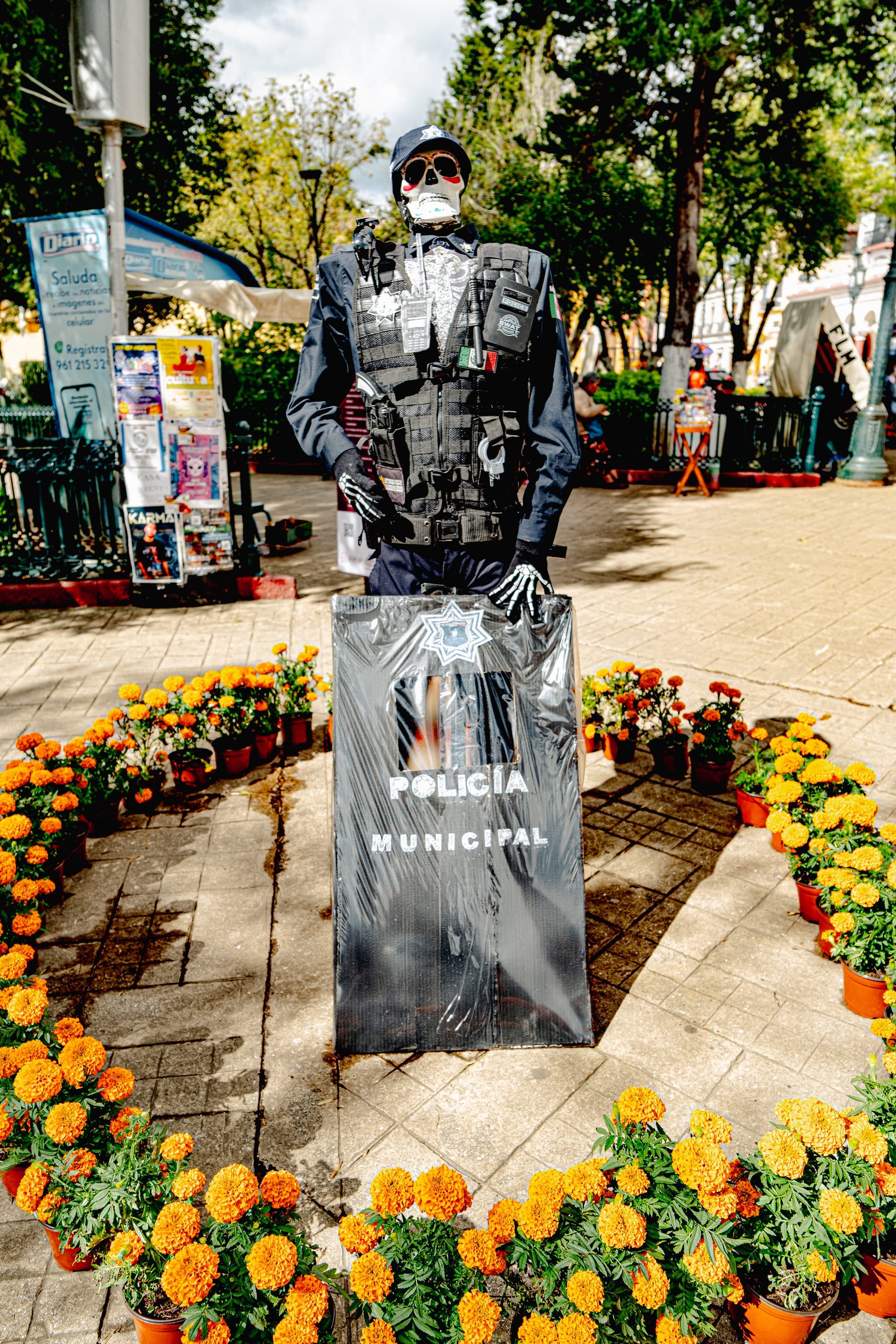
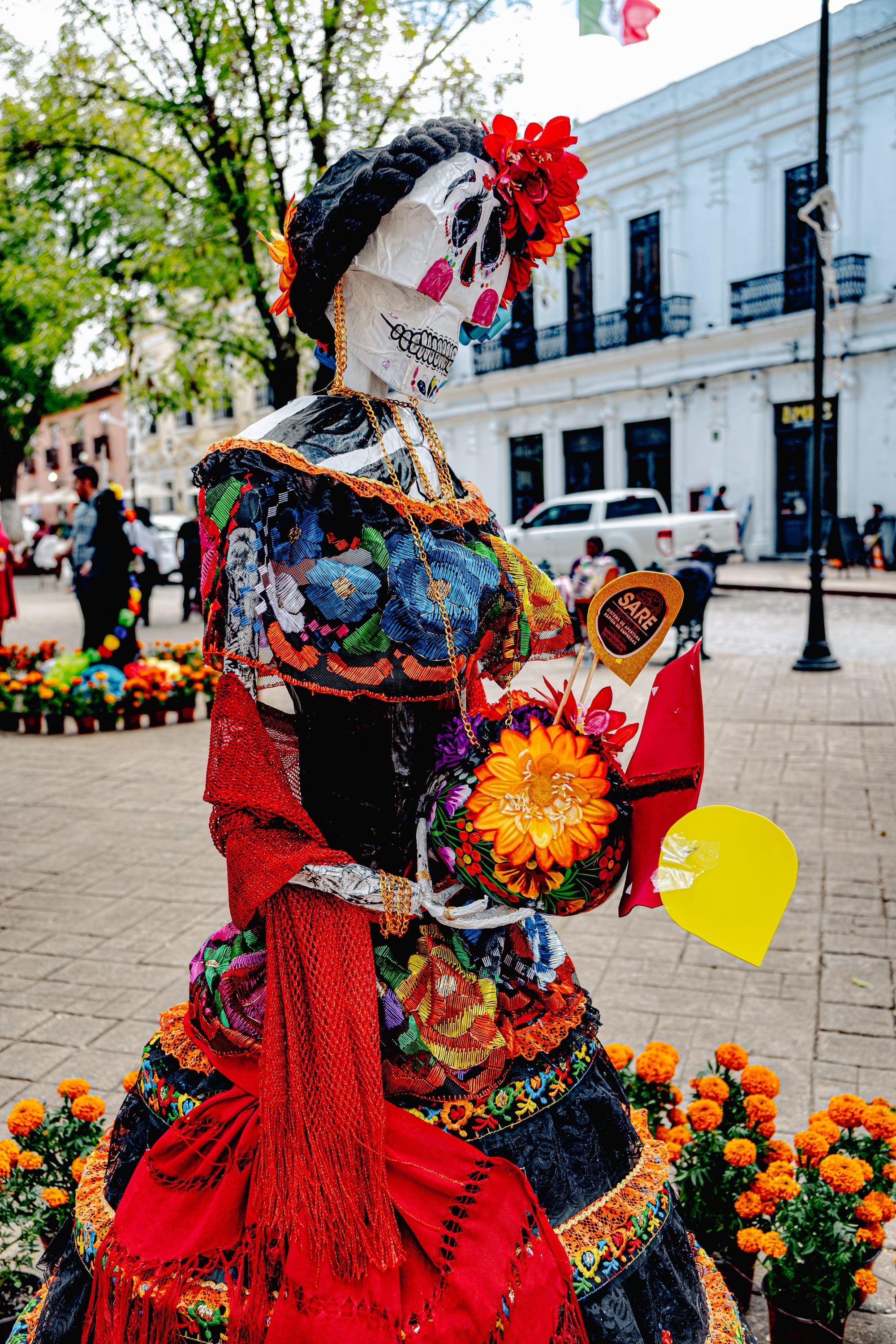
Ornate skeletons filling the plaza during Día de Muertos
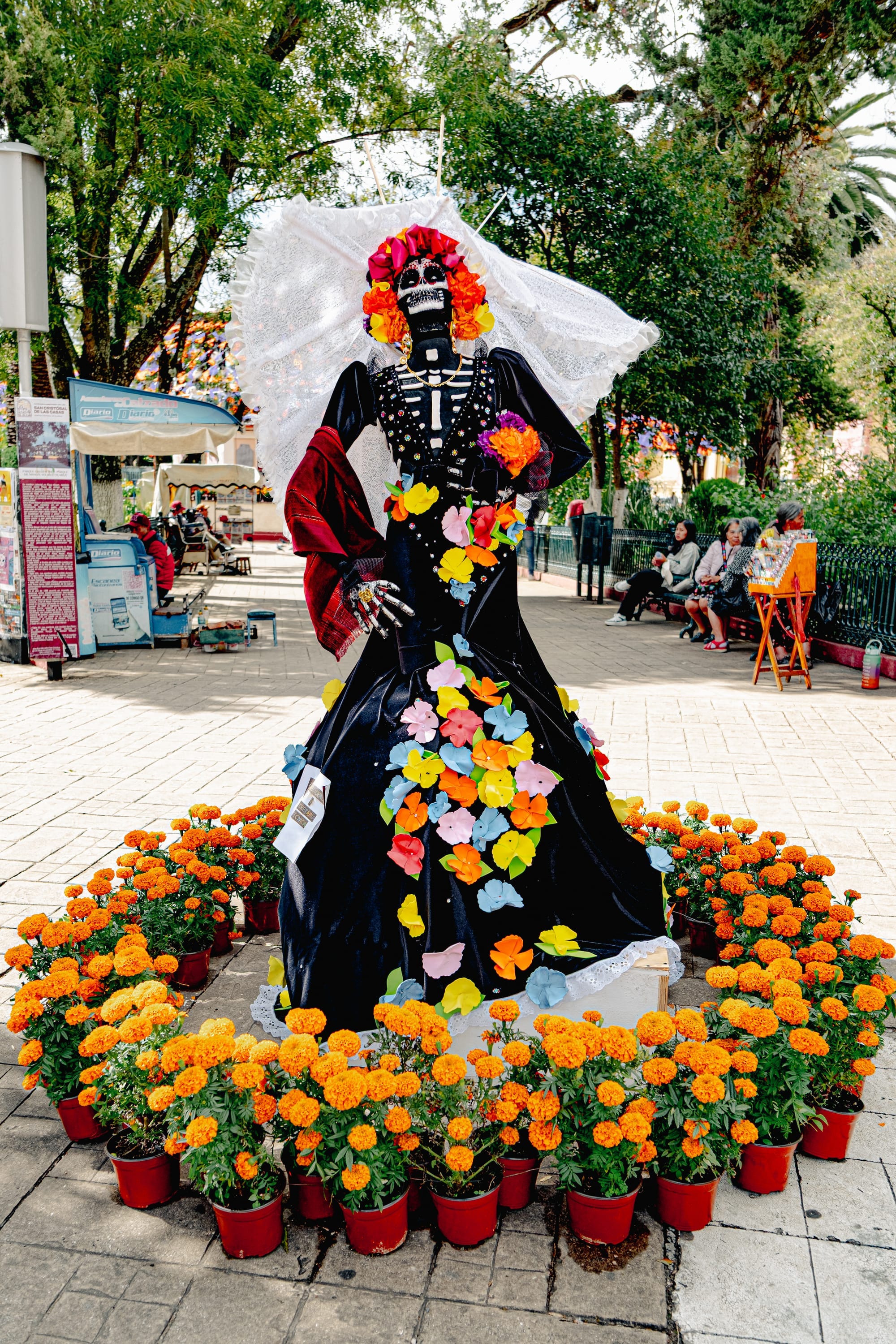
The main plaza filled with ornate skeleton figures, each one styled differently. They didn't feel theatrical. They felt friendly and approachable, as if the line between worlds had thinned just enough to let humor sit alongside respect.
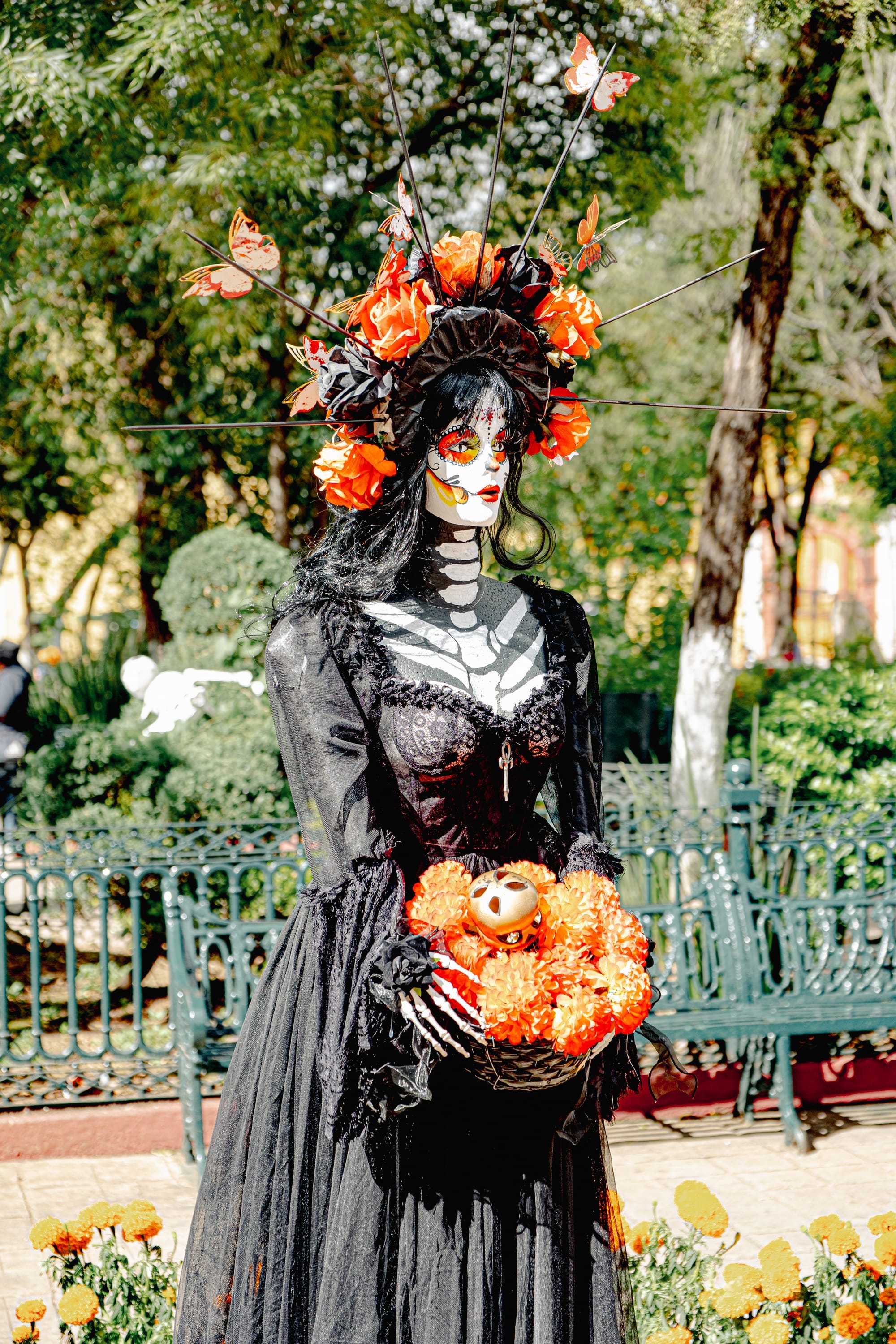
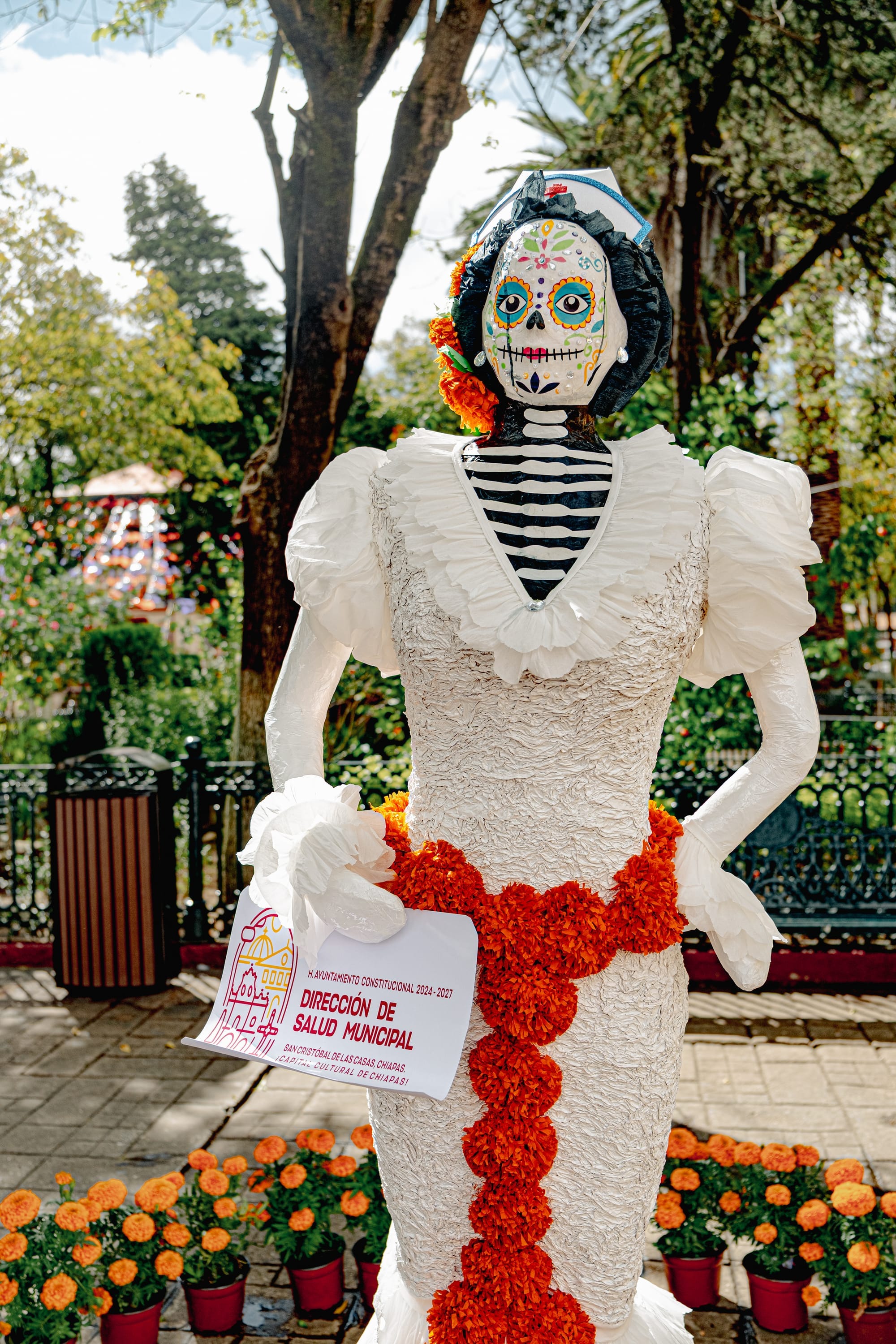
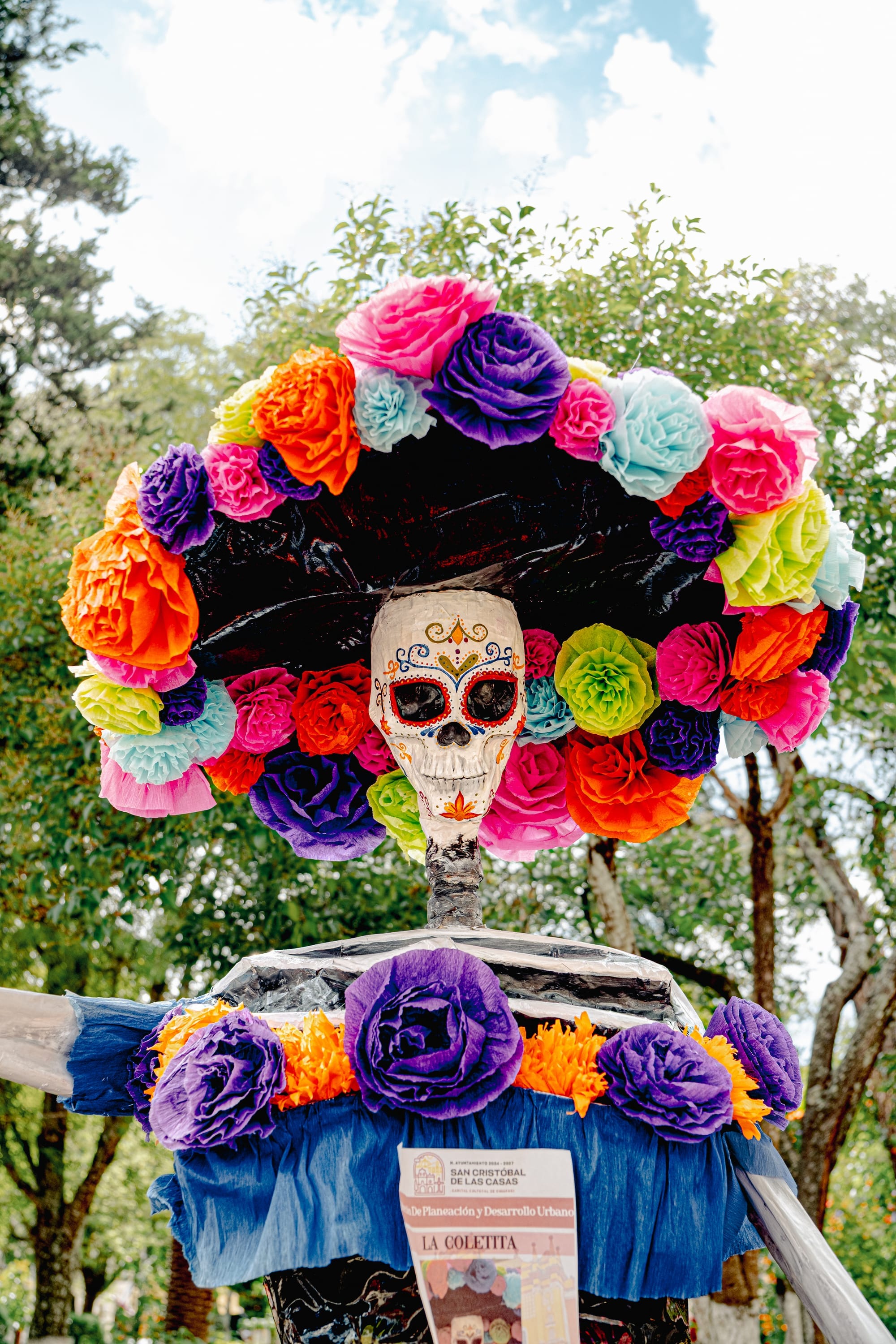
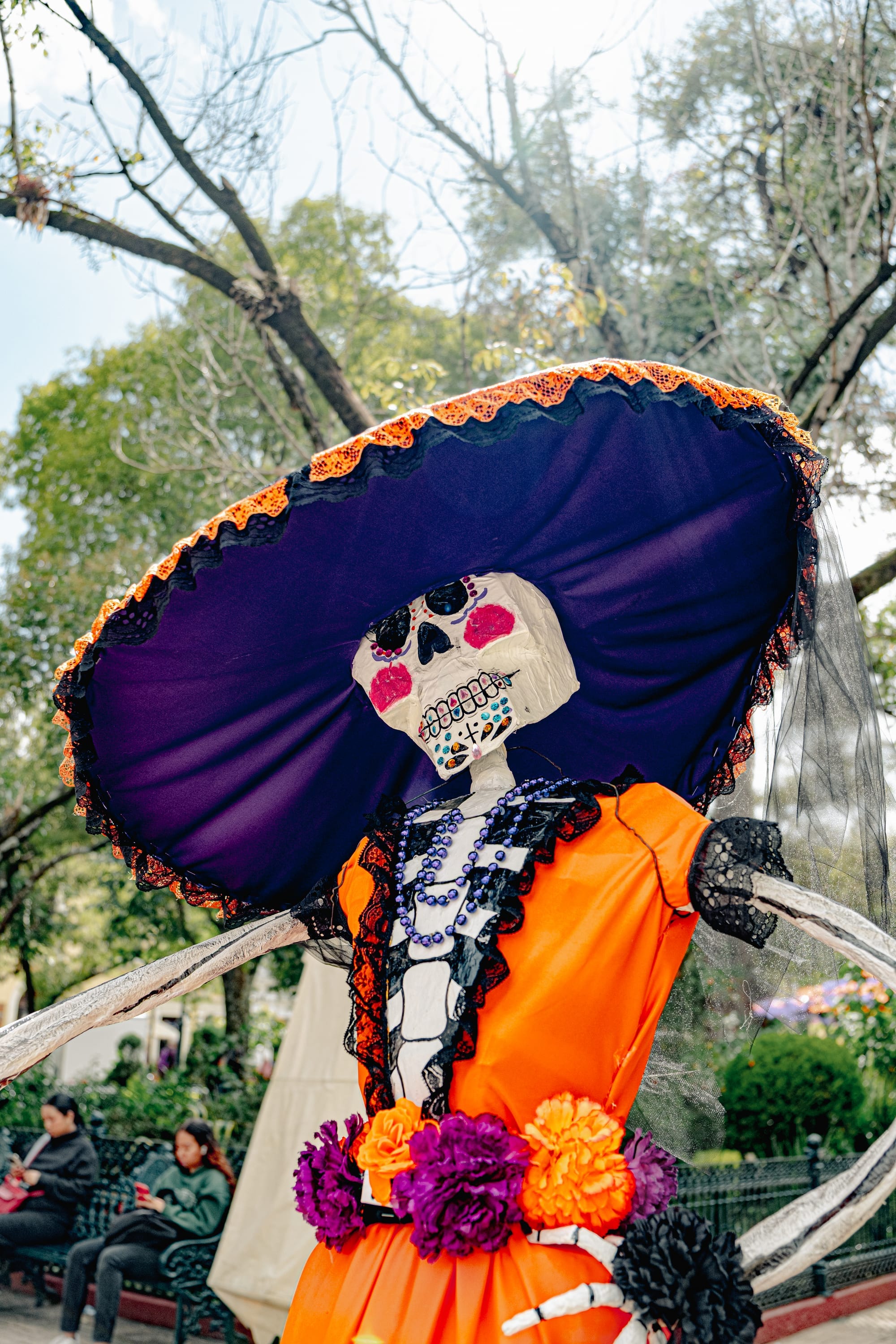
Floral Catrinas standing watch in the main plaza
Marigolds were everywhere. They lined the streets, framed doorways, and spilled out of buckets, stalls, and temporary altars. You could smell them all over town: sweet, earthy, and unmistakable. In Mexican tradition, marigolds are believed to guide spirits back to the world of the living. Here, they seemed to guide the living too, making people stop, look down, and reflect.
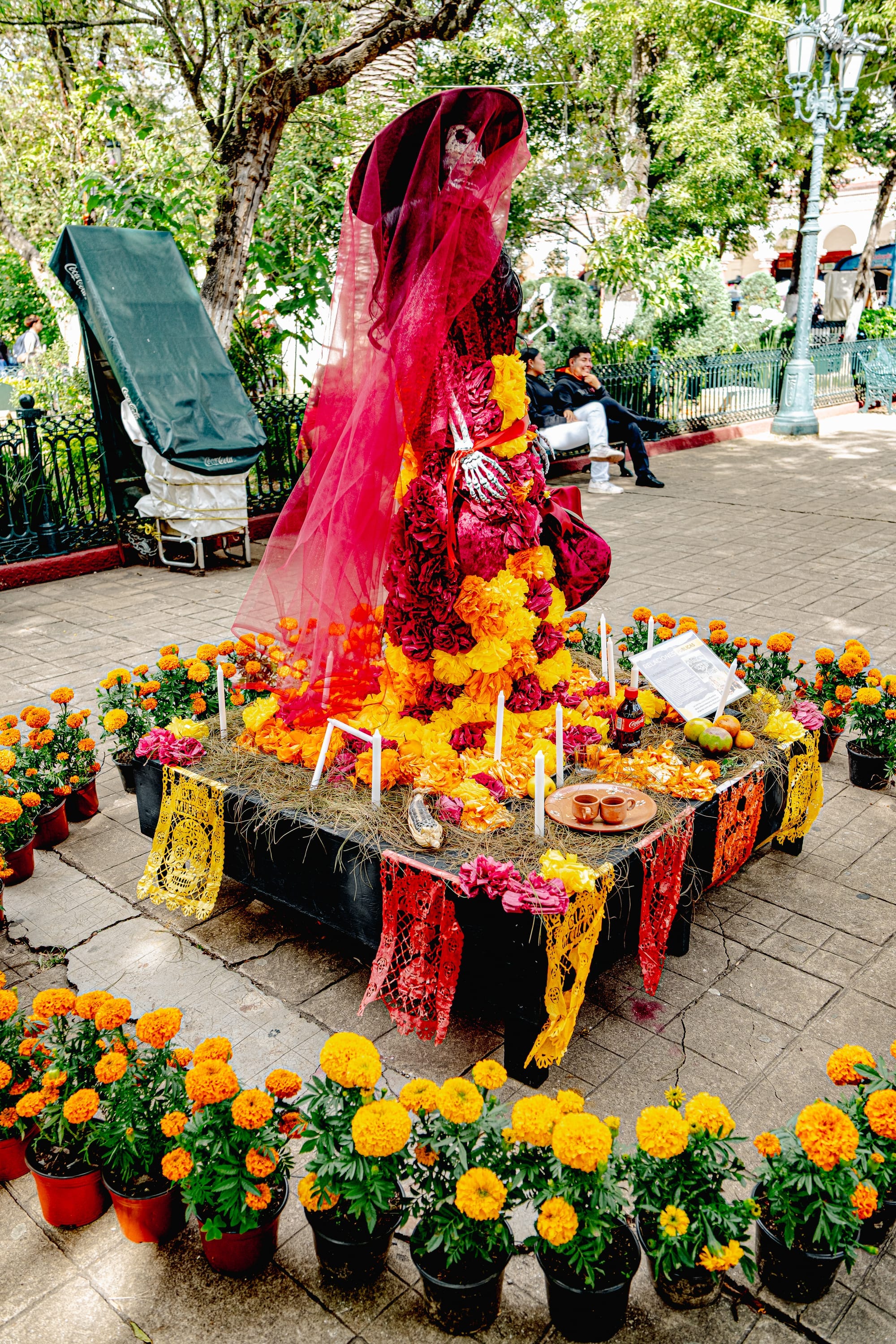
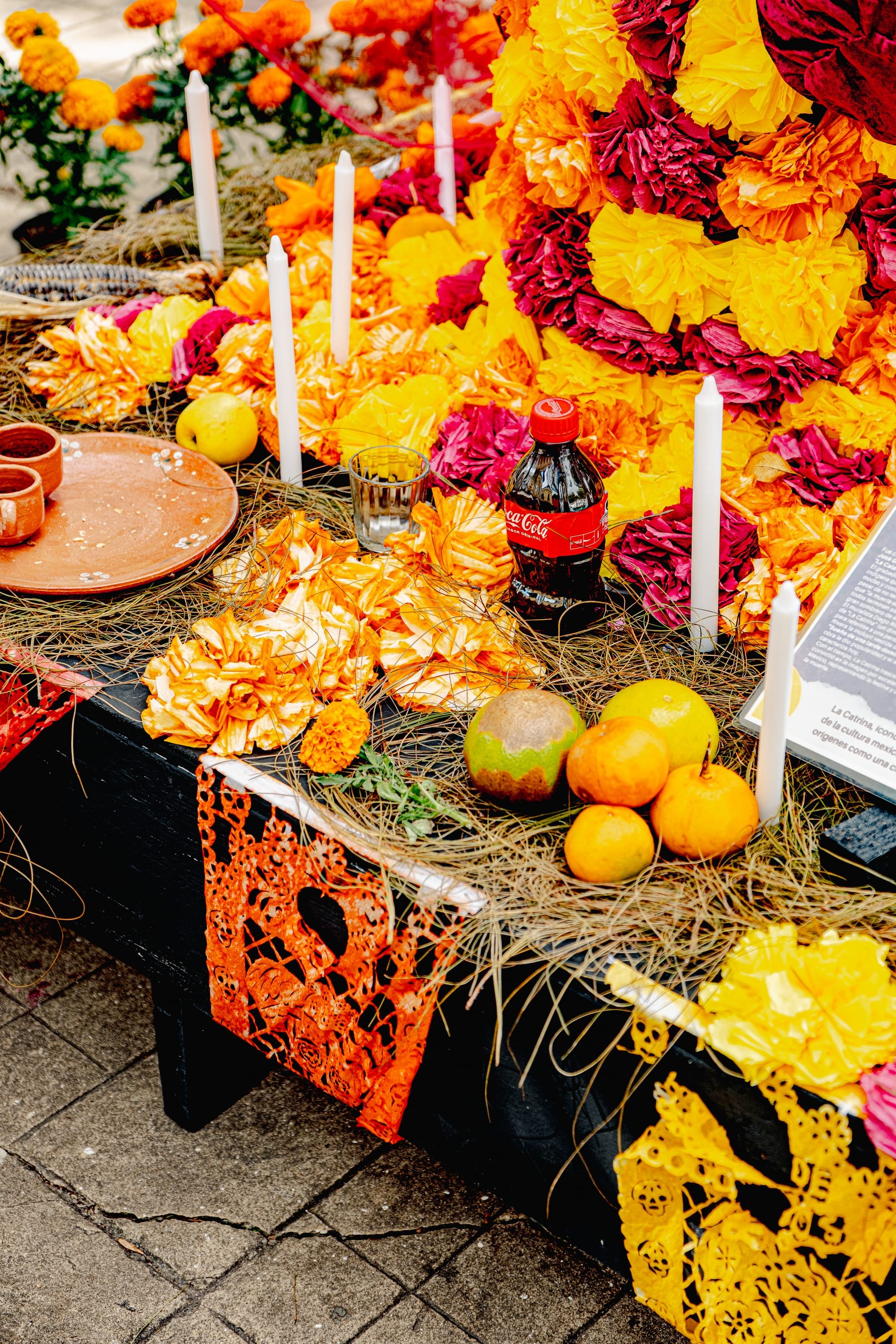
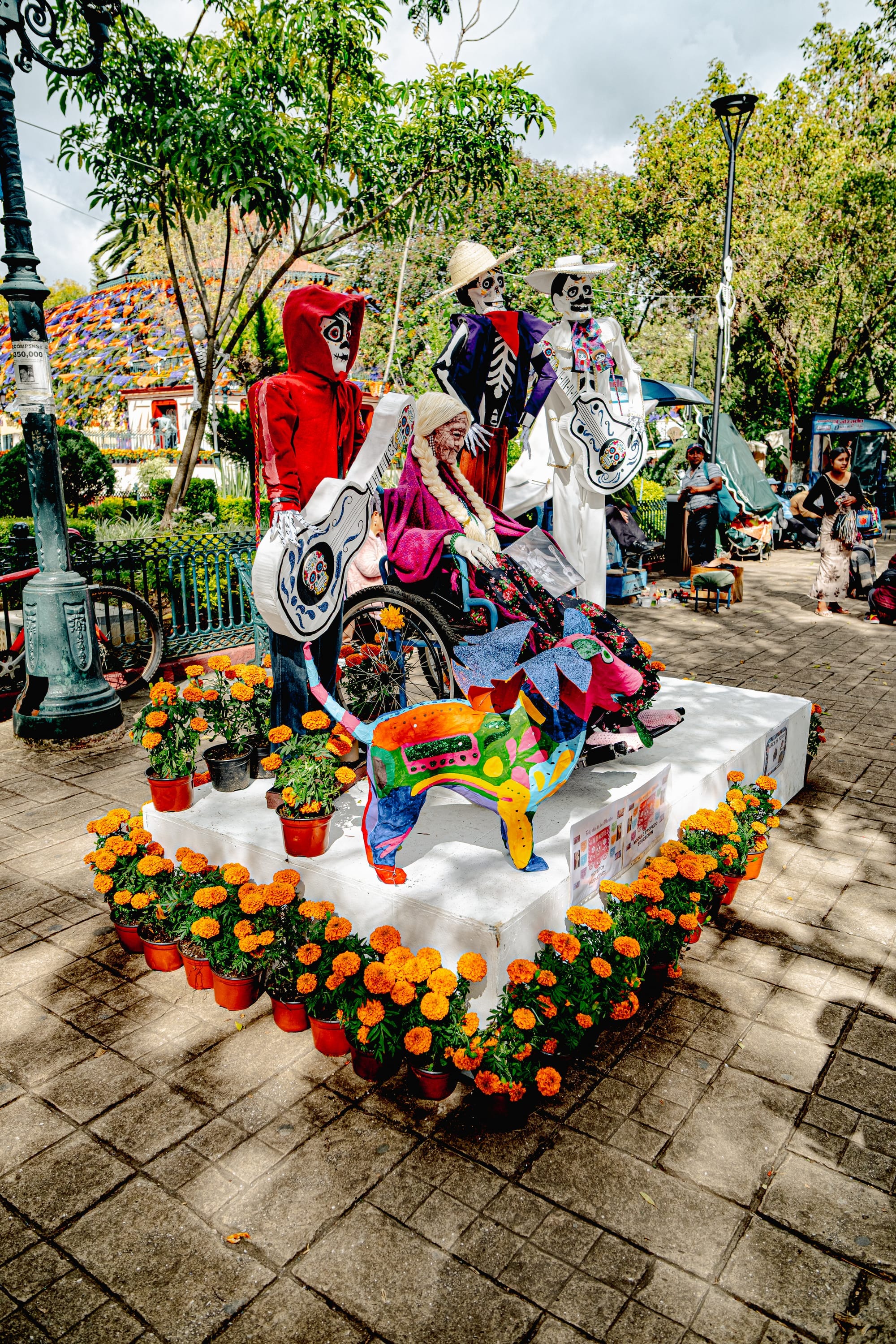
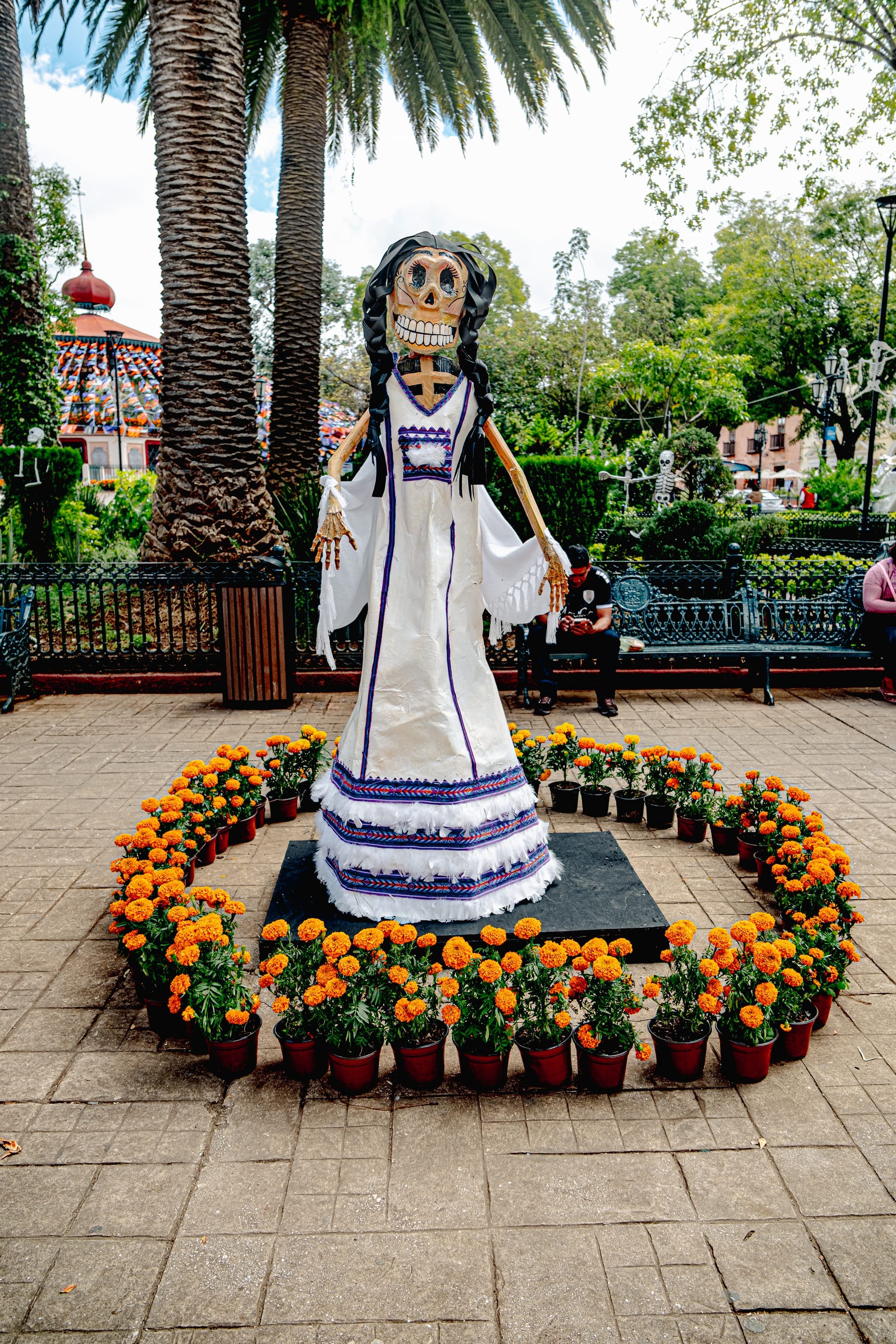
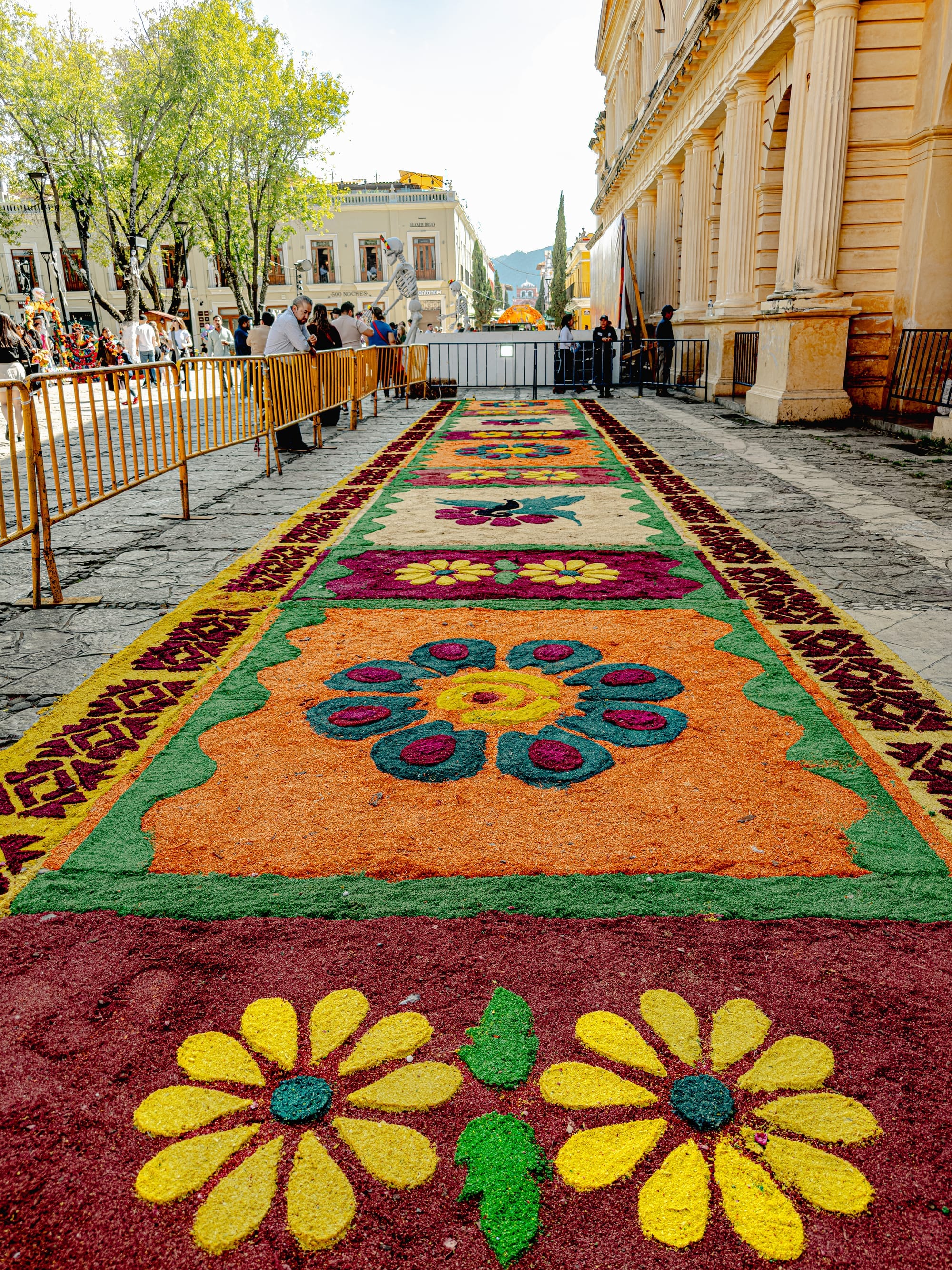
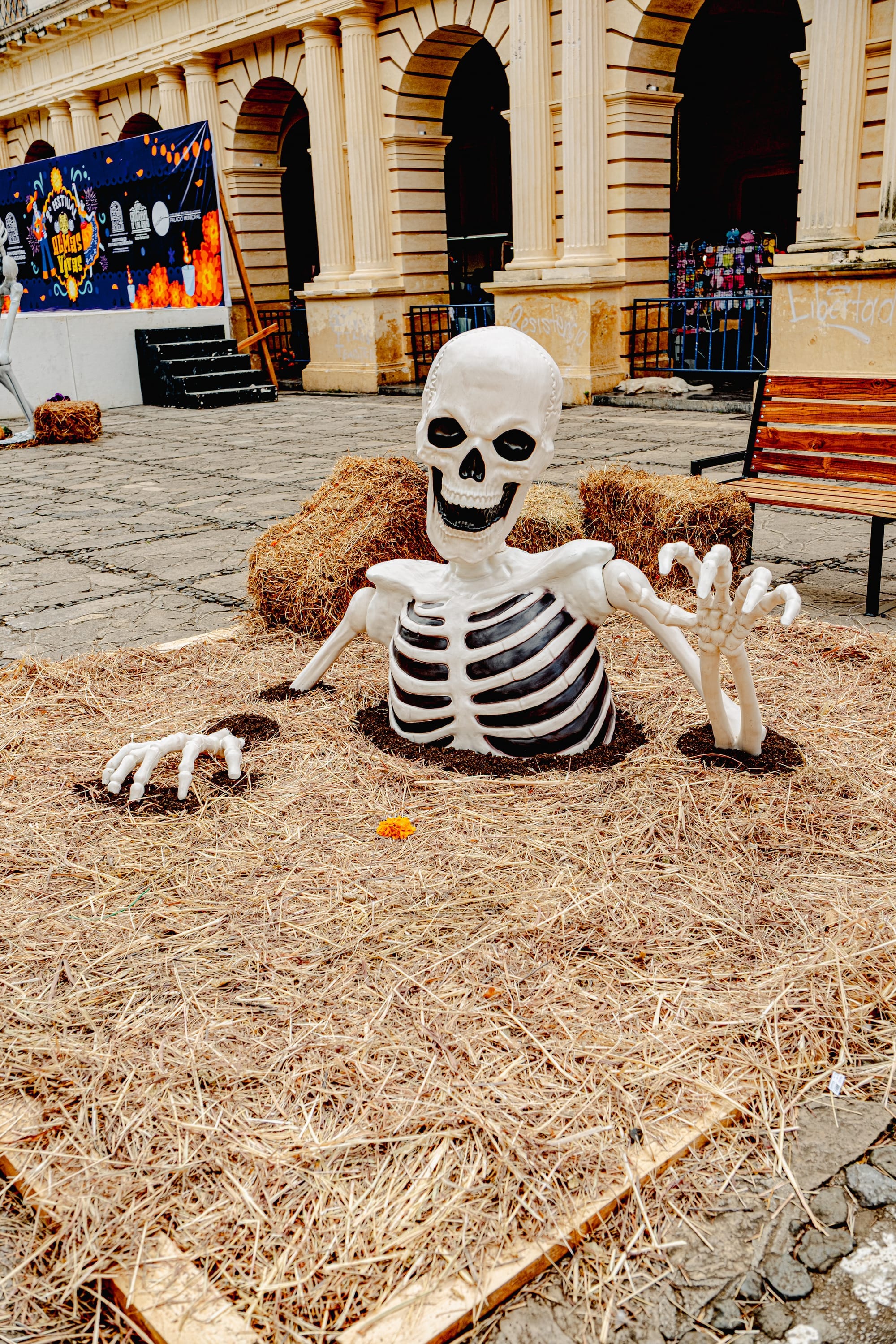
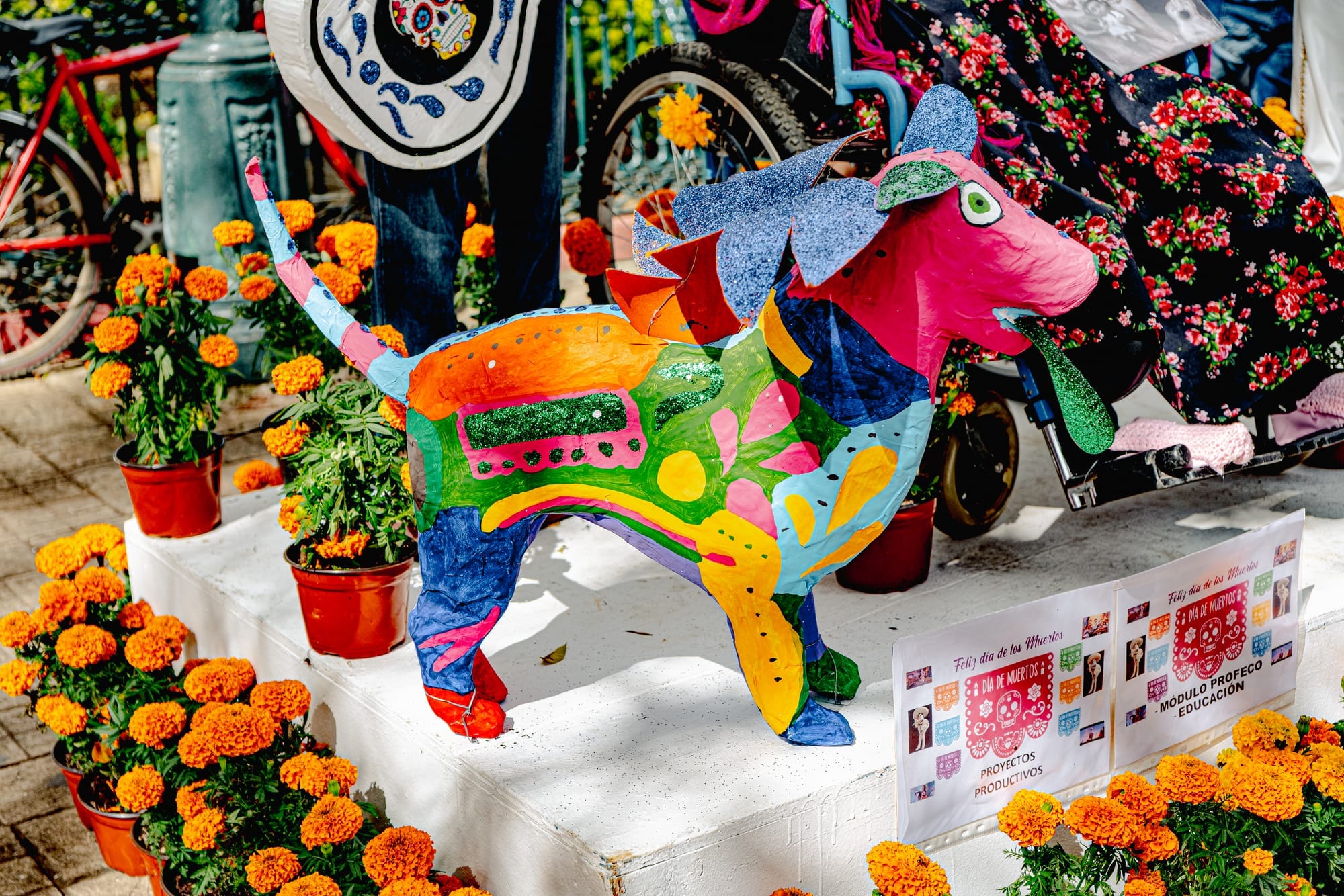
A floral carpet and playful skeletons in the plaza
Cafés and restaurants across the city took part too, in small ways. There were little altars near counters, candles tucked beside menus, and sugar skulls resting near espresso machines.
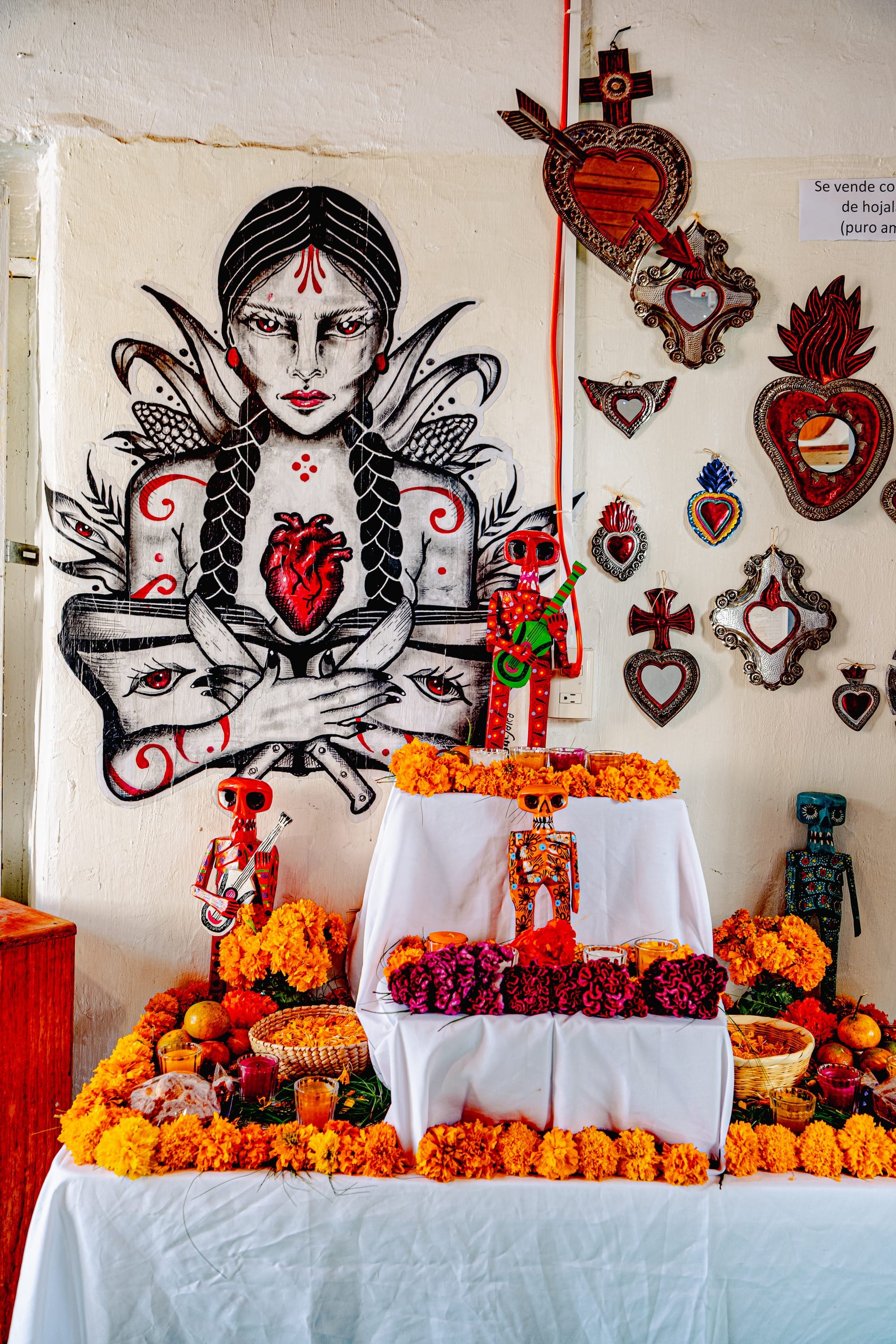
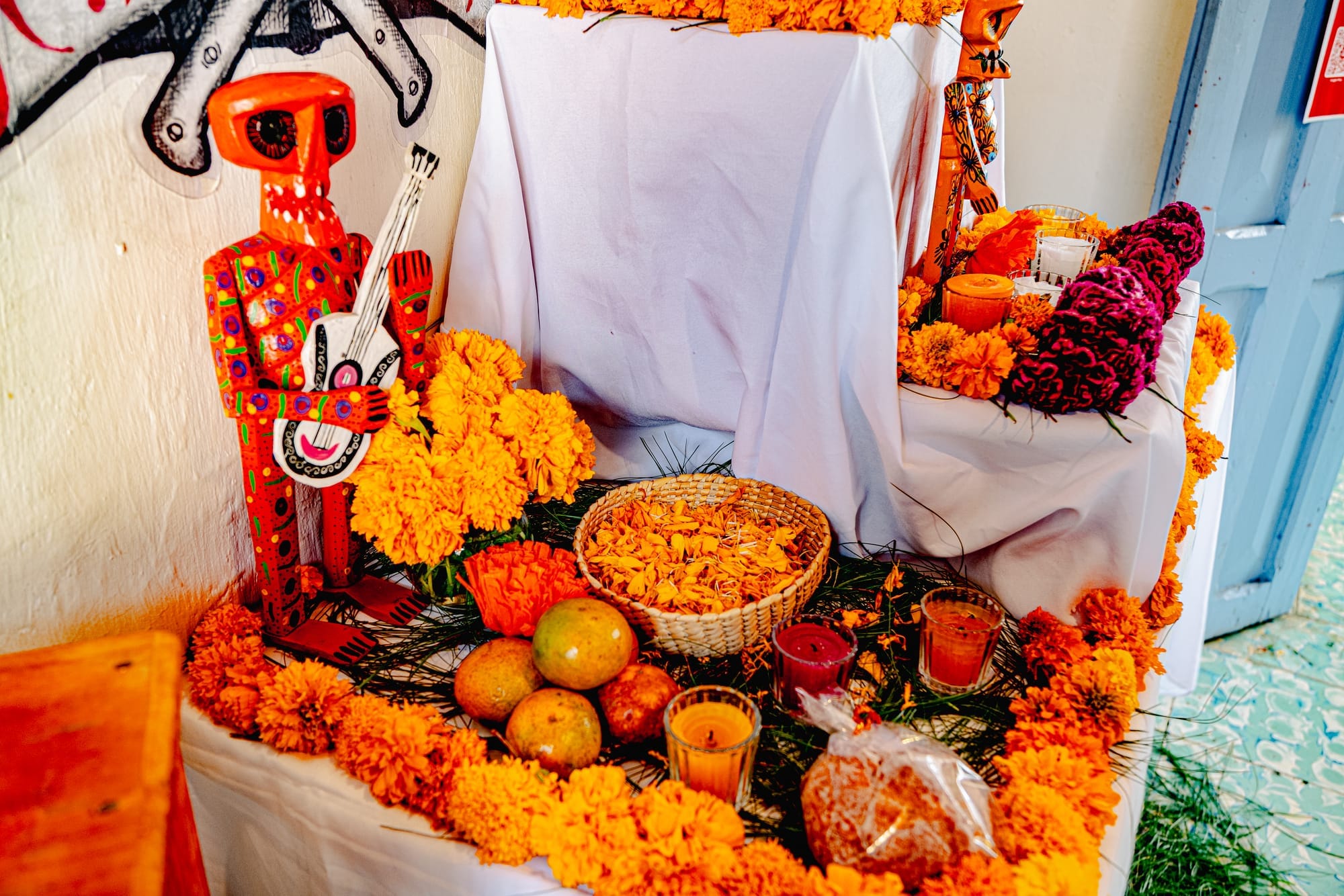
A public ofrenda covered with art, offerings, and marigolds
What stood out most was how much Día de Muertos was part of normal life. Nobody stopped what they were doing. People still worked, cooked, walked, and talked. But they did all of it with remembrance in the background, giving the days a second meaning.
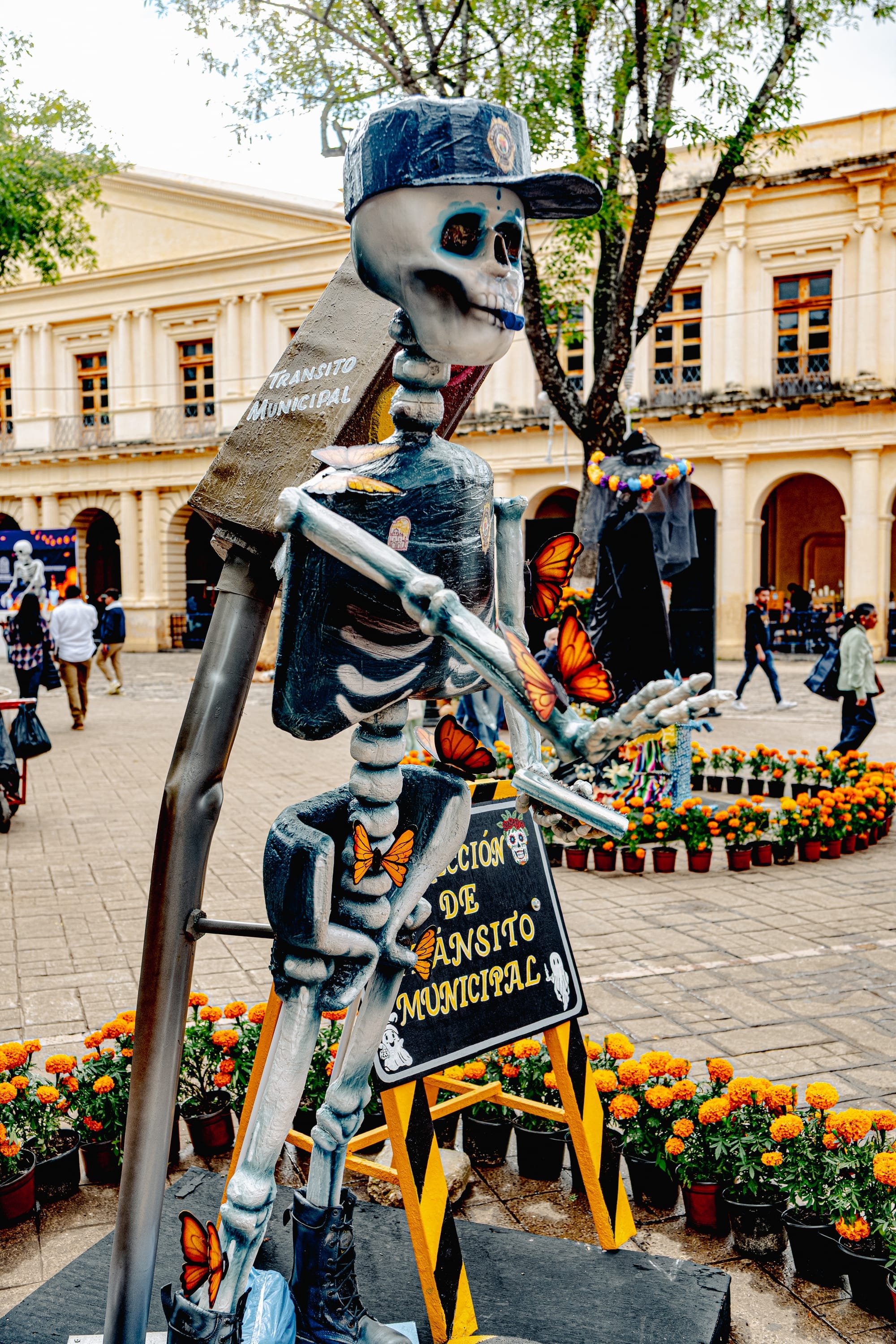
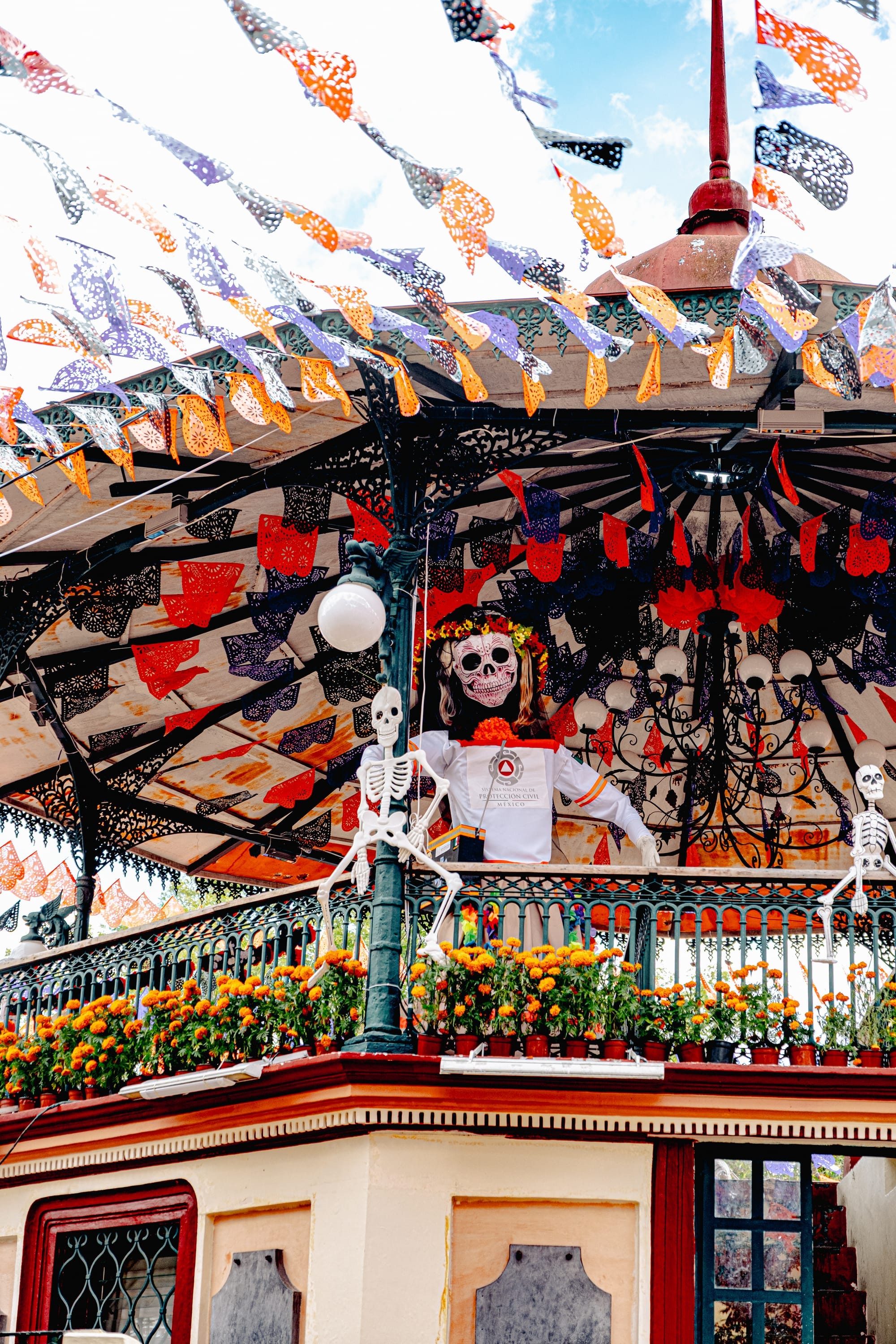
Skeletons, papel picado, and marigolds animating the plaza
In the evenings, the city calmed down. Candlelight was easier to see. The air cooled. Conversations went on longer.
Prefer to go with a guide? One popular option is a guided tour of Chamula and Zinacantán from San Cristóbal. You can check dates and prices here:
The parade
As evening fell on Día de Muertos, the mood in San Cristóbal changed again, this time toward movement.
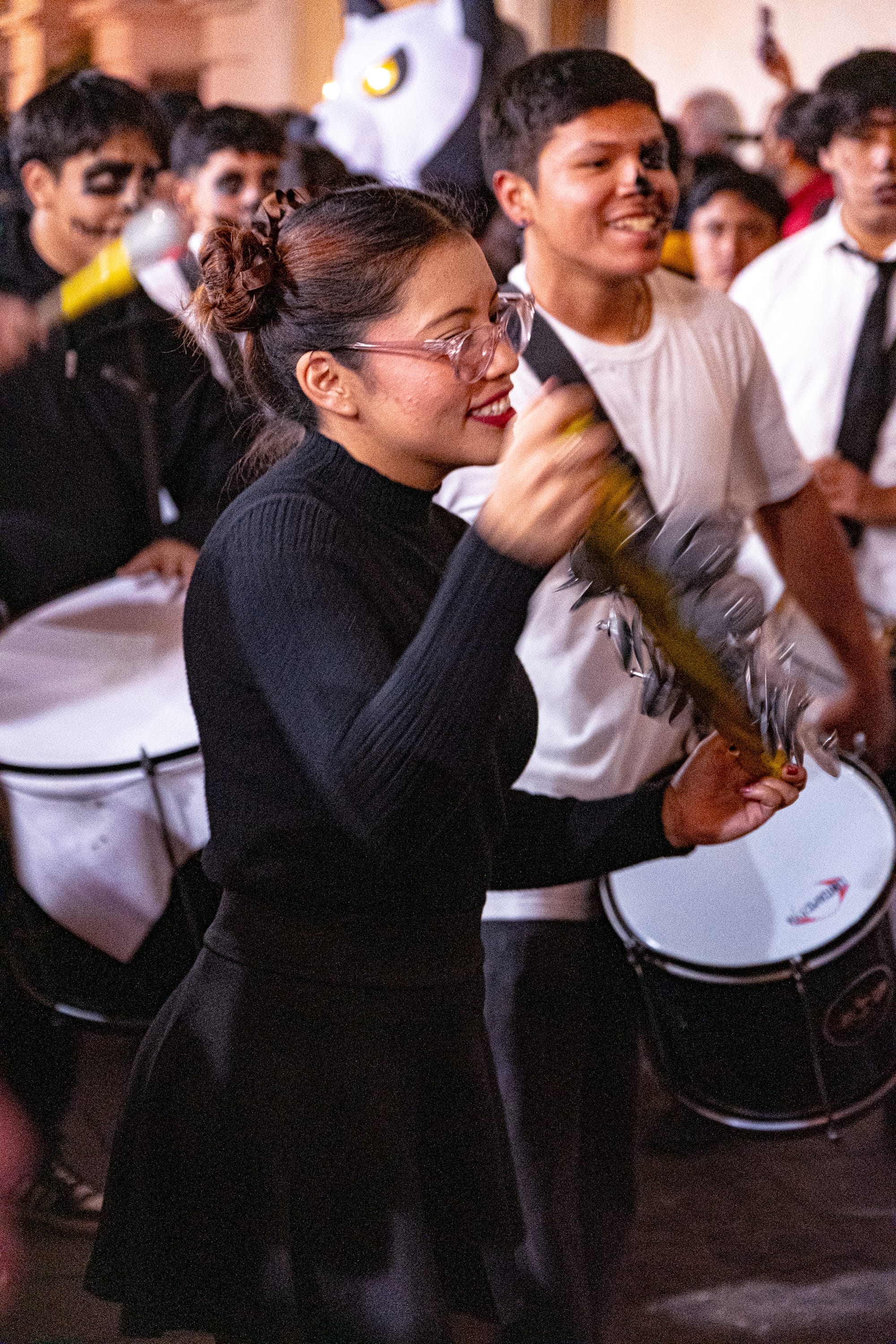
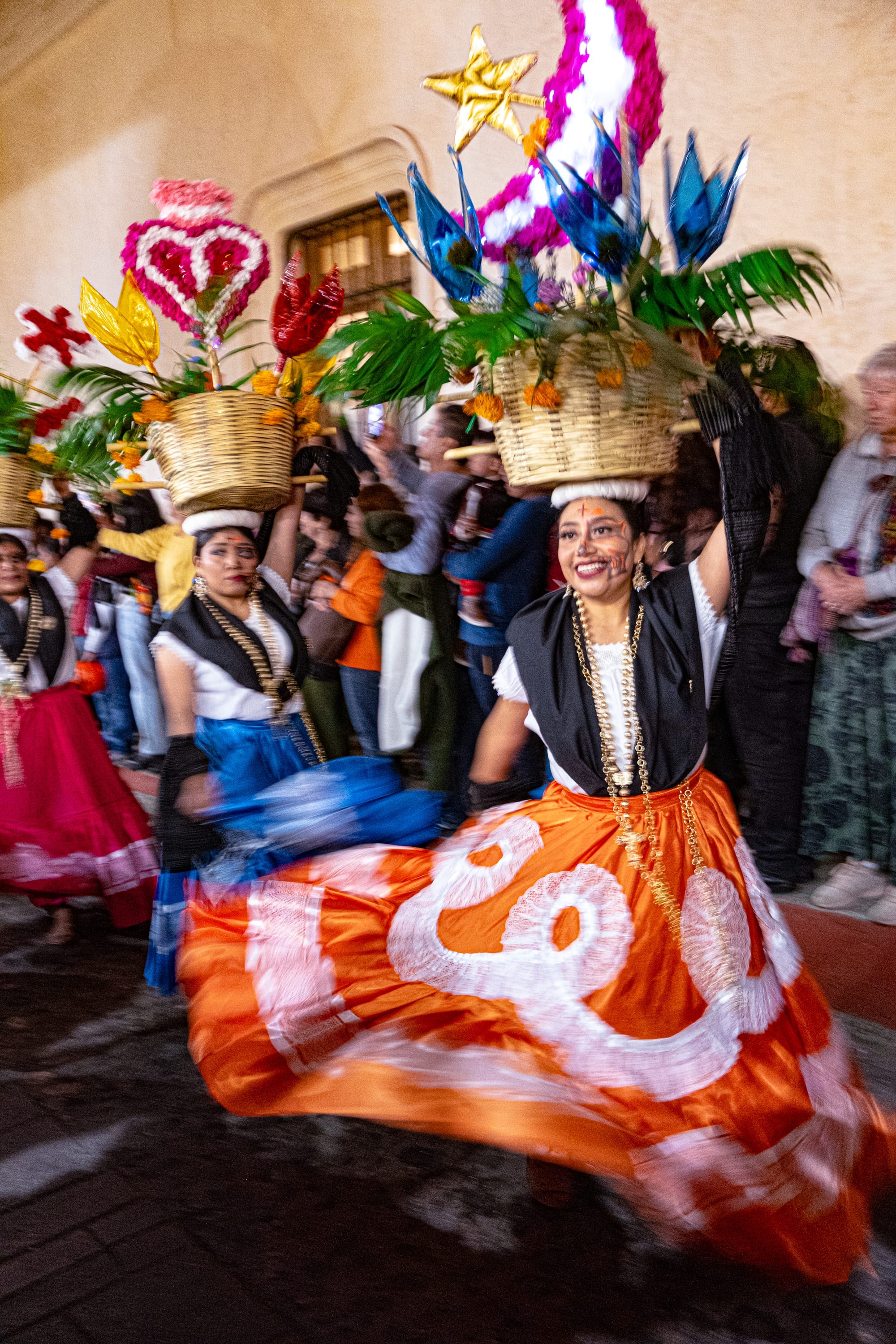
Music and dance carrying the parade through the night
The Day of the Dead parade moved through the city as a lively, shared act of remembrance. People gathered along streets and sidewalks: children, elders, families, and friends. Many dressed up. Many painted their faces as calaveras, Catrinas, and skulls decorated with flowers and symbols.
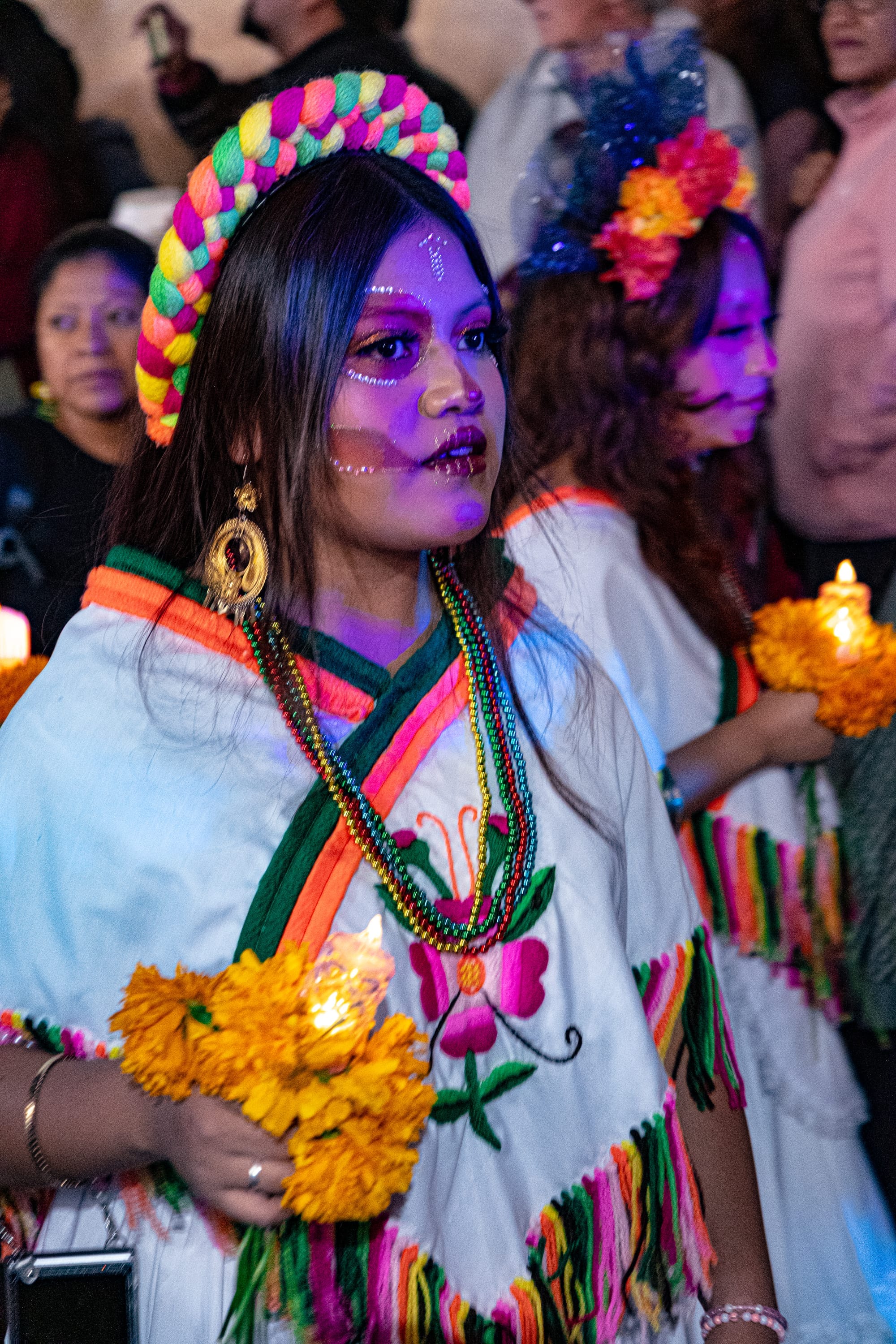
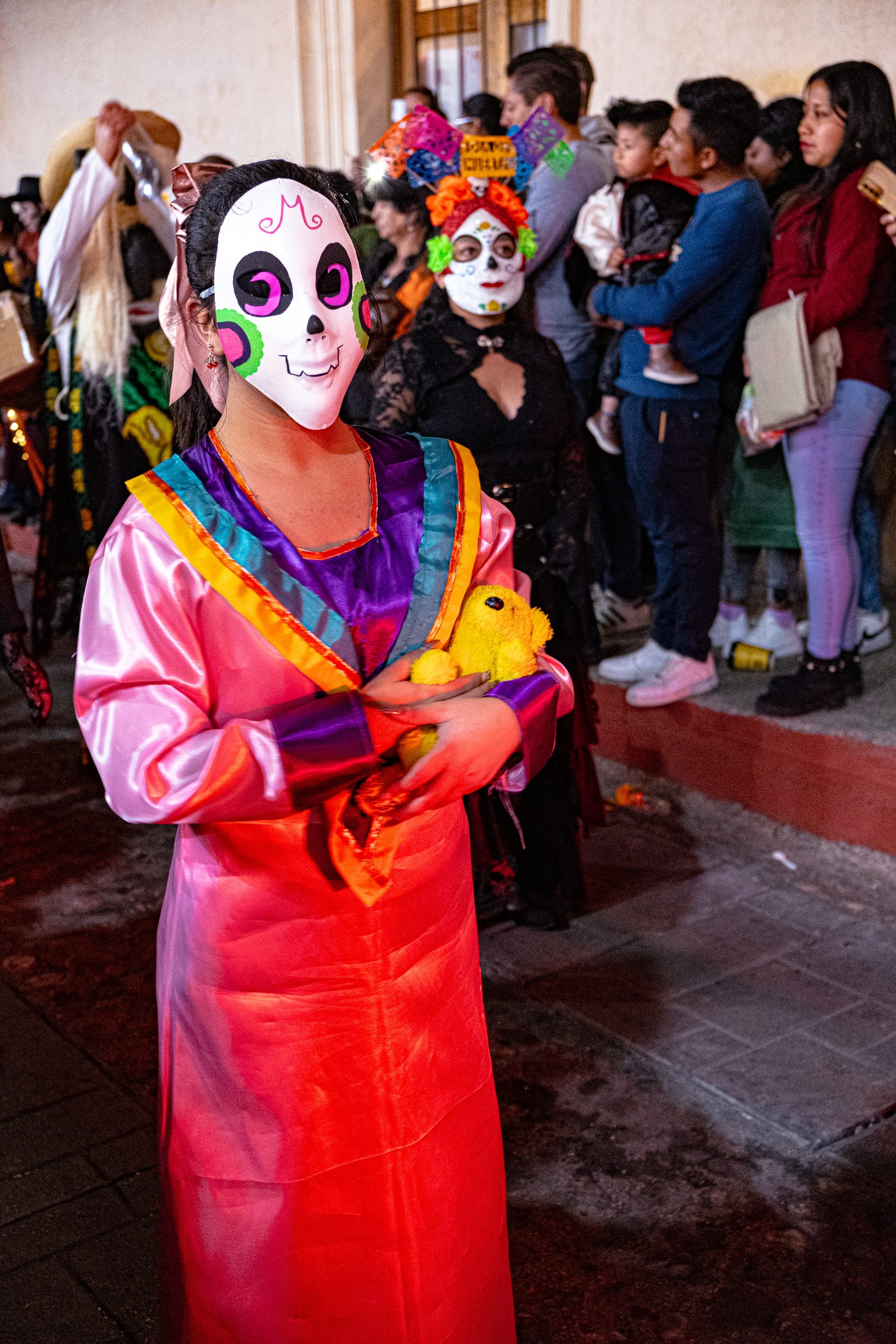
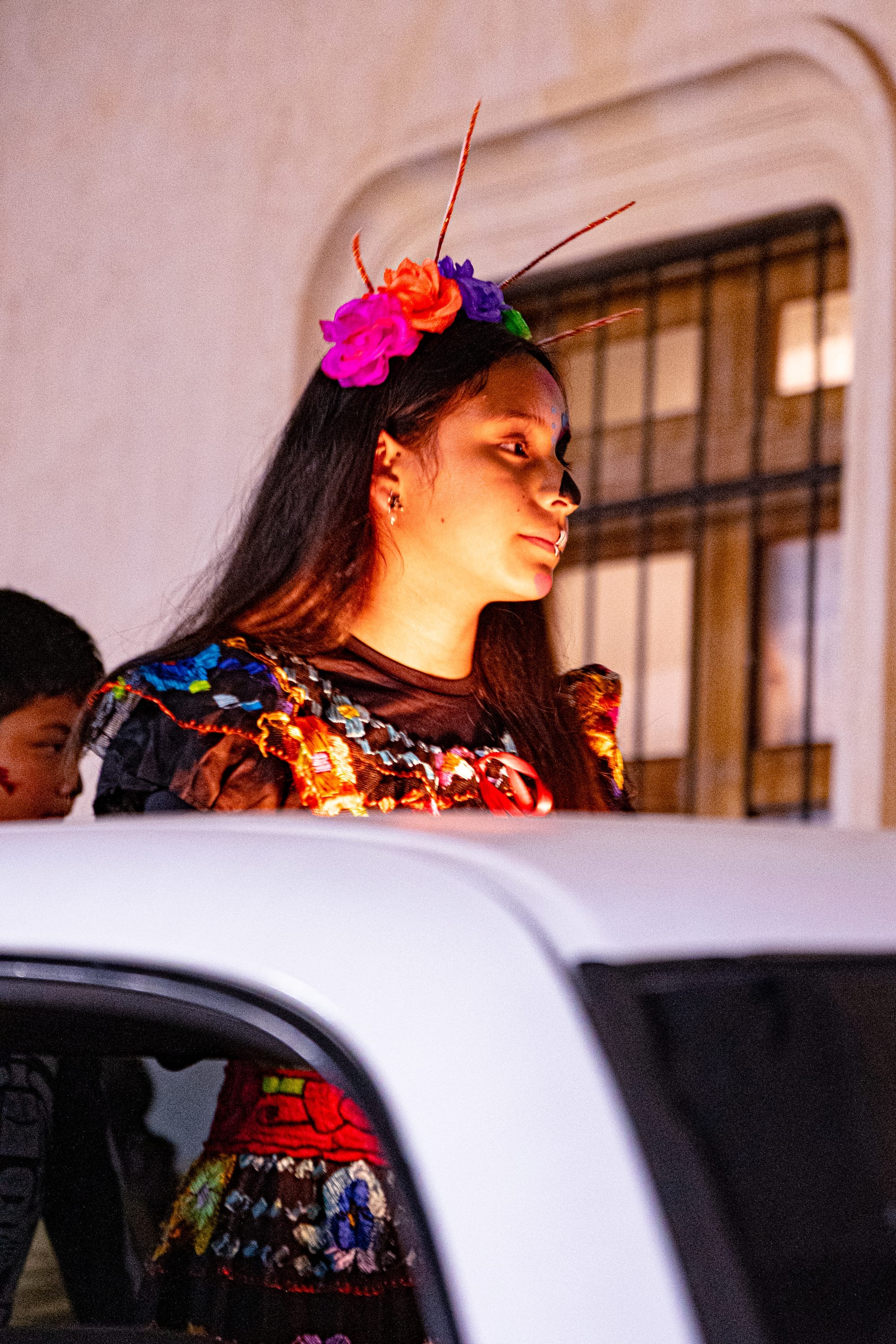
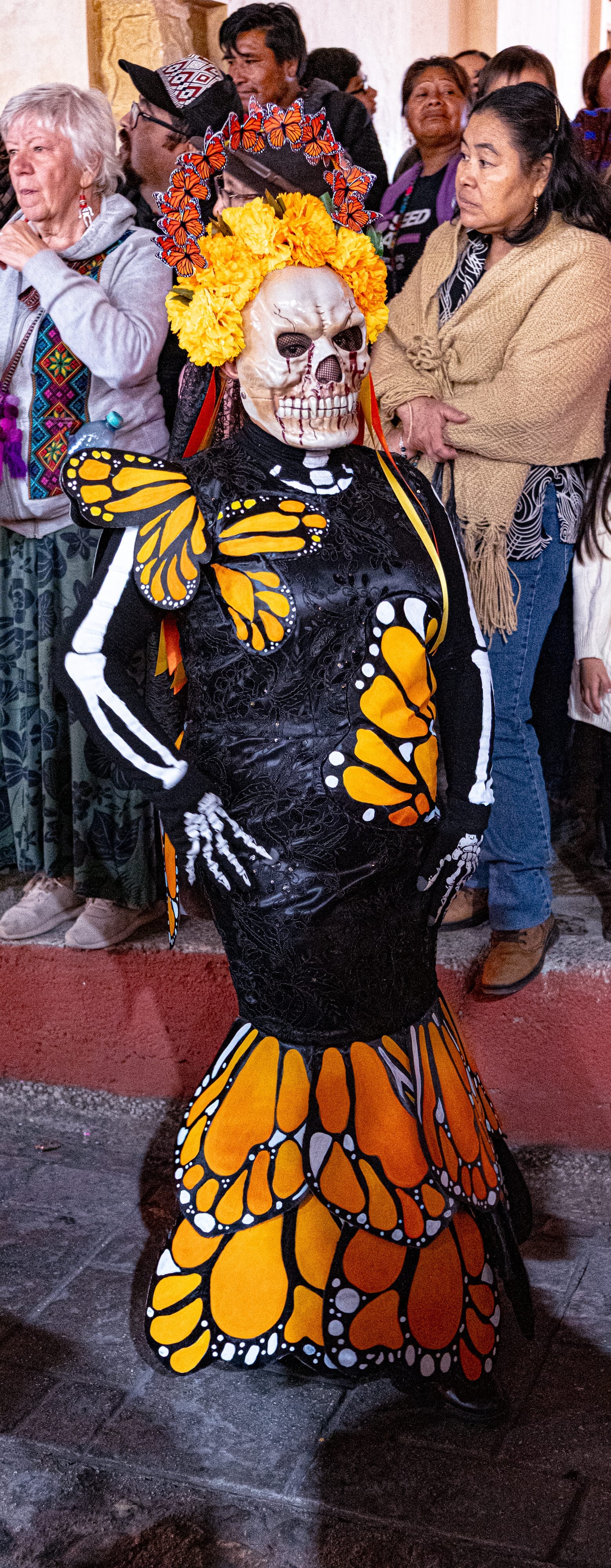
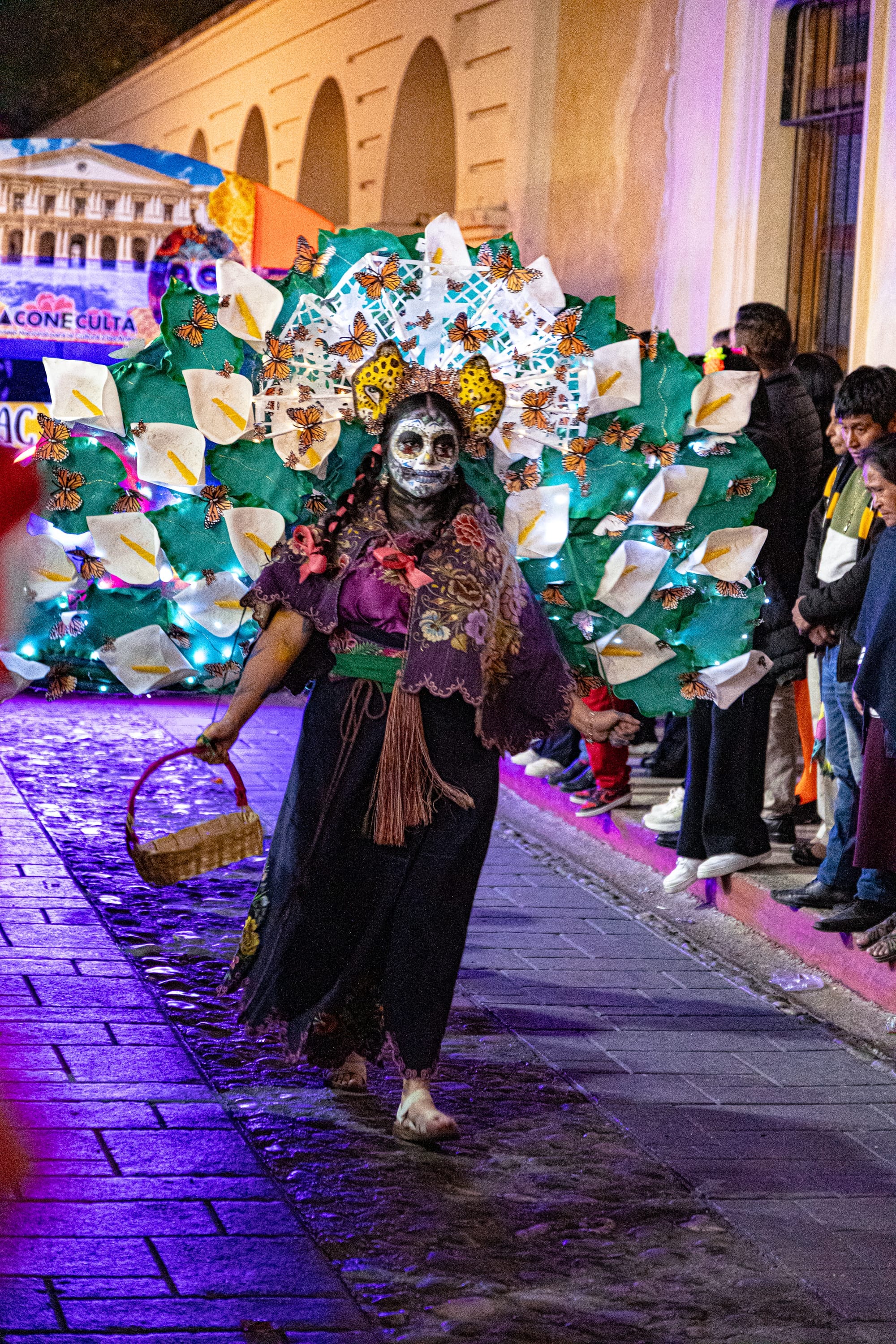
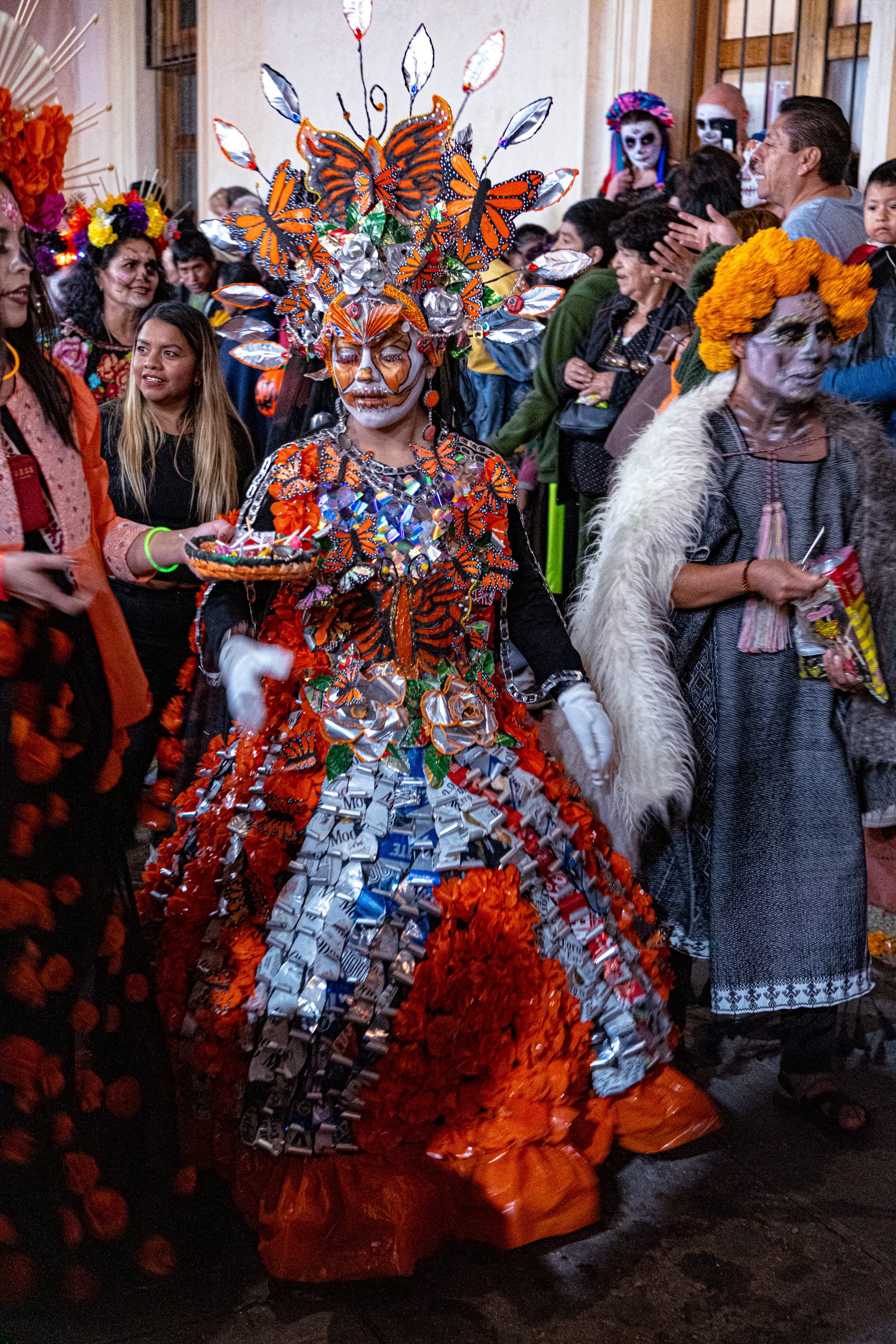
Elaborate costumes moving through the Día de Muertos parade
Earlier that day, Co404 had offered a face-painting activity for anyone who wanted to join. It was a small thing, but it mattered. Getting ready felt like a group effort. No one was watching from the outside. We were being kindly invited in.
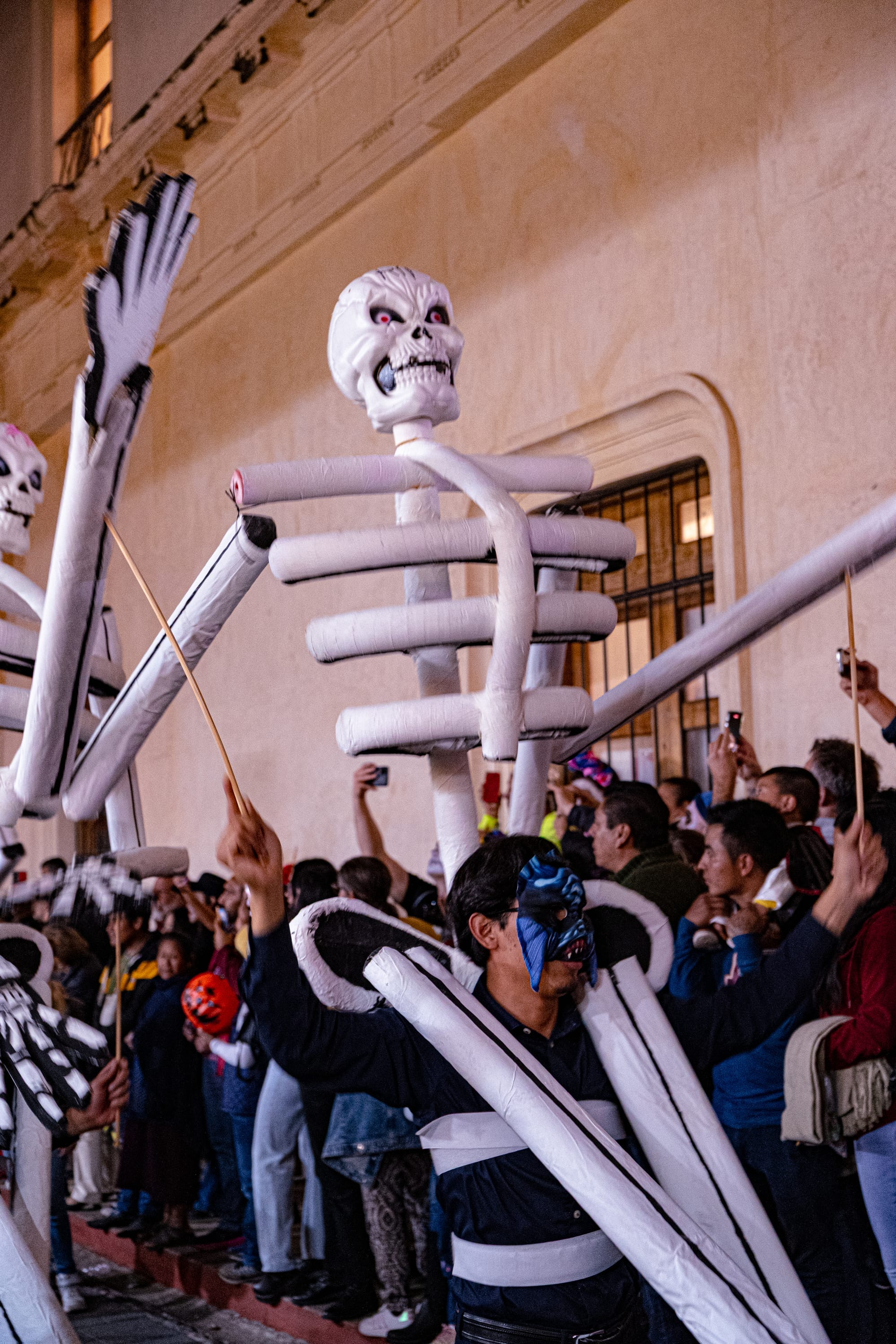
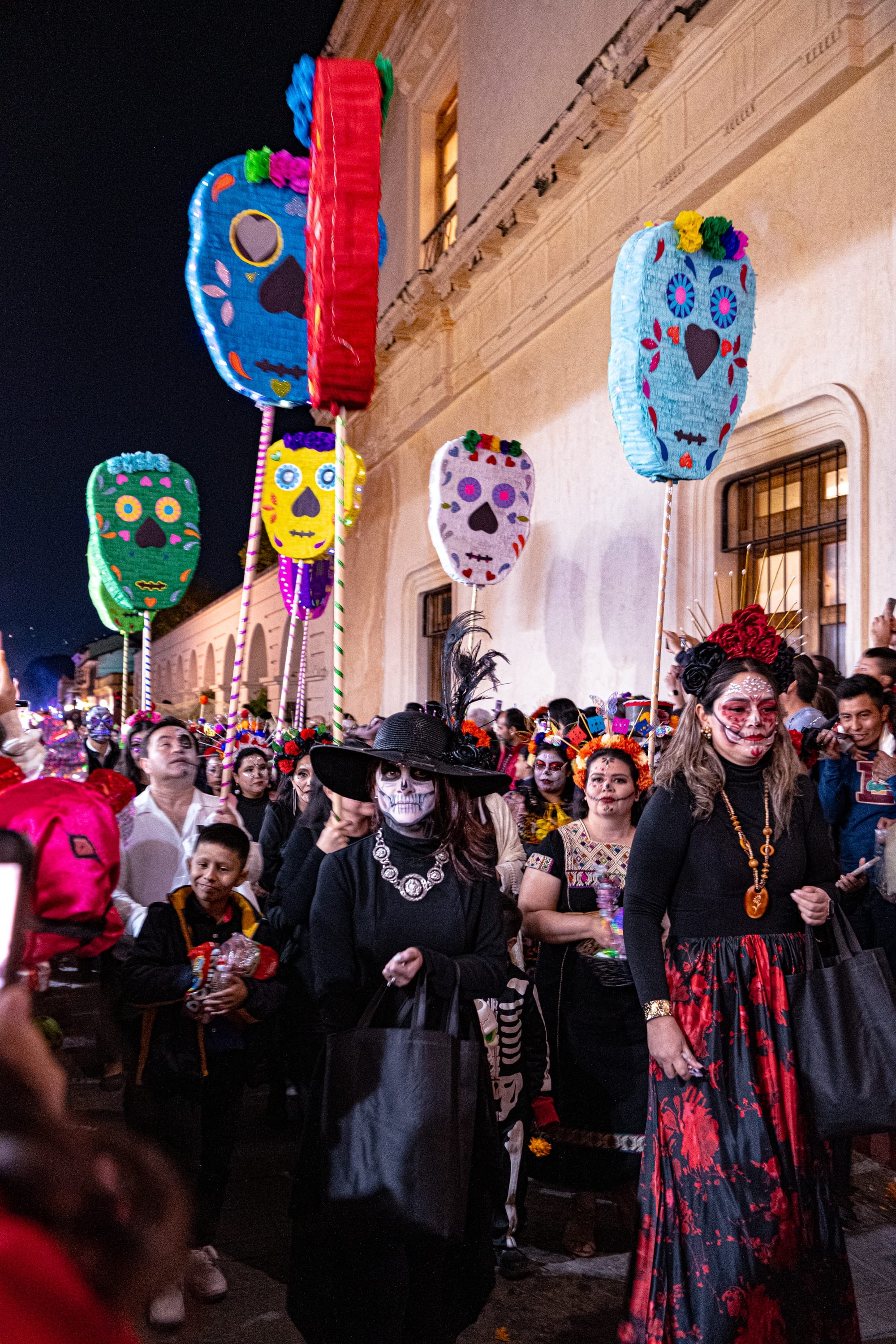
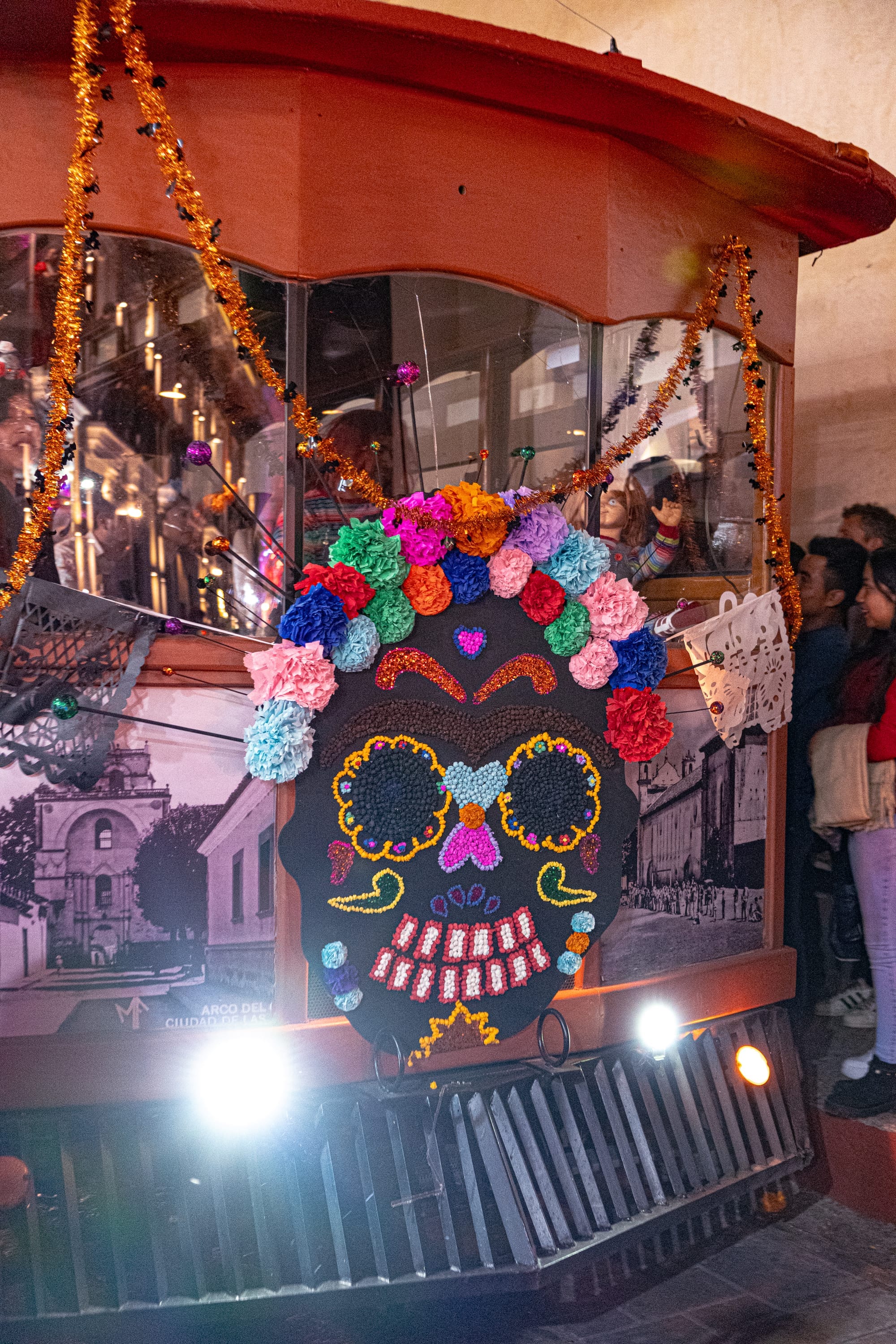
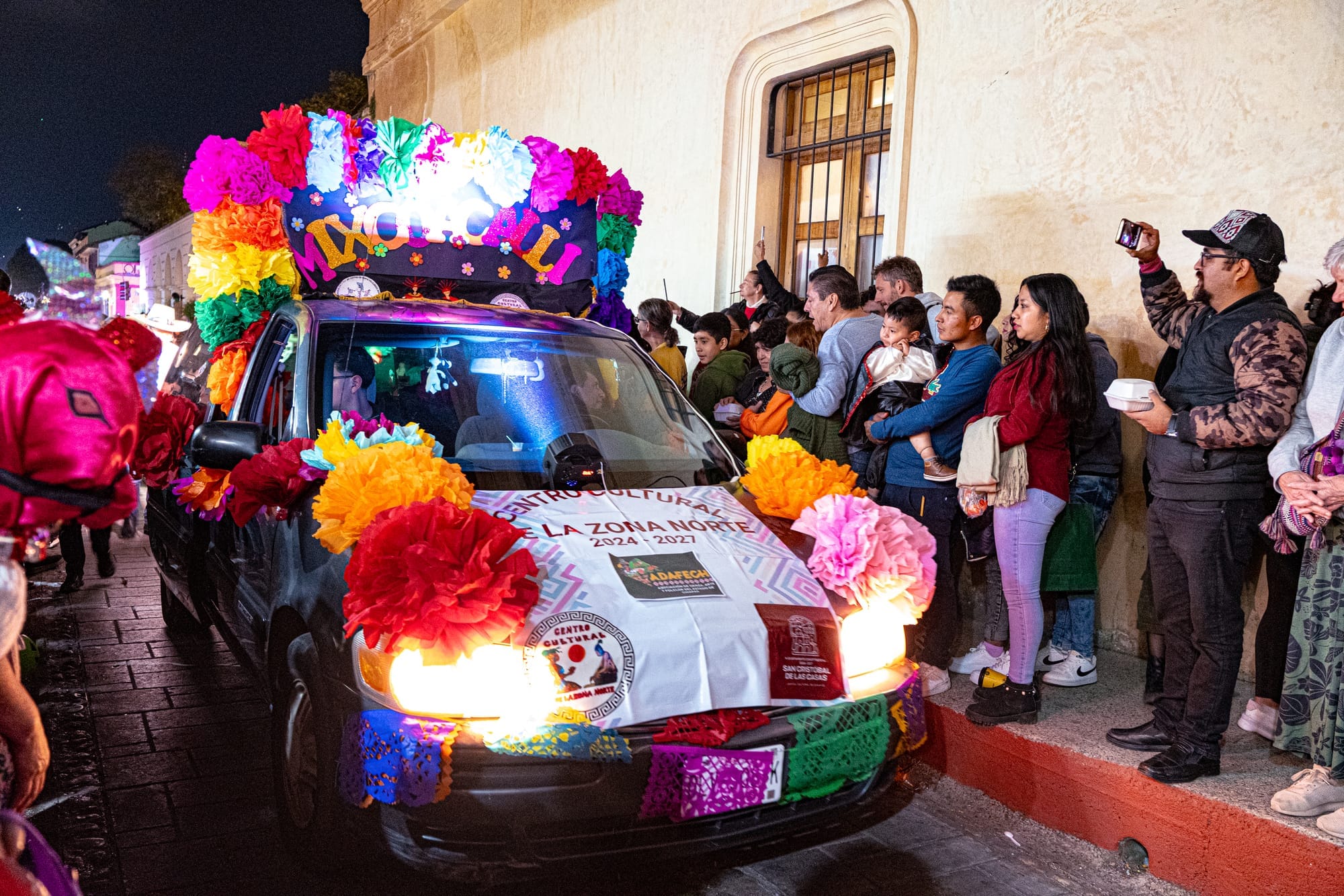
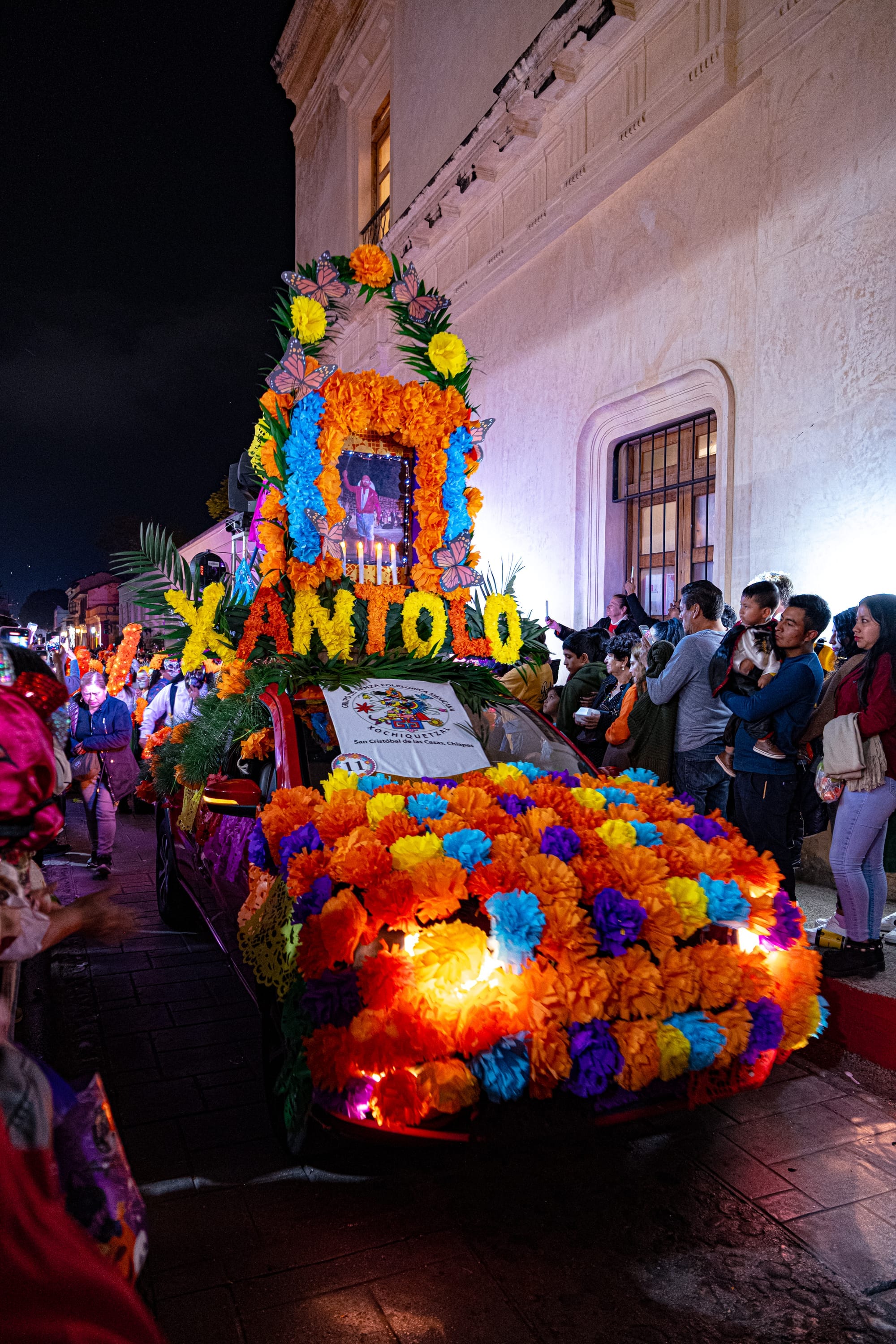
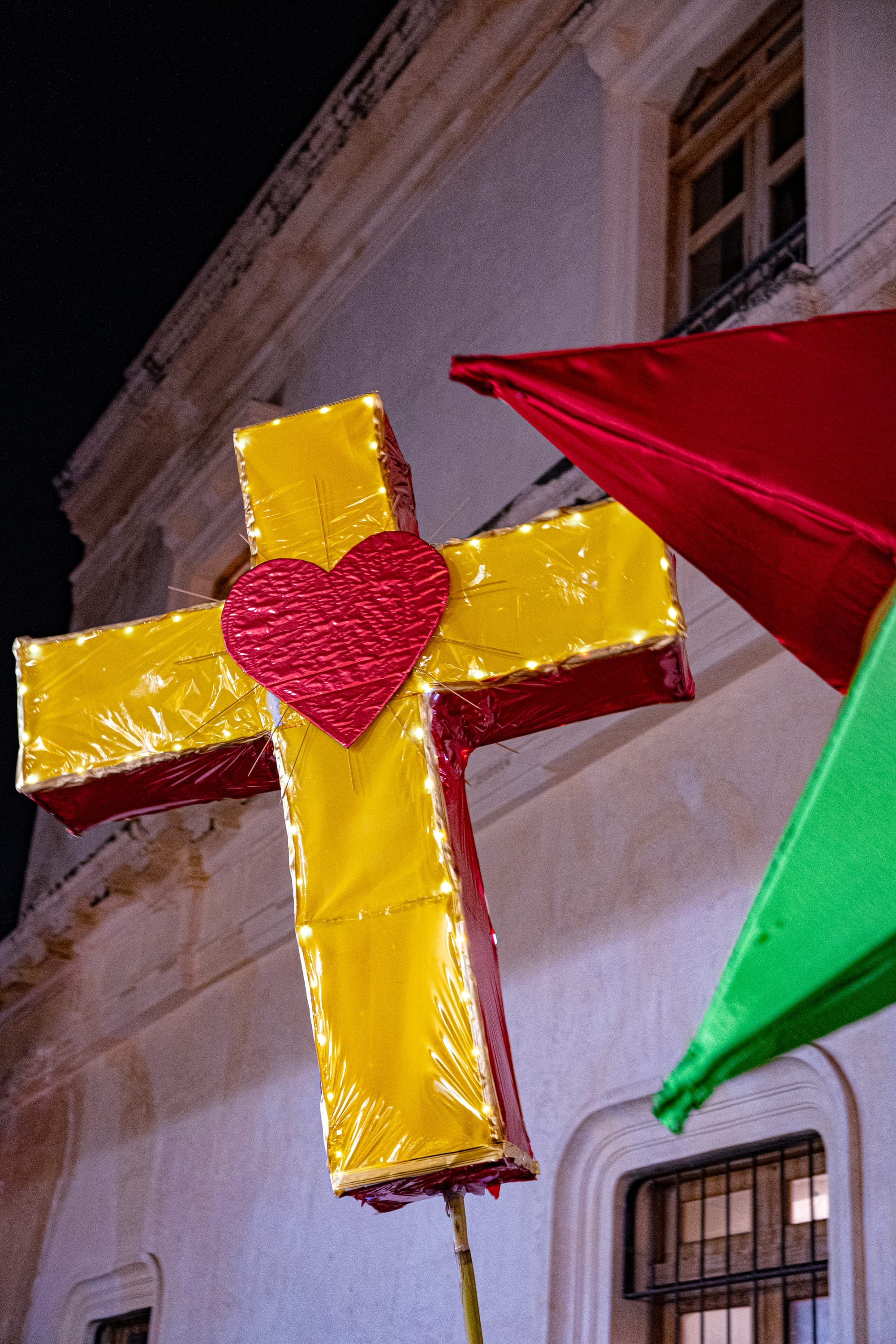
A moving altar carried through the streets at night
The parade itself was colorful and full of life. Music, costumes, laughter, and solemn moments all came together.
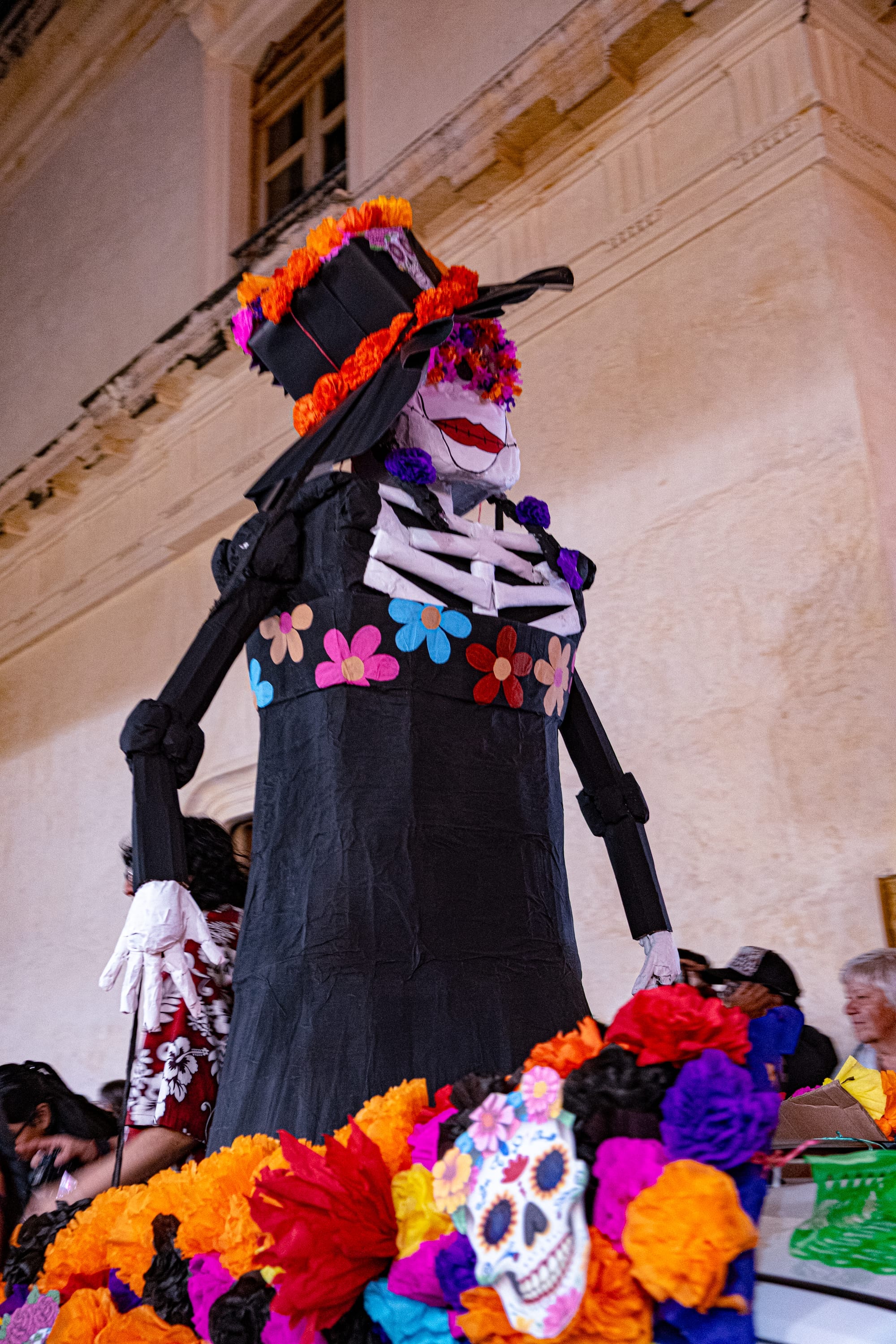
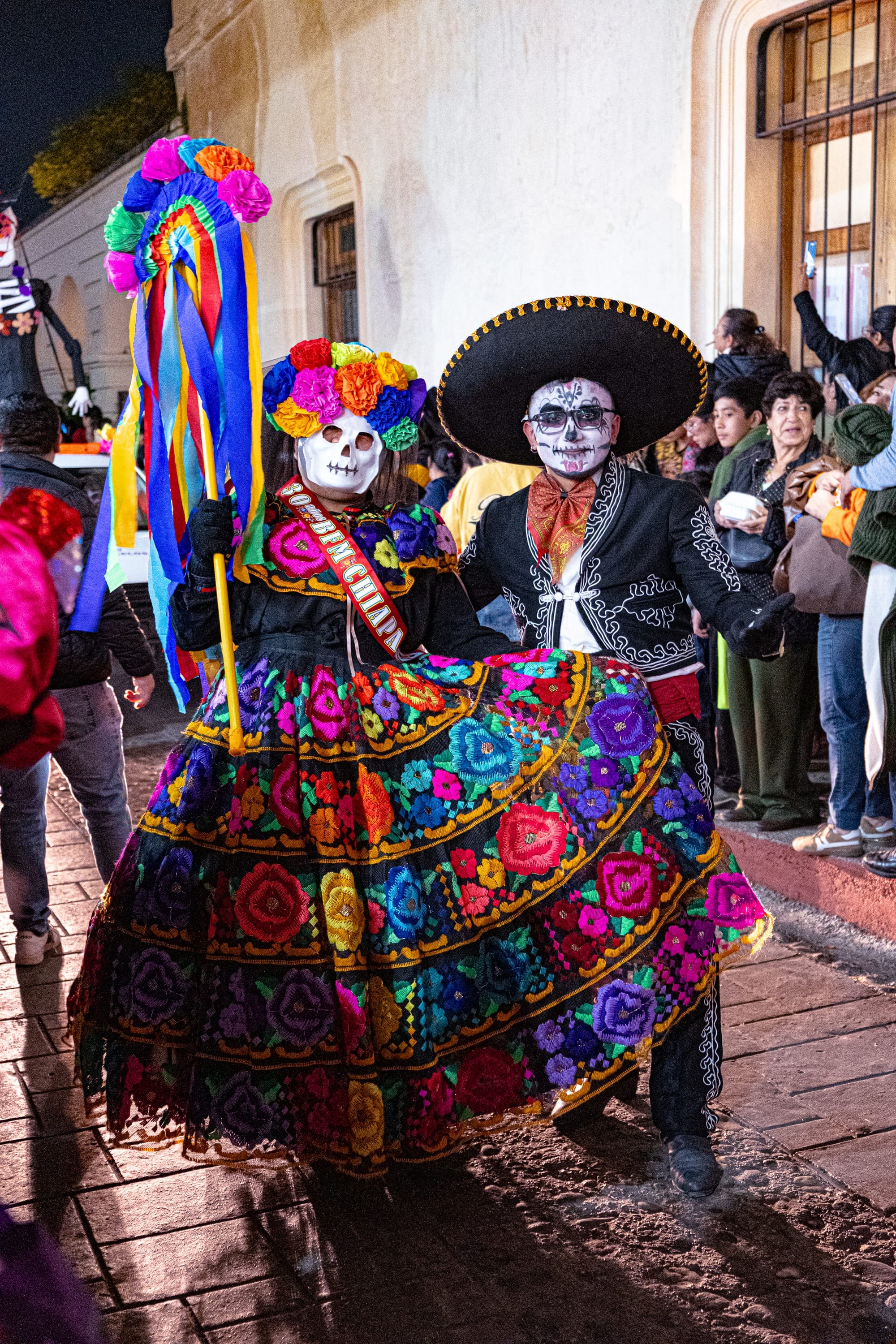
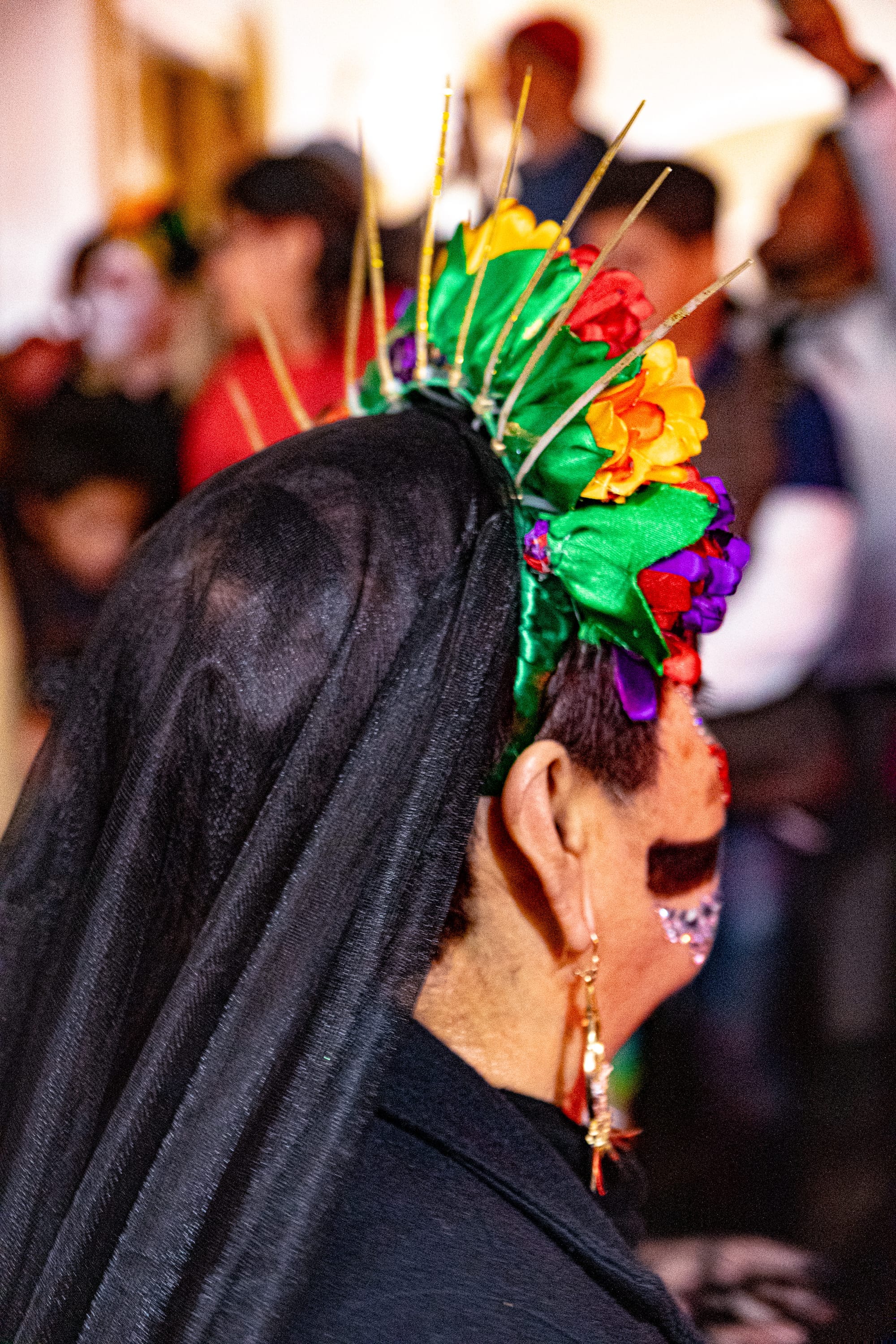
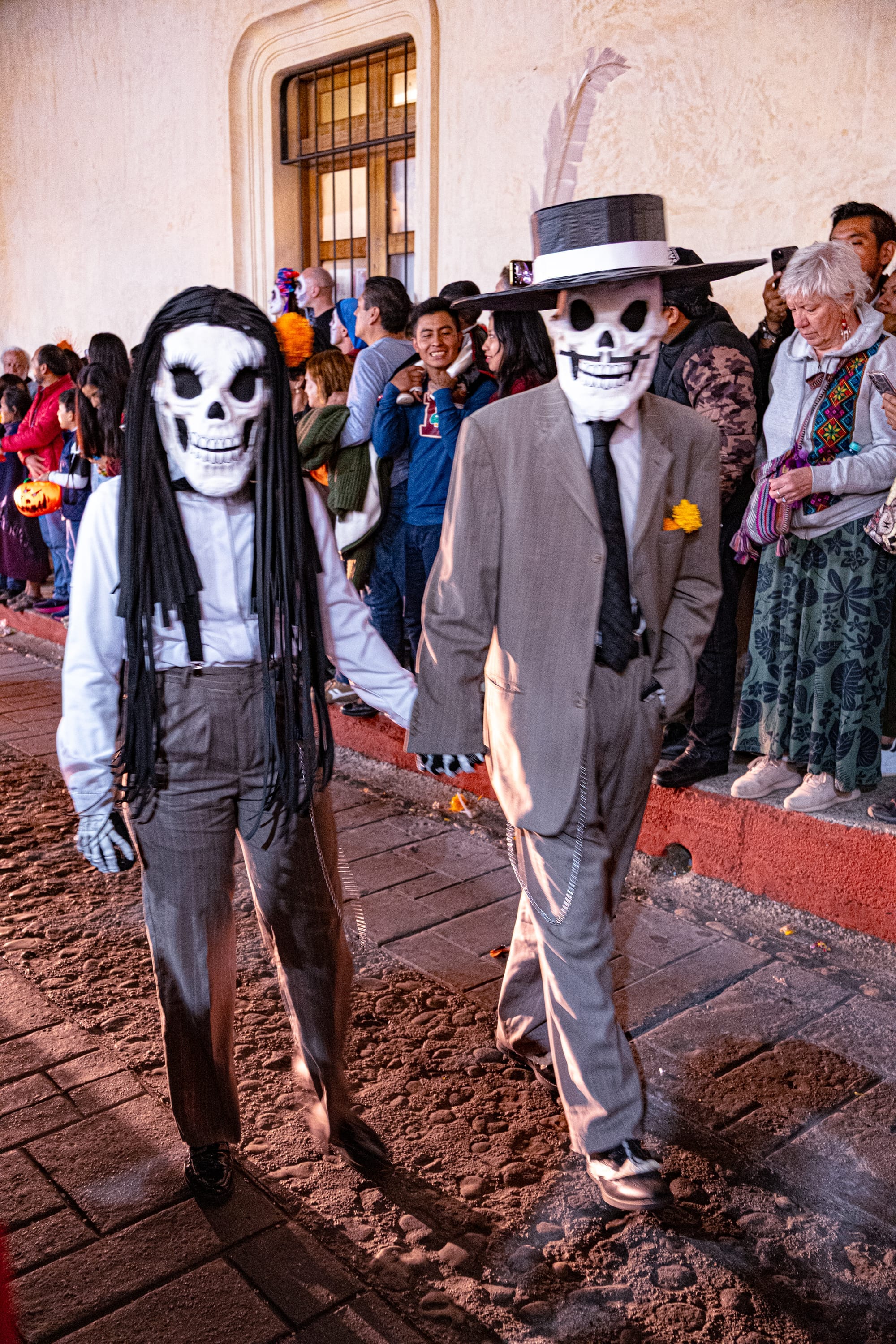
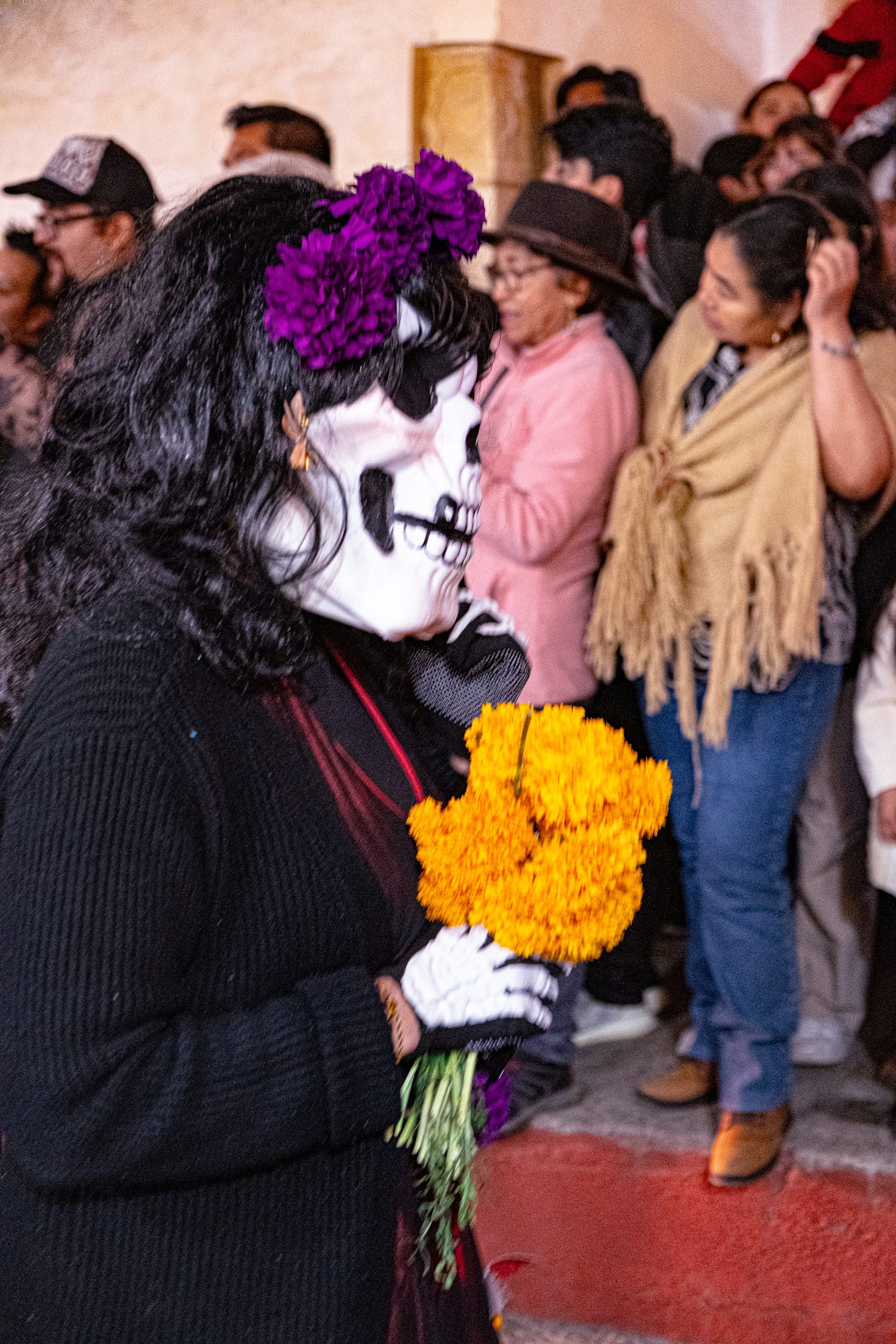
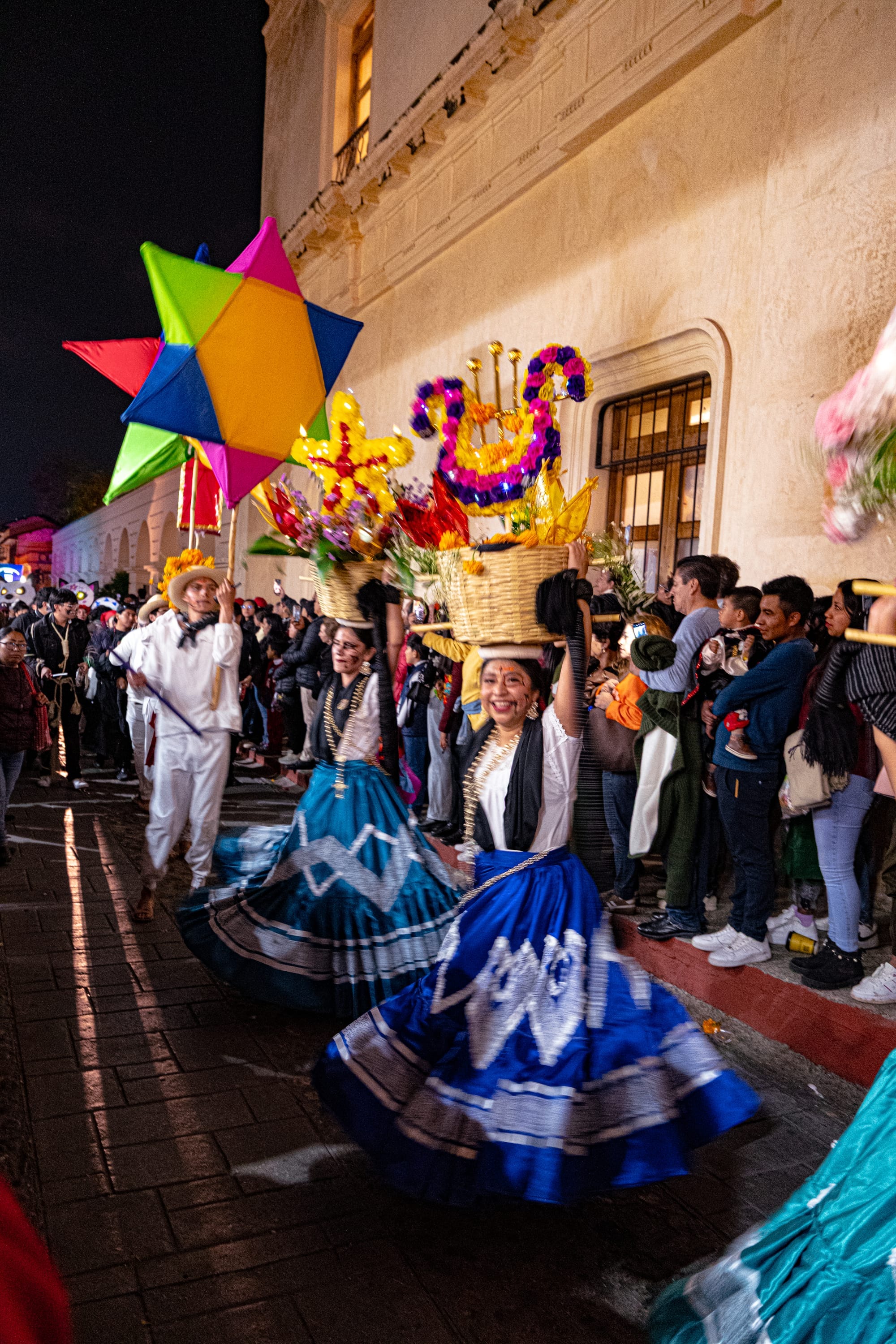
Faces, flowers, and movement
What made it so memorable wasn't only what we saw, but how it felt. Joy and grief weren't kept apart. They existed together. People smiled while honoring the dead. They danced while remembering loss. It showed us that Día de Muertos isn't about denying death, but about bringing it back into life.
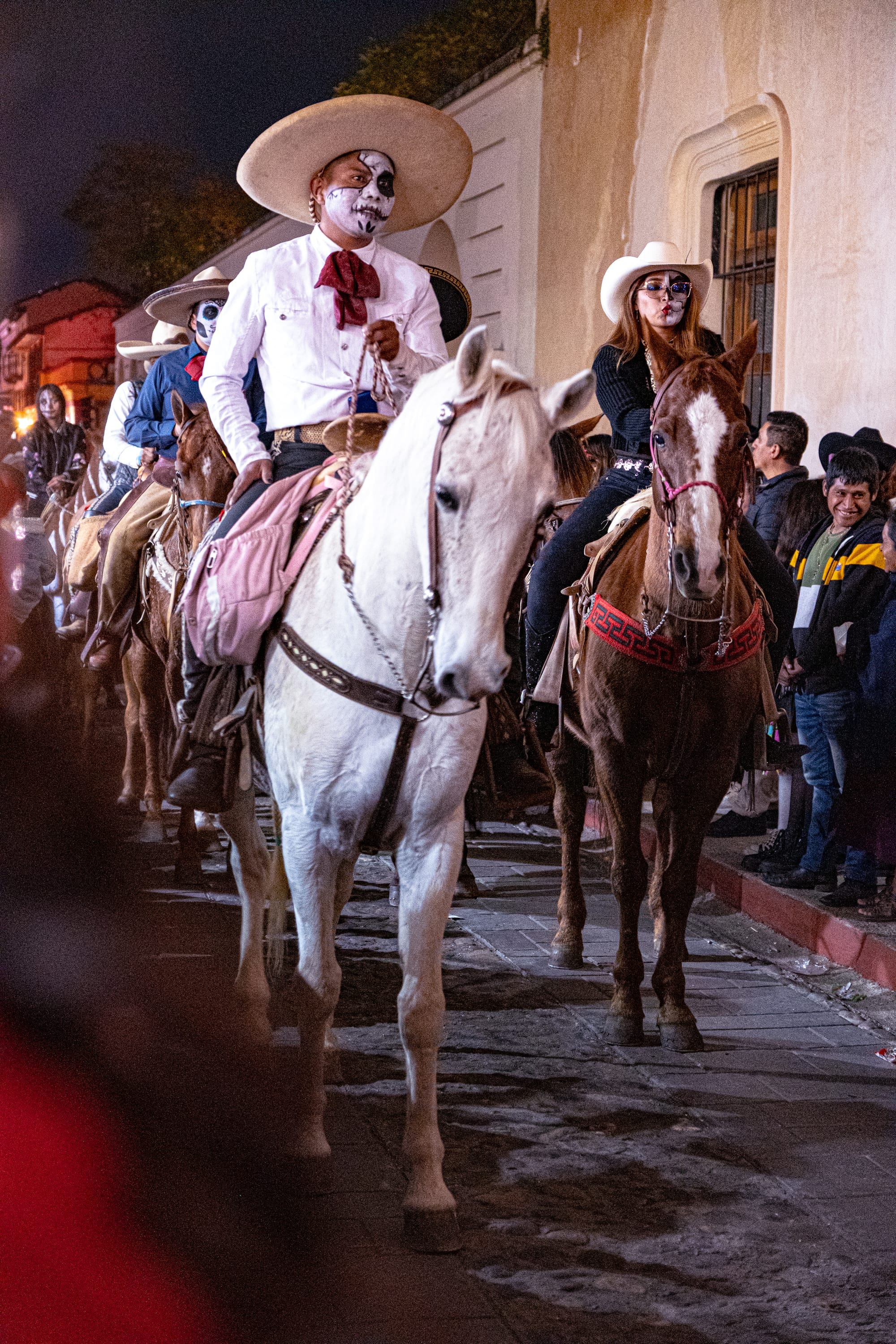
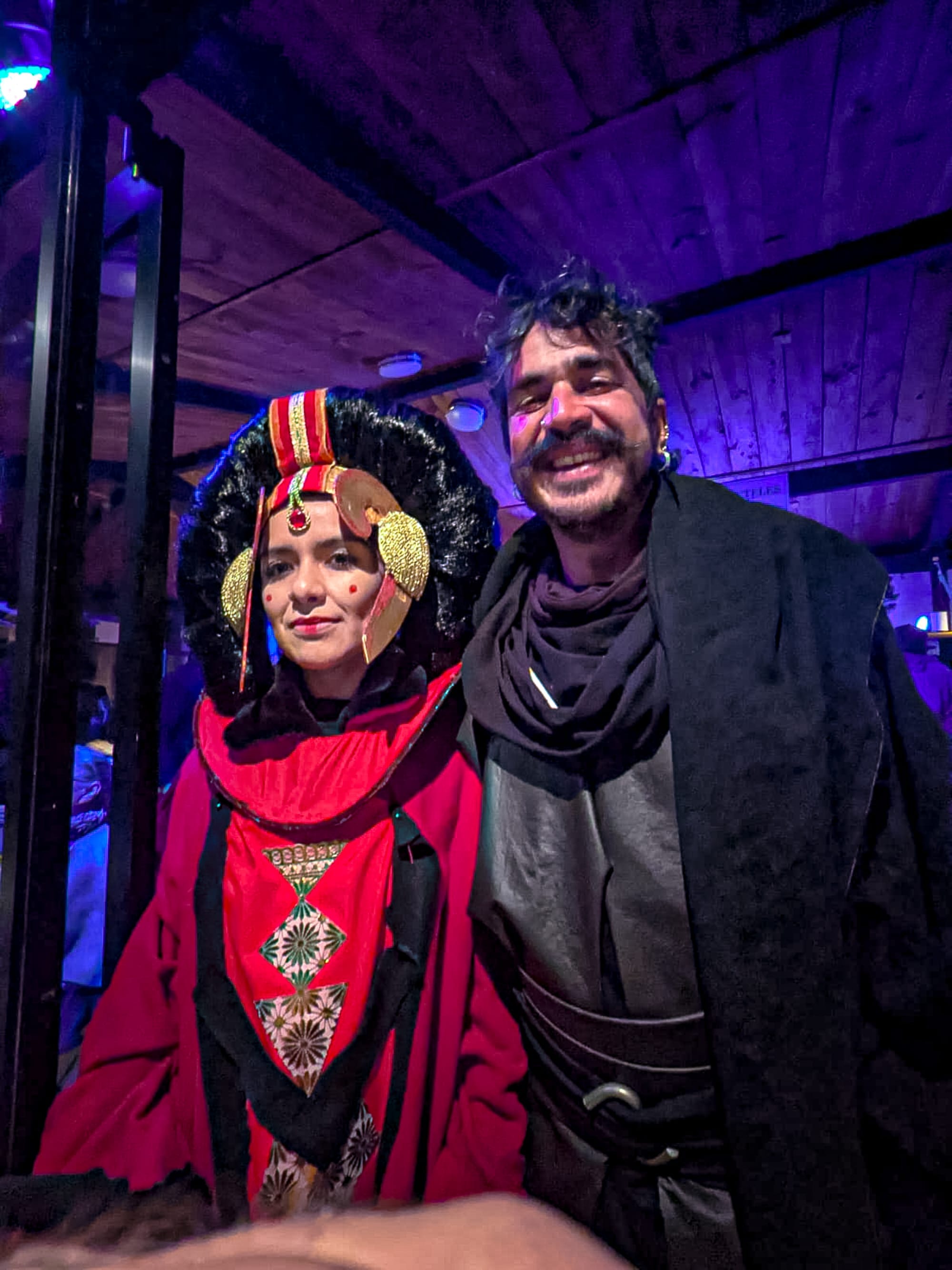
Horseback riders and costumes joining the night parade
Standing there, surrounded by faces painted in memory, we felt hugely grateful: for being welcomed, and for seeing something that wasn't ours but wasn't closed to us either.
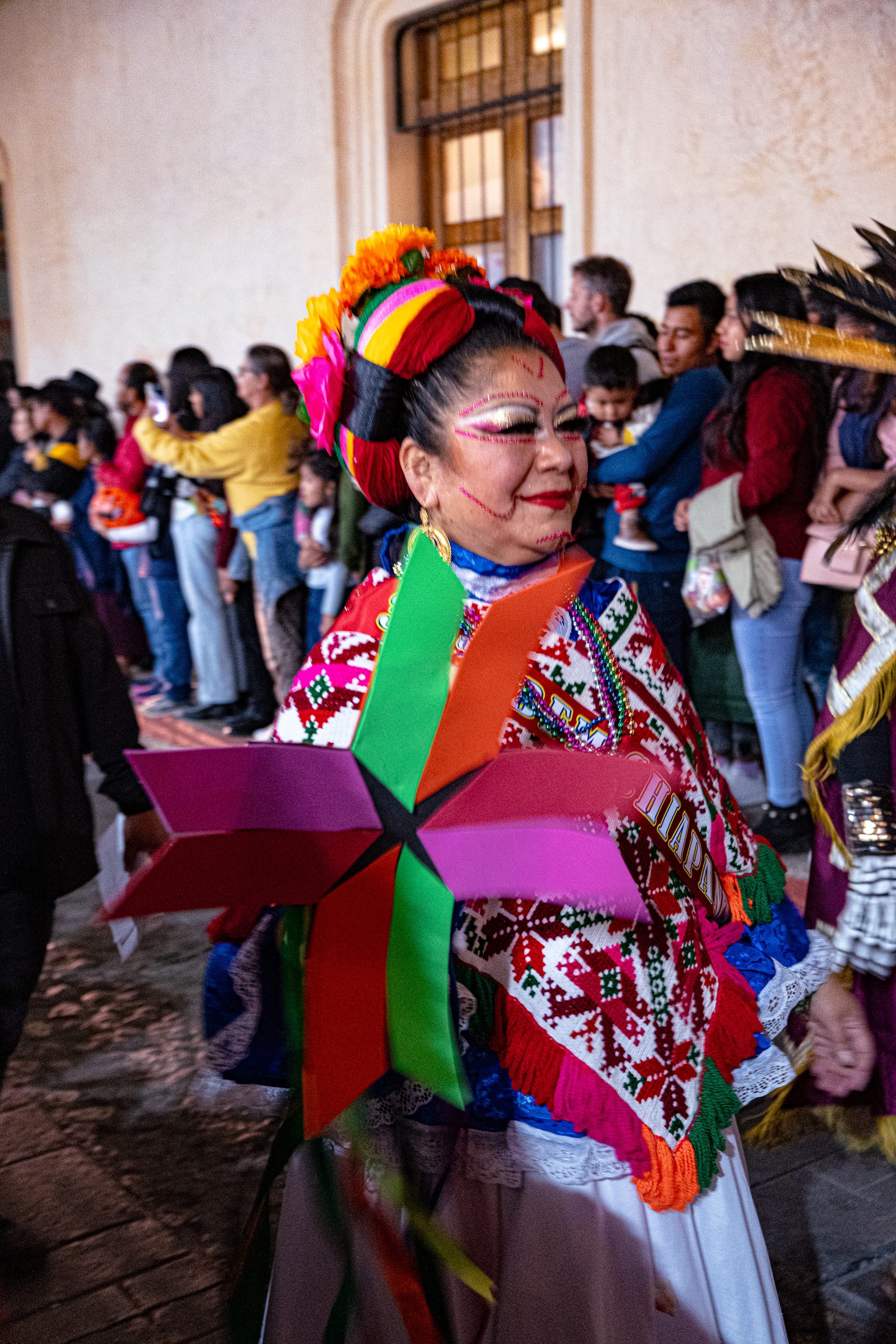
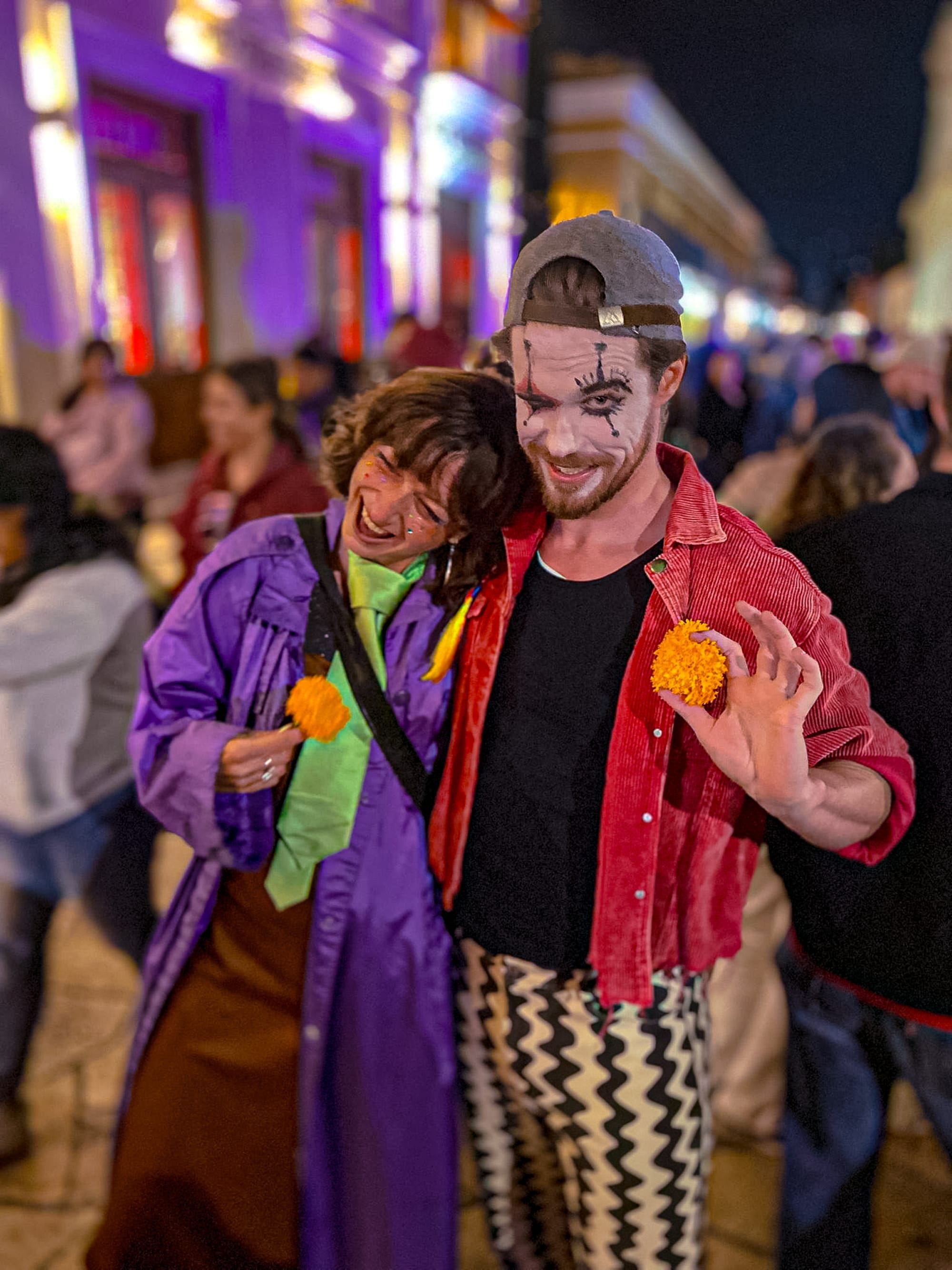
Shared joy and connection along the parade route
Later, walking home through streets still scattered with petals and candle wax, we knew this was an experience we'd never forget.
The cemeteries
We visited three cemeteries during the Day of the Dead celebrations: Romerillo, Zinacantán, and San Cristóbal’s Municipal Pantheon (which we also visited before Day of the Dead). Each one marked Día de Muertos in a completely different way, from small family vigils to big community gatherings. Those experiences deserve their own posts, and we’ve written about them separately.
Romerillo
Romerillo was our favorite of the three cemeteries we visited, and the one that felt the most local.
One of the most surprising things about Romerillo is where it is: right next to an amusement park. The contrast is jarring, and we still think about it. Rides and music on one side, families tending graves on the other. Celebration and remembrance happen at the same time, and nobody sees a contradiction. We'd never seen anything like it.
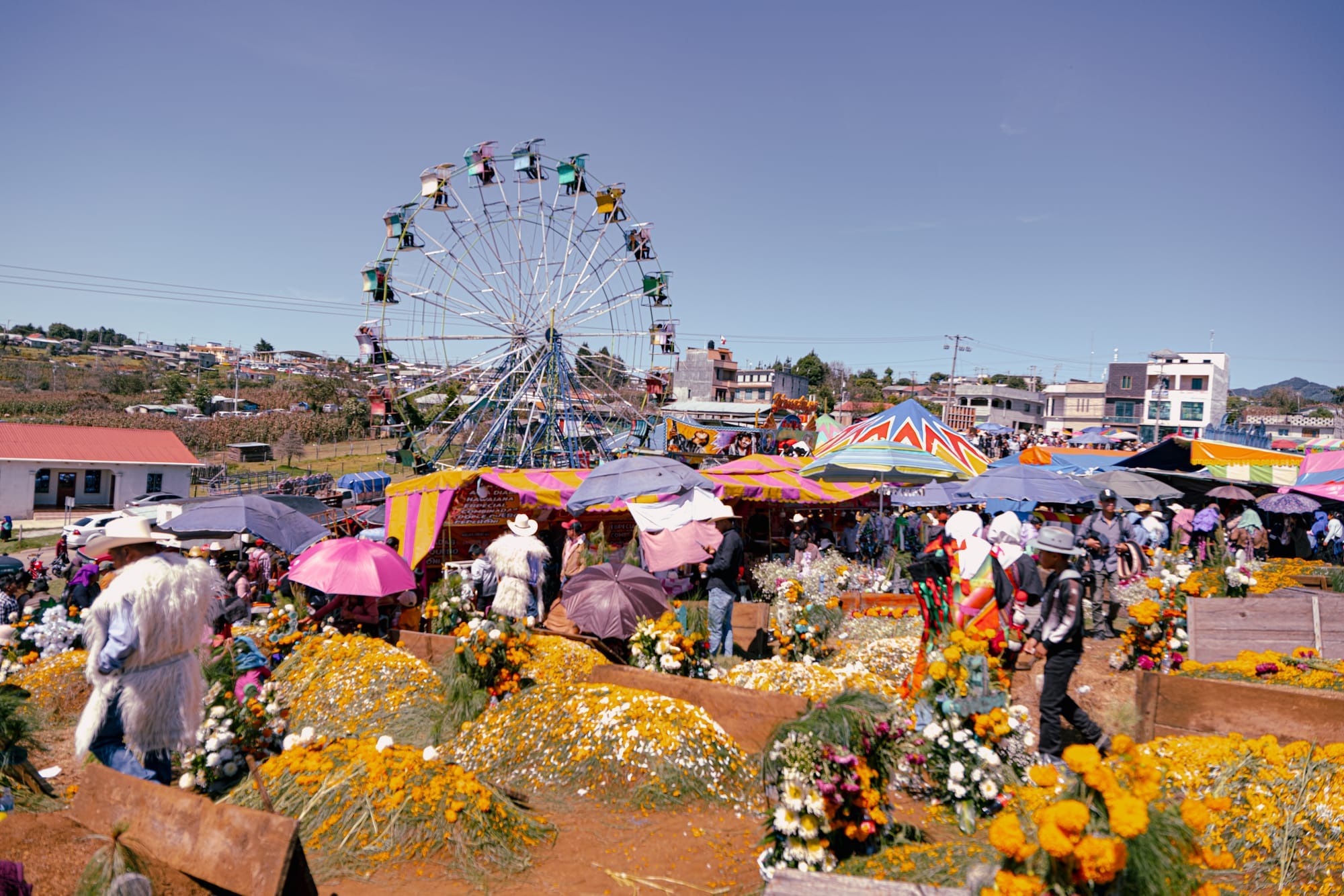
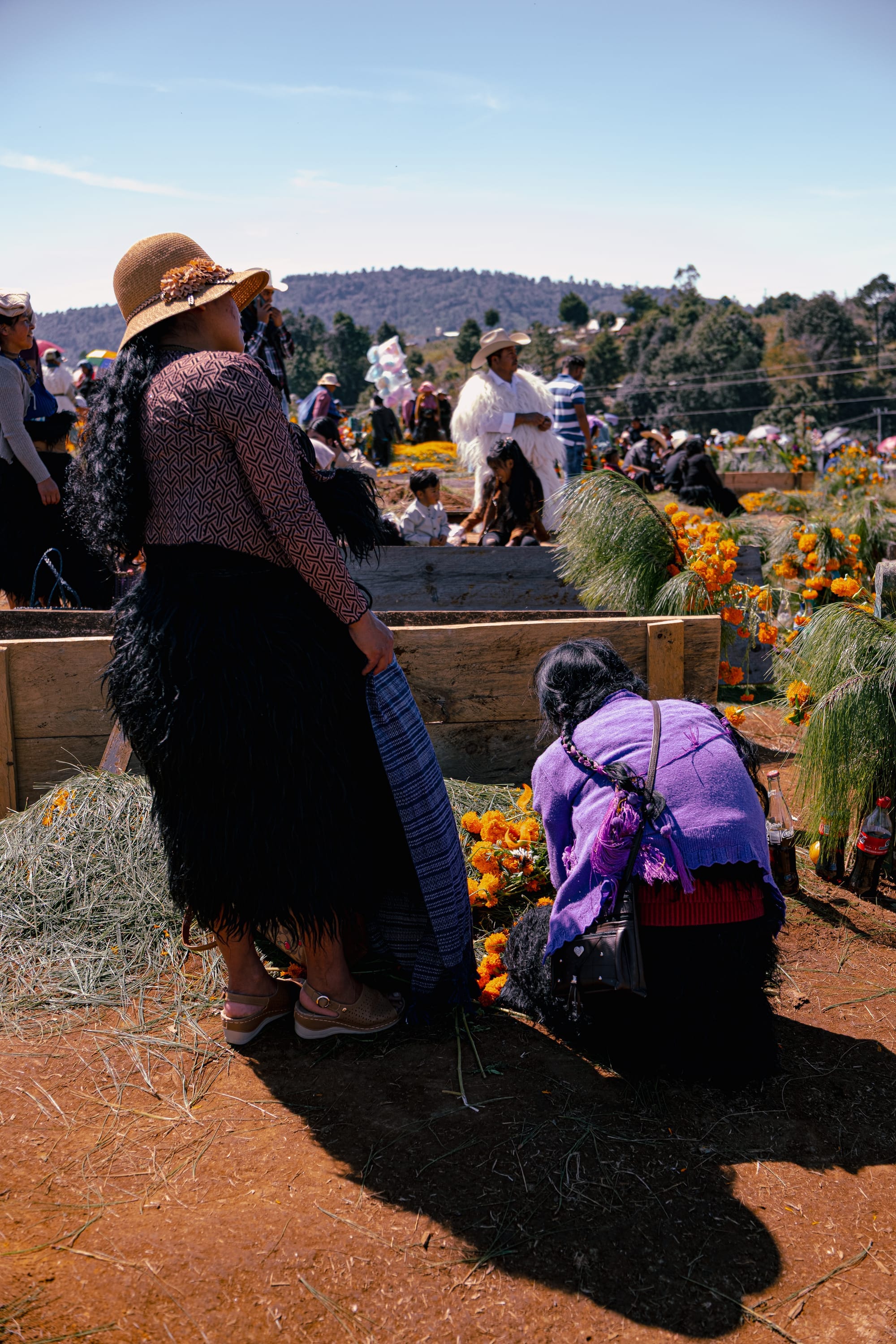
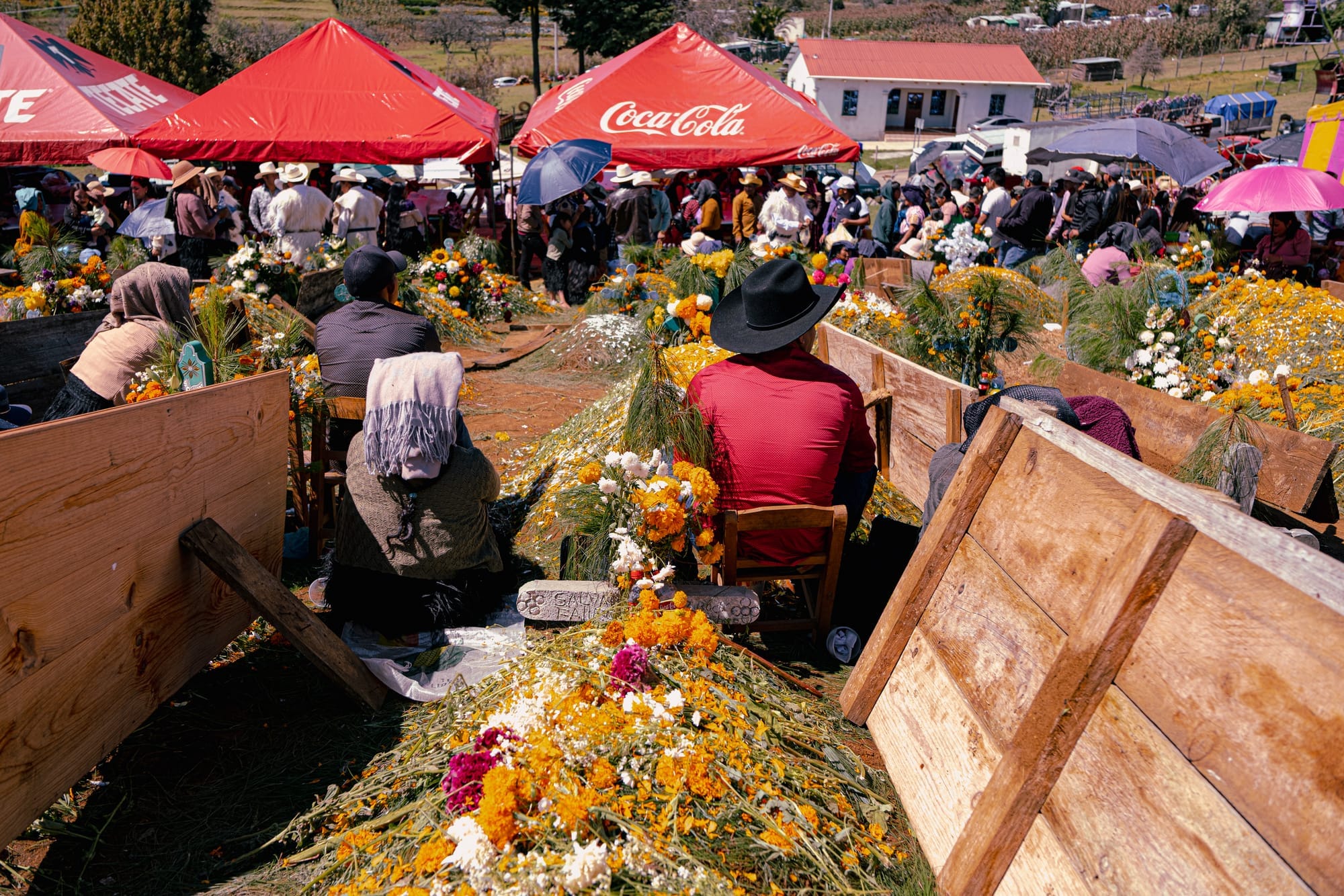
Families tending graves together throughout the day
Inside the cemetery, almost every grave was carefully decorated with pine needles, marigolds, fruit, candles, and offerings. Families gathered, talked, laughed, ate, and stayed for hours. It felt less like a place of mourning and more like a real celebration of the dead, held openly and without holding back.
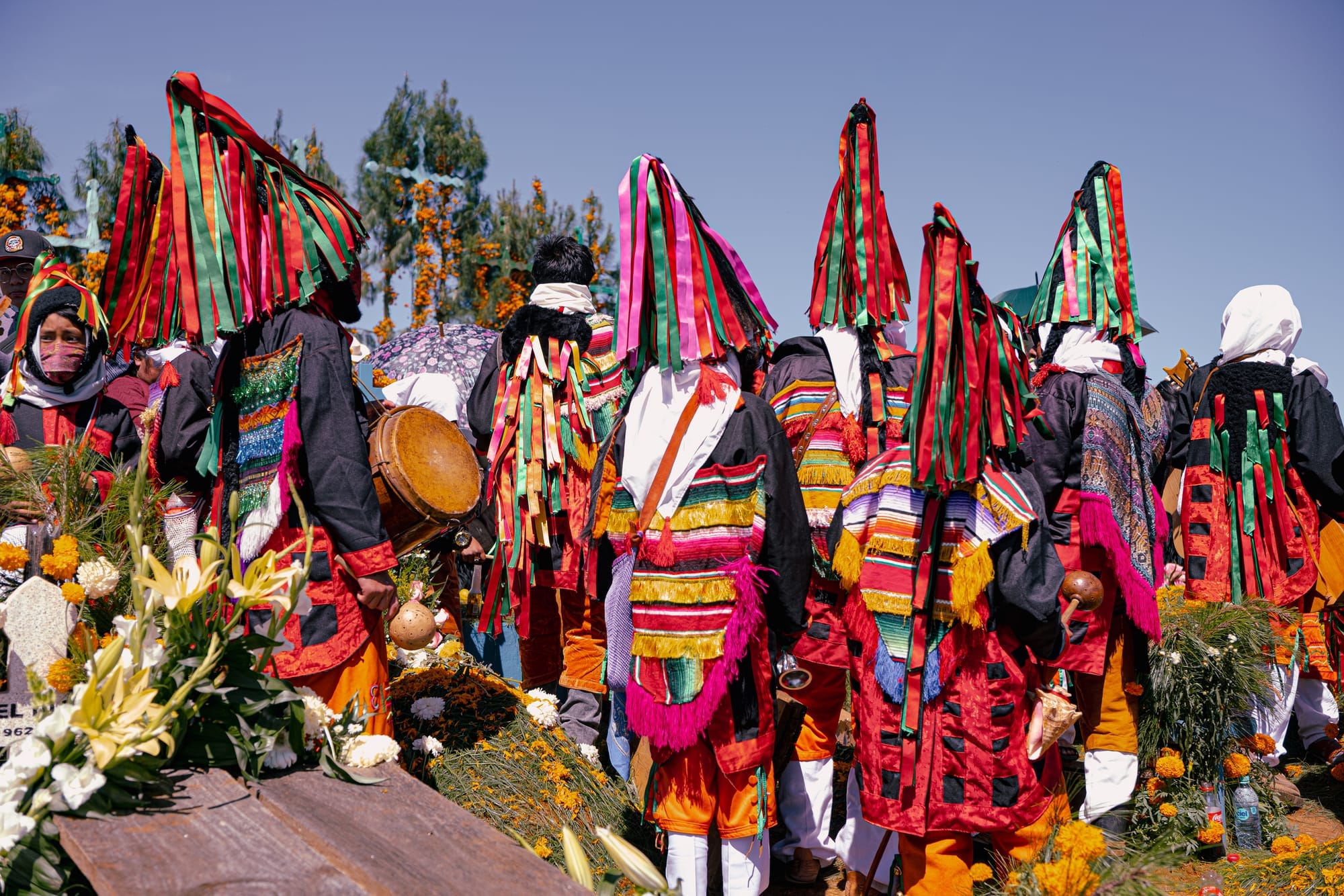
If you only visit one cemetery during Día de Muertos in San Cristóbal, make it this one. Romerillo is intense, beautiful, and hard to forget: Day of the Dead in every sense.
Zinacantán
Zinacantán felt completely different from the other cemeteries we visited. The town is known for growing flowers (one of its main industries), and that's obvious during Día de Muertos. Of the three cemeteries, this one was by far the most ornate, with graves completely covered in flowers of every kind.
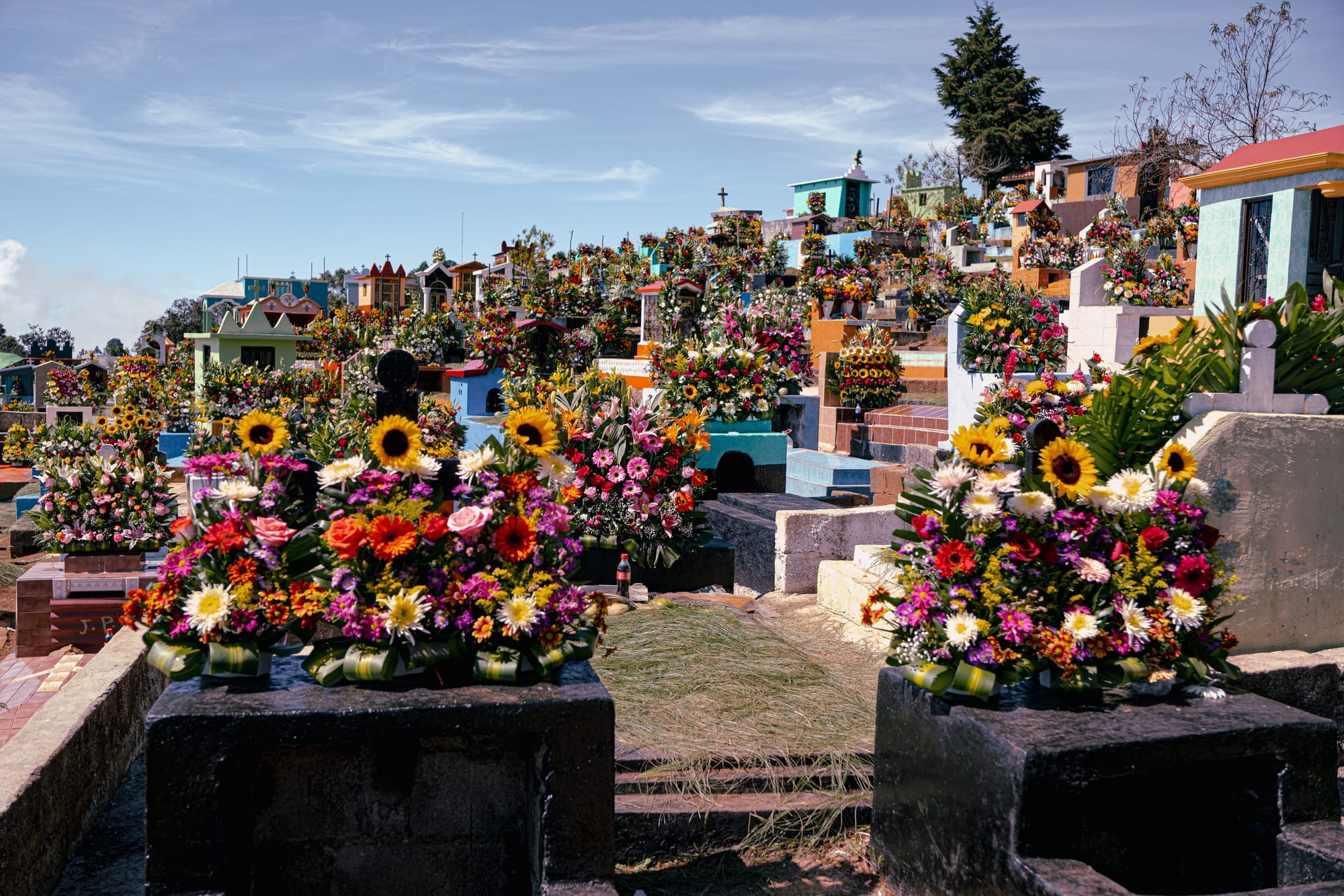
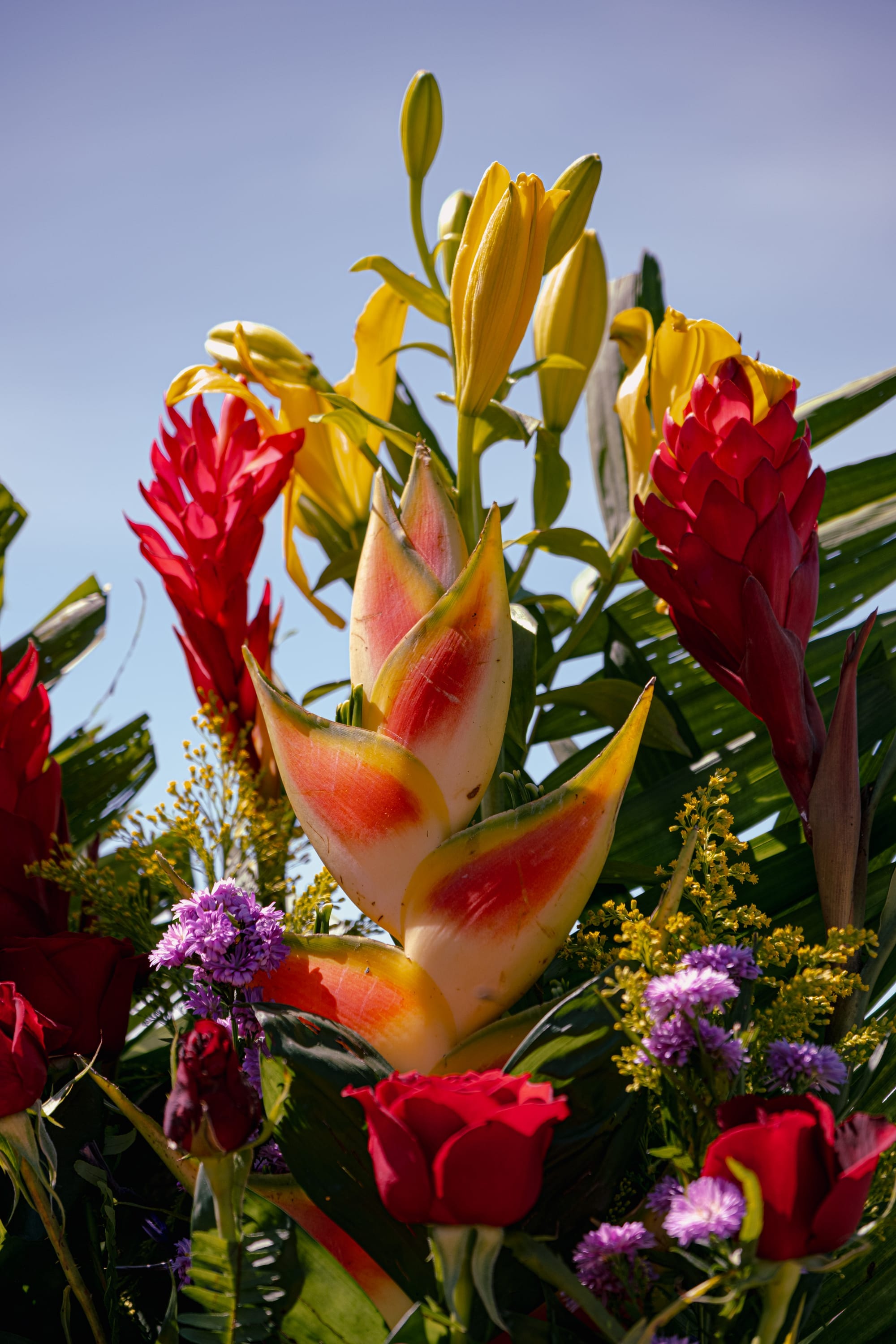
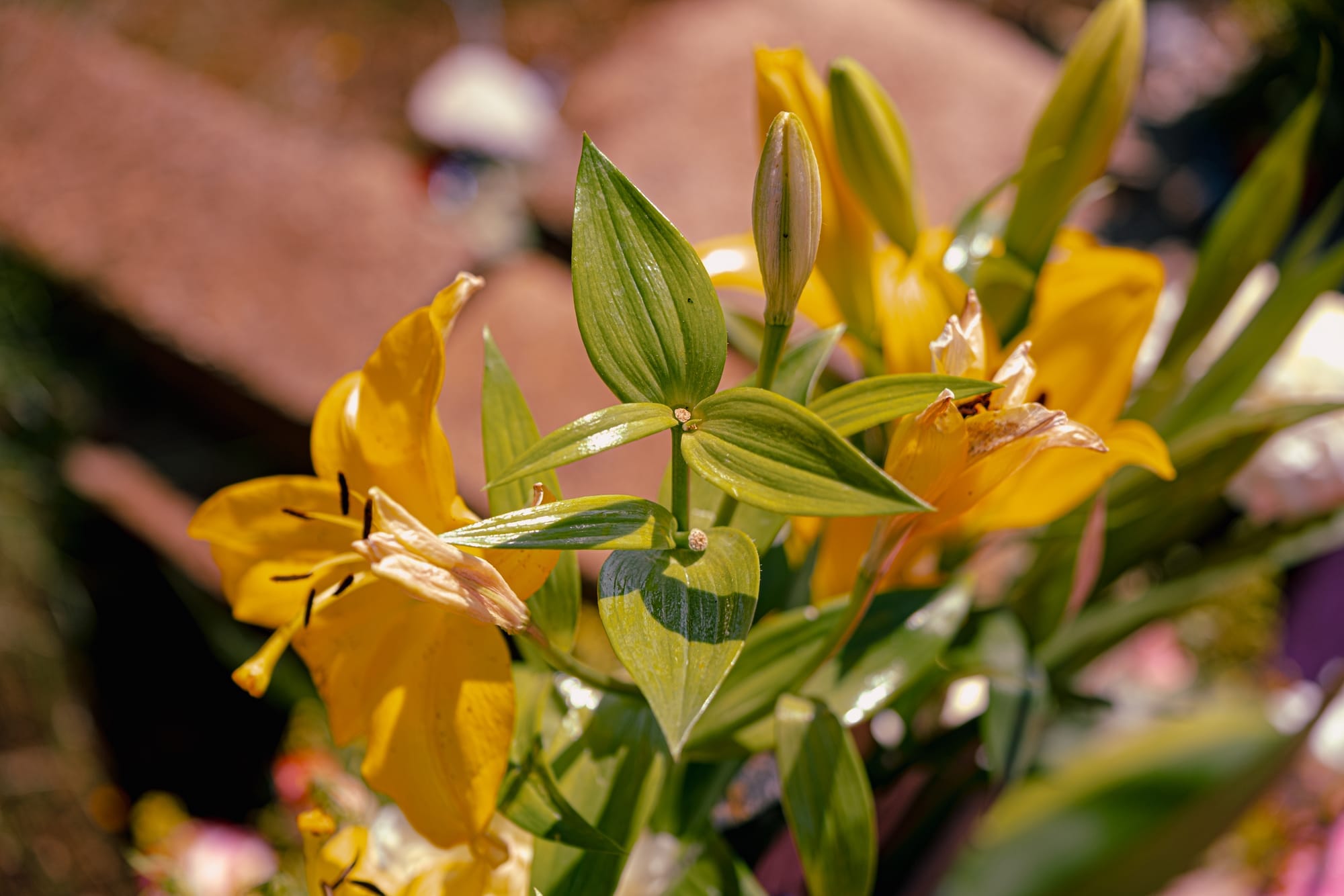
Flowers across the cemetery hillside
When we visited, it was much calmer than the others. That may have been down to timing, but we didn't see big crowds or the same ongoing celebration we saw elsewhere. The mood was calmer and more reflective, with fewer people walking through the cemetery at any one time.
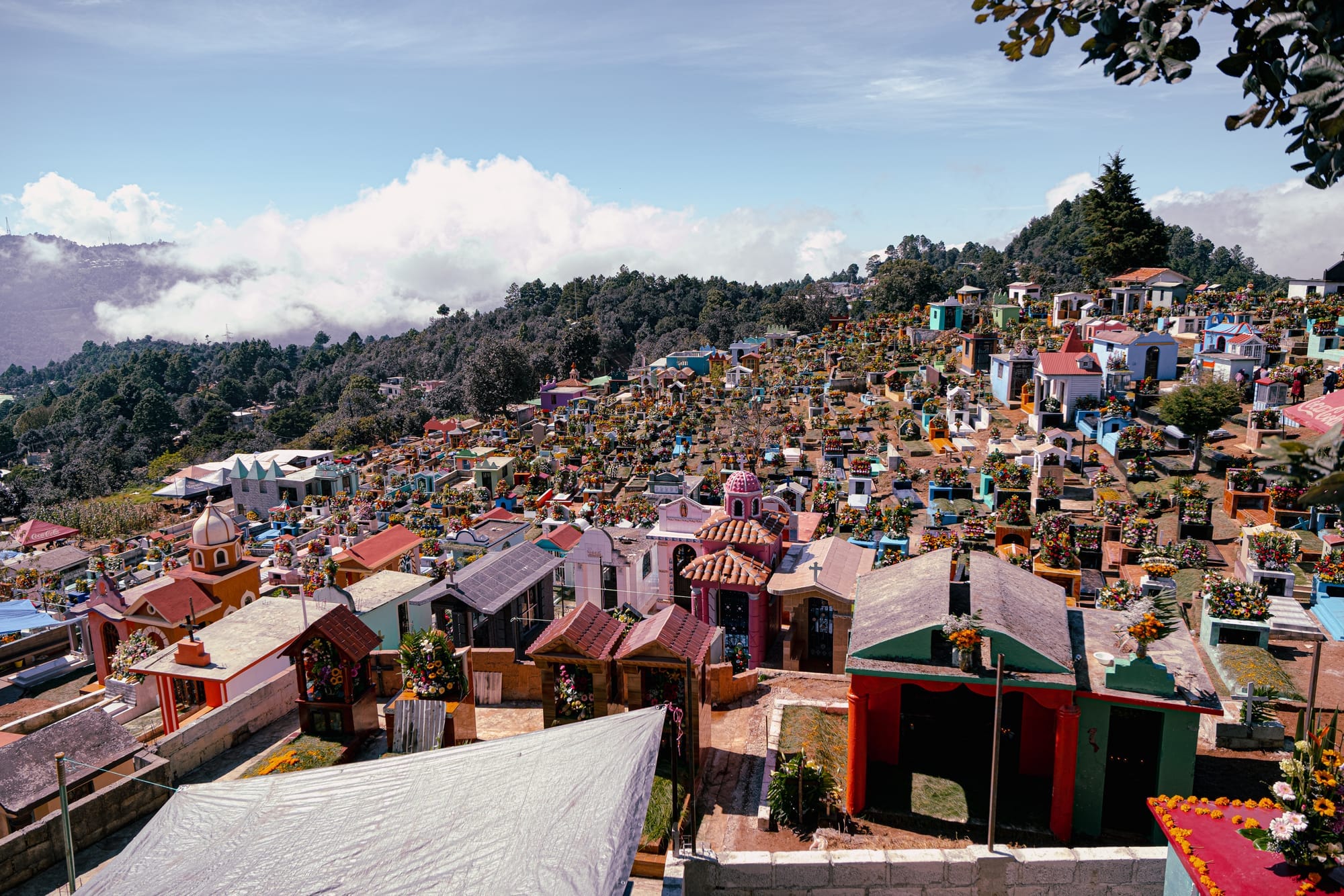
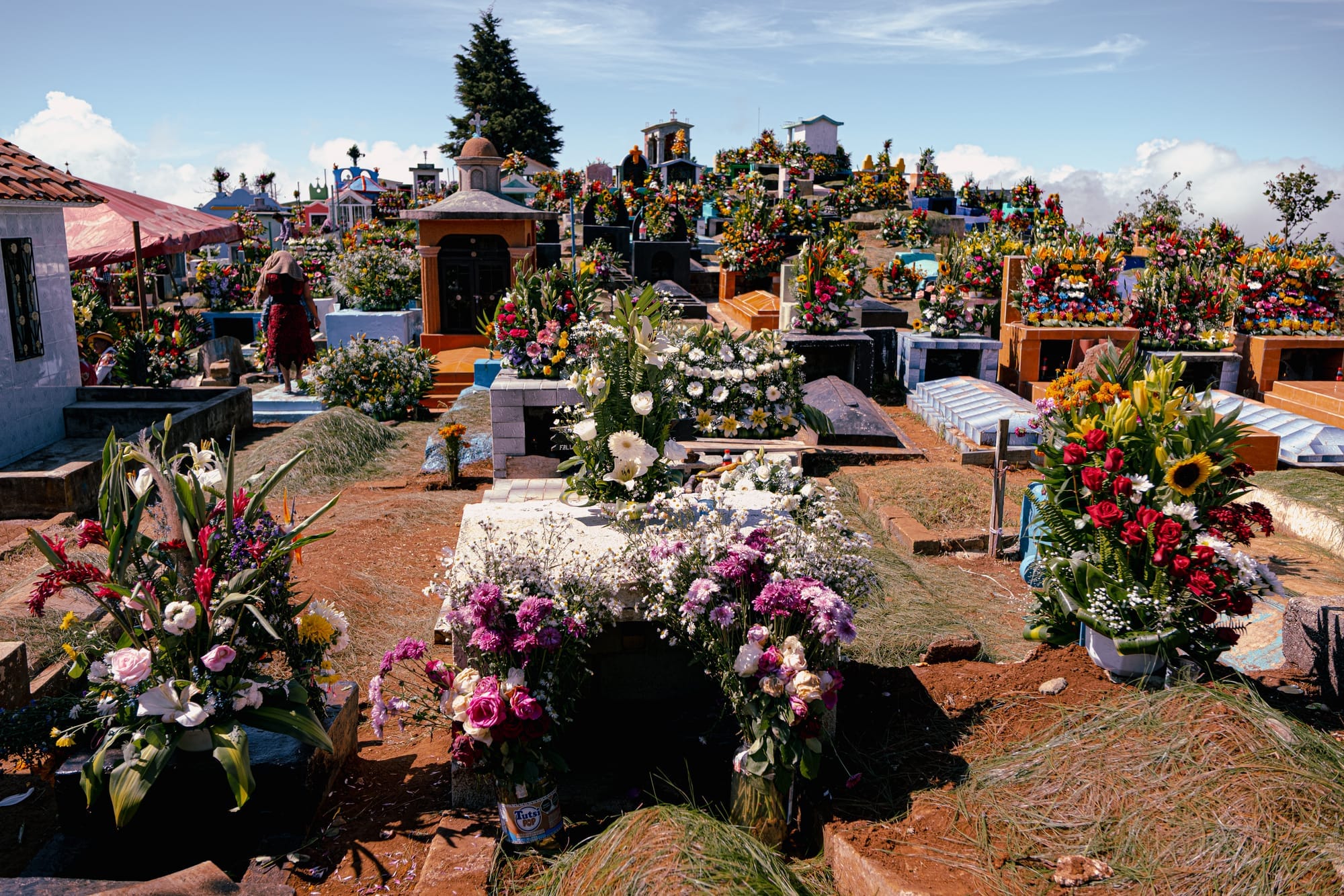
The setting is a big part of what makes Zinacantán special. The cemetery sits on a hilltop with wide views of the surrounding landscape. Add the huge amount of flowers, and it was a beautiful sight: less lively than Romerillo, but very beautiful in its own way.
San Cristóbal’s Municipal Pantheon
We actually visited San Cristóbal's Municipal Pantheon twice: once before Day of the Dead, and once during the celebrations.
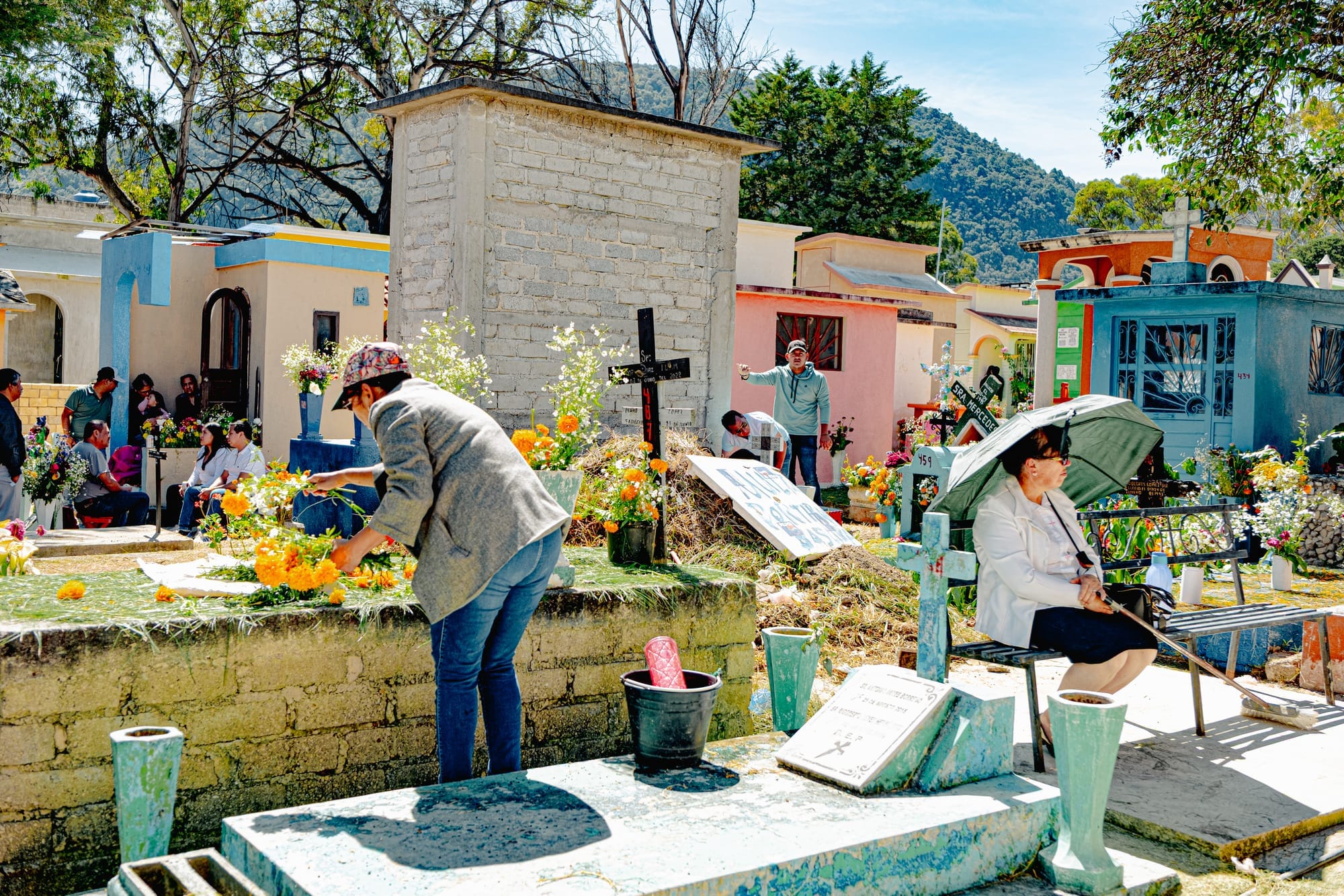
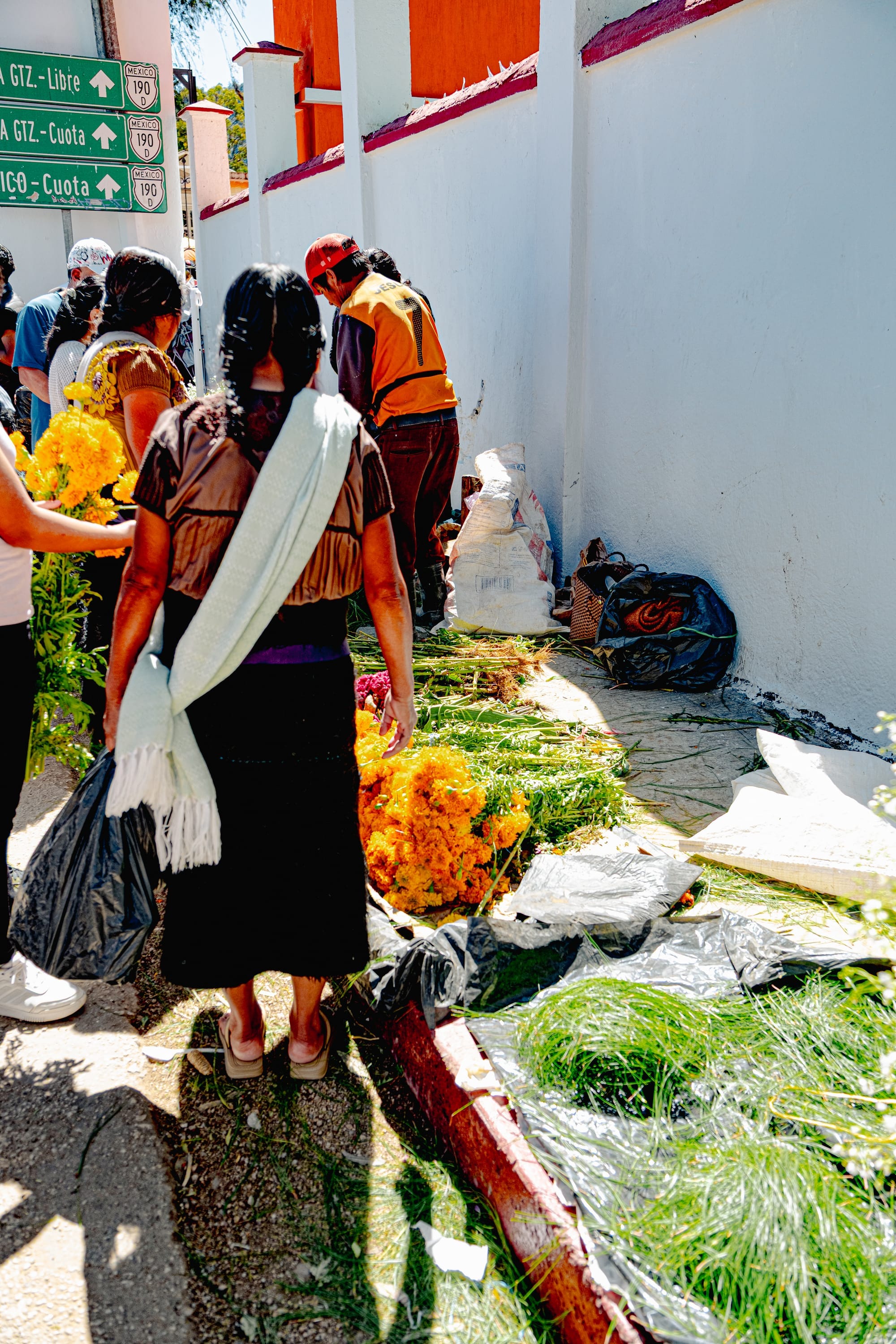
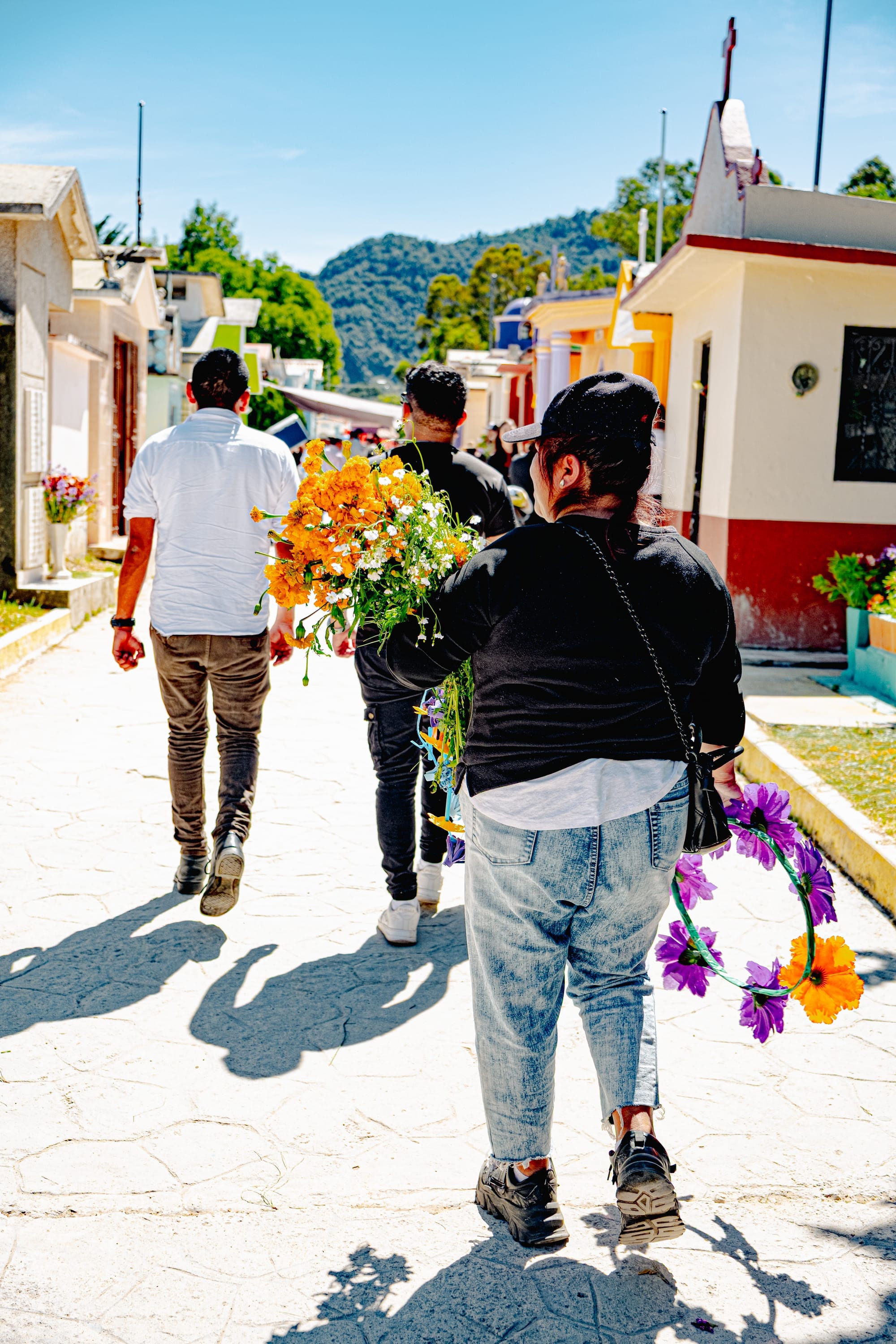
Carrying flowers through the cemetery pathways
Even though it's right in San Cristóbal de las Casas, this cemetery had fewer tourists than we expected. We're not sure why (maybe because it's such a normal part of city life), but it kept a very local feel the whole time.
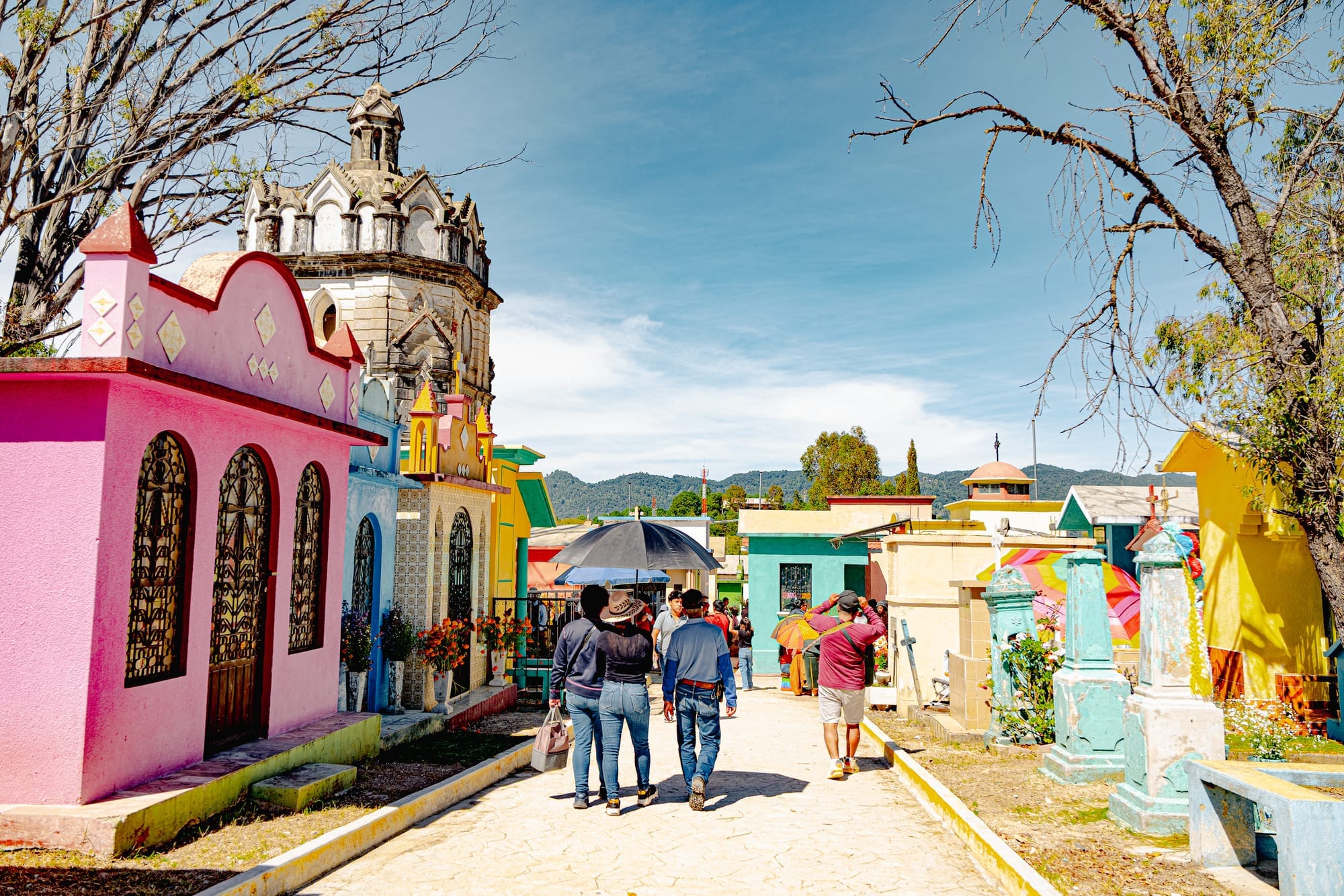
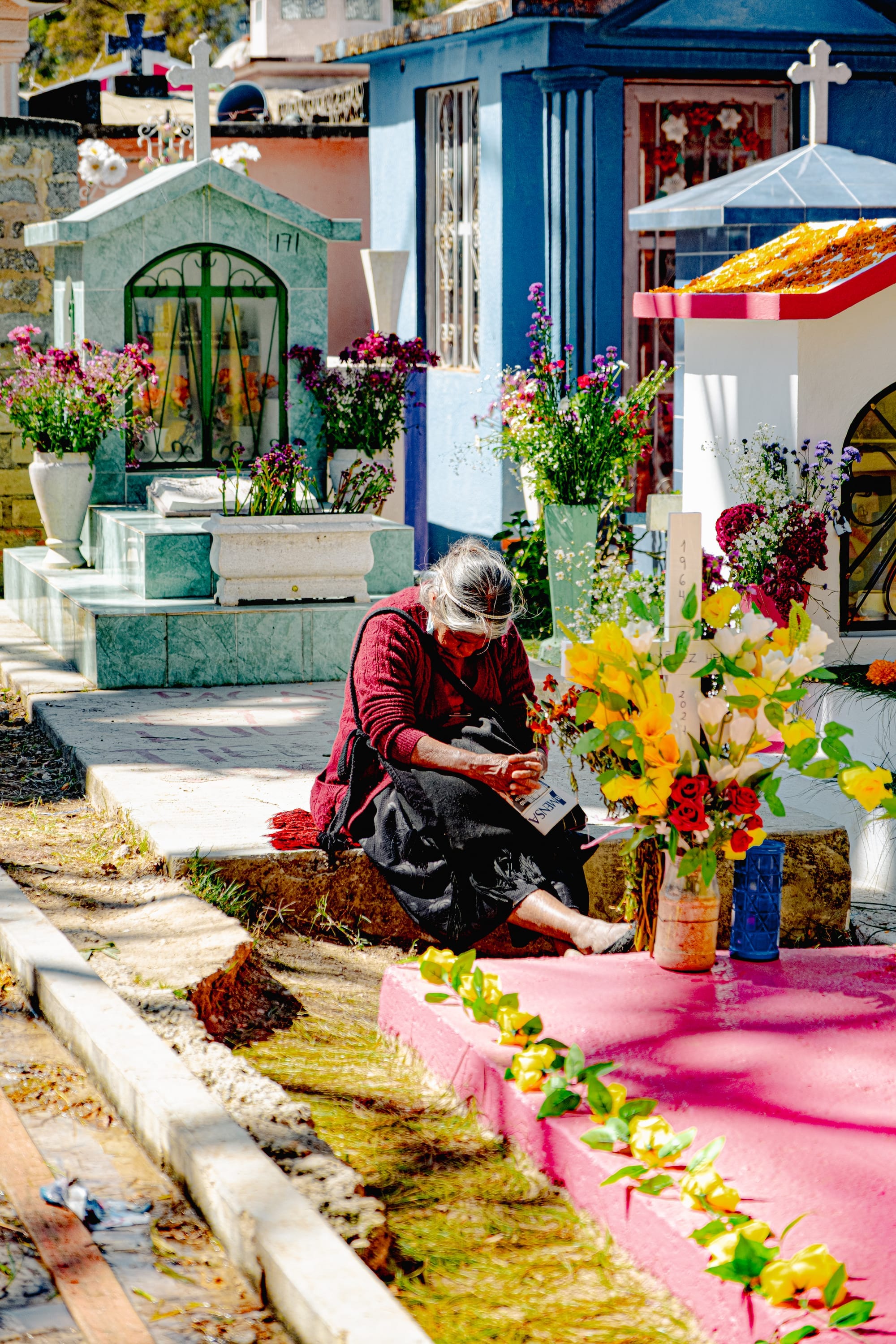
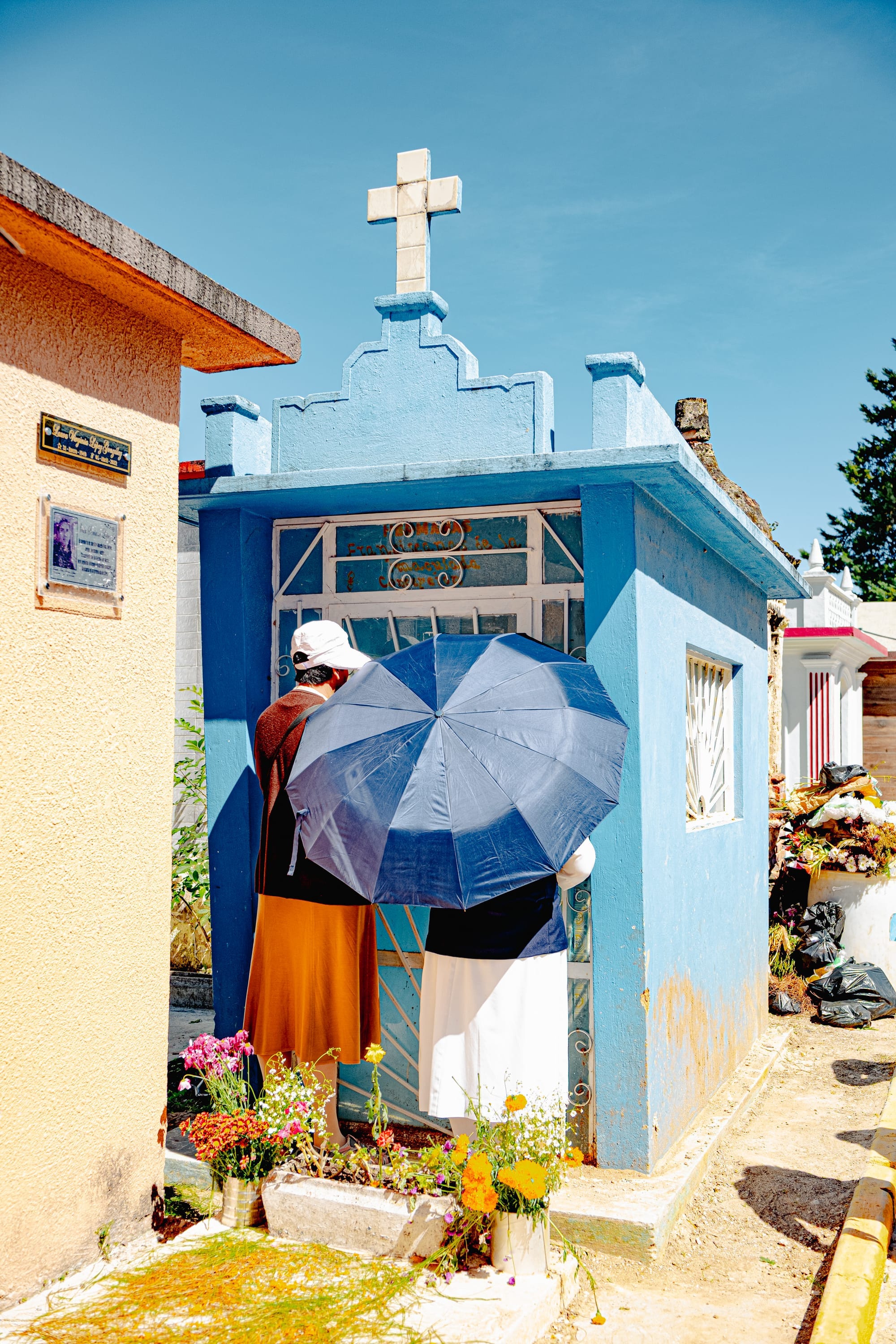
Moments of care inside the Municipal Pantheon
The Pantheon is almost like a small town of its own. There are internal roads, vendors selling flowers, snacks, and drinks, and a steady stream of people walking through. Many of the graves are built like small houses, painted in bright colors and set in rows that look more like neighborhoods than burial plots.
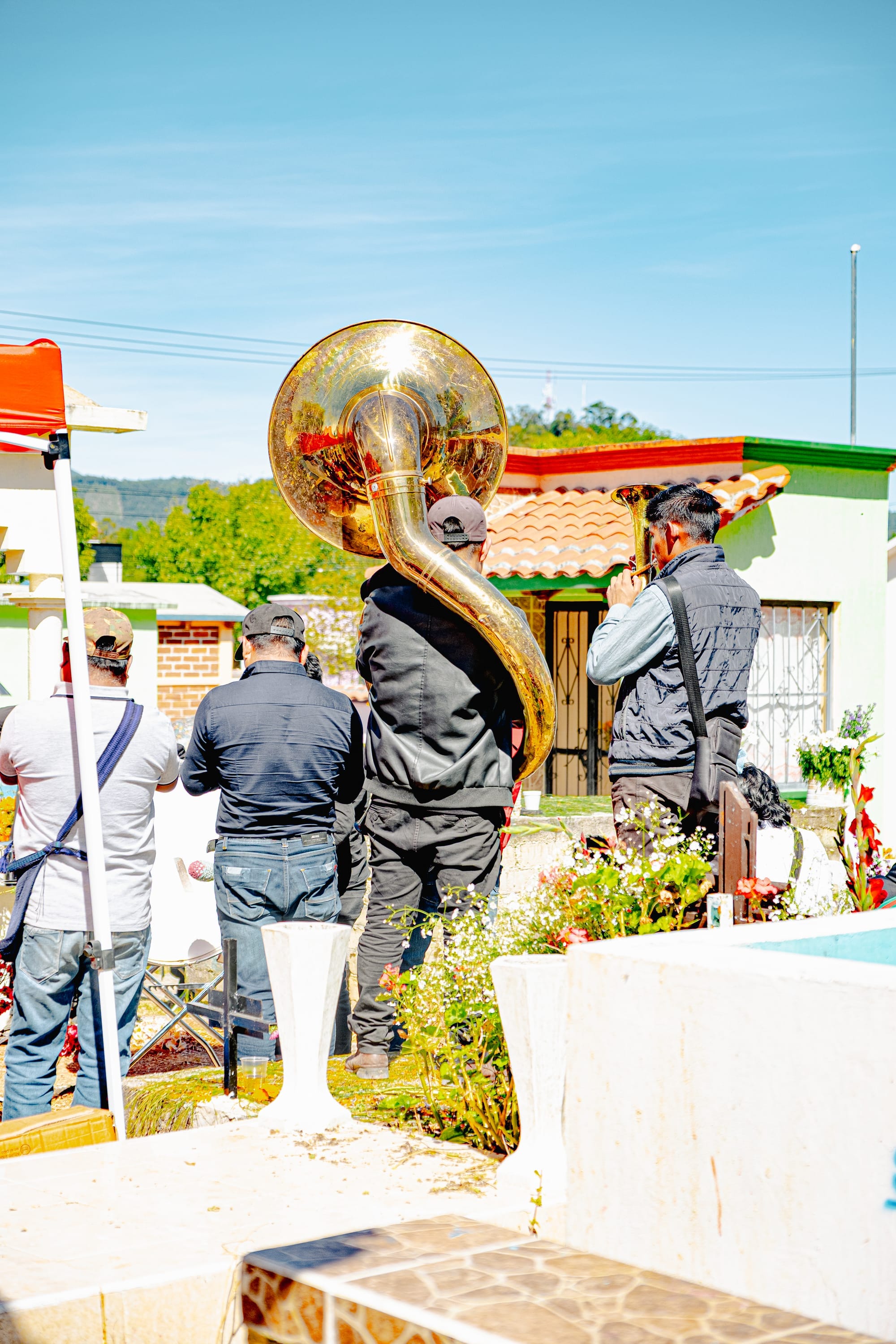
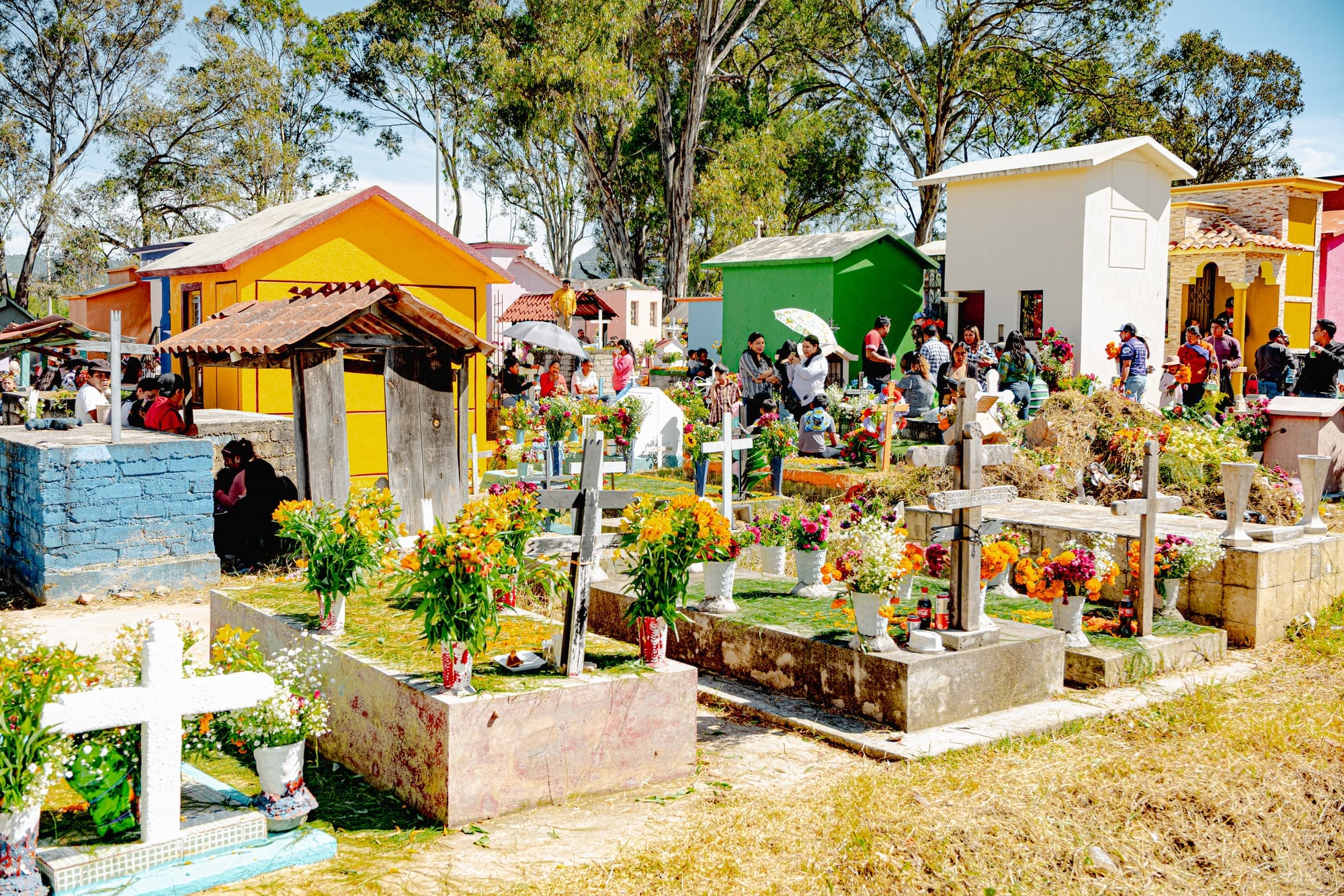
Music echoing through the cemetery as families gather
During Día de Muertos, families spent the whole day sitting by the graves. We saw live bands playing, and people eating together, talking, and hanging around. It felt shared and relaxed. It was less ornate than Zinacantán, but full of life. An incredible experience, and one that felt very much part of how the city lives.
Day of the Dead in San Cristóbal: practical tips
If you're planning your own trip for Día de Muertos in Chiapas, these are the things worth knowing before you go.
When to go: the Day of the Dead schedule
Arrive by October 30 or 31 if you can. On October 31 families clean and decorate graves, markets sell marigolds, candles, and pan de muerto, and the evening turns into a costume night in town. November 1 is the main day in the Tsotsil villages: Romerillo is packed with families, musicians, and fairground rides, and families in Zinacantán arrive at the cemetery before dawn. November 2 is the day for adults who have died, and the Municipal Pantheon in town is at its busiest. Romerillo is almost empty by then.
The parade usually takes place in the evening, but its date and route change from year to year. Ask at your accommodation or check the city's social media when you arrive.
Here's the Day of the Dead schedule day by day, with the dates for 2026 and 2027. In 2027 the main cemetery days fall on a Monday and Tuesday, so expect the town to be busiest over the weekend of October 30 and 31.
| Date | 2026 | 2027 | What happens | Where to be |
|---|---|---|---|---|
| October 31 | Saturday | Sunday | Families clean and decorate graves. Markets sell marigolds, candles, and pan de muerto. Costume night and trick-or-treating in town. | The market and the streets of San Cristóbal in the evening |
| November 1 | Sunday | Monday | The main cemetery day in the Tsotsil villages. Families arrive early, uncover and decorate graves, share food, and hire musicians. | Romerillo, Zinacantán (as early as you can), or San Juan Chamula |
| November 2 | Monday | Tuesday | All Souls' Day, the day for adults who have died. Families spend the day at the city cemetery. Village cemeteries empty out. | The Municipal Pantheon in San Cristóbal |
Where to go for Day of the Dead near San Cristóbal: the cemeteries compared
Each cemetery near San Cristóbal marks the days differently, so pick by what you want to see. We visited three of these four during the celebrations; San Juan Chamula's cemetery is included because it's on most tours and easy to add.
| Cemetery | Distance from San Cristóbal | Best day | What to expect | How to get there |
|---|---|---|---|---|
| Romerillo | About 30 minutes by car, on the road to Tenejapa | November 1 | 22 tall blue and green crosses, earth graves uncovered and covered in pine needles, bands, big crowds, and a fair at the foot of the hill | Taxi (arrange your return) or a tour |
| Zinacantán | About 10 km, roughly 20 minutes, then a mototaxi up the hill | Early on November 1 | The most flowers, grown locally, on a hilltop with wide views. Families arrive around dawn and it's calmer by midday | Colectivo or shared taxi to town, then a mototaxi |
| San Juan Chamula | About 10 km, roughly 20 minutes | November 1 or 2 | Simple earth graves with pine needles around the roofless ruins of the old San Sebastián church, a few blocks from the plaza | Colectivo from the market area or a taxi |
| Municipal Pantheon | In Barrio de Fátima, on the edge of the center | November 2 | Painted, house-like tombs, families staying all day, bands, vendors, and few tour groups | Short taxi ride or a long walk |
If you only have one cemetery day, our pick is Romerillo on November 1. With two days, add the Municipal Pantheon on November 2. Read our Zinacantán Day of the Dead guide if flowers and views matter more to you than crowds and music.
How to get to the Day of the Dead cemeteries
Municipal Pantheon: on the edge of the center. It's a long walk, so many people take a short taxi ride. Taxis are in high demand on November 2.
Romerillo: on the road toward Tenejapa, about 30 minutes by car. A taxi is the easiest option. Agree on the fare first, and arrange your return, because cars are hard to find on November 1.
Zinacantán: about 20 minutes away. Take a colectivo or a shared taxi to the town, then a mototaxi up the hill to the cemetery.
San Juan Chamula: its cemetery sits beside the ruined church of San Sebastián, a short colectivo ride from San Cristóbal. See our San Juan Chamula guide.
Colectivos to San Juan Chamula and Zinacantán leave from the streets around the municipal market, north of the center, and go when they're full. There's no direct colectivo between the villages. Fares below are rough 2026 figures from our San Juan Chamula guide, so check before you go and carry small bills.
| Option | Rough cost (2026) | Best for | Watch out for |
|---|---|---|---|
| Colectivo (shared van) | About 20 to 30 pesos per person (US$1 to 1.50) | Chamula and Zinacantán on a budget | Leaves when full; no service between villages |
| Taxi, one way | About 100 to 200 pesos (US$5 to 11), more on November 1 and 2 | Romerillo, the Municipal Pantheon, and late returns | Agree the fare before you get in |
| Taxi by the hour or half day | Negotiated with the driver | Combining Romerillo, Zinacantán, and Chamula on November 1 | Agree the stops, waiting time, and total in advance |
| Mototaxi | A few pesos to a small fare | The steep road from Zinacantán town up to the cemetery | Carry coins |
| Guided tour | From about 5 hours; full Day of the Dead tours run 6 to 7 hours | Context from a guide and no transport hassle | Check that the tour runs on November 1, not only on other days |
Day of the Dead etiquette and photography
The village cemeteries are family spaces, not shows put on for visitors. A few simple rules go a long way.
Ask before you photograph anyone, and take no for an answer. Many Tsotsil people don't want to be photographed, especially at a grave.
Photography inside the church in San Juan Chamula is strictly banned, and people who break the rule can be fined and made to leave.
Walk around the graves, not over them. In Romerillo most graves are low earth mounds that are easy to step on by mistake.
Don't touch or take anything from an altar or grave unless it's offered to you.
Keep face paint and costumes for the parade in town. They don't belong in a village cemetery where families are mourning.
Leave the drone at home, and keep your voice down near families who are praying.
Dress modestly. Long trousers or skirts and a warm jacket suit the cold mornings anyway, and they show respect in a place where families are grieving.
In Zinacantán, village officials (mayordomos and sacristans) walk the cemetery at the start of the day praying at the graves. Give them room and don't photograph the prayers unless you're invited to.
Carry cash in small bills and coins. Cards don't work in the villages, and colectivos, mototaxis, and food stalls are cash only.
Use a toilet before you leave town. Village cemeteries have few facilities, and on November 1 the lines are long.
Day of the Dead tour or going on your own?
Both work. Guided day tours from San Cristóbal usually run 6 to 7 hours and combine Zinacantán, San Juan Chamula, and Romerillo, with transport and a guide who explains what you're seeing. That context is the main reason to book one, along with not having to find taxis on the busiest days of the year. Longer packages from tour companies add altar-making in town and a visit to the Municipal Pantheon.
If you'd rather have a guide, this Chamula and Zinacantán day tour takes about five hours, with transport, entrance fees, and a guide included, so check availability for November 1 and 2 before you go.
Going on your own is cheaper and lets you stay as long as you like. The Municipal Pantheon is easy to visit independently, and Romerillo and Zinacantán are straightforward by taxi or colectivo. You'll just need to read up beforehand, since there's no guide to explain the customs.
What to bring for Day of the Dead in Chiapas
Cemetery days are long, cold at the start, and muddy underfoot. This is what we'd pack:
- A warm jacket or fleece and a rain jacket. Mornings in the hills can be misty.
- Closed shoes with good grip. Pine needles on graves and paths are slippery, especially after rain.
- Cash in small bills and coins for transport, snacks, and flowers.
- A water bottle and vegan snacks. Village stalls sell fruit, peanuts, and roasted corn, but options are limited if you're vegan.
- Sunscreen and a hat. At about 2,200 m the sun is strong once the mist lifts.
- A charged phone with offline maps, plus your driver's number for the ride back.
Weather in San Cristóbal for Day of the Dead
Late October is the tail end of the rainy season, and early November is usually drier. Days are mild, and nights get cold. These are the long-term averages for San Cristóbal from Wikipedia's climate table (1991 to 2020 normals). Romerillo and Zinacantán sit higher than the city, so expect them to feel colder in the early morning.
| Month | Average high | Average low | Rain | Rainy days |
|---|---|---|---|---|
| October | 21.5°C (71°F) | 10.4°C (51°F) | 106 mm | About 17 |
| November | 21.0°C (70°F) | 7.9°C (46°F) | 32 mm | About 10 |
Is San Cristóbal safe during Day of the Dead?
The celebrations are family events, and the usual precautions apply. Pickpocketing is common on public transport and in crowds, according to the UK government's safety advice for Mexico, so keep your phone and wallet close at the parade and in Romerillo.
San Juan Chamula, which includes Romerillo, governs itself and has its own police, as Wikipedia's San Juan Chamula page explains, so respect local rules and any requests from officials. Roadblocks and protests do happen in Chiapas. The UK government advises against all but essential travel on Highway 199 between San Cristóbal and Palenque, which isn't the road to these villages, but check the latest regional advice before you travel. Finally, pine needles and mud make cemetery ground slippery, and pox is very strong.
For neighborhoods and places to stay, see our San Cristóbal guide. For food during the festivities, see our vegan San Cristóbal guide. For more experiences like this, see our cultural travel guide.
A place we’d return to, without hesitation
We want to be clear about one thing: our experience of Día de Muertos is limited to San Cristóbal de las Casas. We can’t claim to have seen the celebrations across Mexico, and we can’t say, comparatively, that this is the place to experience Day of the Dead.
But we can say this: having experienced it here, we understand why some people travel to Mexico specifically for Día de Muertos. We met several people who had come mainly to see these days. That wasn’t our plan, but after being there, it makes complete sense.
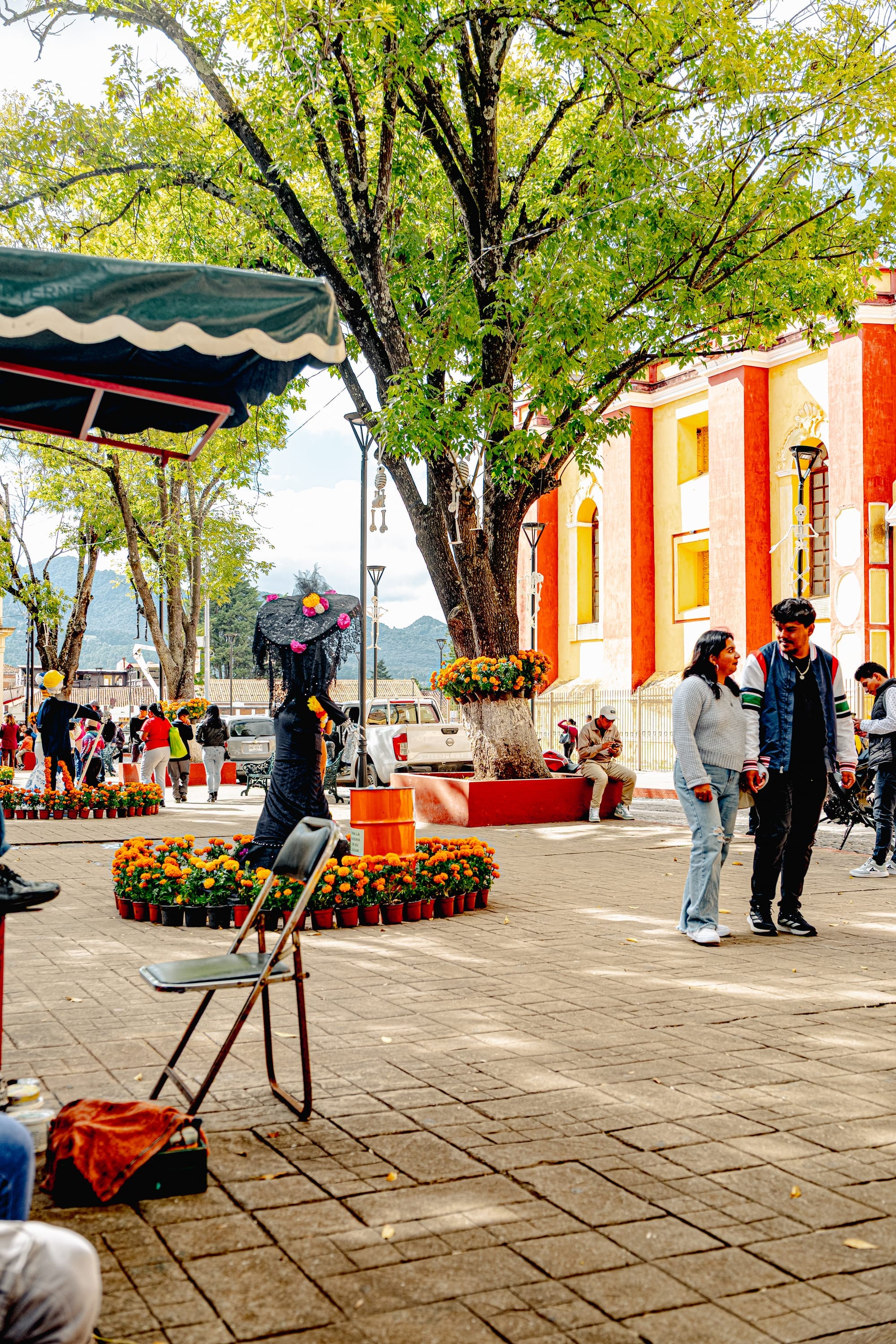
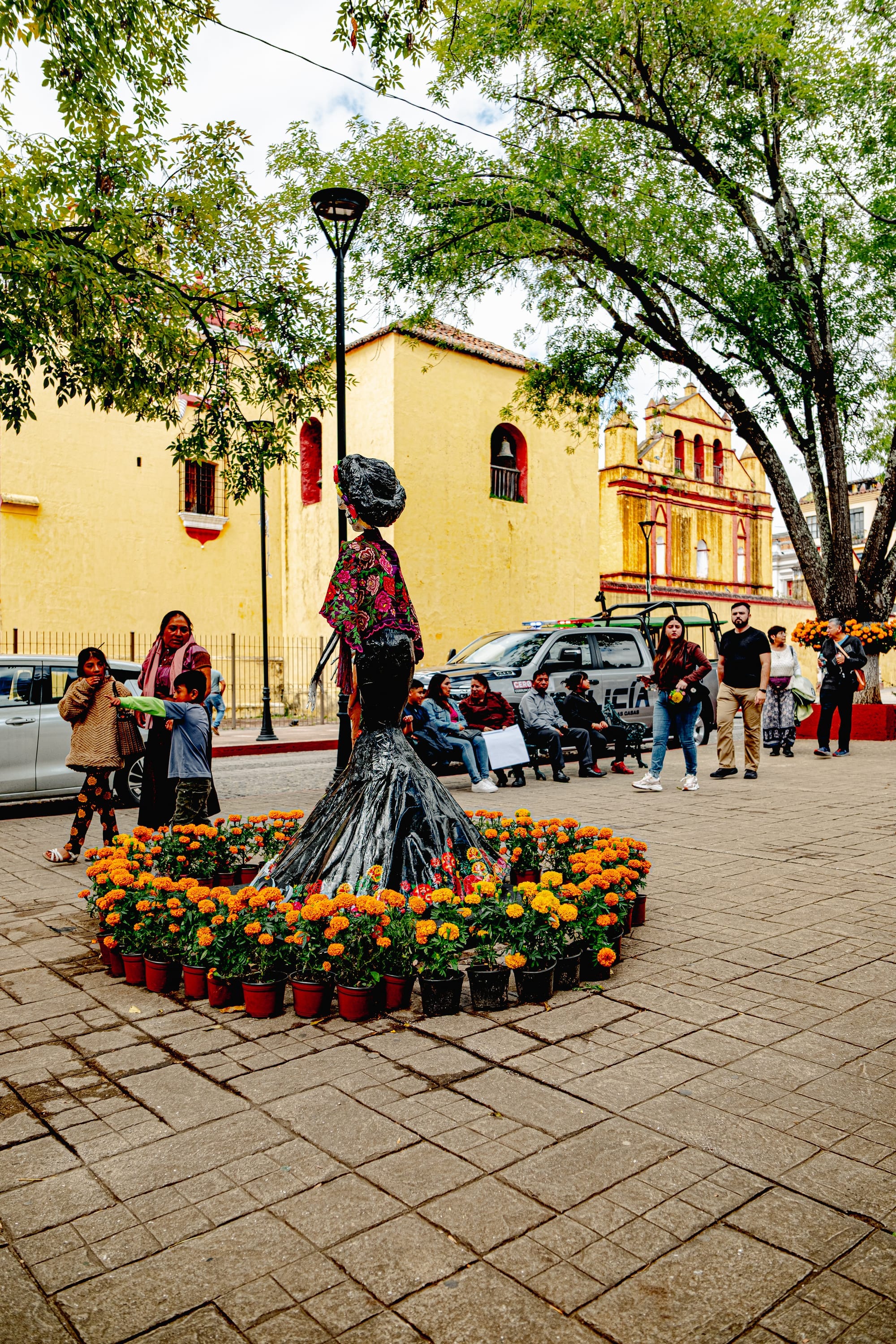
Day of the Dead woven into city life
San Cristóbal is a particularly special place to experience Día de Muertos because it's calmer and more spiritual, and because of the strong Indigenous presence that still shapes how people remember their dead here.
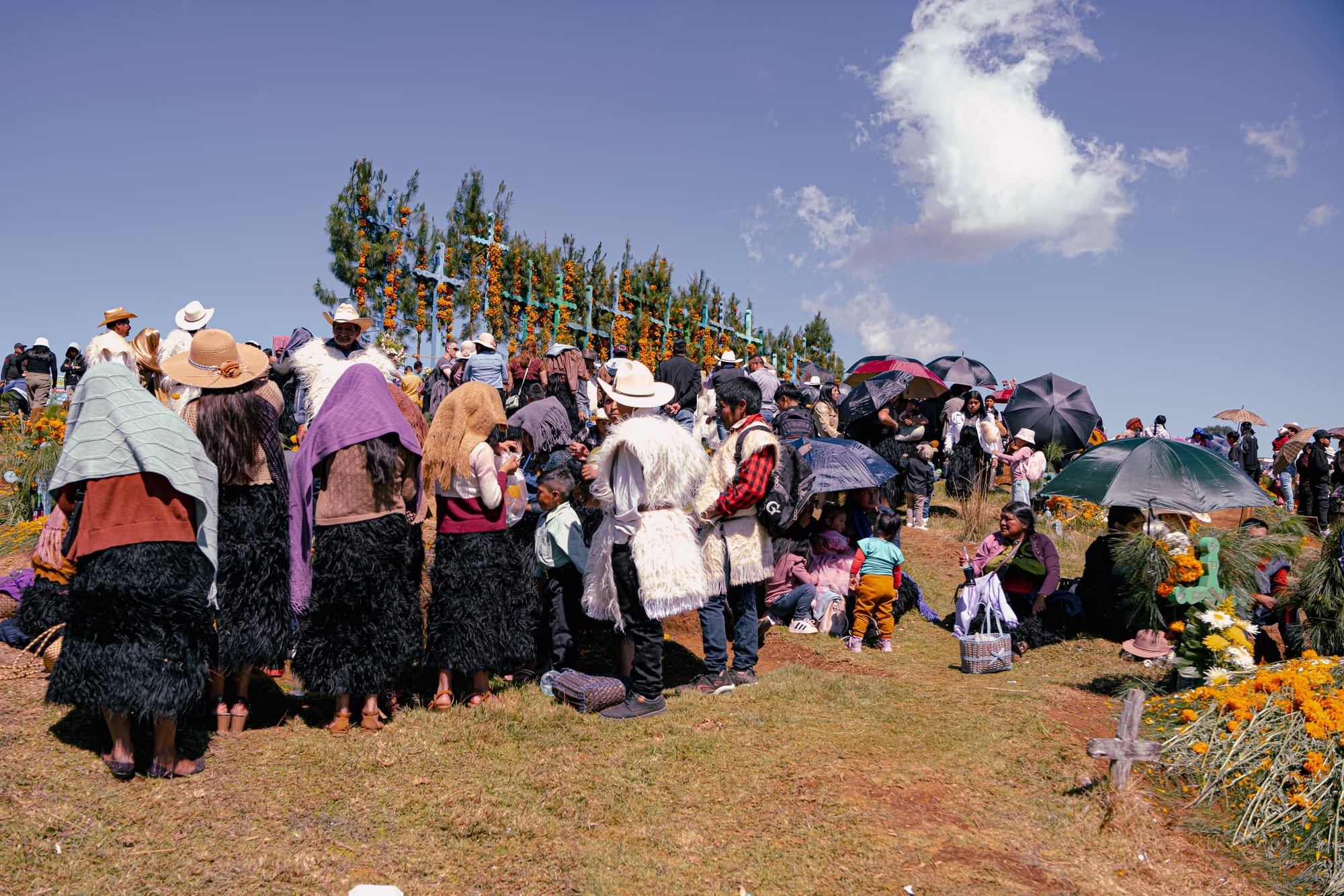
For us, these days became one of our most memorable travel experiences because they showed us a way of relating to death that felt connected to life, honest, and deeply human.
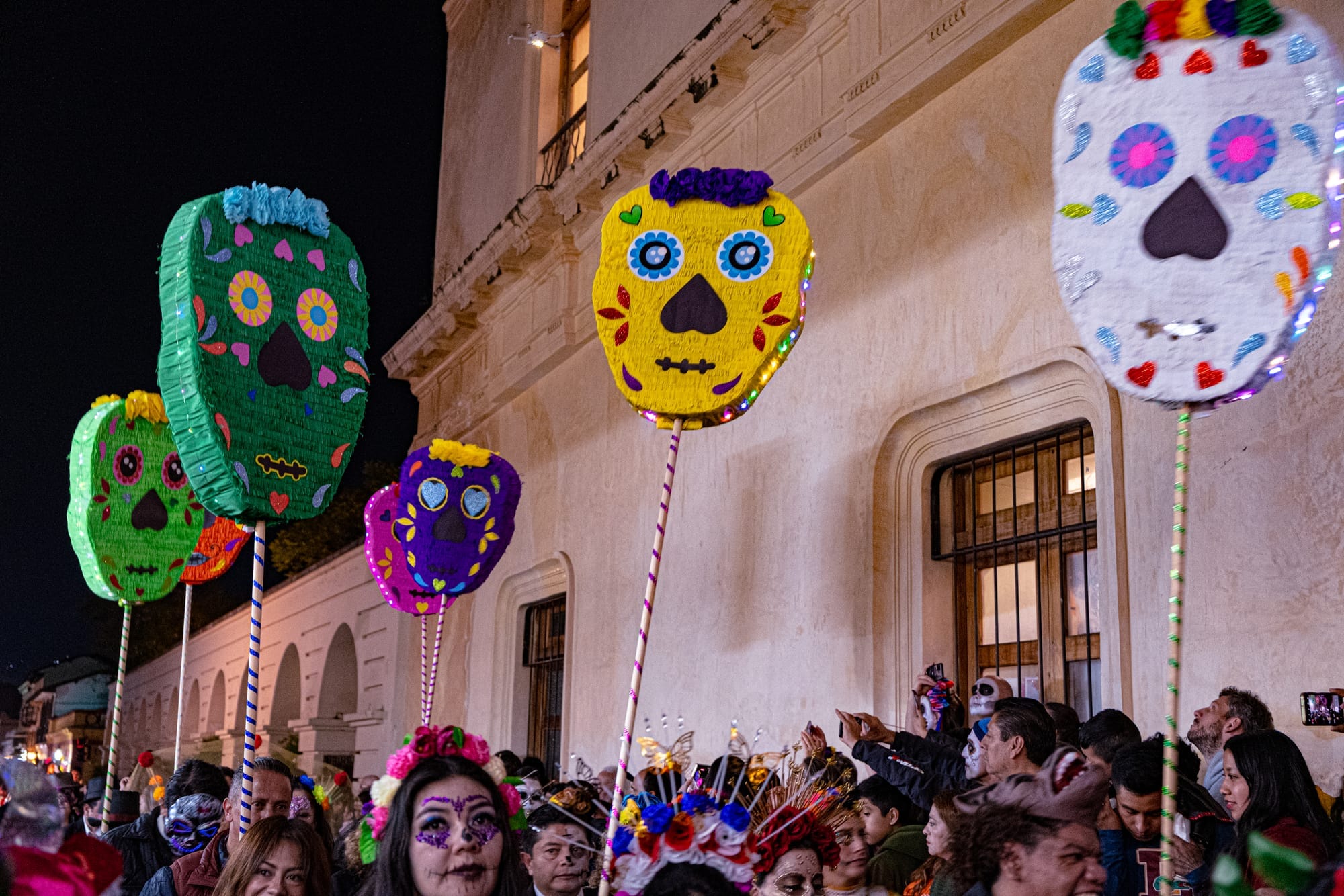
We'd love to be back in San Cristóbal for Día de Muertos again someday. We're sure the celebration takes many beautiful forms elsewhere, but this is the one we'll carry with us, and come back to if we can.
Whatever your plans, travel with insurance. Stomach bugs, a fall on a cobbled street, or a stolen phone can happen anywhere, and it's much easier to enjoy the trip when you know you're covered. We'd recommend SafetyWing Nomad Insurance. It covers medical emergencies abroad, you can buy it even after you've left home, and it renews every four weeks, so it works for a short trip or months on the road.
Where to stay in San Cristóbal de las Casas
San Cristóbal de las Casas is the base for this, with the most places to stay and eat. These are well-reviewed options, all rated 9 or more on Booking:
- Parador Margarita: a well-run, good-value hotel a few blocks from the center, rated 9.1 from over 1,400 reviews.
- Casa Carmen: a small guesthouse with a courtyard, rated 9.6.
- Casa Santa Lucía: a colonial-style boutique stay in the center, rated 9.5.
Frequently asked questions
When is Day of the Dead in San Cristóbal de las Casas?
The main days are November 1 and 2. Families prepare graves on October 31, which is also costume night in town. November 1 is the big day in the nearby Tsotsil cemeteries, and November 2 is busiest at the Municipal Pantheon.
Which cemetery should I visit for Day of the Dead in Chiapas?
Romerillo on November 1 was our favorite of the three cemeteries we visited: crowded, full of music, and very local. Zinacantán has the most flowers, and the Municipal Pantheon is easy to reach from town.
Can you take photos at Day of the Dead cemeteries in Chiapas?
Yes, of the setting, but ask before photographing people and accept a no. Photos inside the church in San Juan Chamula are banned, and many Tsotsil families don't want cameras near their graves.
Do you need a tour for Day of the Dead in Chiapas?
No. You can reach Romerillo, Zinacantán, and the Municipal Pantheon by taxi or colectivo. A guided day tour (usually 6 to 7 hours) is worth it if you want someone to explain the customs and handle transport.
Is there a Day of the Dead parade in San Cristóbal de las Casas?
Yes. There's an evening parade with painted faces, Catrinas, and costumes, and the night of October 31 is busy with trick-or-treaters. The date and route change each year, so ask locally.
How many days should I spend in San Cristóbal for Day of the Dead?
Three or four days, ideally from October 30 or 31 to November 2. That covers the altars, the parade, and two or three cemeteries.
What should I wear for Day of the Dead in San Cristóbal?
Warm clothes for the cold evenings at about 2,200 m, a rain jacket, and shoes with good grip for muddy, pine-covered cemetery ground. Modest, respectful clothing suits the village cemeteries.
Is San Cristóbal de las Casas safe during Day of the Dead?
Generally yes, with normal precautions. Watch for pickpockets in crowds, respect local rules in self-governing San Juan Chamula, and check official travel advice for roadblocks before longer road trips.
When is Day of the Dead 2027 in San Cristóbal de las Casas?
The main days are Monday, November 1, and Tuesday, November 2, 2027, with grave decorating and costume night on Sunday, October 31. Arrive by October 30 to settle in before the cemetery days.
Can you visit the San Juan Chamula cemetery on Day of the Dead?
Yes. Chamula's main cemetery surrounds the ruins of the old San Sebastián church, a few blocks from the plaza, and it's a short colectivo ride from San Cristóbal. Ask before photographing people, and remember that photos inside the Chamula church are banned.
How cold is San Cristóbal during Day of the Dead?
Early November averages about 21°C (70°F) by day and 8°C (46°F) at night, according to long-term climate data. Mornings in the village cemeteries feel colder, so bring a warm jacket.
Is Day of the Dead in San Cristóbal mixed with Halloween?
A little. On the night of October 31, children trick-or-treat and people in costumes fill the streets, and the parade mixes skulls and Catrinas with Halloween costumes. The cemetery rituals on November 1 and 2 are the Day of the Dead itself.
Can you see Romerillo, Zinacantán, and Chamula in one day?
Yes, but only on November 1 and with a taxi by the hour or a guided tour, since there's no colectivo between the villages. Start early, as Zinacantán is busiest around dawn and Romerillo fills up later in the day.
Useful links: UNESCO: Indigenous festivity dedicated to the dead, Wikipedia: Day of the Dead, Wikipedia: San Juan Chamula, and UK travel advice: Mexico regional risks.


