
A Day of the Dead altar, or ofrenda, is set up to welcome the dead home for Día de Muertos on November 1 and 2. It usually holds photographs of the people being remembered, candles, water, food and drink they loved, bread, sugar skulls, and orange marigolds, the flower most tied to the holiday. We spent Day of the Dead in San Cristóbal de las Casas, in Chiapas, Mexico, built an altar with friends at our coliving, and visited three cemeteries. This guide explains what each part means, with what we saw there.
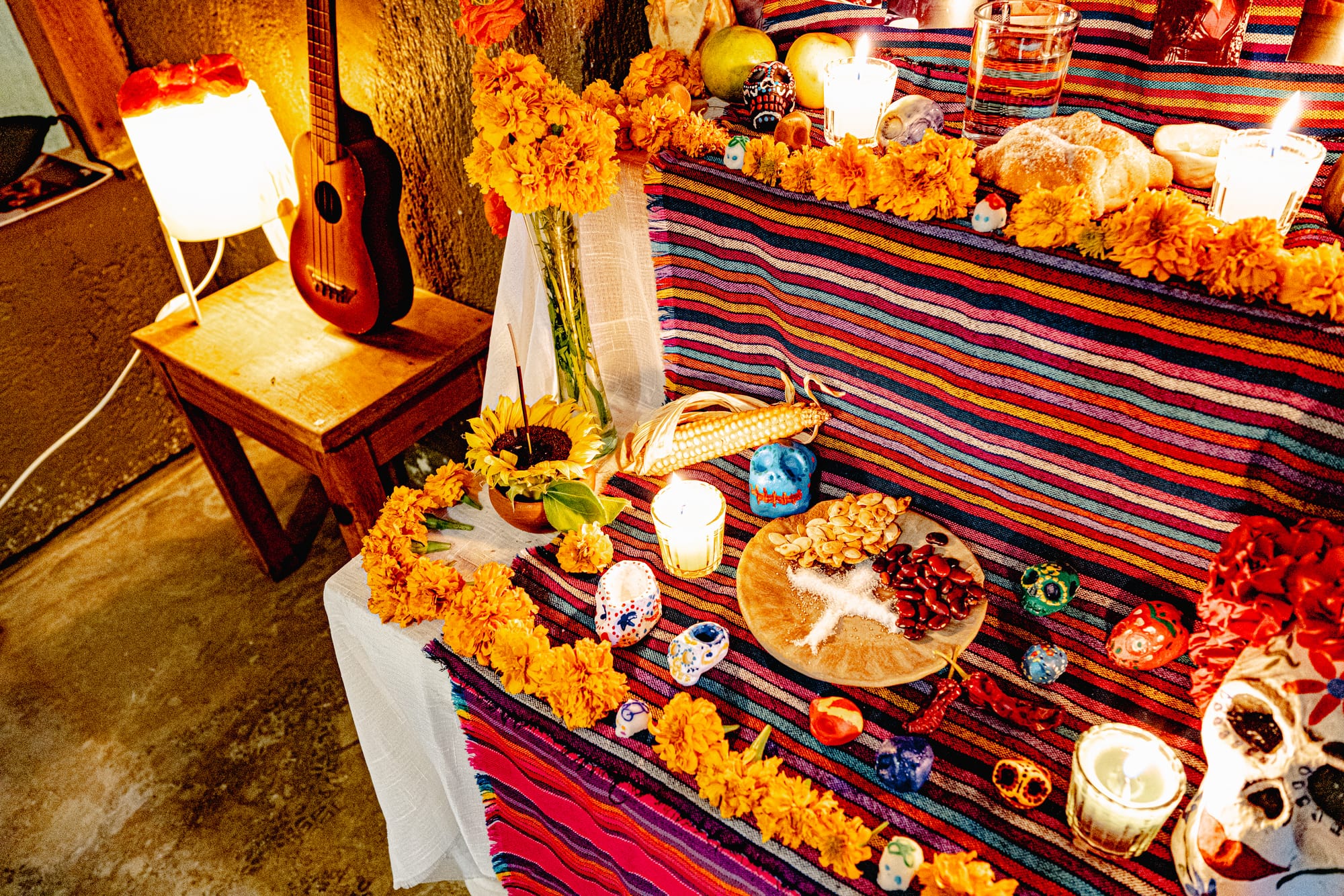
What is a Day of the Dead altar (ofrenda)?
An ofrenda is less a decoration than a temporary home for the dead: a place where they can rest, eat and be remembered during their visit. Families build them in their homes, and many also decorate the graves themselves. The tradition blends pre-Hispanic beliefs about death with the Catholic feasts of All Saints' Day (November 1) and All Souls' Day (November 2), and UNESCO lists it as intangible cultural heritage.
In many places, November 1 is for children who have died and November 2 for adults. Children are welcomed back with toys, sweets and miniature food, and adults with the dishes and music they loved.
What goes on a Day of the Dead altar
Photographs of the people being remembered, usually at the top or center.
Candles, to light the way home. Families light them on graves too.
Water and salt, for a thirsty traveler and for purification.
Food and drink the person loved, from tamales and fruit to a favorite soda or mezcal. A few days before Day of the Dead, some families at San Cristóbal's cemetery had already set up small altars on their graves: a photograph, a candle, a single plate of tamales beside a cross.
Pan de muerto, the sweet bread baked for the season.
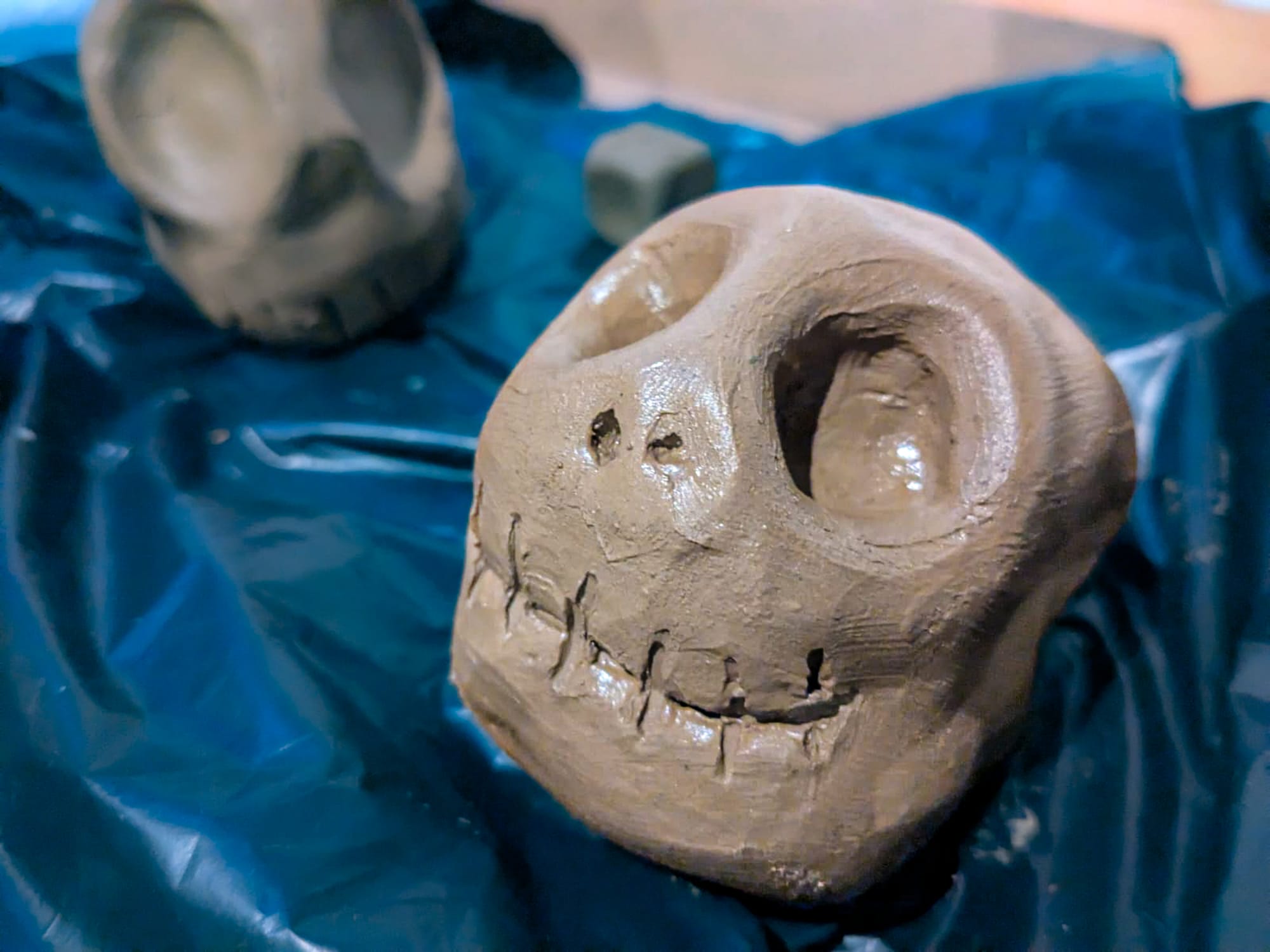
Skulls (calaveras), often sugar skulls with the person's name. At Co404, our coliving, we made skulls from clay, painted them, and used them to build our own ofrenda together.
Copal incense, whose smoke is believed to carry prayers and clean the space.
Papel picado, cut tissue paper banners strung above the altar.
Marigolds, covered below.
Day of the Dead flowers and what they mean
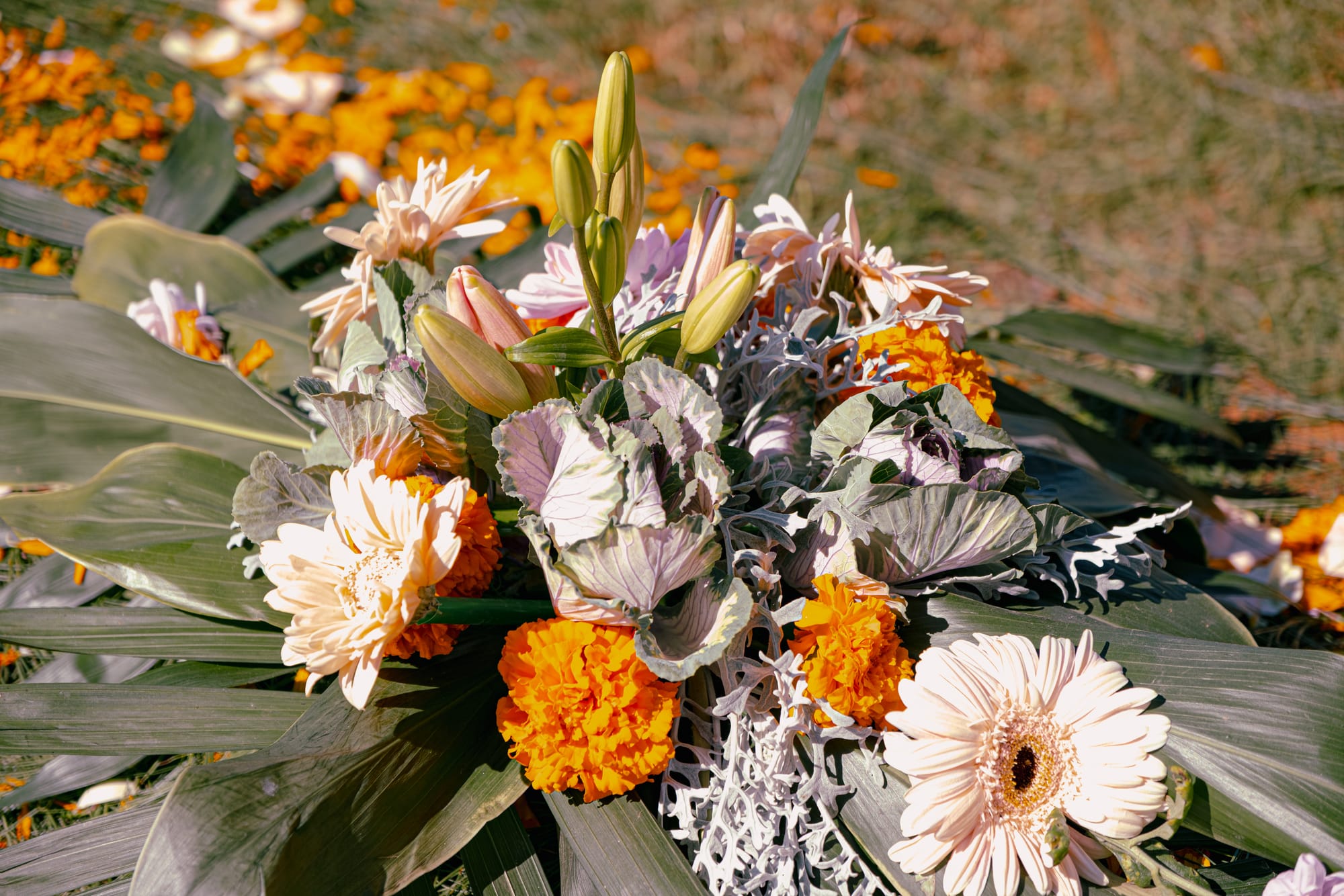
The main Day of the Dead flower is the Mexican marigold, cempasúchil (also written cempaxóchitl), often called flor de muerto, the flower of the dead. Its strong color and scent are believed to guide spirits home, and petals are often laid in paths leading to the altar or grave. When we visited San Cristóbal’s Municipal Pantheon a few days early, marigold petals were being sorted into woven baskets and families were setting out vases for the truckloads of marigolds still to come.
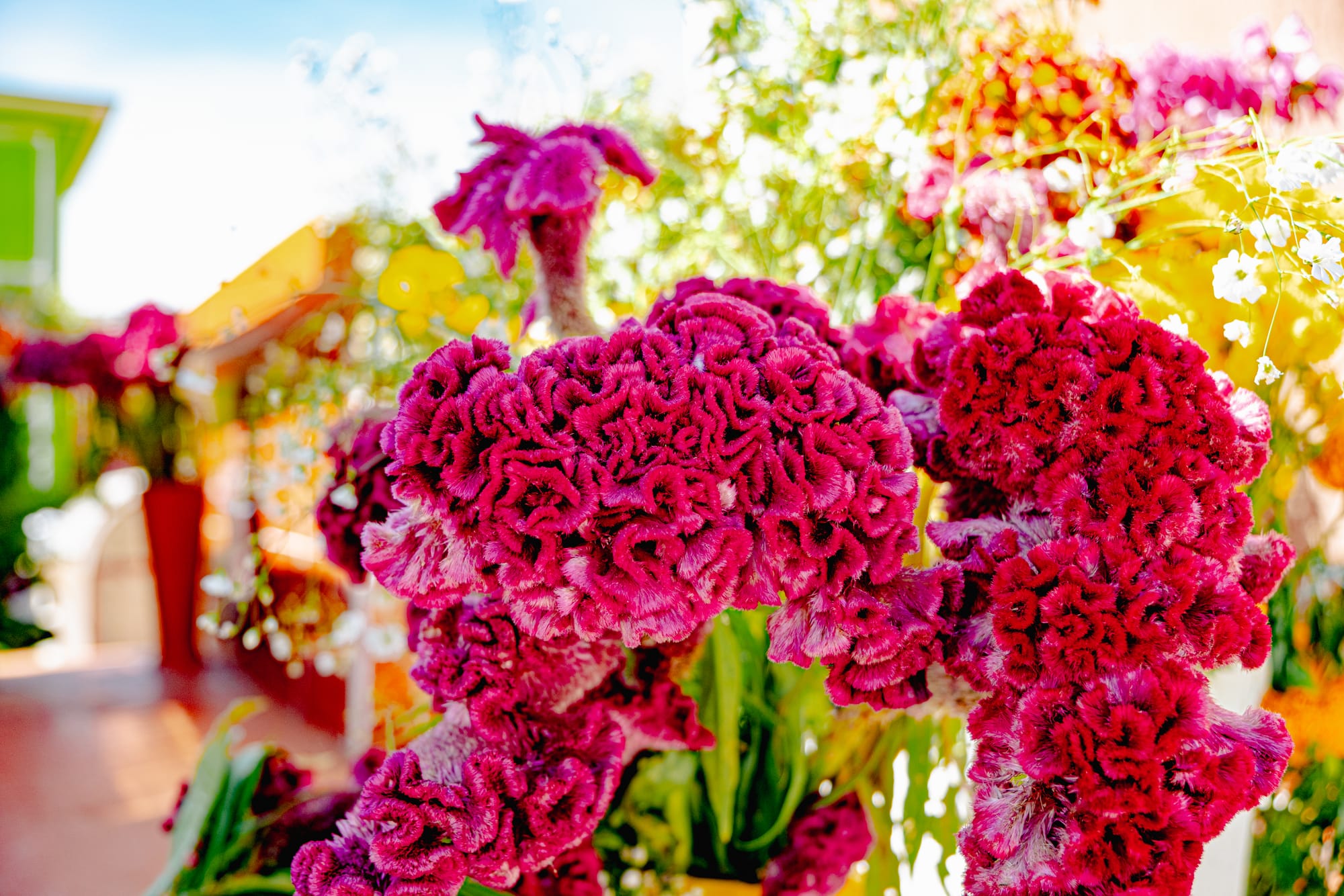
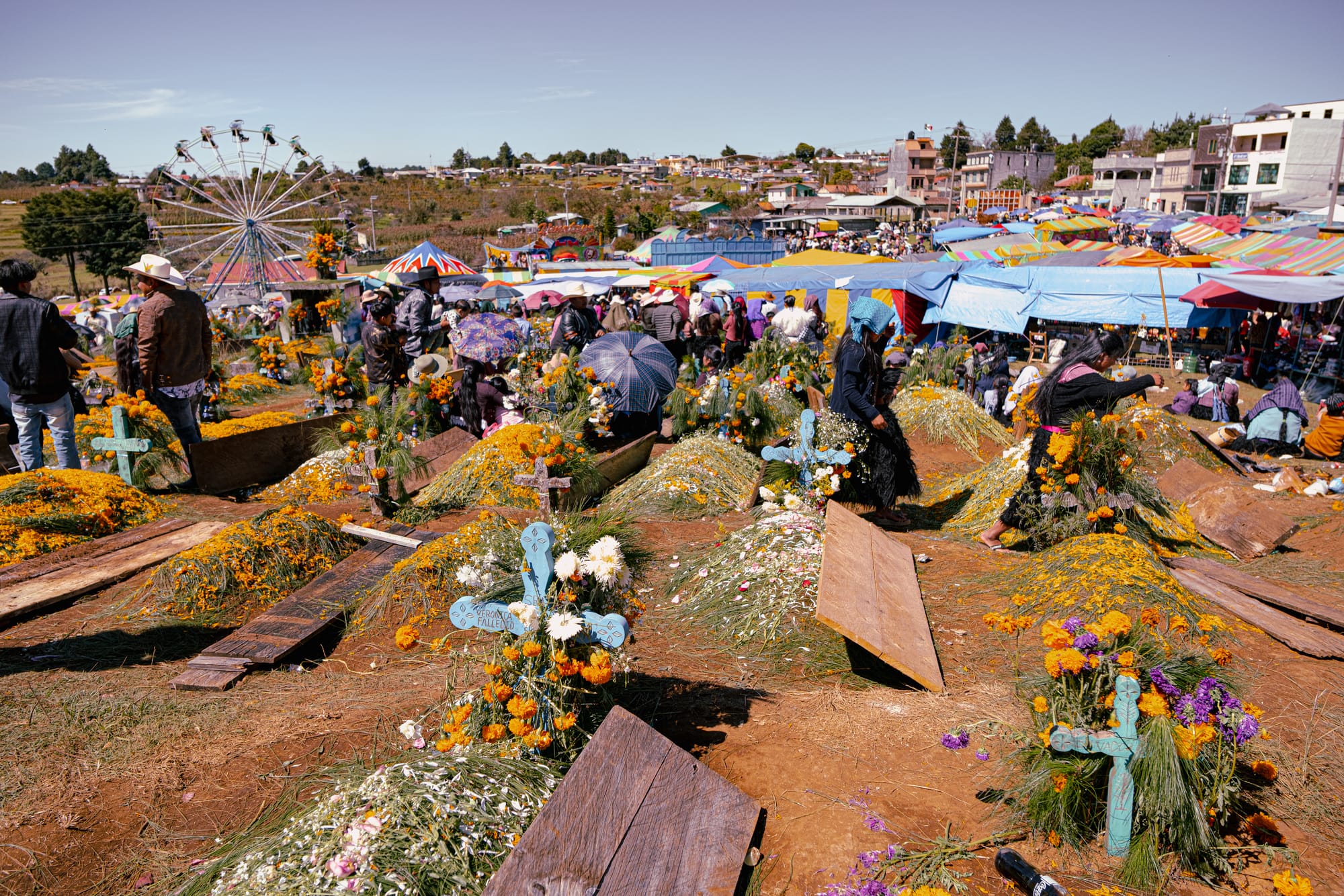
Marigolds aren't the only flowers. In Chiapas, much of what fills the cemeteries is grown in Zinacantán, a Tzotzil town known for flower growing. On its hillside cemetery we saw graves almost entirely covered in roses, marigolds, lilies, chrysanthemums, gladiolus and cockscomb. Bright magenta cockscomb, terciopelo, was everywhere at the Municipal Pantheon too.
Pine needles, crosses and music: Day of the Dead in Chiapas
Decorations vary a lot by region. In the highlands of Chiapas, pine matters as much as marigolds. At Romerillo Cemetery, a Tzotzil cemetery on a hill outside San Cristóbal, graves were covered in thick carpets of pine needles, and the tall wooden crosses were dressed with pine branches and flowers that families refreshed through the day. Bands of musicians moved from grave to grave, playing for each family.
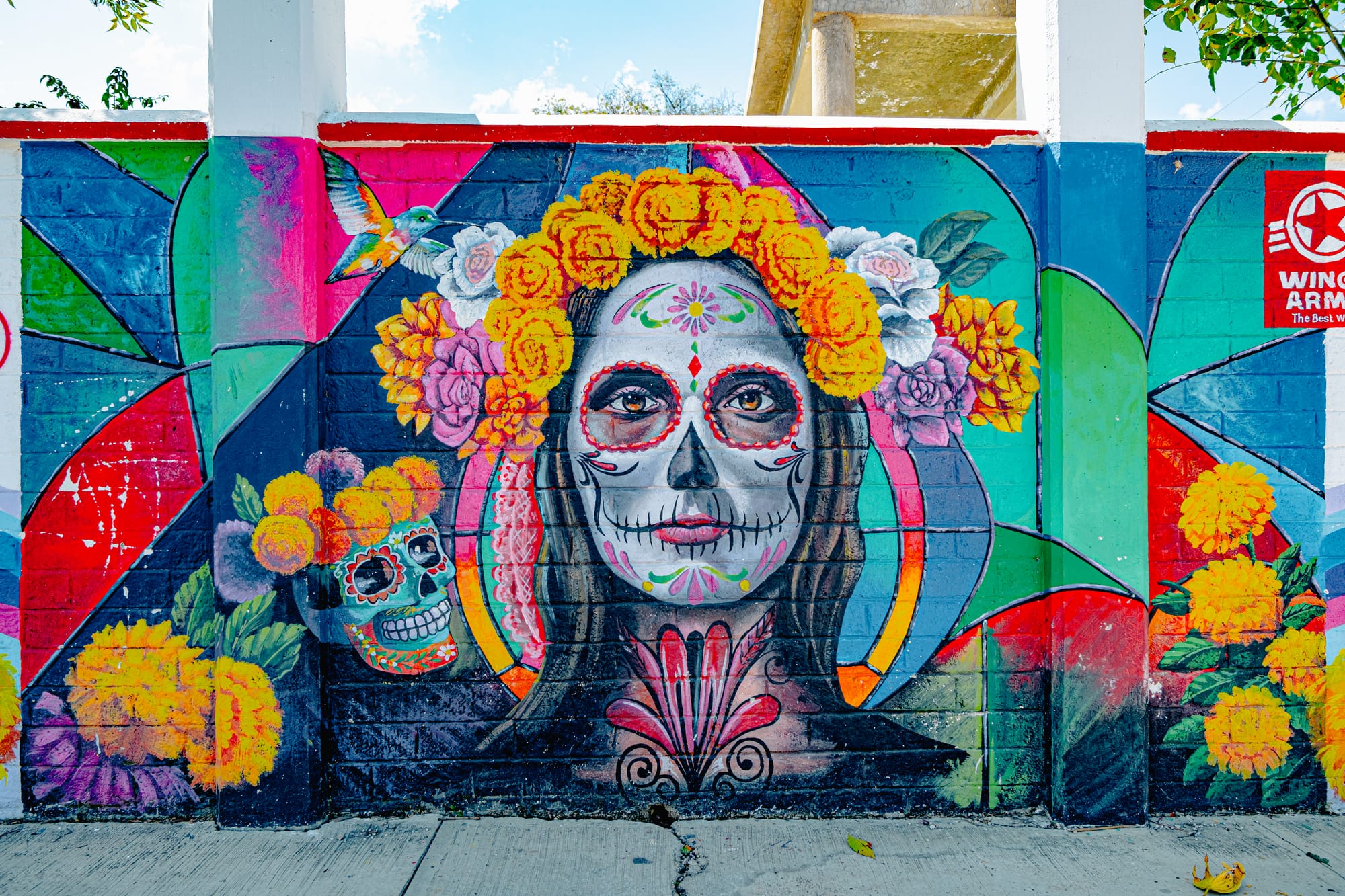
At the Municipal Pantheon in San Cristóbal, graves are small painted houses, and the week before Day of the Dead families were scrubbing headstones and repainting tomb walls in bright pinks, yellows and blues. Artists were painting murals of La Catrina, the elegant skeleton lady, on the cemetery's outer wall.
How to see Day of the Dead respectfully
Most families welcome visitors at cemeteries, but you're a guest at someone's remembrance. Keep your voice down near families, don't step on graves or offerings, and ask before photographing people. Arrive early on November 1 for the busiest scenes, and visit more than one cemetery if you can, because each marks the day differently. Our guide to Day of the Dead in San Cristóbal de las Casas covers the altars, the evening parade and the cemeteries in detail, and our cultural travel guide has more festivals worth planning around. For more ways to take part as a guest, see our guide to cultural immersion.
Day of the Dead altar and flower FAQ
What goes on a Day of the Dead altar?
Photographs of the dead, candles, water, salt, food and drink they loved, pan de muerto, sugar or clay skulls, copal incense, papel picado and marigolds. Altars are often built in levels, with the photographs near the top.
What is the Day of the Dead altar called?
An ofrenda, Spanish for offering. Families build them at home, and many also decorate the graves of their relatives.
What flowers represent the Day of the Dead?
The Mexican marigold, cempasúchil, is the main Day of the Dead flower. Its color and scent are believed to guide spirits home. Cockscomb, roses, lilies, chrysanthemums and gladiolus are also common, especially in Chiapas.
What are the ofrenda flowers called?
Cempasúchil (or cempaxóchitl), also known as flor de muerto, the flower of the dead. In English they're usually called Mexican marigolds.
Do Mexicans put flowers on graves for Día de los Muertos?
Yes. In the cemeteries we visited in Chiapas, graves were covered in marigolds and other flowers, and at Romerillo also in thick carpets of pine needles. Families clean and paint the graves in the days before.
Can I use fake marigolds for an ofrenda?
Many families use real flowers for their scent, which is believed to guide the dead. At home outside Mexico, paper or silk marigolds are common and fine. What matters most is the remembrance.
Can I have an ofrenda if I'm not Mexican?
Many people outside Mexico build ofrendas to remember someone they've lost. Do it with care: learn what the elements mean, make it personal rather than a costume, and remember it's a family tradition, not a party decoration.
When is Day of the Dead?
November 1 and 2. Preparations often start in the last days of October, when families clean graves, buy flowers and set up altars.


