


San Cristóbal de las Casas, in the highlands of Chiapas, Mexico, has two main markets: the Mercado Municipal José Castillo Tielemans (Mercado Viejo), the big food market about ten minutes' walk north of the cathedral, and the Santo Domingo crafts market around the Templo de Santo Domingo, a few blocks south of it. Both are free and open every day. Go to the food market in the morning, from about 7 am, for produce, corn, tamales, and pozol, and save the crafts market for the afternoon. Allow one to three hours. The food market is where we found our favorite vegan cornbread.
It starts with the smell: smoke and masa, sweet fruit ripening in crates, and damp earth after the night rain. The food market near Templo de Santo Domingo in San Cristóbal de las Casas opens early, before the sun reaches the cathedral’s baroque façade.
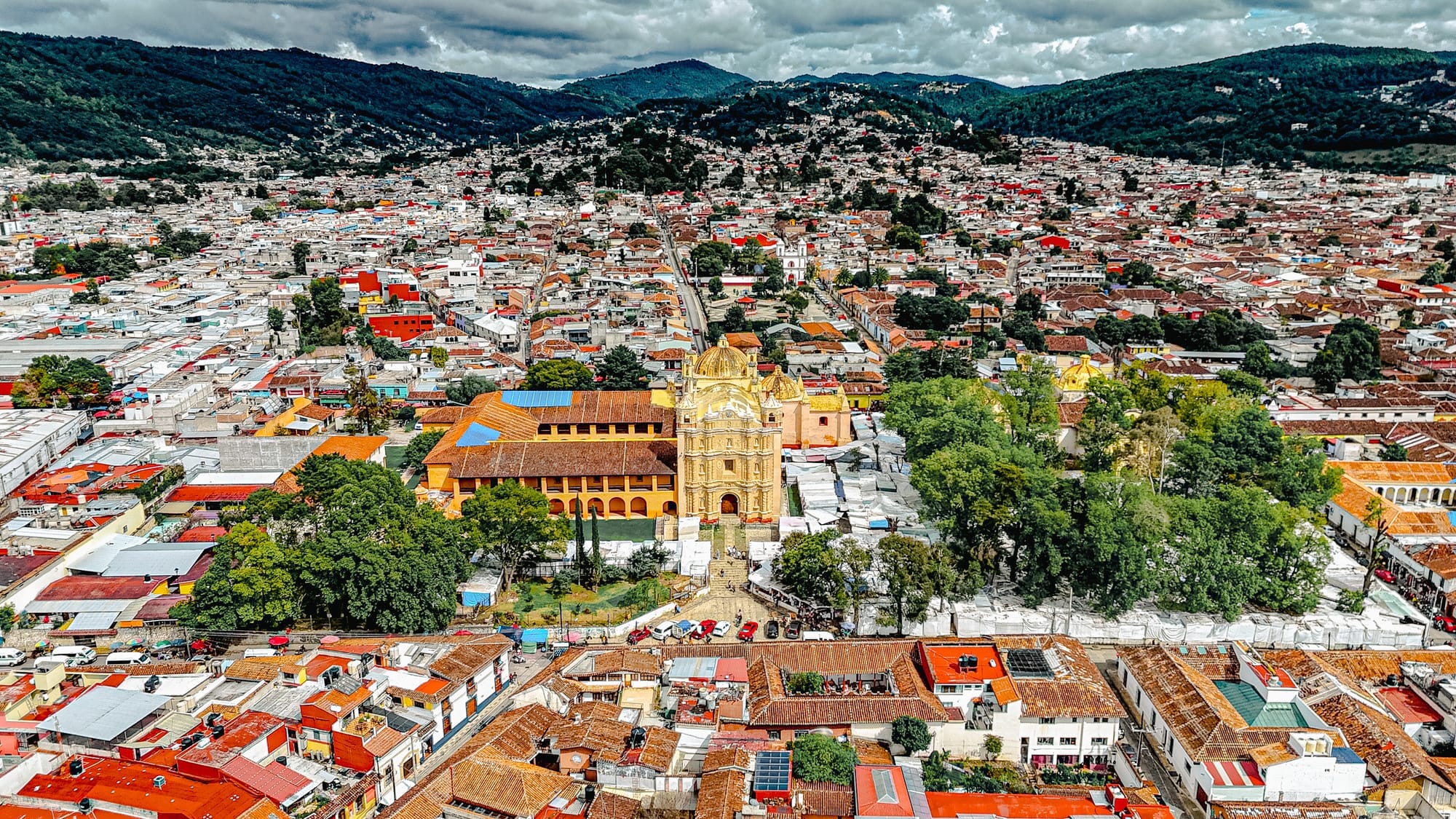
Vendors call out in Spanish, Tzotzil, and Tzeltal. Buckets of marigolds and long ears of corn sit on low tables. Somewhere, a child laughs at a chicken escaping its cage, and smoke rises from a comal further down the row.
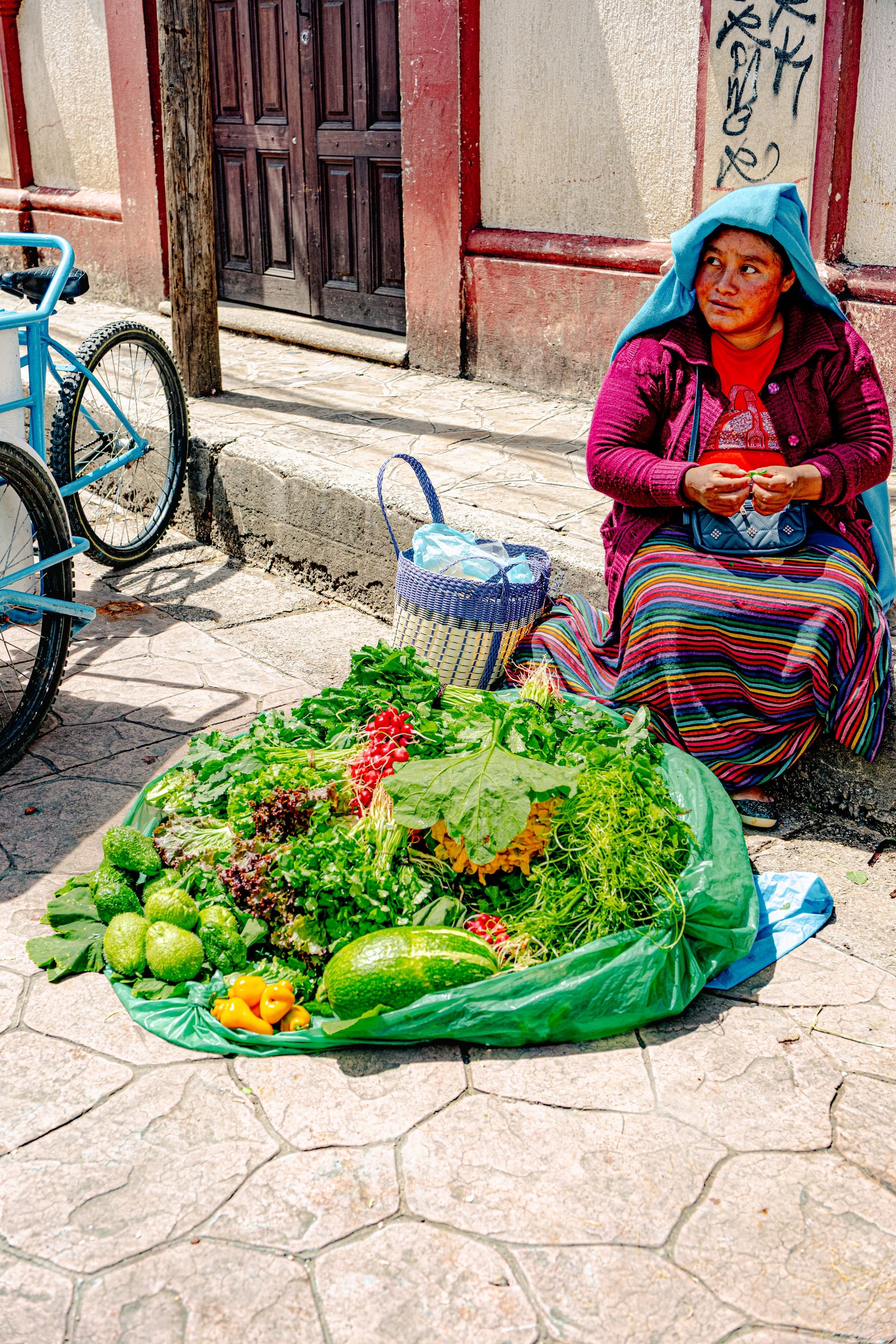
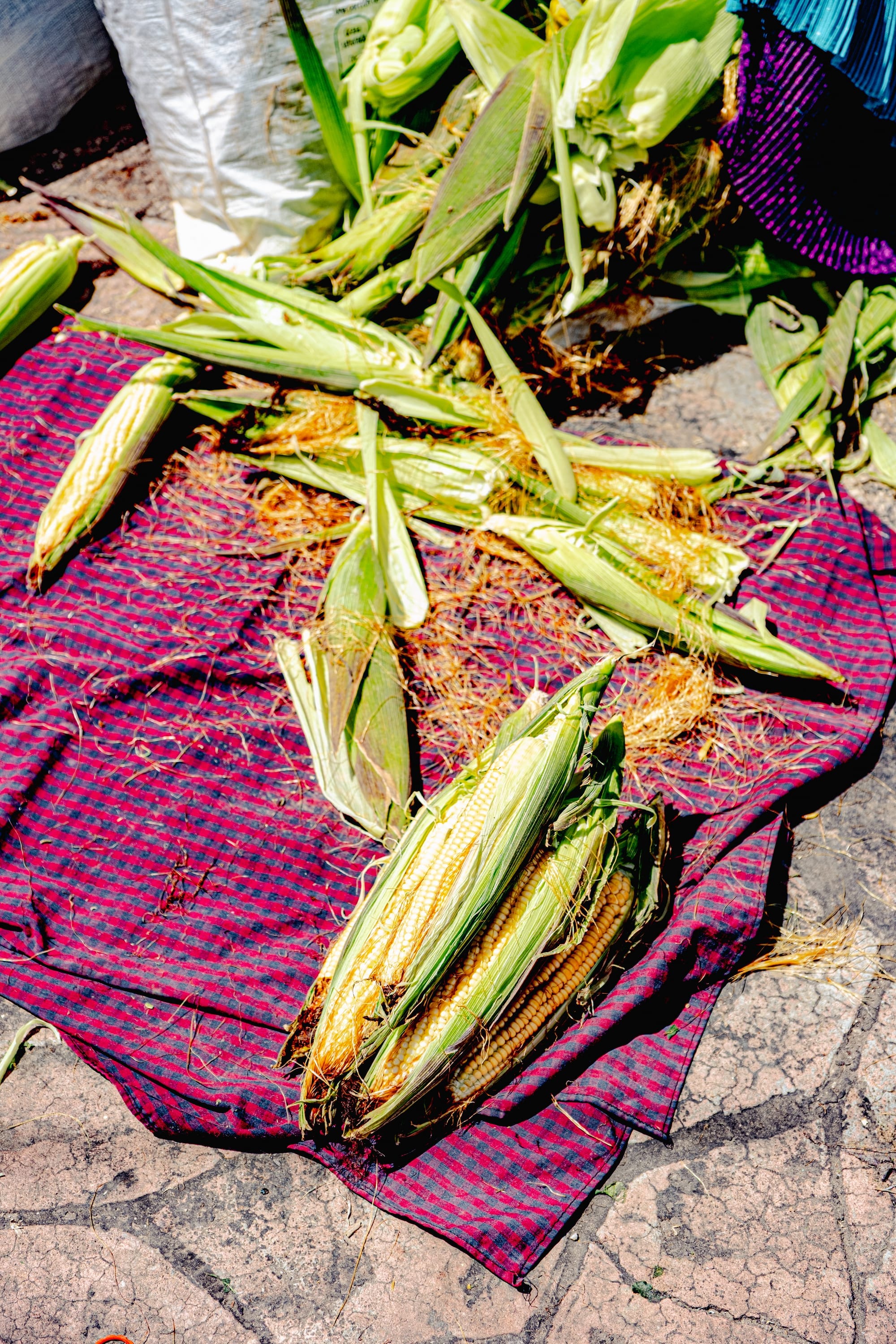
Fresh produce and maize for sale at Santo Domingo Market, Chiapas
Santo Domingo Market is a short walk from Co404, and it’s one of the easiest ways to swap San Cristóbal’s coworking scene for the local one. It’s less than ten minutes from the city center, and it’s where many residents buy their produce for the week: fresh herbs, avocados, maize, and fruit still warm from the morning sun. If you’re staying nearby, it’s handy, and it keeps you in touch with the colors and pace of the food that feeds the city.
Mercado San Cristóbal de las Casas at a glance
A quick note on names first. Many travelers (us included) call the food market in this post "Santo Domingo Market" because it sits just north of the Templo de Santo Domingo. Its official name is Mercado Municipal José Castillo Tielemans, and locals often call it the Mercado Viejo or simply el mercado. The Santo Domingo crafts market is a different place. Here are the basics for both:
Food market (Mercado Municipal José Castillo Tielemans): on Calle General Miguel Utrilla, in the Barrio de Mexicanos, about ten minutes on foot north from the back of the cathedral. Open daily from about 7 am to 5 pm, with the most stalls and best produce before 11 am.
Crafts market (Mercado de Artesanías Santo Domingo): on the plaza and steps around the Templo de Santo Domingo and the Templo de la Caridad, on Avenida 20 de Noviembre. Open daily from about 9 am to 8 pm.
Entry: free at both.
Paying: cash in pesos, in small notes and coins. Few stalls take cards.
Time needed: one to two hours for the food market, about an hour for the crafts market.
Hours are approximate (2026). Market hours aren't posted anywhere official, so arrive early rather than late. Wikipedia notes the traditional market can be thinner on Sundays, when many vendors sell in village markets.
| Food market | Crafts market | |
|---|---|---|
| Official name | Mercado Municipal José Castillo Tielemans | Mercado de Artesanías Santo Domingo |
| Where | Calle General Miguel Utrilla, about ten minutes north of the cathedral | Around Santo Domingo and La Caridad, Avenida 20 de Noviembre |
| Hours (2026, approximate) | Daily, about 7 am to 5 pm; best before 11 am | Daily, about 9 am to 8 pm |
| Entry | Free | Free |
| Paying | Cash in small notes | Cash in small notes |
| Time needed | One to two hours | About an hour |
Mornings at the Chiapas food market
Mornings in Santo Domingo are cool, and the air smells of woodfire and rain. Each stall opens in its own time. One woman piles up guanábana, their pale green skin spiked but soft. Another unwraps tamales from a woven cloth, and the steam smells of chile and herbs. Someone slices open a mound of chayote, the knife tapping against wood. A radio plays bits of marimba. Dogs hang around the corners, tails wagging, hoping for scraps.
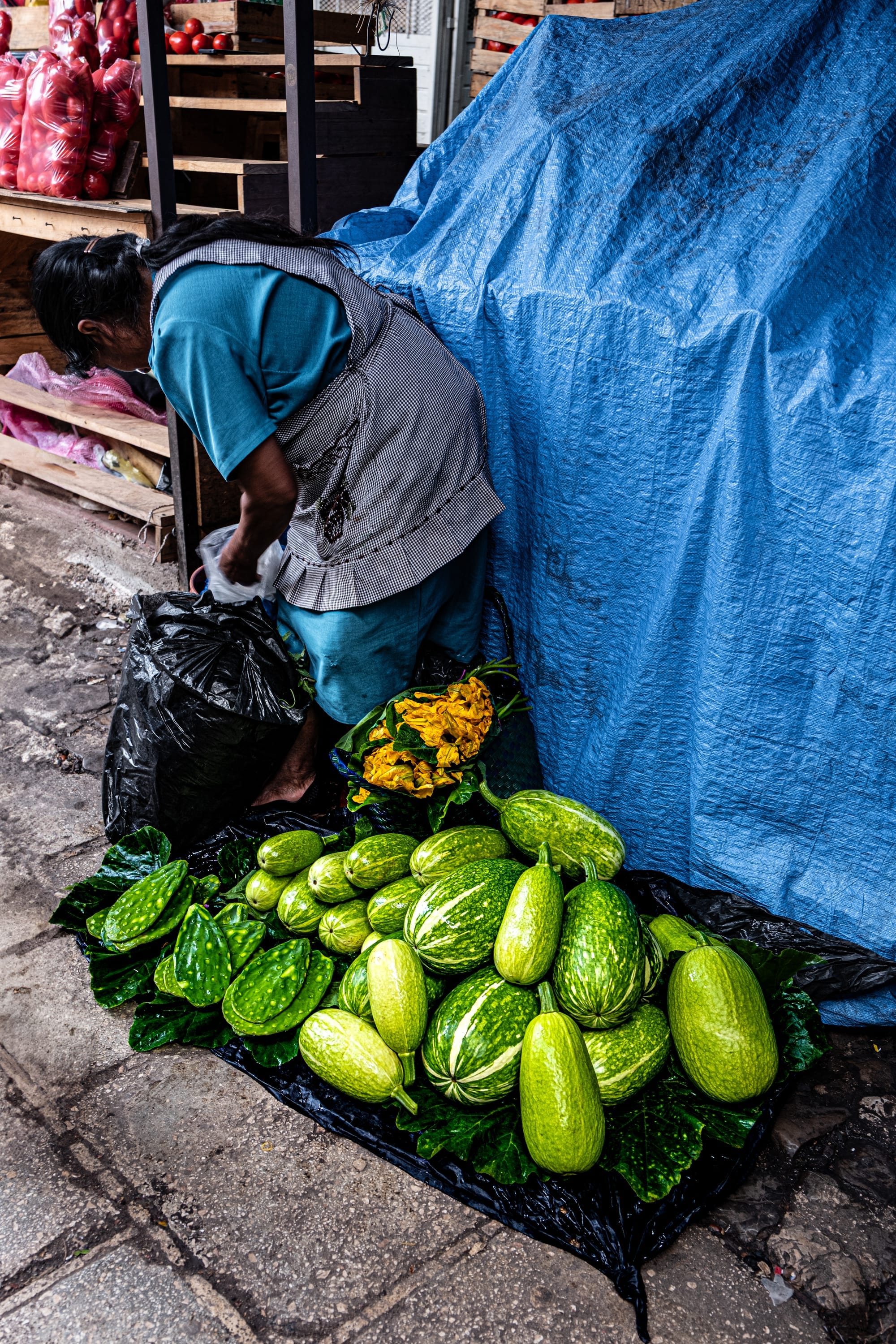
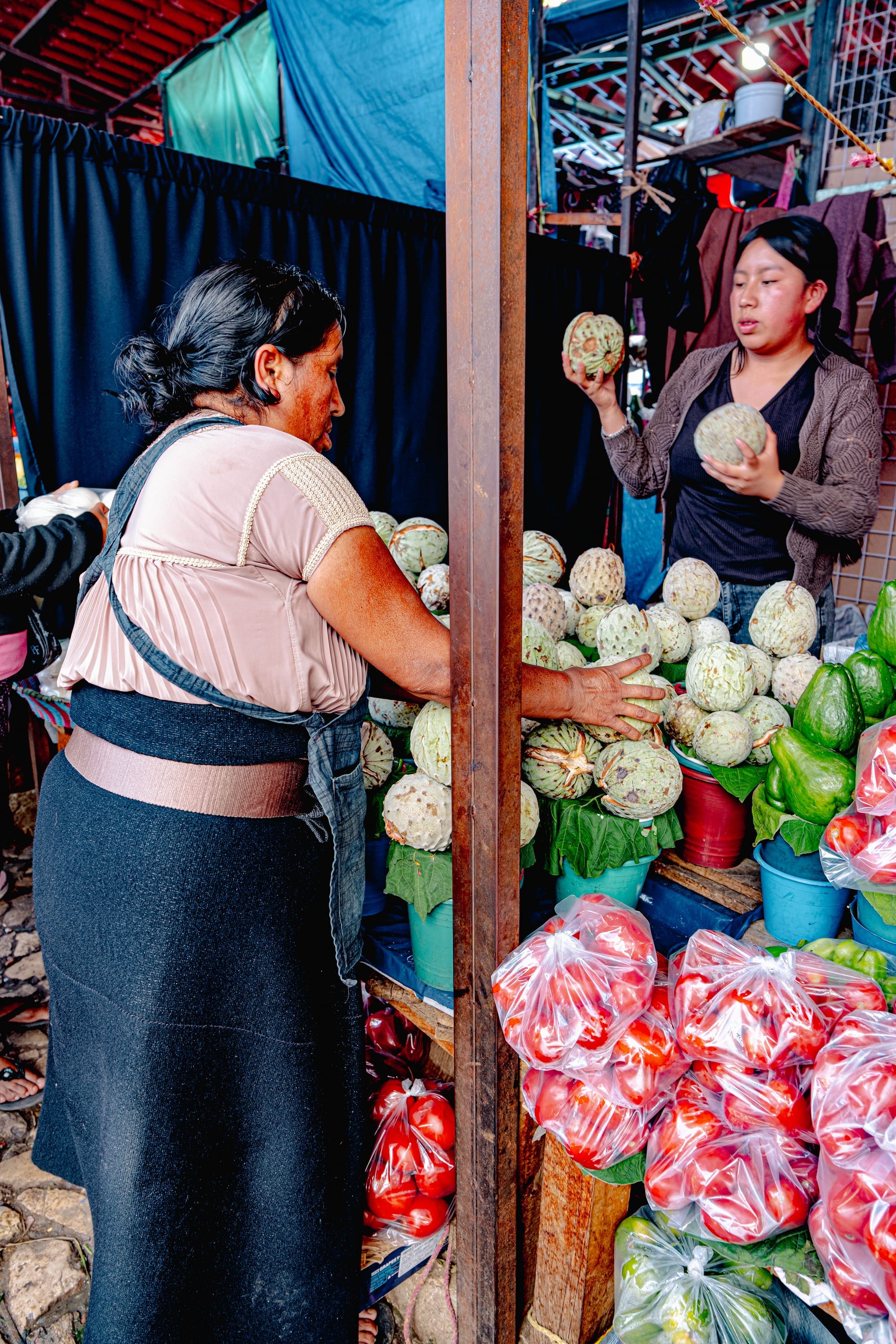
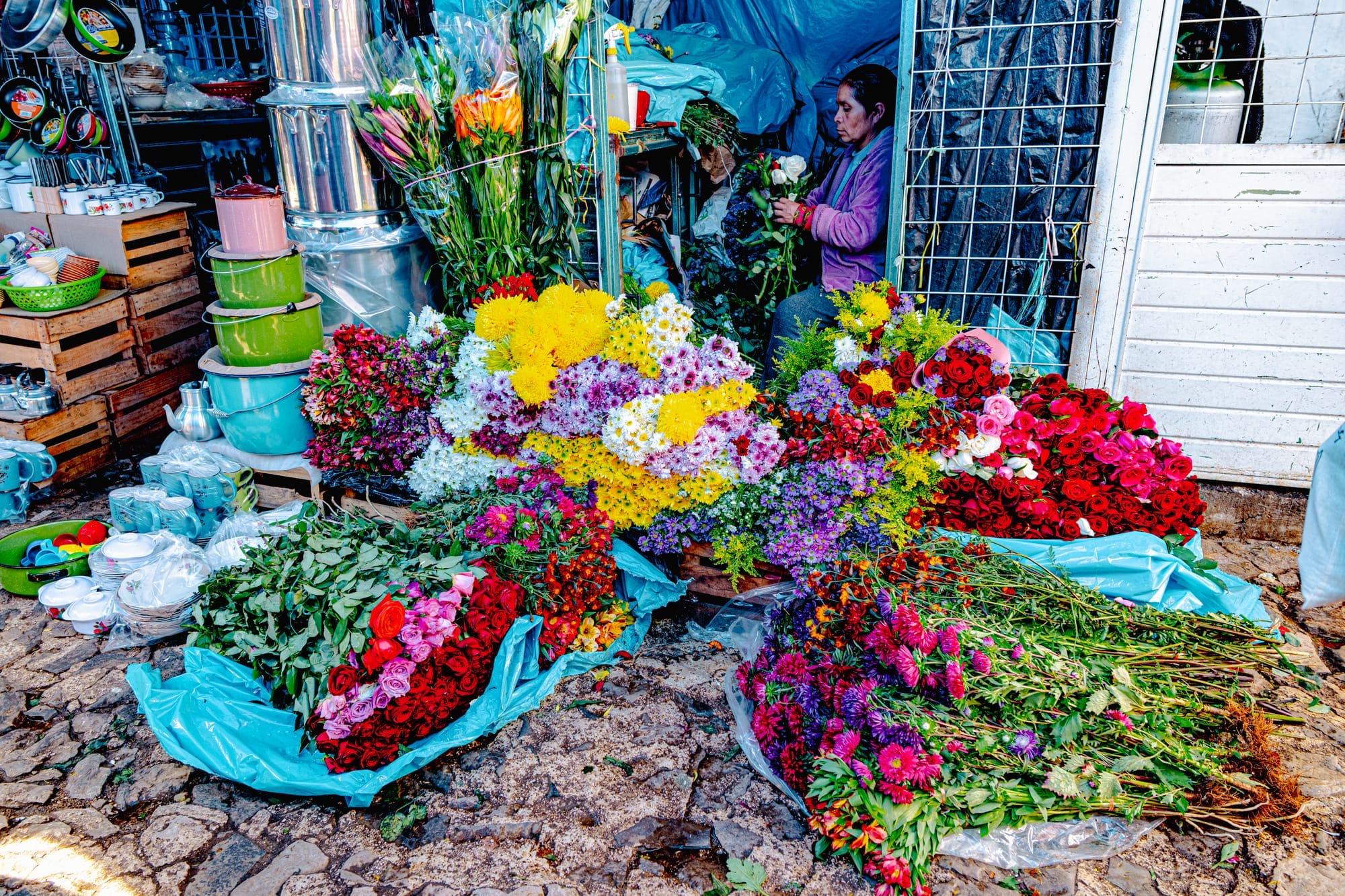
By mid-morning, the corridors are busy. It isn’t chaos, though, more like a well-practiced routine: baskets pass hand to hand, coins clink, and greetings overlap. Things run on habit, not on the clock. Underneath it all is the sound of maize: kernels pouring into buckets and tortillas turning on metal griddles. That sound ties the whole market together. Corn is what the highlands live on, and you hear it everywhere here.
Mercado Viejo vs the Santo Domingo crafts market
The two markets are about five minutes apart on foot, but they serve different people. The Mercado Viejo is where people from San Cristóbal and the surrounding highland towns shop for food. The Santo Domingo crafts market is mostly for visitors looking for textiles and souvenirs. If you only have one morning, do the food market first, then walk south along Utrilla to the crafts market and the church.
Here's how the three markets compare (hours approximate, 2026, check before you go):
| Market | Where | Hours (approx.) | Best for | Bargaining |
|---|---|---|---|---|
| Mercado Municipal José Castillo Tielemans (Mercado Viejo) | Calle General Utrilla, Barrio de Mexicanos | Daily, about 7 am to 5 pm, best before 11 am | Produce, corn, herbs, pozol, and cheap breakfasts | No, prices are fixed |
| Mercado de Artesanías Santo Domingo | Plaza of Santo Domingo and La Caridad, Avenida 20 de Noviembre | Daily, about 9 am to 8 pm | Textiles from highland villages, amber, and souvenirs | Yes, friendly haggling is normal |
| Mercado de Dulces y Artesanías | Avenida Insurgentes, beside the San Francisco church | Daily, about 7 am to 8 pm | Traditional sweets, plus textiles, amber, and leather | Less room to bargain, per Wikivoyage |
Mercado Municipal José Castillo Tielemans (Mercado Viejo)
This is the city's main food market. The current building went up under José Castillo Tielemans, governor of Chiapas from 1964 to 1970, and it's named after him. According to Visit Mexico, San Cristóbal has had a central market for more than 500 years, and today some 2,800 vendors work here, most of them from Tsotsil, Tseltal, Ch'ol, and Tojolabal communities. You'll find fruit, vegetables, corn, beans, herbs, flowers, clay pots, wool, firewood, and medicinal plants, plus a food court (patio de comidas) and stalls selling ready-to-eat food. There are also butchers and live poultry, which we found hard to see as vegans.
Santo Domingo crafts market (Mercado de Artesanías)
The crafts market fills the plaza around the Templo de Santo Domingo and the side chapel of La Caridad, in the El Cerrillo barrio. Artisans from San Cristóbal and villages across Chiapas lay out embroidered blouses, woven belts, shawls, and bags on the church steps, and the stalls around them sell amber, ceramics, lacquerware, leather, and jewelry. Visit Mexico suggests saving it for an afternoon. The old convent next door houses the Museo de los Altos de Chiapas and the Centro de Textiles del Mundo Maya, which holds about 2,500 textile pieces and is worth a visit before you shop, so you know what good weaving looks like. We cover the church itself in our post on the churches of San Cristóbal, and the murals of the surrounding barrio in our El Cerrillo street art guide.
The Centro de Textiles del Mundo Maya is part of INAH's Centro Cultural de los Altos de Chiapas, open Tuesday to Sunday, 9 am to 6 pm. INAH lists entry at 145 pesos (about US$8) for foreign visitors and 80 pesos for Mexican visitors, free on Sundays for Mexican citizens, though some recent guides report free entry. Check at the door (2026).
Mercado de Dulces y Artesanías
A third, smaller market sits on Avenida Insurgentes, between the San Francisco church and the park behind the cathedral. It was set up in the mid-1990s to give street vendors a fixed home, and Visit Mexico lists traditional sweets (stuffed horns, milk sweets, pressed peaches, peanut brittle, and honey candies), plus textiles, amber, and leather. Many of the sweets contain milk or honey, so ask before buying if you're vegan.
Corn at Santo Domingo Market
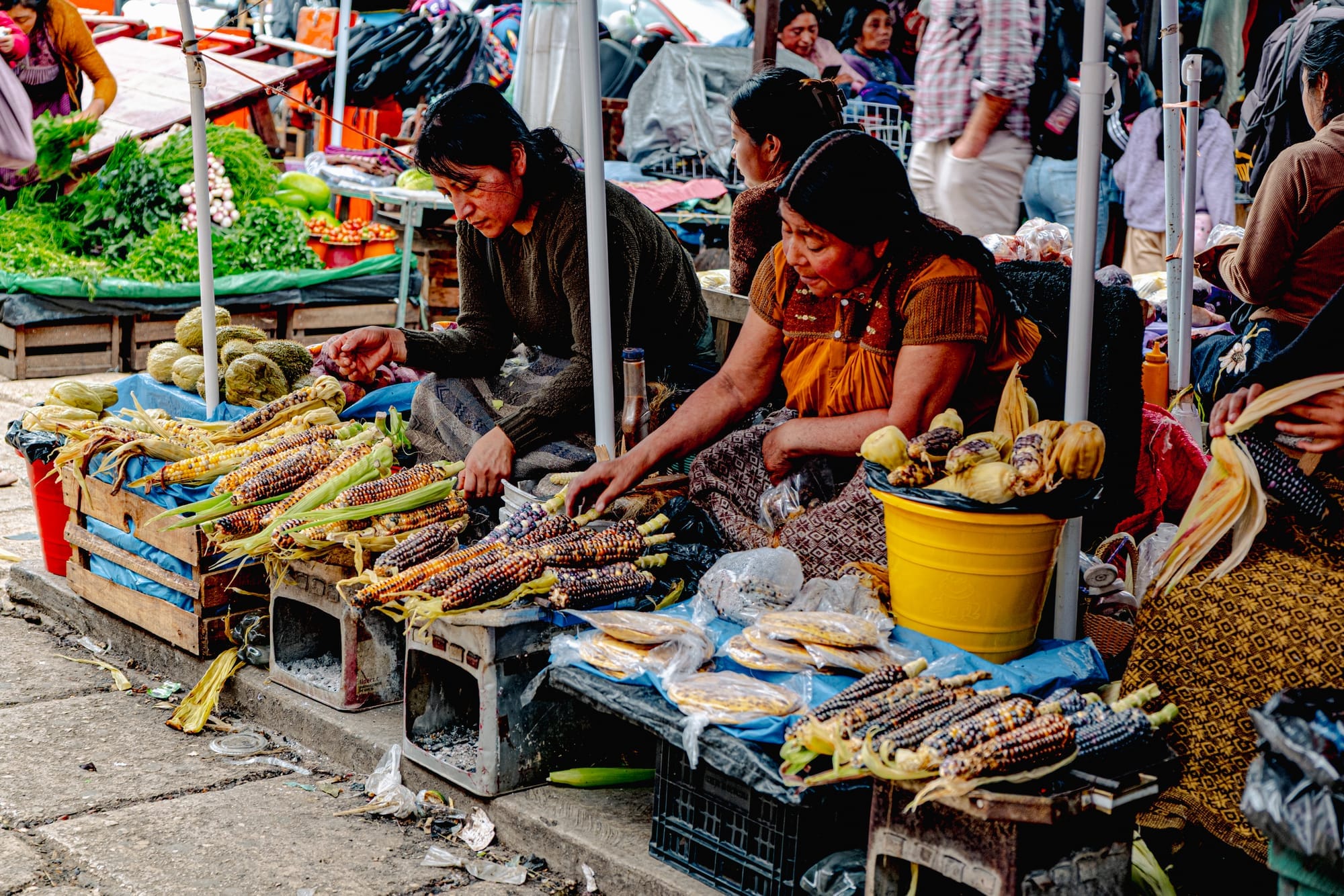
Corn is everywhere: pale yellow, deep violet, streaked blue, and nearly black. Each cob tells you something about the soil and the family that grew it. Women sit behind neat rows of ears, some still wrapped in husks, others lined up like small altars. They sell them by weight, and often with a story about where they came from.
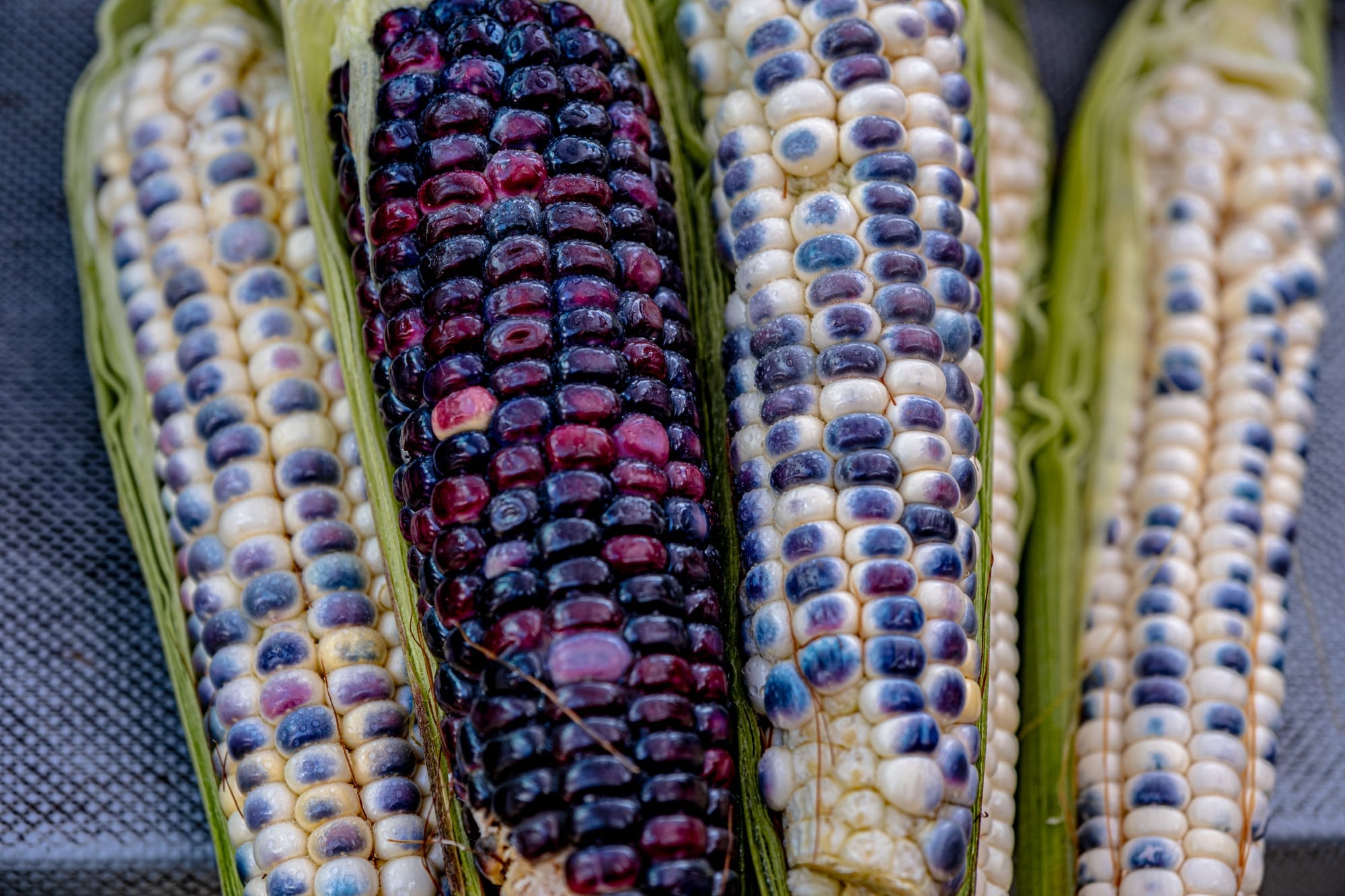
One vendor told us that her maize comes from Zinacantán, her sister’s from Chamula, and her cousin’s from Tenejapa. Each area grows its own grain, with its own flavor, shaped by its own soil and rain. The conversation moved easily between seeds and family. Selling corn here is a link that runs from one generation to the next.
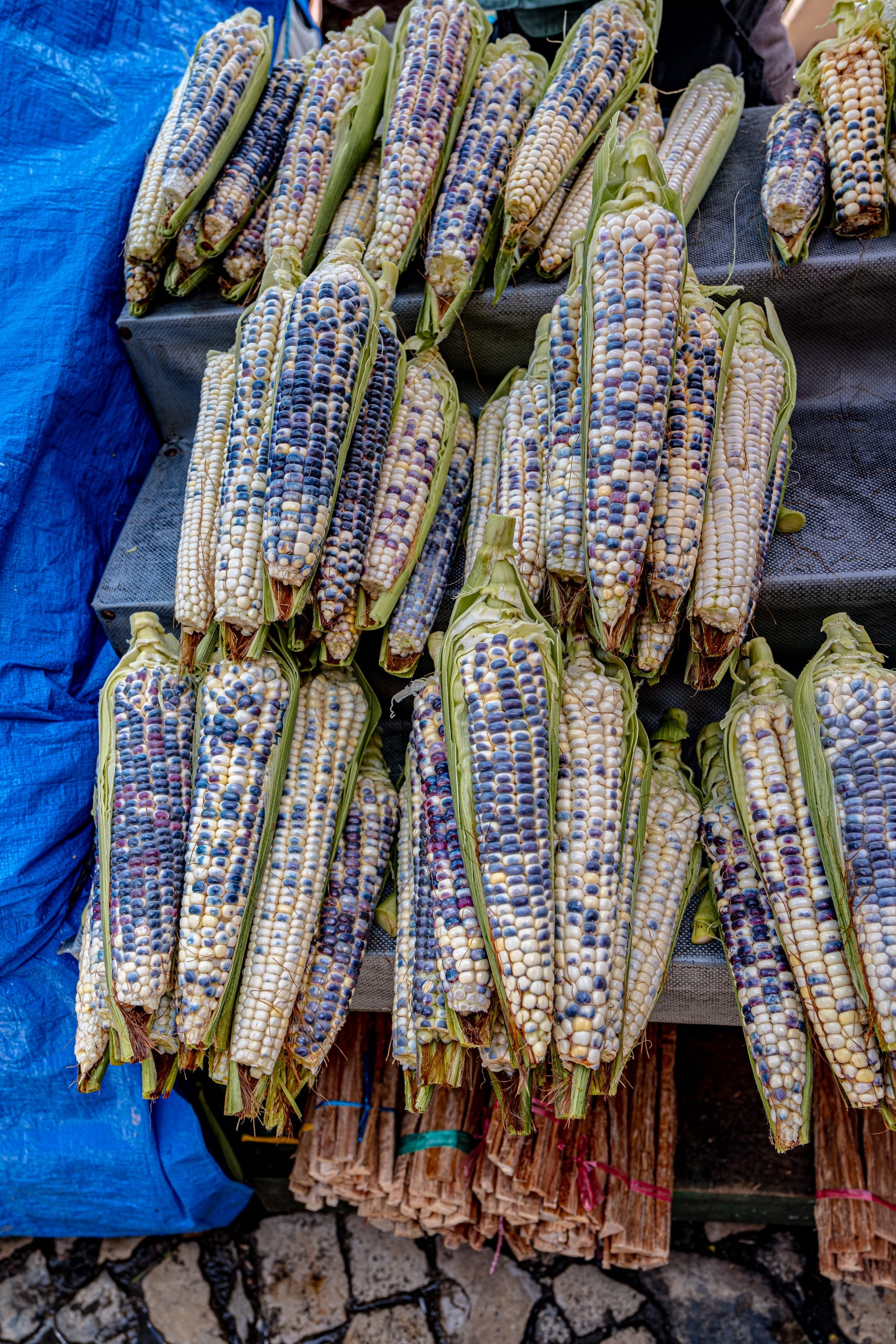
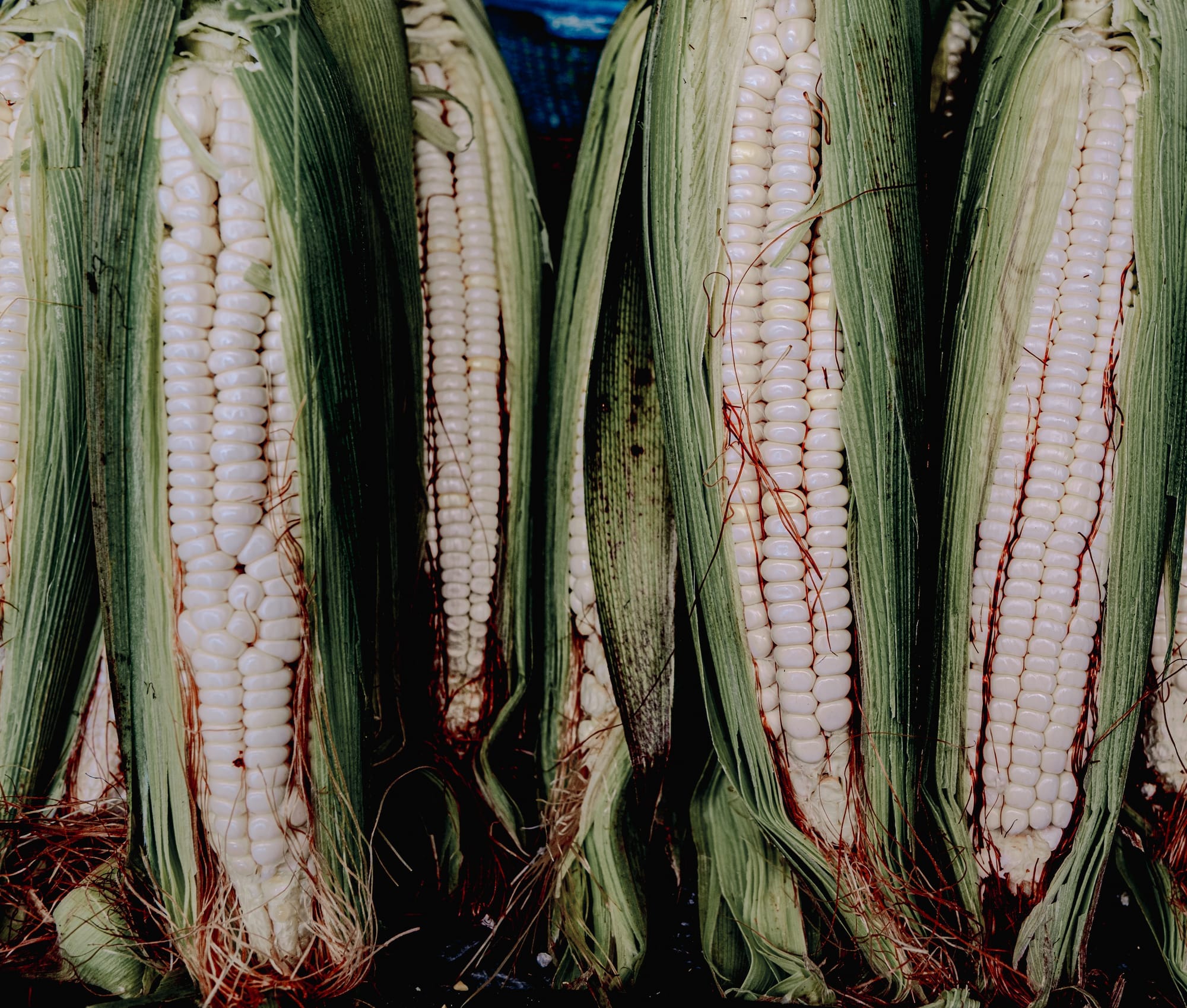
Stacks of multicolored and white corn displayed for sale at Santo Domingo Market
We often thought of the phrase you hear in these highlands, and from Zapatista communities across Chiapas: Somos de maíz. We are made of corn. People don’t mean it as a metaphor. It’s a worldview. Corn is where life starts and where it returns, the thing that ties people to the land and to their history. In Mayan creation stories, the first humans are formed from ground maize. The grain is both an origin and a duty.
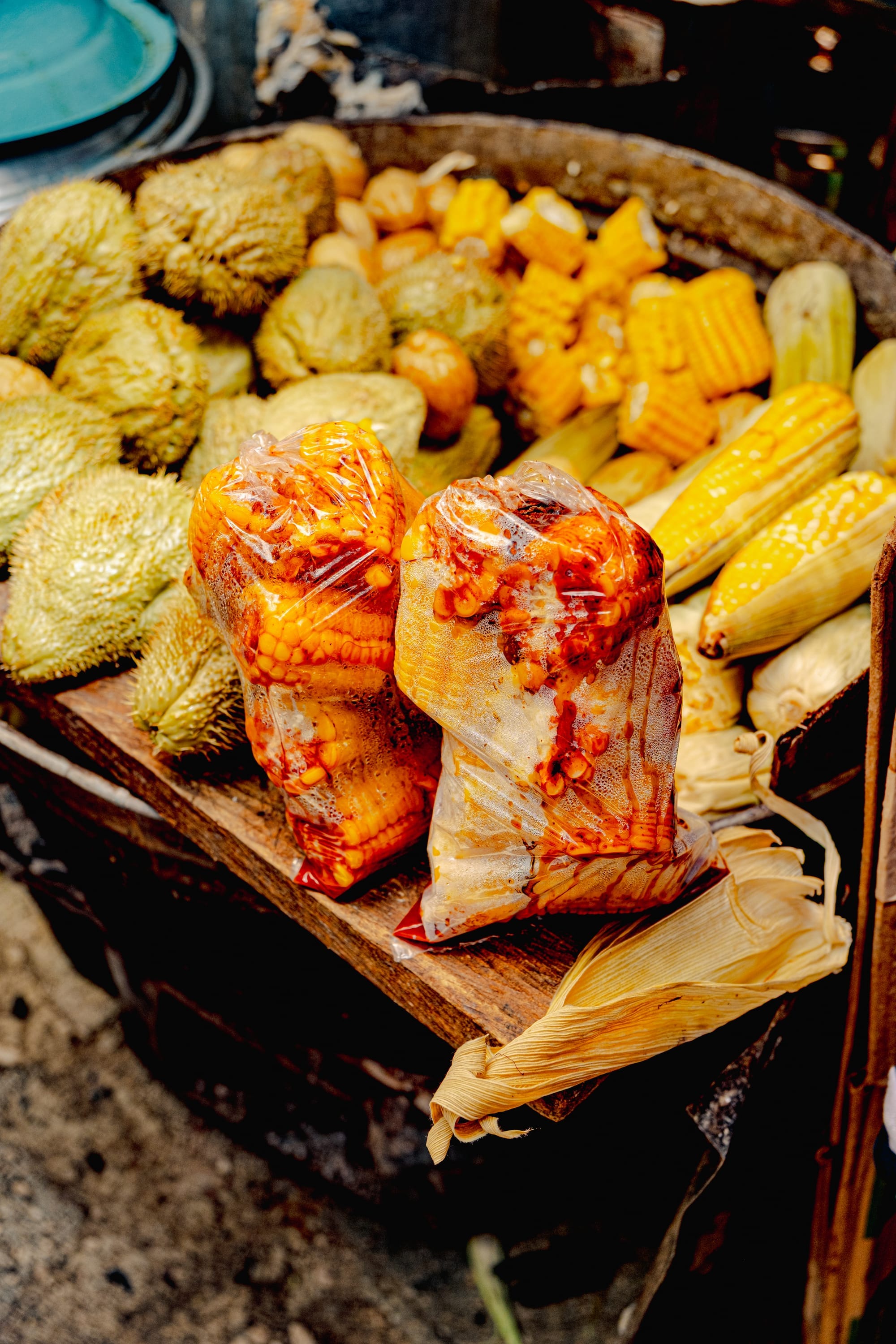
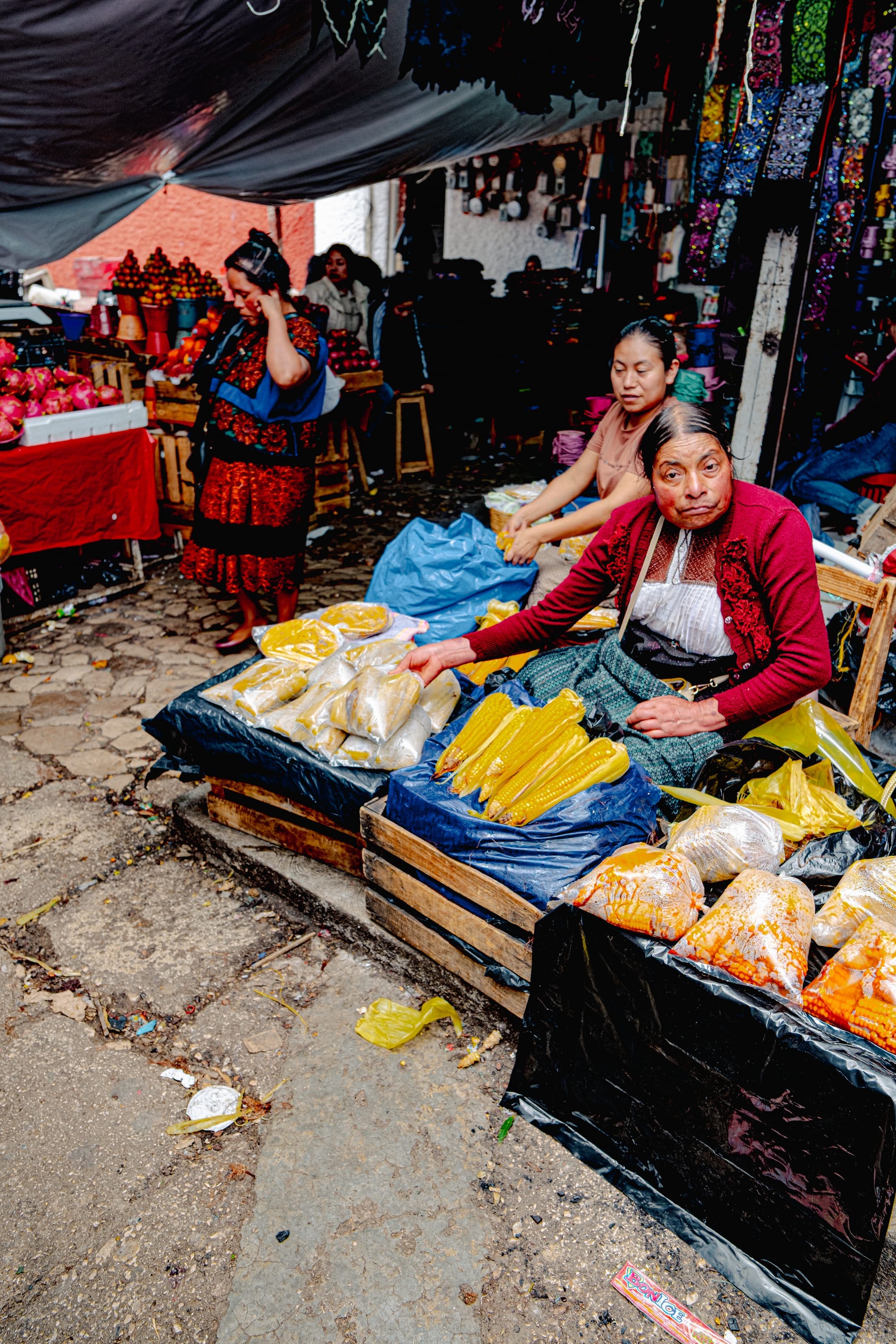
Vendors selling boiled corn and masa at Santo Domingo Market in Chiapas
Eating corn, growing corn, and selling corn is also an old form of resistance: refusing to forget where you come from, or to let hunger become something others profit from. That defiance is built into the ordinary trade at every stall.
Beans, herbs, and the color of the land
Near the corn stalls, baskets are full of beans in colors we didn’t expect: rose, lavender, obsidian, and ivory speckled with red. They shine in the shade, a full palette of what the local soil can grow.
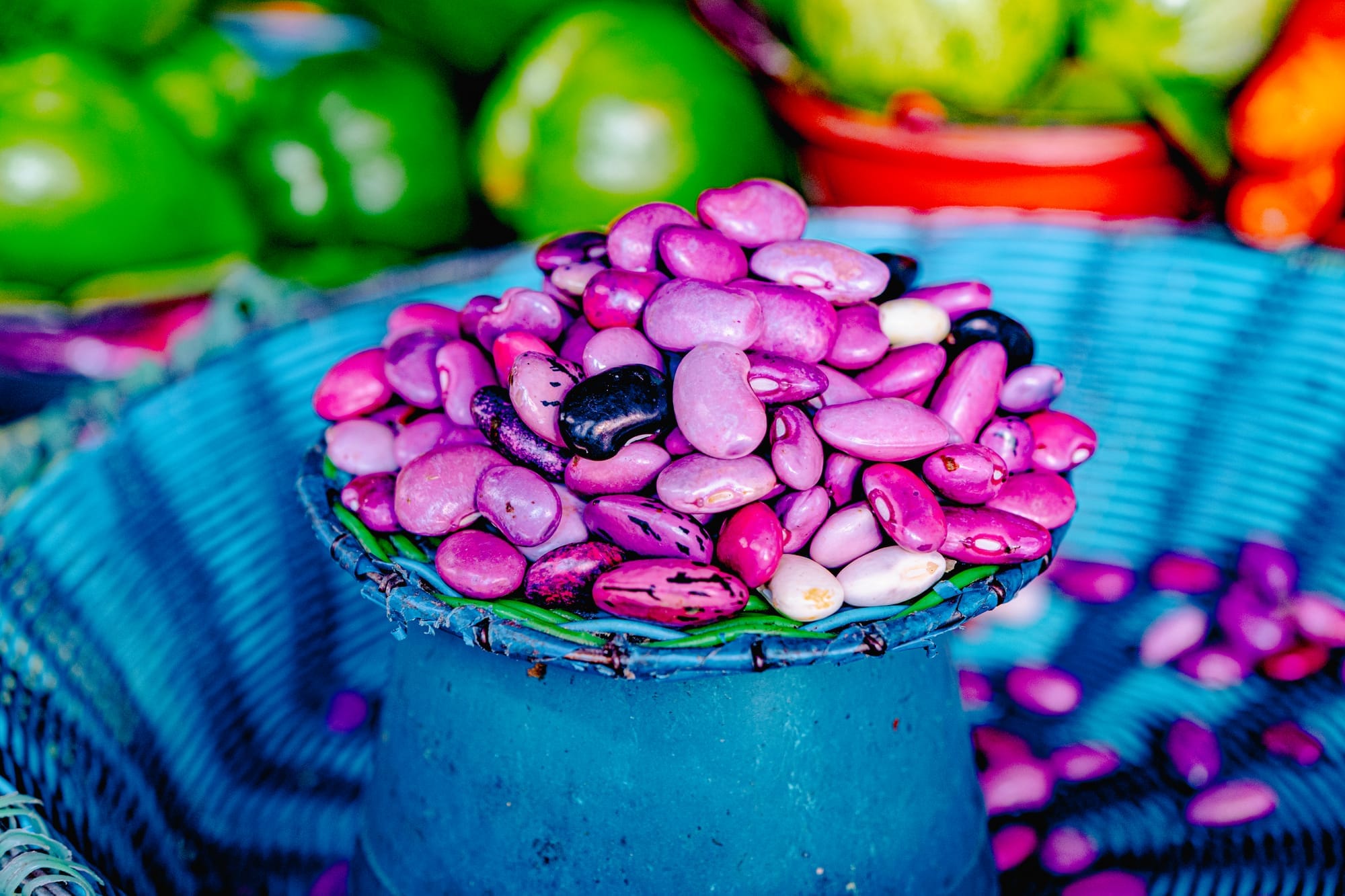
A man scoops them up by the handful and lets them fall through his fingers, with a sound like light rain. For the people selling them, these beans aren’t simple commodities. They’re the result of seasons of work, patience, and knowledge passed hand to hand.
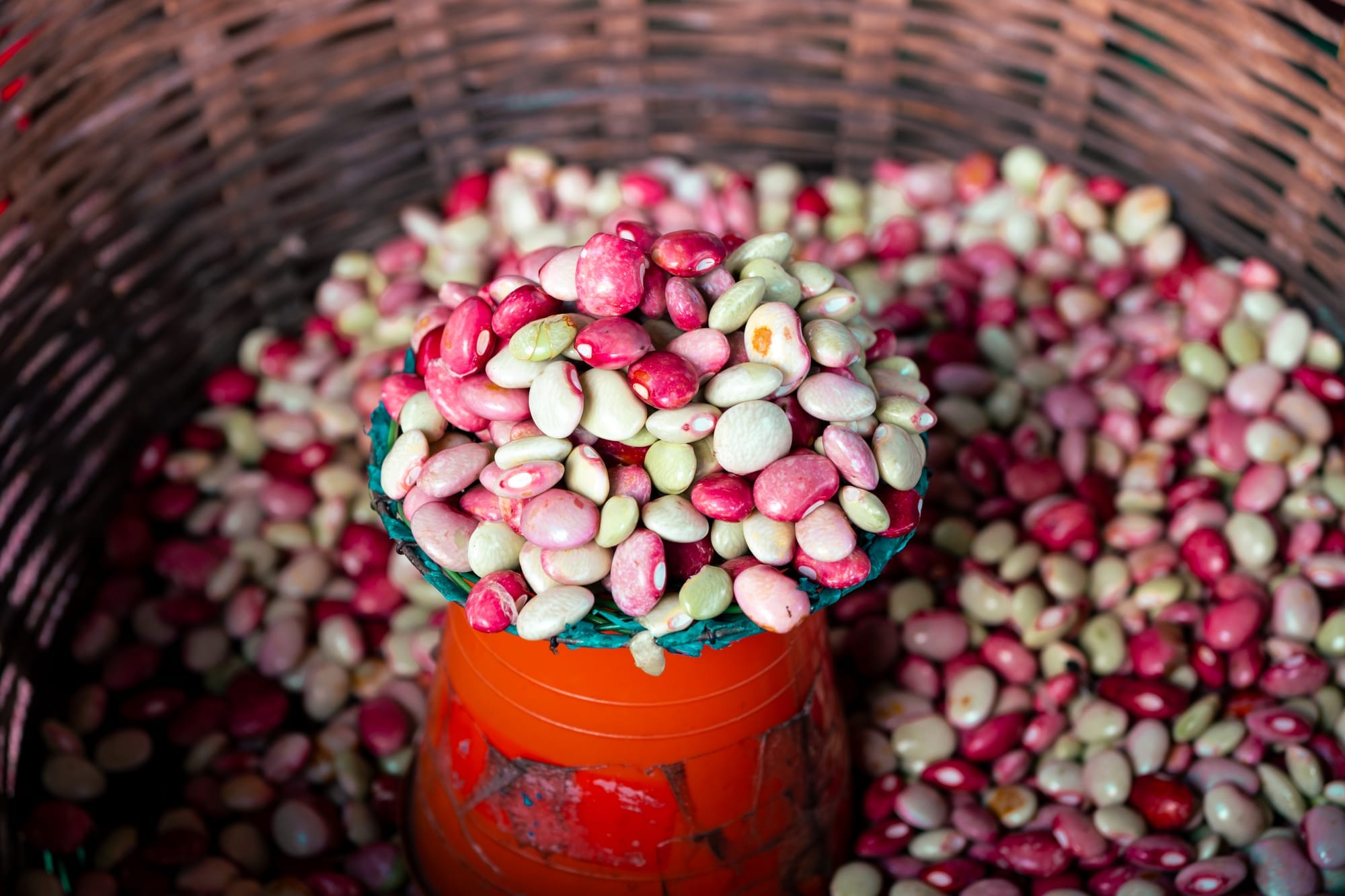
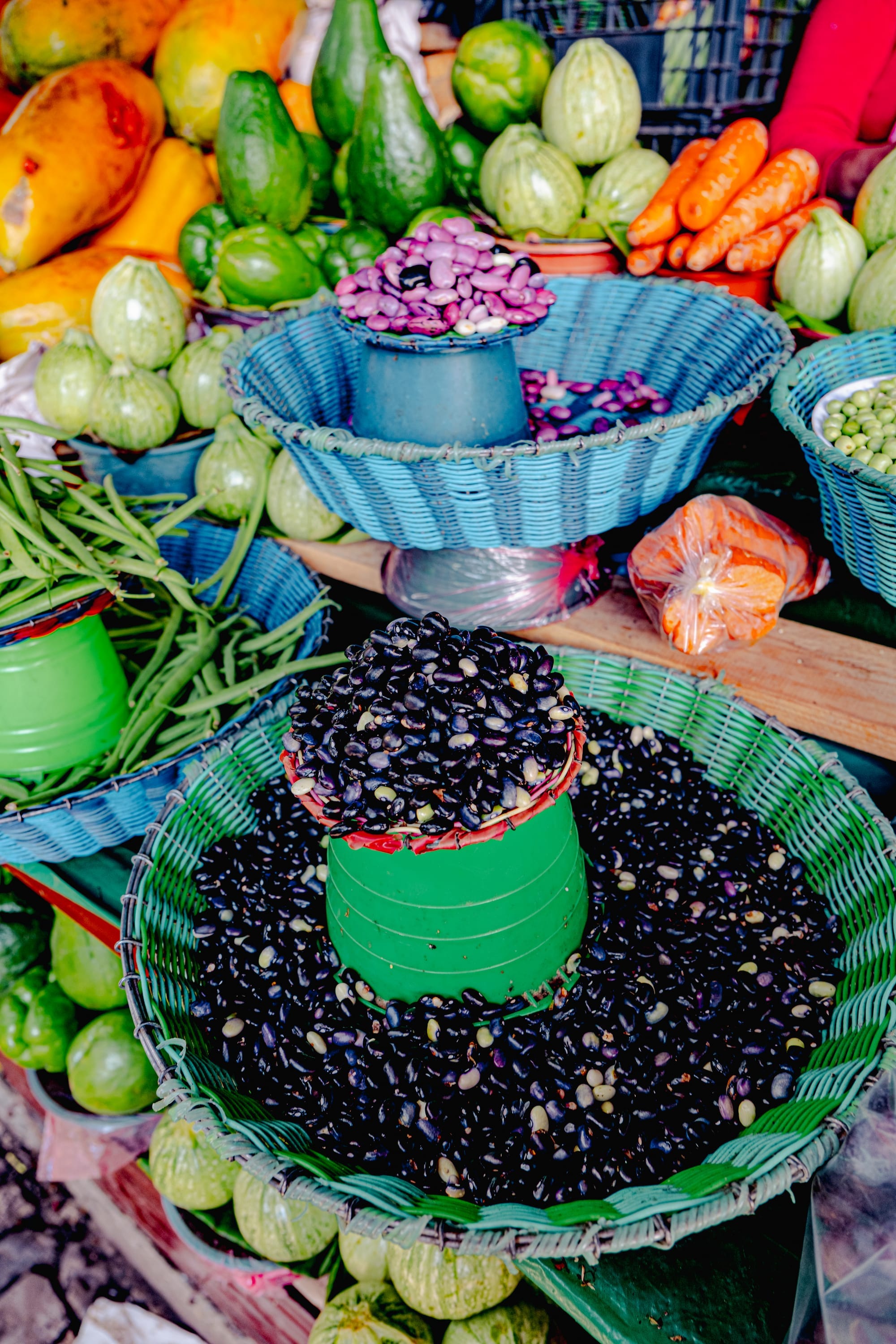
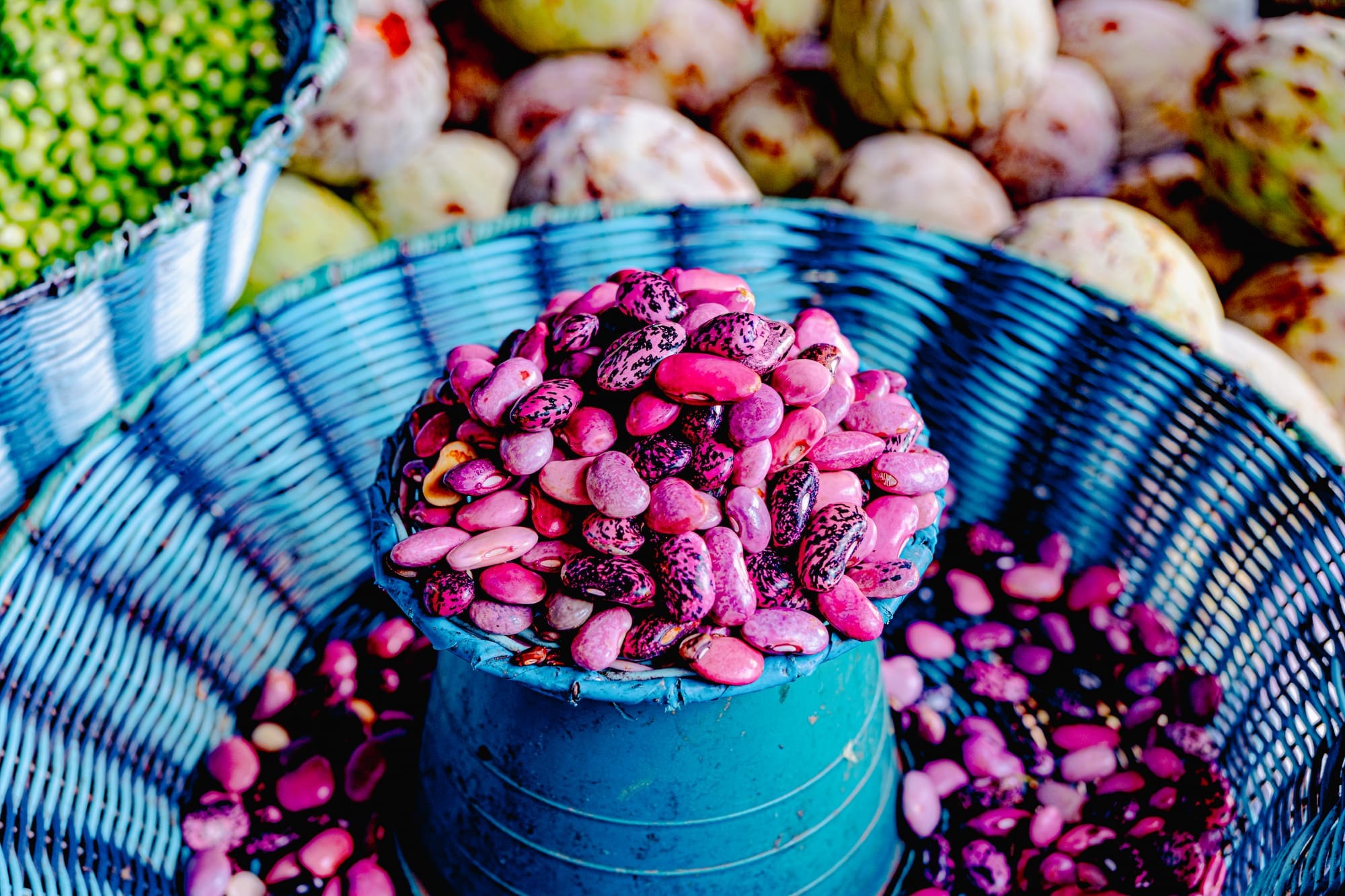
Baskets of beans displayed alongside local produce in Chiapas
Around them, roots and herbs fill the air with scent: cilantro, hoja santa, and radishes still slick with mud. It’s easy to picture how many generations have walked these same narrow paths, carrying baskets woven from the same reeds and trading on the same easy trust.
Unusual fruit to try at the market
Between the roots and grains, fruit spills across the tables in shapes you may not know. Guanábana, with its armored skin and custard-white flesh. Chicozapote, brown and grainy, tasting a bit like honey. Nopal pads next to their magenta fruit, the cactus and its sweet fruit sold side by side. Piles of zapote negro, nearly black and soft as pudding. Pitaya, sliced open to show its bright pink flesh.
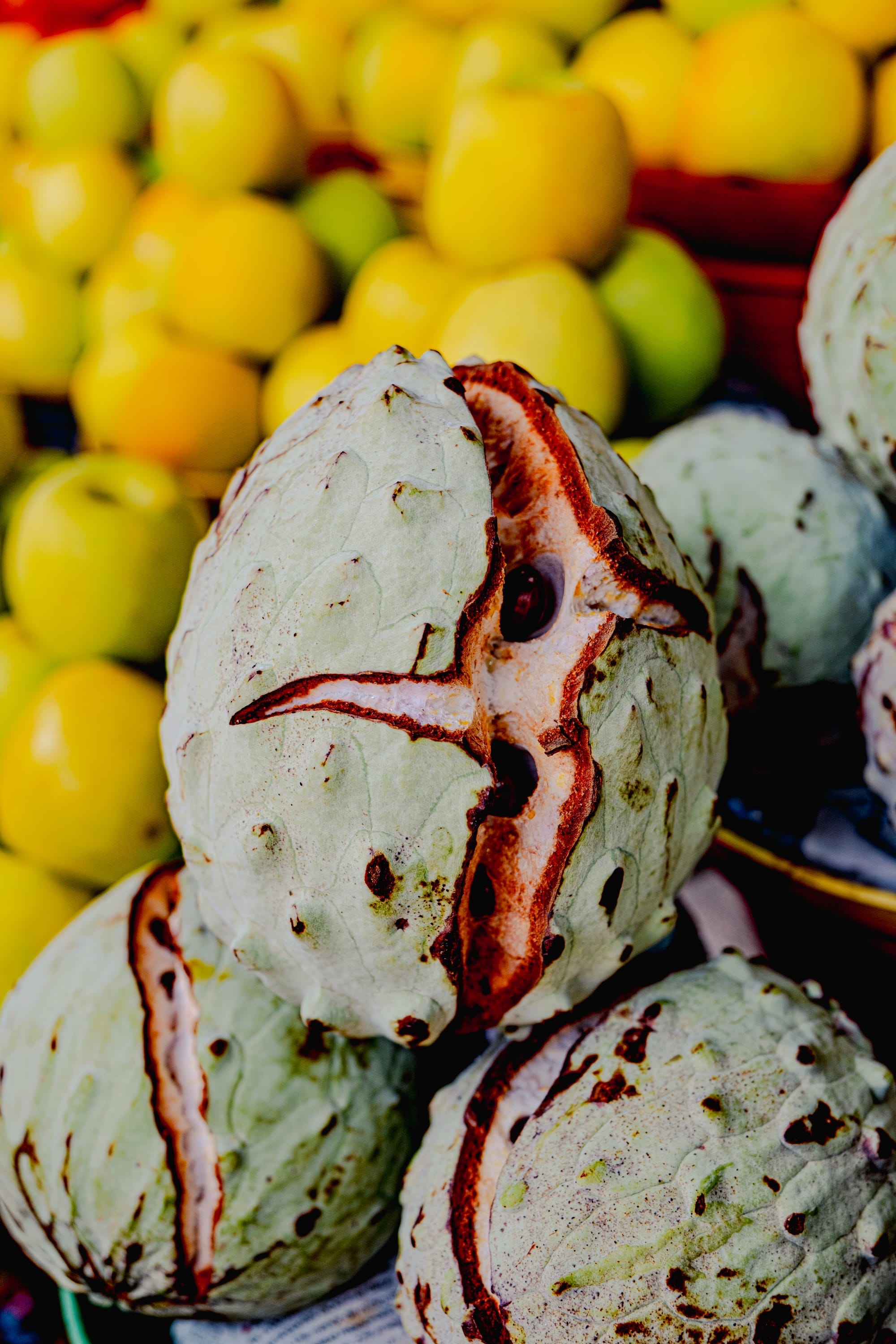
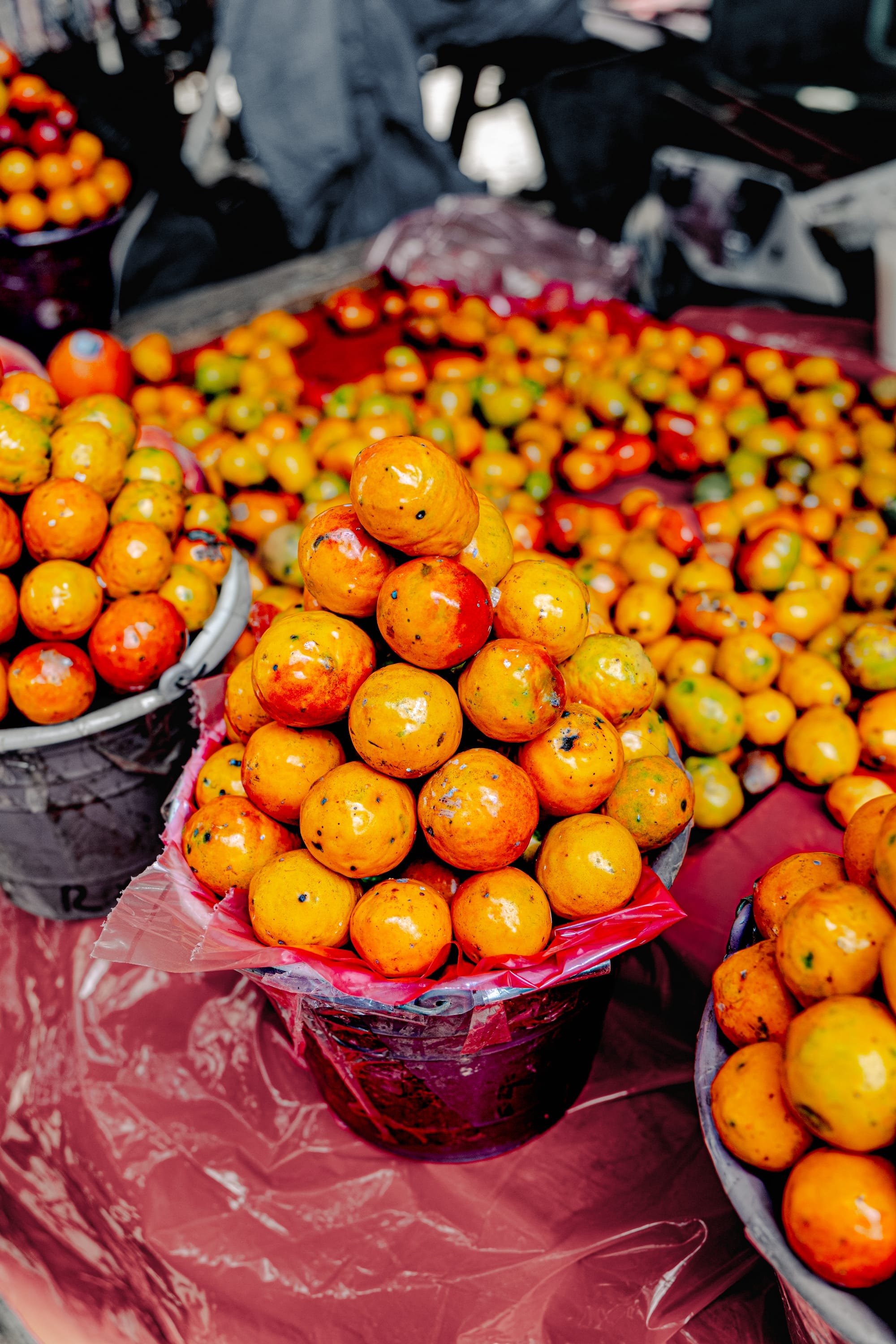
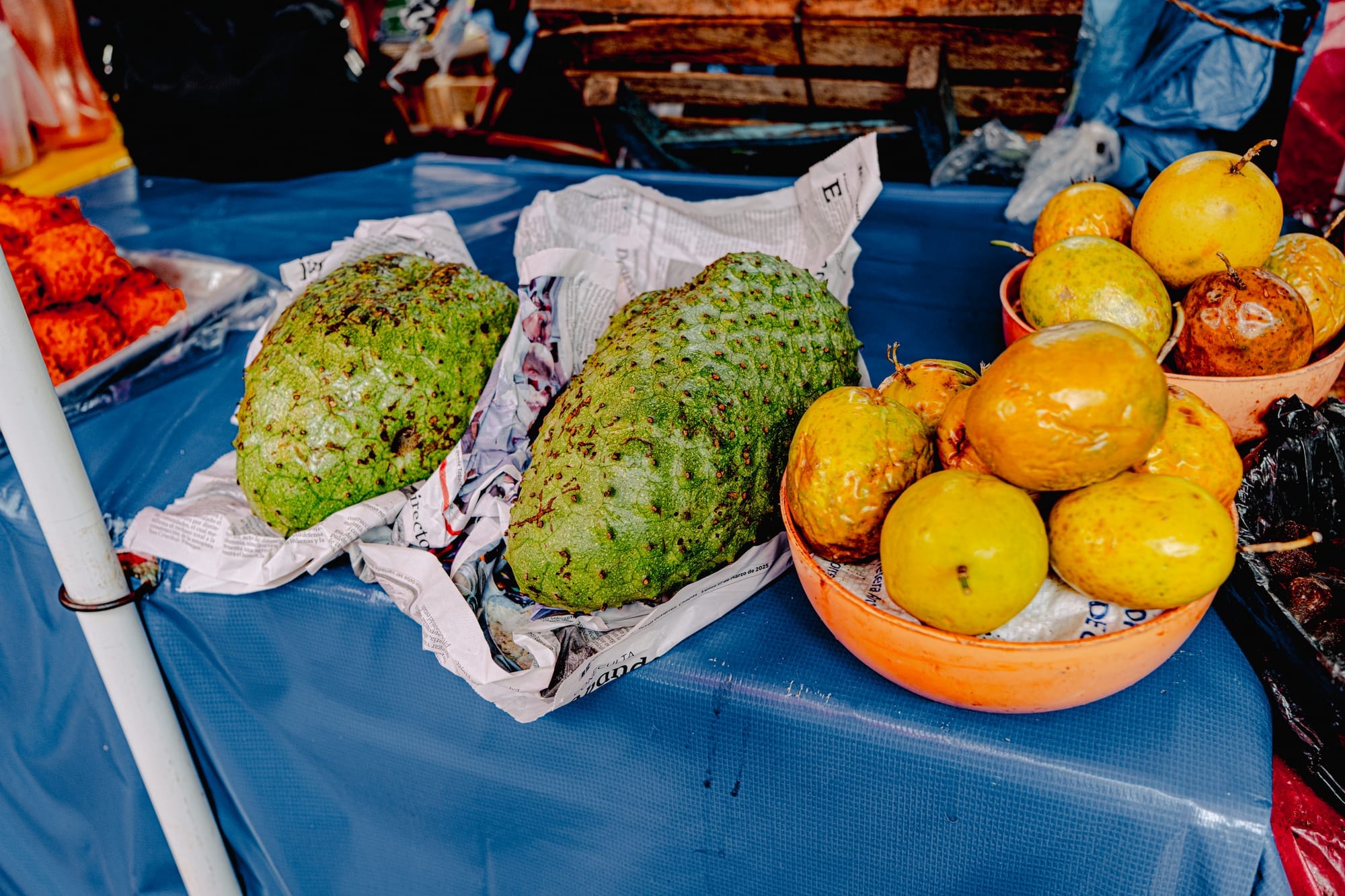
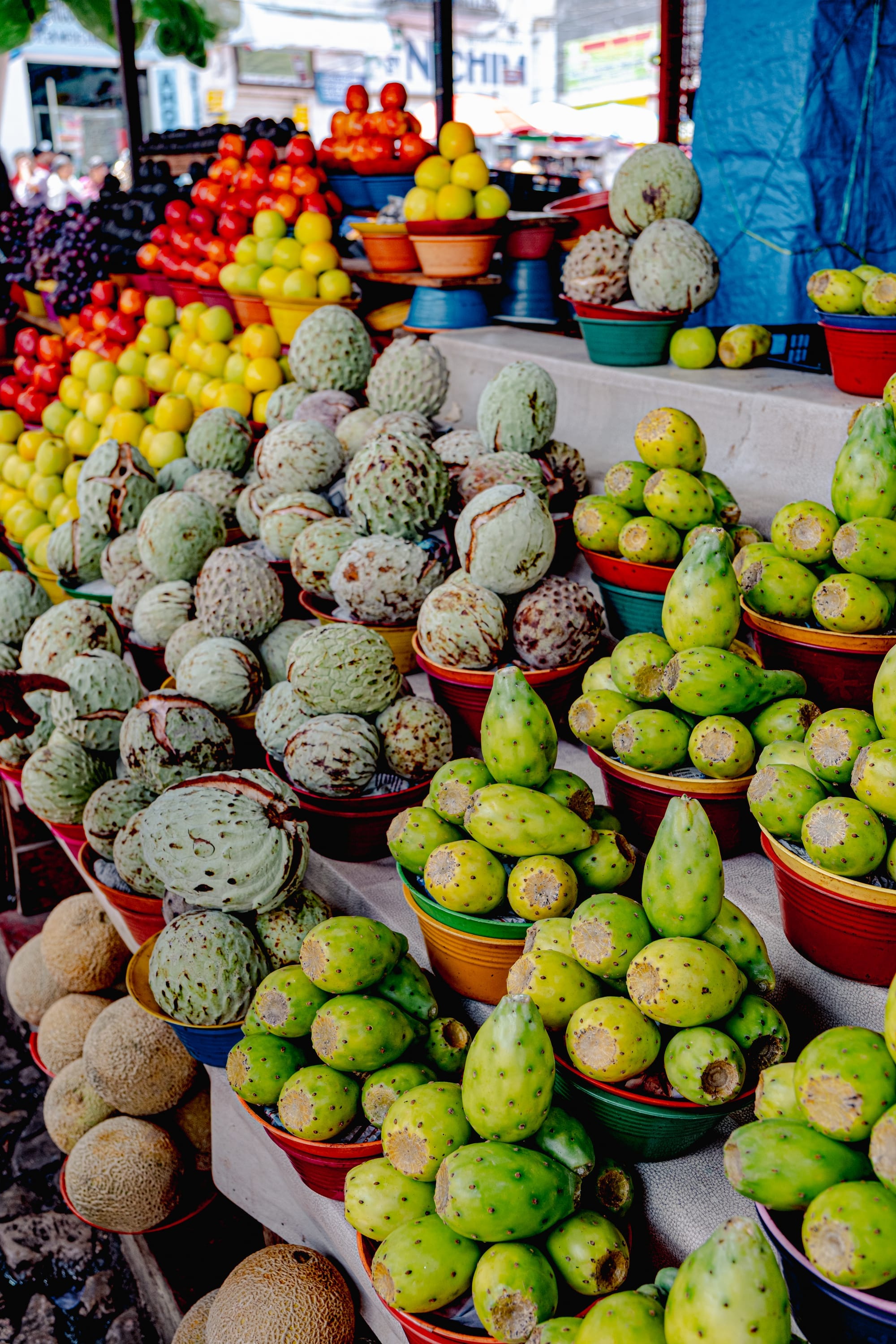
Fruit for sale at Santo Domingo Market
We had never seen fruit like this. These fruits grow at this altitude, in this soil, and are picked and sold by local hands.
What to buy at the mercado in San Cristóbal de las Casas
Here's what we'd look for at each market:
Food market: native corn in different colors, beans, dried chiles, herbs like hoja santa and epazote, fruit you won't find at home (guanábana, chicozapote, pitaya), local coffee, and cacao sold in rough blocks for making your own drinking chocolate.
Crafts market: backstrap-loom textiles from highland towns, embroidered blouses (huipiles), woven belts, bags, shawls, and ceramics. Look at the work at the Centro de Textiles del Mundo Maya first so you can tell handwoven from machine-made.
Amber: Chiapas amber comes from around Simojovel. Wikipedia warns that plastic and glass fakes are sold on the street, and a very low price is a warning sign. Buy serious pieces from an established shop.
Skip: anything made from leather or bone if you're shopping vegan. Textiles in cotton and acrylic are easy to find; wool shawls and skirts are common too, so check the fiber.
Chiapas textiles by village: what to look for
Each highland town has its own way of dressing, and many vendors at the Santo Domingo crafts market come from those towns. Knowing a few styles helps you ask better questions and spot the real thing. This is a starting point from Wikipedia's guide to Chiapas handcrafts, the SFO Museum's Jolom Mayaetik exhibition, and Mexican Textiles. Styles change over time, so treat it as a guide, not a rulebook.
| Town | Language | What it's known for |
|---|---|---|
| Zinacantán | Tsotsil | Dark blue, purple, and green clothing covered in embroidered flowers. Ponchos, capes, and shawls; colors and embroidery have changed a lot in recent decades. |
| San Juan Chamula | Tsotsil | Black and white sheep's wool woven on backstrap looms: skirts, shawls, and wool dolls. |
| Tenejapa | Tseltal | Brocaded huipiles in red, yellow, blue, green, and white, with designs that show where the wearer is from. |
| San Andrés Larráinzar | Tsotsil | Brocade and embroidery on a white woven background, and ceremonial huipiles. One of the oldest weaving traditions in the region. |
| Magdalenas (Aldama) | Tsotsil | Ceremonial huipiles made for saints' fiestas, among the most elaborate Maya textiles. |
| Oxchuc | Tseltal | Huipiles with red or purple and white stripes and embroidered rays around the neckline. |
| Pantelhó | Tsotsil and Tseltal | Traditional red and white striped huipiles; newer blouses in bright pinks, greens, and purples. |
| Aguacatenango | Tseltal | Embroidery with four-petaled flowers copied from the facade of its 17th-century church. |
| Amatenango del Valle | Tseltal | Not textiles: pottery made by women and fired over an open fire, often jaguars and doves. |
| Chiapa de Corzo | Spanish | Lacquered gourds, bowls, and wooden masks. |
| Simojovel | Tsotsil and Spanish | Amber. The area around Simojovel produces most of the state's amber. |
If you want to see these towns in person, the markets in San Juan Chamula and the villages near it are a short trip from the city.
How to tell handwoven from machine-made
Plenty of what's sold in San Cristóbal is machine-made or machine-embroidered, and that's not always a bad thing: many highland women now wear machine embroidery themselves. Just pay the right price for what you're getting. A few checks:
- Turn it over. Hand embroidery and brocade look a little uneven on the back, with knots and loose threads. Machine embroidery is perfectly regular and sometimes backed with a stiff stabilizer.
- Look at the edges. Backstrap-loom cloth is narrow and usually has finished edges, and wide pieces are made from several panels sewn together.
- Check the motifs. Hand-brocaded designs repeat with small differences. Identical, flawless repeats across a whole piece usually mean a machine.
- Ask. Ask who made it, in which town, and how long it took. Weavers are usually glad to tell you, and a vague answer tells you something too.
Fair-trade textiles and Indigenous cooperatives
Buying straight from the woman who made a piece, at the Santo Domingo market or in her own town, puts the most money in her hands. Cooperatives are the other good option: prices are fixed and higher, but quality is checked and the weavers set the terms. A few long-running ones:
- Sna Jolobil: founded in 1976 and the oldest artisan organization in the Chiapas highlands, with more than 800 weavers from about 20 communities (Feria de Maestros). Its shop is listed at Calzada Lázaro Cárdenas 42, next to Santo Domingo, but some listings say it has closed, so check before you go.
- J'pas Joloviletik: a weavers' cooperative founded in 1984, with about 800 artisans in 23 communities, working with towns such as San Andrés Larráinzar.
- Jolom Mayaetik: a women's weaving cooperative founded in 1996, which also runs courses and campaigns for Indigenous women's rights.
- TierrAdentro: the cultural center on Real de Guadalupe has shops selling work from Zapatista cooperatives, including the women's cooperative Mujeres por la Dignidad, according to Wikivoyage.
Natural dyes, wool, and brocade take far longer than acrylic and machine embroidery, so expect them to cost more. A shawl that took weeks on a backstrap loom is never going to be cheap, and it shouldn't be.
Bargaining etiquette at the crafts market
Haggling is expected at the Santo Domingo crafts market, but it's a conversation, not a contest. What works:
- Ask the price first ("¿cuánto cuesta?") and look at a few stalls before you buy anything big.
- Counter with a fair offer, not half. A small discount is normal, and buying two or three pieces from one stall is the easiest way to get one.
- Don't haggle over small things like bracelets, food, or a few pesos. The difference matters more to the seller than to you.
- If you agree on a price, pay it. If you don't want it, say "gracias" and move on with a smile.
- Cooperatives, shops, and the Mercado de Dulces have fixed or near-fixed prices, so don't push there.
Inside the market hall of Santo Domingo
Further in, under a corrugated metal roof, the light dims. The indoor stalls are the permanent ones, and it shows. Footsteps are muffled on the damp concrete floor, and the air is thick with spice. Strings of dried chiles hang from the beams like rosaries: ancho, guajillo, pasilla, and cascabel, each with its own shade of red and its own level of heat.
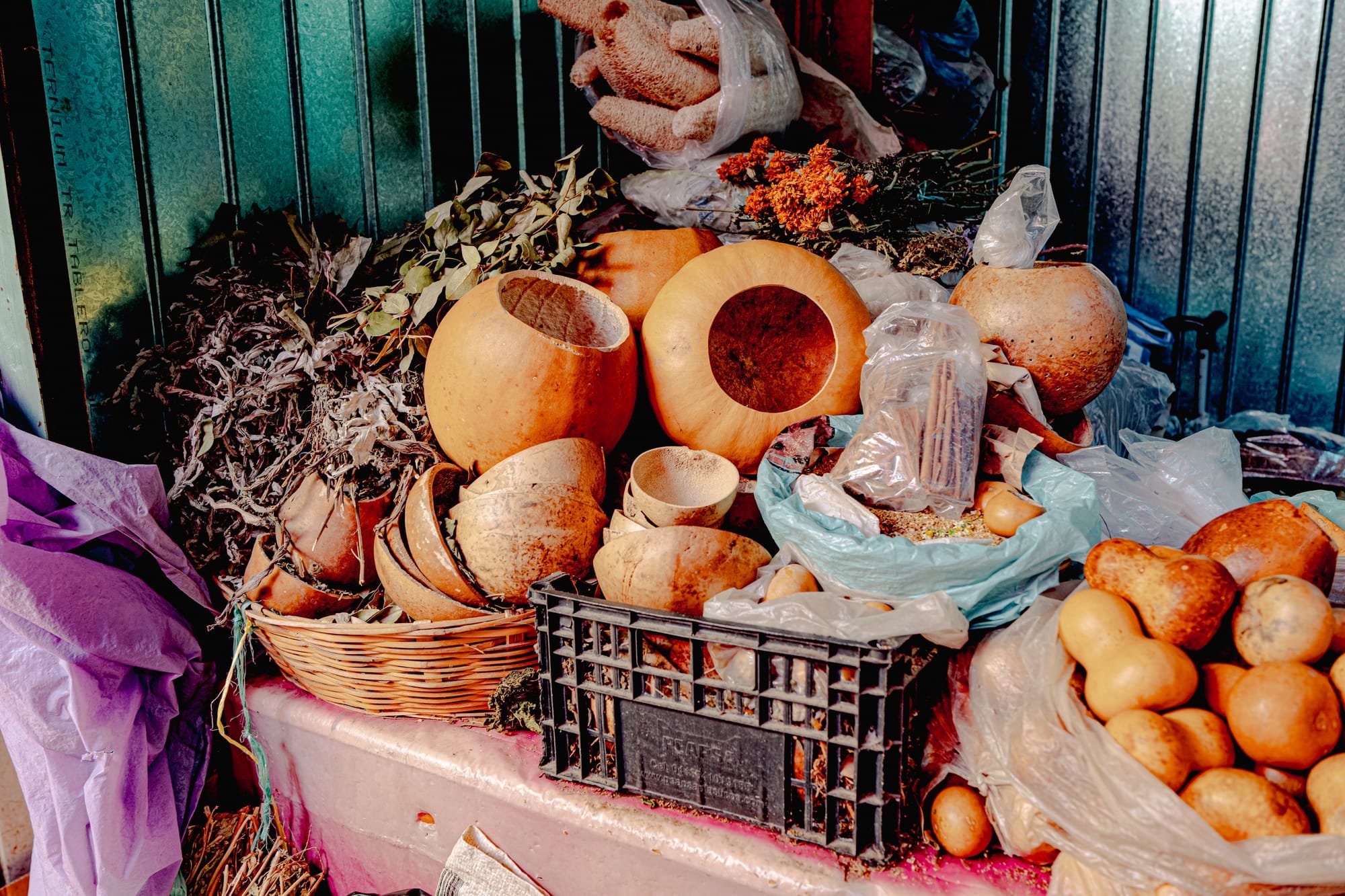
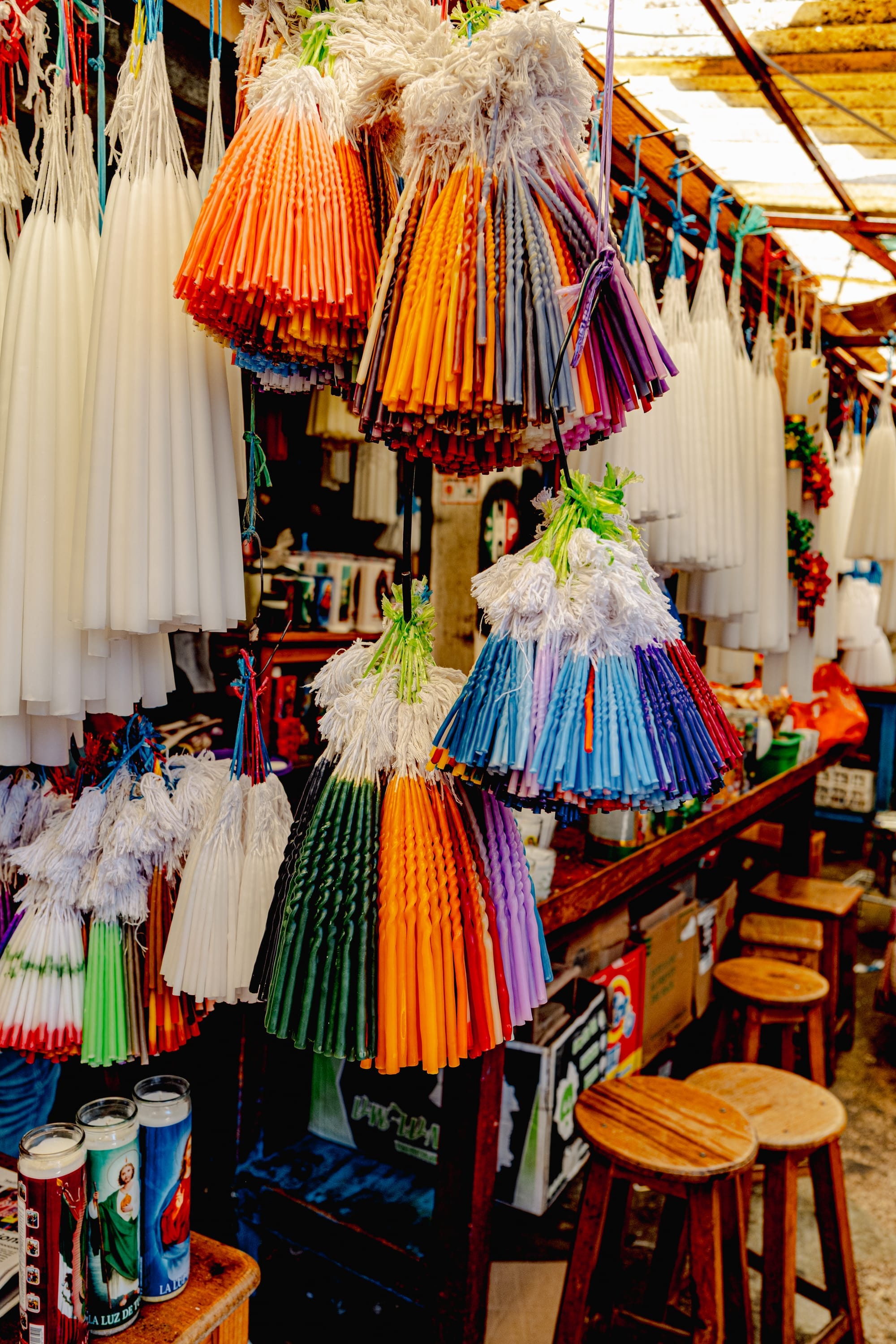
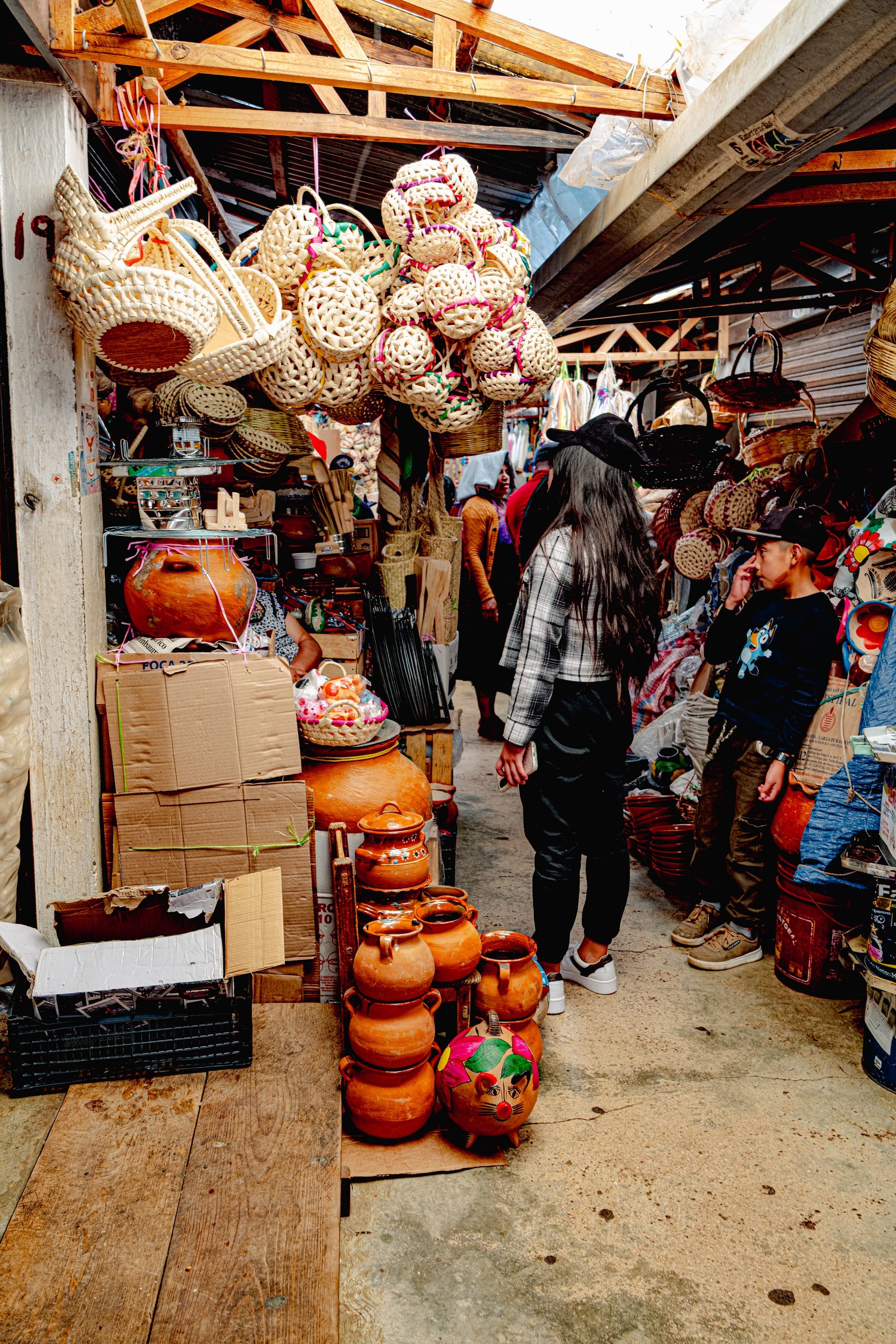
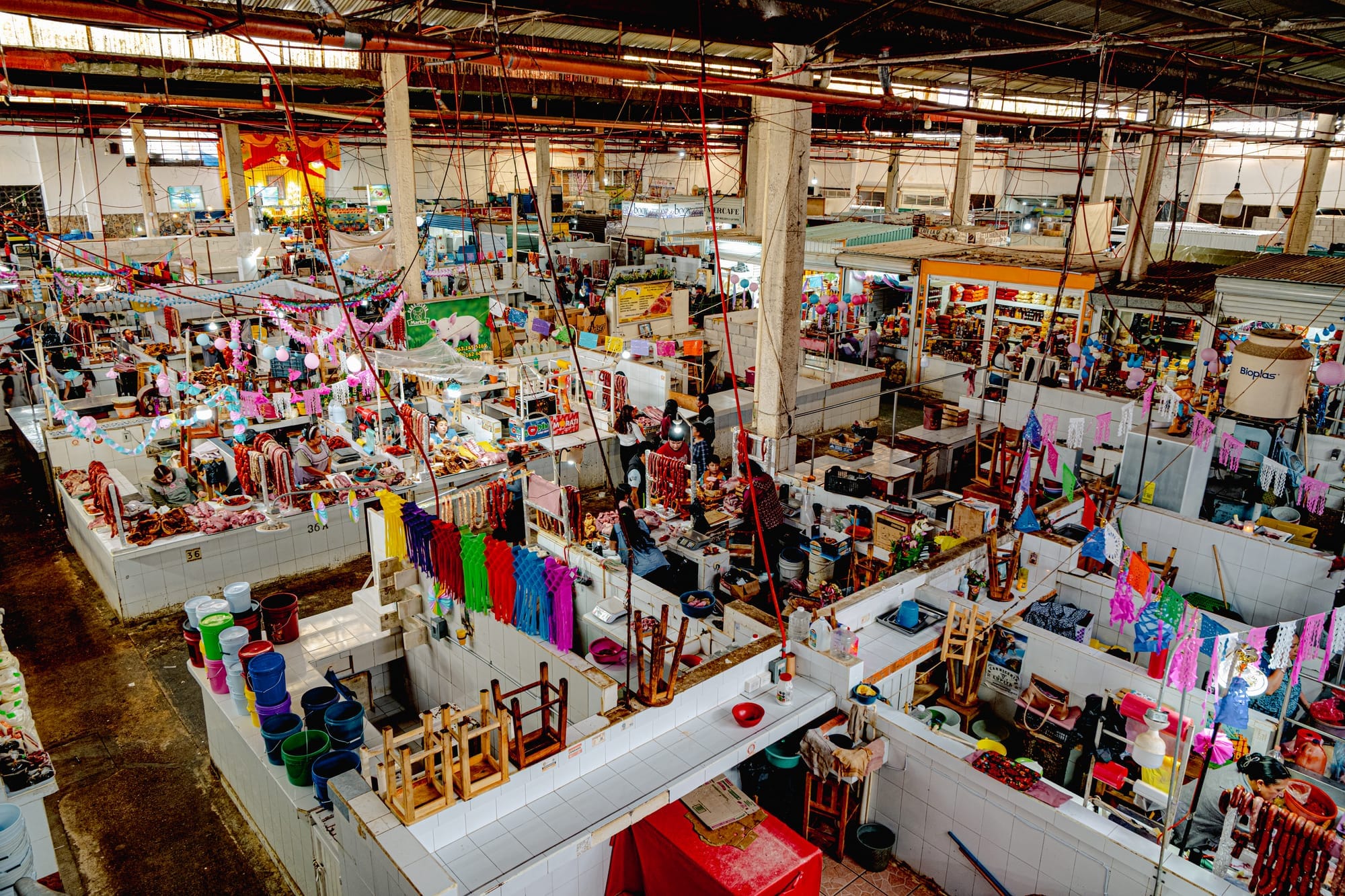
Scenes from inside Santo Domingo Market showing gourds, candles, baskets, and the bustling main hall
To one side, women stack rounds of queso de bola and queso fresco, their surfaces powdered with salt. Next to them, jars of honey shine amber in the filtered light. Across the aisle, sacks of beans, rice, and lentils are weighed on old metal scales.
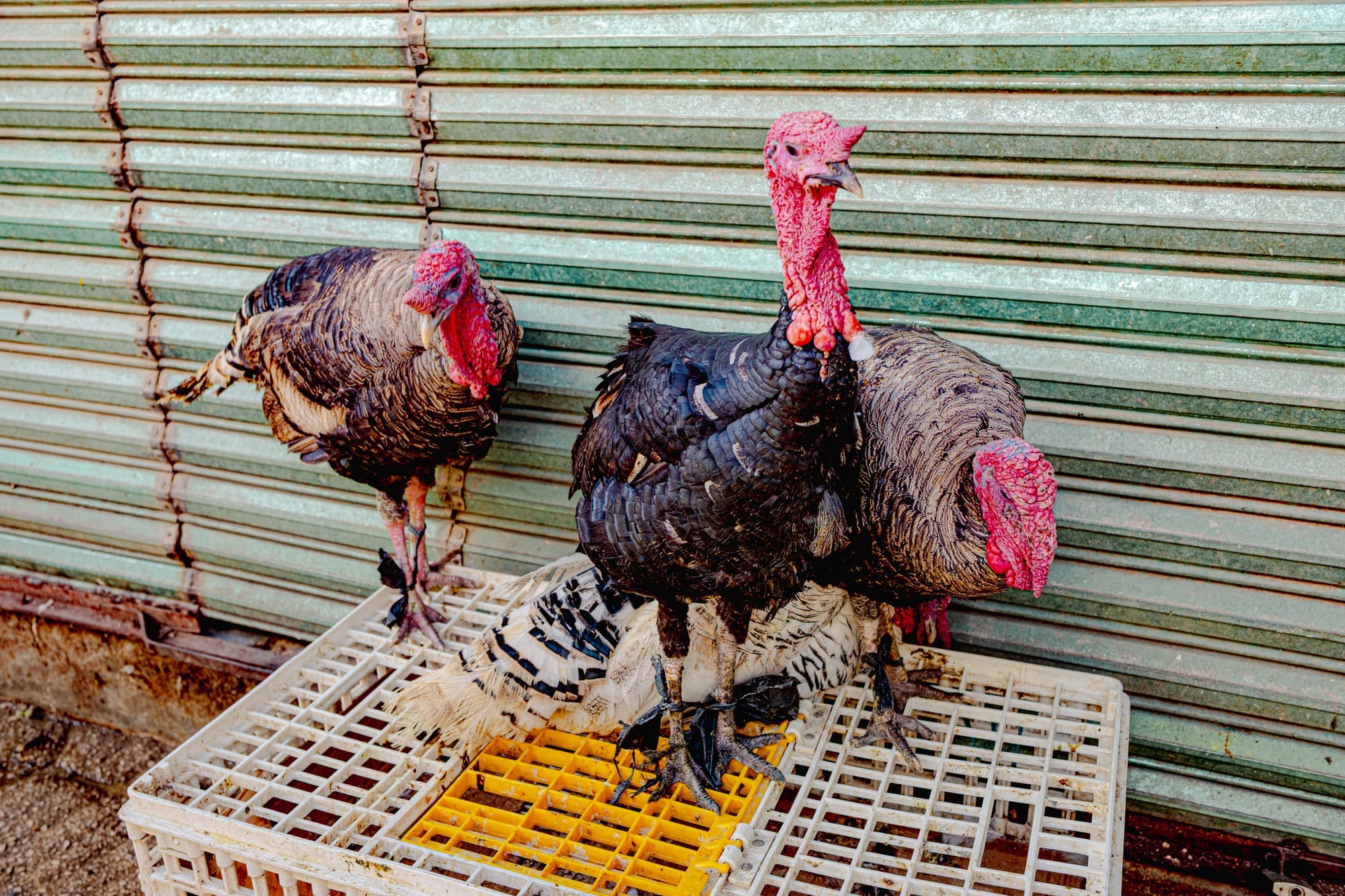
Some parts of the market were hard for us, though. Rows of chickens hung upside down from hooks, their yellow feet bound, their bodies still. Tables of meat and offal shone under the same light that fell on the fruit and beans. As vegans, we felt the gap between our choices and the lives of the people around us: for many here, meat is both food and income. We chose to sit with that discomfort rather than look away, and to see it as part of the same system, a place where everything grown, taken, or made goes back to the soil in the end.
Street food at the market: roasted corn and tamales
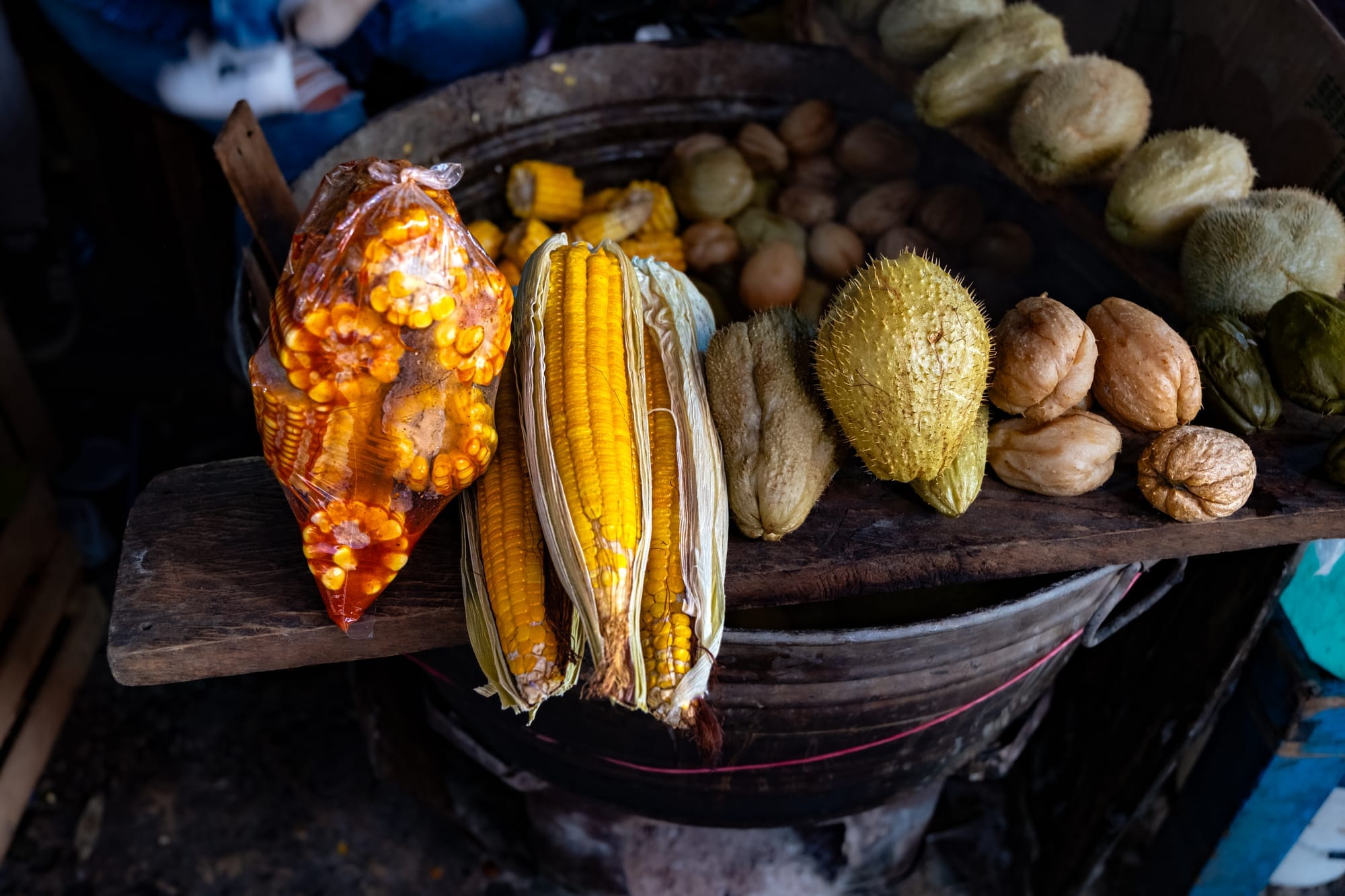
Back outside, the smoke is waiting. It comes from makeshift stoves built from metal drums and bricks. Women crouch beside them, turning ears of corn over an open flame. The kernels pop and blister, and the smell drifts into the street. They brush the roasted corn with lime and salt, sometimes with chili, sometimes with mayonnaise. Kids hover nearby, waiting for their turn.
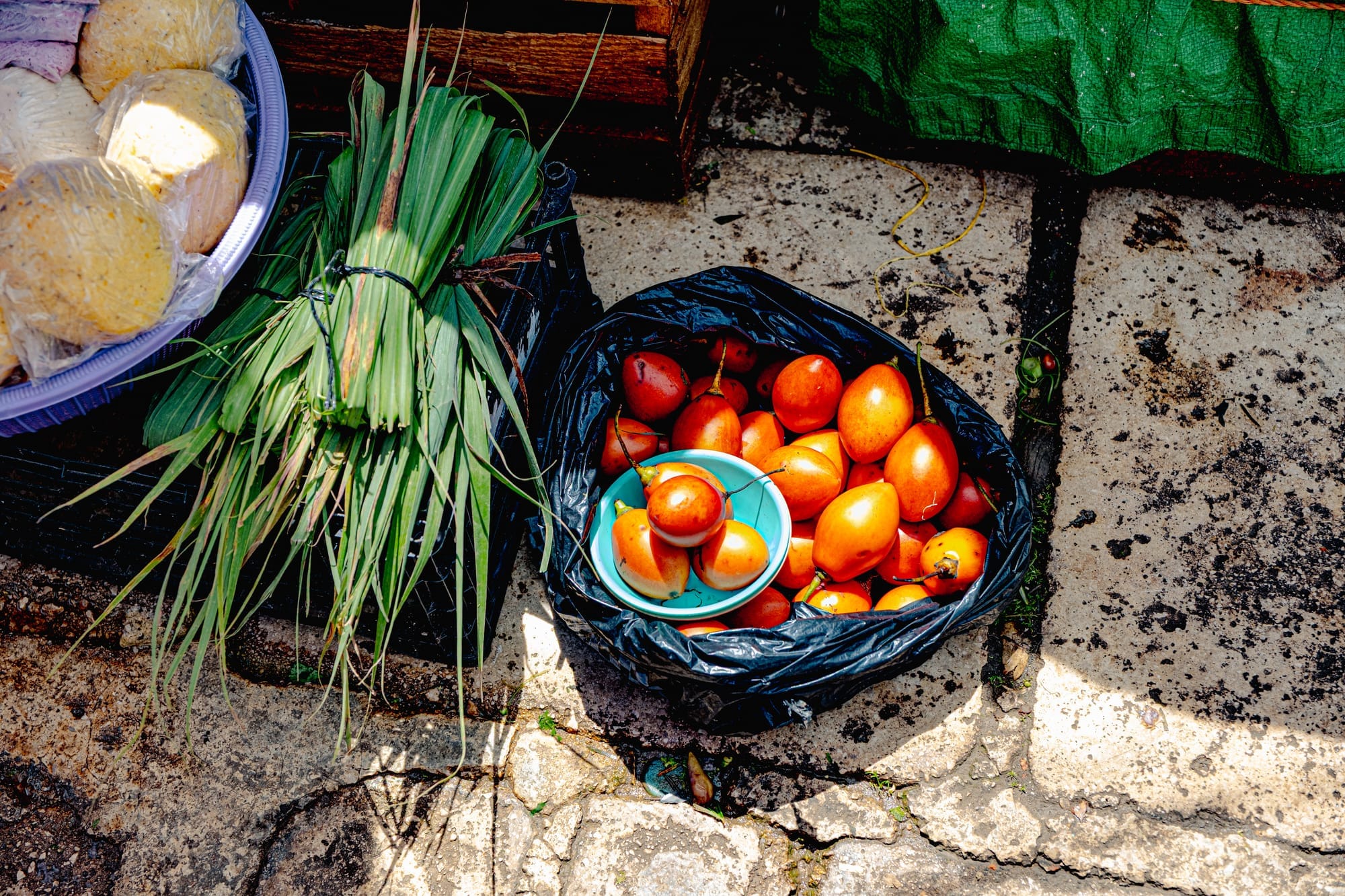
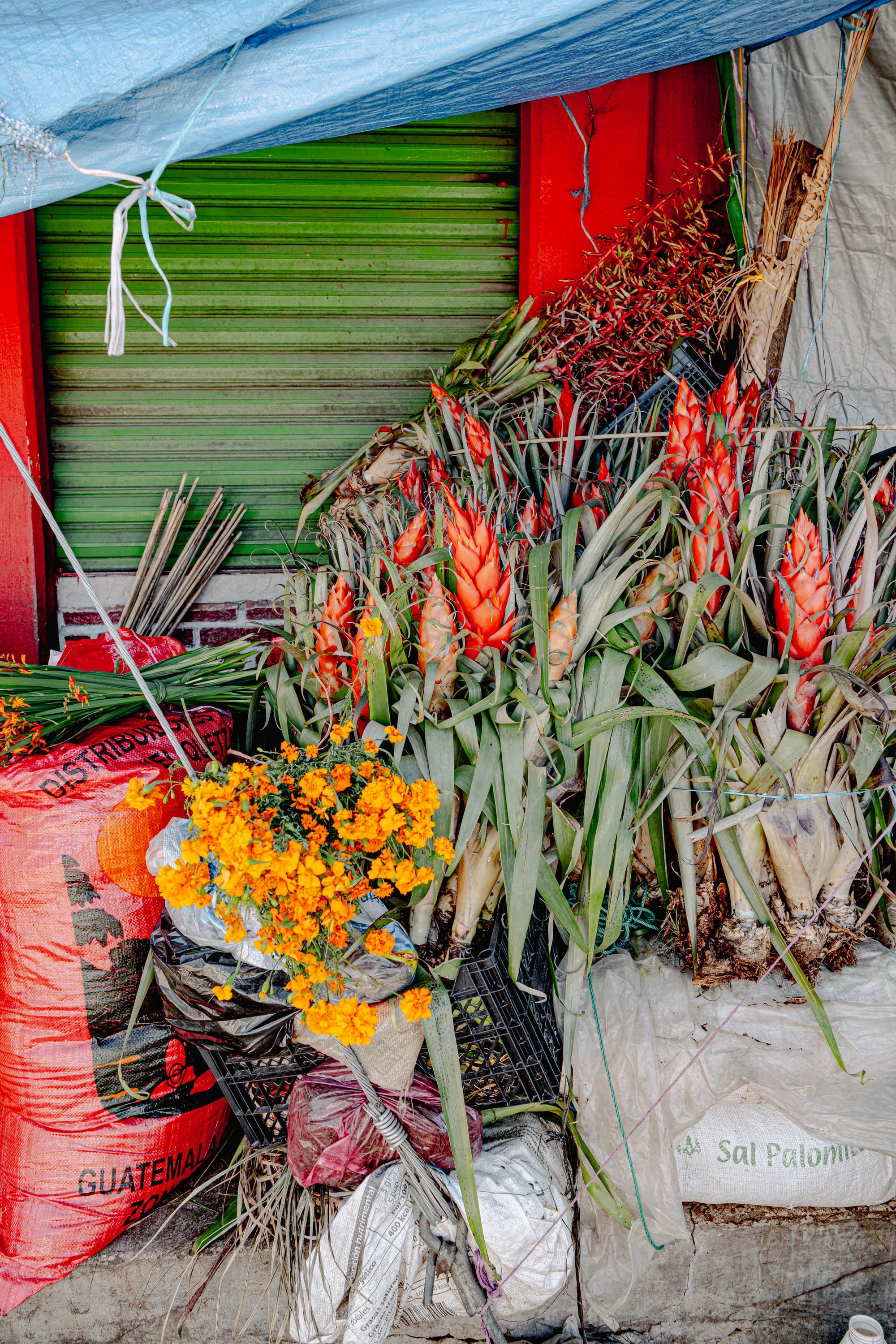
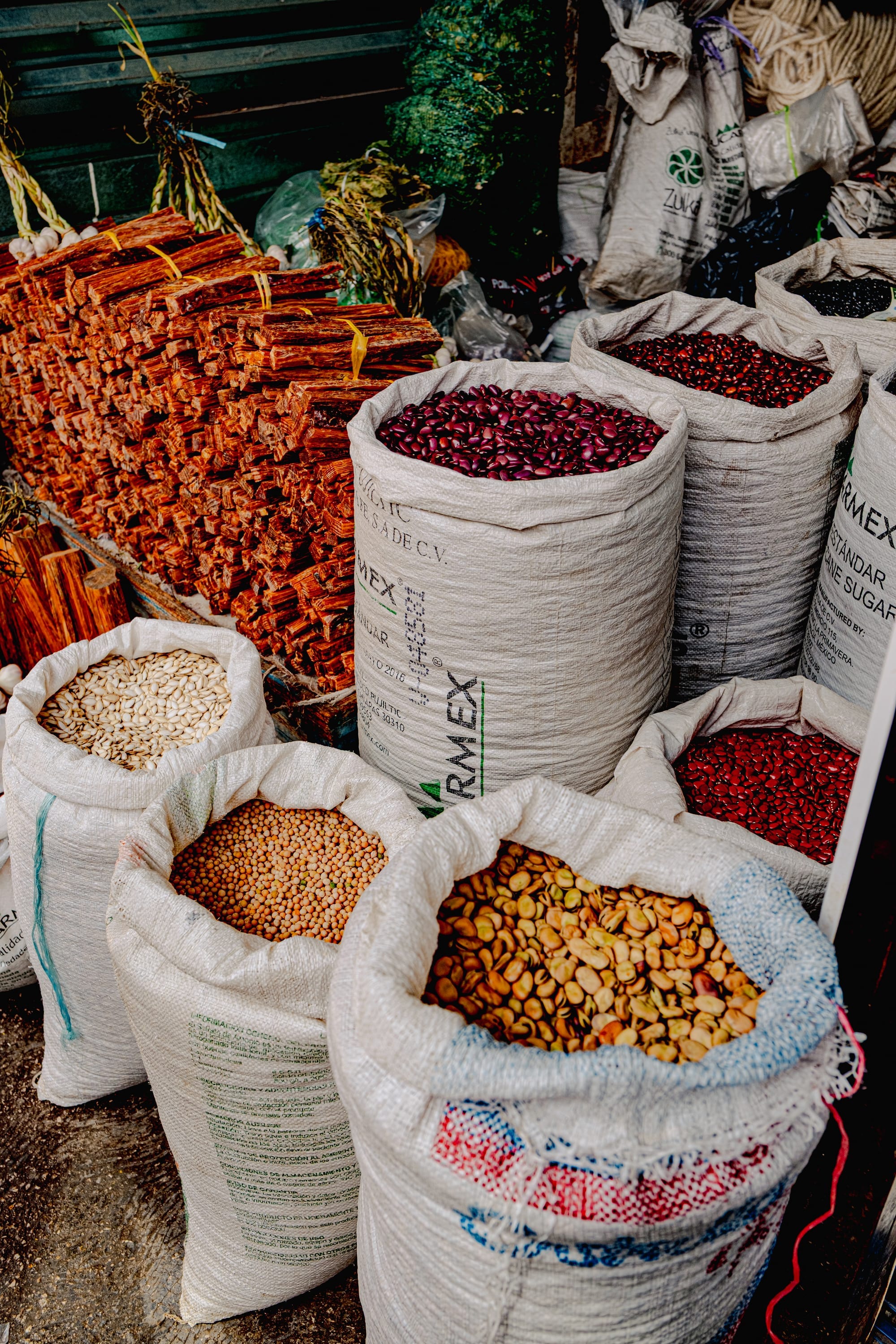
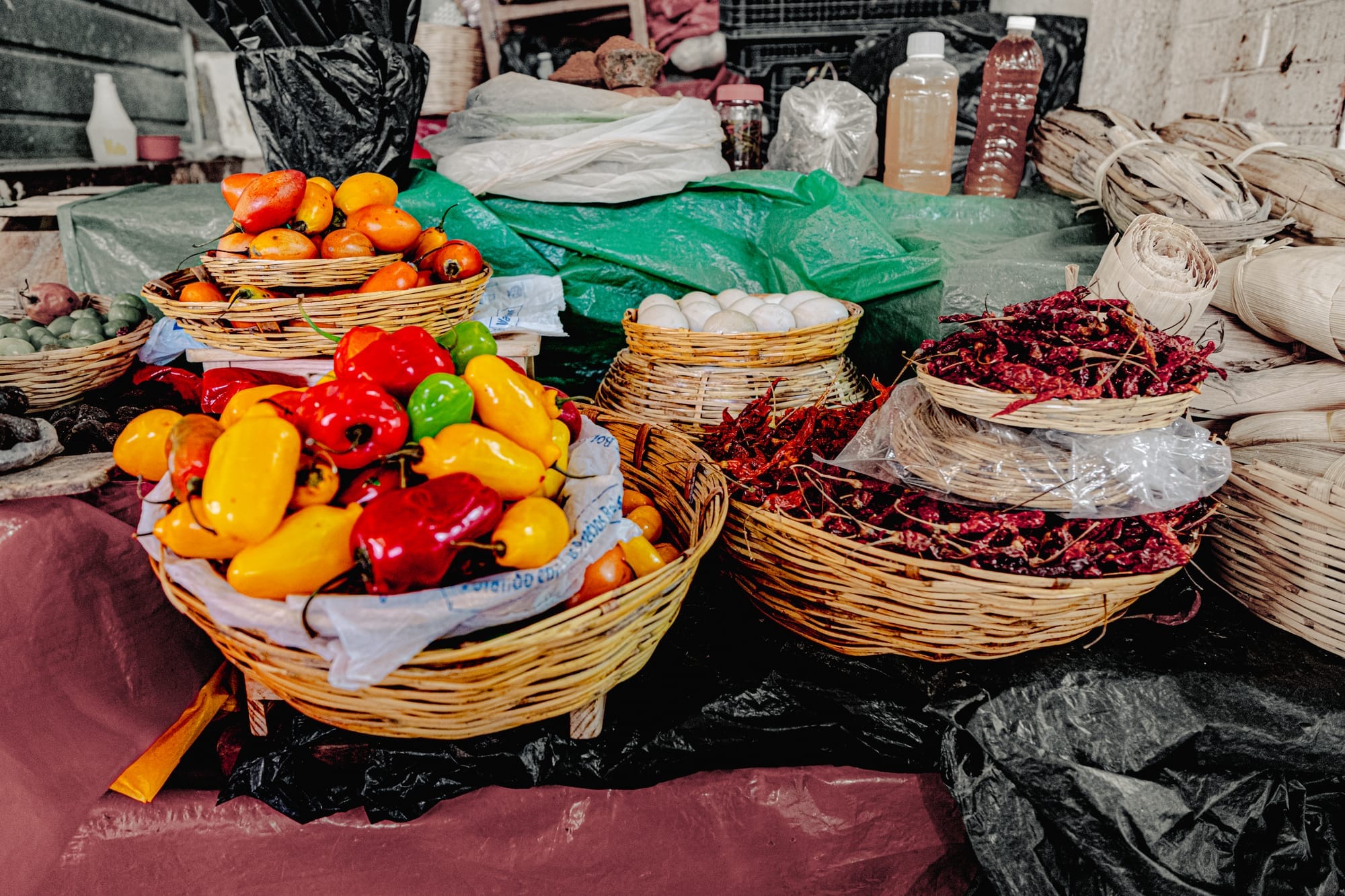
Fresh produce for sale at Santo Domingo Market
Across the way, tamales steam in aluminum pots, wrapped in leaves and husks: mole negro, bean, and elote. Each one you unwrap tastes of where it came from: soil, sun, water, and the hands that made it. Nearby, rounds of bread sit golden under a plastic sheet, and you can smell fresh guava empanadas.
Vegan food at the San Cristóbal market
Eating vegan at the food market is easier than the meat stalls suggest. These are the things we'd look for:
Tamales: bean, elote (sweet corn), and squash-blossom tamales are common. Masa is often made with lard, so ask "¿sin manteca?" or "¿es vegano?" before you buy.
Roasted corn: ask for it with just lime, salt, and chili, and skip the mayonnaise and cheese.
Pozol: the cold drink of fermented corn and cacao is usually plain corn, cacao, and water.
Fresh fruit and juices: buy whole fruit by weight or a cup of cut fruit with lime and chili.
Vegan cornbread: our favorite thing at the market.
More vegan things to try at the market
- Fresh tortillas: made from corn cooked with cal (slaked lime), then ground with water. Ask for a few warm from the comal.
- Atole: a warm corn drink. Market stalls often make it with water, but some use milk, so ask "¿con agua o con leche?"
- Tascalate: a Chiapas drink of toasted corn, cacao, and achiote. Recipes vary, so ask if it's made with water.
- Esquites: corn kernels in a cup. Ask for them without mayonnaise or cheese, and ask what the cooking broth is.
- Cacao and coffee: buy a block of local cacao to make drinking chocolate at home, or a bag of highland coffee.
For sit-down vegan meals near the market, see our vegan San Cristóbal de las Casas guide. Our cooking teacher Itzel also shared where to find the best produce in the market during our vegan cooking class.
The work here happens in plain sight. Every movement comes from know-how, and the whole market runs on that unseen economy of skill, passed down for generations. It’s both ordinary and sacred.
The colors of Santo Domingo Market
The colors at the Santo Domingo food market aren’t there for decoration. They come from what people grow to survive: the greens of cilantro and chayote, the gold of corn and cempasúchil, the violet of beans, and the crimson of dried chiles. Even the tarps overhead make a stained-glass canopy of plastic blues and oranges.
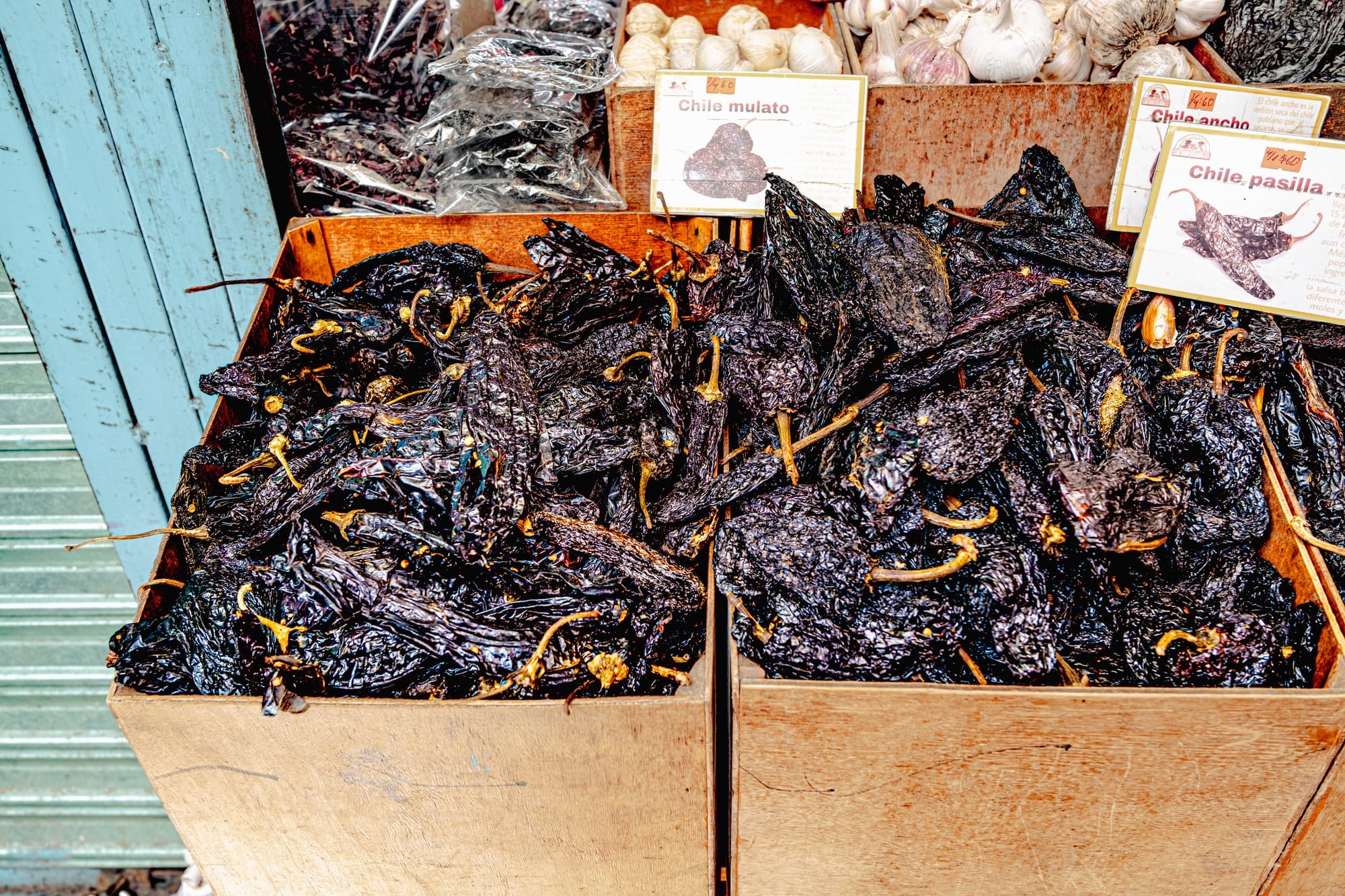
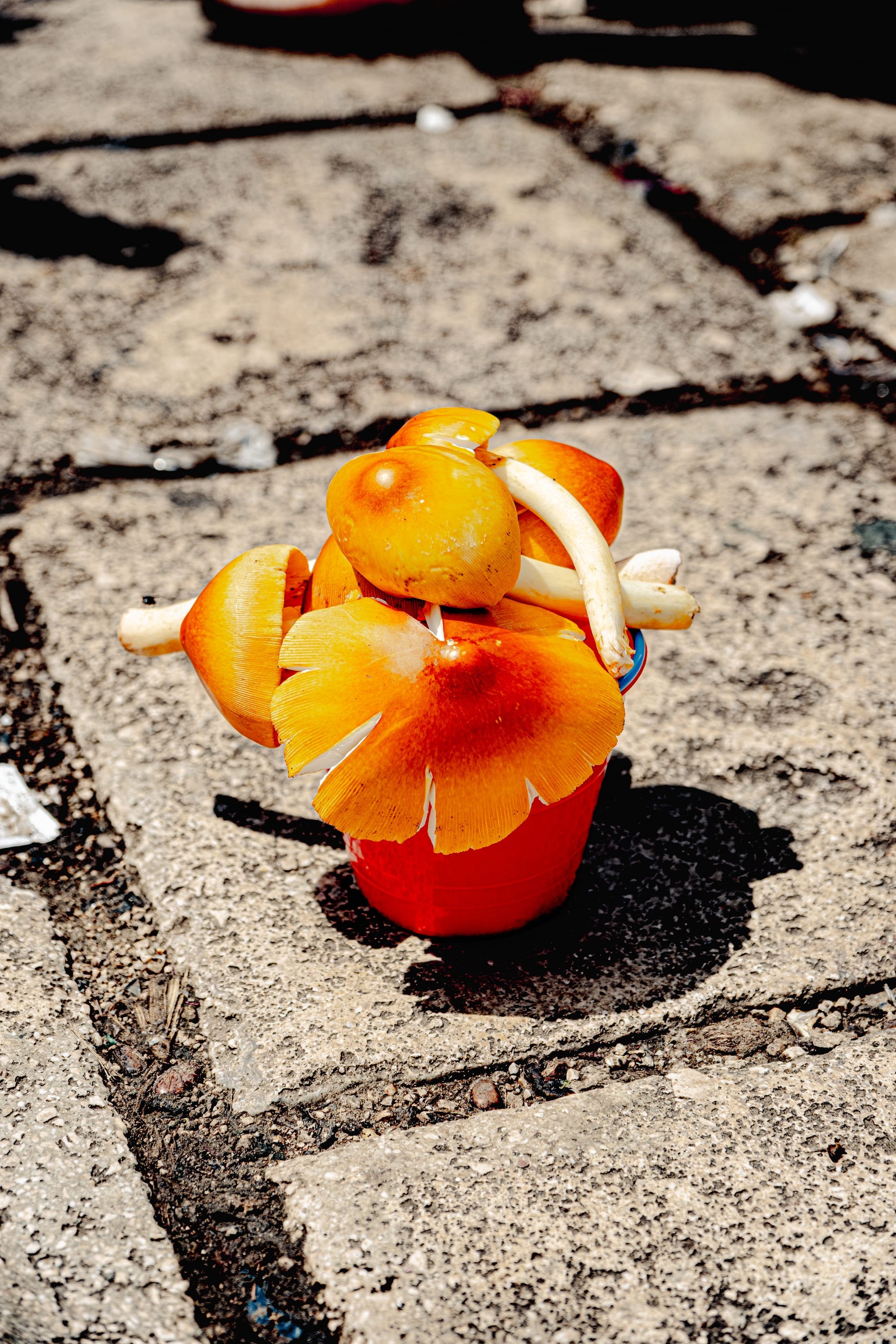
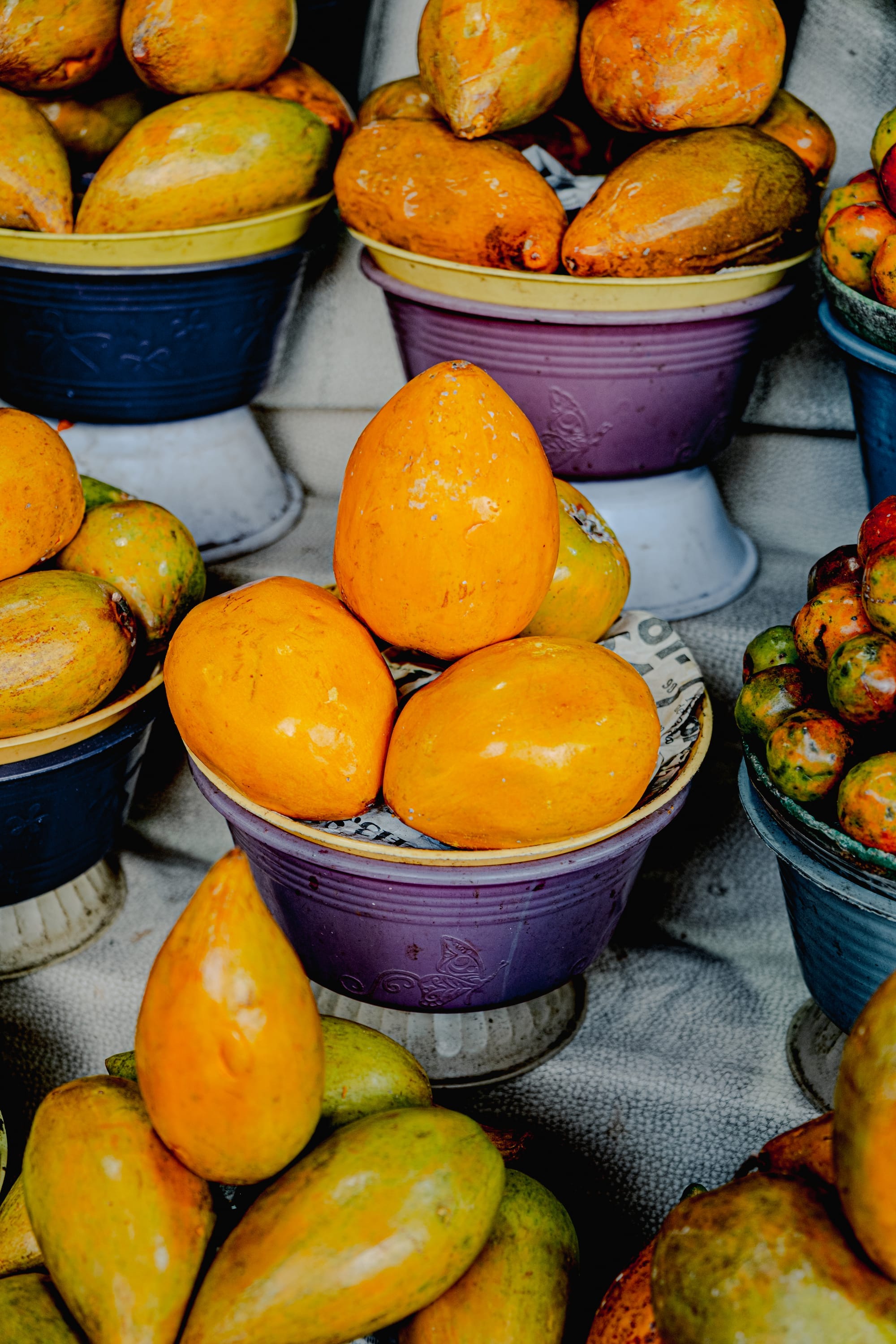
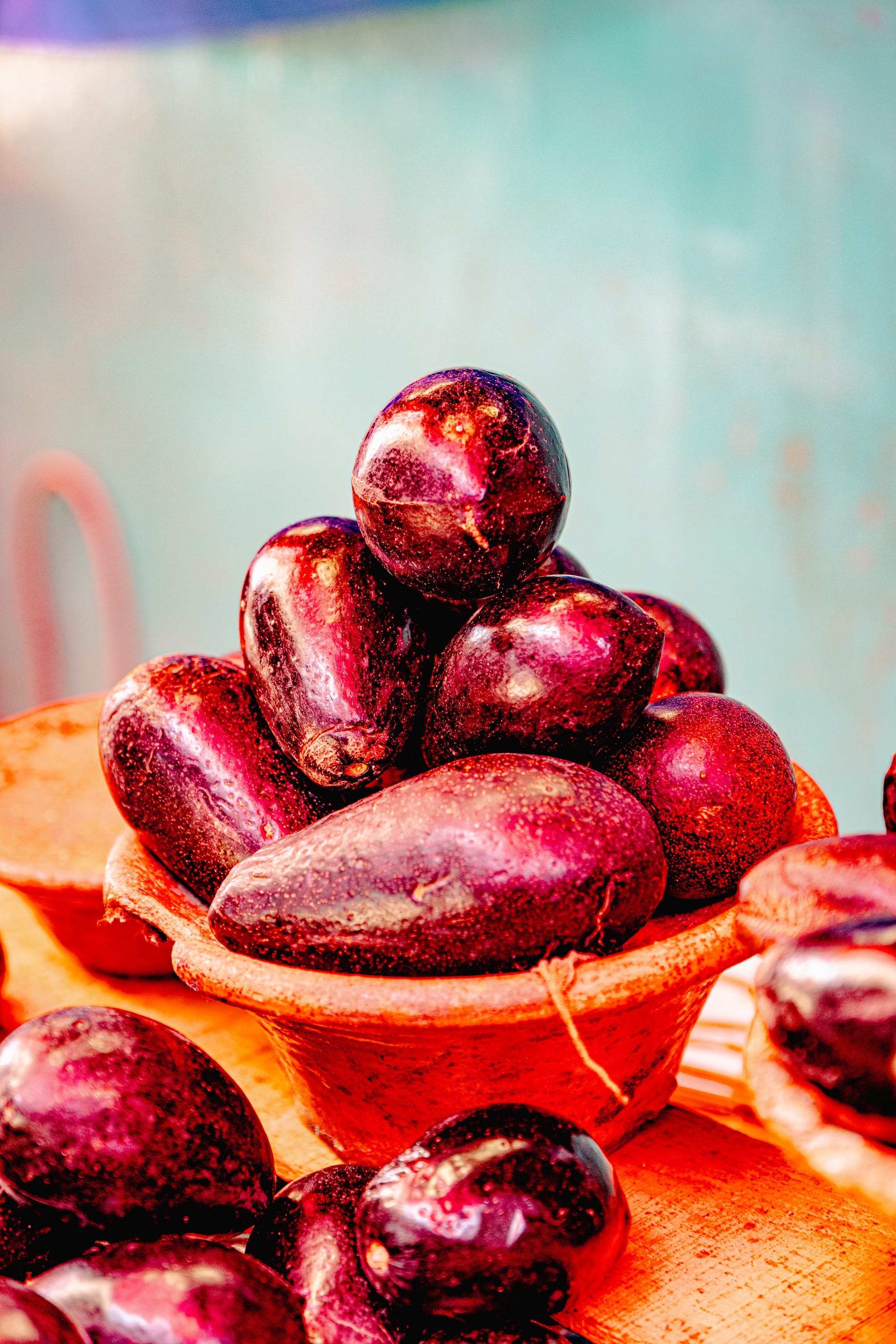
Chili, mushroom, eggfruit, and avocado at Santo Domingo Market
A pile of beans looks like a mosaic. A basket of guavas glows as if lit from inside. Here, beauty and making a living always go together. It comes naturally from care, from closeness, and from the simple act of feeding people and being fed.
The market in the afternoon
By early afternoon, the light turns heavy and the pace drops. The air smells of fruit fermenting in the heat. Vendors fan themselves with cardboard. Someone sprinkles water over the greens to keep them fresh. Tarps snap in the wind. The crowd thins as locals head home with their baskets and travelers wander around without a plan.
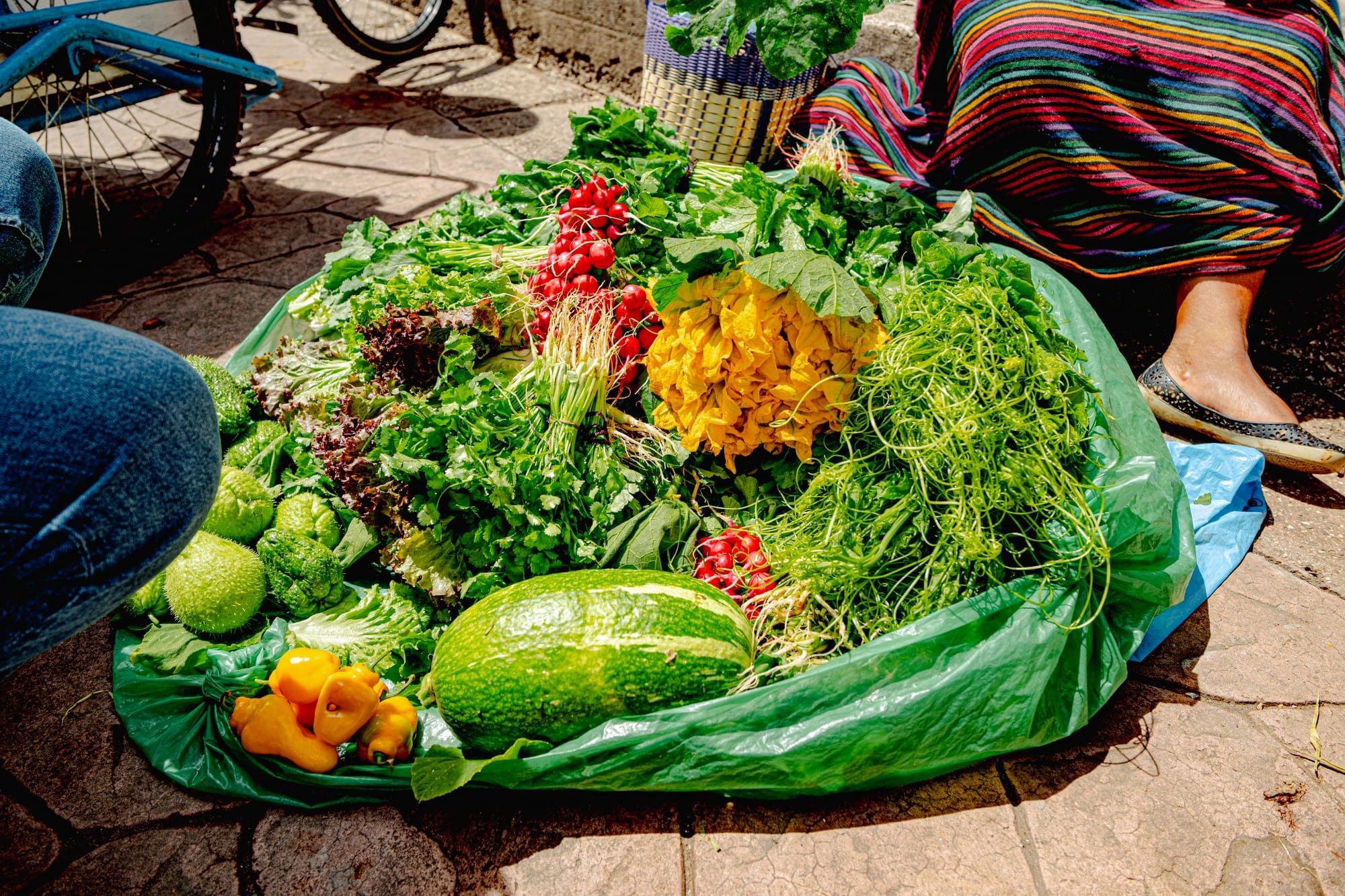
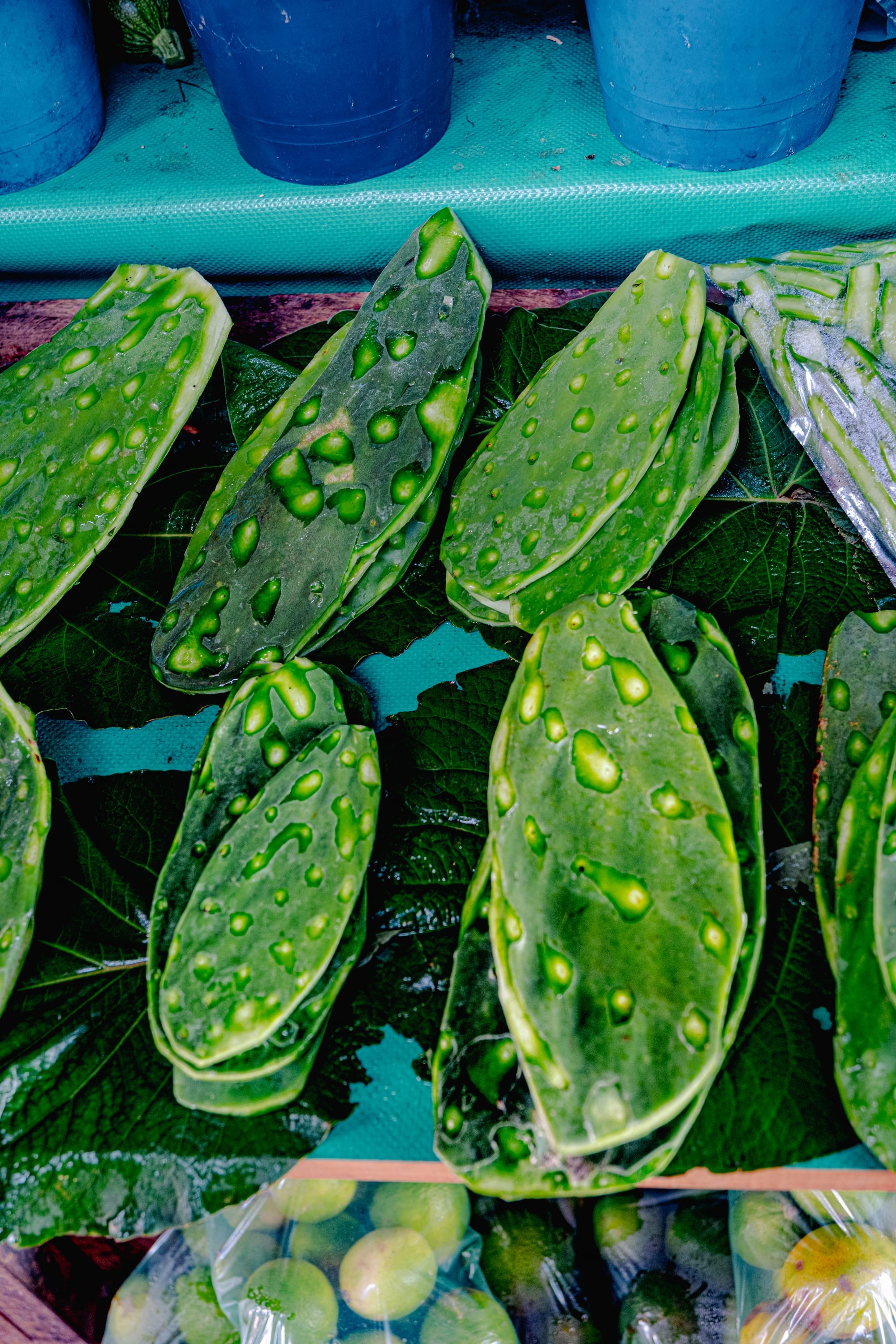
Fresh greens, herbs, and nopal cactus pads for sale at Santo Domingo Market
A woman next to us trims nopal pads with a knife, her hands stained green but steady.
Why this Chiapas market matters
Santo Domingo Market is an economic space, and it’s also a living record of local food. Each stall shows what the land can give, what it once gave, and what might not come back. The food system here is still small and personal, held together by attention and give-and-take. You can still trace a mango back to a face, a bean back to a hillside, and a tortilla back to a pair of hands.
For more ways to meet local growers, cooks, and makers, see our cultural immersion experiences. For more experiences like this, see our cultural travel guide.
That closeness is fragile. Plastic wrappers and imported goods are starting to show up: sodas, instant noodles, and prepackaged snacks. They sit beside the corn and guava like small warnings. The old ways hold on, though. Women still measure rice by eye, not by scale. Kids still learn to grind nixtamal on volcanic stone. The market holds both the new and the ancient, what’s holding up and what’s under threat.
Corn, especially, stands for resistance. In the surrounding communities, the Zapatistas still talk about autonomy through maize. The right to plant, to feed yourself, and to share grain without asking permission is a declaration of freedom.
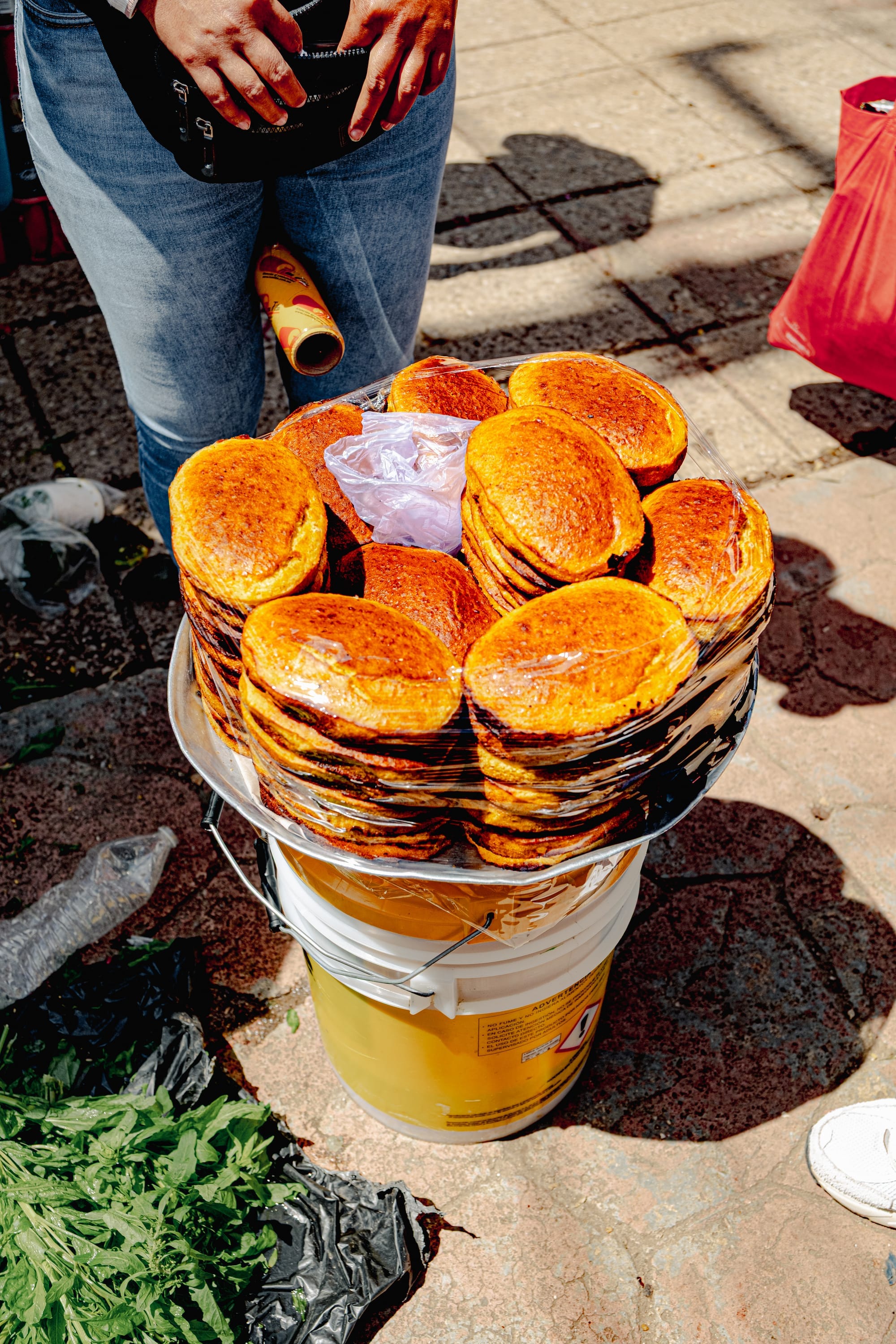
Of everything we tasted at Santo Domingo, the vegan cornbread became our favorite. Warm, dense, and just sweet enough.
Closing time at the market
By late afternoon, things wind down. Vendors tie plastic bags, wrap fruit in newspaper, and stack empty buckets. A boy sweeps husks into small piles. The smoke thins to a blue haze, and the low sun turns the air amber.
Tips for visiting the markets in San Cristóbal
A few things make a market morning easier:
Go early. The food market is busiest and freshest from about 7 to 11 am. By late afternoon many stalls are packing up.
Ask before taking photos of people. Many Tsotsil and Tseltal vendors don't want to be photographed, and some will ask for a small payment. Photos of produce and stalls are usually fine if you ask first.
Photography etiquette in more detail: buy something or chat first, then ask, and accept a no. Don't photograph children, people praying in Santo Domingo, or vendors at the meat stalls, and skip the zoom lens: taking photos from a distance is still taking them without asking. In the villages the rules are stricter: Wikivoyage notes that Zinacantán bans photos of its church inside and out, and that in Chamula photographing villagers without permission can get your camera taken.
Bargain gently, at the crafts market only. Haggling is normal for textiles and souvenirs, but keep it friendly and remember how many hours go into a handwoven piece. Food prices are fixed and already low.
Bring a tote bag and small change. Vendors often can't break large notes.
Watch your bag in the crowded aisles, as in any big market.
Combine it with sights nearby: the Templo de Santo Domingo, the textile museum, and the El Cerrillo murals are all within a few blocks.
For the bigger picture (where to stay, cafés, and day trips), read our San Cristóbal guide. If you want a village market too, San Juan Chamula holds its biggest market on Sundays.
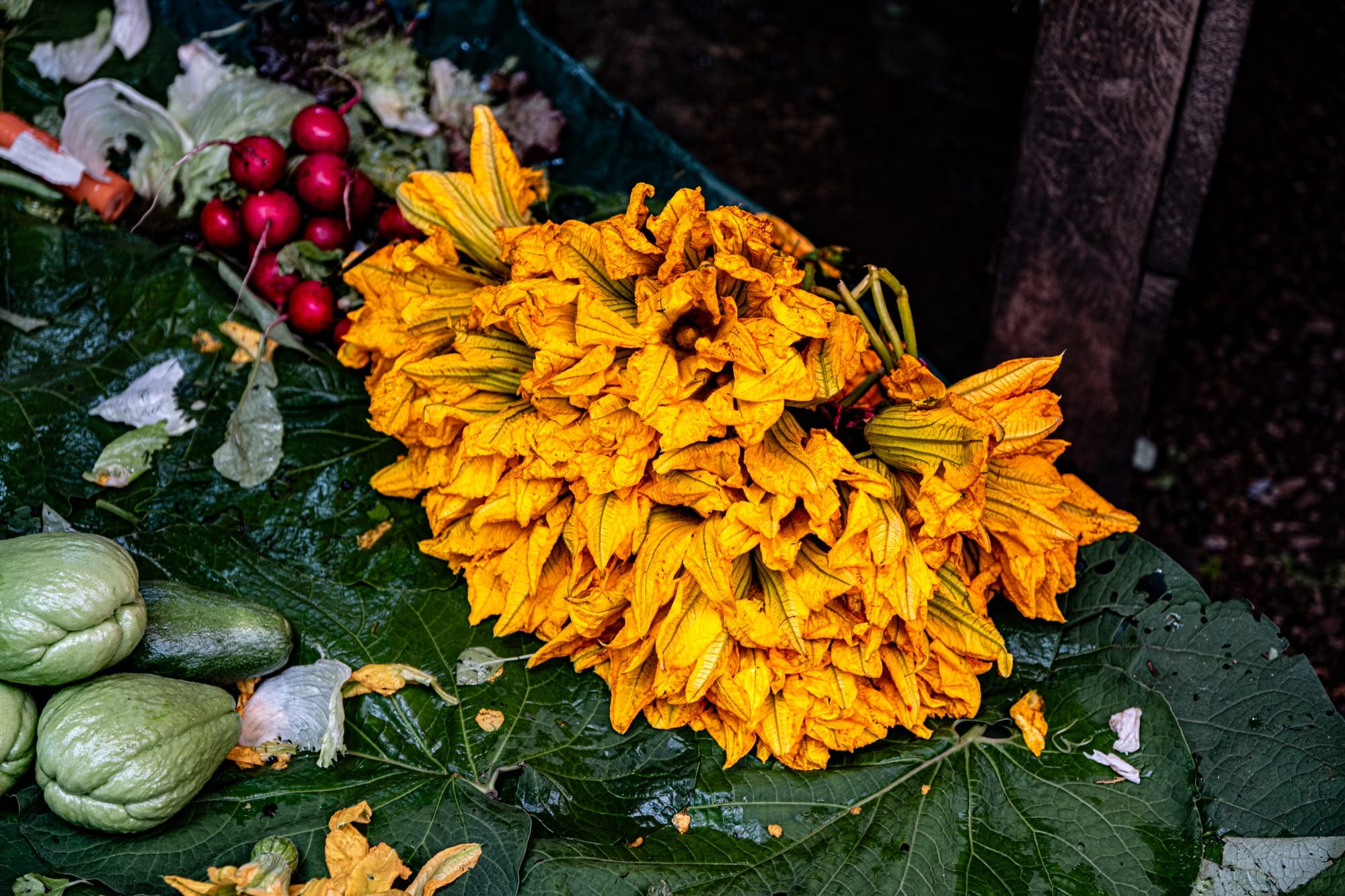
A group of women laugh over a mound of unsold squash blossoms, tired but cheerful. Someone tunes a radio between static and song. A rooster crows from behind a shuttered stall. We had been there for hours, wandering with no real plan, pulled along by all the buying and selling around us. It’s very easy to lose track of time here.
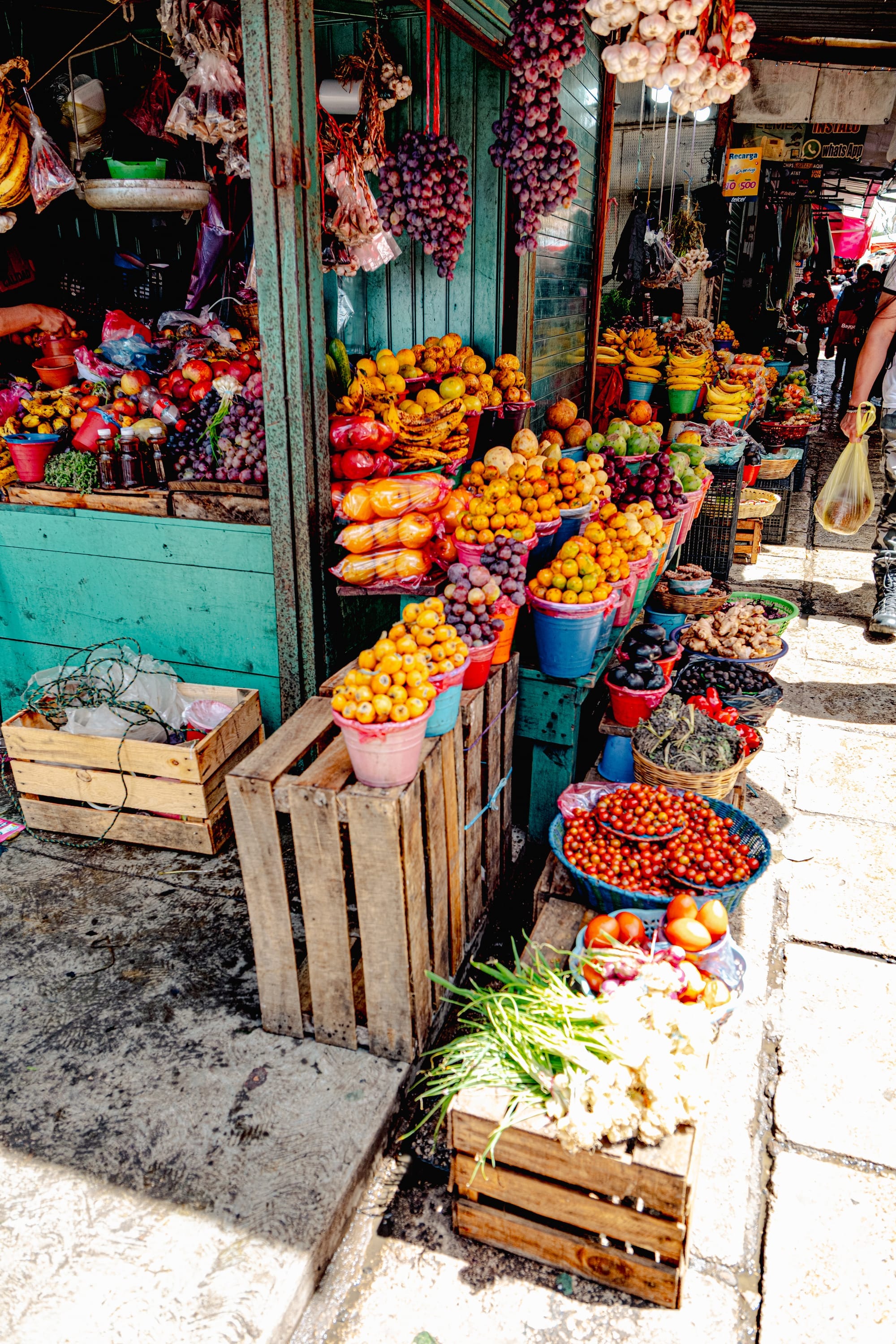
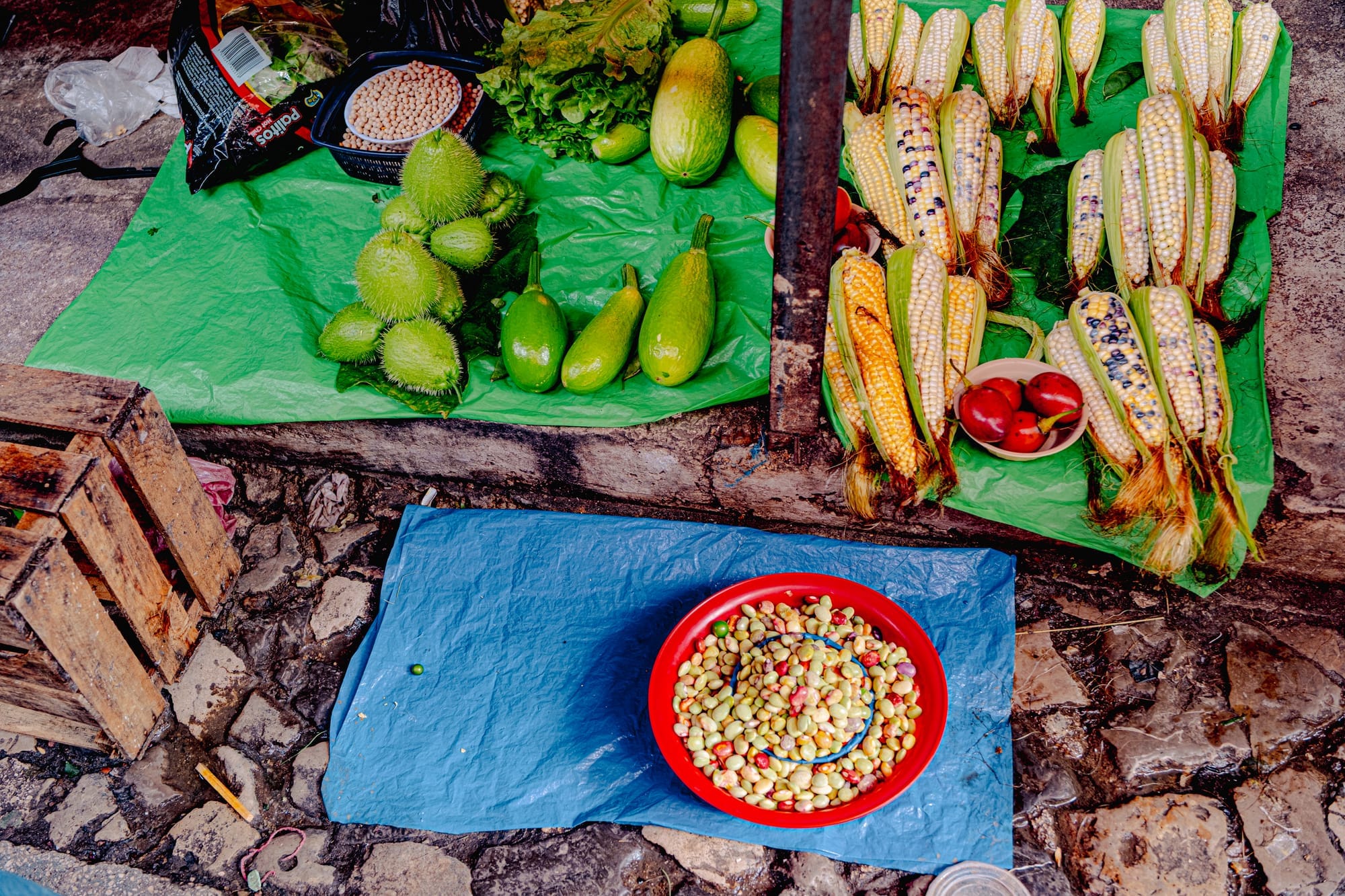
On our way out, we looked back once more. The stalls glowed in the fading light, smoke hung in the air, and the colors darkened until they were almost shadow. We thought about what we hadn’t tasted, what we couldn’t name, and what we might never see again but will always remember.
Nearby, see the Moxviquil orchid garden.
Whatever your plans, travel with insurance. Stomach bugs, a fall on a cobbled street, or a stolen phone can happen anywhere, and it's much easier to enjoy the trip when you know you're covered. We'd recommend SafetyWing Nomad Insurance. It covers medical emergencies abroad, you can buy it even after you've left home, and it renews every four weeks, so it works for a short trip or months on the road.
Where to stay in San Cristóbal de las Casas
San Cristóbal de las Casas is the base for this, with the most places to stay and eat. These are well-reviewed options, all rated 9 or more on Booking:
- Parador Margarita: a well-run, good-value hotel a few blocks from the center, rated 9.1 from over 1,400 reviews.
- Casa Carmen: a small guesthouse with a courtyard, rated 9.6.
- Casa Santa Lucía: a colonial-style boutique stay in the center, rated 9.5.
Frequently asked questions
What is the main mercado in San Cristóbal de las Casas?
The main food market is the Mercado Municipal José Castillo Tielemans, also called the Mercado Viejo. It's on Calle General Utrilla, about ten minutes' walk north of the cathedral, and sells produce, corn, herbs, flowers, and ready-to-eat food.
Is the Santo Domingo market the same as the Mercado Viejo?
No. The Santo Domingo crafts market is around the Templo de Santo Domingo and sells textiles, amber, and souvenirs. The Mercado Viejo is the food market a few blocks north. Many travelers call the food market "Santo Domingo Market" because it's so close to the church.
What are the opening hours of the mercado in San Cristóbal de las Casas?
The food market opens every day from about 7 am to 5 pm, and the Santo Domingo crafts market from about 9 am to 8 pm (2026). Hours aren't posted officially, so go in the morning for the most stalls.
What should I buy at the markets in San Cristóbal?
At the food market: native corn, beans, dried chiles, local coffee, cacao, and tropical fruit. At the crafts market: backstrap-loom textiles, embroidered blouses, belts, bags, and ceramics. Buy amber only from established shops, as fakes are common.
Can you bargain at the San Cristóbal markets?
Yes at the crafts market, where friendly haggling over textiles and souvenirs is normal. At the food market, prices are fixed and already low, so pay what's asked.
Is there vegan food at the mercado in San Cristóbal de las Casas?
Yes. Look for bean, elote, and squash-blossom tamales (ask if they're made without lard), pozol, roasted corn without mayonnaise, fresh fruit, and vegan cornbread. Our vegan San Cristóbal guide lists restaurants nearby.
Can I take photos at the market?
Ask first. Many Indigenous vendors don't want to be photographed, and some ask for a small payment. Photos of stalls and produce are usually fine if you ask.
What textiles is each Chiapas village known for?
Zinacantán is known for dark blue and purple clothing with embroidered flowers, Chamula for black and white wool, Tenejapa and San Andrés Larráinzar for brocaded huipiles, and Magdalenas for elaborate ceremonial huipiles. Amatenango del Valle is known for pottery rather than textiles.
Where can I buy fair-trade textiles in San Cristóbal de las Casas?
Buy directly from weavers at the Santo Domingo crafts market, or from cooperatives such as Sna Jolobil (check it's open), J'pas Joloviletik, and Jolom Mayaetik. The TierrAdentro cultural center on Real de Guadalupe sells work from Zapatista cooperatives.
How can I tell if a textile is handwoven?
Turn it over. Hand embroidery and brocade look uneven on the back, while machine work is perfectly regular. Backstrap-loom cloth is narrow and often sewn from several panels. Ask who made it and in which town.
How much should I bargain at the Santo Domingo market in San Cristóbal?
Ask for a small discount, not half the price, and bargain only on textiles and bigger souvenirs. Buying several pieces from one stall is the easiest way to get a better price. Cooperatives and food stalls have fixed prices.
Is the Centro de Textiles del Mundo Maya worth visiting before shopping?
Yes. It's next to the crafts market, open Tuesday to Sunday, 9 am to 6 pm, and shows textiles from across the Maya region, so you'll know what good weaving looks like before you buy. INAH lists 145 pesos for foreign visitors (2026, check at the door).
Useful links: Mercado Viejo on Visit Mexico, Santo Domingo crafts market on Visit Mexico, Mercado de Dulces y Artesanías on Visit Mexico, and San Cristóbal de las Casas on Wikipedia.
Nearby, see El Arcotete.


