
The best area to stay in San Cristóbal de las Casas for a first visit is the historic center, around the cathedral and the pedestrian streets of Real de Guadalupe and Andador Eclesiástico, because everything is walkable and life here happens on foot. For a longer or calmer stay, look at Barrio de Mexicanos, El Cerrillo, or Barrio de Guadalupe, all within about 15 minutes' walk of the main square. We stayed at Co404, a small coliving in Barrio de Mexicanos, and liked it enough to extend our stay. Below we compare the areas and share the places we'd book.
Where to stay in San Cristóbal at a glance
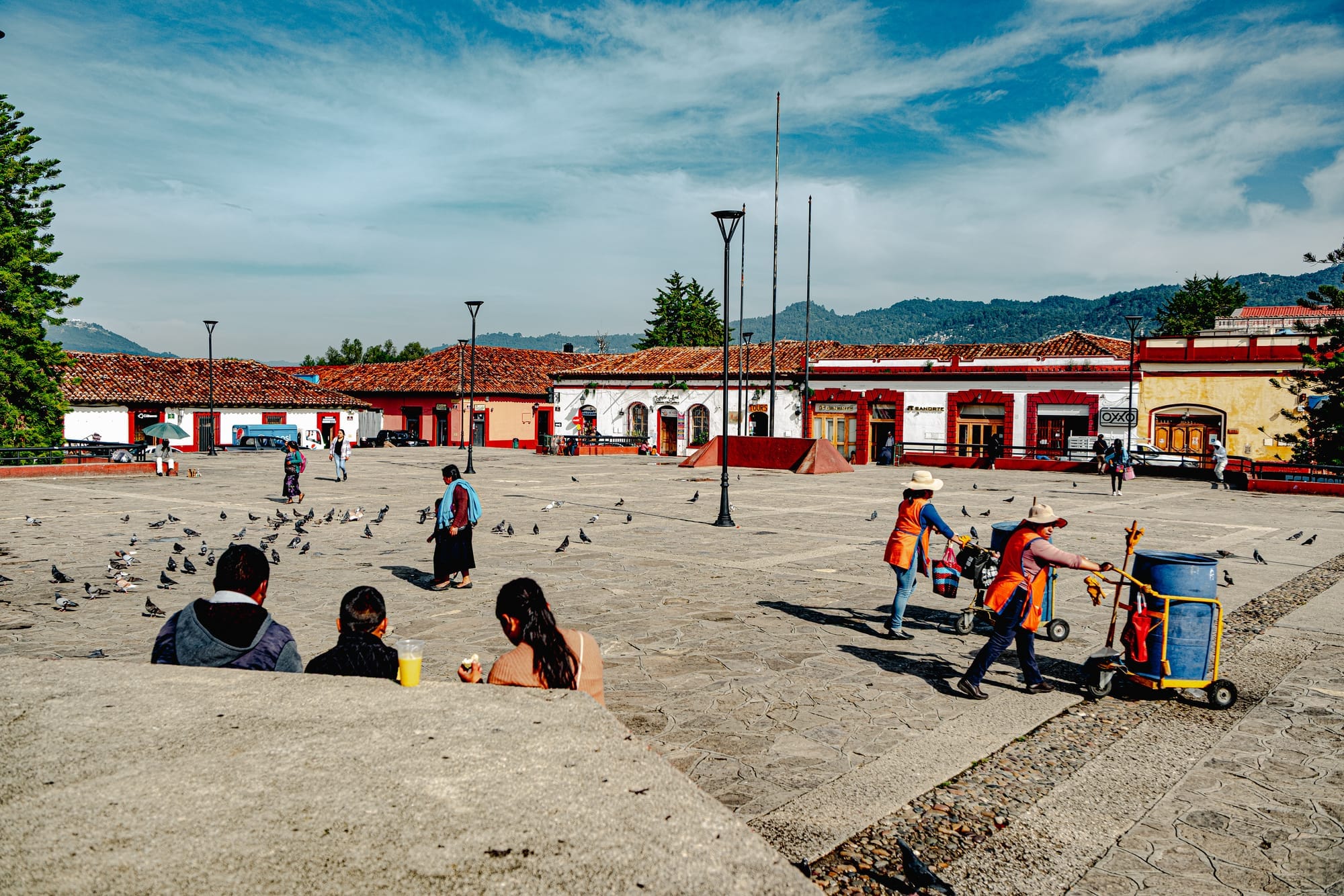
First visit, short stay: The centro around the cathedral
Cafés and restaurants on your doorstep: Real de Guadalupe and Andador Eclesiástico
Views and a local feel: Barrio de Guadalupe
Creative and calmer: El Cerrillo
Remote work and longer stays: Barrio de Mexicanos (where we stayed)
Space and nature: The outskirts, if you don't mind taxis
| Area | Best for | Pros | Cons |
|---|---|---|---|
| Centro | First visits, short stays | Walk to everything, most choice | Busiest and noisiest at night |
| Real de Guadalupe and Andador Eclesiástico | Eating out, people-watching | Car-free, cafés and shops below | Crowds and street noise |
| Barrio de Guadalupe | Views, food, a local feel | Lots of places to eat, sunset views | Steep streets |
| El Cerrillo | Creatives, remote workers | Murals, markets, a coworking space | Fewer hotels, some dark streets at night |
| Barrio de Mexicanos | Long stays, coliving | Calm at night, near the food market | 10 to 15 minutes' walk to the center |
| Outskirts | Space, gardens, mountain views | Bigger rooms for less, fresh air | Taxis needed, colder at night |
Centro: best for a first visit
The historic center is the grid of streets around the main plaza and the yellow cathedral. It's the most convenient base in the city: cafés, restaurants, churches, and tour pickups are all a few minutes away, and you'll rarely need a taxi. The trade-off is noise. This is the busiest part of town, and bars and street music carry on into the evening, especially on weekends and holidays.
It suits a short first trip of three or four days, when you want to step out the door and start walking. If you're light sleeping, ask for a room at the back or around an inner courtyard, which many of the older colonial buildings have. Prices are a little higher than in the barrios, and rooms book up fast around Day of the Dead and the Christmas holidays.
Real de Guadalupe and Andador Eclesiástico: best for cafés and restaurants
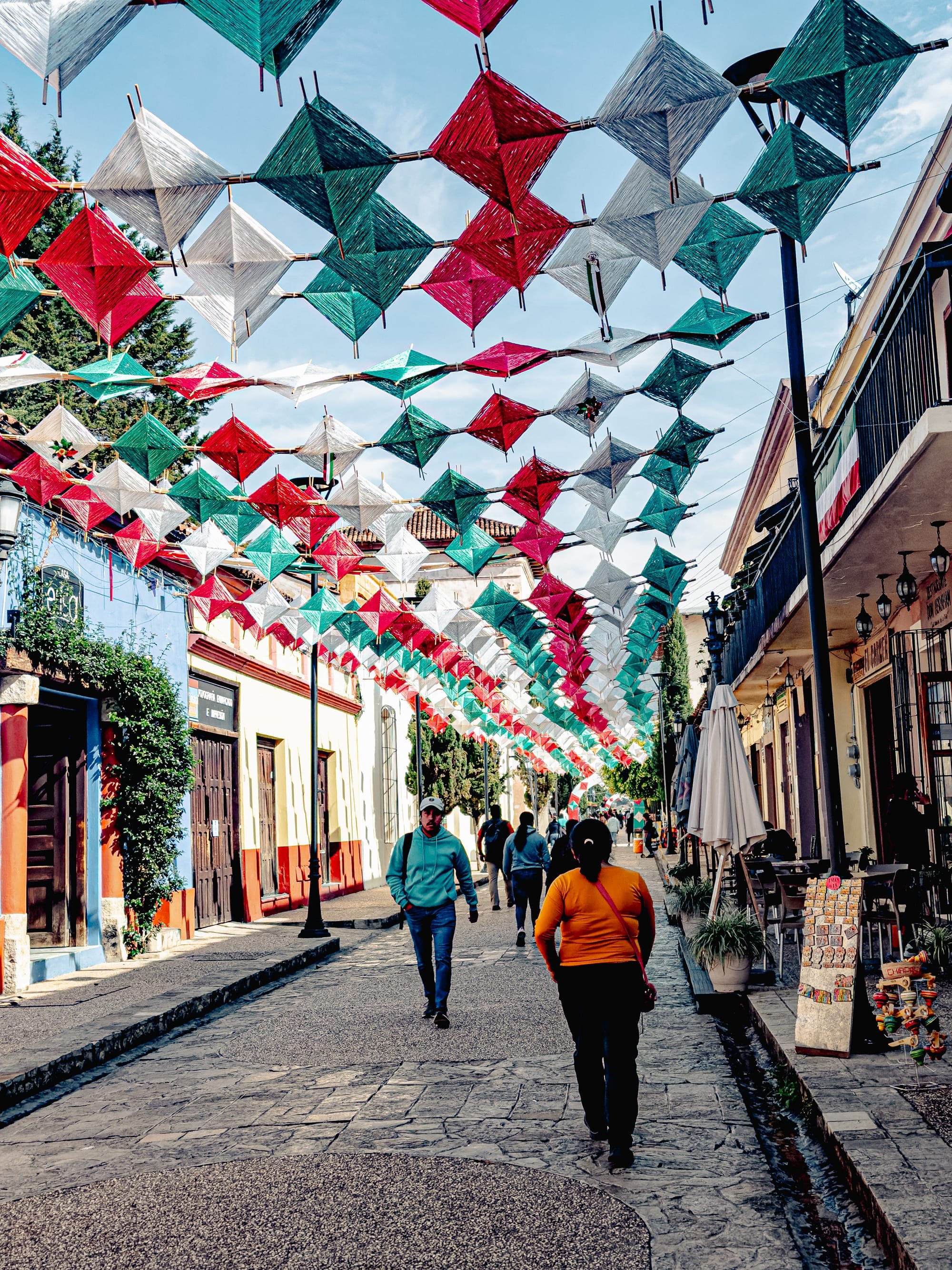
The two main pedestrian streets cross at the center. Real de Guadalupe runs east from the plaza up toward the Guadalupe church, and Andador Eclesiástico runs north past the cathedral to Santo Domingo and south to the El Carmen arch. Both are car-free and lined with cafés, restaurants, bars, and shops, so staying on or just off them puts everything in reach.
They're also the most touristy streets in town, and the busiest after dark. A side street one block away usually gives you the same convenience with less noise. These streets are a good fit if eating out is a big part of your trip and you'll be out until late.
Barrio de Guadalupe: best for views and a local feel
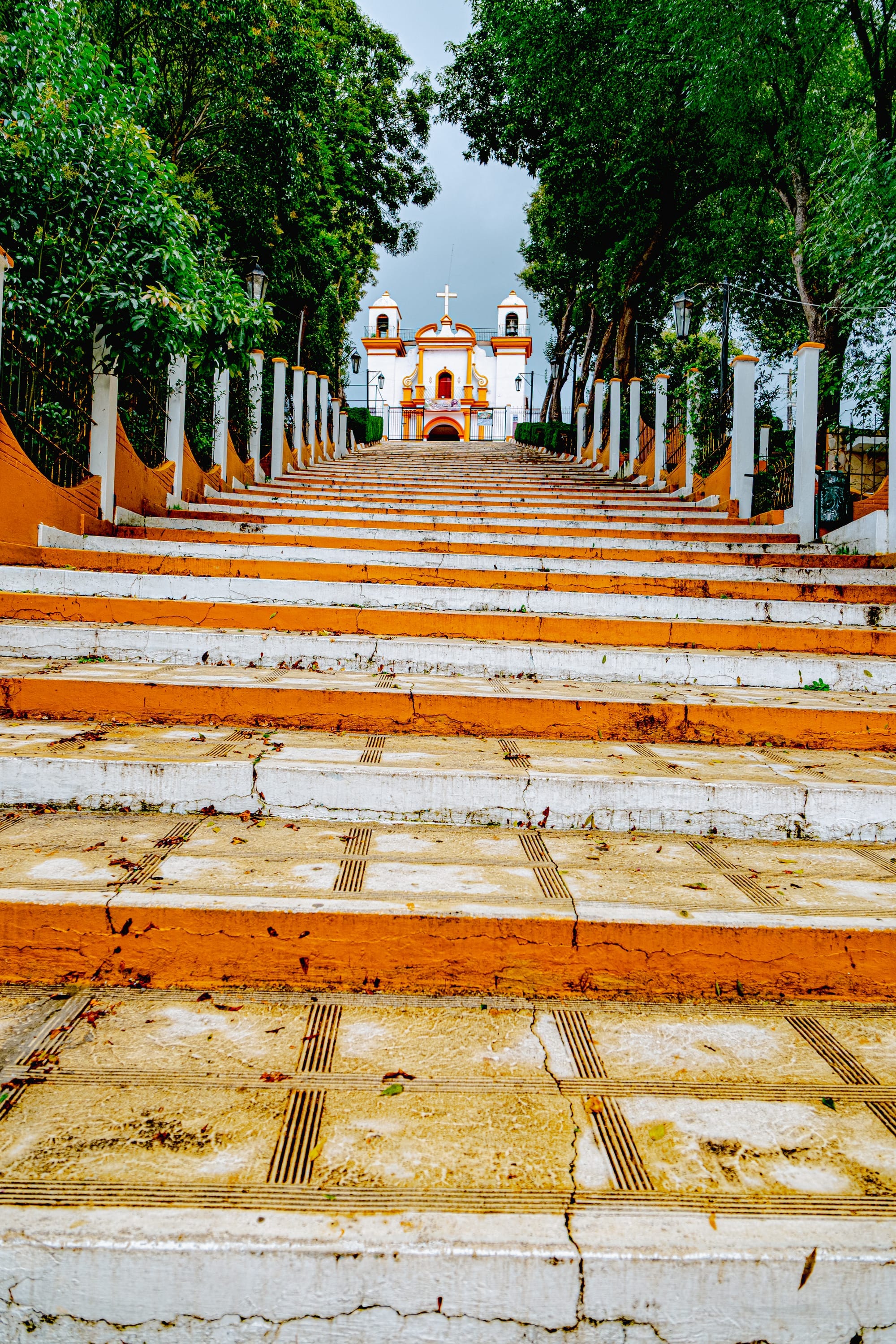
Barrio de Guadalupe sits east of the center, around the hilltop Templo de Guadalupe at the top of Real de Guadalupe. There are lots of places to eat, and the church steps are one of the best spots in town for sunset. The streets near the church are steep, which matters at 2,200 meters if you're carrying shopping or walking home late.
It feels more residential than the center while still being an easy walk in, so it works for a week or longer. It's a good choice for couples and repeat visitors who want views and a neighborhood feel without being far from the action.
El Cerrillo: best for creatives
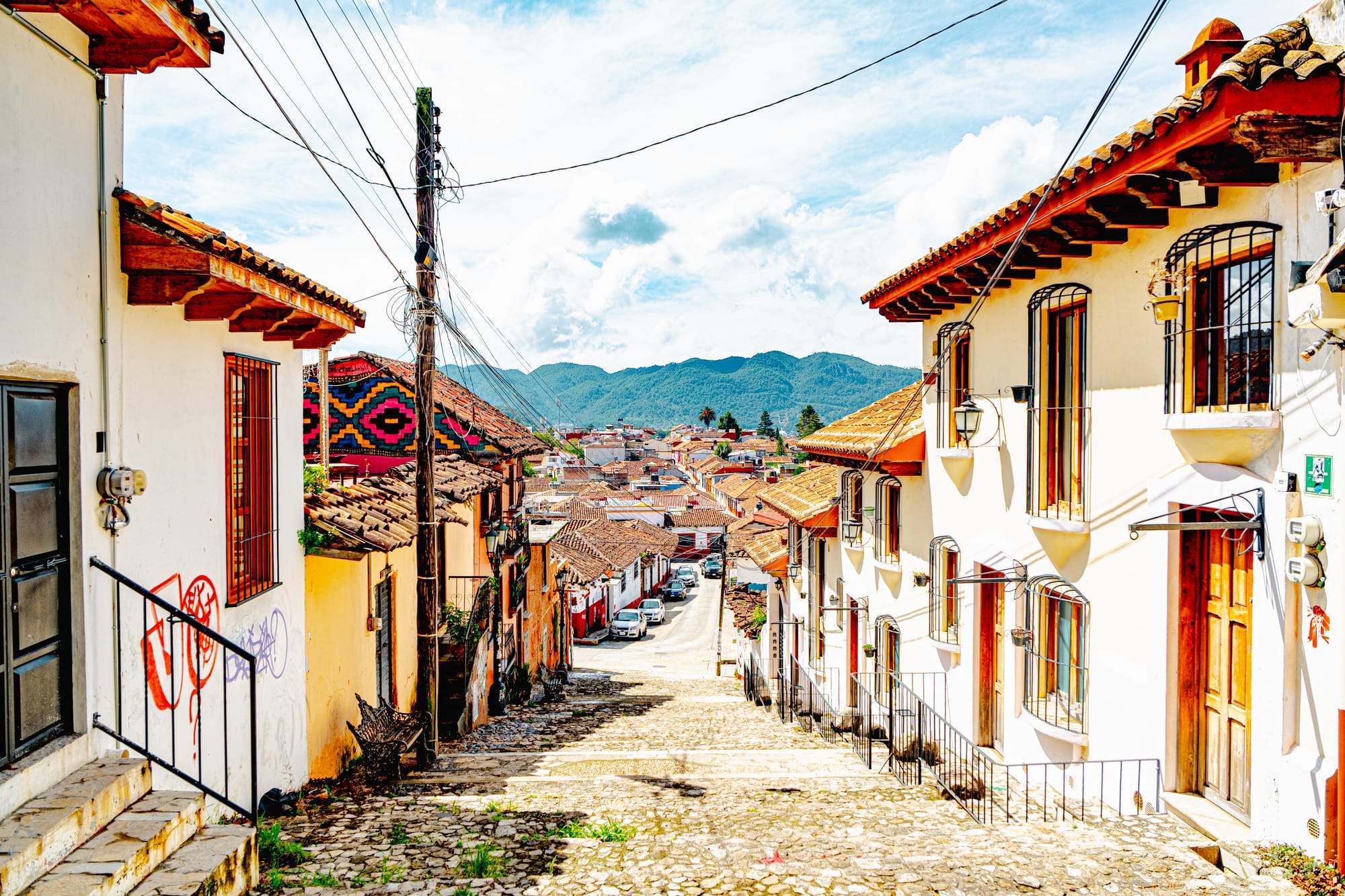
El Cerrillo is one of the oldest barrios in the city, just north and east of Templo de Santo Domingo, about five to ten minutes' walk north of the cathedral. It's known for its murals, it's close to the food market and the Santo Domingo crafts market, and the coworking space Centralita has a small garden space here. It's calmer than the center and the most common pick for remote workers who want to live independently.
There are fewer hotels than in the center, and more small guesthouses and monthly rentals. A few streets are poorly lit, so take a taxi late at night if you're unsure. Hotel Na Bolom, one of our picks below, is in this part of town. Read our guide to the street art of El Cerrillo to get a feel for it.
Barrio de Mexicanos: best for longer stays
Barrio de Mexicanos is a residential area northwest of the center, with old houses and courtyards. It's calm at night, about 10 to 15 minutes' walk from Real de Guadalupe, and only about five minutes from the food market, which makes cooking at home easy. This is where Co404 is, and where we lived.
We liked being out of the noise but close enough to walk everywhere. On rainy days or late at night, a taxi from Co404 to the center usually cost us around 60 pesos, but agree the price first by asking "¿cuánto cuesta?". Read about our stay at Co404 and our guide to living in San Cristóbal.
The outskirts: best for space and nature
Beyond the barrios, the city climbs into pine-covered hills. Houses and cabins here often come with gardens and mountain views, and you get more space for your money. The cooking class we took with Itzel, and the cacao workshop with Guillermo, both happened in homes on the edge of town, and the setting was a big part of what we liked.
The downside is getting around. You'll rely on taxis or colectivos, roads can turn to dirt, and nights are colder than in town. This option suits people staying for a month or more who have work set up and don't mind planning trips into the center.
A note on Barrio de La Merced: south of the main square, it's cheaper and more residential, with several museums, but fewer cafés and a longer walk to coworking. It's worth a look if budget matters most.
Places we'd book in San Cristóbal de las Casas
Co404 Coliving & Coworking
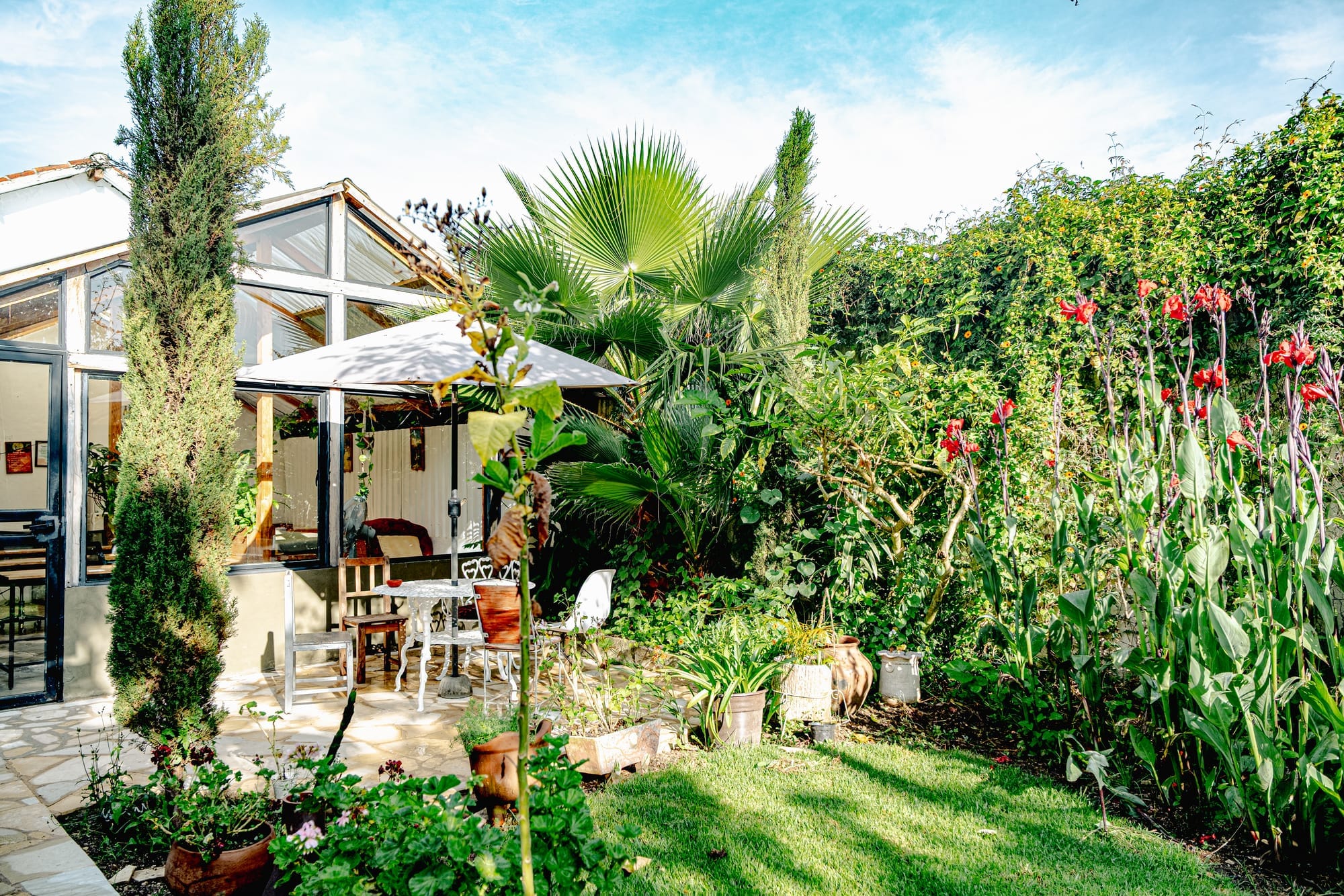
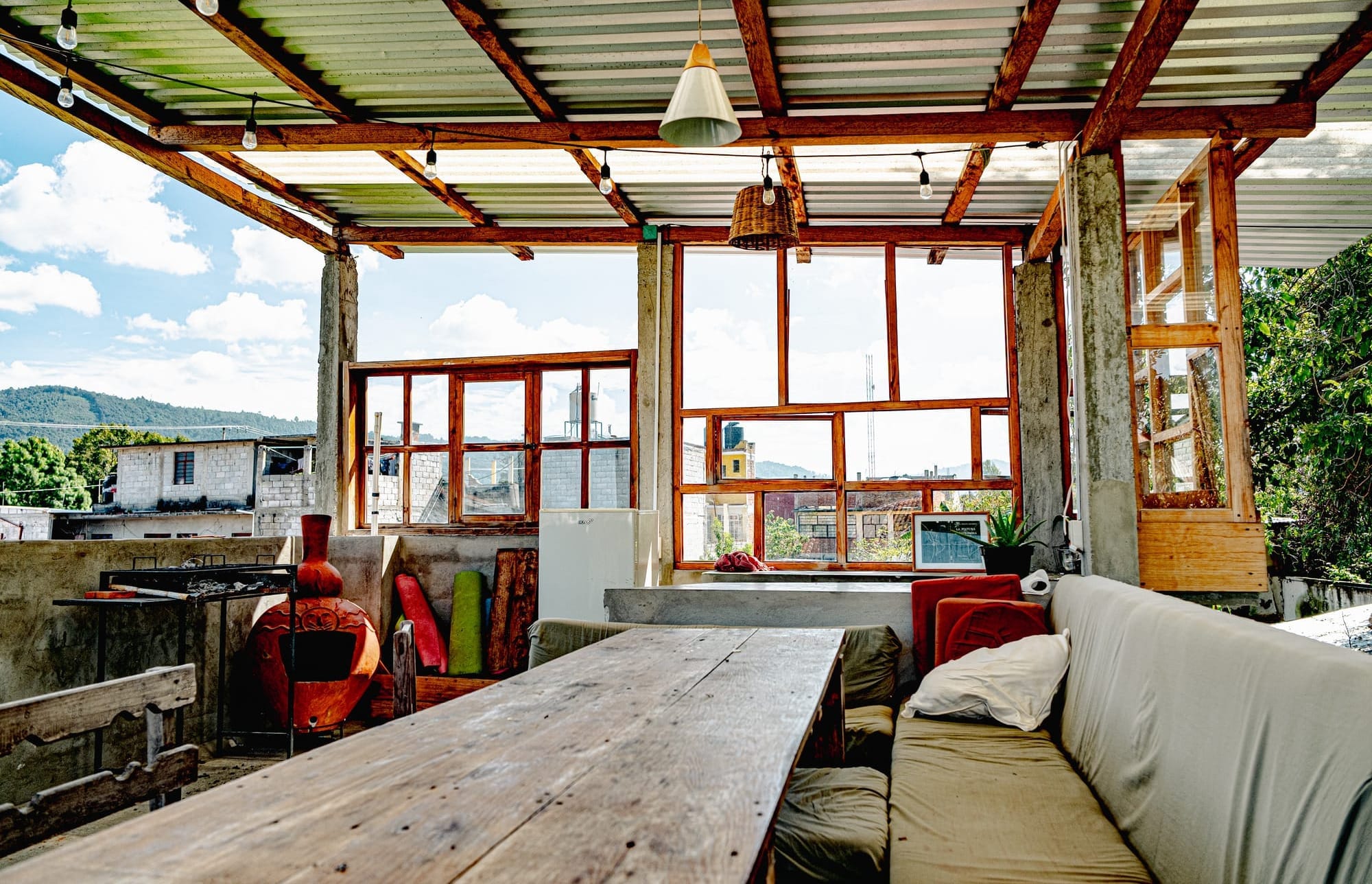
We stayed at Co404 and loved it. It's a small, family-style coliving in Barrio de Mexicanos with a garden and a roof terrace where the sunrises and sunsets are excellent. There's a coworking room with call booths, a family dinner every Wednesday, and a weekly program of hikes and trips, so it's easy to meet people. Private rooms started at about US$36 a night in 2026, with big discounts for monthly stays (check current rates). It's our first pick for remote workers. To book, check prices at Co404 Coliving & Coworking.
Parador Margarita
A traditional hotel with bright rooms set around a garden. Breakfast is filling and the atmosphere is calm and welcoming, so it's a dependable pick if comfort and a good night's sleep come first. To book, check prices at Parador Margarita.
Las Casas Chiapas
A small boutique stay in town with airy rooms, handmade details, and a cozy patio. It feels more like a private home than a hotel, which suits couples who like small, well-kept places. To book, check prices at Las Casas Chiapas.
Hotel Na Bolom
A historic guesthouse inside the Na Bolom museum and cultural center, with gardens, old photographs, and carved furniture. It's the pick if you want a place with a story behind it. To book, check prices at Hotel Na Bolom.
Puerta Vieja Hostel
A social hostel with big breakfasts, roomy common areas, and a garden with hammocks when you want some downtime. Dorms are comfortable and give you some privacy, and it's an easy place for solo travelers to meet people. To book, check prices at Puerta Vieja Hostel.
13 Cielos Hostel & Coworking
A hostel with a proper coworking room. Dorms and private rooms are modern and well organized, and the work area has solid wifi, so it's a good middle ground for remote workers who want a hostel price and a desk. To book, check prices at 13 Cielos Hostel & Coworking.
Getting there and getting around
The closest airport is Tuxtla Gutiérrez (TGZ), about 1.5 hours away by road, with frequent domestic flights from Mexico City and other hubs. From the airport, shared shuttles and taxis run to San Cristóbal, and long-distance ADO buses connect the city with Tuxtla, Palenque, and other parts of Mexico.
Once you're here, walk. The town is compact, and most of life happens in a small area. Taxis are cheap for rainy days and late nights, and colectivos (shared vans) run to nearby towns like Chamula and Zinacantán. Out of everywhere we traveled in Mexico, San Cristóbal was the cheapest, with things often about half the price of other places we'd stayed.
Tips for booking
Book early for late October to early November (Day of the Dead) and the Christmas holidays, when demand jumps. Check whether the room has heating or extra blankets, because nights are cold all year at this altitude and many older buildings have none. If you'll work, ask the host for a recent speed test before you pay for a month: wifi varies a lot from building to building. For stays of a month or more, colivings and guesthouses often give big monthly discounts, so message them directly to ask.
Frequently asked questions
What is the best area to stay in San Cristóbal de las Casas?
The historic center around the cathedral for a first visit. For a longer stay, Barrio de Mexicanos, El Cerrillo, or Barrio de Guadalupe are calmer and still walkable.
Where should digital nomads stay in San Cristóbal?
We'd recommend Co404 in Barrio de Mexicanos, where we stayed. It has a coworking room, a garden, and a built-in community. 13 Cielos also has a coworking room.
Is it better to stay on Real de Guadalupe?
It's the most convenient street for eating out, but also one of the noisiest. A room a block away gives you the same access with better sleep.
How far is Co404 from the center?
About 15 minutes on foot, or a short taxi ride that usually cost us around 60 pesos.
Do hotels in San Cristóbal have heating?
Many older buildings don't. Nights are cold all year, so check for heating or extra blankets when you book, especially from December to February.
Is San Cristóbal de las Casas cheap to stay in?
For us it was the cheapest place we stayed in Mexico, with food and day-to-day costs often about half what we paid elsewhere.
When should I book for Day of the Dead?
As early as you can. Late October to early November is one of the busiest times of year in the city.
Useful links: Chiapas state tourism, ADO buses, and San Cristóbal de las Casas on Wikipedia.
More from San Cristóbal de las Casas: San Cristóbal de las Casas guide, things to do in San Cristóbal, Co404 coliving, digital nomad guide, living in San Cristóbal, vegan San Cristóbal, San Cristóbal market, churches of San Cristóbal, and coliving spaces.


