


San Cristóbal de las Casas is a small, walkable city in the highlands of Chiapas, in southern Mexico, and living in San Cristóbal de las Casas is cheaper than living in Oaxaca or Playa del Carmen. It sits at about 2,200 meters, so expect warm days, cold nights, and a dry season from November to April. Most visitors can stay up to 180 days on a tourist entry, though the immigration officer sets the exact number. The remote-work scene is small and centered on one coliving, Co404. We arrived at the end of the rainy season, stayed through Day of the Dead, and found it an easy place to live.
San Cristóbal de las Casas sits high in the mountains of Chiapas, and you feel that elevation immediately, both in the cooler air and in how the days run. Life moves at a gentler pace here. Evenings arrive early and cold. Walking is the default way of getting around the city, not because it’s romantic, but because it’s simply the easiest way to be there.
If you enjoy wandering without a plan, turning down side streets, lingering in cafés, and letting the day stretch out, San Cristóbal can be an easy fit. It’s compact, walkable, and full of small details that reward attention.
A small, walkable city
One of the first things that stands out about San Cristóbal is its size. The historic center and surrounding neighborhoods are easy to navigate on foot, and after a few days, the streets start to feel familiar. You begin recognizing corners, storefronts, and how people move around. The city doesn’t sprawl the way many larger Mexican cities do, and that compact size shapes how life here feels.
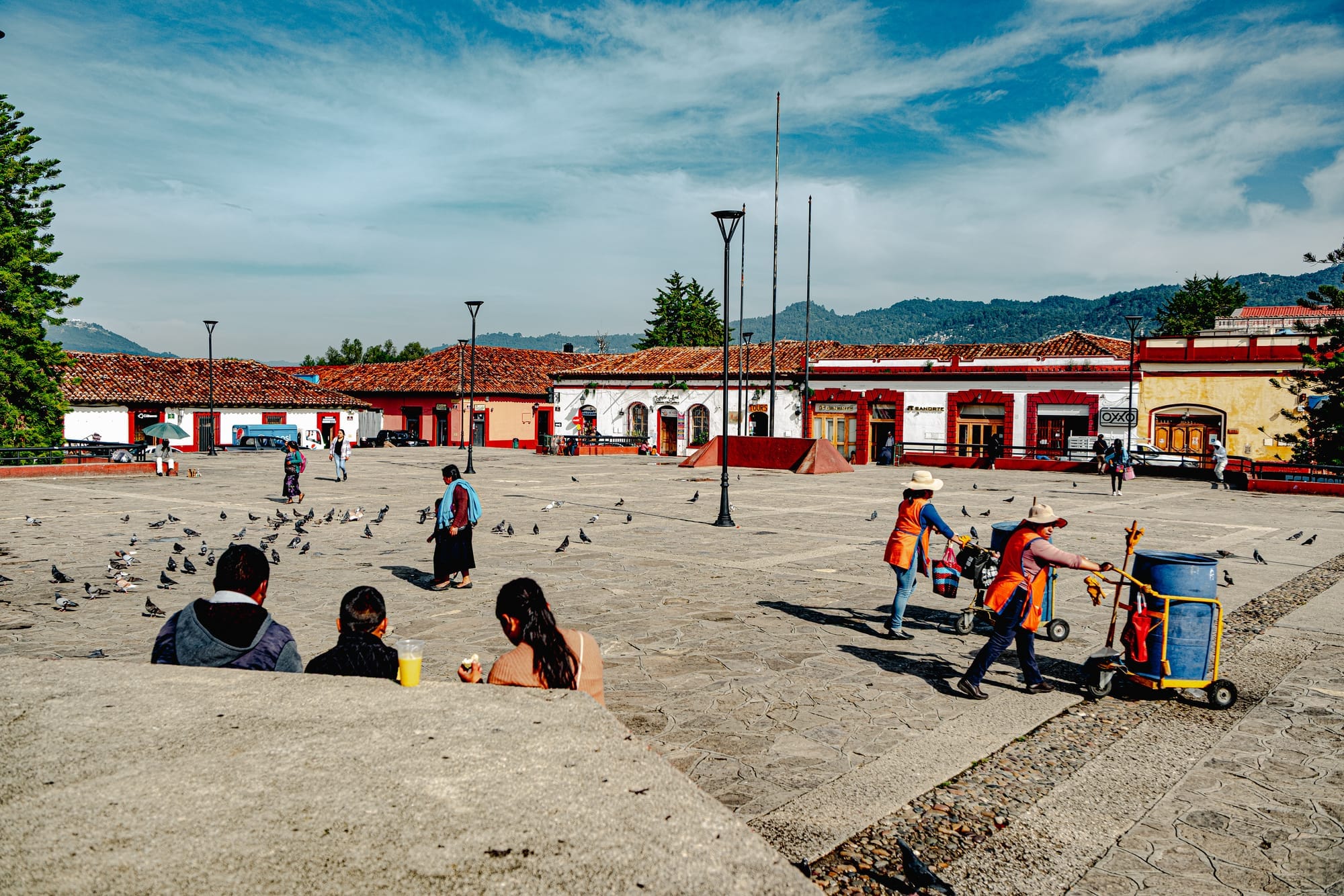
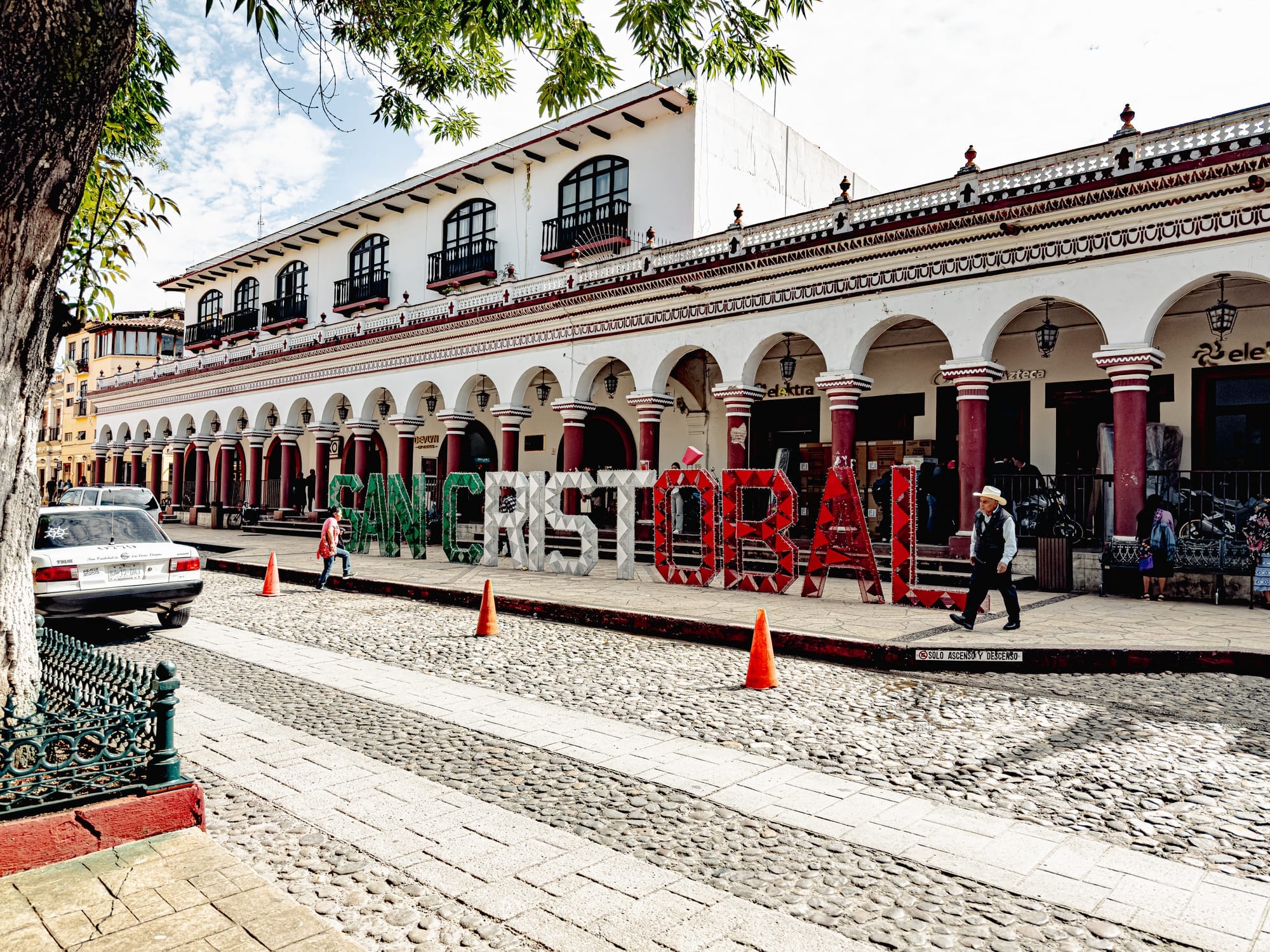
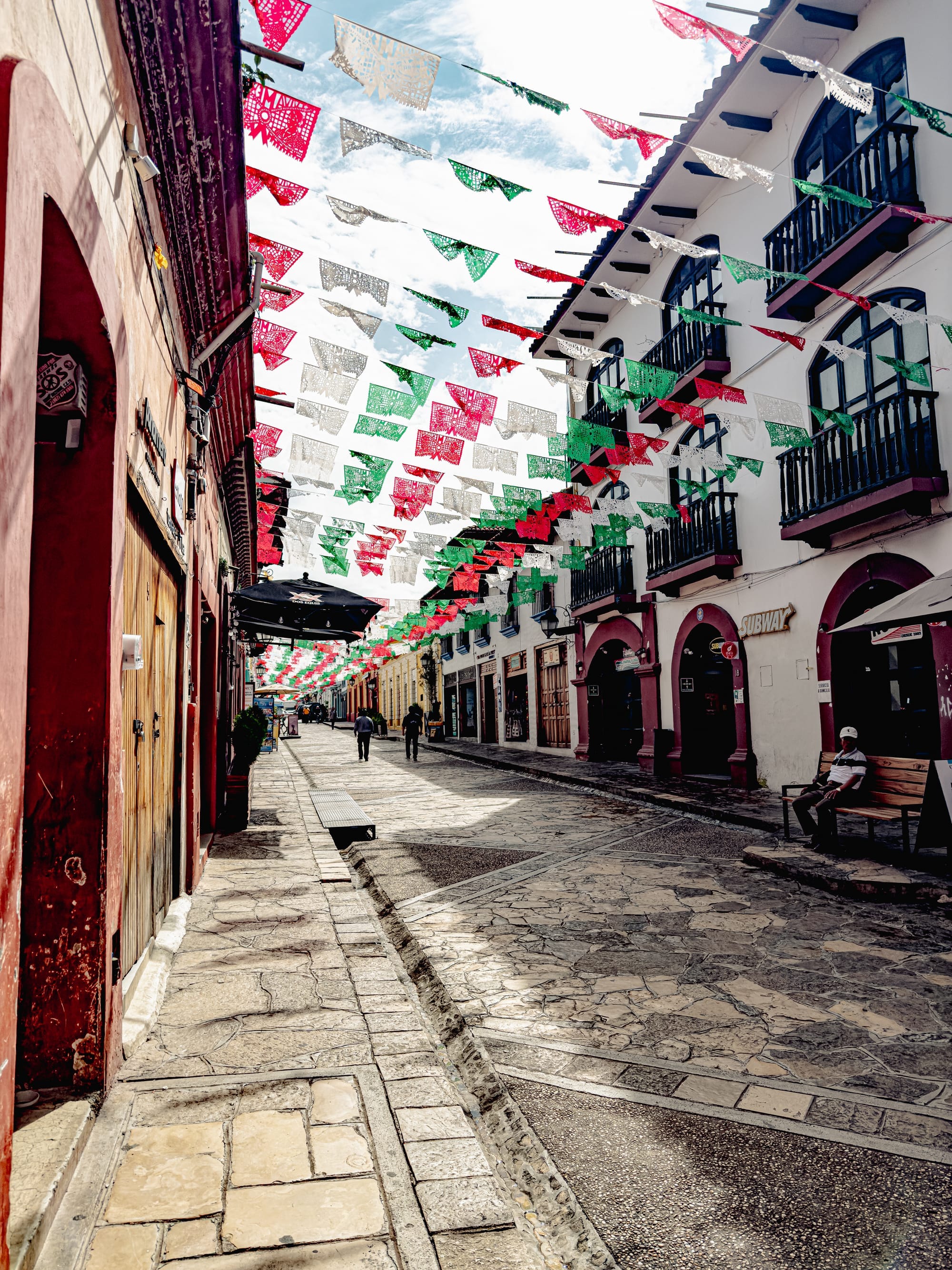
People going about their day in the heart of San Cristóbal de las Casas
Days tend to revolve around simple routines: walking to get cacao, finding a calm place to work, cooking or eating out in the early evening, and heading indoors once the temperature drops. San Cristóbal lends itself to repetition, which makes it easy to settle into a routine without much effort.
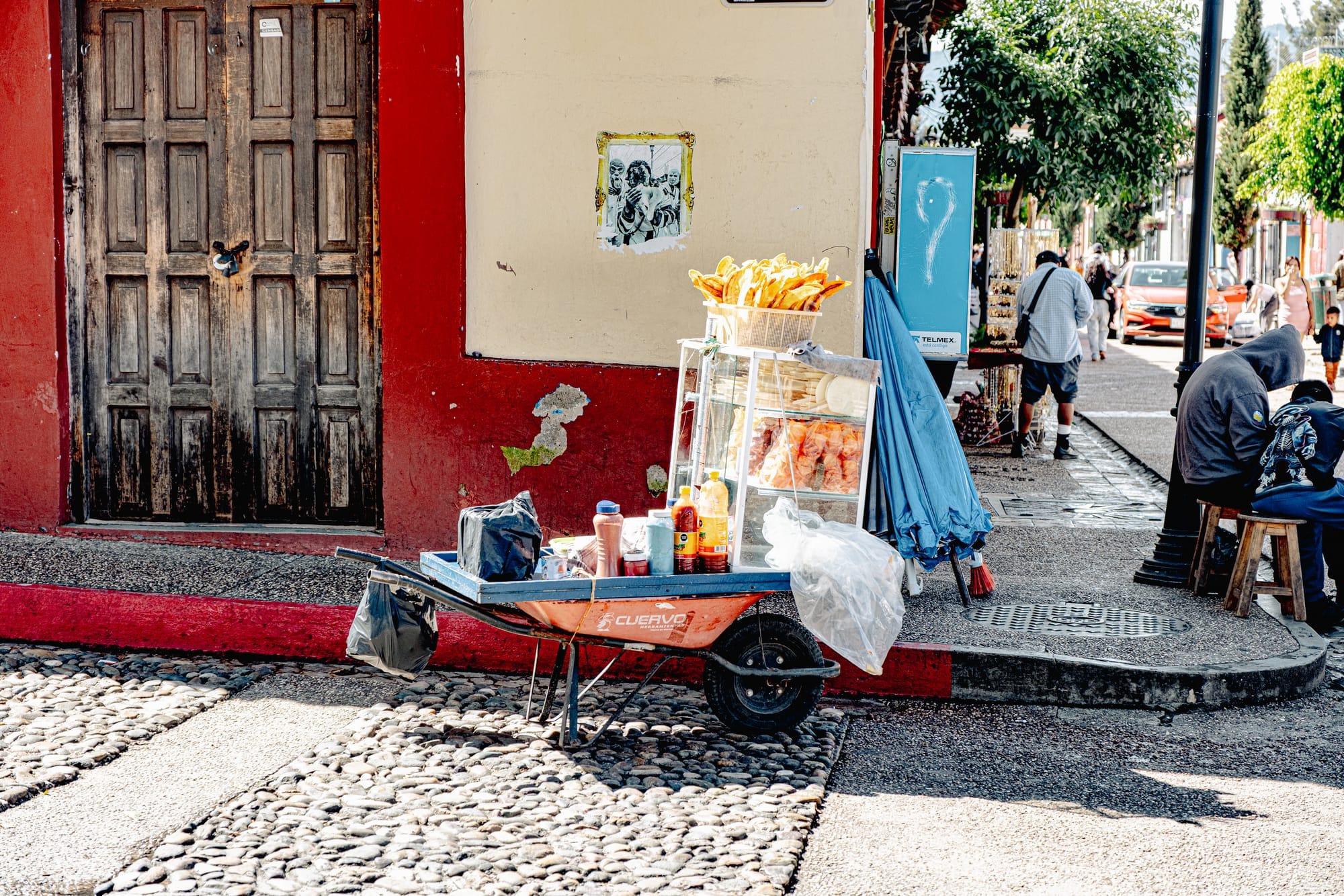
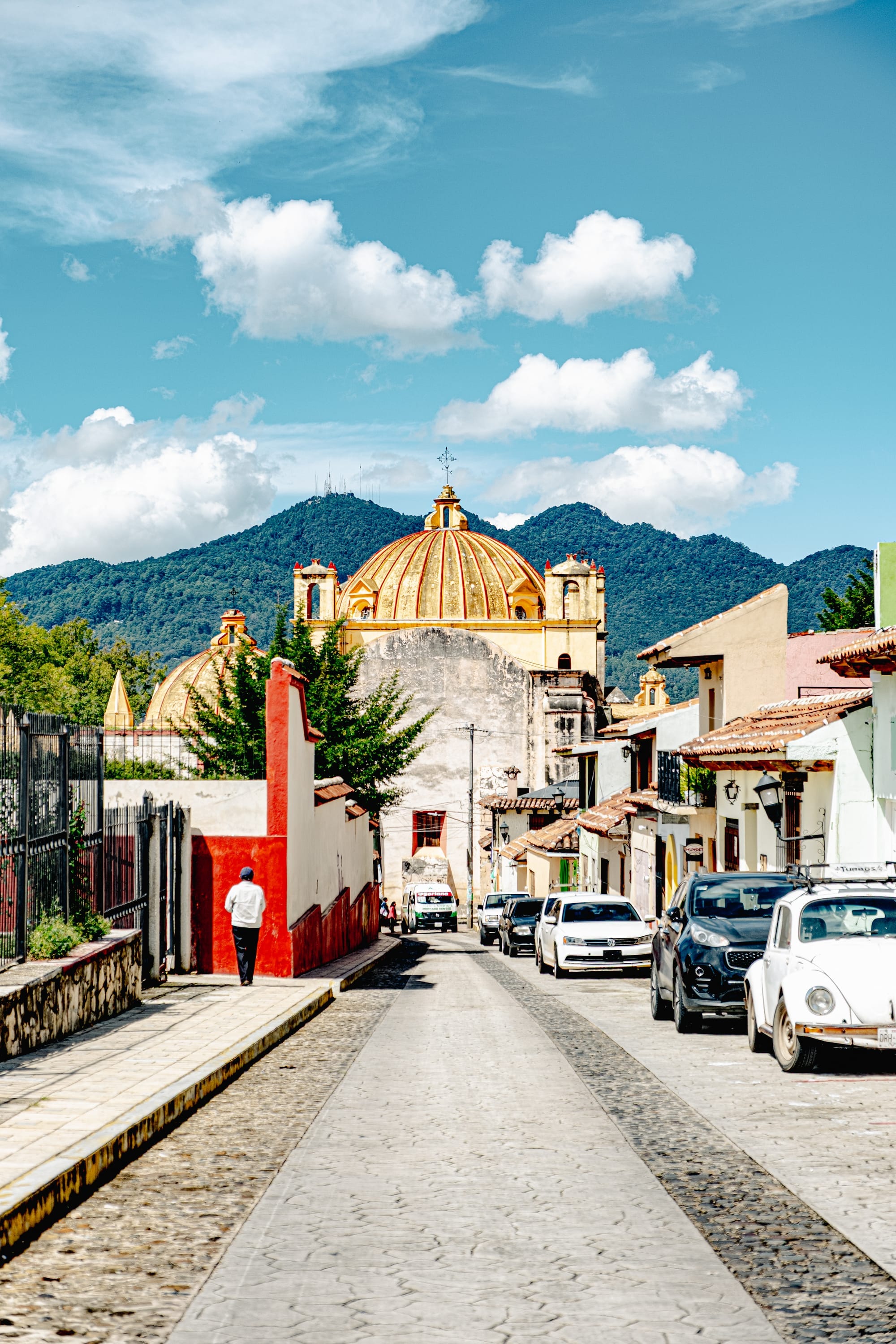
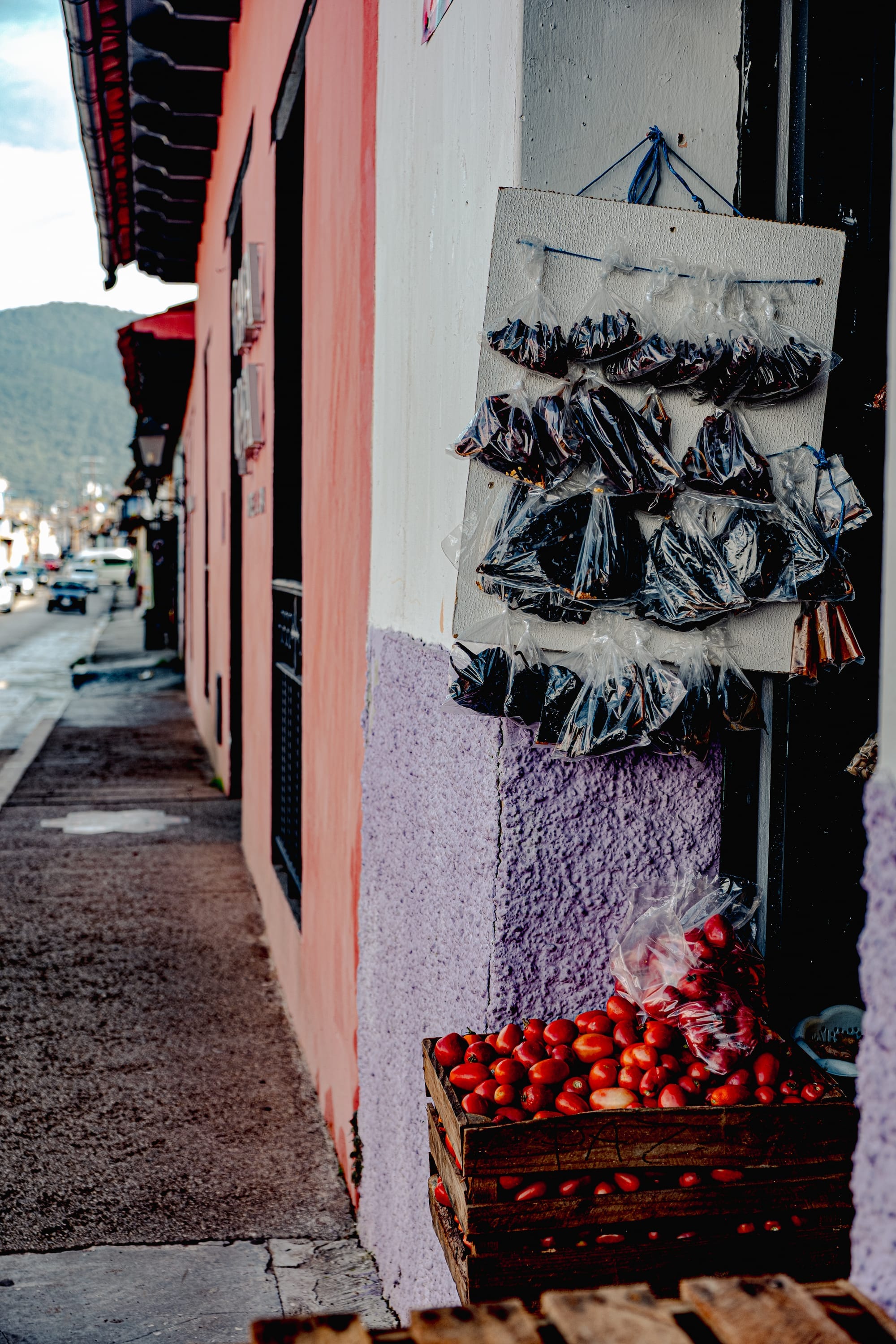
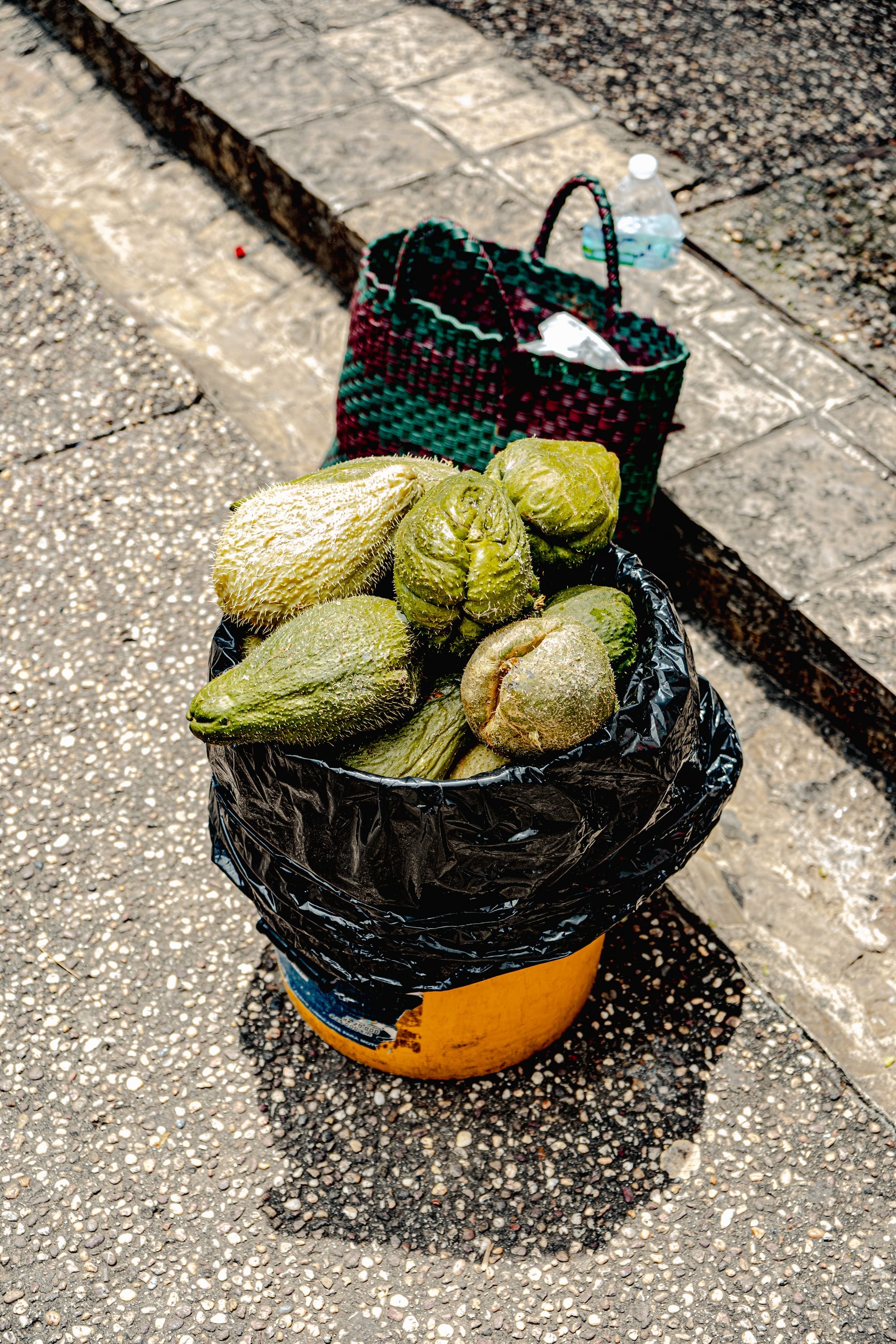
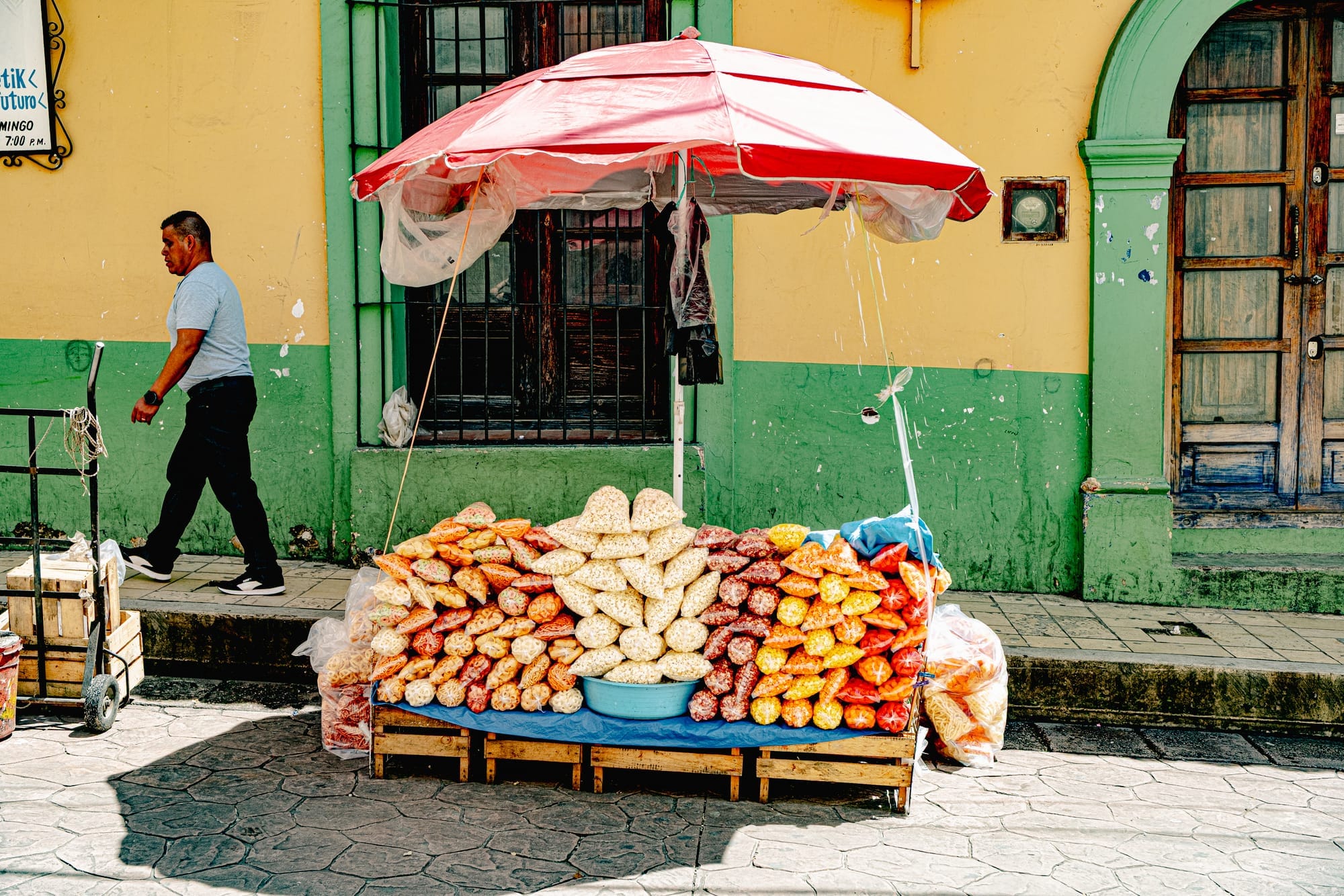
Street scenes in San Cristóbal de las Casas
If you’re the type of person who likes to feel grounded in a place rather than constantly stimulated by it, this kind of routine can be very appealing.
Best neighborhoods to live in San Cristóbal de las Casas
Because the city is compact, every central neighborhood is within a 15-minute walk of the main square. The choice comes down to noise, hills, and how close you want to be to cafés and coworking. These are the five areas most long-stay visitors pick:
Centro Histórico: the streets around the cathedral and the pedestrian Real de Guadalupe. The most convenient base, with cafés and restaurants on your doorstep, but also the busiest and noisiest at night.
El Cerrillo: just north of the center, near the Santo Domingo market and the murals of El Cerrillo. Calmer than the center, close to a coworking space, and the most common pick for remote workers.
Barrio de Guadalupe: east of the center, around the hilltop Guadalupe church. Lots of places to eat and good sunset views, but the streets are steep.
Barrio de La Merced: south of the main square. Cheaper and more residential, with several museums, but fewer cafés and a longer walk to coworking.
Barrio de Mexicanos: a residential area northwest of the center and home to Co404. Calm at night, with old houses and courtyards, about 10 to 15 minutes' walk from Real de Guadalupe.
Indigenous culture in San Cristóbal
San Cristóbal has a strong and visible Indigenous presence that shapes the city in very tangible ways. People in traditional clothing are a normal part of the street scene. Indigenous languages are spoken openly. Markets and public spaces show a cultural continuity that is active rather than symbolic.
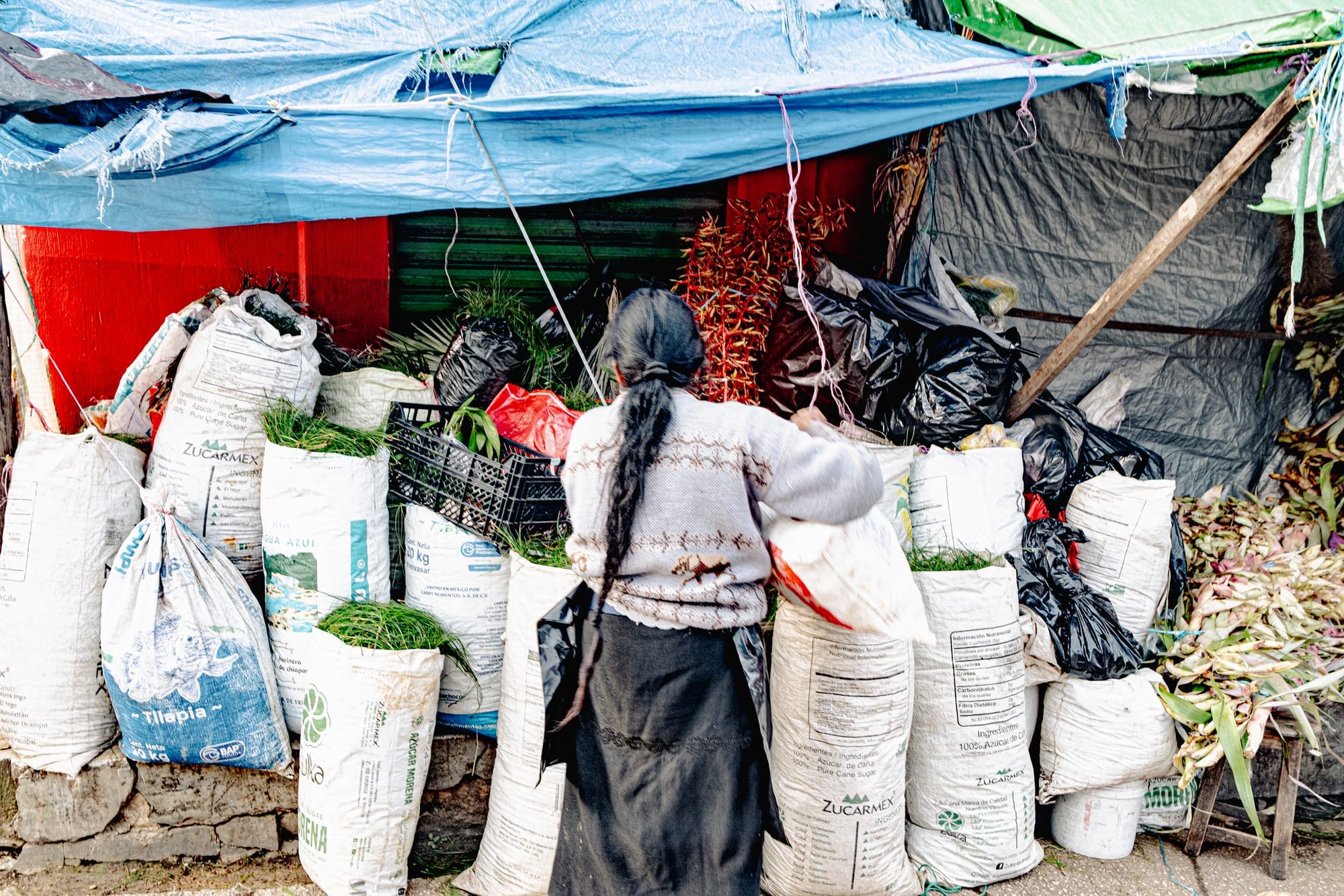
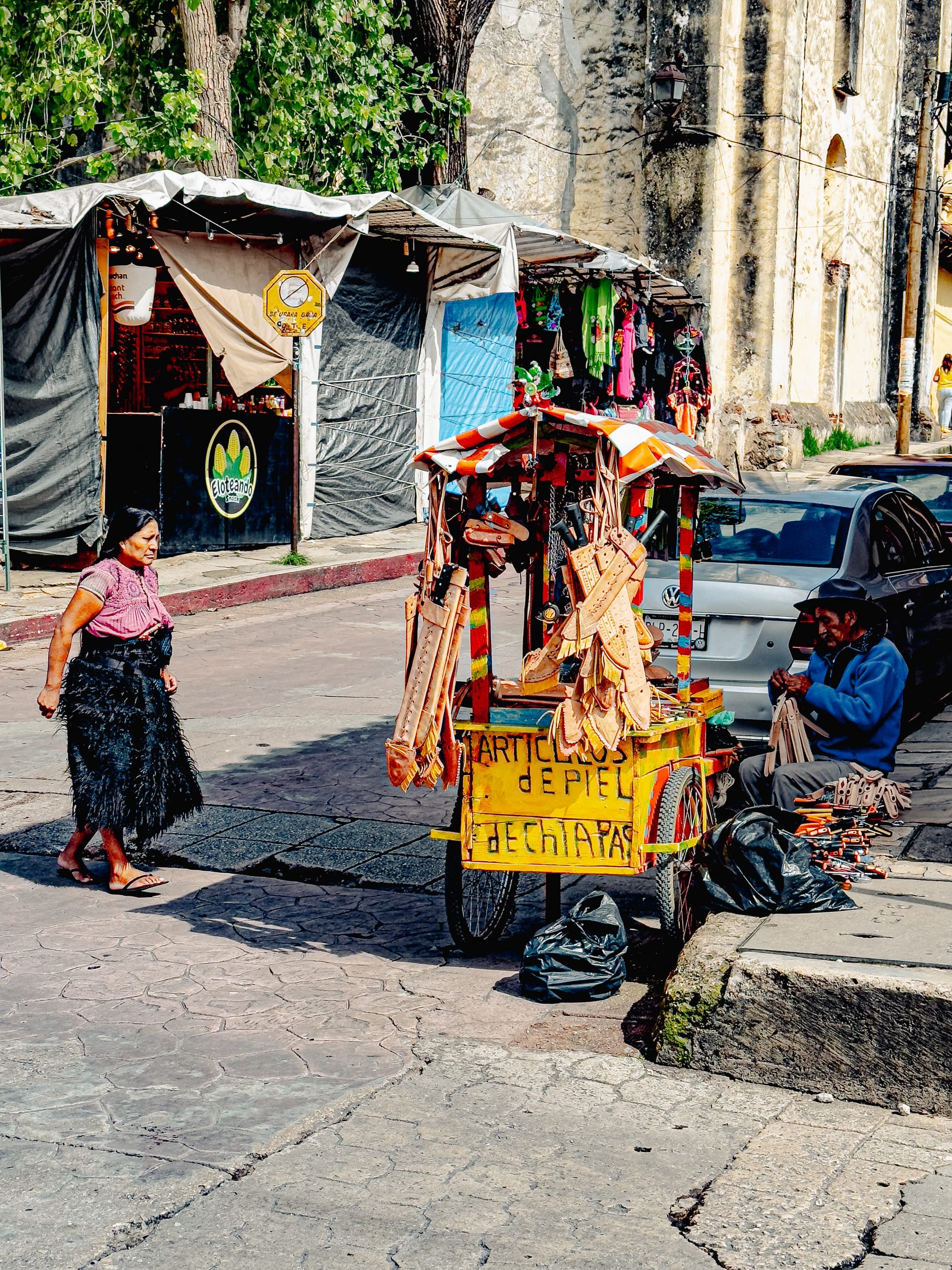
Market life
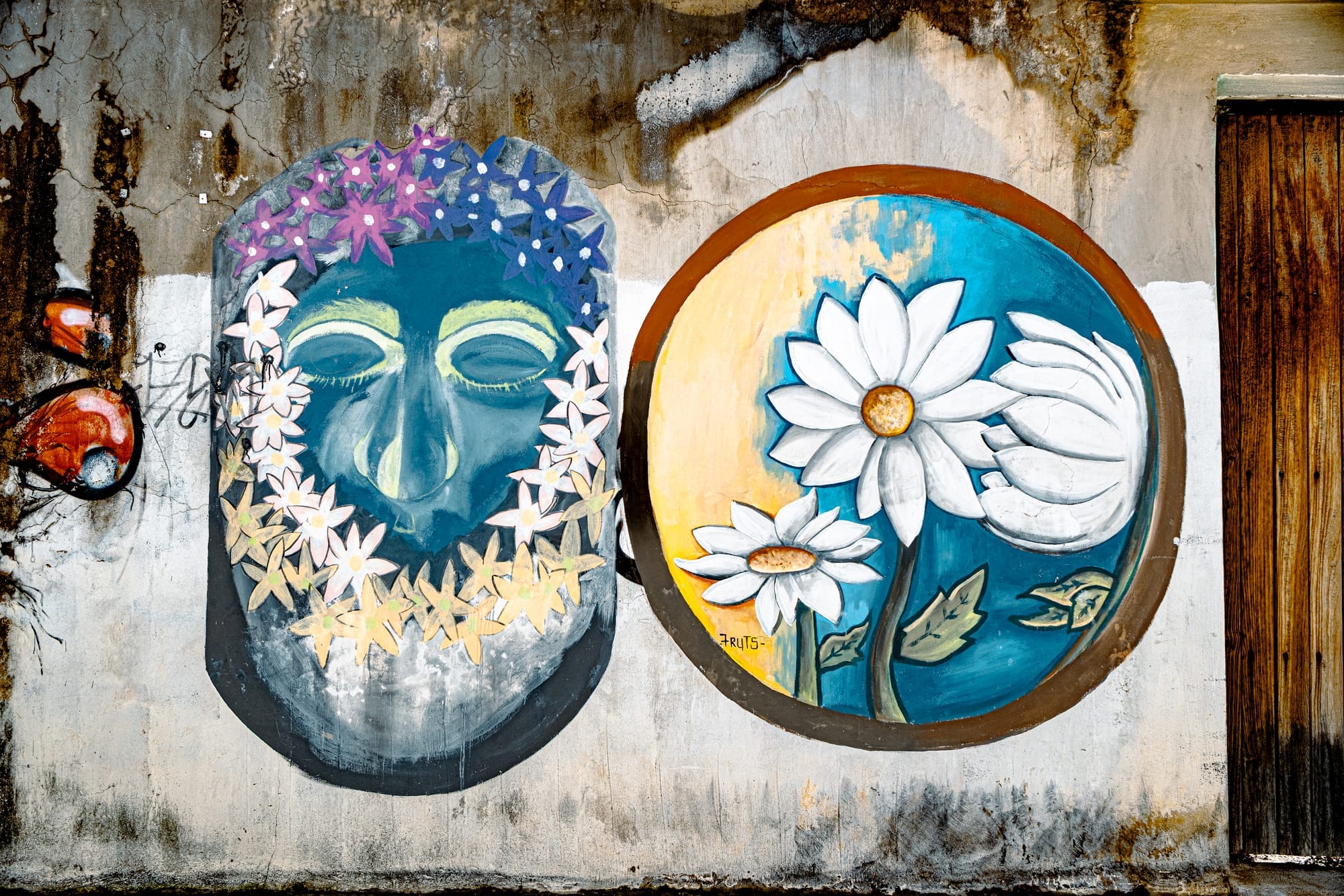
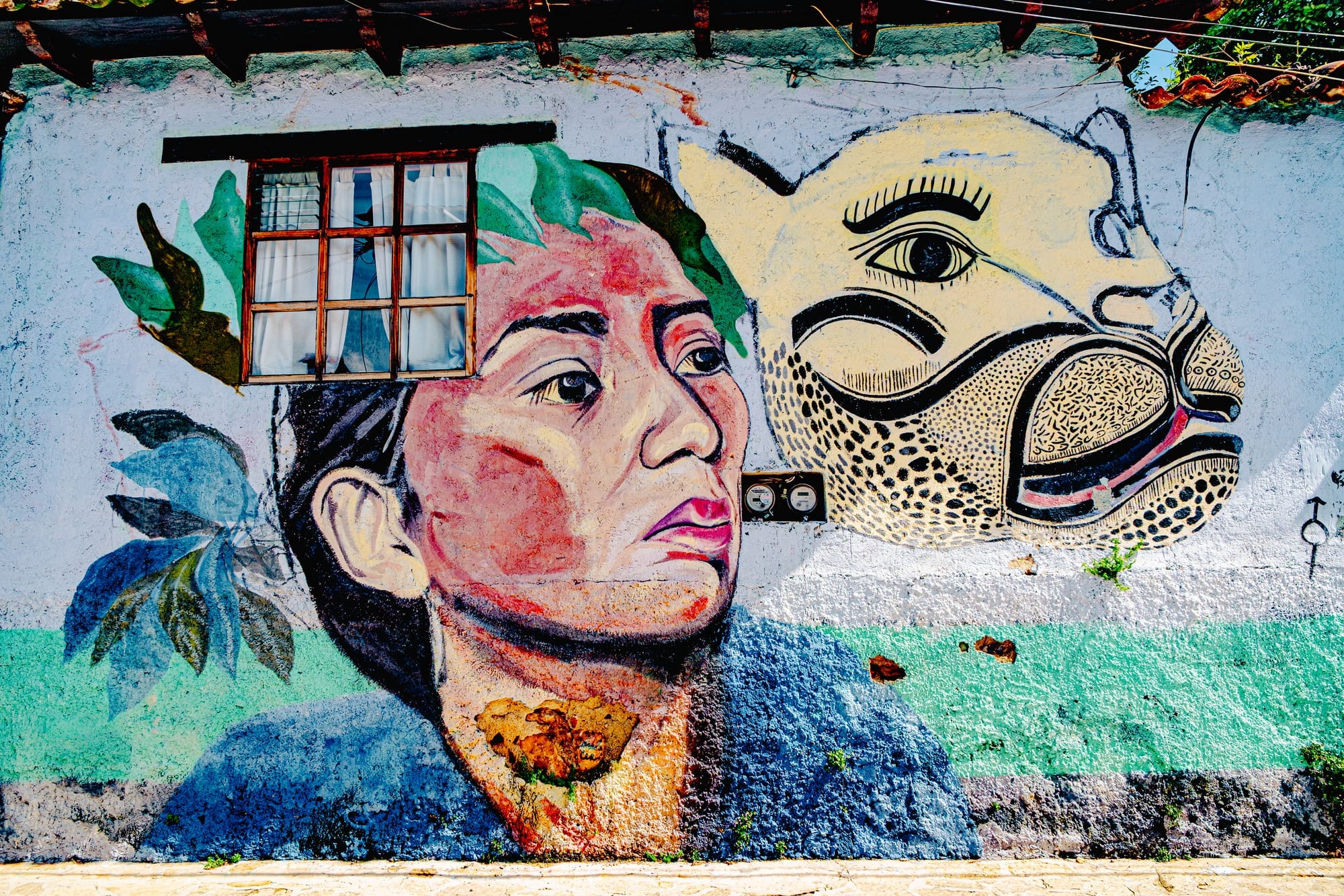
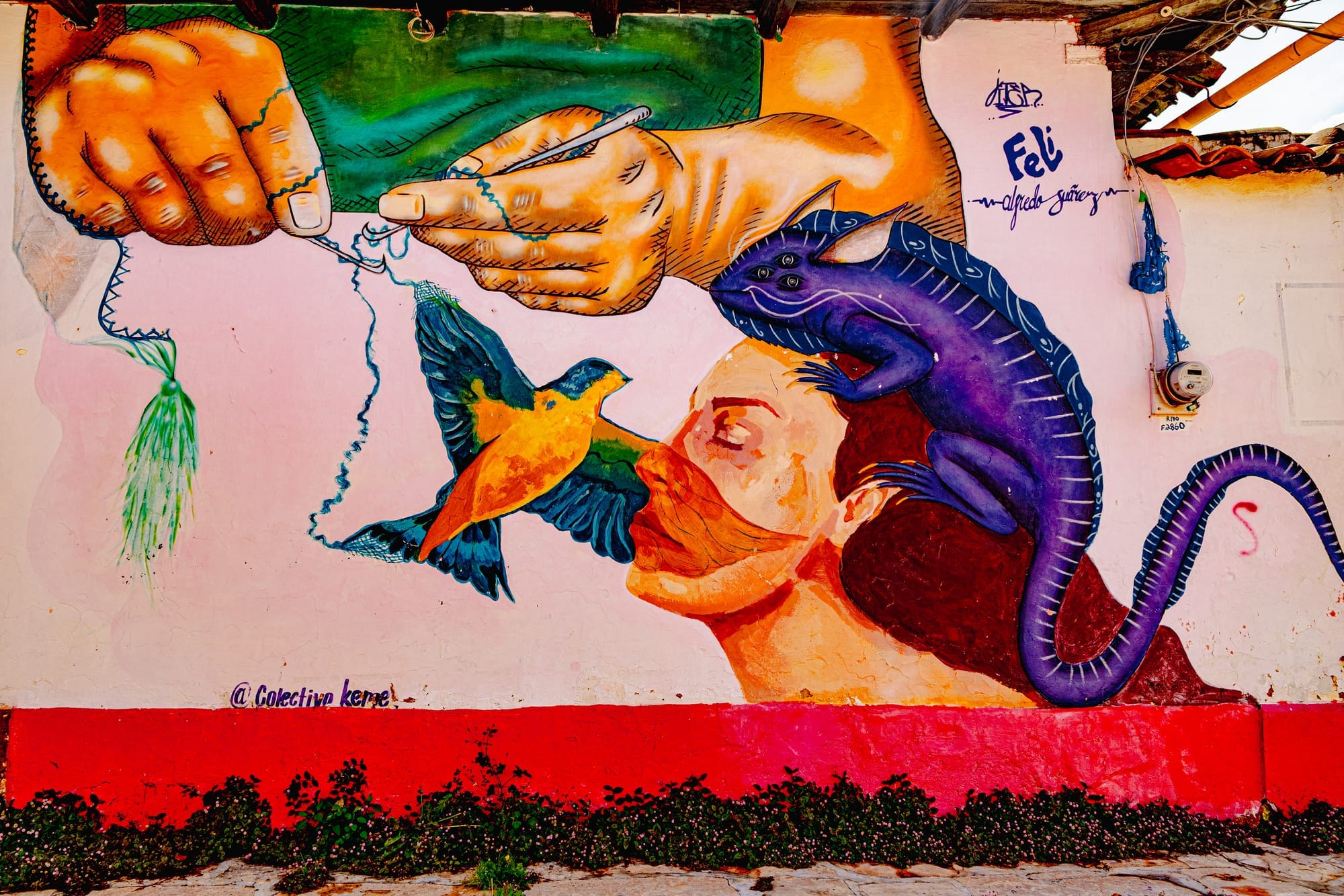
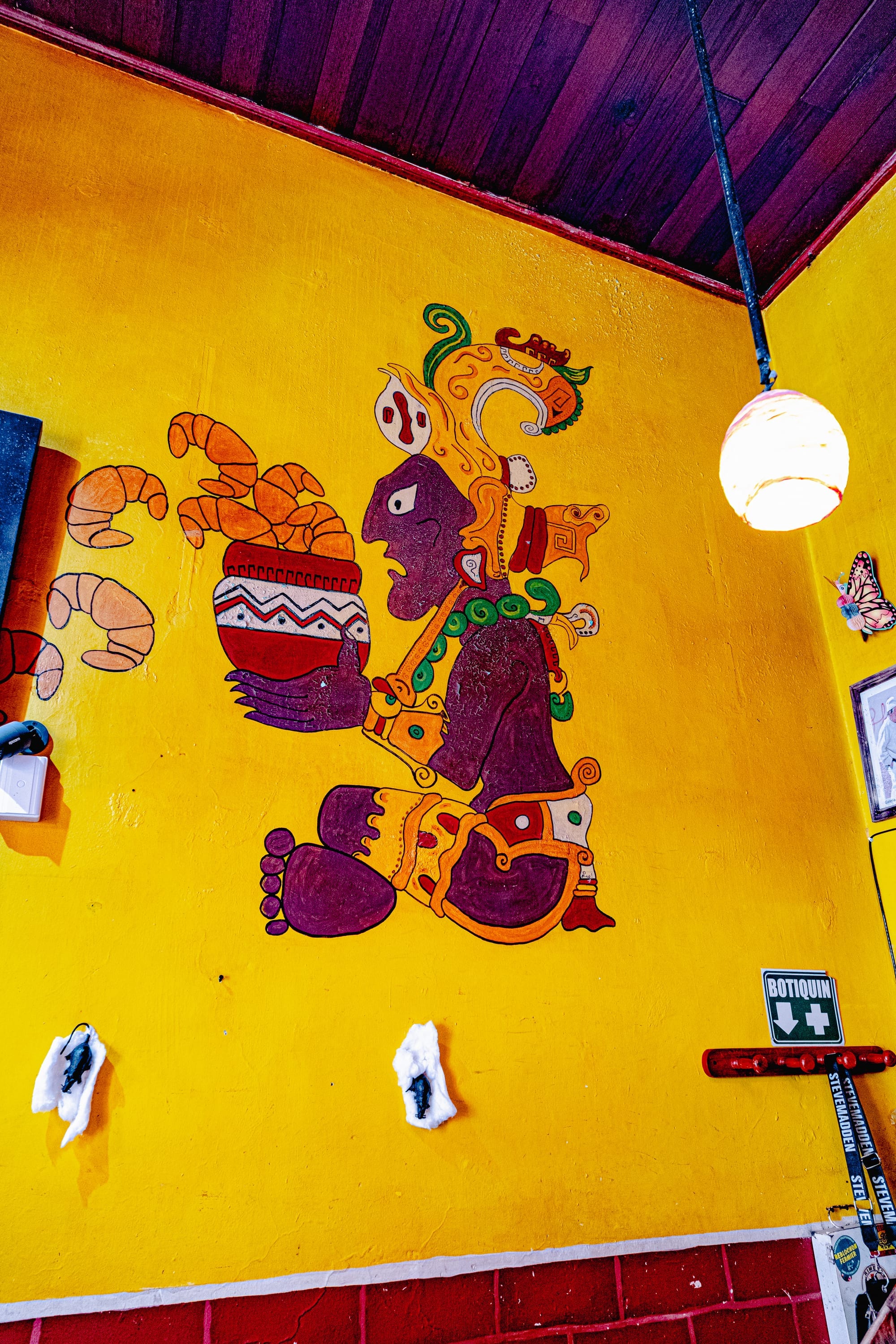
This presence also shows up visually across the city. In neighborhoods like El Cerrillo, murals are a common sight. Corn appears again and again as a central motif, often alongside Indigenous figures. You pass these murals on the way to cafés or while walking through residential streets.
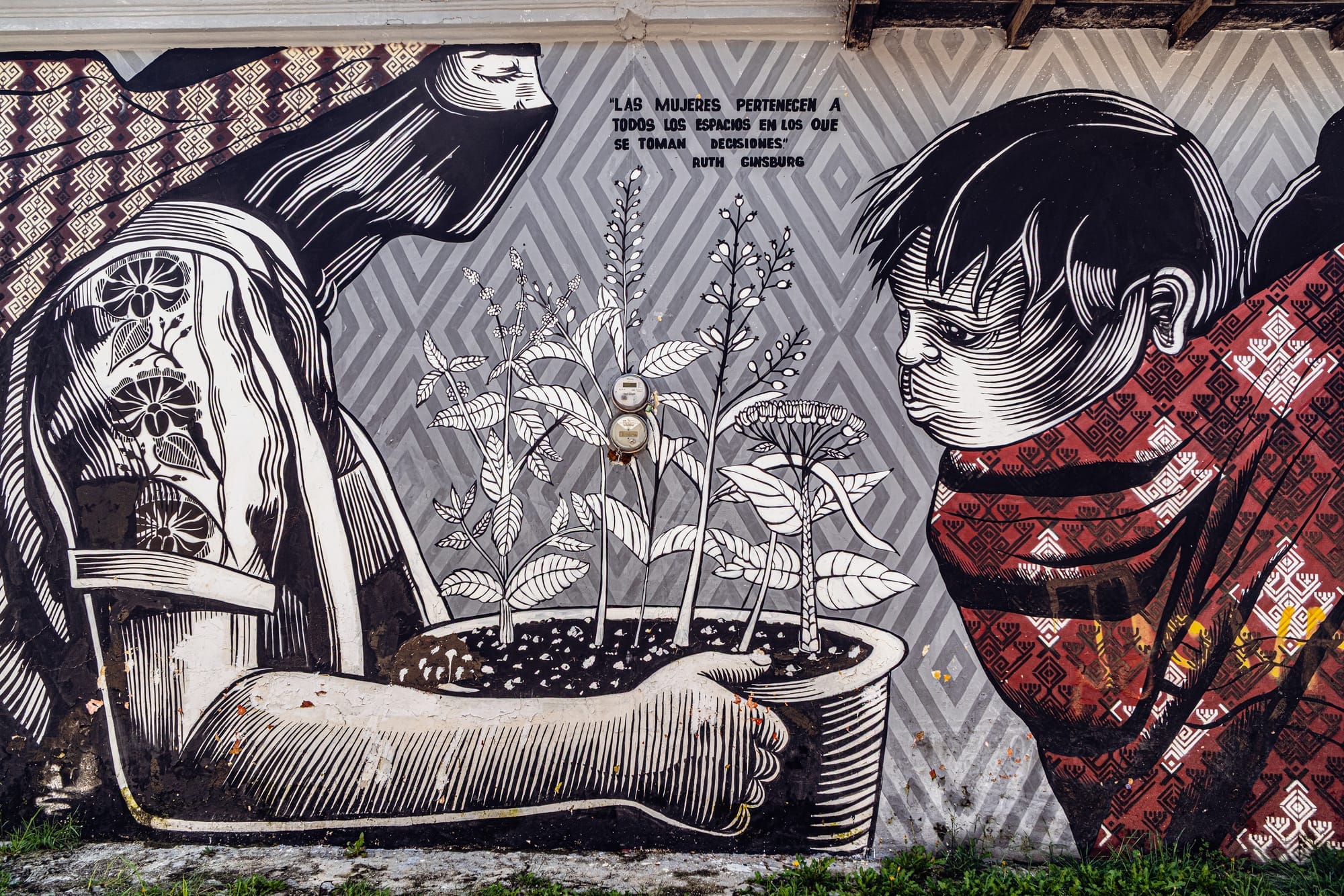
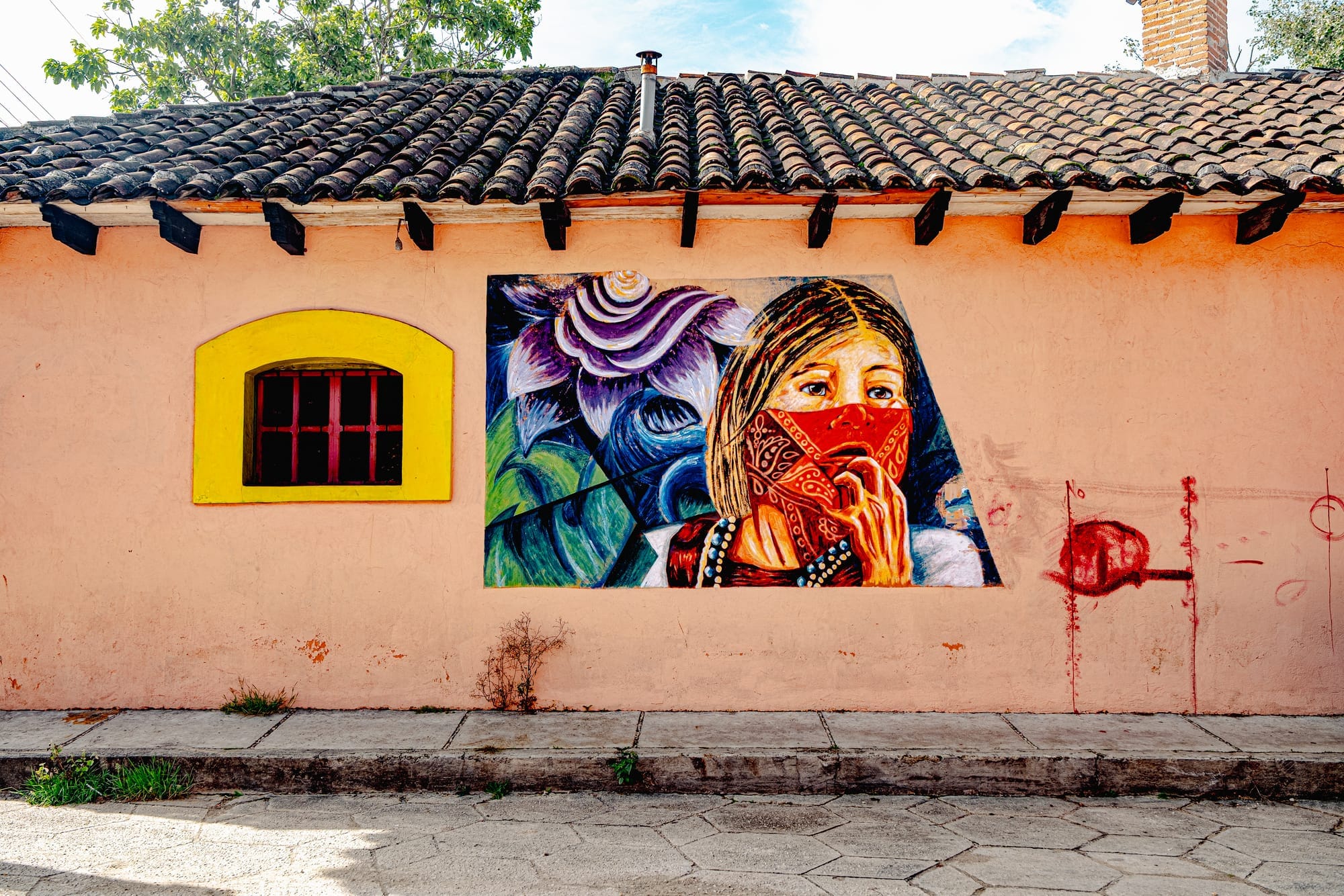
San Cristóbal is also closely connected to the history and ongoing presence of the Zapatista movement. Visiting CIDECI-UniTierra gives you context for how autonomy, education, and resistance are practiced in the region. It doesn’t dominate life in the city in an obvious way, but it’s there in the background, informing conversations, art, and the broader political landscape of Chiapas.
Our explainer on the Zapatistas, Coca-Cola, and water in San Cristóbal covers the history and the politics you'll hear about once you've settled in.
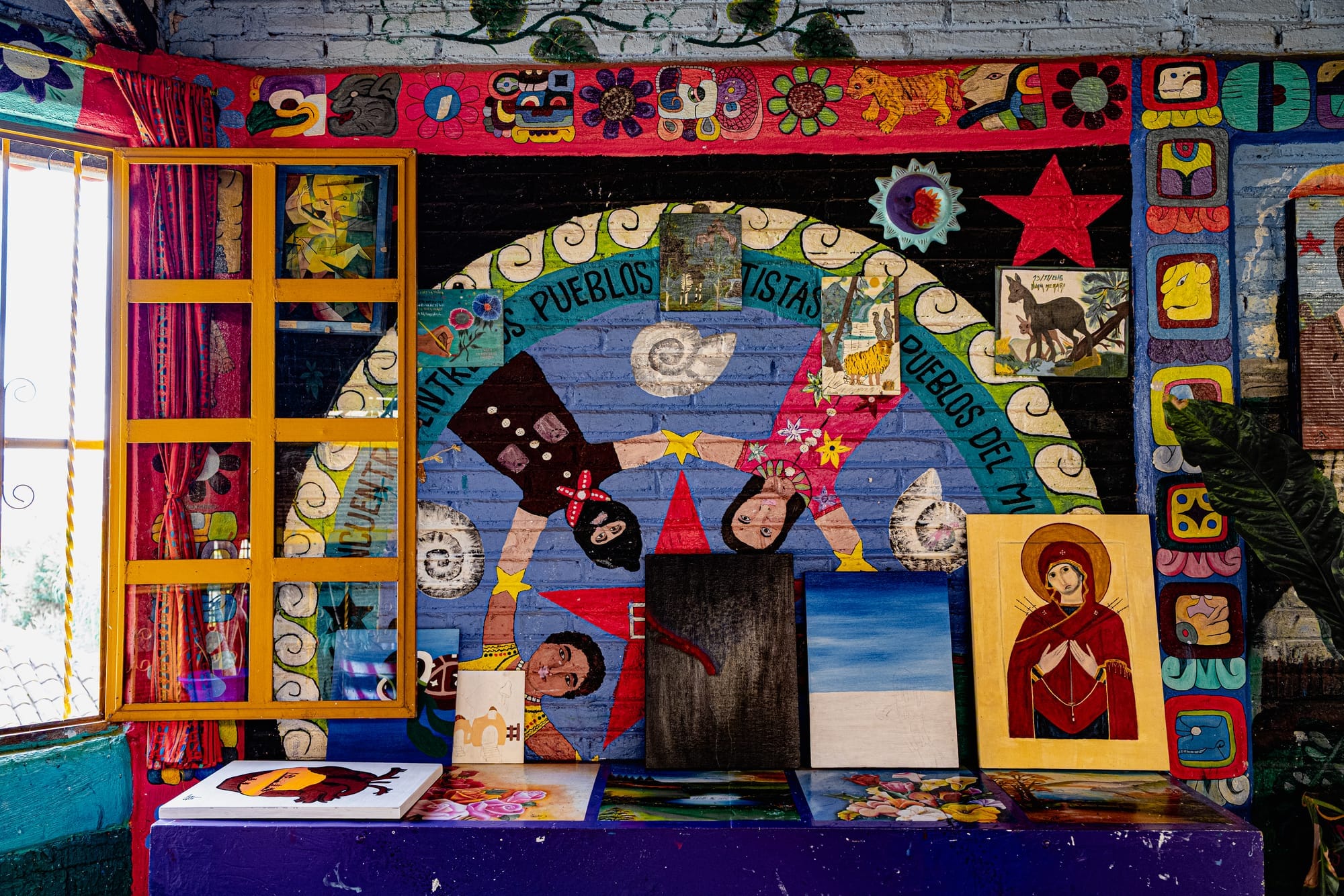
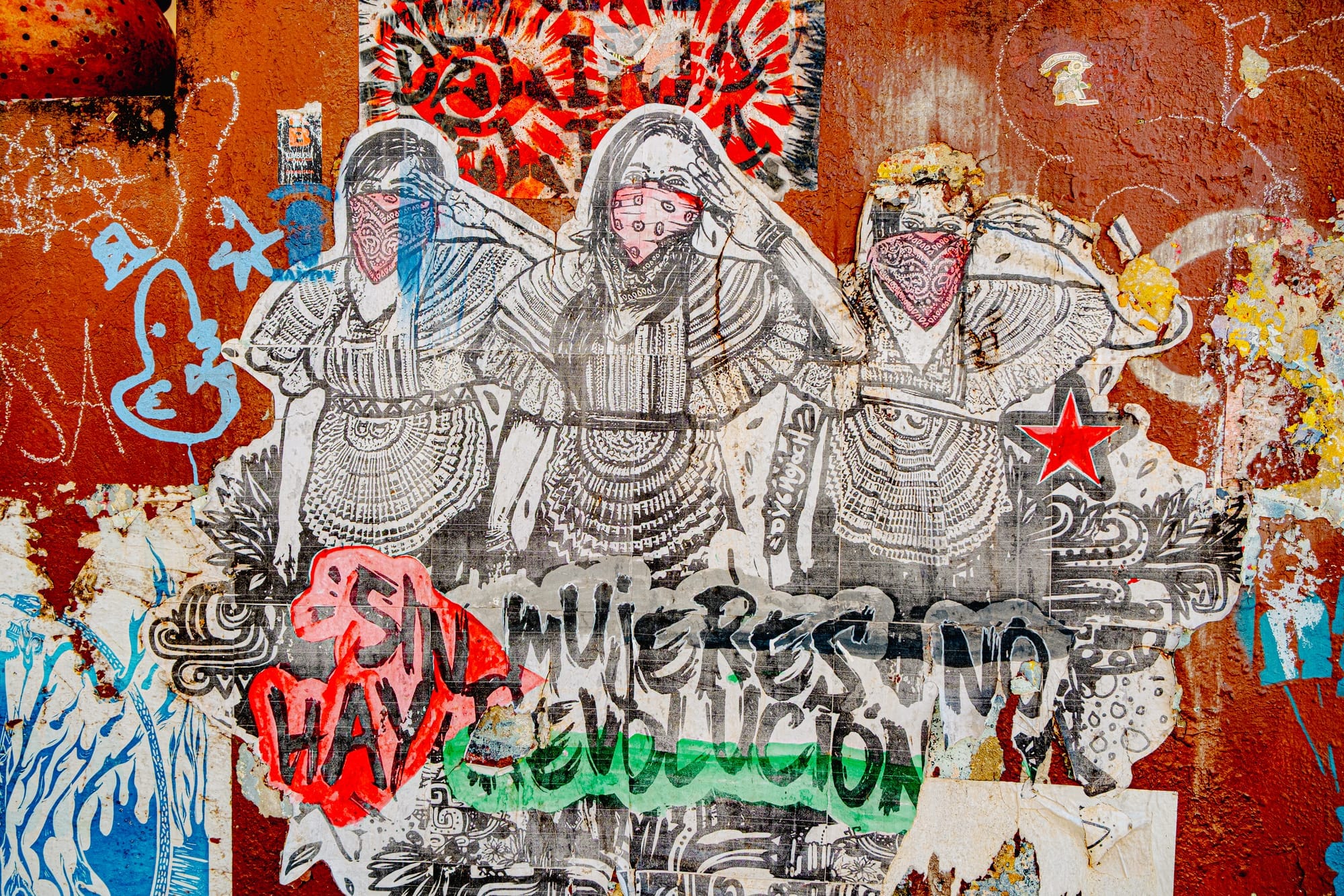
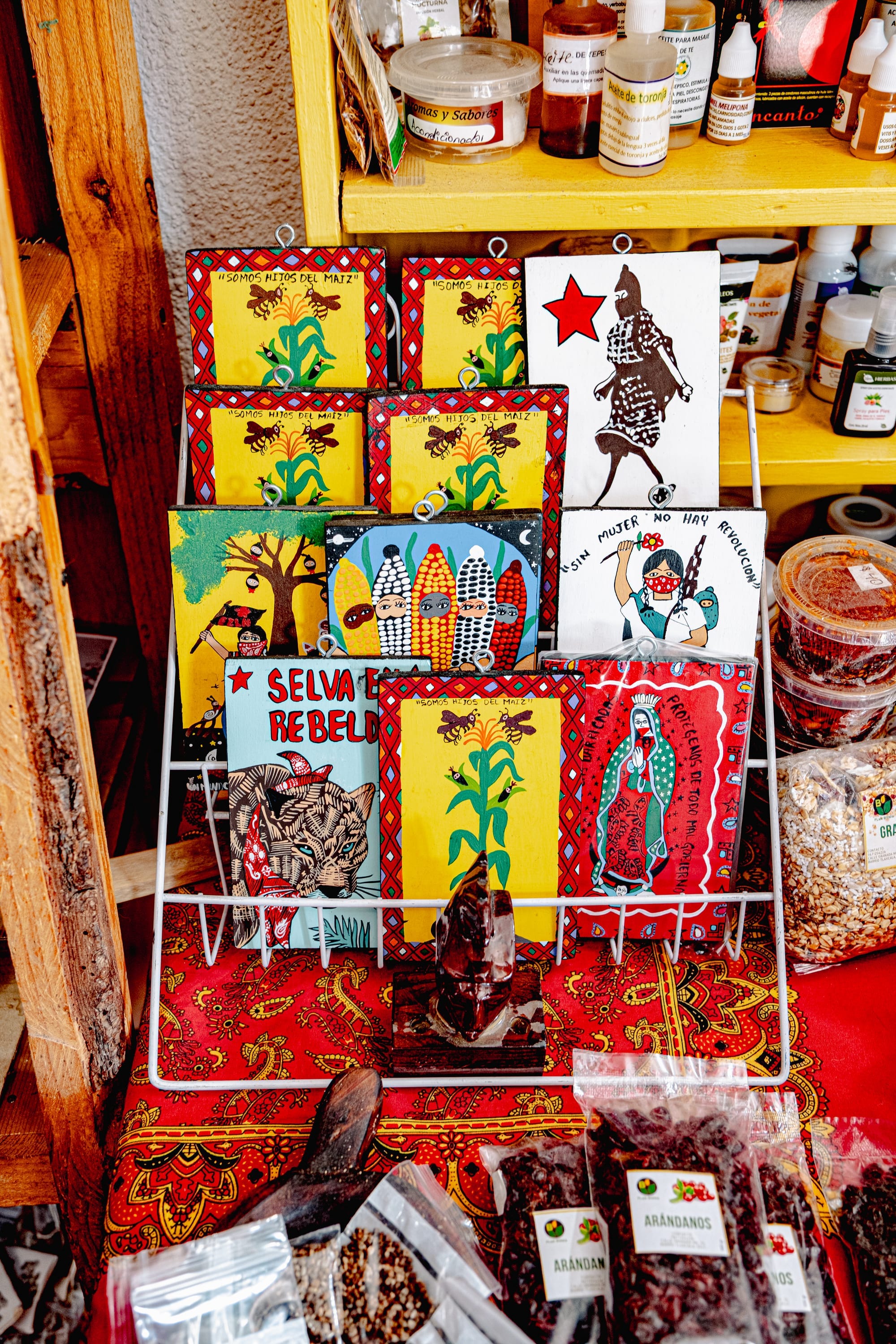
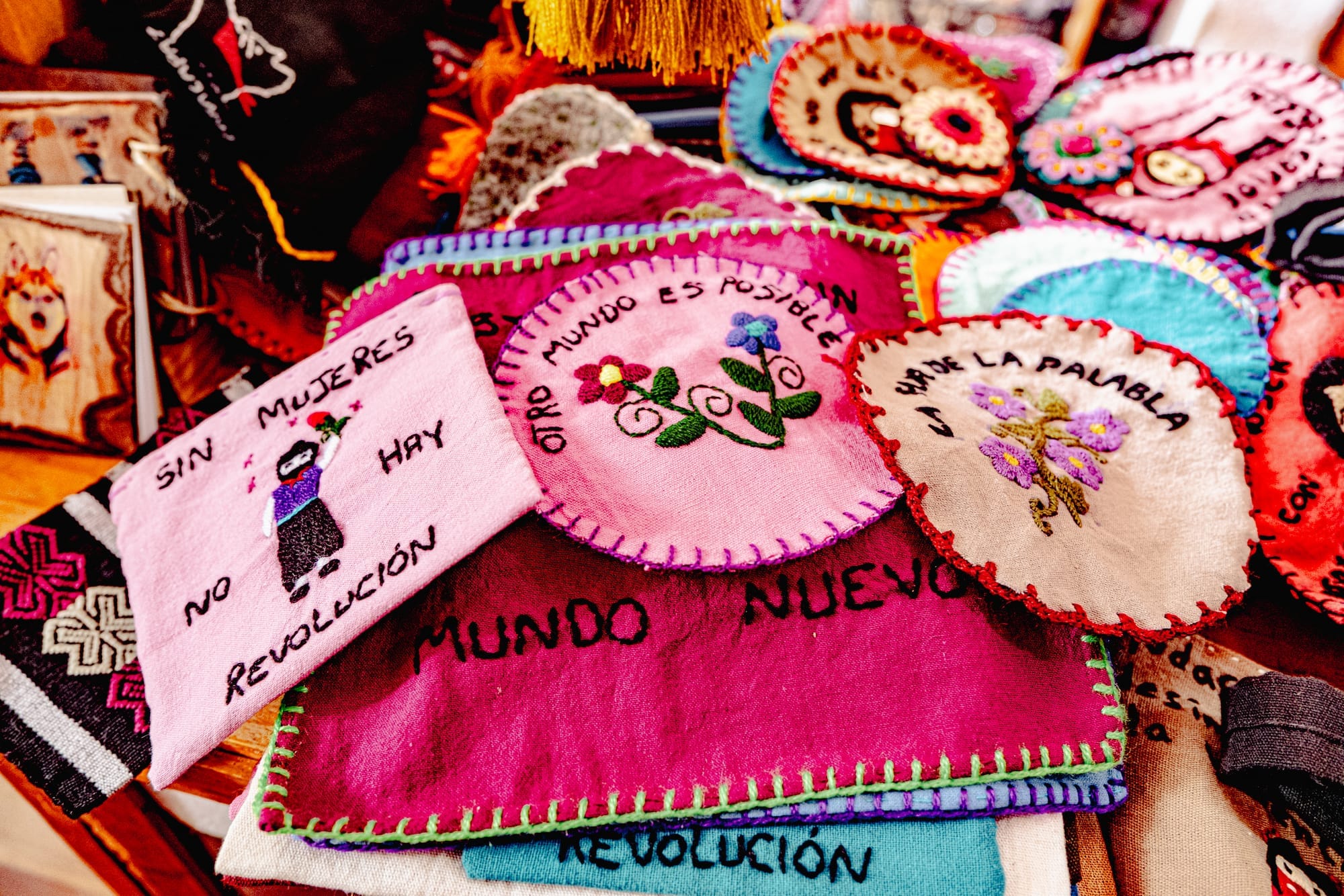
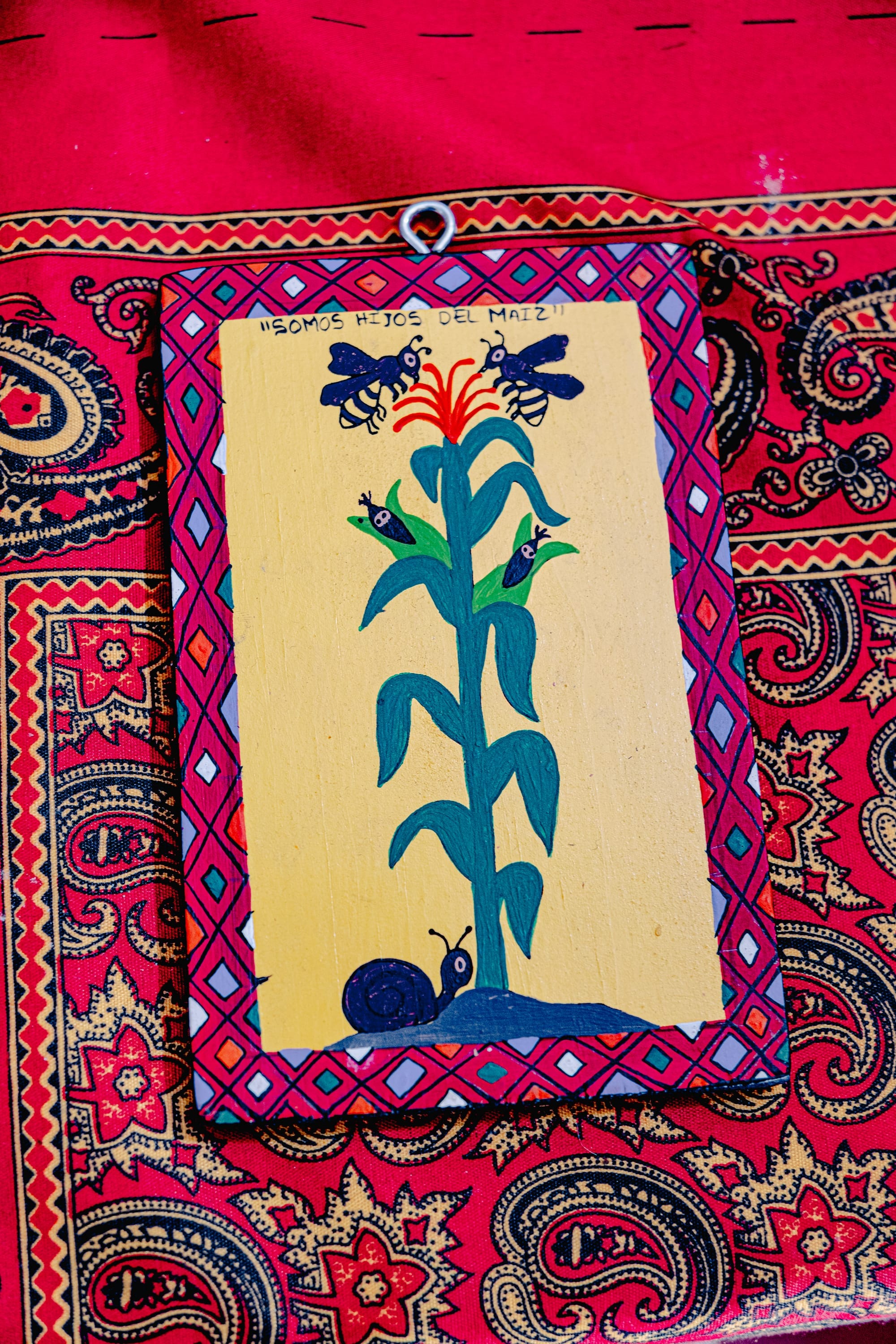
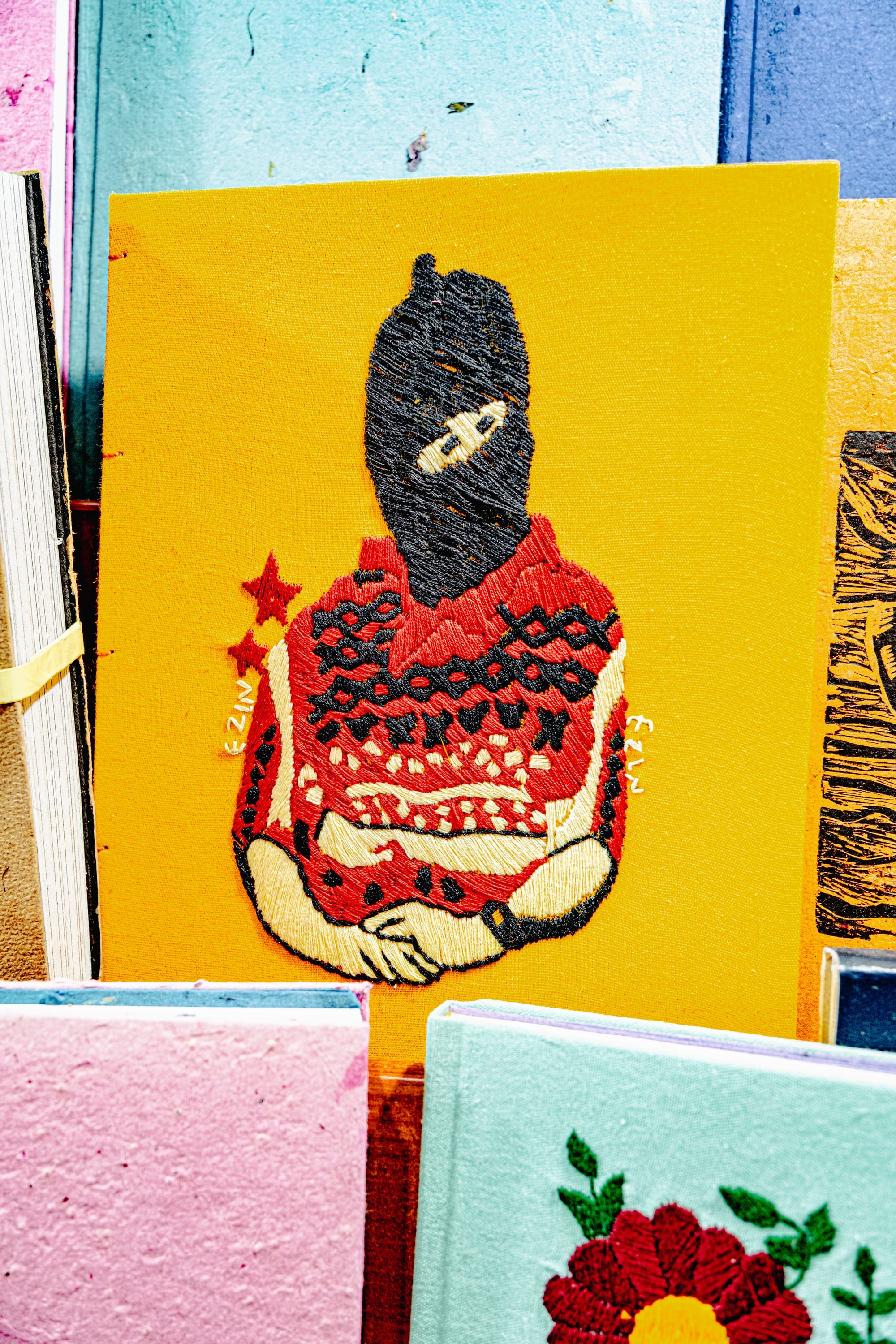
Handmade art reflecting identity and resistance in San Cristóbal
Beyond San Cristóbal itself, several nearby Indigenous towns are easy to visit and add important context to the region. Places like San Juan Chamula and Zinacantán are both close enough to reach on a short trip, yet distinct in their traditions, religious practices, and ways of life.
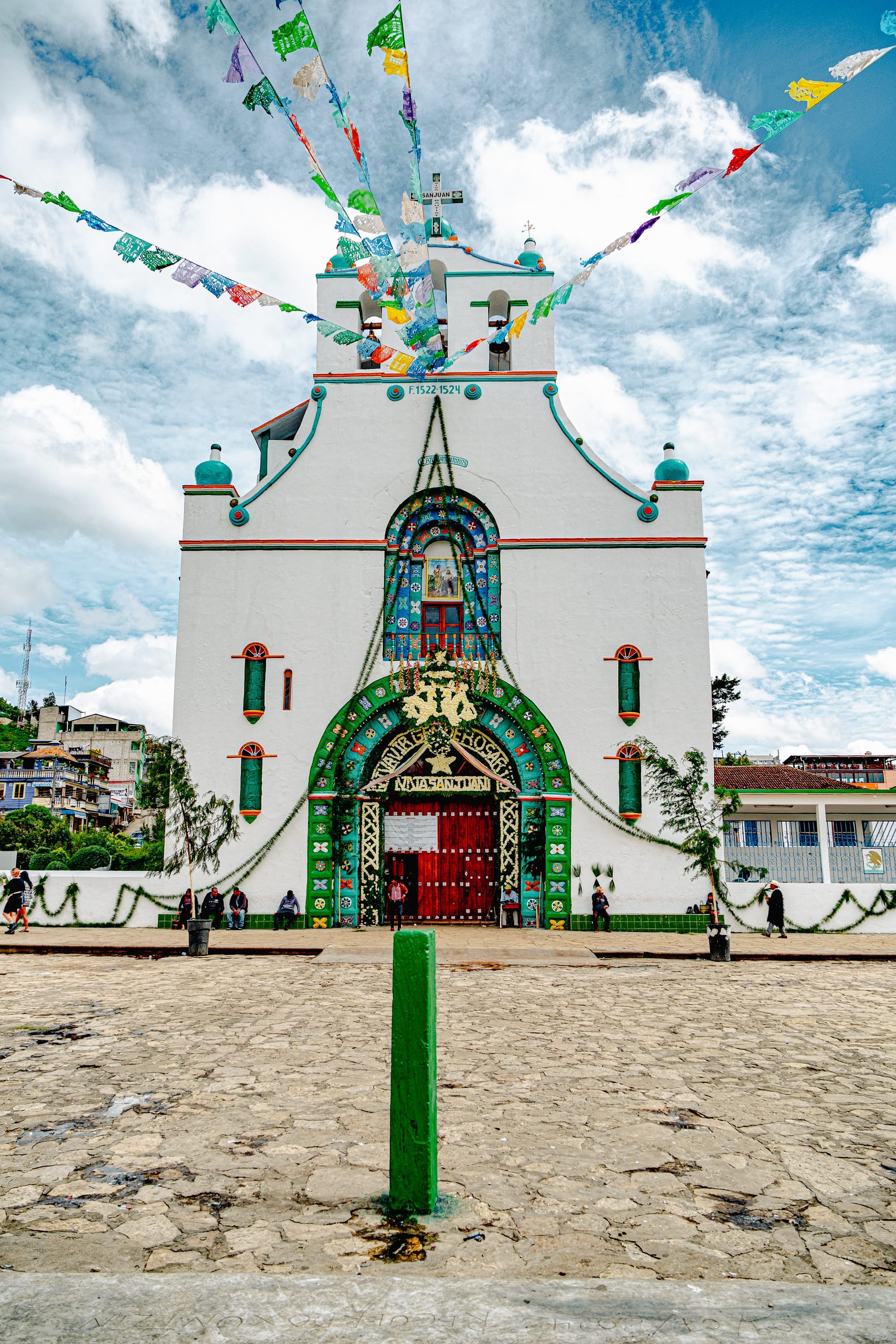
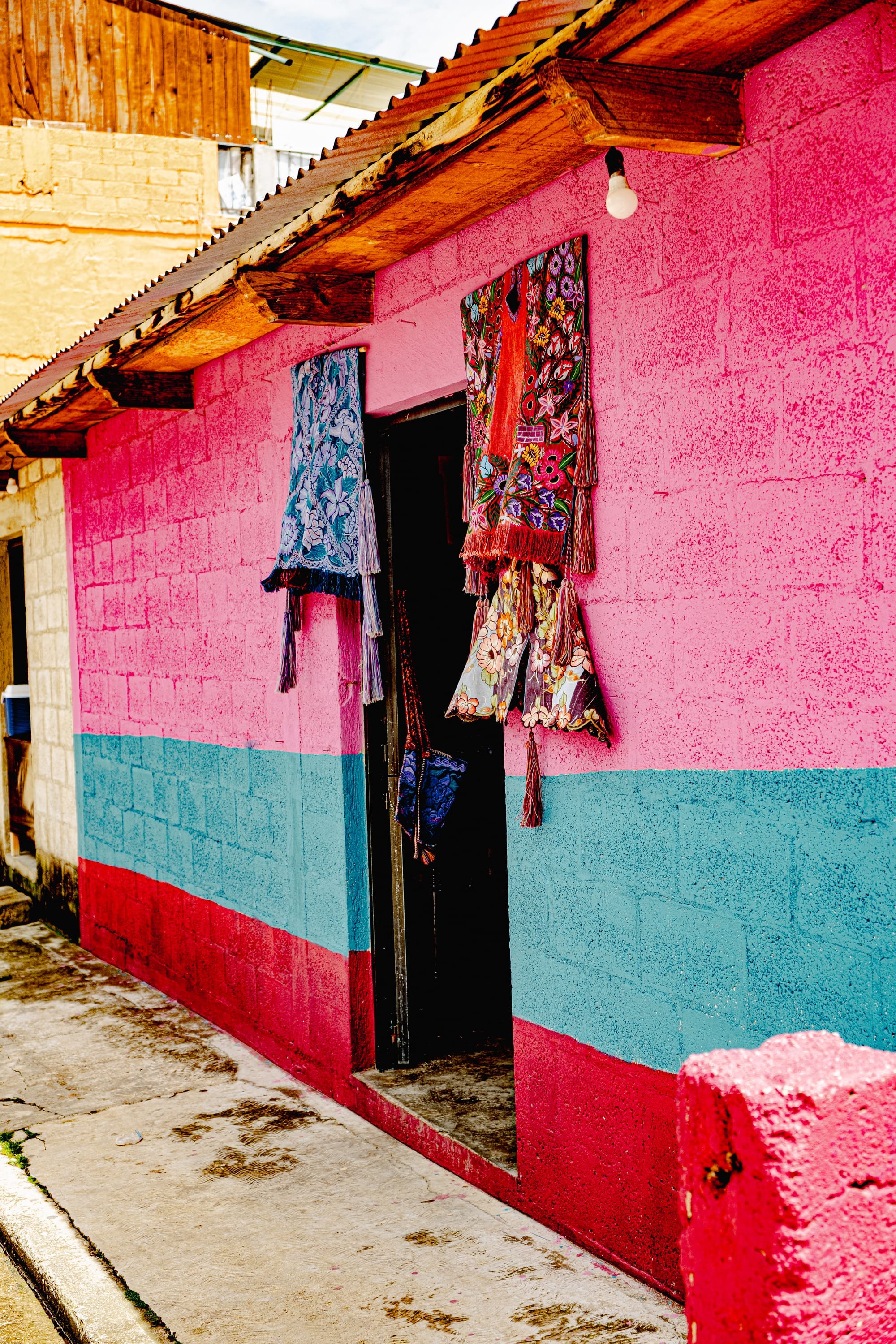
San Juan Chamula and Zinacantán
Visiting these towns, either independently or with a local guide, gives you a better understanding of how Indigenous life in the highlands continues on its own terms, alongside but separate from San Cristóbal. As anywhere in the region, go with curiosity and respect, and remember that you’re entering living communities rather than cultural exhibits.
A creative mountain town
San Cristóbal attracts a particular kind of person. There’s a noticeable creative streak here: artists, craftspeople, writers, and people who seem to have chosen the city deliberately rather than ended up in it by accident. It shows up in what people make, how they dress, how spaces are used, and how they structure their time.
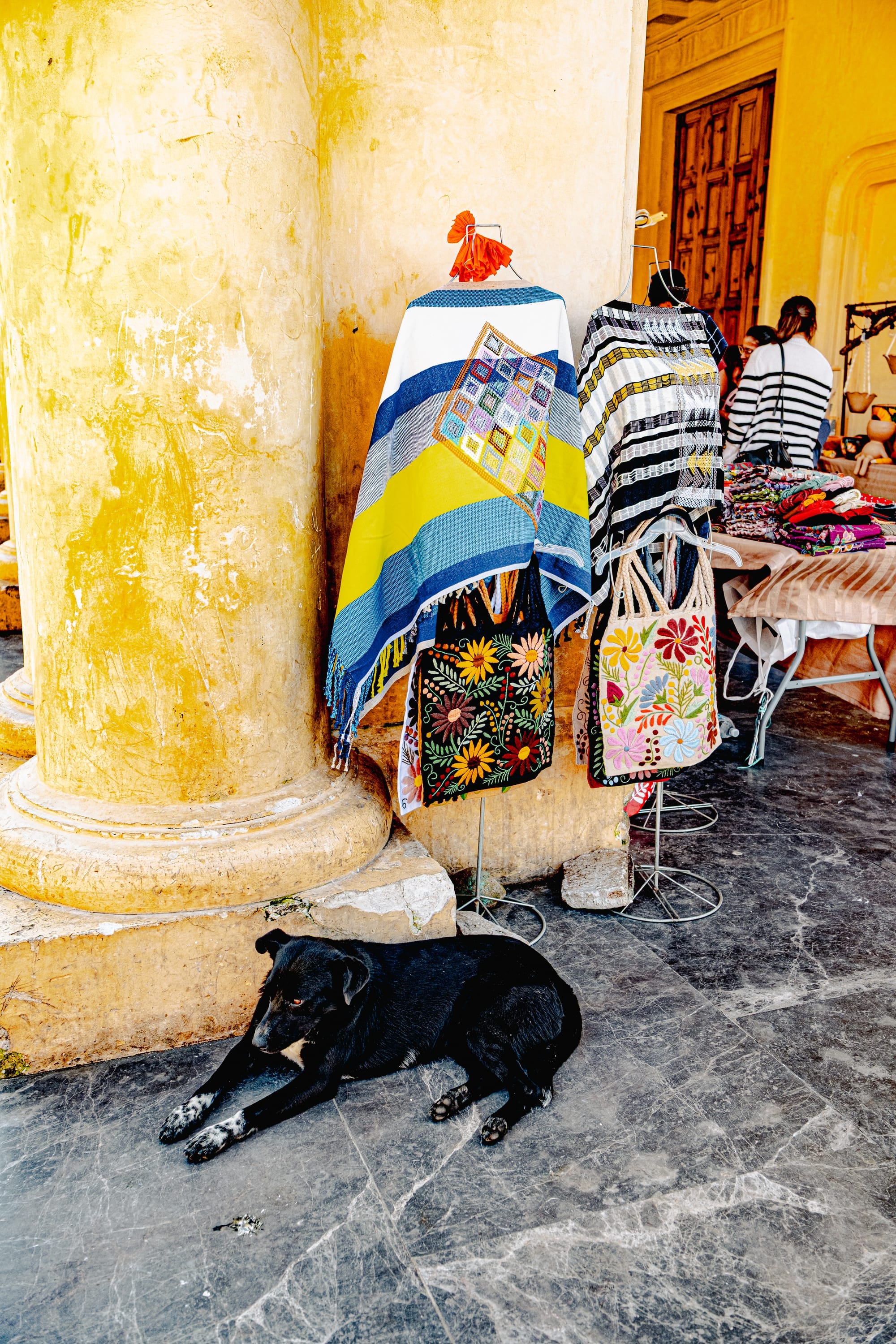
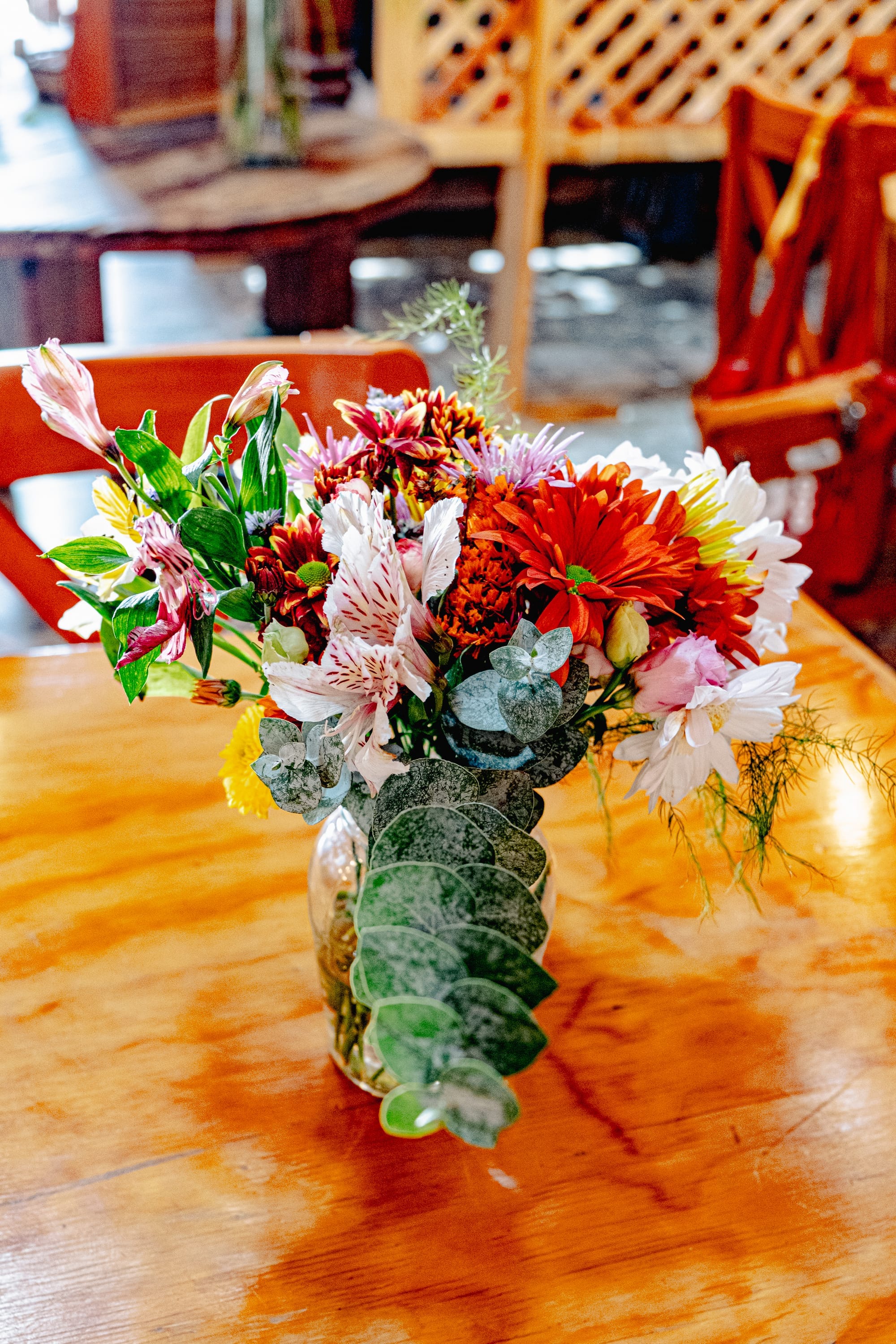
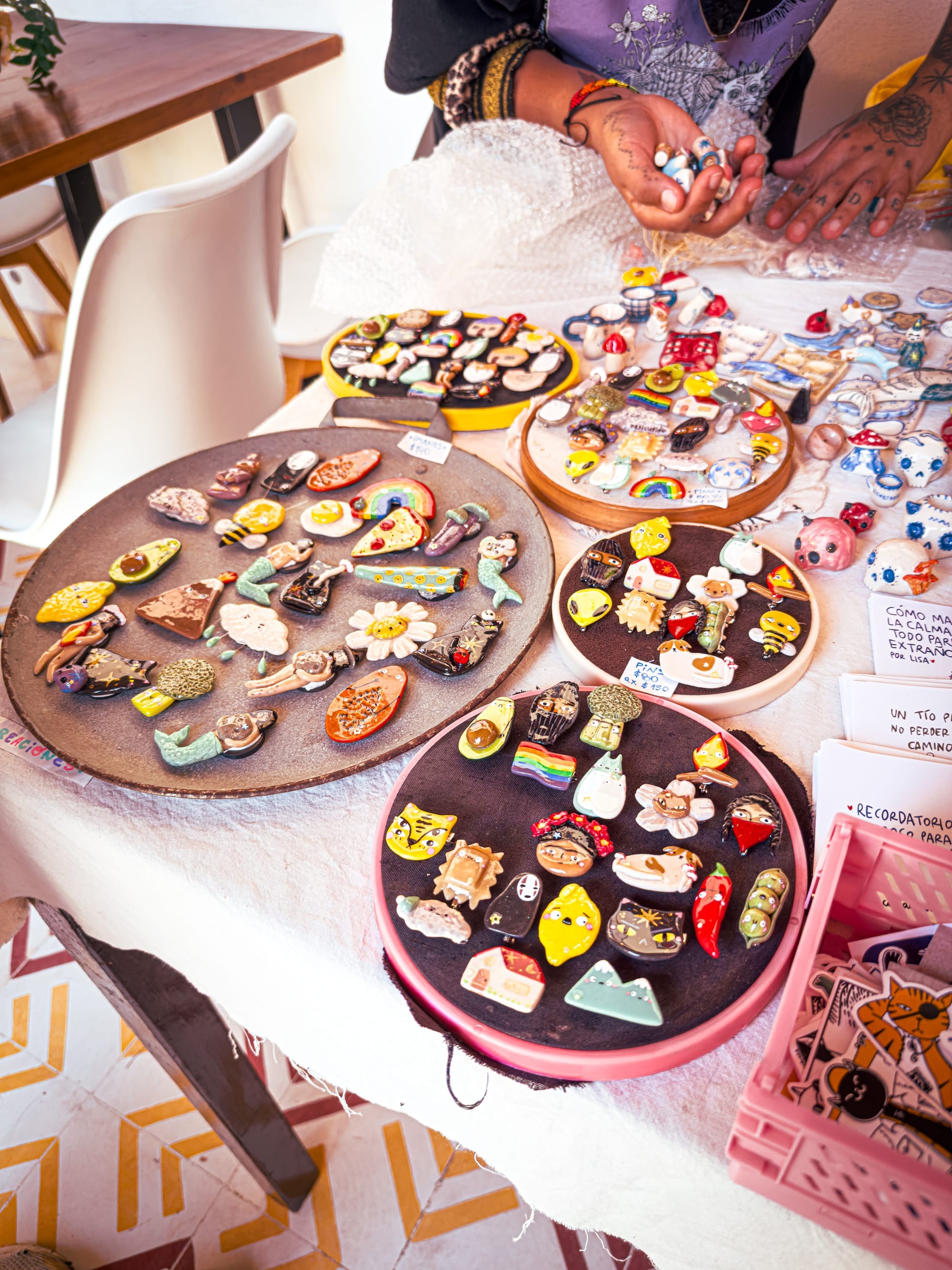
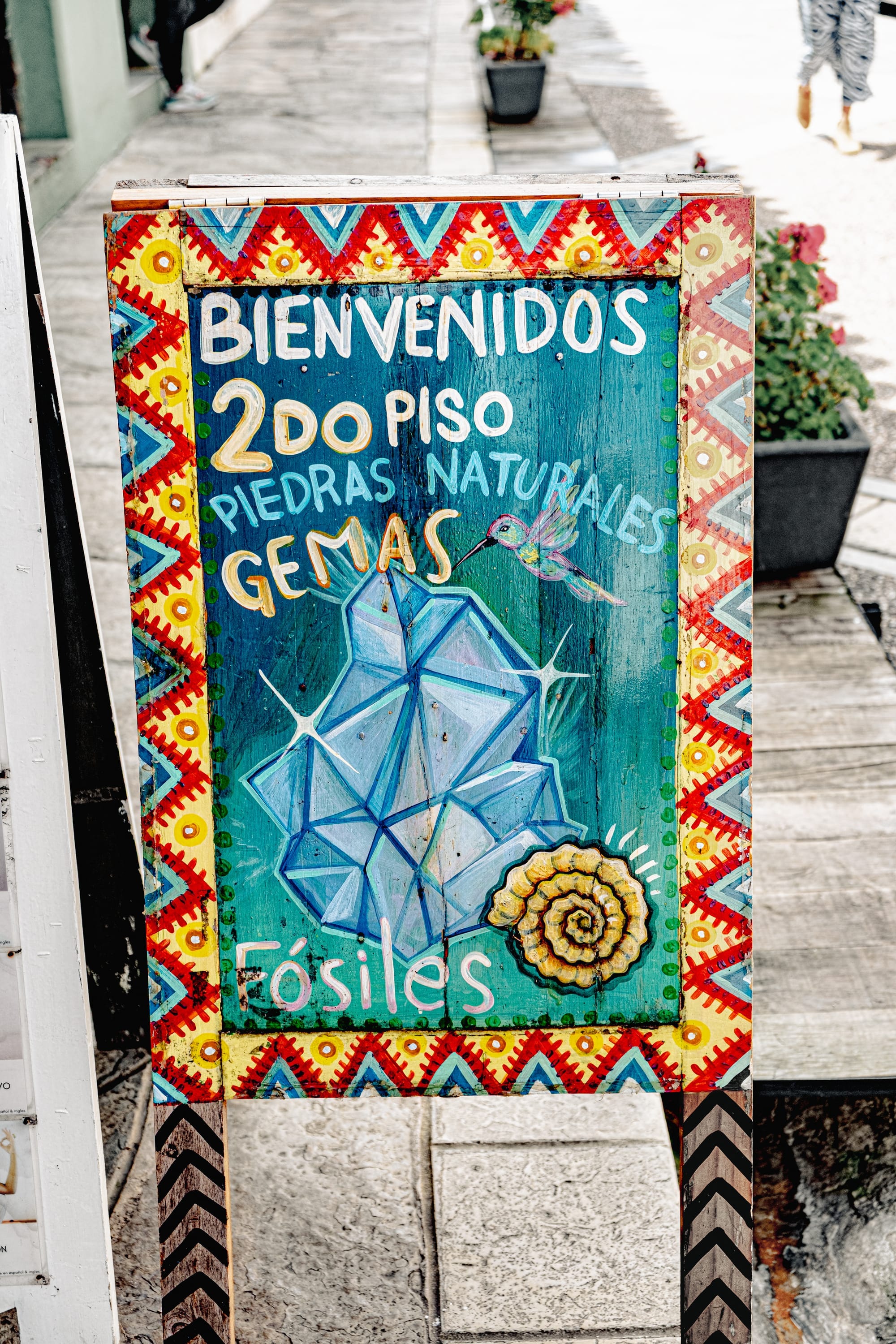
Artistic details in town
Textiles, ceramics, political art, and small-scale creative projects are part of life here. You come across them while walking, shopping, or sitting in a café, not because you’re looking for them, but because they’re part of the city’s fabric.
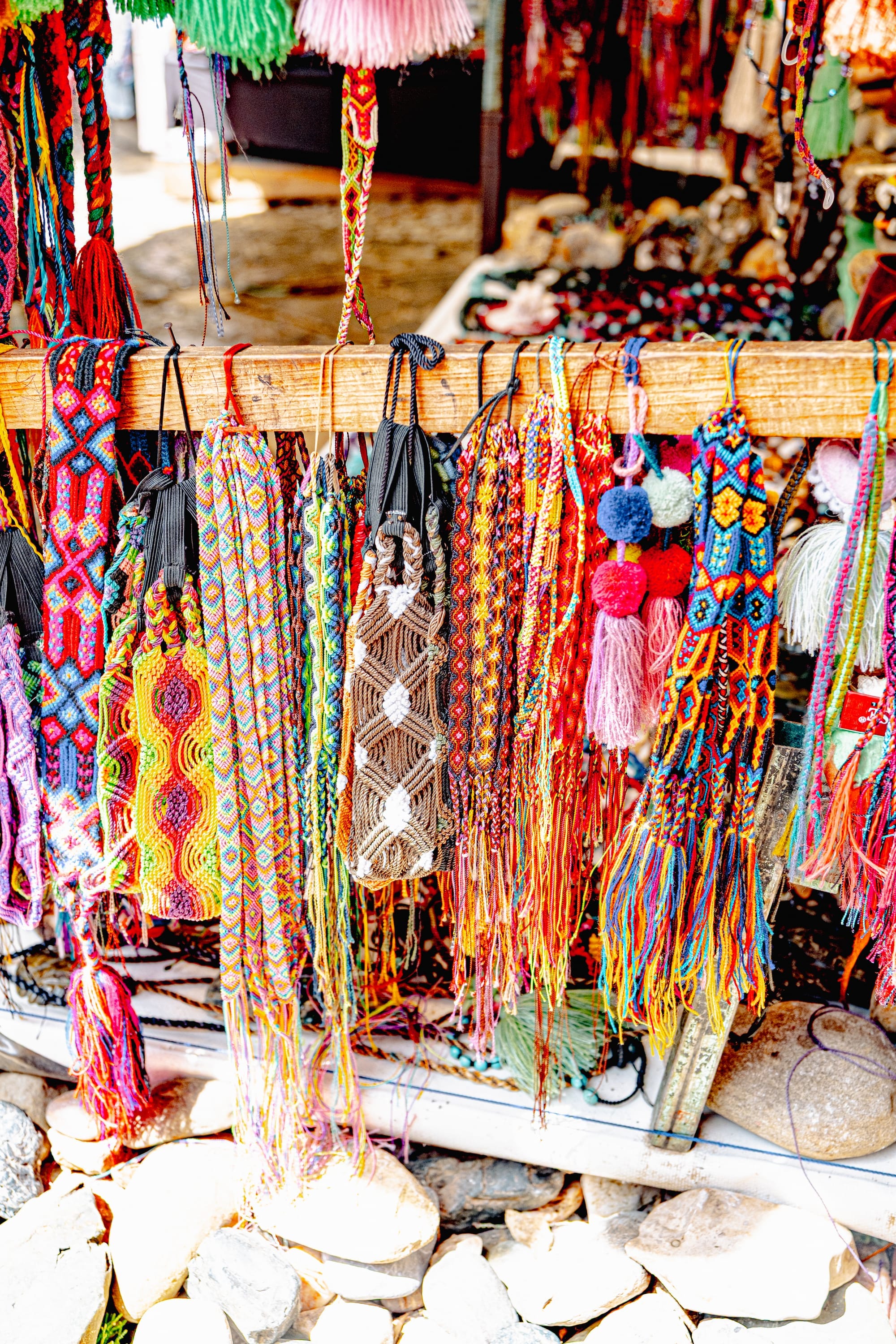

Market findings
Compared to larger and more visible cultural centers like Oaxaca, San Cristóbal feels less polished and less self-conscious. That difference is subtle, but if you’ve spent time in places that cater heavily to visitors, it’s something you notice quickly.
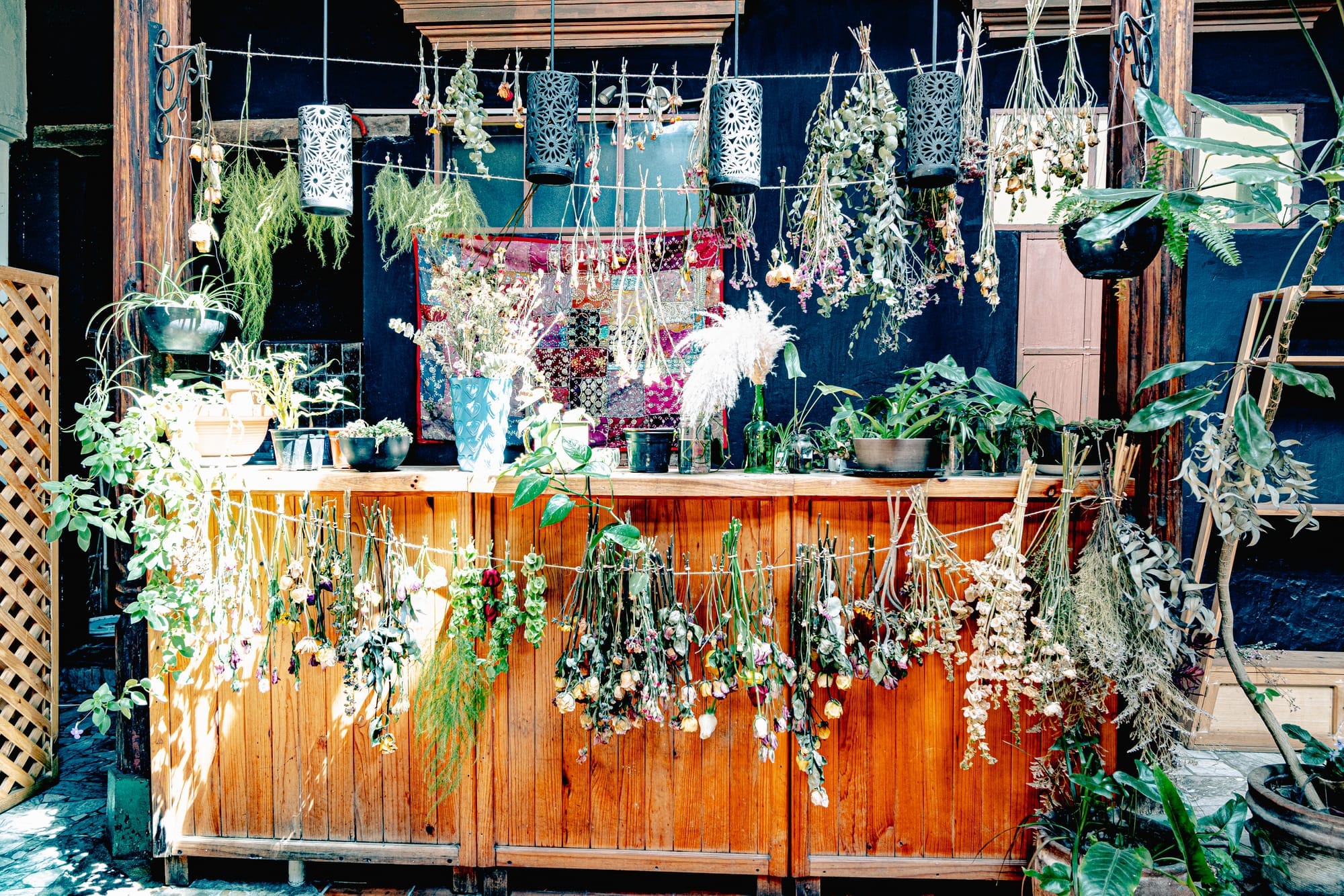
Spending time in San Cristóbal also shifted how we related to our own creative work. Without really intending to, we found ourselves more inclined to make things: to write, to think, and to follow ideas. Days felt open enough to let thoughts stretch, and there was less of the low-level pressure to stay productive or visible. Whether that came from the pace of the city, the weather, the walking, or being surrounded by people living close to their own forms of making, it’s hard to say. But San Cristóbal put us in a mental state that felt more original and self-directed, where creation came from curiosity. If places can shape how you think, this one nudged us gently toward creating for its own sake. If we had to guess, we'd say the inspiration came from how sincere the place is.
Working remotely in San Cristóbal
From a practical standpoint, San Cristóbal works well for remote work, especially if you’re comfortable with a low-key setup. There are plenty of cafés where laptops are welcome, but they’re rarely dominated by them. Most places feel like shared social spaces rather than informal coworking hubs, which helps work blend more naturally into the day.
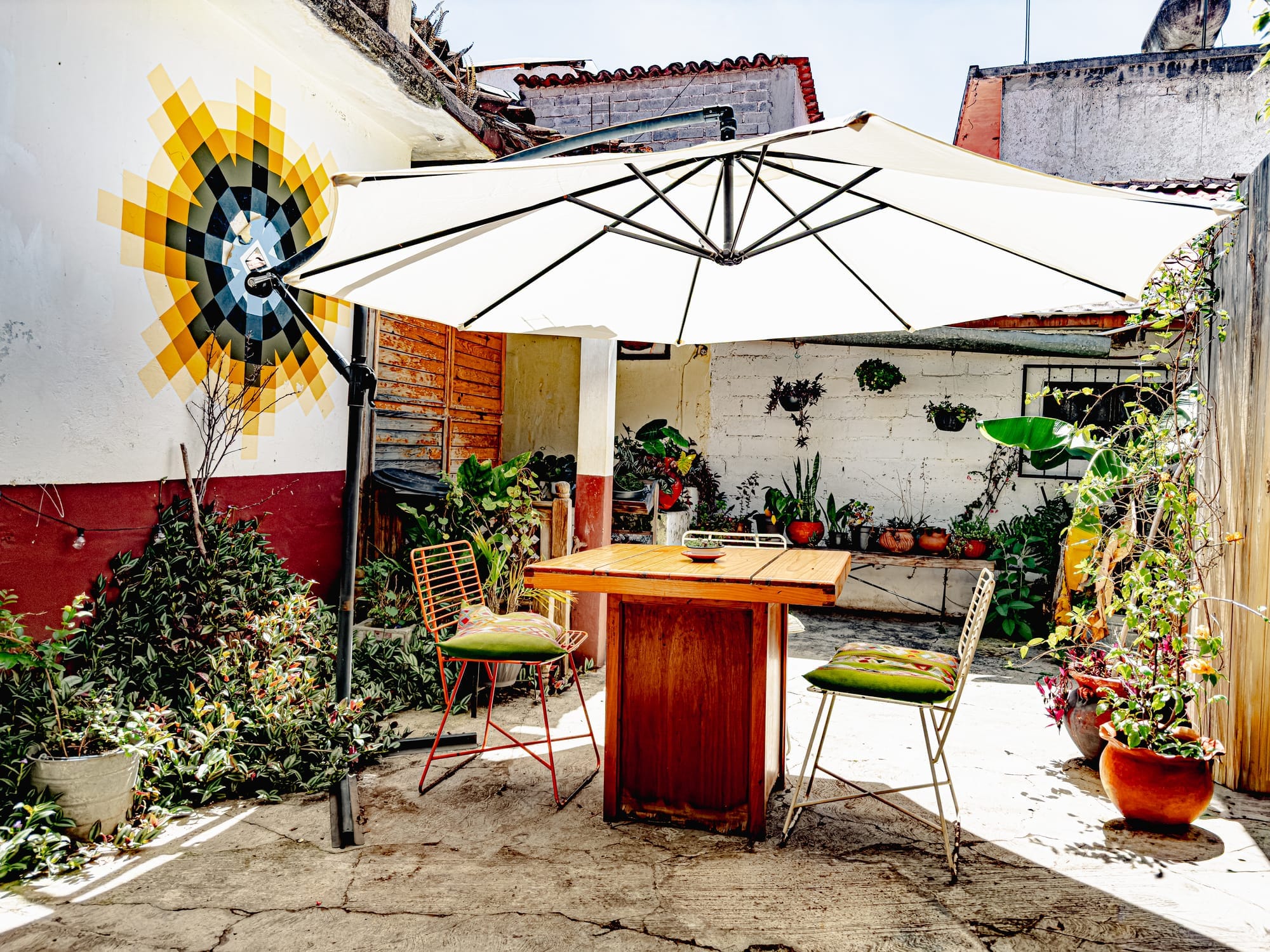

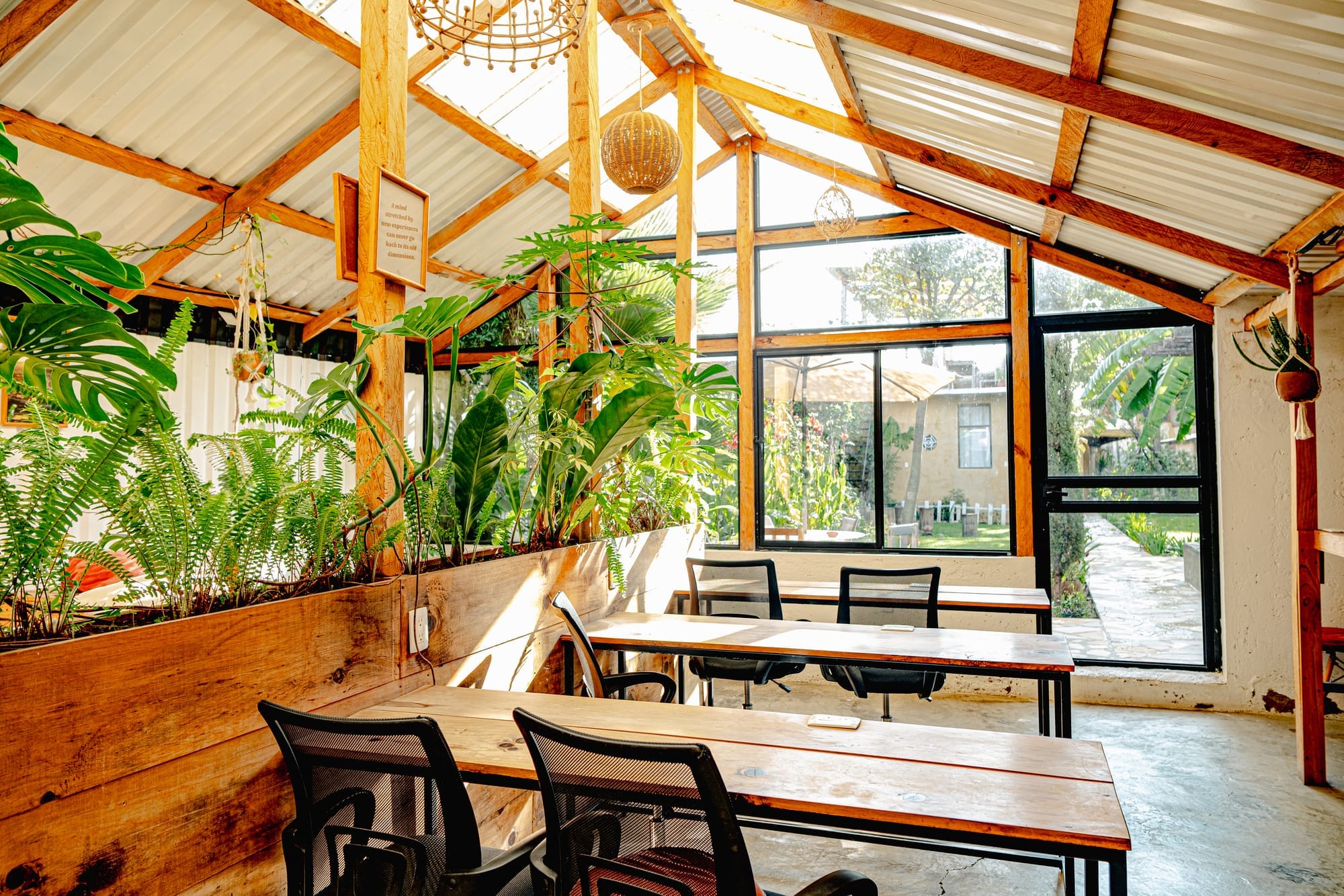
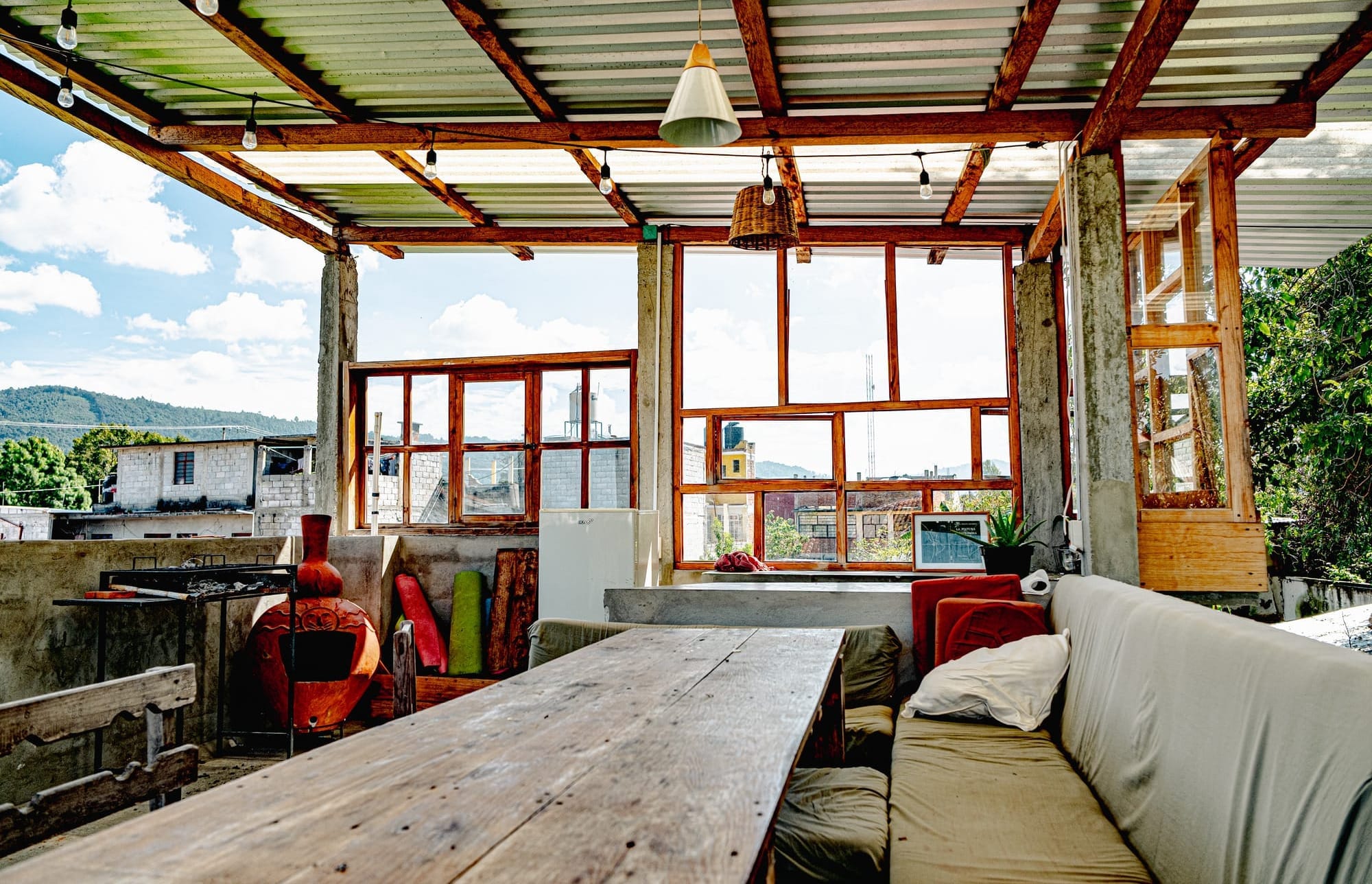
Coliving and coworking spaces like Co404 have contributed to a small digital nomad presence in the city. The scale here matters. Compared to larger setups in places like Oaxaca, Co404 in San Cristóbal is smaller and more grounded, with gardens and mountain views that make it feel slightly removed from the usual nomad circuits.
Internet and phone signal in San Cristóbal
Wifi is fine for video calls in most coworking spaces and better rentals, but it varies a lot from building to building. Crowdsourced data on Nomads.com puts the average at about 37 Mbps, and other remote workers report anything from 5 to 85 Mbps. Before you pay for a monthly rental, ask the host for a recent speed test.
Mobile signal drops out in parts of town, so download offline maps. Telcel is the carrier most people recommend, and a prepaid monthly bundle costs roughly 300 pesos at an OXXO shop or supermarket. An eSIM works too if you'd rather sort data before you land.
Coworking spaces in San Cristóbal de las Casas
There are only a handful, which suits the size of the scene. Co404's coworking area is for people staying there. Centralita runs two spaces: a larger one in the center with bookable call rooms, and a smaller one in El Cerrillo with garden desks and mountain views. 13 Cielos Hostel also has a coworking room. Expect to pay around $125 a month for a hot desk, and check current prices and opening hours directly, as they change. On days you don't need a desk, cafés are an easy alternative.
Nature close to San Cristóbal
One of San Cristóbal’s biggest draws is how close it is to very different landscapes. Nature here isn’t something you save for a long weekend or a special trip. It’s part of the reason to be in the city at all. In almost every direction, a few hours (or less) takes you somewhere completely different.
The contrast is biggest when heading toward the jungle. Places like Palenque are a world away from the cool mountain air: hot, dense, and green, with ruins emerging from thick forest. Nearby, waterfalls such as Cascadas Roberto Barrios offer another version of that same shift, where you spend the day swimming, walking, and lingering rather than sightseeing.
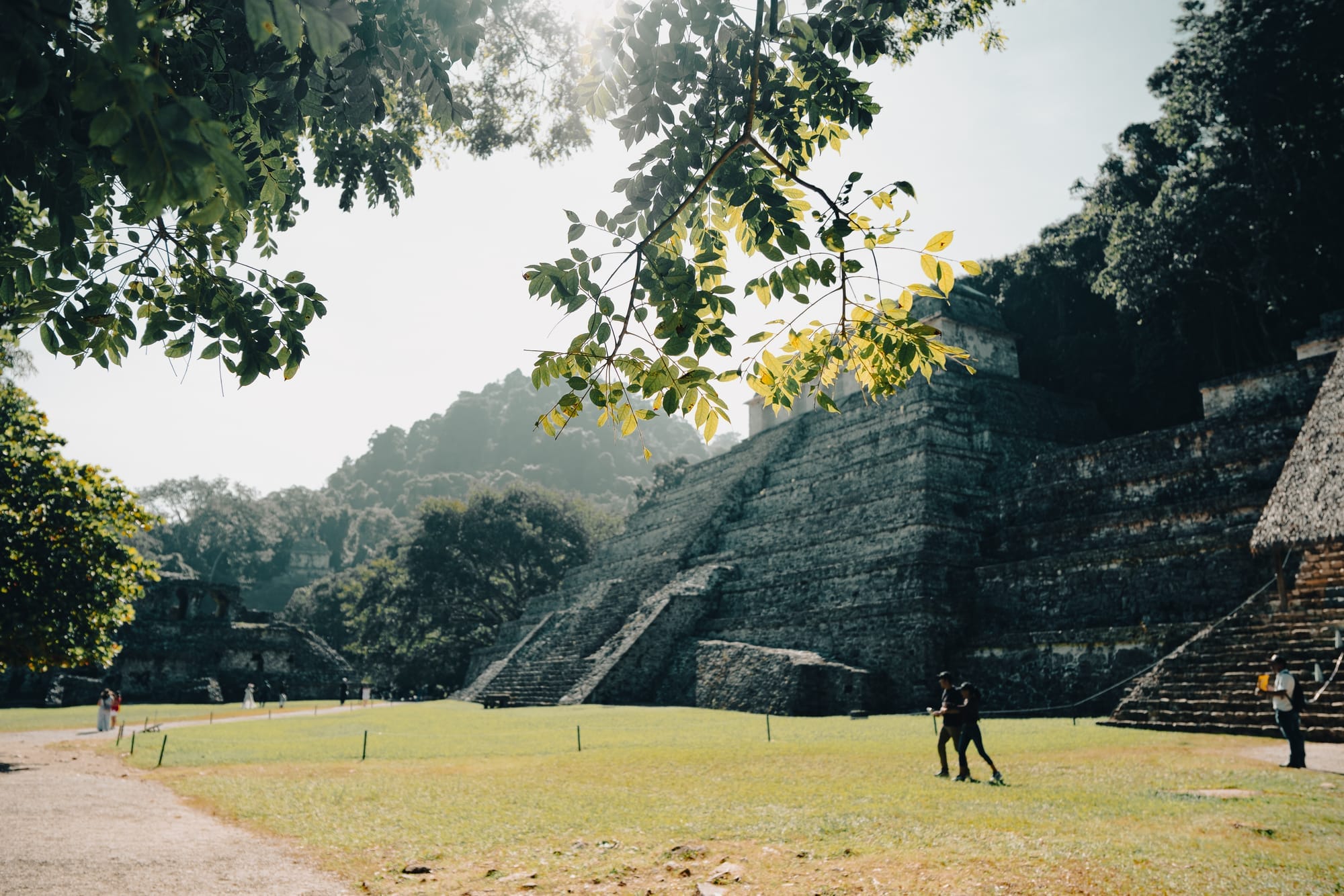
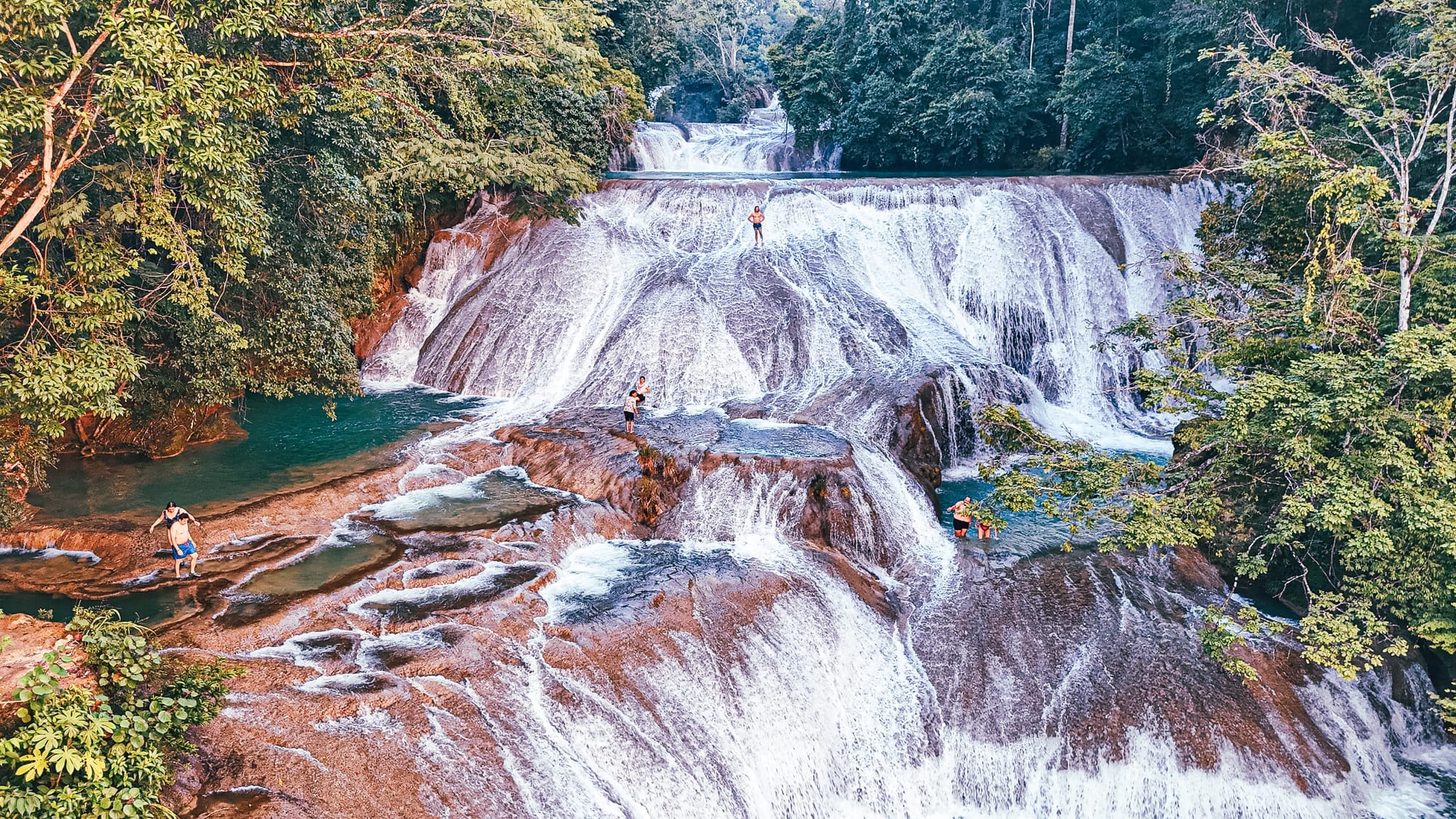
Other trips are calmer. The blue and green water of the Lagos de Montebello feels wide open and peaceful, while Sumidero Canyon is something else entirely, with cliffs so high and still that they make you feel tiny. Waterfalls like Misol-Há and El Chiflón sit somewhere between these extremes: easy to reach, but powerful enough to pull you fully out of city life for a day.
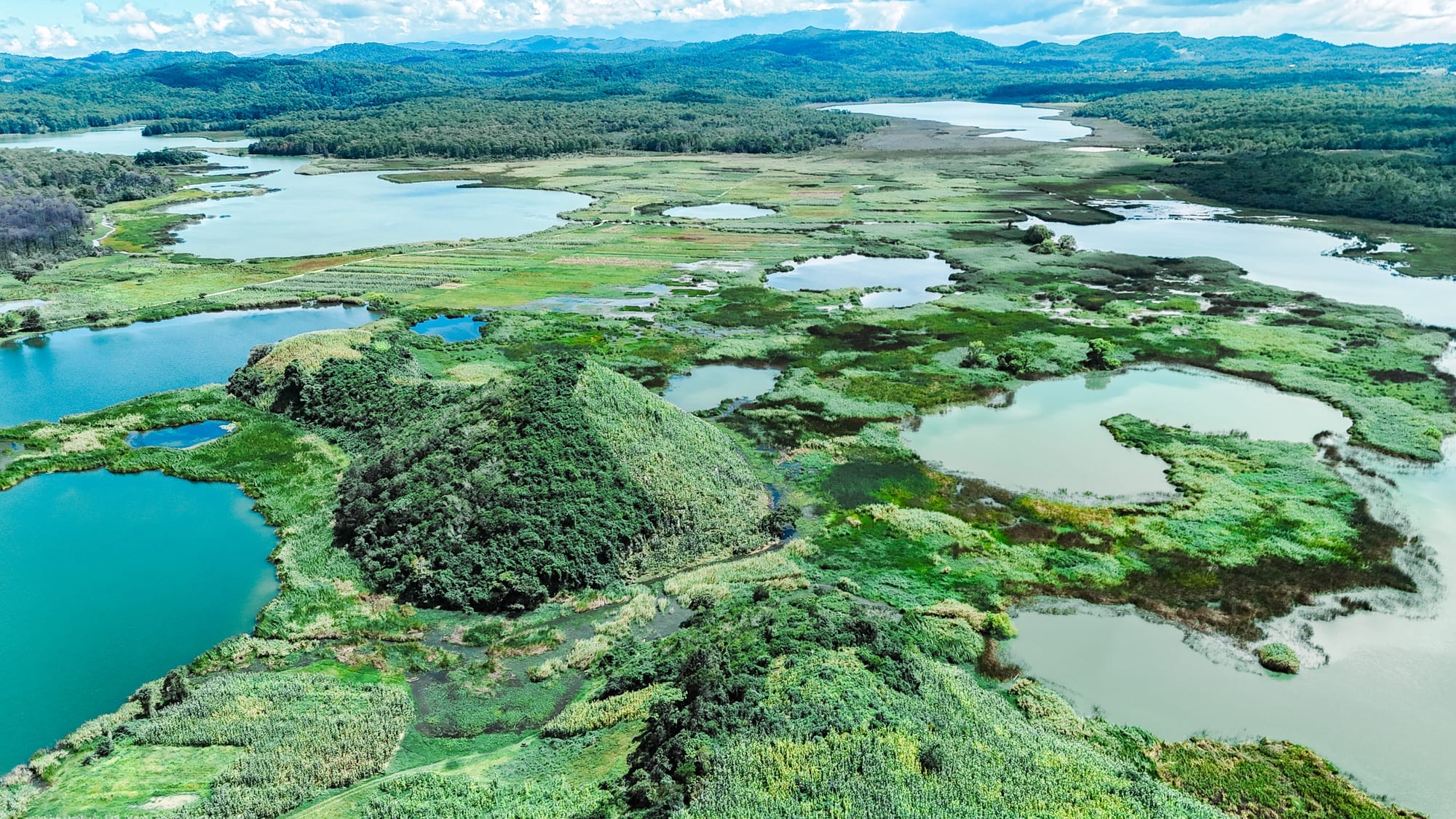
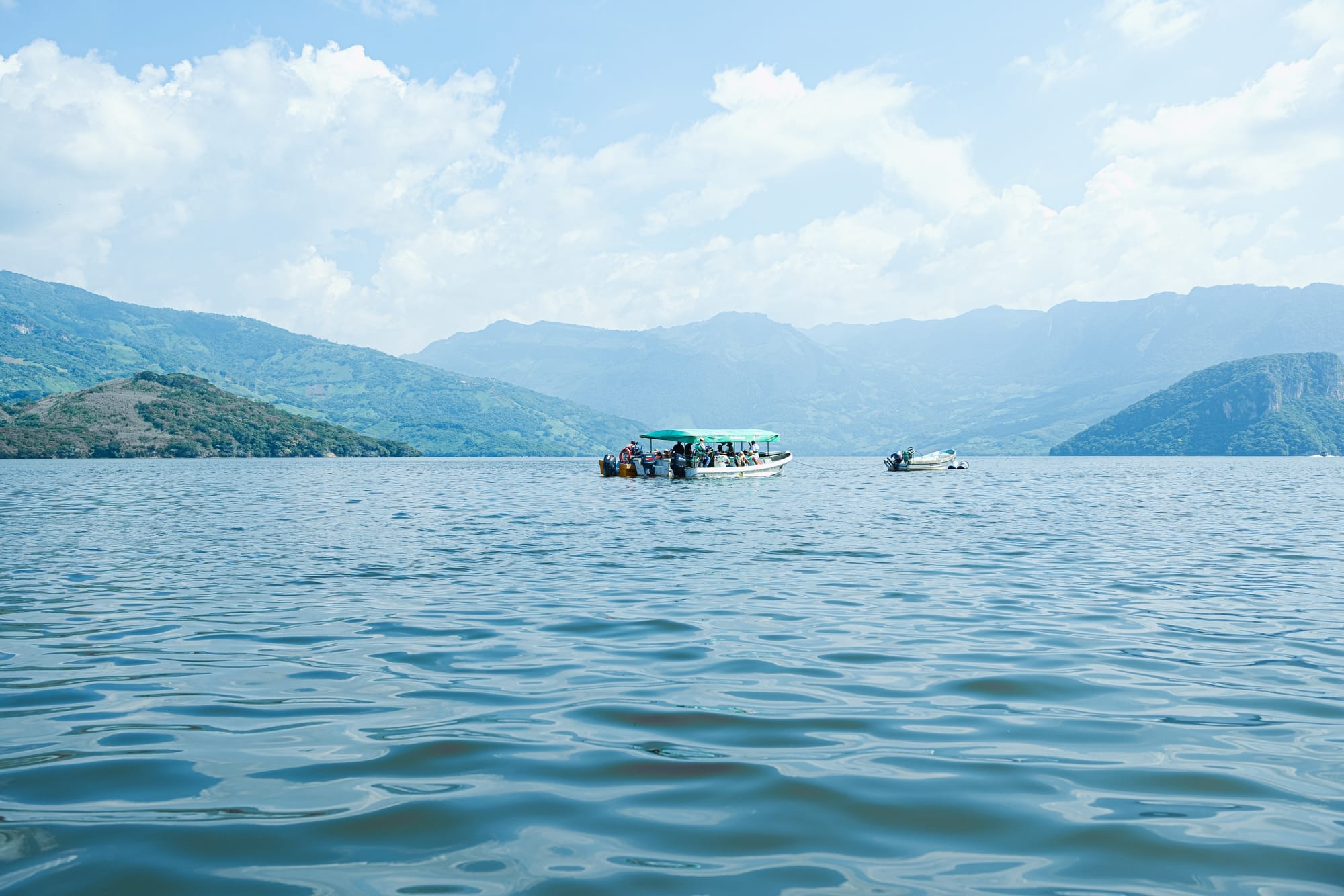
Some of the most memorable experiences are less than 20 minutes away from town. A fungi hike with a local mycologist shifted our attention downward, to forest floors, small details, and seasonal patterns that are easy to miss without guidance. Visits to places like El Arcotete or the Moxviquil Orchid Reserve were similarly grounded, focused more on observation than movement.
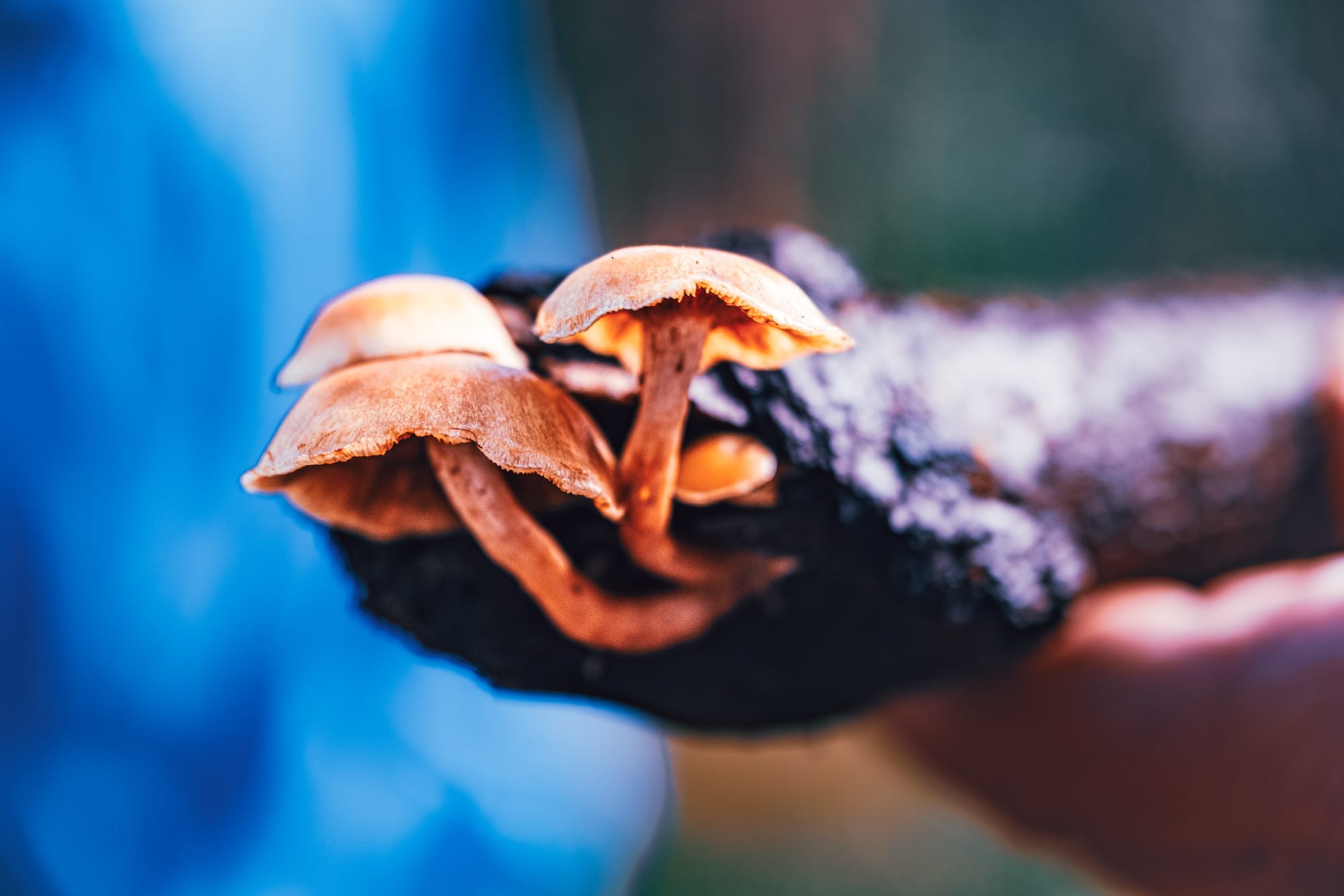
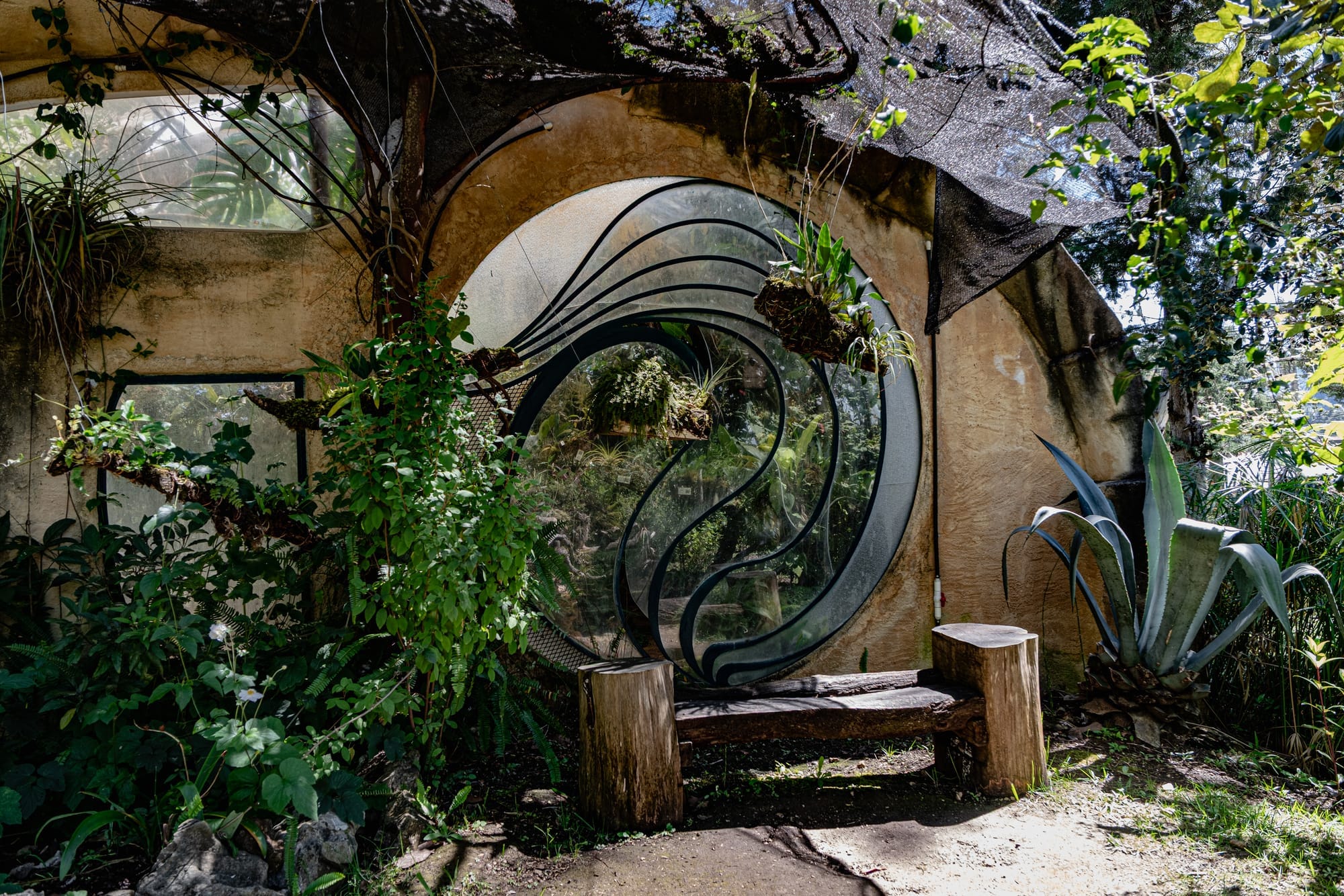
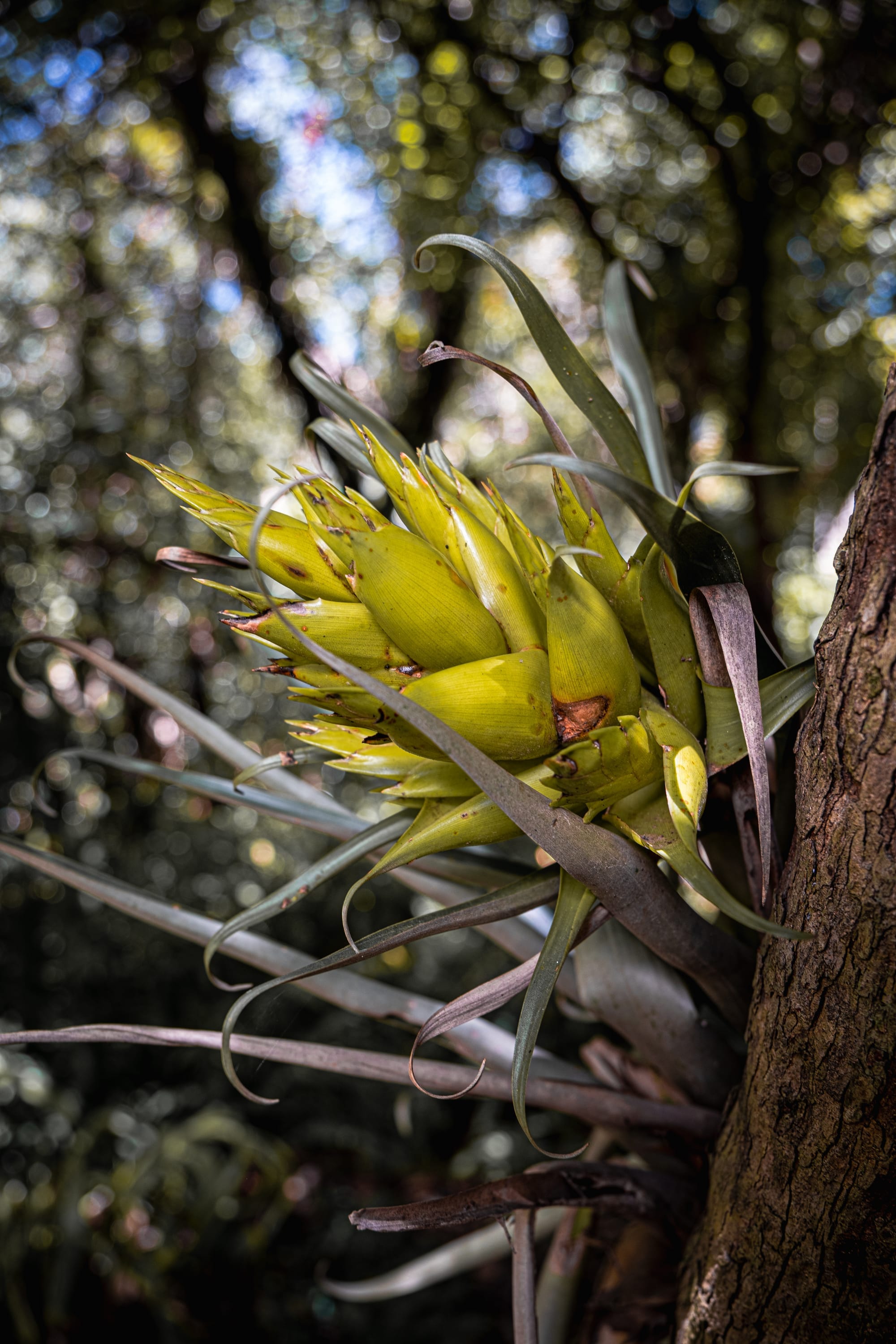
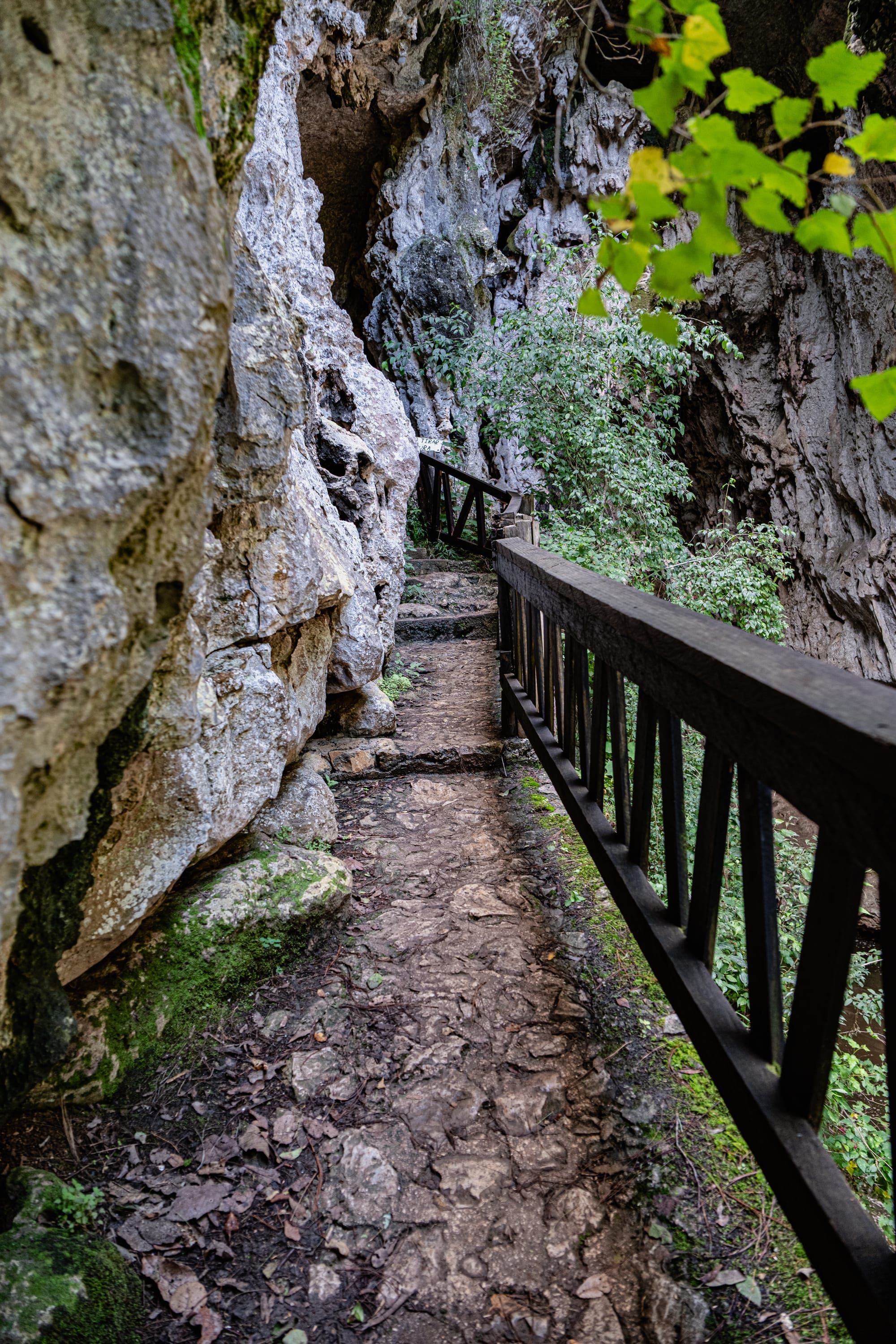
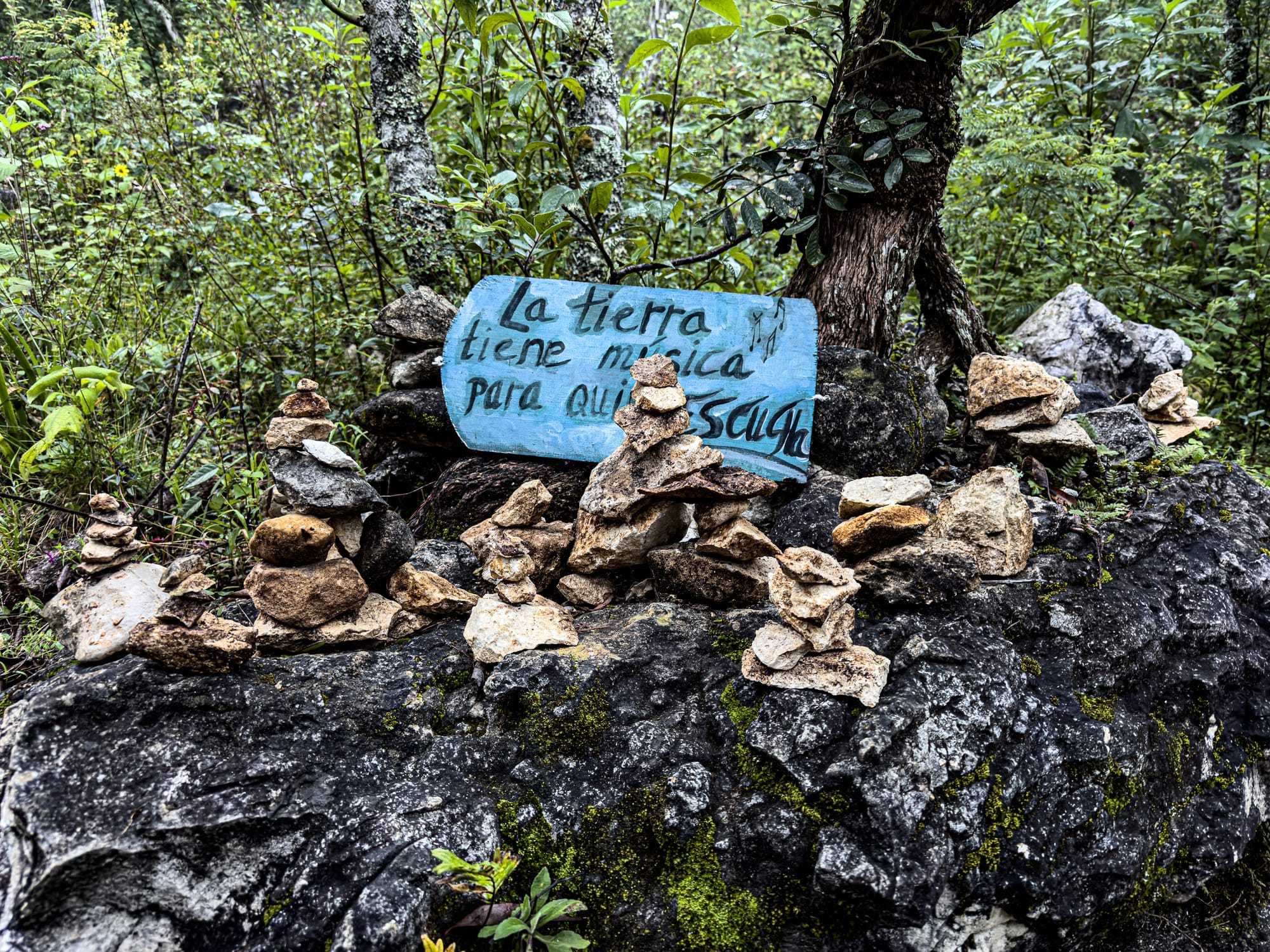
Nature trips from San Cristóbal de las Casas
Taken together, these landscapes shape how time in San Cristóbal feels. Nature here isn’t a backdrop or an optional extra. It’s part of the city’s wider environment, with regular reminders of scale, biodiversity, and the seasons, and you don’t need long or complicated travel to reach it.
Day of the Dead in San Cristóbal
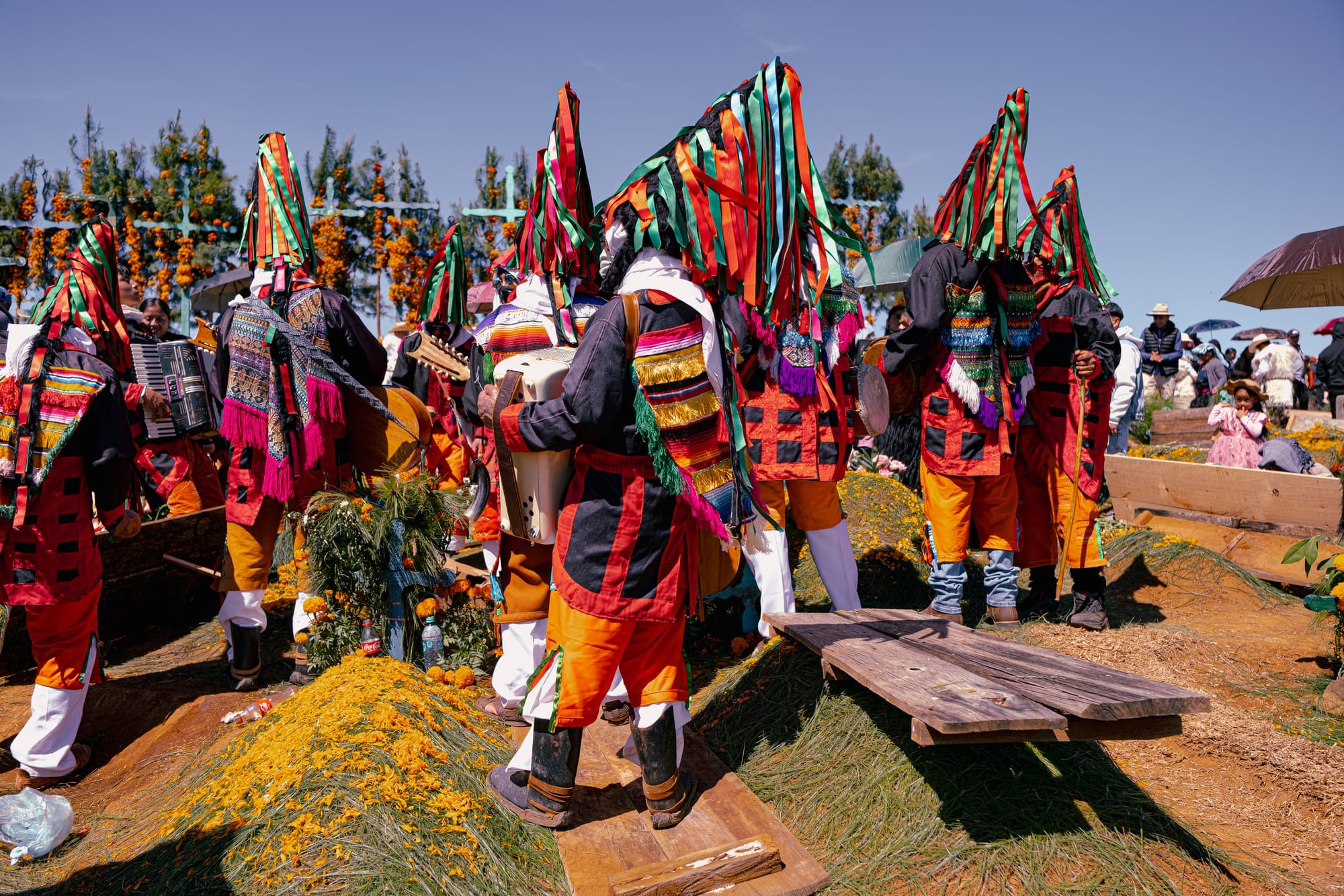
Day of the Dead in San Cristóbal de las Casas is markedly different from how it’s celebrated in many other parts of Mexico. It’s more spiritual. Instead of staged events, the focus is on being present: people spending long hours in cemeteries, tending graves, sharing food, talking softly, and sitting together well into the evening.
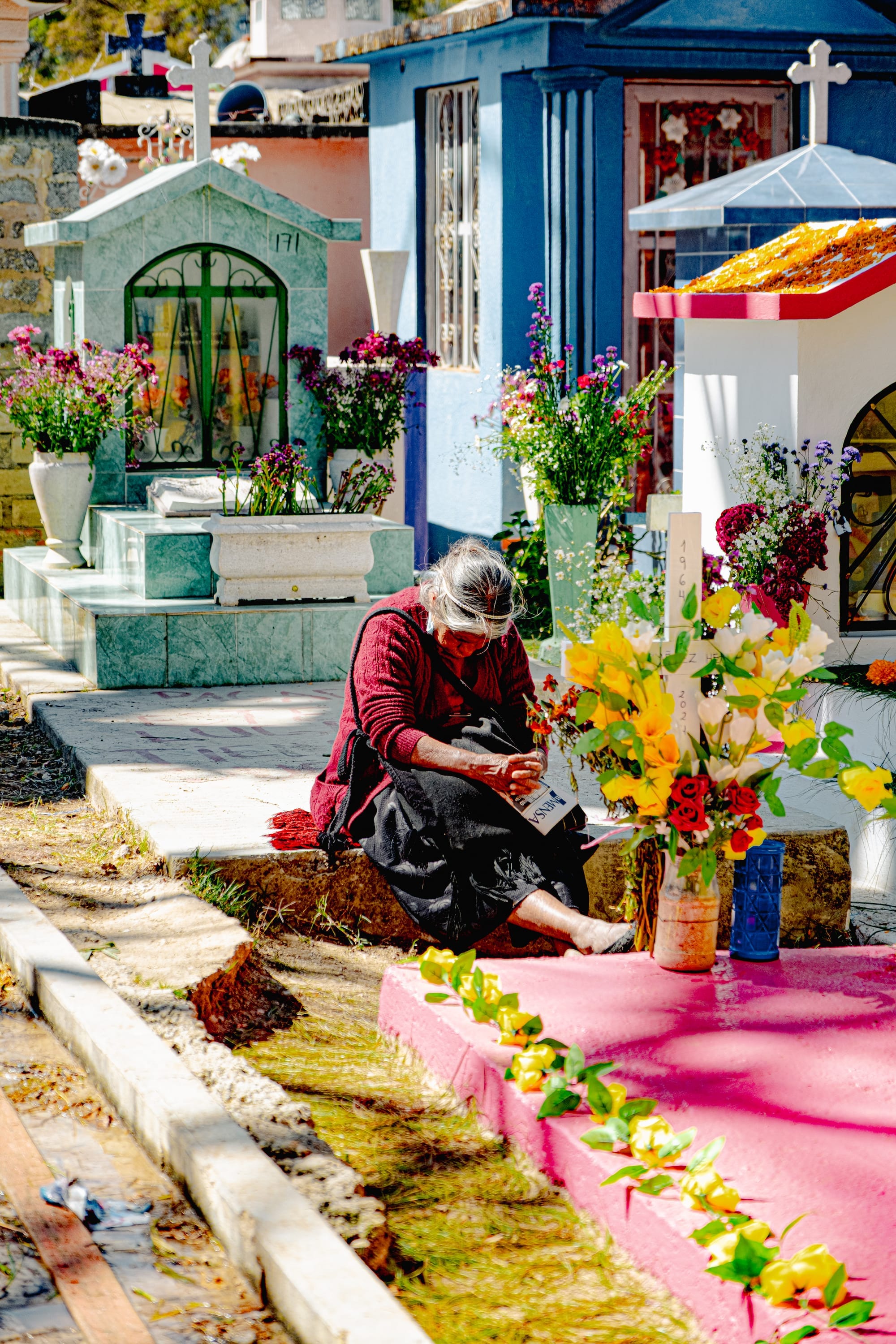
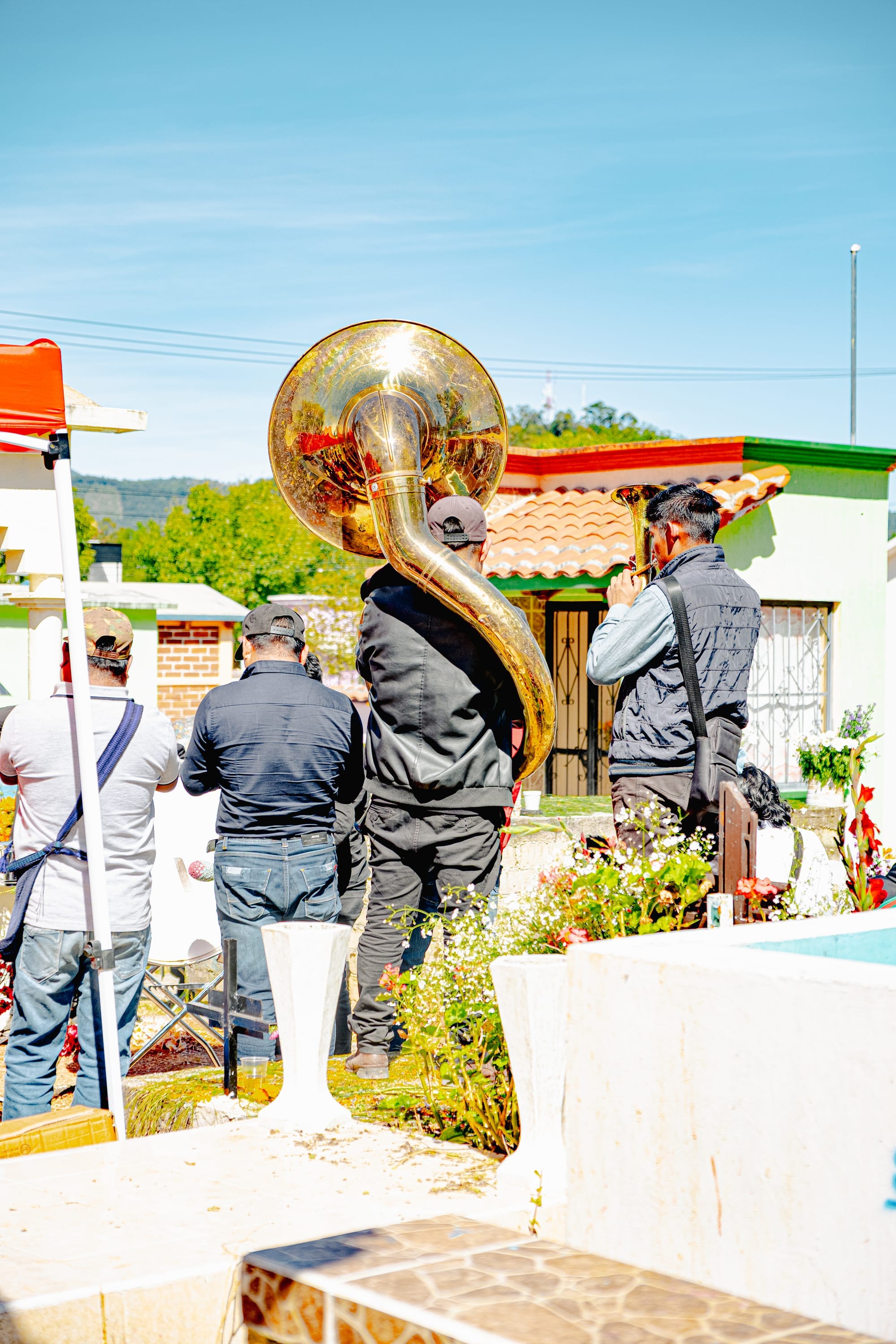
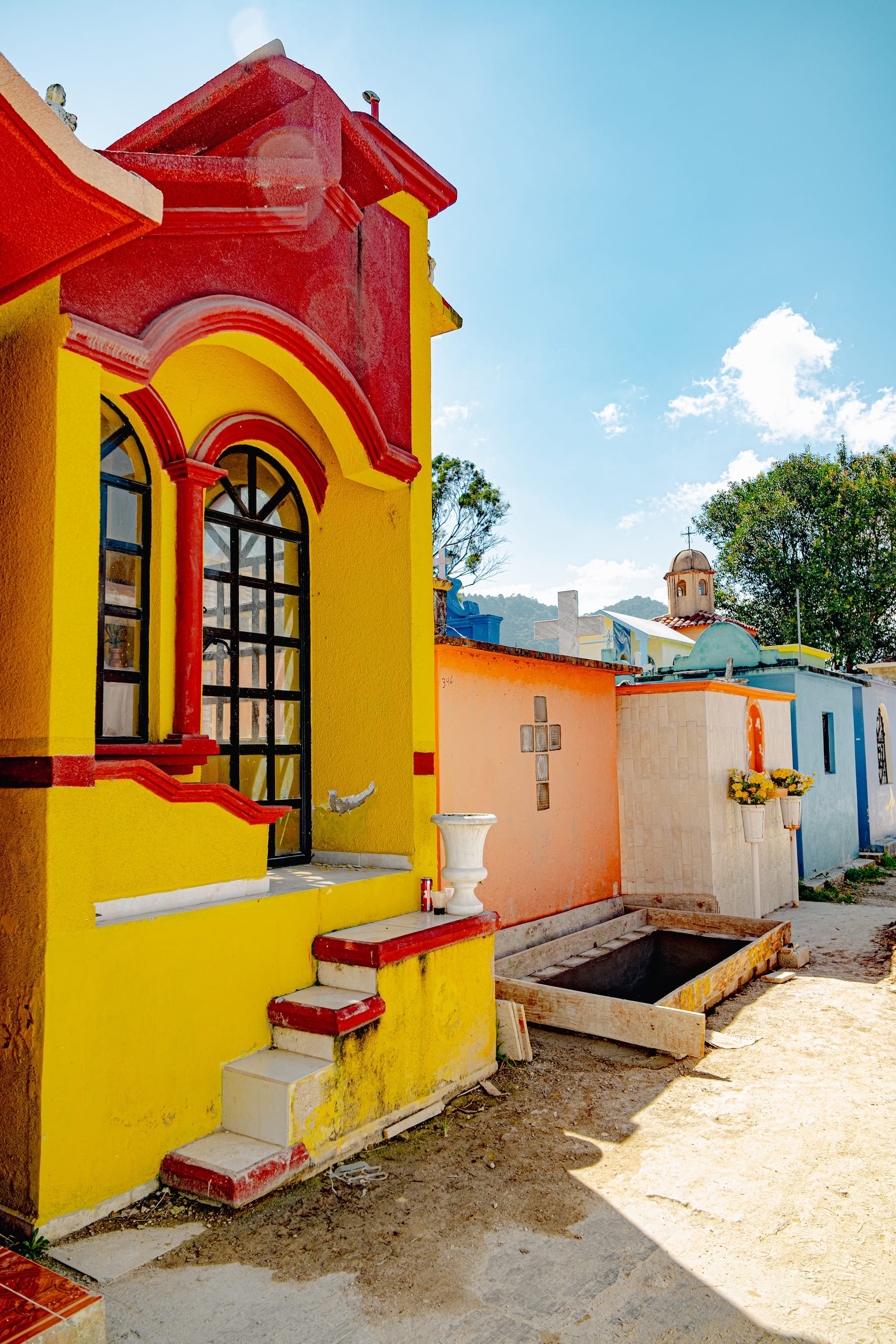
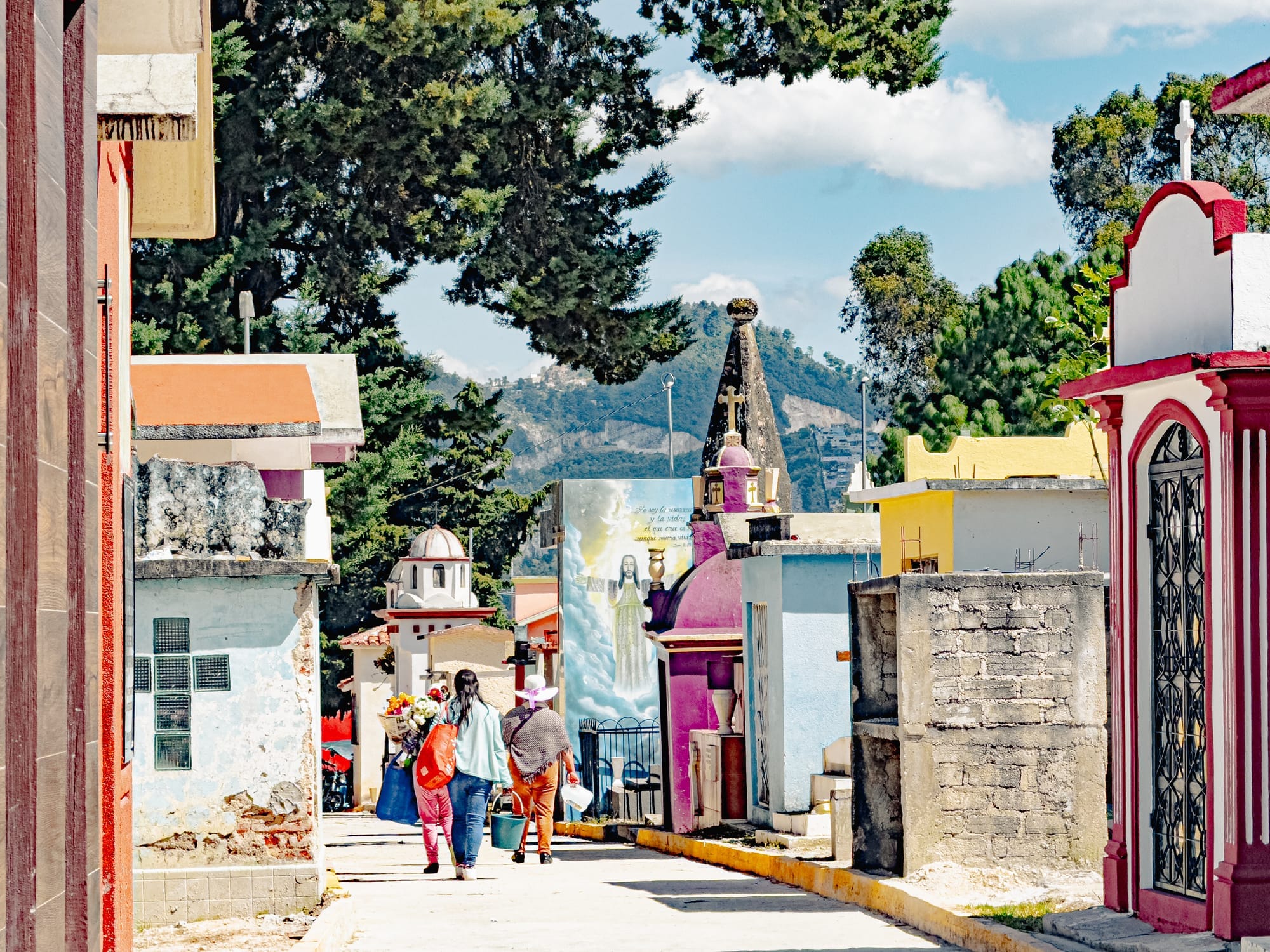
Cemetery scenes on Day of the Dead
We visited three different cemeteries over the course of the celebrations: Romerillo, Zinacantán, and San Cristóbal’s Municipal Pantheon (before and during the day). Each had its own atmosphere, but all were intimate and full of care. Graves were covered in flowers, candles burned late into the night, and families stayed close, eating, praying, and remembering.
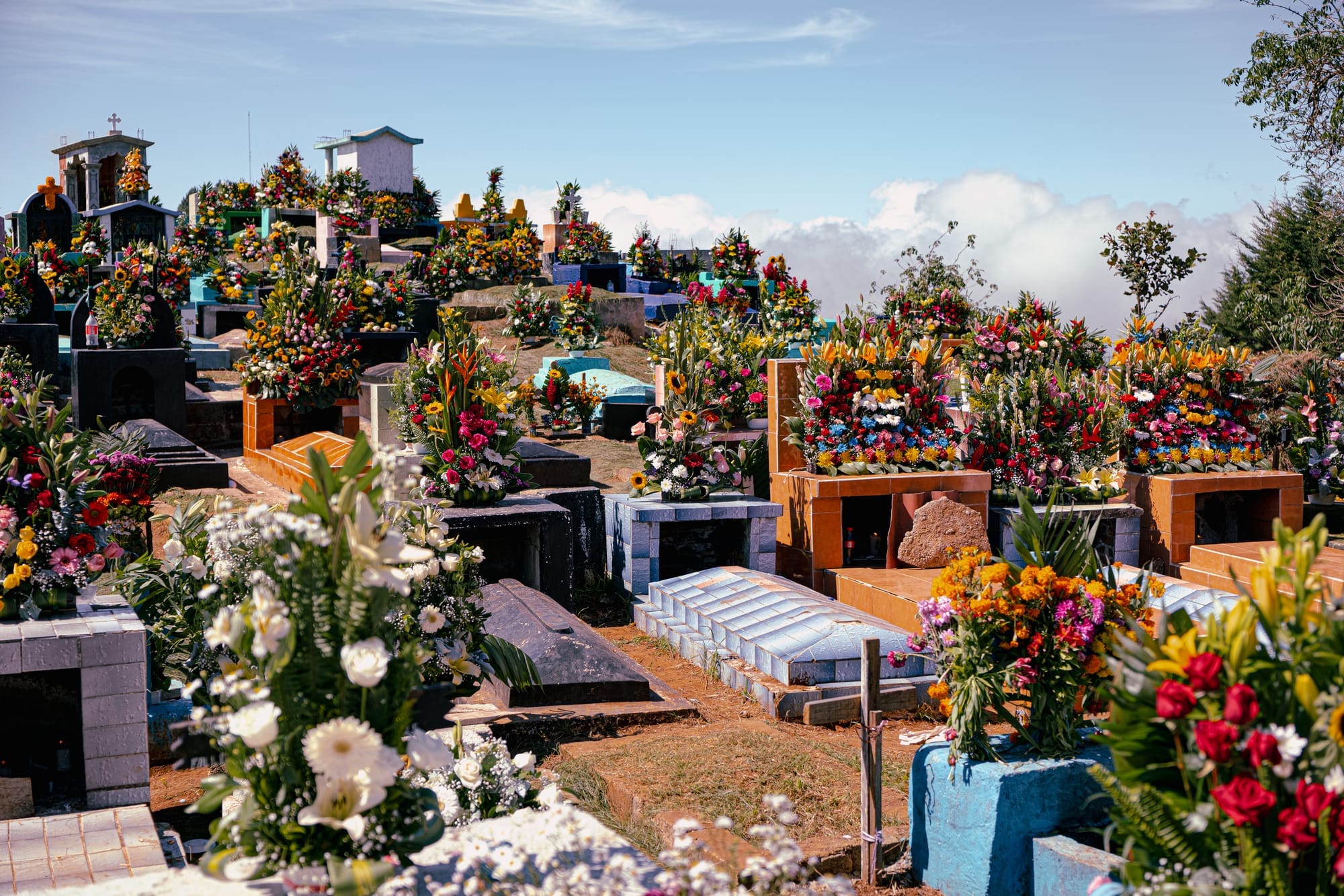
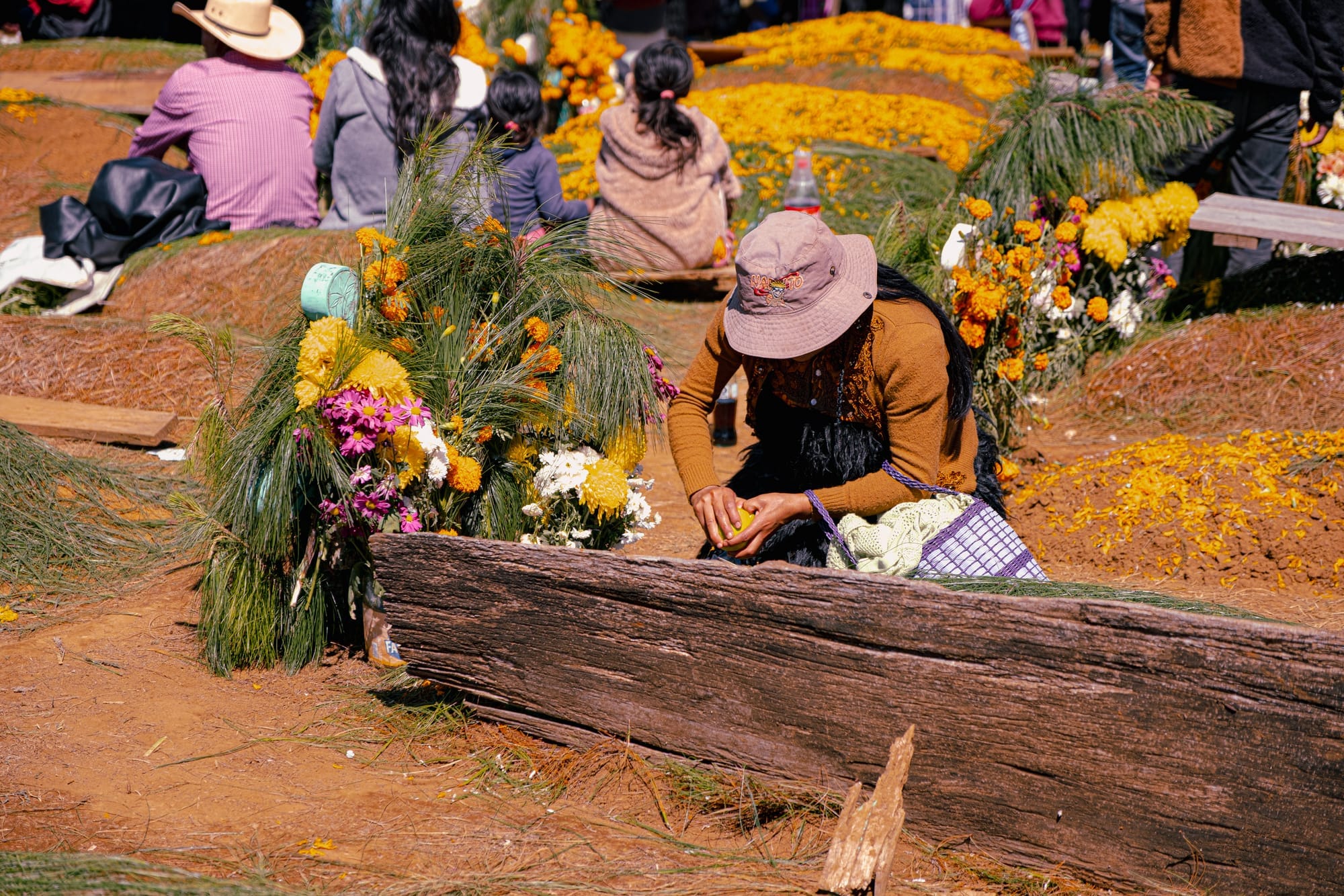
We left those nights feeling deeply grateful to have been in San Cristóbal for Day of the Dead rather than somewhere louder or more touristic. If you’re considering when to visit, being here during this time is something we’d wholeheartedly recommend. It was, without question, one of the most special moments of our time in the city.
And if you're not here for Day of the Dead, we'd recommend paying a visit to San Cristóbal’s beautiful churches. They’re not isolated landmarks you visit once and move on from, but part of the streets you walk all the time. Places like Santo Domingo de Guzmán or the Catedral de San Cristóbal appear naturally as you wander, opening onto small plazas, markets, or steep streets.
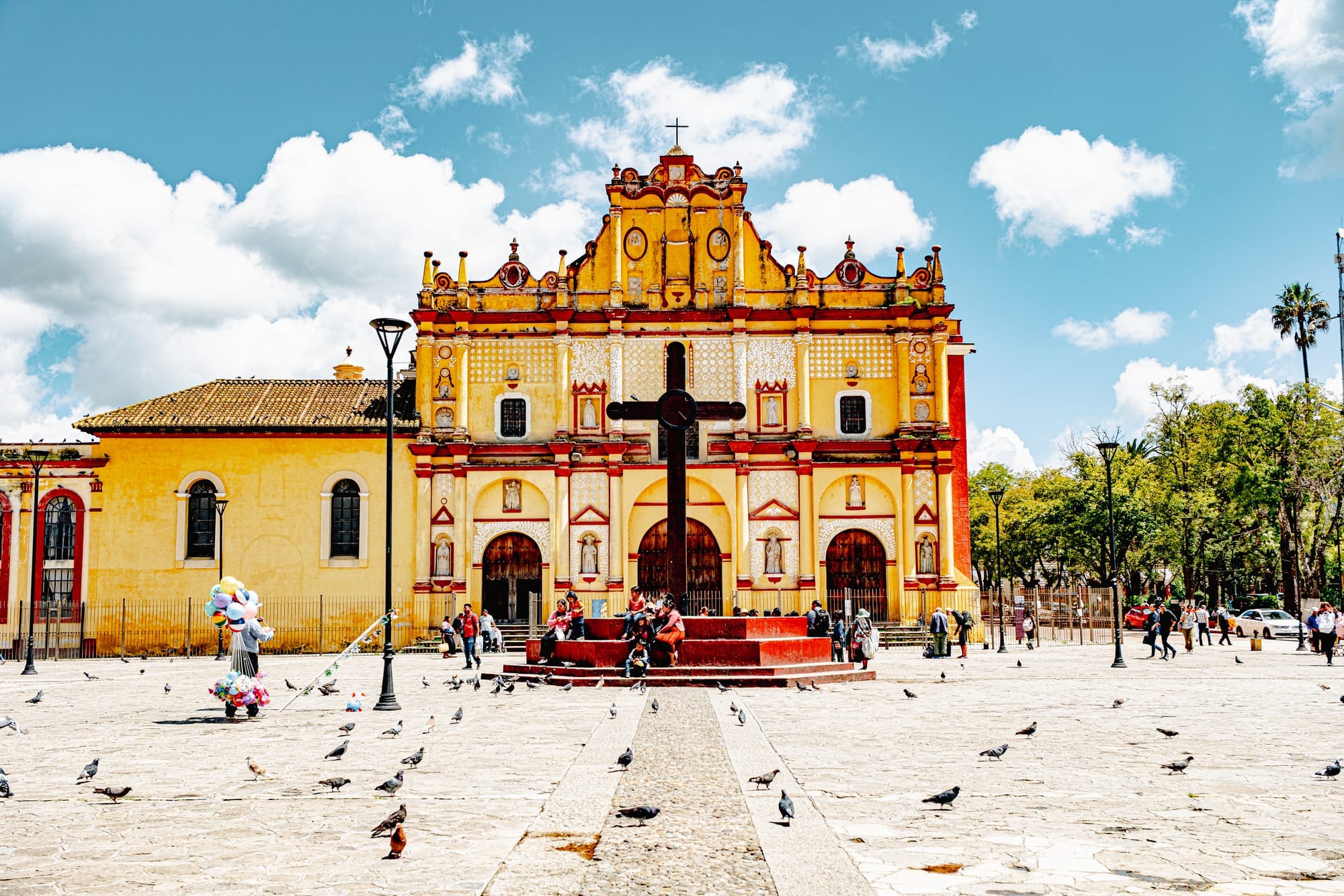
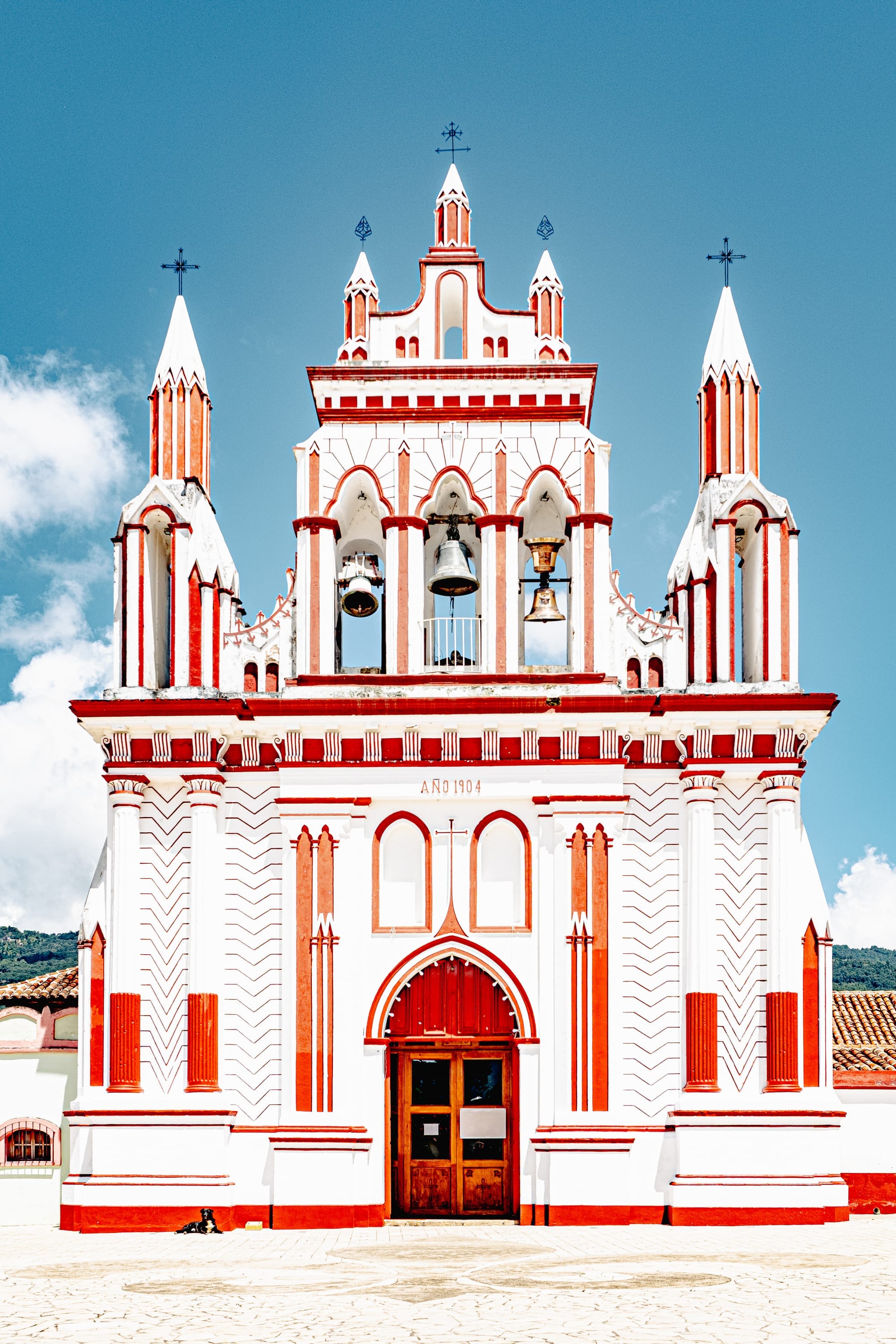
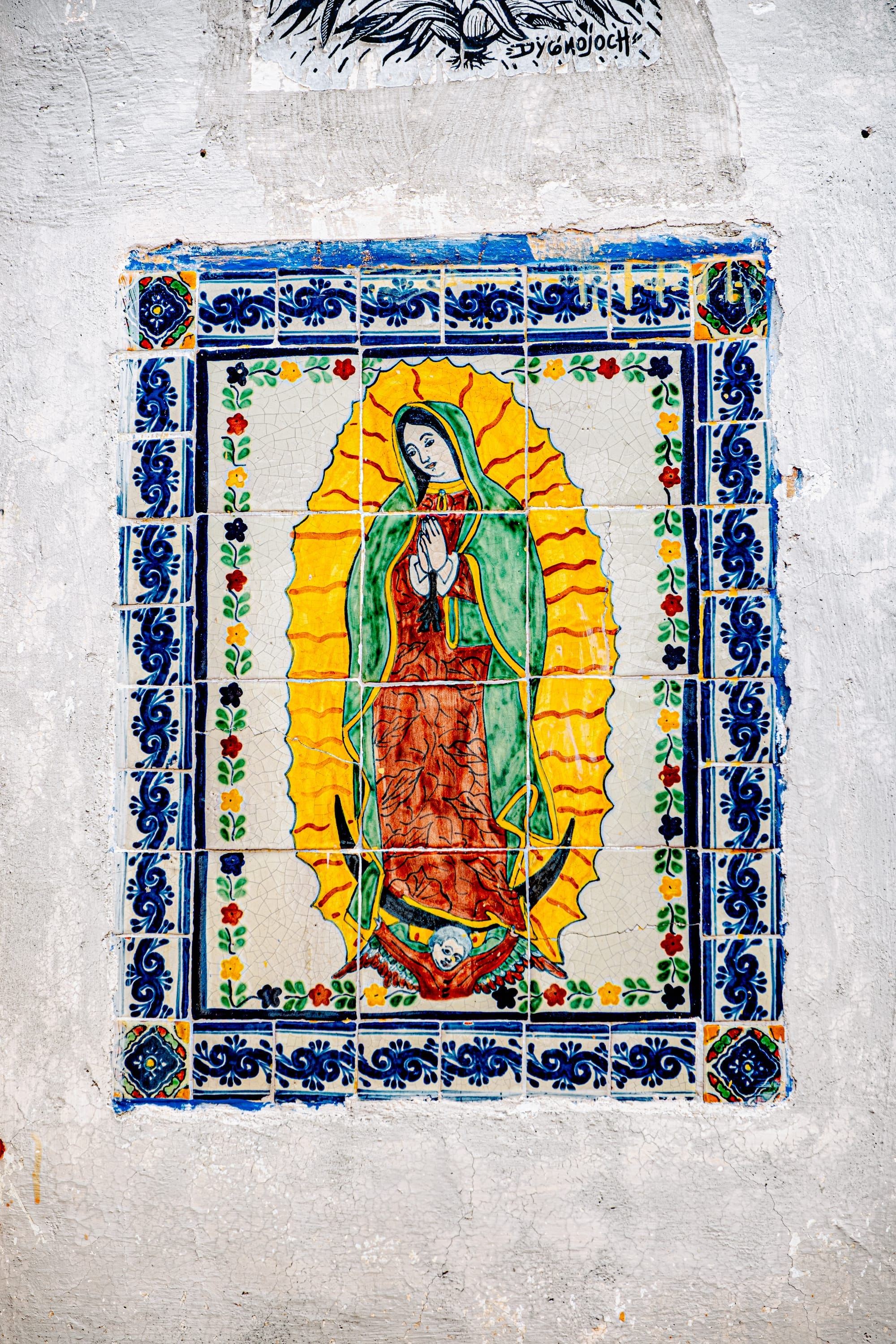
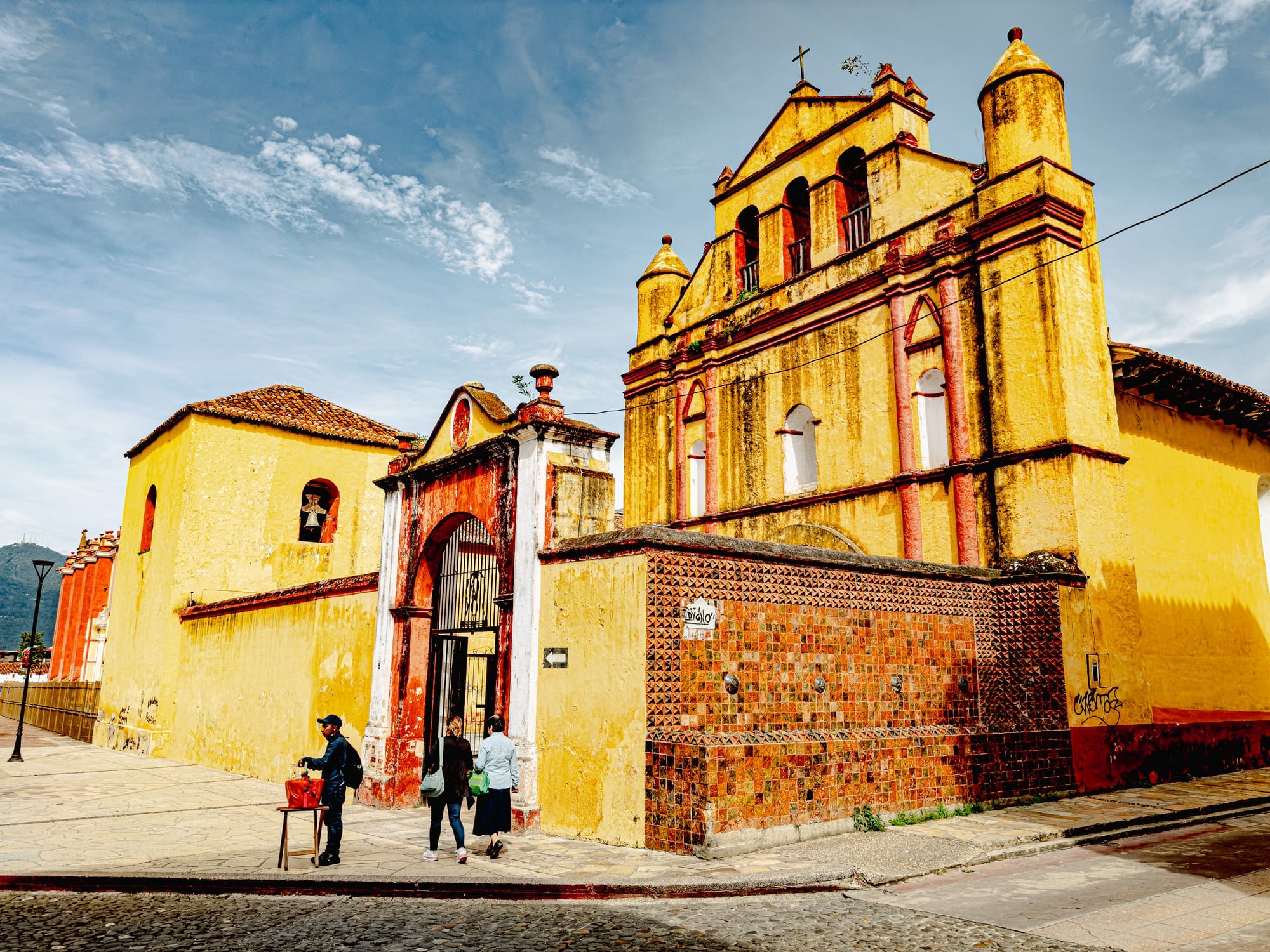
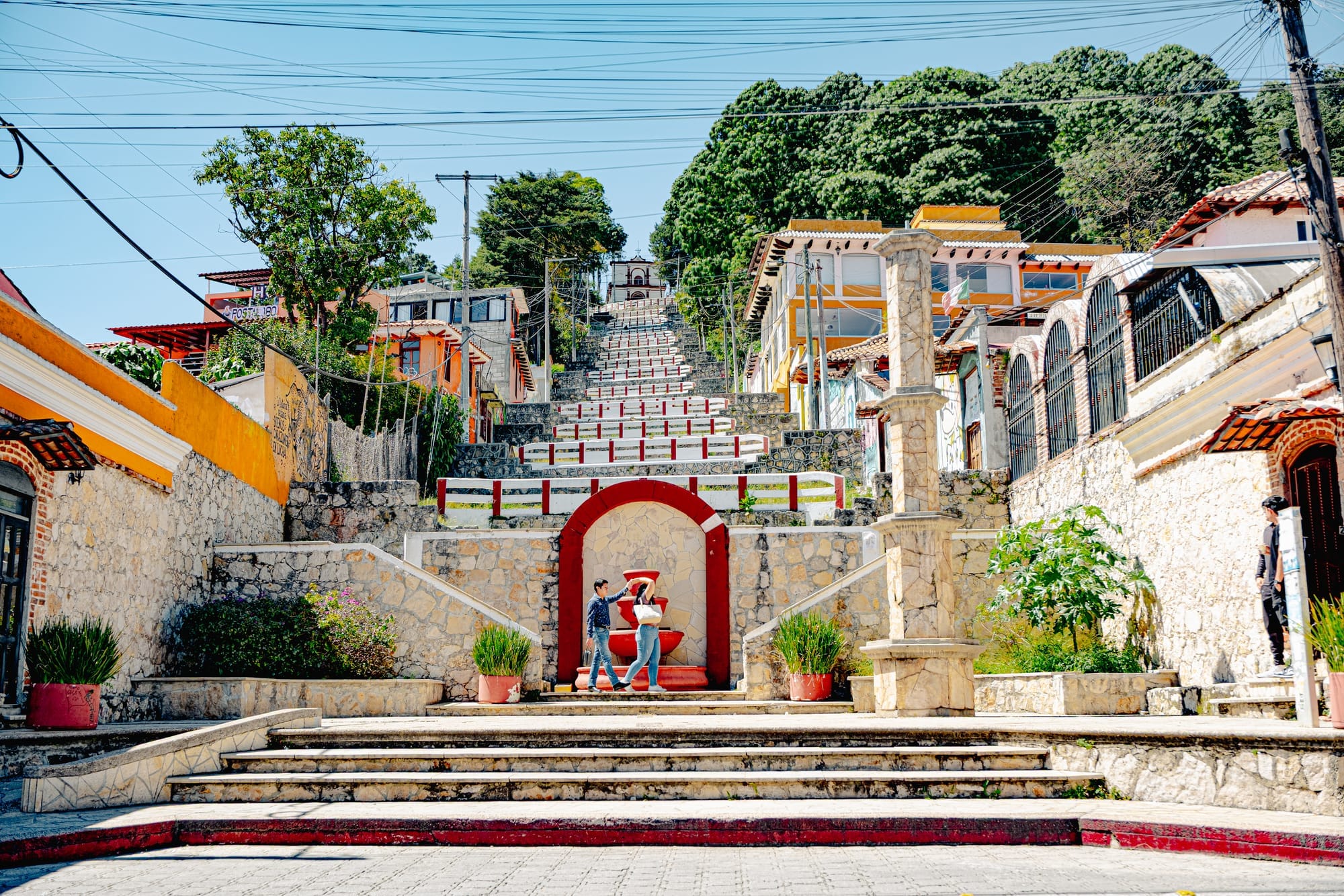
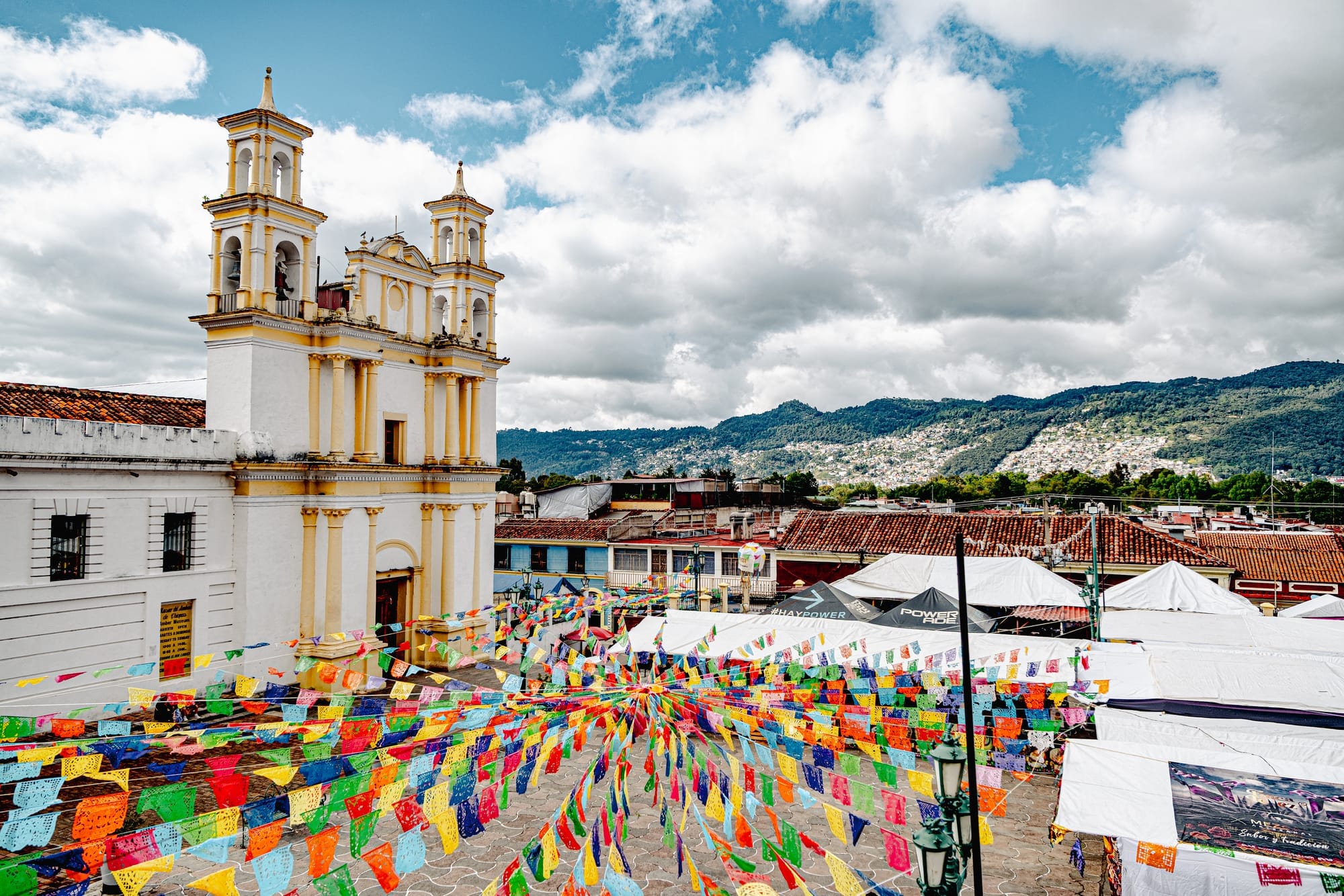
Some are ornate, others modest, but together they give the city depth and continuity. Even if you’re not especially interested in religious architecture, it’s hard not to notice how these buildings anchor neighborhoods and local life, and how they show that San Cristóbal is shaped by many histories at once.
Prefer to go with a guide? One popular option is a Sumidero Canyon day trip, one of the most popular from San Cristóbal. You can check dates and prices here:
Food and markets
Food is one of the easiest parts of life in San Cristóbal to settle into. We ate out most of the time while we were there, and it never felt repetitive or limiting. There’s a good spread of small restaurants and cafés across the city, many of them relaxed enough to linger in and easy to fold into a normal workday.
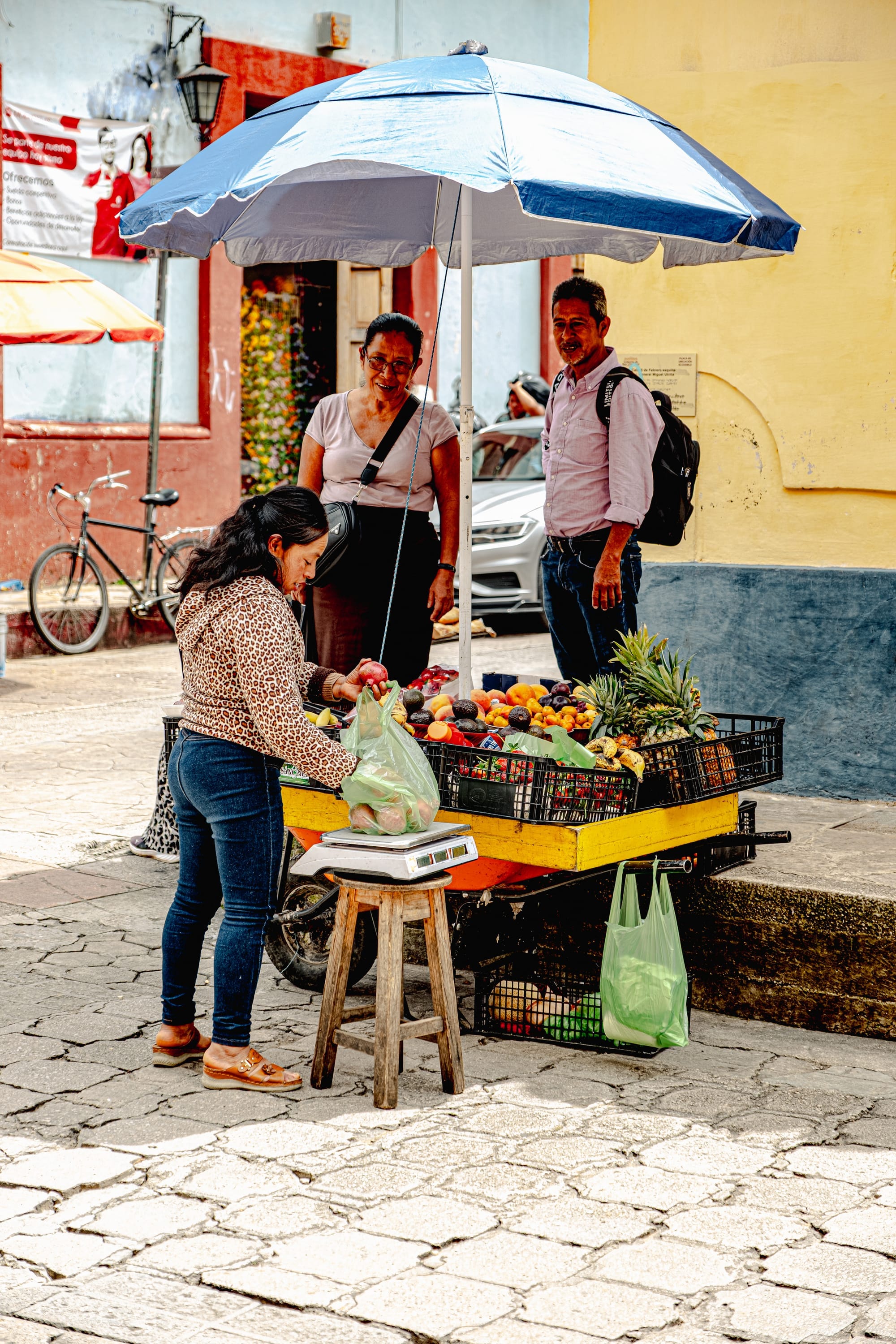
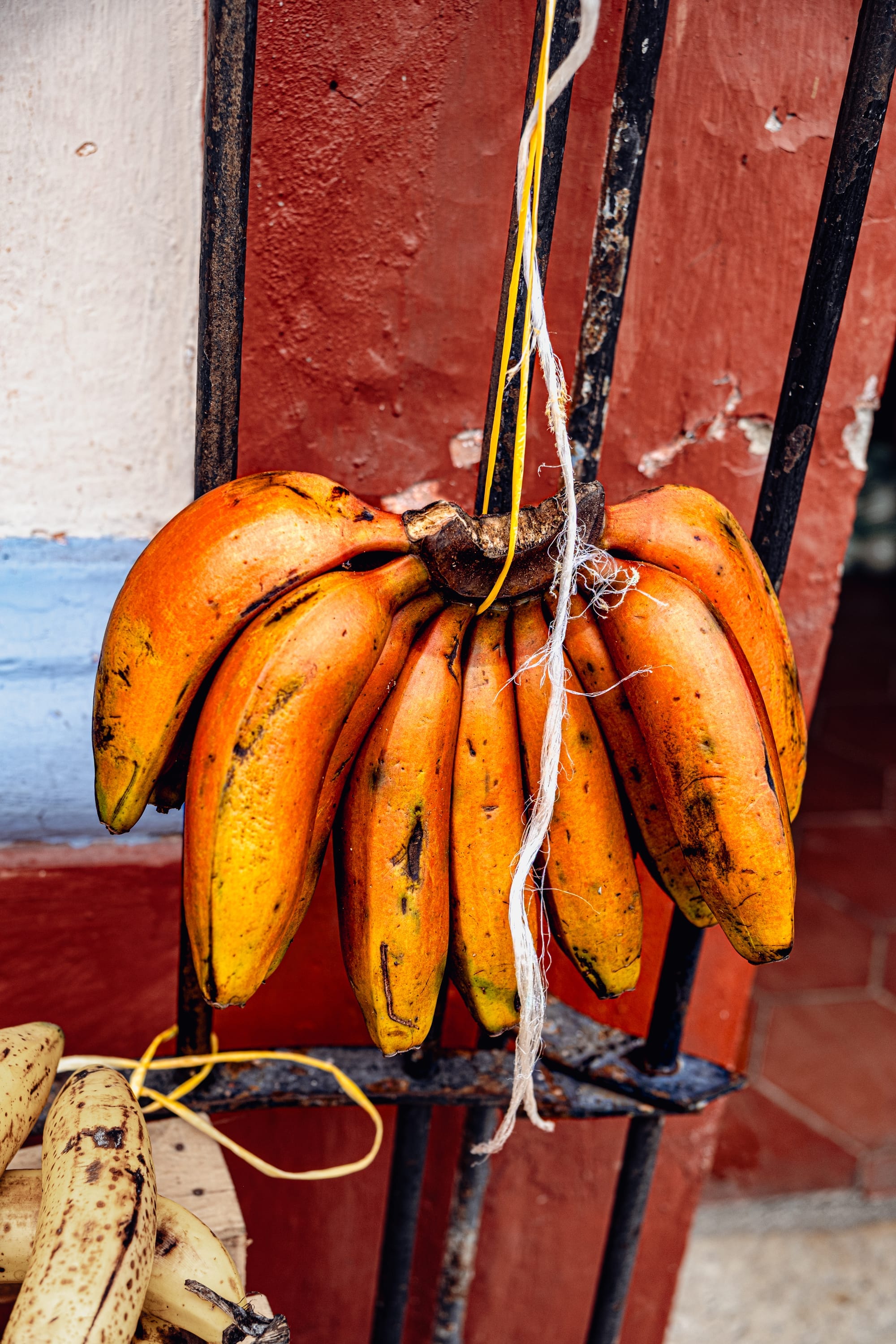
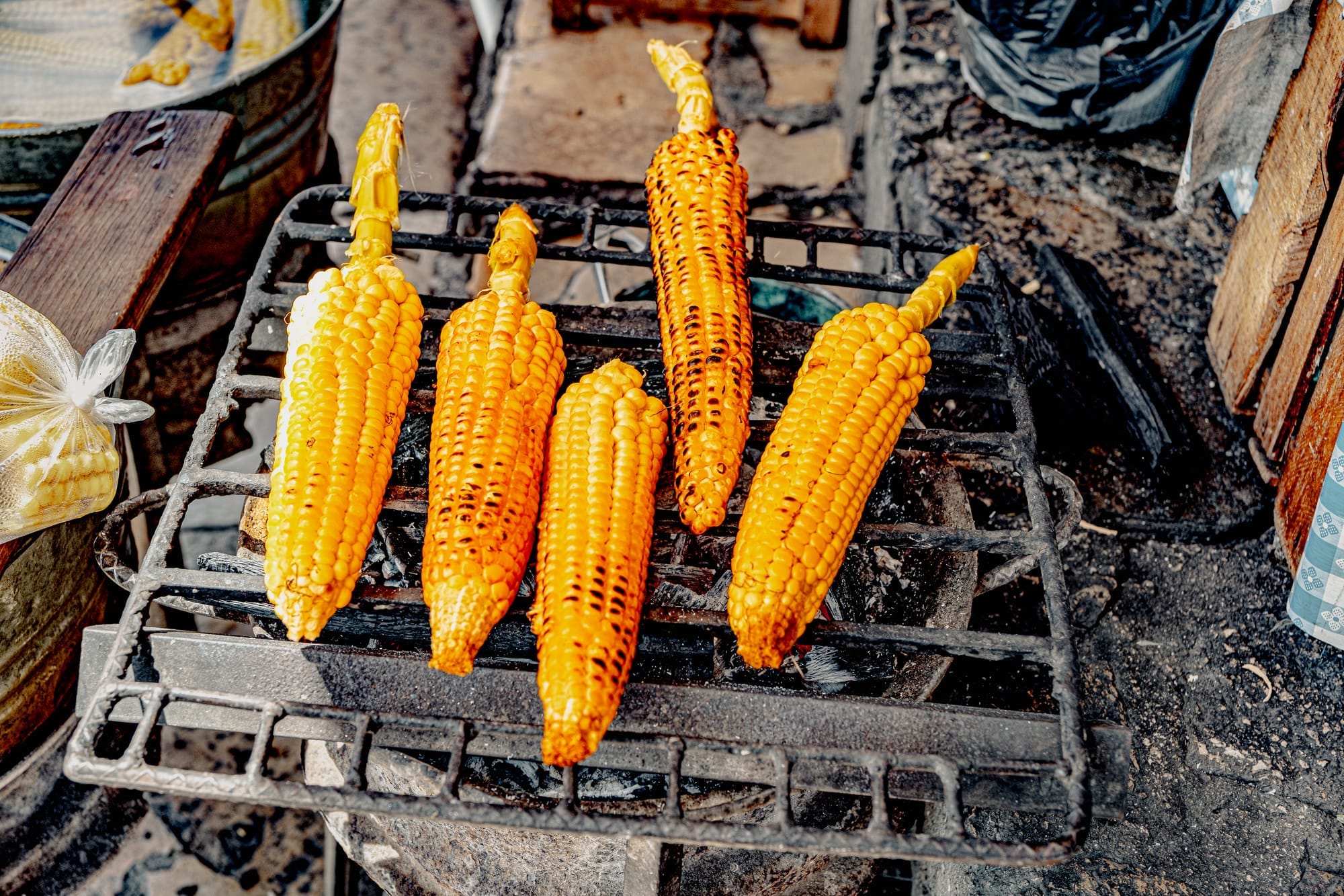
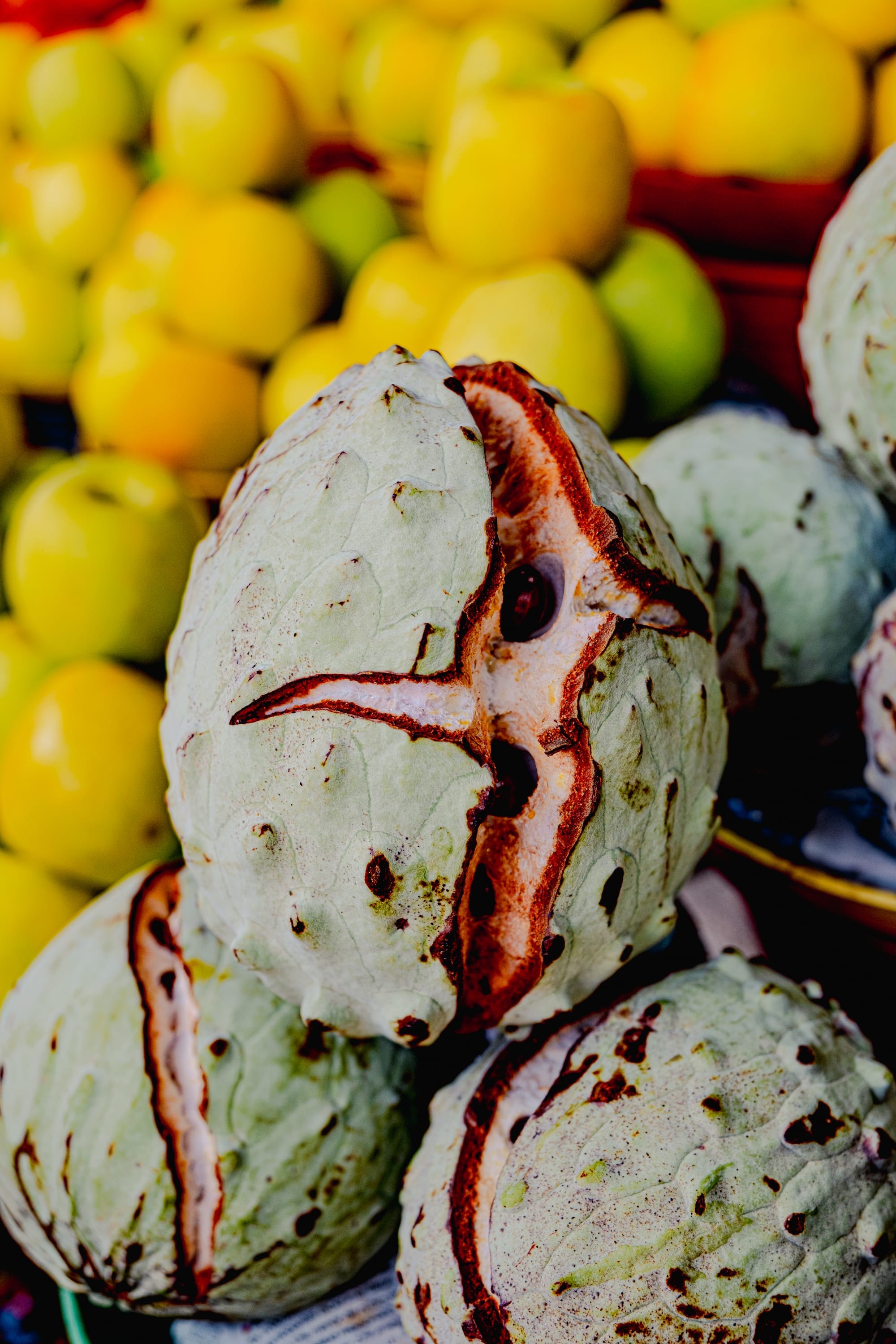
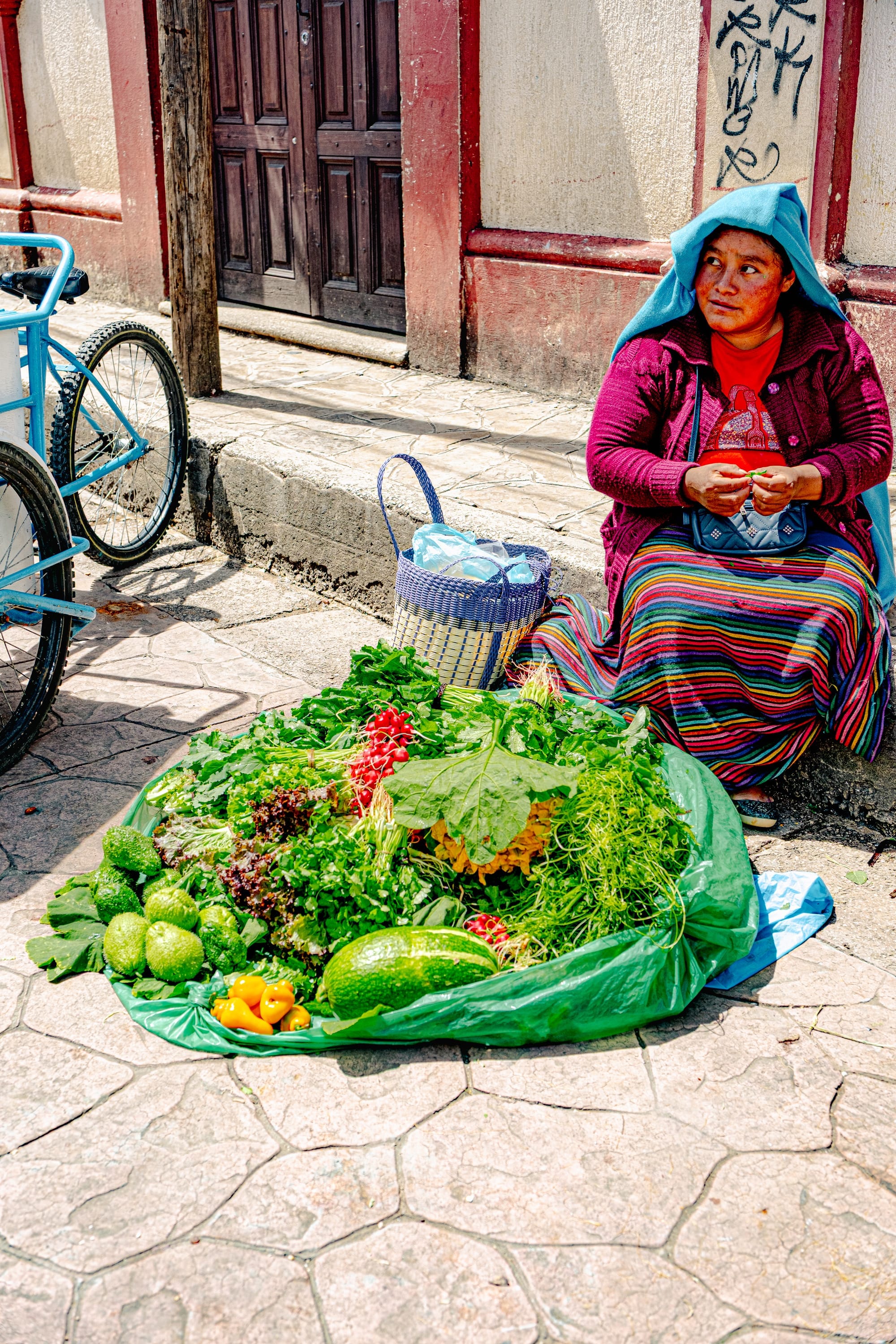
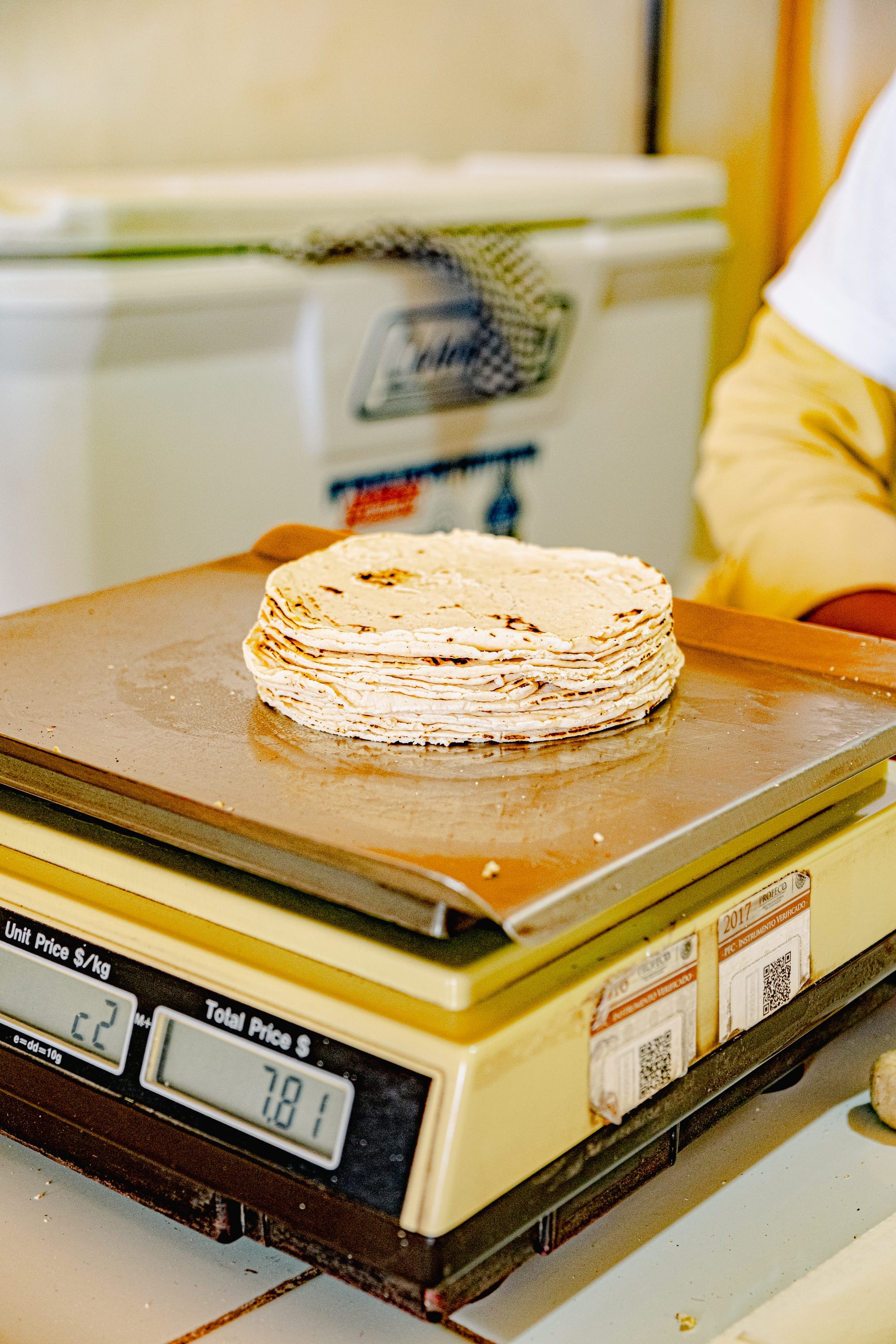
Scenes from Santo Domingo Market
At the same time, San Cristóbal is a great city if you prefer to cook for yourself. The local markets are full of high-quality produce, and shopping for ingredients quickly becomes part of your routine. Fresh vegetables, herbs, and staples are easy to find, affordable, and varied enough that cooking regularly doesn’t feel like a compromise.
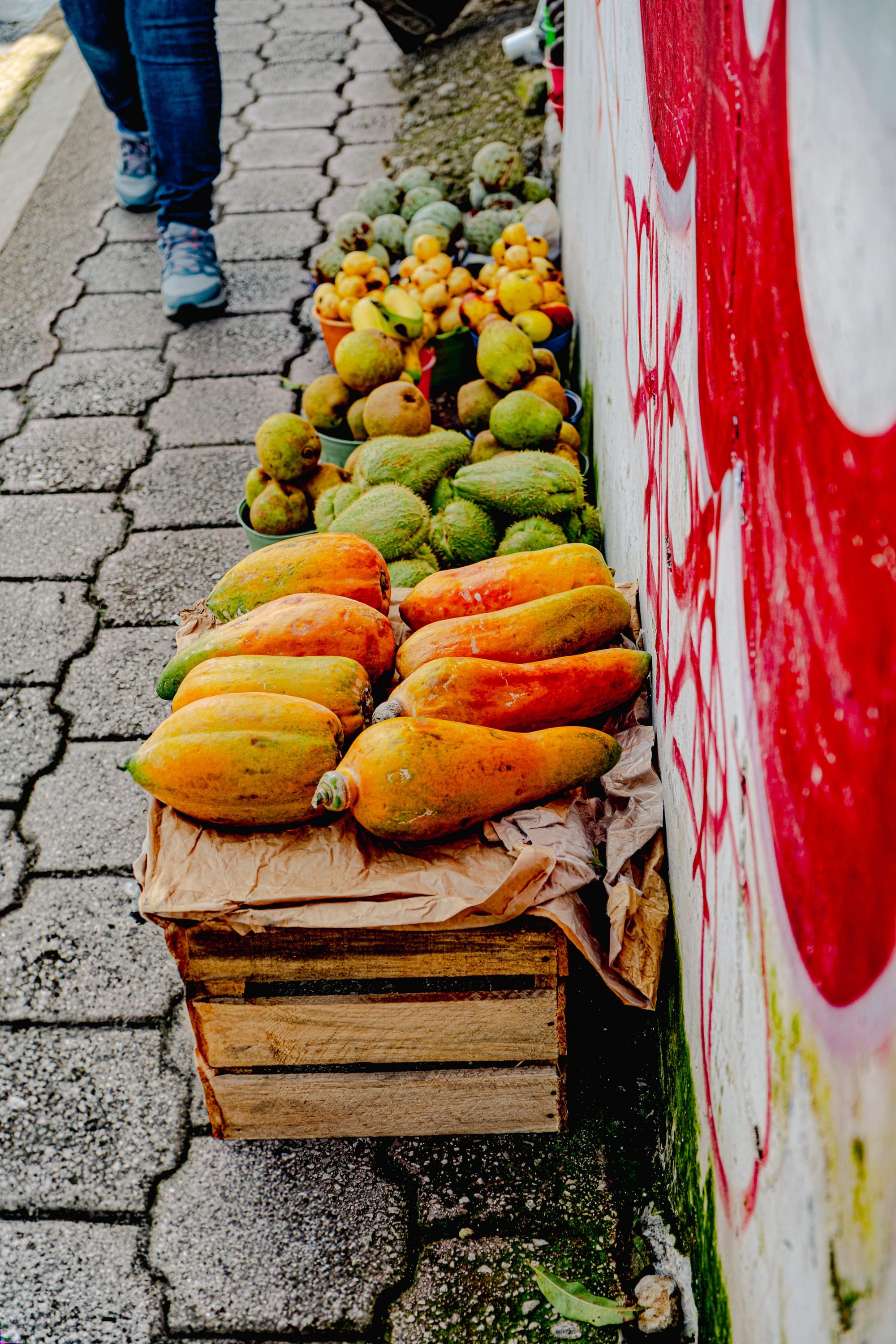
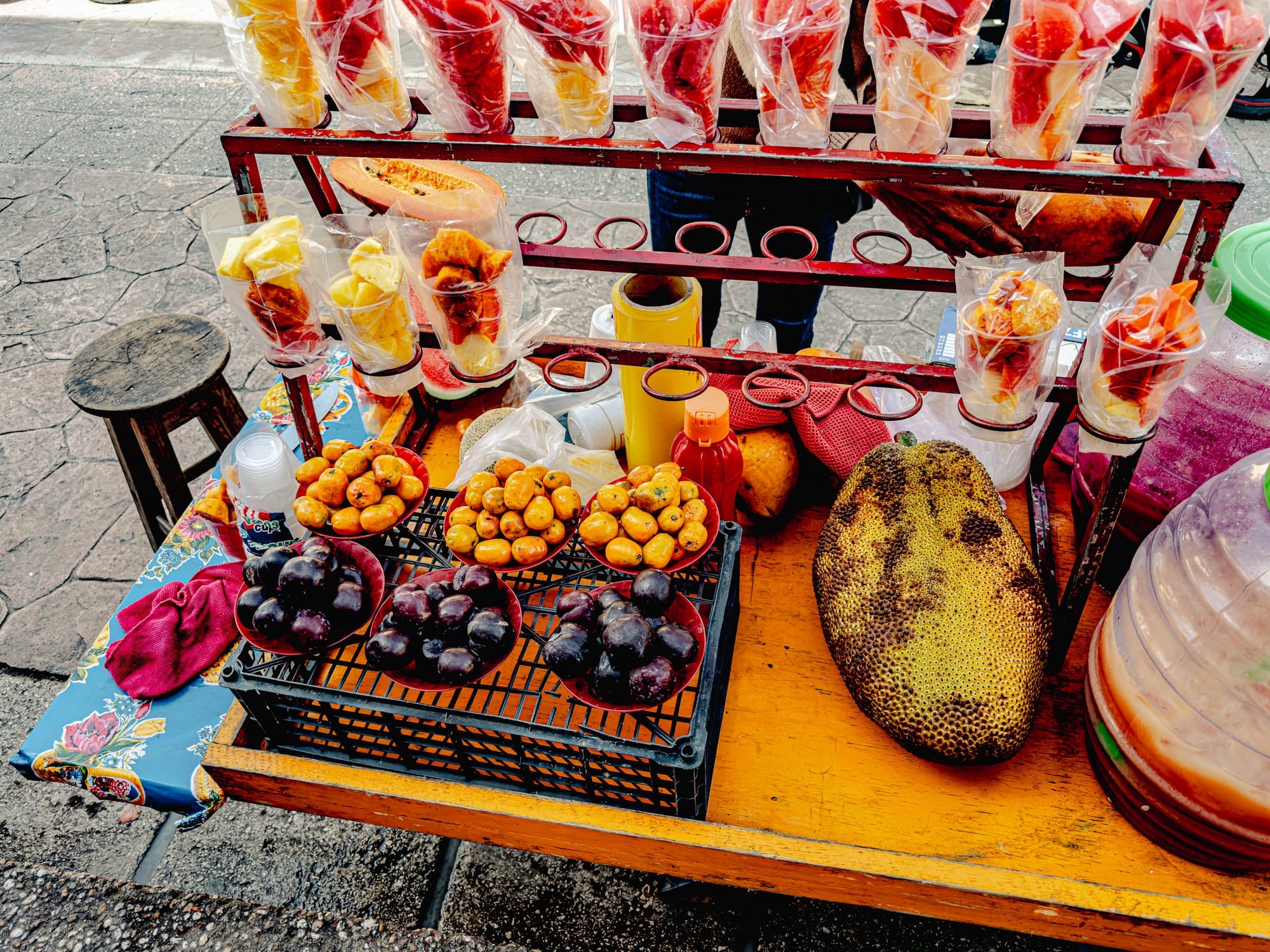
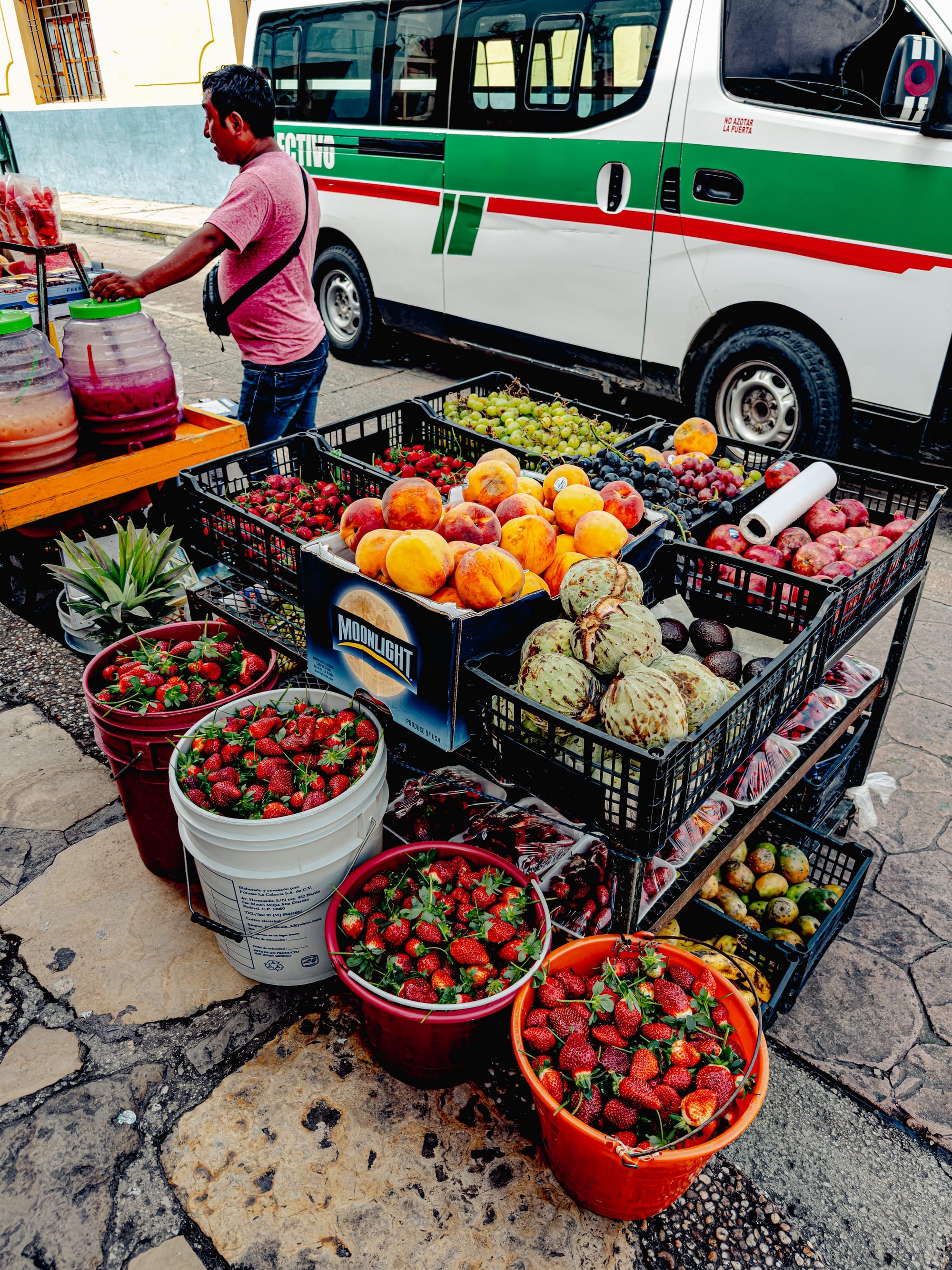
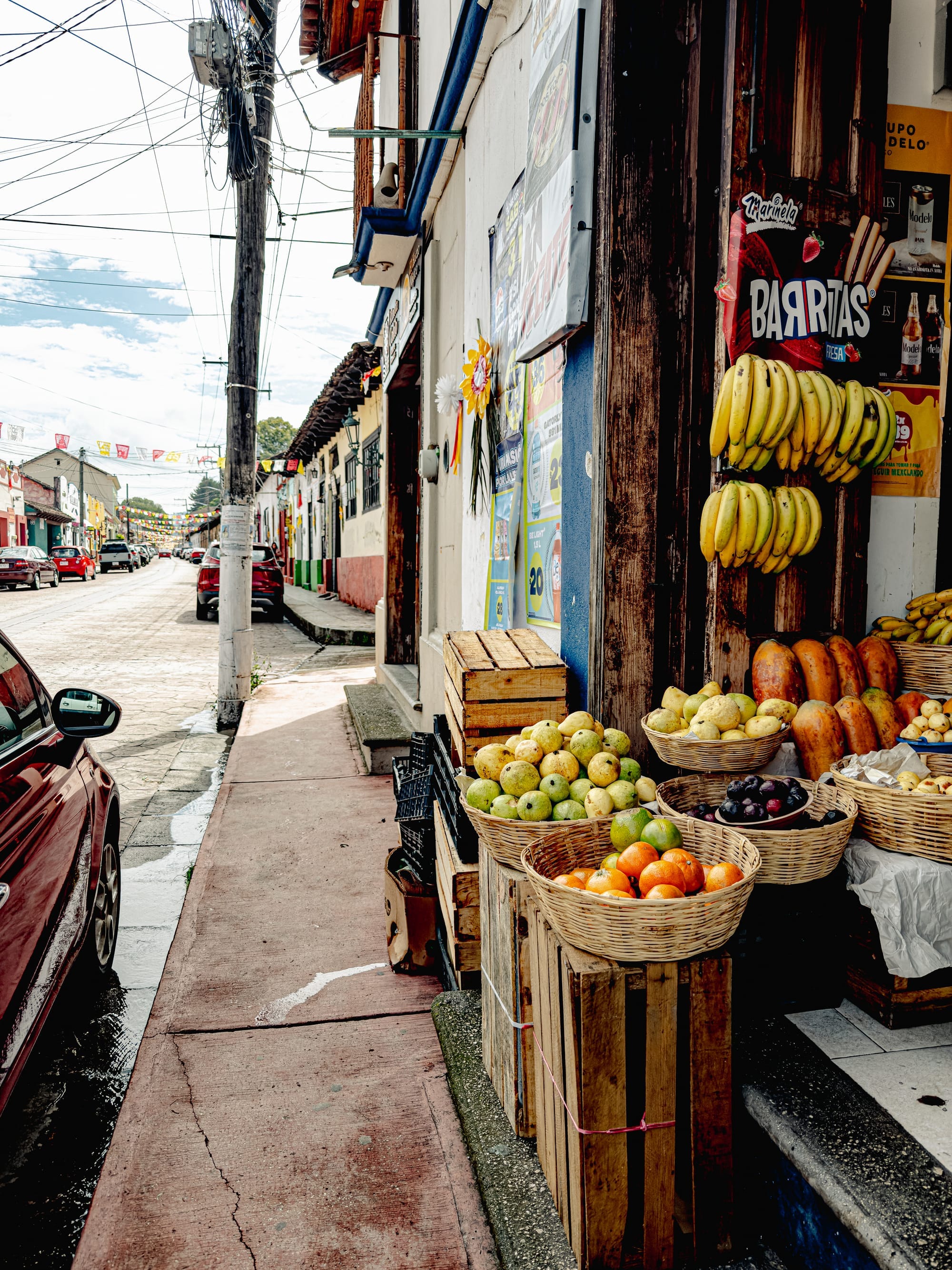
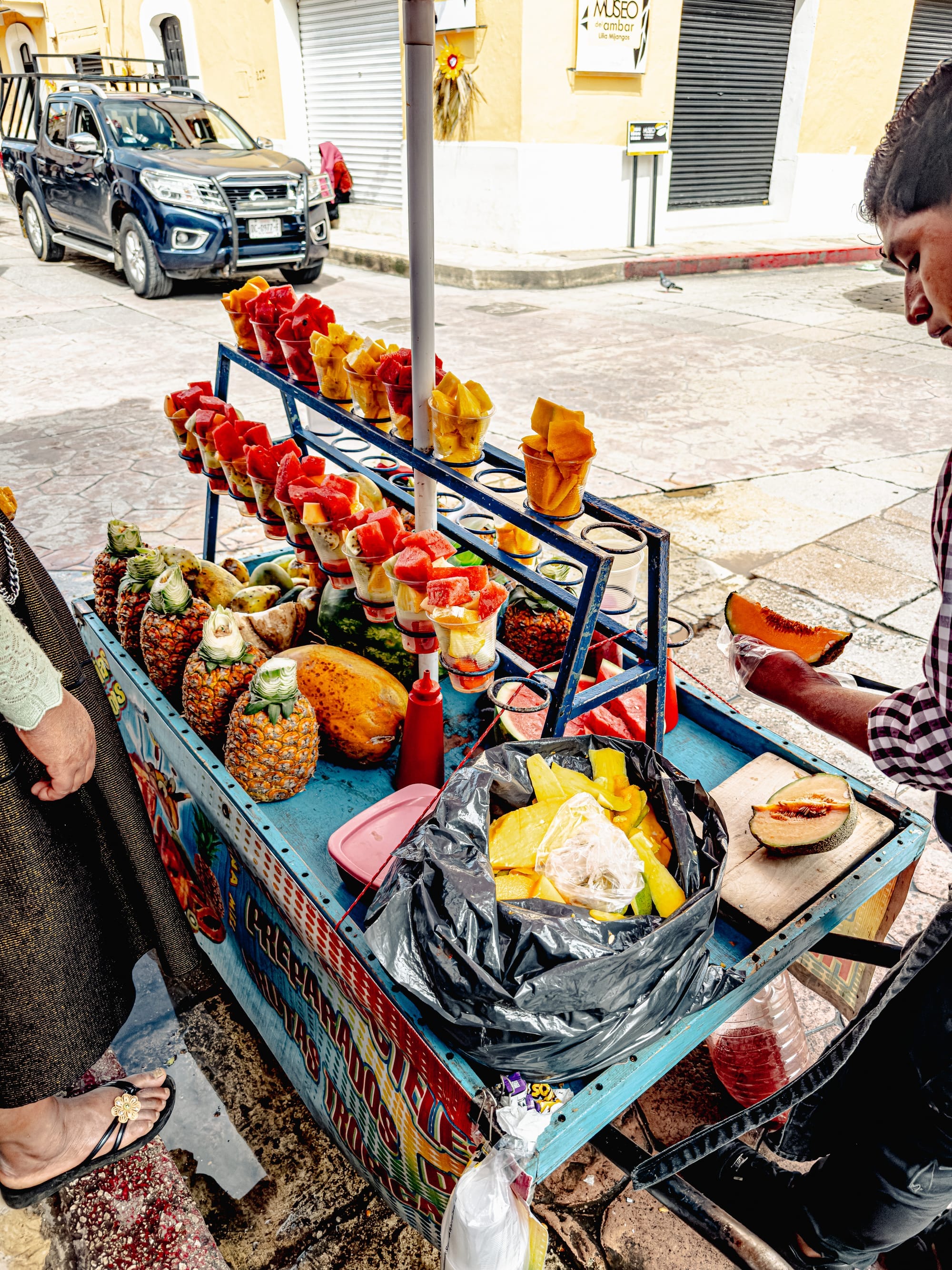
Fruit found on the streets
The city is especially accommodating for those who are plant-based. We were honestly surprised by how many amazing vegan options we found in San Cris.
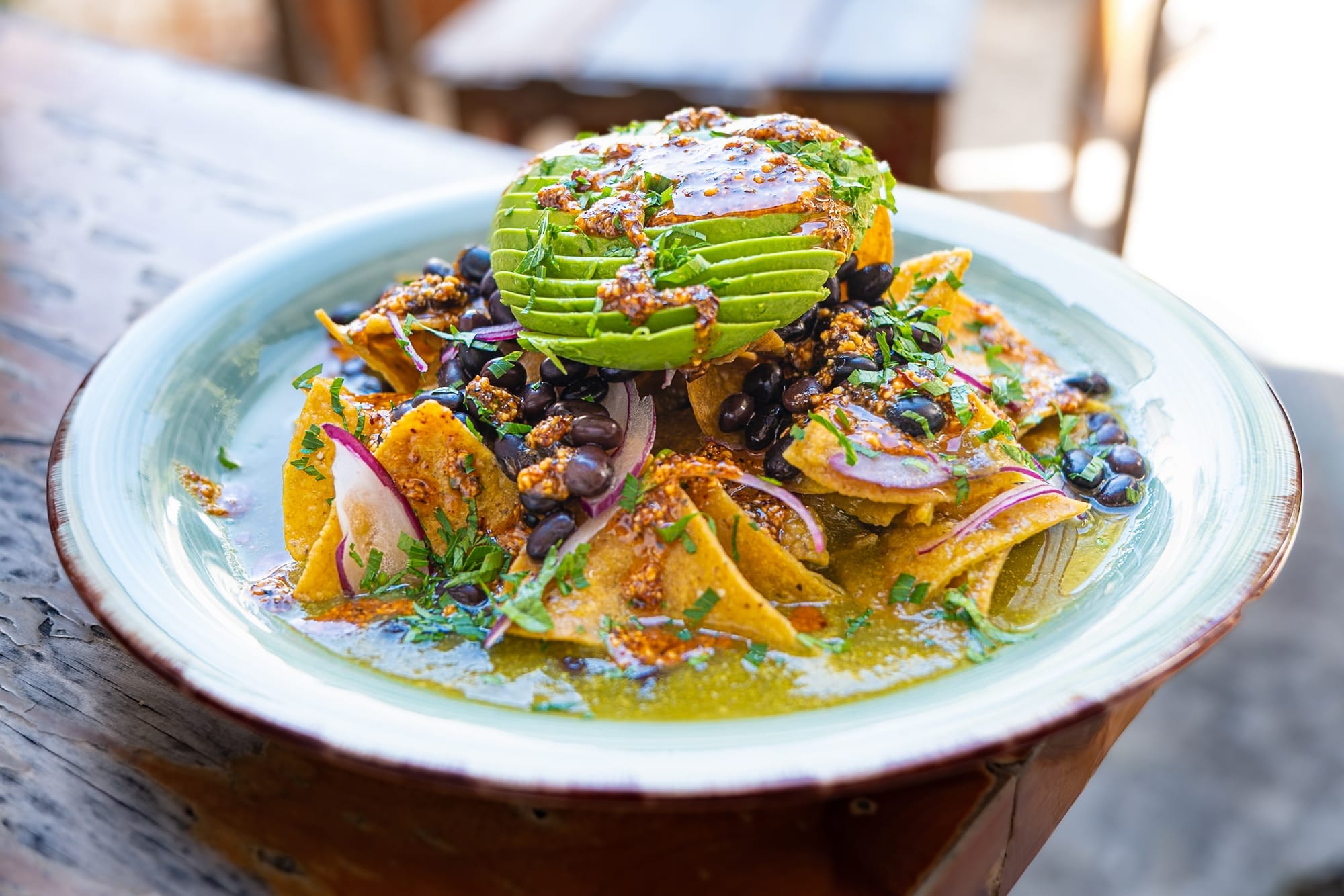
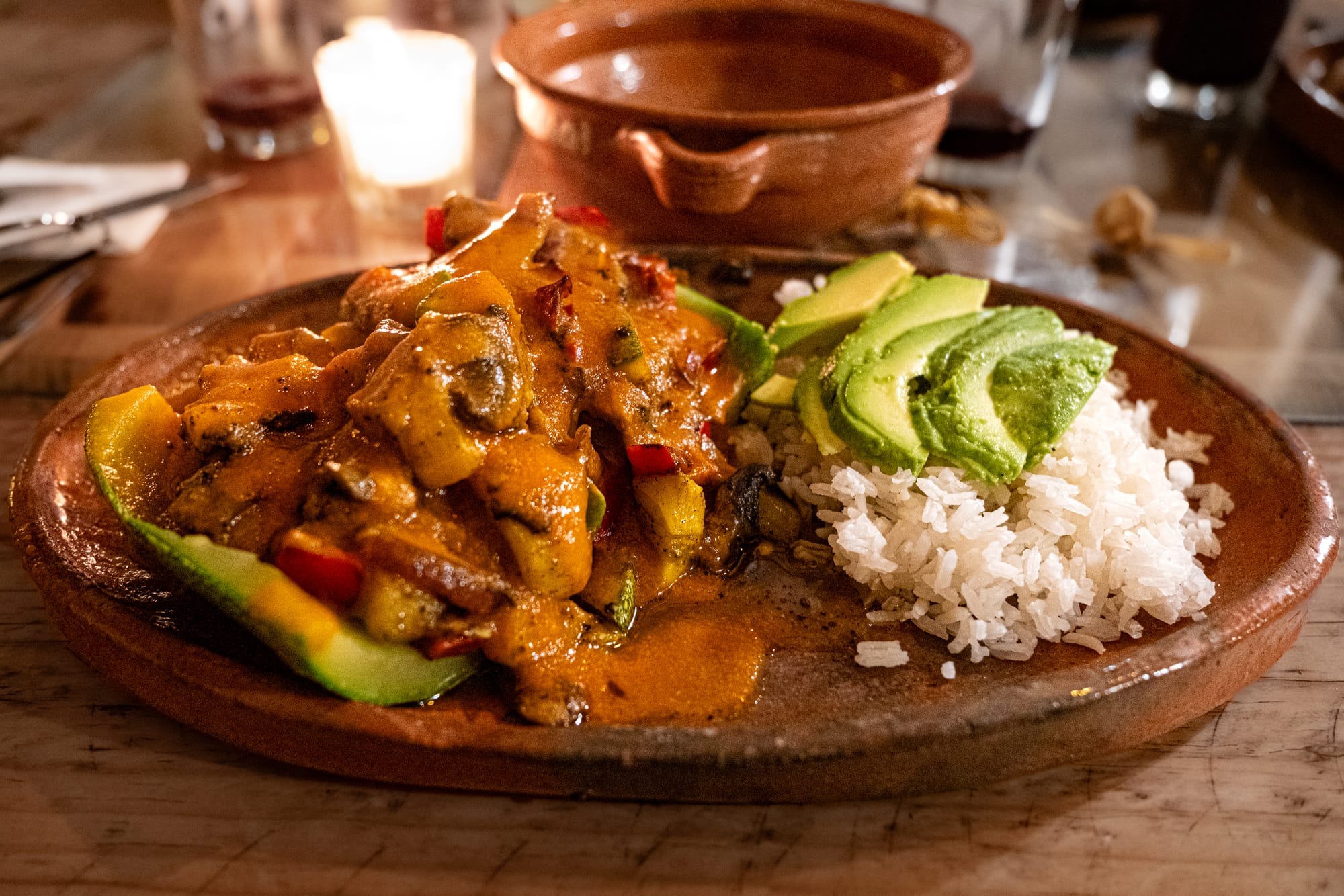
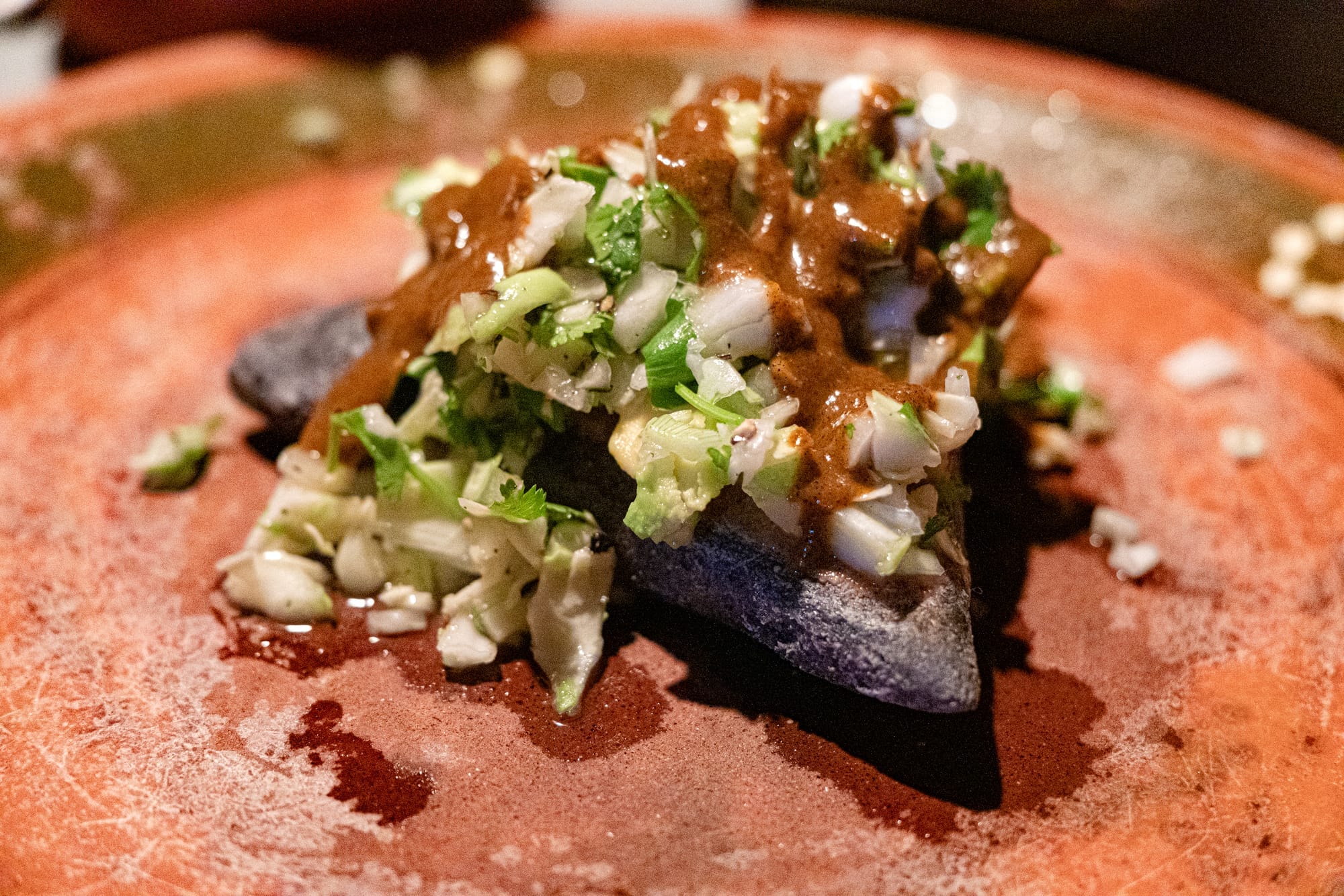
Vegan food in San Cristóbal de las Casas
We also took part in several food-focused experiences while we were there, including a cooking class at restaurant Art Libreria with Gerardo, a home-based vegan cooking class in the mountains with Itzel, and a cacao workshop with Guillermo of Element Cacao.
Weather, evenings, and comfort in San Cristóbal
San Cristóbal’s climate plays a big role in how you live there. Nights are often cold, even when days are mild. Carrying an extra sweater everywhere becomes second nature. Evenings tend to be calm and spent indoors, with people gathering early for dinner or heading home once the temperature drops.
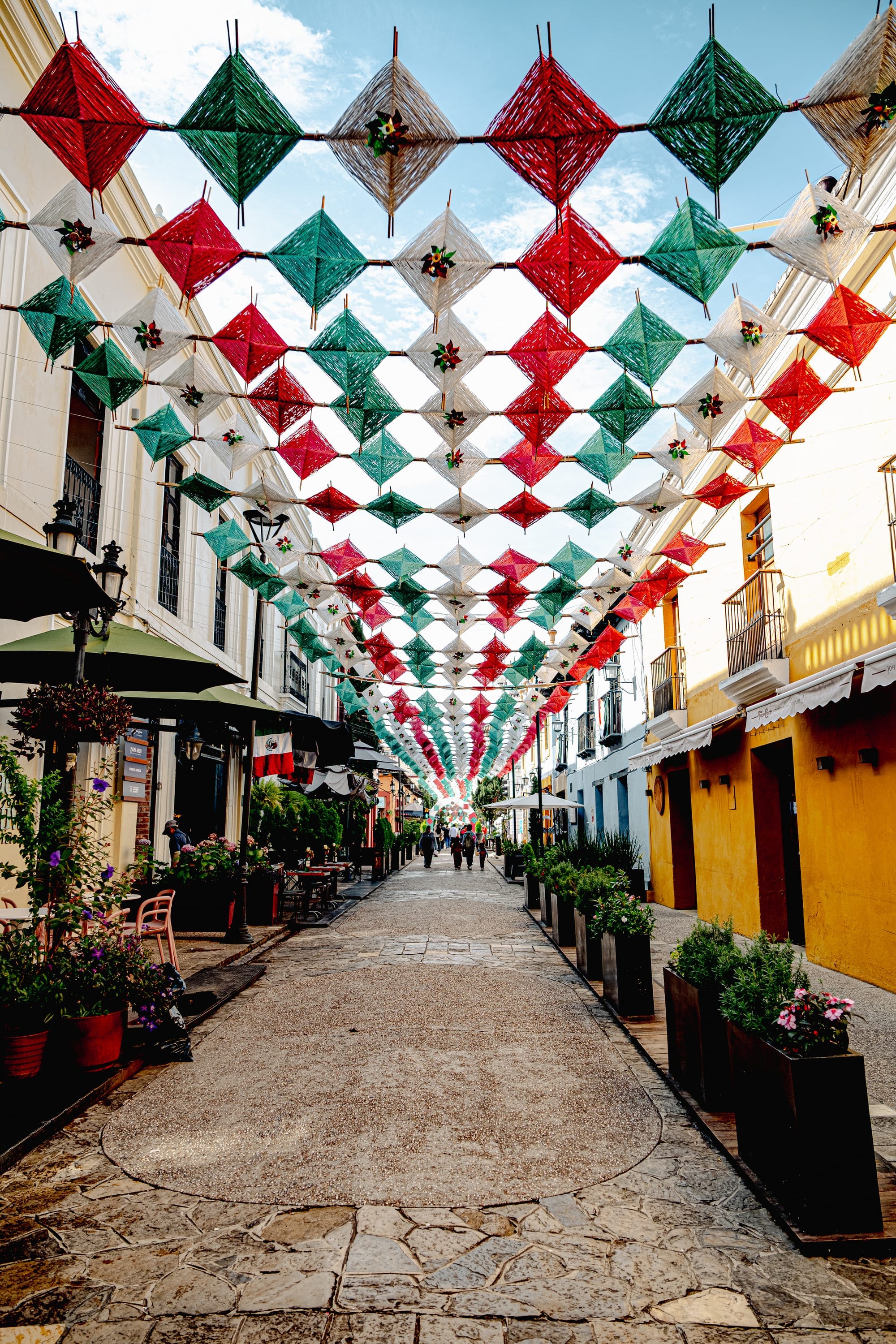
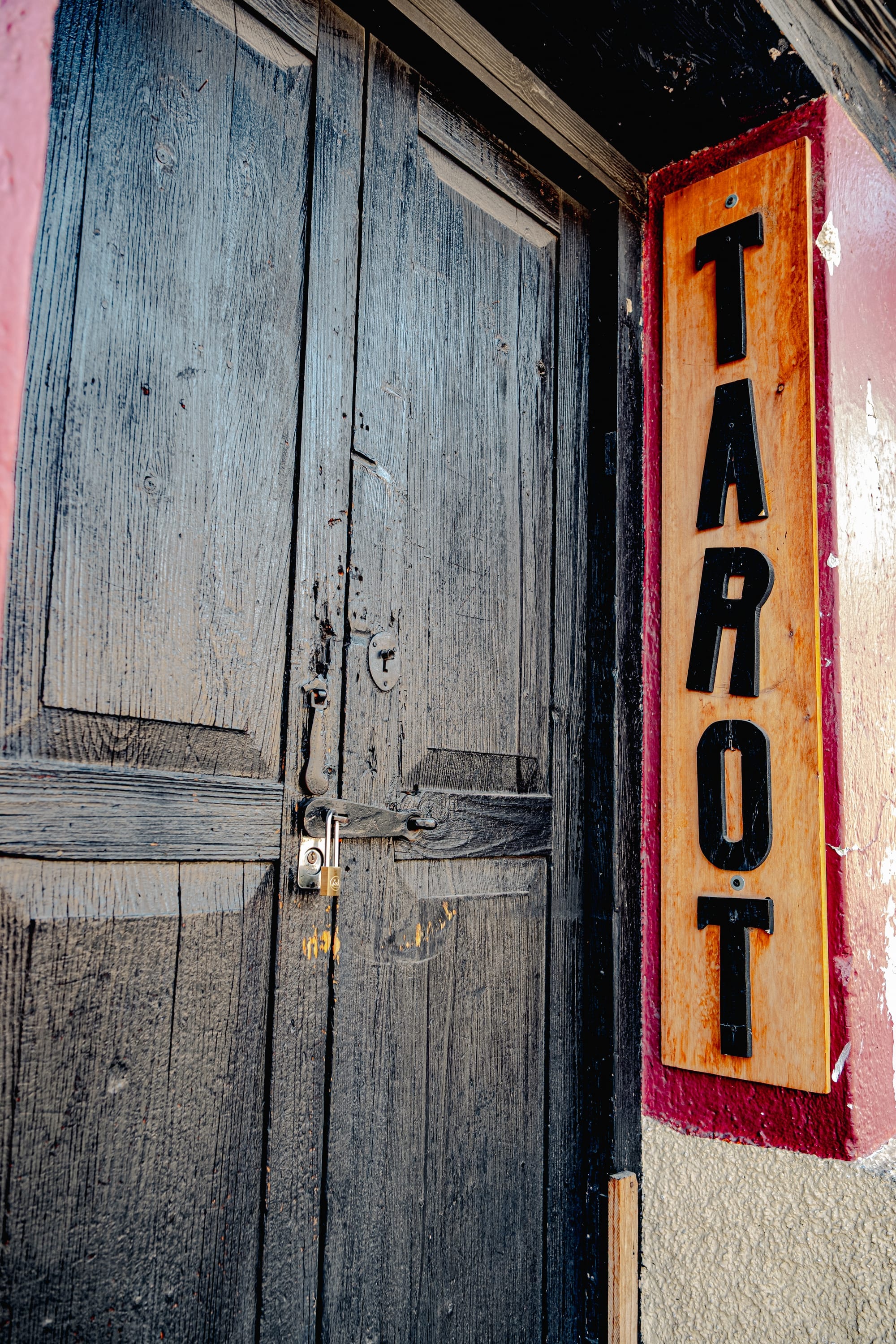
Street scenes
Arriving toward the end of the rainy season, we found the days often soft and cozy: cloud cover, occasional rain, and plenty of reasons to stay in. The weather encourages lazy mornings and unhurried afternoons. It’s a city that makes staying in feel just as valid as going out.
For some people, this pace can feel limiting. For others, it’s exactly what they’re looking for.
Altitude and weather in San Cristóbal de las Casas
San Cristóbal sits at about 2,200 meters (7,200 feet), which explains the cold nights. According to Wikipedia's climate data, January averages about 12°C and June about 17°C, and a few nights a year between December and February drop below freezing. The dry season runs from November to April. From May to October, rain usually comes in the afternoon or evening, and June and September tend to be the wettest months.
Two practical tips. Most houses and apartments have no heating, so ask for a rental with a fireplace or a portable heater if you're staying between November and February. And give yourself a couple of easy days when you arrive: the altitude can leave you short of breath on the steep streets, and the sun is strong even on cool days, so wear sunscreen.
A quick overview if you're picking which months to move:
| Months | Weather | Good to know |
|---|---|---|
| November to February | Dry, sunny days, cold nights, occasional frost | Day of the Dead (1 and 2 November) and the Christmas holidays bring more visitors. Look for a rental with heating. |
| March and April | Dry and warmer | Holy Week (Semana Santa) is a busy national holiday, so book ahead. |
| May to October | Rainy season, usually afternoon or evening showers | Greener countryside and fuller waterfalls. Rain and blockades can affect road trips. |
Is San Cristóbal de las Casas safe to live in?
For most foreigners, yes, with ordinary care. The historic center and the main neighborhoods are busy until late, and most long-stay visitors report feeling safe walking around. Use the same common sense you would in any city: keep your phone out of sight on empty streets at night and take a taxi home if you're out late.
The bigger issue is getting around Chiapas. Protests and roadblocks (bloqueos) are common and can close roads for hours. The UK government advises against all but essential travel on Federal Highway 199 between San Cristóbal and Palenque because of illegal roadblocks, and also within 40 km of the Guatemalan border. Check the UK advice or the US State Department's Mexico advisory before long trips, and ask your host or tour operator about road conditions that week.
Road blockades in Chiapas: what to do in practice
Blockades in Chiapas are usually set up by local communities, teachers' unions, or other groups protesting a specific issue, and many are lifted within hours. They still disrupt day trips and bus journeys, and the UK advice notes that some on Highway 199 involve illegal checkpoints and demands for money. Areas near the Guatemalan border, which the UK also advises against, have seen fighting between organized crime groups in recent years.
A few habits make it easier. Ask your host or tour operator the night before a long trip, travel in daylight, and leave buffer time before flights out of Tuxtla. Carry water, snacks, and cash on long journeys in case you're stuck for a while. If a road is blocked, don't try to talk your way through: wait, or turn back and try another day. Tour companies generally cancel or reroute when a road is closed, so book with one that offers flexible dates.
Health care in town is fine for routine problems, but many residents go to Tuxtla Gutiérrez, about an hour away, for specialist care. Get travel or health insurance that covers you for the whole stay. The tap water isn't safe to drink, so most people buy large refillable water jugs (garrafones).
Health care and insurance in San Cristóbal
For small problems, most people start at a pharmacy. Many large pharmacy chains in Mexico have a doctor's office next door with cheap walk-in consultations, which is handy for stomach bugs, colds, or a prescription. The city also has private hospitals and clinics and public hospitals, but public care is mainly for people enrolled in Mexico's social security systems, so as a visitor you'll usually go private and pay up front.
For anything serious or specialist, plan on Tuxtla Gutiérrez, which has the larger hospitals. Bring copies of prescriptions and enough of any regular medication for a few weeks, as specific brands can be hard to find in a small city. Before you sign up for insurance, check it covers you for the whole length of the stay, including outpatient visits, and whether it pays the clinic directly or you claim back later.
Cost of living in San Cristóbal de las Casas
San Cristóbal is one of the cheaper places in Mexico to live for a few months. Prices vary with the season and how you live, so treat these as rough figures for late 2026, mostly from Nomads.com and other remote workers' published budgets:
One-bedroom apartment in the center: about $400 a month on a local lease. Furnished monthly rentals online usually cost $300 to $900.
Coworking hot desk: about $125 a month.
Meal in a simple restaurant: about $5. Street food and market meals cost less.
Taxi across town: about 30 to 50 pesos.
Total for one remote worker: roughly $1,100 to $1,600 a month, rent included.
Monthly cost of living in San Cristóbal in pesos and dollars
Here's a fuller monthly budget for one person, with each line in pesos and in rough US dollars. We've used about 18.5 pesos to the dollar (the rate moved between about 18.5 and 19 in November 2026), and the figures are 2026 estimates from Co404's own site, Nomads.com, and a published couple's budget from Two Tickets Anywhere, halved where it was for two. Check current prices before you budget.
| Item | Pesos (MXN) | US dollars (approx.) |
|---|---|---|
| One-bedroom in the center, local lease | about 7,400 | about $400 |
| Furnished monthly rental booked online | about 5,500 to 16,500 | about $300 to $900 |
| Coliving private room, monthly rate | from about 6,600 | from about $356 (Co404's listed starting price) |
| Coworking hot desk | about 1,900 to 2,300 | about $103 to $125 |
| Groceries if you cook most meals | about 2,500 to 3,000 | about $135 to $165 |
| Meal in a simple restaurant | about 55 to 165 | about $3 to $9 |
| Latte in a café | about 55 | about $3 |
| 20-liter drinking water refill (garrafón) | about 40 each | about $2 each |
| Prepaid phone bundle | about 300 | about $16 |
| Taxi across town | 30 to 50 | about $2 to $3 |
| Basic gym | about 550 | about $30 |
| Total, rent included | about 20,000 to 30,000 | about $1,100 to $1,600 |
Lower budgets are possible: a long-term local lease, cooking every meal, and skipping coworking can bring the total closer to 15,000 pesos a month. Monthly costs climb if you book a furnished place online at short notice, eat out daily, or take a lot of day trips.
| Rough cost (late 2026) | |
|---|---|
| One-bedroom in the center | About $400 a month on a local lease |
| Furnished monthly rental online | $300 to $900 a month |
| Coworking hot desk | About $125 a month |
| Meal in a simple restaurant | About $5, less for street food |
| Taxi across town | About 30 to 50 pesos |
| Total for one remote worker | $1,100 to $1,600 a month, rent included |
Cooking at home from the markets cuts the food bill a lot, and monthly rental deals are much cheaper than nightly prices. Carry cash: many small shops, cafés, and taxis don't take cards. For a bigger shop, there's a Walmart and a Chedraui on the edge of town.
Visas for living in San Cristóbal de las Casas
Visitors from many countries, including the US, Canada, the UK, and every EU country, don't need a visa for Mexico. When you arrive, you get a tourist entry, recorded as a stamp or on the Forma Migratoria Múltiple (FMM). It allows up to 180 days, but the Mexican consulate's guidance is clear that the immigration officer at the border decides how many days you get. Some travelers have been given 30 days or fewer, so carry a return or onward ticket, your accommodation booking, and proof of funds.
A tourist stay generally can't be extended from inside Mexico, and it doesn't allow you to work for a Mexican employer. If you want to stay longer than six months, look into temporary residency. You apply at a Mexican consulate before you travel, and you need to show a monthly income or savings above a threshold that each consulate sets and that changes every year. Then you finish the process with Mexico's immigration institute, the INM, after you arrive. Check the current rules for your passport before you plan a long stay.
Tourist entry vs temporary residency
The two main options compared, for people who want to live in San Cristóbal for more than a short trip:
| Tourist entry (FMM or passport stamp) | Temporary residency | |
|---|---|---|
| How long | Up to 180 days, set by the officer on arrival | More than 180 days, issued for up to four years in total |
| Where you apply | At the border or airport, no advance application for many passports | At a Mexican consulate before you travel, then with the INM after you arrive |
| Money to show | Proof of funds may be asked for on arrival | About 79,800 pesos a month of income over the last 6 months, or about 1.34 million pesos in savings over the last 12 months (2026 guide figures) |
| Extensions | Generally can't be extended inside Mexico | Renewed with the INM inside Mexico |
| Work | No work for Mexican employers | Work needs separate permission from the INM |
The 2026 residency thresholds are set in UMA, a Mexican reference unit worth 117.31 pesos a day in 2026, so they rise each year. Mexperience's summary puts income at 680 UMA days a month and savings at 11,460 UMA days, and notes that each consulate sets its own figure within a small margin. Ask the consulate you'll apply at for its current list before you gather documents.
How to get to San Cristóbal de las Casas
San Cristóbal has no commercial airport of its own. The nearest is Tuxtla Gutiérrez International Airport (TGZ), with direct flights from Mexico City and a few other Mexican cities, about an hour to an hour and a half away by road.
Our guide on how to get to San Cristóbal compares every route in more detail, from the Tuxtla airport shuttle to the buses from Oaxaca and Palenque.
| Route | How | Time | Cost |
|---|---|---|---|
| Tuxtla airport (TGZ) | OCC or ADO shuttle bus, then a taxi in town | About 1 to 1.5 hours | About 250 pesos, plus a taxi of about 40 pesos |
| Tuxtla airport (TGZ) | Private taxi, can be shared | About 1 to 1.5 hours | About 800 to 900 pesos per car |
| Tuxtla city bus station | ADO or OCC bus | About 1 to 2 hours | Fares vary, check ADO |
| Oaxaca or Mexico City | Long-distance ADO or OCC bus, often overnight | Most of a day or night | Check ADO |
| Palenque | Bus or tour van via the mountains | Several hours | Check road conditions first (see the safety section) |
Airport and shuttle prices above come from Co404's own guide. Book long-distance buses on the ADO website or at the bus station. If you're coming from the Yucatán, the Tren Maya railway starts in Palenque, so you can take the train there and continue by road. Our San Cristóbal digital nomad guide covers arriving and getting around town.
Who San Cristóbal suits, and who it doesn’t
San Cristóbal de las Casas is not a nightlife-forward city. If your ideal place involves going out late every night, high-energy social scenes, and constant stimulation, there are plenty of other Mexican cities that will suit you better. Places like Playa del Carmen, for example, are built around that kind of momentum.
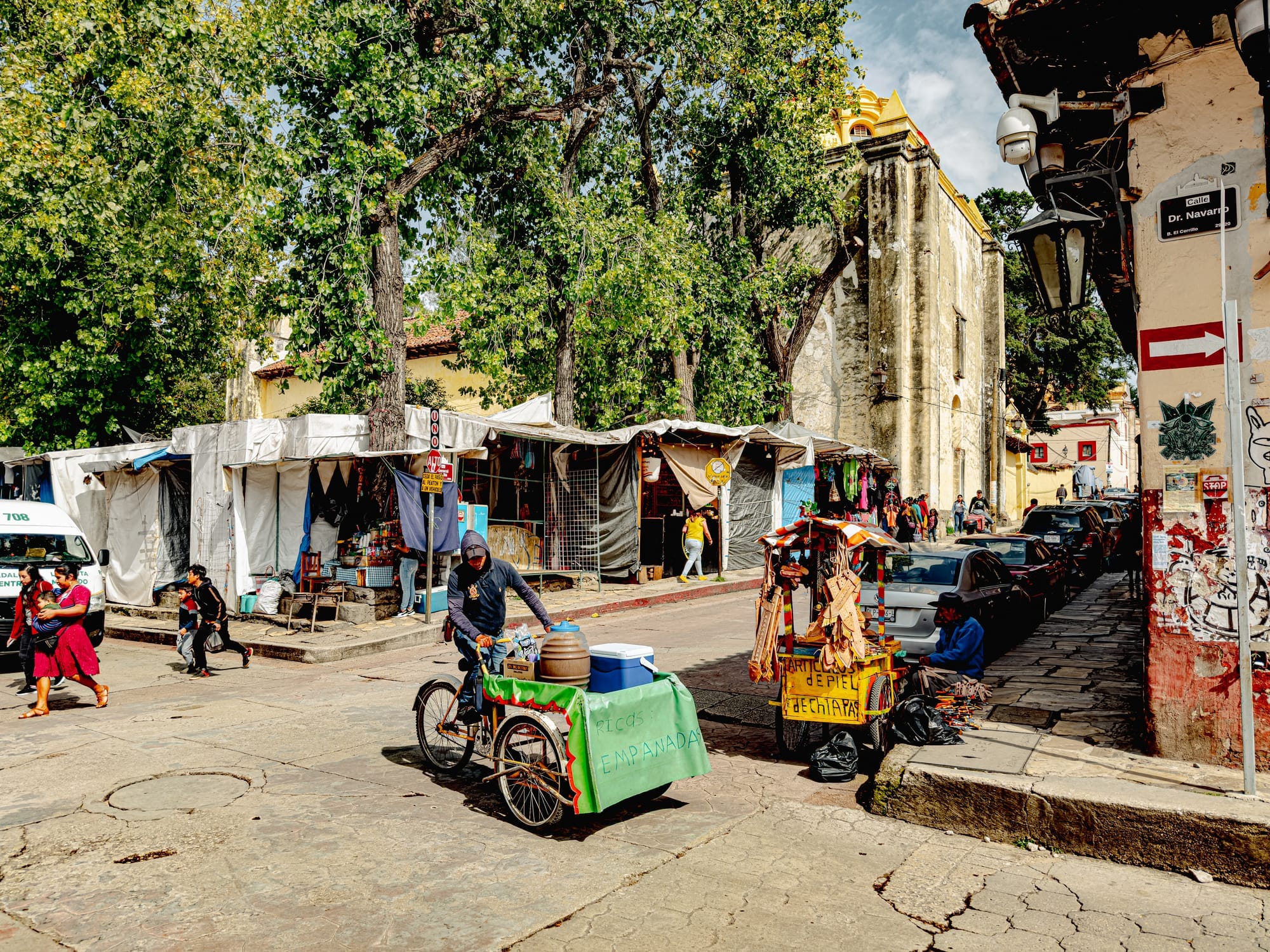
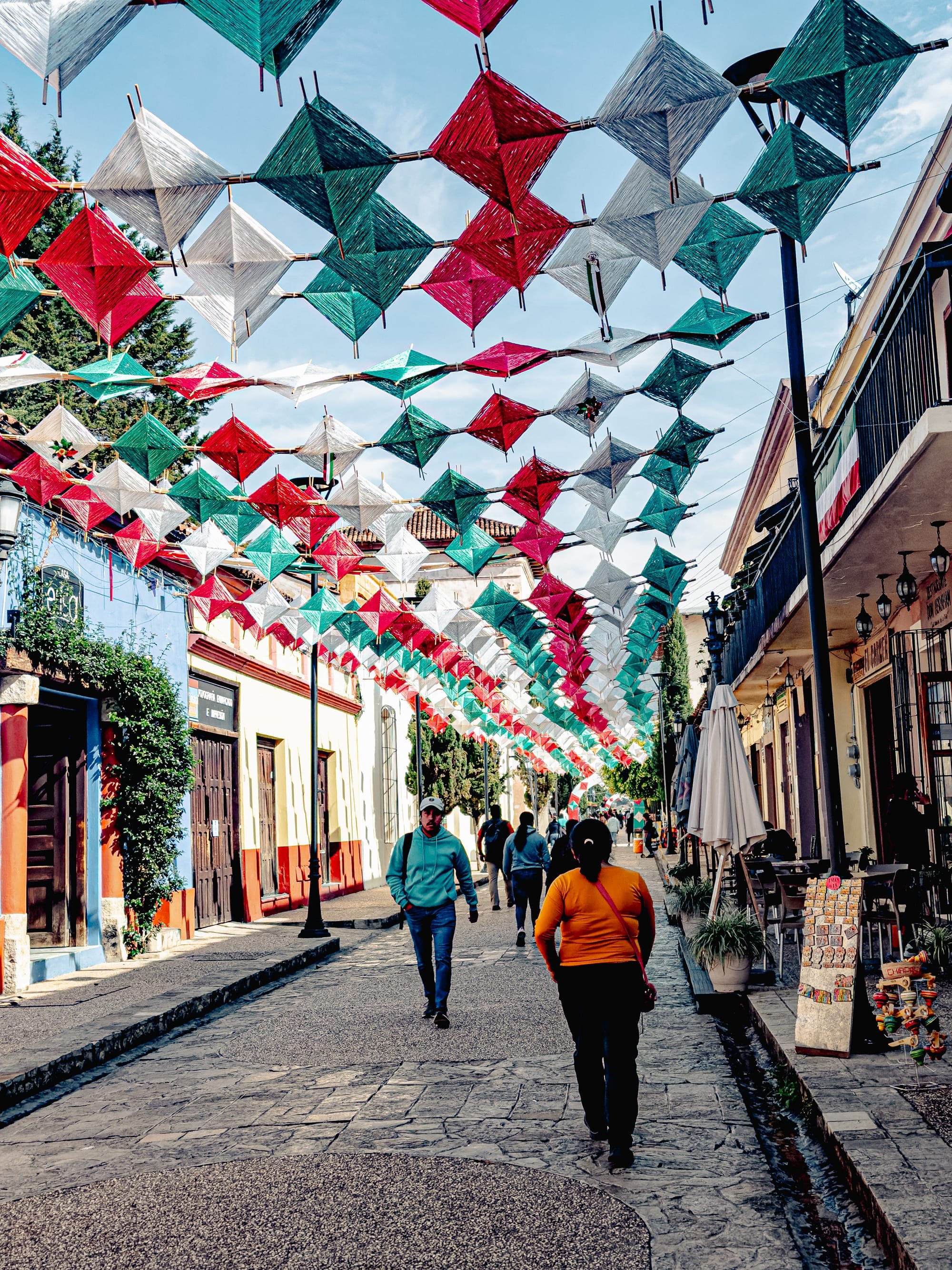
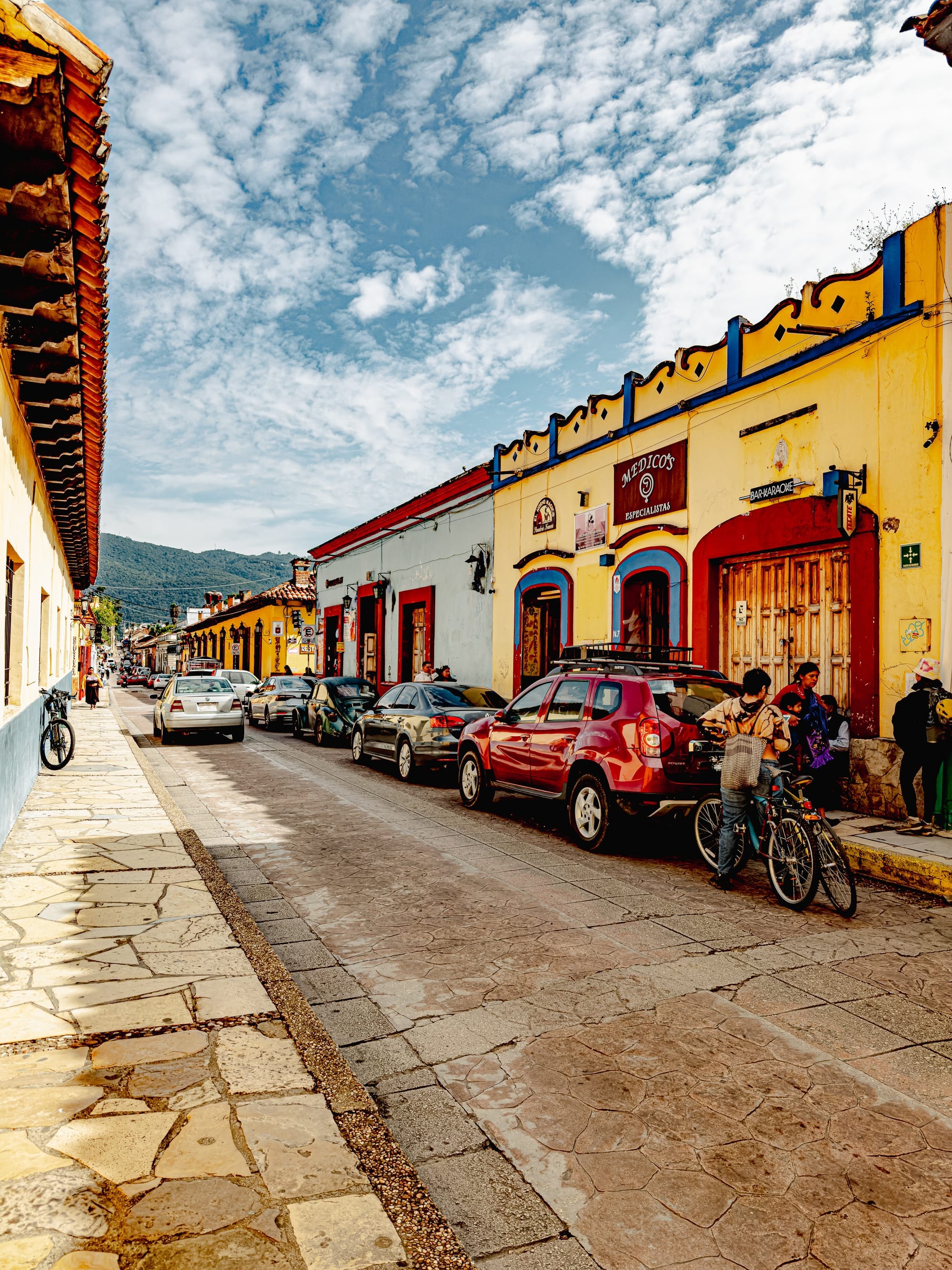
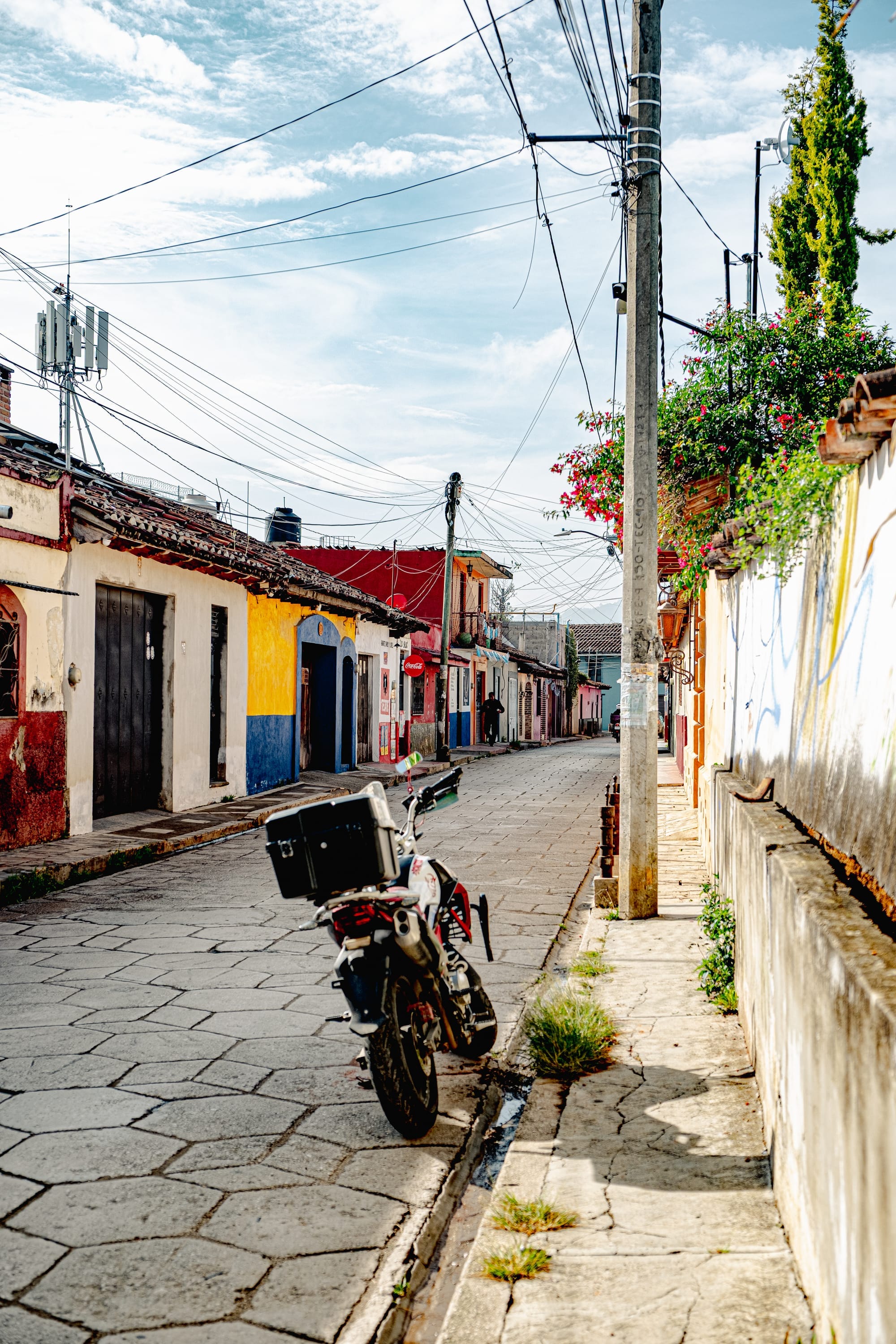
Cobblestone streets and mountain views
San Cristóbal attracts a different temperament. It suits people who enjoy walking, thinking, making, and spending time in nature. Artists, creatives, intellectuals, and those drawn to low-key forms of cultural engagement often find the city especially appealing. It’s a place where days can feel full without being busy, and where solitude doesn’t automatically read as isolation.
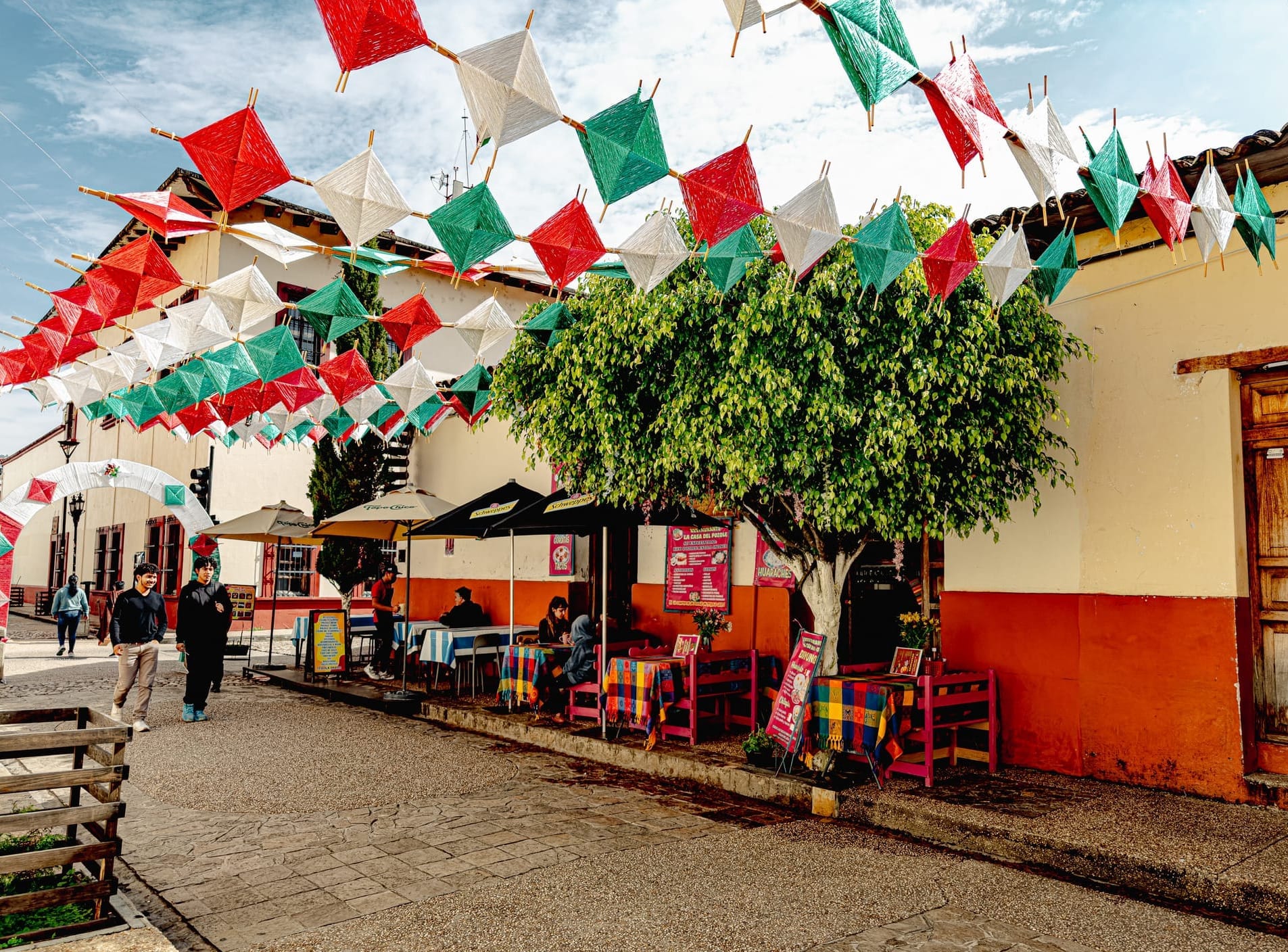
It’s also notably more affordable than cities like Oaxaca or Playa del Carmen, which makes long-term stays more accessible. Rent, food, and daily expenses tend to be lower, allowing for a simpler lifestyle that doesn’t revolve entirely around budgeting or optimization.
Pros and cons of living in San Cristóbal de las Casas
To sum up what we've covered above:
| Pros | Cons |
|---|---|
| Cheaper than Oaxaca or Playa del Carmen | Cold nights and homes without heating |
| Compact and walkable | Wifi varies a lot between rentals |
| Strong Indigenous culture, markets, and art | Roadblocks can disrupt trips around Chiapas |
| Waterfalls, lakes, ruins, and villages within reach | No airport in town, and specialist health care is in Tuxtla |
| Easy to eat vegan and cook from the markets | Small nomad scene and little nightlife |
| Up to 180 days on a tourist entry for many passports | Tourist days aren't guaranteed, and the tap water isn't drinkable |
Living here, rather than passing through
For us, San Cristóbal felt easy to live in. Not because it offered endless entertainment or novelty, but because it didn’t demand either. The city made room for routine, for calm workdays, for wandering without a goal, and for paying attention to small details.
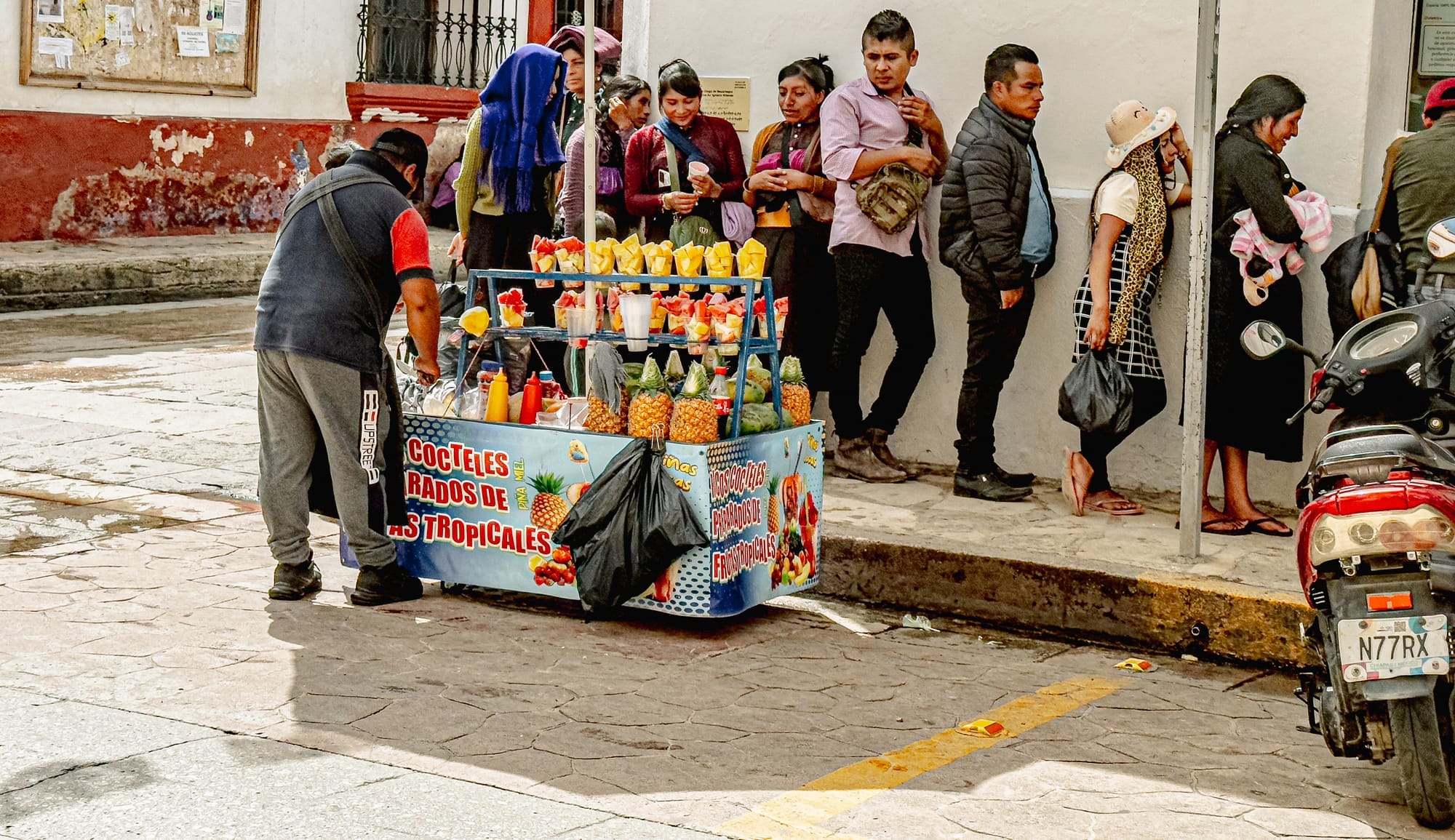
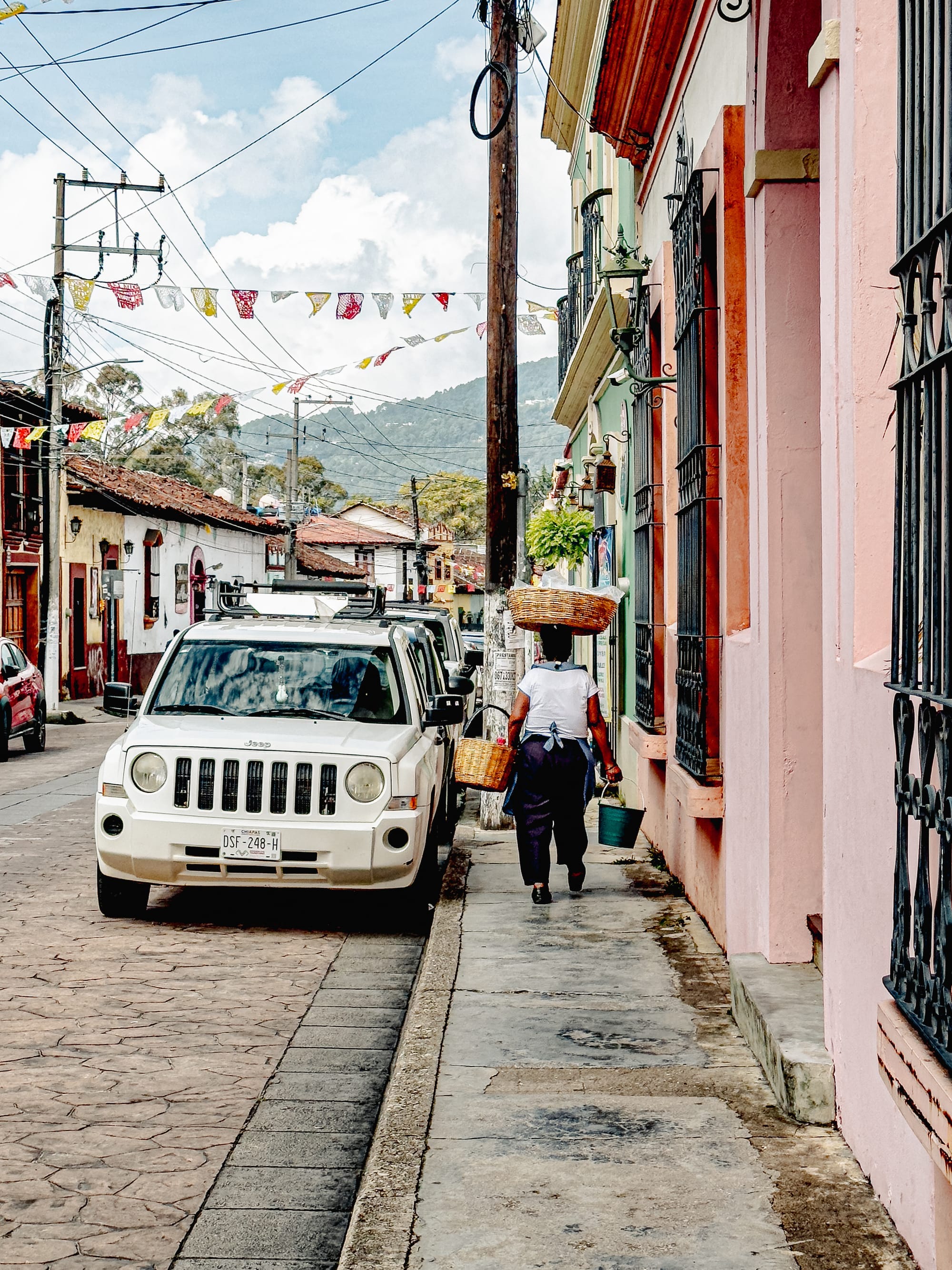
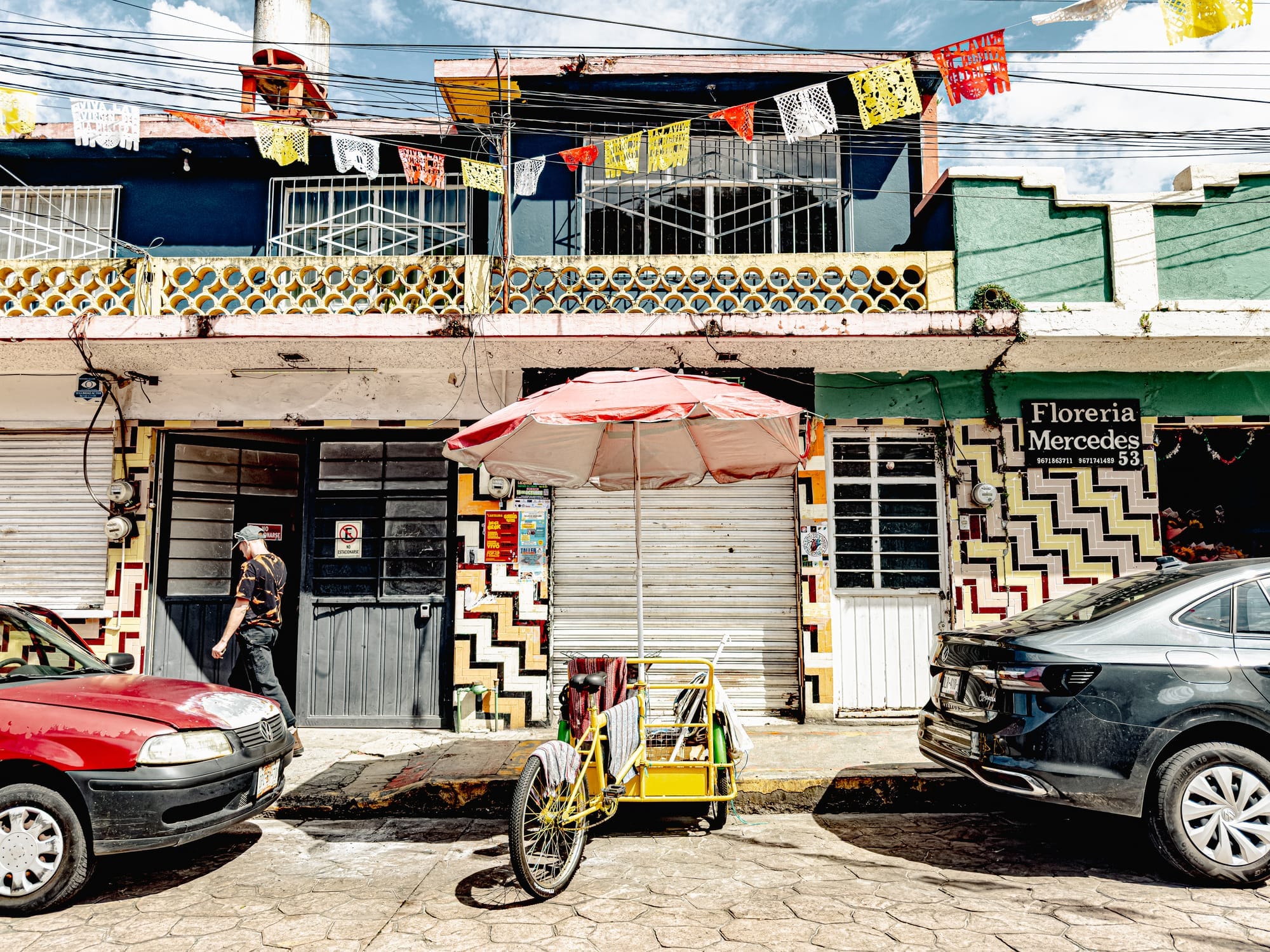
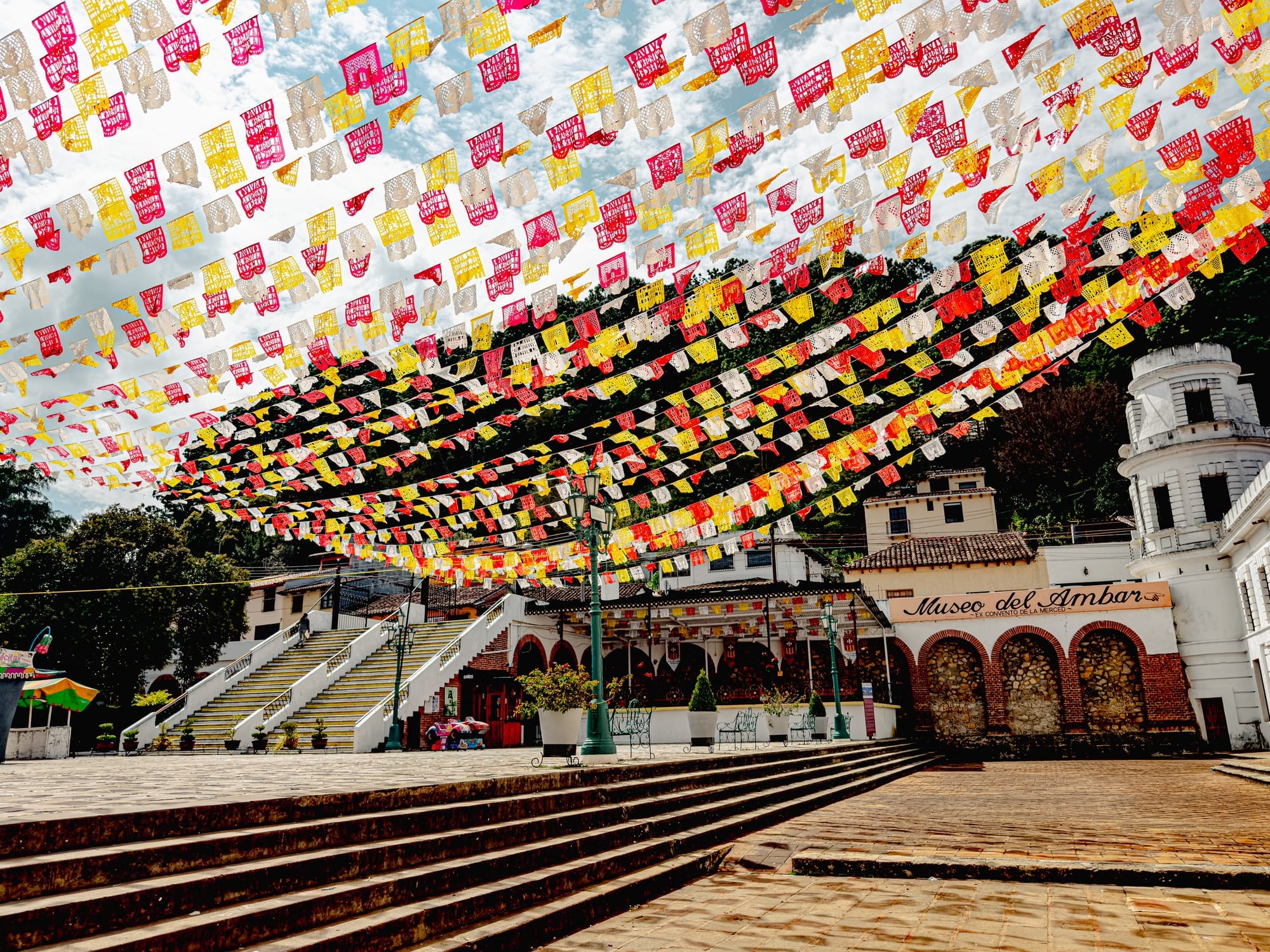
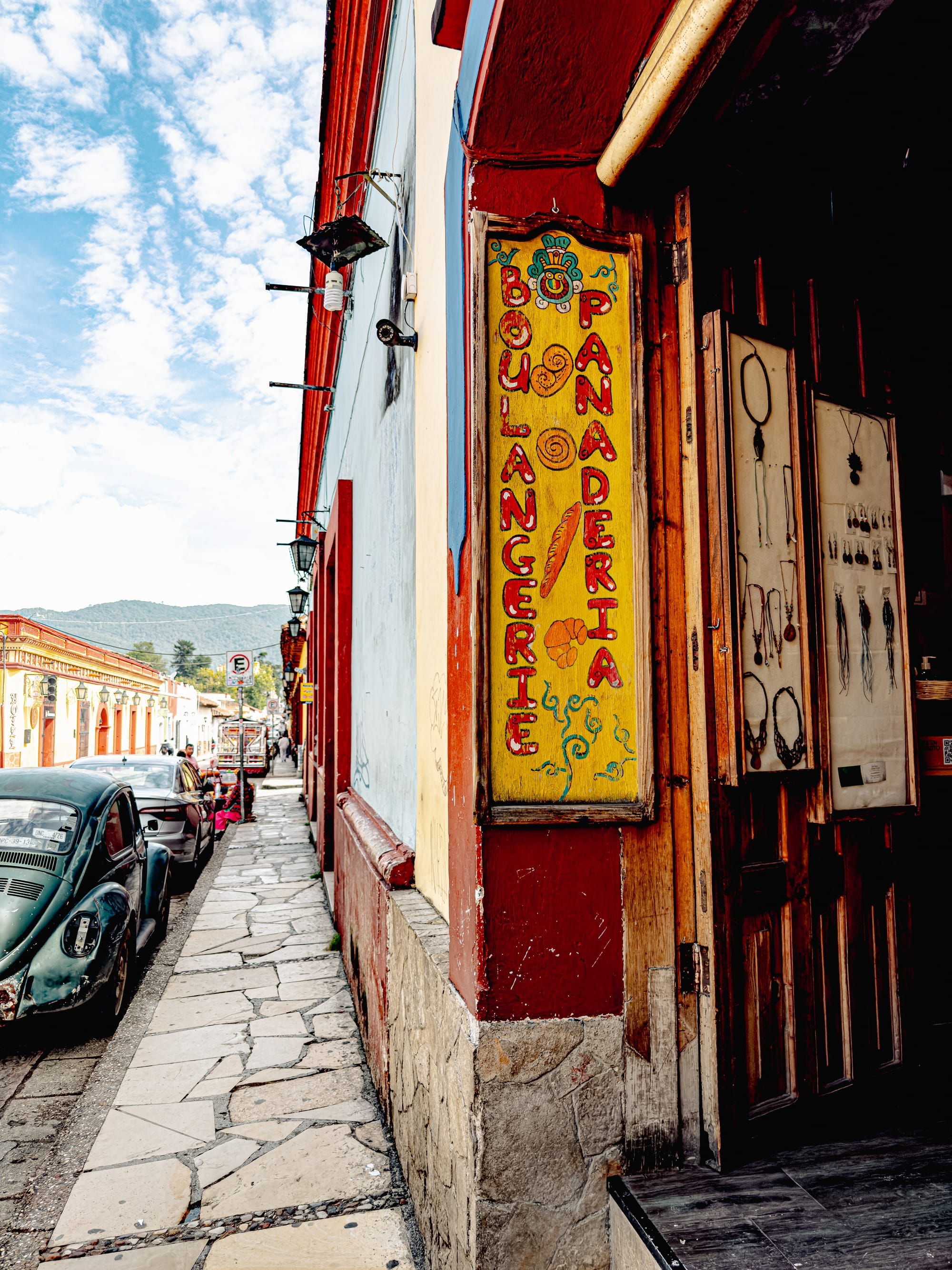
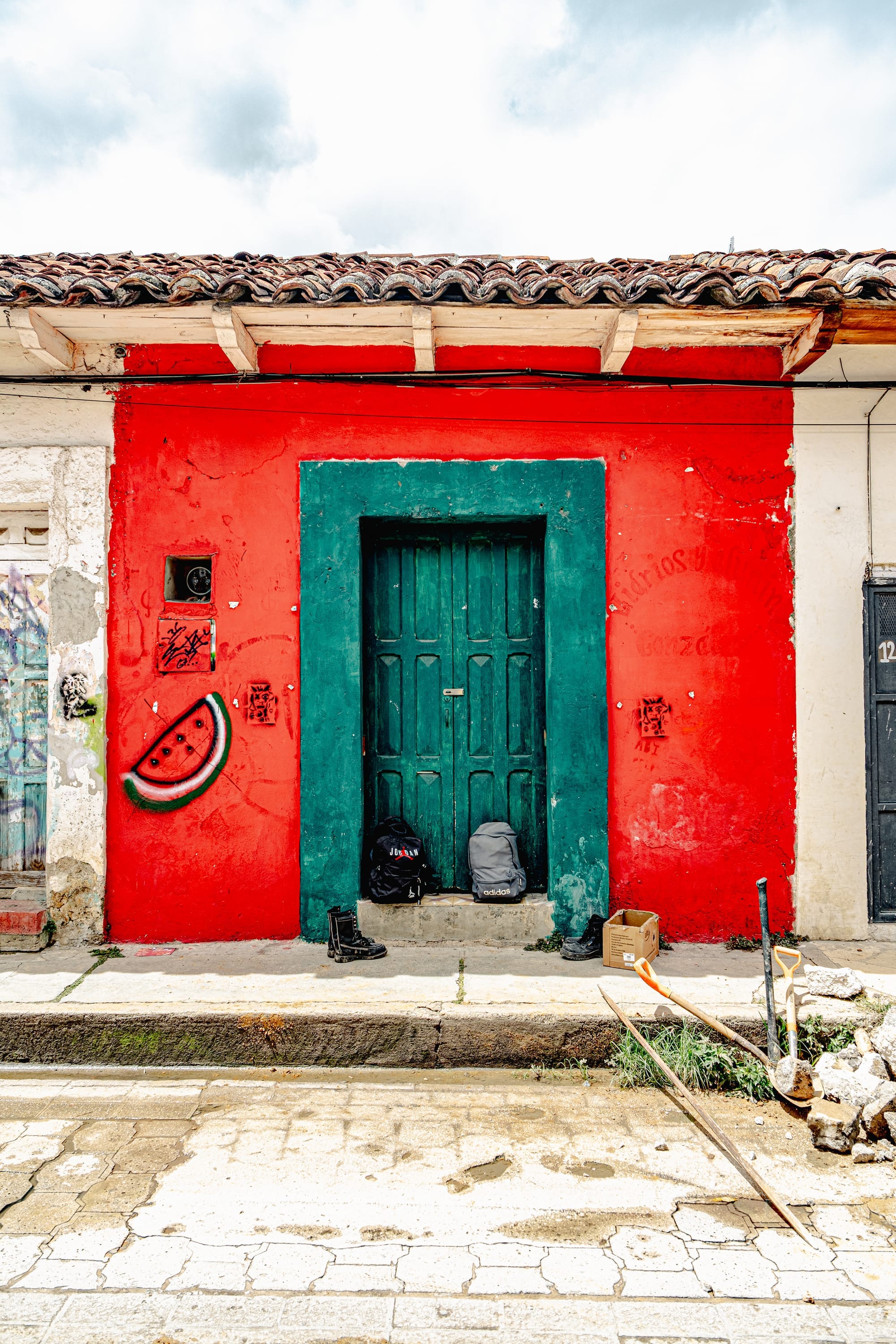
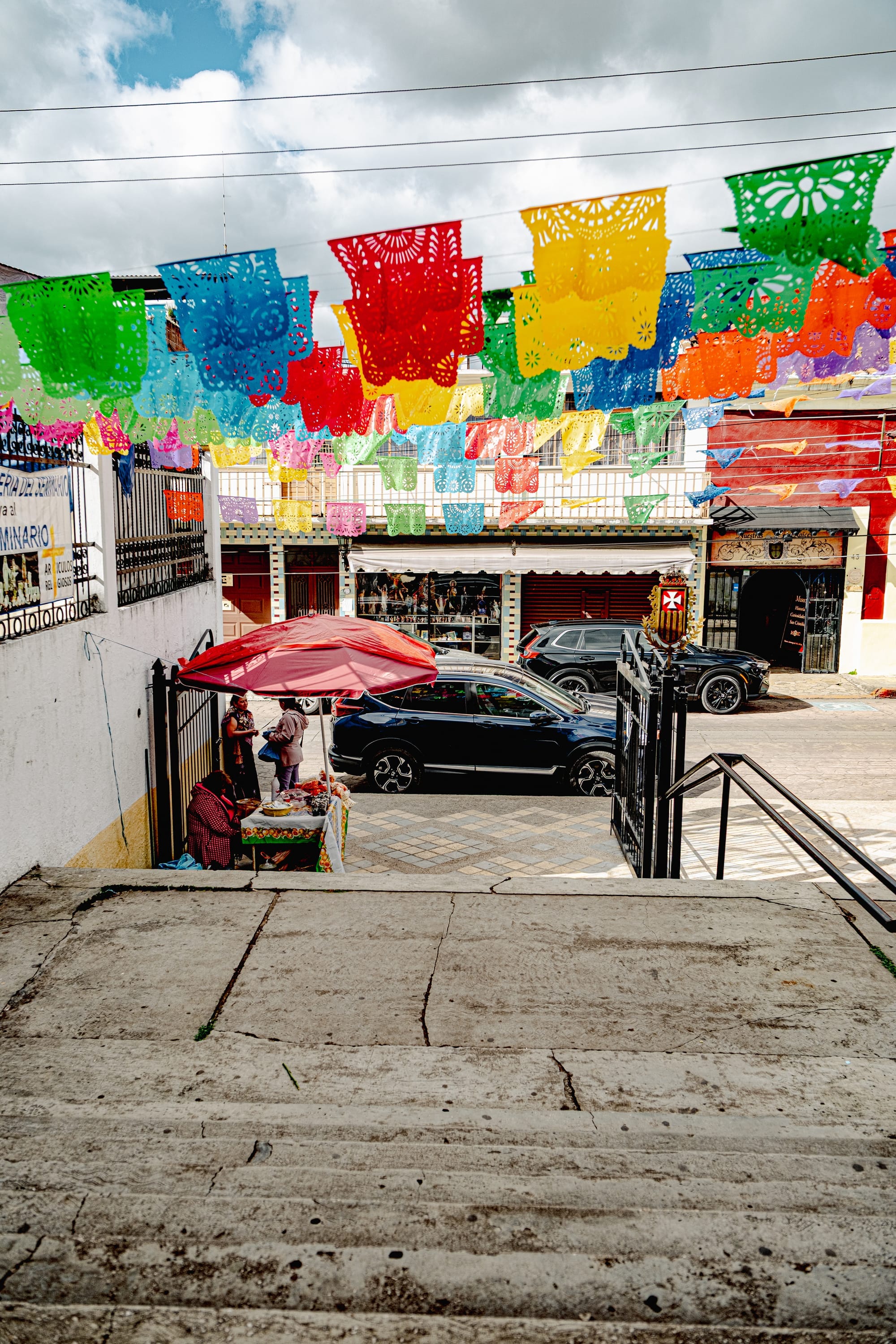
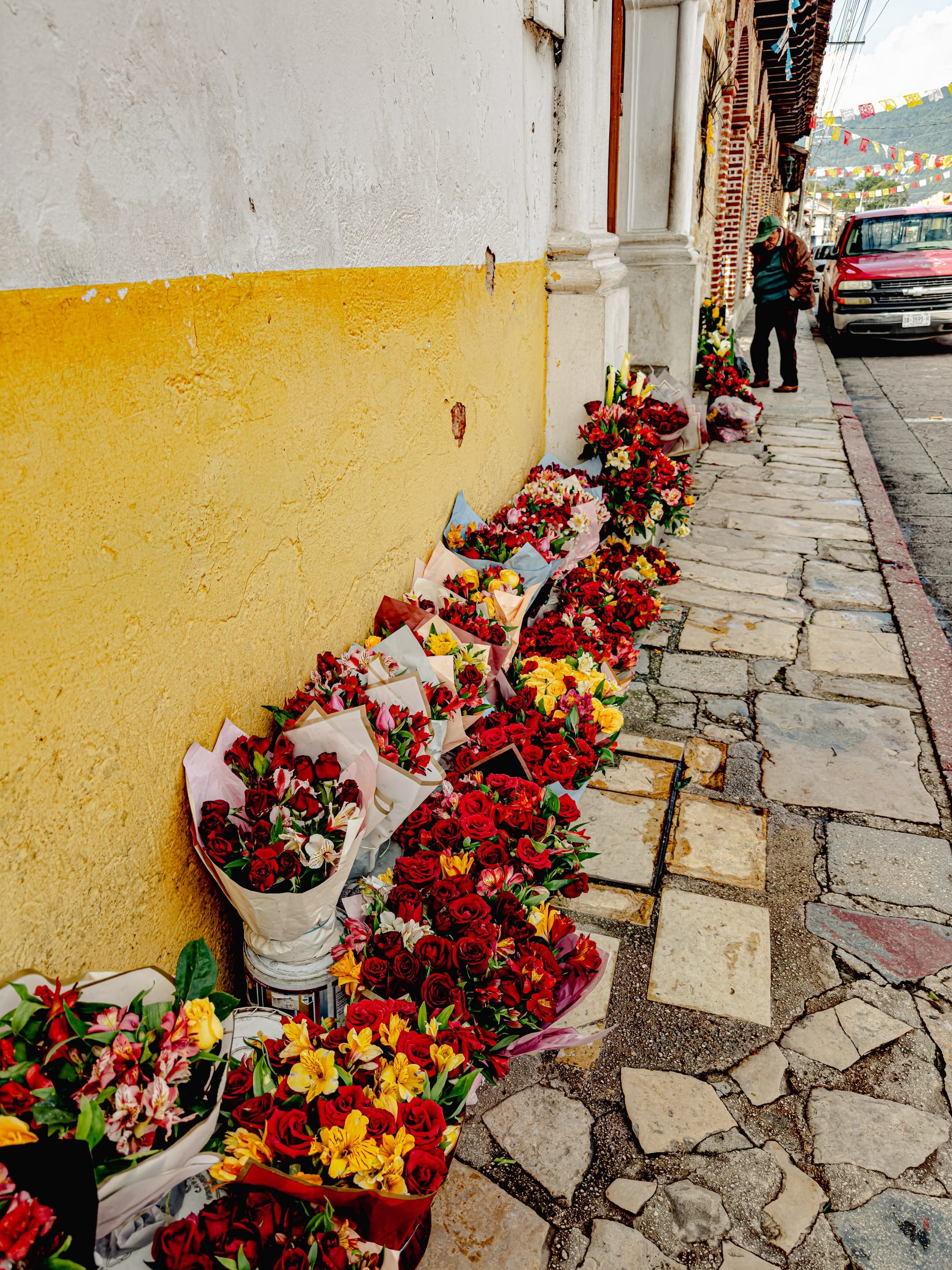
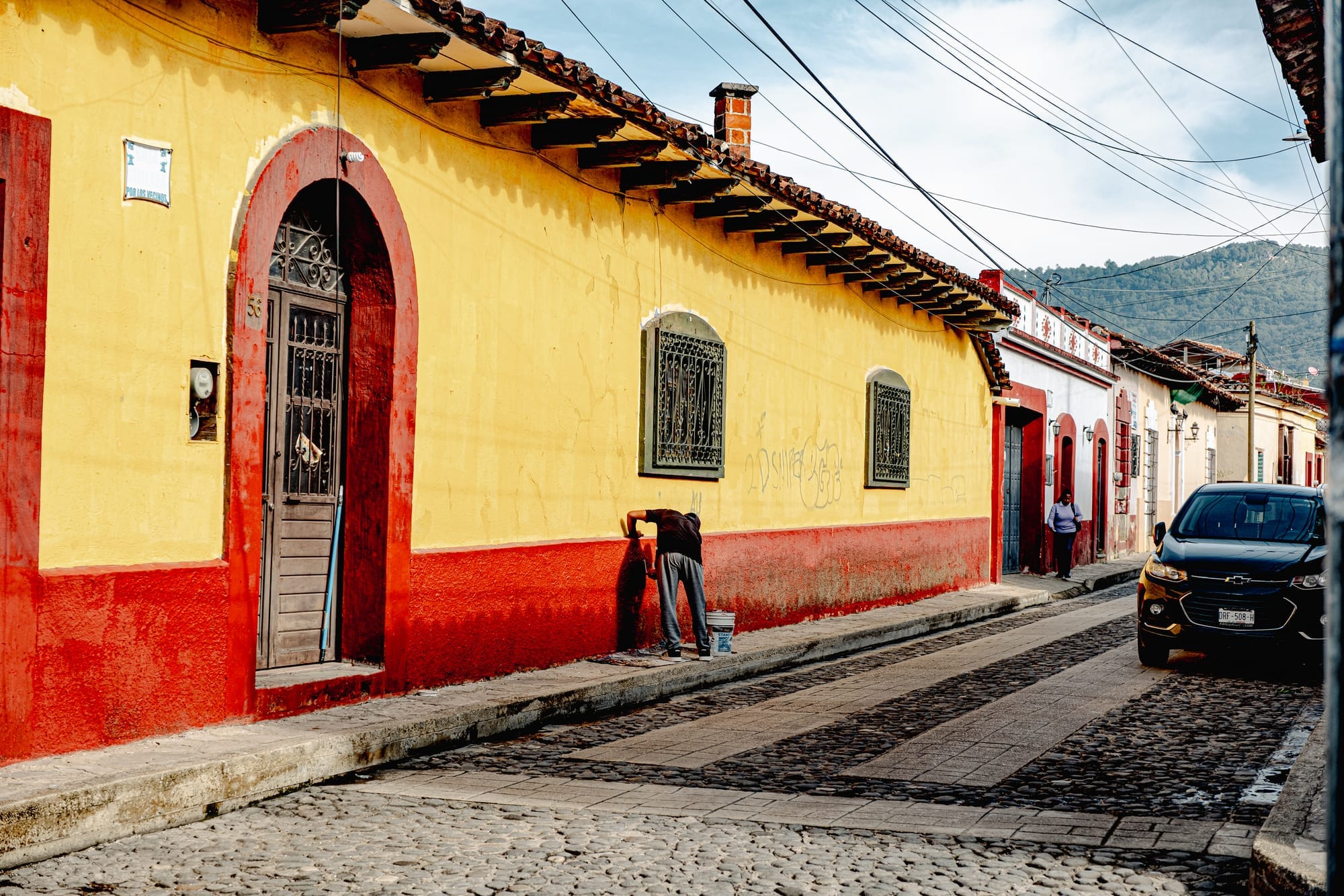
Scenes from San Cristóbal’s streets
The strong Indigenous presence, the creative streak, the closeness to nature, and the unhurried pace all combined into something that genuinely supported the way we like to live.
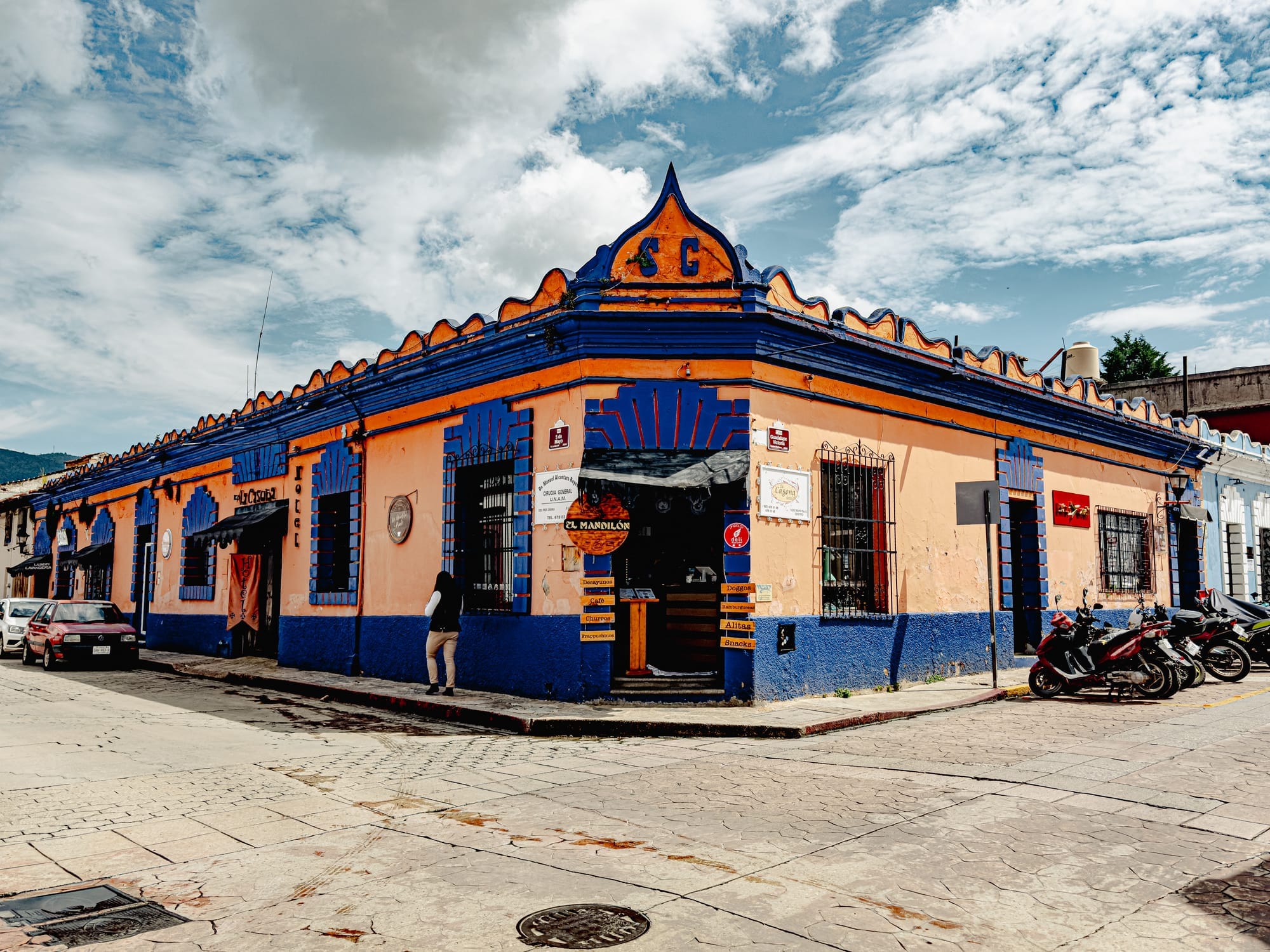
San Cristóbal hasn’t been shaped to appeal to everyone, and that’s precisely what allows it to remain what it is. If you’re looking for a place that rewards patience, curiosity, and a more inward-looking pace, it’s a city well worth spending time in. It holds a dear place in our heart. For areas and our hotel picks, see where to stay in San Cristóbal.
For the full picture, from coworking and where to stay to day trips and Day of the Dead, see our San Cristóbal de las Casas digital nomad guide and our San Cristóbal guide. For more ideas, see our list of things to do in San Cristóbal. For the other places we've lived and worked, see our digital nomad guide.
Nearby, see El Arcotete.
If you're moving here for a few months, sort out health cover before you arrive. A hospital visit abroad gets expensive fast when you're paying out of pocket. We'd recommend SafetyWing Nomad Insurance. It covers medical emergencies abroad, you can buy it even after you've left home, and it renews every four weeks, so it works for a short trip or months on the road.
Where to stay when you first arrive
San Cristóbal de las Casas is the base for this, with the most places to stay and eat. These are well-reviewed options, all rated 9 or more on Booking:
- Parador Margarita: a well-run, good-value hotel a few blocks from the center, rated 9.1 from over 1,400 reviews.
- Casa Carmen: a small guesthouse with a courtyard, rated 9.6.
- Casa Santa Lucía: a colonial-style boutique stay in the center, rated 9.5.
Frequently asked questions
Is San Cristóbal de las Casas a good place to live?
For people who like walking, nature, culture, and a low-key social life, yes. It's affordable, compact, and close to waterfalls, ruins, and Tsotsil towns. It's less suited to anyone who wants nightlife, warm evenings, or a big expat scene.
How much does it cost to live in San Cristóbal de las Casas?
Roughly $1,100 to $1,600 a month for one person, rent included, based on 2026 estimates. A one-bedroom in the center costs about $400 a month on a local lease, and a simple restaurant meal about $5.
How long can I stay in San Cristóbal de las Casas as a tourist?
Up to 180 days, but the immigration officer decides the exact number when you enter Mexico. Carry a return ticket and proof of funds. For longer stays, apply for temporary residency at a Mexican consulate before you travel.
What is the best neighborhood to live in San Cristóbal de las Casas?
El Cerrillo suits most long stays: it's calm, central, and close to coworking. Barrio de Mexicanos, where Co404 is, is more residential. The historic center is the most convenient but the noisiest.
Is San Cristóbal de las Casas safe to live in?
Most foreigners find the city itself safe with ordinary care. Road travel is the bigger risk: roadblocks are common in Chiapas, and the UK advises against all but essential travel on Highway 199 to Palenque. Check current advice before long trips.
How cold does San Cristóbal de las Casas get?
At about 2,200 meters, nights are cold all year and coldest from December to February, when a few nights drop below freezing. Most homes have no heating, so pack warm clothes and look for a rental with a fireplace or heater.
Can you drink the tap water in San Cristóbal de las Casas?
No. Most residents buy large refillable water jugs (garrafones) for drinking and cooking.
Do you need Spanish to live in San Cristóbal de las Casas?
Basic Spanish makes life much easier. English isn't widely spoken outside tourist businesses, and Tsotsil and Tseltal are common in the markets. A few weeks of classes before or after you arrive goes a long way.
Which airport do you fly into for San Cristóbal de las Casas?
Tuxtla Gutiérrez International Airport (TGZ), about 1 to 1.5 hours away by road. San Cristóbal has no commercial flights of its own.
How do you get from Tuxtla airport to San Cristóbal de las Casas?
Take an OCC or ADO shuttle bus (about 250 pesos in 2026) and a short taxi in town, or a private taxi for about 800 to 900 pesos per car. Check current prices before you travel.
How much income do you need for temporary residency in Mexico?
In 2026, guide figures put it at about 79,800 pesos a month of income over the last six months, or about 1.34 million pesos in savings over the last 12 months. Each consulate sets its own figure, so check yours before you apply.
Is there a hospital in San Cristóbal de las Casas?
Yes, there are private and public hospitals and clinics, and pharmacies with doctors for small problems. For specialist care, most people go to Tuxtla Gutiérrez. Get insurance that covers your whole stay.
How do roadblocks affect living in San Cristóbal de las Casas?
Day-to-day life in town is rarely affected, but roadblocks can close roads to Palenque, the airport, or day-trip spots for hours. Ask locally before long trips, travel in daylight, and leave buffer time before flights.
What is the best time to move to San Cristóbal de las Casas?
Late October or November is a good start: the rains are ending, the dry season runs to April, and you arrive in time for Day of the Dead. Book ahead around Christmas and Holy Week.
Useful links: Mexican consulate: entry and migration information, Instituto Nacional de Migración (INM), UK travel advice: Mexico regional risks, and US State Department Mexico travel advisory.


