


Cascadas Roberto Barrios, also called the Roberto Barrios waterfalls, are a chain of turquoise cascades and swimming pools in the jungle near the village of Roberto Barrios, about 45 minutes to an hour's drive from Palenque in Chiapas, Mexico. Entry costs only a few dozen pesos, and the site is generally open from about 8 am to 5 pm. Plan on two to three hours to swim, climb the rock shelves, and walk behind the falls. Come in the morning or on a weekday for fewer people. We visited several waterfalls in Chiapas, and these were our favorite.
Cascadas Roberto Barrios are our absolute favorite waterfalls near Palenque. For the ruins themselves, use our Palenque ruins map.
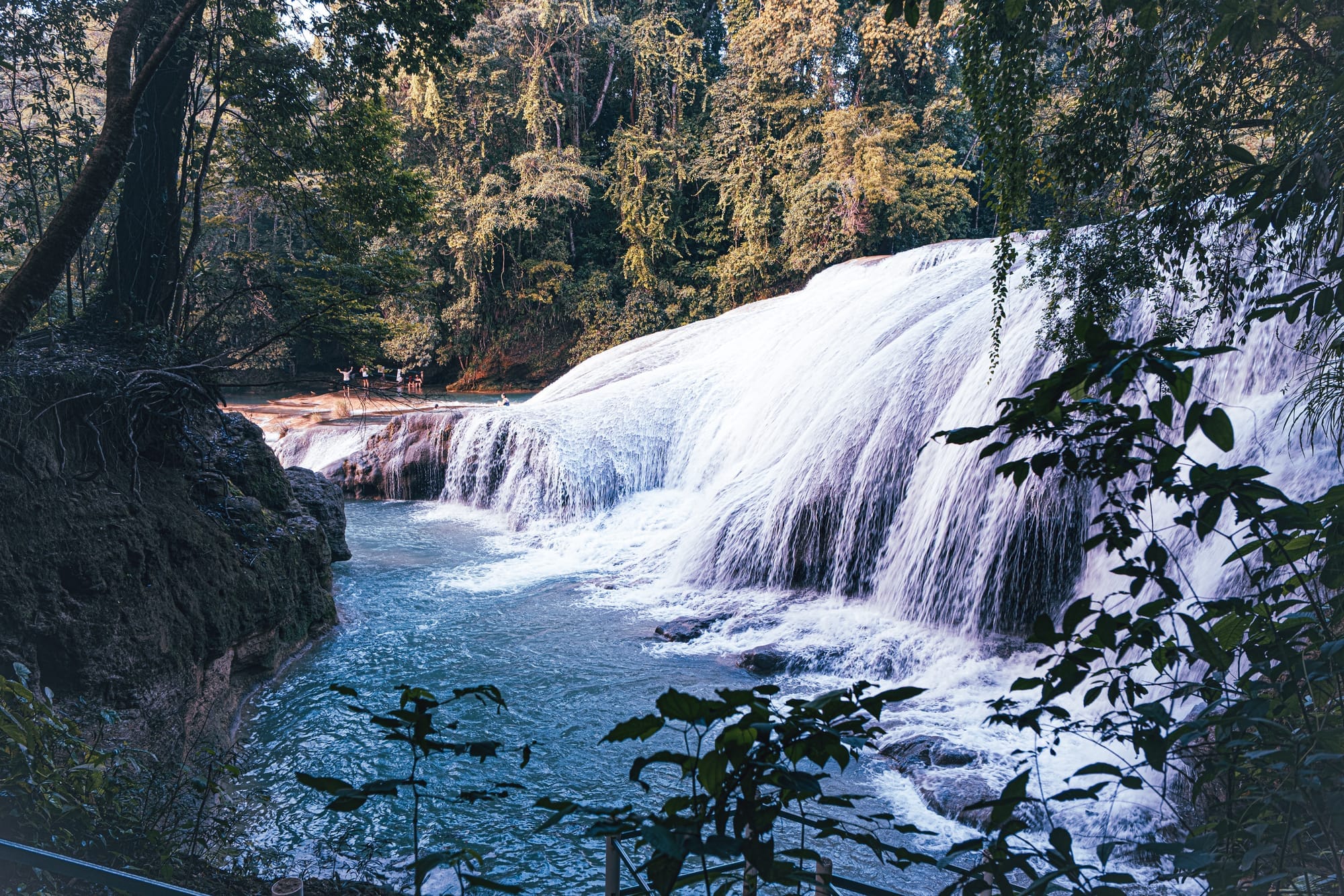
We visited several waterfalls in Chiapas, including Misol-Há and El Chiflón, but Roberto Barrios stood out the most. The main reason is how accessible and hands-on the waterfalls are. Instead of viewing them from a platform or path, you can actually walk along the rock formations, swim between different pools, and stand directly under or even behind the cascades.
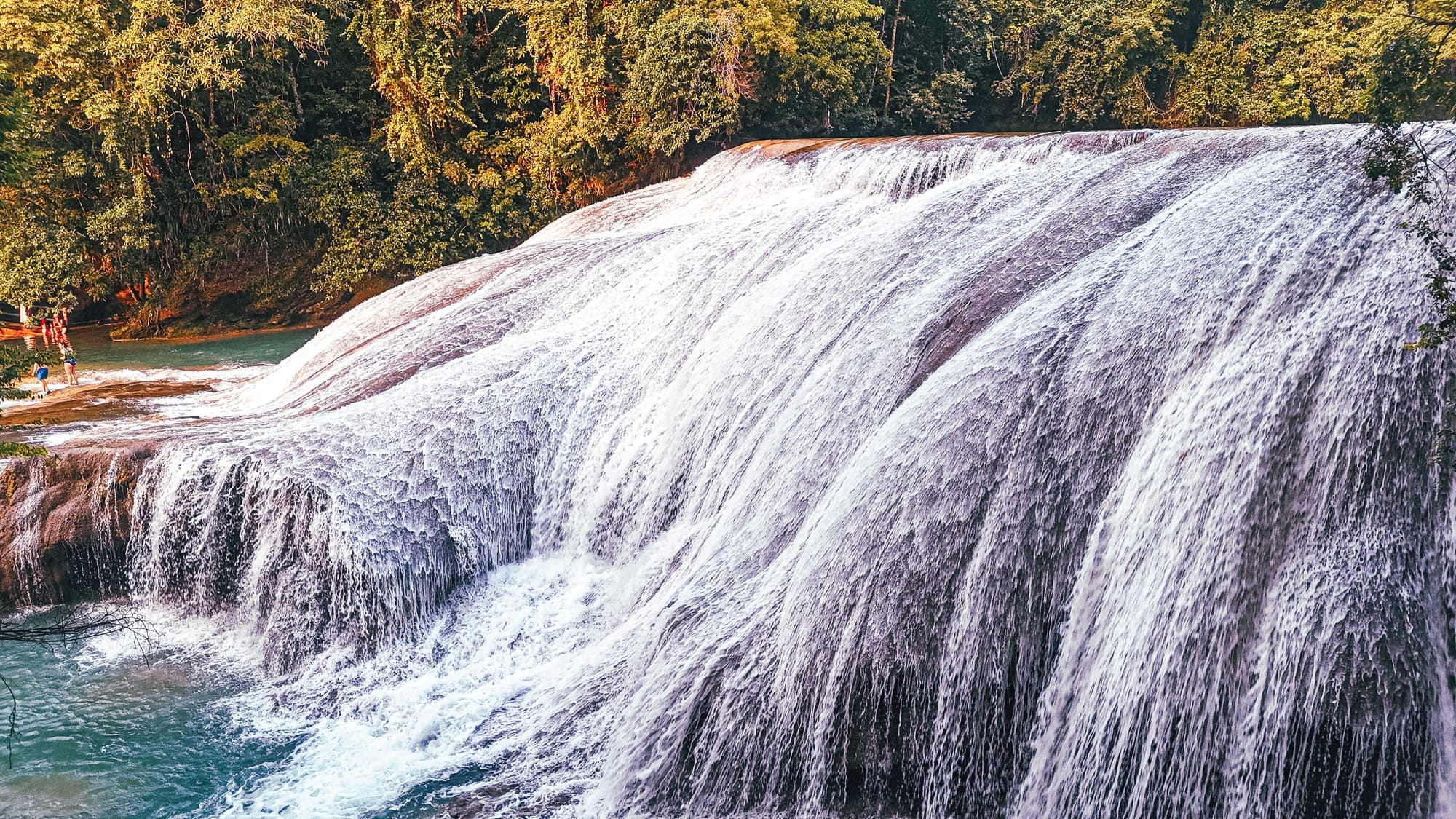
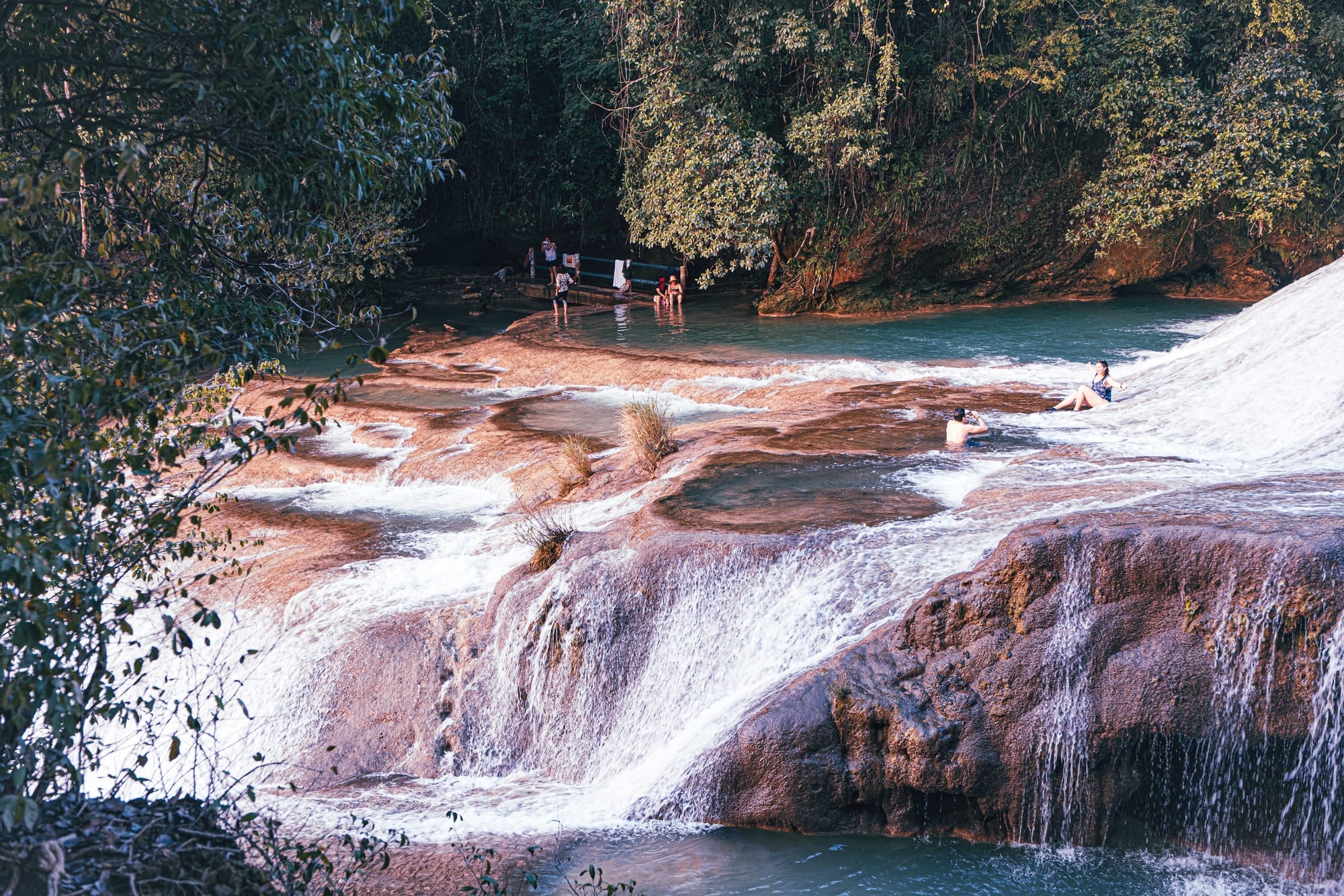
The waterfalls are spread out over several levels, with a mix of shallow pools, stronger flows, and calmer swimming areas. This makes it easy to spend a few hours here without it ever feeling repetitive. It's a place that suits both relaxed swimming and a bit of exploration, which is why it ended up being our favourite waterfall experience near Palenque.
Roberto Barrios waterfalls at a glance
Here are the practical details in one place. Prices are what visitors reported in recent years, so treat them as rough and bring small notes.
Where: beside the village of Roberto Barrios, roughly 25 to 38 km from Palenque town, depending on the route.
Getting there: colectivo (shared van), taxi, your own car, or a tour from Palenque. Details are below.
Entrance fee: about 40 pesos per person in recent reports, paid in cash at the entrance. Locals sometimes also ask for a small road fee on the access road.
Opening hours: about 8 am to 5 pm.
Time needed: two to three hours at the falls, or about half a day including the trip from Palenque.
Best time to visit: early morning, ideally on a weekday. The dry season (November to April) usually gives clearer water.
Facilities: parking and simple food stalls near the entrance. No lockers or changing rooms, so wear your swimsuit under your clothes.
Roberto Barrios entrance fee and costs in 2026
The entrance fee has crept up. Older guides say 20 pesos, while reports from 2024 onward put it at about 40 MXN per person (Indie Traveller gives 40). The community runs the site, so there's no official price list online. Here's a realistic budget per person, in cash:
| Cost | Reported price | Notes |
|---|---|---|
| Entrance | About 40 MXN | Paid at the community entrance. The ticket is reportedly valid for that day only |
| Road fees on the access road | About 10 to 40 MXN | Not always asked. Taxis and tours usually cover it |
| Parking | About 10 MXN | Grassy lot by the village |
| Toilets and showers | About 5 MXN | At the entrance |
| Local guide (often kids) | About 100 MXN per small group | Optional. Agree the amount first |
| Colectivo from Palenque | About 50 to 60 MXN each way | See below |
| Taxi with waiting time | About 600 to 750 MXN round trip | Per car, so split it |
For one person on the colectivo, the whole trip comes to roughly 150 to 200 MXN (about $8 to $11), plus food. Bring small notes.
| Details | |
|---|---|
| Where | Beside Roberto Barrios village, 25 to 38 km from Palenque town |
| Getting there | Colectivo, taxi, car, or a tour from Palenque |
| Entrance fee | About 20 to 30 pesos, cash, plus a small road fee at times |
| Hours | About 8 am to 5 pm |
| Time needed | Two to three hours, or half a day from Palenque |
| Best time | Early morning on a weekday; November to April for clearer water |
| Facilities | Parking and food stalls; no lockers or changing rooms |
What makes Roberto Barrios different
Many Palenque itineraries send travelers to Misol-Há and Agua Azul. We made it to Misol-Há and loved it: the single curtain of water, the jungle bowl around it, and the echoing roar. We didn't make it to Agua Azul, famous for its turquoise water, this time.
But Roberto Barrios beat them all.
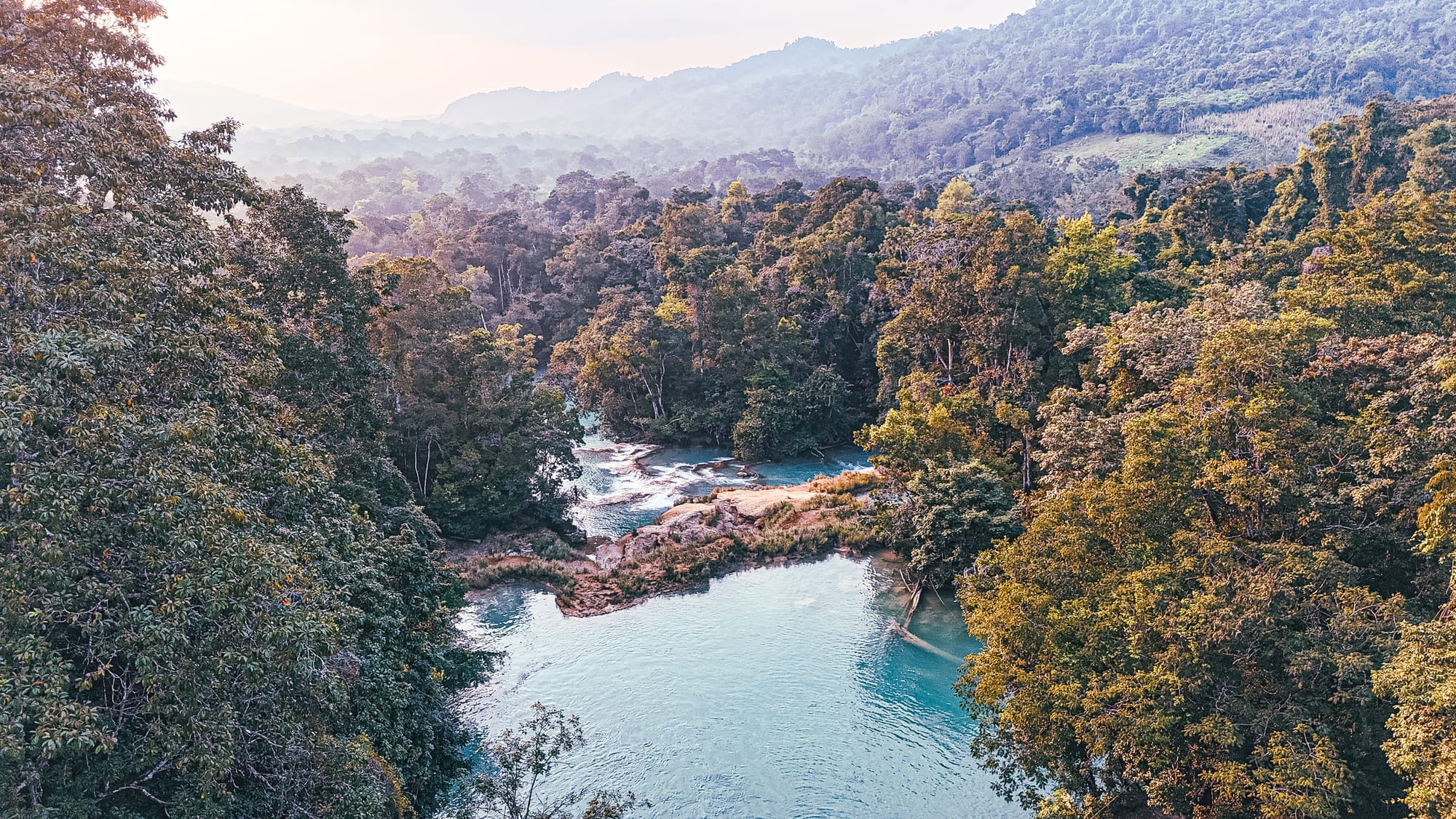
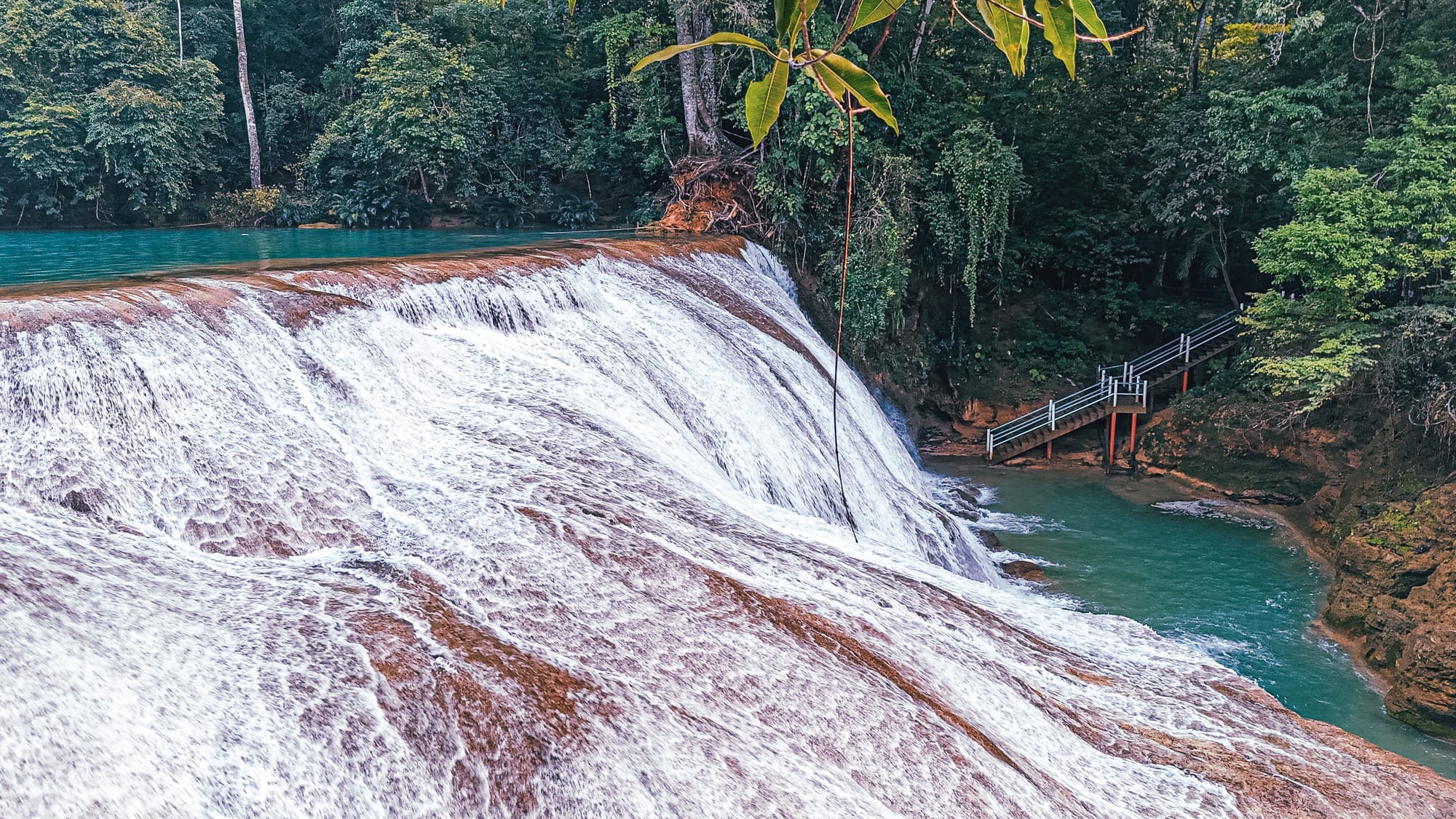
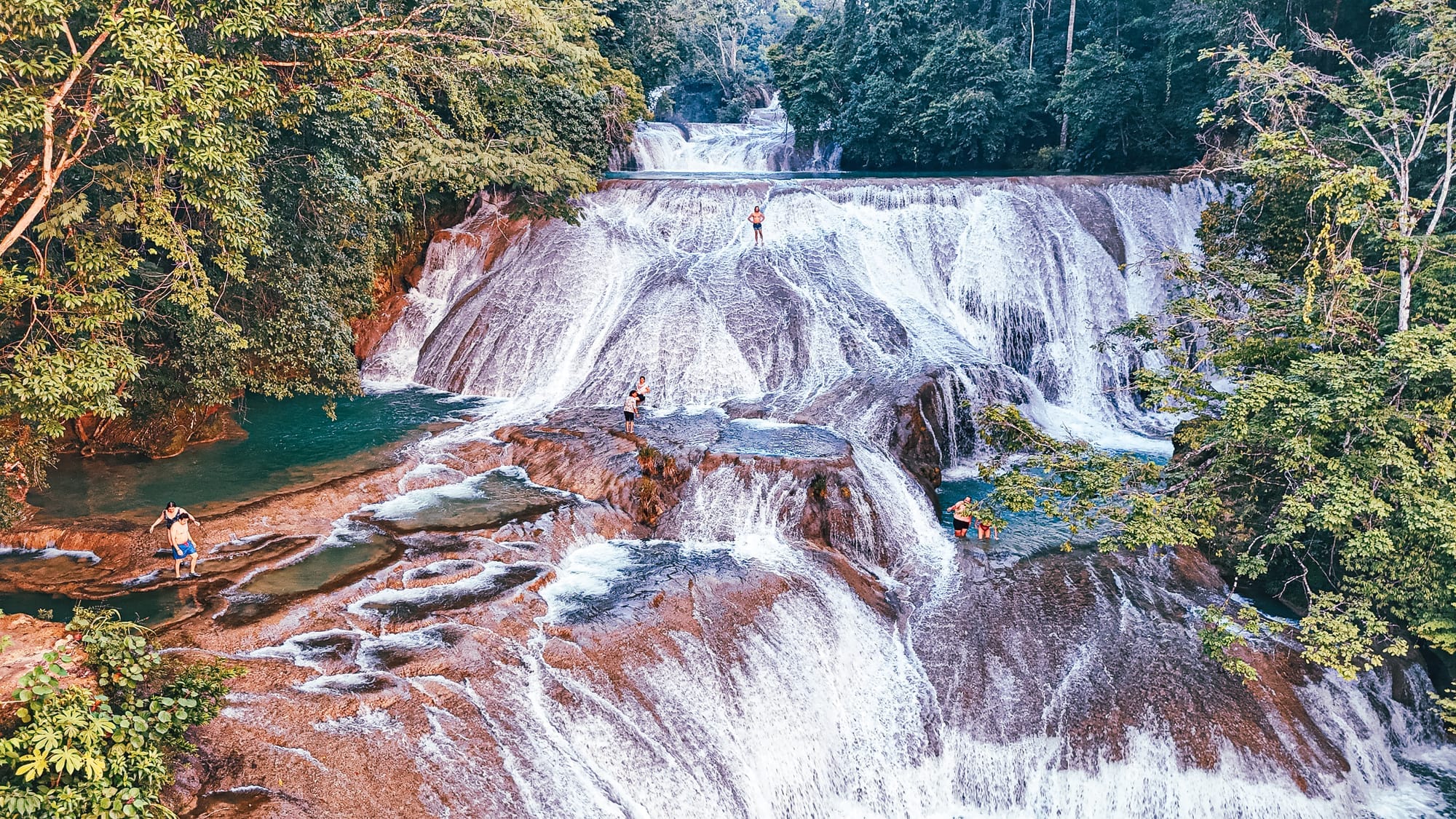
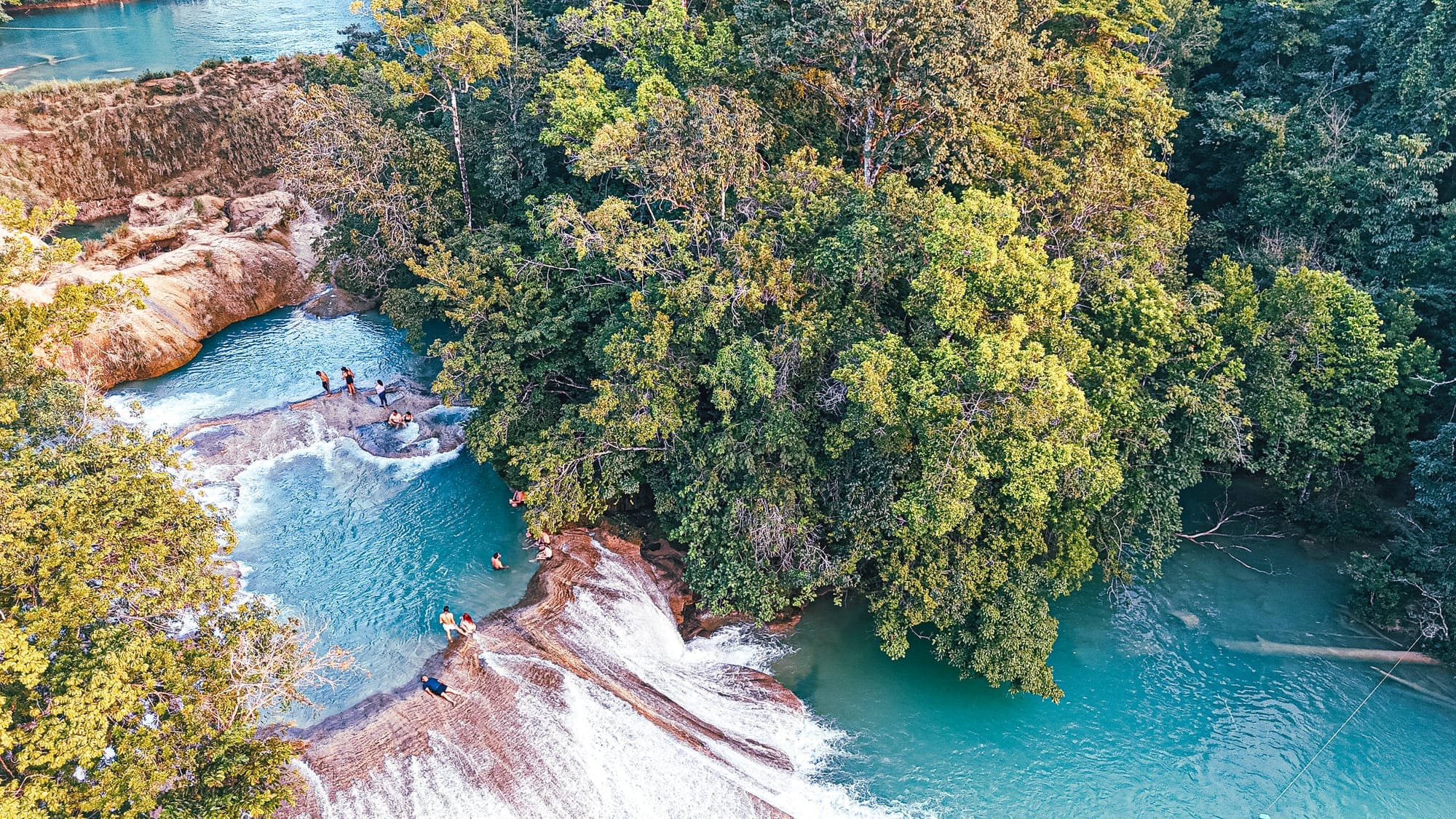
What sets these waterfalls apart is that there isn't one main cascade, but a series of them: a stepped system of falls and pools that runs through dense jungle. Each level is different: shallow turquoise basins, smooth rock slides, thundering whitewater, and calm pockets where the noise drops away and all you hear is birds.
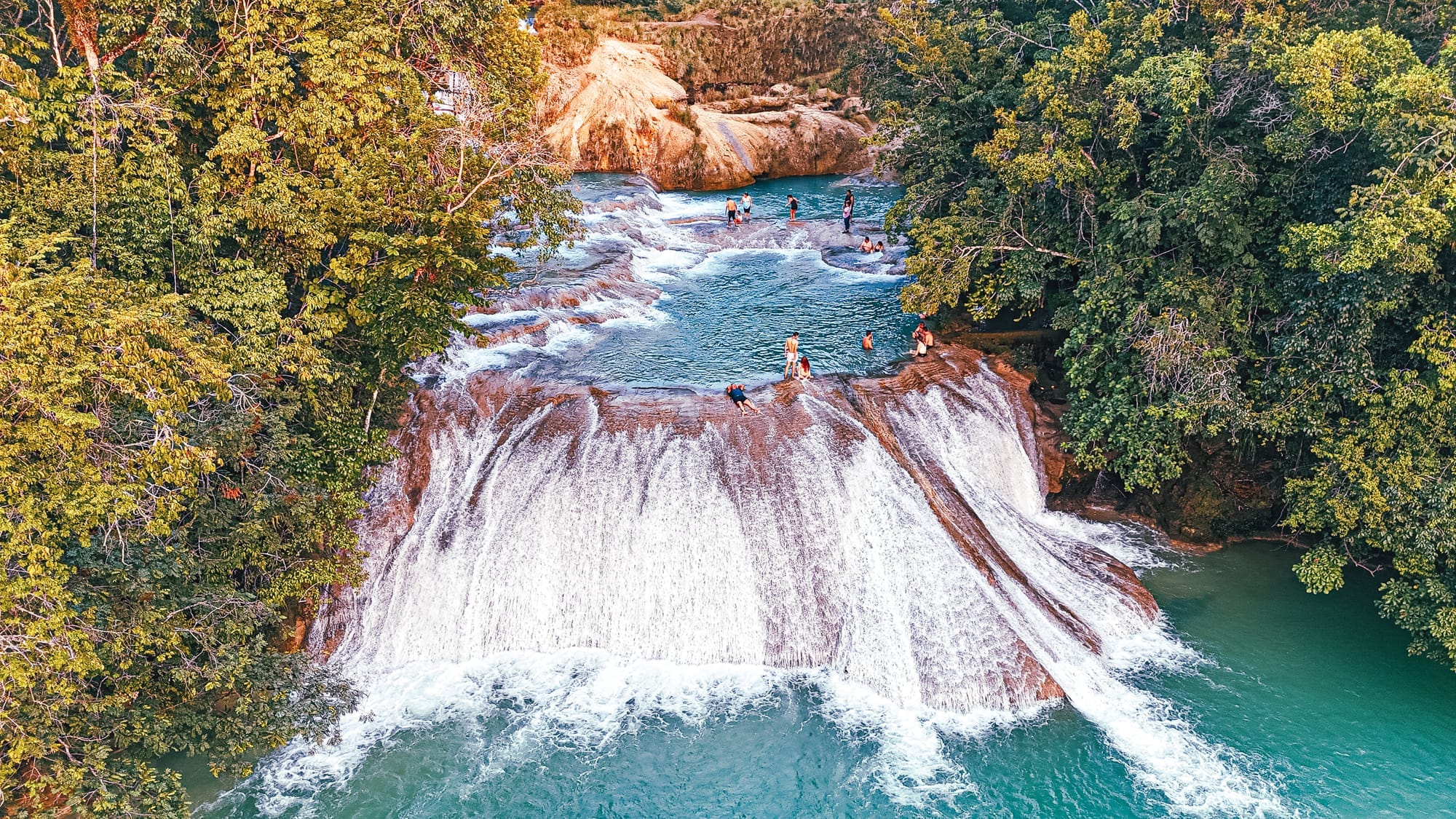
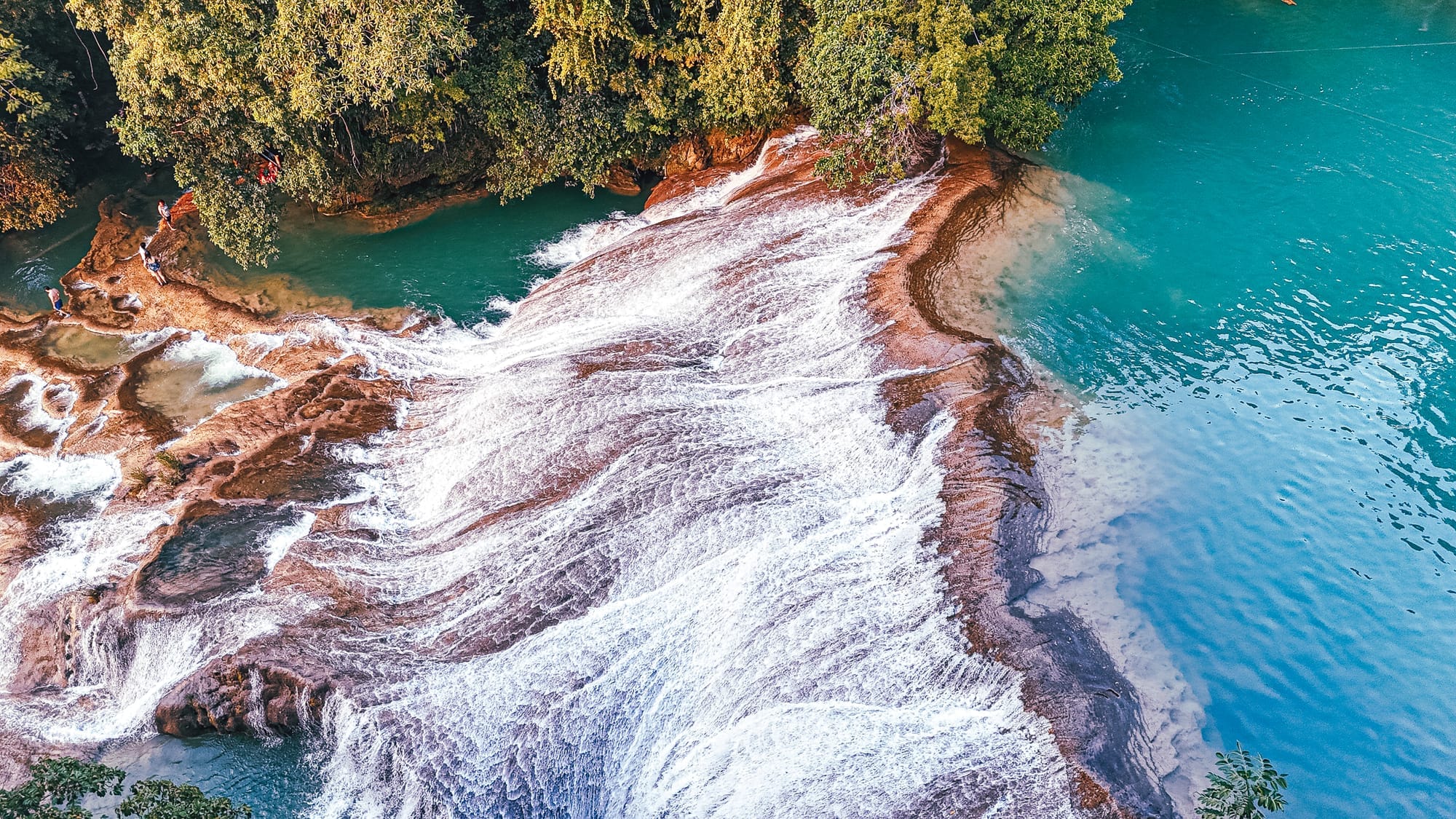
And best of all: you can walk on them.
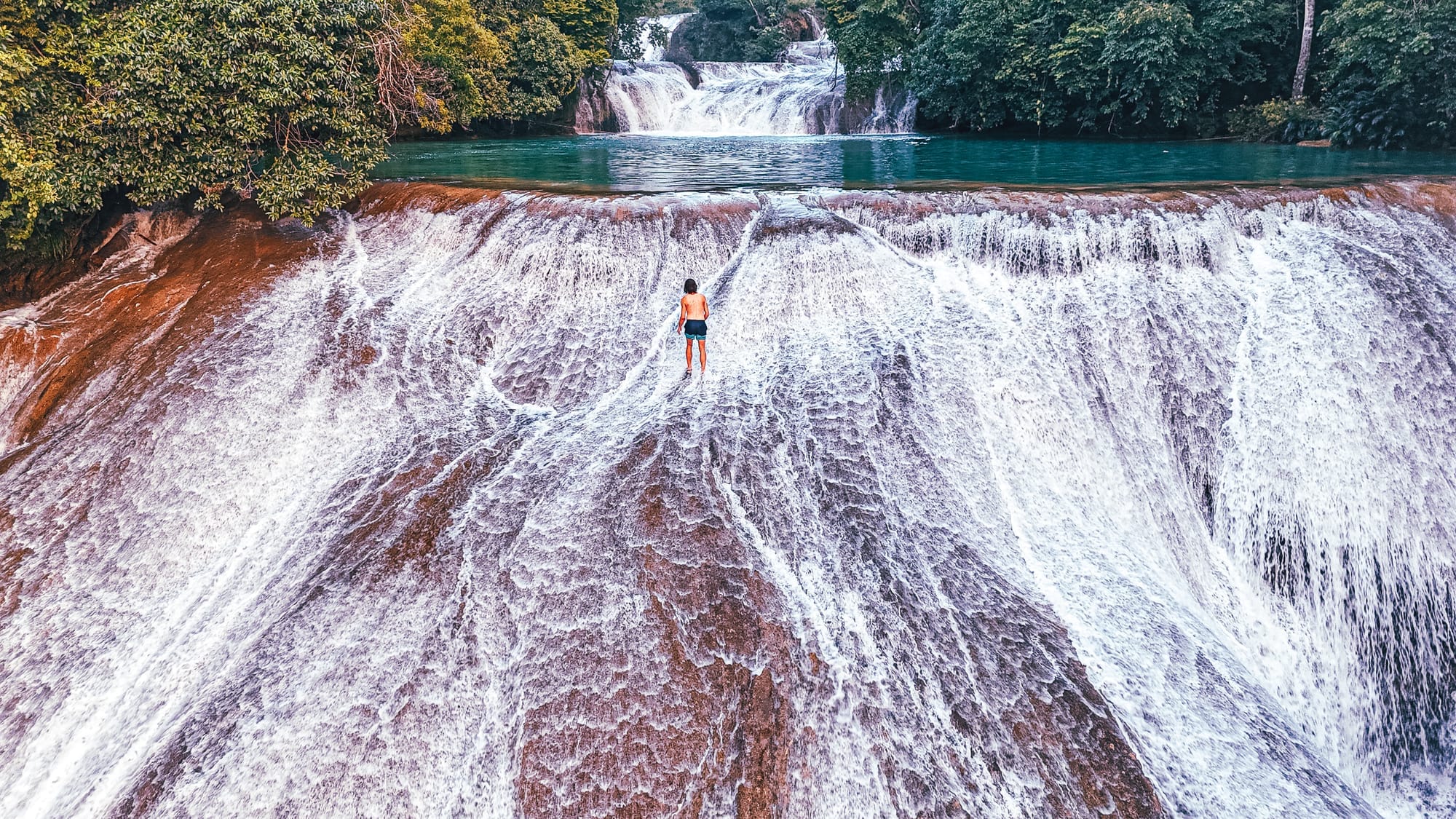
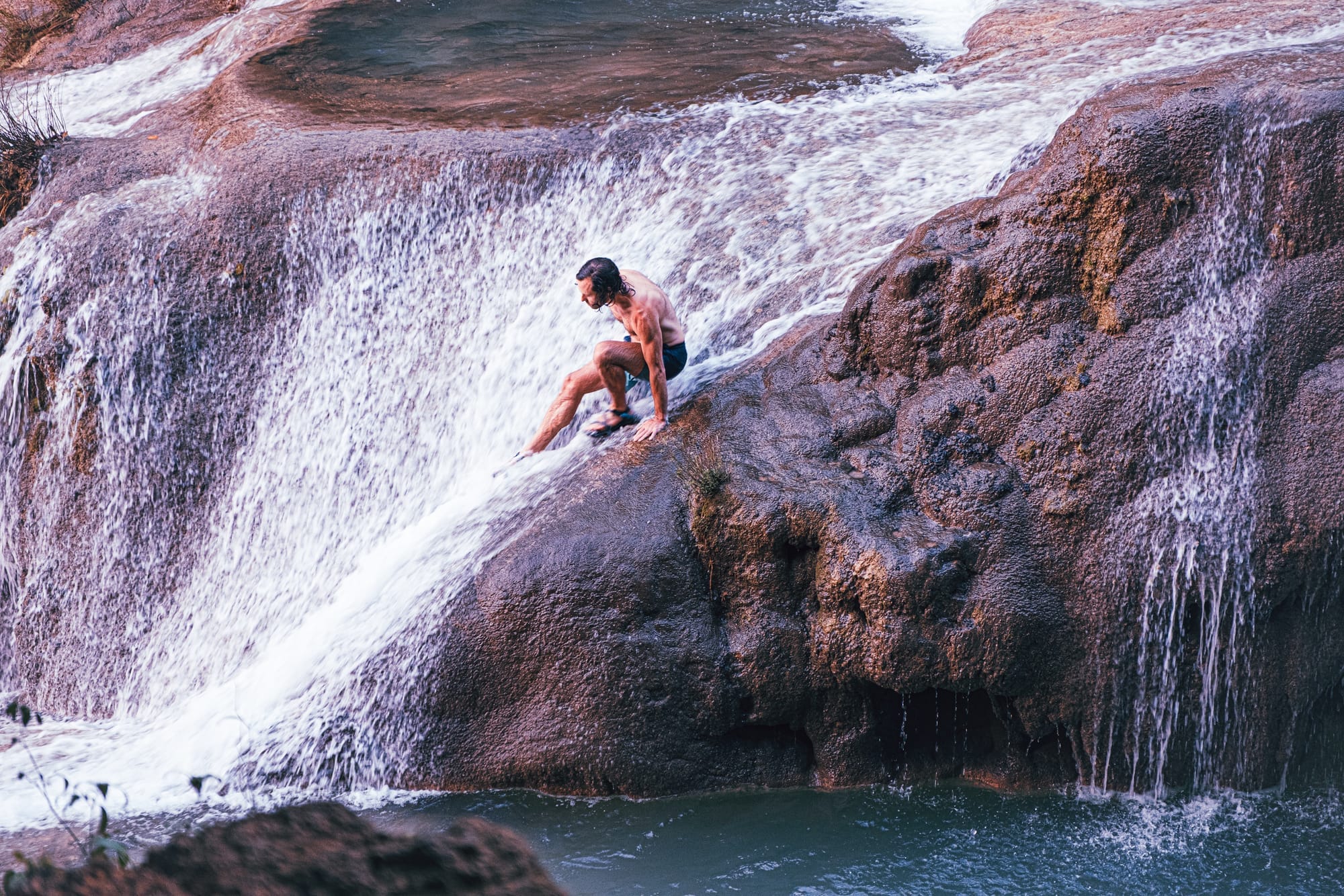
The limestone here is rough and shaped by years of flowing water. You're not fenced off or forced to watch from a distance. You climb, wade, balance, and sit. Water rushes over your shoulders, down your back, and against your legs. You can stand behind the falls and feel the vibration through the stone.
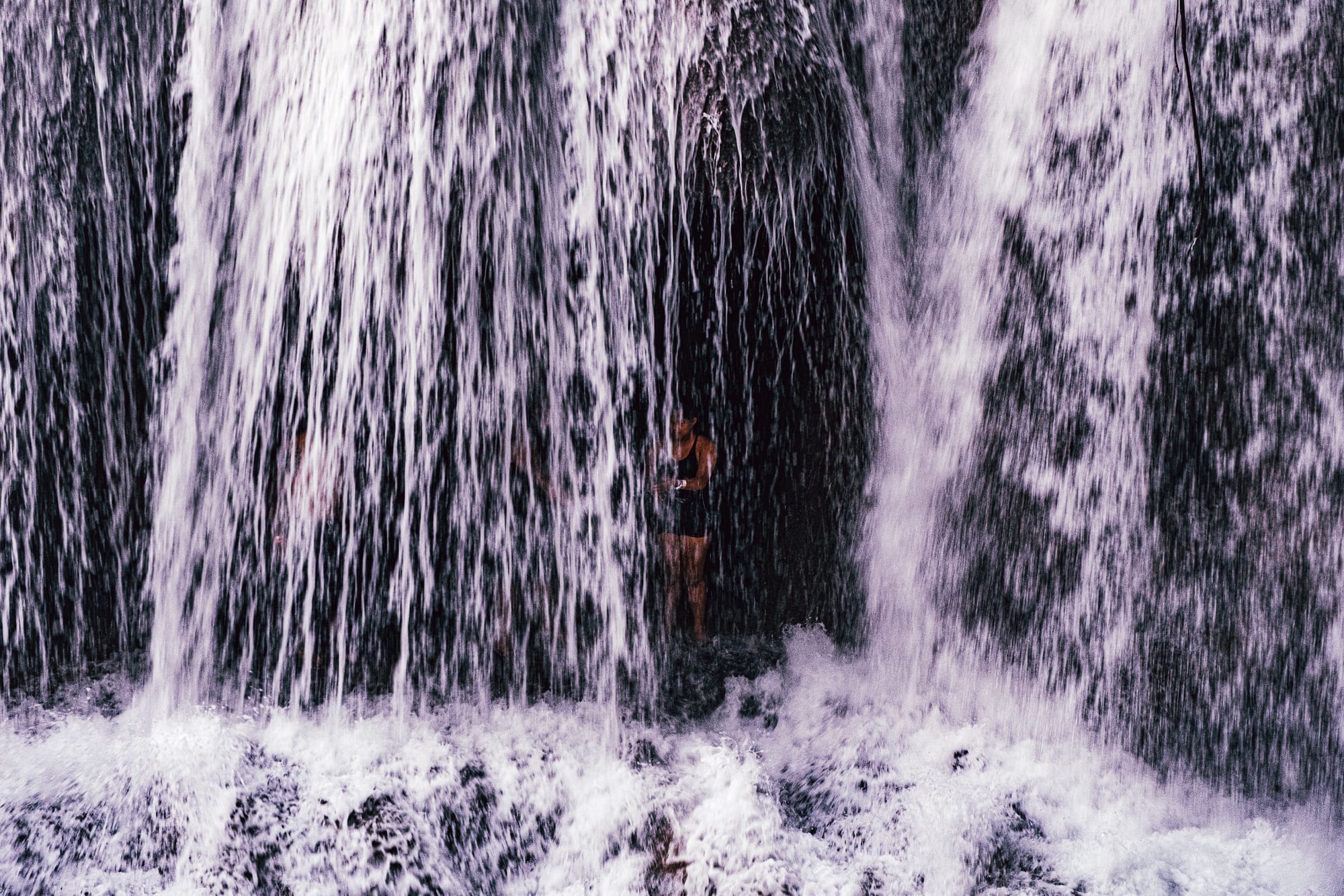
It's playful, physical, and a lot of fun.
Roberto Barrios vs Agua Azul and Misol-Há
If you only have time for one waterfall near Palenque, here's how the three best-known ones compare:
Roberto Barrios: a series of smaller falls and pools you can swim in, climb on, and walk behind. The least crowded of the three, but it takes a separate trip.
Misol-Há: a single waterfall of about 35 meters, roughly 20 km from Palenque, with a path behind the curtain of water. Easy to combine with other stops, but you see it more than swim in it.
Agua Azul: wide blue limestone terraces about 69 km from Palenque. The most famous and the busiest, with lots of stalls. It's on most tour itineraries.
Getting through the jungle to the falls
The drive to Roberto Barrios is part of the fun. The road winds away from the town of Palenque into thicker vegetation, past smaller settlements, and out to the edge of the jungle.
When you arrive, you notice the jungle before you see the water.
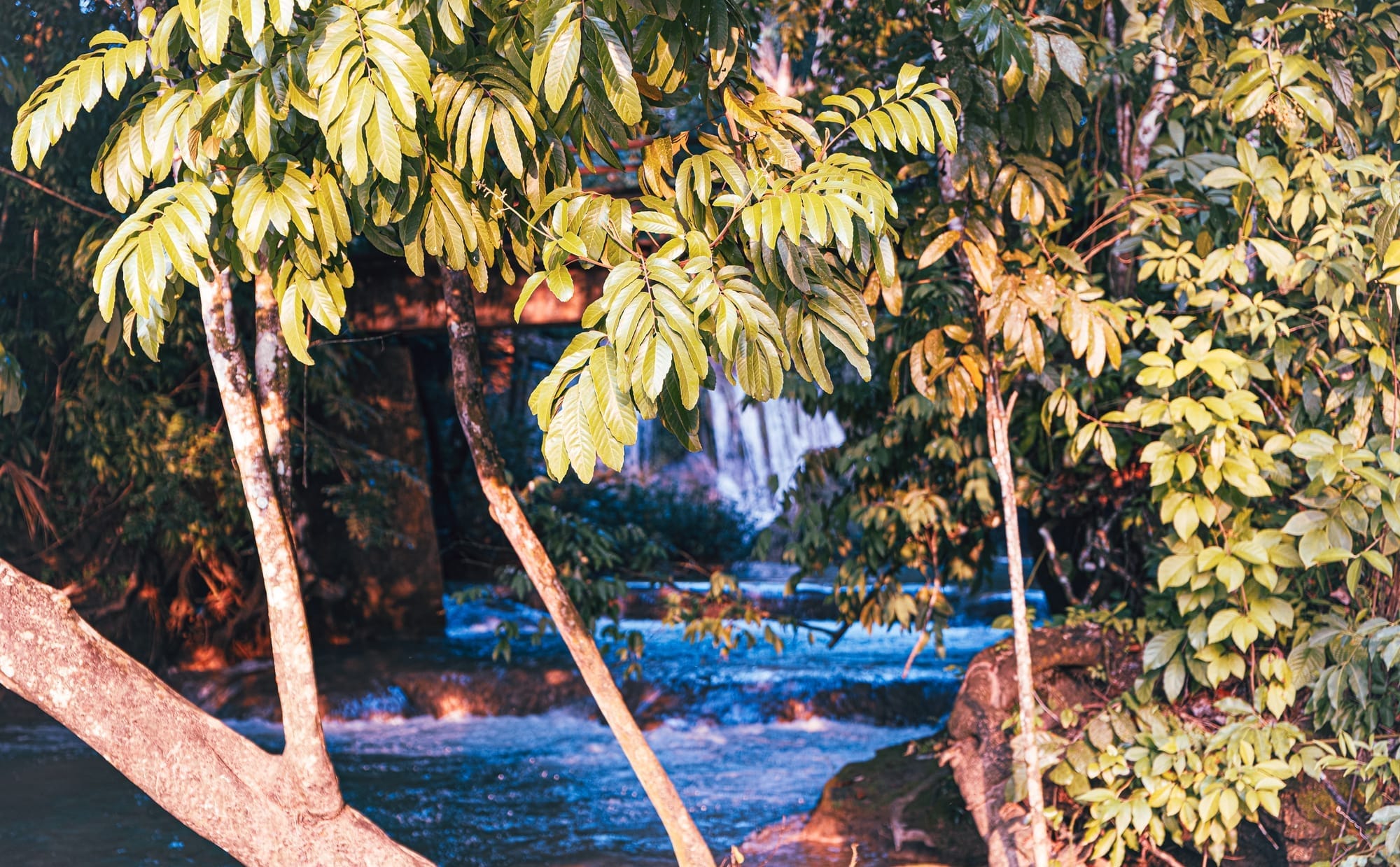
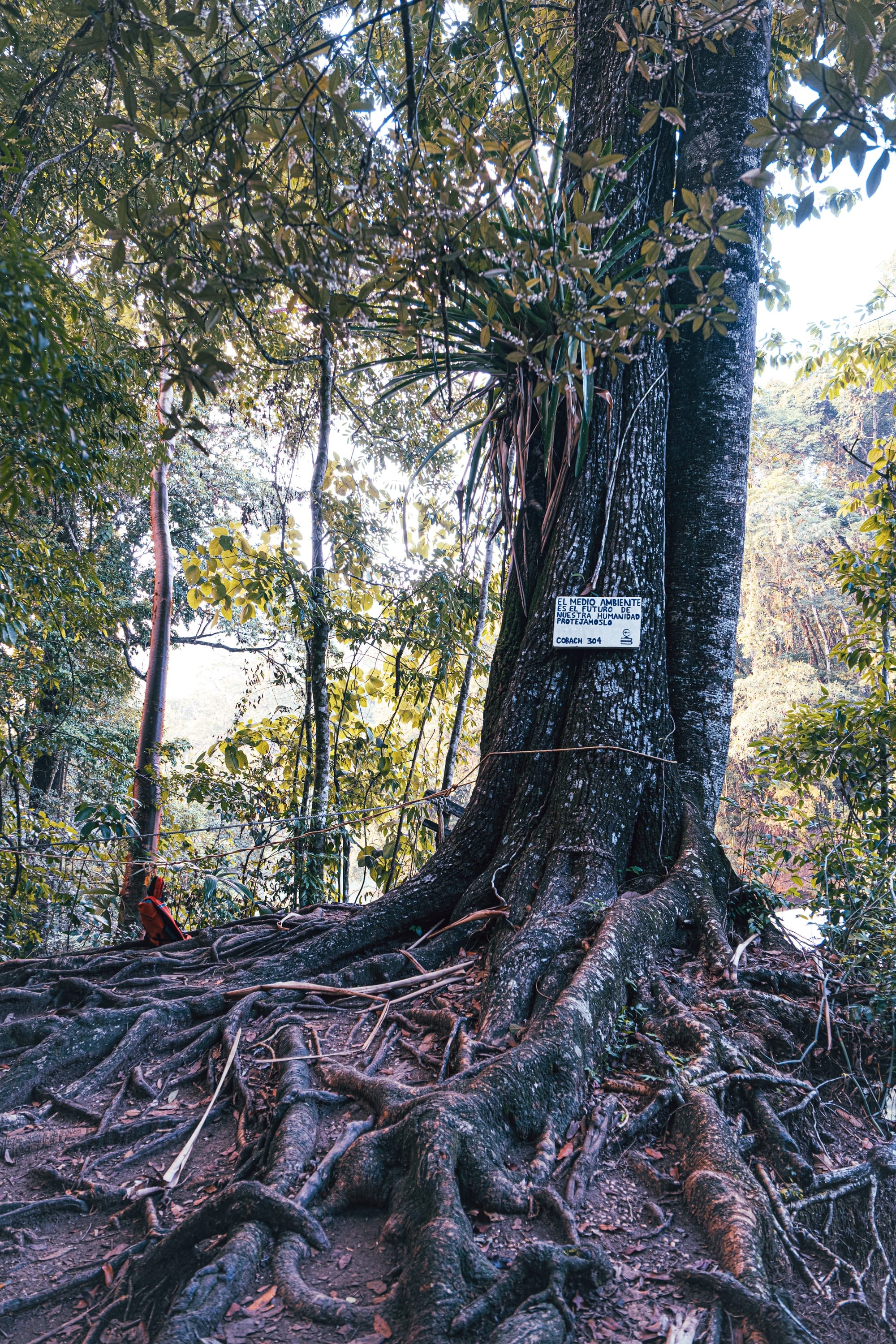
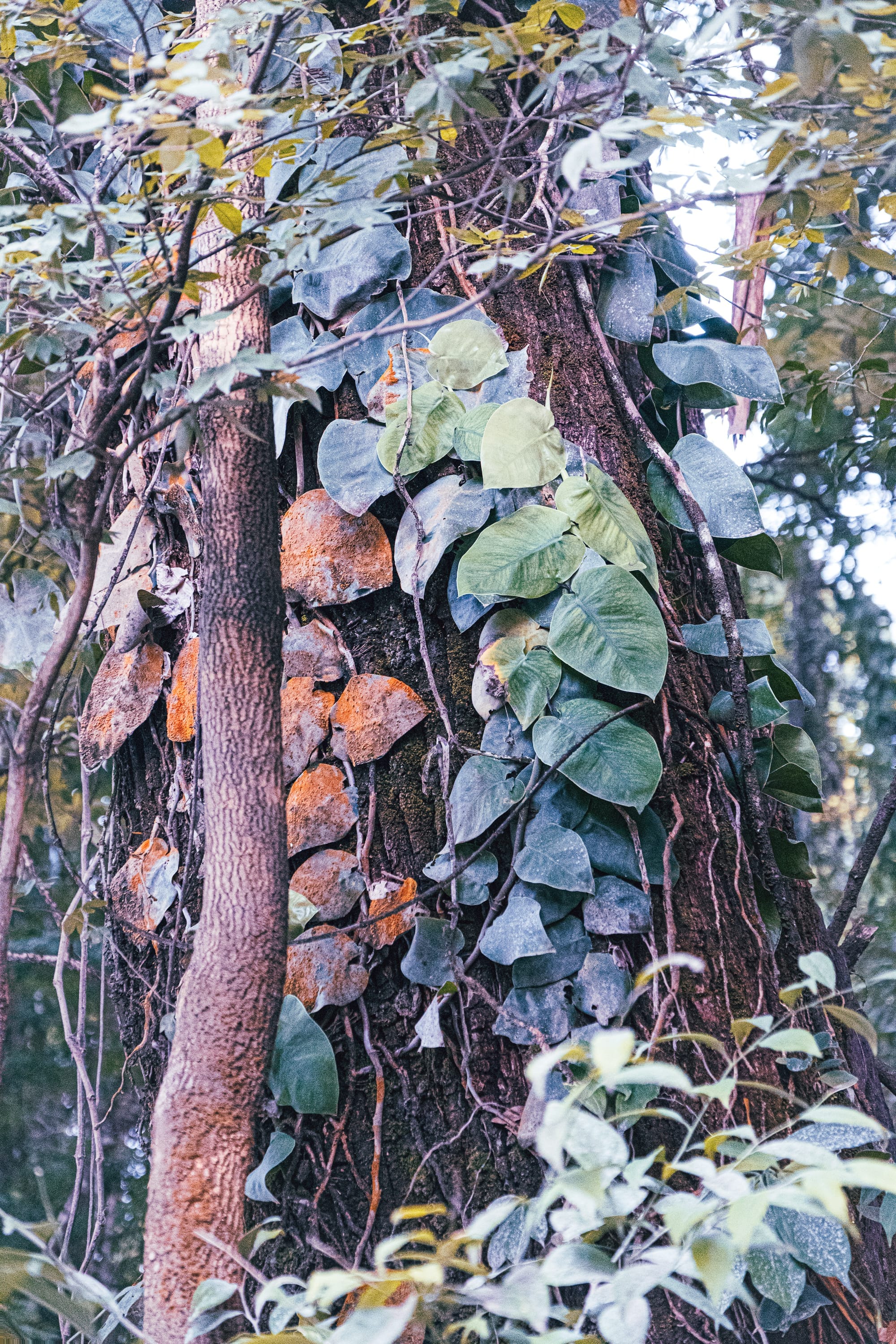
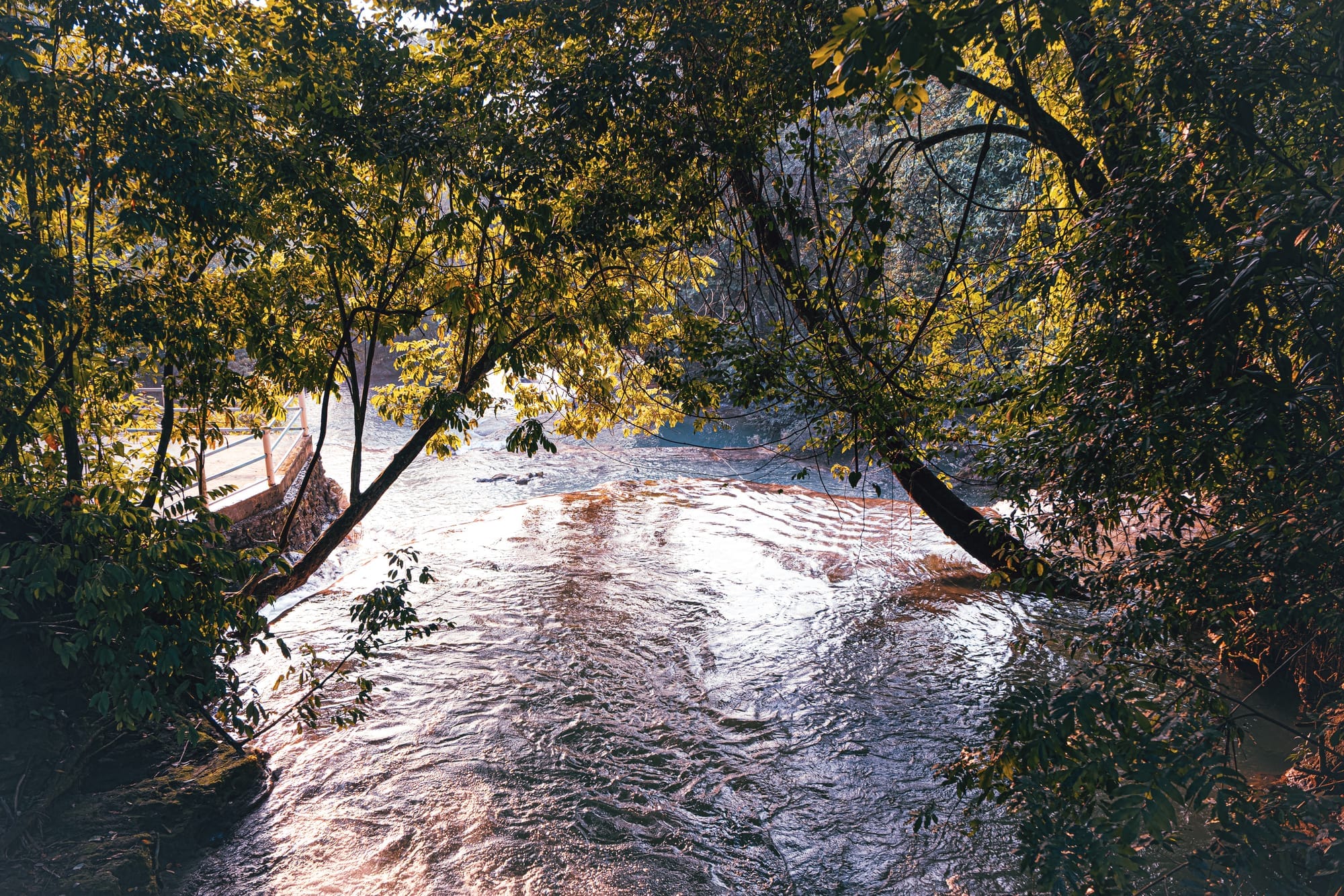
You walk in under a dense, humid green canopy. The air is heavier here, and sound carries differently. Then the stairs begin: a series of concrete steps going down into the trees, with flashes of blue between the leaves at each turn.
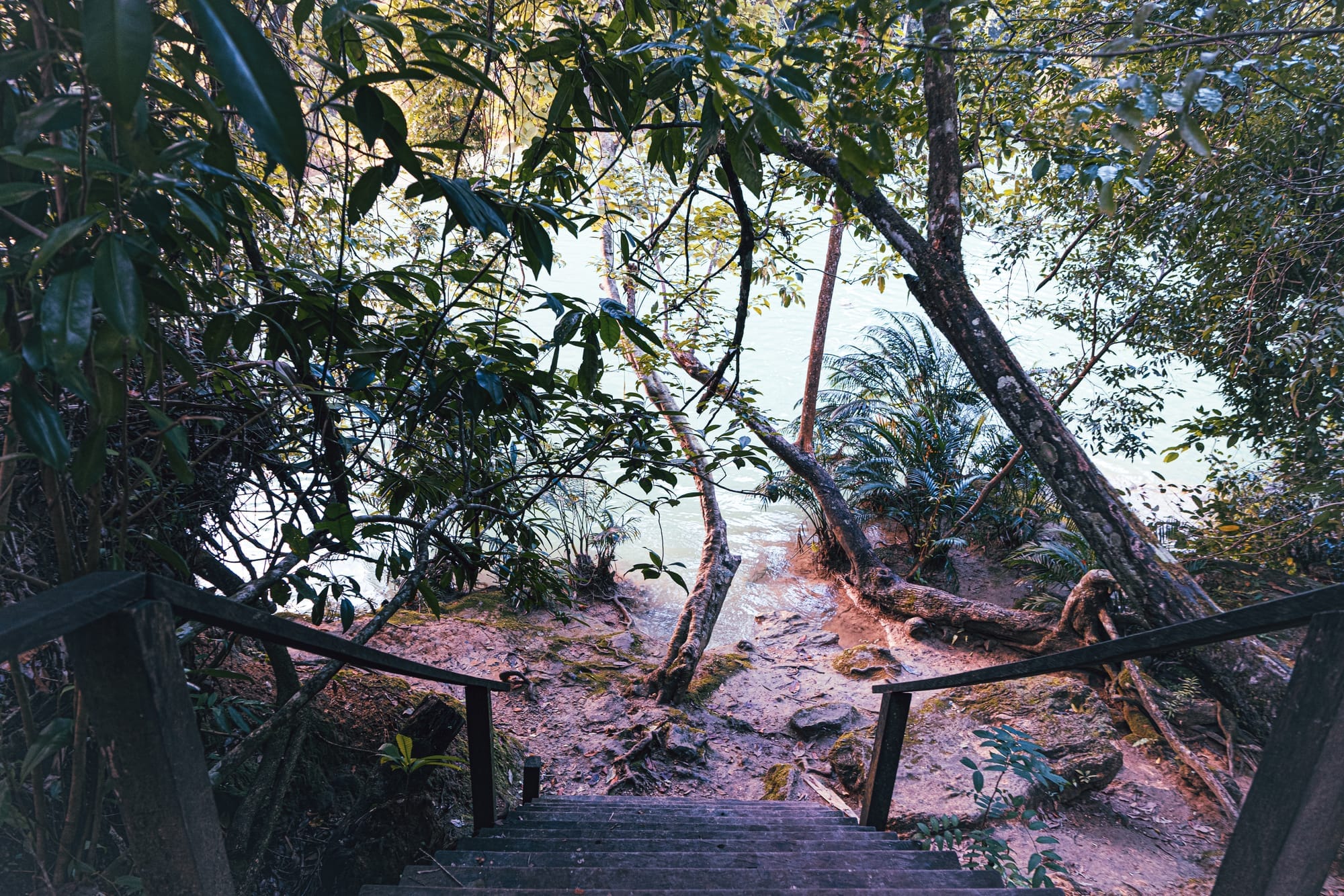
The first view of the water is almost confusing. That milky, mineral-rich turquoise color glows against the dark green of the jungle and looks almost out of place. Once you're there, though, it makes perfect sense.
Look up on the walk down. Visitors regularly report black howler monkeys and spider monkeys in the canopy above the steps, especially early in the morning, and you'll often hear the howlers before you see them. Watch them from a distance and don't feed them.
The village of Roberto Barrios
The falls sit right next to a small Indigenous community, and the entrance fee, food stalls, and guides are run by local people. Roberto Barrios is also the seat of one of the Zapatista caracoles, the regional centers of the autonomous Zapatista communities, as described on the EZLN's own website. The caracol is not a tourist attraction, so don't wander in.
You'll often meet local kids at the entrance who offer to show you around. They know which pools are deep enough to jump into and how to reach the cave behind one of the falls. They work for tips: agree on an amount first (around 100 pesos for a small group is common). As in any Indigenous community in Chiapas, ask before you photograph people.
Moving through the waterfalls
Roberto Barrios is made up of a series of cascading waterfalls rather than one single drop, which gives you a lot of freedom to move around. You can follow the flow of the water downstream, stopping at different pools along the way, or stay in one area and swim, sit, or climb across the rock shelves.
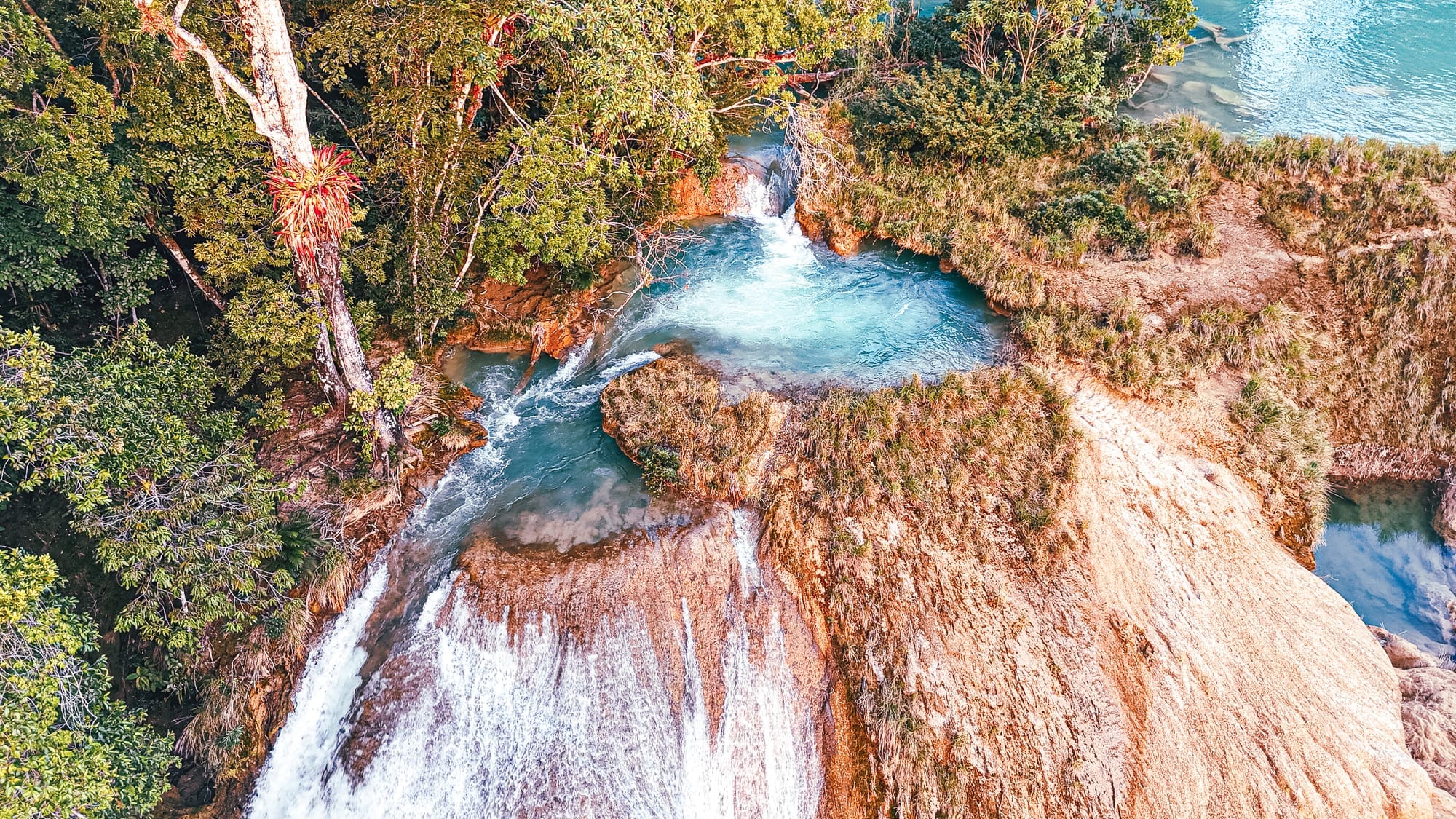
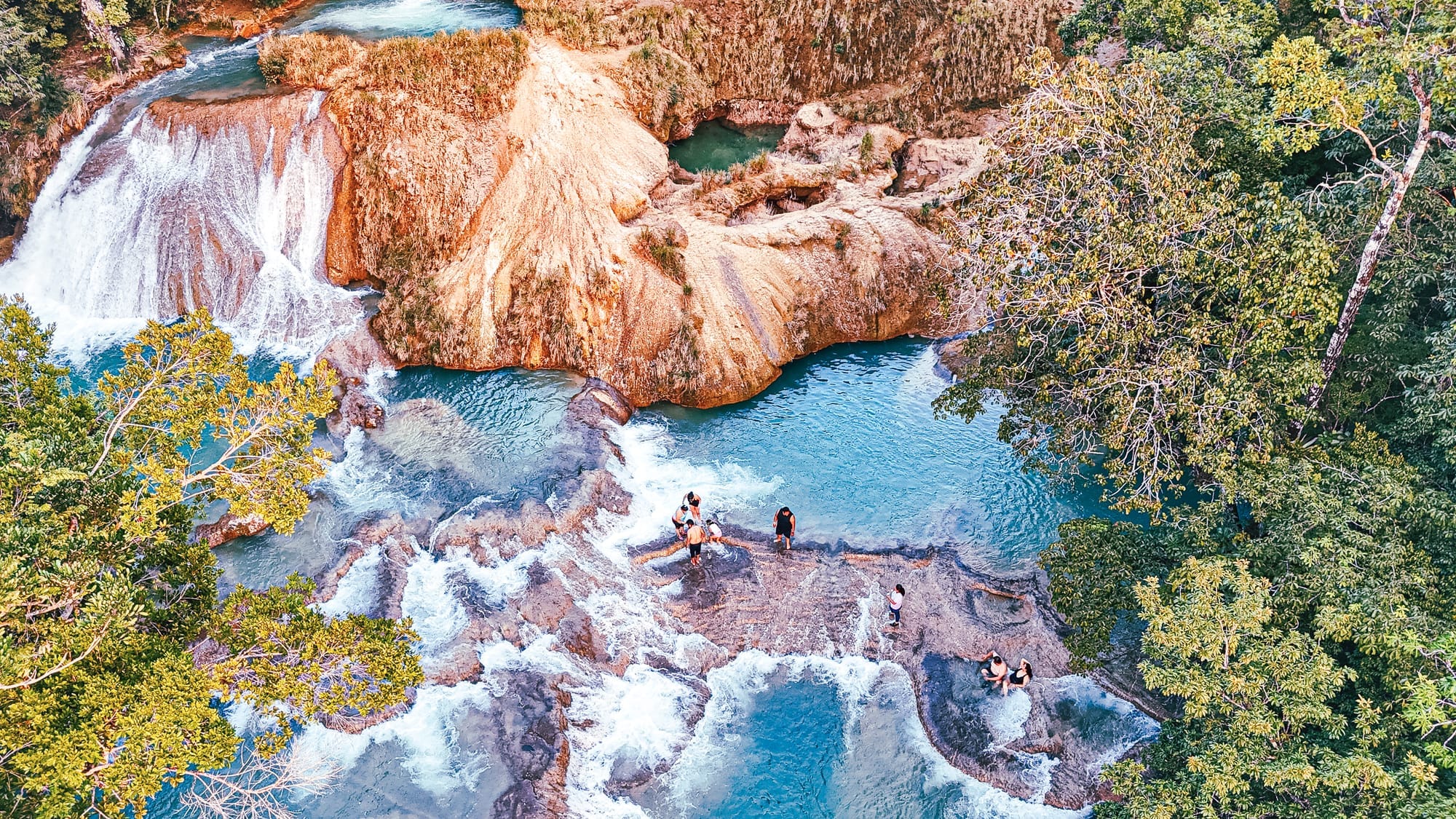
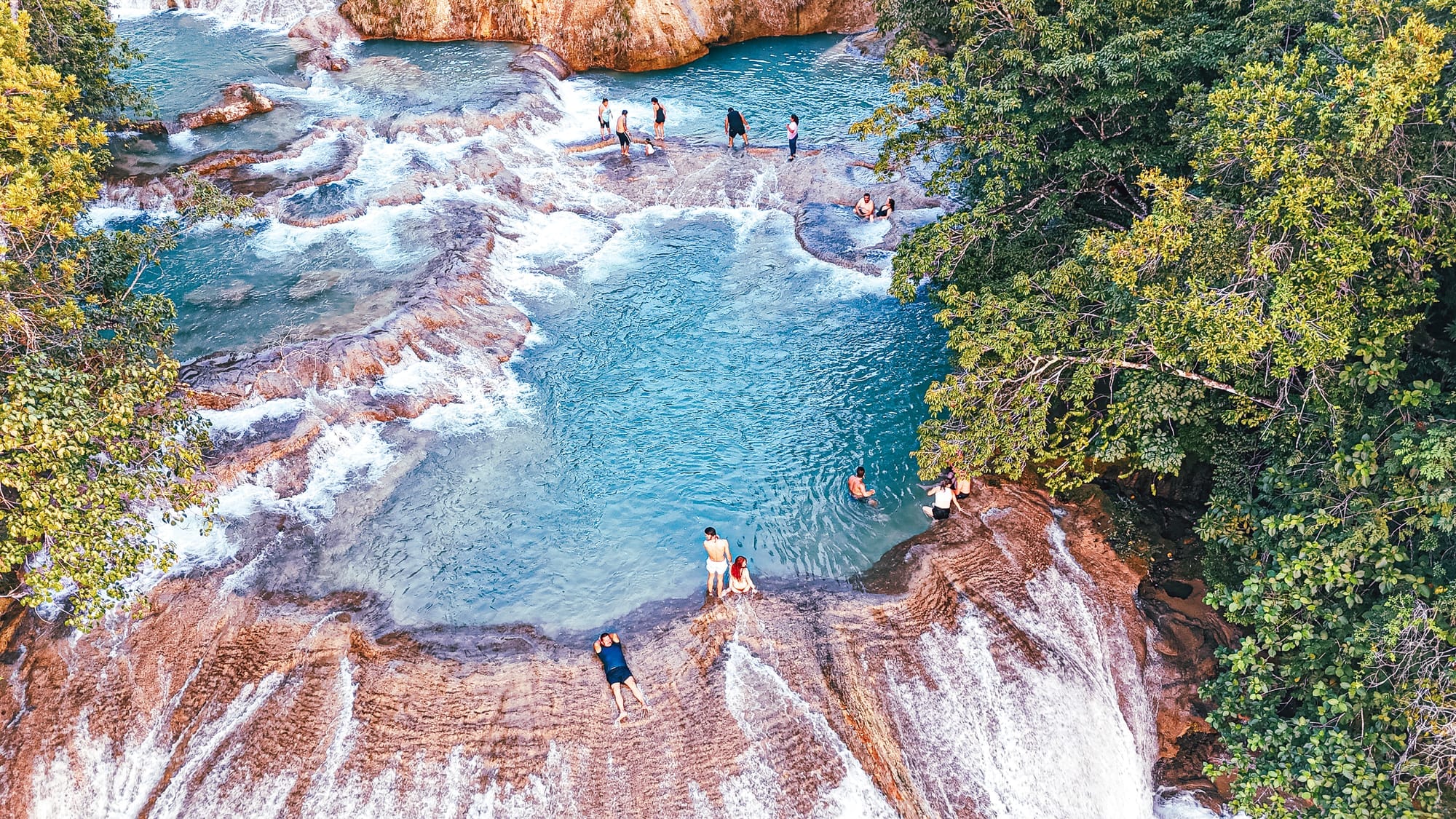
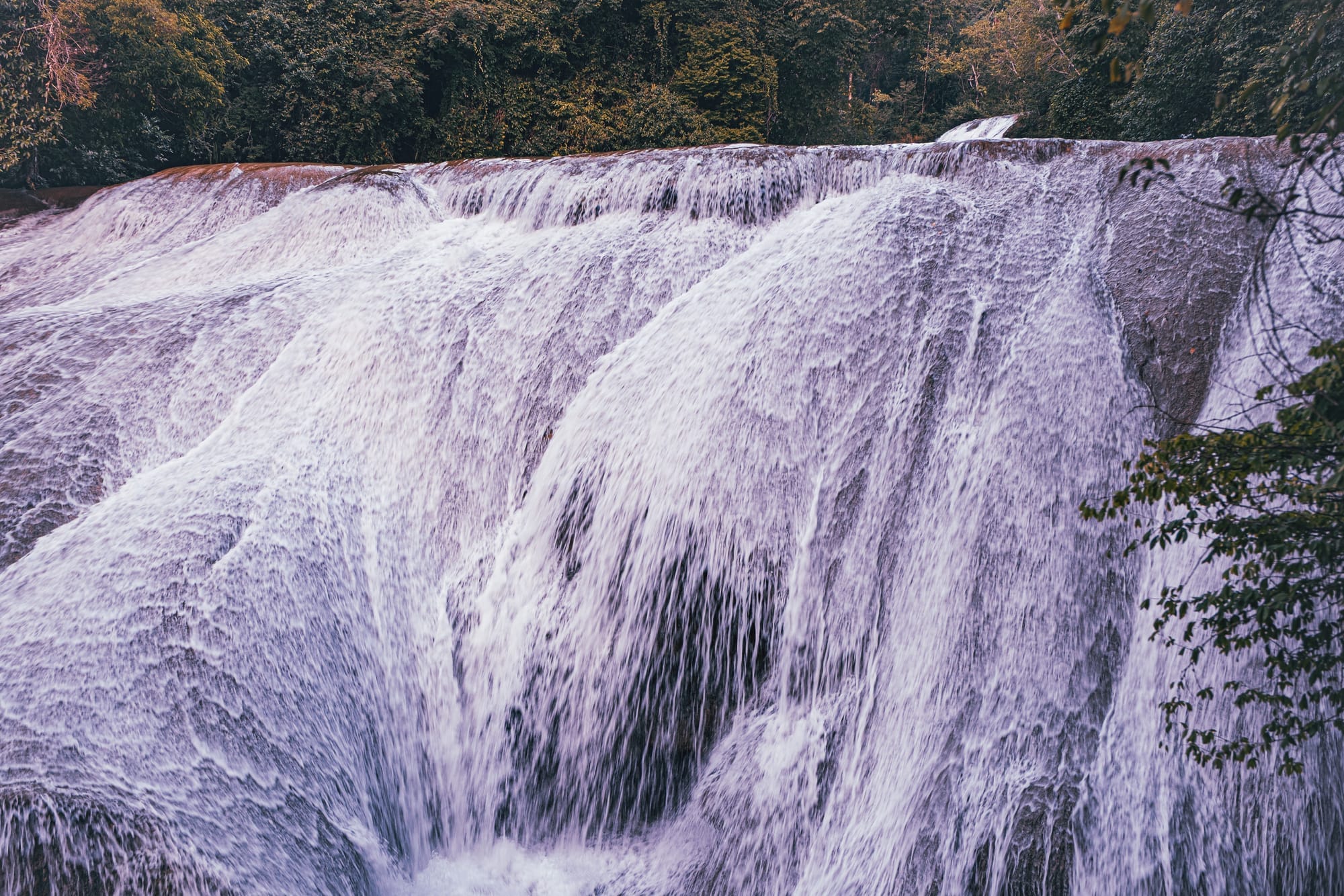
Some sections have gentler water that's ideal for floating or cooling off, while others have stronger cascades where the water crashes down with more force. One of the highlights is that you can walk behind parts of the falls, standing in the hollow space between the rock and the falling water. It's an easy thing to do here and doesn't need any special effort or equipment.
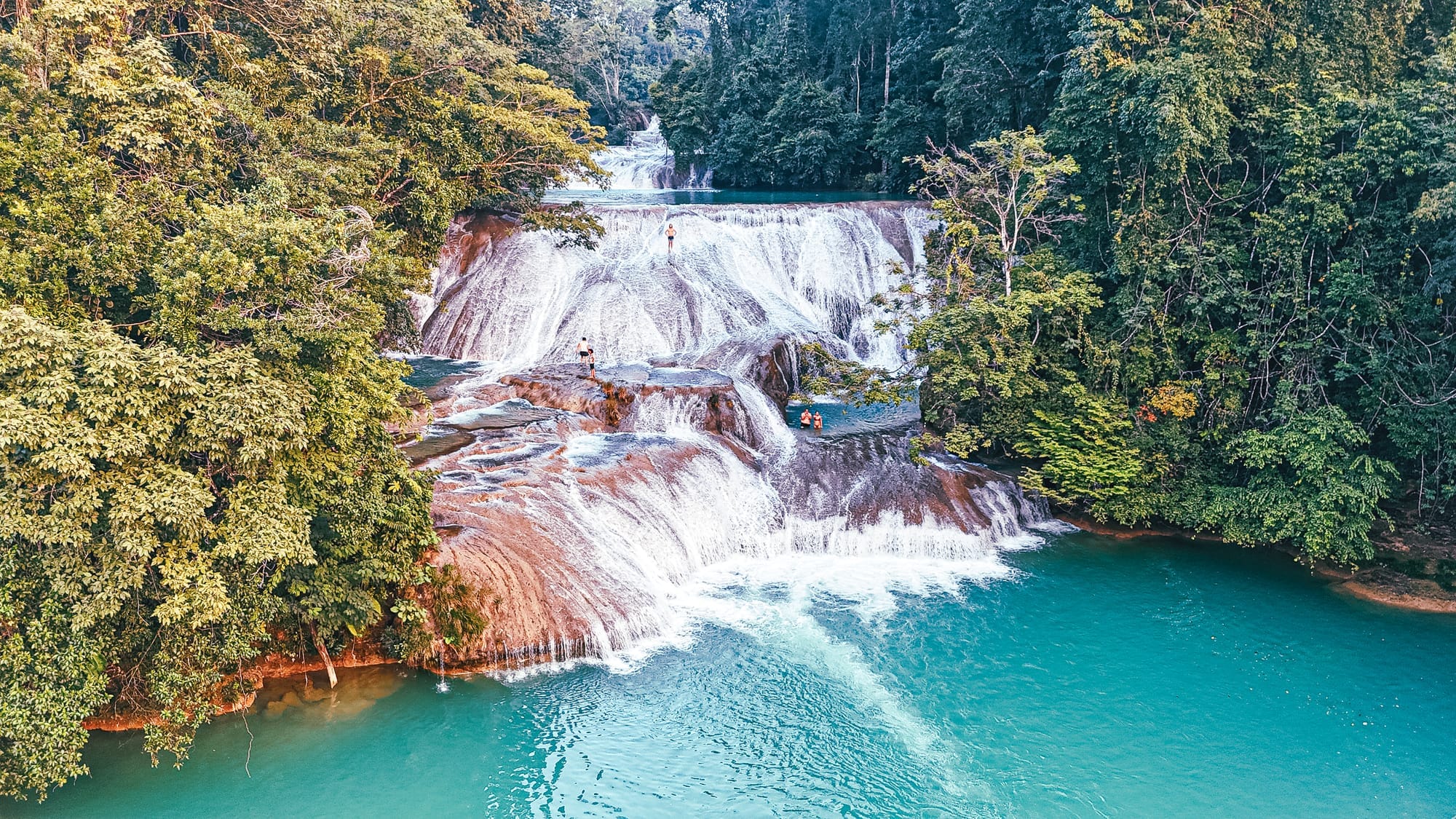
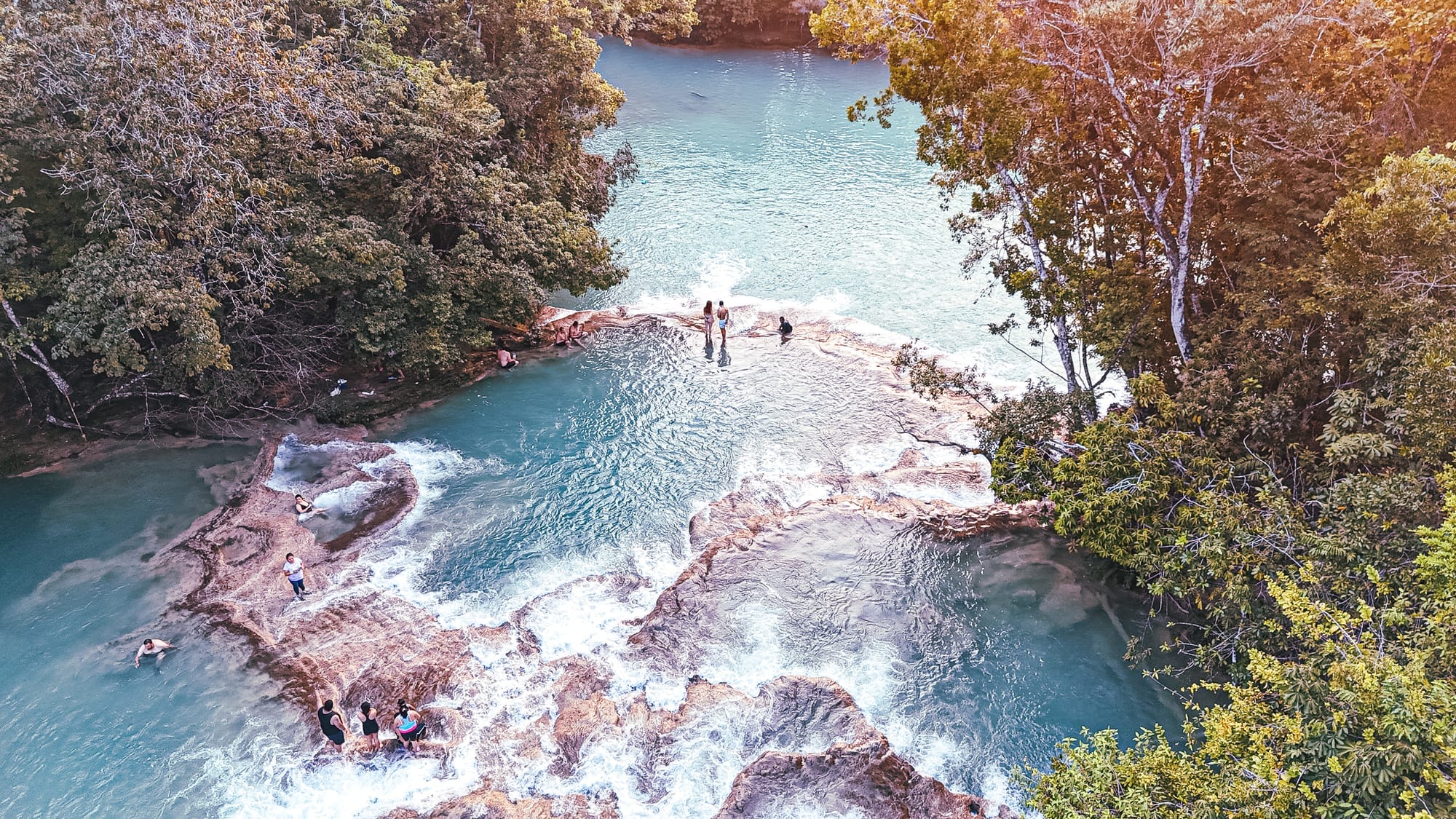
There are usually plenty of people swimming throughout the area, but because the waterfalls are spread out, it rarely feels cramped. You can almost always find an emptier pool if you walk a little further.
Prefer to go with a guide? One popular option is a Roberto Barrios trip from Palenque. You can check dates and prices here:
Practical notes
Roberto Barrios is easy to enjoy without much planning, but a few practical details are worth knowing. The water is cool and refreshing, especially if you're visiting on a warm day in Palenque, though it's not uncomfortably cold. Footwear with some grip is a good idea, as the rocks can be slippery in places, particularly near the cascades.
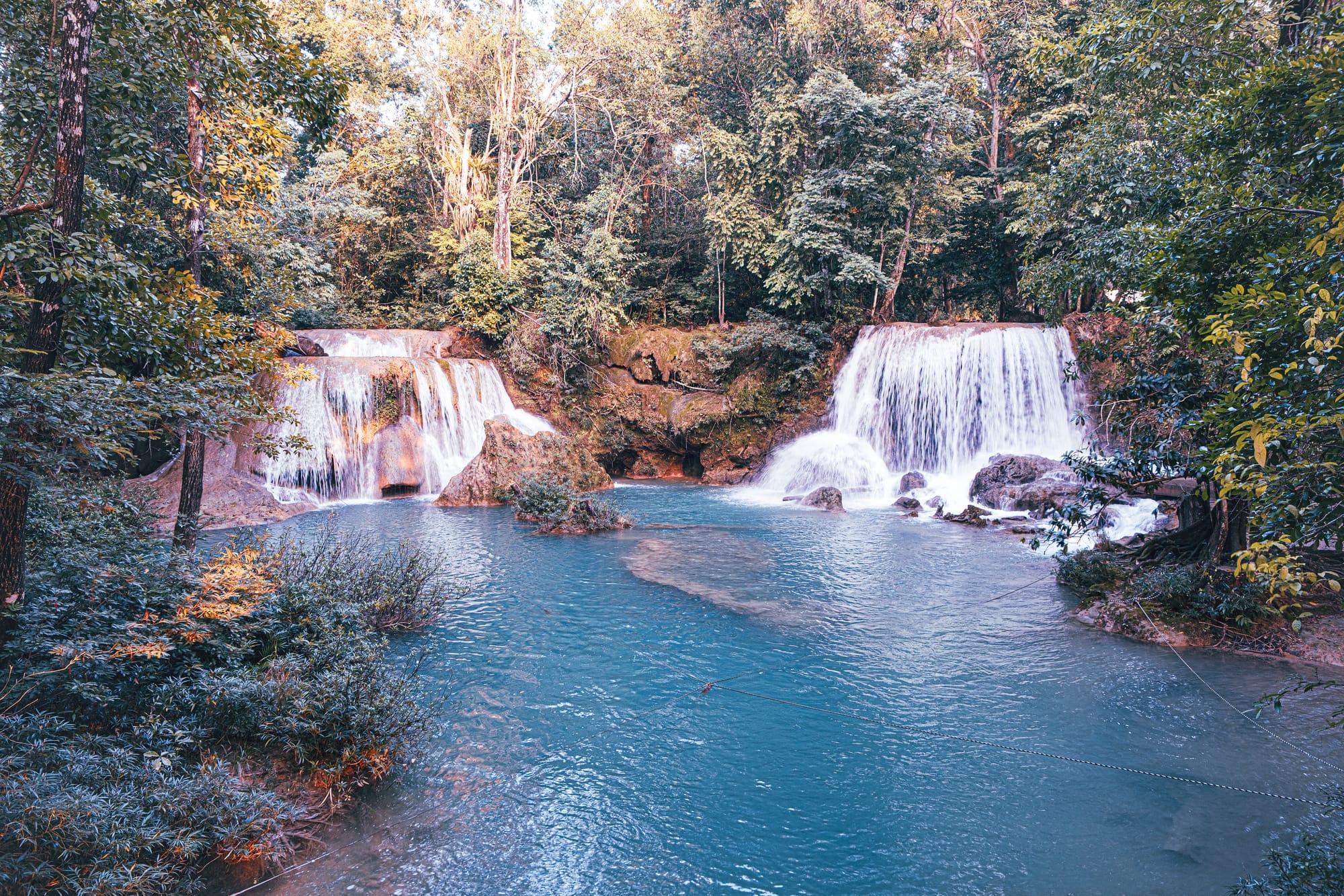
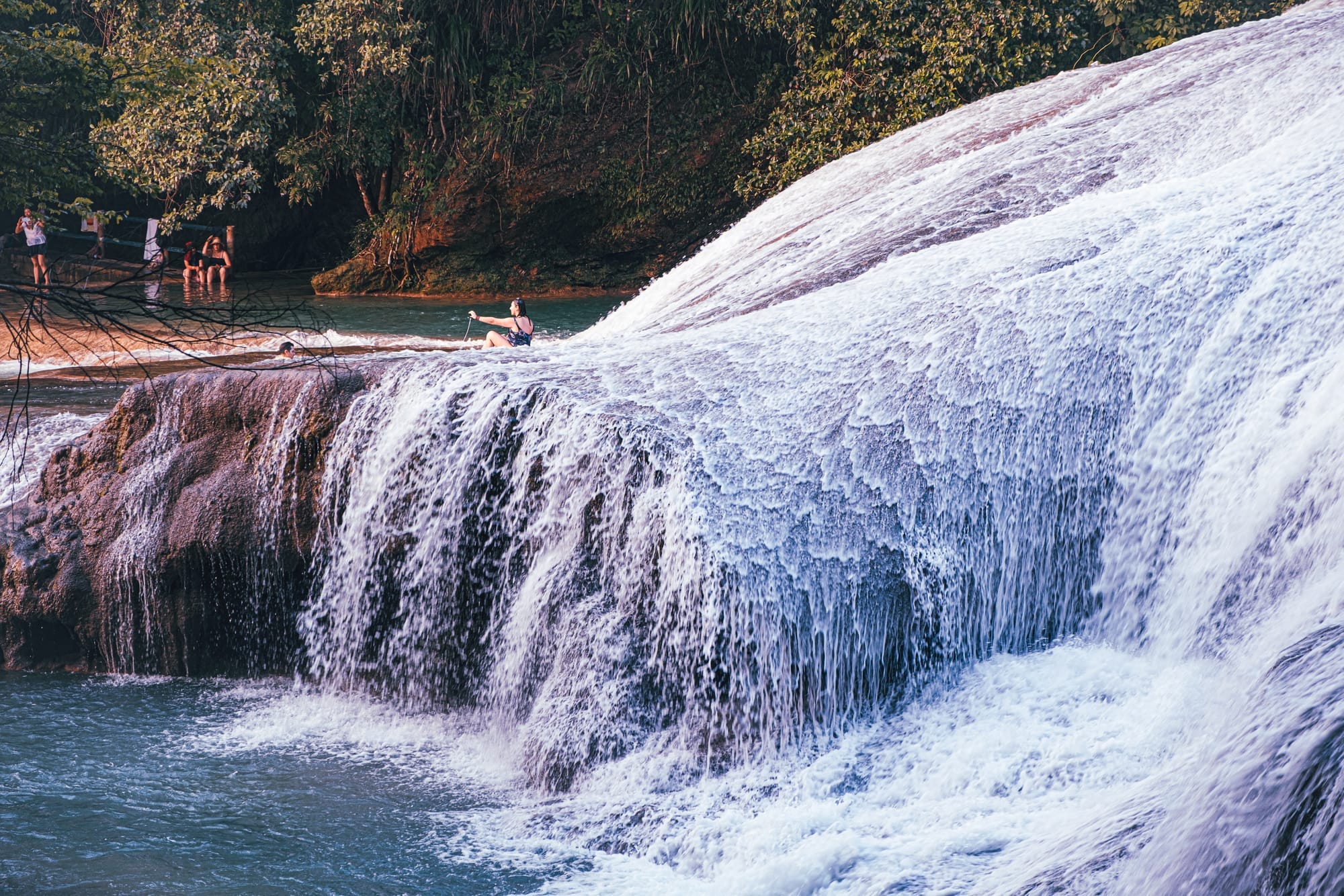
Give yourself at least two to three hours here to enjoy the area without rushing. Facilities are basic but functional, with local vendors and simple amenities rather than a large, polished tourist setup. This keeps the visit relaxed and low-key rather than overly commercial.
Is it safe to swim at Roberto Barrios?
Yes, if you're careful. The pools look calm, but the current is strong near the bigger cascades, and the deep spots are smaller than they look because the blue water makes depth hard to judge. Only jump where a local shows you it's deep enough, and go with someone who knows the way before you swim into the cave behind the falls. There are no lifeguards, and the rocks are slippery, so water shoes help a lot.
What to bring to Roberto Barrios
Pack a swimsuit, a towel, water shoes, drinking water, and some snacks, plus cash in small notes for the entrance, road fees, food, and tips. Use mineral sunscreen and little or no bug spray before swimming, and cover up with long sleeves in the morning and evening, when mosquitoes are worst. There's nowhere secure to leave things, so bring as little as possible and keep your phone in a dry bag.
If you want fewer people around, arriving earlier in the day usually helps, especially compared to more famous waterfalls like Agua Azul.
Best time to visit Roberto Barrios: dry vs rainy season
The colour depends on the season. The water here, like at Agua Azul, carries a lot of dissolved limestone, which gives it that milky turquoise when the river is low and settled (Wikipedia explains the effect at Agua Azul). Rain stirs up sediment and the colour disappears.
November to April (dry season): the best time. Water levels are lower, the pools are turquoise, the rock shelves are easier to walk on, and the current is gentler. March to May is the hottest stretch, which makes a swim more welcome but the walk back up the steps harder.
June to October (rainy season): the river rises, the falls get bigger, and after heavy rain the water turns brown or grey-green. Lonely Planet advises not swimming then, and the currents near the cascades are much stronger. After a few dry days in the rainy season, the water can clear again, so ask in Palenque before you go rather than writing off the whole season.
Day and week: weekdays and mornings have the fewest people. Weekends and Mexican holidays, especially Easter week, bring local families, which is fun but busier.
Most Palenque tours skip Roberto Barrios
It still surprises us that so many Palenque tours skip this place.
The reason is simple: logistics and habit. Tours follow familiar loops. Misol-Há and Agua Azul are well-known names. Roberto Barrios needs a separate route and a bit more time.
But that extra effort is exactly why it's different.
Fewer tour buses. More space. More freedom to explore without being herded from viewpoint to viewpoint.
Getting there
You can arrange transport independently, but for many travelers, a dedicated tour from Palenque is the easiest option, especially if you don't want to deal with colectivos or drive unfamiliar roads.
The tour we recommend leaves directly from Palenque and goes only to Roberto Barrios, so there's no rushing and no bundling with other stops.
It's a clean, simple way to see the falls without cutting into the time you get to spend there.
How to get to Roberto Barrios waterfalls from Palenque
There are four ways to get there. Which one suits you depends on your budget and how much hassle you're willing to deal with.
By colectivo
Shared vans to Roberto Barrios leave from Palenque town, near the market. The ride takes about 45 minutes and costs roughly 50 pesos each way. There's no fixed timetable: vans leave when they're full, and you wait by the road for one on the way back. Some travelers have been asked for more money for the return trip, so confirm the fare before you get in, and aim to head back by about 4 pm, when vans become scarce.
By taxi
A taxi from Palenque with the driver waiting for you costs about 600 to 750 pesos for the round trip, depending on how well you negotiate. Split between three or four people, it's an easy option. Agree on the price and how long the driver will wait before you leave.
By car
From Palenque, take Federal Highway 307 for about 8 km, then turn off for Roberto Barrios and follow the side road for about 14 km to the village. Park in the village and walk down to the falls. People in nearby communities sometimes stop cars on the side road and ask for a small fee (visitors have reported 10 to 40 pesos). It's easiest to just pay it.
What the access road is like
Highway 307 out of Palenque is a normal paved main road. The side road to the village takes the time: narrow, winding, and hilly, with speed bumps, potholes, and small communities along the way, so allow 45 minutes to an hour from town even though it's only around 25 km. Drive it in daylight, and keep your speed down through the villages, where people walk along the road.
One plus for safety planning: this route doesn't use Highway 199, the road between San Cristóbal and Palenque that the UK travel advice advises against except for essential travel. Informal stops asking for a small fee can still happen on the side road, as mentioned above.
In the village, signs point to the parking area, and a path lined with food and fruit smoothie stalls leads to the steps down to the falls.
By tour
Most Palenque tours skip Roberto Barrios, so look for one that goes only there. Dedicated tours usually last about five to five and a half hours, with hotel pickup around late morning and the entrance fee included. That's what we'd pick if you don't want to deal with colectivos.
Can you visit Roberto Barrios from San Cristóbal de las Casas?
Not easily as a day trip. Palenque is five to six hours' drive from San Cristóbal, so stay in Palenque for at least two nights and see the falls from there. If you travel between the two by road, check the latest advice first: the UK government advises against all but essential travel on Federal Highway 199 between San Cristóbal and Palenque because of illegal roadblocks. For more on the region, see our San Cristóbal guide.
Combining Roberto Barrios with the Palenque ruins
Most people visit the falls on the day before or after the Palenque ruins. The archaeological site, a UNESCO World Heritage Site described on Wikipedia, is open daily from 8 am to 5 pm, with last entry at 4 pm, according to INAH. Foreign visitors pay 210 pesos for the site plus a separate national park fee, so check the current prices before you go. Go to the ruins at opening time, when it's cooler and less busy, and save the waterfalls for the next day, when a swim is very welcome.
Combining Roberto Barrios with Misol-Há or the ruins
Roberto Barrios fits into a Palenque trip in three ways. On our trip we did the second one: Misol-Há and Roberto Barrios on the day we arrived, and the ruins the next morning.
| Plan | How it works | Time | Good to know |
|---|---|---|---|
| Ruins and Roberto Barrios | Ruins at 8 a.m., lunch in town, falls in the afternoon | A full day | Catch the colectivo by early afternoon so you have time before the last van back |
| Misol-Há and Roberto Barrios | Misol-Há in the morning, back toward Palenque, then out on Highway 307 | A full day, best with a car or taxi | The two are about 28 km apart by road, and the drive can take one to two hours |
| Roberto Barrios on its own | A half-day colectivo trip or a dedicated tour | About 5 hours | The most relaxed option, and the most time in the water |
Agua Azul is the hardest to add on the same day, as it's in the opposite direction, about 69 km south on Highway 199. Most people give it its own day on a tour.
Plan your visit
Out of all the waterfalls we visited around Palenque, Roberto Barrios was the one we enjoyed the most. It gives you more freedom to explore, more places to swim, and a generally more relaxed feel than many of the better-known alternatives.
For how Roberto Barrios compares with El Chiflón, Misol-Há, and Agua Azul, see our guide to Chiapas waterfalls.
If you're short on time and choosing just one waterfall to visit near Palenque, this is the one we'd recommend. It's especially good if you want to spend a few unhurried hours swimming and moving between different pools rather than just stopping for photos.
Most standard Palenque tours don't include Roberto Barrios, which is why booking a dedicated trip makes sense. If you want an easy and reliable way to get there, this tour from Palenque focuses entirely on the waterfalls and gives you enough time to actually enjoy them.
If you're planning your time in Palenque and deciding what to prioritize, Roberto Barrios is well worth making room for.
Before a day at the waterfalls, make sure you have travel insurance. Wet rocks are slippery, the water can be stronger than it looks, and the nearest hospital is often a long drive away. We'd recommend SafetyWing Nomad Insurance. It covers medical emergencies abroad, you can buy it even after you've left home, and it renews every four weeks, so it works for a short trip or months on the road.
Where to stay near Roberto Barrios
The nearest good base for Roberto Barrios is Palenque. These are well-reviewed places to stay there, all rated 9 or more on Booking:
- Hotel Villa Mercedes Palenque: a hotel with a pool and garden in Palenque town, rated 9.0 from about 700 reviews.
- Hotel Mundo Maya Palenque: a comfortable mid-range hotel in town, rated 9.1.
- Casa Koru: a simple, budget-friendly stay rated 9.0.
Frequently asked questions
How do I get to Roberto Barrios waterfalls from Palenque?
Take a colectivo from near the market in Palenque (about 45 minutes, roughly 50 pesos each way), a taxi (about 600 to 750 pesos round trip with waiting), your own car via Highway 307, or a dedicated tour with hotel pickup.
How much is the entrance fee for Roberto Barrios waterfalls?
About 40 pesos per person in recent reports, in cash. Locals sometimes also ask for a small road fee of 10 to 40 pesos on the access road. Tours usually include the entrance fee.
What are the opening hours of Roberto Barrios waterfalls?
Roughly 8 am to 5 pm every day. Arrive early for the fewest people, and if you came by colectivo, leave by about 4 pm.
Can you swim at Roberto Barrios waterfalls?
Yes. Several pools are good for swimming, and you can climb the rock shelves and walk behind some falls. Watch for strong currents near the bigger cascades, and only jump where a local shows you it's deep enough.
Is Roberto Barrios better than Agua Azul?
For swimming and space, we think so. Roberto Barrios has more pools you can actually get into and far fewer people. Agua Azul has the brighter blue terraces and is easier to reach on a standard tour.
How long should you spend at Roberto Barrios?
Two to three hours at the falls is enough for most people, or about half a day including the trip from Palenque.
When is the best time to visit Roberto Barrios waterfalls?
Early morning on a weekday, as weekends bring local families. The dry season (November to April) usually gives clearer water.
Can you visit Roberto Barrios waterfalls from San Cristóbal de las Casas?
Not comfortably in a day, as Palenque is five to six hours away by road. Base yourself in Palenque for a couple of nights and visit from there.
Is the water at Roberto Barrios blue all year?
No. It's turquoise in the dry season, roughly November to April. In the rainy season (June to October) heavy rain turns it brown or grey-green, the currents get stronger, and swimming isn't advised.
Can you visit Roberto Barrios and Misol Ha on the same day?
Yes. They're about 28 km apart by road, and the drive takes one to two hours. It's easiest with a car or taxi. We did both on our arrival day in Palenque.
What is the road to Roberto Barrios like?
Paved Highway 307 out of Palenque, then a narrow, winding side road of about 14 km with speed bumps and small villages. Allow 45 minutes to an hour, and drive in daylight. It doesn't use Highway 199.
Do you need a guide at Roberto Barrios?
No, but a local guide (often kids from the village) can show you the safe jump spots and the cave behind one of the falls. Agree on the tip first, around 100 MXN for a small group.
Are there monkeys at Roberto Barrios?
Often, yes. Visitors report howler and spider monkeys in the trees above the steps, especially in the morning. Watch from a distance and don't feed them.
Useful links: Palenque archaeological zone (INAH), Palenque (Wikipedia), UK travel advice: Mexico regional risks, and Caracol V, Roberto Barrios (EZLN).
More from San Cristóbal and Chiapas: San Cristóbal digital nomad guide, Sumidero Canyon, and our San Cristóbal guide.


