


Art Libreria in San Cristóbal de las Casas, Chiapas, is a small vegan restaurant and community space, and its founder and chef, Gerardo, teaches a vegan cheese workshop in its kitchen. The class is built around rajas con queso: charred poblano peppers and vegetables in a warm cheese broth made from almonds. It's all organic and local. There's no online booking, so go in person, ask Gerardo for the class, and agree the price and time with him. Plan on a few hours, and you get to taste everything you cook. We'd eaten there many times before we signed up, and we kept going back.
San Cristóbal de las Casas has its own pace: easy in the mornings, busier at noon, and calmer again by dusk. Art Libreria fits right into that, but it isn’t a restaurant in the usual sense. It’s more like a small community space. You pick that up before you understand why. The walls, covered in local art and Zapatista imagery, tell you the place has politics long before the food arrives. The kitchen doesn’t hide from this. It leans into it, openly and on purpose.
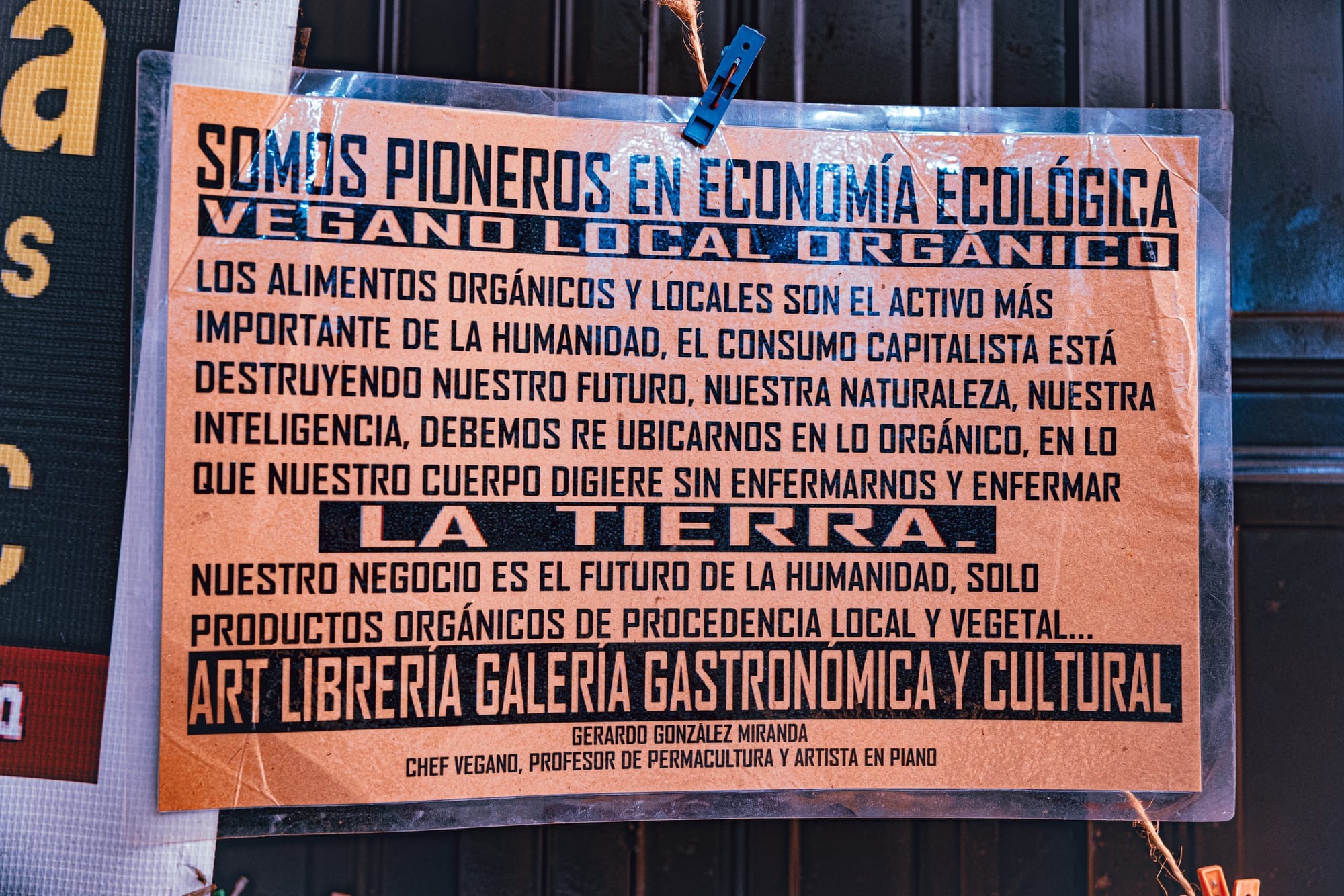
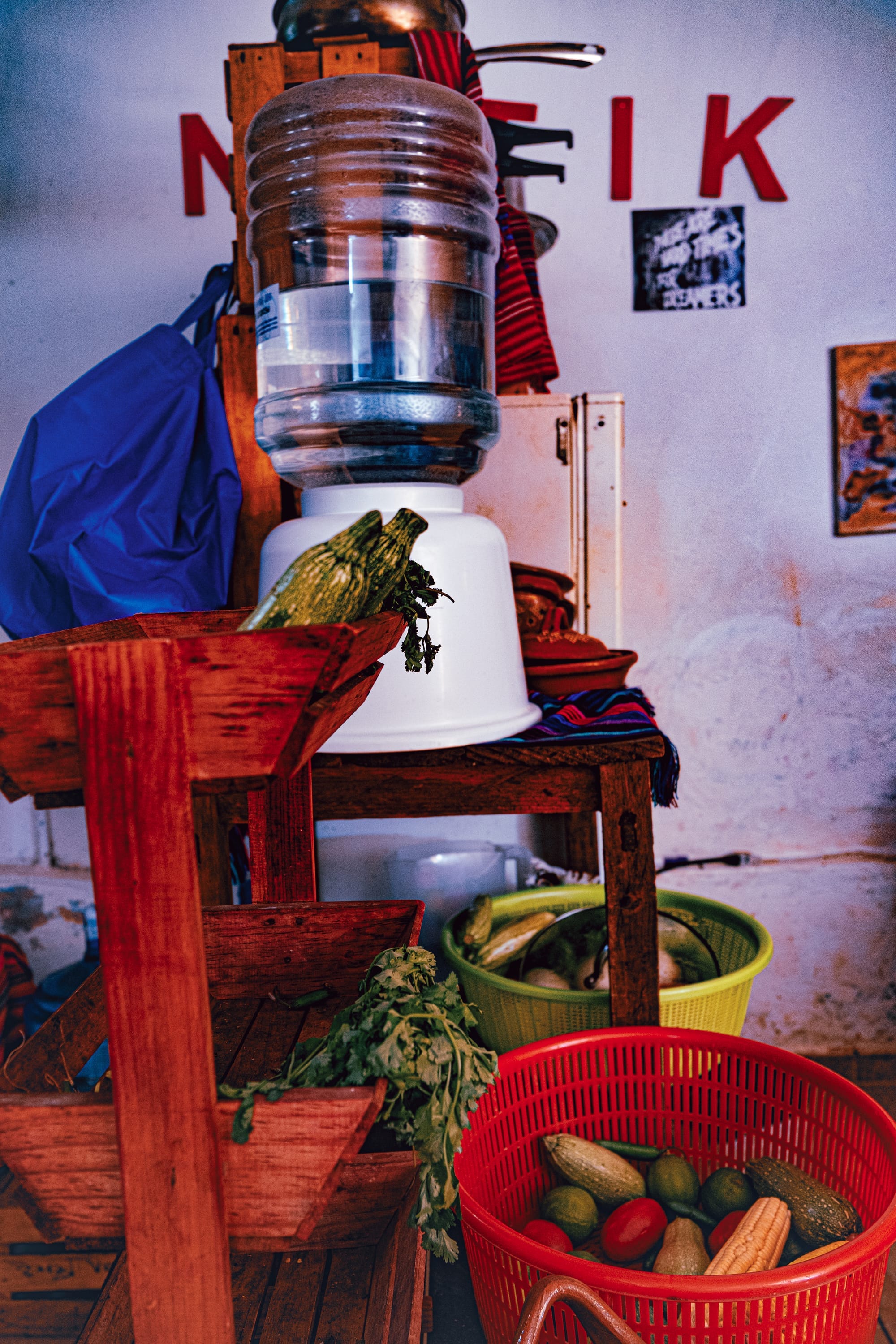
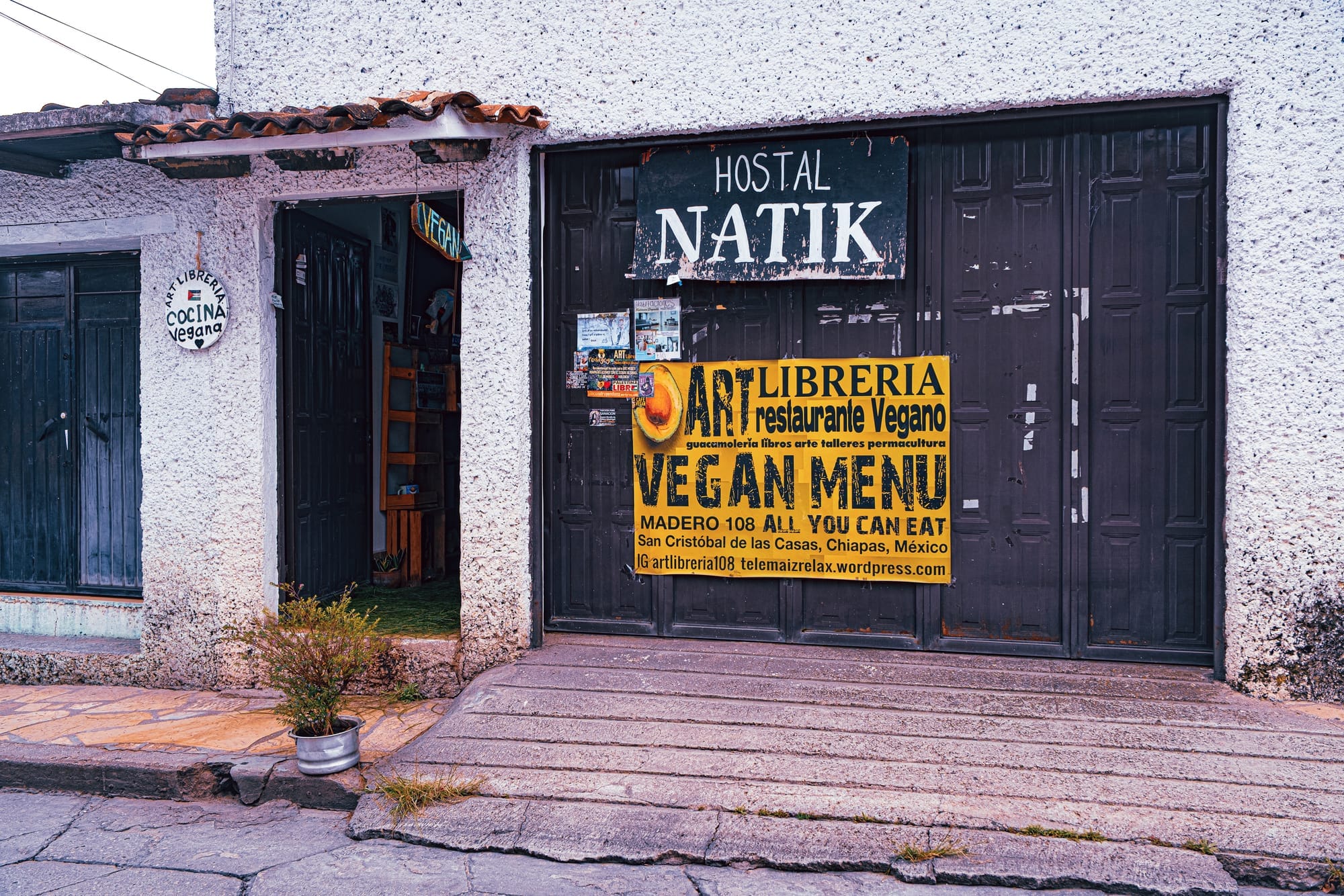
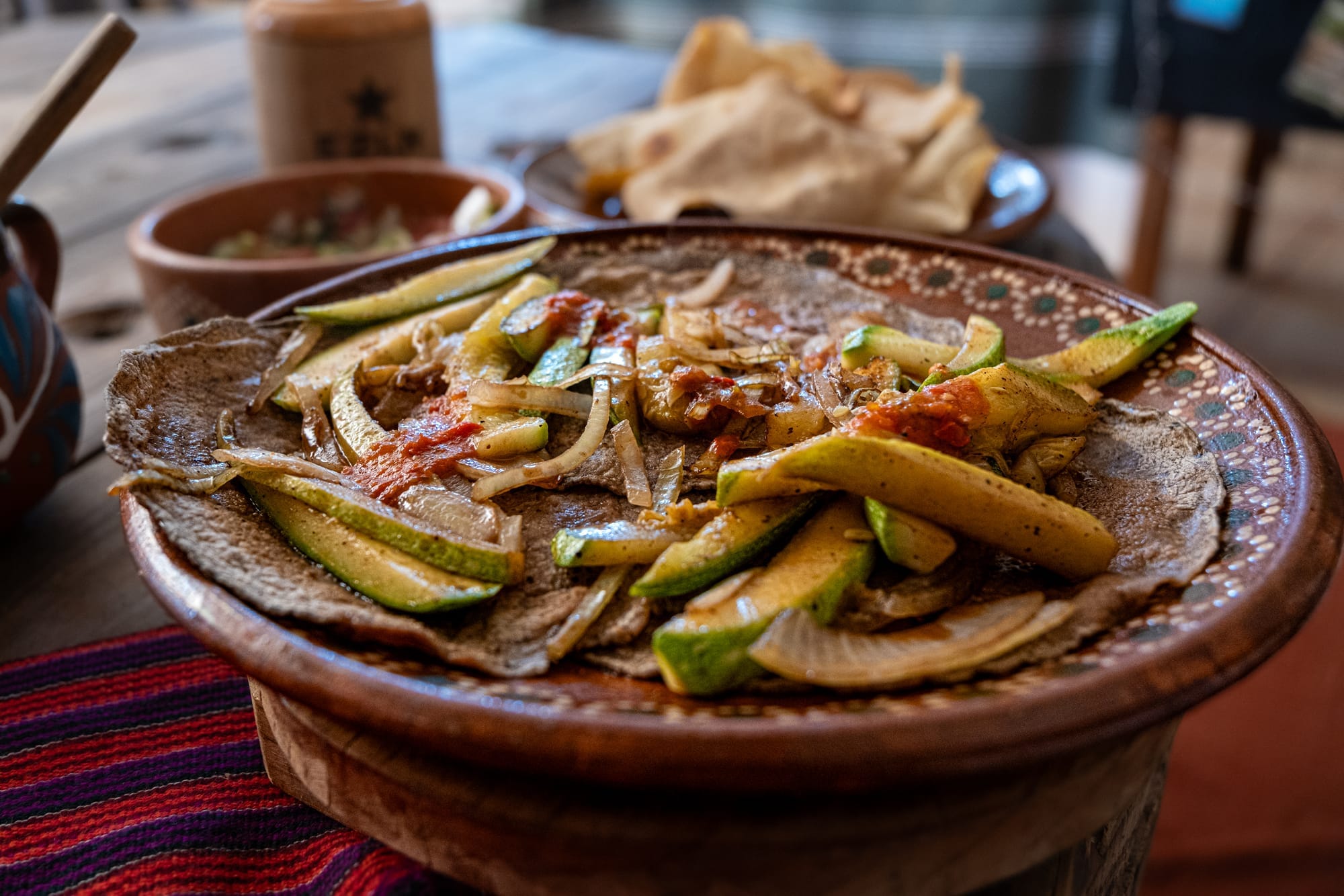
Fresh produce, vegan dishes, and the storefront of Art Libreria in San Cristóbal de las Casas
Gerardo, its founder and head chef, runs the room as someone whose work and values are one and the same. He cooks, but he also teaches, listens, and sometimes pauses a conversation to talk about water rights or organic agriculture as if they were ingredients too: essential, non-negotiable, and as much a part of the flavor of the place as poblano or almond.
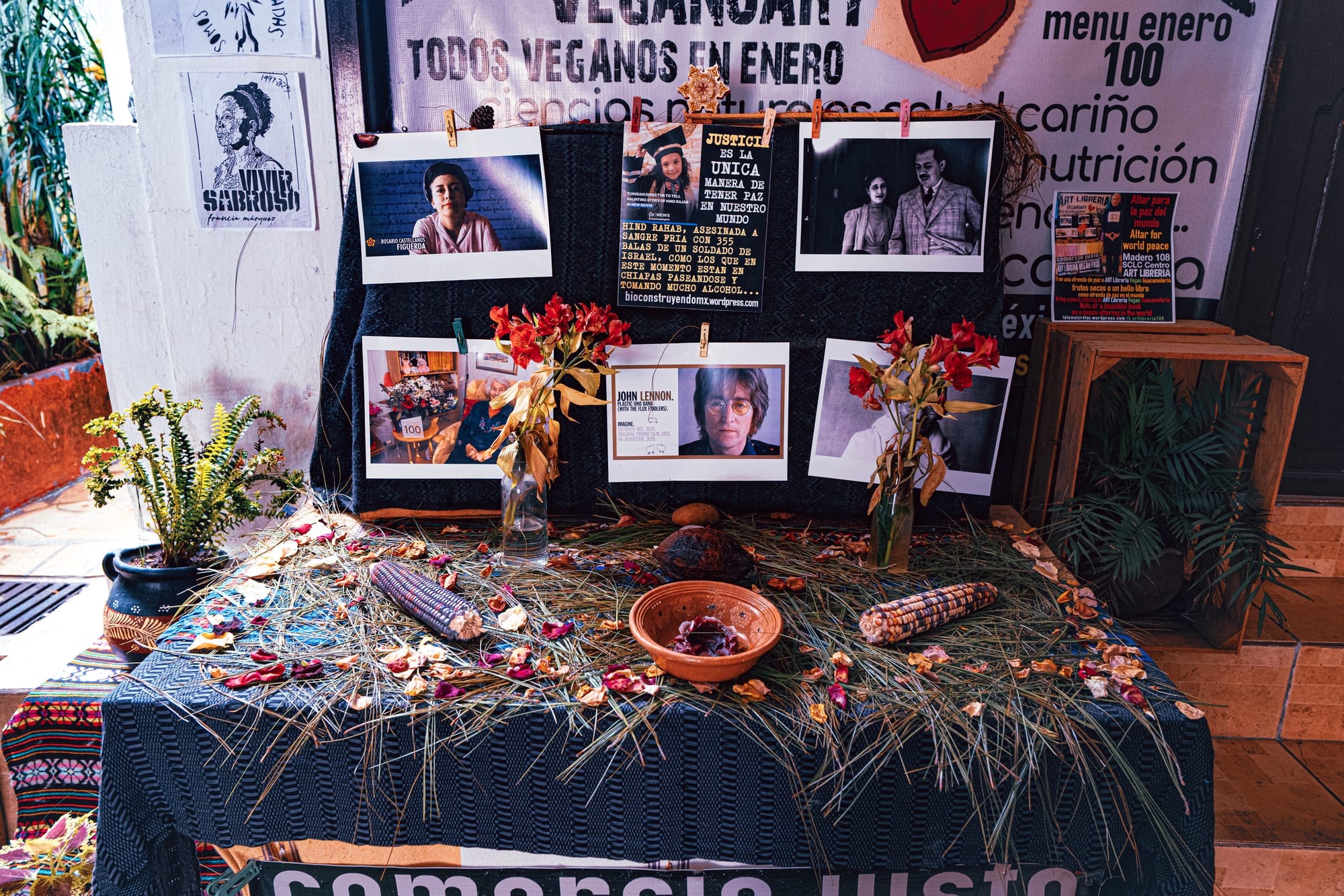
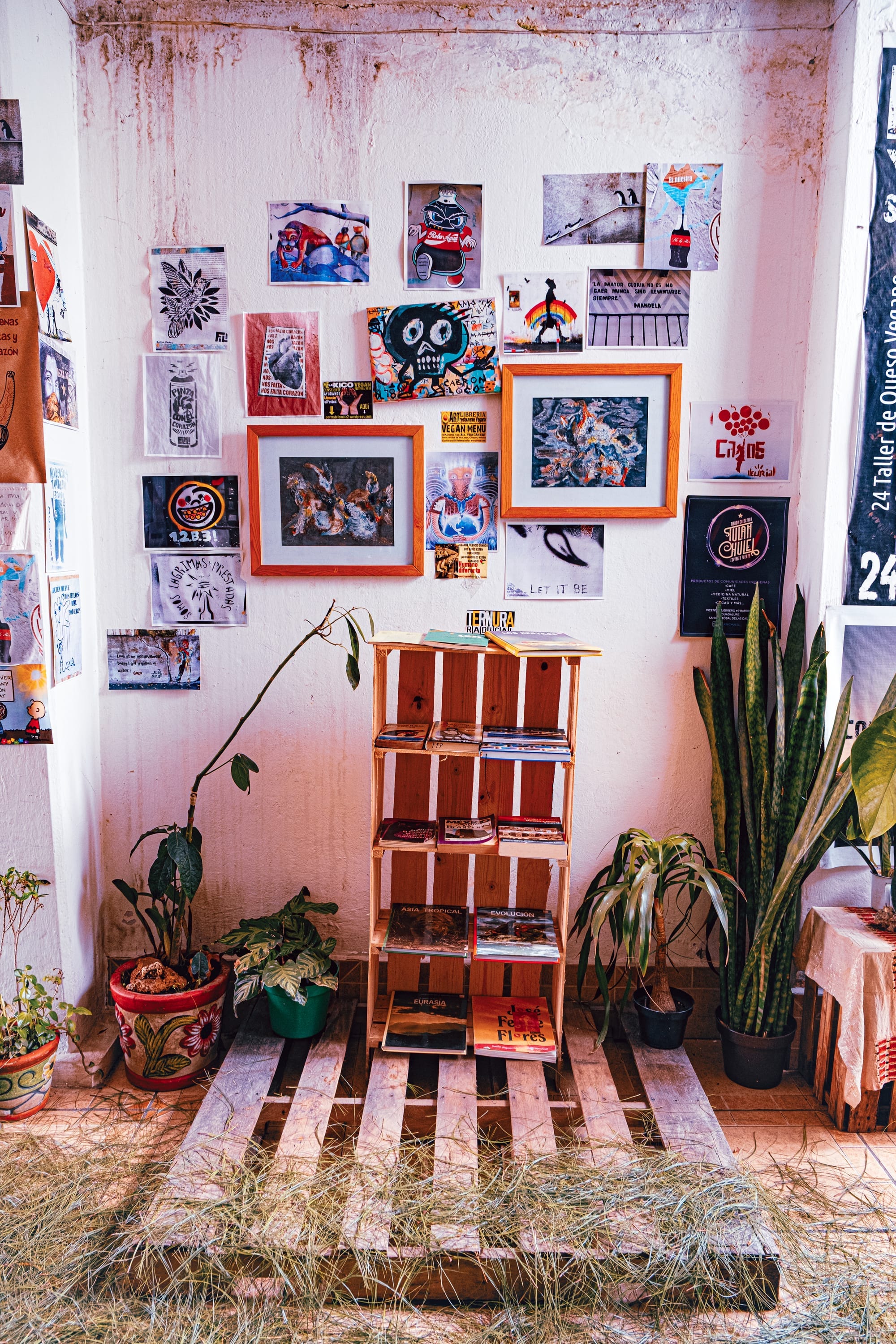
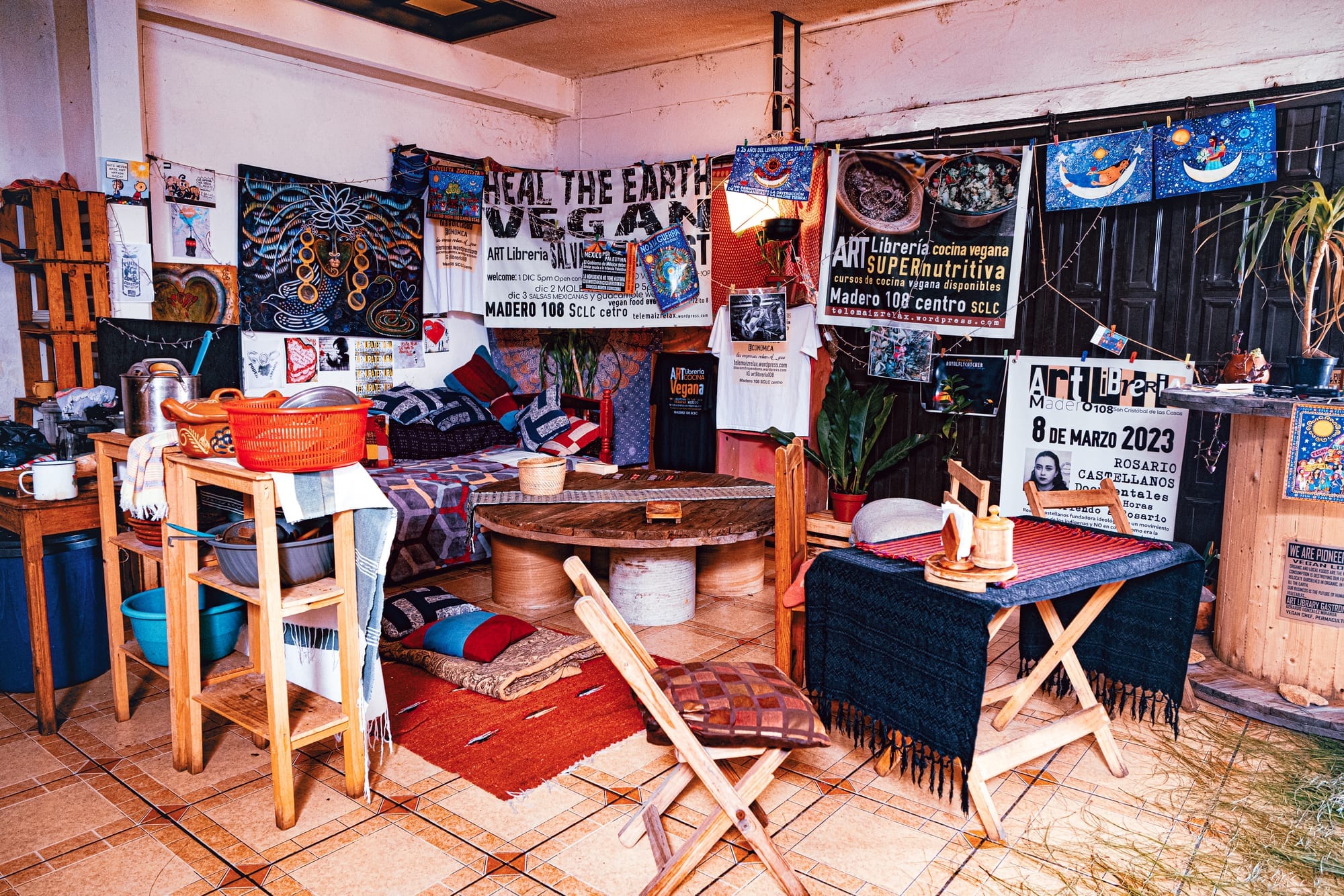
Inside Art Libreria: a mix of plants, altars, books, and community art that reflects the space’s vegan, ecological ethos
This is what kept bringing us back. The dishes did (they’re very good), but so did the feeling that every plate was part of a bigger system, one that rejects the idea that food can ever be separated from land, labor, or politics.
Art Libreria vegan cheese workshop at a glance
Here are the practical details in one place. Prices and hours change, so check them in person before you plan your day around the class.
| Detail | What to expect |
|---|---|
| The class | Hands-on vegan cooking with Gerardo, built around an almond cheese and rajas con queso |
| Where | Vicente Guerrero 3bis, in the center (moved from Francisco I. Madero 108) |
| Booking | In person only, no online booking |
| Price | Not published, agree it with Gerardo |
| Length | Not published, plan on a few hours |
| Restaurant days | Spinach lists Monday to Saturday, about noon to 9 pm, closed Sunday (HappyCow differs) |
| Other workshops | Spinach also lists mole and salsa workshops, plus food tours |
| Diet | Fully vegan and organic |
What it is: a hands-on vegan cooking class with Gerardo, centered on a cheese made from almonds and the rajas con queso dish it goes into, plus other vegan dishes from the day's produce.
Where: Art Libreria's own site and its HappyCow listing give the address as Vicente Guerrero 3bis, in the center of San Cristóbal. It moved from Francisco I. Madero, so ignore older listings with that street.
How to book: in person. Drop by at lunchtime, ask Gerardo about the next class, and agree the date, time, and price.
Price: not published. As a guide, a HappyCow reviewer paid about 200 pesos for a three-course meal in 2023, and other cooking classes in town cost about US$45 to US$55 in late 2026.
How long: not published, so plan on a few hours and ask Gerardo when you book.
Hours: HappyCow lists it as open from about noon into the evening on weekdays, but the listing contradicts itself on weekends. Ask in person.
Language: ask when you book. Gerardo explains a lot as he cooks, so it helps to agree which language suits you.
How to book the Art Libreria vegan cooking class, step by step
Booking is old-fashioned, so a bit of planning saves a wasted trip. This is what we'd do:
- Go during opening hours. Lunch is the easiest time, because you can eat while you ask. Spinach lists the restaurant as closed on Sundays, so don't plan your visit for then.
- Ask a few days ahead. Spinach suggests booking workshops and food tours in advance, which makes sense for a small kitchen run by one chef.
- Say which class you want. The cheese workshop is the one we took. Spinach also lists workshops on mole and salsa, so ask what's running that week.
- Agree the details out loud. Price, start time, length, language, and whether the meal is included. Nothing is published, so it's worth writing them down.
- Think about staying for dinner. One HappyCow reviewer combined the cheese workshop with dinner on the same evening in December 2024.
- Ask how to pay. Don't assume cards are accepted, and carry some pesos just in case.
| Details | |
|---|---|
| What it is | Hands-on class with Gerardo: almond cheese and rajas con queso |
| Where | Vicente Guerrero 3bis, in the center |
| How to book | In person, at lunchtime |
| Price | Not published; a three-course meal was about 200 pesos (2023), other classes US$45 to US$55 (late 2026) |
| How long | Not published; plan on a few hours |
| Hours | From about noon into the evening on weekdays; weekends unclear |
| Language | Agree it when you book |
Art Libreria: a restaurant that teaches
Art Libreria doesn’t show off its ethics. It practices them. Every visit teaches you something about how things connect. You notice that the menu changes with what’s available, that real care goes into sourcing, and that conversations in the room move easily between cooking and the conditions that make cooking possible.
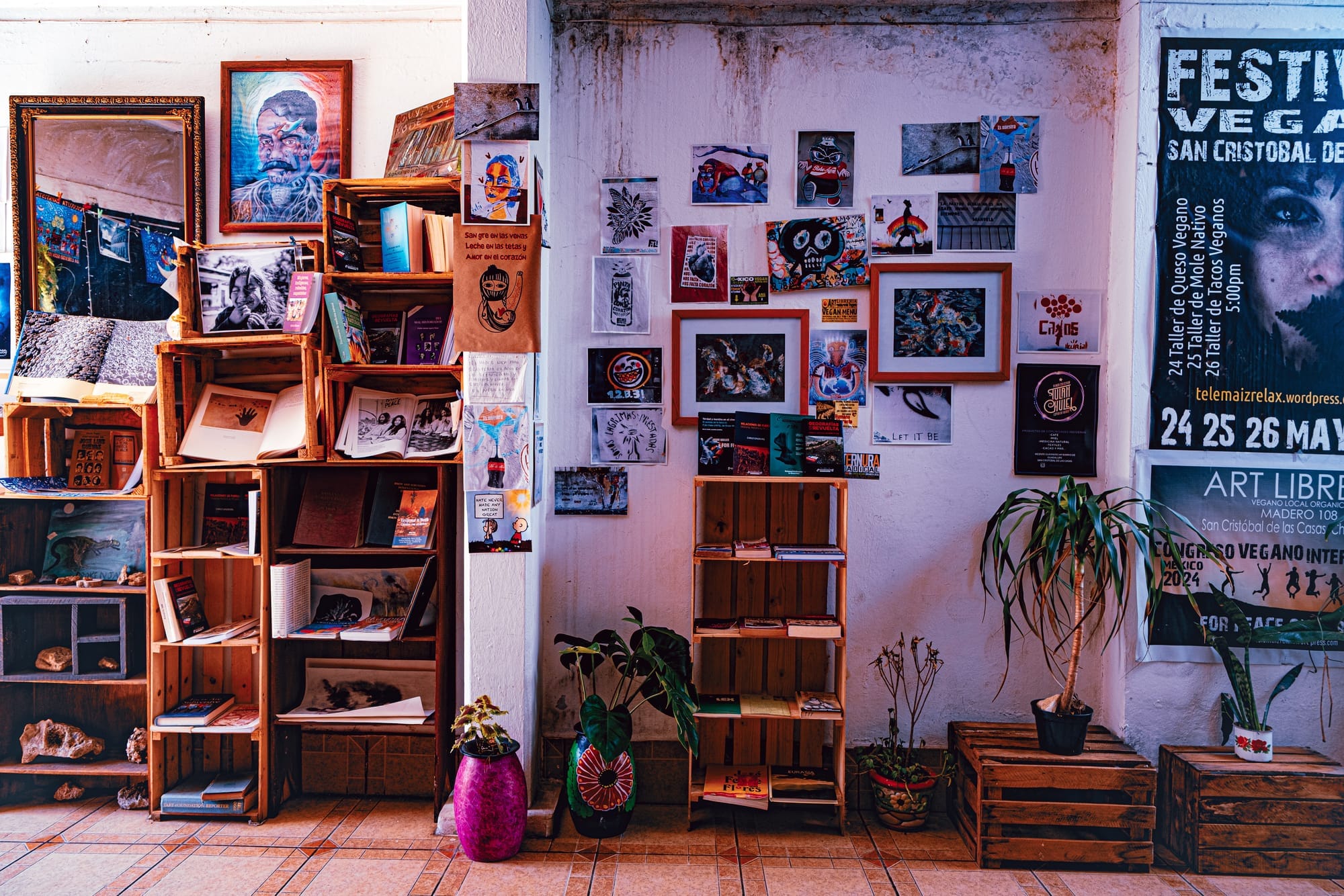
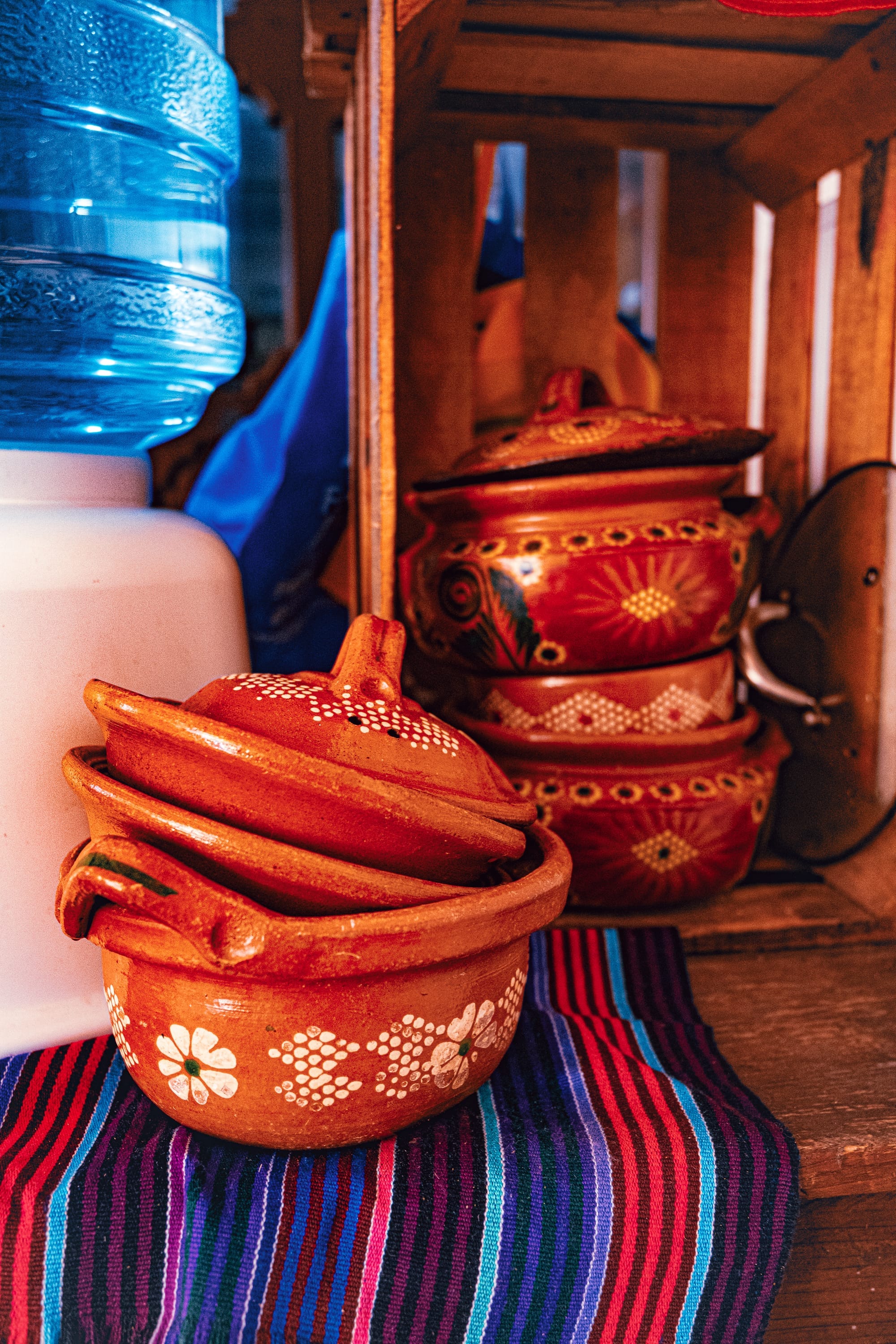
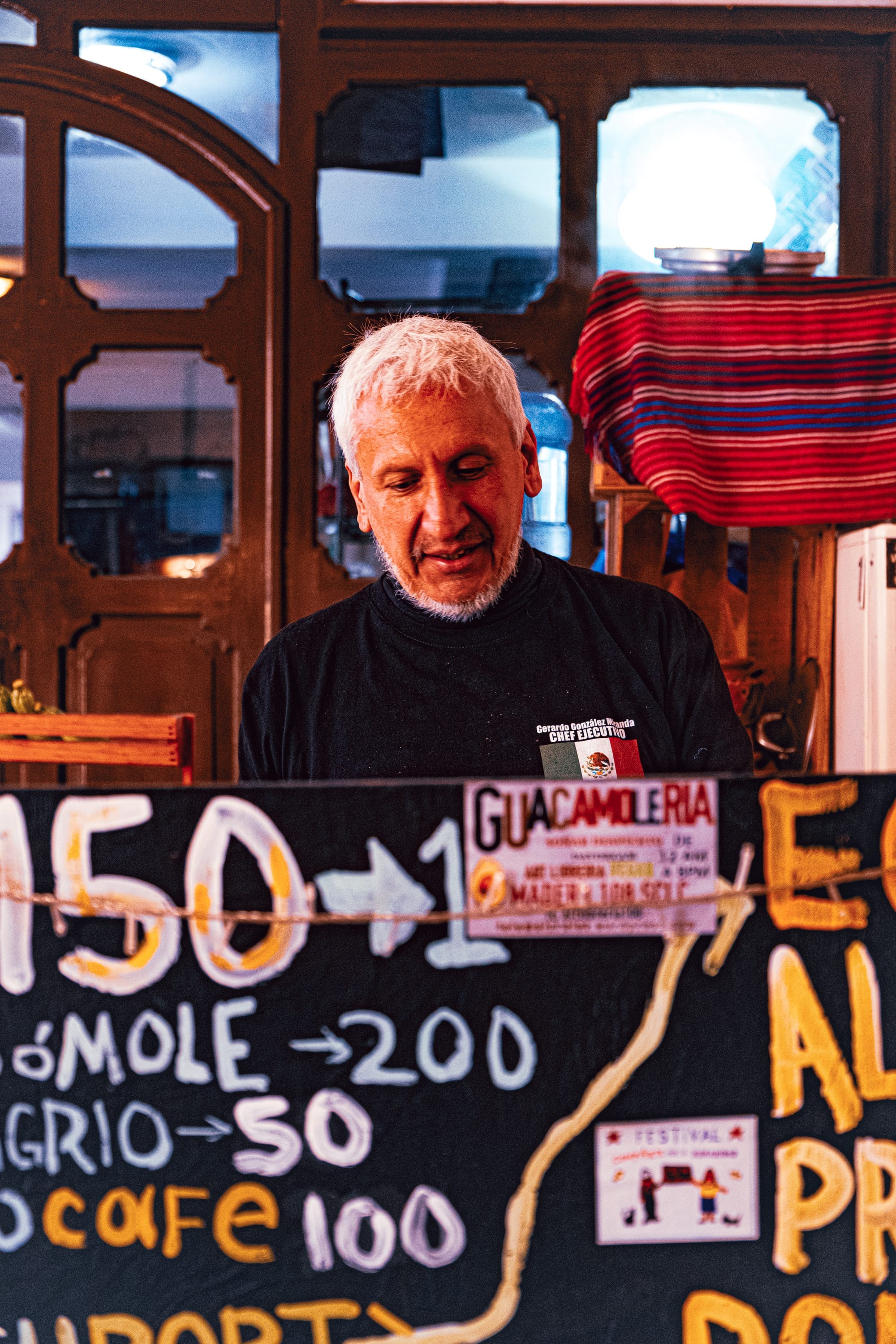
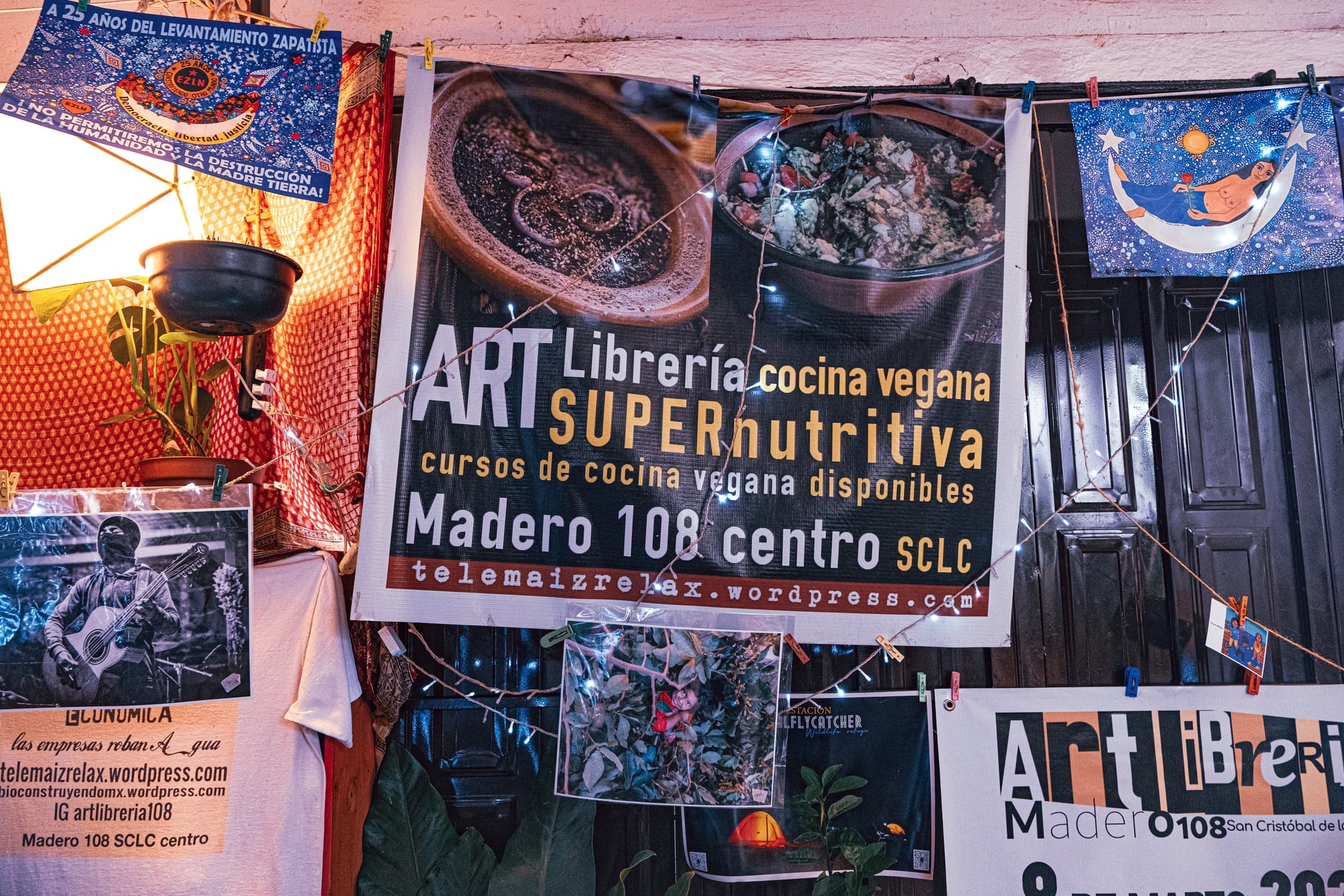
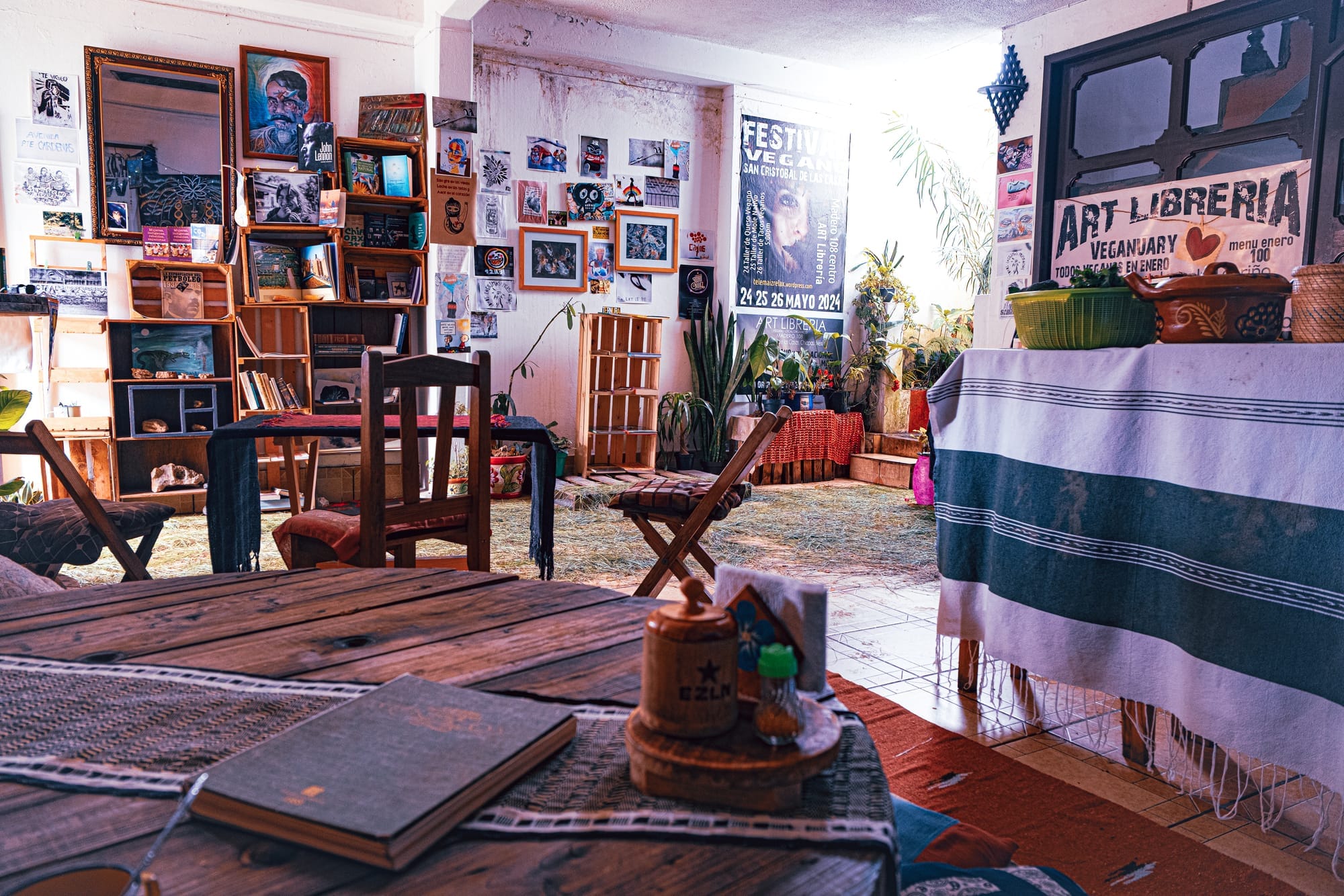
Interior details from Art Libreria in San Cristóbal de las Casas: clay cookware, hand-painted signs, and cultural art
Nobody pretends to be neutral here. The Zapatista influence, with its calls for autonomy, dignity, and pluriversality, shows up in the decor, the music, and even the grain of the tables, as if the restaurant were a small node in a much larger fight for self-determined futures.
For context: the Zapatista Army of National Liberation (EZLN) is an Indigenous-led movement that rose up in Chiapas on January 1, 1994, and took over San Cristóbal for a short time. Its communities still run their own autonomous areas in the state, and its imagery is common in the city's cafés and shops. At Art Libreria, it reflects how the kitchen is run: local farmers, organic produce, and open talk about the labor behind each meal.
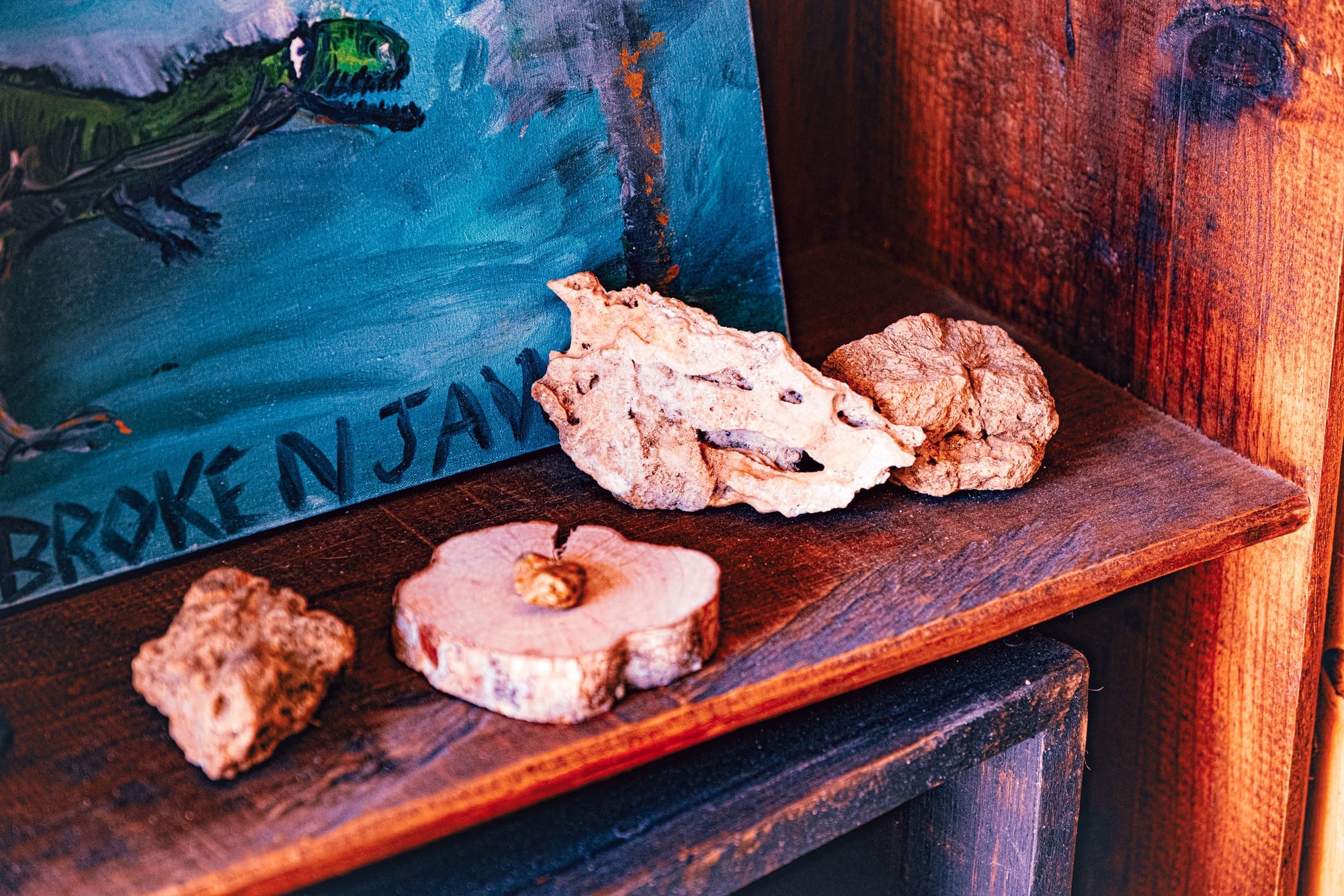
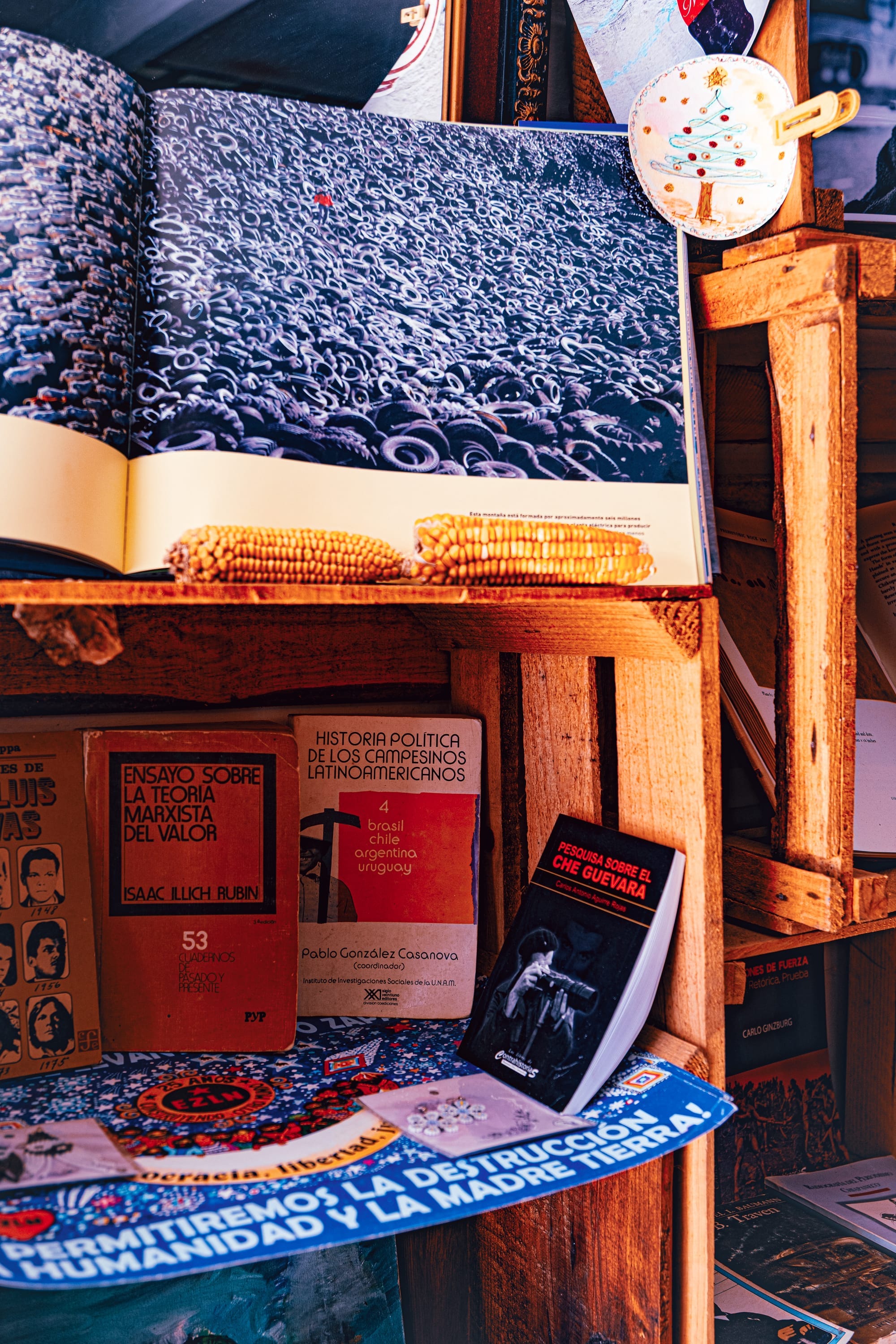
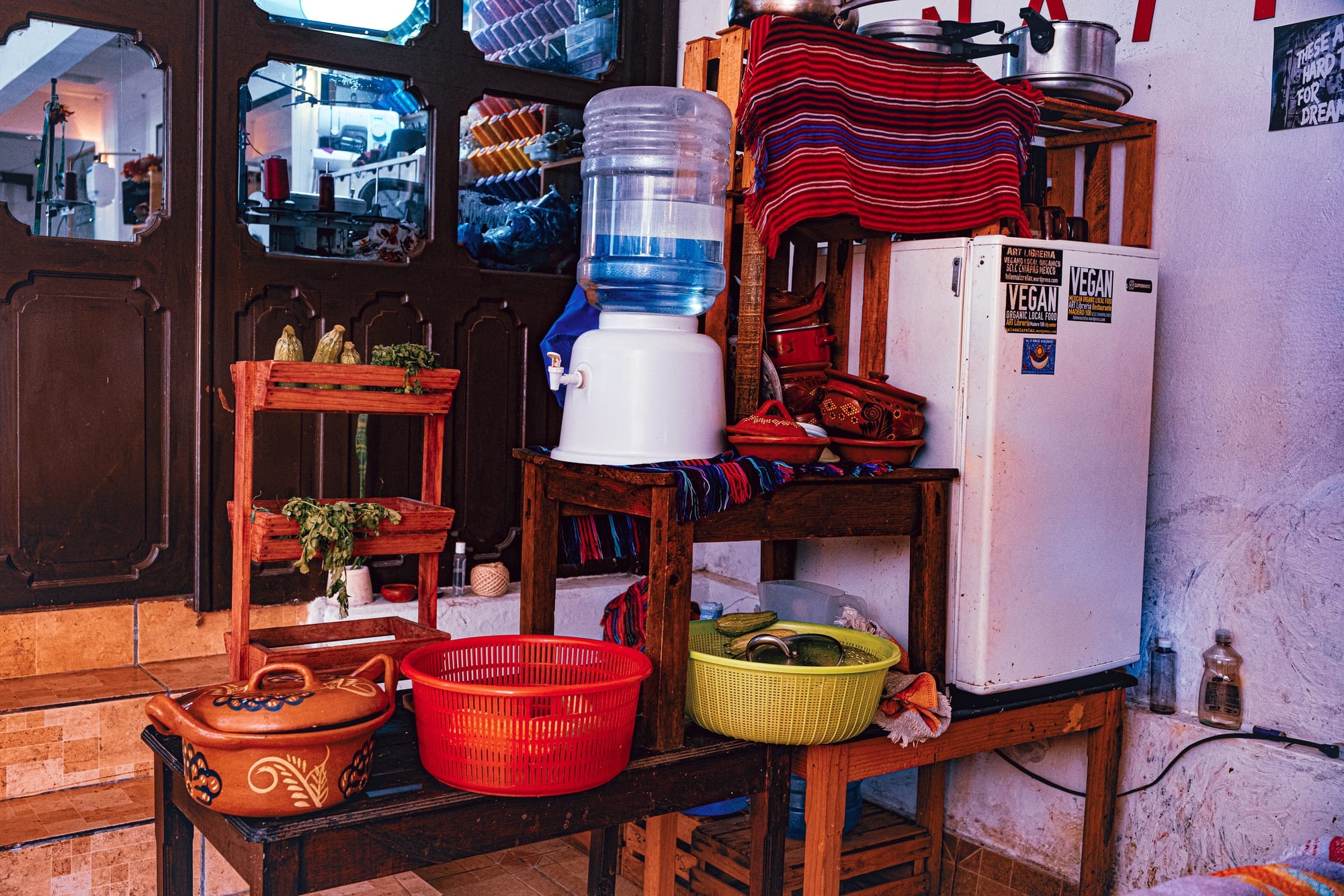
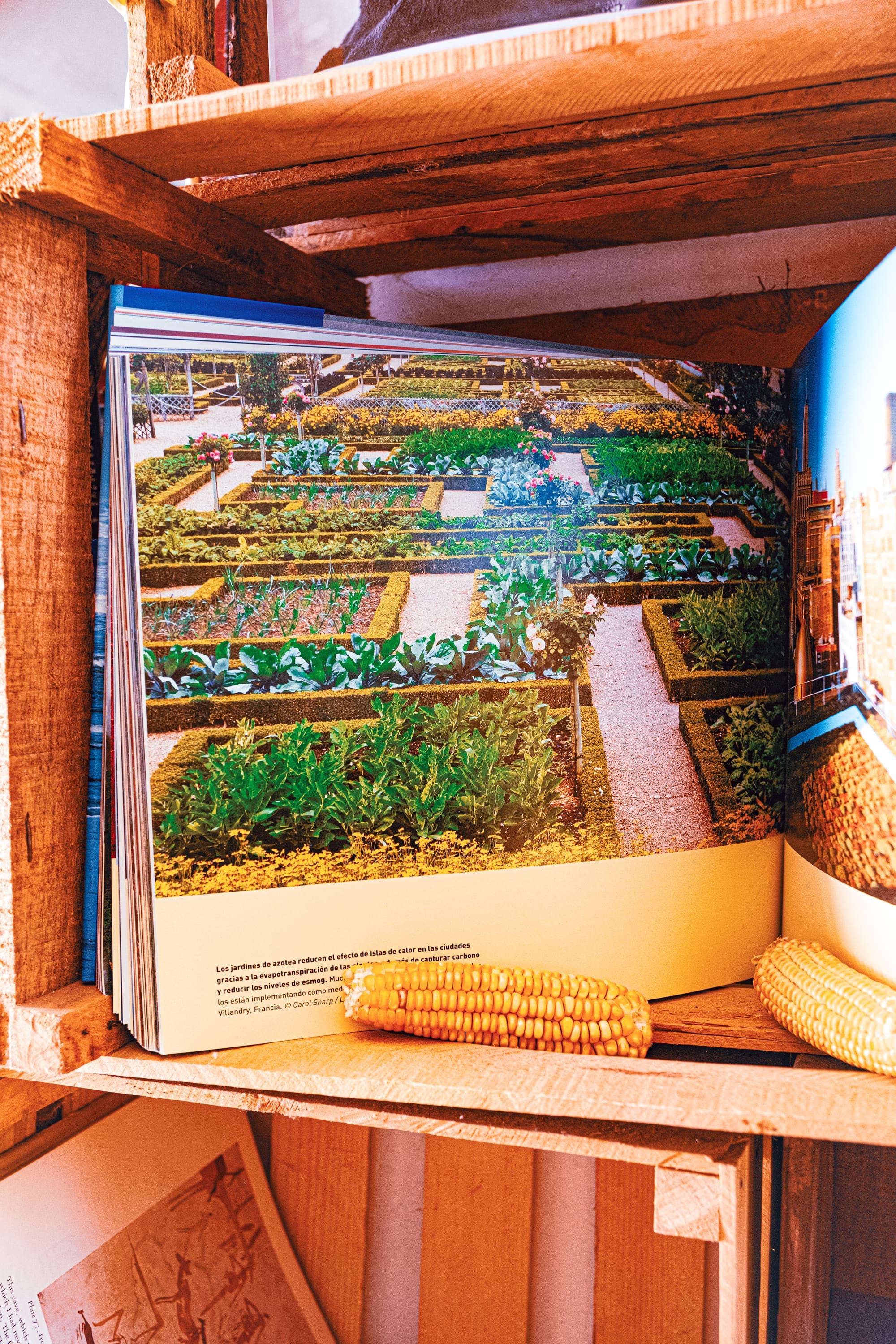
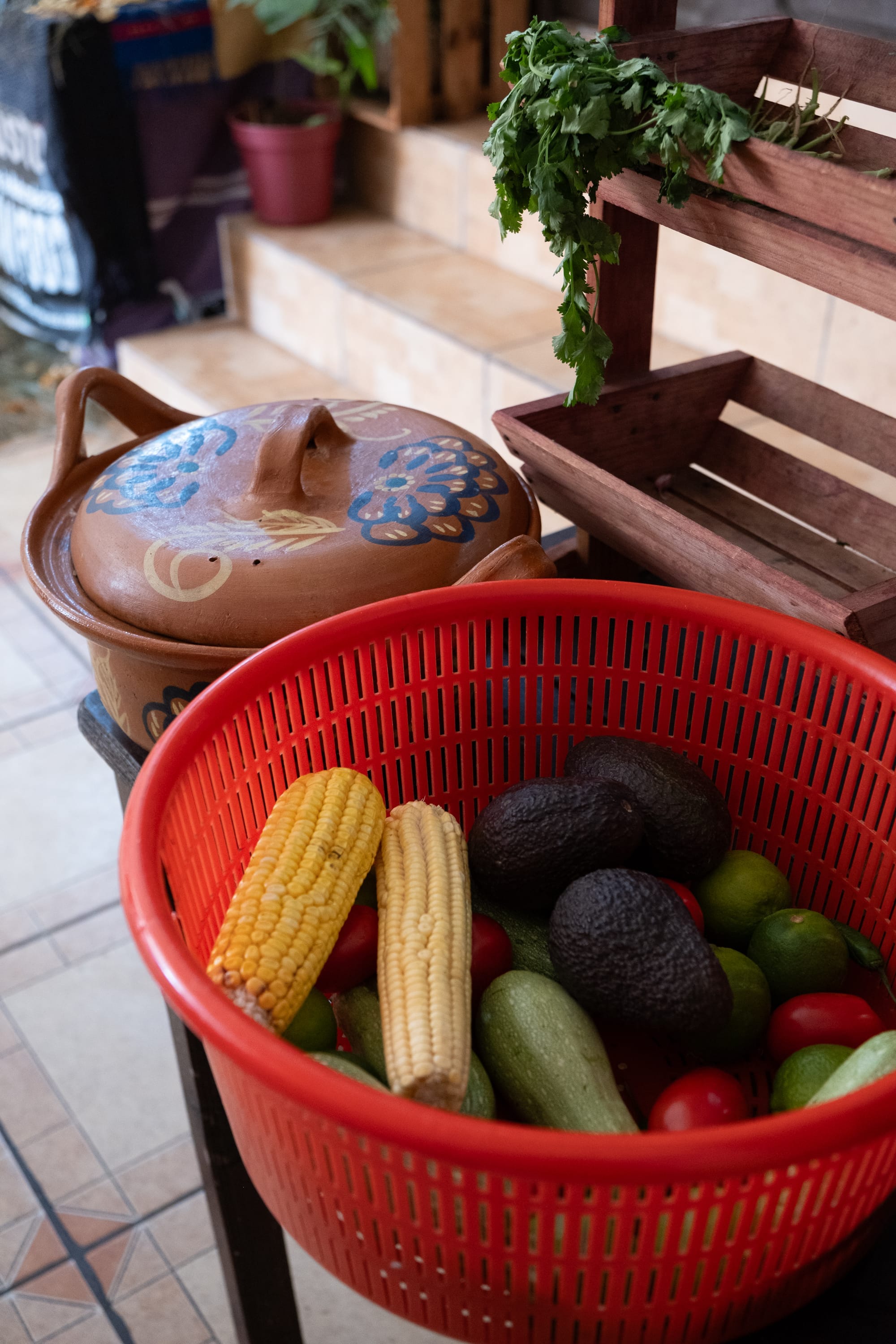
Books, corn, clay pots, and baskets of produce sit within Art Libreria’s lived-in kitchen space
Eating here feeds you, and it also reminds you that every meal has a history, and that someone carried the ingredients from soil to skillet, from field to plate.
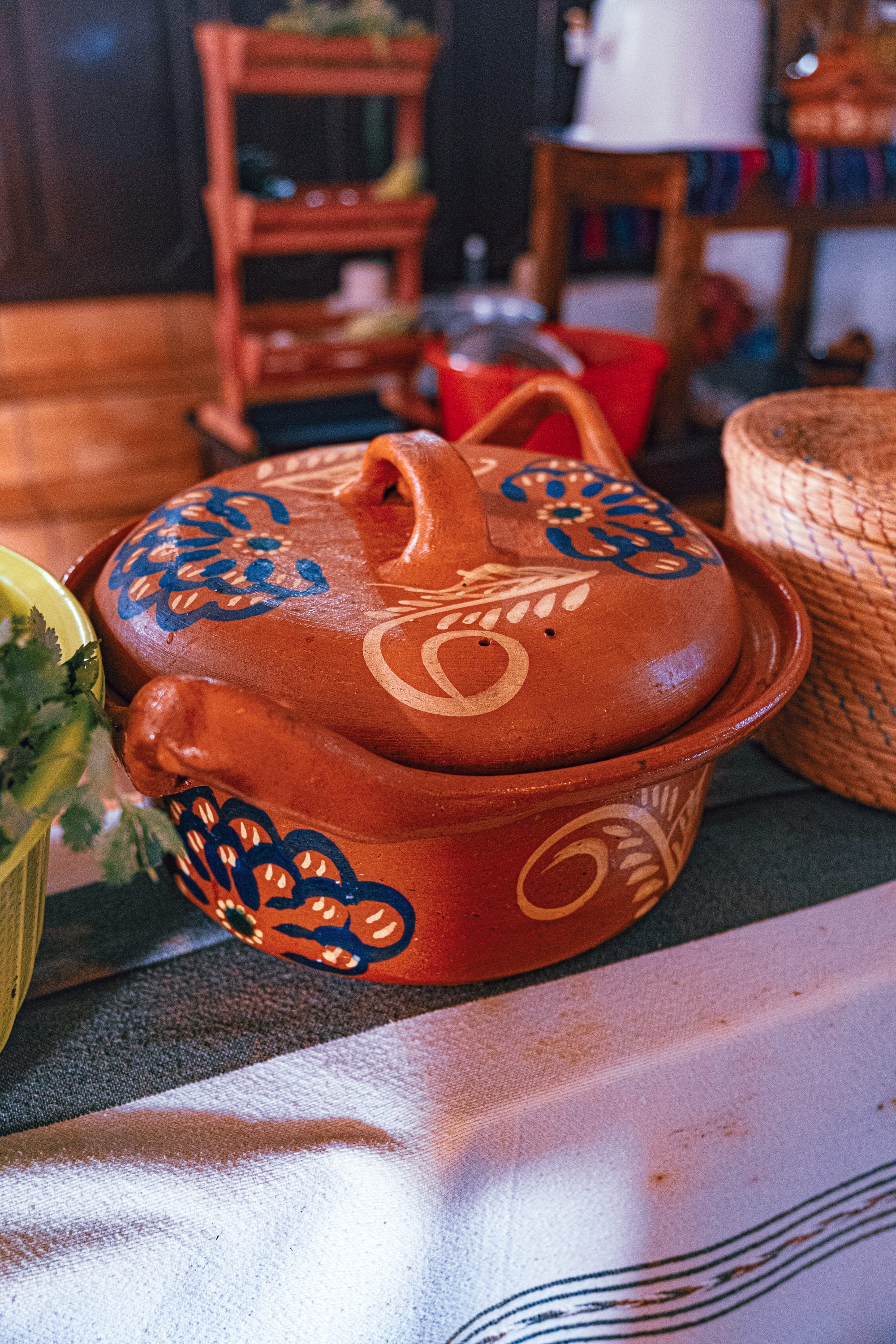
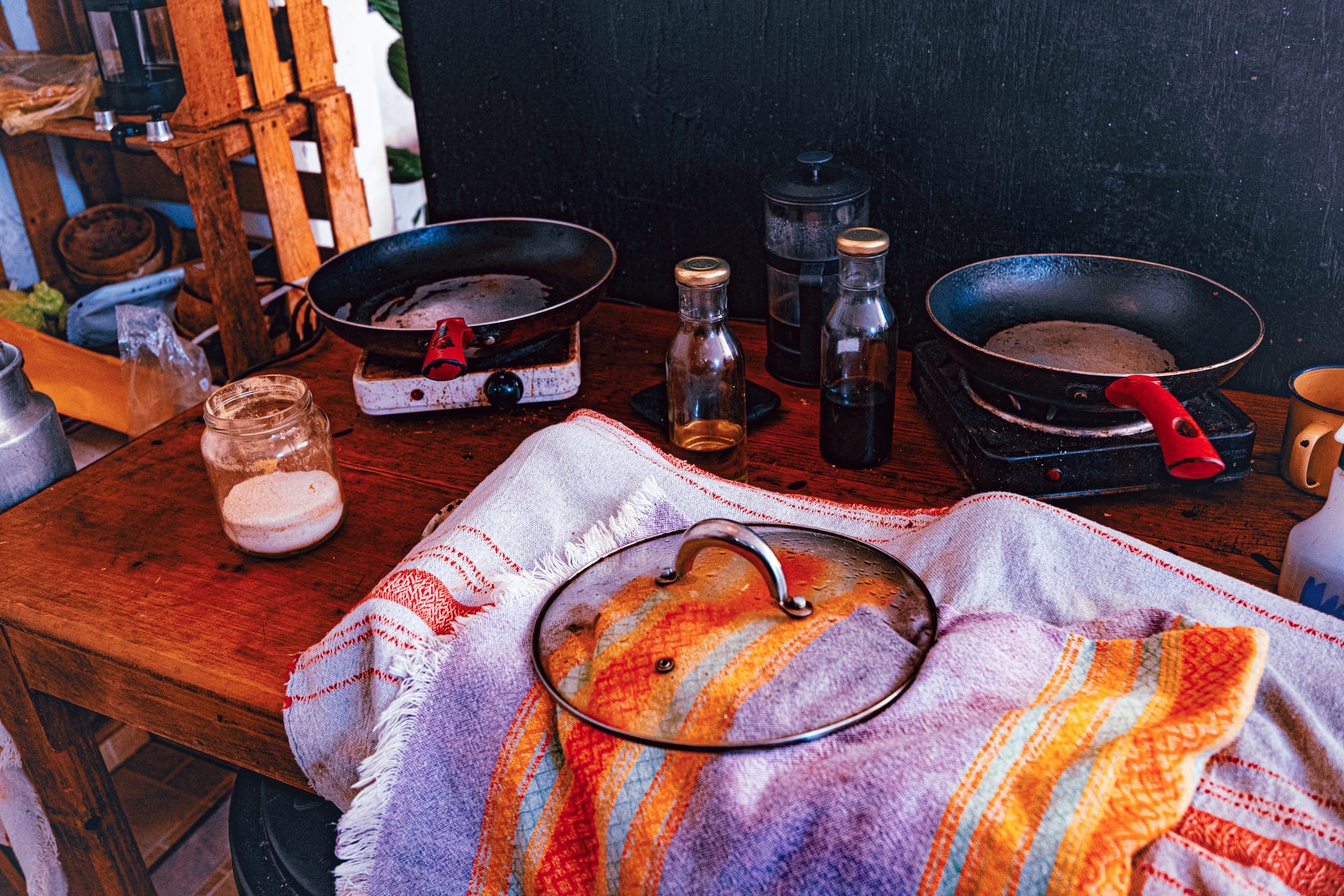
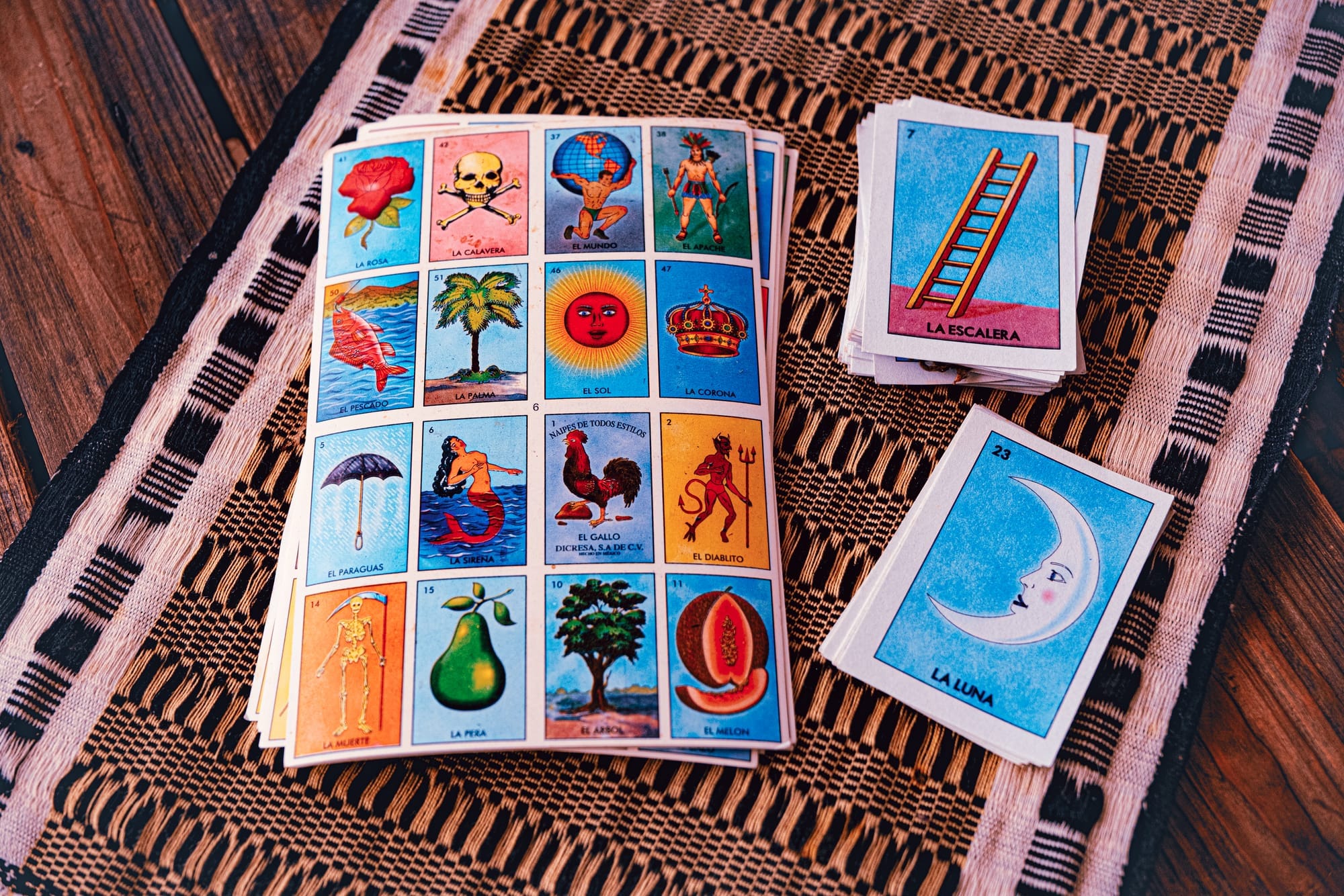
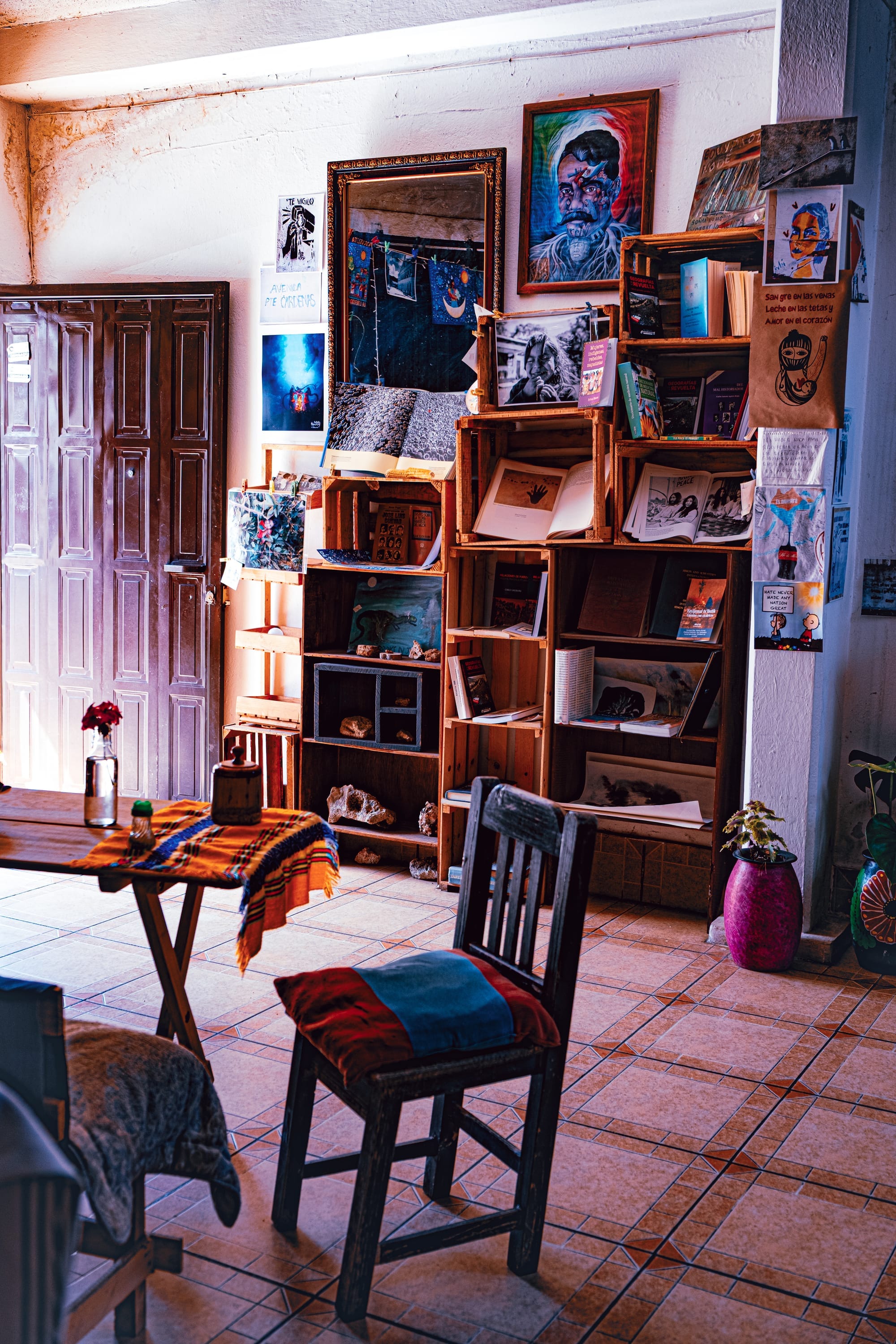
Scenes from Art Libreria, our favorite vegan restaurant in San Cristóbal de las Casas
The restaurant really does have a special energy, and you can see it in the carefully chosen collection of objects on its shelves.
Why we wanted to learn from Gerardo
After enough meals, we got curious. We didn’t only want to know how to copy a dish. We wanted to know how a place like this holds together: what decisions, what refusals, and what priorities shape how it runs day to day.
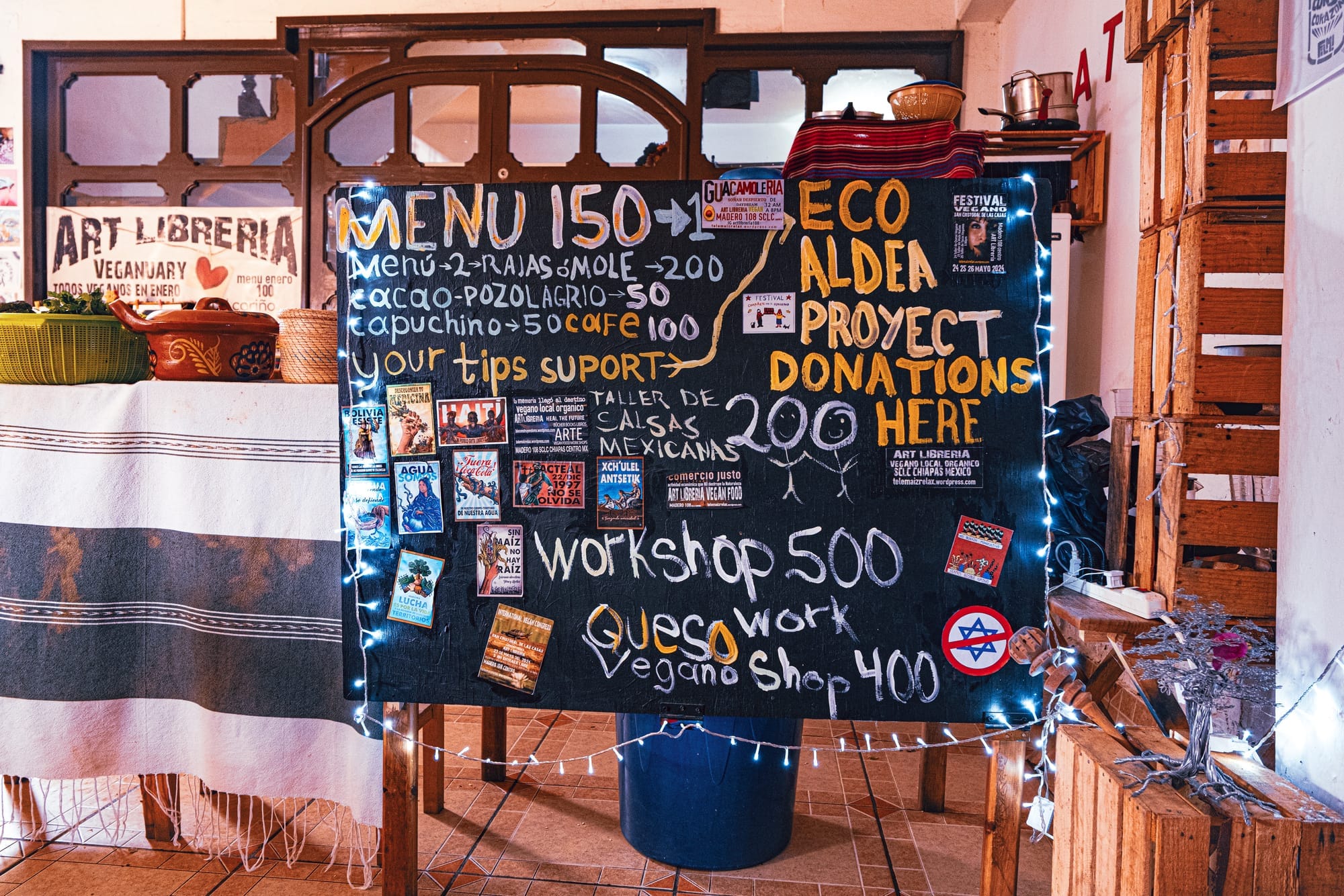
So we signed up for his vegan cooking class. We wanted to be in the room where the work happens, to stand near the stove, smell the poblano blistering, and watch how Gerardo treats each ingredient as if it has its own story.
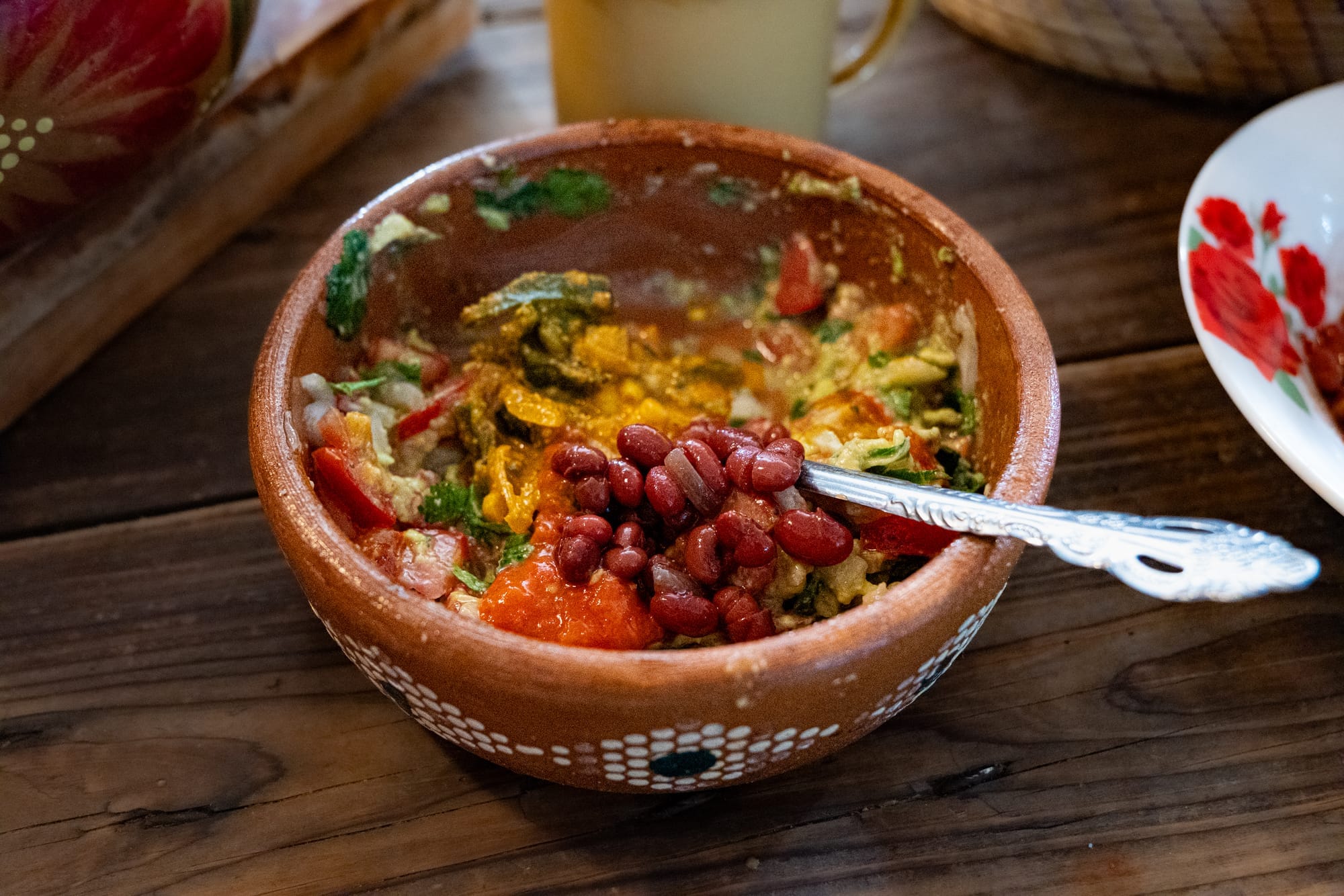
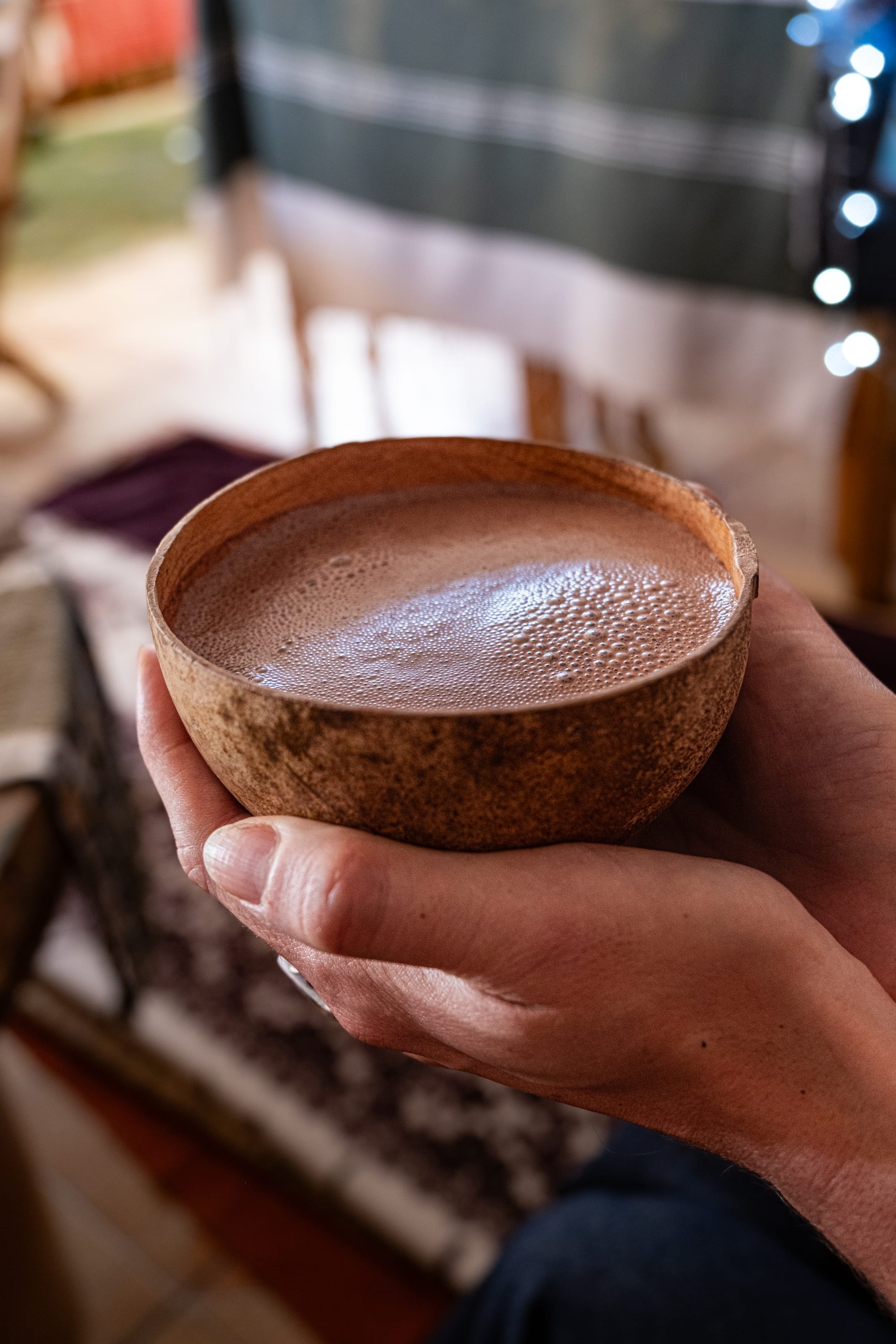
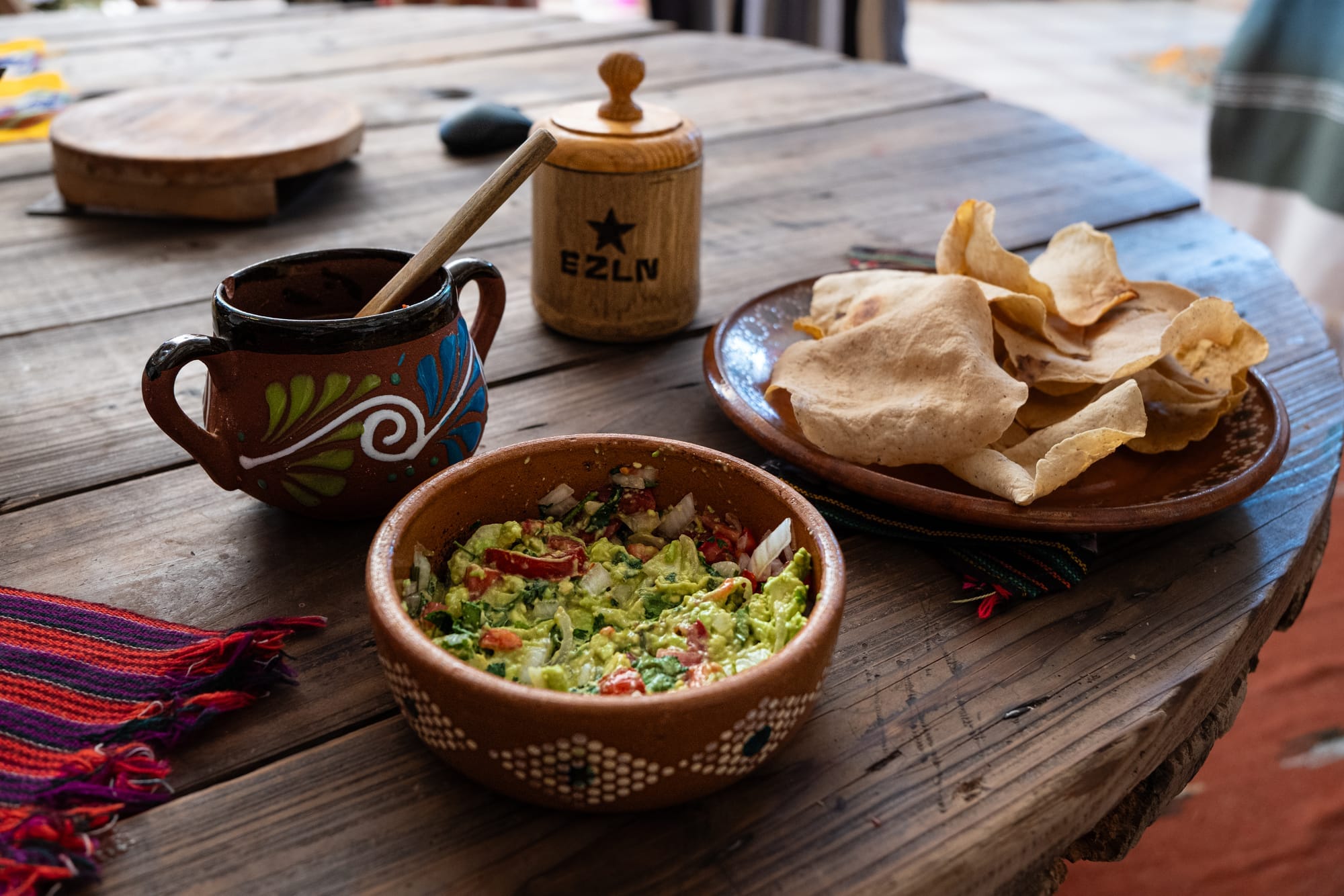
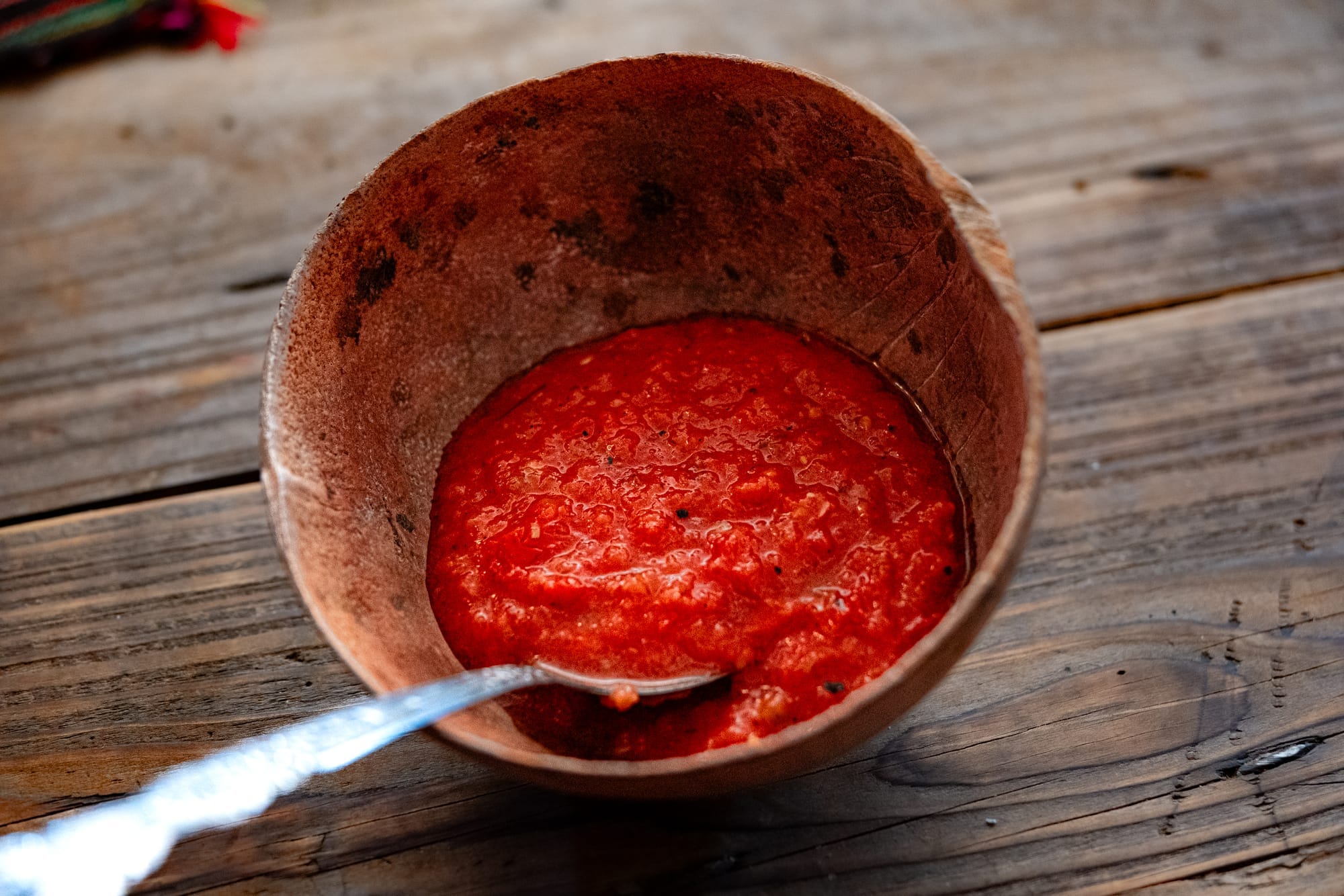
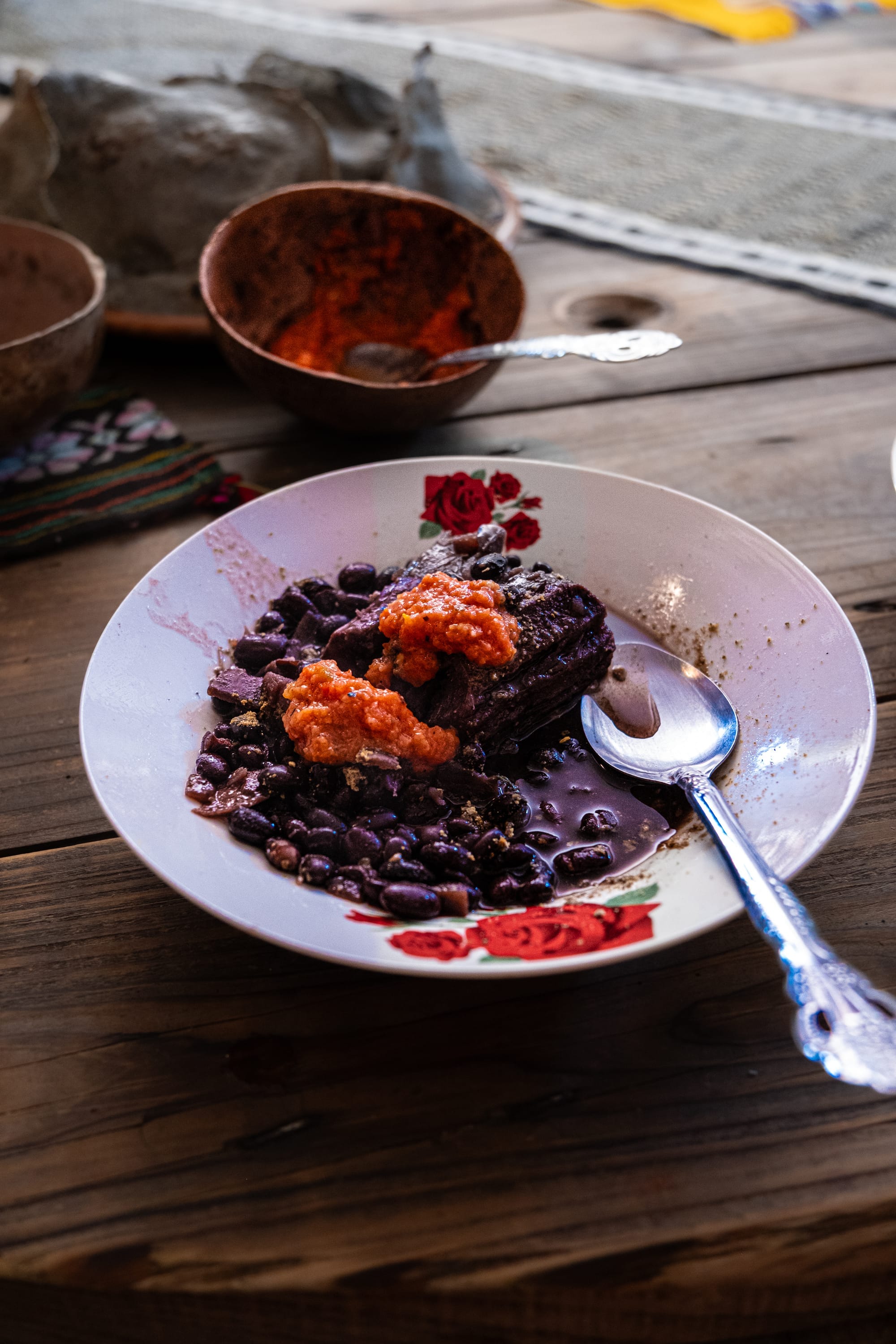
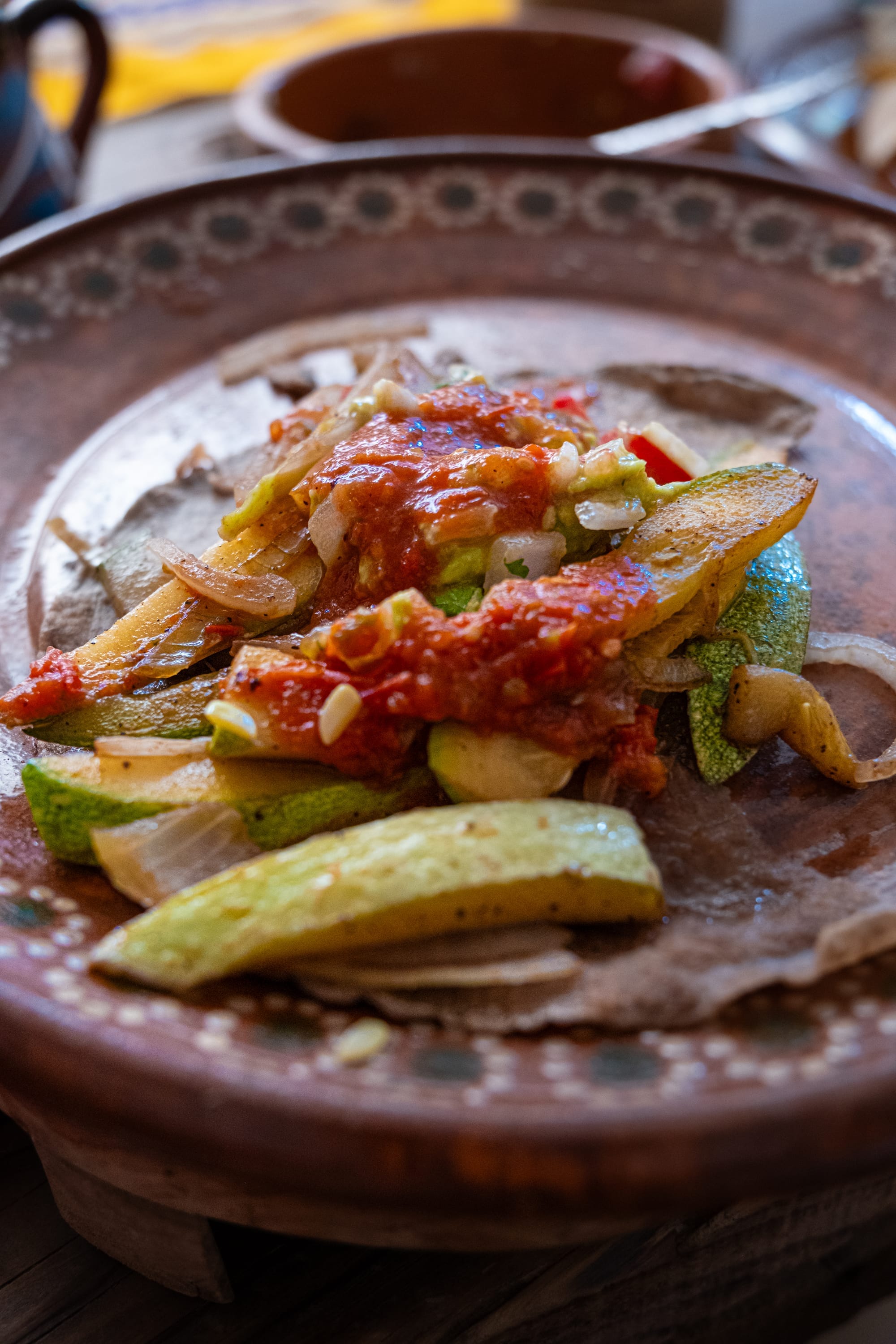
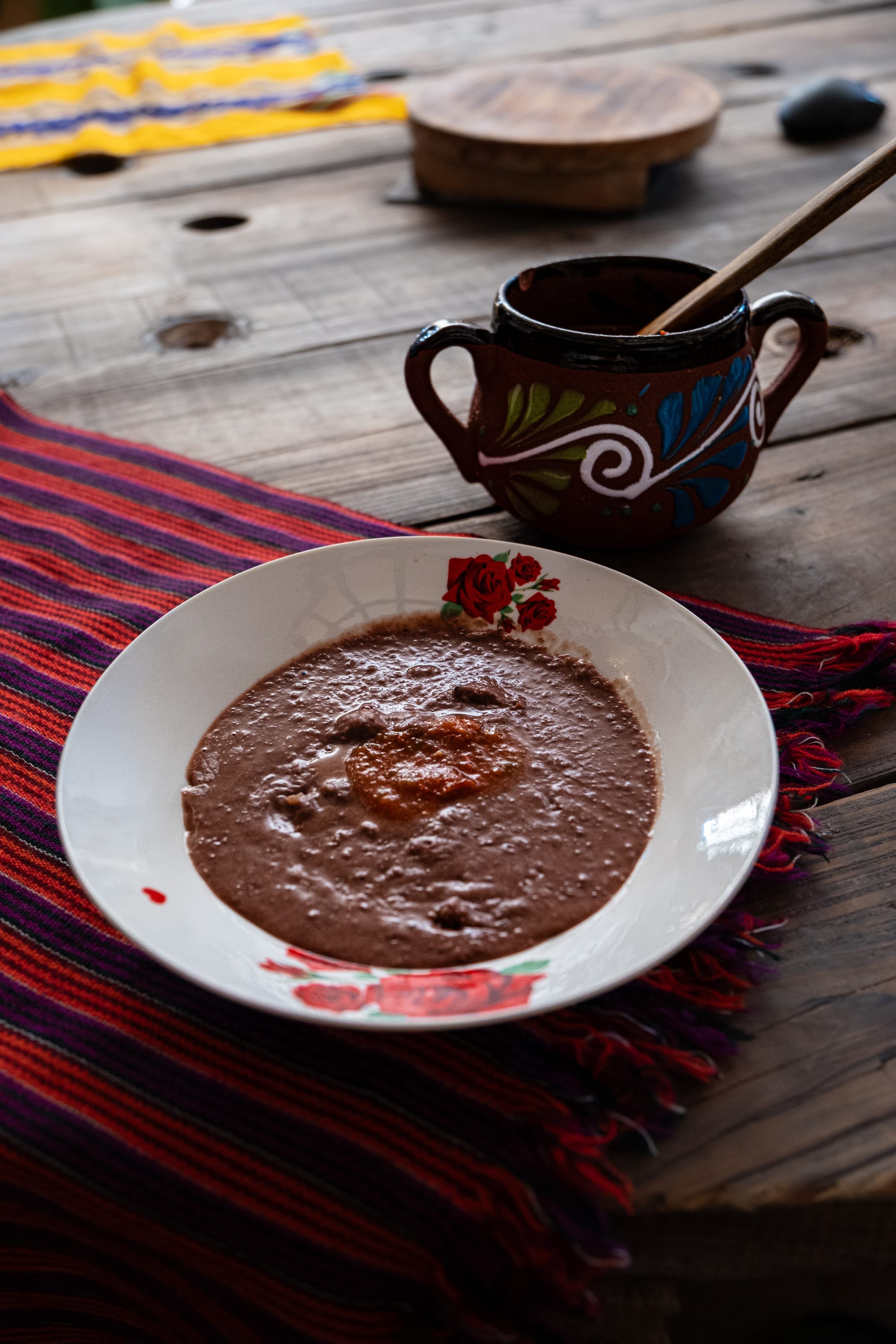
Some of our favorite vegan and organic dishes at Art Libreria
We’d eaten at Art Libreria a number of times, so we really wanted to see how our favorite dishes were made.
What a normal meal at Art Libreria is like
If you want to try the food before you commit to a class, eat there first, as we did. According to HappyCow reviews, lunch is a set menu of the day, often several courses: soup, rolled tacos, guacamole, mole or enmoladas, vegetables with vegan cheese, fresh corn tortillas, hibiscus water, and a cacao or vanilla dessert. It isn't the cheapest place in town, but the portions are generous, and everything is organic.
Rajas con queso: the main dish of the class
The dish we were most excited about, and the one the whole day was built around, was the vegan rajas con queso.
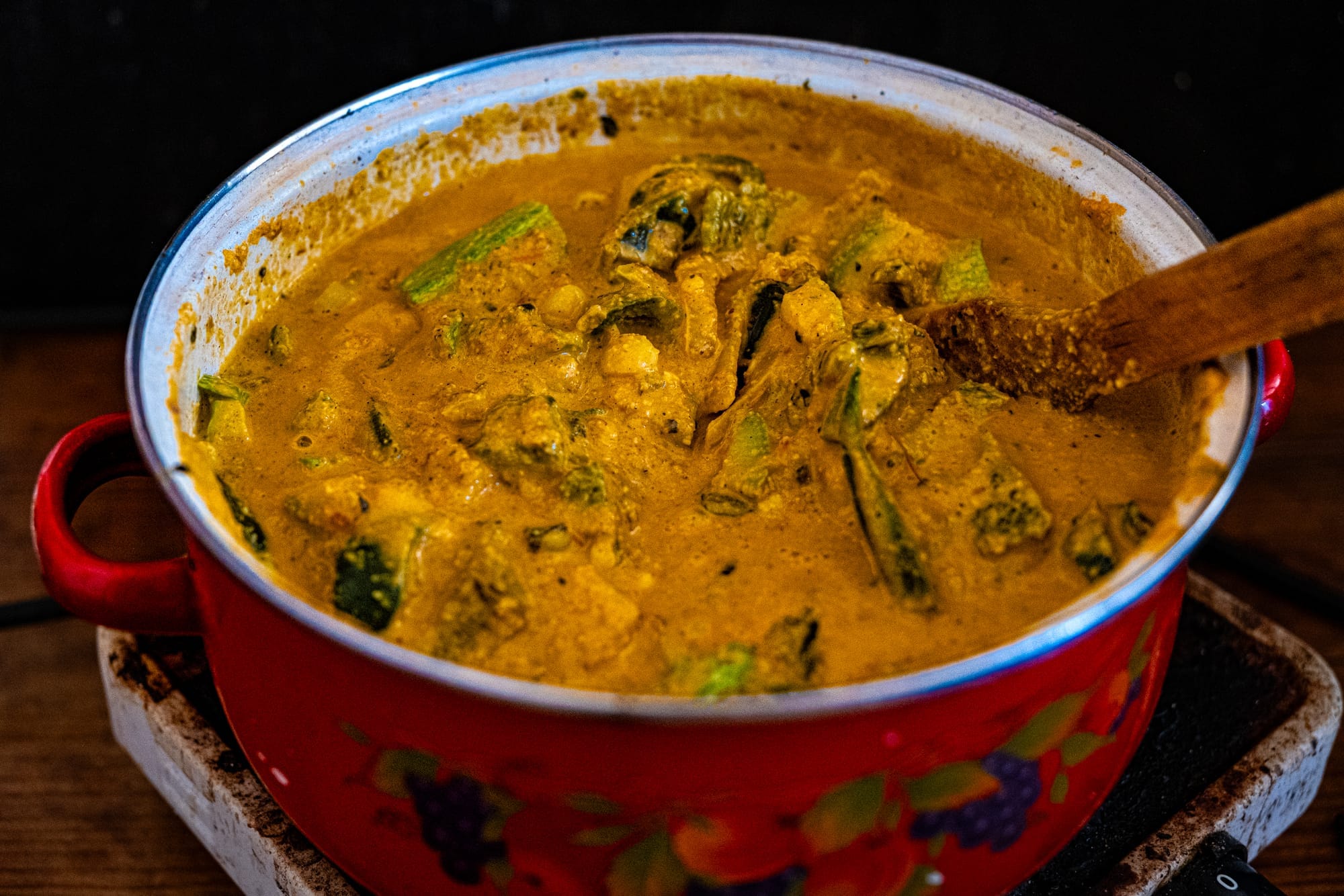
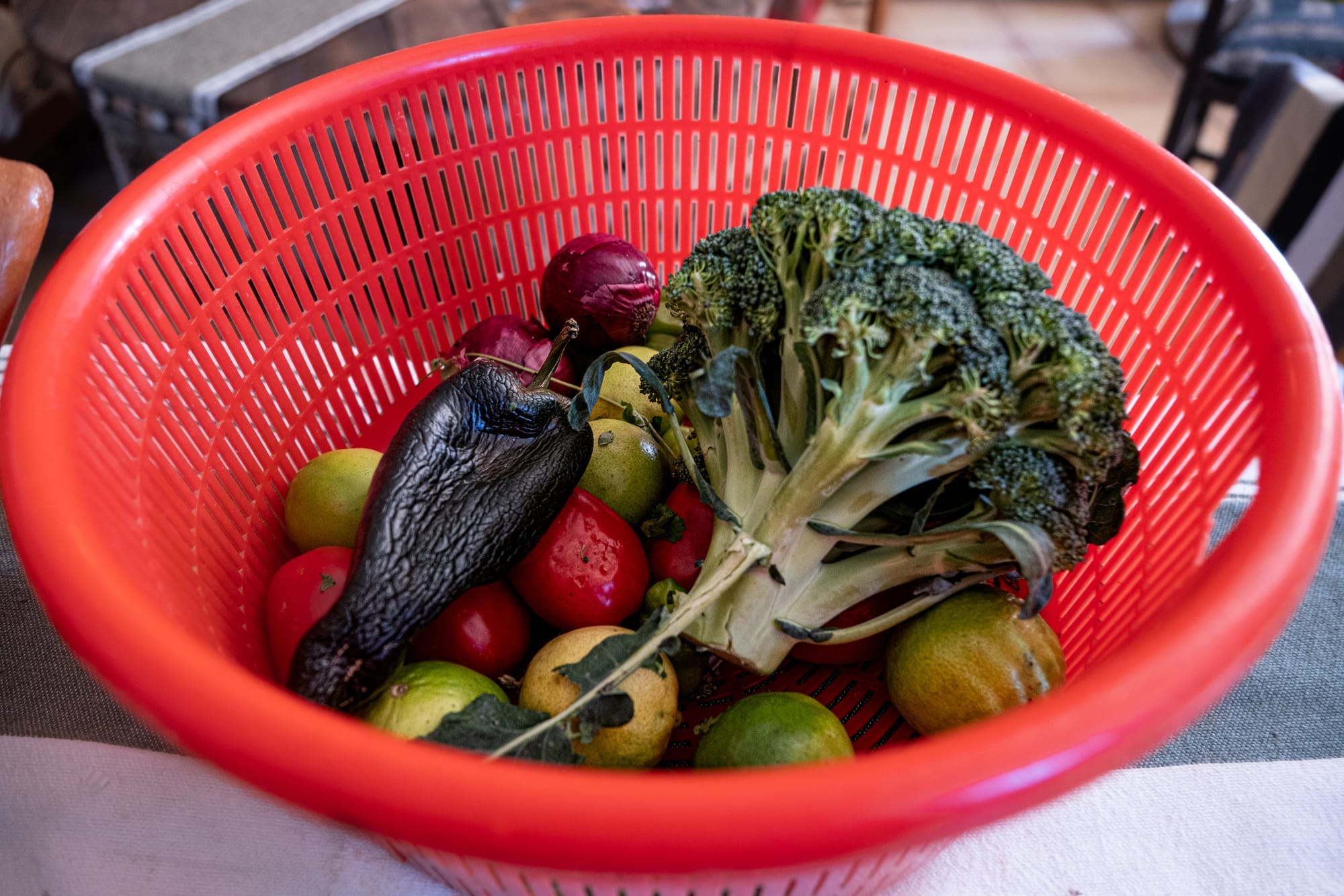
All of Gerardo's ingredients come from local organic farmers, which adds to the integrity of the dish.
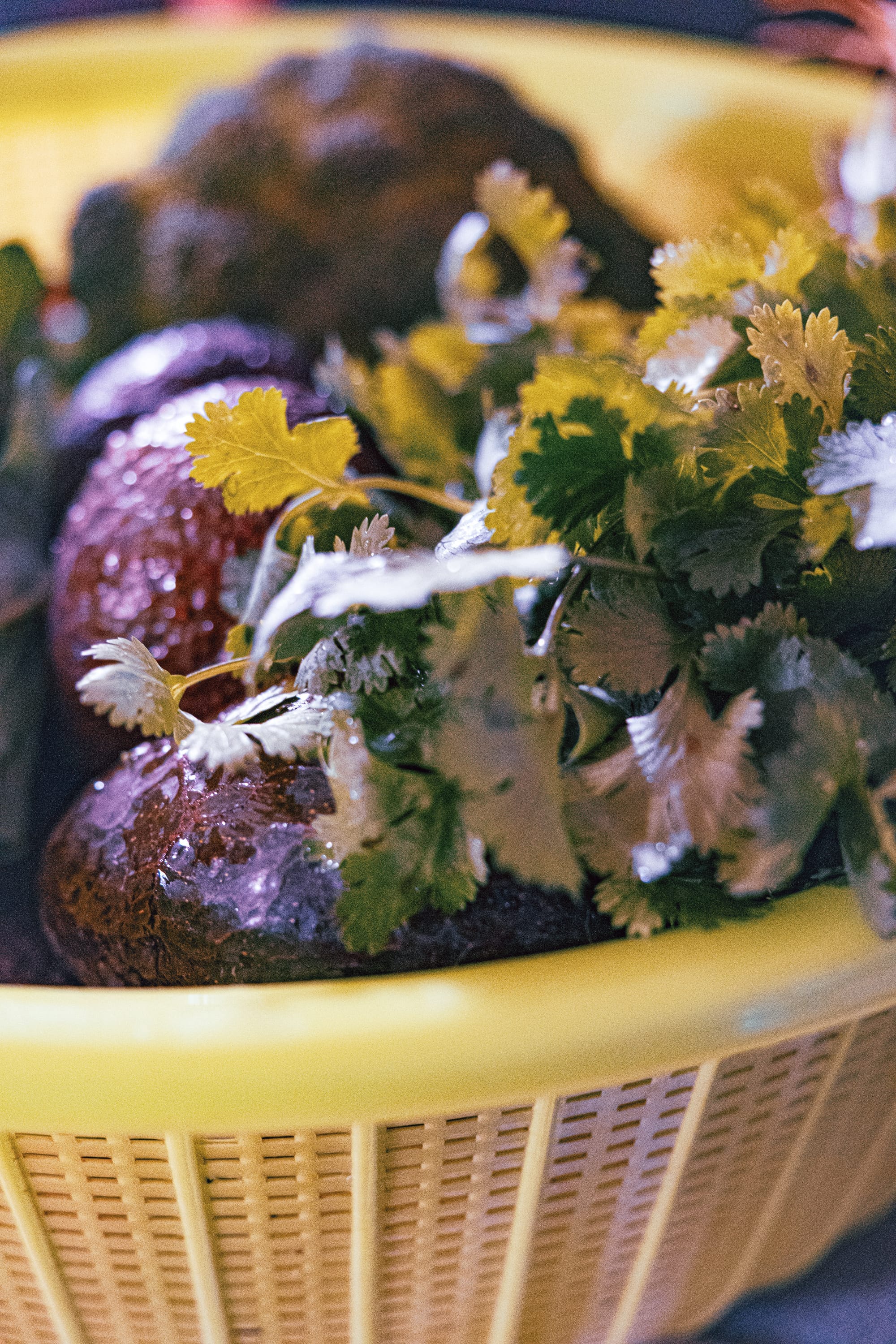
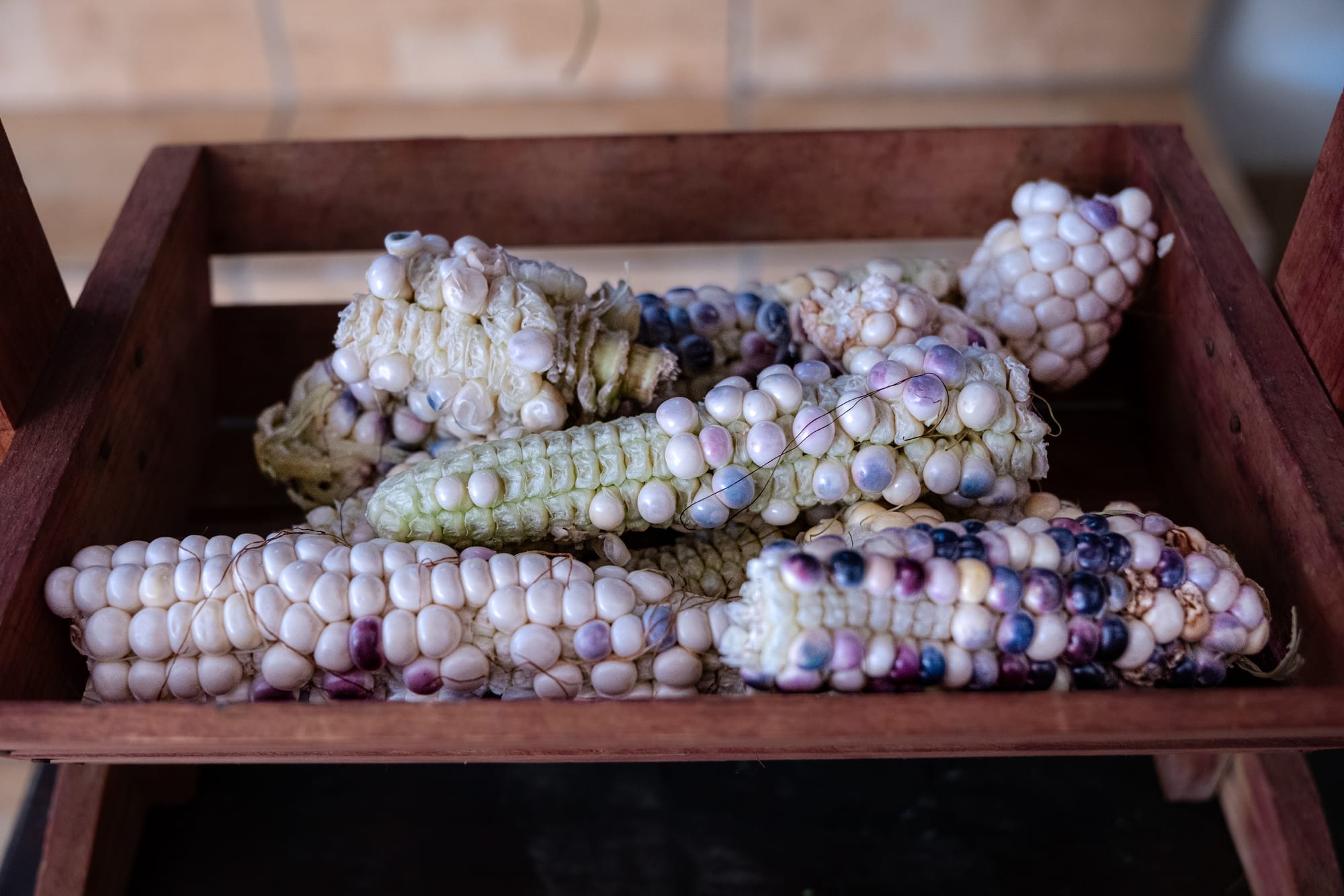
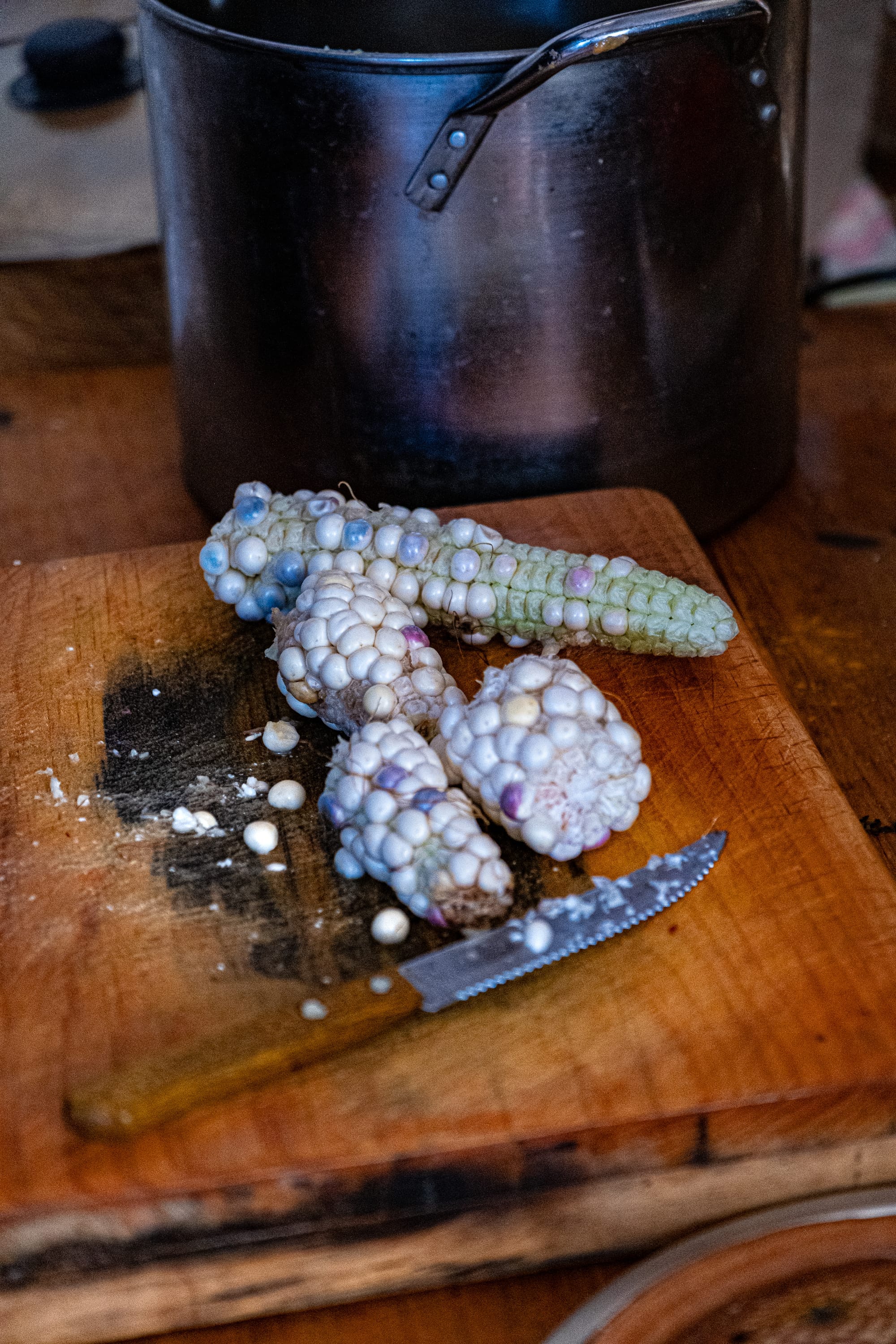
Fresh ingredients, including cilantro and avocados alongside heirloom Chiapas corn with pearly white and purple kernels
It started with poblano peppers. We held them over an open flame until the skins blackened, blistered, and peeled back. It felt almost like a ritual: turning them bit by bit, waiting patiently, and the kitchen filling with the smell of char.
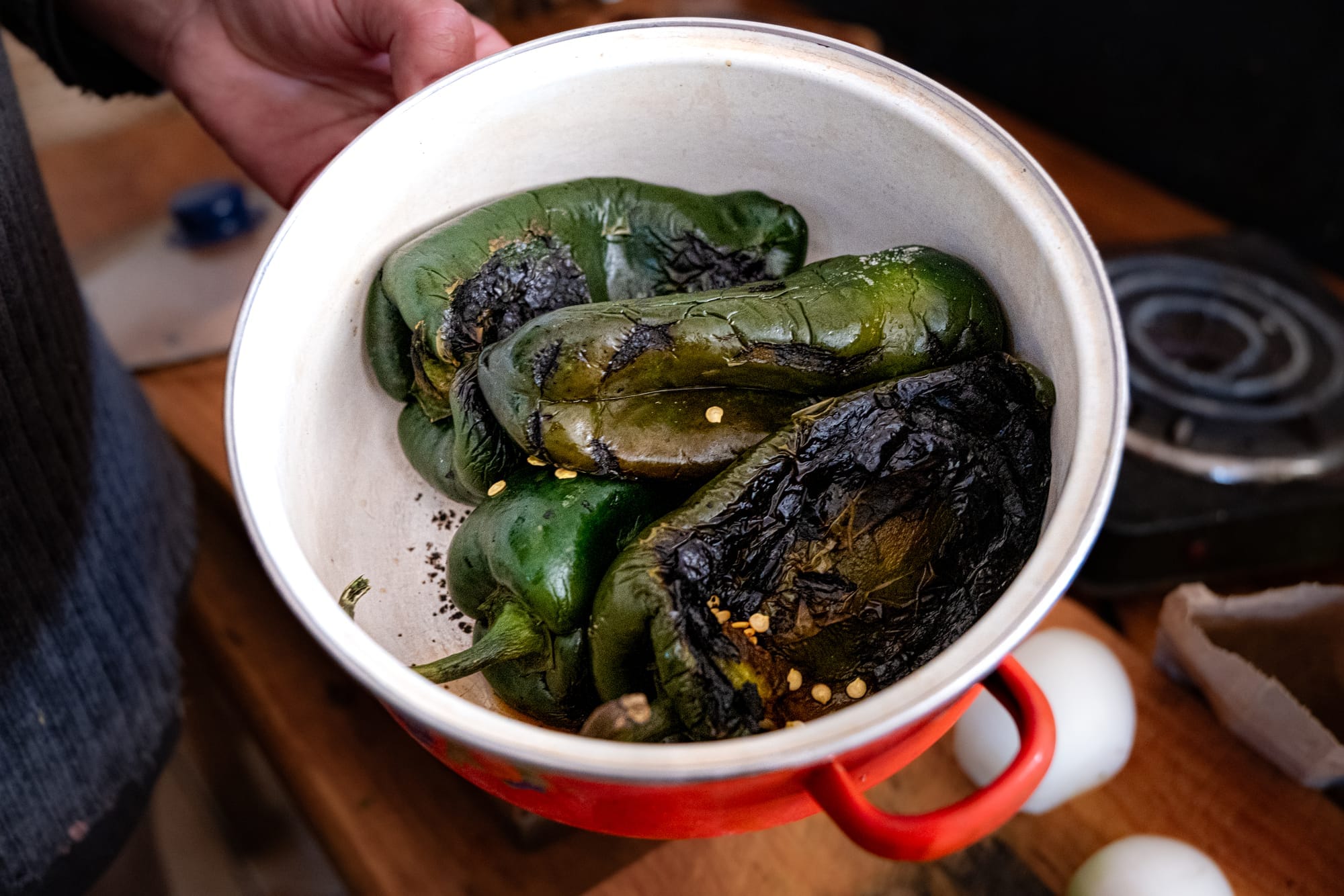
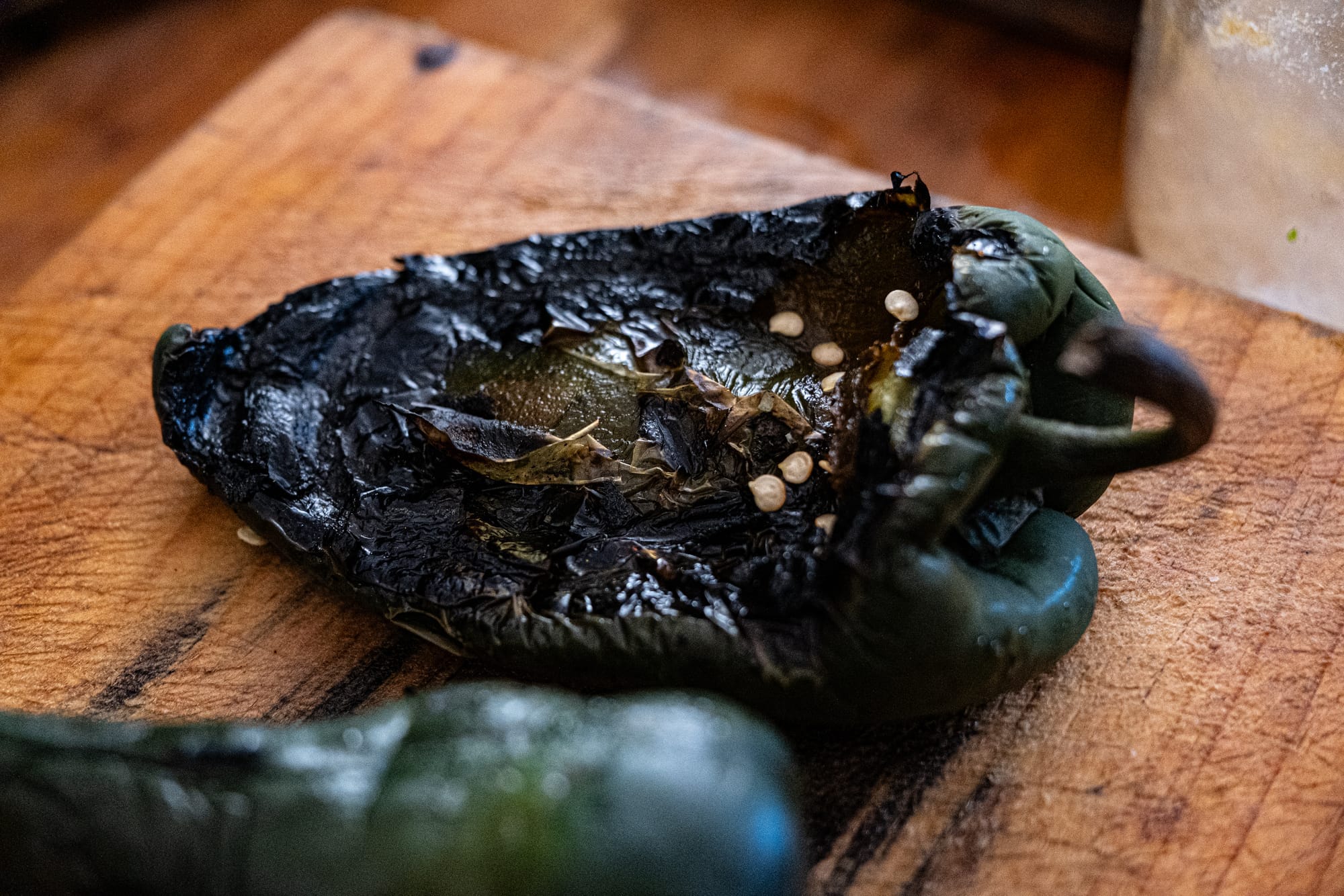
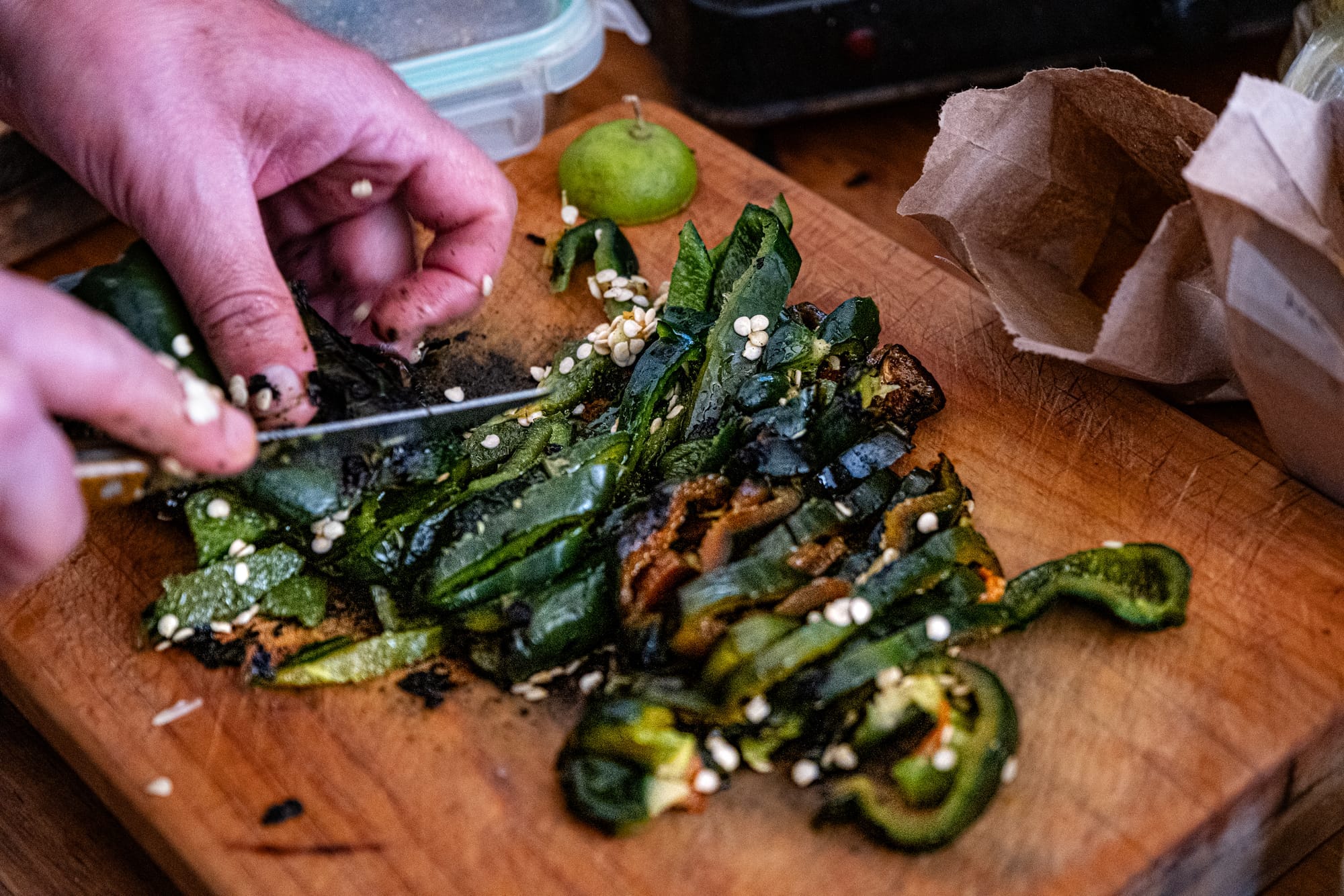
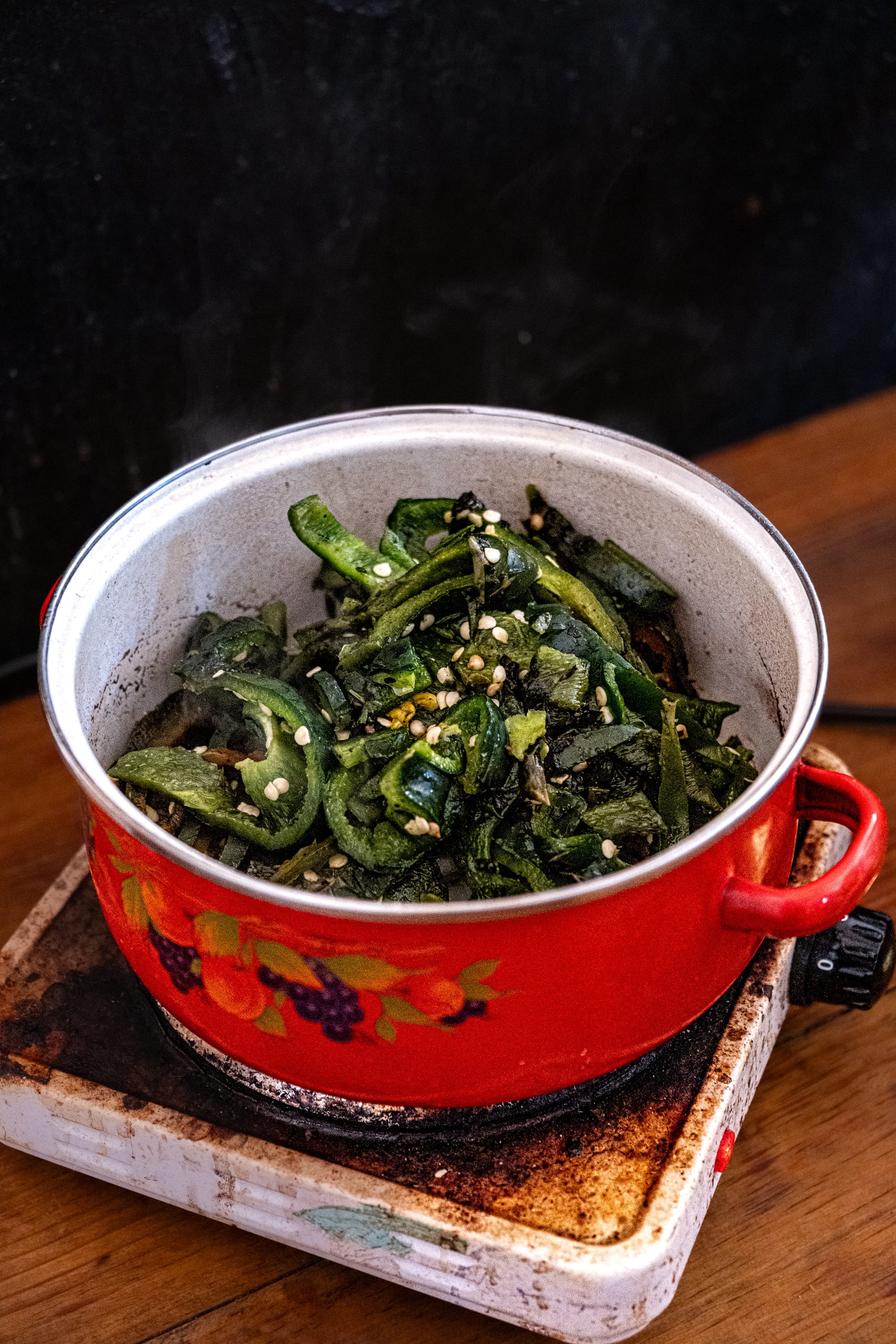
Fire-softened poblano peppers are peeled, sliced, and eased into the pot
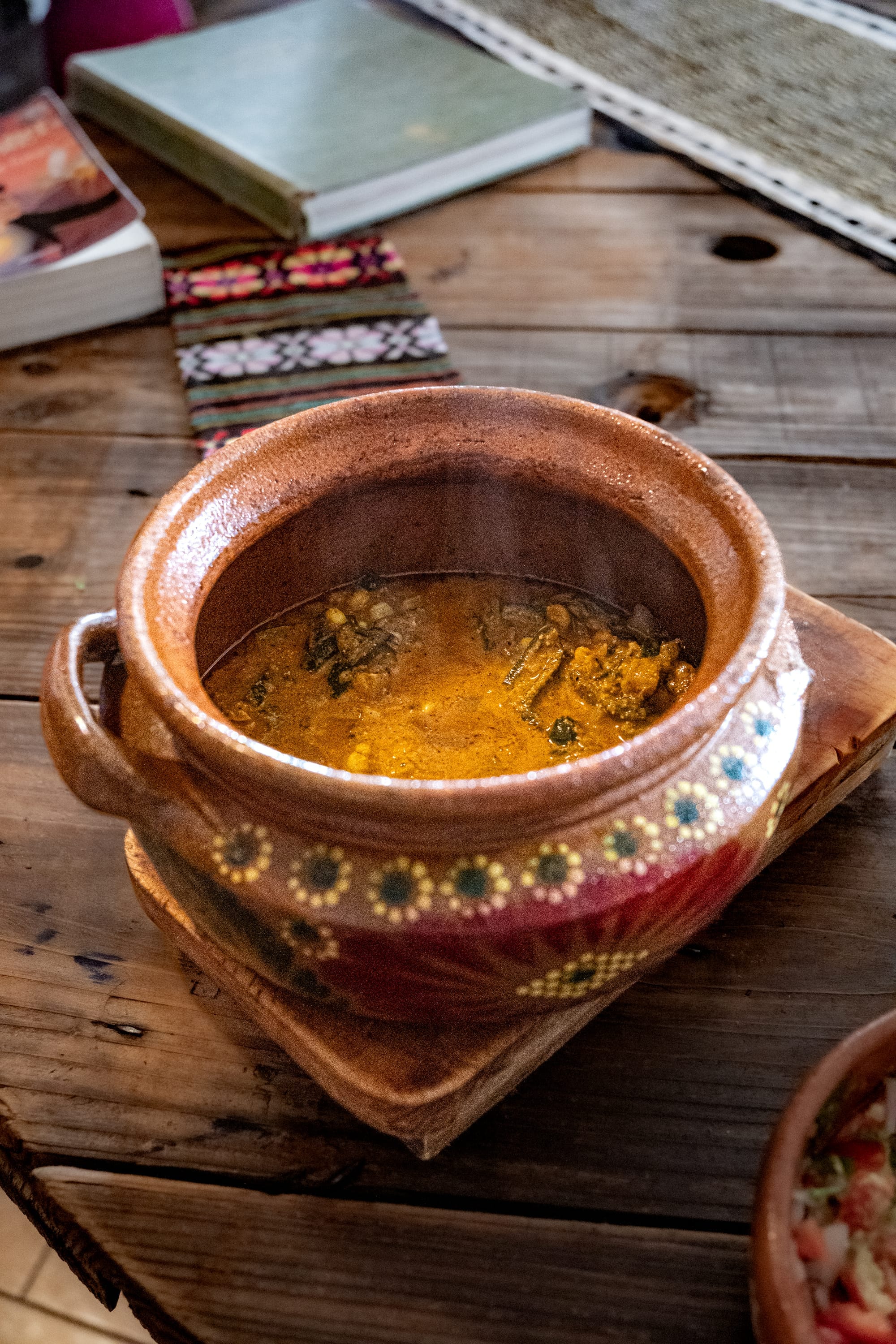
Then the queso. This isn’t the kind that relies on processed shortcuts. It’s made from almonds, tomatoes, onion, sea salt, turmeric, and paprika, all blended into a broth that was warm, reddish, and surprisingly lively. It showed us that vegan cooking doesn’t need to copy dairy to be complete. It can be its own thing entirely, proud and rooted in local food.
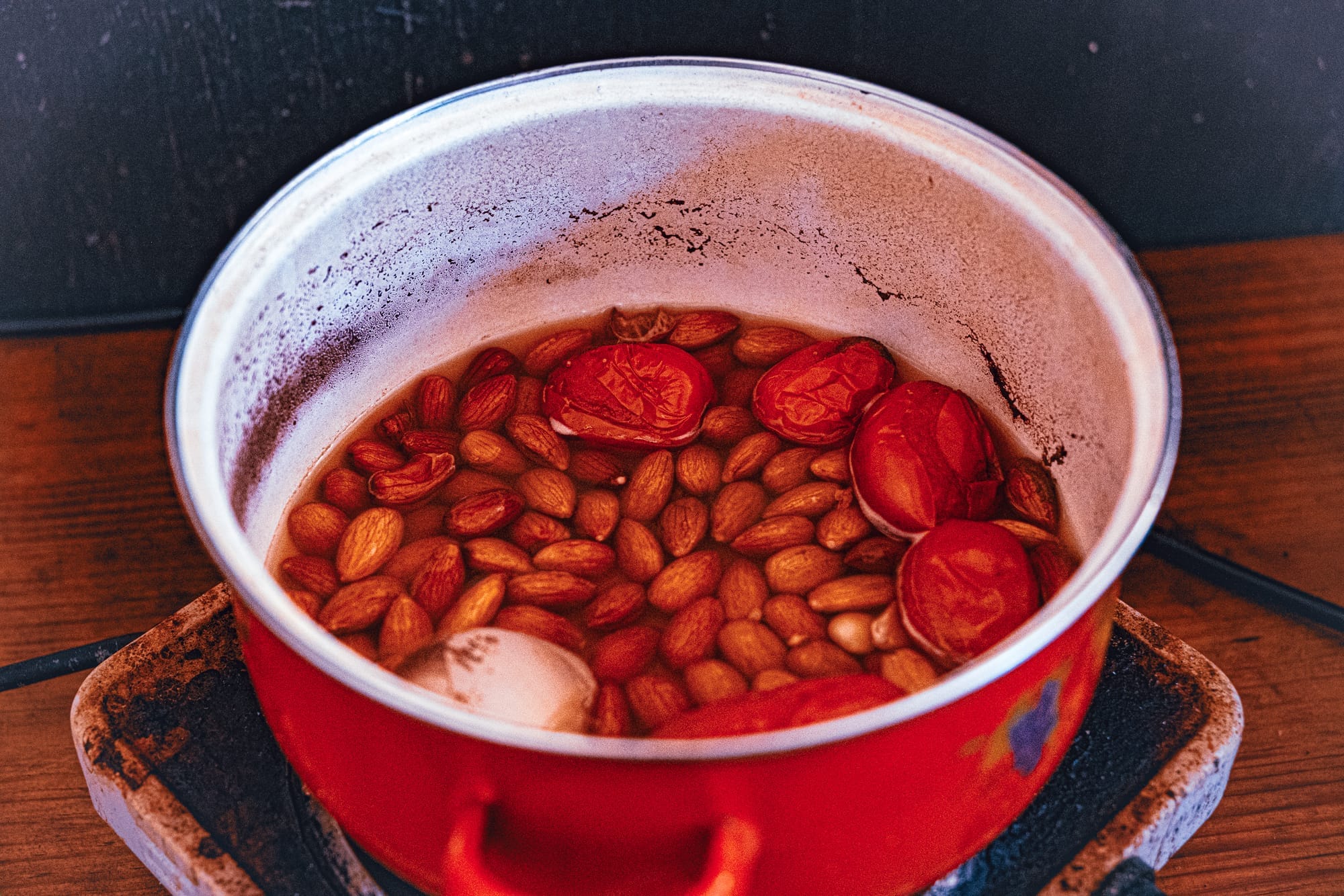
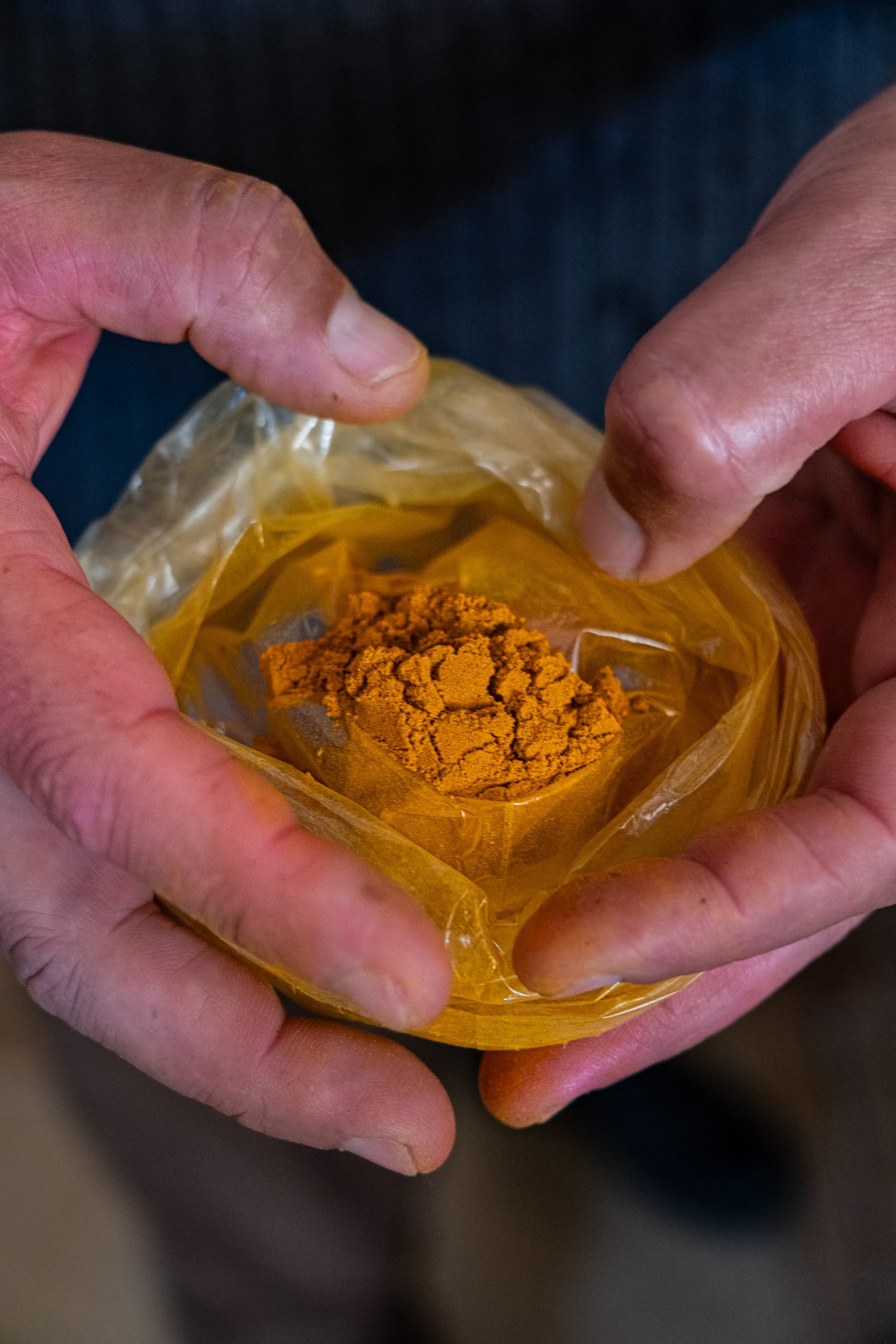
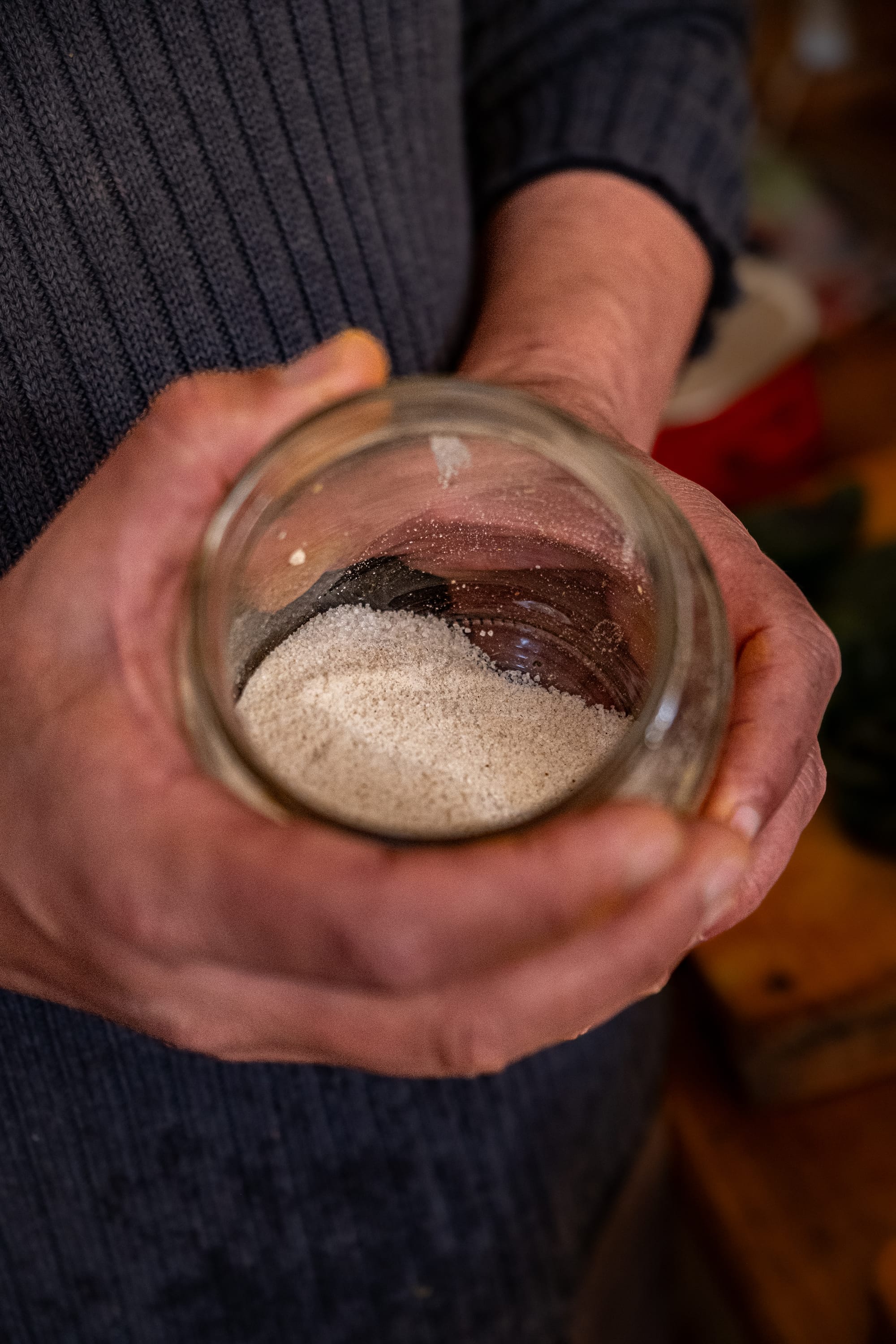
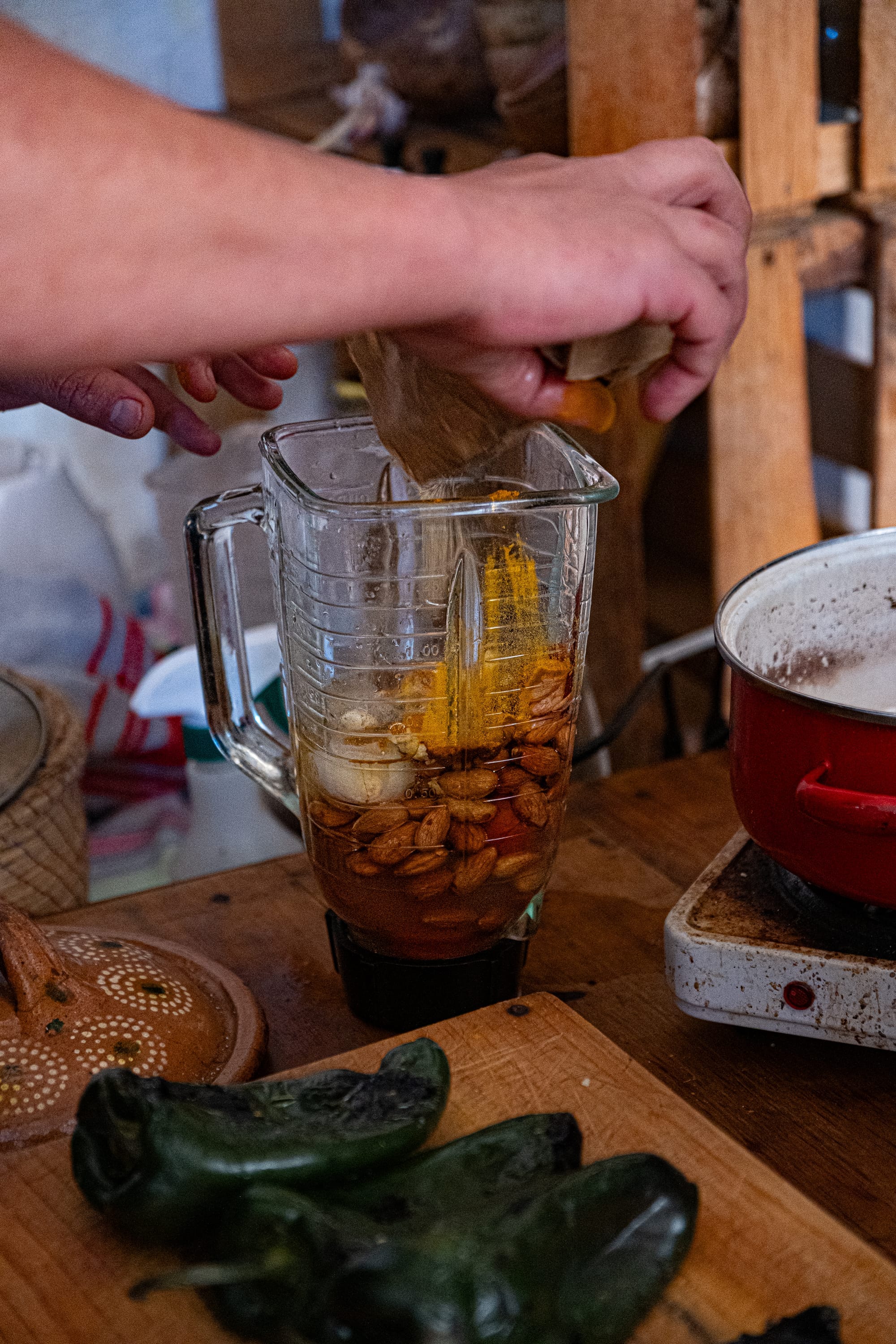
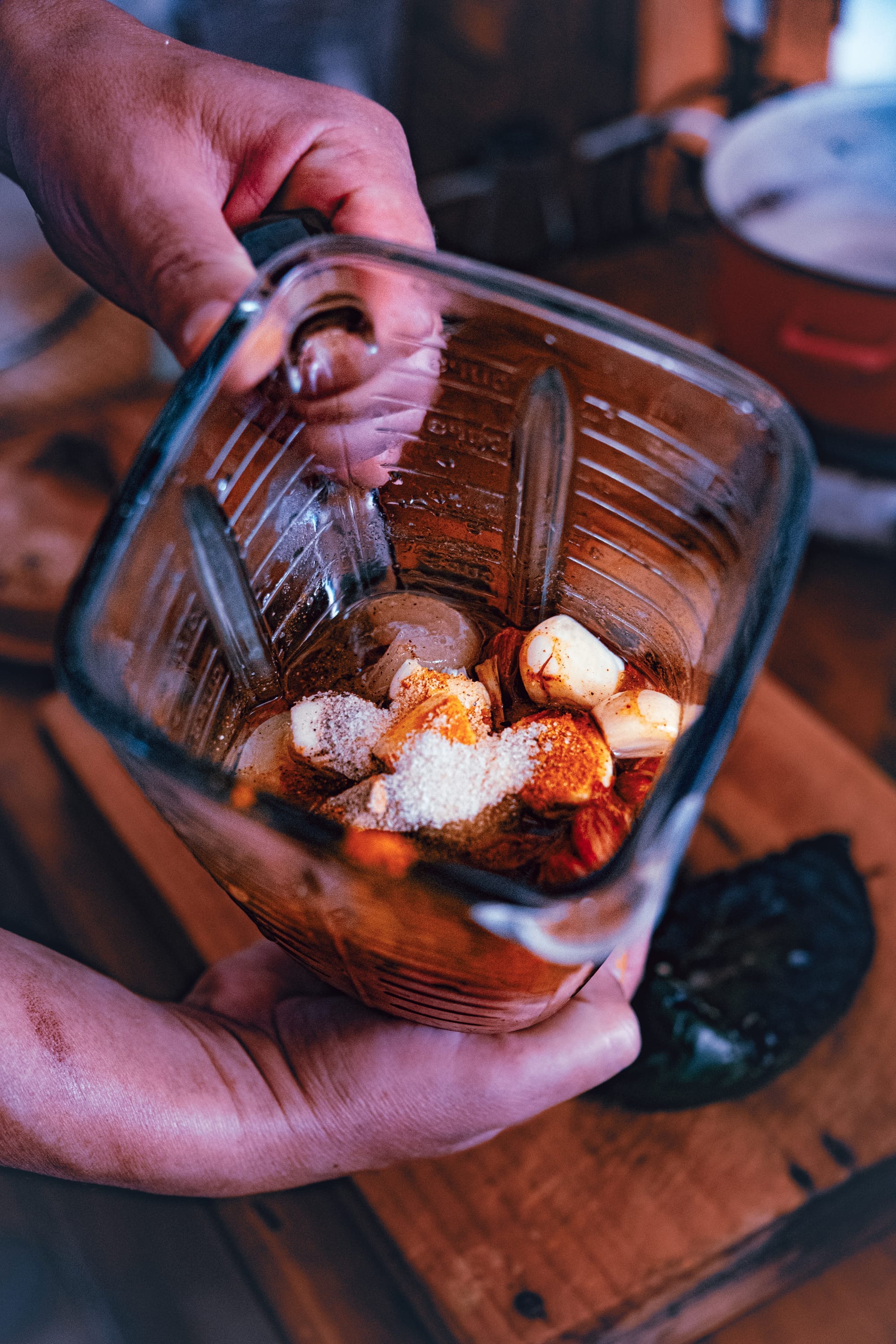
Making the vegan queso
Gerardo had us add slices of zucchini, broccoli, and corn, which all softened and soaked up the flavor of the broth. Steam curled up, the smell got deeper, and for a moment the whole room seemed to pause and watch the dish come together.
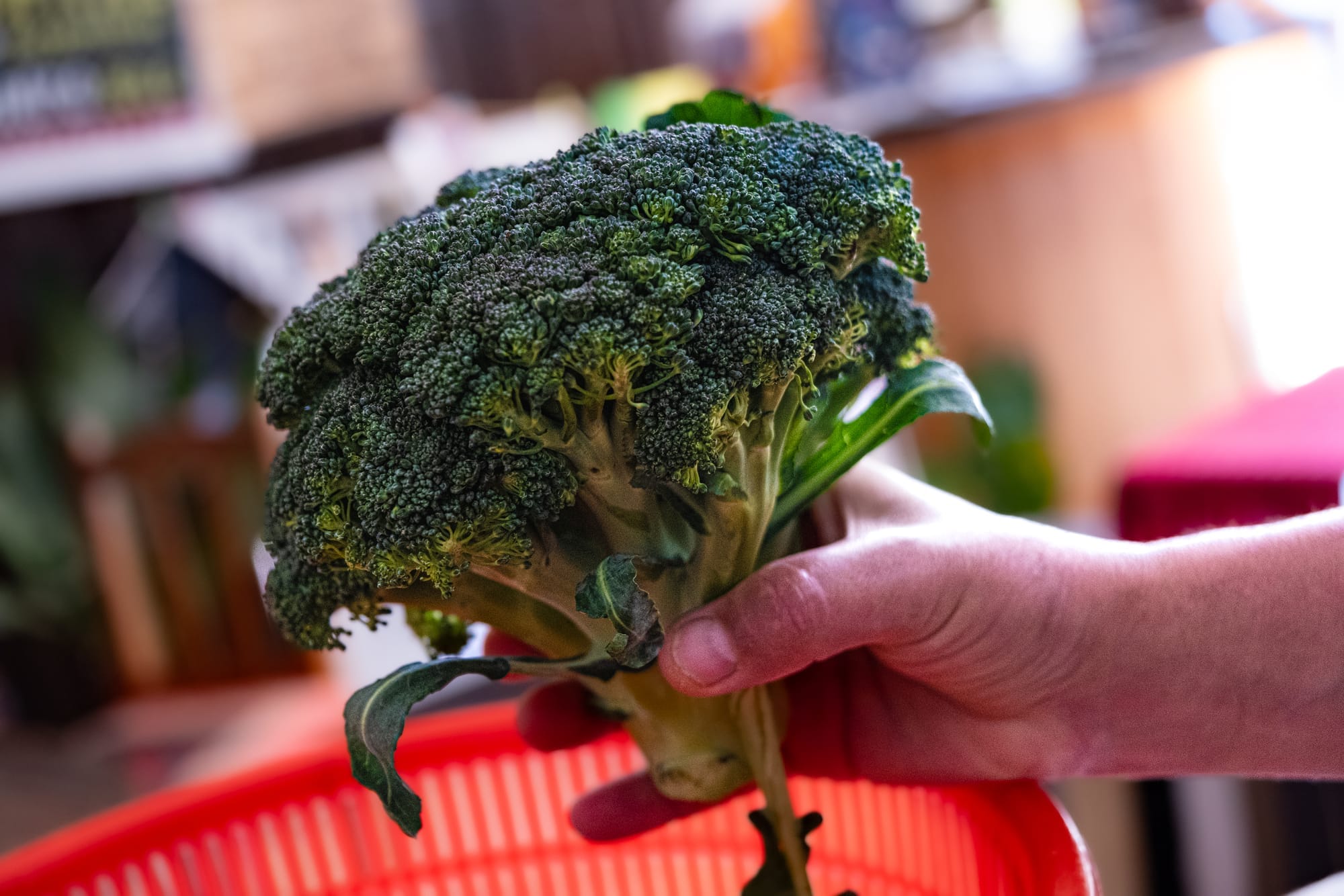
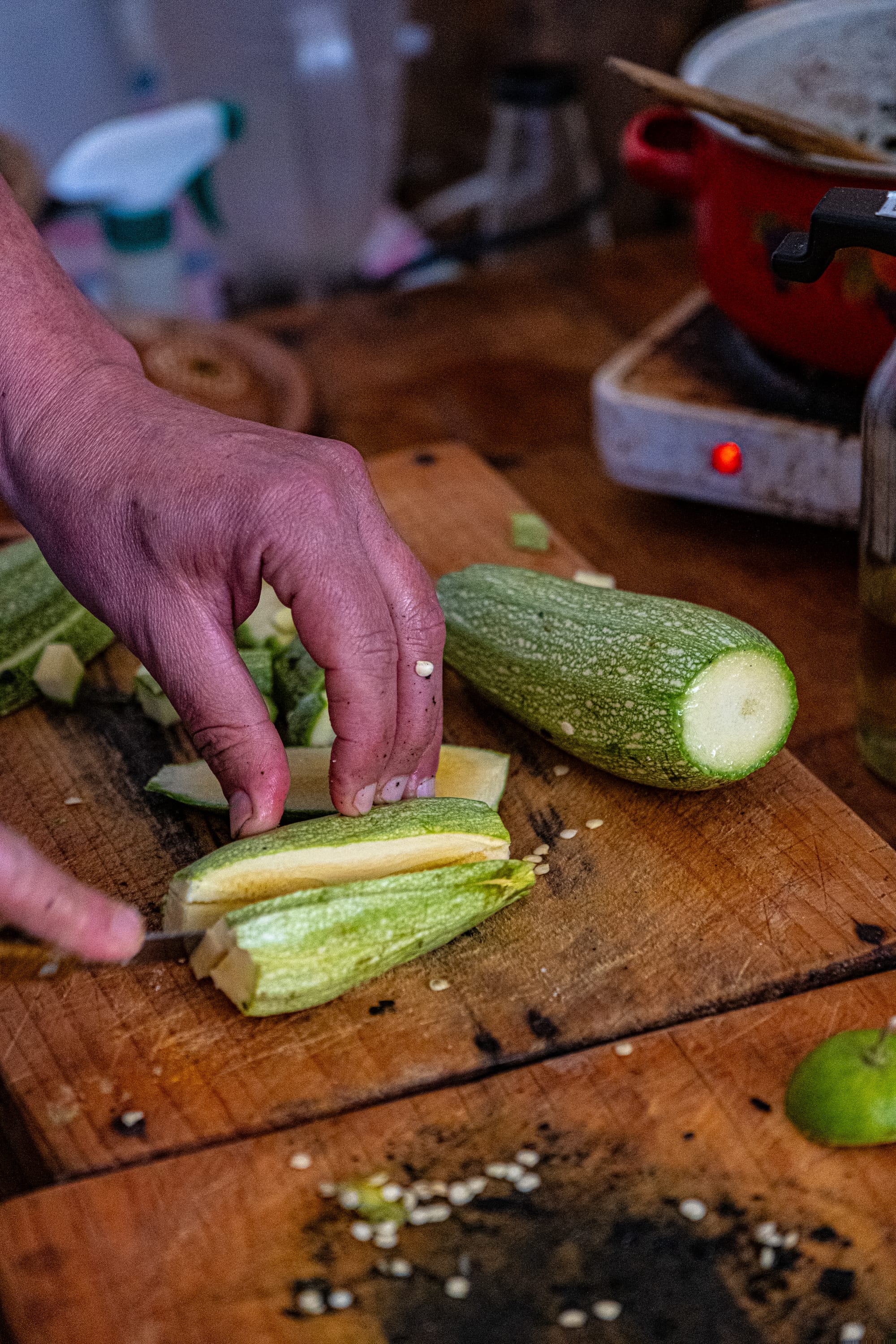
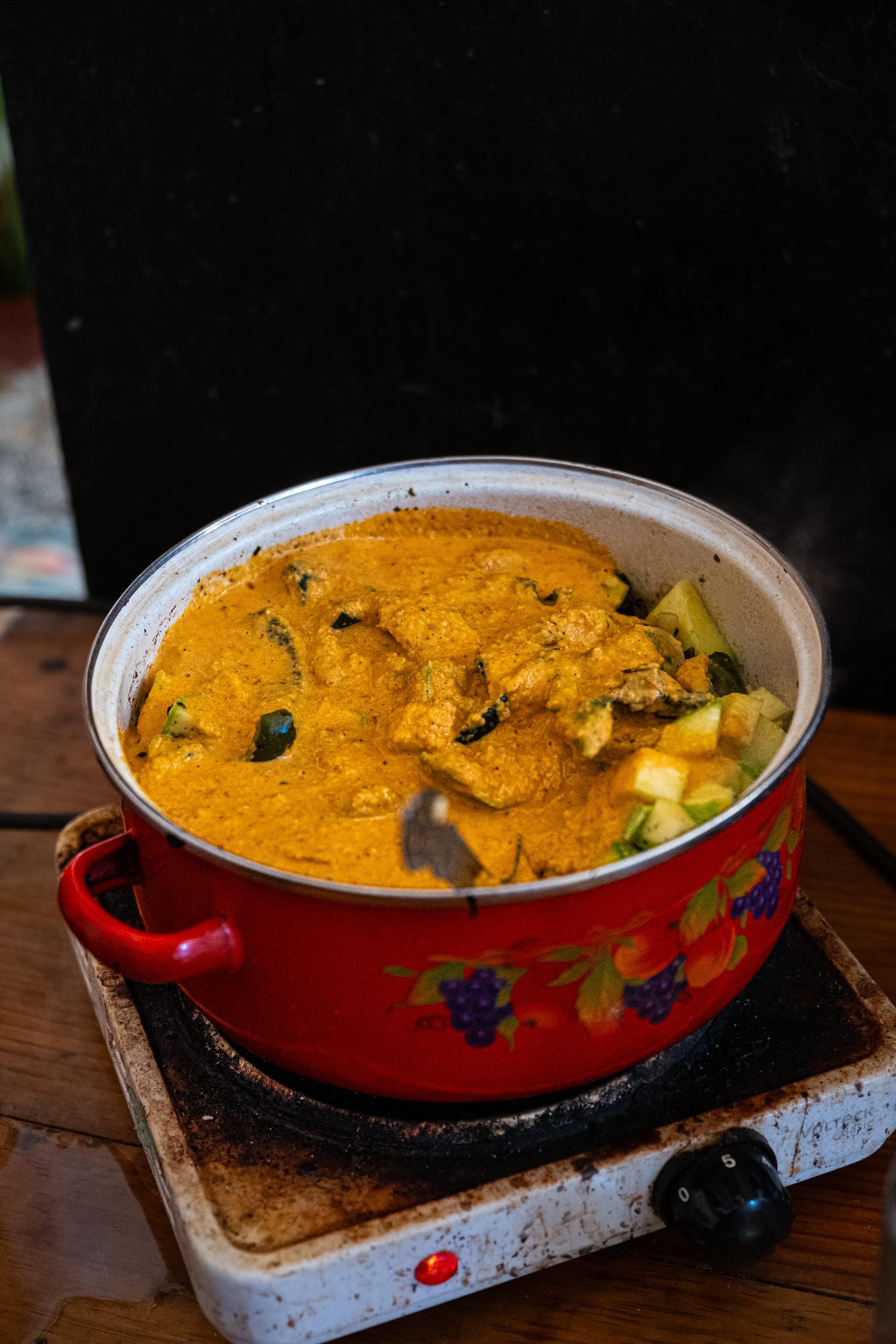
Broccoli, zucchini, and corn add to the depth of flavor
What struck us wasn’t how complex the dish was. It was the care: care for the ingredients, care for the process, and care for the land all of it came from.
What rajas con queso is, and how the vegan version differs
Rajas means "strips" in Spanish, and the dish is usually strips of roasted poblano pepper cooked with cream or cheese (rajas con crema is the best-known version). It's popular in central and southern Mexico, often with corn added. Gerardo swaps the dairy for a blended almond base, a common way to make plant-based cheese, and adds tomato, onion, turmeric, and paprika for color and depth.
The useful part to take home: blended nuts plus salt, acid, and spices make a sauce-style vegan cheese without any cultures or special equipment. You only need a blender, which makes this one of the easiest recipes from the class to repeat at home.
How to make almond queso at home
We didn't come home with exact quantities, so this is a simple method built on the ingredients we used, not Gerardo's recipe. Adjust the salt and spice to taste.
- Soak raw almonds for a few hours (or overnight) so they blend smooth. Blanched almonds give a paler sauce.
- Blend the almonds with tomato, onion, sea salt, turmeric, paprika, and enough water to make a pourable sauce.
- Char poblano peppers over a gas flame until black all over, then cover them in a bowl for ten minutes so the skins slip off. Cut them into strips (the rajas).
- Warm the almond sauce in a pan, stirring so it doesn't catch, then add the poblano strips with zucchini, broccoli, and corn, and simmer until the vegetables are tender.
Serve it with warm corn tortillas. If you can't find poblanos at home, any large, mild green chile you can roast will work.
Other vegan dishes we cooked
We made more than rajas. Gerardo walked us through other vegan dishes, each one reflecting his wider philosophy: food as a relationship. The class was less about perfecting a recipe and more about respecting plants.
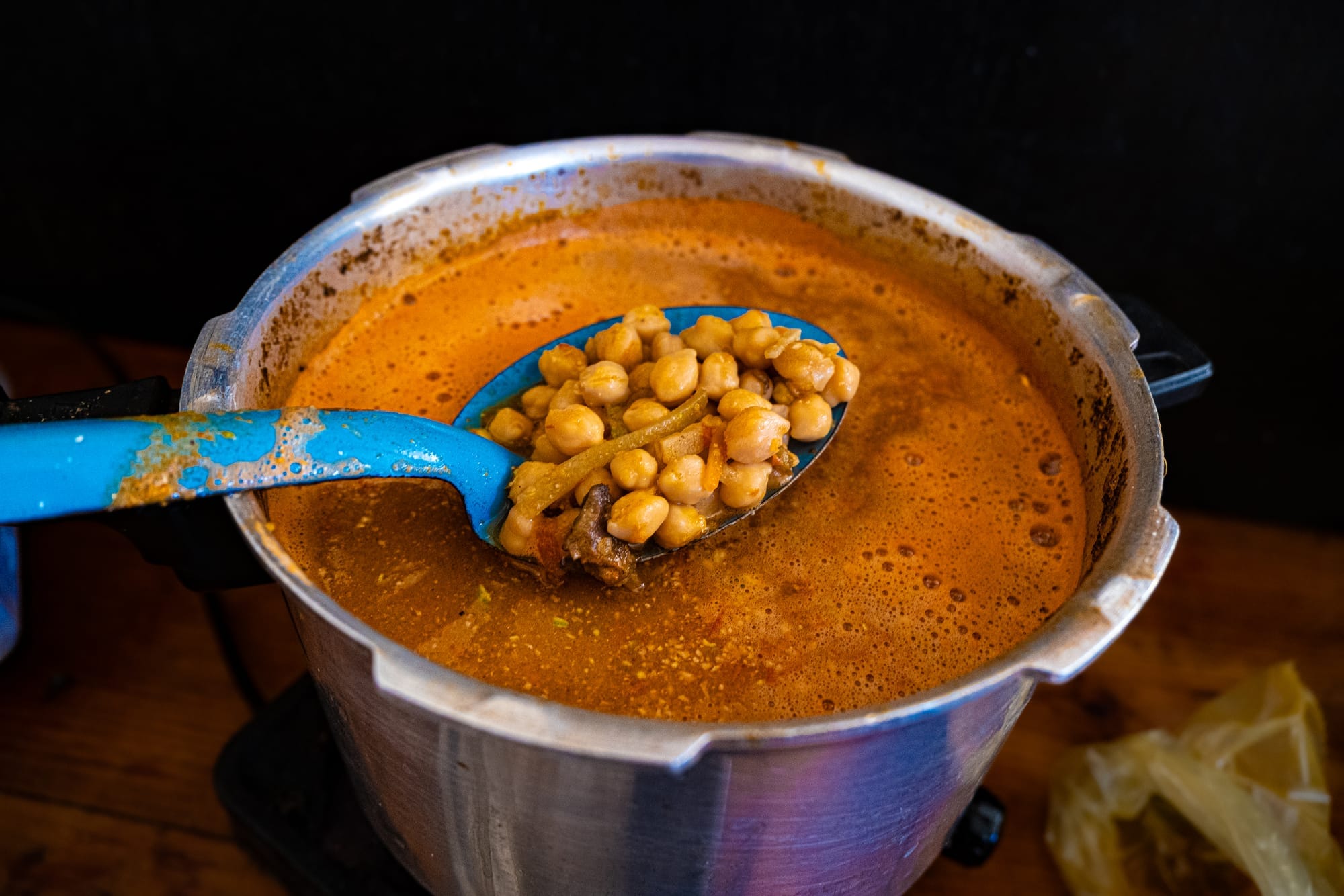
A handful of tomatoes, a knife with a well-earned patina, a pot that has seen years of use. Everything in the kitchen showed its history and a certain humility, the kind that tells you good cooking is less about mastery and more about paying attention.
Water, soil, and politics in the kitchen
Somewhere between slicing and simmering, Gerardo started talking about water: about scarcity, about stewardship, and about the politics that decide who gets clean water and who doesn’t.
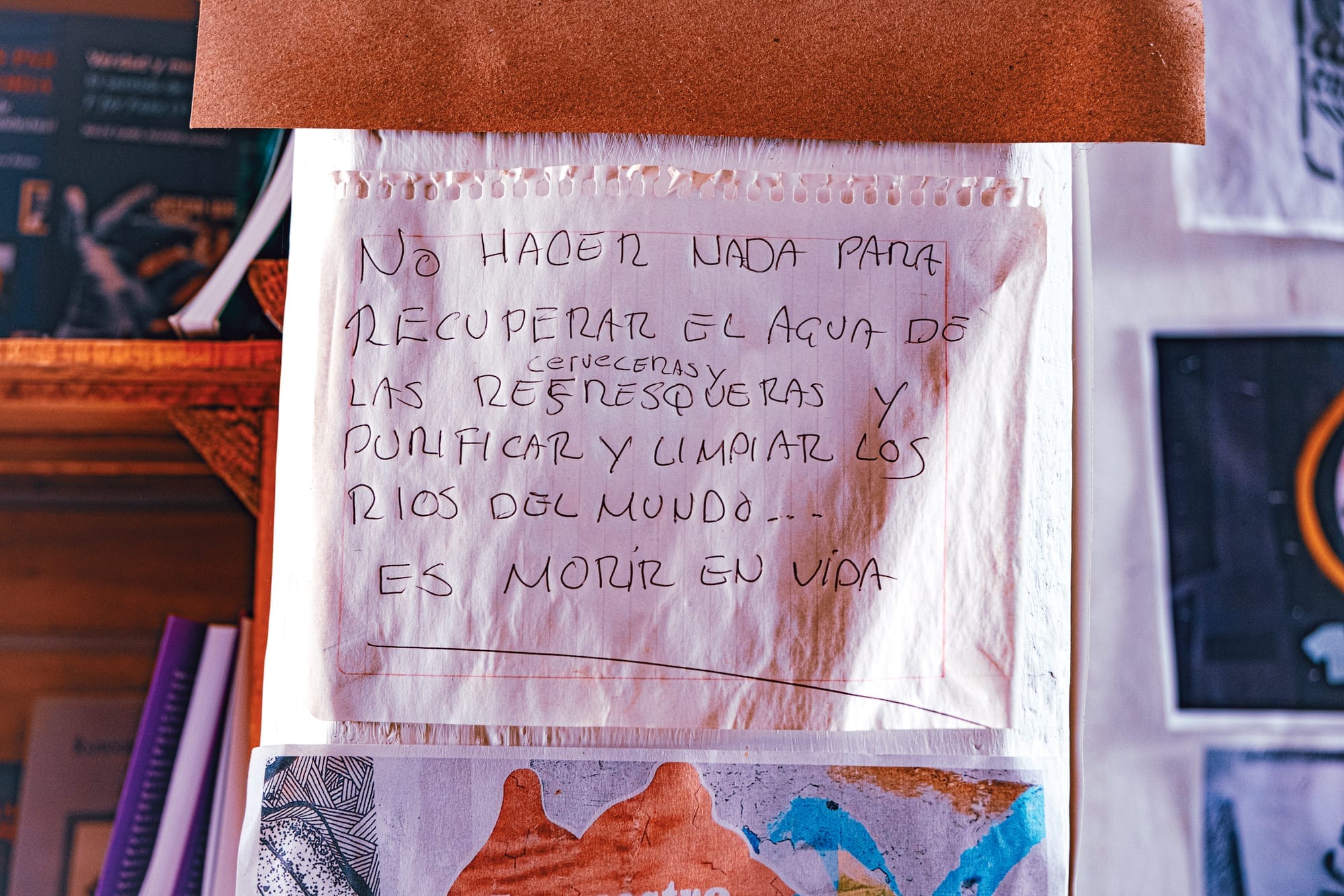
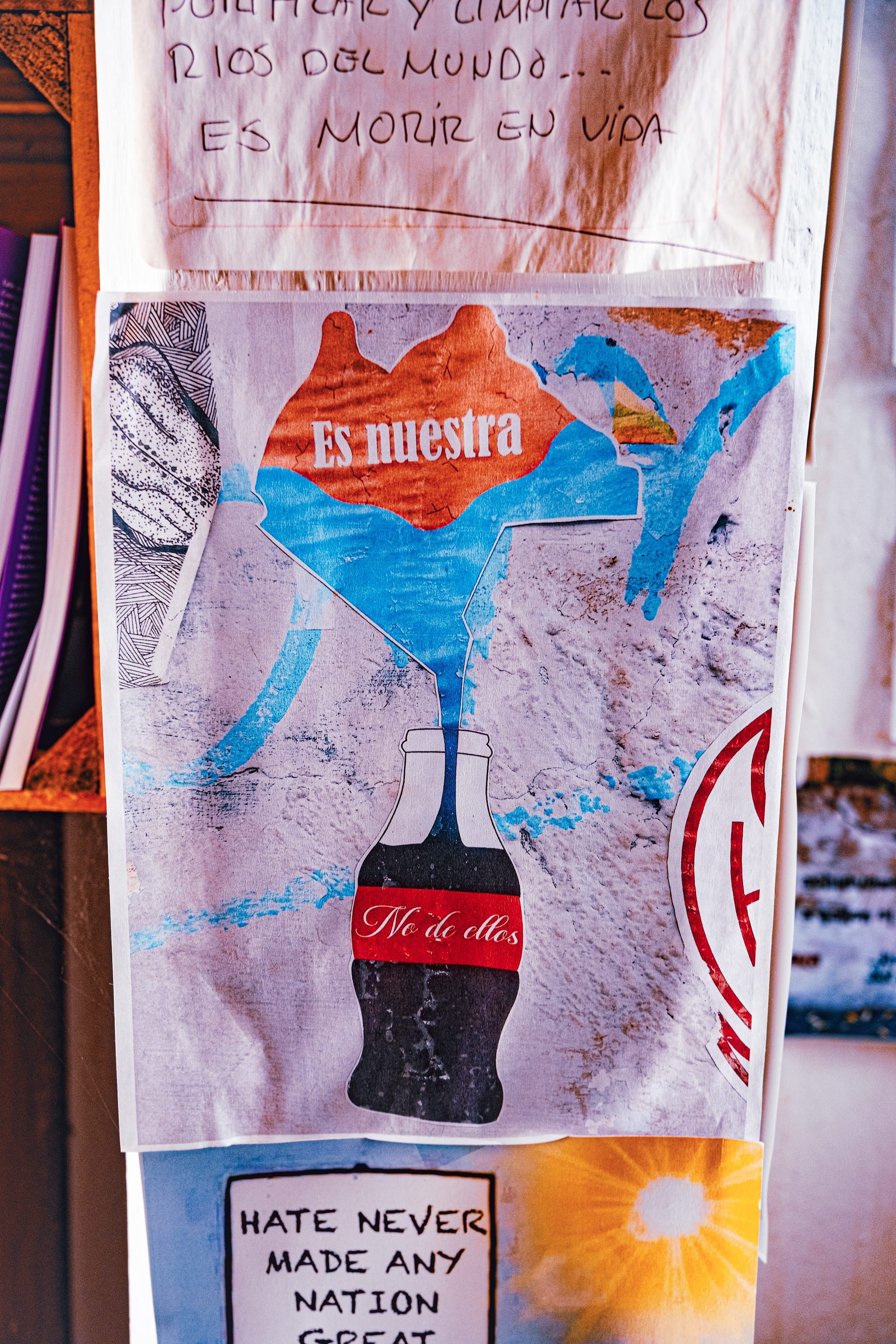
Handwritten notes and political artwork speak to the restaurant’s ongoing concern with water rights and community resistance
He talked about agriculture too, about why organic practices matter in Chiapas, and about how soil health is inseparable from community health.
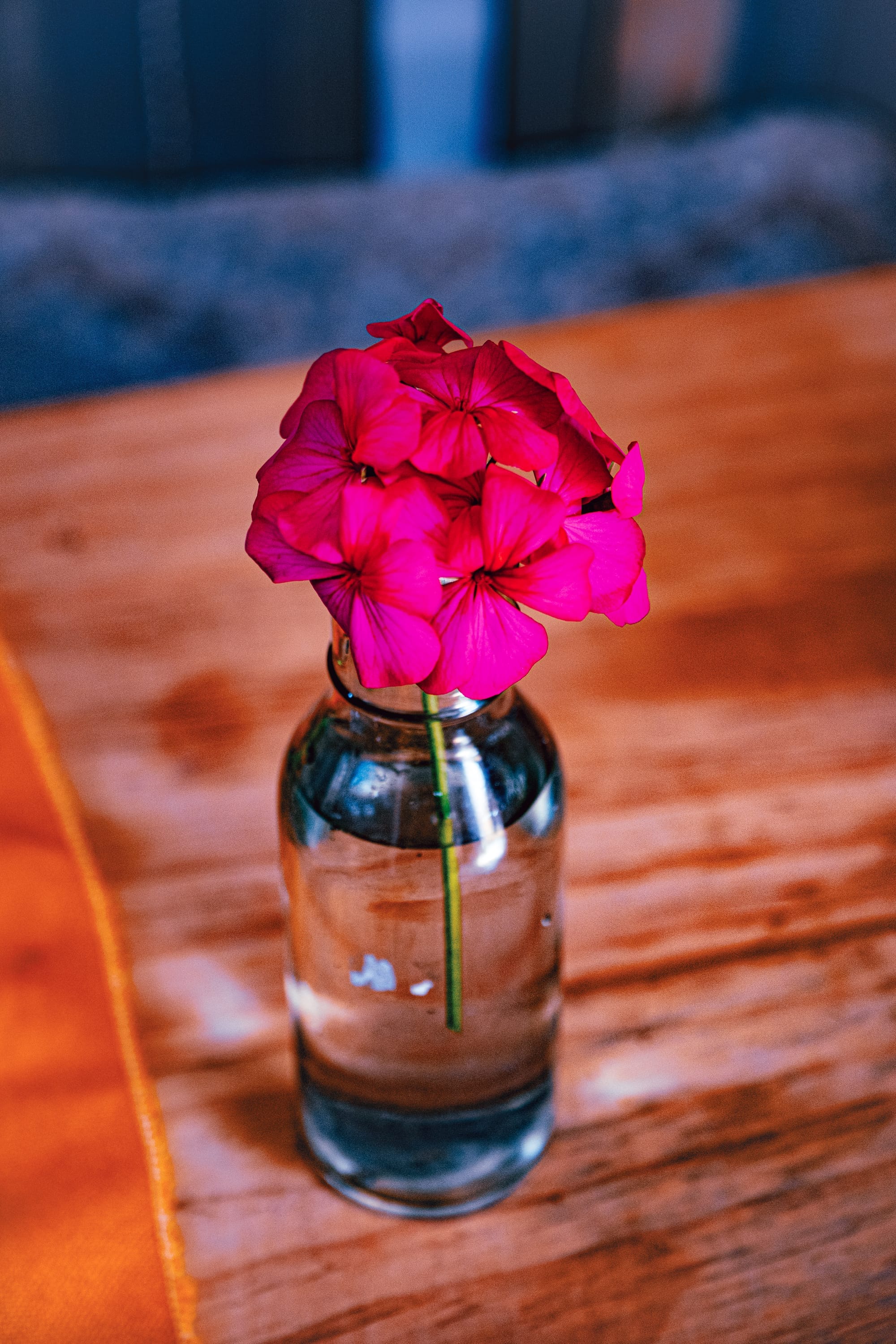
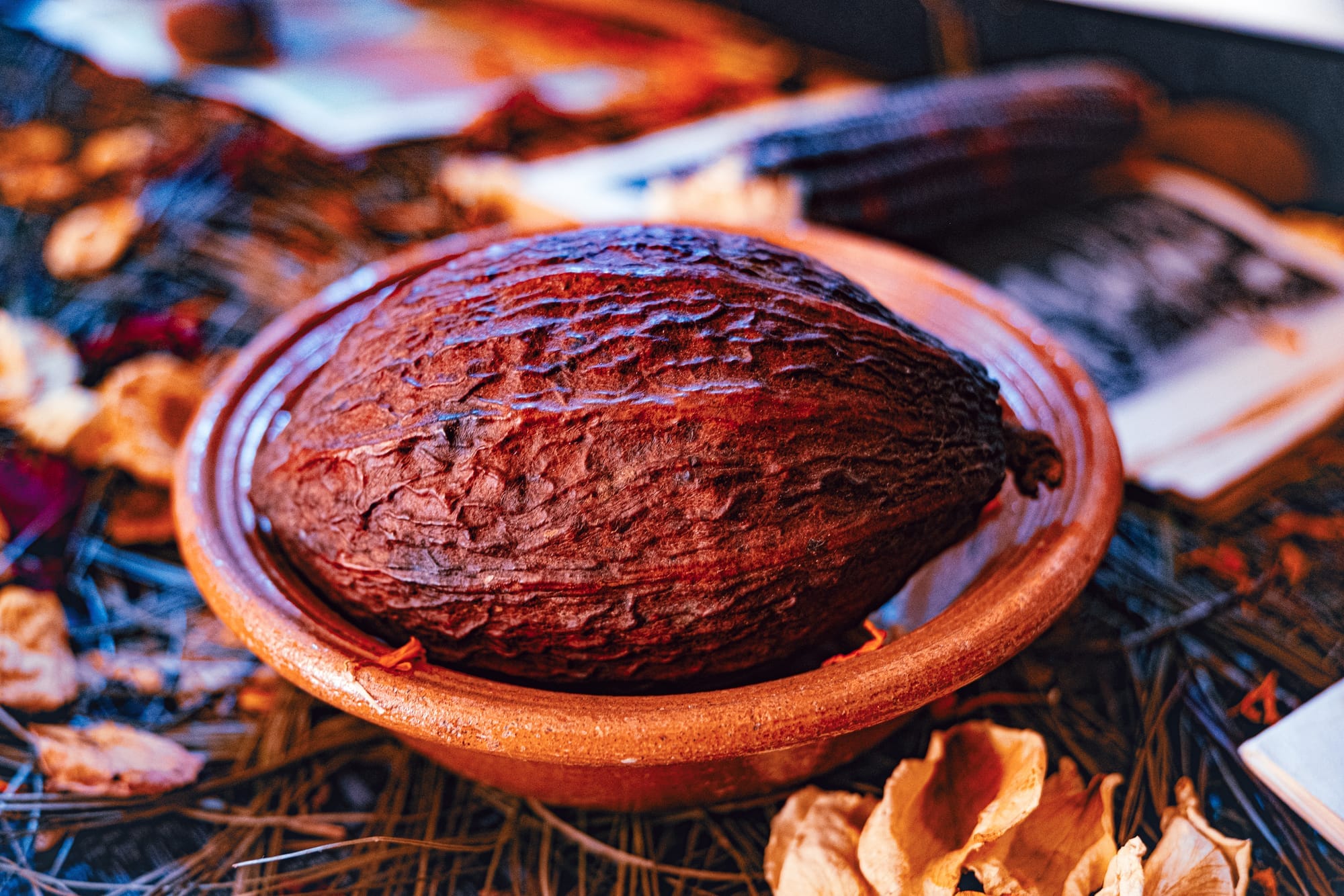
Small details reflect the space’s handmade, plant-centered aesthetic
Many restaurants hide the labor that goes on behind the scenes. Art Libreria does the opposite. It puts the systems that make food possible front and center and refuses to pretend that cuisine is ever apolitical.
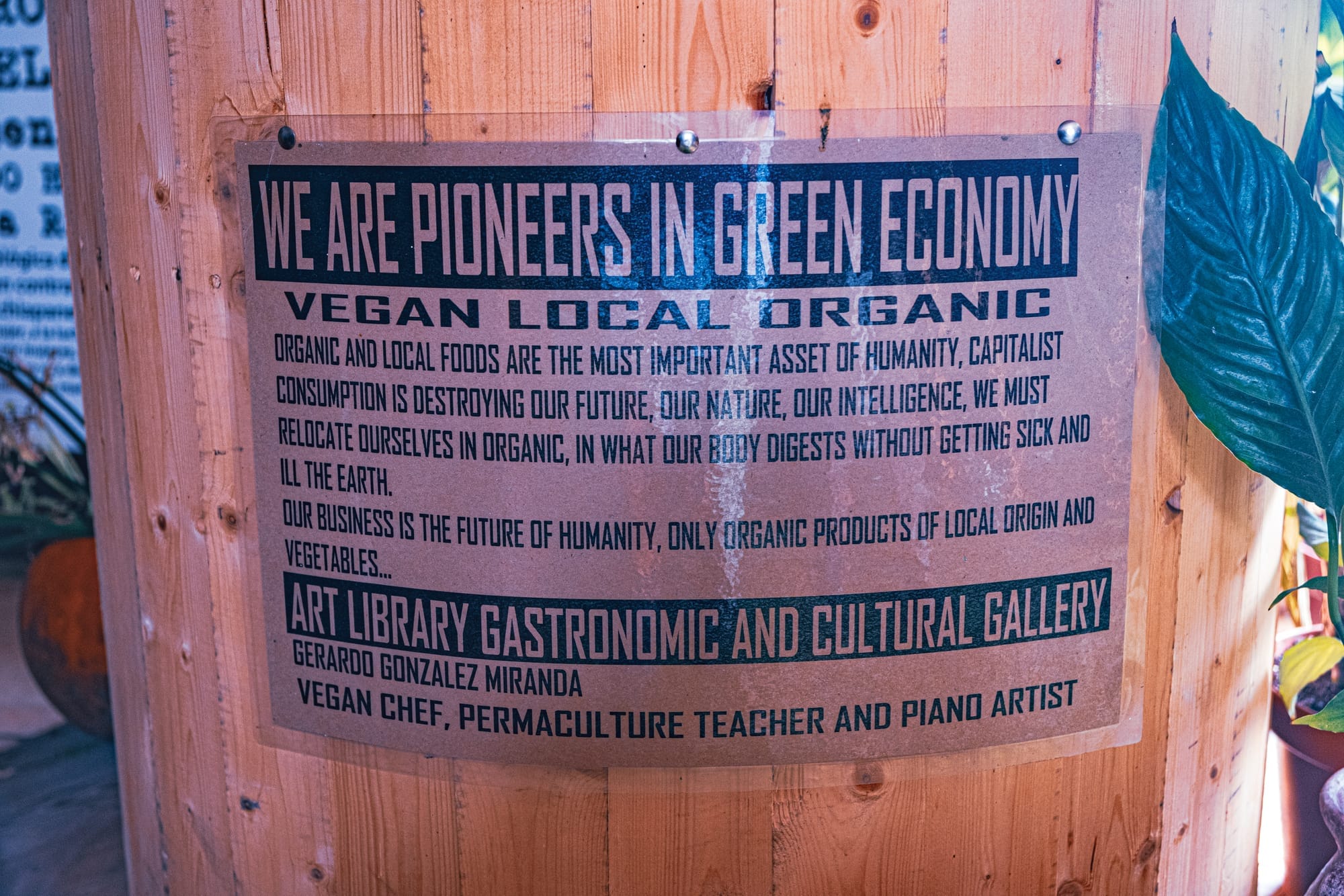
That’s what made the class so engaging: we weren’t only learning to cook, we were learning to see.
The space at Art Libreria
It’s easy to romanticize a place like this, but Gerardo’s space isn’t romantic. It’s real. Worn where it needs to be, reorganized when necessary, and full of laughter one moment and deep conversation the next.
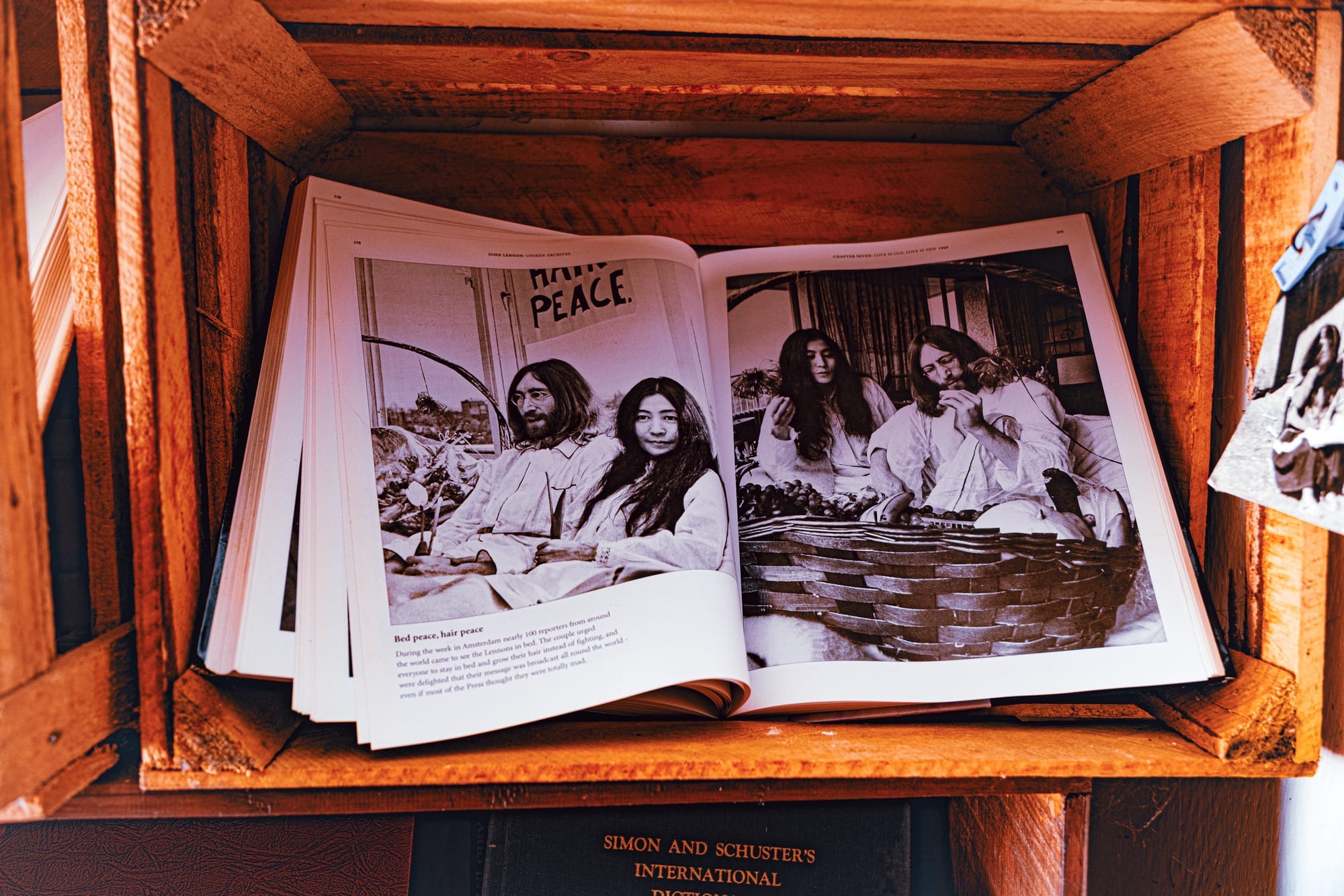
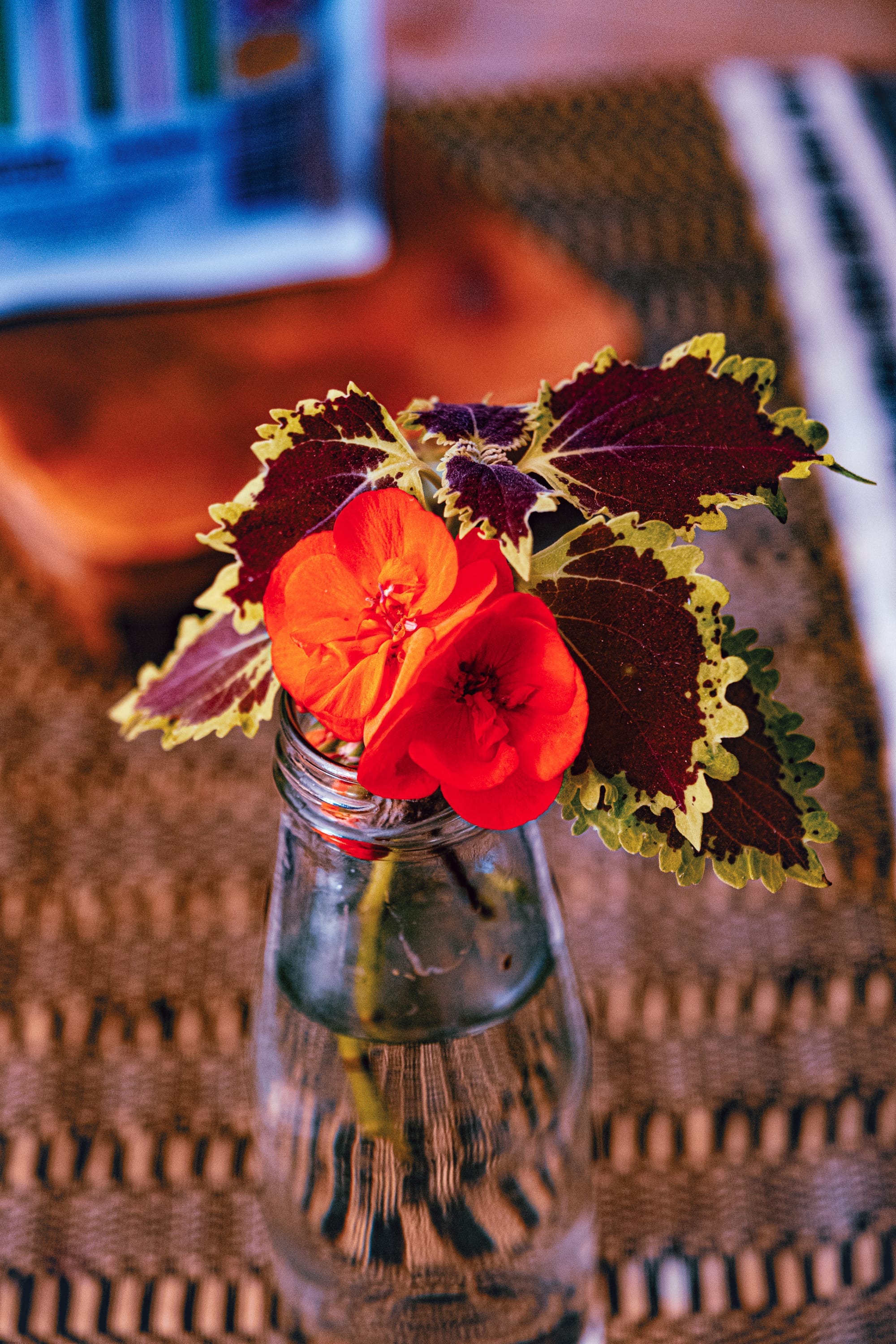
Small gestures of care around the lived-in space
The walls are covered with years of community history. The shelves lean under books, jars, and objects that seem left over from past meals, past gatherings, and past experiments.
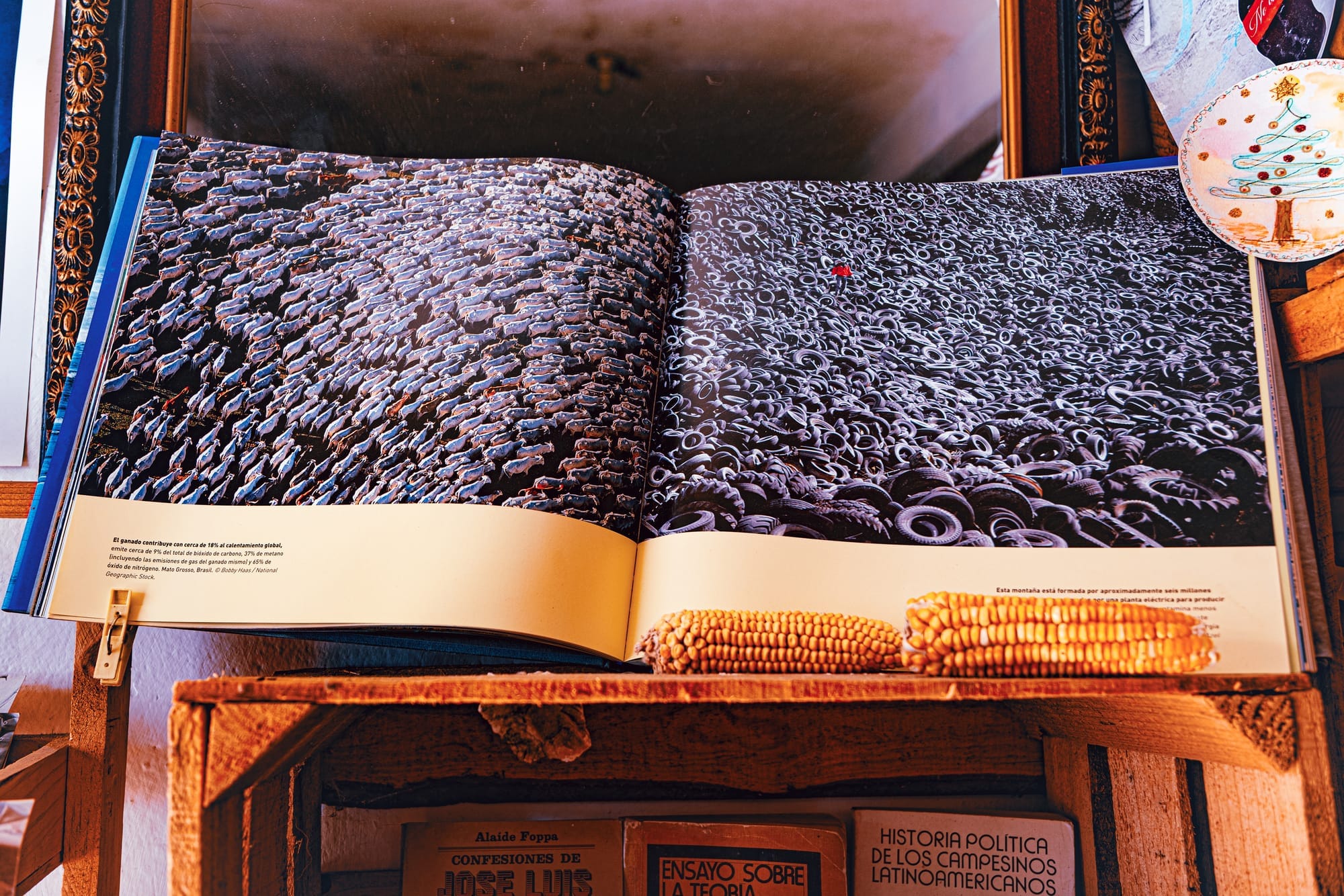
There’s beauty in that: the kind that doesn’t need polish and welcomes you as you are.
What we took away from the class
We left the class with recipes, but those were the smallest part of what we took home. What stayed with us was the energy of the space: the way the room seemed to open up when people cooked together, and the way Gerardo moved easily between teacher, storyteller, activist, and host.
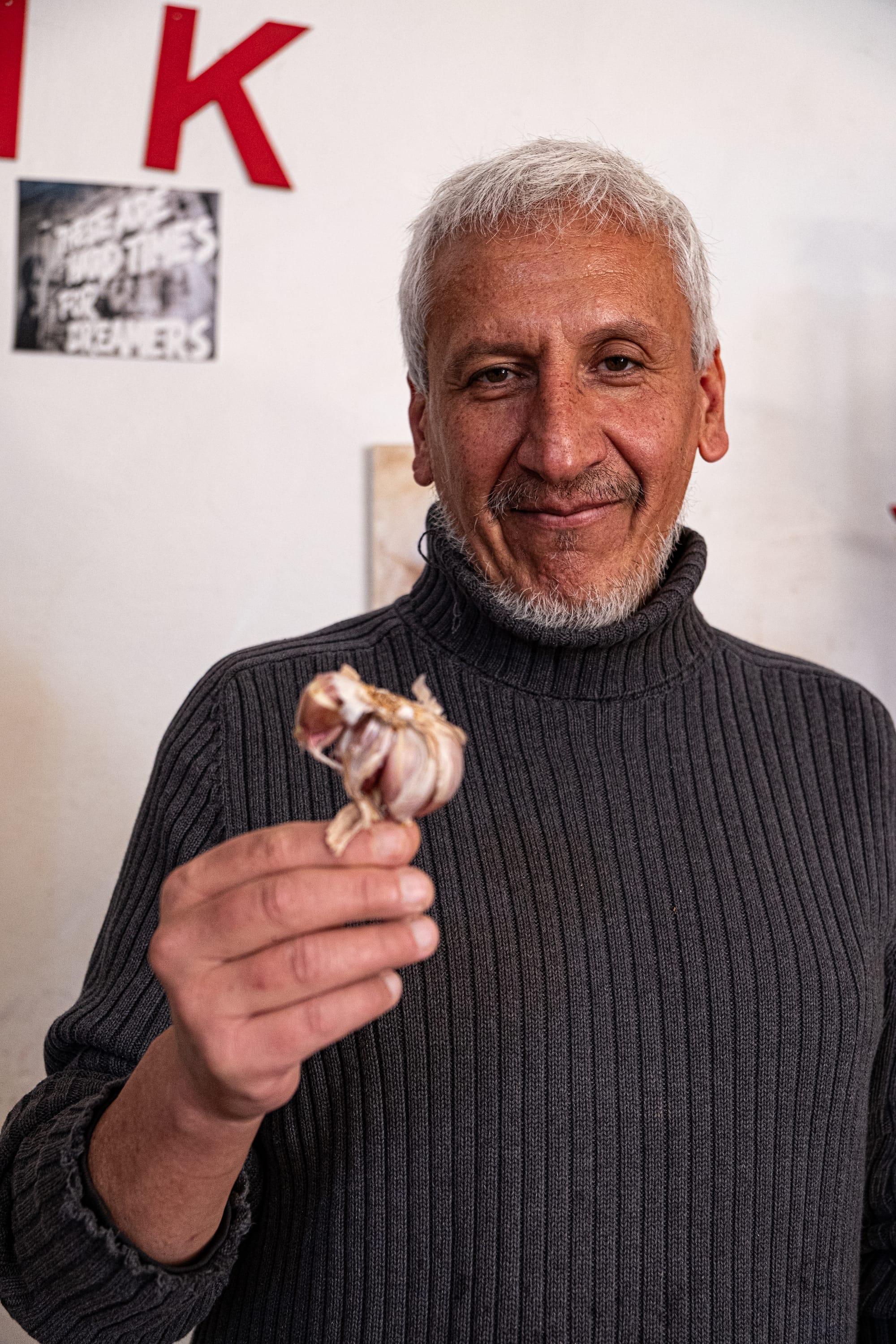
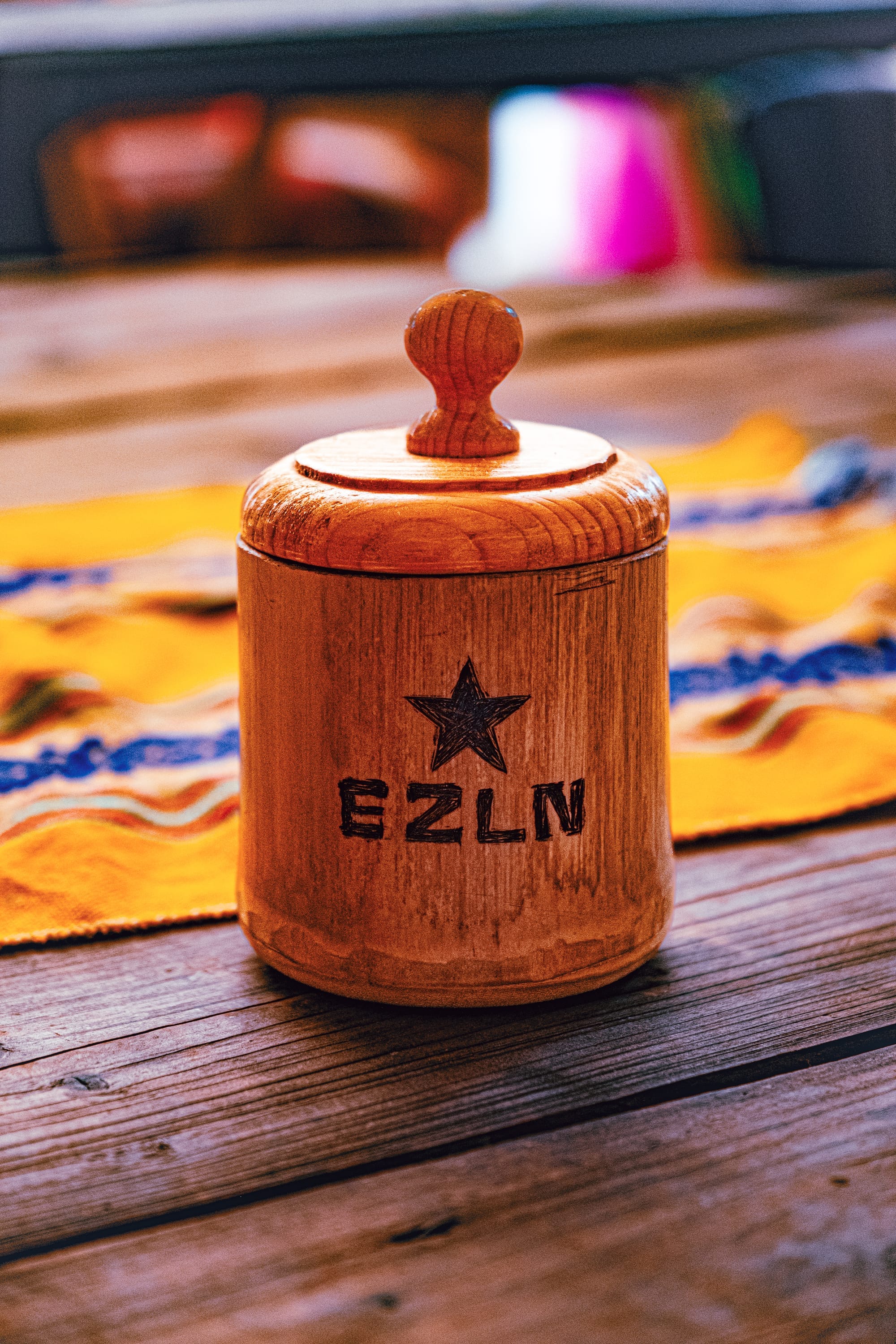
Gerardo offers garlic with a smile, while a wooden EZLN jar rests on the table
We remembered the taste of the queso broth long after, with its subtle spice and warmth. We remembered the peppers held over the flame. And we remembered the conversations about water, land, and local autonomy.
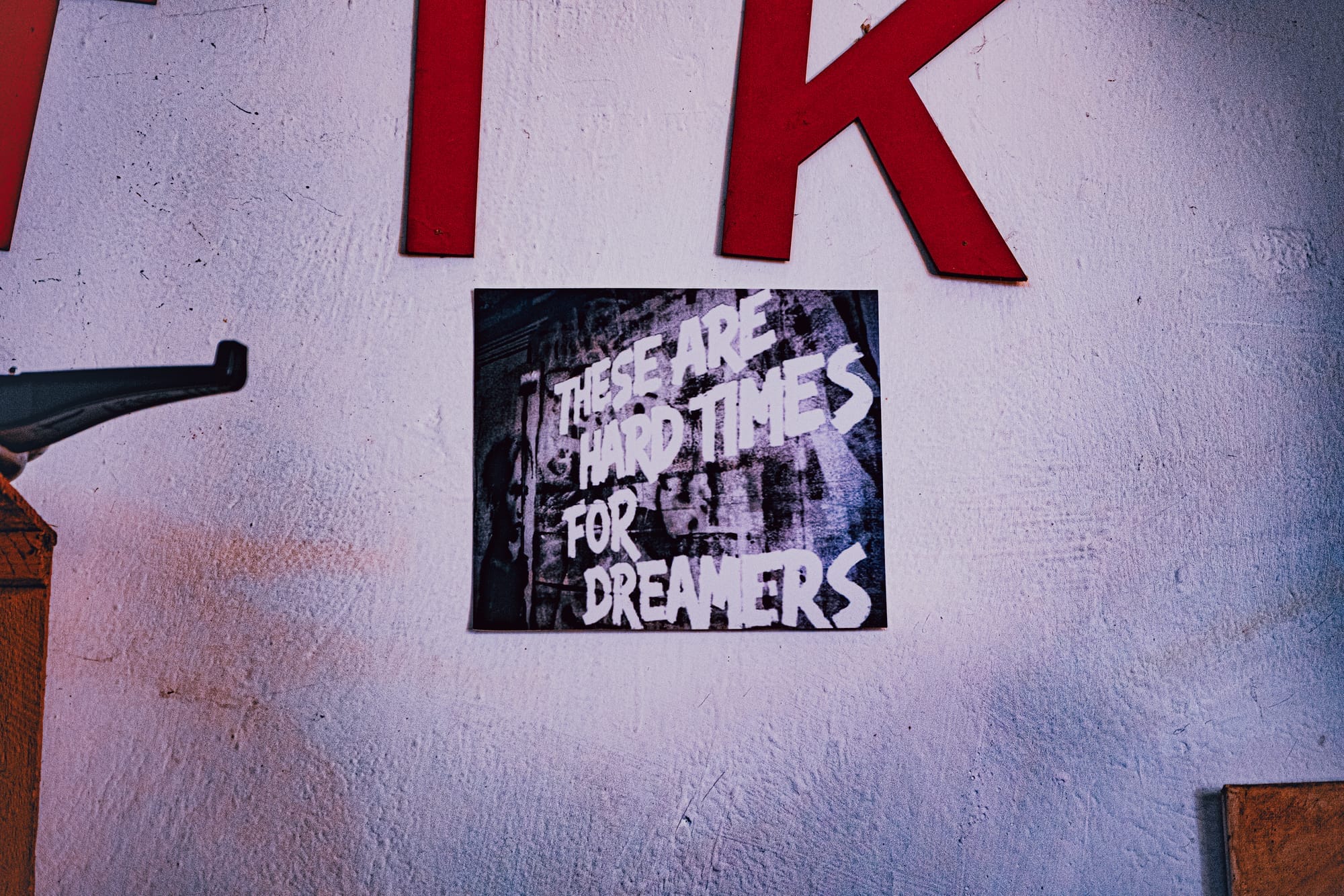
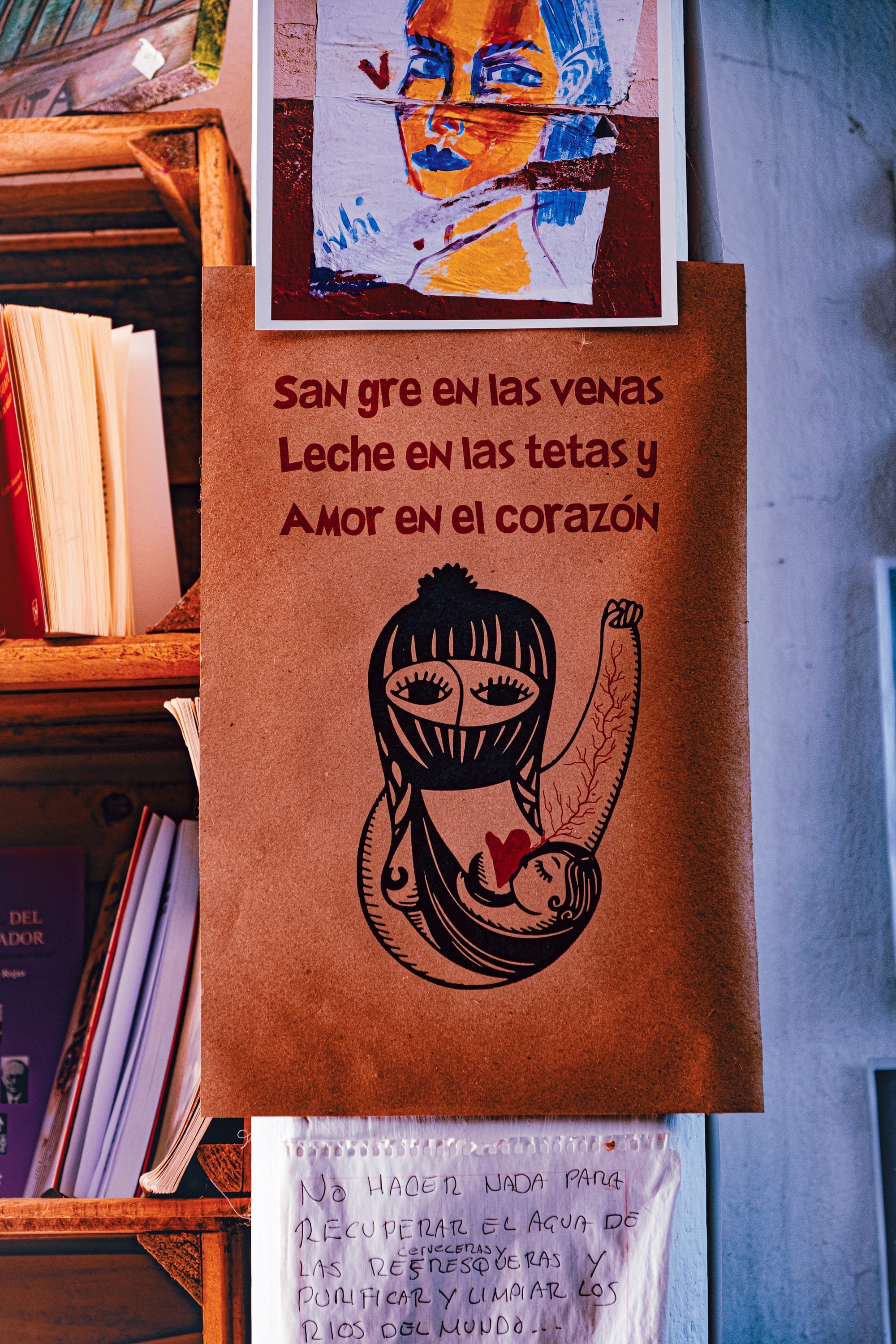
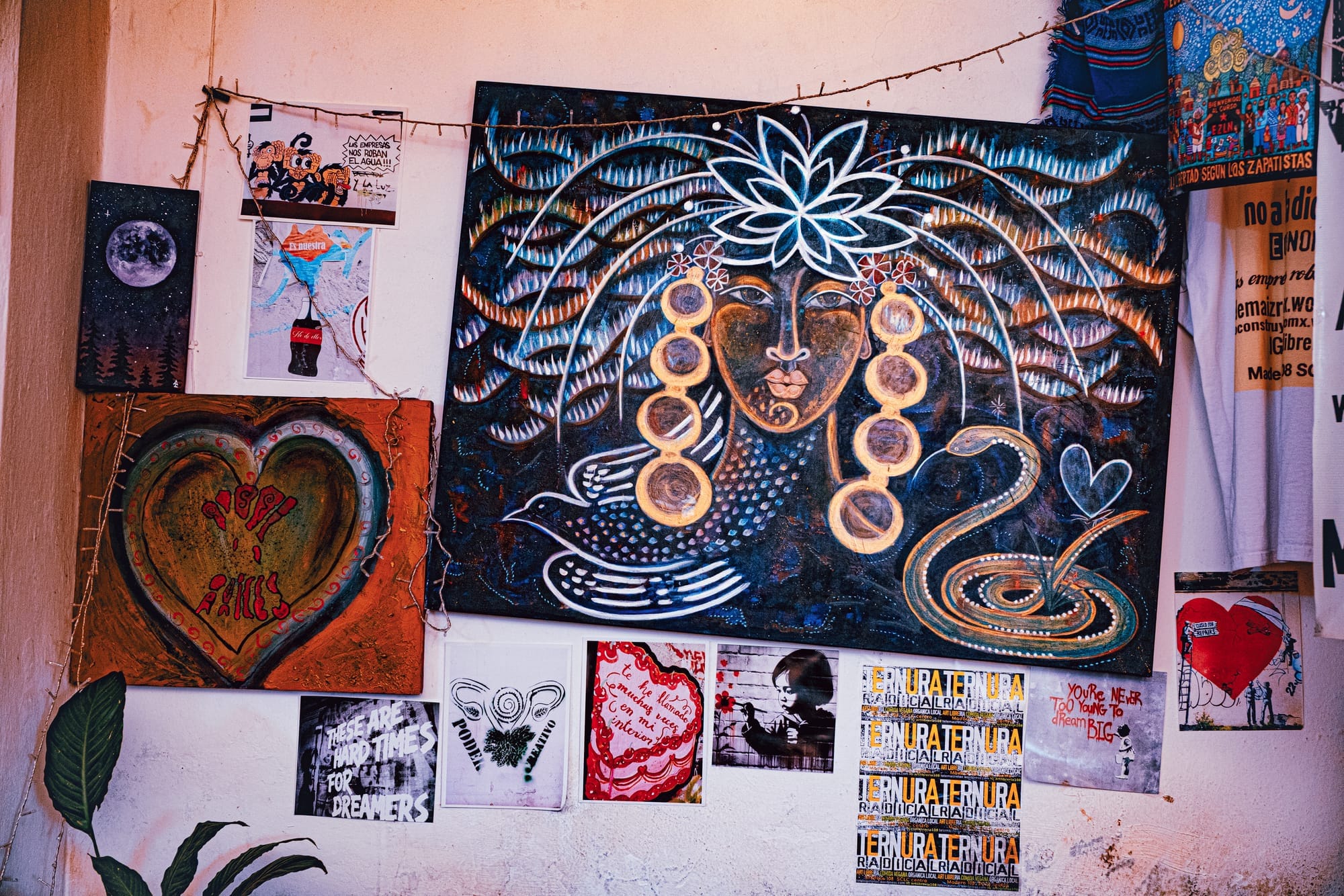
An evolving collage of Zapatista spirit, ecological care, and local creativity
Most of all, we came away with a stronger connection to food, to place, and to the politics behind the meals we eat each day.
If you'd like to book the cooking class or simply eat at the restaurant, you'll need to visit Art Libreria in person. Please say hello to Gerardo for us!
Other vegan cooking classes in San Cristóbal de las Casas
If you have time for more than one class, these are the best fits for vegans. We took the first two ourselves.
A vegan cooking class with Itzel: a market trip, then cooking in her home above the city. Read our vegan cooking class in San Cristóbal post. We compare all the vegan cooking classes we've taken in our round-up.
A cacao workshop with Element Cacao: roasting and grinding cacao beans, then rolling vegan truffles. See our cacao workshop in San Cristóbal post.
El Tzitz cooking school: a general Mexican class with an optional market tour and a vegan option, listed at about US$55 in late 2026. We haven't taken it.
Chiapas corn workshop at Rojo Tomate: about three hours of tacos, sopes, tamales, and salsas, from about US$45. It offers vegetarian dishes, so ask for vegan when booking. We haven't taken it.
Some listed classes cost much more. In late 2026, the Iximorí cooking class was listed at about US$106 a person on byFood, and a 'Chiapas: A Culinary Adventure' class at about US$105 on Expedia. Neither listing says it offers a vegan menu, and we haven't taken either, so ask before you book.
Cacao, another Chiapas ingredient worth learning about
Art Libreria often serves cacao drinks and cacao desserts, and there's a reason it's on so many menus here. According to the history of chocolate, the Mokaya people on the Pacific coast of Chiapas drank cacao by about 1900 BC, and the Aztecs later took the Soconusco region partly for its cacao. Our cacao workshop post goes into more detail.
How to get to Art Libreria
Art Libreria is in the center of San Cristóbal, so most people walk there. If you're new to the city, fly into Ángel Albino Corzo International Airport near Tuxtla Gutiérrez and take a shuttle or taxi up to the highlands (roughly an hour to an hour and a half). Road blockades happen in Chiapas now and then, so check the UK's travel advice for Mexico before long road trips.
For more about Gerardo and how Art Libreria started, read our interview with Gerardo at Art Libreria. For other places to eat, see our vegan San Cristóbal guide, and for everything else in town, our San Cristóbal guide. More plant-based trips are on our vegan travel page.
Whatever your plans, travel with insurance. Stomach bugs, a fall on a cobbled street, or a stolen phone can happen anywhere, and it's much easier to enjoy the trip when you know you're covered. We'd recommend SafetyWing Nomad Insurance. It covers medical emergencies abroad, you can buy it even after you've left home, and it renews every four weeks, so it works for a short trip or months on the road.
Where to stay in San Cristóbal de las Casas
San Cristóbal de las Casas is the base for this, with the most places to stay and eat. These are well-reviewed options, all rated 9 or more on Booking:
- Parador Margarita: a well-run, good-value hotel a few blocks from the center, rated 9.1 from over 1,400 reviews.
- Casa Carmen: a small guesthouse with a courtyard, rated 9.6.
- Casa Santa Lucía: a colonial-style boutique stay in the center, rated 9.5.
Frequently asked questions
How do I book the vegan cheese workshop at Art Libreria?
In person. There's no online booking, so go to Art Libreria, ask Gerardo about the next class, and agree the date, time, and price with him.
How much does the Art Libreria cooking class cost?
The price isn't published, so ask Gerardo. For a rough guide, a three-course meal there cost a HappyCow reviewer about 200 pesos in 2023, and other cooking classes in San Cristóbal cost about US$45 to US$55 a person in late 2026.
Where is Art Libreria in San Cristóbal de las Casas?
Art Libreria's site and HappyCow list it at Vicente Guerrero 3bis, in the center of town. It used to be on Francisco I. Madero, so older listings may show the wrong street.
What do you make in the vegan cheese workshop?
The main dish is vegan rajas con queso: charred poblano peppers, zucchini, broccoli, and corn in a warm cheese broth made from almonds, tomatoes, onion, sea salt, turmeric, and paprika. Gerardo also walks you through other vegan dishes from the day's produce.
Is Art Libreria fully vegan?
Yes. It's a vegan restaurant using organic ingredients from local farmers, so you don't need to check every dish.
Is there a vegan cooking class in San Cristóbal besides Art Libreria?
Yes. We also took a vegan cooking class with Itzel and a cacao workshop. El Tzitz and the Rojo Tomate corn workshop offer vegan or vegetarian menus on request.
Can I just eat at Art Libreria without taking the class?
Yes. Most people come for lunch or dinner. We ate there many times before we took the class, and it's a good way to try the food first.
Is Art Libreria open on Sundays?
Probably not. Spinach lists it as open Monday to Saturday, from about noon to 9 pm, and closed on Sunday (November 2026). HappyCow's listing contradicts itself on weekends, so check in person before you plan around it.
Does Art Libreria offer other cooking workshops?
Yes. Besides the vegan cheese workshop we took, Spinach lists workshops on mole and salsa, and food tours. Ask Gerardo what's running when you visit, and book a few days ahead.
Can I combine the Art Libreria vegan cooking class with dinner?
You can ask. A HappyCow reviewer did the cheese workshop and stayed for dinner on the same evening in December 2024. Agree it with Gerardo when you book.
Is Art Libreria gluten-free?
HappyCow tags it as gluten-free friendly, and much of the menu is built on corn, which has no gluten. Dishes change daily, so mention it when you order or book a class.
Useful links: Art Libreria on HappyCow, Rajas con crema (Wikipedia), Plant-based cheese (Wikipedia), and Zapatista Army of National Liberation (Wikipedia).


