

Bruno Taut’s Alpine Architektur (1919) is a utopian manifesto of crystalline cities built into the Alps, proposing glass as the medium through which society might achieve harmony and transcendence.
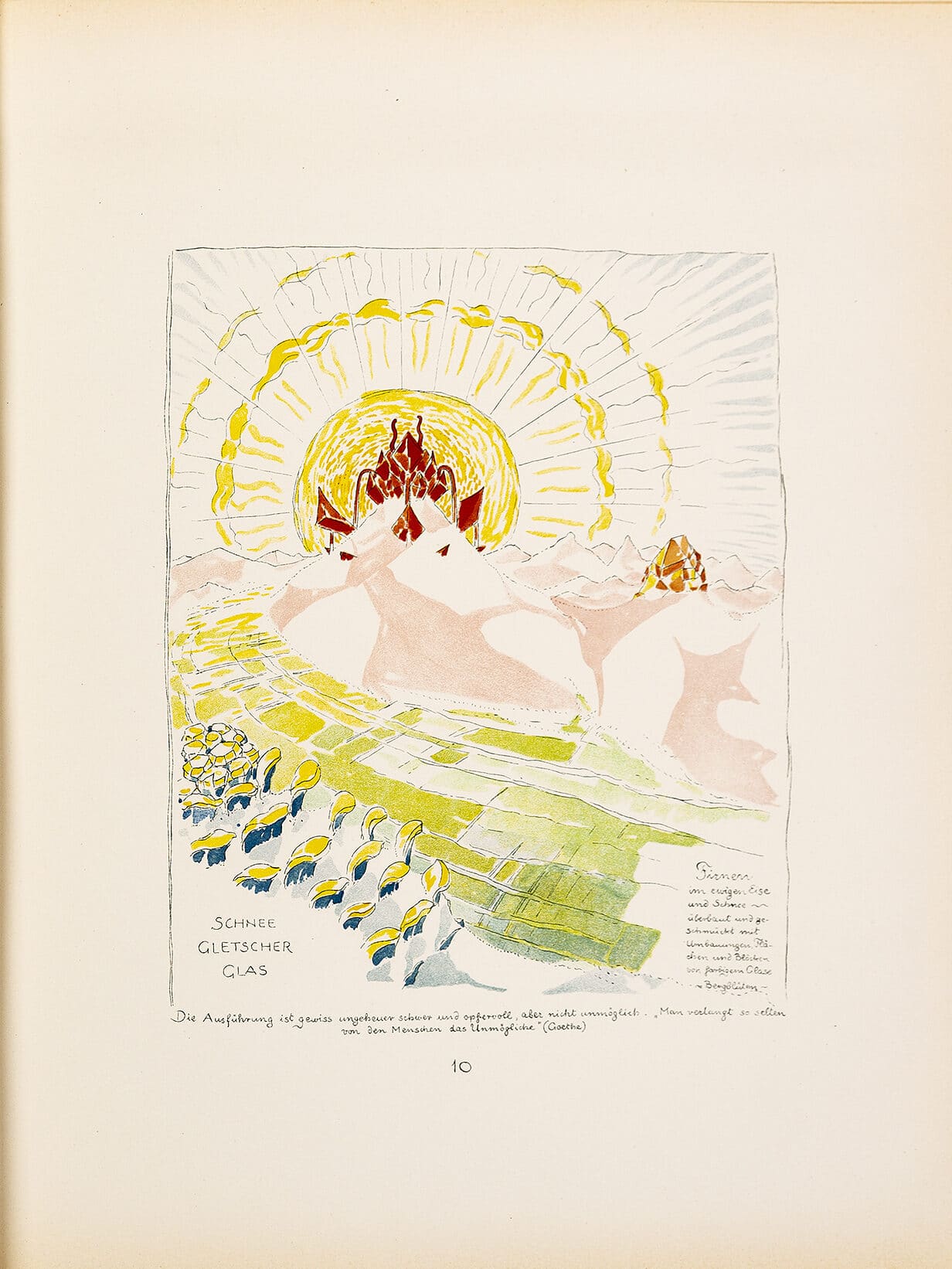
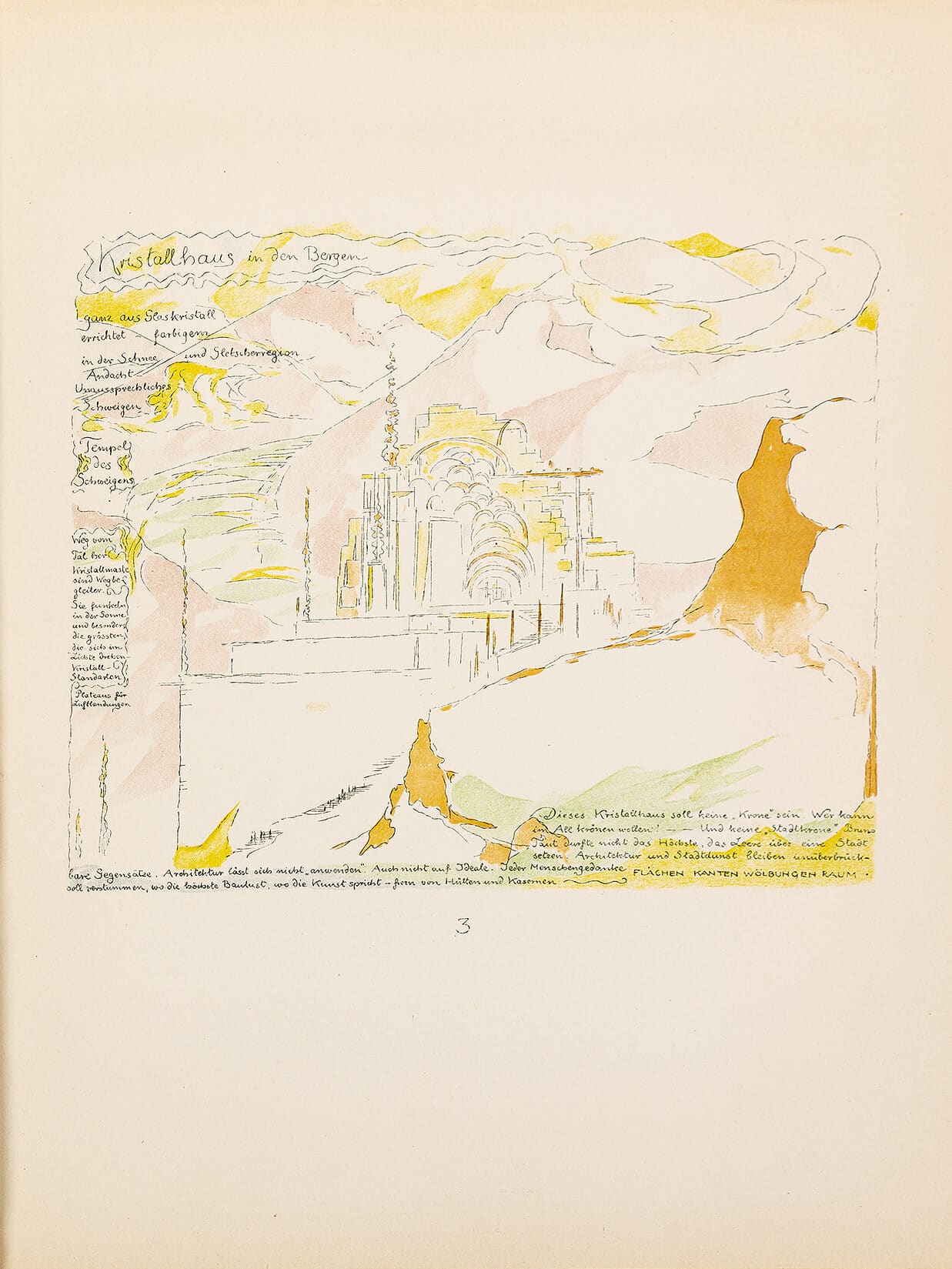
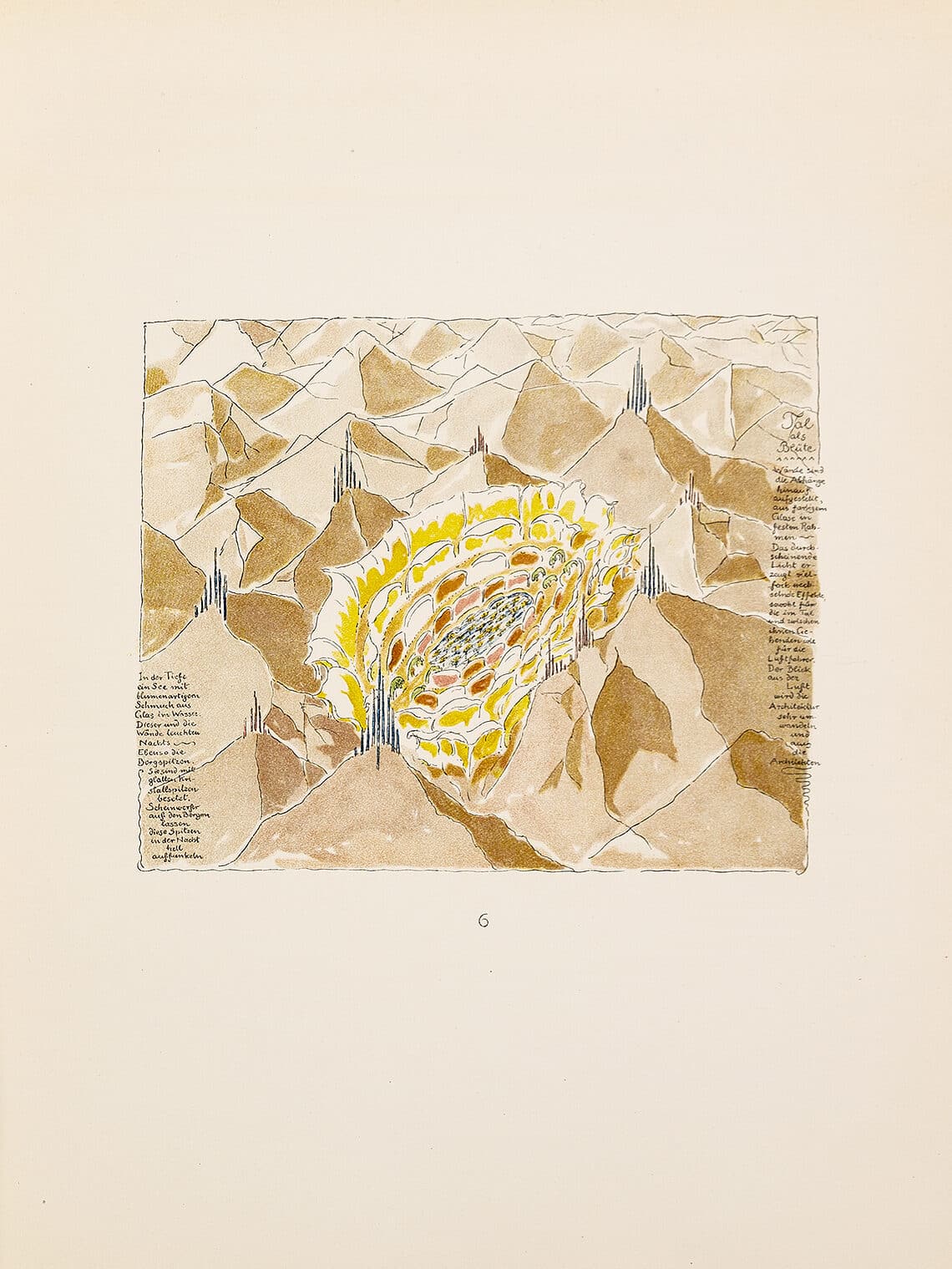
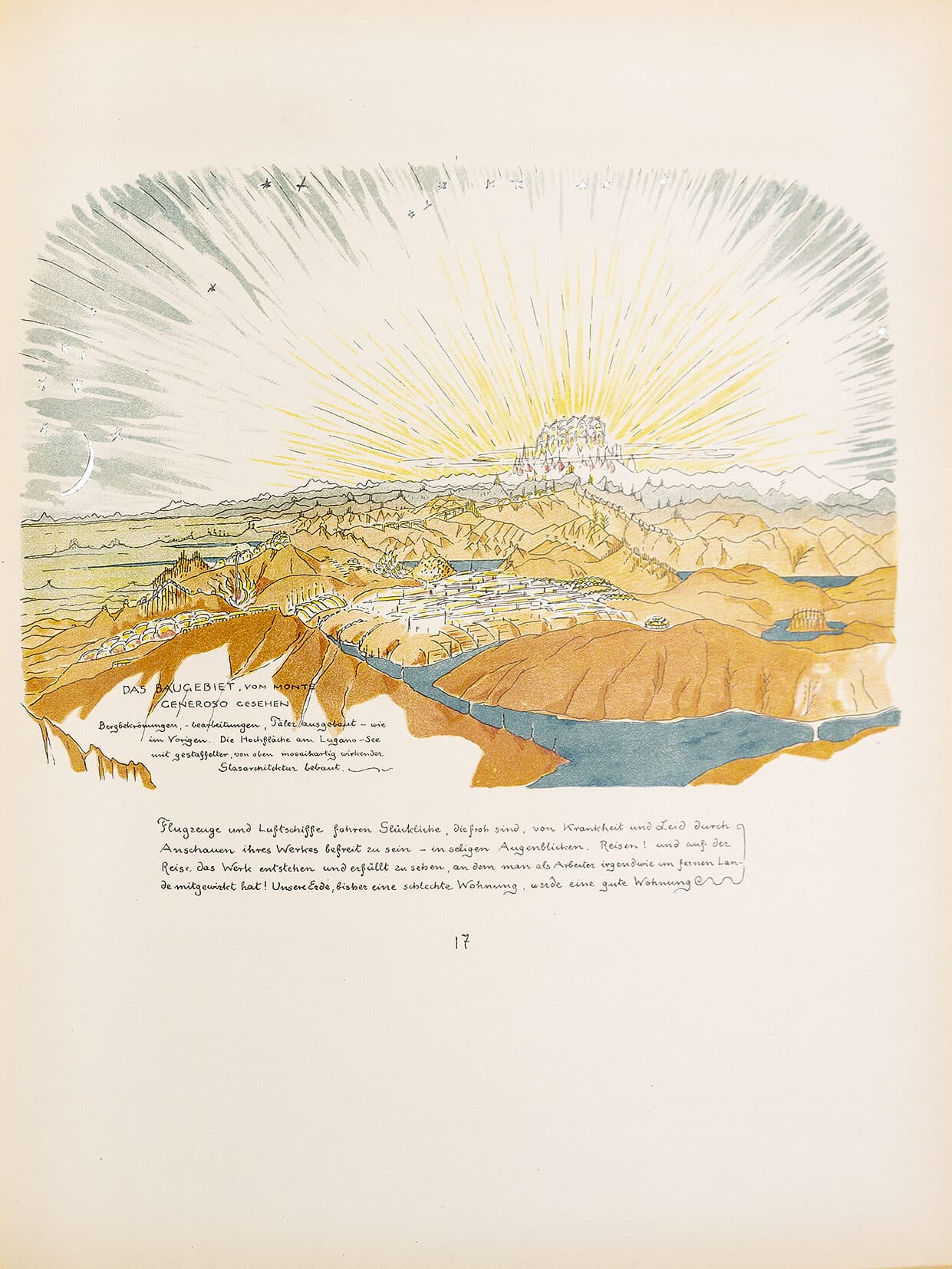
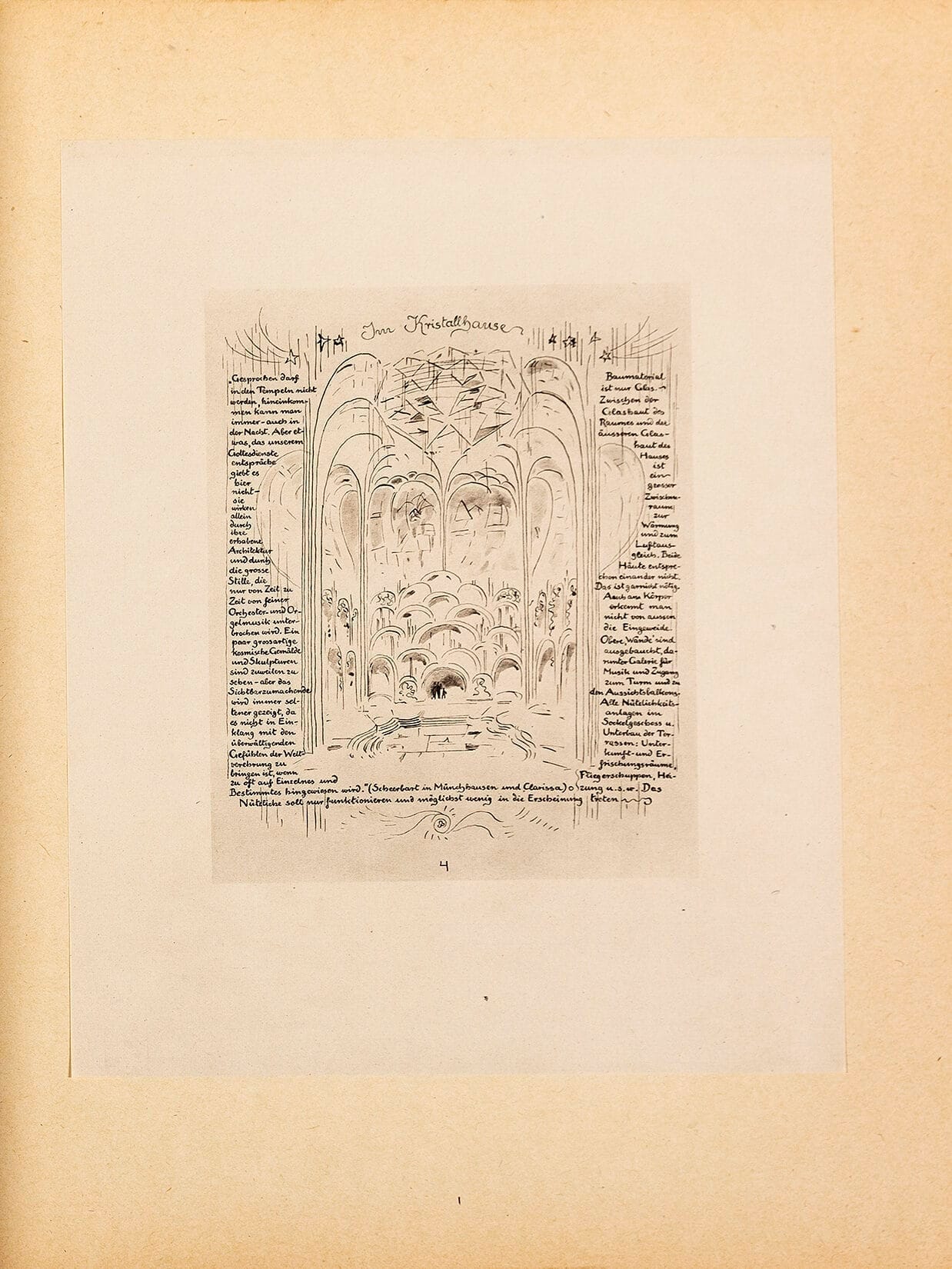
Written and illustrated in the aftermath of World War I, the work imagines an architecture that is not utilitarian but symbolic, a collective artwork intended to transform consciousness and reconcile humanity with nature. Taut’s shimmering Alpine temples and crystalline peaks are both visionary designs and political allegories: architecture as an instrument of social renewal, and beauty as a counterforce to destruction.
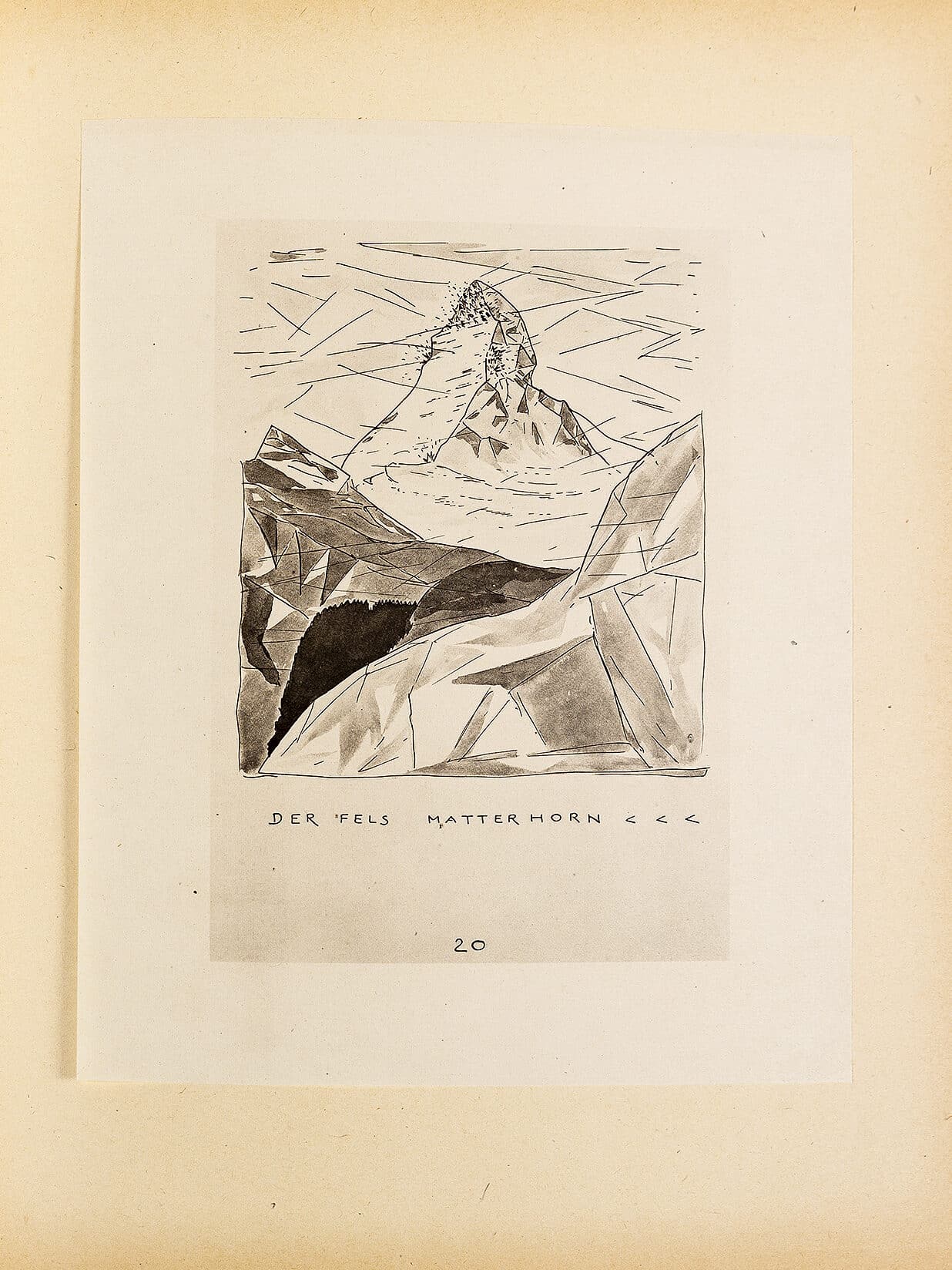
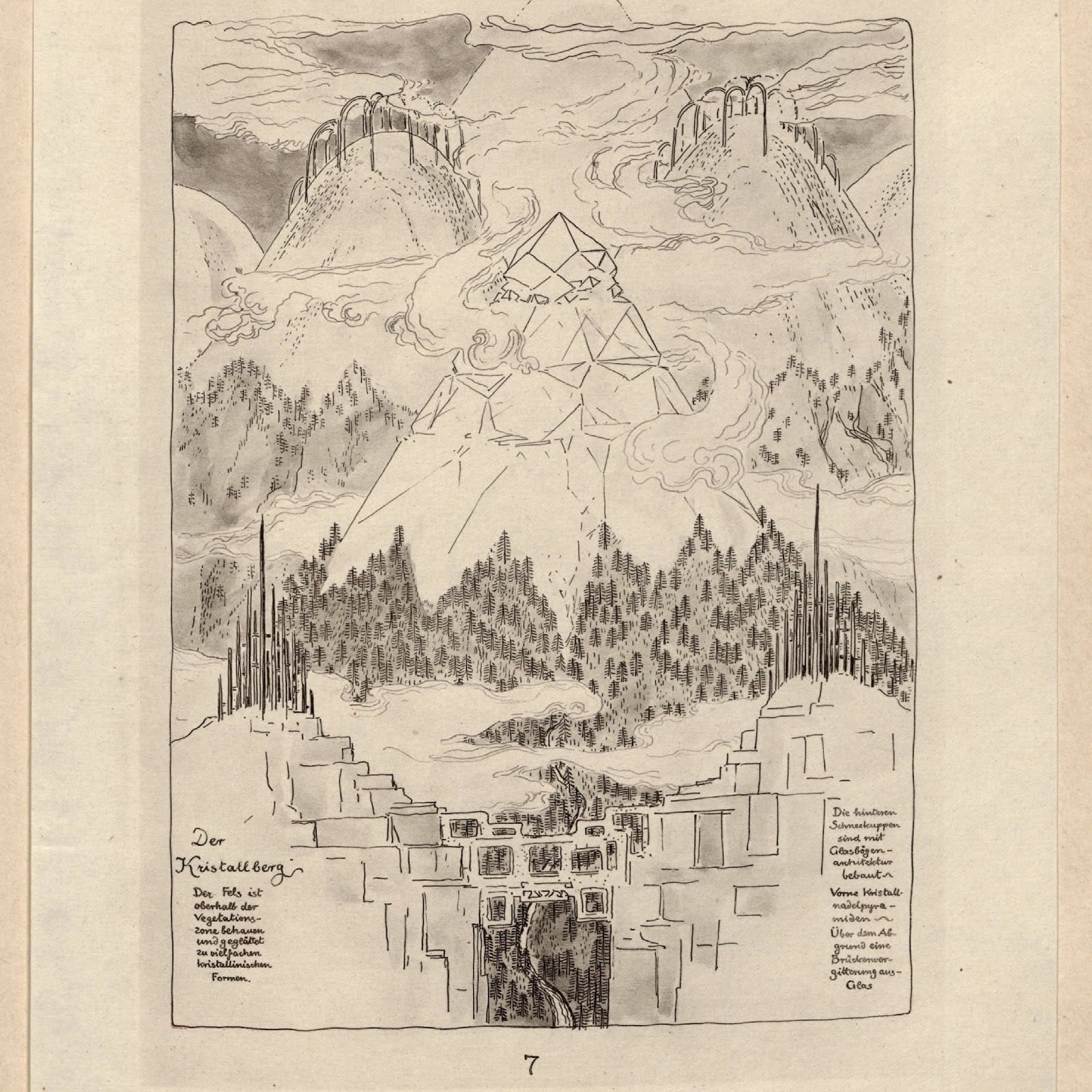
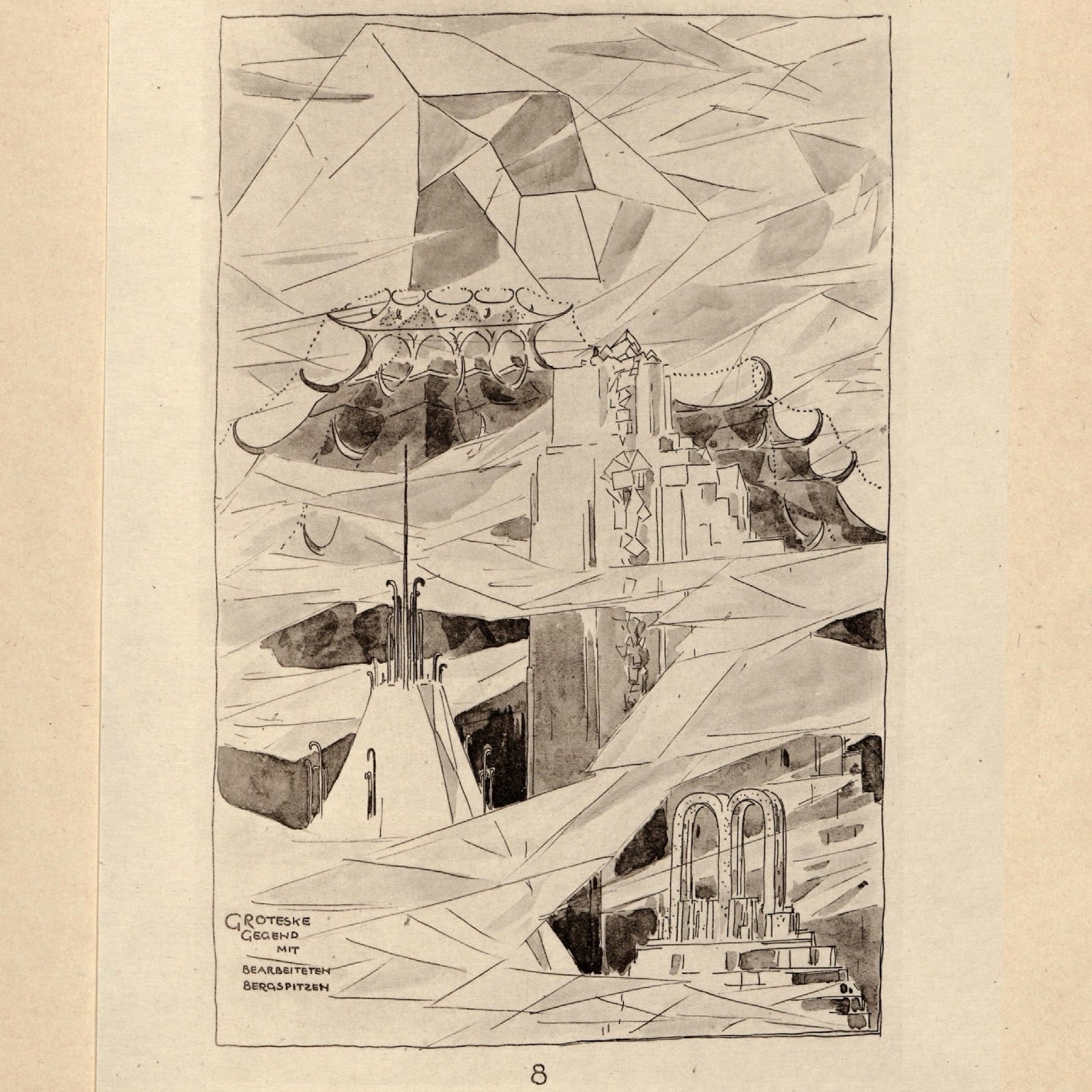
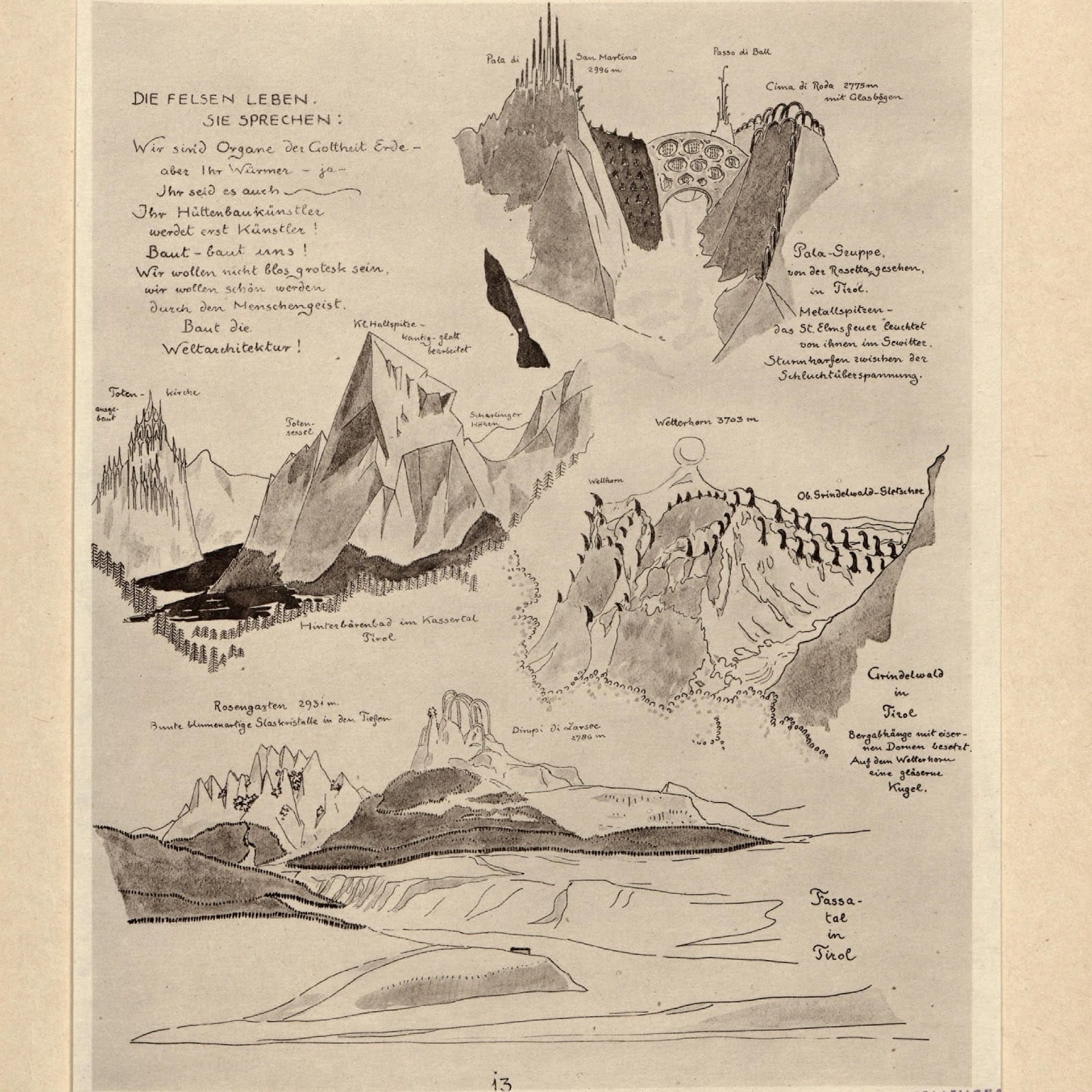
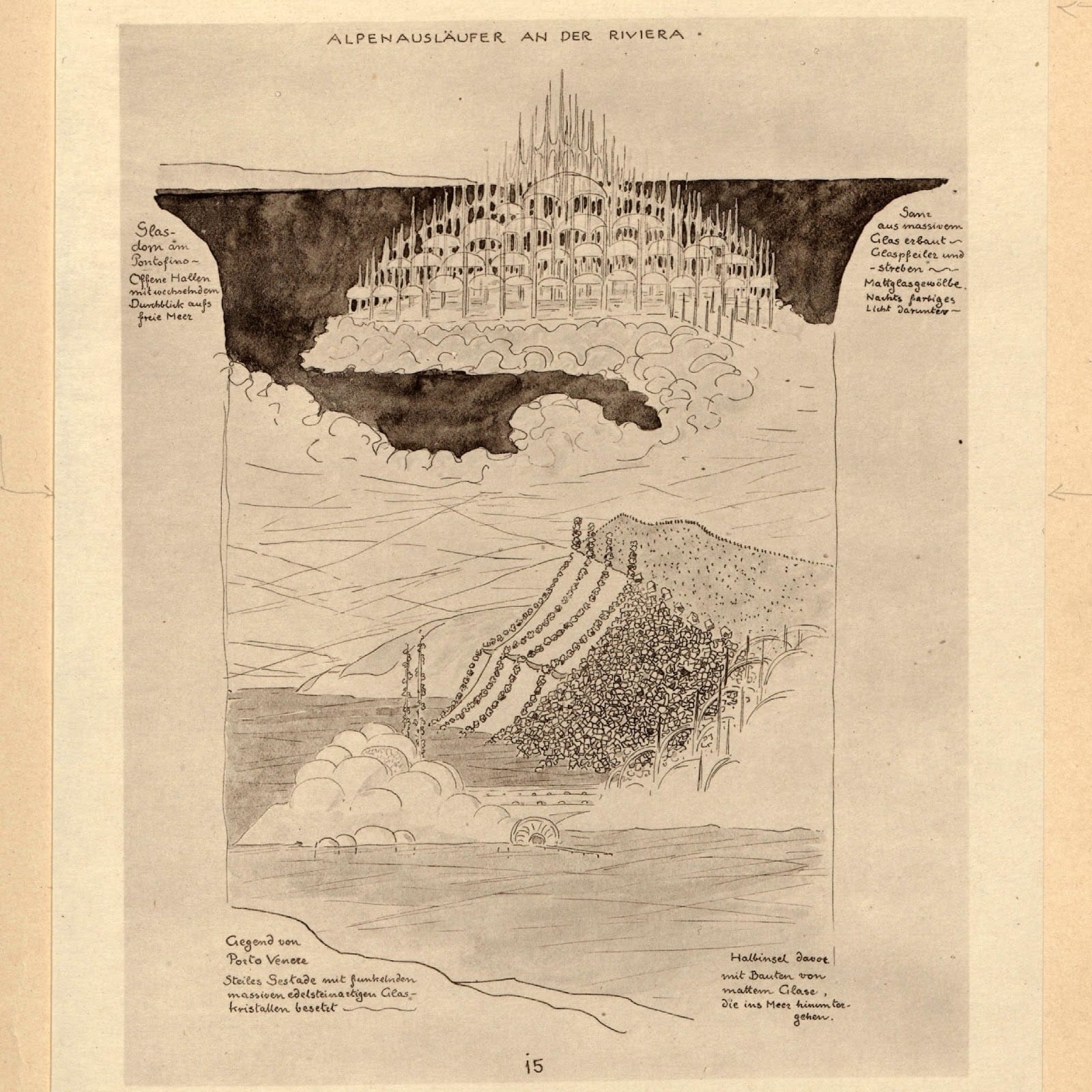
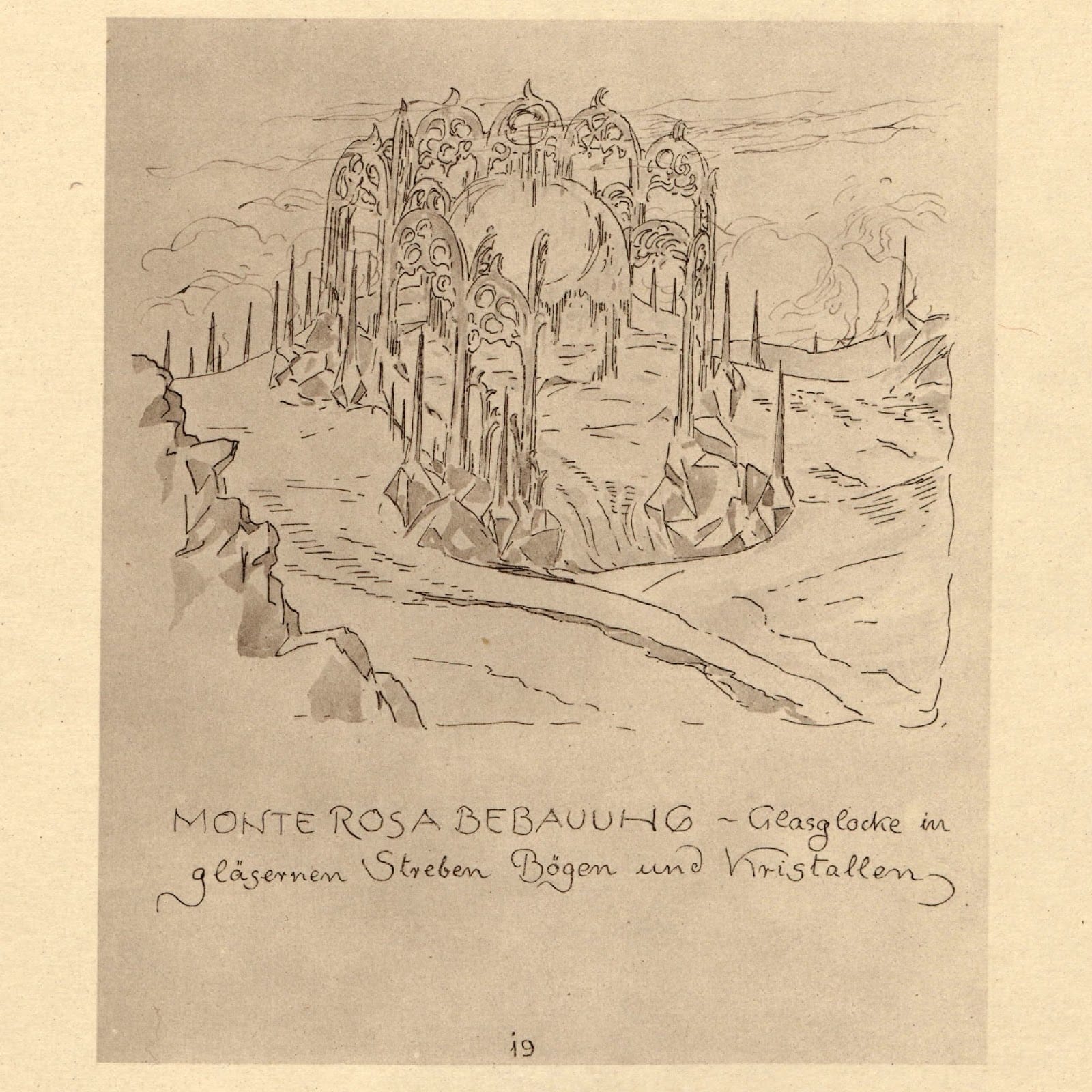
From his sketches of colossal glass domes crowning mountaintops to entire landscapes reframed as luminous communal structures, Taut presents Alpine Architektur as an ecstatic refusal of functionalist restraint, envisioning an architecture capable of altering not just skylines but the very spirit of a people.
About Bruno Taut
Taut (1880 to 1938) was a German architect. Before the war he was best known for the Glass Pavilion at the 1914 Werkbund exhibition in Cologne, a prism-shaped dome built with glass bricks. It was taken down after the show and survives only in photographs.
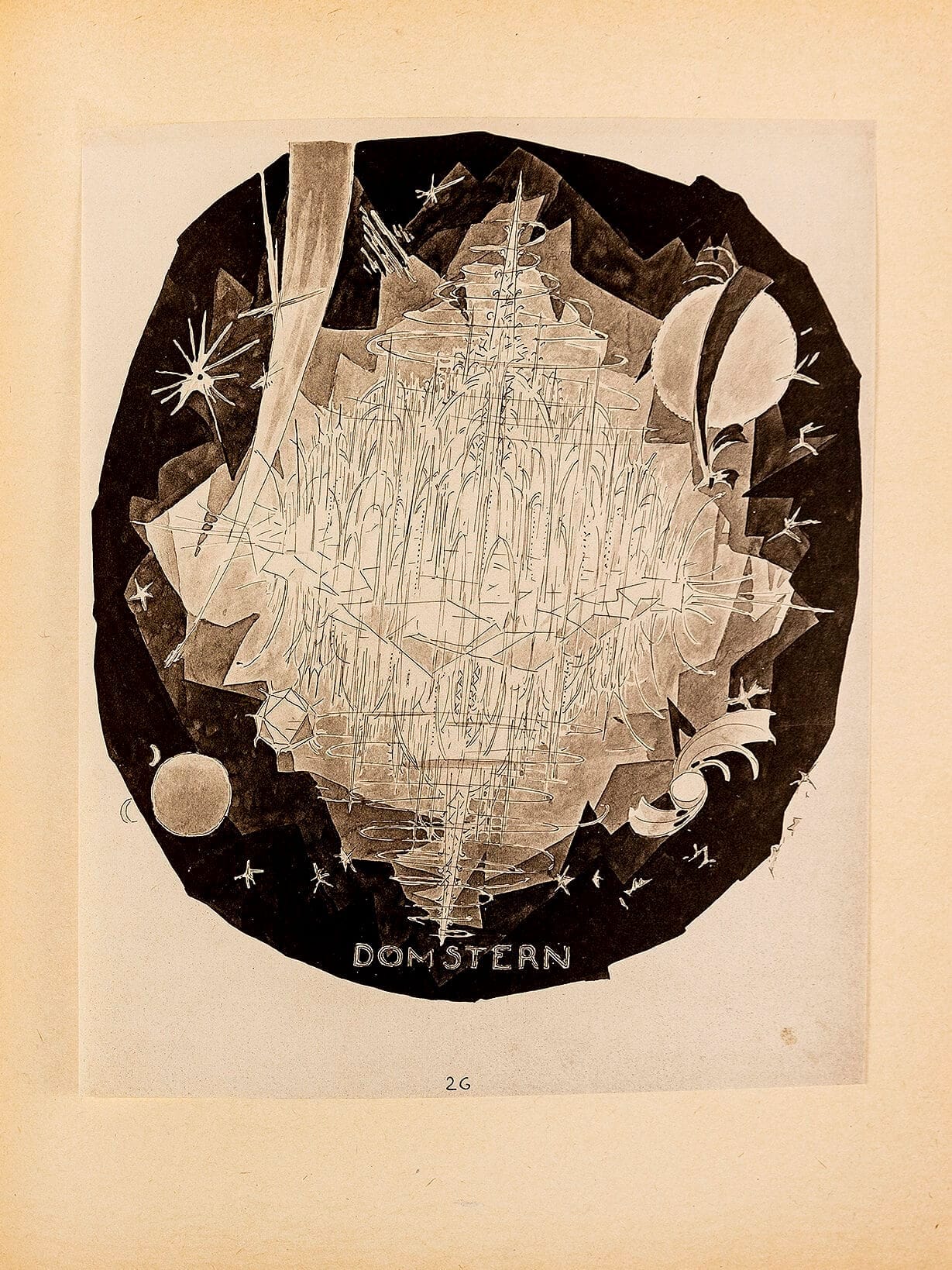
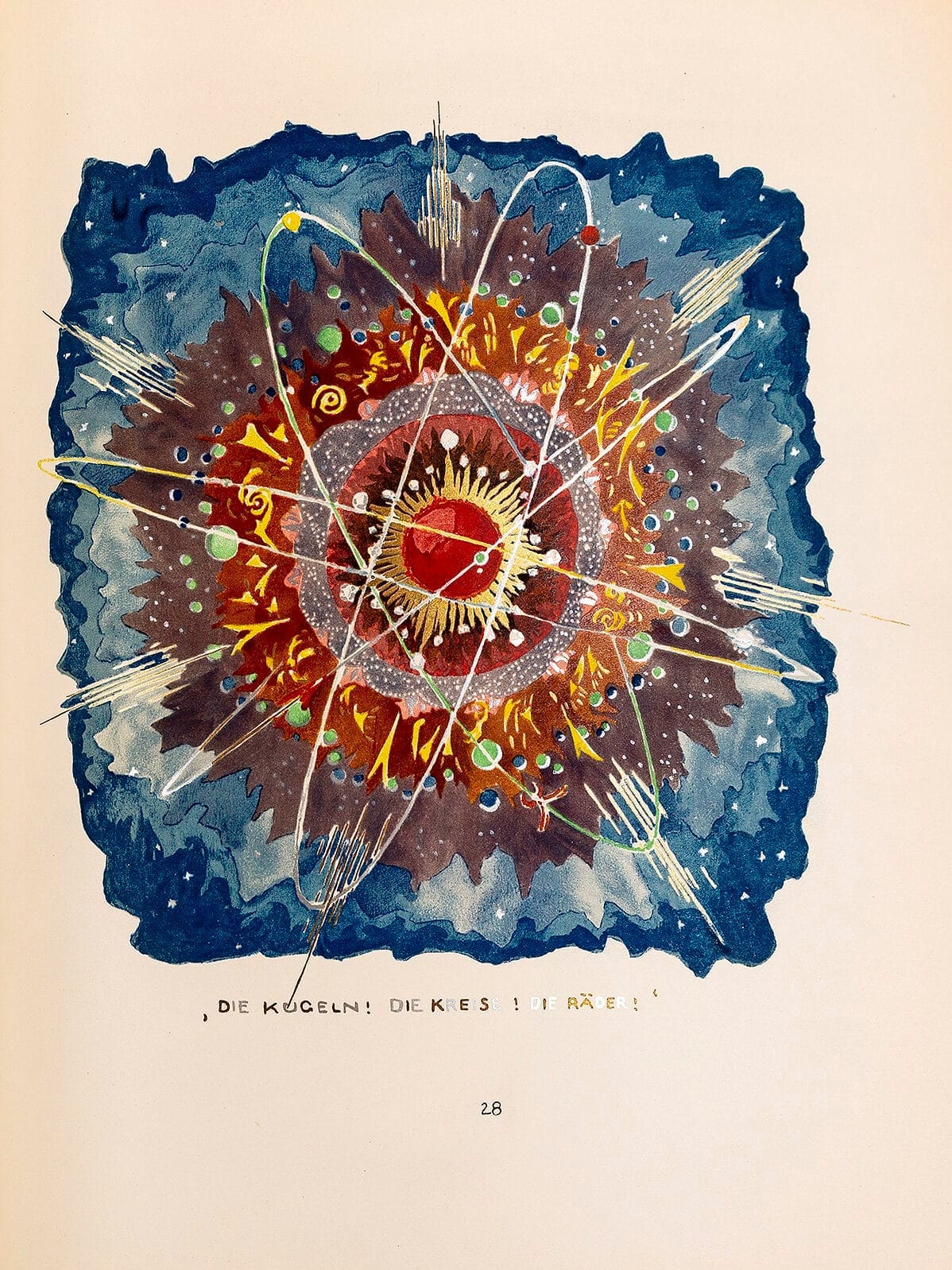
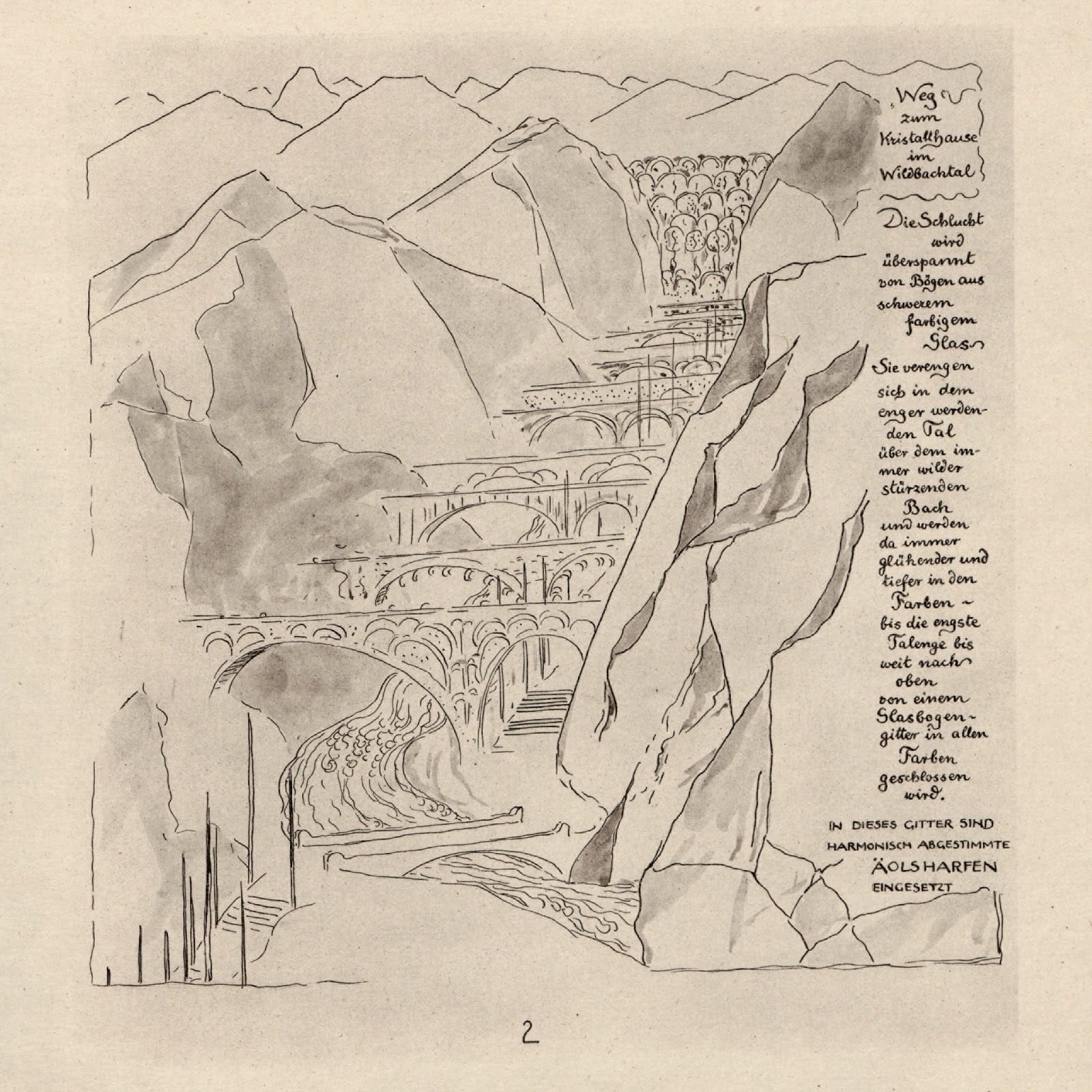
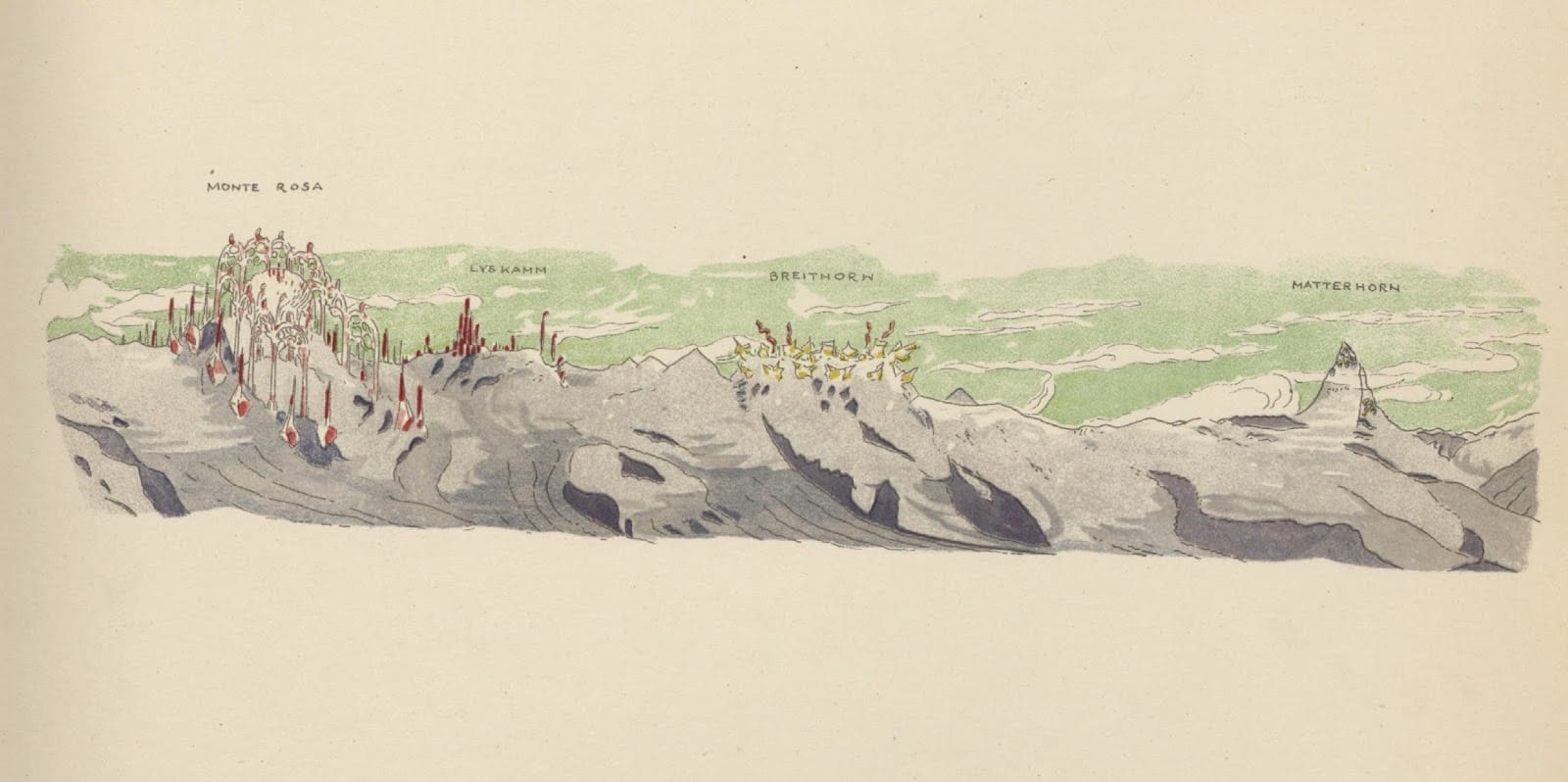
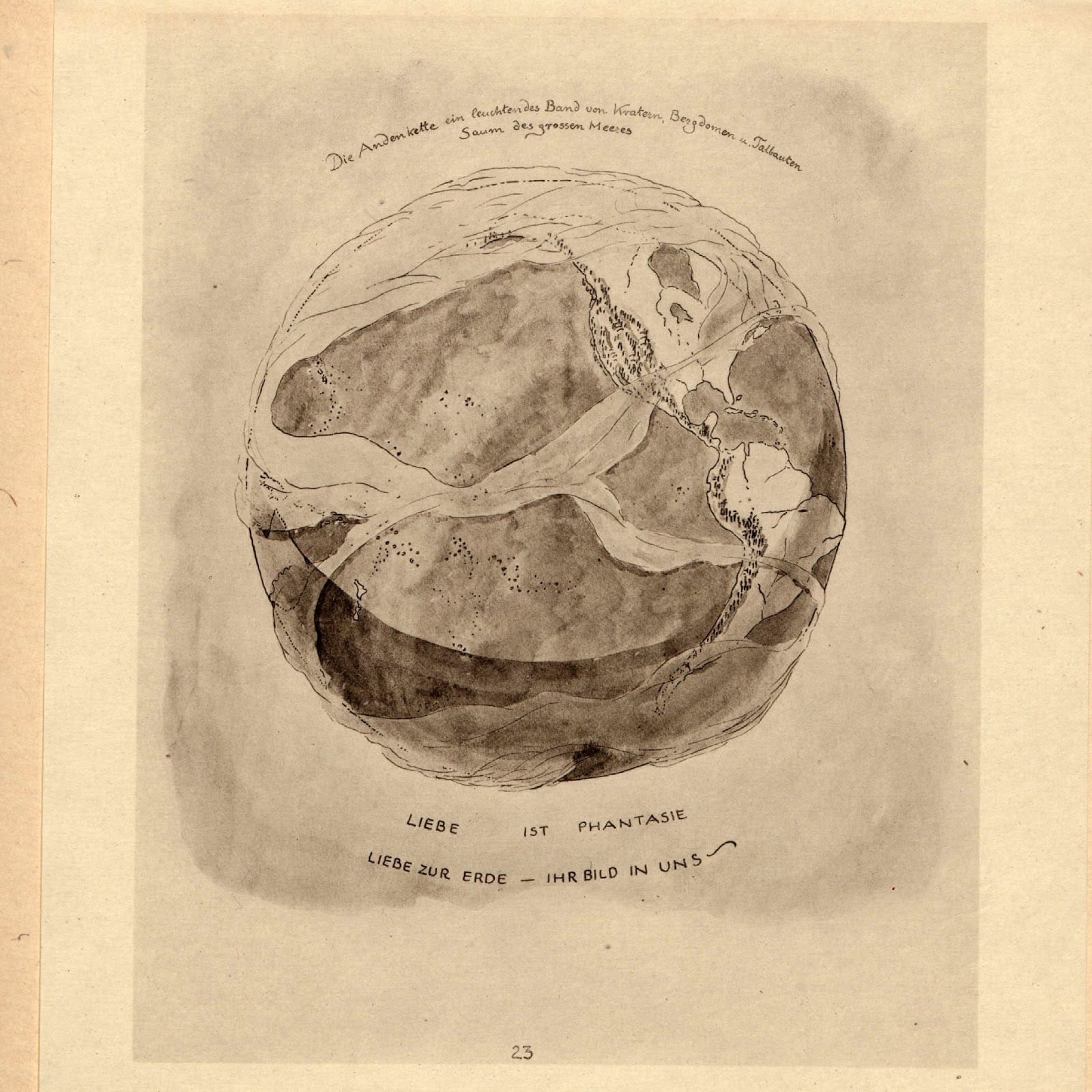
Alpine Architektur came out of the same fascination with glass. Published by Folkwang Verlag in 1919, it holds 30 drawings in five parts, moving from a crystal house in the mountains to building across the whole Earth and out among the stars. The original drawings are held by the Akademie der Künste in Berlin. In 1919 and 1920 Taut also led the Glass Chain, a circle of architects and artists, including Hans Scharoun and Wenzel Hablik, who wrote to each other about a new architecture of glass.
In the 1920s he turned to social housing in Berlin. His Horseshoe Estate in Britz is one of the Berlin Modernism Housing Estates that UNESCO listed as a World Heritage Site in 2008. He left Germany in 1933, worked in Japan, and in the mid-1930s moved to Turkey, where he taught at the Academy of Fine Arts in Istanbul and designed buildings in Ankara, among them the Faculty of Language, History and Geography. He died in Istanbul in 1938.
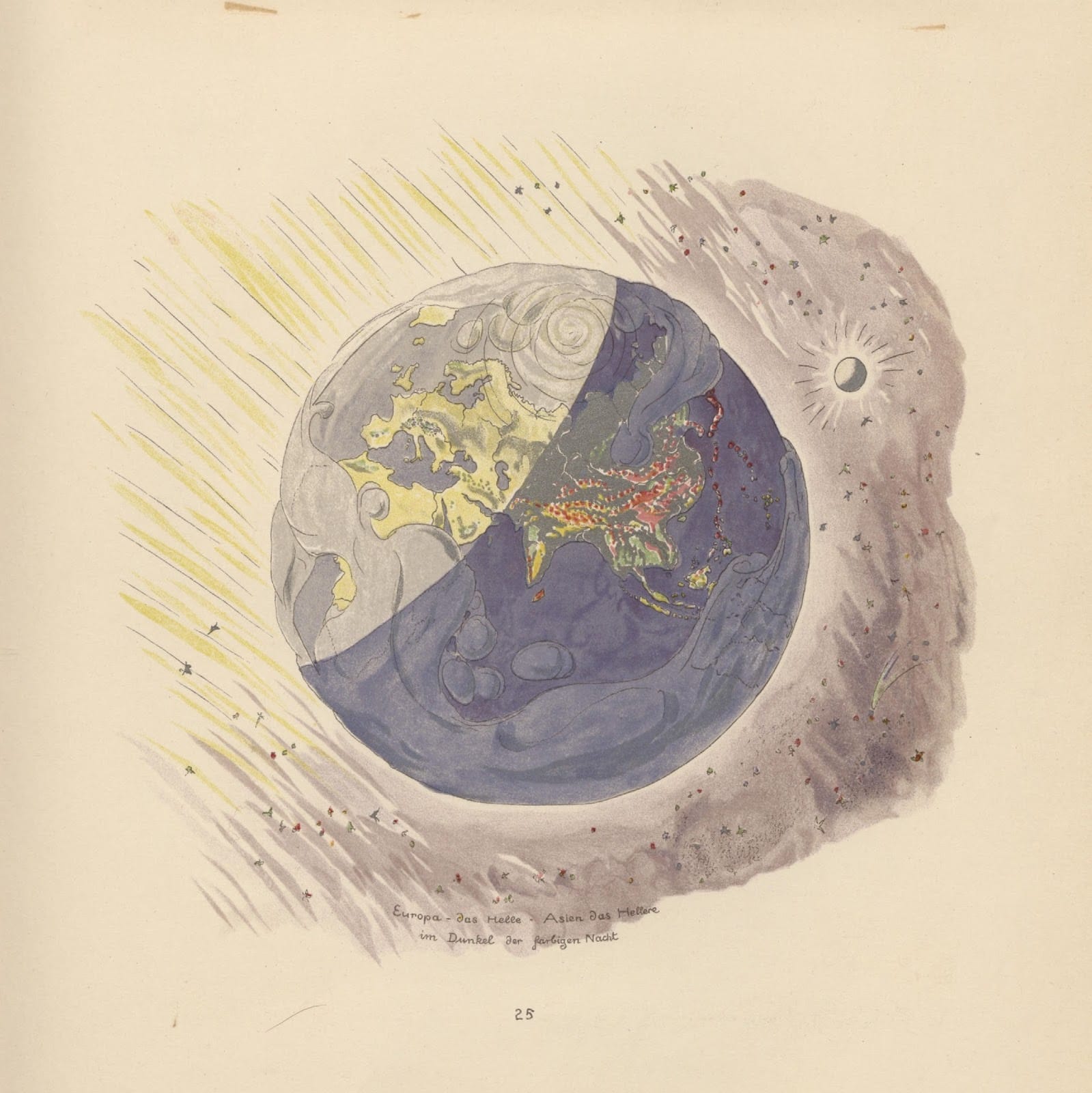
Images from Hidden Architecture and Drawing Matter.
