
It’s just so cool to be casually walking, one moment you're under emerald canopies, the next you're enveloped in plumes of steam, the air heavy with that unmistakable sulfur tang, like eggs frying in the undergrowth. In Furnas, on the island of São Miguel in the Azores, this isn’t a rare phenomenon. Here, the earth breathes openly. Steam vents line the village road. Bubbling, mud-slicked caldeiras sit quietly beside footpaths. And locals pass by like it’s nothing.
But to a first-timer, it feels like arriving on another planet.
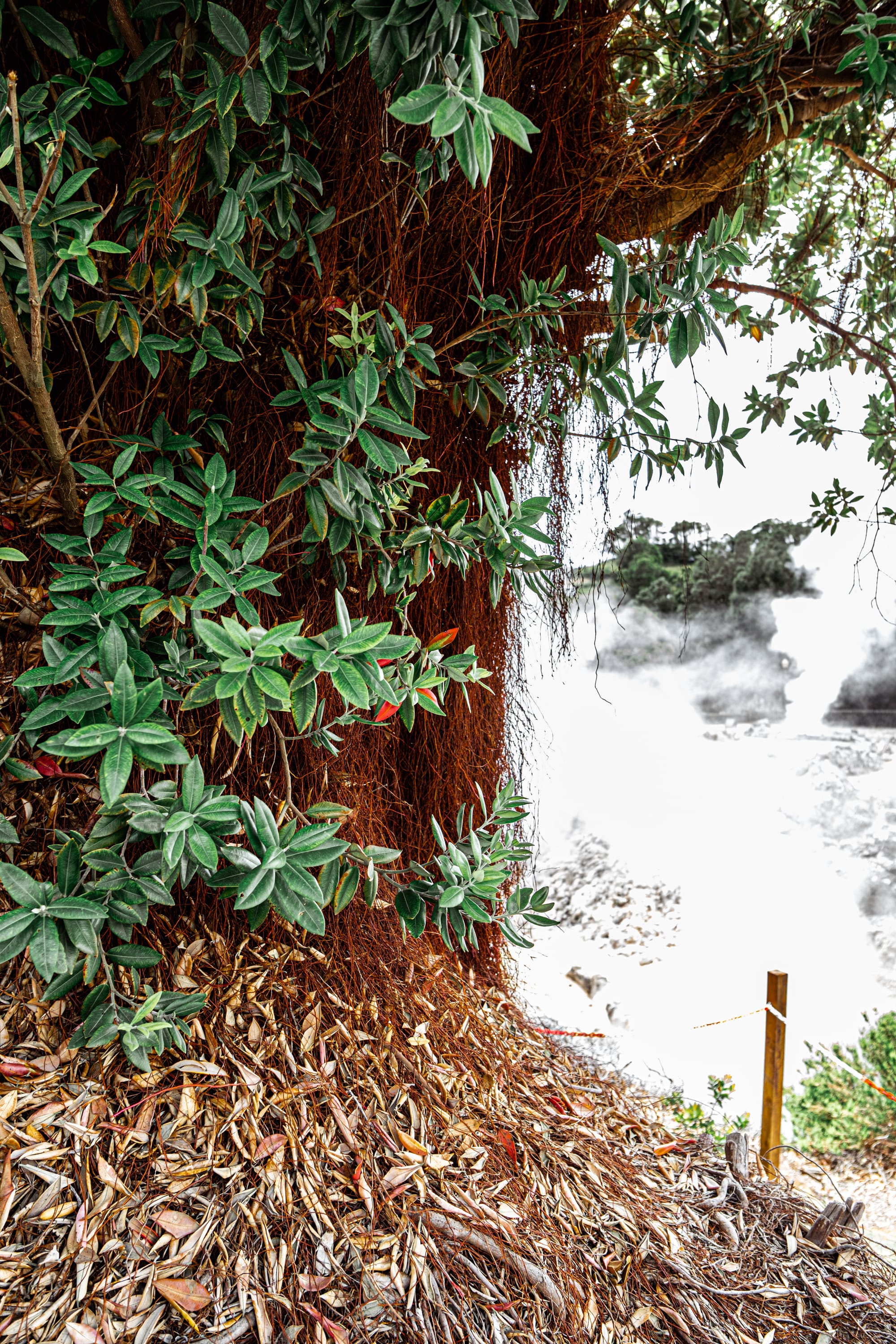
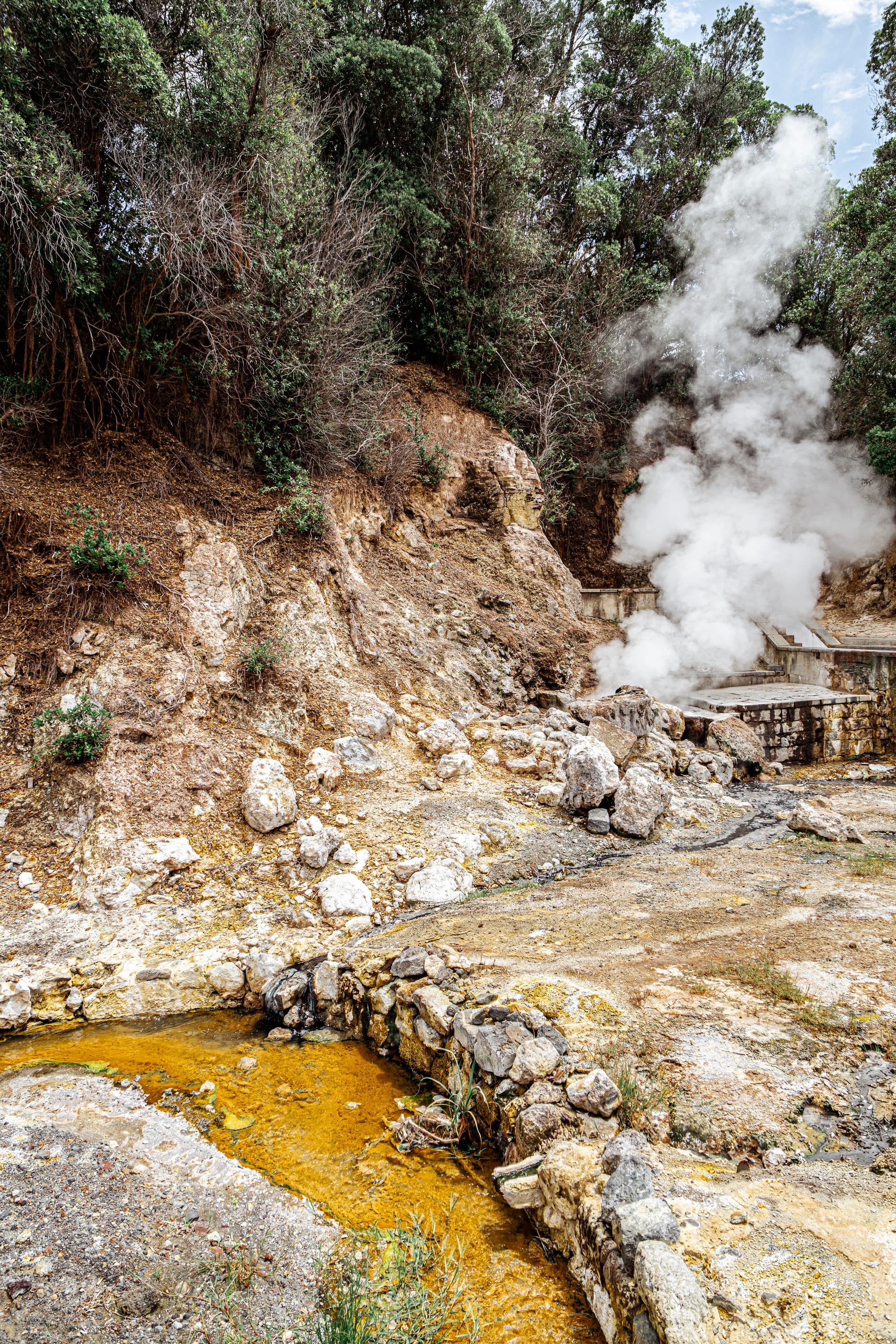
Tangled roots and rising steam frame the vivid, mineral-stained ground of the caldeiras
The sheer variety of thermal features packed into this walkable zone is astonishing: slender fumaroles rising from tiled patios, hot springs hidden behind garden walls, and water trickling across mineral-stained stone in subtle reds, yellows, and greens.
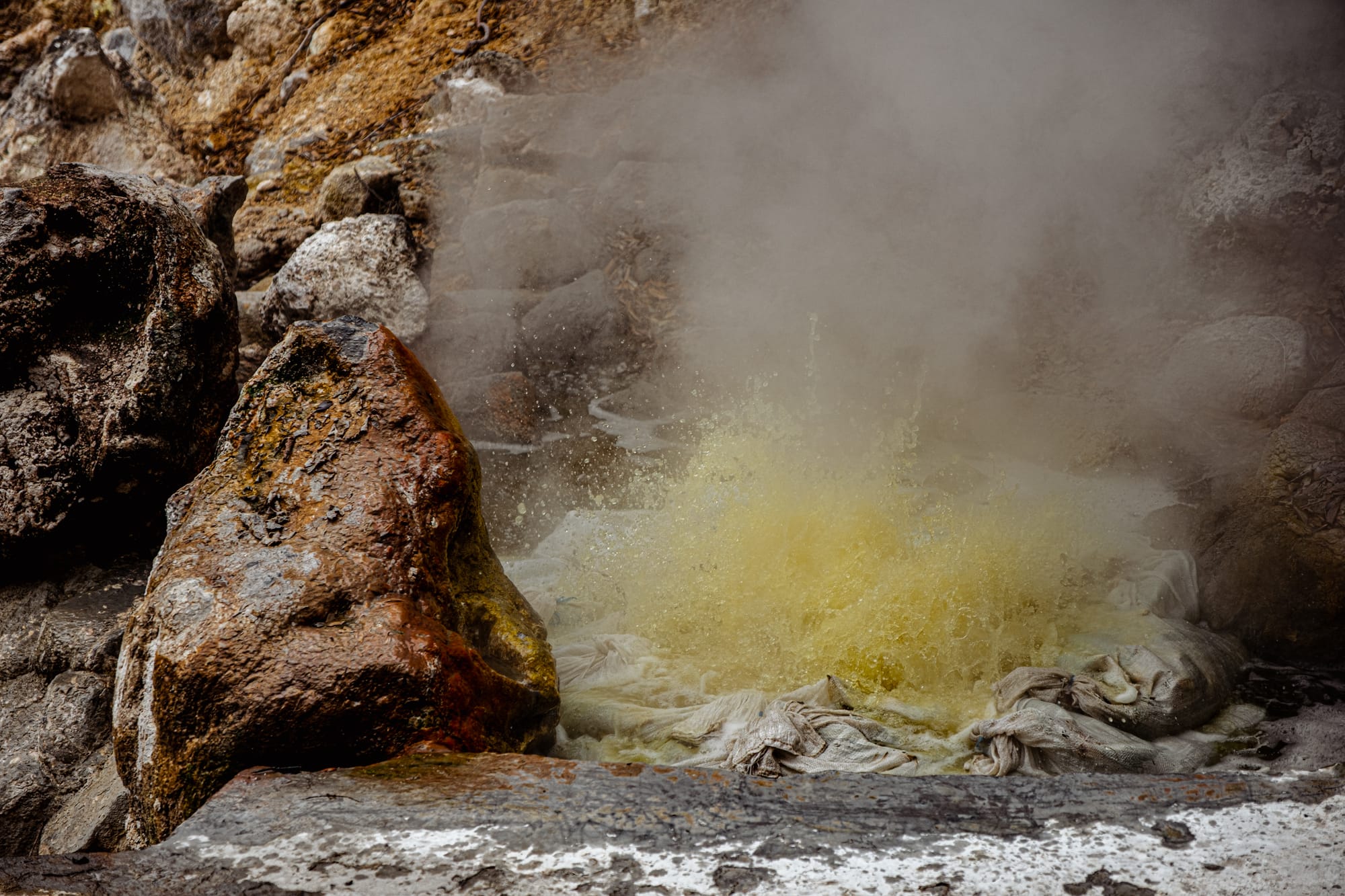
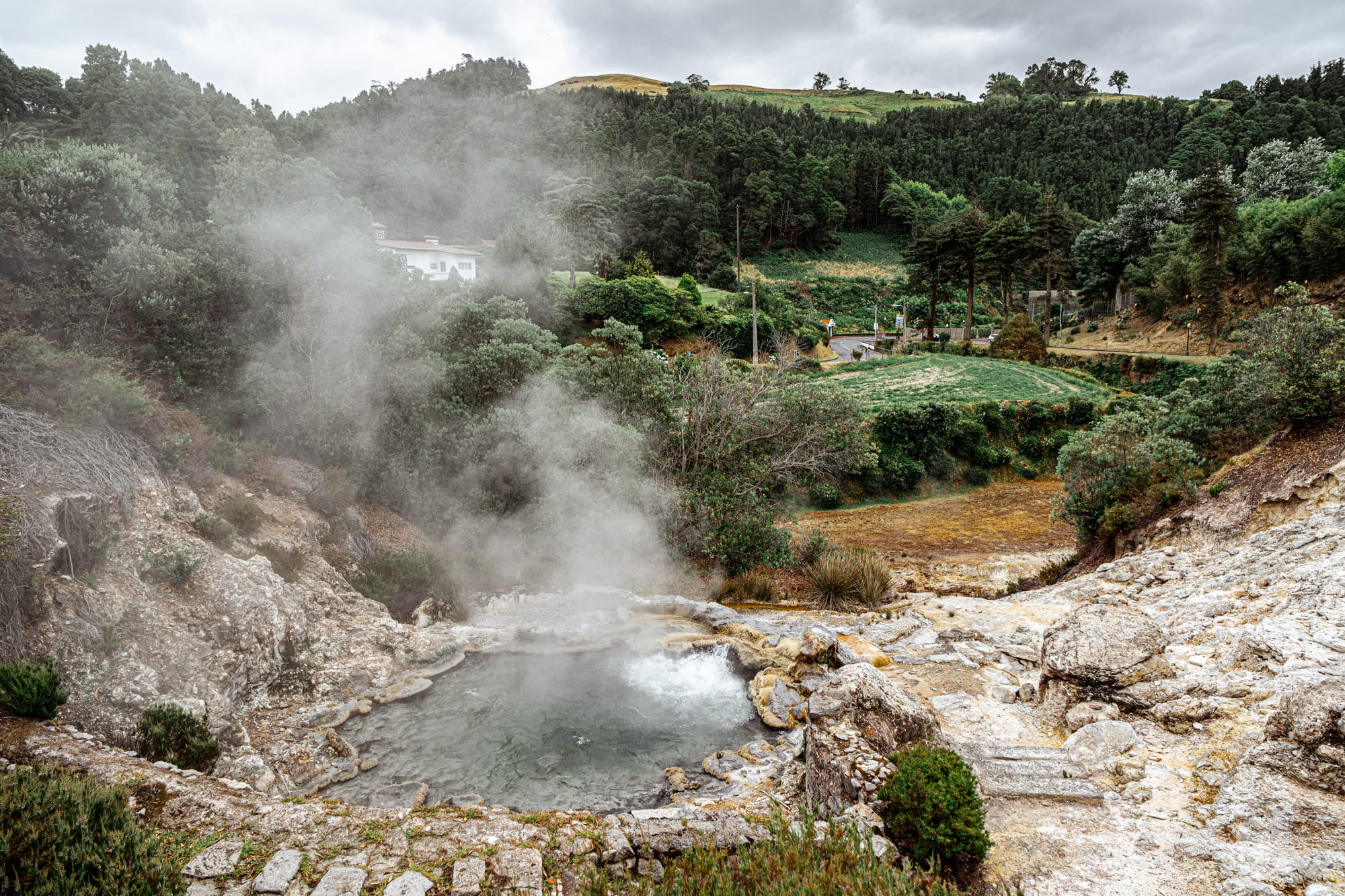
Boiling yellow sulfur springs and steaming caldeiras nestled in the hillside
Even drain covers send up the occasional puff of mist. Every direction holds movement, temperature, and texture.
The caldeiras in Furnas: town center and lakeside
There are actually several geothermal areas scattered around Furnas. The one in the center of town is especially vivid, easy to stumble upon while walking, edged with bubbling pools, and surrounded by village life.
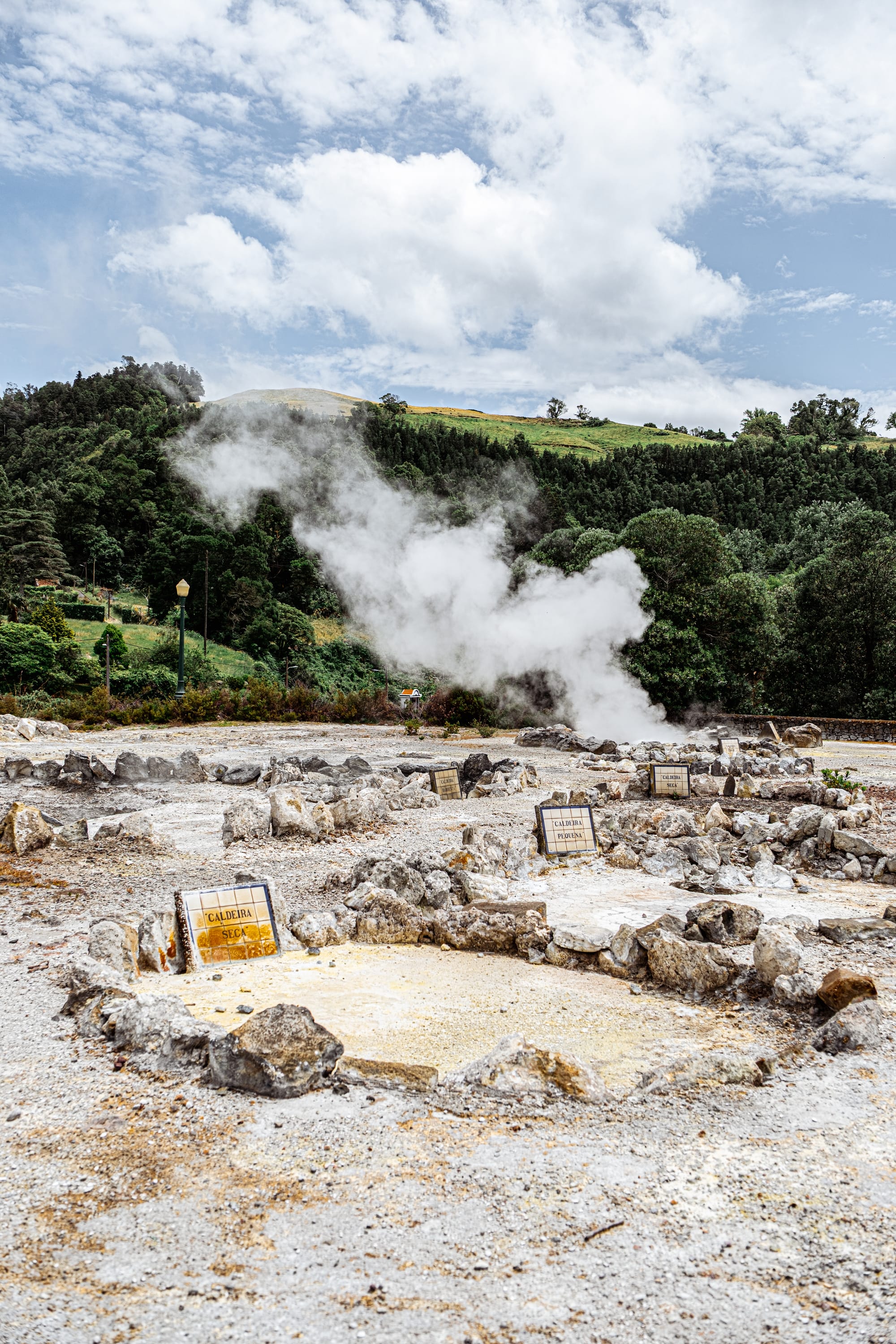
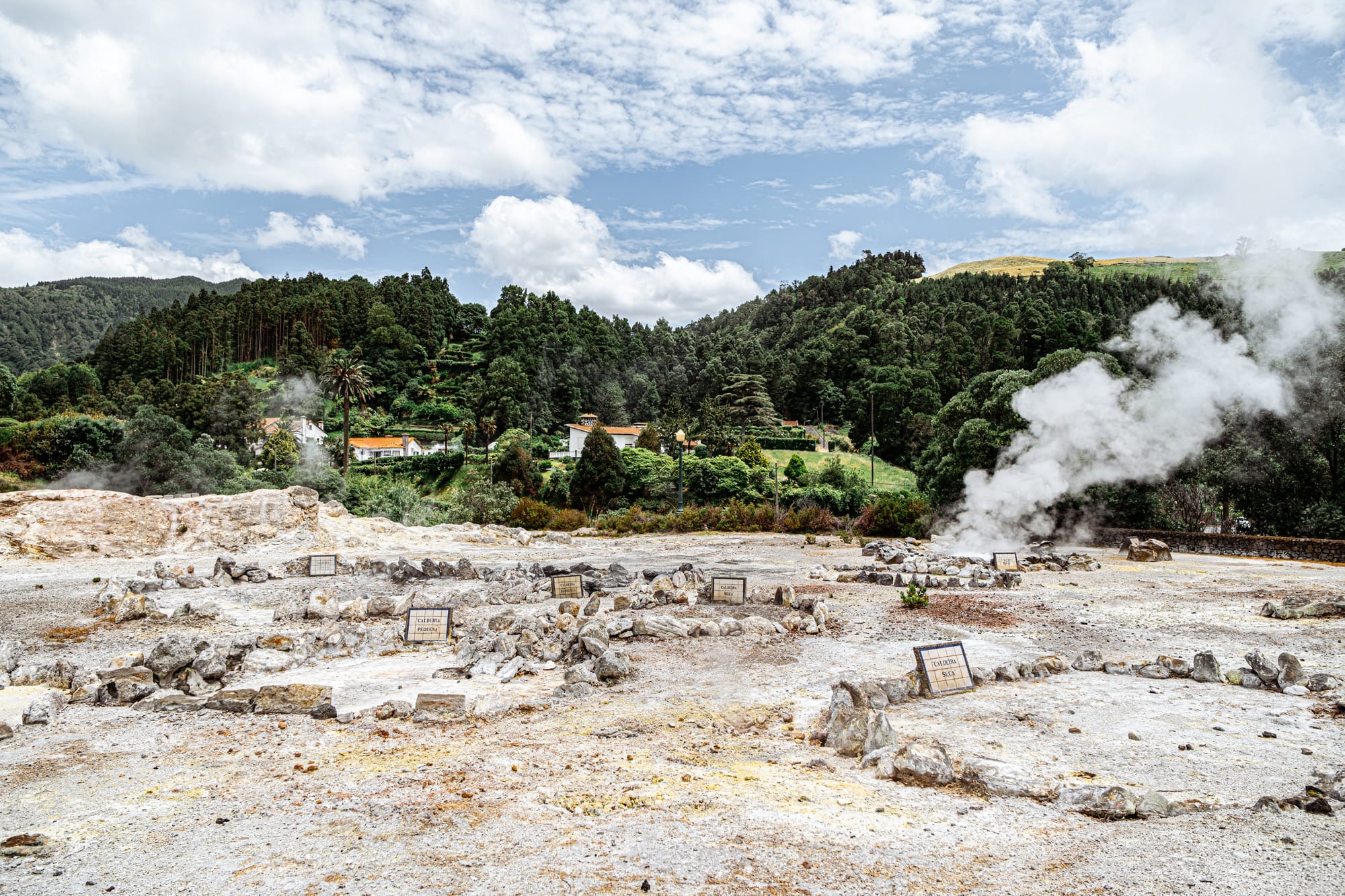
Rows of labeled caldeiras venting steam beneath a bright summer sky
This cluster of vents and pools is officially known as the Caldeiras das Furnas, and it sits near the town’s main roundabout, right along Rua Água Quente.
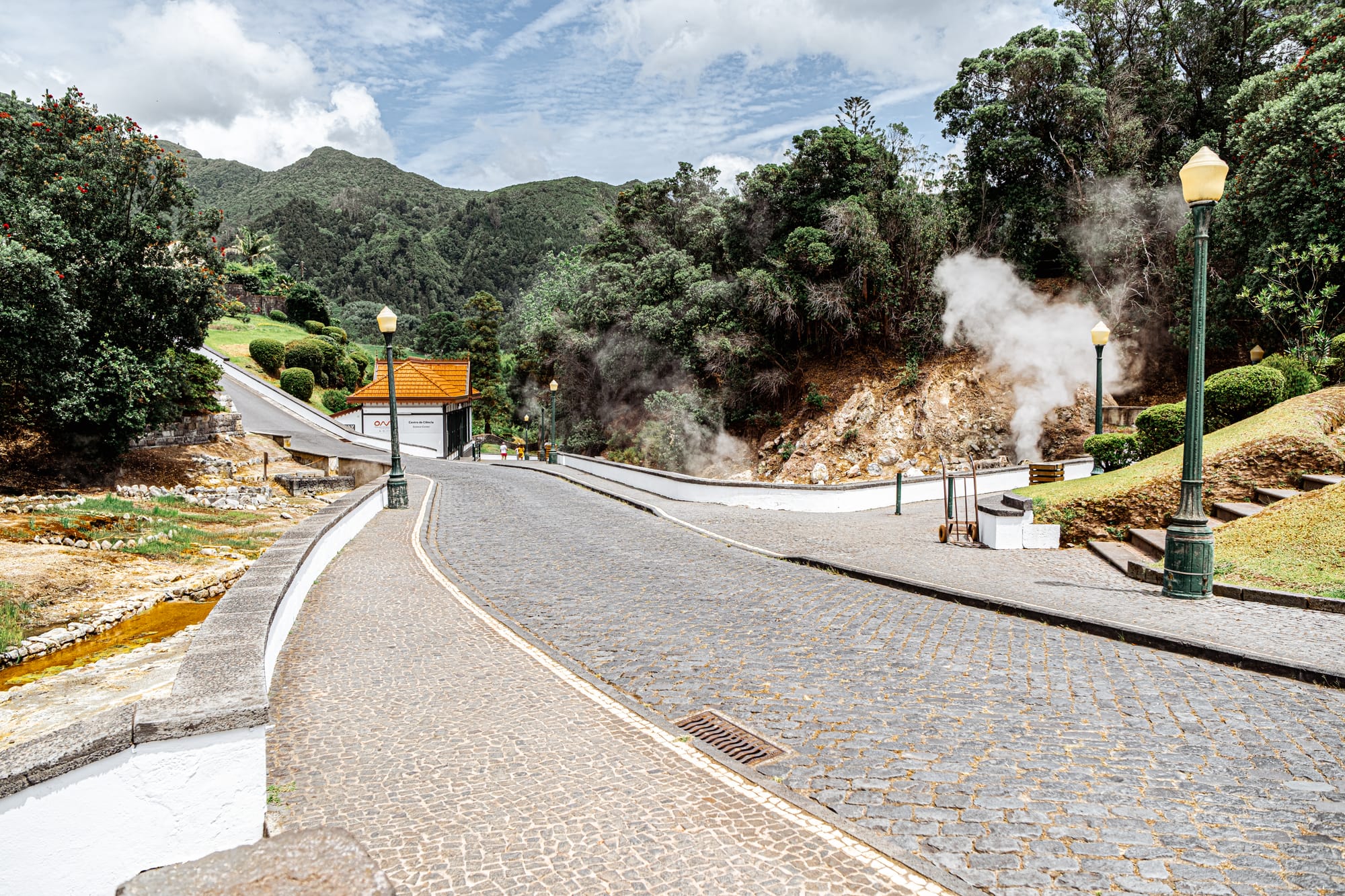
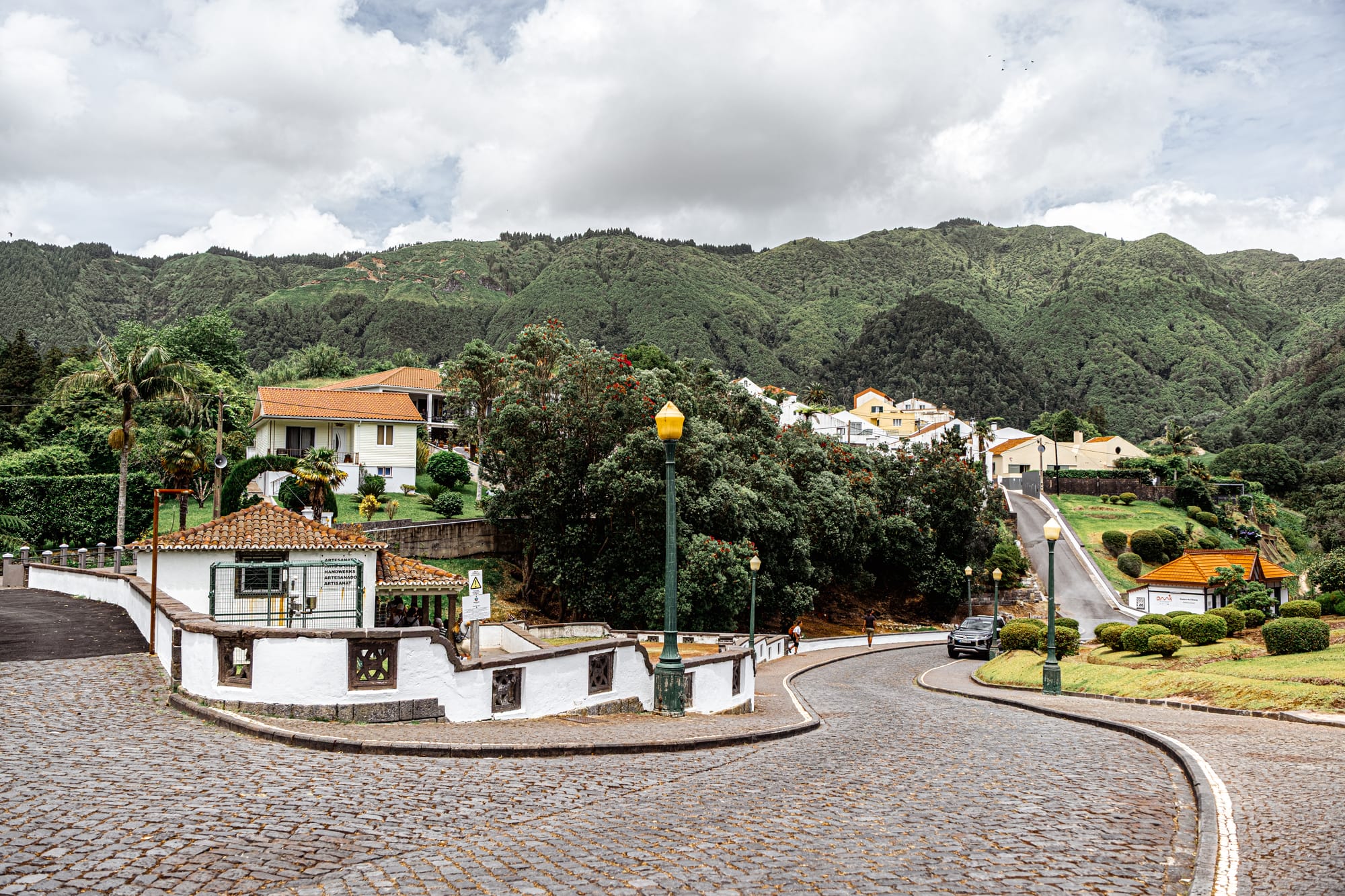
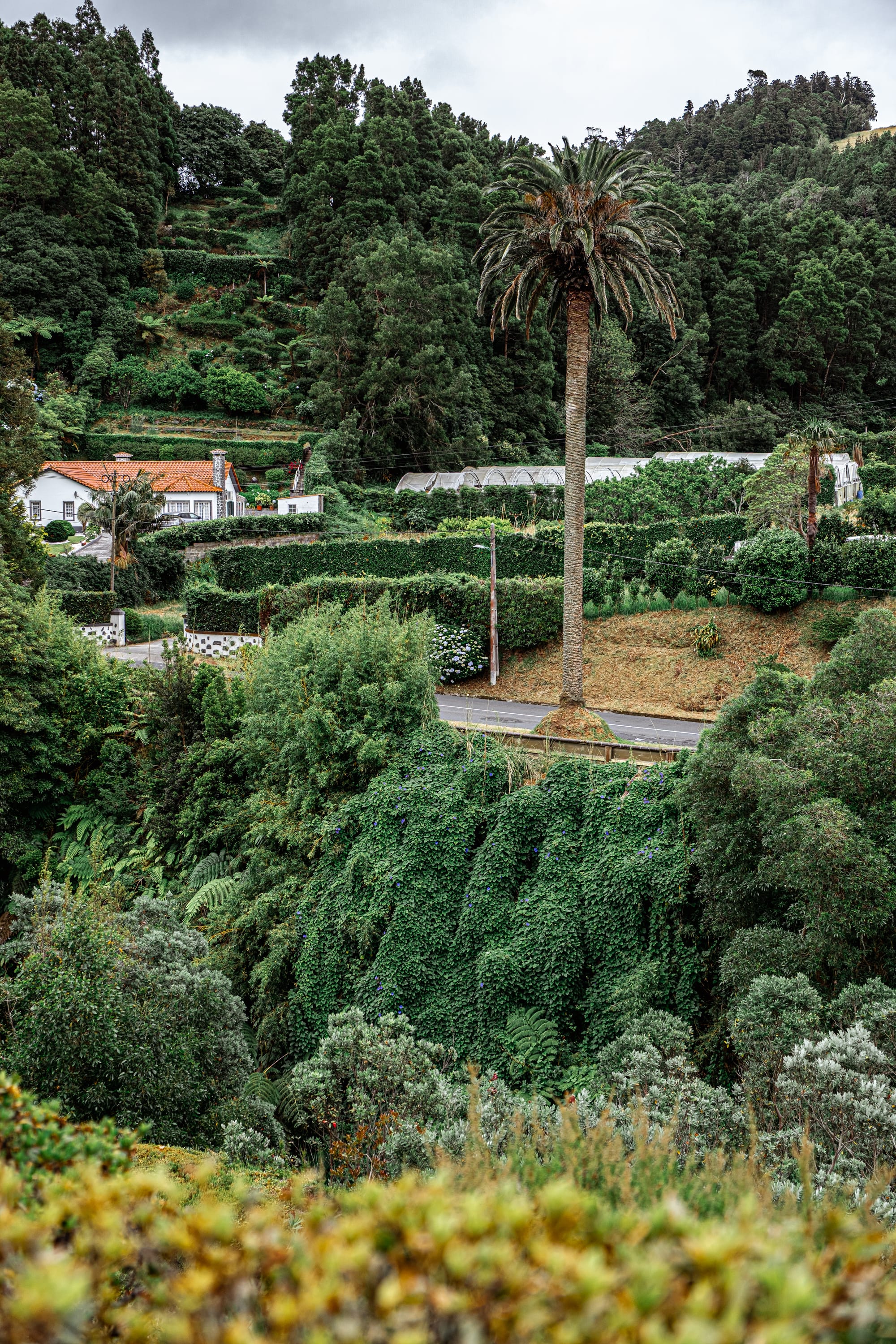
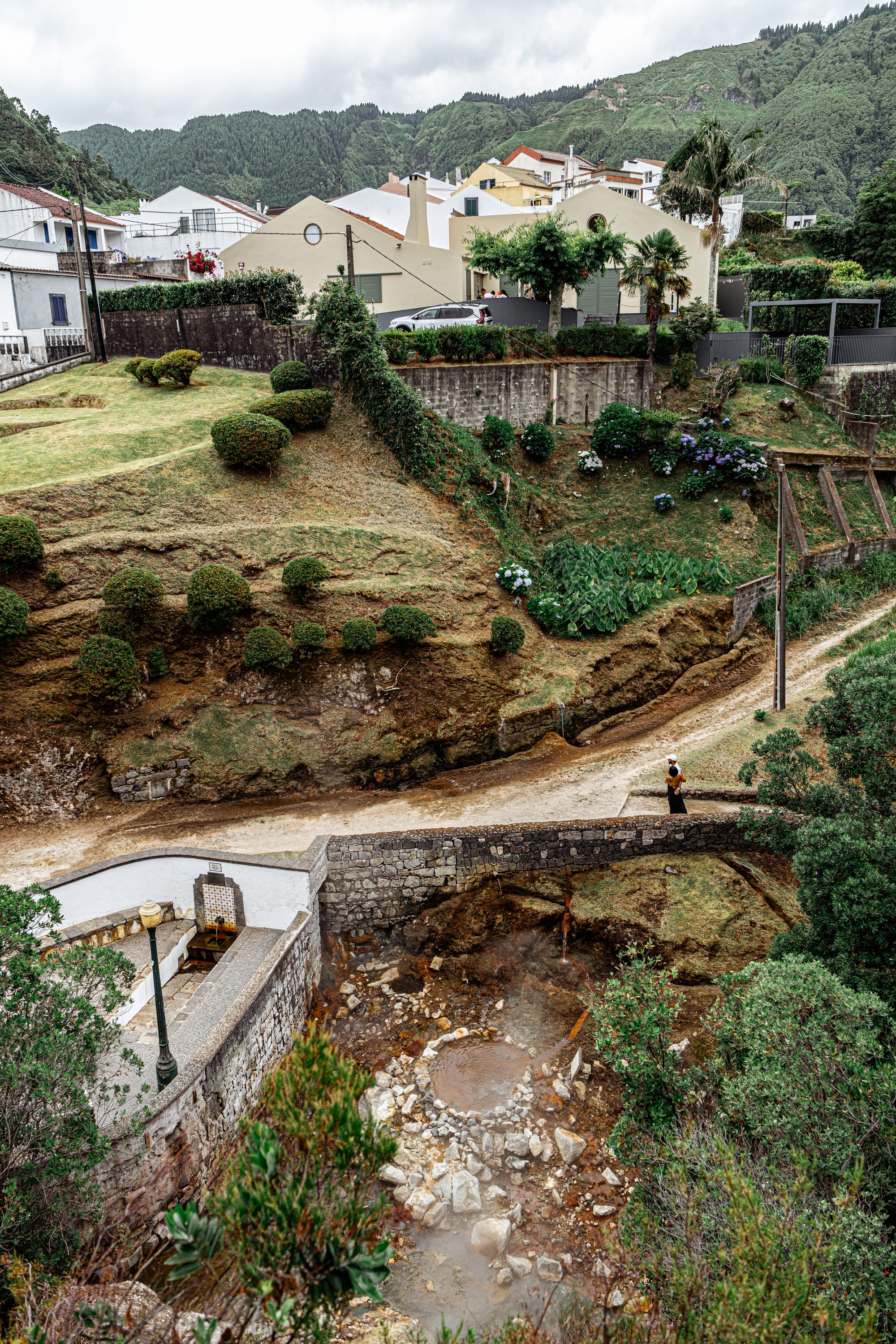
Caldeiras sit naturally among homes, streets, and gardens in the center of town
It’s unassuming and accessible, with steam rising directly from vents beside sidewalks and between buildings.
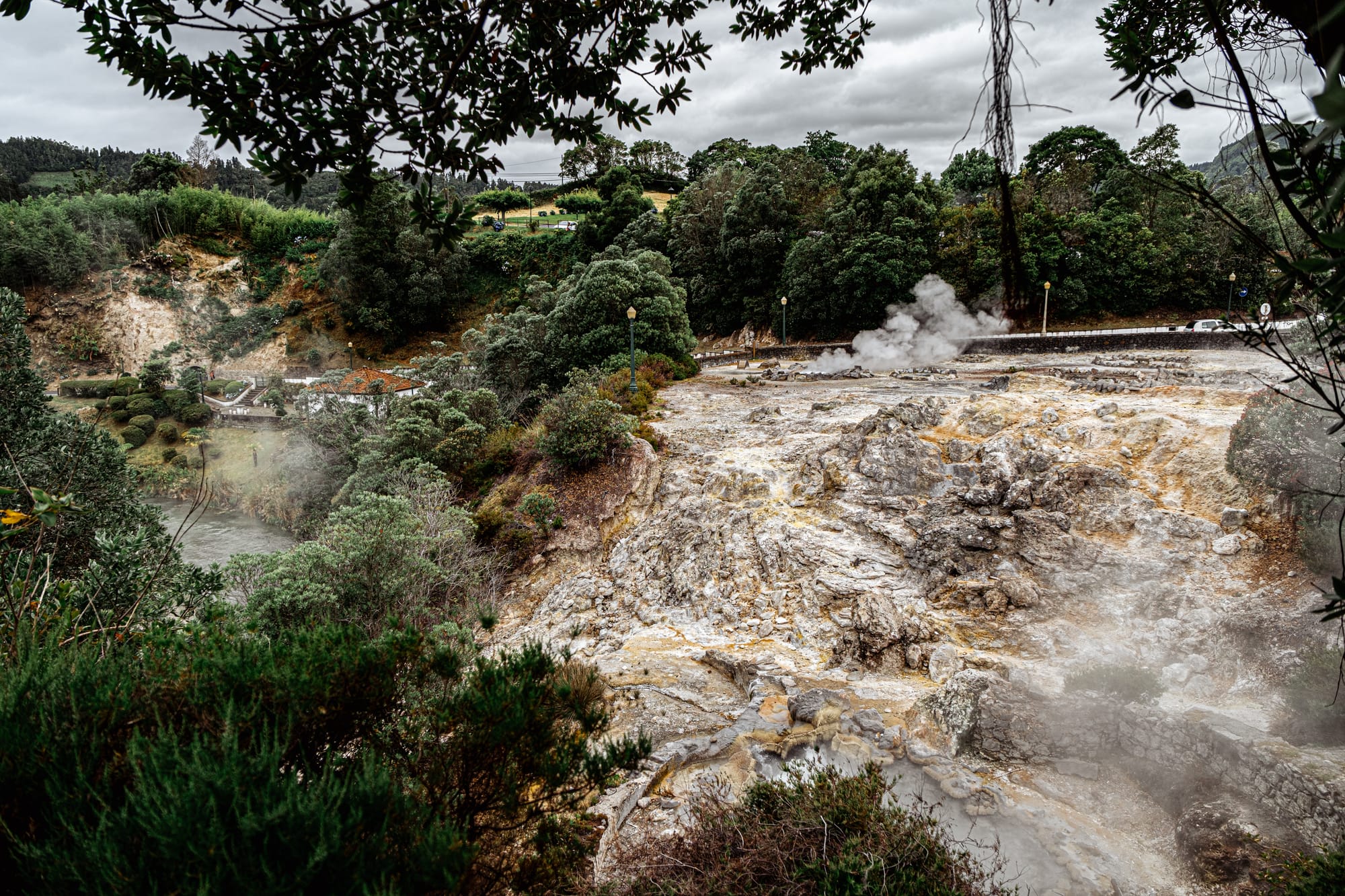
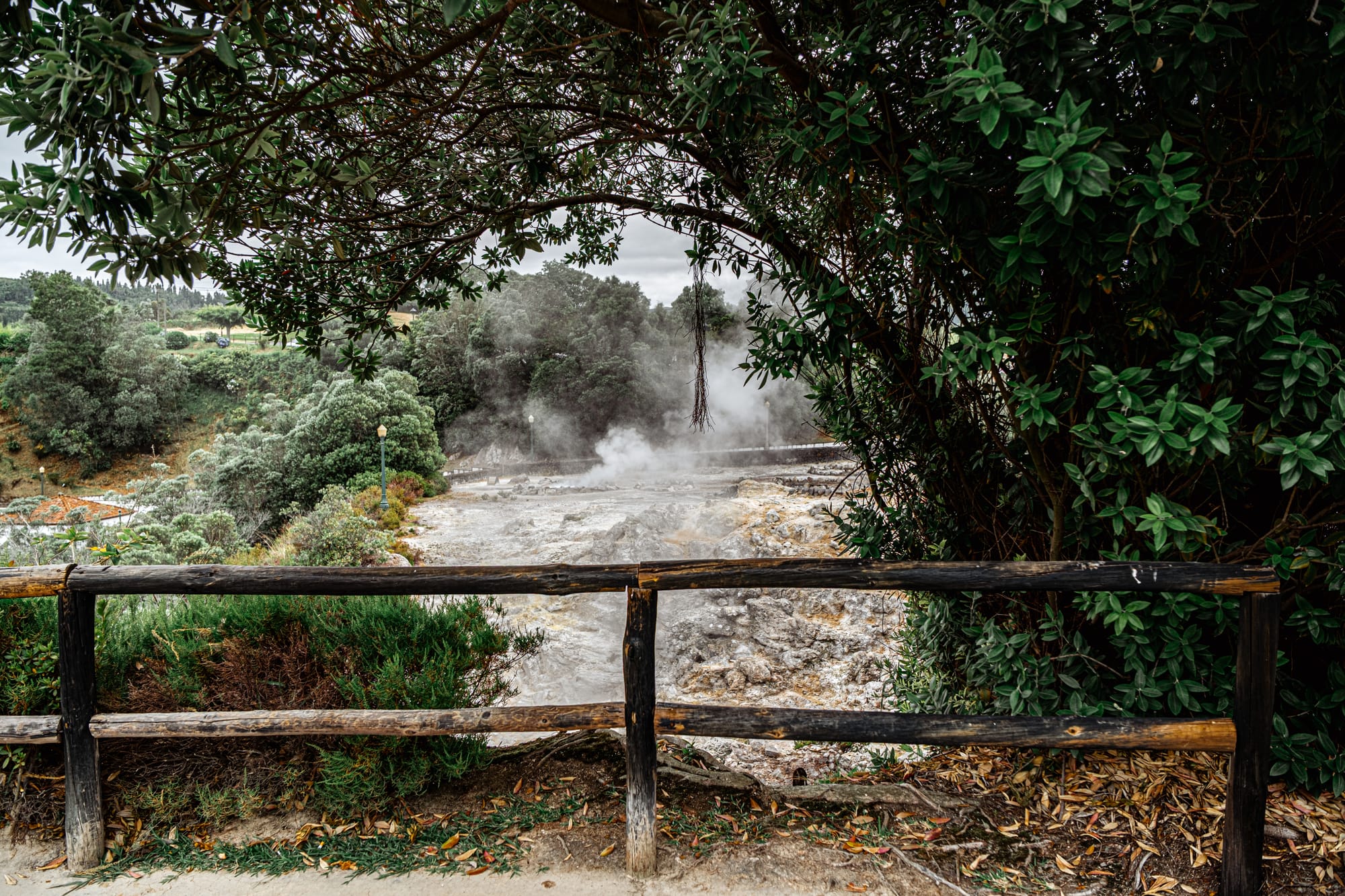
View across the steamy caldeiras, framed by trees and wooden fencing
Just outside the village, near the southern curve of Furnas Lake, there’s another geothermal spot, the Caldeiras da Lagoa das Furnas. These lakeside caldeiras sit near the start of the Lagoa das Furnas hiking trail, a half-day loop that traces the crater lake through forest, geothermal vents, and a Gothic lakeside chapel.
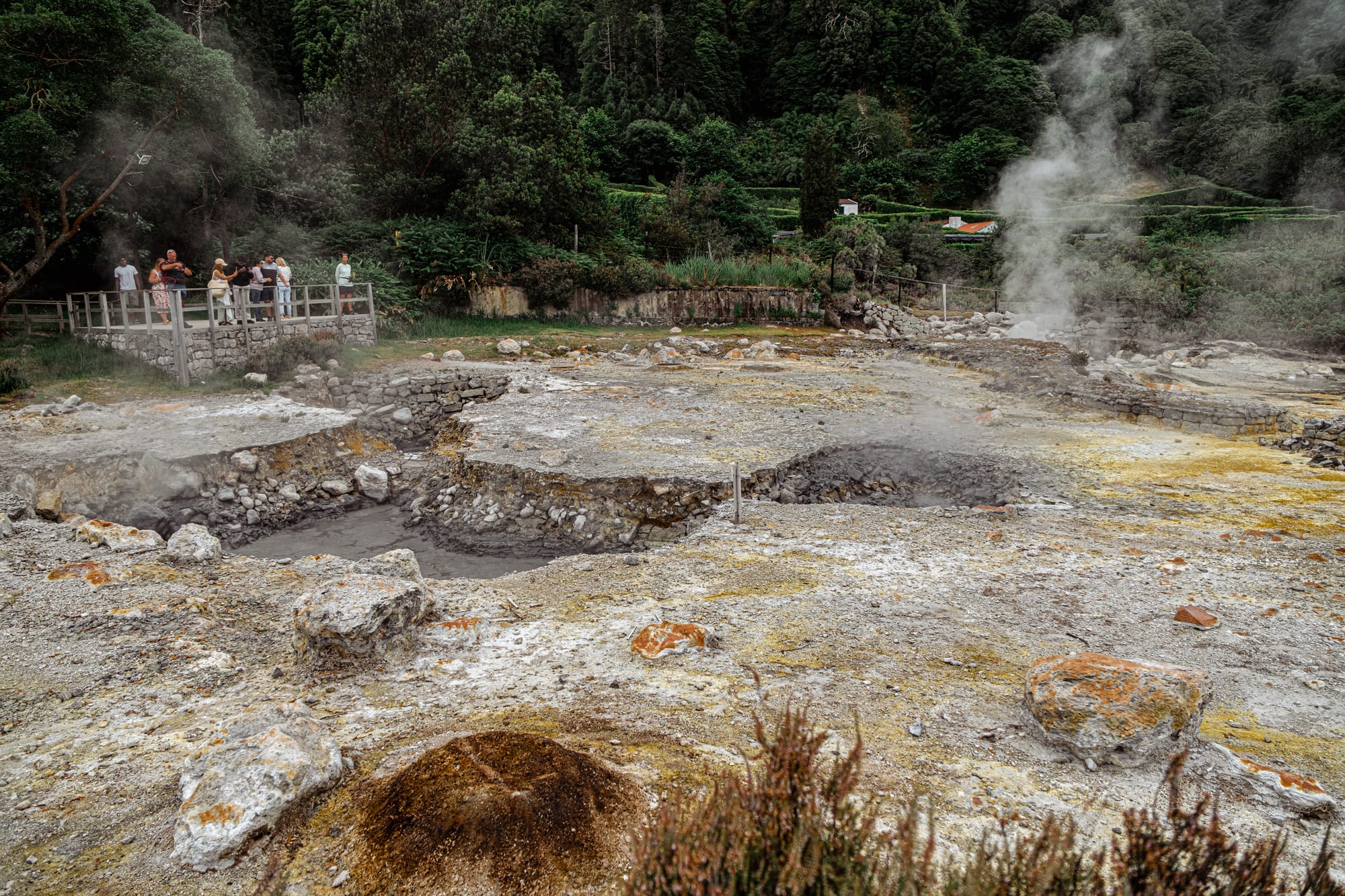
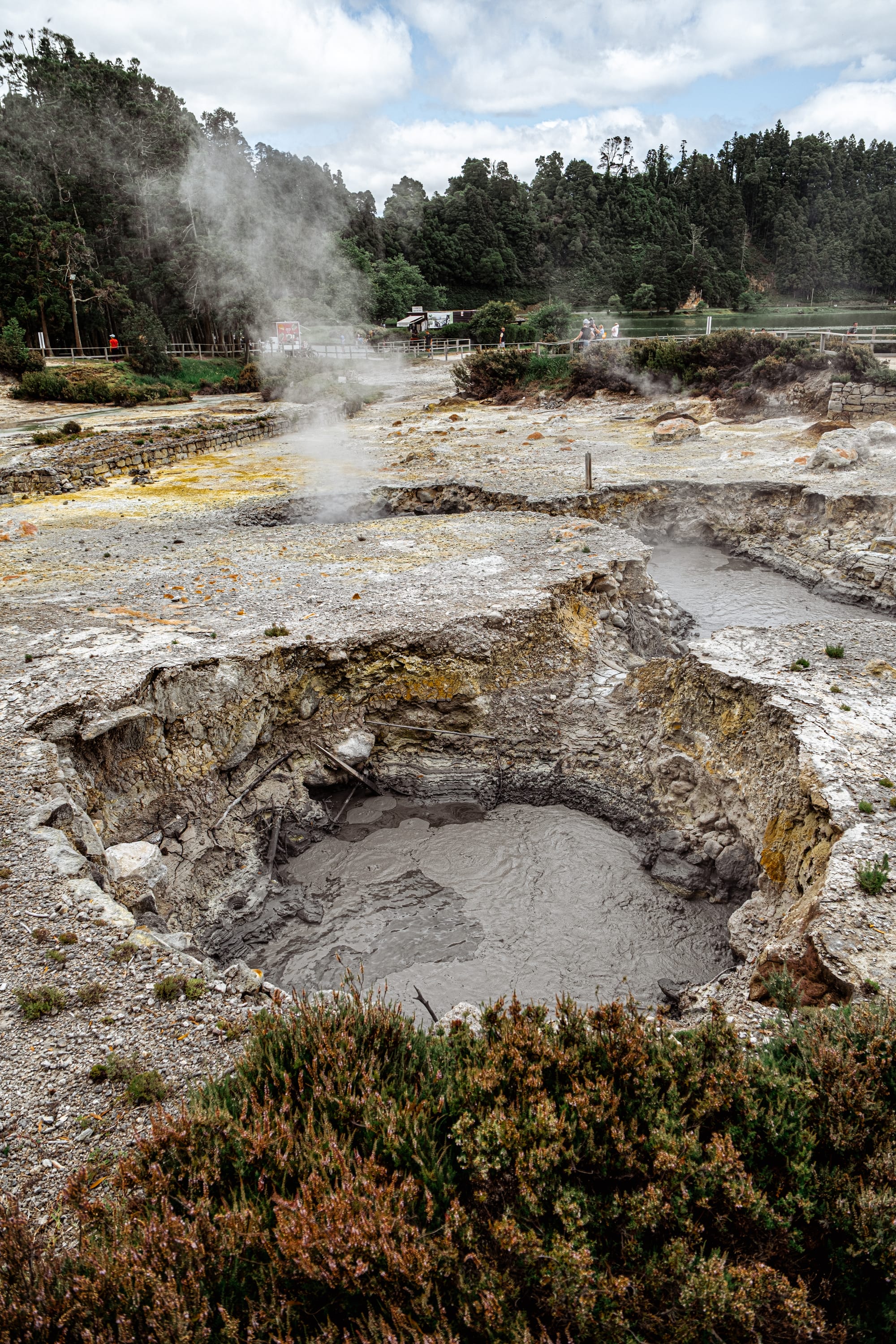
Bubbling mud pools and steam vents surrounded by forest and visitors
This one’s a little more structured, with clear paths threading between fumaroles and cooking pits.
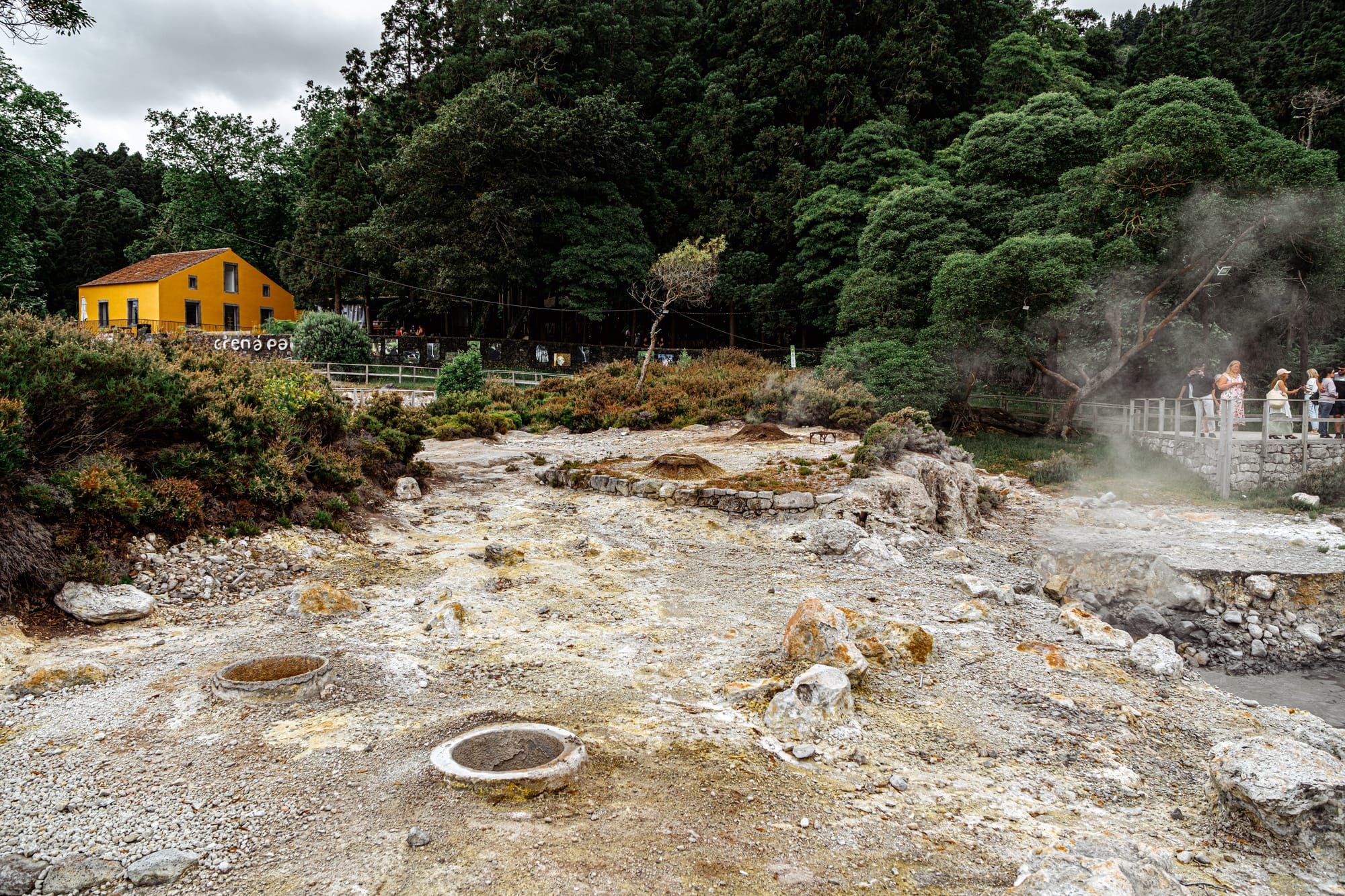
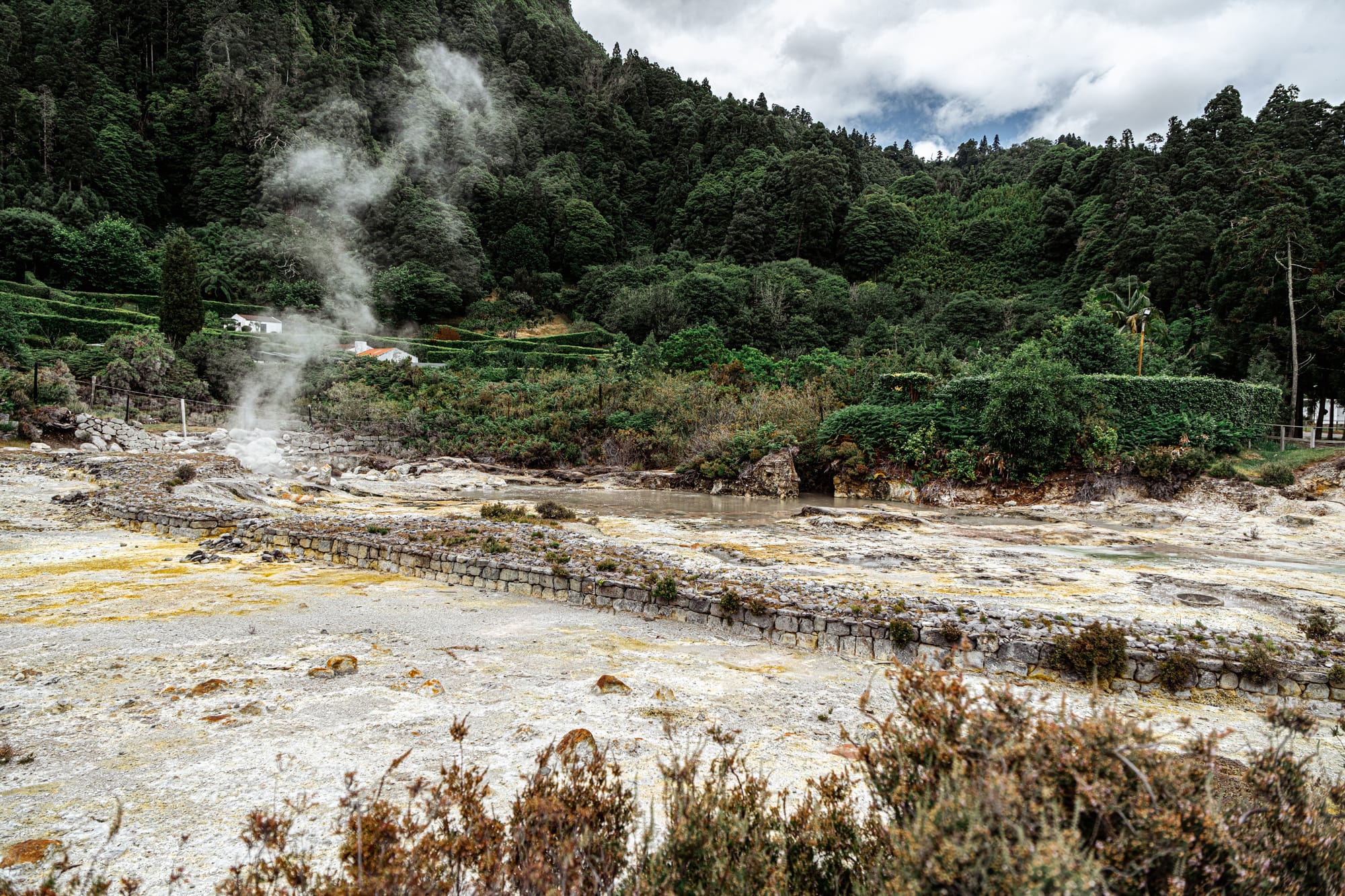
Corn pots and plumes of steam scattered across a mineral-stained moonscape
Locals lower metal pots into the ground to slow-cook cozido over volcanic heat.
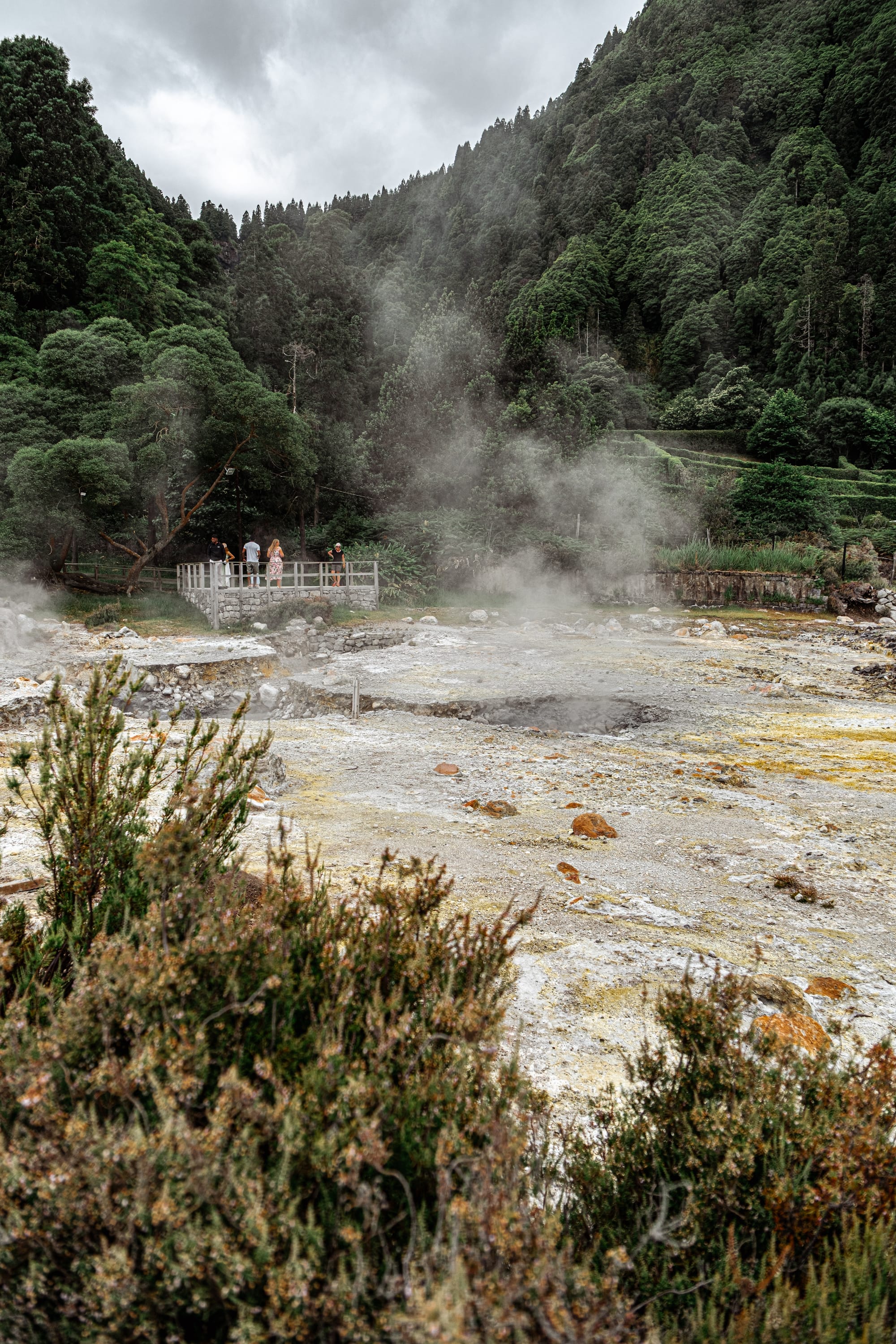
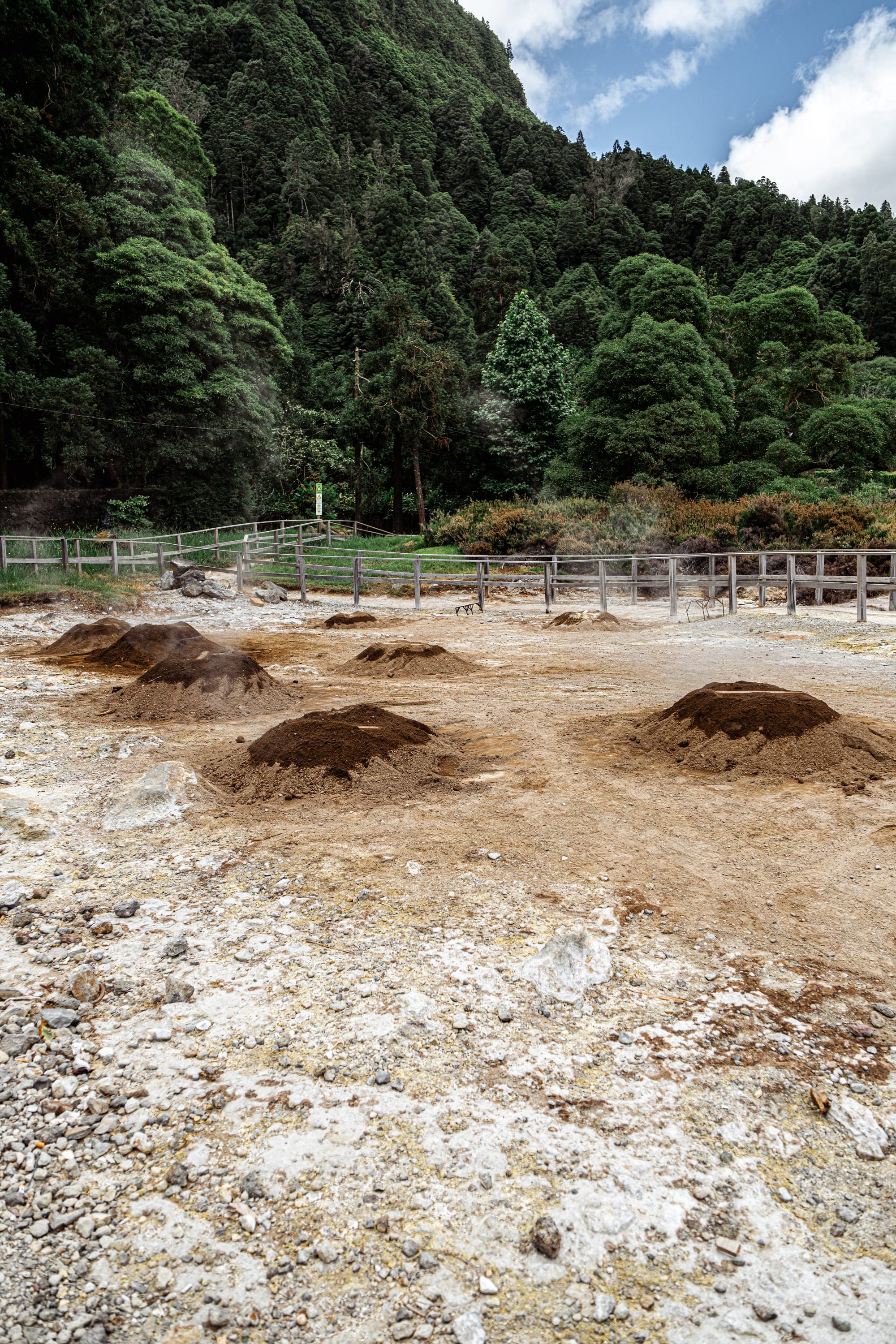
Geothermal vents and underground cozido pits warm the ground and the air around it
Both spots feel active and alive, but in different ways—one woven into the rhythms of town, the other opening out toward the lake.
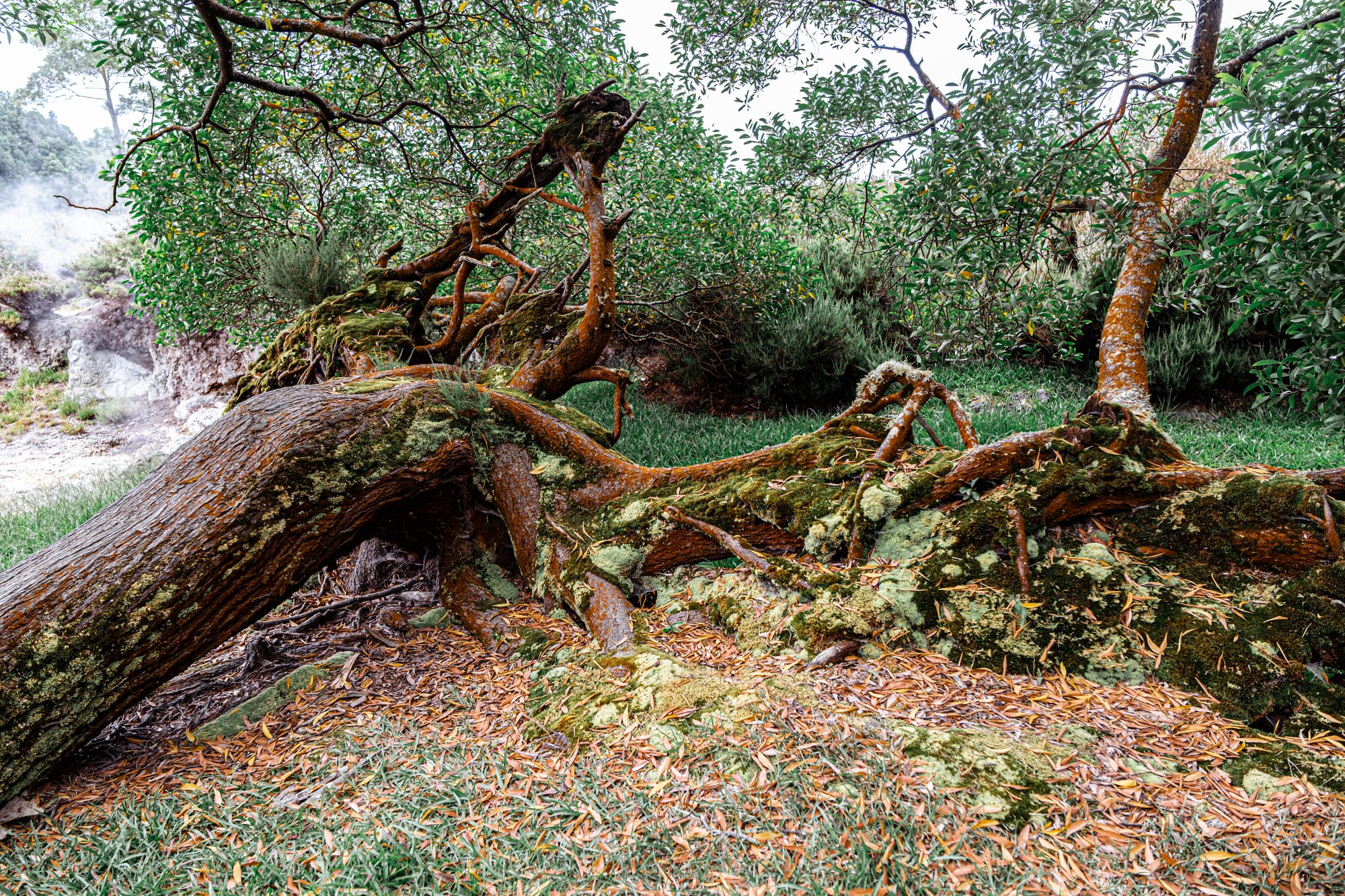
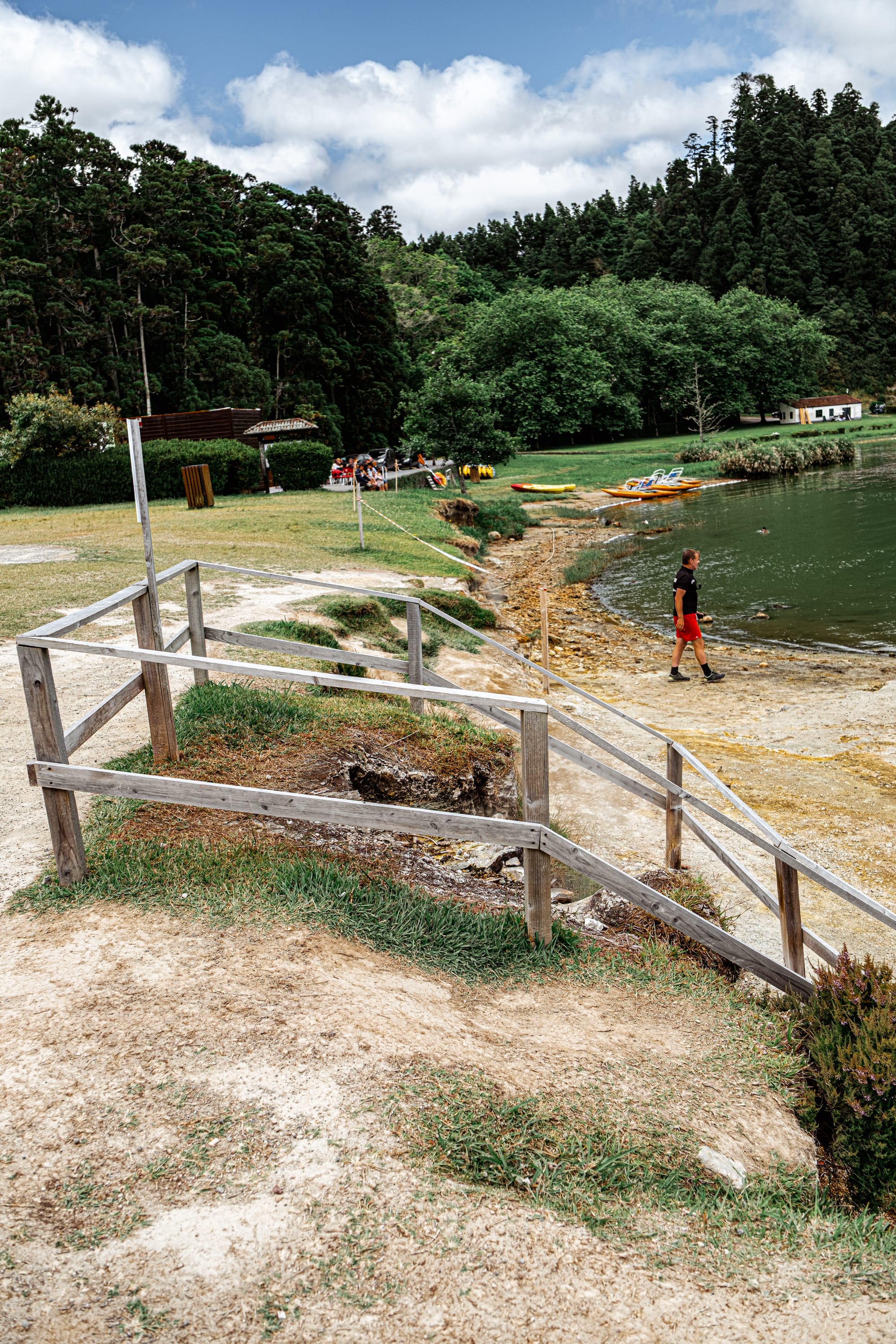
Tangled trees and thermal edges surround the caldeiras, spilling into the lakeside beyond
If you get the chance, stop by both.
First impressions: sulfur, steam, and strangeness
From a distance, you see nothing. Then a curl of steam, maybe. Then, as you approach, the air thickens. The smell hits: sulfur, unmistakable. A little like eggs, a little metallic, and unmistakably geologic. You follow the raised paths that loop between each feature—muddy pools, shallow basins of rust-colored water, white-crusted boulders.
The ground burbles. Steam sputters from a vent just inches from your feet. The rocks hiss, like they’re trying to tell you something.
There’s water jetting from simple stone fountains, spilling into carved basins that have been polished smooth by time and heat. One fountain spills slowly, rhythmically, as if timed by breath rather than mechanics.
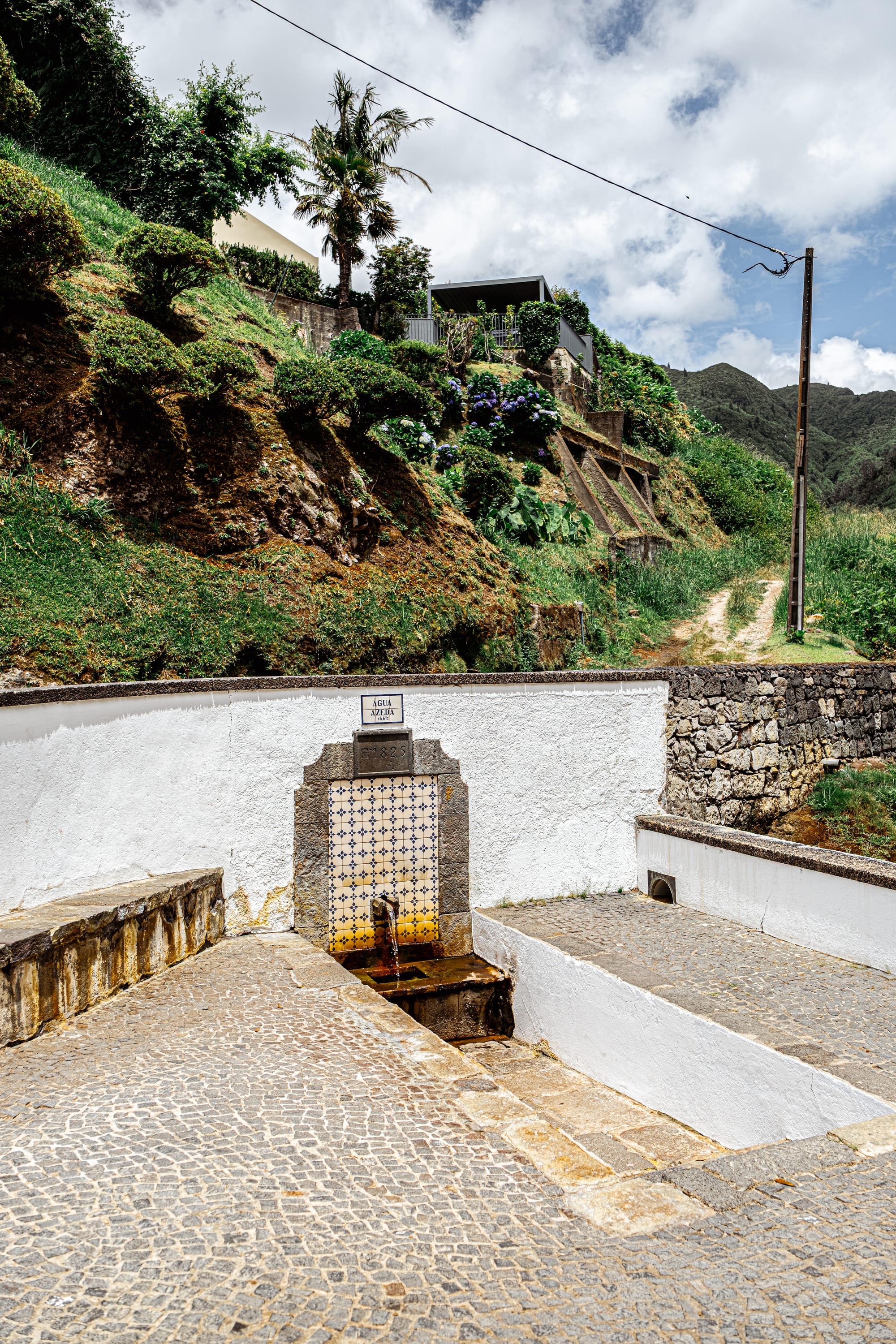
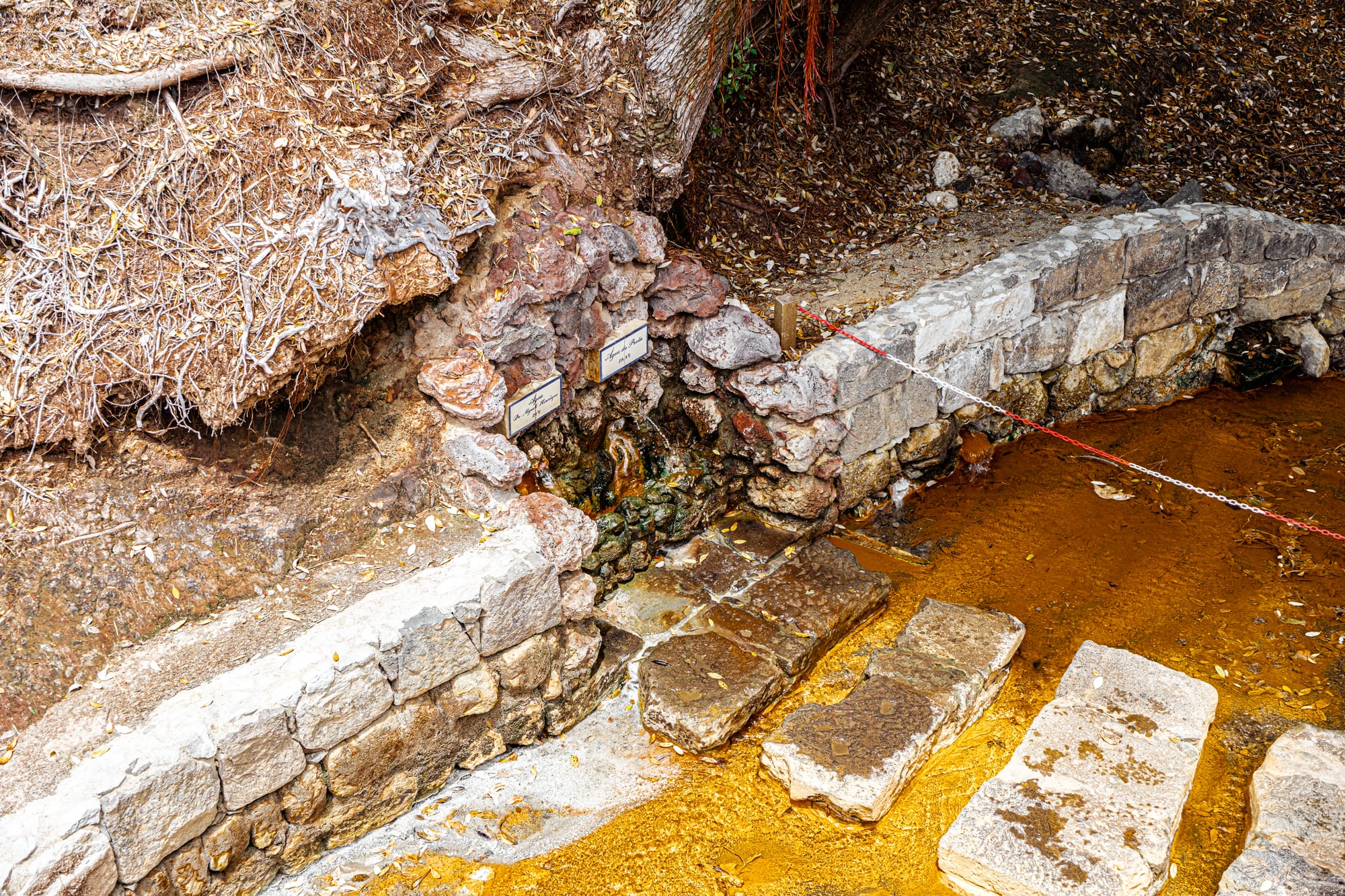
Thermal springs tucked into stonework, still flowing with mineral-rich water
Nearby, another foams slightly at the surface, hinting at something more volatile below. Behind it all, a veil of mist floats constantly, pulled across the landscape by small shifts in breeze and pressure.
Cozido das Furnas and the caldeiras in daily life
Unlike many geothermal parks that feel sealed off or sterilized for tourism, Caldeiras das Furnas still operates with everyday utility. Those low stone ovens with metal lids are in active use.
Most mornings, local restaurants lower their cozido pots into the volcanic soil, marking each one with a sign. By afternoon, they return to retrieve the stew, now slow-cooked by the Earth itself. You can watch the process from a safe distance, or better yet, reserve a meal. Two well-known restaurants for cozido in Furnas are Tony’s and Caldeiras & Vulcões. Both require advance reservation, often 24 hours ahead. Vegan cozido is available at some restaurants, but worth asking when booking.
And in both caldeira areas you’ll often find small stalls selling ears of sweet corn cooked directly in the steaming thermal water. The corn is simple, hot, and flavorful, and somehow the knowledge that it’s been simmered in the bubbling ground makes it taste even better.
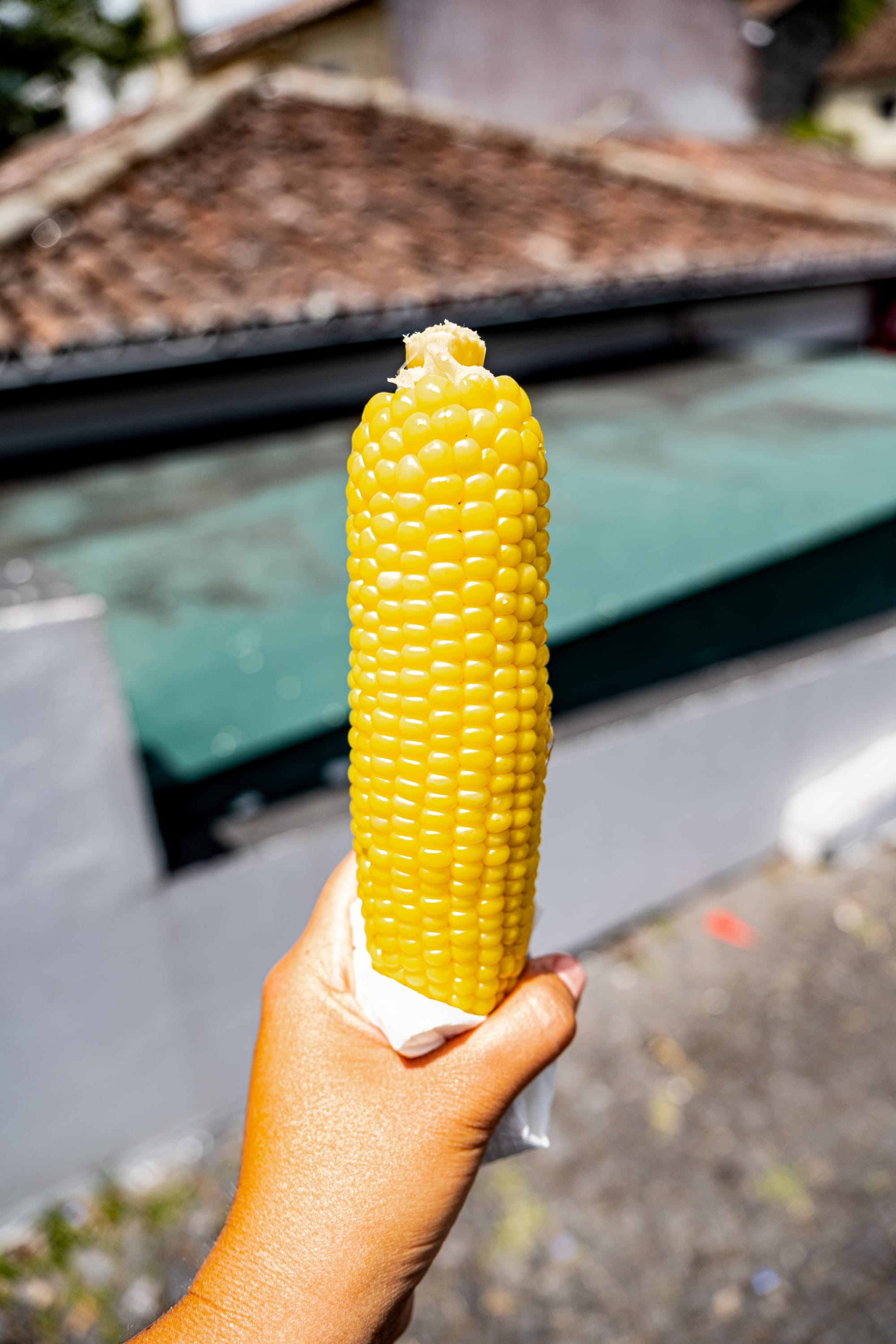
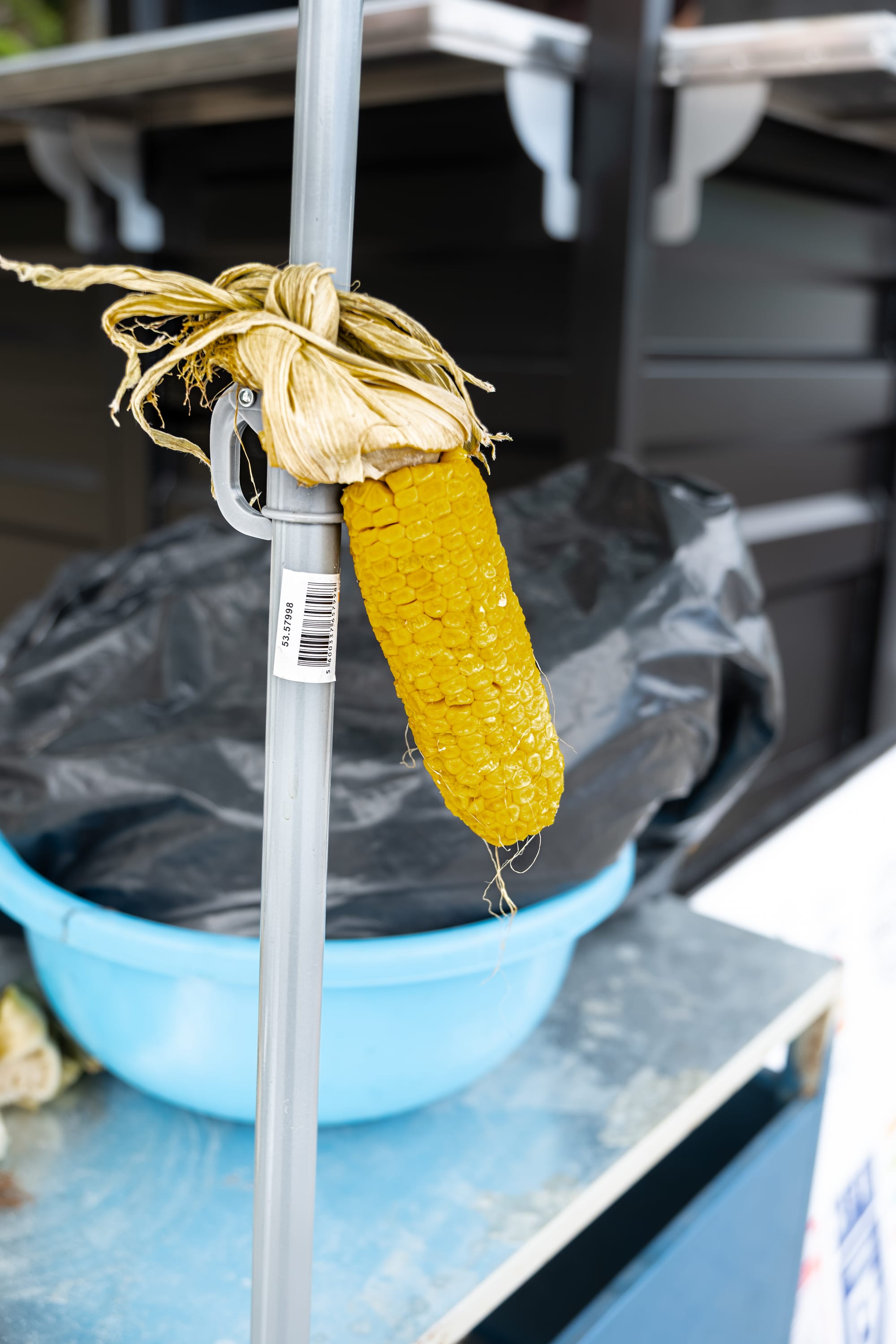
Sweet corn steamed in caldeiras, sold fresh from nearby roadside stalls
There’s something incredible about this continuity—ancient geothermal activity still entwined with daily life. You can see mineral-stained stones used as informal benches, public drinking fountains with iron-rich trickles, and signage that’s been slightly warped by decades of heat.
Metal rails shimmer slightly. Moss creeps close to the edges of even the most well-trodden paths.
What’s in the water?
If you’re curious, the water here is naturally infused with sulfur, iron, and other minerals brought to the surface by volcanic heat. Many of the deposits stain the rocks a vivid yellow-orange, especially near the hottest outlets. Some pools bubble with activity, while others steam quietly under a thin crust of sediment.
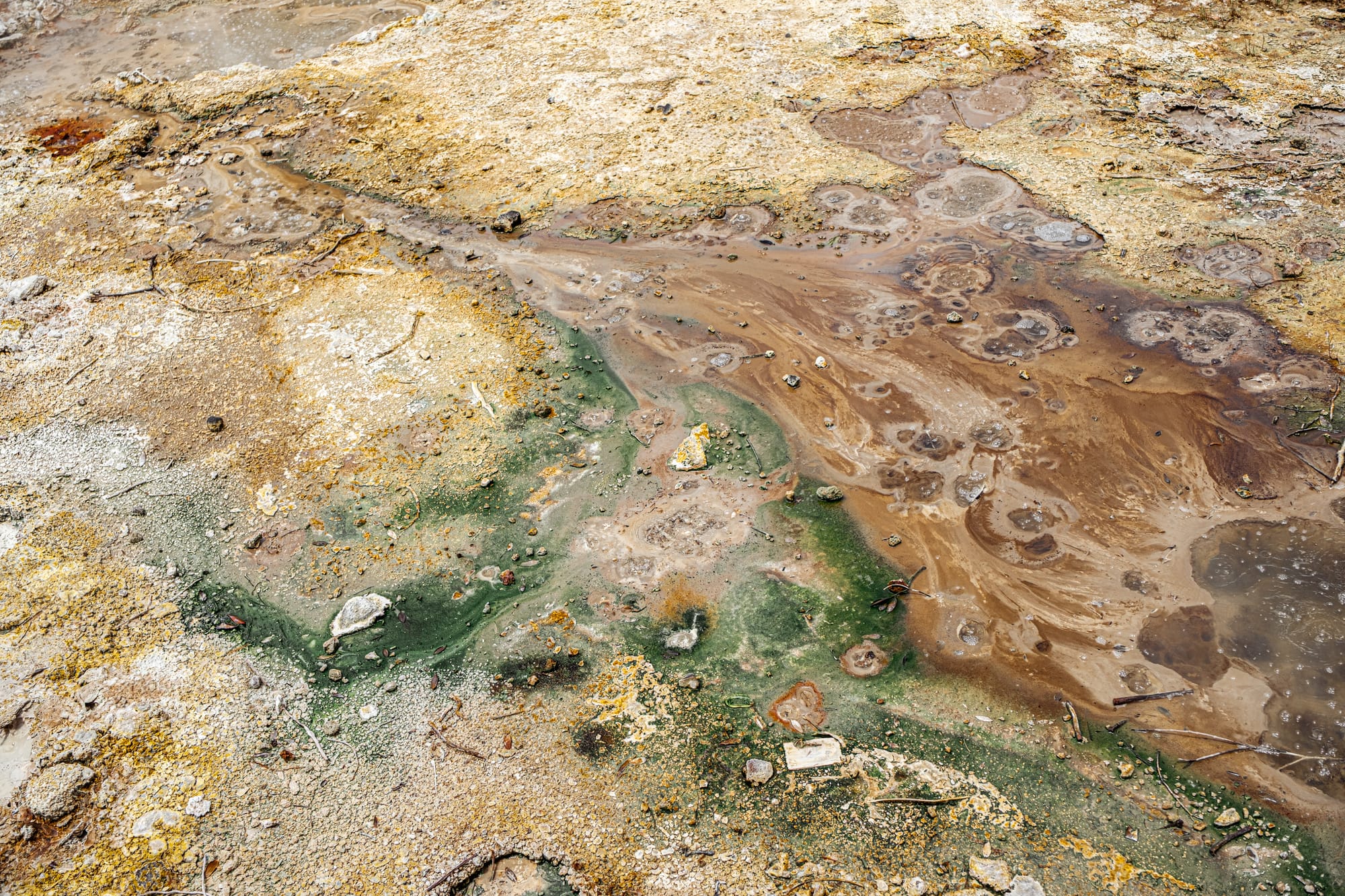
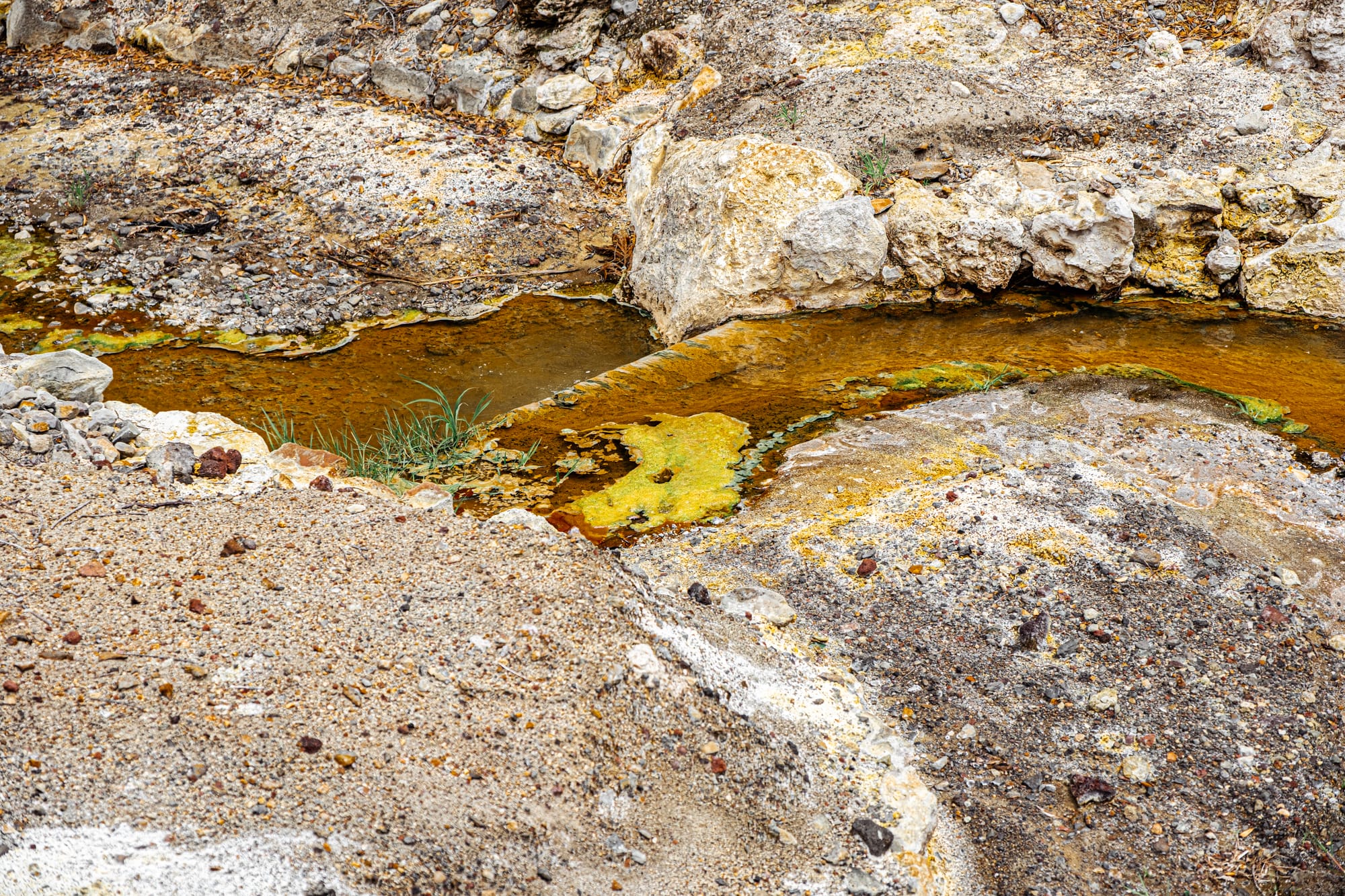
Mineral-rich ground textures where sulfur, iron, and algae meet in volcanic runoff
The hottest waters can reach temperatures of 95–100°C (203–212°F), which is why walking paths are well marked, and dipping in is strictly prohibited here. That said, many of the island’s nearby thermal pools—like those in Terra Nostra or Poça da Dona Beija—do use naturally heated spring water (though piped and regulated for safe soaking).
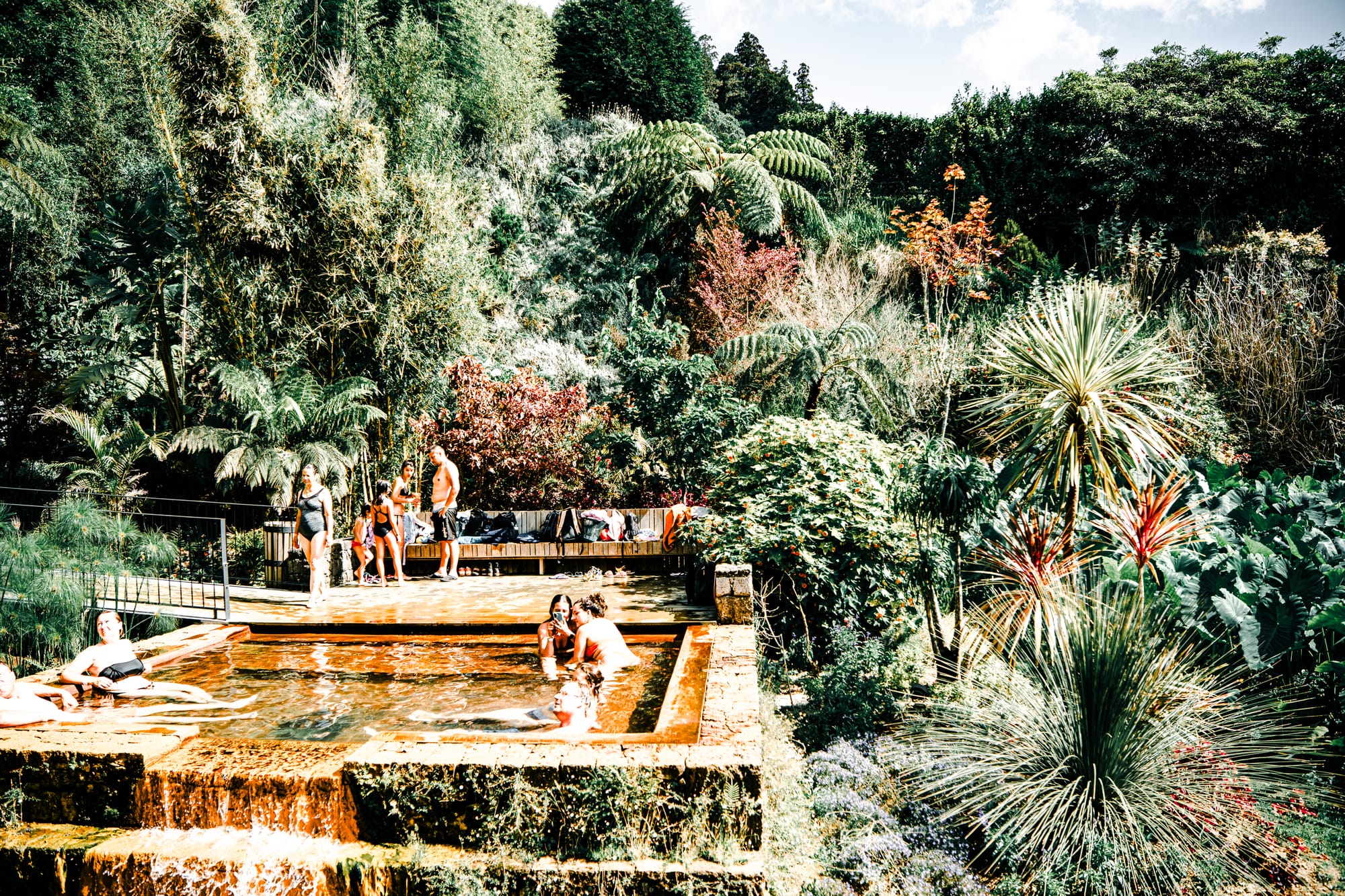
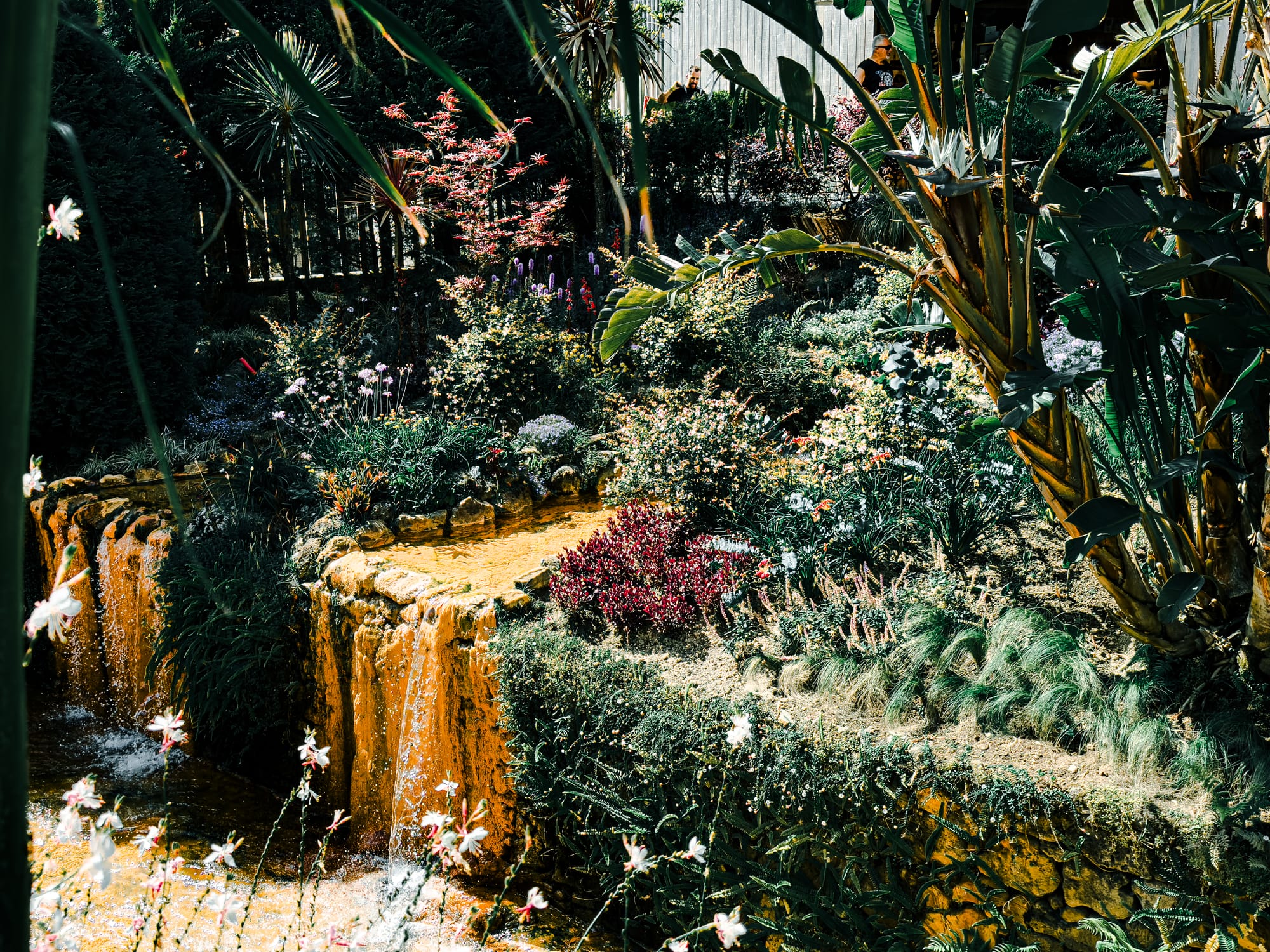
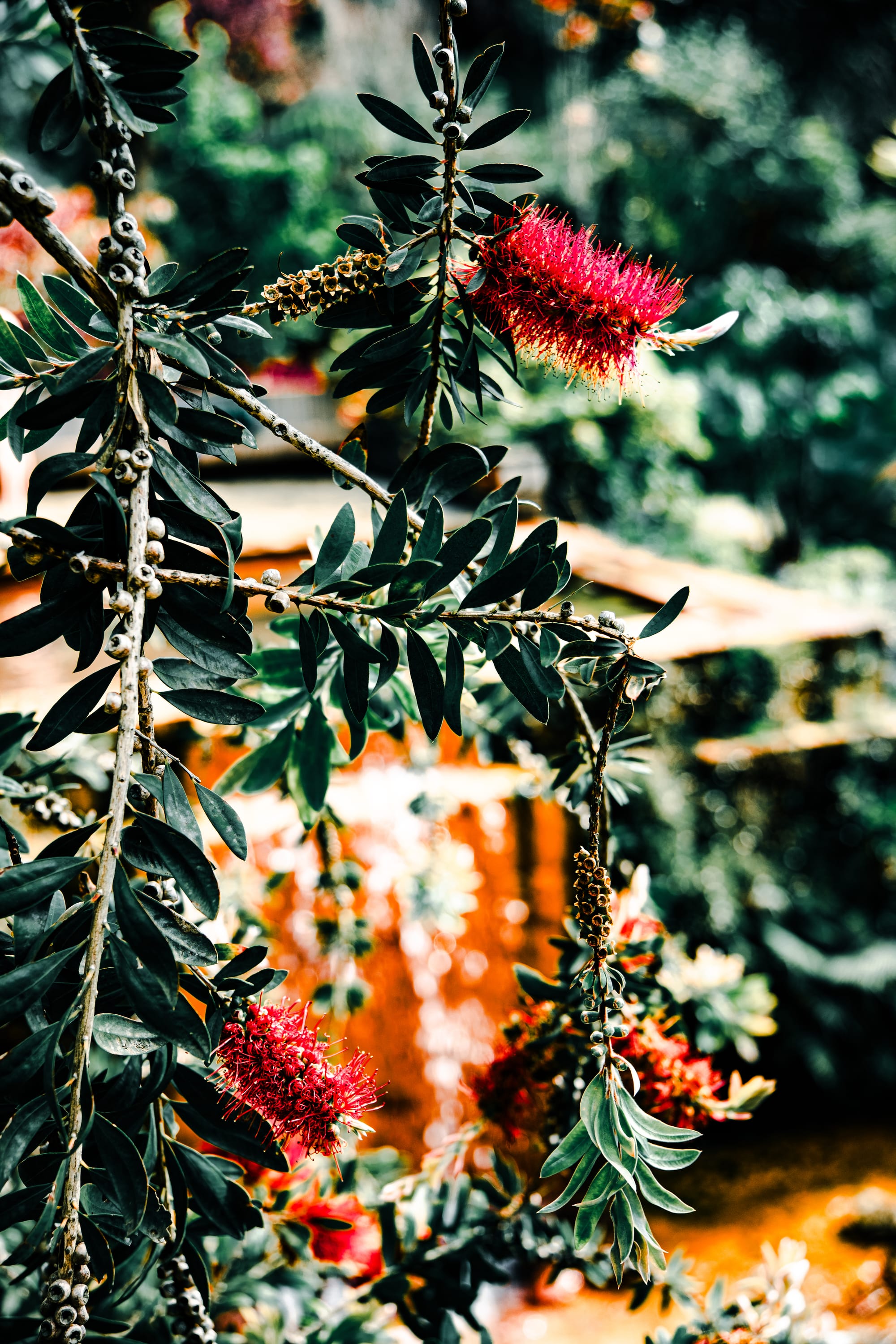
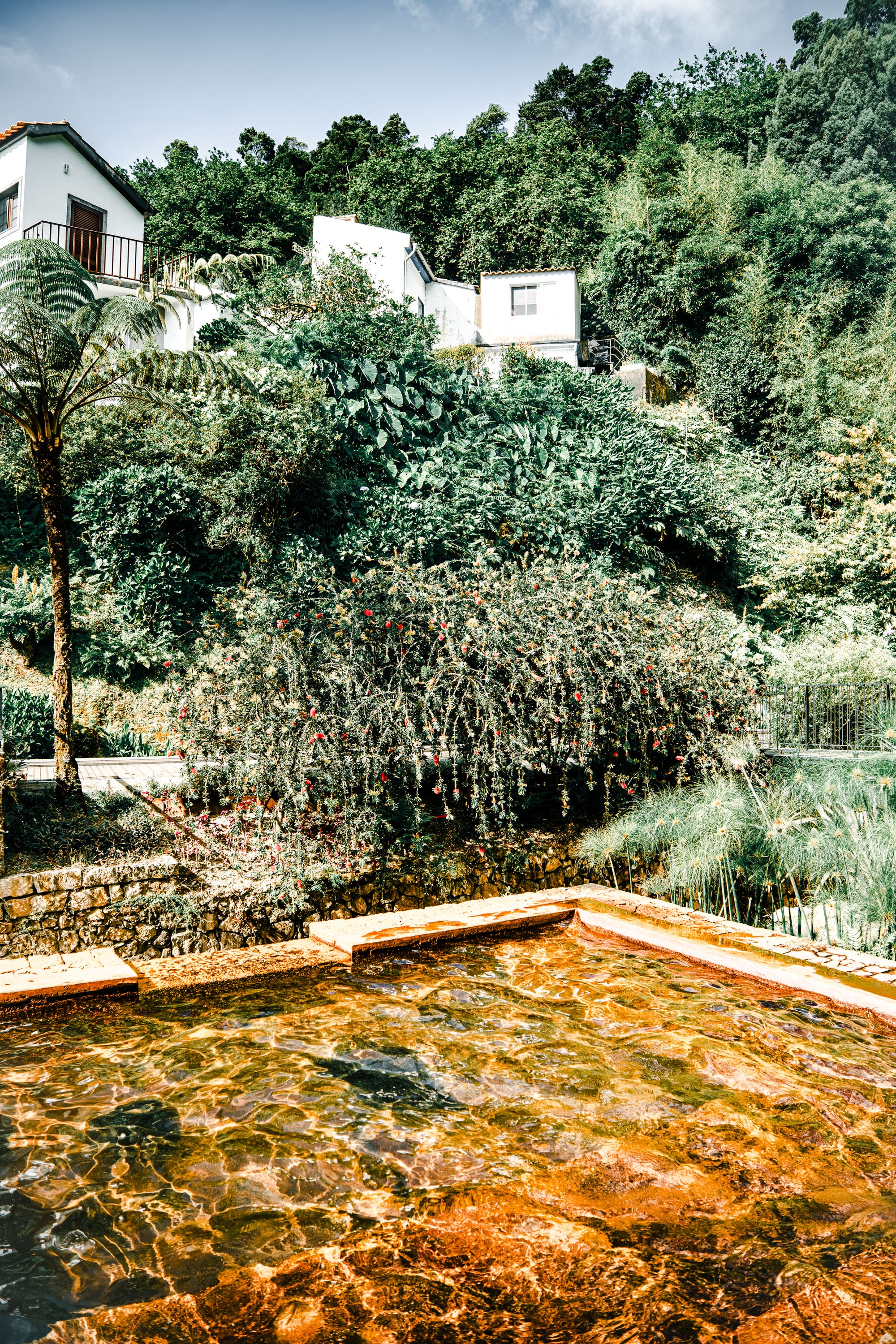
Lush thermal oasis at Poça da Dona Beija, where gardens meet sulfur-rich pools
You can even follow the thin threads of runoff from these pools as they stripe across stone or collect in small, unnaturally colored puddles—light orange, pale green, iron brown. Look closely and you might catch microbubbles shifting the surface or tiny mineral flakes suspended like slow snowfall.
A setting like nowhere else
The entire geothermal zone is rimmed by forested slopes and framed by village rooftops, gardens, and winding streets. Tree ferns and mosses soften the volcanic starkness. You’ll likely hear birdsong over the rumble of steam.
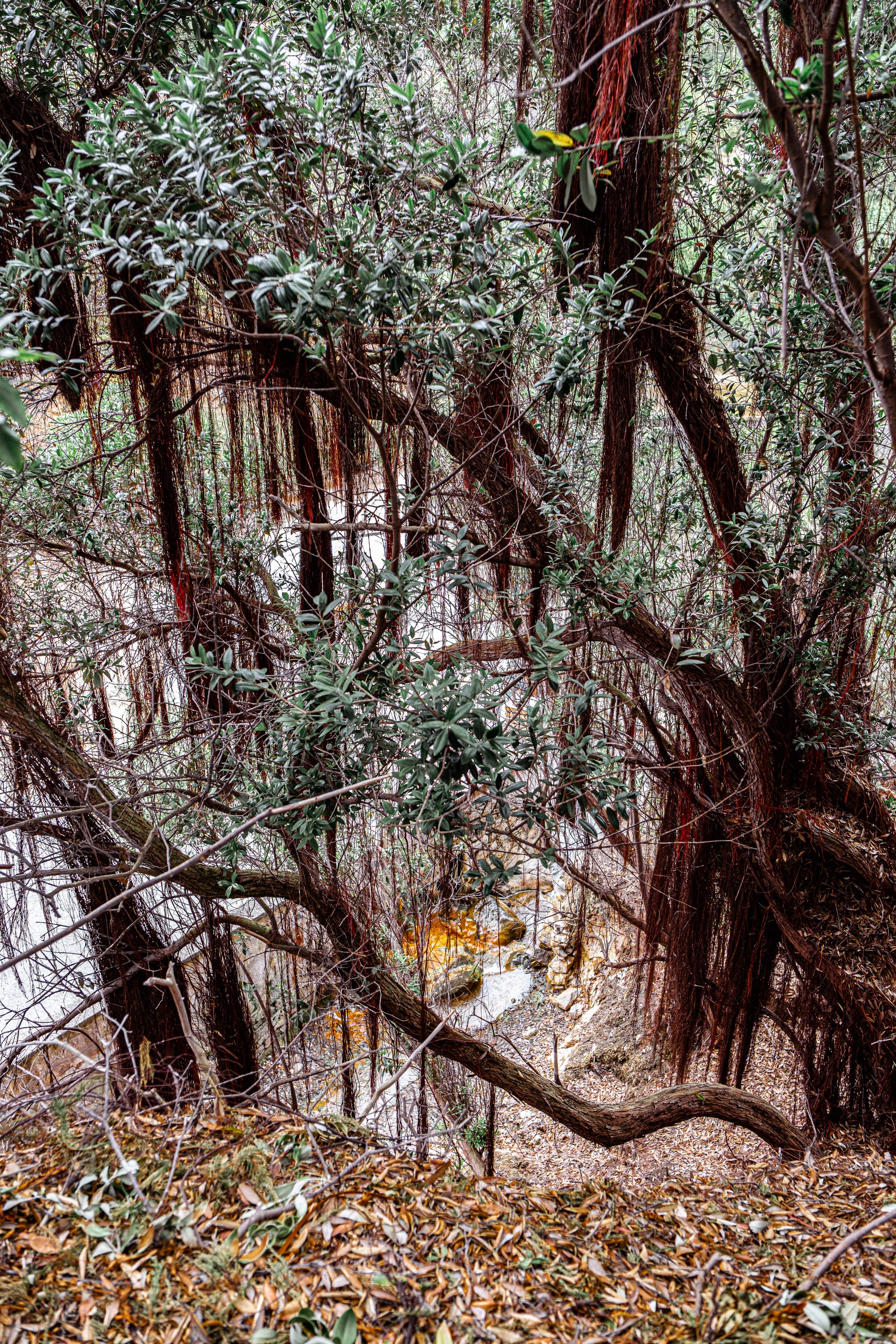
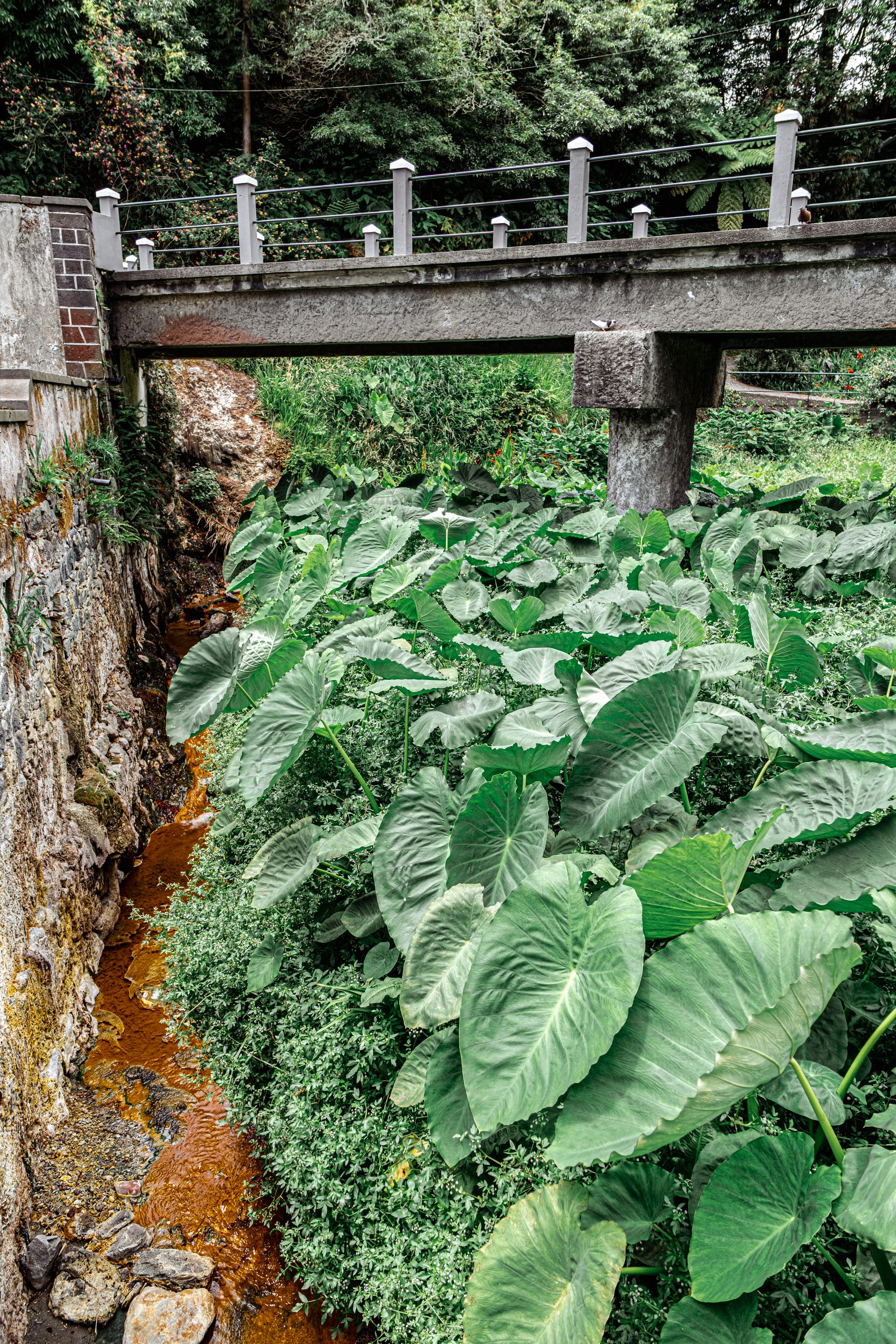
Geothermal streams winding beneath trees and through lush greenery
And somehow, it all just fits. The wildness and the weirdness. The fact that it smells a little strange, and the way everyone’s okay with that.
A few streets away, dogs bark, children walk home from school, and tourists shuffle through. But right here, in the thermal pocket, everything feels suspended. Light filters through steam. Surfaces glisten. You start to notice the way metal corrodes differently here, the way railings warp slightly in constant contact with heat.
Visiting the Furnas caldeiras: when to go and what to know
Caldeiras das Furnas is easily accessible on foot if you're staying in or near Furnas village. Entry is free, though you’ll want to bring water and maybe a scarf if you’re sensitive to the sulfur smell. Morning hours tend to be quieter, and the rising steam is especially dramatic in cooler temperatures.
The Caldeiras das Furnas in the town center and the Caldeiras da Lagoa das Furnas by the lake are both free to visit and accessible year-round. There are no set opening hours, though visiting during daylight is recommended.
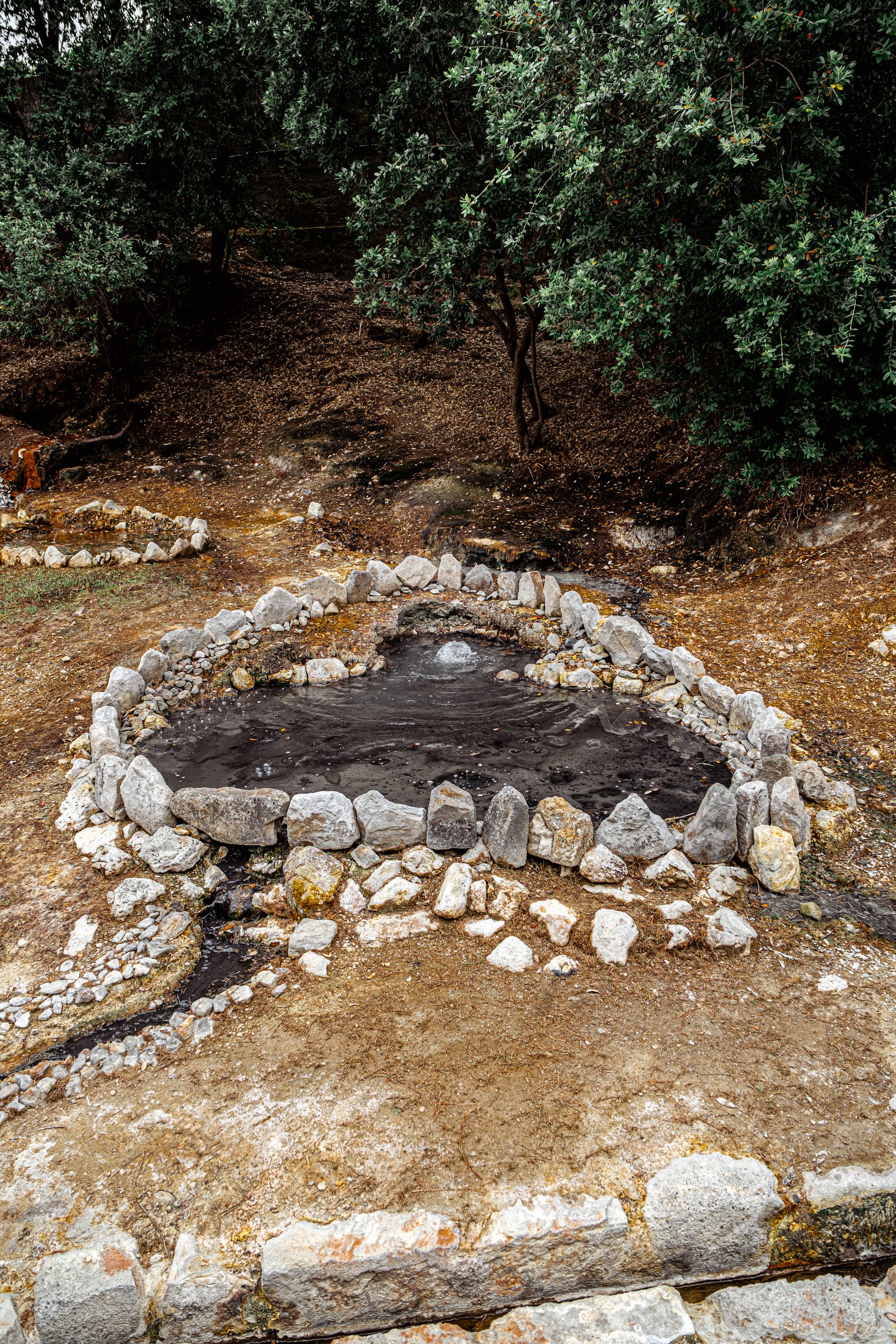
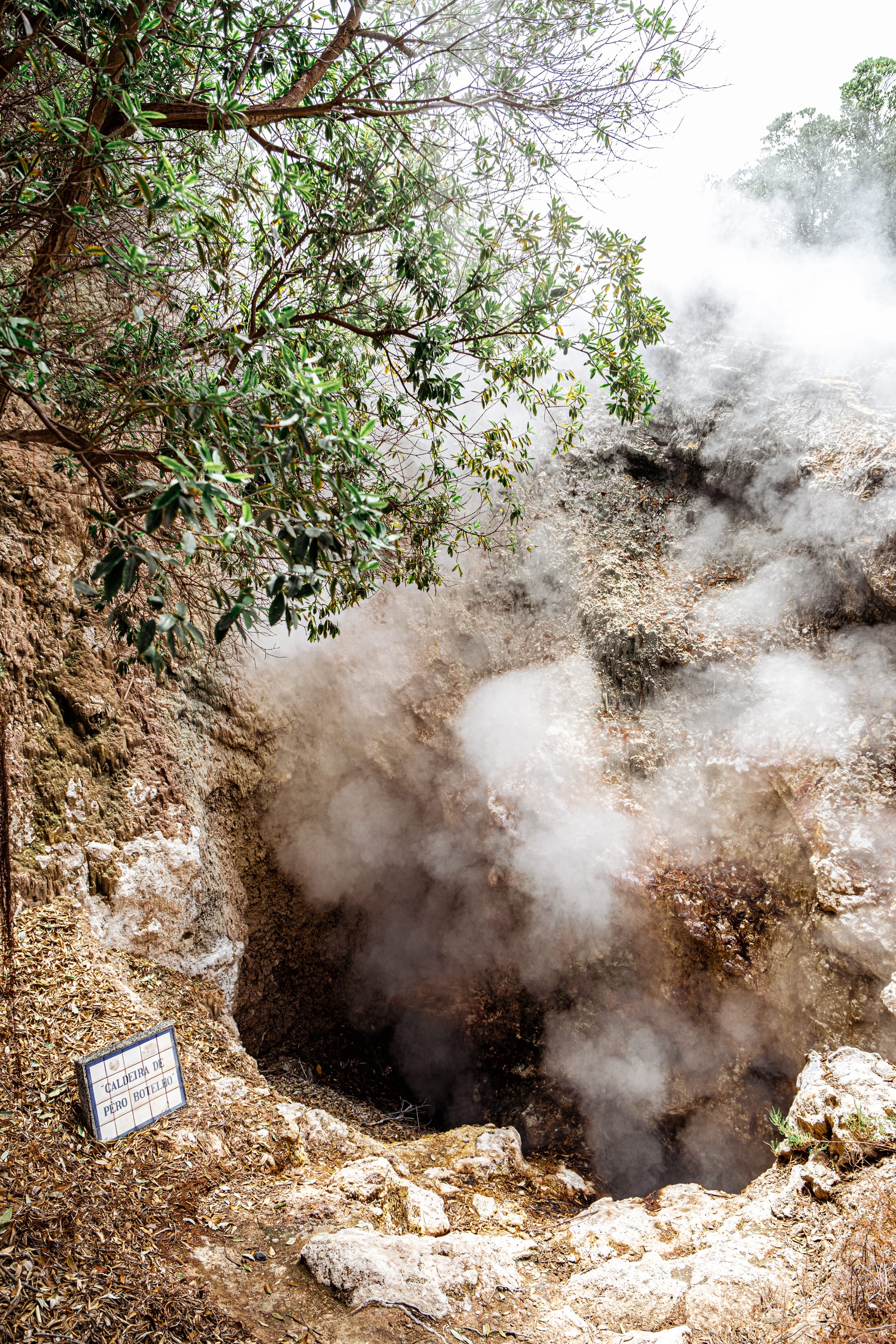
Bubbling mud and deep steam vents reveal the raw, volcanic energy beneath
Many people pair a visit to Caldeiras das Furnas with a stroll through the town or a nearby lunch. If you want to see the cozido being prepared, visit mid-morning. And don’t skip the corn.
Allow yourself at least 30–45 minutes here. It’s not a large area, but it deserves slow steps. Take time to read the signs. Notice how the water changes color between each vent. Watch for the pale mineral crusts building slowly on the rocks. Scan the low stone edges for hairline fractures etched by heat. Let your eye linger on the layering of natural and human-made: pipes wrapped in moss, signs bolted into stone, steam drifting into overhanging branches.
And stop. Just stand for a second. Look around. This isn’t a simulation. The Earth is exhaling right beneath you.
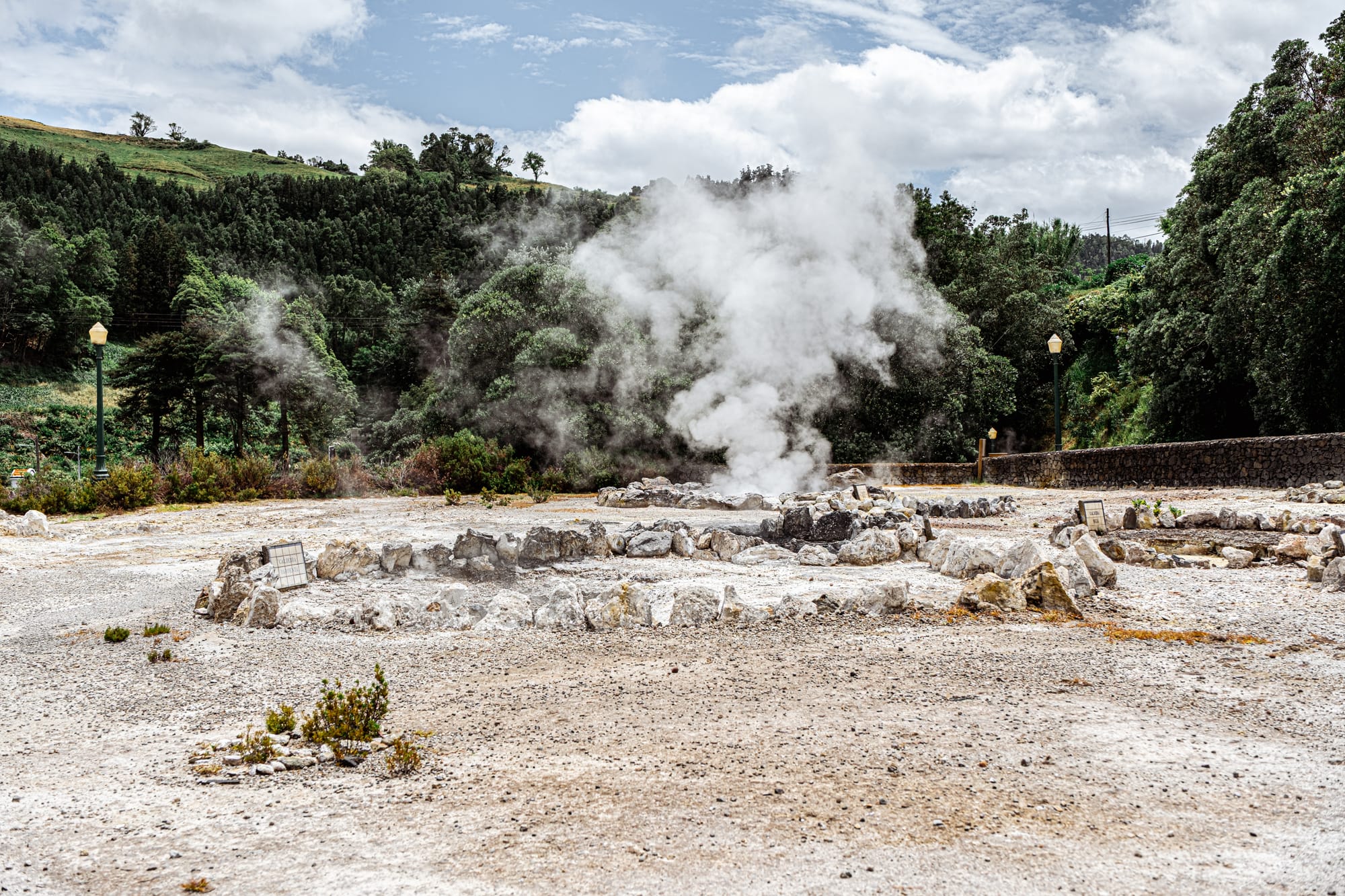
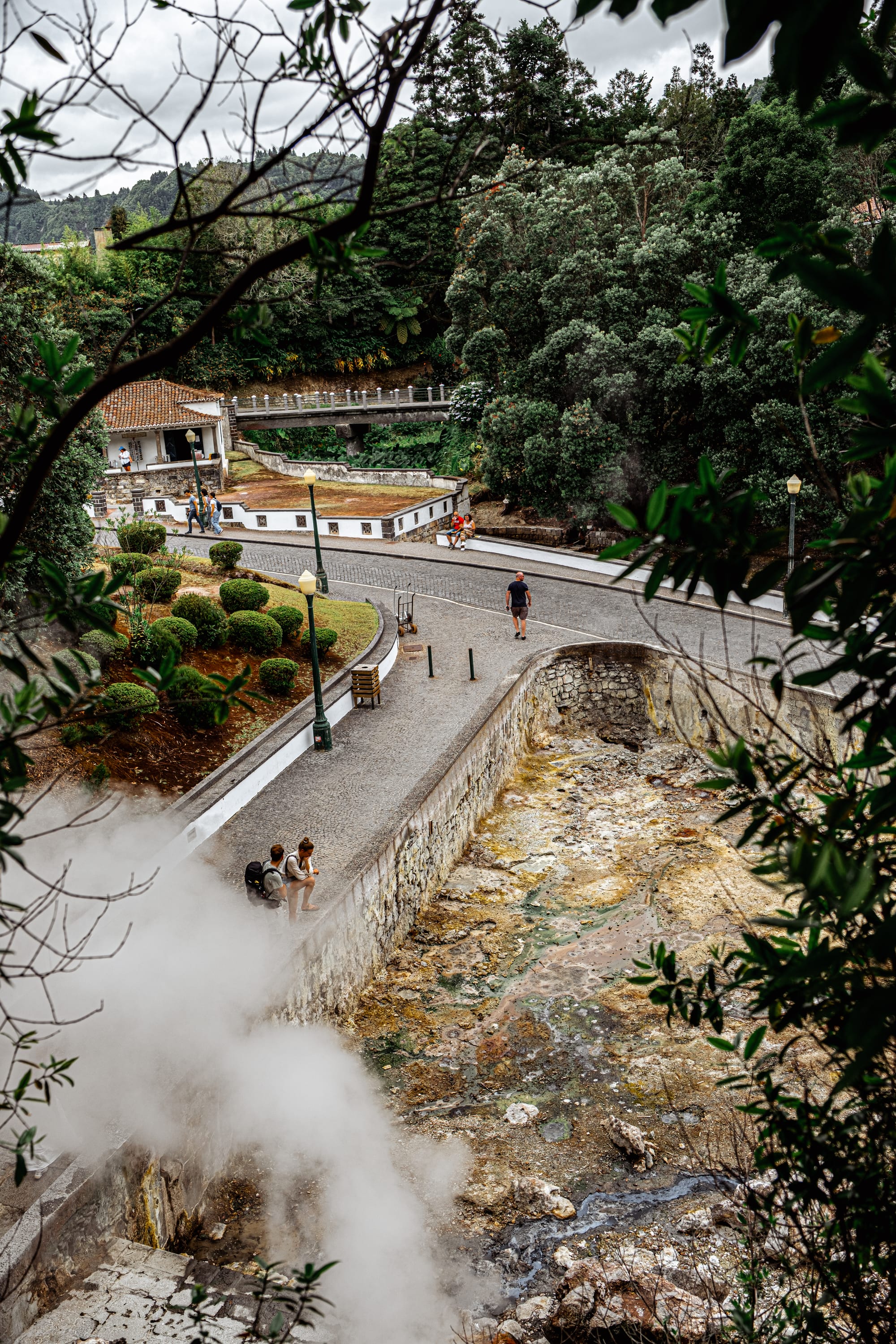
Volcanic steam rises from the earth, threading its way into the streets of town
Just beyond Parque da Grená, near the edge of the lake, the Caldeiras da Lagoa das Furnas offer a more rugged look at the island’s geothermal activity. You won’t see restaurants cooking stew here, but you will see steam seeping from vents set right into the roadside. The rocks are a bit darker, the mud a bit thicker, and the smell a little stronger. It’s not a polished attraction, but for many, that’s the point.
If you’re exploring Lagoa das Furnas anyway, there’s no reason not to stop by. They’re just a few minutes apart by car or foot.
For anyone staying nearby, especially in Furnas or the surrounding valley, the caldeiras offer a kind of grounding. You can walk by them like a local. Or pause, like a visitor. Let the steam settle in your hair. Let the sulfur cling to your clothes.
And then carry it with you, just a little, when you go.
How to get to Furnas from Ponta Delgada
Furnas is located in the eastern interior of São Miguel, about 40–45 minutes by car from Ponta Delgada.
By car
Renting a car is the most practical way to explore São Miguel, including Furnas. The drive from Ponta Delgada takes roughly 40 minutes via the ER1-1A through Ribeira Grande, or about 45 minutes via the southern route through Vila Franca do Campo. Parking is available near both the town-center caldeiras and the lakeside caldeiras.
By bus
Public buses connect Ponta Delgada to Furnas, though service is infrequent and the journey takes longer (roughly 1–1.5 hours with stops). Bus schedules can be checked via the local operator. For flexibility, a car is strongly recommended.
By tour
Many full-day tours from Ponta Delgada include a stop at the Furnas caldeiras alongside other highlights like Terra Nostra Park, Poça da Dona Beija, and Lagoa das Furnas. This full day Furnas and east island tour is a popular option.
For more on planning time on the island, see our digital nomad guide to São Miguel.
Hot springs and thermal pools near Furnas
The Furnas caldeiras are not for bathing. Temperatures reach up to 100°C and the pools are strictly off-limits. But several nearby thermal pools in the Azores offer safe, regulated soaking in naturally heated spring water.
Terra Nostra Park
The most iconic hot spring in Furnas. A large iron-rich thermal pool sits inside a botanical garden spanning 12 hectares. The water hovers around 38–40°C and has a distinctive rust-brown color from its mineral content. Entry includes access to the gardens. Note: the iron will stain light-colored swimwear.
Poça da Dona Beija
A series of warm outdoor pools fed by mineral-rich spring water, set among manicured tropical gardens along a creek. Poça da Dona Beija is open until 11 p.m., making it one of the few evening bathing options on the island. Pools range from 38–39°C.
 Nomad Earth Catalog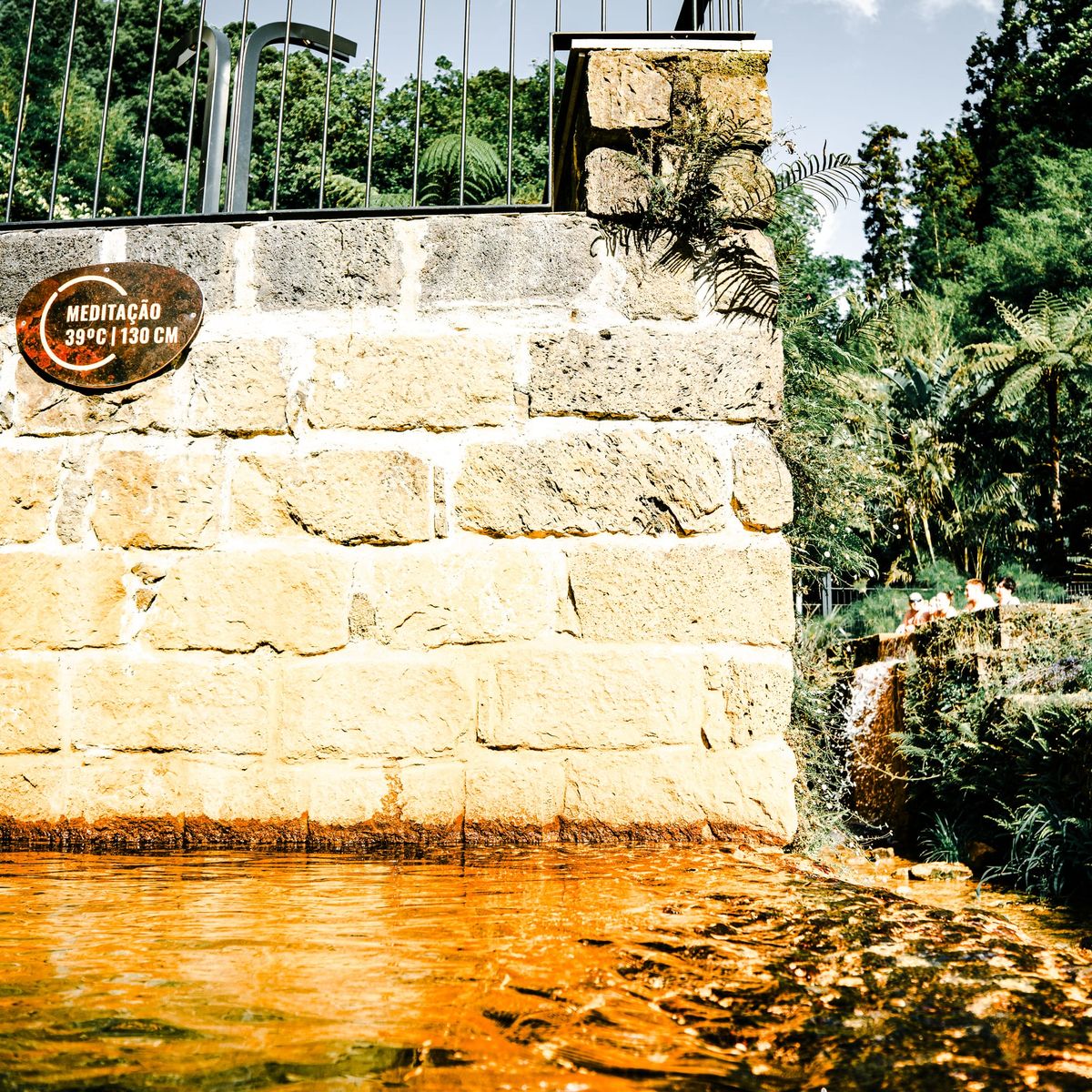
Caldeira Velha
Located on the slopes of Fogo Volcano between Ribeira Grande and Lagoa do Fogo, Caldeira Velha offers thermal pools in a protected rainforest setting. A warm waterfall spills into a wide basin, and smaller pools sit beneath giant tree ferns. Entry is limited to 100 visitors at a time, so booking in advance is essential.
Nomad Earth Catalog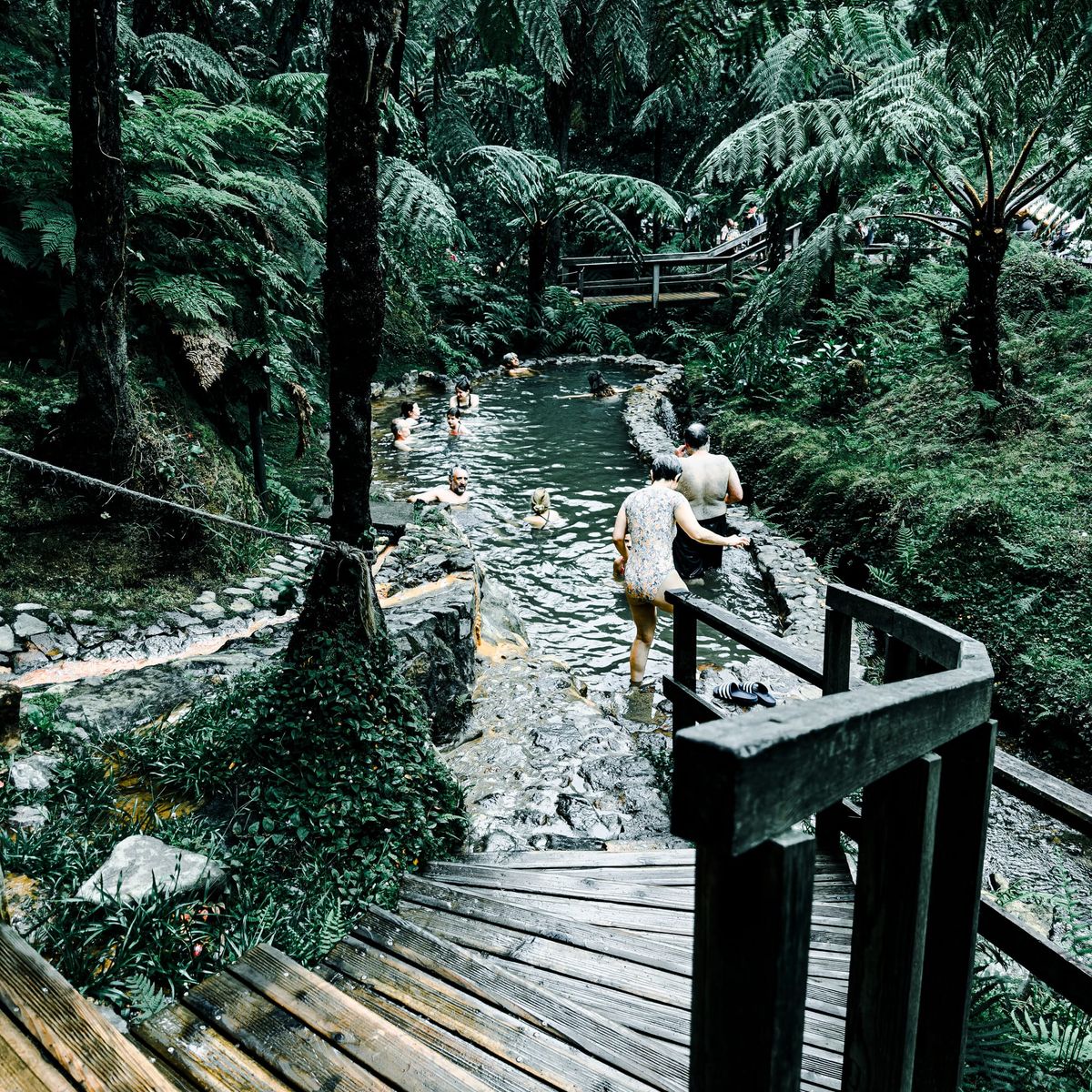
Frequently asked questions about the Furnas caldeiras
Are the Furnas caldeiras free to visit?
Yes. Both the town-center Caldeiras das Furnas and the lakeside Caldeiras da Lagoa das Furnas are free to visit and open year-round. There are no tickets or set opening hours.
Can you swim in the Furnas caldeiras?
No. The caldeiras reach temperatures of up to 100°C and are strictly off-limits for bathing. For safe thermal bathing, visit nearby pools like Terra Nostra Park, Poça da Dona Beija, or Caldeira Velha.
How do you get to Furnas from Ponta Delgada?
Furnas is about 40–45 minutes by car from Ponta Delgada. Public buses are available but infrequent. Renting a car is the most practical option for exploring São Miguel.
What is Cozido das Furnas?
Cozido das Furnas is a traditional Azorean stew slow-cooked underground using volcanic heat. Metal pots filled with meat, vegetables, and tubers are lowered into geothermal holes in the morning and retrieved several hours later. You can try it at restaurants in Furnas like Tony’s or Caldeiras & Vulcões. Reservations are usually required 24 hours in advance.
How long should I spend at the Furnas caldeiras?
Allow 30–45 minutes for the town-center caldeiras. If you also visit the lakeside caldeiras, add another 20–30 minutes. Combined with a Furnas Lake walk, Terra Nostra Park, or a thermal pool visit, a full half-day in Furnas is easy to fill.
When is the best time to visit the Furnas caldeiras?
Morning visits tend to be quieter. The steam is especially dramatic in cooler temperatures. If you want to see the cozido being prepared, visit mid-morning. The caldeiras can be visited year-round, though São Miguel’s weather can be unpredictable in any season.


