


Lagoa das Furnas is a crater lake just outside Furnas village in eastern São Miguel, in the Azores. The best way to see it is the flat loop path around the shore, about 6 km if you start at a lakeside car park, or the official 9.4 km trail from the village (about 3 hours). Walking is free, but expect a small parking or access fee at the lake. Plan half a day, and go in the morning if you want to see the cozido pots go into the ground. We walked the loop with plenty of stops, and it's one of the easiest walks on the island.
The walk around Furnas Lake doesn't need much planning. It's an easy, half-day loop (flat, shaded, and very pretty) with plenty of places to stop, sit, and wander a little off the trail. The full path follows the edge of the crater lake, winding between dense forest, open water, and pockets of geothermal activity.
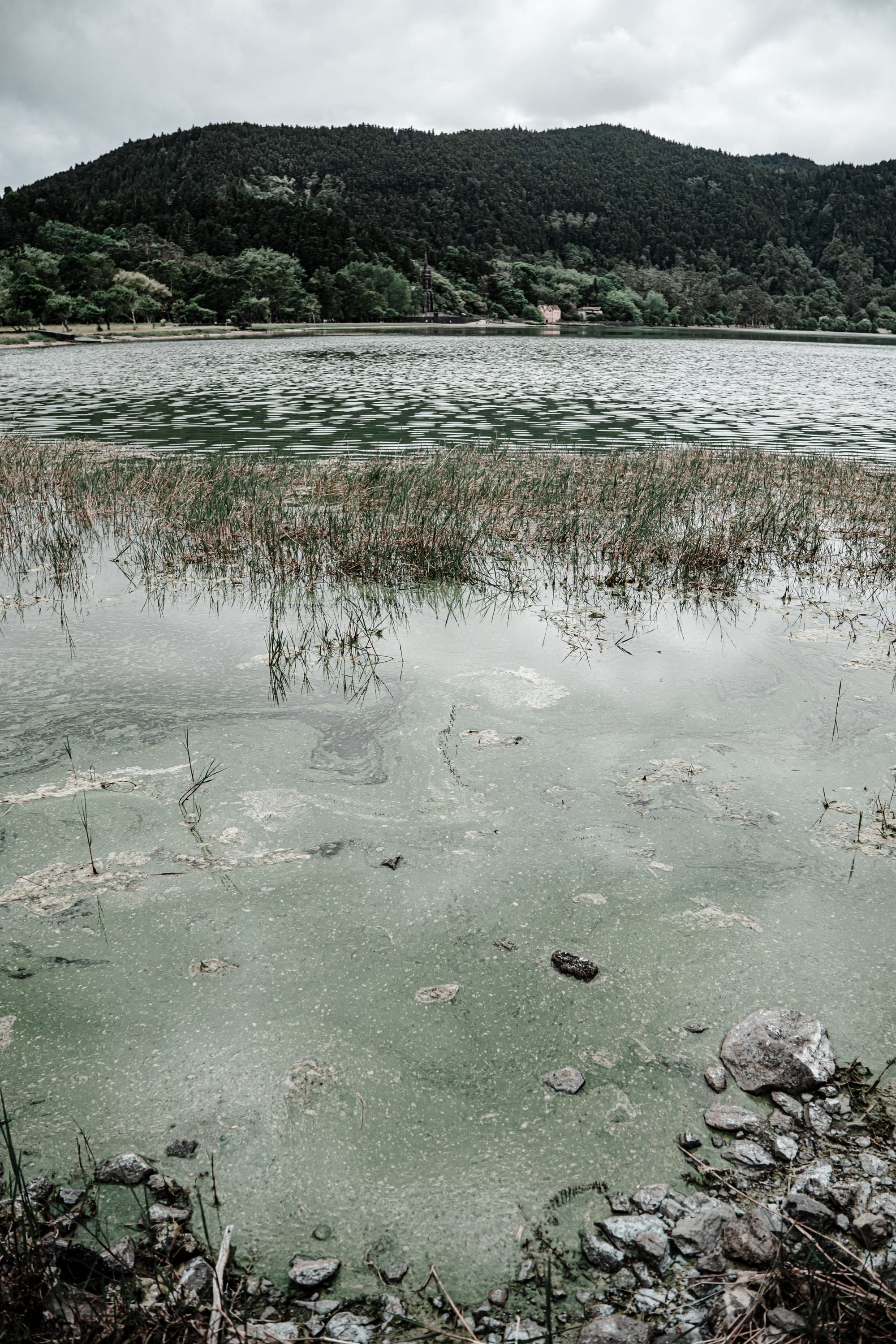
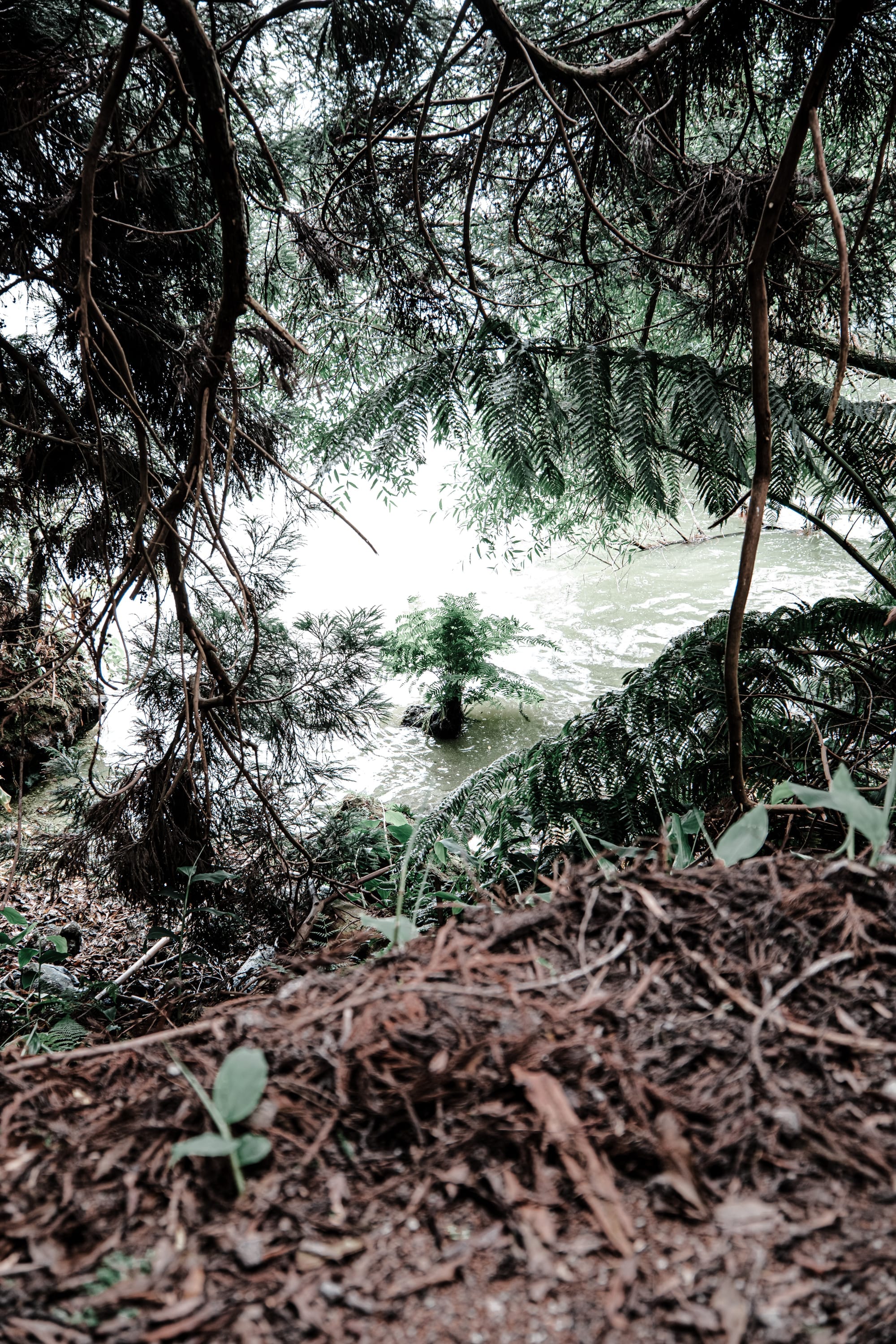
Edge views of Lagoa das Furnas, where reeds, runoff, and overhanging ferns trace the lake’s shifting shoreline
You can start at any point, since the route is a continuous loop. It's less a hike than a walk over constantly changing ground: volcanic mud, pine needles, boardwalk, and moss.
Lagoa das Furnas at a glance
Here are the practical basics before you go. Prices and hours change, so treat the figures as a guide and check on arrival.
Where: in the Furnas valley, municipality of Povoação, eastern São Miguel. About 45 minutes by car from Ponta Delgada.
Altitude: the lake sits at about 359 m, in the western of the two calderas of the Furnas volcano.
Size and depth: the lake covers about 1.9 km² and is only around 12 m deep at its deepest point, which makes it the third largest body of surface fresh water in the Azores. The Furnas volcano last erupted in 1630, and the lake, the village, and the hot springs all sit inside the wider Furnas Protected Landscape (about 3,150 hectares).
Why it's green: the colour comes from nutrients. For decades, fertiliser and manure from the pastures around the crater washed into the water and fed algae. The regional government has been buying up farmland in the basin and replanting it with forest to bring the water quality back, and the monitoring centre on the south shore (opened in 2011, according to the Portuguese Wikipedia entry for the lake) exists largely for that work.
The walk: the shore loop is about 6 km and flat. The official PRC06 SMI trail from the village is 9.4 km, circular, rated easy, and takes about 3 hours.
Cost: walking is free. The lake car parks have charged a small fee (about €3 per person in 2025). Grená Park and the José do Canto garden charge their own entry.
Time needed: 2 to 3 hours for the loop, half a day with the caldeiras, the chapel, and a coffee.
Best time: mornings, for fewer people and the cozido pots, and late spring to summer for hydrangeas and agapanthus along the shore.
| Details | |
|---|---|
| Where | Furnas valley, Povoação, about 45 minutes by car from Ponta Delgada |
| Altitude | About 359 m, in the western caldera of the Furnas volcano |
| Shore loop | About 6 km, flat |
| Official trail | PRC06 SMI, 9.4 km circular, easy, about 3 hours |
| Cost | Walking free; car parks about €3 per person (2025) |
| Time needed | 2 to 3 hours for the loop, half a day with stops |
| Best time | Mornings, and late spring to summer for flowers |
How to get to Lagoa das Furnas
Most people drive. From Ponta Delgada, take the fast road east along the south coast, then turn inland toward Furnas. The lake is signposted just west of the village, and the road runs down to car parks at the north end (by the caldeiras) and the south end (near the chapel and the José do Canto garden). Allow about 45 minutes.
Without a car, you can take a bus from Ponta Delgada to Furnas village. Check the current timetable before you go, as services are limited, especially on Sundays. From the village, the official Lagoa das Furnas trail (PRC06 SMI) starts at the car park near Largo das Três Bicas and climbs over to the lake, passing the Pico do Milho viewpoint on the way. Many day tours of the Furnas valley also stop at the caldeiras by the lake.
There are two ways to drive from Ponta Delgada. The quickest is the inland road (EN1-1A), about 40 km and 45 minutes, and it's the one to use in winter or after heavy rain. The longer option follows the south coast through Vila Franca do Campo and adds roughly 20 minutes, but the sea views make it a nice way to come back on a clear afternoon. A taxi or a tour are the other options if you don't want to deal with the bus timetable.
For the rest of the valley, Our Guide to São Miguel covers this lake walk with the caldeiras, Poça da Dona Beija, and seven hot springs compared, with prices checked in November 2026.
Lagoa das Furnas parking and entrance fee
There are two main car parks, one at each end of the lake. In recent years there has been a small charge at the lake, about €3 per person in 2025, collected when the booth is staffed. Some visitors park on the road and walk in to skip it, but the roadside is narrow, so we'd just pay and use the car park. If you walk in from the village on the trail, you don't pay anything for the lake itself.
In summer, the small car park by the caldeiras fills up by mid-morning, so arrive before 10:00 or start at the chapel end, which has more space. Some guides list the paid area as open from 10:00 to 18:00 between April and October, and from 10:00 to 17:00, Tuesday to Sunday, between November and March. These hours don't appear on an official page, so treat them as a guide for 2026. The lake road and the walking trail themselves are open at any time.
From the caldeiras to the lakeshore
Near the trailhead closest to the caldeiras, you'll smell sulfur in the air. Steam rises steadily from the ground and drifts off into the damp sky. The ground here is soft and warm, with patches of lichen and trampled grass. Nearby, a wide clearing opens toward the lake's edge, where locals lower iron pots into steaming holes in the ground to cook cozido for hours under the soil.
The cozido is the best-known dish of the valley: a stew of meat, sausage, and vegetables sealed in a pot and buried in the hot ground for around six or seven hours. Restaurants in Furnas usually lower their pots in the morning and lift them out around midday, so late morning is the time to come if you want to watch. It's a meat dish, so it's not one for vegans like us, but the pits themselves are worth seeing. Stay on the marked paths here. The water and mud in the fumaroles are boiling hot.
The lifting usually starts around 10:30, with each restaurant's staff pulling up their own pots in turn over the next 45 minutes or so. Watching is free from the boardwalk. If you want to eat cozido in the village, book a table the day before, especially in summer, since restaurants cook a set number of pots.
For something plant-based from the same volcanic heat, look for the stalls in the centre of Furnas village selling corn on the cob boiled in the hot springs (maçarocas). Bolo lêvedo, the slightly sweet flat muffin-bread of the valley, is sold warm at local bakeries, though recipes vary, so ask whether it contains milk or eggs.
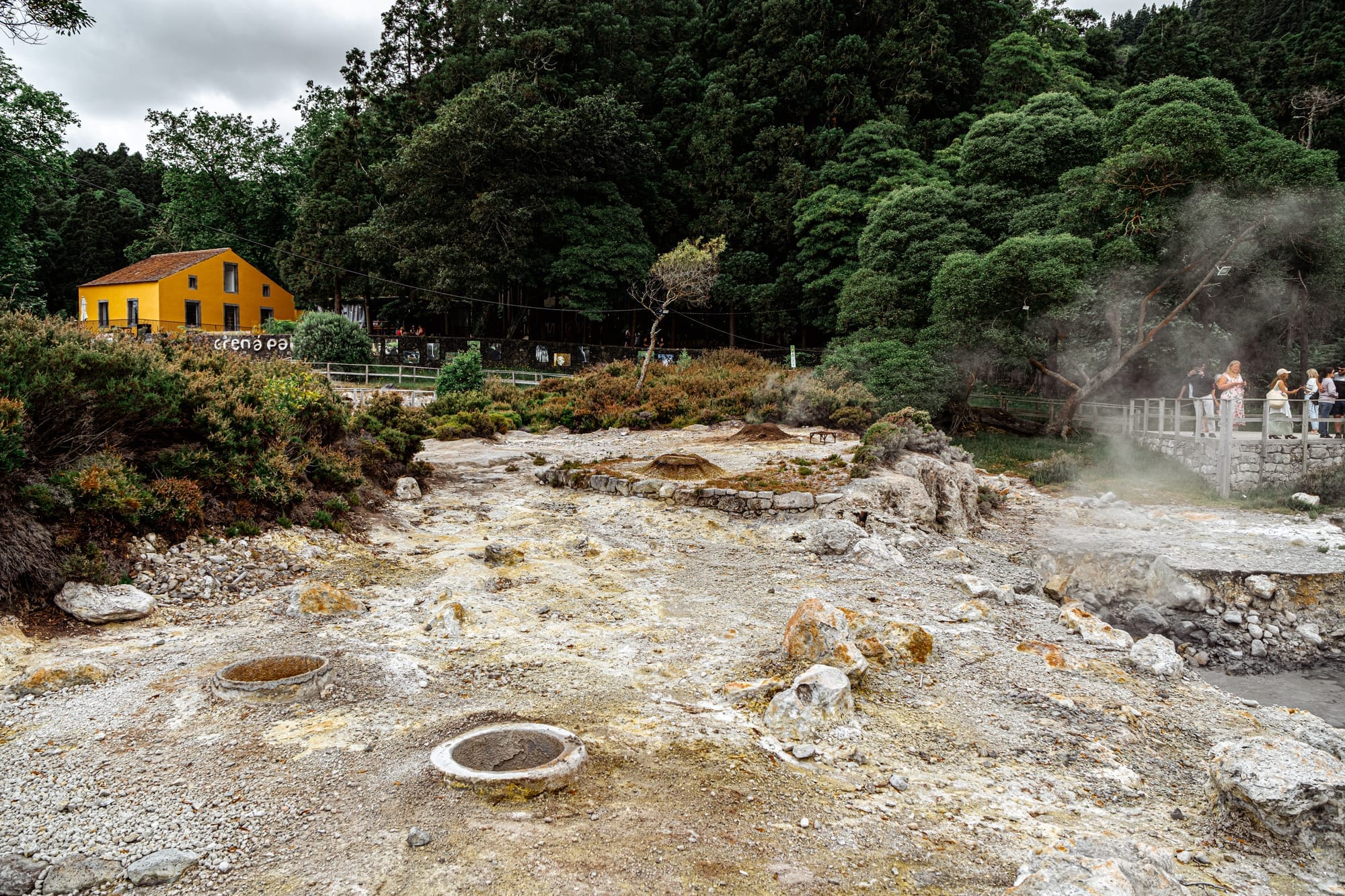
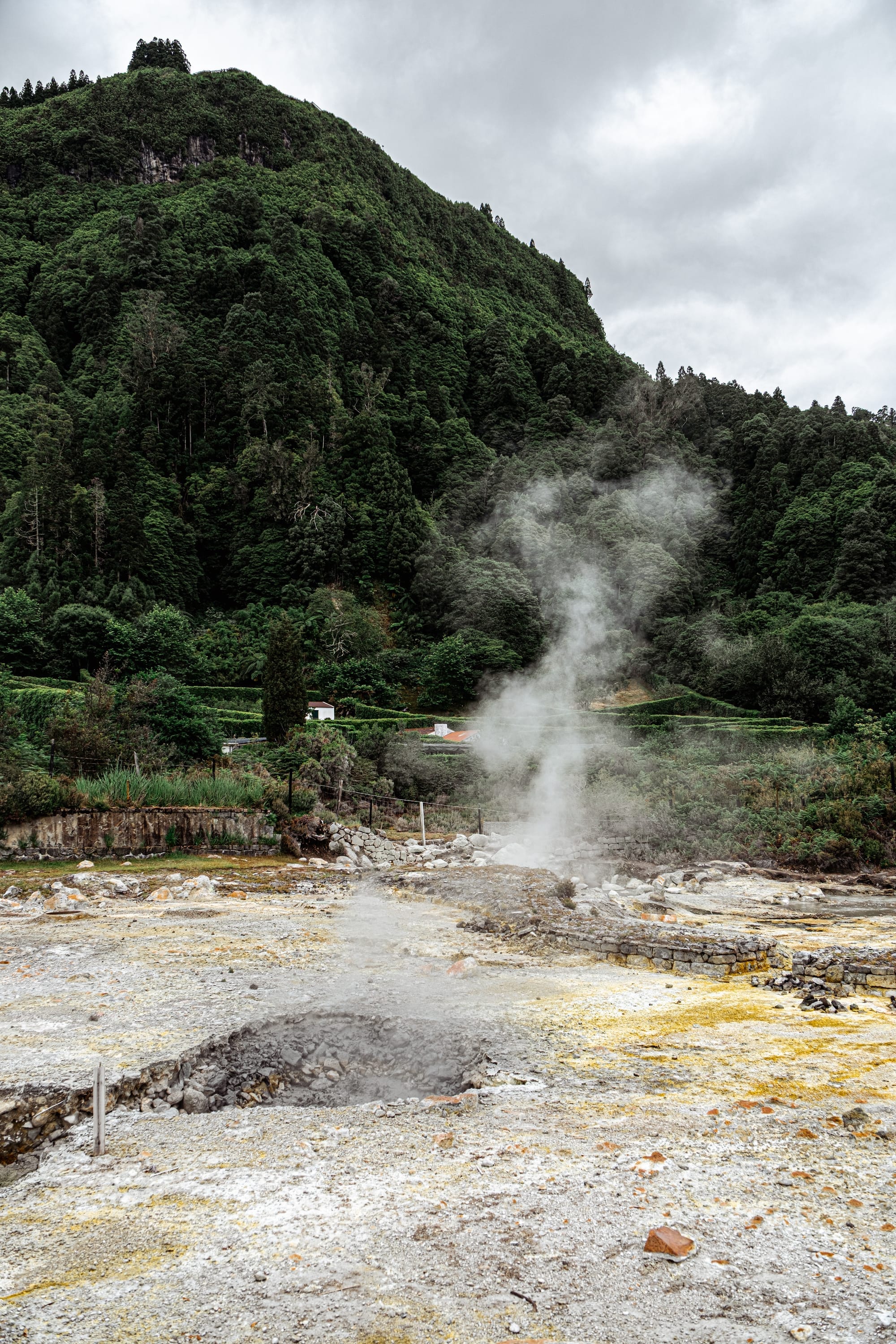
Geothermal vents and cozido cooking pits at Furnas, where steam rises from sulfur-streaked earth beneath dense volcanic forest
The lake surface stays mostly still. It's a pale, milky green, sometimes streaked with darker patches where the wind hits it. Along the shoreline, purple agapanthus and stone pines frame views across the water. Ducks swim past in single file, drawing lines through the reflections.
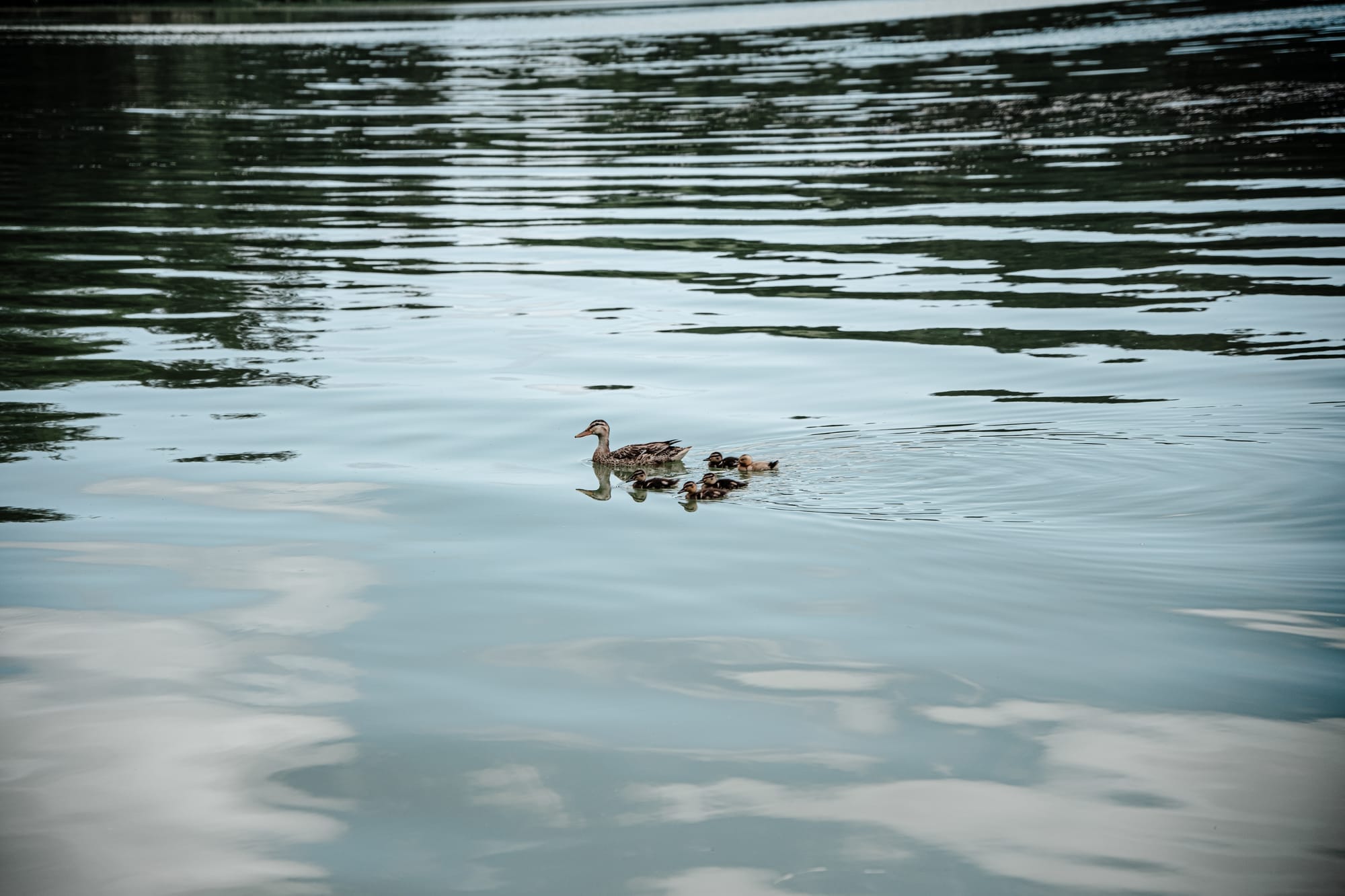
Later in the loop, a group of ducklings follows their mother through a patch of sunlit ripples.
Tree forms and microclimates
The path winds on through quite different patches of forest. In one stretch, a grove of towering Japanese cedars rises close to the trail, straight and dense, with high, symmetrical branches. The bark ranges from soft gray to orange-brown, and each trunk flares out slightly at the base, like a dancer's stance. Needles cover the trail, which makes for soft footing that smells of resin and rain.
In another section, the trail skirts bamboo groves, dense and swaying gently in the breeze. Their green is deep and full, and the tall stems almost look like they've been planted in neat rows. Some are bright and fresh, others older and bleached to silver. A low fence holds back the undergrowth, which is covered in vines and wild jasmine. The smell here is sweet and sharp.
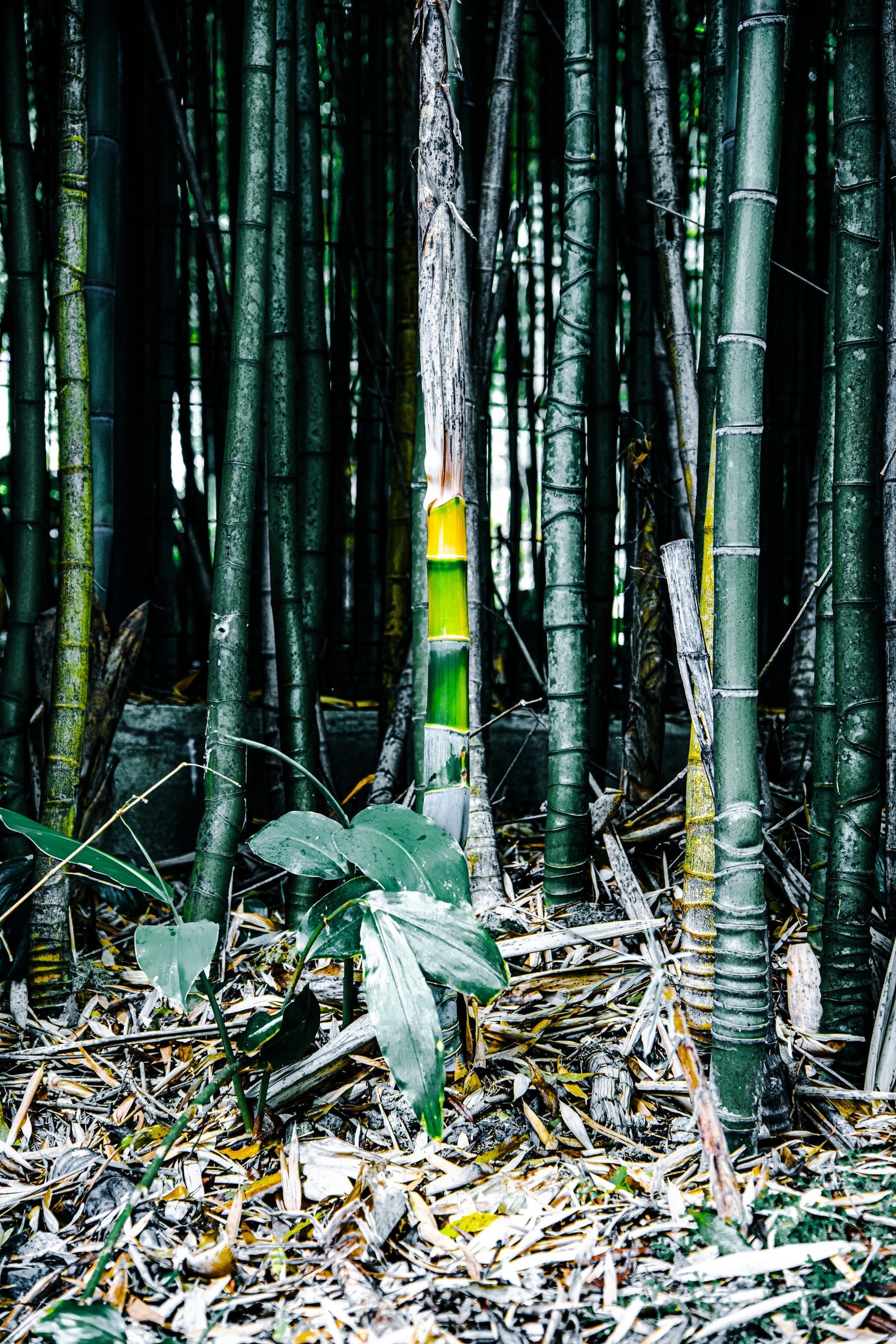
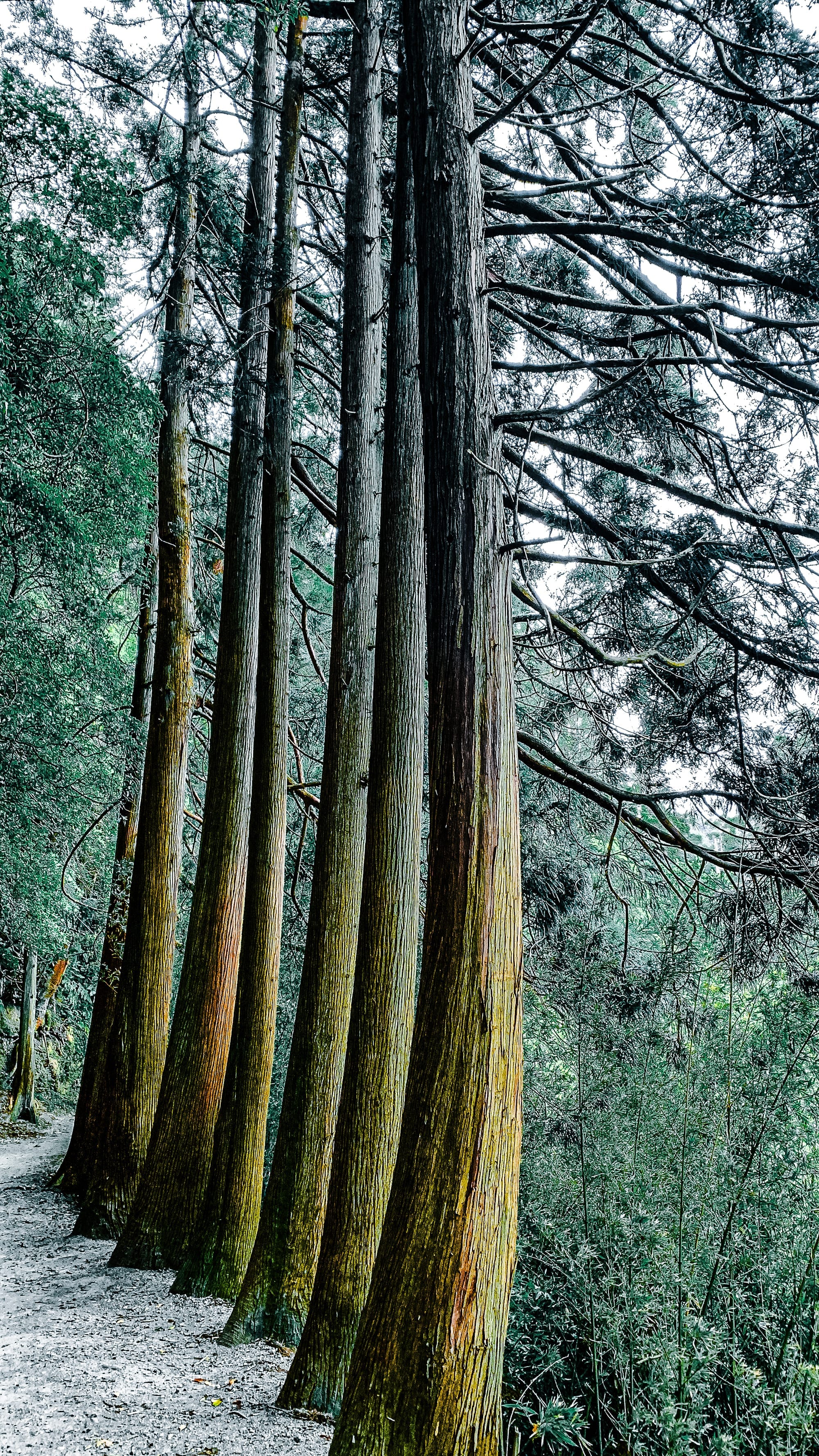
Shifting biomes along the loop trail: bamboo thickets give way to towering Japanese cedars
Elsewhere, you'll pass eucalyptus stripped smooth, ivy climbing high up pale trunks, and scattered undergrowth of ginger, fern, and moss.
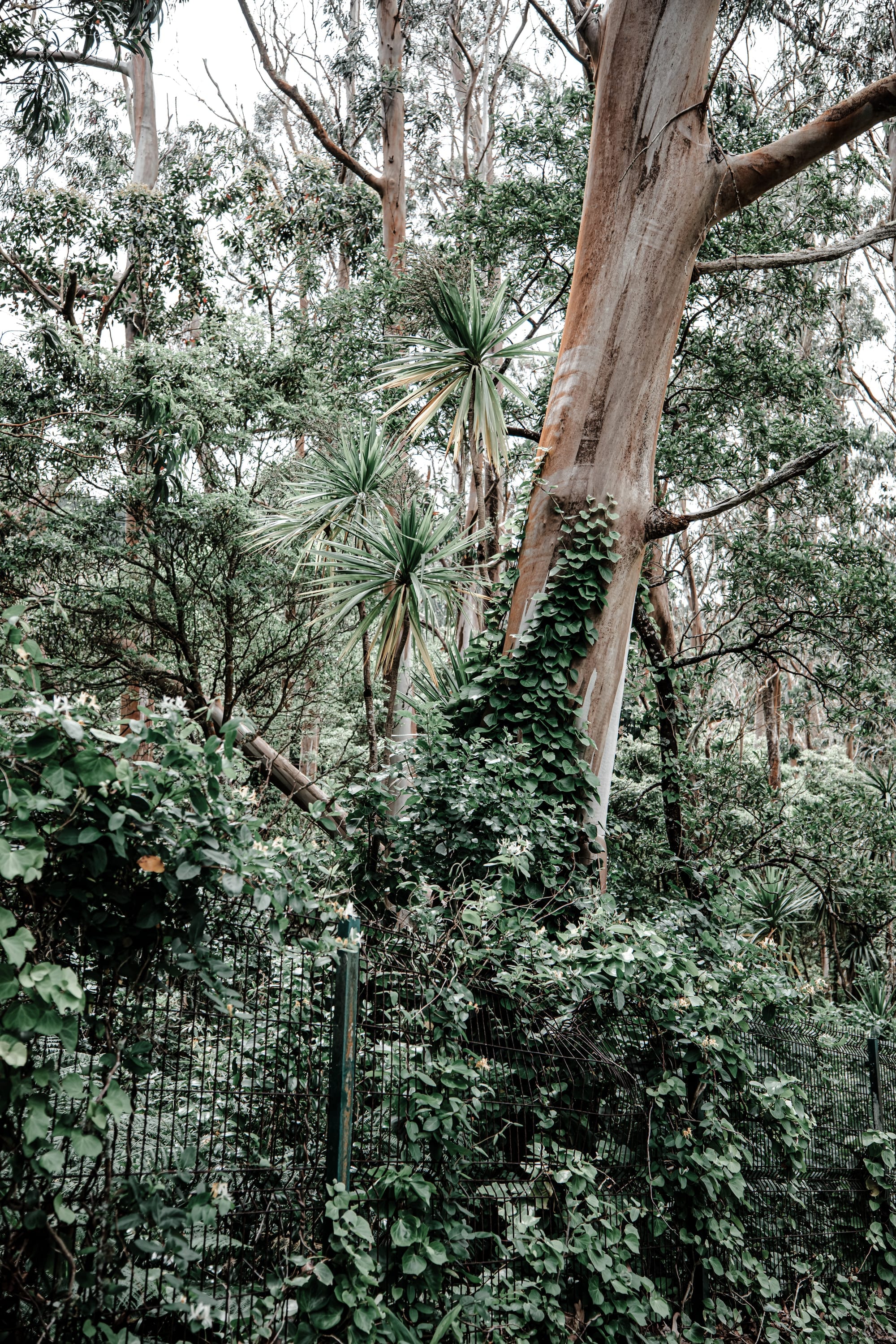
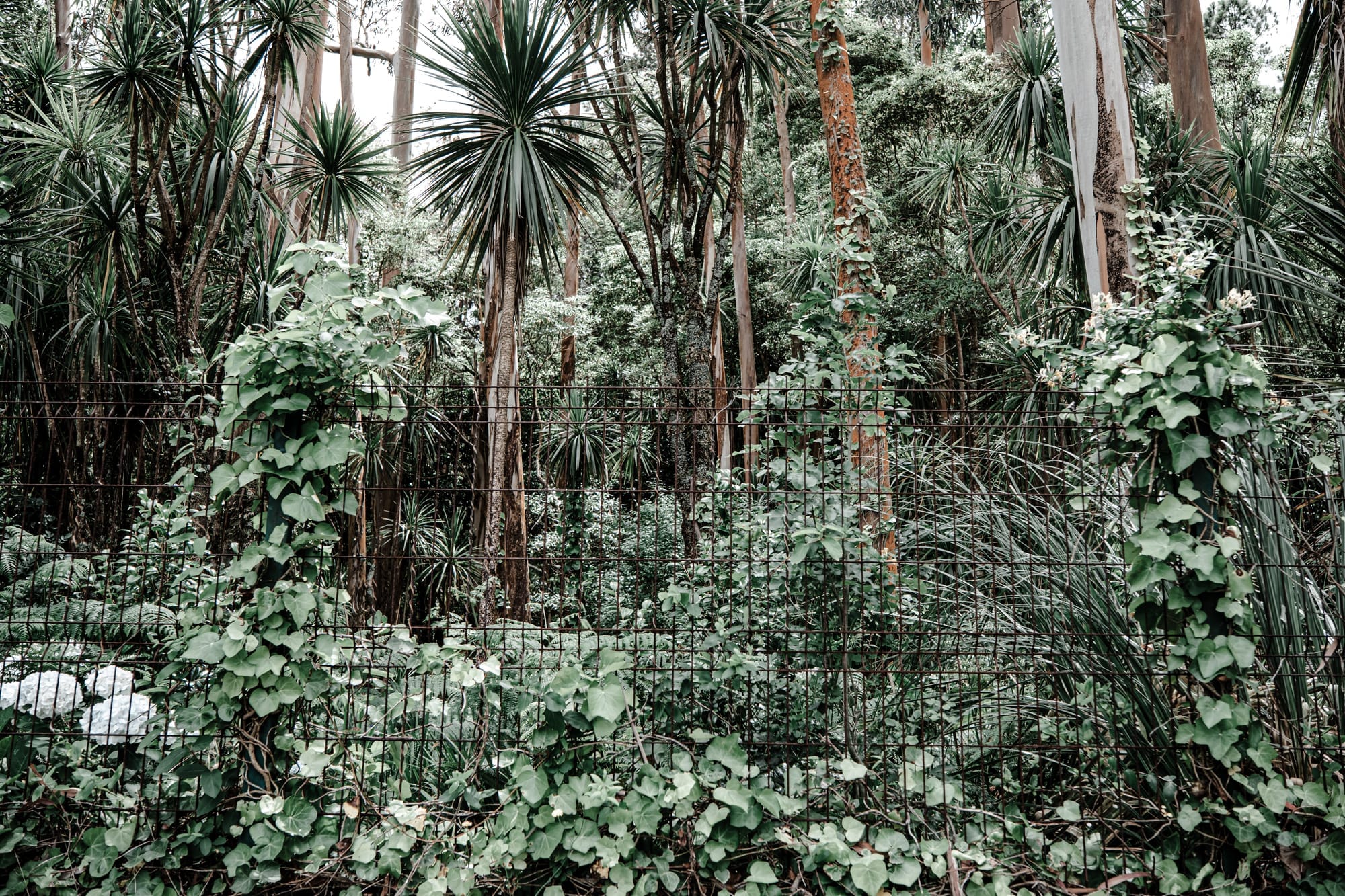
Vines climb eucalyptus trunks and wire fencing as dracaena palms cluster in the undergrowth
The terrain changes often, but not dramatically. What stays the same is the green, which is deep, wet, and everywhere.
The gothic chapel
About halfway around the lake stands the Capela de Nossa Senhora das Vitórias. It was built in the late 19th century in memory of a lost wife, and it's sharp-edged and stands on its own, with a tall spire, dark stone, and narrow windows. Moss covers its base. The reddish volcanic rock is mottled with lichen and black streaks where rain has collected and run down.
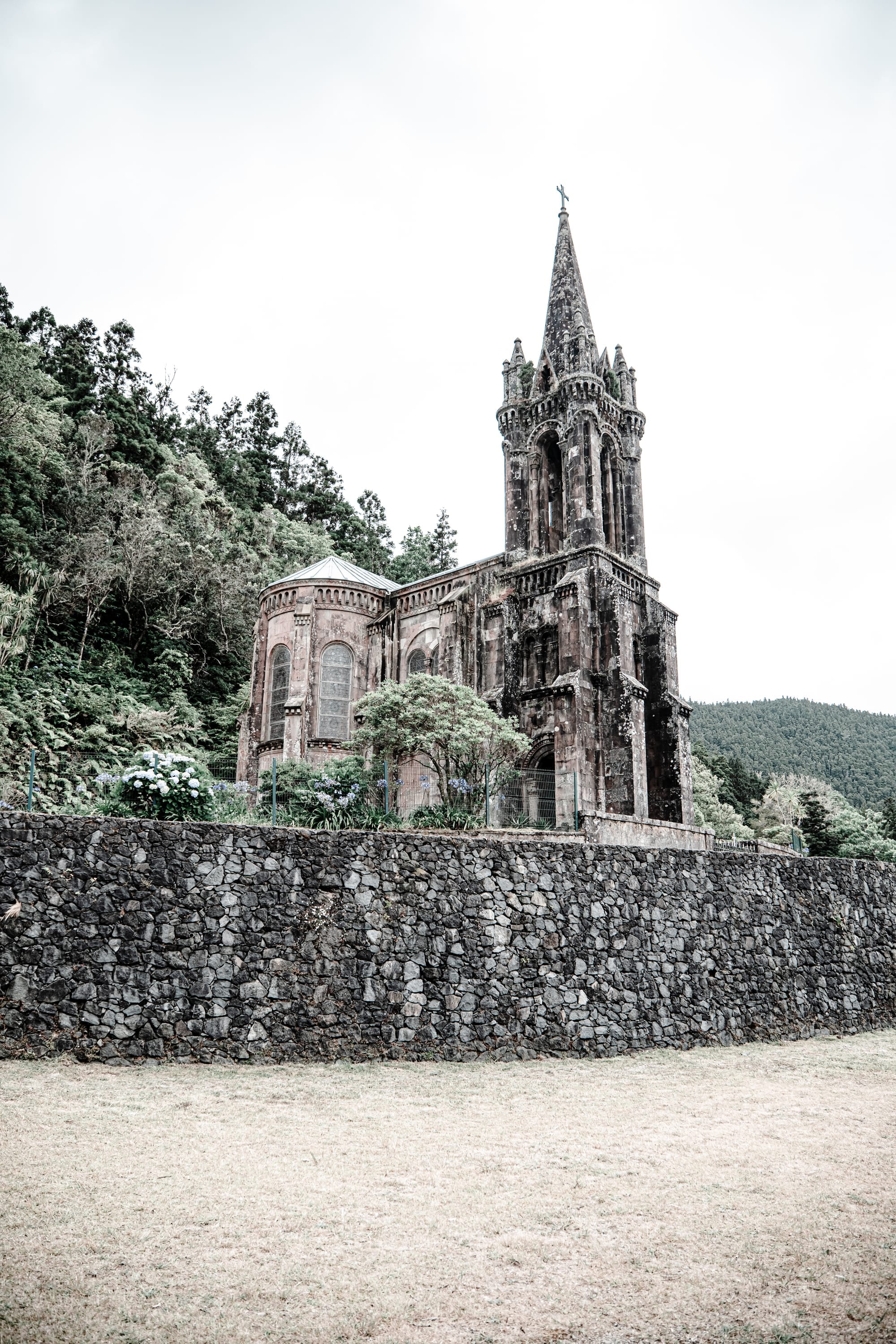
Inside, if it's open, the chapel is dim and hushed. Light comes in through tall windows and casts soft pools across the basalt floor. From outside, you can sometimes see the chapel's reflection in the lake, distorted but still clear.
The chapel feels like the halfway point, even if it isn't exactly. It's a good place for a break. There's a bench nearby. Hydrangeas grow along the slope. The water is calmer here.
The chapel was built by José do Canto, a 19th-century landowner and botanist, as a mausoleum for himself and his wife, according to Wikipedia's page on Furnas. That's why it's usually closed: on many days you can only look in through the gate. Right next to it is the entrance to the Mata-Jardim José do Canto, the woodland garden he planted on the south shore, with camellias in late winter, azaleas in spring, and hydrangeas in summer. It charges its own entry (around €5 in recent years).
The chapel was inaugurated on 15 August 1886, and José do Canto (1820 to 1898) is buried inside. Visit Azores describes the chapel as a neo-Gothic building unlike anything else in the archipelago. His garden next door was laid out in the mid-19th century to designs by French landscape architects and covers about 10 hectares. It has only been open to the public since 2014. Inside, look for the Salto do Rosal waterfall in the Vale dos Fetos (the Valley of the Ferns), plus carved tree-trunk figures and labelled specimen trees.
On the same stretch of shore you'll pass two historic lakeside houses that are now rural tourism rentals: Casa dos Barcos, the old boat house, and Casa da Lagoa, built as a fishing pavilion in a chalet style.
Prefer to go with a guide? One popular option is a private Furnas tour with the lake walk and Terra Nostra. You can check dates and prices here:
A swing, a treetop park, and a basalt visitor center
The path continues through more forest. At one point, a wooden bench-swing hangs from a thick branch, just off the ground. It isn't signposted. It just appears, and it's hard not to sit on it. The ropes are a little frayed. The ground below is packed earth and pine needles.
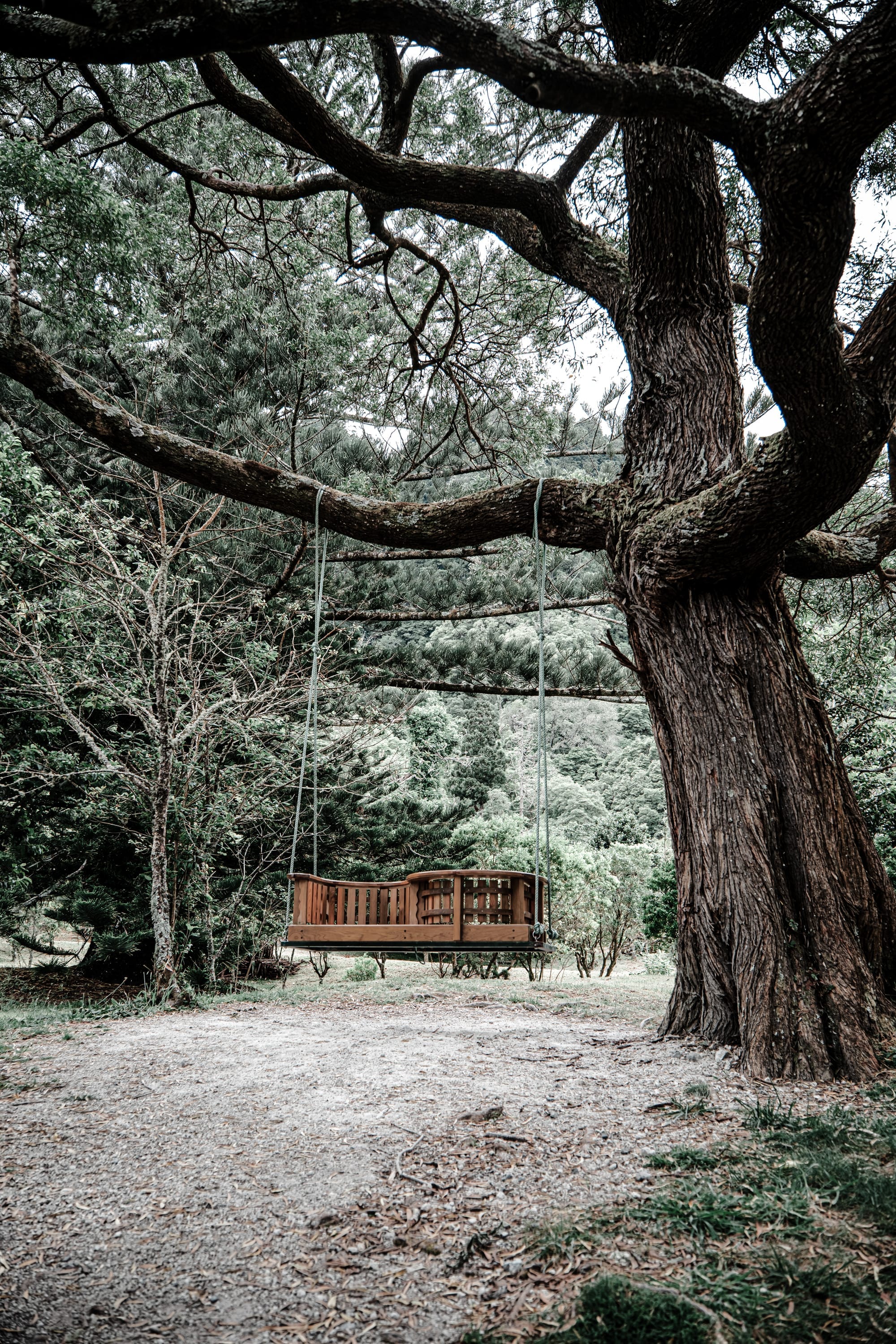
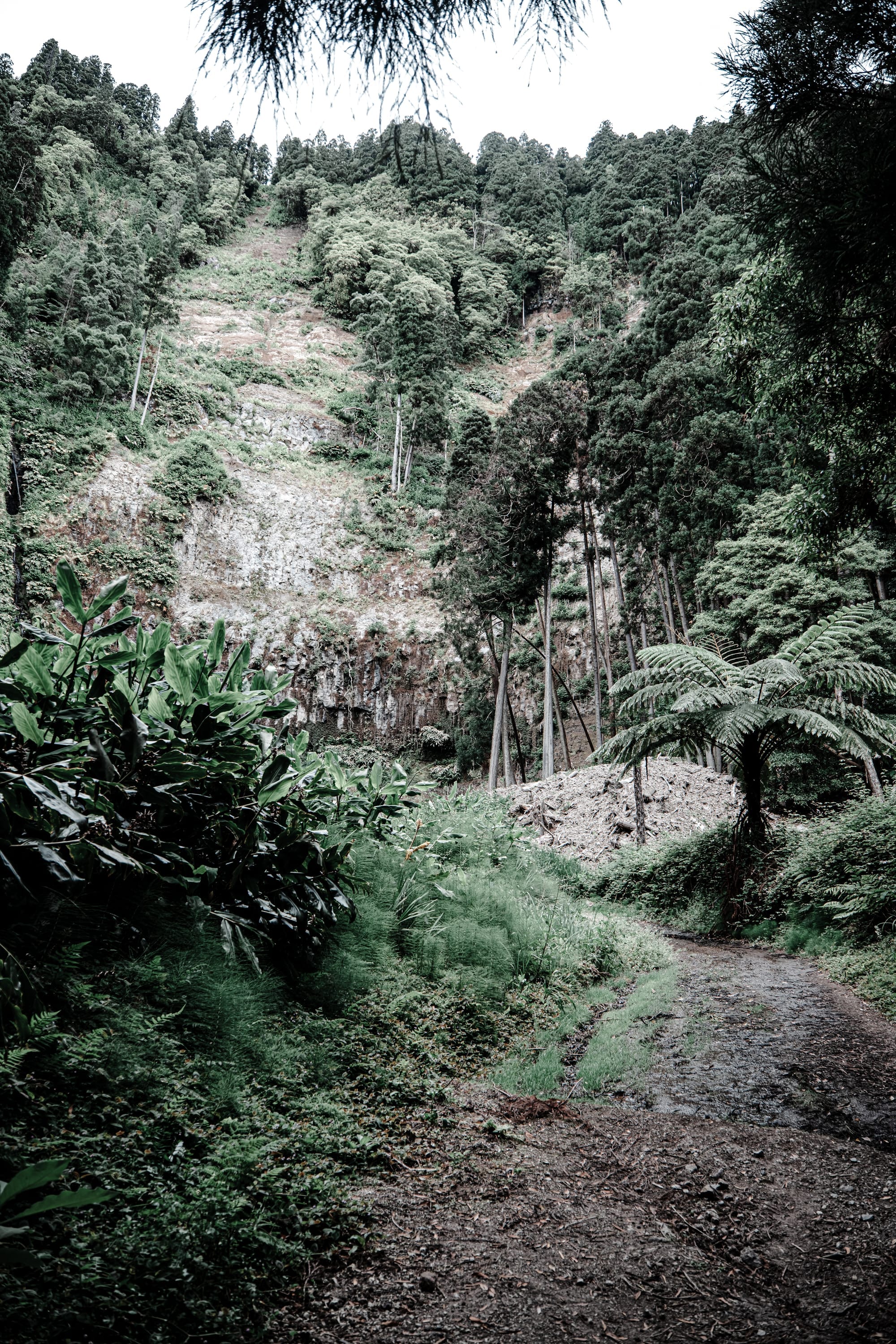
Woodland moments along the Furnas trail: an oversized swing under pine branches and a fern-lined path skirting volcanic rock
Further on, a modern basalt visitor center sits back from the path. Its facade has a soft grayscale pattern, with dark stone bricks laid in clean horizontal bands.
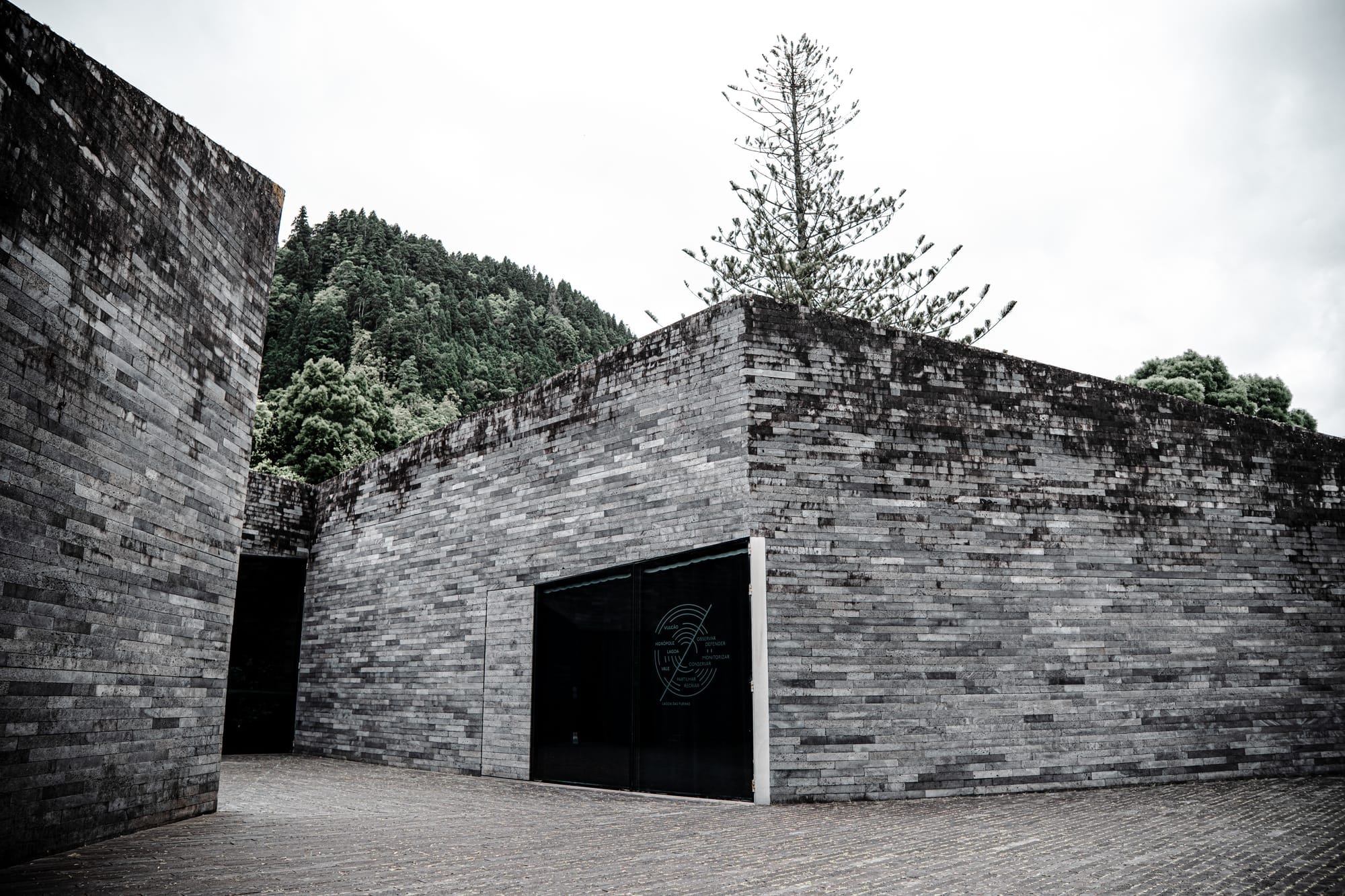
A lone pine rises behind it, framed perfectly by the open space between the walls. Compared to the lake's older buildings, it's understated and blends in.
This is the Furnas Environmental Interpretation Centre. The Visit Azores page on the centre describes it as a place to learn about the Furnas volcano, the lake's ecosystem, and the work being done to protect and restore the landscape, with interactive displays and a green space looking over the water. The building has won several architecture awards. It's run by the Azores Natural Parks, so check the Parques Naturais dos Açores site for current hours and tickets. In past years it has opened daily in summer and Tuesday to Saturday in winter.
The centre's basalt building won the Premio Internazionale Architettura di Pietra in 2011 and was a finalist for Portugal's SECIL architecture prize in 2013. Inside, a visit takes about 30 minutes, and staff run guided tours of the exhibition on the volcano and the lake's recovery. You can call ahead on +351 296 584 436 to check times.
Then the trees get taller and the ropes appear: this is Azores Treetop Park. Nets, ladders, and cables are strung between the trunks.
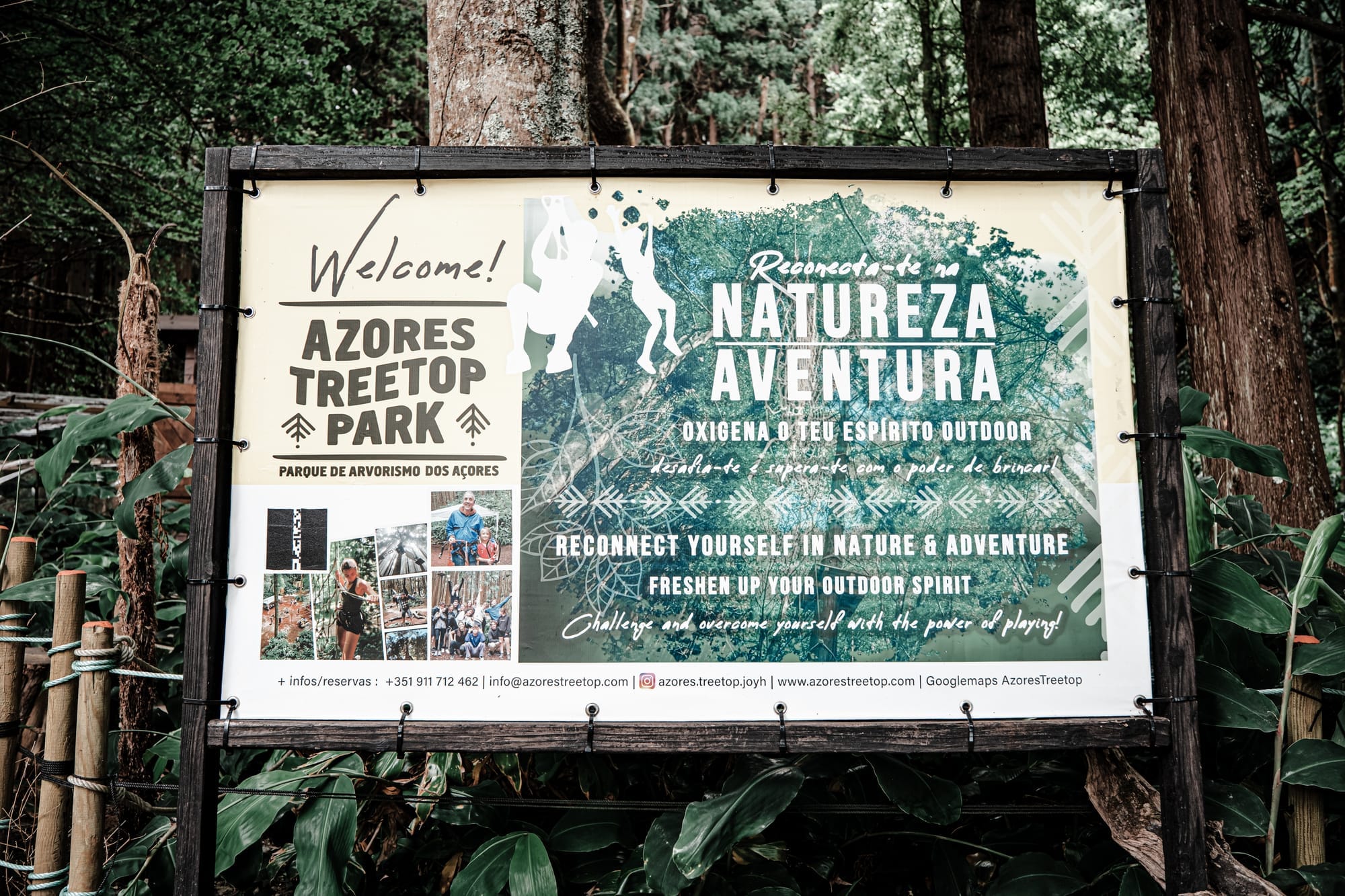
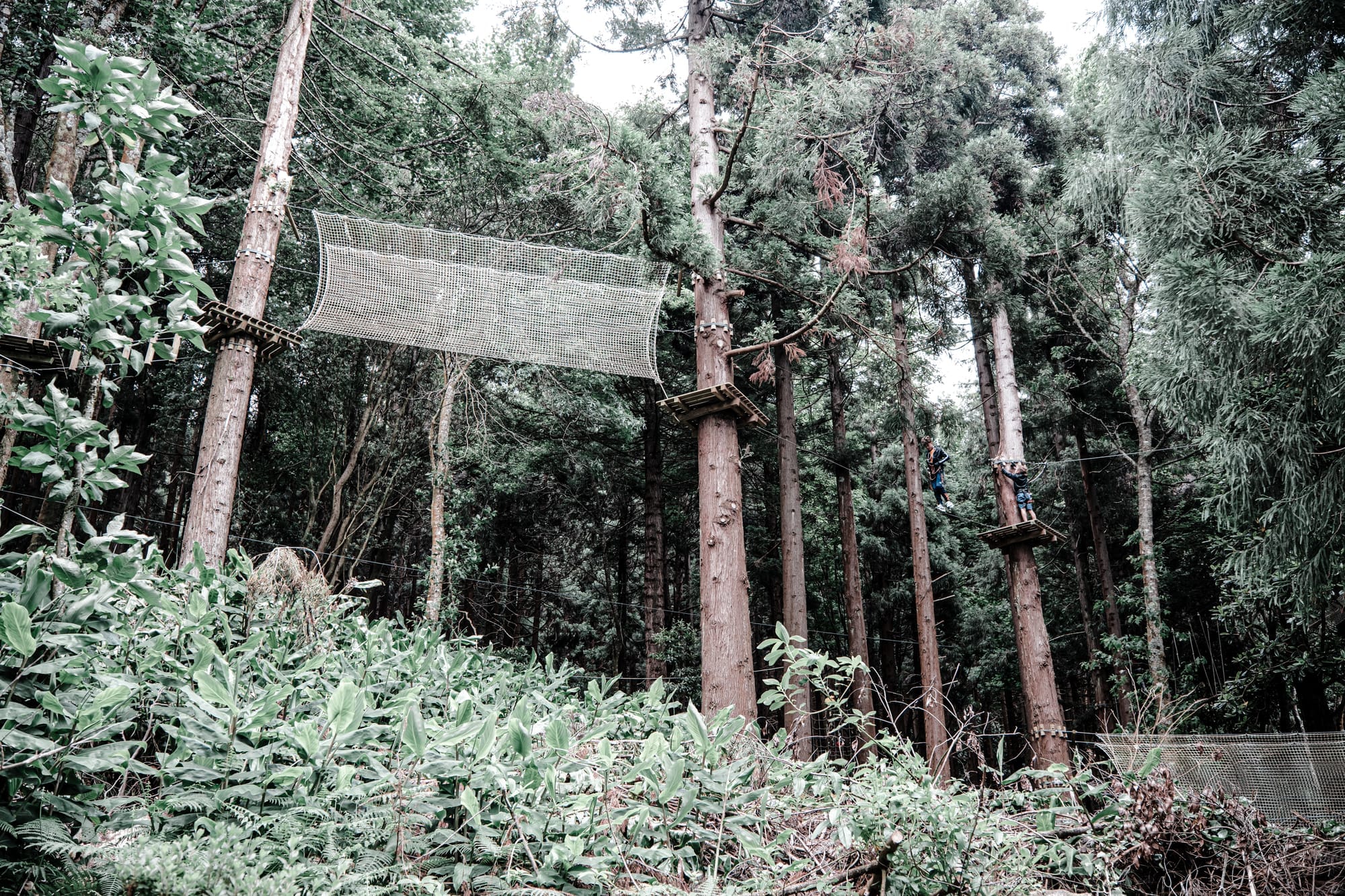
Tree canopy swings and zip lines at Azores Treetop Park, just off the Furnas Lake hiking loop
A child's yell echoes through the canopy. Platforms wrap around tree trunks high above. Some people move between them; others watch from the ground. The structures are simple and blend into the forest: wood, rope, and nothing too obtrusive. It looks like a little village built in the trees.
Lakeside plants and wildlife
Back on the path, the lake comes into view again. Along the edge, thick reeds rise from the shallow water. Tiny fish dart about near the surface. From the bank, the water looks both murky and reflective, with greens and browns mixed with the pale sky.
There are flowers tucked into unlikely corners: low agapanthus, white lilies near the waterline, and sudden bursts of hydrangea in purple, pink, or blue. Ferns grow wide and flat along the edges, and their fronds brush against your legs if you step off the trail.
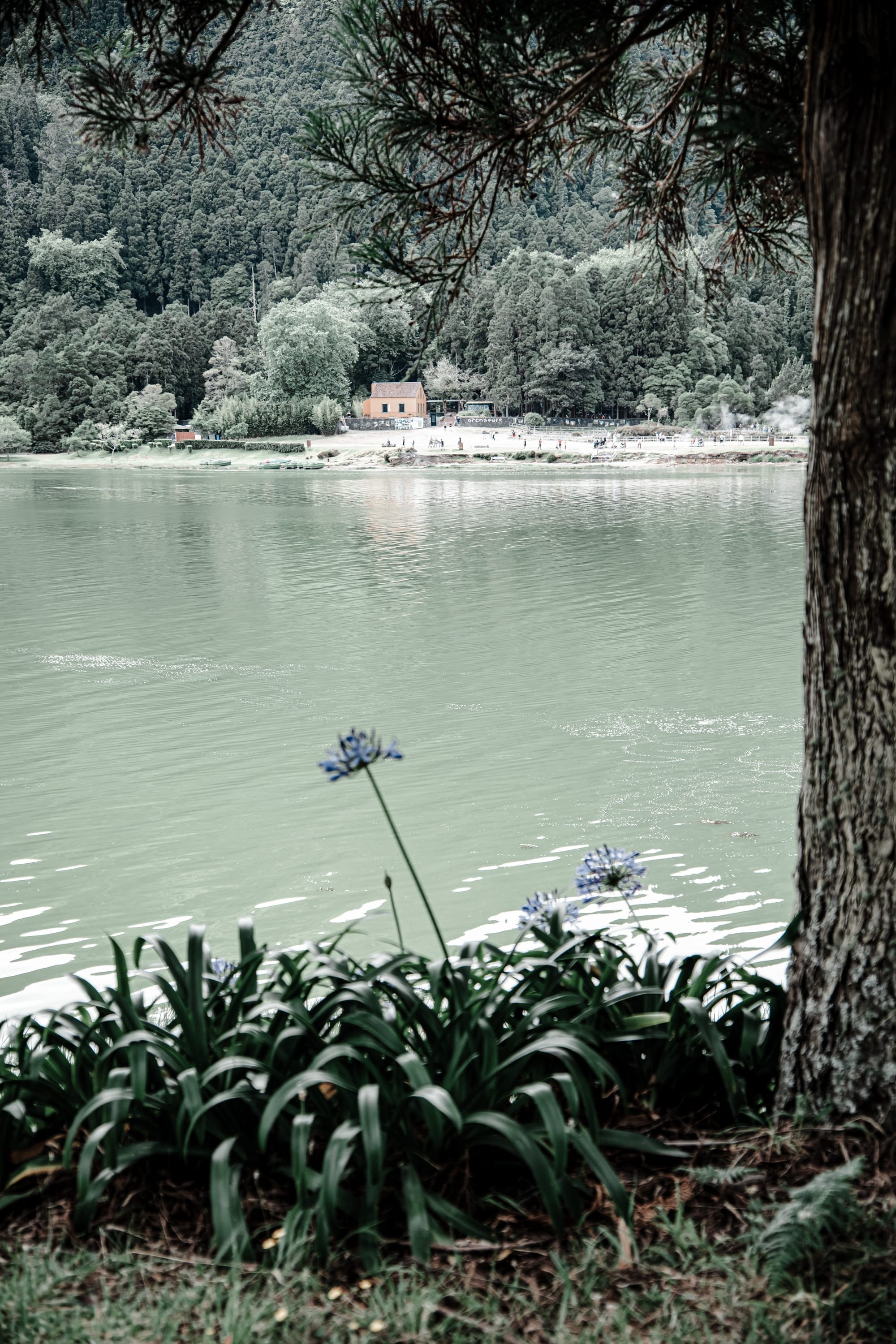
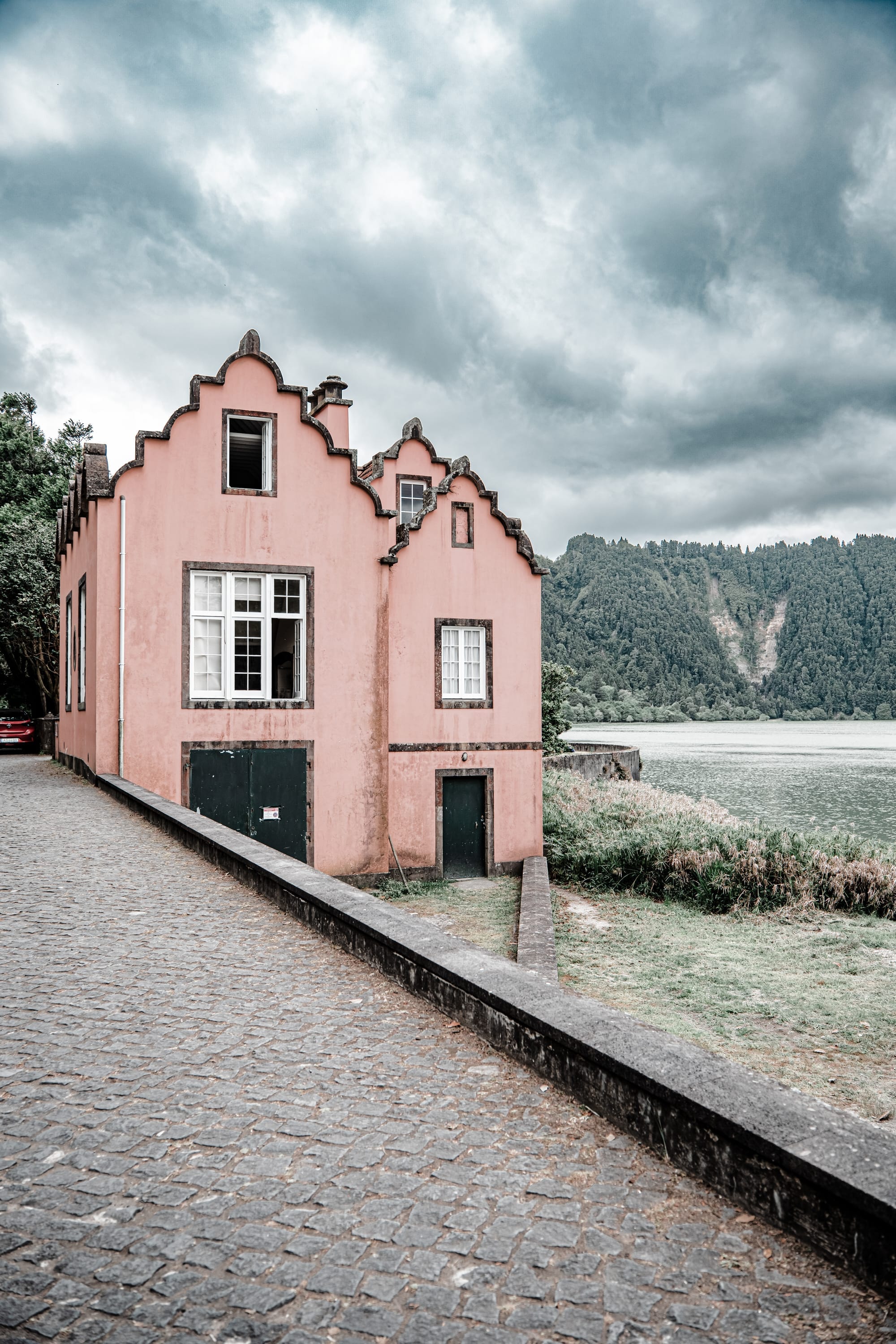
Lakeside geothermal fields and pastel Portuguese architecture offer striking contrast to the forested crater walls
A carved wooden sculpture, worn and darkened by the weather, sits at the base of a tree stump, facing the path.
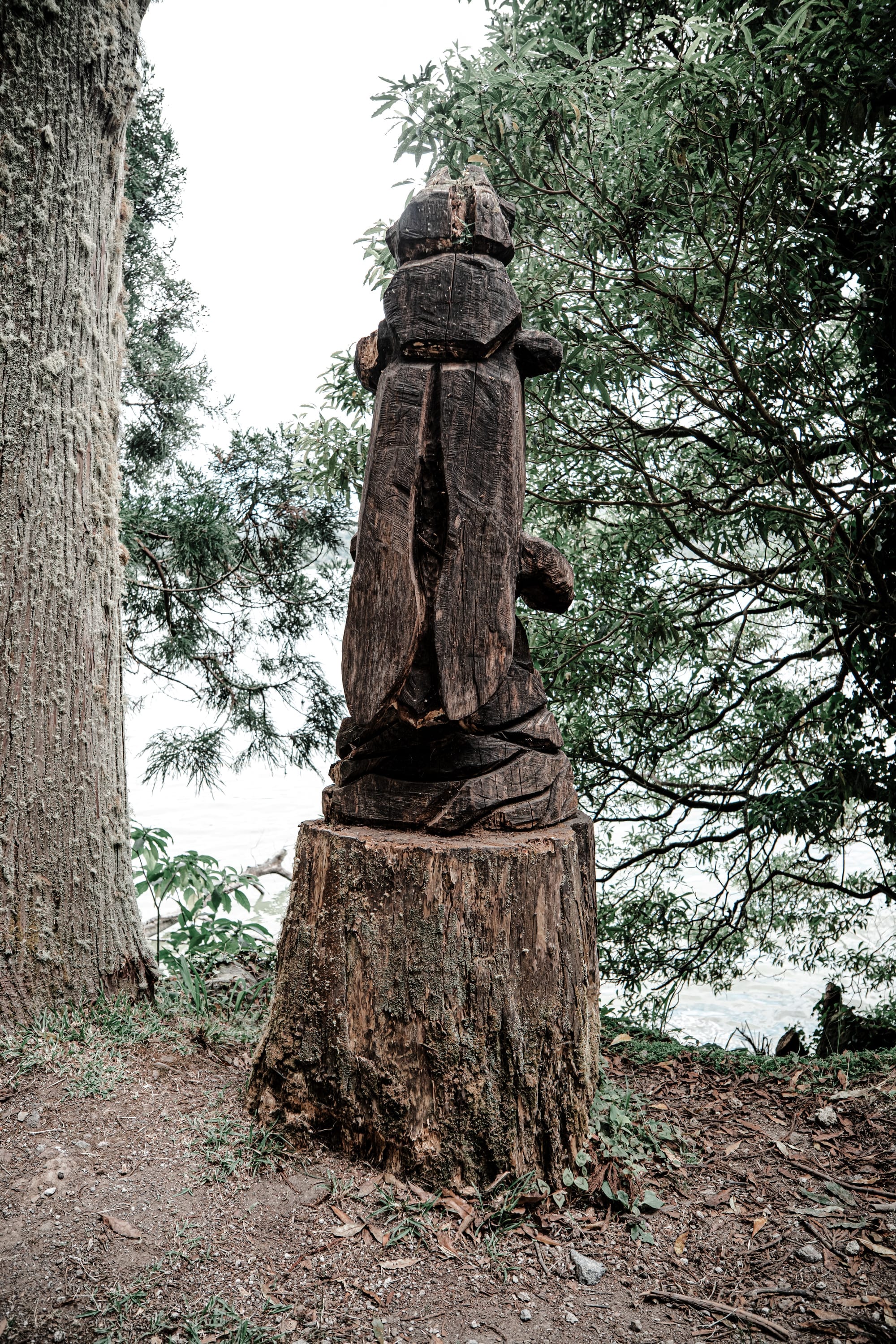
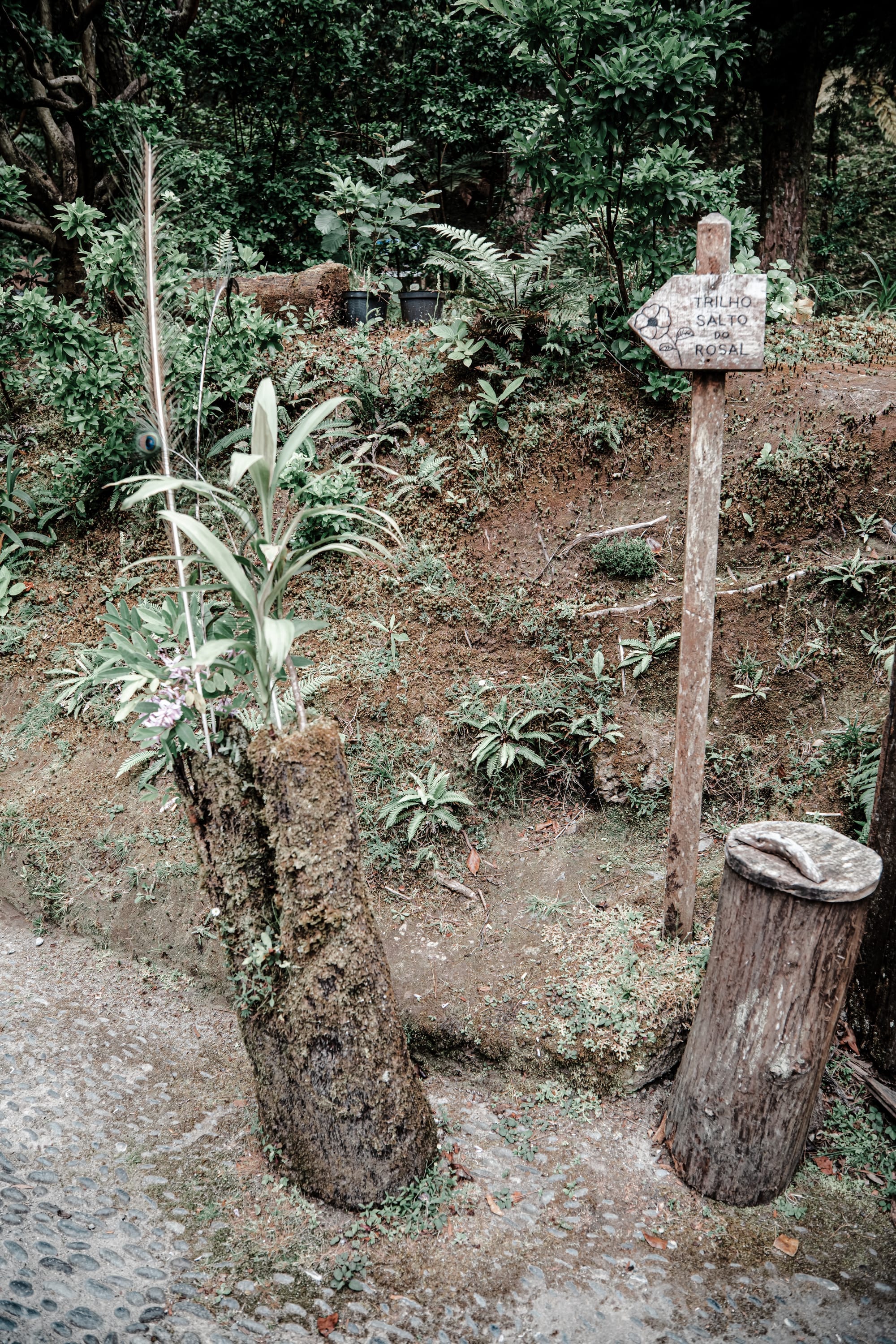
Hand-carved trail markers and mossy signposts along the Furnas Lake forest paths
It's stylized and almost abstract, more of a gesture than a figure. Beside it, the lake opens up again.
Grená Park, on the edge of the lake
Toward the eastern end of the lake, just off the main loop, a small path leads to the entrance of Grená Park. It's easy to miss if you're not looking for it. The entrance is marked by a simple carved wooden sign and a tall, rust-colored gate made of weathered steel, modern in design but softened by the forest around it. A low stone wall runs along one side, covered in lichen and green moss.
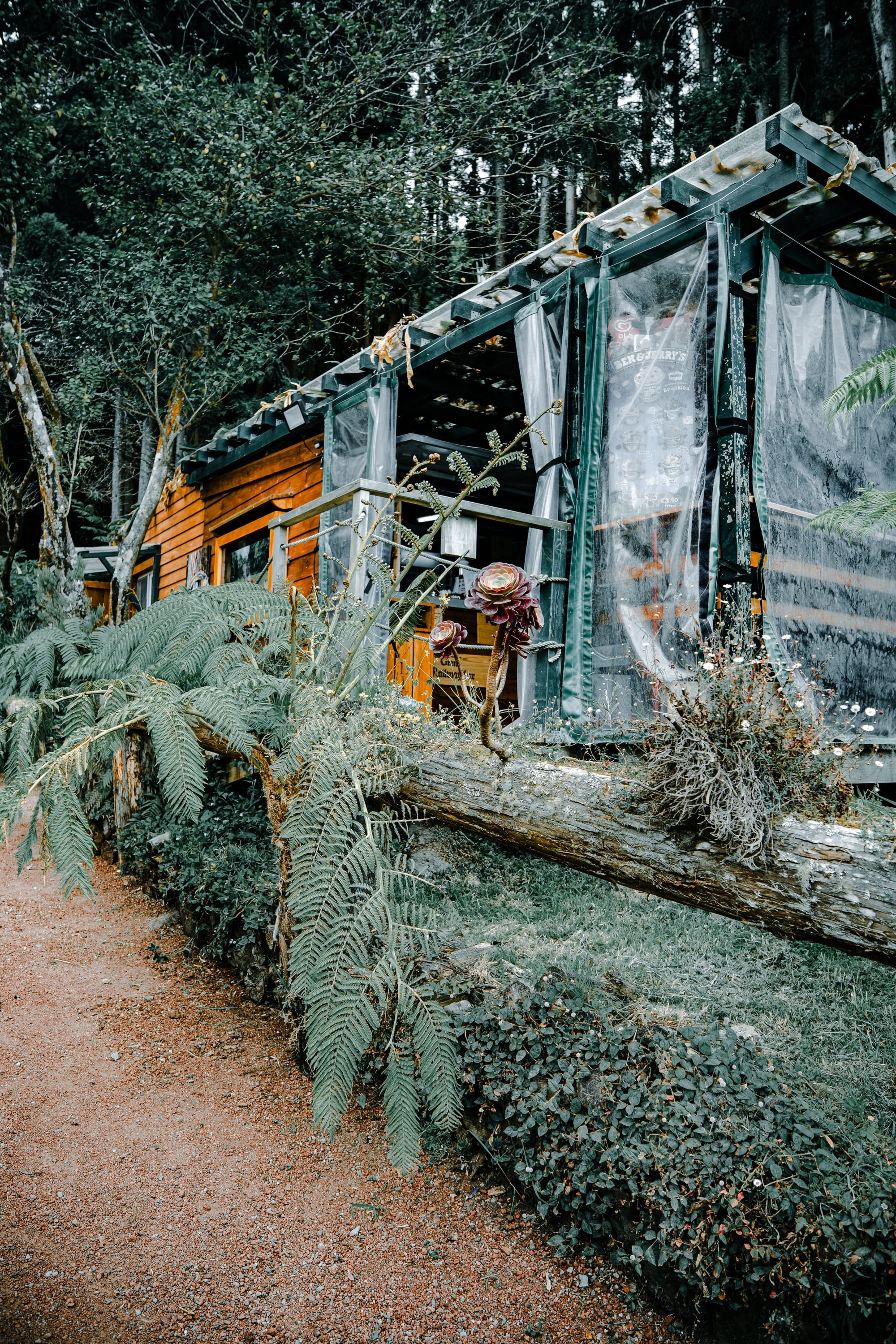
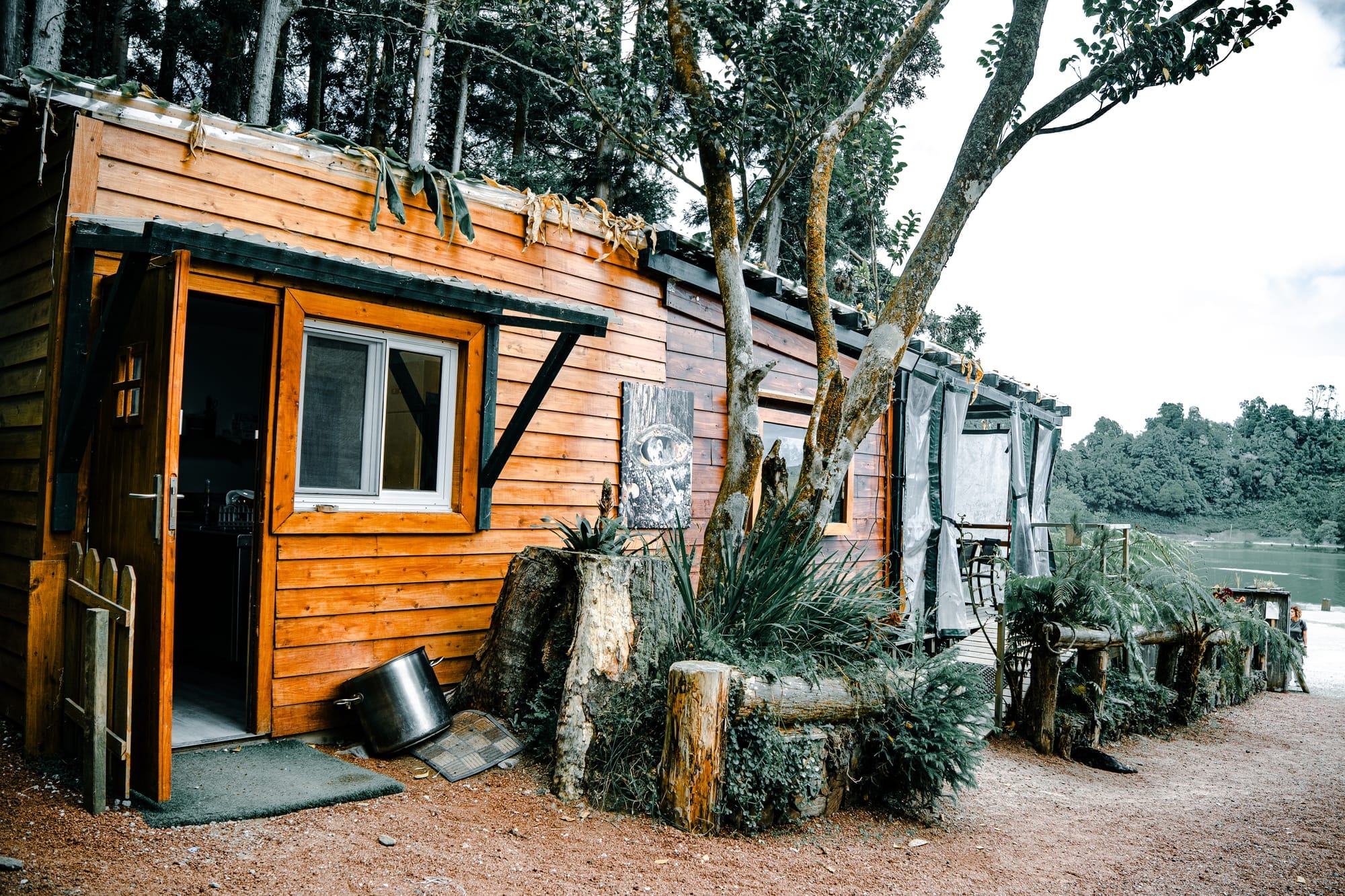
A wooden cabin restaurant tucked along the trail, surrounded by ferns, succulents, and volcanic soil.
Even if you don't walk the full trail network, this edge of Grená is noticeably different. The slope is steeper, the canopy darker, and the air heavier with the smell of wild ginger and damp leaves. Just past the gate, large-leafed ferns cascade down the bank, their undersides dusty white. The forest floor is soft with fallen magnolia petals and red pine needles. A narrow stream cuts across the path, with stones placed as stepping stones.
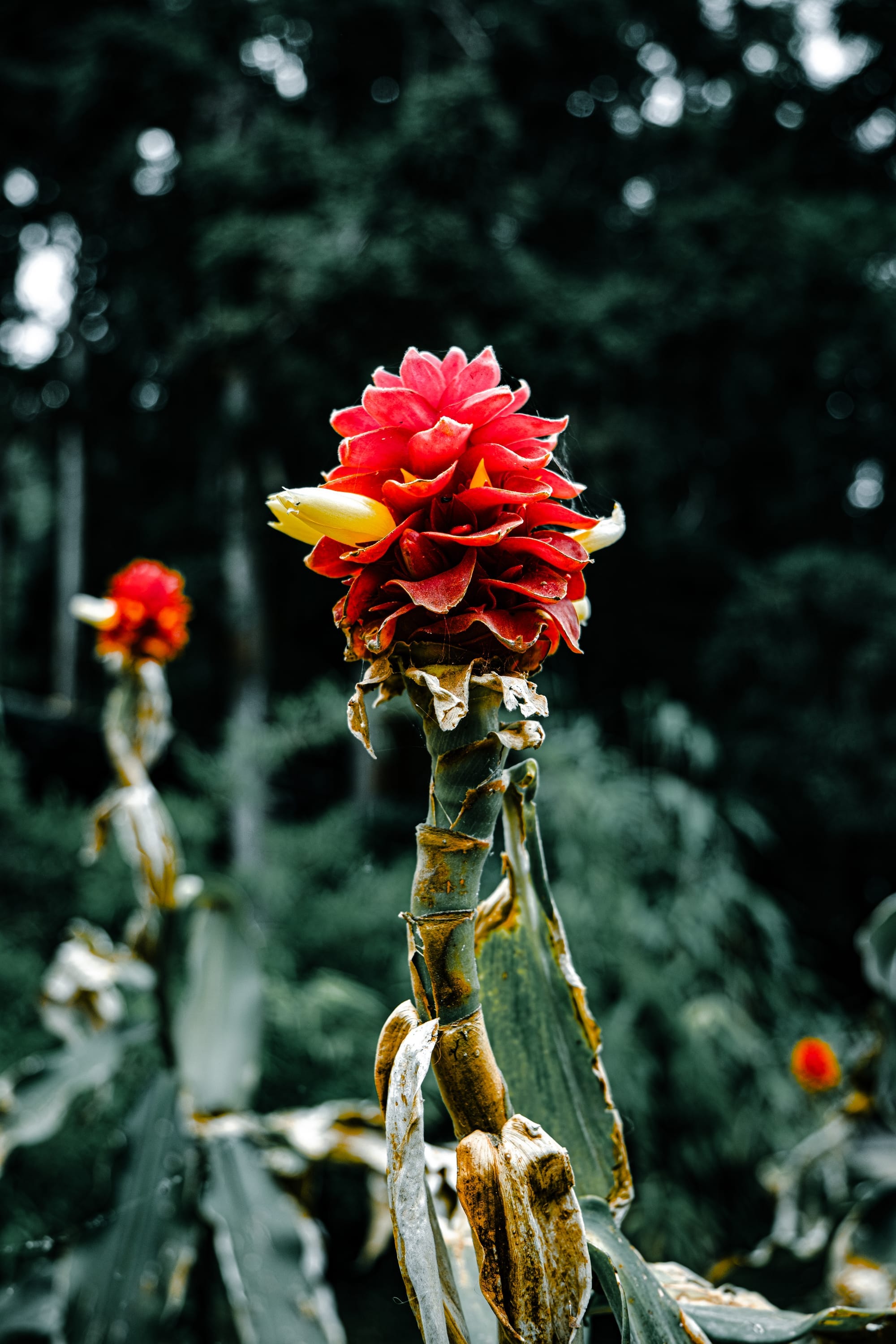
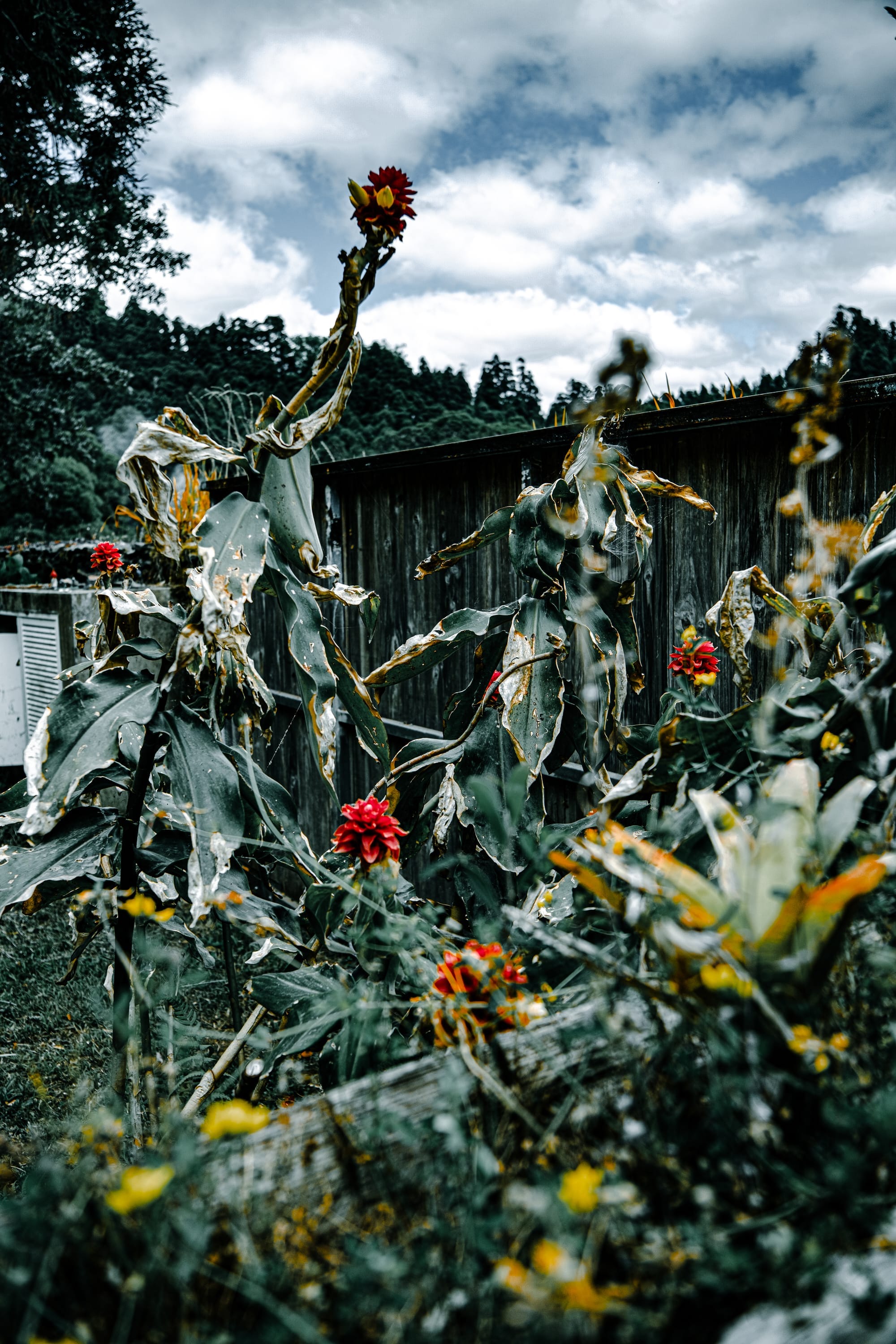
Wax ginger in full bloom, their red bracts and waxy stalks adding surreal bursts of color to the forested path
Grená Park has a series of less-traveled trails that wind through denser forest, with stretches of sweet chestnut, tall Cryptomeria japonica, and tangled understory. There are banks of flowering wild garlic (Allium ursinum), long rows of canna lilies in deep orange and crimson, and the odd calla lily poking out of the shade. Closer to the gate, red-hot pokers (Kniphofia uvaria) bloom upright beside clusters of pale pink trumpet-shaped flowers, possibly Brugmansia.
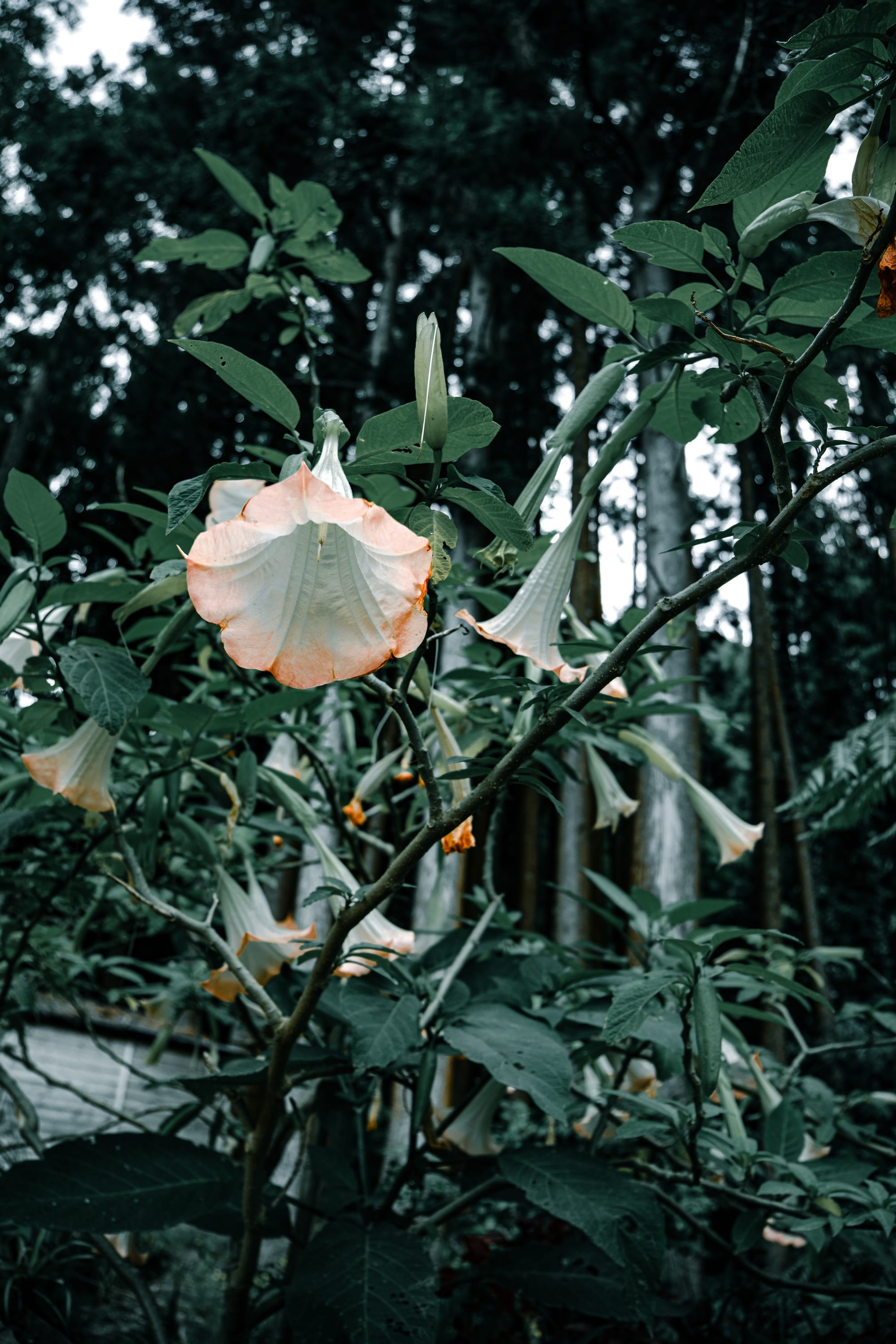
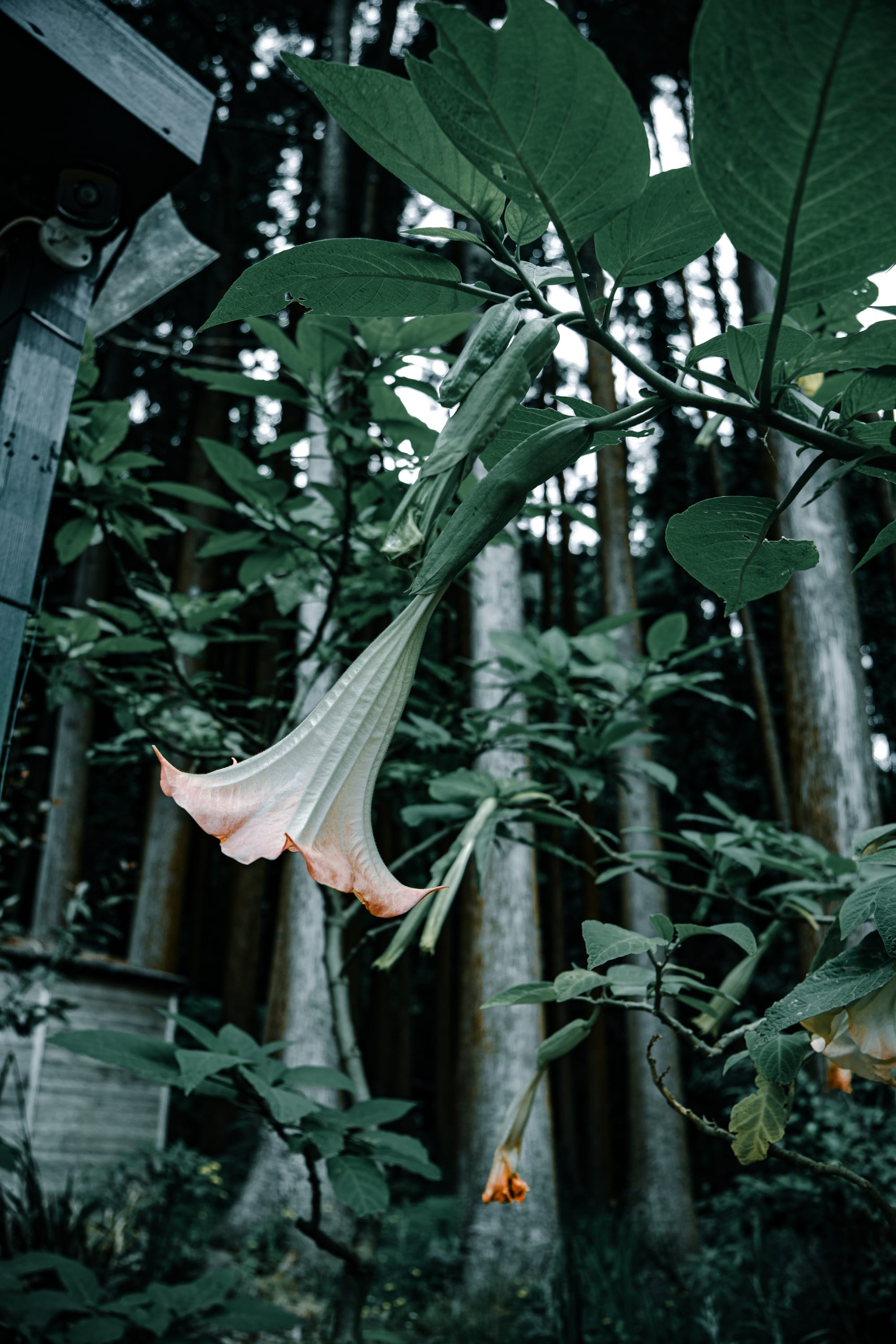
Blooms hang like pale trumpets, their delicate peach-tinged edges softening the dark geometry of the forest behind them
A single echium tower (deep indigo and cone-shaped) rises above a patch of succulents. Lavender spikes cluster at the bottom of a slope near the path. The flowers here grow in tiers, and they never look like a planted display: they're part of the slope, the shade, and the stone walls.
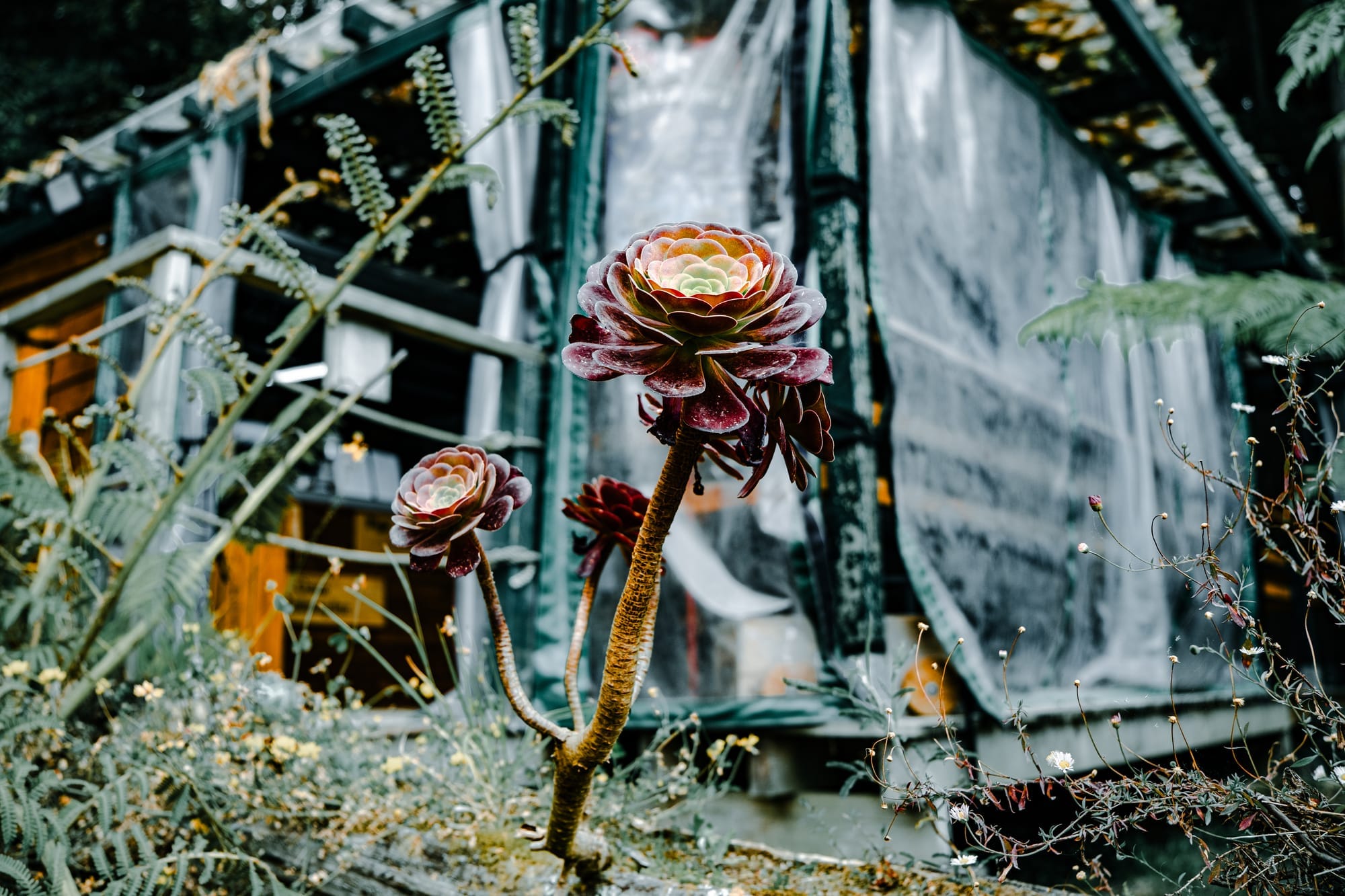
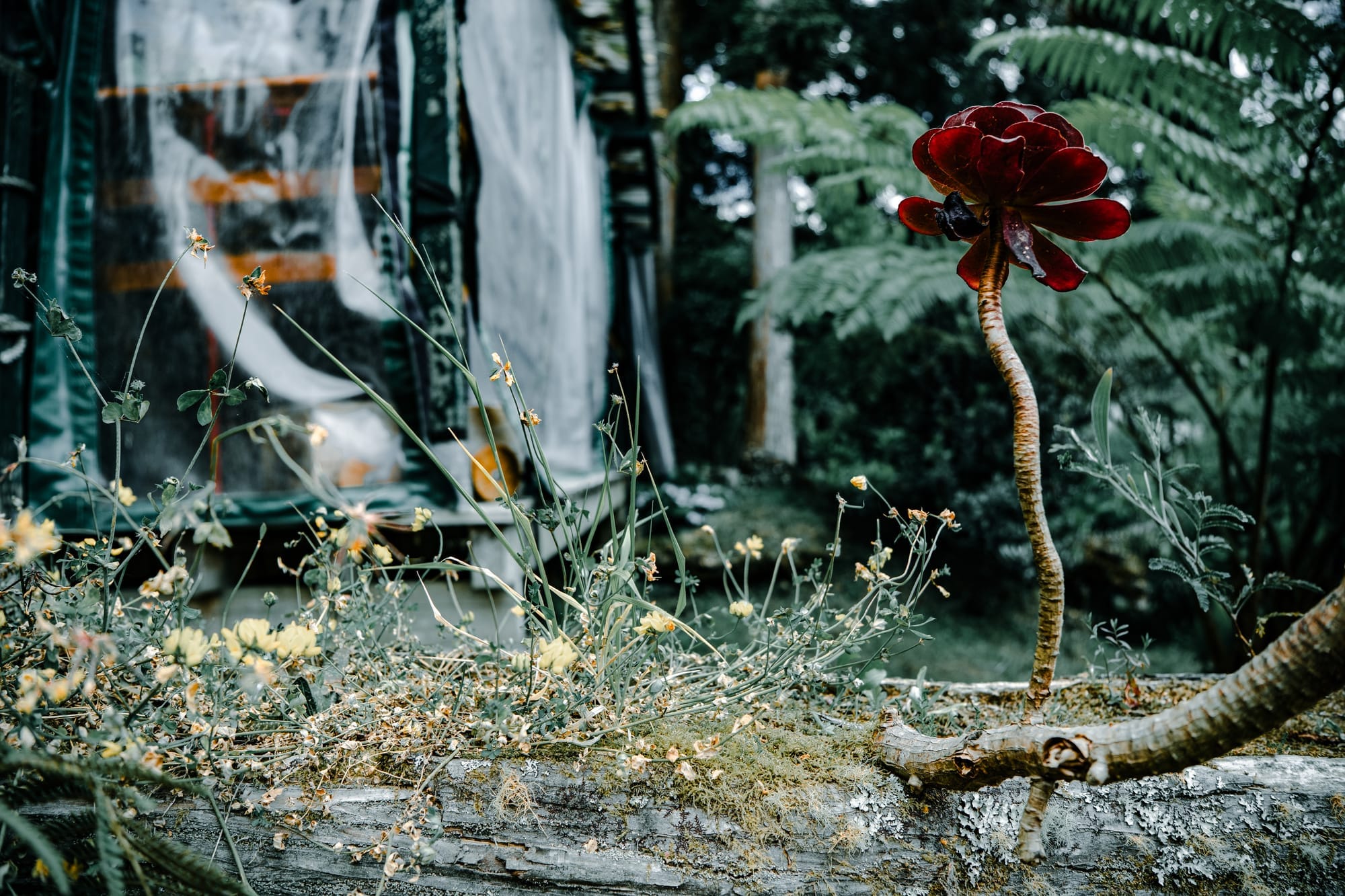
Succulents rise from mossy logs, their rosettes deepening in hue as they reach for the filtered light of the forest edge
Even if you don't take these trails, just standing at the entrance gives you an idea of what's beyond: deep ravines, switchbacks, and places where tree roots rise from the ground like sculptures. You can tell right away that the path heads steeply uphill.
The park has a different atmosphere. One of the wooden signs reads "silêncio" in faded letters. If the lake path is a public walk, Grená is more like a hushed corridor into a slightly wilder forest.
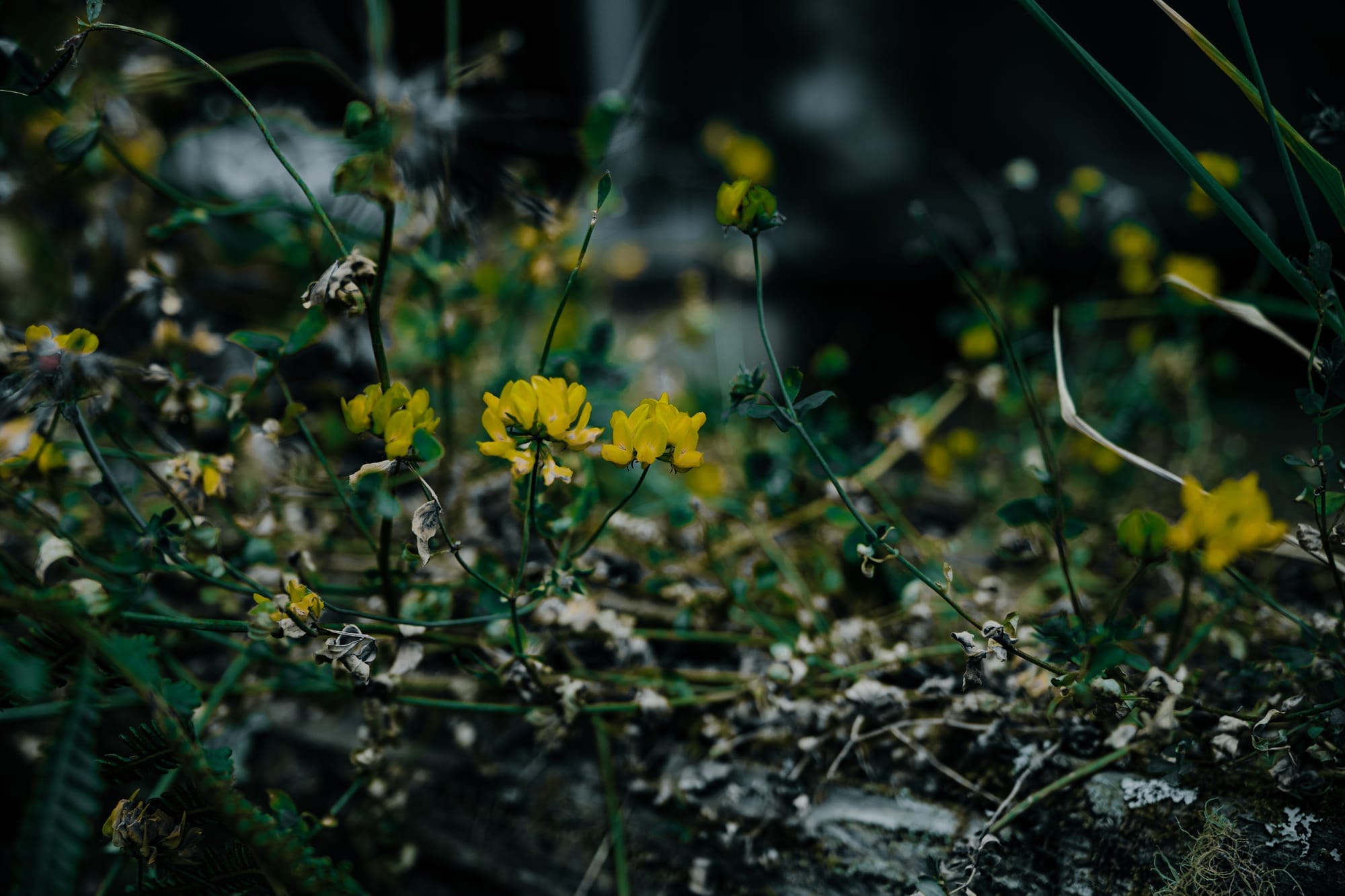
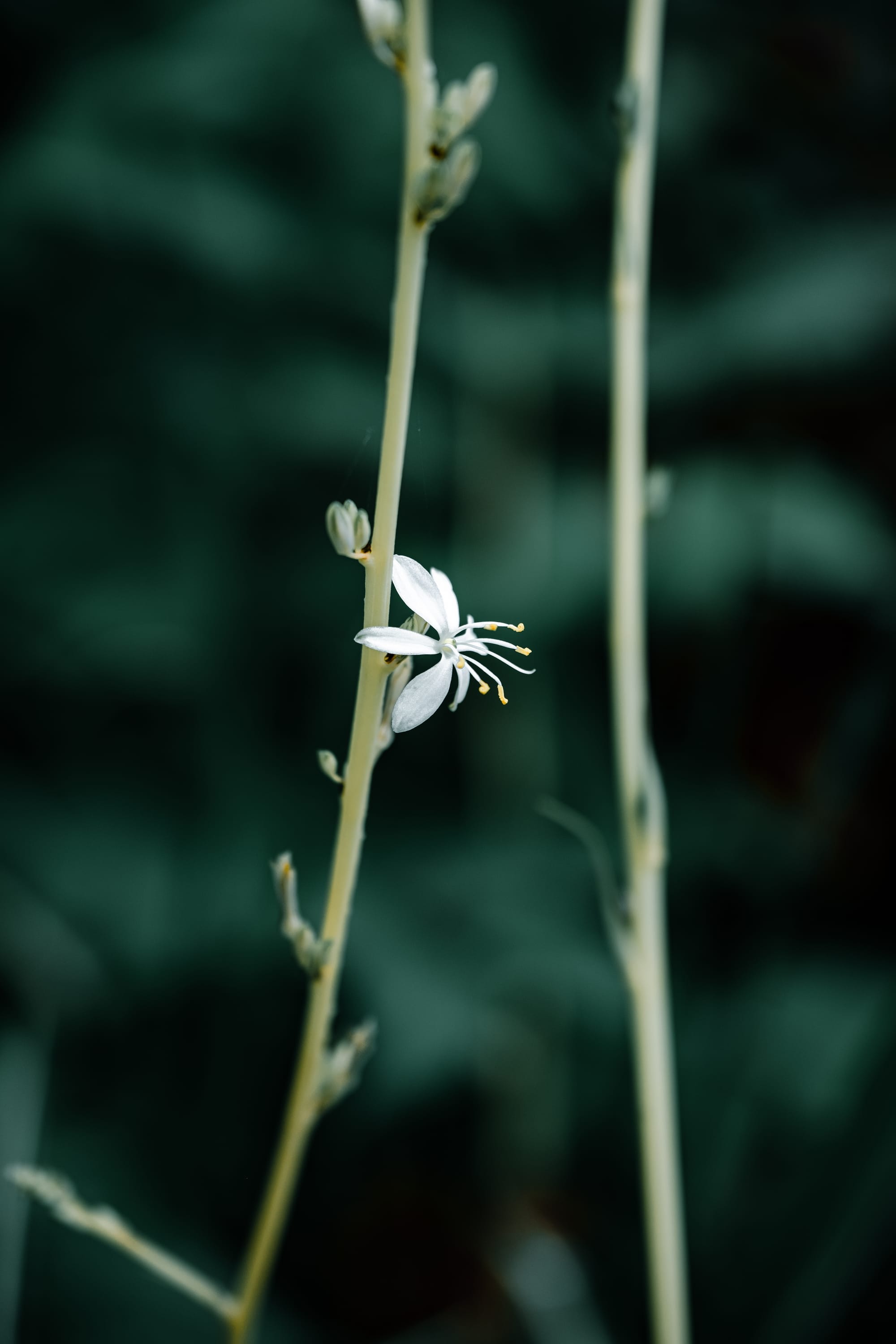
Yellow bird’s-foot trefoil and a single white spider plant bloom in the undergrowth
Photos capture this well: dark greens, angular shadows, and the kind of filtered light that makes even a simple tree trunk look like a sculpture.
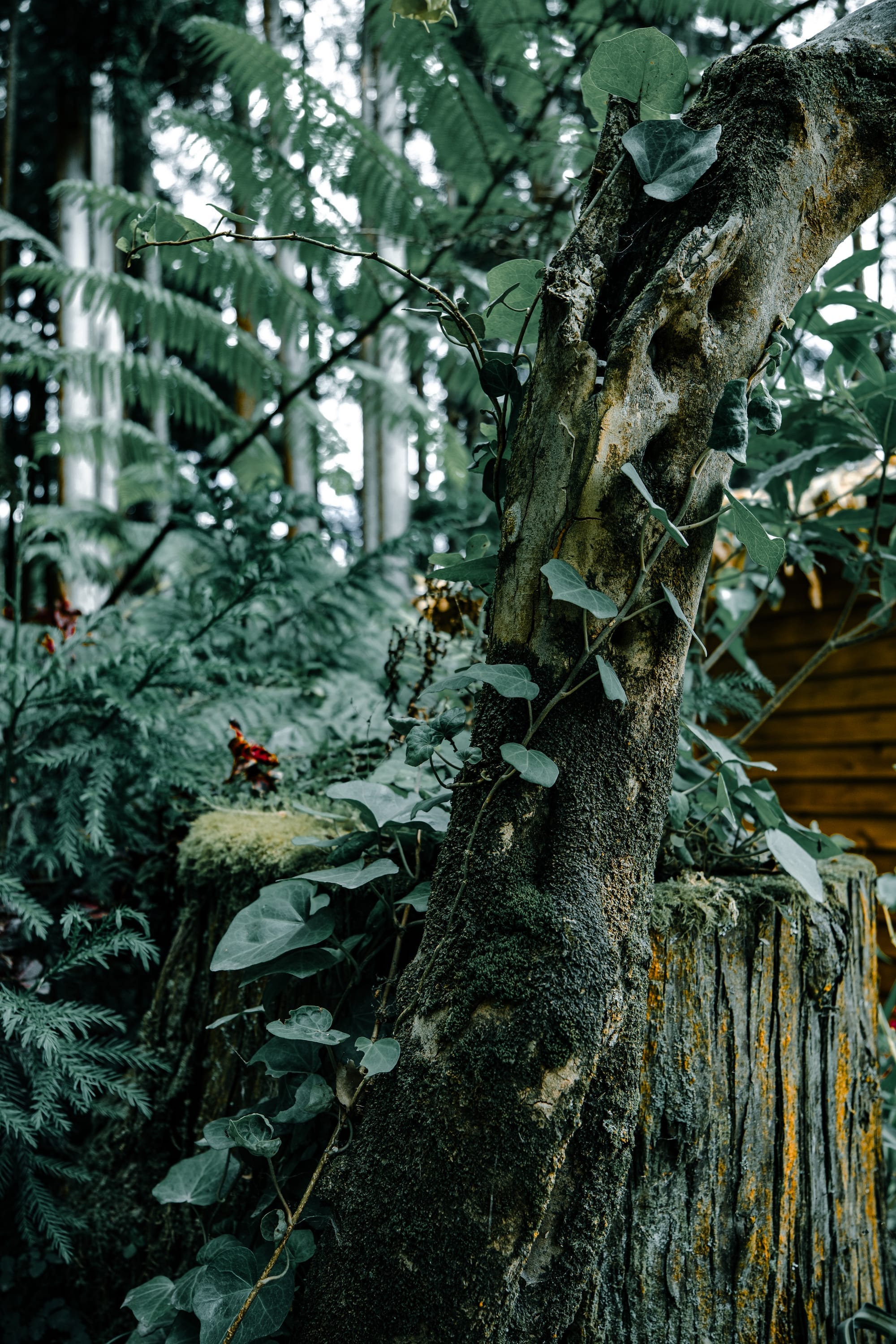
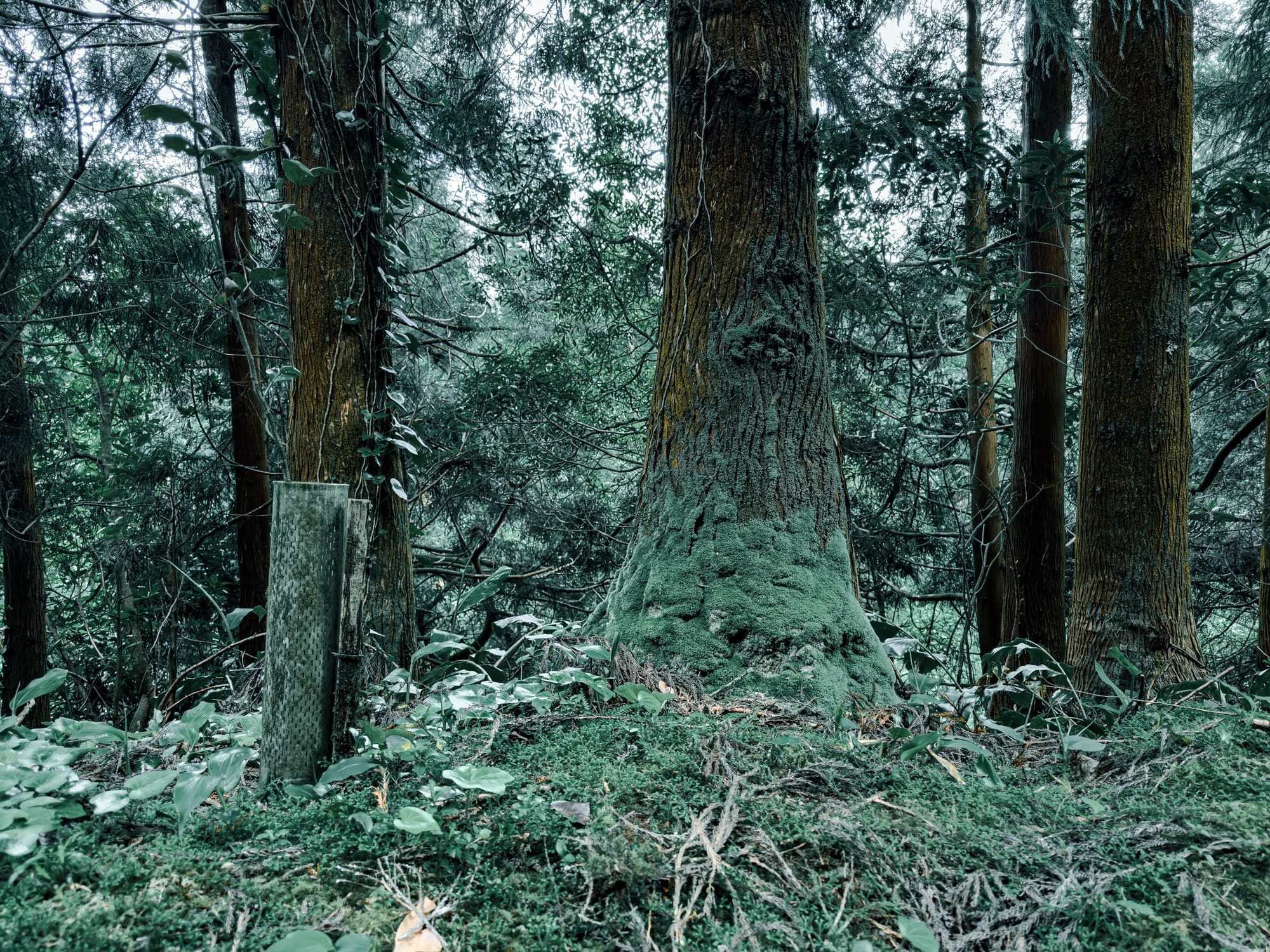
Verdant trunks and moss-thick stumps hold creeping ivy and fern on Furnas’ forest floor
This part of the walk is worth some time. Even if you don't go all the way in, stop at the gate and notice the drop in temperature, the change in light, and how the sounds change.
And if you do go in, here's a small preview of what you might find. The photos below in this section are courtesy of a Lava coliving friend who made it there!
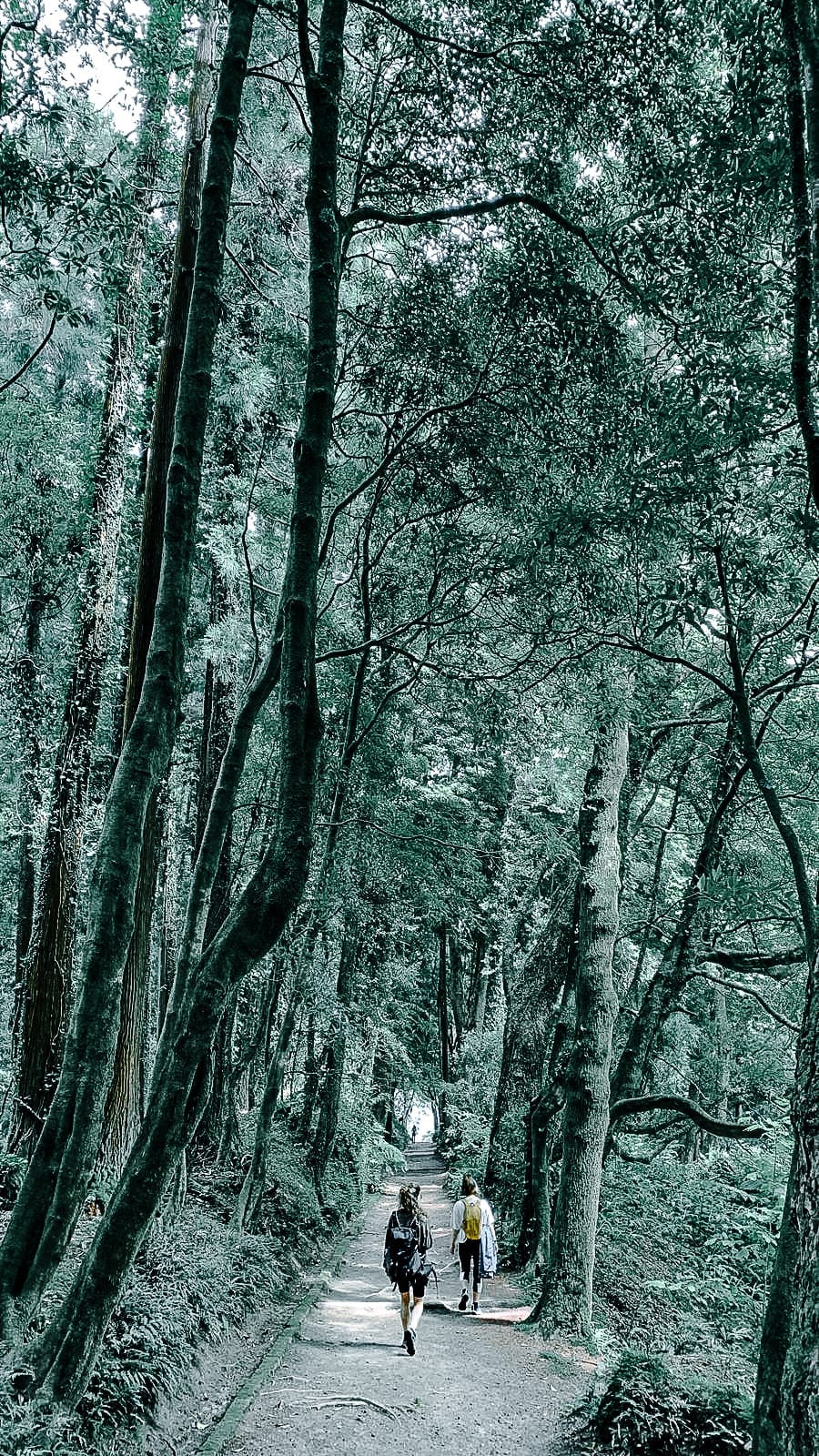
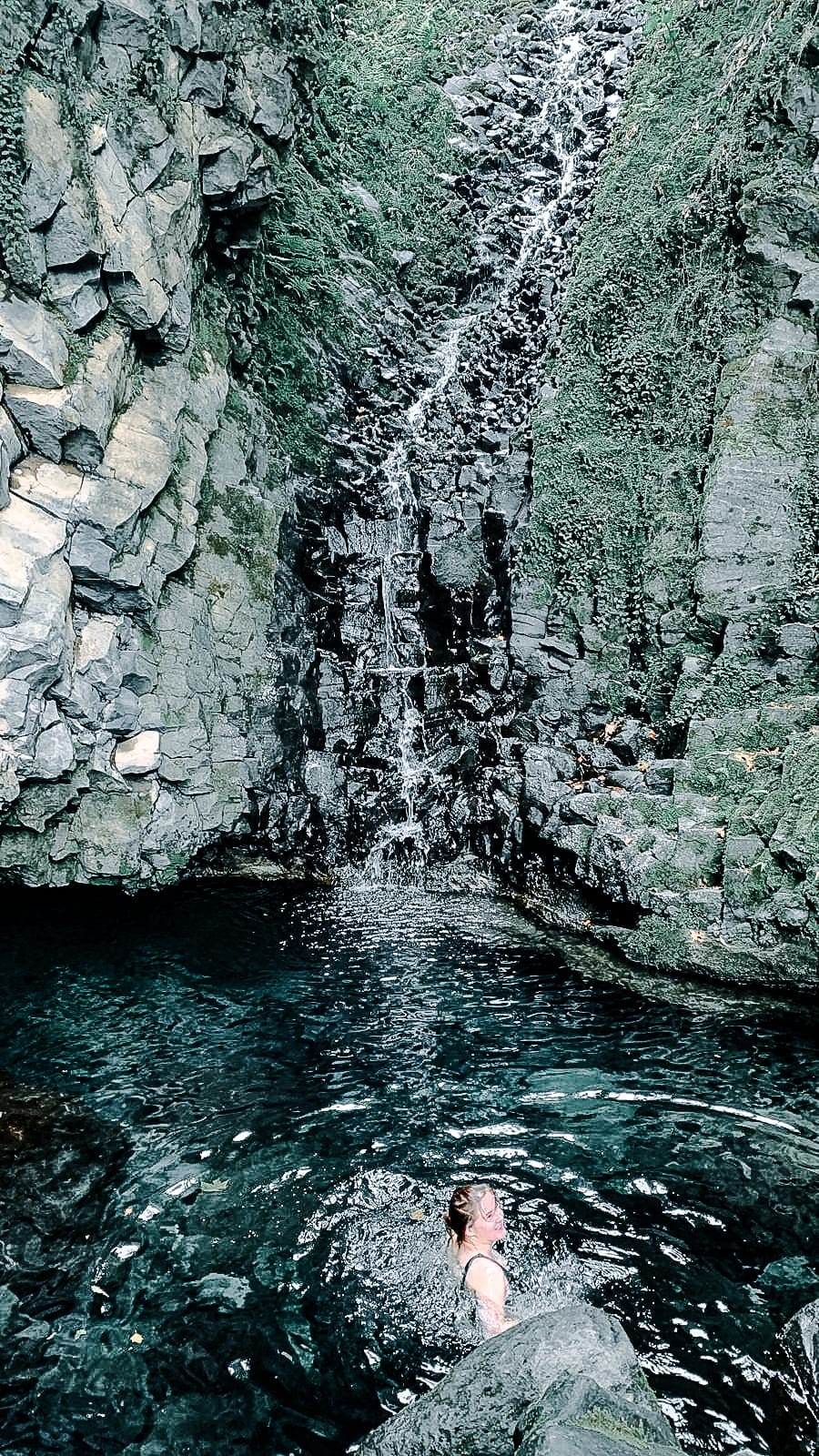
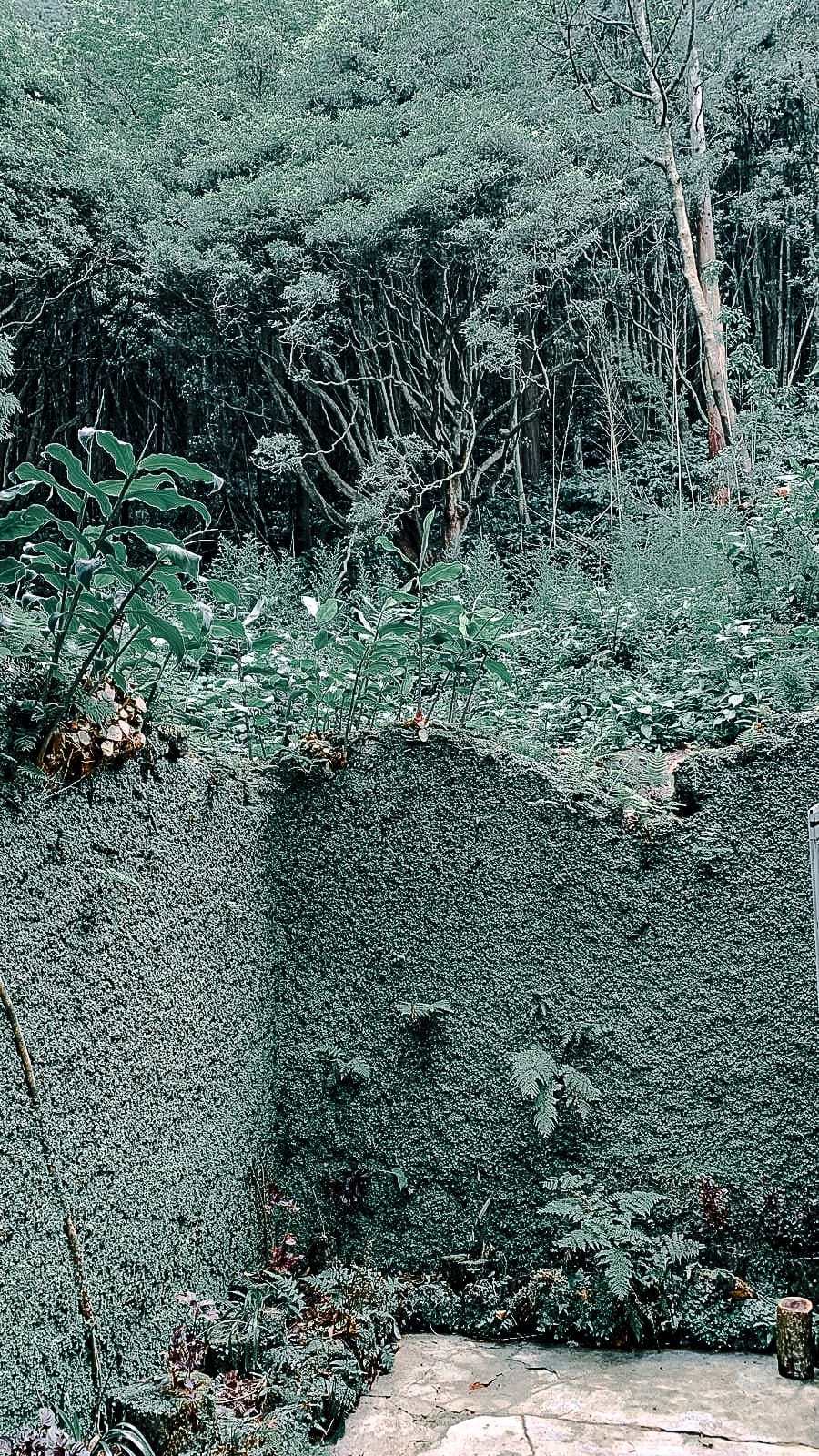
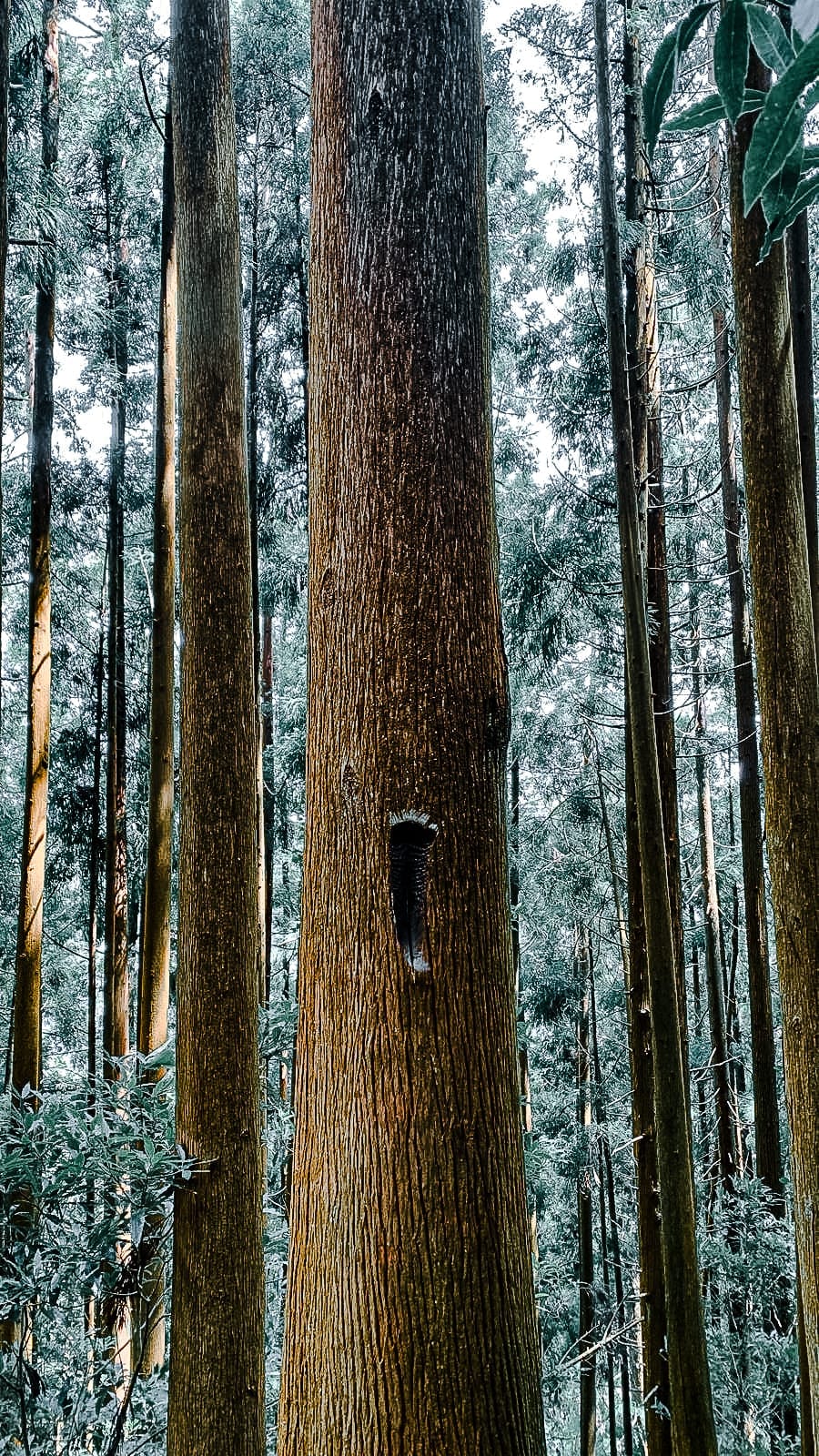
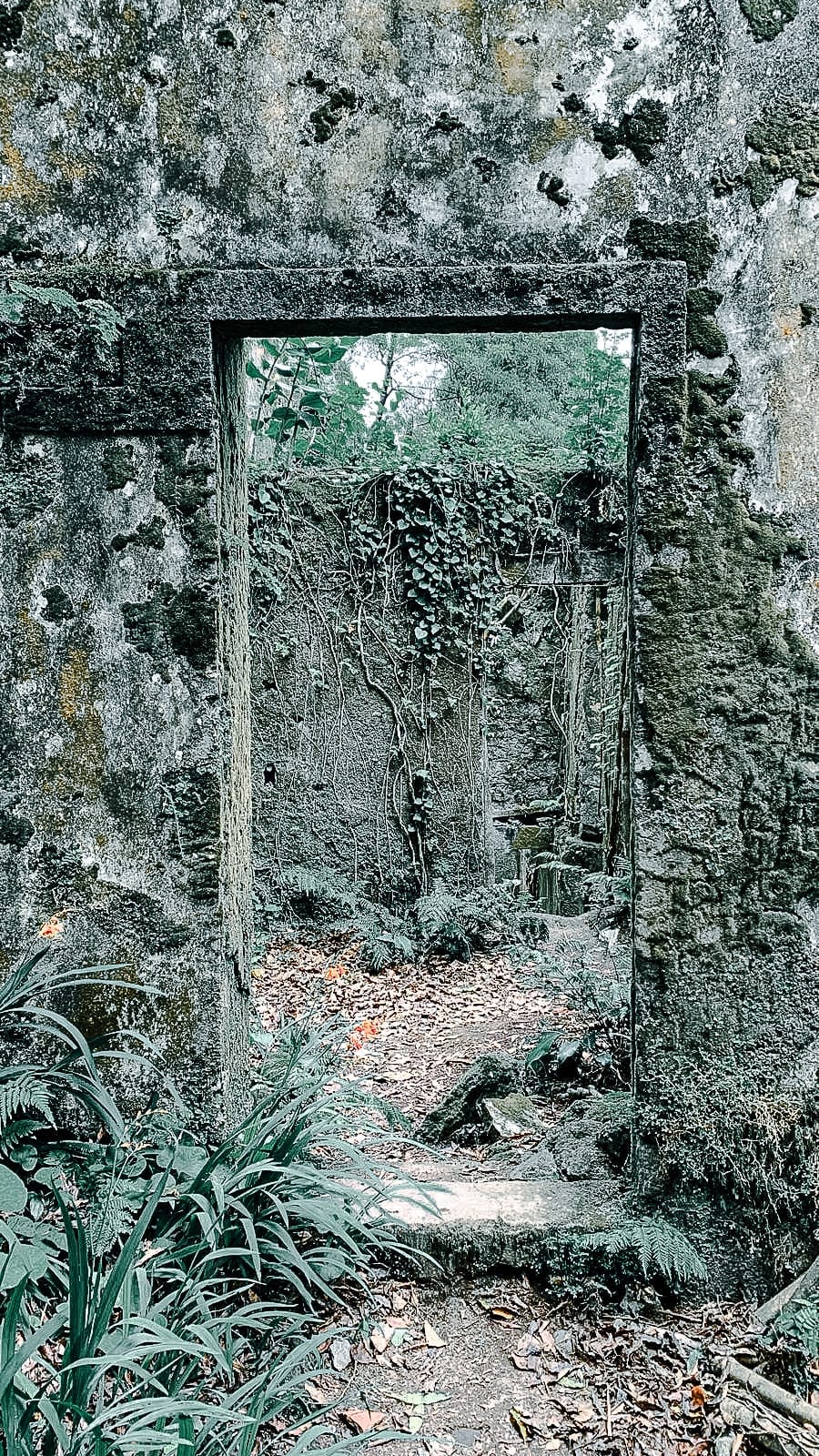
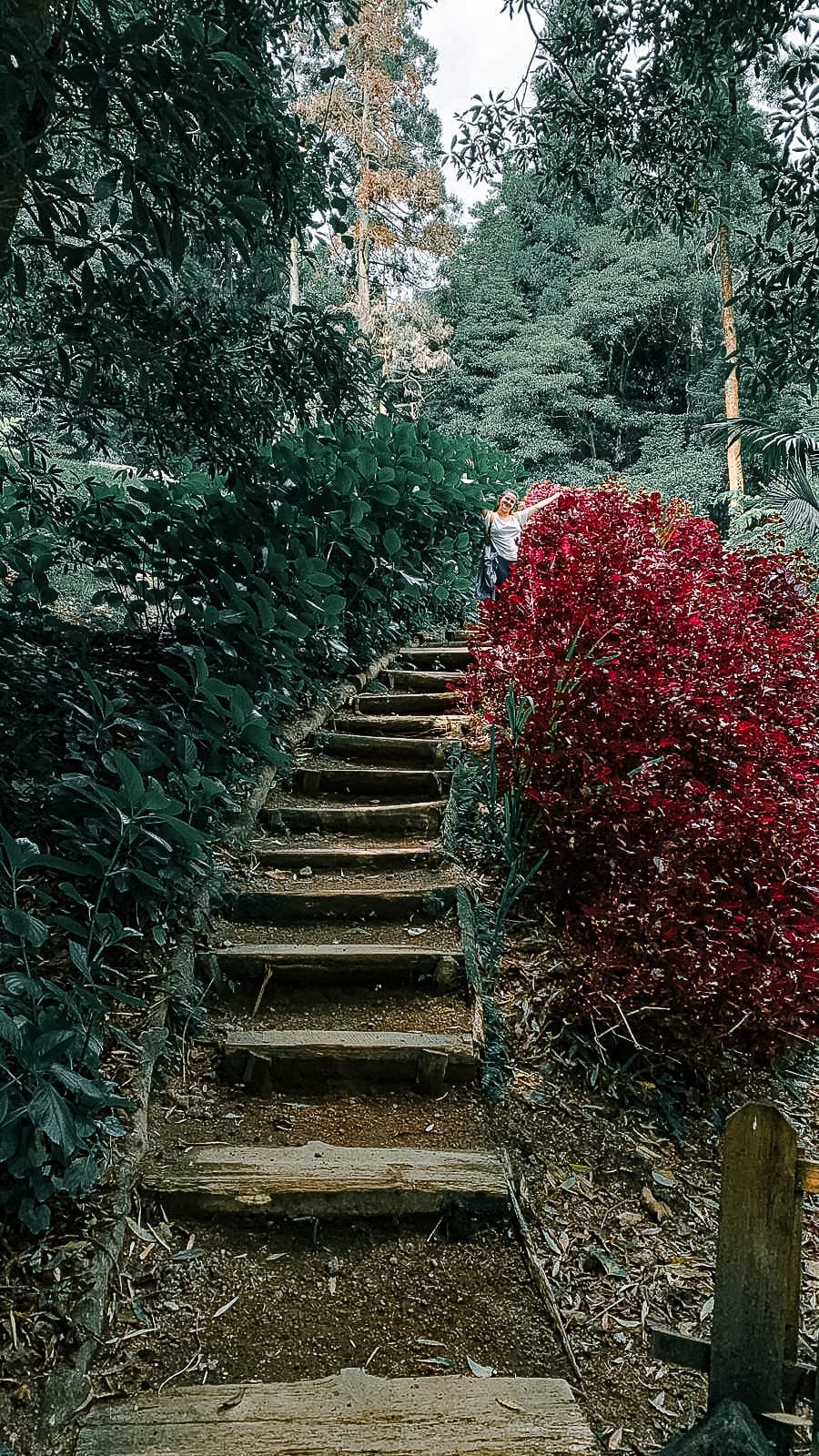
Trails through Parque da Grená lead past dense forest, spring-fed pools, and moss-covered ruins
We never made it ourselves, but our friends from Lava Coliving highly recommended this trail.

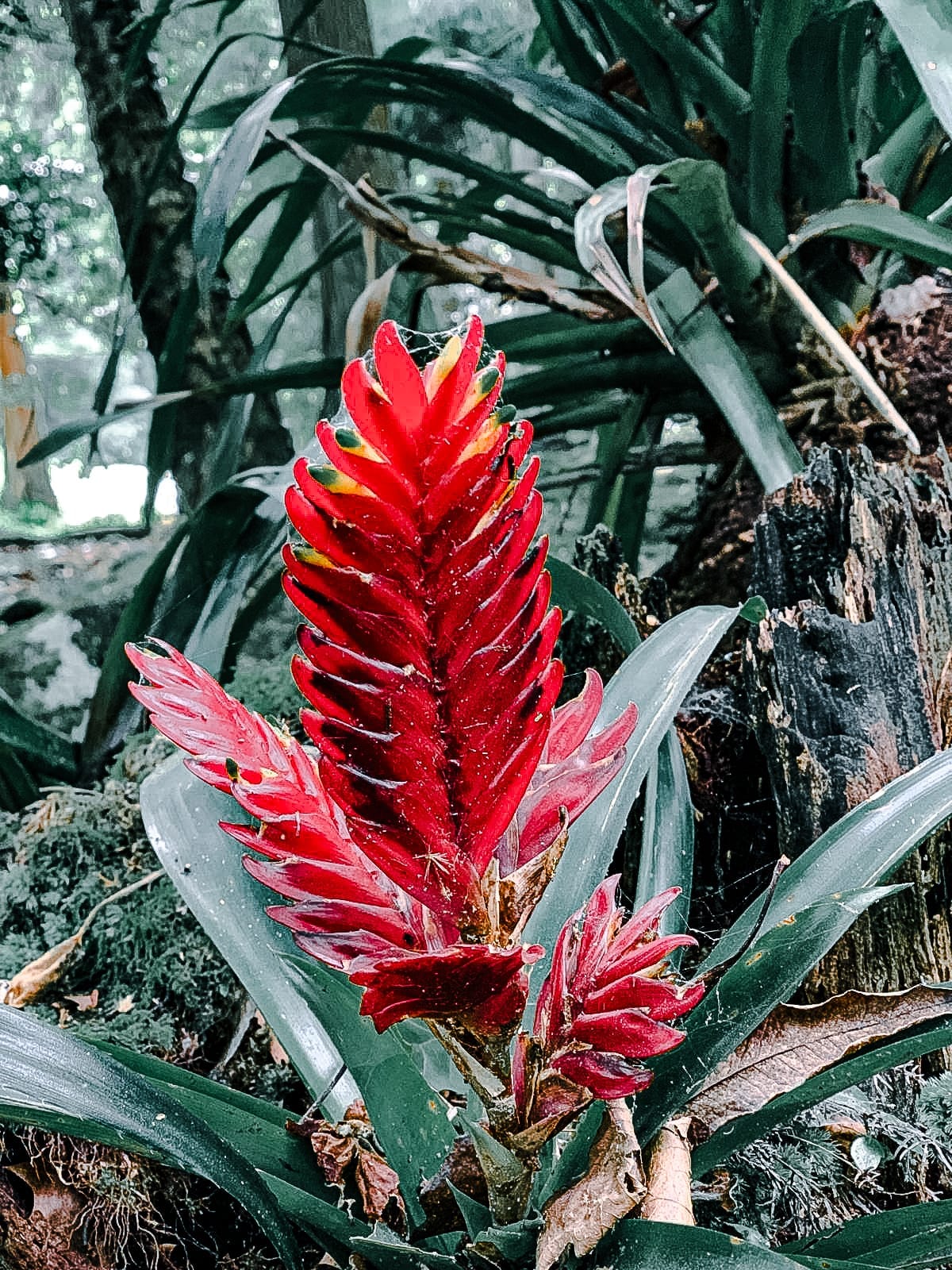
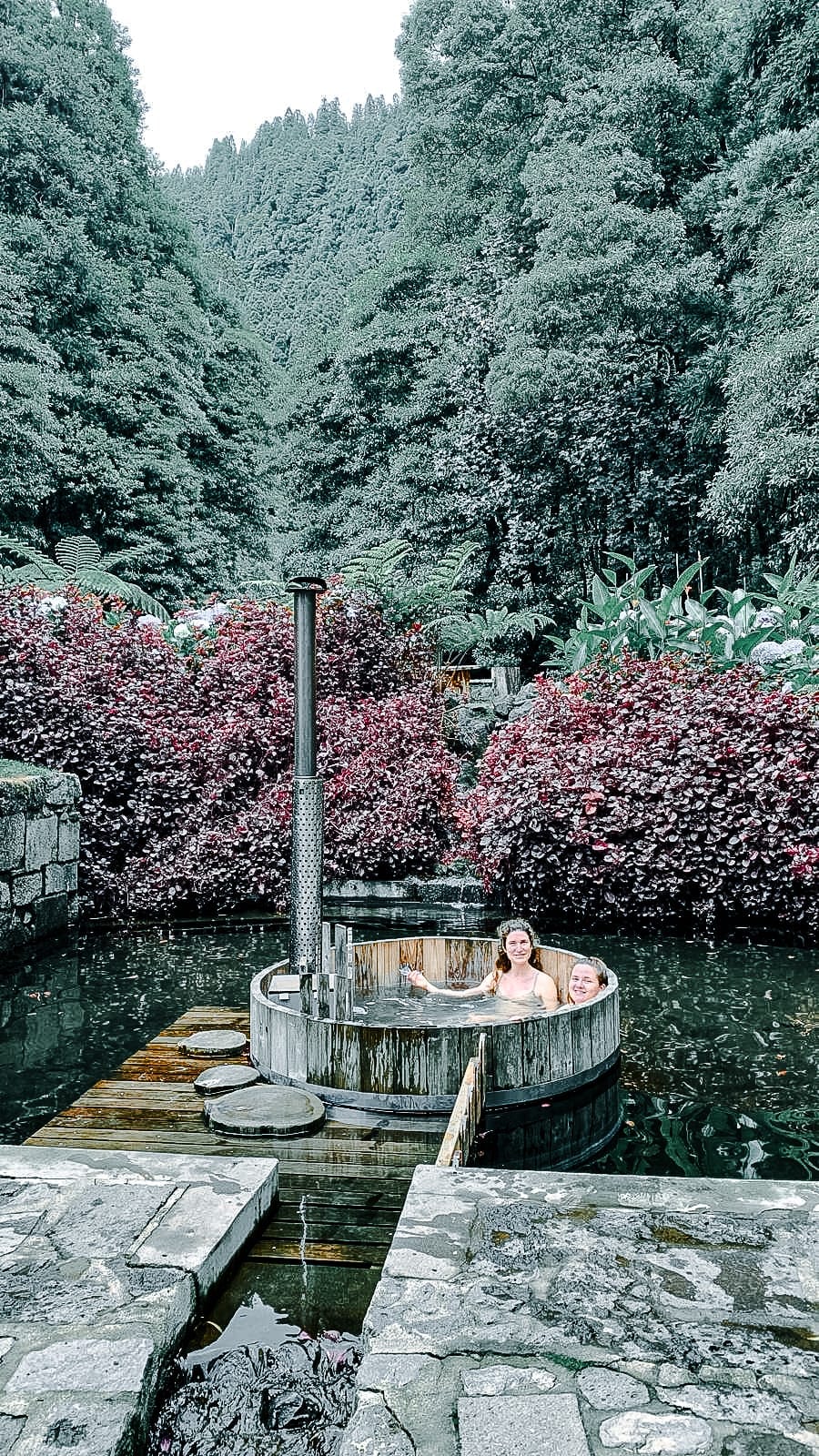
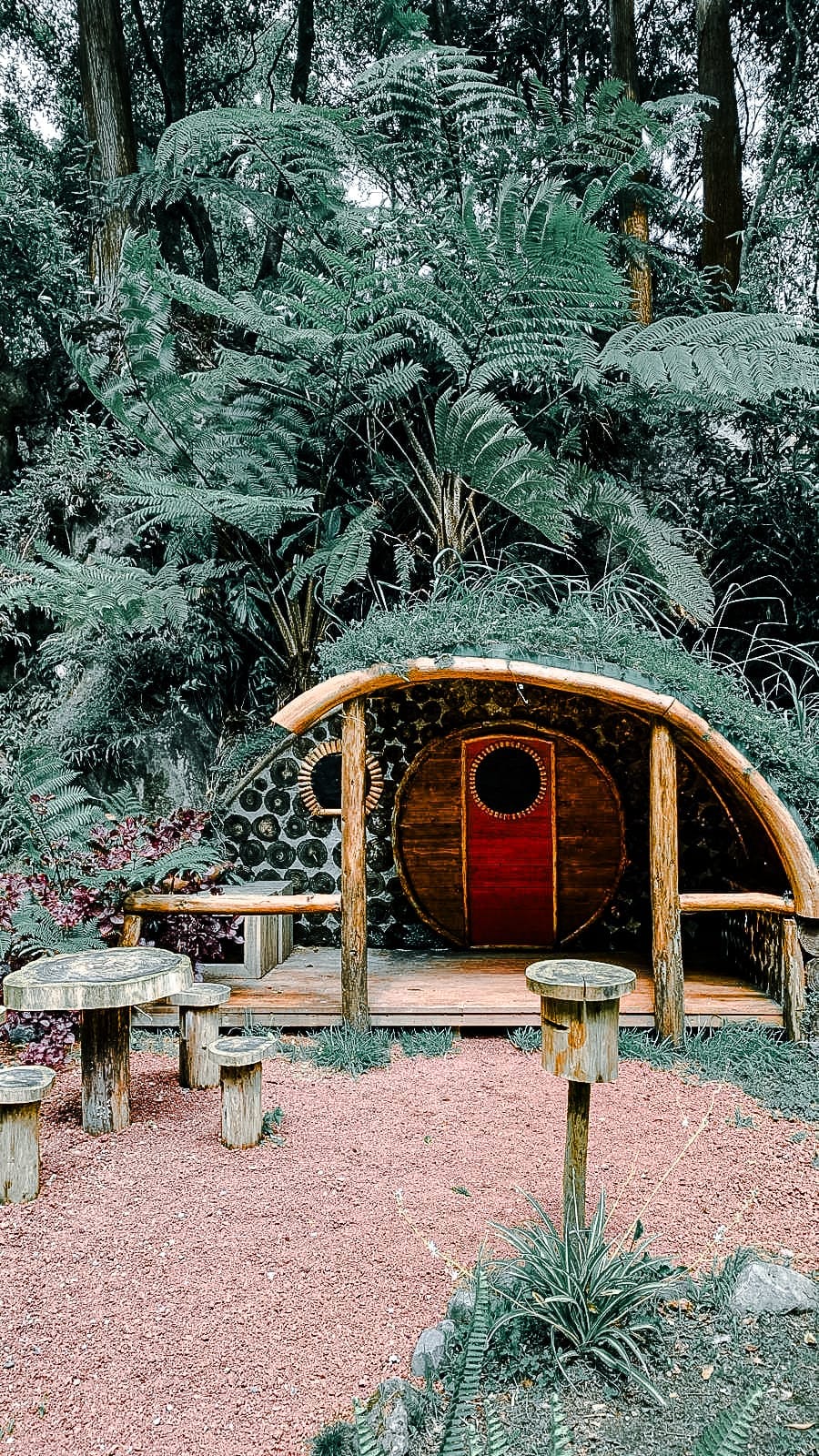
A forest clearing at the end of the trail reveals warm thermal tubs and a hobbit-like hut tucked into the hillside
They especially loved the hot tub at the end.
Grená Park is privately run and charges its own ticket (about €10 for adults in recent years). Plan 1.5 to 2 hours if you want to walk its trails down to the waterfall.
The park covers about 18 hectares around the ruins of a manor house from 1858, with streams, small waterfalls, and a short exhibition on how the estate was restored. If you want to keep walking from there, the official PRC22SMI trail (Grená and Pico do Ferro) crosses the lake loop and climbs up to the viewpoint above the lake.
Looping back
The Furnas Lake trail closes the loop gradually. You'll start to recognize things you've already passed. The light may have changed. The ducks will have moved. The smell of eucalyptus might be stronger, or the air warmer. A soft wind blows across the lake, and the far side suddenly looks closer.
This is one of the easiest and most varied walks on São Miguel, and a great way to get to know the island's interior, its plants, its lakes, and its volcanic landscape.
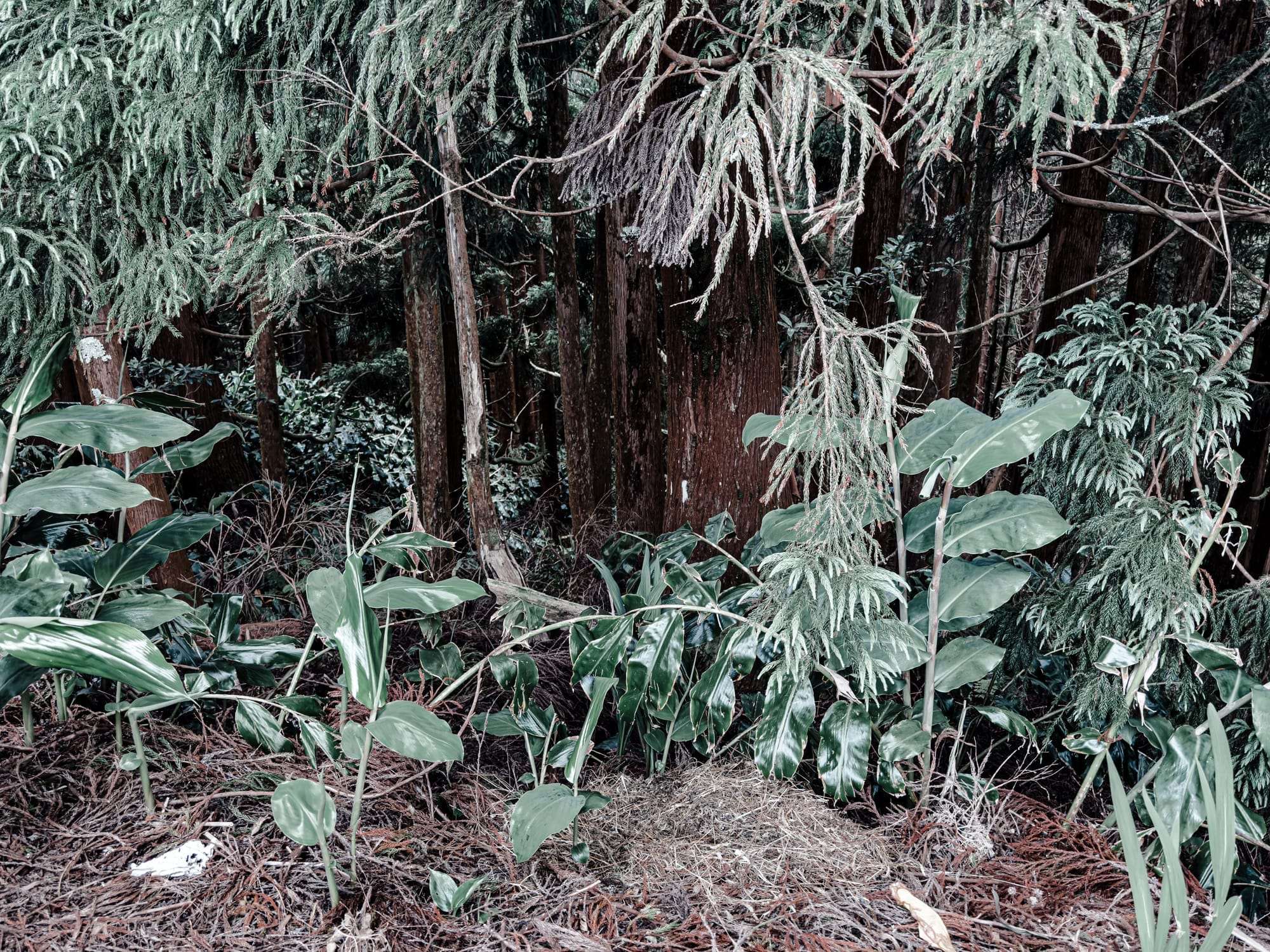
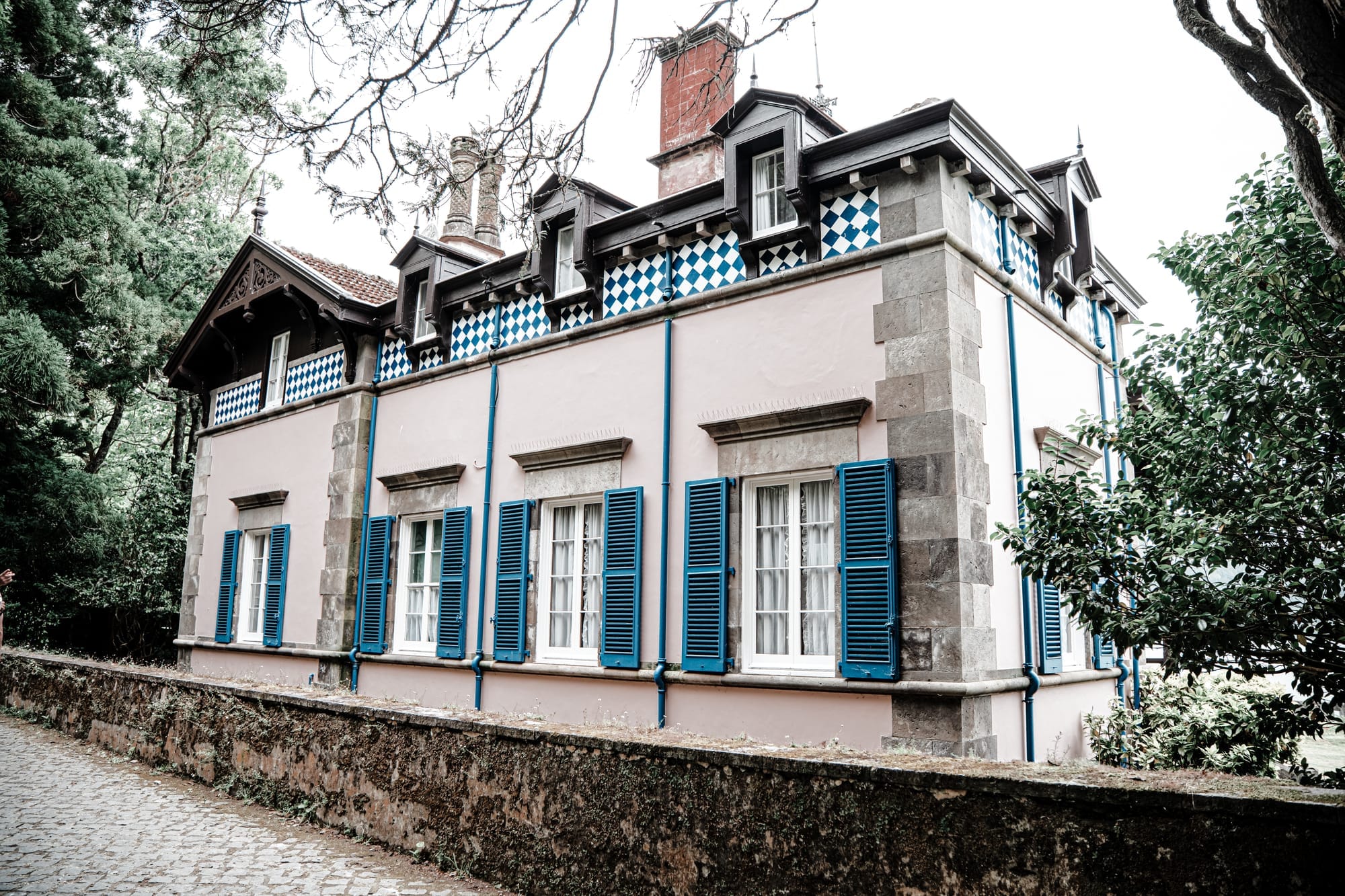
Verdant forest undergrowth gives way to a pastel mansion trimmed in blue
If you stay longer, more trails lead out from here, up to Pico do Ferro or deeper into the forest. But even just the loop around the lake is more than enough. It's a walk best done without rushing. Plan a half-day with plenty of breaks. You'll lose track of time here.
Pico do Ferro and other viewpoints over Lagoa das Furnas
For the classic view of the whole lake, with the chapel and the steam from the caldeiras, drive up to the Miradouro do Pico do Ferro. It sits at about 570 m on the crater rim, roughly 5 km from Furnas village, and has a car park and a ramp for wheelchair users. The road up is paved but steep and narrow, with tight bends. Go before 11:00 or in the late afternoon, because in summer cloud often settles over the rim around midday.
If you walk the official PRC06SMI trail from the village, you also pass the Pico do Milho viewpoint, which looks down over Furnas village and the valley rather than the lake. Along the shore section, the trail page points out the ruins of old charcoal ovens and a Norfolk Island pine said to be the largest classified one in Europe. The last stretch back into the village follows the regional road, so take care with traffic there.
A good pair of shoes will help. So will taking your time. And if you want to explore more, this is only one of many trails leading out from Furnas.
Best time to visit Lagoa das Furnas
The lake is worth a visit all year, but the walk changes with the seasons. Late spring and summer bring the hydrangeas and agapanthus along the shore, and the paths are drier. In winter the camellias flower in the José do Canto garden, and you'll have the loop more to yourself, but expect mud and rain.
Time of day matters more than the month. Mornings are best: the car parks are emptier, the water is often flatter, and you can catch the cozido pots around midday at the caldeiras. The weather in the Furnas valley can be cloudier than on the coast, so check the forecast and bring a rain jacket even in summer.
As a rough guide, the Azores average around 14°C in winter, 16°C in spring, 21°C in summer, and 18°C in autumn, and the valley floor is often a little cooler and wetter than Ponta Delgada. The weather can change several times in one day. Before you drive over, it's worth checking the live webcams on SpotAzores, which include views around Furnas, to see if the lake is under cloud.
Tips for walking around Furnas Lake
Start at a lake car park for the short version. You get the flat 6 km loop. Start in the village if you want the full 9.4 km trail with the viewpoints.
Walk the loop in either direction. It's continuous, so begin at whichever car park has space.
Bring water and a snack. Long stretches of the loop have no shops or cafés.
Wear shoes with grip. The path is mostly flat dirt and cobbles, but it gets muddy after rain.
Don't swim in the lake. It isn't a swimming spot. For a warm dip, go to the thermal pools in Furnas village instead.
Combine it with the rest of the valley. The fumaroles in the village, the hot springs, and Ribeira Quente on the coast are all within 15 minutes.
Pack for changing weather. Bring a light rain jacket, sunscreen, water, and a snack, plus shoes that can handle mud if you plan to add the steeper Grená or Pico do Ferro paths.
For more on what to pack, see our hiking tips for beginners.
Don't squeeze in Sete Cidades the same day. The two are at opposite ends of the island, and trying to do both means rushing each one. Give Furnas its own day.
A half-day plan for Lagoa das Furnas
If you only have a morning, this order works well and gets you to the busy spots before the crowds. Adjust the times to the season.
| Time | What to do |
|---|---|
| 09:30 to 10:15 | Park at the caldeiras end and look around the fumaroles |
| 10:30 to 11:15 | Watch the cozido pots being lifted |
| 11:15 to 13:00 | Walk the lake loop past the chapel, the garden, and the interpretation centre |
| 13:00 | Lunch in Furnas village |
| Afternoon | Thermal pools in the village, or Pico do Ferro if the sky is clear |
For more of the area, see our guides to Furnas, the Caldeiras das Furnas fumaroles, and the beach village of Ribeira Quente, or browse more things to do on São Miguel. For more walks like this, see our hiking guide.
Nearby, see Poça da Dona Beija hot springs.
Nearby, see the Sanguinho trail to Salto do Prego.
Get travel insurance before you hit the trails. Paths can be steep, uneven, and slippery after rain, a twisted ankle far from the road is a real possibility, and medical care for visitors isn't cheap. We'd recommend SafetyWing Nomad Insurance. It covers medical emergencies abroad, you can buy it even after you've left home, and it renews every four weeks, so it works for a short trip or months on the road.
Where to stay near Lagoa das Furnas
The nearest good base for Lagoa das Furnas is Furnas. These are well-reviewed places to stay there, all rated 9 or more on Booking:
- Vulcânica Boutique Suites: modern suites in Furnas village, rated 9.2 on Booking and mid-priced for the area.
- Casa do Vale Encantado: a budget-friendly guest house in Furnas rated 9.3.
- Terra Nostra Garden Hotel: pricier, but rated 9.3 from nearly 1,000 reviews, and guests get access to Terra Nostra Park and its thermal pool.
Frequently asked questions
How long is the walk around Lagoa das Furnas?
The flat loop around the shore is about 6 km and takes 1.5 to 2 hours without stops. The official PRC06 SMI trail, which starts in Furnas village, is 9.4 km and takes about 3 hours.
Is there an entrance fee for Lagoa das Furnas?
Walking around the lake is free. There has been a small charge at the lake car parks, about €3 per person in 2025. Grená Park and the José do Canto garden charge separate tickets.
Can you swim in Lagoa das Furnas?
No, the lake isn't a swimming spot. For warm water, try the thermal pools in Furnas village, such as Poça da Dona Beija.
When can you see the cozido at Lagoa das Furnas?
Restaurants usually bury their pots in the morning and lift them around midday, after six or seven hours in the hot ground. Arrive by late morning to watch.
Is the Lagoa das Furnas chapel open?
The Capela de Nossa Senhora das Vitórias is a private mausoleum and is usually closed. You can see it from outside and often look in through the gate.
Is Lagoa das Furnas worth visiting?
Yes. It's one of the easiest walks on São Miguel, with steaming fumaroles, a Gothic chapel, gardens, and forest in one loop. Pair it with Furnas village for a full day.
How deep is Lagoa das Furnas?
It's fairly shallow for a crater lake: about 12 m at the deepest point, with a surface area of around 1.9 km².
Why is Lagoa das Furnas green?
Decades of fertiliser and manure from the surrounding pastures added nutrients that feed algae. Reforestation of the basin and monitoring from the centre on the south shore aim to improve the water quality.
Where is the best viewpoint over Lagoa das Furnas?
Miradouro do Pico do Ferro, at about 570 m on the crater rim, a short drive from the village. Go early or late in the day, as cloud often covers it around midday.
Do you need to book cozido in Furnas?
Yes, it's best to book a day ahead, especially in summer. Restaurants cook a limited number of pots each morning.
Can you visit Lagoa das Furnas without a car?
Yes. Take the bus from Ponta Delgada to Furnas village and walk the PRC06SMI trail over to the lake, or join a day tour. Taxis are another option.
Useful links: Lagoa das Furnas trail (Visit Azores Trails), Furnas Environmental Interpretation Centre (Visit Azores), Furnas (Wikipedia), and Azores Natural Parks.


