


Furnas is a small village inside a volcanic crater in eastern São Miguel, in the Azores, about 45 minutes by car from Ponta Delgada. It's known for its hot springs, steaming fumaroles, Terra Nostra garden, the crater lake, and cozido, a stew cooked underground. Walking the town and seeing the caldeiras is free, while the gardens and thermal pools charge entry. Give it a full day if you can, or stay a night so you can soak in the evening. It's worth visiting all year, and a rainy day is a good excuse for the hot pools.
Furnas is a town where steam drifts into the streets, sulfur hangs in the corners of gardens, and the ground doesn’t always stay still. Volcanic activity is part of normal life here, both unremarkable and essential.
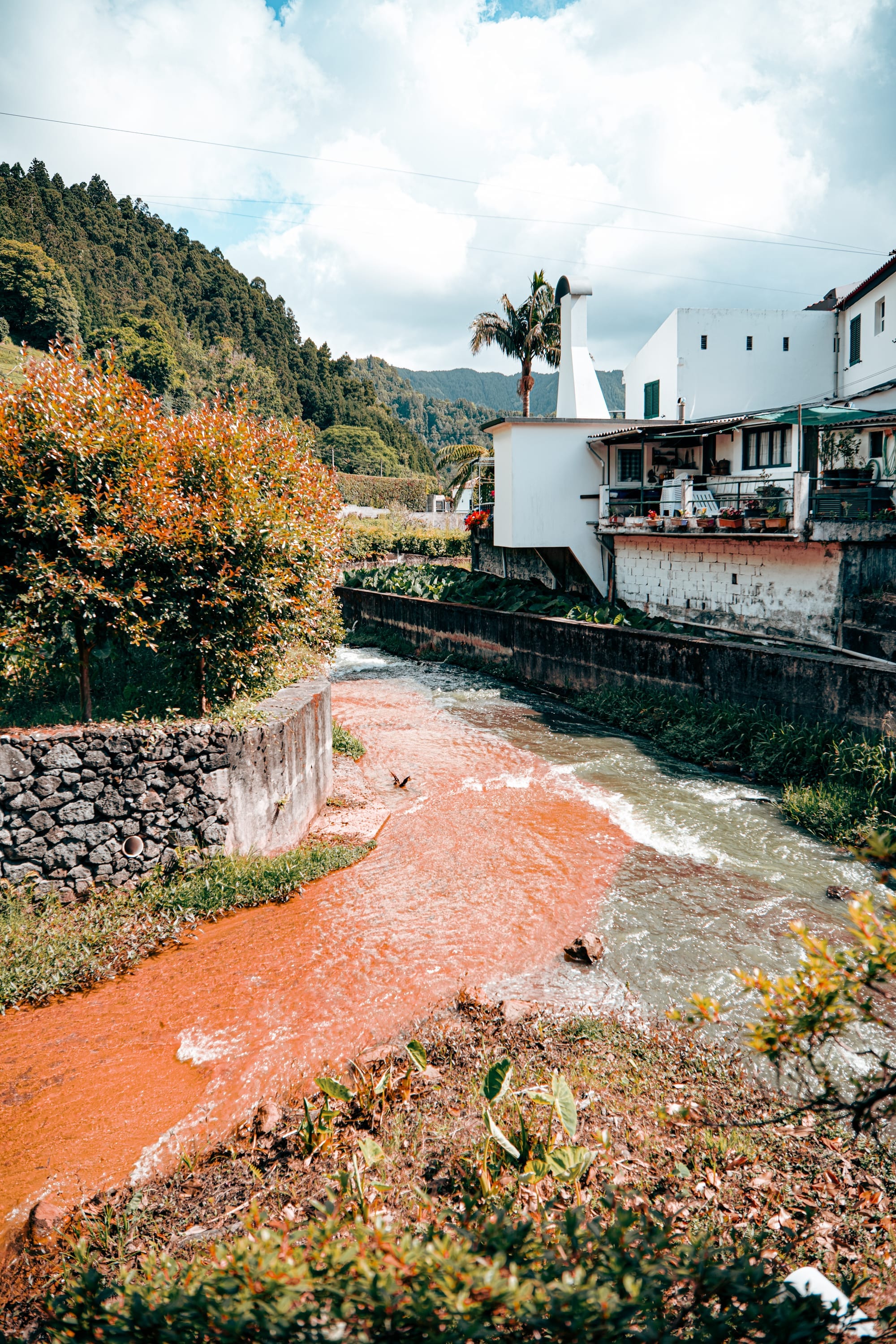
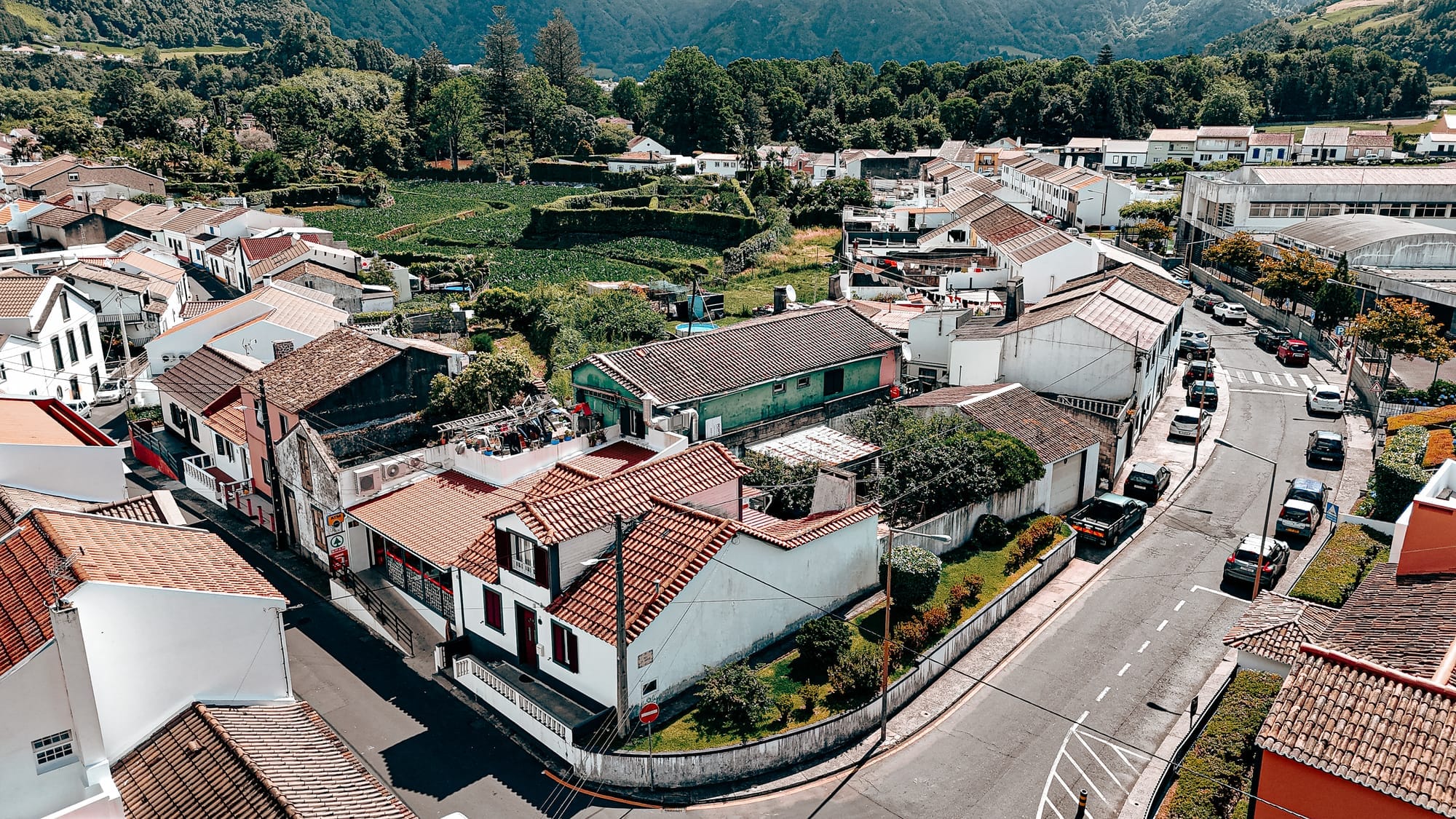
Rust-hued geothermal streams and stacked tile-roof houses in Furnas village
The town sits in the crater of an ancient caldeira, a deep basin rimmed by forested ridgelines. Buildings follow the contours of the terrain. Steam rises from vents in the sidewalks. There’s no hard line between what is natural and what is built.
Furnas, Azores at a glance
Here's the quick version before we get into the details. Hours and prices change, so check each place's own site before you go.
Where: in the Furnas valley in eastern São Miguel, part of the municipality of Povoação.
From Ponta Delgada: about 45 km, or roughly 45 minutes to an hour by car.
Cost: walking the town, the village caldeiras, and the springs is free. Terra Nostra, Poça da Dona Beija, and Grená Park charge entry, and there's usually a small fee to drive into the lakeside caldeiras area.
Time needed: half a day for the main sights, a full day to add a hike and a soak, or two days if you want to do it all without rushing.
Bring: a swimsuit and an old towel (the iron-rich water can stain), a rain jacket, and shoes with grip.
| Details | |
|---|---|
| Where | Furnas valley, eastern São Miguel, municipality of Povoação |
| From Ponta Delgada | About 45 km, roughly 45 minutes to an hour by car |
| Free | The town, the village caldeiras, and the springs |
| Paid | Terra Nostra, Poça da Dona Beija, Grená Park, and usually the lakeside caldeiras car area |
| Time needed | Half a day for the main sights, a full day with a hike and a soak, or two days |
| Best time | All year; hot springs are best in winter |
| Bring | Swimsuit, old towel, rain jacket, and shoes with grip |
How to get to Furnas from Ponta Delgada
Driving is by far the easiest option. The route from Ponta Delgada runs east along the south coast past Lagoa and Vila Franca do Campo, then climbs inland into the valley. It's about 45 km, and most people do it in under an hour. The road down into the crater is winding, so take it easy.
There are public buses from Ponta Delgada, but they're not frequent, so check the timetable before you rely on one. Without a car, you can walk to everything in the village, but the viewpoints and the far side of the lake are harder to reach. That's where a day tour or a taxi helps.
Furnas history, geology, and eruptions
Furnas sits in the eastern interior of São Miguel, inside a massive volcanic crater formed by multiple collapses and eruptions over tens of thousands of years. The last major eruption was in 1630. The town has been calm since then, but the geothermal activity carries on: hot springs, bubbling mud, hissing vents, and the iron-rich waters that streak its stonework.
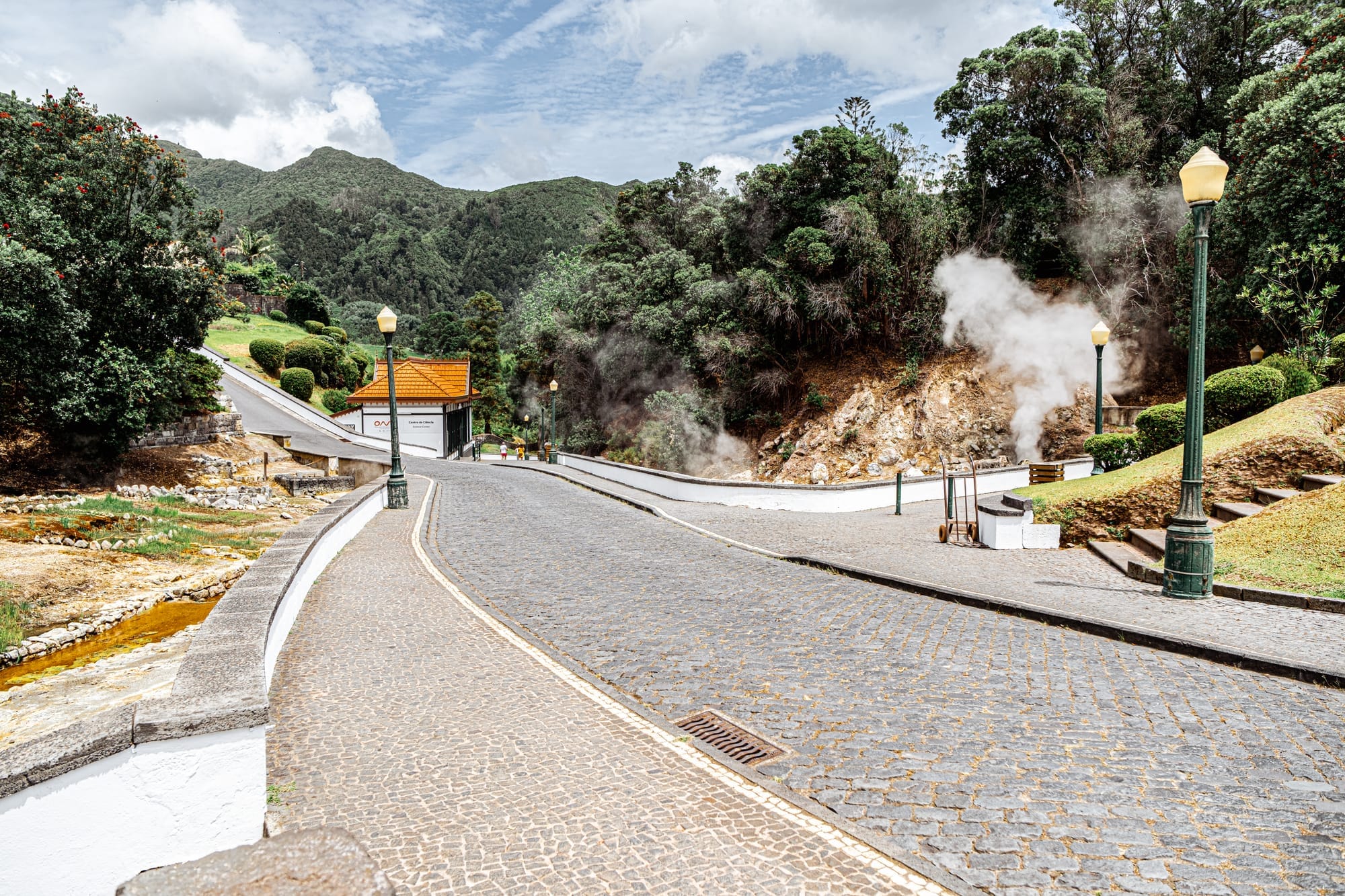
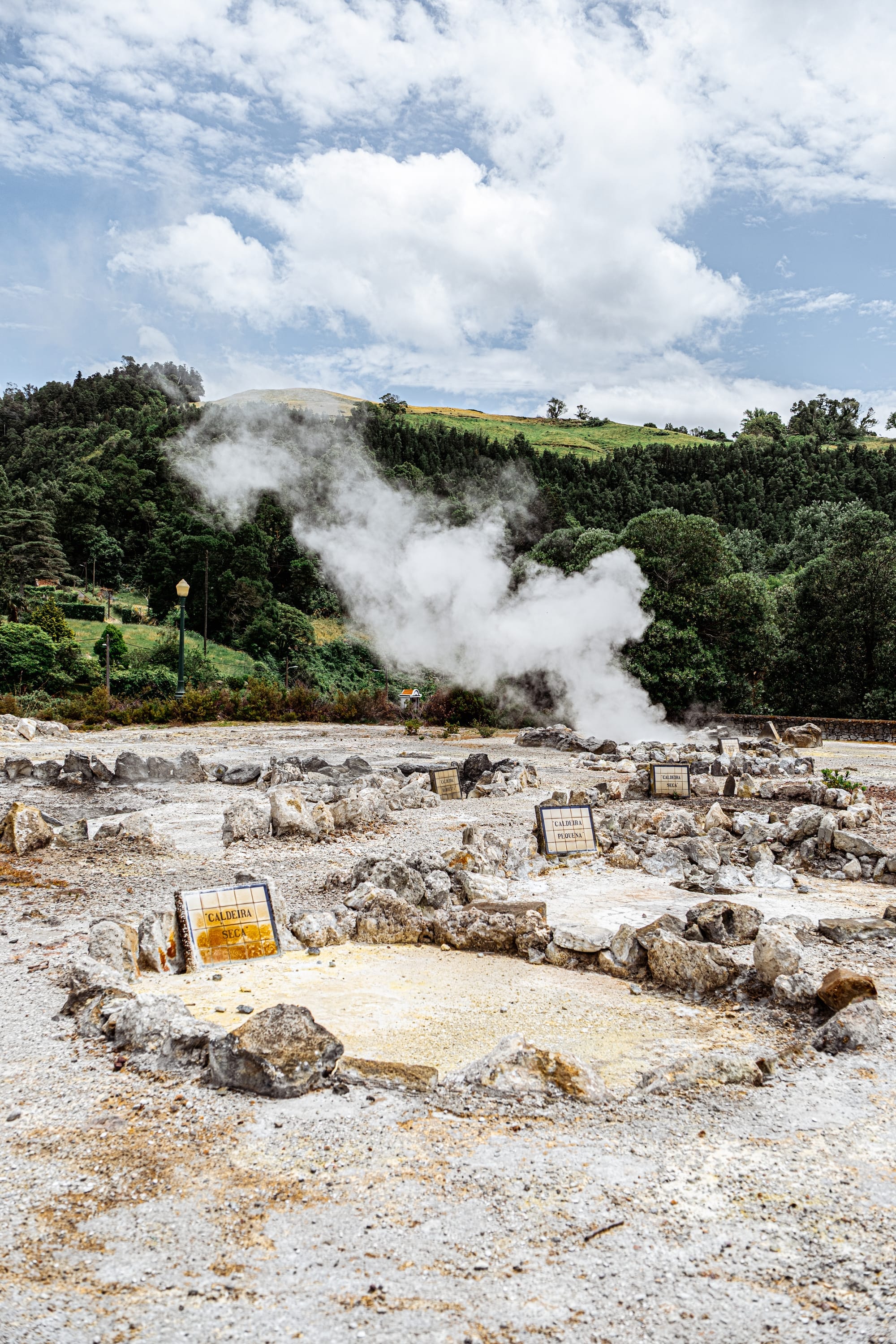
Steam spills onto sidewalks and puffs from the earth: Furnas’ caldeiras shape the streets
Much of the town grew up around these forces. Paths curve with the terrain. Houses are built close to fumaroles. Steam appears at random, sometimes rising from between cobblestones, other times curling from behind a garden wall.
Furnas is one of three active volcanoes on São Miguel and the easternmost of them, with a history of around 100,000 years, according to Wikipedia's Furnas entry. The first known eruption in historical times was in 1440, and the 1630 eruption killed around 200 people. The village center alone has around 30 springs, each with its own temperature and mineral mix. The Furnas volcano is also one of the key geosites of the Azores UNESCO Global Geopark.
Walking around Furnas town
Furnas has tiled water taps set in stone. Some run warm, others cold. Ornamental fountains are built into moss-covered walls. On the side streets, you’ll see azulejos marking street names, or hand-lettered signs tacked to trees. Many of the houses have painted trim and carved volcanic stone doorframes. Others are half-restored, with fruit trees growing close to the facades.
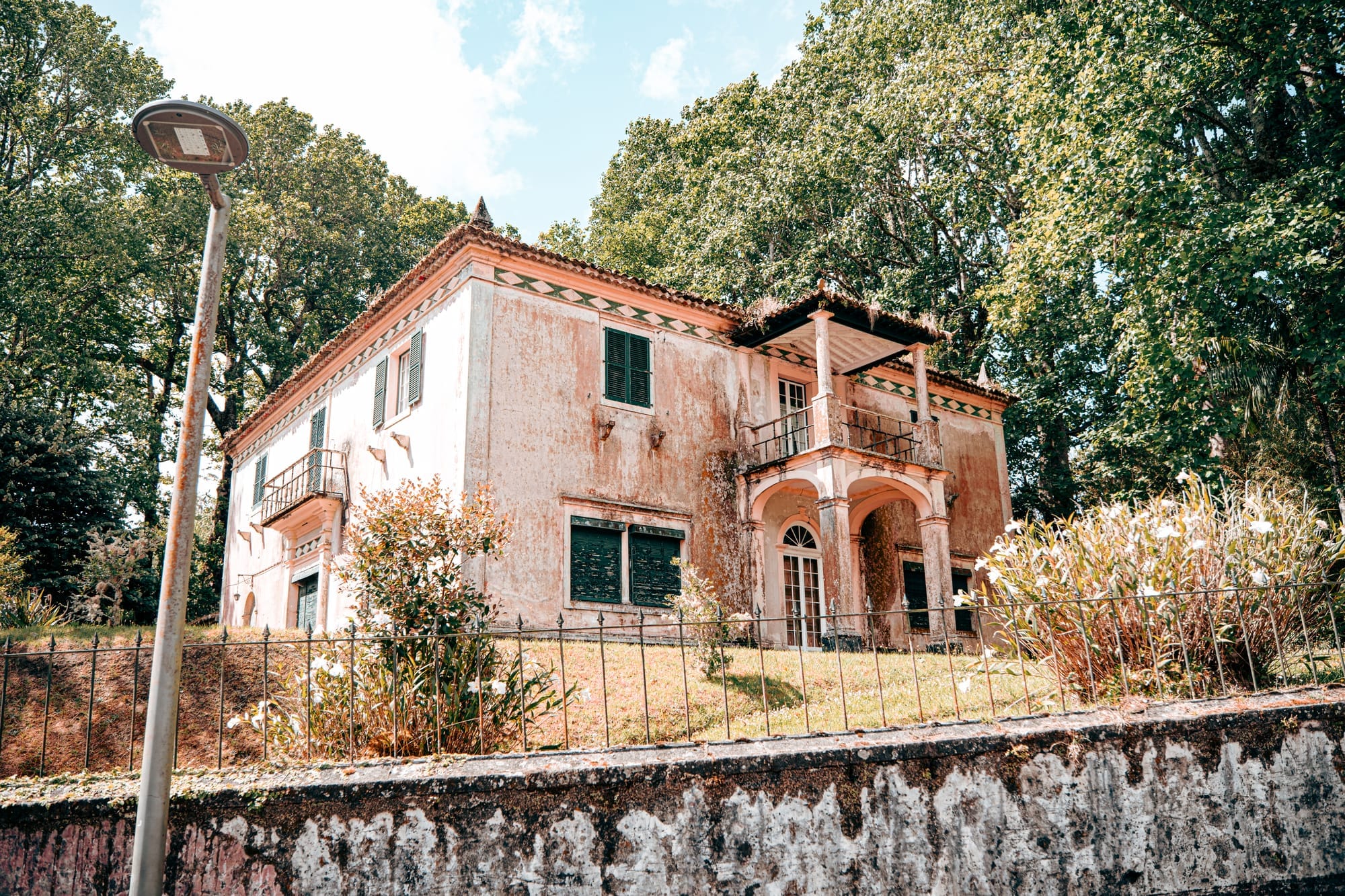
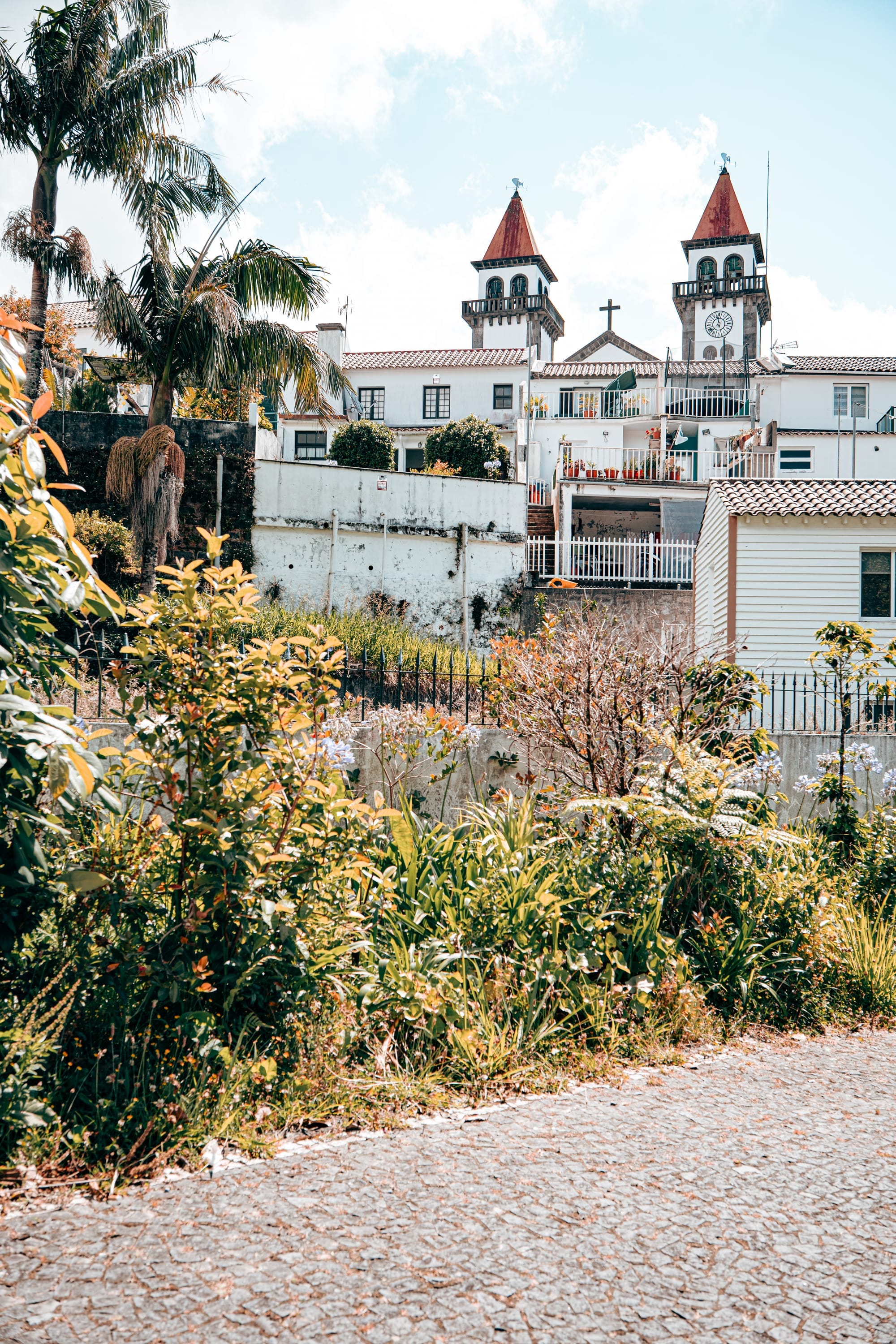
A grand old villa and twin-spired church hint at Furnas’ architectural past
At the center of town you’ll find a small square, a few cafes, a bakery, and a cluster of small shops. Everything is loosely gathered and fairly calm. You hear footsteps, the occasional hiss of steam, and birdsong carried through the trees. A few of the buildings are brightly painted, others left to fade.
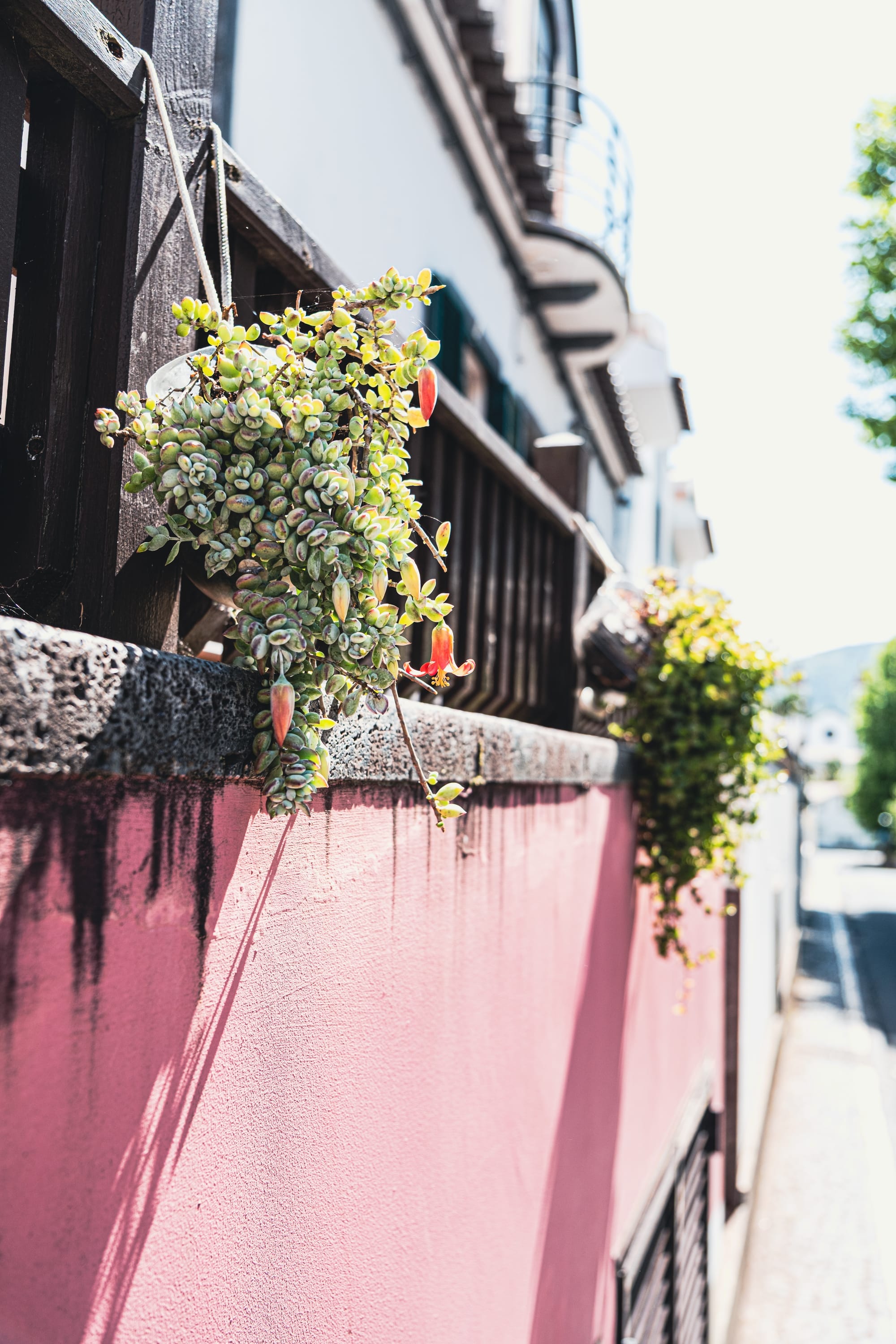
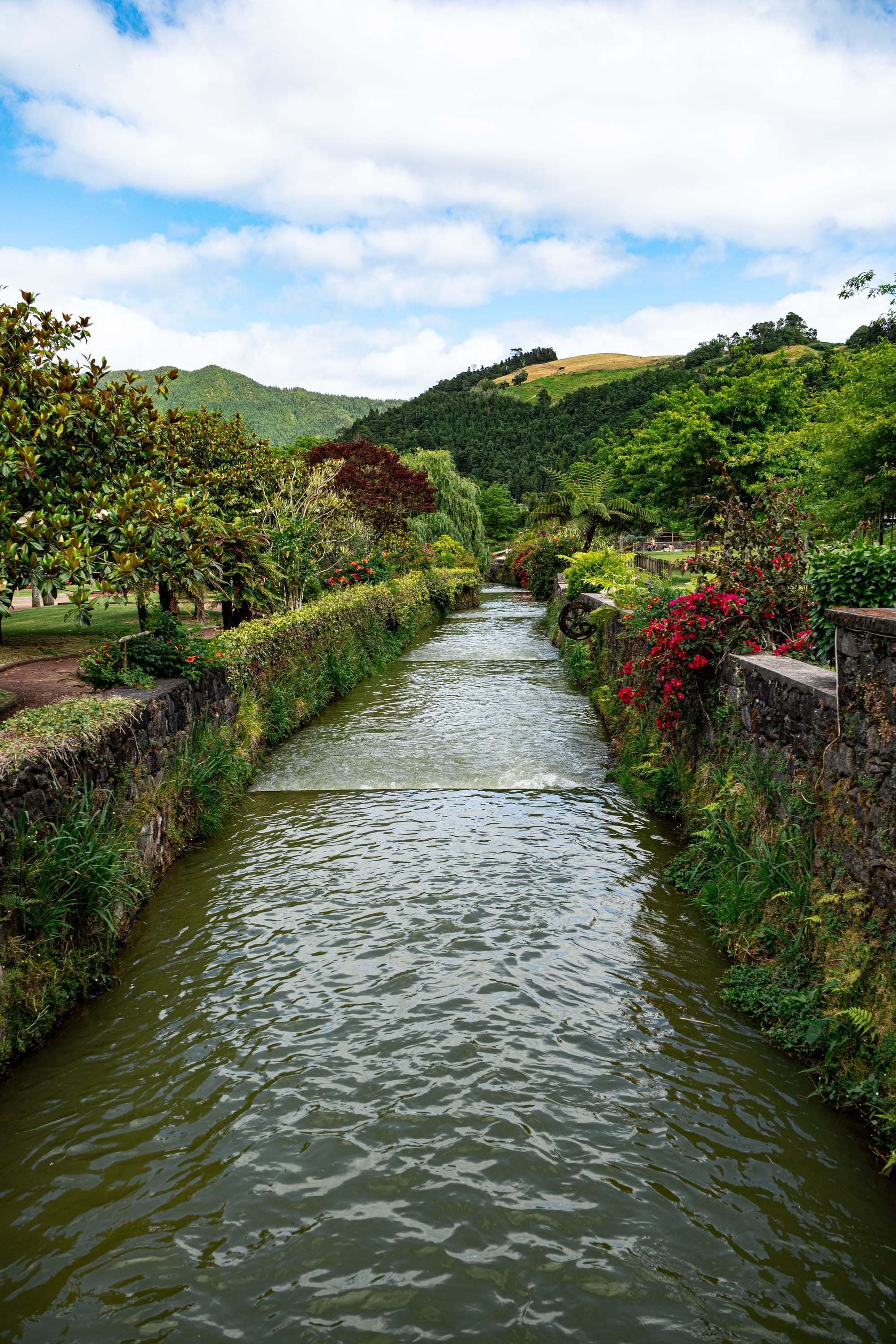
Succulents spilling from a pink-washed wall and a canal bordered by blooming gardens in the heart of Furnas
Some streets curve down into the lower basin; others cut upward toward the forests. You can walk the whole town at an easy pace in under an hour, but you’ll probably keep stopping: to watch a vent puff steam in the middle of a traffic circle, or to follow the path of a pipe as it disappears into a mossy slope.
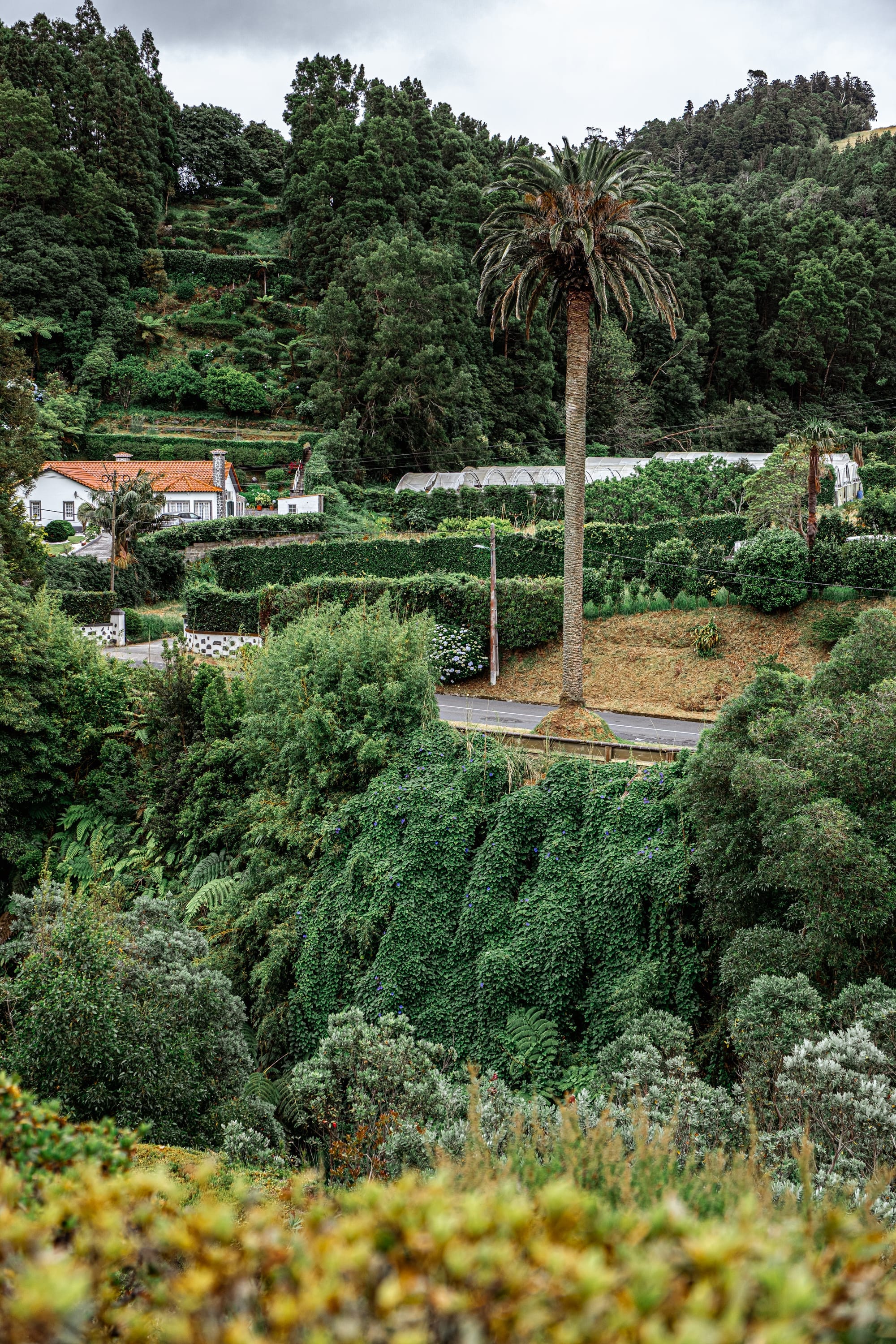
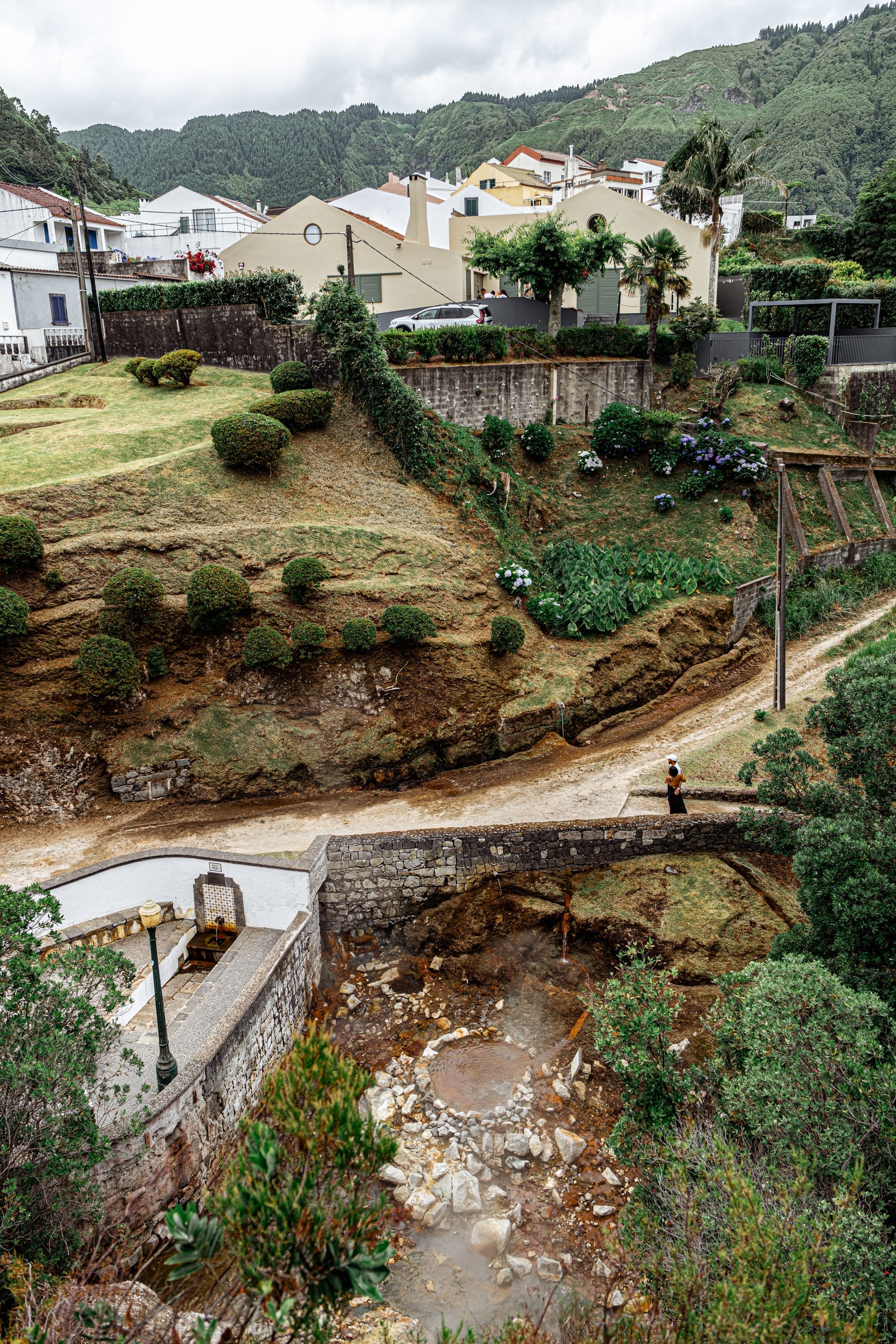
Terraced greenery and paths wind through Furnas’ hillsides, past springs, palms, and volcanic contours
One tap you’ll almost certainly pass is the Glória Patri spring, where locals line up with jugs to collect fresh drinking water. It flows cold, clear, and slightly mineral-rich, with a faintly metallic taste. Many residents consider it the best water in the area, and you’ll often see people collecting it in bulk for household use.
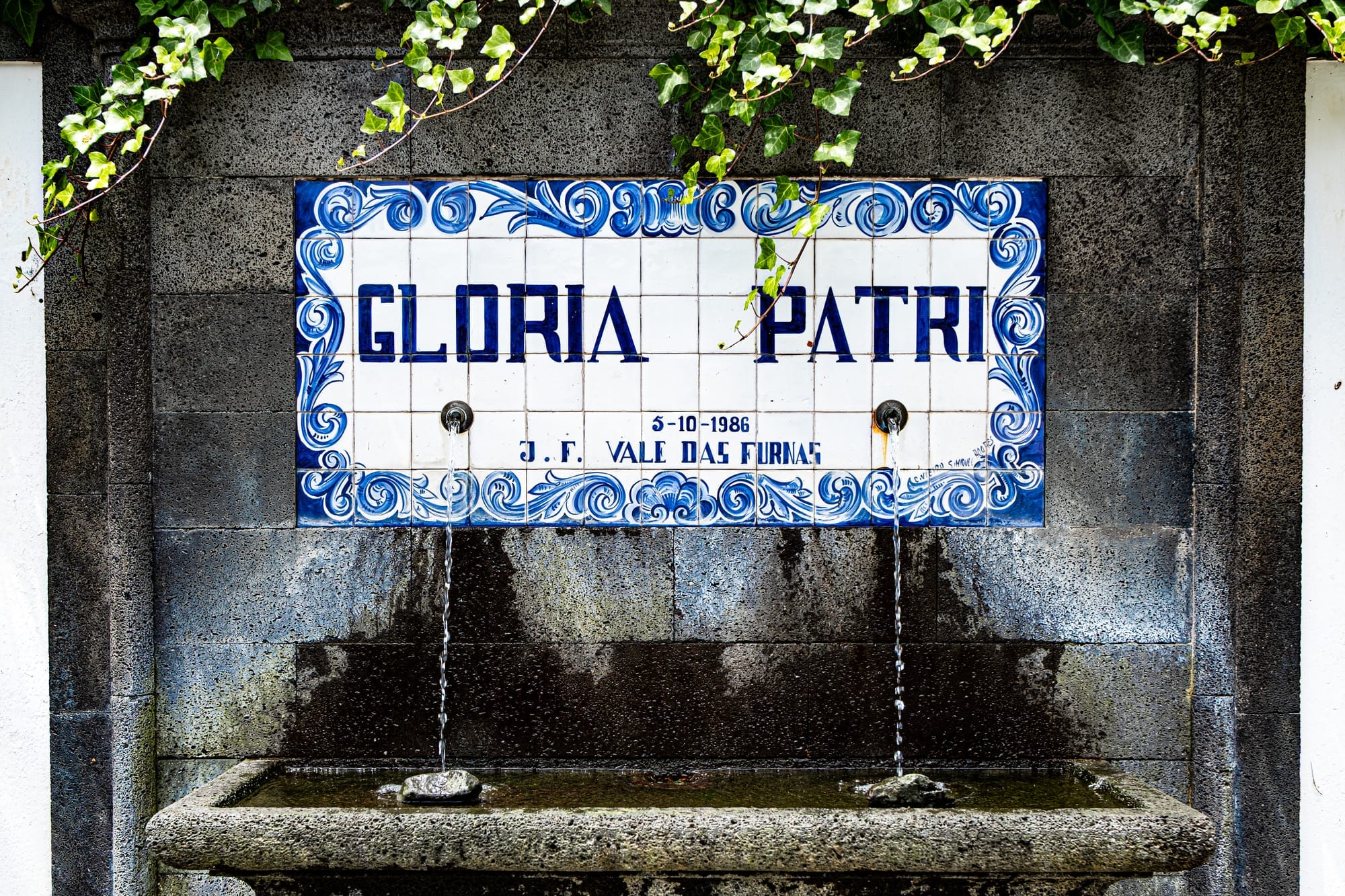
There are other public taps throughout town as well, some with ornate blue-tiled murals and decorative stonework. Each is slightly different, and many are built into corners, walls, or tucked under low eaves. They’re practical parts of the town’s structure, and many are still in regular use.
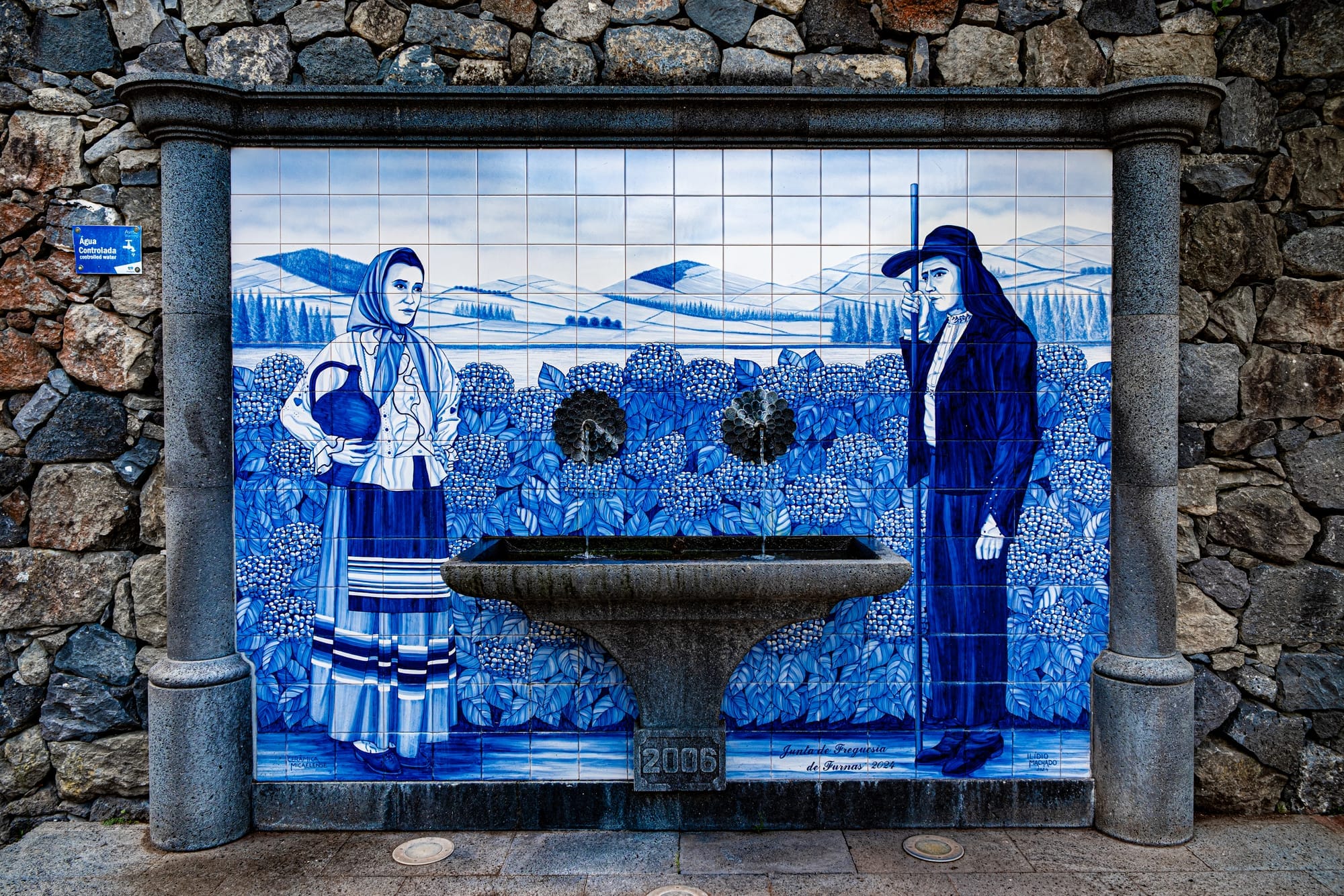
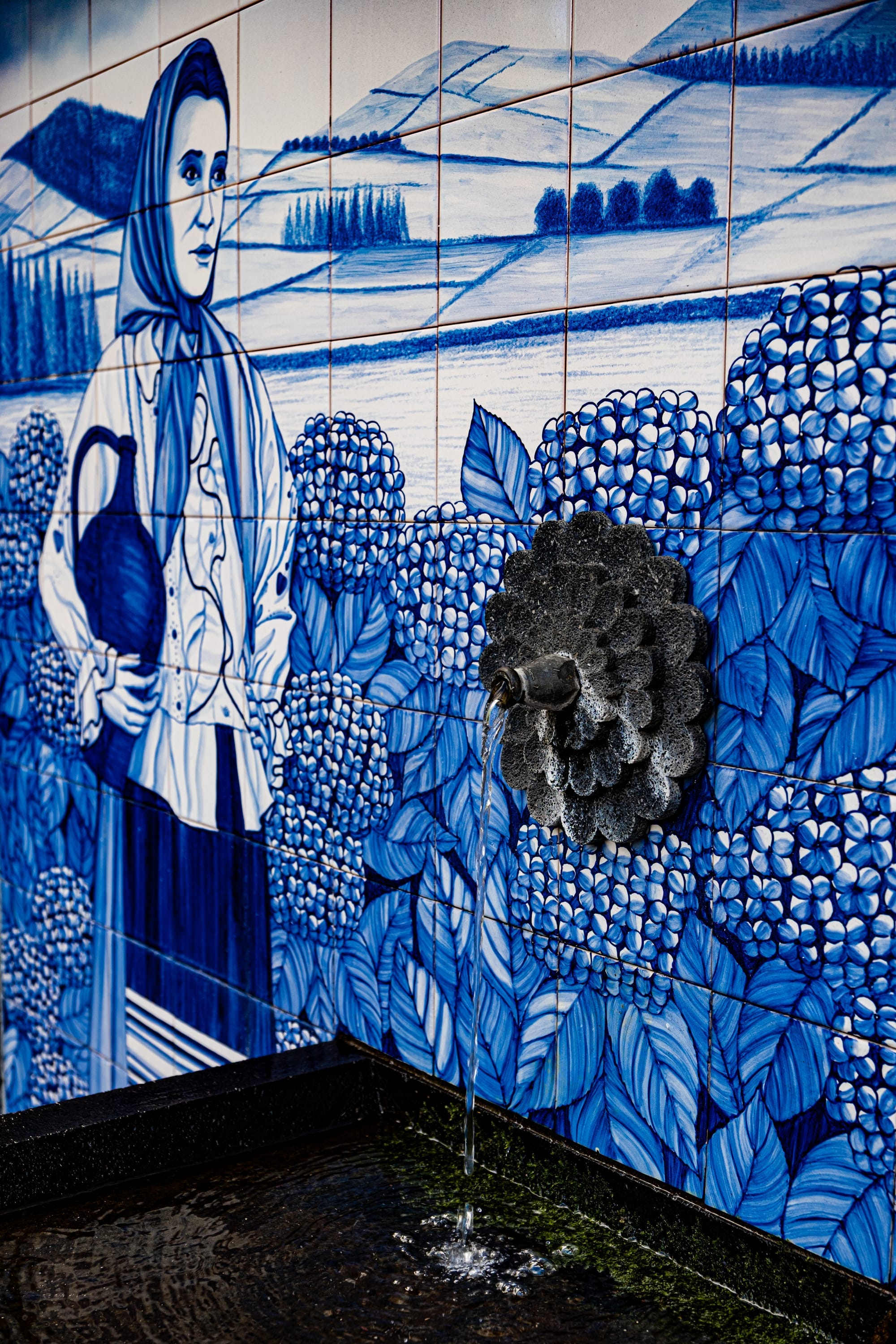
Traditional mural-tiled drinking fountain with hand-painted figures and hydrangea blossoms
Another notable spot sits along the path near the stream: a small building with blue-trimmed windows and a prominent water wheel out front. This is Moinho de Água das Furnas, often referred to locally as the Artesanato Moagem (Junta de Freguesia das Furnas). It’s a historic watermill and artisan center along the river, showing traditional milling techniques and handcrafts.
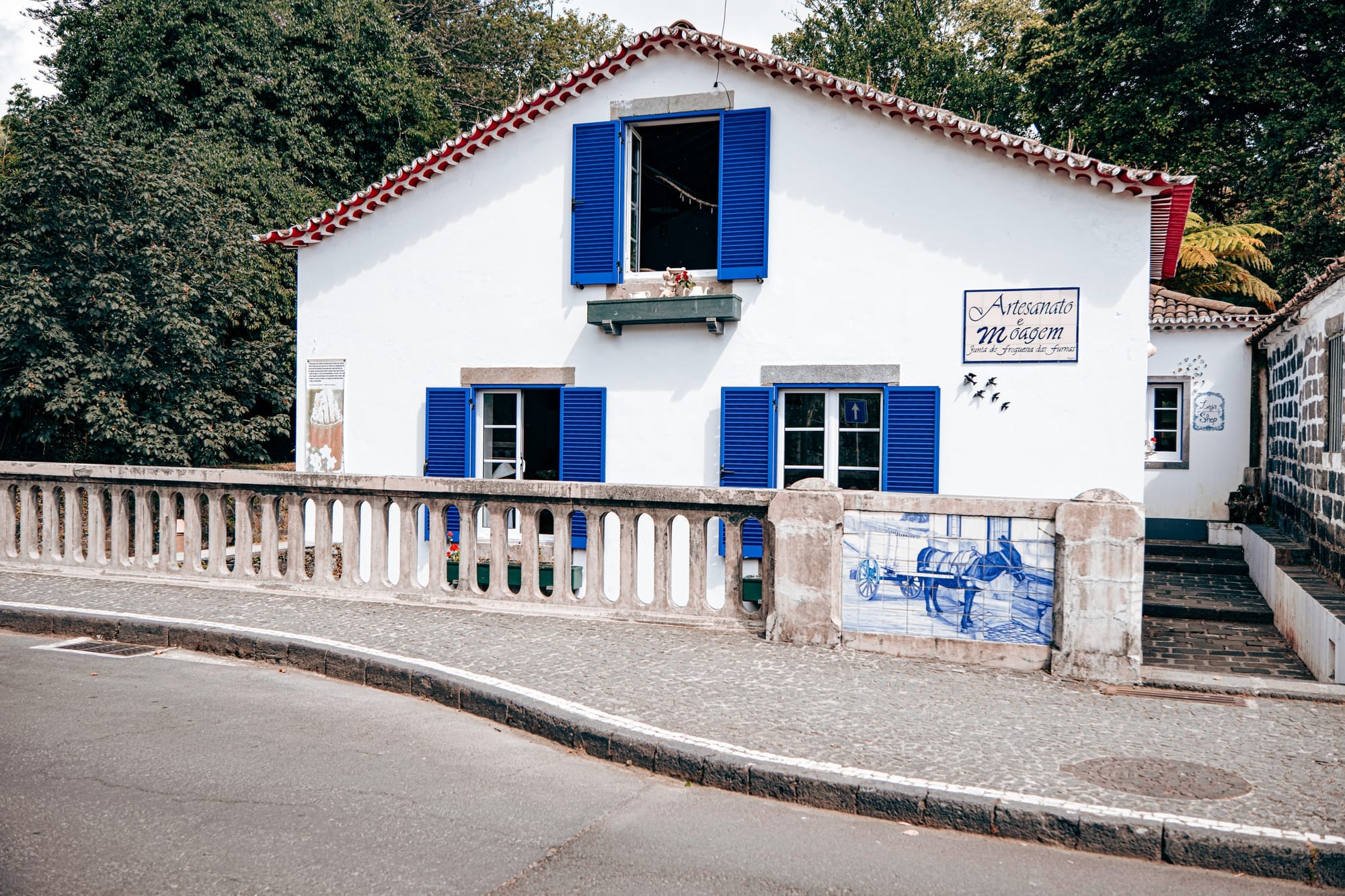
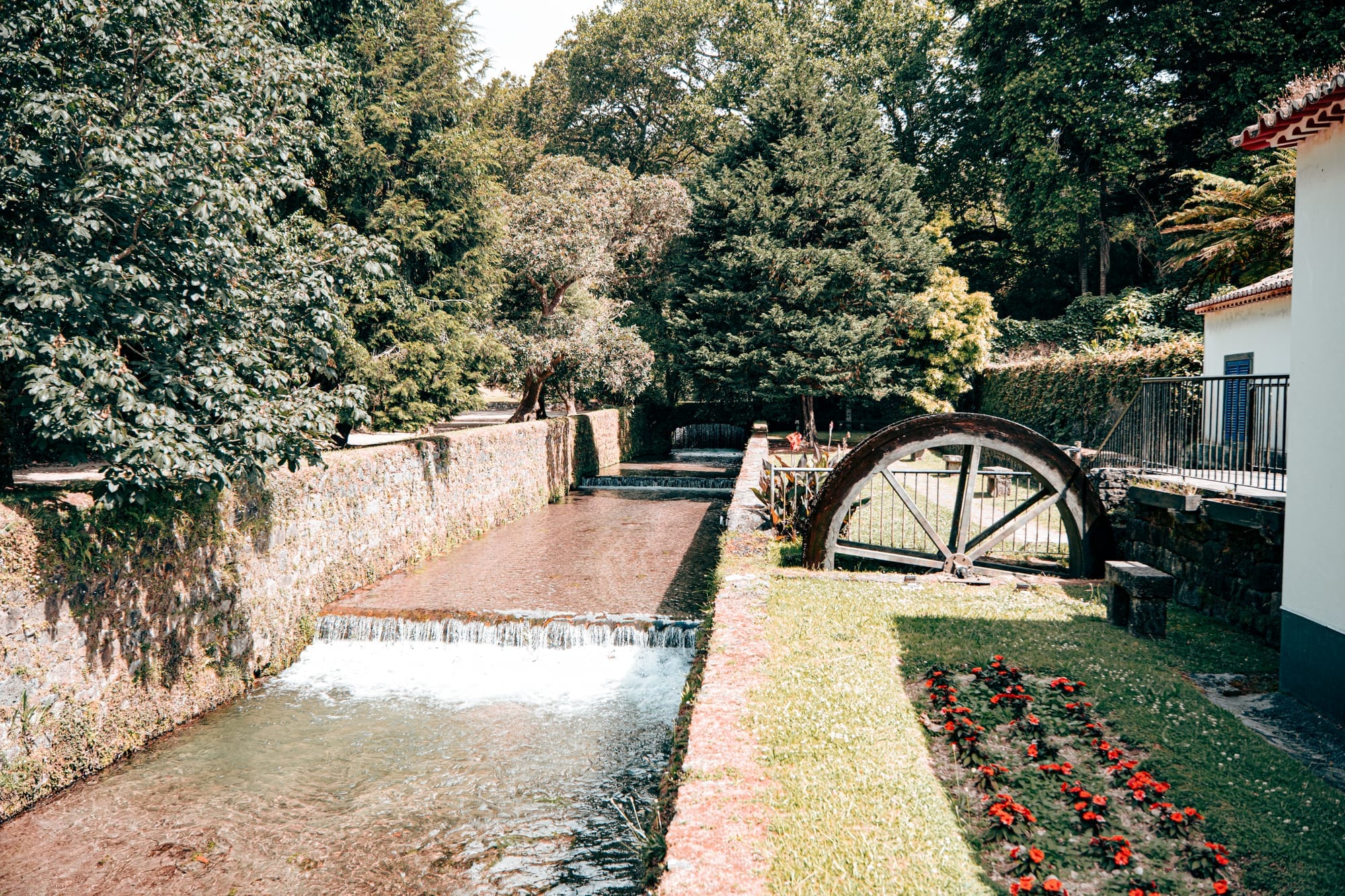
Local crafts center and water mill set beside a landscaped stream and blue-shuttered buildings
It isn’t always open, but the setting is lovely either way: white walls, flowing water, and the curved wheel turning beside a mossy stone canal. It’s a good place to stop, especially if you're walking without a fixed route.
Not far from the main square, the Frutaria Luís Estrela displays crates of bright, fresh produce along the sidewalk.
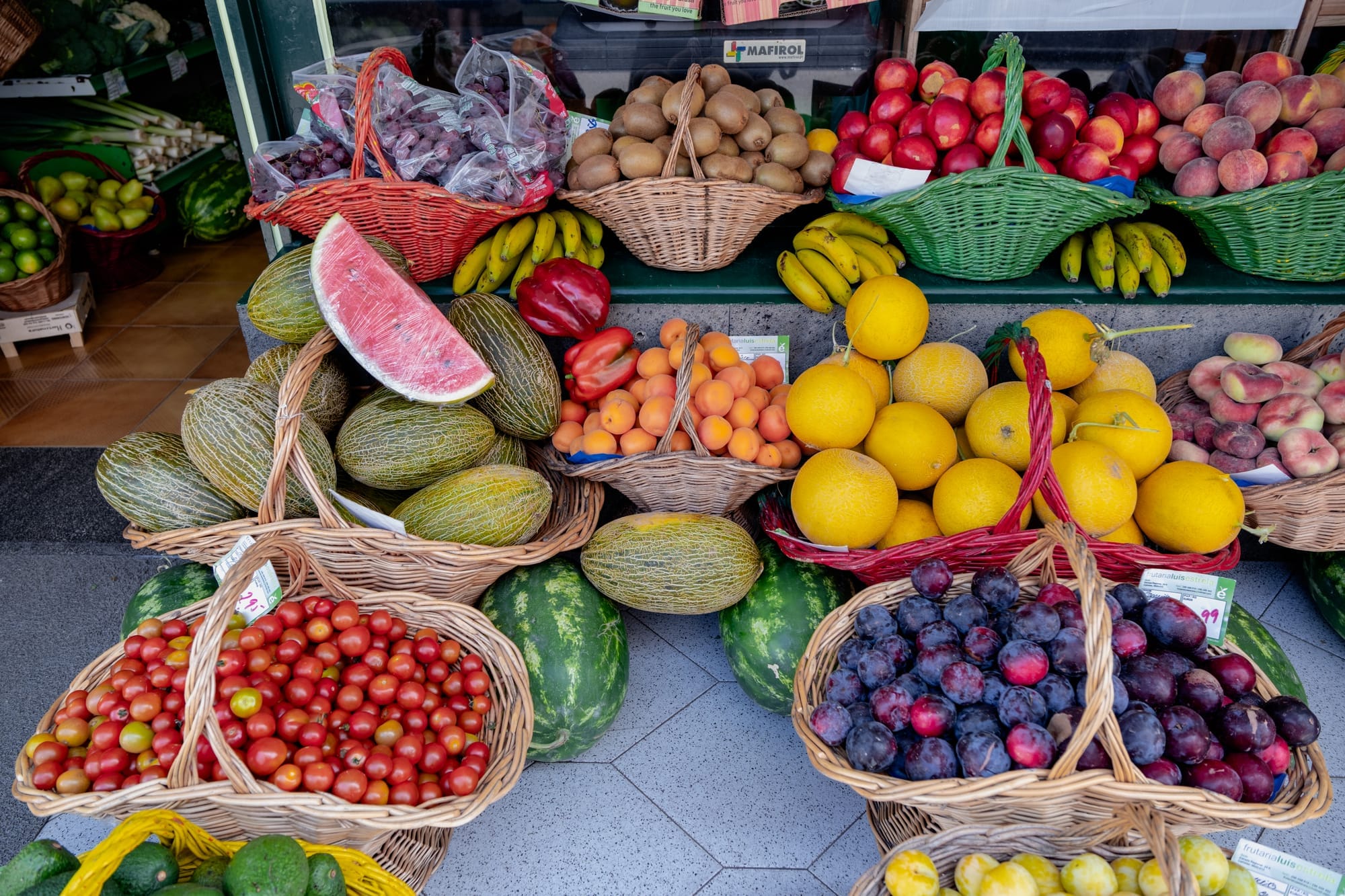
Papayas, bananas, leafy greens, melons, and avocados are all stacked in wooden boxes and baskets. It's a good place to pick up something seasonal, even if you’re not cooking that night.
Things to do in Furnas
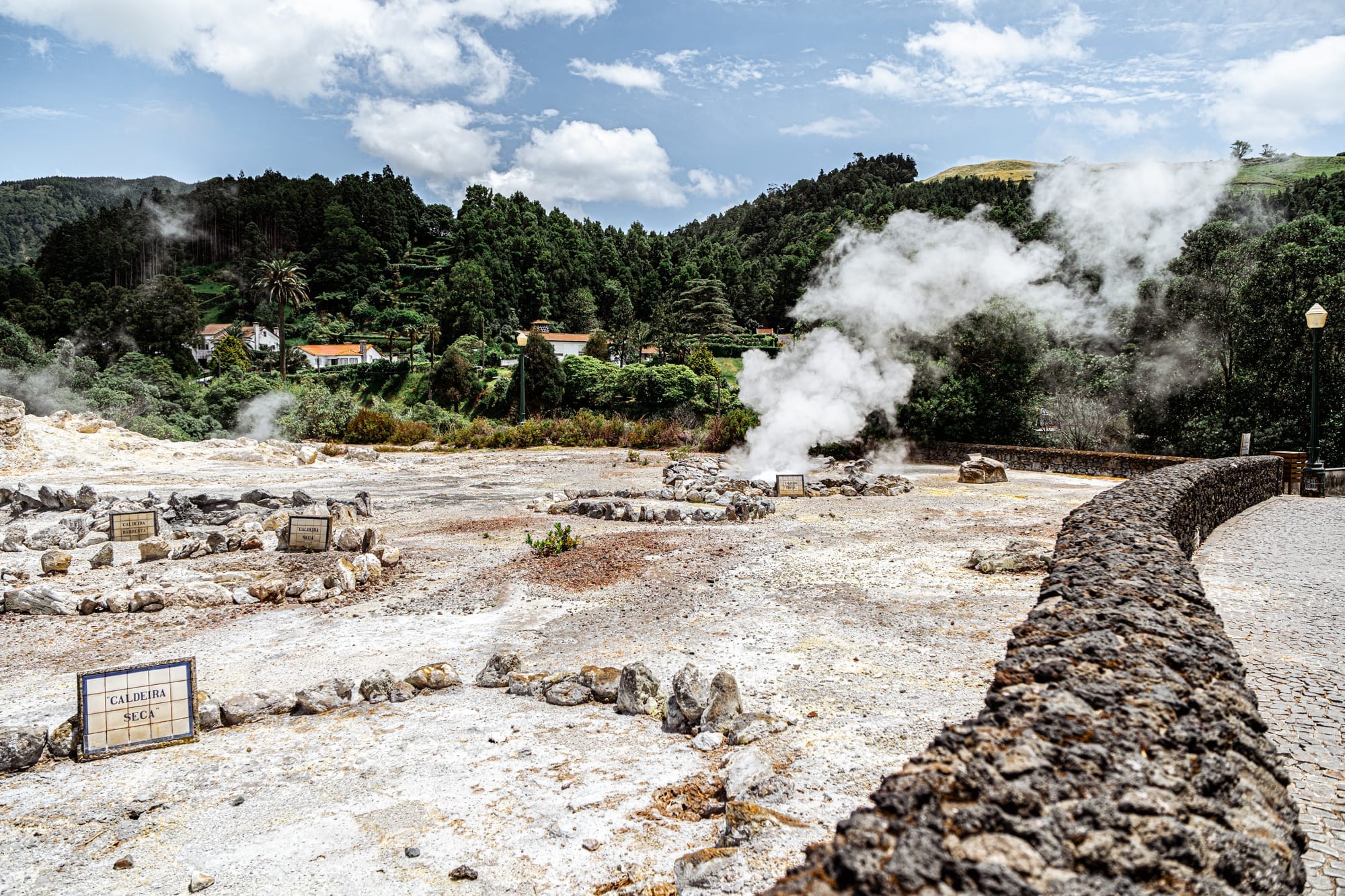
See the Caldeiras das Furnas
Furnas is known for its hot springs, and you can read our full post on the caldeiras for a closer look at the steamy vents and sulfur pools at the edge of town.
Walk around Lagoa das Furnas
You can also check out the lake hike, a half-day walk around Lagoa das Furnas that begins just outside the village and loops through forest, farmland, and lakeshore. Along the way, you’ll pass the striking Gothic-style chapel of Nossa Senhora das Vitórias, its dark spire rising from the trees at the lake’s edge.
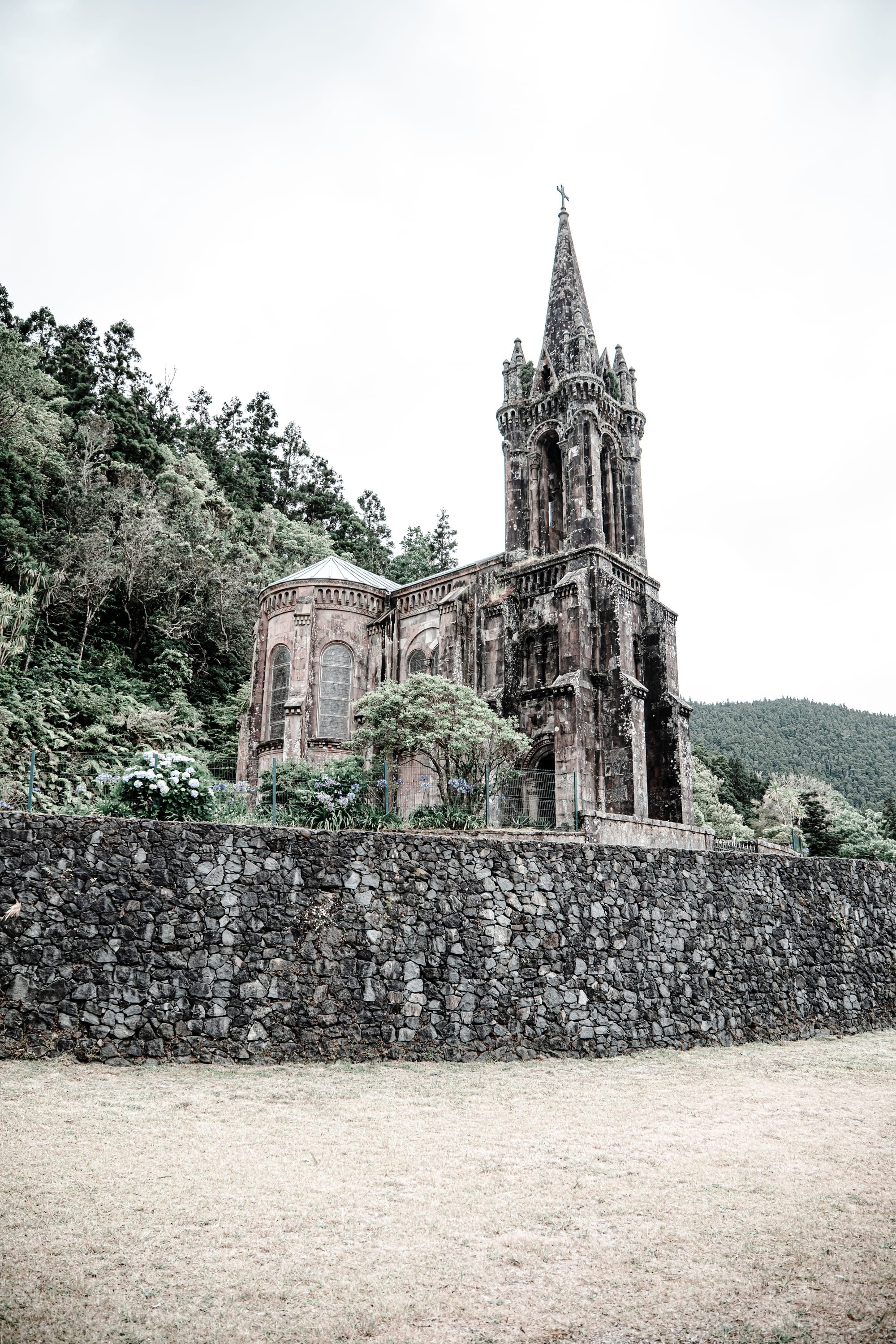
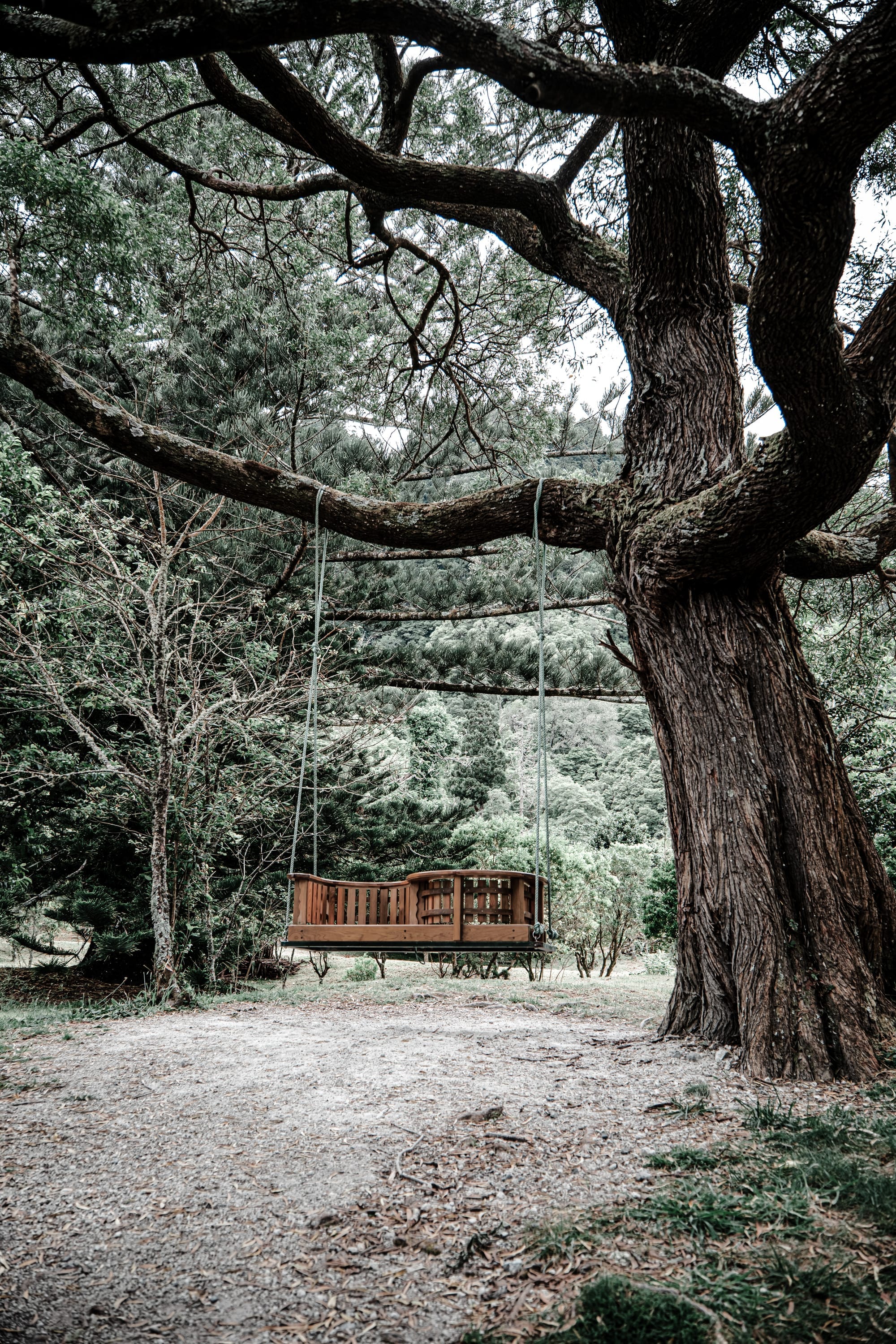
Gothic revival church and hanging bench swing near the shores of Lagoa das Furnas
Visit Grená Park
Along the lake hike, you'll run into Grená Park, which has beautiful flora and is also the entry point to a number of hiking paths.
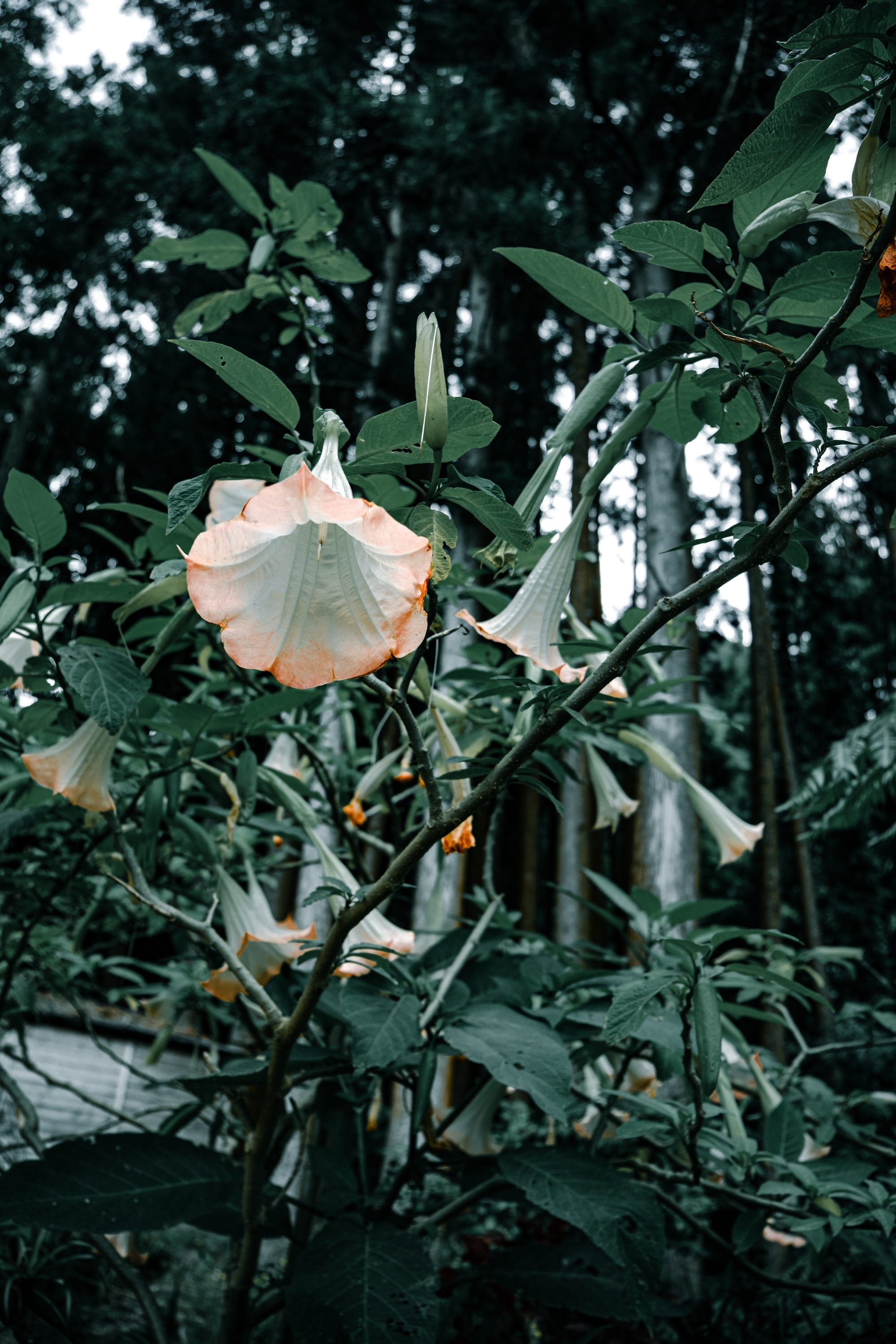
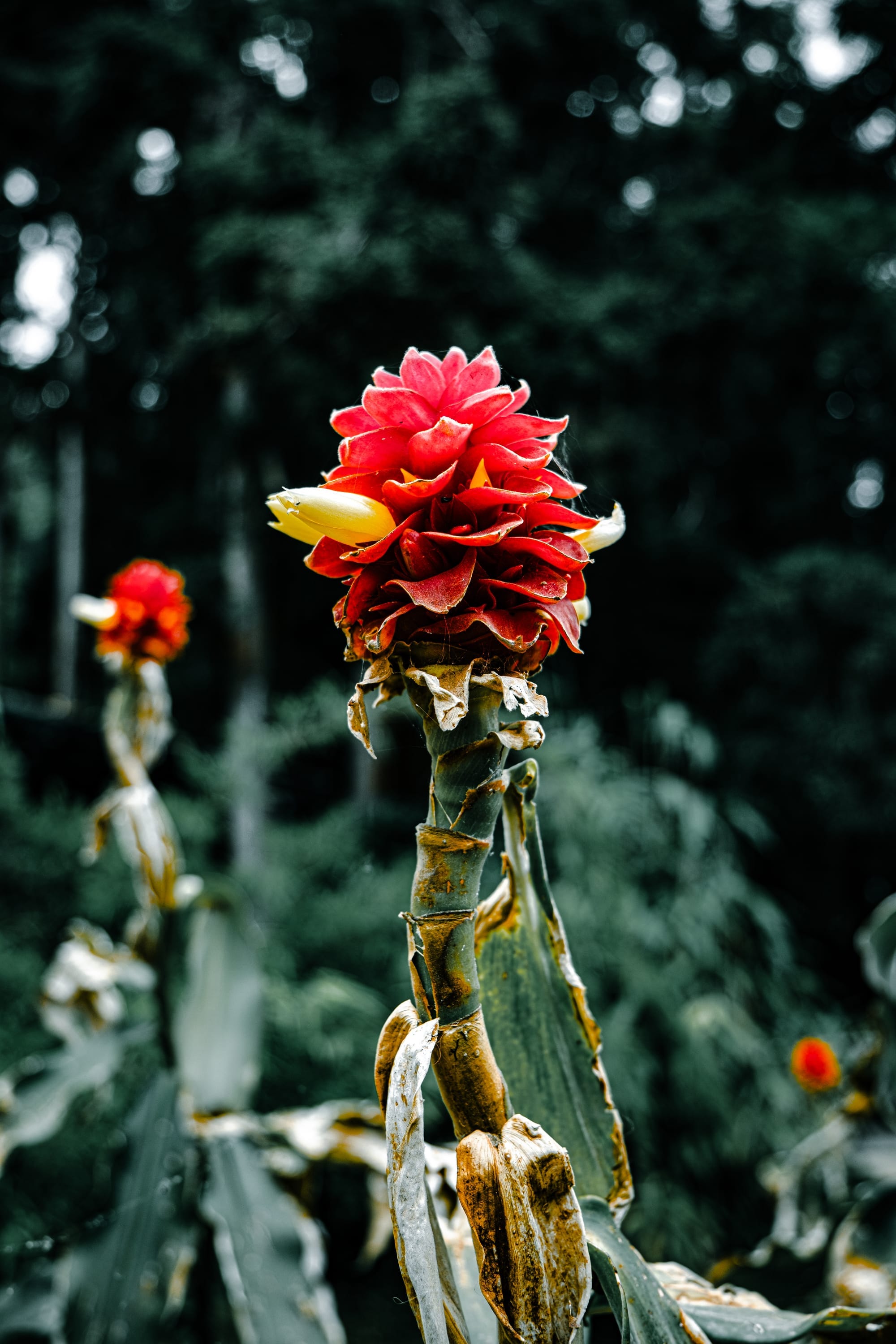
Tropical blooms from the forested paths of Grená Park
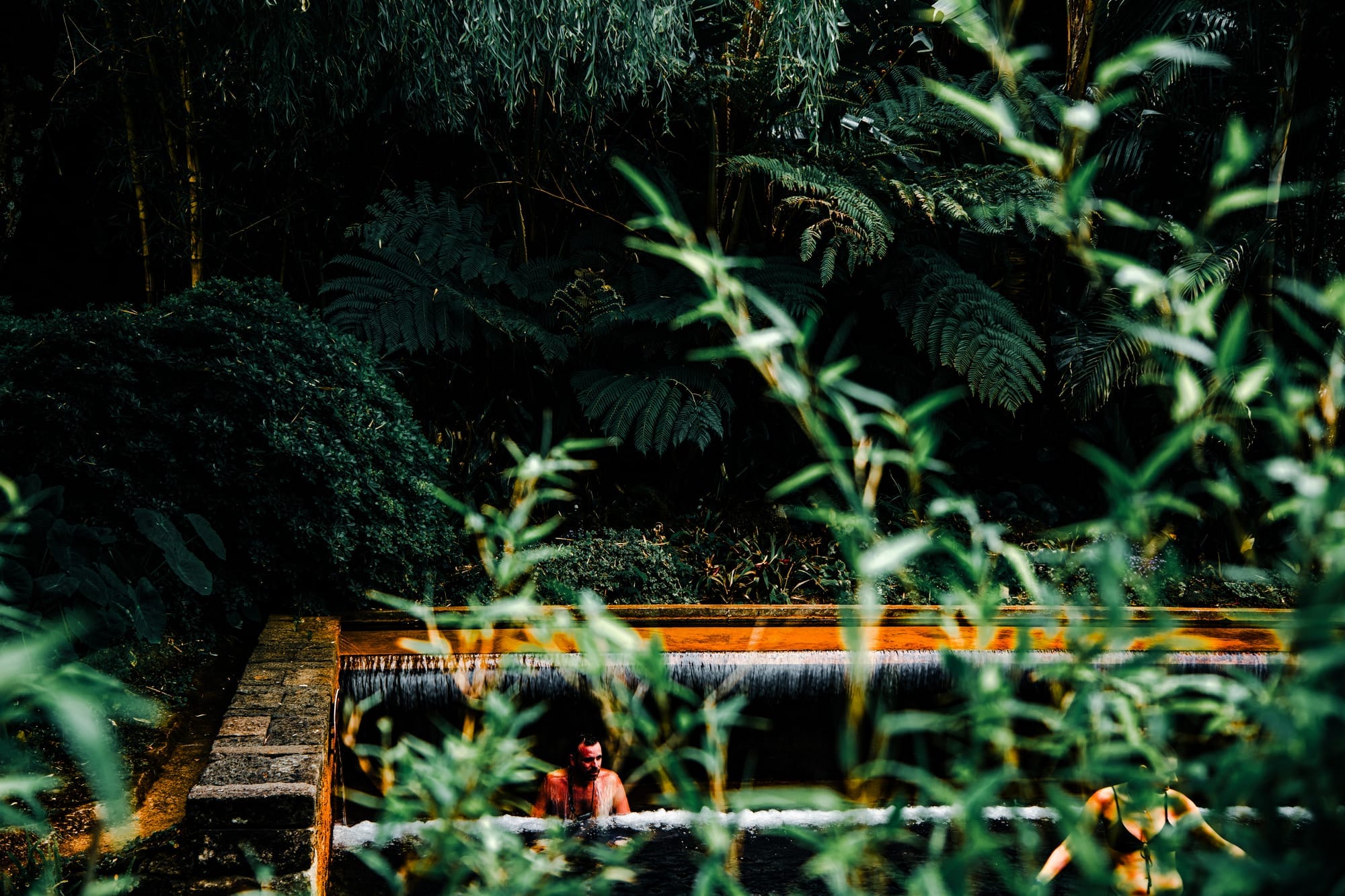
Soak at Poça da Dona Beija
Poça da Dona Beija, a series of stone-lined thermal pools, is one of the more built-up options and just a few minutes' walk from the center. It’s a great place to soak in the evening, especially after a rainy day.
Taste corn cooked in the hot springs
Beyond that, Furnas is a place for small things. Sit on a stone bench in front of a steaming spout. Try the sweet corn cooked directly in thermal water. Wander past garden walls stained with mineral deposits.
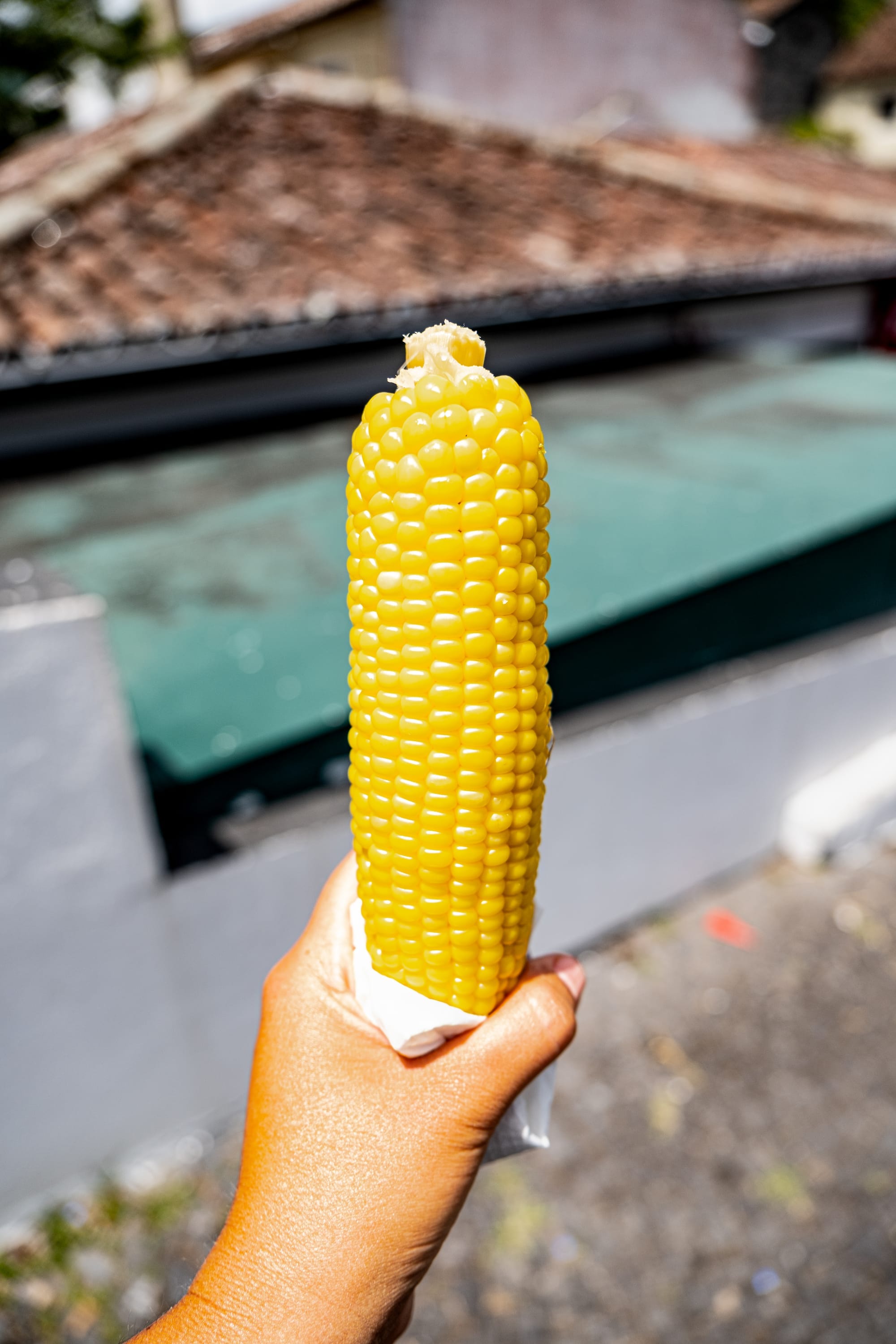
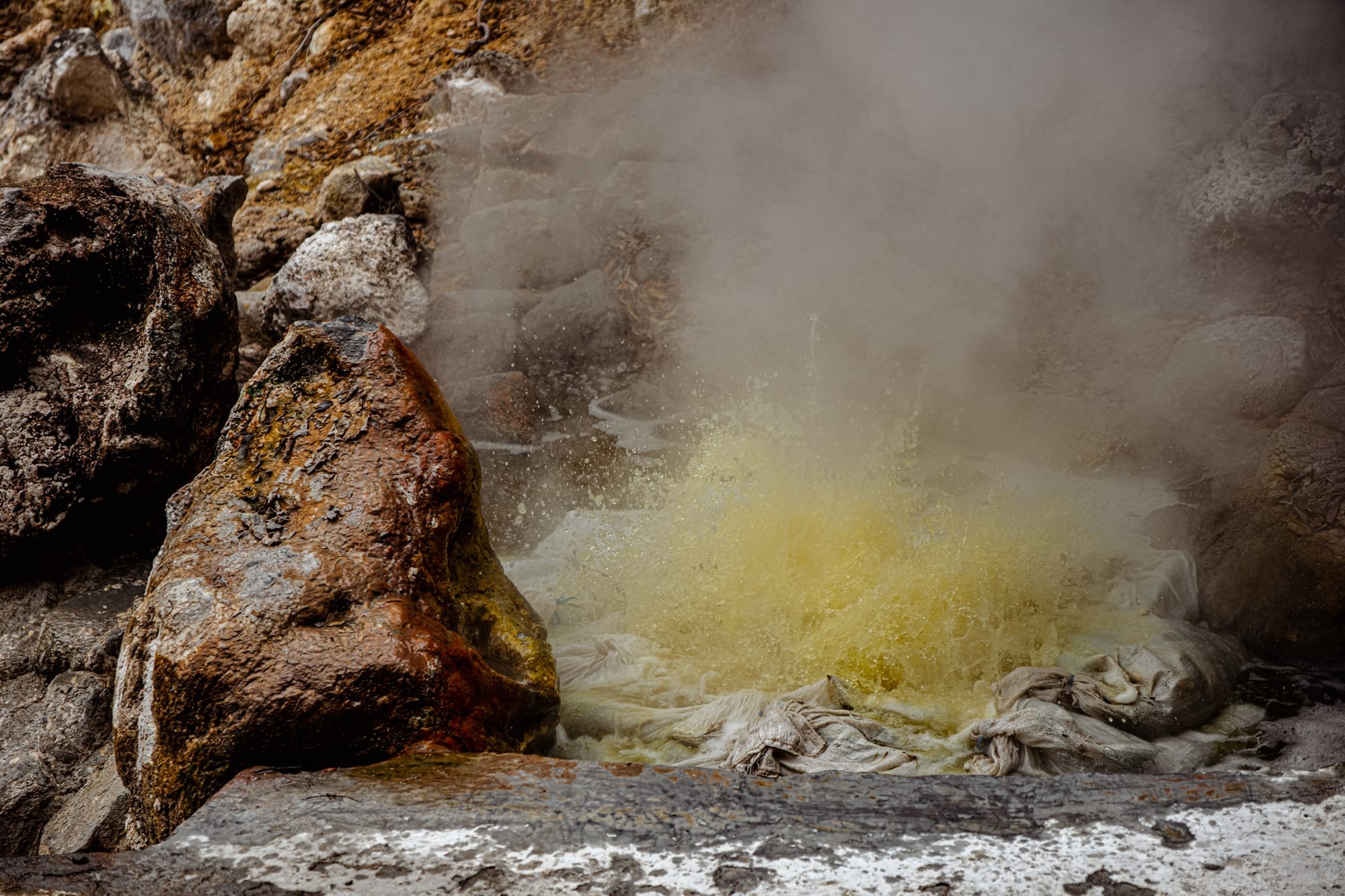
Corn cooked in geothermal heat, a steamy local delicacy and a reminder of Furnas’ volcanic undercurrent
Drive up to the Pico do Ferro viewpoint
You can also hike or drive to the Furnas viewpoint, Miradouro Pico do Ferro, a high, curving ridge with a full panorama over the crater. From up there, the town looks like a map: red roofs, green plots, and curls of mist.
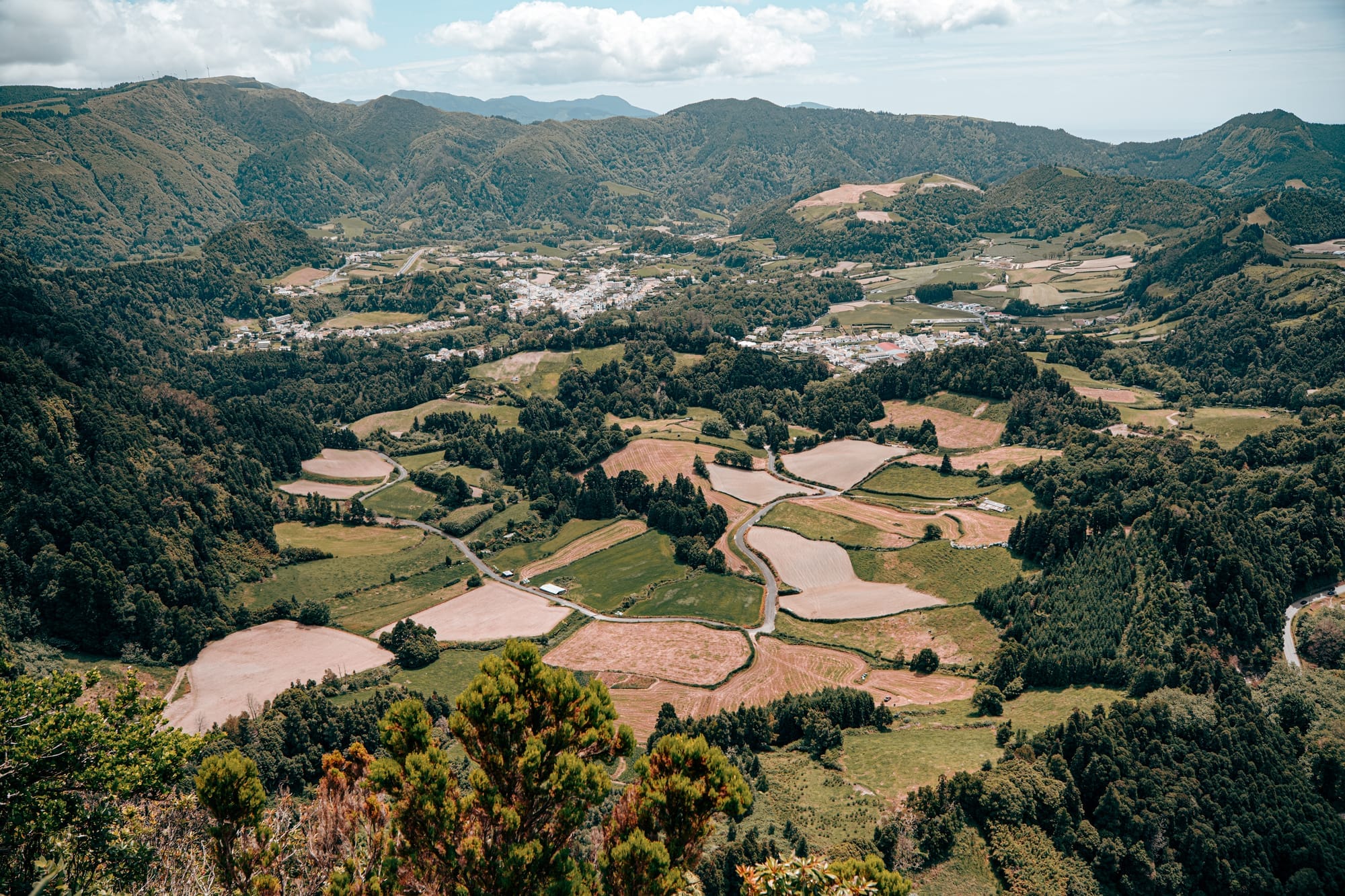
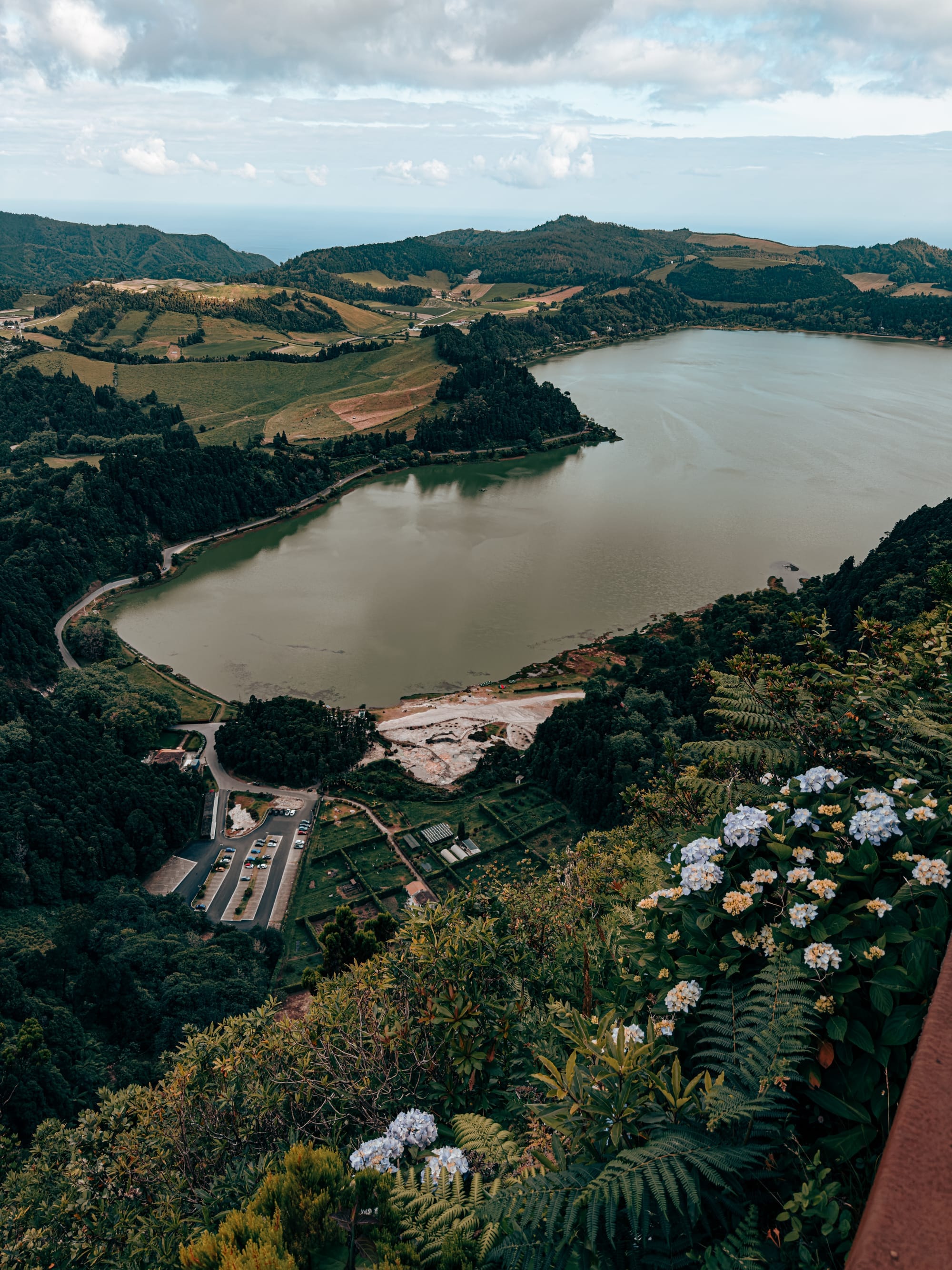
Views over Furnas valley and volcanic lake from Miradouro Pico do Ferro
The lake sits off to one side, and you can see the full shape of the caldeira basin. It’s worth going even when visibility is variable. Clouds move fast up there.
Spend a morning in Terra Nostra Park
The big botanical garden in the village, with its iron-rich thermal pool, is many people's main reason to come. There's more on it below, under Terra Nostra Park.
Photograph the upside-down house (Casa Invertida)
Near the Furnas waterfall, on the way to Terra Nostra, a small building sits with its roof on the ground and its floor in the air. It's actually an electricity substation, designed as a nod to the island's volcanic activity, and people line up to take photos pretending to hold it up.
See the old watermill
The Moinho de Água das Furnas, with its blue-trimmed windows and turning water wheel, is a historic watermill and craft centre by the stream. It isn't always open, but it's worth the short detour either way. We describe it in the walk around town above.
Drink from the public springs
Furnas has tiled taps and fountains all over the village, some warm and some cold, each with different mineral water. At the Glória Patri spring, locals line up with jugs to collect drinking water.
Watch the cozido pots come out of the ground
By the lake, cooks lift pots of cozido out of holes in the hot ground around late morning or midday. It's a meat stew, so not one to eat if you're vegan or vegetarian, but watching is free. Our cozido section below has the details.
Try bolo lêvedo
Bolo lêvedo is the slightly sweet, flat round bread that Furnas is known for, sold in bakeries and supermarkets across the island and eaten toasted or split like a muffin. It's usually made with milk, eggs, and butter, so ask if you're vegan.
Furnas hot springs: where to soak (compared)
There are two places to bathe in Furnas, and one place where you only look. They're a few minutes apart, so the choice comes down to time of day and what else you want from the visit:
| Place | What it is | Hours | Cost |
|---|---|---|---|
| Poça da Dona Beija | Four thermal pools at about 39°C, plus a cooler stream pool | 8:30 am to 11 pm | €12 by day, €16 from 6 pm, booked online (2026) |
| Terra Nostra Park | One large iron-rich thermal pool inside the botanical garden | Daytime only | Included in the garden ticket |
| Caldeiras das Furnas | Boiling springs and fumaroles in the village and by the lake | Always open in the village | Free in the village, and not for bathing |
For an evening soak, go to Poça da Dona Beija, which stays open until 11 pm. For gardens and a swim in one ticket, go to Terra Nostra. And see the caldeiras either way, since they're free and right in the village.
Terra Nostra Park: the garden and its thermal pool
Terra Nostra is the big botanical garden right in the village, and for many visitors it's the main reason to come to Furnas. It has more than 2,000 types of trees, according to Visit Azores, plus winding paths, ponds, and a large thermal pool with orange-brown, iron-rich water.
Entry is paid and includes the garden and the thermal pool. Prices and hours change by season, so check the park's own website before you go. The pool gets busy in the middle of the day, so mornings or late afternoons are usually better. Bring an old swimsuit, since the water can stain.
The thermal pool holds iron-rich water at around 35 to 40°C, which is why it's orange-brown and why you need an old swimsuit. Guests at the Terra Nostra Garden Hotel get access to the park and pool, which makes it an easy choice if you want to soak early or late. The garden itself is big enough for a couple of hours: look for the camellia collection, the cycads, and the ferns along the stream.
Furnas cozido: the stew cooked underground
Cozido das Furnas is the dish the village is famous for. Pots of meat, sausage, and vegetables are lowered into holes in the hot ground near the lake and left to cook for several hours in the volcanic heat. Wikipedia's Furnas page describes how locals cook stews in the geothermal ground this way.
You can watch the pots being lifted out of the ground at the caldeiras by the lake, usually around late morning or midday. To eat it, book a table at one of the restaurants in the village, since many serve it at lunch only and it can sell out. It's a meat stew, so it's not one for vegans or vegetarians, but watching the pots come up is free and fun either way.
Prefer to go with a guide? One popular option is a Furnas and east island day tour. You can check dates and prices here:
Lagoa das Furnas and the interpretation centre
The crater lake sits just west of the village, with fumaroles and mud pools at its northern end. We've written separately about Lagoa das Furnas and the lake hike. On the south shore, the Furnas interpretation and monitoring centre covers the history of the Furnas volcano and the work to restore the lake's water quality, with interactive displays, according to Visit Azores. It's a good stop on a rainy day.
Flora, fauna, and the smell of the Furnas valley
The volcanic soils feed everything: ferns, ginger lilies, taro, mosses, bananas, and hydrangeas. You'll see tree ferns bigger than people, their fronds uncurling like scrolls. Roadsides are overgrown with wild ginger and blue morning glories. The steam helps. So does the rain.
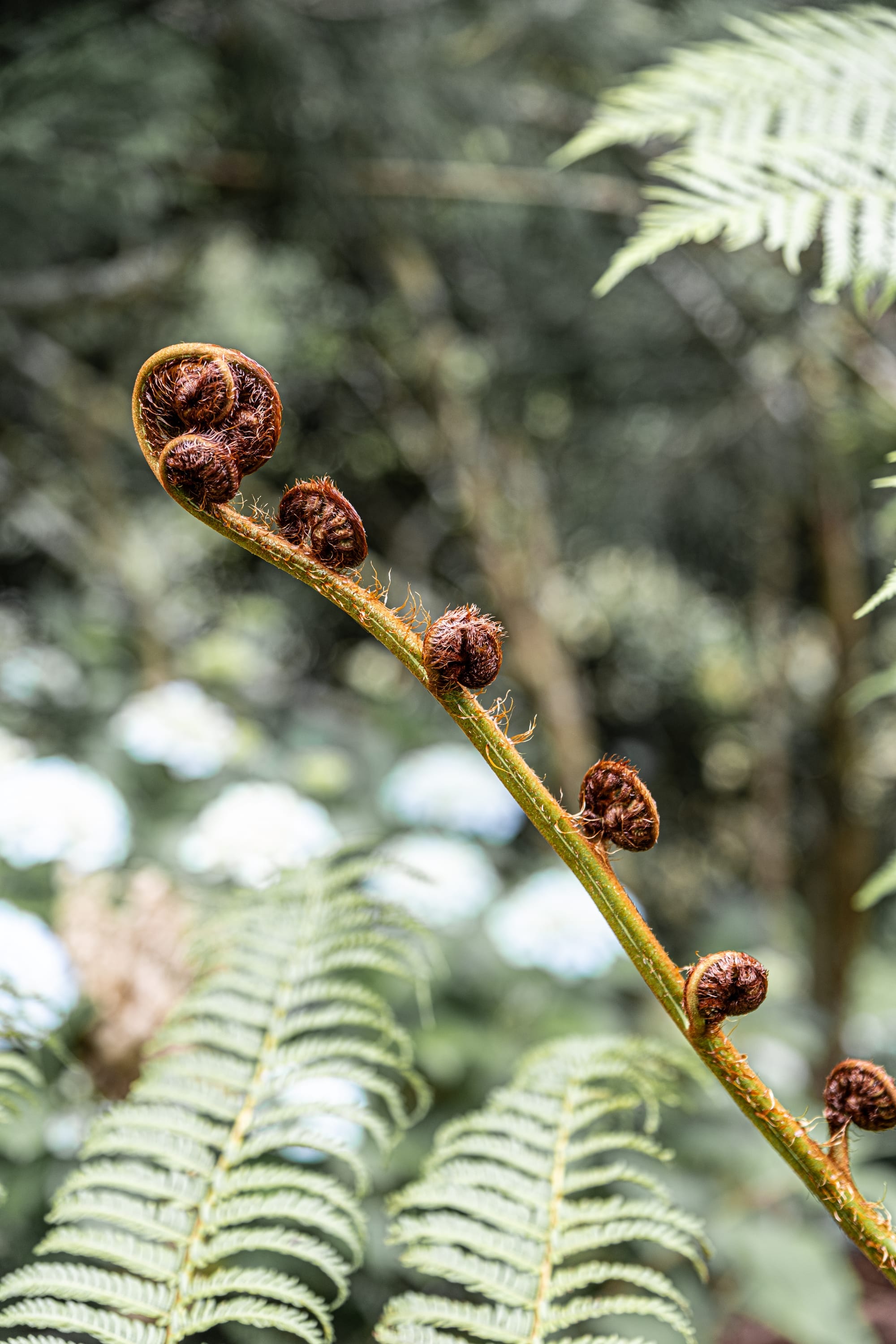
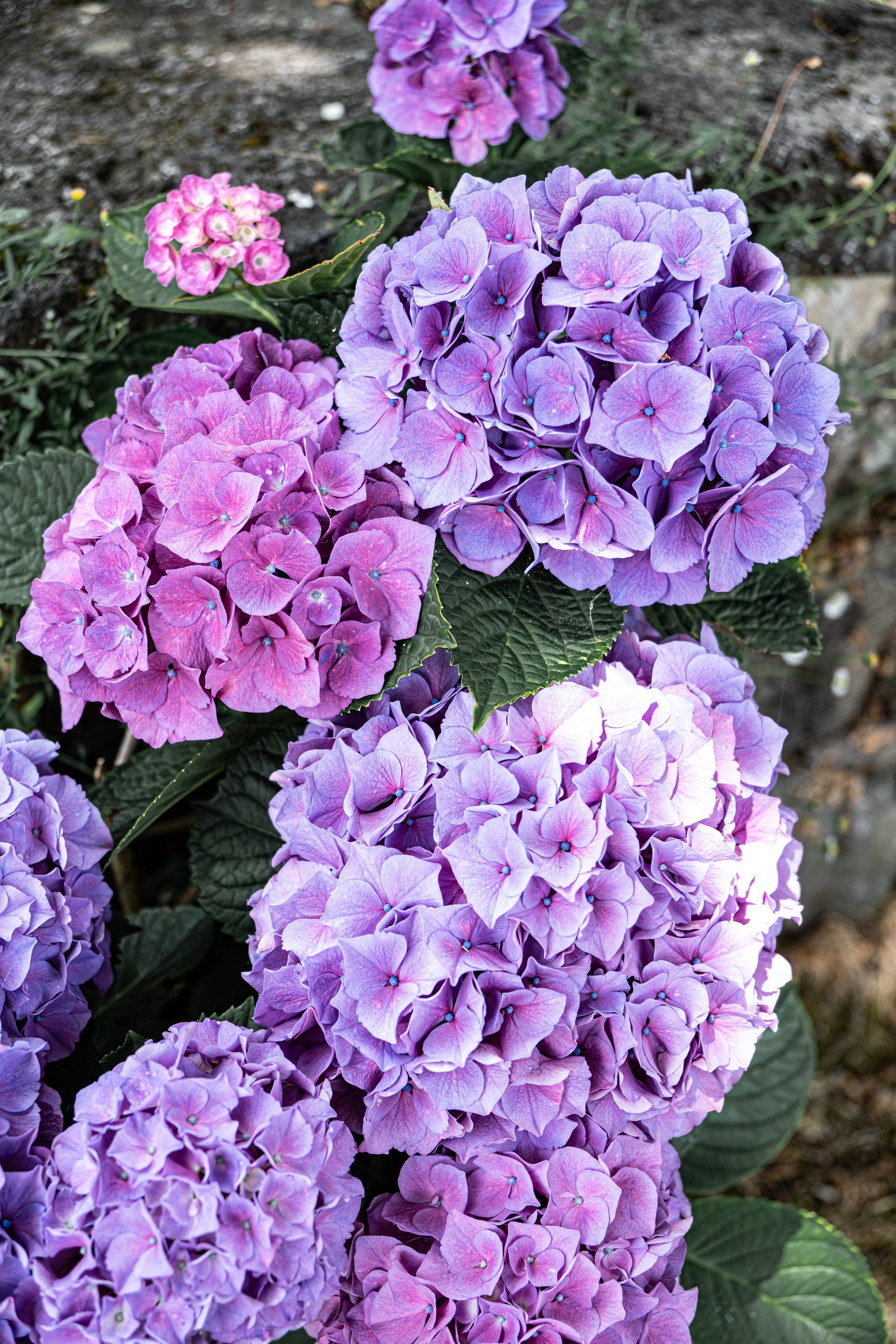
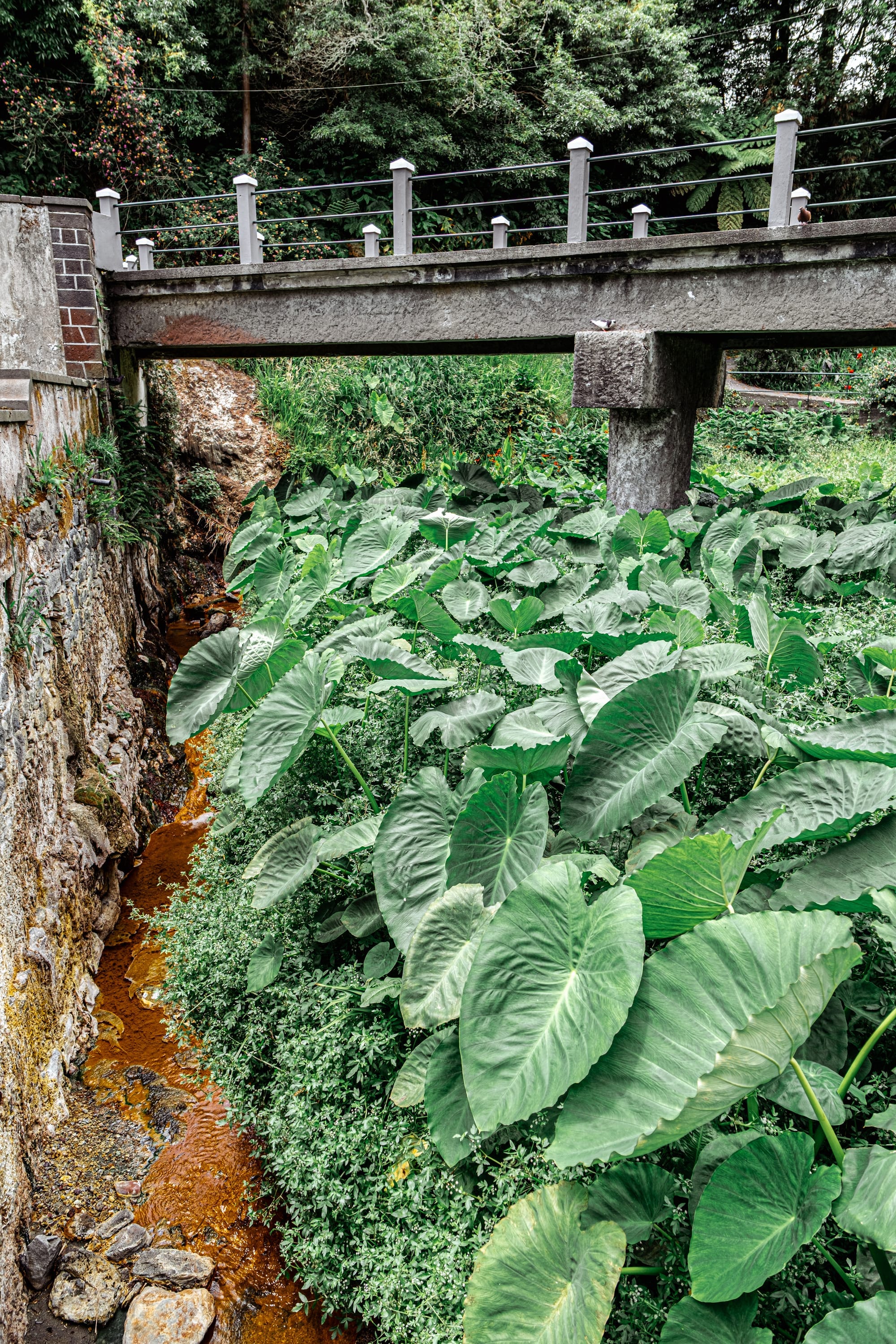
Furnas flora: unfurling fern fronds, bright hydrangeas, and taro thriving by mineral-rich streams
You’ll hear plenty of birds. You might catch the Azores blackbird, the buzz of a bee, or the sudden flit of a wagtail. The terrain softens most sounds here, so the valley tends to feel hushed.
And then there’s the smell of sulfur, which is always there. It comes in waves. Sometimes faint, sometimes strong enough to catch you mid-sentence. A little like eggs, a little like stone. You stop noticing it after a while. In fact, when you leave, you might miss it.
Waterfall detours and garden edges
While it isn’t marked on every map, there’s a small waterfall not far from town, just off a little-used roadside and framed by thick bamboo and ferns. You’re more likely to stumble on it than plan it. The path is damp, the rocks are mossy, and the sound of falling water is steady but not loud.
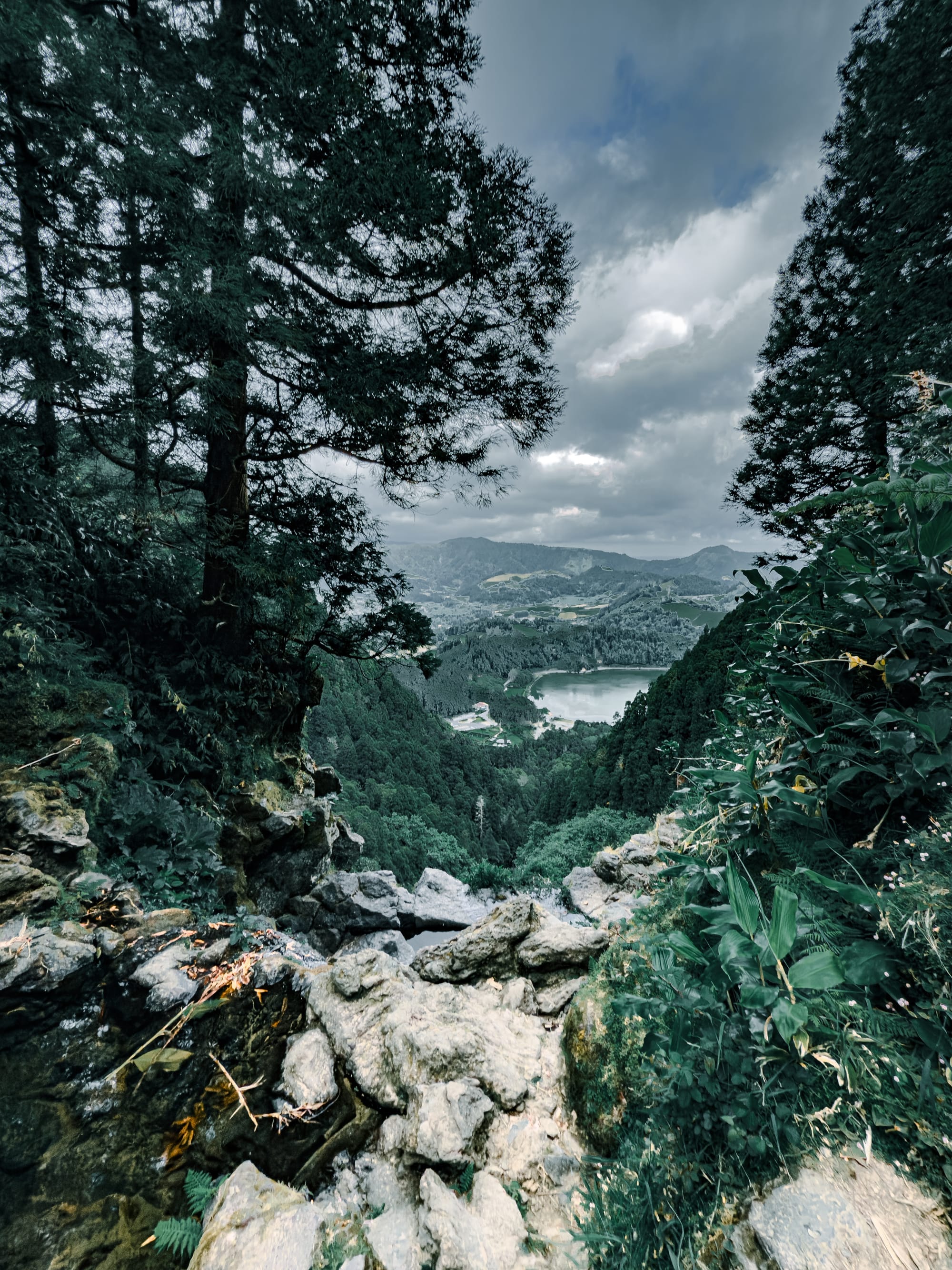
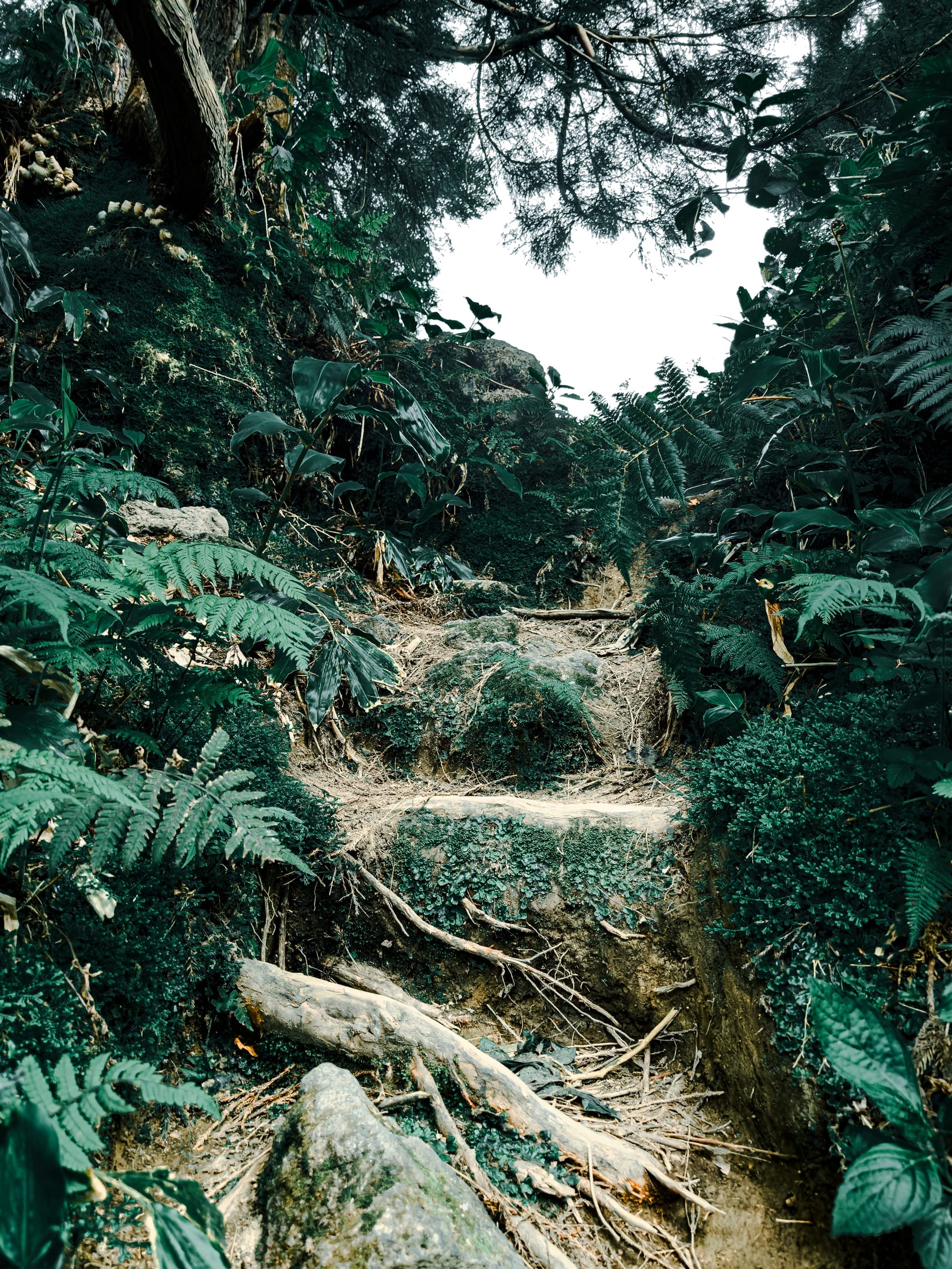
Looking back from behind the waterfall trailhead, this shaded forest view opens to the valley and Lagoa das Furnas below
You’ll also notice tiny gardens all over town: raised beds of taro or cabbage planted along narrow curbs, hedges of ginger, and vines climbing power poles. The climate supports abundance, and the people here don’t waste it.
Practical notes for visiting
Furnas is easy to reach by car and easy to walk once you arrive. Parking is available throughout town. Most sites (springs, gardens, and paths) are free or low-cost. A morning or an afternoon here is enough for a first visit, but you’ll likely want to come back. Bring shoes that can handle mist and uneven pavement. Pack a towel if you’re planning a thermal soak.
There’s food available in the center: casual spots, local restaurants, and stalls selling geothermal corn. For coffee or a break, the main square or a bench by one of the fountains works just fine.
Where to eat in Furnas (vegan-friendly)
Furnas is small, and most restaurants are built around cozido and fish, so vegans have less choice than in Ponta Delgada. What works: vegetable soup (ask if it's made with meat stock), salads, bread, the corn cooked in the hot springs, and the fruit at the greengrocer by the main square. If you're staying a while, buy groceries in Ponta Delgada and picnic by the lake or in one of the gardens.
If you’re staying longer, the surrounding hikes and hot pools can easily fill a few days.
If you're not in the area and don't have a car, there are a variety of tours that go to many of these Furnas locations.
How long to spend in Furnas
As a day trip from Ponta Delgada, you can see the village, the caldeiras, the lake, and one garden or hot spring. That's a full but doable day. With two days, or a night in the village, you can add the lake hike, Pico do Ferro, and an evening soak without watching the clock. Staying overnight also means you're there early, before most day tours arrive.
For a longer stay, our São Miguel guide (PDF) covers the caldeiras, the lake walk, and Poça da Dona Beija, and compares seven hot springs so you can choose which to book.
Best time to visit Furnas
Furnas works all year. Summer is the warmest and busiest, and the gardens are in flower from spring into summer, with camellias earlier in the year and hydrangeas lining the roads in summer. In winter, the hot springs are at their best, and the village is less crowded. The valley is often misty or rainy, but that's when the thermal pools make the most sense. For views from Pico do Ferro, wait for a clear spell. Outside Furnas, Caldeira Velha tickets are booked online for a timed slot, so plan ahead.
Hiking around Furnas
Several marked trails start in or near the valley, including the walk around the lake. You'll find maps, distances, and difficulty levels for each one on the official Azores trails site for São Miguel. Paths can be muddy after rain, so wear shoes with grip, and consider travel insurance that covers hiking if you plan to do a lot of it.
Nearby, it's an easy drive down to the beach village of Ribeira Quente, to the town of Povoação, or to the Chá Gorreana tea plantation on the north coast. For more ideas, see our São Miguel guide.
Nearby, see the Sanguinho trail to Salto do Prego.
Whatever your plans, travel with insurance. Stomach bugs, a fall on a cobbled street, or a stolen phone can happen anywhere, and it's much easier to enjoy the trip when you know you're covered. We'd recommend SafetyWing Nomad Insurance. It covers medical emergencies abroad, you can buy it even after you've left home, and it renews every four weeks, so it works for a short trip or months on the road.
Where to stay near Furnas
The nearest good base for Furnas is Furnas. These are well-reviewed places to stay there, all rated 9 or more on Booking:
- Vulcânica Boutique Suites: modern suites in Furnas village, rated 9.2 on Booking and mid-priced for the area.
- Casa do Vale Encantado: a budget-friendly guest house in Furnas rated 9.3.
- Terra Nostra Garden Hotel: pricier, but rated 9.3 from nearly 1,000 reviews, and guests get access to Terra Nostra Park and its thermal pool.
Frequently asked questions
Is Furnas worth visiting?
Yes. Furnas packs hot springs, fumaroles, a crater lake, gardens, and viewpoints into one small valley. It's one of the most interesting places on São Miguel, and the hot pools make it a good choice even on a rainy day.
How far is Furnas from Ponta Delgada?
About 45 km. It takes roughly 45 minutes to an hour by car. Buses run, but not often, so check the timetable.
What is Furnas cozido?
Cozido das Furnas is a stew of meat, sausage, and vegetables cooked for several hours in pots buried in the hot ground by the lake. You can watch the pots being lifted out around midday and eat it at restaurants in the village. Book ahead, since it often sells out.
What are the best things to do in Furnas?
Walk the village and its caldeiras, visit Terra Nostra Park, soak at Poça da Dona Beija, hike around Lagoa das Furnas, watch the cozido come out of the ground, and drive up to Pico do Ferro for the view over the crater.
How many days do you need in Furnas?
One full day covers the highlights. Two days, or one night in the village, lets you add a hike and an evening soak at a relaxed pace.
Is Furnas an active volcano?
Yes. Furnas is one of three active volcanoes on São Miguel. Its last eruption was in 1630, and the fumaroles, hot springs, and steam vents in the valley come from the same volcanic system.
Can you swim in the hot springs in Furnas?
Yes, at Terra Nostra Park's thermal pool and at Poça da Dona Beija, both of which charge entry. The hot springs at the caldeiras are far too hot to touch, so stay behind the barriers there.
Where is Furnas?
In a volcanic crater in the east of São Miguel, the largest island of the Azores, in Portugal. It's part of the municipality of Povoação, about 45 km from Ponta Delgada.
Are the hot springs in Furnas free?
Seeing them is. The steaming springs and fumaroles in the village are free to walk around. To bathe, you pay: Poça da Dona Beija costs €12 by day or €16 in the evening, and Terra Nostra's pool is included in the garden ticket.
Which hot spring is best in Furnas?
Poça da Dona Beija for an evening soak, as it's open until 11 pm, and Terra Nostra Park if you want gardens and one big pool in the same visit.
Can you visit Furnas without a car?
Yes, but it takes planning. Buses from Ponta Delgada aren't frequent, so check the timetable or take a day tour. Once you're in the village, you can walk to the caldeiras, Terra Nostra, and Poça da Dona Beija.
Is Furnas good on a rainy day?
Yes. The valley is often misty or wet, and that's when the thermal pools are at their best.
Does Furnas smell of sulfur?
Yes, in waves, strongest near the fumaroles. Most people stop noticing it after an hour or so.
Is cozido das Furnas vegetarian?
No. It's a stew of meat, sausage, and vegetables, so it isn't one for vegans or vegetarians. Watching the pots come out of the ground by the lake is free either way.
What should you bring to Furnas?
A swimsuit and an old towel, as the iron-rich water can stain, plus a rain jacket and shoes with grip.
When did the Furnas volcano last erupt?
In 1630, in an eruption that killed around 200 people. It has been calm since, though the hot springs and steam vents show it's still active.
Where is the upside-down house in Furnas?
Near the Furnas waterfall, on the way into the village towards Terra Nostra Park. It's an electricity substation built with its roof on the ground, and it's free to visit.
What is bolo lêvedo?
A slightly sweet, flat round bread from Furnas, eaten toasted or split like a muffin. It's usually made with milk, eggs, and butter, so it isn't vegan.
What is the best viewpoint in Furnas?
Miradouro Pico do Ferro, on the ridge above the village, with a view over the whole crater, the lake, and the village.
Useful links: Furnas on Wikipedia, Terra Nostra Park on Visit Azores, the Furnas interpretation centre, and São Miguel hiking trails.
Furnas has ground that steams, water that heals, and streets that curve. Take your time, take photos, and breathe in the mineral air. Come for a soak, a walk, or just a look around, and you’ll find the town is small and easygoing enough to notice the details.
Nearby, see Poça da Dona Beija hot springs and Vila Franca do Campo.


