


Ribeira Quente is a small fishing village on the south coast of São Miguel, in the Azores, about 15 minutes by car below Furnas. It's best known for Praia do Fogo, a dark-sand beach where hot springs under the sand and sea warm the water. The beach is free to use, with parking, toilets, and showers nearby. Plan an afternoon, ideally on a summer weekday. We spent ours swimming, walking the village, and eating thermal corn and a vegan pineapple pizza by the beach, and we'd happily add it to any day in Furnas.
On the southeastern shoreline of São Miguel, Ribeira Quente is small, bright, and shaped by volcanic heat. The road that winds down into town curves past ferns, farms, and volcanic slopes. And then, almost suddenly, you arrive: a port, a beach, a few sun-bleached buildings, and the faint smell of salt and thermal earth.
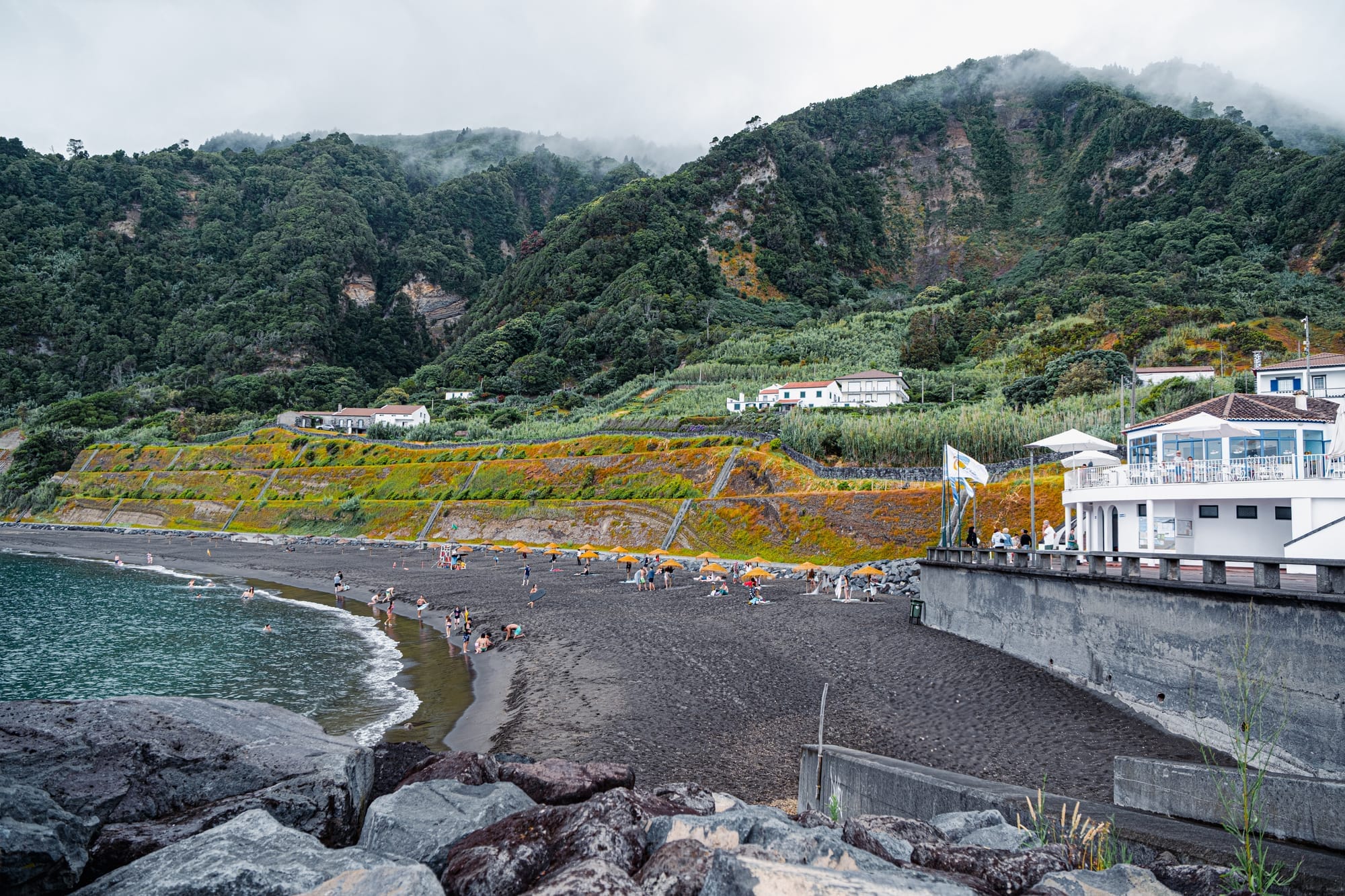
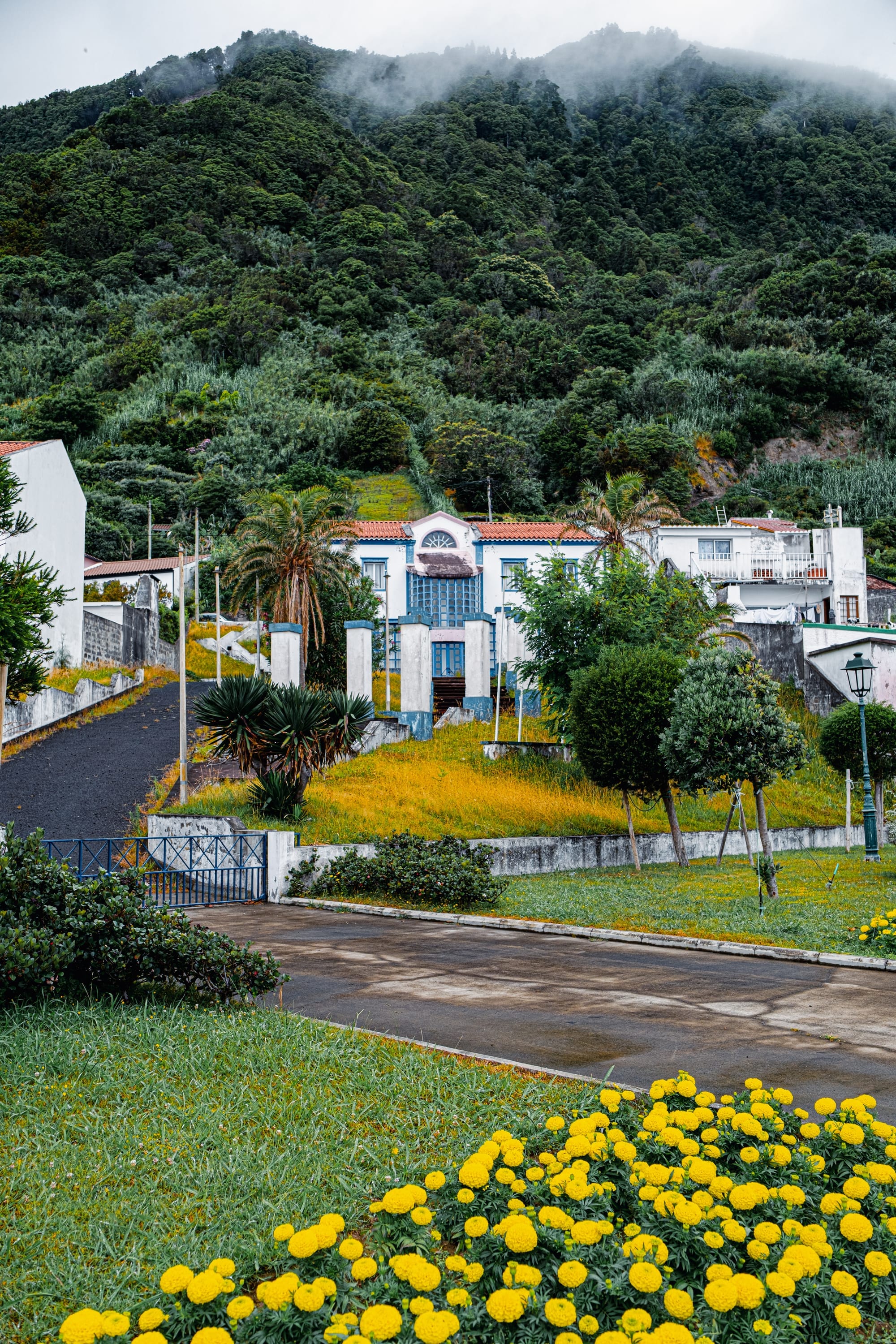
Black sand and golden blooms in Ribeira Quente, from coast to hilltop
It’s a fishing village at heart, but a gentle one. There’s no bustle here. Just the hiss of sea spray, the chatter of birds, the occasional crackle of a grill, and waves landing on Praia do Fogo, a beach named for the geothermal heat that still rises beneath its dark, grainy sand.
Ribeira Quente at a glance
Here are the practical basics. Facilities and timetables change, so check before you go.
Where: a parish of Povoação municipality on the south coast of São Miguel, about 50 km from Ponta Delgada and about 15 minutes' drive from Furnas.
Main beach: Praia do Fogo (also called Praia da Ribeira Quente), a dark-sand beach in a small bay, warmed by hydrothermal springs.
Layout: the parish has two parts. Fogo grows around the church of São Paulo (built between 1911 and 1917) and has the beach, while the main village of Ribeira Quente has the fishing port, according to Wikipedia. It's all one short stretch of coast, and you can walk between them.
Cost: the beach is free, and there's parking close by.
Facilities: parking, toilets, showers, and cafés and restaurants by the beach. Shade is limited.
Time needed: an afternoon for the beach and village, a full day if you add the coastal trail.
Best time: June to September for swimming. Weekdays are calmer than summer weekends.
| Details | |
|---|---|
| Where | Povoação municipality, south coast of São Miguel |
| Getting there | About 50 km (50 minutes) from Ponta Delgada, 15 minutes from Furnas |
| Main beach | Praia do Fogo, dark sand, warmed by hydrothermal springs |
| Cost | Free beach, parking close by |
| Facilities | Parking, toilets, showers, cafés, and restaurants; little shade |
| Time needed | An afternoon, a full day with the coastal trail |
| Coastal trail | PR12 SMI Agrião, 7.6 km linear, medium, about three hours |
| Best time | June to September, weekdays |
Praia do Fogo and volcanic sand
Praia do Fogo is unlike most Atlantic beaches. The sand is fine-grained and volcanic, a deep charcoal grey that feels warm even in cool weather. When the sun hits it, you can see flecks of brown and bronze shimmering through. But the color isn't what makes it unique. The temperature is.
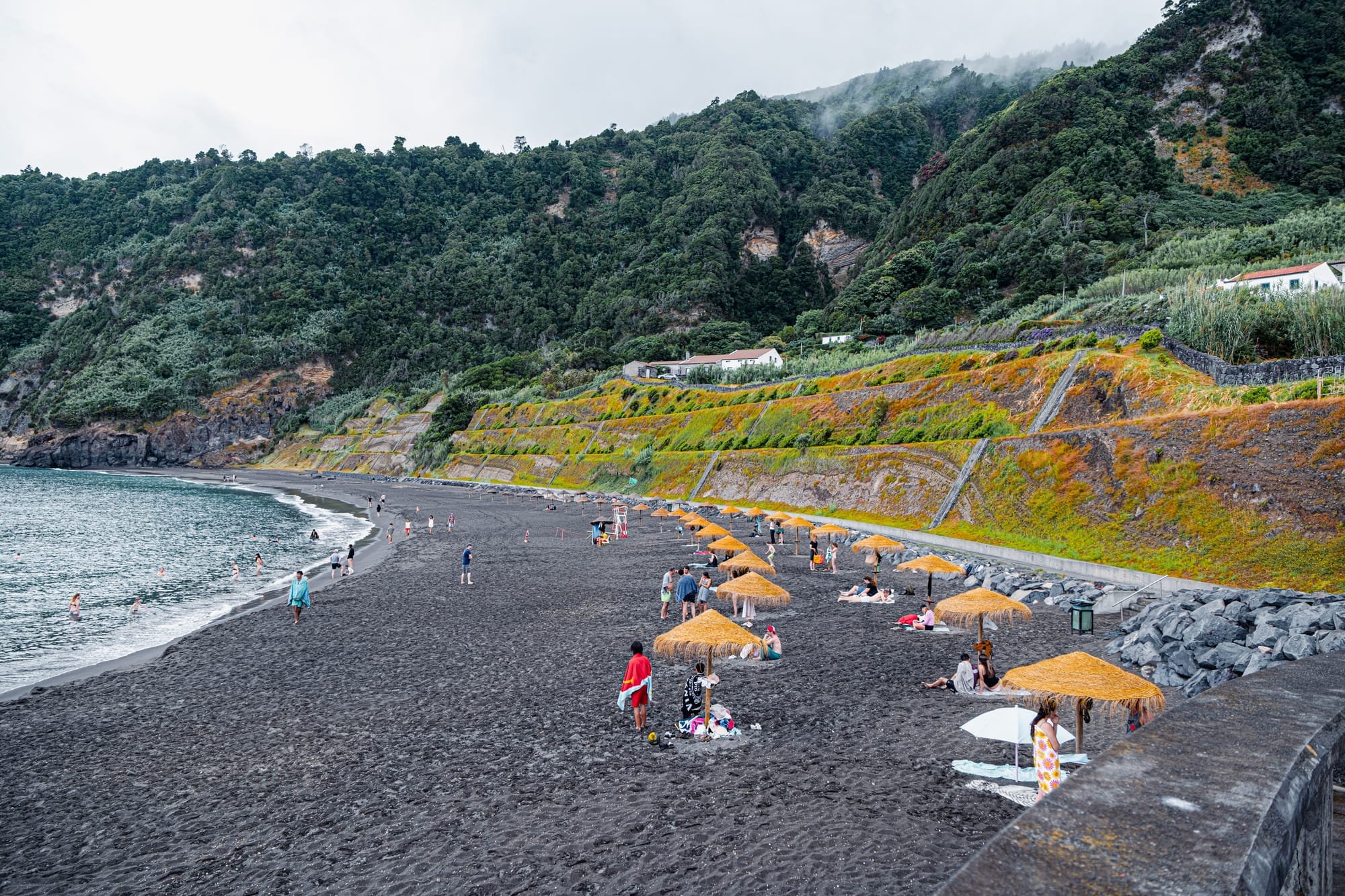
Geothermal activity continues under the beach surface, and you can feel the heat through your feet in certain places. Locals say that if you dig just a few centimeters down, the sand turns hot to the touch. The water here is calm and swimmable, especially in summer, and the cliffs surrounding the cove soften the wind.
The heat comes from hydrothermal springs under the bay, which is why the water here feels warmer than at most beaches on the island. The Visit Azores page on Praia do Fogo and Visit Portugal both describe it as a bathing area with warm water, parking, toilets, and showers. Bring your own shade, since there isn't much on the sand.
How warm is the water at Praia do Fogo?
Warmer than other beaches on the island, but don't expect a hot bath. The heat comes from several hydrothermal vents under the sea in the bay, as the Visit Azores beach page explains, so the water feels tepid rather than hot, and how warm it feels changes with the waves, the tide, and where you swim. No official source publishes a water temperature, so be wary of exact figures online.
If you want properly hot water, São Miguel has better options. This is how Praia do Fogo compares with the island's other warm-water swims:
| Place | What it is | Cost | Best for |
|---|---|---|---|
| Praia do Fogo, Ribeira Quente | Dark-sand sea beach warmed by underwater vents | Free | A real beach day with slightly warmer sea, June to September |
| Poça da Dona Beija, Furnas | Hot thermal pools in a garden, open into the evening | Paid entry | A hot soak after a day in Furnas |
| Caldeira Velha, Ribeira Grande | Thermal pools and a warm waterfall in the forest | Paid entry | Hot pools combined with Lagoa do Fogo |
| Ponta da Ferraria, west coast | Ocean rock pool where a hot spring meets the sea | Free | An adventurous swim, best near low tide in calm seas |
At one edge of the beach, near a short set of stairs, you’ll find a small restaurant perched above the sand. This is where we stopped for lunch: a vegan pizza made without cheese, topped with Azorean pineapple. Simple, hot, and crisp, with that almost floral sweetness of island-grown fruit.

The view looked directly over the ocean, and the breeze smelled of salt and roasted crust.
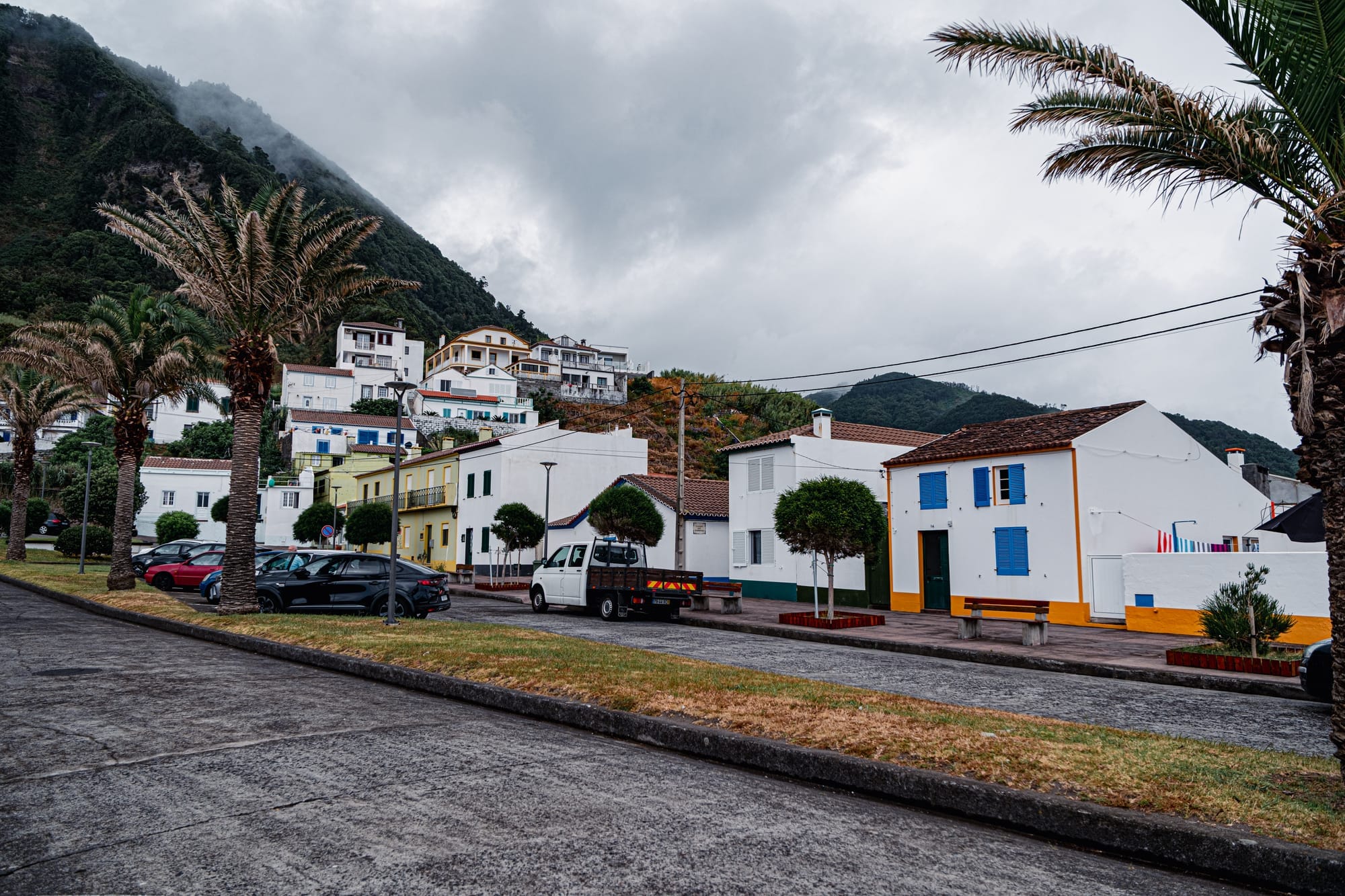
White and blue houses in Ribeira Quente
The houses in Ribeira Quente are low and light, most of them painted white with blue trim. Some feature mosaic tiling along the base, others small balconies draped in laundry.
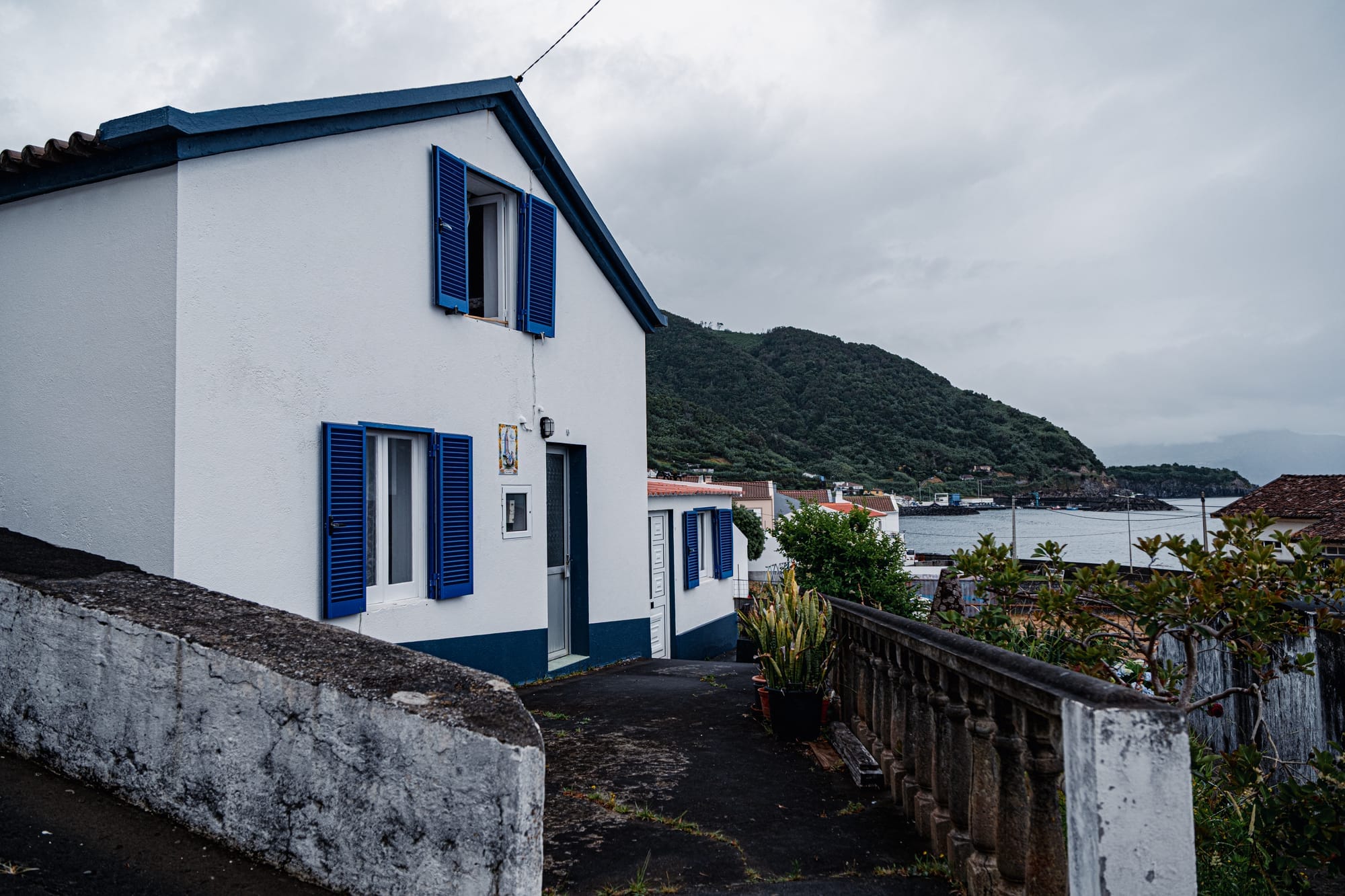
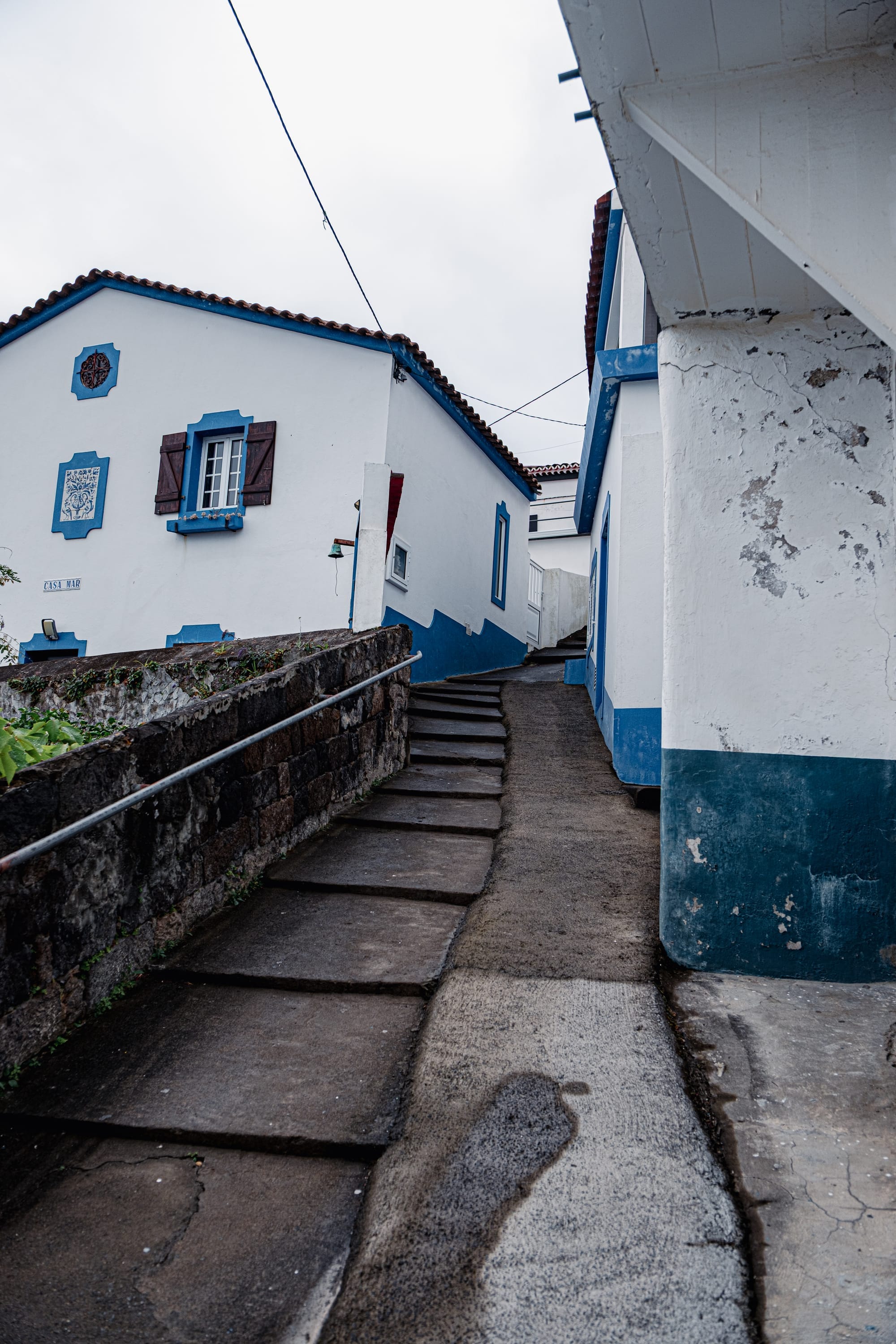
Tiled shutters, damp stone, and sea glimpses tucked between Ribeira Quente’s backstreets
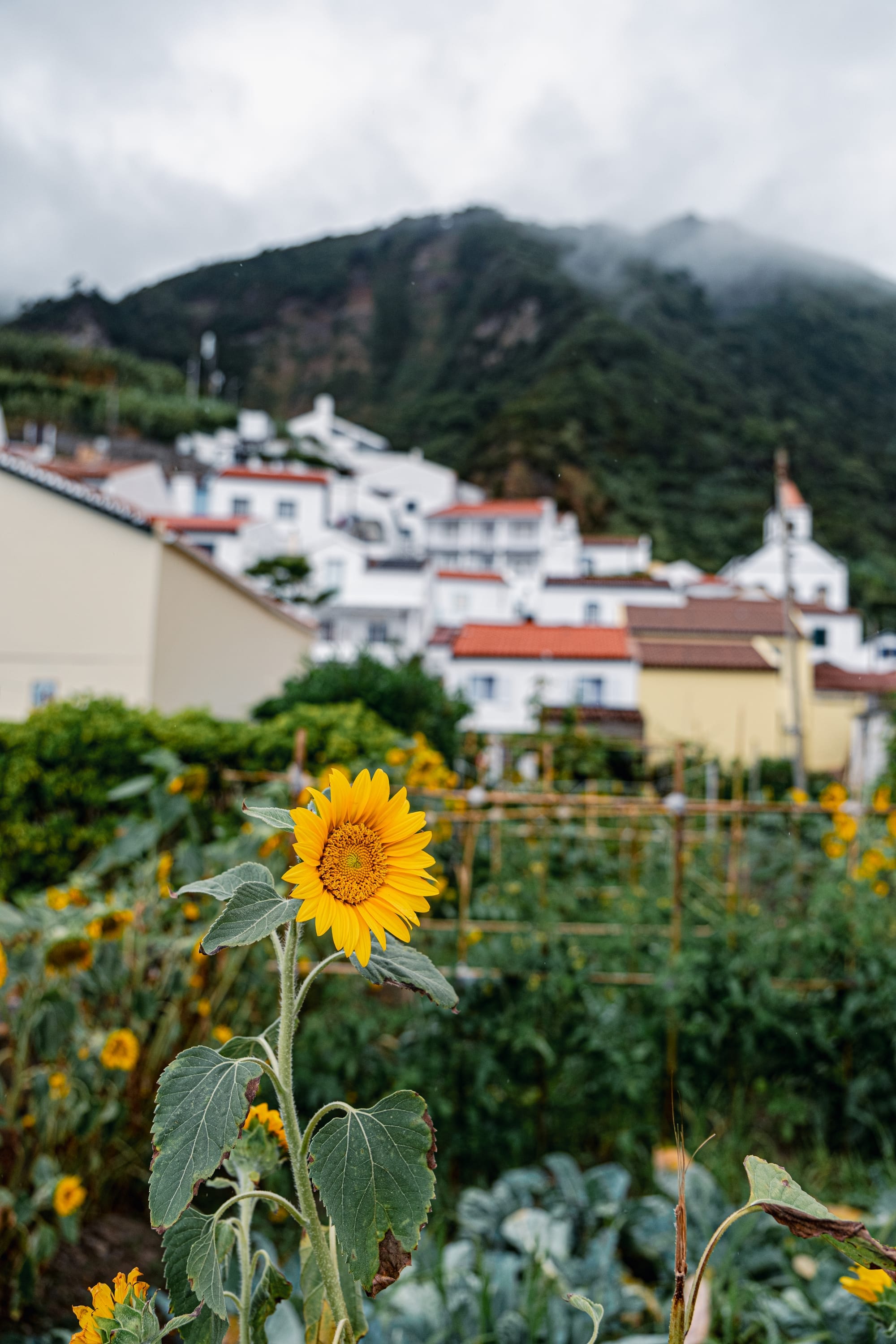
Near the center of town, we passed a string of sunflowers bursting up in a garden.
There’s a small church set slightly uphill, whitewashed, with a tiled roof and bell tower.
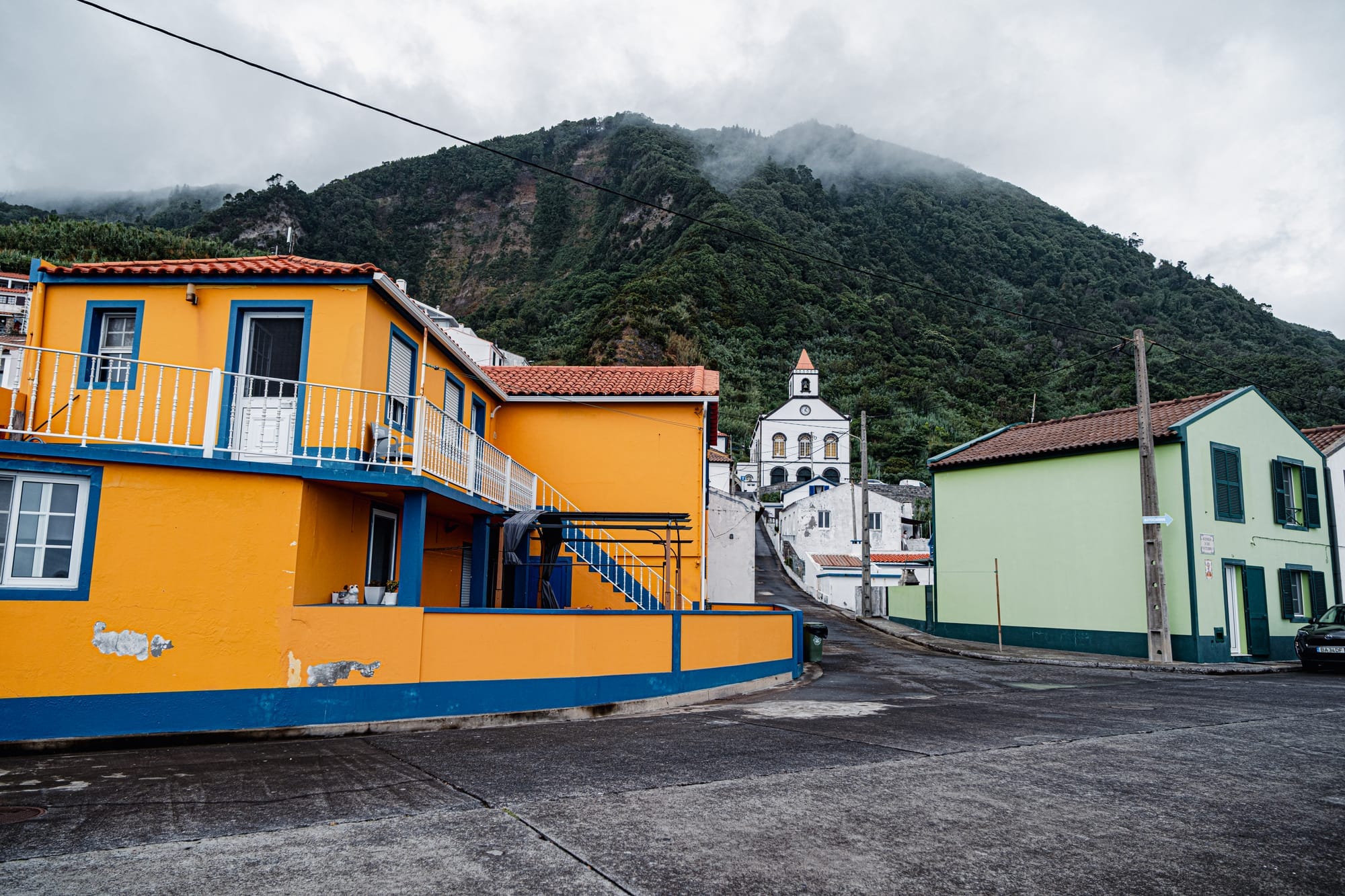
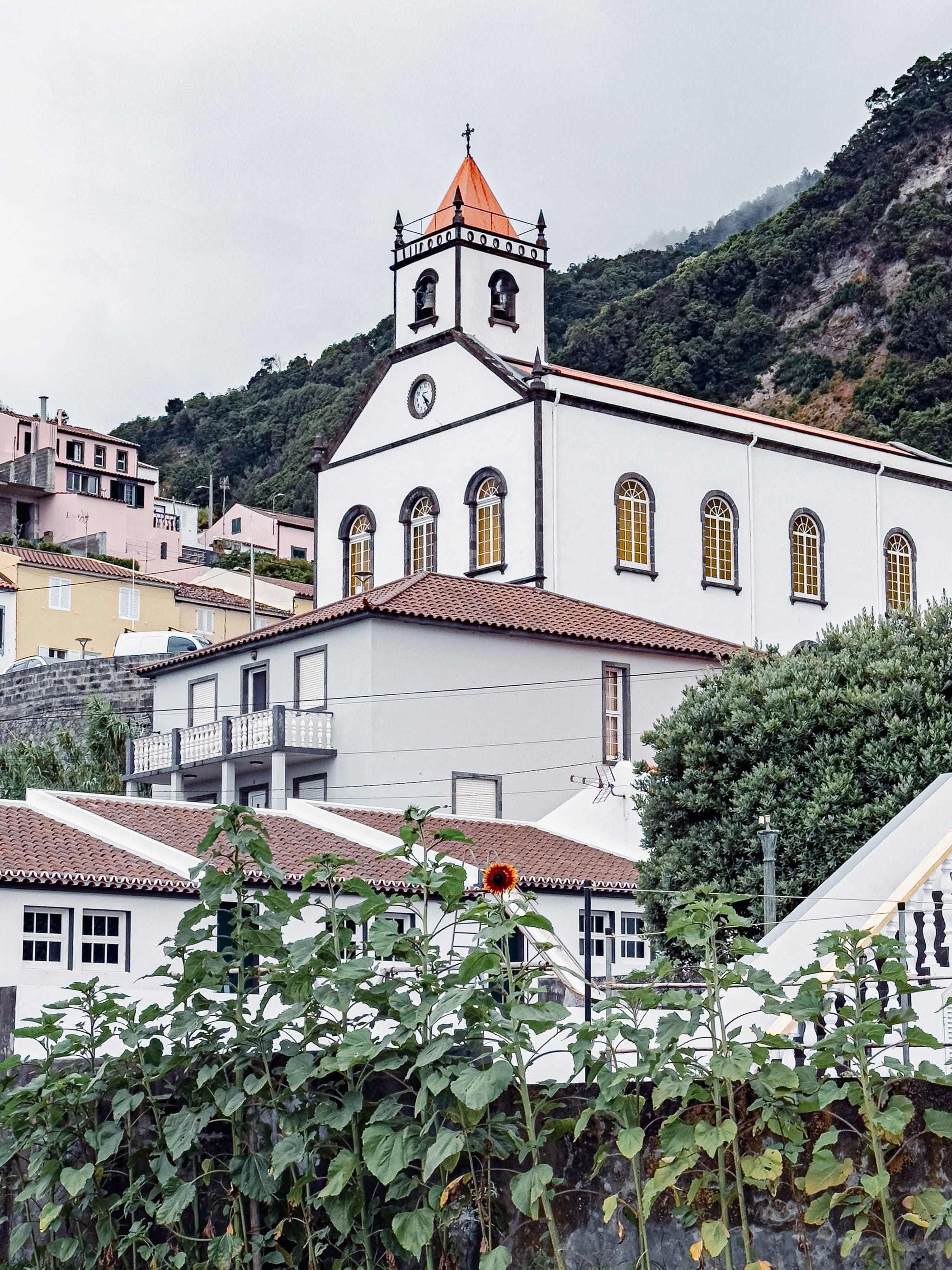

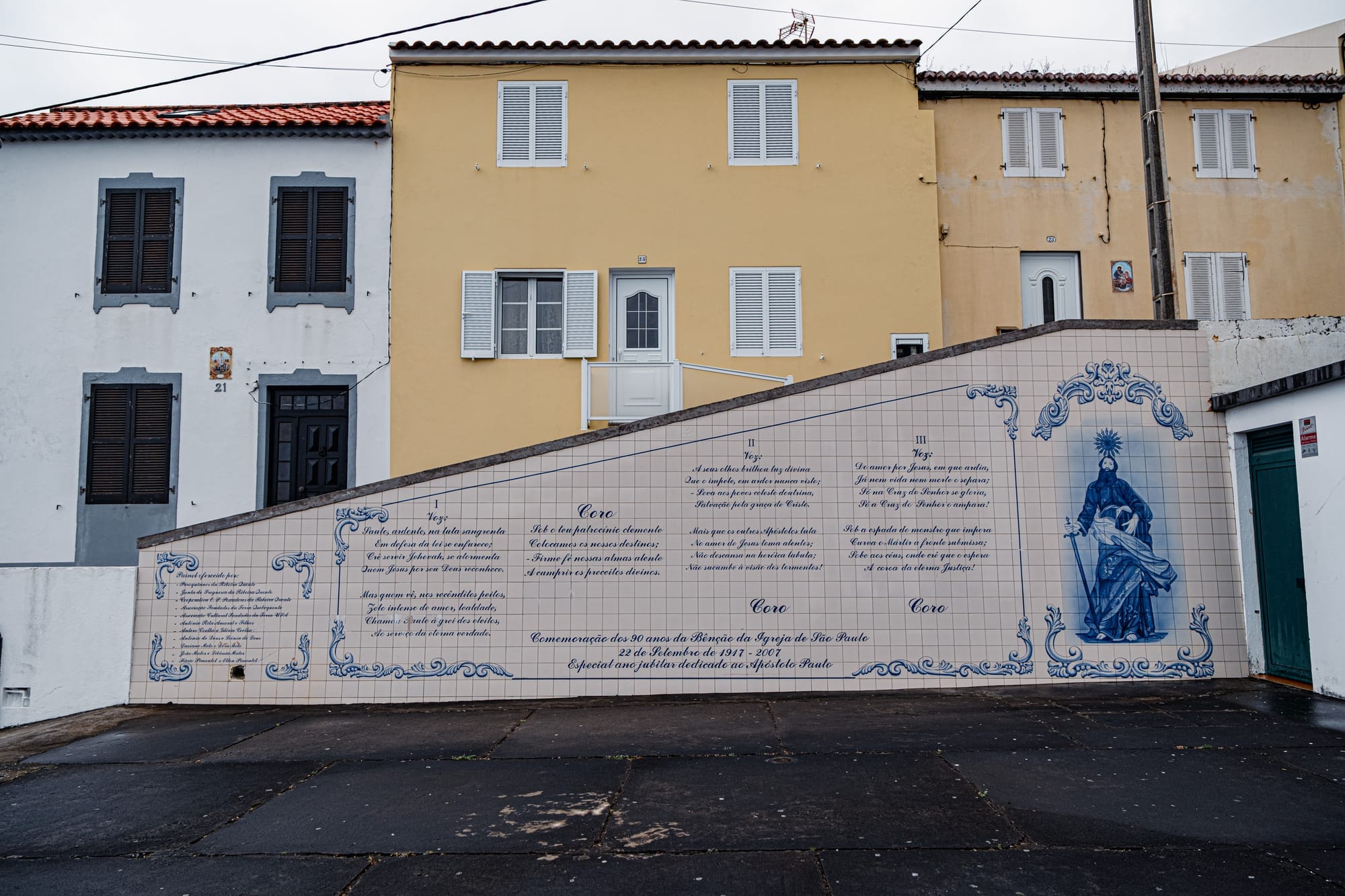
The church rises above bold façades and blue tile saints, steady in the mountain fold
A lone bright house stands out amongst the usual white ones.
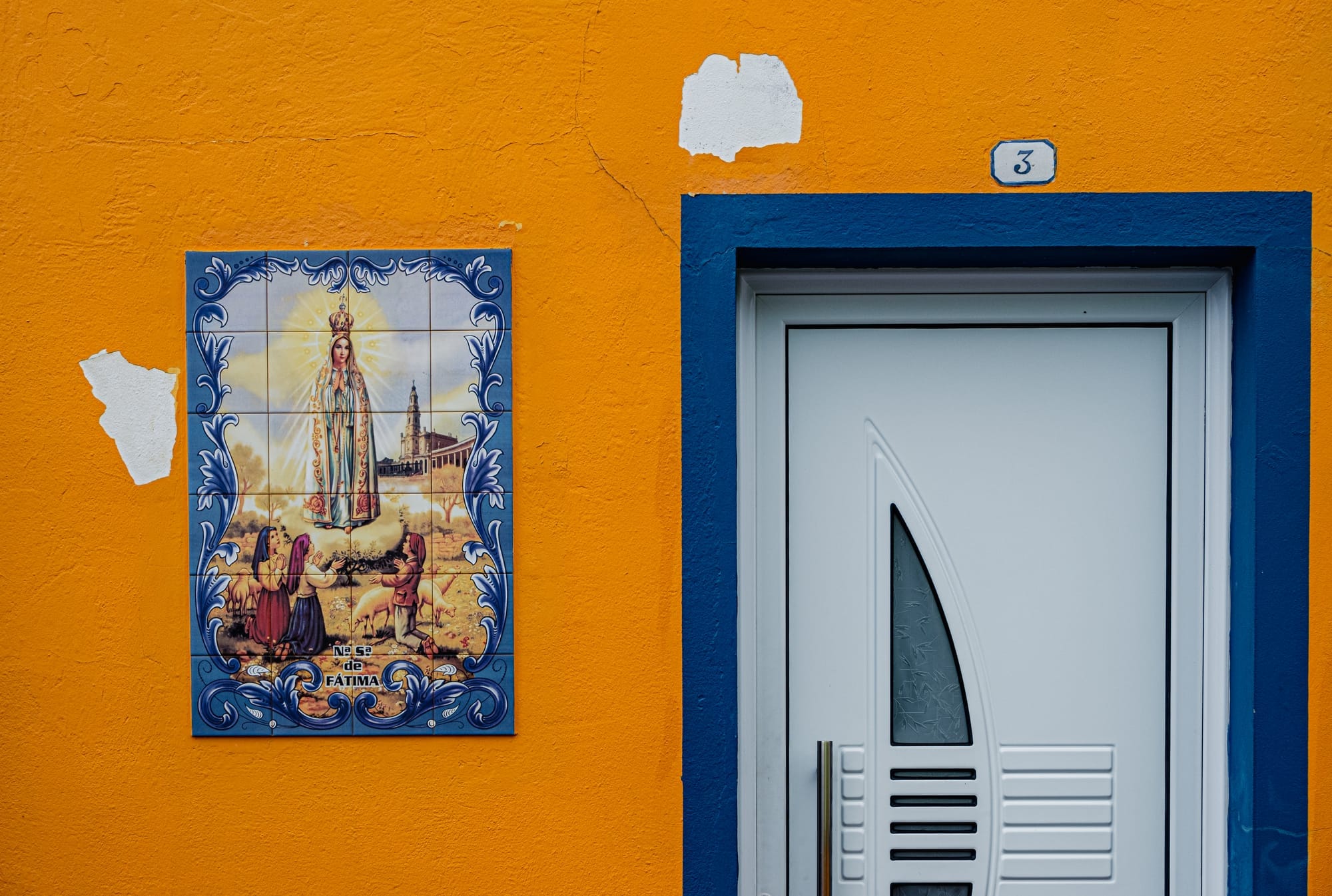
It’s a town built on a small scale. Paths twist along the stream that runs through the middle of the village, with bridges on either side.
You’ll see small boats stacked along the roadside, lobster traps resting beside porches, and dogs sunbathing at the edge of driveways.
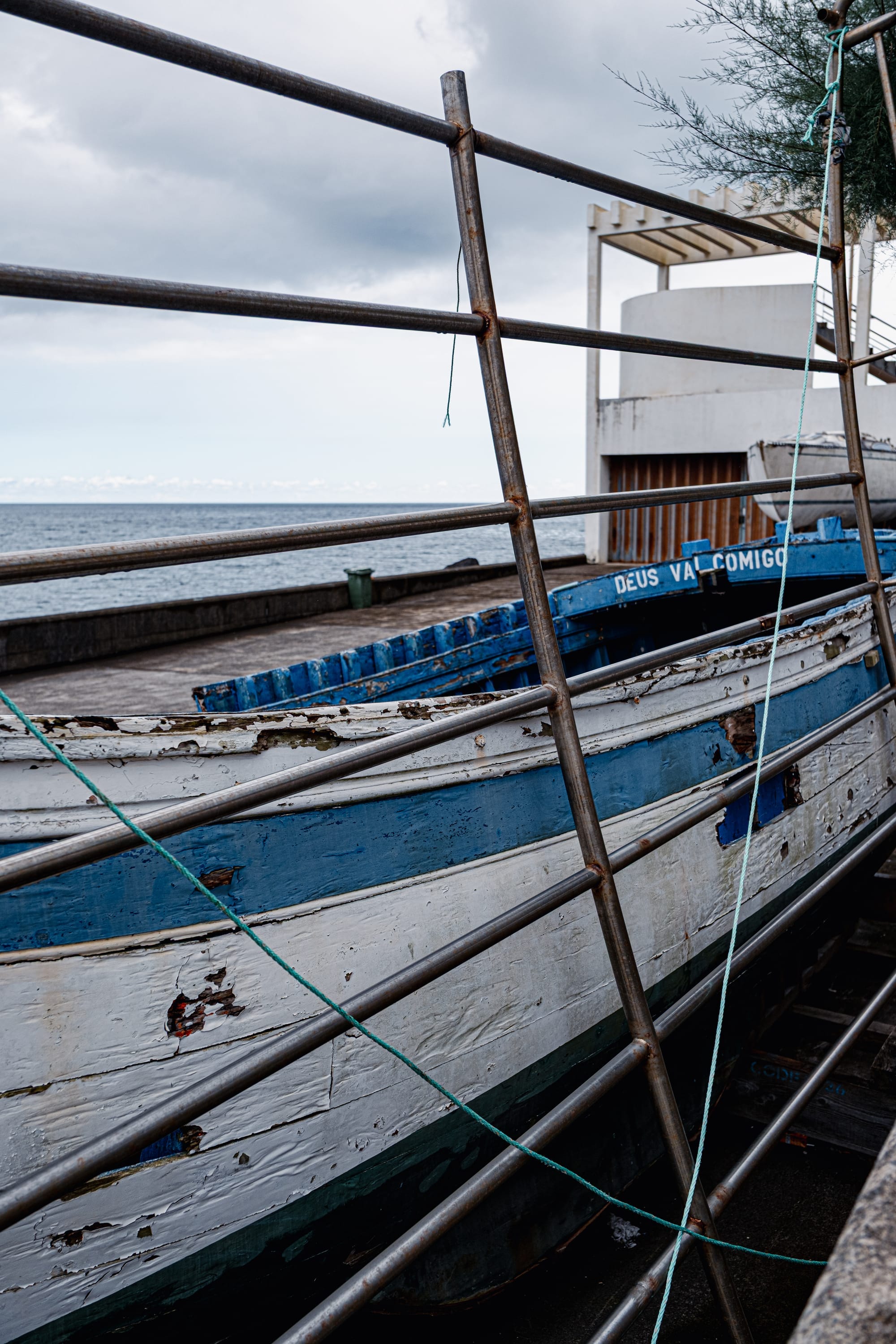
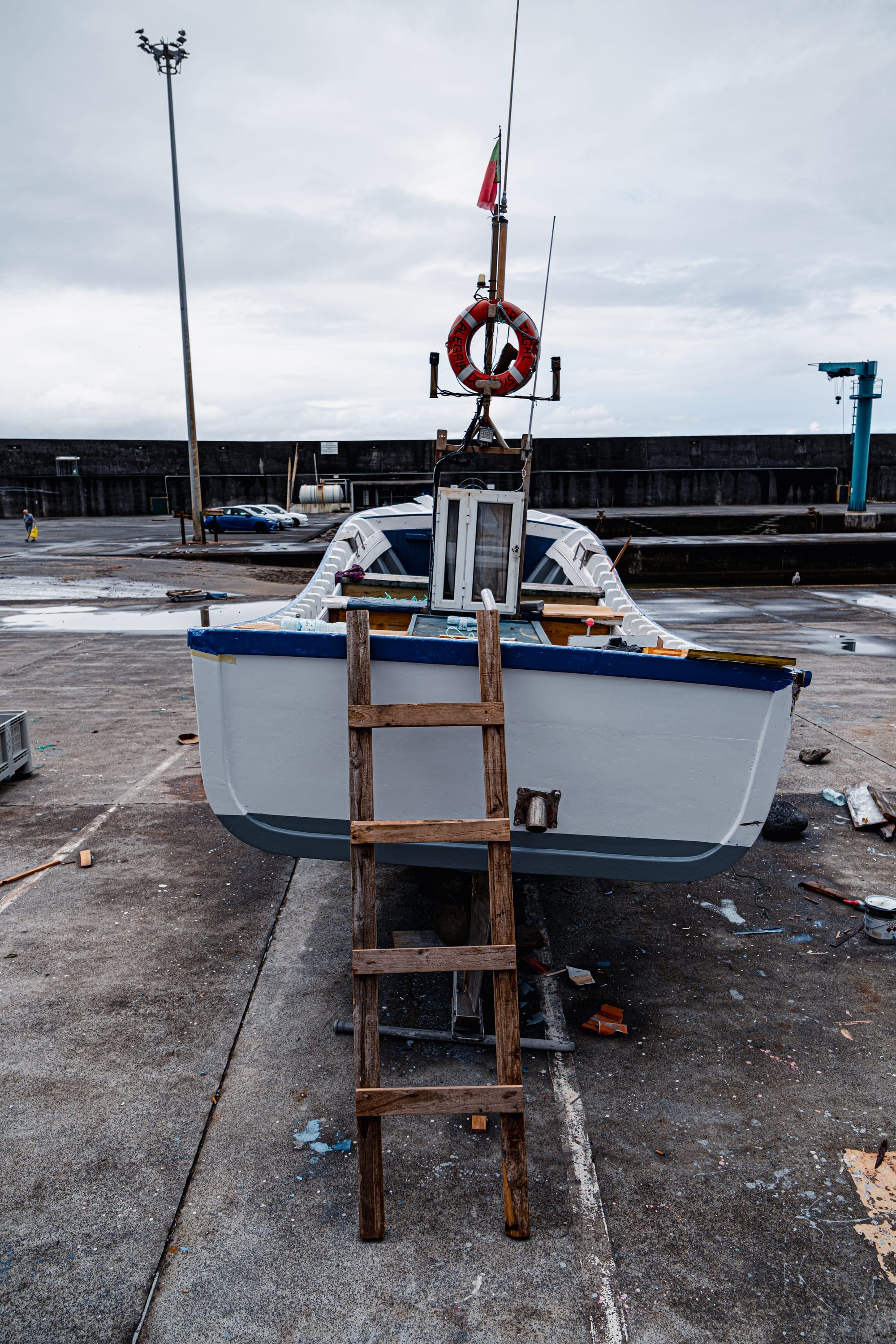
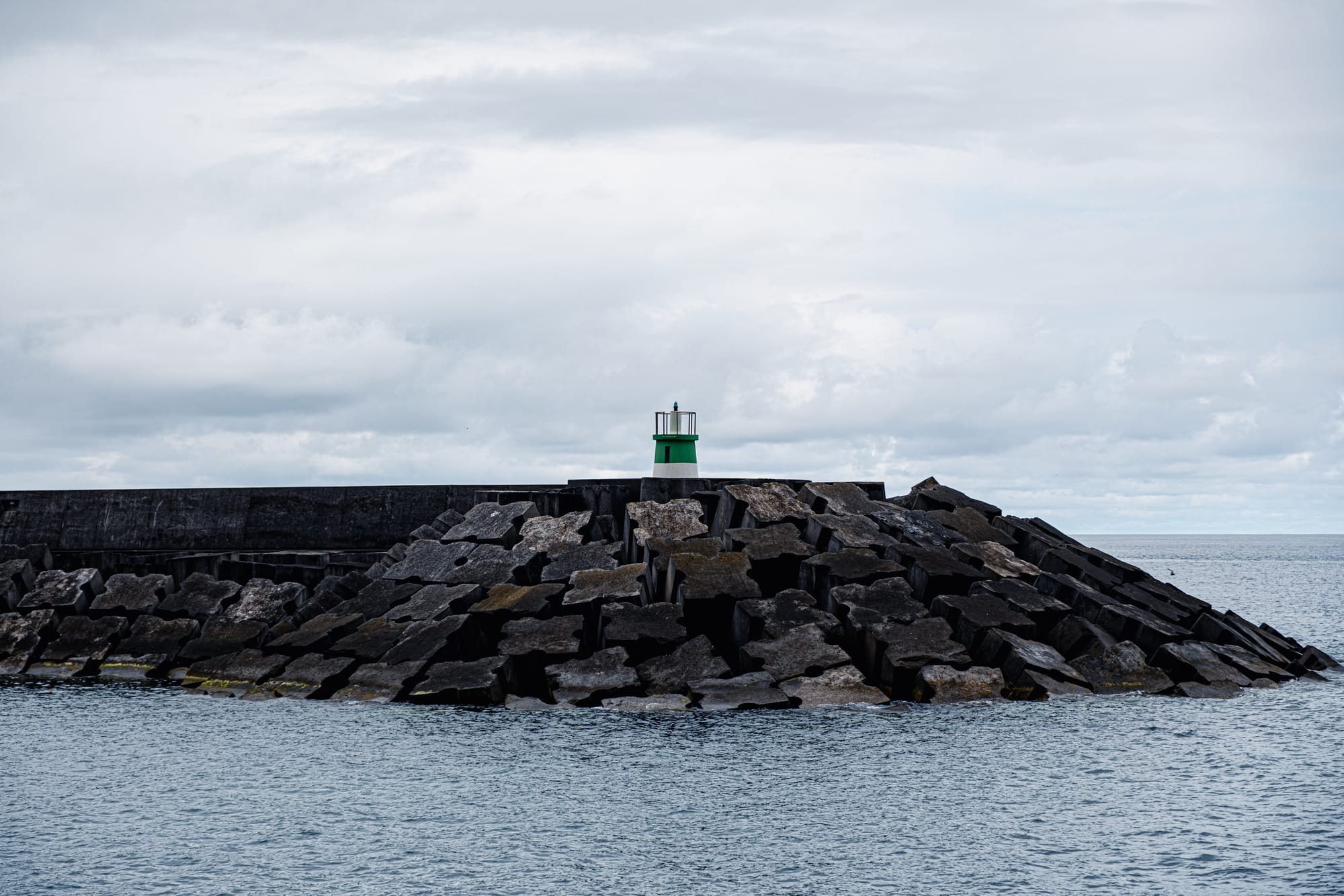
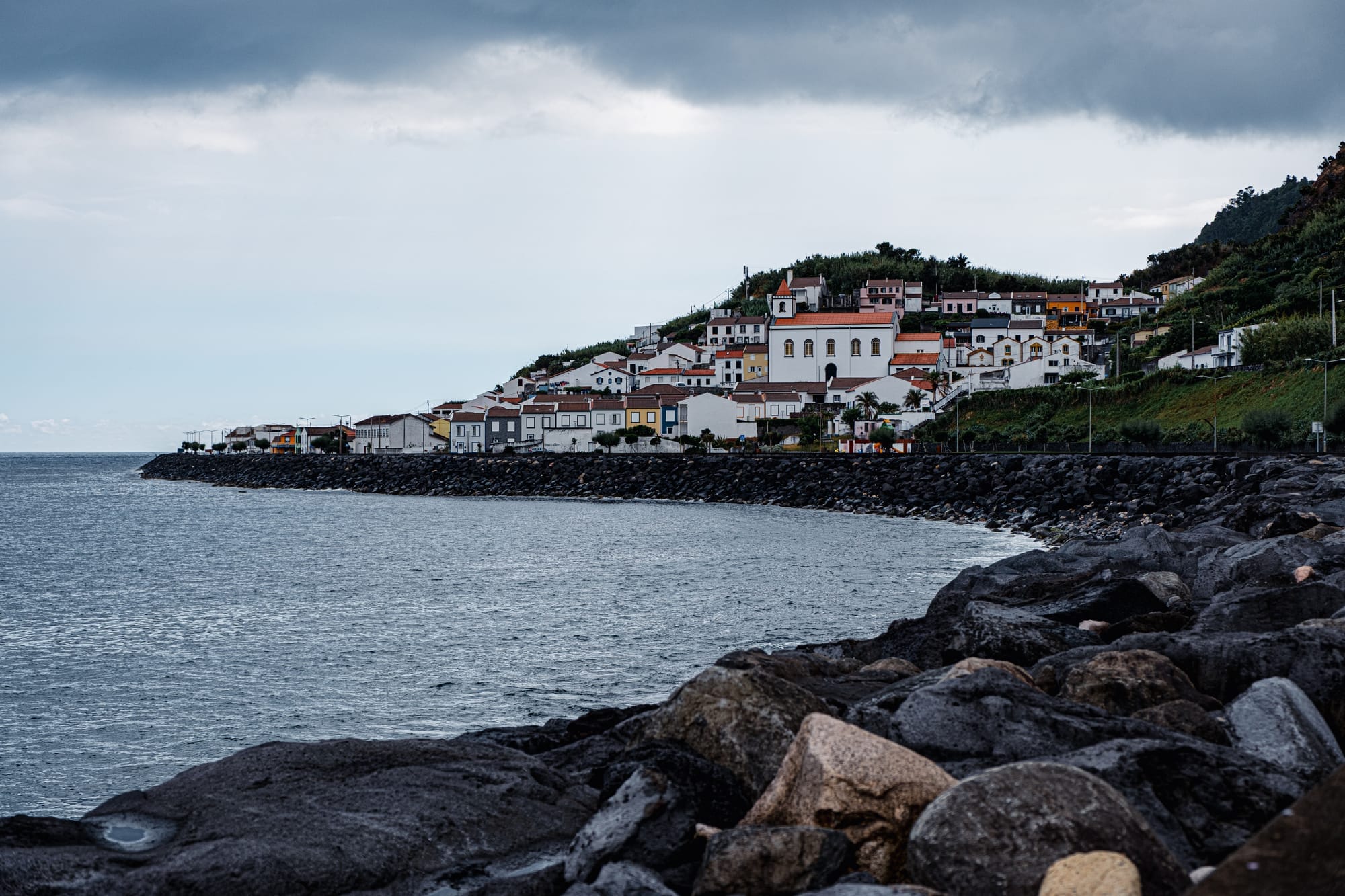
Fishing boats, salt-worn breakwaters, and a small harbor curve into Ribeira Quente’s edge
The port area, while small, is lively. You’ll find nautical ropes, rusted anchors, fresh paint on boat hulls, and the signs of a regular working routine. The sea here feels close but not encroaching.
Kima and thermal corn
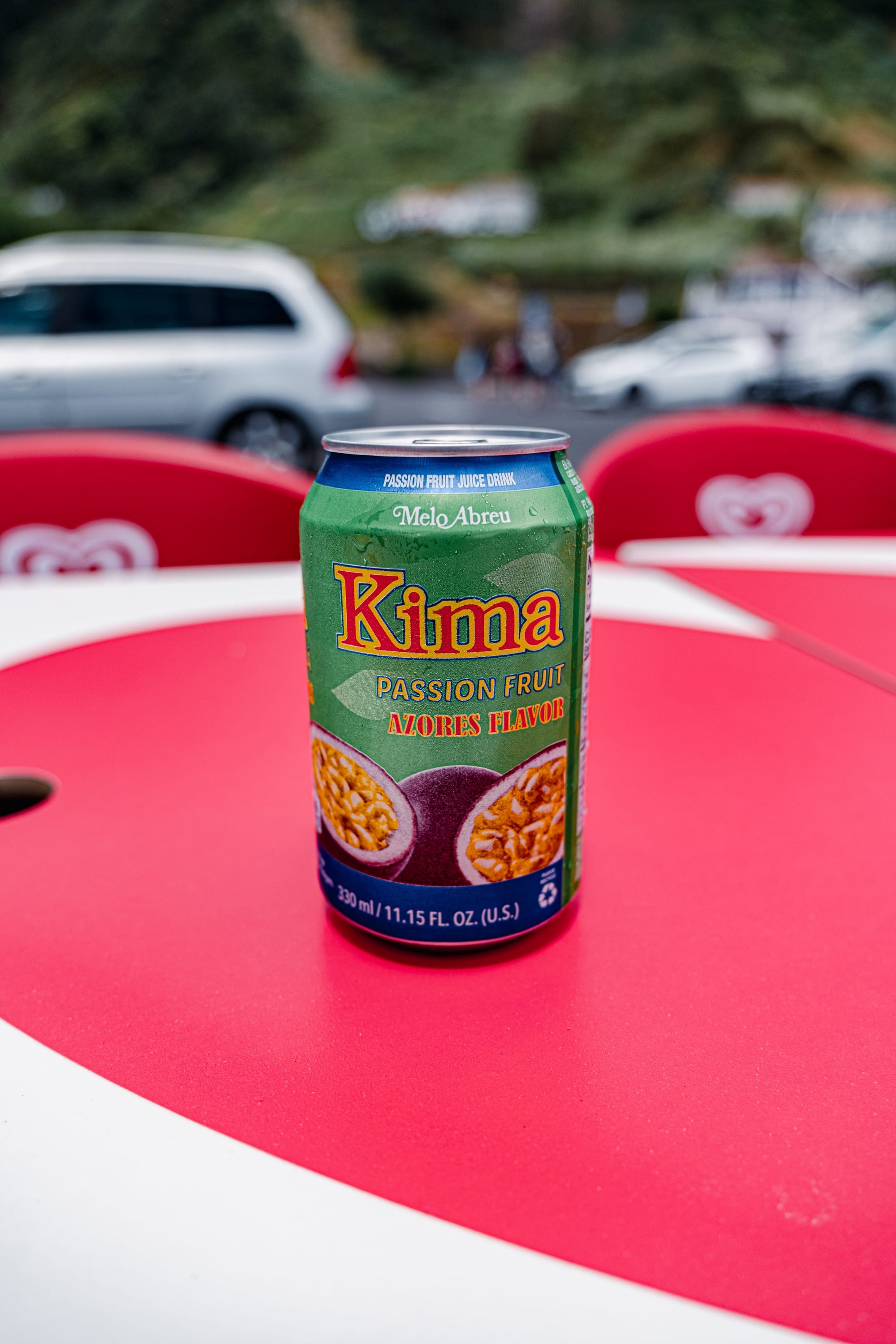
No visit to Ribeira Quente (or São Miguel, for that matter) is complete without trying a cold bottle of Kima. It’s a passionfruit soda unique to the Azores, made locally by a small factory in Ponta Delgada. It’s sweet, tart, lightly fizzy, and best served very cold. We picked ours up from a small kiosk near the beach.
We also stumbled upon a man selling thermal corn. The corn is boiled in water heated directly by underground geothermal activity. It comes wrapped in its husk, warm to the touch, slightly sweet, and perfectly tender.
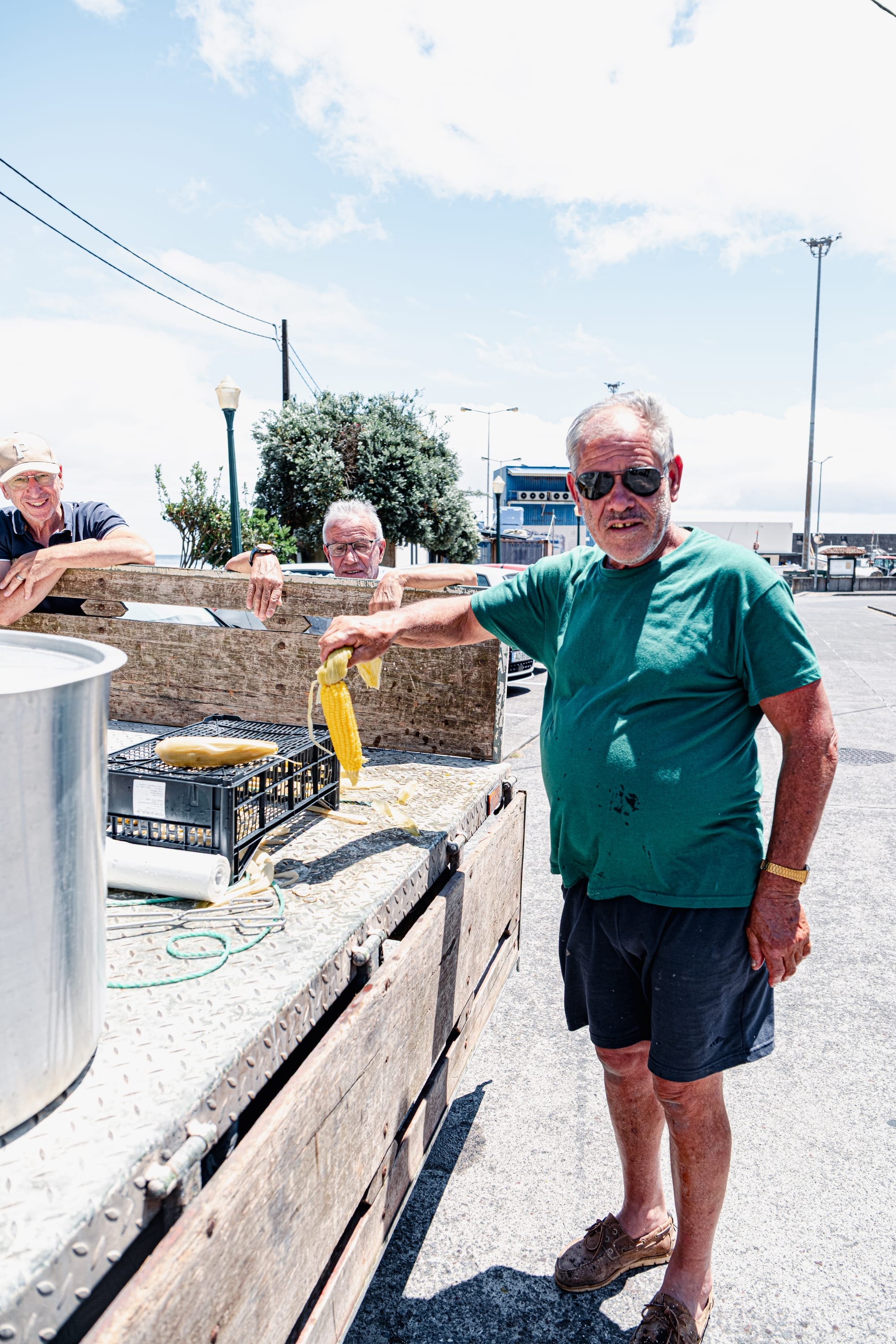
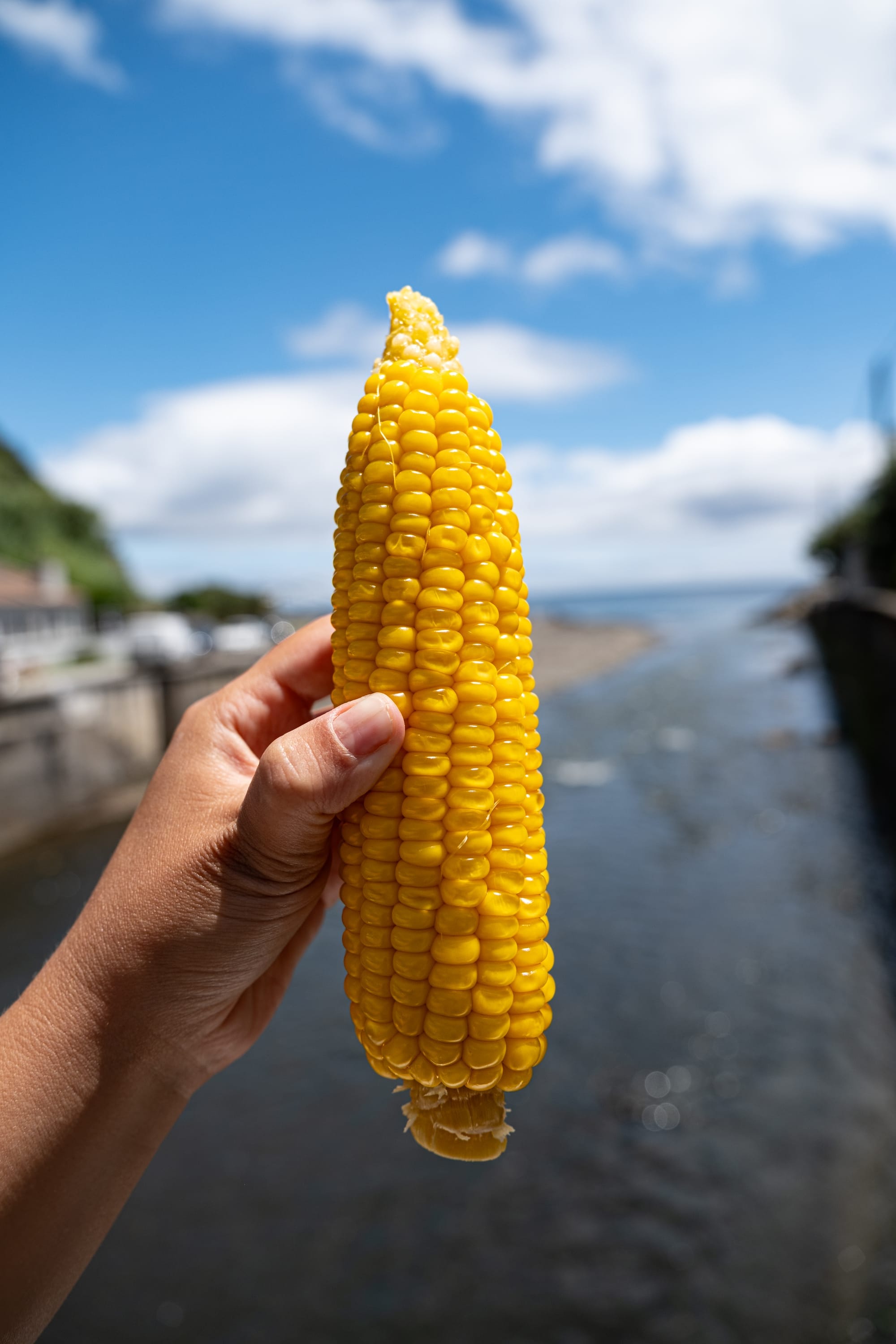
Thermal corn served from the back of a truck: steamy and tender
There’s a subtle earthiness to it that’s unlike anything from a stovetop. Eating it with one hand and sipping Kima with the other, sitting on a shaded bench, is a treat for every sense.
Walking around Ribeira Quente
Ribeira Quente is small enough to walk end to end in an hour, but there's more to see than its size might suggest. Behind the church, narrow lanes climb into green hills.
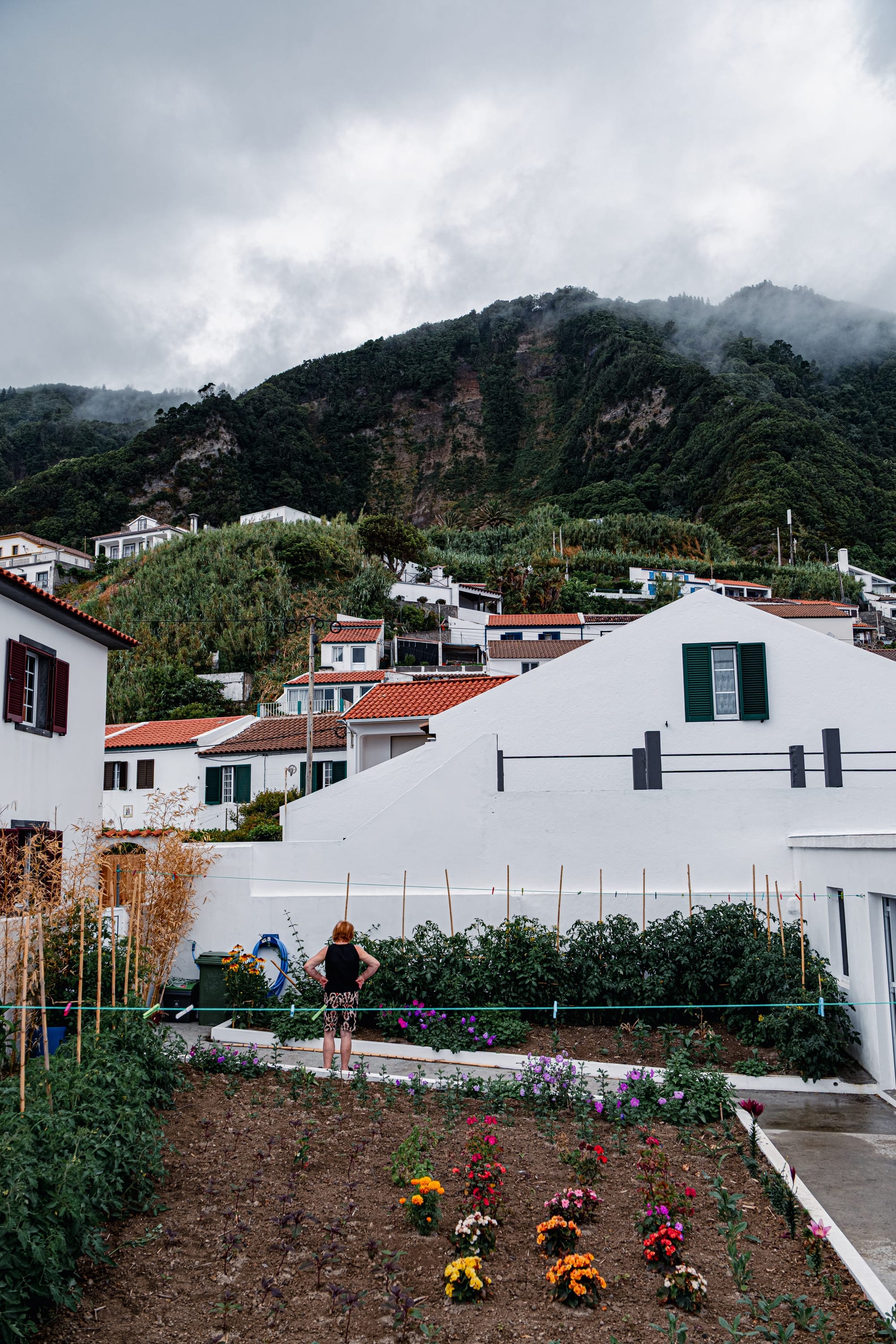
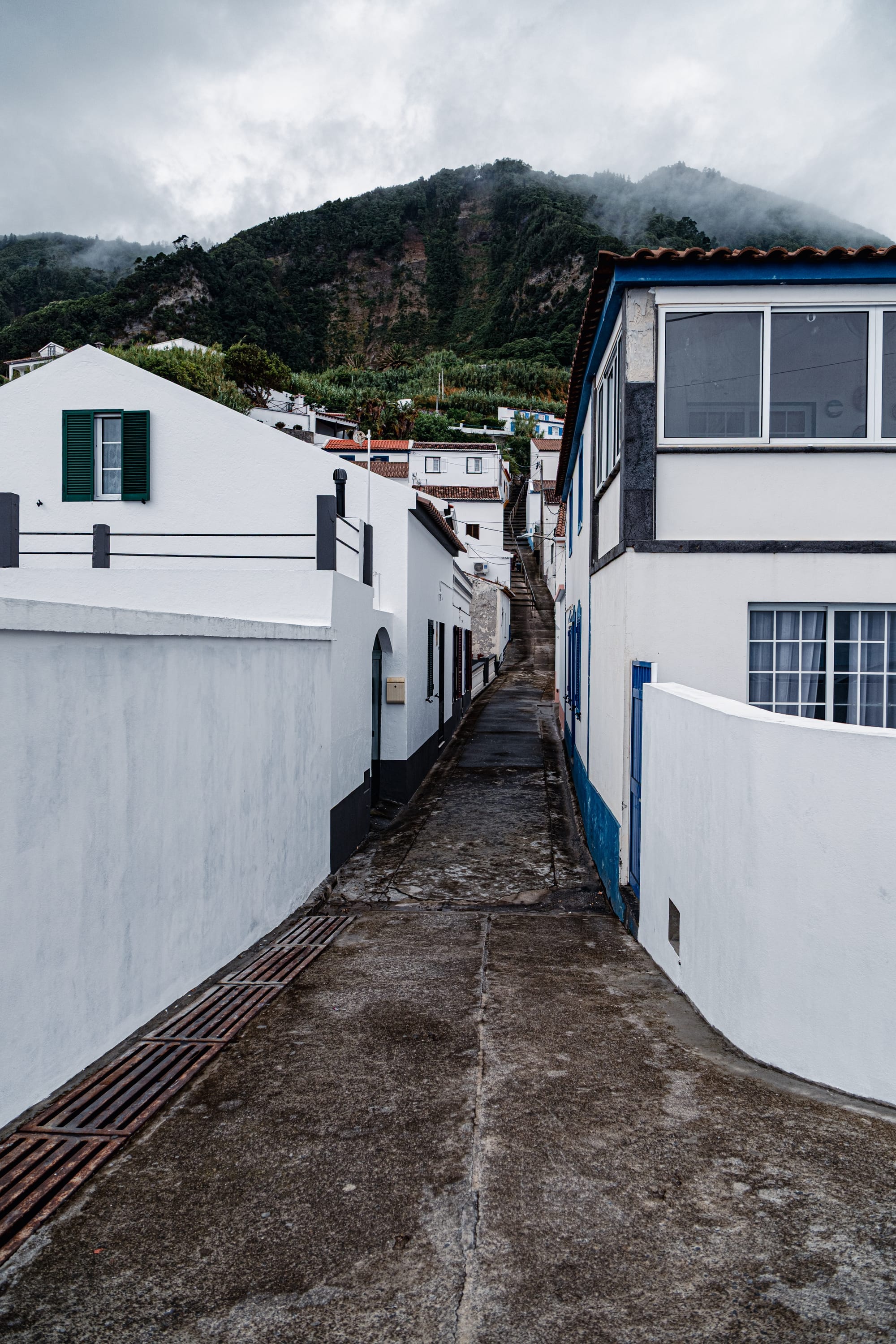
Whitewashed homes and narrow lanes set into the misty folds of Ribeira Quente’s hillside
Along the coastline, stone walls run beside iron fences. Near the port, a collection of metal sculptures (anchors, wheels, gears) sits like a casual museum of maritime memory.
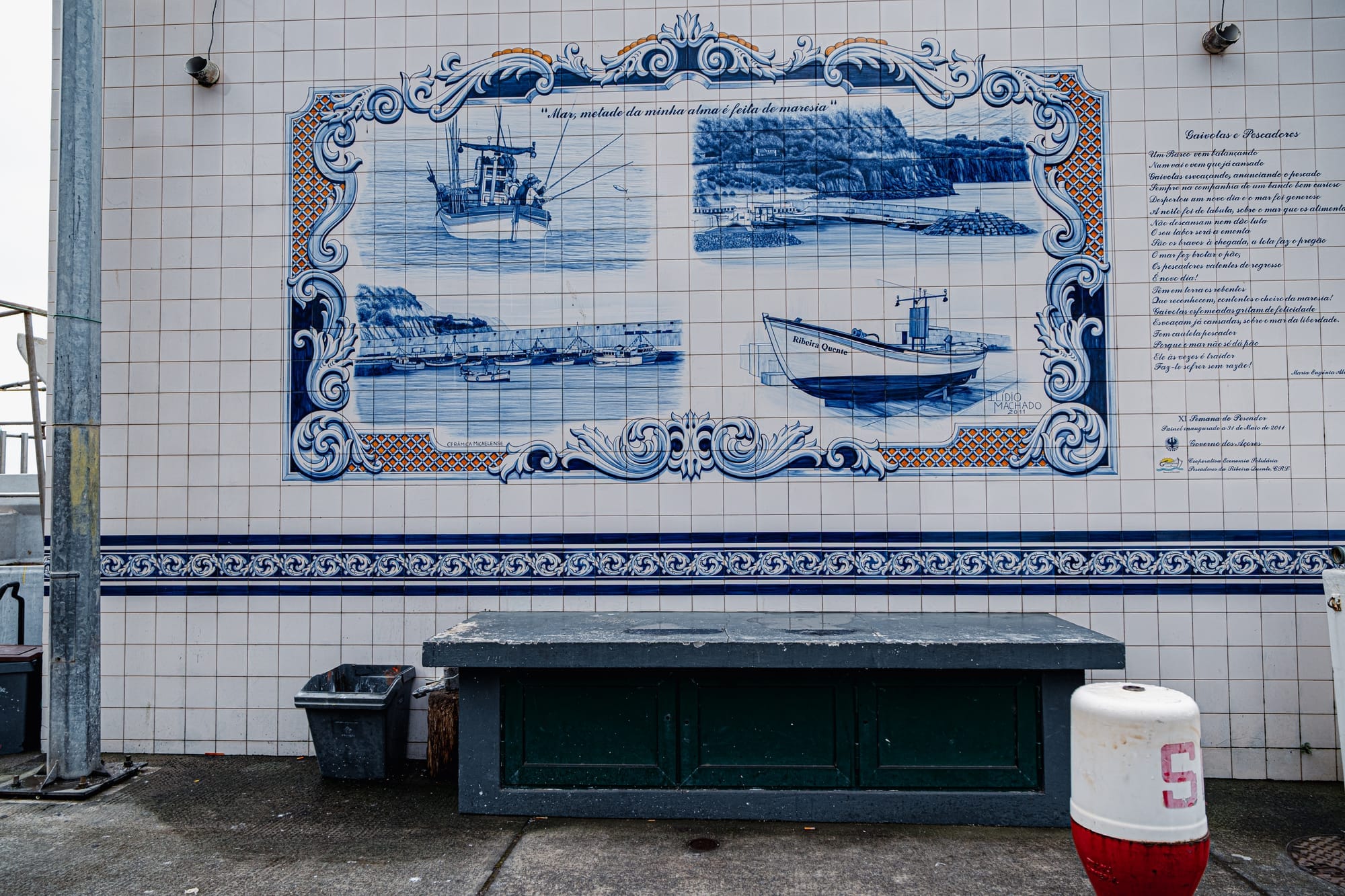
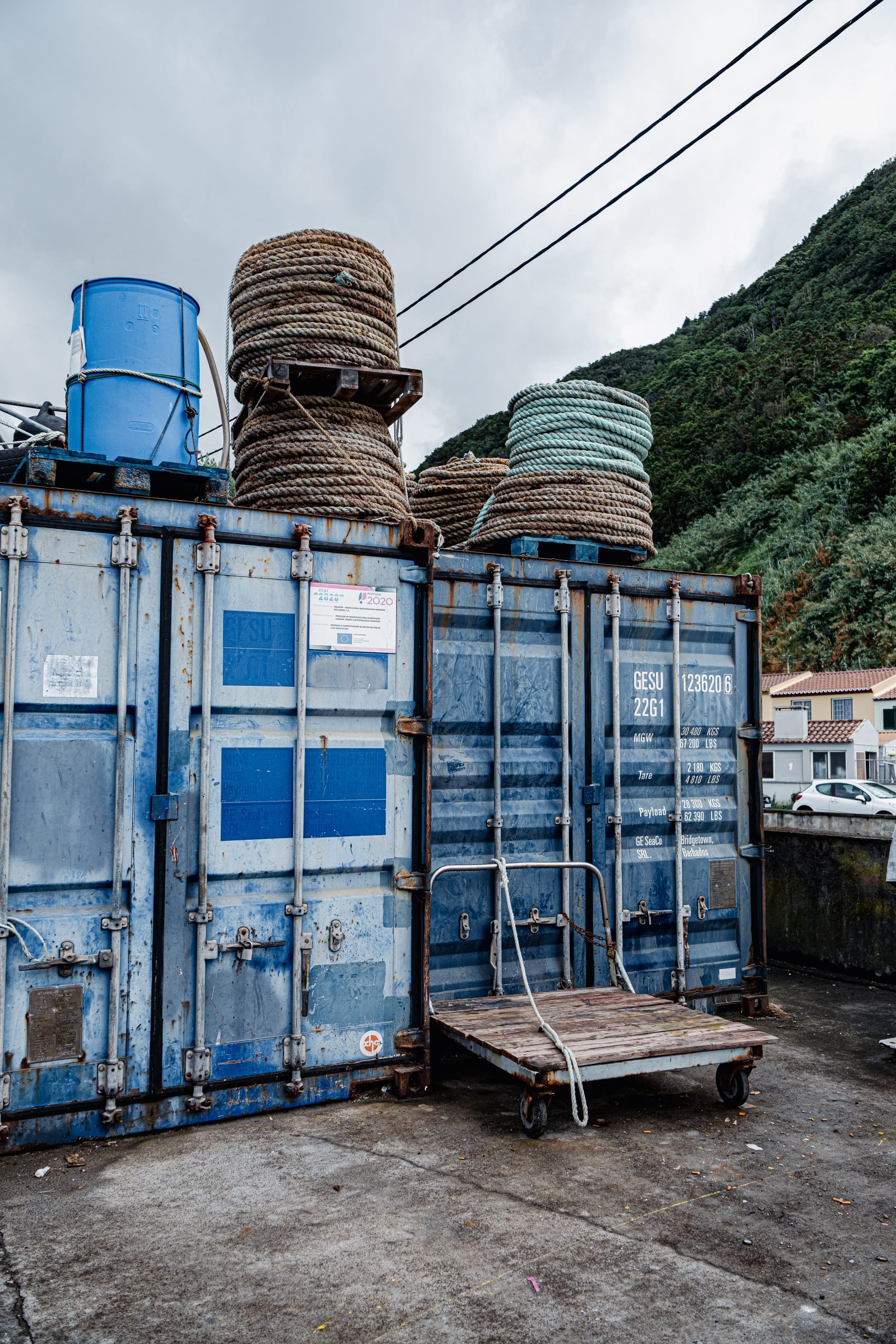
Maritime mural and fishing gear hint at Ribeira Quente’s enduring relationship with the sea
The smell shifts here: salt, then rope, then back to wet stone.
Prefer to go with a guide? One popular option is a Furnas and east island day tour. You can check dates and prices here:
A town shaped by heat and sea
The name Ribeira Quente means "hot stream," a nod to the geothermal forces that still flow beneath and around the town. Historically, this was one of the island’s main fishing hubs, and many families still depend on the sea. In 1997, a devastating landslide reshaped parts of the village, and it has since rebuilt carefully, with protective walls and improved infrastructure. But the scale and character remain intact.
According to Wikipedia's Ribeira Quente page, settlers arrived in the 15th century, and the village was cut off by land until two tunnels to Furnas opened in 1935 and 1939. Locals still call them the tunnels of freedom. The parish had about 2,400 residents at its peak in the 1960s, but emigration brought that down to under 800 by 2011. Its fleet has long landed some of the island's biggest tuna catches. The 1997 landslide followed heavy rain on 31 October and killed 29 people in the homes between Fogo and Ribeira Quente.
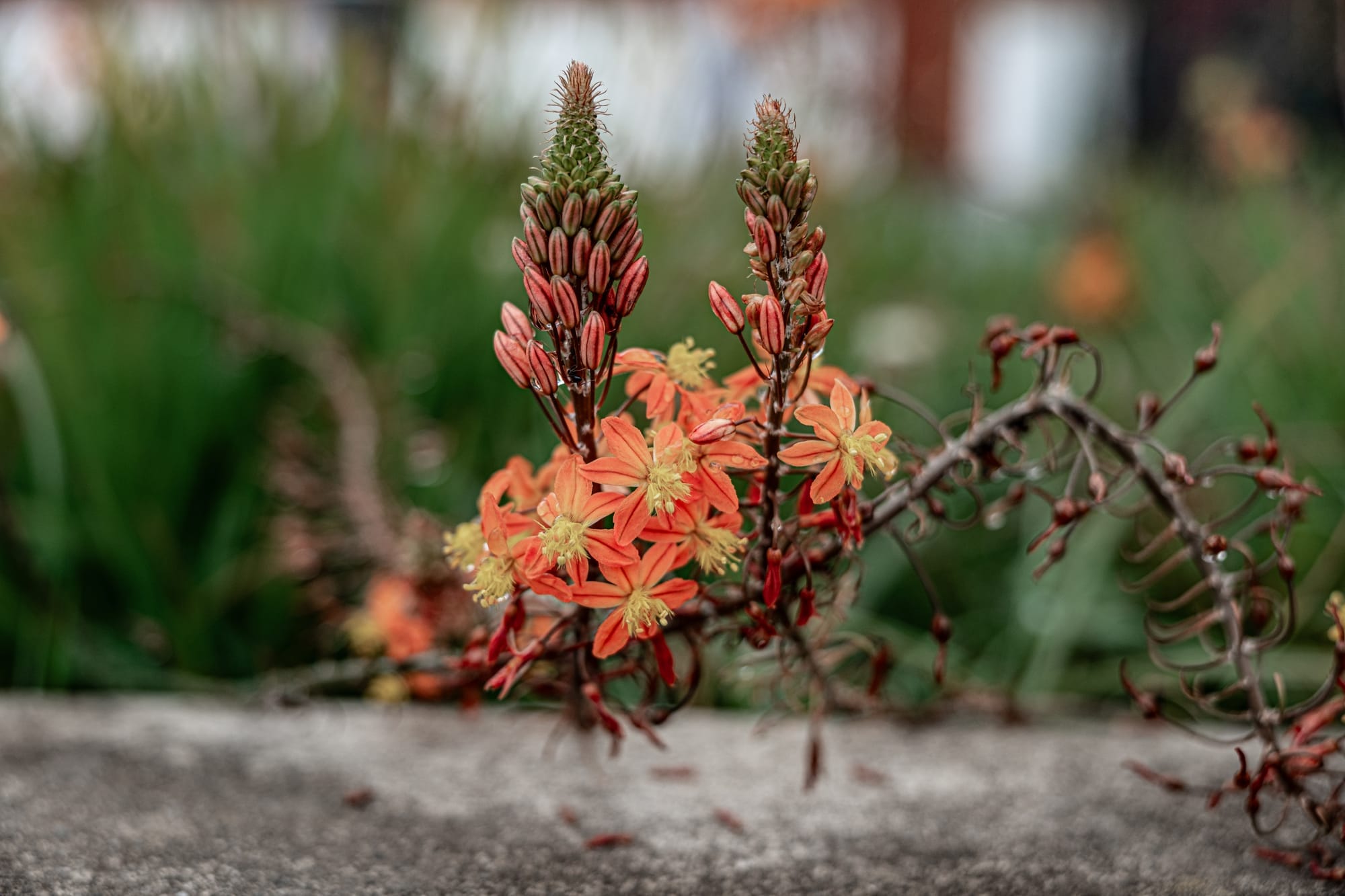
You’ll find details in the visuals, like the bold azulejos that reference maritime history, or the flowerbeds blooming with tropicals and the distinctive spikes of blooming succulents.
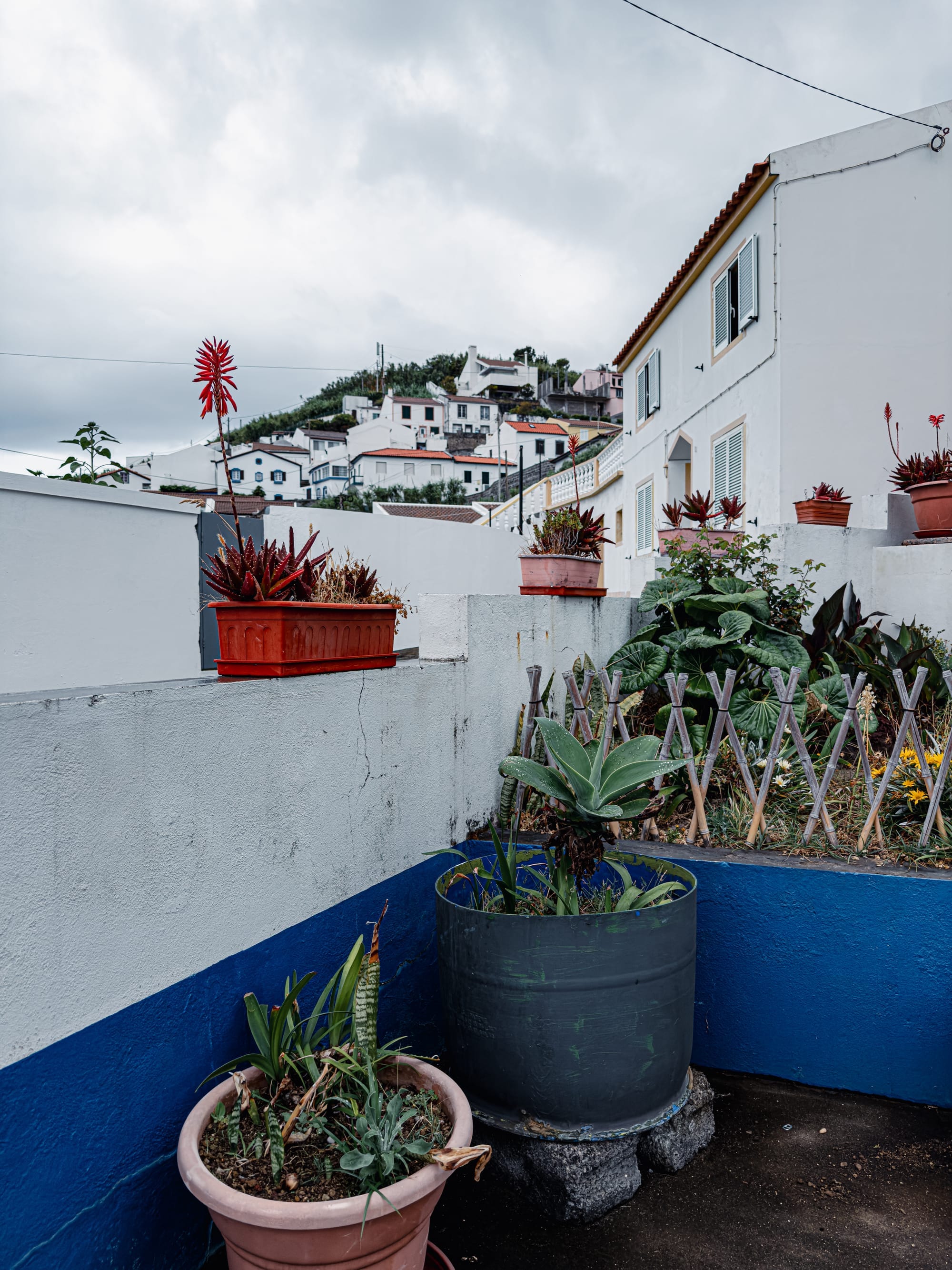
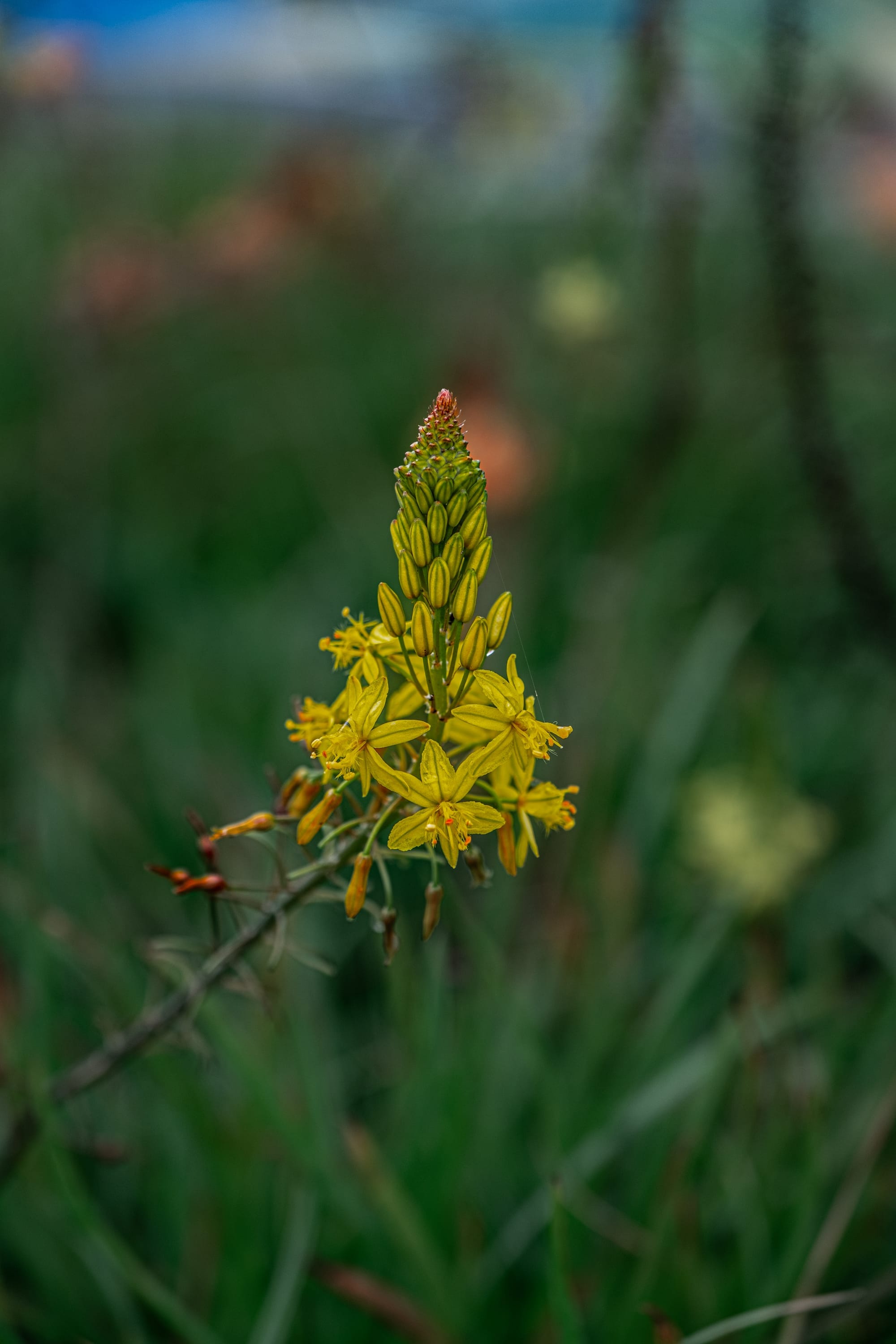
Container gardens and wild blooms echo the island’s improvisational, sun-soaked botany
The view from the beach looking back into the village shows homes stacked up the hillside, rising in rows like waves themselves, edged by dense green.
Practical notes
Ribeira Quente is about a 15-minute drive from Furnas, accessible by a winding road that drops through dense forest. The descent is beautiful and cinematic, with cliffs to one side and forest canopy overhead. Parking is available near the beach and is generally easy to find, especially on weekdays.
The coast below Furnas is part of the Furnas and southeast chapter in our São Miguel guide (PDF), along with the lake walk and seven hot springs compared.
How to get to Ribeira Quente
By car: this is by far the easiest way. From Ponta Delgada, take the fast road east along the south coast toward Povoação and Furnas, then follow the signs down to Ribeira Quente on the regional road through the tunnels. Allow about 50 minutes from Ponta Delgada. From Furnas it's a 15-minute drive downhill, with a waterfall and picnic area by the road on the way.
Driving through the tunnels to Ribeira Quente
The road down from Furnas winds through the valley and the two tunnels that opened in the 1930s. Before them, the only ways in were a dirt road, on horseback, or by cattle cart, which is why locals still talk about the tunnels as the ones that ended the village's isolation.
For drivers, it's an easy road in good weather: turn your headlights on for the tunnels, keep your speed down on the bends, and watch for buses coming up. The valley sides are prone to landslides after heavy rain. A landslide in November 2012 affected about 1 km of the road near the tunnels, though access stayed open, so if there's been a storm, check the local news or ask at your accommodation before you go.
By bus: there are public buses from Ponta Delgada and Furnas, but services are limited, especially at weekends. Check the current timetable and the last bus back before you rely on it.
On foot: the official Agrião trail (PR12 SMI) is a 7.6 km linear coastal walk between Povoação and Ribeira Quente, rated medium and taking about three hours. It crosses the Agrião stream, which needs care after rain, and it has been closed at times, so check the alerts on the Visit Azores trails site before setting out.
| Option | Time | Good to know |
|---|---|---|
| Car from Ponta Delgada | About 50 minutes | Easiest option. Parking by the beach, busier on summer weekends |
| Car from Furnas | About 15 minutes | Downhill through the tunnels |
| Bus | Allow most of a day | Few services, fewer at weekends; check the last bus back |
| Walk the PR12 SMI from Povoação | About 3 hours, 7.6 km one way | Linear, medium, sometimes closed; you'll need a lift or taxi back |
| Day tour or taxi | Varies | Most east-island tours focus on Furnas, so check whether Ribeira Quente is included |
The Chicharro festival in Ribeira Quente
Each summer, the village hosts the Festa do Chicharro, a music and food festival named after the small horse mackerel the local boats catch. It has run since 1988 and is one of the biggest festivals in Povoação, with concerts and chicharro cooked in different ways. Dates vary between July and August, so check the year's program. Expect the village to be packed, with parking managed from Furnas during the festival. It's a fish festival, so not one for vegans like us, but it's worth knowing the dates, either to join in or to plan around the crowds.
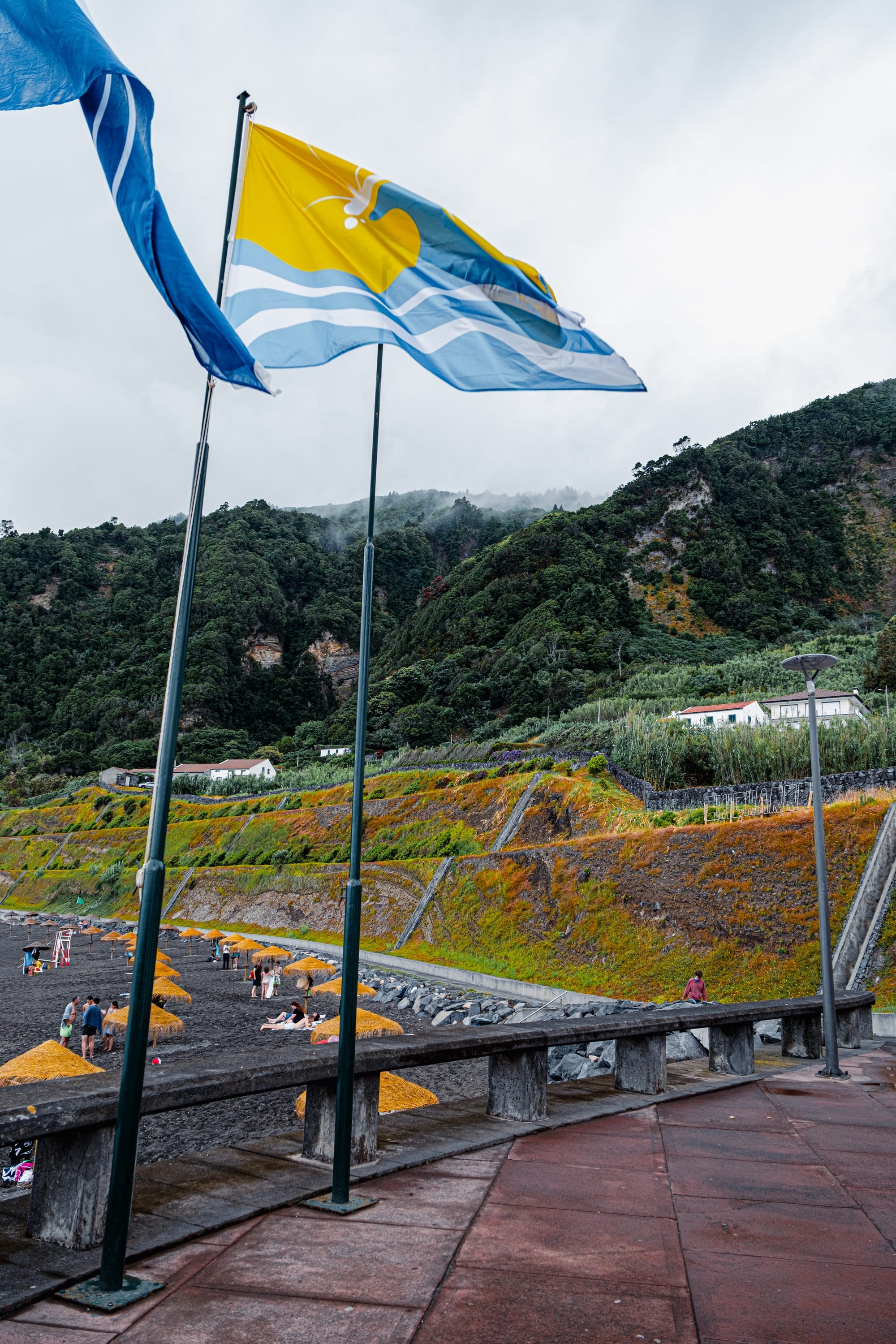

Waving flags, blooming tiles, and bright façades in Ribeira Quente
Be sure to bring a towel, water, and sun protection. The volcanic sand retains heat, so if you’re sensitive, it’s worth packing footwear for the beach itself.
Tips for visiting Ribeira Quente
Combine it with Furnas. Spend the morning at the lake or hot springs, then drive down for an afternoon swim.
Check the sea before swimming. The bay is sheltered, but swim near the lifeguard flags in summer and stay out when the sea is rough.
Know the season. Praia do Fogo is an official bathing area, and in recent years its bathing season (when lifeguards are on duty) has run from 1 June to 30 September. The regional government monitors the water and publishes a bathing water profile for Praia do Fogo. Outside the season you can still swim, but there's no lifeguard.
Bring shade and water shoes. There's little shade, and the dark sand gets hot.
Ribeira Quente beach webcam and conditions
Before you drive down from Furnas, it's worth a quick look at the sea. SpotAzores runs a live webcam of Ribeira Quente beach that shows Praia do Fogo, the waves, and how busy the sand is. It's a private webcam network rather than an official one, so it can go offline, but it's the quickest way to check whether the sea is calm enough for a swim or whether fog has rolled into the valley.
For the water quality, the regional government's bathing water profile for Praia do Fogo is the official source, and in season the lifeguard flags on the beach have the final word.
Drive the road carefully. The road down from Furnas is steep and winding, and after heavy rain landslides can close it.
Try the thermal corn and a Kima. Look for the corn sellers and kiosks near the beach.
For the rest of the valley, see our guides to Furnas, the walk around Lagoa das Furnas, and the town of Povoação, or browse more things to do on São Miguel.
Ribeira Quente also pairs well with a hike. The Sanguinho trail to the Salto do Prego waterfall starts in Faial da Terra, past Povoação, and a warm swim at Praia do Fogo is a good way to finish the day. For more ideas around the island, see our list of things to do in São Miguel.
Ribeira Quente is a place for an afternoon: swimming, sitting, wandering, and tasting. The colors seem a little brighter here, the shadows a little softer.
Nearby, see Poça da Dona Beija hot springs and Vila Franca do Campo.
Nearby, see the Furnas fumaroles.
Before a day on the water, make sure you have travel insurance. Slippery decks, sharp rocks, and too much sun are the usual problems, and it's worth knowing you're covered. We'd recommend SafetyWing Nomad Insurance. It covers medical emergencies abroad, you can buy it even after you've left home, and it renews every four weeks, so it works for a short trip or months on the road.
Where to stay near Ribeira Quente
The nearest good base for Ribeira Quente is Furnas. These are well-reviewed places to stay there, all rated 9 or more on Booking:
- Vulcânica Boutique Suites: modern suites in Furnas village, rated 9.2 on Booking and mid-priced for the area.
- Casa do Vale Encantado: a budget-friendly guest house in Furnas rated 9.3.
- Terra Nostra Garden Hotel: pricier, but rated 9.3 from nearly 1,000 reviews, and guests get access to Terra Nostra Park and its thermal pool.
Frequently asked questions
Is the water warm at Ribeira Quente?
Warmer than most beaches on São Miguel. Hydrothermal springs under Praia do Fogo heat the water and parts of the sand, though it still feels like the Atlantic, not a hot spring.
Can you swim at Praia do Fogo in Ribeira Quente?
Yes. It's an official bathing area, usually with lifeguards in the summer season. The bay is sheltered, but check the flags and stay out in rough seas.
How do you get to Ribeira Quente from Ponta Delgada?
Drive east toward Furnas and Povoação, then follow the signs down to the coast. It takes about 50 minutes. Buses run, but not often.
Is there parking at Ribeira Quente beach?
Yes, there's parking near the beach. It's usually easy on weekdays and busier on summer weekends.
Is Ribeira Quente worth visiting?
Yes, especially if you're in Furnas. It's a short drive for a warm swim, thermal corn, and a working fishing village.
What does Ribeira Quente mean?
"Hot stream" in Portuguese, after the geothermal water that runs through and under the village.
Where does the hot water at Praia do Fogo come from?
From hydrothermal vents under the sea in the bay. Volcanic heat warms the water as it rises, which is why the sea here feels warmer than on other São Miguel beaches.
When is the bathing season at Praia do Fogo?
In recent years it has run from 1 June to 30 September, with lifeguards on duty. Check the current year's dates, as they're set by the regional government each year.
Is Praia do Fogo good for kids?
Yes, in calm weather. It's a sandy beach in a sheltered bay with lifeguards in season, toilets, and showers. Bring water shoes, as the dark sand gets very hot in the sun.
Can you visit Ribeira Quente in winter?
Yes. The village, port, and thermal corn are there all year, and the water stays warmer than at other beaches. Just skip the swim when the sea is rough, and check the road after heavy rain.
What are the tunnels on the road to Ribeira Quente?
Two road tunnels between Furnas and the coast, opened in 1935 and 1939. They were the first proper road link to the village, which locals call the tunnels of freedom.
Is there a webcam at Ribeira Quente beach?
Yes. SpotAzores has a live webcam of Praia do Fogo (listed as Praia da Ribeira Quente) that shows the beach, the sea, and the village. Use it to check the waves and the weather before you drive down.
Is Ribeira Quente beach safe for swimming?
Usually, in calm weather. The bay is sheltered and has lifeguards in the bathing season, which has recently run from 1 June to 30 September. Swim between the flags and stay out when the sea is rough.
Can you take a bus from Furnas to Ribeira Quente?
Public buses run between Furnas and Ribeira Quente, but there are only a few a day and fewer at weekends. Check the current timetable and the last bus back before you rely on it. Driving takes about 15 minutes.
Can you get vegan food at Ribeira Quente?
Some, with a bit of asking. We had a cheese-free pizza with Azorean pineapple at the small restaurant above the beach, and the thermal corn sold near the sand is plant-based.
Useful links: Fogo Beach, Ribeira Quente (Visit Azores), Agrião trail PR12 SMI (Visit Azores Trails), Ribeira Quente (Wikipedia), and Praia do Fogo (Visit Portugal).


