


Vila Franca do Campo is a seaside town on São Miguel's south coast, about 30 minutes east of Ponta Delgada, best known for the Vila Franca islet, a ring-shaped volcanic crater just offshore with a natural swimming lagoon. Boats run to the islet in summer from the town marina, and visitor numbers are limited, so book ahead. The town itself was the island's first capital, until an earthquake and landslide destroyed it in 1522, and it has good beaches and a relaxed waterfront.
Vila Franca do Campo stretches wide along the southern coast of São Miguel, a town of whitewashed houses and terracotta rooftops framed by banana groves, hills, and sea. From above, it spreads out across the slope, tapering down to the marina and the beaches beyond. From the street, it feels more like a sleepy town shaped by the water around it (the Atlantic, yes, but also its history).
Things to do in Vila Franca do Campo
Short on time? These are the best things to do in Vila Franca do Campo, roughly in order of how much we'd prioritize them. Each one has more detail further down.
- Take the boat to the islet and swim in the crater. The summer ferry from the marina is the only public way to land on Ilhéu de Vila Franca do Campo, and daily numbers are capped.
- Kayak, snorkel, or take a biologist-led boat trip around the islet, which also works outside the summer season when the sea allows.
- Climb the tiled staircase to Nossa Senhora da Paz for the classic view over the town and the islet.
- Swim at Praia Vinha d'Areia, the town beach, or at the longer beach in Água de Alto just west of town.
- Walk the old center and look for the Church of São Miguel Arcanjo, one of the oldest in the Azores.
- Try a queijada da Vila, the town's famous cheese tart (not vegan).
- Spend a cloudy afternoon at the Municipal Museum, with its pottery, crafts, and traditional boats.
- Walk down to Lagoa do Congro, a small crater lake in the woods above town, on the way to Furnas.
- Time your visit for a festival, like the Festa do Senhor Bom Jesus da Pedra in late August.
Vila Franca do Campo at a glance
Here's the town in one table, with 2026 details for the islet. Season dates and boat times change every year, so check them again before you go.
| Details | |
|---|---|
| Where | South coast of São Miguel, about 30 minutes' drive east of Ponta Delgada |
| Size | About 10,300 people (2021 census) in six parishes, including Água de Alto and Ponta Garça |
| Known for | The islet and its crater lagoon, town beaches, Nossa Senhora da Paz, and queijadas da Vila |
| Cost | The town, beaches, and chapel are free. The islet needs a boat ticket plus a €4 conservation fee for non-residents |
| Islet season | The public boat ran from 12 June to 11 October in 2026, capped at 400 visitors a day |
| Time needed | Half a day for the town, or a full day with the islet |
| Best time | June to September for swimming, spring and autumn for walking |
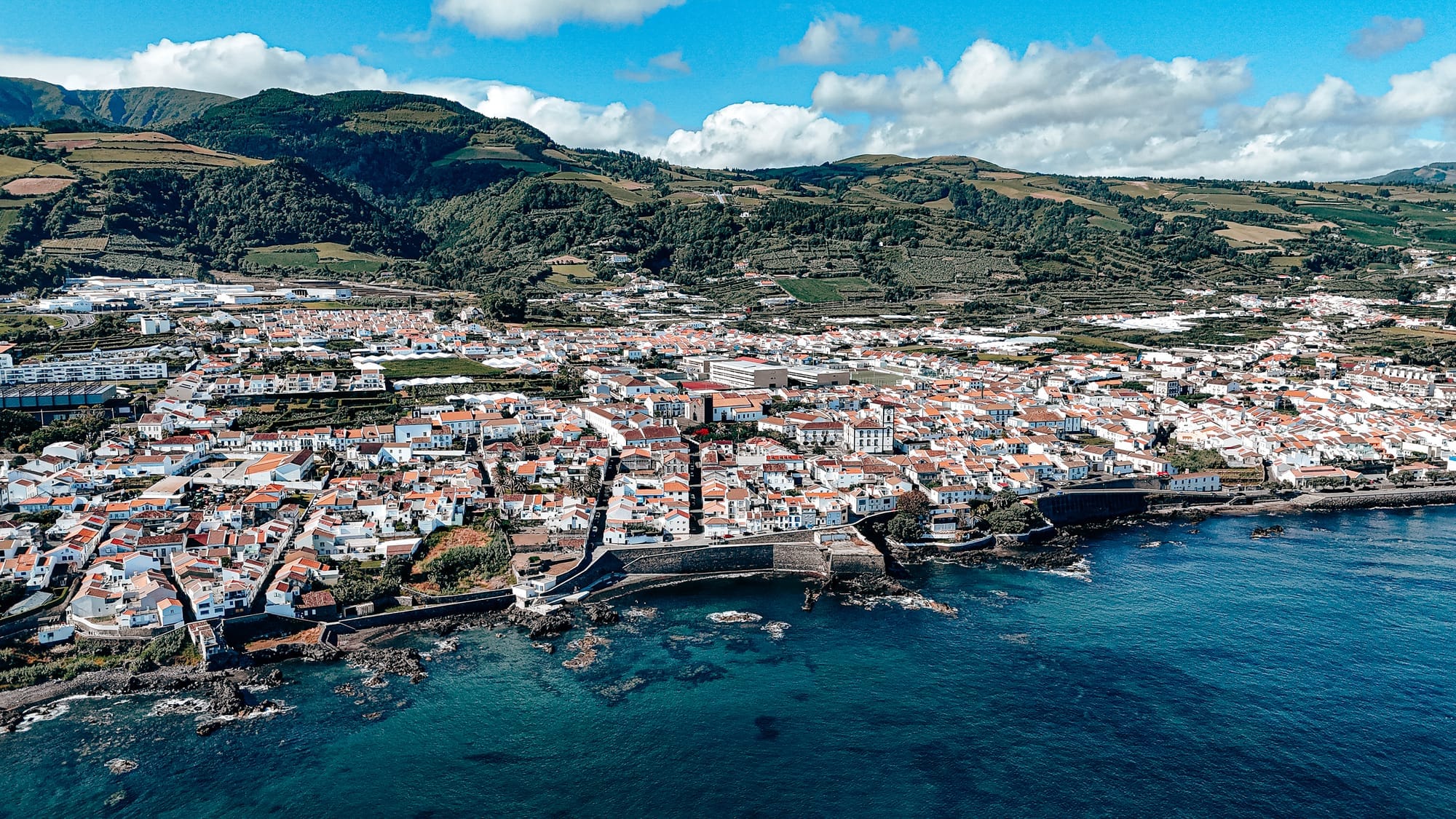
This was once the capital of the island.
In the 16th century, Vila Franca do Campo thrived as a trading port, strategically important and densely populated. But in 1522, a catastrophic earthquake triggered a massive landslide that buried much of the town and killed thousands. After that, the capital moved inland to Ponta Delgada, and Vila Franca became something else: calmer, less political, but still important.
Vila Franca do Campo history in brief
Vila Franca do Campo was founded in the mid-15th century by Gonçalo Vaz Botelho and became a vila (a chartered town) in 1472. The earthquake and landslide that buried it struck on 20 October 1522, and Wikipedia's Vila Franca do Campo page puts the death toll at around 5,000. The town was rebuilt, but the capital moved west to Ponta Delgada and has stayed there ever since.
A couple of other facts locals like to mention: Vila Franca was the first municipality on São Miguel to get electricity, switched on in March 1900, and the Jesuit explorer Bento de Góis was born here in 1562. He later travelled overland from India toward China in the early 1600s.
The Vila Franca islet
The Ilhéu de Vila Franca do Campo is the eroded crater of an old volcano, about 1 km off the coast, with an almost perfectly round lagoon inside, open to the sea through a narrow channel. It's a protected nature reserve.
In the summer season, small boats run from the marina several times a day, and the number of visitors on the islet is capped, so book your crossing early, especially in July and August. There are no shops on the islet, so bring water, sunscreen, and snacks. Outside the season, you can still take boat tours around it. Read our full guide to the Vila Franca islet.
The short version for the crossing: in 2026 the ferry ran from 12 June to 11 October, hourly from 10:00 from the south side of the marina, with 400 visitors a day and a return fare reported at about €10 for non-residents plus a €4 conservation fee. Our Vila Franca do Campo islet guide has the ticket rules, the swimming rules, and what to pack.
Two things changed recently. The islet was closed to swimmers for the whole 2025 season, after its water was rated poor five years in a row, and it reopened for swimming in 2026 (RTP has the background). Access rules were also updated in April 2026, with the same cap of 400 visitors a day. Our islet guide covers tickets, prices, and what to bring.
Walking through a former capital
There are reminders of Vila Franca’s early significance everywhere. Churches with ornate stonework. Civic buildings that feel older than the roads around them. Azulejos that tell stories. The town’s architecture mixes colonial influence with vernacular simplicity: limewashed walls, basalt details, windows that open wide.
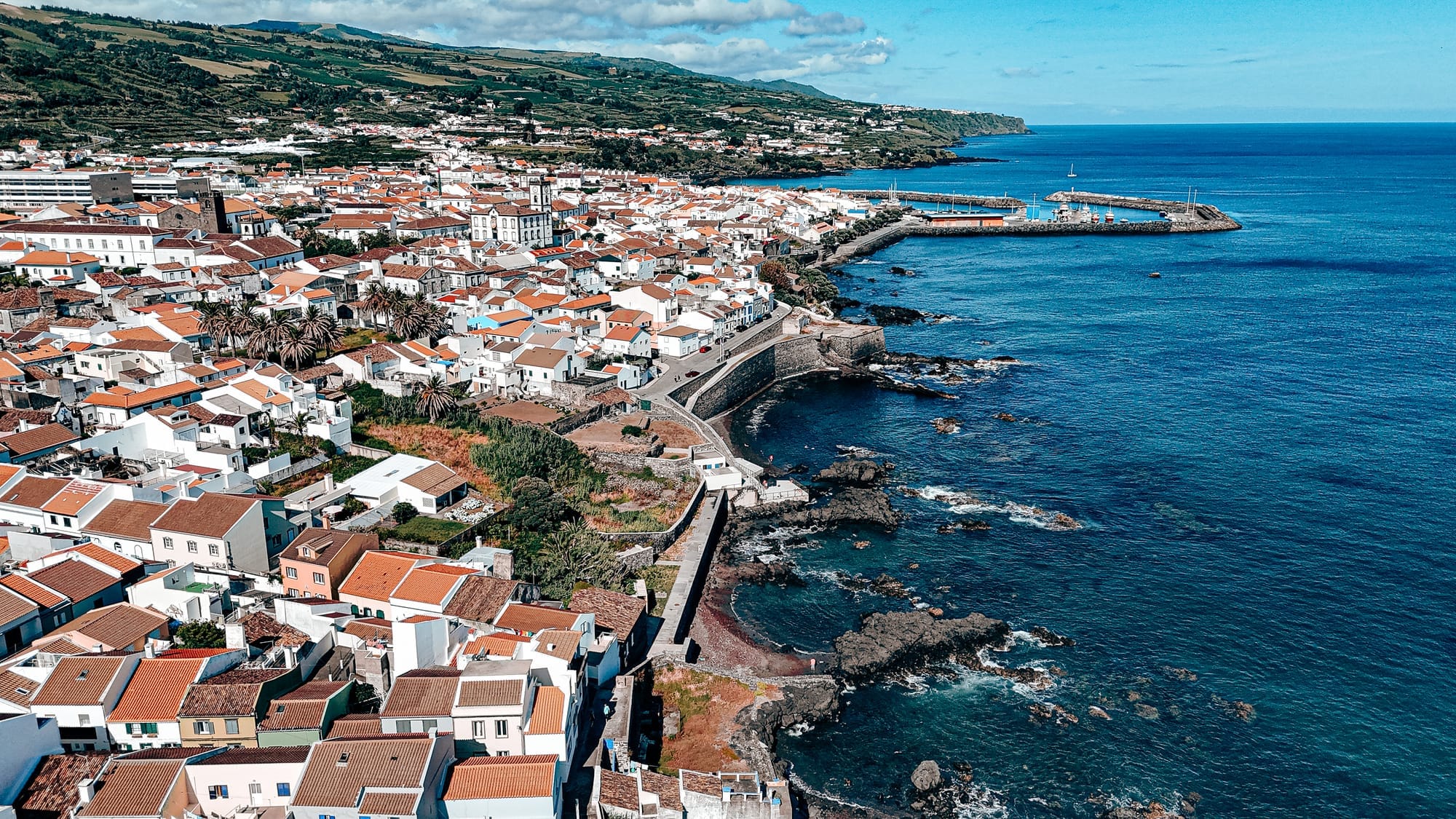
Today, it’s a place to wander without an agenda. You might pass fishermen repairing nets in the marina, or kids diving from rocks into the harbor. Locals gather at pastelarias in the morning, or walk the promenade at sunset. There is no rush.
The main church to look for is the Church of São Miguel Arcanjo, which dates back to the 15th century and is one of the oldest in the Azores. It's in the old center, a short walk up from the waterfront, so it's easy to fit in on a stroll between the marina and the beach. Check the door times locally, since small churches here don't always keep fixed visiting hours.
Town beaches
Praia Vinha d’Areia is the main town beach, and in summer, it hums with umbrellas and sun-warmed bodies.
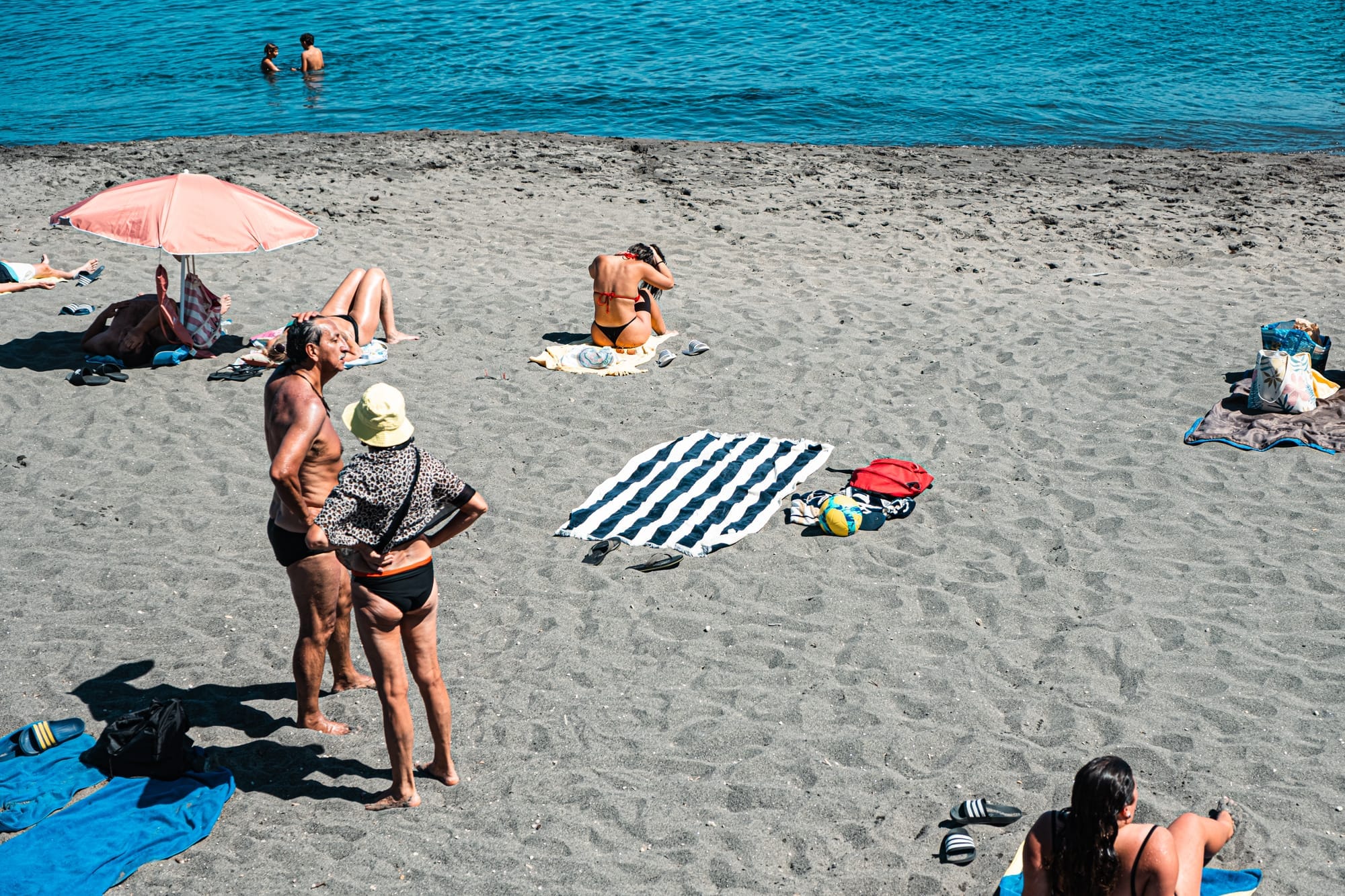
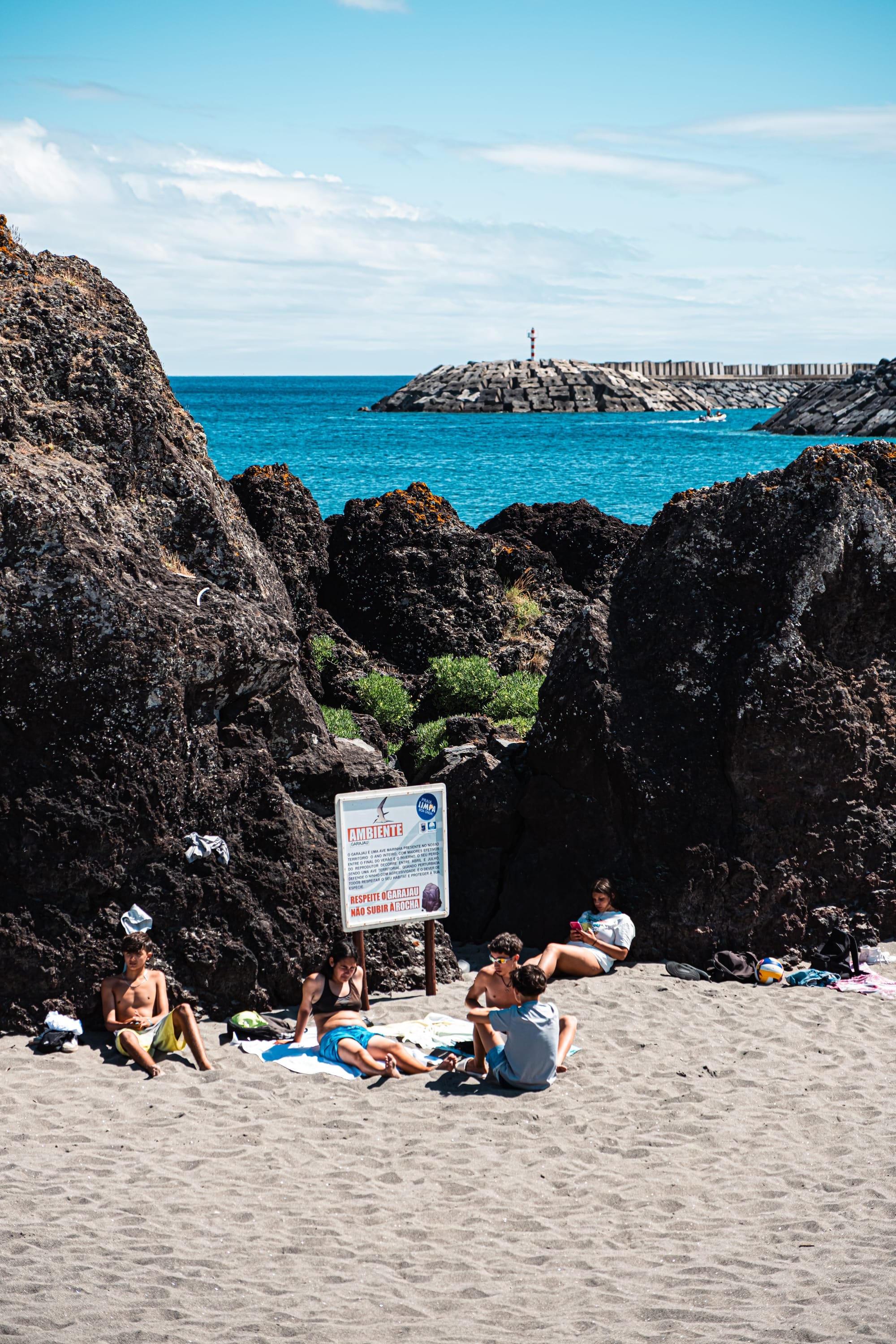
Sunbathers on Praia Vinha d’Areia, tucked between cliffs and marina walls
The sand is dark, almost volcanic. Rock formations rise at either end of the cove, offering shelter and shade. The water is shallow and usually calm, ideal for long swims or floating aimlessly.
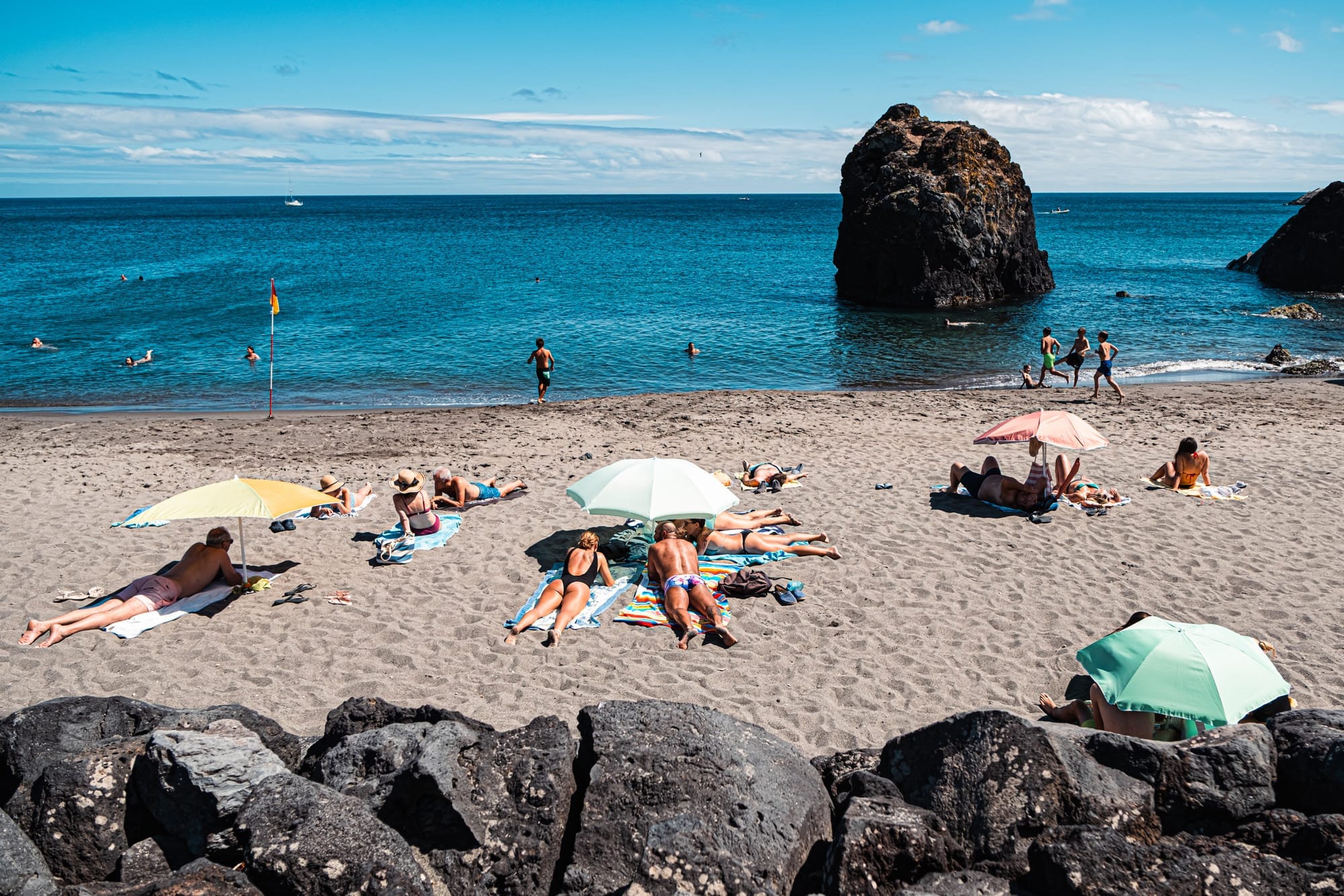
A small seasonal bar nearby serves espresso and ice cream, and behind the beach there are casual restaurants.
Just west of town, the parish of Água de Alto has a longer sandy beach, which is a good alternative when Vinha d'Areia is busy. Both get crowded on summer weekends, so come in the morning if you want space on the sand. In summer, check the flags before swimming, and stick to the beaches with lifeguards if you're not a strong swimmer.
More beaches around Vila Franca do Campo
The municipality has 11 official bathing areas, from sandy town beaches to rock pools and coves you reach on foot. This list comes from the Vila Franca do Campo council's bathing-area page. Only some have lifeguards, so check the flags on the day.
| Beach | Type | Good to know |
|---|---|---|
| Praia da Vinha d'Areia | Sand, by the marina | The main town beach, with a bar and restaurants close by |
| Praia de Água d'Alto | Sand, about 600 m long | The longest beach, west of town and popular in summer |
| Prainha de Água d'Alto | Fine sand, in the village | Has lifeguards in the bathing season |
| Praia do Corpo Santo | Small town beach | Calm water, a good option for families |
| Praia da Pedreira | Cove below cliffs | Reached by a staircase, with clear water |
| Poço Largo | Rocks and natural pools | For a dip off the rocks rather than a day on sand |
| Praia do Degredo | Natural cove | Known for its waterfall |
| Praia da Leopoldina | Cove, on foot only | Next to old water mills |
| Praia do Calhau da Areia | Small beach | Has a staircase down and a viewpoint above |
| Praia da Amora e das Areias | Three sandy coves | Reached by a steep path, so wear proper shoes |
| Ilhéu de Vila Franca do Campo | Natural pool in a crater | By boat only, in season, with a daily cap |
Things to do in Vila Franca do Campo
Santuário de Nossa Senhora da Paz
This hilltop church is one of the most iconic landmarks in the region. Its zigzagging staircase, lined with azulejos, leads to panoramic views over the town and Ilhéu de Vila Franca do Campo.
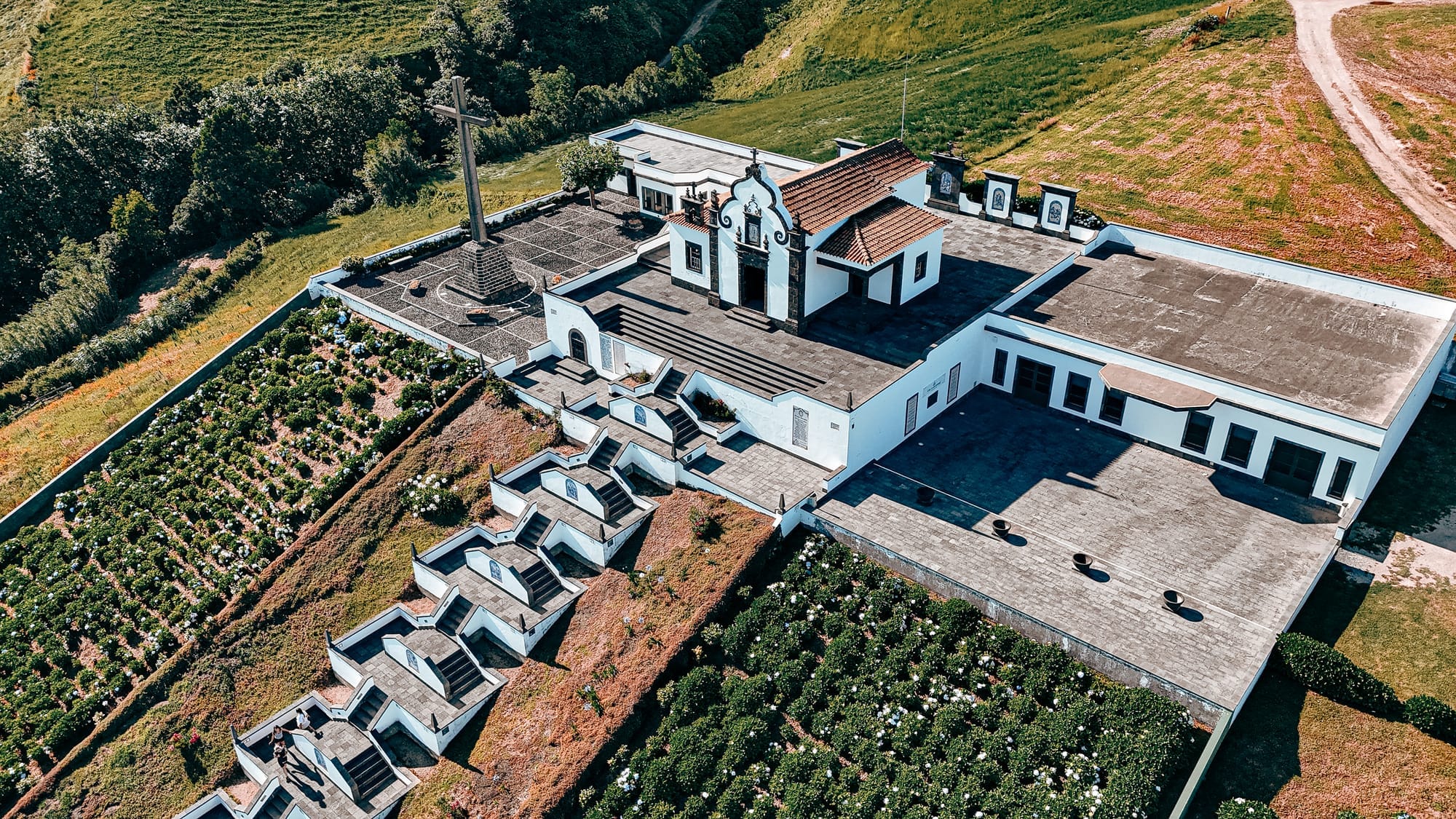
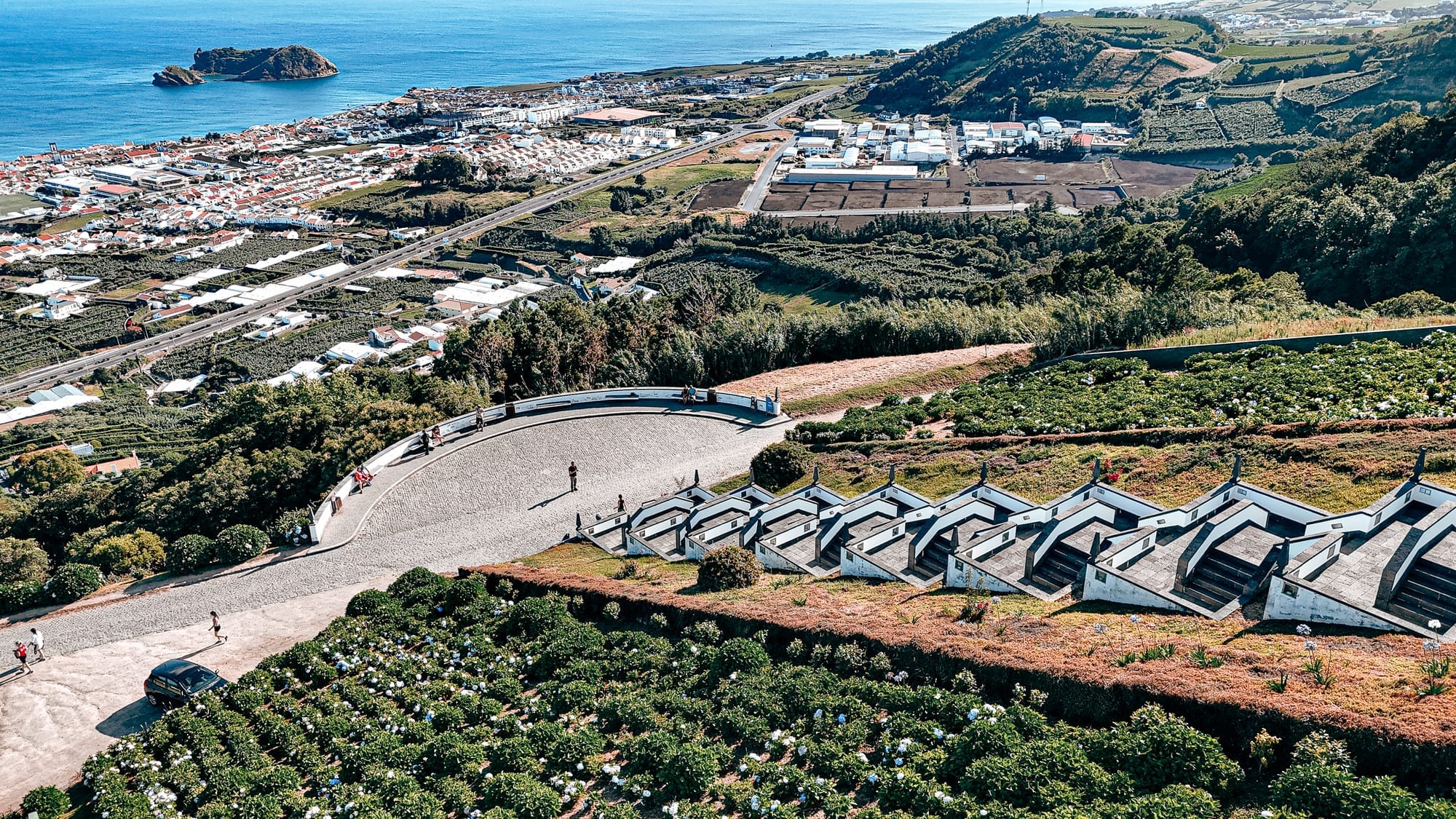
Panoramic views from the Santuário de Nossa Senhora da Paz, perched above the town and islet
We wrote a full post about visiting the church, and you can find it here.
Kayak or snorkel around the Ilhéu
Just off the coast lies a collapsed volcanic cone, now a marine reserve. You can kayak across the channel, swim and snorkel in the crater, or book a boat tour led by marine biologists.
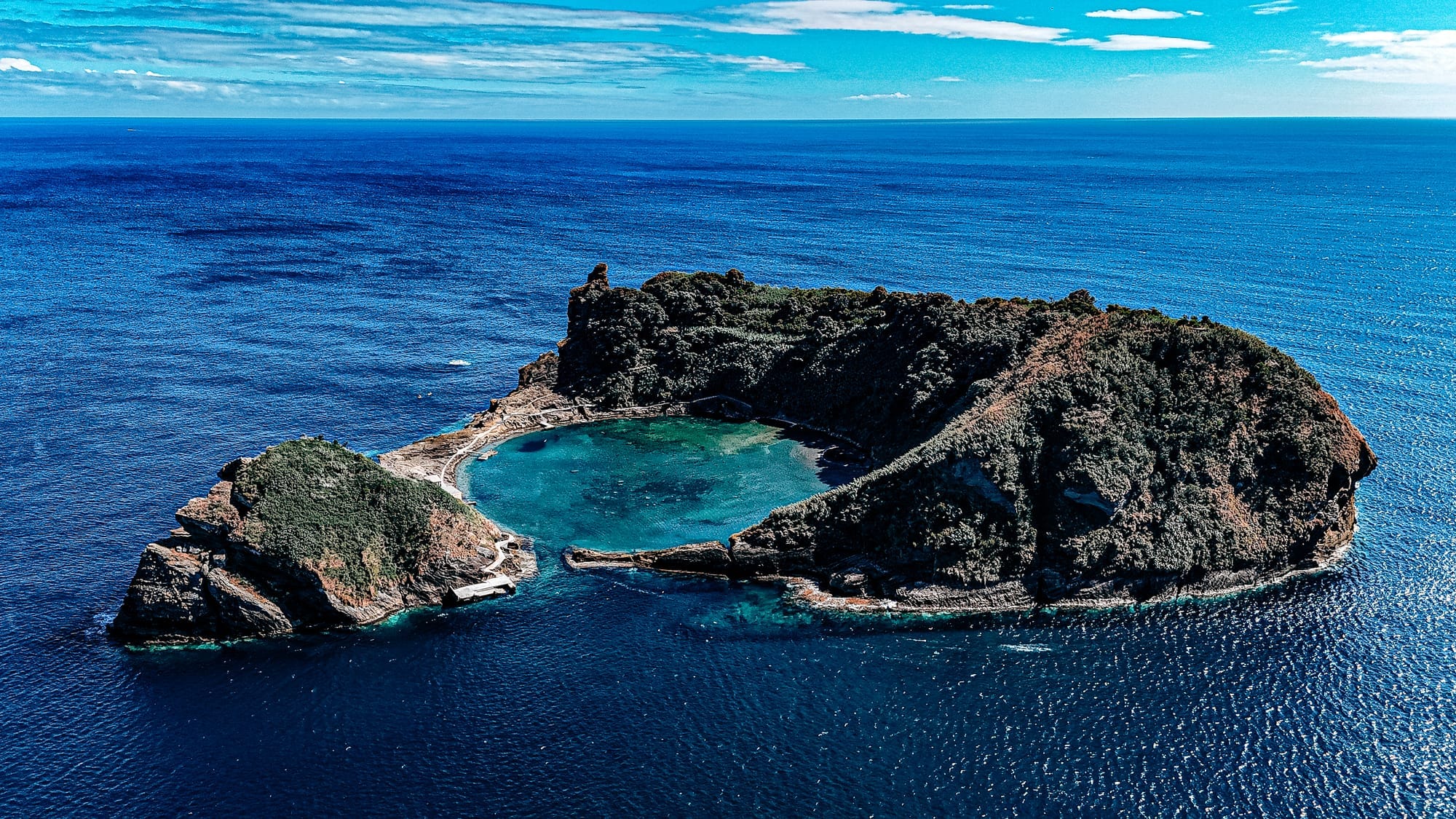
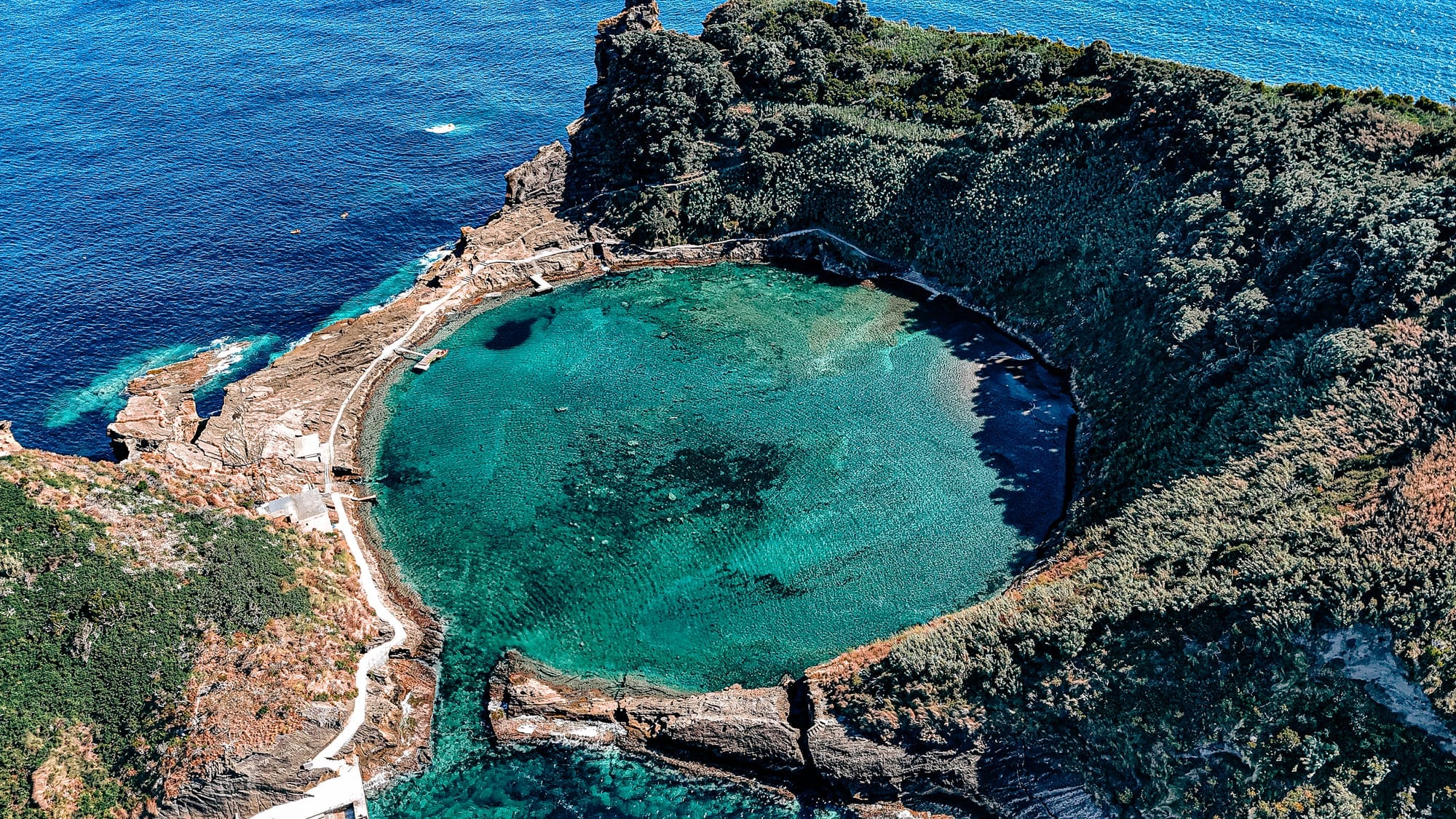
The islet’s volcanic ring and crater lagoon seen from above
We wrote all about this otherworldly island in our post here.
Explore the marina
Besides being a working harbor, the marina area is a lively place in summer, with cafes, diving centers, and small boat operators.
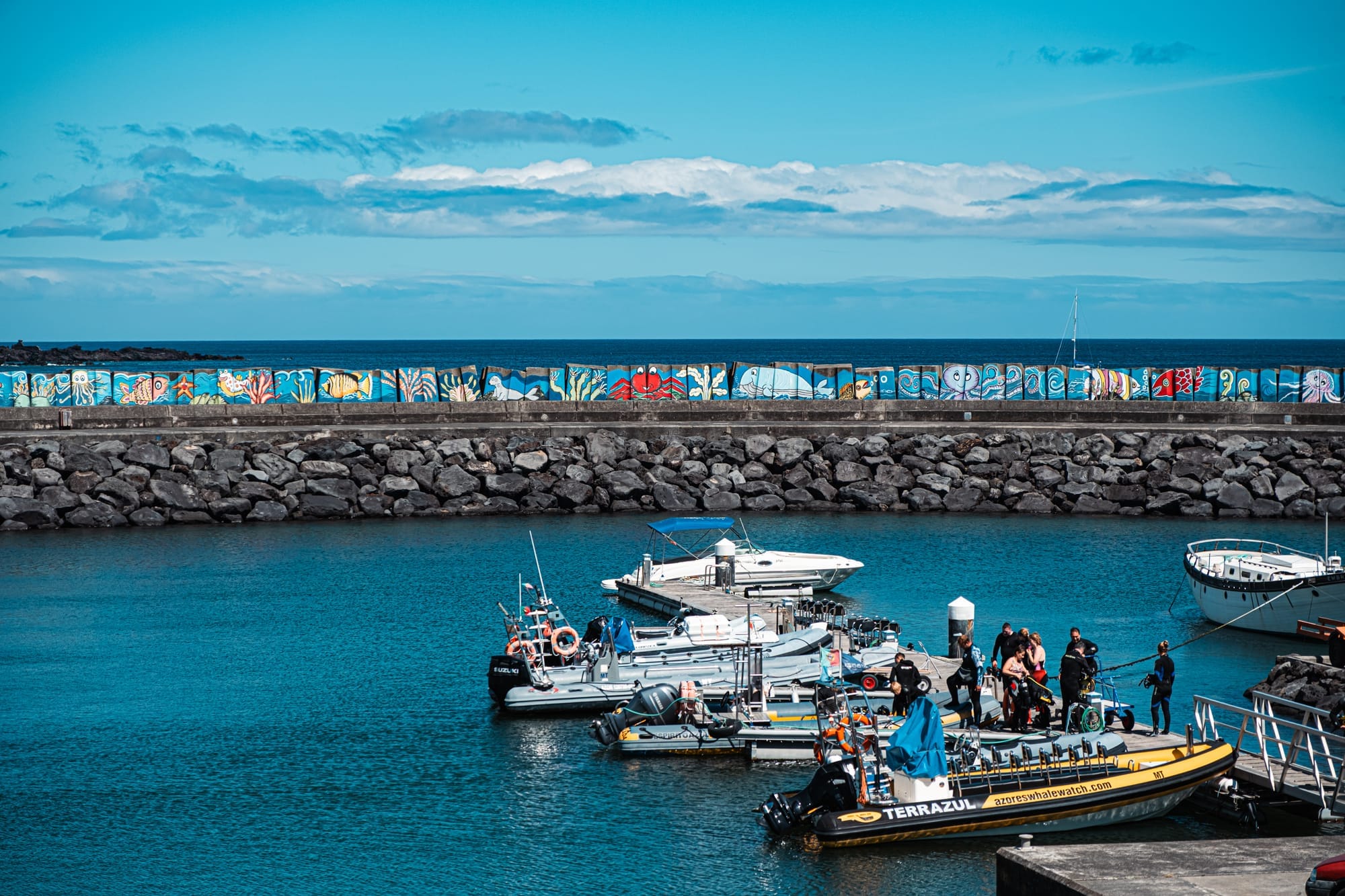
It’s also where many of the tours to the Ilhéu depart.
Try the queijadas da Vila
Vila Franca's best-known food is the queijada da Vila, a small sweet tart with a soft, cheese-based filling. According to the Azores regional crafts catalogue, the recipe goes back to the town's 16th-century convent of St Andrew. You'll find them at bakeries and cafés around town, and they make a good snack to take to the beach or the islet. They're made with dairy and eggs, so they aren't vegan.
Eating in Vila Franca do Campo as a vegan
We're vegan, and Vila Franca takes a bit of planning. The town's signature sweet, the queijada, is made with dairy and eggs, and the casual restaurants behind Vinha d'Areia and the cafés around the marina lean on traditional Azorean menus. Ask for dishes without meat, fish, dairy, or eggs, and check the sides, which are often the easiest win. The seasonal beach bar's espresso is a safe bet, and for a day on the islet, pack your own lunch, since there's nothing to buy once you cross.
Miradouro da Nossa Senhora da Paz
For one of the most iconic views over Vila Franca do Campo and its offshore islet, head to Miradouro da Nossa Senhora da Paz, right beside the church.
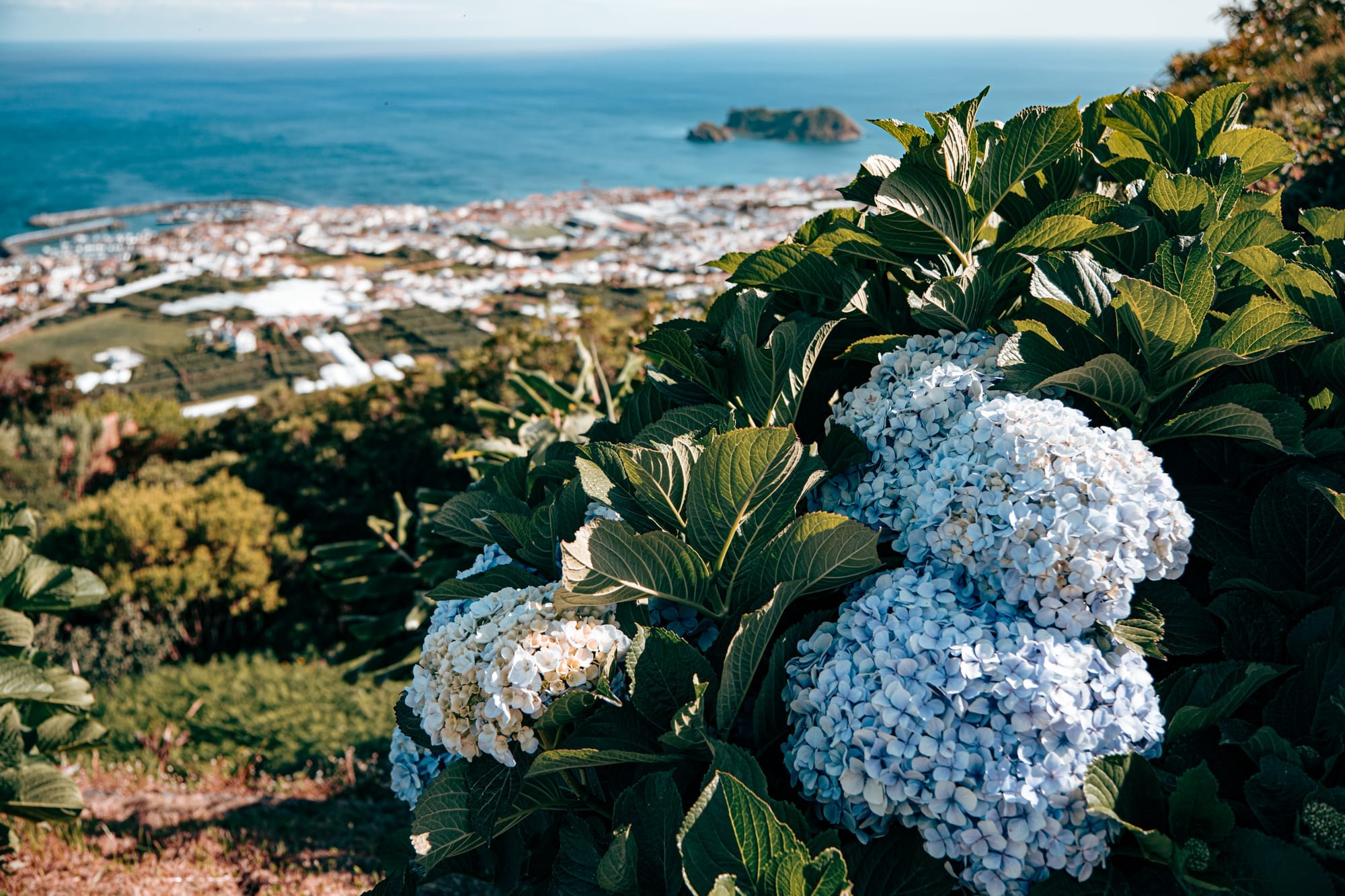
We included this in our roundup of favorite miradouros across São Miguel for good reason. Read more in our full miradouros post.
Visit the Vila Franca do Campo Municipal Museum
The town museum covers regional archaeology and ethnography, with collections of pottery and ceramics, traditional crafts, and a naval section with traditional Azorean boats (Visit Azores). It's on Rua Visconde Botelho in the old center. Visit Portugal lists it as open Tuesday to Friday from 9:00 to 12:30 and 14:00 to 17:30, and on weekends from 14:00 to 17:00, closed on Mondays and holidays. Hours can change, so check before you go. It's a good plan for a cloudy afternoon.
See Lagoa do Congro in the hills
Lagoa do Congro is a small crater lake in the hills of the municipality, north-east of town, surrounded by woodland. It's a protected area within the São Miguel Island Natural Park. You leave the car by the road and walk down a short path to the water. It's a good add-on if you're driving on to Furnas, and a nice contrast to the coast.
Catch a town festival
Vila Franca's biggest religious festival is the Festa do Senhor Bom Jesus da Pedra, held each year around the last Sunday of August, with a procession through the town. The town's own holiday is 24 June, the feast of São João. Programs change year to year, so check the parish or council notices for the dates.
Prefer to go with a guide? One popular option is an eco boat trip to the islet with a marine biologist. You can check dates and prices here:
How to get to Vila Franca do Campo from Ponta Delgada
Vila Franca do Campo is on the main road along the south coast, about 30 minutes east of Ponta Delgada by car. It's the natural halfway stop on the way to Furnas, so many people combine the two in one day. Parking is easiest near the marina and the beaches, though it fills up on summer weekends.
| Details | |
|---|---|
| Where | South coast of São Miguel, on the main road to Furnas |
| From Ponta Delgada | About 30 minutes by car, or by public bus |
| The islet | About 1 km offshore; summer boats from the marina, capped numbers |
| Beaches | Praia Vinha d'Areia in town, Água de Alto just west |
| Time needed | Half a day, a full day with the islet |
| Best time | June to September for swimming and the islet |
| Local sweet | Queijada da Vila (dairy and eggs, not vegan) |
Public buses run between Ponta Delgada and Vila Franca do Campo, and the town is one of the easier places on the island to reach without a car. Check the current timetable before you go, especially on Sundays and public holidays, when there are fewer buses.
Here's how the options compare:
| Option | Time | Good to know |
|---|---|---|
| Rental car | About 30 minutes | The most flexible. Follow the south-coast road east toward Furnas |
| Public bus | Longer than by car | Fewer departures at weekends and on holidays. Check the timetable the day before |
| Day tour | A full day | Some east-island tours to Furnas stop in Vila Franca do Campo on the way |
| Taxi | About 30 minutes | Easy for a one-way trip, for example if you're staying in town without a car |
How long to spend in Vila Franca do Campo
Half a day is enough to walk the old center, climb up to Nossa Senhora da Paz, and have a swim at the town beach. If you want to visit the islet, plan a full day, since the boat trip and swimming time take a few hours on their own. Vila Franca is also a practical base for the south coast, with Furnas, Ribeira Quente, and Ponta Delgada all within easy driving distance.
Vila Franca and the south coast get a chapter of their own in Our Guide to São Miguel, covering the islet, Nossa Senhora da Paz, and whale and dolphin watching.
Day trips from Vila Franca do Campo
Vila Franca sits in the middle of the south coast, so a lot of the east of the island is within easy reach. A few ideas:
Furnas and its lake: head east for the hot springs, the fumaroles, and Lagoa das Furnas.
Lagoa do Fogo: the road north over the mountains takes you to the viewpoints over Lagoa do Fogo crater lake.
Ribeira Quente: a fishing village on the coast past Furnas, with a sandy beach and a small harbor. See our Ribeira Quente guide.
Whale watching: most trips leave from Ponta Delgada, so it's easy to fit in on the way back. See our guide to whale watching in the Azores.
Best time to visit Vila Franca do Campo
Summer (June to September) is the best time for swimming, beach days, and the islet, which is only open for landings during the summer bathing season. It's also the busiest time, so book the islet boat early. In spring and autumn, the town is calmer, and it's still pleasant for walking and the viewpoints, though the sea is cooler. In winter, it's a good stop on a drive along the south coast, and you can still take boat trips around the islet when the sea allows.
This table shows the year at a glance. The sea temperatures come from the official water samples taken at the islet in 2026.
| When | Sea | What's on |
|---|---|---|
| Late May | About 16 to 18°C | Before the bathing season, and the islet boat isn't running yet |
| June | About 19 to 21°C | Islet boat starts (12 June in 2026), São João holiday on 24 June |
| July and August | About 20 to 22°C | Peak season, islet tickets sell out, Bom Jesus da Pedra festival at the end of August |
| September to mid-October | Still warm enough to swim | Fewer people, islet boat runs until early October (11 October in 2026) |
| Mid-October to mid-April | Cooler | Islet landings only on weekday guided visits, good for walking and viewpoints |
Tips for visiting Vila Franca do Campo
A few practical things make a visit smoother:
Book the islet boat before you arrive in July and August, as daily numbers are limited and it sells out.
Bring water, snacks, and sun protection to the islet, since there's nothing to buy there.
Climb up to Nossa Senhora da Paz in the morning or late afternoon, when it's cooler and the light over the islet is softer.
Pick up queijadas early in the day, since popular bakeries can run out.
Combine Vila Franca with Furnas or the Caldeira Velha hot springs for a full day out, or see our São Miguel guide for more ideas.
From the hills to the sea
What makes Vila Franca do Campo stand out isn’t a single attraction. It’s the landscape as a whole: the way the town slopes from the hills to the water.
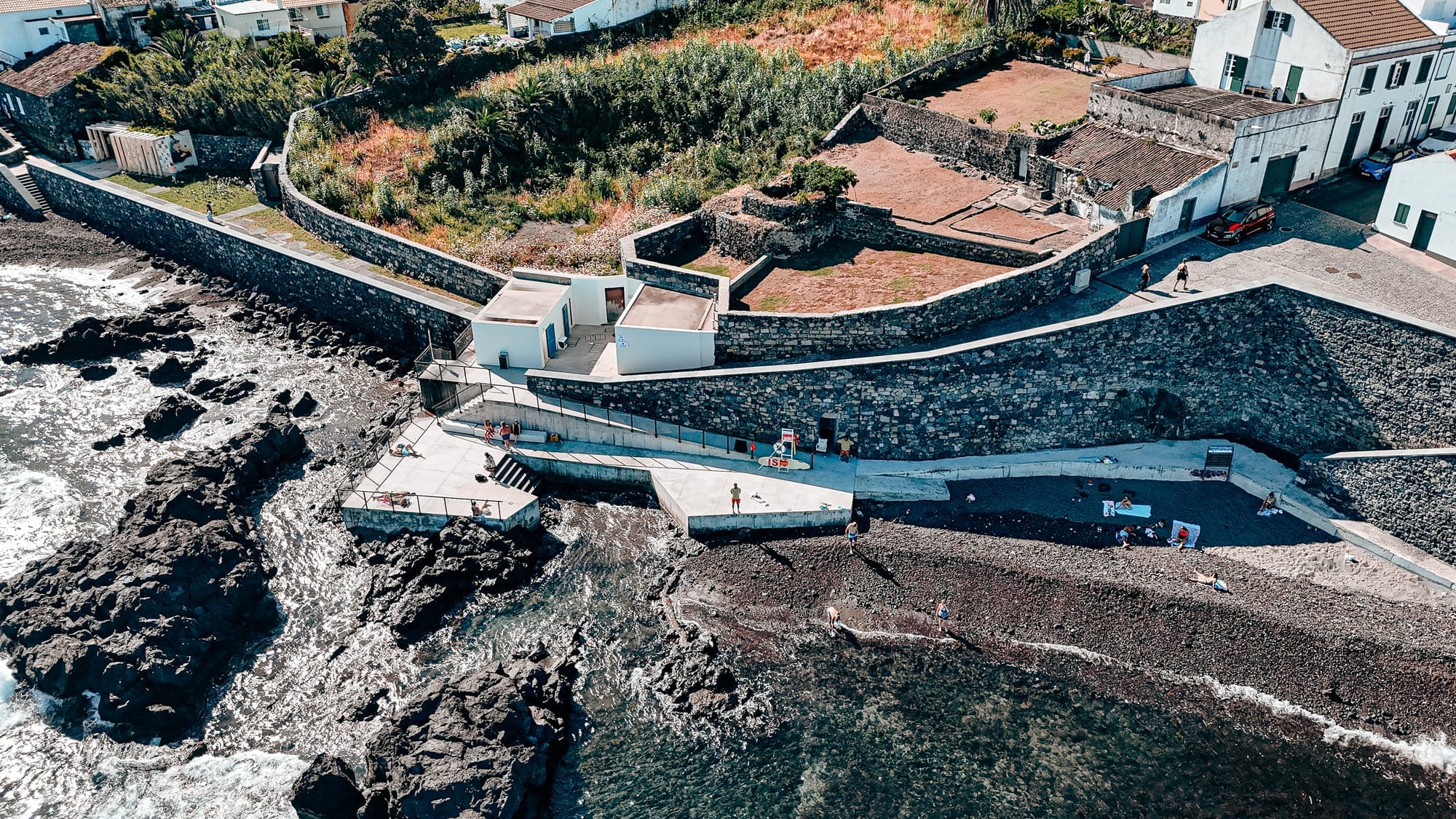
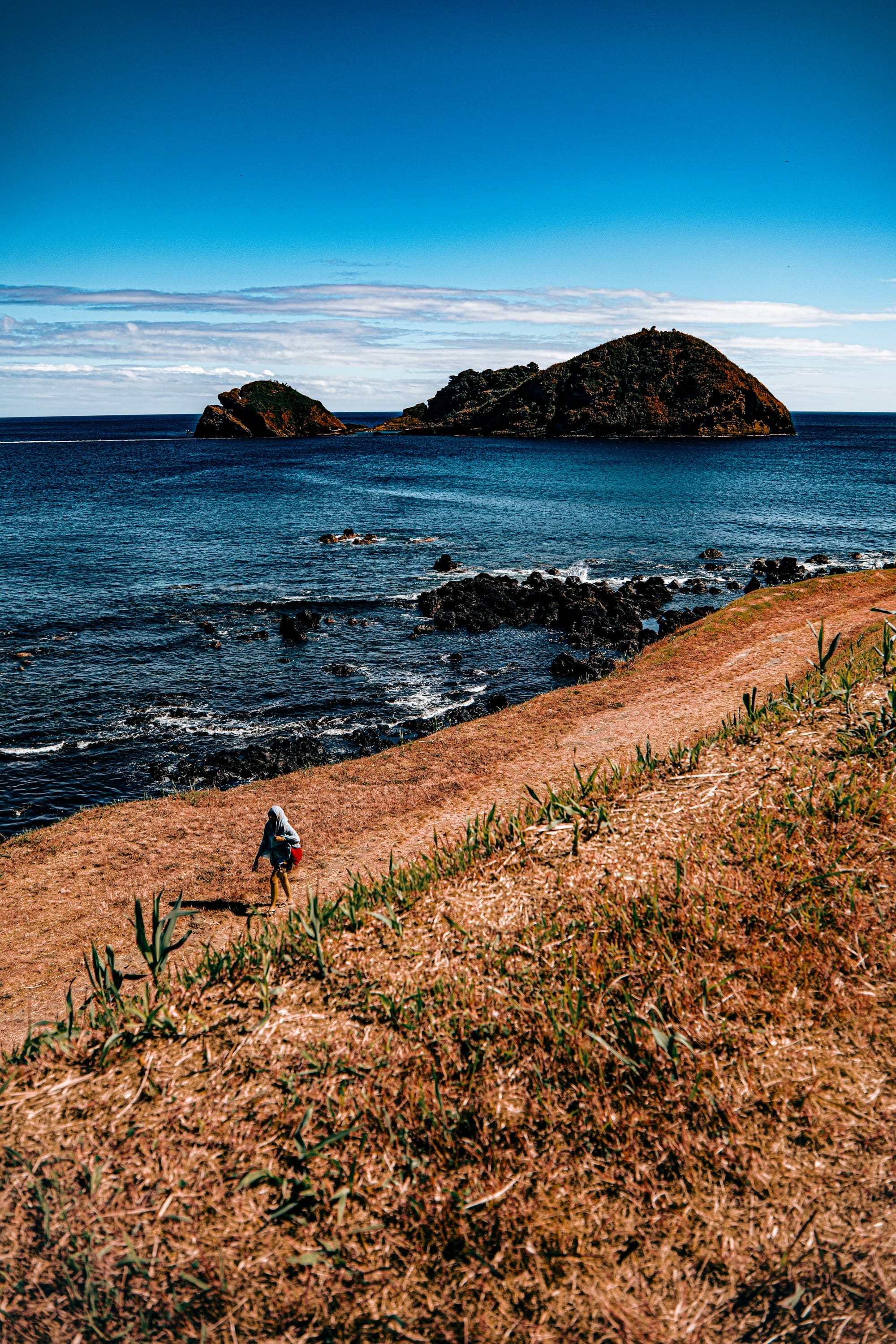
Coastal walking paths and sea-access points in Vila Franca do Campo
It’s a place where the past is always in view (in the cracked tiles of a chapel, in the bend of a cobbled street) but never frozen. Things grow here. Banana plantations. Coral reefs. Afternoon conversations.
Useful links: Visit Azores, Vila Franca do Campo on Wikipedia, and the Azores natural parks.
Whatever your plans, travel with insurance. Stomach bugs, a fall on a cobbled street, or a stolen phone can happen anywhere, and it's much easier to enjoy the trip when you know you're covered. We'd recommend SafetyWing Nomad Insurance. It covers medical emergencies abroad, you can buy it even after you've left home, and it renews every four weeks, so it works for a short trip or months on the road.
Where to stay near Vila Franca do Campo
The nearest good base for Vila Franca do Campo is Vila Franca do Campo. These are well-reviewed places to stay there, all rated 9 or more on Booking:
- QVA Quinta Velha das Amoreiras: a quinta with garden rooms near the center, rated 9.4.
- Casa do Pescador 14: a simple, good-value stay near the harbor, rated 9.1.
- Convento de São Francisco: a converted convent by the sea, rated 9.4 and a bit more upscale.
Frequently asked questions
How do you get to the Vila Franca islet?
By boat from the Vila Franca do Campo marina, in the summer season. Visitor numbers are limited, so book ahead.
Can you swim at the Vila Franca islet?
Yes. The islet's crater has a sheltered, shallow lagoon that's popular for swimming in summer.
Is Vila Franca do Campo worth visiting?
Yes, for the islet, the beaches, and an easy stop between Ponta Delgada and Furnas.
How far is Vila Franca do Campo from Ponta Delgada?
About 30 minutes by car, east along the south coast. Public buses also run between the two towns, so check the current timetable.
What is Vila Franca do Campo known for?
Its offshore islet with a natural swimming lagoon, its town beaches, the hilltop Nossa Senhora da Paz chapel, the queijadas da Vila tarts, and its history as São Miguel's first capital before the 1522 earthquake.
Was Vila Franca do Campo the capital of São Miguel?
Yes. It was the island's first capital until an earthquake and landslide destroyed much of the town on 20 October 1522. After that, the capital moved to Ponta Delgada.
When can you visit the Vila Franca islet?
Boats land on the islet during the summer bathing season, roughly mid-June to early autumn. Dates change each year, so check the current season before you plan. Outside the season, boat tours still go around it.
What is the best beach in Vila Franca do Campo?
Praia Vinha d'Areia is the main town beach, with calm, shallow water and cafés nearby. The longer beach at Água de Alto, just west of town, is a good alternative when the town beach is busy.
Where is Vila Franca do Campo?
On the south coast of São Miguel, in the Azores, about 30 minutes' drive east of Ponta Delgada, on the main road toward Furnas.
How long do you need in Vila Franca do Campo?
Half a day for the old center, the climb to Nossa Senhora da Paz, and a swim at the town beach. Plan a full day if you also want to visit the islet.
Can you get to Vila Franca do Campo by bus?
Yes. Public buses run from Ponta Delgada, and it's one of the easier towns on the island to reach without a car. Check the timetable first, especially on Sundays and holidays.
Do you need to book the boat to the Vila Franca islet?
In July and August, yes. Daily visitor numbers on the islet are capped, and the crossings sell out.
What happened in Vila Franca do Campo in 1522?
On 20 October 1522, an earthquake set off a landslide that buried much of the town and killed around 5,000 people. The capital then moved to Ponta Delgada.
What are queijadas da Vila?
Small sweet tarts with a soft, cheese-based filling, the town's best-known food. The recipe goes back to a 16th-century convent in Vila Franca.
Where is the best view of Vila Franca do Campo?
From the Nossa Senhora da Paz chapel and its viewpoint on the hill above town, which looks over the rooftops to the islet.
What is the best time to visit Vila Franca do Campo?
June to September for swimming, the beaches, and the islet, which only opens for landings in the summer bathing season. Spring and autumn are calmer and still good for walking.
Is Vila Franca do Campo a good place to stay?
Yes, if you want a base on the south coast. Furnas, Ribeira Quente, and Ponta Delgada are all a short drive away.
Is there a museum in Vila Franca do Campo?
Yes. The Municipal Museum on Rua Visconde Botelho covers local archaeology, pottery, crafts, and traditional boats. It's closed on Mondays and holidays, so check the hours before you go.
How warm is the sea in Vila Franca do Campo?
In 2026, official samples at the islet measured about 16°C in late May, 19 to 21°C in June, and 20 to 22°C in July. The sea stays warm enough for swimming into September.
What festivals are there in Vila Franca do Campo?
The biggest is the Festa do Senhor Bom Jesus da Pedra, around the last Sunday of August. The town also has a local holiday on 24 June for São João.
Is there a lake near Vila Franca do Campo?
Yes. Lagoa do Congro is a small crater lake in the hills of the municipality, a short walk from the road. Lagoa do Fogo and Lagoa das Furnas are also within an easy drive.
How big is Vila Franca do Campo?
The municipality had about 10,300 people in the 2021 census, spread across six parishes, including Água de Alto and Ponta Garça.
More from São Miguel: the Vila Franca islet, Santuário de Nossa Senhora da Paz, Furnas, Poça da Dona Beija, Ribeira Quente, Ponta Delgada, the viewpoints of São Miguel, whale watching, Sete Cidades, and living in the Azores.


