


Whale watching in the Azores is possible all year, and São Miguel has the most departures, mostly from Ponta Delgada. Trips last about 3 hours and cost roughly €60 to €75 per adult. Dolphins turn up on most trips and sperm whales live here year-round, while blue, fin, and sei whales pass through mainly from March to June. Choose a catamaran for comfort or a Zodiac to sit closer to the water. We went out by Zodiac with Futurismo from São Miguel and saw several dolphin species within the first hour.
Somewhere off the coast of São Miguel, you spot a silver spray on the horizon. A plume of vapor against the sky, then the broad arc of a back, and it's gone. You've found a whale. Or rather, it has let itself be seen.
Whale and dolphin watching in the Azores is one of the best things you can do on the island. You get three hours on the open Atlantic, hoping to see something wild. You won't always get a breach, a leap, or a dramatic tail slap. More often, you get something more subtle: a dorsal fin, a flash of movement, a few whales breathing out at the same time. And honestly, that's more than enough.
When you step aboard one of the boats that leave from the island's southern harbors, you're heading into a completely different world. This is not a zoo. This is the open Atlantic, and you're only here briefly, as a visitor in the animals' home.
Whale watching in the Azores at a glance
Here's what to know before you book. Prices and timetables change each season, so check with the operator.
Where: all nine islands have operators, but São Miguel has the most trips. Most leave from the marina in Ponta Delgada, with some from Vila Franca do Campo and the north coast.
Season: trips run all year, weather permitting. Spring (March to June) is best for big migrating whales, and summer is best for dolphins and calm seas.
How long: about 3 hours at sea, plus a briefing on land beforehand.
Price: roughly €60 to €75 per adult for a standard trip from Ponta Delgada in recent seasons, with children paying less.
Species: more than 20 kinds of whales and dolphins have been recorded around the islands, according to Visit Azores.
Boats: catamarans (steadier, with more shelter and onboard amenities) or Zodiacs (faster, lower, and wetter).
| Details | |
|---|---|
| Where | All nine islands; most trips leave Ponta Delgada marina on São Miguel |
| Trip | About 3 hours at sea plus a briefing, all year, weather permitting |
| Price | Roughly €60 to €75 per adult, less for children |
| Boats | Catamaran (steadier) or Zodiac (faster, lower, wetter) |
| Species recorded | More than 20 kinds of whales and dolphins |
| Blue, fin, and sei whales | Mainly March to June; blue whales peak in May, fin and sei in April and May |
| Sperm whales | All year, the whale you're most likely to see |
| Dolphins | All year; most species and calmest seas June to September |
Whale watching on São Miguel: where tours leave from
Most whale watching on São Miguel starts at the marina in Ponta Delgada, where operators have kiosks along the waterfront. The boats head out along the south coast, helped by the lookouts on the cliffs, and most of the 3 hours is spent at sea rather than in transit.
Some operators also run trips from Vila Franca do Campo, and a few leave from the north coast. If you're staying in Ponta Delgada, the marina is walkable from most of the city. If you're based elsewhere on the island, allow time for parking near the marina, especially in summer.
Whale watching from Ponta Delgada: times, check-in, and what's included
Most visitors book a half-day trip from the Ponta Delgada marina. Here's how a typical one runs, based on what the main operators publish:
- Check-in: at the operator's kiosk around the Portas do Mar marina. Boats usually leave within about 30 minutes of check-in, after the safety briefing.
- Departure times: most operators run a morning and an early afternoon trip. Picos de Aventura, for example, lists 8:30 am and 1 pm for its semi-rigid boat and 9 am and 1:30 pm for its catamaran, though boat type can depend on availability.
- Time at sea: about 2.5 hours, and sometimes longer if the animals are further offshore.
- Included: the briefing, a biologist or trained guide, life jackets, and usually a raincoat on the Zodiacs. Futurismo, for one, sells no food or drinks on board, so bring water and a snack.
- Parking: there are paid car parks near Portas do Mar. Arrive early in summer.
If you're staying on the north coast, there's another option. Futurismo also runs trips from the fishing harbor at Rabo de Peixe in high season, focused on sperm whales, with free parking at the meeting point, according to its Rabo de Peixe trip page.
São Miguel whale watching operators compared
These are three of the established operators on São Miguel. This isn't a ranking: the facts come from each company's own site in November 2026, so check prices and policies when you book.
| Operator | Leaves from | Boats | Price | Good to know |
|---|---|---|---|---|
| Futurismo | Ponta Delgada, and Rabo de Peixe in high season | Zodiac or catamaran | €70 per adult plus a €4.20 online fee. Ages 6 to 12 half price, under 6 free | Minimum age 6 on Zodiacs. Marine biologist guides. World Cetacean Alliance certified, and has stopped swim-with-dolphin trips. Extra trips if you see no cetaceans |
| Picos de Aventura | Ponta Delgada (Marina Pêro de Teive) | Semi-rigid or catamaran (catamaran has toilets and an indoor lounge) | Half day listed from €37.45, check the adult fare when booking | Holds the Azores "Certificado pela Natureza" sustainability seal. Also sells dolphin swim trips |
| Terra Azul | Vila Franca do Campo marina | Not listed on the home page | Not listed on the home page, see its booking page | Running since 2001. Trips guided by a marine biologist, small groups, a sightings guarantee, and combos with the Vila Franca islet. Also sells dolphin swim trips |
Prices for a standard trip sit in a narrow range, so choose on boat type, departure point, and how the company works with the animals rather than on price. For a calmer ride with children or anyone prone to seasickness, ask for a catamaran when you book.
Where is the best whale watching in the Azores? São Miguel vs Pico and Faial
Every island has whales offshore, but most trips run from three places: São Miguel in the east, and Pico and Faial in the central group.
São Miguel is the easiest: it has the main airport, the most departures, and trips all year from Ponta Delgada and Vila Franca do Campo. It's the natural choice if whale watching is one part of a wider trip with hot springs, crater lakes, and hikes.
Pico and Faial are where Azorean whaling lasted longest, and where whale watching started. Espaço Talassa has run trips from Lajes do Pico since 1989, using land-based lookouts on the cliffs, and the village is home to a whalers' museum, as Wikipedia's Lajes do Pico page explains. Deep water comes close to shore between the central islands, and the satellite-tagging work on migrating blue and fin whales was done off Faial and Pico. If whales are the main reason for your trip, especially in spring, the central group is worth the extra flight.
No island guarantees sightings, and operators on both report sperm whales and dolphins on most trips. For a first visit, São Miguel is the practical pick; for a whale-focused week, consider Pico.
Two ways to go whale watching: catamaran or Zodiac
We went out on this specific tour run by Futurismo, a provider we recommend for their extensive experience and ethical precautions.
Futurismo offers two main formats. The first is by catamaran: bigger, more leisurely, and steadier. It's ideal if you prefer comfort or get seasick. You're further from the waterline, so sightings can feel a little distant, but it's a gentler ride, often with more onboard amenities.
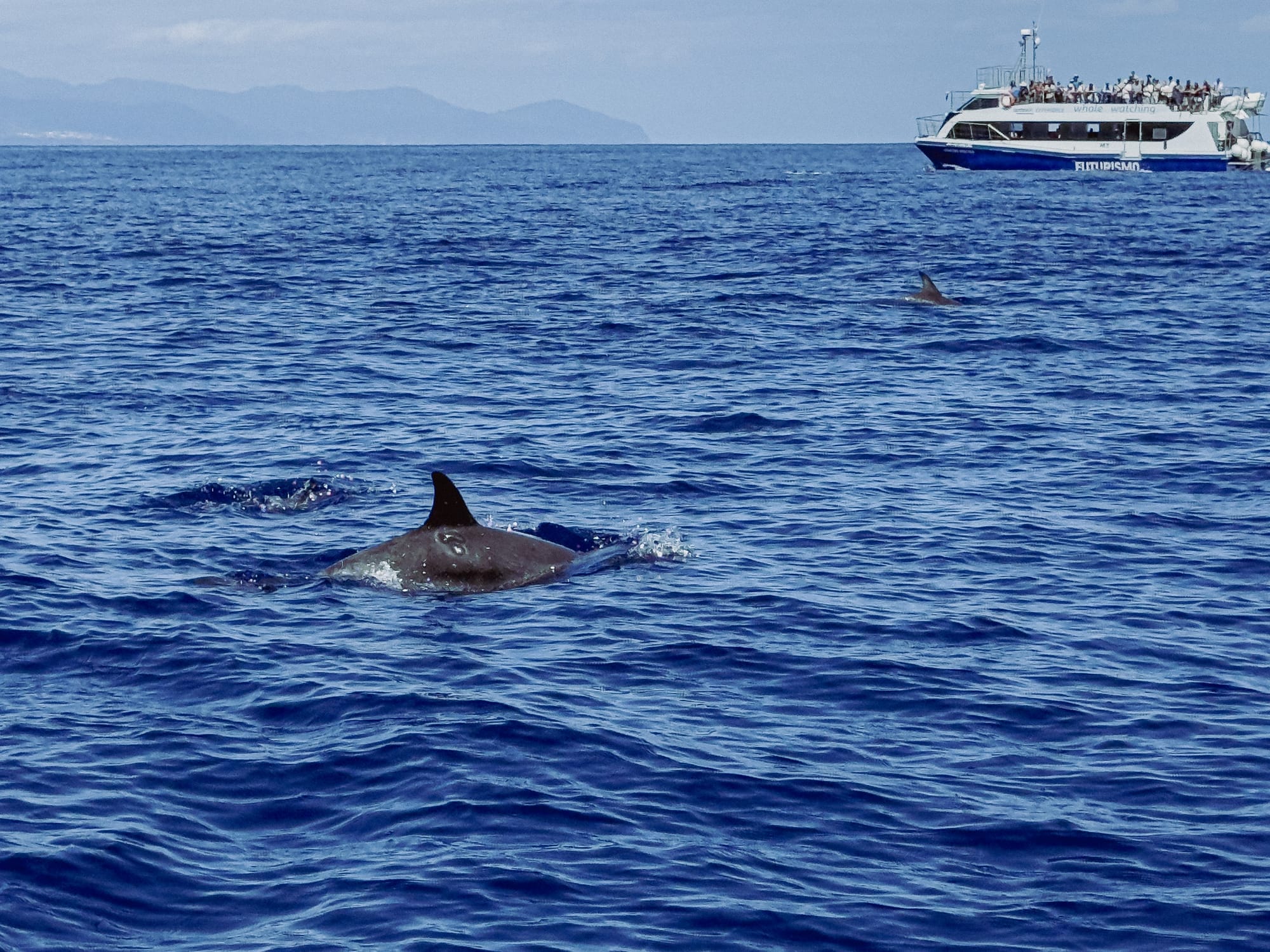
The second is the Zodiac boat. These are small, fast, inflatable boats that can cover more water and get closer (within regulation distances) to the animals. They're also bouncier. You'll need to hold on tight, brace your knees, and dress for spray. If you're up for it, the Zodiac puts you right in the action and is more of an adrenaline rush, but it's not recommended for anyone with mobility issues, back problems, or motion sensitivity.
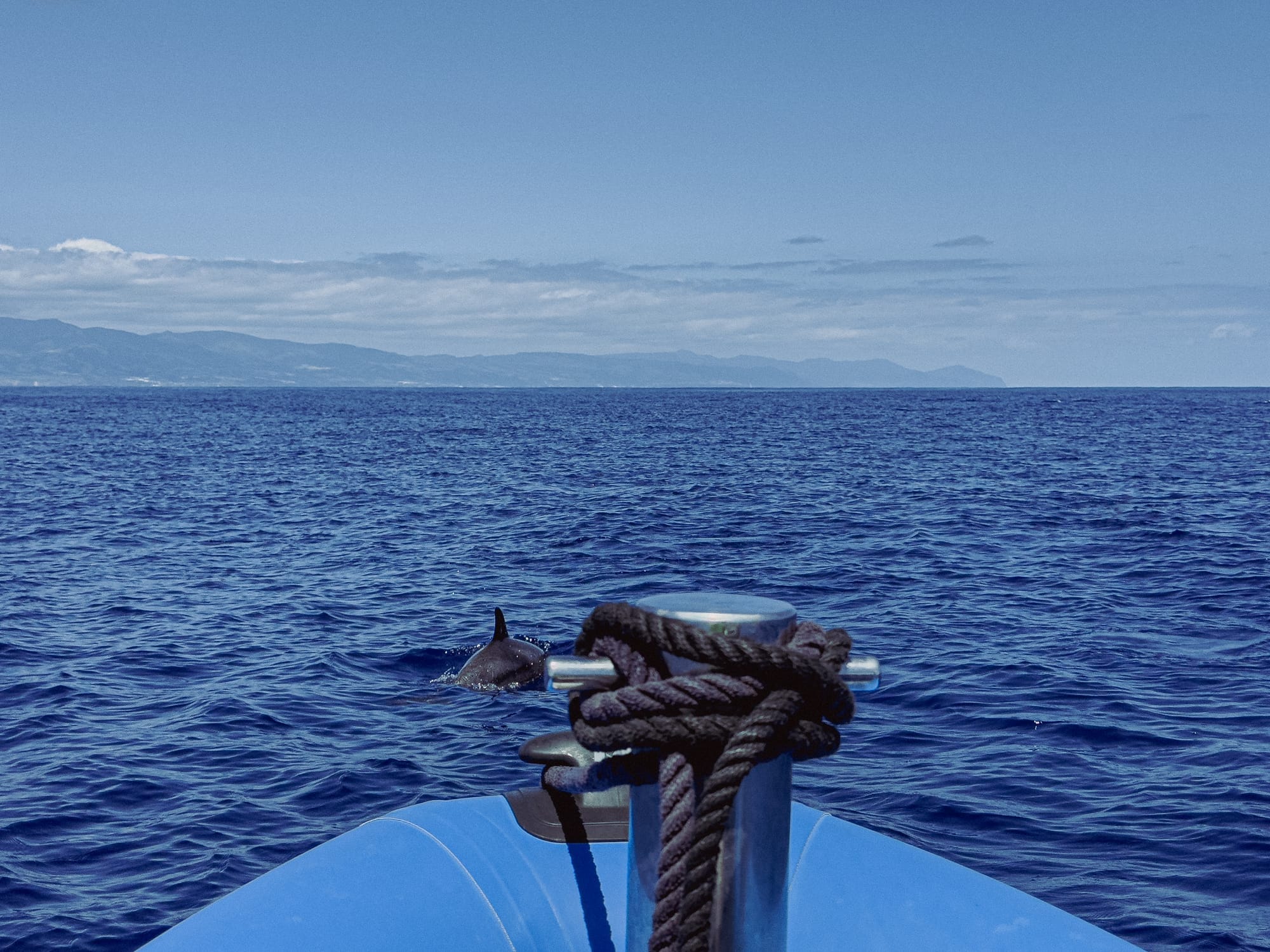
We chose the Zodiac, and it felt like riding on the edge of the world.
What a whale watching tour is like
Each trip starts with a briefing at the harbor, usually with a marine biologist on board. You'll learn about the local species, what to watch for, and how to behave once wildlife is near. There's a strong focus on watching rather than interfering.
As you head out, land-based spotters high on the cliffs scan the sea through binoculars. They radio sightings to the boat team and guide you to where the animals might be. It's a really smart bit of teamwork, with one set of eyes on the water and another up on the cliffs.
These lookouts are a holdover from whaling days. The Azores hunted sperm whales from small open boats until the 1980s, and lookouts called vigias sat on the cliffs to spot the spouts. When the hunt ended, former whaling communities on islands including São Miguel, Pico, and Faial turned to whale watching, as Wikipedia's whale watching article notes. Today the same skill guides tourist boats instead of harpoons.
Once a whale or dolphin is found, your boat eases off, approaching at an angle and from a respectful distance. The engines are cut. Conversations stop. And you wait.
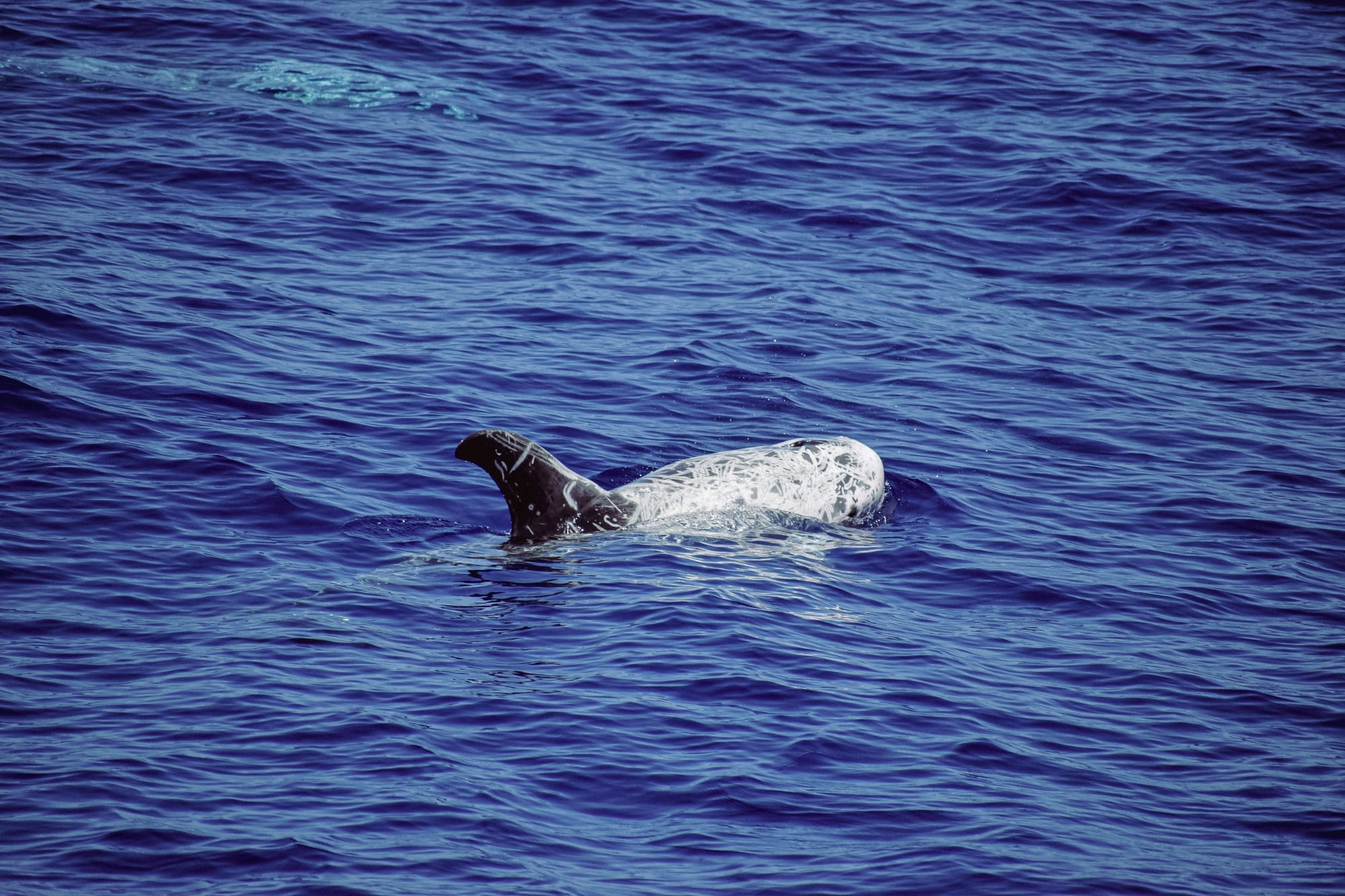
Most of the time, it's the dolphins who show up first.
The real stars: dolphins
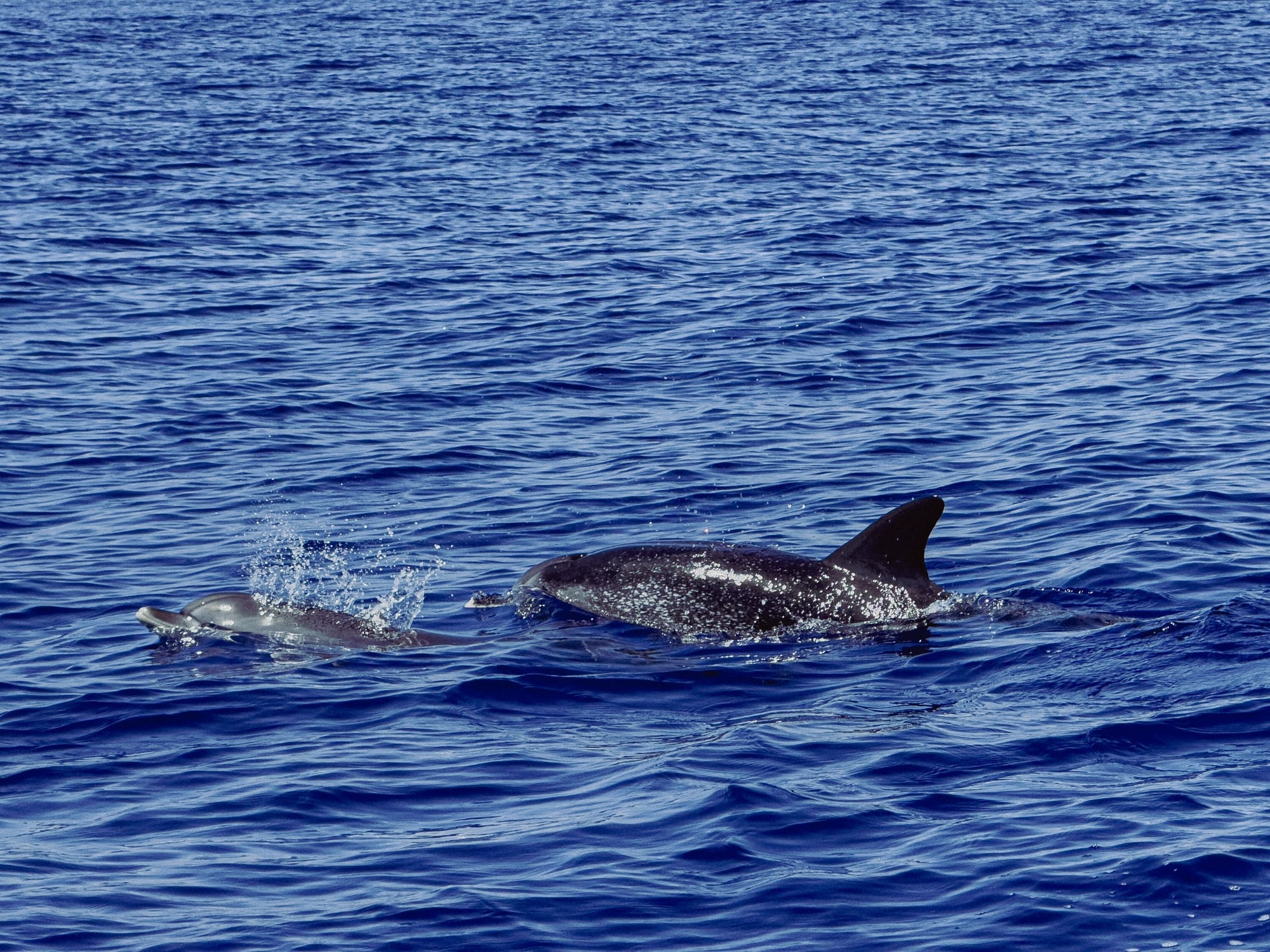
On our trip, we were lucky. Just twenty minutes out, the guide pointed out a sleek dorsal fin cutting through the water. A pair of dolphins. Then another. Then five more. Within moments we were surrounded. They swam alongside the boat, leaping and twisting in the air, then disappearing under the bow, only to pop up again meters ahead. It was instant and electrifying.
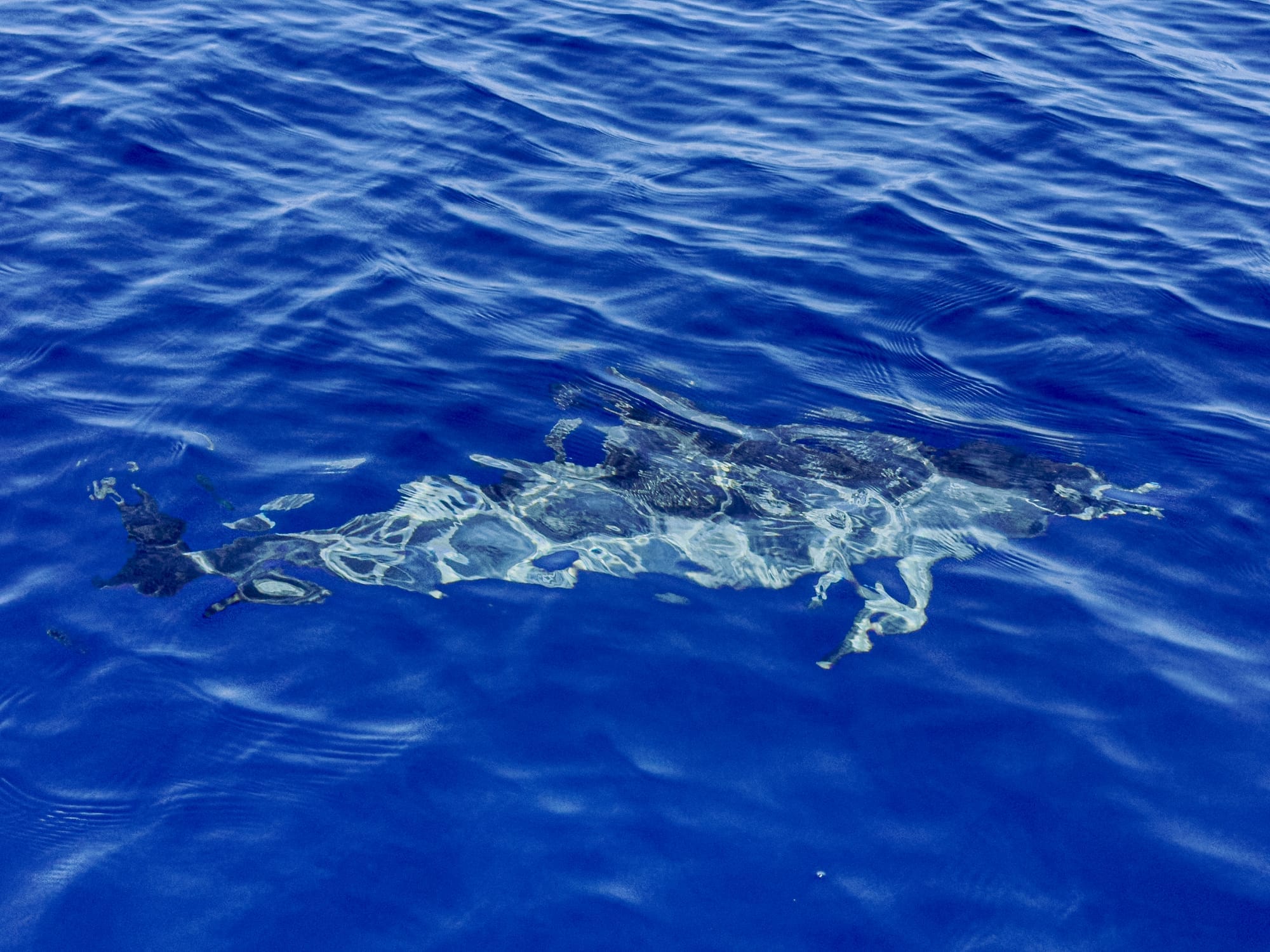
Dolphins, you'll quickly learn, are the real showstoppers in the Azores. On most trips, you'll see one or several pods.
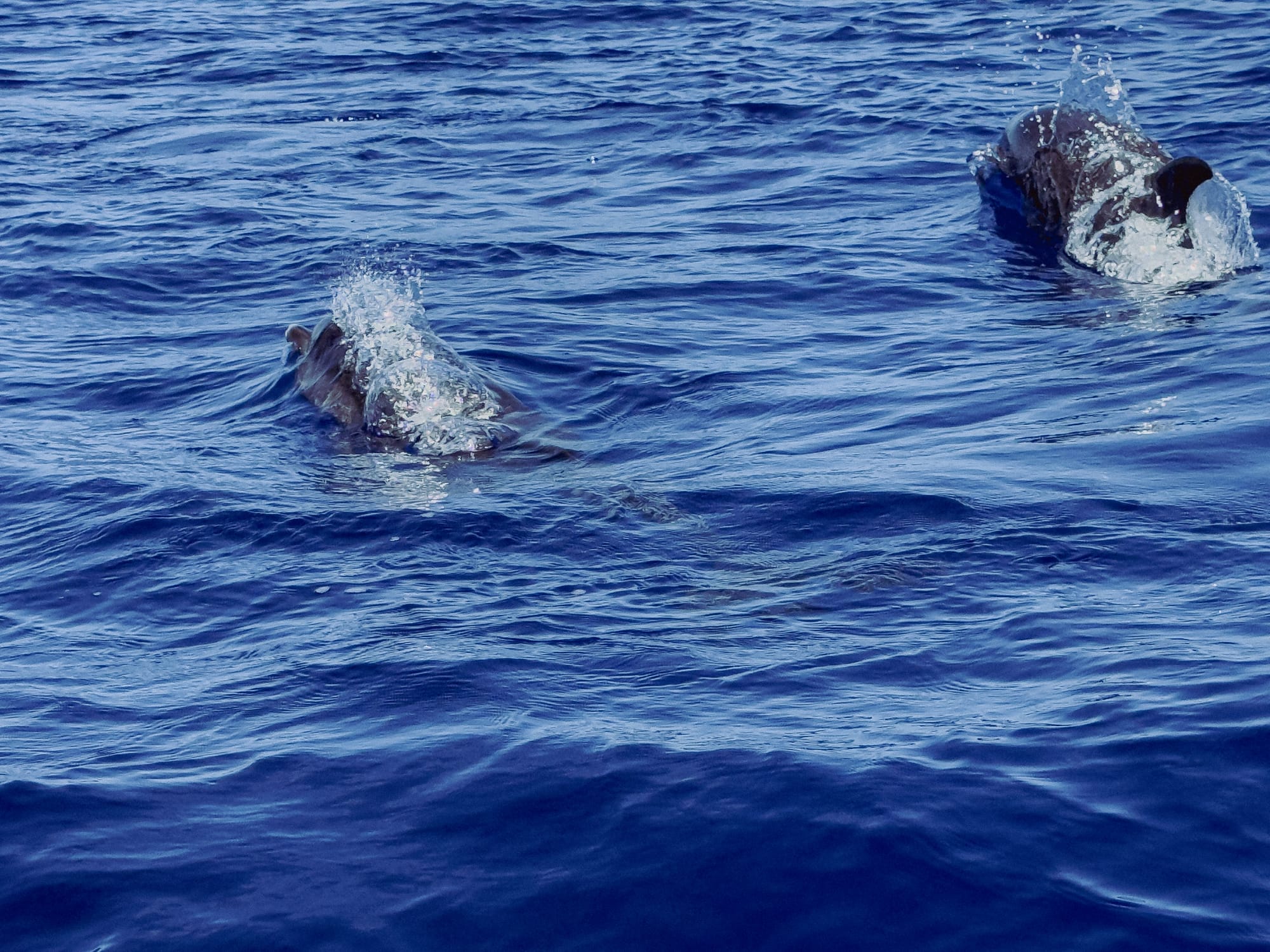
Sometimes they're cruising lazily; sometimes they're racing alongside the boat, riding the wake, and darting and spinning like they're having the time of their lives.
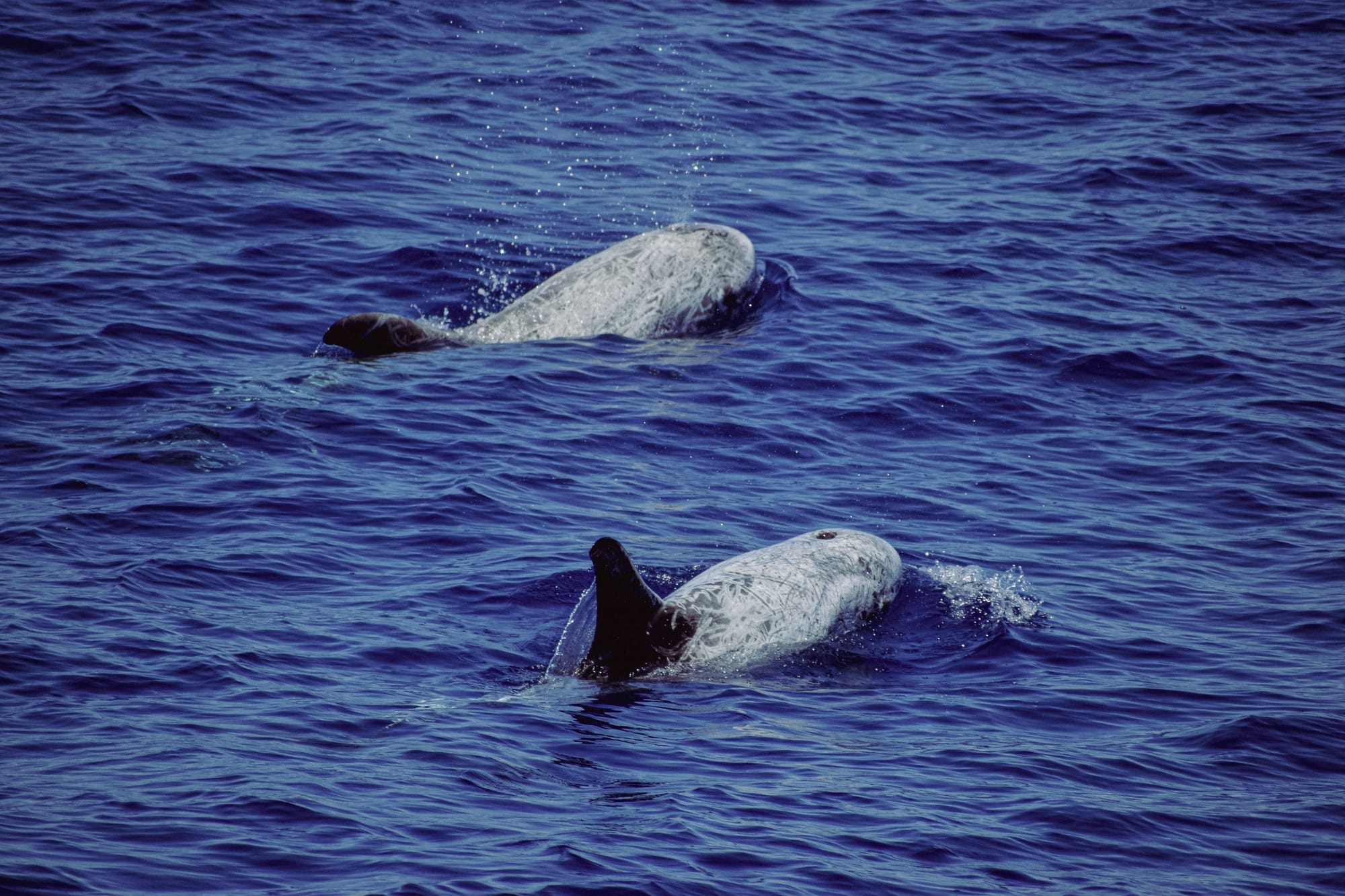
Seeing dolphins up close feels very personal. You can hear them breathe. You can see their skin shimmer. Sometimes, they look right at you. In those moments, it's hard to tell who's watching who.
Whale sightings in the Azores
Whales are a different experience. Calmer. More unhurried. Harder to find.
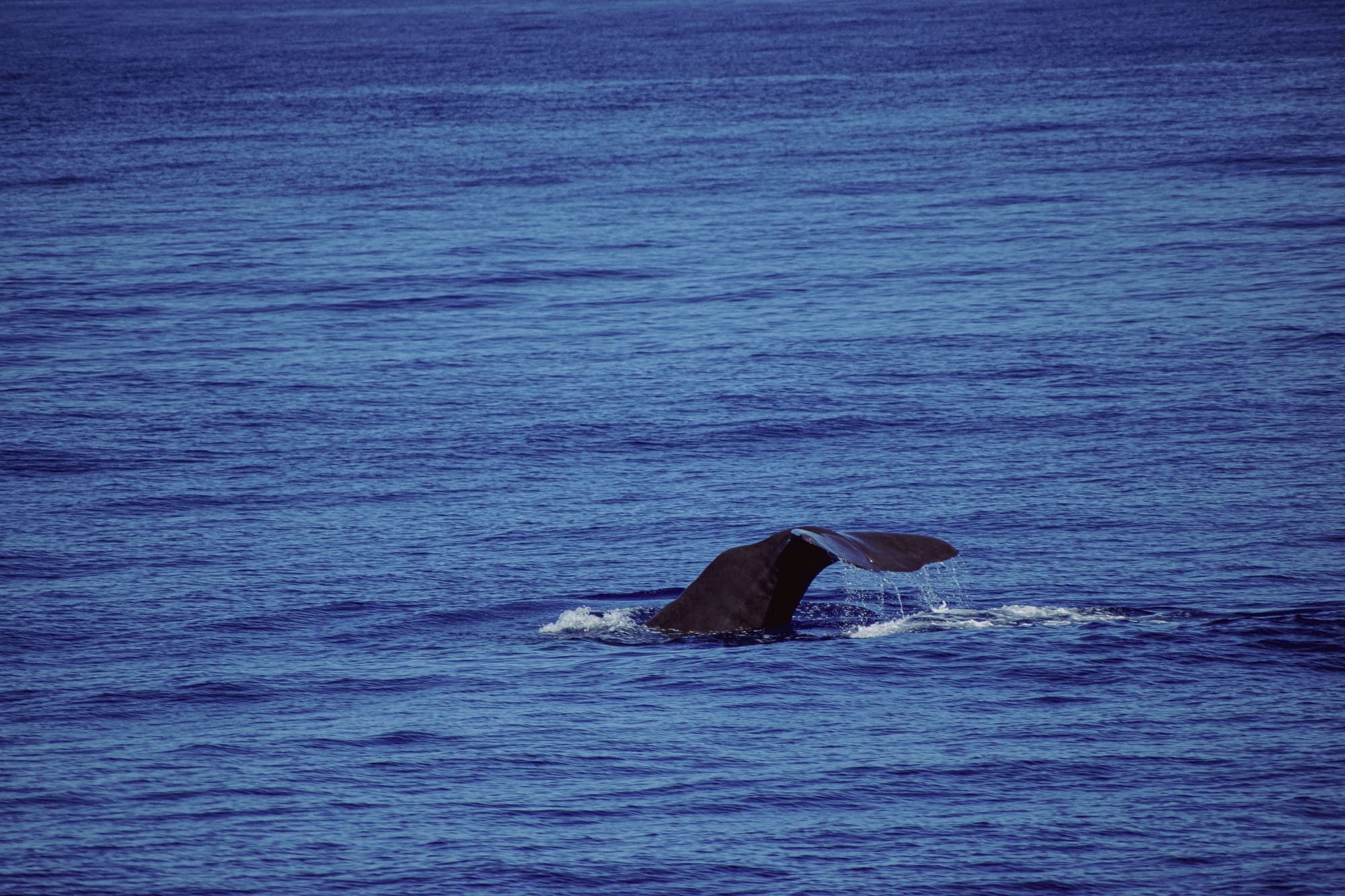
The sperm whale is the species you're most likely to spot year-round. You'll know you've found one when you see the vertical spray, a ridged back, and then, if you're lucky, a fluke raised in the air before a deep dive.
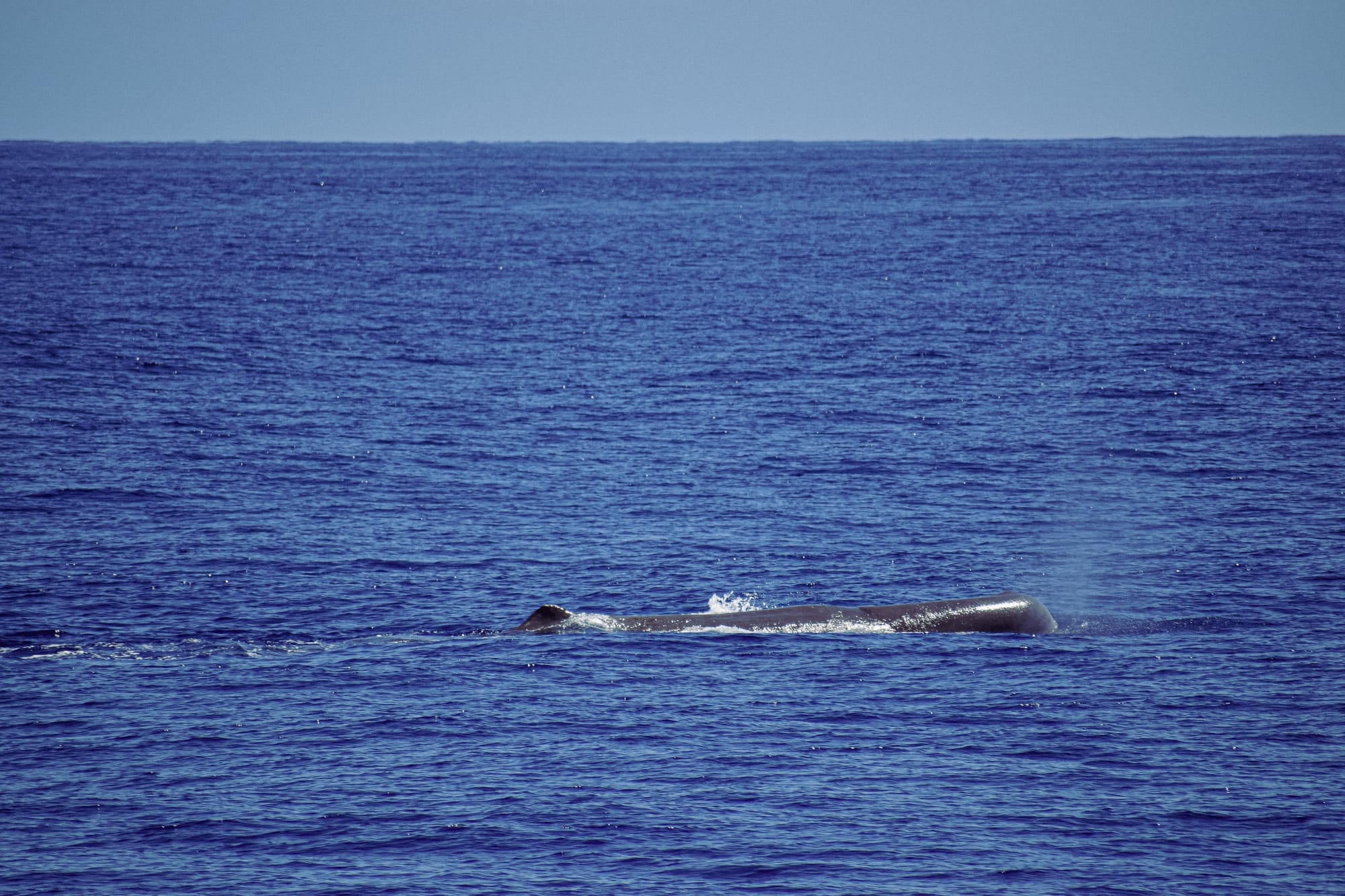
Don't expect breaches. Despite what tour ads suggest, most sightings are partial. You'll see the water spout, the back cresting, and the tail rising. Sometimes a calf surfaces nearby. And then they disappear again into the blue.
Other whale species (blue whales, fin whales, and sei whales) are migratory and seasonal. You might see them in spring and early summer, especially on longer or more specialized tours.
Best time for whale watching in the Azores
There's no bad month, but what you're likely to see changes with the seasons. The best data for São Miguel comes from a study of whale watching boats off the island's south coast between 2006 and 2013. It logged 7,691 sightings of 20 cetacean species. For baleen whales, 81.7% of sightings came between March and June, according to the study abstract in Frontiers in Marine Science.
For the weather, crowds, and prices in each month, not only the whales, see our guide to the best time to visit the Azores.
Blue whales: over 90% of records fell between March and May, peaking in May.
Fin whales: most common in April and May. They were the most-seen baleen whale in the study.
Sei whales: also mostly April and May.
Humpback and minke whales: occasional visitors, with no reliable season.
Sperm whales: present all year, which is why they're the whale you're most likely to see.
Dolphins: common dolphins are seen all year, and operators report more species in summer, such as spotted dolphins.
In practice, choose April or May if seeing a blue or fin whale is your main goal. Choose June to September for calmer seas, warmer weather, and the best chance of large dolphin pods. In winter, trips can be cancelled more often when Atlantic swells make it unsafe to go out.
The month-by-month weather table in our São Miguel guide (PDF) lines up whale seasons with sea temperatures, which helps if you're choosing travel dates around a boat trip.
Whale watching in the Azores month by month
This table brings the seasons together. It's based on the São Miguel study above for baleen whales and on what operators report for the other species. Sightings depend on the day, so treat it as odds, not a promise.
| Month | Most likely | Also possible | Sea and weather |
|---|---|---|---|
| January and February | Sperm whales, common dolphins, Risso's dolphins, bottlenose dolphins | Early fin whales at the end of February | Roughest months, more cancellations |
| March | Sperm whales, dolphins, first blue and fin whales | Sei whales, humpbacks | Still rough at times |
| April and May | Peak for blue, fin, and sei whales, plus sperm whales and dolphins | Humpback and minke whales | Improving, cool on the water |
| June | Sperm whales, dolphins, the last baleen whales | Late blue or fin whales | Calmer seas begin |
| July and August | Sperm whales, big dolphin pods, Atlantic spotted dolphins, pilot whales | Beaked whales, loggerhead turtles | Calmest and warmest, busiest boats |
| September and October | Sperm whales, spotted and common dolphins | Pilot whales | Mostly calm, getting more changeable |
| November and December | Sperm whales, common, Risso's, and bottlenose dolphins | Occasional baleen whales | Winter swells, check the forecast |
Are there blue whales in the Azores?
Yes. Blue whales, the largest animals known to have lived, pass the Azores on their spring migration north. In the São Miguel boat data, more than 90% of blue whale records came between March and May, with May the peak month.
They don't just swim past. A satellite-tagging study off Faial and Pico found that blue and fin whales pause their migration and spend time feeding around the islands before they carry on north, probably to build up energy for the rest of the journey, according to Silva and colleagues in PLOS ONE. That stopover is why spring is the time to go if a blue whale is on your list.
Keep your hopes realistic, though. Even in May, blue whales aren't seen on every trip, and you'll mostly see a tall spout and a long back rather than the whole animal. If they're your main goal, book two trips a few days apart, ideally in late April or May.
Sighting rates: how likely are you to see whales?
Sightings are never guaranteed, but the odds are good. São Miguel operators report seeing whales or dolphins on the large majority of trips, and some have had whole seasons with a sighting on every trip. Those figures come from the operators themselves, so treat them as a guide. What they don't promise is a whale: on many trips, dolphins are the main sighting, as they were for us. Most operators offer a free second trip if you see no cetaceans at all.
Prefer to go with a guide? One popular option is a 3-hour whale and dolphin trip from Ponta Delgada. You can check dates and prices here:
Other marine life to watch for
It's not only whales and dolphins. The Azores are full of marine life. Here's what else you might see:
- Common dolphins: Fast, social, and often in large pods. Sleek, with golden sides.
- Bottlenose dolphins: Bigger and more familiar to most people, plus curious and intelligent.
- Risso's dolphins: Pale, scarred, and striking. These are deep divers and less predictable.
- Pilot whales: Technically a dolphin species, these look like small, dark whales with bulbous heads. Often seen in family groups.
- Sea turtles: Especially loggerhead turtles, floating at the surface or paddling lazily past.
- Seabirds: Cory's shearwaters, terns, petrels, and gulls are always around. Look for them diving, circling, or hovering over feeding zones.
On some trips, you might also spot flying fish, Portuguese man o' war, or even the shadow of a sunfish beneath the surface.
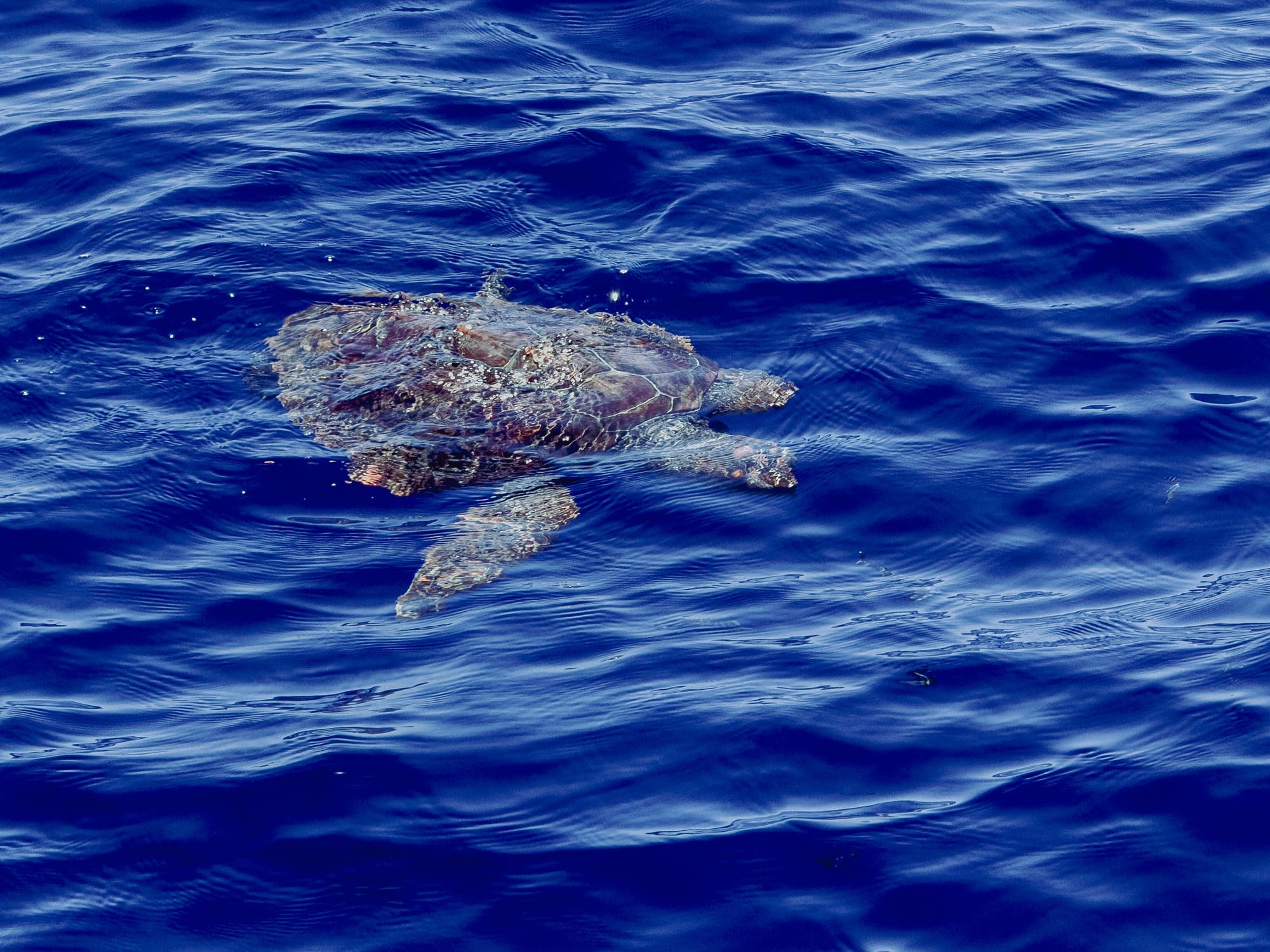
Even with all of these, it was the dolphins who stayed with us the longest. We saw pods of dozens. They crisscrossed the bow, rode the wake, and surfaced together, breathing out almost in sync.
Moby Dick moments
Being on a fast boat in the open Atlantic stirs up something very old in you. It's hard not to think of Melville's sailors, endlessly scanning the horizon. Even if the whales you spot don't leap into the air, and even if you only see a sliver of their back and the white spray of their breath, it's thrilling. Maybe even more so, because none of it is staged.
The waiting becomes part of the fun. You start looking at the water differently, squinting at every disturbance, every ripple, or every change in color. Time seems to stretch. You start to read the movement of the ocean.
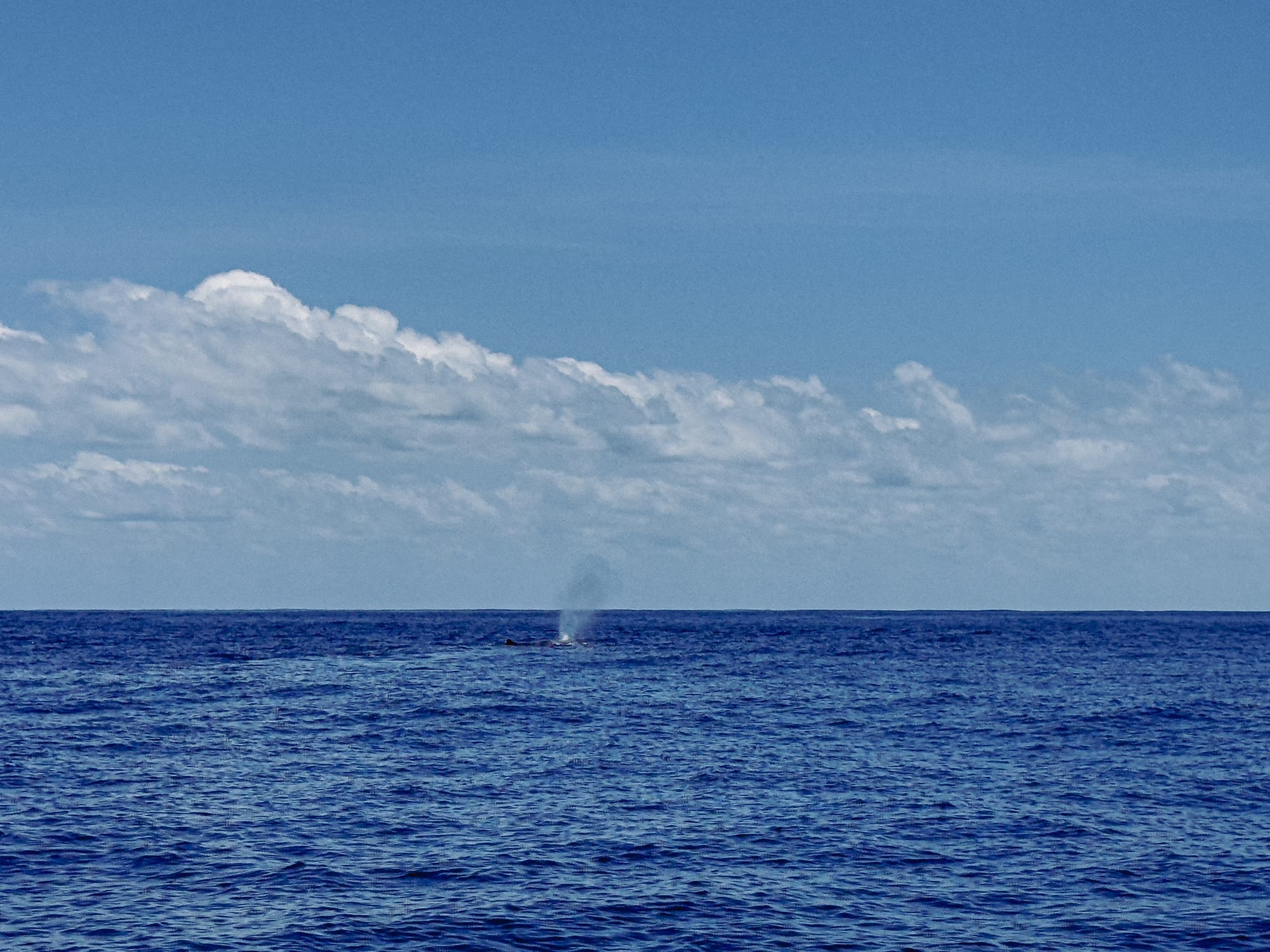
And when a whale does appear, even partly, it feels enormous. Both in size and in presence. You realize how small you are, and how temporary.
The ethics of whale watching
With any wildlife encounter, there's an ethical question: should we be there at all? The tour operator we chose takes this seriously. Instead of caging animals or bringing them into an artificial enclosure, the tours go out into their environment and watch them with respect and from a distance.
Unlike aquariums or marine parks, these animals aren't in captivity. You're entering their world on their terms. The best tours treat this as a privilege, not a right. Your boat won't chase or surround the animals. Instead, it will watch them from a safe and regulated distance and let them come closer if they choose.
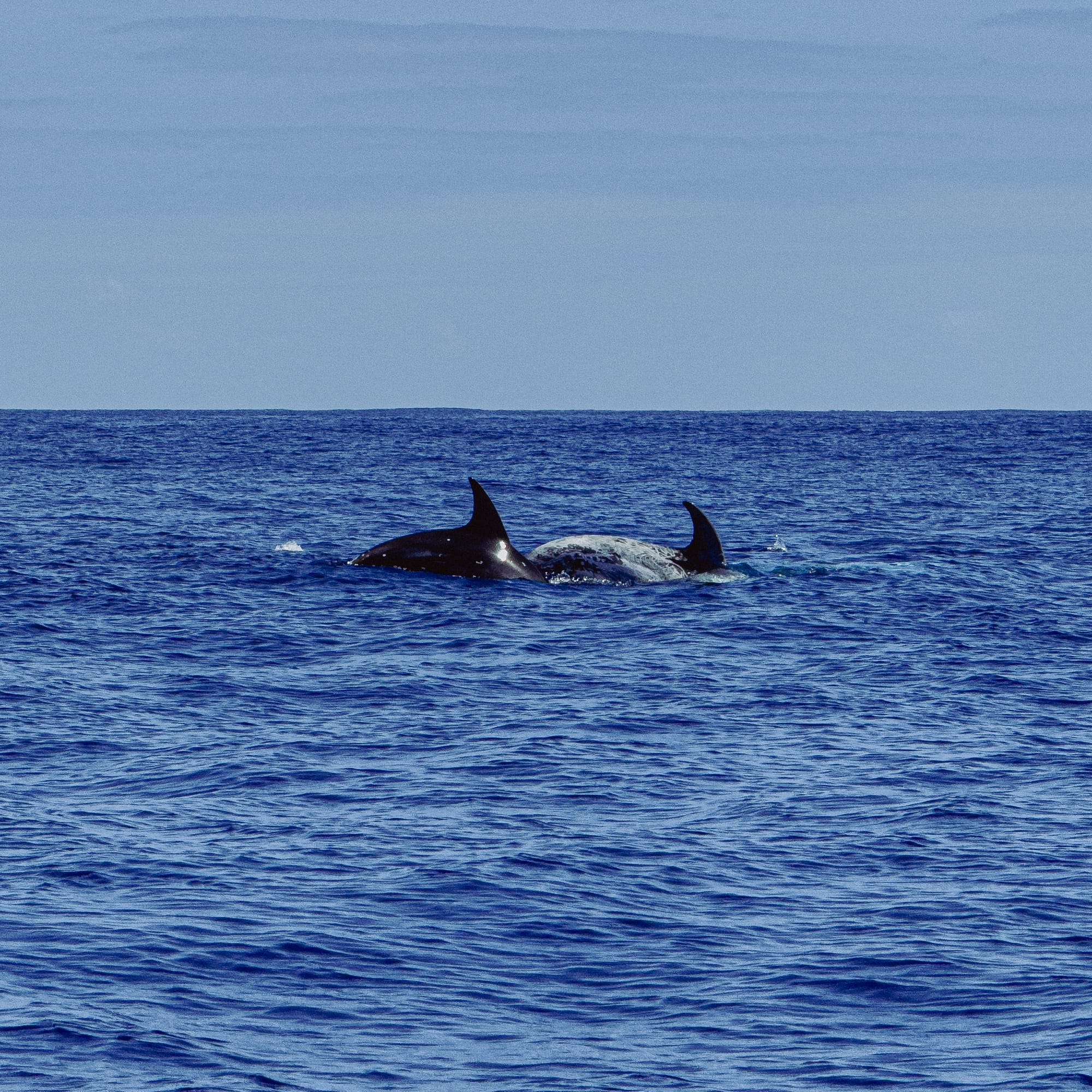
Guides follow strict protocols. Encounters are timed and monitored. The animals are wild, not performing. Some days you see more, some days less. There are no guarantees.
But that's what makes it so good. These are real moments, not manufactured entertainment. The ocean is still the animals' home. We're just visitors.
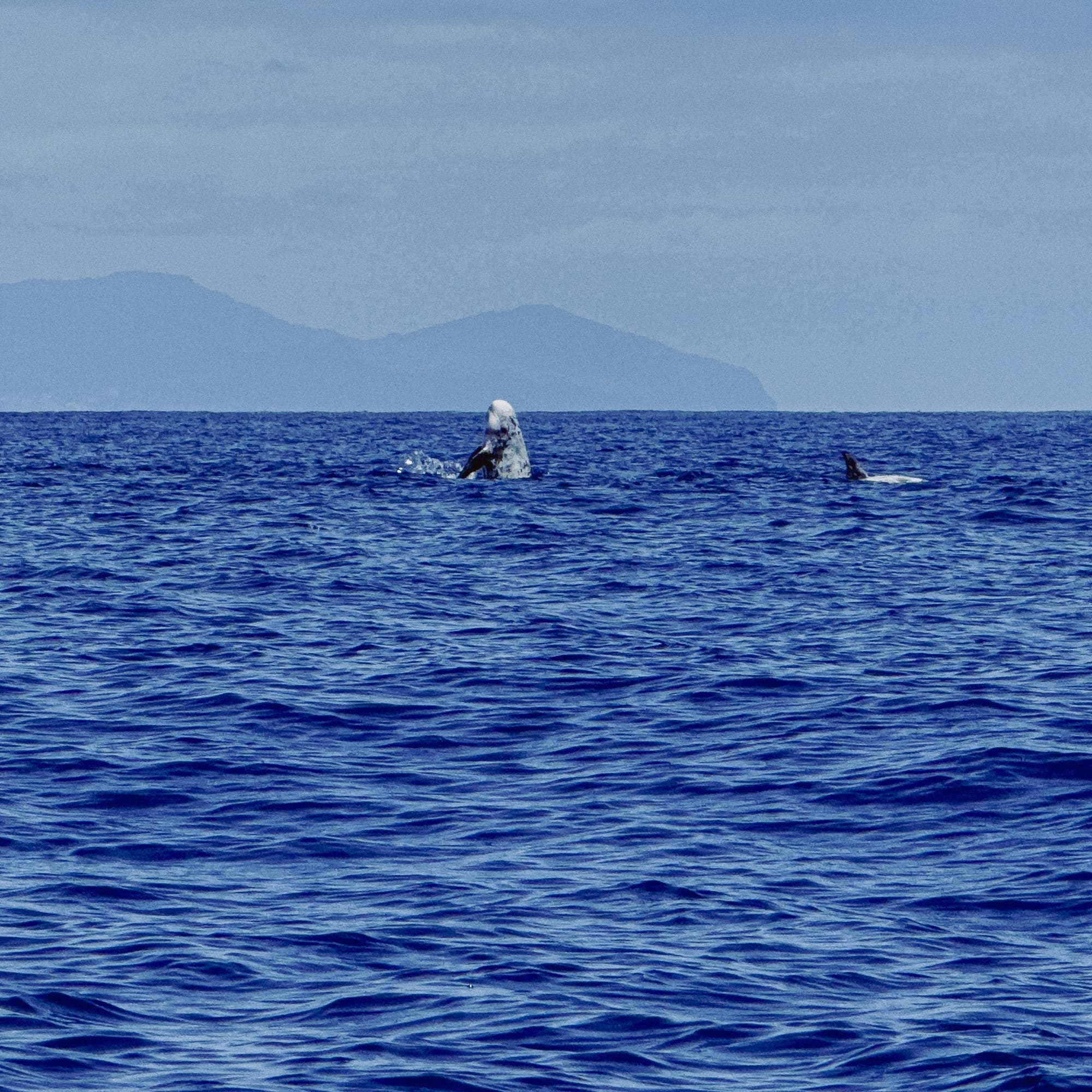
For us, this is one of the best things about the experience: these animals are free. Completely unconfined. Watching them in their element (feeding, socializing, and migrating) means seeing them as truly wild animals.
The best operators are very aware of their impact. Many tours include marine biologists or guides trained in cetacean behavior. Some also take part in data collection or citizen science programs. So you're not only a passenger; you're also helping support a more responsible way of watching wildlife.
Azores whale watching rules: how operators are regulated
In the Azores, whale watching is regulated by the regional government, not left to each operator. The legal framework is Regional Legislative Decree 9/99/A, amended by Regional Legislative Decree 10/2003/A. Every company needs a licence, and the Azores tourism board lists these laws on its official whale watching page. The government has also started work on a full revision of the rules, so details may change.
The main rules, as licensed operators such as Espaço Talassa explain them, are:
Keep your distance: boats stay at least 50 m from whales and dolphins, and further from mothers with calves.
Approach from behind and to the side, at a steady, low speed, and never head-on.
Limit the crowd: only a few boats (operators cite three) may watch the same group at once, and they stay on one side so the animals are never surrounded.
Limit the time: a boat can stay with the same group for 30 minutes at most.
Never chase, feed, or touch, and never come between a mother and her calf. Lone calves at the surface must not be approached.
No swimming with whales. Swimming with dolphins is allowed only on licensed trips, with certain species and snorkel gear only.
Good operators add their own practices on top of the law. Espaço Talassa, for example, approaches from behind at a constant speed, keeps every boat on the same side of a group, leaves at reduced speed, and lets the skipper end an encounter early when animals are feeding, mating, or with calves. It stopped offering dolphin swims in 2017, as its responsible whale watching page explains, and Futurismo says it has stopped them too.
Our view: watch from the boat and skip swim-with-dolphin trips. Even when they're legal and well run, they put people in the water with wild animals that are feeding, resting, or with young, and the boat has to get close for it. Watching from a distance gives you the same animals without that pressure on them.
How to choose a responsible whale watching operator
Every licensed company has to follow the rules above, but some go further. Look for a marine biologist or trained guide on board, a briefing before you leave, land-based lookouts so boats don't waste fuel searching, and small group sizes. Be wary of any operator that advertises "guaranteed" whale sightings or close encounters, or that pushes swimming with wild animals. We went with Futurismo because of their experience and the care they take, and we'd recommend them.
Two labels can help when you compare. World Cetacean Alliance certification is an international scheme for responsible whale and dolphin watching, and Futurismo holds it. The Azores "Certificado pela Natureza" seal is a regional sustainability label, shown by Picos de Aventura among others. Neither replaces asking how the crew behaves around the animals.
What if you see nothing?
Good question. Most tours have an ethical and economic workaround: if you don't see any whales or dolphins, they'll let you go again, free of charge. That means your ticket is a kind of promise: you will see something eventually, even if it takes more than one trip.
In our case, that wasn't necessary. Within the first hour, we'd seen several species.
Whale watching tour tips
A few things we learned:
- Small boats are better for sightings. But only if you're physically comfortable with them. The ride can be intense, especially in wind or swell.
- Bring warm clothes. Even on warm days, the Atlantic gets cold. A windbreaker or fleece goes a long way. Futurismo can also give you a jacket.
- Photography is tricky. Long lenses can help, but often it's better to just enjoy the moment. The tour operators usually share photos from the trip afterward.
- Stay alert. Wildlife can appear suddenly and vanish just as quickly. Put your phone down. Scan the water. Trust your eyes.
- Time of day matters. Mornings tend to be calmer on the water, but conditions change fast. Ask the guides for recommendations based on the weather.
- Use sunscreen, but avoid sprays. They're harmful to marine life. A reef-safe cream is better.
- Motion sickness meds help. Even if you don't usually get seasick, it's better to be safe, especially on the Zodiac.
- Trust the crew. They're experts at reading the ocean. If they tell you to sit, hold on, or look left, do it.
Whale watching Azores price and booking tips
A standard 3-hour trip from Ponta Delgada costs roughly €60 to €75 per adult in recent seasons, with discounts for children. Longer trips that add a stop such as the Vila Franca do Campo islet cost more. Book a day or two ahead in summer, but stay flexible: operators cancel or move trips when the sea is too rough, and a morning trip leaves you room to rebook if that happens.
Check the age and health limits before choosing a Zodiac, as many operators set a minimum age and advise against it in pregnancy or with back problems. If you're planning the rest of your trip, see our list of things to do on São Miguel, and our guide to Vila Franca do Campo.
Seasickness on a whale watching trip
The Atlantic is rarely flat, and the boats stop and drift while you watch, which is when seasickness hits. A few things help, based on the NHS advice on motion sickness and the operators' own tips:
- Pick a catamaran if you're prone to it, and sit in the middle of the boat, where the movement is smallest.
- Buy seasickness tablets or patches before the trip, because operators don't sell them on board. Ask a pharmacist when to take them and whether they make you drowsy.
- Look at the horizon, stay in the fresh air, and keep your phone away from your face.
- Eat something light beforehand and skip alcohol the night before. Ginger tablets or biscuits help some people.
- Book a morning trip: the sea is often calmer, and a cancellation leaves room to rebook.
What to bring whale watching in the Azores
Pack for wind and spray, even in summer:
- A windproof, waterproof jacket and a warm top you can add or remove.
- Sunglasses and a hat, both with a strap or clip, because the wind on a Zodiac takes them.
- Reef-safe sunscreen in cream form, applied before you board.
- Water and a snack.
- A small dry bag or a zip bag for your phone on a Zodiac.
- Binoculars, if you have them, for distant spouts.
- Closed shoes with grip. Wet decks are slippery.
Leave the drone at home: Futurismo, for one, doesn't allow them on its trips, and flying close to whales and dolphins can disturb them.
What stayed with us
The water, the calm, and the horizon. Being eye-level with a dolphin, the thrill of seeing a whale breathe out, and the sudden rush of movement just beneath the boat. There were long, empty stretches too, with time to sit with salt on your skin and sun on your face, watching the line between sea and sky.
Want to go? We recommend this tour run by Futurismo, where you can choose between a catamaran and a Zodiac boat.
Bon voyage!
Nearby, see Ponta Delgada and the pineapple plantations.
Before a day on the water, make sure you have travel insurance. Slippery decks, sharp rocks, and too much sun are the usual problems, and it's worth knowing you're covered. We'd recommend SafetyWing Nomad Insurance. It covers medical emergencies abroad, you can buy it even after you've left home, and it renews every four weeks, so it works for a short trip or months on the road.
Where to stay for whale watching in São Miguel
Ponta Delgada is the easiest base for the whale watching boats, with the most places to eat and the airport nearby. All of these are rated 9 or more on Booking:
- Island Bliss: a well-priced guest house in the city, rated 9.4 from over 700 reviews.
- Santa Clara 1828: a restored 19th-century house turned boutique stay, rated 9.6.
- Ilha Hostel & Suites: private suites and dorms with a social feel, rated 9.2 from nearly 1,000 reviews.
Frequently asked questions
When is the best time for whale watching in the Azores?
April and May are best for blue, fin, and sei whales, which pass through mainly from March to June. Summer (June to September) brings calmer seas and the most dolphins. Sperm whales can be seen all year.
Is whale watching in São Miguel worth it?
Yes, if you go in with realistic hopes. Dolphins appear on most trips and sperm whales live here year-round, but breaches are rare and many sightings are just a back and a spout.
How much does whale watching in the Azores cost?
Roughly €60 to €75 per adult for a 3-hour trip from Ponta Delgada in recent seasons. Check the operator's site for current prices.
Which whales can you see in the Azores?
Sperm whales all year; blue, fin, and sei whales mainly in spring; and occasional humpback, minke, and pilot whales. More than 20 cetacean species have been recorded.
Is whale watching in the Azores ethical?
It's one of the better-regulated places to do it. Regional law sets minimum distances, time limits, and boat numbers, and every operator needs a licence. Choose one with marine biologists on board.
Catamaran or Zodiac for whale watching in the Azores?
A catamaran is steadier and better if you get seasick or have back problems. A Zodiac is faster, lower to the water, and bumpier. We chose the Zodiac.
What if you don't see any whales?
Most São Miguel operators offer a free second trip if you see no whales or dolphins. Check the policy when you book.
Are there blue whales in the Azores?
Yes, mainly in spring. Off São Miguel, over 90% of blue whale sightings in a long-term boat study were between March and May, with a peak in May.
Where is the best whale watching in the Azores?
São Miguel is the easiest, with the most departures, all year. Pico and Faial, in the central group, are the traditional whale watching islands and a good choice for a whale-focused trip, especially in spring.
Can you swim with dolphins in the Azores?
Licensed operators may offer it with five dolphin species, snorkel only, and swimming with whales is banned. We don't recommend it: watching from the boat puts less pressure on the animals, and some leading operators have stopped offering swims.
How long is a whale watching trip from Ponta Delgada?
About 3 hours in total: a briefing and check-in of around 30 minutes, then about 2.5 hours at sea. Trips can run longer if the animals are far out.
Can children go whale watching in the Azores?
Yes. Operators usually set a minimum age of 6 on Zodiacs, while catamarans take younger children. Futurismo, for example, lets under-6s go free and charges half price for ages 6 to 12.
Is whale watching in the Azores rough?
It can be, especially in winter and on Zodiacs. Choose a catamaran, take seasickness medicine before you go, and book a morning trip if you're worried.
Useful links: Whale watching (Azores Tourism), Whale watching (Visit Azores), Regional Legislative Decree 10/2003/A (Diário da República), and Baleen whale seasons off São Miguel (Frontiers in Marine Science).
More from São Miguel: living in the Azores, Azores digital nomad guide, the Santana farmers market, favorite São Miguel viewpoints, the Poça da Dona Beija hot springs, and our full São Miguel guide. For a soak in the forest afterwards, see Caldeira Velha.


