


Plantação de Ananás dos Açores is a working pineapple plantation on the edge of Ponta Delgada, on São Miguel in the Azores. You walk through the glass greenhouses for free on a self-guided route, then try fresh pineapple juice at the bar. Allow 30 minutes to an hour. It's a good rainy-day stop at any time of year, but check before you go, as it closed for maintenance in January 2026. The better-known Arruda pineapple plantation in Fajã de Baixo is a few minutes away, also free, so you can easily see both.
When people picture São Miguel in the Azores, they usually think of crater lakes, thermal springs, or volcanic cliffs wrapped in mist. But on the outskirts of Ponta Delgada, something else grows under glass: pineapples. They're raised in greenhouses through a long, careful process that's unique to the Azores.
At Plantação de Ananás dos Açores, you can walk right through that process. There are no ticket booths here, just rows of steamy greenhouses, a path under your feet, and a long history of island farming you can see leaf by leaf.
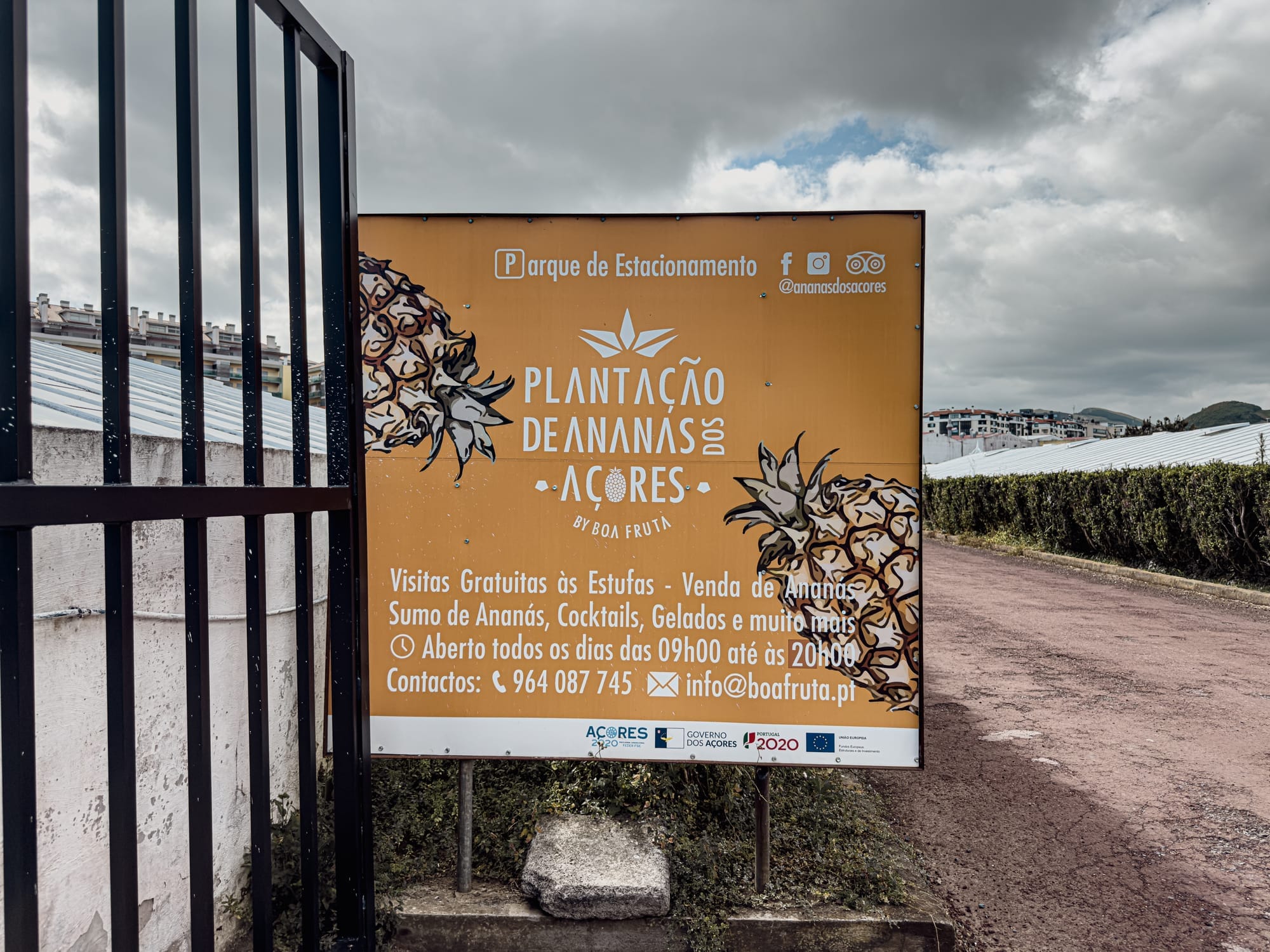
This small plantation is one of the best places to see Azorean pineapple farming up close. It’s not a long visit, but it sticks with you.
Pineapple plantation Azores at a glance
The practical details for Plantação de Ananás dos Açores, from the plantation's own site.
Where: Rua das Laranjeiras, Ponta Delgada, São Miguel.
Entrance fee: free, with a self-guided route through the greenhouses.
Opening hours: not published as a fixed schedule. byAçores lists about 9am to 6pm daily, and it closed for maintenance from 1 to 31 January 2026, so check the plantation's website before you go.
Who runs it: the plantation is run by Boa Fruta, and its official site says pineapples have been grown here for more than 150 years. You can contact them on +351 964 087 745 or info@boafruta.pt to check they're open.
Time needed: 30 minutes to an hour, including a drink at the bar.
What's there: greenhouses at different stages of growth, information boards with QR codes, a bar with a terrace, and a shop with regional products.
At the bar: besides fresh juice, the menu covers cocktails, artisanal ice cream, plates of fresh pineapple, and chocolate fondue with pineapple for dipping.
Good to know: it's close to the city centre, so it's an easy stop on your first or last day.
| Plantação de Ananás dos Açores | Arruda | |
|---|---|---|
| Where | Rua das Laranjeiras, Ponta Delgada | Rua Doutor Augusto Arruda, Fajã de Baixo |
| Entry | Free, self-guided route | Free |
| Hours | About 9am to 6pm daily; closed 1 to 31 January 2026 | About 9am to 8pm (Apr to Sep), 9am to 6pm (Oct to Mar) |
| Time needed | 30 minutes to an hour, with a drink | Not stated |
| What's there | Greenhouses, QR info boards, bar terrace, and shop | Greenhouses and a shop with jam, liqueur, and fruit |
| Best for | Juice on the terrace, smaller and calmer | The best-known visit, on most tours |
How a tropical fruit ended up in Atlantic soil
Pineapples aren’t native to the Azores. They first arrived from Brazil in the 17th and 18th centuries, and commercial growing took off in the 19th century, after São Miguel’s orange exports declined. The fruit did well, but only under protection. Unlike in tropical regions, pineapples couldn’t grow in the island’s mild maritime climate without help. The solution? Glass.
What began as an agricultural experiment eventually became an enduring part of São Miguel’s cultural and culinary identity.
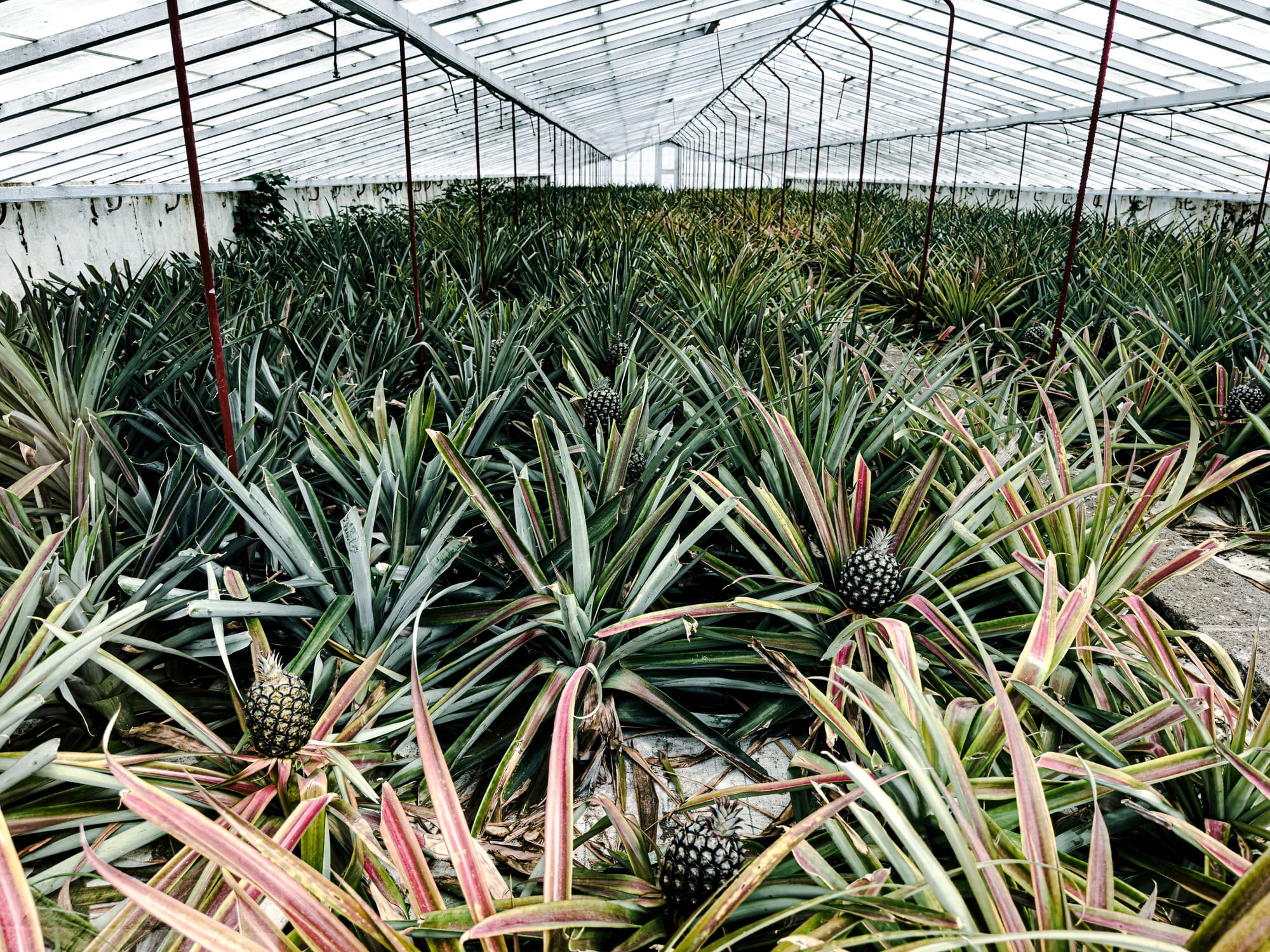
Over the next century, a network of pineapple greenhouses went up. They were simple but effective structures that trapped sunlight, held warmth, and allowed for a long, careful growing process that continues today.
Commercial pineapple farms in tropical zones can produce fruit in 9 to 12 months, but the Azorean process takes almost two full years. There are no chemical shortcuts here, just natural fermentation beds, organic mulches, and careful control of warmth, moisture, and time.
How Azores pineapples are grown
The Azores pineapple has protected designation of origin status (DOP in Portuguese), registered by the EU in 1996. The official product description on Portugal's traditional products register explains the basics. The fruit grows in glass greenhouses on "hot beds" made of plant material, with traditional smoking, and without pesticides. A ripe pineapple is cylindrical, with orange skin and yellow flesh, and weighs roughly 900 g to 1.5 kg.
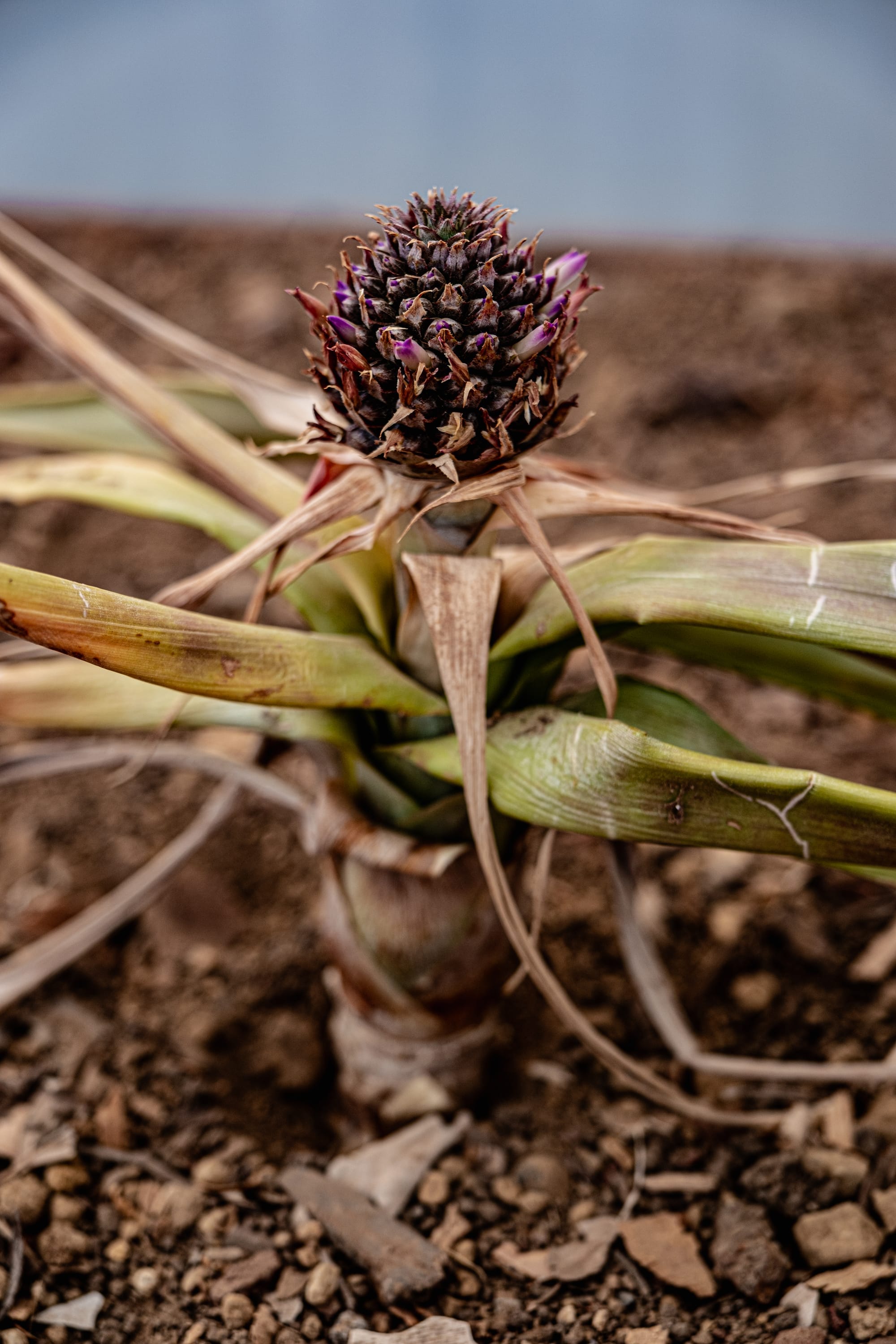
The smoking is the clever part. According to byAçores, growers smoke the greenhouses about four months after planting so that all the plants flower at the same time. Each plant gives just one fruit, and watering is cut back as the fruit ripens. So when you see smoke-stained glass or smell a hint of smoke inside, that's the method at work.
The smoke traditionally comes from burning plant material inside the closed greenhouse, such as cryptomeria wood or dried leaves. Watering follows a set pattern too: plenty in the first month, then less and less, and none at all while the fruit matures, which is when its sugar and acidity develop. The glass is often whitewashed to stop the plants scorching on sunny days while keeping the heat and humidity in.
Because each greenhouse is planted at a different time, walking from one to the next is like flicking through the two-year cycle: young plants in one, flowering plants after smoking in the next, and ripe fruit ready to cut further on.
The history goes back further than most people think. The same official description says pineapples first came to São Miguel from Brazil in the 17th and 18th centuries as greenhouse curiosities. They only became a serious crop in the 19th century, when disease hit the island's orange exports and farmers needed something new to sell. The first industrial-style greenhouse went up in 1864, and by the early 20th century Azorean pineapples were being shipped to England, Germany, and Russia.
That first greenhouse in 1864 held about 800 plants, and the industry grew fast from there: at its peak São Miguel had around 4,300 production greenhouses, according to byAçores. The variety grown is a flat-leaved Cayenne, the same family as many tropical pineapples, so the difference you taste comes from the method and the long ripening, not a different plant. Today most of the crop is sold in the Azores and mainland Portugal rather than exported.
The result is a smaller fruit that’s more acidic, more fragrant, and full of flavor. If you’ve only ever eaten canned or mass-market pineapple, the Azorean version will taste like a different fruit.
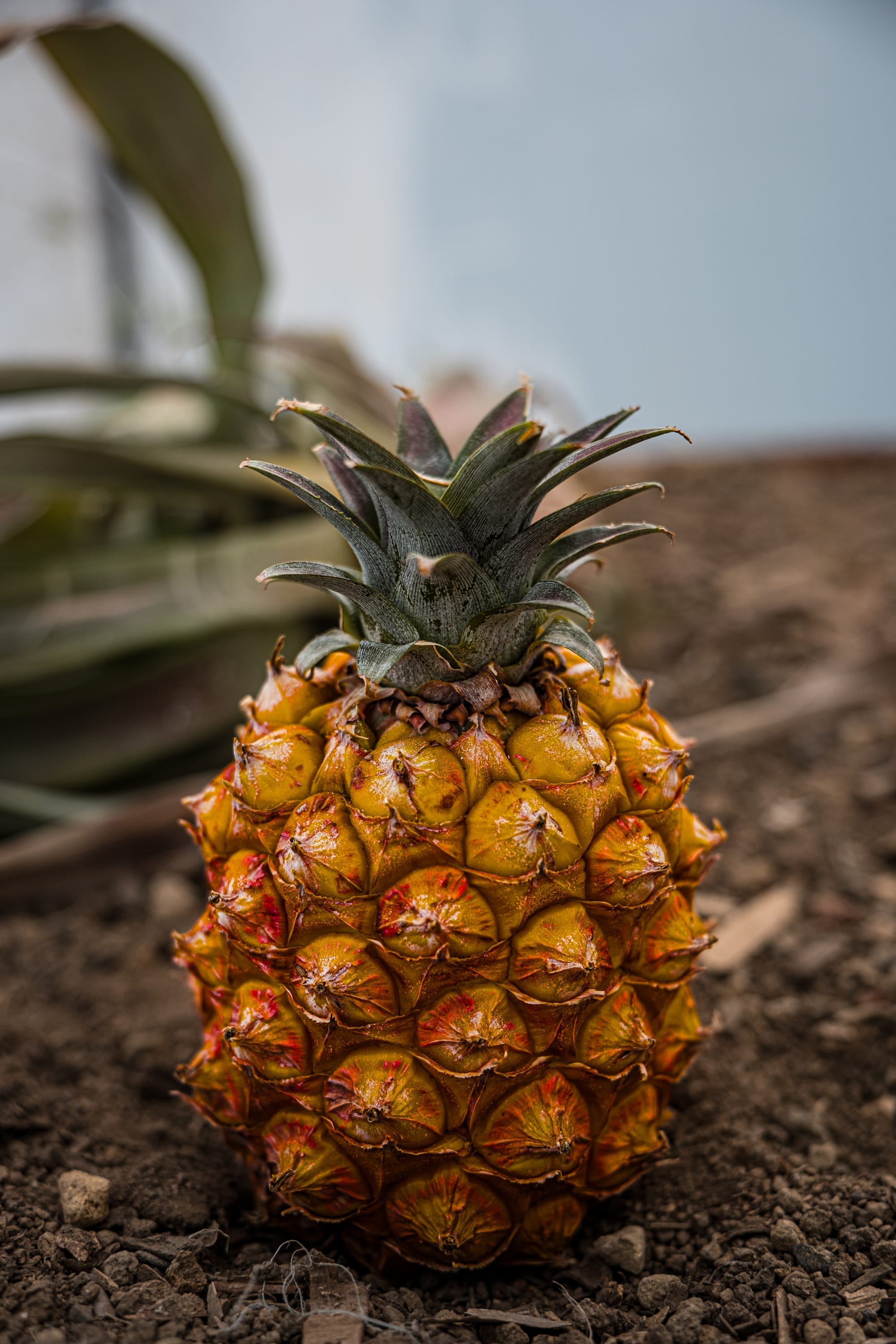
It’s one of those rare things that lives up to its reputation.
Walking through the pineapple greenhouses
Inside the first greenhouse, you’ll see rows of spiky plants coming up from a blanket of dark volcanic soil and cotton-like matting. The air smells earthy and sweet. It’s warm and slightly damp, with just a hint of smoke from the traditional heating techniques.
Some plants are just starting to bud, their tips topped with tight spirals of pale green.
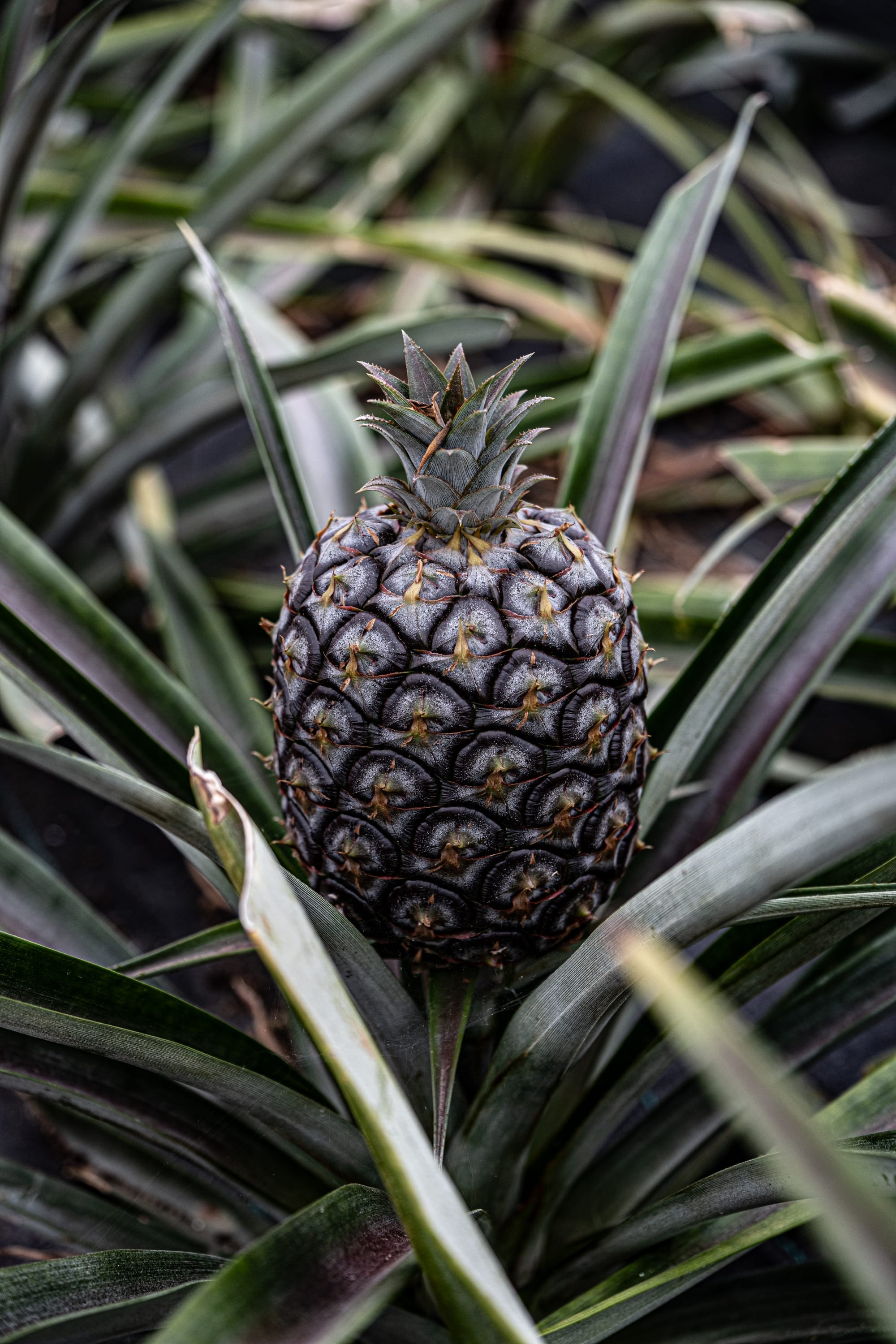
Others are well along: dark, glossy pineapples sitting in the middle of their stiff, arching leaves.
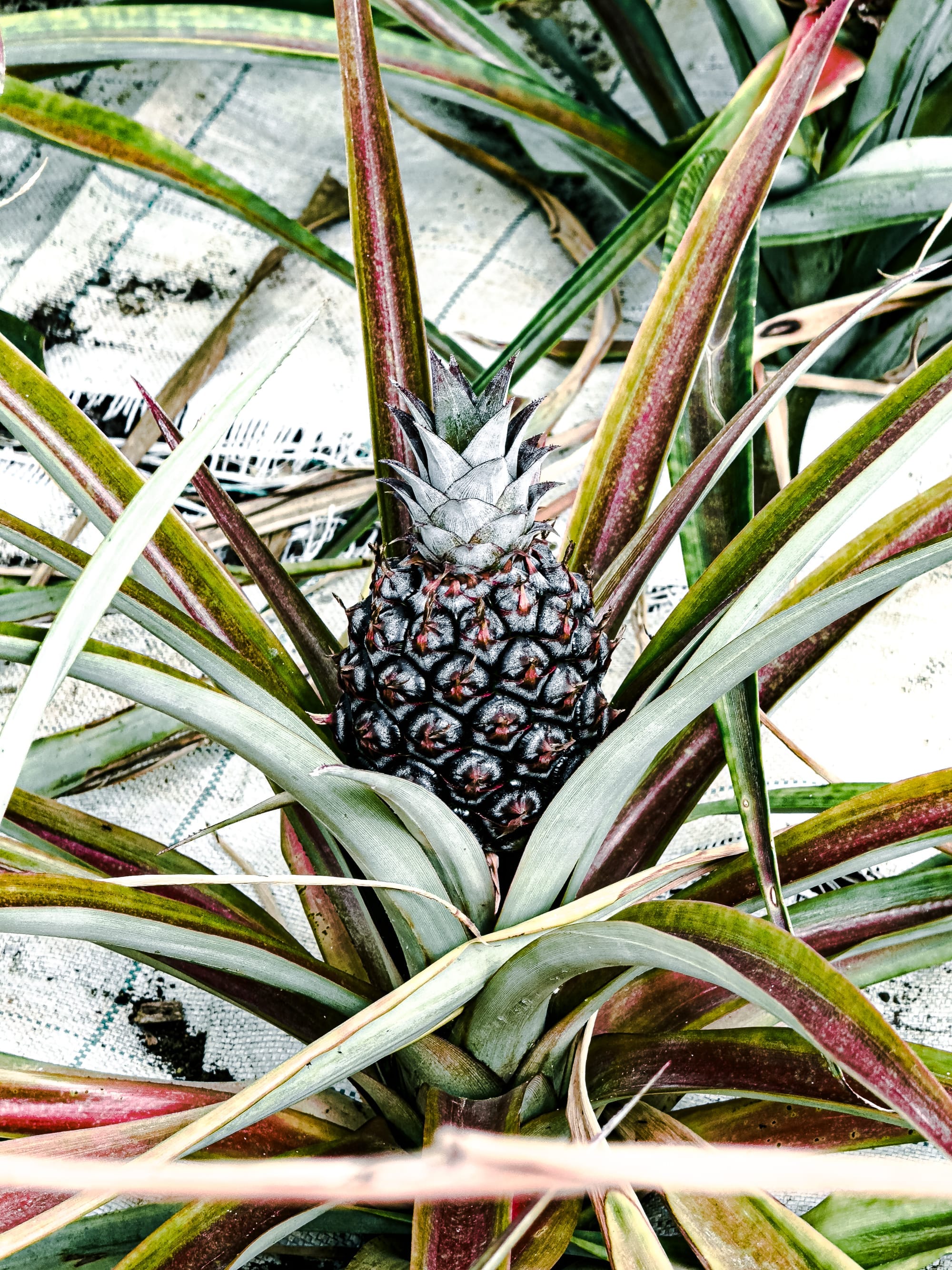
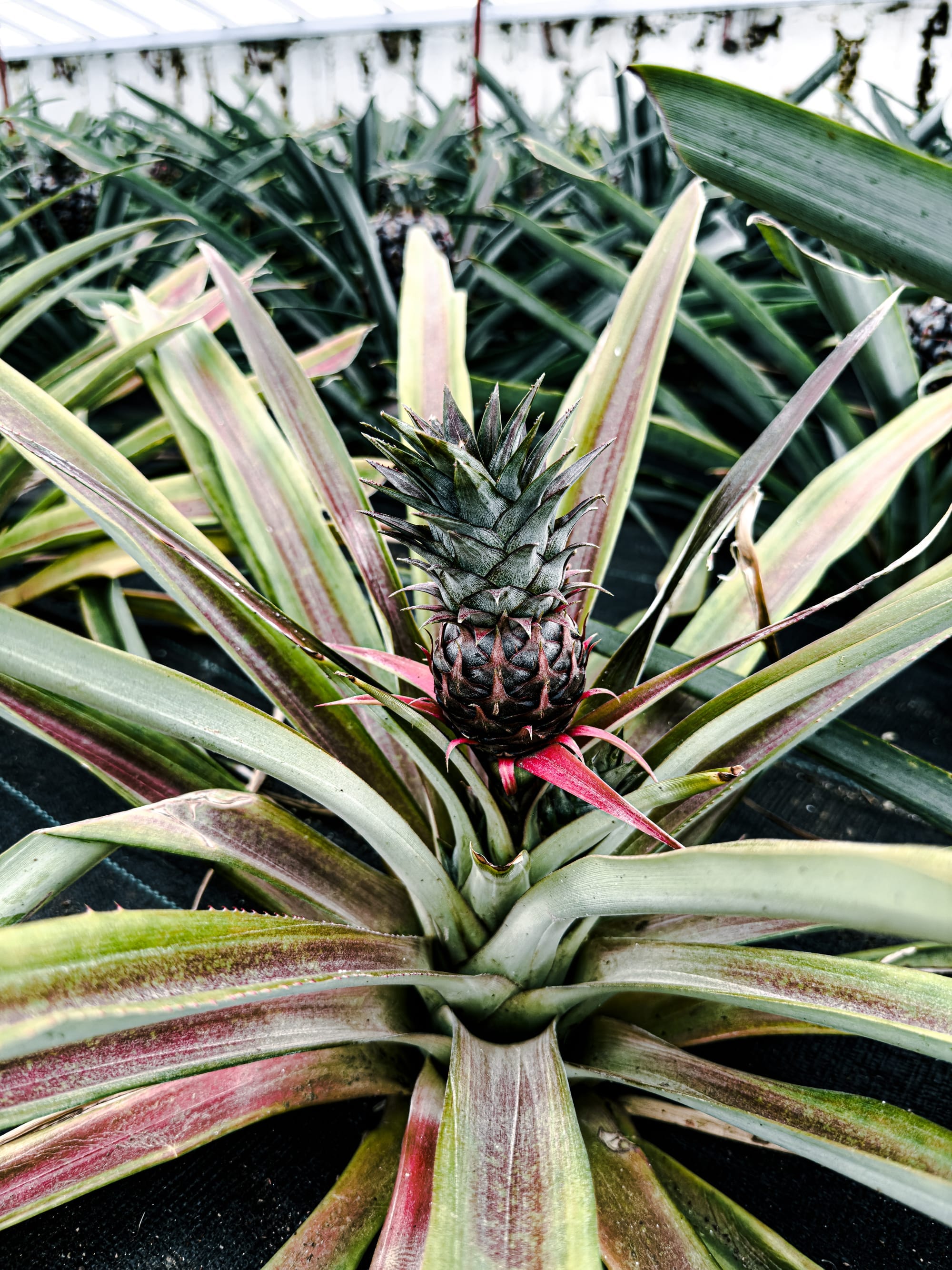
Two pineapples at different stages of ripening, growing under glass
Each greenhouse is a bit different. Some are still and steamy, others more open, with a sharp smell of sun-warmed leaves.
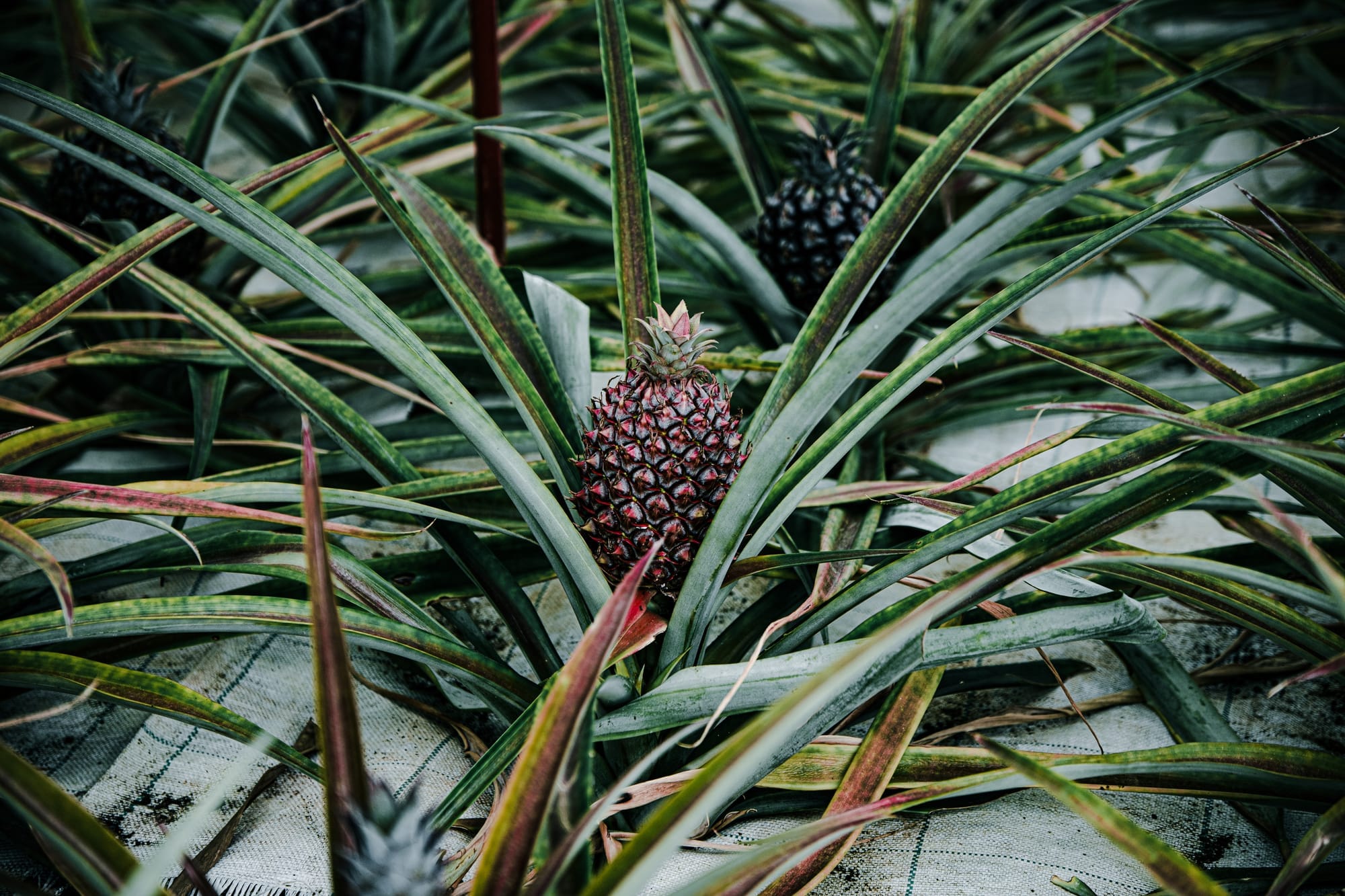
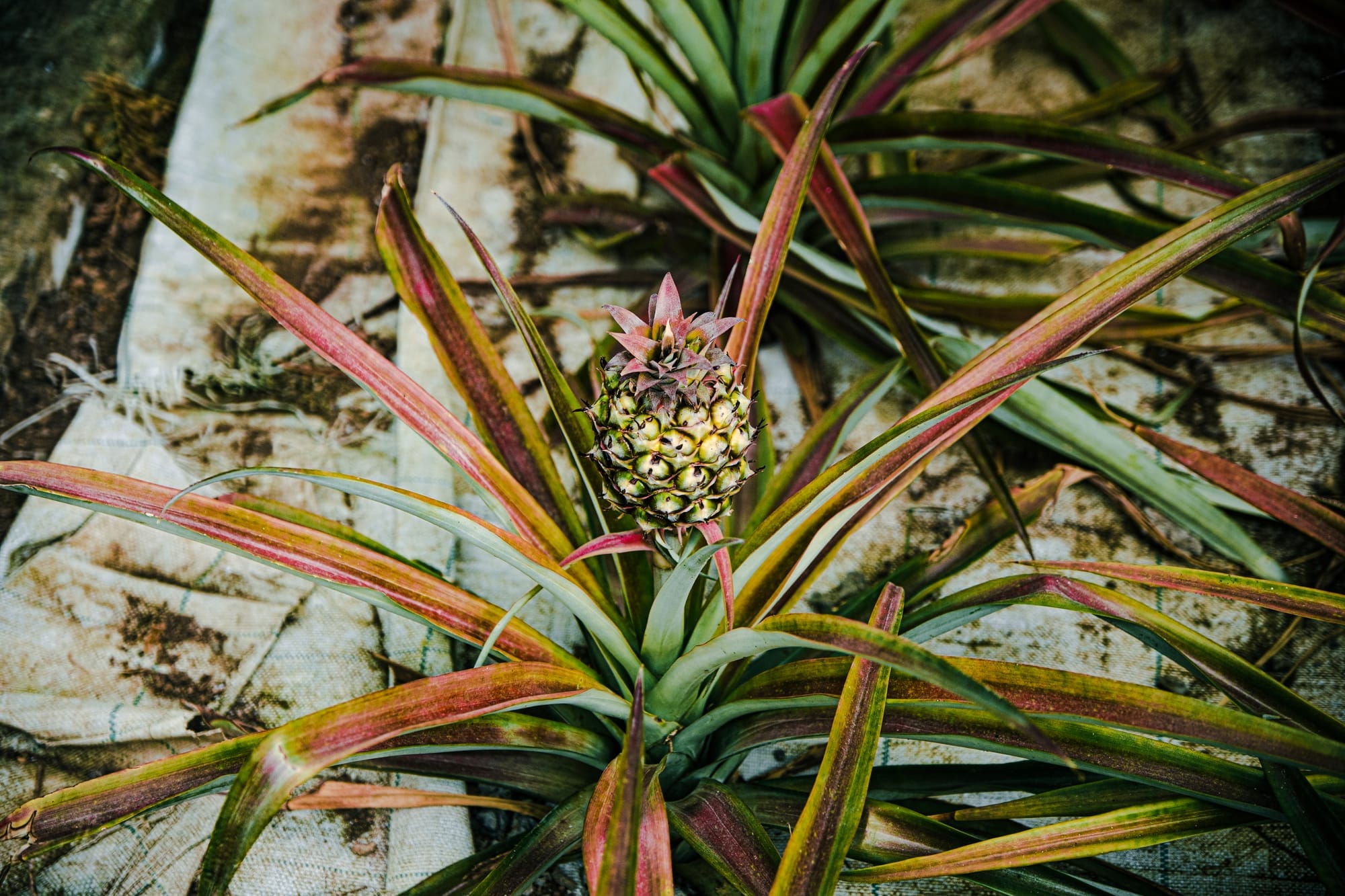
Early-stage pineapples forming low to the ground in rows of spiked leaves and volcanic matting
You can get close to everything here. The mesh underfoot is fraying. Rust runs down the iron poles. But that’s part of the appeal: this is working agriculture, not a showroom.
As you walk the narrow paths between rows, look down for concrete tiles stamped with pineapple emblems, a kind of farm logo. It’s a small, repeated detail that shows how closely this fruit is tied to the island’s identity.
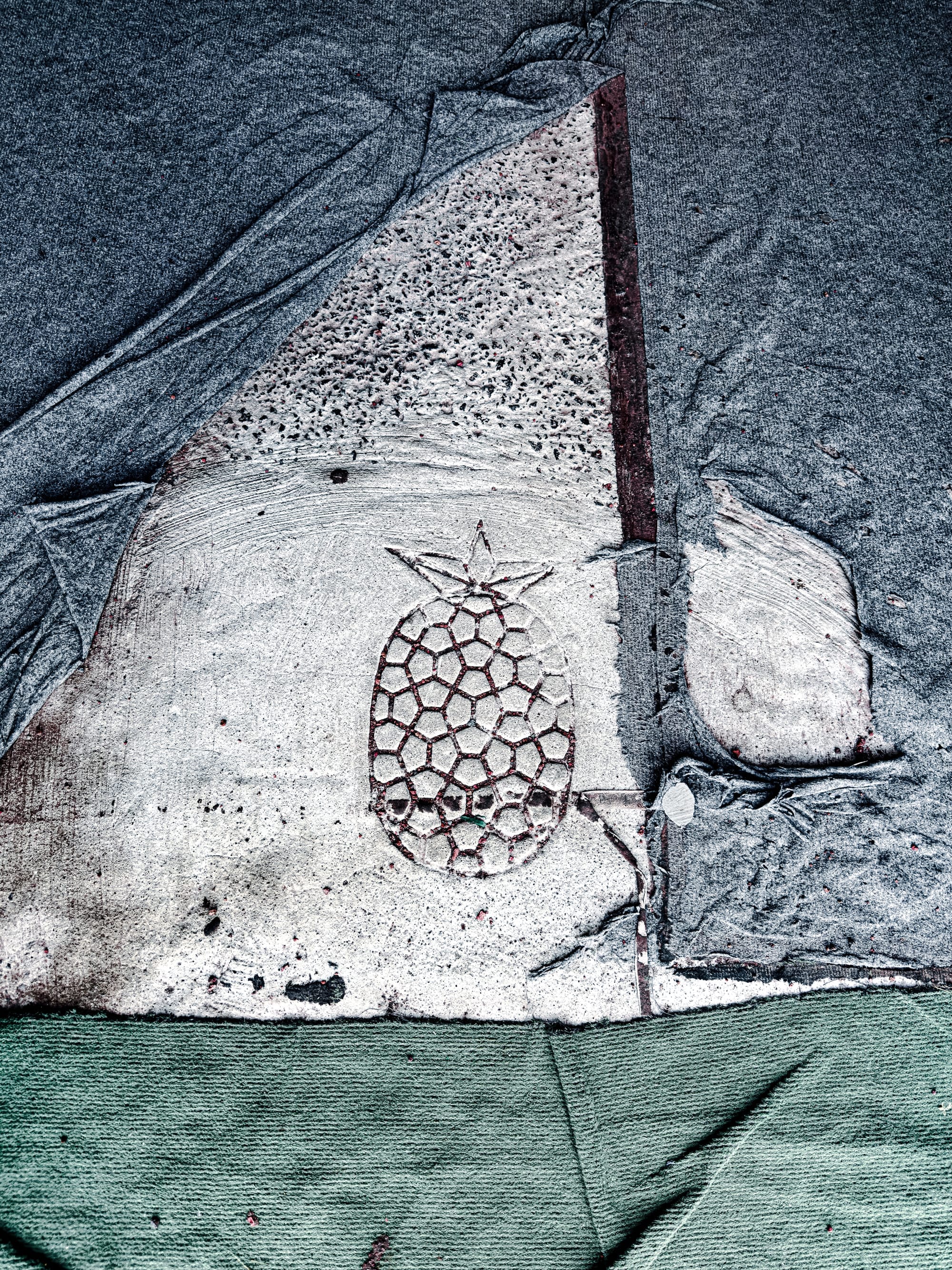
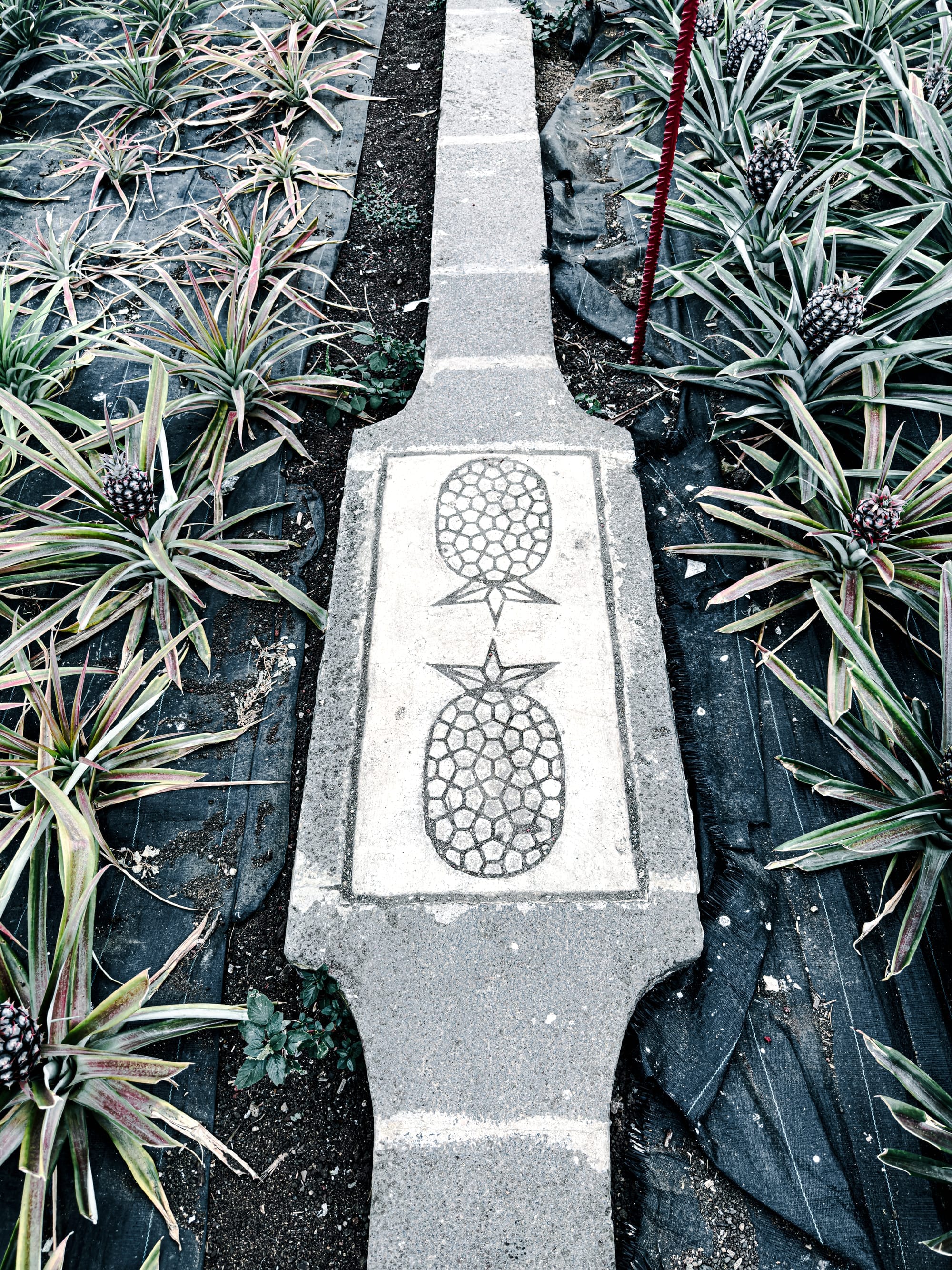
Pineapple etchings, a small tribute to the island’s farming identity
Details like these make the place part botanical garden, part archive.
Azorean pineapple farming today
The farming here has carried on for generations. Many of the techniques used today were passed down over the years. Soil is still enriched with organic composts like fig leaves and seaweed. The greenhouses are warmed naturally, and the fruit is harvested by hand.
While some plantations have shifted to tourist-only models, Plantação de Ananás dos Açores still grows pineapples for consumption, export, and research.
It’s also more than a historical curiosity. The Azores pineapple has been protected in the EU as a PDO (Protected Designation of Origin) since 1996, like Champagne or Parmigiano-Reggiano. That means only pineapples grown here can carry the name, and you can taste why.
Outside, a colorful three-panel mural tells the story of the plantation: workers harvesting pineapples, women holding fruit, and birds in flight. The style is simple and expressive, almost folk art. It shows that farming here is about people, labor, and history as much as the fruit itself.
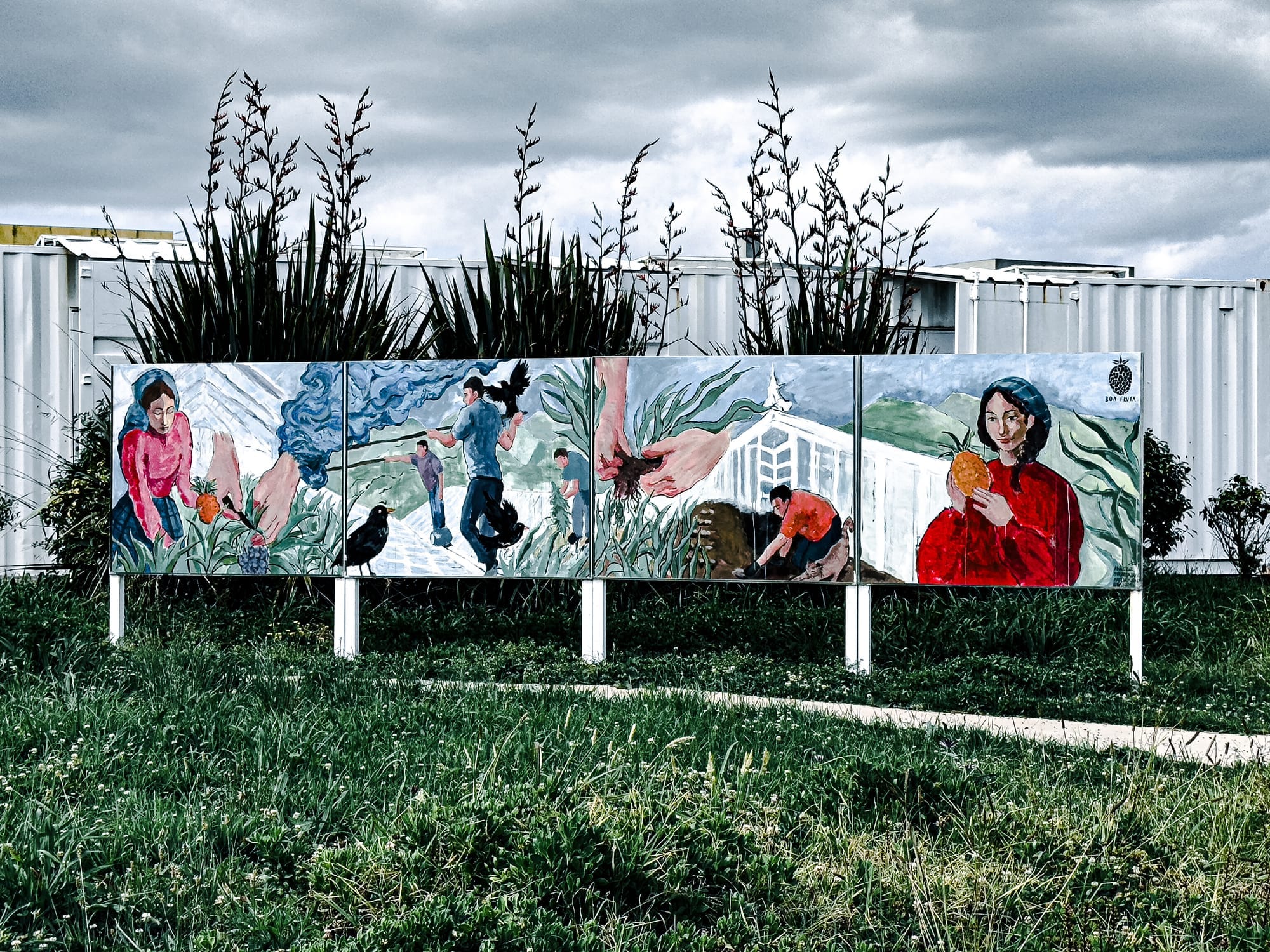
It’s worth stopping here for a minute. The mural makes the point better than words can: this work takes a lot of care.
Prefer to go with a guide? One popular option is a half-day Ponta Delgada city tour. You can check dates and prices here:
The pineapple juice alone is worth the stop
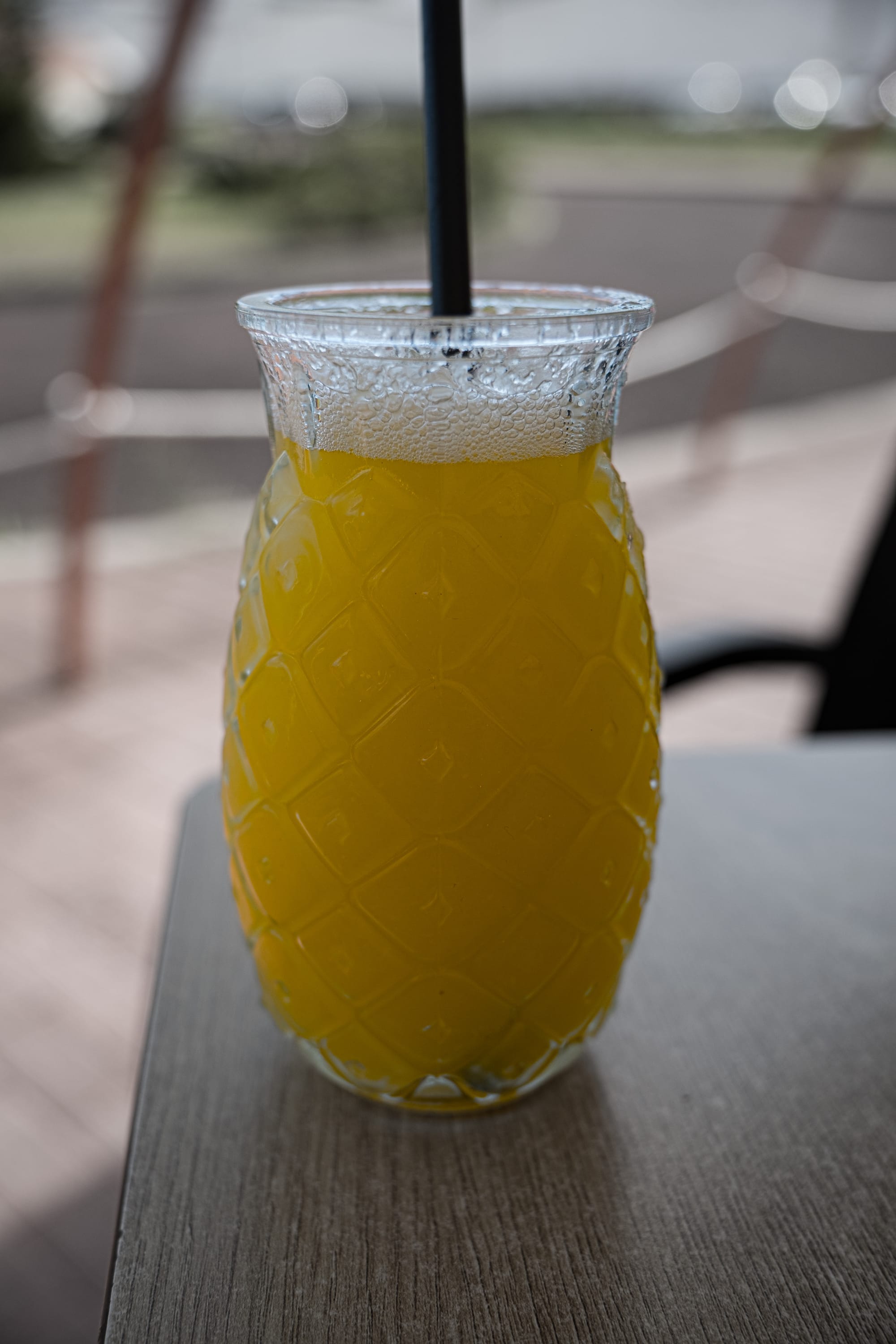
After walking through the greenhouses, stop at the on-site café for cold pineapple juice, served in a glass shaped like the fruit itself.
The juice is golden and slightly frothy on top, with a tart kick. It’s surprisingly simple: sweet, yes, but also sharp and clean, with none of the syrupy flatness of store-bought versions.
You can also buy fresh fruit, pineapple liqueur, or homemade jams. They make good gifts, especially if you want to share something that actually tastes like the Azores.
Look out for the plantation's own "1864" range, named after the year of the first greenhouse: a pineapple jam made with chunks of fruit and less sugar than regular jam (in 99 g, 250 g, and 500 g jars), and a pineapple liqueur at 20% alcohol in small and large bottles. The shop also has a section for crafts by local artisans.
Arruda pineapple plantation: the other one to visit
If you've seen the Arruda pineapple plantation recommended, it's a different place from the one in this post, but it's close by and worth adding. Ananases A. Arruda is in Fajã de Baixo, on the northern edge of Ponta Delgada, and it's the most famous pineapple greenhouse visit on the island. The Azores government's tourism portal lists it as the Estufas de Ananases Augusto Arruda, and the city's own tourism site, Visit Ponta Delgada, includes it among its museums and interpretation centres.
Entry is free. byAçores lists its hours as about 9am to 8pm from April to September and 9am to 6pm from October to March, but check before you go. The address is Rua Doutor Augusto Arruda, Fajã de Baixo. Like Plantação de Ananás dos Açores, it has greenhouses you can walk through and a shop selling pineapple jam, liqueur, and fresh fruit.
Augusto Arruda started growing pineapples here around 1919, on family land that had been an orange grove, and the plantation is still run by his family. From the start, one aim was to show visitors how the fruit is grown, which is why it's set up as a walk-through "living museum" with information panels along the way. The official Arruda site mentions free guided visits and a free tasting in the gift shop, which sells the family's own pineapple liqueur. A kiosk outside serves pineapple juice, pineapple cake, piña colada, pineapple mojito, and fresh fruit, and the shop also sells regional embroidery and souvenirs.
Arruda or Plantação de Ananás dos Açores: which should you visit?
Honestly, either works, and they're only a short drive apart. Arruda is the best known and the one most tours mention. Plantação de Ananás dos Açores is smaller, with a self-guided route and a bar terrace looking over the greenhouses, which makes it a nice spot to sit with a juice. If you have time, see both and compare. There's also a third free option nearby, Ananás Santo António, also on the edge of Ponta Delgada.
Pineapple plantations on São Miguel compared
Here are the main options side by side. Hours are the ones listed for 2026 and can change by season.
| Plantation | Where | Entry | Hours (2026) | Good for |
|---|---|---|---|---|
| Plantação de Ananás dos Açores | Rua das Laranjeiras, Ponta Delgada | Free | About 9:00 to 18:00, closed January 2026 | Self-guided walk, bar terrace, juice |
| Ananases A. Arruda | Rua Doutor Augusto Arruda, Fajã de Baixo | Free | 9:00 to 20:00 (April to September), 9:00 to 18:00 (October to March) | The best-known visit, free tasting, guided visits |
| Ananás Santo António | Rua José Manuel Bernardo Cabral 1, Ponta Delgada | Free | About 9:00 to 18:00 daily | A smaller stop close to Arruda |
| Herdade do Ananás | São Roque, east of Ponta Delgada | Paid tours | By booking | Guided tour, pineapple wine tasting, warm pool inside a greenhouse |
Herdade do Ananás is the odd one out: instead of a free walk-through, it sells guided greenhouse tours, tastings of a wine made from pineapple, and time in a heated pool built inside a working greenhouse. Book ahead if that appeals.
Plan your visit
You can visit Plantação de Ananás dos Açores independently (for free), or as part of a tour, such as this full-day island tour, which includes a stop there.
You can see it in ten minutes or spend an hour. Either way, it’s a simple, easy stop, and about as São Miguel as it gets.
How to get to the pineapple plantations from Ponta Delgada
Both plantations are on the edge of Ponta Delgada, so they're easy to reach. By car, it's a short drive from the centre, and it's simple to stop on the way to or from the north coast or Furnas. Without a car, a taxi is the easiest option, and many island tours include a pineapple stop. If you're spending a few days in the city, our guide to things to do on São Miguel has more ideas nearby, including the Santana farmers' market.
The pineapple greenhouses are in the Ponta Delgada chapter of our São Miguel guide (PDF), alongside the old town, plus rainy-day plans for when the crater lakes are in cloud.
Tips for visiting a pineapple plantation in the Azores
A few small things make the visit better.
Go on a grey day. It's an indoor-ish stop, so save it for when the crater lakes are hidden in cloud.
Don't touch the plants. These are working greenhouses, and the leaves are spiky anyway.
Buy fruit at the end of your trip if you want to take one home, and check your home country's rules on bringing fresh fruit in.
Eat fresh pineapple within a day or two. It's picked ripe and doesn't keep long. If you're flying home, jam and liqueur travel much better, and fresh fruit is often restricted by customs, for example when flying to the US or Canada.
Read the labels if you're vegan. Juice and fresh fruit are fine, but cakes, ice cream, and some local dishes made with pineapple may contain dairy, eggs, or meat.
Nearby, see living in the Azores, whale watching from Ponta Delgada, and Ponta Delgada.
Whatever your plans, travel with insurance. Stomach bugs, a fall on a cobbled street, or a stolen phone can happen anywhere, and it's much easier to enjoy the trip when you know you're covered. We'd recommend SafetyWing Nomad Insurance. It covers medical emergencies abroad, you can buy it even after you've left home, and it renews every four weeks, so it works for a short trip or months on the road.
Where to stay near the pineapple plantations
Ponta Delgada is the easiest base for the pineapple plantations, with the most places to eat and the airport nearby. All of these are rated 9 or more on Booking:
- Island Bliss: a well-priced guest house in the city, rated 9.4 from over 700 reviews.
- Santa Clara 1828: a restored 19th-century house turned boutique stay, rated 9.6.
- Ilha Hostel & Suites: private suites and dorms with a social feel, rated 9.2 from nearly 1,000 reviews.
Frequently asked questions
Is the Arruda pineapple plantation free?
Yes. Entry to the Arruda pineapple plantation in Fajã de Baixo is free, and so is Plantação de Ananás dos Açores. You only pay for drinks or products from the shop.
What are the opening hours of the Arruda pineapple plantation?
Guides list about 9am to 8pm from April to September and 9am to 6pm from October to March. Hours can change, so check before you go.
Why are pineapples grown in greenhouses in the Azores?
The Azores are too cool for pineapples to grow outdoors, so they're grown in glass greenhouses on hot beds of plant material, with smoke used to make the plants flower together. The cycle takes about two years.
Are Azores pineapples protected?
Yes. Ananás dos Açores/São Miguel is a protected designation of origin (DOP), registered in the EU in 1996. Only pineapples grown on São Miguel by the traditional method can use the name.
How long do you need at a pineapple plantation in the Azores?
About 30 minutes to an hour. It's a short visit, so it fits easily into a day around Ponta Delgada.
Where is the pineapple plantation in Ponta Delgada?
Plantação de Ananás dos Açores is on Rua das Laranjeiras, and the Arruda pineapple plantation is on Rua Doutor Augusto Arruda in Fajã de Baixo. Both are on the edge of Ponta Delgada.
What variety of pineapple is grown in the Azores?
A flat-leaved Cayenne pineapple. The smaller size and sharper, more aromatic flavour come from the greenhouse method and the two-year growing cycle.
Can you take an Azores pineapple home?
Within the EU, usually yes, but eat it within a few days. For flights to countries like the US or Canada, check customs rules first, as fresh fruit is often banned. Jam and liqueur are easier.
Is there a pineapple greenhouse pool in the Azores?
Yes. Herdade do Ananás in São Roque, near Ponta Delgada, has a warm pool inside a working greenhouse, sold as part of a paid guided tour.
Can you buy pineapples at the plantations?
Yes. The shops at the plantations sell fresh pineapples along with juice, jam, liqueur, and other pineapple products.
Useful links: Plantação de Ananás dos Açores (Boa Fruta), Ananás dos Açores/São Miguel DOP, official product description, Azores Tourism Portal: Estufas de Ananases Augusto Arruda, and Visit Ponta Delgada: Pineapple Plantation Augusto Arruda.
More from São Miguel: Azores digital nomad guide, favorite São Miguel viewpoints, the Poça da Dona Beija hot springs, the Sete Cidades lakes, Furnas guide, and our full São Miguel guide. Also see Caldeira Velha, the rainforest hot springs, and Vila Franca do Campo, the old capital on the south coast.


