


Chá Gorreana is a working tea plantation and factory in Maia, on the north coast of São Miguel in the Azores, and the oldest surviving tea plantation in Europe (since 1883). Entry, parking, and the tea tasting are free. It's open daily, usually from morning until about 6 pm, but check before you go. Plan about an hour for the factory and fields, or two to two and a half with the 3.3 km tea trail. We wandered the rows, watched the old machines at work, and finished with free cups of green and black tea.
There are only a few places in Europe where the wind carries the scent of oxidizing tea leaves, where rows of Camellia sinensis grow not behind glass but in open Atlantic air. On the north coast of São Miguel, in the Azores, there is one such place: Chá Gorreana.
This isn't a polished, staged tea experience. What you find is simpler and more genuine: a working tea plantation you're free to wander, with rustling leaves, old machinery, the low hum of factory work, and a green tea tasting station that feels more like a neighbor offering you a cup.
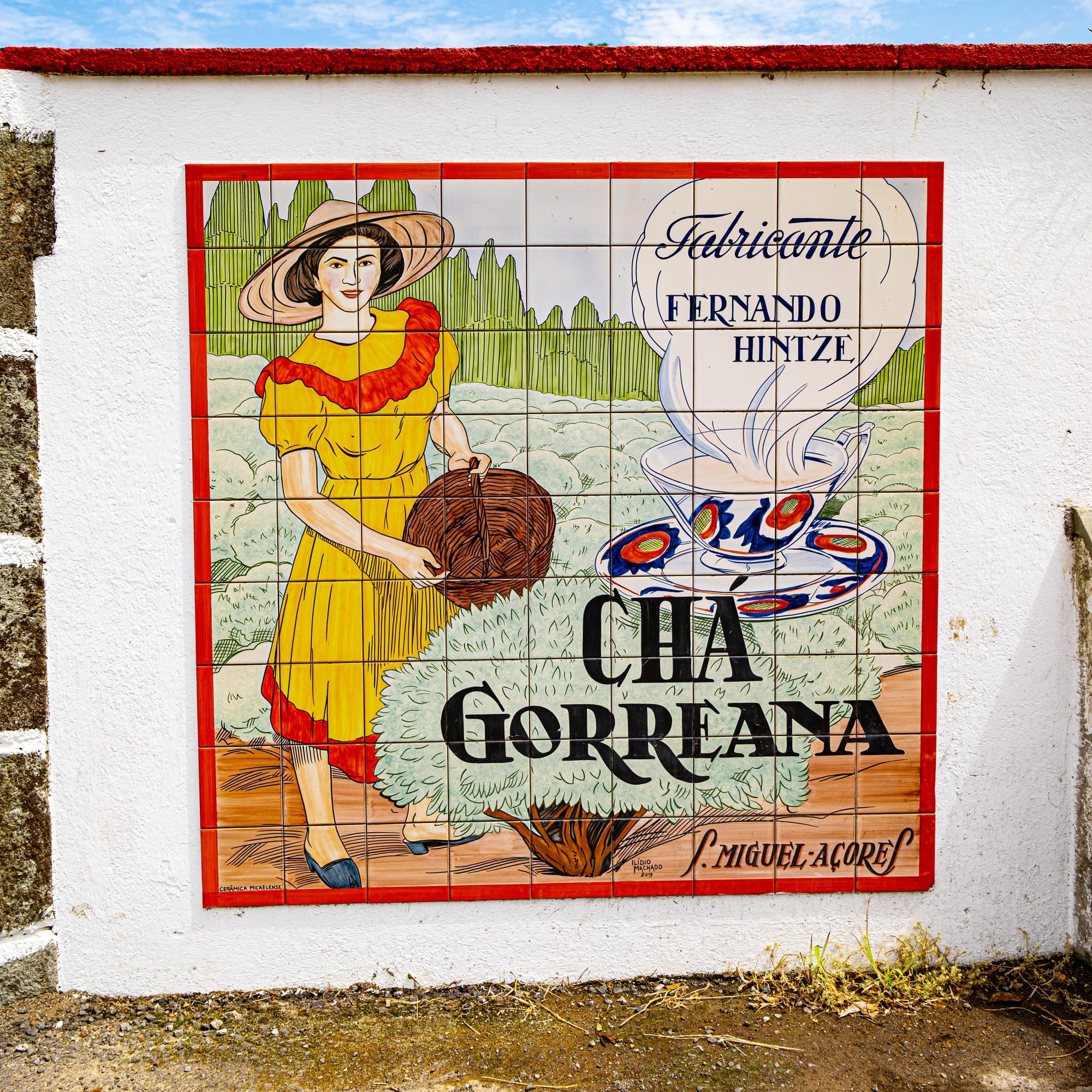
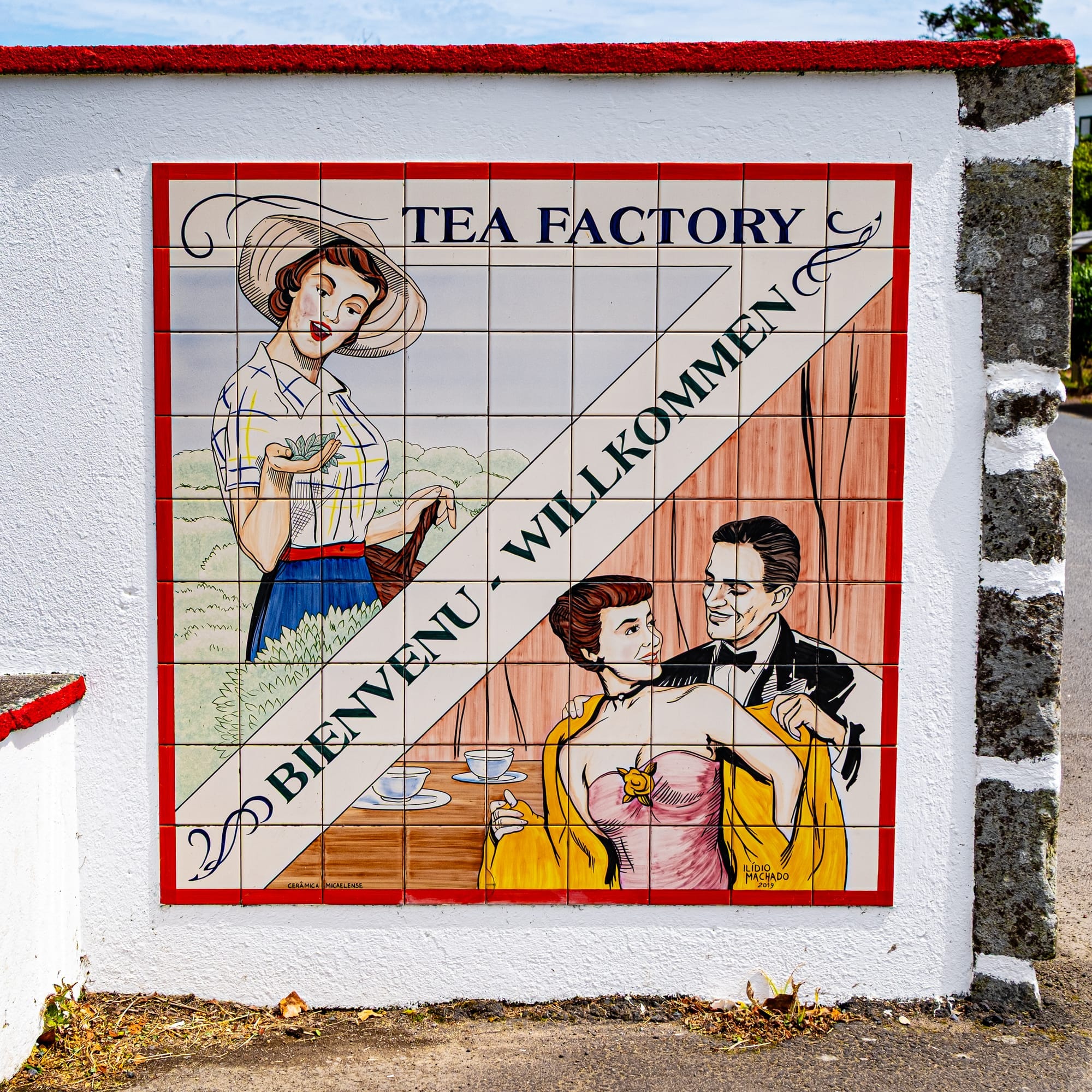
Old-timey tilework greets visitors to the tea plantation
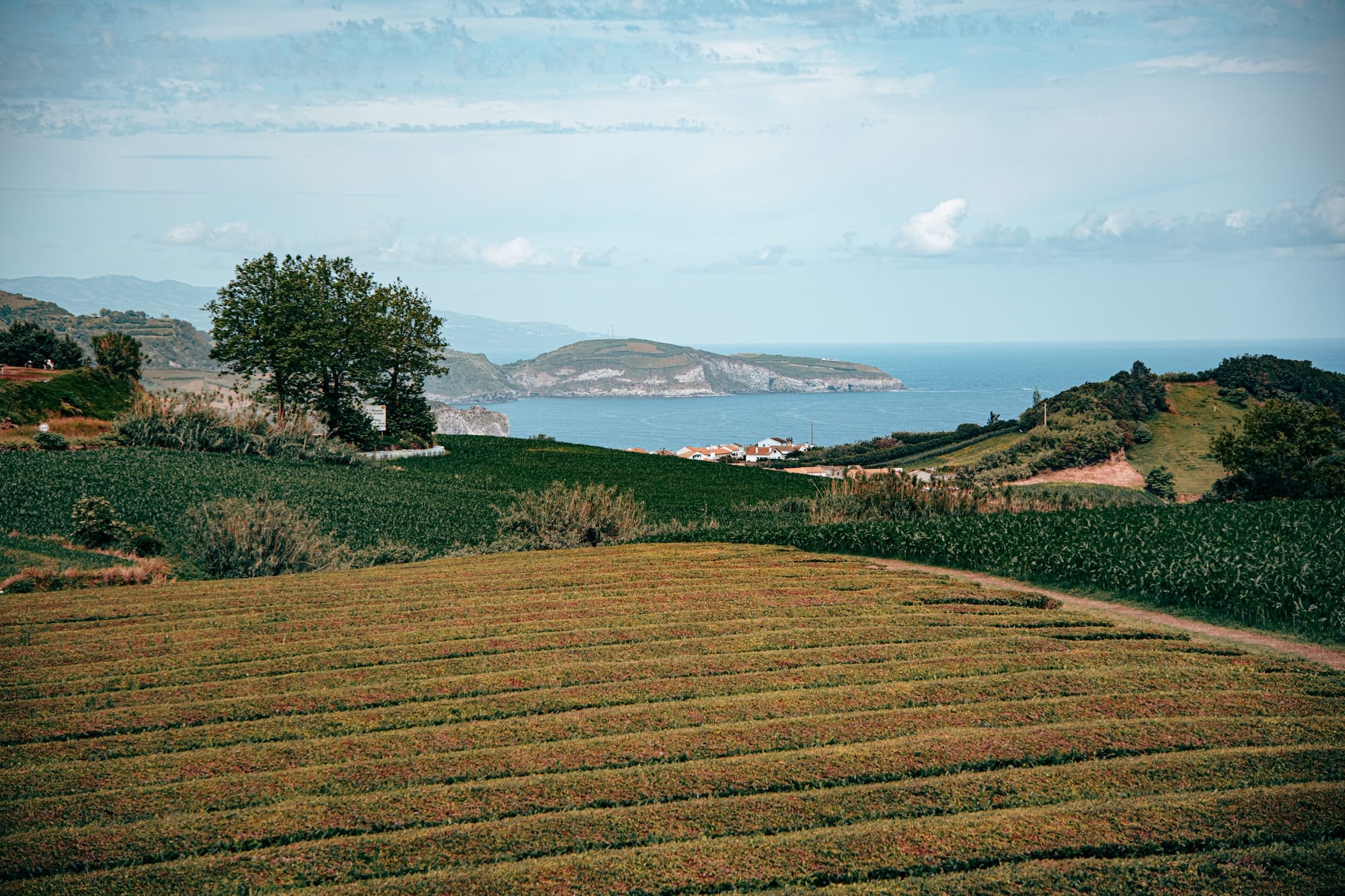
The tea rows of Chá Gorreana stretch toward the Atlantic in soft, rolling lines.
But beyond the fields sits the factory, where you can get an inside glimpse into the tea production process.
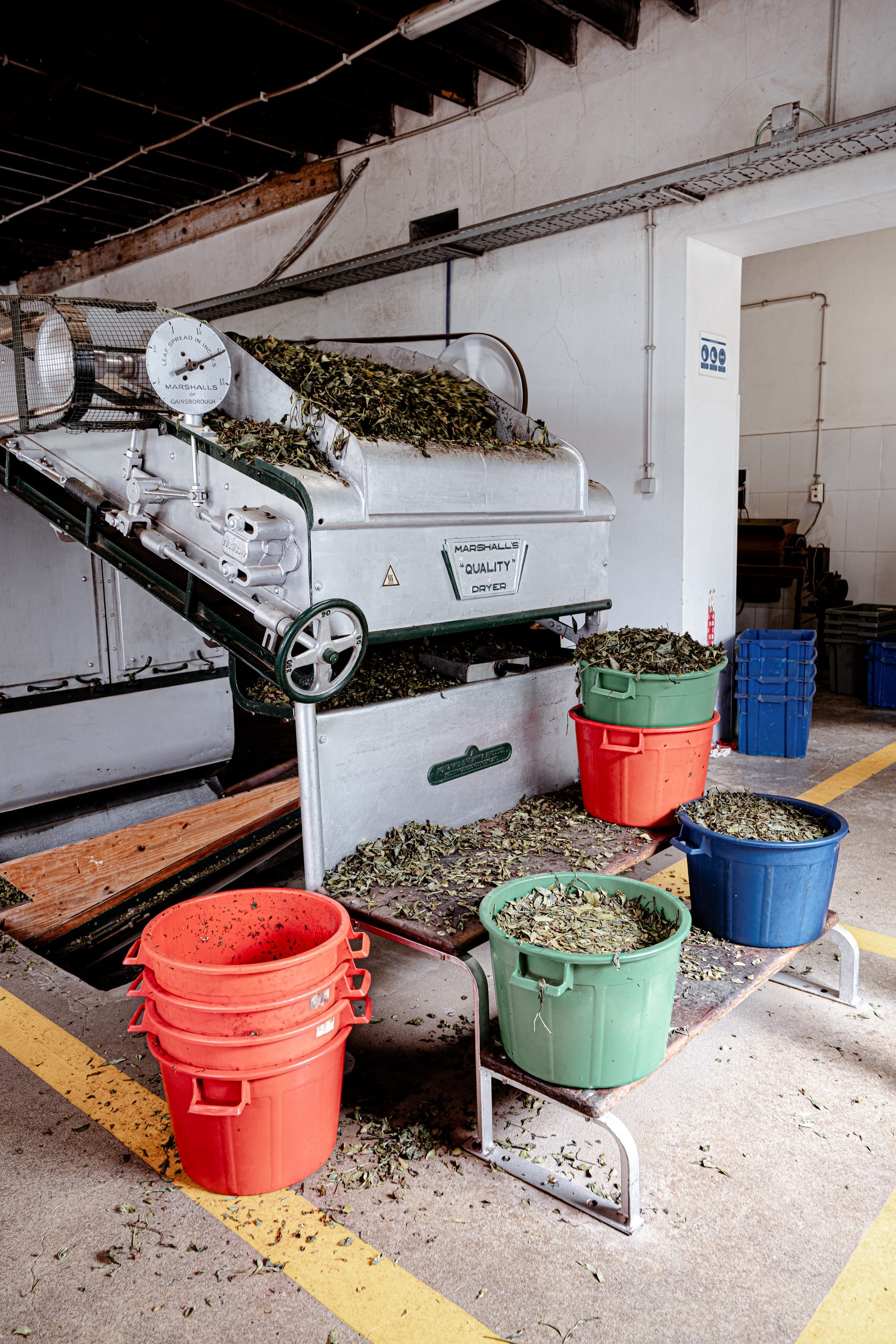
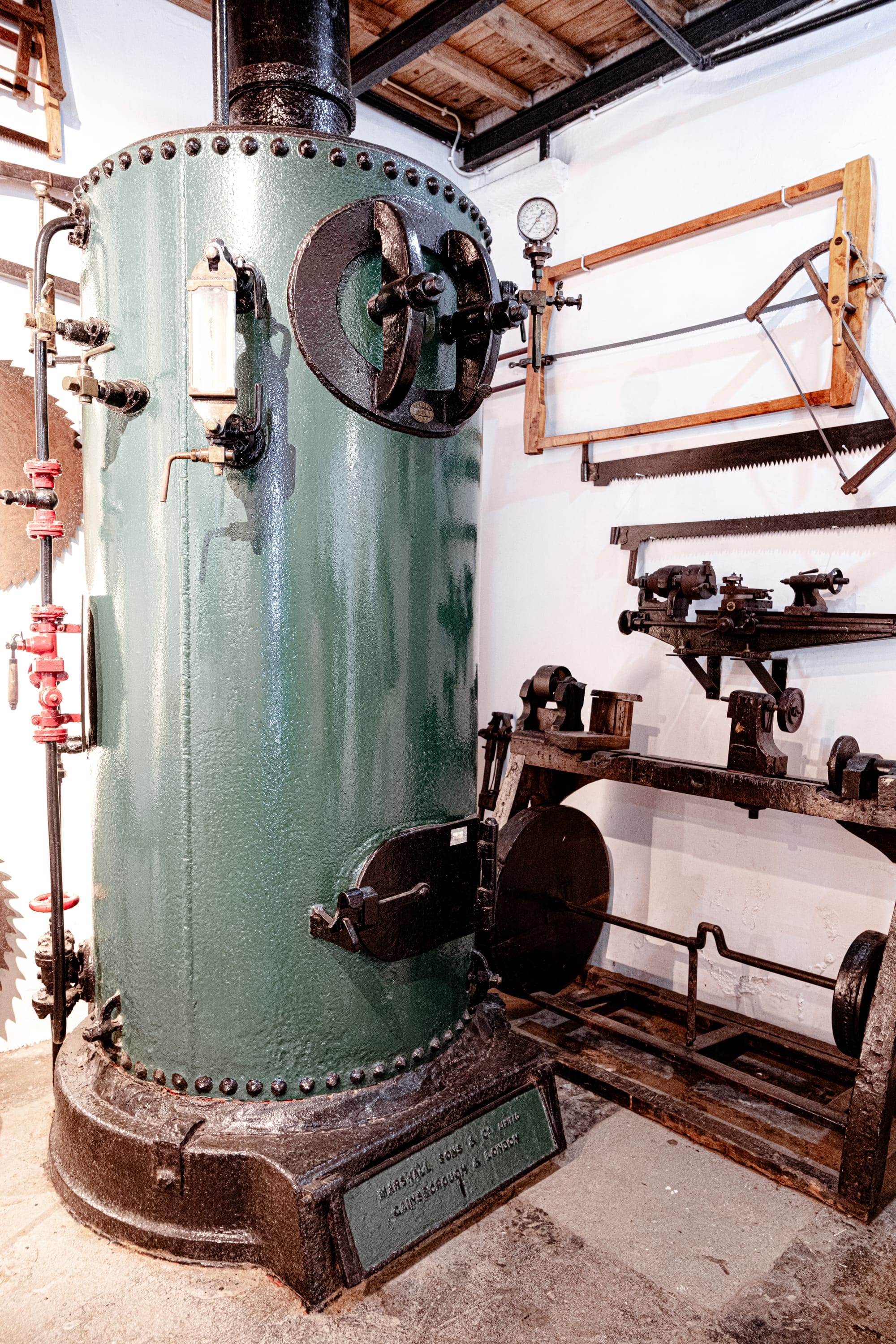
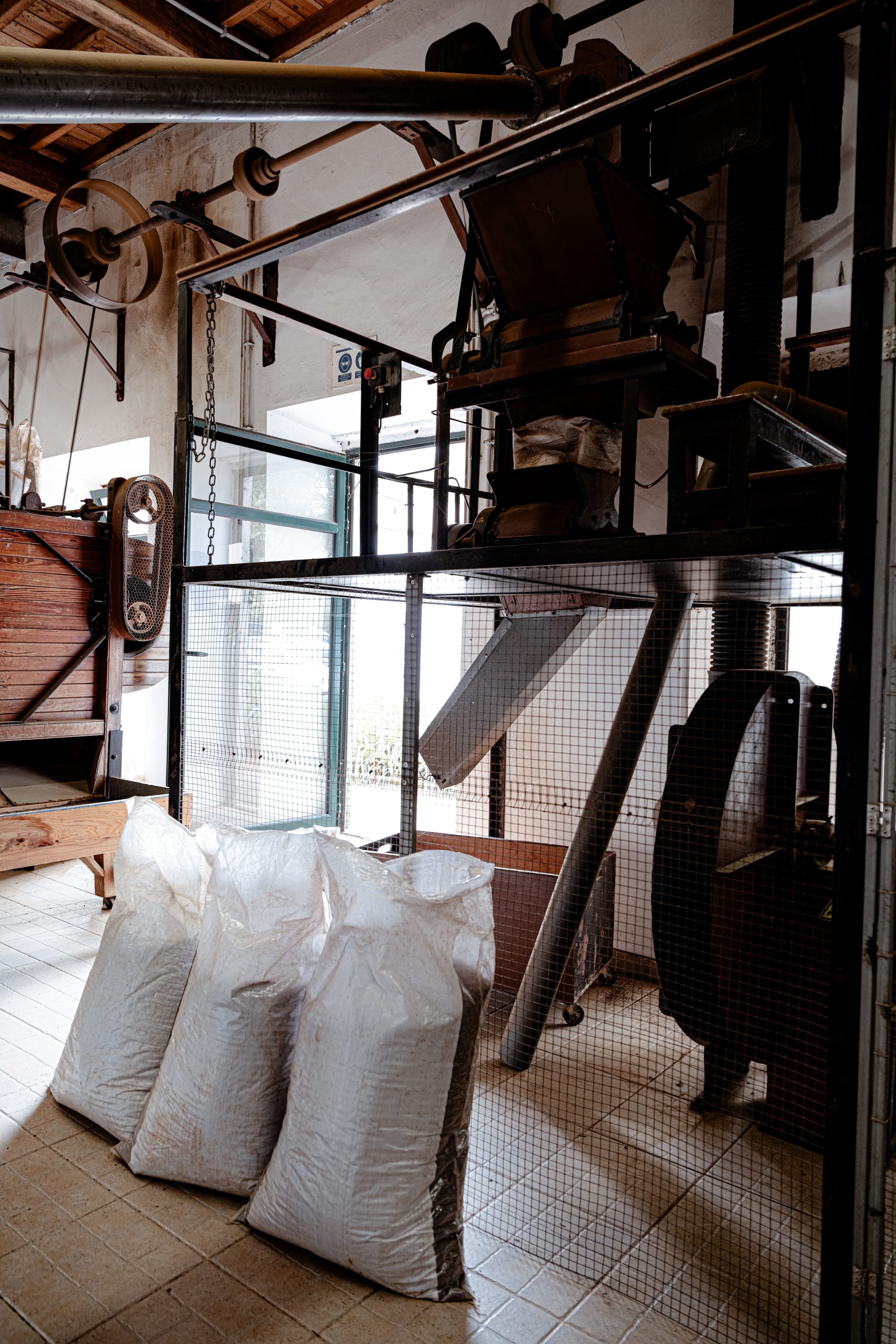
A walk inside the factory showcases the tea production process
You can even grab a free cup of tea at the end.
Chá Gorreana at a glance
Here are the practical basics. Hours can change with the season and on holidays, so check with the factory before a special trip.
Where: Plantações de Chá Gorreana, Maia, on the north coast road between Ribeira Grande and Porto Formoso. About 40 minutes by car from Ponta Delgada.
Cost: free entry, free parking, and free tea tasting. You only pay for what you buy in the shop.
Opening hours: daily, roughly 8:00 or 9:00 to 18:00, with later starts at weekends. Confirm on the Gorreana website or by phone (+351 296 442 349).
Seasonal hours: byAçores lists 9:00 to 18:00 in summer and 9:00 to 17:00 in winter. Treat both sets of times as a guide for 2026.
Booking: not needed. The official visit page says visits and tastings are free and you can walk through the plantation on your own.
Time needed: about an hour for the factory, tasting, and a short walk in the rows. Add 1.5 hours for the official trail.
Size: the plantation covers about 32 hectares of tea fields.
Best time: the harvest season, from about April to September, when you're most likely to see the machines processing fresh leaf. Weekday mornings are the least busy.
| Details | |
|---|---|
| Where | Maia, on the north coast road between Ribeira Grande and Porto Formoso |
| From Ponta Delgada | About 40 minutes by car |
| Cost | Free entry, parking, and tea tasting |
| Opening hours | Daily, roughly 8:00 or 9:00 to 18:00, later starts at weekends |
| Phone | +351 296 442 349 |
| Time needed | About an hour, plus 1.5 hours for the trail |
| Trail | PRC28 SMI, 3.3 km easy loop from the factory car park |
| Best time | April to September harvest, weekday mornings |
How to get to Chá Gorreana
By car: this is the easiest way. From Ponta Delgada, cross the island to Ribeira Grande, then follow the coast road east toward Maia. Gorreana is signposted, and the car park sits right by the factory. It's about 40 minutes in total, and it's easy to combine with Furnas or the Caldeira Velha hot springs on the same day.
The car park is free but not huge, and once the tour coaches arrive, usually from mid-morning, spaces go fast. Getting there before about 9:30 makes parking much easier. One more thing: some map apps place Gorreana in Ponta Delgada, so search for Chá Gorreana in Maia, or use the address 9625-304 Maia, to be sure you're heading to the north coast.
By bus: buses run along the north coast between Ponta Delgada, Ribeira Grande, and Maia, but not often. Check the current timetable, including the last bus back.
On a tour: many island day tours stop at Gorreana, often with Furnas or the crater lakes. This is the simplest option if you don't want to drive.
A working tea plantation in Europe
Europe is not known for tea. But here, it grows. Since 1883, Chá Gorreana has cultivated and produced green and black teas using traditional methods brought from Macau and mainland China via 19th-century Portuguese expeditions. The volcanic soil and humid microclimate of São Miguel proved surprisingly ideal. Today, Chá Gorreana remains the oldest, continuously operating tea plantation in Europe.
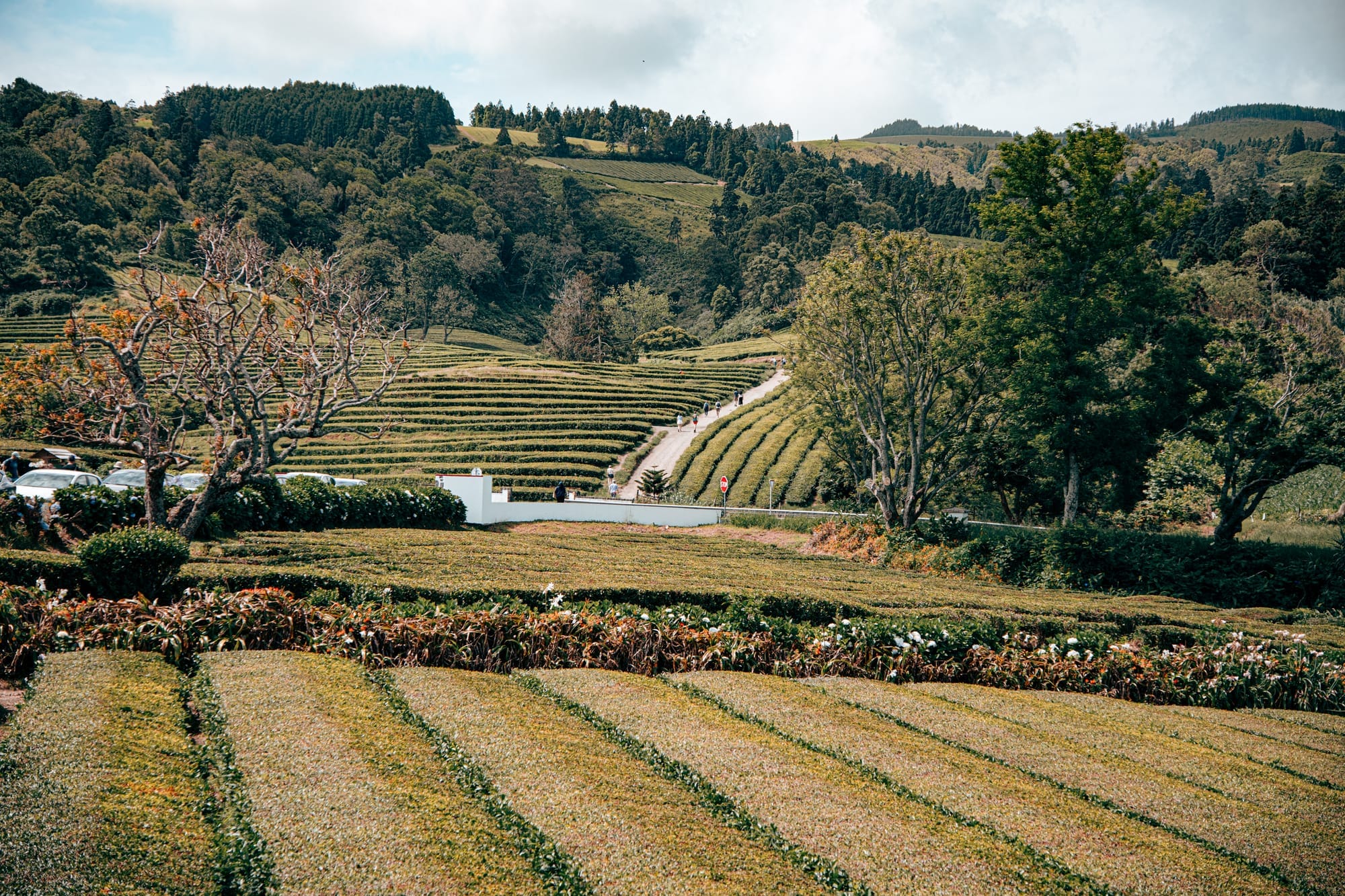
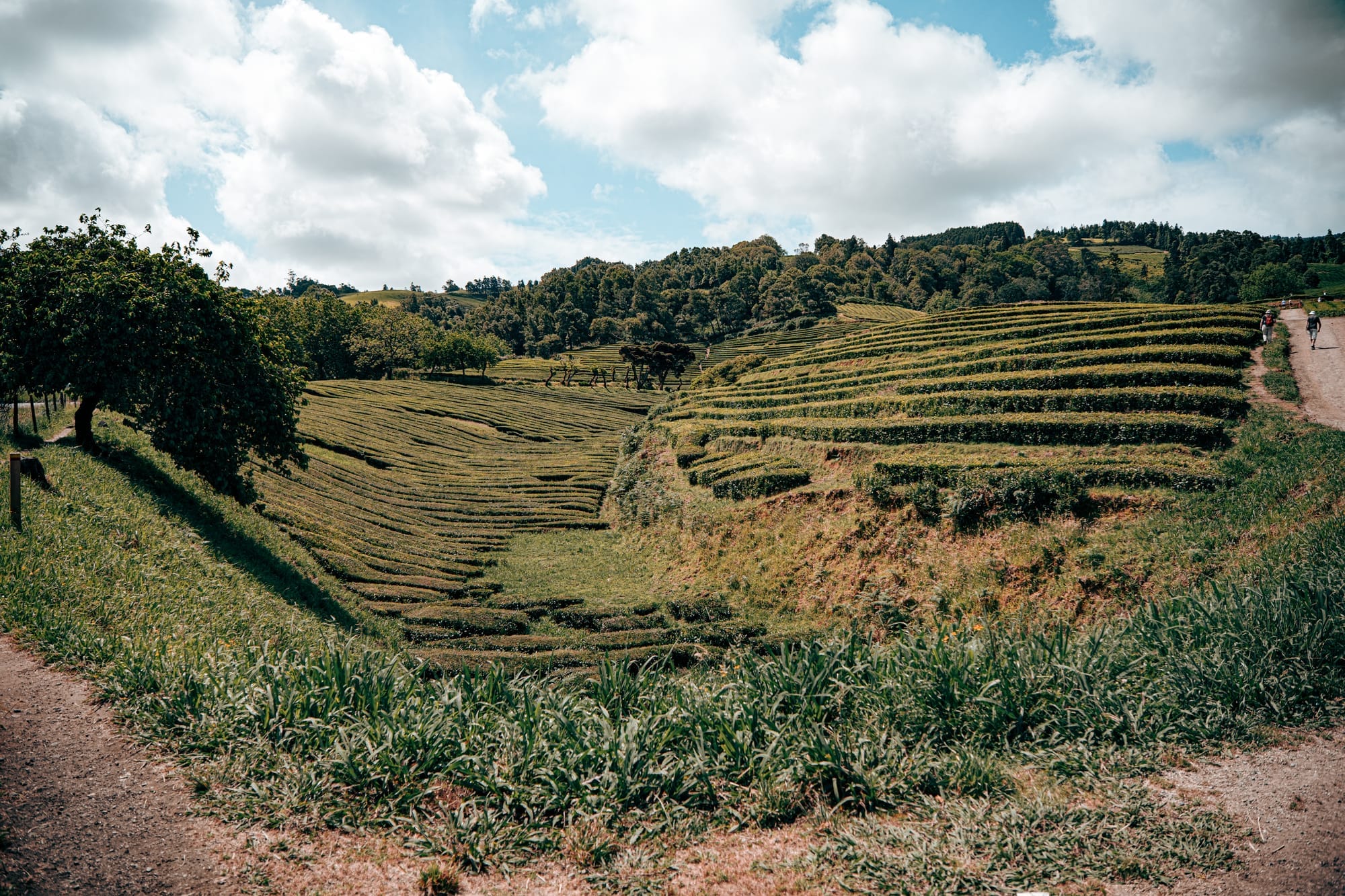
Walking paths through Chá Gorreana's fields
There is no entrance fee, no map, and no formal pathway. You simply start walking. The rows are low and soft-edged, so they're easy to wander through. Many visitors stop at the edge to take photos. Fewer follow the ridgelines deeper. But those who do will find it peaceful there, almost silent apart from the plants.
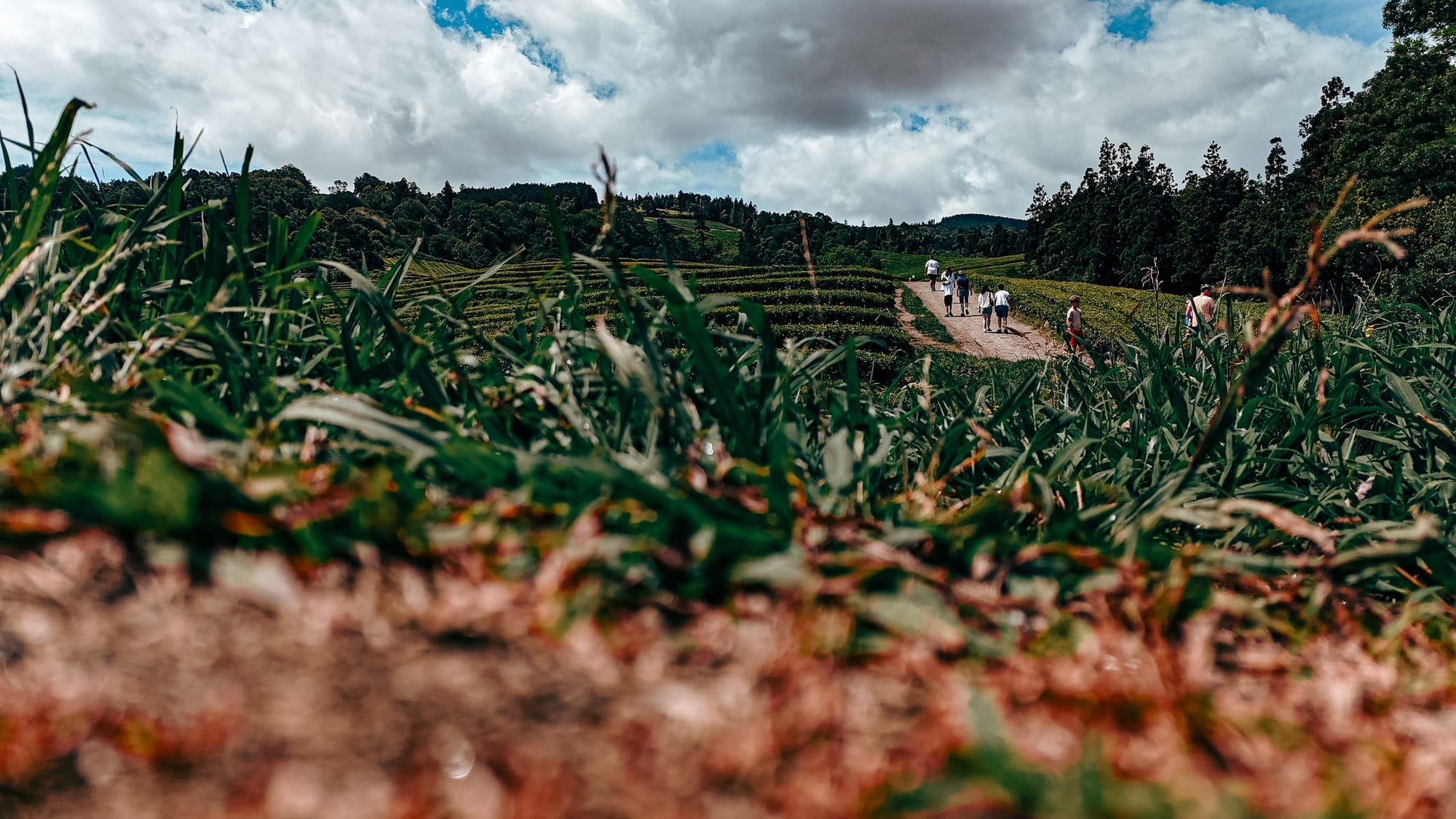
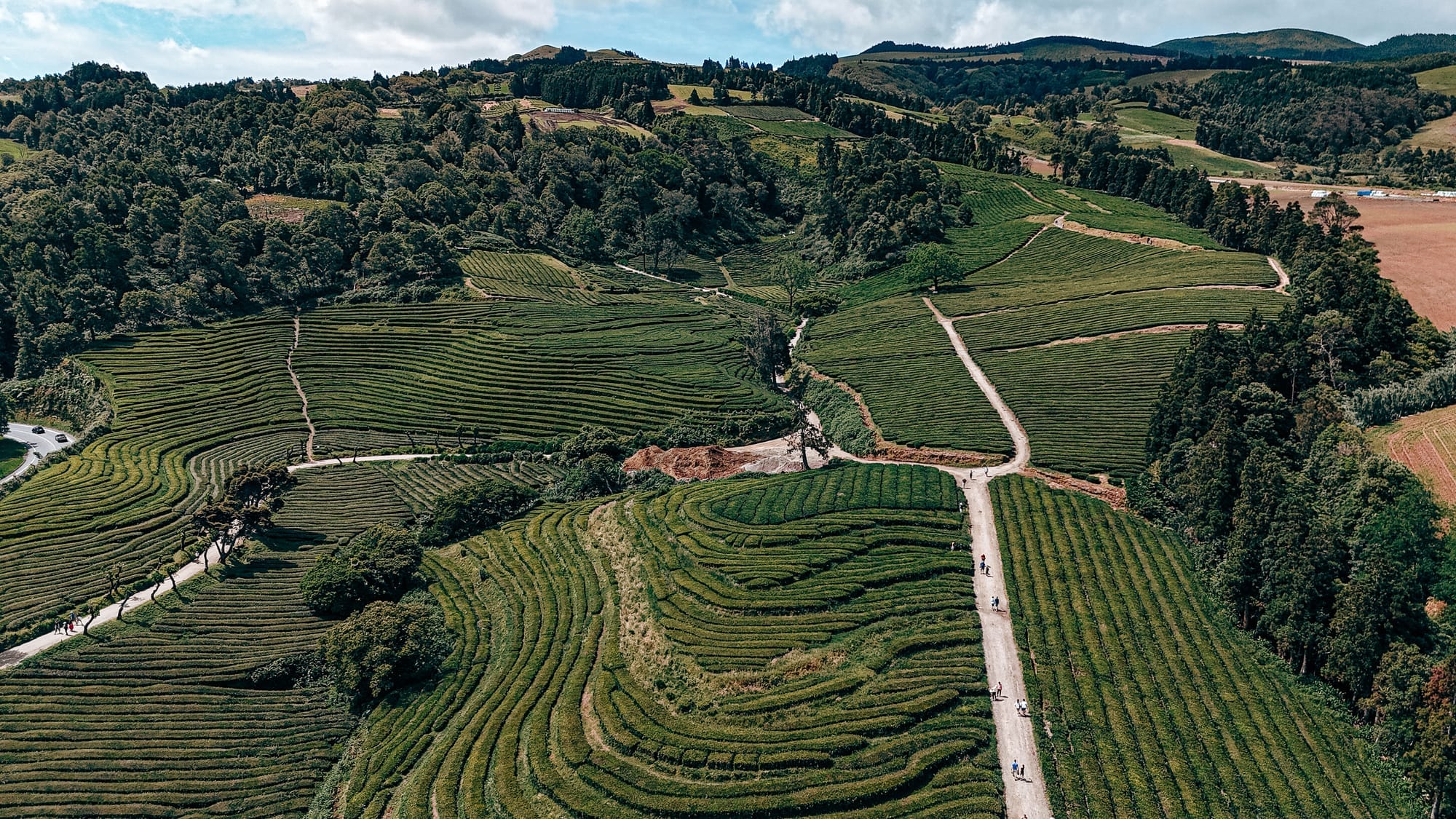
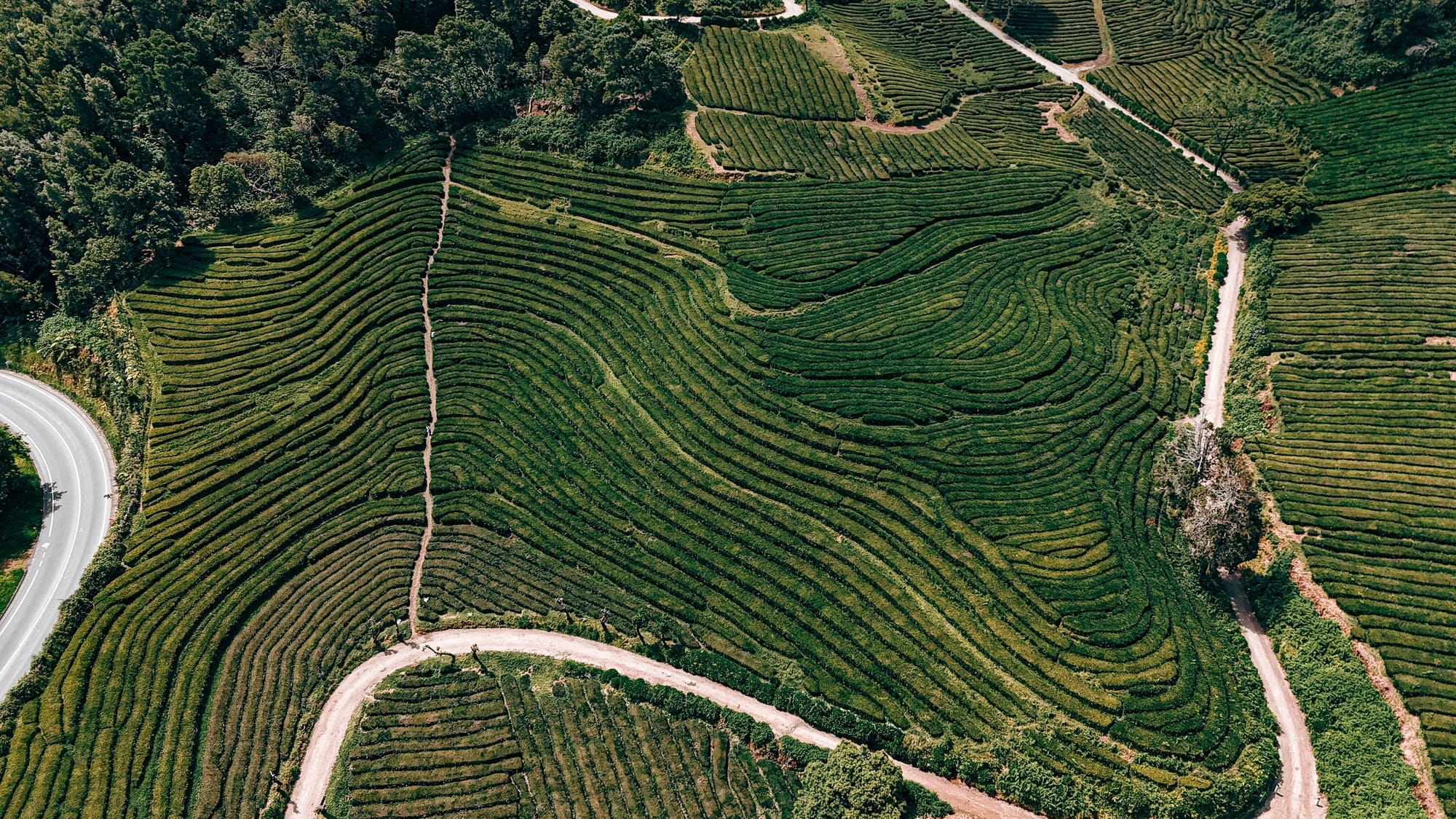
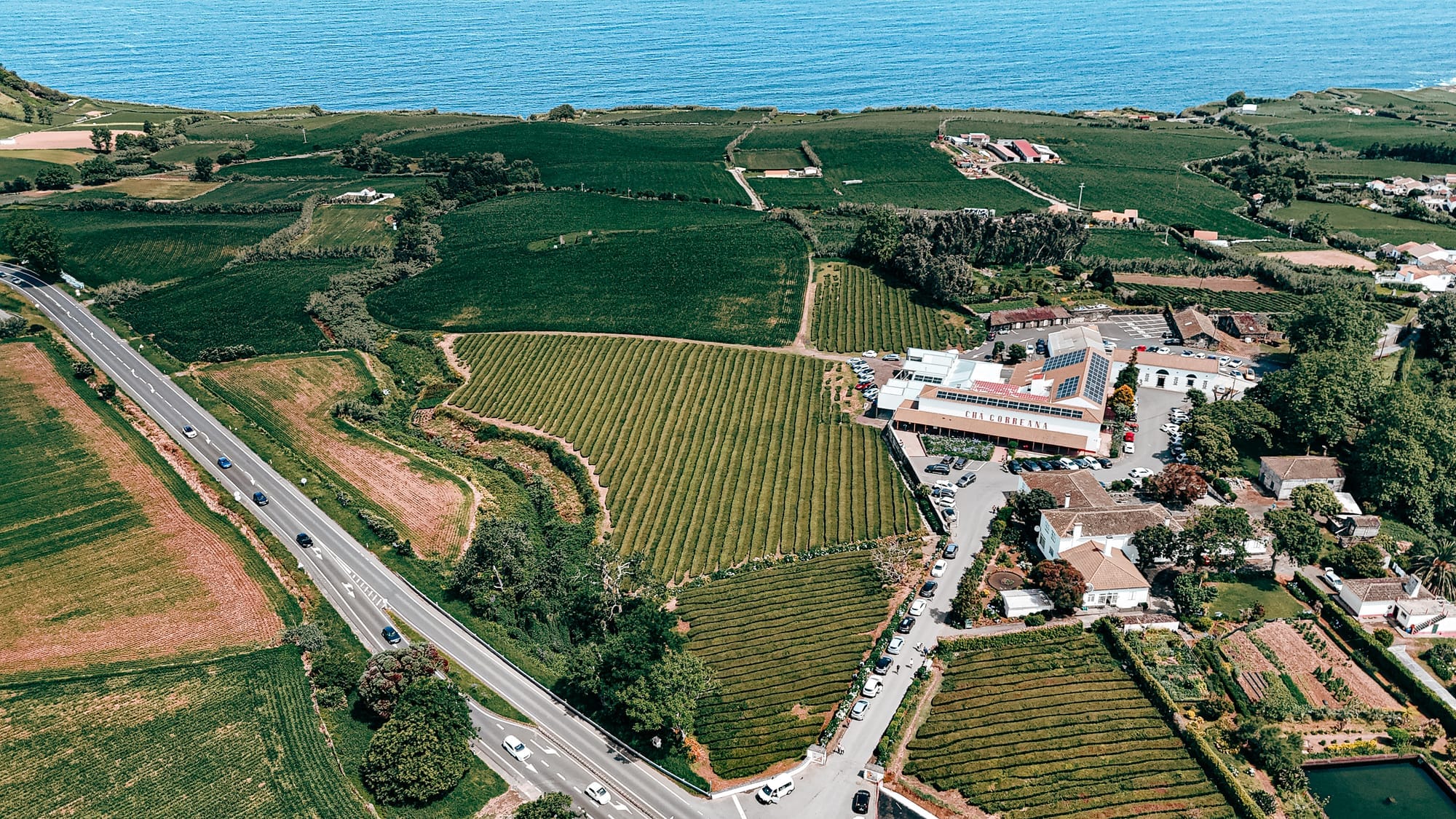
The view from above reveals emerald ridges
The plantation grounds provide a perfect and leisurely break from the island's more rigorous hikes.
The Chá Gorreana trail (PRC28 SMI)
If you want more than a stroll along the edge of the fields, there's an official walk. The Chá Gorreana trail on Visit Azores is a 3.3 km loop rated easy, taking about 1 hour 30 minutes. It starts at the factory car park and climbs a dirt road through the tea rows, then into Japanese cedar woods, over a stone bridge, and past pastures and farm buildings.
The high point gives you a view over the north coast. You come back down a narrow track that the pickers once used at harvest time, ending at the factory, so you can finish with the tasting. Wear shoes with some grip, as the dirt sections get muddy after rain. You can download the official trail leaflet before you go.
The Chá Gorreana factory: old machines still at work
The walk ends, or begins, at the factory, a cluster of buildings that could pass for a warehouse if it weren't for the steady warmth of steam and the smell of something both green and roasted.
Inside, the machinery is still in use. Many of the machines date back to the early 20th century and are British-built. They clang, belt, sort, dry. This is not a staged production. It’s real work. You can watch the processing of leaves from behind a low railing: withering, rolling, oxidation, drying. The air here smells like toast and forest floor.
According to the plantation's own list, the production rooms cover every stage: withering, rolling, oxidation, sterilisation, drying, milling, sifting, and packing. Green tea skips the oxidation step, which is why it keeps its colour and grassier taste. There's also an exhibition room with older machines and hand tools from the early days of the factory, which is worth a look even when the production lines are idle outside harvest season.
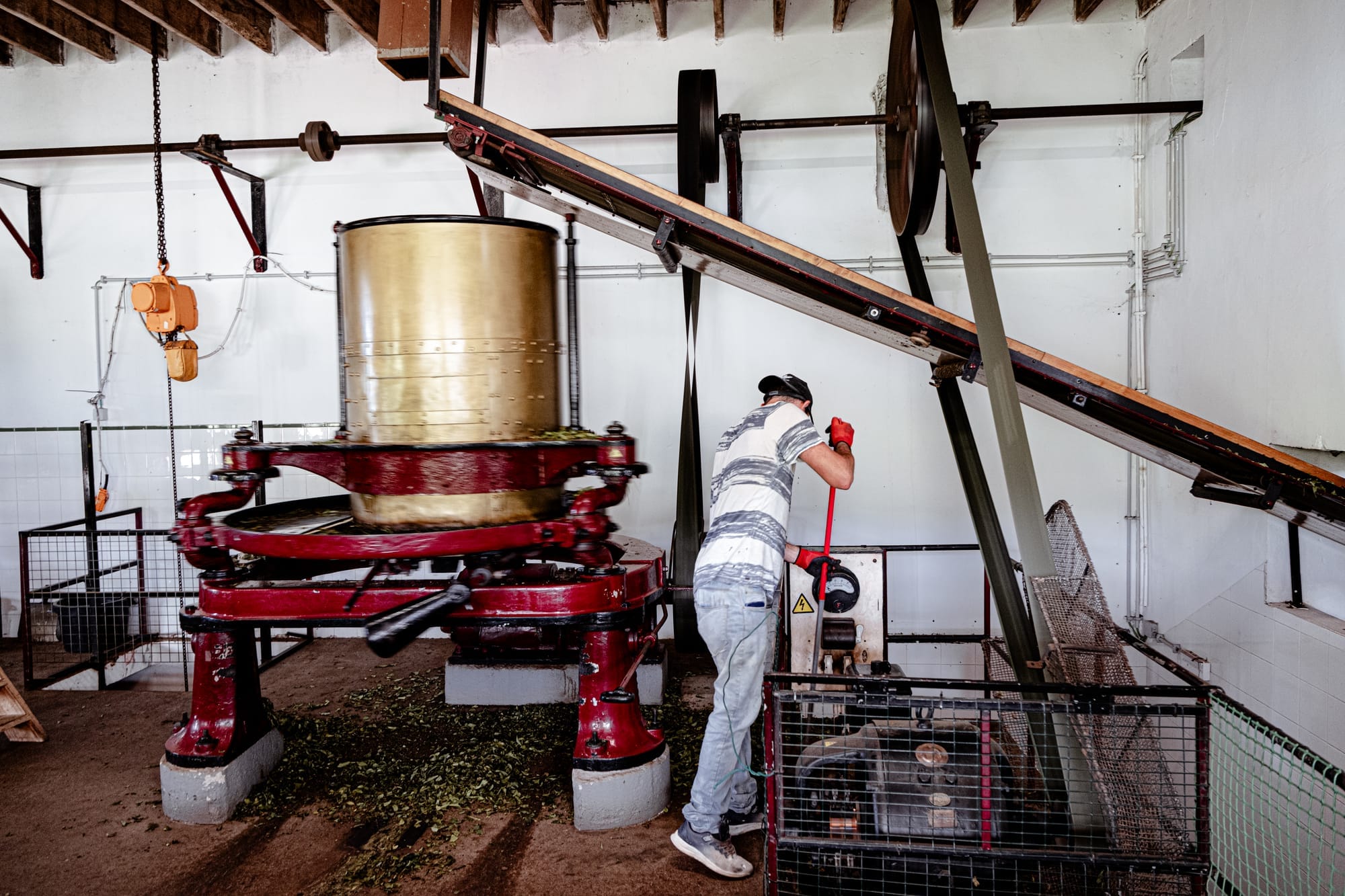
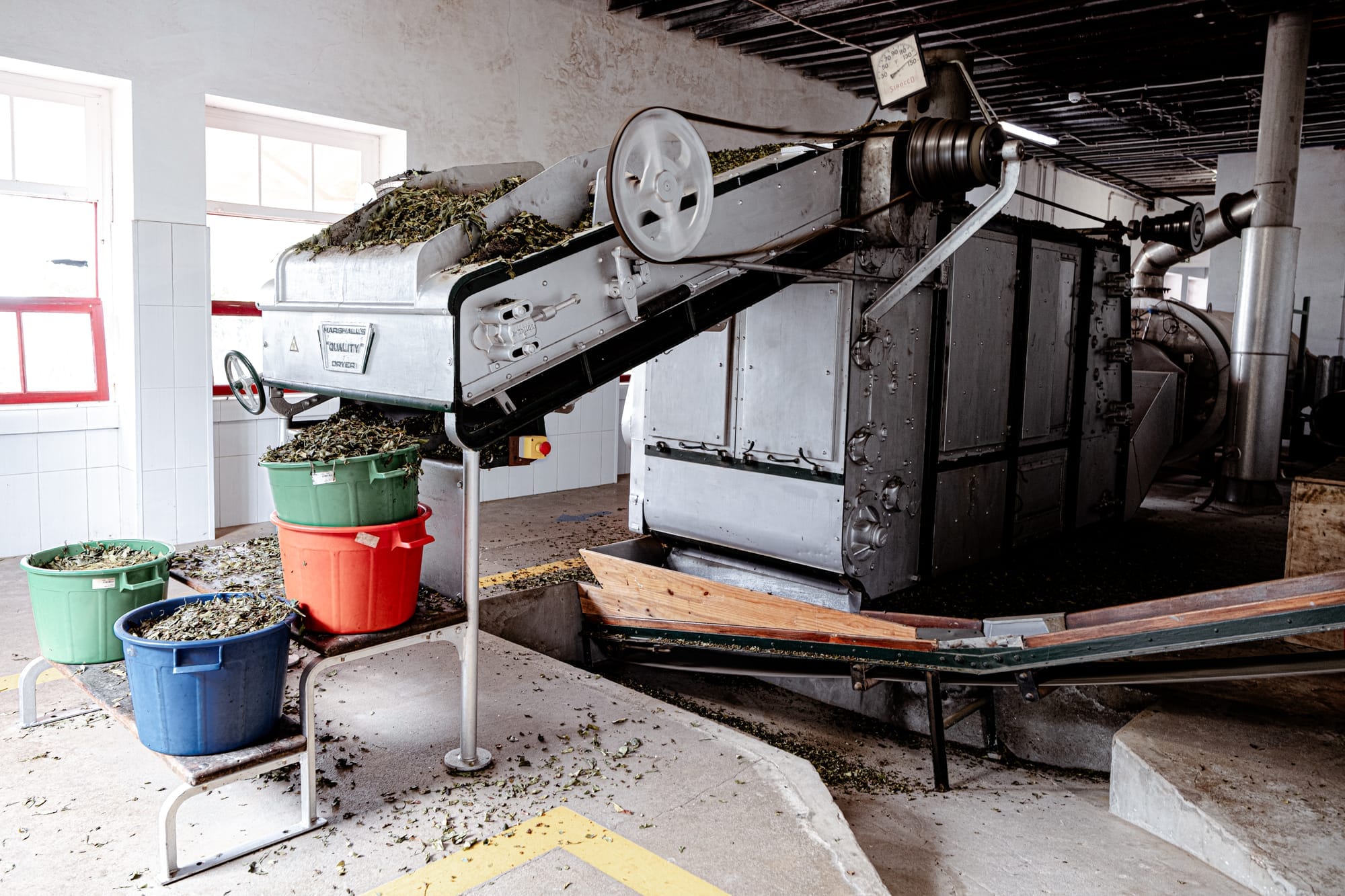
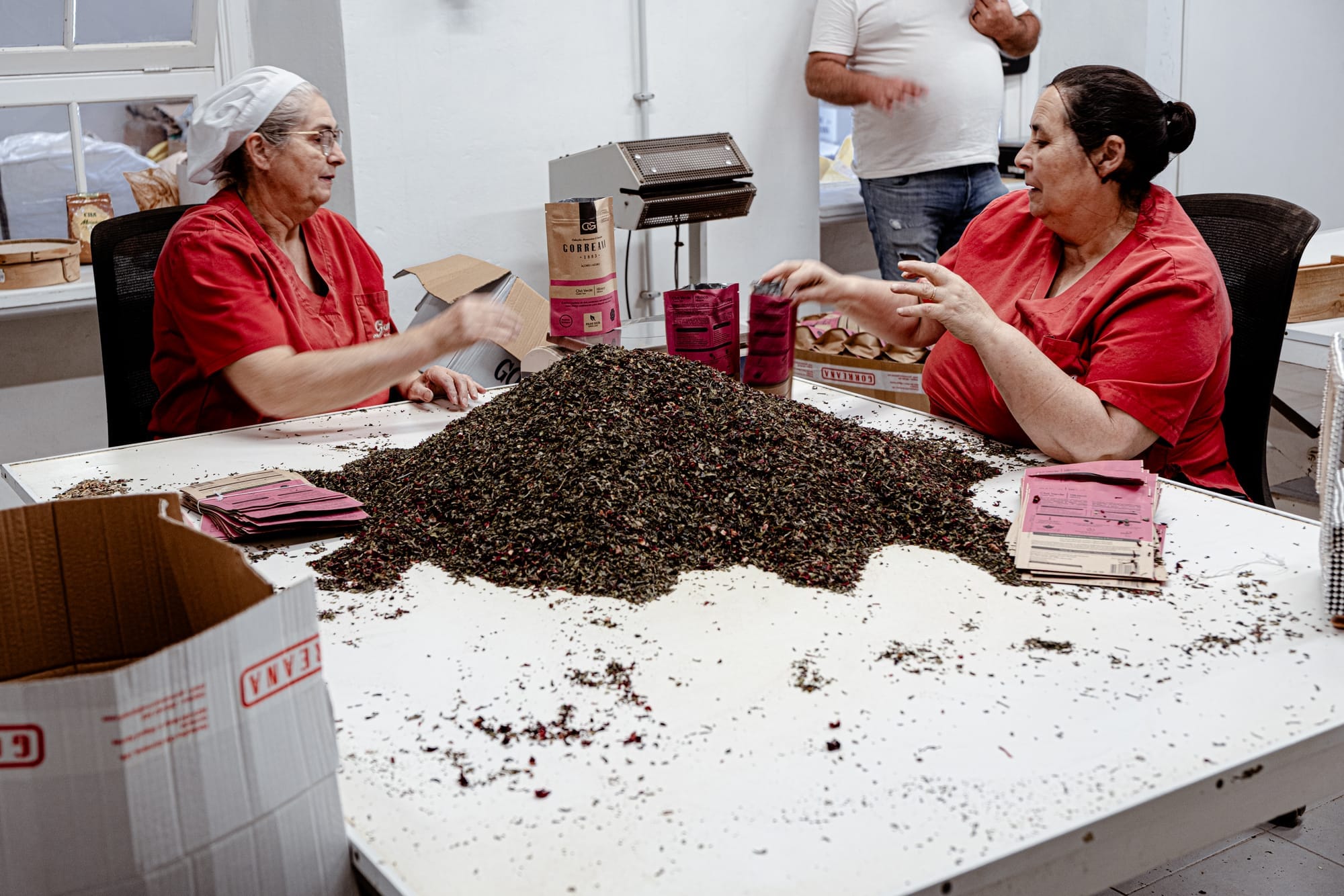
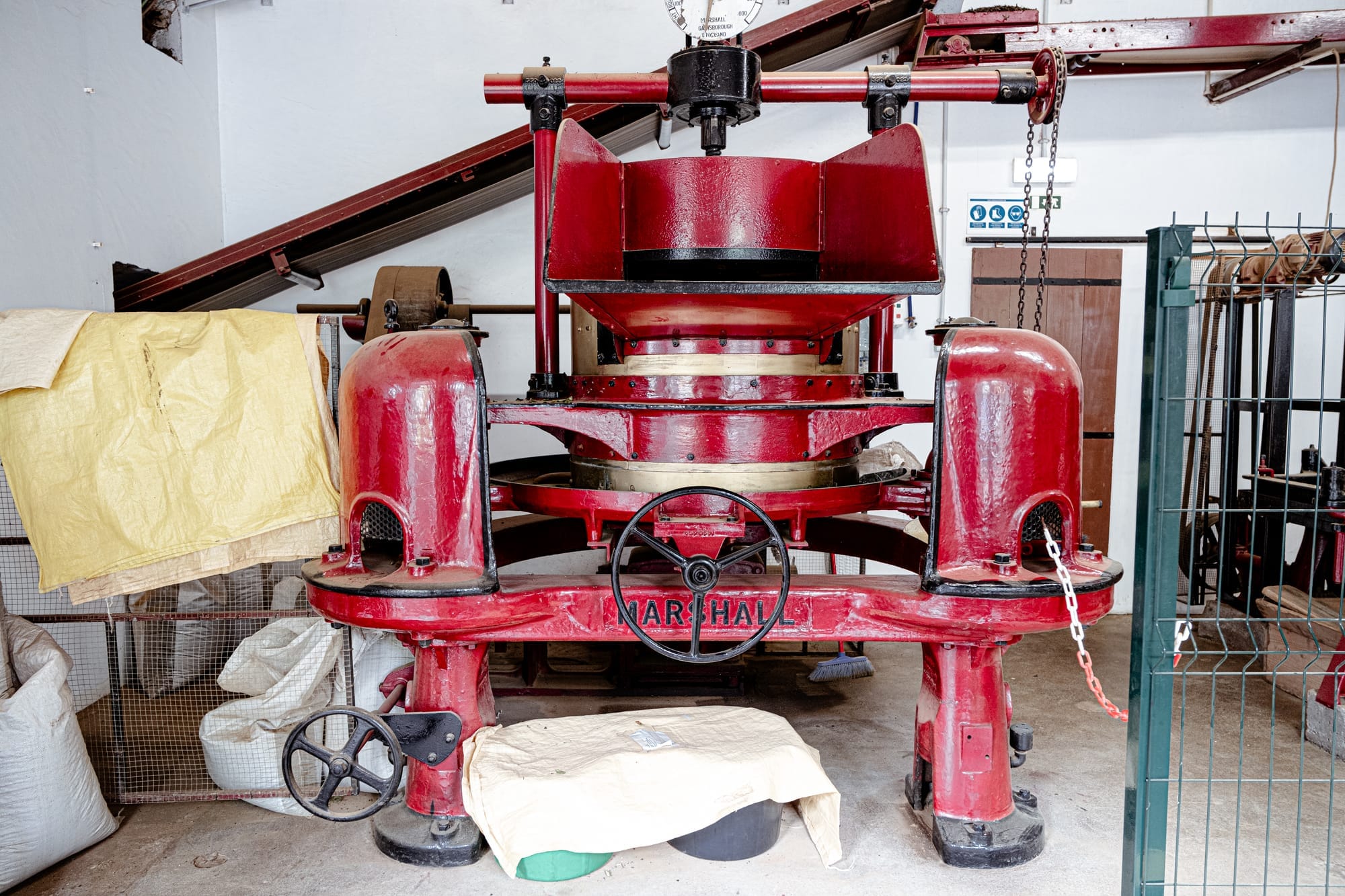
Inside the factory, production continues alongside visitors and aging machines
At the back, there's a small tasting counter. The tea is poured from battered thermoses into paper cups: free, simple, and plentiful. Green and black. Slightly grassy, slightly sweet. Not as complex as a ceremonial matcha might be, but satisfying in a way that suits the place: clean, steady, and generous.
Next to the tasting counter, a small café sells coffee, pots of tea, pastries, and cakes, including a pineapple cake, plus a range of tea biscuits in flavours like green tea with hibiscus or lemon verbena with apple and cinnamon. If you're vegan, ask about ingredients, as baking often uses butter or eggs.
Prefer to go with a guide? One popular option is a Lagoa do Fogo volcano tour. You can check dates and prices here:
Tasting tea on the edge of Europe
Tea here isn't treated as precious. It’s part of a working farm.
In Europe, tea is almost always an import. To drink it where it's grown is rare. At Chá Gorreana, the teas (green, black, and oolong) are grown, picked, processed, and packaged on-site. The process is visible, traceable, and all in one place. That in itself is unusual.
Beyond the basic green and black, the range runs to Orange Pekoe, Pekoe, Broken Leaf, Moinha, Ponta Branca, and an oolong on the black and semi-oxidised side, and Hysson, Encosta de Bruma, and Pérola among the greens. In the shop and online, flavoured loose-leaf blends such as black tea with peppermint or green tea with hibiscus cost around €7 (2026 online prices).
More rare still is the freedom to witness it without a gate.
There is a shop where teas are sold. The packaging is old-school, understated. You can also purchase soaps and liqueurs made with tea extract, but the real takeaway is the tea itself.
How to brew Gorreana tea at home
If you take some tea home, the usual guidance for Gorreana leaf is simple. Heat filtered water and take it off the heat as soon as it starts to bubble. Use about 3 teaspoons of tea per litre, steep for 3 to 5 minutes, then remove the leaves so the tea doesn't turn bitter.
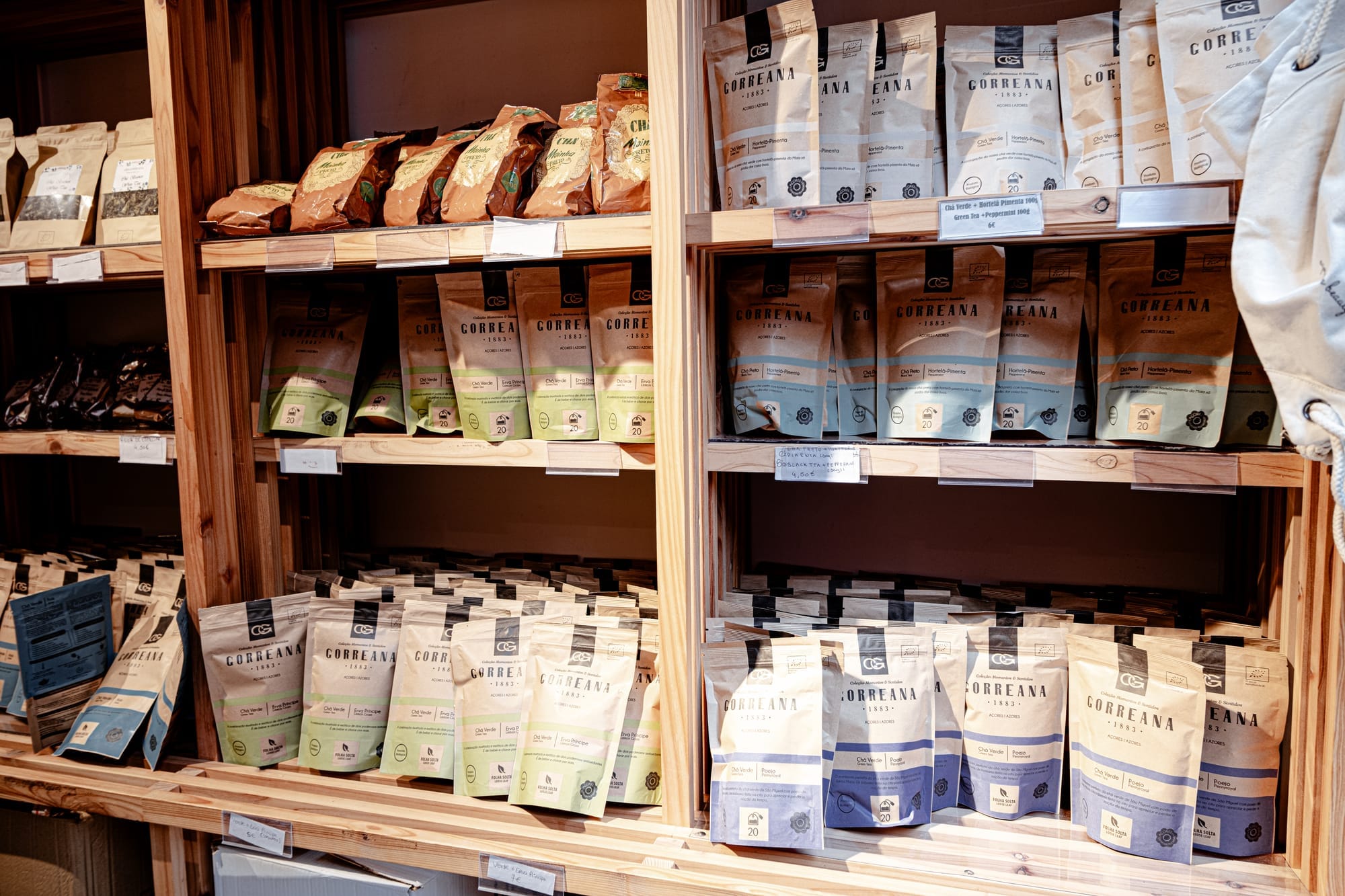
A unique find in the shop is essential oils from plants unique to the Azores. Be sure to have a smell of them.
A short history of European tea, grown here
Tea arrived in Europe through colonization and trade, most notably with the Portuguese and British empires. But its cultivation on European soil is far rarer. São Miguel's tea history began in the 19th century, when the collapse of orange exports pushed farmers to try new crops. In 1878, an island farming society brought two tea specialists from Macau to teach growing and processing, and the plants did well in the island's acidic, volcanic soil and coastal humidity.
Chá Gorreana, established in 1883 by Ermelinda Gago da Câmara, has been run by her descendants ever since. It survived both world wars, multiple waves of migration, and the industrial modernization of agriculture. It's still a working operation, exporting across Europe while staying free and low-key for visitors.
According to Wikipedia's Gorreana article, the plantation was founded in 1883 by Ermelinda Gago da Câmara, and it has stayed with her descendants ever since. The name Gorreana dates from 1926, when her granddaughter and her husband modernized the estate. Tea first came to São Miguel as a replacement crop after blight wiped out the orange groves in the mid-1800s. In 1878, an island farming society brought two tea specialists from Macau to teach growers how to process the leaf. Harvests ran from April to September, mostly on the island's northern slopes.
The first tea bushes on the estate were planted in 1874, and the first kilo of dried tea came out of the factory in 1883, according to byAçores. The Gorreana website says the same family has now run it for five generations. Harvest work was historically done mostly by women and children. One fun detail from the 1920s: the tea's packaging carried an endorsement from the commander of the US naval base on the island.
Other tea farms once worked the island too, but world wars, emigration, and cheaper tea from Mozambique closed them one by one. By the 1980s Gorreana was the only one left. Today it produces about 30 to 40 tonnes a year, without pesticides. Its black teas include Orange Pekoe, Pekoe, Broken Leaf, and Moinha, and its green teas include Hysson.
The plantation describes its tea as organic. No herbicides or pesticides are used, helped by the island's isolation from many tea pests. Besides selling across the Azores and mainland Portugal, Gorreana exports to countries including Germany, the US, France, Italy, Brazil, and Japan, and you can order from its online shop if you run out after your trip.
Thinking about how we visit
A visit to Chá Gorreana is worth reflecting on, as well as admiring. What does it mean to walk freely through a plantation? Who has access to places like this, and who works in them? The Azores are postcard-perfect islands, but they are also places with complex colonial histories, fragile ecosystems, and economic shifts.
Walking these fields puts you in relation to the land, the plants, the workers, and the climate. A visit can take from a place or give something back. The difference lies in pace, attention, and how you choose to move.
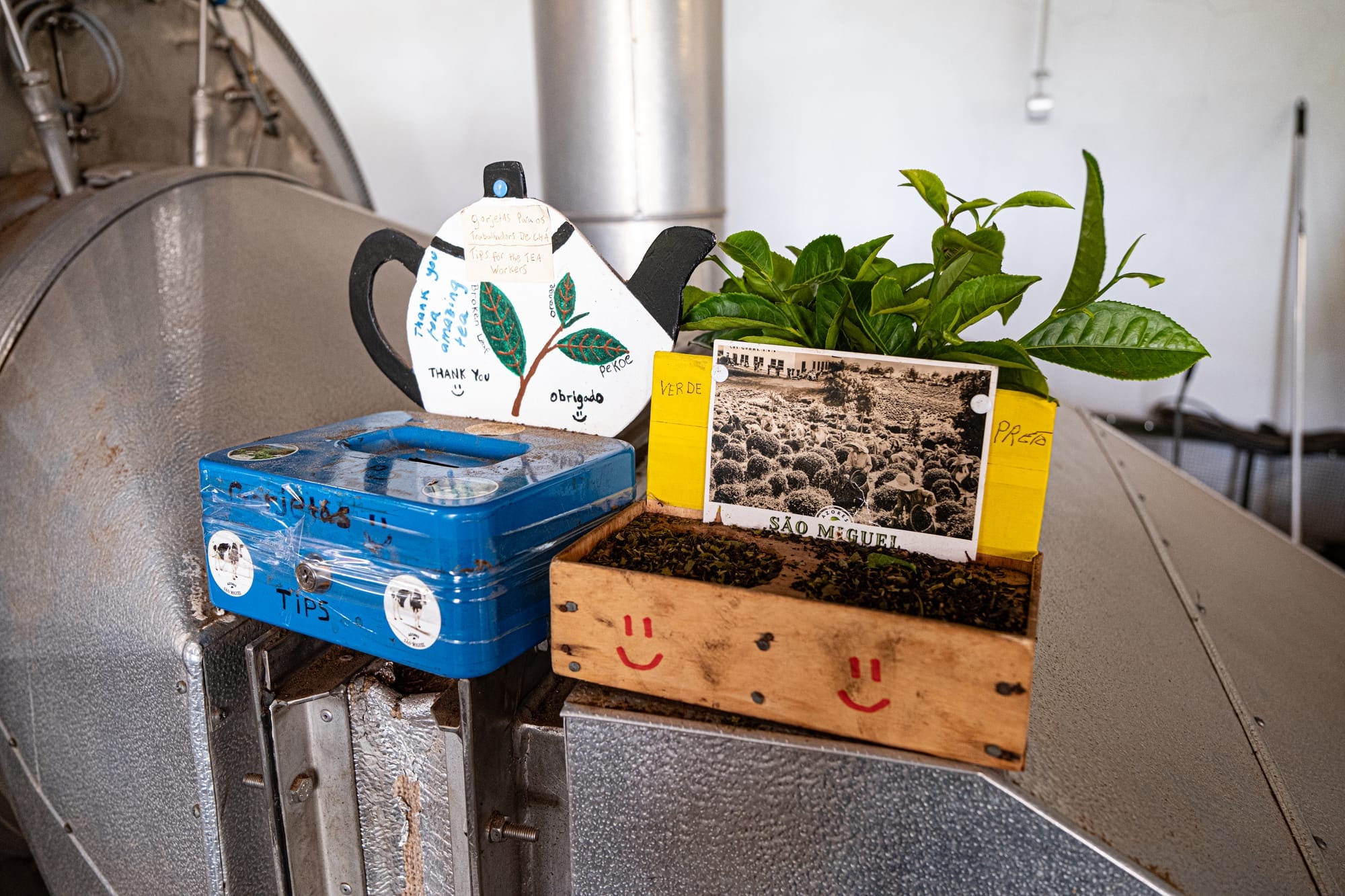
It's worth remembering the careful work that makes our wandering possible: the pruning, the sorting, and the hands behind each trimmed row.
You may come for the tea. You may stay for the view. But you leave with a memory of what it feels like to stand still in a working landscape.
Chá Gorreana is a place to pause, watch, and taste what grows when patience and care come together.
Plan your visit
Several guided tours include a visit to Chá Gorreana, often paired with hot springs or volcanic crater lakes. These can be a great way to reach the plantation without needing a rental car, and to see it alongside the island's other natural sights and history.
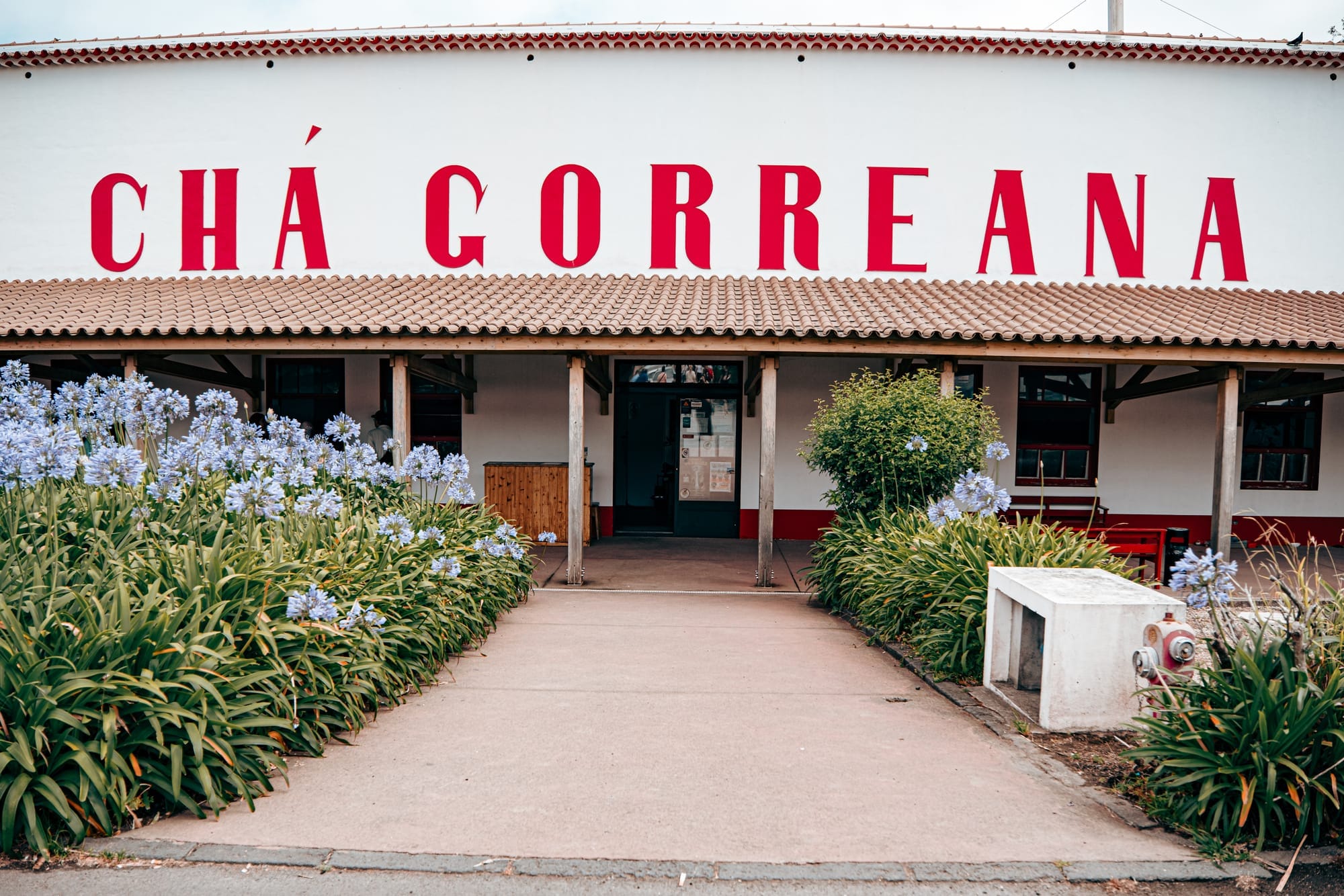
A nice complement to Chá Gorreana is Porto Formoso Tea Factory. A less popular option, it seems to be well-admired for its authenticity.
Porto Formoso is a few minutes west along the same coast road. It's smaller than Gorreana, restarted production in 2001 after decades closed, and offers a short demonstration and a tea room overlooking the sea. If you have time for both, visit Gorreana for the scale and the working factory, and Porto Formoso for a cup with a view.
Gorreana is in the same chapter as Lagoa do Fogo, Caldeira Velha, and the Santana market in our São Miguel guide (PDF), so it's easy to plan a north coast day around it.
Tips for visiting Chá Gorreana
Go early. Many island day tours stop here, so mornings are the best time to have the rows to yourself.
Respect the working farm. Stick to the paths between the rows, and don't pick leaves or step on the bushes.
Buy tea at the source. The shop sells the plantation's teas alongside the soaps, liqueurs, and oils.
Bring a jacket. The north coast is often windier and cloudier than Ponta Delgada.
Pair it with a hot spring. Caldeira Velha and Furnas are both a short drive away.
For more of the island, see our guides to Furnas and Caldeira Velha, or browse more things to do on São Miguel.
Nearby, see Poça da Dona Beija hot springs.
Nearby, see the Moinhos da Ribeira Funda hike, the Moinho do Félix waterfall trail, and the Santana farmers market.
Whatever your plans, travel with insurance. Stomach bugs, a fall on a cobbled street, or a stolen phone can happen anywhere, and it's much easier to enjoy the trip when you know you're covered. We'd recommend SafetyWing Nomad Insurance. It covers medical emergencies abroad, you can buy it even after you've left home, and it renews every four weeks, so it works for a short trip or months on the road.
Where to stay near Chá Gorreana
The nearest good base for Chá Gorreana is Ribeira Grande. These are well-reviewed places to stay there, all rated 9 or more on Booking:
- Matriz Guest House: a central guest house in Ribeira Grande, rated 9.6 and good value.
- Casa do Pico Arde: rural houses with gardens outside town, rated 9.3.
Frequently asked questions
Is Chá Gorreana free to visit?
Yes. Entry, parking, the factory viewing area, and the tea tasting are all free. You only pay for what you buy in the shop.
What are the Chá Gorreana opening hours?
It's open daily, roughly from 8:00 or 9:00 to 18:00, with later starts at weekends. Hours can change on holidays, so call +351 296 442 349 to confirm.
How long do you need at the Gorreana tea plantation?
About an hour for the factory, tasting, and a short walk. Allow two to two and a half hours if you also walk the 3.3 km PRC28 SMI trail.
Is Chá Gorreana the oldest tea plantation in Europe?
Yes. It has been running since 1883 and is the oldest surviving tea plantation in Europe, still run by the founding family.
When is the tea harvest at Gorreana?
Traditionally from April to September. That's the best time to see the machines processing fresh leaf.
Which is better, Gorreana or Porto Formoso?
Gorreana is bigger, with a working factory, free tasting, and a trail. Porto Formoso is smaller, with a demonstration and a tea room with sea views. They're minutes apart, so you can do both.
Do you need to book a visit to Chá Gorreana?
No. Visits and tastings are free and don't need a reservation. Just turn up during opening hours, ideally before mid-morning.
Is Gorreana tea organic?
The plantation describes it as organic and says no pesticides or herbicides are used. The island's isolation keeps many tea pests away.
Can you buy Gorreana tea outside the Azores?
Yes. It's sold in shops in mainland Portugal, exported to several countries, and available from the Gorreana online shop.
Is there a café at Chá Gorreana?
Yes. There's a small café with coffee, tea, pastries, cakes, and tea biscuits next to the free tasting area.
Does Porto Formoso tea factory offer tours?
Visitors report a short free guided visit that ends with a cup of tea, plus a tea room with sea views. Check locally, as it's a smaller operation.
Useful links: Chá Gorreana (official site), Chá Gorreana trail PRC28 SMI (Visit Azores Trails), and Gorreana (Wikipedia).


