


The Moinho do Félix trail is a circular waterfall walk from Lomba de São Pedro, in the municipality of Ribeira Grande on the northeast side of São Miguel, Azores. It's about 5.5 km and takes around 2 hours, plus time at the falls, with plenty of stairs and some slippery sections near the water. It's free, with no ticket. Go in dry weather if you can, and wear proper hiking shoes. We did it with Atlantimagia as the first hike of a full-day tour, and below is what to expect. It works guided or on your own.
Some hikes take you past waterfalls. This one takes you between them. The Moinho do Félix (Cascadas) trail, in the northeast of São Miguel, is a very lush route that splits into multiple branches, each one leading to a different waterfall hidden in the deep green valleys of the island.
You'll also see it written without the accent, as Moinho do Felix, on maps, trail apps, and signs. It's the same trail.
We did this hike with Atlantimagia, a tour company run by a Canadian couple who fell in love with São Miguel and now run nature-based adventures (and a dog rescue) from their new island home. We’d done several of their tours before and loved the pace and knowledge they bring, so we knew we were in for something special.
Moinho do Félix trail at a glance
This is a municipal trail run by Ribeira Grande, not part of the regional PR network, so you won't find it on the official Azores trails site. The figures below come from the Azores Guide trail page, and other sources give slightly different numbers, so treat them as a guide.
Name and code: Trilho do Moinho do Félix, Cascatas (TM06).
Distance: about 5.5 km, circular.
Time: about 2 hours of walking. Allow 3 or more with stops at the waterfalls.
Difficulty: moderate. Lots of steps up and down, and wet rock near the falls.
Start and finish: by the parish church in the center of Lomba de São Pedro.
Highlights: Miradouro da Rocha, Cascata do Homem, the ruined Moinho do Félix mill, Cascata do Teófilo, Cascata da Gruta, and the Poço da Truta pool.
Cost: free if you walk it yourself. Guided tours charge per person and usually include transport.
Published figures for this trail don't agree. The Azores Guide and the Portuguese Trails listing both give about 5.5 km and 2 to 2.5 hours, while GPS apps show anything from under 4 km to over 6 km, depending on which side paths to the falls people walk. Use the table below as a guide, not a measurement.
| Stop | What it is | Good to know |
|---|---|---|
| Parish church of São Pedro | Start and finish | Park nearby without blocking driveways |
| Miradouro da Rocha | Viewpoint over the north coast with a picnic area | First stretch is a dirt track down toward the sea |
| Cascata do Homem | First waterfall, down a side path | You walk back up the same way |
| Moinho do Félix and Cascata do Teófilo | Ruined watermill and a waterfall with a memorial headstone | Wet rock here, so stay on the path |
| Cascata da Gruta and Poço da Truta | Waterfall and pool | The last falls before the road section |
| Regional road to Lomba de Baixo | Old public fountains on the way back | Walk on the road edge, there's traffic |
| Trail | Code | Distance | Time | Difficulty |
|---|---|---|---|---|
| Moinho do Félix, Cascatas (Lomba de São Pedro) | TM06 | About 5.5 km, circular | About 2 hours, 3 or more with stops | Moderate |
| Moinhos da Ribeira Funda (Fenais da Ajuda) | PRC35SMI | 3.3 km, circular | About 2 hours | Medium |
| Salto do Cabrito (near Ribeira Grande) | PRC29SMI | 8.6 km, circular | About 3 hours | Medium |
How to get to the Moinho do Félix trail
Lomba de São Pedro is a small parish on the north coast road (ER1-1ª) between Ribeira Grande and Nordeste, sitting between Salga and Fenais da Ajuda, according to Wikipedia. It's the least-populated parish in Ribeira Grande, so it's a small farming village, not a tourist hub, and there are no big car parks. Park considerately near the church and don't block driveways or farm gates.
You really need a car or a tour to get here. Buses along the north coast are infrequent, and you'd have to time the walk around them. We didn't have to think about any of this, because Atlantimagia picked us up and dropped us off, which is a big part of why a guided day works well for this corner of the island.
Driving takes roughly 45 minutes to an hour from Ponta Delgada, via Ribeira Grande and the north coast road. There's no signed trailhead car park, so aim for the church in the center of the village. The trail follows signs toward the waterfalls from there, but signage on municipal trails can be patchy, so have the route downloaded too.
If you're planning a full day in the northeast, Our Guide to São Miguel puts the waterfall trails and Nordeste viewpoints on one map, so you can see what fits around this hike.
A network of waterfall trails
The Moinho do Félix (Cascadas) hike is actually a system of trails rather than one linear route. You begin near Lomba de São Pedro and follow signs toward several cascadas, with each trail looping you down toward a different fall and then back up into the canopy again.
The route, step by step
From the church, the trail heads west out of the village and down a dirt track toward the sea, to the Miradouro da Rocha, a viewpoint over the north coast with a picnic area. From there you drop down to the Cascata do Homem, come back up, and follow a path to the ruins of the Moinho do Félix and the Cascata do Teófilo. Next come the Cascata da Gruta and the Poço da Truta pool. The last part follows the regional road to Lomba de Baixo, past a row of old public fountains that once supplied water to the villages.
The mill that gives the trail its name was a water mill, the kind that was common around Ribeira Grande. According to the Azores Guide, it belonged to an elderly miller couple and ground wheat and corn for the people of Lomba de São Pedro and Fenais da Ajuda. Today only the ruined stone walls are left. The Cascata do Teófilo is named after a young man who died there, and his headstone stands beside the waterfall, a good reminder to take care on the wet rocks.
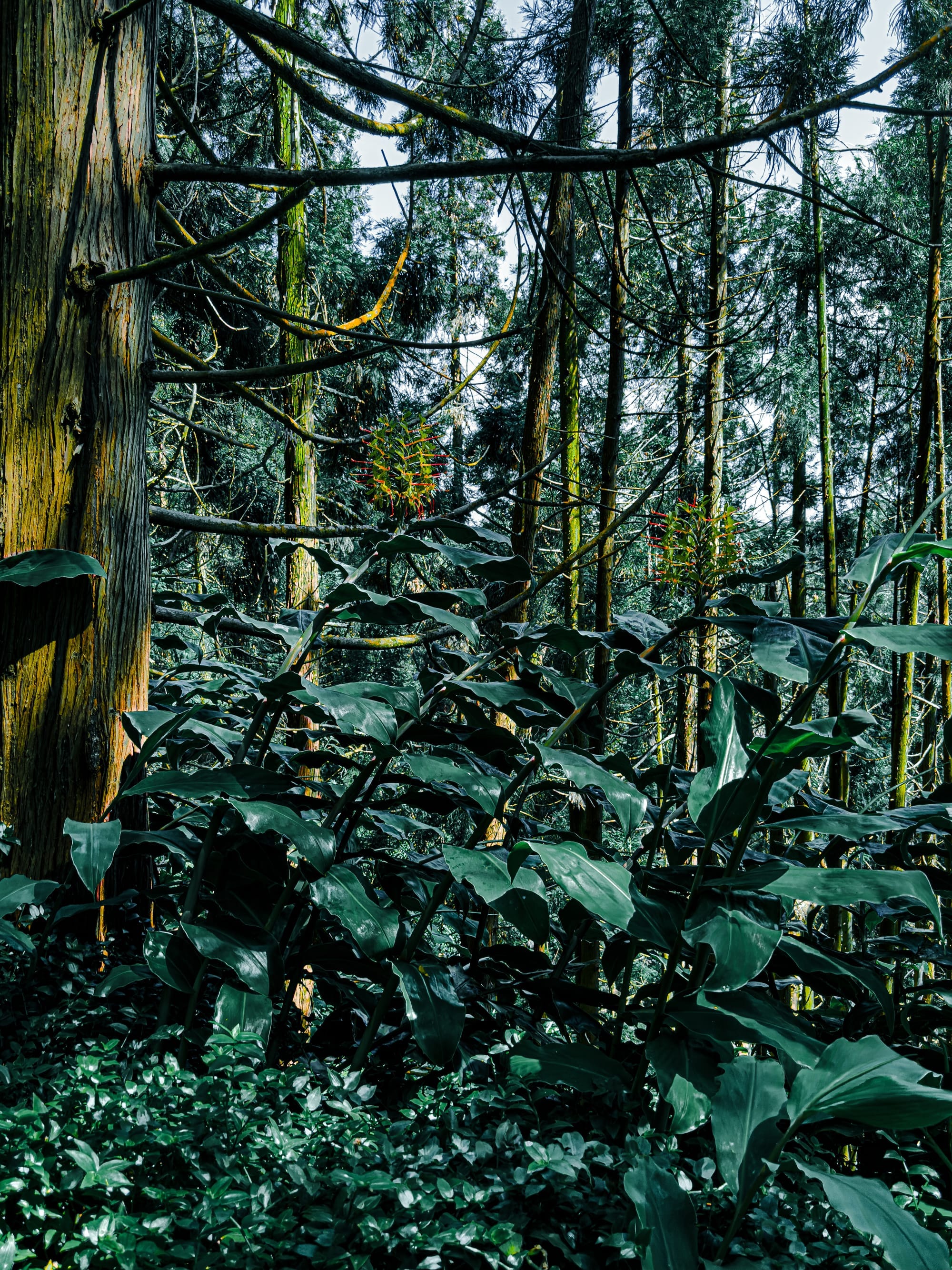
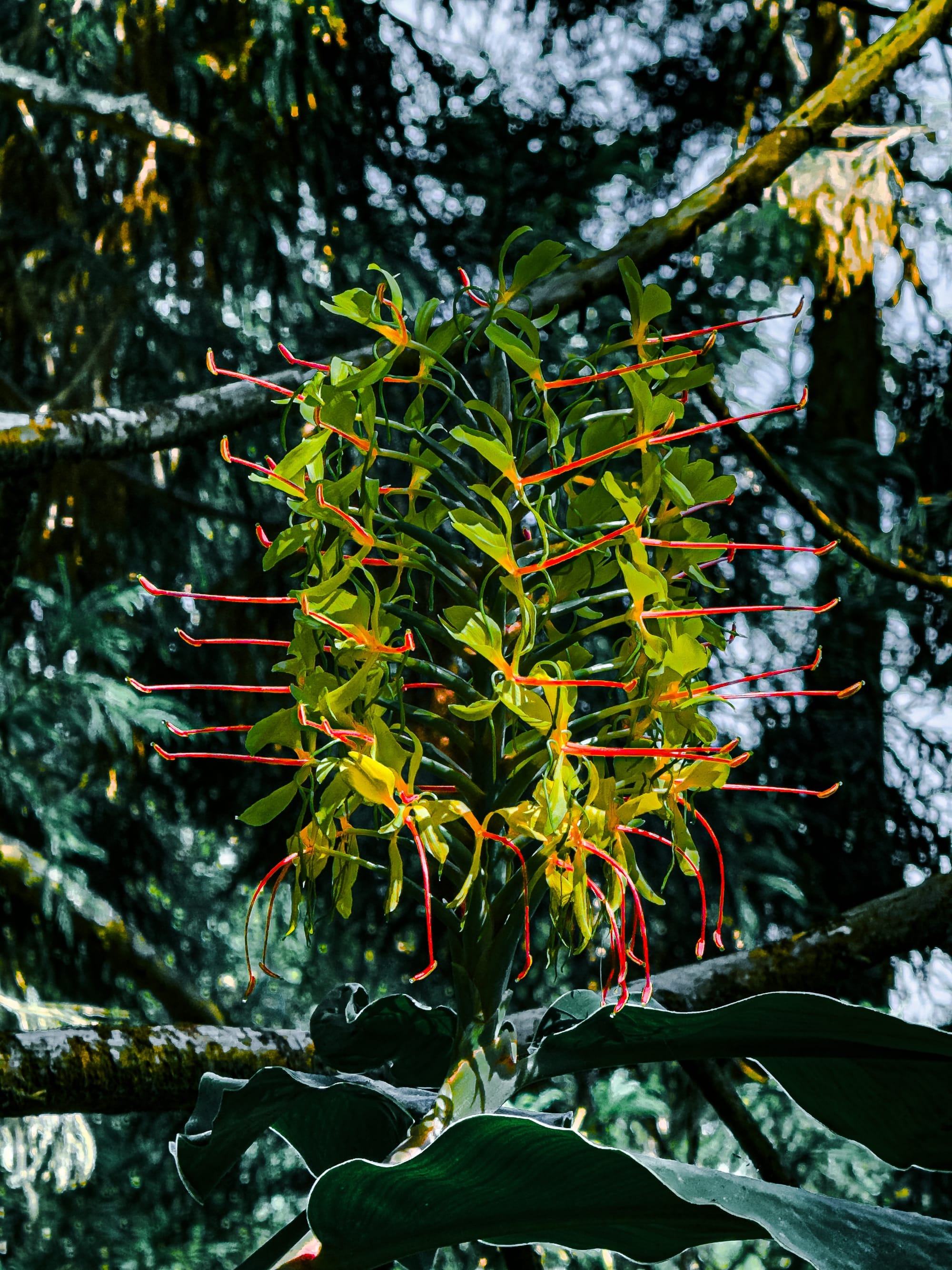
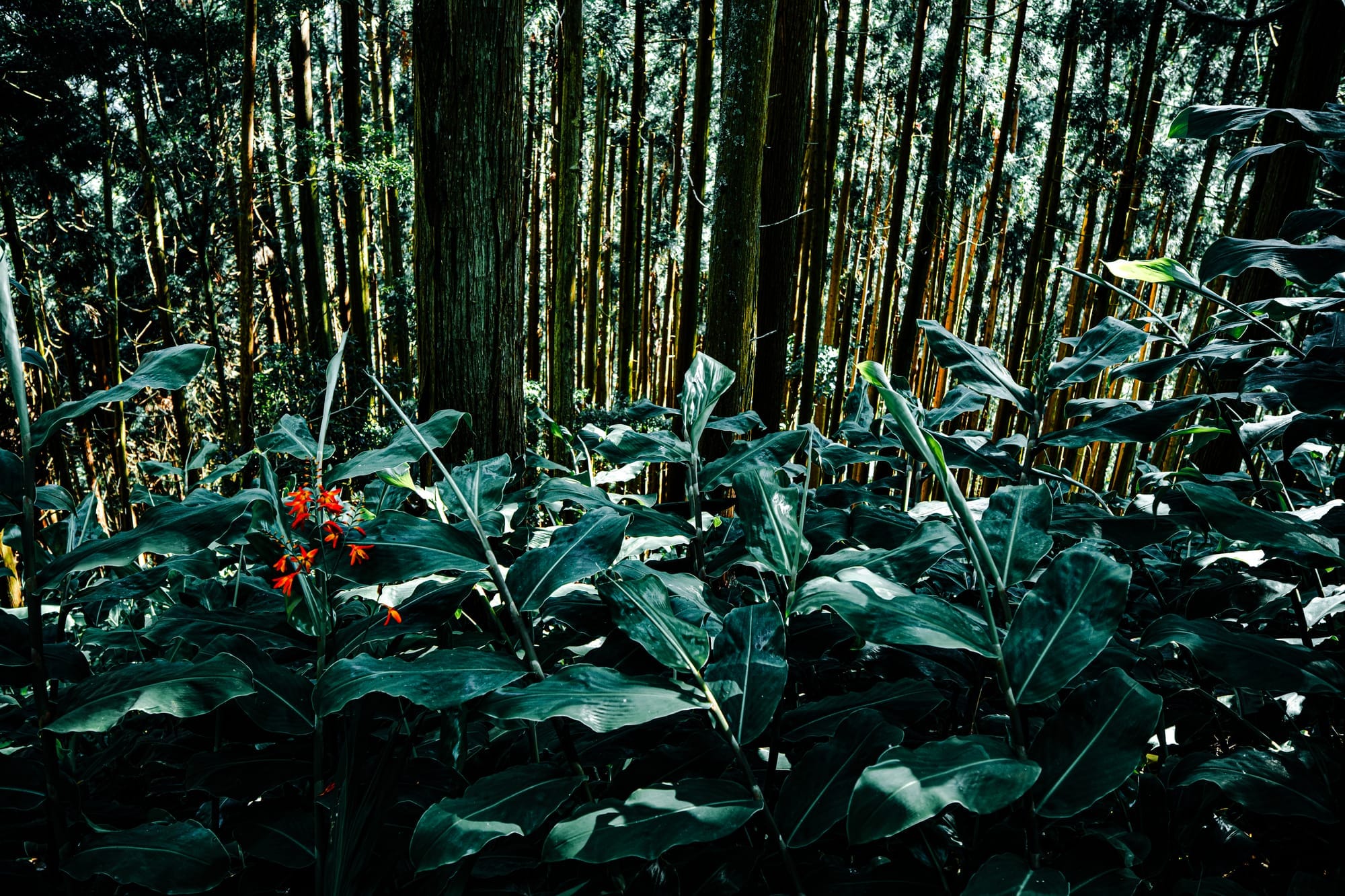
Ginger lilies growing in dense clusters beneath the cryptomeria canopy
The elevation changes are real: expect lots of stairs, inclines, and rooted descents. But also expect wildflowers, cliffs, and forest pools that look untouched.
Hiking with Atlantimagia
This tour was led by Chris, one half of the Atlantimagia team. He's a deeply generous guide, with an encyclopedic knowledge of São Miguel’s flora and a clear love for its landscapes. Our group moved at an easy pace, stopping often for explanations, water breaks, or to simply chat. One of the things I love about Atlantimagia is that they adapt each tour to the group’s energy level. This isn’t a sprint; it’s an easy, story-filled wander with lots to see, hear, and smell.
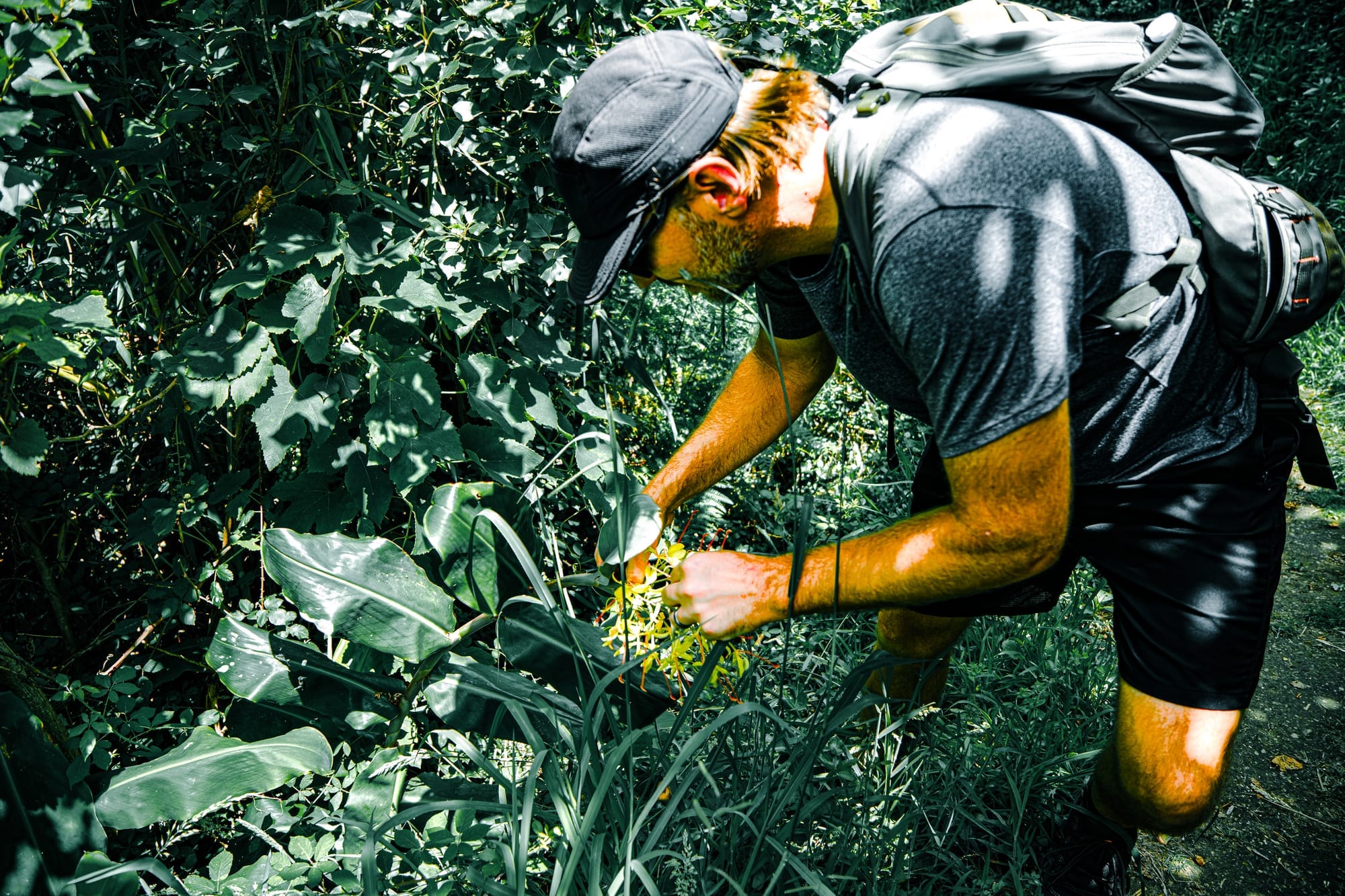
And you do want to take your time. This hike isn’t about speed. It’s about noticing things: the rustle of bamboo, the red bark of cryptomeria trees, and the climb and fall of water over rock.
Flora highlights: deep woods and climbing vines
The vegetation on this hike is wildly rich. You’ll pass through tunnels of nasturtiums, morning glories, and other flowering vines that cling to tree trunks and dangle down into the trail. The tree trunks themselves are a wonder: deep red and vertical, with peeling bark and dappled light filtering through high canopies.
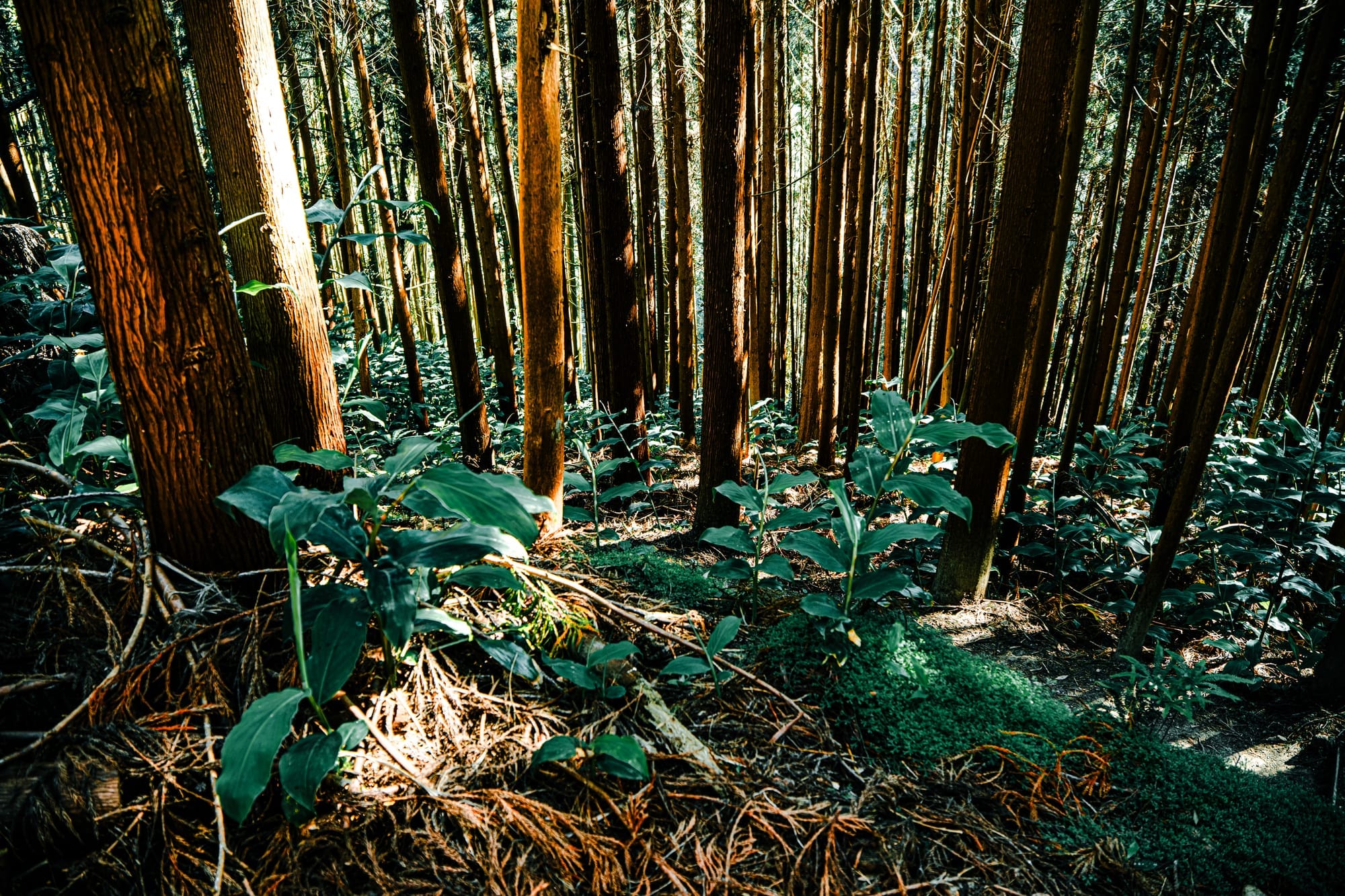
In the lower elevations, the moisture brings out more delicate plant life: ferns, mosses, and enormous clusters of ginger lilies.
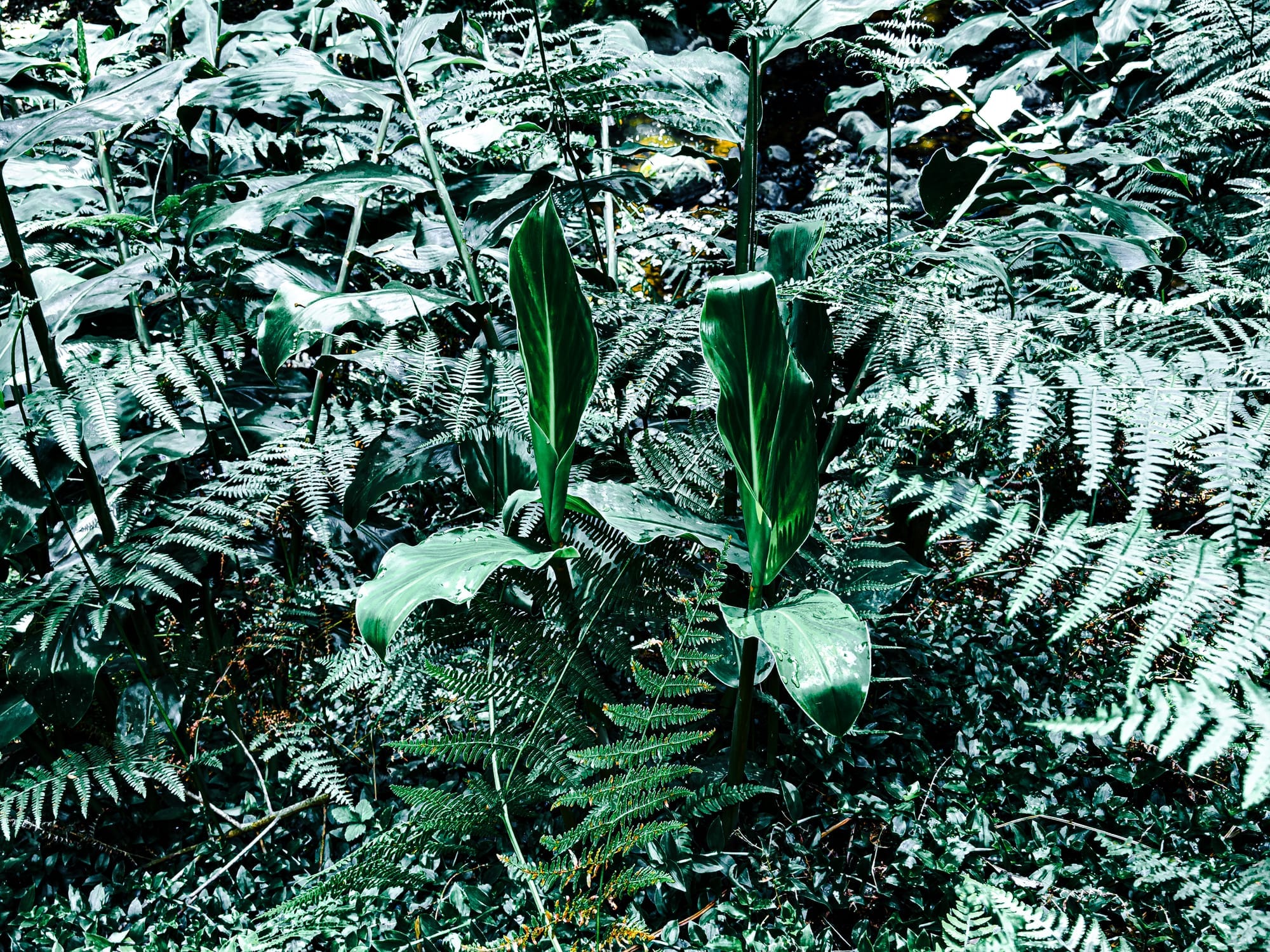
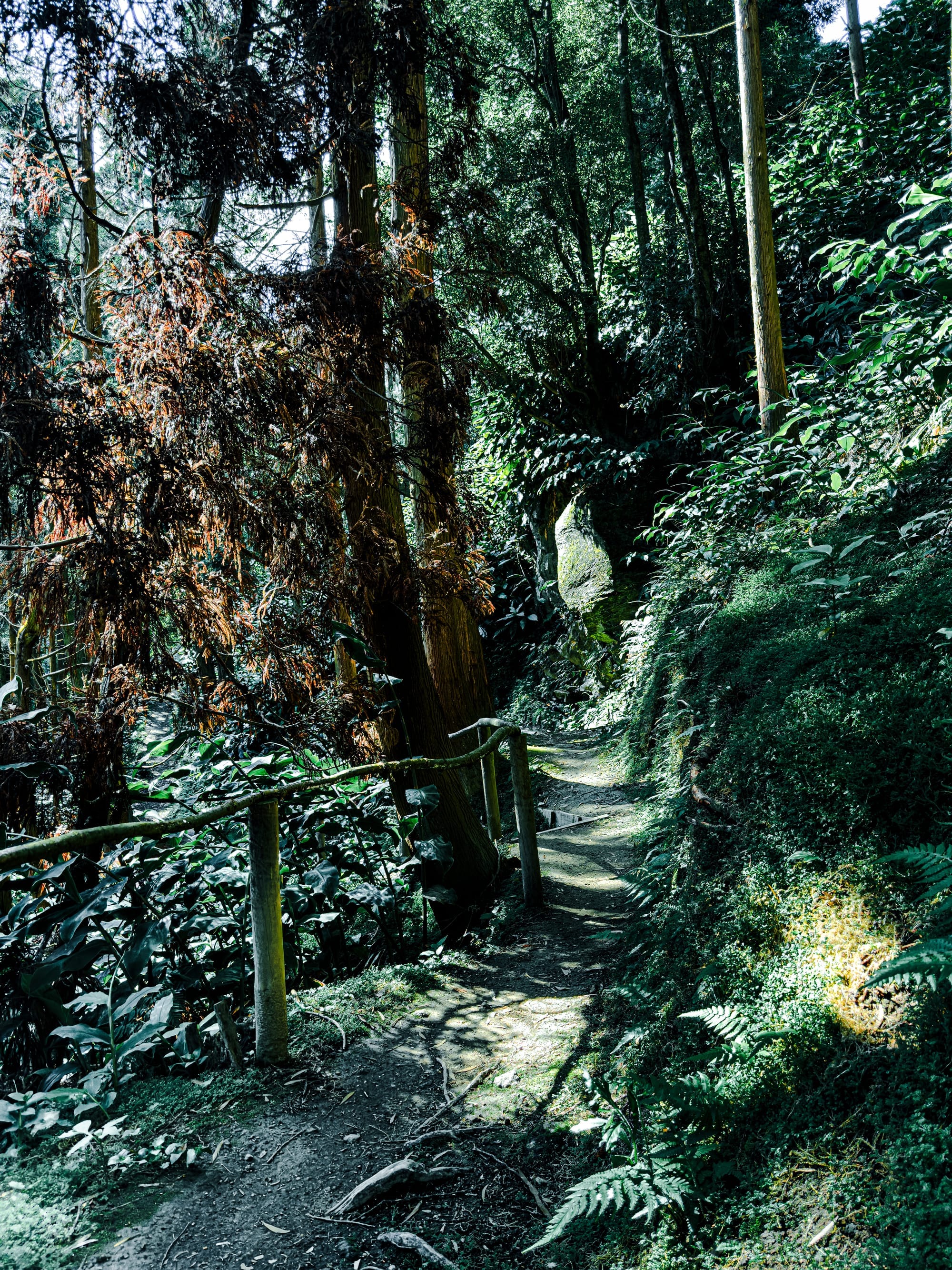
Ginger leaves and ferns fill the understory while the shaded trail climbs steadily through a tunnel of red-barked trees
The trail moves through shifting ecological zones, and each bend shows you new plants: towering grasses brushing your arms, delicate wildflowers underfoot, and reed beds whispering in the breeze.

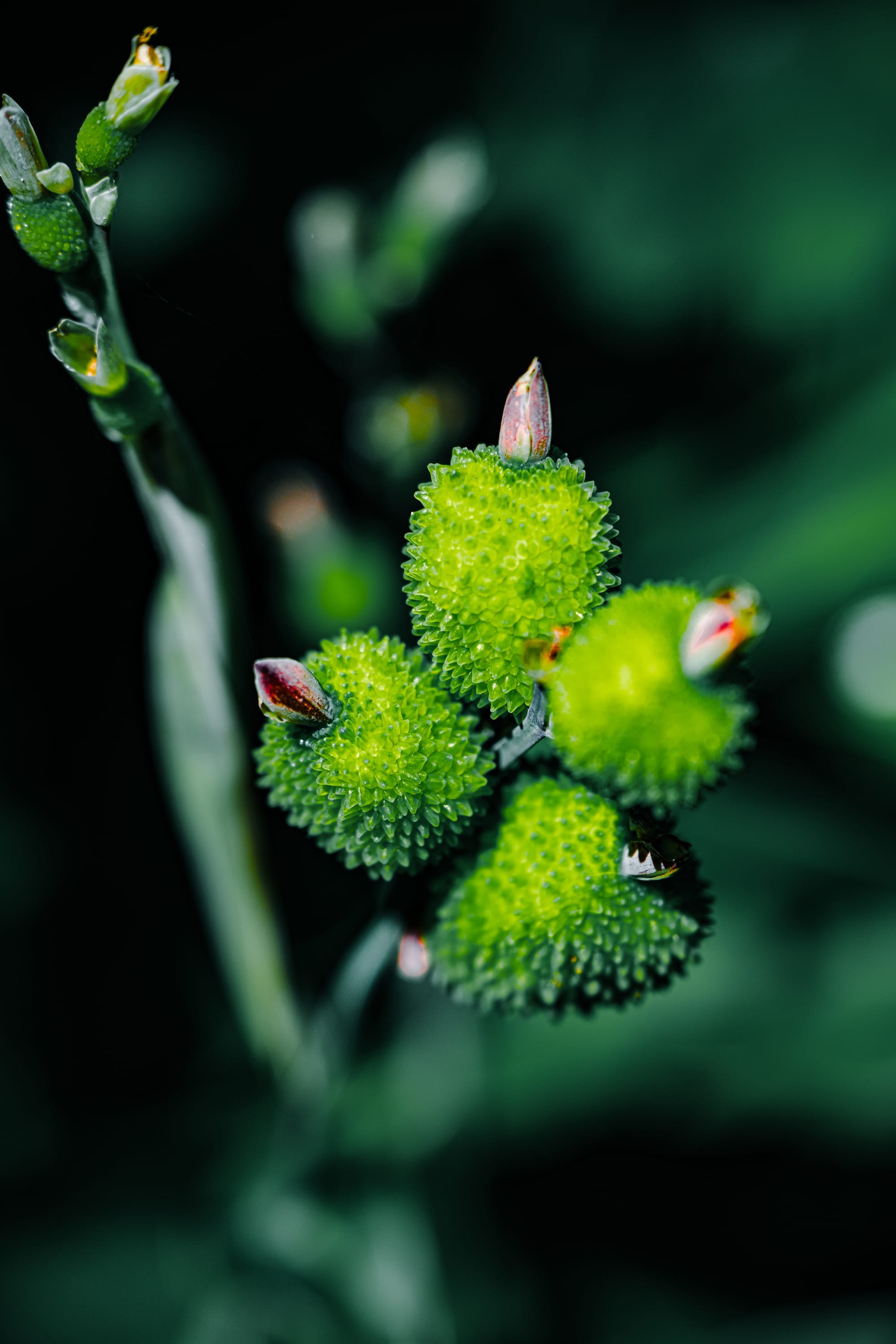
Two signatures of the trail: bright orange crocosmia blooms and spiky green seedpods of wild canna
At one point, we passed under a stretch of twisted, vine-laced canopy that formed a tunnel of trees, full of filtered light.
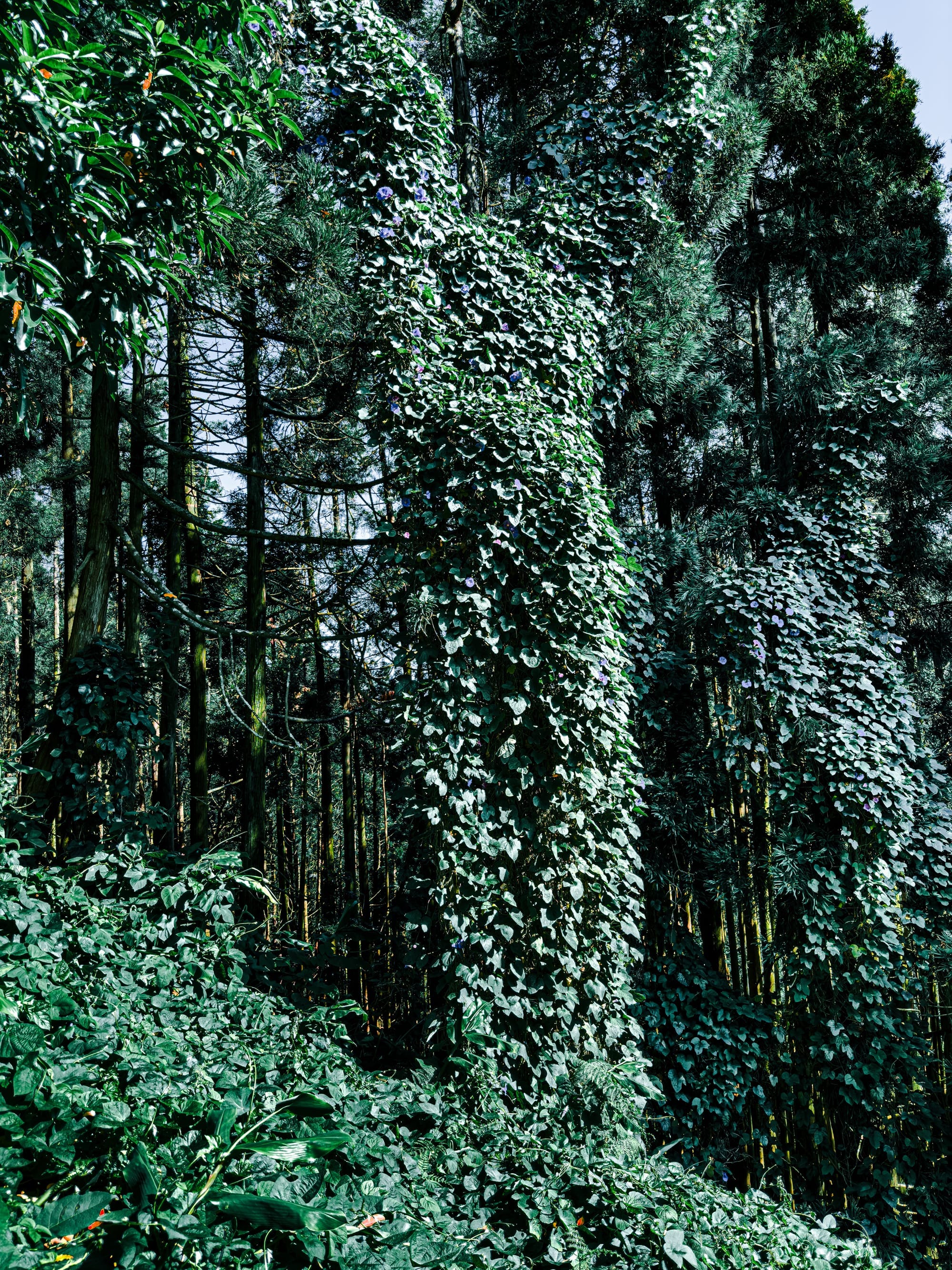
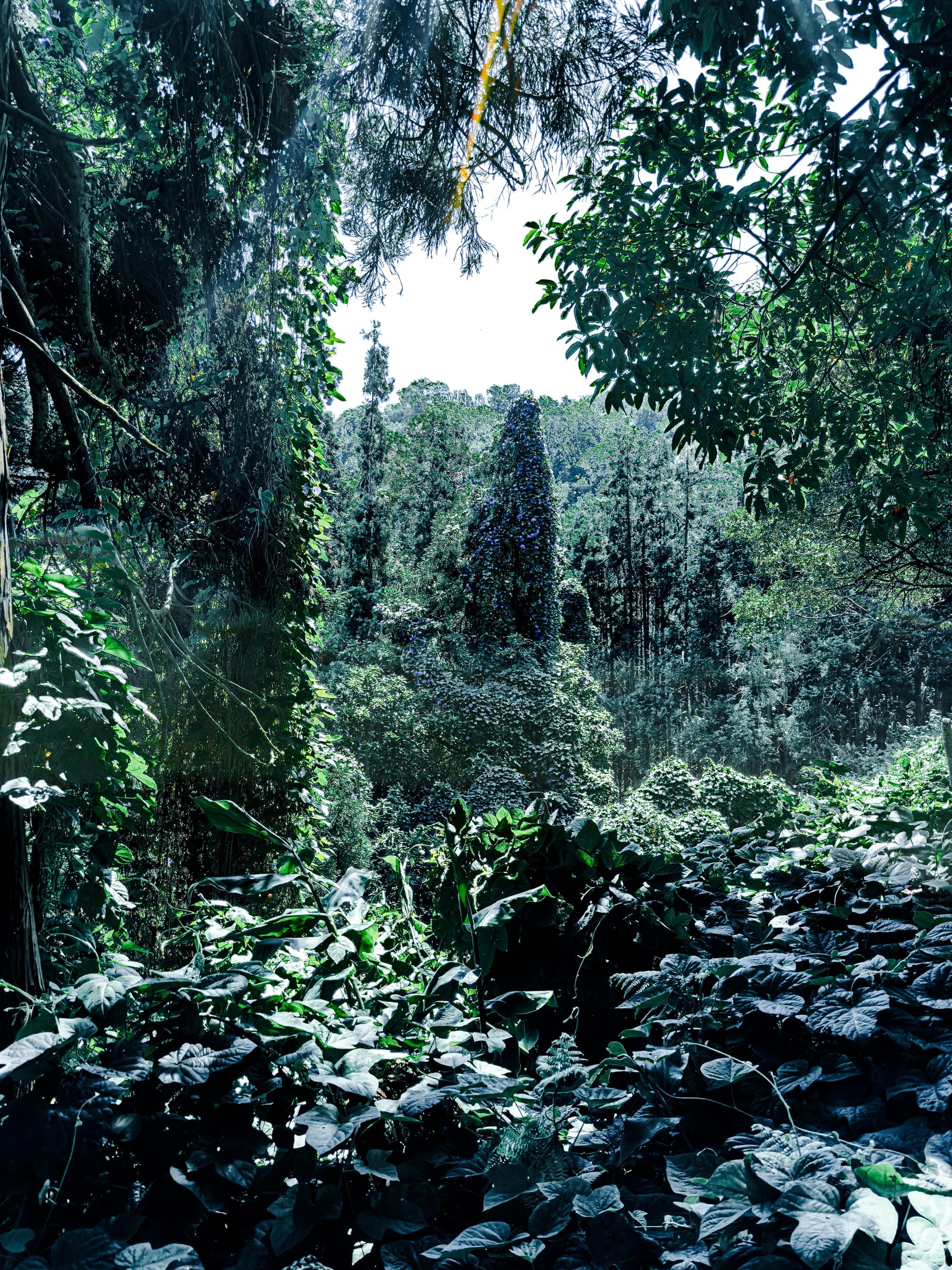
Towering trees wrapped in wild morning glory vines, their purple blooms cascading like soft vertical rivers
Every few minutes, the colors change. Bright lime greens give way to deep emeralds and rusted reds. A carpet of soft leaves here, a tangle of climbing ivy there. The variety changes how the whole forest feels, not only how it looks.

Some of these plants are invasive, others are native or endemic, but together they create a mix that’s unmistakably Azorean.
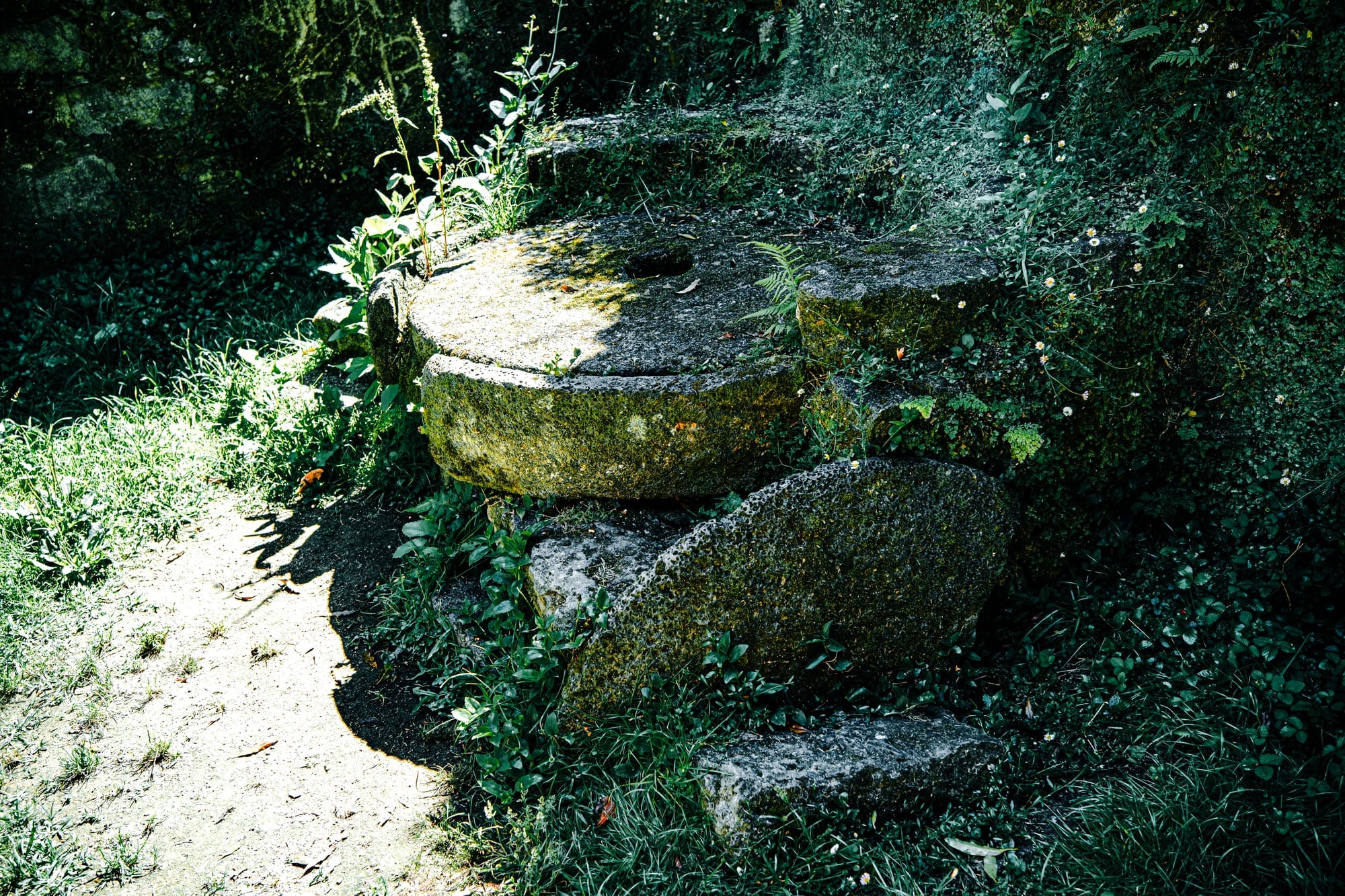

Stone mill remnants and wall flora along the trail
You'll find remnants of old water mills as you move through the paths.
The cascadas themselves
Each waterfall has its own mood. Some cascade narrowly over black volcanic rock, like veins of silver. Others plunge in wide white fans into shaded pools. At many of them, you’ll find wooden bridges, benches, or mossy stone ruins to rest beside. One is framed by dense fern walls; another falls just beyond a narrow tree tunnel.
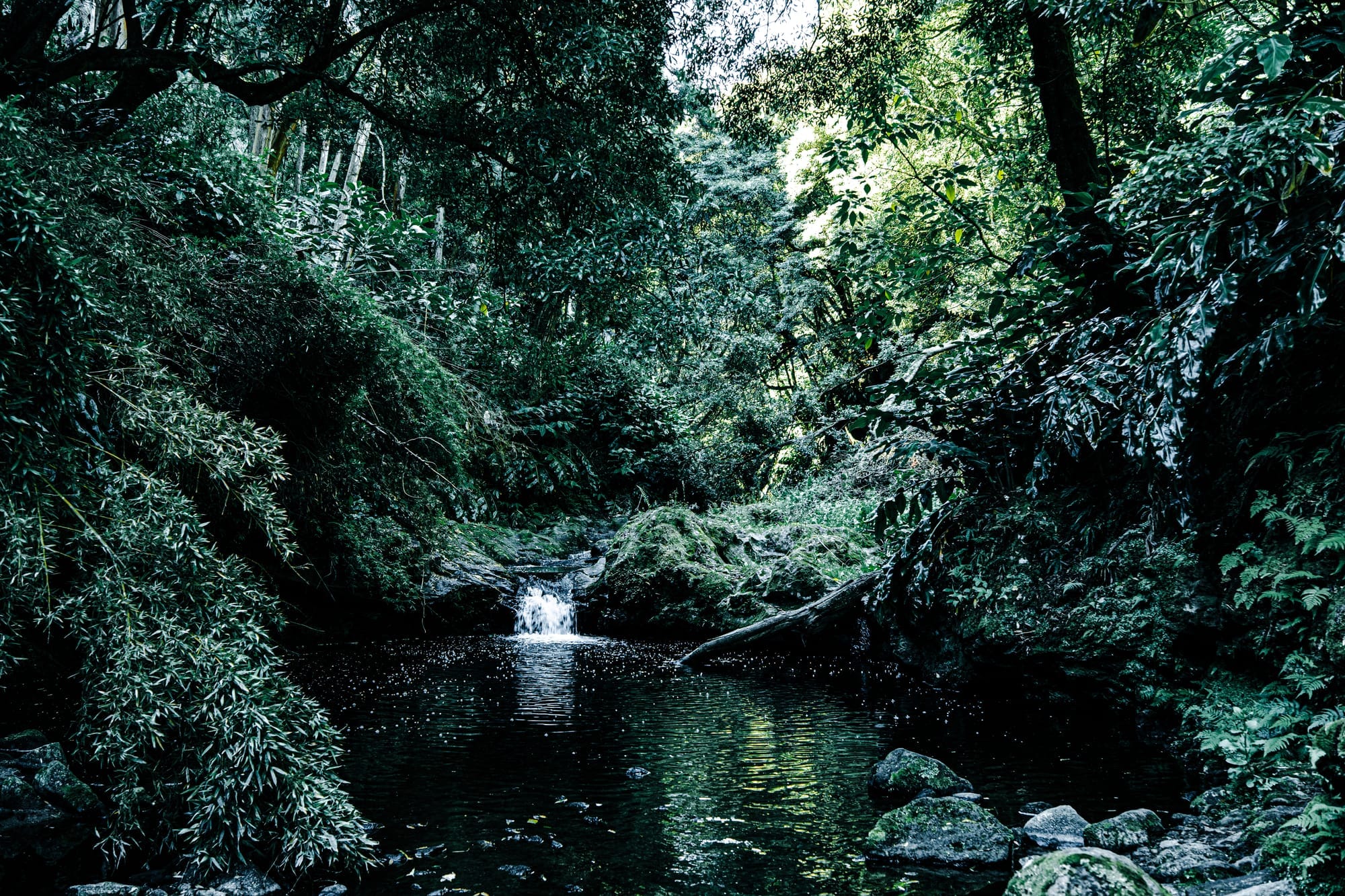
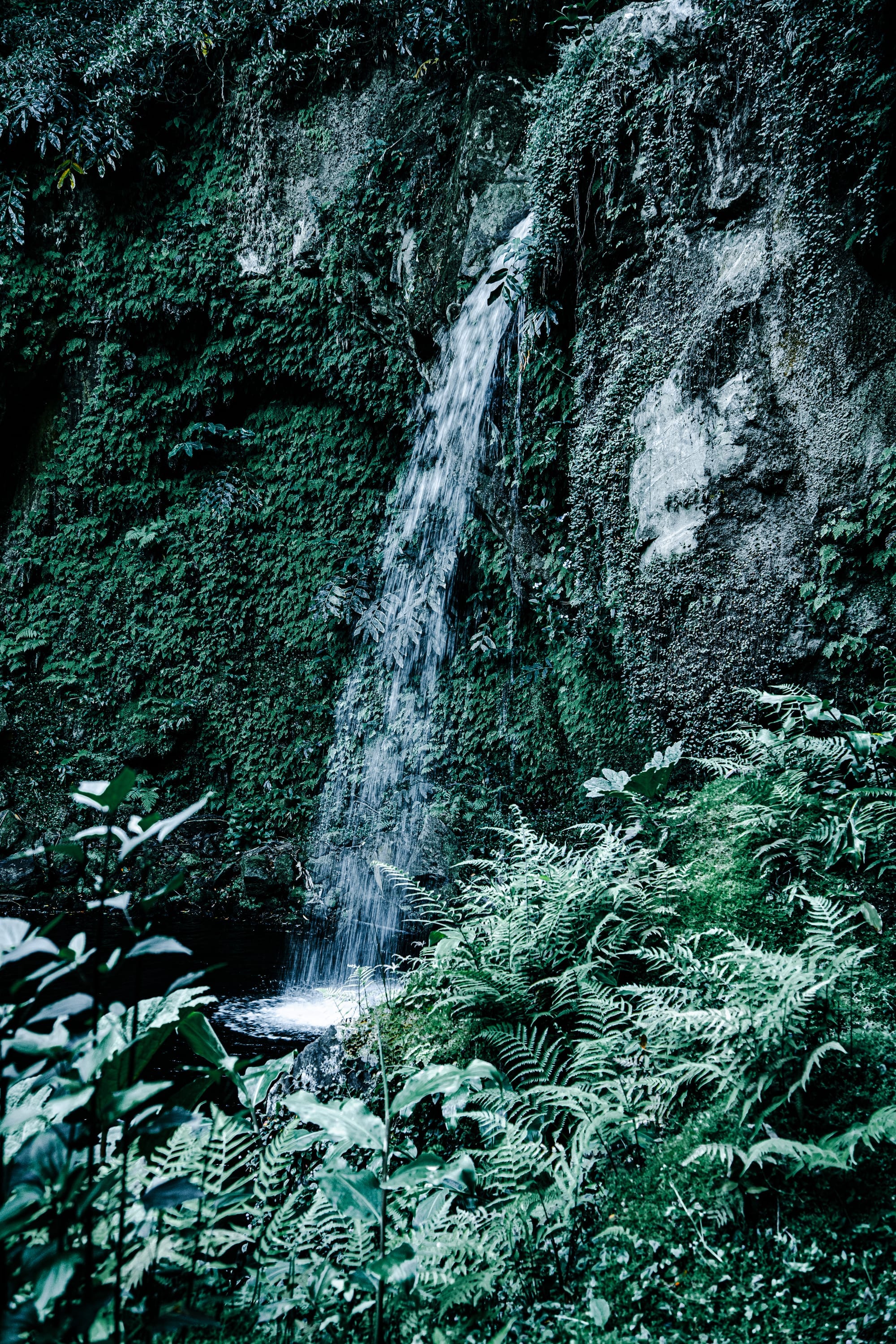
Two of the cascadas along the trail: one wide and low, one narrow and sheer
The tour doesn’t rush you through them. You’re encouraged to sit, feel the temperature shift, listen to the water.
Photographers will love this section, and so will anyone who enjoys feeling small next to nature for a while. These aren’t loud, aggressive waterfalls. They’re calm and intimate.
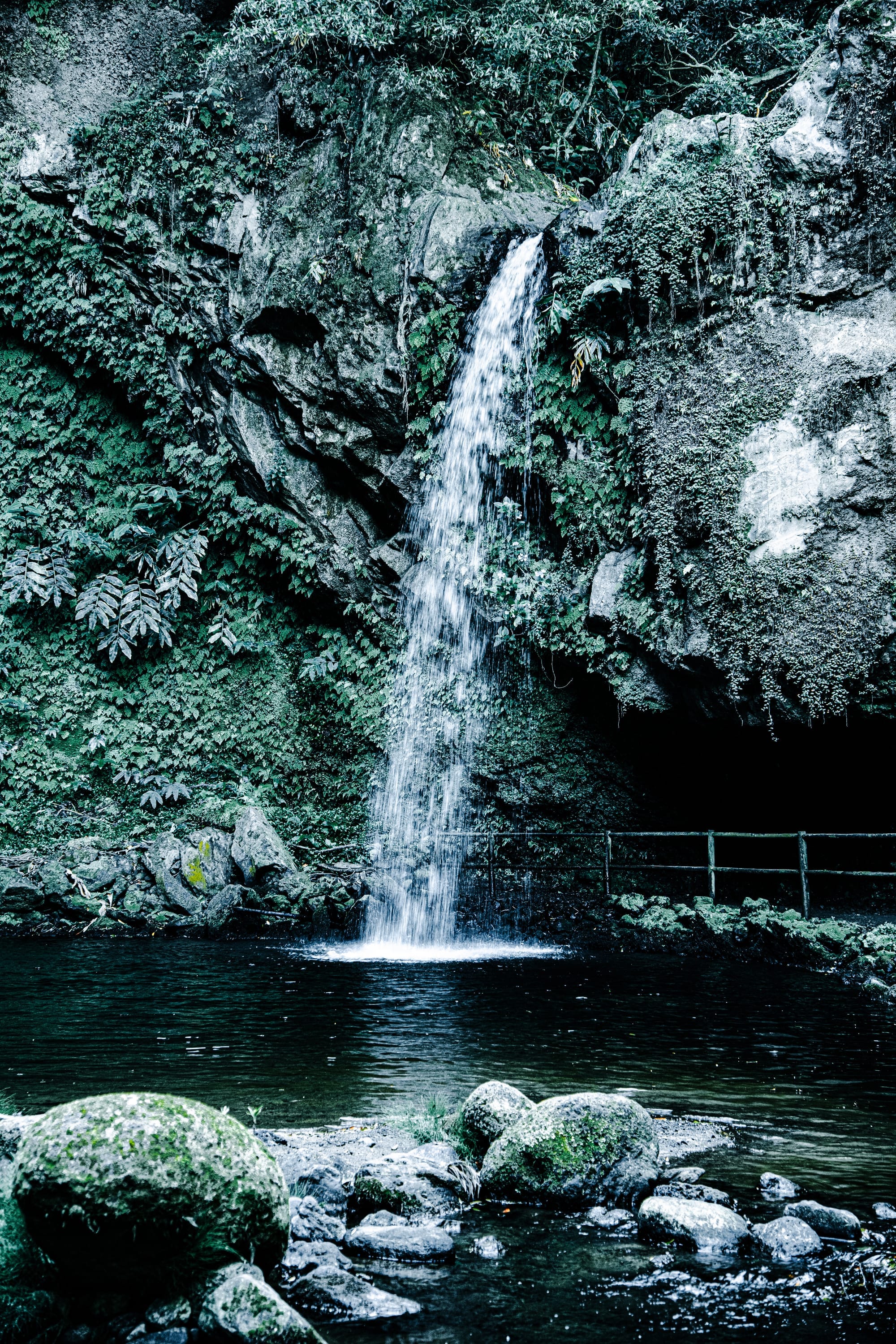
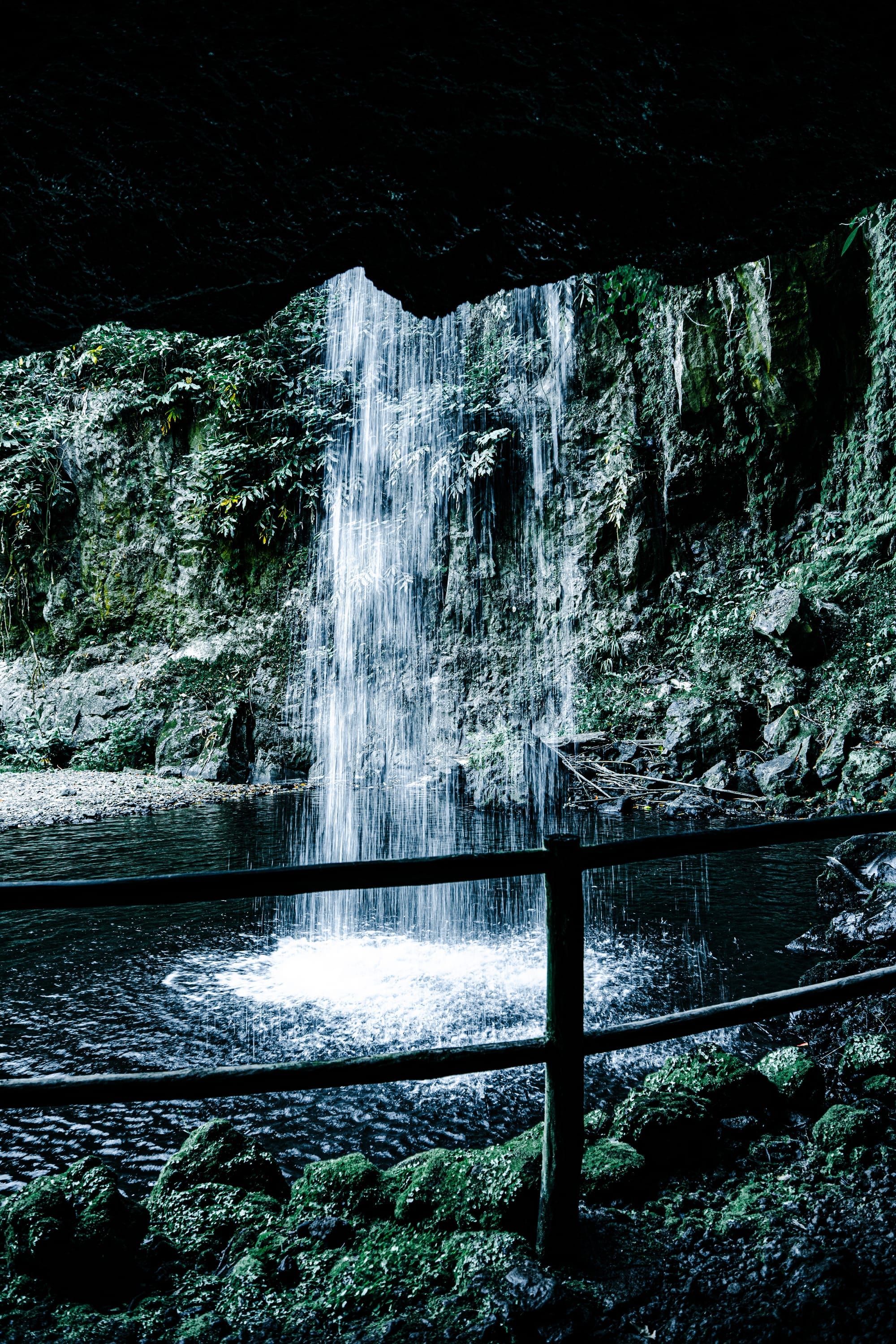
Two views of the same waterfall, framed by forest and basalt and approached from different sides of the trail
In one spot, a fall tumbles in split streams down a sharp drop, bouncing over mossy rocks into a black pool.
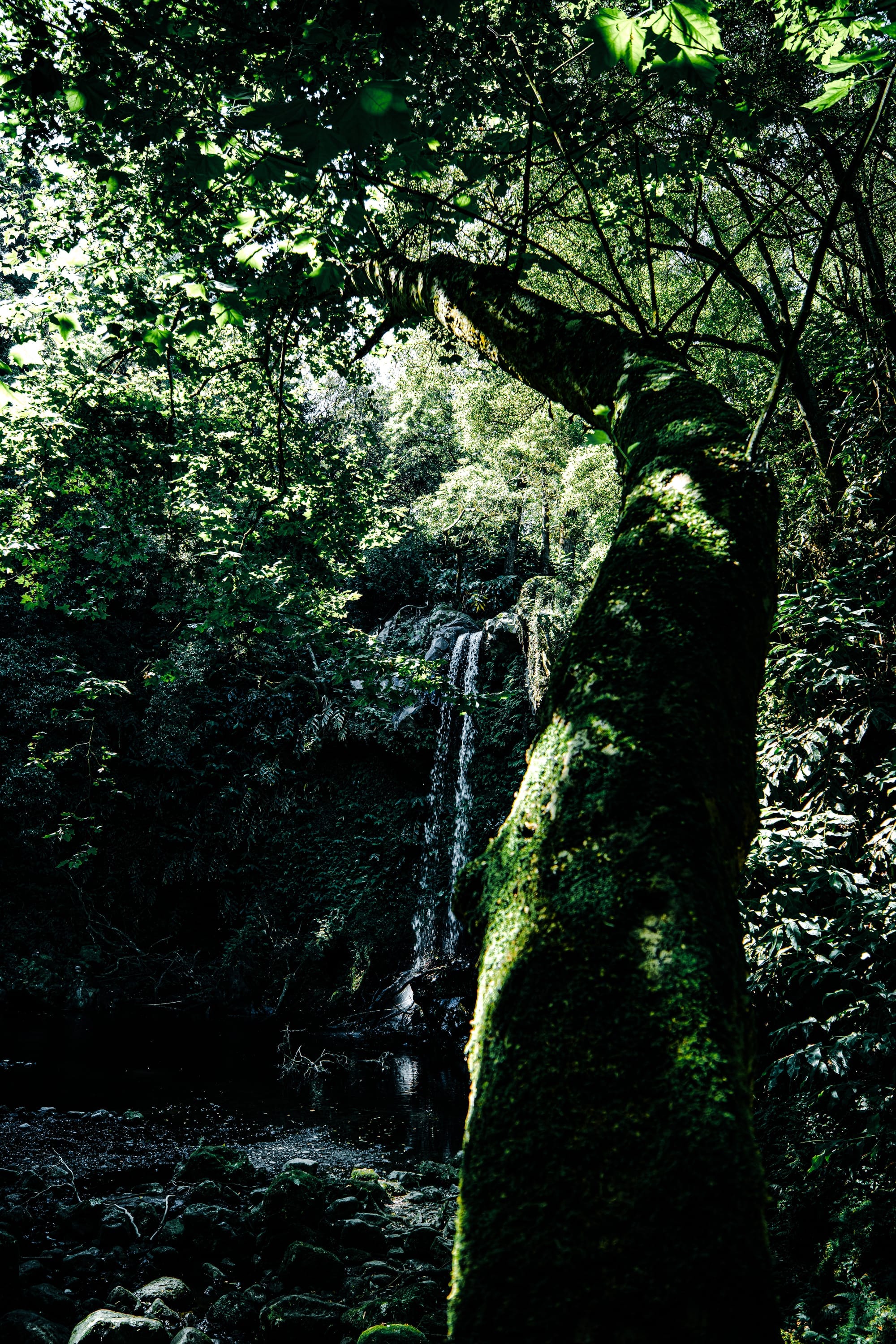
Another cascada appears almost suddenly, hidden until you round a bend. You hear it first, then see the mist. Some falls are surrounded by forest so dense it’s like being in a closed room. Others are more open, overlooking distant trees.
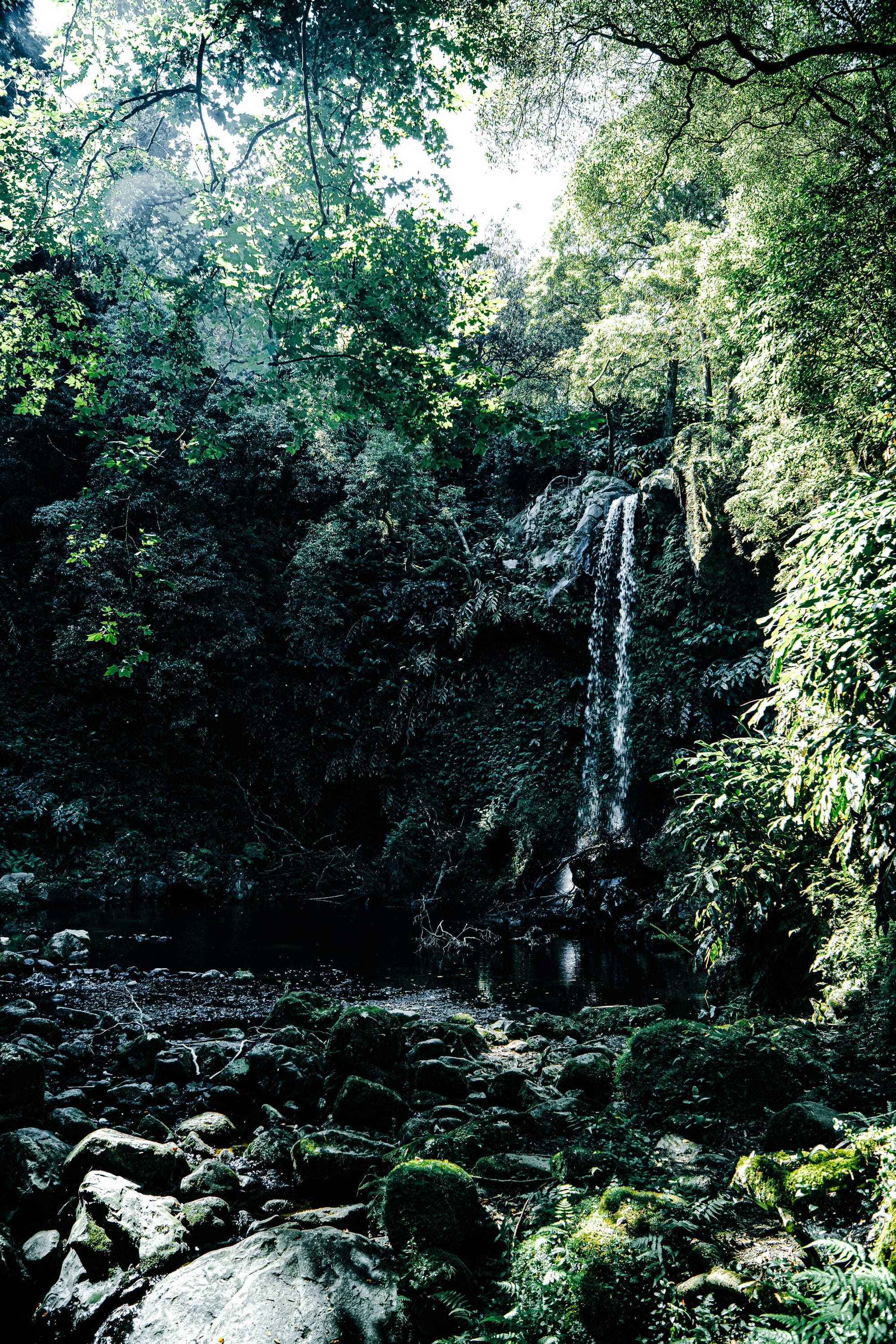
You might spot small birds darting across the spray, or tiny frogs sunning themselves on wet stone.
Prefer to go with a guide? One popular option is a full-day guided waterfall hike in the northeast. You can check dates and prices here:
Terrain and accessibility
The trail includes several sets of stairs (wooden, stone, and earthen) as well as some steeper switchbacks and slick areas near water. Good hiking shoes are essential. Trekking poles aren’t strictly necessary, but can be helpful.
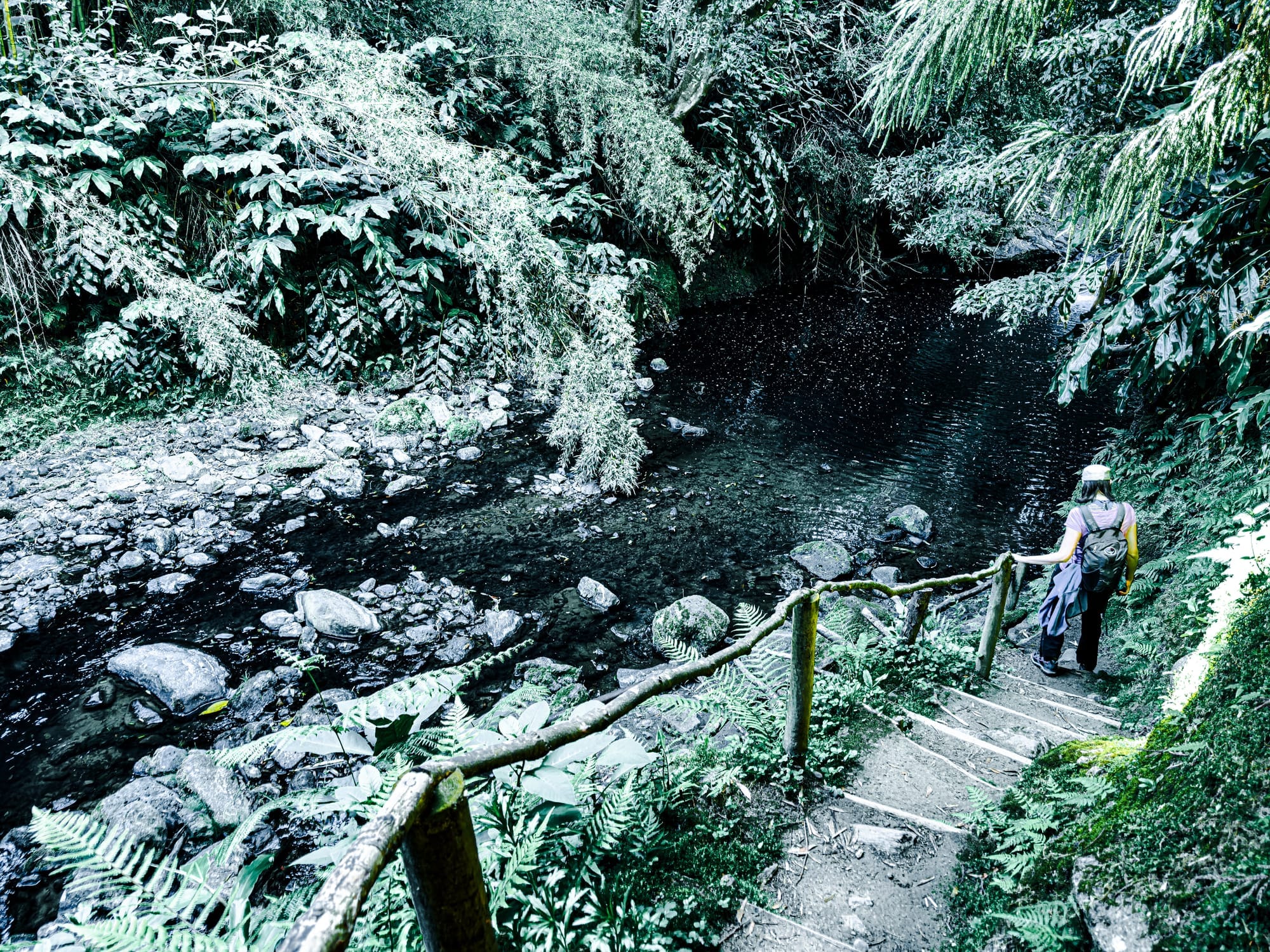
This hike isn’t technical, but it does require moderate fitness. The elevation change is enough to make your legs remember it the next day.
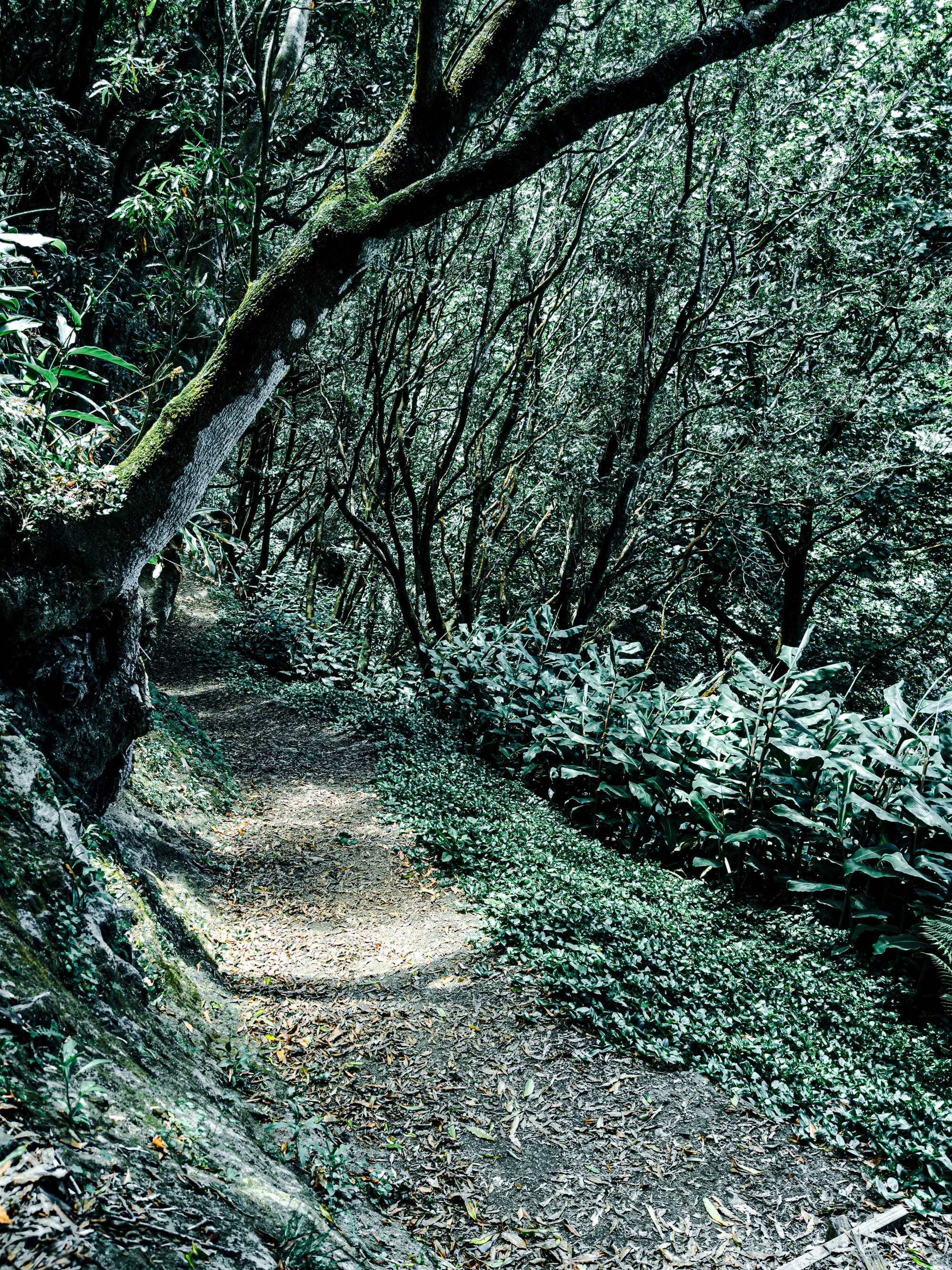
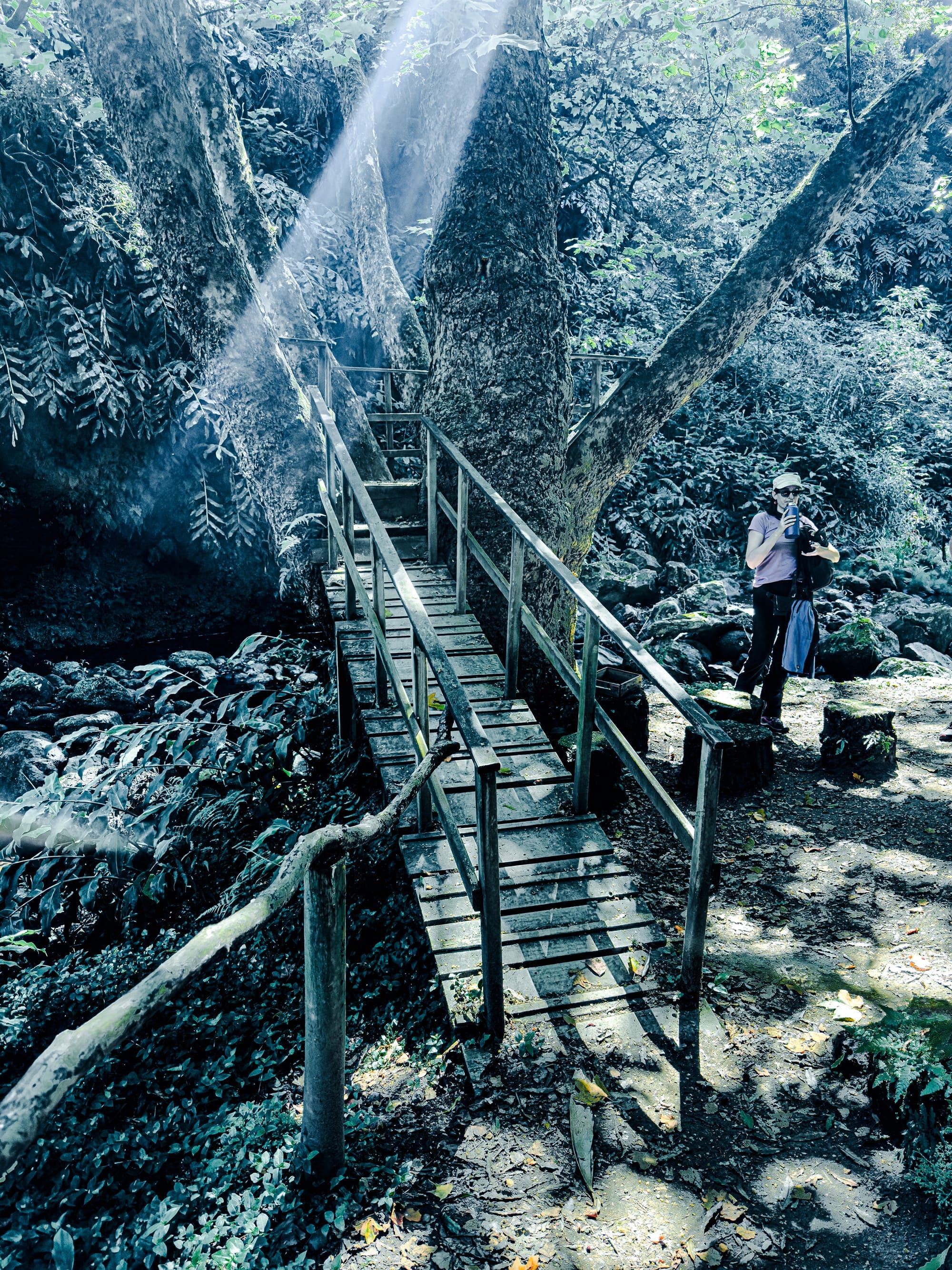
Dappled light guides you through immersive sections of the trail
The pace matters. With Atlantimagia, we moved carefully, with time to catch our breath between climbs.
Best time to hike Moinho do Félix
You can walk this trail all year, but it's at its best a day or two after some rain, when the waterfalls have plenty of water but the paths have had time to drain. During or right after heavy rain, the streams rise, the steps and rocks get very slippery, and it's better to wait. In a long dry spell in late summer, some of the smaller falls can shrink to a trickle.
Mornings are usually the most pleasant time to walk, with softer light under the trees and fewer people at the falls.
Is the Moinho do Félix trail safe after rain?
It's safe if you go carefully, but rain changes it more than most walks on the island, because so much of it is steps, roots, and rock by running water. The side paths down to each waterfall are the steepest parts, and the rocks around the pools stay slick for a day or two after rain. The headstone at the Cascata do Teófilo is a reminder of why that matters.
Our rule of thumb: if it rained hard overnight or the streams look brown and fast, skip the side paths and save the falls for another day. Phone signal fades in the valleys, so tell someone your plans, carry enough water (the official Azores trail guidelines warn against drinking from streams), and call 112 in an emergency, from higher ground if you can.
Tips for the Moinho do Félix hike
A few practical things to sort out before you go.
Wear shoes with real grip. Wet steps, roots, and mossy stones are the main hazard, not the distance.
Bring water and snacks. There are no shops or cafés along the trail.
Download the route. Signage on municipal trails can be patchy, and phone signal drops in the valleys.
Pack a rain jacket. Weather on the north coast changes fast.
Stay off slippery rocks above the falls. Enjoy the pools from the edges and paths.
Follow the trail code. The Azores ethics and safety guidelines ask hikers to follow the trail markers, take all rubbish home, leave plants and rocks where they are, and not disturb cattle. They also warn that stream water isn't safe to drink.
A morning hike in good company
We did this as the first hike of a full-day tour with Atlantimagia, followed by the Moinhos da Ribeira Funda hike in the afternoon. Doing both was energizing, not exhausting. They paired well: Moinho do Félix has the steep, green drama, and Moinhos da Ribeira Funda brings ocean views and more open space.
This full-day format is something I’d strongly recommend if you want a deep dive into the northeast’s natural wonders without having to coordinate transport or trail logistics yourself. Our guide Chris brought drinks and endless knowledge, and the whole day felt relaxed and unhurried.
Moinho do Félix vs Salto do Cabrito and other waterfall hikes
If you're choosing between waterfall walks on São Miguel, here's how Moinho do Félix compares with the other well-known ones.
Moinhos da Ribeira Funda (PRC35SMI): right next door in Fenais da Ajuda, 3.3 km, circular, medium, about 2 hours, per the official trail page. It's the one we paired with Moinho do Félix. Read our Moinhos da Ribeira Funda guide.
Salto do Cabrito (PRC29SMI): near Ribeira Grande, 8.6 km, circular, medium, about 3 hours, starting from the Caldeiras da Ribeira Grande, per the official trail page. It's one tall waterfall by a hydroelectric plant, with a steep stairway and a metal walkway, and much busier than Moinho do Félix.
Ribeira dos Caldeirões: a park in Nordeste with a waterfall and old water mills, reached by car with only short walks inside the park. See our Ribeira dos Caldeirões guide.
Salto do Prego (PRC09 SMI): in Faial da Terra on the southeast coast, a 4.6 km loop rated medium and timed at about 2 hours on the official trail page. The waterfall has a pool you can swim in, and the loop climbs back through the restored hamlet of Sanguinho. It's the busiest of these in summer. See our Sanguinho and Salto do Prego guide.
Fenais da Ajuda to Lomba de São Pedro (PRC34 SMI): if you'd rather follow an official waymarked route in this same area, this 5.5 km circular trail (about 2.5 hours, medium) starts in the center of Fenais da Ajuda and also passes the Miradouro da Rocha, according to its trail leaflet.
For the full list of hikes, hot springs, and viewpoints on the island, see our things to do in São Miguel.
Moinho do Félix suits you if you want several smaller falls and a proper forest walk without the crowds. For more ideas around the island, see our hiking guides and things to do on São Miguel.
Why we loved the Moinho do Félix hike
There are bigger waterfalls on the island. There are longer hikes. But this one is unusually intimate in a way that’s hard to explain. Maybe it’s the soft light, or how dense the vegetation is. The forest closes in around you, even as it opens to the sky.
It’s a place that keeps changing with the weather, the season, and the passage of time. And thanks to Atlantimagia, you can take it at an easy pace, with a guide who clearly cares about the place.
If you’re in the northeast of São Miguel and want to meet the island through its water and woods, this is the trail.
Book the hike
If you're considering the Moinho do Félix Cascadas hike (and maybe pairing it with a second trail), I highly recommend doing it with Atlantimagia. They'll also pick you up, so no need to worry about getting anywhere on your own.
Book their full-day northeast waterfalls hike here.
Get travel insurance before you hit the trails. Paths can be steep, uneven, and slippery after rain, a twisted ankle far from the road is a real possibility, and medical care for visitors isn't cheap. We'd recommend SafetyWing Nomad Insurance. It covers medical emergencies abroad, you can buy it even after you've left home, and it renews every four weeks, so it works for a short trip or months on the road.
Where to stay for the Moinho do Félix trail
The nearest good base for the Moinho do Félix trail is Nordeste. These are well-reviewed places to stay there, all rated 9 or more on Booking:
- Tradicampo Eco Country Houses: stone country houses in the green northeast, rated 9.5.
- Casa das Courelas: a good-value rural house in Nordeste, rated 9.2.
Frequently asked questions
How long is the Moinho do Félix trail?
About 5.5 km as a circular route from Lomba de São Pedro, taking around 2 hours of walking. Allow 3 hours or more with stops at the waterfalls.
Is the Moinho do Félix hike difficult?
It's moderate. It isn't technical, but there are lots of stairs, steep bits, and slippery rock near the water, so you need reasonable fitness and good shoes.
Where does the Moinho do Félix trail start?
By the parish church in Lomba de São Pedro, in the municipality of Ribeira Grande, on the north coast road toward Nordeste.
Do you need a guide for Moinho do Félix?
No, you can walk it on your own. A guide helps with transport and with finding the side paths to each fall. We did it with Atlantimagia and liked having everything organized.
Is Moinho do Félix the same as Salto do Cabrito?
No. Salto do Cabrito is a single large waterfall near Ribeira Grande on the official PRC29SMI trail, while Moinho do Félix is a series of smaller falls further east in Lomba de São Pedro.
Is the Moinho do Félix trail free?
Yes. There's no ticket or permit. You only pay if you book a guided tour.
Can you combine Moinho do Félix with another hike?
Yes. The Moinhos da Ribeira Funda trail is a few minutes away in Fenais da Ajuda, and the two make a good full day.
Is it Moinho do Félix Cascadas or Cascatas?
Cascatas. It's the Portuguese word for waterfalls, and the trail's official name is Trilho do Moinho do Félix, Cascatas. Cascadas is the Spanish spelling, which you'll also see online.
Can you swim at Moinho do Félix?
The pools along the trail are small, cold, and shaded, and the trail isn't known as a swimming spot. If you want a waterfall swim, Salto do Prego on the Sanguinho trail is the better choice.
Where do you park for the Moinho do Félix trail?
In Lomba de São Pedro, near the parish church where the trail starts and ends. There's no dedicated car park, so park considerately on the street.
Is the Moinho do Félix trail signposted?
Partly. There are signs toward the waterfalls, but signage on municipal trails can be patchy, so download the route or a GPX track before you go, as phone signal drops in the valleys.
Is Moinho do Félix good for kids?
For older children used to walking, yes. The many steps and slippery rocks near the falls make it hard going for small children, and it's not suitable for strollers.
Useful links: Moinho do Félix, Cascatas trail (Azores Guide), PRC35SMI Moinhos da Ribeira Funda (official Azores trails), PRC29SMI Salto do Cabrito (official Azores trails), and Azores trails ethics and safety.
More from São Miguel: the Chá Gorreana tea plantation, the Poça da Dona Beija hot springs, the Sete Cidades lakes, Furnas guide, and our full São Miguel guide. Also see Caldeira Velha, the rainforest hot springs, Vila Franca do Campo, the old capital on the south coast, and Ponta Delgada, the island's main town.


