

Happenings were a form of participatory art pioneered by Allan Kaprow in the late 1950s and 1960s, dissolving the line between artwork and event, performer and audience. Staged in lofts, streets, gymnasiums, or vacant lots, a Happening might involve tearing newspapers, exchanging objects, or walking through space in fragments of choreography. There was no script in the theatrical sense. Instead, there were loose instructions, gestures, and openings into the unpredictable.
Kaprow described them not as performances but as “assemblages of events,” ephemeral and irreproducible, alive only in the moment. The work was never the artifact left behind, but the time shared. By moving art from galleries into lived environments, Happenings insisted that the most ordinary materials (apples, paper, voices, bodies) could be reframed as sites of meaning once placed in collective encounter.
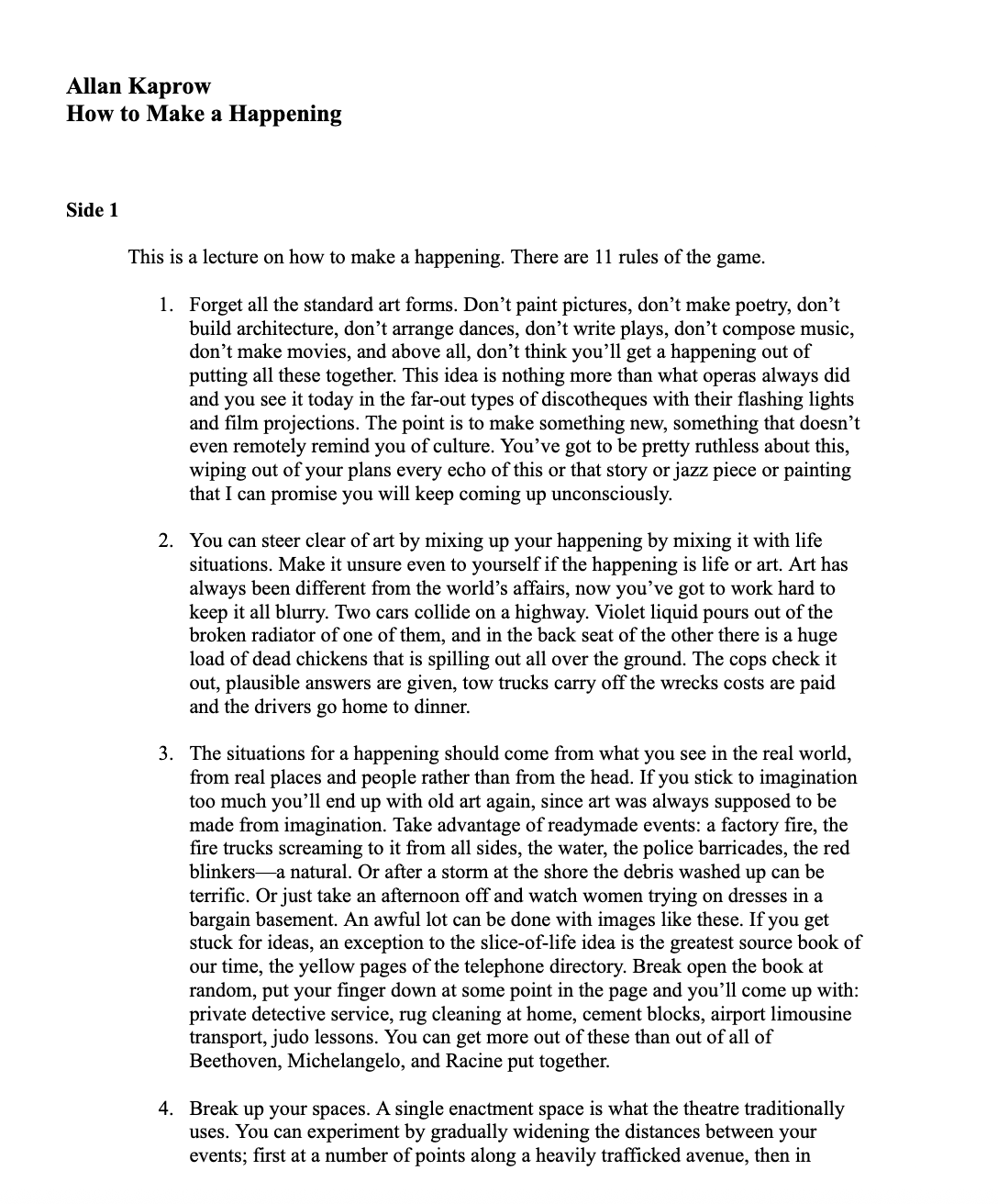
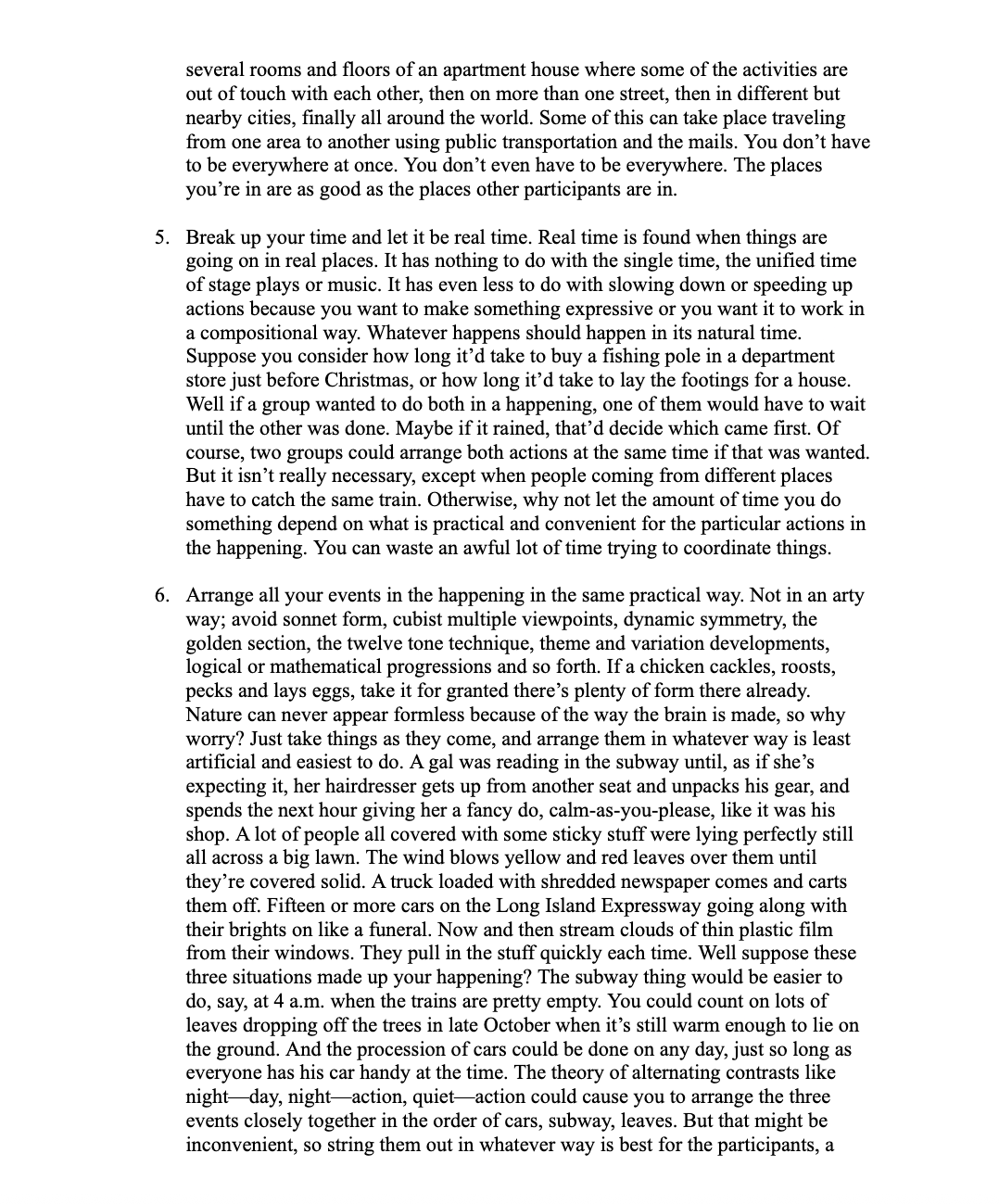
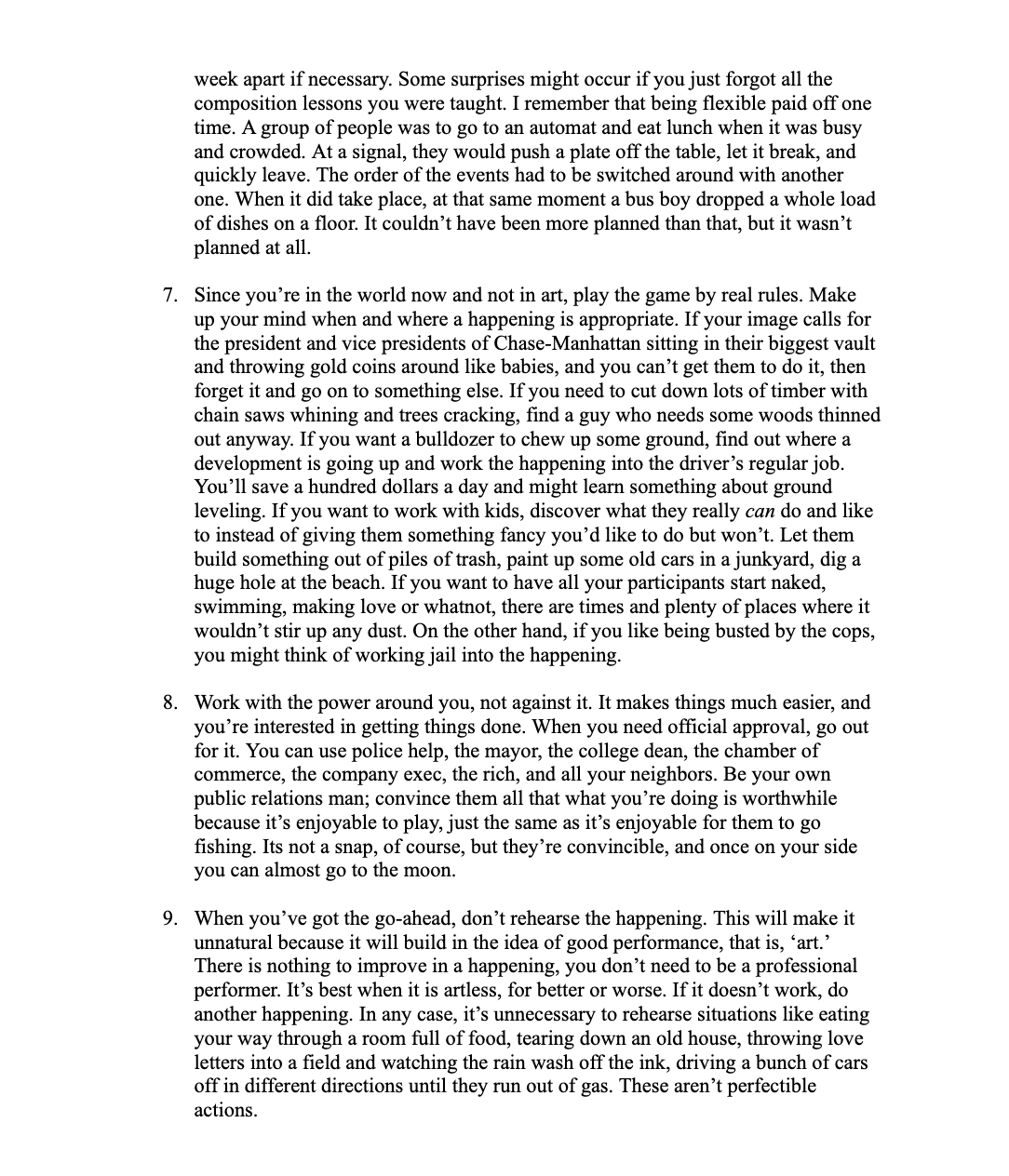
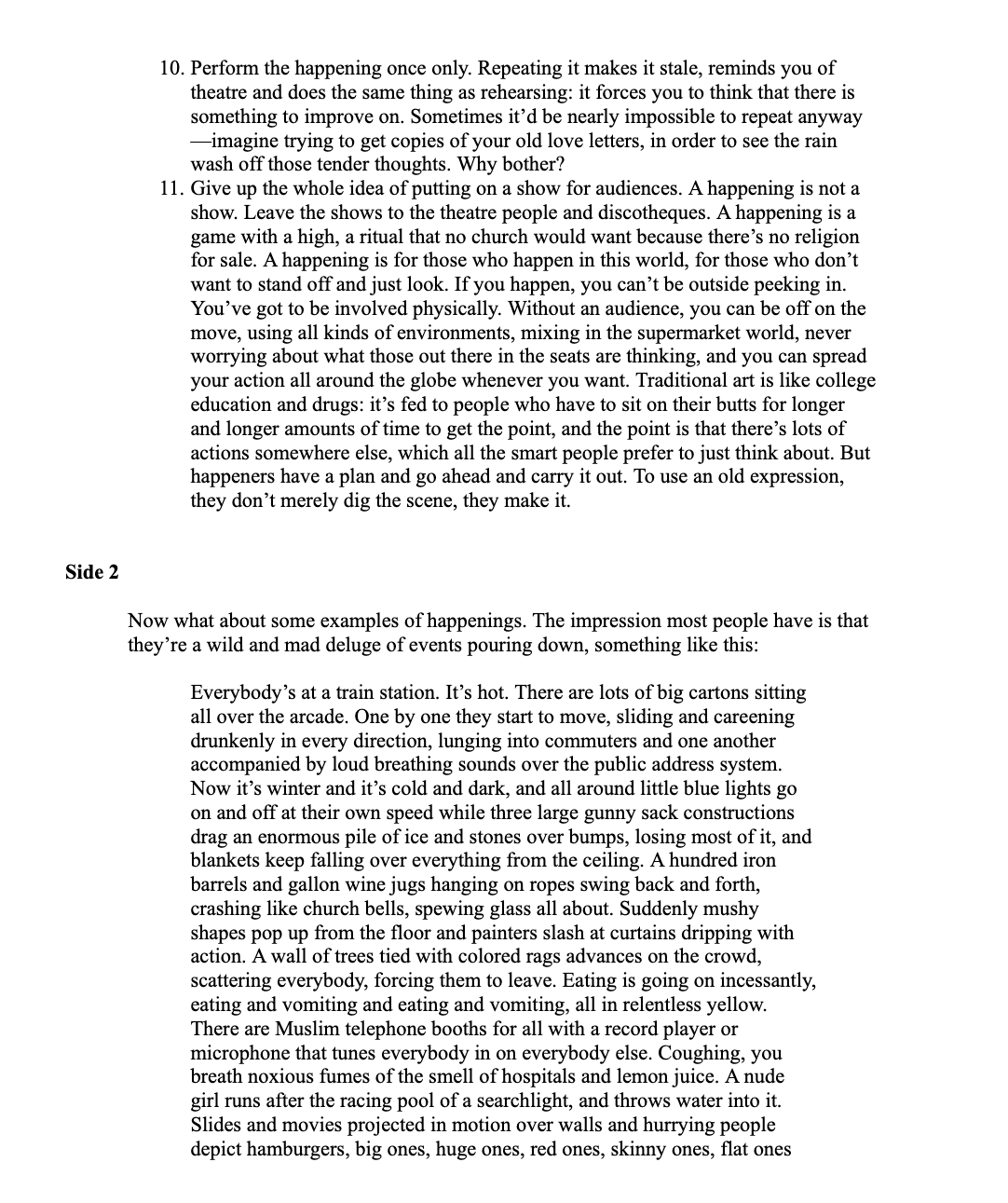
In How to Make a Happening (1966), Kaprow outlined his principles: avoid art-world conventions, use everyday actions, refuse plot, allow chance, and always involve the audience as participants rather than spectators. The pamphlet reads like a manual for unlearning art as object and relearning art as process.
Happenings remind us that culture can be staged in the streets as easily as in institutions, and that art’s truest material may be the brief choreography of people together.
See also: Fluxus
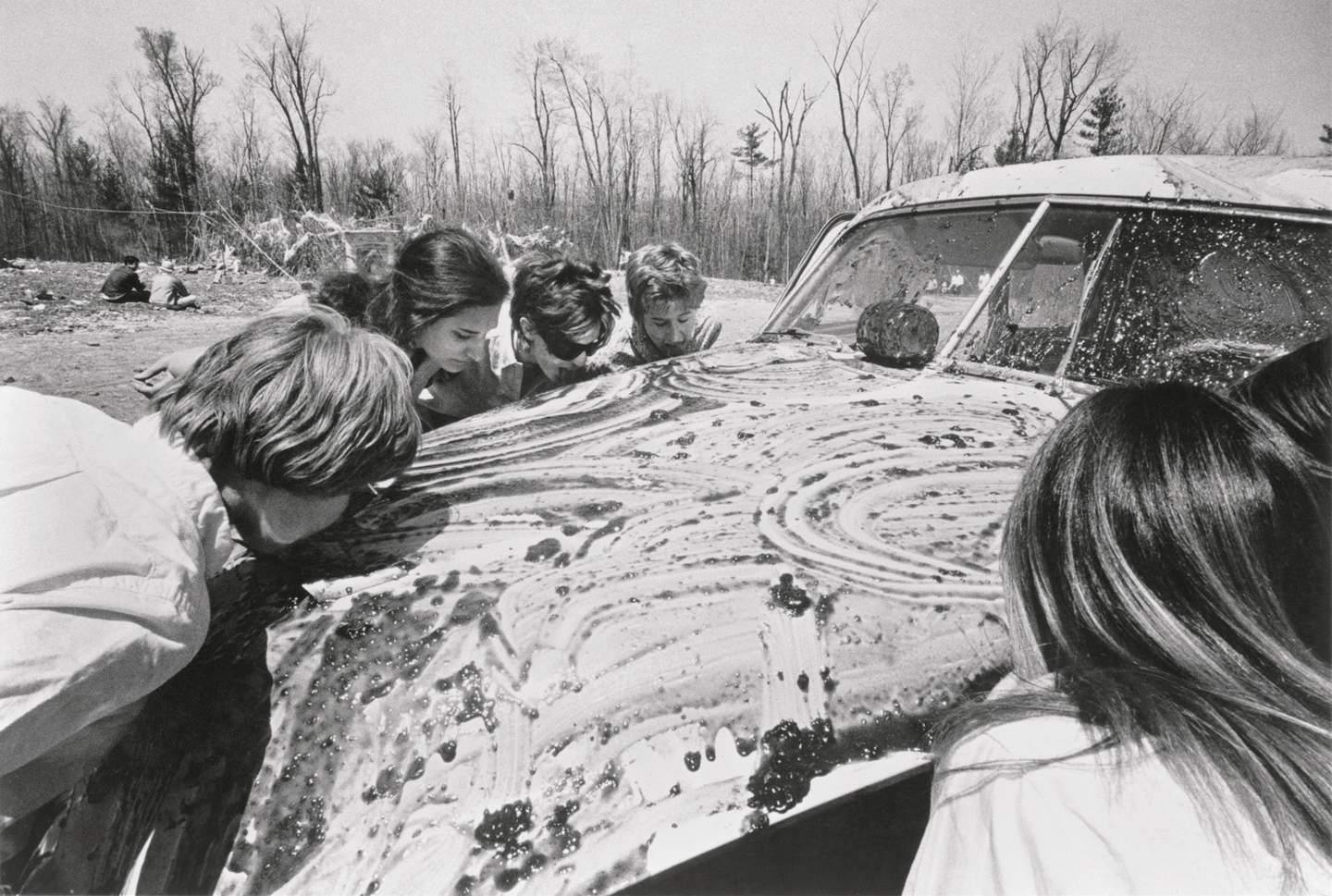
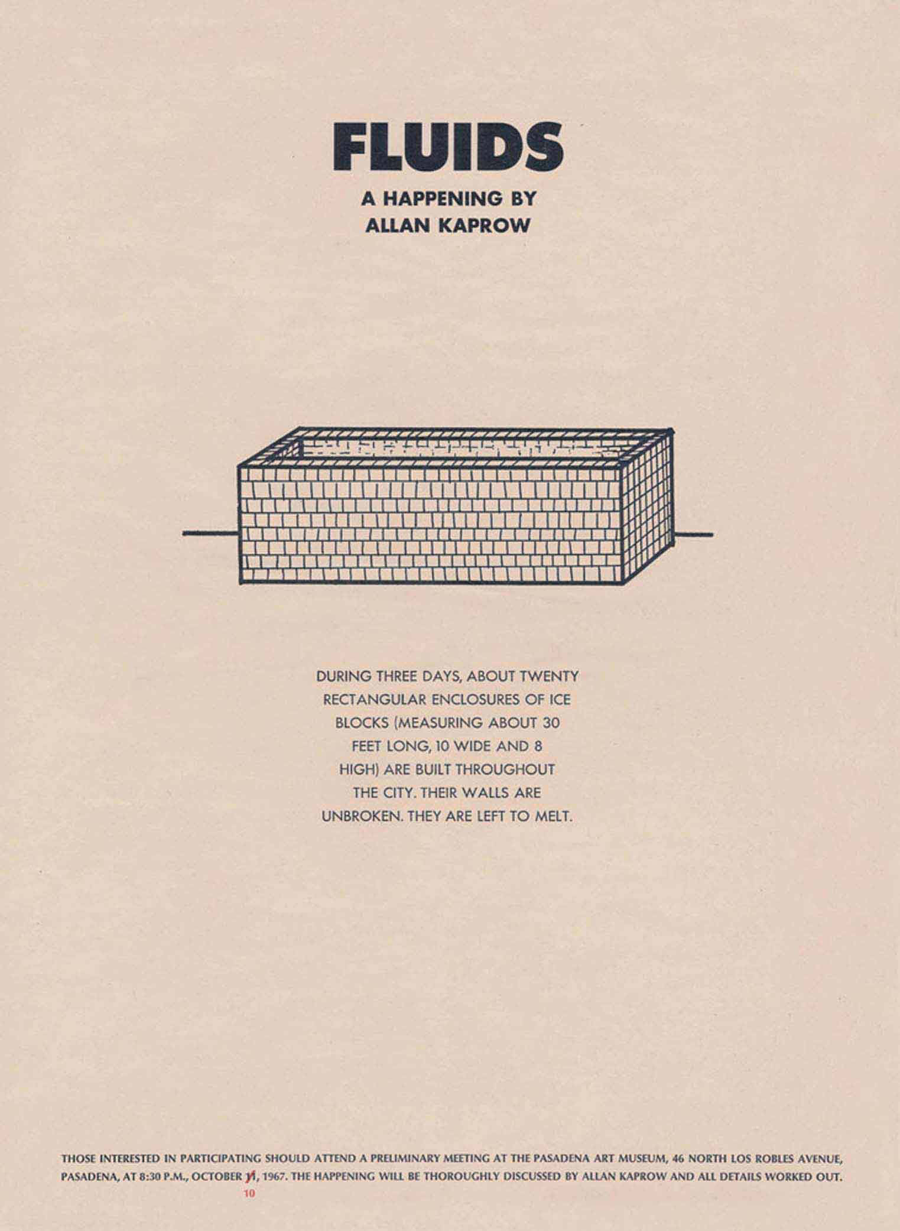
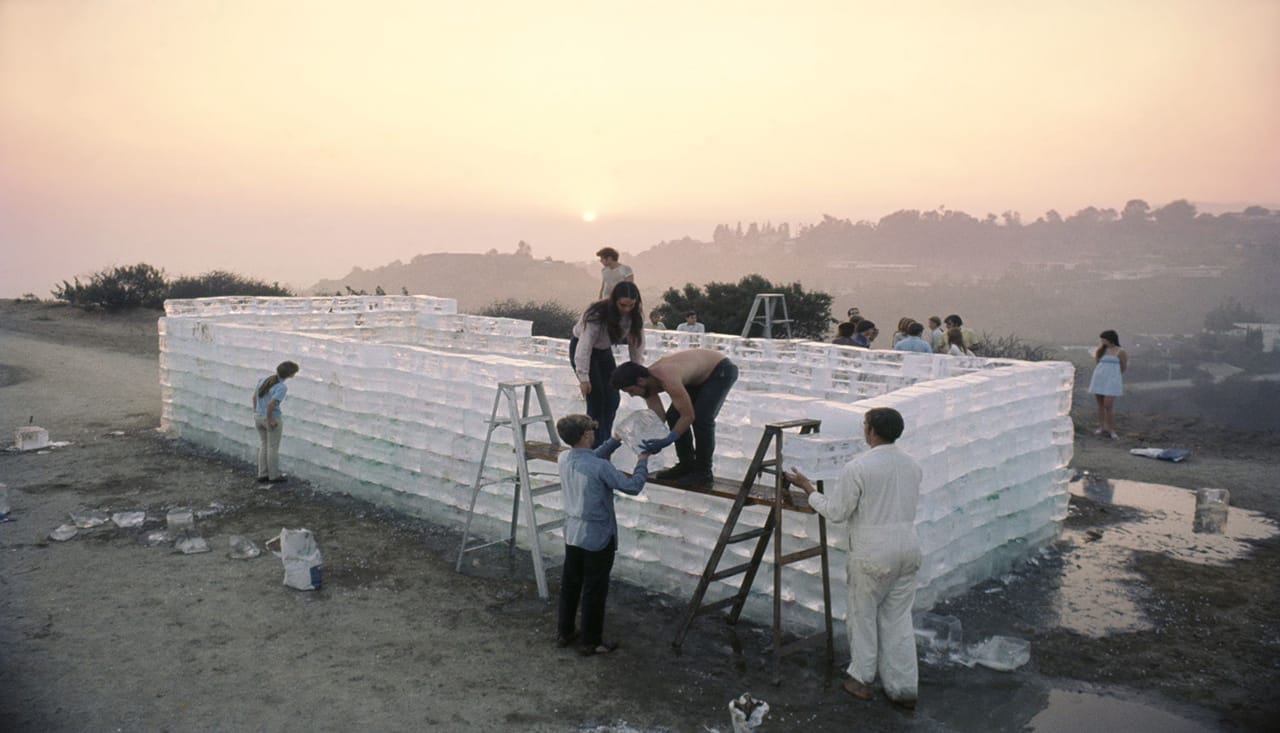
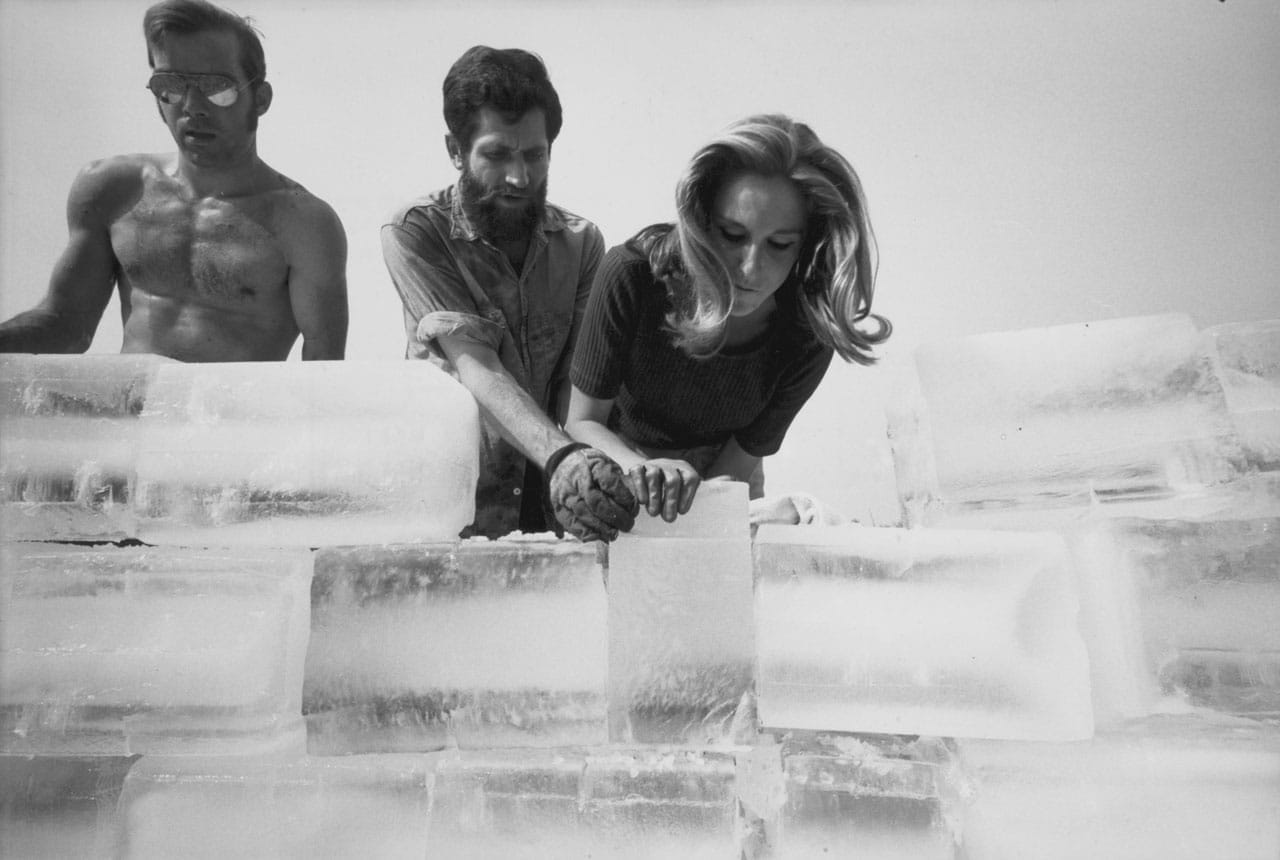
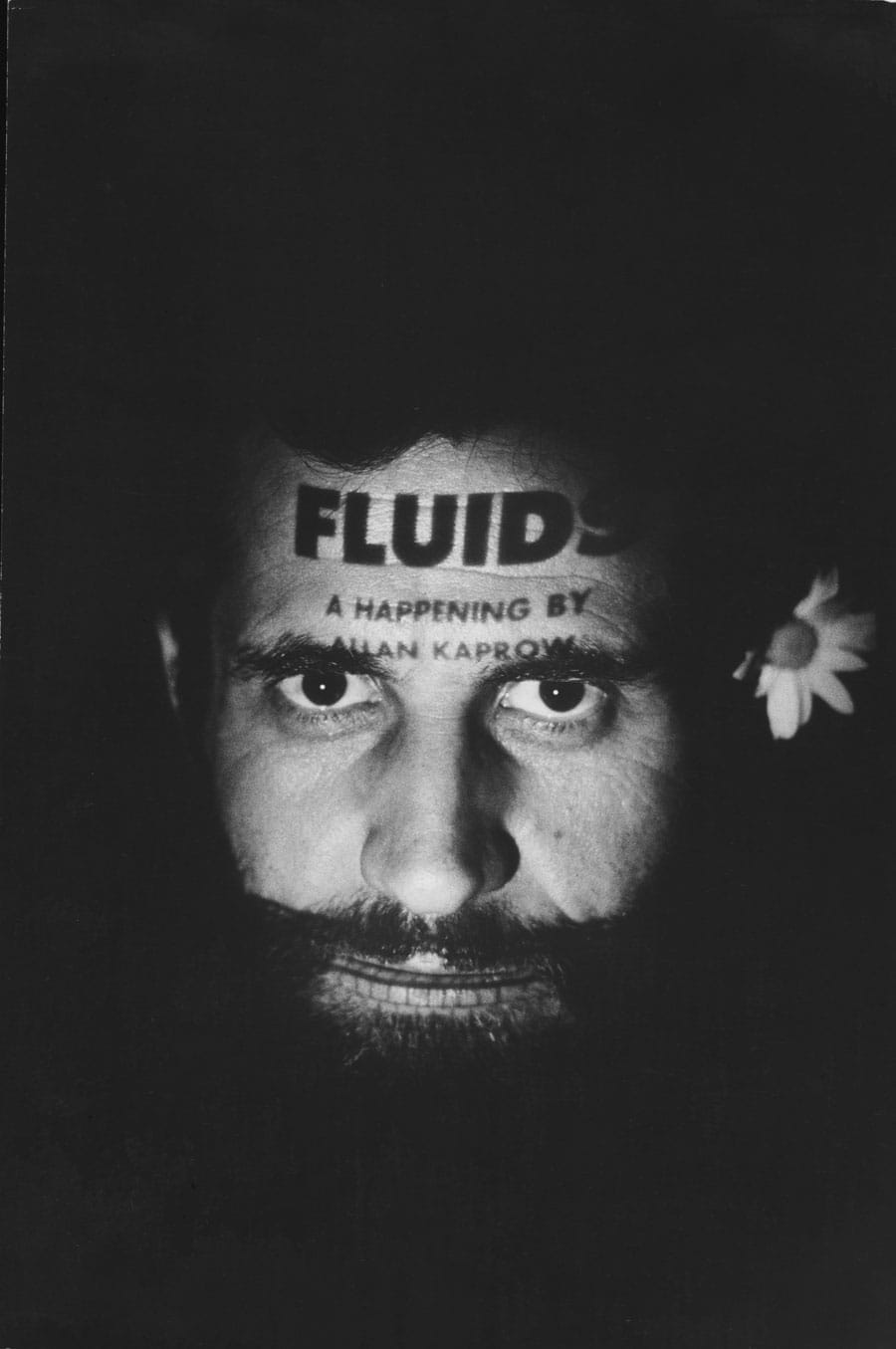
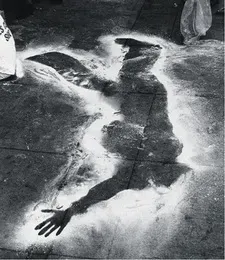
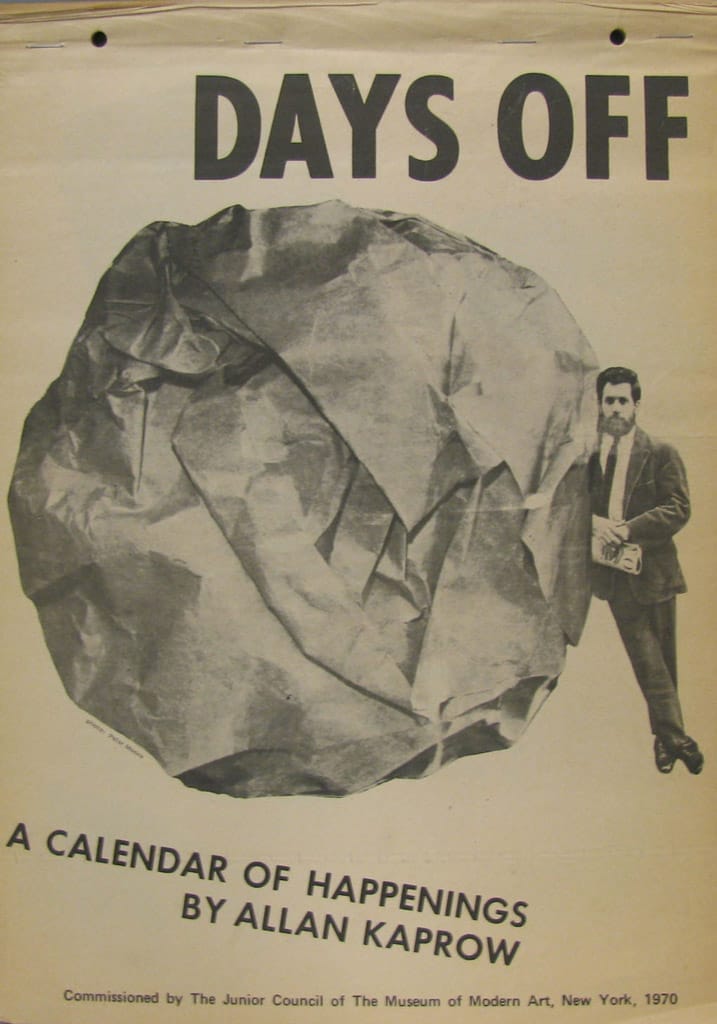
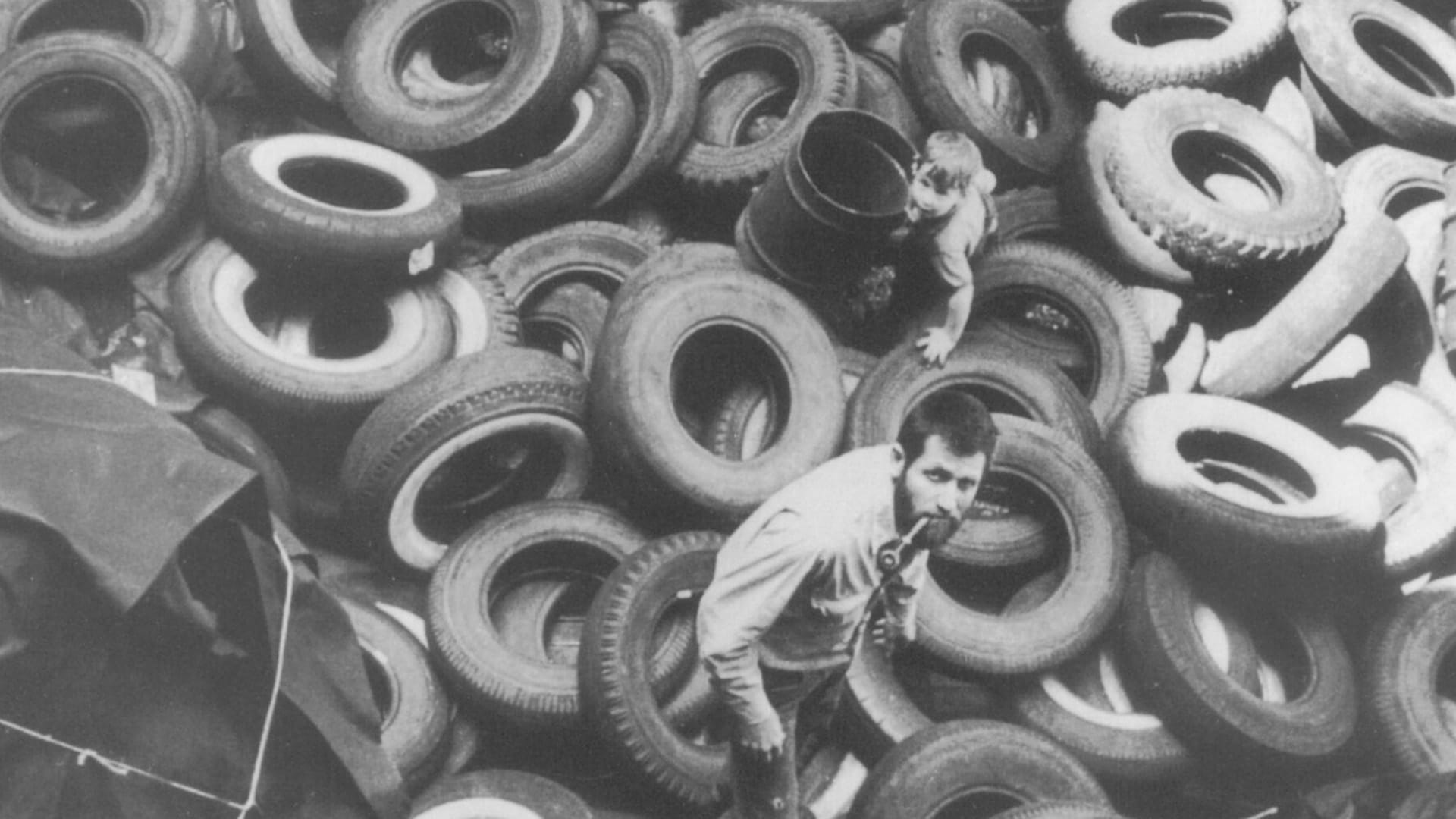
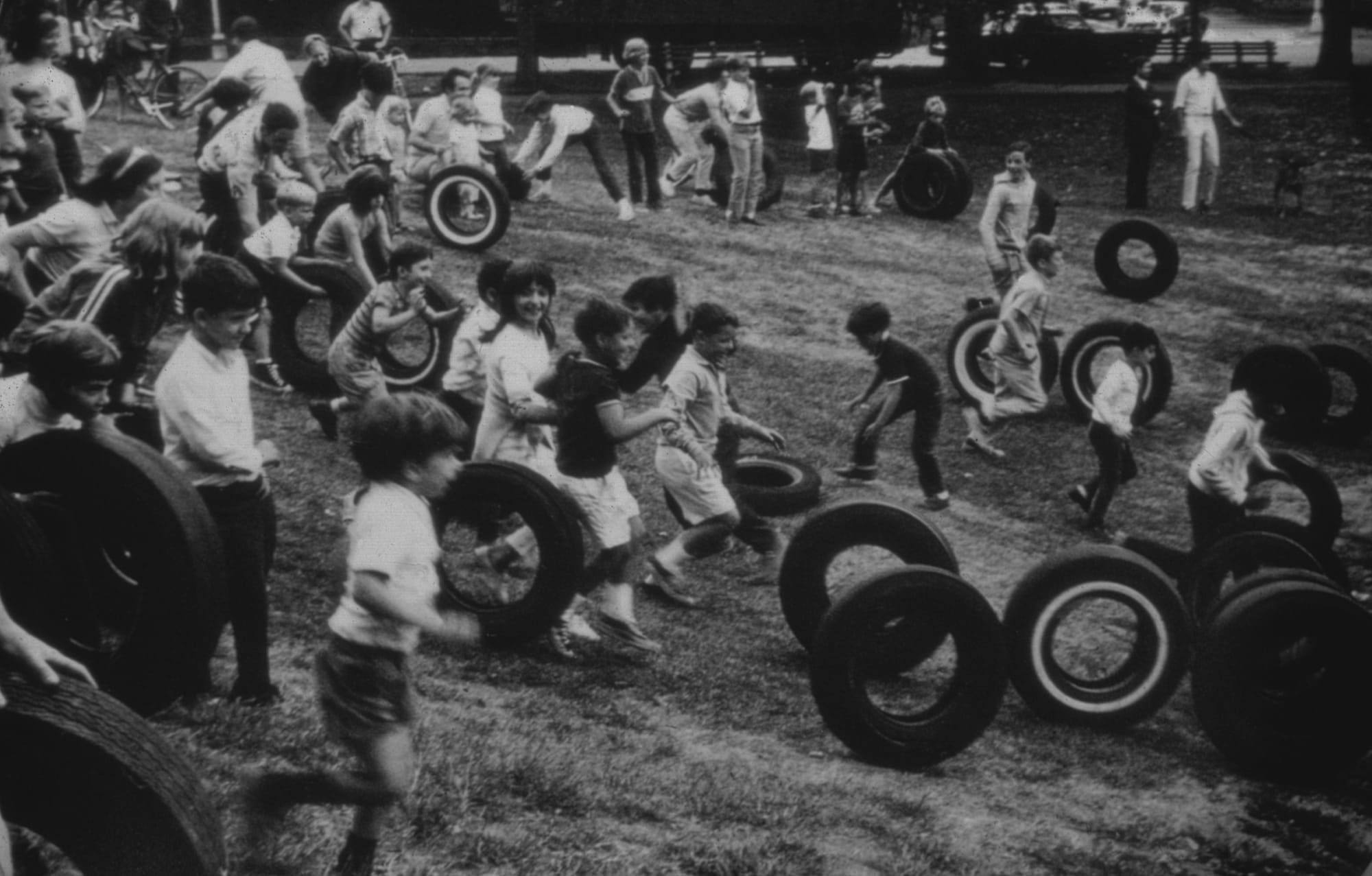
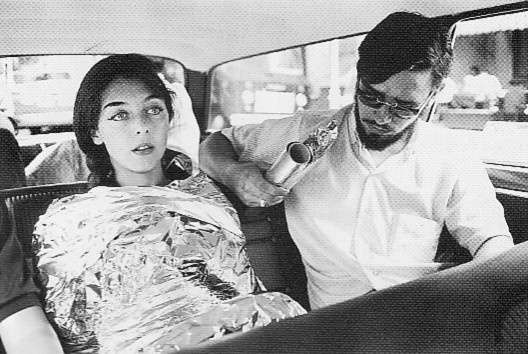
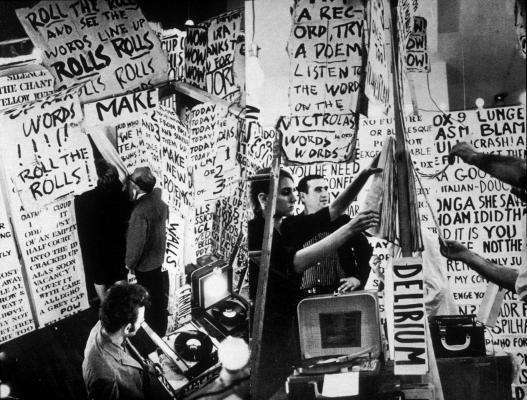
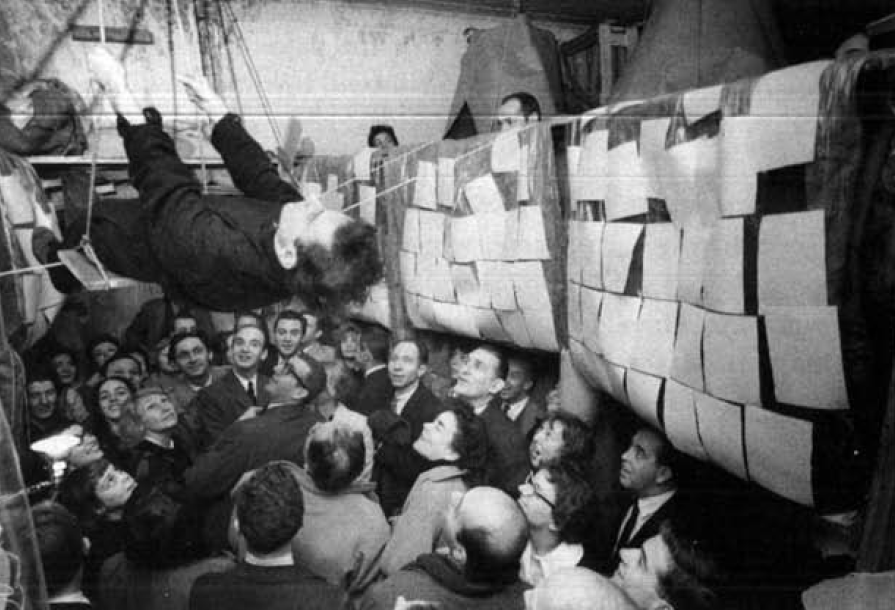
Images from Tate, How to Make a Happening, Super Weird Substance, Hauser & Wirth, Artforum, Metalocus, and The Guggenheim.
