

Heterotopias are Michel Foucault’s term for spaces that exist outside the ordinary order of things. In his 1967 lecture Of Other Spaces, later published in 1984, he described them as “counter-sites” where the norms, structures, and logics of everyday life are suspended, inverted, or reconfigured. Unlike utopias, which are imagined and unreal, heterotopias are material places that can be visited, inhabited, or experienced.
Foucault offered examples that range widely: cemeteries, ships, prisons, theaters, gardens, brothels, libraries. These are spaces where time is folded differently, where rituals or rules are intensified, where social contradictions are held in one place. A heterotopia often mirrors society while simultaneously destabilizing it, showing the constructedness of what we take to be natural or inevitable.
Heterotopias remind us that space is never neutral but always political, charged with power and meaning. By naming these “other” sites, Foucault provides a way to think about how architecture, institutions, and landscapes shape subjectivity, and how pockets of difference open within the fabric of the everyday. The concept continues to resonate in art, design, and cultural theory as a way of locating the places where another world is briefly glimpsed inside this one.
See also: Parrhesia
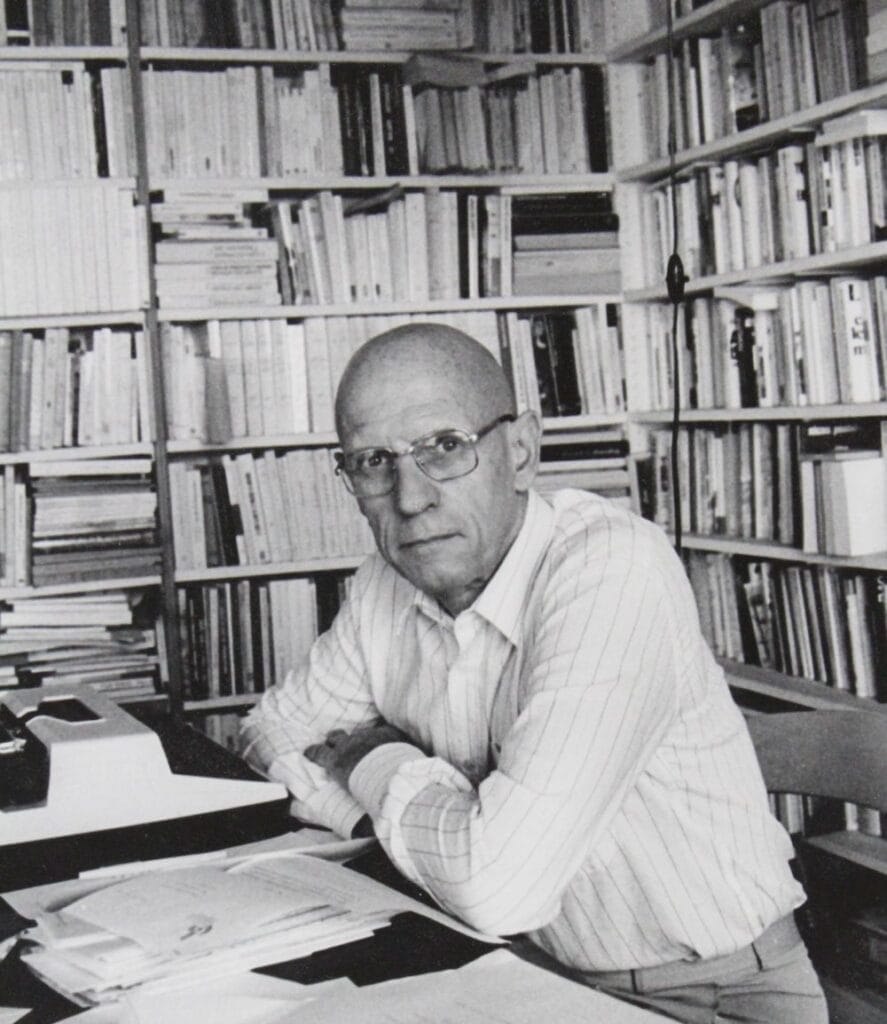
Image from The New Criterion.
