
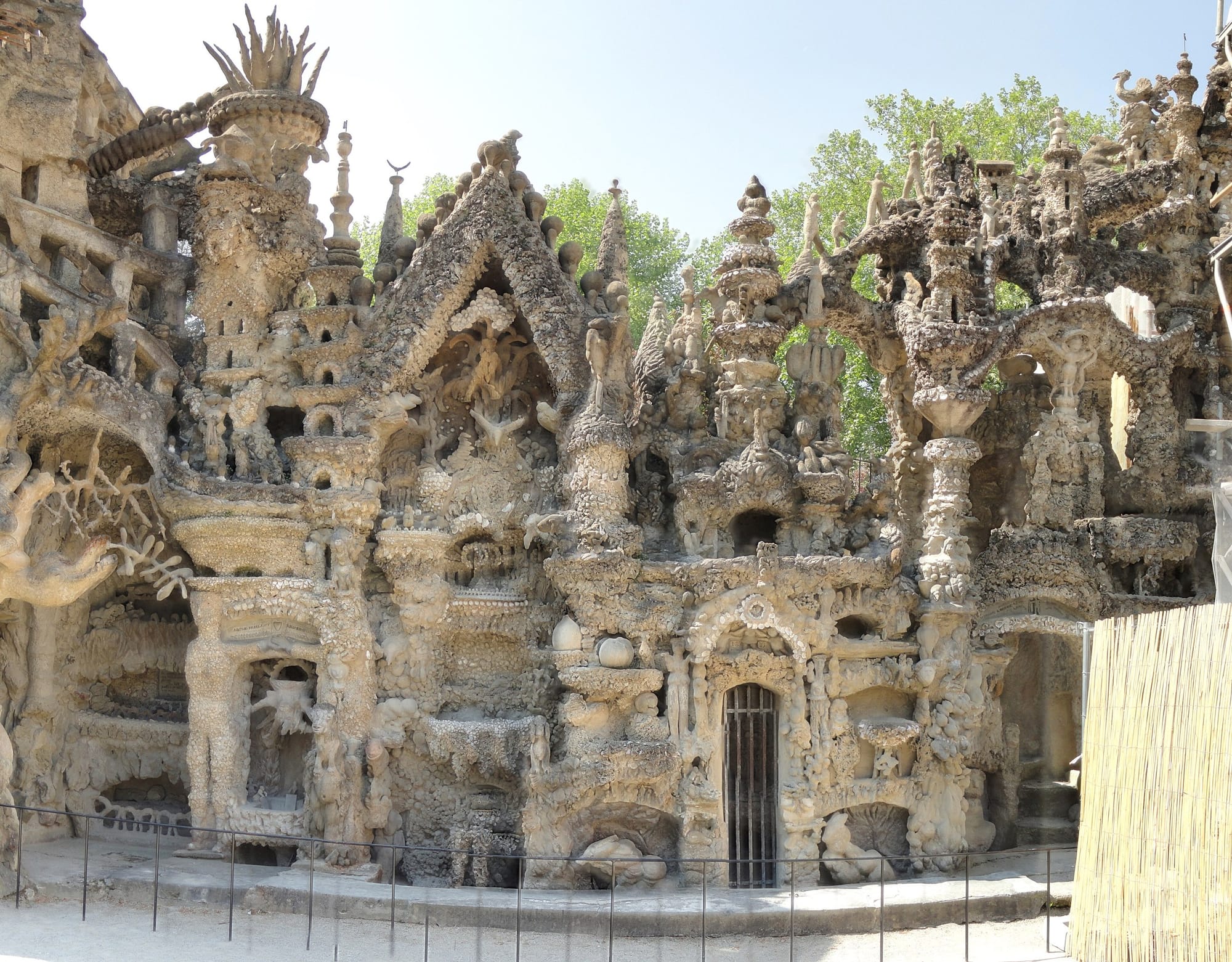
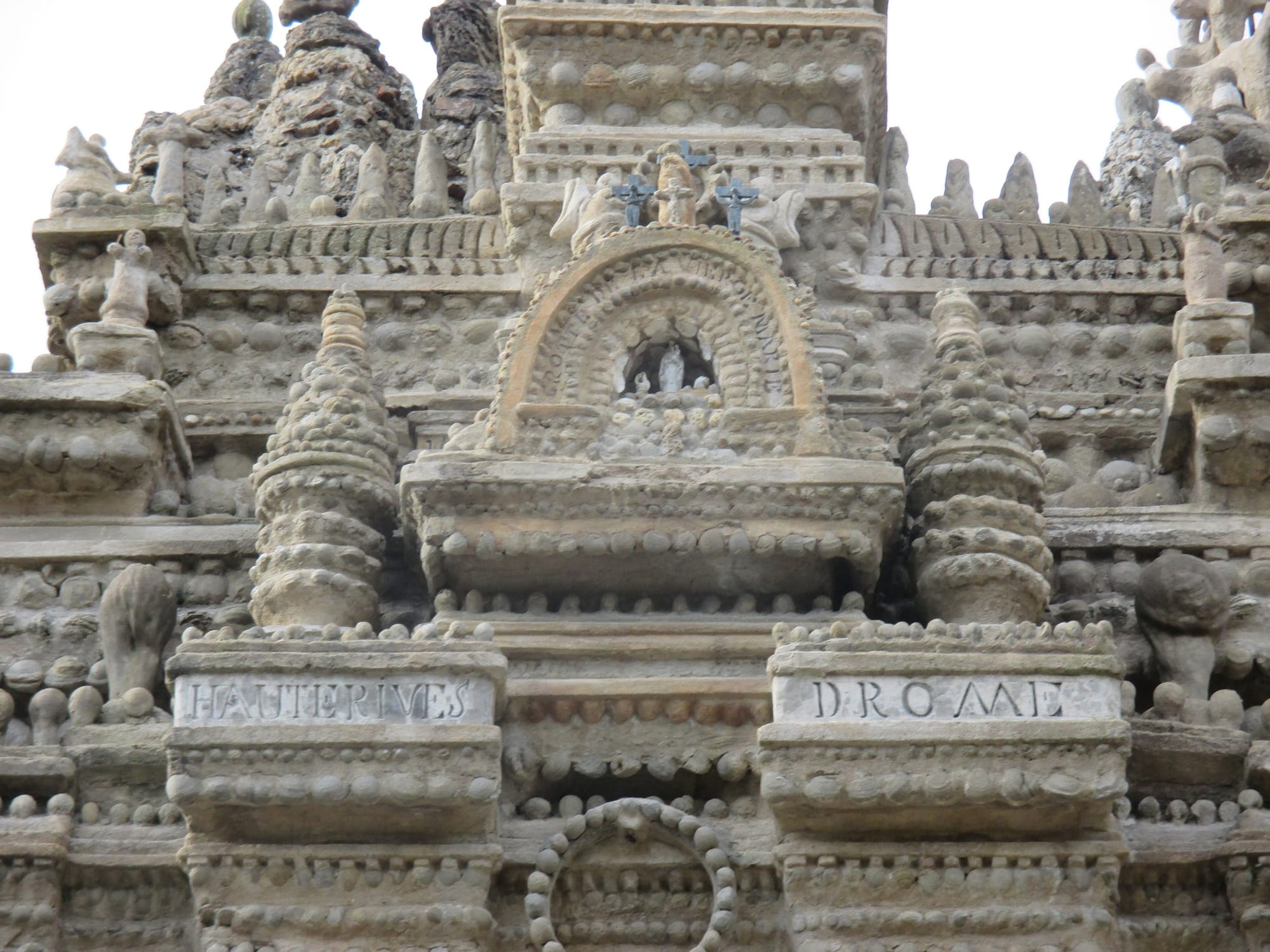
The Palais Idéal is a palace built by hand by Ferdinand Cheval (1836 to 1924), a rural postman in Hauterives, a village in the Drôme in southeastern France. In 1879, on his round, he tripped over a stone whose odd shape caught his attention. He began collecting stones along his route and building with them in his garden.
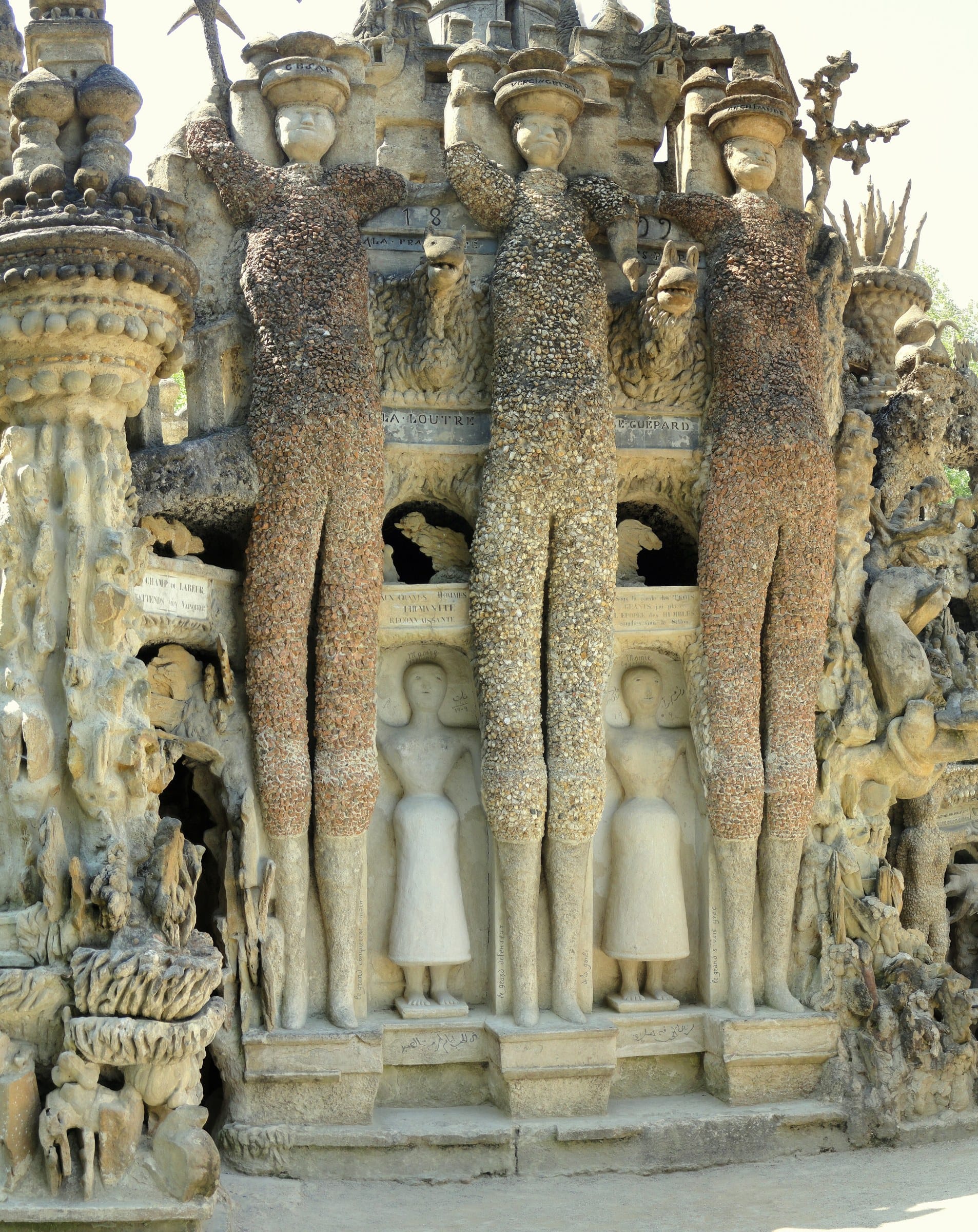
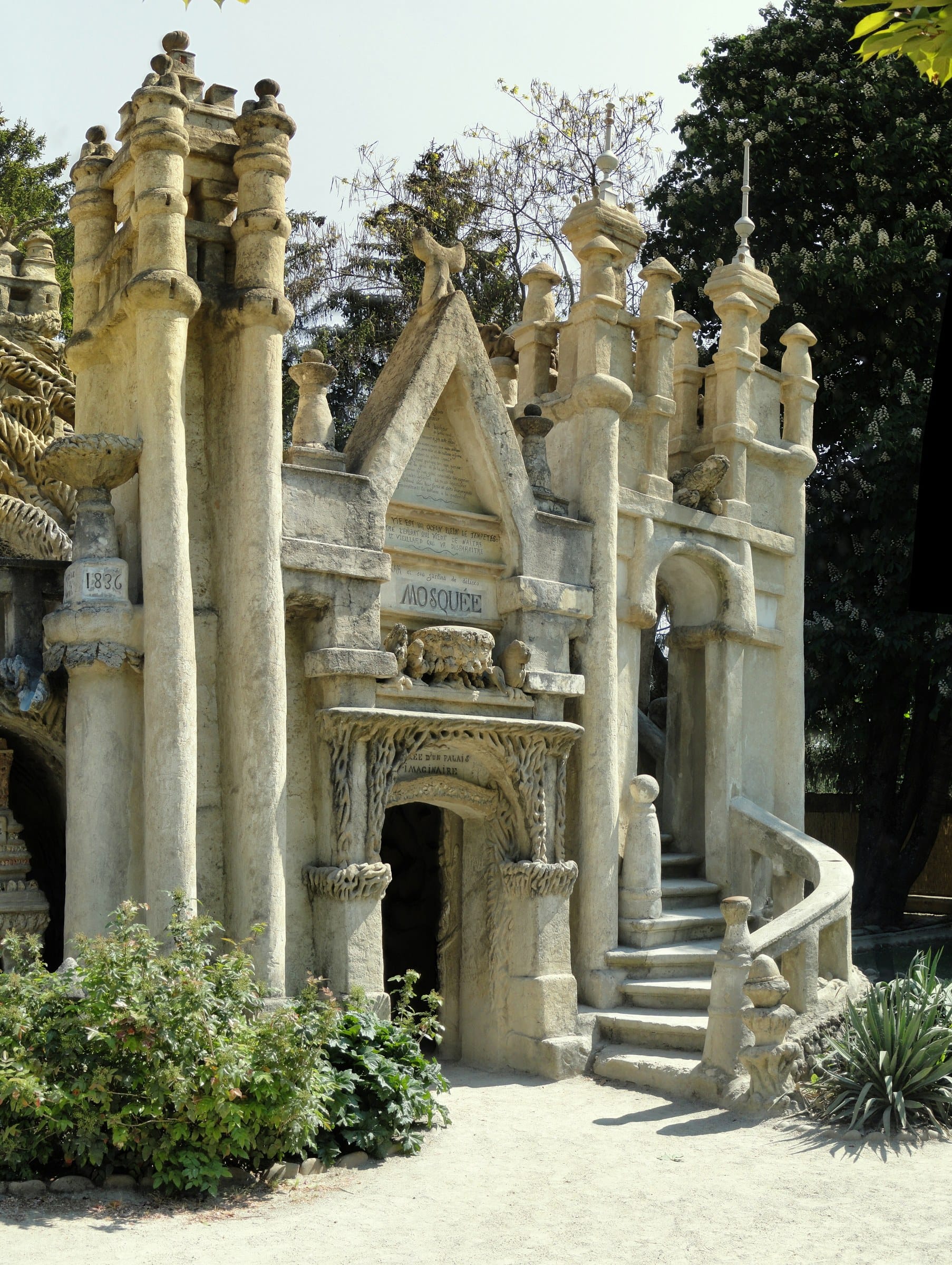
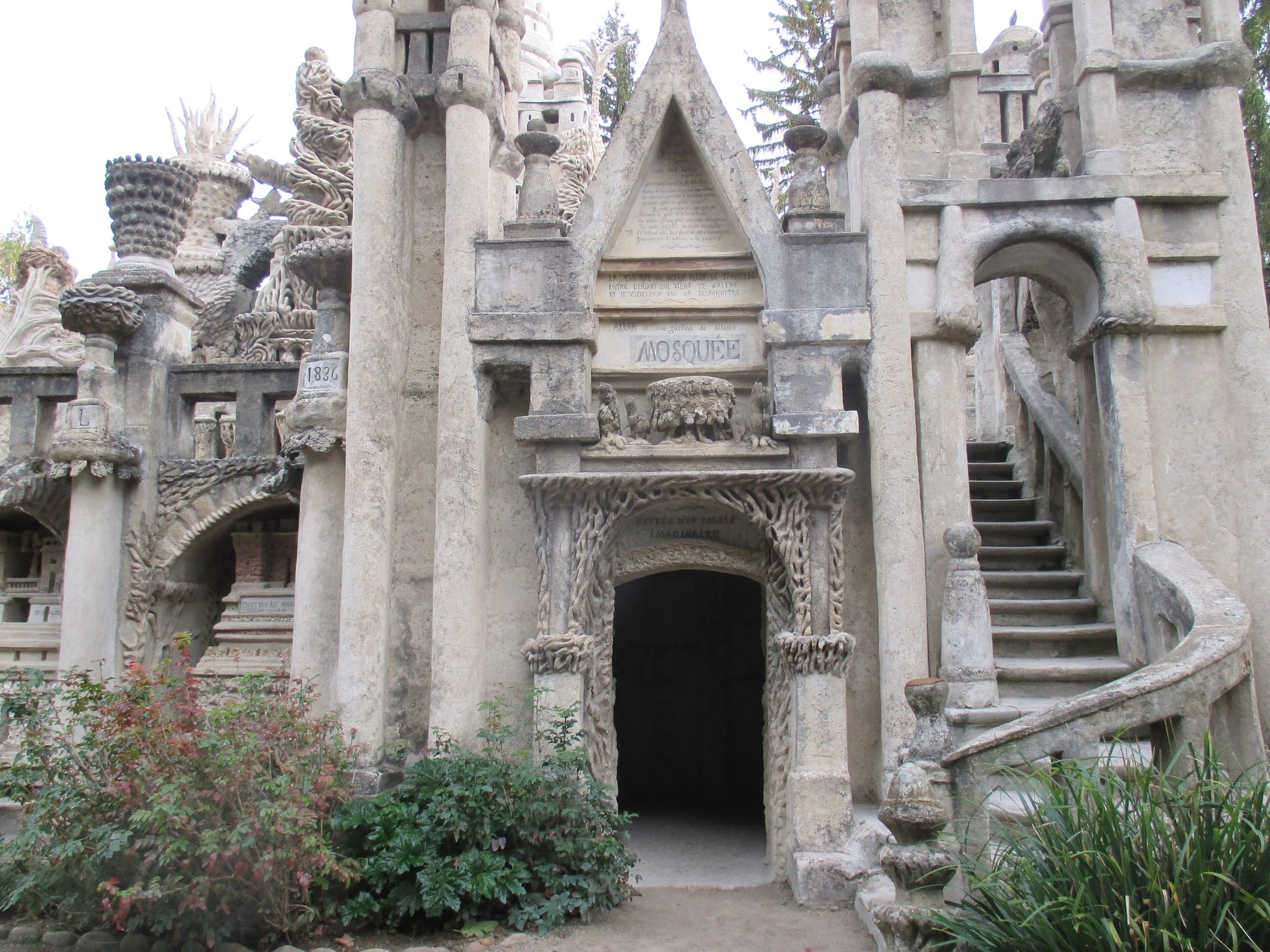
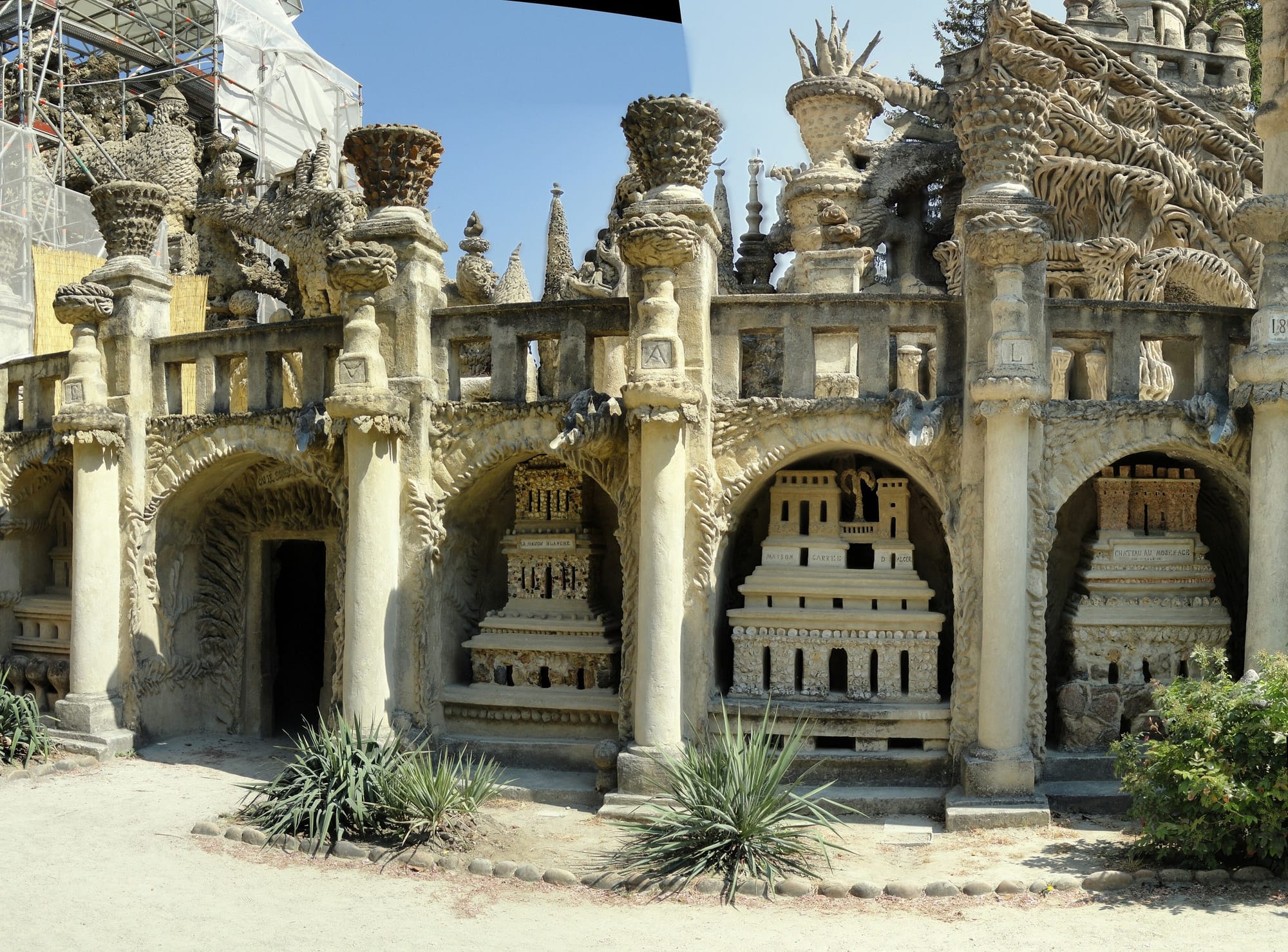
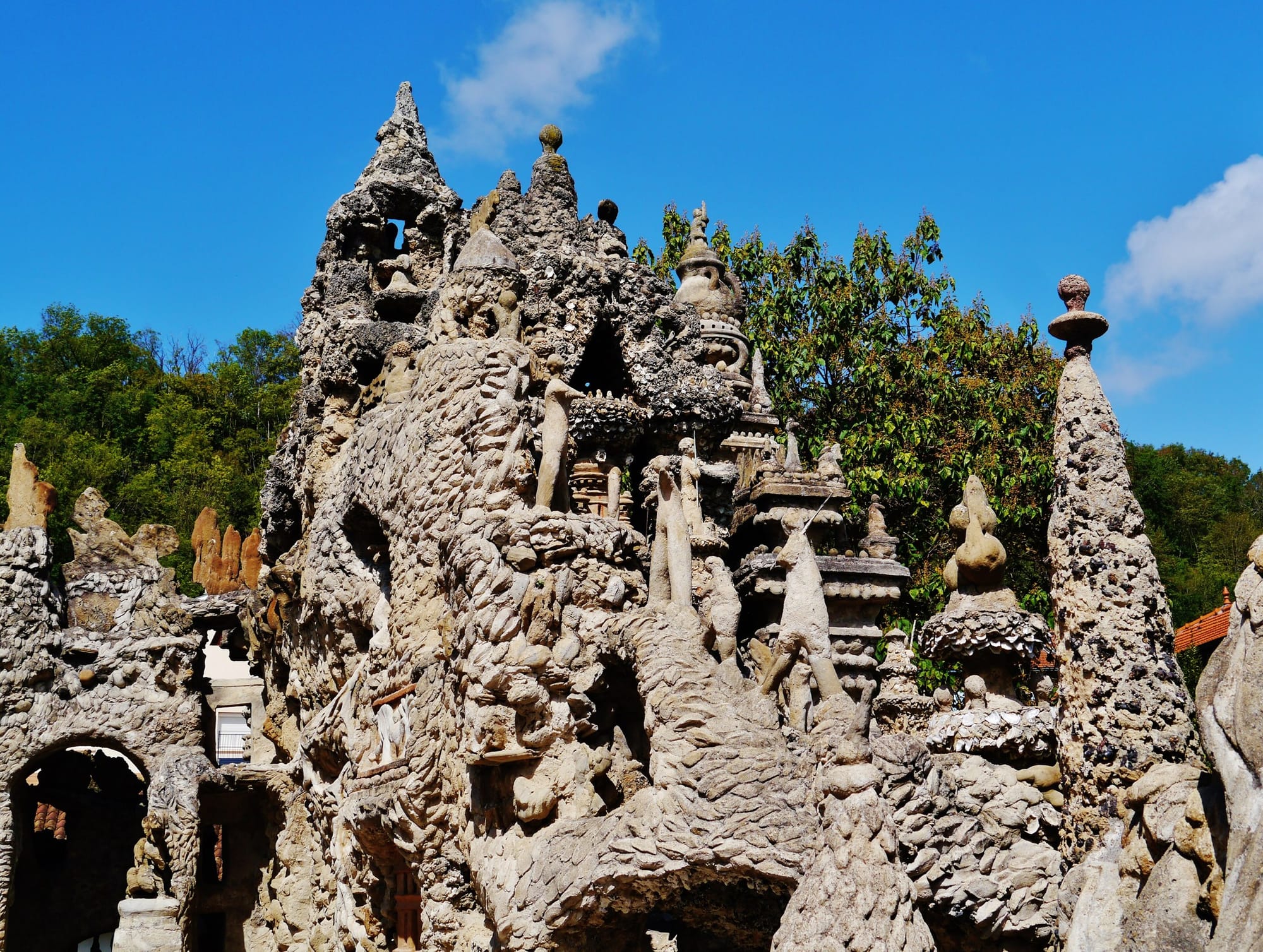
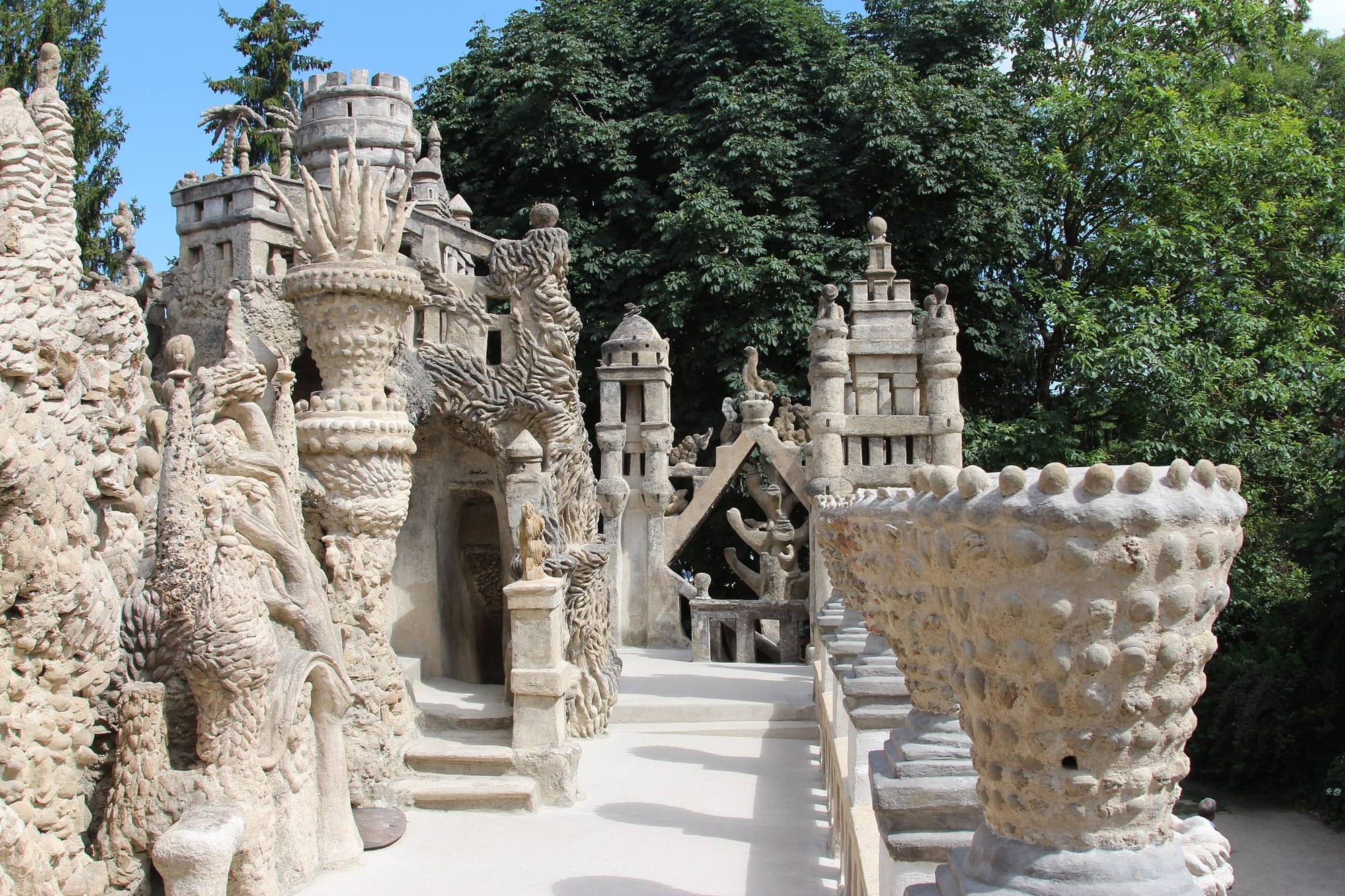
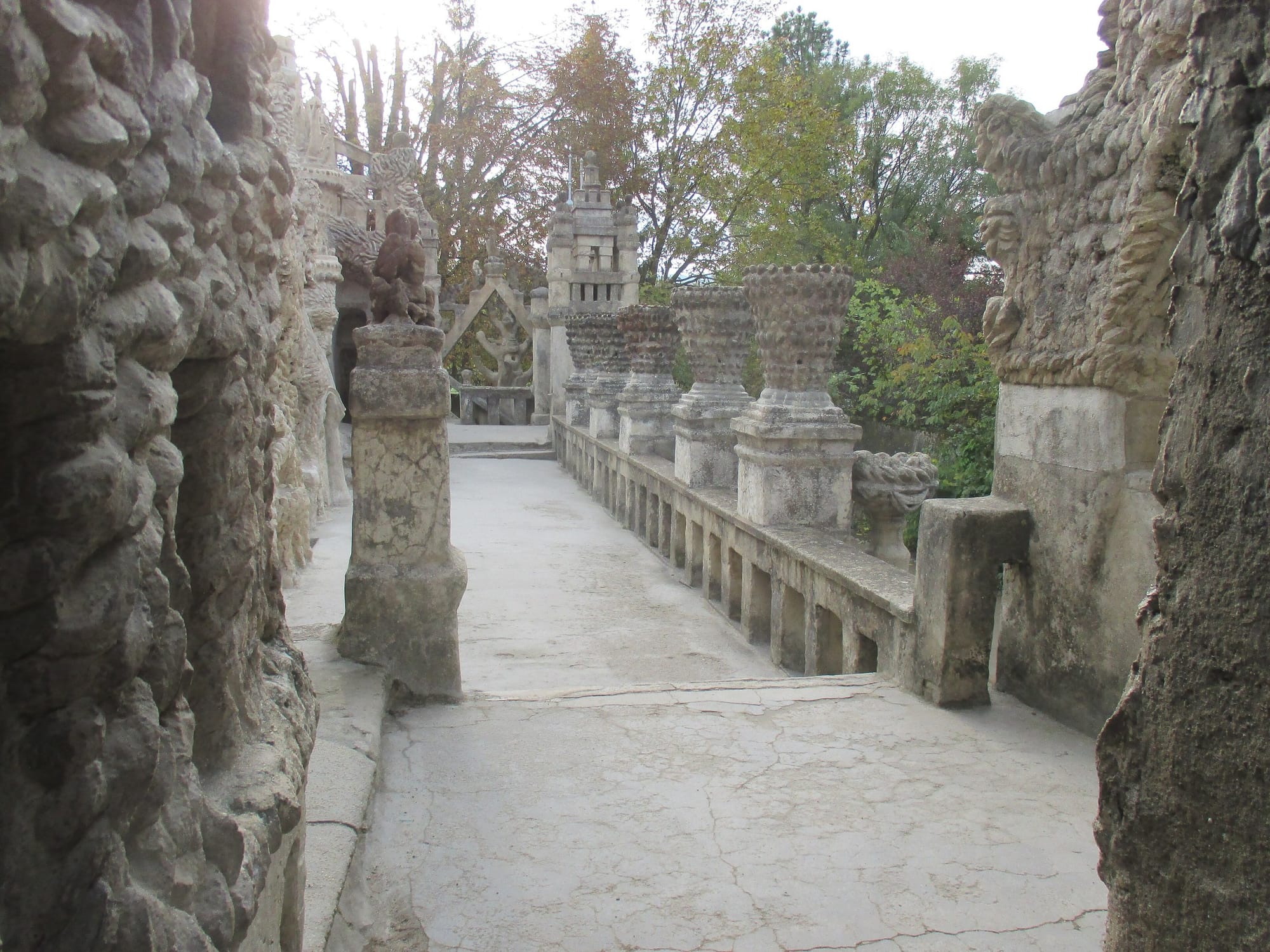
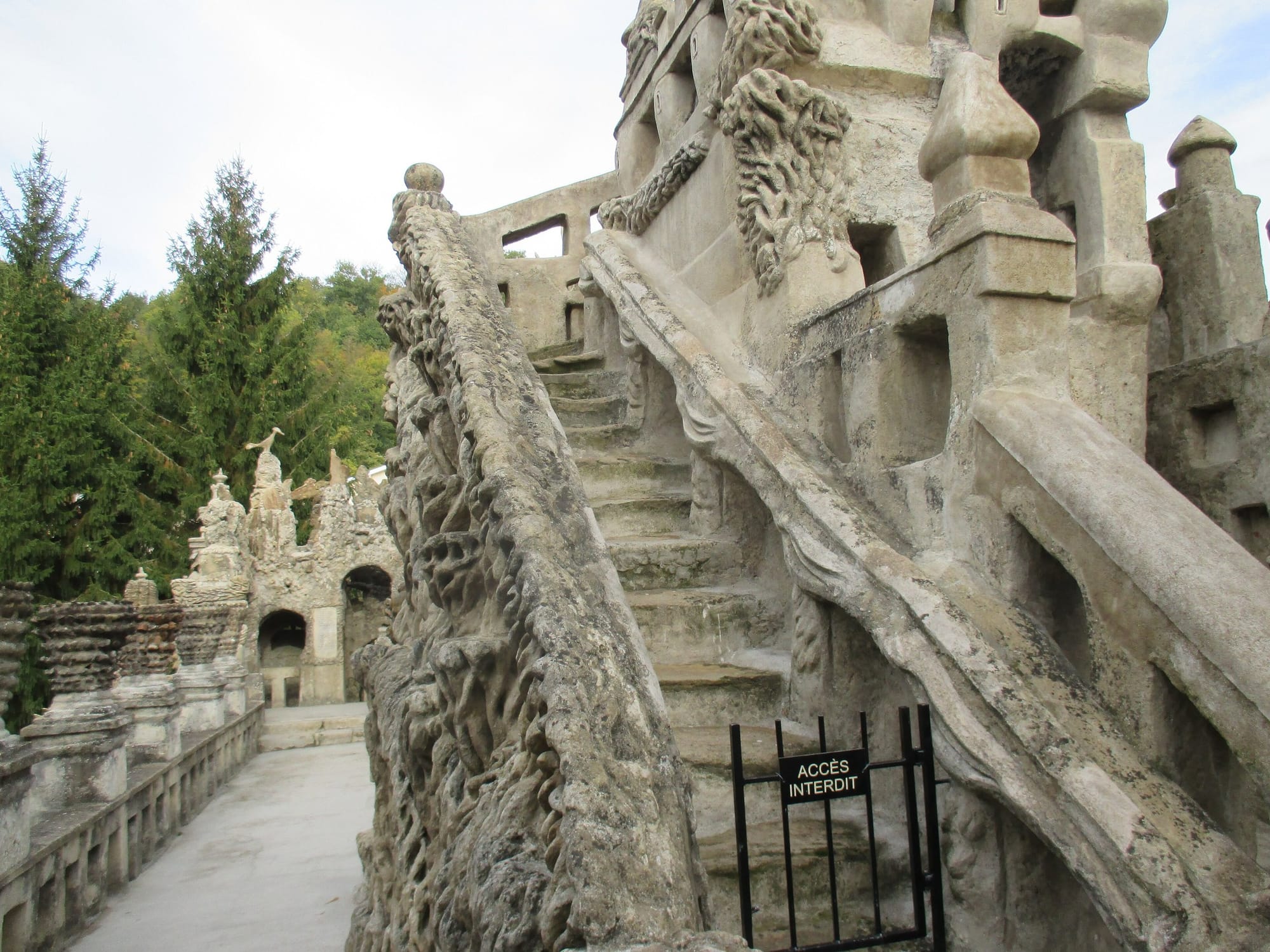
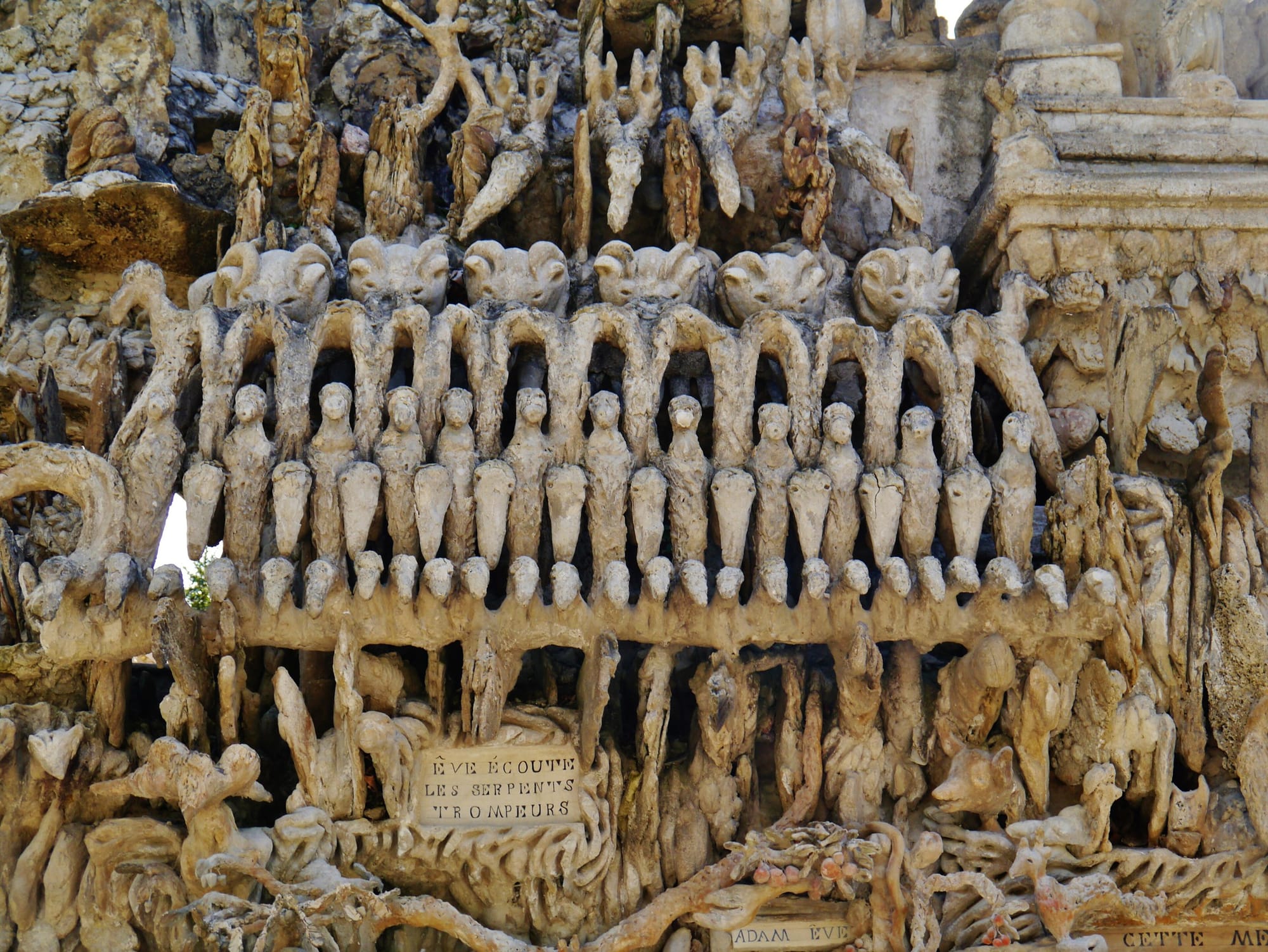
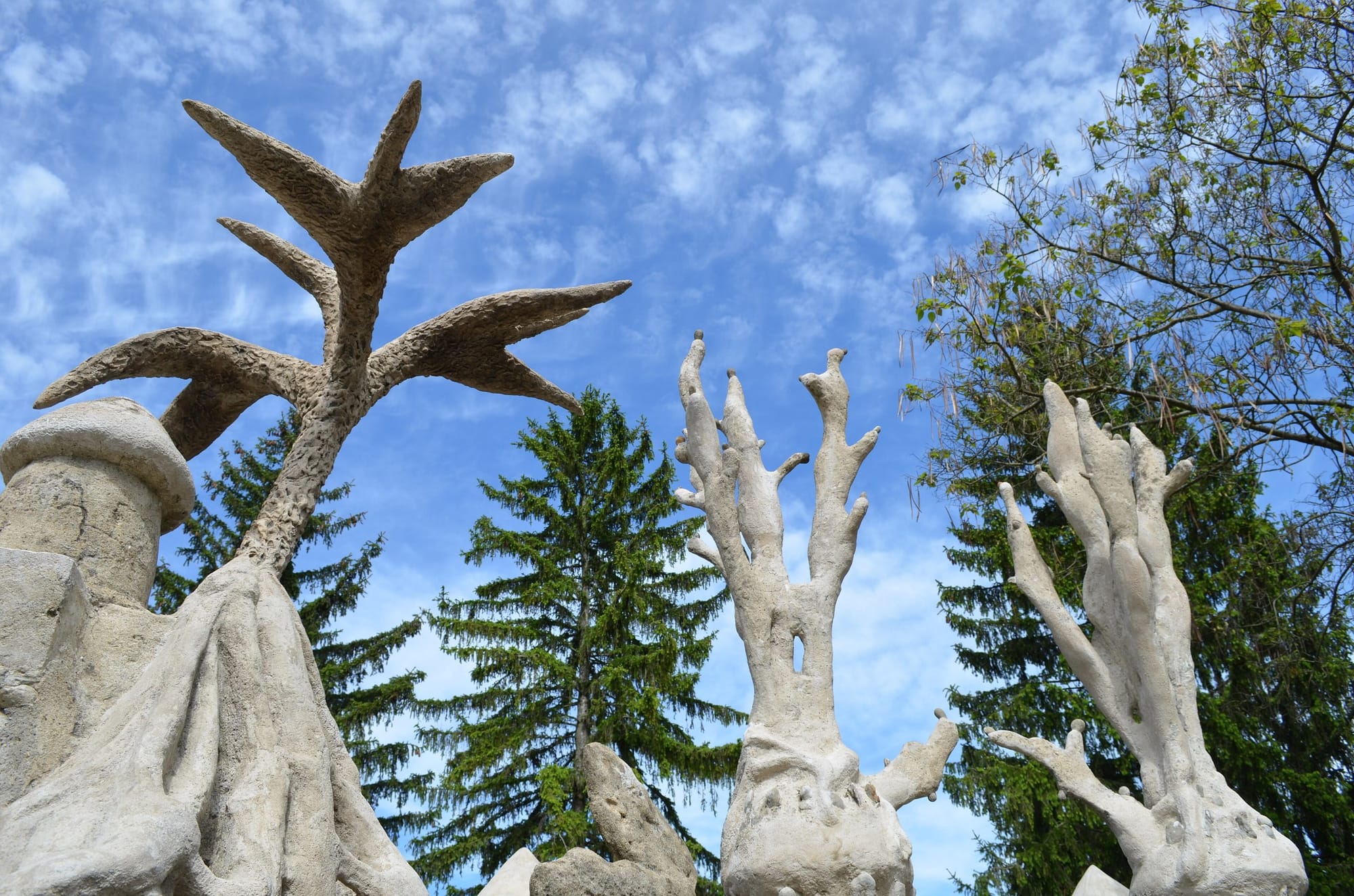
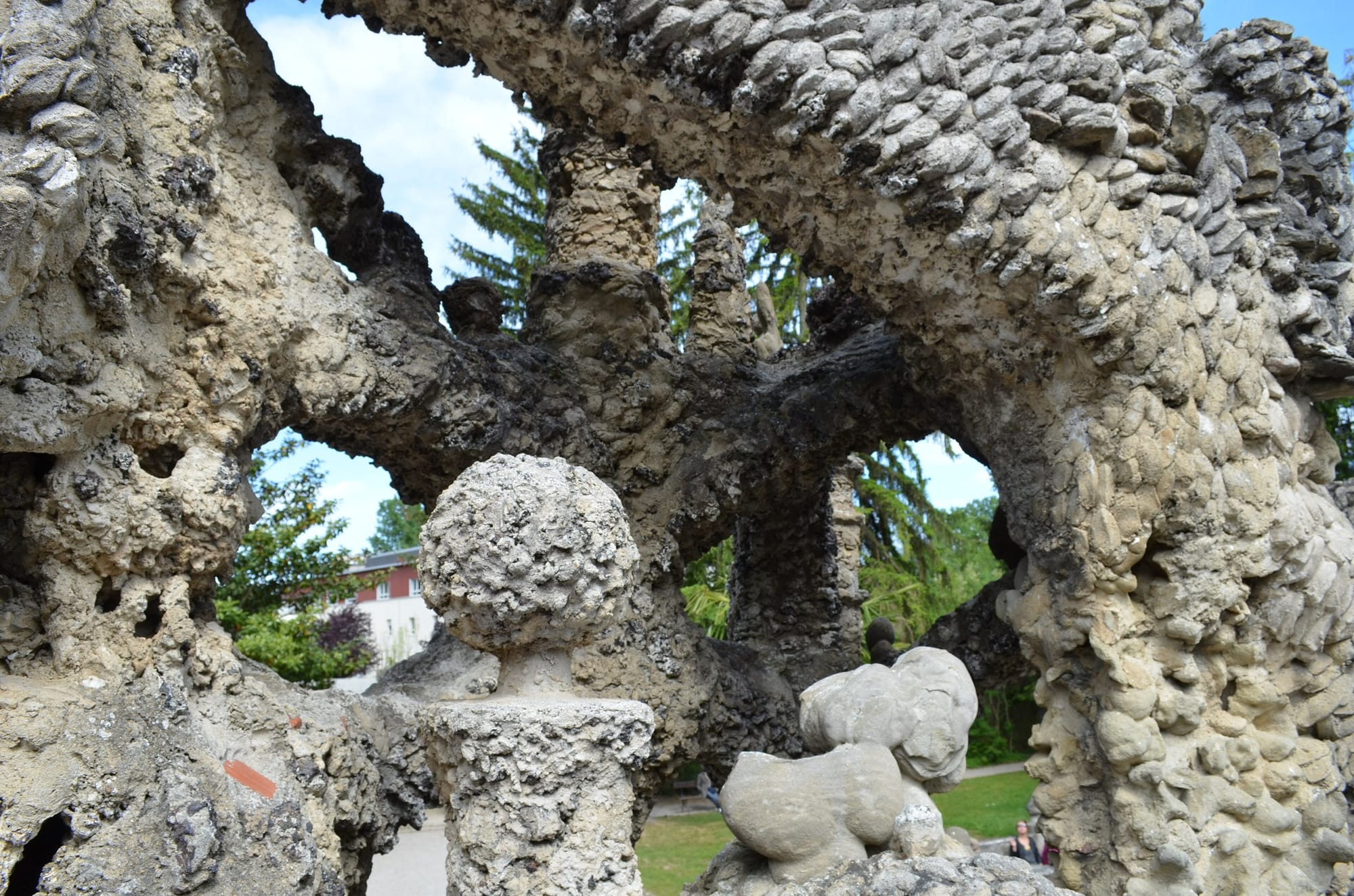
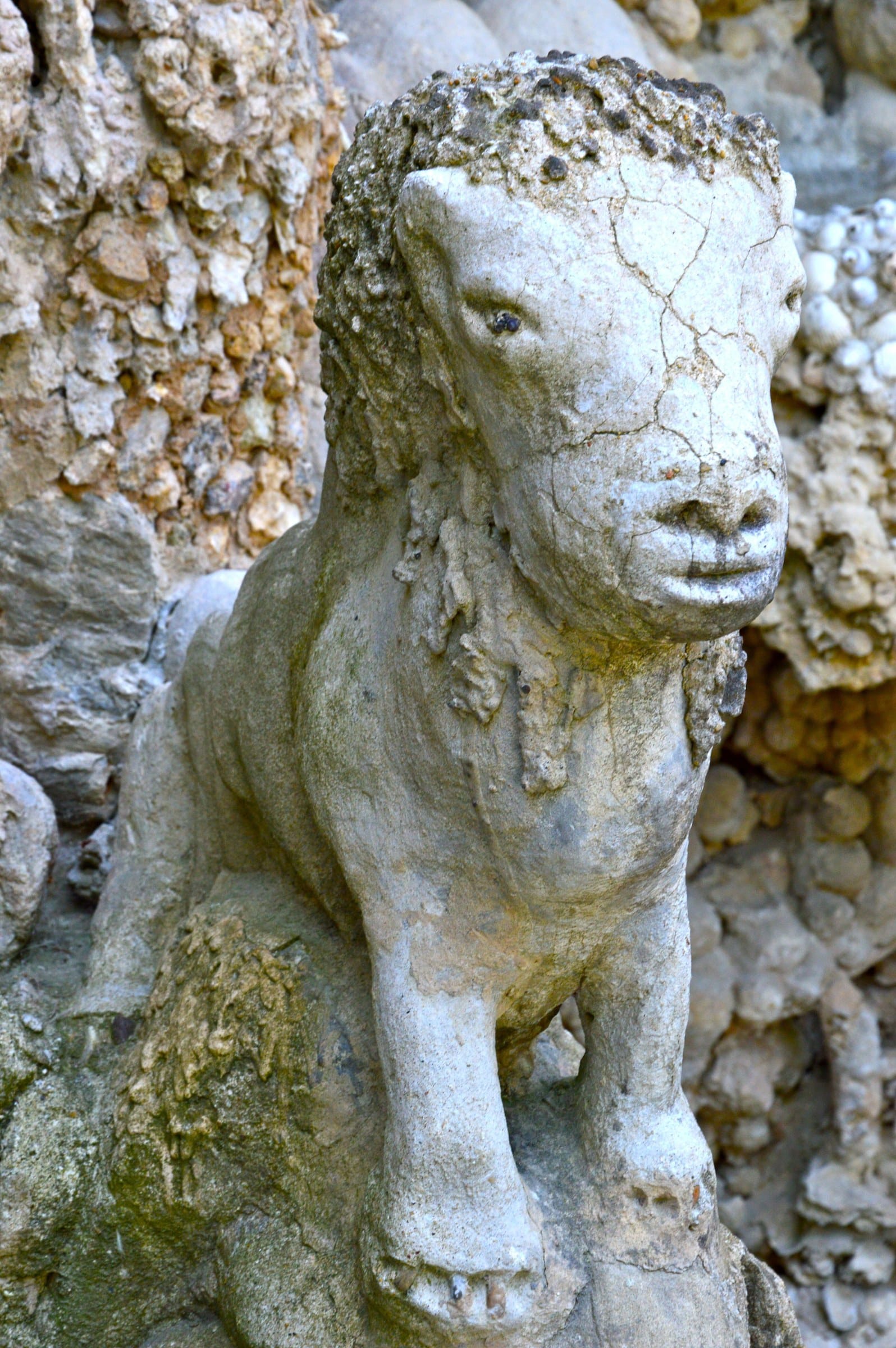
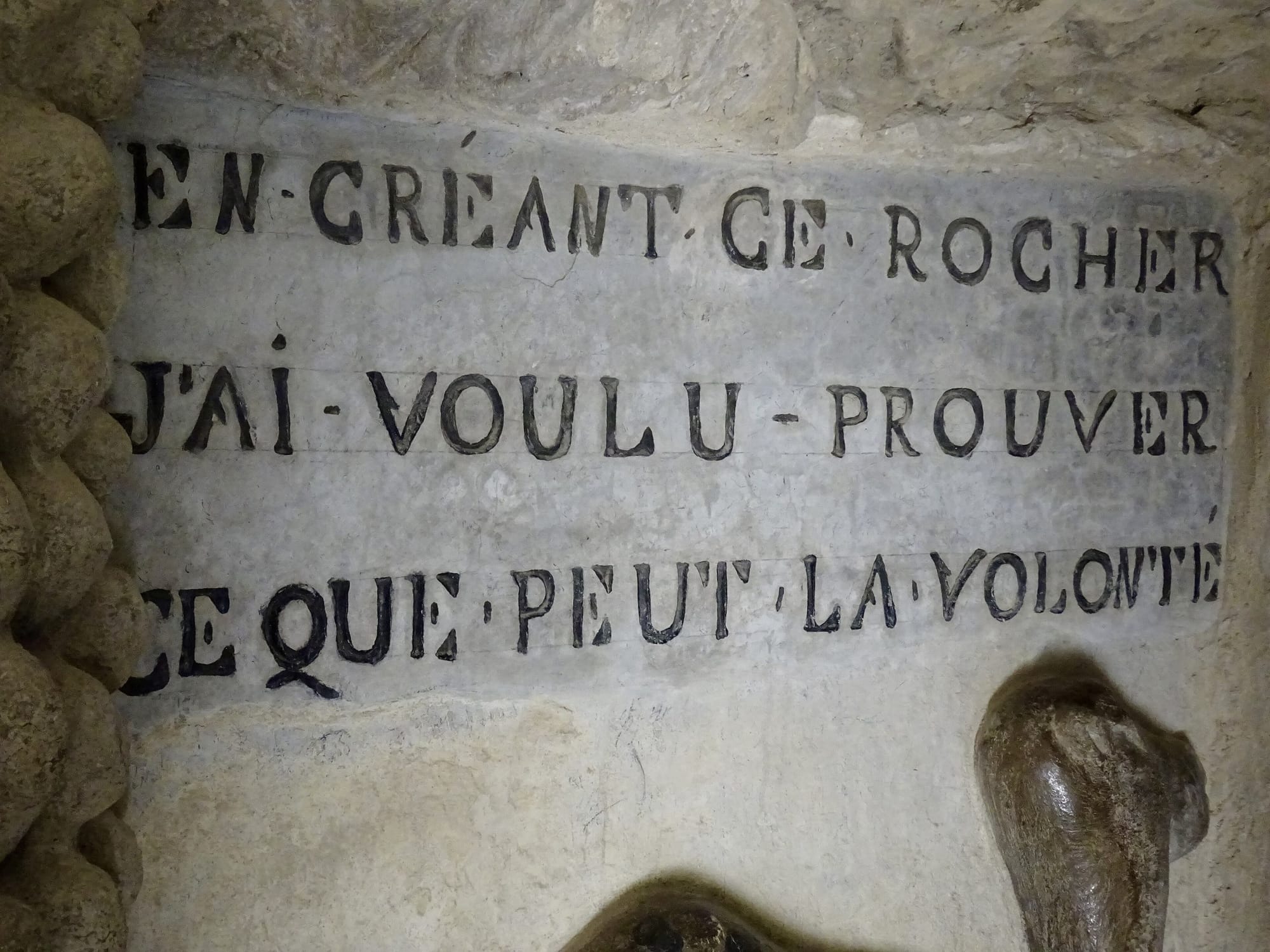
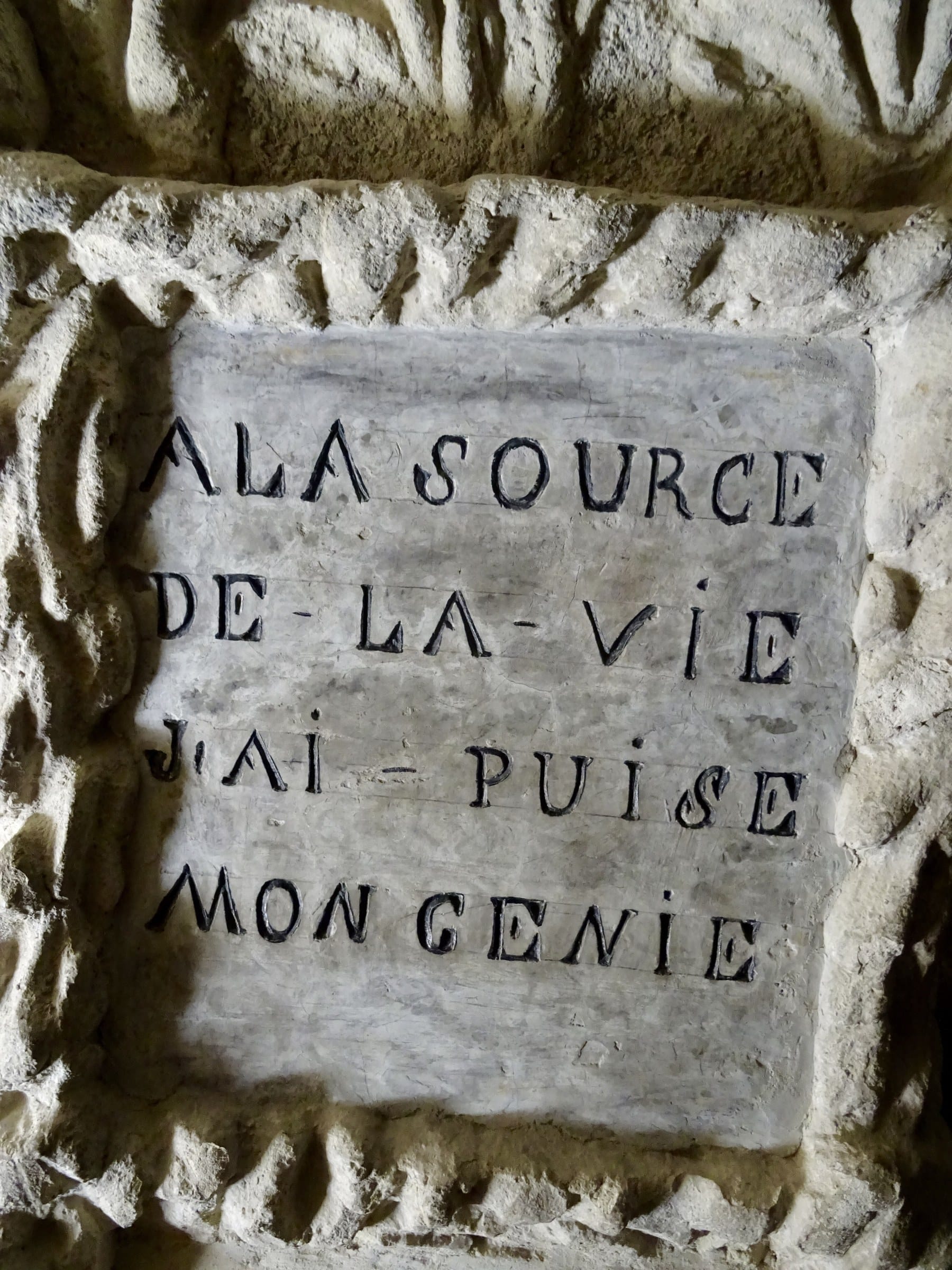
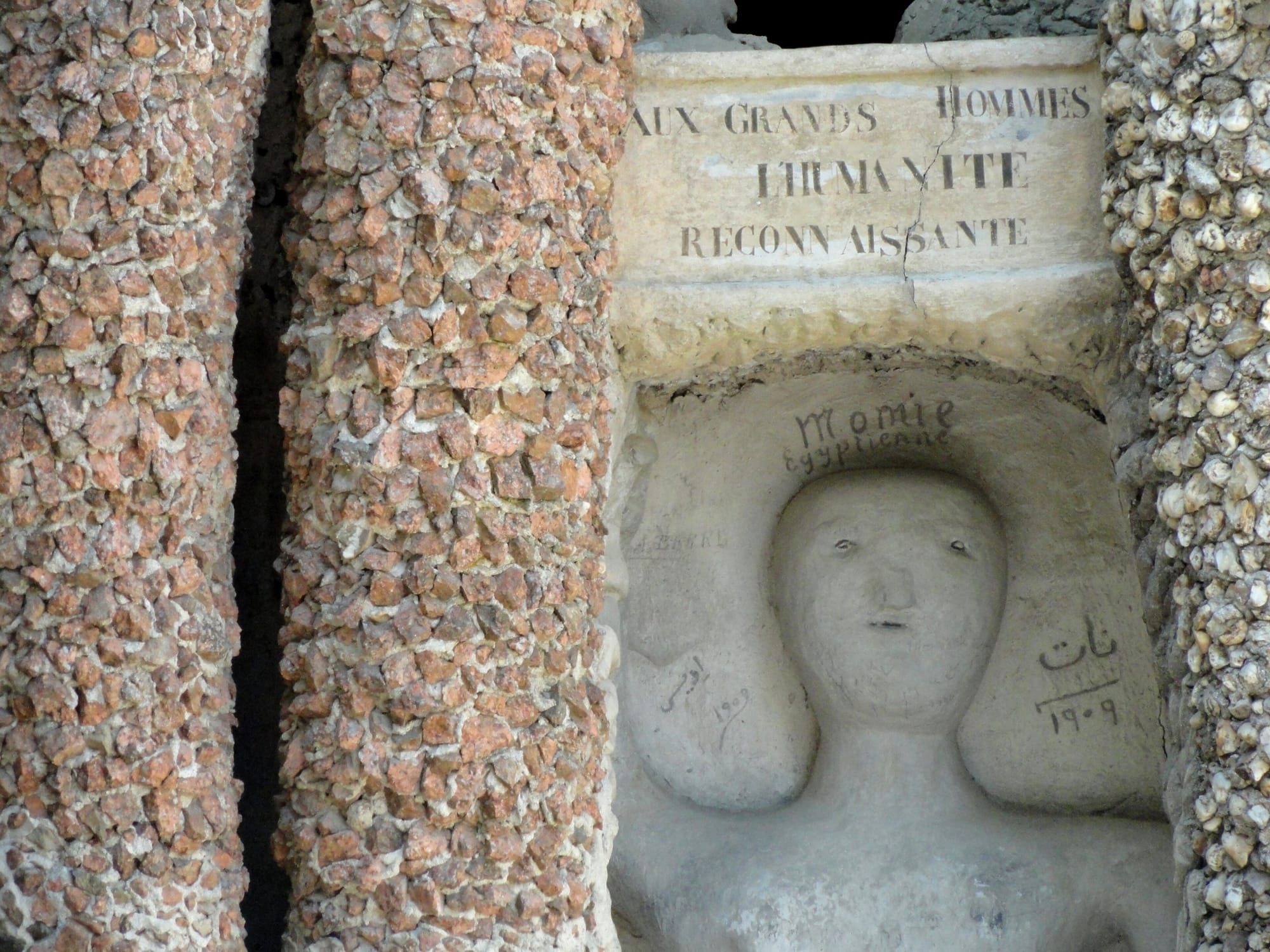
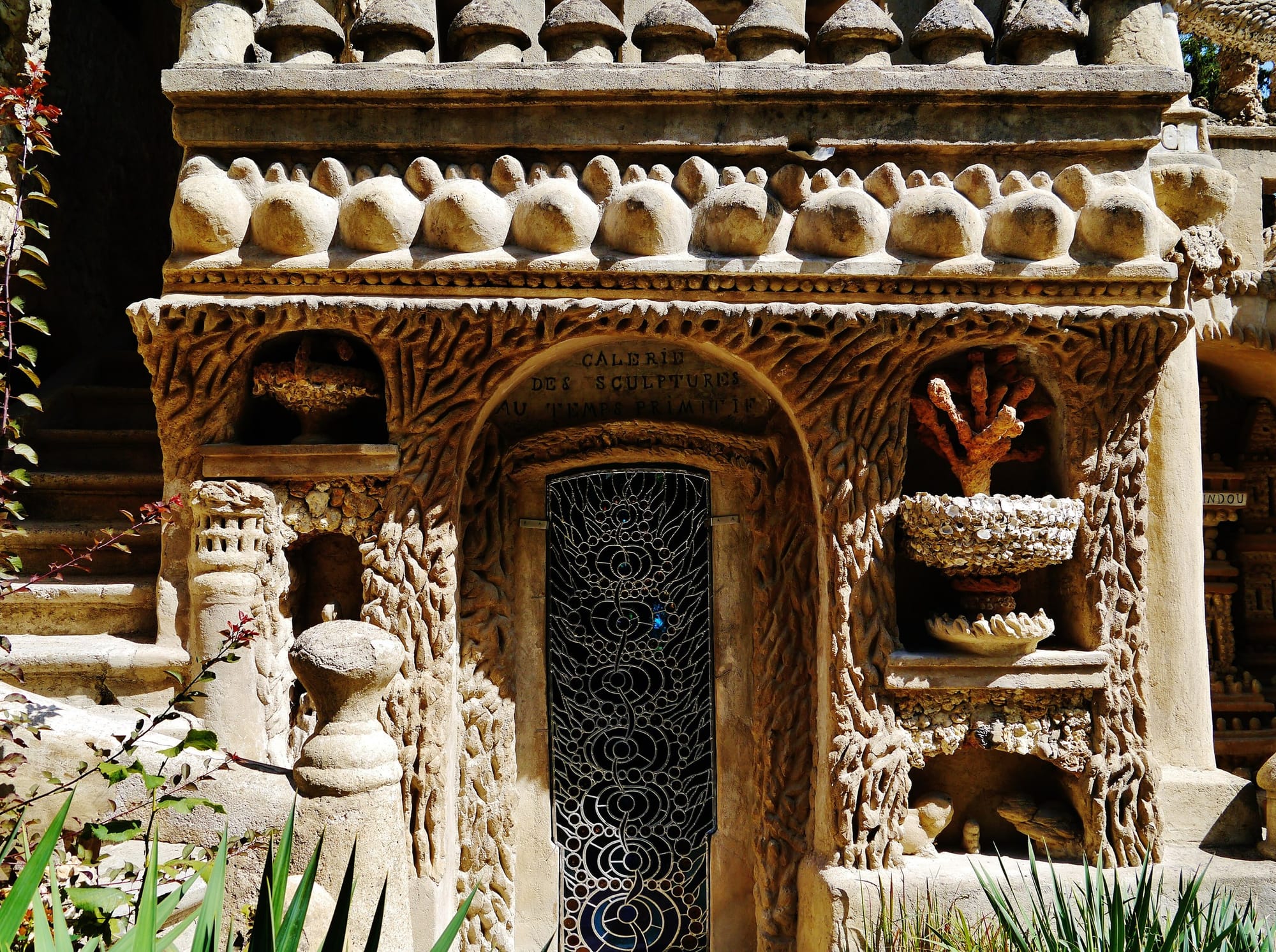
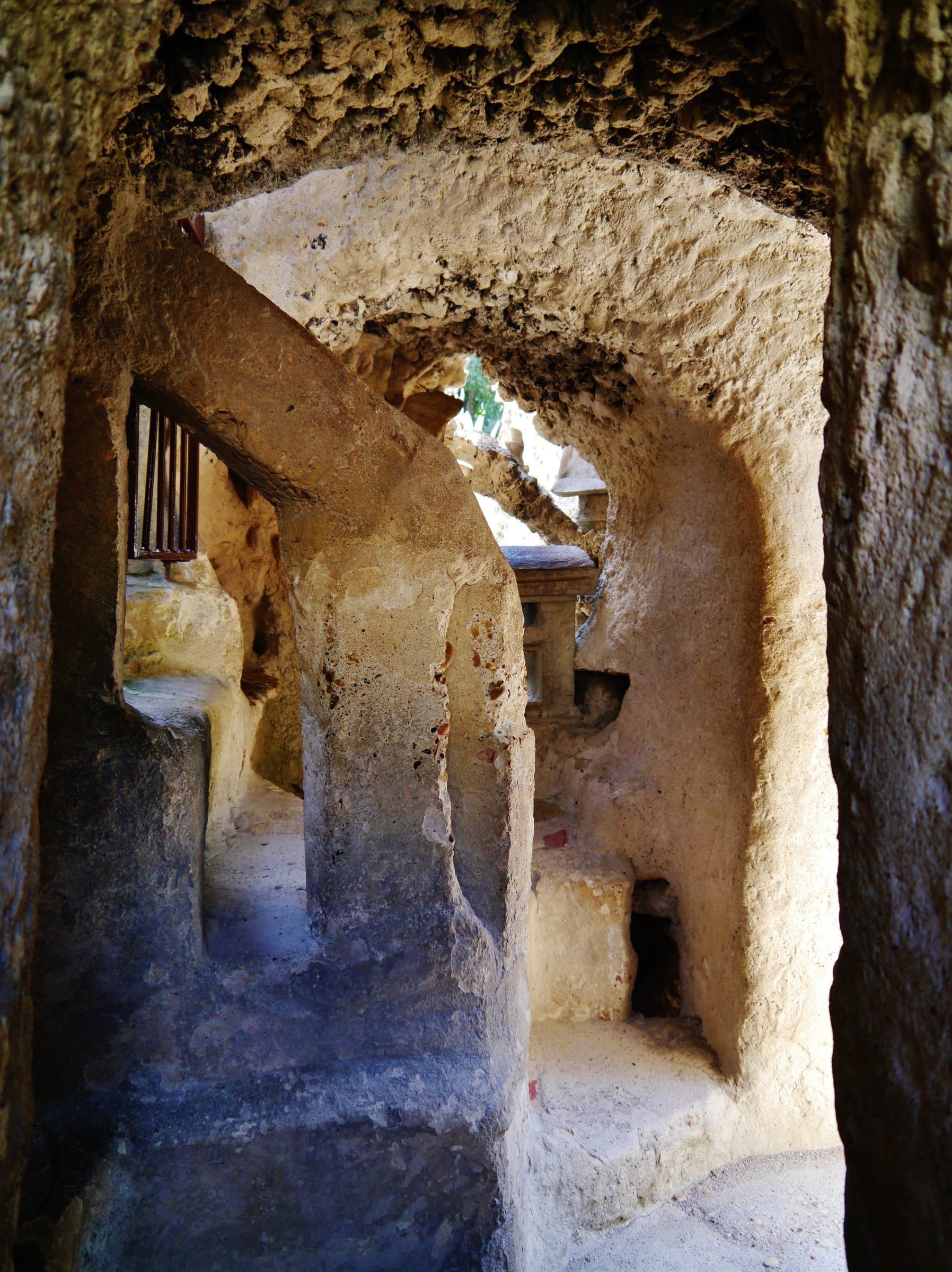
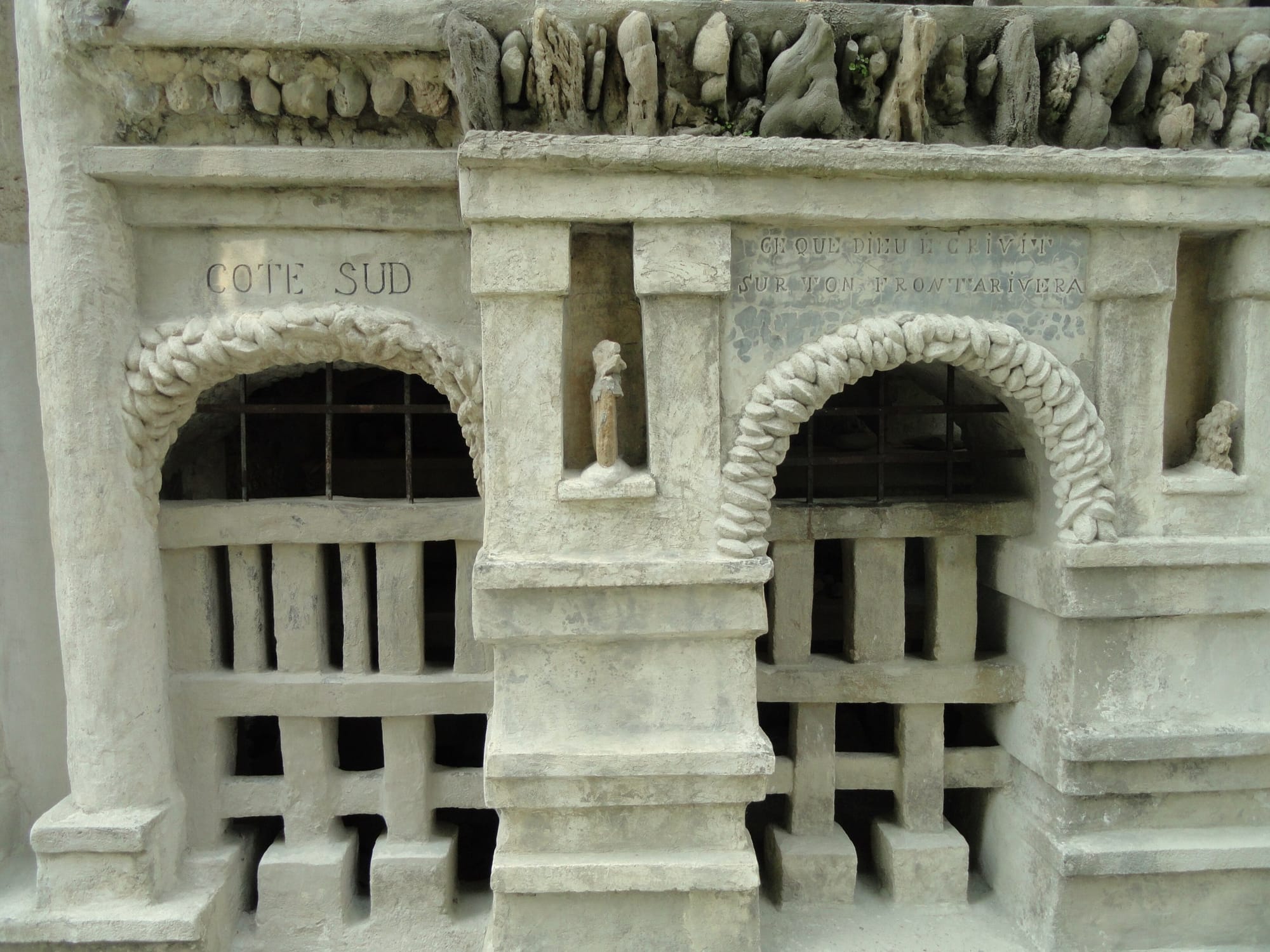
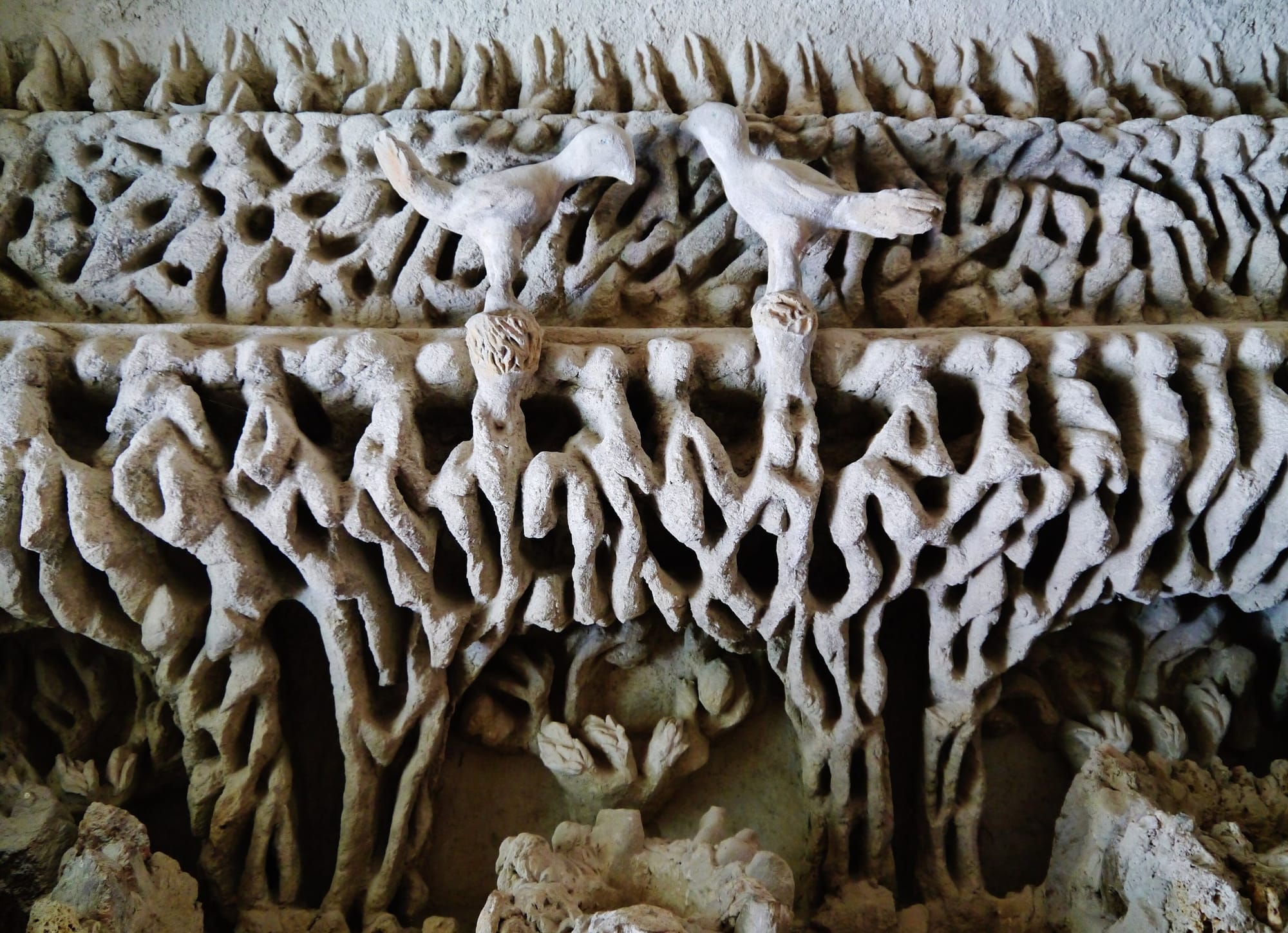
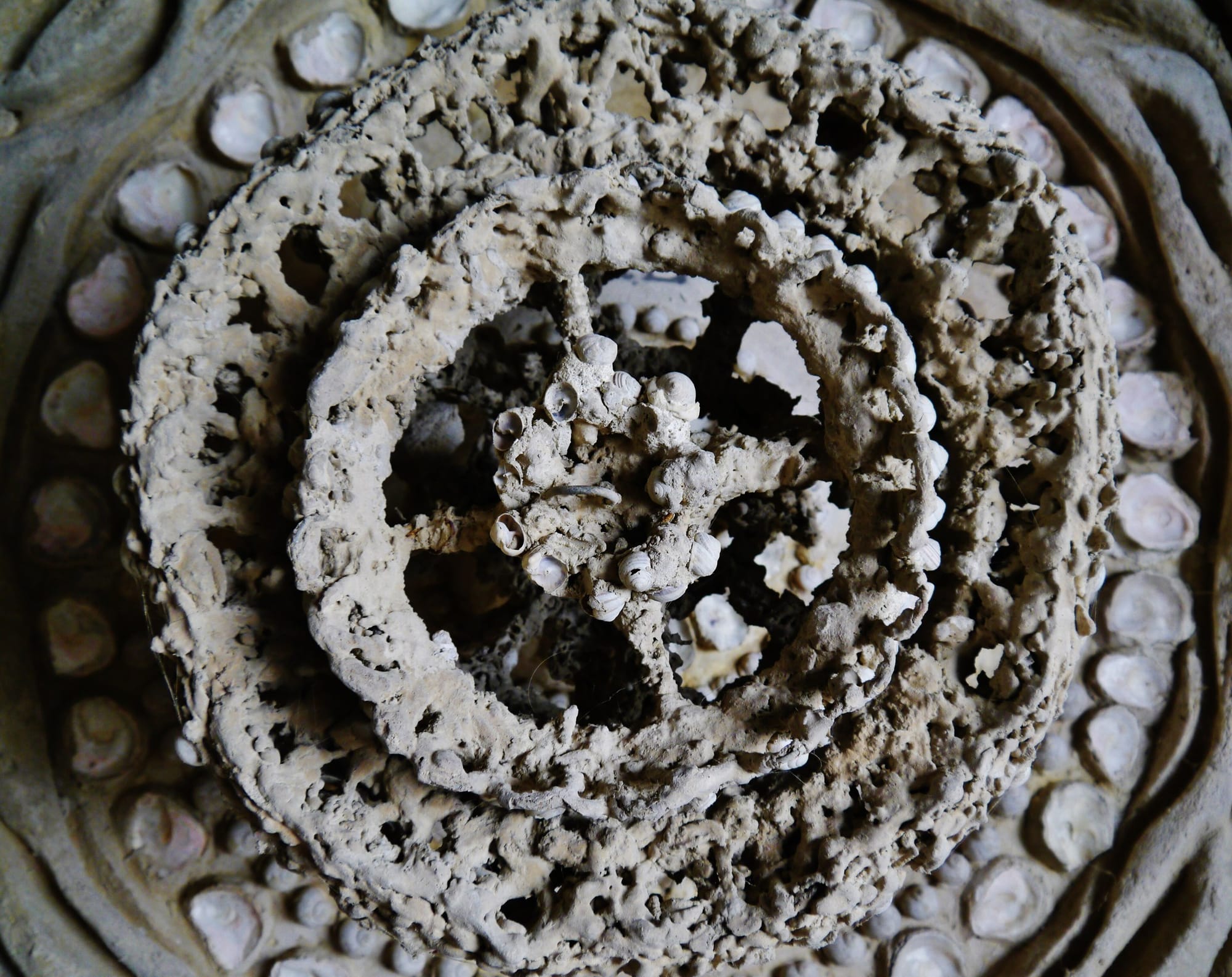
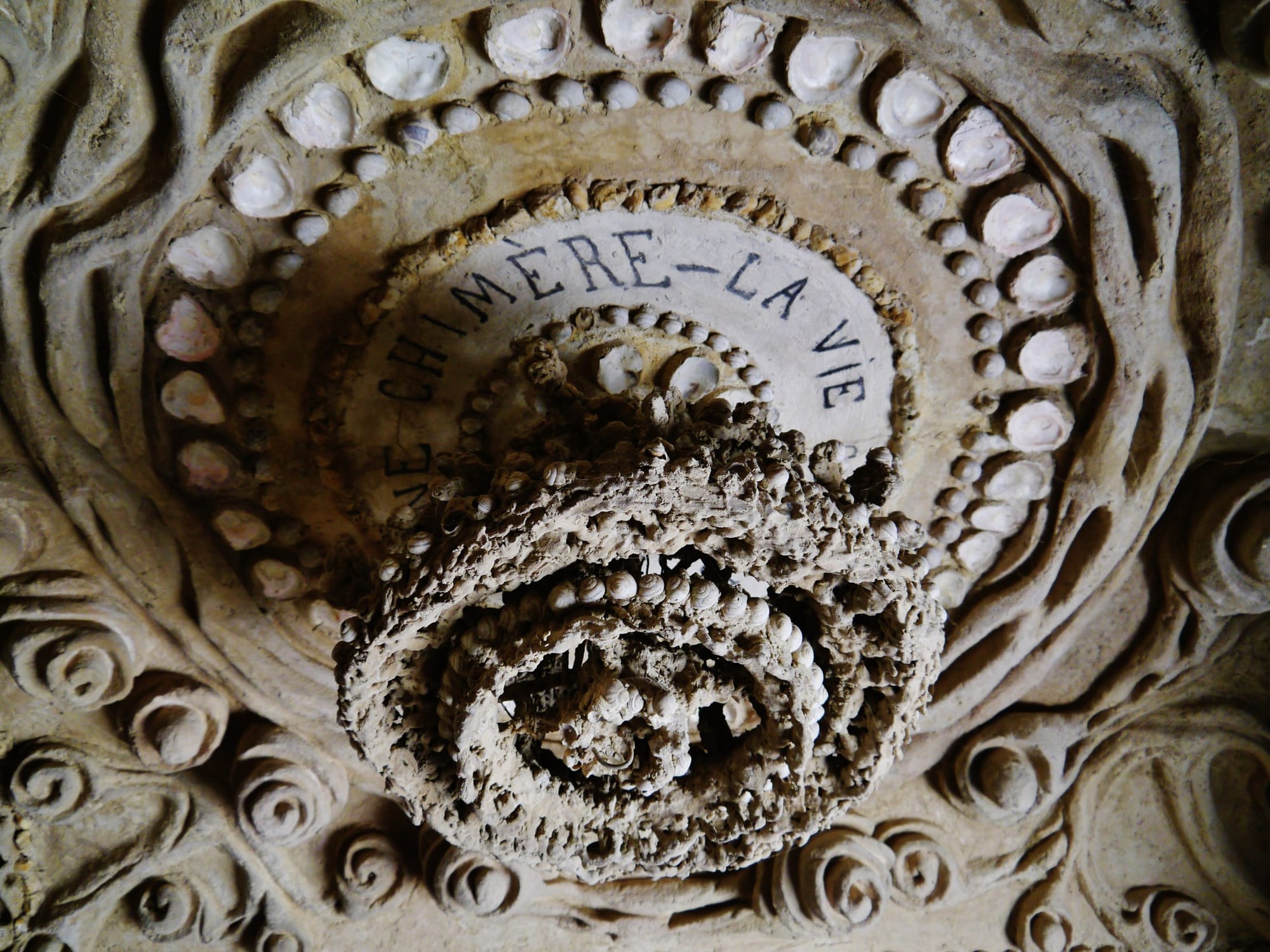
He worked on it alone for 33 years and finished in 1912. The palace is a dense mass of stone, shells, and cement, crowded with towers, grottoes, giant figures, animals, and stairways, and covered with his own carved inscriptions.
The name comes from a poem: Émile Roux-Parassac, a young poet from Grenoble, visited in 1904 and wrote to Cheval of "ton idéal, ton palais." In 1945 the painter Jean Dubuffet linked the work to art brut, and in 1969 it was listed as a historic monument, with the culture minister André Malraux calling it the only example of naive art in architecture.
The Palais Idéal is run as a museum today, and France's Ministry of Culture has published a short history of the site.
See also: Las Pozas
Images from Wikimedia Commons. Photos by Olivier and Chbesset (CC BY-SA 3.0); arnaudcalvat and Janoux (CC BY-SA 4.0); Zairon (CC BY 4.0).
