

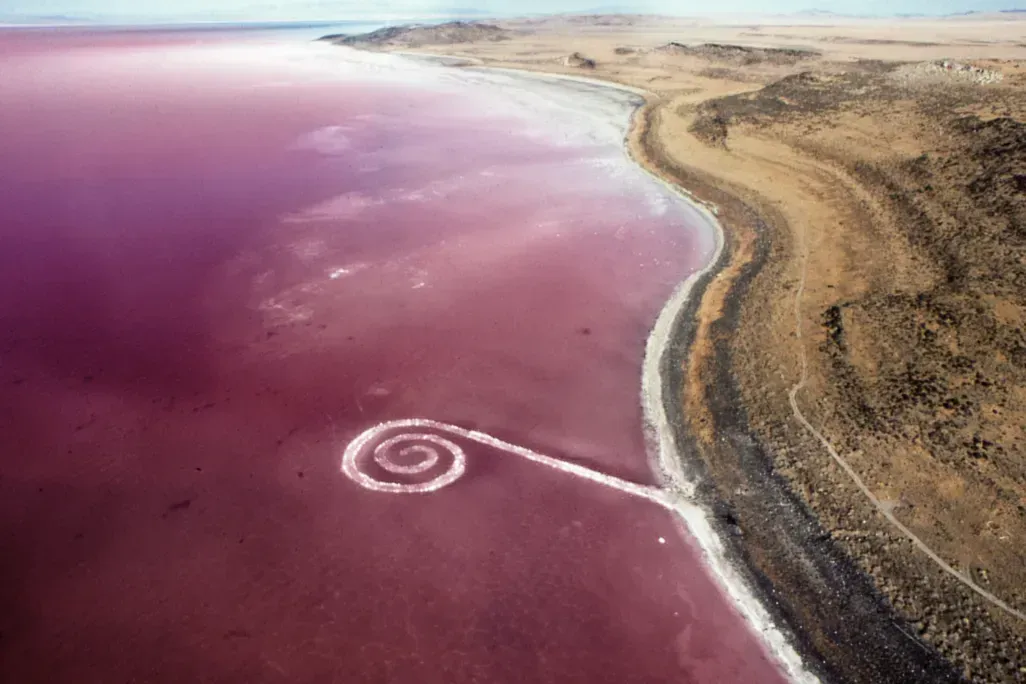
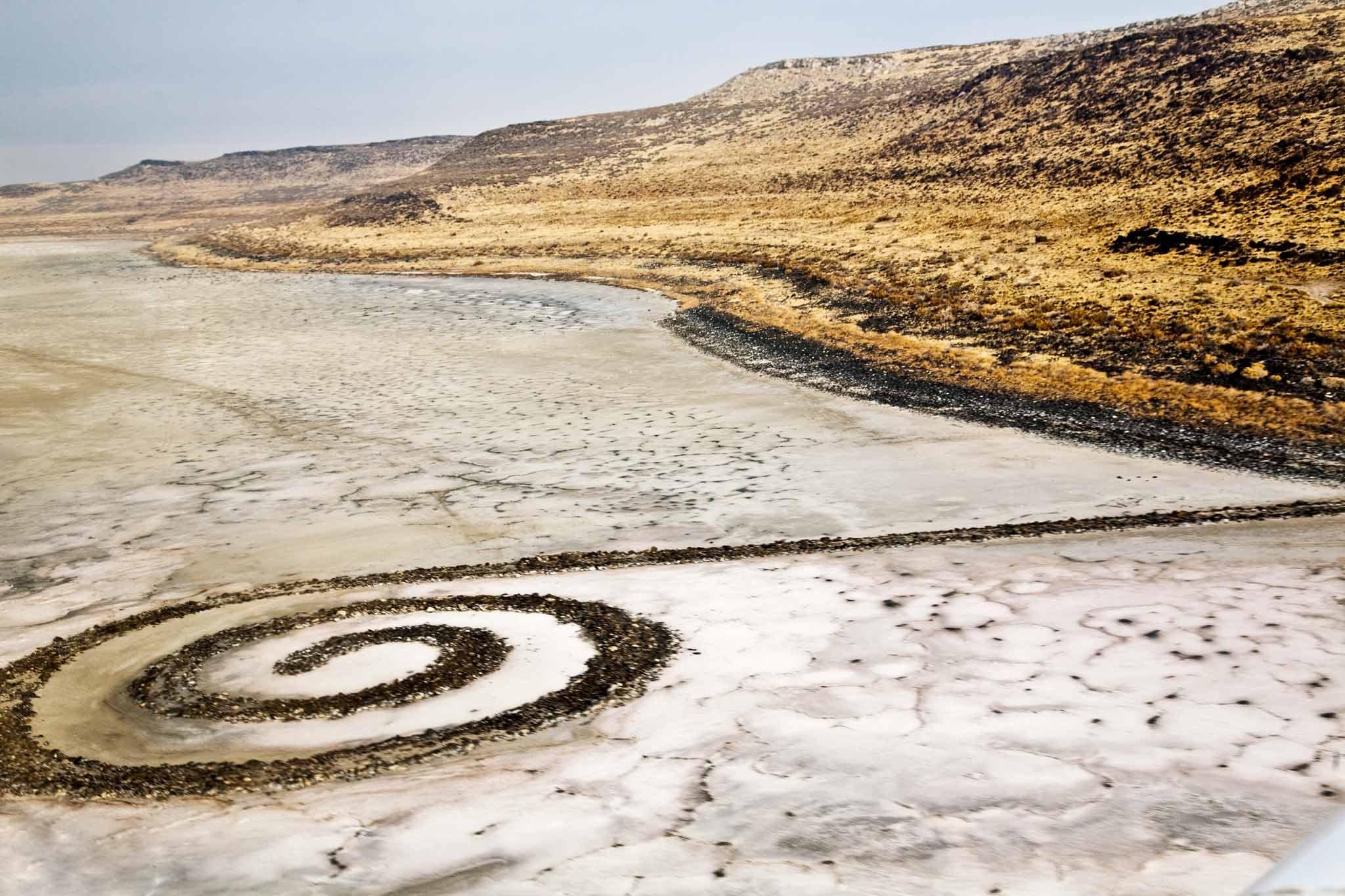
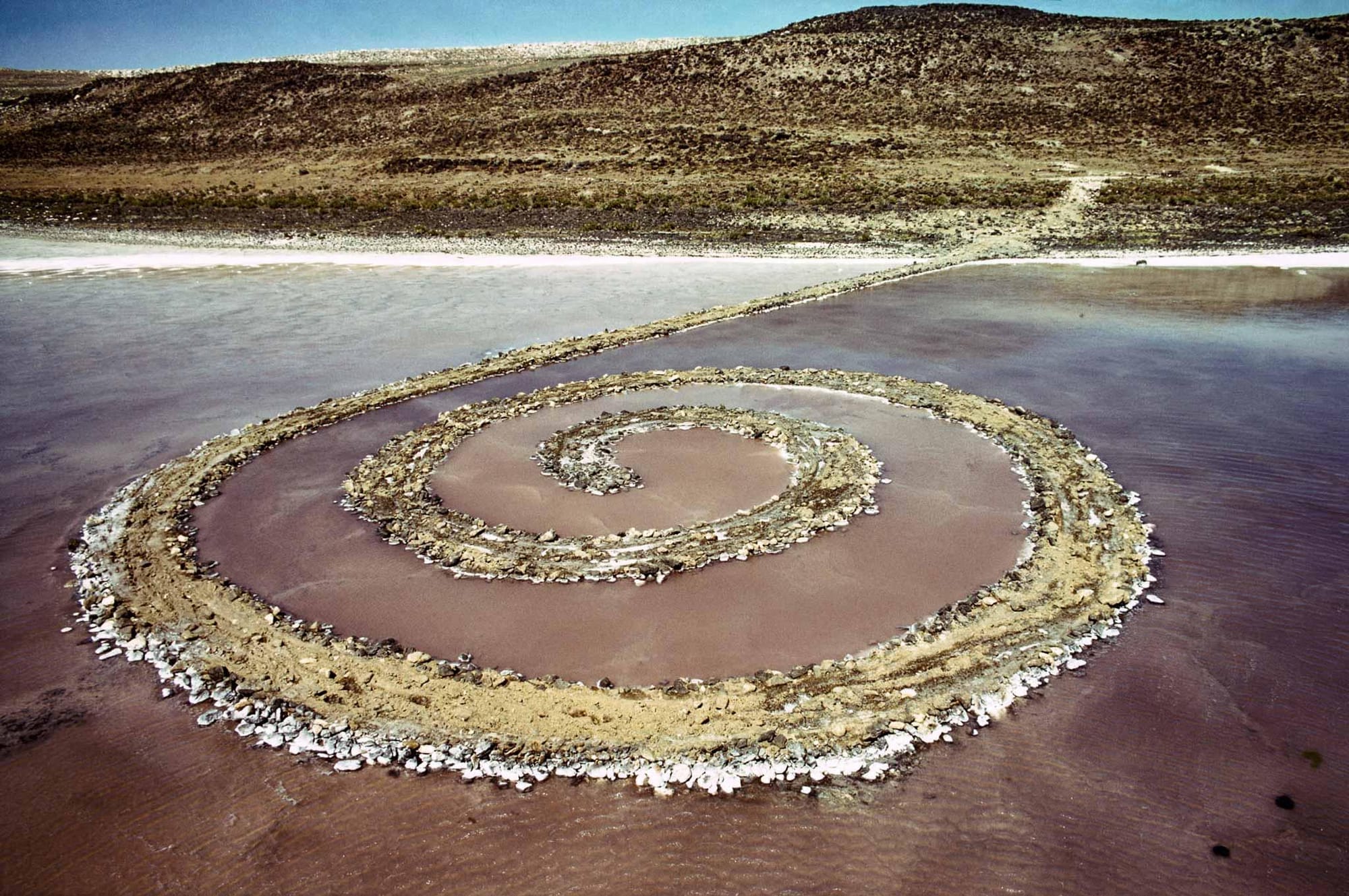
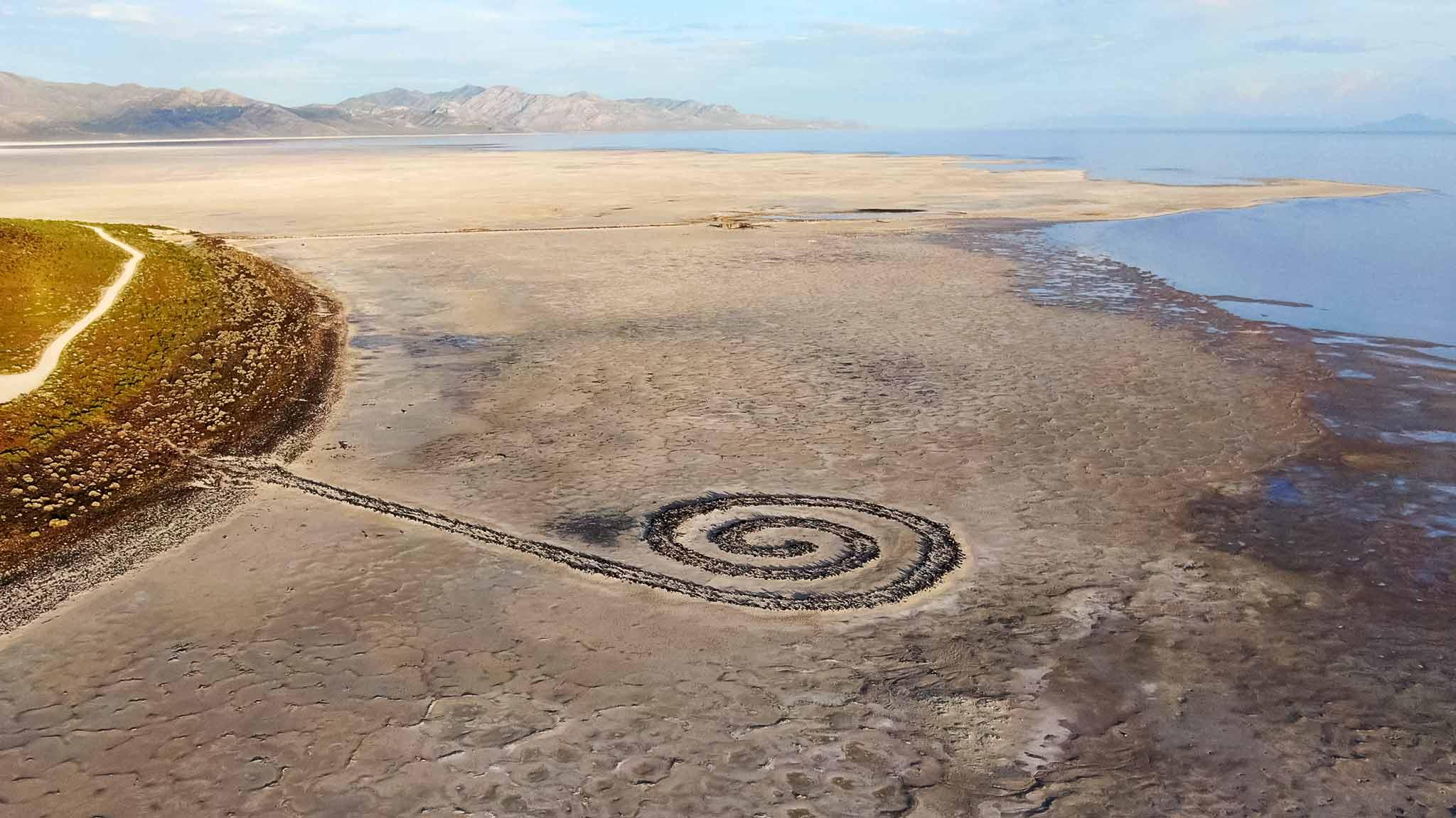
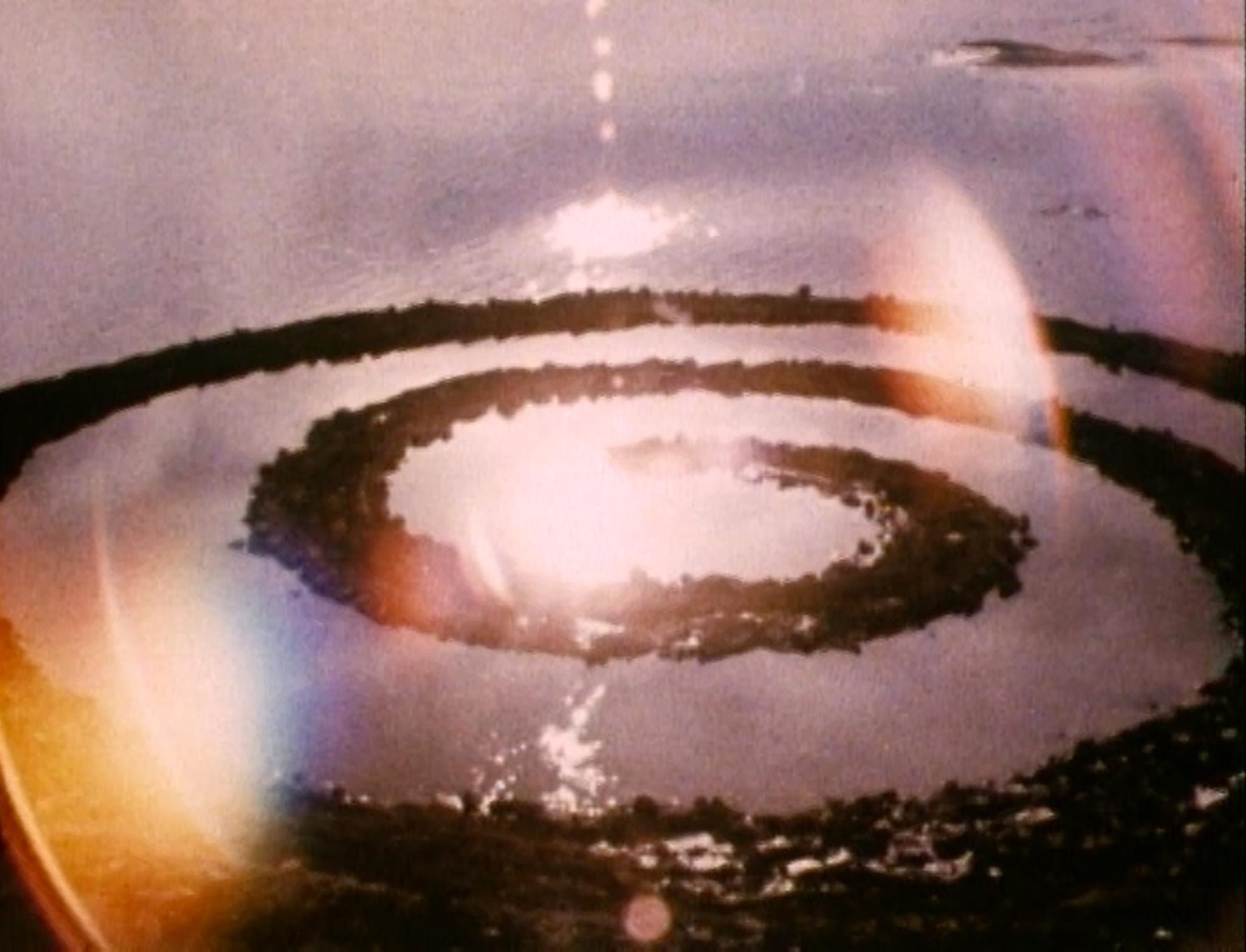
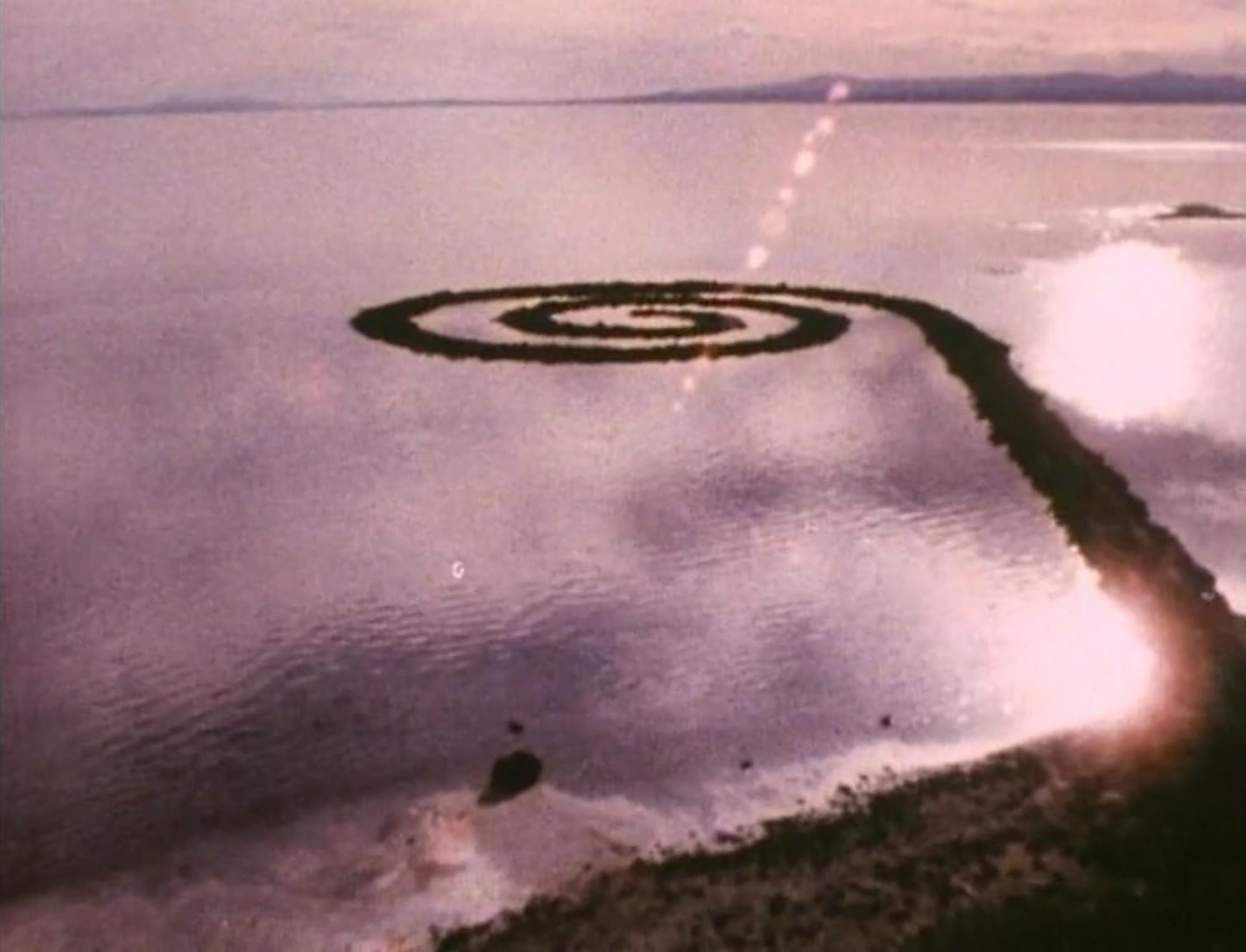
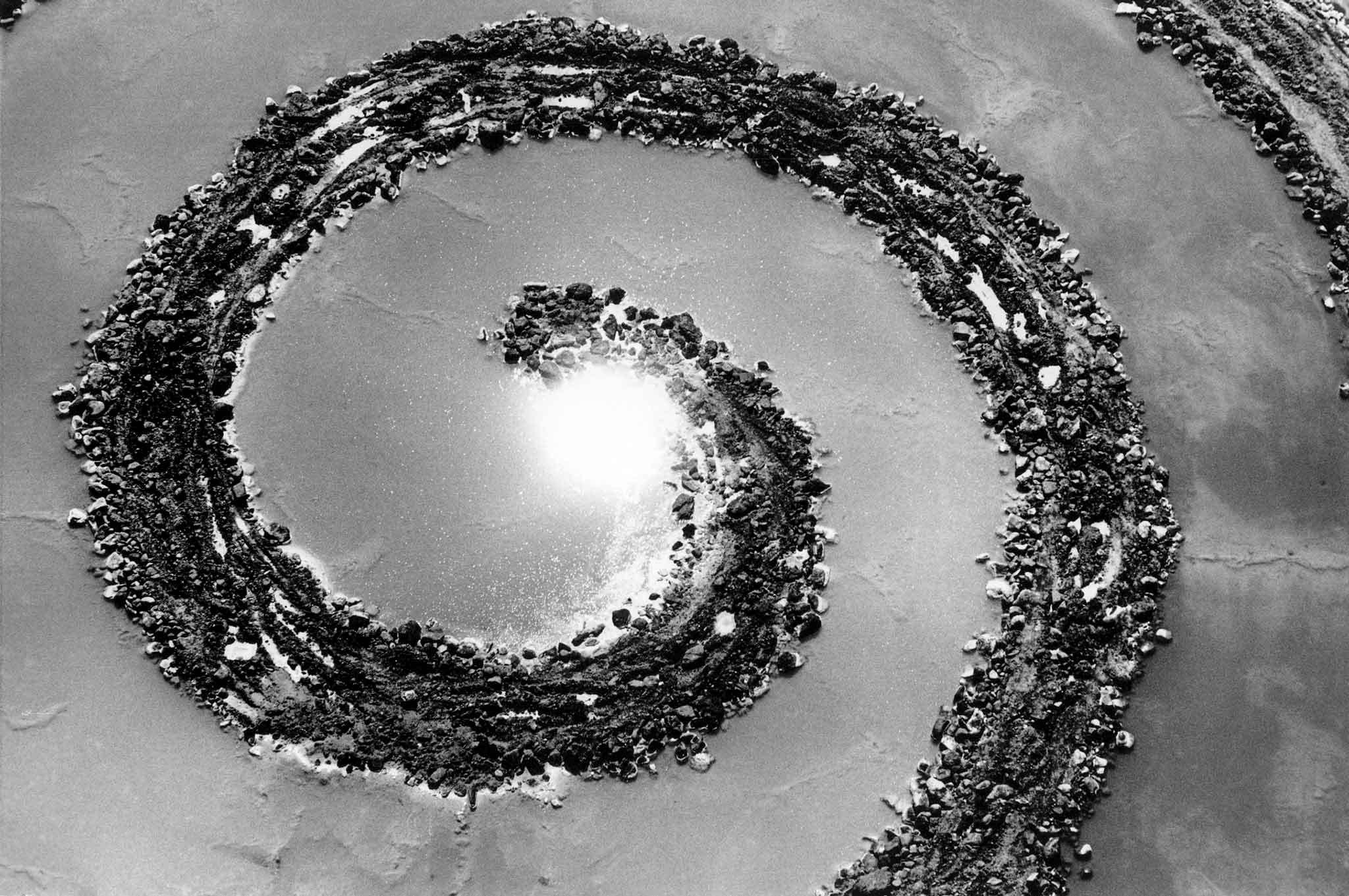
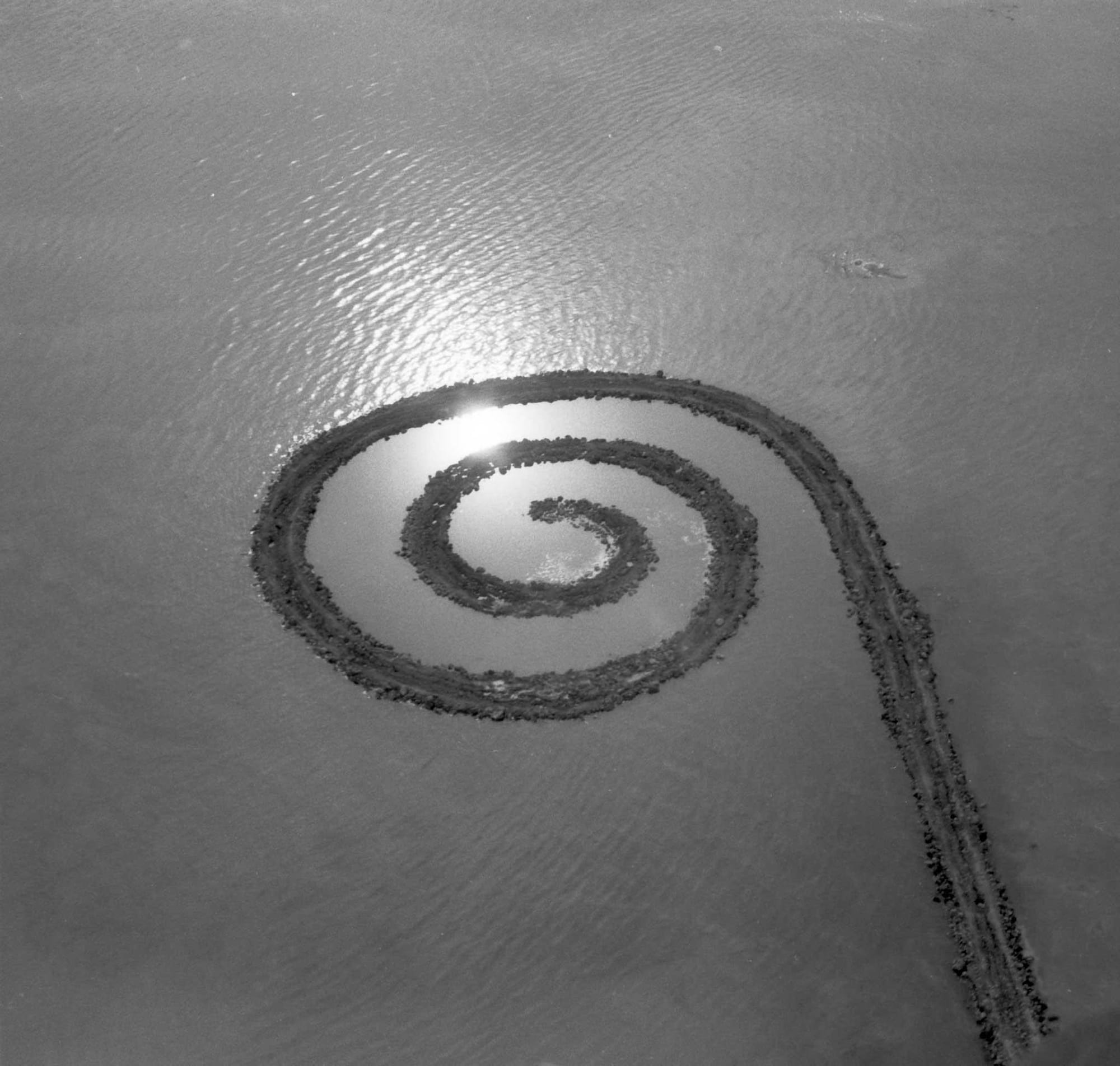
Spiral Jetty (1970) is Robert Smithson’s monumental earthwork extending into the Great Salt Lake in Utah. A 1,500-foot coil of basalt rock, mud, and salt crystals, it disappears and reappears with the lake’s shifting tides. Neither sculpture nor landscape, it is a work in perpetual flux: submerged, eroded, crystallized, remade by the elements.
Smithson described the Jetty as an “entropic” gesture, art that does not resist decay but collaborates with it. In doing so, he redirected attention away from the gallery and into the dynamics of geology, time, and ecological change. The work unsettles the idea of permanence. It is at once iconic and unstable, a form that points as much to its own dissolution as to its creation.
Smithson built the work in April 1970 at Rozel Point, on the northeastern shore of the lake, using trucks to move more than 6,000 tons of black basalt and earth into the shallow water. The coil is about 1,500 feet long and 15 feet wide.
The water's red colour comes from salt-tolerant bacteria and algae that live in the lake's north arm, where salinity reaches about 27 percent. Within two years the lake rose and covered the jetty, and for three decades it mostly stayed under water, surfacing only in dry spells. Since the early 2000s falling lake levels have left it exposed, often on dry ground and crusted white with salt. The Utah Geological Survey tracks how the lake level decides what visitors see.
Smithson also made a film, Spiral Jetty (1970), and wrote an essay of the same name. He died in 1973 in a plane crash while surveying the site for Amarillo Ramp in Texas. The work is owned by Dia Art Foundation, and the Holt/Smithson Foundation keeps an archive of its history.
See also: Sun Tunnels and Star Axis
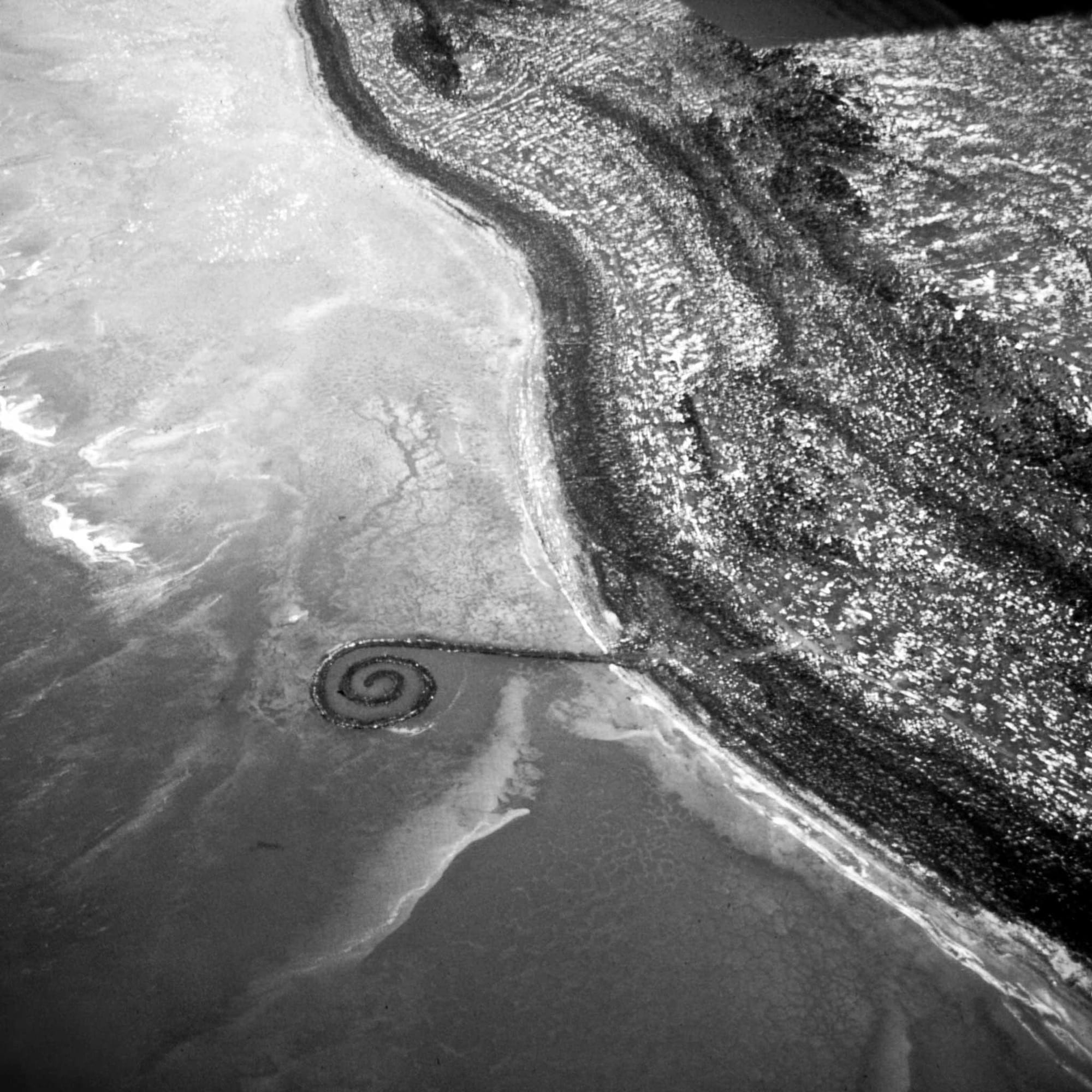
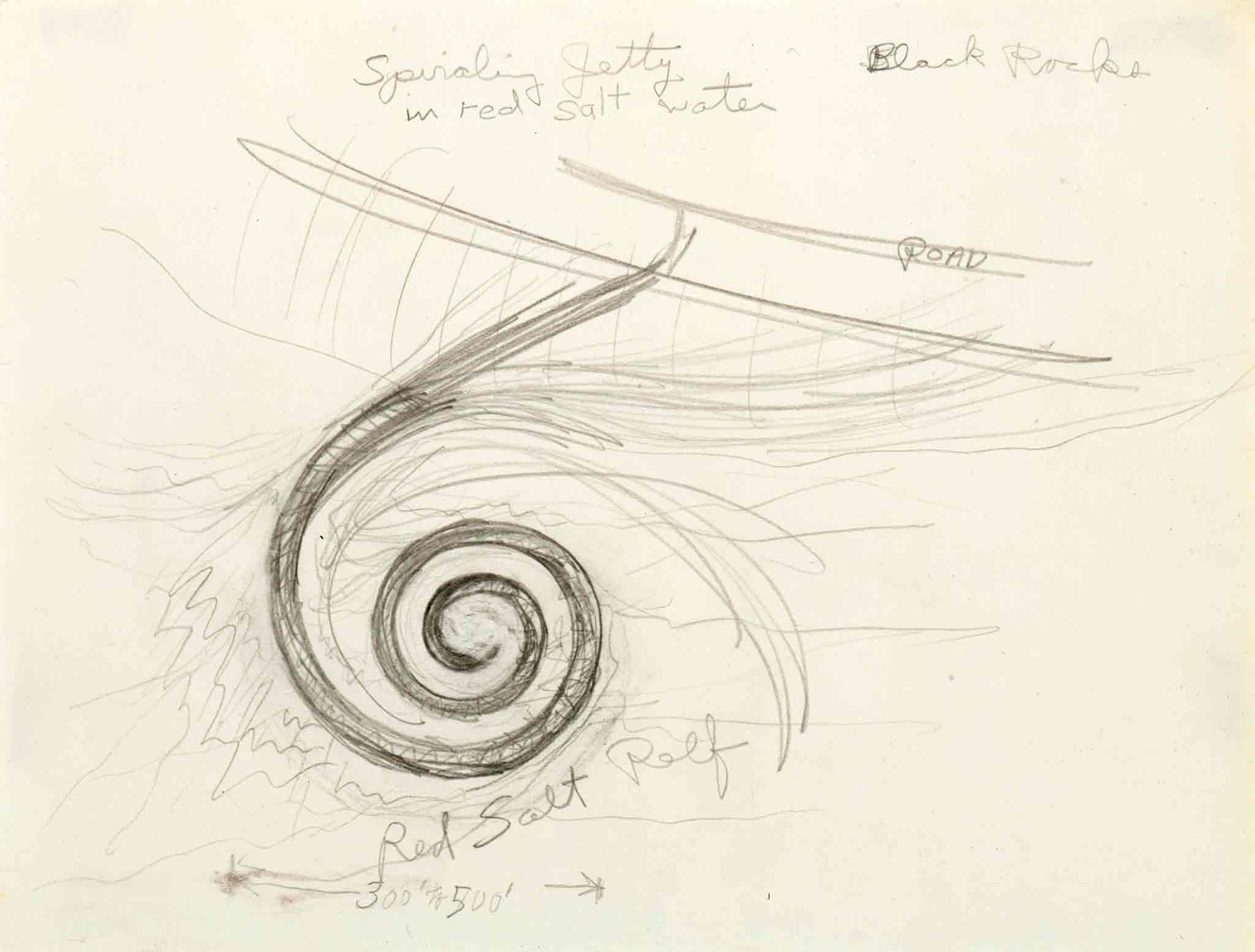
Images from Holt/Smithson Foundation.
