
Bansko is a small mountain town in southwest Bulgaria, at the foot of the Pirin Mountains, and it works as two different places depending on the season. In winter it's Bulgaria's biggest ski resort, with a gondola that starts in town. In summer it's a hiking base for Pirin National Park, with festivals, fruit trees in every backstreet, and hot springs a few minutes away in Banya. The highlights are skiing or hiking in Pirin, the old town and its house museums, the mineral pools, and a day trip to the Melnik Earth Pyramids. Give it three or four days for a visit, or a few weeks if you work remotely. Ski from January to March, or come from June to September for hiking. We spent both a winter and a summer here as digital nomads, and summer is our favorite.
Bansko at a glance
Where: Southwest Bulgaria, about 160 km from Sofia airport (2.5 to 3 hours by road)
Best for: Skiing in winter, hiking in summer, hot springs all year
Ski season: December to mid-April (1 December 2026 to 11 April 2027 on the official calendar, snow permitting)
Hiking season: Late June to September
How long: Three or four days for a visit, longer for a working stay
Getting around: On foot. Taxis or a car for Banya, Vihren hut, and day trips
Money: Euro (Bulgaria switched from the lev on 1 January 2026)
Our favorite season: Summer
Things to do in Bansko town
1. Walk the old town
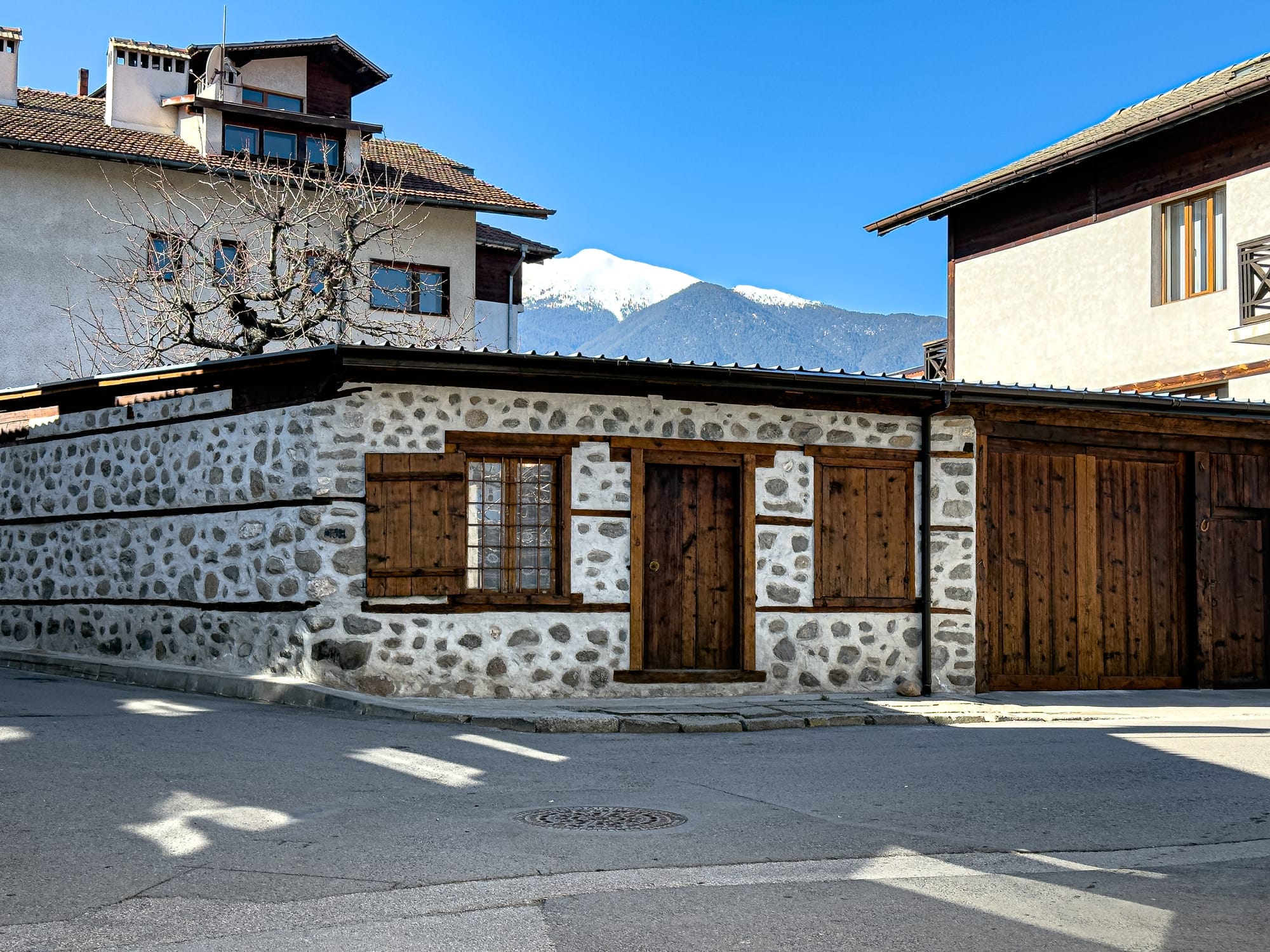
Bansko's old town is a compact grid of cobbled lanes, stone walls with heavy wooden gates, and houses built like small fortresses. Start at the square with the clock tower and the Holy Trinity Church, which the people of Bansko built in 1835, then wander the side streets toward the river. The old town is a 10 to 15-minute walk from the gondola, so it's easy to fit in even on a ski trip. Our winter in Bansko guide has more on the town in the snow.
2. Visit the house museums
Bansko's museum complex is spread across several historic houses in the old town. The best known is the house of Neofit Rilski, the monk and teacher born here in 1793, right beside the Holy Trinity Church. The complex also includes the house museum of the poet Nikola Vaptsarov, Velyan's House, Radonova House, and an exhibition of icons from the Bansko school of icon painting. Entry is paid and opening hours vary by season, so check with the tourist office before you go. It's a good plan for a snowy afternoon or a rest day between hikes.
3. Eat at a mehana
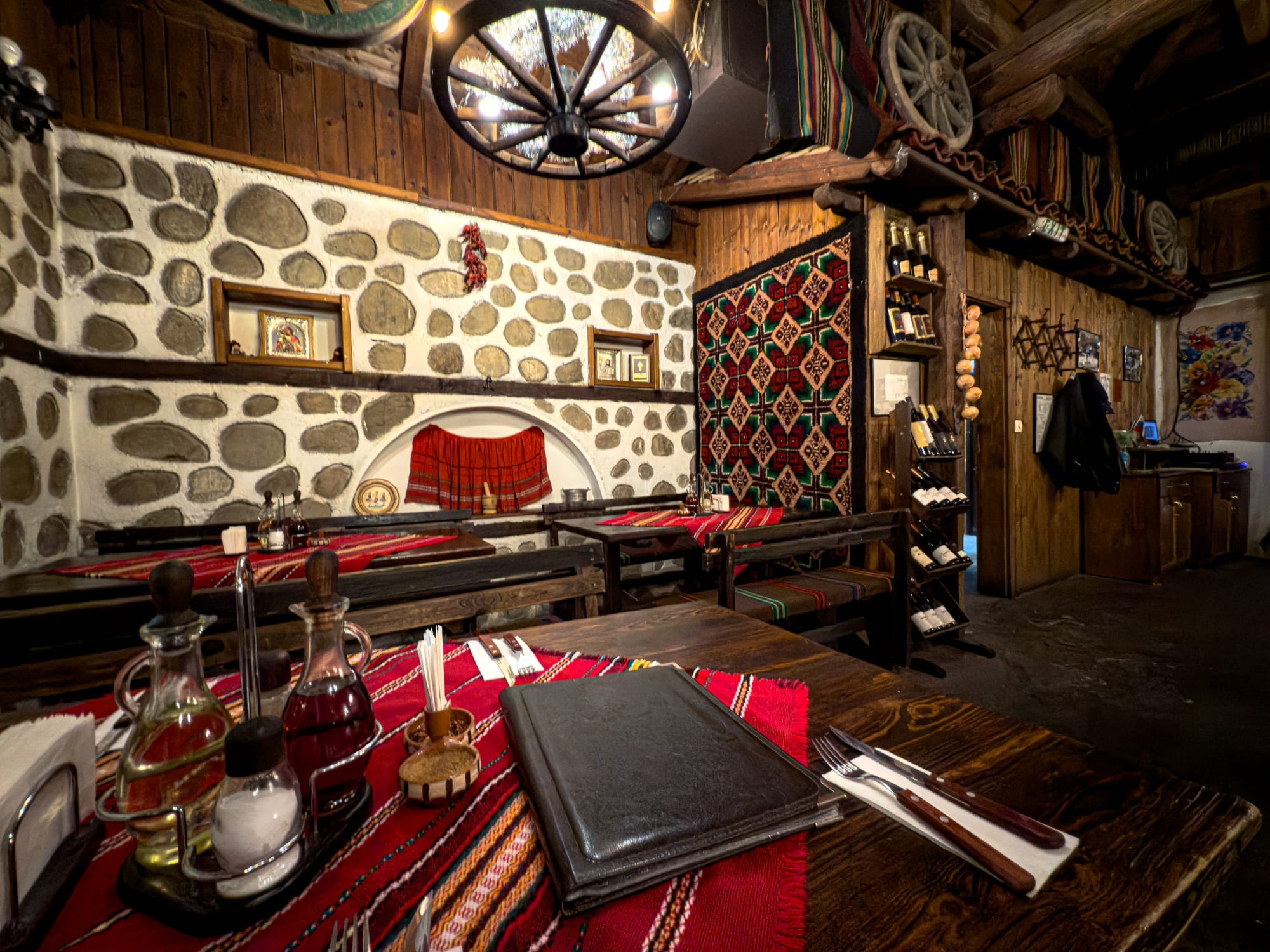
A mehana is a traditional Bulgarian tavern: stone walls, wood fires, woven tablecloths, and big portions. They're at their best in winter, when the fireplaces are lit. Most menus are heavy on meat and cheese, but as we explain in our guide to eating vegan in Bansko, a few classics are plant-based by default: vegetable sach (a sizzling clay platter of grilled vegetables), lutenitsa (a red pepper and tomato spread), and bean soup. For us, one mehana was much like another, so pick one that's busy and has a fire going.
4. Try the bakeries and cafés
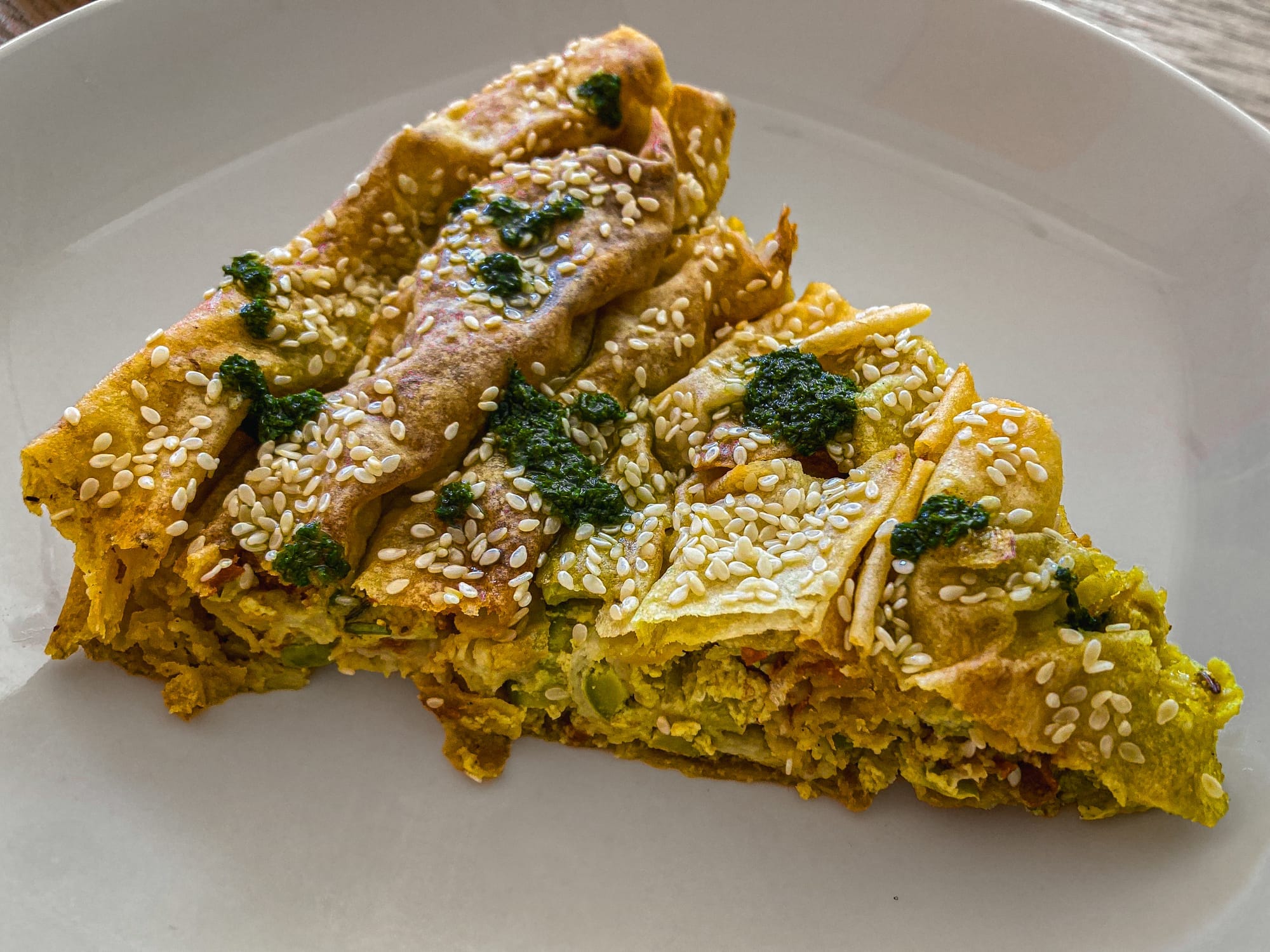
Two of our regular stops were Lubanitza, a bakery-café that makes a vegan version of banitsa (Bulgaria's classic layered pastry, usually made with cheese and egg), and The French Guy, a small microbakery with a garden where most of the breads, including the sourdough, are vegan. Chalet Yanitza, near Nestwork, almost always has a vegan dish or two, like a chickpea curry.
5. Shop at the Sunday market
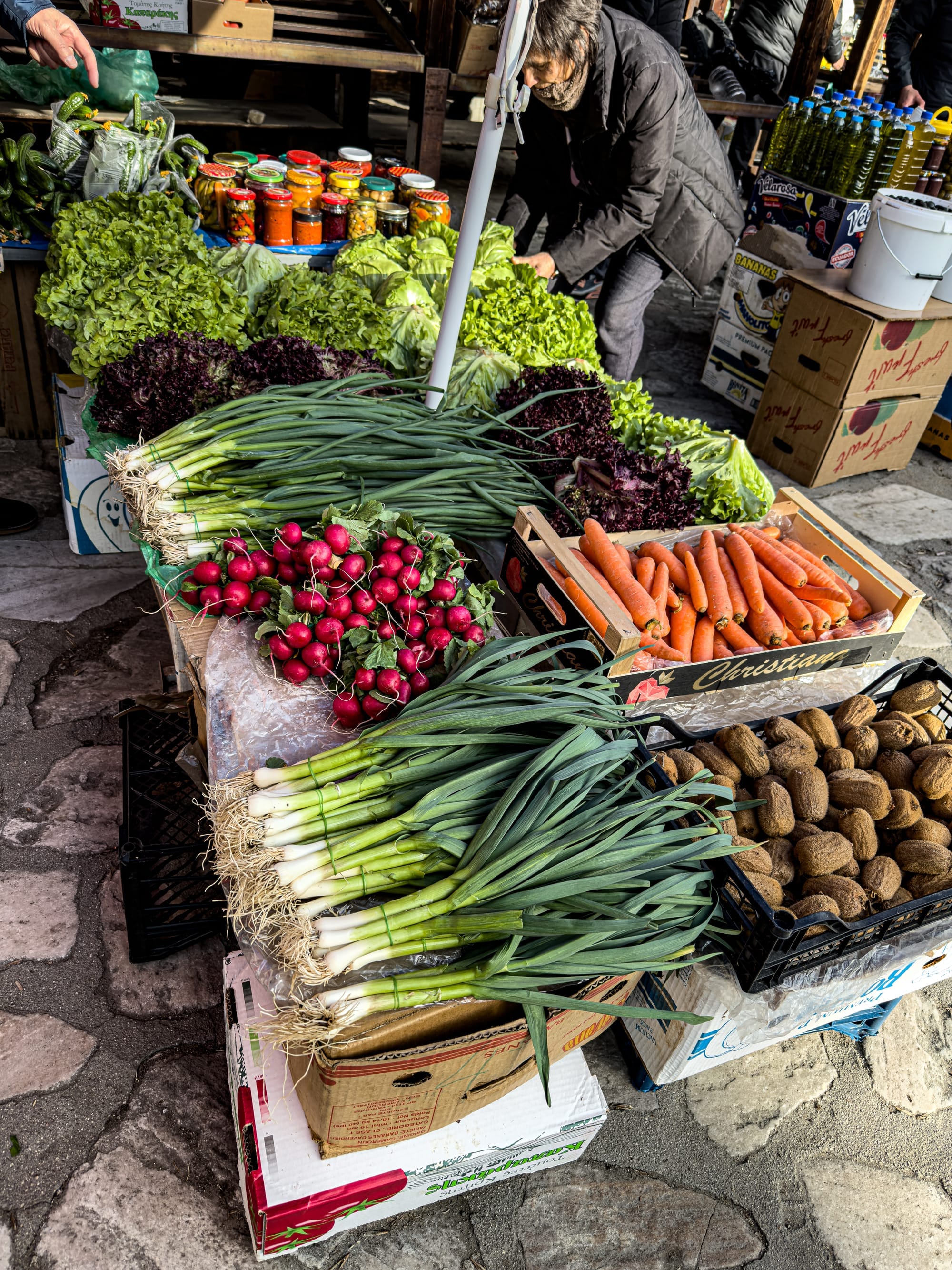
Bansko's Sunday market is where locals buy fruit and vegetables from nearby farms, along with walnuts, pumpkins, honey, and seasonal produce. If you're staying somewhere with a kitchen, it's the best place to stock up for the week.
6. Fill your bottle at the mountain-water fountains
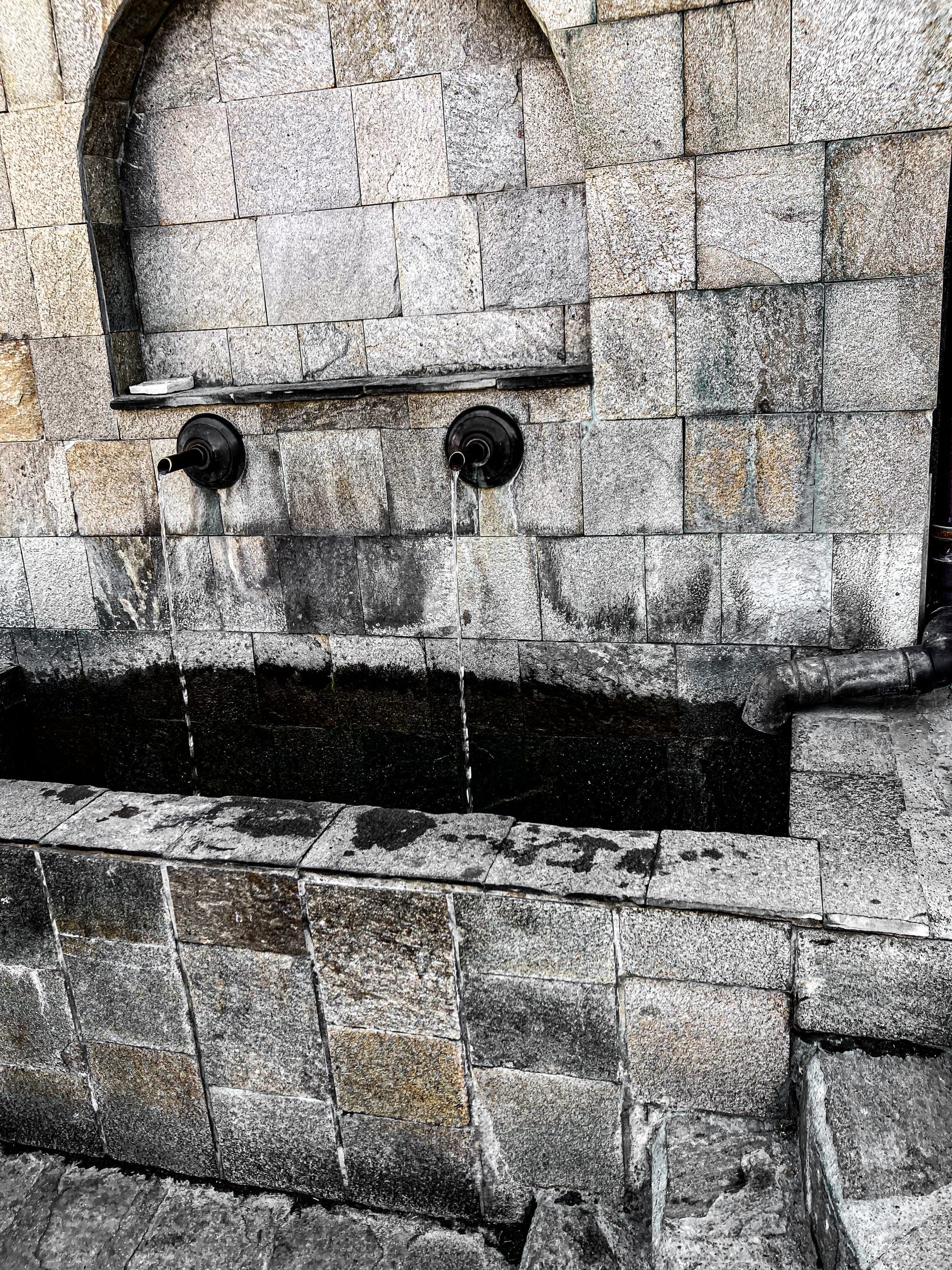
Stone fountains with water piped down from the mountains are dotted all over town, many with carved spouts and old plaques. Bring a bottle and top it up as you walk. Drinking mountain water from public fountains is one of the small things that make living here feel healthy.
7. Pick fruit in the backstreets (summer)
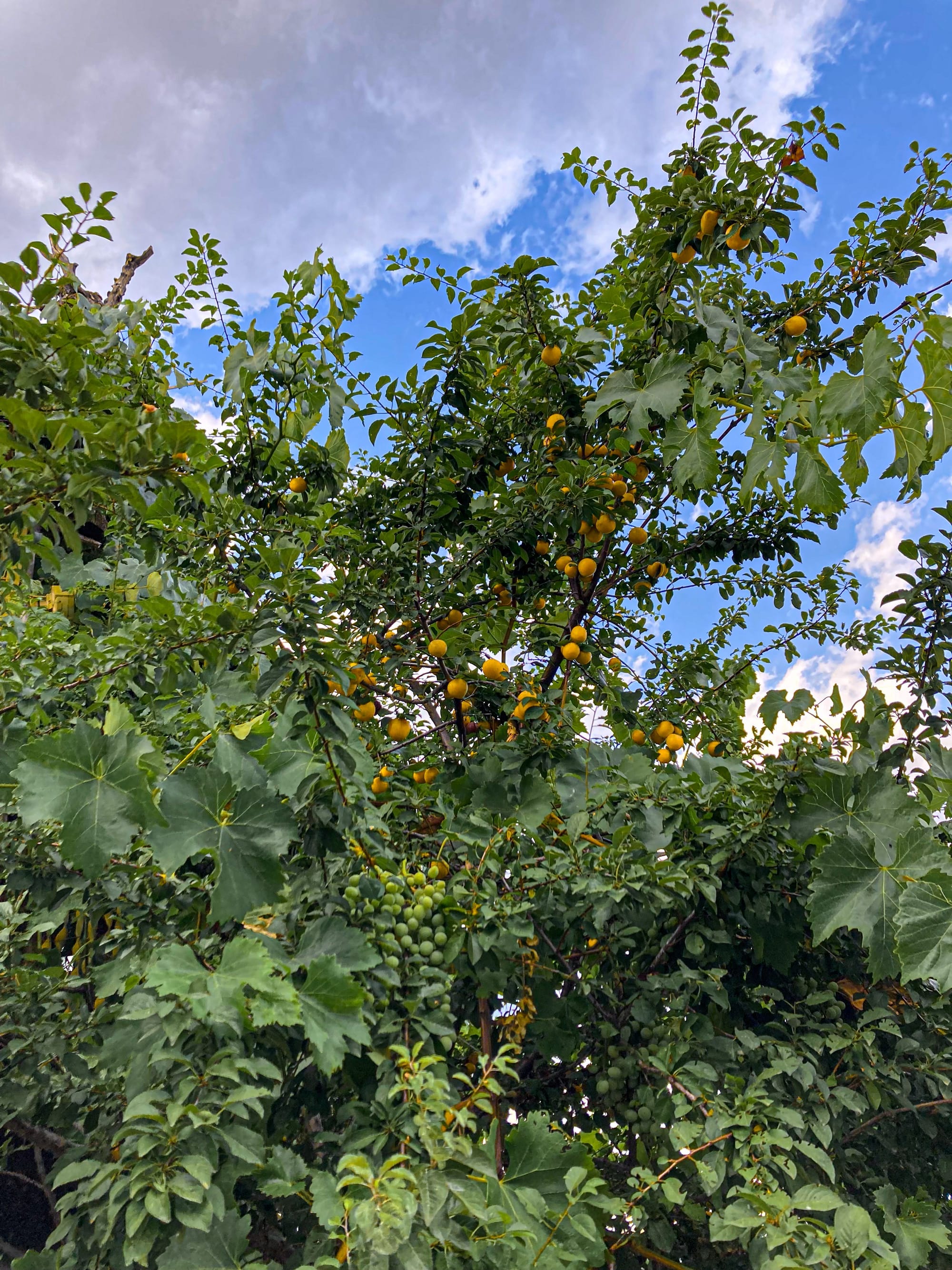
In summer, Bansko is full of fruit trees: plums, apricots, peaches, cherries, and grapes hanging over garden walls. On the forest paths just outside town you'll find wild raspberries and blackberries. Pick only what's growing on public land, and ask if a tree is clearly in someone's garden.
8. Join a photography walk through the abandoned buildings
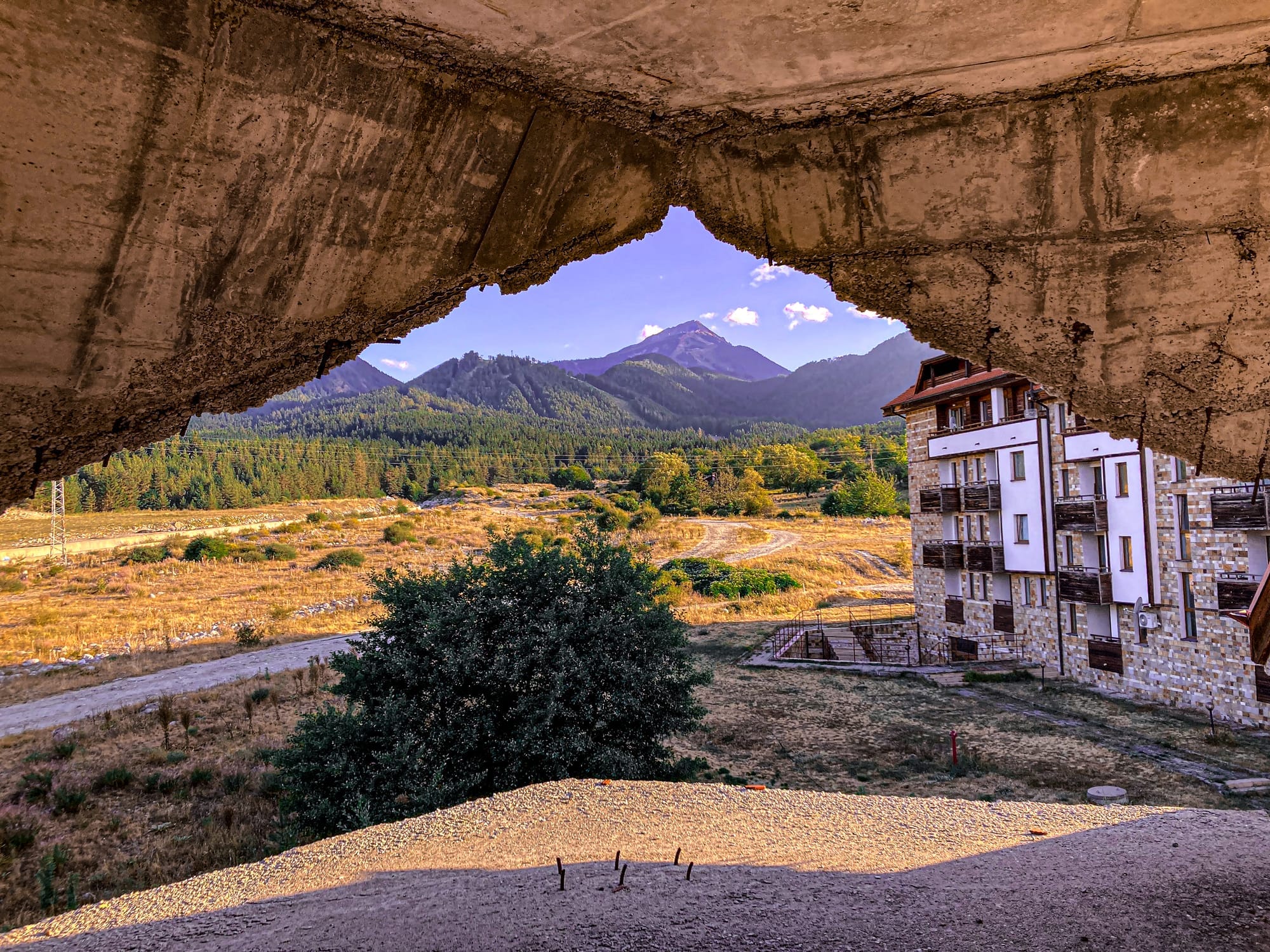
Bansko is ringed by unfinished hotels and apartment blocks left behind when the building boom collapsed after the 2008 financial crisis. We joined a photography walk organized through the local nomad WhatsApp group, starting just past the gondola near the Regnum Hotel, and climbed bare concrete floors to frame the Pirin peaks through empty windows. Some of the shells are covered in murals and graffiti. Our photography tour of Bansko's abandoned buildings explains why they're there and how to visit safely: many are private, some are fenced off, and loose floors and exposed rebar are real hazards.
9. Work a day from a coworking space
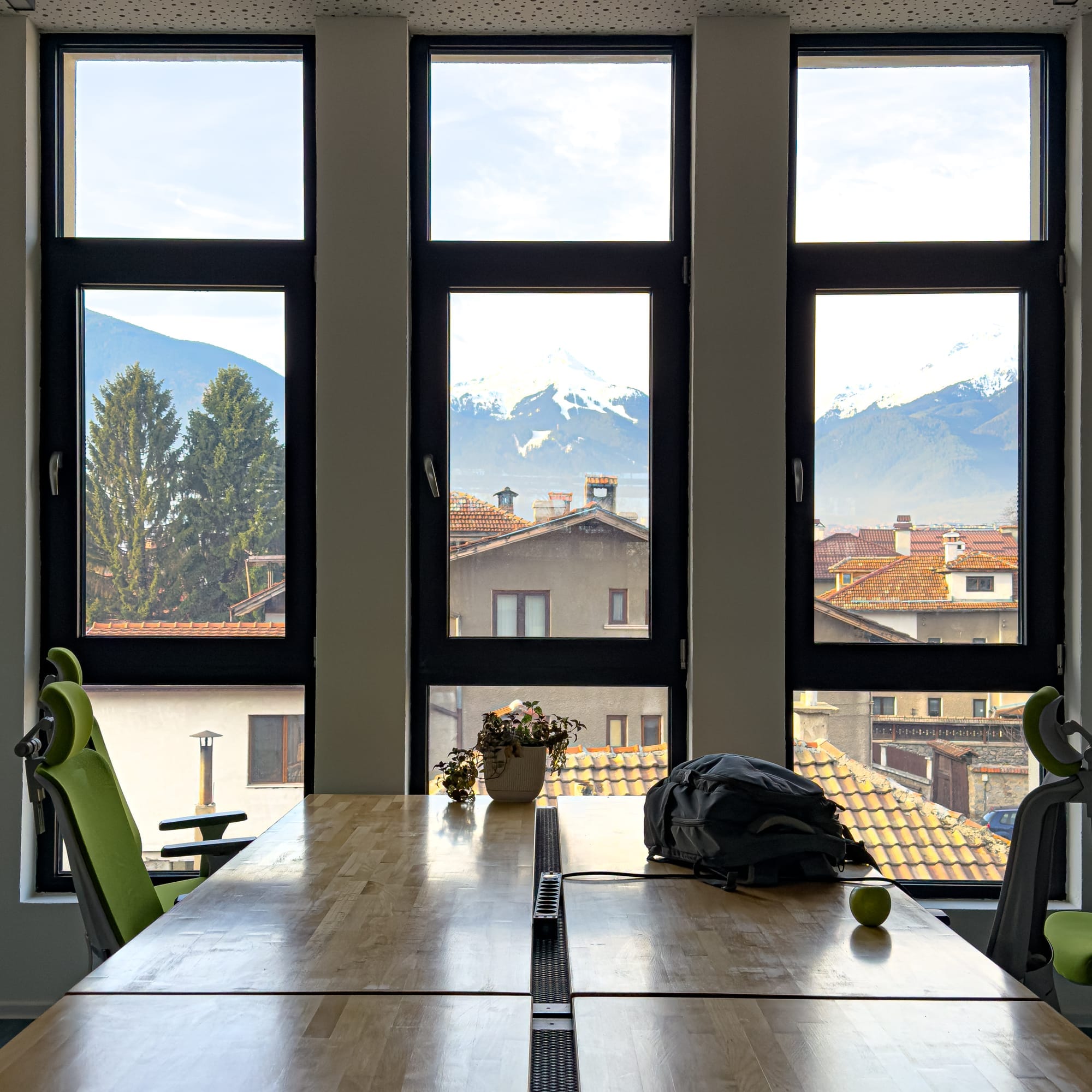
Bansko has one of Europe's biggest digital nomad scenes for its size. Even if you're only visiting, a day pass is a good way to meet people. We worked from Nestwork, a large modern space with mountain views, and liked it. Altspace is the social one, with Friday drinks, and Coworking Bansko is the original. See our guide to coworking in Bansko for prices and what each is like.
Things to do in Bansko in winter
10. Ski or snowboard in the Pirin Mountains
Bansko is Bulgaria's largest ski area, with about 75 km of runs and 14 lifts, reached by an eight-seat gondola from the edge of town. Most runs are easy or intermediate, with a smaller number of black runs higher up, and January to March has the most reliable snow. Our guide to skiing in Bansko covers the runs, rental, and ski schools, and our Bansko ski pass guide has the current prices and where to buy.
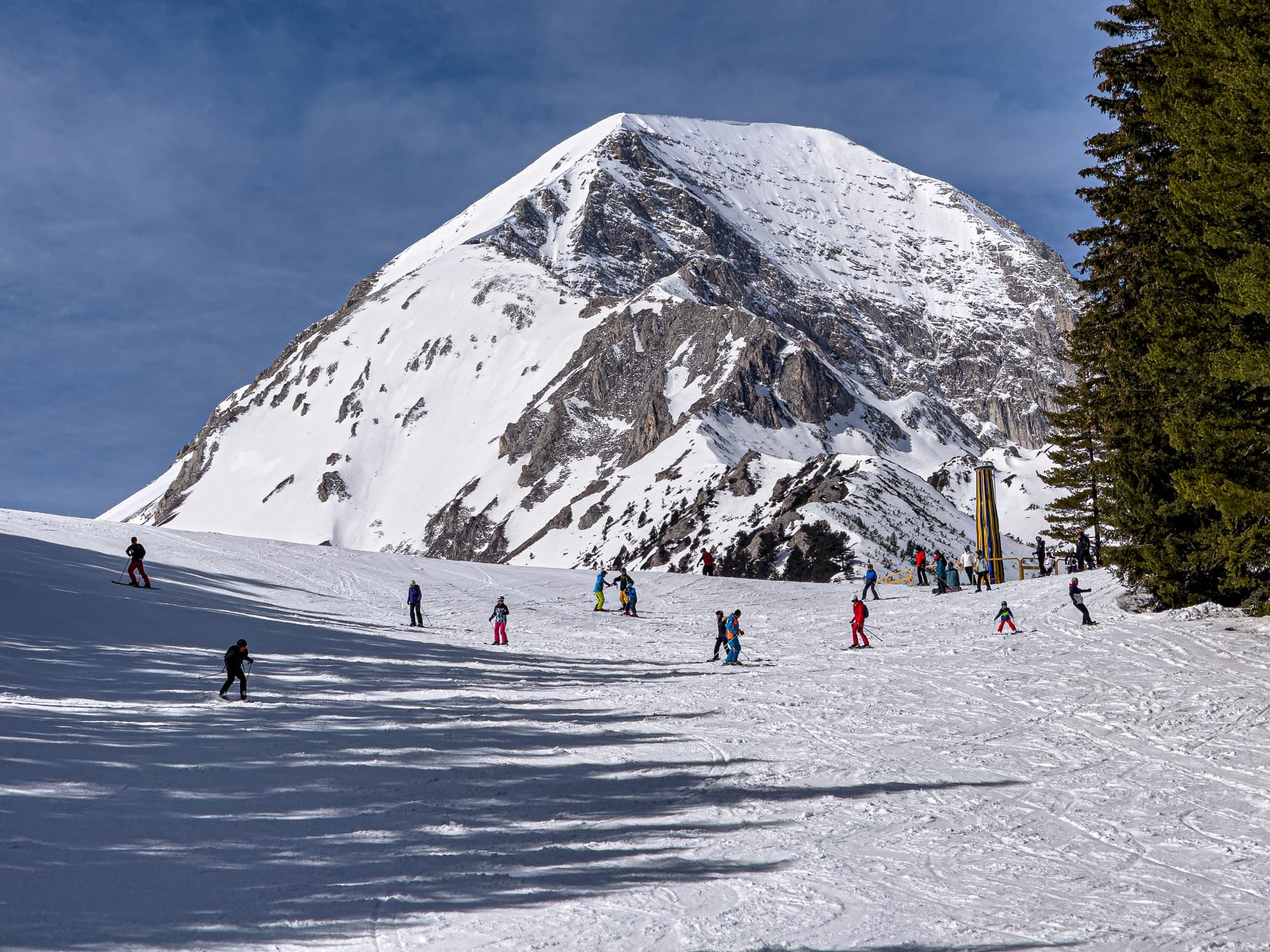
11. Ski the long road back to town
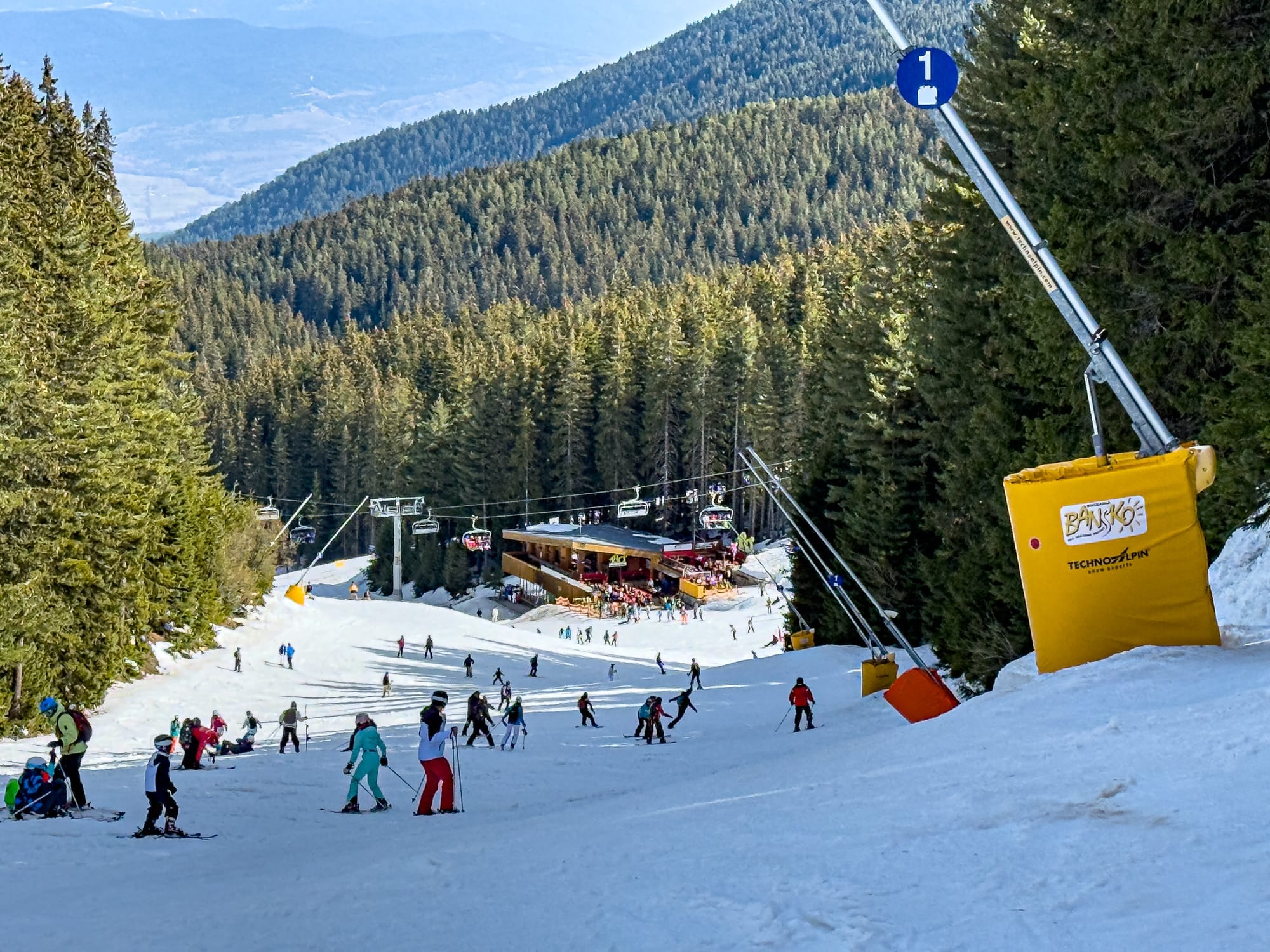
At the end of the day you don't need the gondola to get down. A wide, gentle ski road of about 7 km runs from the upper slopes back to the gondola base, through forest, with views across the valley. It's ideal for beginners and is lit for night skiing on certain evenings. It gets crowded late in the afternoon, when everyone heads down at once.
12. Go snowshoeing
If you don't ski, snowshoeing with a local guide is the easiest way to get into the mountains in winter, as many summer paths are hard to follow under deep snow. The forests around town are covered in snow, with frozen streams and open views of the peaks.
13. Look for martenitsi in early March
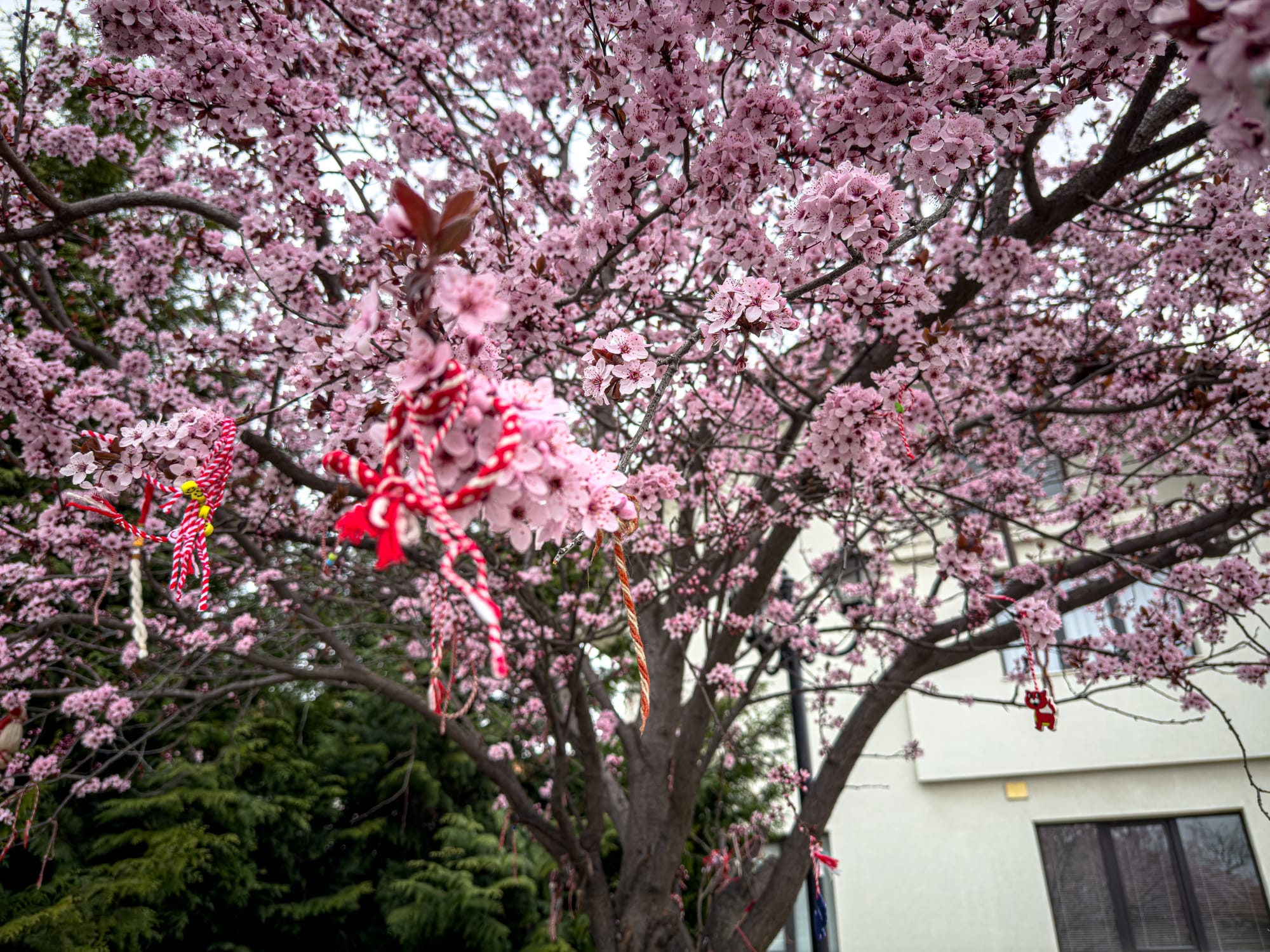
On 1 March, Baba Marta Day, Bulgarians give each other martenitsi, red-and-white threaded bracelets, and wear them until they see a stork, a swallow, or a blossoming tree. Then they tie them to a branch. In March and April you'll see trees all over Bansko hung with them, and stalls selling them in town. The custom is on UNESCO's list of intangible cultural heritage.
Things to do in Bansko in summer
14. Ride the gondola in summer
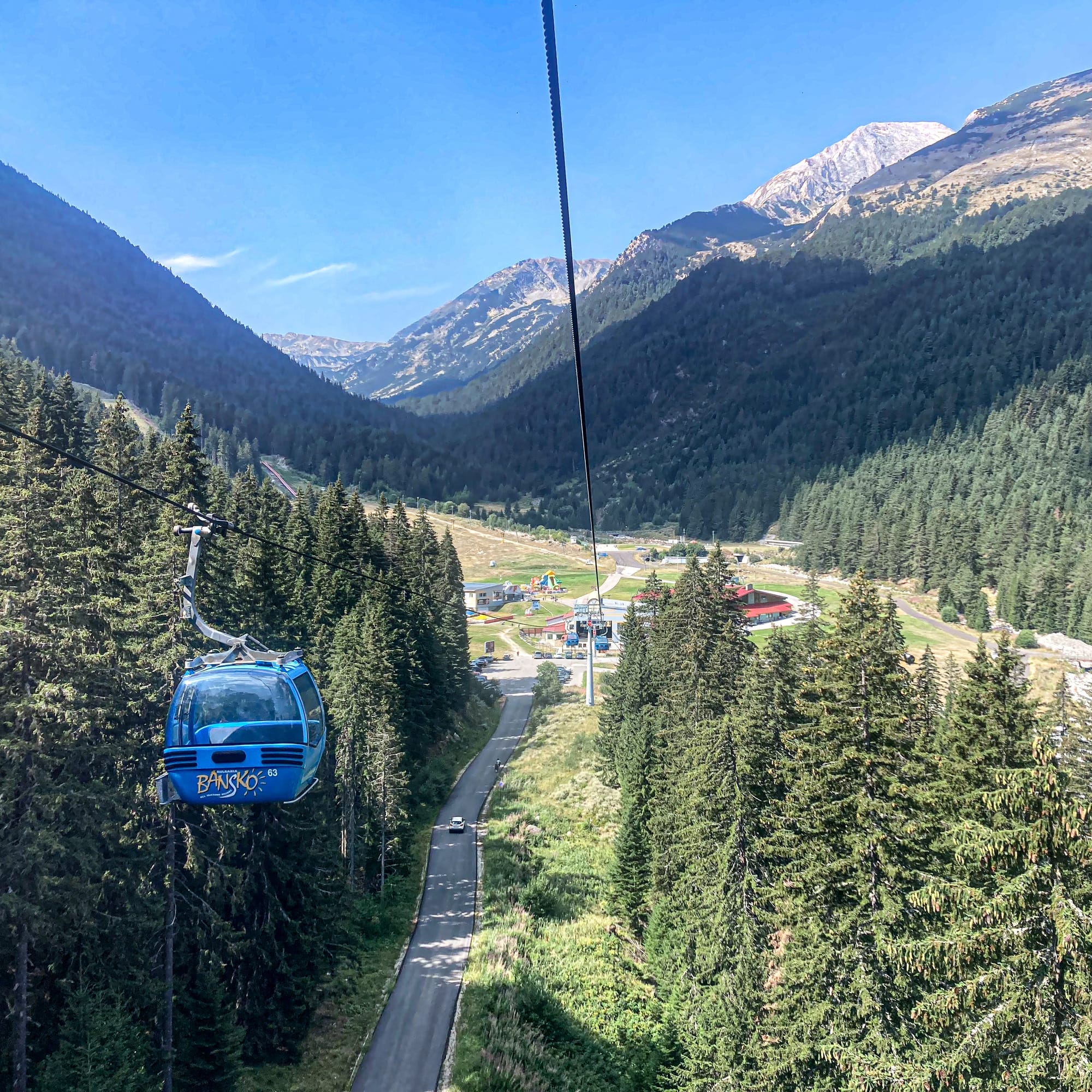
The gondola also runs in summer for hikers and mountain bikers. In 2026 it ran from late June to early September and cost about €27 return (check the current dates and price on the official ski area site). The ride gives you wide views over the town and the valley, and it saves the first big climb. Our summer in Bansko guide has more on the season.
15. Hike to Pirin's glacial lakes and Vihren
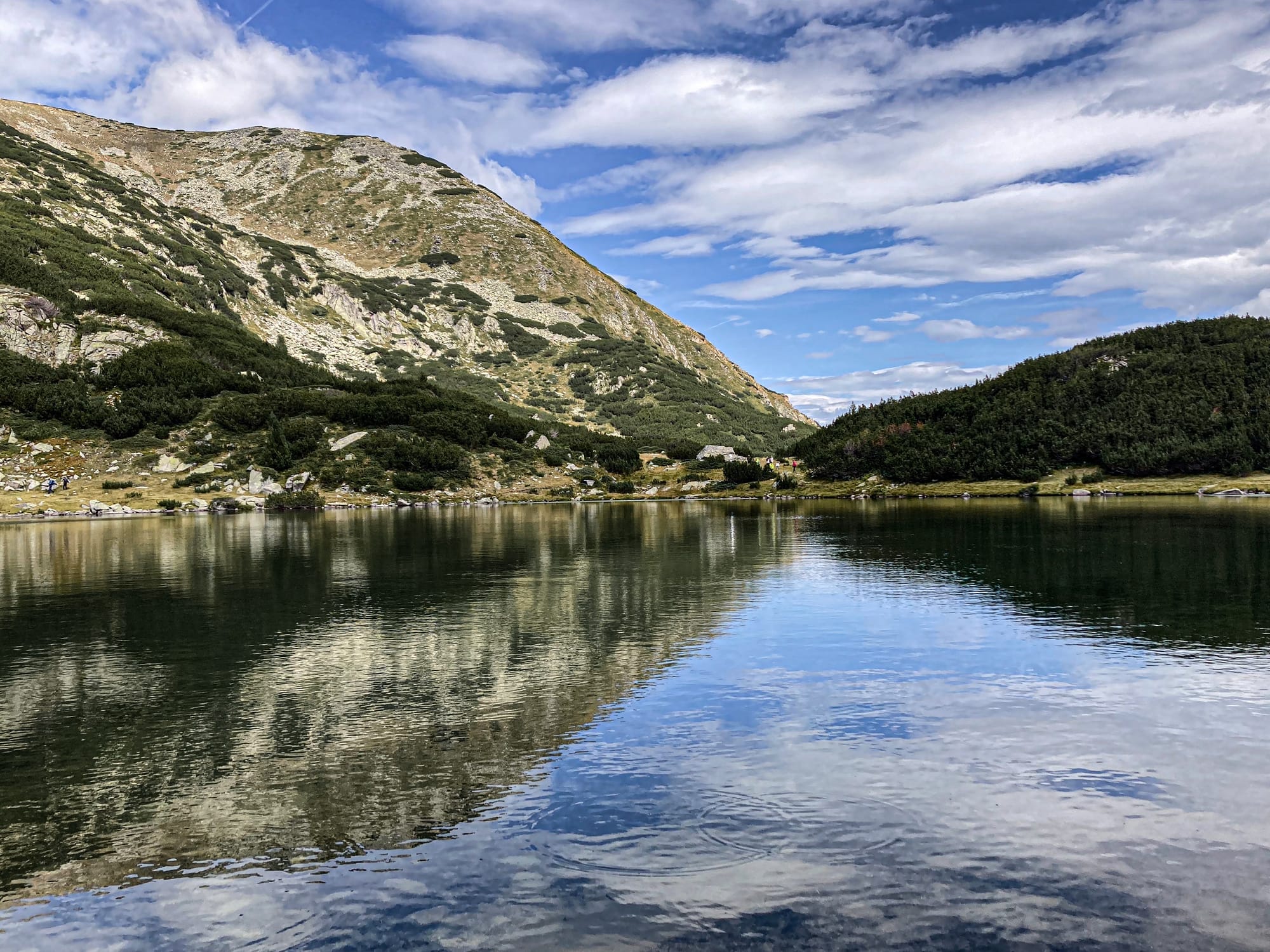
Bansko sits at the edge of Pirin National Park, a UNESCO World Heritage Site with more than 100 glacial lakes and Vihren (2,914 m), Bulgaria's second-highest peak. Most hikes start at Vihren hut, about 15 km above town by road. Okoto Lake is an easy walk of under an hour, Muratovo Lake takes 2 to 2.5 hours return, and Vihren Peak is a hard day of 5 to 6 hours. Our guide to hiking in Bansko has the routes, times, and safety tips. Start early, as afternoon storms are common.
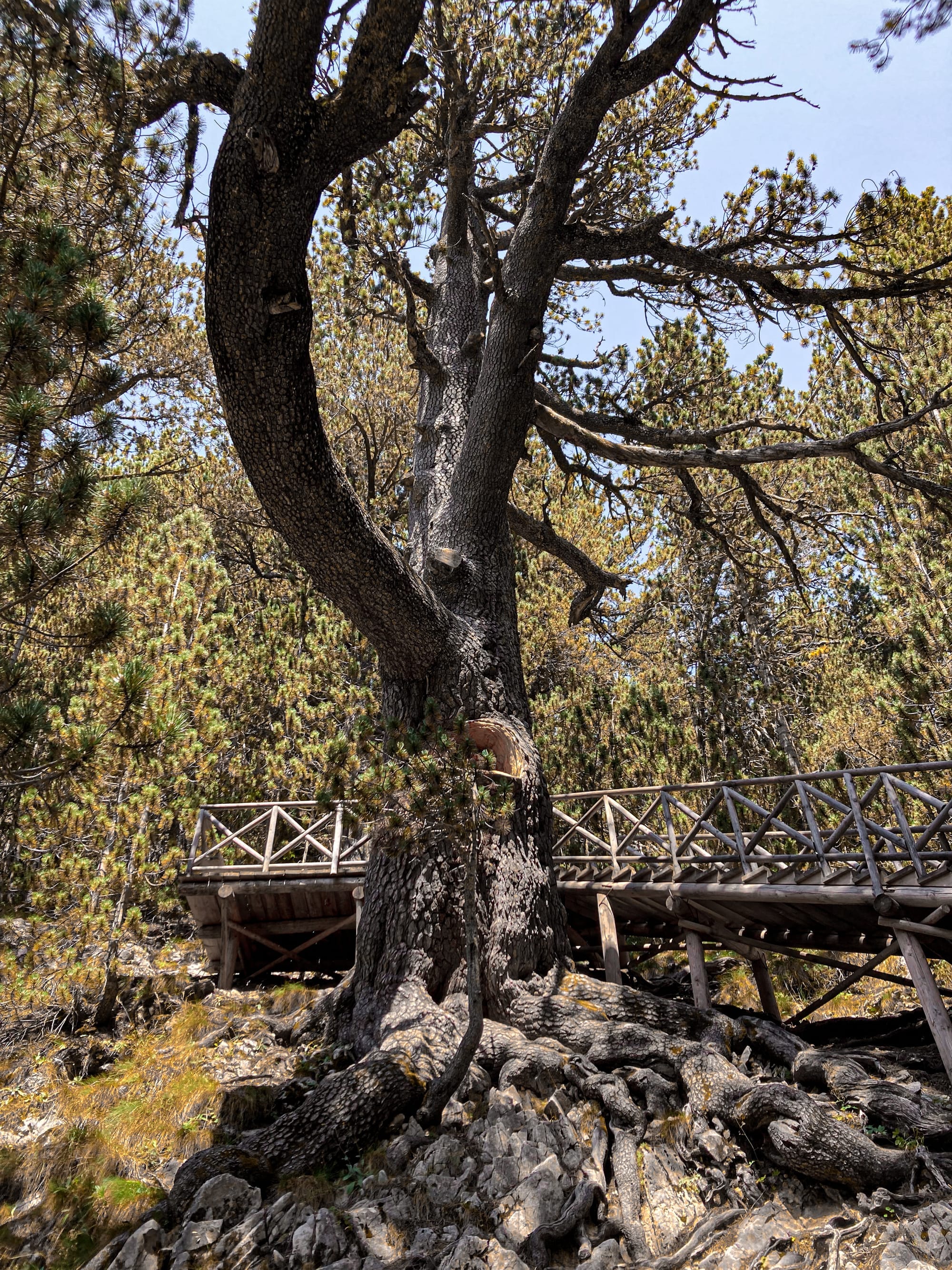
16. See Baikushev's pine, Bulgaria's oldest tree
Near Banderitsa hut, on the road up to Vihren hut, stands Baikushev's pine, a Bosnian pine thought to be around 1,300 years old. A wooden platform circles the trunk. It's an easy stop on the way to a hike, or a short walk on its own.
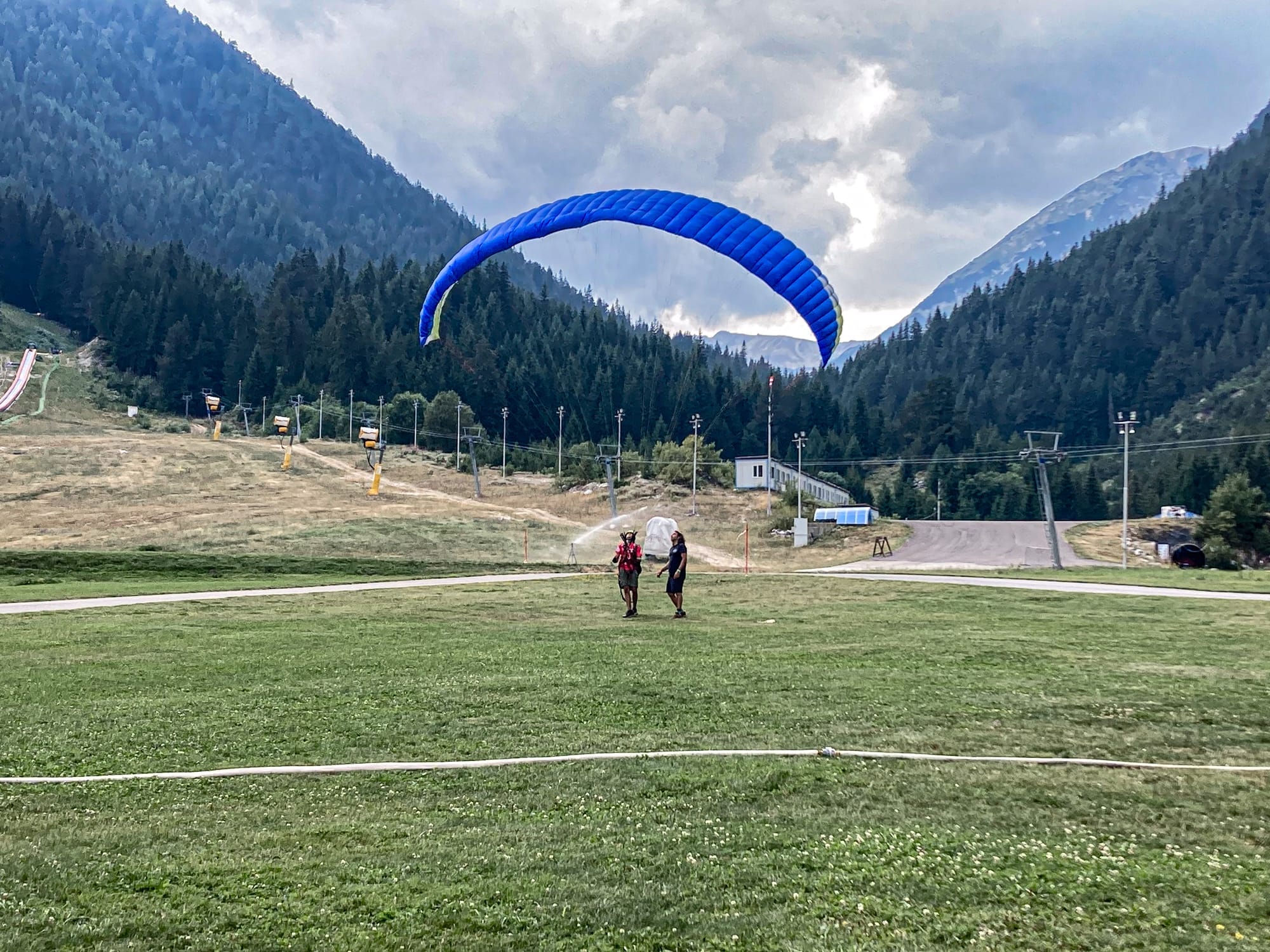
17. Watch (or try) paragliding
On clear summer days, paragliders launch from the ridges above town and glide across the valley. Tandem flights with local pilots are available if you want to try it, and conditions depend on the weather on the day.
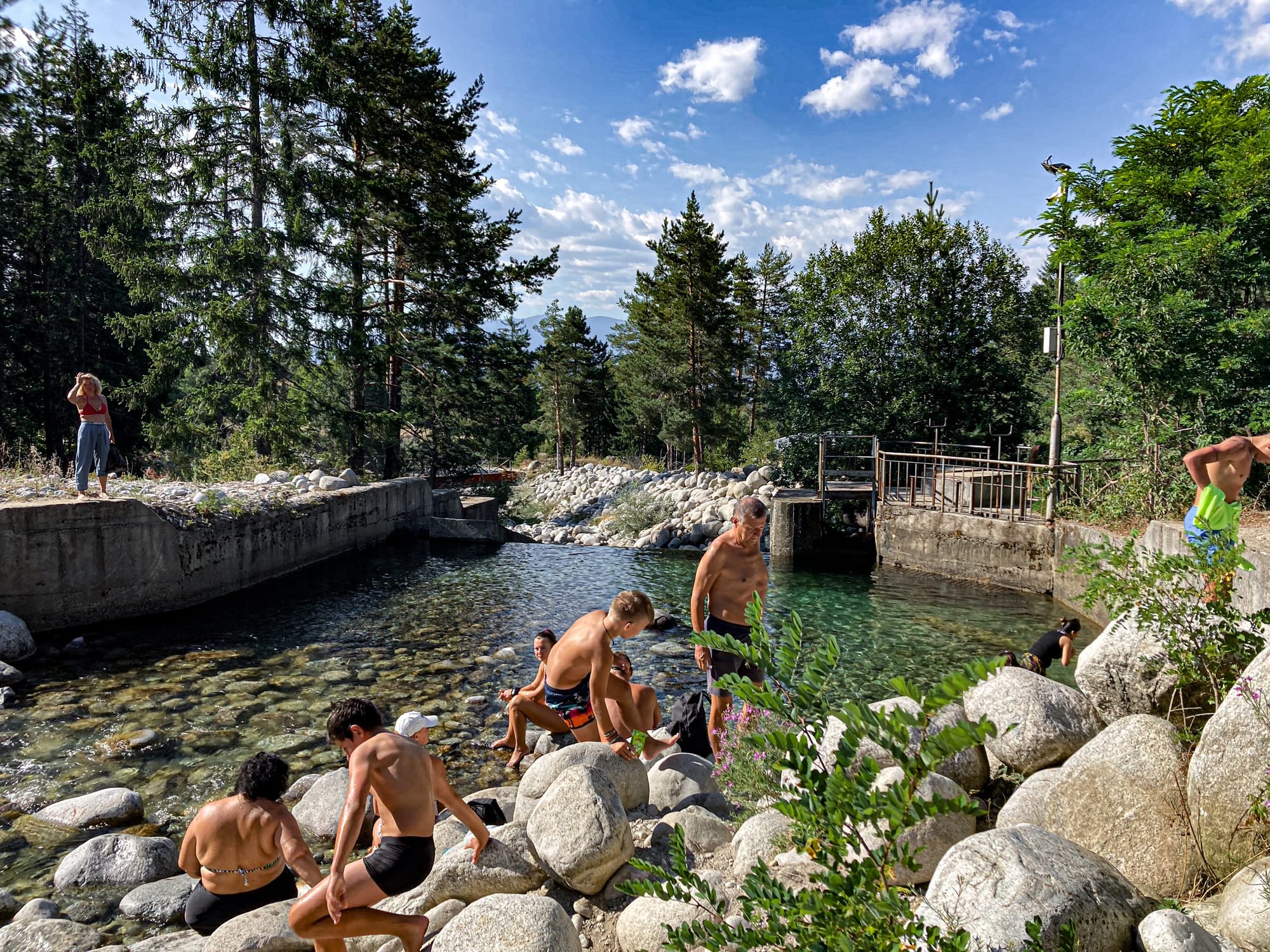
18. Take a cold plunge in a mountain river
After a run or a bike ride, many people stop at natural pools in the ice-cold mountain streams around town. The water is very cold, even in July, and it has become something of a summer ritual for locals and nomads.
19. Catch the jazz festival or Nomad Fest
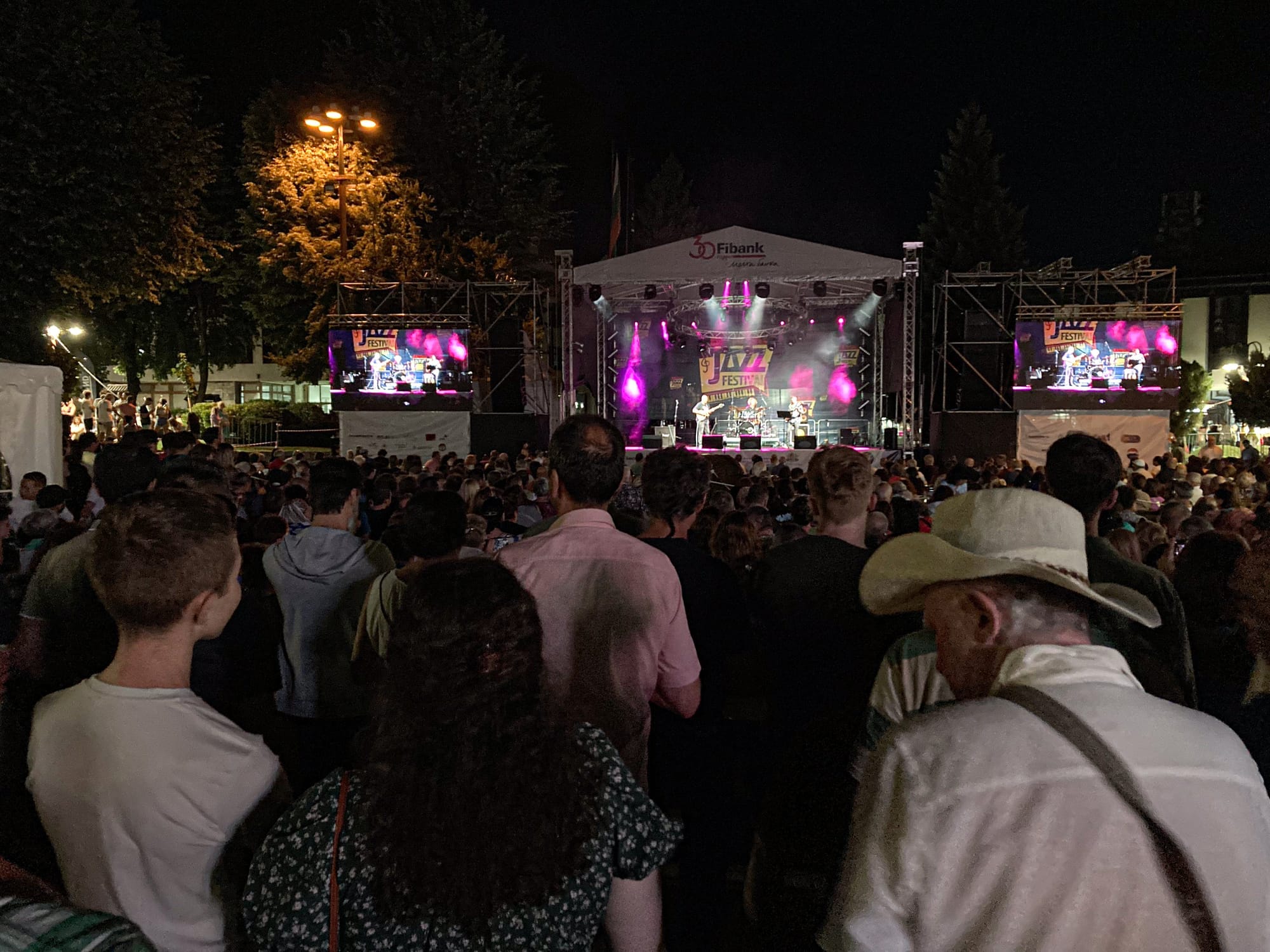
The long-running Bansko Jazz Festival fills the main square with outdoor concerts every August. In June, the Bansko Nomad Fest brings hundreds of remote workers to town for talks, workshops, and parties (20 to 27 June in 2027). We haven't been to Nomad Fest ourselves, but the town fills up for it, so book early. Our post on digital nomad life in Bansko covers the festival season.
Hot springs near Bansko
20. Spend a day at Pulse Therme
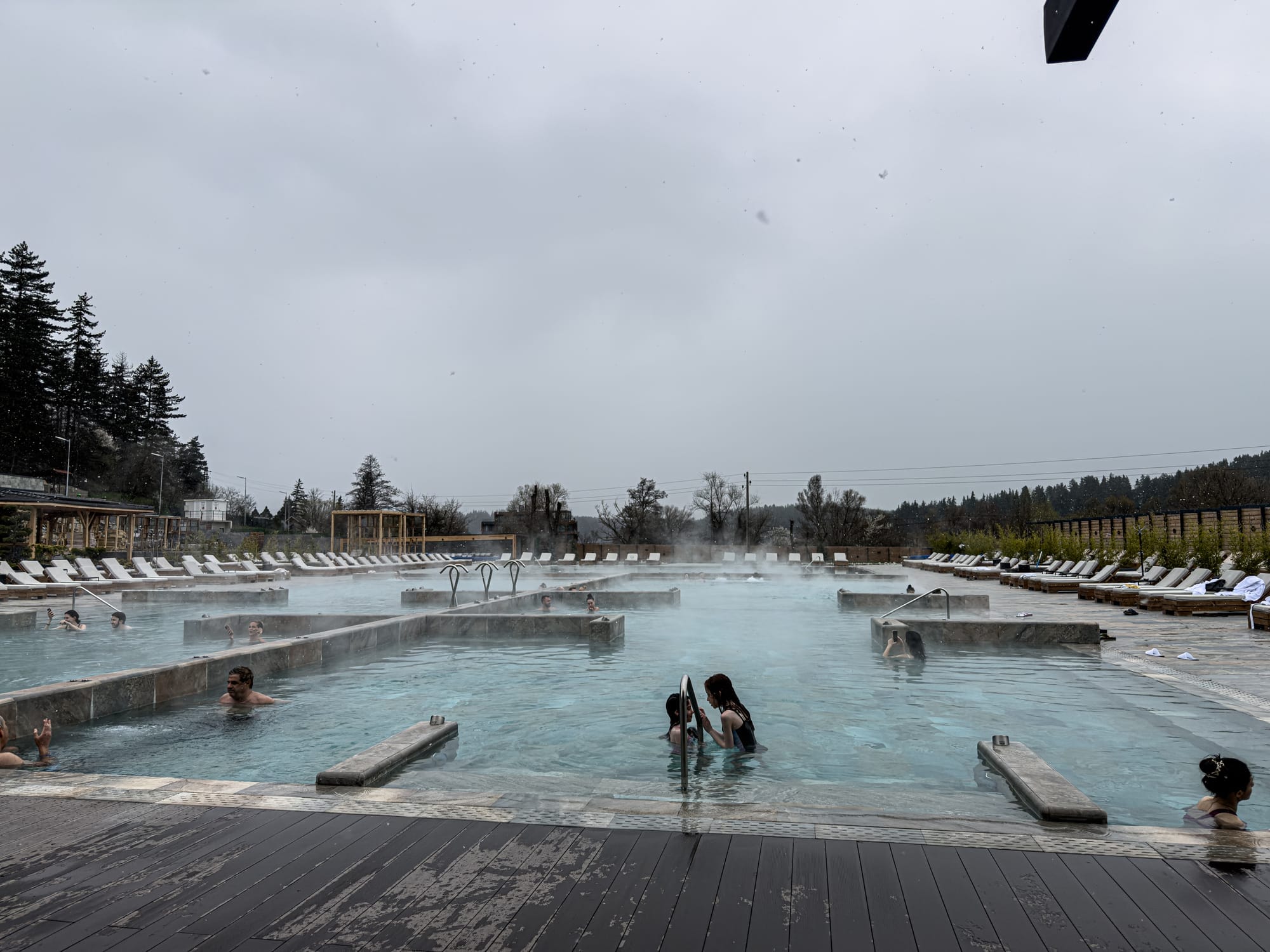
Pulse Therme, in the village of Banya about 7 km from Bansko, is the biggest and most modern thermal spa in the area: 13 mineral pools indoors and out, saunas, steam rooms, an ice room, a salt room, and sauna ceremonies through the day. It's open daily from 9 am to 10 pm, and there's a shuttle from Bansko. It was one of our favorite places to recover after a hike. Plan on a full day. Our Pulse Therme guide has the details.
21. Soak at Izgreva and the other Banya pools
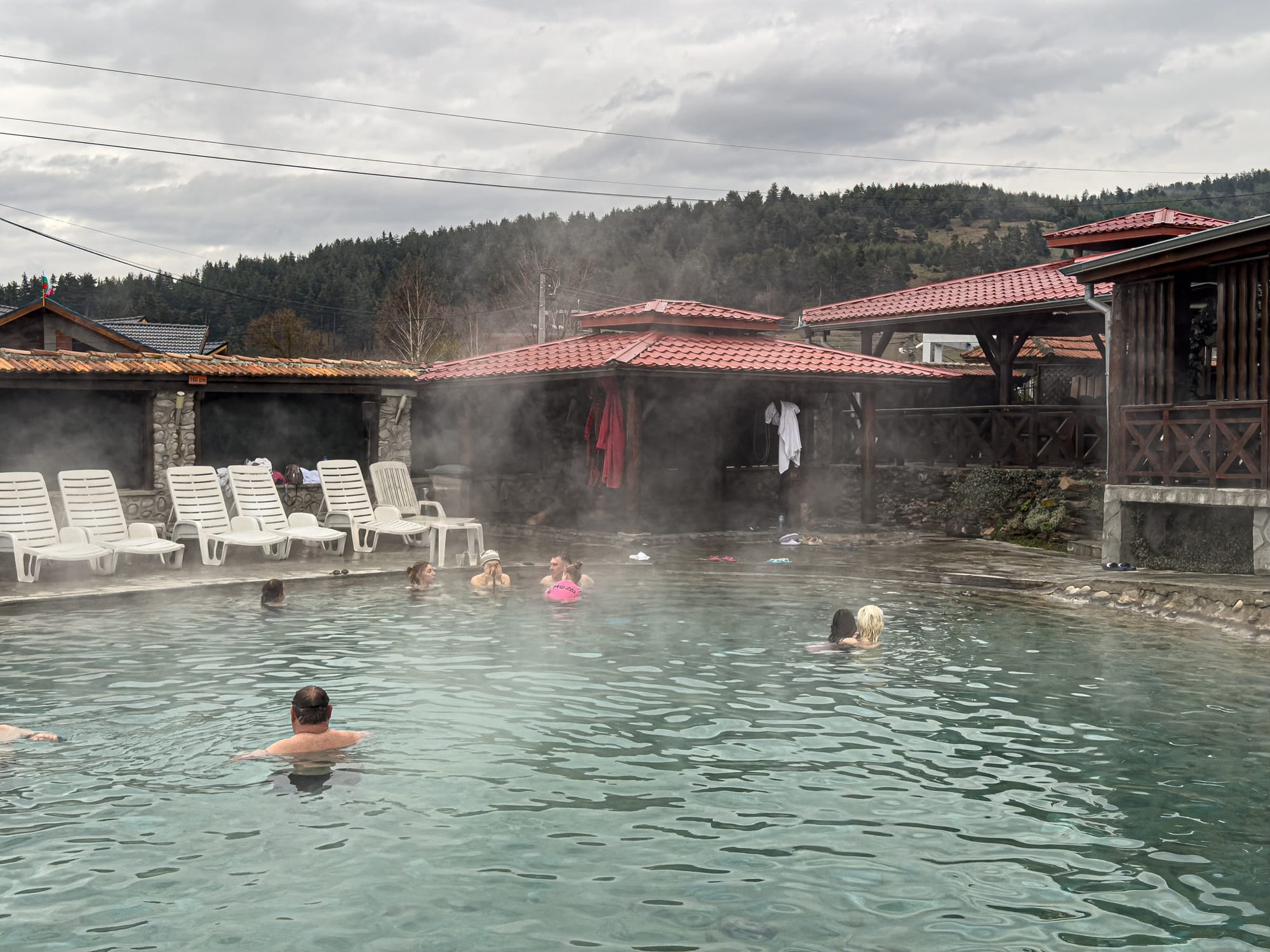
Izgreva, also in Banya, is simpler and cheaper than Pulse, with outdoor pools that are best in winter, when you sit in hot water with snow on the roofs around you. Regnum, Villa Victoria, and Grand Hotel Therme in Banya also sell day passes, and Alpha Thermal Pool in Dobrinishte has large outdoor pools. All are within 15 to 20 minutes of Bansko.
Day trips from Bansko
22. Hike the Melnik Earth Pyramids
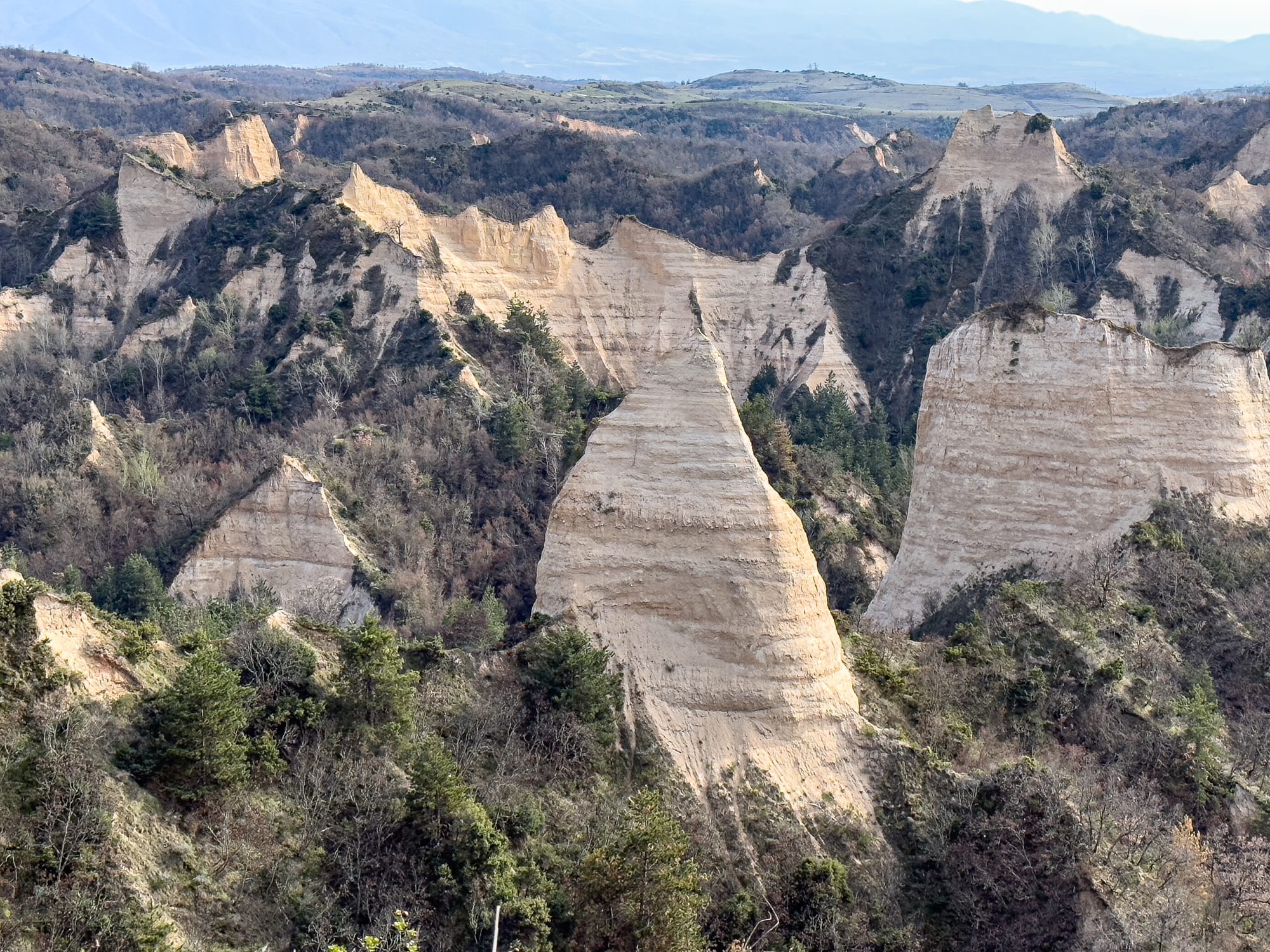
Melnik, Bulgaria's smallest town, sits among sandstone formations up to 100 m high, about 1.5 to 2 hours' drive from Bansko. We spent a weekend there with friends from our coliving, walked the 6 to 8 km loop through the pyramids, and visited Rozhen Monastery and the old wine cellars. We'd recommend staying a night. Read our guide to the Melnik Earth Pyramids for the route and what to see in town.
23. Ride an ATV to St. Nicholas Waterfall
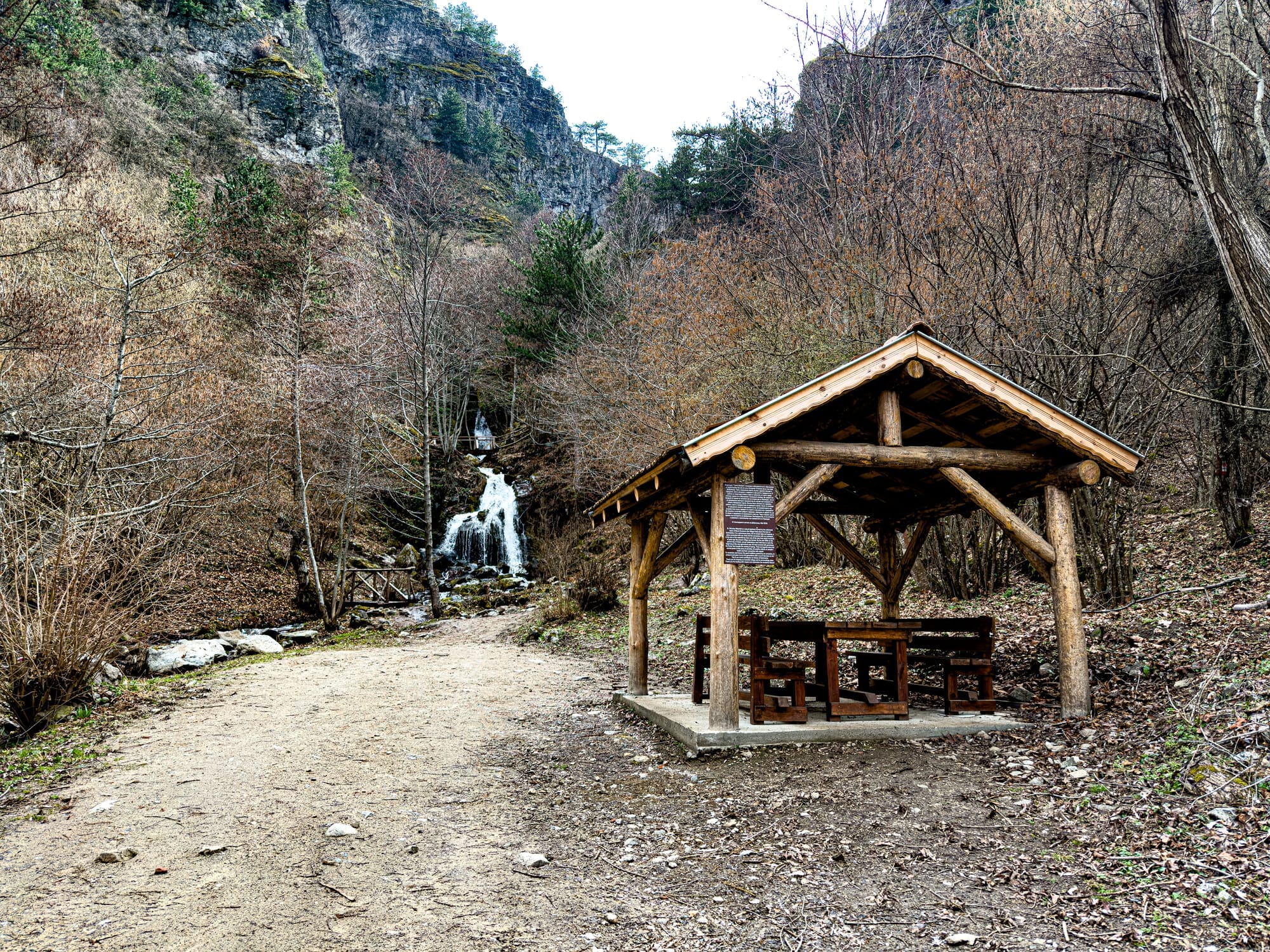
Guided ATV tours from Bansko follow forest tracks in the Pirin foothills, and many routes stop at St. Nicholas Waterfall. Tours start at about 1.5 hours, every tour has a guide, and the driver needs a normal car driving licence. Our post on a Bansko ATV tour to St. Nicholas Waterfall covers prices, gear, and what to wear.
More things to do in Bansko
24. Visit Rila Monastery
Rila Monastery, Bulgaria's best-known monastery and a UNESCO World Heritage Site, is in the Rila Mountains north of Bansko, roughly two hours away by car. Its striped arcades and painted church are among the most photographed sights in the country. It's an easy day trip with a car or on an organized tour, and it pairs well with a stop in Sofia on the way to or from the airport.
25. Ride the narrow-gauge railway
Bansko is a stop on the Septemvri to Dobrinishte narrow-gauge line, a 125 km railway that winds through the Rila, Rhodope, and Pirin mountains. It passes Avramovo, at about 1,267 m the highest railway station in the Balkans. Ride a section for the views, and check the current timetable with Bulgarian State Railways (BDZ) first, as there are only a few trains a day.
Tips for visiting Bansko
- Pick your season. Winter is a busy ski resort; summer is about hiking, festivals, and long days outdoors. We prefer summer.
- Prices are in euros. Bulgaria adopted the euro on 1 January 2026, so blog posts quoting leva are out of date.
- Beat the gondola queue. In peak ski weeks the longest queues are around 9 am. Be there when it opens at 8:30, go up after 10, or stay within walking distance (see our where to stay in Bansko guide).
- Book early for peak weeks. Christmas, New Year, February, and Nomad Fest in June fill up fast.
- Start hikes early. Afternoon thunderstorms are common in the mountains in summer. Carry a fleece and rain gear.
- You don't need a car in town, but one helps for Vihren hut, Banya, Melnik, and Rila Monastery.
- Check your travel insurance covers skiing and hiking before you go.
- If you're vegan, stay somewhere with a kitchen. Options exist, but they're limited.
Where to stay in Bansko
Bansko is small and walkable, so the main choice is between the old town (best for restaurants and character) and the area near the gondola (best for skiing). For a longer stay, a coliving is the easiest way in: we stayed at Avalon Coliving, which is within walking distance of both. Our guide to where to stay in Bansko compares the areas, including Razlog and Banya, and lists our hotel and coliving picks.
Frequently asked questions
What is Bansko famous for?
Skiing. Bansko is Bulgaria's biggest ski resort, with about 75 km of runs in the Pirin Mountains. It's also known for its old town, Pirin National Park, the Bansko Jazz Festival, and a large digital nomad community.
What is there to do in Bansko in summer?
Hike in Pirin National Park (to glacial lakes or Vihren Peak), ride the summer gondola, soak in the hot springs at Banya, go paragliding or take a cold plunge in a mountain river, and catch the Bansko Jazz Festival in August or Nomad Fest in June.
What can you do in Bansko if you don't ski?
Walk the old town, visit the house museums, go snowshoeing with a guide, spend a day at Pulse Therme or Izgreva in Banya, eat in a mehana by the fire, and take day trips to Melnik or Rila Monastery.
How many days do you need in Bansko?
Three or four days covers the old town, a day of skiing or hiking, the hot springs, and one day trip. Many remote workers stay for weeks or months.
When is the best time to visit Bansko?
January to March for skiing, with March the best month for fewer crowds and good snow. Late June to September for hiking. August and September are our favorite months for a longer stay.
Is Bansko worth visiting?
Yes, if you like mountains. It's one of the cheapest ski resorts in Europe, and in summer it's a great base for Pirin National Park. If you want beaches, big-city nightlife, or lots of choice for food, it may feel small after a week or two.
How far is Bansko from Sofia?
About 160 km from Sofia airport, or 2.5 to 3 hours by road. Most people take a private transfer, a shared shuttle, or the bus.
Are the hot springs in Bansko?
Not in Bansko itself. The main mineral pools are in Banya, about 7 km (10 minutes by car) away, and in Dobrinishte. Pulse Therme runs a shuttle from Bansko.
Is Bansko good for families?
Yes. Most ski runs are easy or intermediate, there's a beginner area at Banderishka Polyana, and kids under 7 ski for a symbolic price. In summer, the short lake walks from Vihren hut and the hot springs work well for children.
Useful links: Bansko ski area prices and lift hours, Pirin National Park on UNESCO, Rila Monastery on UNESCO, Bansko Museum Complex (Bulgarian Ministry of Tourism), and Bulgarian State Railways (BDZ).
More from Bansko: Bansko guide, digital nomad guide to Bansko, where to stay in Bansko, Bansko ski pass, skiing in Bansko, winter in Bansko, summer in Bansko, hiking in Bansko, Pulse Therme, and hiking around the world.


