
Hội An is a small, UNESCO-listed trading town on the Thu Bồn River in central Vietnam, about 30 km south of Da Nang. The best things to do are walking the Old Town early in the morning, taking a lantern boat after dark, cycling through the rice fields to Trà Quế, swimming at An Bàng Beach, and a half-day trip to the My Son temple ruins. Three or four days covers the highlights. The best time to go is February to April (March is our favorite), before the summer heat and the autumn floods. We lived and worked in Hội An as digital nomads, and it's one of the cheapest and easiest places we've ever been based.
For the bigger picture, see our Hoi An guide and our digital nomad guide to Hoi An.
Hoi An at a glance
How long: Three to four days for the highlights, a week or more to settle in
Don't miss: The Old Town, a lantern boat, the rice fields, An Bàng Beach, and My Son Sanctuary
Free: Walking the Old Town streets, cycling the rice fields, Trà Quế's garden paths, and the beach
Old Town ticket: 120,000 VND for foreign visitors over 15, covering five sights (2026, check at the booth)
Best months: February to April; the heaviest rain and floods come around October and November
Getting around: Bicycle, or a Grab motorbike or car for longer trips
Nearest airport: Da Nang (DAD), about 45 minutes by taxi or Grab
The Old Town
Hội An's Old Town has been a UNESCO World Heritage Site since 1999. From the 15th to the 19th century it was one of Southeast Asia's busiest ports, and Japanese, Chinese, and European merchants left behind the wooden houses, assembly halls, and temples you walk past today. Much of the center is closed to cars.
1. Walk the Old Town early in the morning
Go at 6 or 7 am, before the tour groups arrive, when the yellow merchant houses look their best and the riverside lanes are nearly empty.
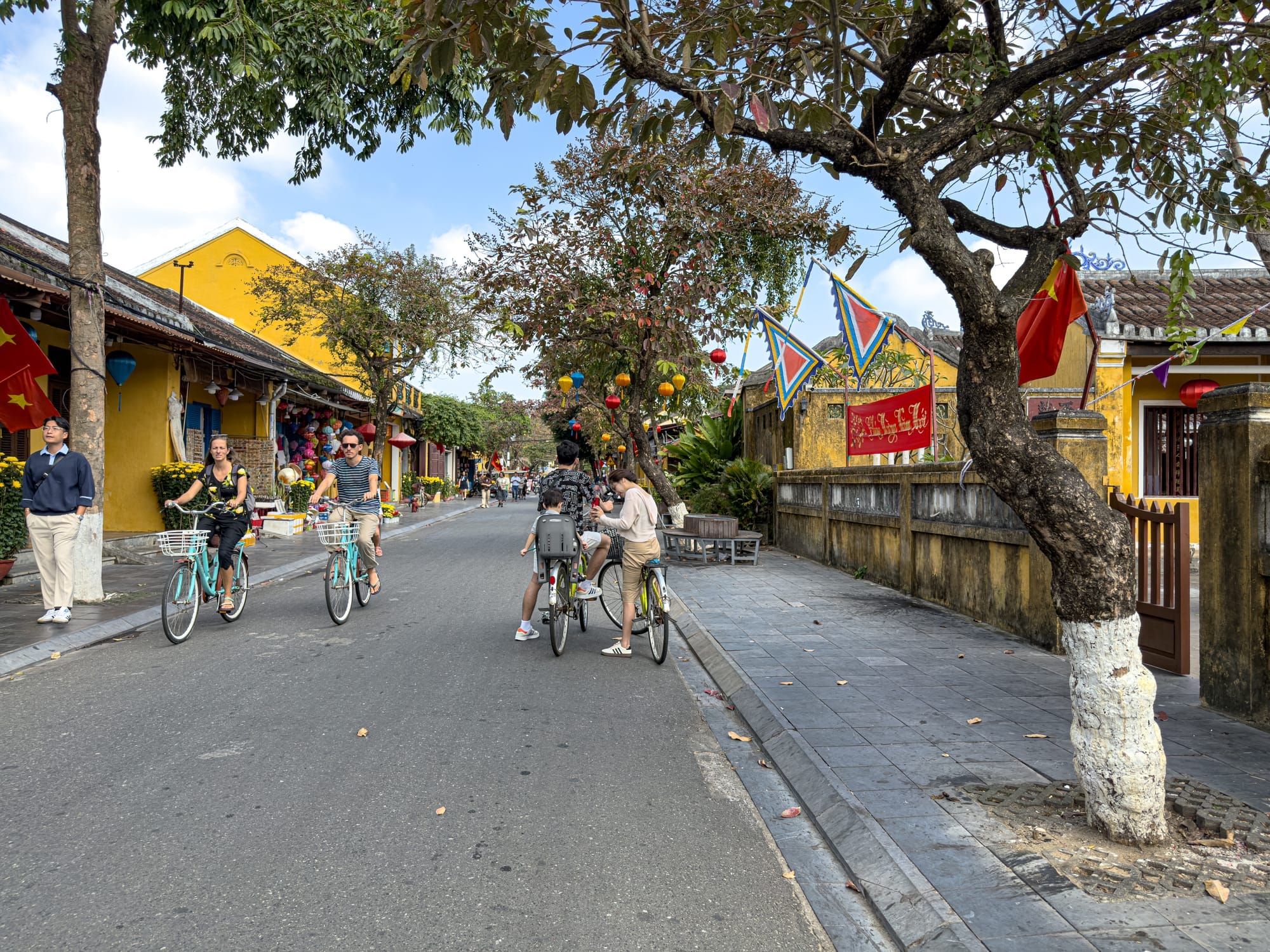
Walking the streets is free in practice. To go inside the historic sights, you buy the Old Town ticket: 120,000 VND for foreign visitors over 15, covering five sights from a list of around 20 (2026 price, check at the booth). It's sold only at booths around the edge of the Old Town, not online.
2. Cross the Japanese Covered Bridge
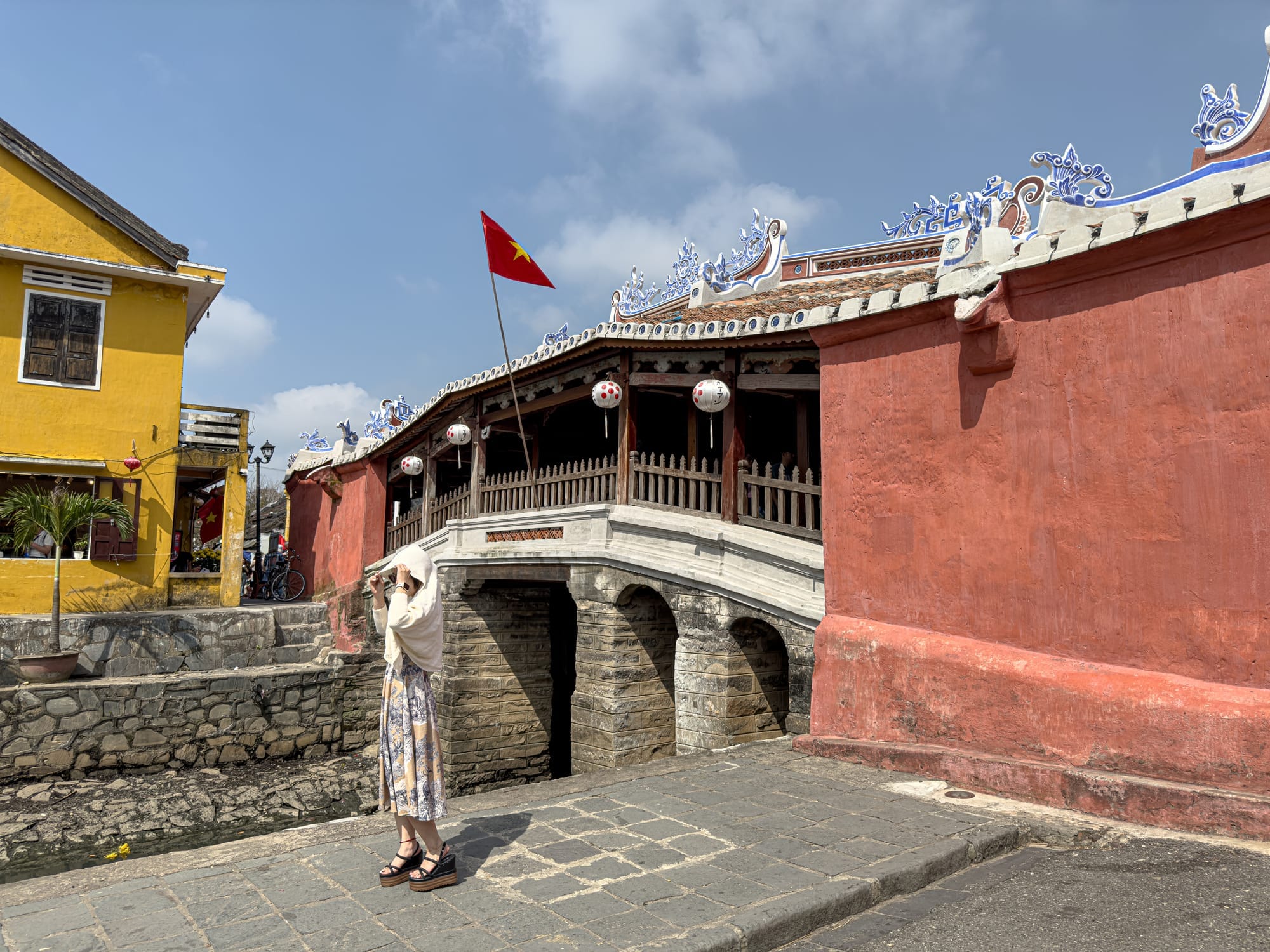
The town's symbol is a small wooden bridge with a temple built into it, dating from the early 1600s, when Japanese merchants lived on one side of the stream. It's printed on the 20,000 VND note and reopened in 2024 after a long restoration.
3. Visit the assembly halls and old merchant houses
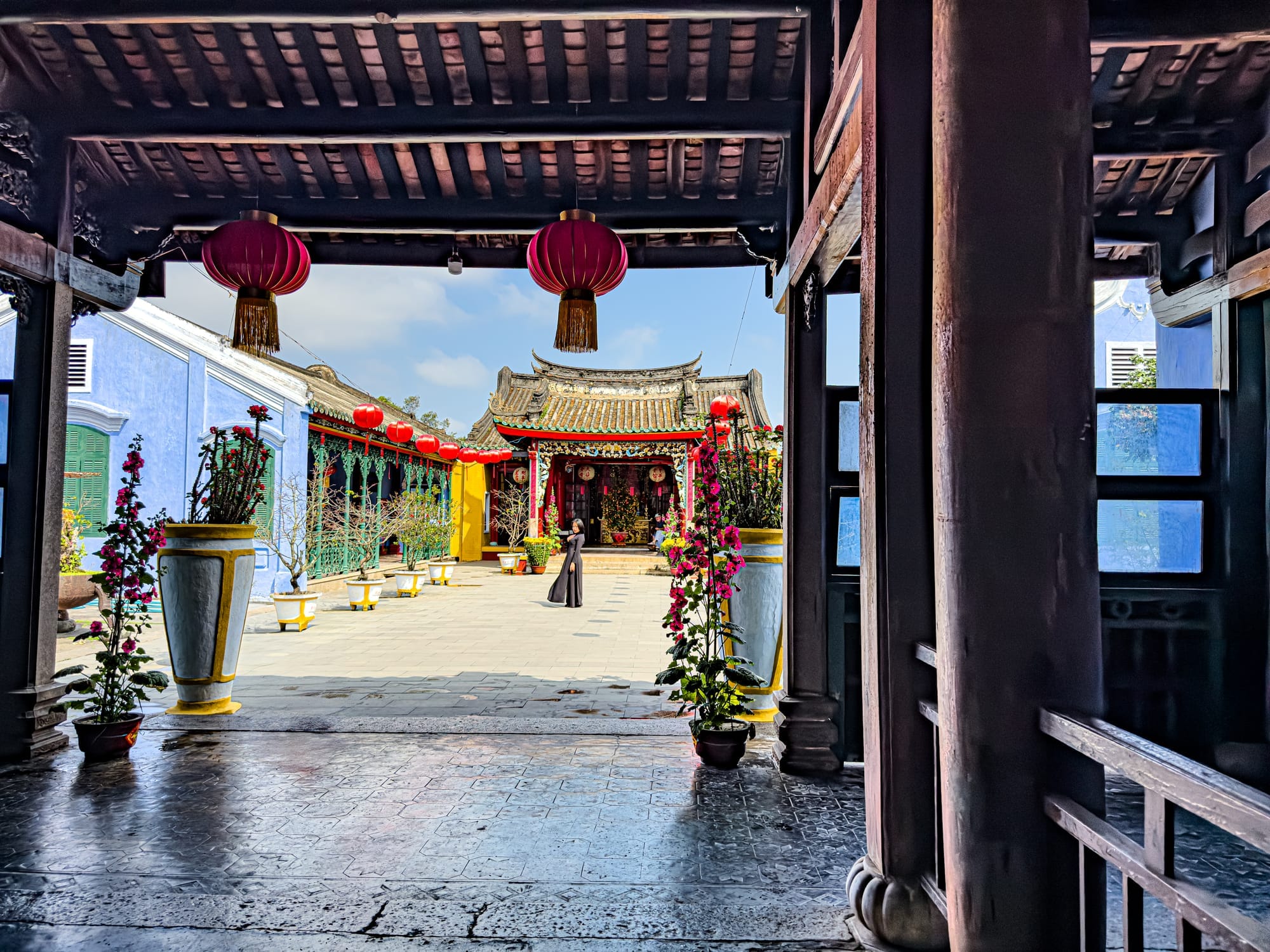
Use the rest of your ticket on the Fujian (Phúc Kiến) Assembly Hall, the Quan Công Temple opposite the market, and old houses such as Tân Ký, built in the 18th century and lived in by the same family for generations.
4. Take a lantern boat on the Thu Bồn River
After dark, small wooden boats hung with silk lanterns take visitors out on the river, and you can float a paper lantern on the water from the boat. It's touristy and crowded around 7 to 8 pm, but still one of the prettiest sights in Vietnam. Agree the price and the length of the ride before you step in.

5. Time your trip for the lantern festival
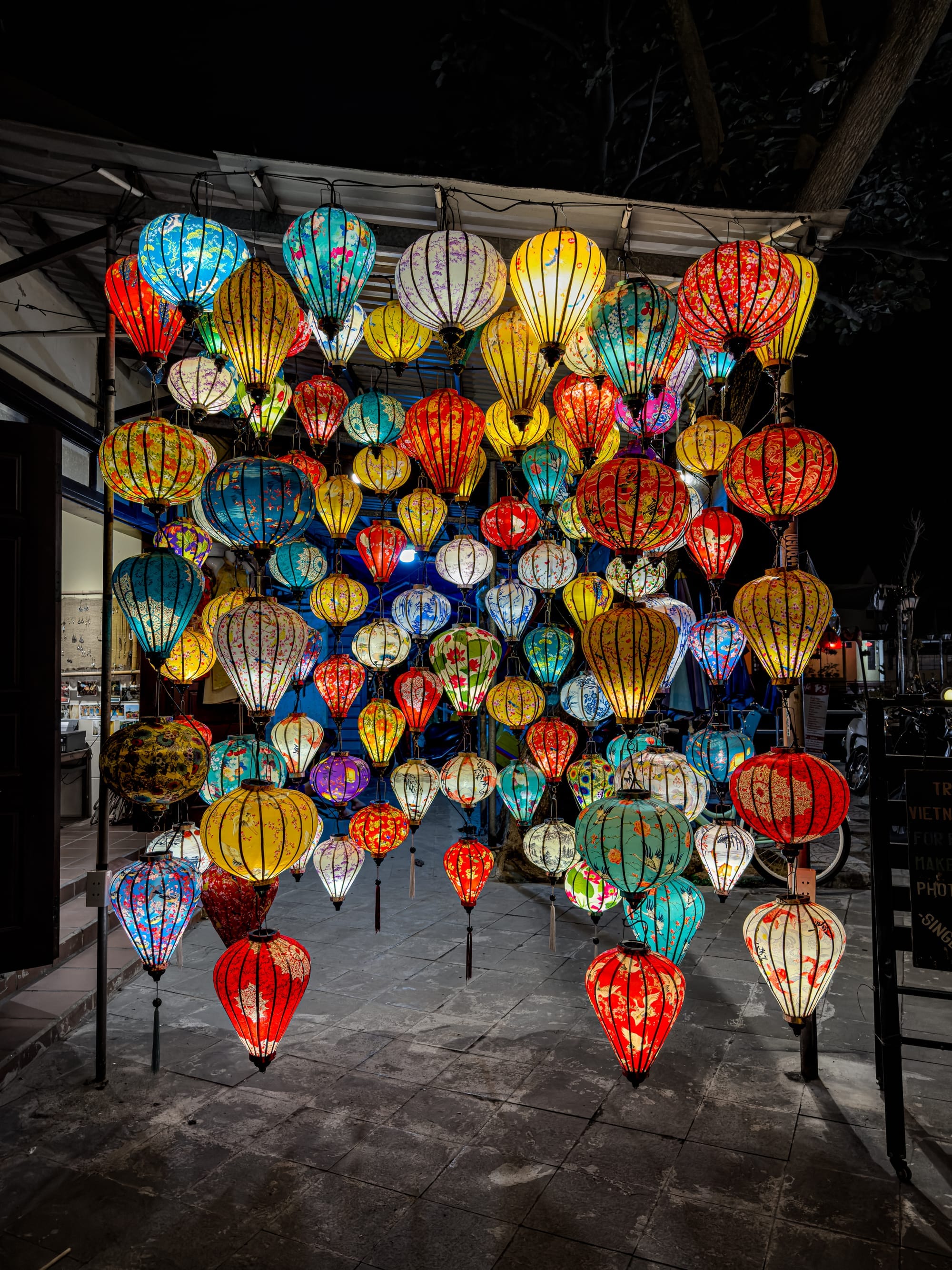
On the 14th day of each lunar month, the night before the full moon, many shops in the Old Town turn off their electric lights, and the streets are lit only by lanterns. People float candle lanterns on the river.
6. Browse the An Hoi night market
Across the bridge from the Old Town on An Hội island, the night market runs from around 5 pm to 10 pm. Expect lantern stalls, souvenirs, and street food. It's busy and aimed at visitors, so haggle politely.
7. Get clothes made at a tailor
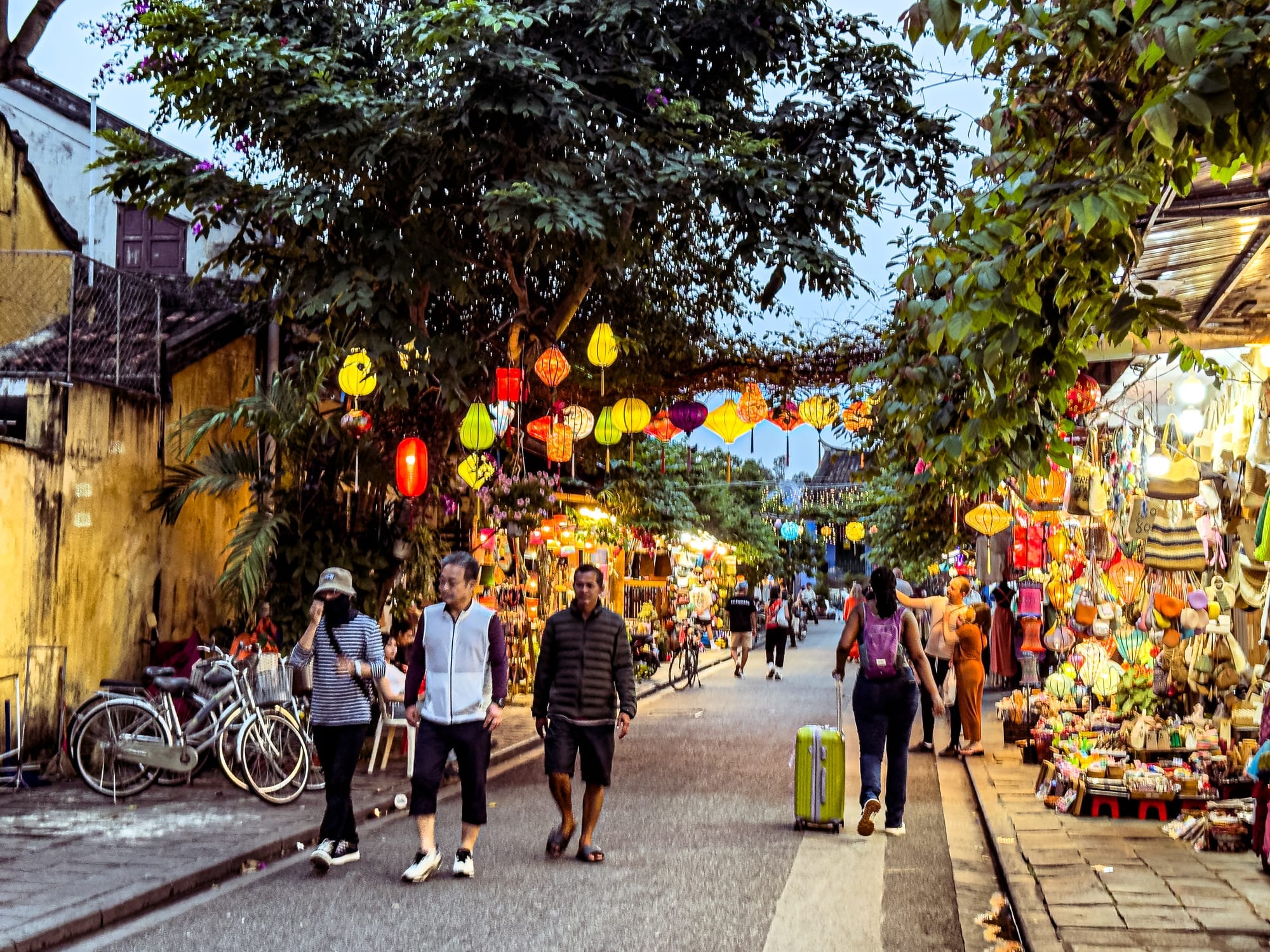
Hội An is famous for its tailors. Most shops can make a suit, dress, or shirt in a day or two from a photo or a sample. Order early in your stay to leave time for a fitting.
8. Make your own lantern
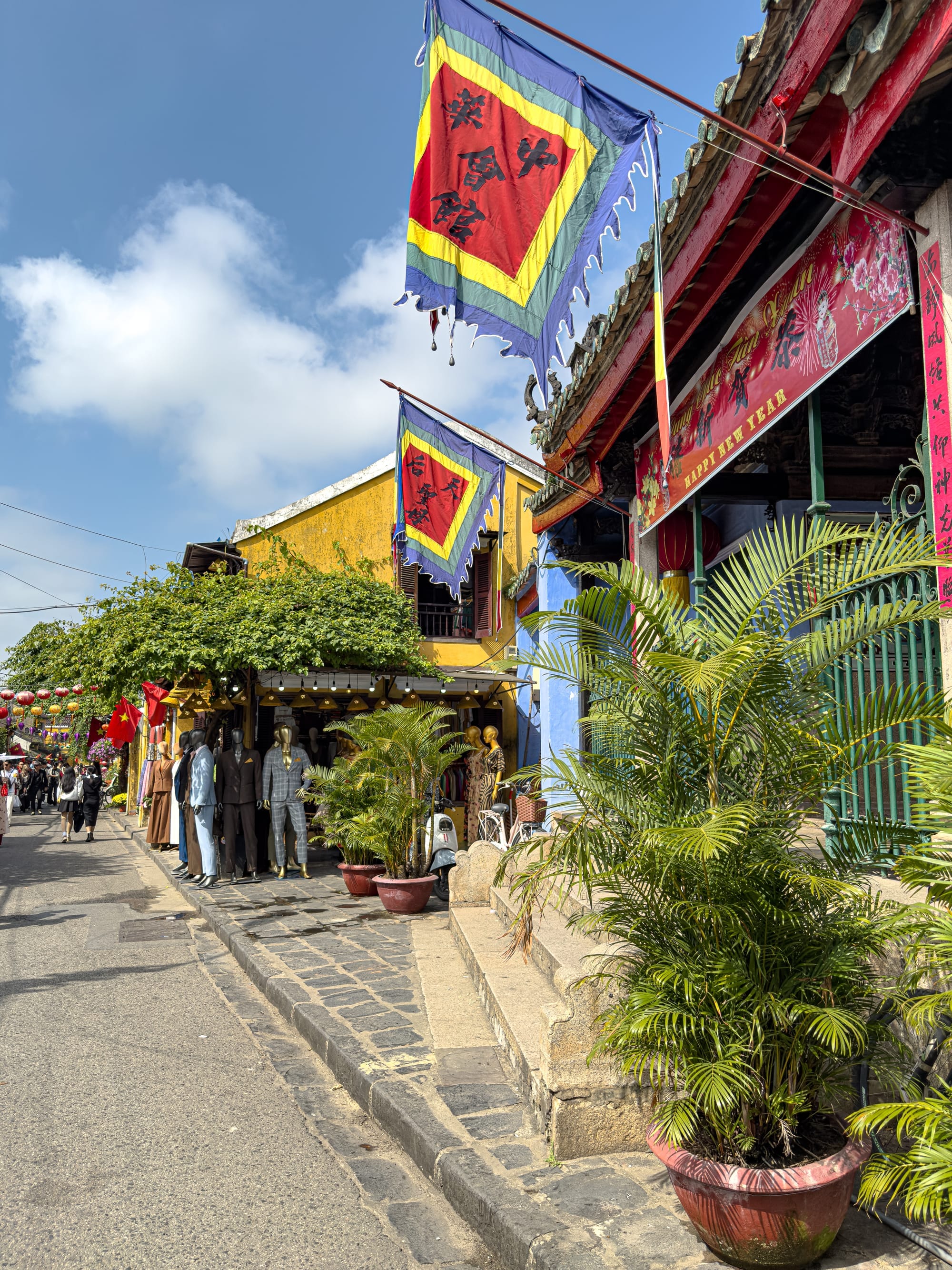
Lanterns came to Hội An with Chinese and Japanese merchants centuries ago, and local families still make them by hand, with bamboo frames and silk stretched over the top. A short class with a local maker shows you how the frame is bent and the silk glued. We recommend it as a good rainy-afternoon activity.

9. Stop for coffee in an old merchant house
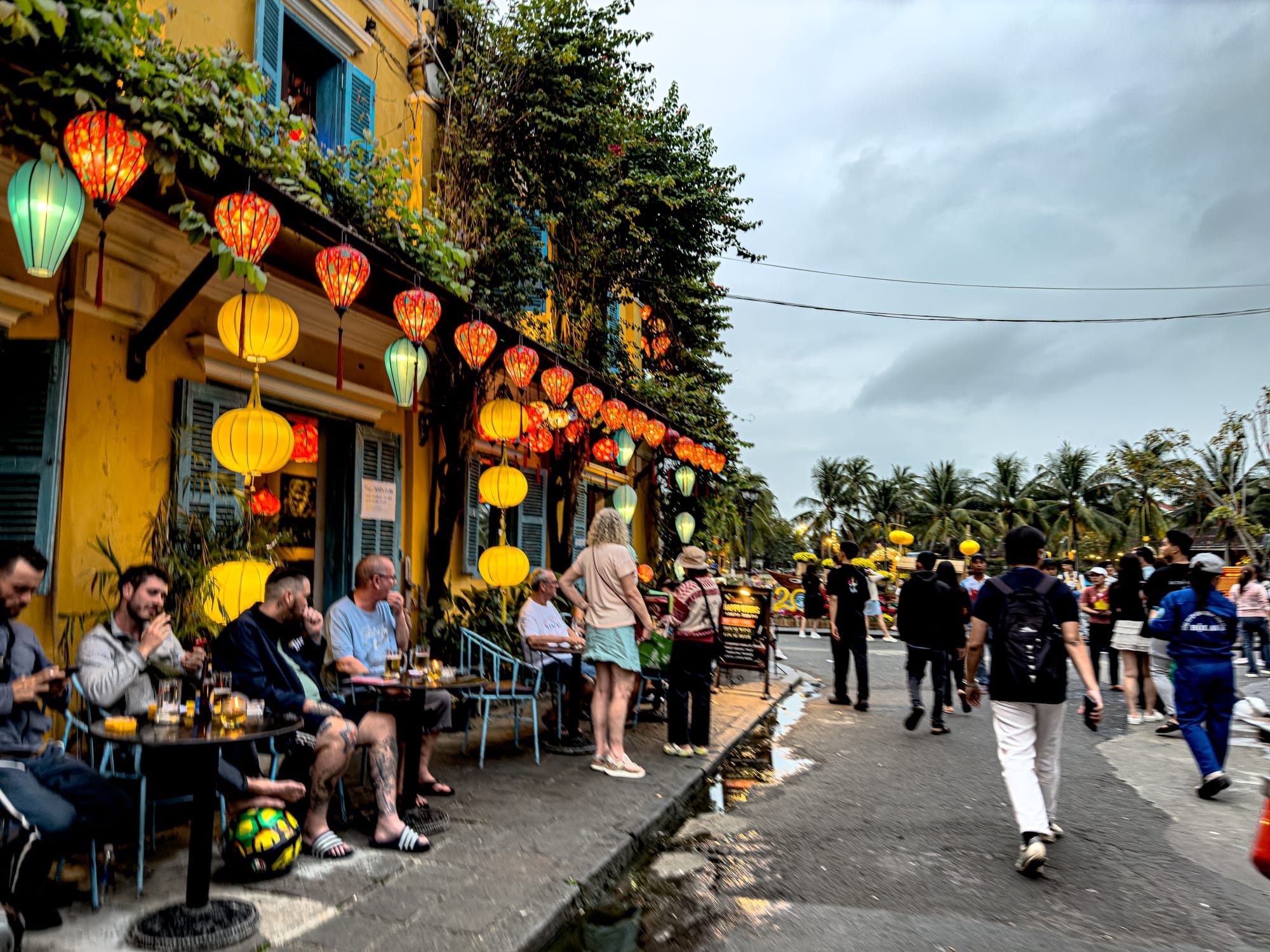
Many Old Town cafés are inside preserved merchant houses with dark wooden beams and courtyards,. Try cà phê đen (strong black coffee) or coconut coffee.
10. Go to the market in the morning
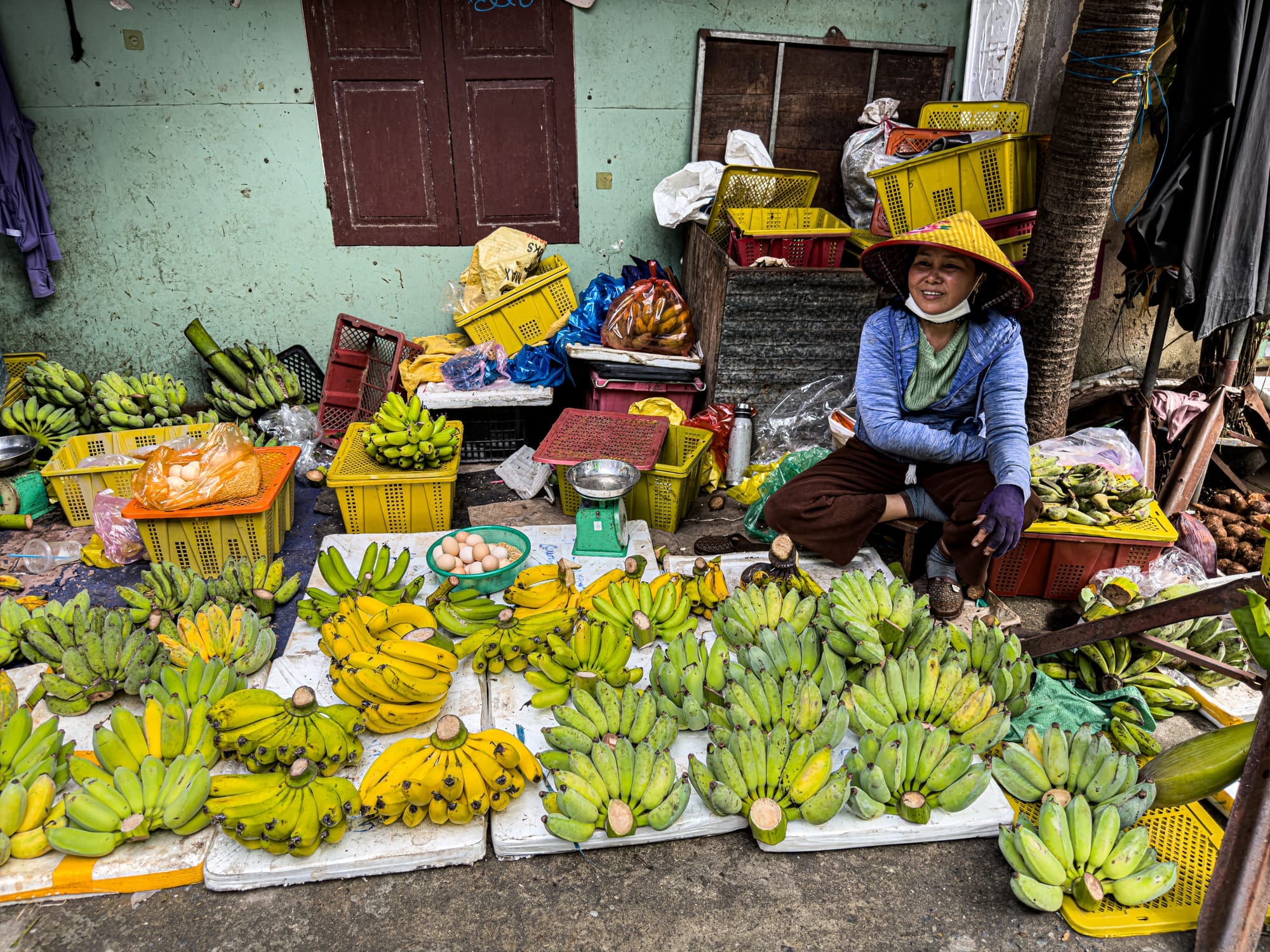
The Central Market by the river is busiest in the morning, with fruit, herbs, noodles, and cheap food stalls. Tân An Market is more local; we visited it with Rau Ơi's cooking class (number 15 below), and the stalls were stacked with produce from the farms around town.
Rice fields and craft villages
Step outside the Old Town and you're in farmland within minutes, where herbs, rice, pottery, and woodwork are still made by hand.
11. Cycle through the rice fields
The rice fields start about 3 km north of the Old Town, around Trà Quế and along the roads to An Bàng Beach. You don't need a ticket or a tour: borrow a bike from your hotel and ride the small concrete paths between the paddies. We worked beside these fields every day at Hub Hoi An.
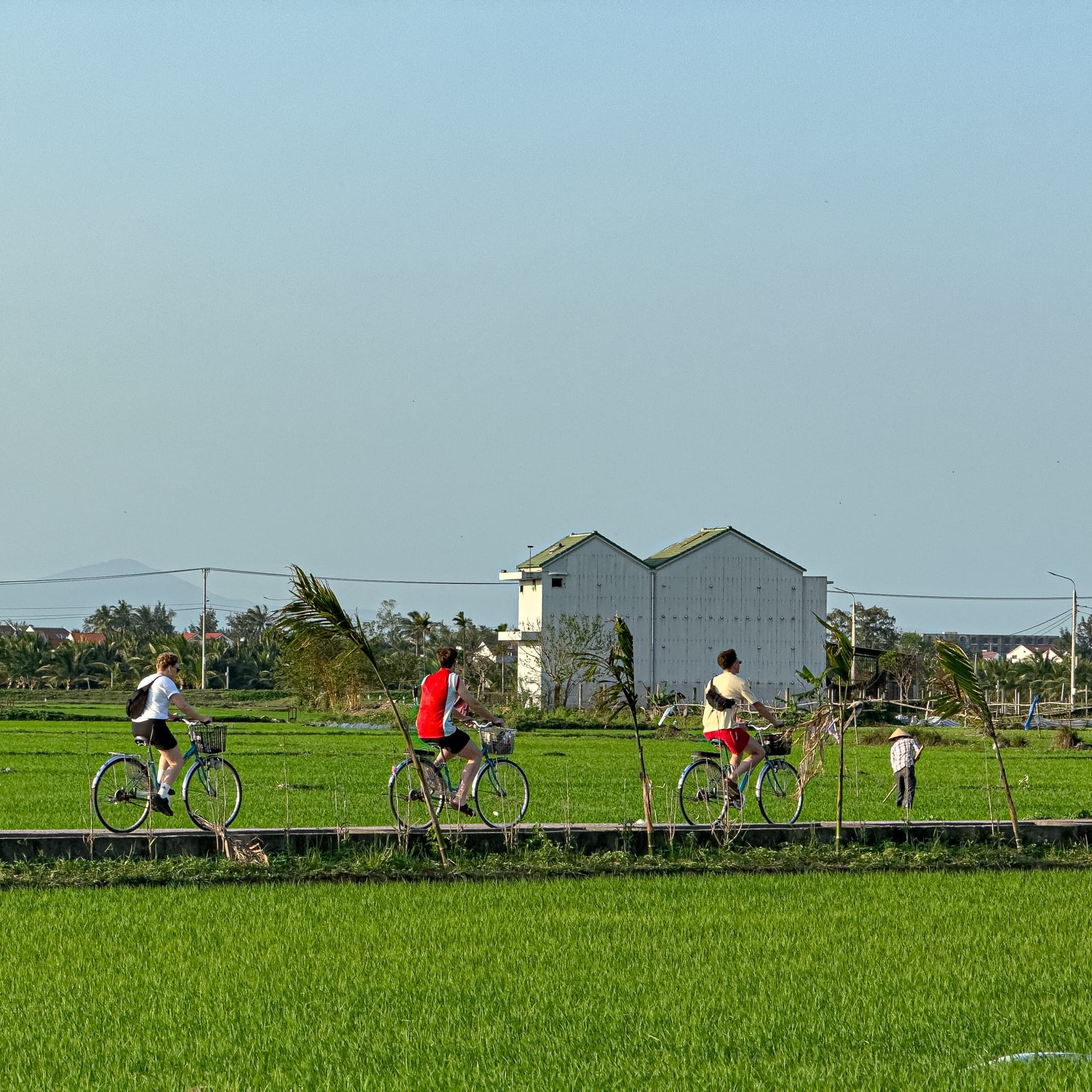
Go at sunrise or after about 4:30 pm, when the light is soft and farmers are at work, and bring water, as there's no shade. The fields turn golden just before harvest, often around April to May and again around August to September. On the way to Trà Quế, look for the 17th-century tomb of Tani Yajirobei, a Japanese trader buried on a mound in the middle of the paddies, facing Japan.
12. Visit Trà Quế Vegetable Village
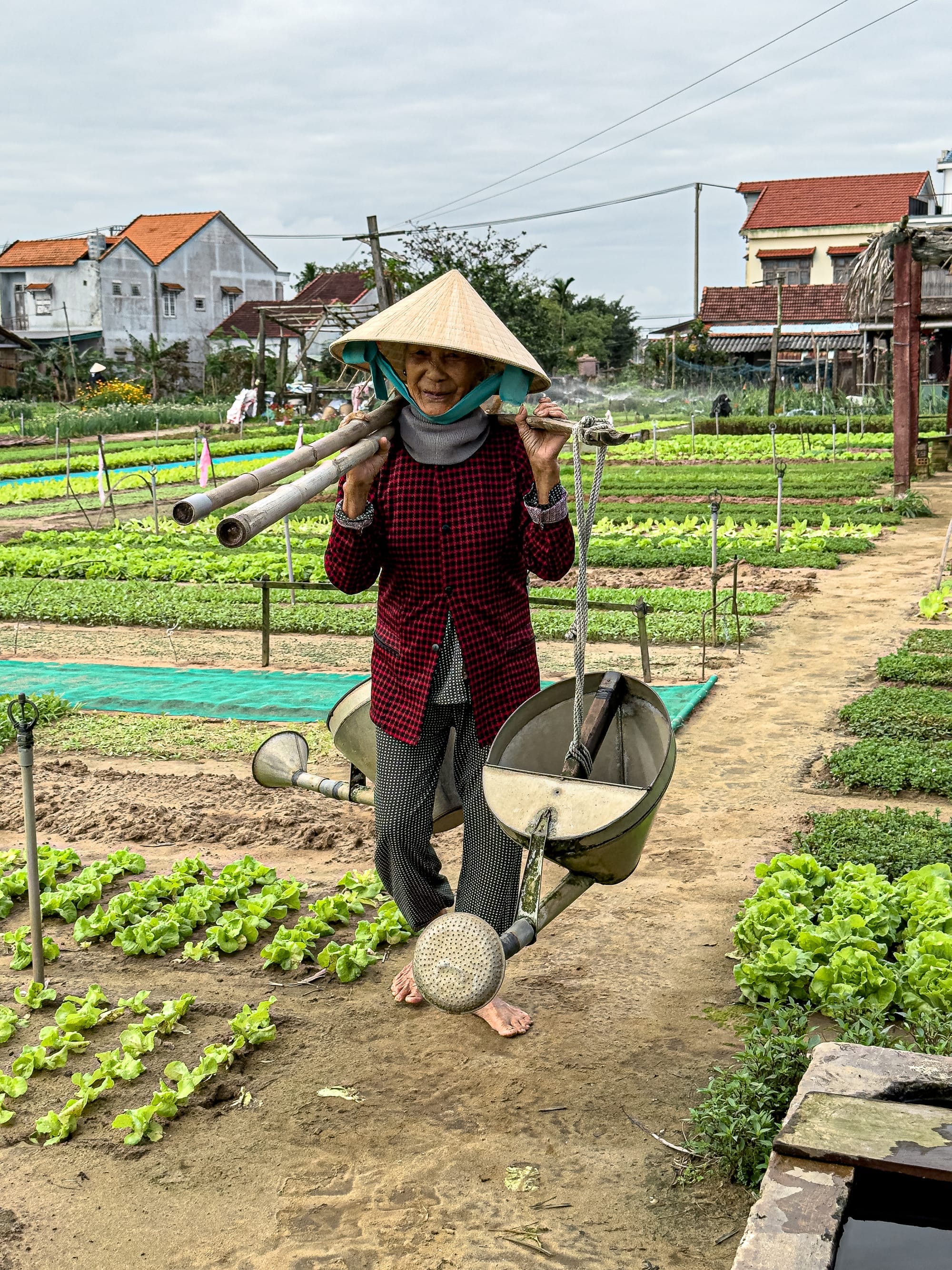
Trà Quế is a village of around 40 hectares of herb and vegetable gardens, 3 km north of the Old Town. Families still fertilize the soil with seaweed from the river and water the beds with two cans carried on a shoulder pole. Walking the paths is free. We visited with a farmer who showed us how to plant herbs, as part of a cooking class.
13. Try the potter's wheel at Thanh Hà Pottery Village
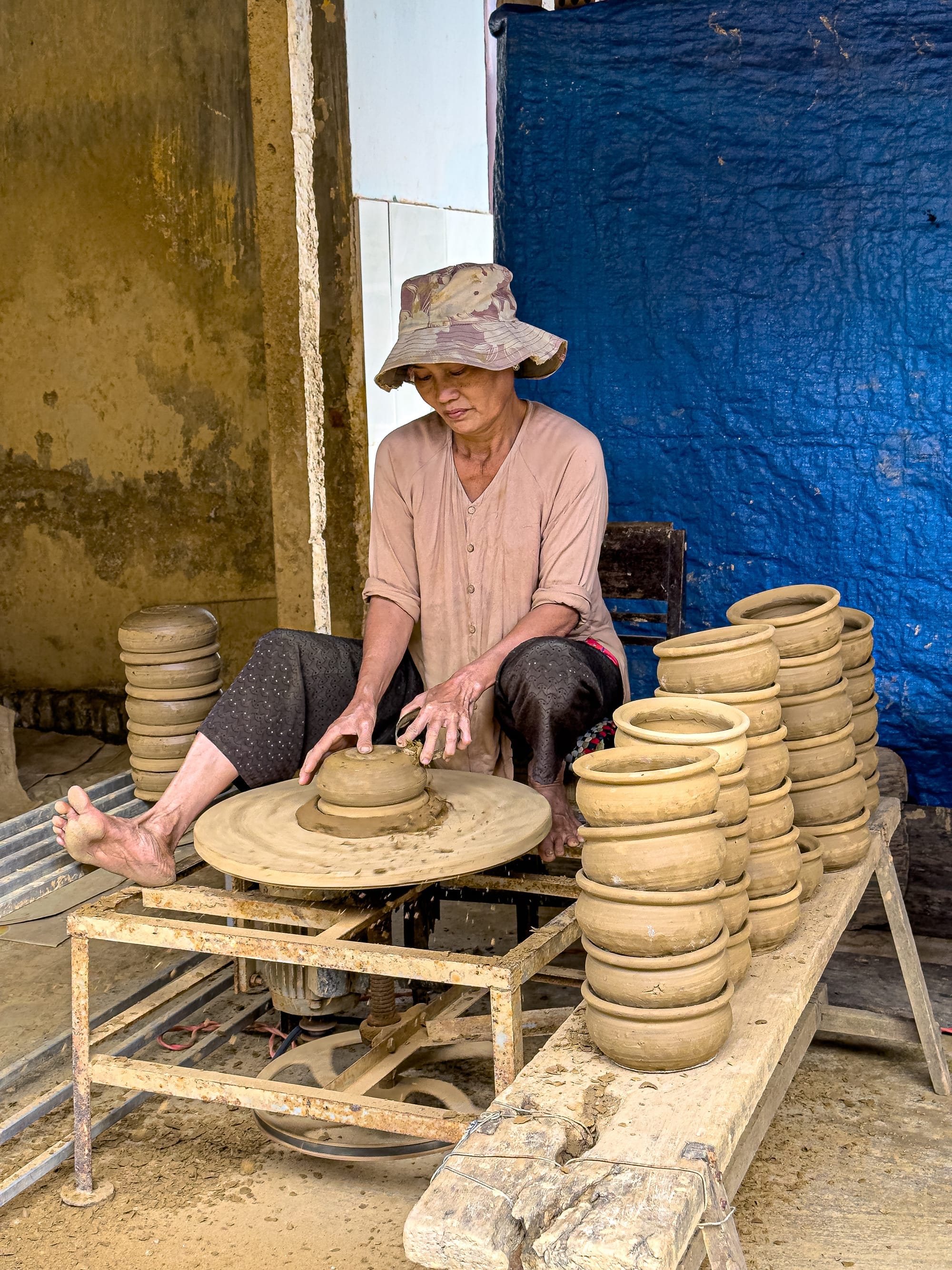
Thanh Hà, about 3 km west of the Old Town on the river, has made terracotta for around 500 years. Women still shape pots on foot-turned wheels, and visitors can have a go. The village ticket is about 35,000 VND, and the Terracotta Park, with its clay miniatures of the Sagrada Família, Notre Dame, and the Pyramids, has its own ticket (about 40,000 to 50,000 VND; prices from 2026, check on arrival). Give it two hours.
14. Cross to Cẩm Kim island
Across the Thu Bồn from the Old Town, Cẩm Kim island gets far fewer visitors. Take the small ferry to Kim Bồng, the island's carpentry village, or cycle over the Cẩm Kim bridge, then follow the road toward Duy Vinh past rice fields and workshops making boats, woven mats, and rice paper. It's covered in our rice fields guide.
Vegan food and cooking classes
Hội An is one of the easiest places in Vietnam to eat vegan, with fully vegan restaurants and two vegan cooking classes we loved.
15. Take Rau Ơi's vegan cooking class
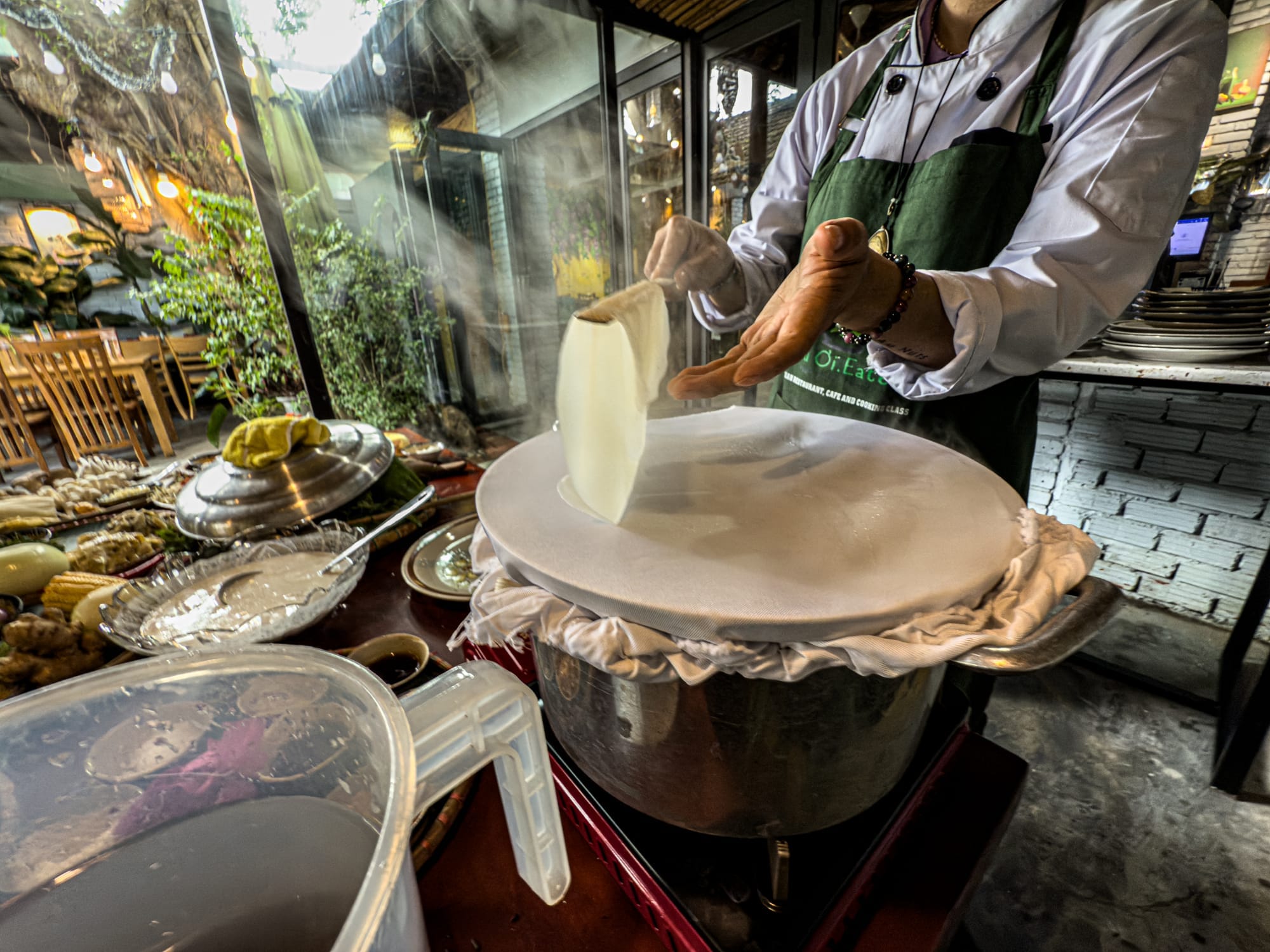
Rau Ơi Eatery's class was one of our favorite food experiences in Hội An. Ours started at Trà Quế and Tân An Market, then Chef Vang showed us how to make fresh rice paper on a steaming cloth, and we cooked phở, banana blossom salad, vegan chicken rice, and spring rolls. Classes cost around 800,000 VND per person when we last checked (we paid 900,000 VND), so check the price and what's included when you book.
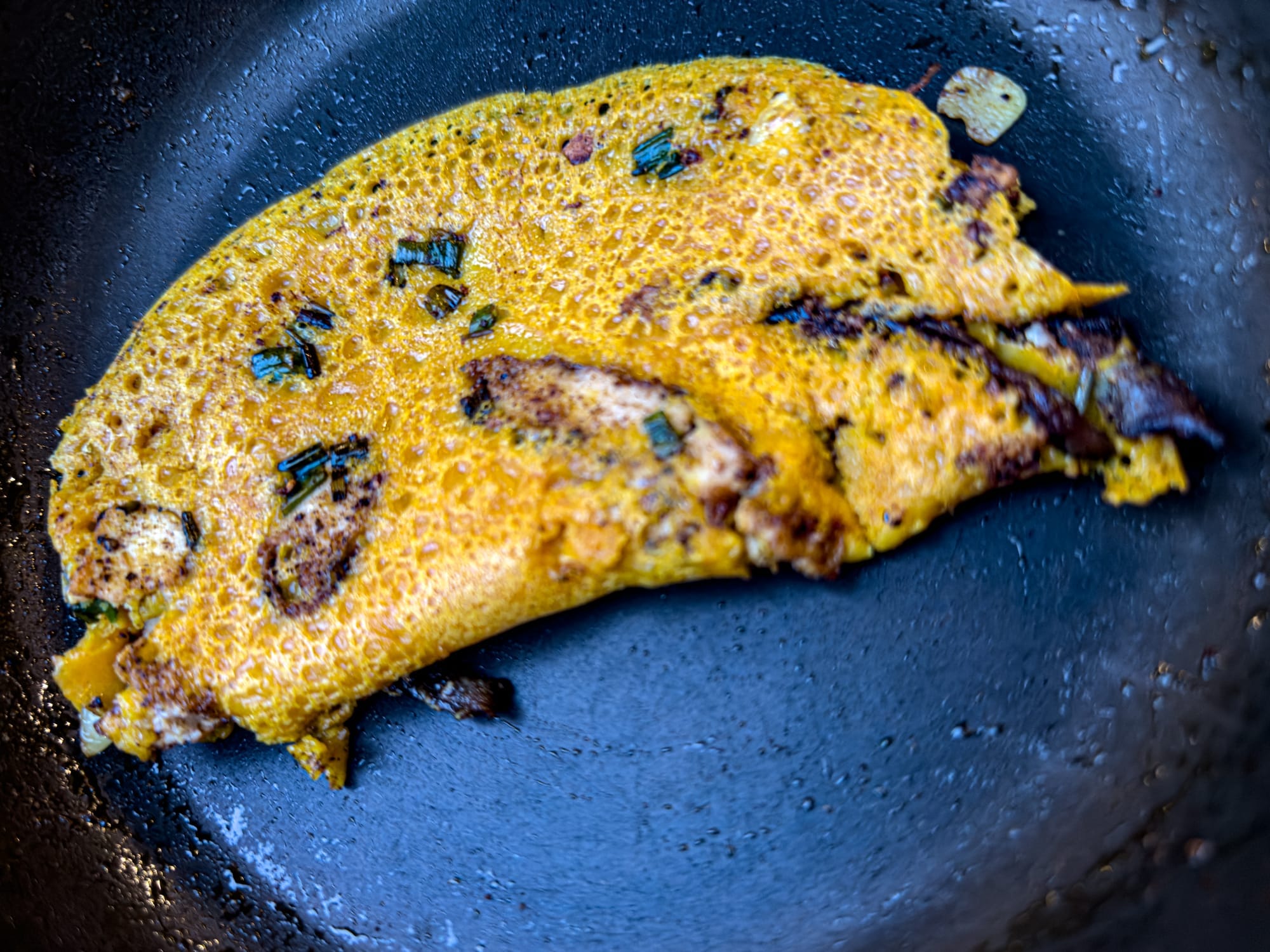
16. Cook bánh xèo at Chickpea Eatery
Chickpea Eatery's class starts in their garden and a small neighborhood market, then everyone cooks their own fresh spring rolls with homemade chickpea tempeh, a vegan chicken salad, and crispy bánh xèo. It meets at the restaurant around 1 pm and you book online with a deposit. We loved it as much as Rau Ơi's.
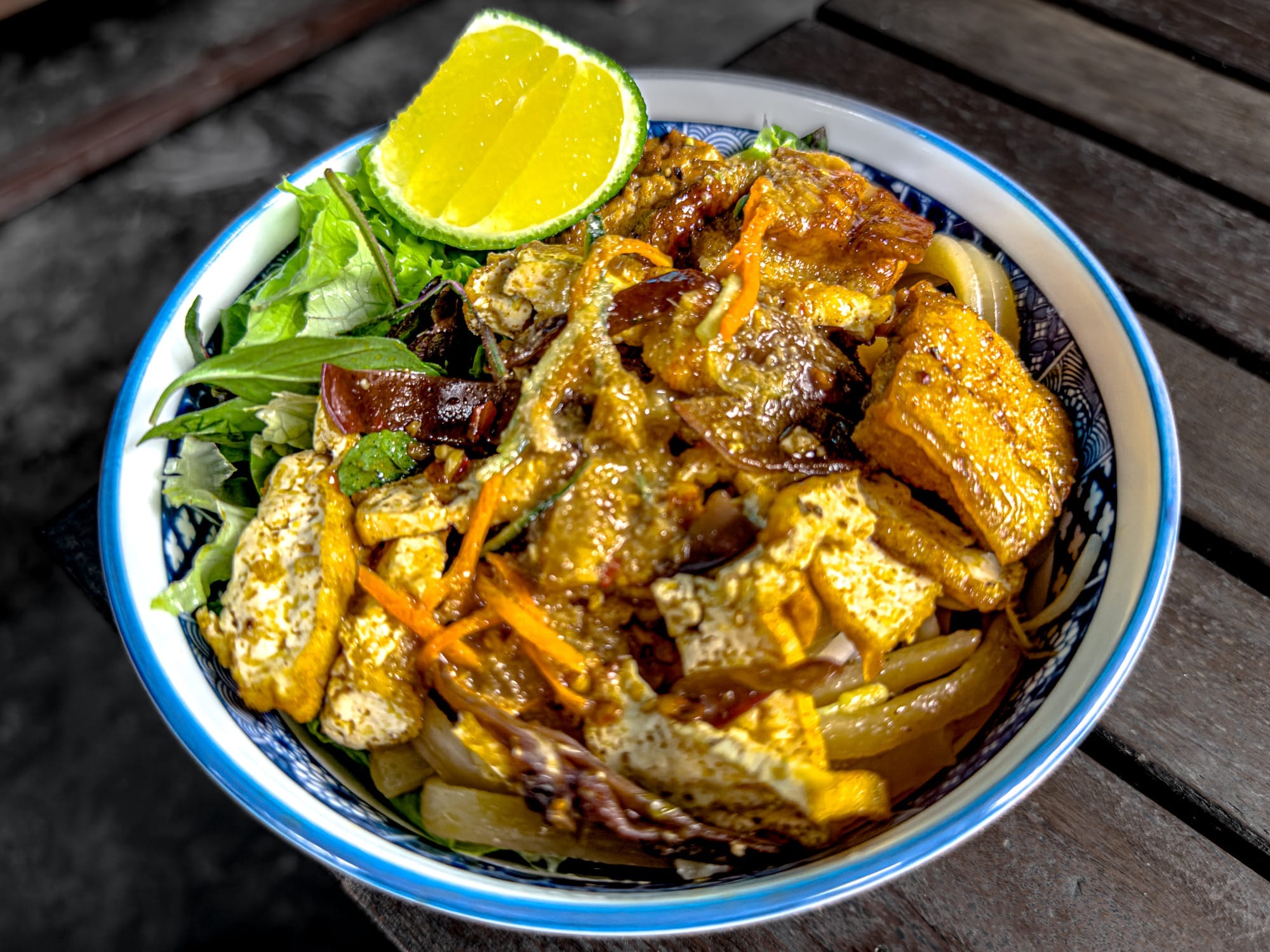
17. Eat vegan cao lầu and mì Quảng
Hội An's own noodle dish, cao lầu, has chewy noodles traditionally made with water from the old Bá Lễ well. Chickpea Eatery's vegan version is one of our favorites in town, and we ate there almost daily. Also try mì Quảng (turmeric noodles), banana blossom salad, and bánh mì with tofu. At regular places, look for the word chay (vegetarian) and ask for "không nước mắm" (no fish sauce). Our vegan Hoi An guide lists our favorite restaurants.
Beaches
The coast is about 4 to 5 km from the Old Town, an easy bike ride through the rice fields.
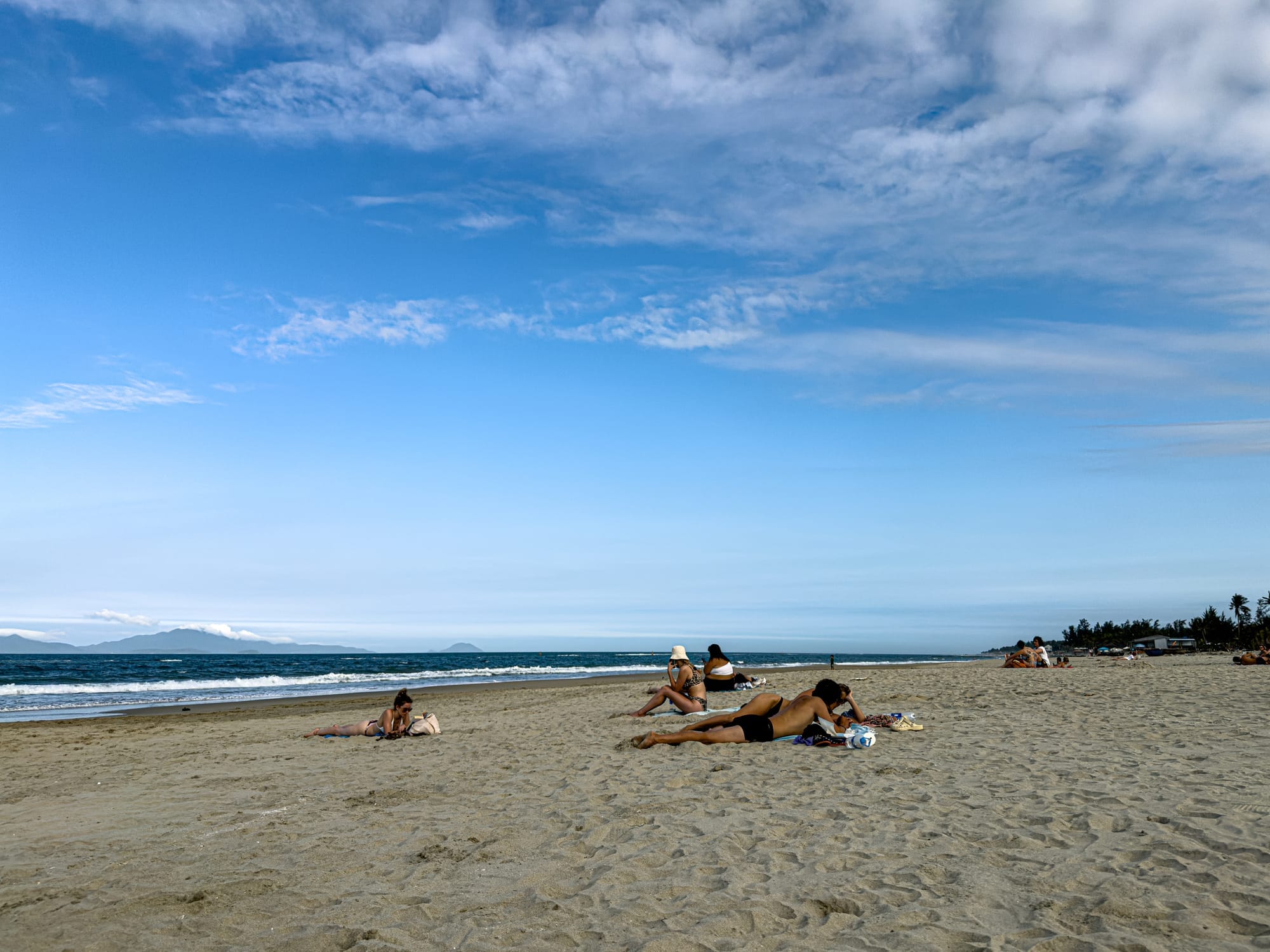
18. Swim at An Bàng Beach
An Bàng is the most popular beach near Hội An, with soft sand, beach cafés, and, on most dry-season days, calm water for swimming. Waves and rip currents pick up on some days, so swim near the lifeguards and stay out when the black flag is up. For lunch, The Fisherman on the sand is fully vegan.
19. Walk Cửa Đại Beach
Cửa Đại, about 5 km east of the Old Town at the mouth of the Thu Bồn, is the other long beach near town and the departure point for boats to the Cham Islands. Be aware that coastal erosion has washed away much of the sand since 2013, and a December 2025 report described only a narrow strip left in places, so for a proper beach day, An Bàng is the better choice.
For digital nomads
20. Work from Hub Hoi An
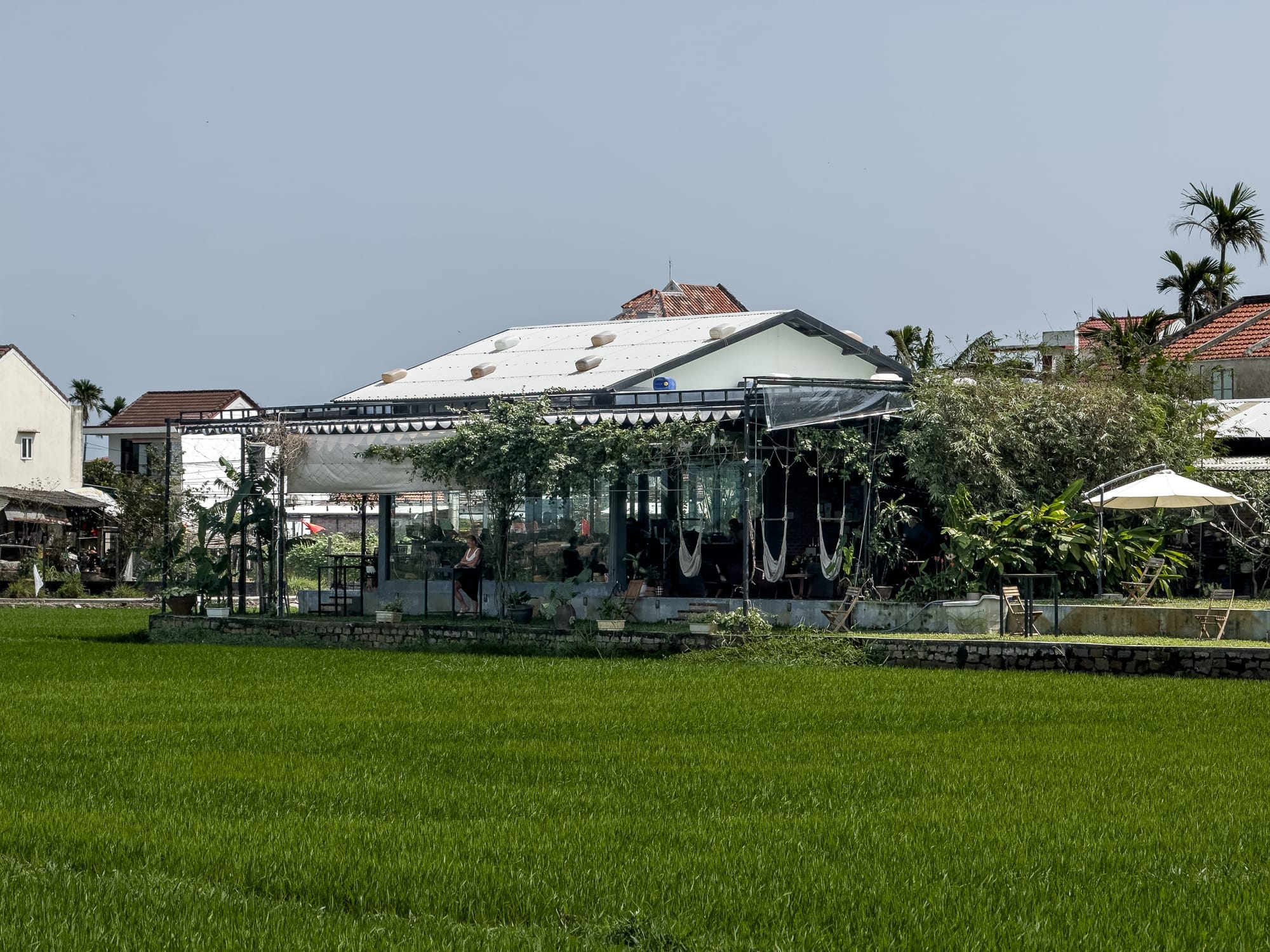
Hub Hoi An is a coworking space surrounded by rice fields between the Old Town and the beach, and it's one of our favorite places to work in the world. It has fast internet, a café, hammocks, and community events (we joined their ice bath sessions). New visitors can come 9 am to 5 pm, Monday to Saturday; book a day pass online before you go.
21. Spend a day at Hít Hà Cafe by the sea
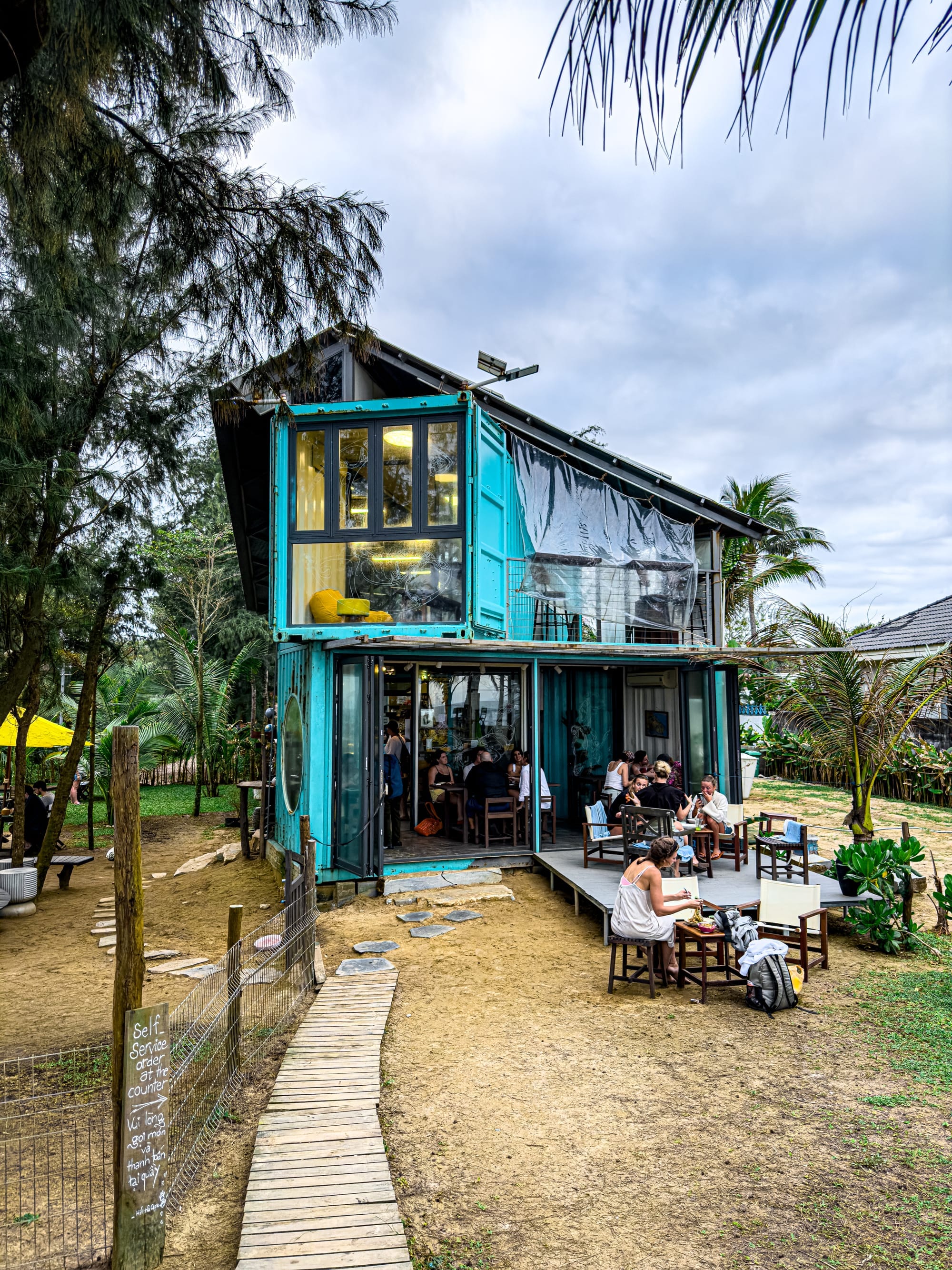
Hít Hà Cafe (also called Sniff) is a beachfront café near An Bàng with a small upstairs coworking room and sea views from the desks. We used it for change-of-scene days, with a swim on the breaks and a vegan focaccia sandwich for lunch.
Day trip to My Son Sanctuary
22. See the Cham temples at My Son
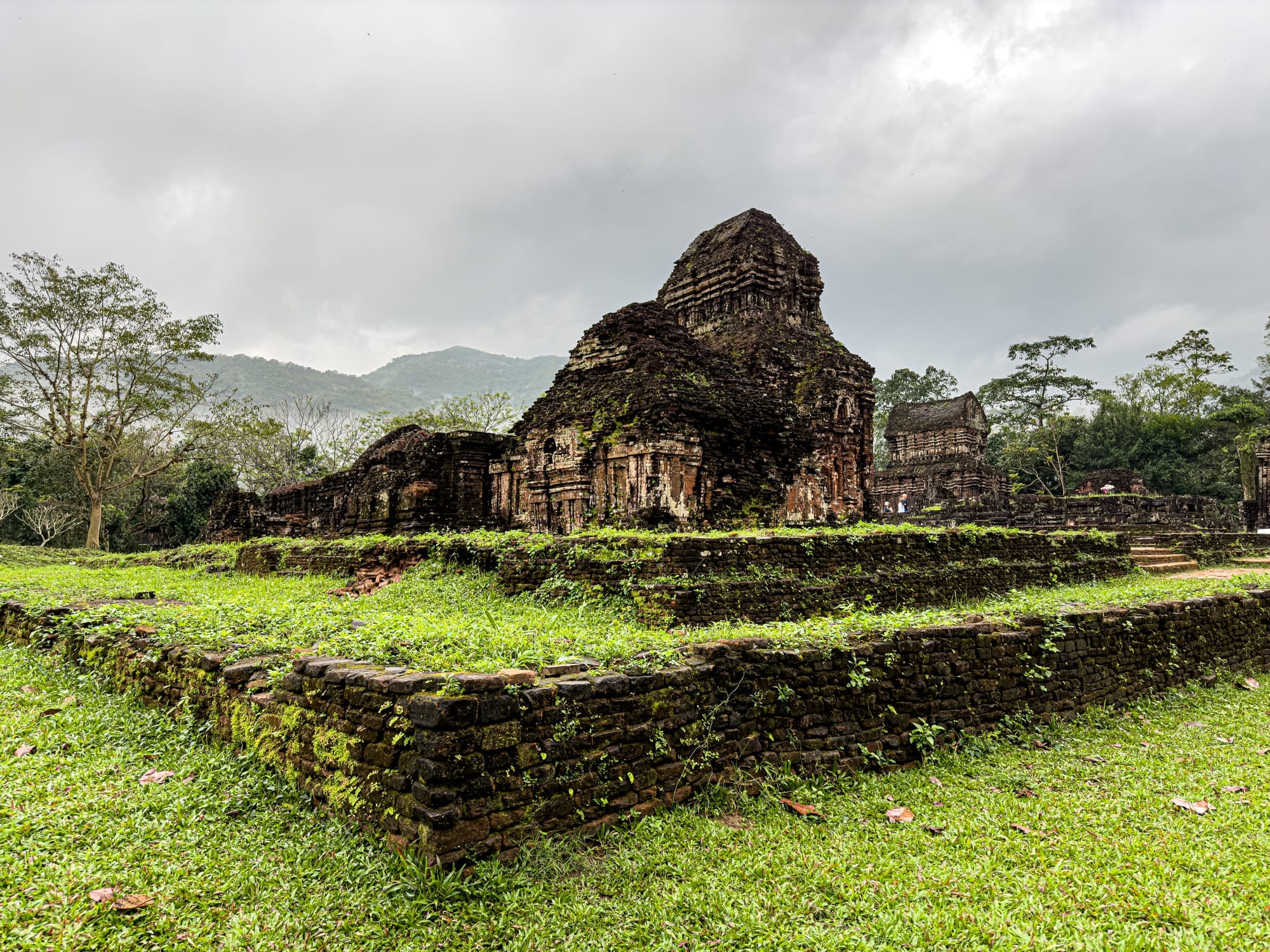
My Son Sanctuary is a UNESCO-listed valley of Hindu temple ruins built by the Champa kingdom between the 4th and 13th centuries, about 40 km southwest of Hội An. We went on a half-day morning tour with friends from Hub Hoi An, and a guide makes the ruins much easier to understand. Entry is about 150,000 VND for foreign adults, including the shuttle, and it's open from about 6 am to 5 pm (2026, check before you go). It's one of the best ancient ruins in Vietnam.
More things to do in Hoi An
We haven't written about these yet, but they're popular, and they fit well into a longer stay.
23. Paddle through the Cẩm Thanh coconut palms
In Bảy Mẫu, the nipa palm waterways in Cẩm Thanh a few km east of the Old Town, round bamboo basket boats take visitors along the channels. Entry to the area is listed at about 30,000 VND, with boat rides charged on top, and prices vary a lot between operators, so agree the price and the length of the ride first.
24. Snorkel at the Cham Islands
The Cham Islands (Cù Lao Chàm) lie about 15 to 18 km off Cửa Đại and are part of the Cù Lao Chàm and Hội An biosphere reserve, recognized by UNESCO in 2009. Speedboats take around 20 minutes, and day trips usually include snorkeling and a beach stop. Go between February and August, as boats are often cancelled in rough weather from September to February.
25. Climb the Marble Mountains
On the road to Da Nang, roughly half an hour by car from Hội An, the Marble Mountains (Ngũ Hành Sơn) are five limestone and marble hills with caves, pagodas, and viewpoints over the coast. Entry is about 40,000 VND for adults, with an extra charge for the lift and for Âm Phủ Cave (prices change, check on site).
26. See the Hoi An Memories show
Hội An Memories is a large outdoor show about the town's history, with around 500 performers on a riverside stage on Hến island. The official schedule lists it from 8 to 9 pm, and third-party sites say it doesn't run on Tuesdays, so check the schedule on the official site before you buy tickets.
27. Spend a day in Da Nang
Đà Nẵng, about 30 minutes north, is a big city with malls, larger coworking spaces, and a much bigger expat scene. Many nomads in Hội An head up for concerts, meetups, or a night out. Our living in Hoi An post compares the two.
Tips for Hoi An
Rent or borrow a bicycle on your first day: the town is flat, and most of the list above is within a 20-minute ride. Buy the Old Town ticket at a booth (cash) and save it for the sights you really want. Visit the Old Town at opening and after dark, and spend the hot middle of the day at the beach or a café. Use Grab for longer trips, and agree boat prices before you set off.
Where to stay in Hoi An
For a short trip, stay near the Old Town so you can walk out for the lanterns at night. For a longer stay, we'd choose An Bàng Beach, which was our base, or the rice fields between the beach and the Old Town. Our guide to where to stay in Hoi An compares each area and lists the places we'd book.
Frequently asked questions
What is Hoi An best known for?
Its UNESCO-listed Old Town of yellow merchant houses and silk lanterns, the lantern boats on the Thu Bồn River, its tailors, and the rice fields and beaches just outside town.
How many days do you need in Hoi An?
Three to four days covers the Old Town, a rice field bike ride, a beach afternoon, and a morning at My Son. Add a few more days for cooking classes, the craft villages, and the Cham Islands.
What is the best month to visit Hoi An?
March is our favorite, and February to April is the best stretch overall: warm, dry, and green. May to August is hot and good for the beach. October and November bring the heaviest rain and floods.
Is Hoi An Old Town free?
Walking the streets is free in practice. Going inside the historic houses, halls, and the Japanese Covered Bridge needs the Old Town ticket, 120,000 VND for five sights for foreign visitors over 15 (2026, check at the booth).
Can you swim at An Bang Beach?
Yes, usually, especially in the dry season. Swim near the lifeguards and stay out of the water when the black flag warns of rip currents.
Is Hoi An good for vegans?
Very. Chickpea Eatery, Rau Ơi Eatery, and The Fisherman are fully vegan, and both Chickpea and Rau Ơi run vegan cooking classes. See our vegan Hoi An guide.
How do you get from Da Nang to Hoi An?
By taxi or Grab from Da Nang airport, which takes about 45 minutes.
What can you do in Hoi An when it rains?
Take a cooking or lantern-making class, get clothes made at a tailor, visit the assembly halls and museums on your Old Town ticket, or settle into a café or a coworking space.
Useful links: Hội An World Heritage office, UNESCO's page on Hoi An Ancient Town, UNESCO's page on My Son Sanctuary, Hội An on Vietnam's official tourism site, the Marble Mountains on Da Nang's official tourism site, and the Hội An Memories show schedule.
More from Hoi An: Hoi An Old Town, the rice fields, Trà Quế and Rau Ơi's cooking class, Chickpea Eatery's cooking class, Thanh Hà Pottery Village, My Son Sanctuary, vegan food in Hoi An, Hub Hoi An, living in Hoi An, and where to stay in Hoi An.


