

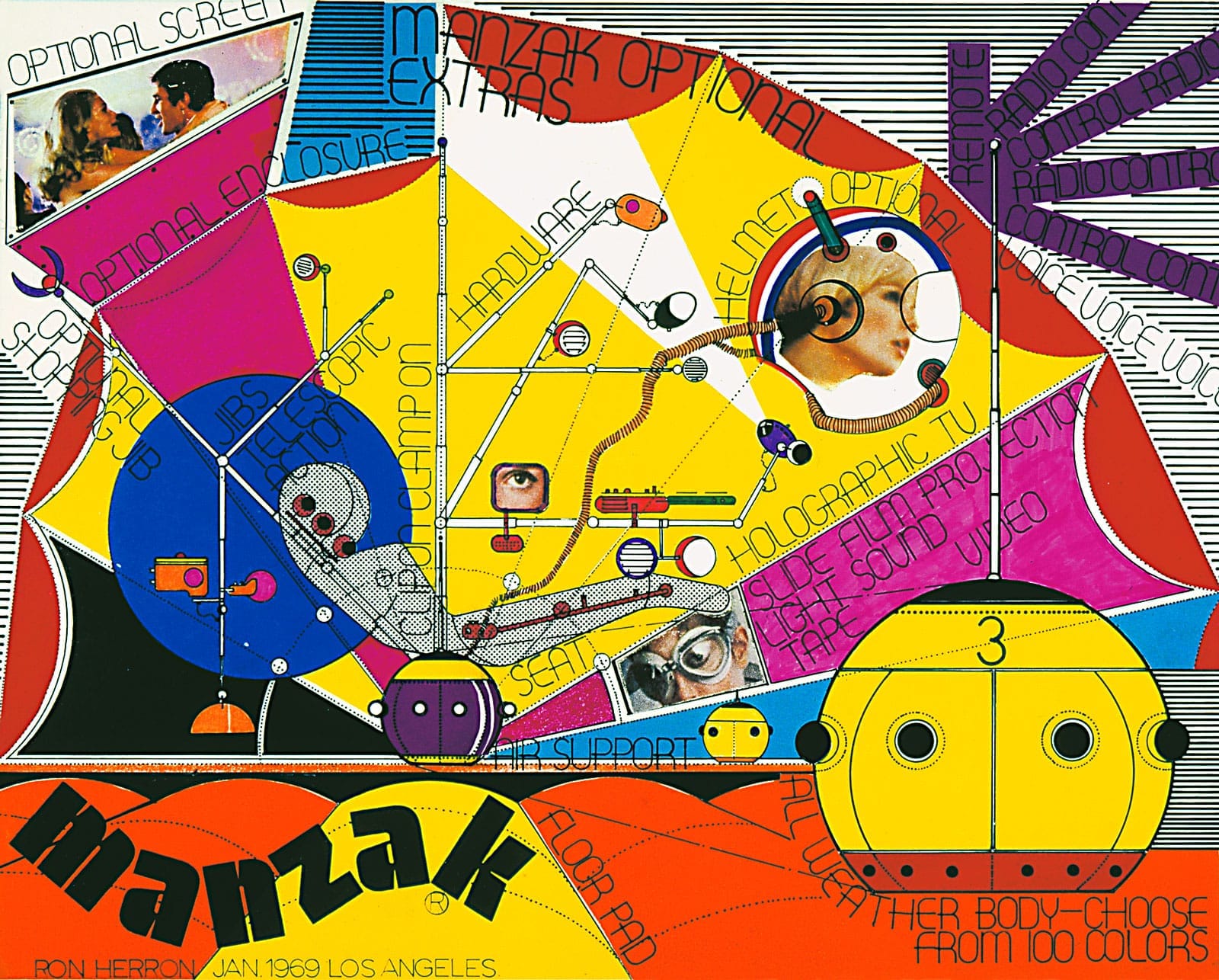
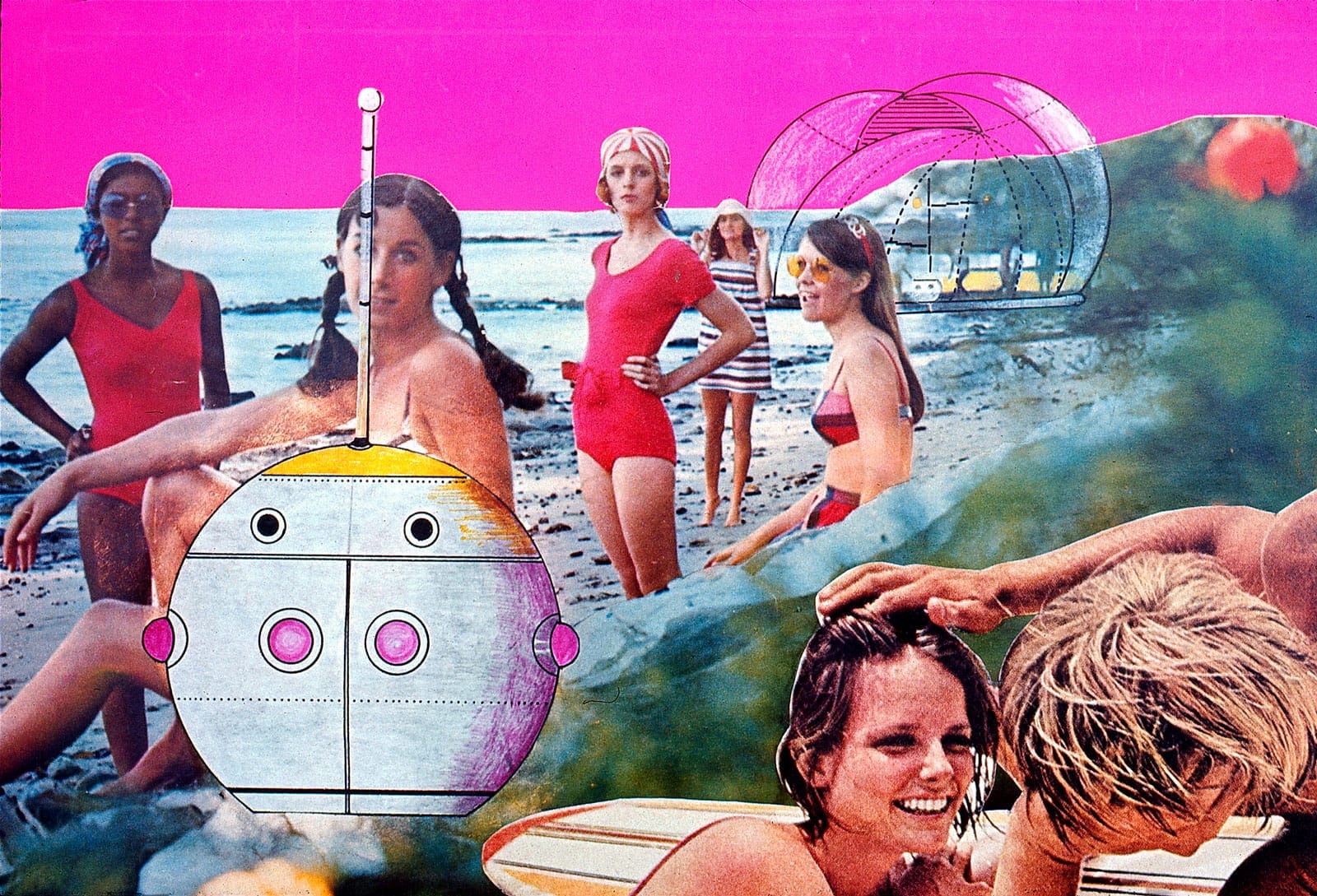
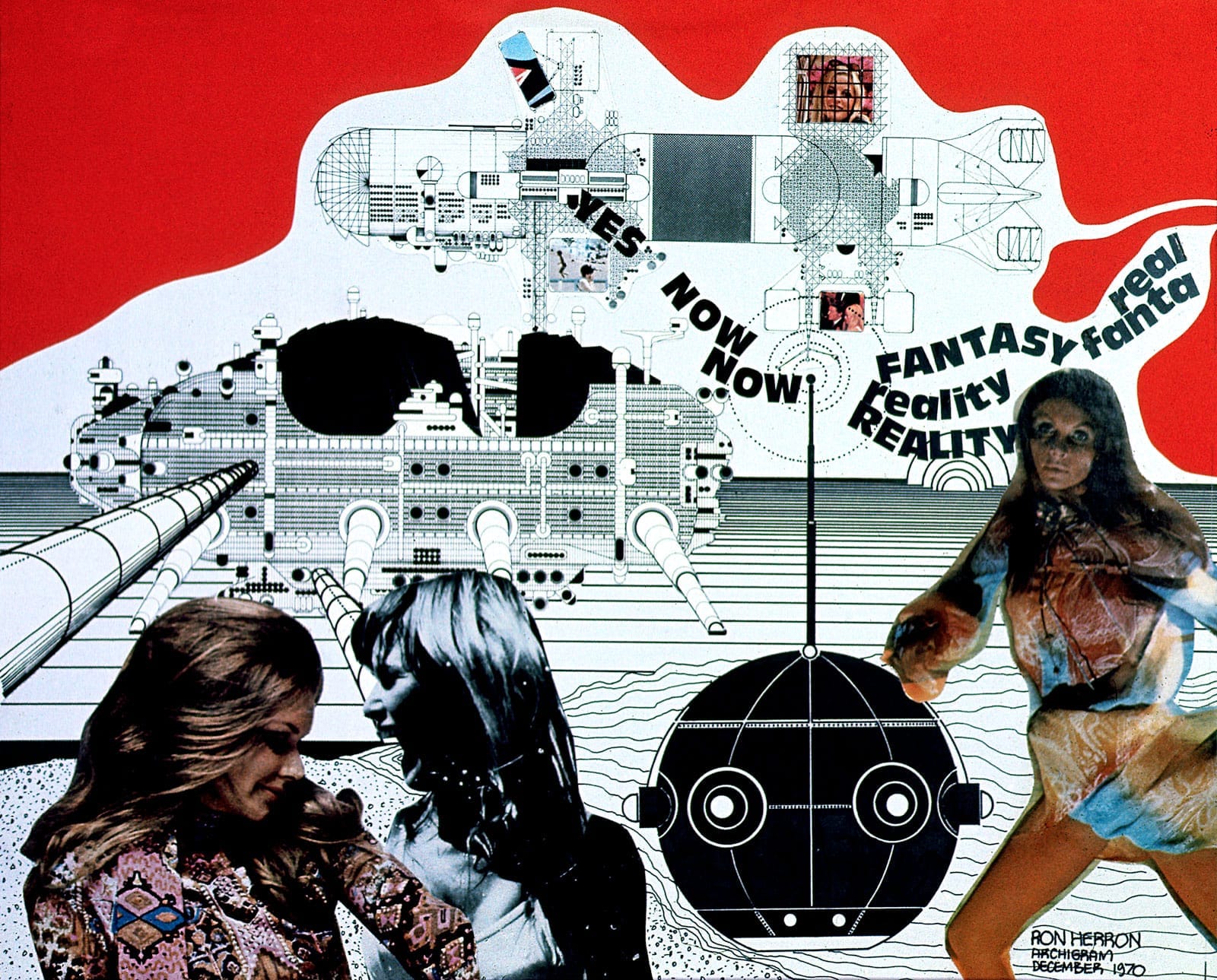
Archigram was a London-based collective of radical architects active through the 1960s and early 1970s. Known for their comic book-like drawings and speculative proposals, they treated architecture not as a fixed object but as a living system in motion. Their projects blurred science fiction, pop art, and countercultural politics, asking what it would mean to design for impermanence, mobility, and play.
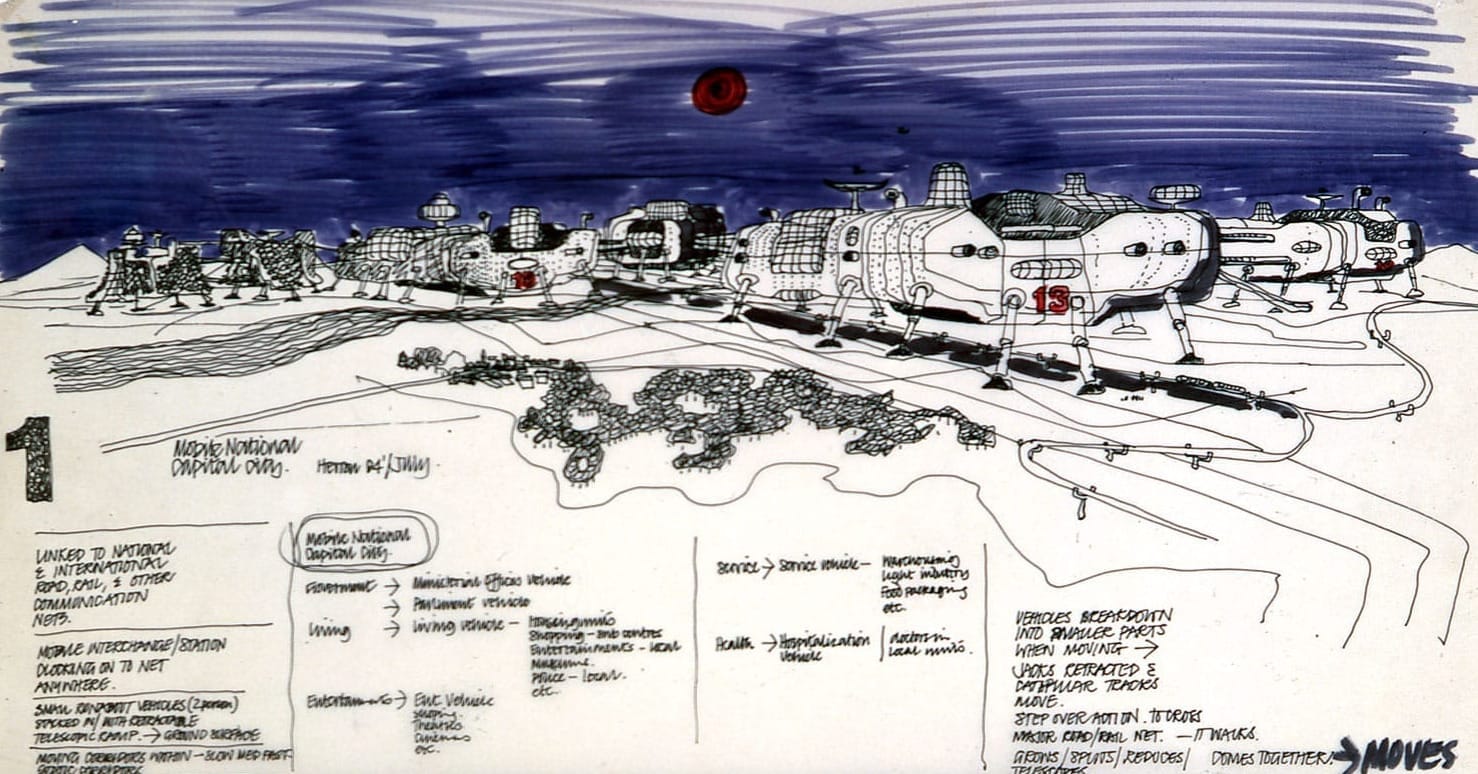
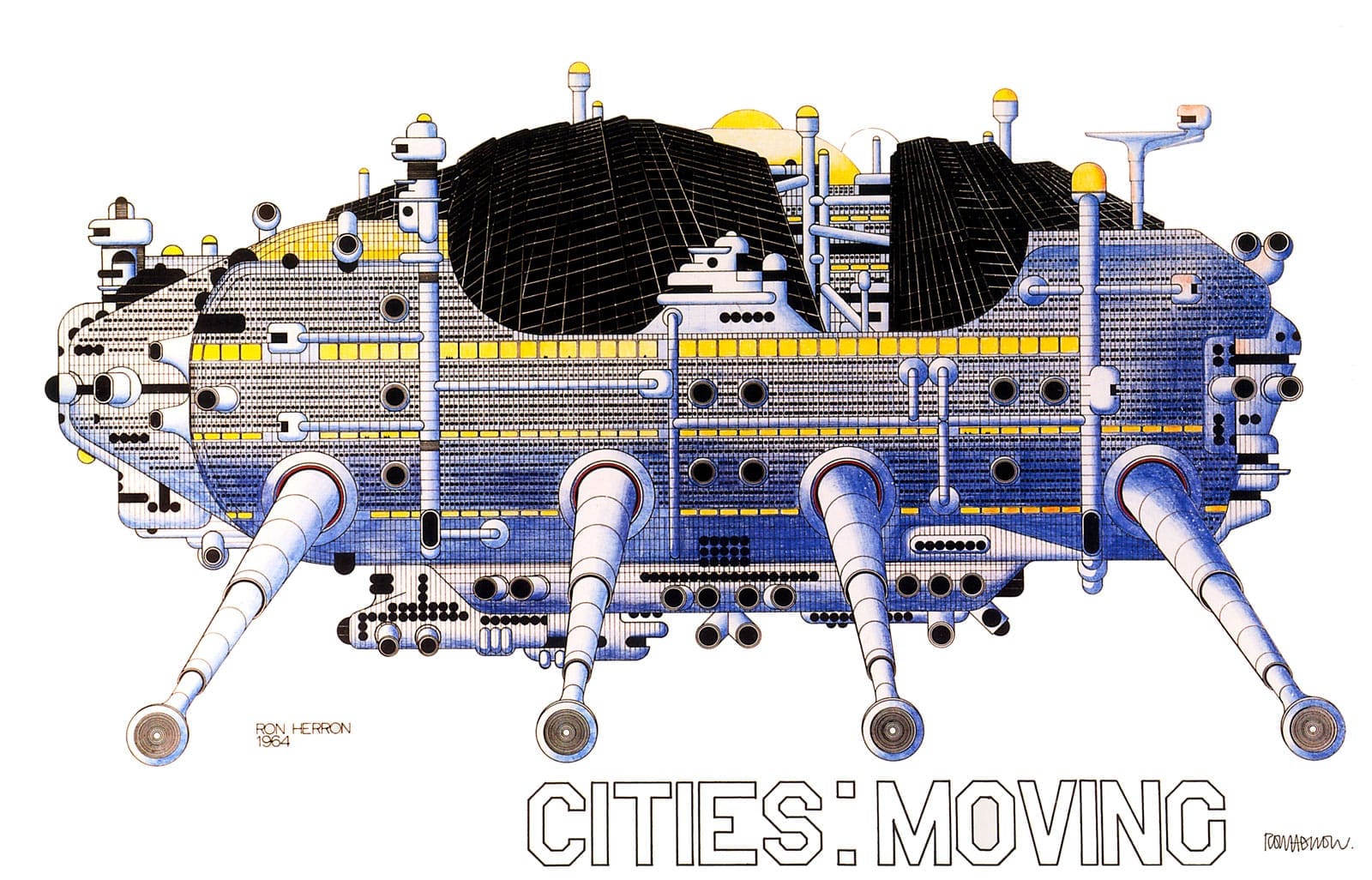
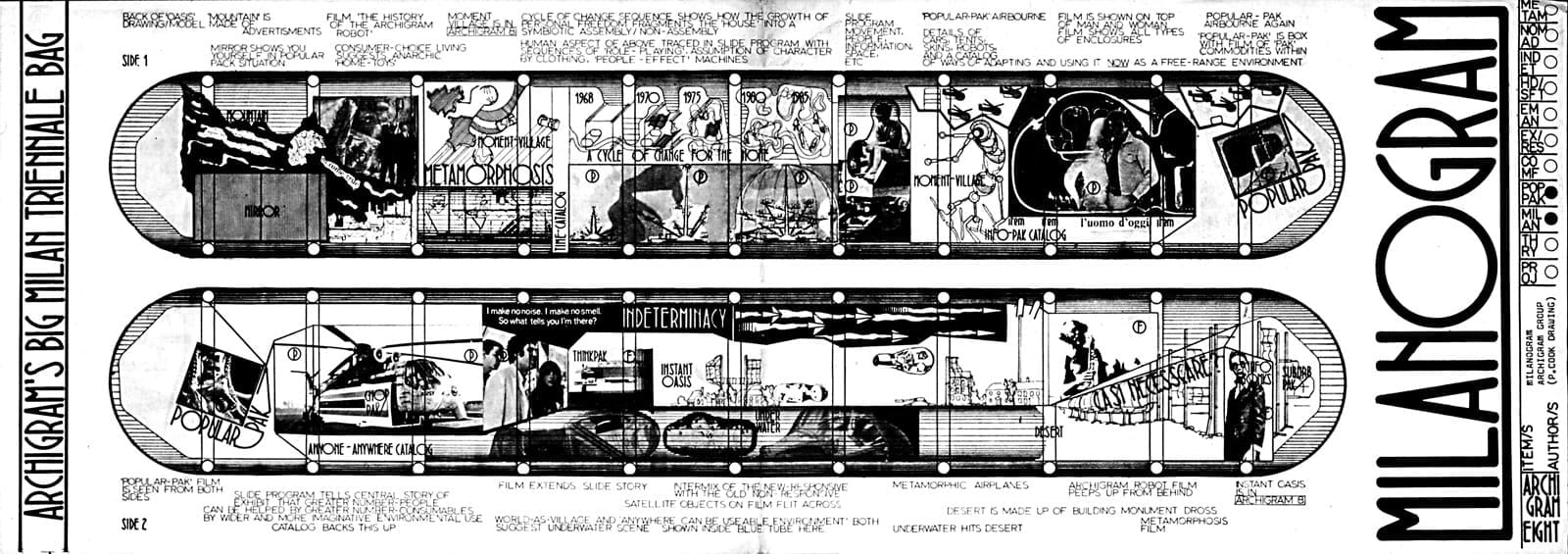
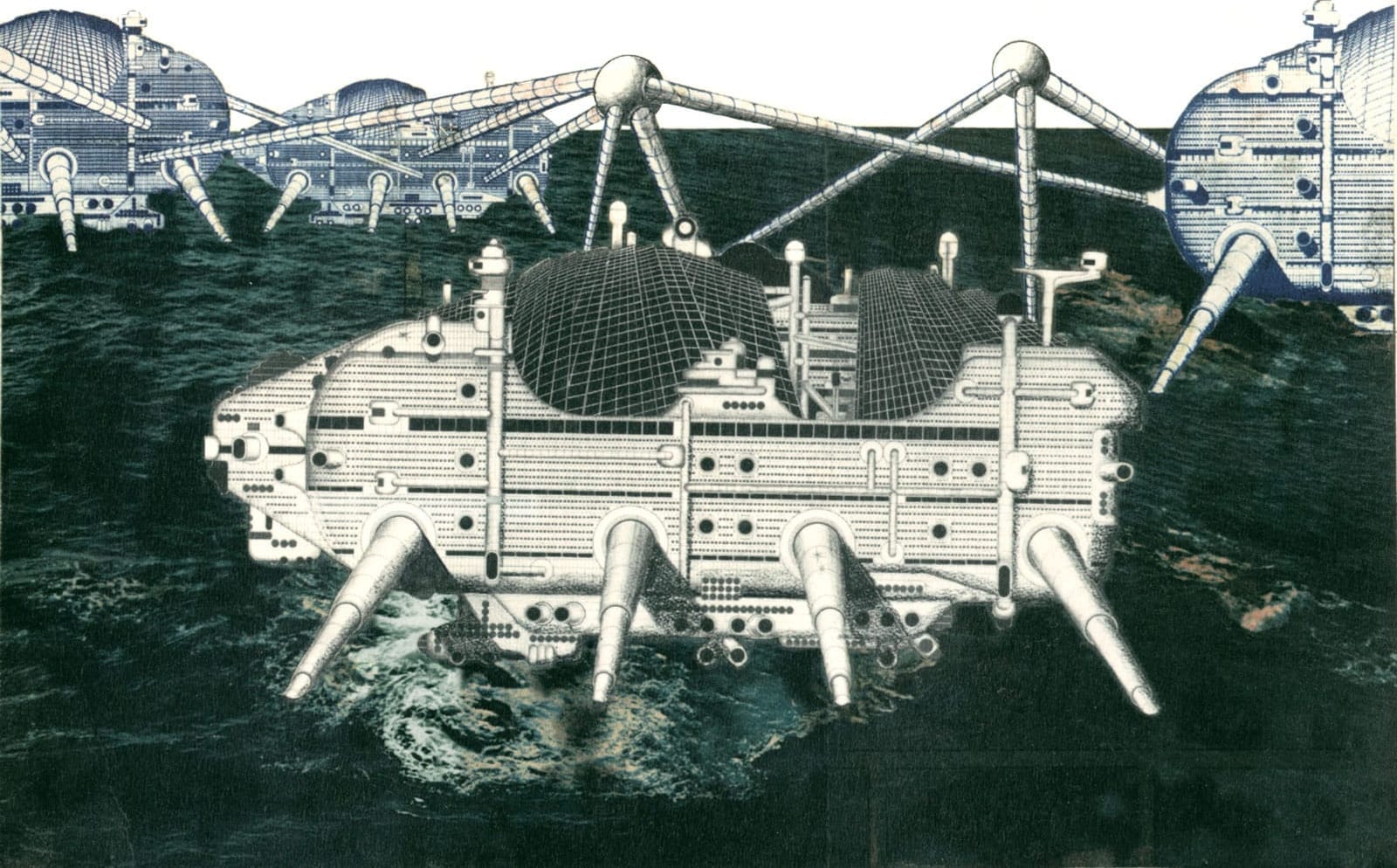
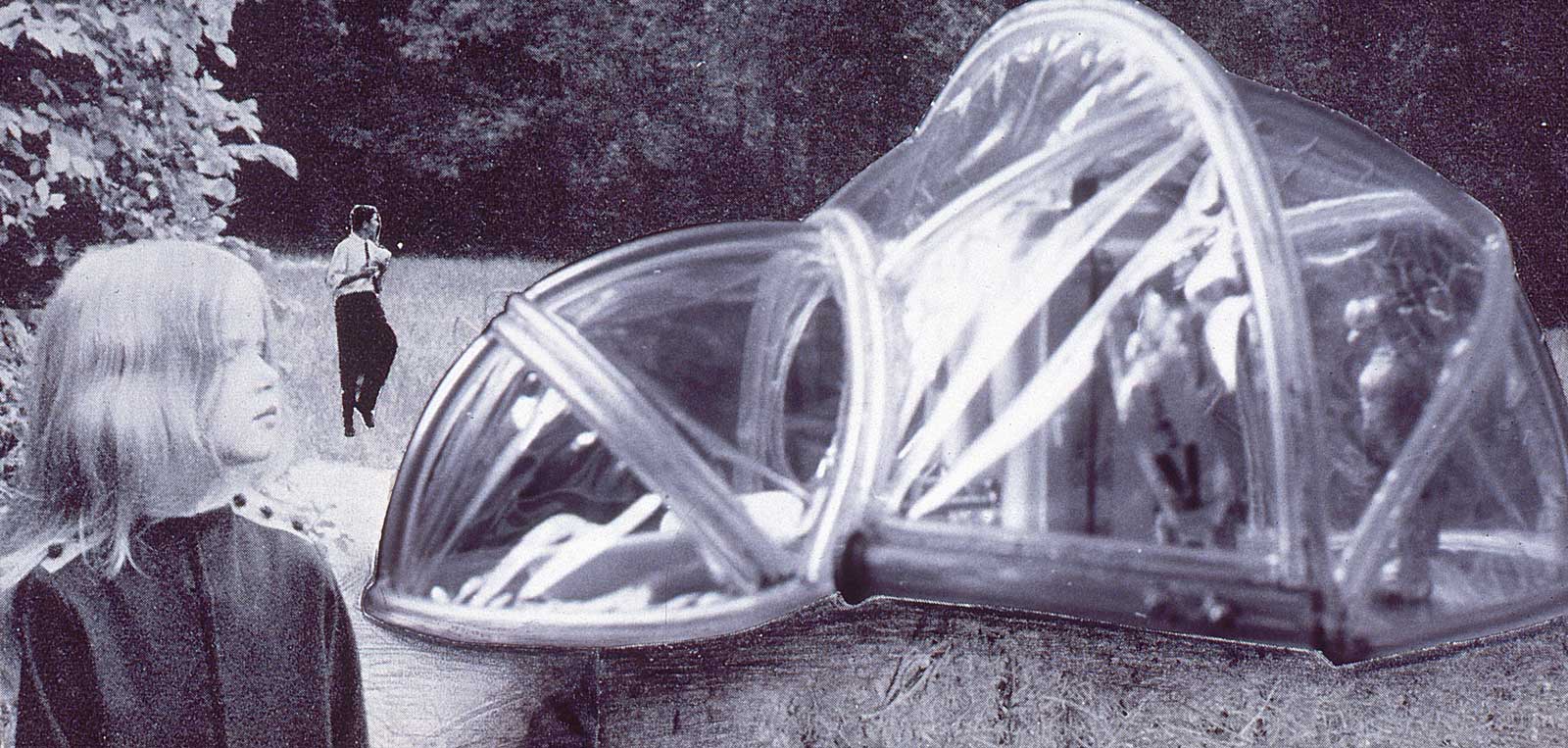
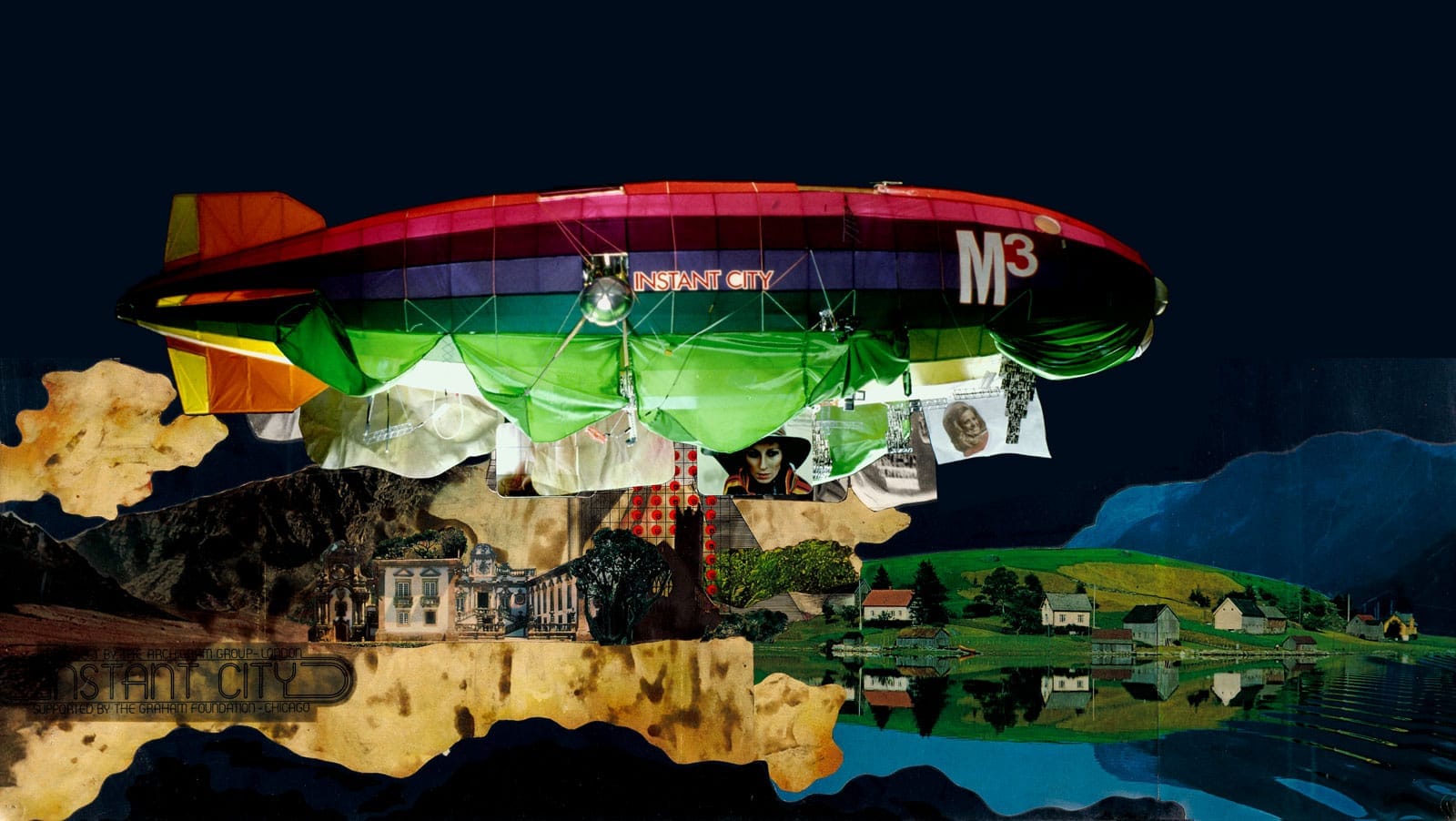
Among their most iconic works are Plug-in City (1964), a vast megastructure into which modular units could be inserted and swapped at will; Walking City (1964), mobile pods on mechanical legs that drift across the landscape like techno-nomadic creatures; and Instant City (1968), a temporary cultural infrastructure deployed by blimps, inflatables, and trucks, bringing festivals of media and technology to small towns. Each project reimagined architecture as provisional and dynamic, closer to software than stone.
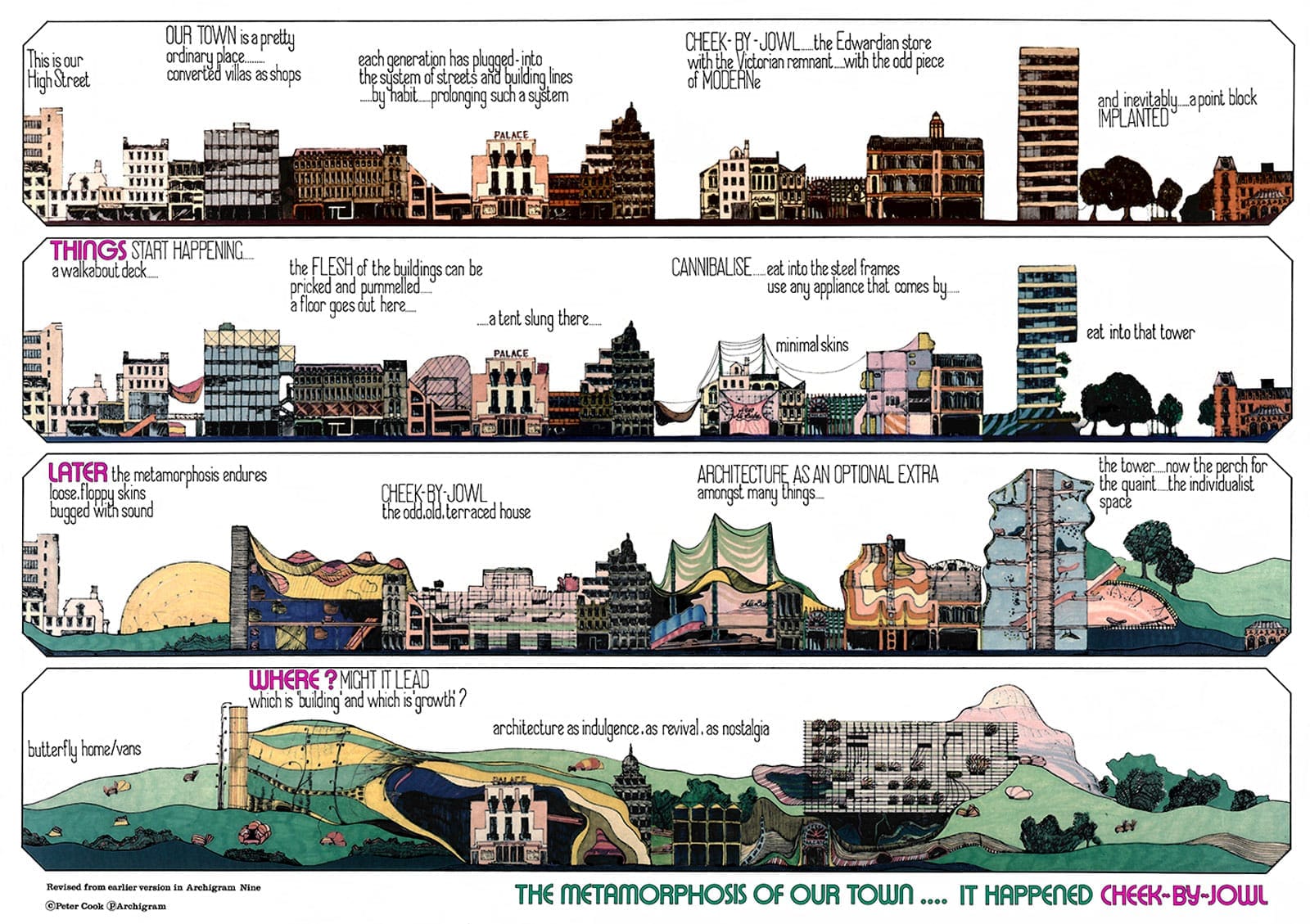
Archigram’s themes were rooted in mobility, adaptability, and the refusal of permanence. They saw cities as responsive organisms, plugged into systems of information and energy, capable of moving, mutating, and dispersing. While few of their visions were built, their drawings remain enduring provocations: a reminder that architecture can be speculative fiction, a site of imaginative resistance to the static, monumental, and preordained.
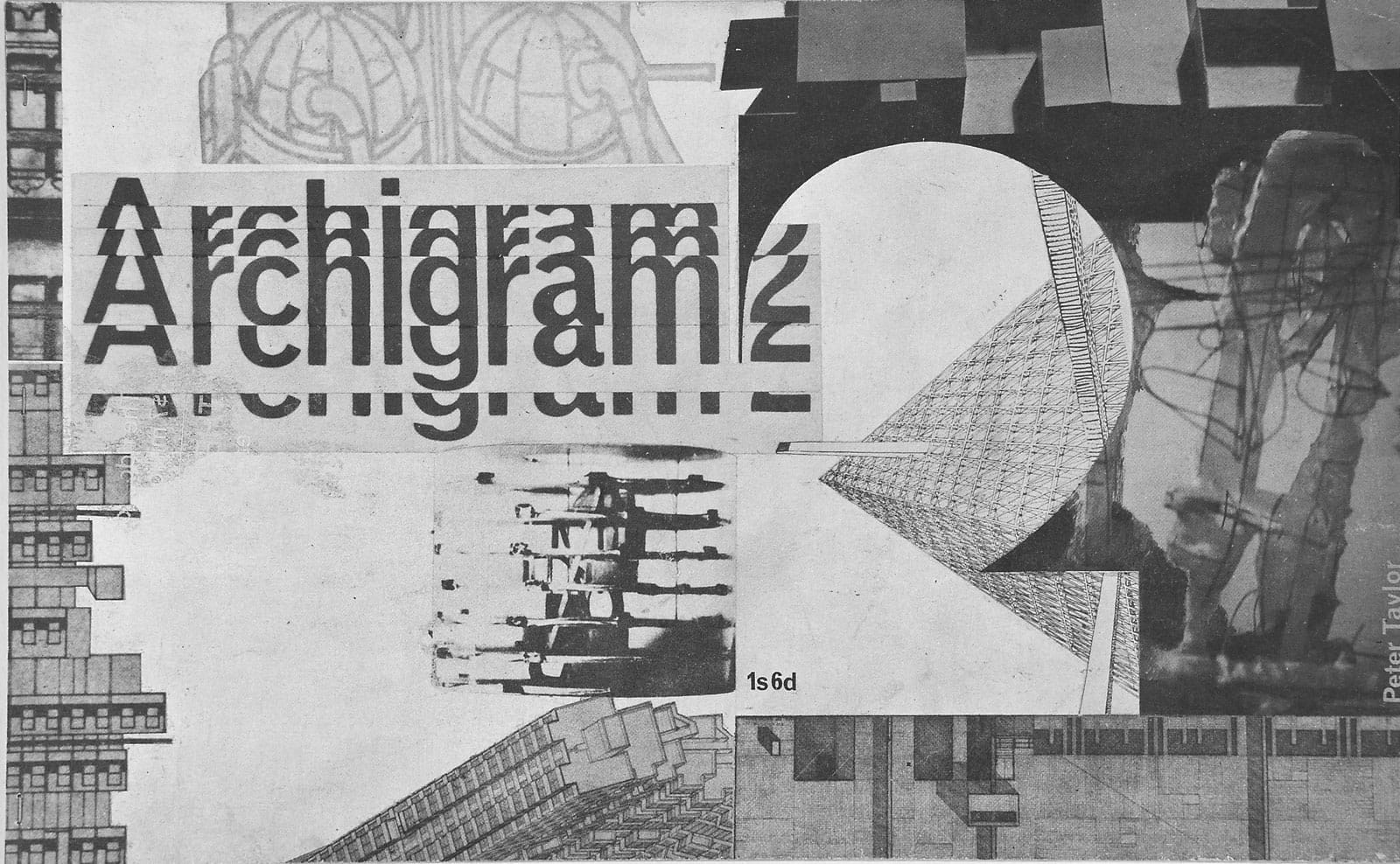
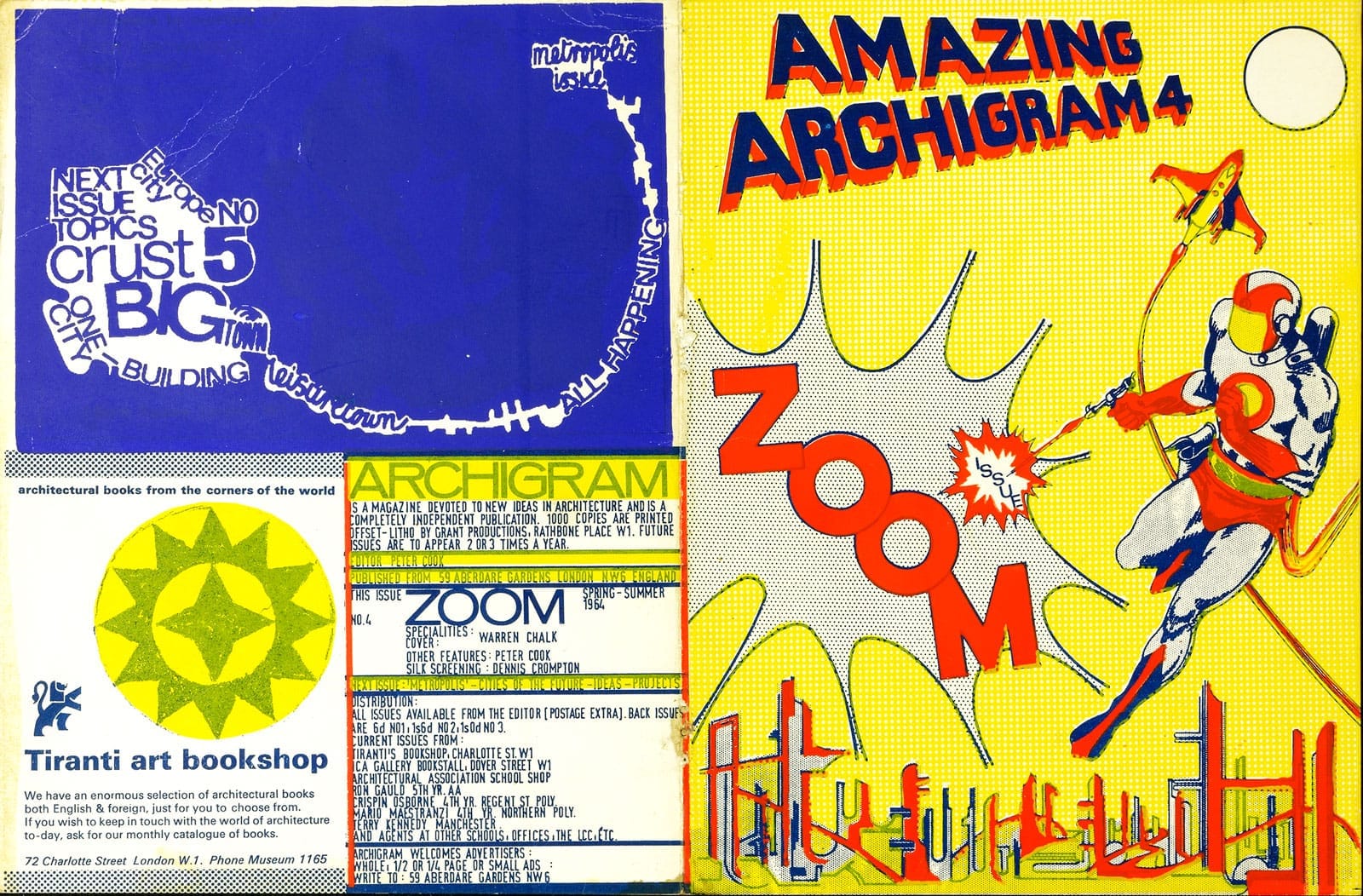
Archigram took its name from its magazine, first published in London in 1961 by Peter Cook, David Greene, and Michael Webb, who were later joined by Warren Chalk, Dennis Crompton, and Ron Herron. Cook drew Plug-in City and Herron drew Walking City.
In 2002 the group received the RIBA Royal Gold Medal, the UK's highest award for architecture (Domus covered it at the time). Their archive of drawings, models, and magazines is now held by M+, the museum of visual culture in Hong Kong.
See also: Continuous Monument and Ant Farm
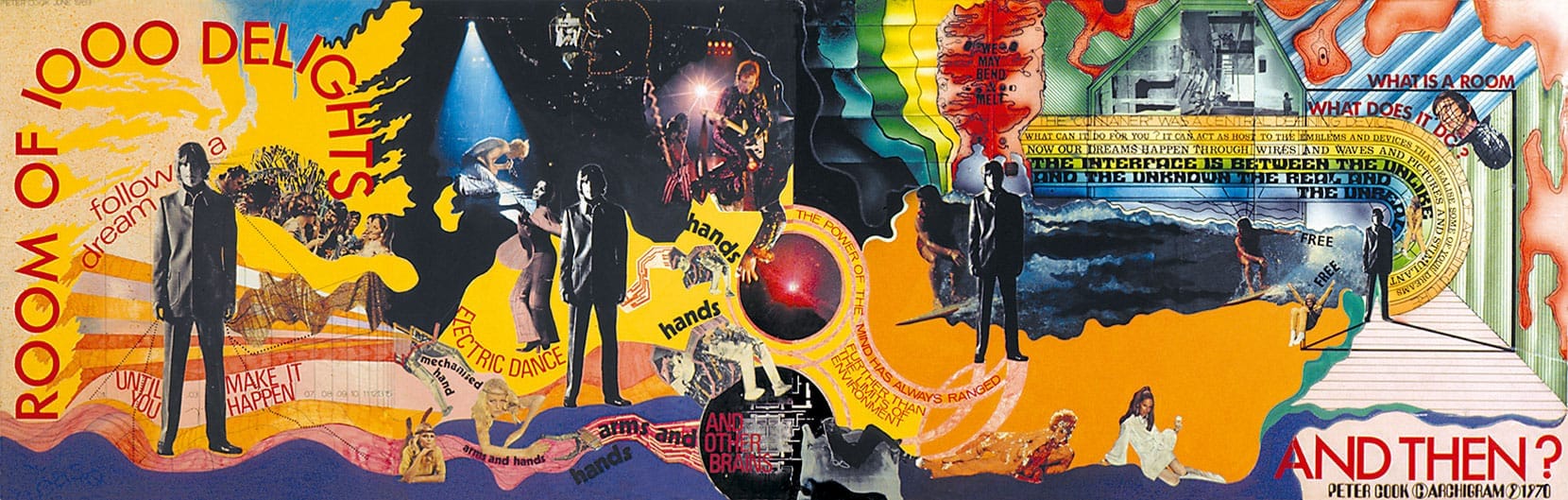
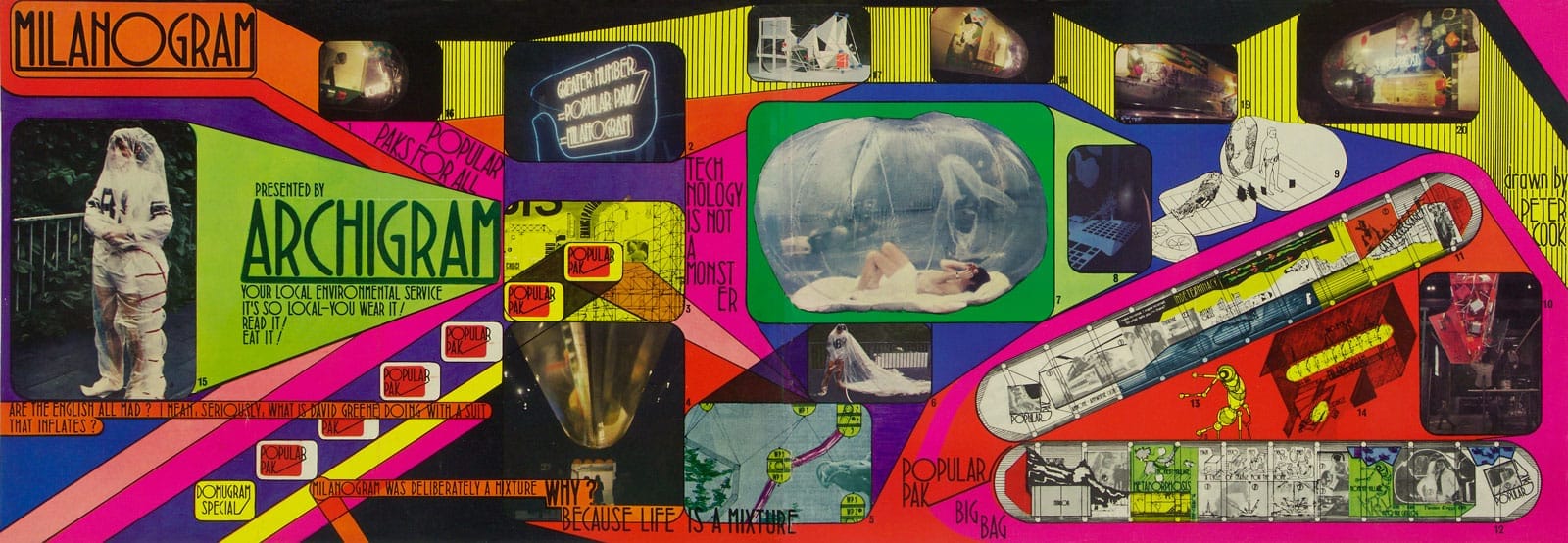
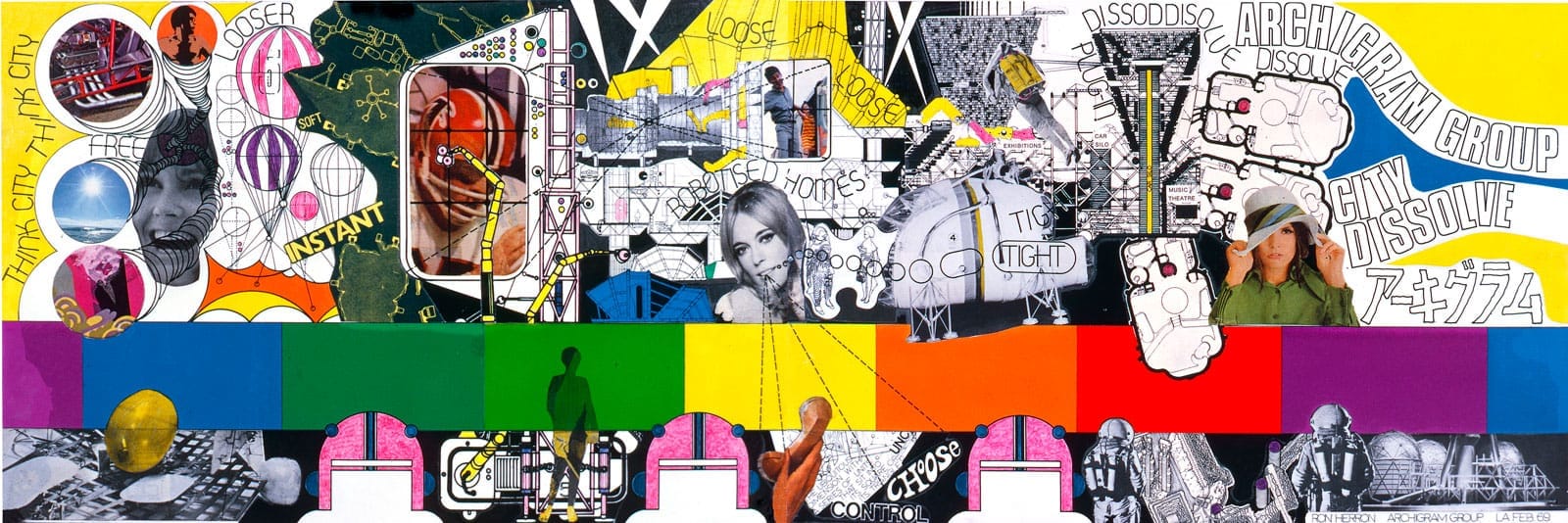
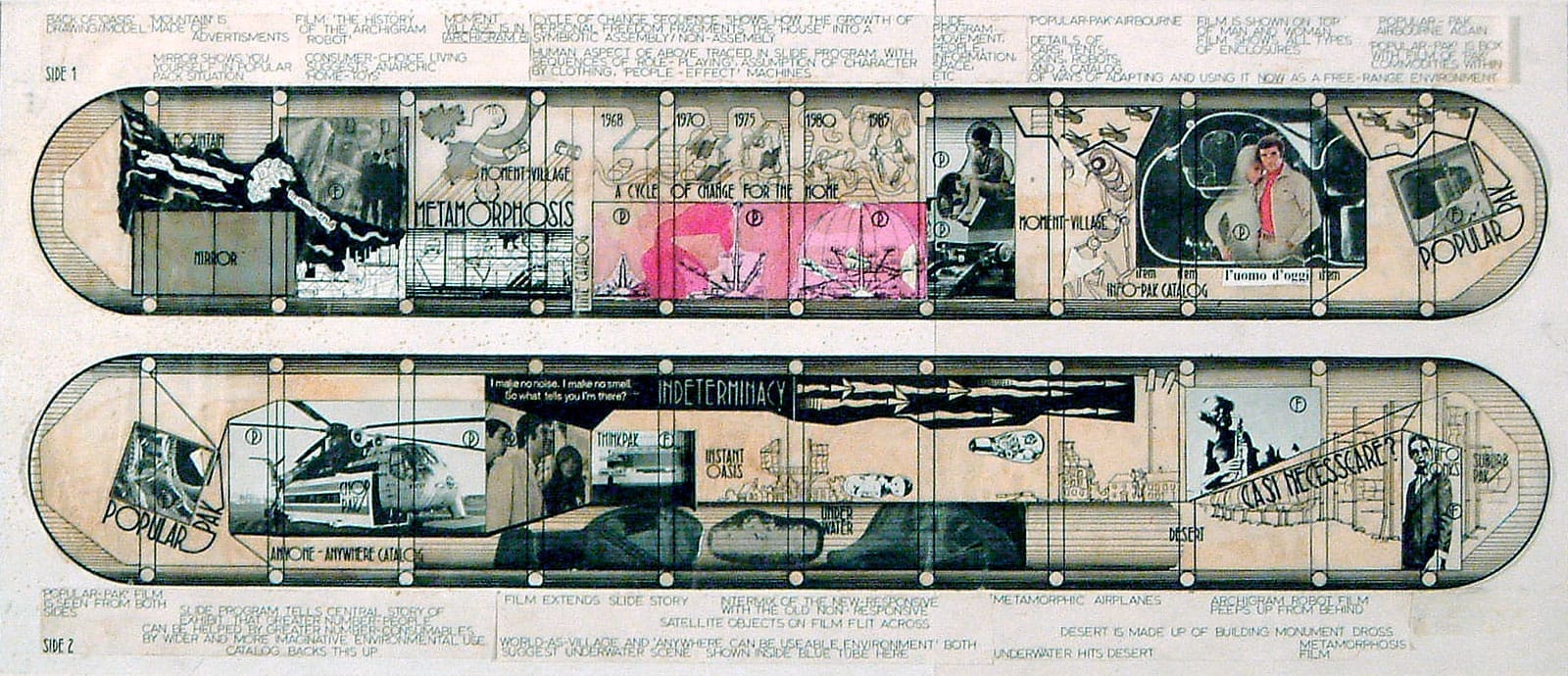
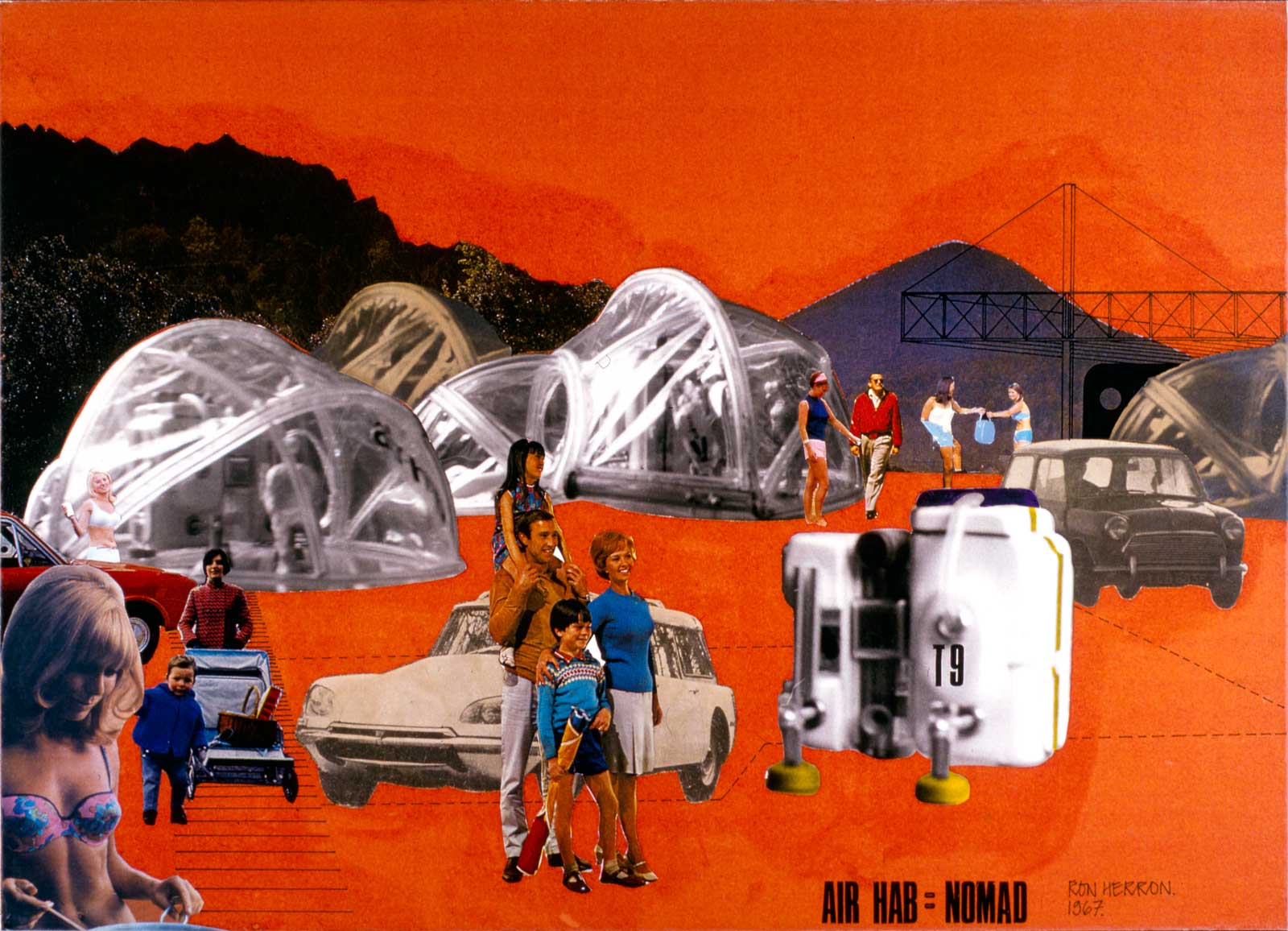
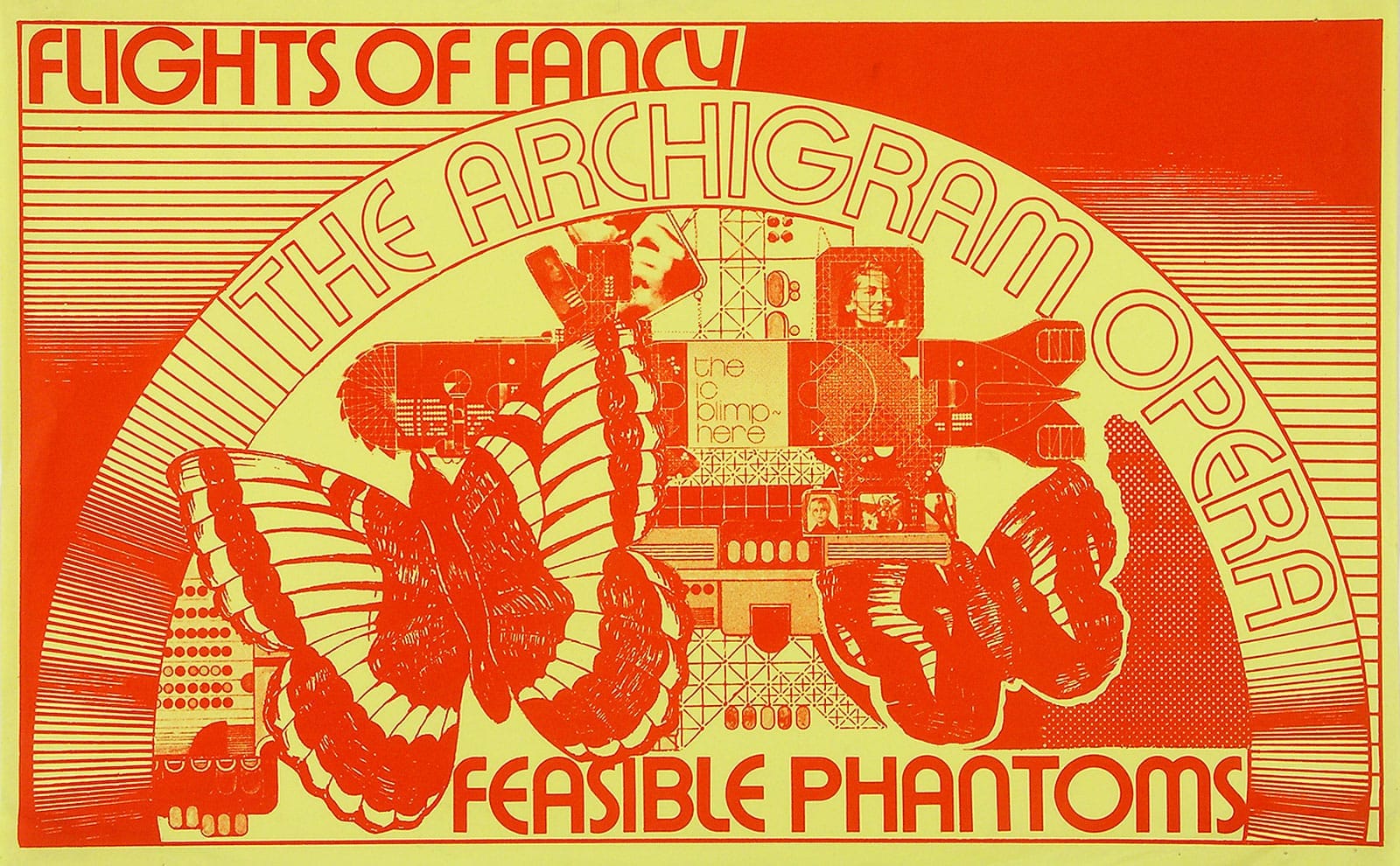
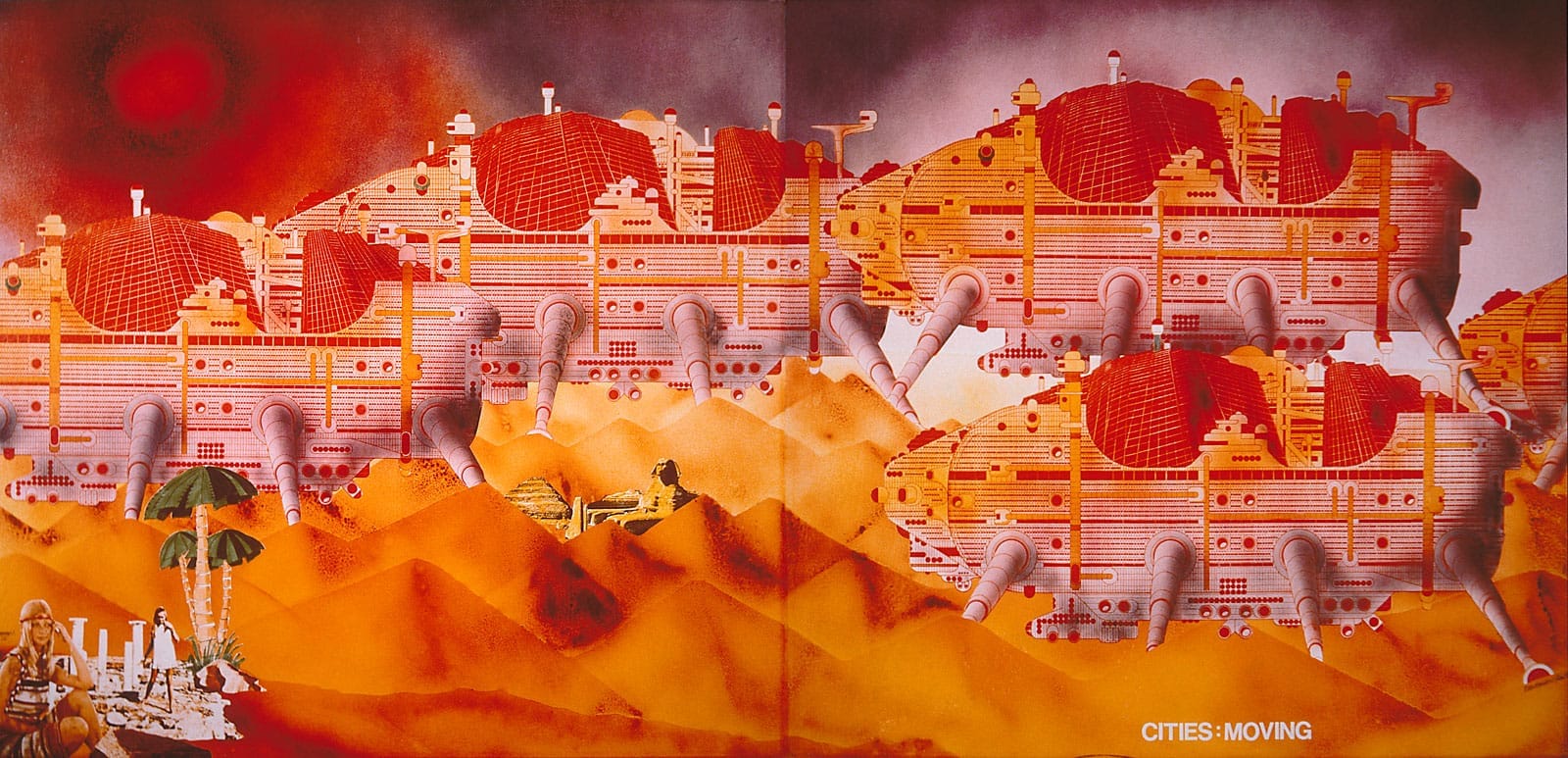
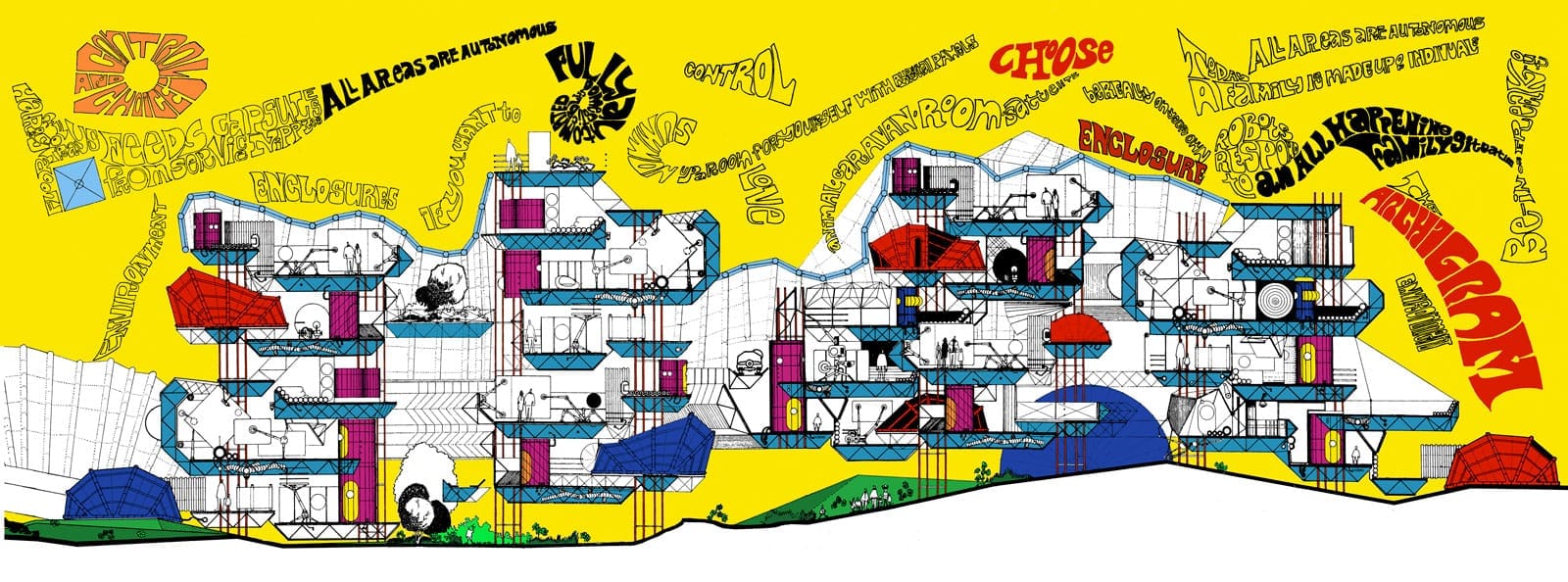
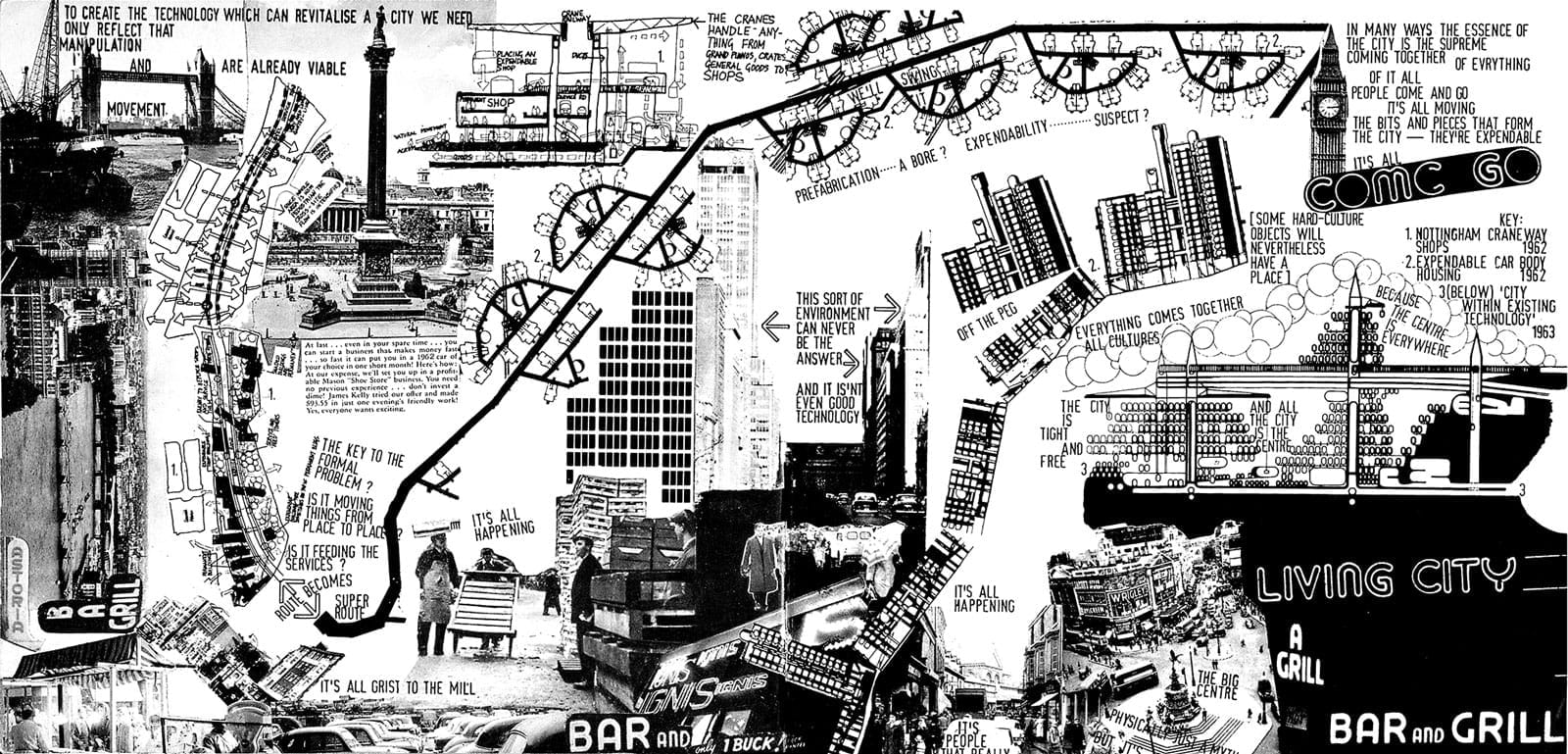
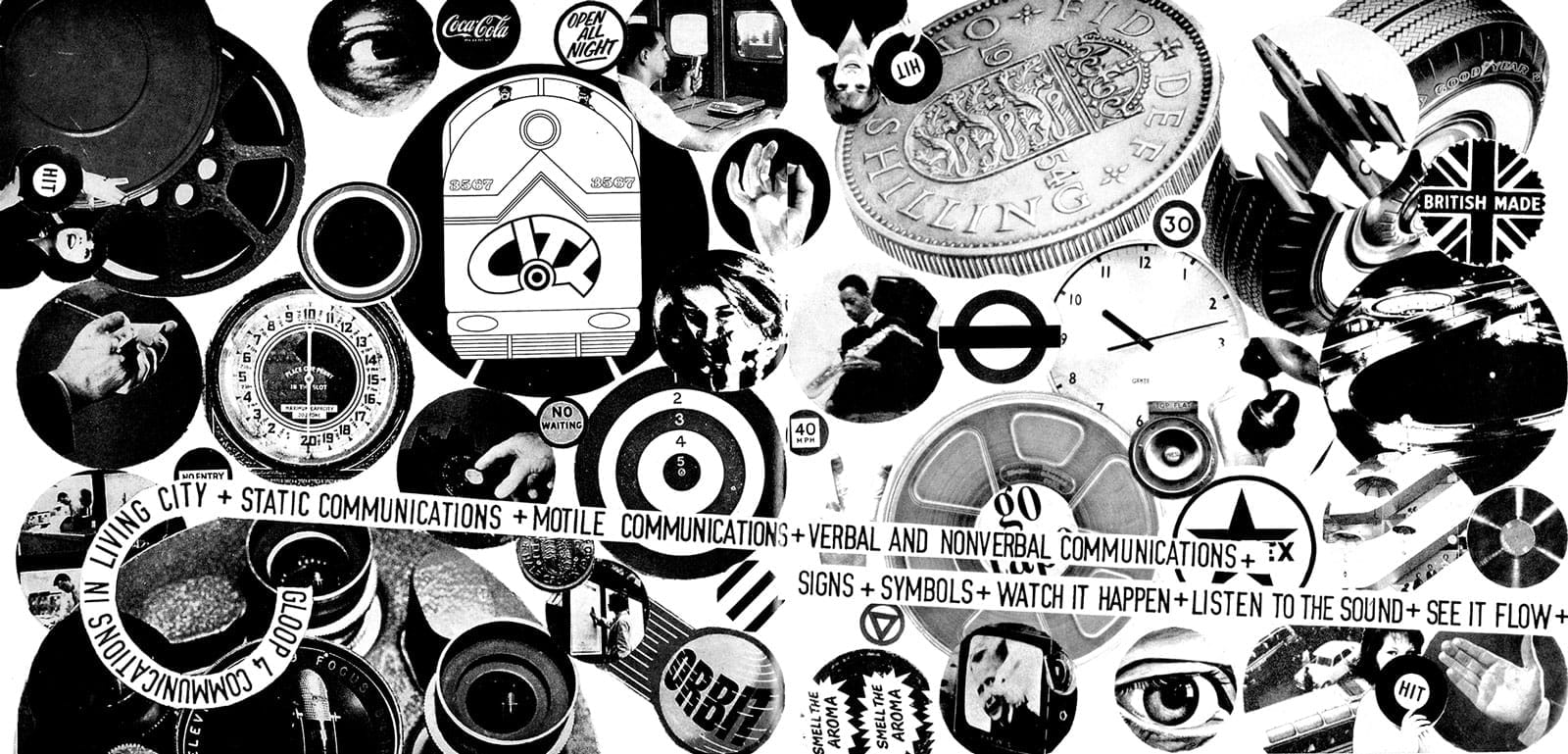
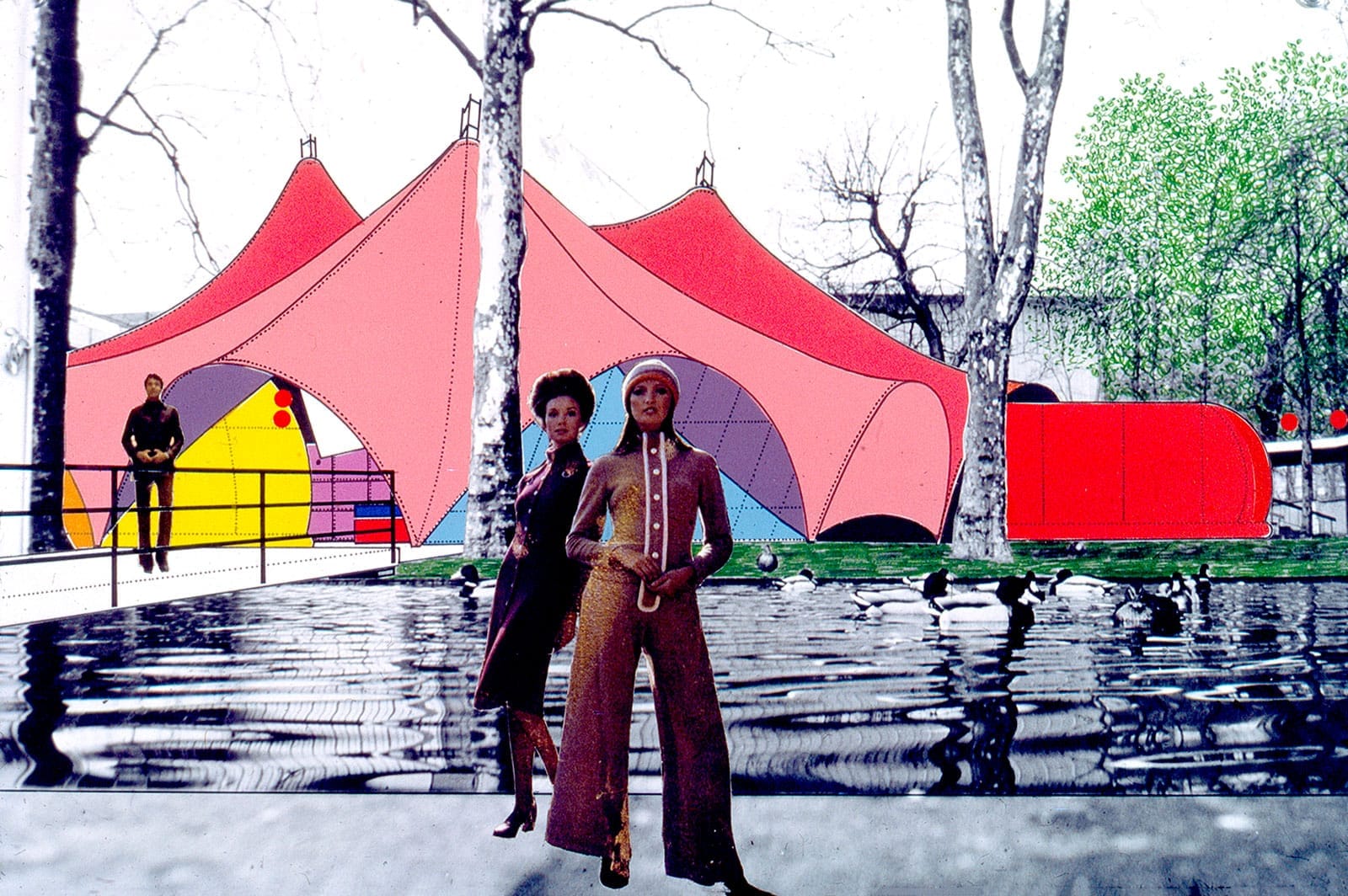
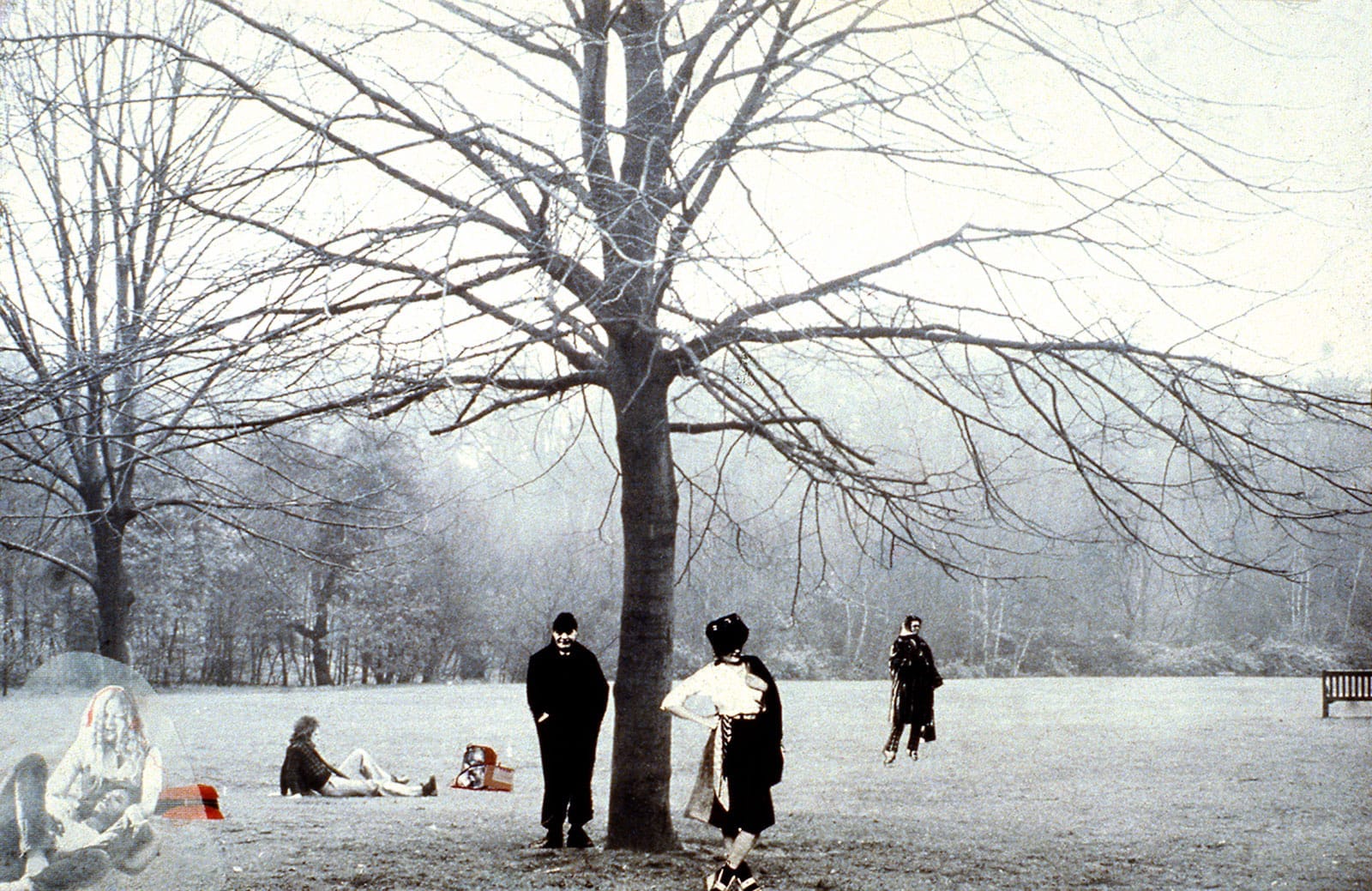
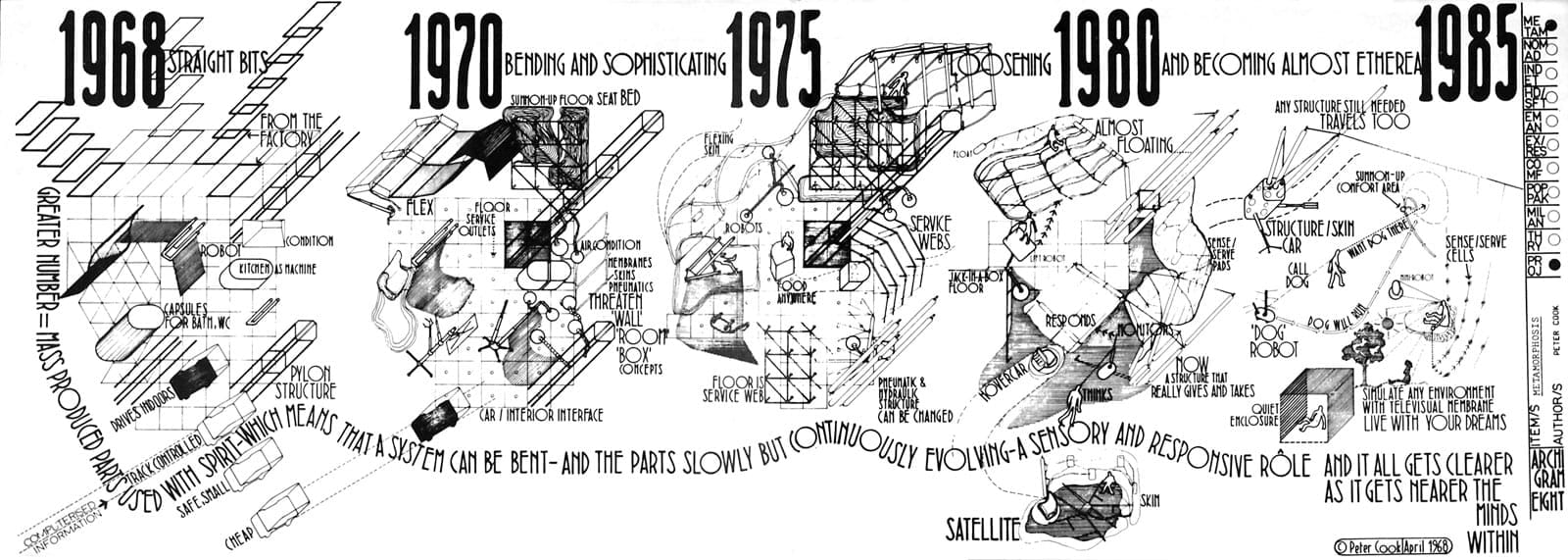
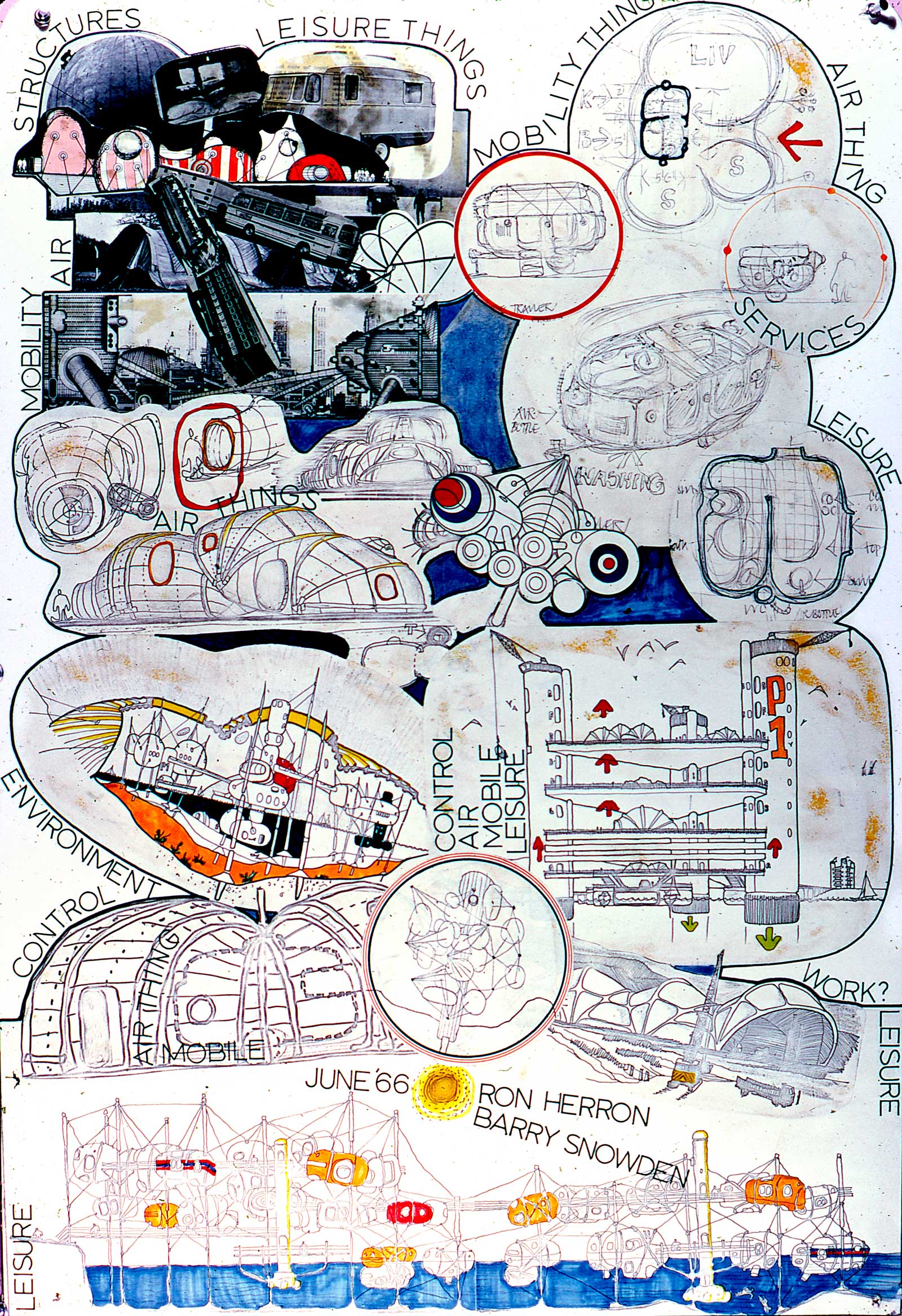
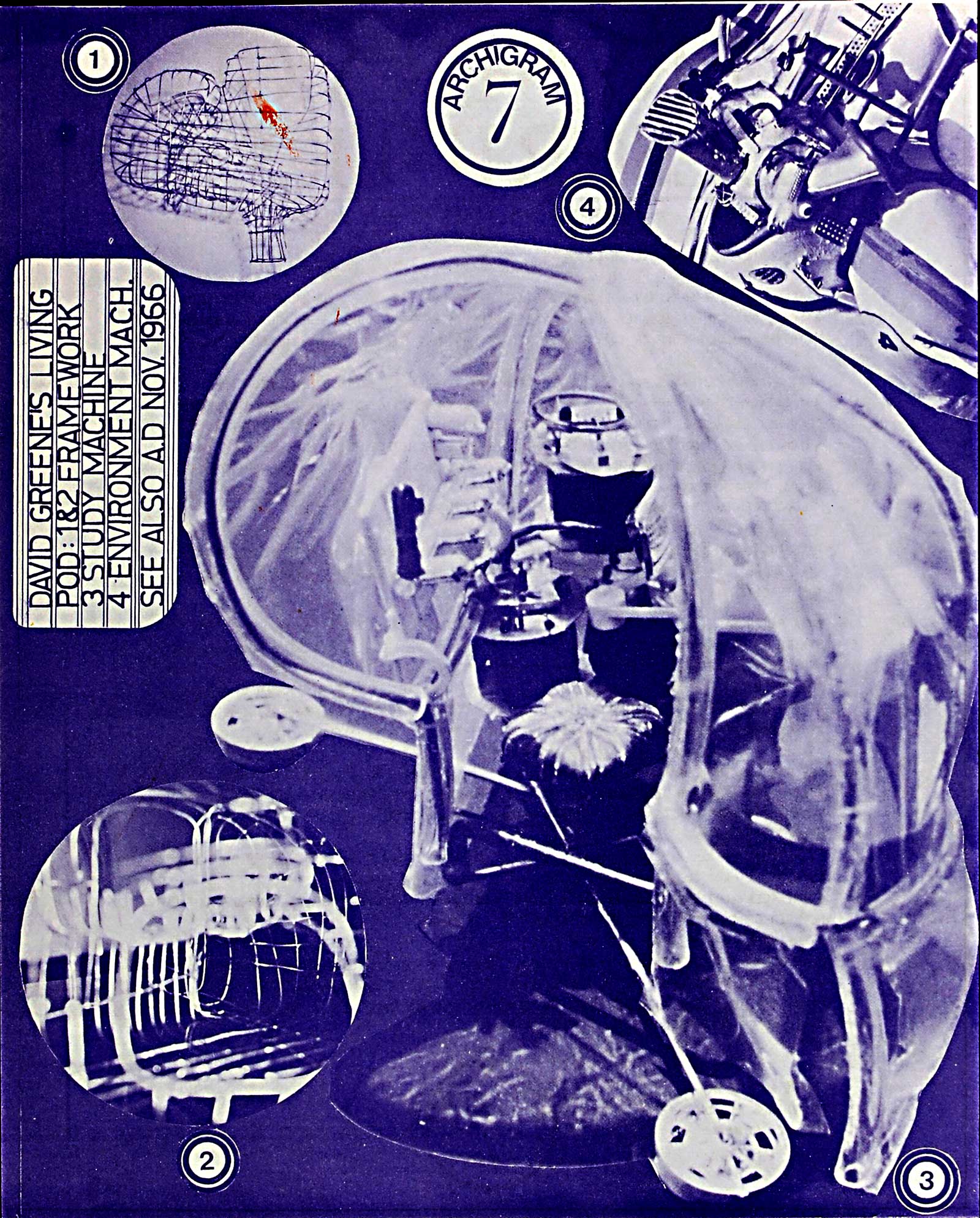
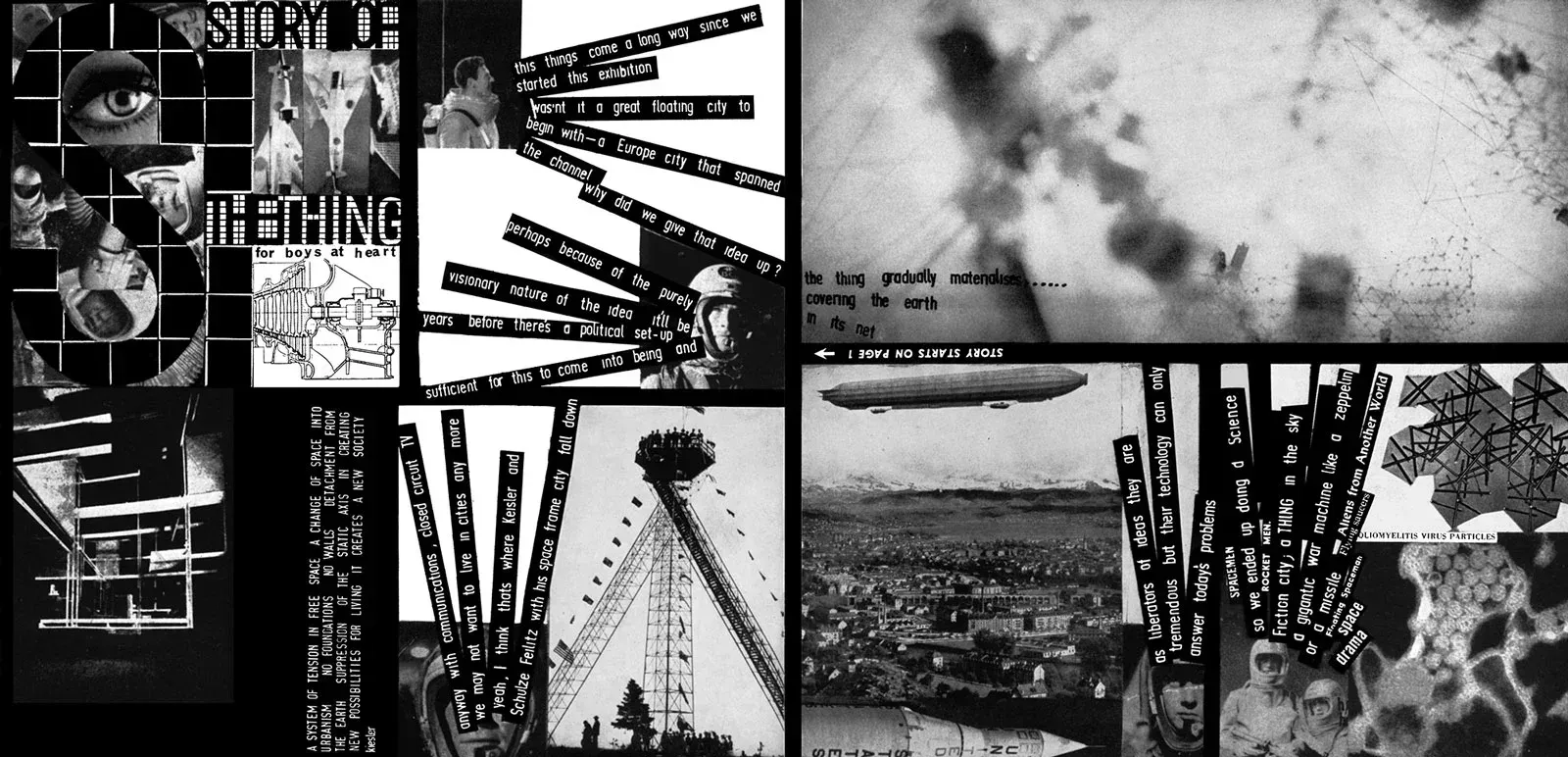
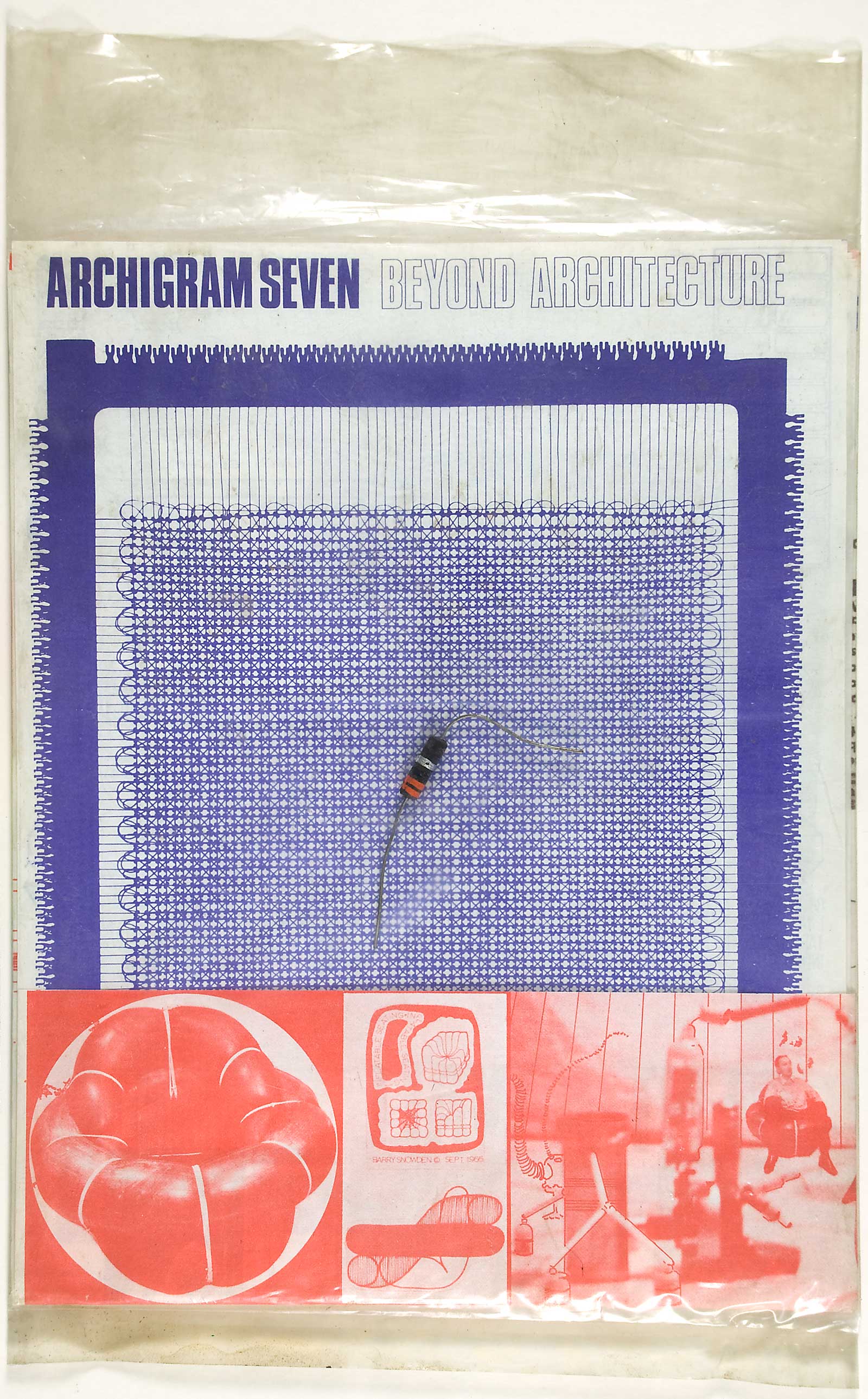
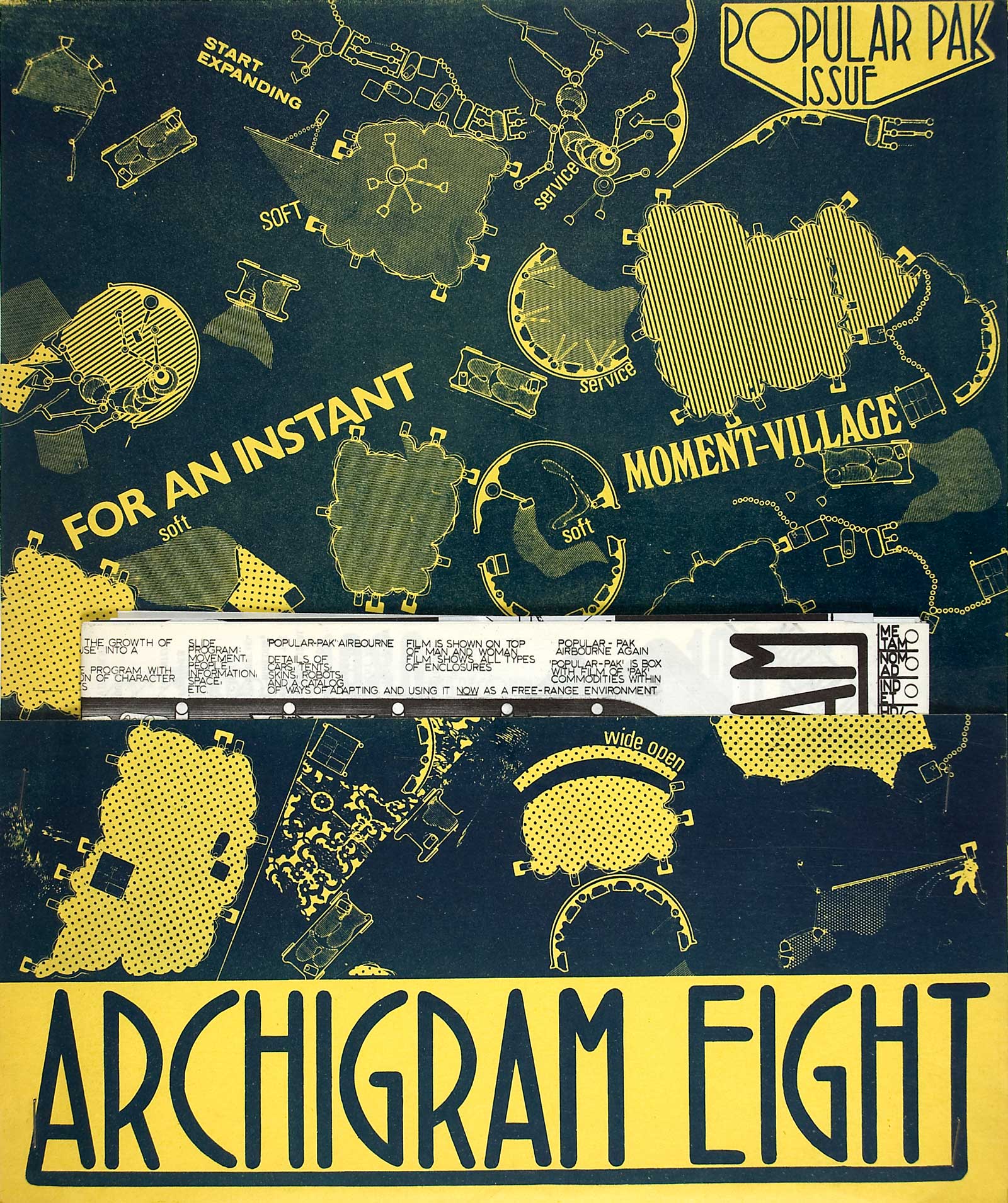
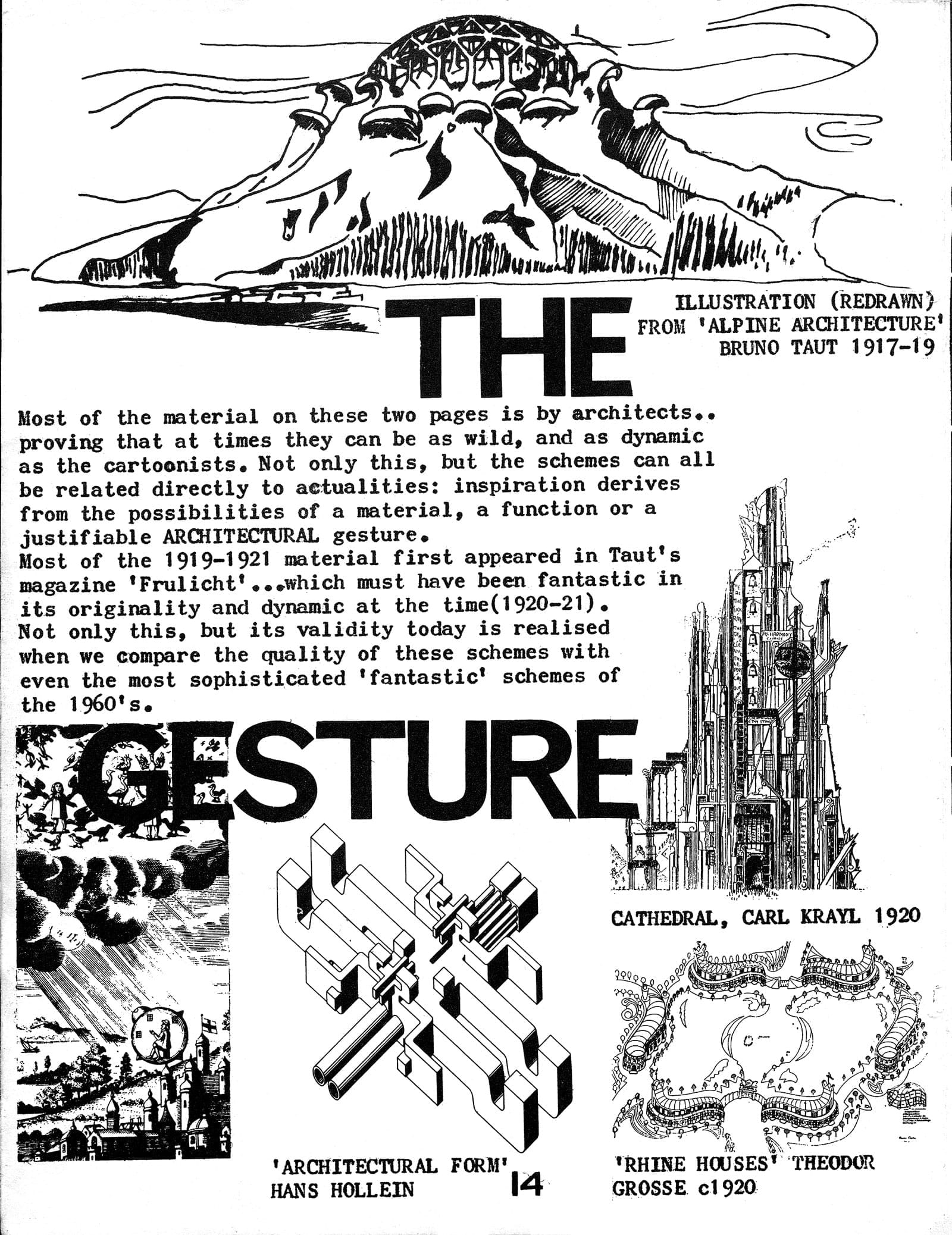
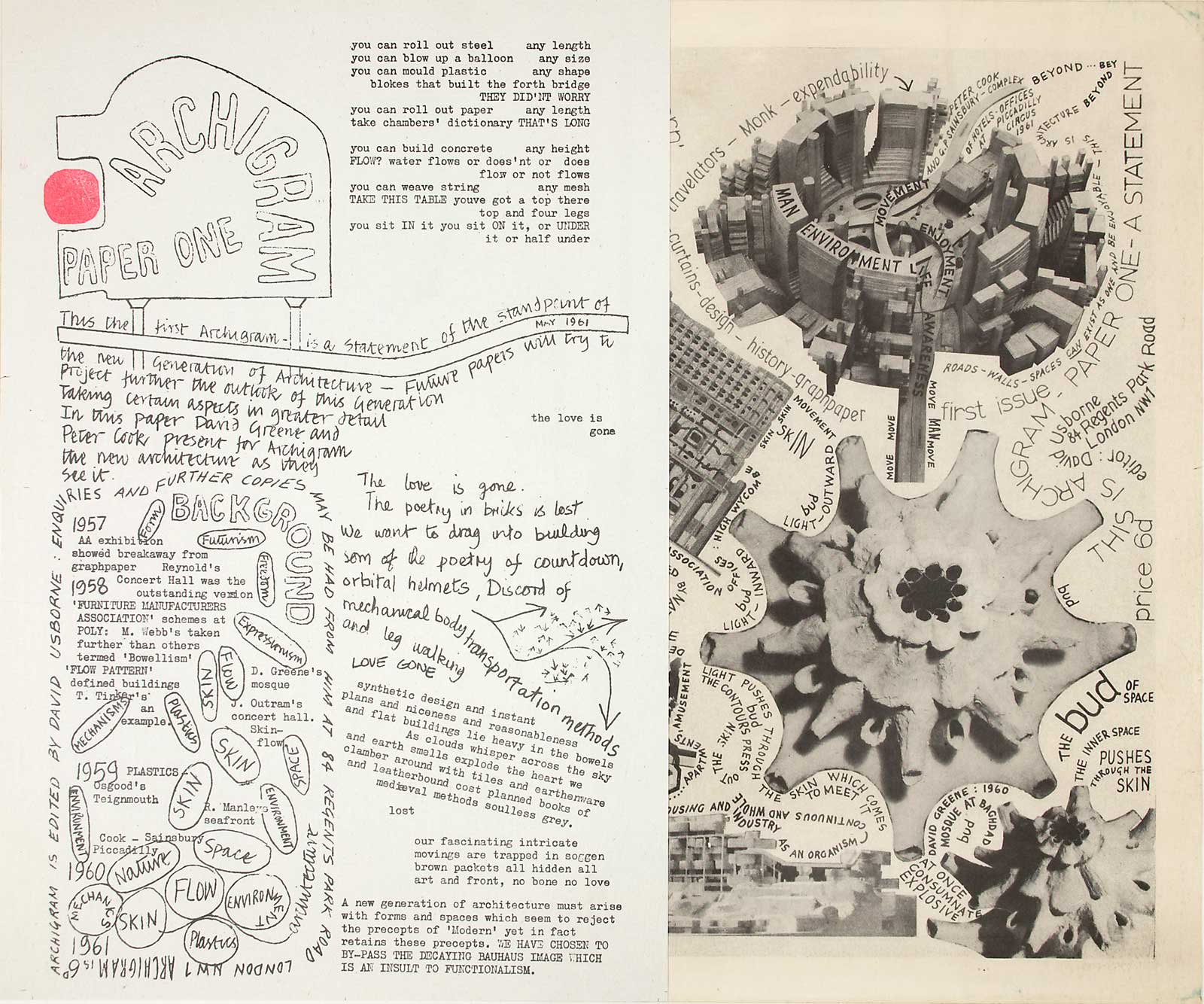
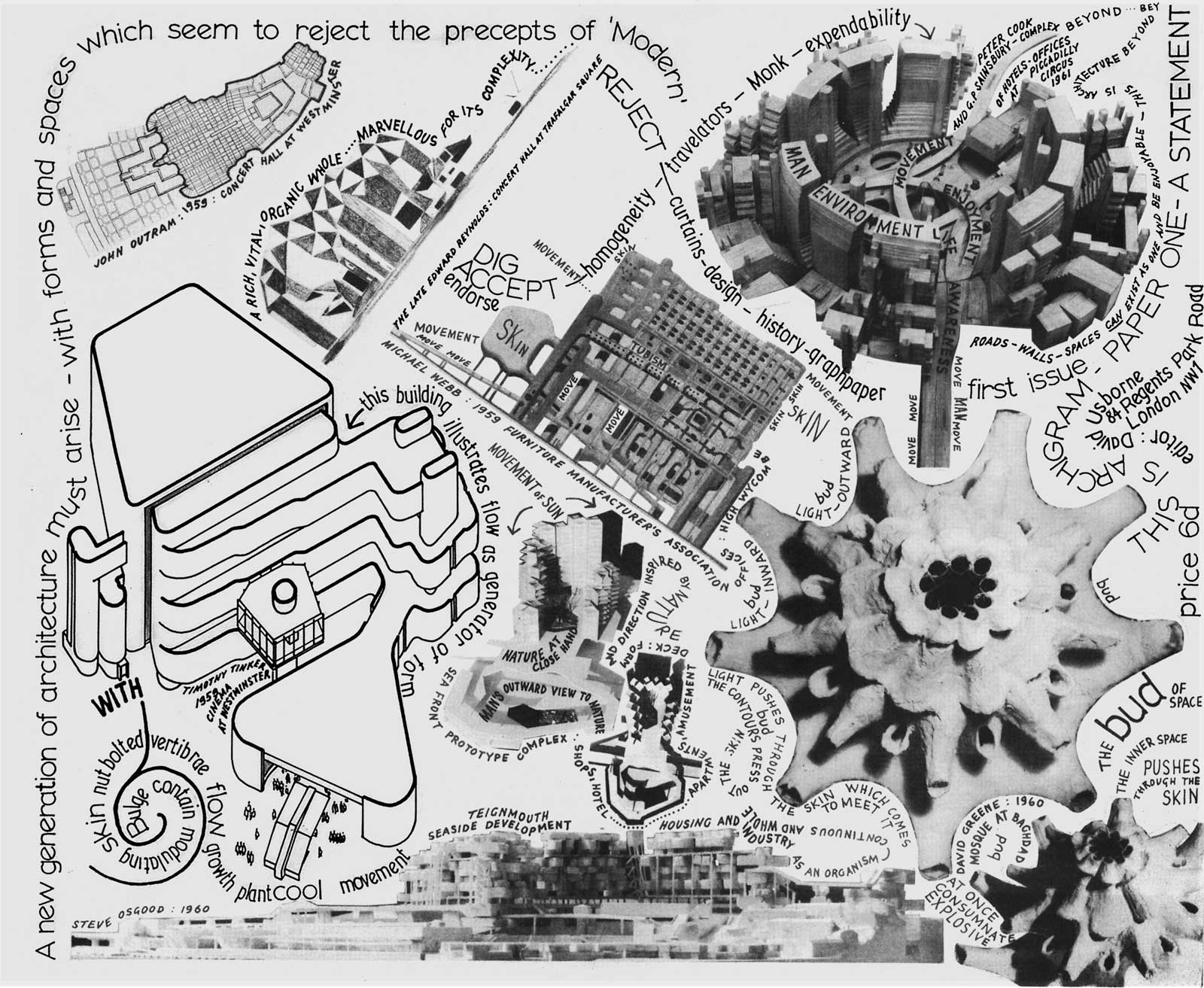
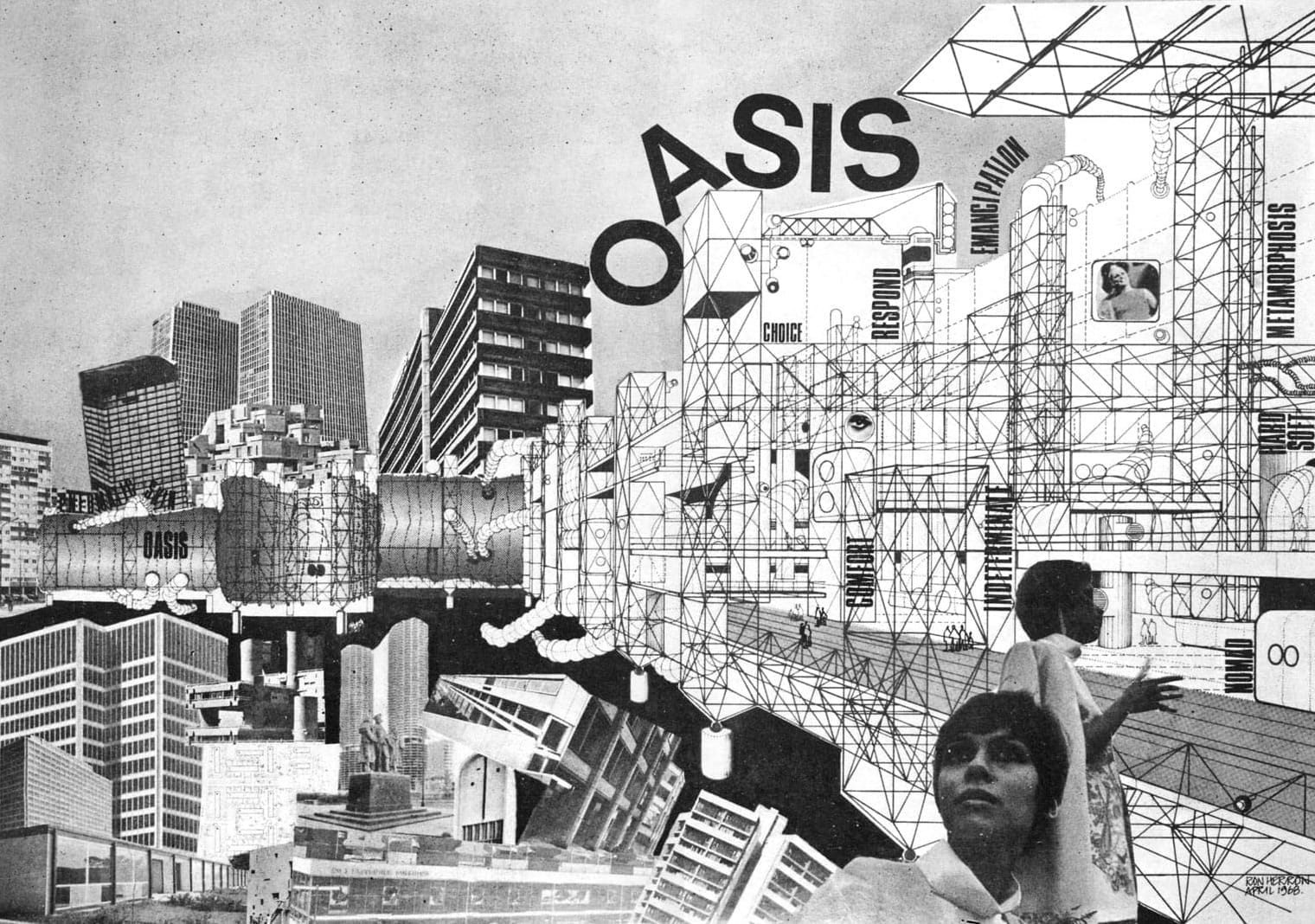
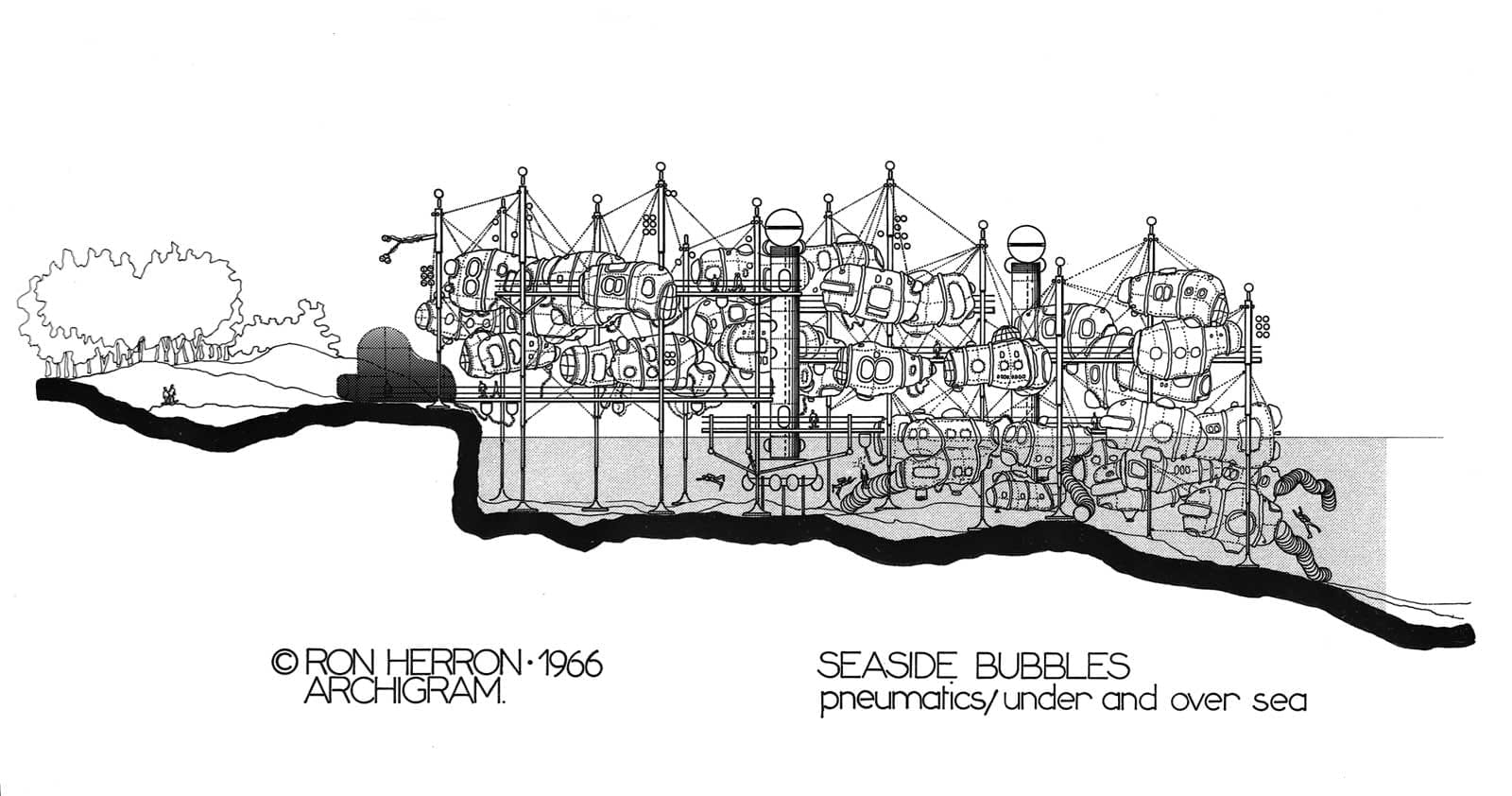
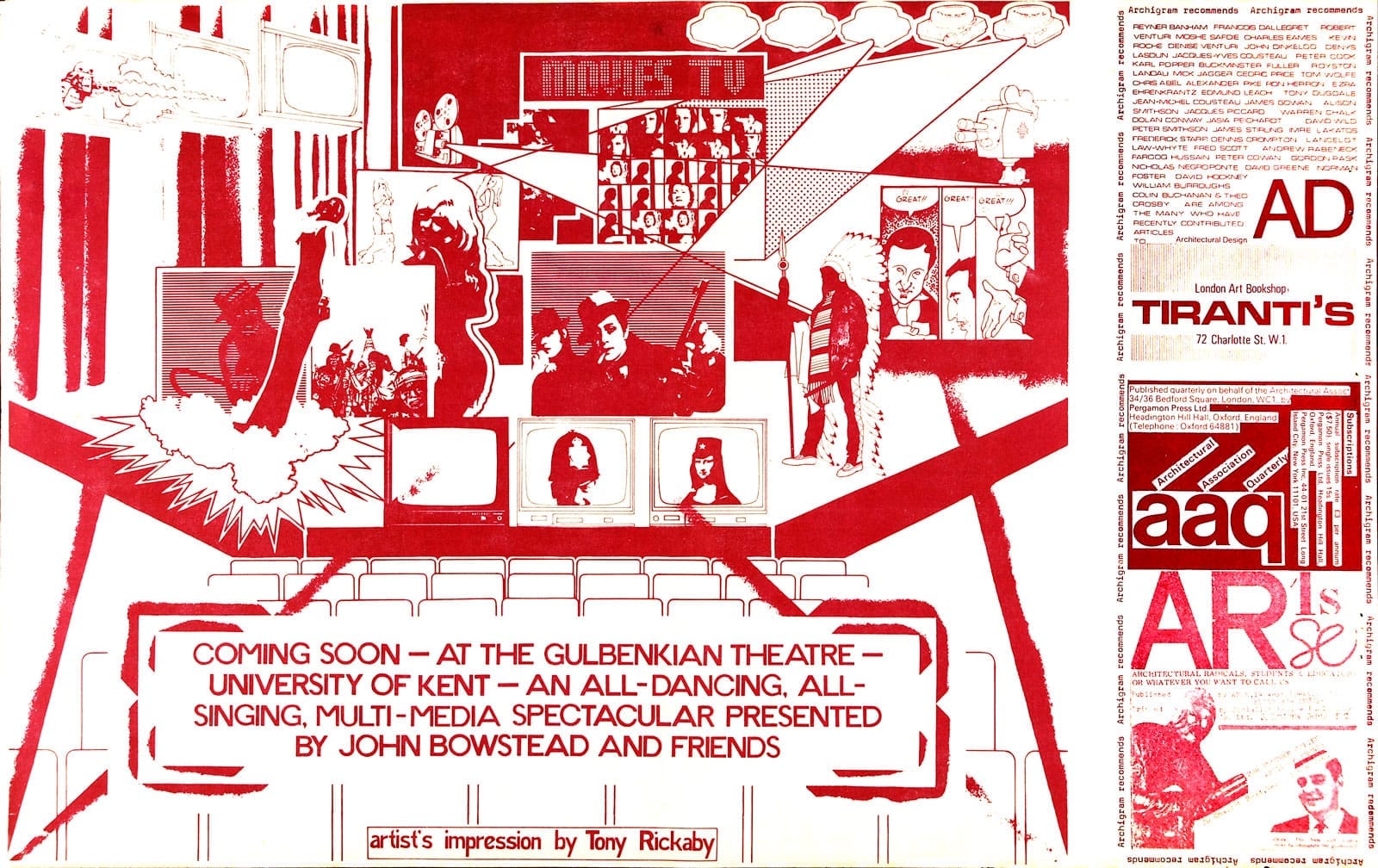
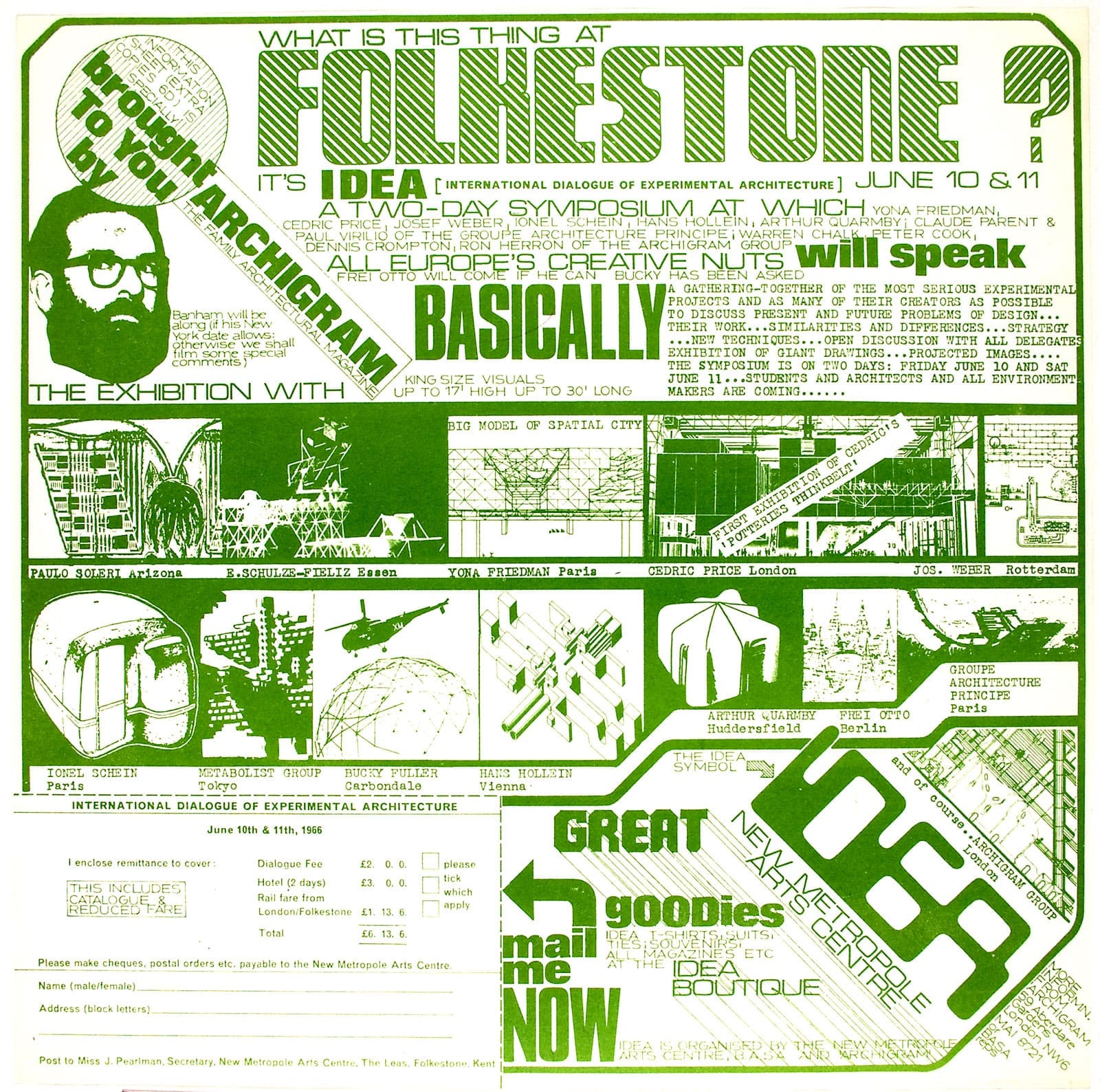
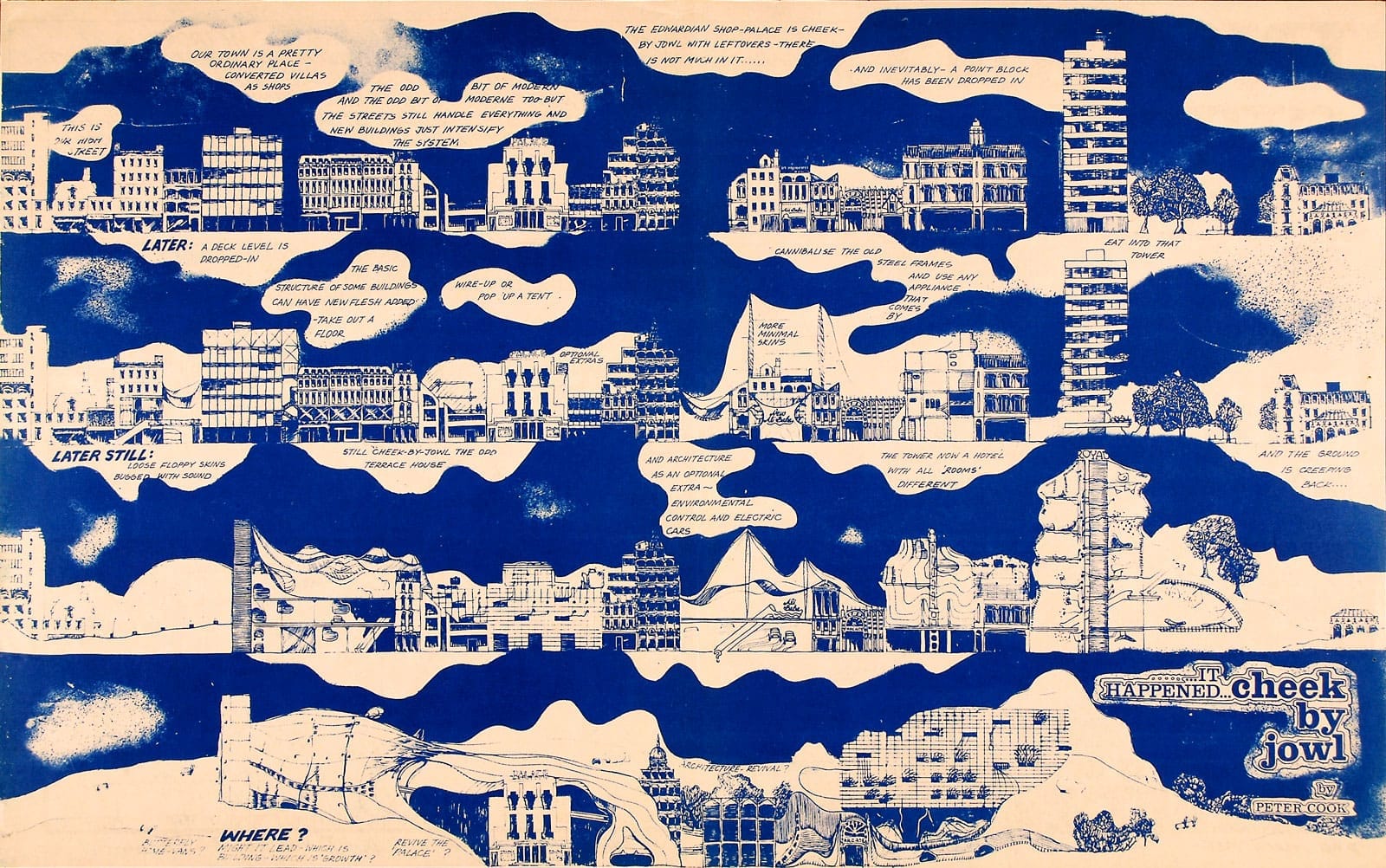
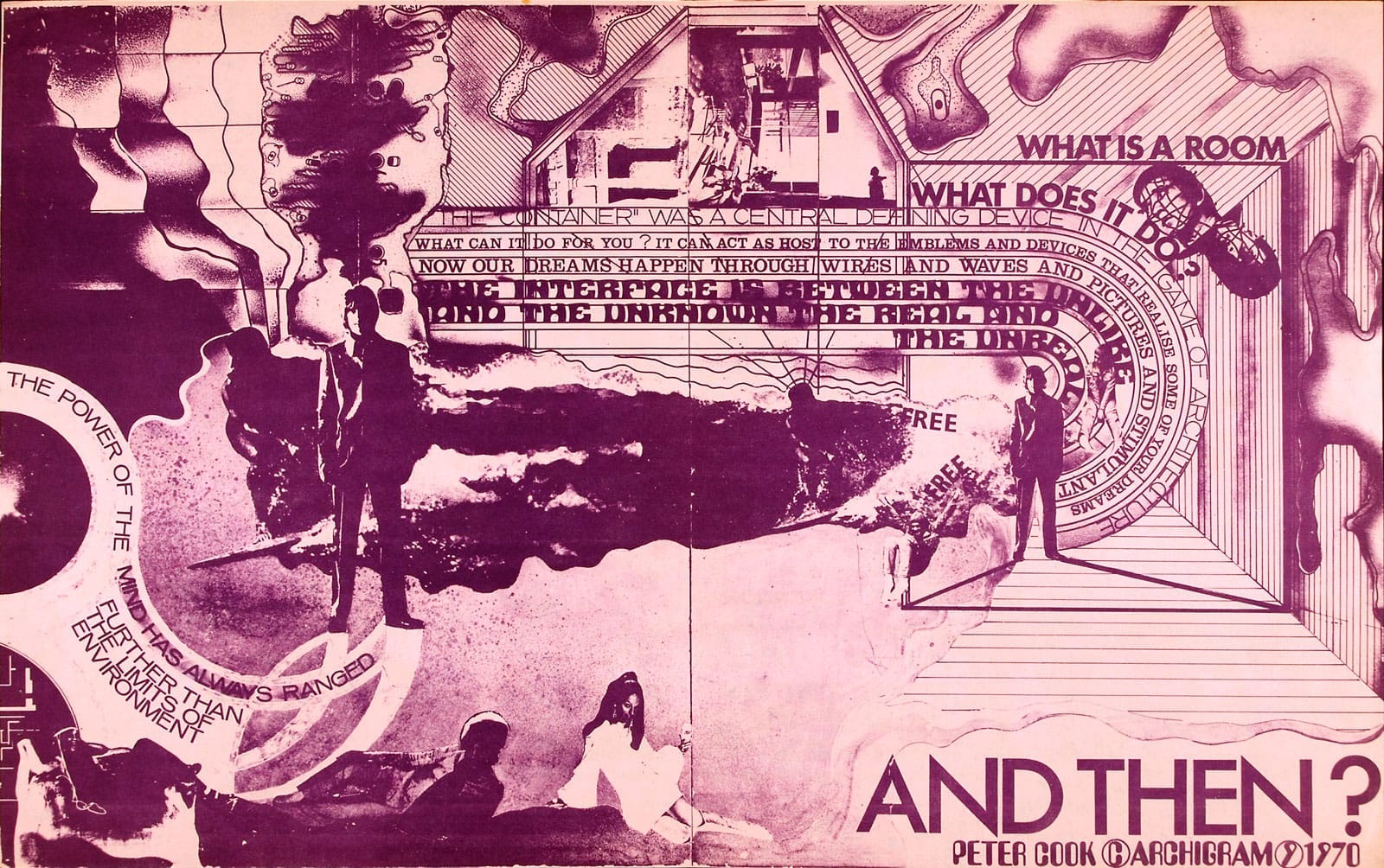
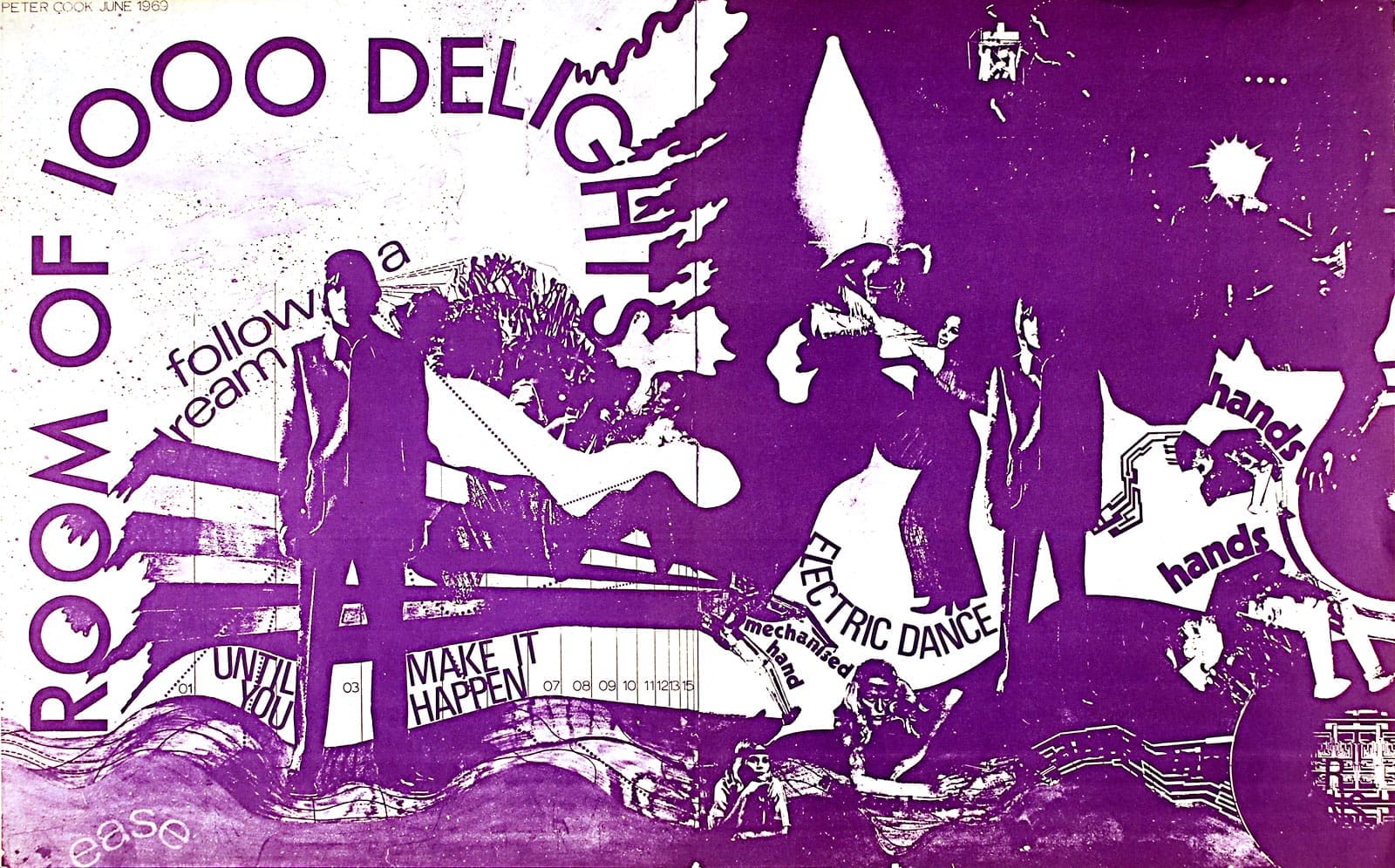
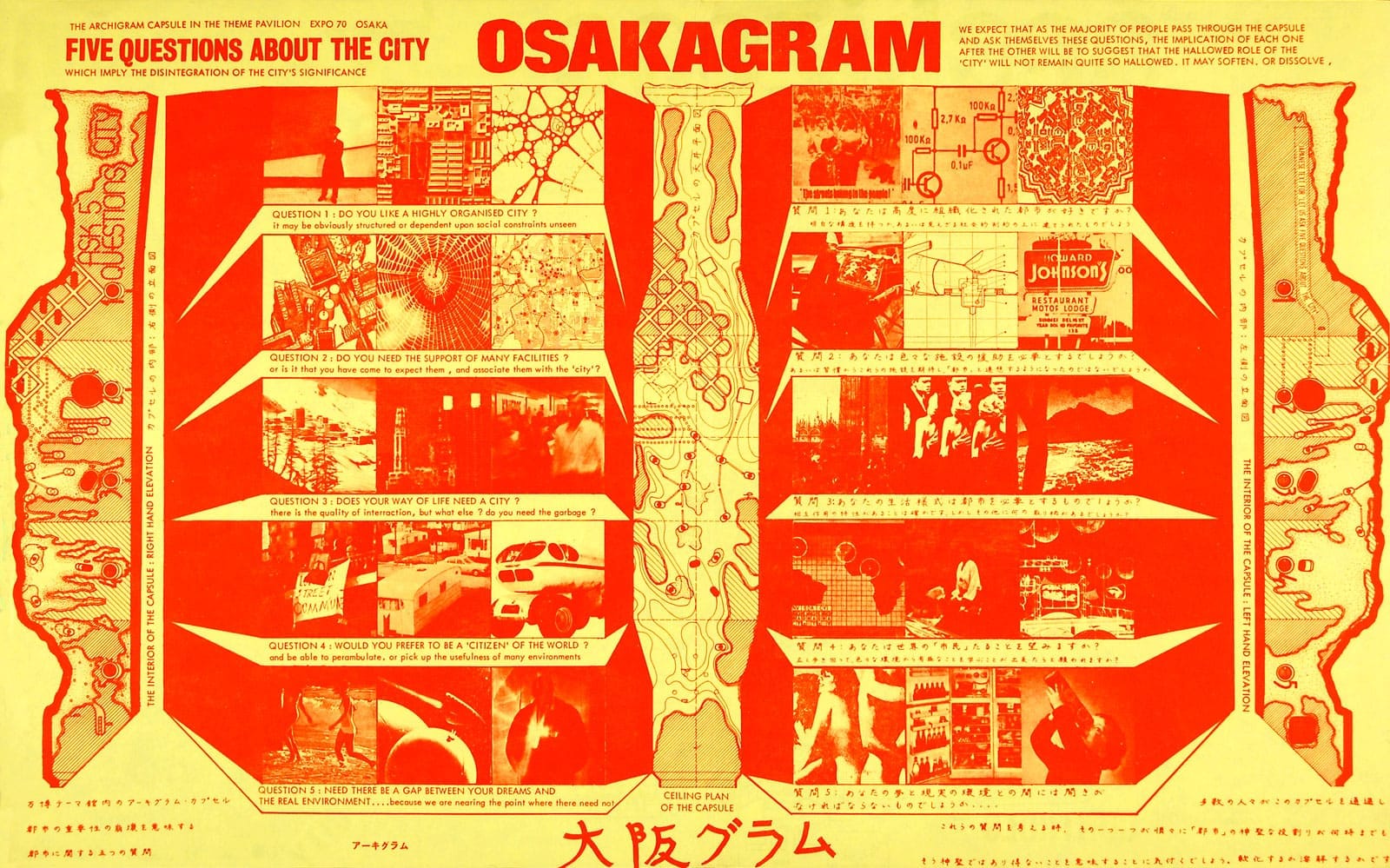
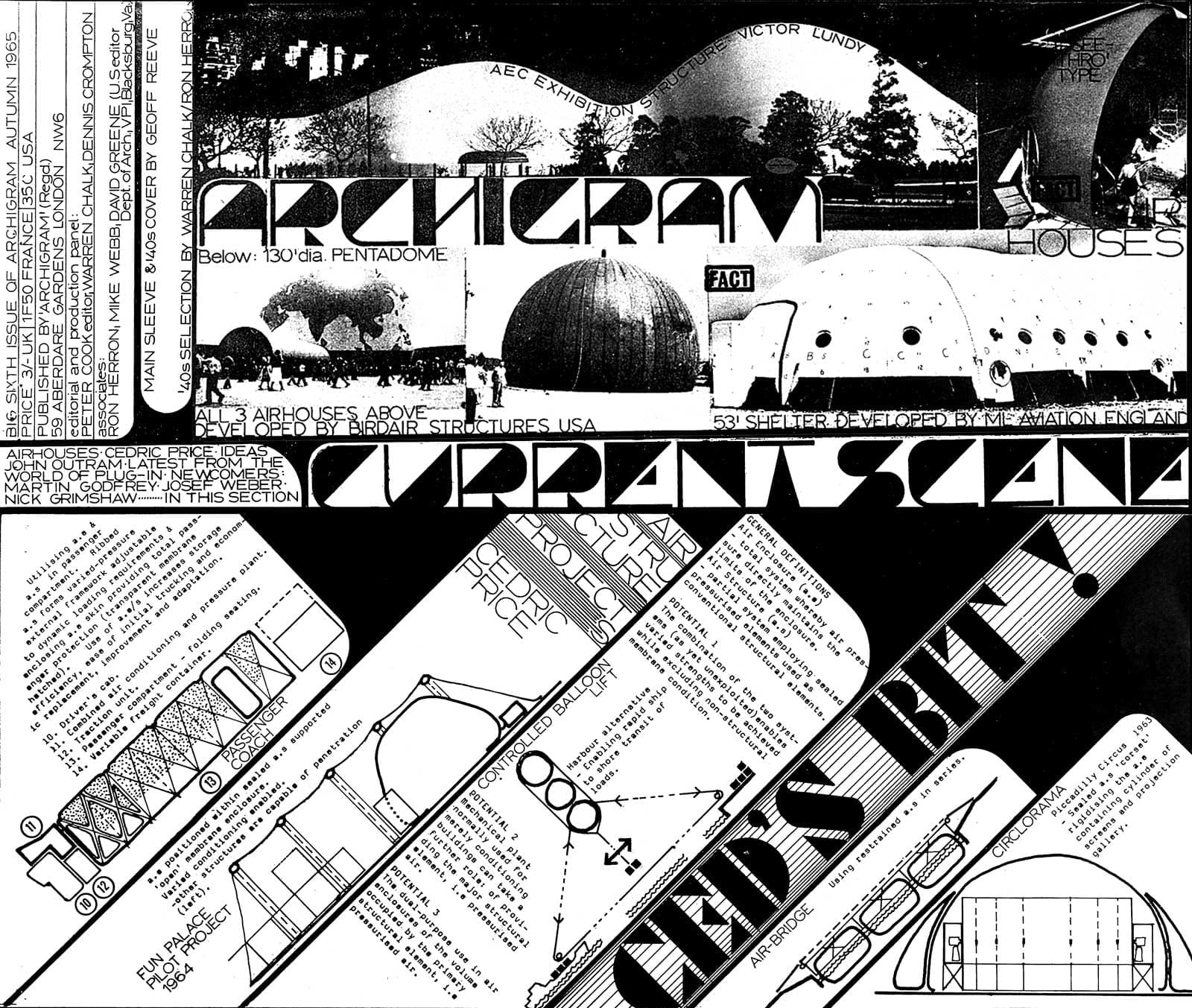
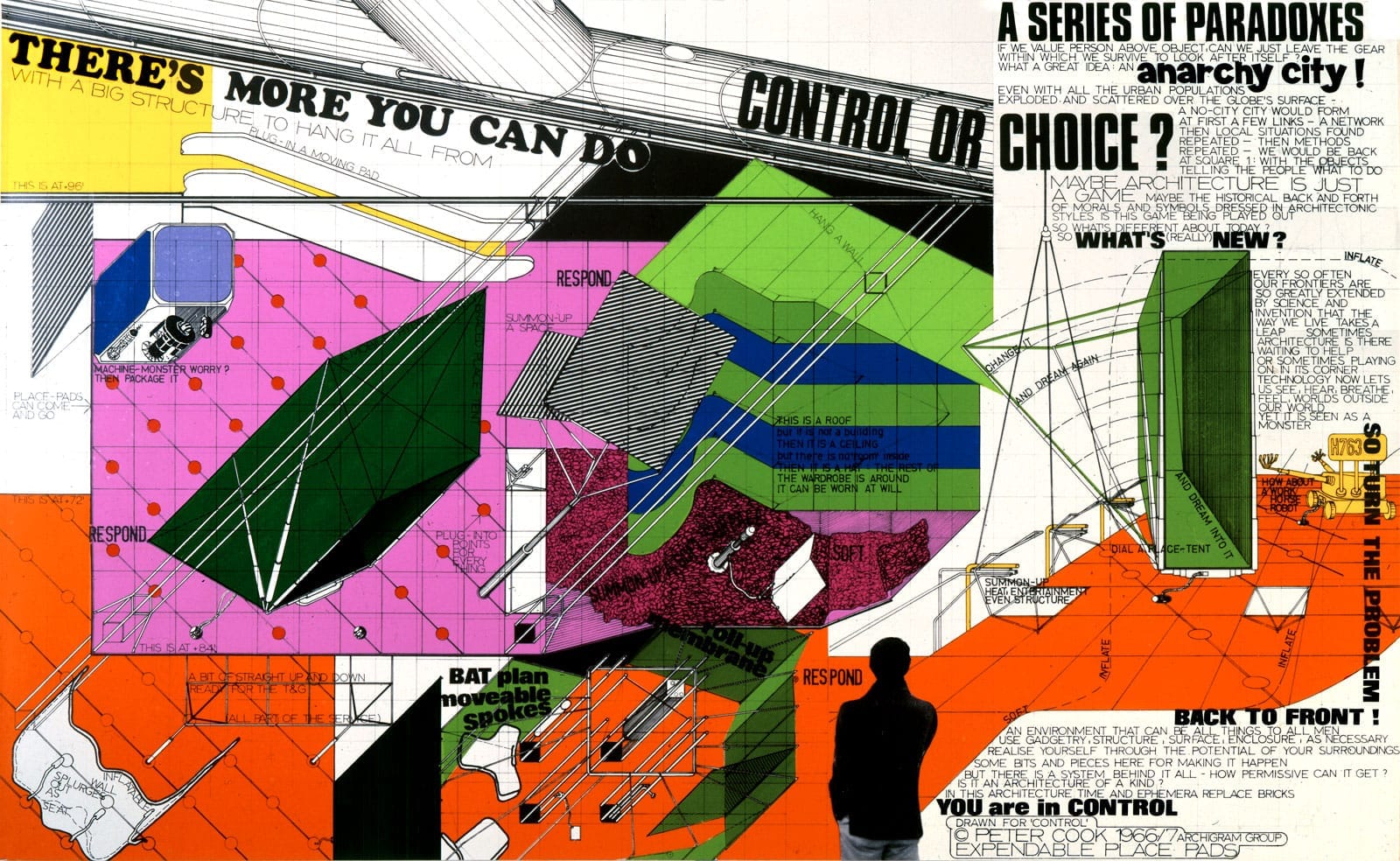
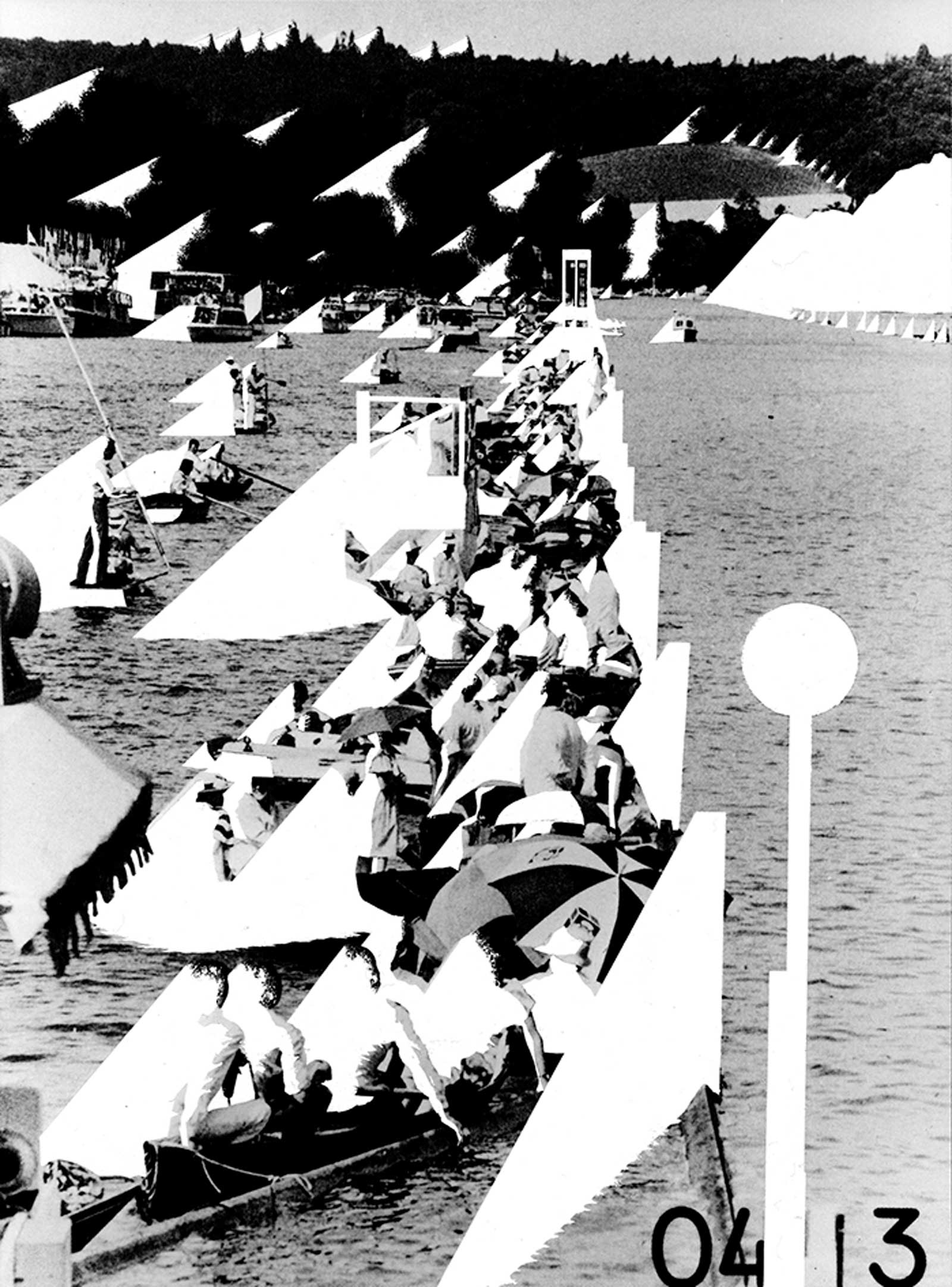
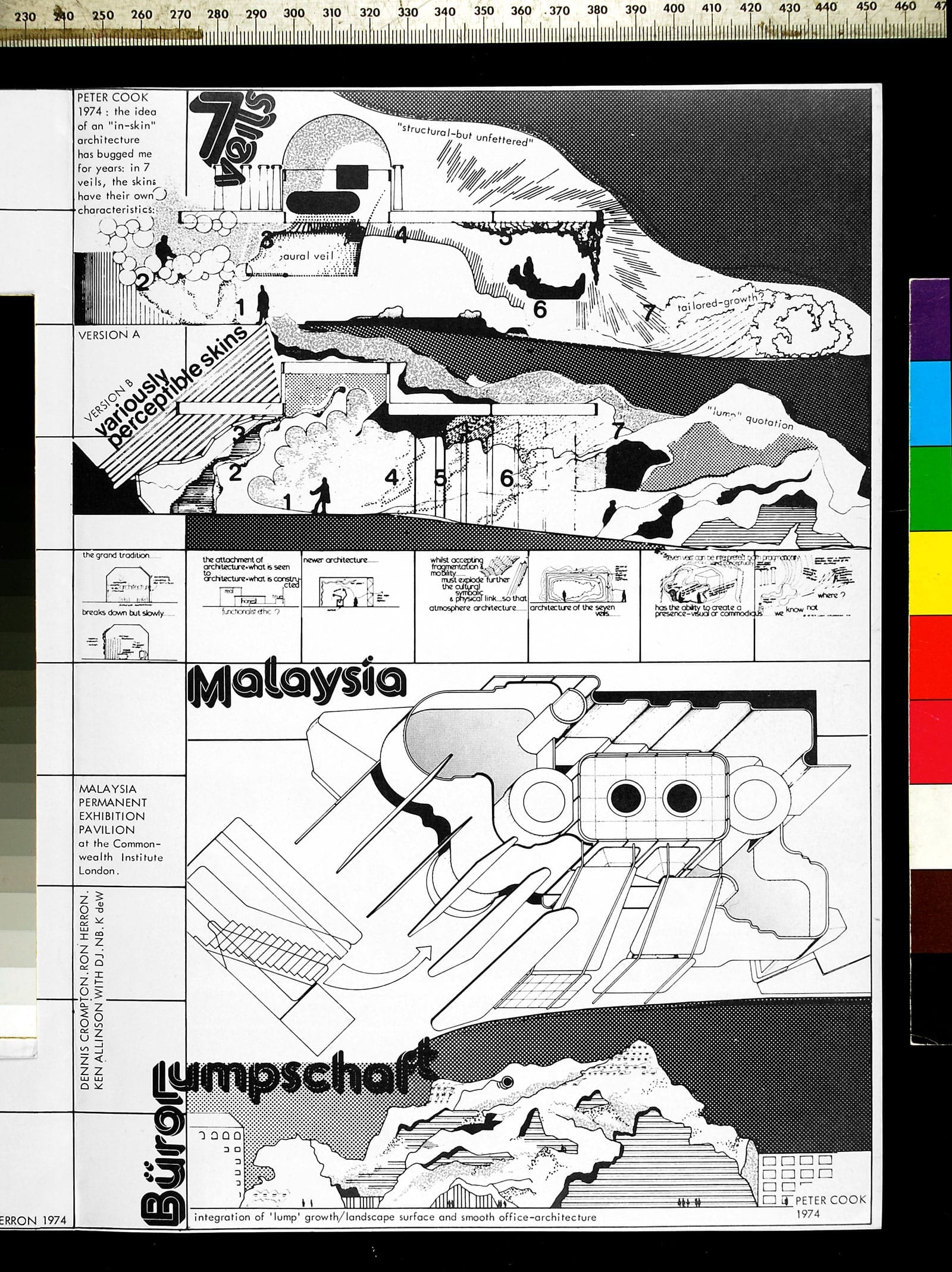
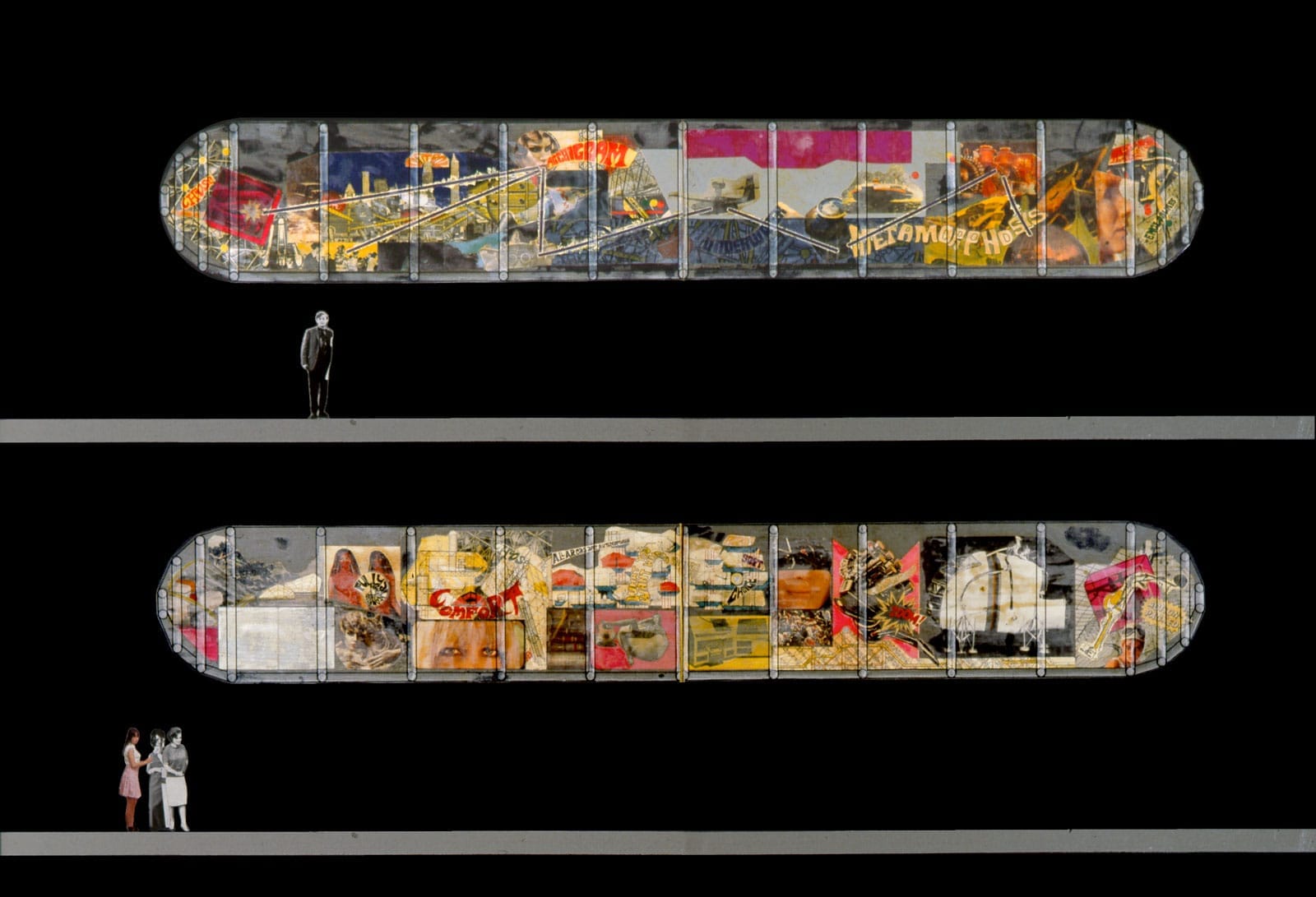
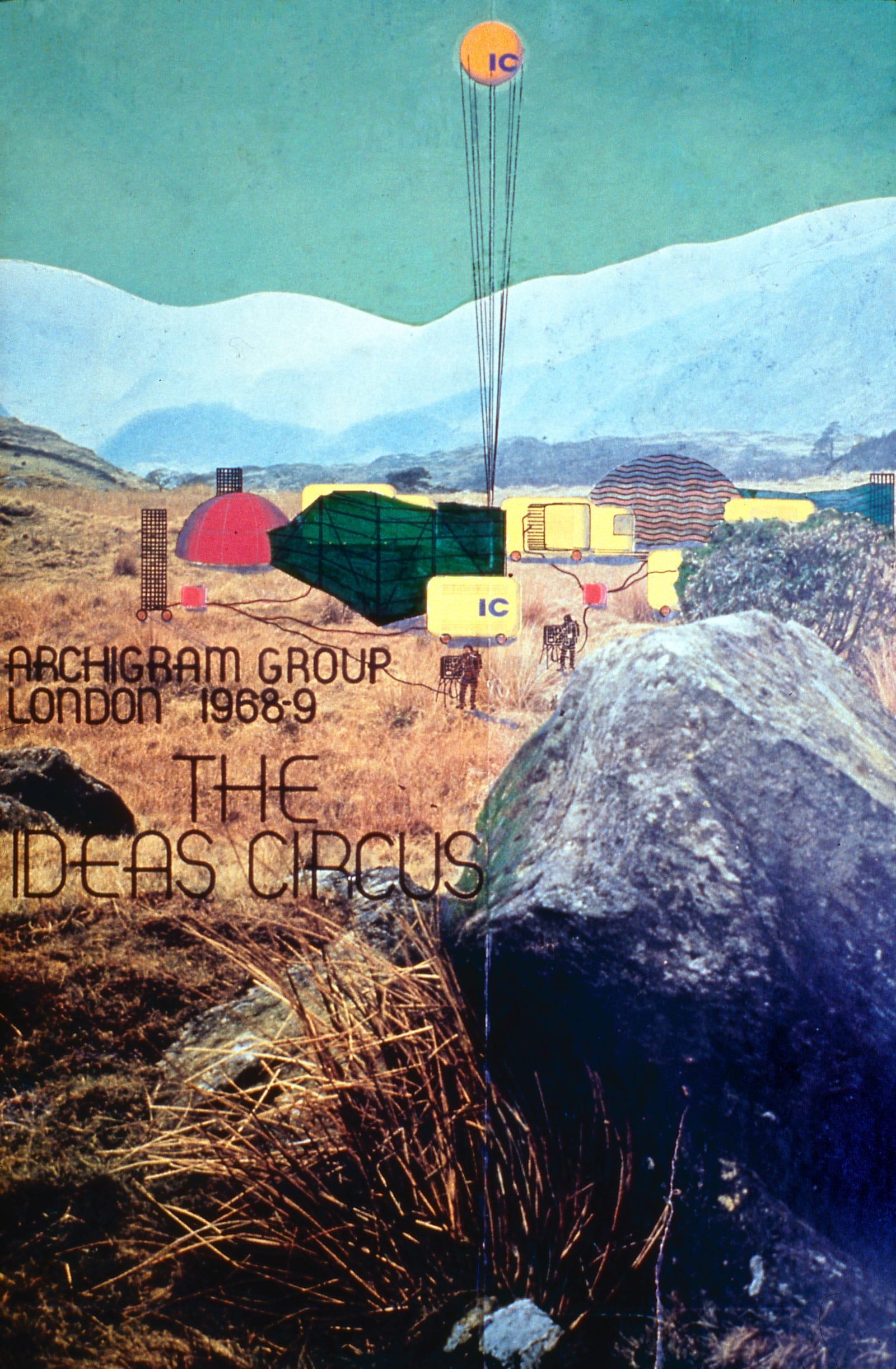
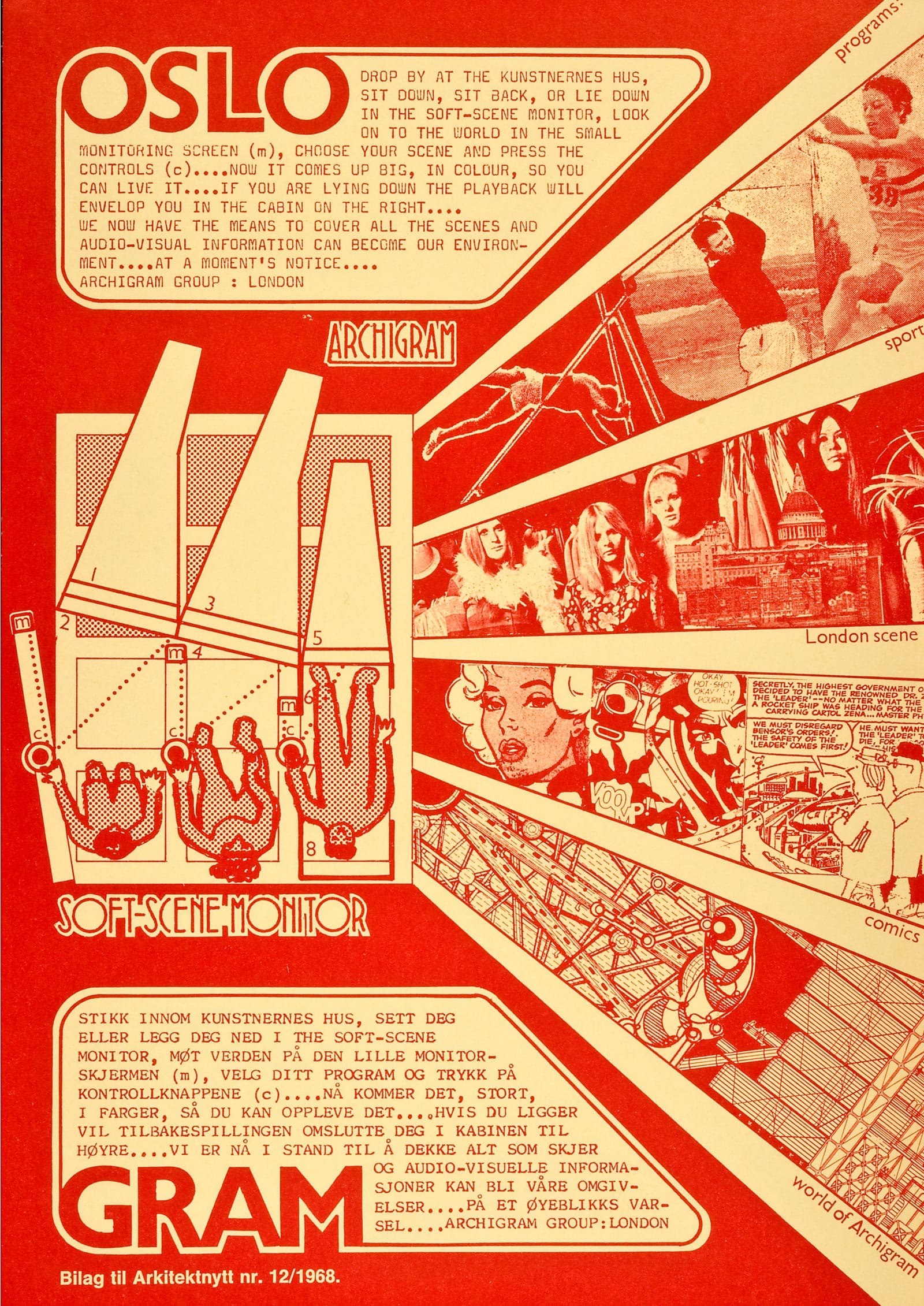
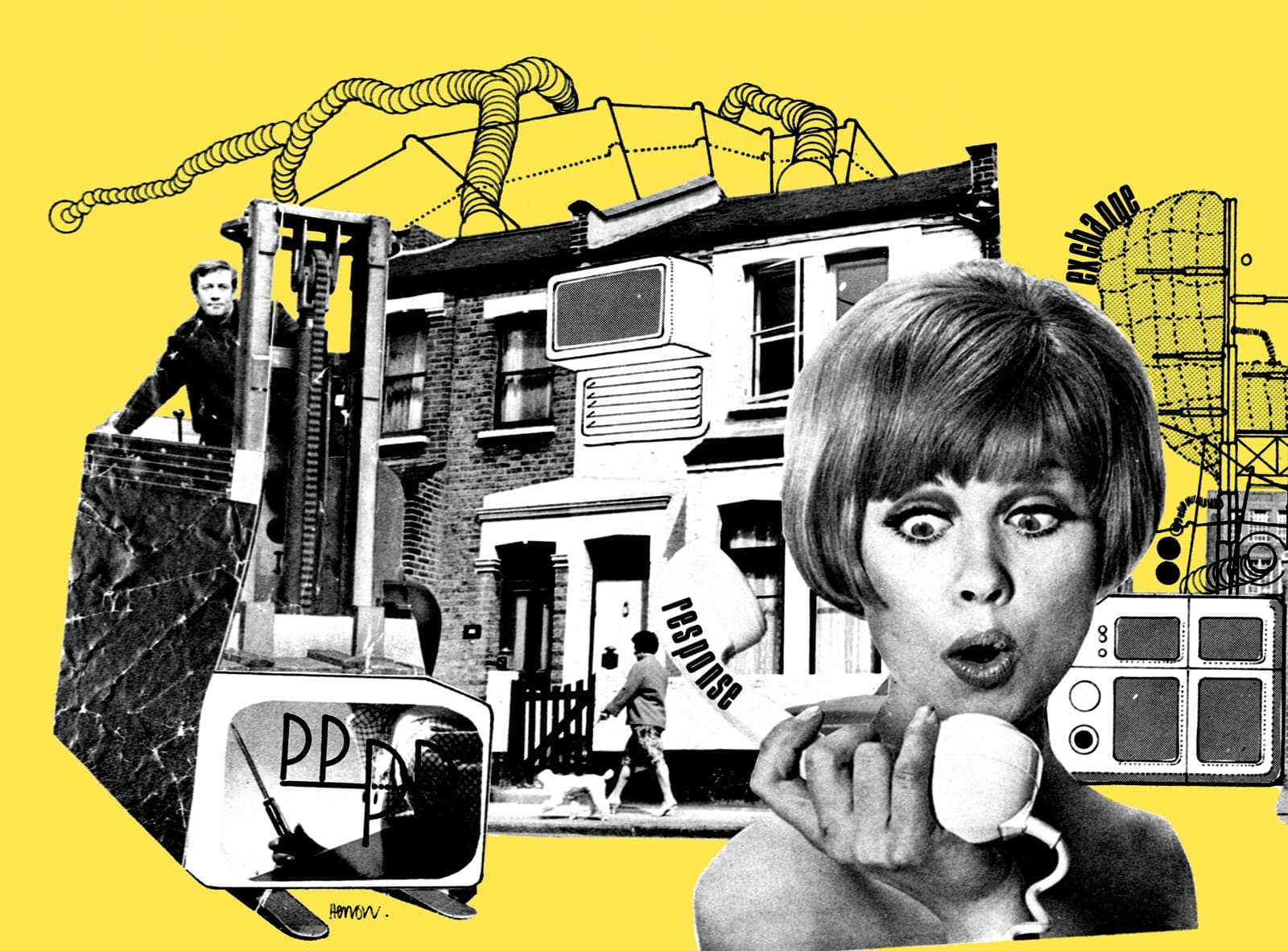
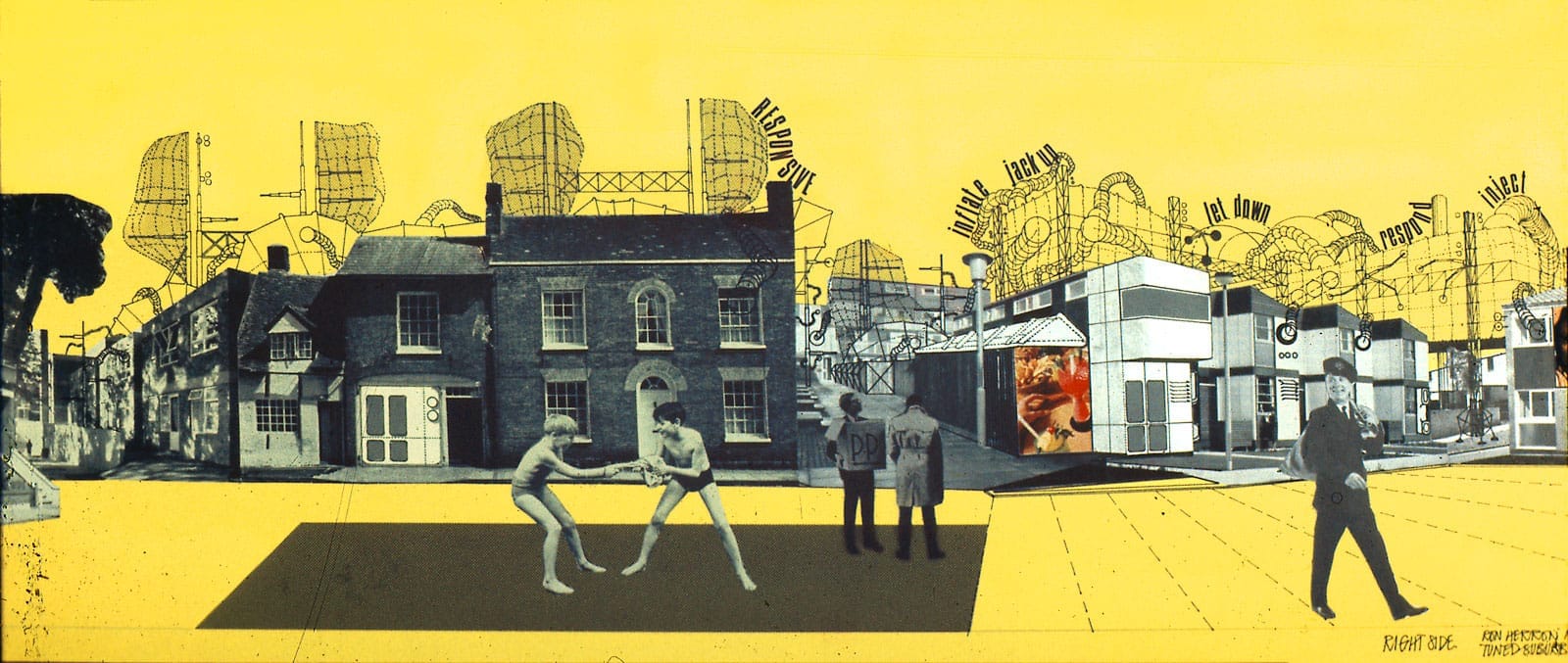
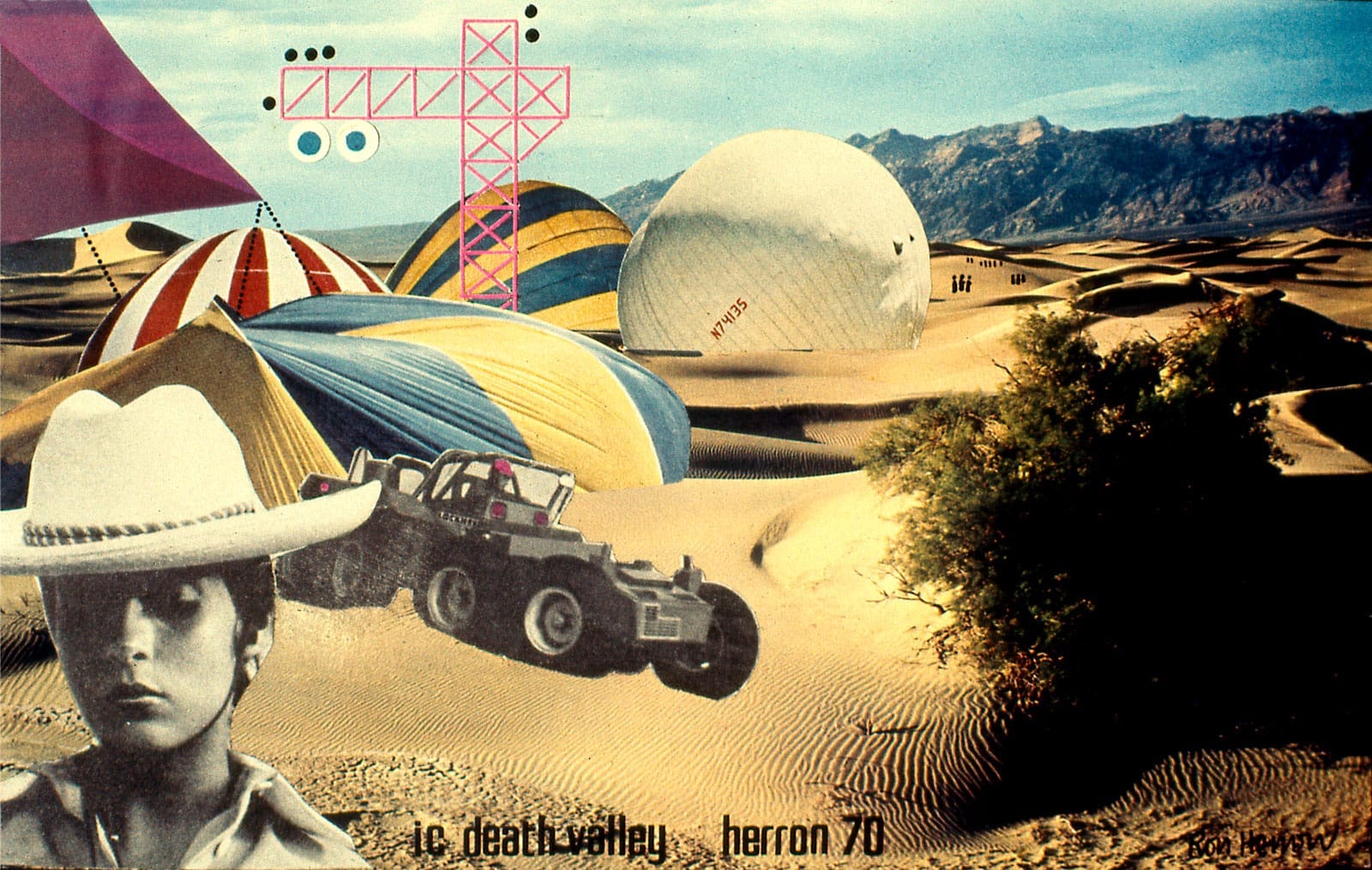
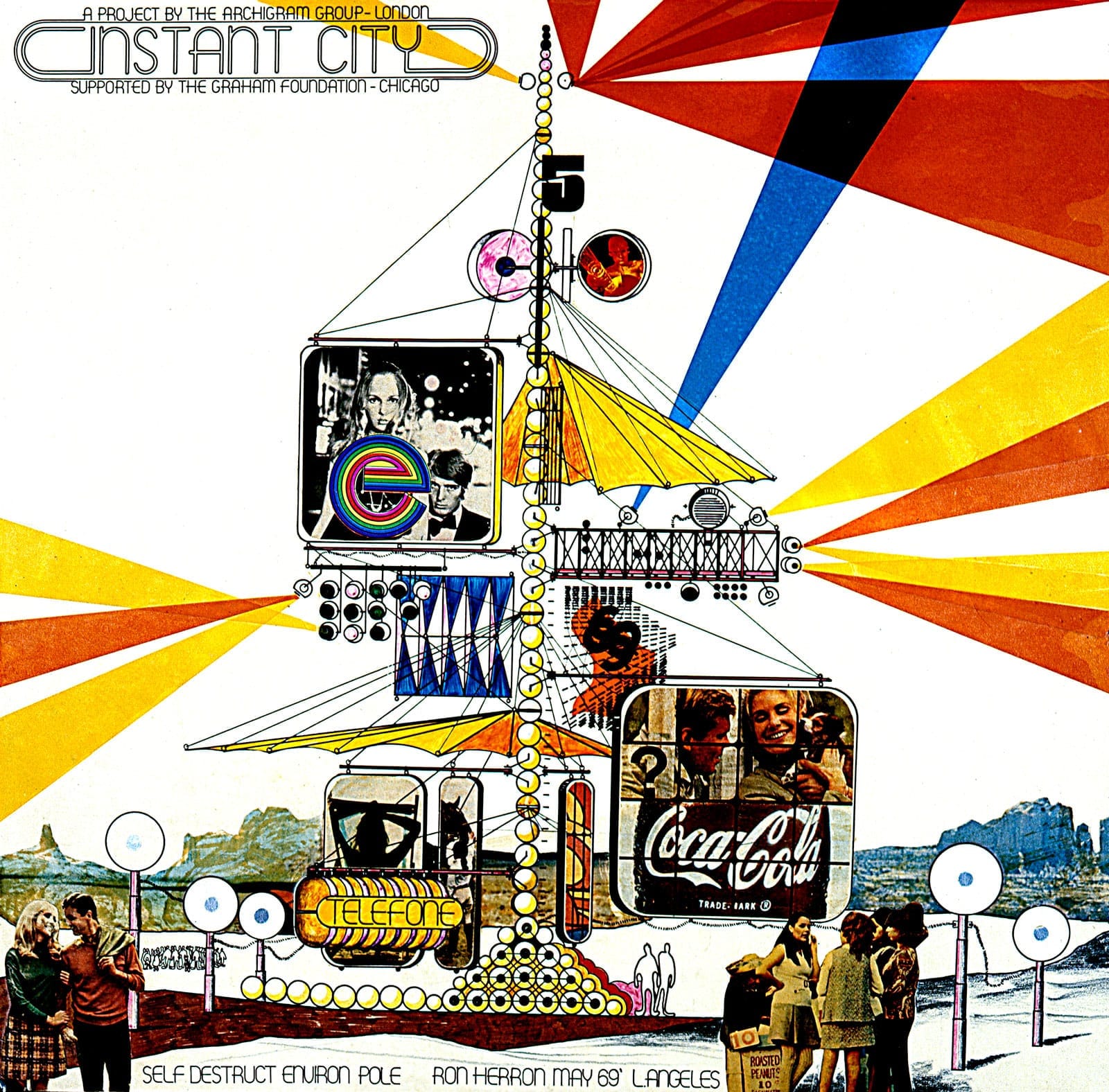
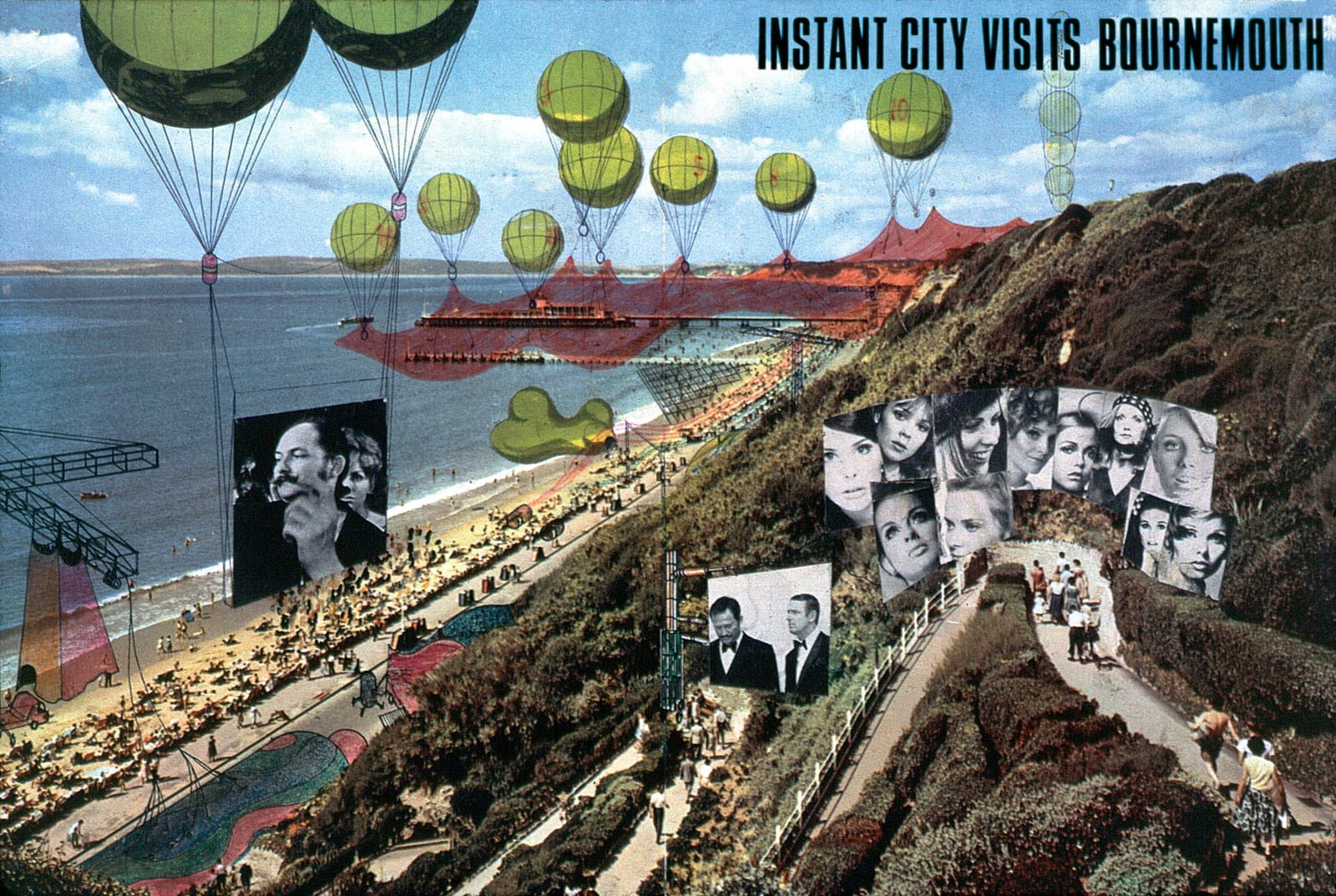
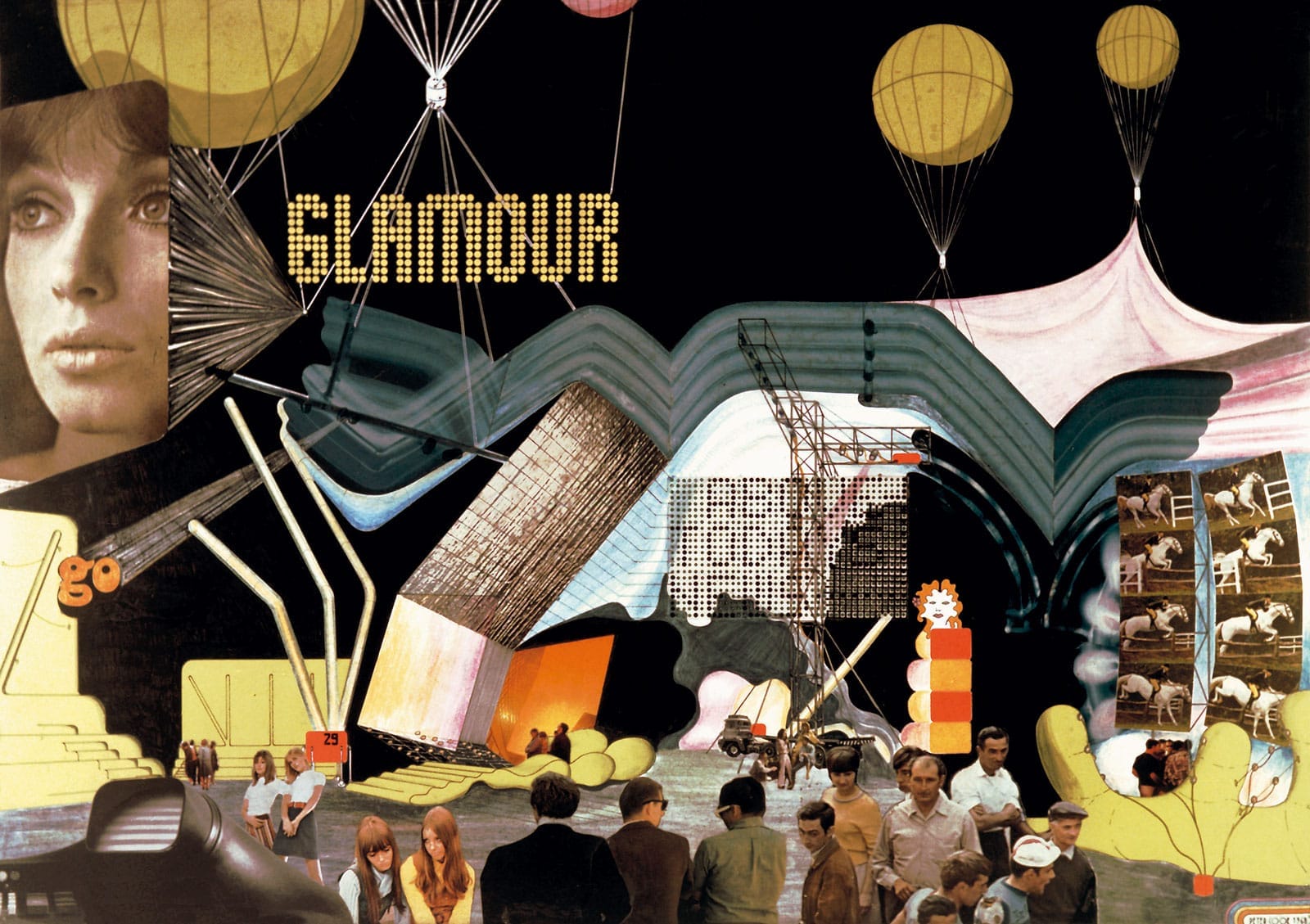
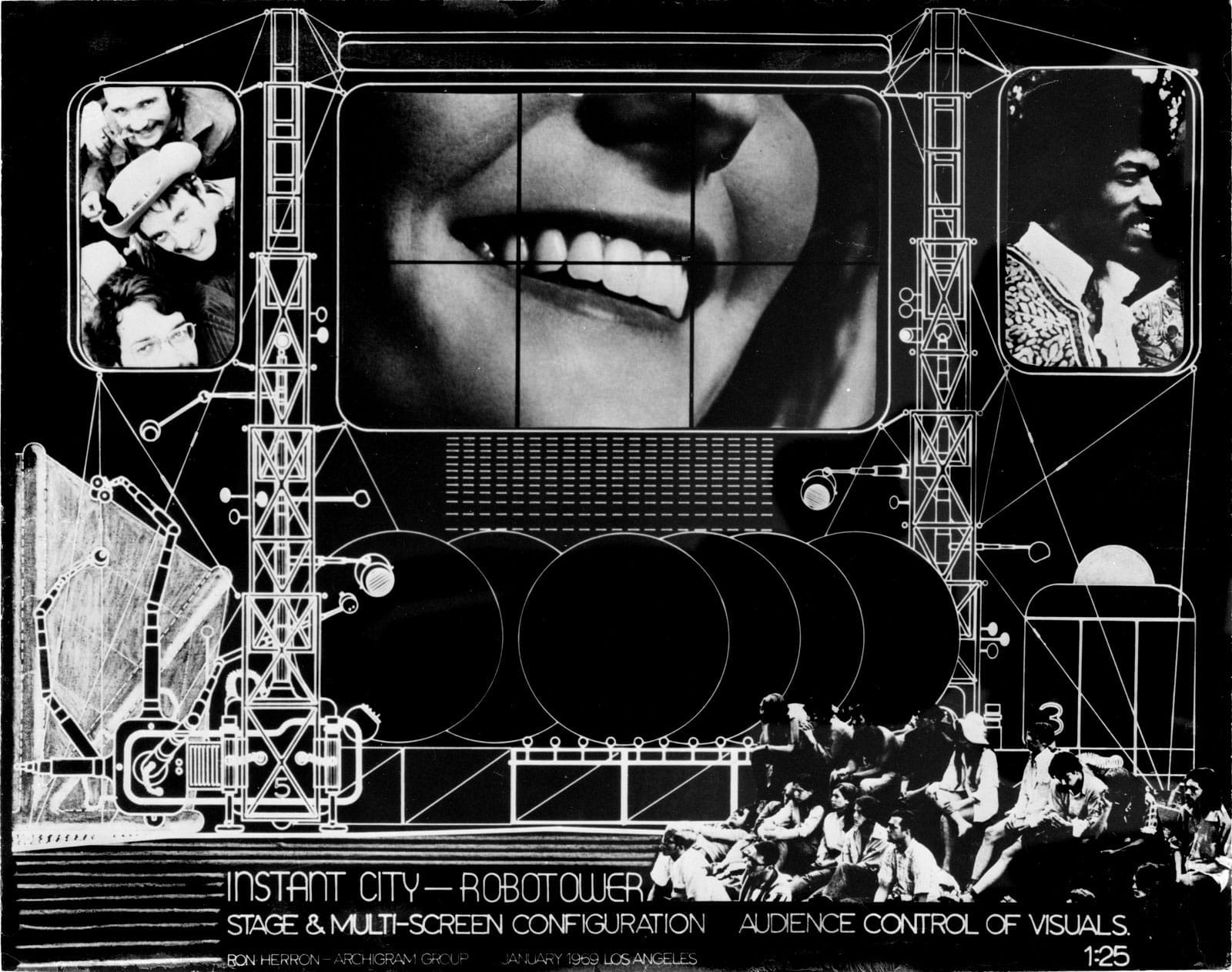
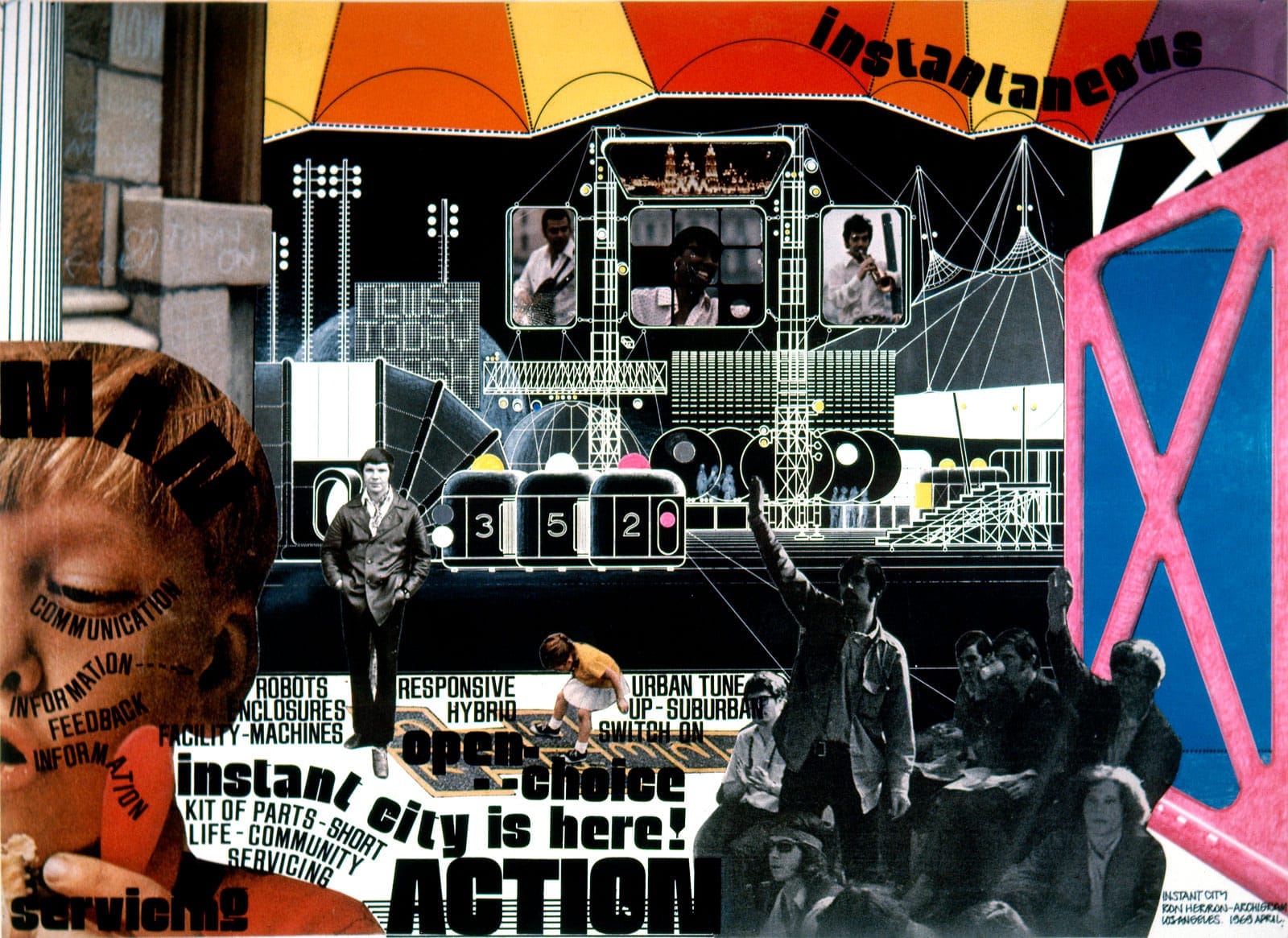
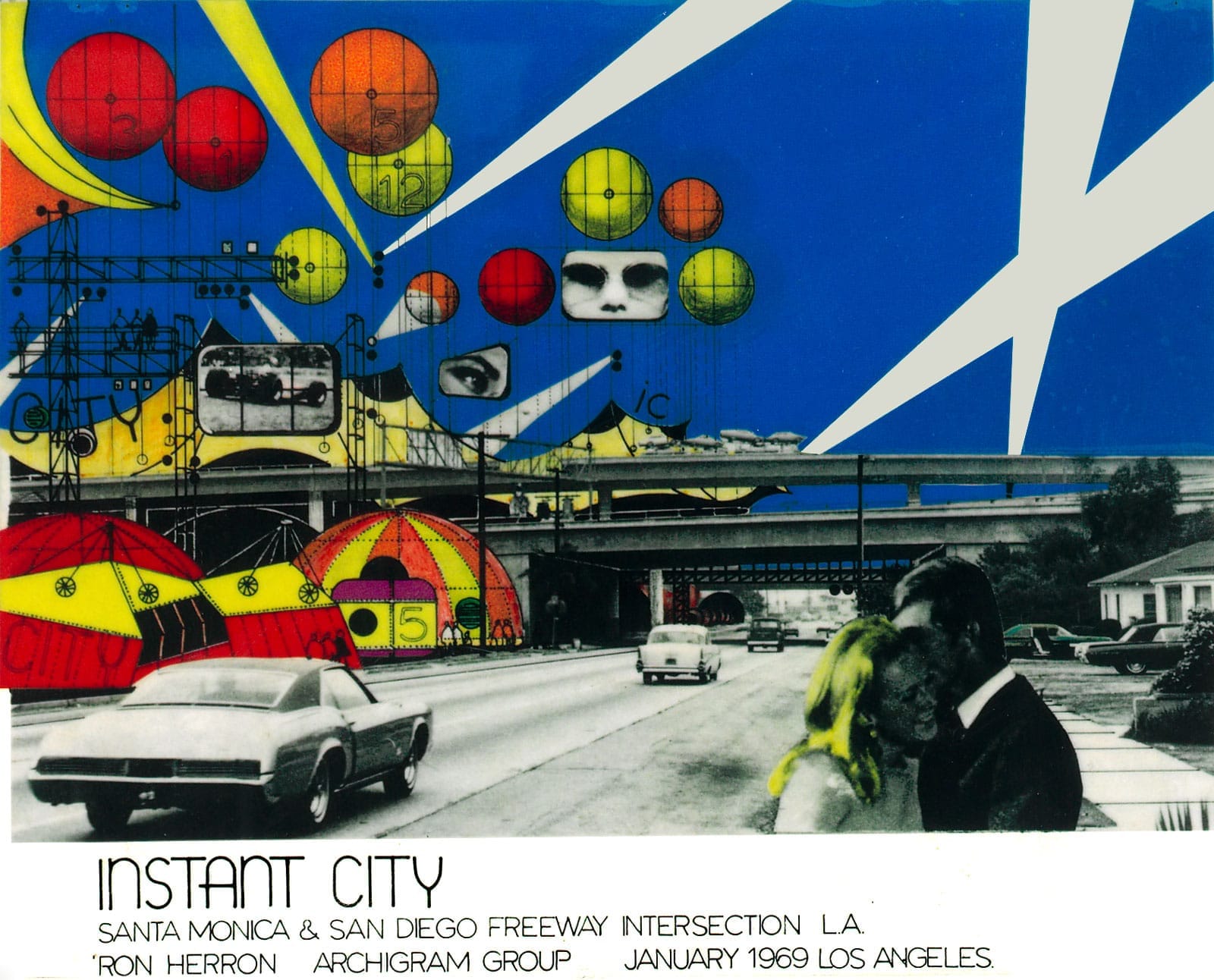
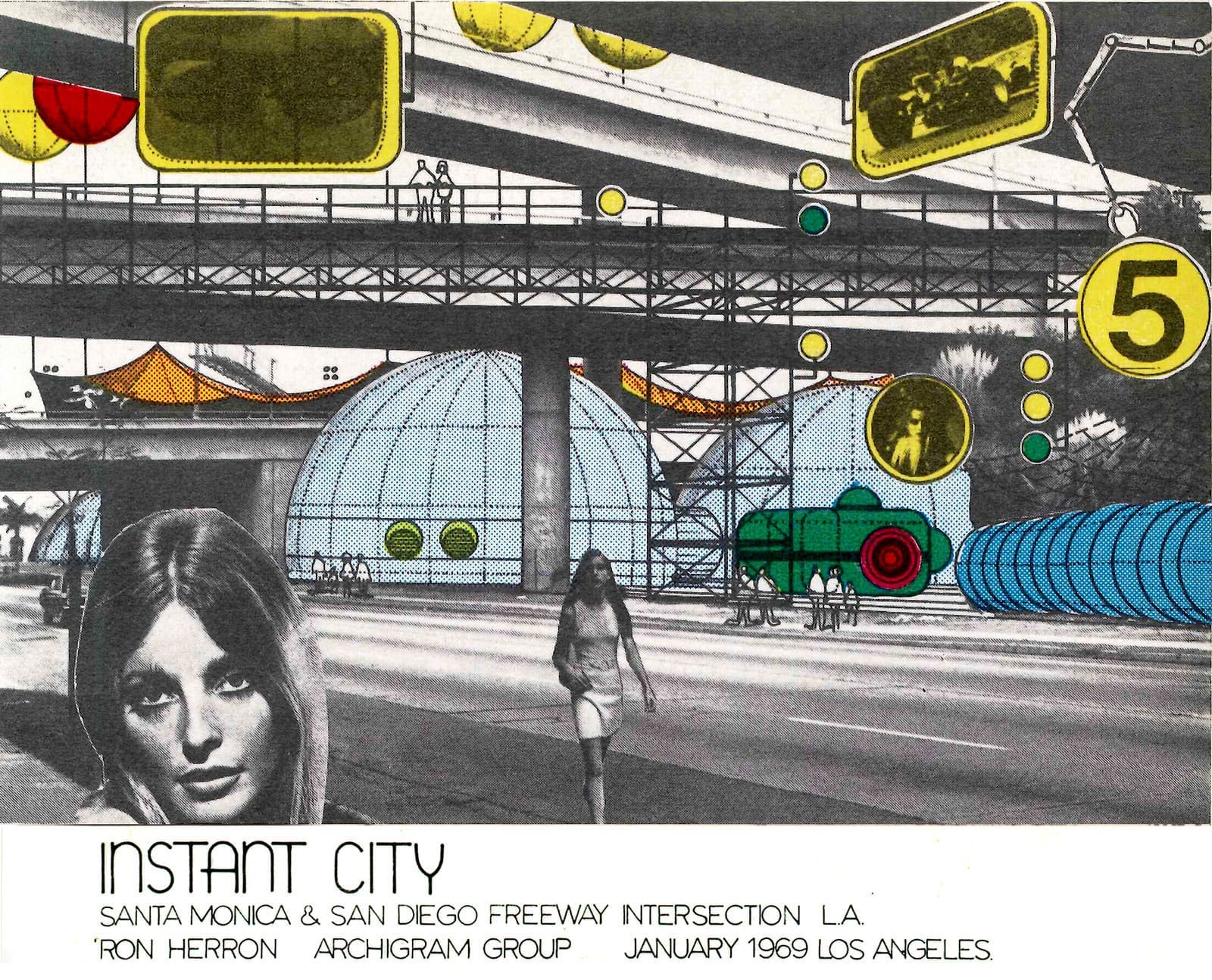
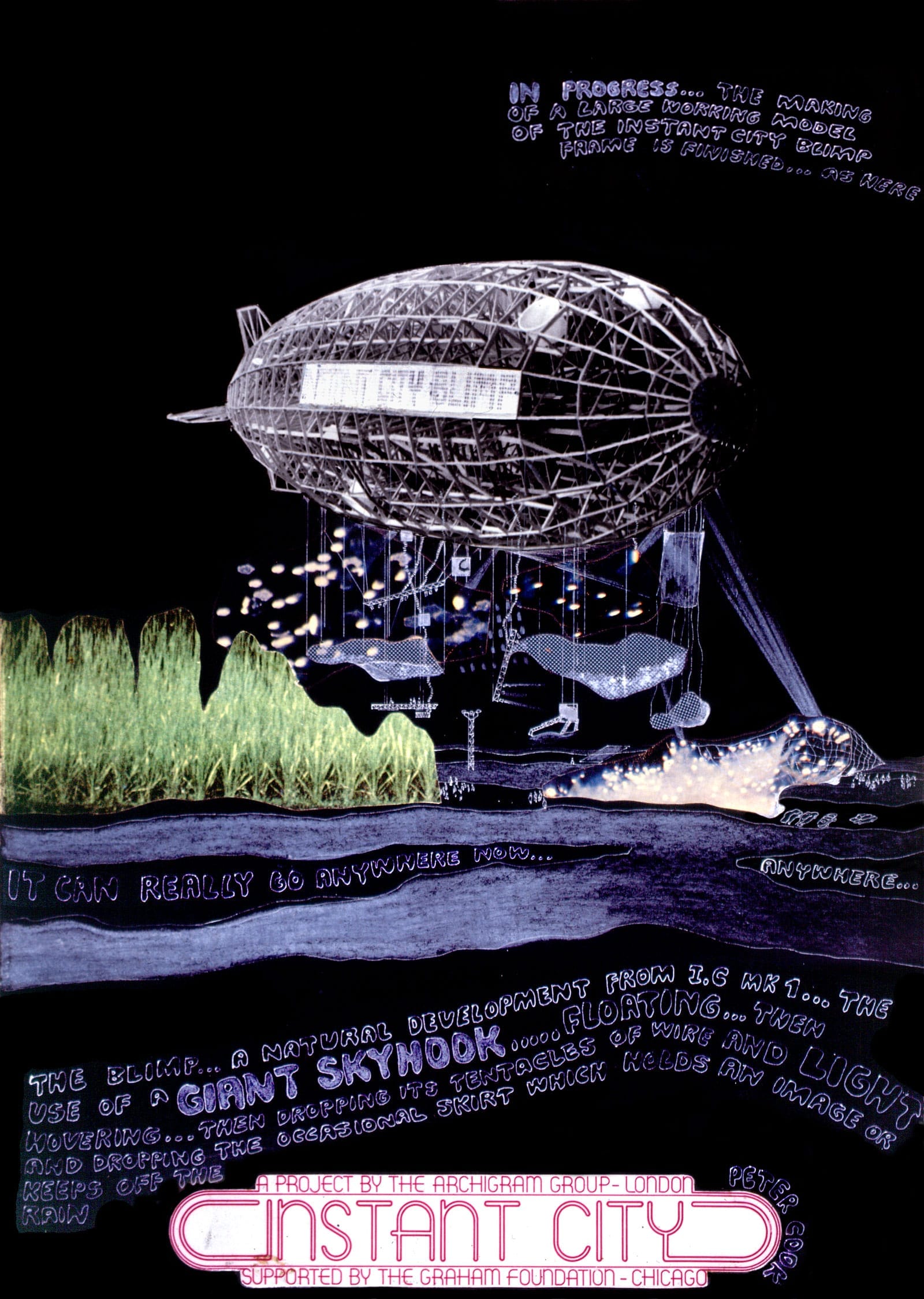
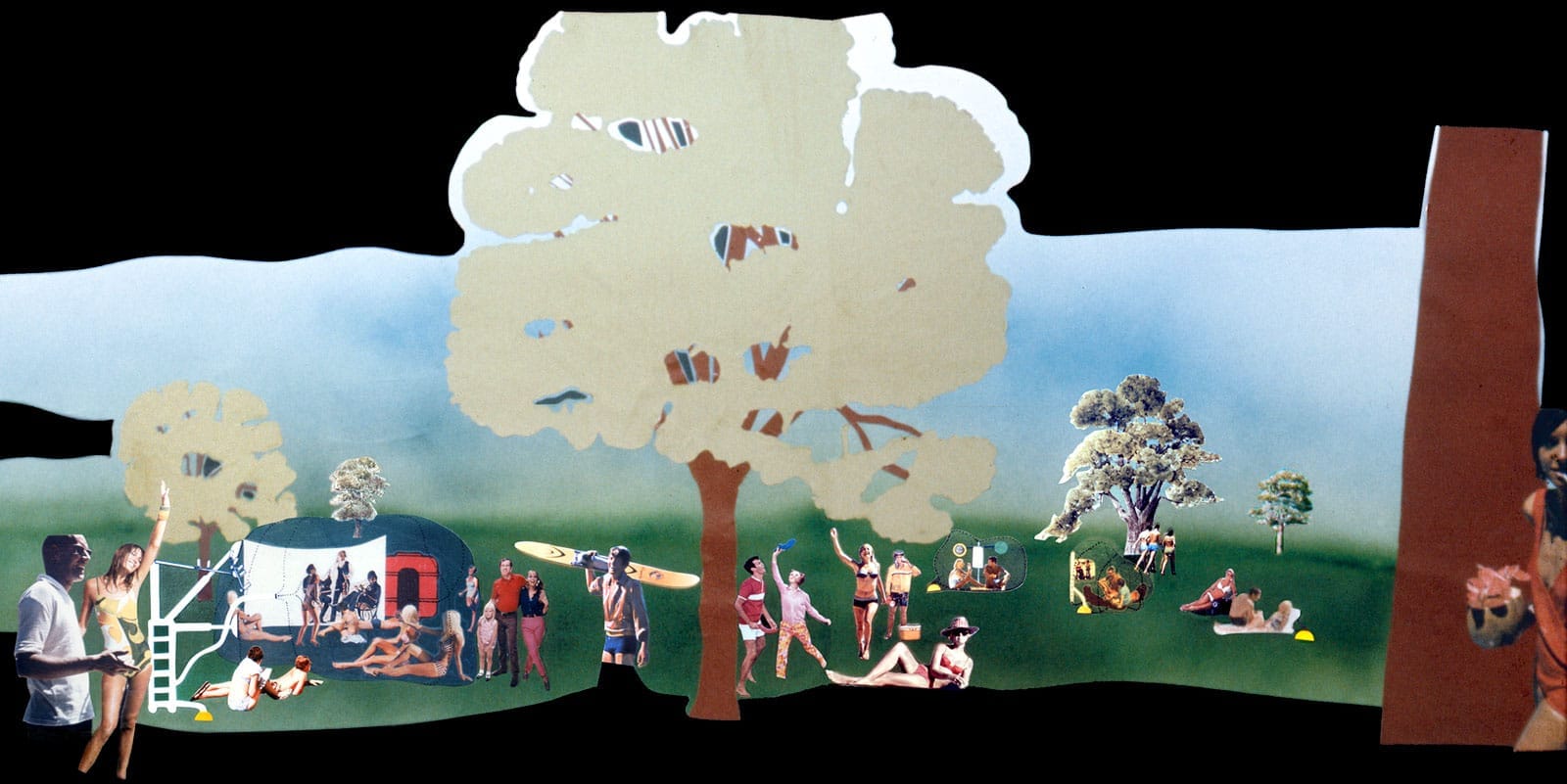
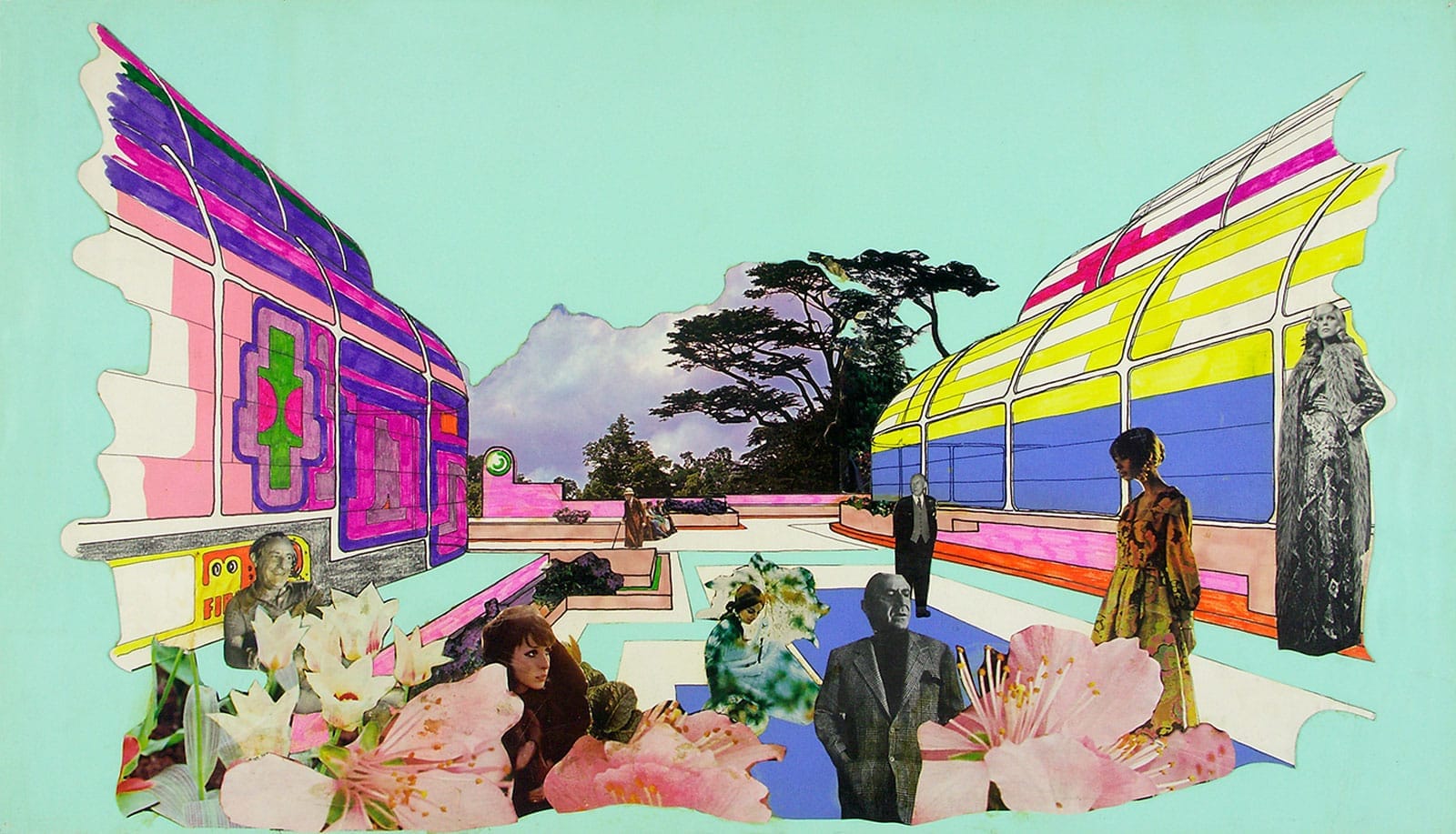
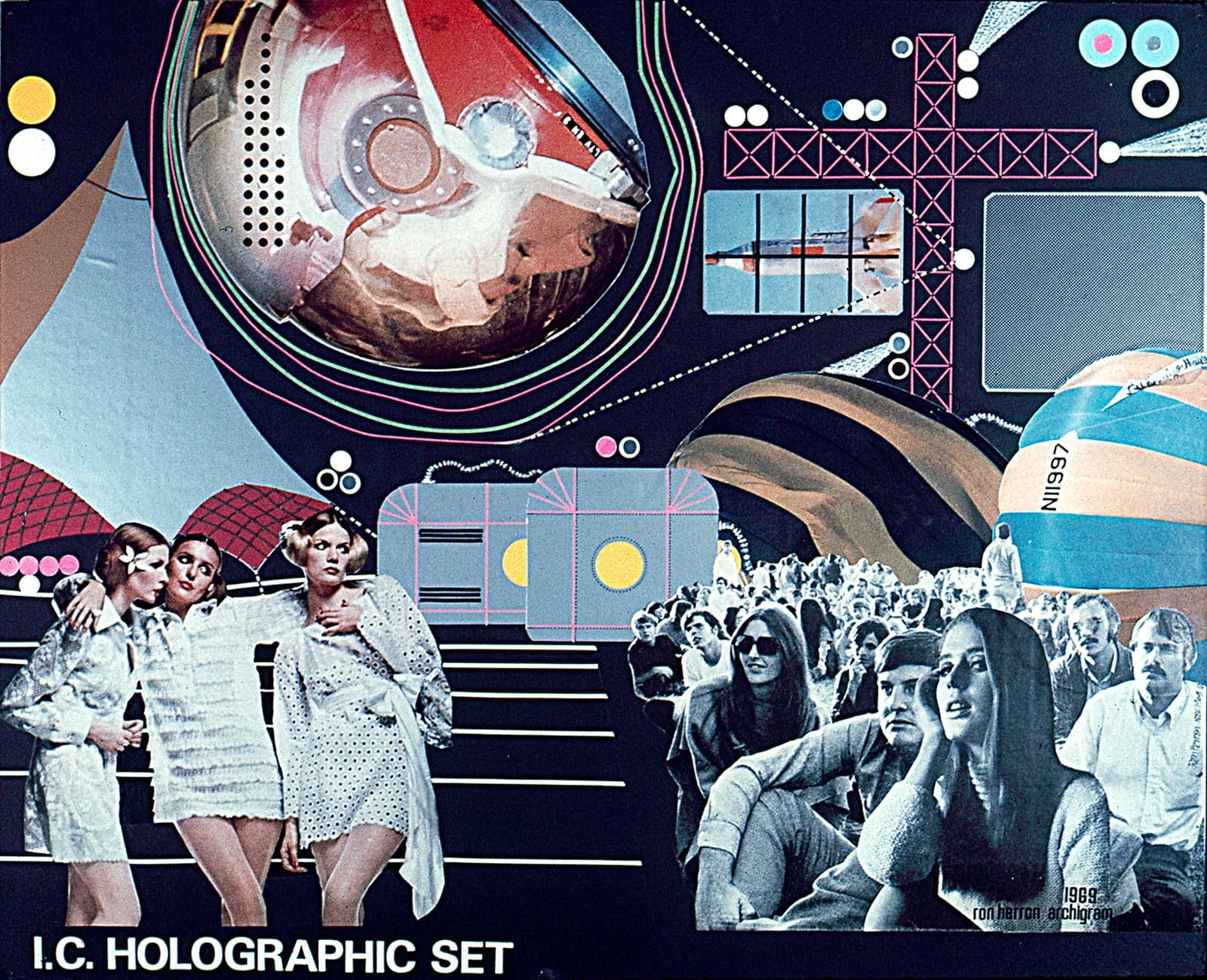
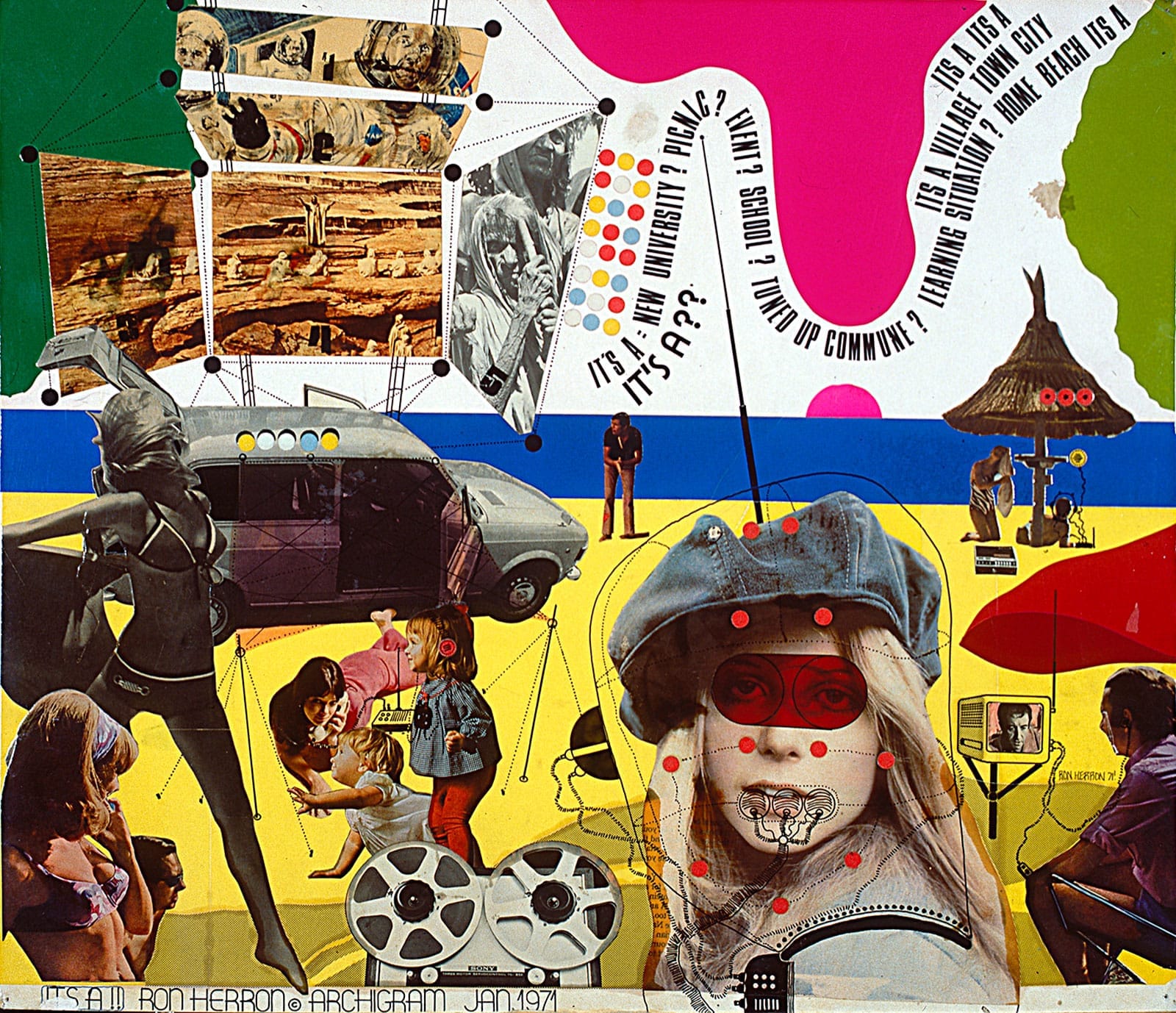
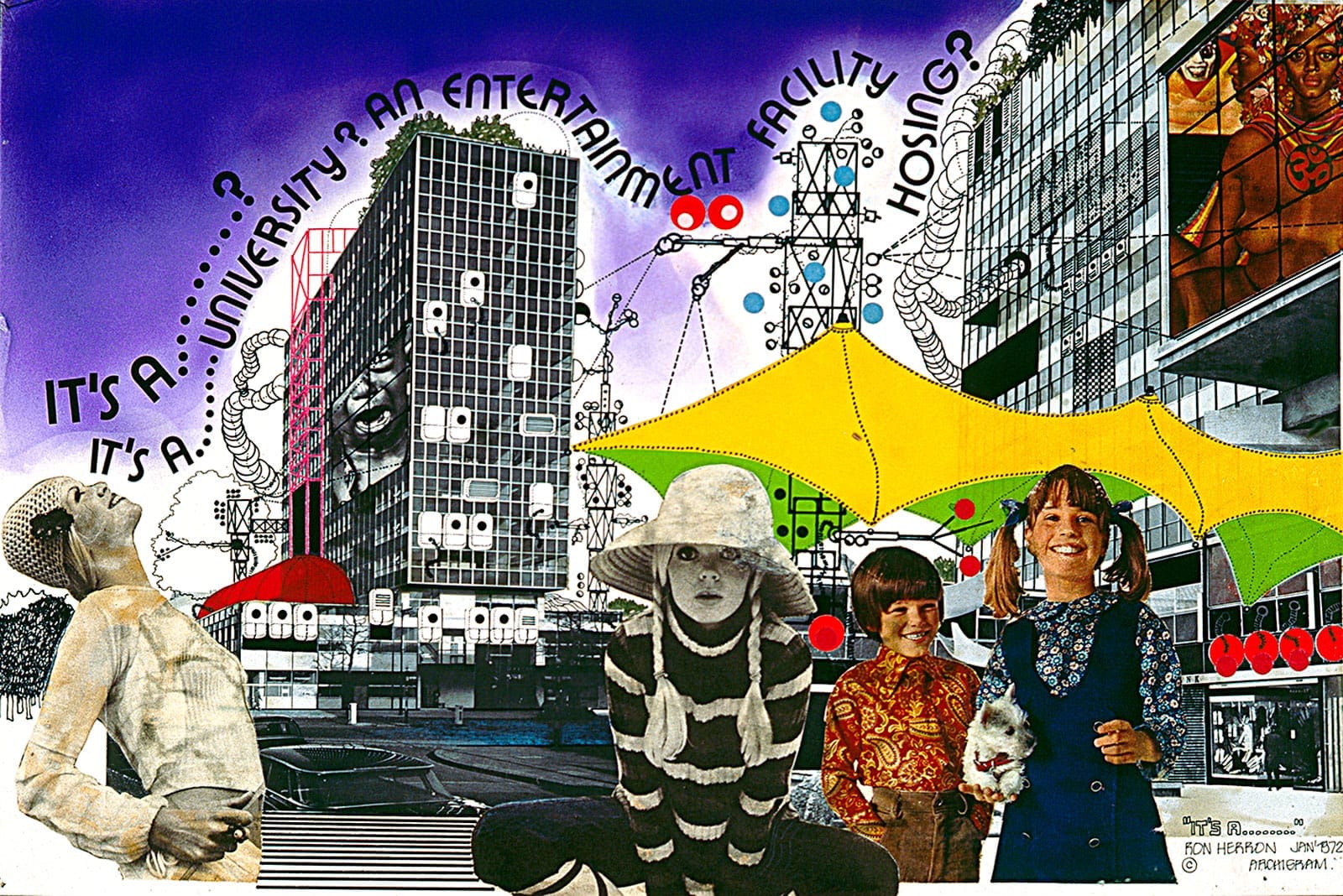
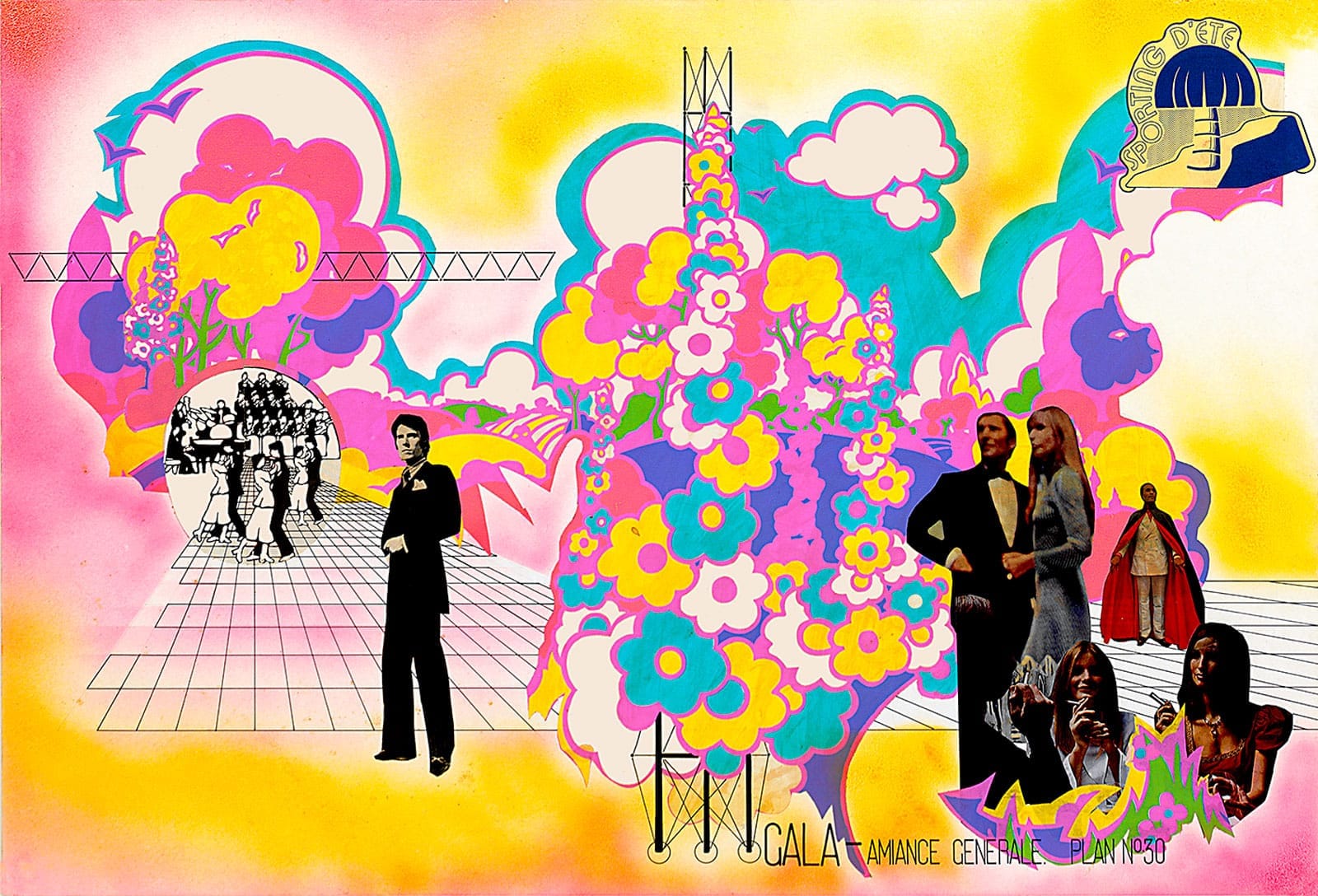
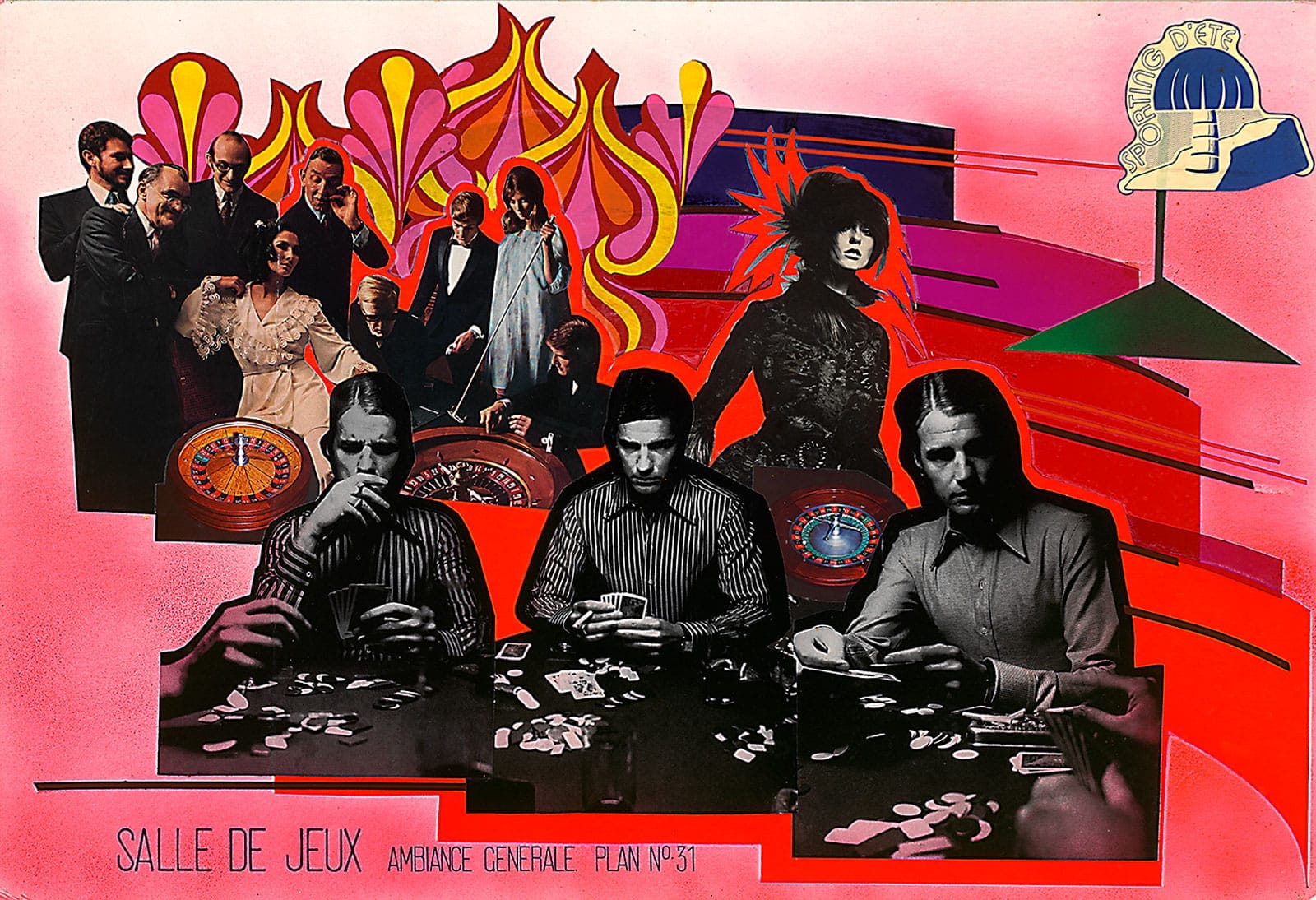
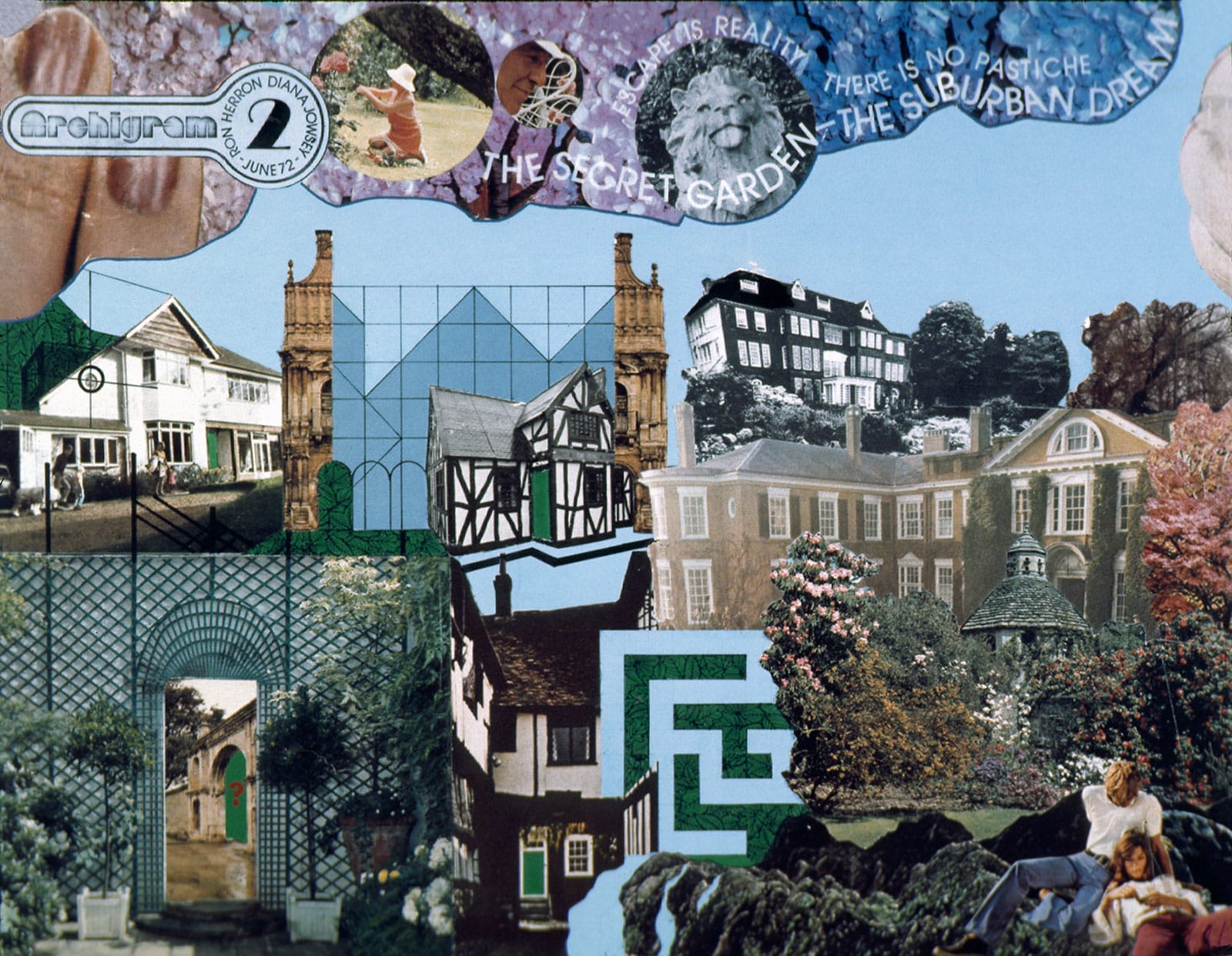
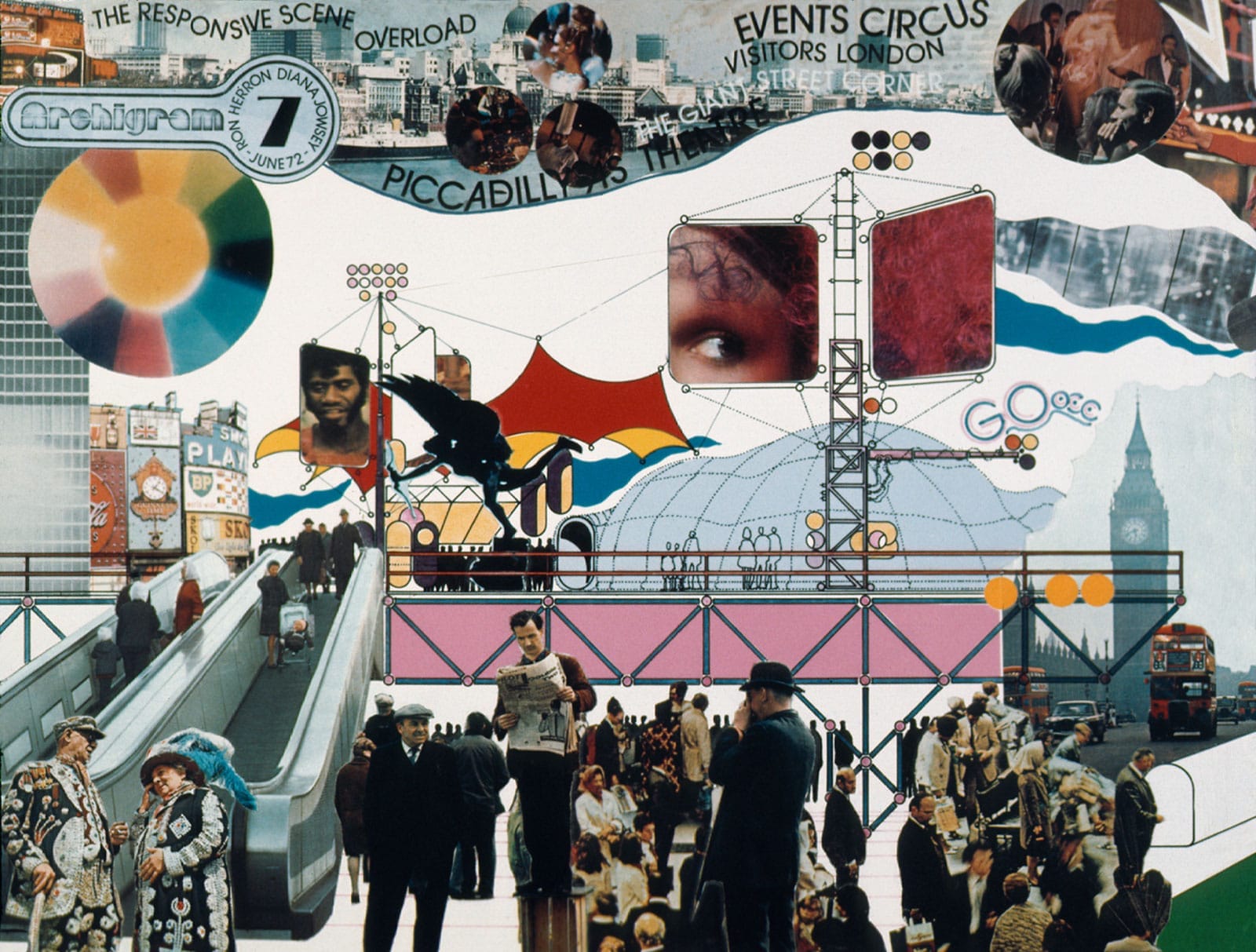
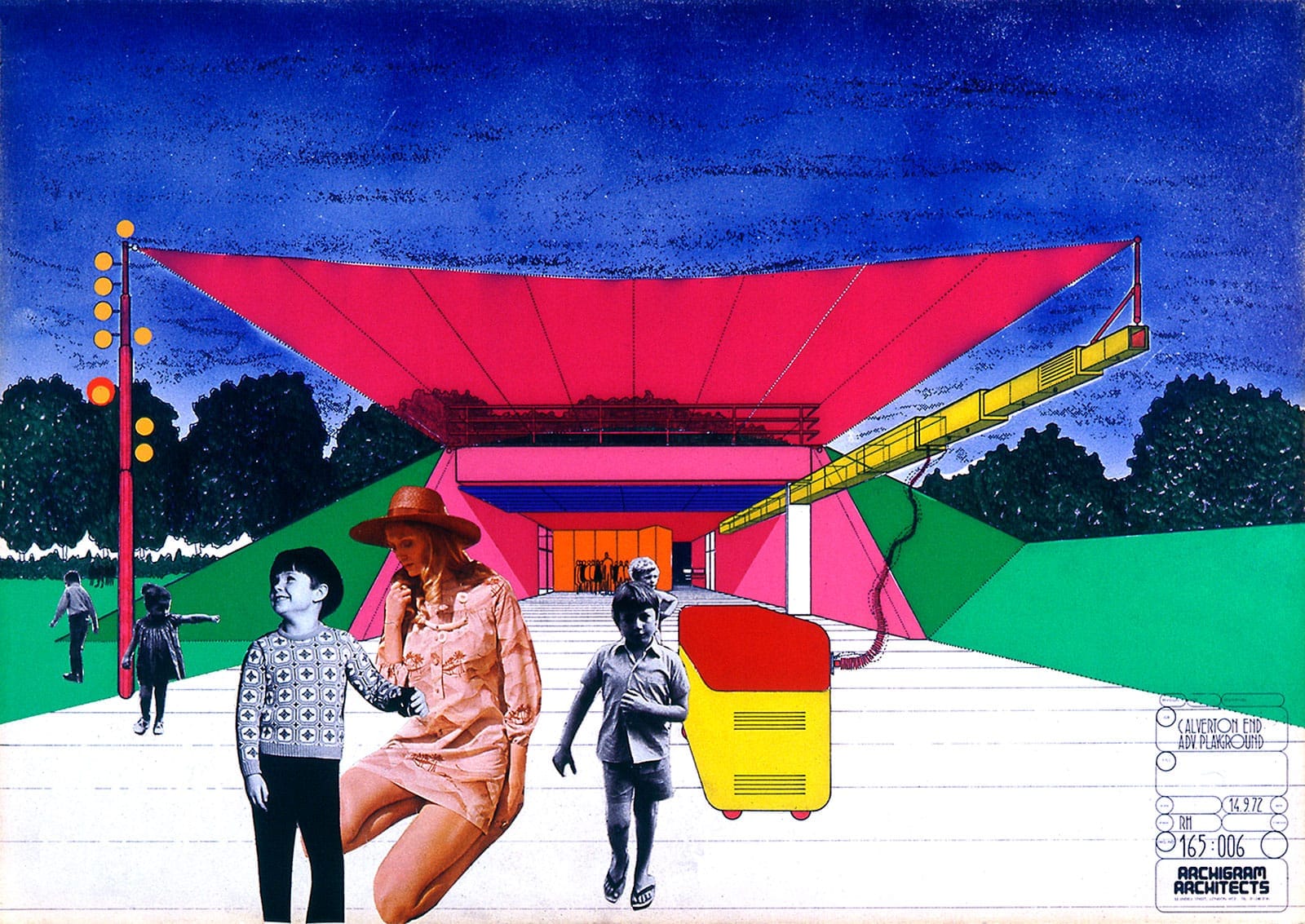
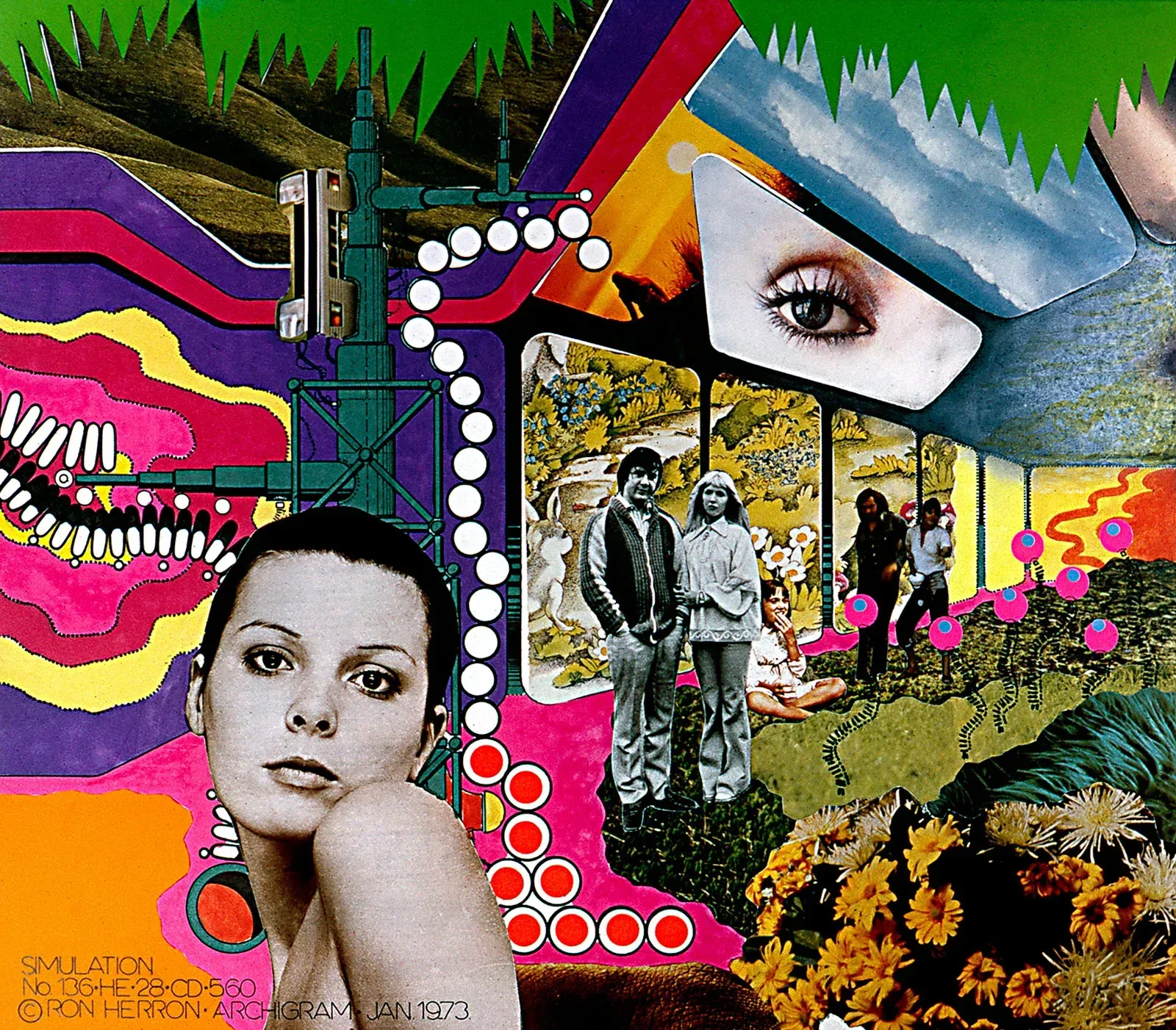
Images from Archigram Archives.
