
Psychogeography is the study of how places shape the way people feel and behave. Guy Debord, later the leading figure of the Situationist International, defined it in 1955 as the study of how the geographical environment, planned or not, acts on people's emotions and behaviour.
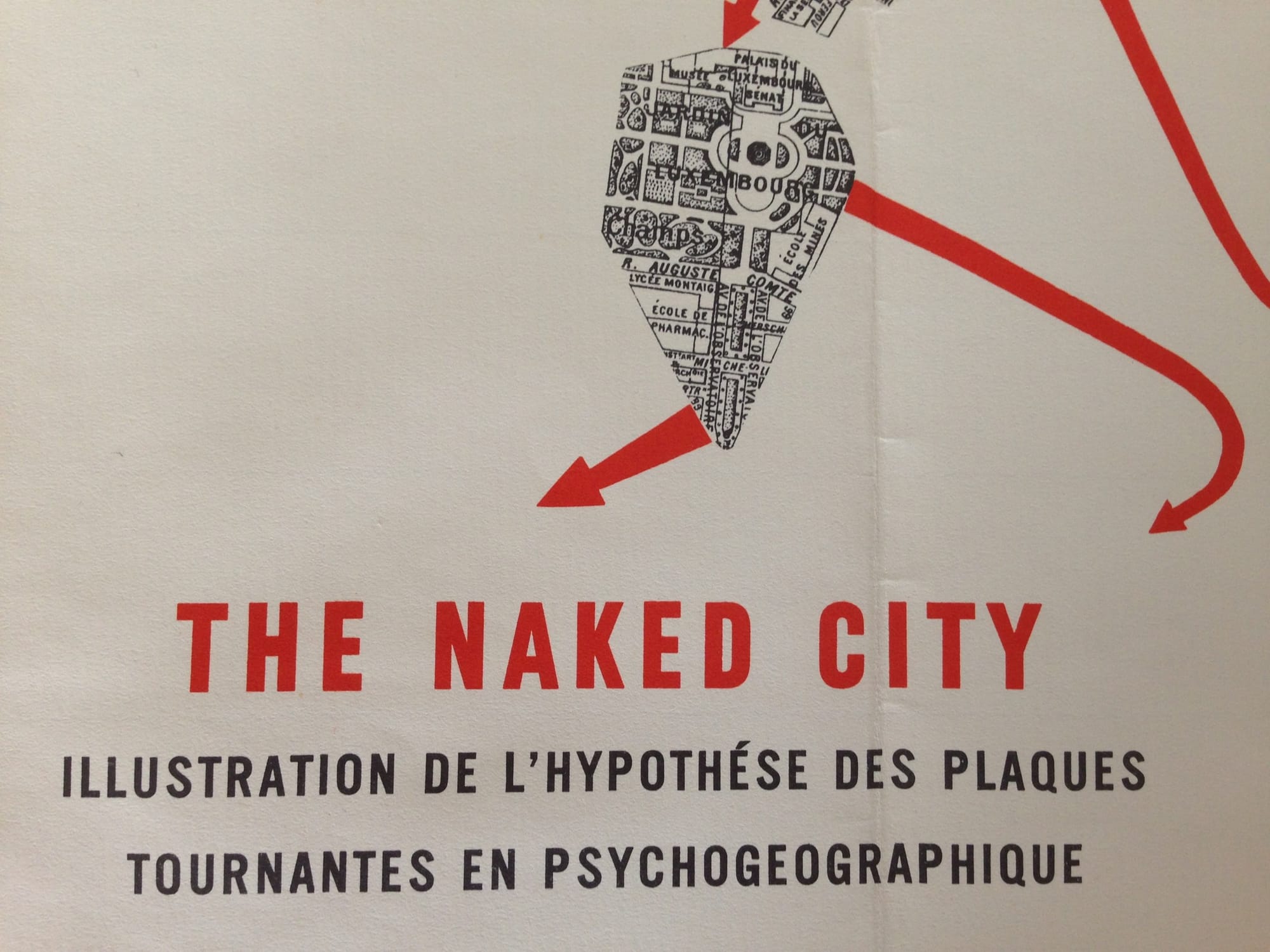
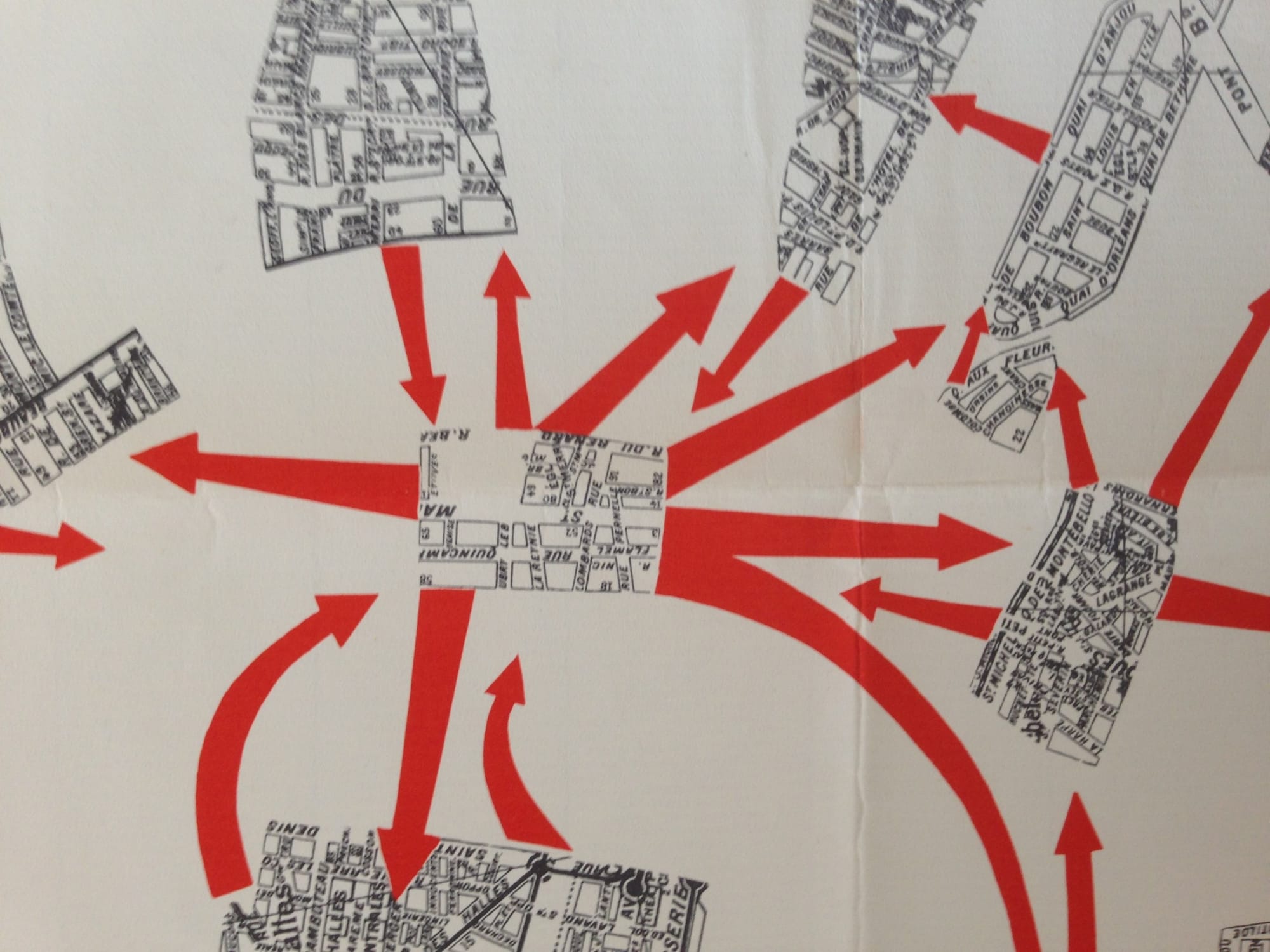
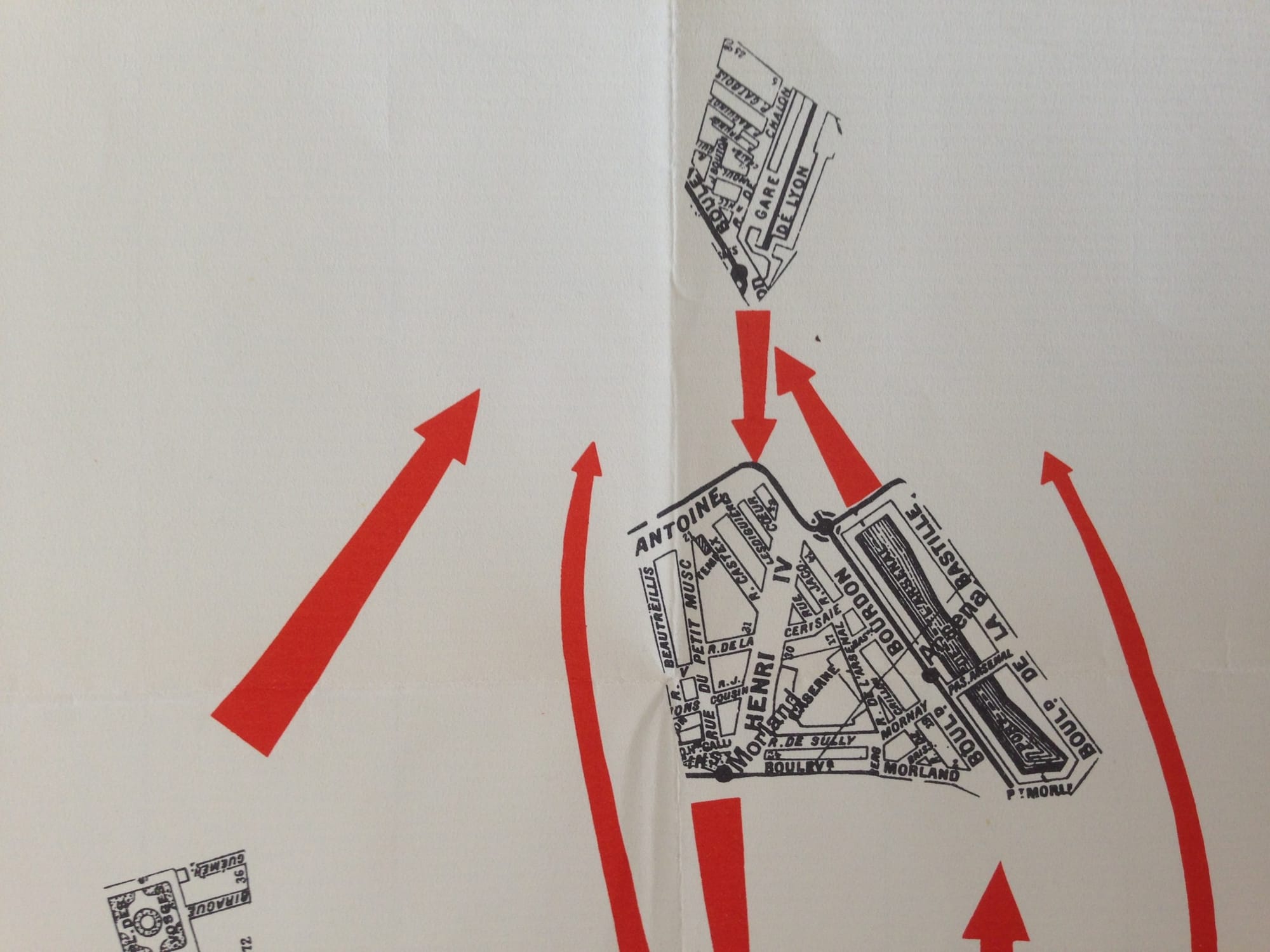
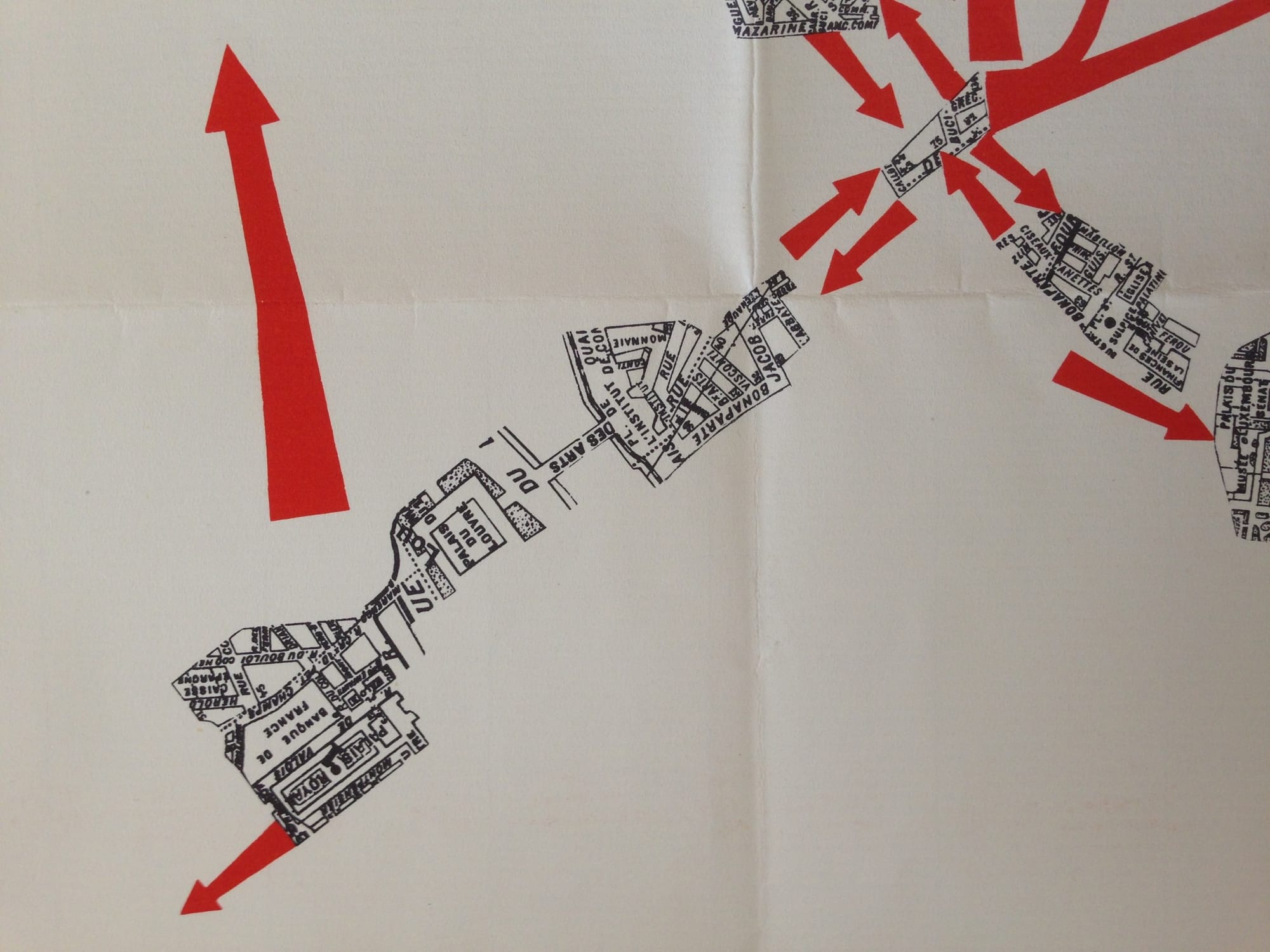
Its main method is the dérive, or drift: walking through a city with no destination, led by its atmospheres and pulls rather than by work or shopping. Debord set out the method in his essay Theory of the Dérive. The results could be mapped. In The Naked City, Debord cut up a map of Paris and rearranged the pieces, linking them with red arrows to show how people actually move between parts of the city that feel different.
The idea outlived the Situationists. Writers such as Iain Sinclair have used long walks to write about London, as in London Orbital, his walk around the M25 motorway, and the term is now used widely by artists and writers who walk a place to understand it. The Conversation has a good short introduction.
See also: Situationism and New Babylon
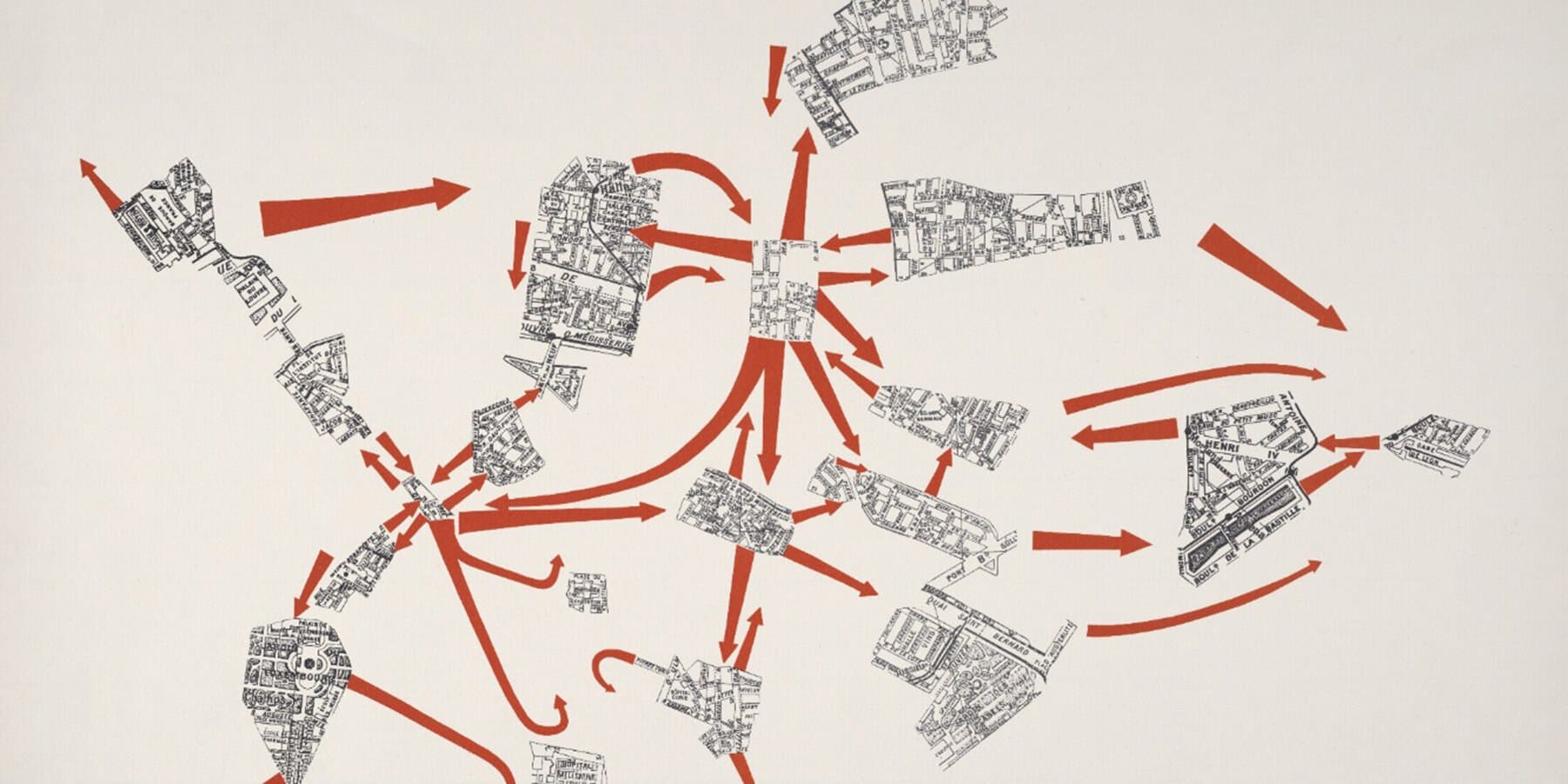
Images from Situationniste blog and designboom.
