
Chiang Mai is northern Thailand's biggest city: a walled Old City packed with temples, ringed by a moat, with Doi Suthep mountain on its western edge and farm country a short drive north. The best things to do are the Old City temples, the weekend markets, the Monk's Trail hike to Wat Pha Lat, the artist village of Baan Kang Wat, a vegan cooking class, and a weekend in the hills of Mae Rim. Give it at least four or five days, or a week if you want Mae Rim and a national park day trip. The best time to go is November to February, when the air is cool and clear. We lived in Chiang Mai as digital nomads, and this list is built from the places we went back to, plus a few classics we haven't written up yet.
Chiang Mai at a glance
Best for: Temples, markets, vegan food, hiking, and day trips into the hills
How long: Four or five days for the city, a week with Mae Rim and Doi Inthanon
Best time: November to February. Avoid March and April (smoke from the burning season and heat over 35°C)
Getting around: Grab cars and motorbikes, red songthaews, or a rented scooter
Airport: Chiang Mai International (CNX), about 15 minutes from the Old City
Our favorites: Wat Pha Lat, Jing Jai Market, May Kaidee's cooking class, and a weekend in Mae Rim
Where to stay: The Old City to walk everywhere, or Nimman for cafés and coworking
Things to do in the Old City
The square Old City, inside the moat, is where most visitors spend their first days. It's flat and easy to walk, and almost every block has a temple, a café, or a massage shop.
1. Temple-hop around the Old City
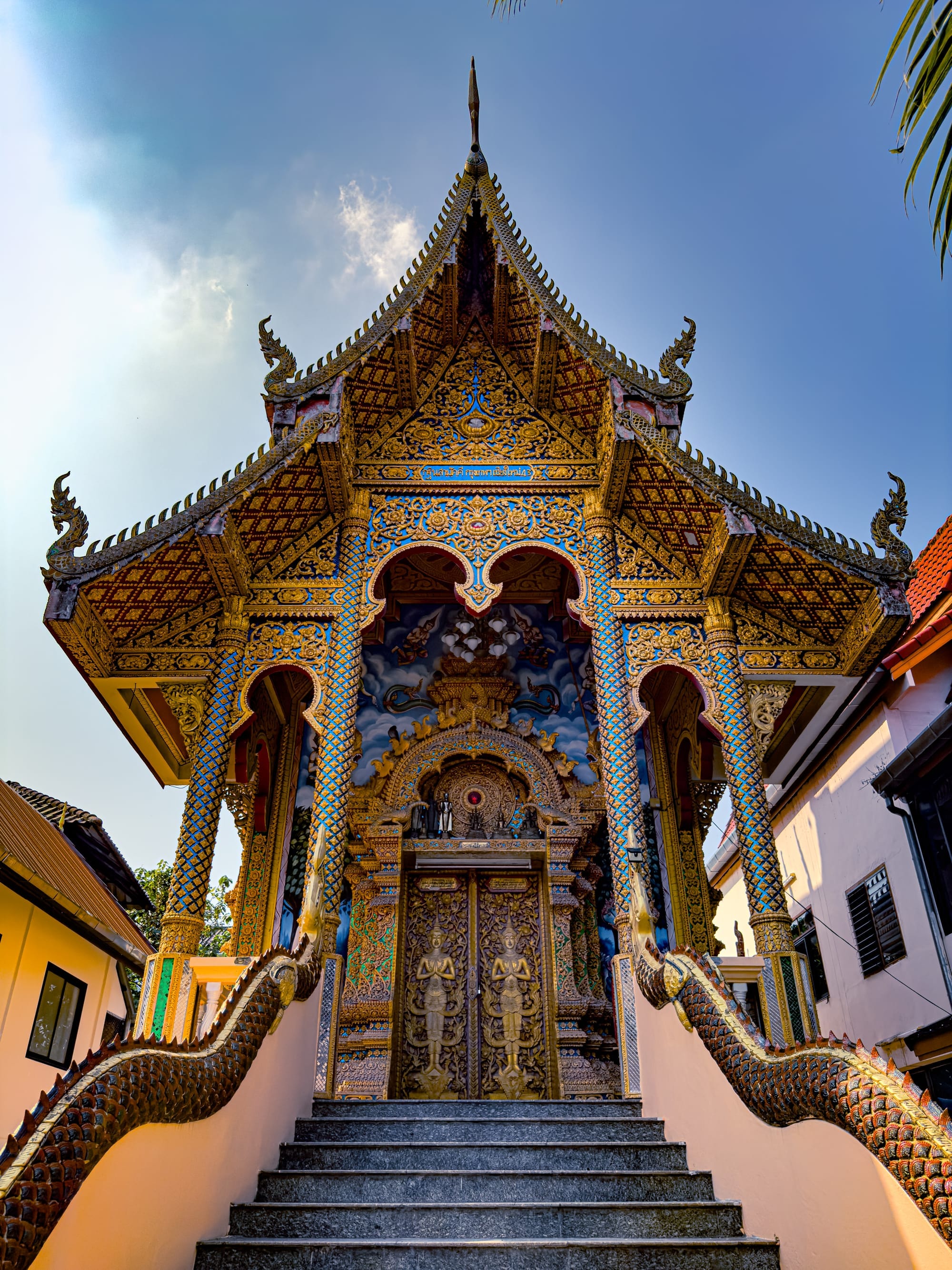
Chiang Mai has more than 300 temples, and you'll pass one on almost every walk. Our guide to temples in Chiang Mai covers the big names, fees, and dress code.
Most temples are free, and the ones that charge foreigners usually ask for under 100 baht (2026, check at the gate). Cover your shoulders and knees, take your shoes off before you go into a hall, and go early in the morning or late in the afternoon, when it's cooler and calmer.
2. Sauna and ice bath at Old City Spa
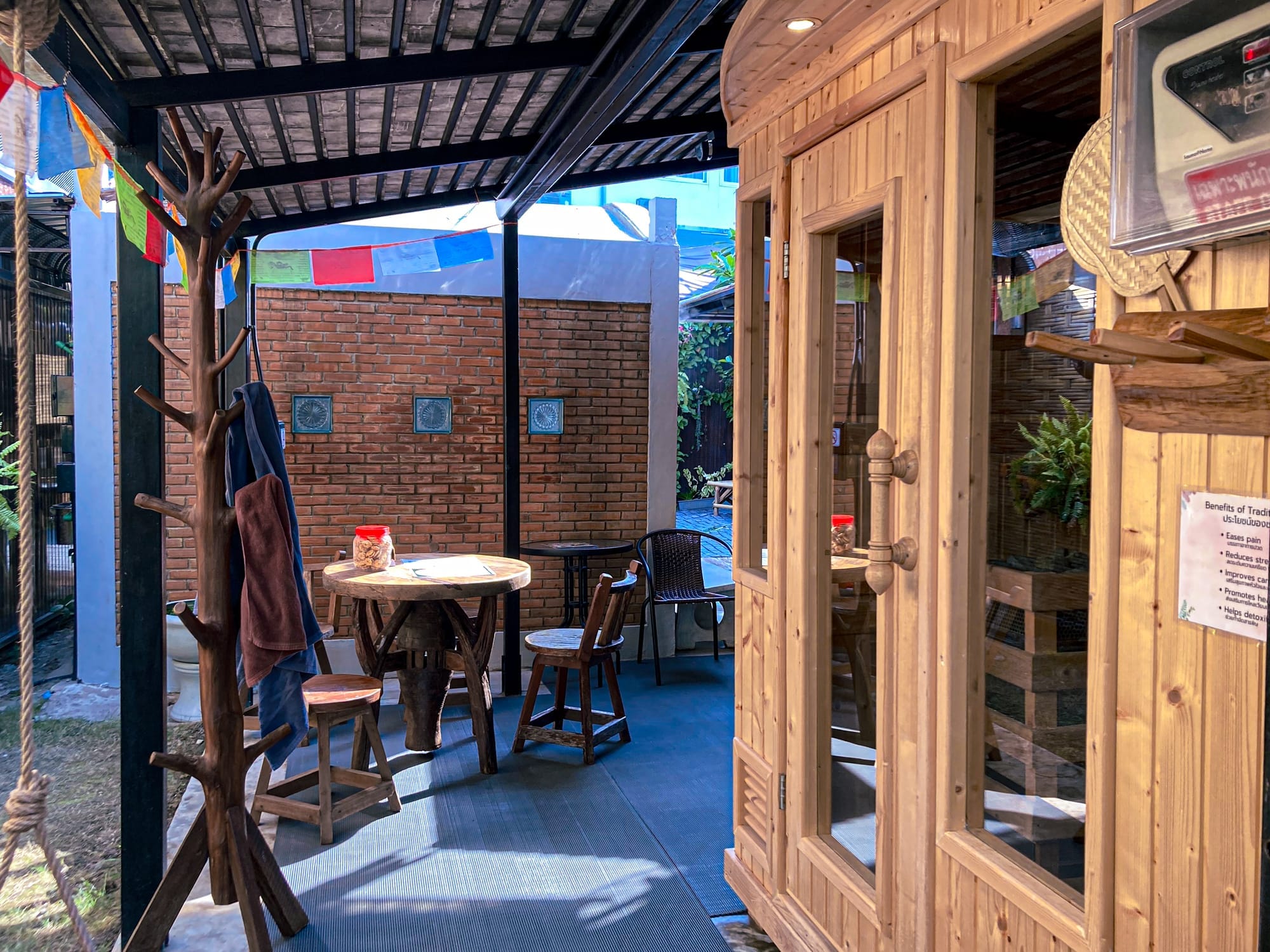
Old City Spa is a garden spa inside the moat with a Finnish sauna, an infrared salt sauna, a Thai herbal steam room, a magnesium hot bath, and an ice bath at around 1°C. You get a sarong to wear, so there's no need for a swimsuit. A two-hour visit was about 450 baht when Time Out last checked, and it's open from around 10 am to 10 pm, so check current prices with the spa.
3. Eat your way through the vegan cafés
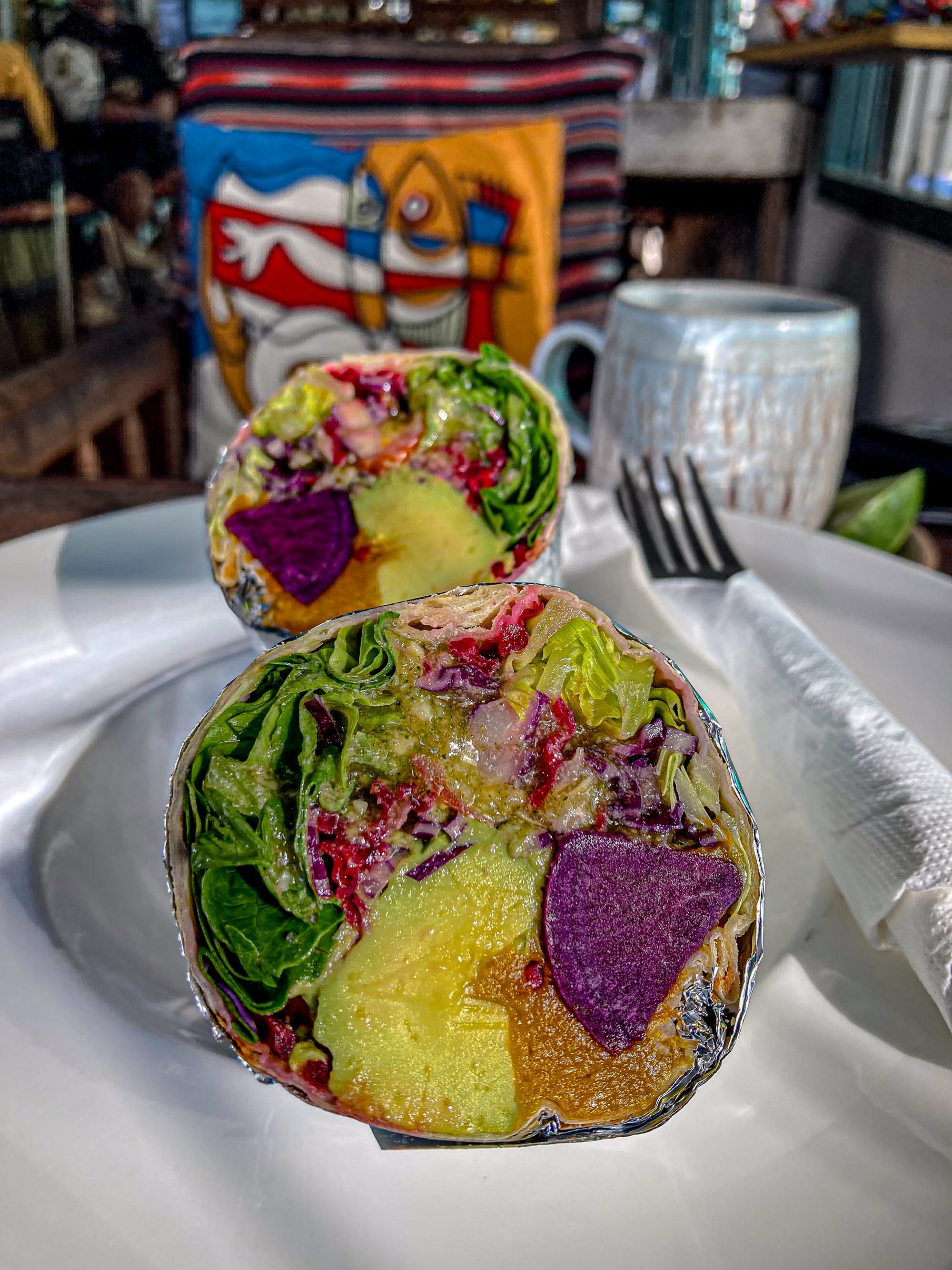
Chiang Mai is one of the easiest cities in Asia to eat vegan. Bird's Nest, on a side street in the Old City, became one of our regulars: they bake their own bread, make their own curry pastes, and their house chili oil turned into an obsession.
Other favorites are May Kaidee, Goodsouls Kitchen, Pure Vegan Heaven, and Free Bird Cafe in Nimman. Our guide to vegan food in Chiang Mai has the full list, plus the Thai words to use at regular restaurants (look for the yellow flag with red lettering, which marks jay, or strict vegan, food).
4. Take a vegan Thai cooking class
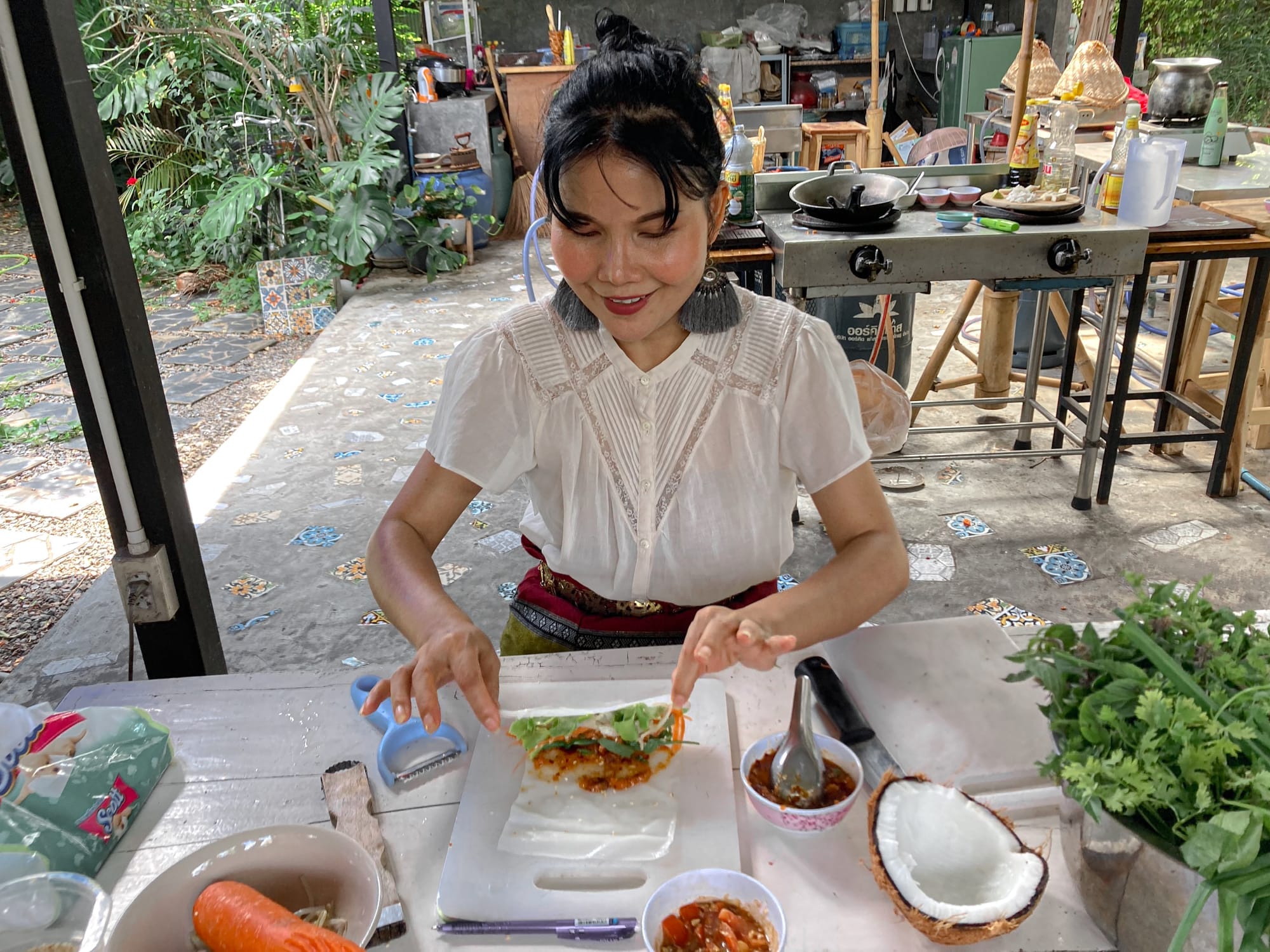
May Kaidee's cooking class was one of our favorite things we did in Chiang Mai. The school is fully vegan, which is rare: you cook around five classic dishes, such as tom yum, tom kha, pad thai, and a curry, and finish with mango sticky rice. Classes run daily at 9 am and 2 pm (about four hours each), with a shorter two-hour express class too, according to May Kaidee's site. Book online and check current prices when you do.
The school is just east of the Old City, and May Kaidee's vegan restaurant is close by if you want to try the dishes made by the pros first.
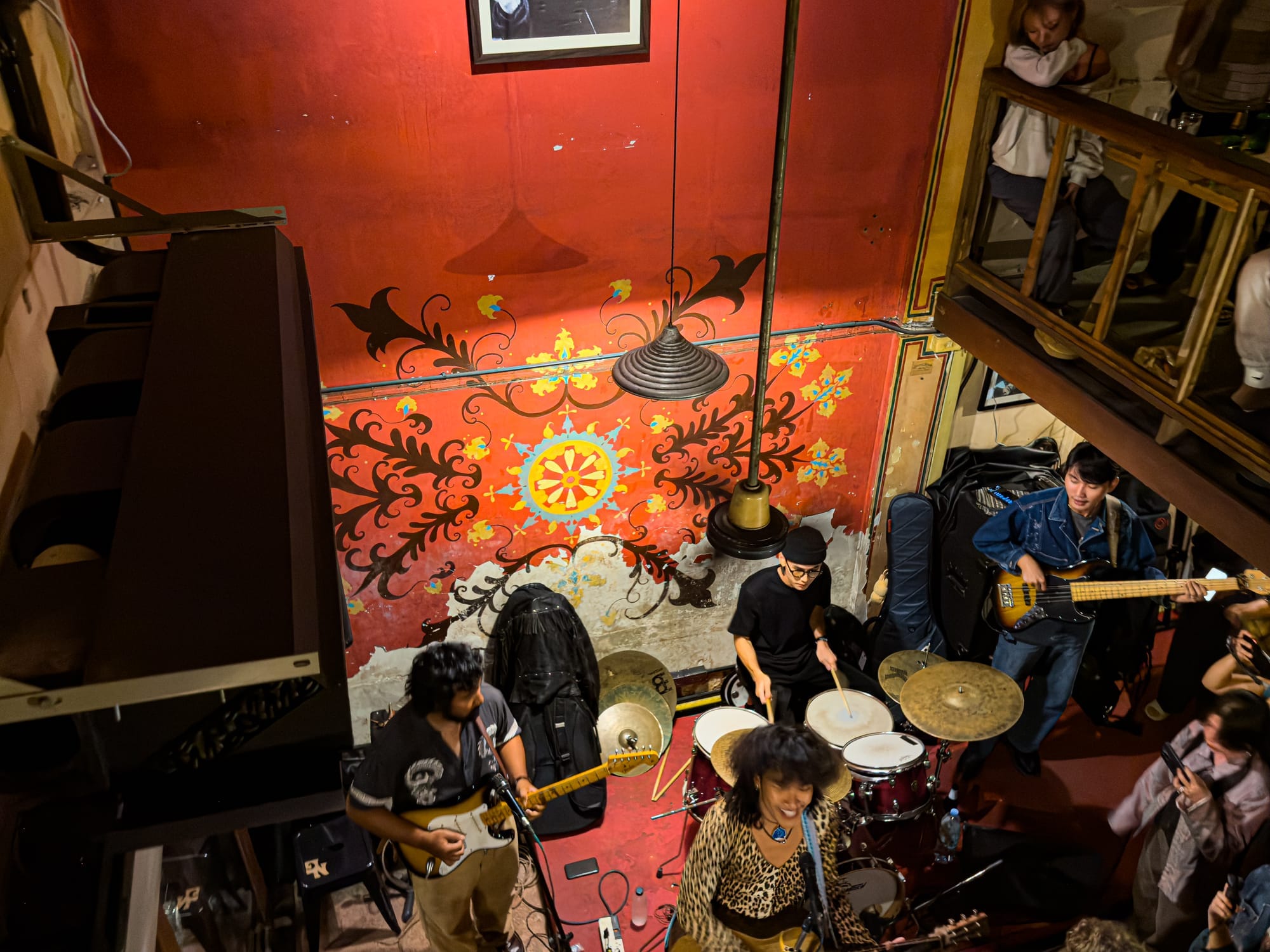
5. Catch live music at North Gate Jazz Co-Op
North Gate Jazz Co-Op is a small street-corner bar by Chang Phuak Gate, on the north side of the Old City, and it fills up every night with locals, expats, and travelers. We write about it in our post on living in Chiang Mai. Go early if you want a seat inside.
6. Join a festival: Pride, Yi Peng, or Songkran
Chiang Mai is a great city for festivals. Pride fills the streets beside the old city wall with rainbow flags, music, and dancing. In November, Loy Krathong and Yi Peng light up the night with floating candles and lanterns, and in April, Songkran turns the whole city into a water fight. Dates move each year with the lunar calendar or the organizers, so check before you plan a trip around one.

Markets in Chiang Mai
7. Spend a weekend morning at Jing Jai Market
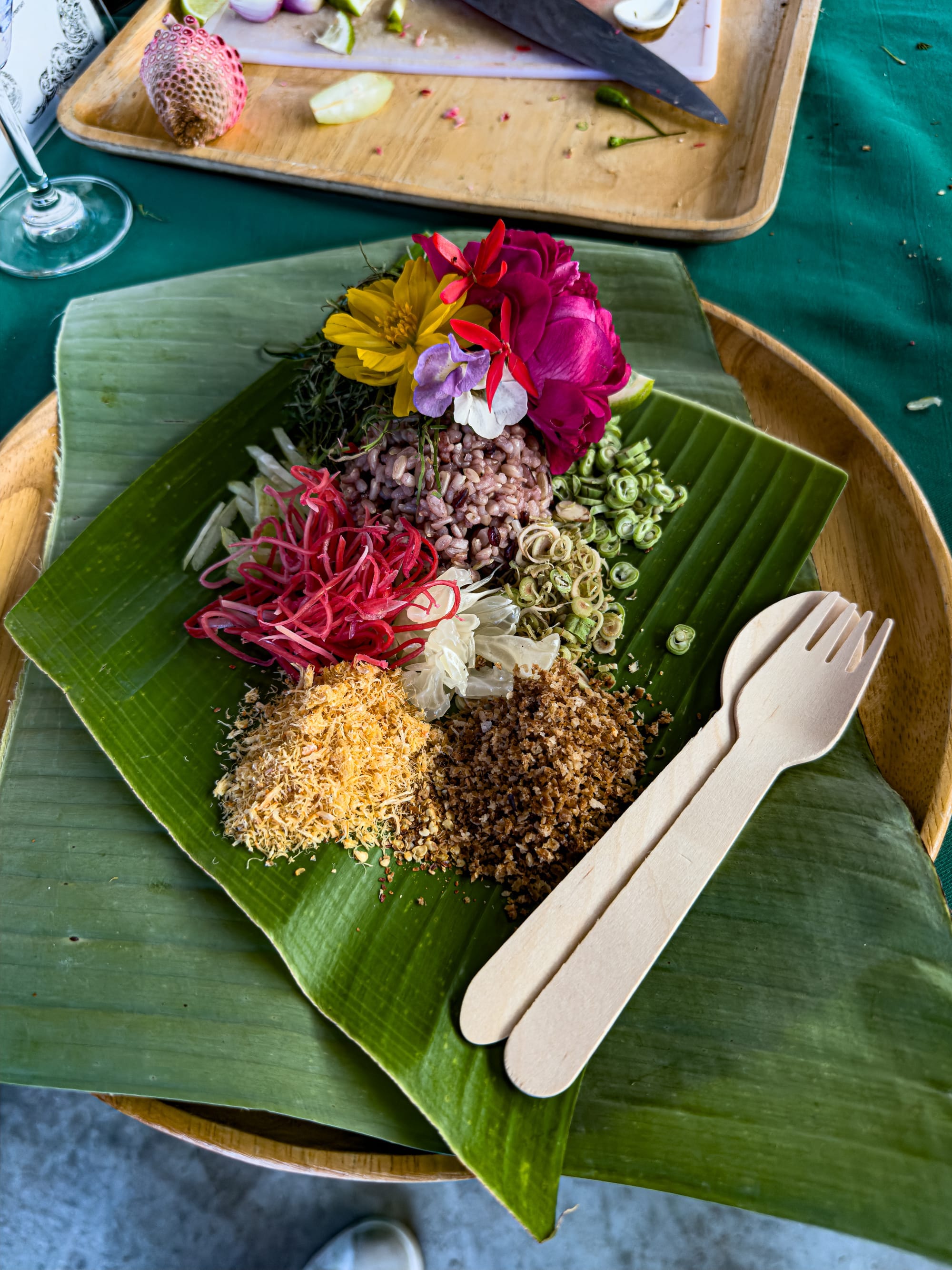
Jing Jai Market (often called JJ Market) is our favorite market in Chiang Mai. It's a farmers' market and handmade market on Atsadathon Road, about five minutes by car from Tha Phae Gate, and the part worth going for runs on Saturday and Sunday mornings from 6:30 am to 3 pm, according to the market's own listing (check before you go). Come for the organic produce, the craft stalls, and the edible flower salad, which the vendor made vegan for us by leaving out the meat.
Go early, before the heat and the crowds. There's usually acoustic music on weekend mornings and a Tok Sen massage area under yellow paper umbrellas.
8. Go early to the Bamboo Saturday Market
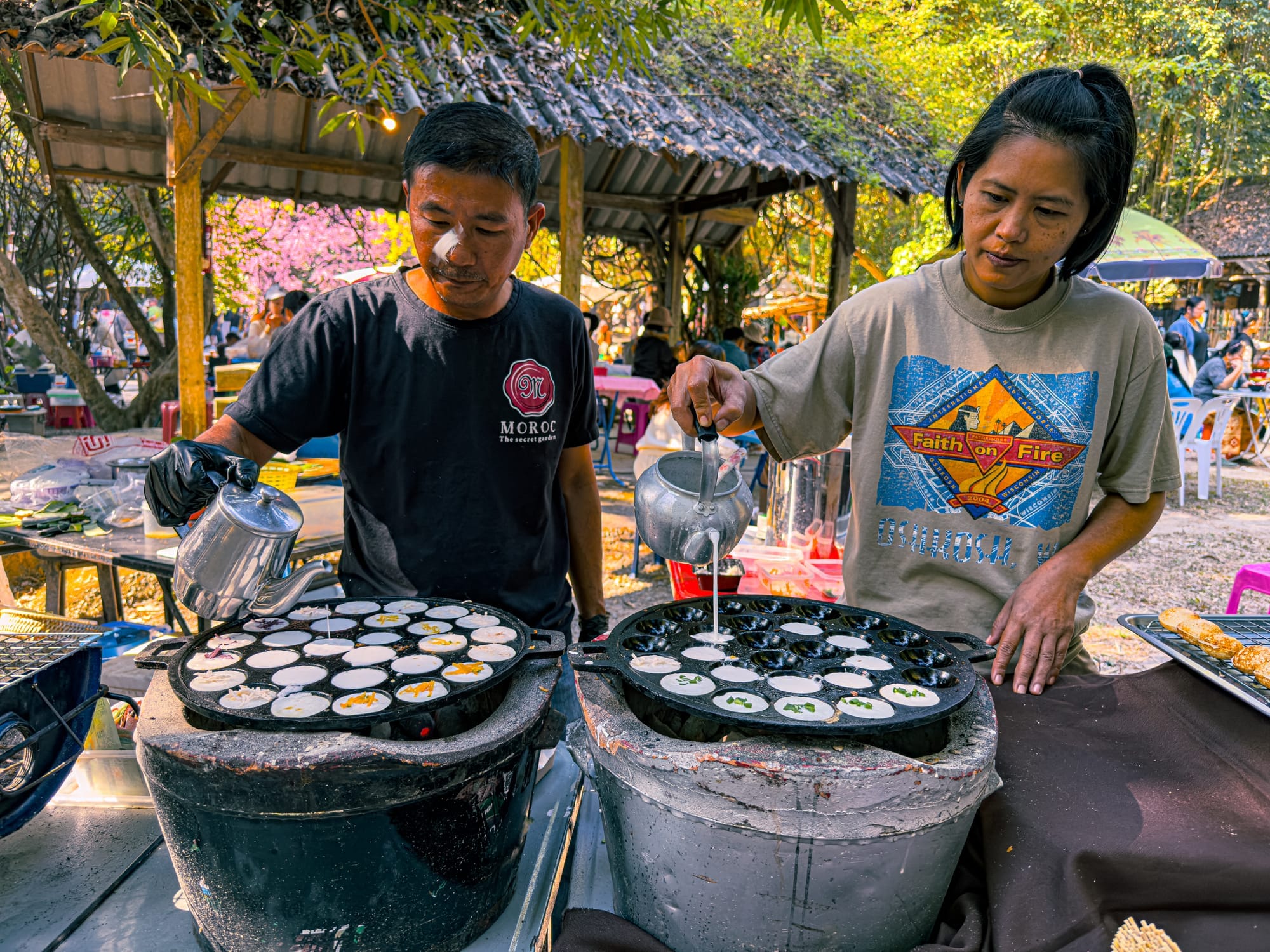
Nana Jungle, also called the Bamboo Saturday Market, is a small market in a shady grove northwest of the Old City. It only runs on Saturday mornings, from about 7 am to 10:30 am, and the best stalls sell out early, so aim to arrive by 8 am. Head straight for the bakery, then try the coconut pancakes (khanom krok) and a cup of hot cacao from the vendor who roasts the beans in front of you.
It's small, so pair it with Jing Jai Market on the same Saturday morning. Bring cash and mosquito repellent.
9. Shop for fruit at Mueang Mai Market
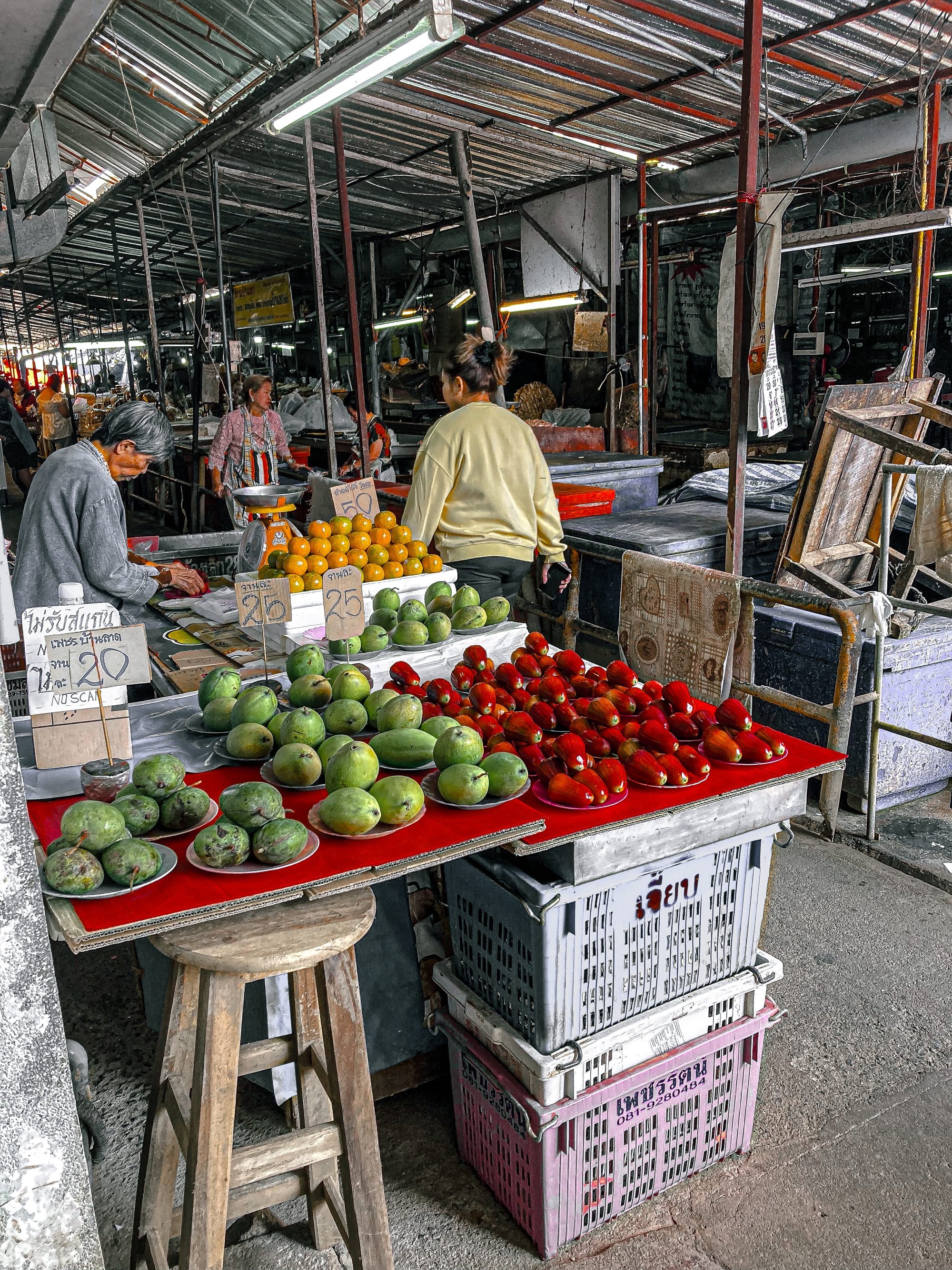
Mueang Mai Market is where locals buy their produce, and it's where we went for mangoes, rose apples, rambutans, and bananas for less than the price of a coffee back home. It's a working wholesale market rather than a tourist sight, which is exactly why it's worth a look. Our digital nomad guide to Chiang Mai has more on keeping costs low.
Doi Suthep and the west side
10. Hike the Monk's Trail to Wat Pha Lat
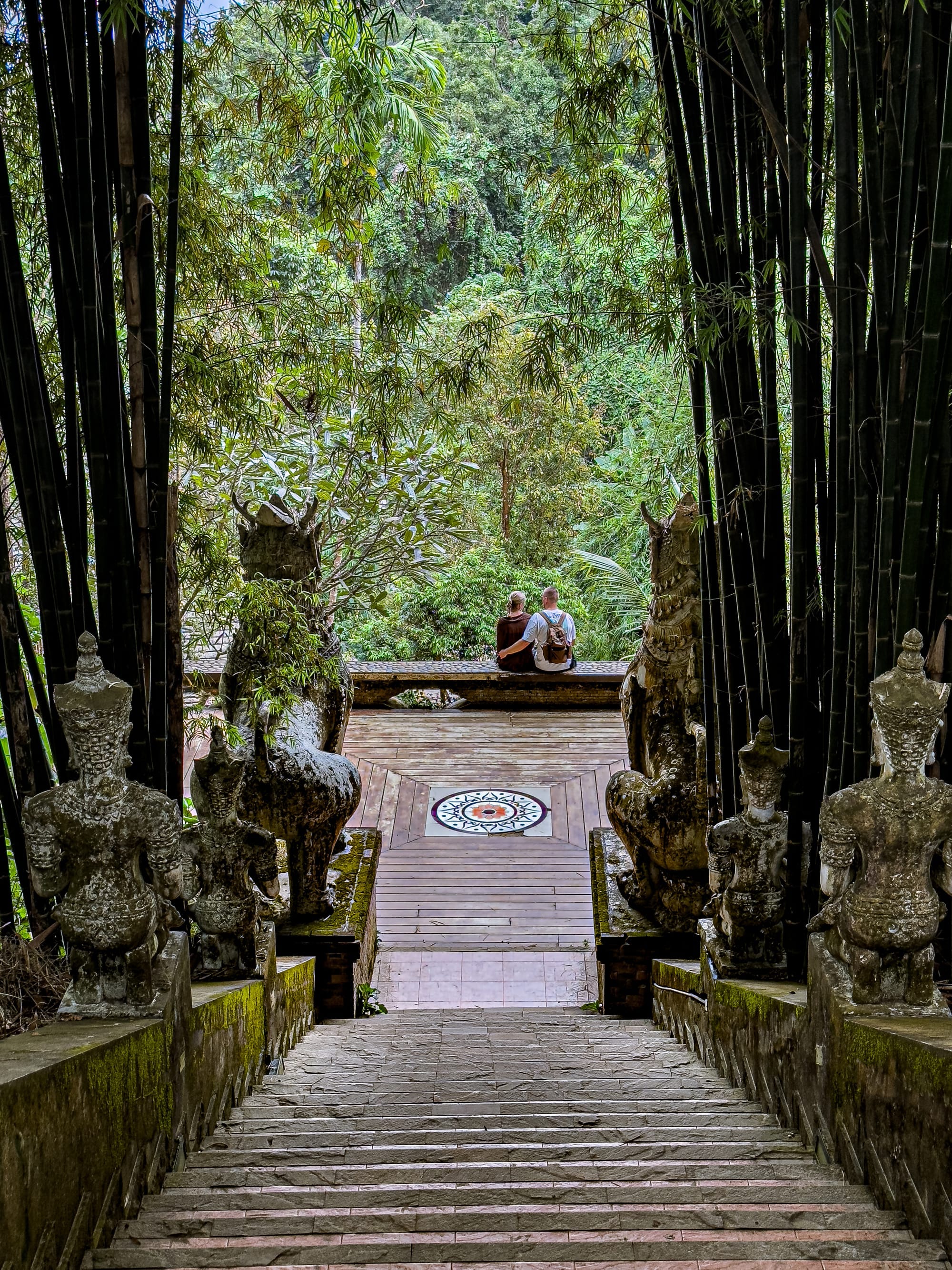
This was our favorite thing to do in Chiang Mai. The Monk's Trail to Wat Pha Lat starts at the end of Suthep Road, behind Chiang Mai University, and climbs about 2 km through jungle to a small forest temple beside a waterfall, with moss-covered statues, lotus ponds, and a view down over the city (more trails on our hiking page). Most people take 40 minutes to an hour. Fit hikers can carry on about 4 km more, much steeper, to Wat Phra That Doi Suthep.
Local guides report a trail fee of about 100 baht since late 2025, and the temple itself is free (check at the booth). Wear shoes with grip, cover your shoulders and knees, and start early.
11. Browse the studios at Baan Kang Wat
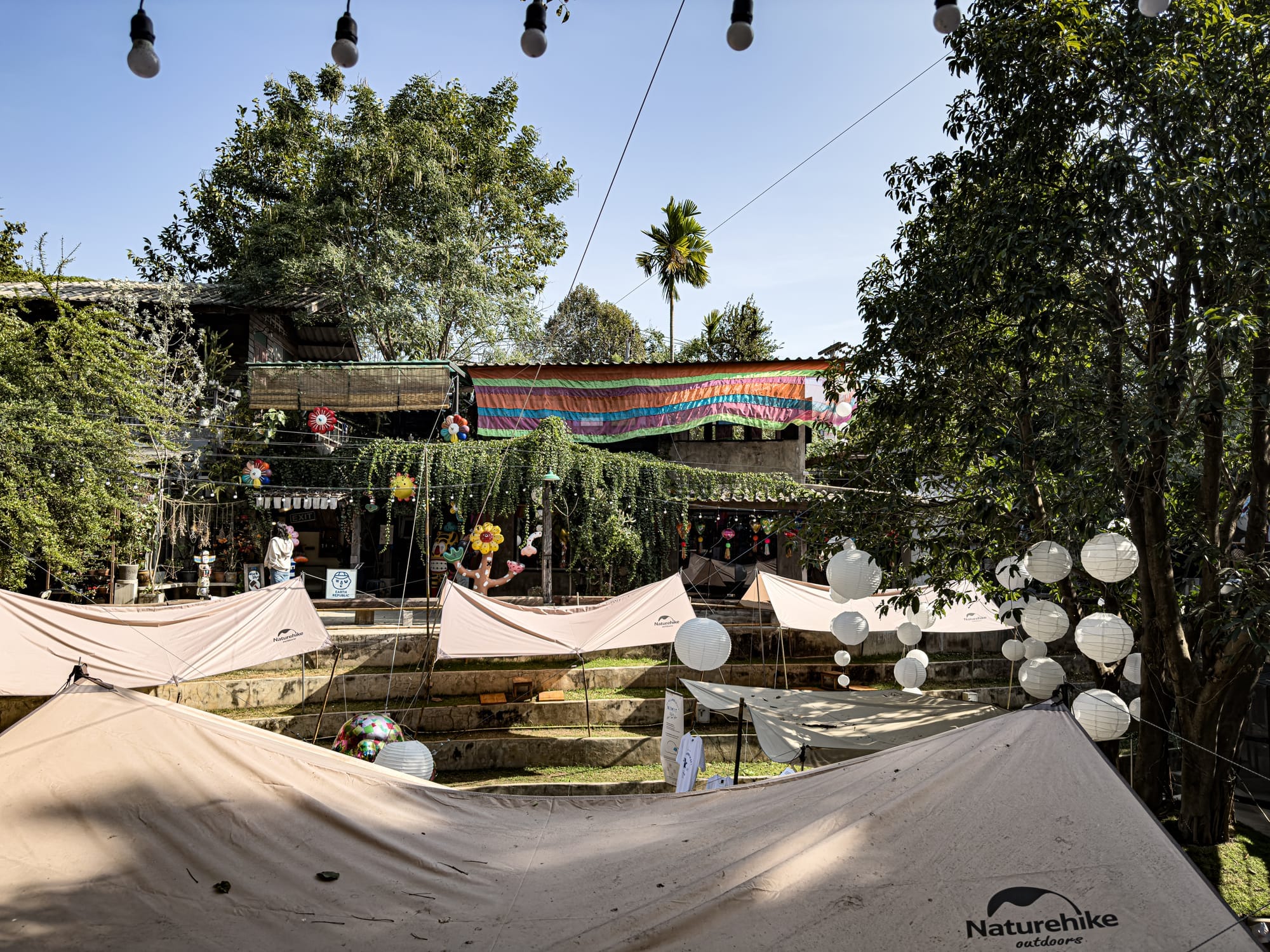
Baan Kang Wat is an artist village of wooden studios, craft shops, and cafés near Wat Umong, about 7 km west of the Old City. It's free to visit and usually open from about 10 am to 6 pm, closed on Mondays, with a morning market on Sundays (hours are set by each shop, so check before a special trip). Give it one to two hours.
The best part is the workshops: at Note a Book you can stamp and bind your own leather notebook. Wat Umong, a forest temple with brick tunnels, is a short walk away.
Mae Rim: day trips and weekends
Mae Rim is a green, hilly district about 20 km north of the city, roughly 30 to 40 minutes by car. Public transport is limited, so you'll want a scooter, a car, or a Grab driver for the day.
12. Spend a weekend in the Mae Rim hills
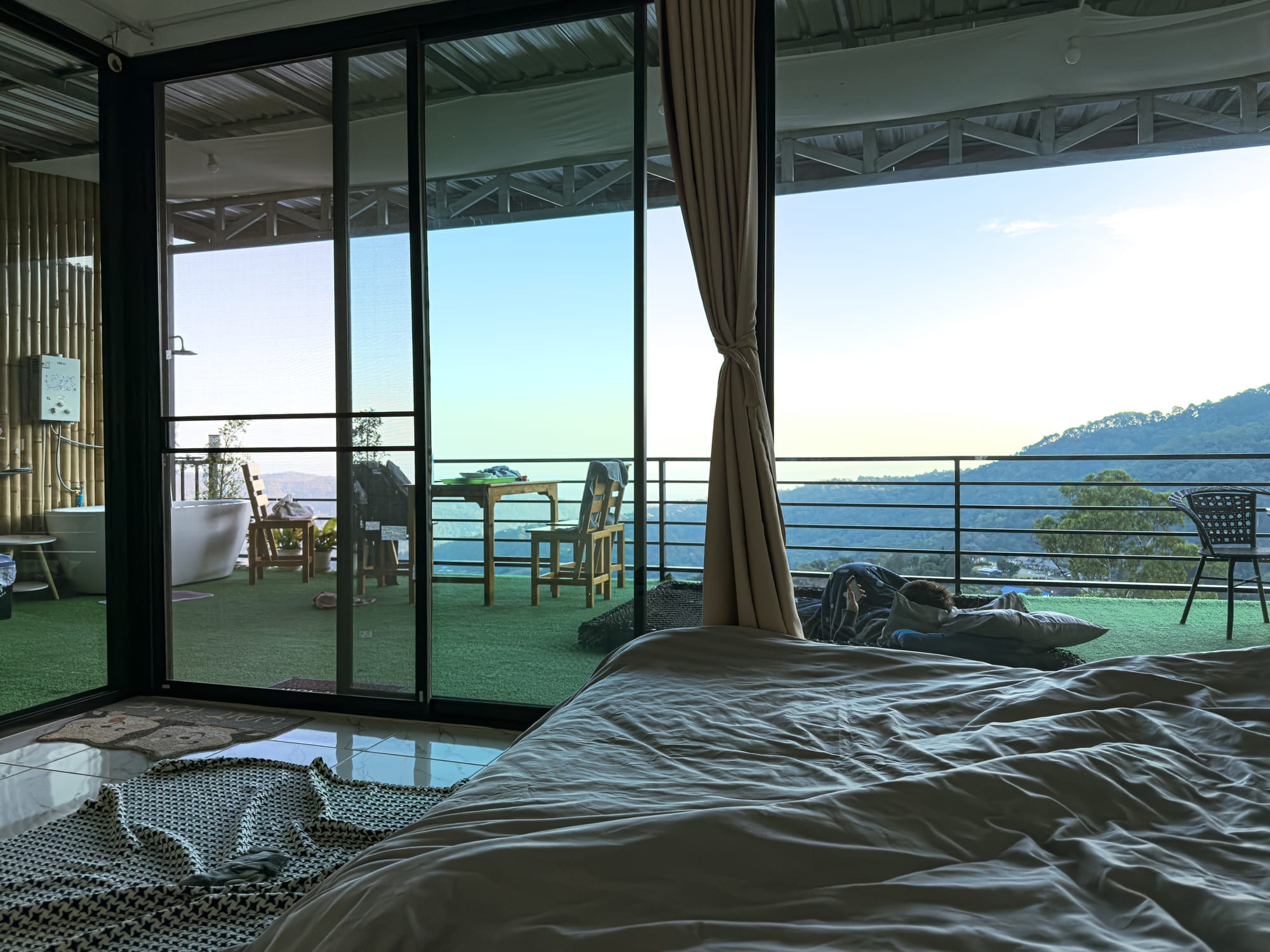
We spent a weekend in Mae Rim in a dome at Mankhao Homestay, and it was one of the best parts of our time in Chiang Mai. The family who runs it cooked us vegan meals with vegetables from their own garden, and we woke up to mountain views instead of traffic.
13. Walk the canopy at Queen Sirikit Botanic Garden
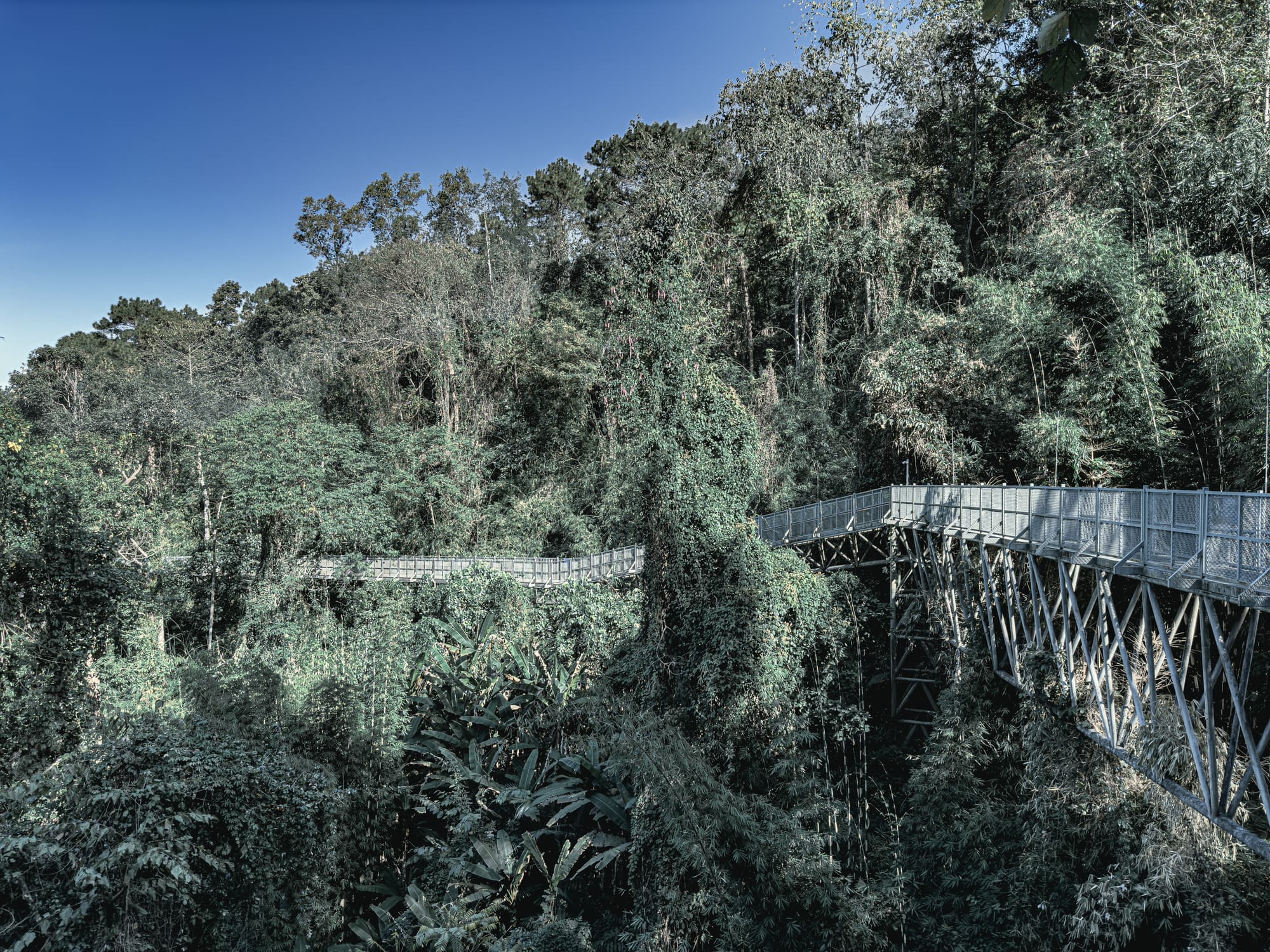
Queen Sirikit Botanic Garden is Thailand's first botanic garden, spread over about 1,000 hectares in the Mae Sa Valley. The highlights are the glasshouses (the Lotus House was our favorite), the canopy walkway about 20 m above the forest floor, and the forest trails. In 2026, entry was about 100 baht for foreign adults, plus a small vehicle fee, so check the official site before you go. Allow at least half a day.
14. See the flower farms of Mon Jam
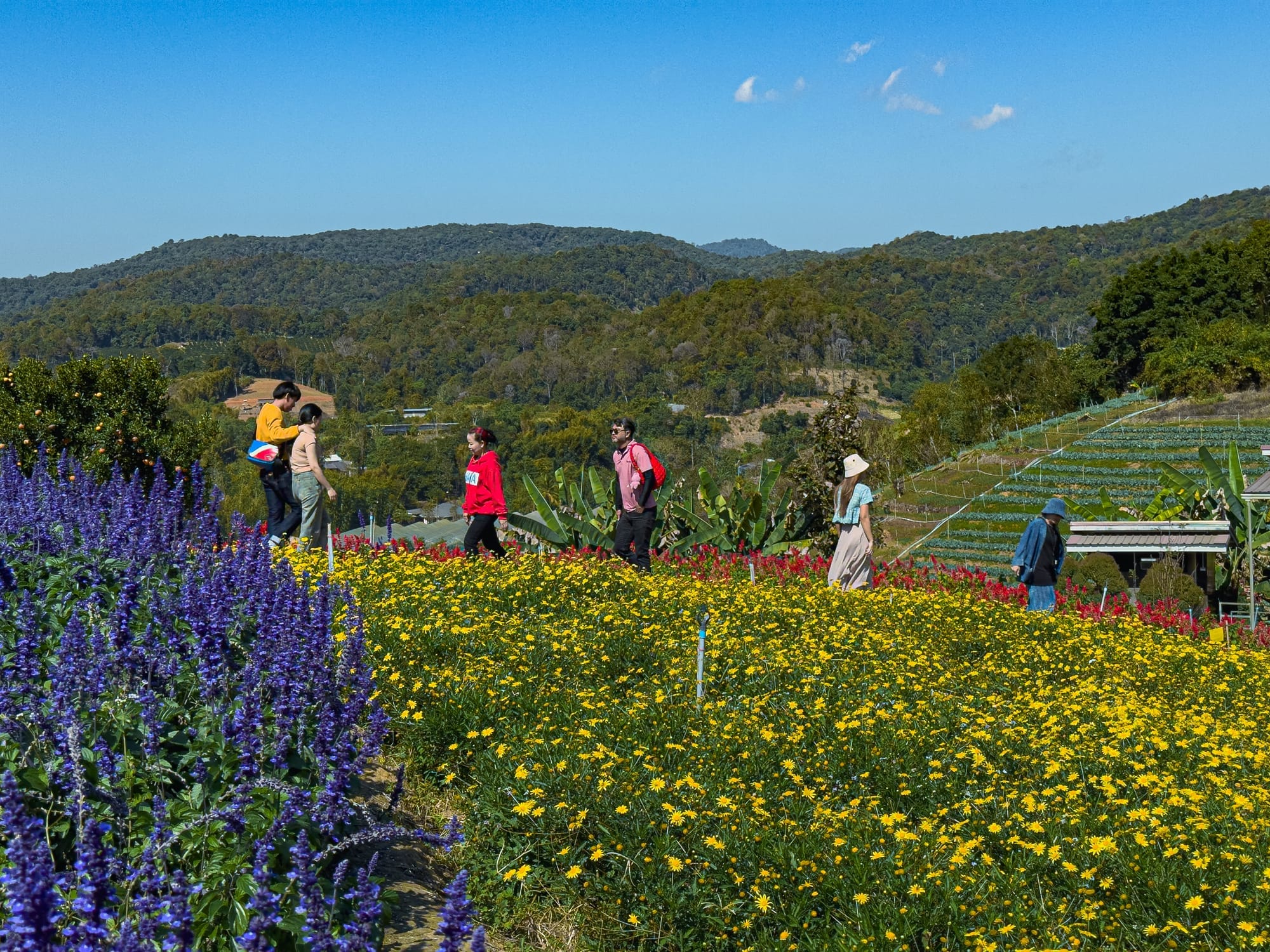
Mon Jam is a hilltop area of flower farms and viewpoints run by Hmong farmers, about 40 km from Chiang Mai, next to the Nong Hoi Royal Project. Boardwalks run between beds of salvia, daisies, and marigolds with terraced hills behind. It sits at about 1,350 m, so bring a jacket. The flowers are best from November to February, and early morning is the calmest time.
The main viewpoint is free, while some individual gardens ask for a small fee or a drink purchase, so keep small notes handy. The last climb is steep and not a road for new scooter riders.
15. Book a private soak at Onsen at Moncham
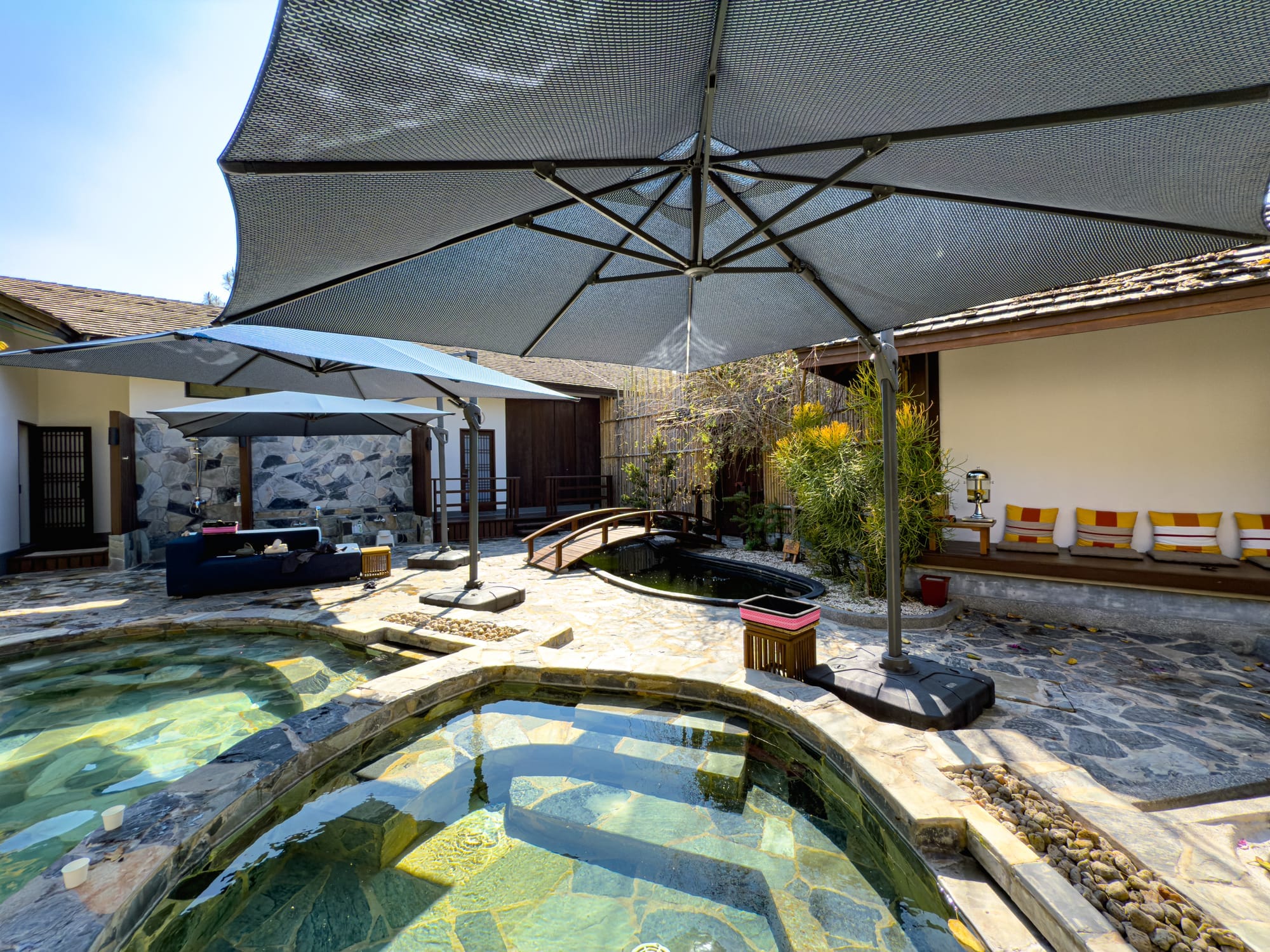
Onsen at Moncham is a Japanese-style mountain hotel near Mon Jam with mineral hot baths, and you don't have to stay the night. We booked a private onsen session for an hour and a half, with warm, hot, and cold pools in a walled garden, then had a vegan lunch at the restaurant. In November 2026, the hotel listed the shared onsen at about THB 650 per person and the private garden onsen at about THB 1,600 for 45 minutes for two, so check and book ahead.
More things to do in Chiang Mai
These are classics that appear on almost every Chiang Mai list. We haven't written full posts on them yet, so here are the basics.
16. Wat Phra That Doi Suthep
Chiang Mai's most famous temple sits at about 1,050 m on Doi Suthep, roughly 15 km from the city. You reach it by a staircase of about 306 steps lined with naga serpents, or by funicular from the car park, and on a clear day the view over the city is huge. Foreigners pay a small entrance fee, about 30 to 50 baht in 2026. Red songthaews run up from the Chiang Mai University area, or you can hike up on the Monk's Trail.
17. Wat Chedi Luang
In the middle of the Old City, Wat Chedi Luang is built around a massive brick chedi that stood about 82 m tall when it was finished in the 15th century, before an earthquake in 1545 brought down the top. It once held the Emerald Buddha, now in Bangkok, and the city pillar shrine is in the grounds. Entry for foreigners is about 40 to 50 baht (2026, check at the gate), and it's one of the places to try a monk chat.
18. Wat Phra Singh and the Sunday Walking Street
Wat Phra Singh, at the western end of Ratchadamnoen Road, dates from 1345 and is one of the best examples of classic Lanna architecture, with murals in its small Viharn Lai Kham hall. It's free to enter. On Sunday afternoons and evenings, the Sunday Walking Street market fills Ratchadamnoen Road from Tha Phae Gate up to the temple, with food, crafts, and street performers. Listings put it at about 4 pm to 10:30 pm or later, so pair a sunset temple visit with dinner at the stalls.
19. The Night Bazaar
The Night Bazaar runs along Chang Khlan Road, east of the Old City between the moat and the Ping River. It's open every evening and sells handicrafts, clothing, jewelry, and portrait paintings, with food courts around it. It's more touristy than the weekend markets, but handy midweek.
20. Doi Inthanon National Park
Doi Inthanon is Thailand's highest mountain at 2,565 m, about 60 km from Chiang Mai. The park has big waterfalls, including Wachirathan and Mae Klang, plus cloud forest trails near the top, where it can be cold in the cool season. It's a full day trip by car or with a tour. Foreigners pay a national park entry fee, so check the current price with the Department of National Parks before you go.
21. Bua Tong Sticky Waterfall
Bua Tong is a waterfall north of the city where mineral deposits make the limestone rock grippy, so you can walk straight up through the falling water. It's roughly an hour's drive from Chiang Mai, in Si Lanna National Park, and recent reports say entry is free, with hours of about 8 am to 5 pm (2026, check on arrival). Bring shoes or sandals you don't mind getting wet.
Tips for visiting Chiang Mai
- Check the air quality. From about February to April, smoke from crop burning can push pollution to hazardous levels. If you have asthma or plan to hike, check the air quality index each day.
- Use Grab. We mostly got around on Grab motorbikes, which are cheap and quick. Red songthaews work too, but agree the fare first.
- Dress for temples. Carry a light scarf or shirt to cover your shoulders, and wear trousers or a skirt below the knee.
- Rent a car for Mae Rim and Doi Inthanon. The mountain roads are steep and winding, and a car is easier than a scooter if you're not an experienced rider.
Where to stay in Chiang Mai
For a first visit, stay in the Old City, where you can walk to the temples, cafés, and the Sunday Walking Street. We preferred it to Nimman, which is more modern and built around cafés, coworking, and nightlife, and handy for the Monk's Trail. We stayed at The Social Club, a coliving in the Old City. See our guide to where to stay in Chiang Mai for the areas compared, plus the hotels and colivings we'd pick.
Frequently asked questions
What is Chiang Mai best known for?
Its temples (more than 300 of them), its markets and night markets, northern Thai food like khao soi, and the mountains around the city. It's also one of the best-known digital nomad bases in the world.
How many days do you need in Chiang Mai?
Four or five days covers the Old City temples, a weekend market, the Monk's Trail, and Baan Kang Wat. Add two nights for Mae Rim and a day for Doi Inthanon if you have a week.
What is the best month to visit Chiang Mai?
November to February, with December and January the most pleasant. Days are around 25°C and the air is clear. March and April bring smoke and heat, and the rainy season runs from about late May to October.
Is Chiang Mai worth visiting?
Yes. It's easier going than Bangkok, the food is excellent (including vegan food), and you can hike to a forest temple in the morning and be at a night market by evening. We liked it enough to live there.
What is the best temple in Chiang Mai?
Wat Phra That Doi Suthep is the most famous, and Wat Chedi Luang and Wat Phra Singh are the big ones in the Old City. Our favorite is Wat Pha Lat, the forest temple on the Monk's Trail.
What is there to do in Chiang Mai on a weekend?
Saturday morning, go to Nana Jungle and Jing Jai Market. Saturday evening, there's the Wualai walking street south of the Old City. Sunday, Baan Kang Wat has its morning market, and the Sunday Walking Street fills Ratchadamnoen Road in the evening.
Do you need a car in Chiang Mai?
Not in the city, where Grab and songthaews are cheap and easy. For Mae Rim, Mon Jam, and Doi Inthanon, a rental car or a driver for the day makes life much easier.
Useful links: the Tourism Authority of Thailand on Chiang Mai, Queen Sirikit Botanic Garden, Chiang Mai on Wikipedia, Thailand's Department of National Parks, and Doi Inthanon National Park on Wikipedia.
More from Chiang Mai: our Chiang Mai guide, where to stay in Chiang Mai, temples in Chiang Mai, the Monk's Trail to Wat Pha Lat, a weekend in Mae Rim, Jing Jai Market, Baan Kang Wat, vegan food in Chiang Mai, living in Chiang Mai, and our digital nomad guide to Chiang Mai.


