We lived in Istanbul for a while, and we still had a list of things we hadn't got to when we left. It's that kind of city. These are the 13 things we'd tell a friend to do, starting with the big monuments in Sultanahmet and ending on the Asian side, where we'd stay if we went back.
Each one links to our full guide. For a day-by-day plan, see our Istanbul itinerary, and for the rest of Turkey, our best things to do in Turkey.
Things to do in Istanbul at a glance
How long: At least three days; we lived there for a while and still had a list
Don't miss: Hagia Sophia, the Blue Mosque, Topkapı Palace, and a Bosphorus cruise
Free: The Blue Mosque, the Kadıköy market, the street art, walking Balat, and the Spice Bazaar
Book ahead: Hagia Sophia, Topkapı Palace, and the Basilica Cistern
Getting around: An Istanbulkart covers trams, the metro, and the ferries
Where to stay: Sultanahmet for a short trip, Kadıköy for a longer one
Sultanahmet: the big four
Hagia Sophia, the Blue Mosque, Topkapı Palace, and the Basilica Cistern are all within a 10-minute walk of each other in the old city. You can see two in a morning, but we'd spread them over two days.
1. Hagia Sophia
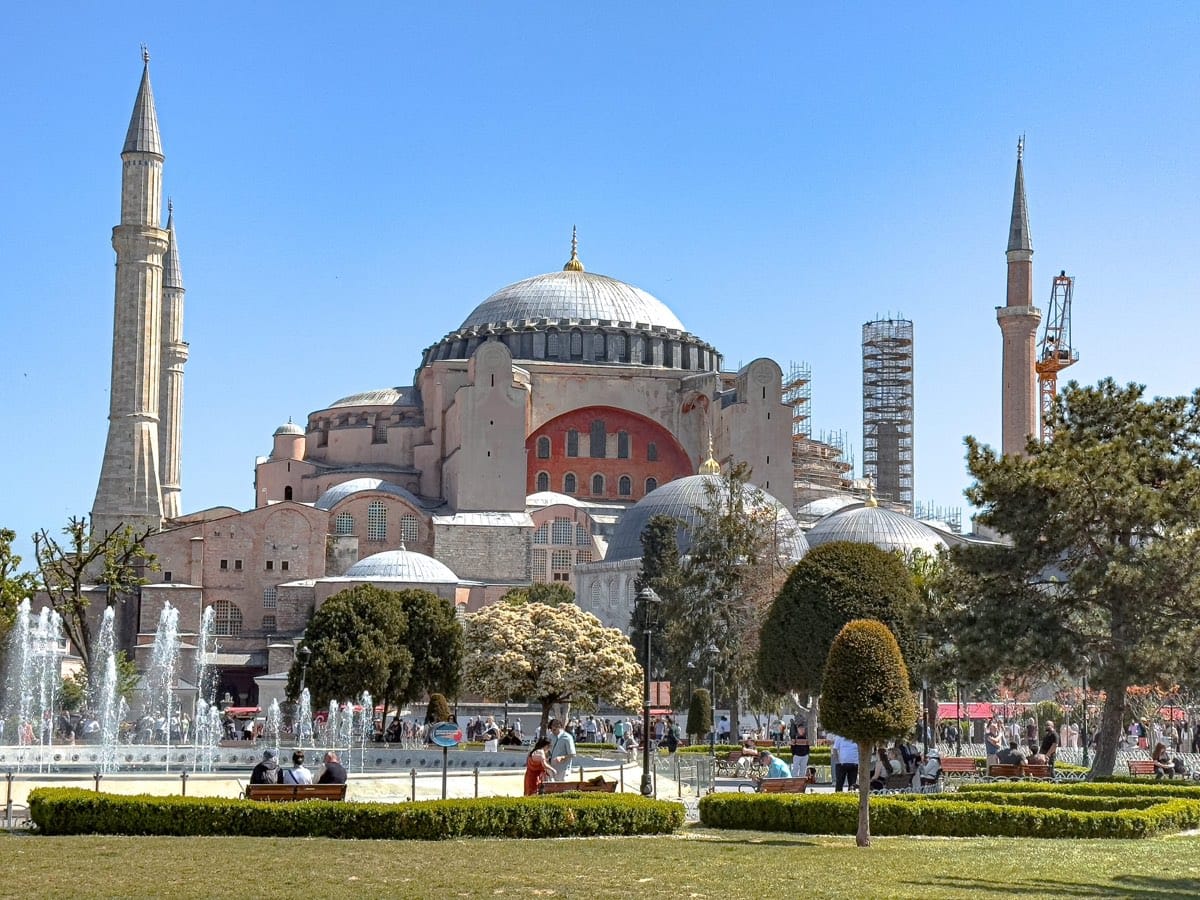
Built as a church in the sixth century, then a mosque, a museum, and a mosque again since 2020, Hagia Sophia is the building to see in Istanbul. The dome is huge, and you can still see Byzantine mosaics next to the Islamic calligraphy.
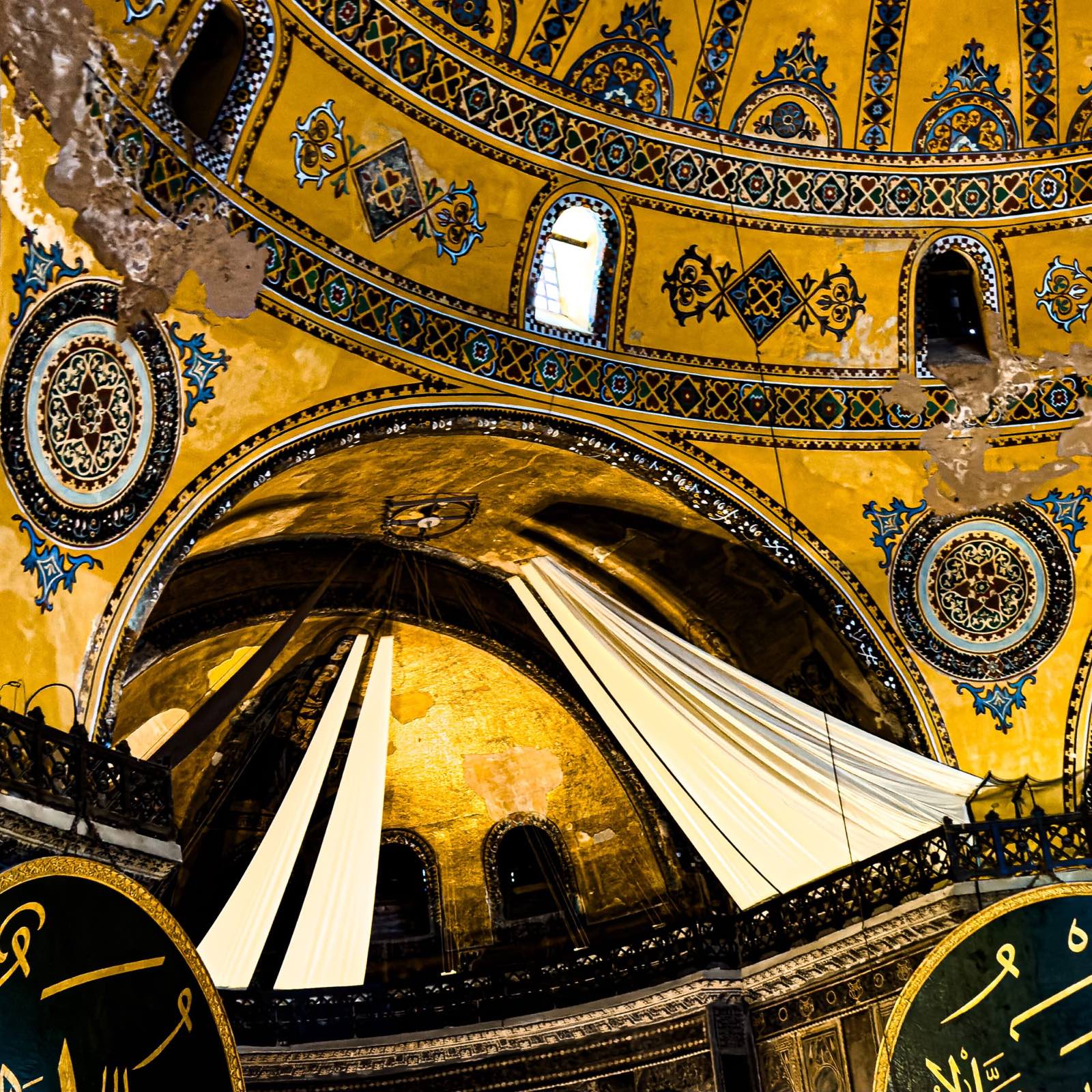
Foreign visitors now pay to enter and see it from the upper gallery, while the ground floor is kept for worship. Go early, or book a skip-the-line ticket.
2. The Blue Mosque
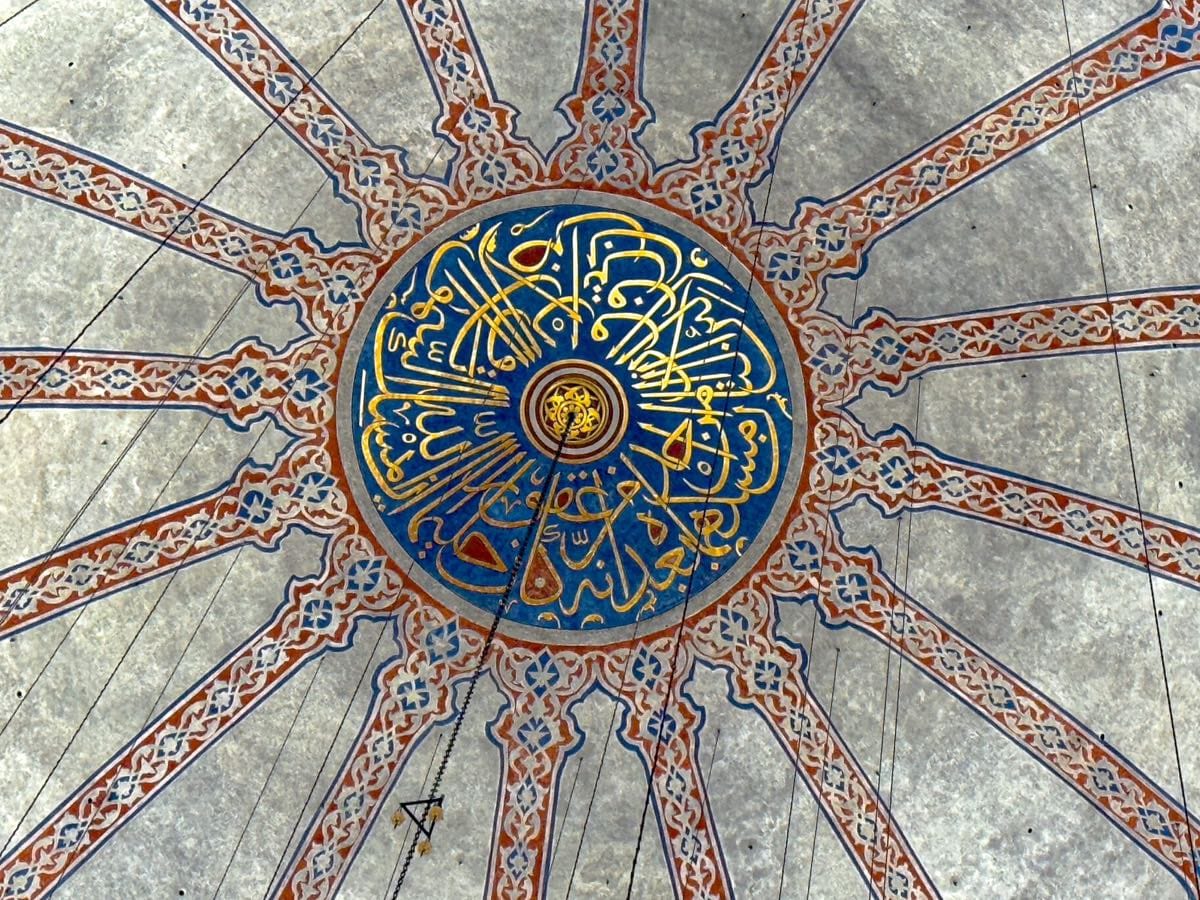
Across the square, the Blue Mosque is free, and it's named for the blue tiles inside. It closes to visitors during prayer times, so check the times before you go. Cover your shoulders and knees, and women should bring a scarf for their hair.
If you want the history explained, a guided tour covers the mosque and handles the timing for you.
3. Topkapı Palace
The Ottoman sultans lived at Topkapı Palace for centuries. Give it half a day for the courtyards, the Treasury, the kitchens, and the Harem, which has some of the best tilework in the city.
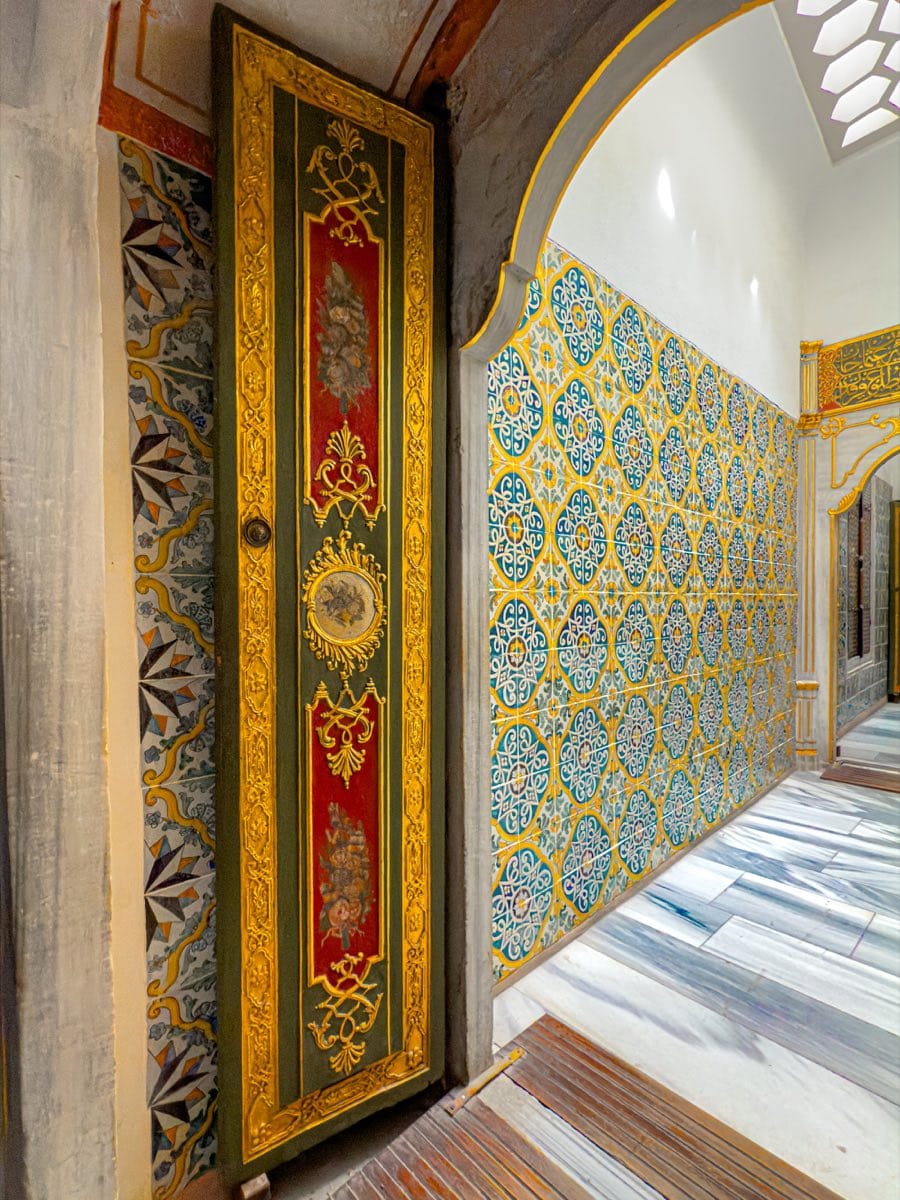
The ticket lines get long by mid-morning. Skip-the-line tickets with an audio guide save a lot of waiting.
4. The Basilica Cistern
The Basilica Cistern is a sixth-century underground reservoir held up by 336 columns, with two Medusa heads at the far end, one upside down and one on its side. It's cool and dim inside, a good break on a hot afternoon.
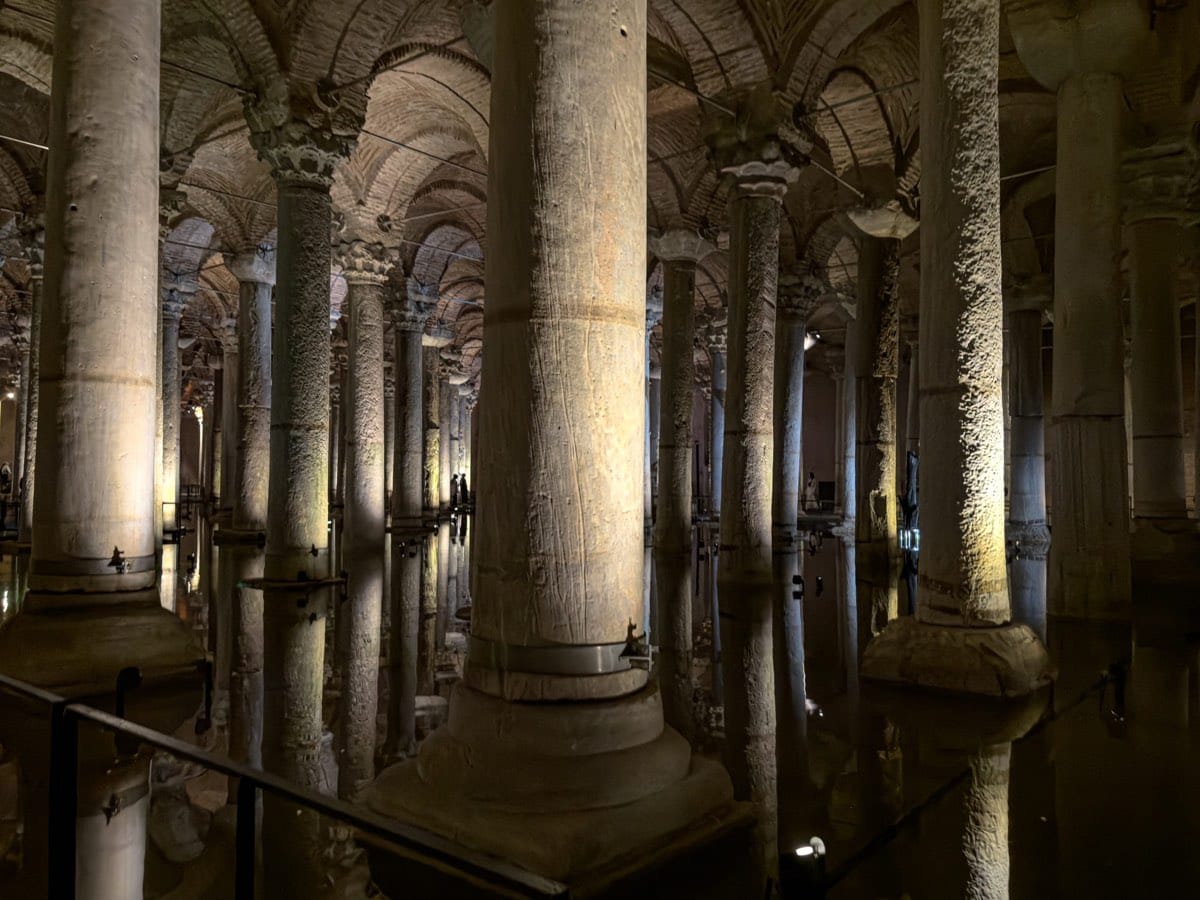
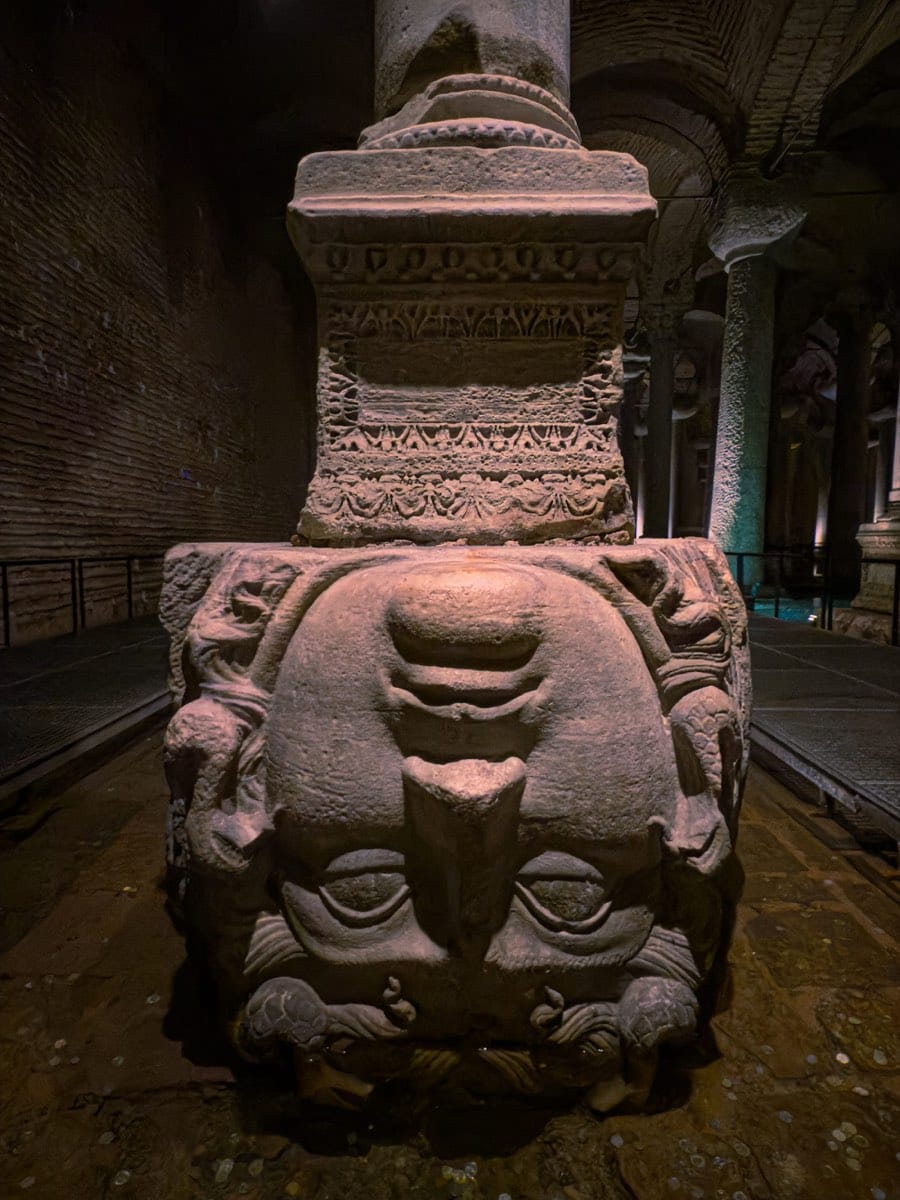
It's one of the busiest sights in the city, so it's worth booking a skip-the-line ticket.
On the water
5. Take a Bosphorus cruise
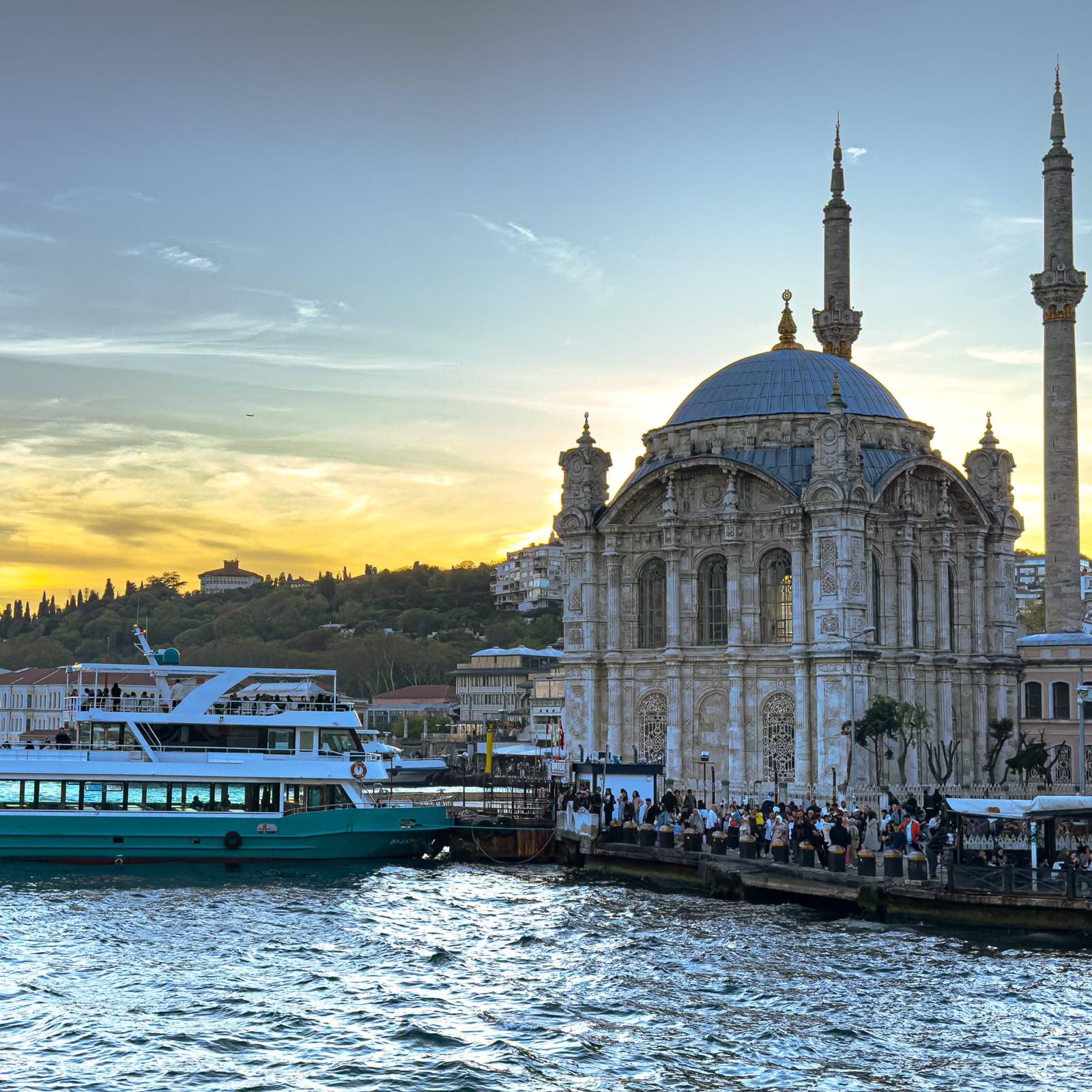
Istanbul makes more sense from the water. A Bosphorus cruise takes you between Europe and Asia, past palaces, waterside mansions, and the Ortaköy Mosque. We'd go at sunset. Read our Bosphorus cruise guide.
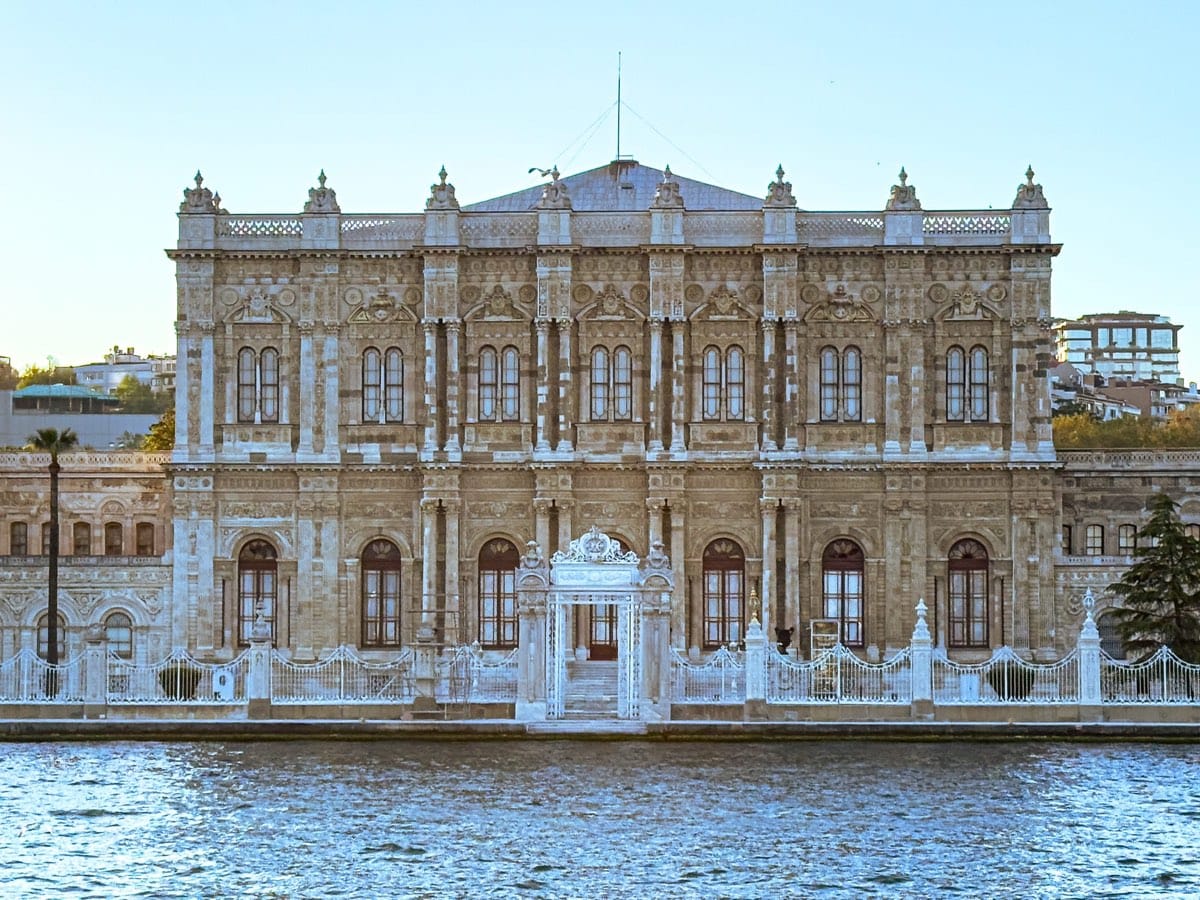
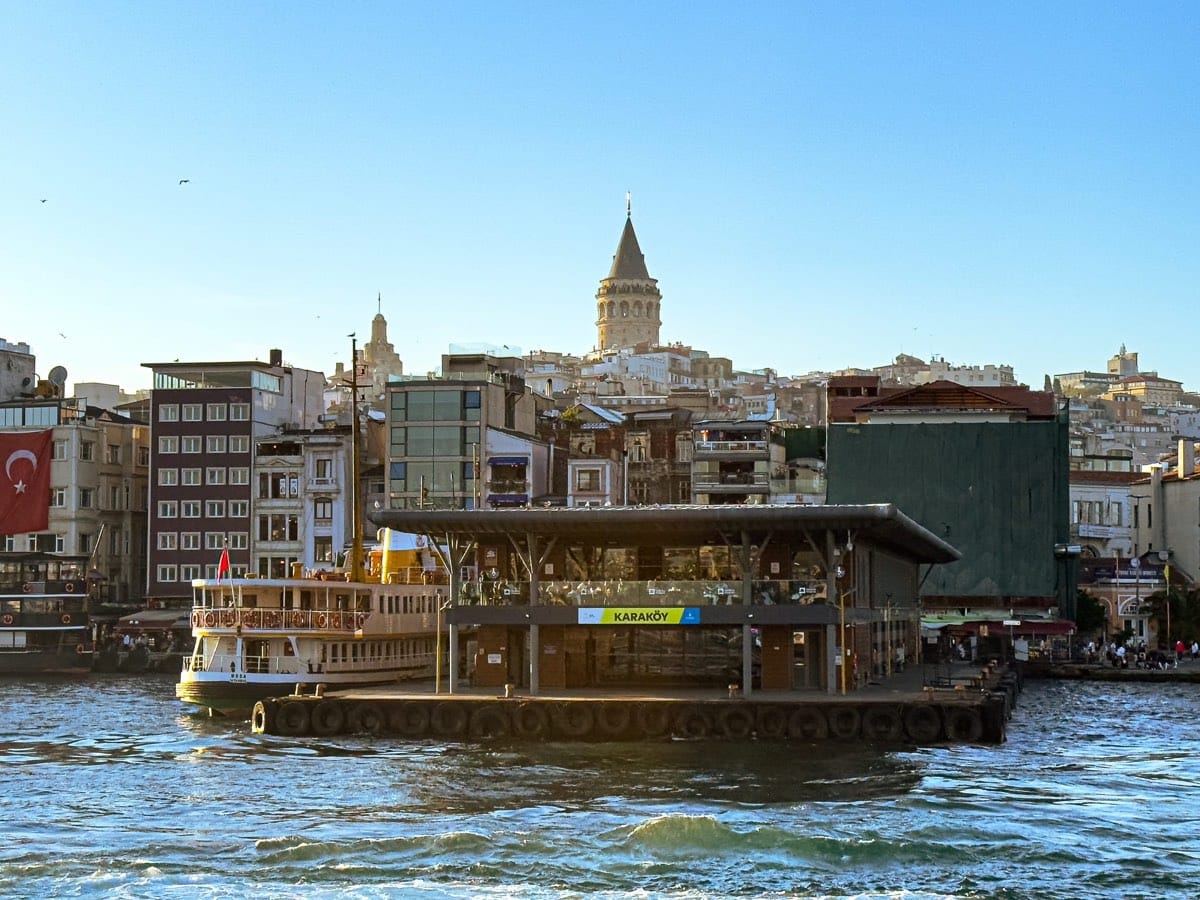
For a cheaper version, the public ferries cross the Bosphorus all day, and you pay with an Istanbulkart.
Around Eminönü and Galata
6. Browse the Spice Bazaar
The Spice Bazaar in Eminönü, also called the Egyptian Bazaar, dates back to the 1600s and is smaller and easier to handle than the Grand Bazaar. It's full of spices, dried fruit, nuts, tea, and Turkish delight, and it's free to walk around.
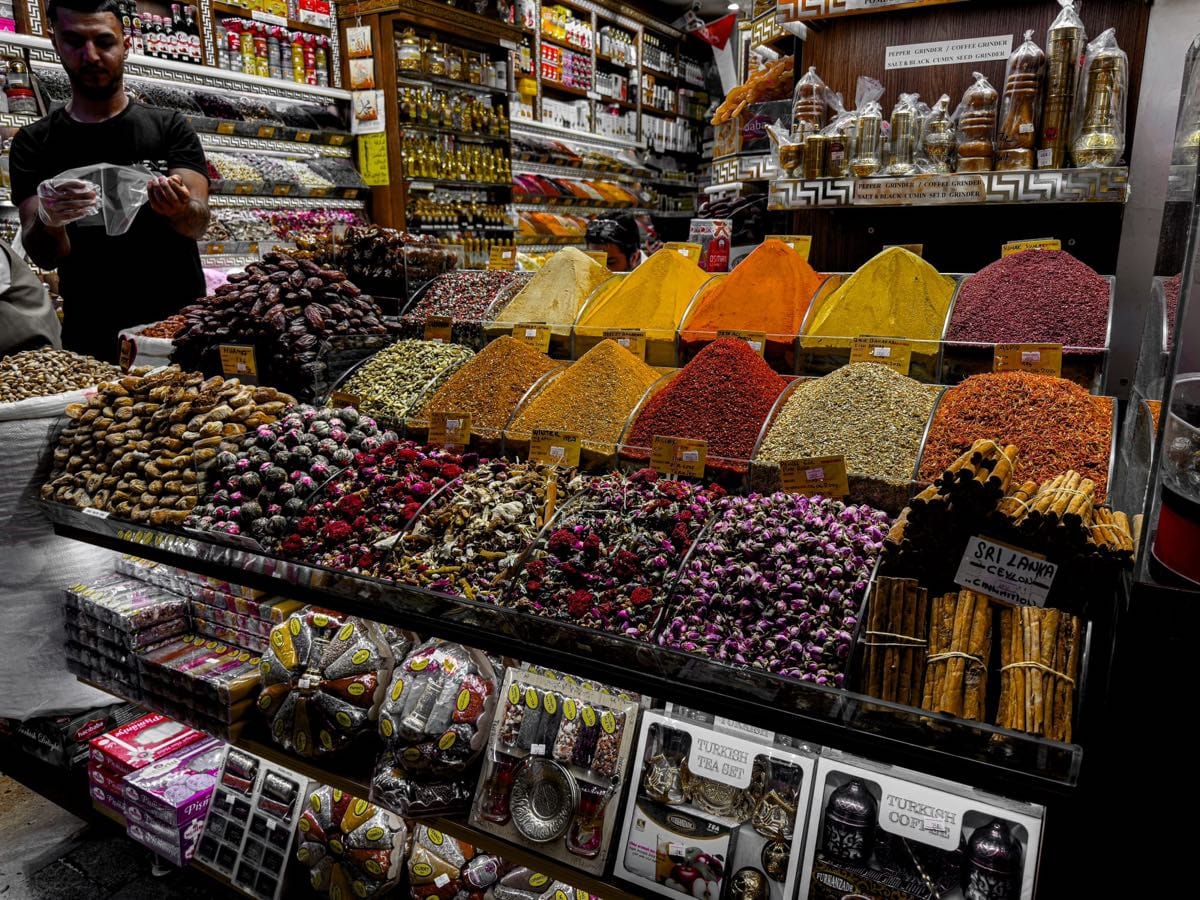
Prices are higher than in local markets, so compare a few stalls before you buy.
7. See Galata Tower
Galata Tower, a 14th-century Genoese stone tower above Karaköy, is on most skylines of the city. We visited, and you can pay to go up to the viewing balcony, but expect a queue. We liked it just as much from the water and from the streets around it, which are full of cafés.
The Asian side
8. Take the ferry to Kadıköy
The ferry from Eminönü or Karaköy to Kadıköy takes about 20 minutes and costs very little, and it's a mini Bosphorus cruise in itself. Kadıköy is where we'd stay for a longer trip: it's full of cafés, bars, bookshops, and locals rather than tour groups.
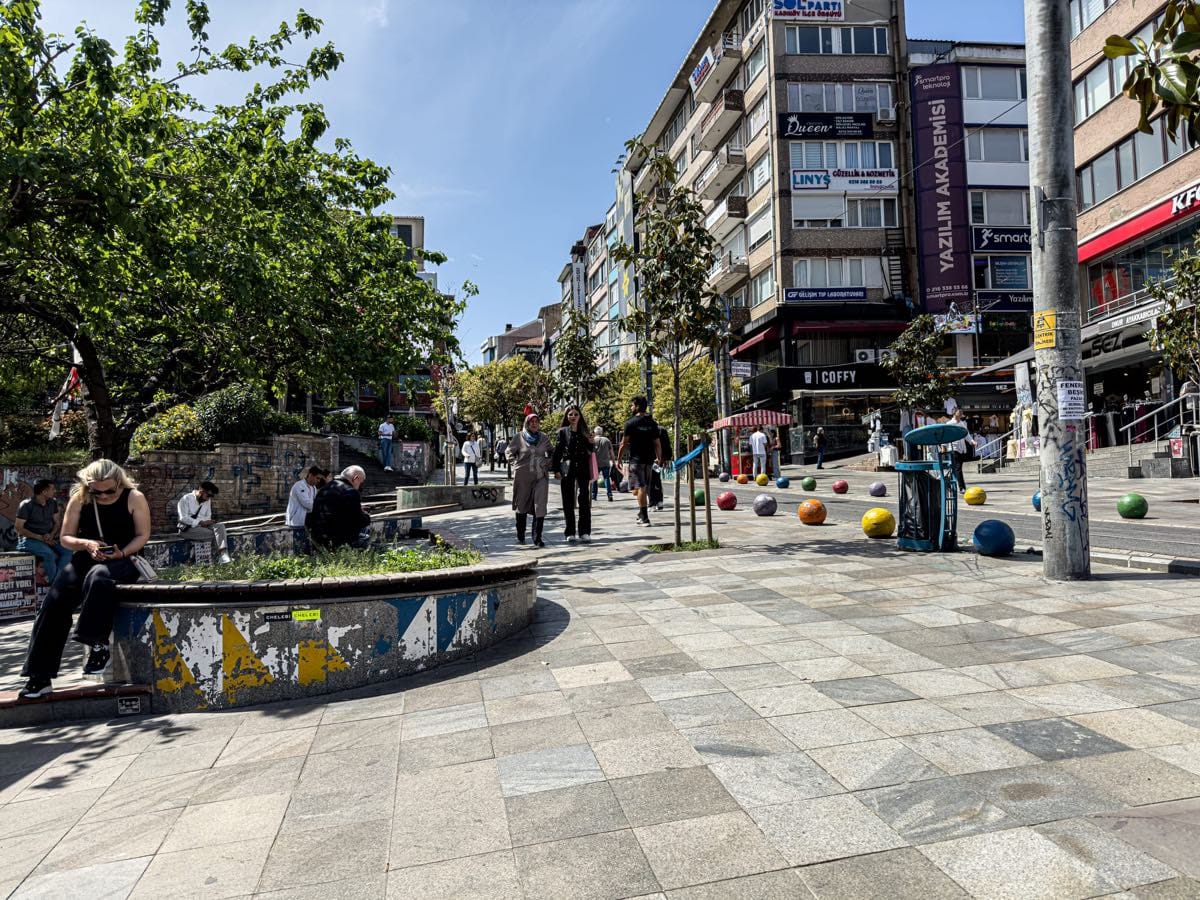
For a guided version, this half-day walk and cruise covers Kadıköy and Üsküdar.
9. Shop at the Kadıköy market
The streets of the Kadıköy market sell olives, pickles, cheese, fish, spices, and some of the best fruit and vegetables we had in Turkey, at local prices.
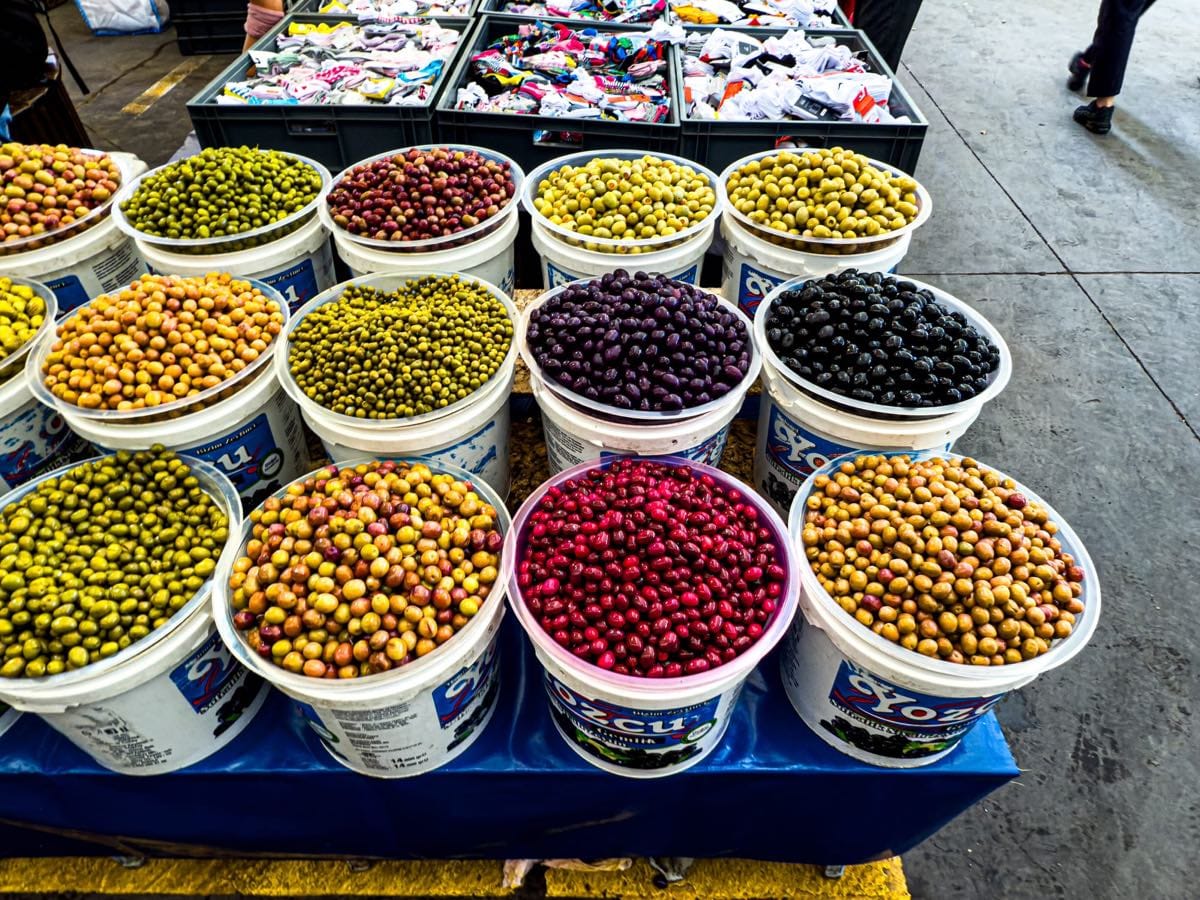
Go hungry, and try whatever's in season.
10. Find the street art in Yeldeğirmeni
Yeldeğirmeni, the neighborhood just north of the ferry terminal, is covered in murals by artists from all over the world, many painted for a mural festival. Our guide to Kadıköy's street art lists them with the artists and where to find each one.
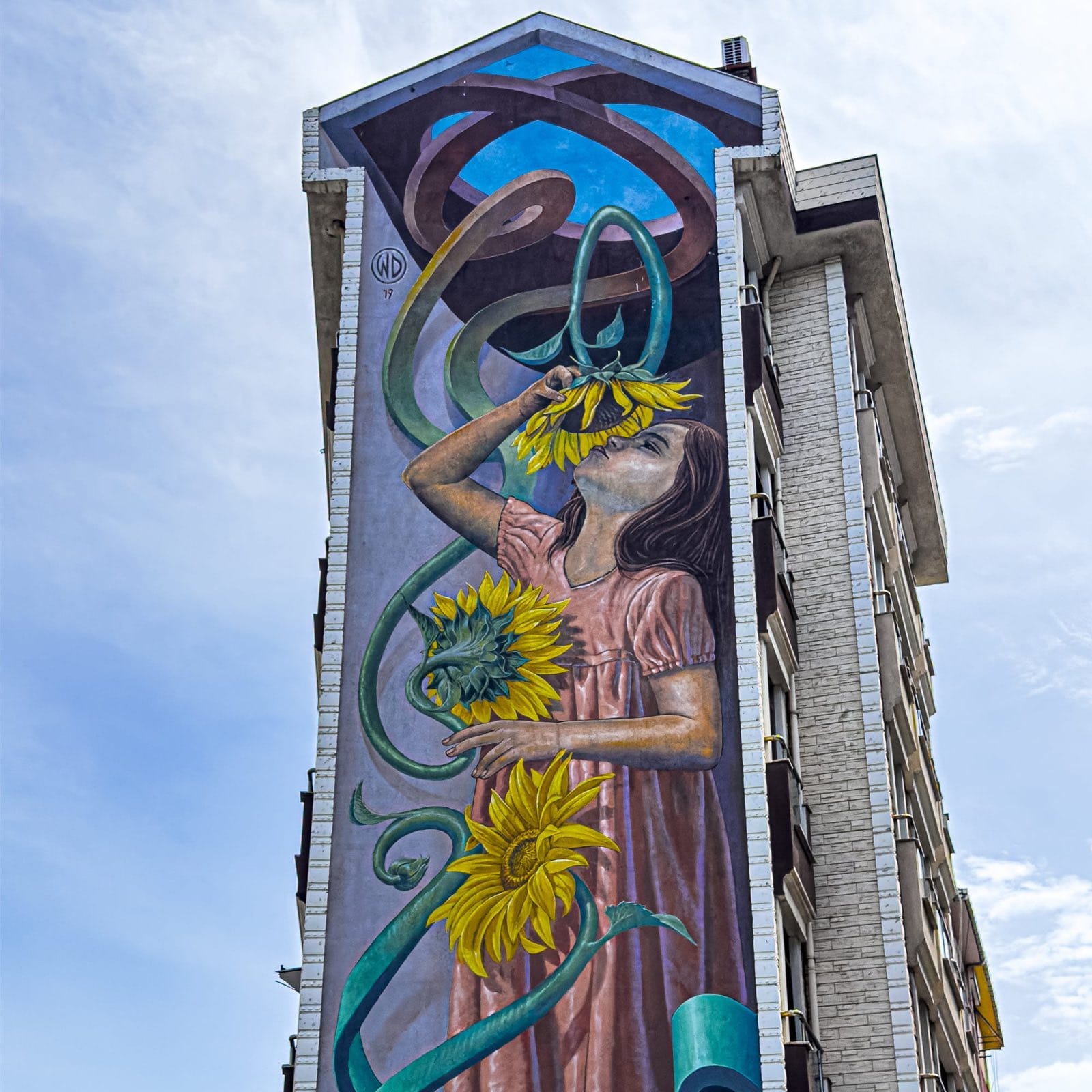
The murals are spread over a few streets, so give it an hour or two.
More of the city
11. Walk the streets of Fener and Balat
The old neighborhoods of Fener and Balat, on the Golden Horn, have steep lanes of painted houses, antique shops, old churches, and cafés. The walking tour we took was one of the best things we did in Istanbul.
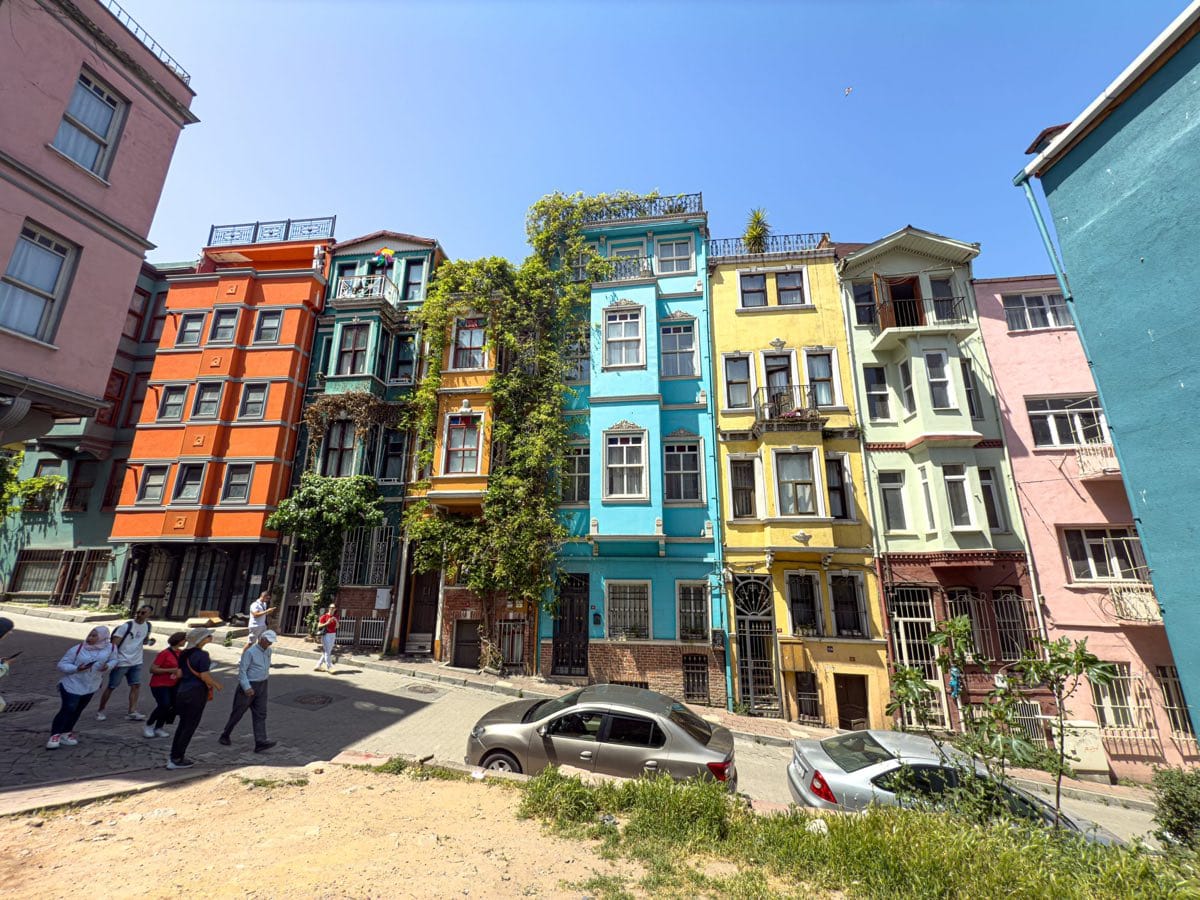
Wear comfortable shoes, as the streets are steep and cobbled.
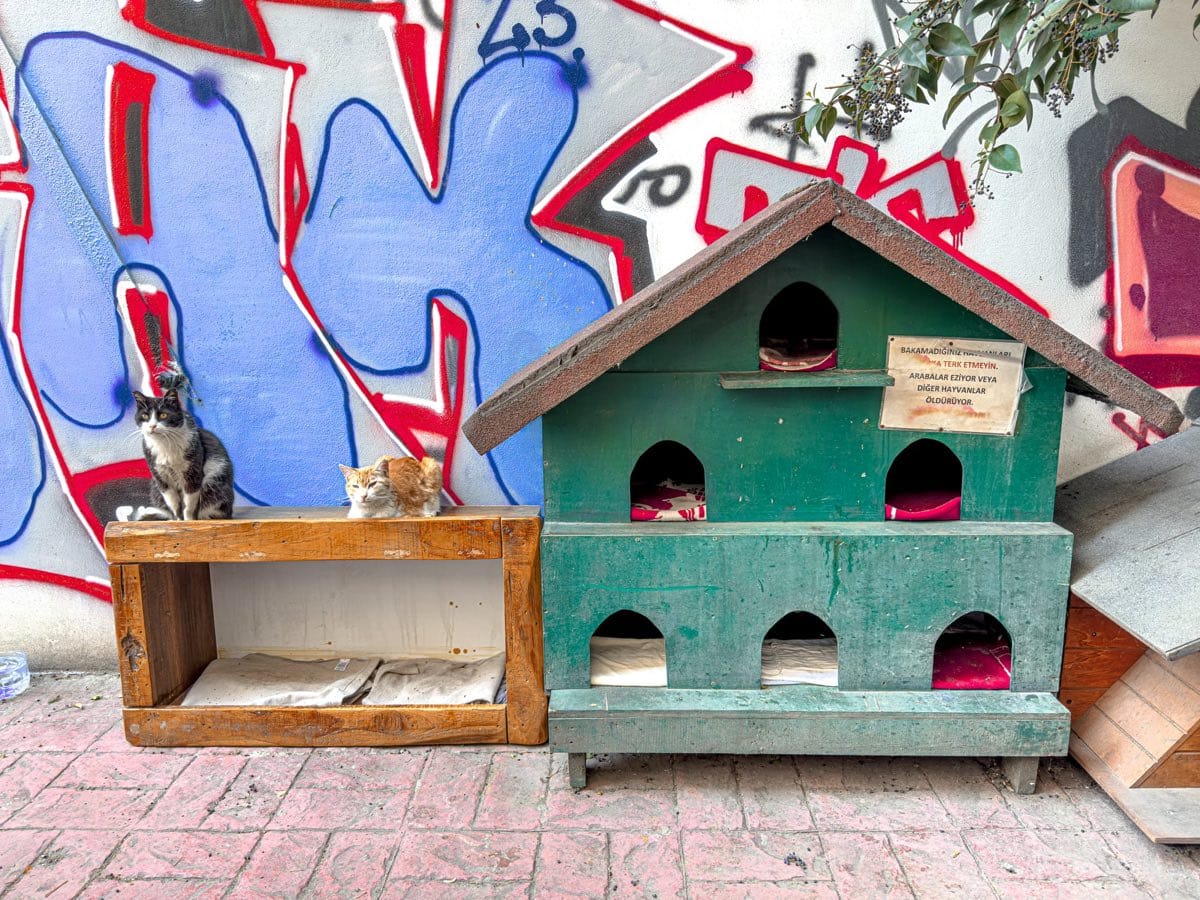
12. Meet the street cats
Istanbul's cats are part of the city. They sleep in shop doorways and on café chairs, and locals feed them and build them little wooden houses. You don't need to plan this one, just keep your eyes open.
Our honest take on living in Istanbul has more on what the city is like day to day.
13. Eat vegan Turkish food
Istanbul is the easiest city in Turkey for vegans. Vegan Dükkan Lokanta does plant-based versions of Turkish home cooking, and Veganarsist in Kadıköy is a favorite. See our guide to vegan food in Istanbul.
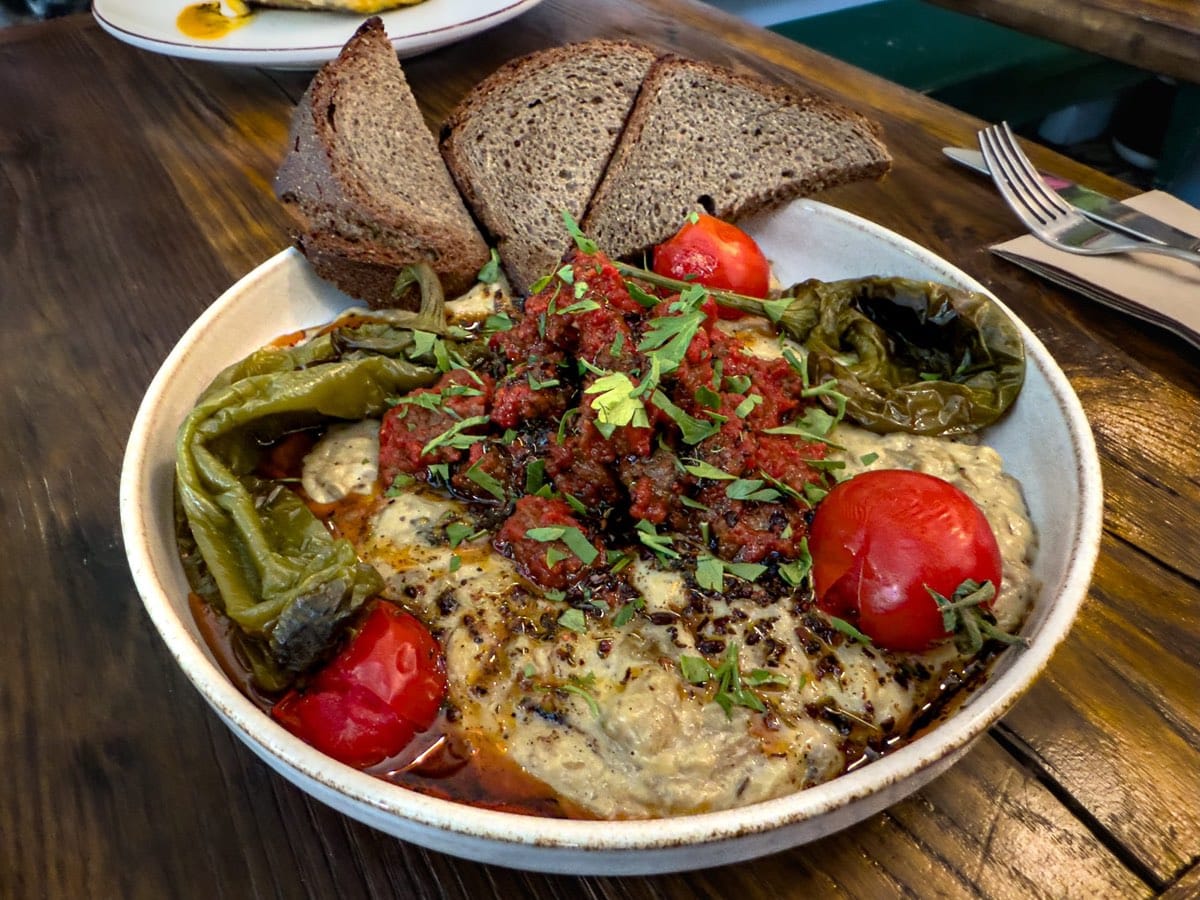
Even regular lokantas usually have lentil soup, beans, and vegetables in olive oil.
More things to do in Istanbul
14. Get lost in the Grand Bazaar
The Grand Bazaar, founded in 1461 under Mehmed the Conqueror, is one of the oldest and biggest covered markets in the world, with more than 60 streets and around 4,000 shops selling carpets, lamps, ceramics, jewelry, and leather. It's closed on Sundays. Bargaining is expected, so start well below the asking price, and don't feel pressured to buy. A guided bazaar walk helps you find the old hans (courtyard workshops) hidden behind the shops.
15. Visit the Süleymaniye Mosque
On a hill above the Golden Horn, the Süleymaniye Mosque was built from 1550 to 1557 by Mimar Sinan, the greatest Ottoman architect, for Süleyman the Magnificent, who is buried in the garden. It's calmer than the Blue Mosque, free, and its terrace has one of the best views over the city. It's about a 20-minute walk from Sultanahmet.
16. Tour Dolmabahçe Palace
The sultans moved from Topkapı to Dolmabahçe, on the Bosphorus, in 1856. It's a European-style palace of crystal chandeliers and gilded halls, and Atatürk, the founder of modern Turkey, died here in 1938. It's closed on Mondays, and you can see it on a ticket with a guided visit.
17. Walk İstiklal Avenue
İstiklal Avenue is a 1.4 km pedestrian street from Taksim Square to Tünel, lined with 19th-century buildings, churches, bookshops, and arcades, with the little red nostalgic tram running down the middle. At the bottom, the Tünel funicular, opened in 1875, is one of the oldest underground railways in the world.
18. Try a Turkish bath
A hamam is one of the best ways to recover from a day on your feet. Historic ones include Çemberlitaş, designed by Sinan in the 16th century, Kılıç Ali Paşa in Karaköy, and Hürrem Sultan, opposite Hagia Sophia. Prices vary a lot, so check what's included before you go, or book a hamam online.
19. Walk across the Galata Bridge
The Galata Bridge, between Eminönü and Karaköy, is lined with people fishing over the railings all day, with the mosques of the old city on one side and the Galata Tower on the other. Walk it at sunset, when the call to prayer echoes across the water.
20. Relax in Gülhane Park
Gülhane Park, once the outer garden of Topkapı Palace, is a free, shady park right next to Sultanahmet. In April, it's full of tulips for the Istanbul Tulip Festival.
21. Take a day trip to the Princes' Islands
The Princes' Islands, in the Sea of Marmara, are car-free, with wooden mansions, pine woods, and swimming spots. The ferry to Büyükada, the biggest island, takes about an hour and a half. See our guide to Istanbul ferries, or book a tour to the islands.
22. Eat kumpir in Ortaköy
Ortaköy, on the Bosphorus, is known for its waterside mosque under the first bridge and for kumpir, huge baked potatoes stuffed with your choice of fillings. Ask for it without butter and cheese, and load up on the vegetables and salads for a vegan version.
23. Walk the Hippodrome in Sultanahmet Square
The long square next to the Blue Mosque was the Hippodrome of Constantinople, the city's chariot-racing track. Four monuments still stand along it: the Obelisk of Theodosius, carved in Egypt around 1490 BC and brought here in 390 AD; the bronze Serpent Column from Delphi; the stone Walled Obelisk; and the German Fountain, a gift from Kaiser Wilhelm II in 1900. It's free, and it takes 15 minutes on your way between the big sights.
24. Visit the Museum of Turkish and Islamic Arts
On the same square, the Museum of Turkish and Islamic Arts fills the palace of İbrahim Pasha, Süleyman the Magnificent's grand vizier, built in 1524. It's known for its carpets, some of the finest from the Islamic world, plus calligraphy, Qur'ans, tiles, and ethnographic displays. It's a good indoor stop if it rains, and it's rarely as busy as Topkapı Palace.
25. See the Istanbul Archaeology Museums
Just inside the outer walls of Topkapı, below Gülhane Park, the Istanbul Archaeology Museums are three museums in one complex: the main Archaeological Museum, the Museum of the Ancient Orient, and the Tiled Kiosk, which holds Turkish ceramics. The highlights are the carved Alexander Sarcophagus from Sidon, glazed brick lions from the Ishtar Gate of Babylon, and a tablet of the Egyptian-Hittite peace treaty from 1258 BC. Give it two hours. Check tickets and hours on the Ministry of Culture's museum site before you go.
26. Find the tiles in the Rüstem Pasha Mosque
Hidden above a row of shops near the Spice Bazaar, this small mosque by Mimar Sinan (finished around 1563) has its walls and entrance porch covered in İznik tiles in floral and geometric designs. Sinan rarely used this much tilework, which makes it stand out among his mosques. Look for the stairs from the street. It's free, and it's a good place to escape the market crowds, but the usual mosque rules and prayer-time closures apply.
27. See the mosaics at the Chora Mosque
Out near the old land walls in Edirnekapı, the Chora, now the Kariye Mosque, has some of the best Byzantine mosaics and frescoes anywhere, paid for by the statesman Theodore Metochites around 1315 to 1321. It became a mosque again in 2020 and opened for worship in 2024. Visiting hours and any fee for tourists can change, so check before you go. It's a short taxi or bus ride from Fener and Balat, so it pairs well with a day there.
28. Spend an afternoon at Istanbul Modern
Istanbul Modern moved into a new building by Renzo Piano on the Tophane waterfront, next to Karaköy, in May 2023, right on the Galataport promenade. It shows modern and contemporary art from Turkey, mostly from 1950 on, across painting, photography, video, and installations, and the café looks straight out over the Bosphorus. It's a good break from Ottoman and Byzantine history.
29. See The Tortoise Trainer at the Pera Museum
Just off İstiklal Avenue, the Pera Museum sits in the old Bristol Hotel, built in 1893. Its best-known painting is Osman Hamdi Bey's The Tortoise Trainer (1906), one of the most famous Turkish paintings, and it also has a large collection of Kütahya tiles and Anatolian weights and measures, plus changing exhibitions. It's easy to combine with a walk down İstiklal to Galata Tower.
30. Look out to the Maiden's Tower
The Maiden's Tower stands on a tiny islet about 200 meters off Üsküdar, at the southern mouth of the Bosphorus. It reopened in May 2023 after a two-year restoration, and small boats take visitors across during the day. Most people just watch it from the Üsküdar waterfront, which is free and a popular place to watch the sunset.
31. Climb the walls of Rumeli Fortress
Mehmed II built Rumeli Fortress (Rumelihisarı) in 1452, a year before he took Constantinople, at the narrowest point of the Bosphorus, about 660 meters across. It's been a museum since 1960, with towers and walls climbing a steep hill and wide views up the strait. It's in Sarıyer, north of the center on the European shore, and it's easy to add to a Bosphorus cruise day. Check the opening times before you go.
Tips for Istanbul
Buy an Istanbulkart at a metro or ferry station on your first day; it works on almost all public transport. Book Hagia Sophia, Topkapı, and the Basilica Cistern ahead in busy months. Check prayer times before visiting mosques. And use the ferries as much as you can: they're cheap, and the views are as good as any tour.
Don't forget travel insurance when you plan your trip. It's the one thing you hope you never use, and the peace of mind is worth it. We'd recommend SafetyWing Nomad Insurance. It covers medical emergencies abroad, you can buy it even after you've left home, and it renews every four weeks, so it works for a short trip or months on the road.
Best time to visit Istanbul
Spring and autumn are the easiest times for sightseeing. April has the tulips in Gülhane Park, and May, June, September, and October are usually warm without the heavy humidity of midsummer. July and August are hot, with highs around 28 to 30°C, and the busiest months for the big sights. Winter is cheaper and less crowded, but expect rain, wind, and the odd snowy day, according to the climate records.
Whatever the month, plan around a few closures: the Grand Bazaar shuts on Sundays, Dolmabahçe Palace on Mondays, and mosques close to visitors at prayer times, longest at Friday midday prayer. Palace tickets and hours are on the National Palaces site, and the Ministry of Culture museums are on muze.gov.tr.
Where to stay in Istanbul
Stay in Sultanahmet if you have two or three days and want to walk to the big sights. For a week or more, we'd pick Kadıköy, and you can compare hotels in Kadıköy here. Our guide to where to stay in Istanbul compares every area.
Frequently asked questions about things to do in Istanbul
What is the number one thing to do in Istanbul?
Visit Hagia Sophia, then take a Bosphorus cruise to see the city from the water.
How many days do you need in Istanbul?
At least three days for the main sights and Kadıköy. Five gives you time for Balat and the bazaars.
What is free to do in Istanbul?
The Blue Mosque, the Spice Bazaar, the Kadıköy market, the street art, walking Balat, and watching the street cats.
Is Hagia Sophia free?
No, foreign visitors now pay to enter. The Blue Mosque is still free.
How many things are there to do in Istanbul?
Far more than you can fit into one trip. With three or four days, focus on Sultanahmet, a Bosphorus cruise, Kadıköy, and Fener and Balat, then add the bazaars, Süleymaniye, and Dolmabahçe.
Is the Grand Bazaar open on Sunday?
No. It's open Monday to Saturday.
Is it worth going to the Asian side of Istanbul?
Yes. The ferry to Kadıköy is cheap and quick, and the neighborhood is one of our favorites in the city.
What is the best month to visit Istanbul?
May, June, September, and October are the most comfortable months, warm but not too hot. April is good for the tulips in Gülhane Park. July and August are hot and the busiest.
Is the Istanbul Archaeology Museum worth it?
Yes, if you like history. It's right next to Topkapı Palace, and the Alexander Sarcophagus and the Ishtar Gate lions alone are worth the ticket. Allow about two hours.
What can you do in Istanbul when it rains?
Go indoors: the Basilica Cistern, the Grand Bazaar, the Istanbul Archaeology Museums, the Museum of Turkish and Islamic Arts, Istanbul Modern, the Pera Museum, or a hamam.
Useful links: Historic Areas of Istanbul (UNESCO World Heritage Site), National Palaces (Topkapı, Dolmabahçe): tickets and hours, Ministry of Culture museums and MuseumPass, and Istanbul on Go Türkiye, the official tourism site.